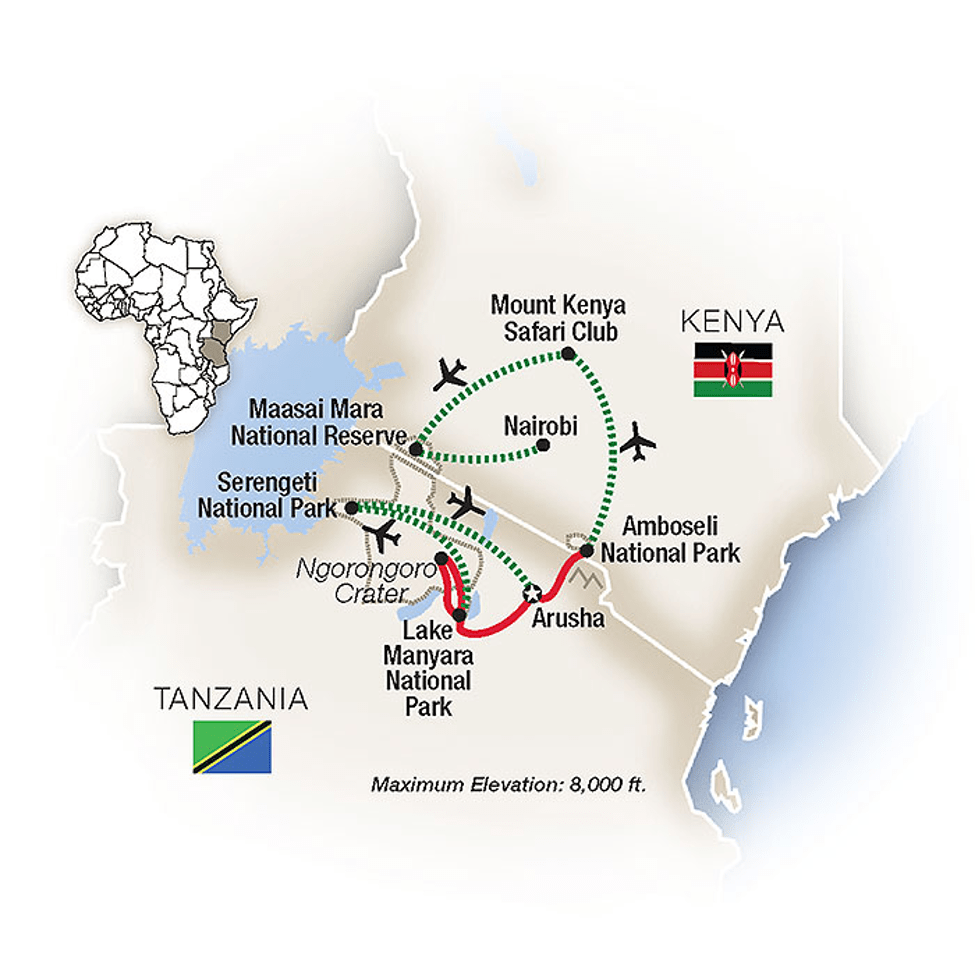
Safari Bound – January 31, 2018
We flew out of JFK on Turkish Airlines to Kilimanjaro Airport, with a brief stopover in Istanbul. The service was exceptional, featuring onboard chefs preparing meals.
Arusha Arrival and Lake Duluti Exploration – February 2, 2018
We arrived in Arusha very early in the AM to be greeted on the tarmac with a “Where are your boarding passes?” from a clueless airport official. Understandably, it seemed a bit early for everyone. Inside the airport, chaos reigned. Initially queuing for passport control, we were then informed we needed landing forms. After rushing to fill them out and queuing again, we were redirected for fingerprinting. By the time we completed these formalities, our luggage had arrived, but we were delayed further as an official went to retrieve the keys to unlock the doors. A most unusual arrival!
Fortunately, we were met by Sebastian, who we later learned would be one of our safari guides. He drove us to the Lake Duluti Serena, where on arrival we promptly retired to bed.
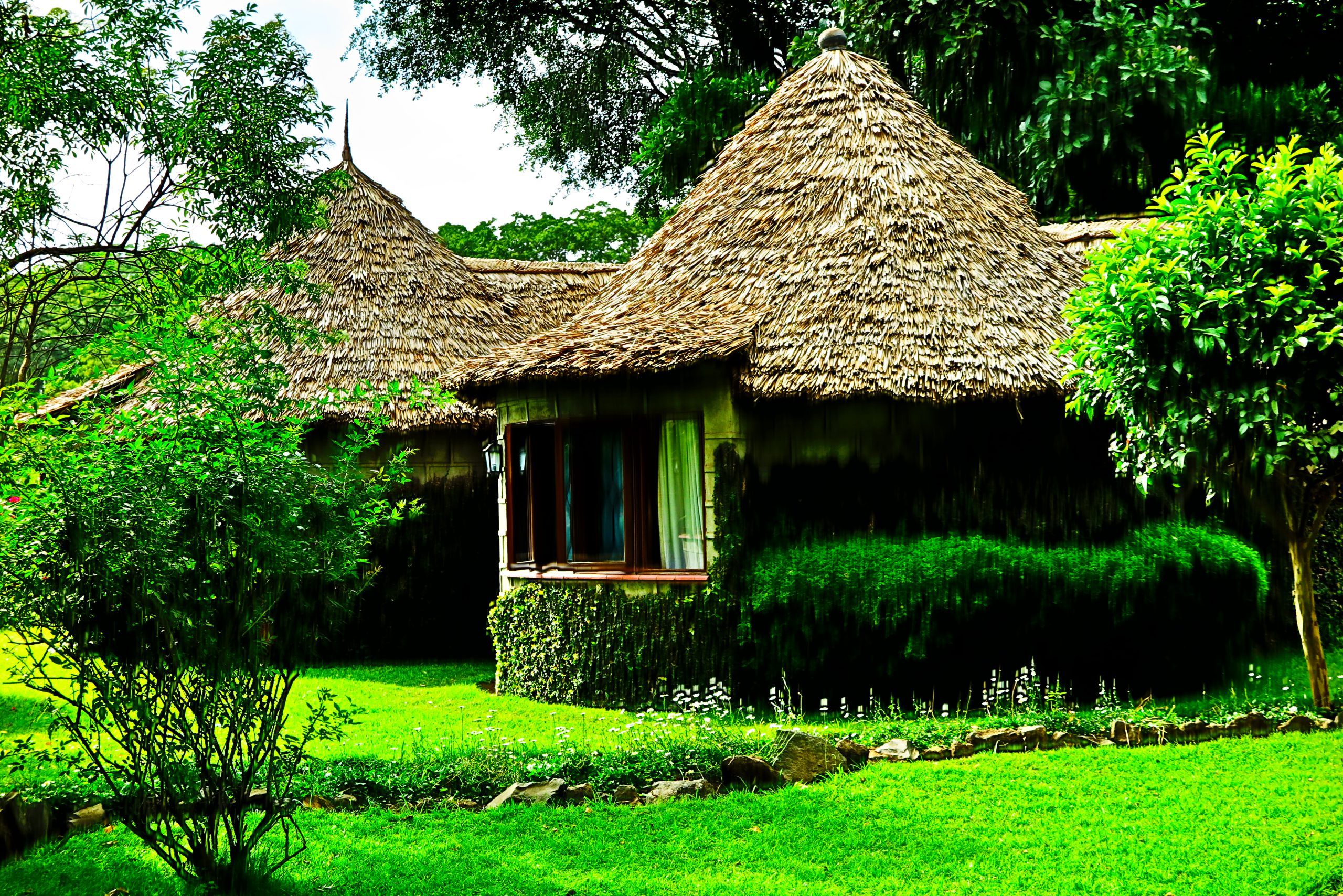
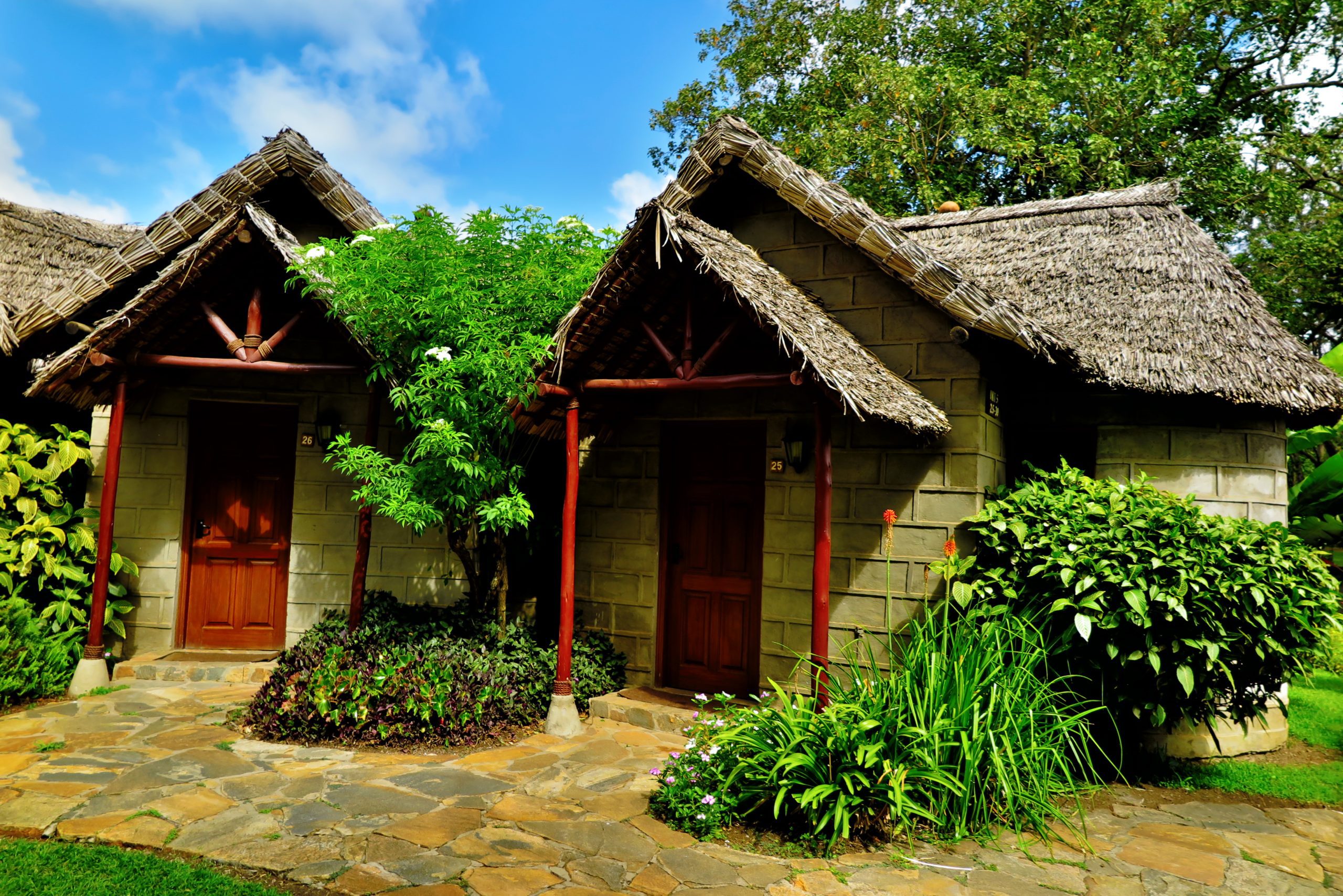
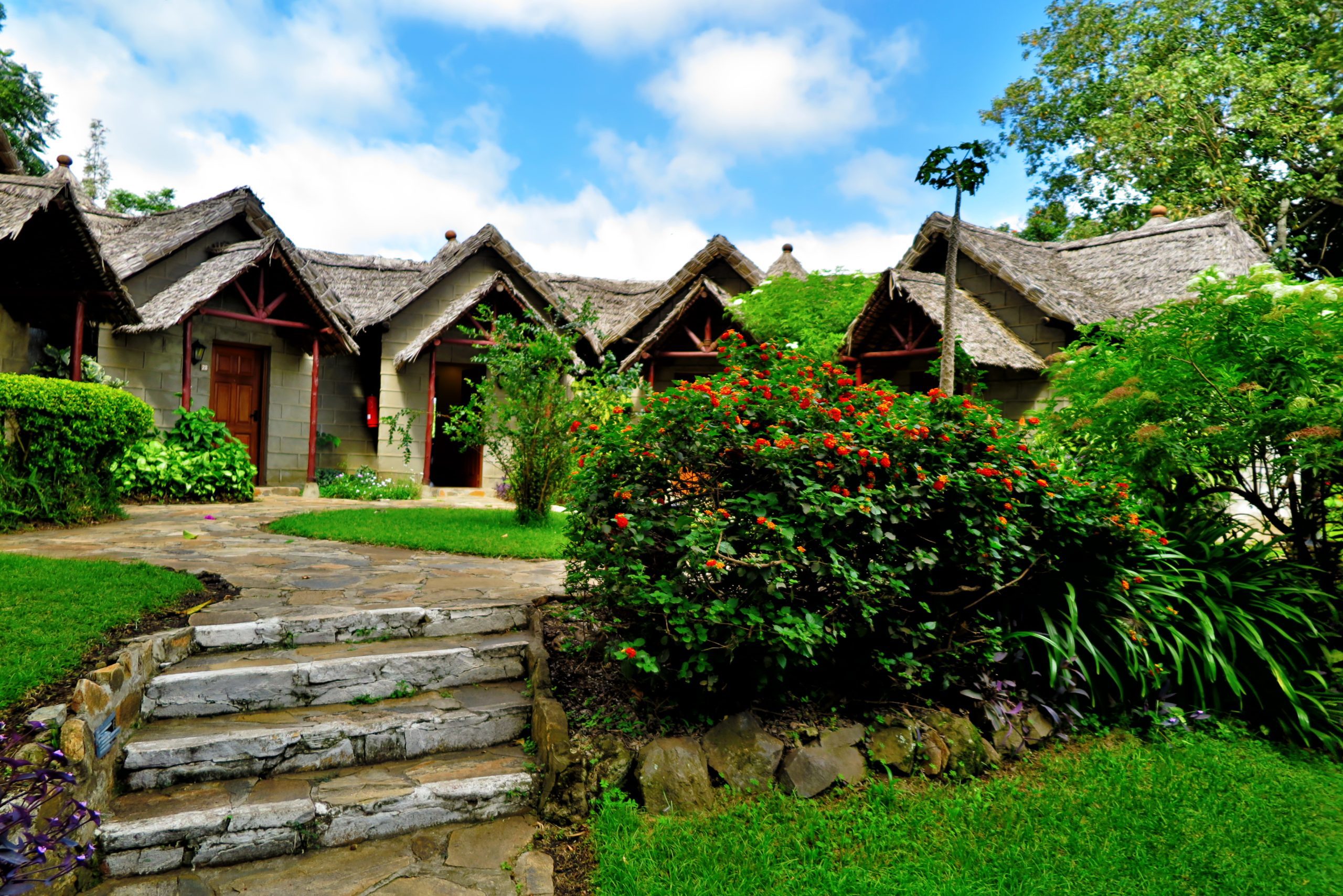
Our room was a round standalone cottage with a thatched roof in a group of four. The bed had a mosquito net. We haven’t slept under one of these in a very long time. After breakfast, we walked around in the extensive gardens which are quite magnificent and tended to by an army of gardeners all working with their hands. We visited the kitchen gardens and encountered bitter tomatoes (a first), okra, aubergine, and leeks. We signed up for a 3-mile hike around Lake Duluti.
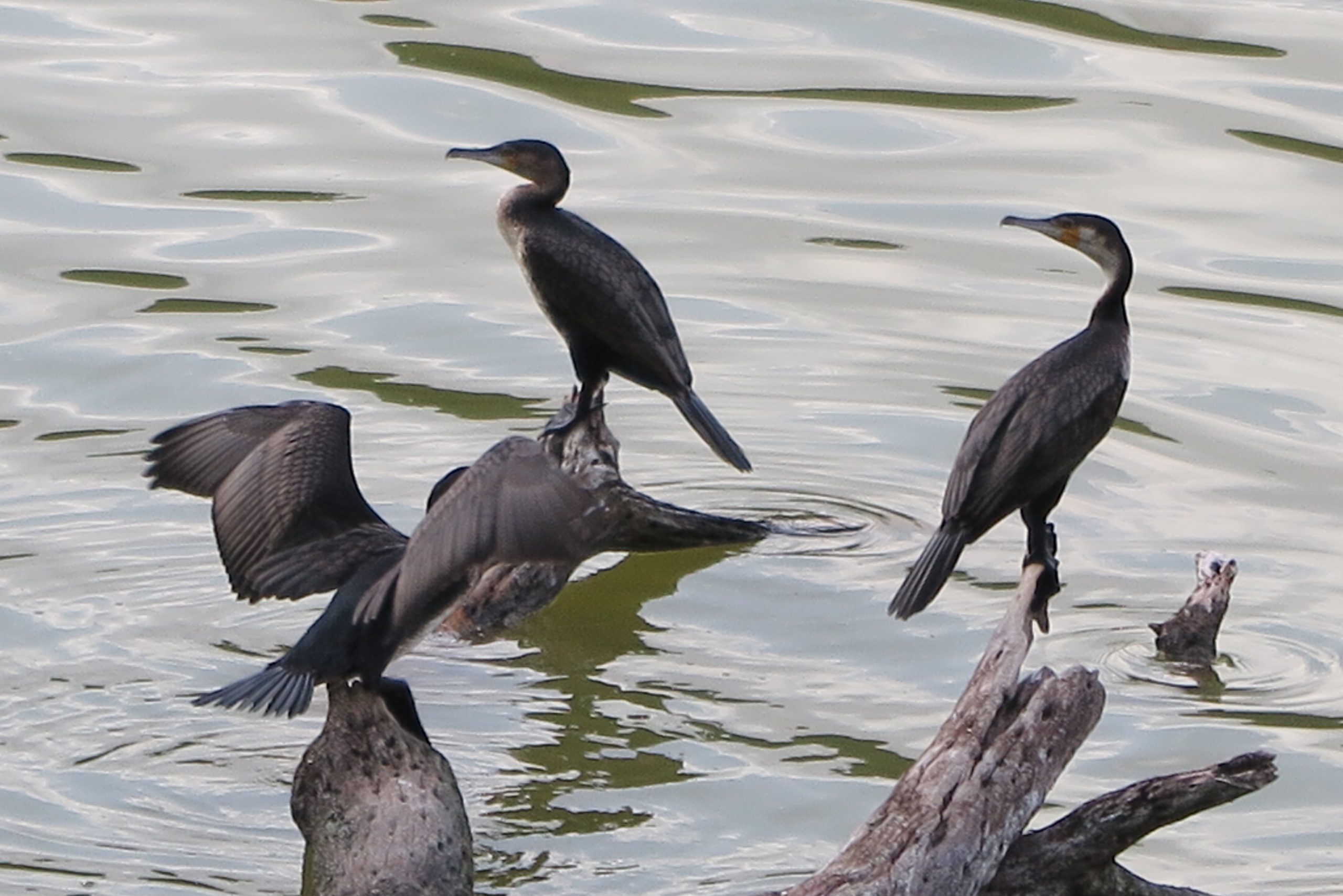
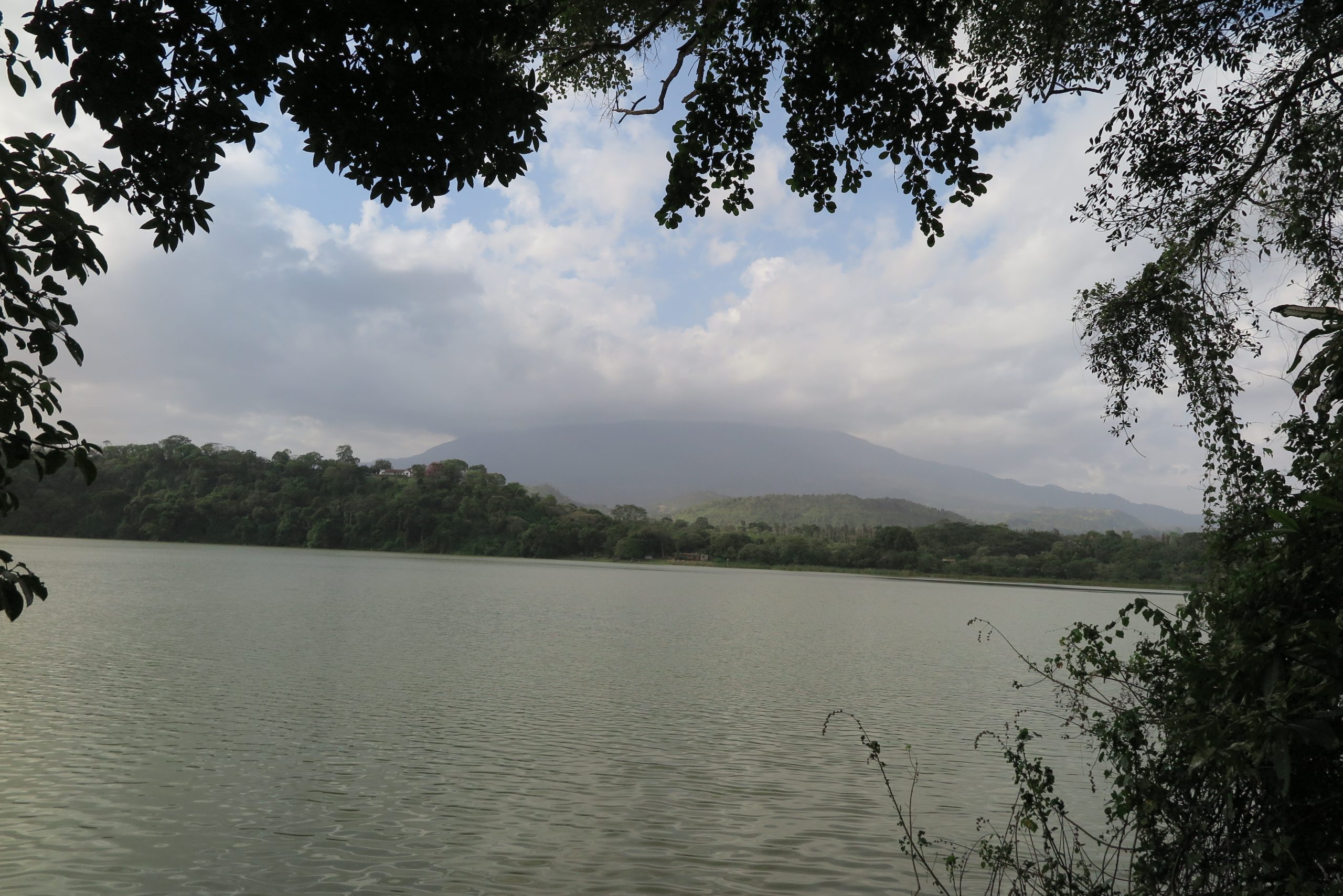
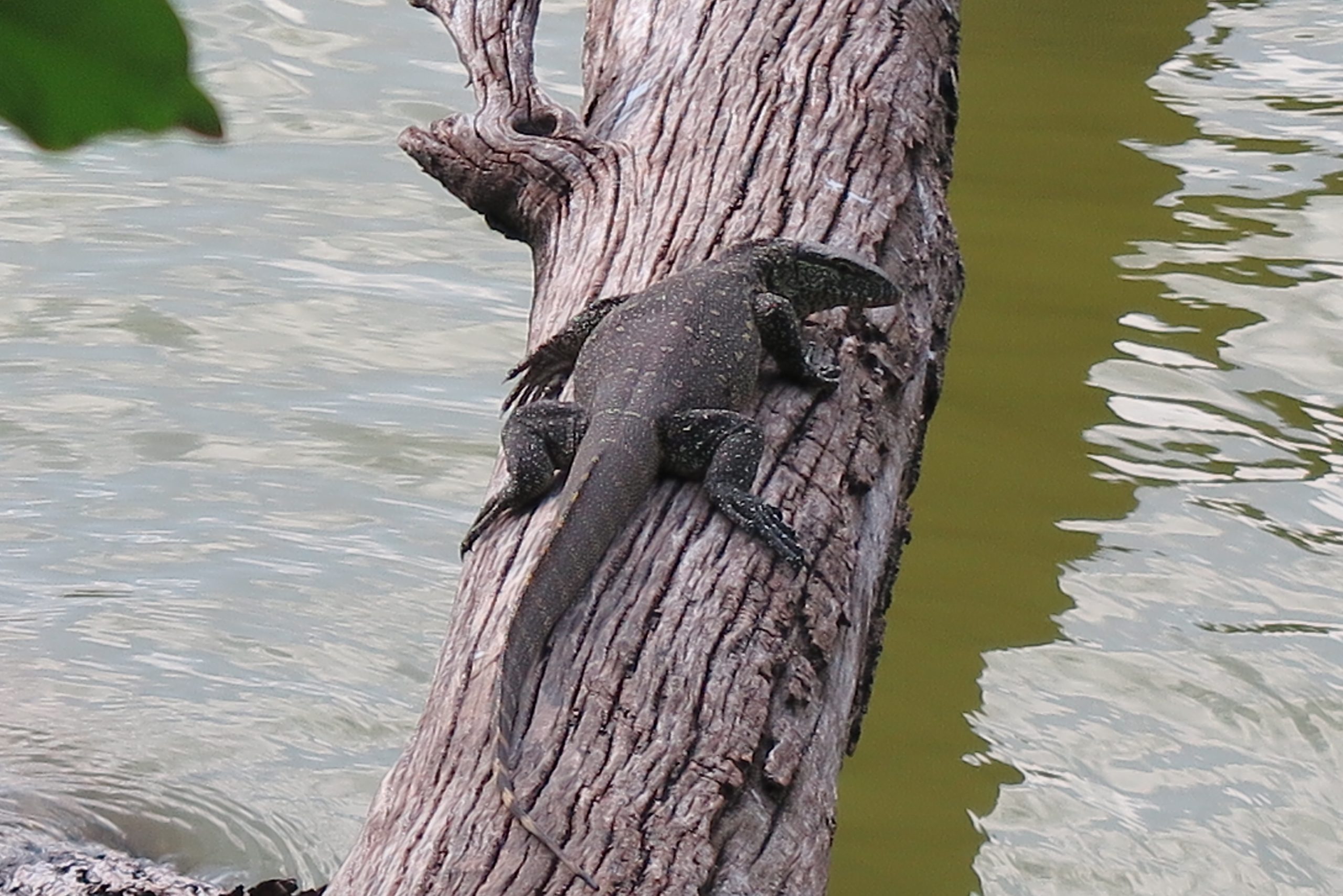
Late afternoon, we met up with Alpha and guide-in-training Hudson to walk around Lake Duluti, a freshwater lake formed inside a crater. We saw a lot of birds: cormorants, egrets, ducks with snub noses, hammerkops, weavers, ibis, hornbills, herons, Egyptian geese. We also saw Nile monitor lizards and dik-diks. The abundance of fish in the lake explained the thriving bird population. Along the way, we saw a woman drying some tilapia which she had caught using a line. As we walked, the guides taught us a few Swahili words: jambo (hello), karibu (welcome), lala salama (goodnight), asante (thank you), pole pole (slowly slowly). Also on the way, we heard hymns being sung. Apparently, there are caves in the area that are thought to be sacred, and services are held there.
At dinner, the power went out. Apparently, this is a frequent occurrence and everyone takes it in stride.
Visit to the Cultural Heritage Center – February 3, 2018
This morning, we met briefly with Eric Croft, our tour director. He organized a visit to the Cultural Heritage Center. En route, we passed through a bustling Saturday market reminiscent of those found in India, teeming with crowds and dust, every inch of pavement occupied by vendors. The journey to the center was quick, given it was the weekend. Among the array of artifacts for sale, we found some truly exquisite pieces, others less desirable. The art gallery, enormous and impressive, had remarkable sculptures, masks, paintings, furniture, and Zanzibar doors available for purchase. We bought some masks for Derek (Christbel’s brother) and Ignatius (Albert’s brother). During our visit, we learned that tanzanite was discovered by a Goan tailor, Manuel D’Souza, in 1967 and was named as such by Tiffany’s who thought that zoisite, the actual name, sounded too much like suicide. Found in the foothills of the Merelani hills and supposedly beneath Kilimanjaro Airport, tanzanite is believed to be a one-generation stone.
Start of Our Safari: Journey to Lake Manyara – February 4, 2018
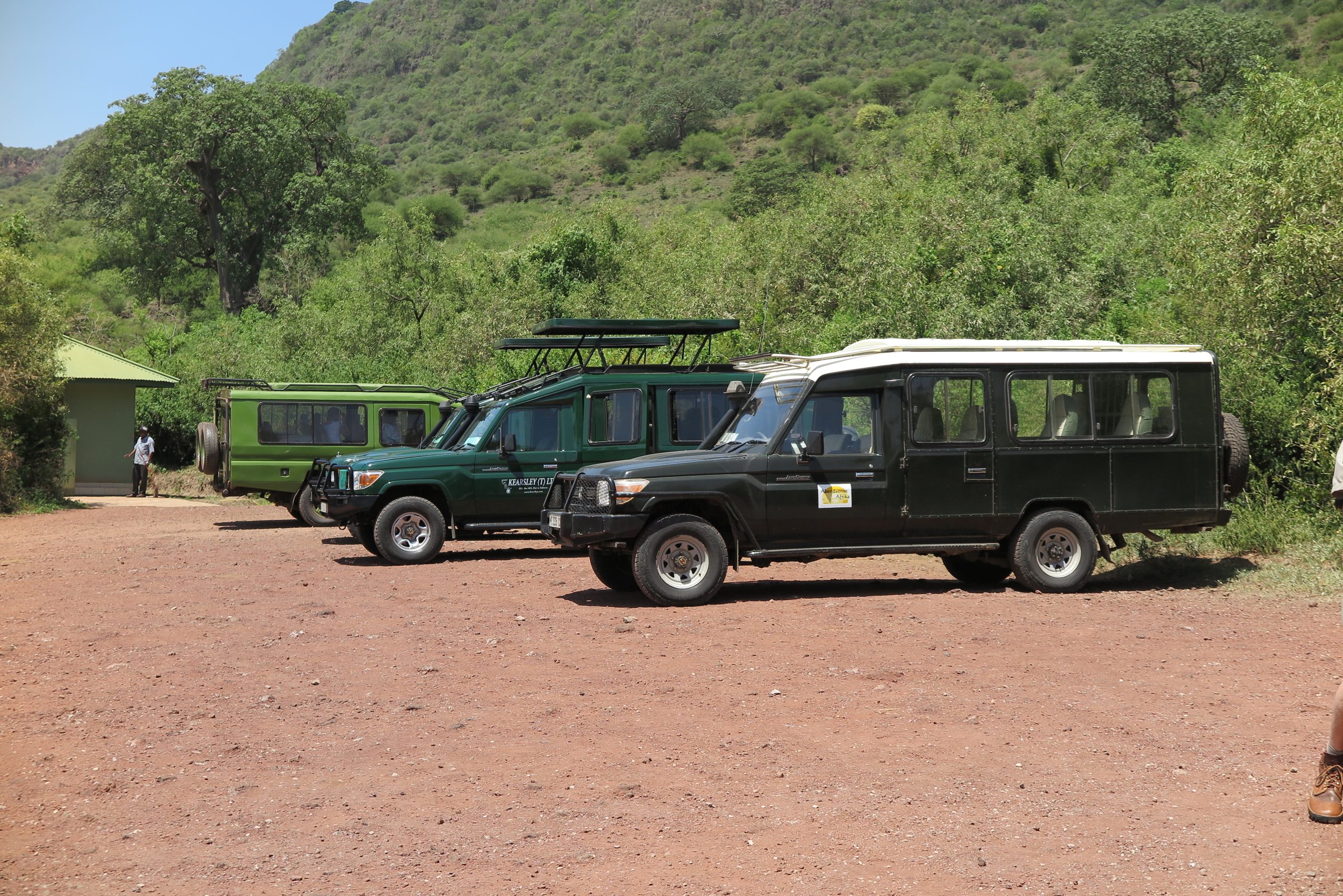
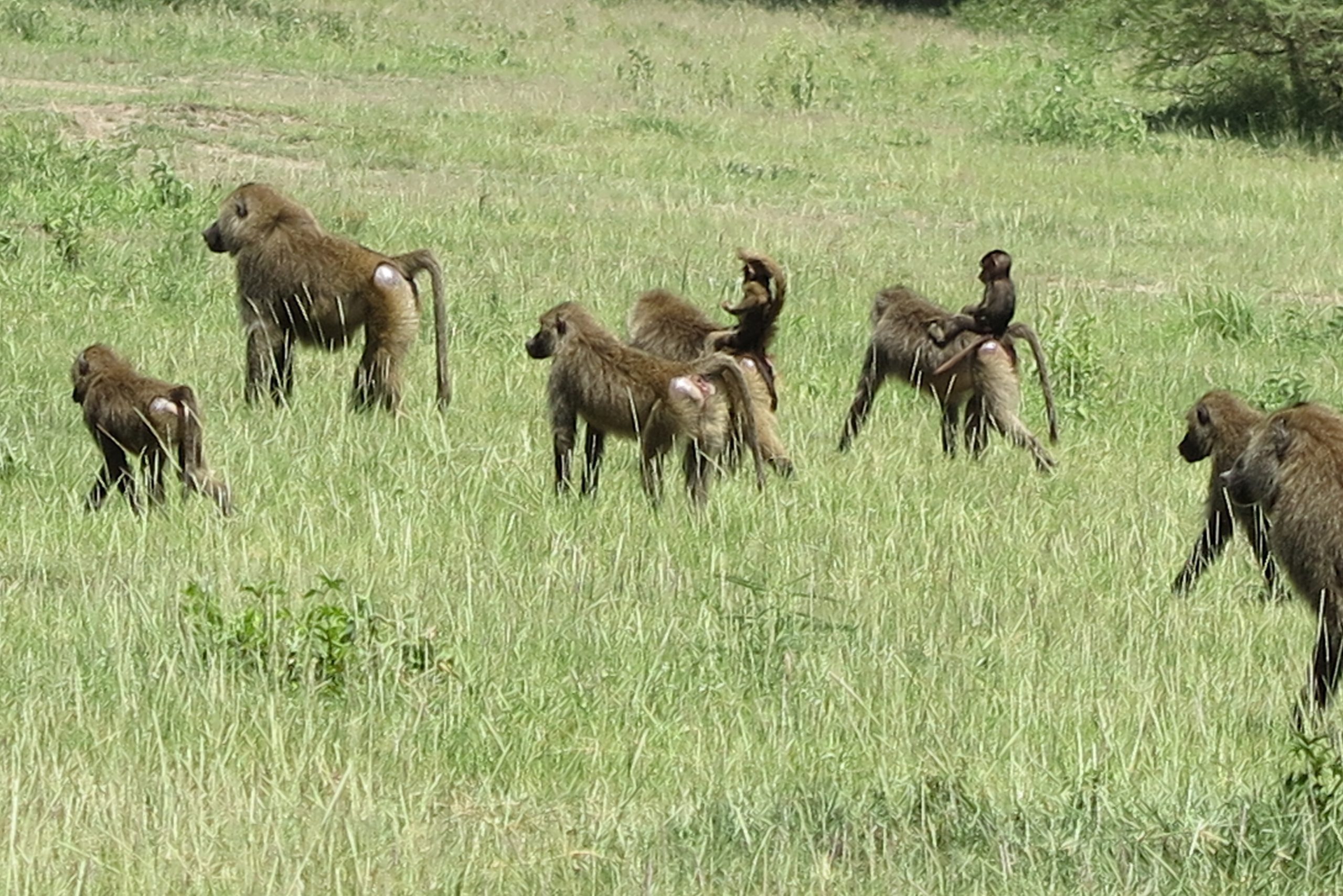
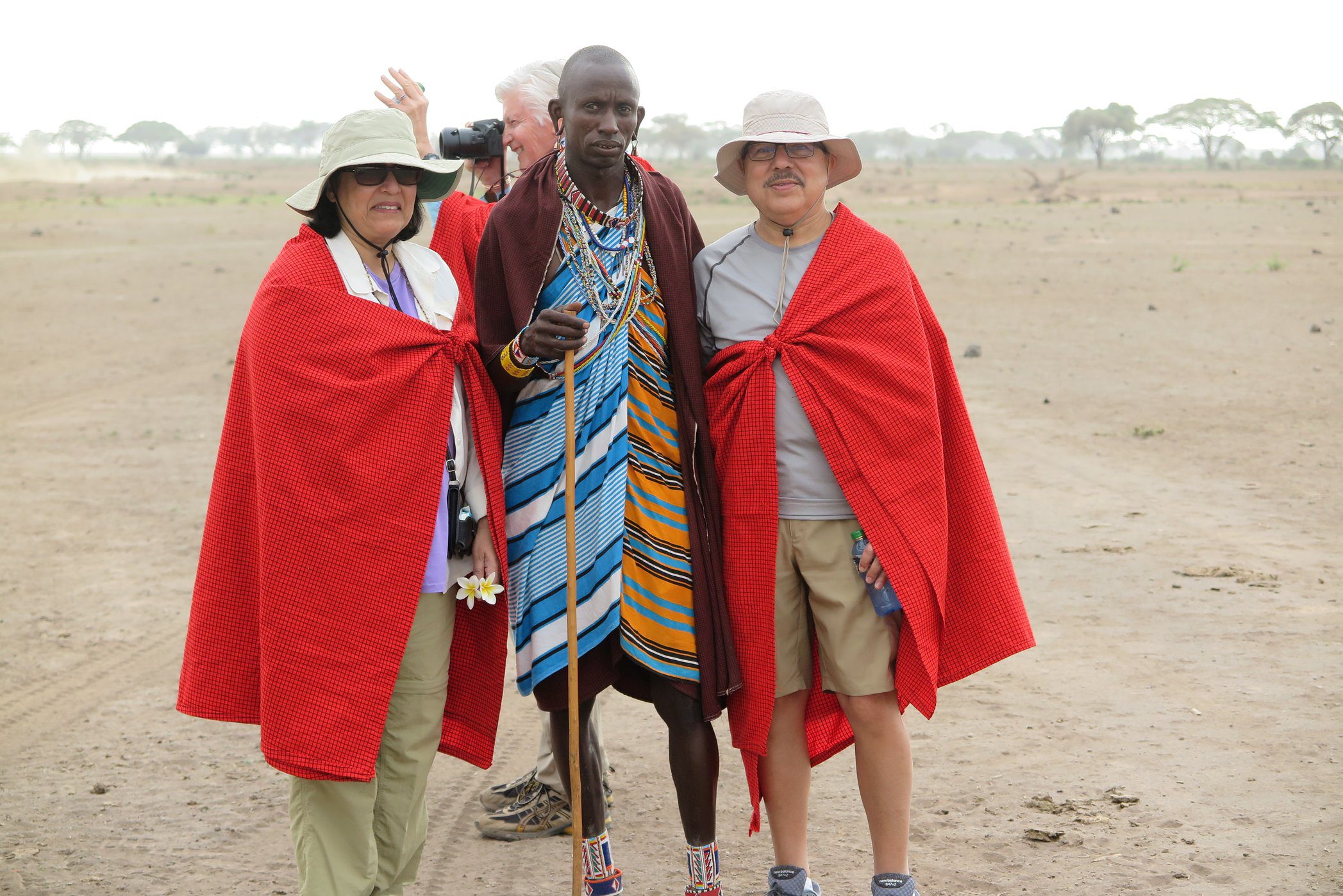
At the briefing this morning, recordings of national anthems of US, Canada, UK, and Tanzania, representing the host country and the travelers, were played. Men were given red shukas as the Maasai men wear them so they can be visible from a distance, while the women received blue ones. Held in the garden, the briefing was occasionally interrupted by passing hornbills. We left the Lake Duluti Serena and made our way to the Lake Manyara National Park. Along the way, we stopped briefly to buy red bananas. Before entering the park, Eric distributed the bananas and bandanas, advising us to soak the latter in water and wear them over our mouths for protection against dust during game drives. Additionally, we received a brief lesson on the topography of the Ngorongoro crater, distinguishing between a crater and a caldera. Inside the park, we encountered numerous baboons.
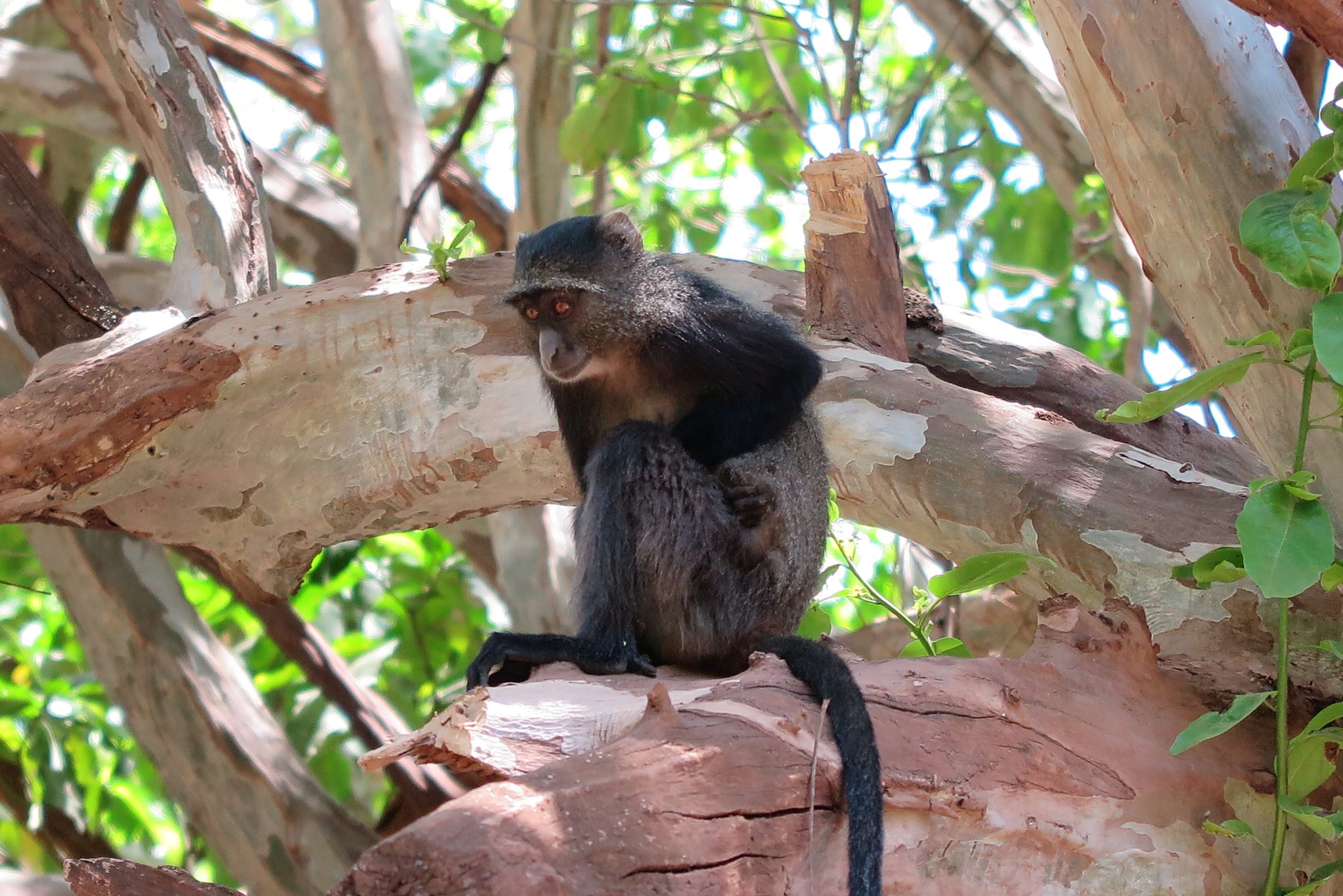
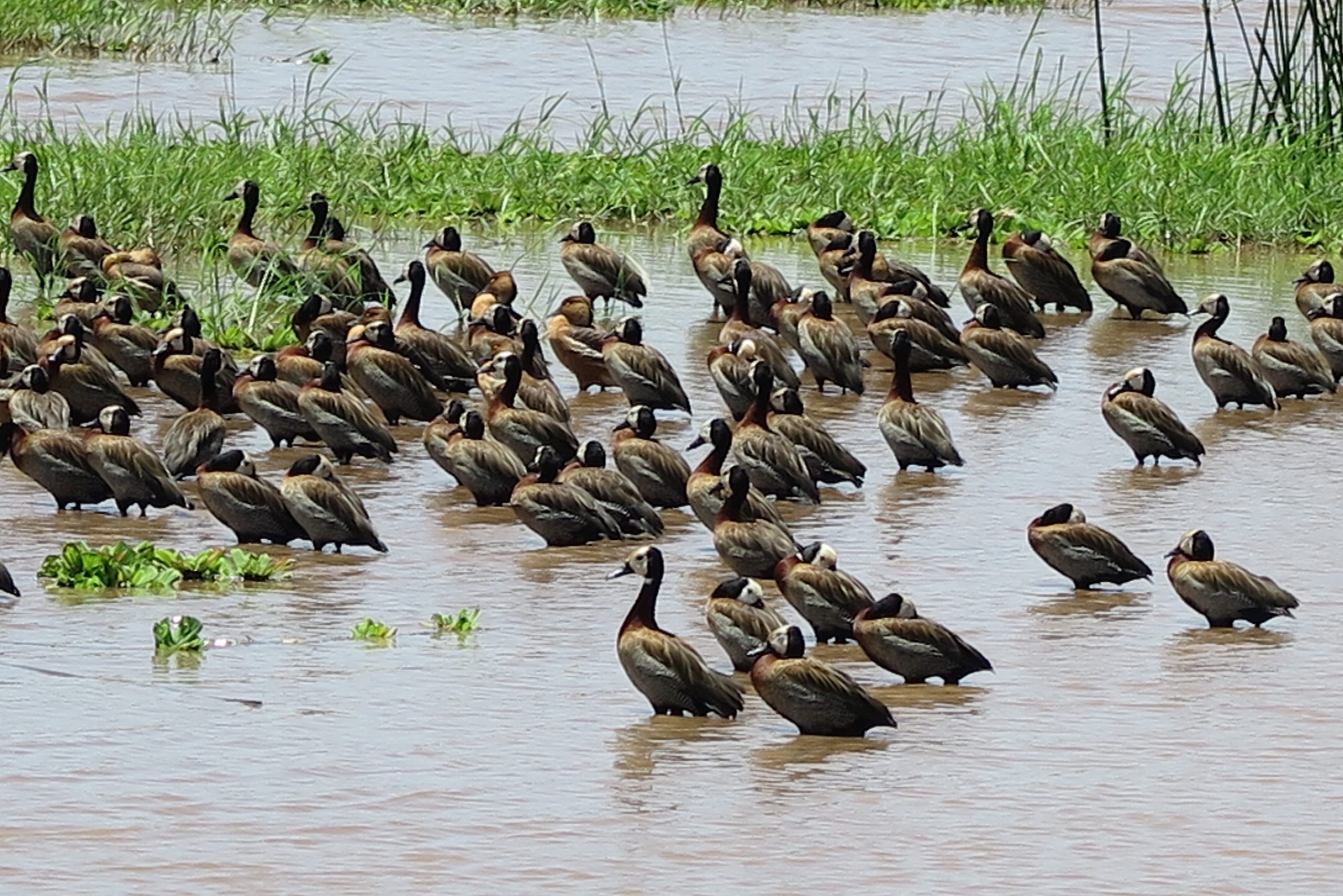
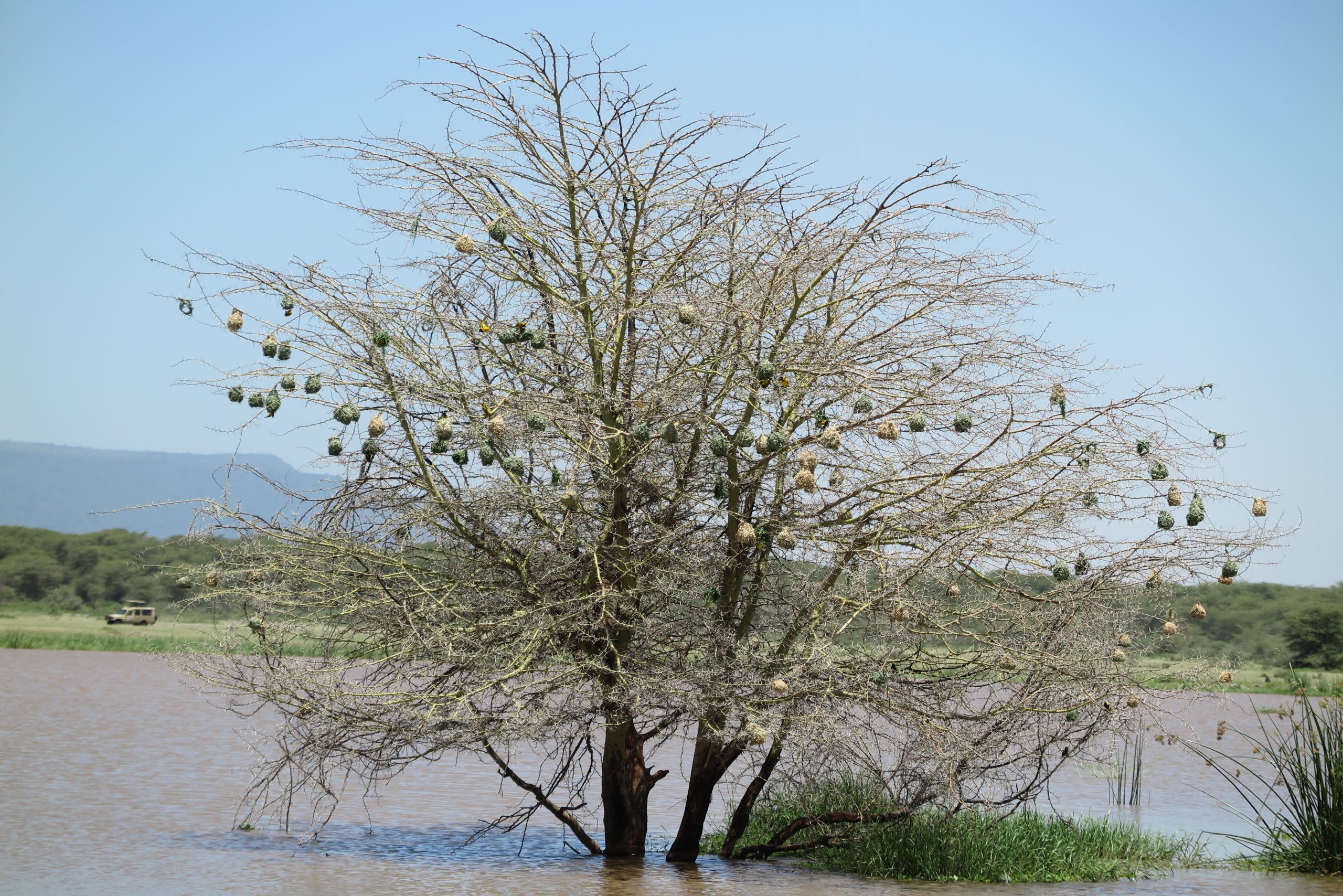
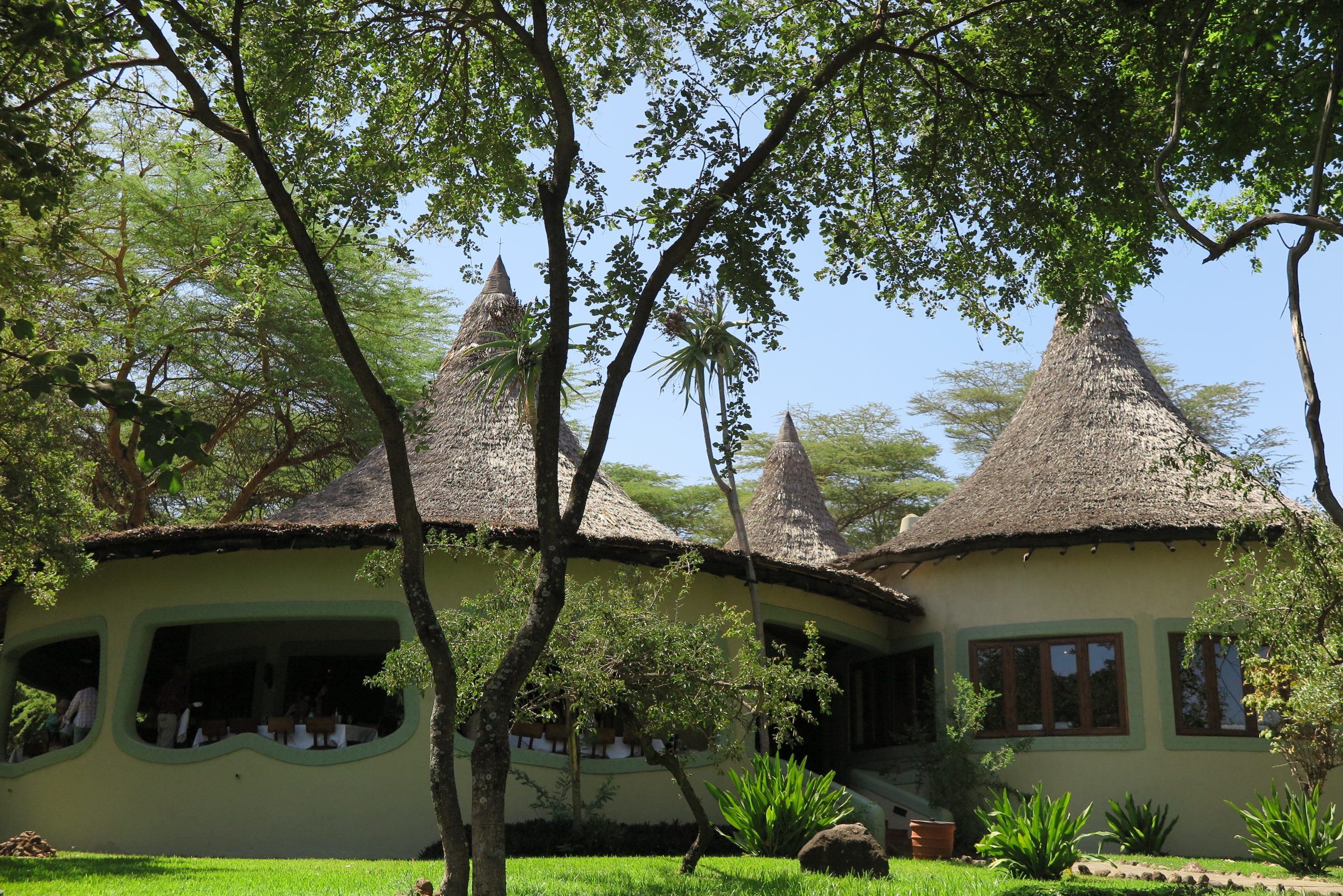
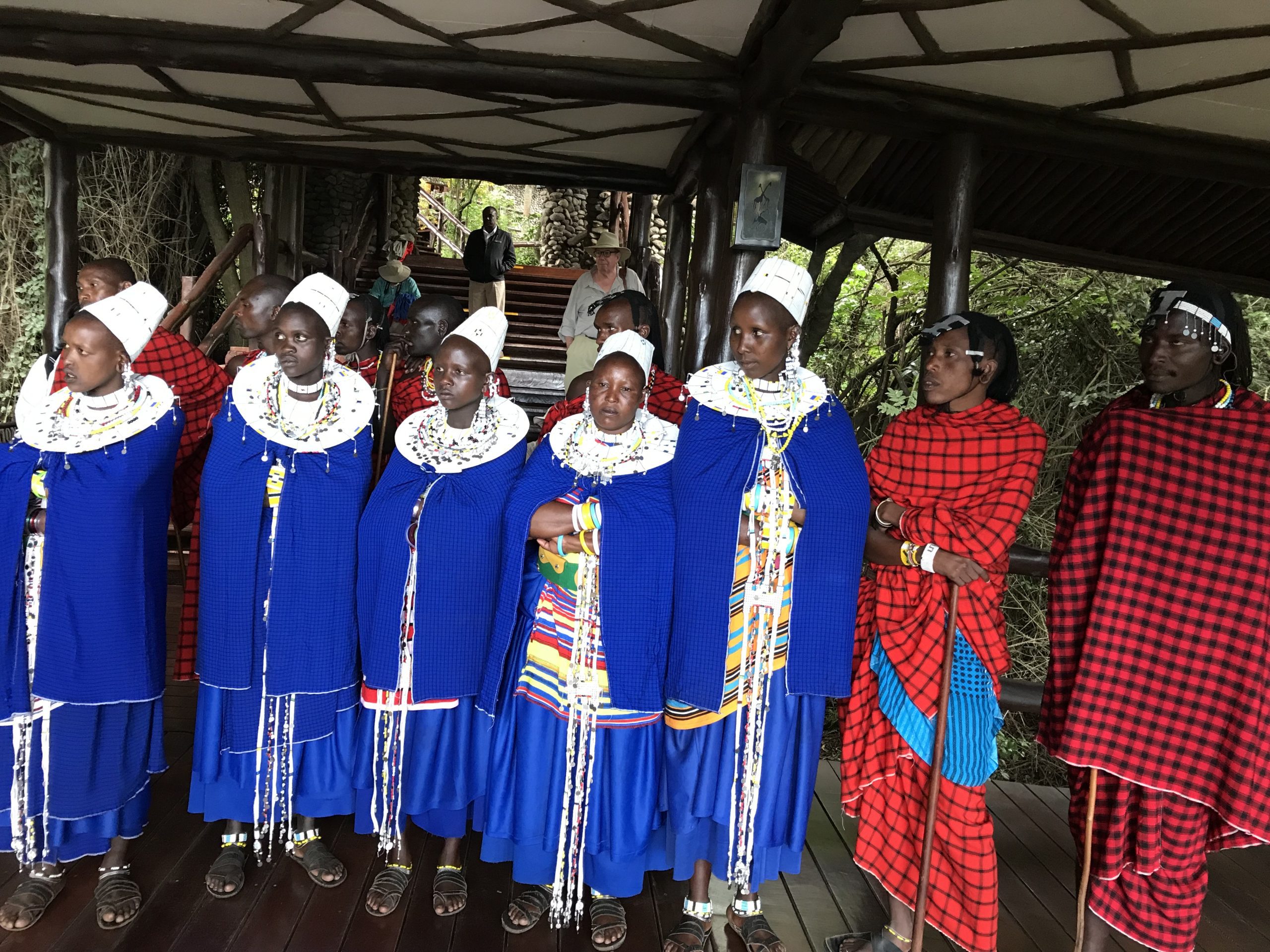
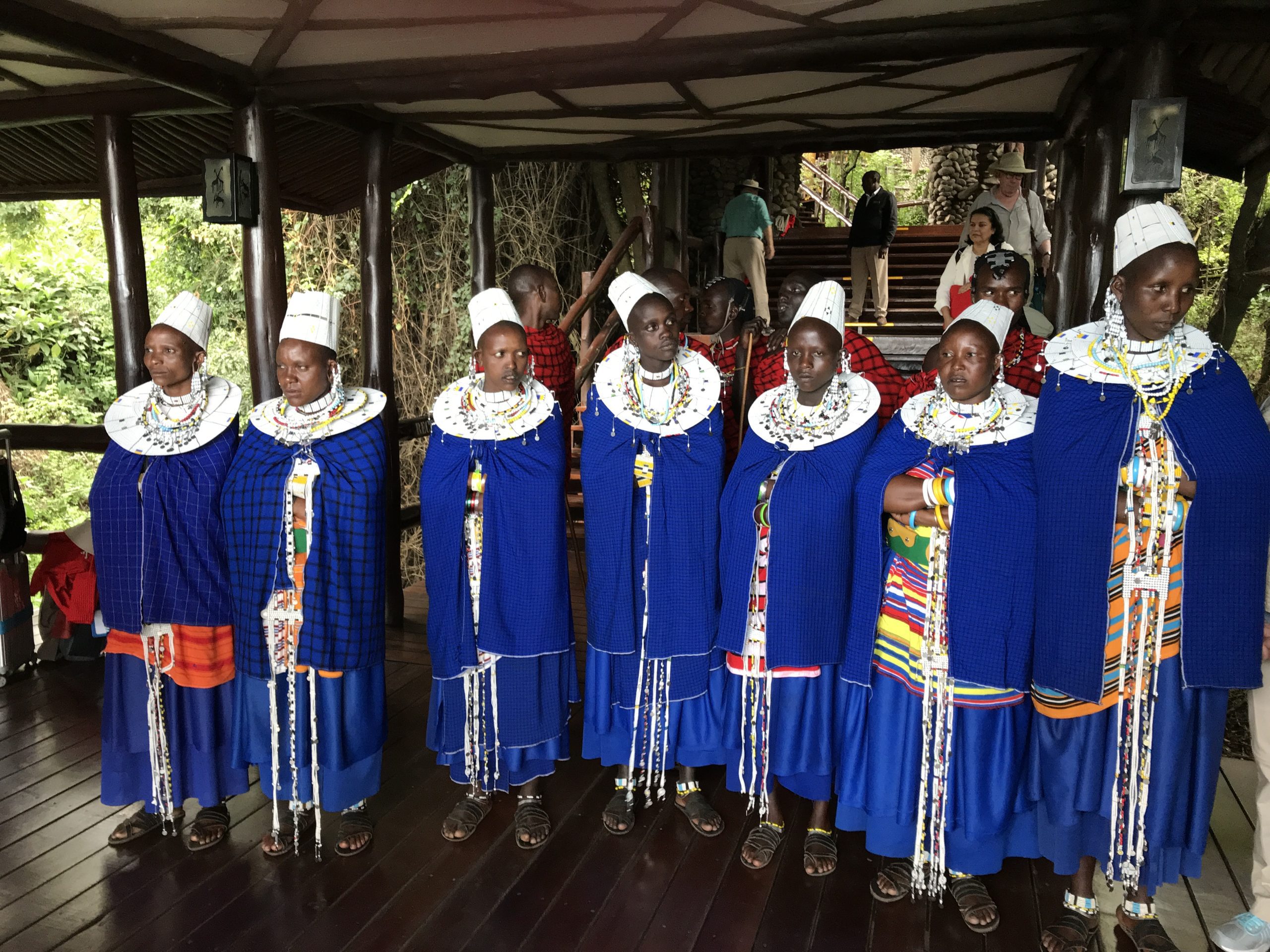
The journey to Ngorongoro and the Serena Lodge located at the crater’s edge was long. The caldera spans approximately 12 miles in diameter, with the rim rising nearly 1200-1600 feet above the floor. Renowned as the largest unflooded intact caldera and one of nature’s wonders, it teems with wildlife and avian species, including blue monkeys, wildebeest, zebras, hippos, black egrets, and ducks. Upon our arrival at the lodge, we were greeted by Maasai singing, dancing, and jumping in welcome.
Ngorongoro Crater: Africa’s Garden of Eden – February 5, 2018
Safari comes from the Arabic word Safara, meaning to unveil, hence to discover, or to enter upon a journey. The noun, safariya, refers to a voyage or expedition. In Swahili, safari refers to any trip or journey.
We rose for the sunrise over the crater this morning. The anticipation was more exciting than the actual event which occurred very suddenly and was over in a blink.
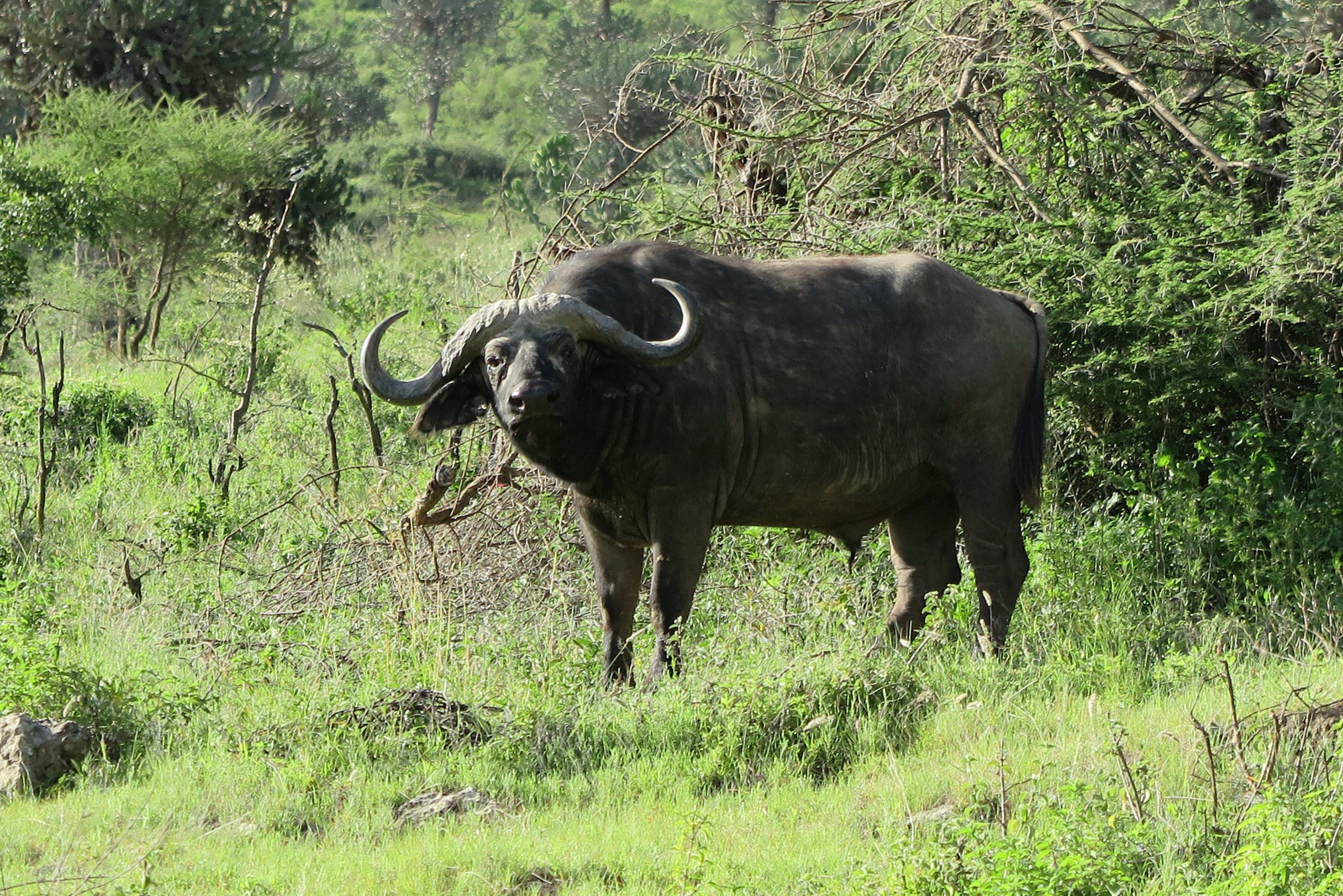
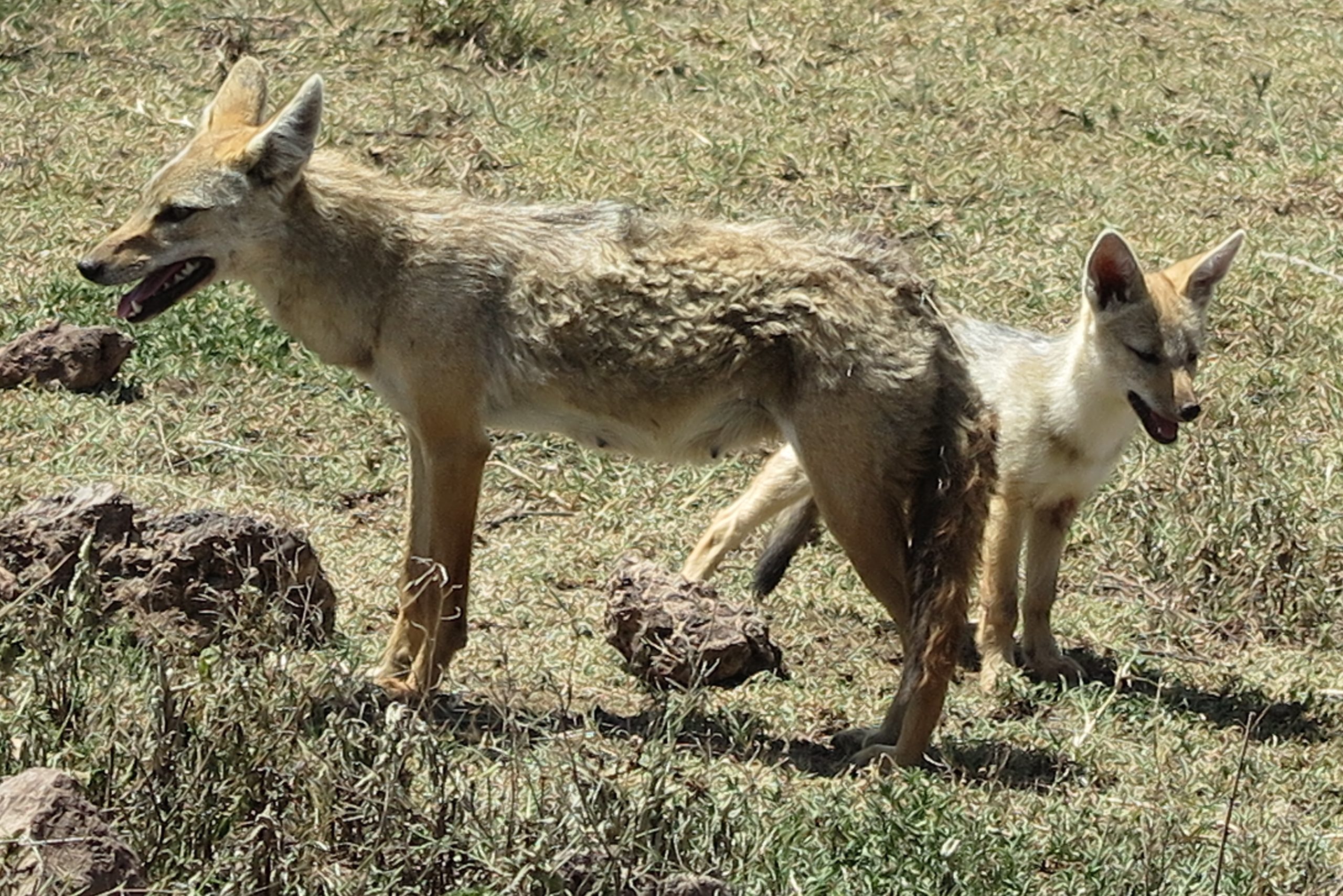
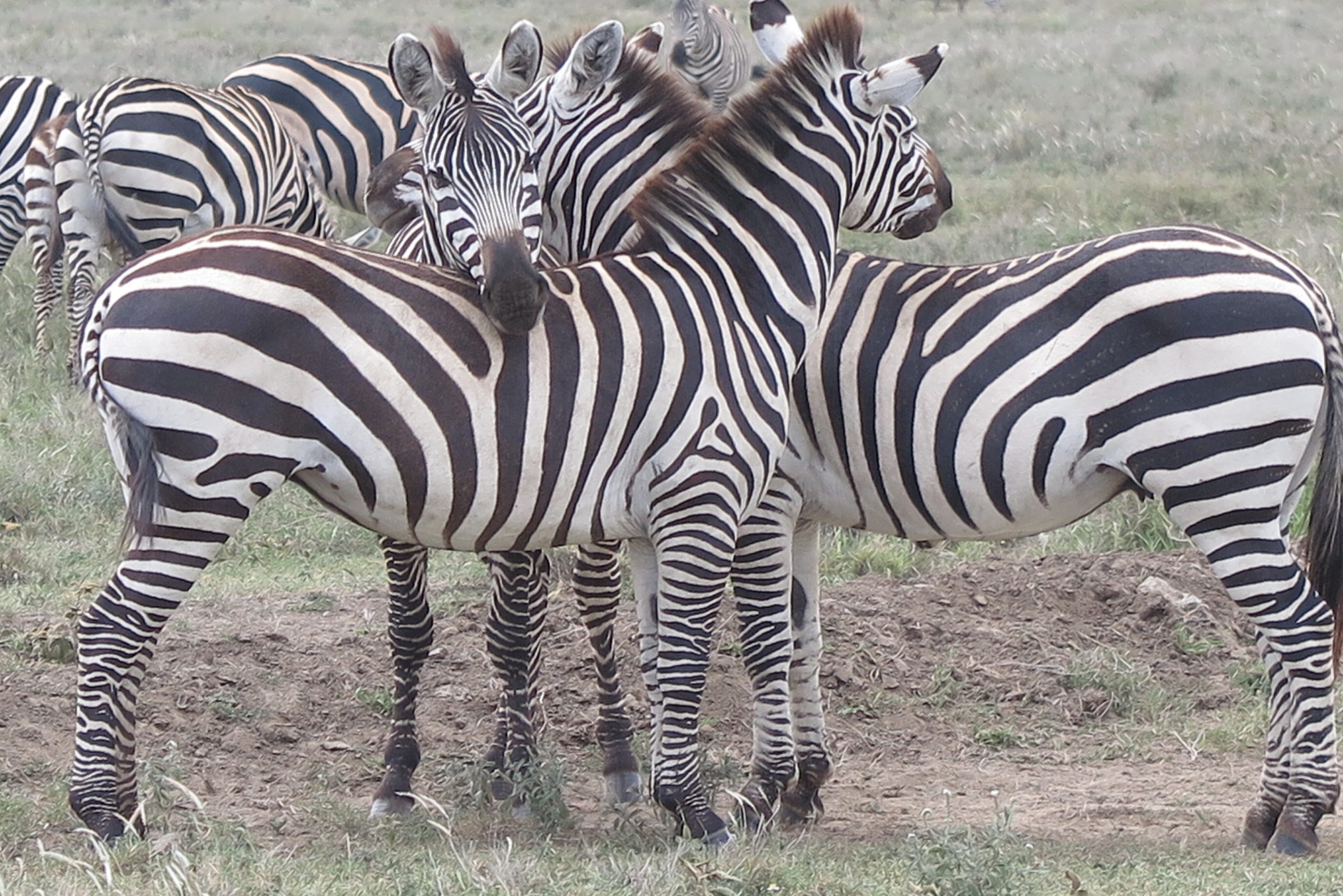
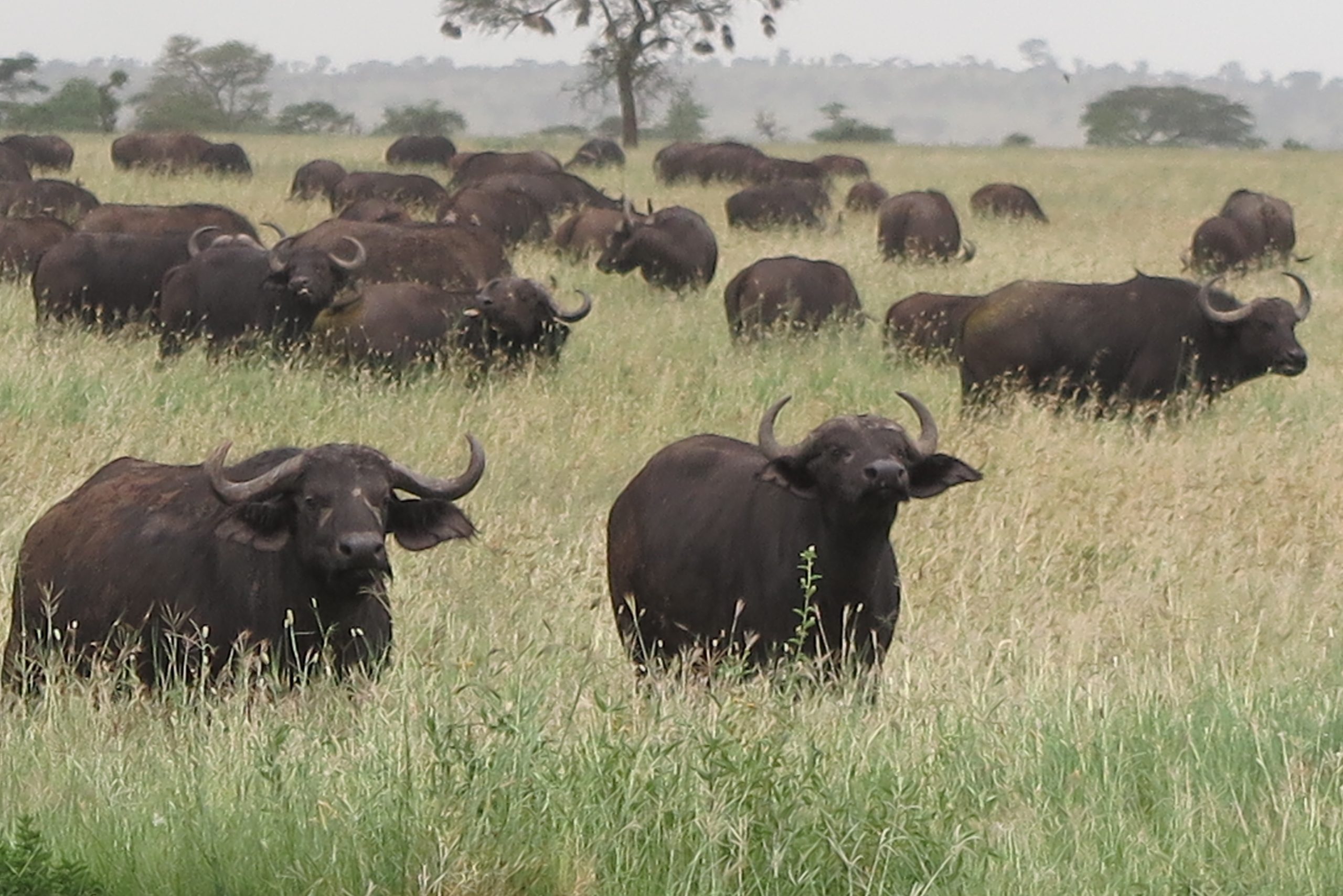
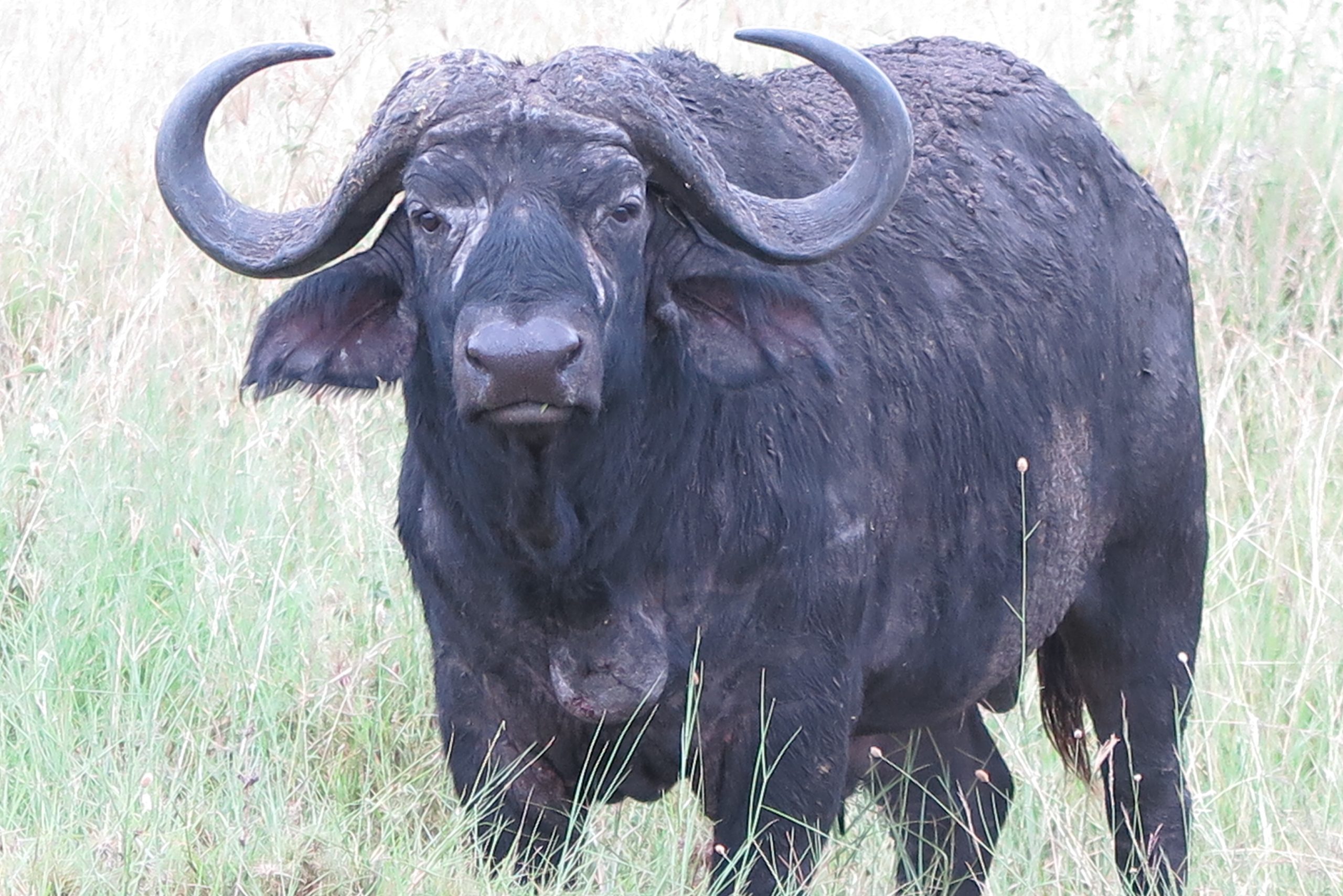
The drive this morning gave us our first taste of the range of animals we would see: cape buffalo, hippos, elephants, lions, zebras, gazelles, hyenas, jackals. We had a picnic lunch under trees filled with kites. Kites are very aggressive birds and are inclined to snatch the food right off your plate, so we had attendants whose job it was to shoo them away.
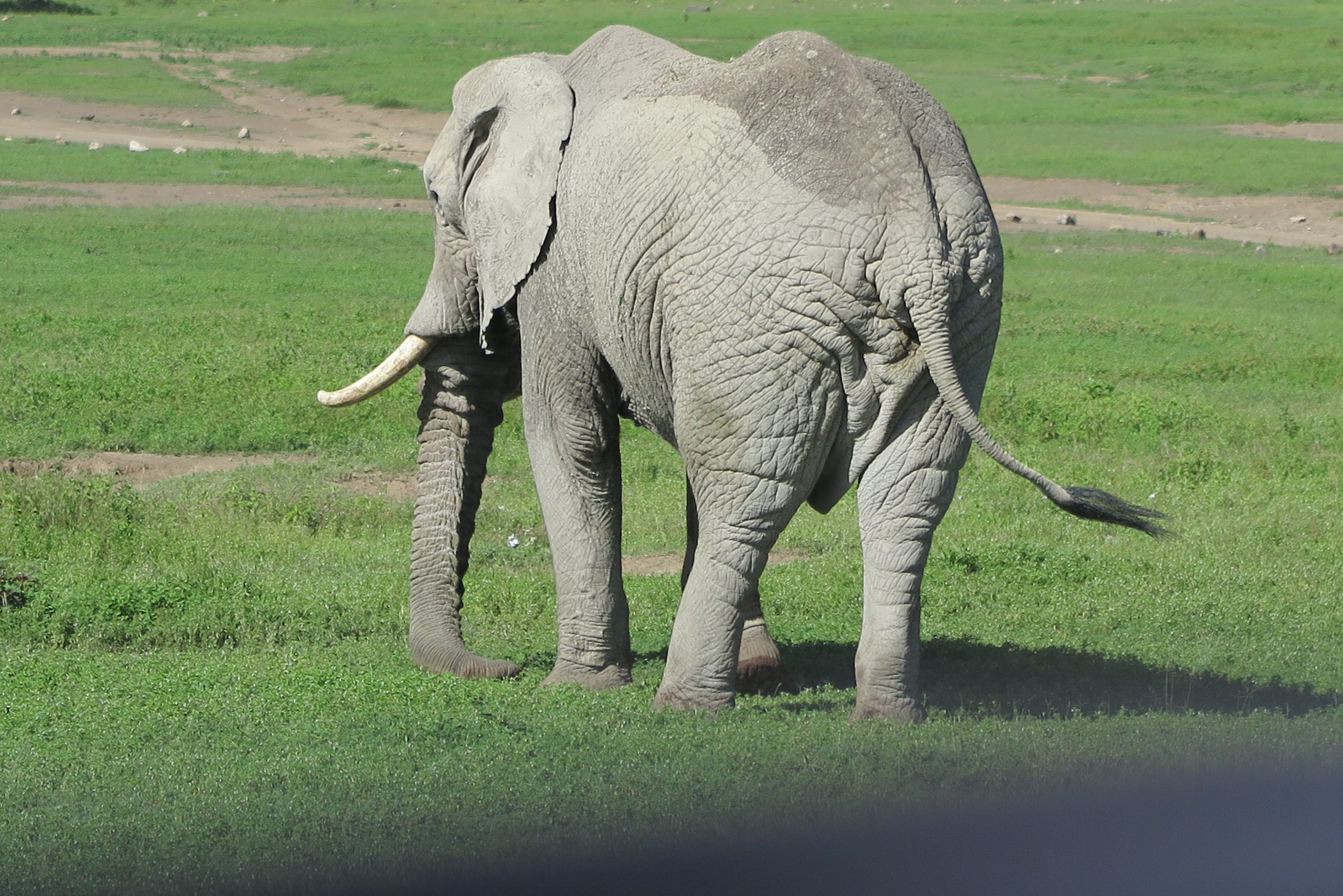
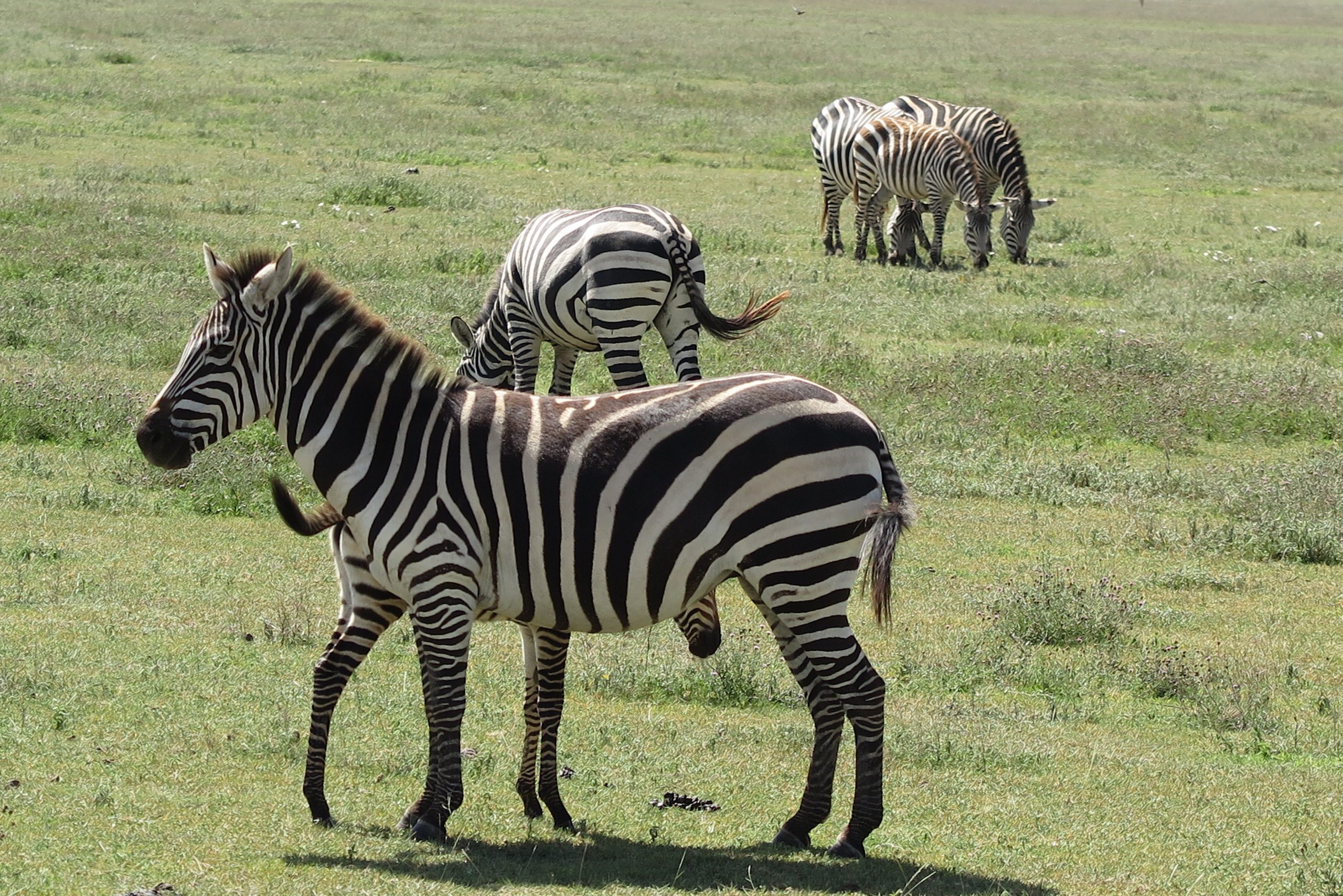
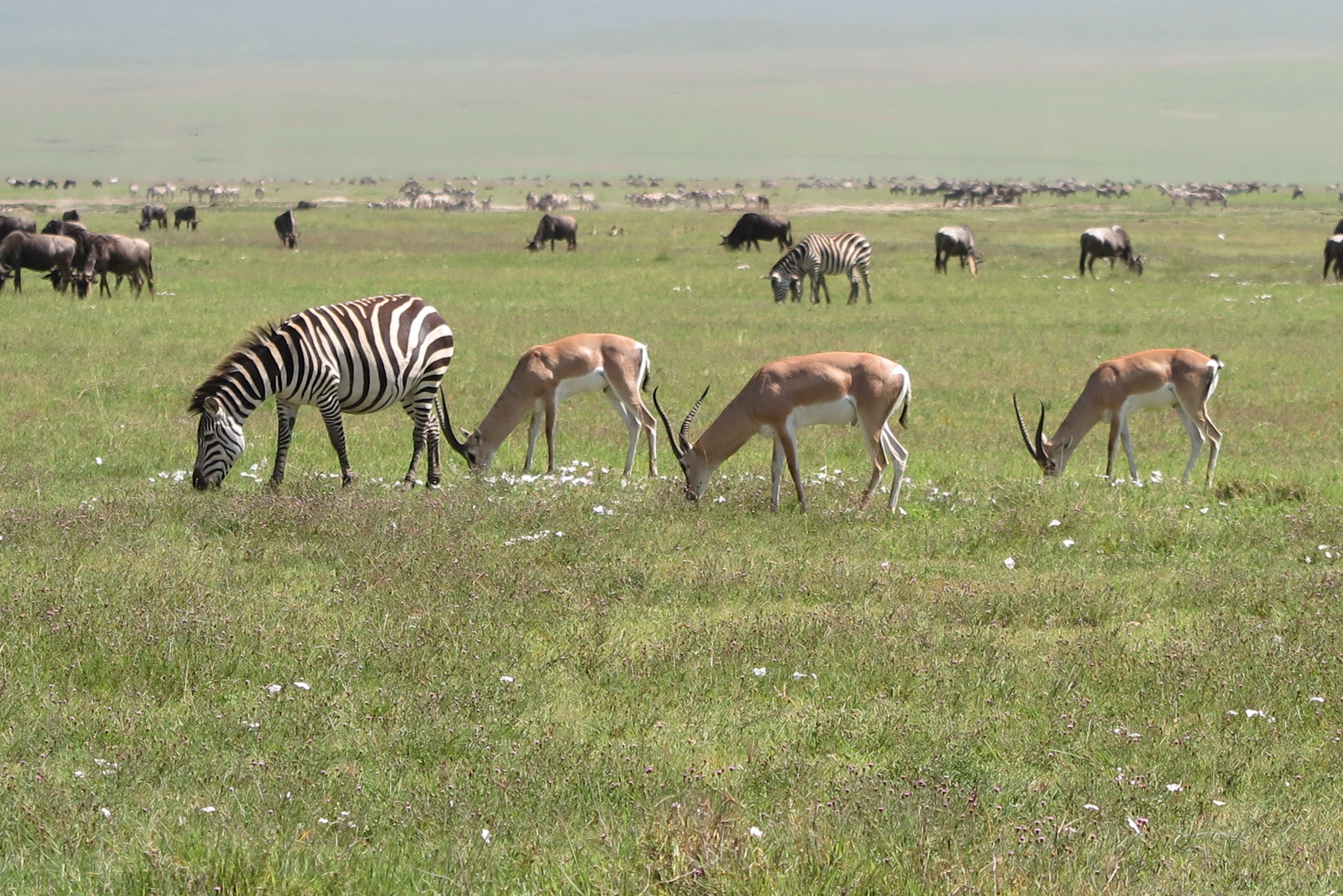
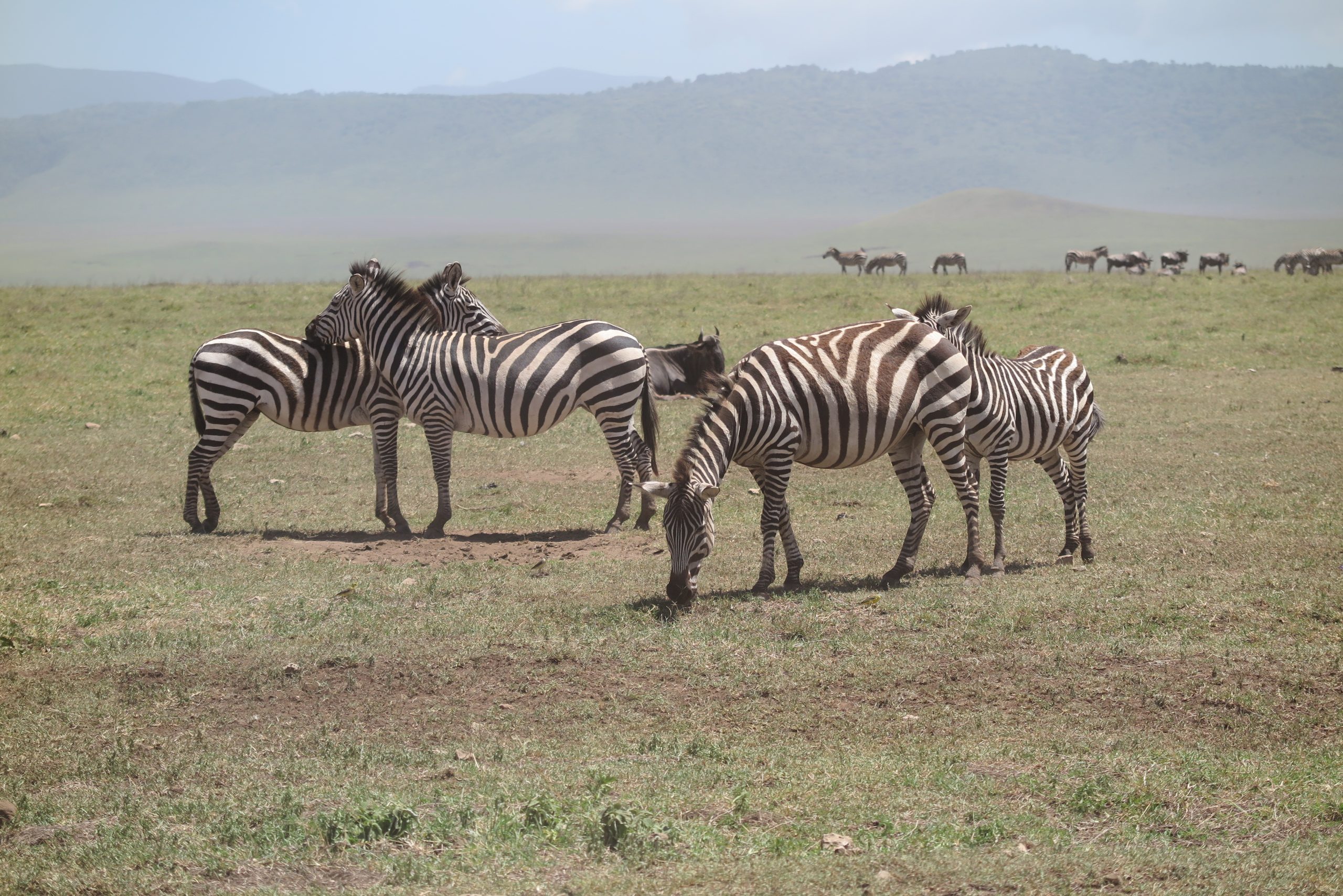
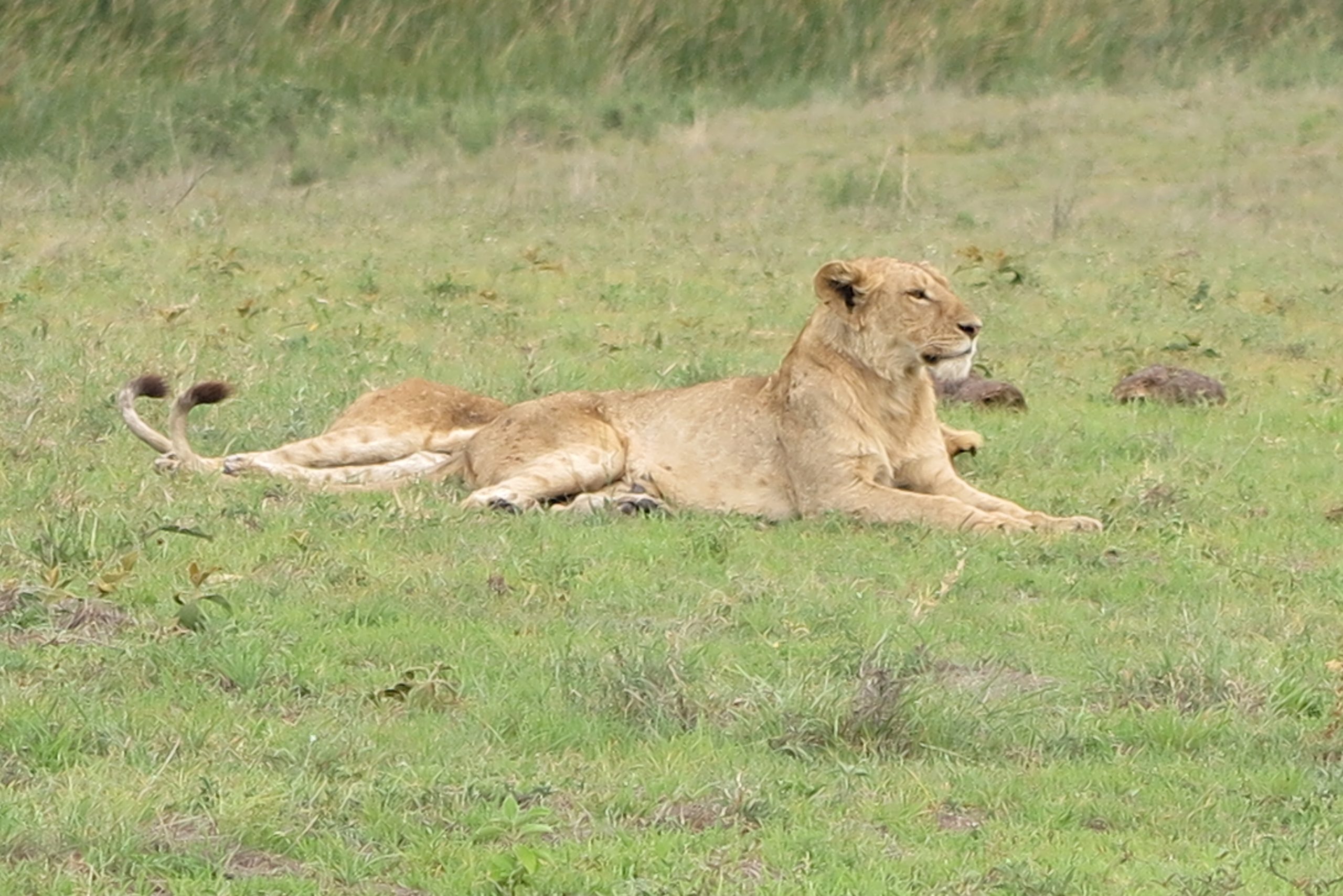
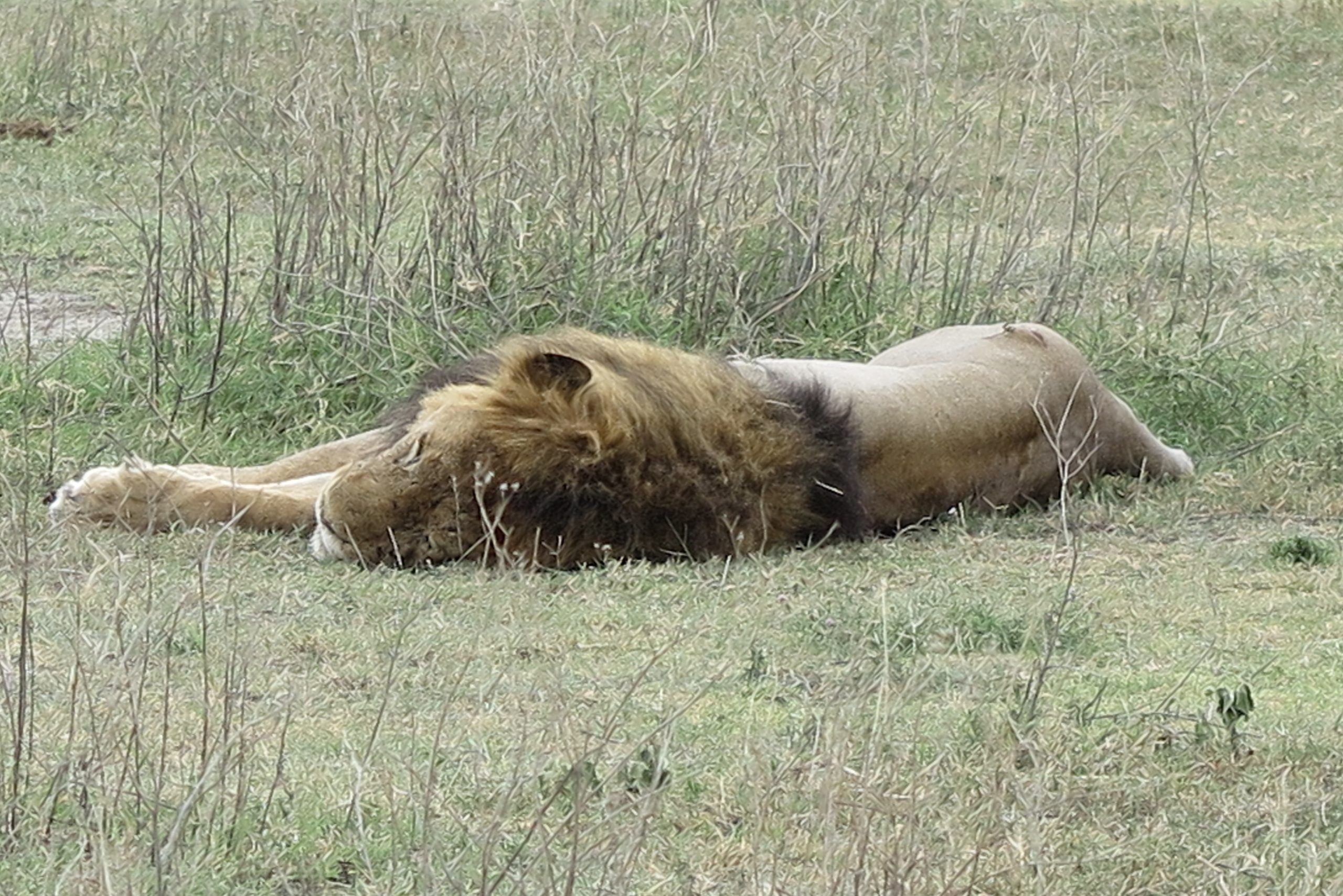
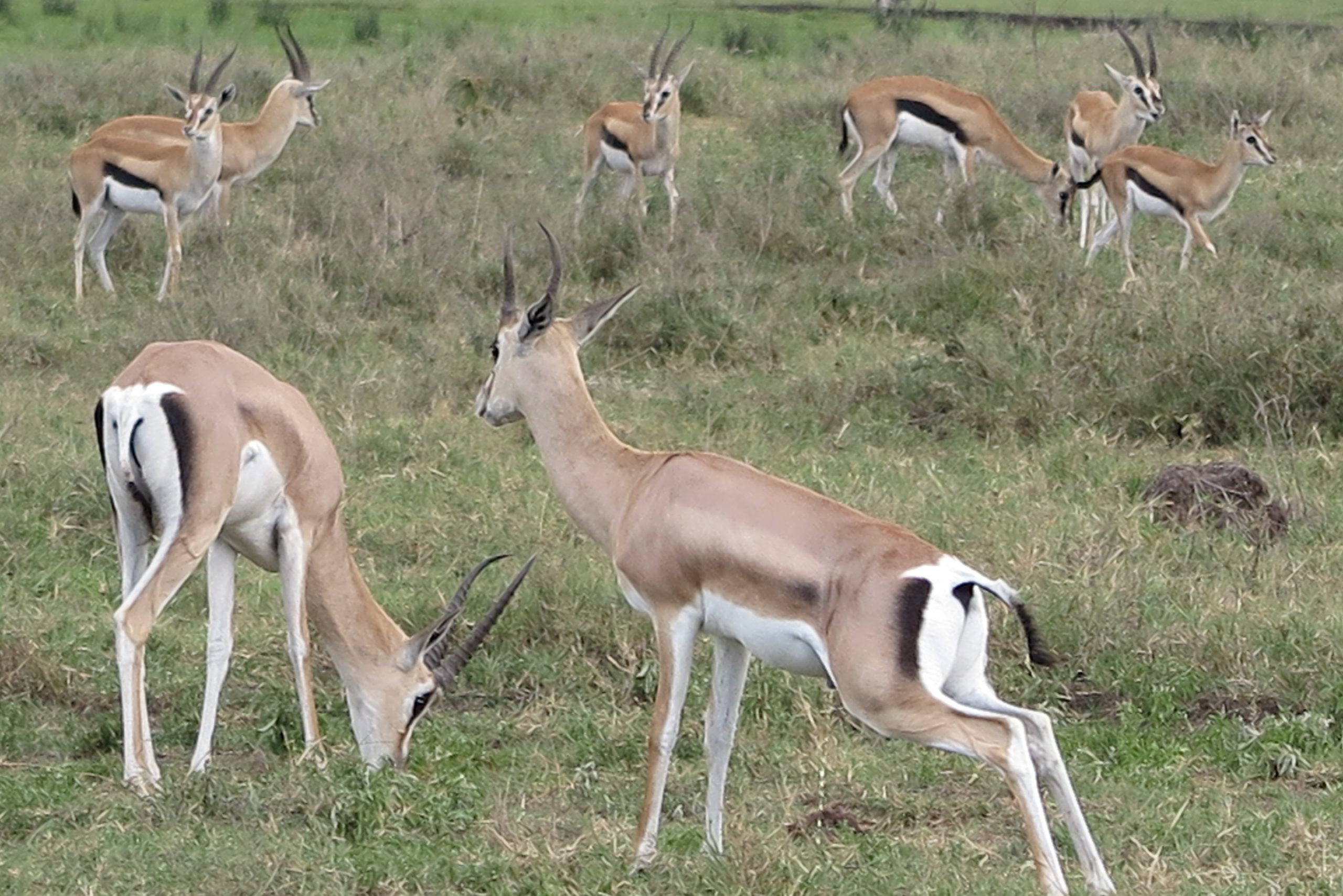
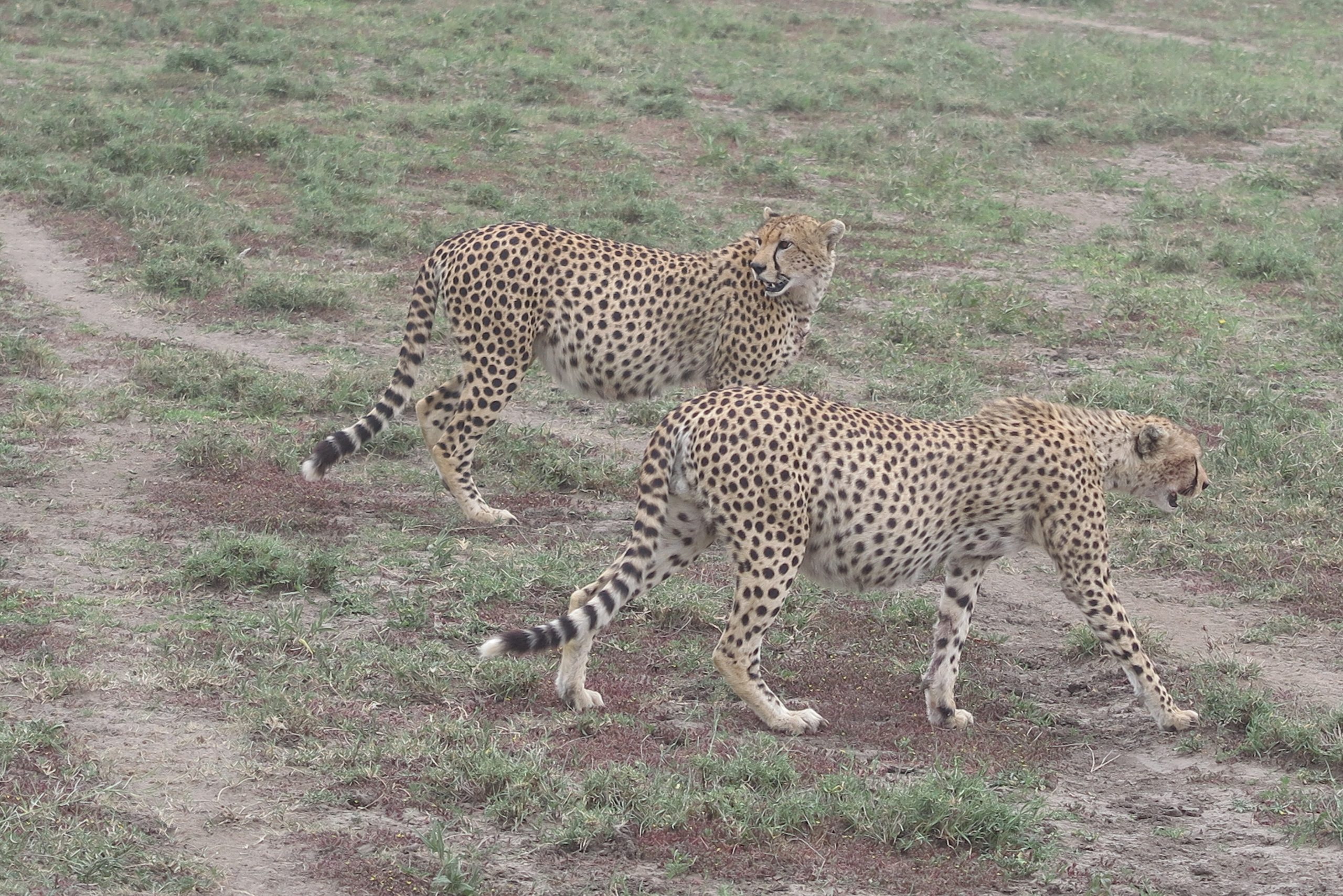
In the afternoon we saw two cheetahs close enough to see the tear markings on their faces. We also saw a hyena kill a baby wildebeest. And we learned to distinguish between a Grant gazelle and a Thompson gazelle.
This evening, we saw a BBC film about filming animals at night.
Dawn Migration and Oldupai Discovery – February 6, 2018
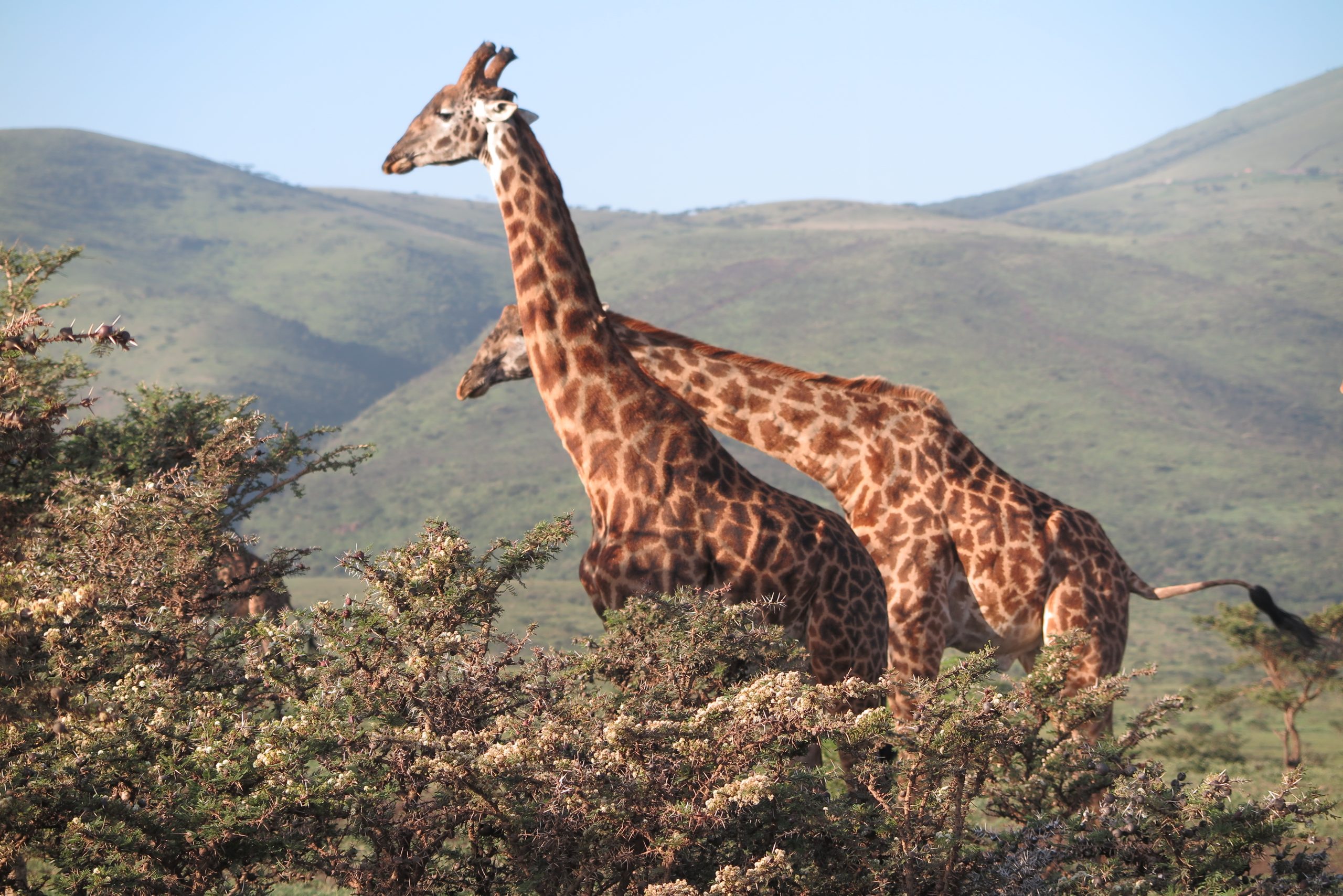
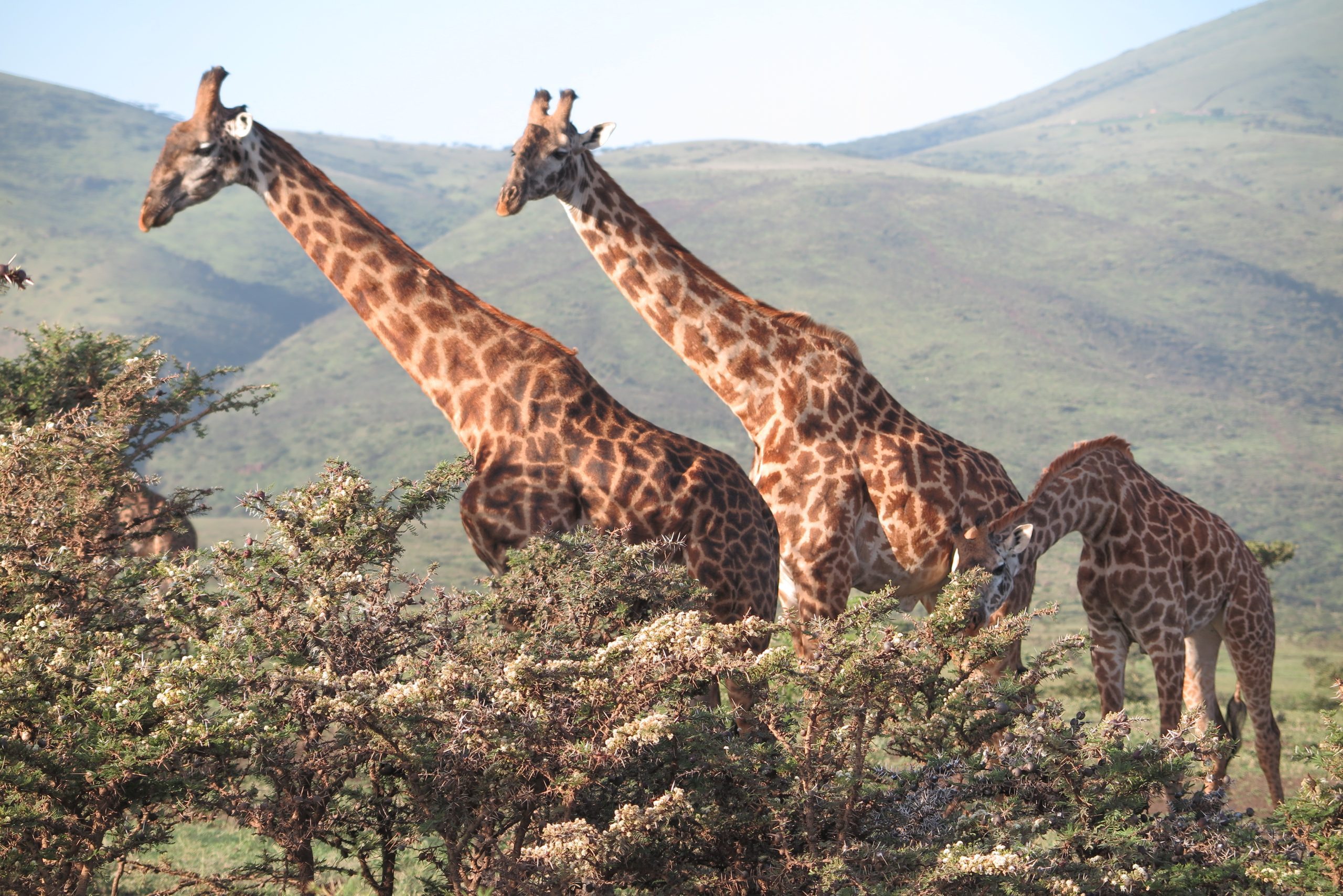
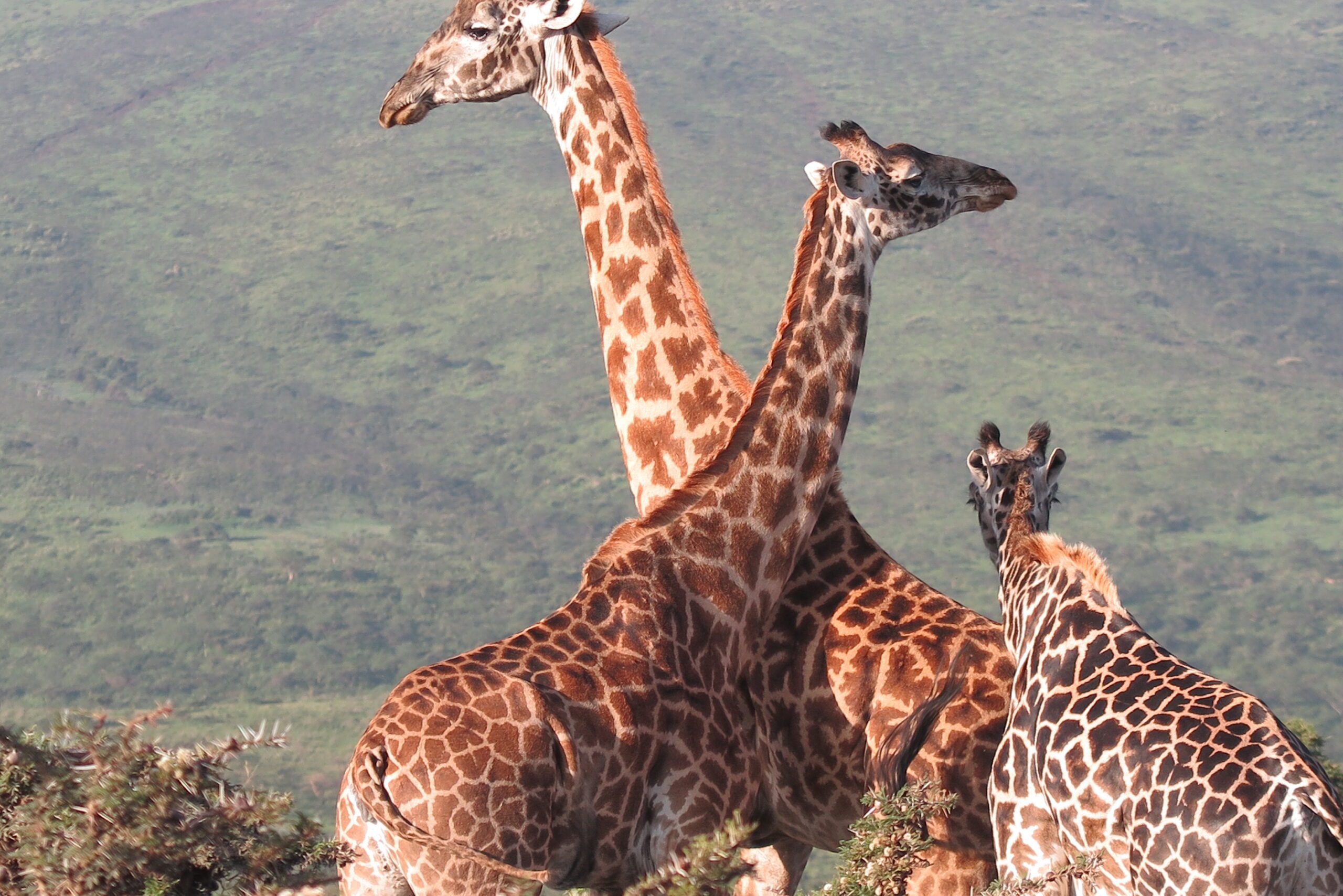
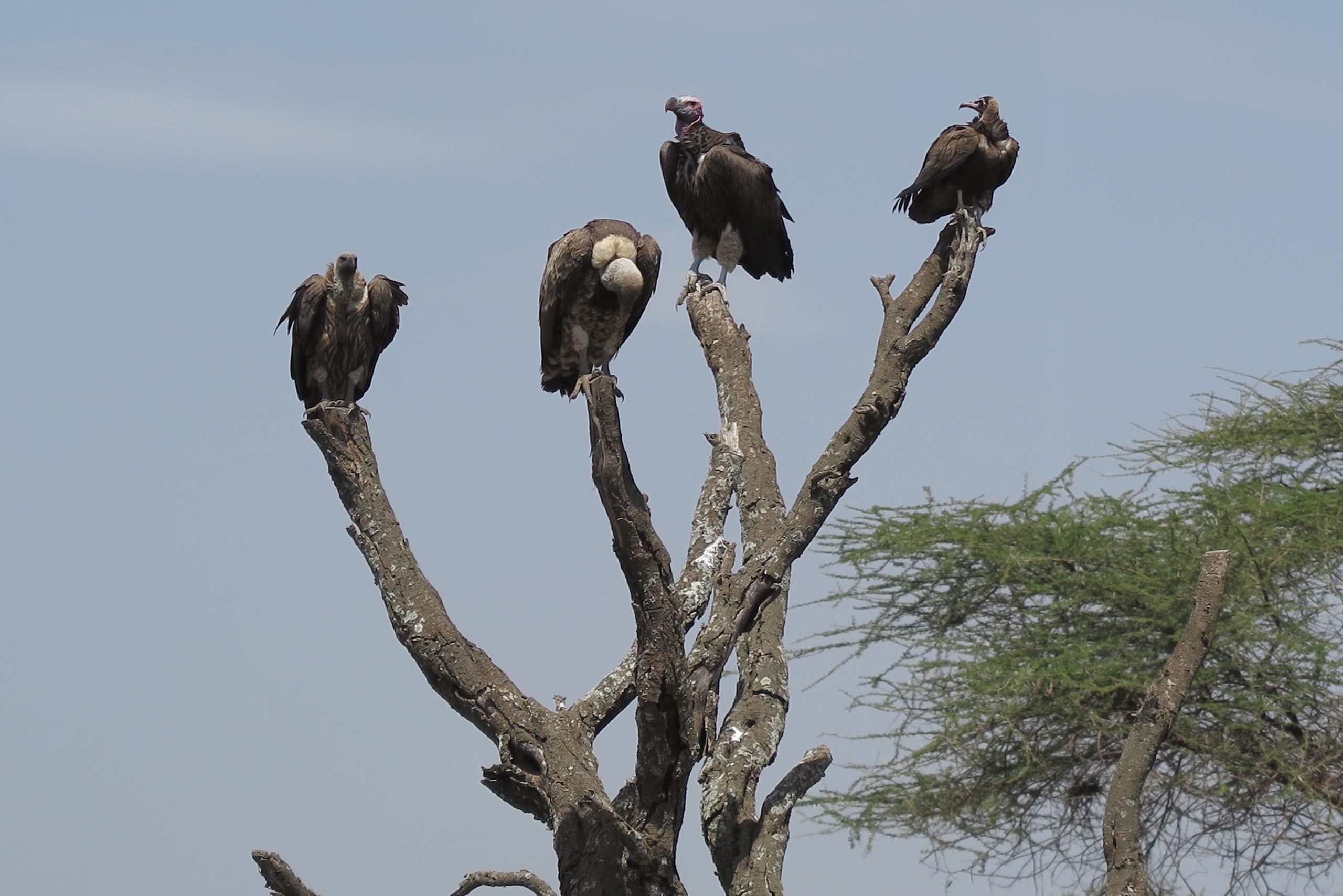
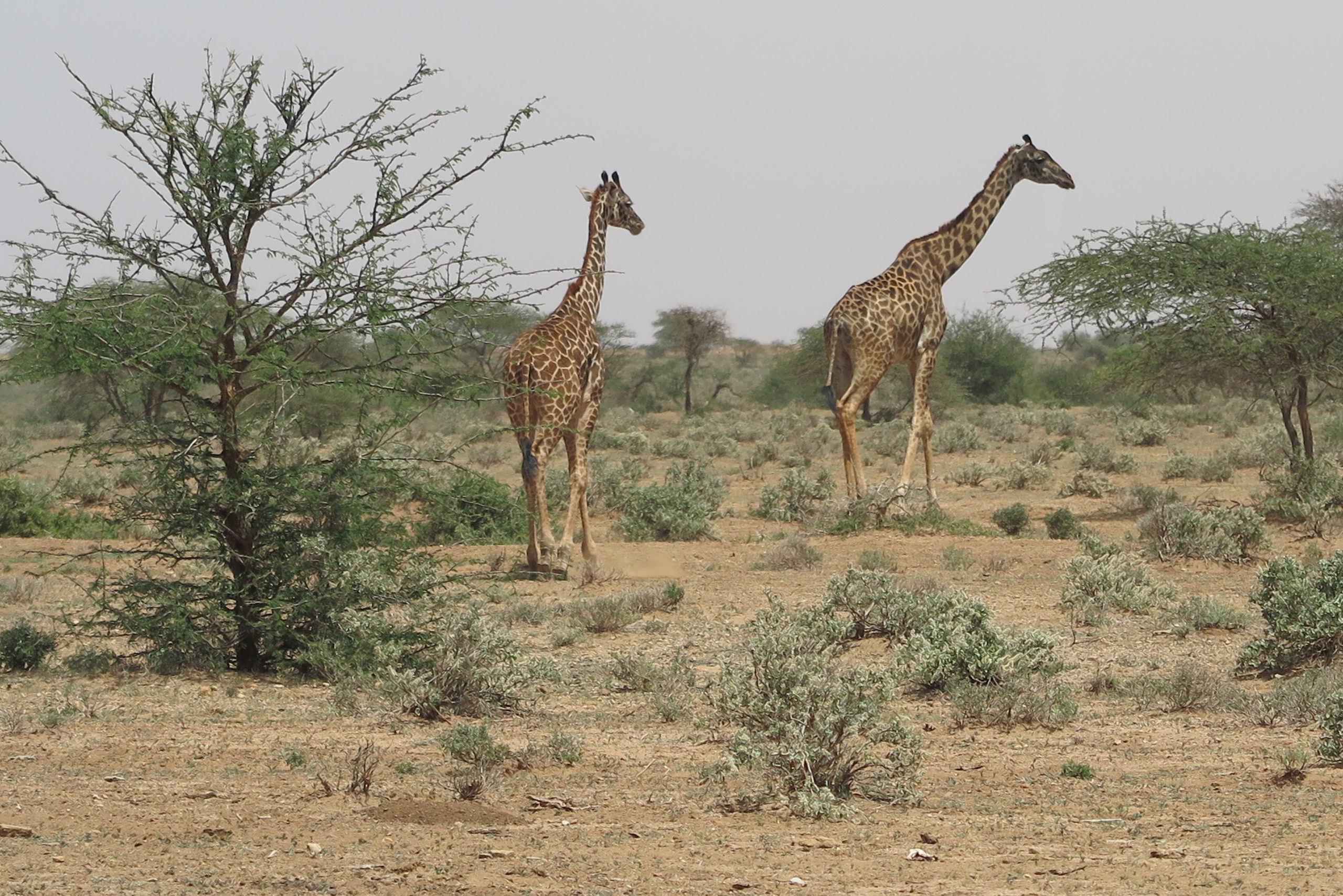
We set out at the crack of dawn to see the great migration. Soon upon our departure and as promised by Eric, we had our first glimpse of giraffes feasting on trees that were taller than them. The drive towards the Serengeti, was excessively bumpy and dusty. We saw hundreds of wildebeests moving south towards the Serengeti. Along the way we saw giraffes, cranes, storks, vultures, secretary birds, buzzards, lions, African hare, and a leopard.
We visited Oldupai Gorge where we had a brief lecture on the discovery of Early Man. Oldupai Gorge is considered the seat of humanity after the discovery of the earliest known specimens of the human genus, homo habiles (handyman). Oldupai is in a steep-sided ravine in the Great Rift Valley that stretches along eastern Africa. It lies in the rain shadow of the Ngorongoro Highlands and is very dry. Oldupai is the Maasai name for sisal which was once a thriving business in Tanzania. Fiber extracted from the sisal plant was used to make rope. Mary and Louis Leakey did excavation work here in the 50s. In 1978 Mary Leakey discovered footprints in the volcanic ash at a site called Laetoli near Oldupai, some 3.5 million years old, of two adults and a child hominid. There is a museum in the gorge that maps the work of the Leakeys in this area.
In the afternoon we began to move out of the Ngorongoro Conservancy and into the Serengeti. This is calving season for the animals and if it’s too dry and there is no water, the wildebeest can delay giving birth by almost a month. Amazing how nature works.
Tonight, we are at the Four Seasons in the Serengeti National Park. This is a stunning property and a favorite of the Tanzanian President. The rooms are large and luxurious. At dinner, we sampled a few African dishes, a first as the cuisine seems to be either Indian or Western.
One of the peculiarities of this hotel, is that a Maasai had to accompany us to and from our rooms after dark. Our guess is that they would make a lot of noise if we were to be attacked by wild animals.
The Serengeti’s Amazing Wildlife – February 7, 2018
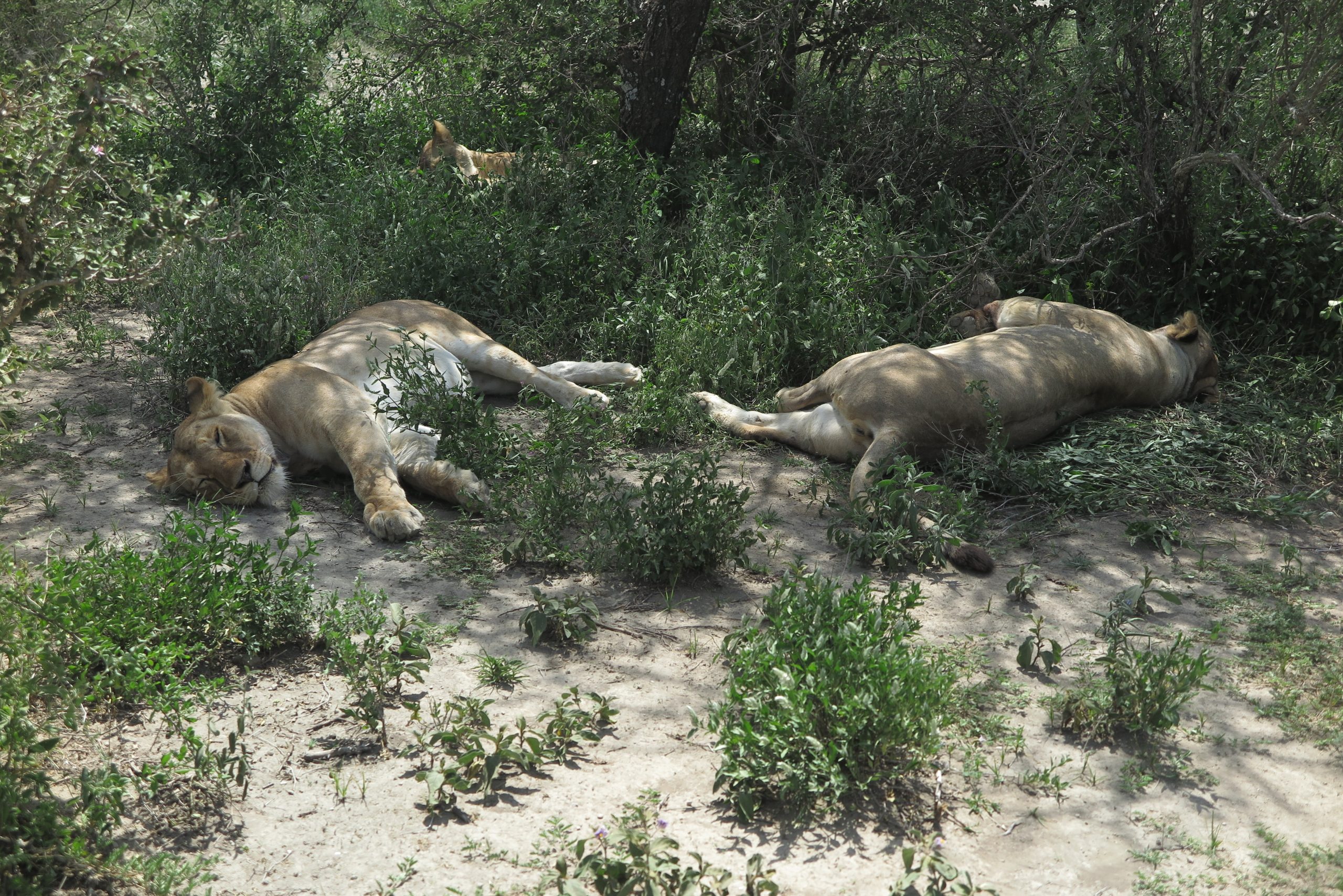
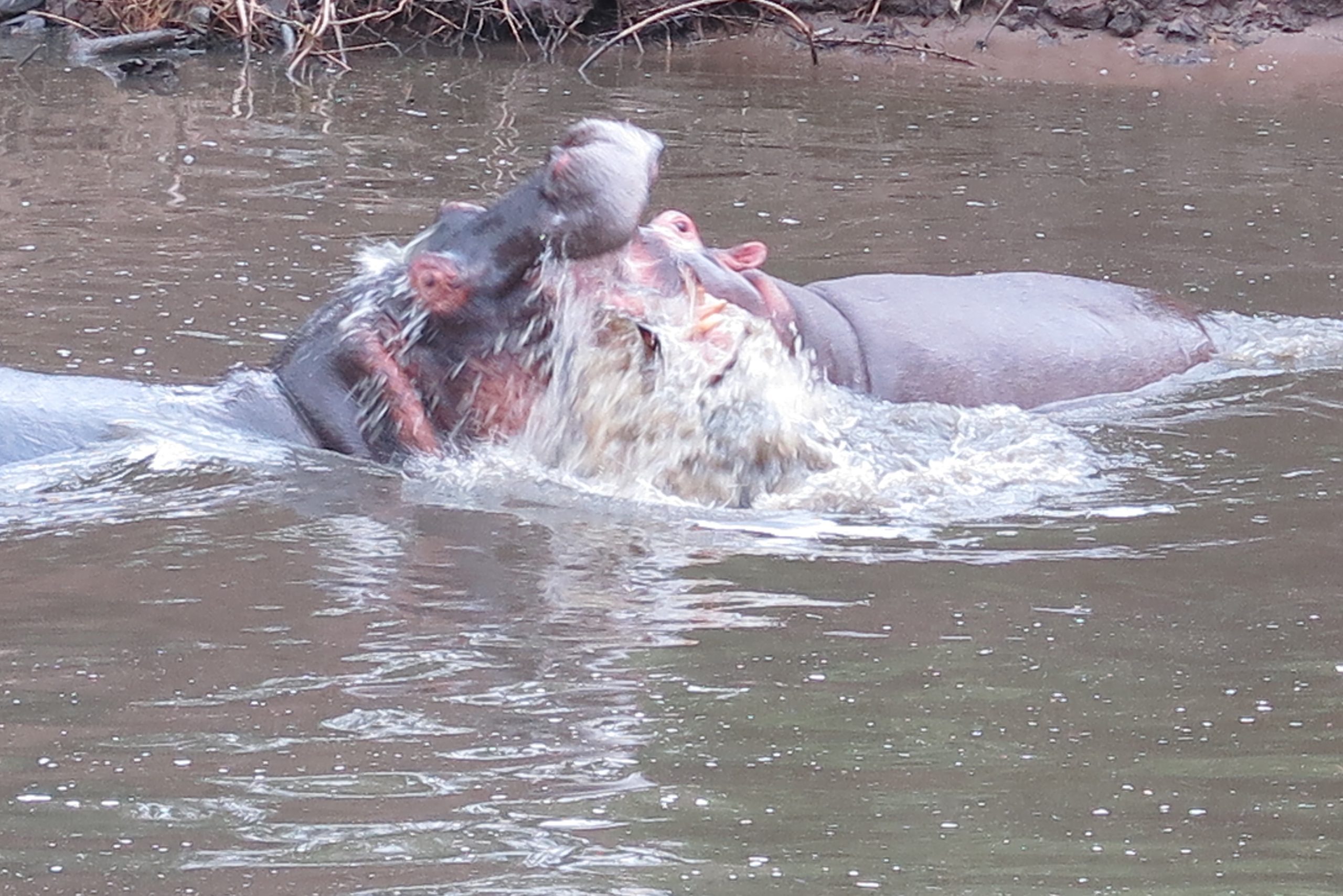
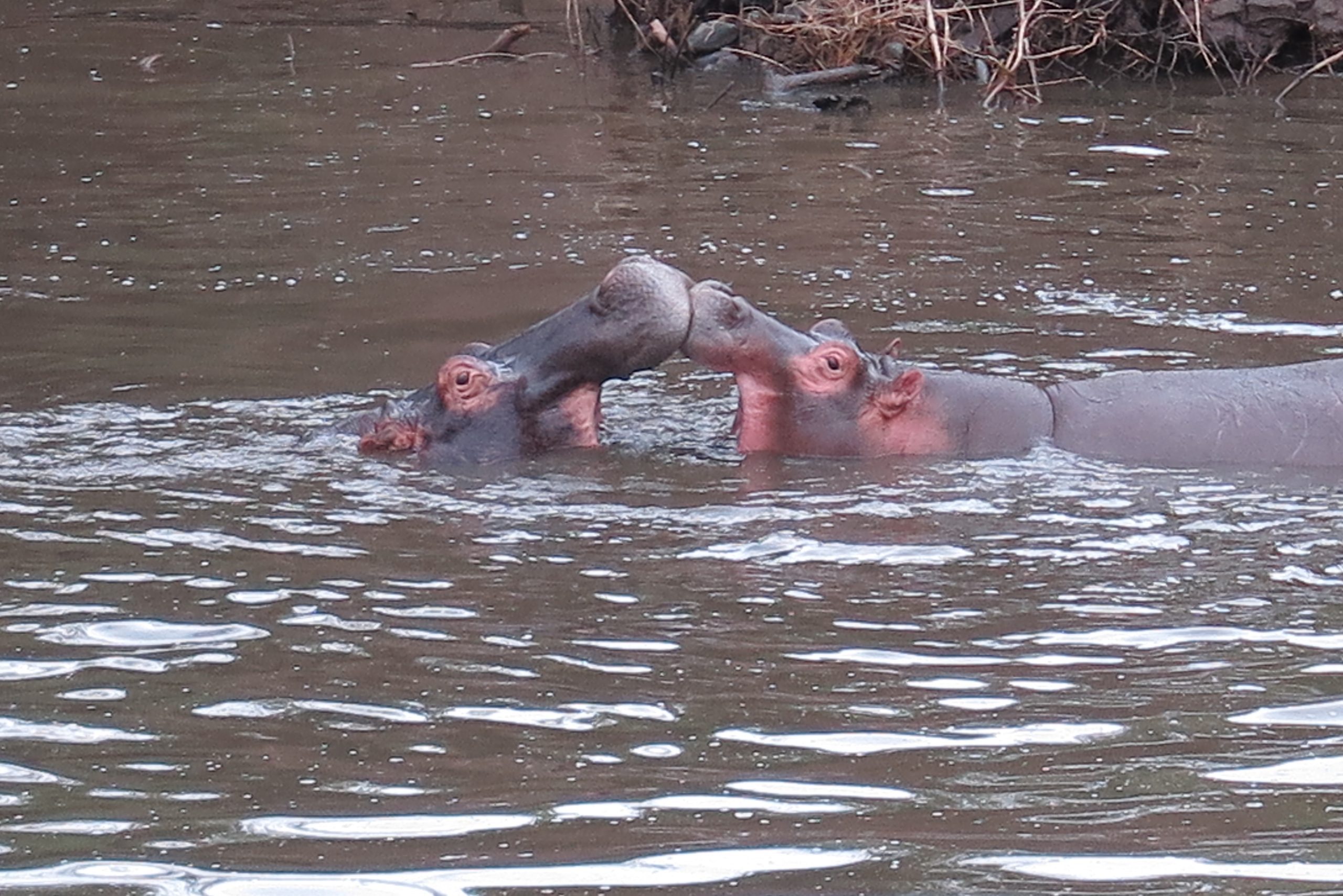
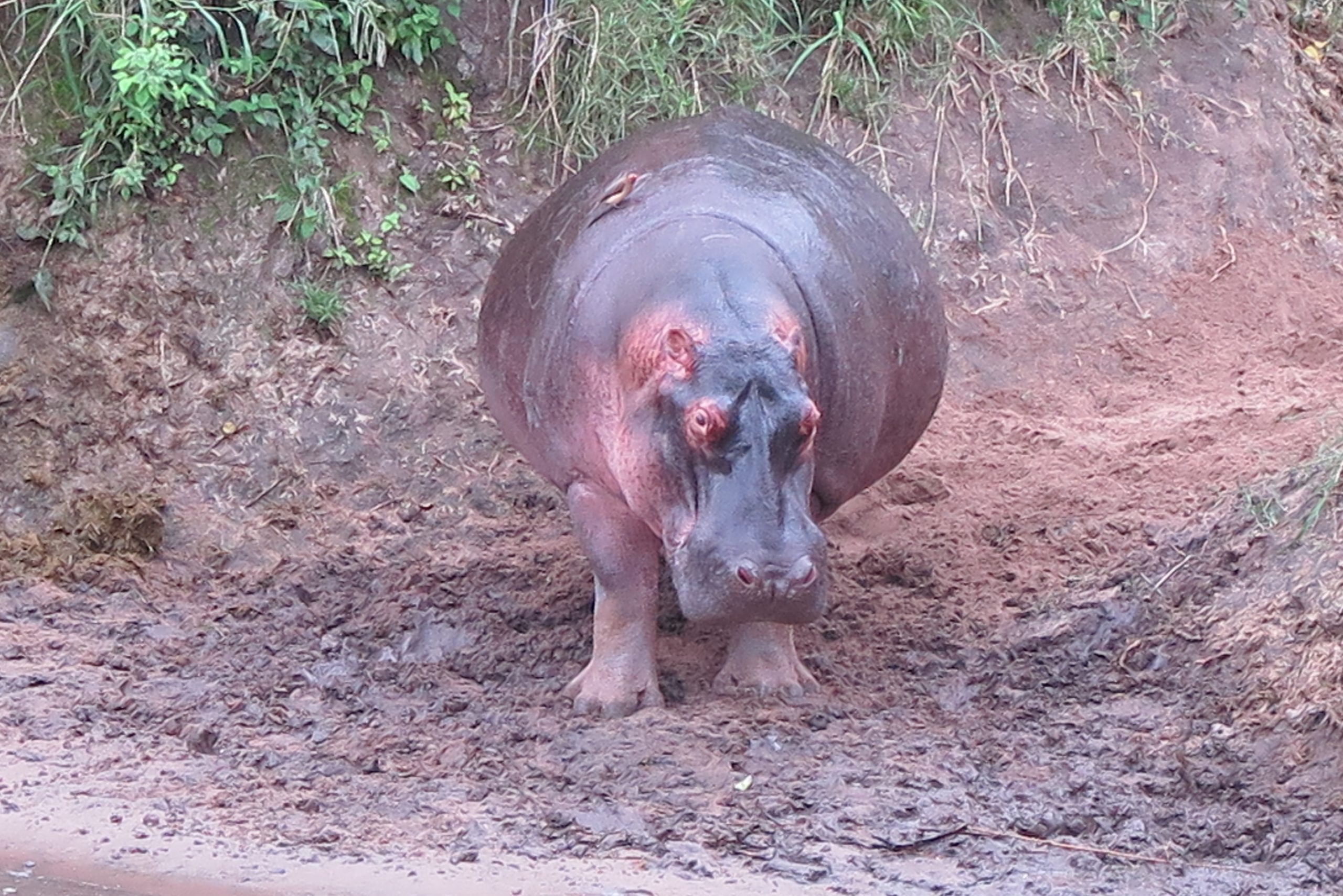
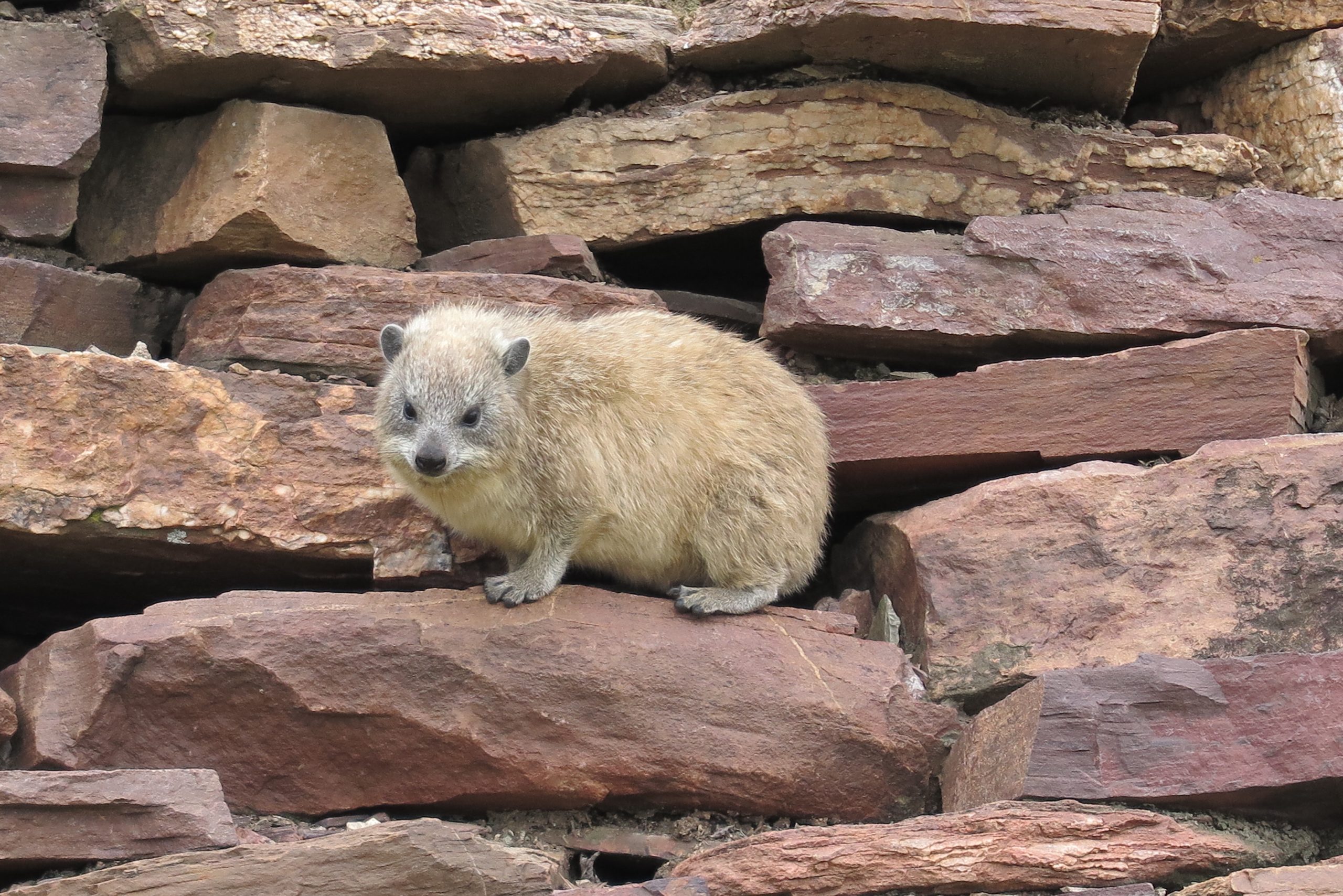
We left early in the morning to see hippos frolicking in a smelly green pool. They were having such a good time that we watched them for almost a half hour. Shortly thereafter, we spotted a leopard sitting side-addle in a tree very well camouflaged. He was difficult to see except for his tail which hung down and gave him away. Midmorning we took a short break at a watering hole and saw hyrax, a diminutive relative of the elephant. On the drive back we saw a male lion and were able to track him until we got really close. We also saw a monitor lizard and a mama and baby leopard tortoise, one of the “little five”. The others are: elephant shrew, antlion, buffalo weaver, and rhino beetle.
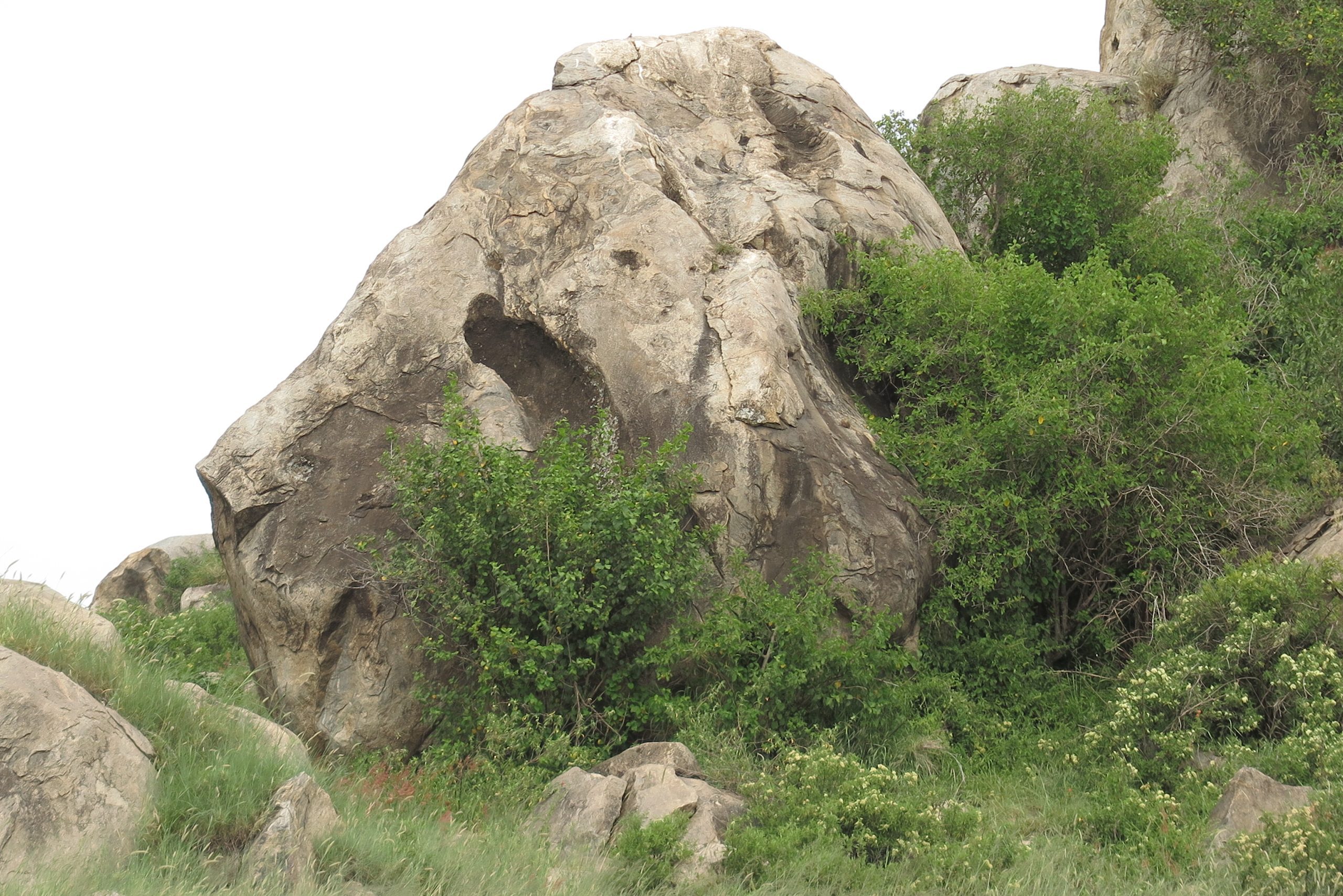
The Serengeti lies on the rain shadow of the Ngorongoro Highlands and is flat and dry. The area we travelled had mostly short grass and 16 varieties of acacia trees. Sprinkled across, are small stone hills called kopjies. One sees these faithfully represented in the Lion King. There are two rainy seasons, March-May and October-November. However, it rained yesterday so today was not very dusty.
This evening we were entertained by the Maasai. Lots of singing, dancing, and jumping. The hotel has a nice discovery center with exhibits on early man, skulls of animals, and a fabulous display of the great migration from month-to-month.
On to Kenya’s Amboseli National Park – February 8, 2018
We said Kwaheri to the Serengeti and drove early this morning to the Seronera airstrip. After a quick scan of our bags to make sure we were not removing anything from the park, we were divided into groups and boarded three separate small planes bound for Arusha. Upon arrival, we made a quick stop at the Cultural Heritage Centre, providing those who hadn’t visited before with a shopping opportunity.
Next, we boarded a bus and drove to the Kenyan border of Namanga, a passthrough town enroute to Nairobi with long lines of trucks waiting to be inspected. The crossing was a hoot. First, we had to queue to checkout of Tanzania where we were fingerprinted again. Then, we had to queue up to check in on the Kenyan side. As soon as we were through, there were more shopping opportunities, this time on the Kenyan side. Then, we drove on to the Amboseli Serena, our home for the next two nights.
The grounds of this lodge are full of monkeys, so the room key chain is fashioned as a club. It’s very solid, long with a rounded edge and heavy to boot. We were warned to keep our screen door locked. Someone in our group forgot to do that and a monkey slipped in and wreaked quite a bit of damage.
Our room and the entire lodge has been hand painted with animal motifs. Whoever did the work must have been an excellent artist as the representations were very good. The lodge is at the foothills of Kilimanjaro. Hemingway wrote Snows of Kilimanjaro at a lodge nearby. Kilimanjaro is difficult to see as it’s always covered by mist. Amboseli National Park is 151 sq. miles and is fortunate to have access to the melting snow of Kilimanjaro. Kilimanjaro is called the Roof of Africa and is the highest freestanding mountain in the world. It lies 3 degrees south of the equator and is a dormant volcano. At 19,340 feet, it is the highest mountain that can be climbed without technical equipment. Originally a part of British East Africa, it was given to Kaiser Wilhelm as a gift by Queen Victoria. Although existence of the mountain was reported by Ptolemy of Alexandria in 2 AD and by Chinese traders in Zanzibar in the 13-14th centuries and in 1849 by a German missionary, the reports were discounted by the Royal Geographic Society. In 1889 a German geographer and an Austrian mountaineer scaled the mountain, and the issue was finally laid to rest. Kilimanjaro, meaning White Mountain or Our Mountain, existed.
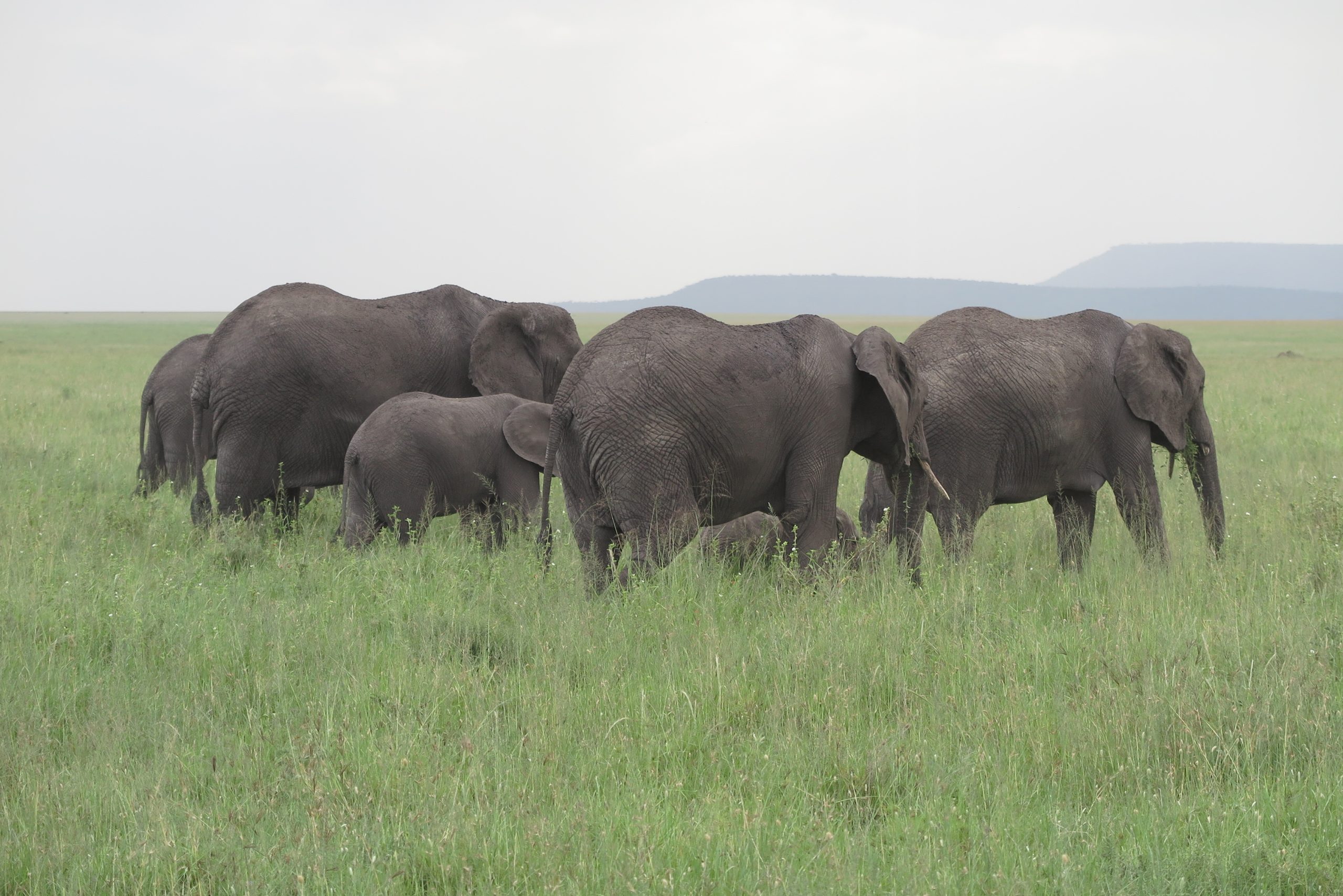
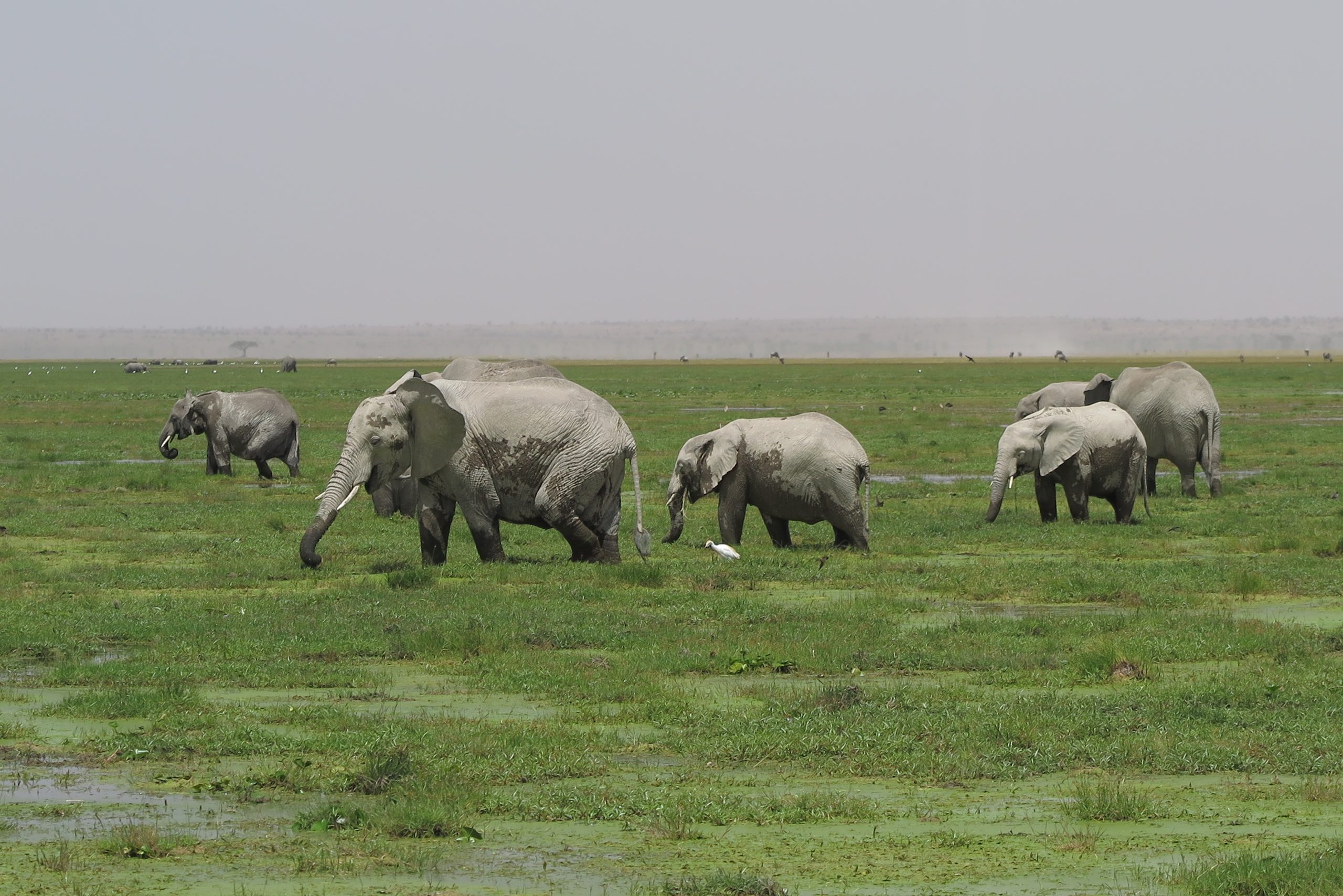
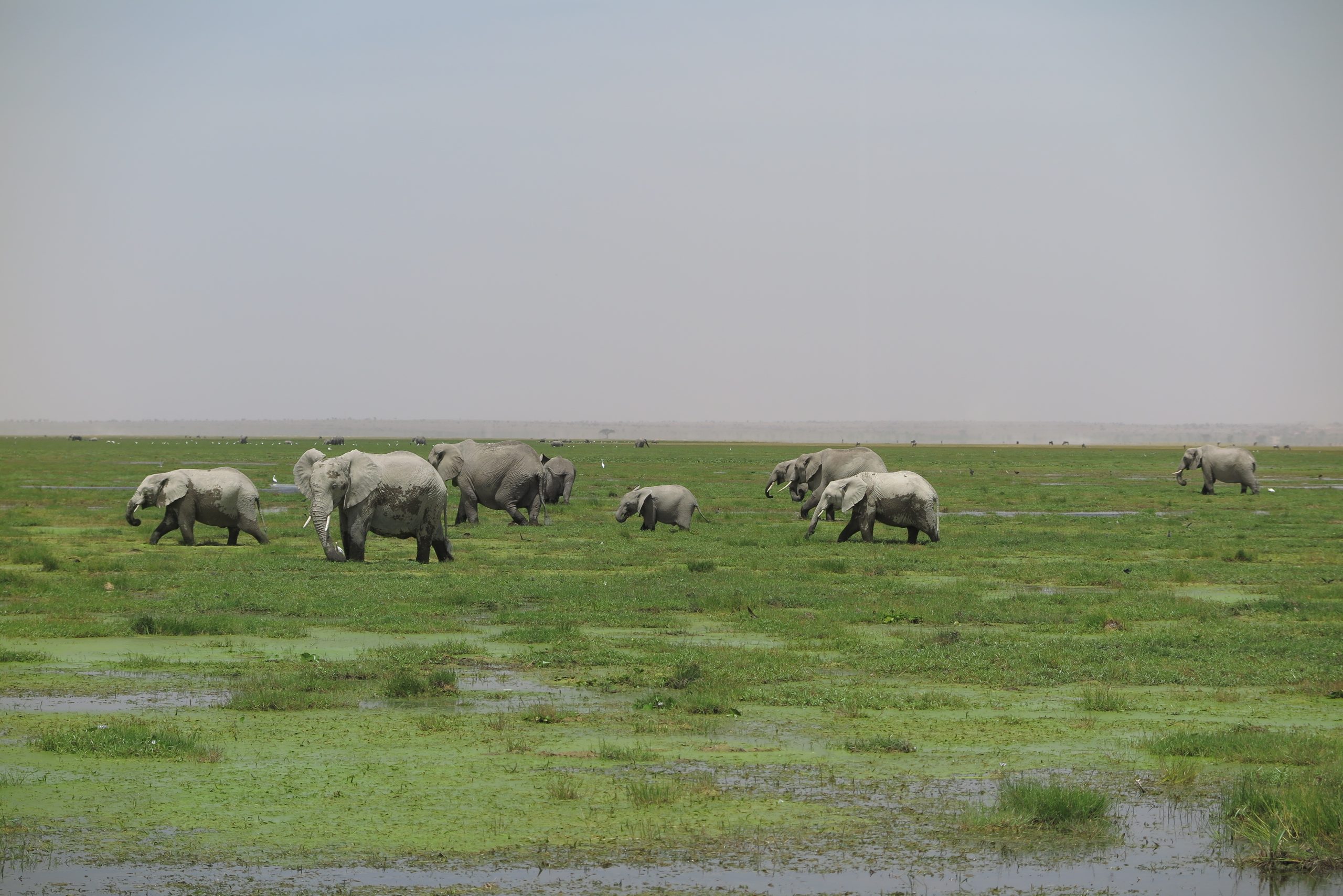
In late afternoon, we had our first game drive through the Amboseli Park where we saw herds of free-ranging elephants and other wildlife.
Maasai Village Visit and Evening Lecture – February 9, 2018
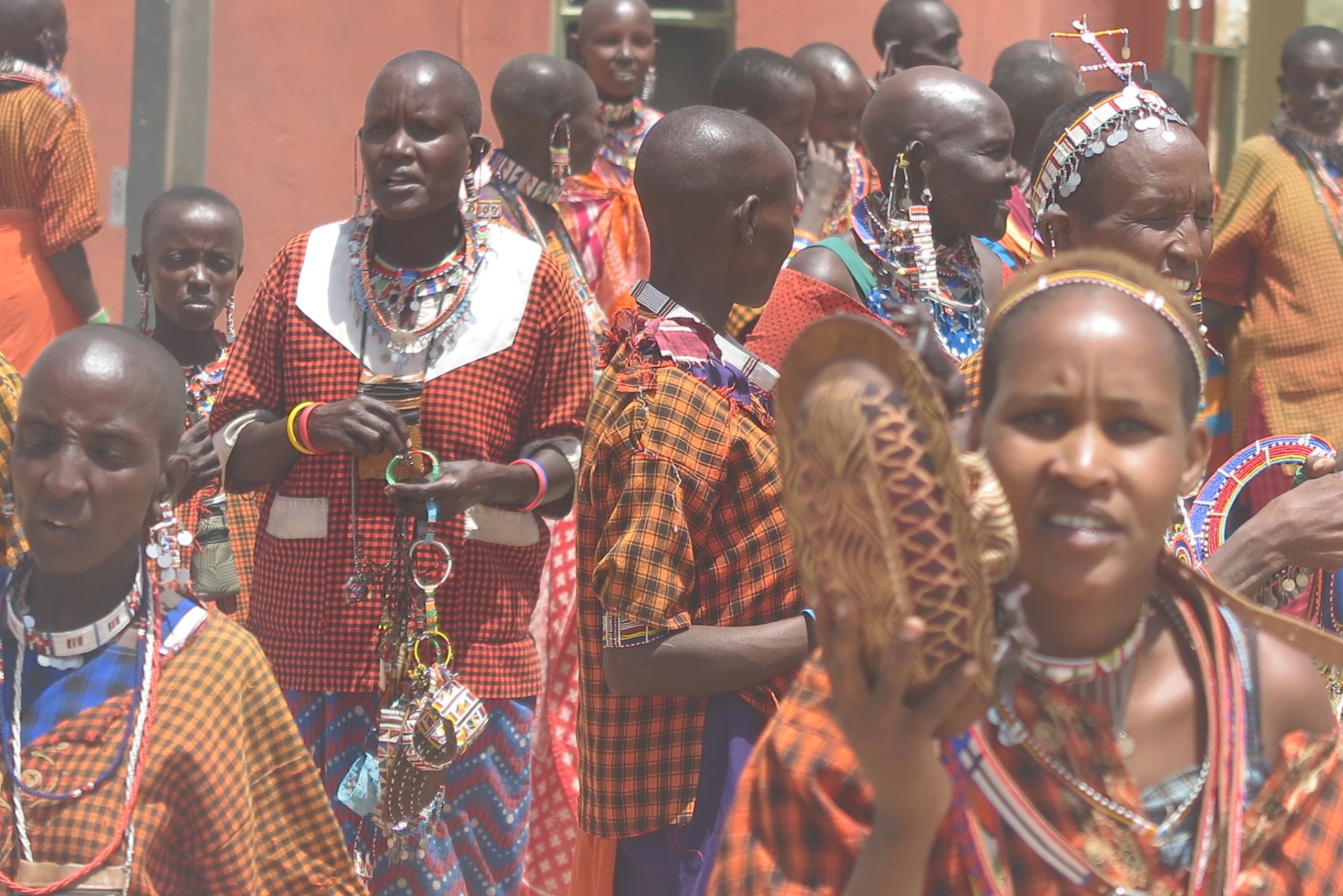
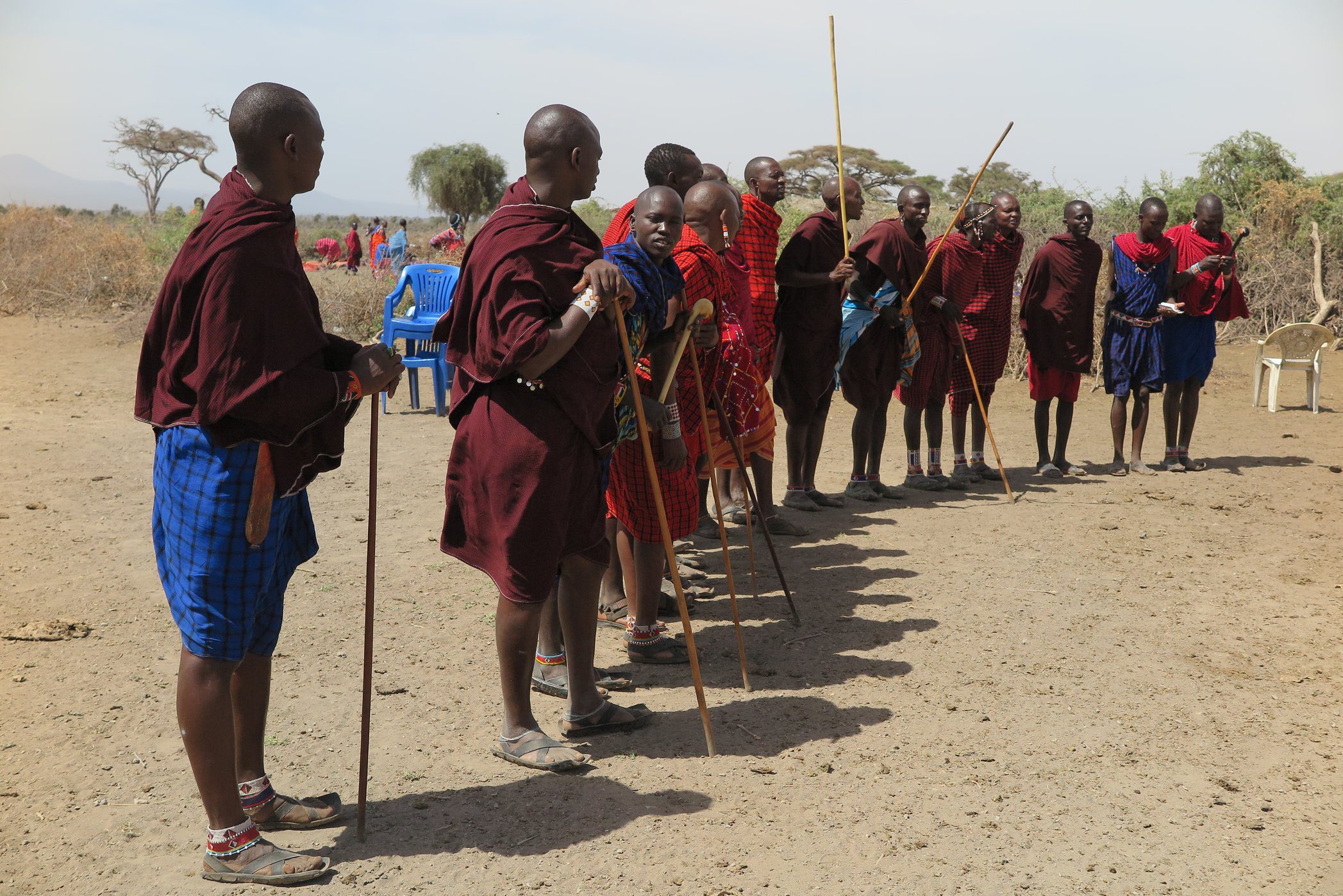
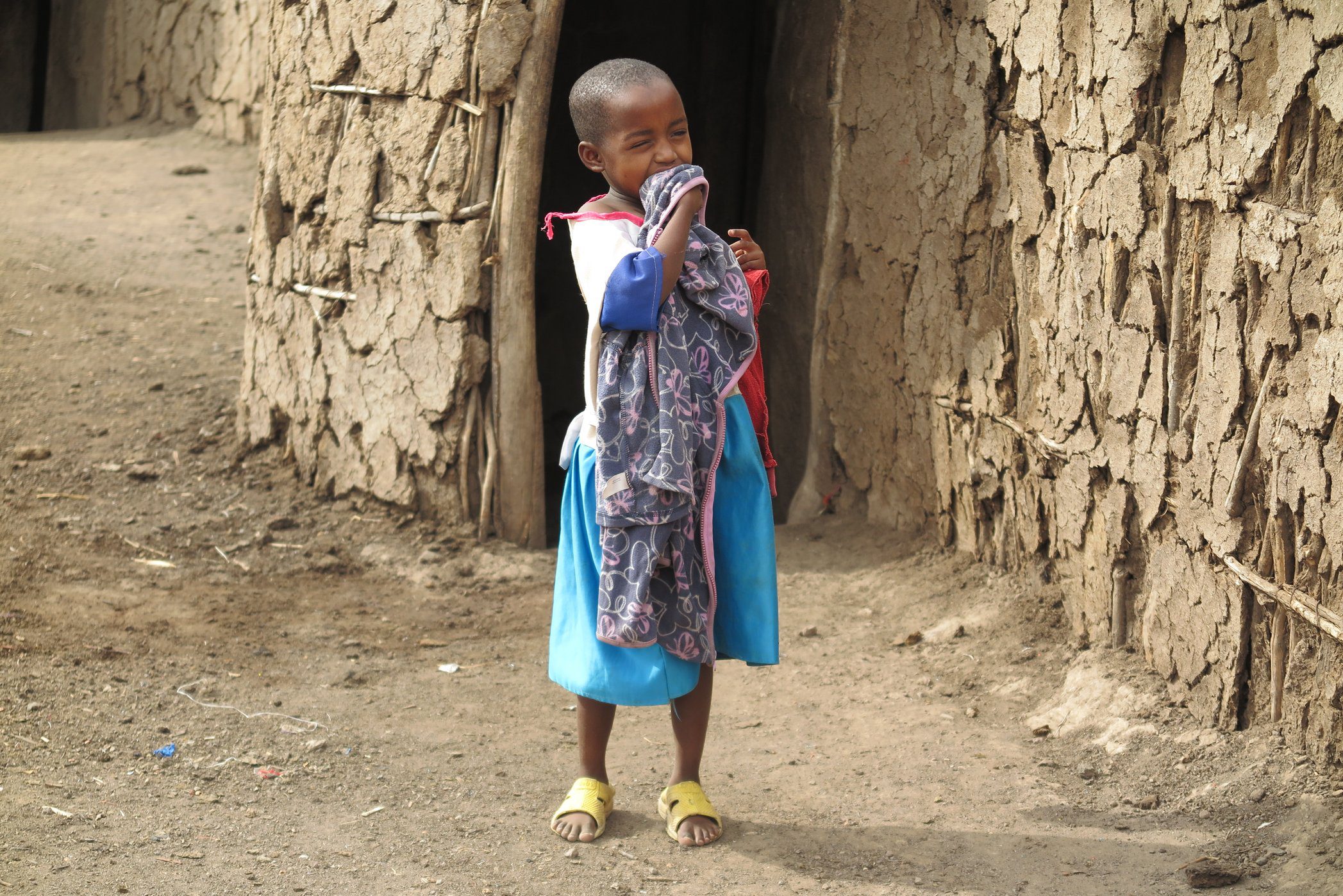
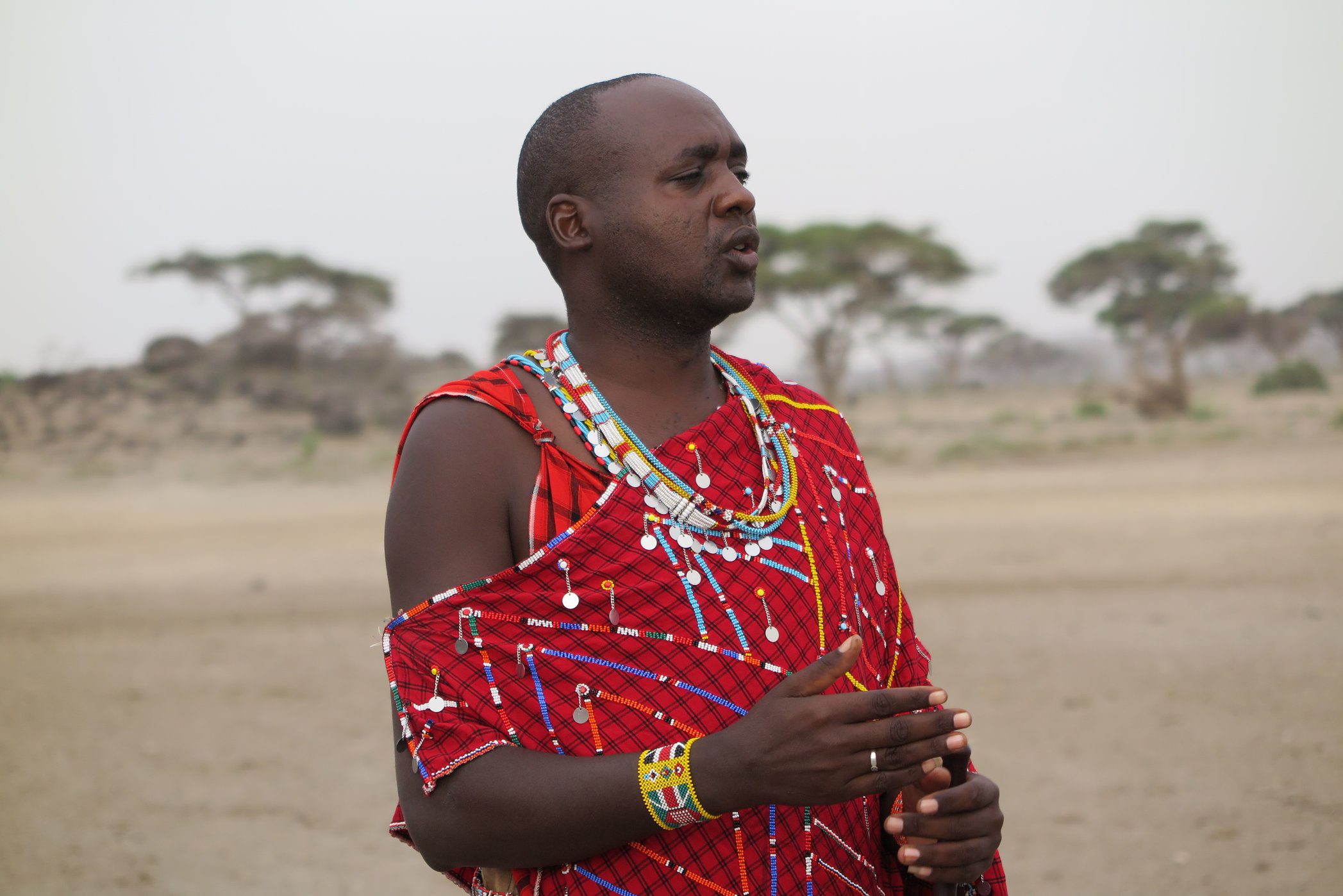
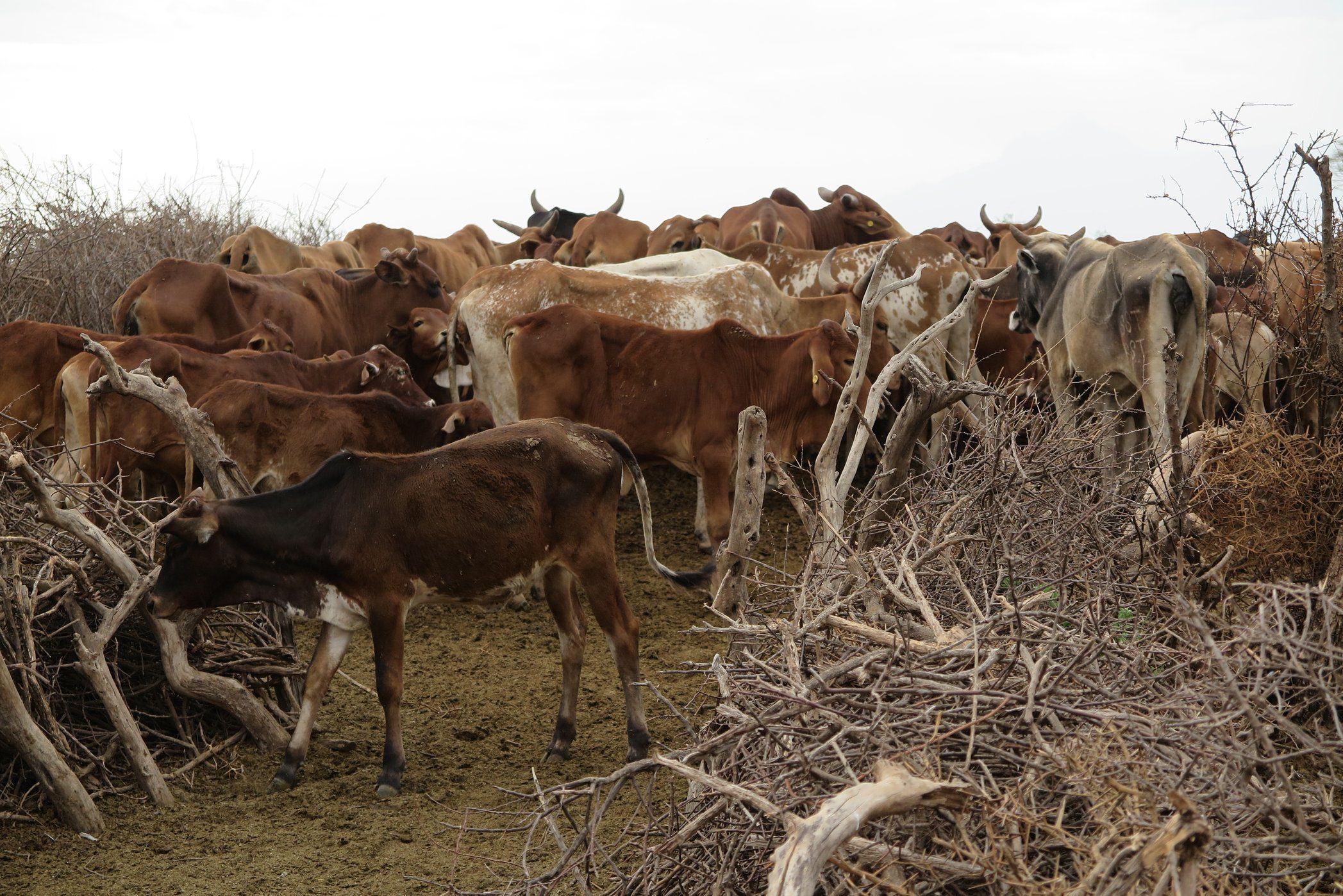
This morning, we drove to a Maasai village where we were greeted by the community spokesperson who is also a student and is heavily involved in local school affairs. All Maasai children are expected to go to school, but only half do. The other half stay home to tend to the cattle. We were greeted in traditional fashion by both men and women before being guided to see the cattle and visit a typical home. The village, enclosed by an outer wall, featured huts nestled between the perimeter and the inner cattle enclosure. The huts are dark and low slung with small chambers, one for mom and kids and the other for the men. It was fascinating to learn that the women build the huts while the men provide a dowry in cattle to the bride’s family. In Maasai culture, a man may have up to three wives, and marriages are often arranged.
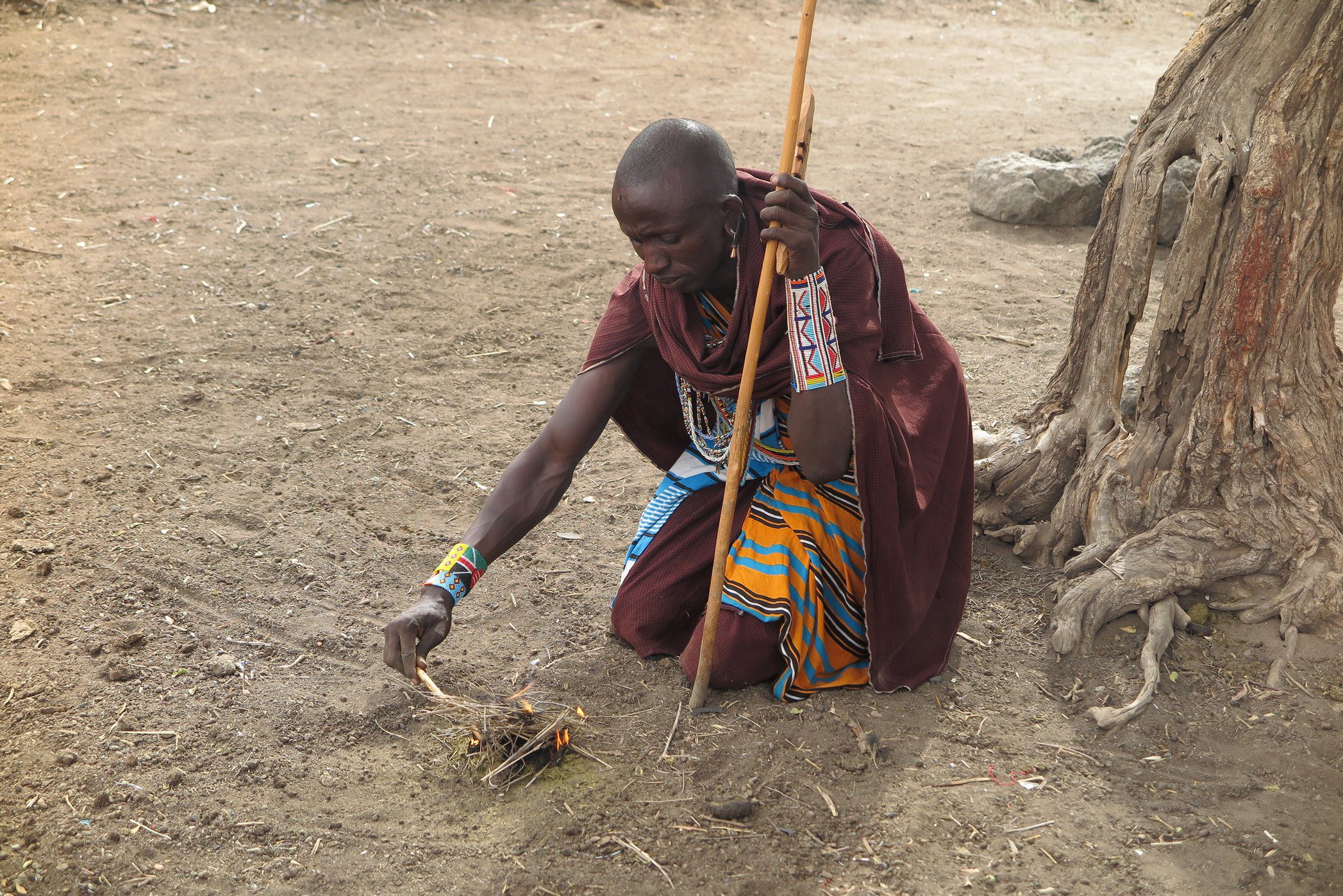
Healthcare is primarily managed by the local medicine man, although expectant women give birth in hospitals. Pregnant women drink a concoction made from the bark of a yellow acacia, boiled in water and milk to ensure easy birthing by keeping the baby’s size small. We were also shown traditional fire-building techniques, involving a dry mixture of three different dungs and the friction of soft wood against hardwood.
Additionally, we learned about the Maasai practice of drawing blood from a cow’s jugular, which is then mixed with milk and consumed several times a week.
Our visit also included shopping opportunities, a closing ceremony, and hugs from the Maasai men, believed to bring good luck.
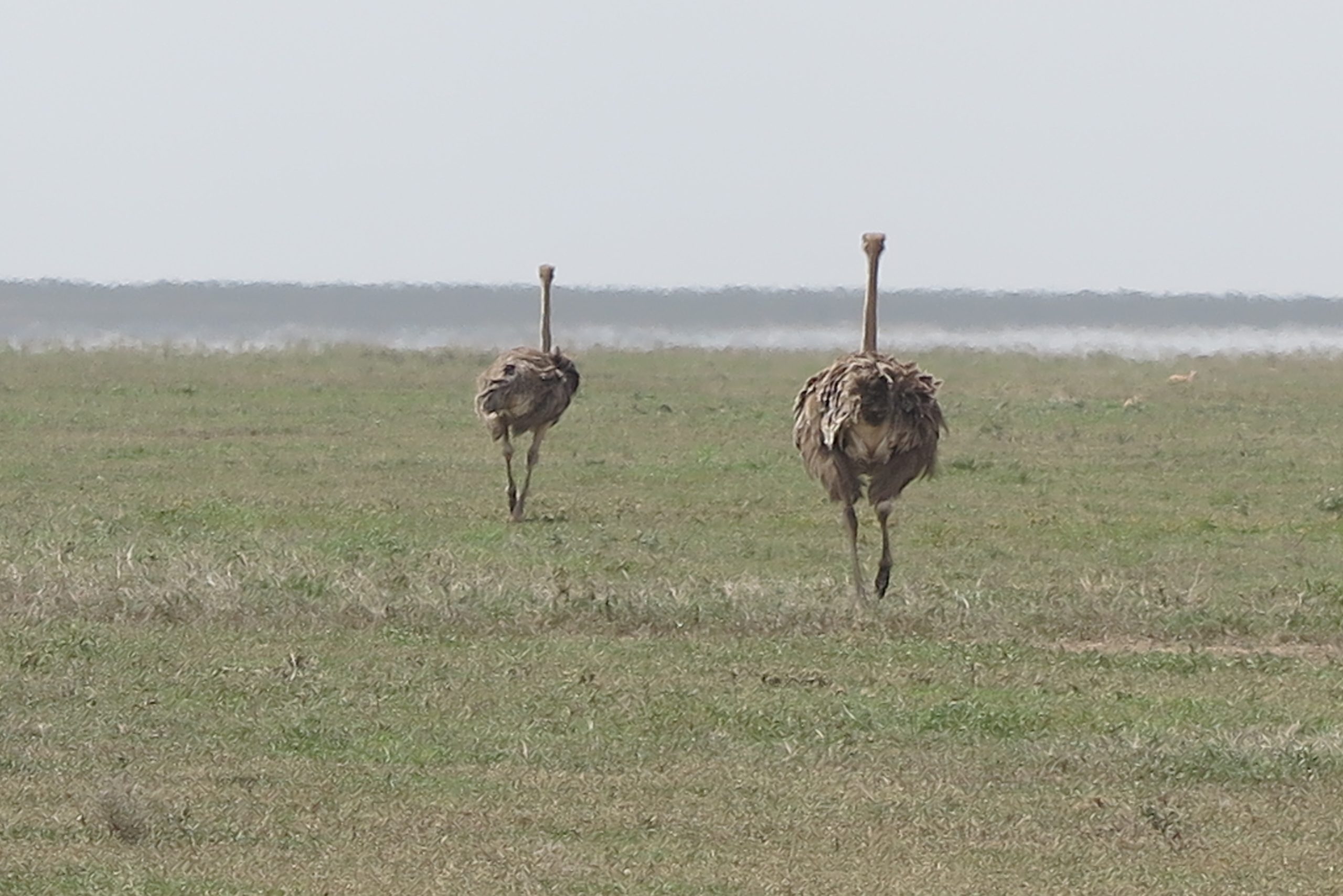
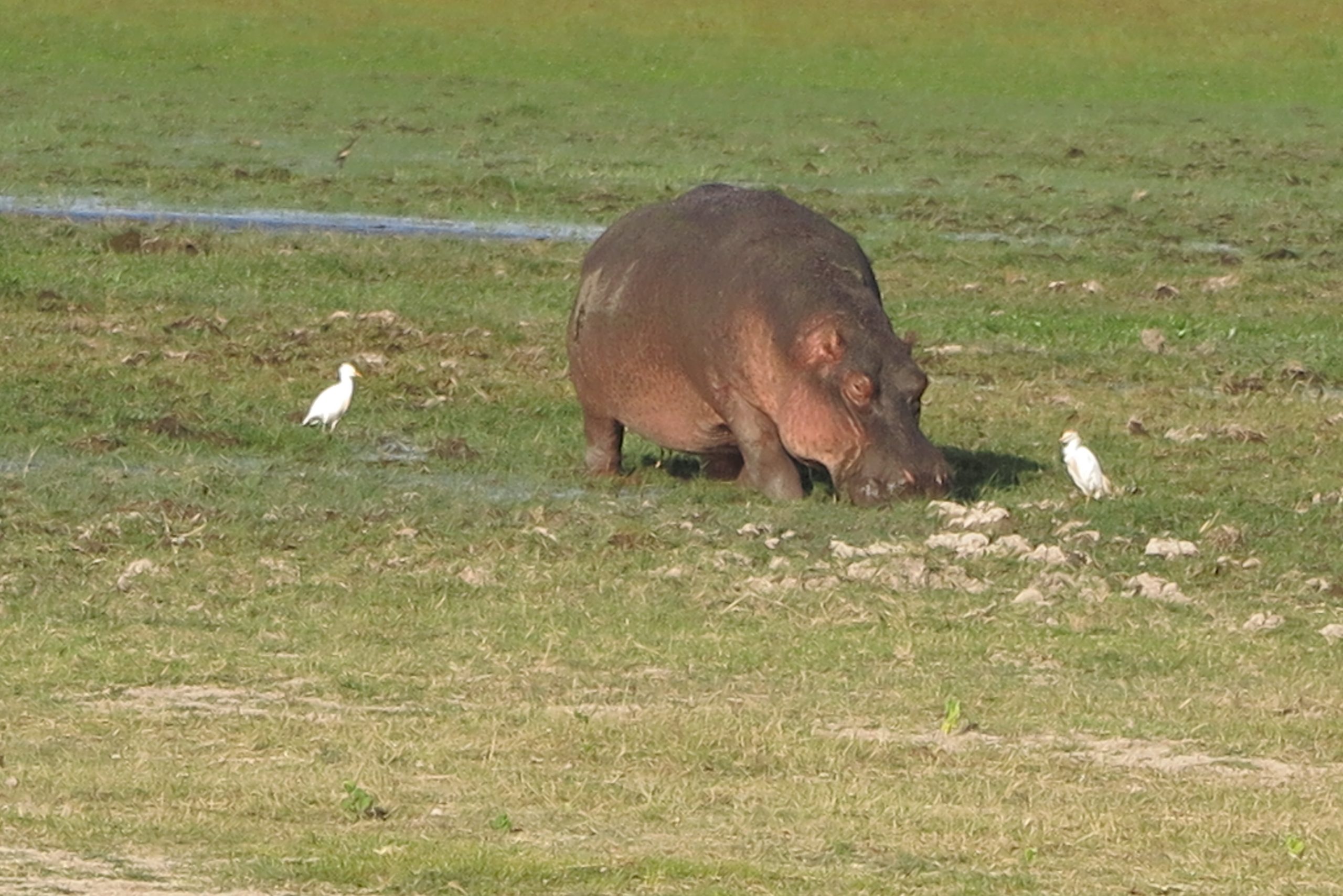
After returning from the village, we embarked on another game drive through the park, spotting hippos, giraffes, ostriches, and, of course, more elephants. Amboseli is renowned for its high-density elephant population.
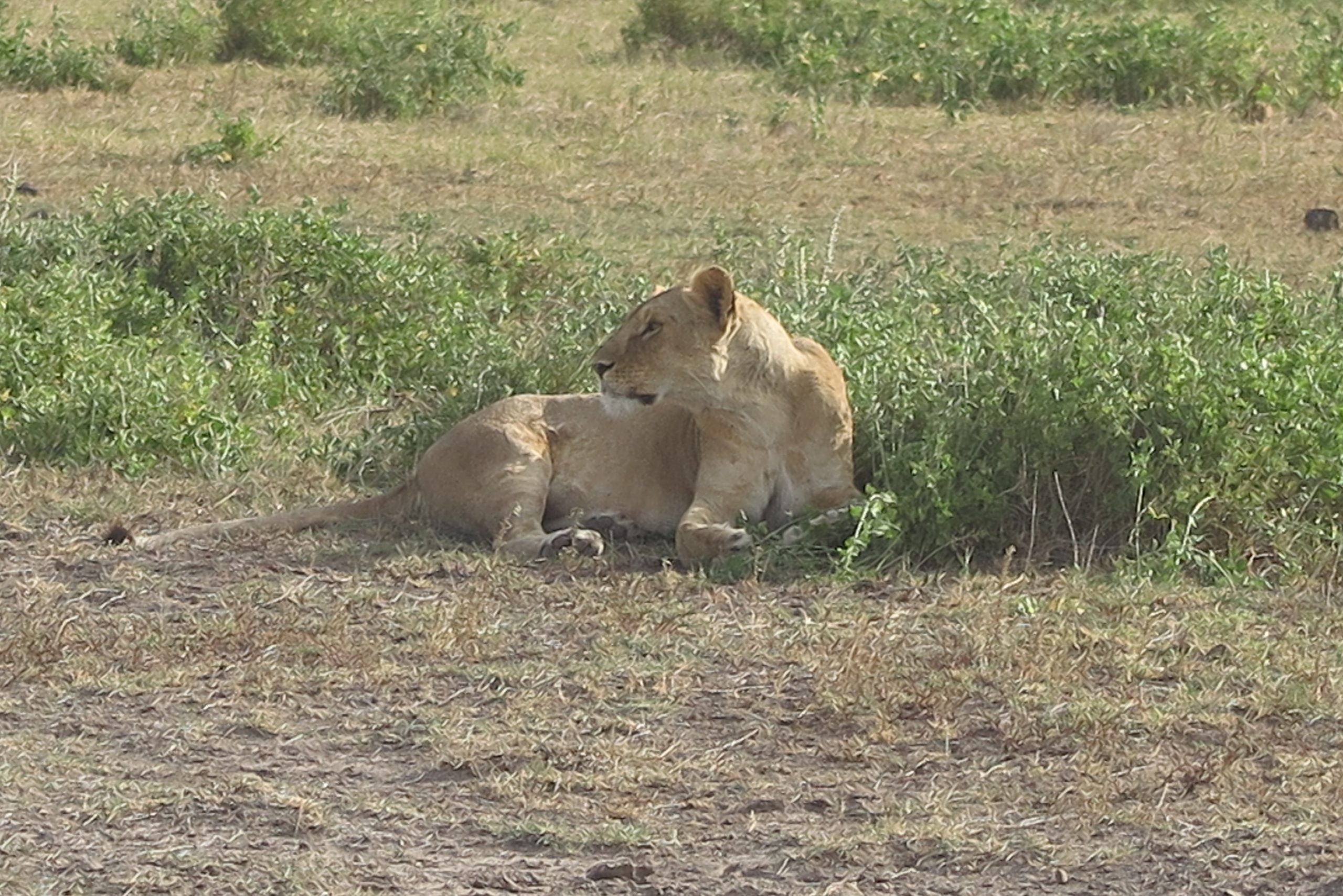

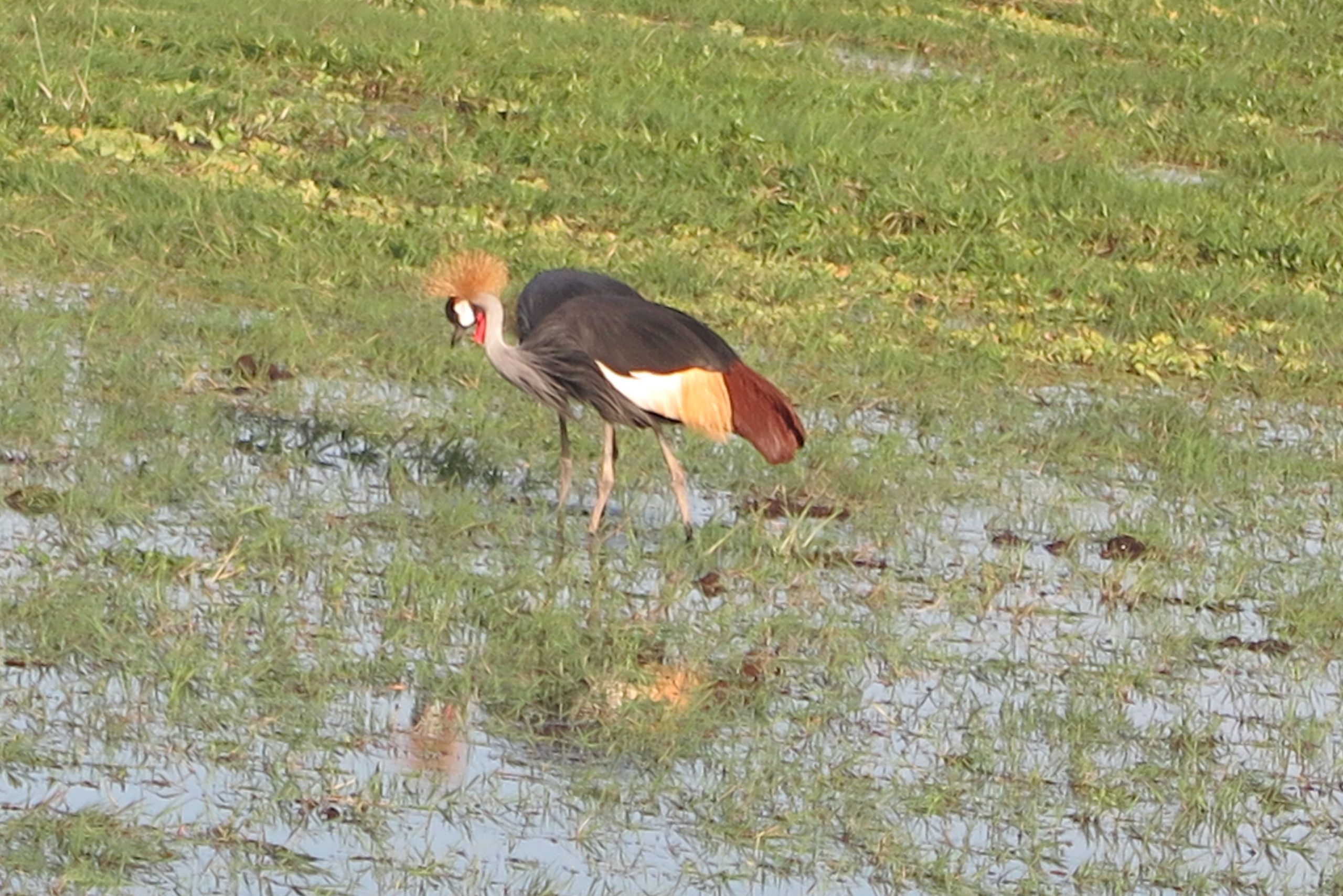
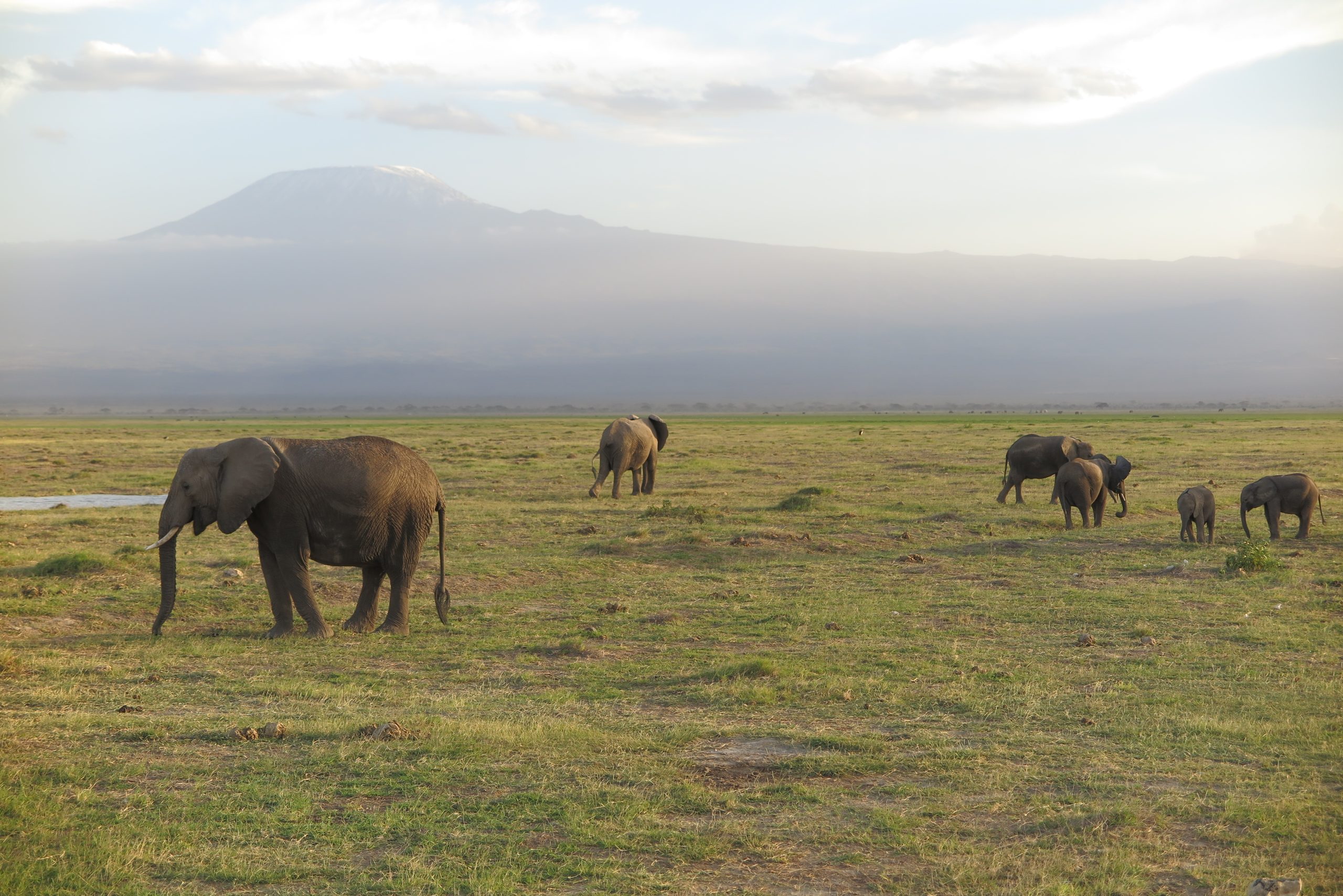
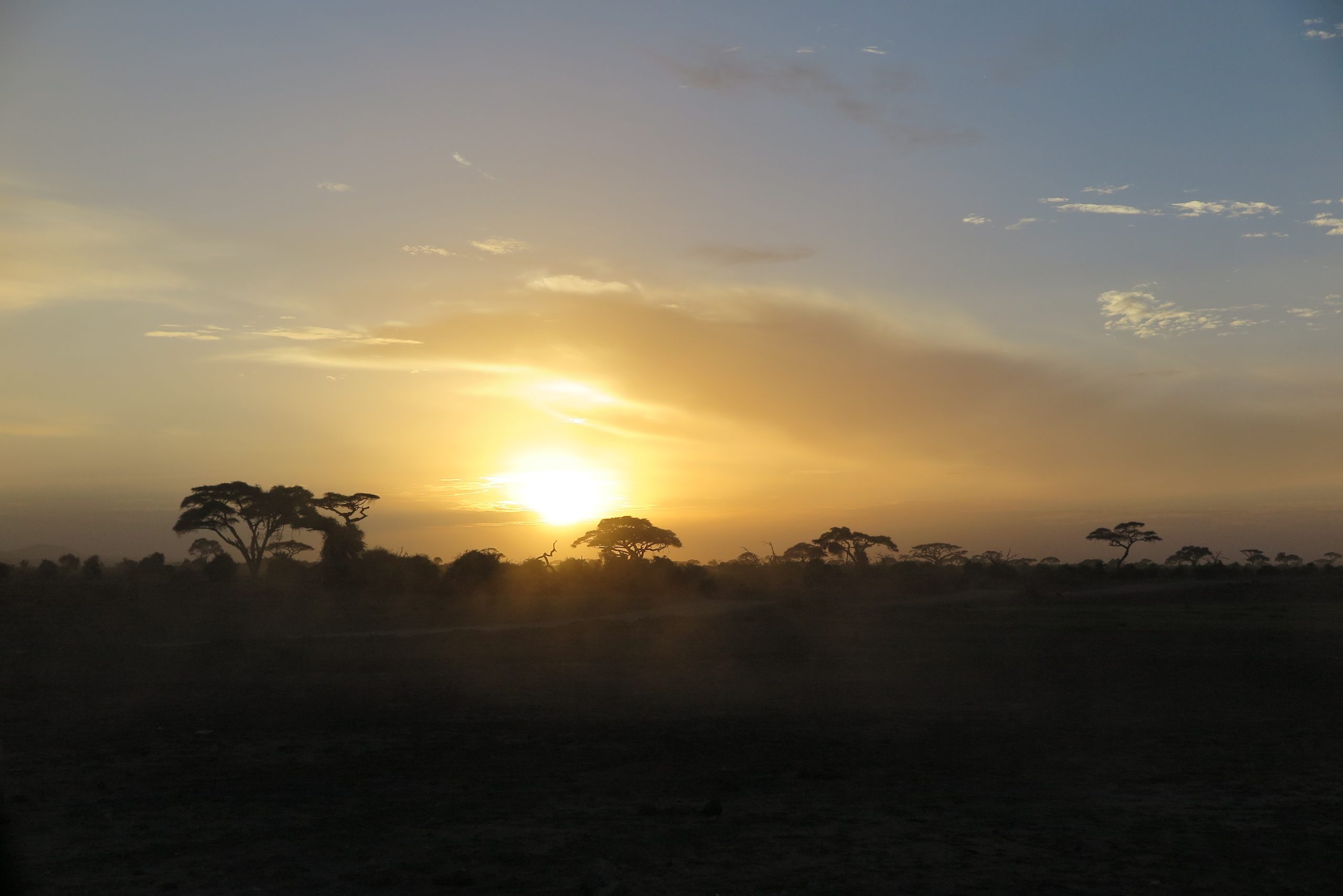
Later in the evening, we attended a lecture on elephants. As the lecture proceeded, we saw a lion chasing a dazzle of zebras, albeit unsuccessfully, reminding us of the lion’s reputation as a less efficient hunter. Shortly after, an elephant casually strolled by, captivating our attention. The poor lecturer could not compete!
Flight to Nanyuki: Mount Kenya Safari Resort – February 10, 2018
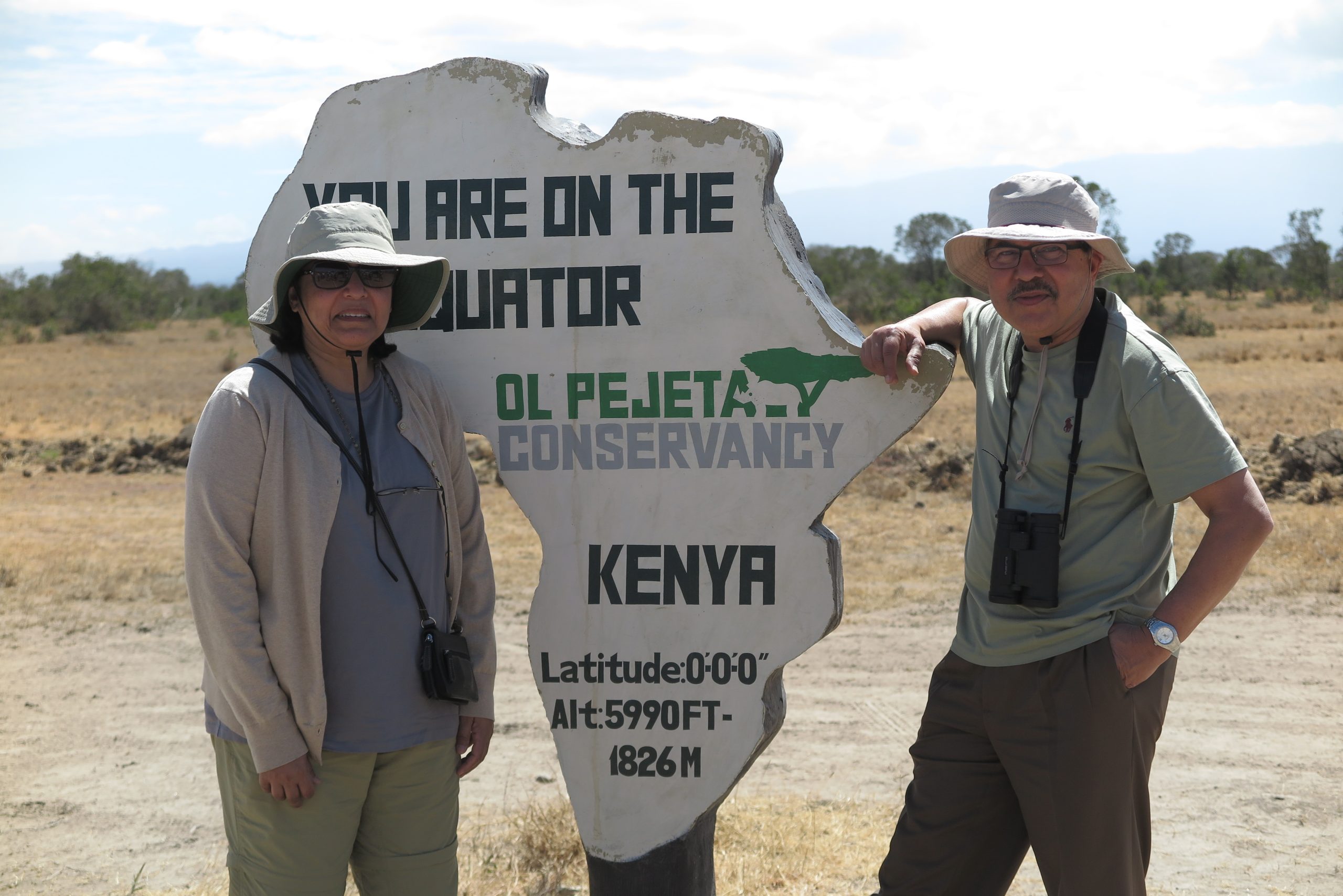
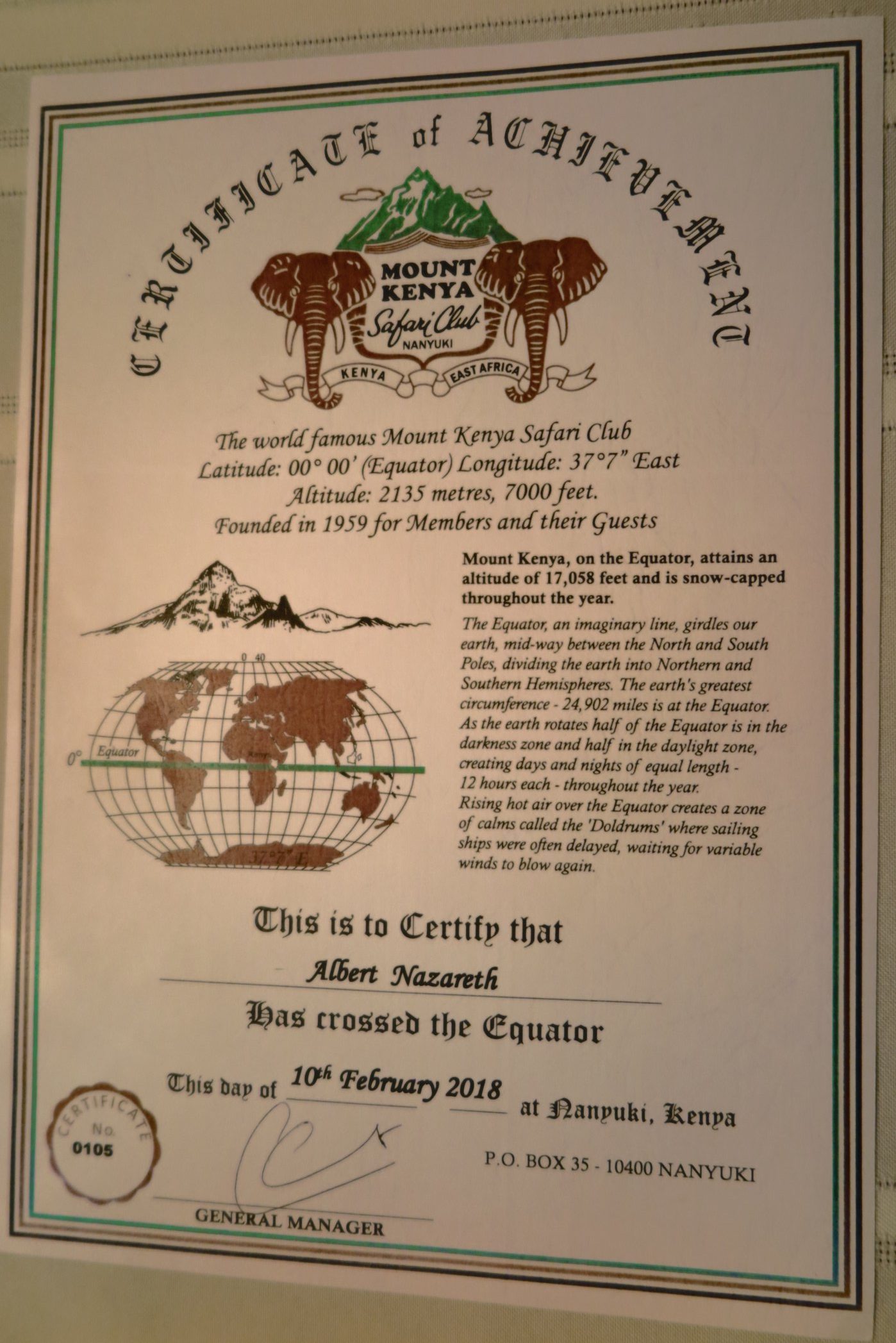
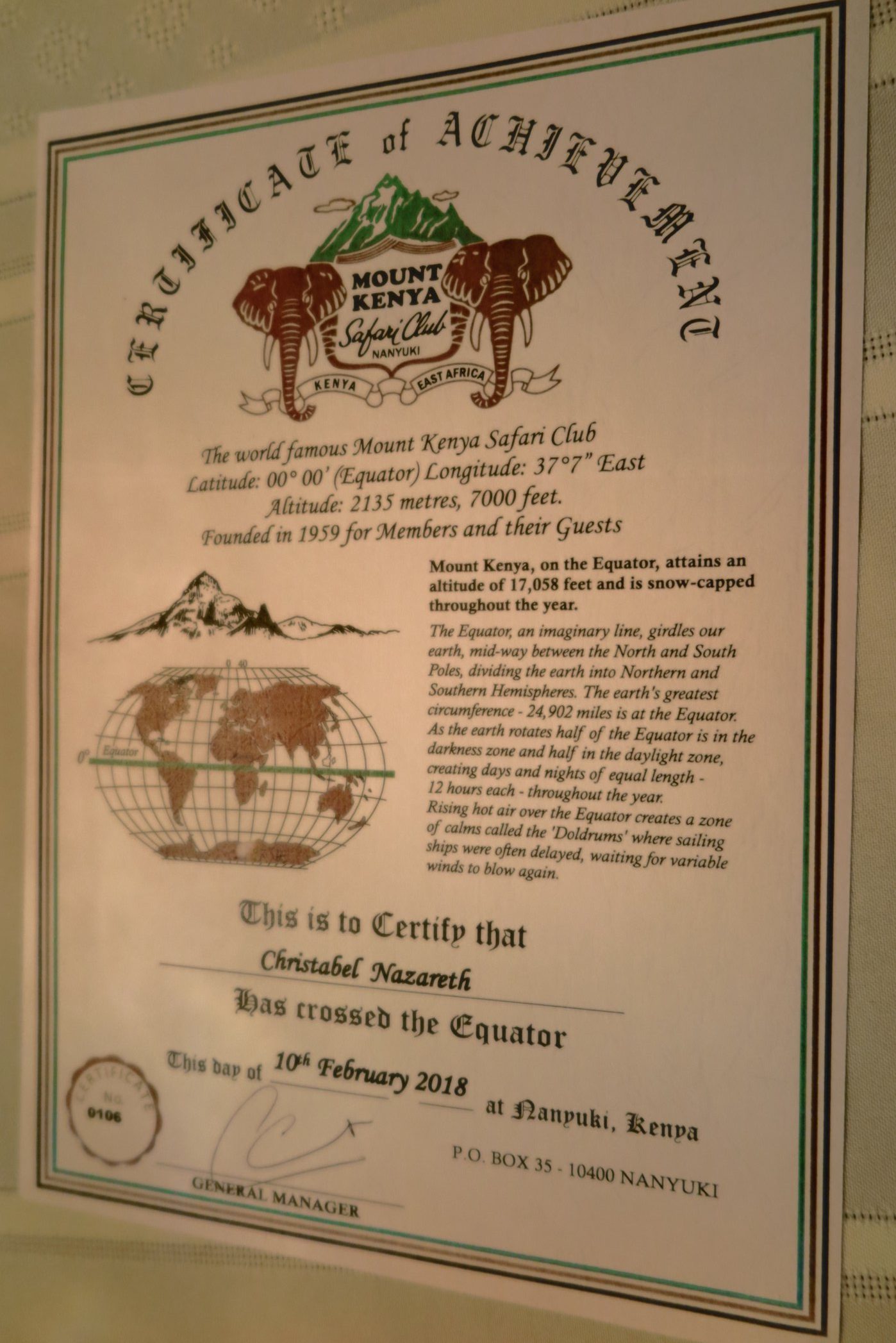
We made our way to the Kilimanjaro Royal Court Airstrip. On the way, we saw marabou stork, sacred ibis, African spoonbills, and yellow billed stork. We said goodbye to Amboseli and flew to Nanyuki to spend two nights at the Mount Kenya Safari Resort, which was the former retreat of William Holden. Now owned by the Fairmont Hotels, it is no longer as exclusive as it once was. An animal orphanage is run onsite for rescued and orphaned animals. The hotel sits dead on the equator, so there is a little ceremony where one is greeted by the Kikuyu tribe
At the orphanage, we saw Somali (blue) and Maasai (pink) ostriches, rock hyrax, guinea fowl, lynx, bongo, bush pigs, dik-diks, sani antelope, porcupine, white tailed mongoose, an owl (Verreaux’s Eagle), albino zebra, pygmy hippo, Galapagos tortoise (Holden’s pet), colobus monkeys, blue monkeys, Patas monkeys, and a cheetah. We were able to feed the bongos and the ostriches.
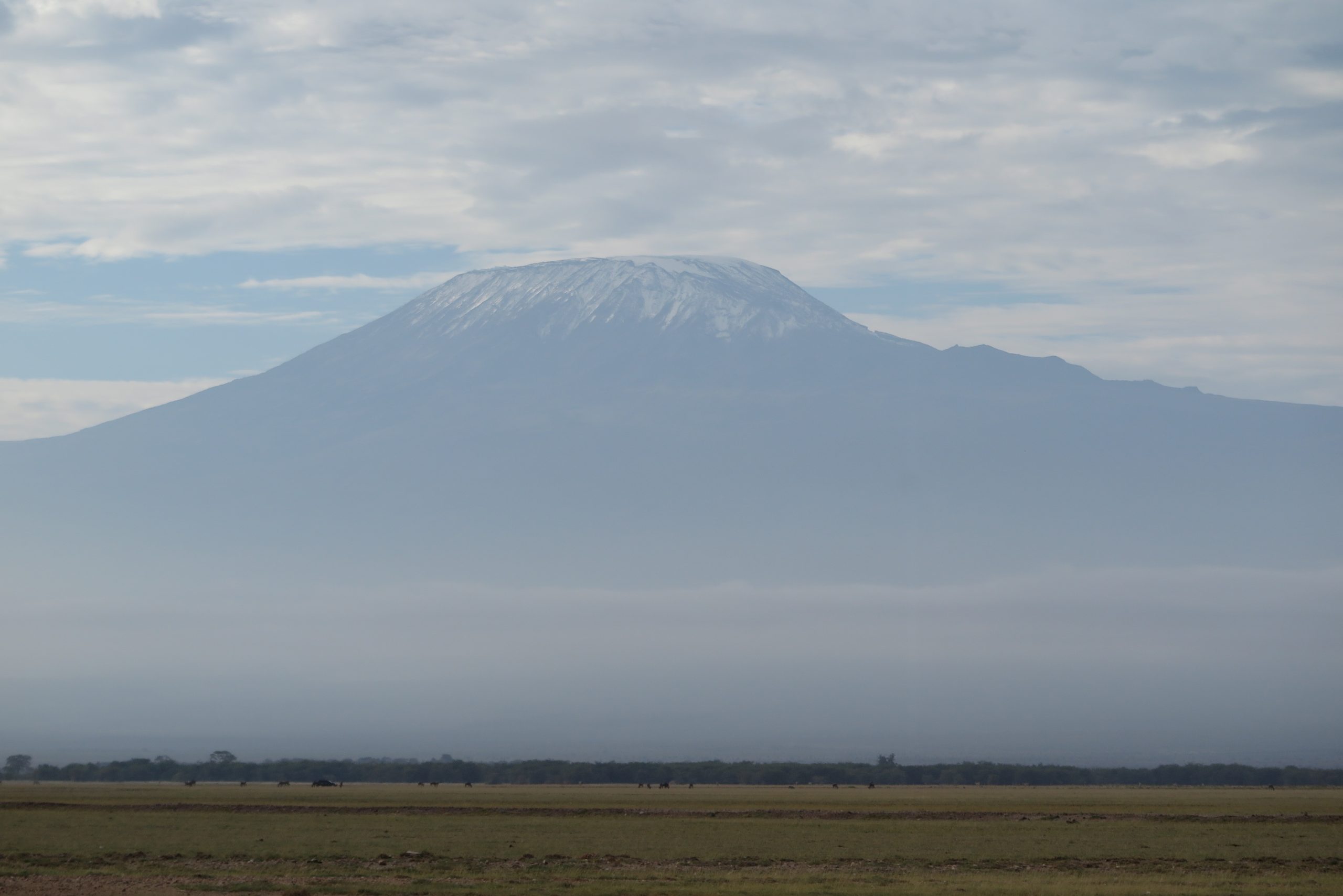
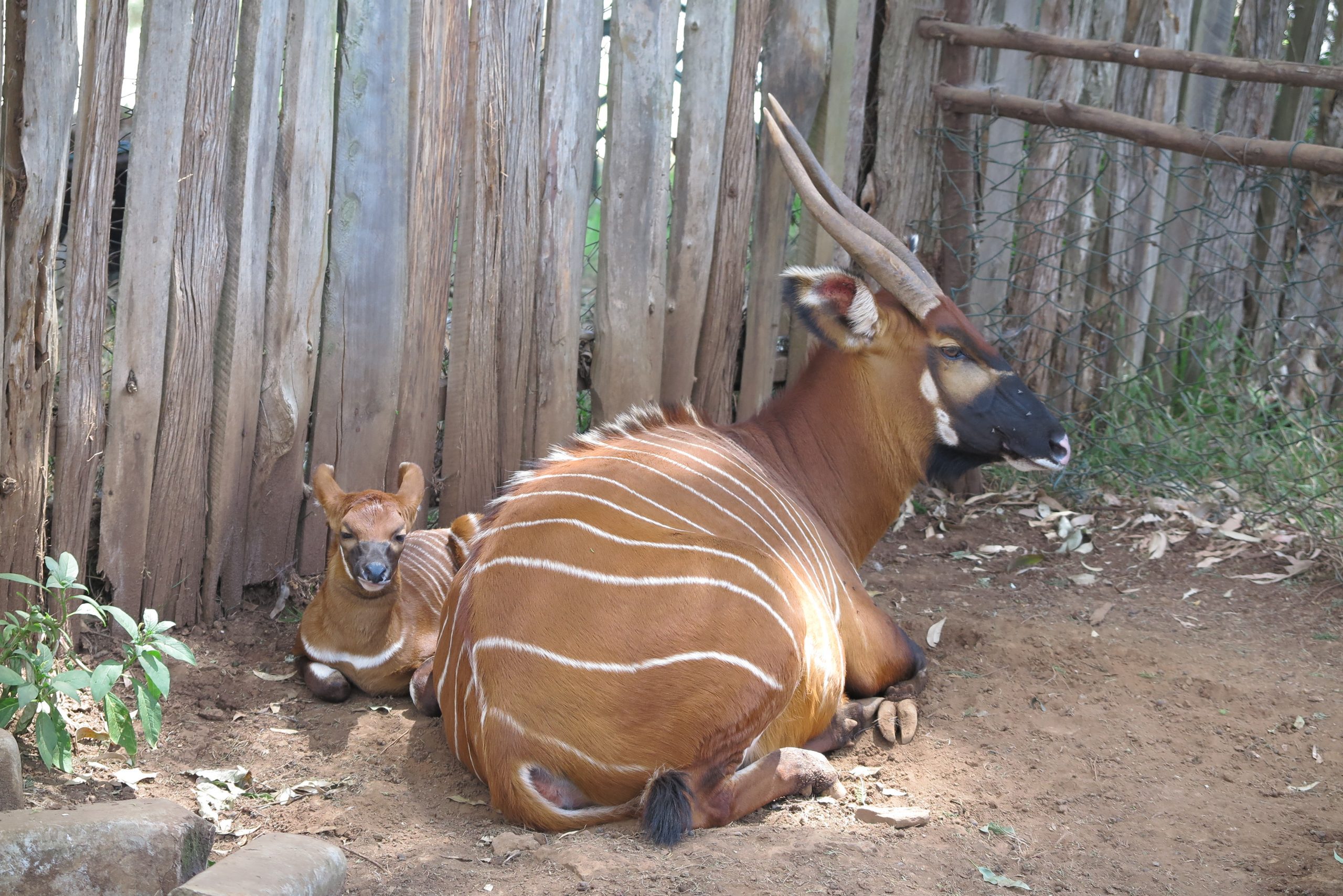
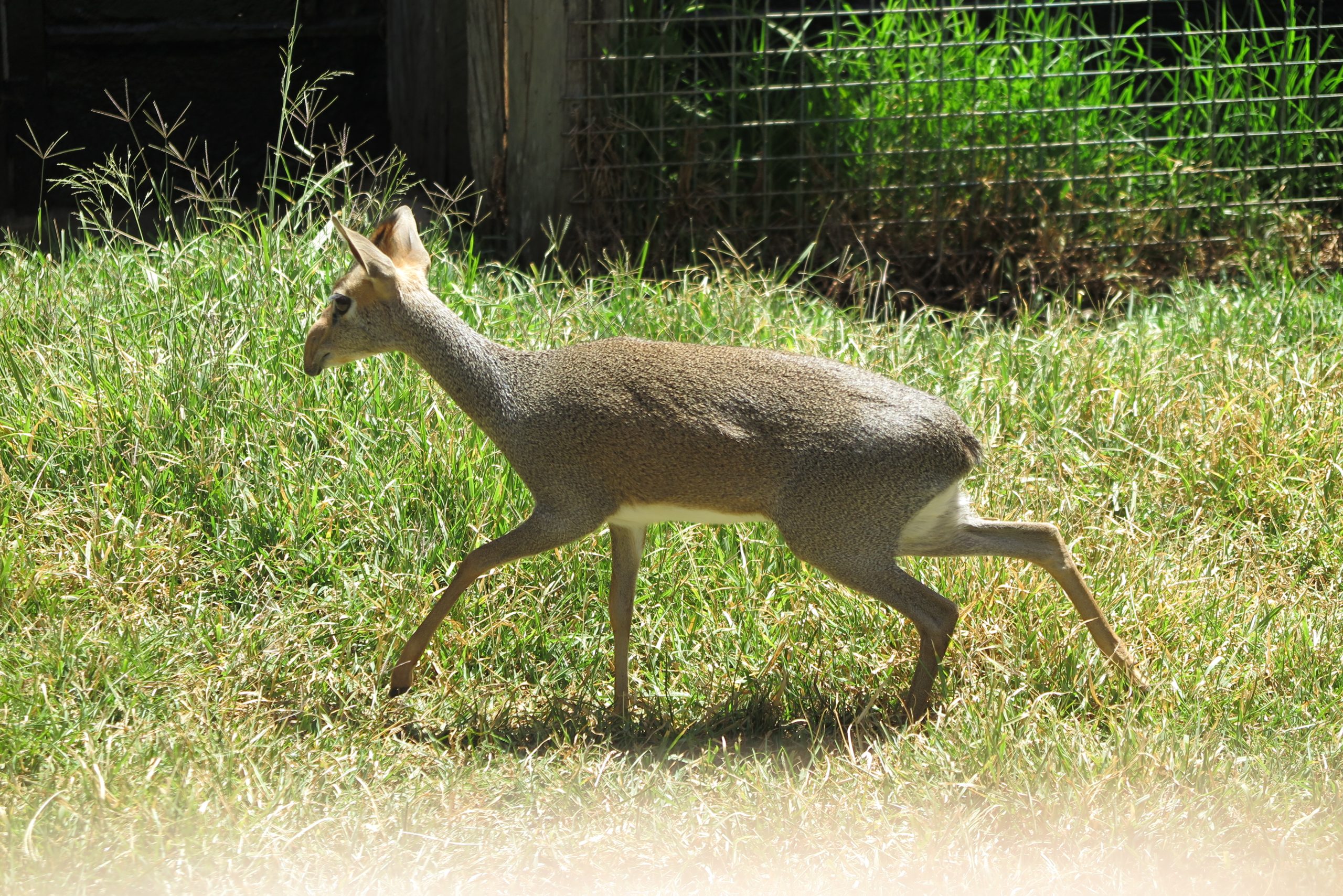
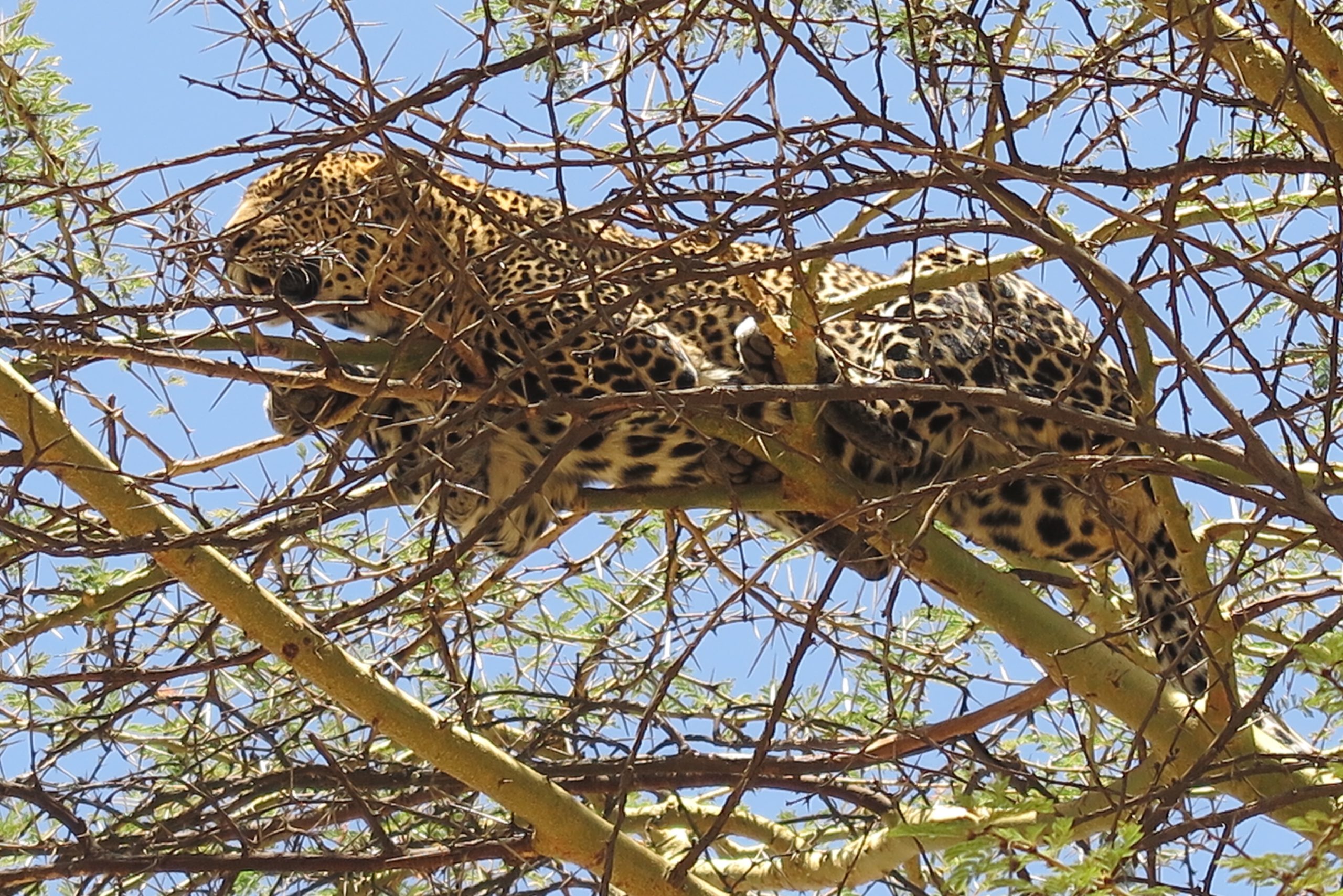
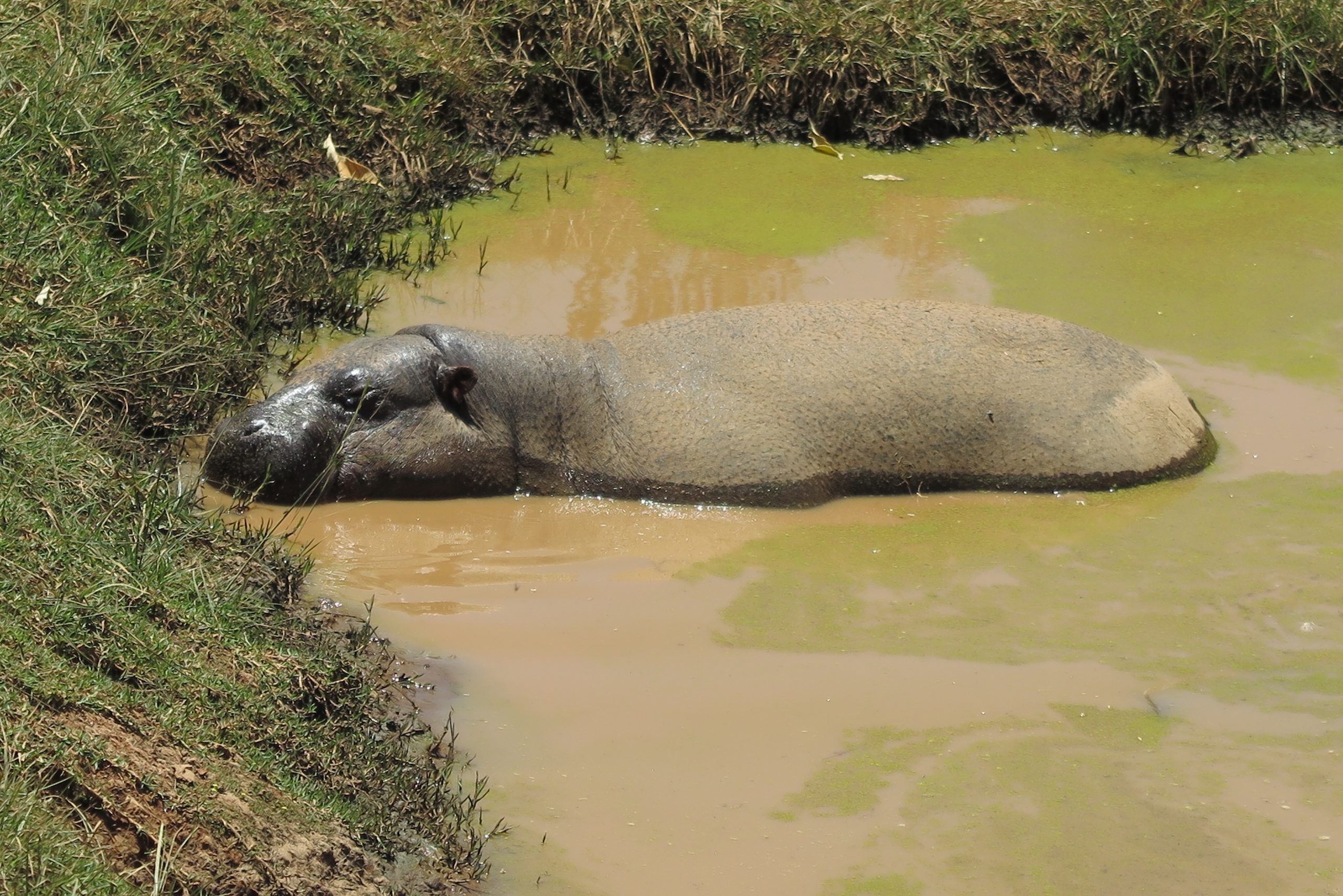

The property is exquisite with a chapel and a maze on the grounds and Mount Kenya in the background. Peacocks freely roam the grounds and the terraces.
Game Drive, Sweetwaters, Spinners & Weavers – February 11, 2018
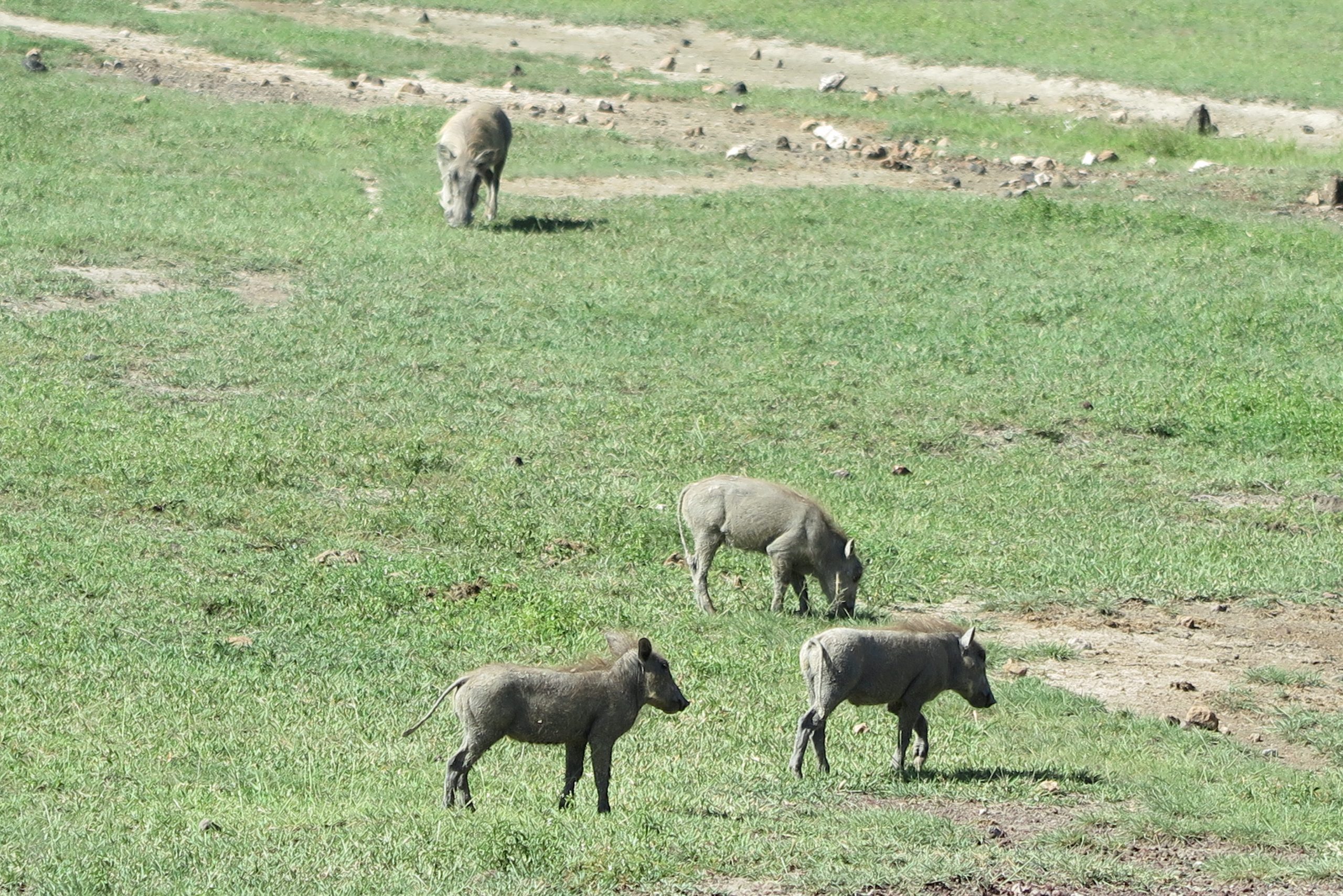
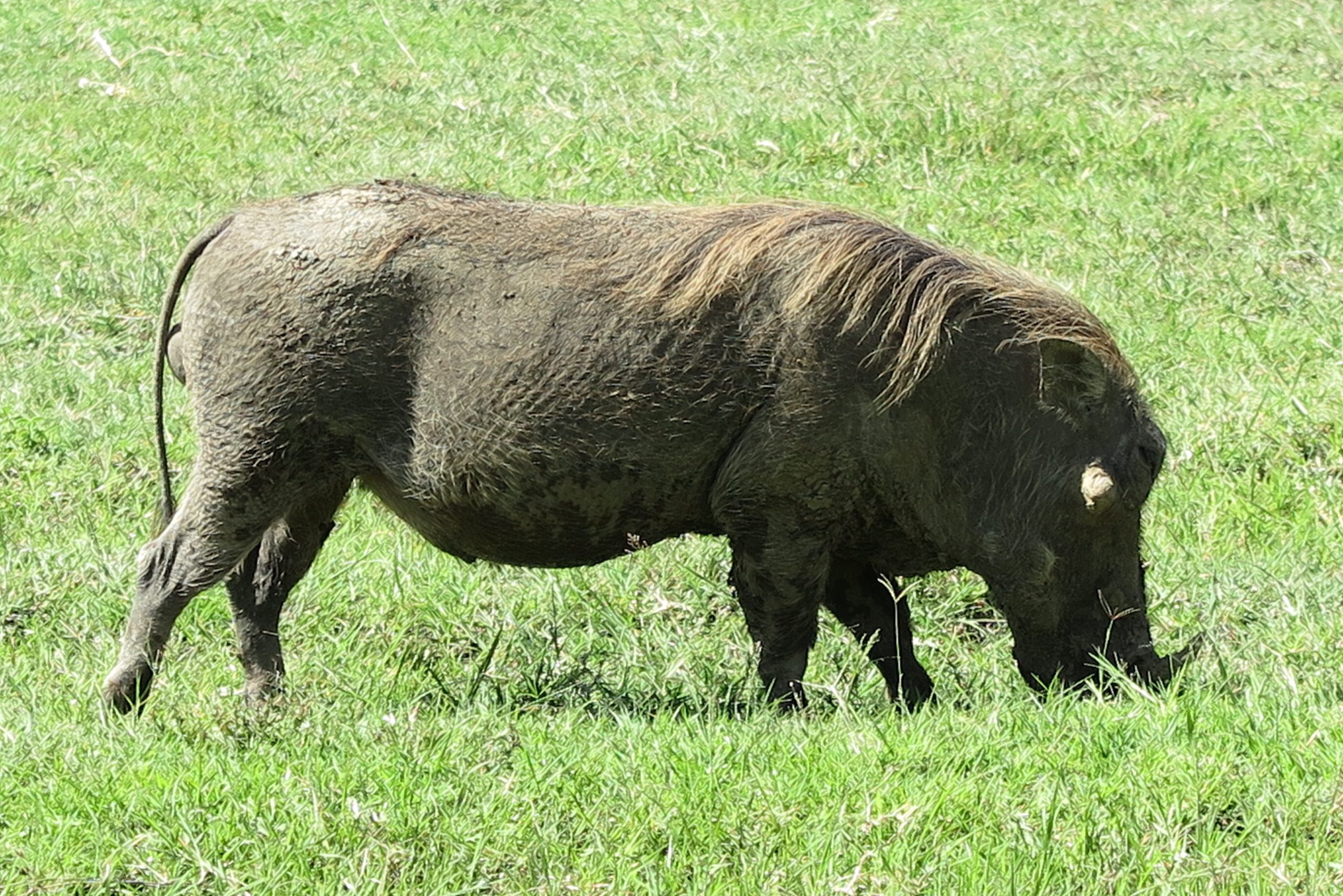
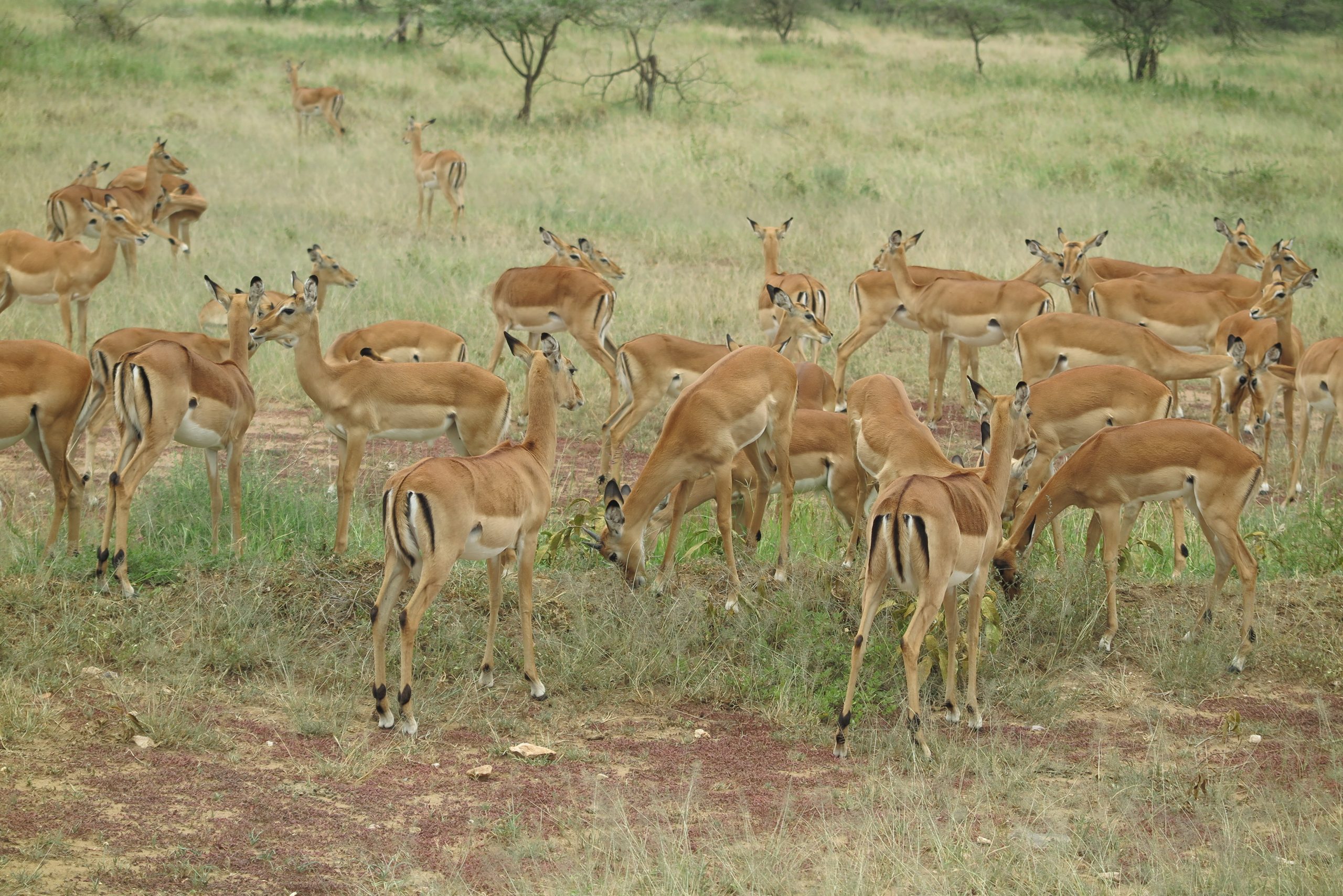
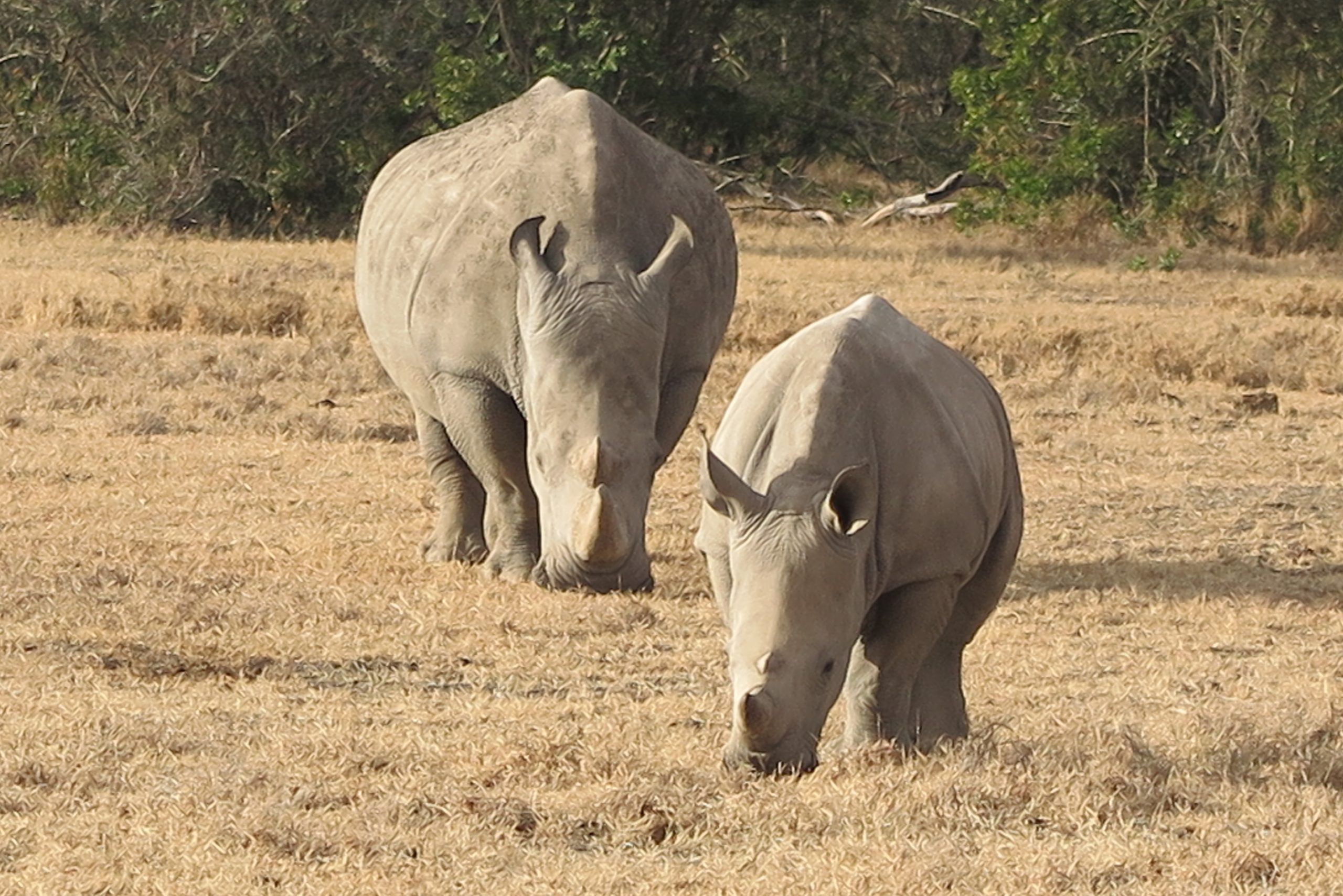
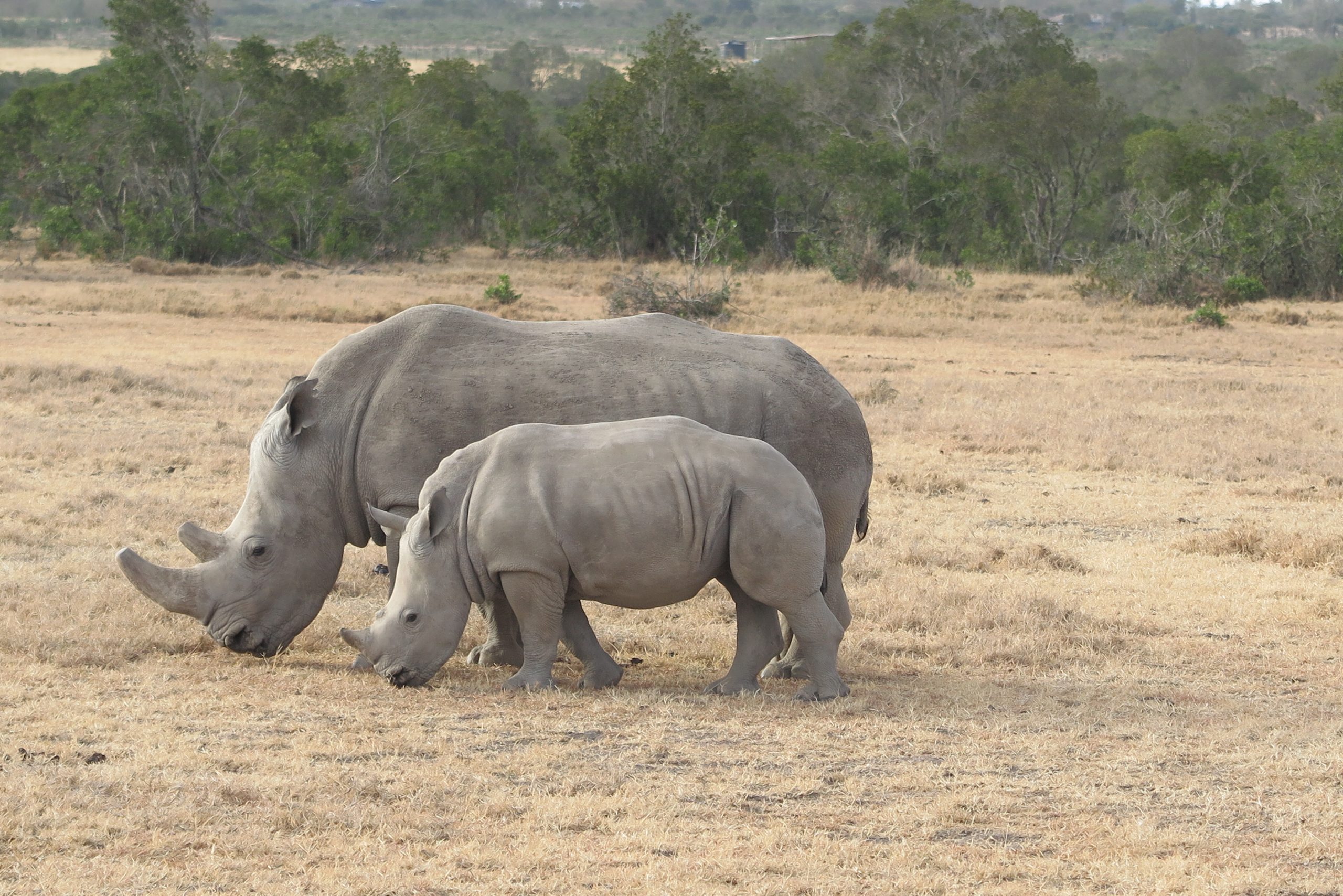
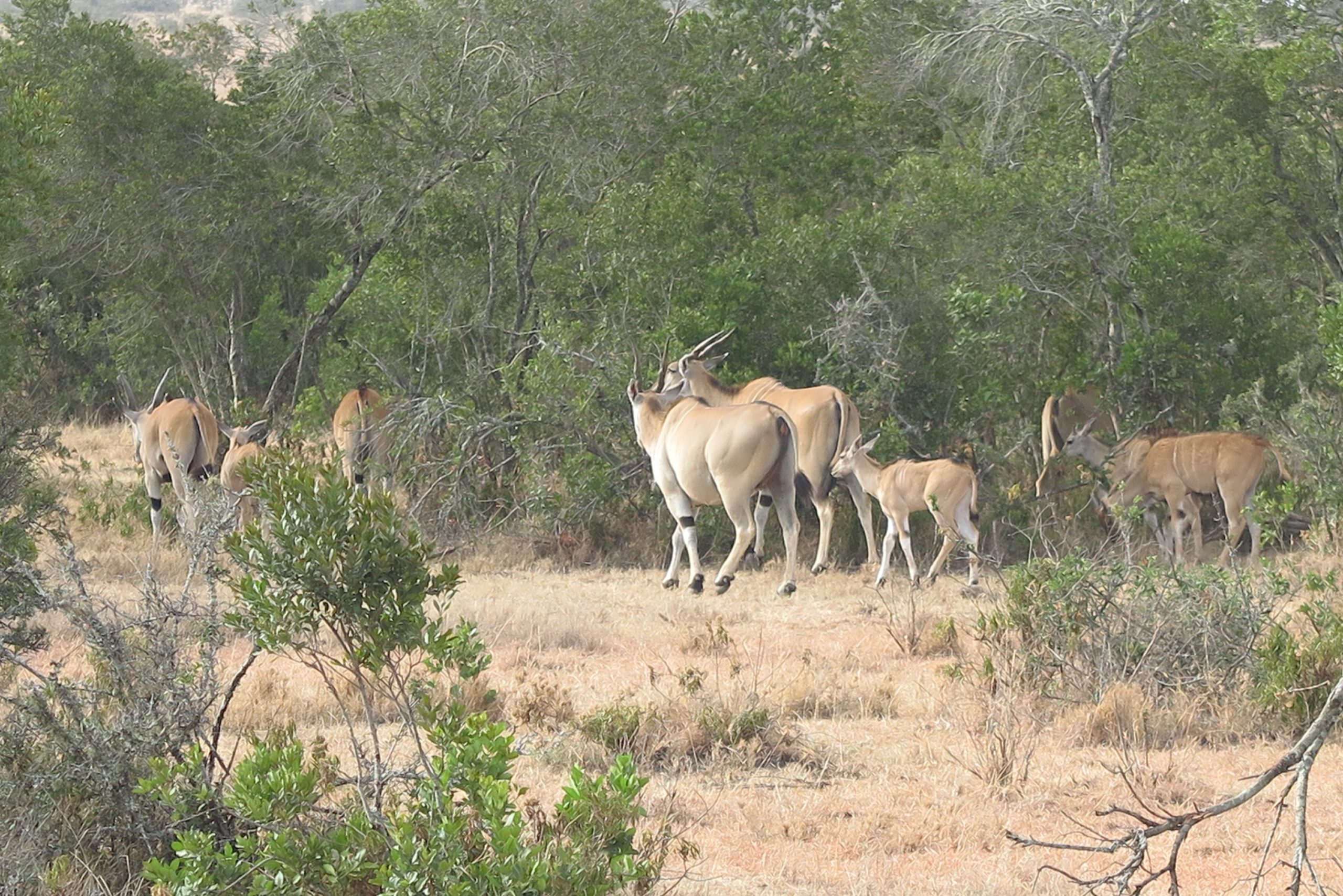
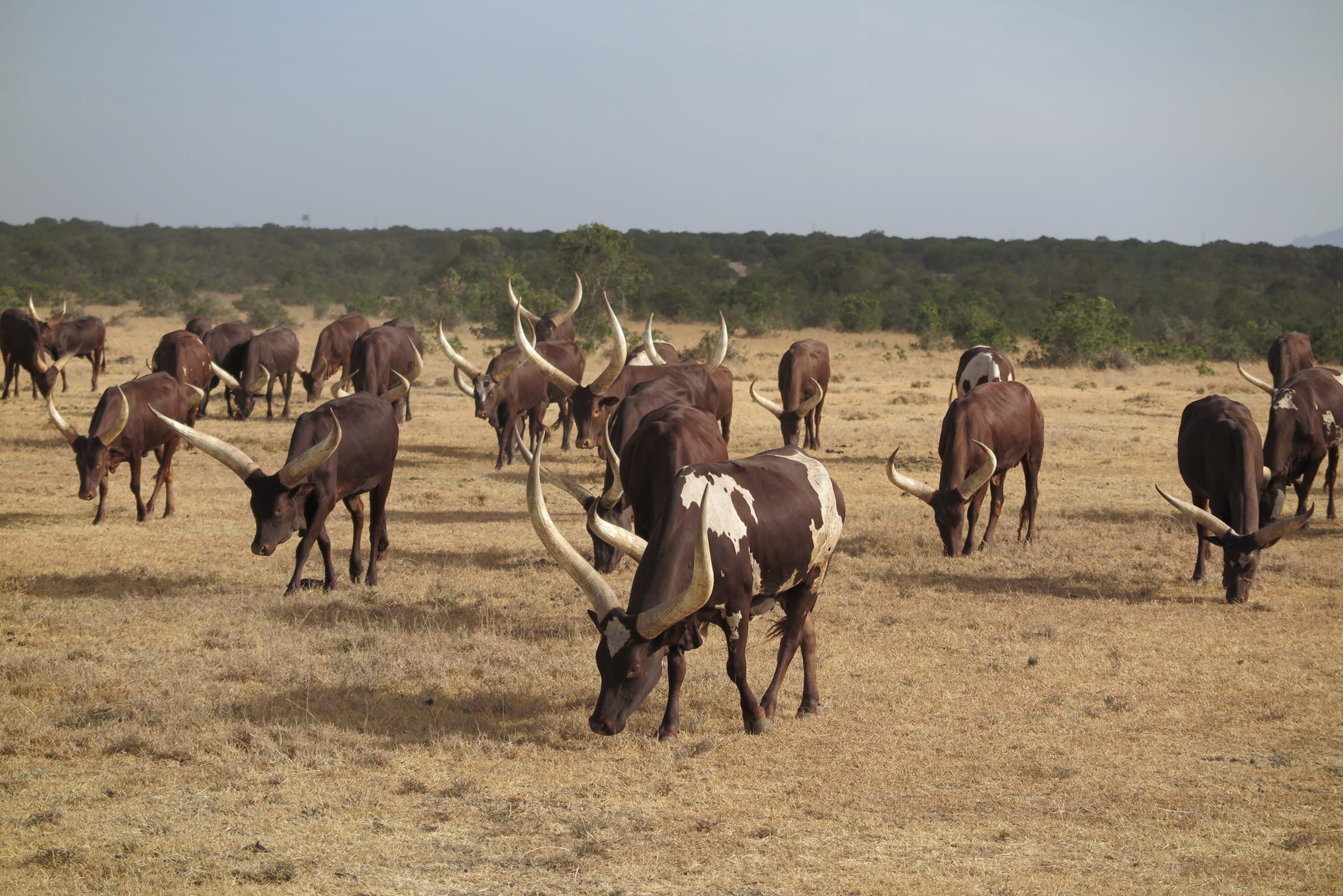
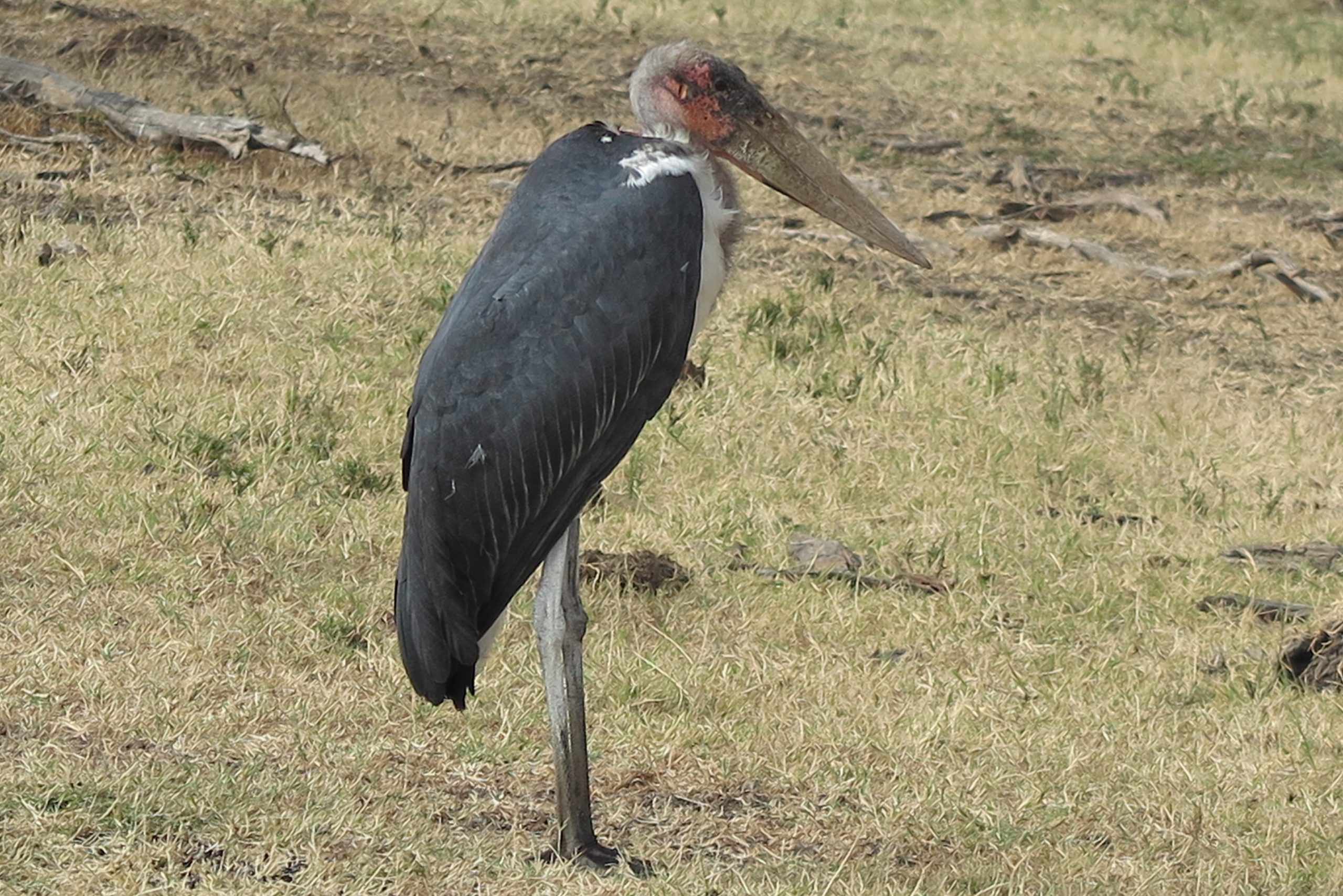
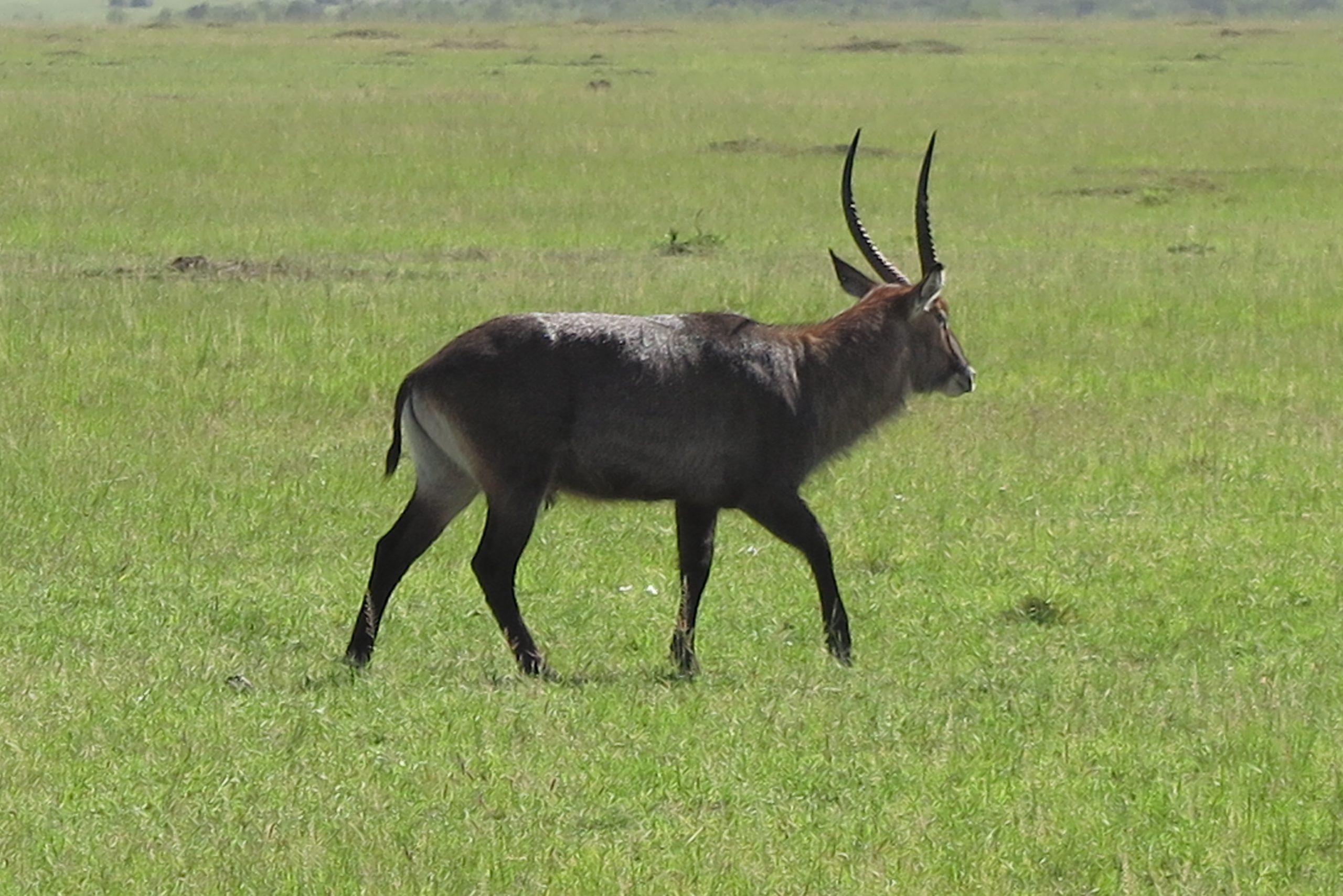
We had a busy day today with a game drive, a visit to Sweetwaters, and a visit to the spinners and weavers. On the way to the Ol Pajeta Conservancy, we saw a camel on the roadside. Camels are raised for their milk and meat. On the game drive, we saw Thompson gazelles, impalas (1 male with a harem of about 50 females), plains zebras, defassa water bucks, white rhinos (grey in color), guinea fowl, warthogs, black rhino, lions, eland (biggest antelope in Africa), ankole cows, northern white rhino (last 3-4 in the world), rhino graveyard (16 were poached and there are markers in place to commemorate the loss), and marabou stork (also known as flying hyena).
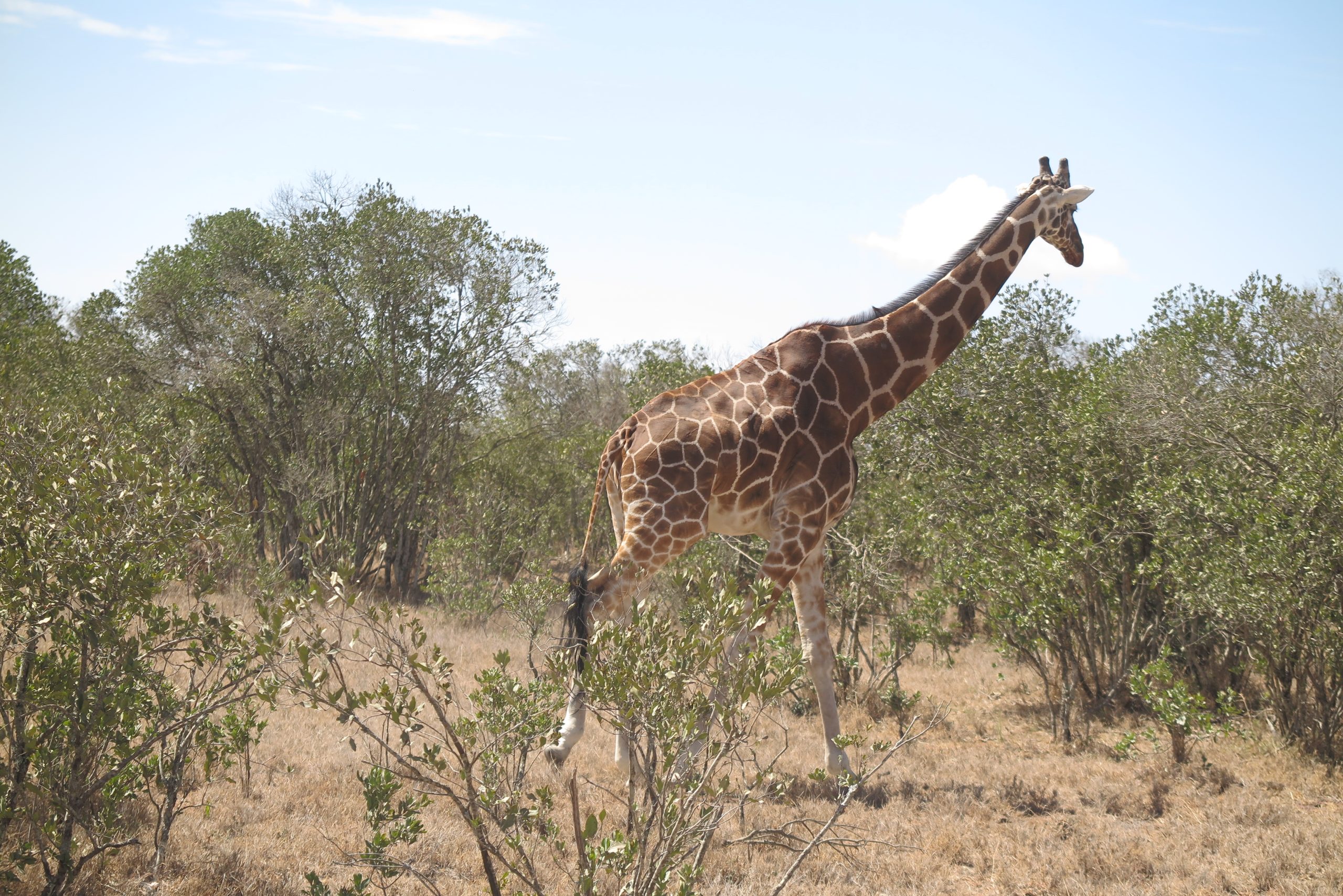
Next up, was the Sweetwaters Chimp Sanctuary. We got to see a few of the chimps. These chimps have been rescued from abusive situations and bear the scars of their past and sadly cannot be reintegrated into the wild. The sanctuary is a collaborative effort between the Ol Pajeta Conservancy, the Kenya Wildlife Service, and the Jane Goodall Institute. We were also fortunate enough to see reticulated giraffes whose spots are very geometrical unlike the Maasai giraffes whose spots are more like polka dots. Despite their long necks giraffes have only 7 neckbones, the same as humans.
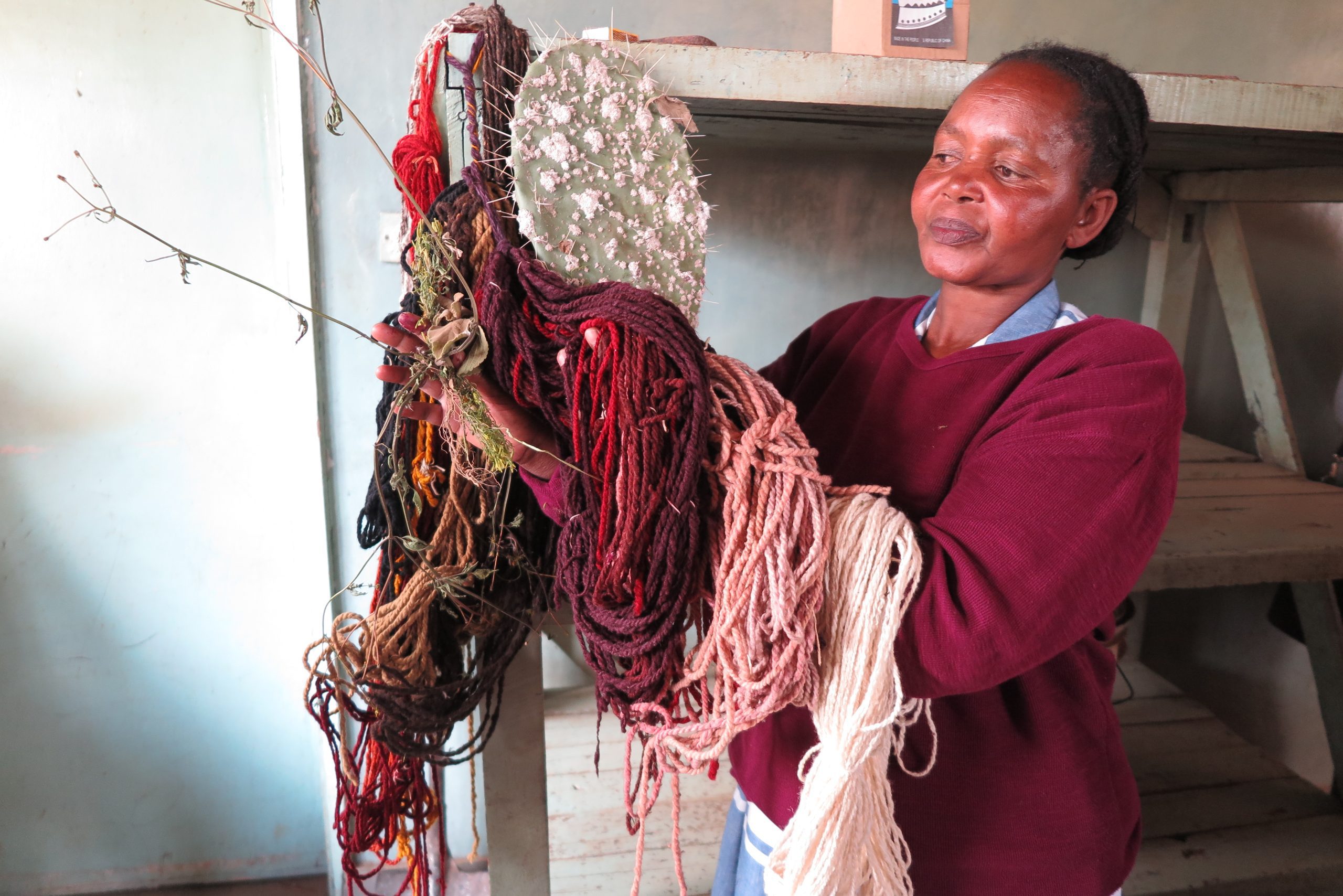
Our final stop was a visit to the women’s organization of spinners and weavers. This has been established by Canada and the U.S. to train local women. They spin and dye the wool using all-natural dyes. These are then woven into rugs, table mats, and more.
Glamping in Maasai Mara – February 12, 2018
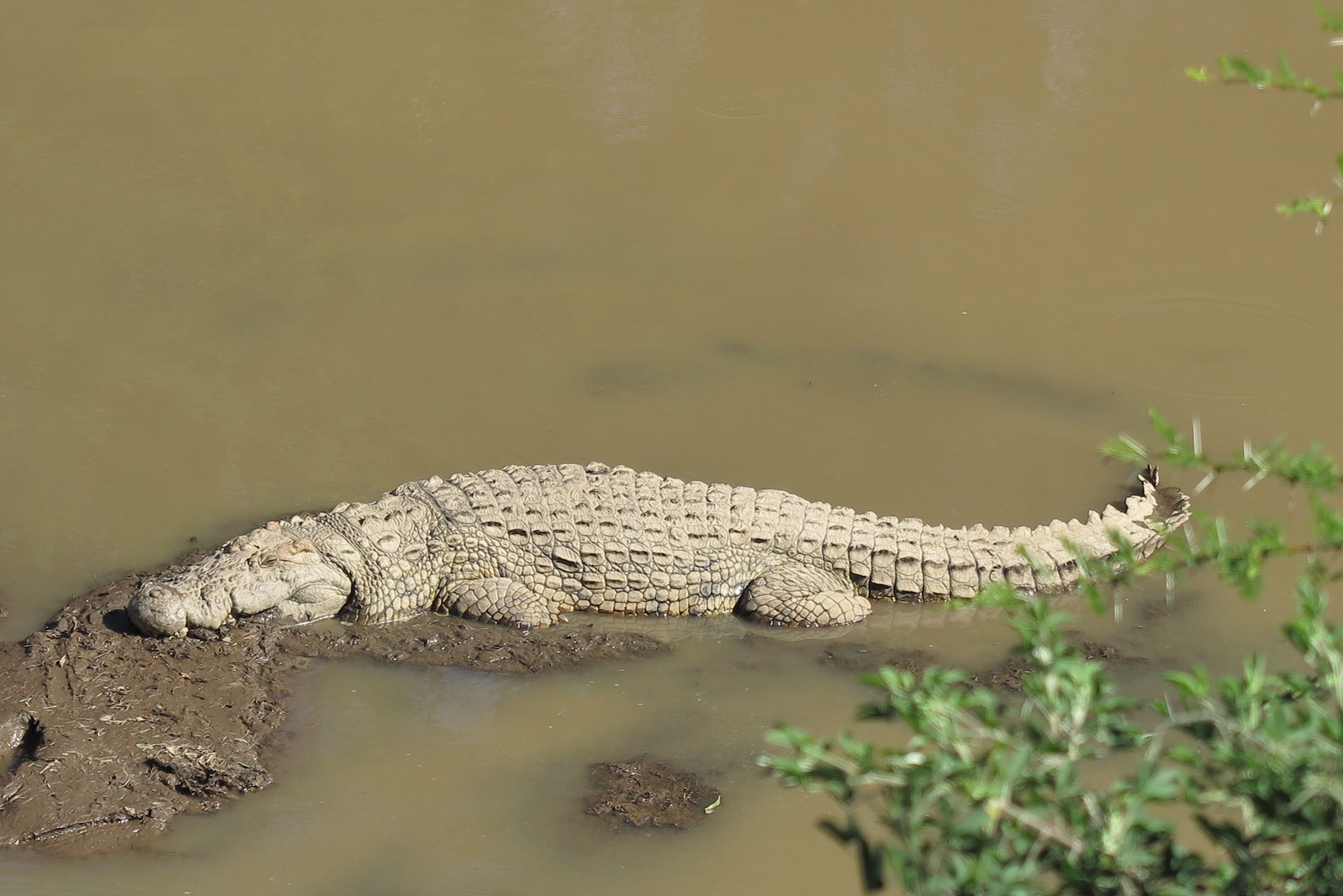
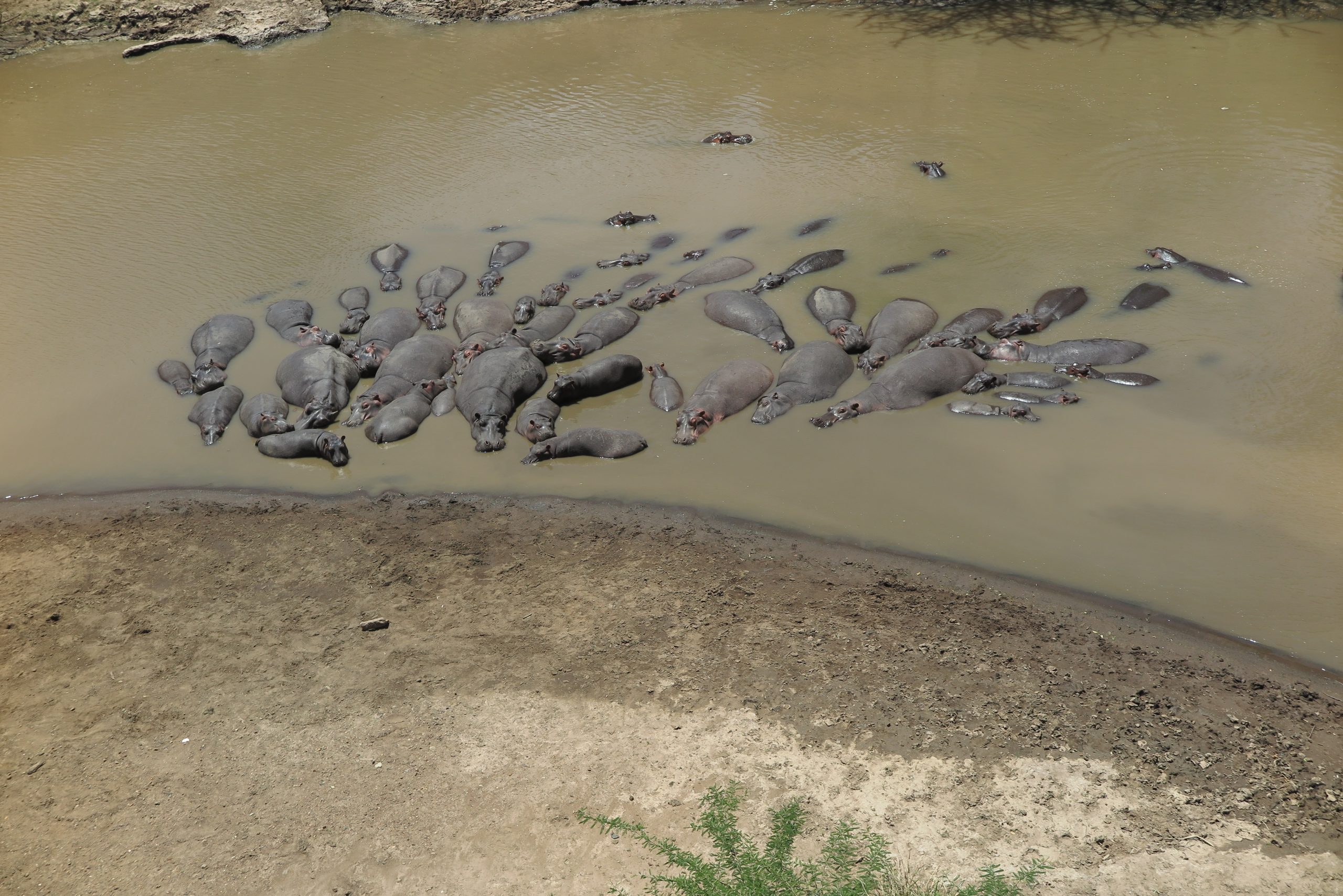
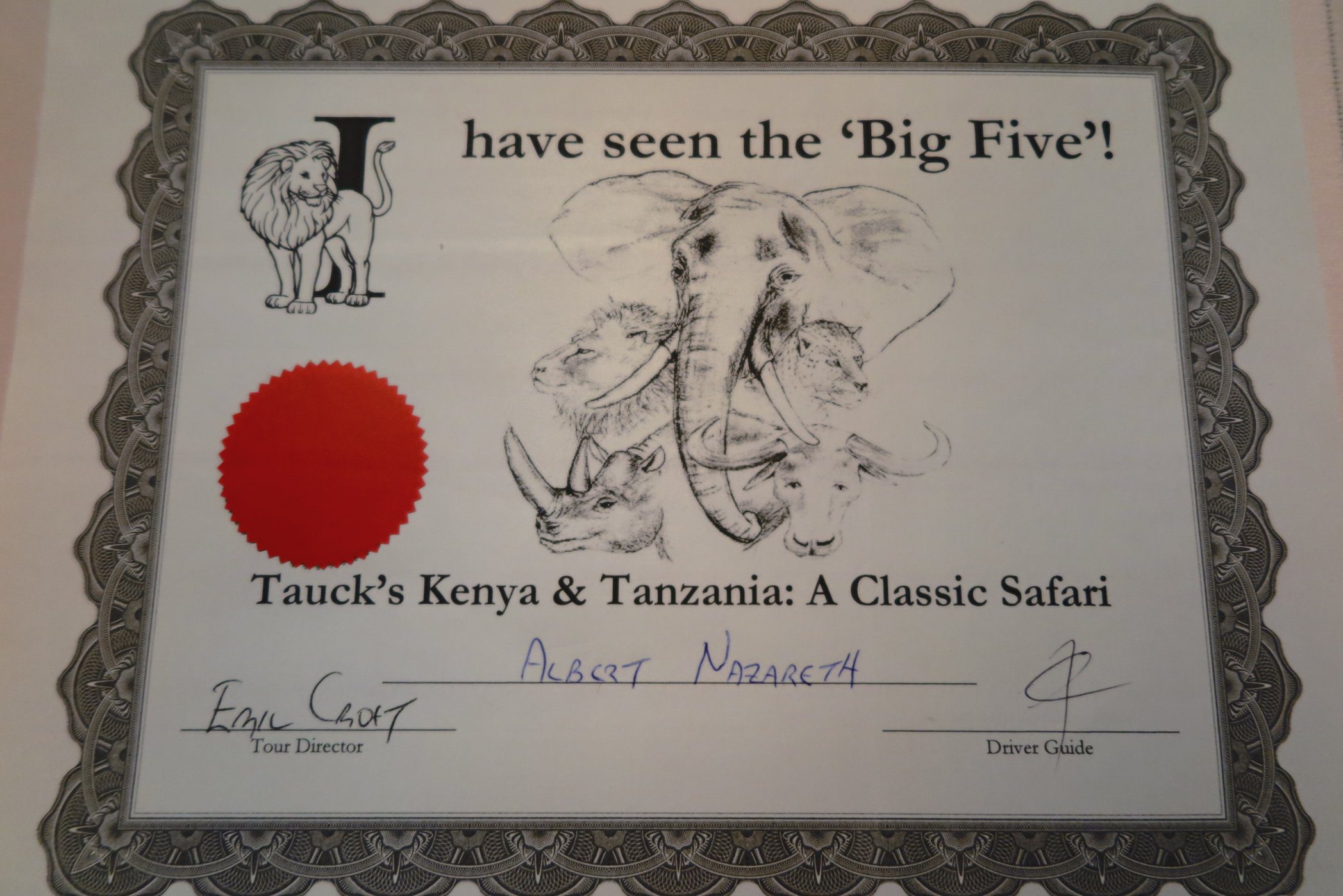
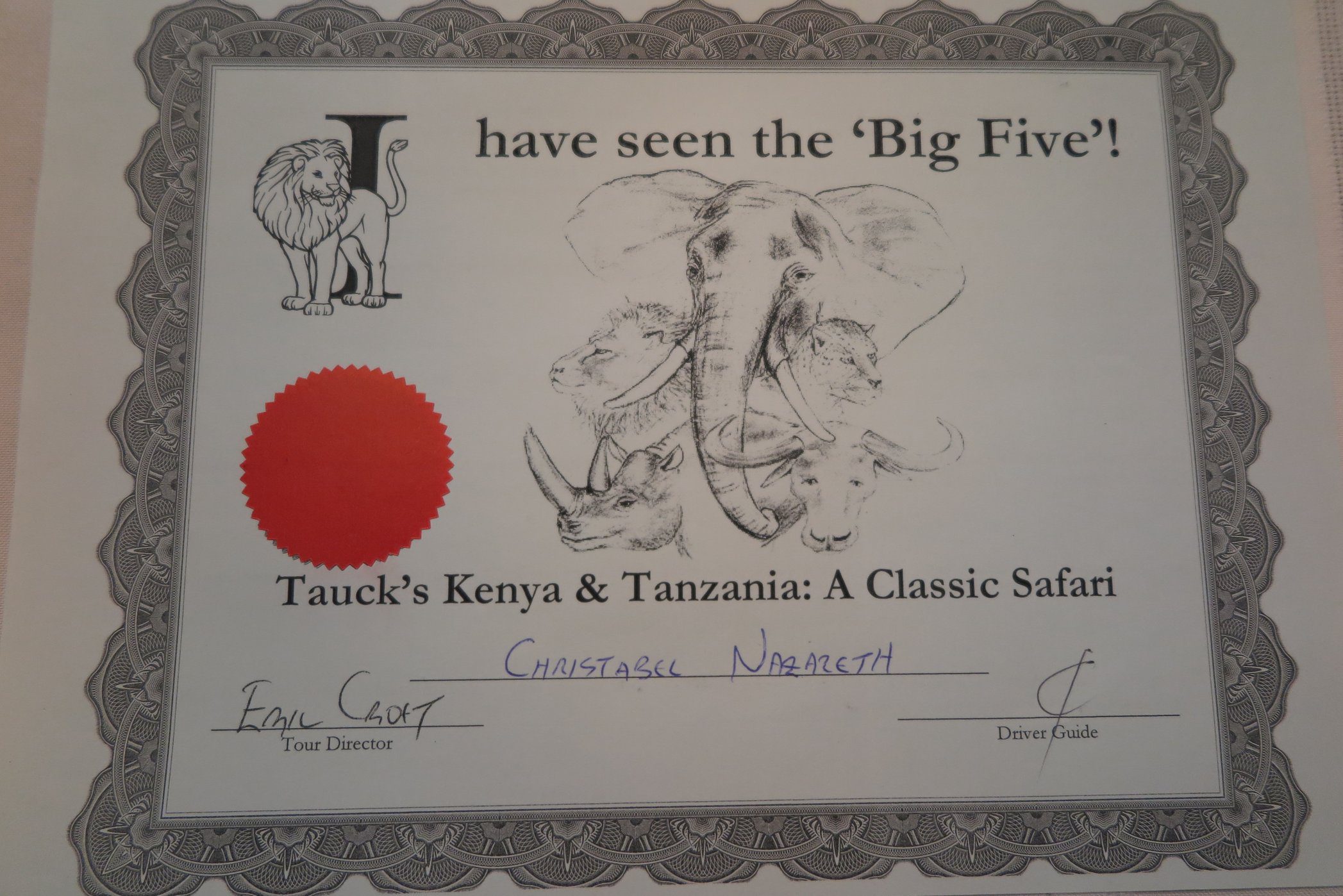
This morning, we drove to the Nanyuki airstrip to fly to the Maasai Mara, a large game reserve in southwestern Kenya. Mara means spotted in Maa, the Maasai language. All members of the big five (lions, elephants, cape buffalo, rhinos, and leopards) are residents here. On our way to the hotel, we stopped to see hippos and crocodiles.
We stayed in tents for the next two nights at the Maasai Mara Safari Club. To get into our tent, we had to climb up a few steps on to a wooden deck that overlooks the river in which there are tons of hippos and crocodiles. The deck has a table and two chairs. To get into the tent one had to remove the Velcro tapes and unzip the flaps before entering. There’s one large room with a bed, a leather box with a refrigerator and shelves. There’s a table, a camp chair, and a lampstand. The bed had a mosquito net, again! For windows, there are 8 flaps that roll up to let light and breeze in. On either side of the bed, are beaded curtains that separate the main room from the other section where there is an open closet, towel rack, wash basin, bathroom facilities, a desk and stool, and a full-length mirror. There are no doors anywhere within. This is what they call glamping, we guess. Sound carries here so one can hear what the neighbors are saying. One can also hear the hippos grunting.
Ballooning over the plains of the Maasai Mara – February 13, 2018
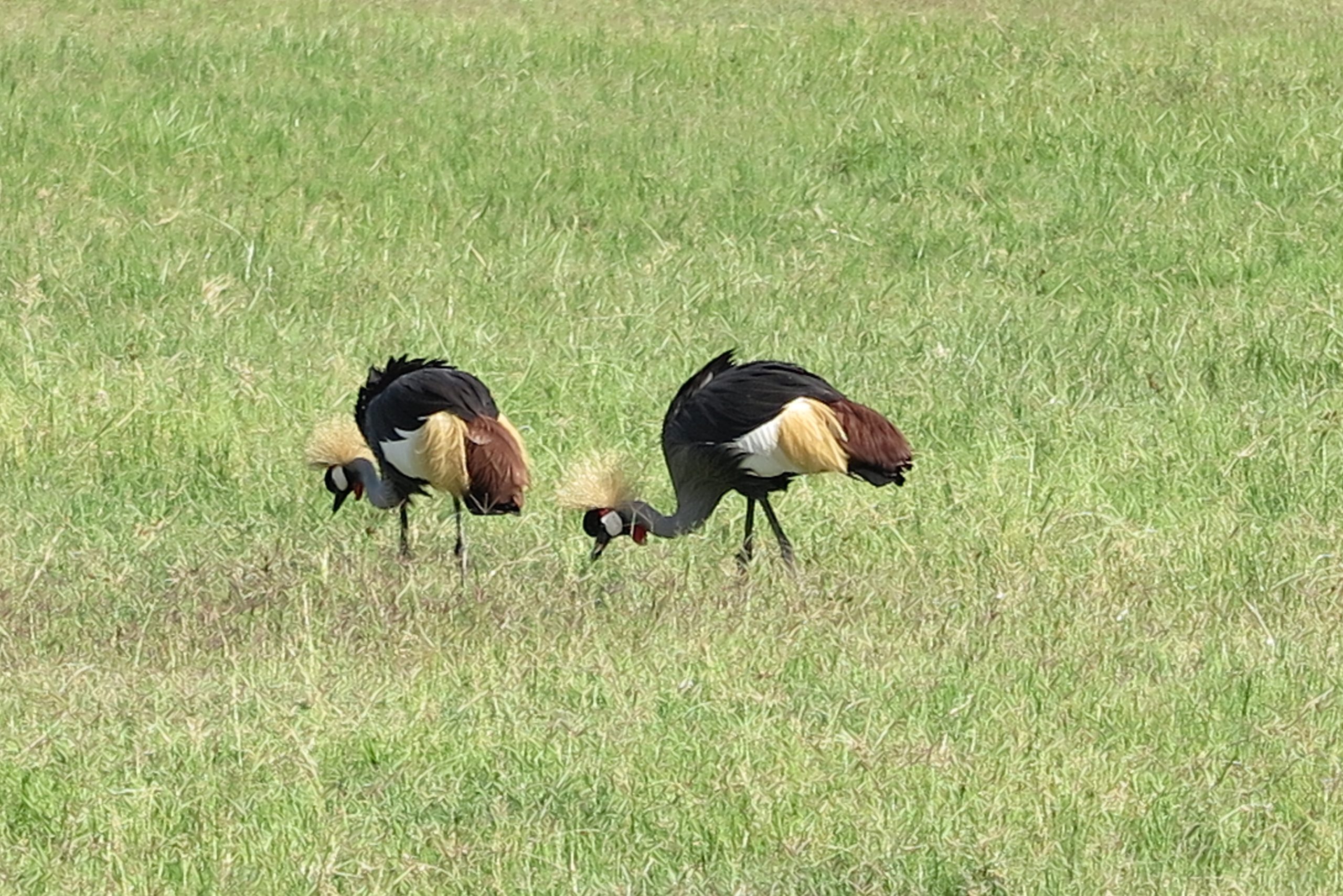
This evening, we drove to visit two white rhinos, Queen Elizabeth and Kofi Anan. White rhinos are grey but are called white because they have a wide mouth. Only in Africa, we guess! We were able to walk fairly close to the rhinos but we had an armed escort. On the way back, we saw giraffes, white bellied bustards, the secretary birds, the wattle clover birds, crested crane, dik-diks, silver back jackals, and impalas.
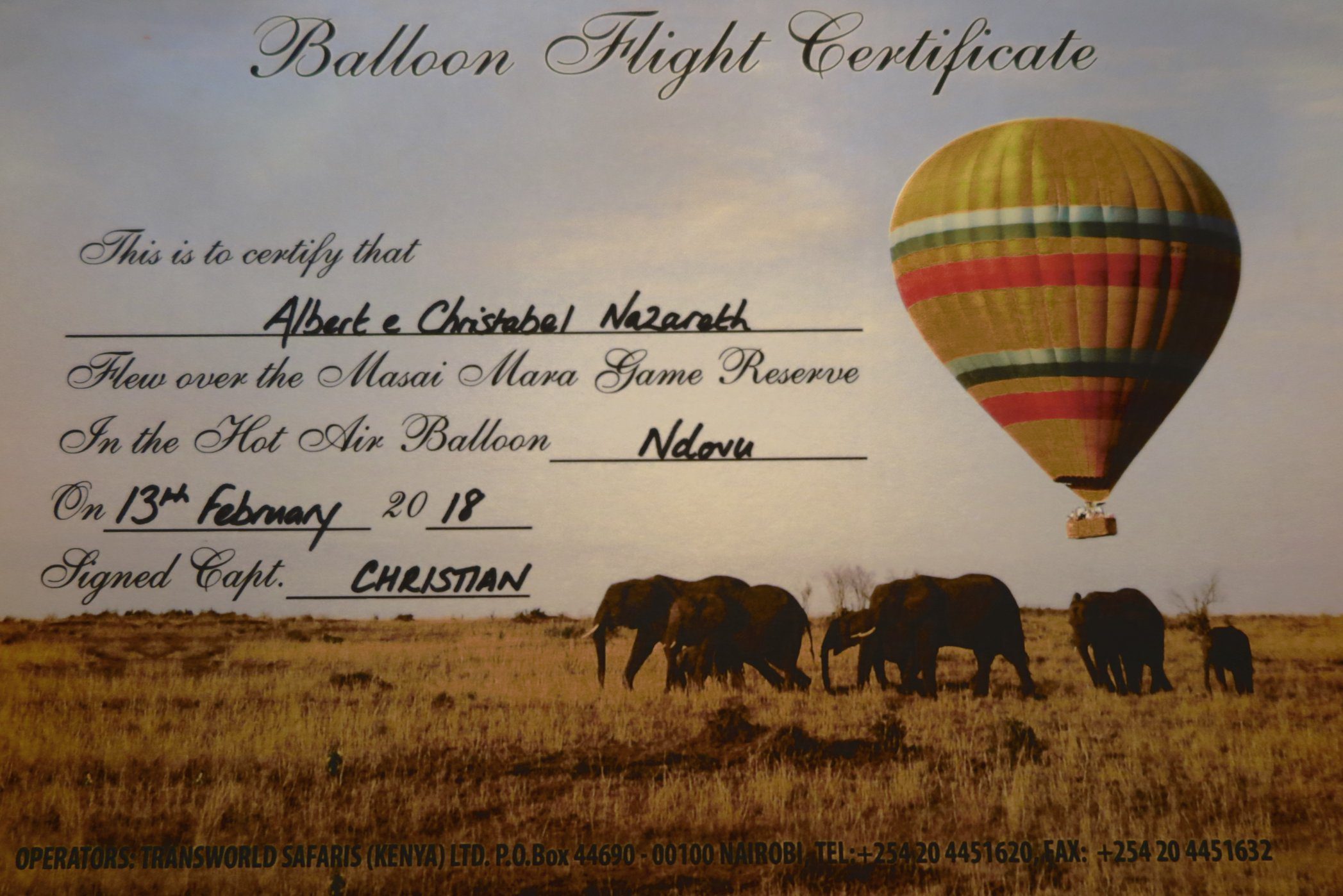
We spent a sleepless night thanks to the wind howling through the tent as the flaps were not rolled down. We left the camp at 5:15 AM to go ballooning. We were split into 2 groups. Ours had 10 people. We had to slide into position in the basket and sit with our knees up with our hands holding on for dear life while the balloon rose into the takeoff mode. It was blissful floating just above the trees, and to see the sunrise and the animals roaming freely. Our pilot was from Yorkshire, England. He had a tough time controlling the balloon as it seemed to want to go in the direction opposite to where we were supposed to land. Also, the winds remained persistently strong. Our landing was very rough and stomach churning and back dislocating. Then, we had a champagne breakfast and “yes” there were shopping opportunities. On our way to the site, we saw an African kangaroo and, on our way, back, we saw a leopard drag an antelope up a tree to feast upon and away from other predators.
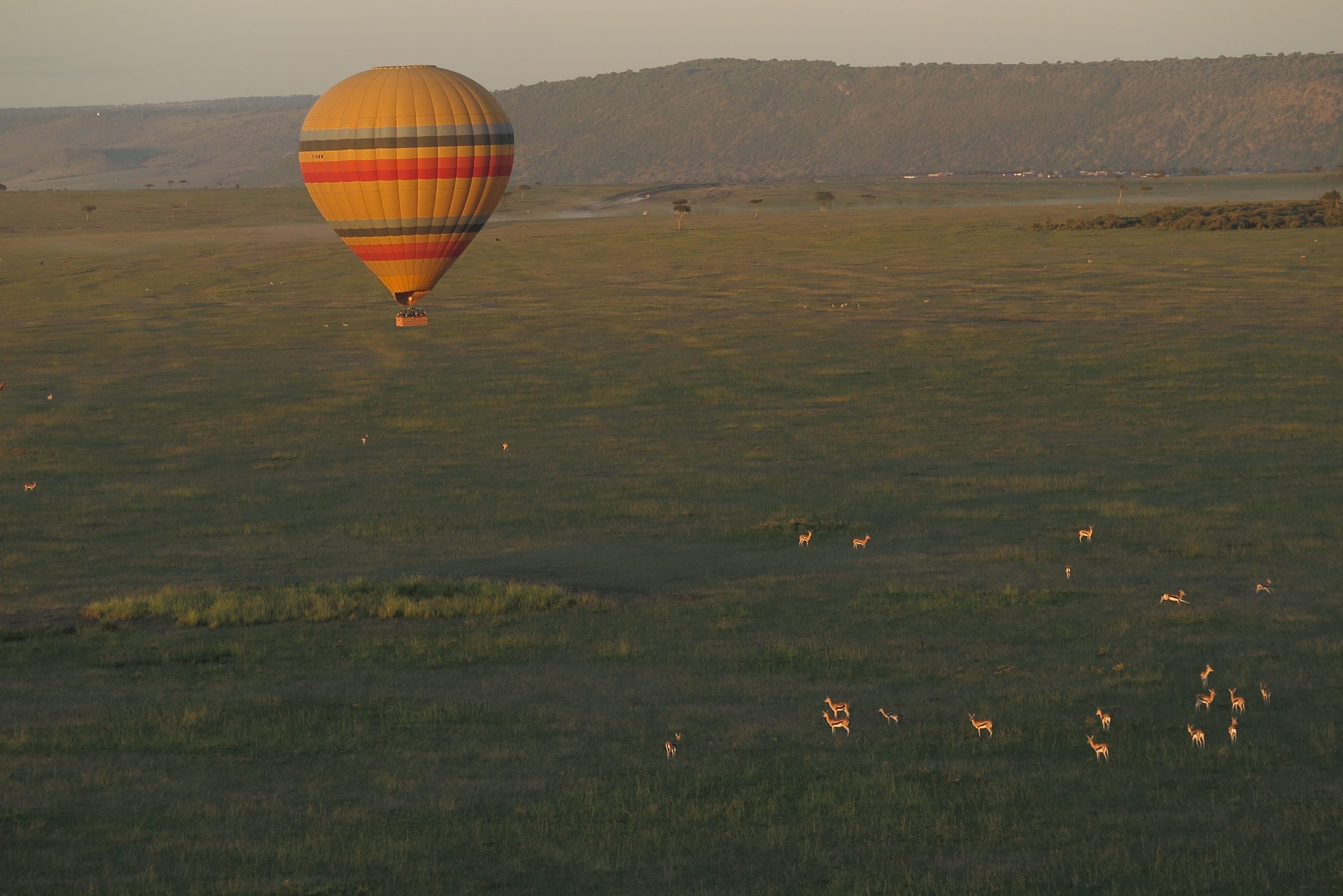
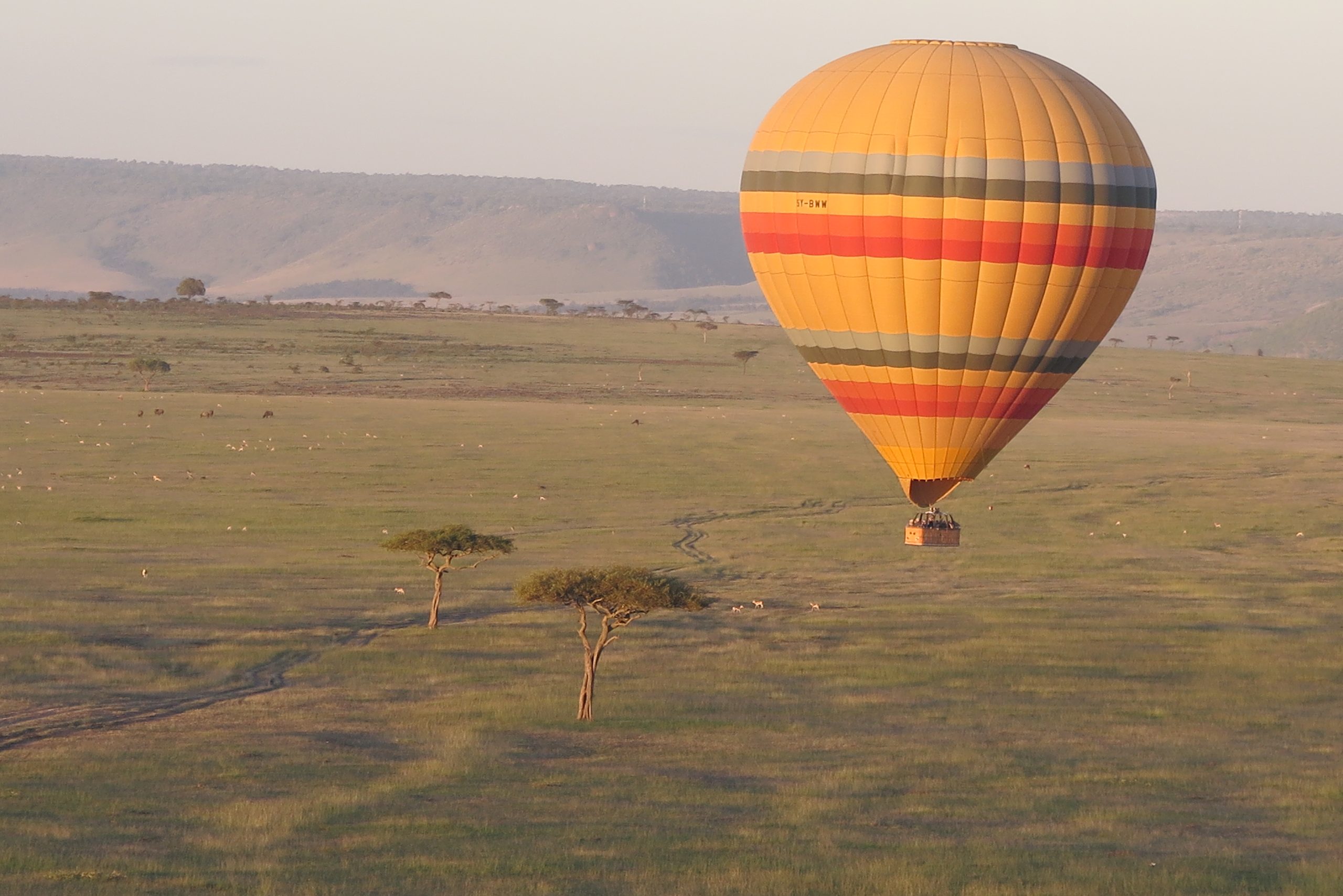
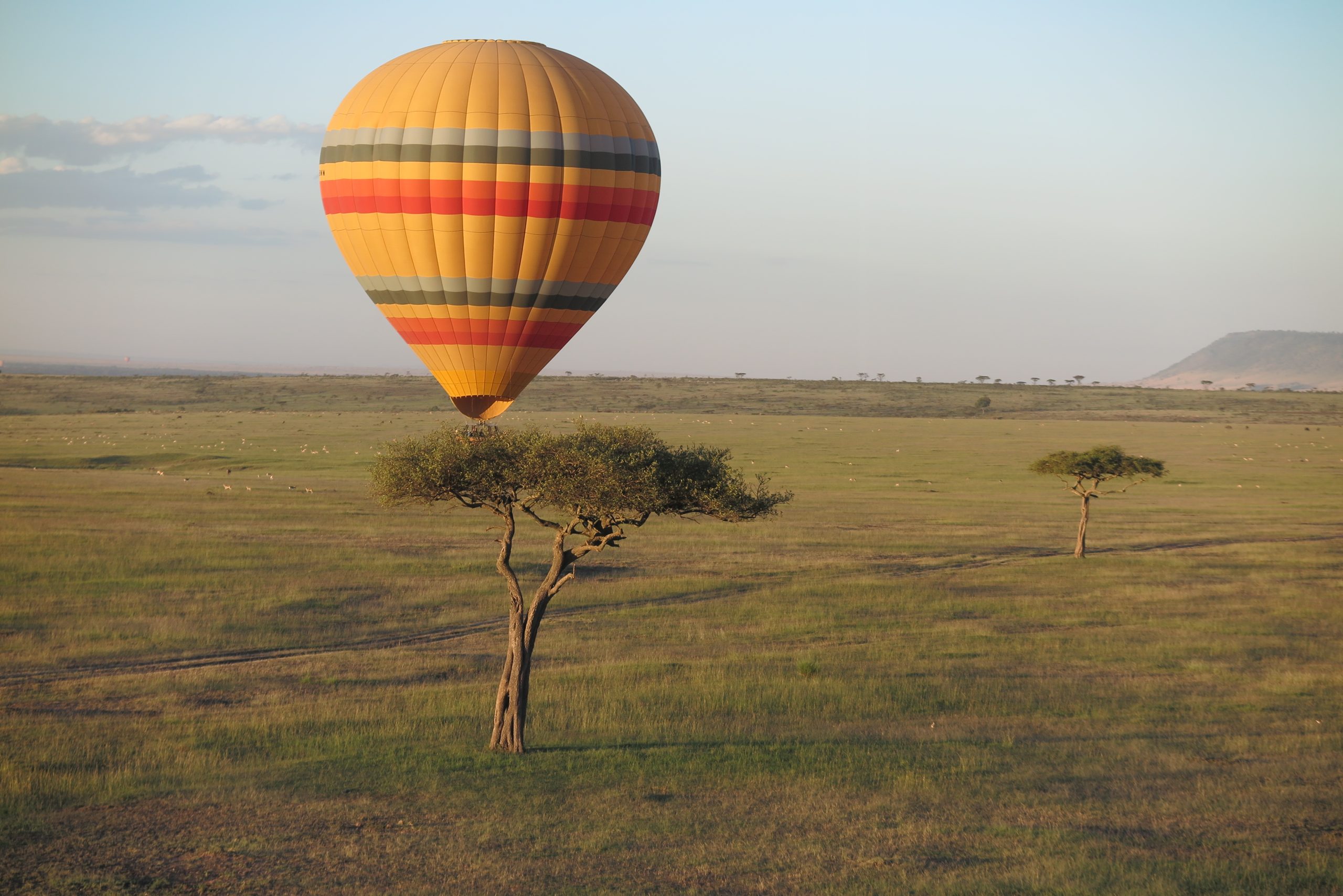
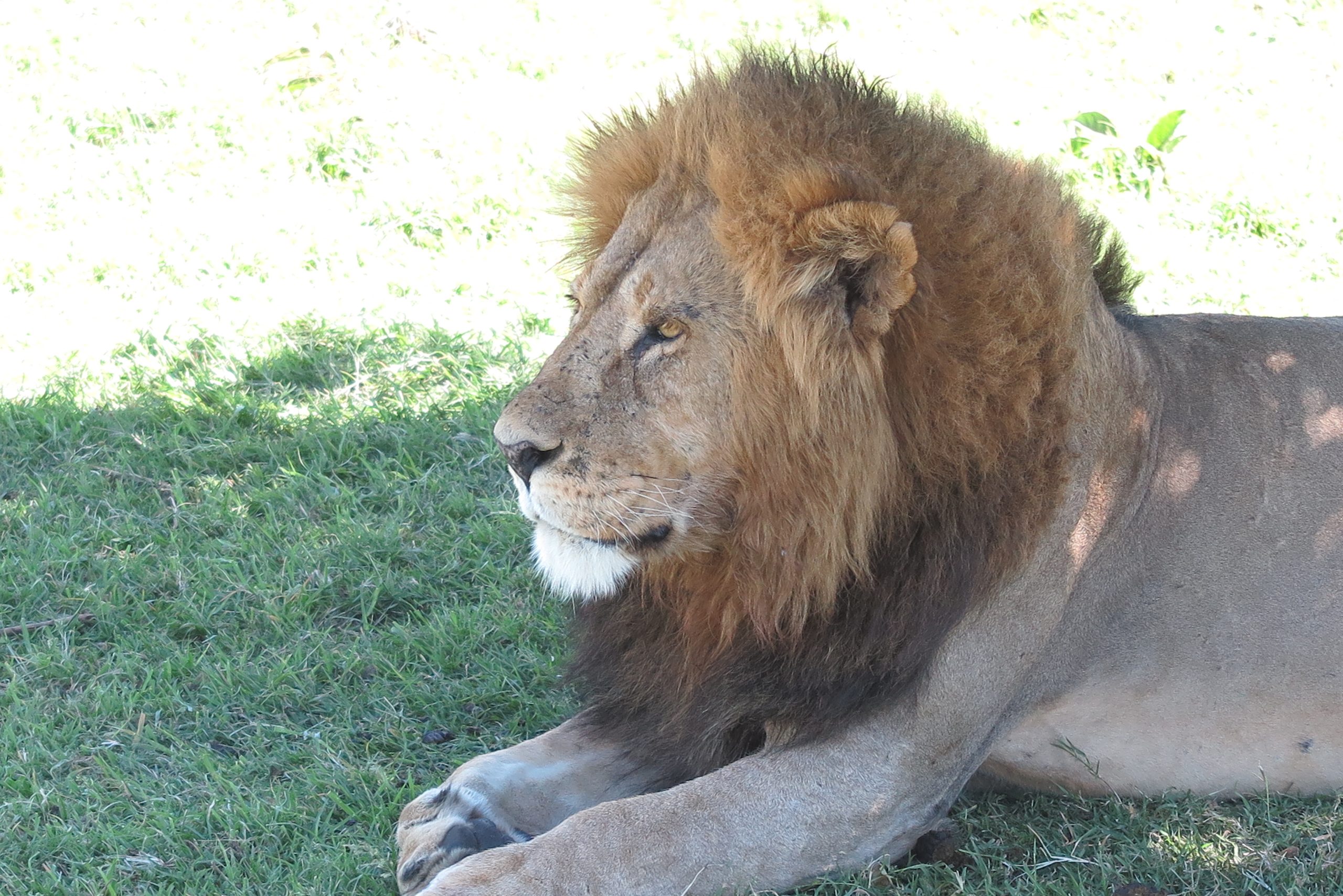
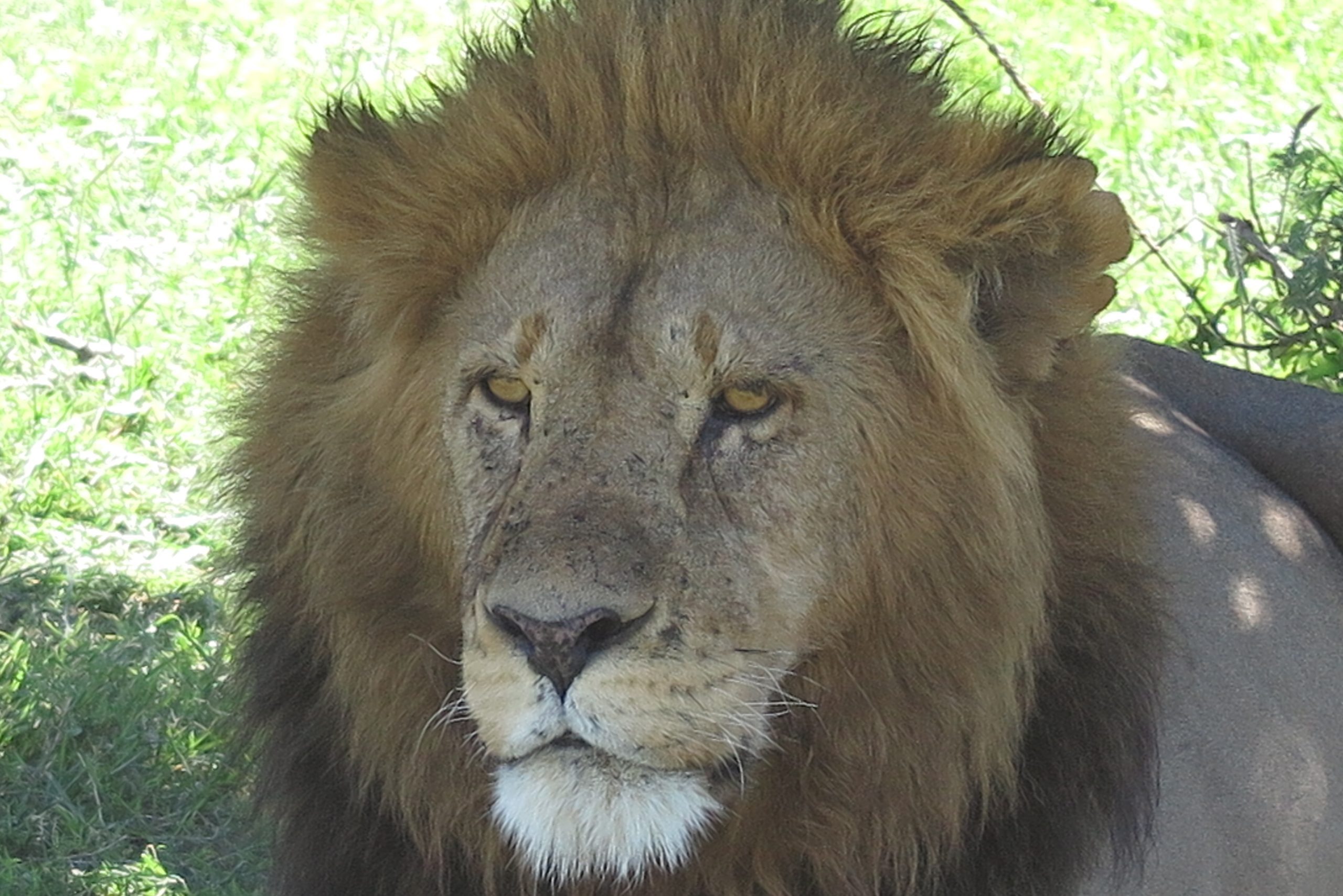
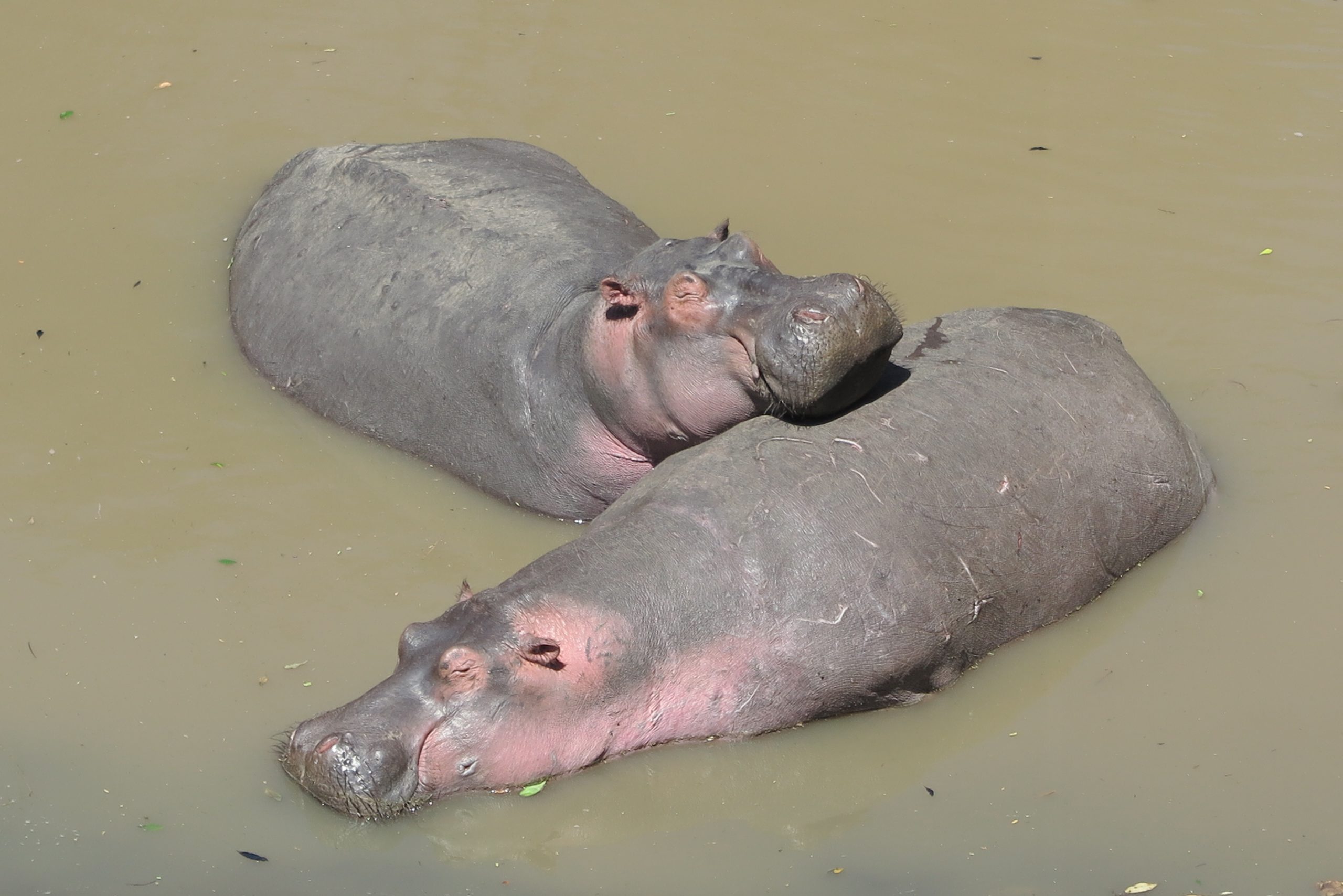
We had a game drive this evening but all we saw were hyenas, hippos, hares, and a few lions. We were hoping to see aardvarks but they proved elusive.
Valentine’s Day Safari Highlights – February 14, 2018
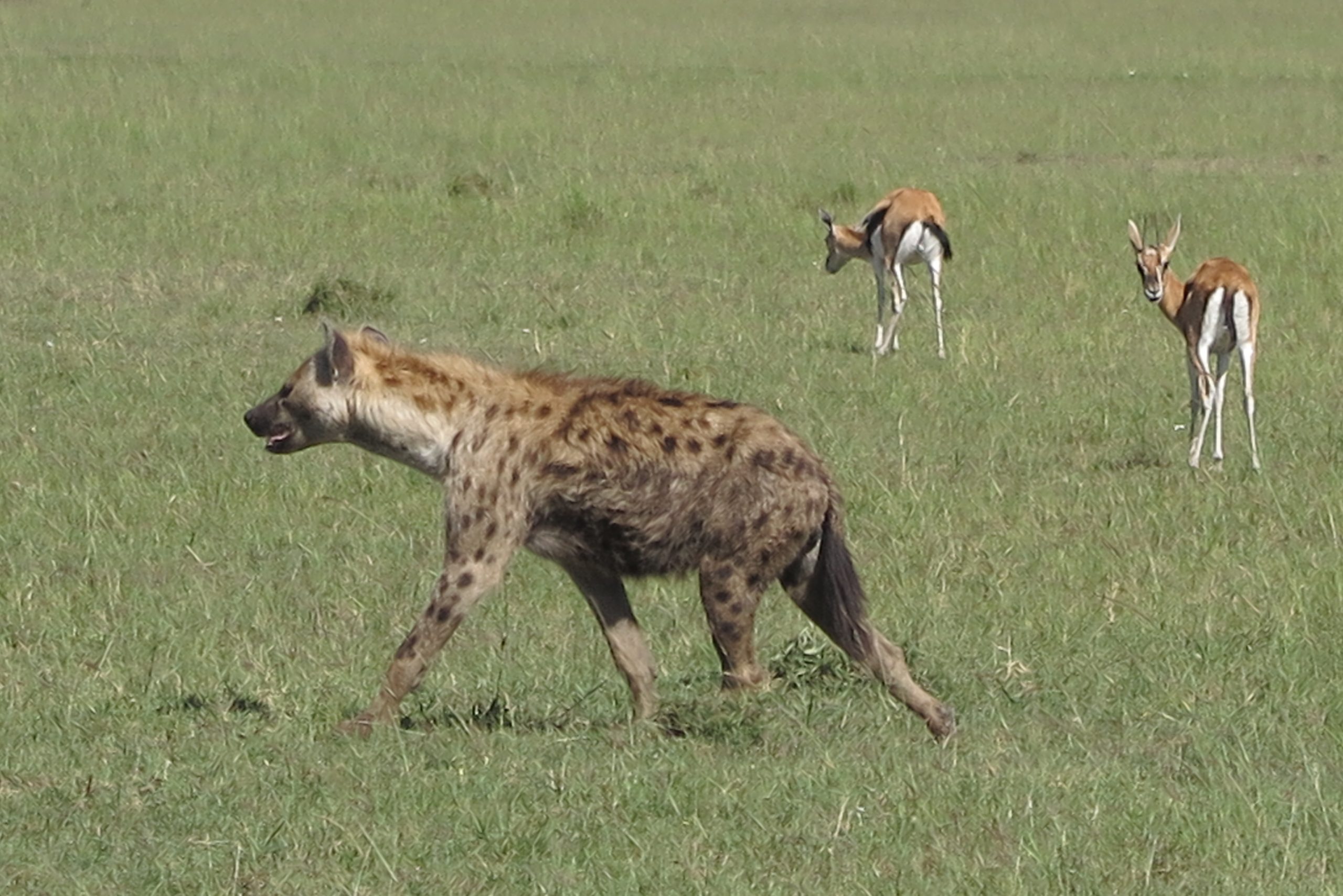
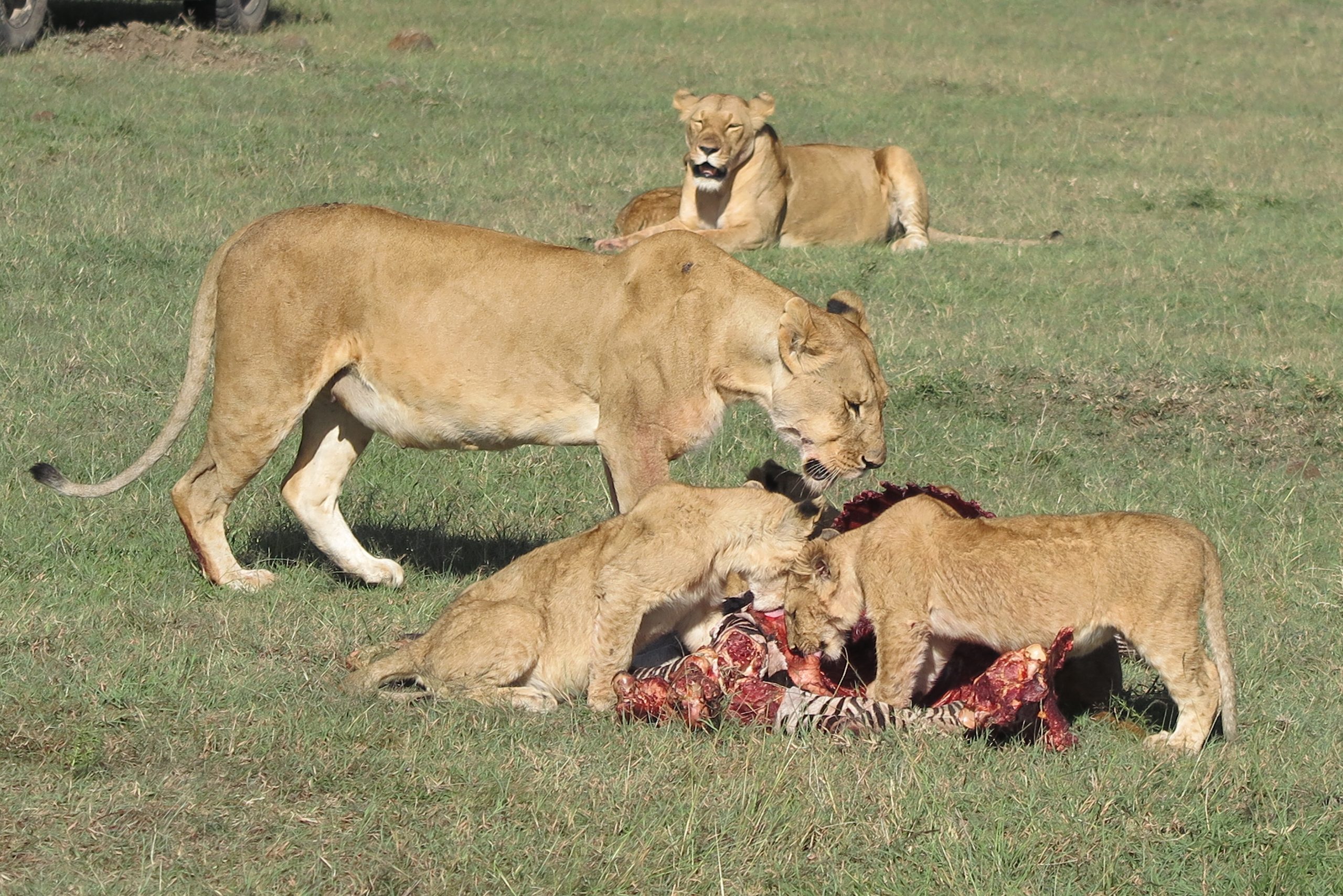
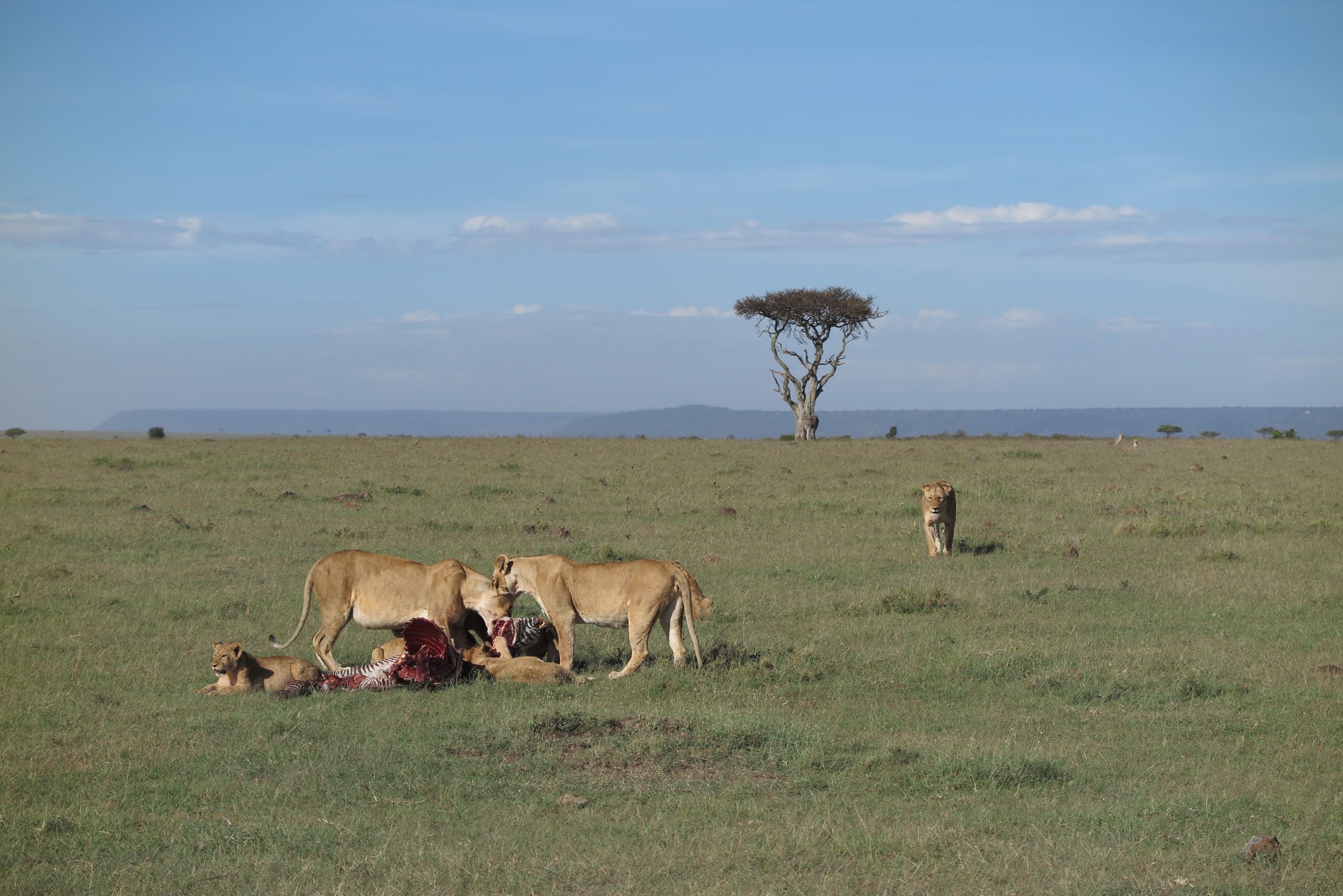
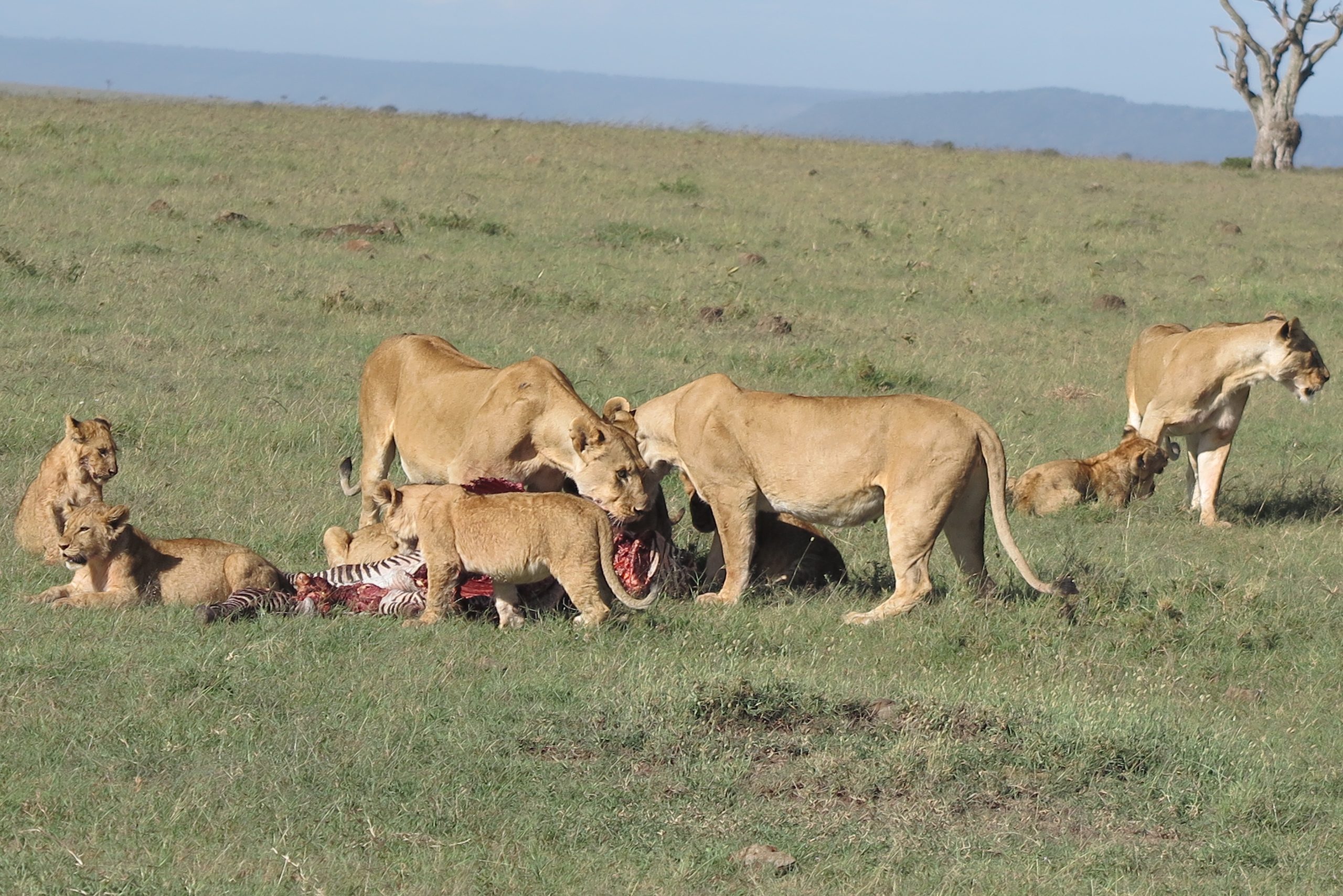
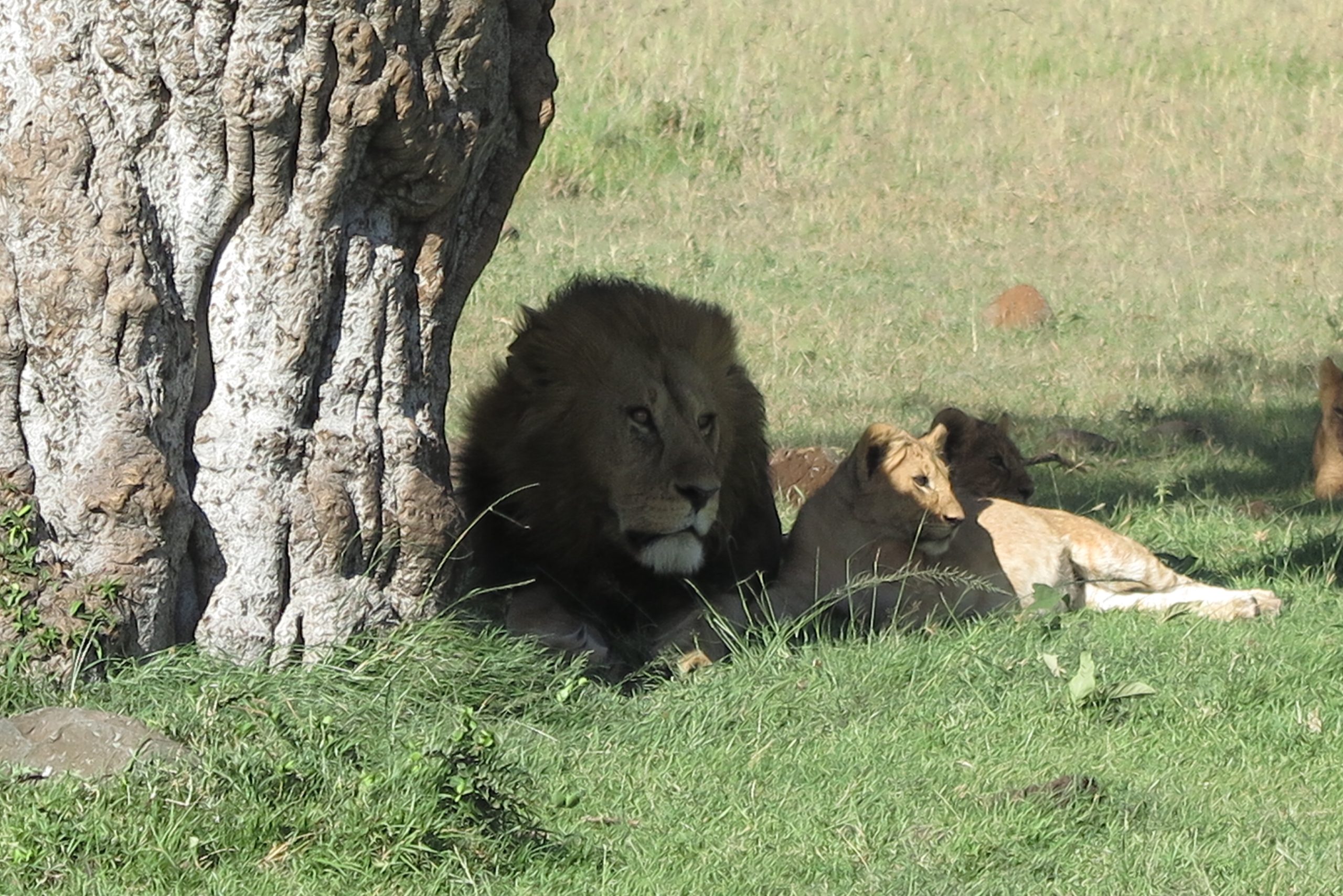
Valentine’s Day. On the game drive this morning, we saw guinea fowl, giraffe, zebra, dik-dik, cape buffalo, mongoose, wildebeest, hyenas, and a pride of lions comprising 1 male, 3 females, and 7 cubs feasting on a zebra carcass. The cubs were so stuffed they were dragging their bellies. After they had fed, the male lion sat while the female lions kept watch over the food because the hyenas kept circling.
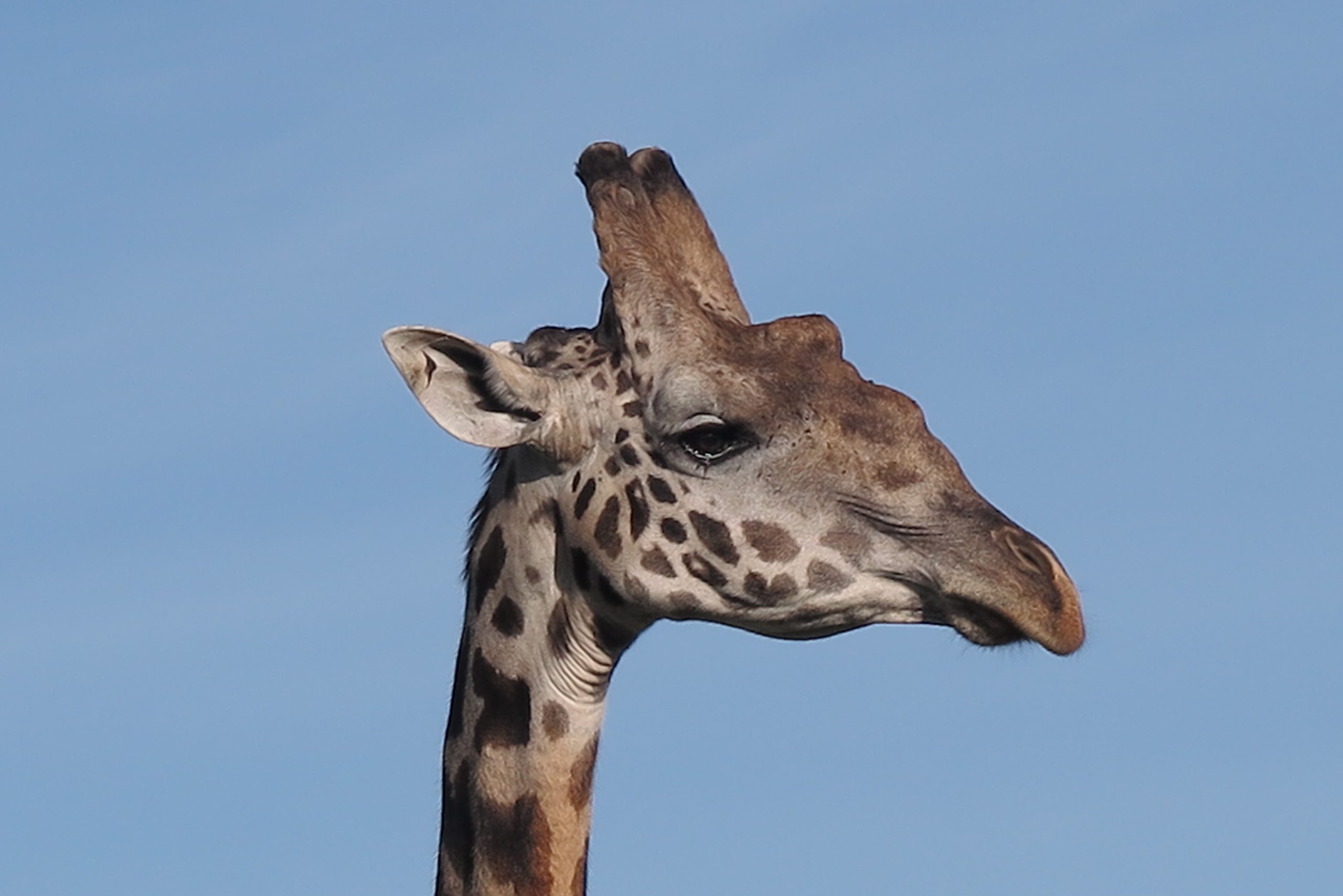
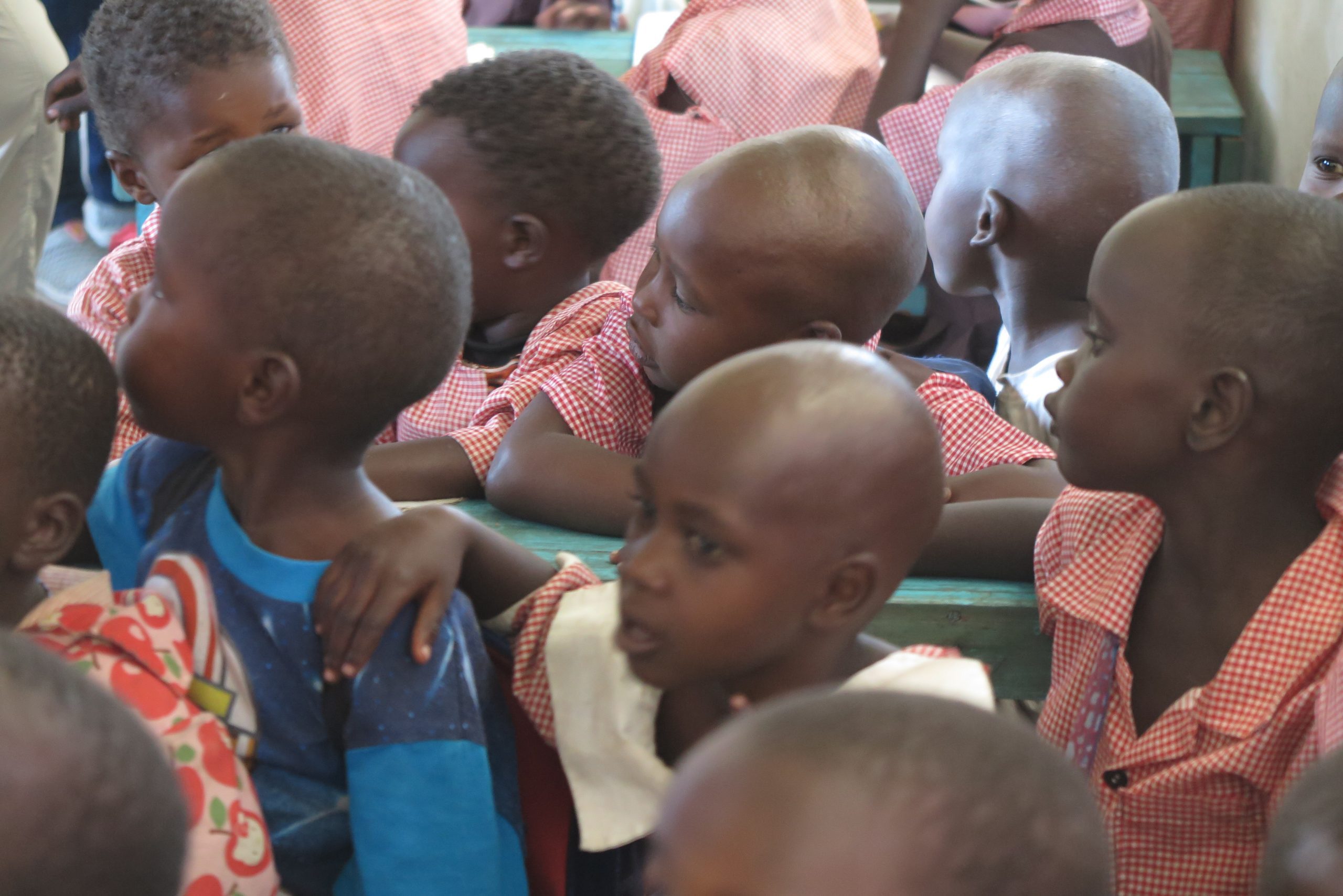
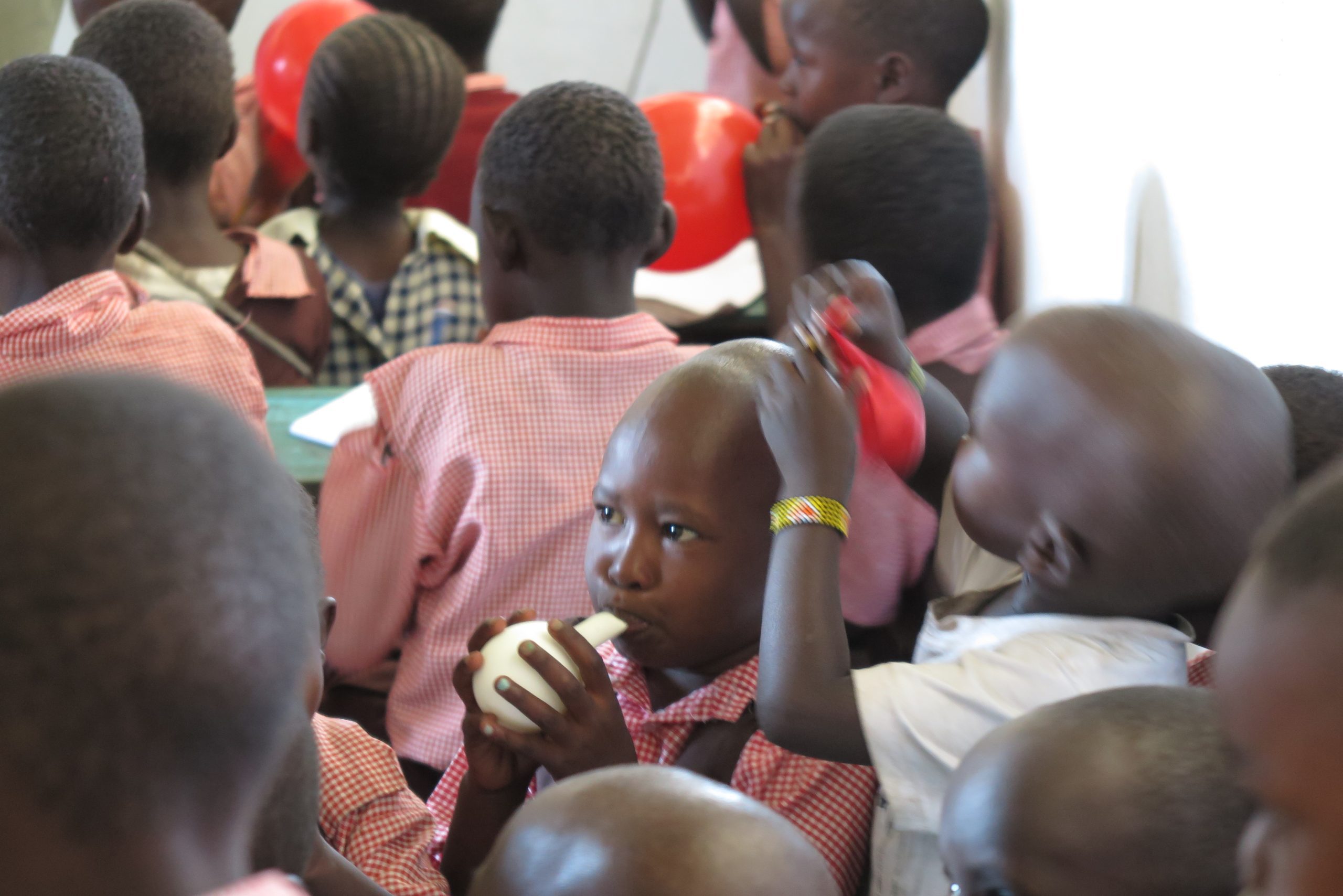
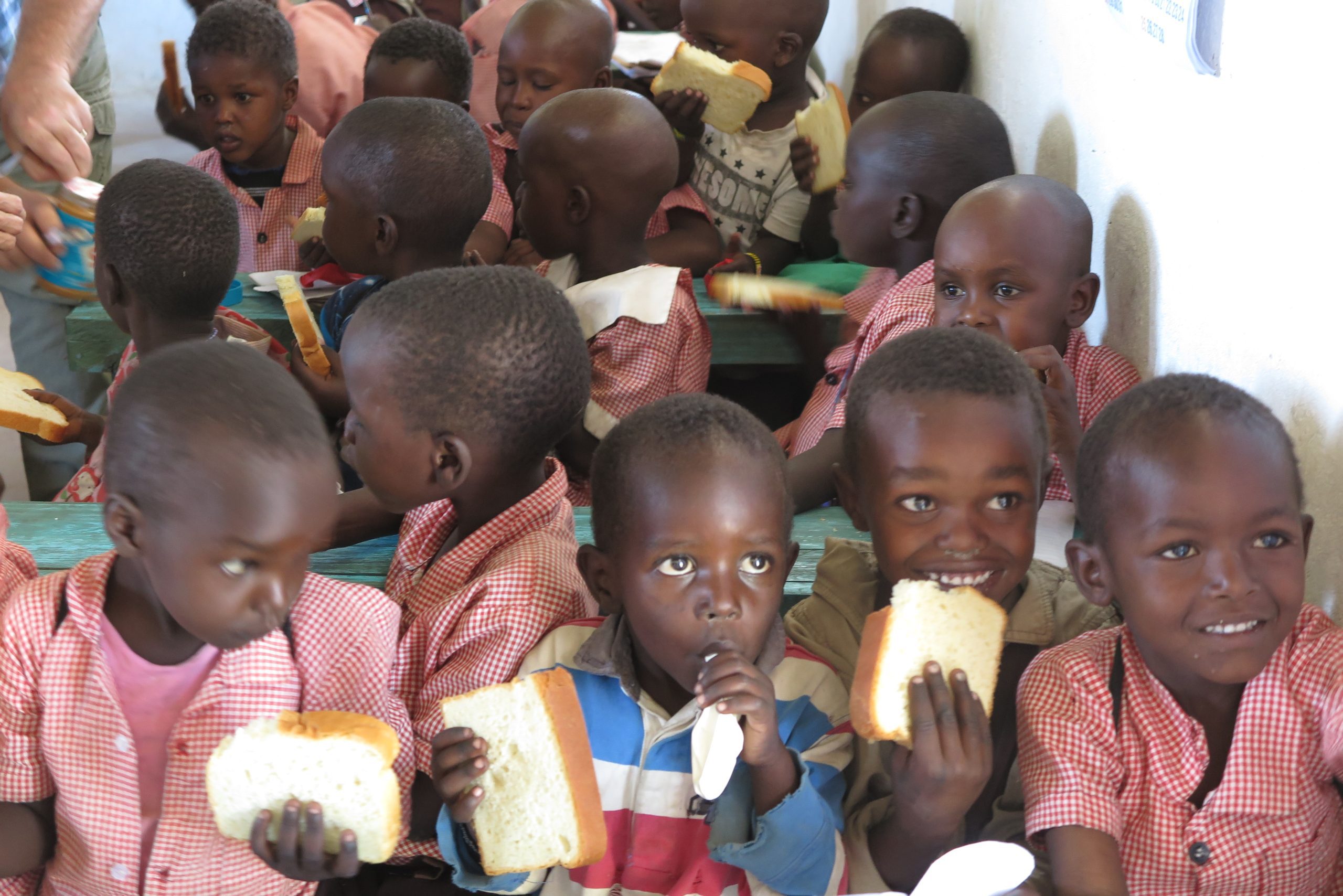
After the drive, we stopped by a one-room school packed with kids of different ages. They had uniforms but most did not have shoes. They sang us some songs in English. Eric had brought some sandwich bread and peanut butter and we spread it on the bread and gave it to the children. It was a very messy affair but the kids and the visitors both had a blast. Then it was recess time and the kids went out to play with balls and balloons.
The afternoon game drive was cancelled because of bad weather, so we congregated in the boma to get briefed on getting back home and the trip to Nairobi.
Flight to Nairobi and Family Reunion – February 15, 2018
We traveled together on a Kenya Air flight, arriving at Nairobi’s domestic airport. The security check was surprisingly brief and quick for an airport in a capital city.
The drive to the Norfolk Hotel was smooth, despite Nairobi’s notorious traffic reputation. The Norfolk is a beautiful old hotel reminiscent of the hotels and clubs of British India.
We, and a fellow traveler, strolled to the National Museum of Kenya. Along the way, we passed the local TV station and the park where the Pope held mass on his visit to Kenya. The museum had the usual paraphernalia–stuffed animals, bones, coins, paintings, photographs, and newspaper clippings. We also explored the gift shop, our last chance for souvenir shopping.
Later in the evening we met Sean, Albert’s cousin, and his wife Louiza, for the first time. Their daughter was not able to join us. We had a lovely visit with them and learned a bit about life in Nairobi. Then, we spent time packing, preparing to return home, and saying goodbye to the group, many of whom were leaving tonight.
Homebound – February 16, 2018
The conclusion of a one-of-a-kind lifetime experience. We said goodbye to the Norfolk and left at the ungodly hour of 4:45 AM for Jomo Kenyatta Airport and home.