Departure to Porto – September 9, 2022
Left for Porto late evening after a busy day at home. The plane was crowded with people and their luggage.
Porto: A Day of Surprises – September 10, 2022
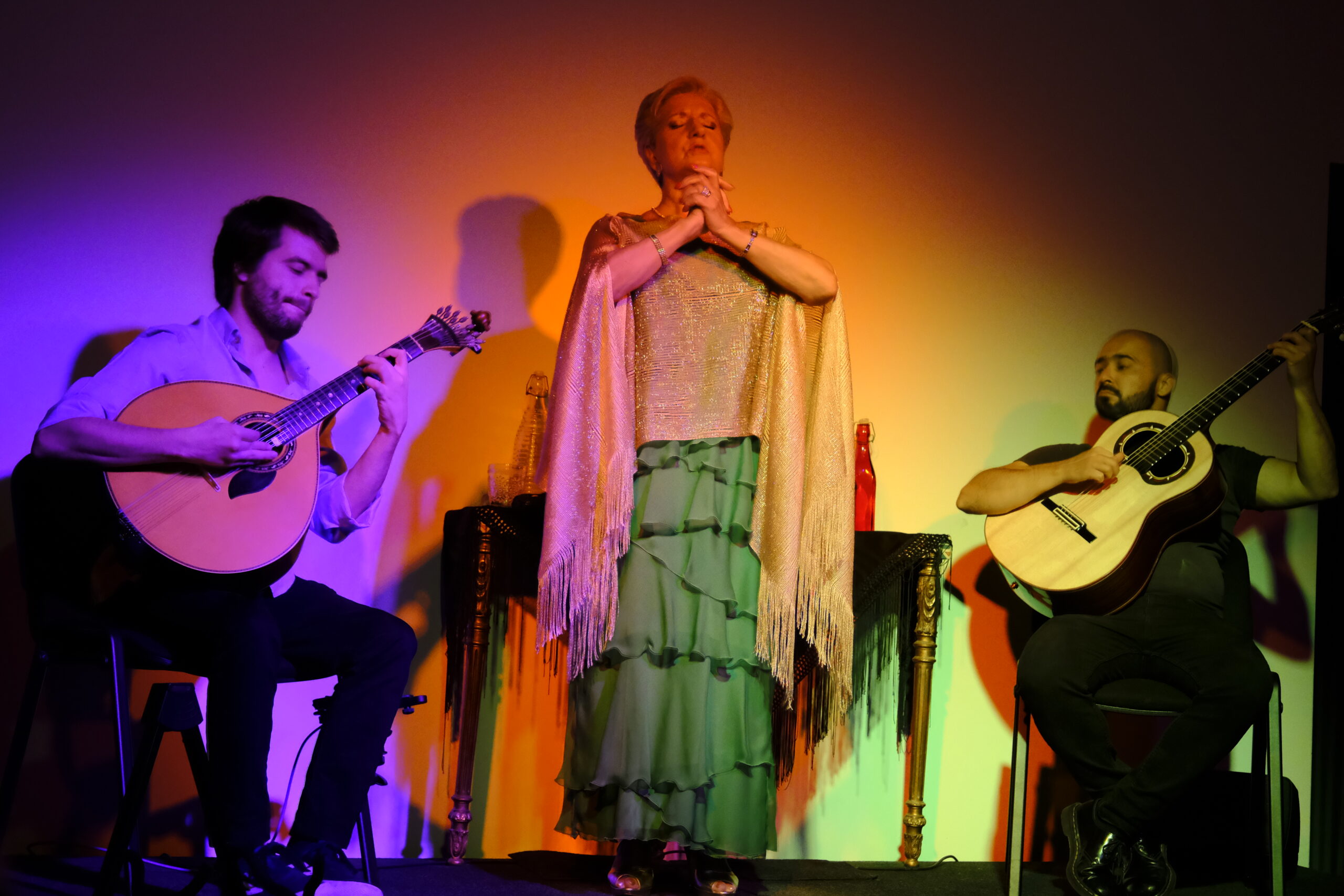
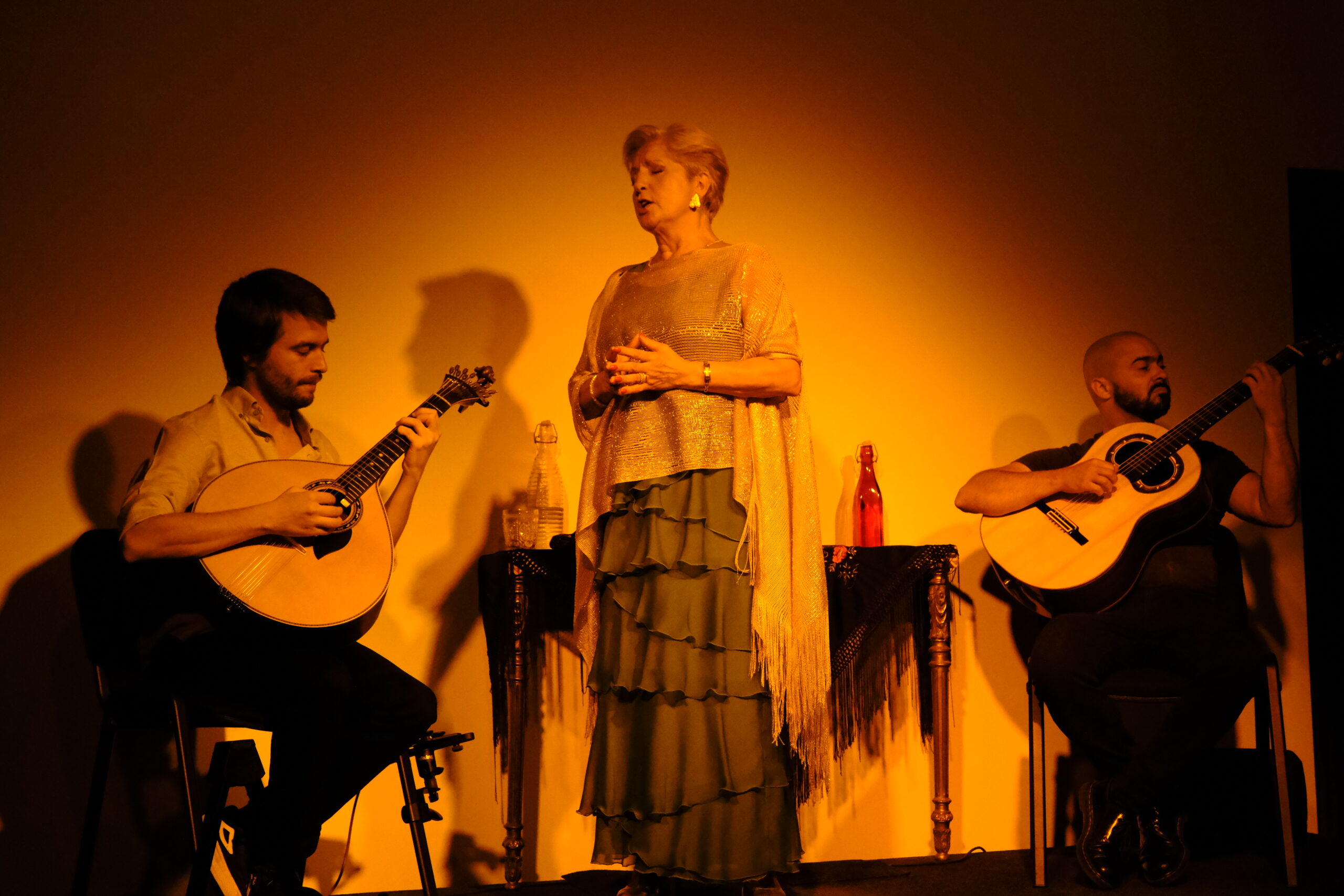
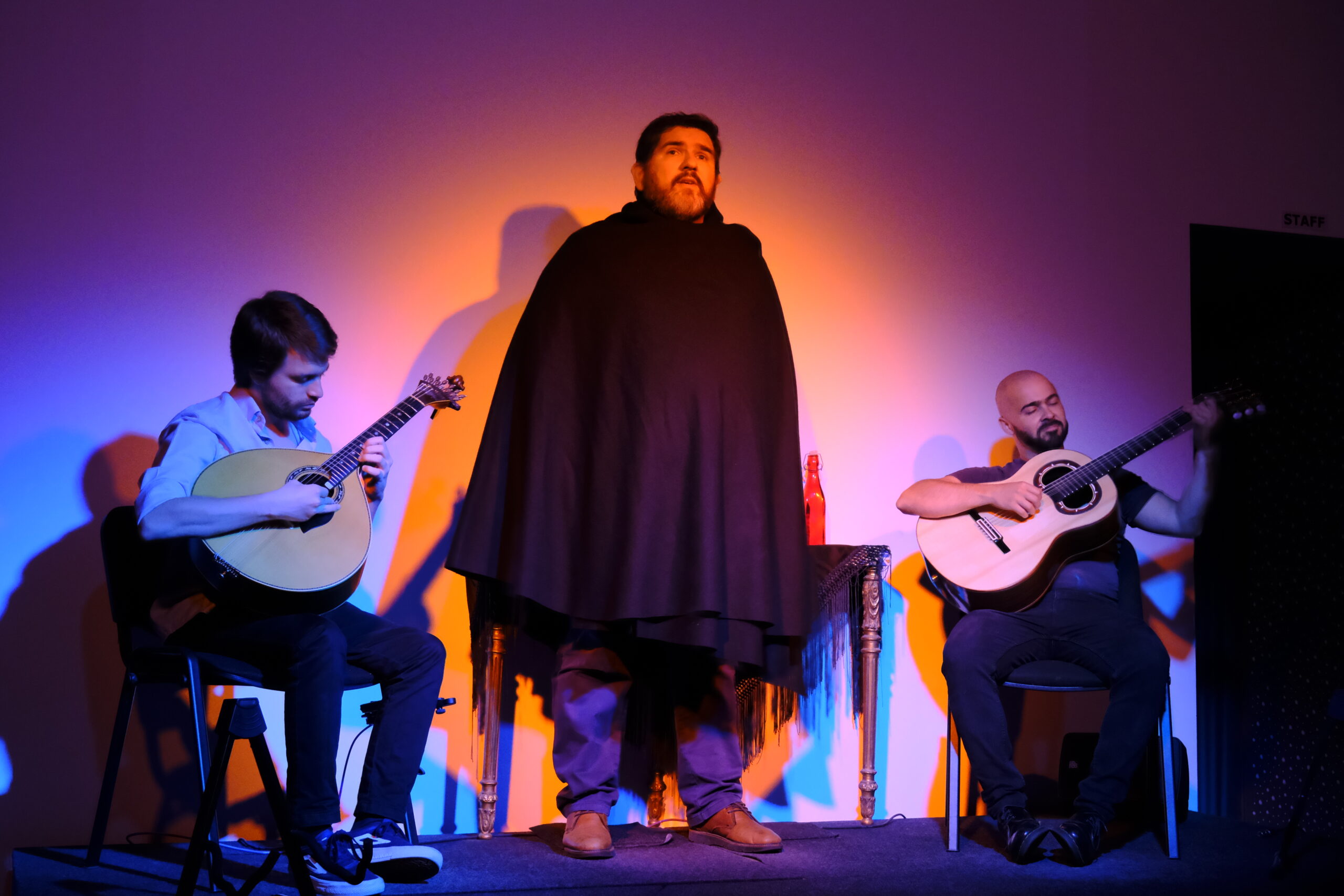
Arrived safely in Porto this morning, breezing through immigration. Contrasting with our most recent experiences in Germany, Budapest, and Amsterdam, the process was smooth. Unable to check in at the Carris Hotel Ribeira until 3 PM, and learning that our food tour was cancelled, we improvised and booked tickets to see a Fado show.
Strolling down the Riverfront, we searched for O Cantaro, a cherished gift shop from a previous visit. After assistance from a friendly Bangladeshi store owner, we located it but sadly discovered it had succumbed to the pandemic.
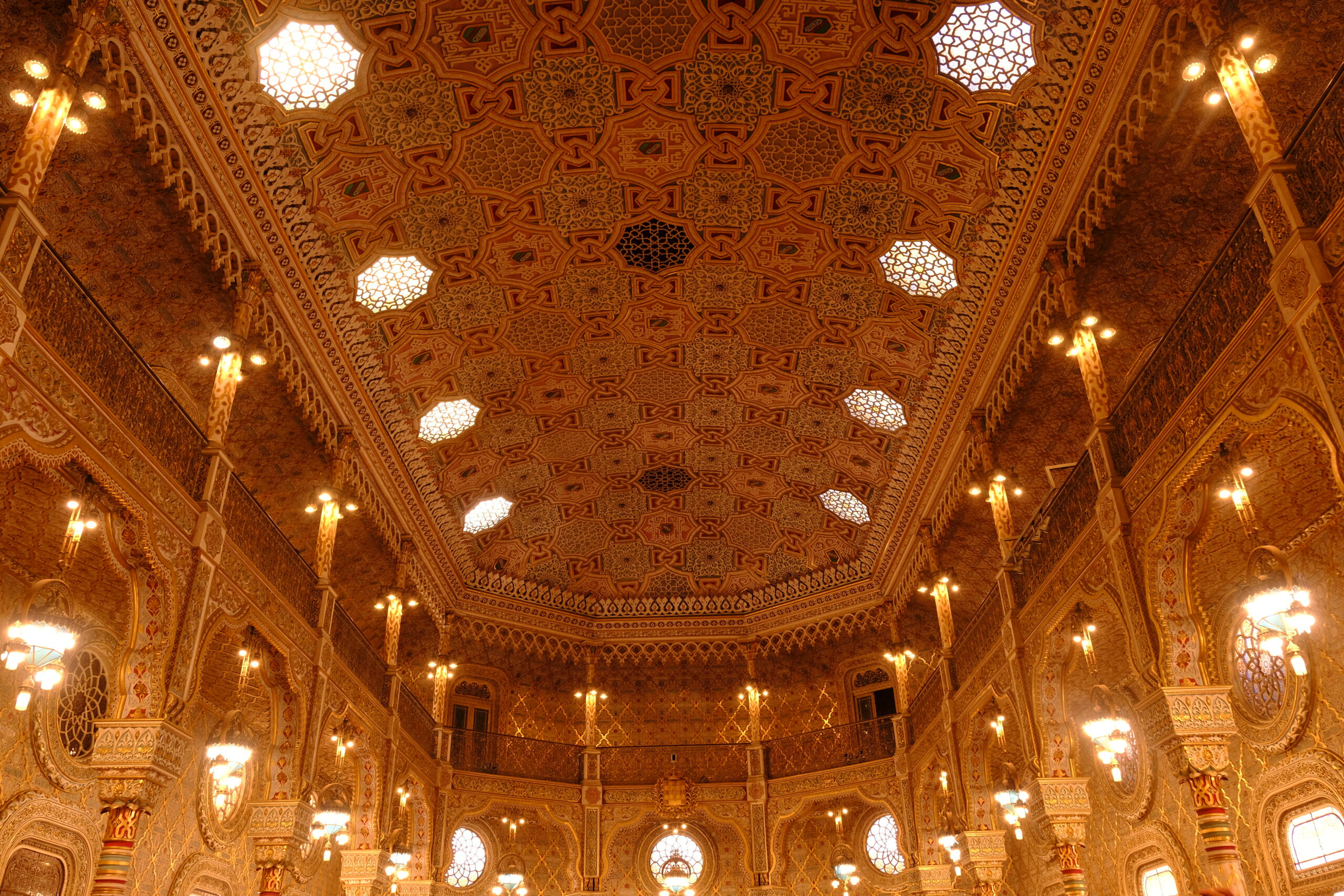
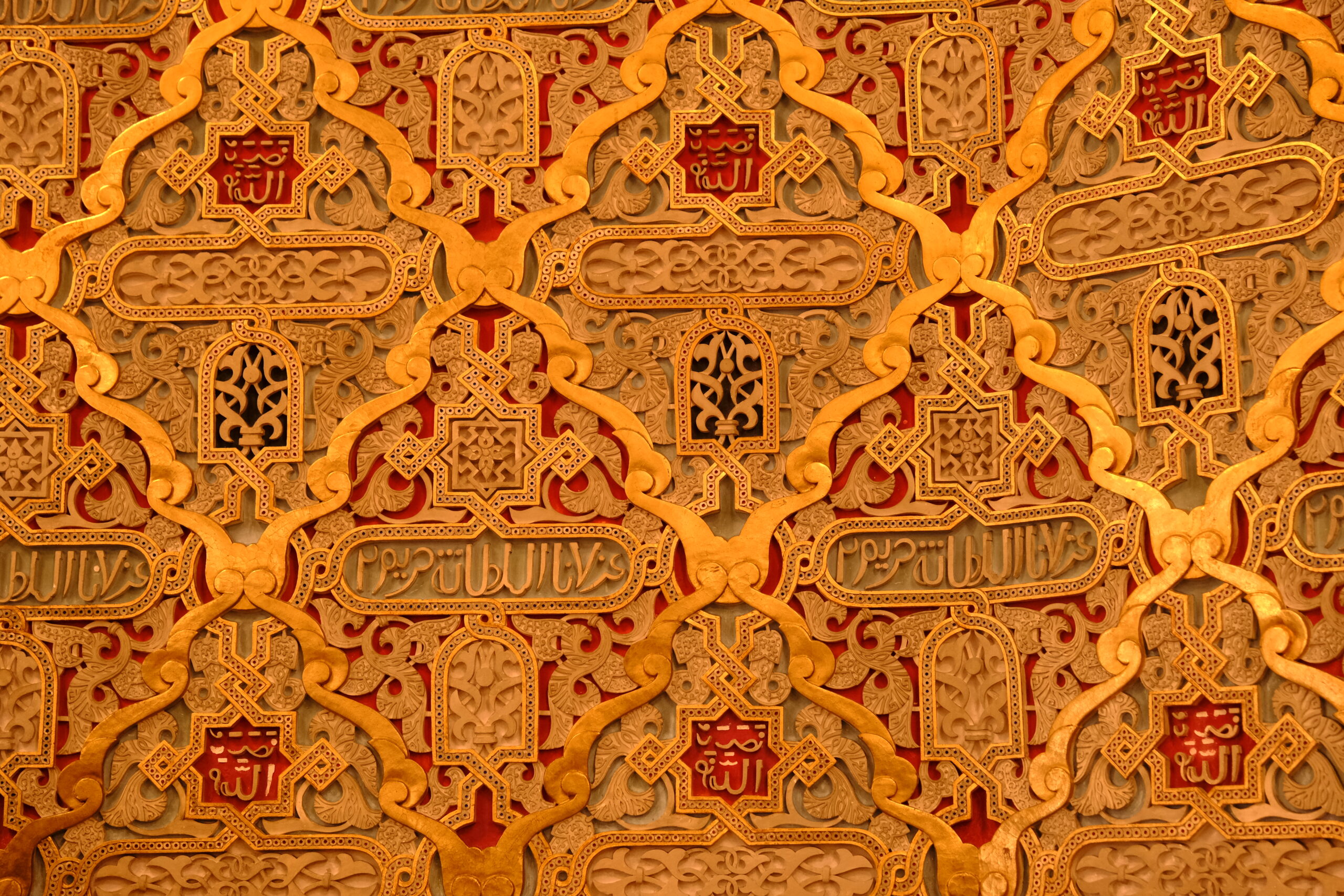
Lunch at Fish Fish proved a highlight, enjoying the best cod cakes ever—crispy outside, tender inside. Our exploration continued with a visit to the opulent Bolsa Palace, featuring the Arab Room, influenced by Granada’s Alhambra, and the Hall of Nations, adorned with the court of arms of trading nations.

In the evening, we attended a Fado, which is a form of traditional but melancholic Portuguese singing, narrating tales of sailors, love, loss, and life’s hardships. The singing is often improvised and accompanied by 12-string guitars, violas, and a small 8-string bass. While cherished by the locals, it left us wondering about its future survival.
Porto: Exploration of Historical Landmarks – September 11, 2022
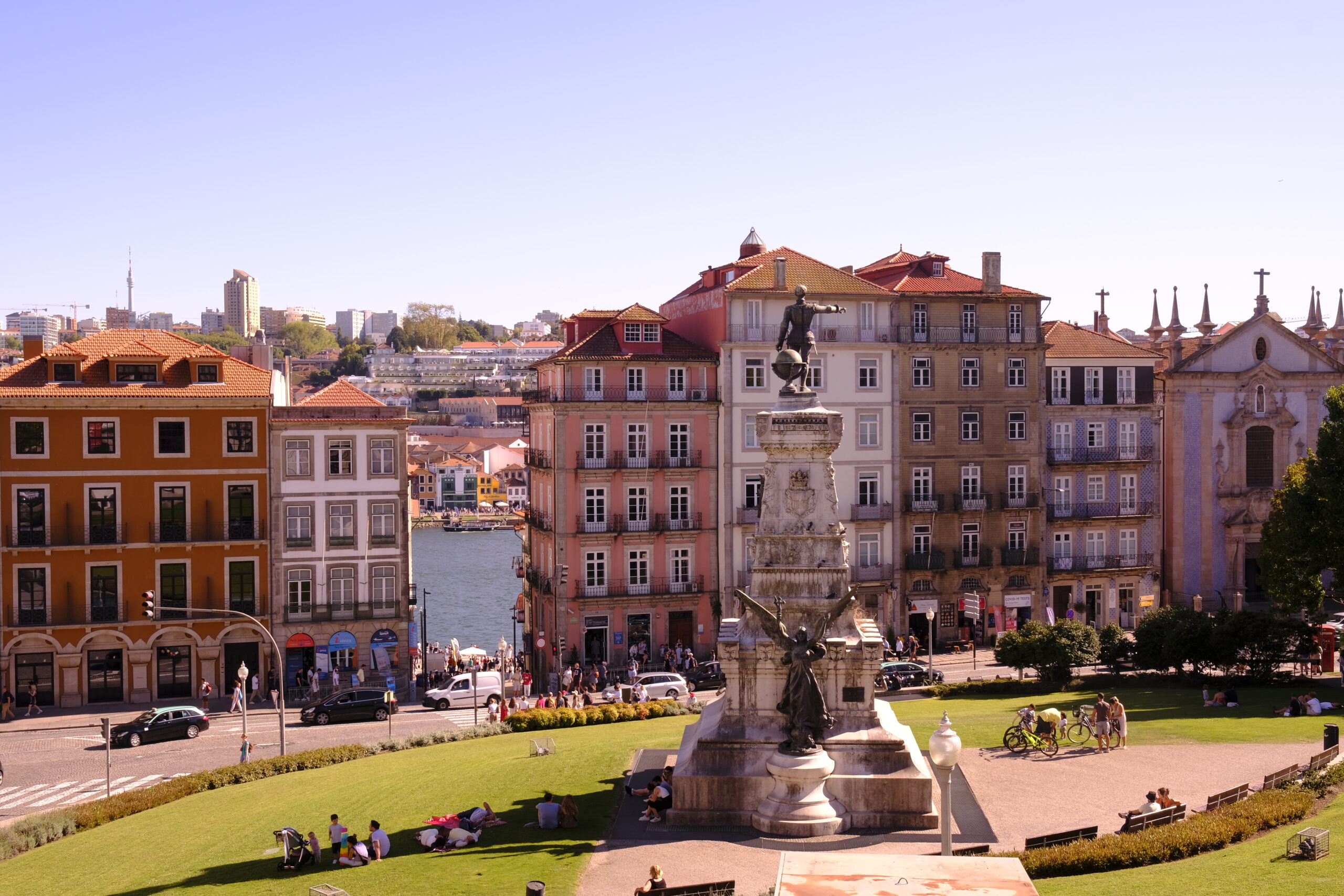
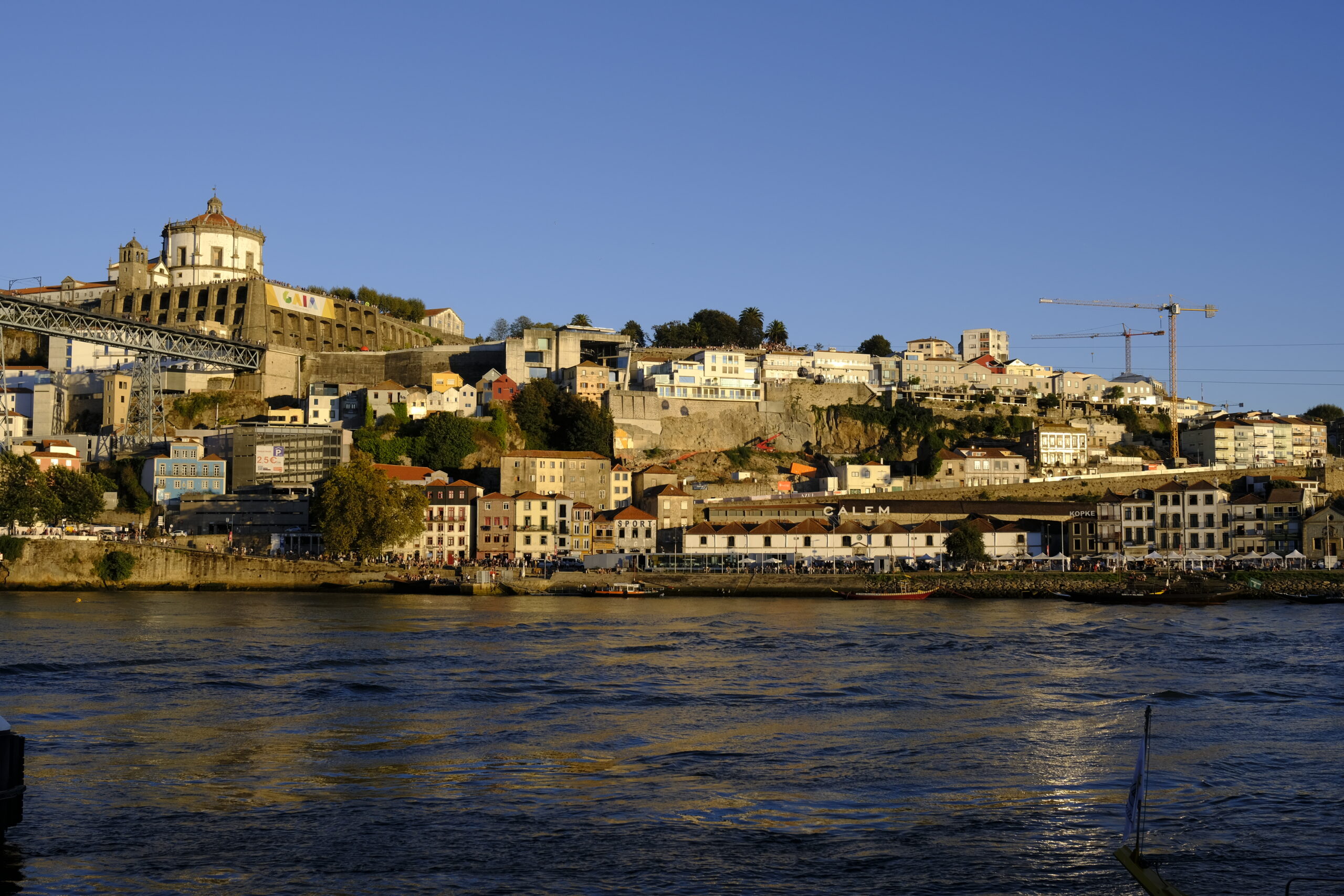
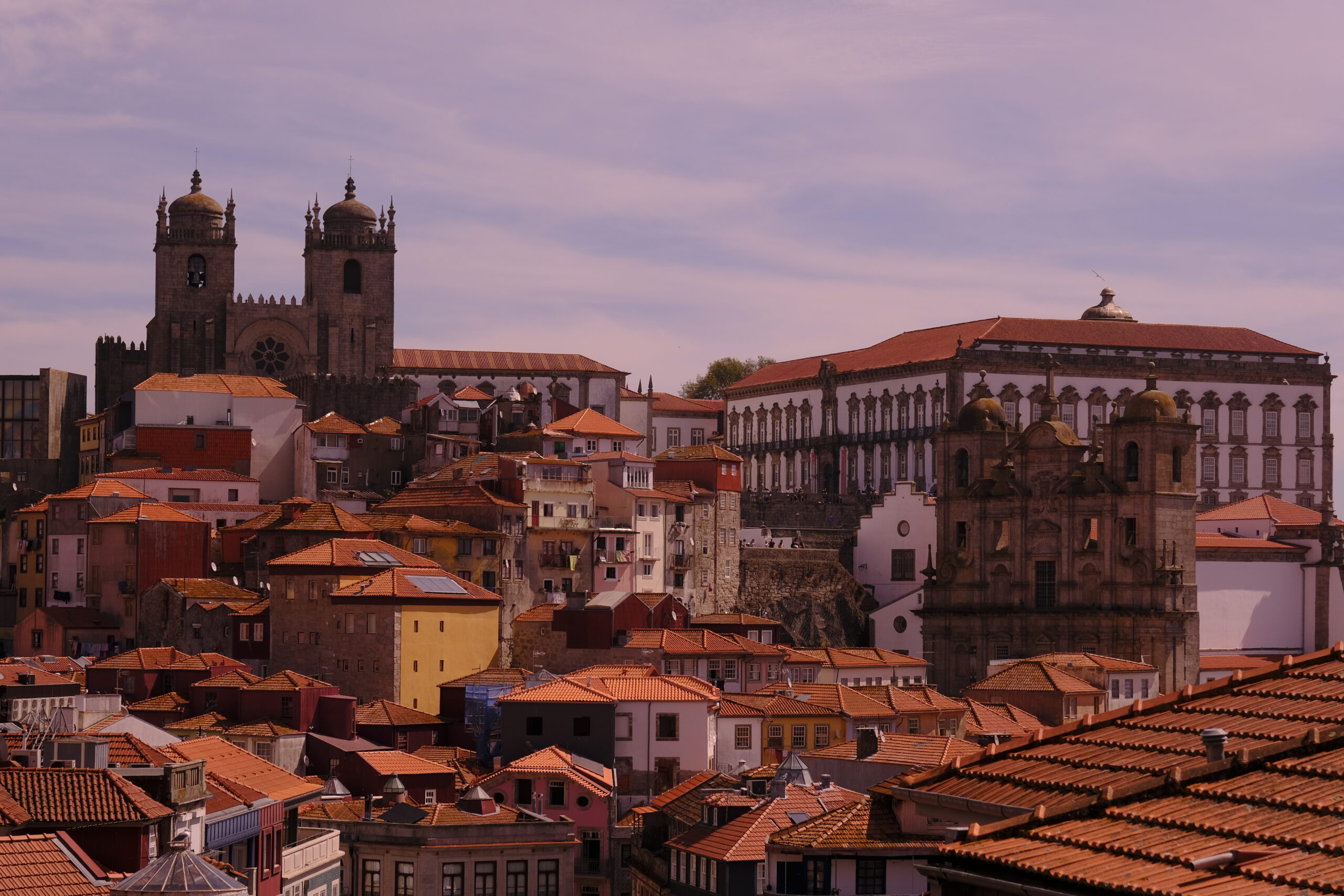
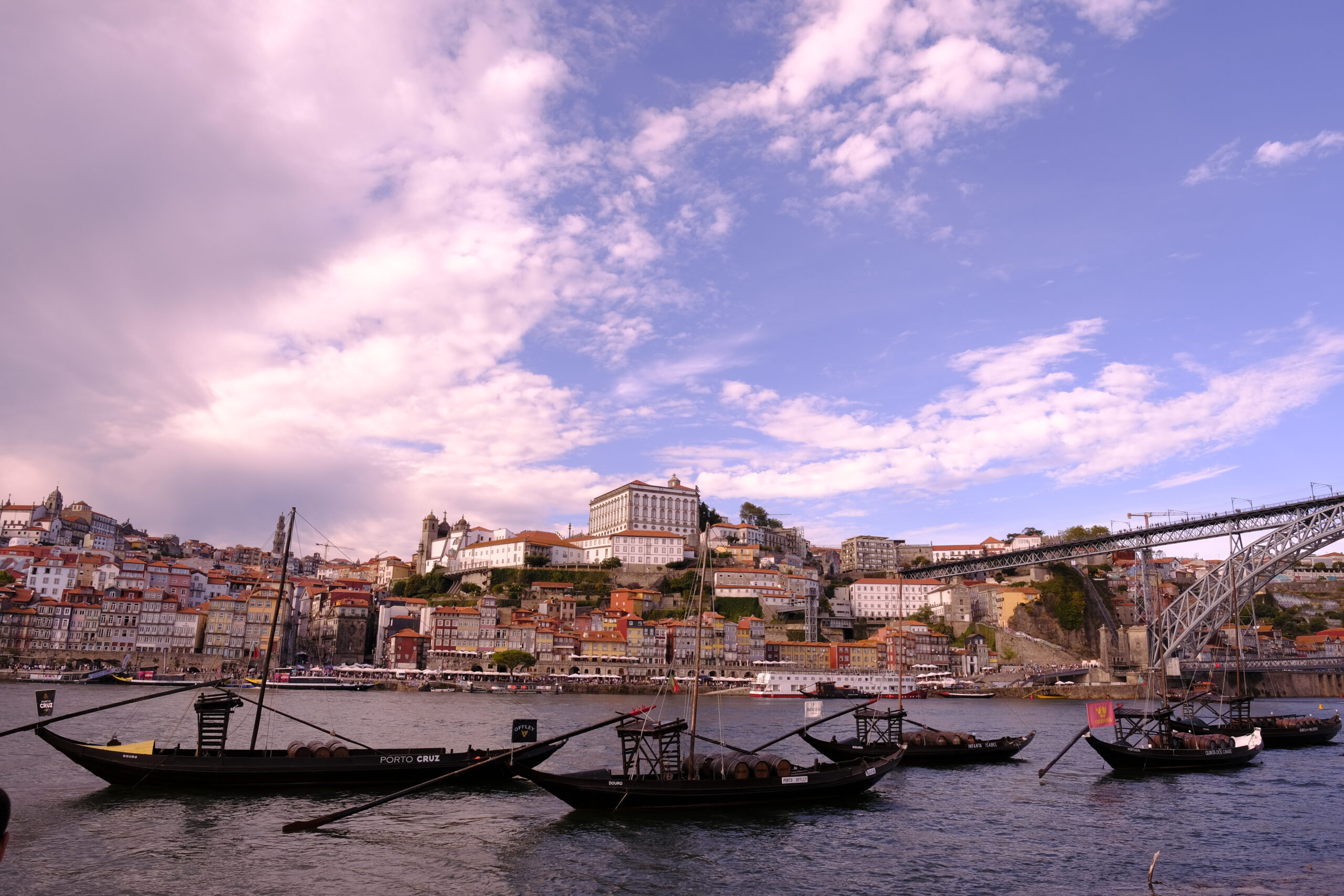
This morning, we met our guide, Teresa Vaz, by Vimara Peres, next to the Sé Cathedral. Vimara Peres, dispatched by Alfonso III, the King of Asturias, liberated the areas north of the Douro from the Moors, laying the foundation for Portugal. He became the inaugural Count of Portugal and later established the fortified town of Vimaranis, now known as modern-day Guimarães—our starting point for the Camino in a couple of days. Moving from the statue, we proceeded to the cathedral’s front, offering a splendid view of the Dom Luis I bridge, the quays of Gaia, and the Douro. The cathedral itself showcases a blend of Romanesque, Gothic, and Baroque styles.
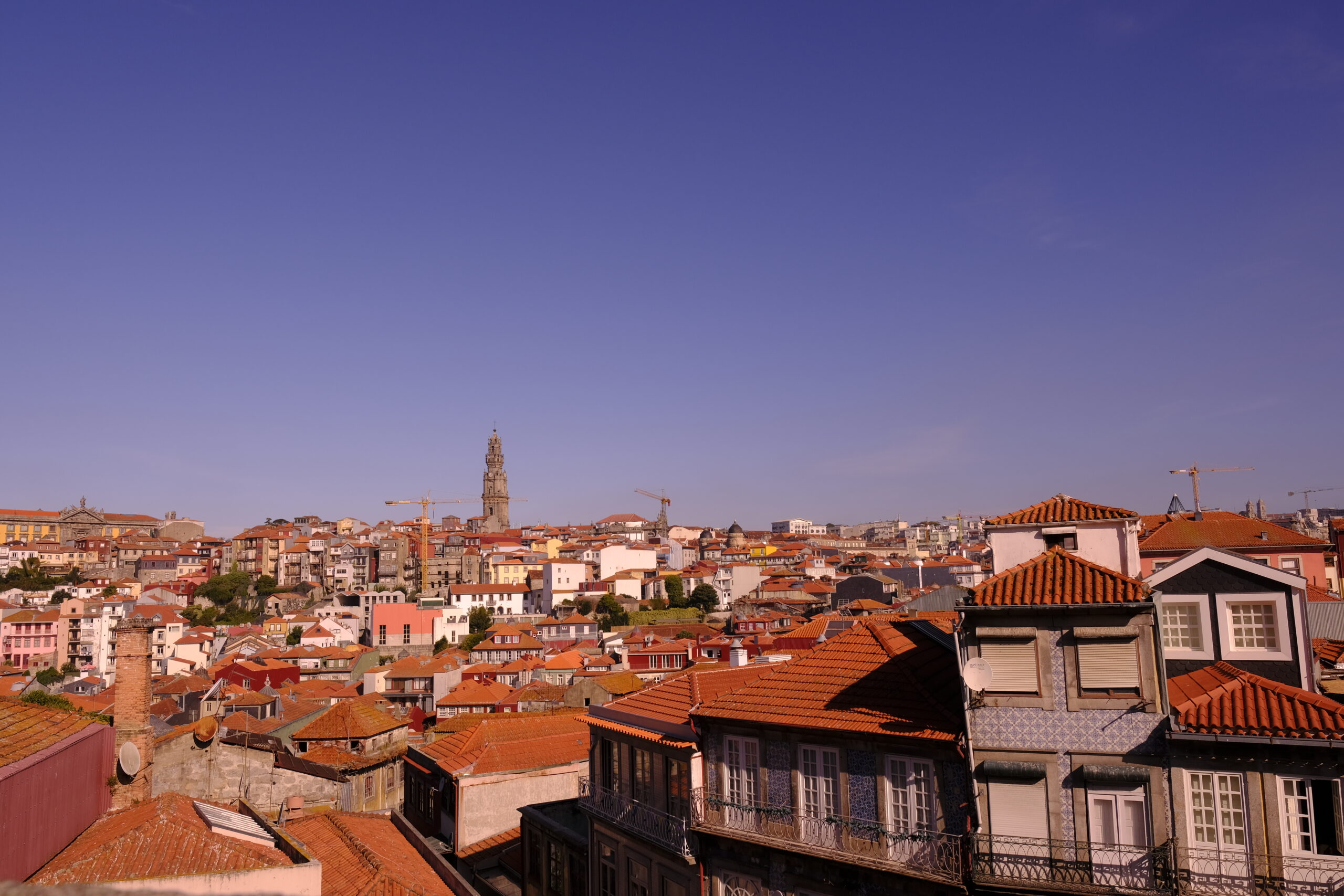
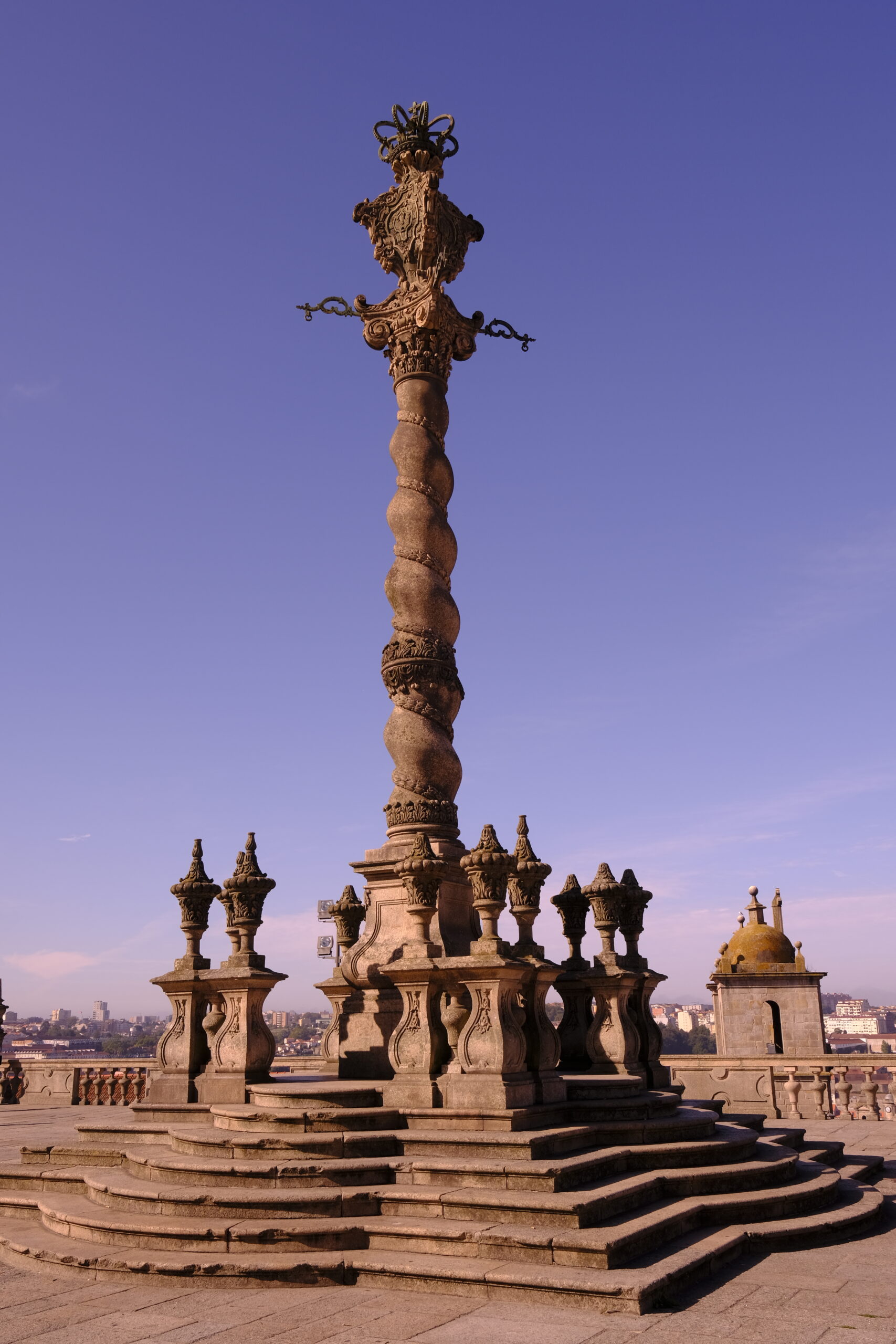
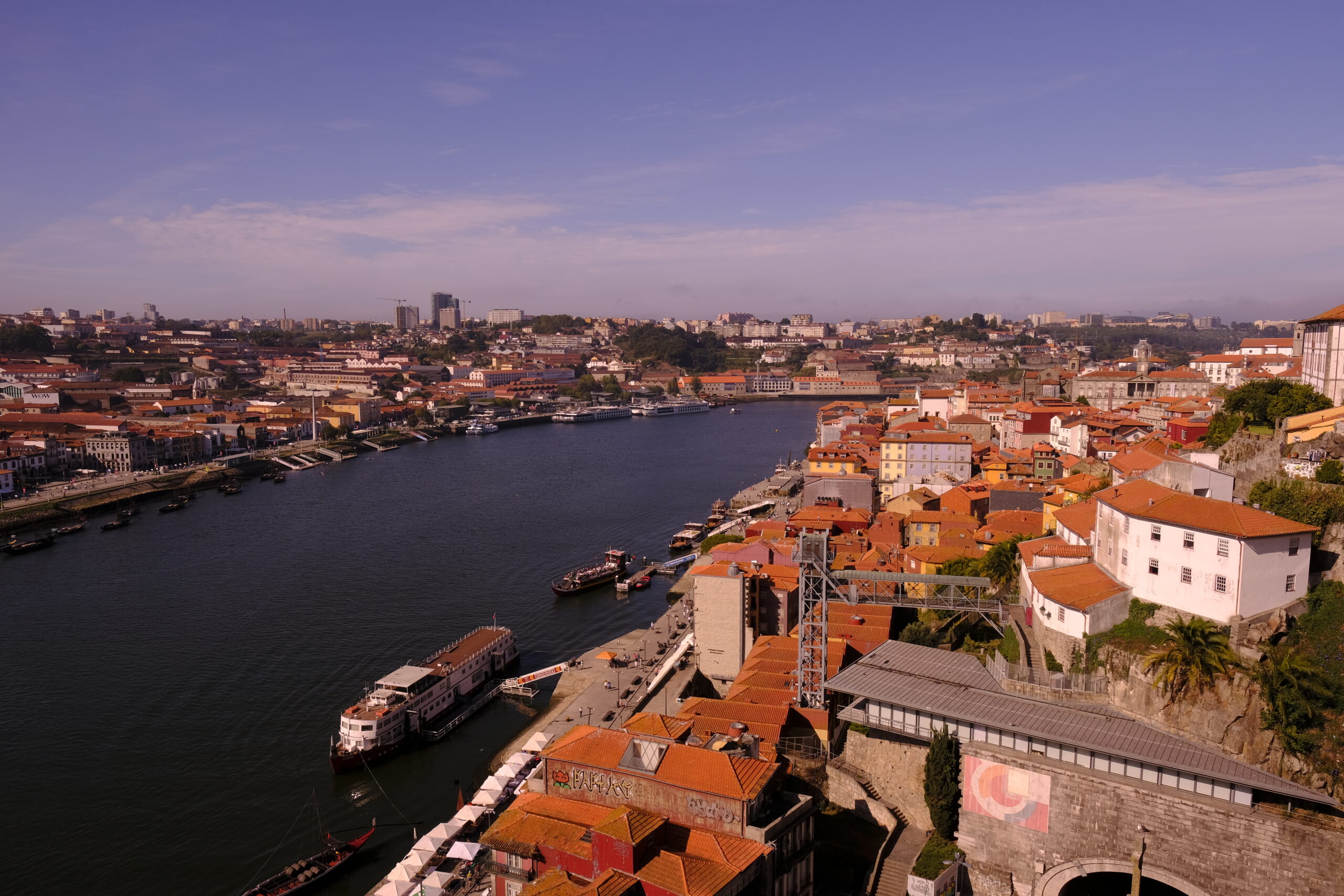
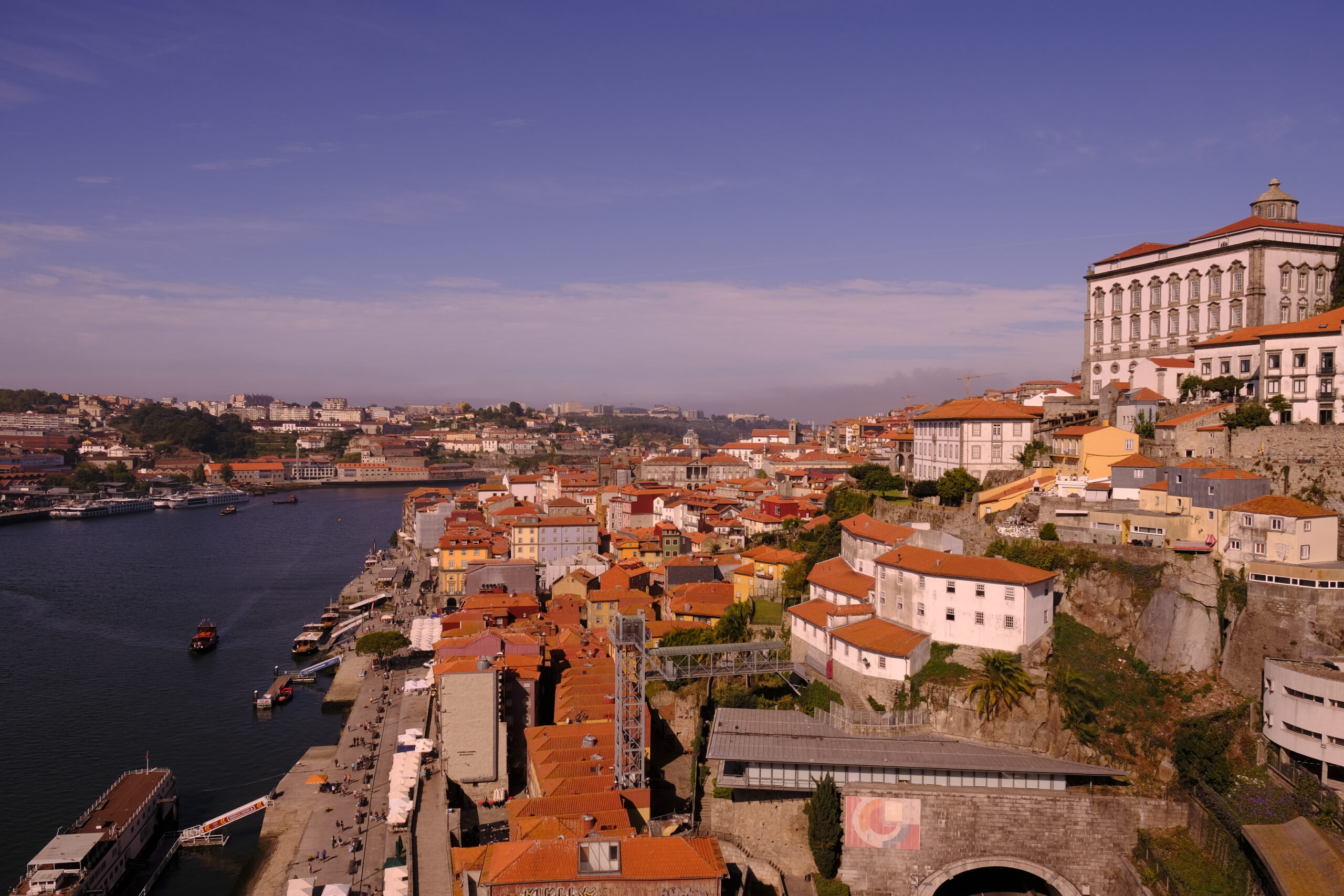
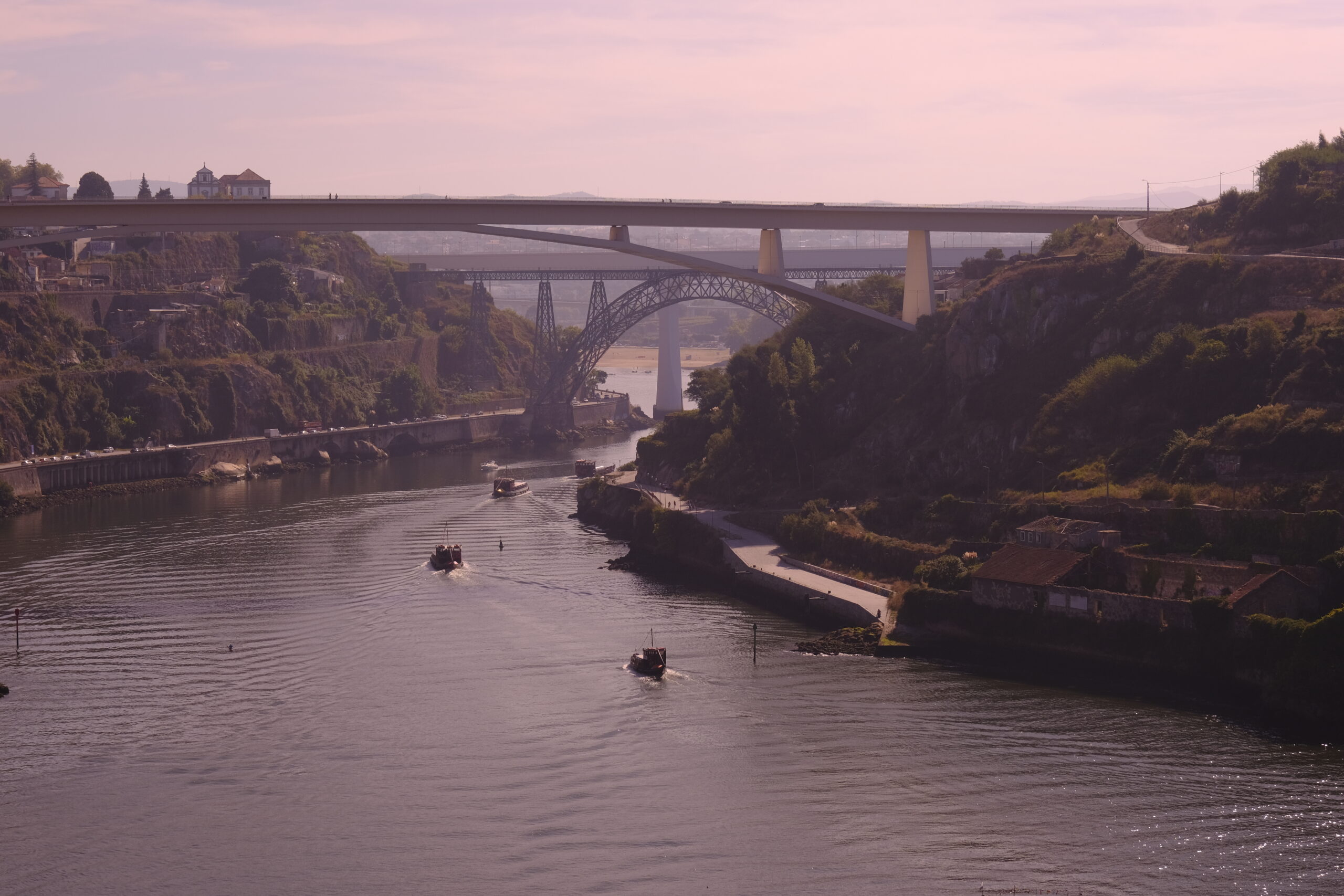
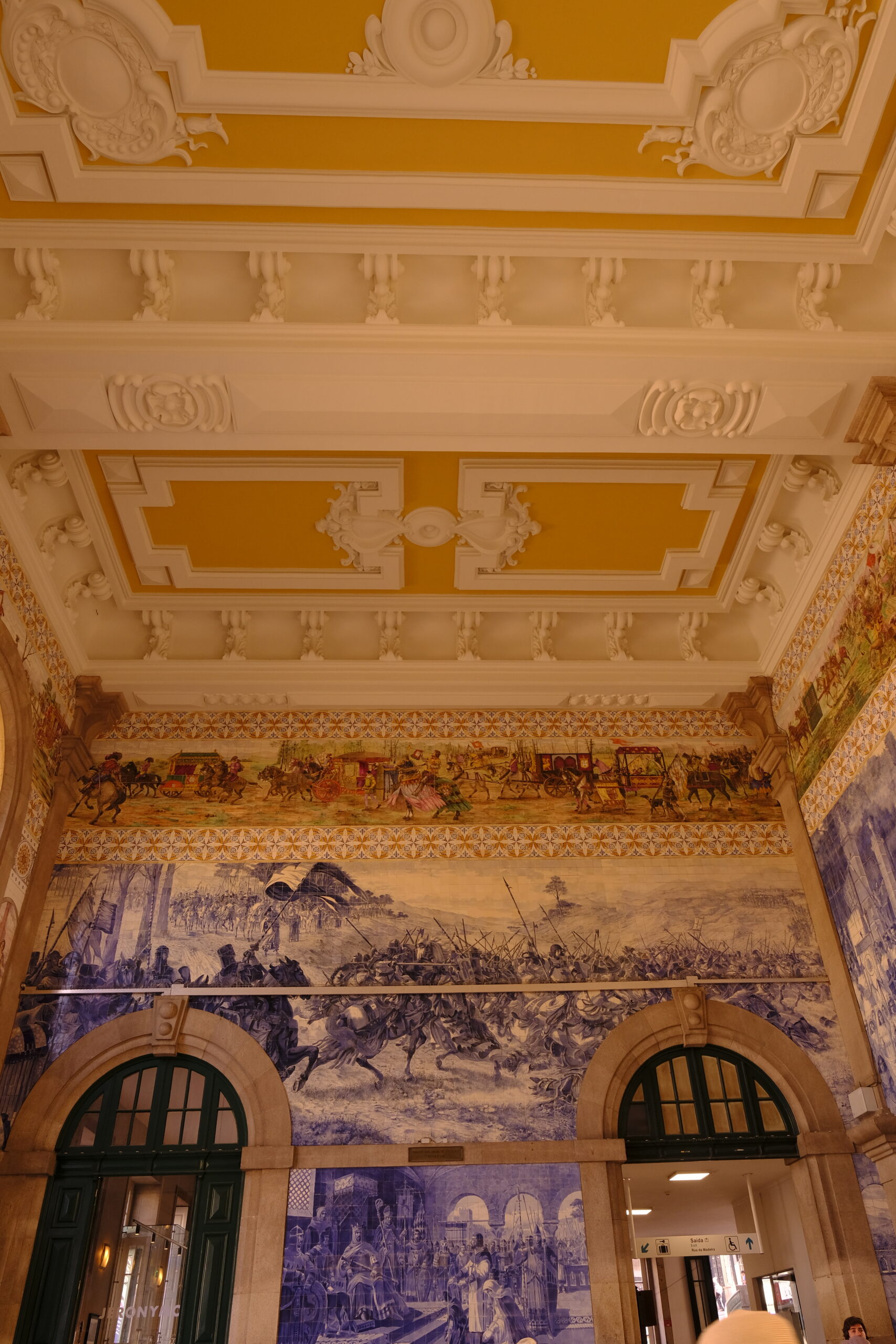
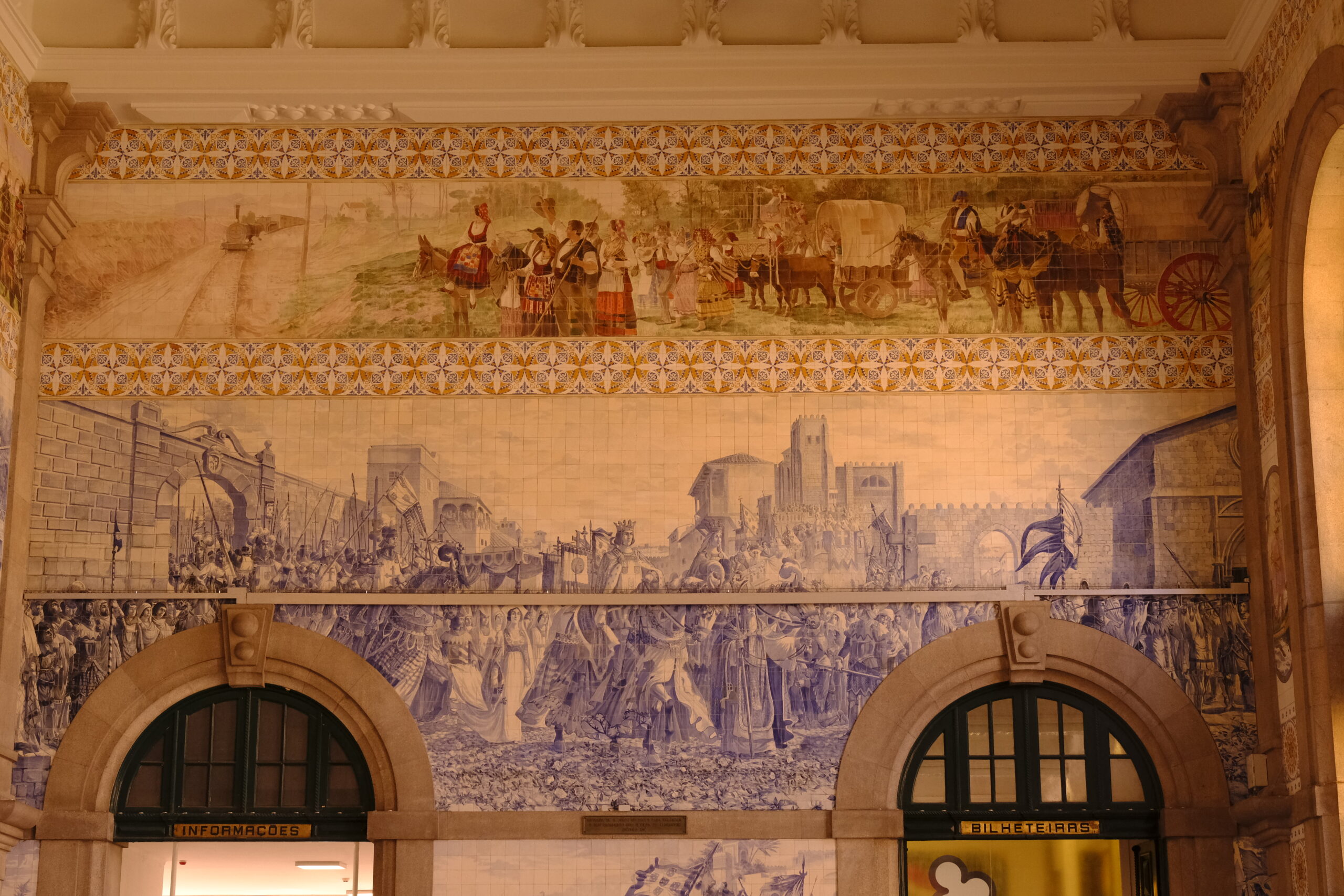
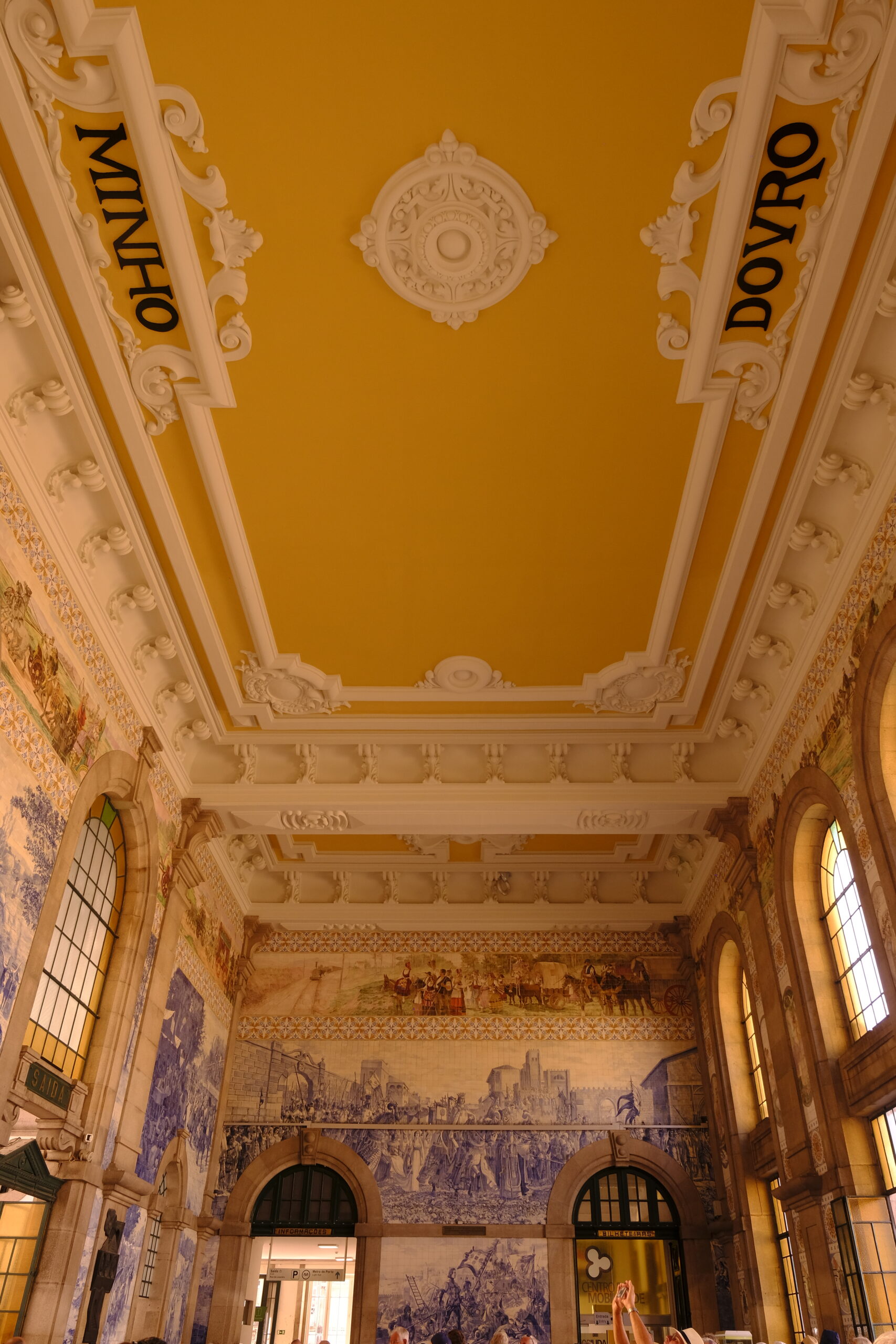
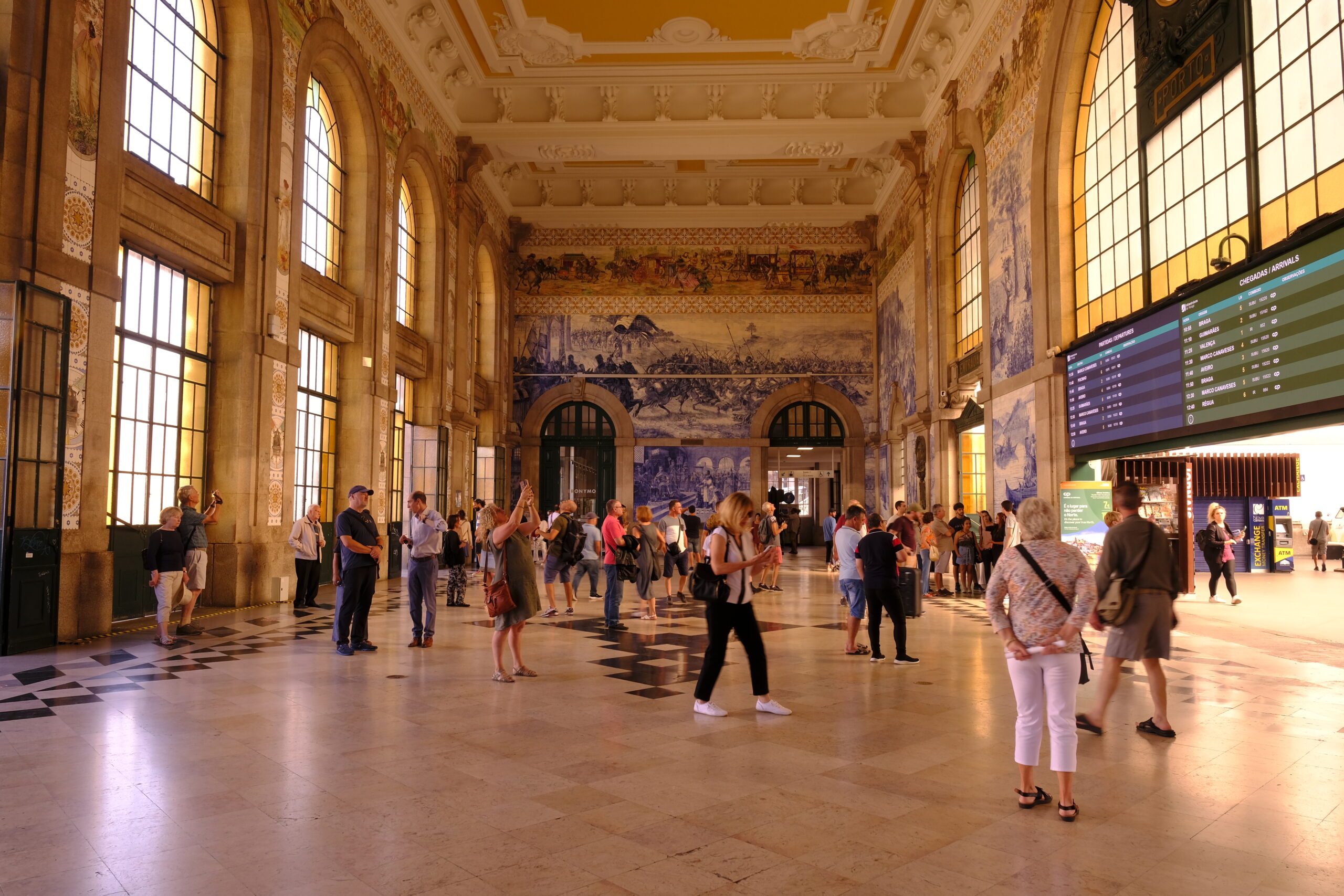
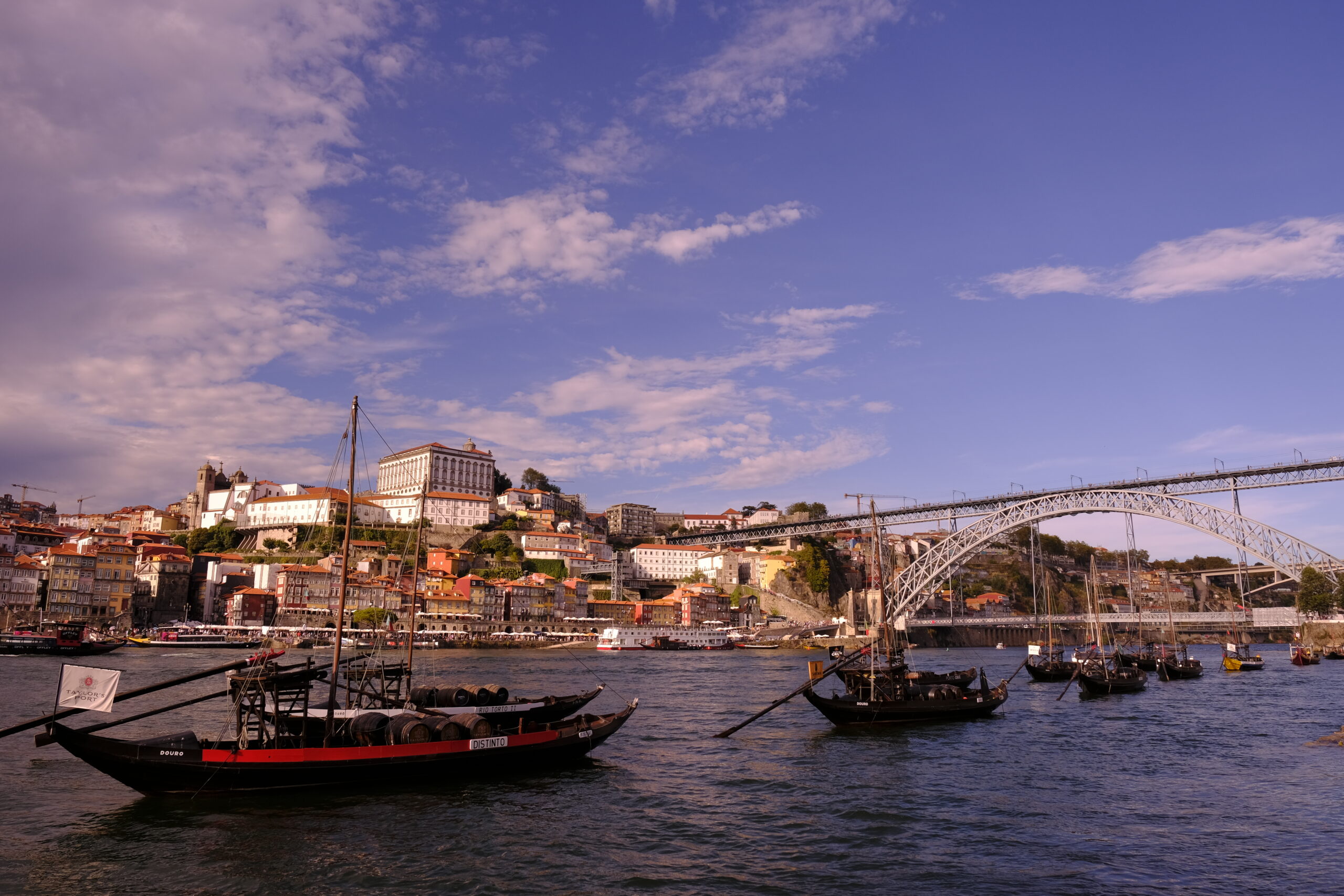
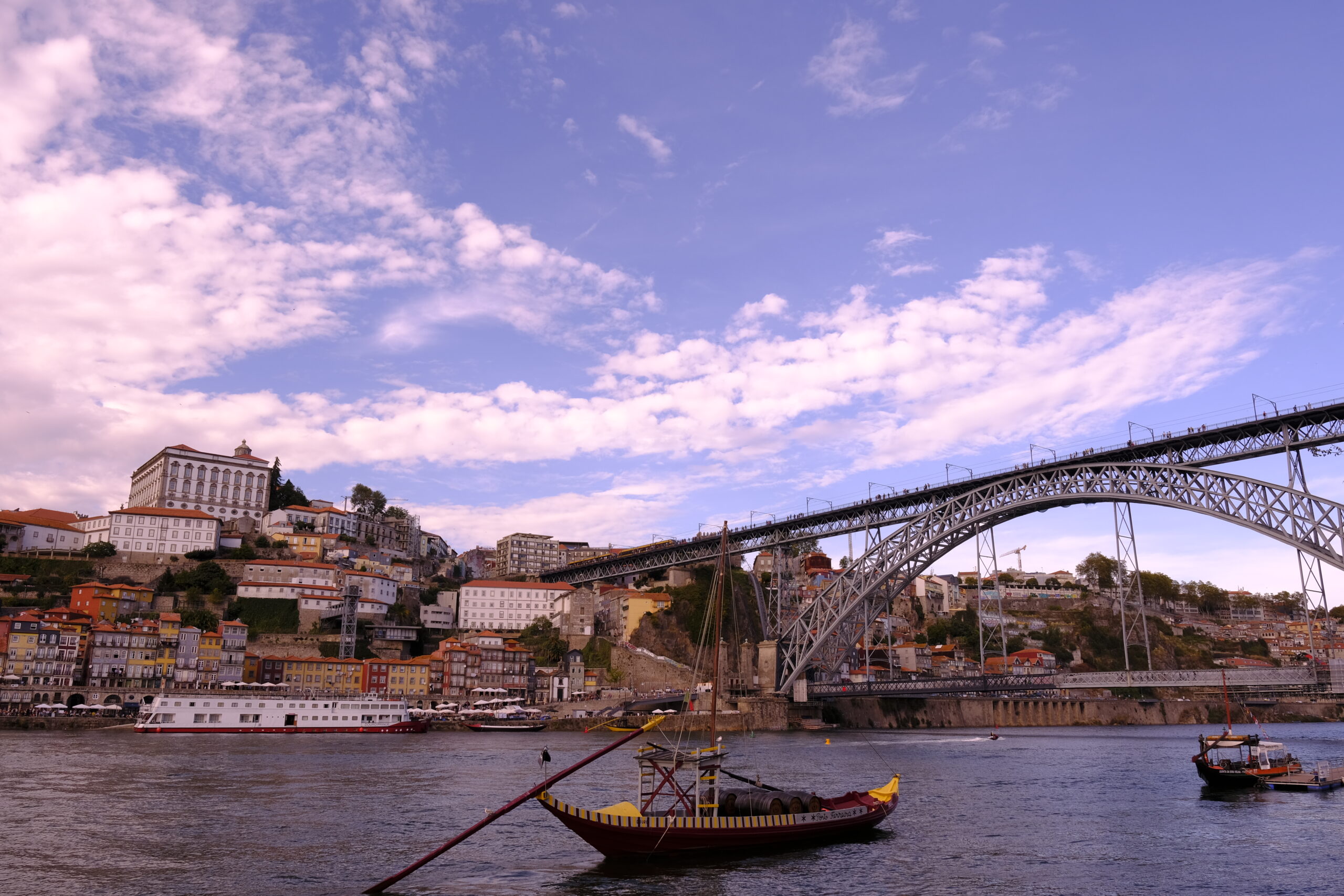
From the cathedral, we proceeded to the iconic Dom Luis I bridge, a double-deck metal structure built by Théophile Seyrig, a pupil of Gustave Eiffel. Our next destination was São Bento train station, decorated with 20,000 hand-painted azulejo tiles depicting historical events, including the wedding celebration of John and Philippa. The painter of the tiles was Jorge Colaço and it took him 11 years to complete the project.

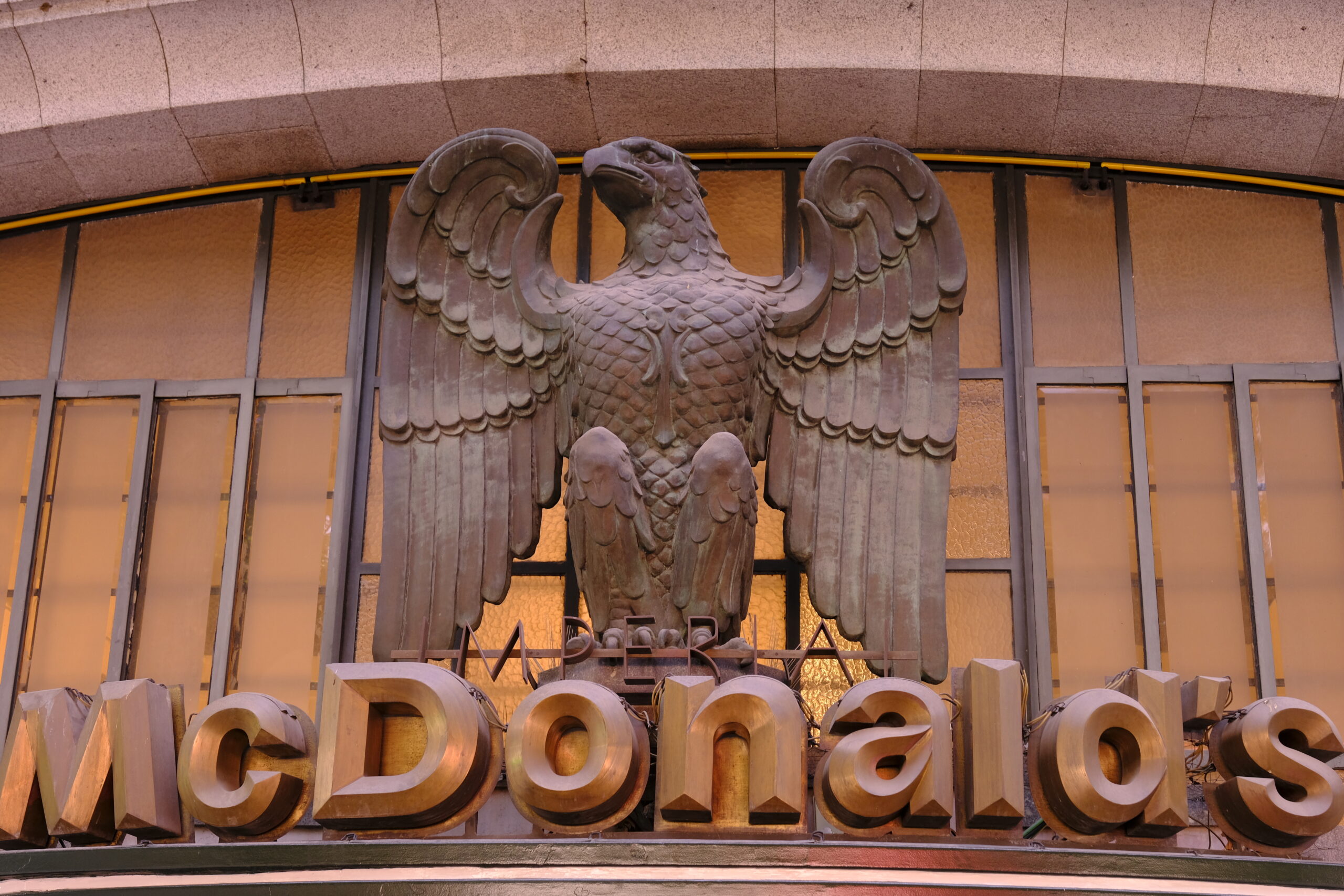
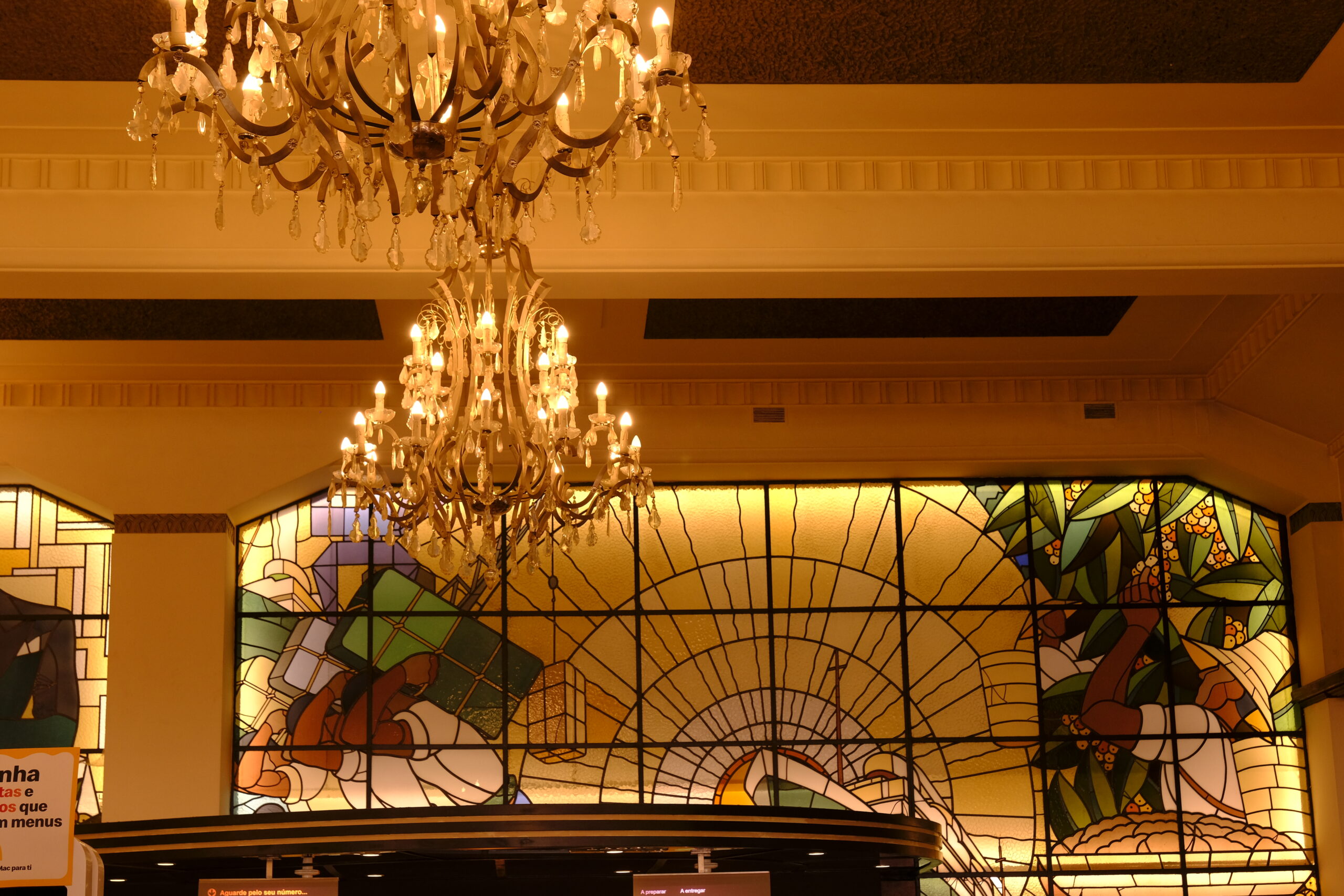
Continuing our journey, we visited Liberdade Square to admire the Macdonald Imperial, an Art Deco gem retaining its ornate ceilings and stained glass depicting the coffee journey. A stroll through Porto’s Parisian section led us to Livraria Lello, reputed to be the inspiration for J.K. Rowling’s Flourish and Blotts, Diagon Alley’s bookstore. Rowling spent a part of the early 1990s living in Porto.
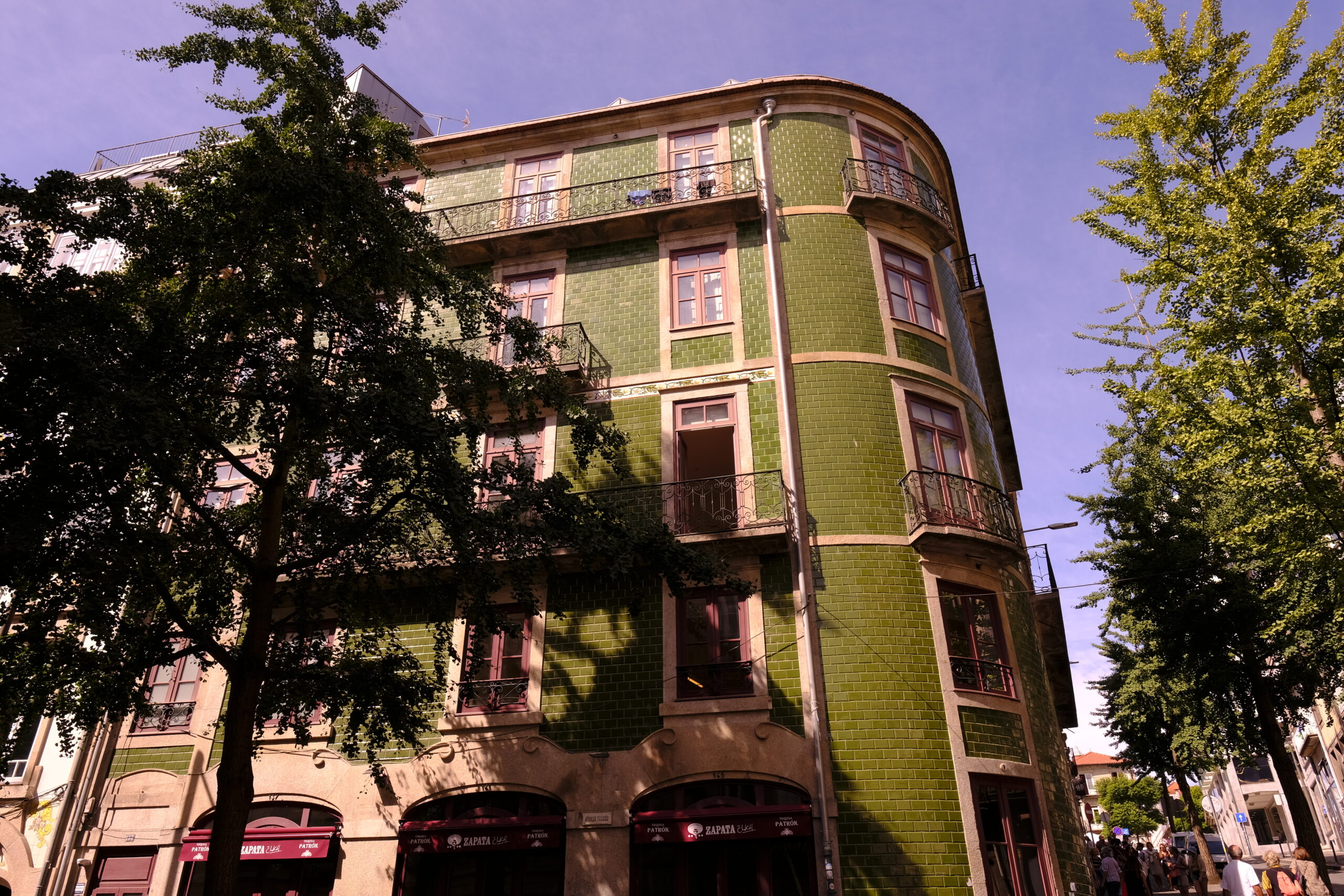
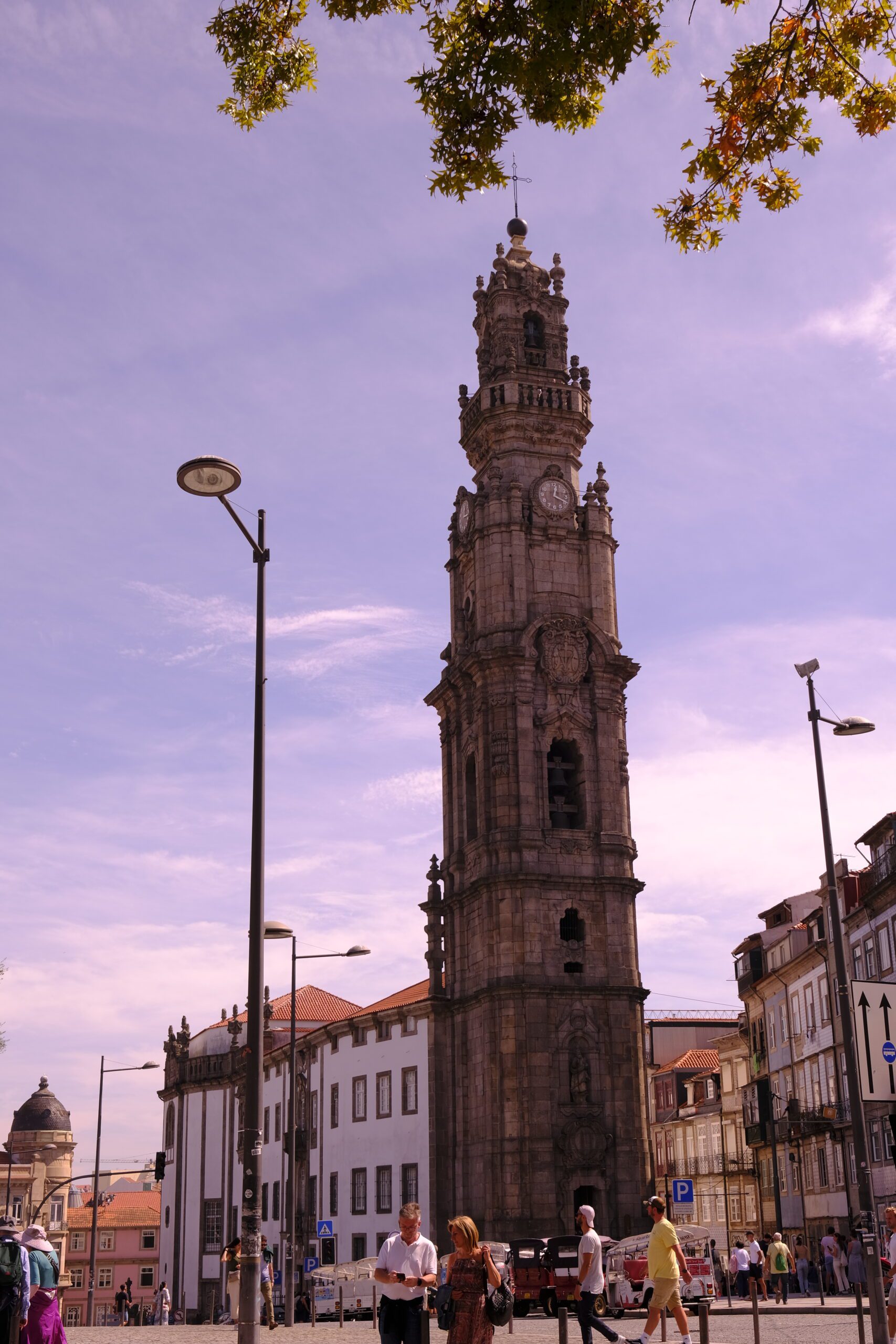
Passing the university and the winged lion fountain (Fonte dos Leoes), we stopped to see two adjoining churches separated by a narrow house. Our path then led us to the Clérigos Tower, Bolsa Palace, the birthplace of Henry the Navigator and down to the waterside where the Hammer Festival is held to celebrate the feast of São João (St. John the Baptist) and concluding our day in the Jewish quarter, where a former synagogue now houses a Benedictine Church and Convent.
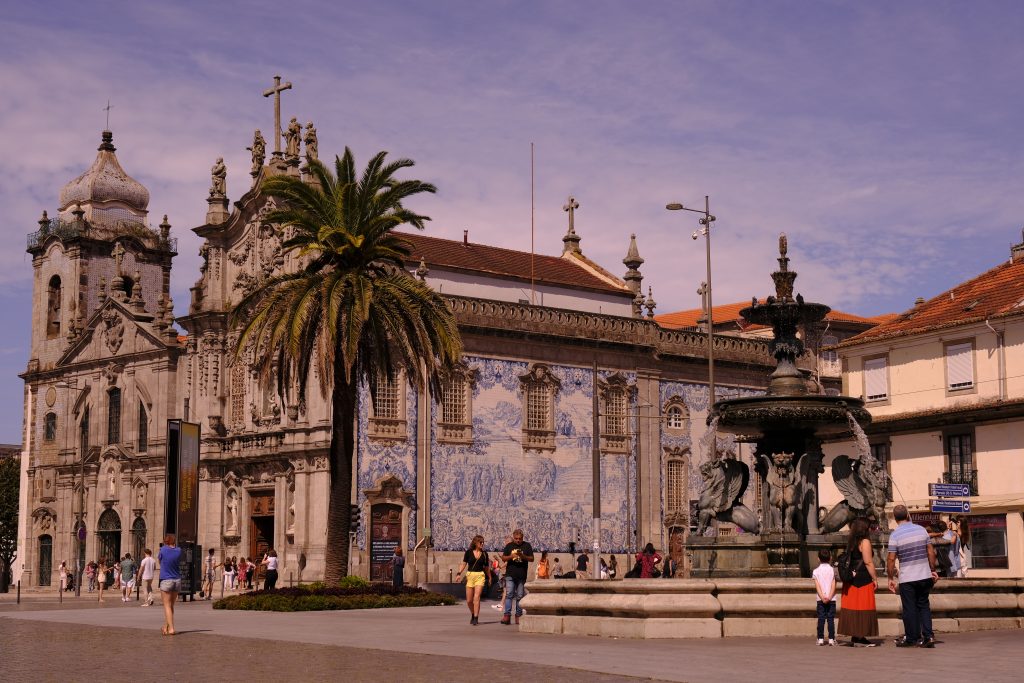
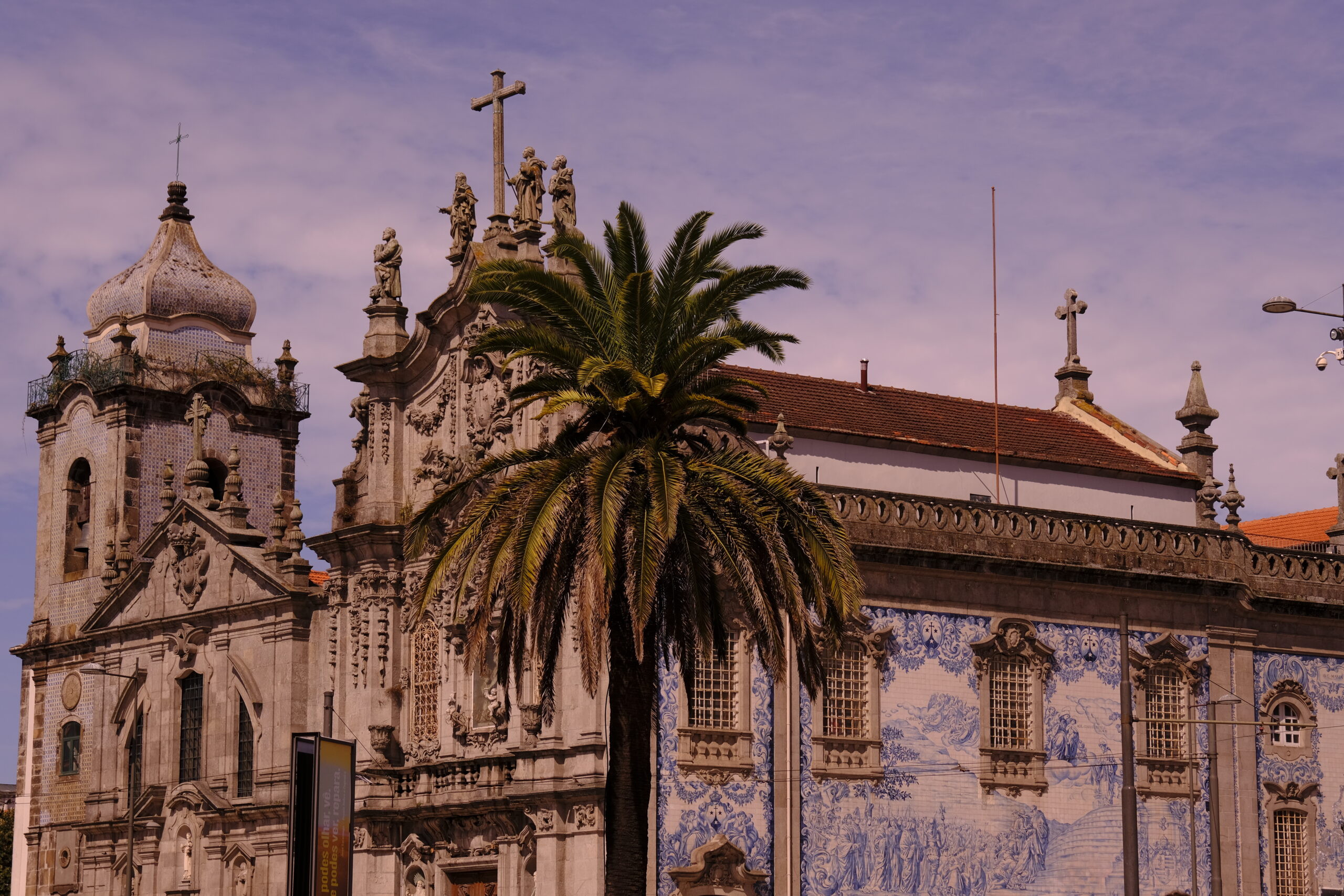
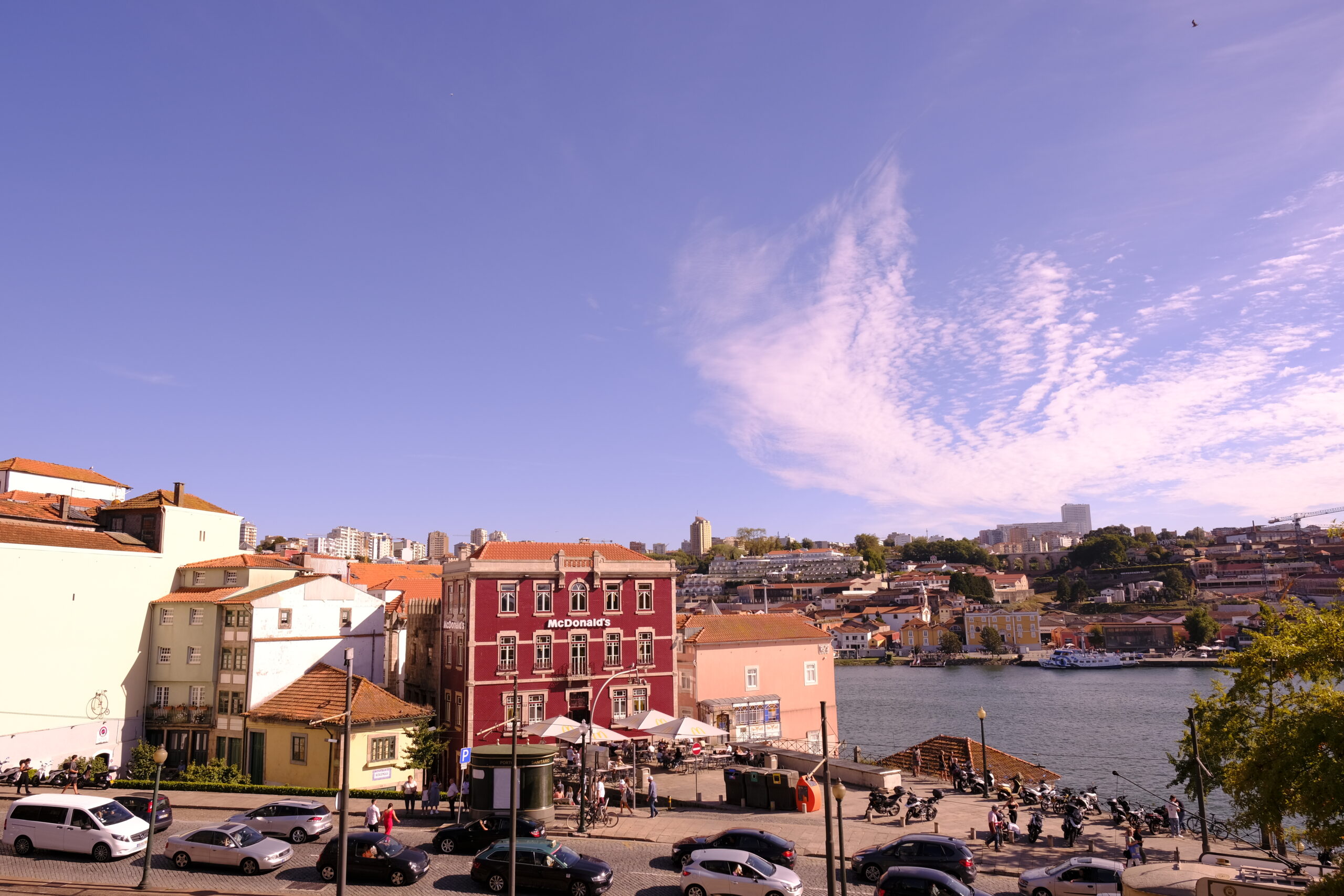
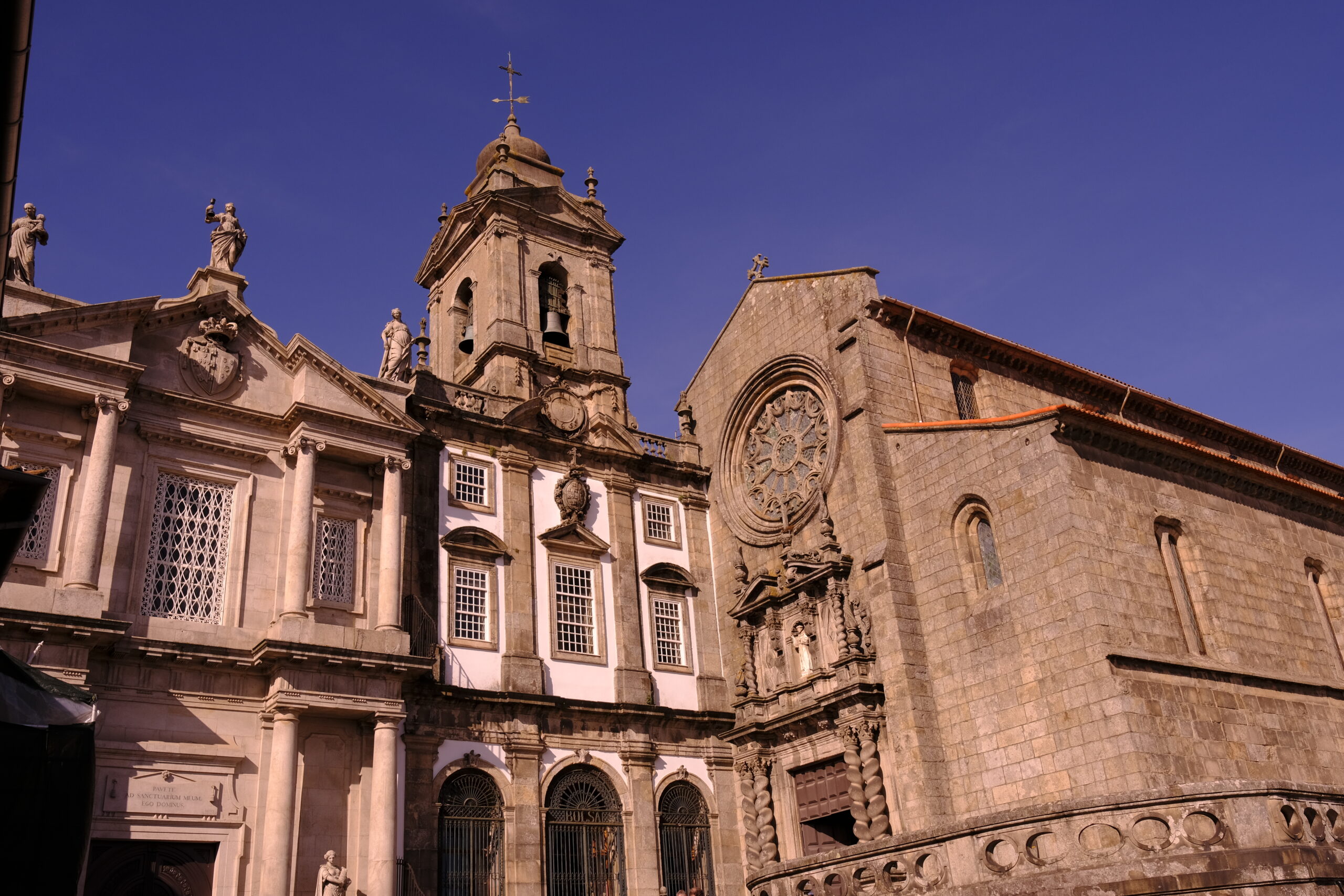
In the evening, we visited the St. Francis Church, which has a Gothic exterior and a Baroque interior with three gold naves and the catacombs of the friars and nobility. Next, we walked over to Henry the Navigator’s birth house. The birth house was both a customs house and a mint. It is now an archeological museum.
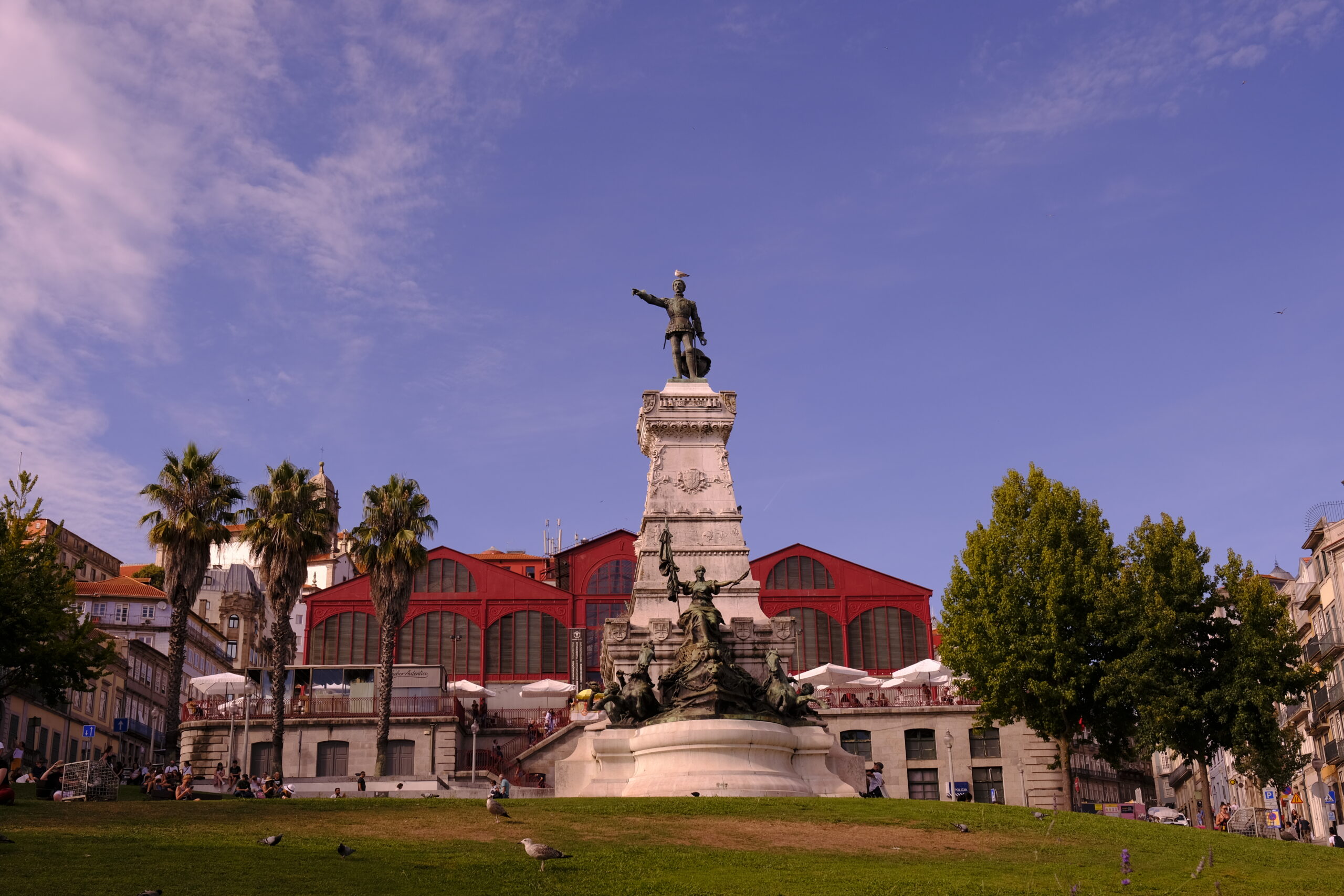
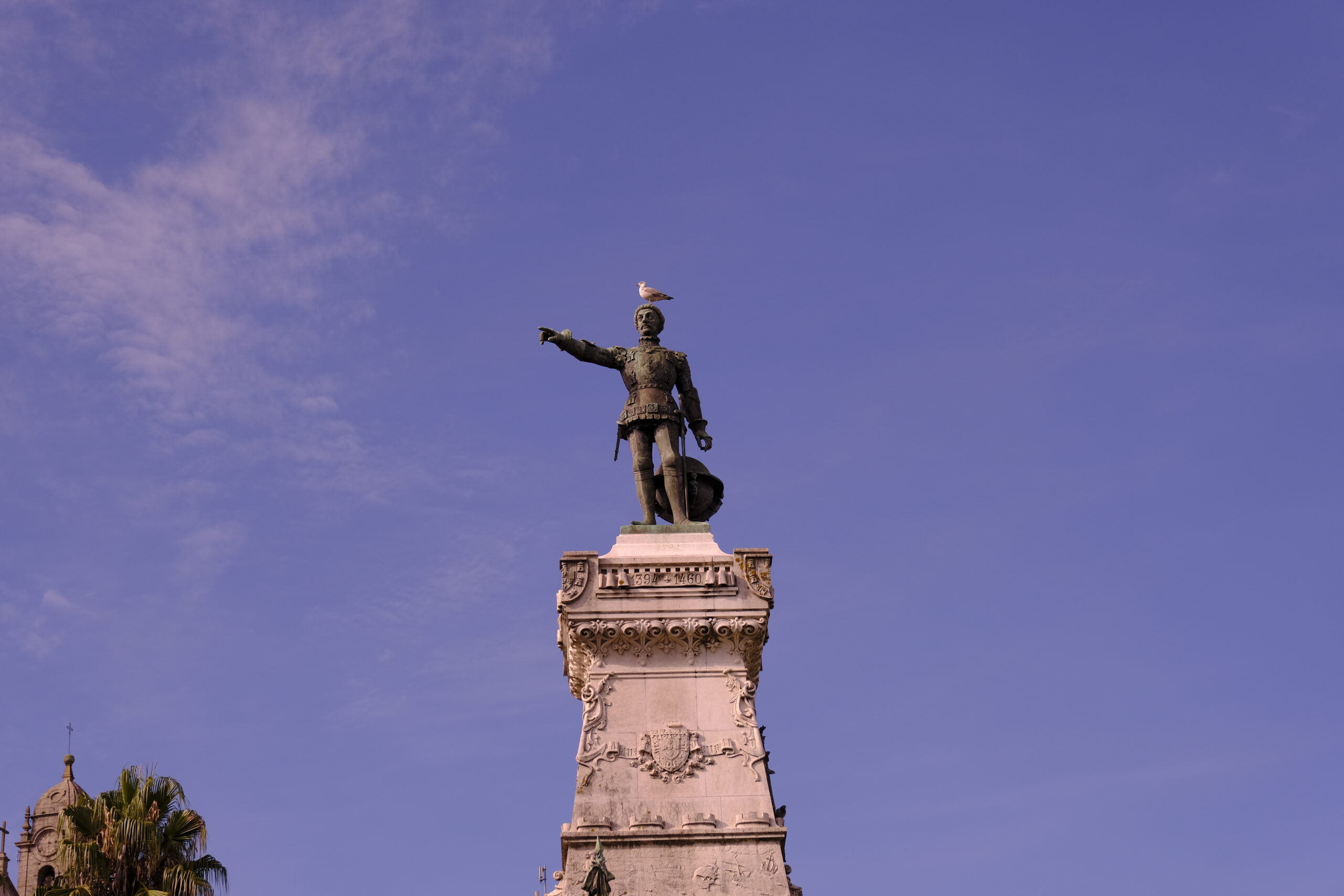
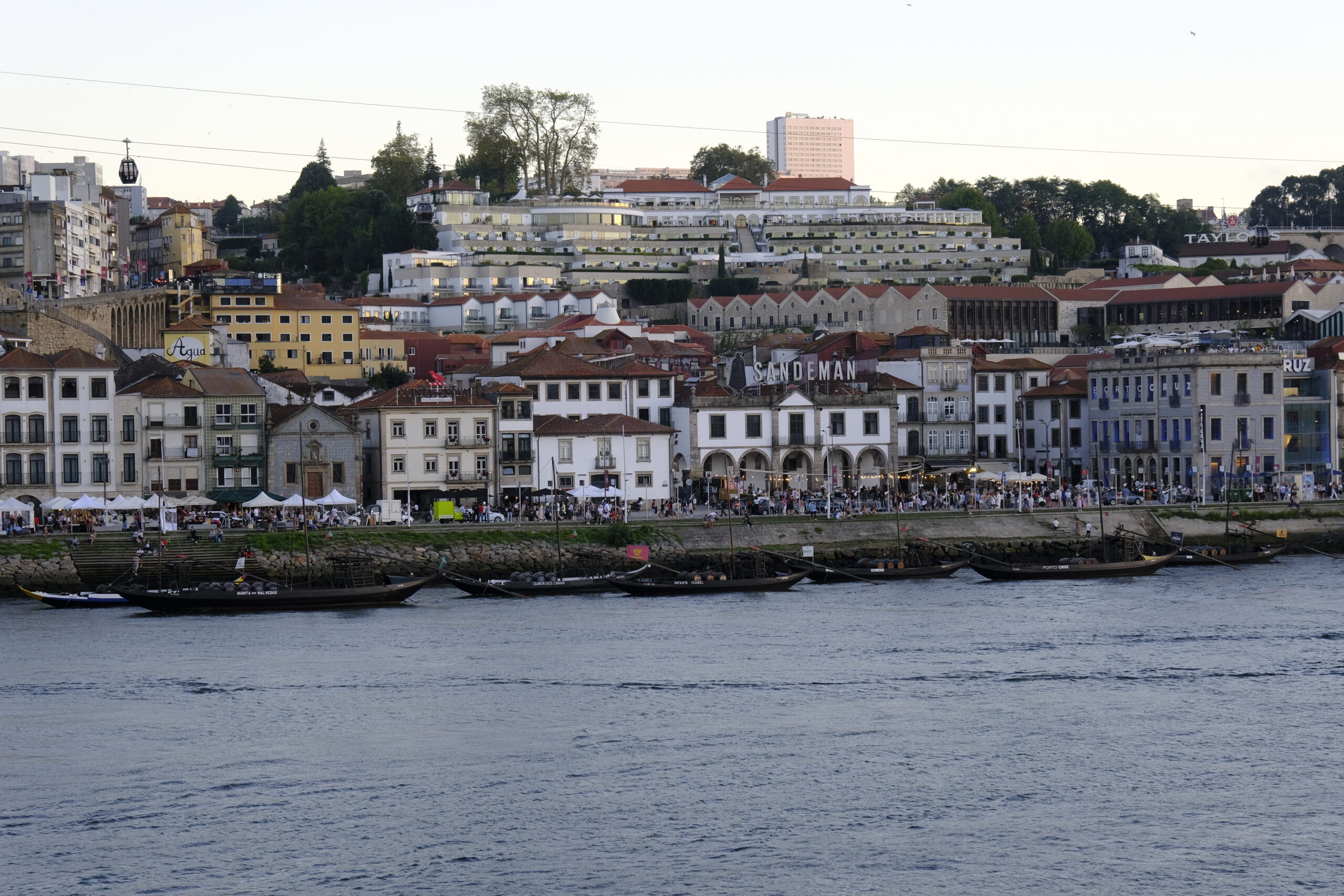
Our final adventure of the day took us across the Dom Luis bridge to explore the port wine cellars of Sandeman, Taylor, Fonseca, and others on the Gaia side of Porto. Unfortunately, upon our arrival, they were already closing for the day. Following the trend of other tourists, we sat by the pavement, indulging in cod cakes while Albert savored 3 or 4 varieties of port.
Breathtaking Braga – September 12, 2022
This morning, we took a train from São Bento station to Guimarães, the birthplace and the former capital of Portugal. Despite the initial challenge of finding a taxi, we amazingly checked in early at Eurostars Santa Luzia Art Hotel.
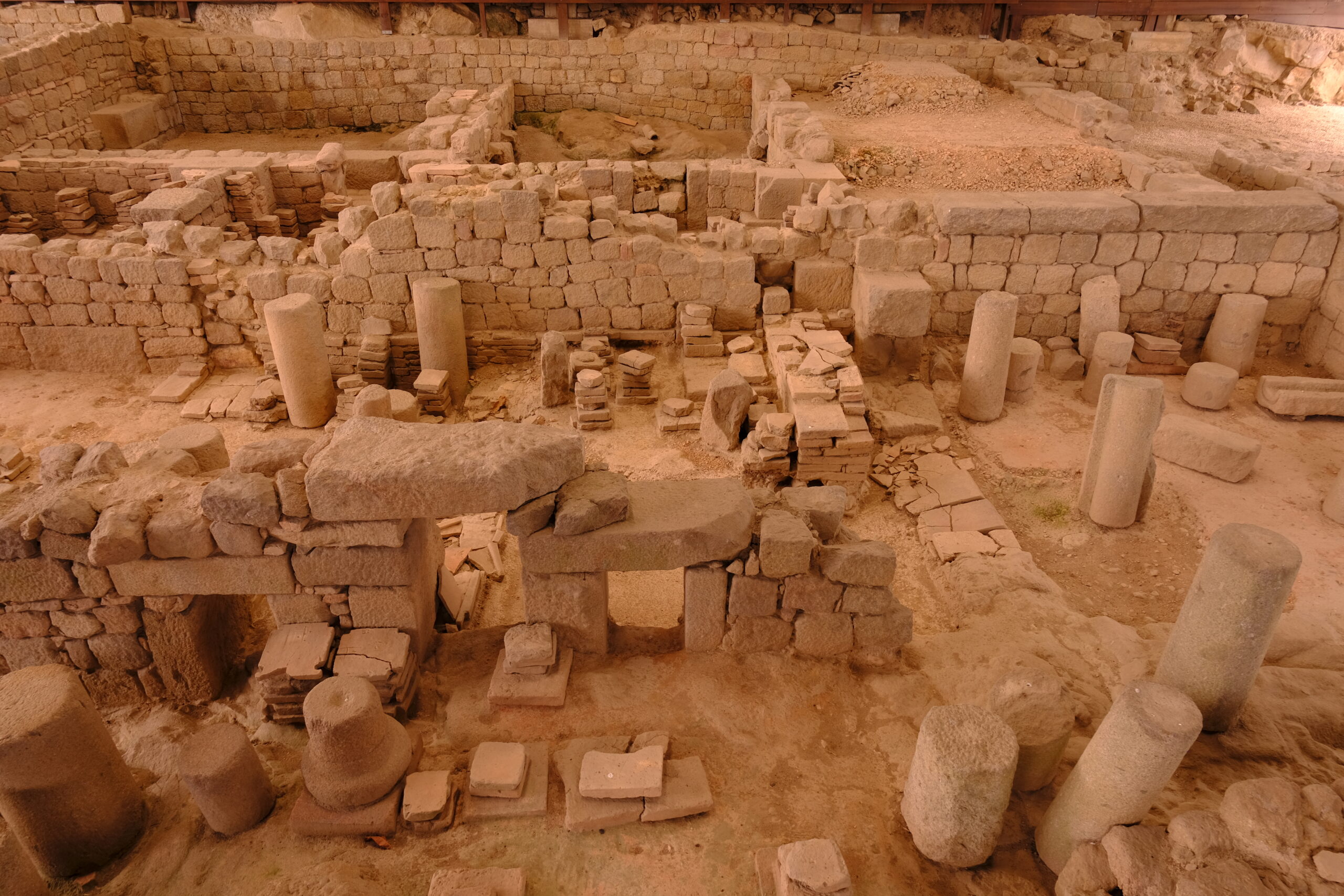
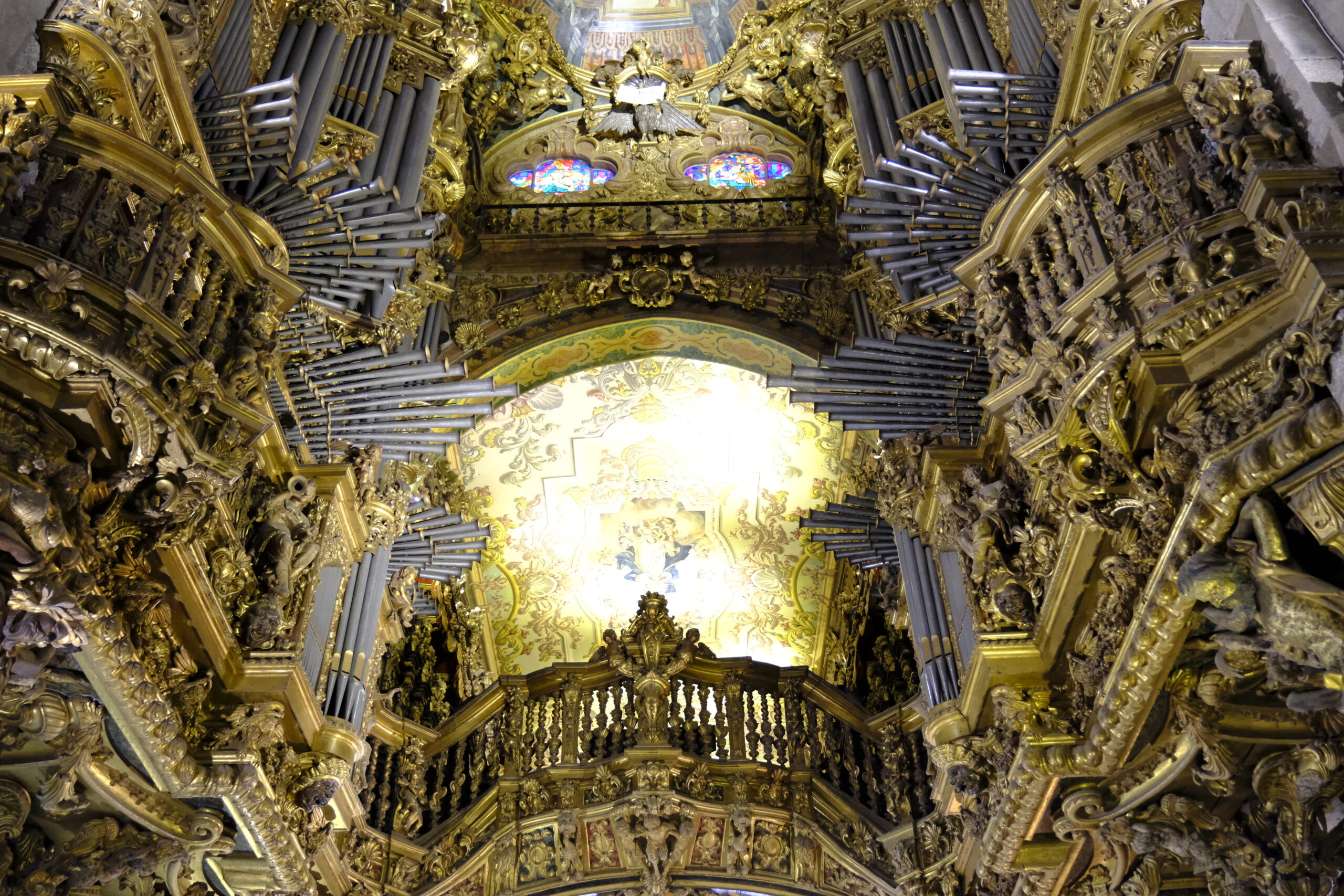
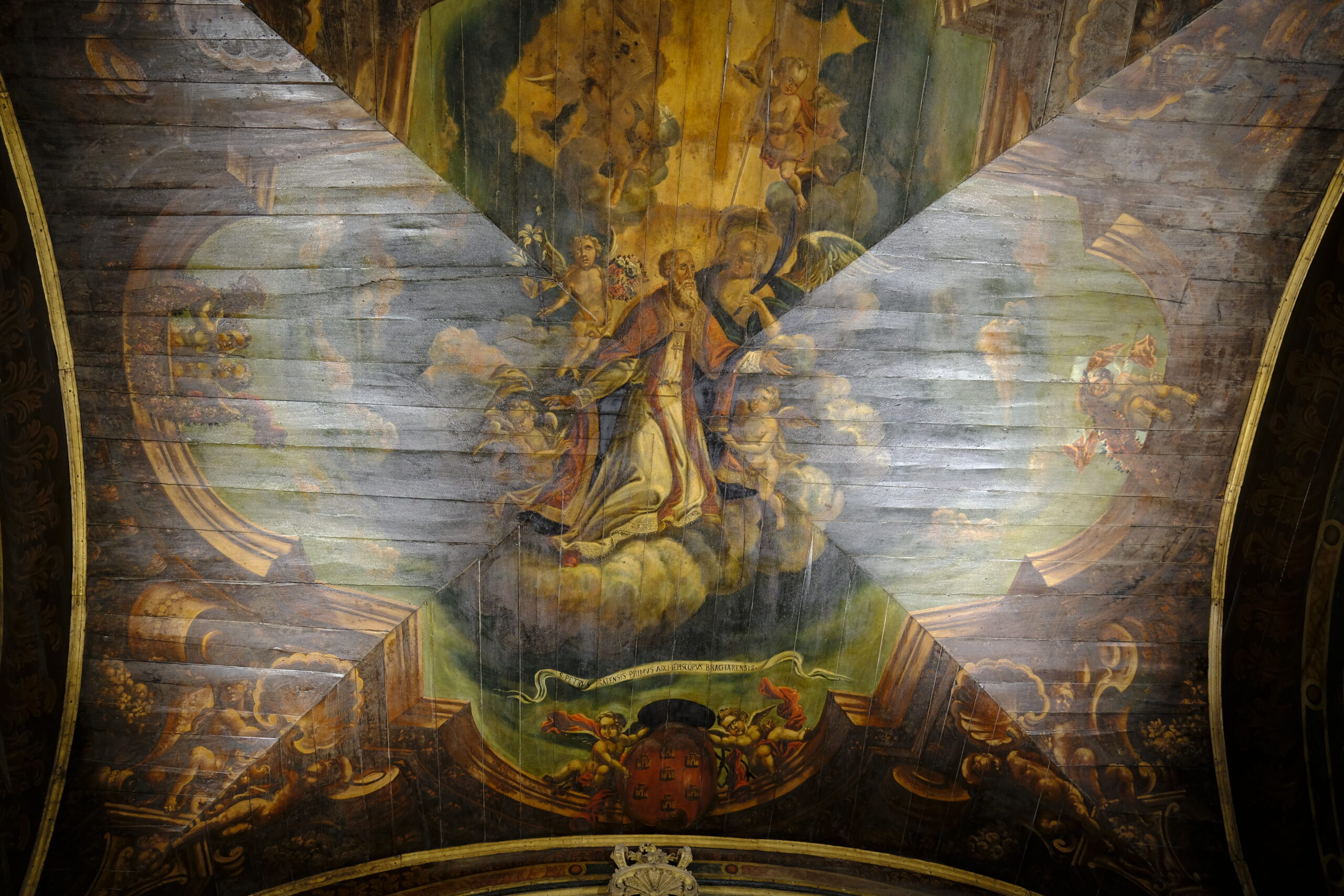
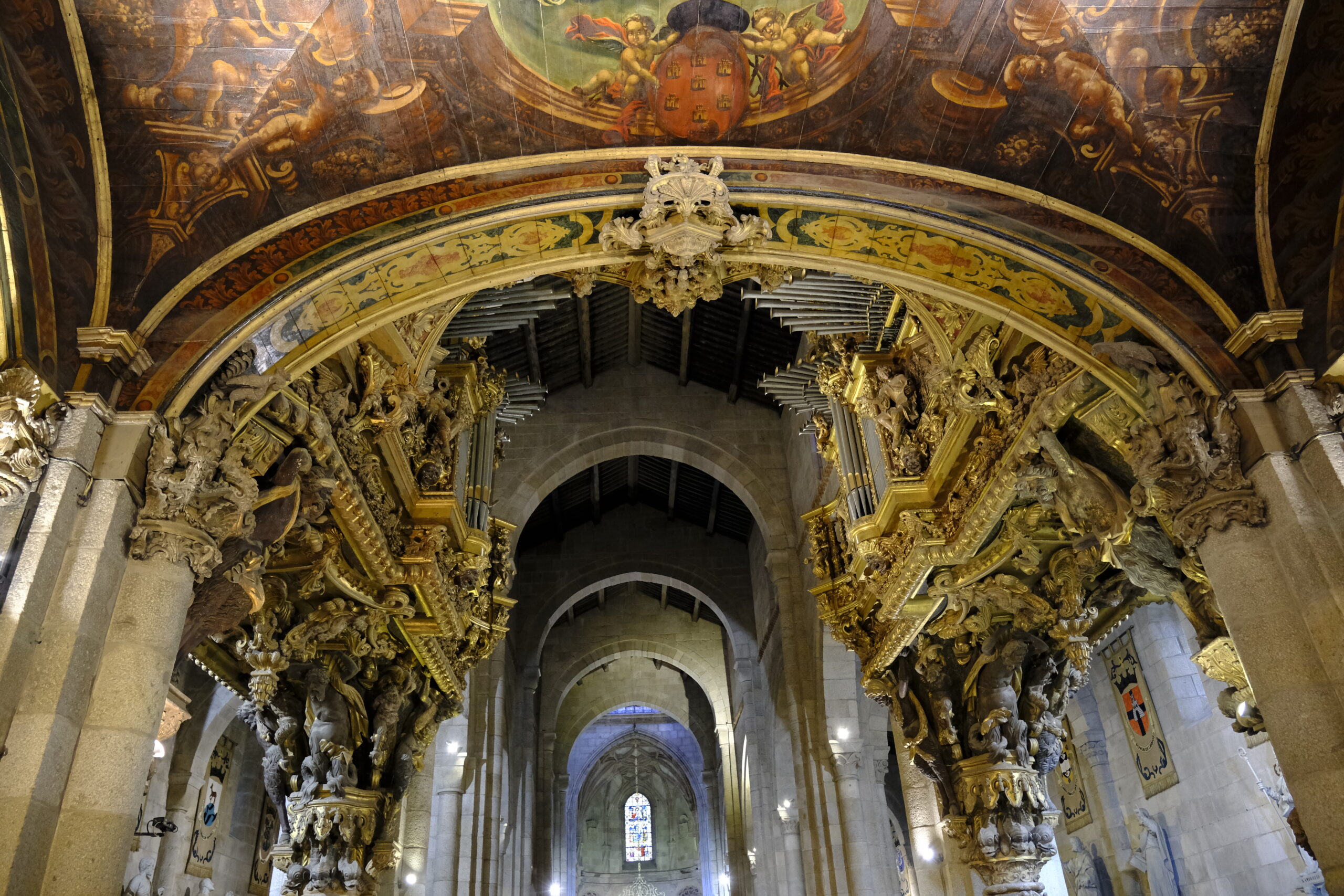
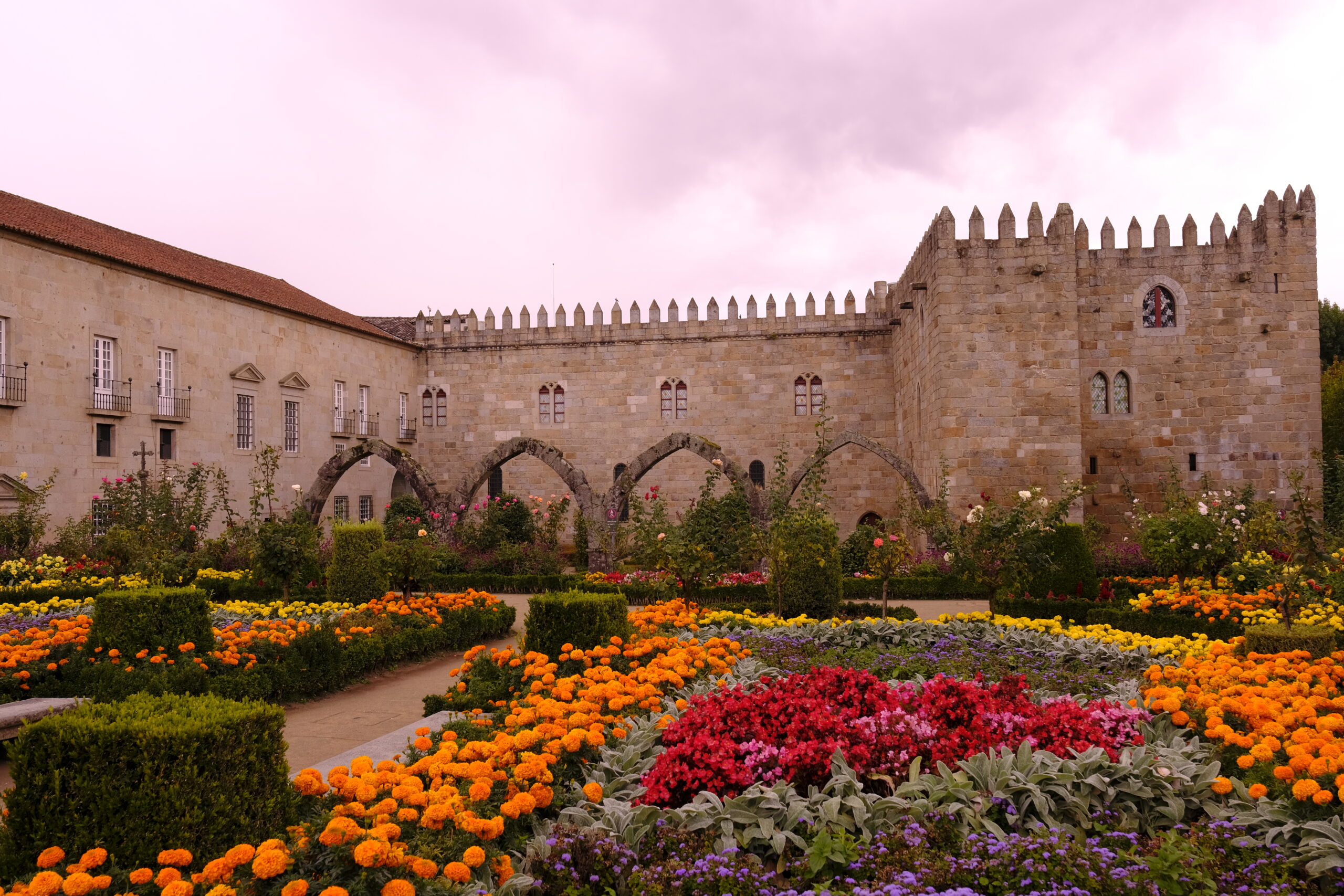
Later, an Uber took us to Braga, to meet our guides Pedro and Rita for a four-hour exploration of the city. After a quick lunch, you guessed it, more cod cakes, we began our tour of Braga, known as Bracara Augusta in Roman times. Starting at the western wall with the Arco da Porto Nova and Roman baths, we delved into Braga’s rich history as Bracara Augusta. Our tour featured numerous churches, including one dedicated to the crucifixion and the opulent Sé Cathedral with its gold, tiles, and Iberian organs. Notable artifacts like the Lady of the Fountain, Braga Tower, ruins of the Archbishop’s Palace, Jardem de Santa Barbara, and Republic Square added to the city’s charm. Despite the supposed 4-hour duration, our tour extended to almost 6 hours due to the city’s wealth of attractions.

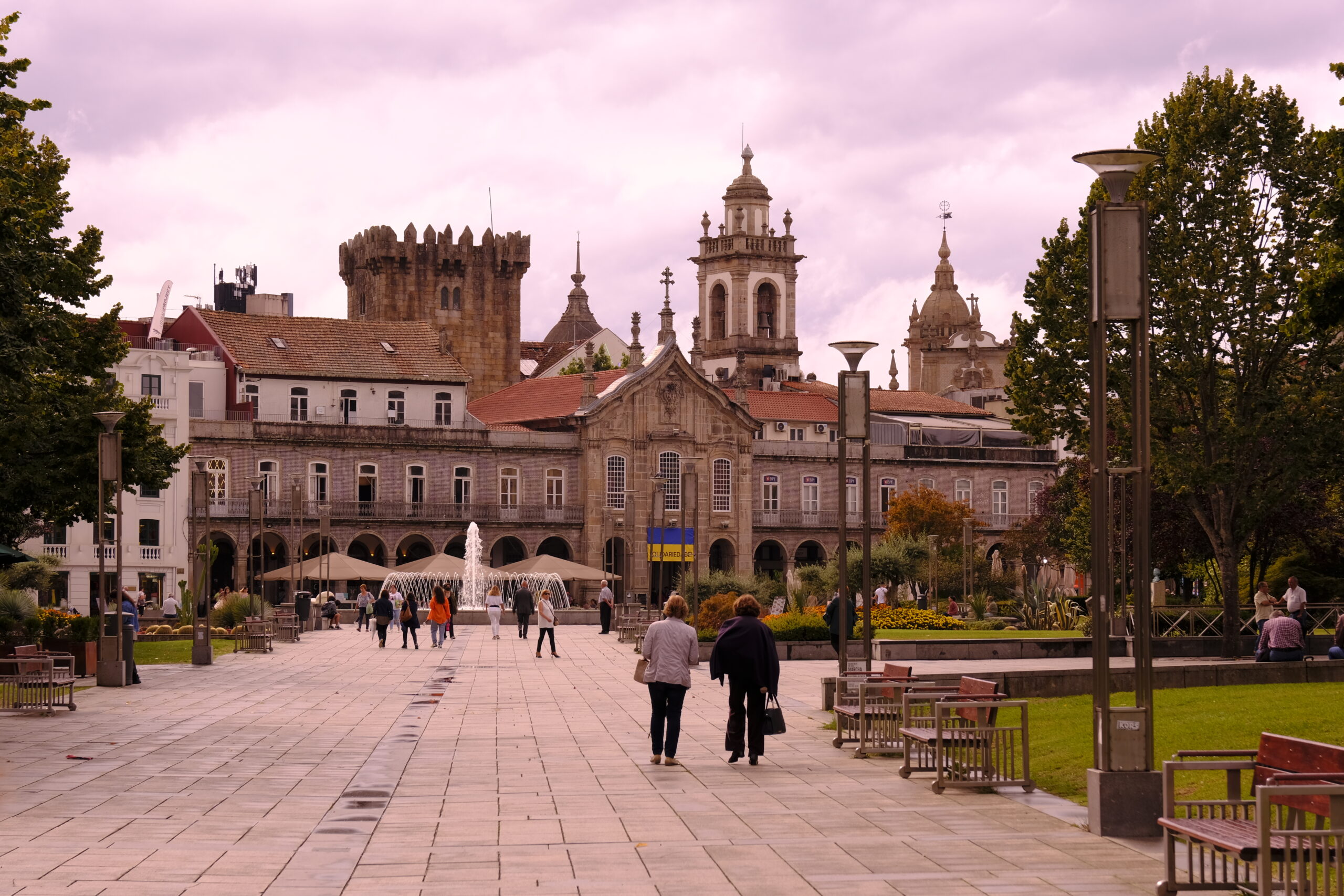
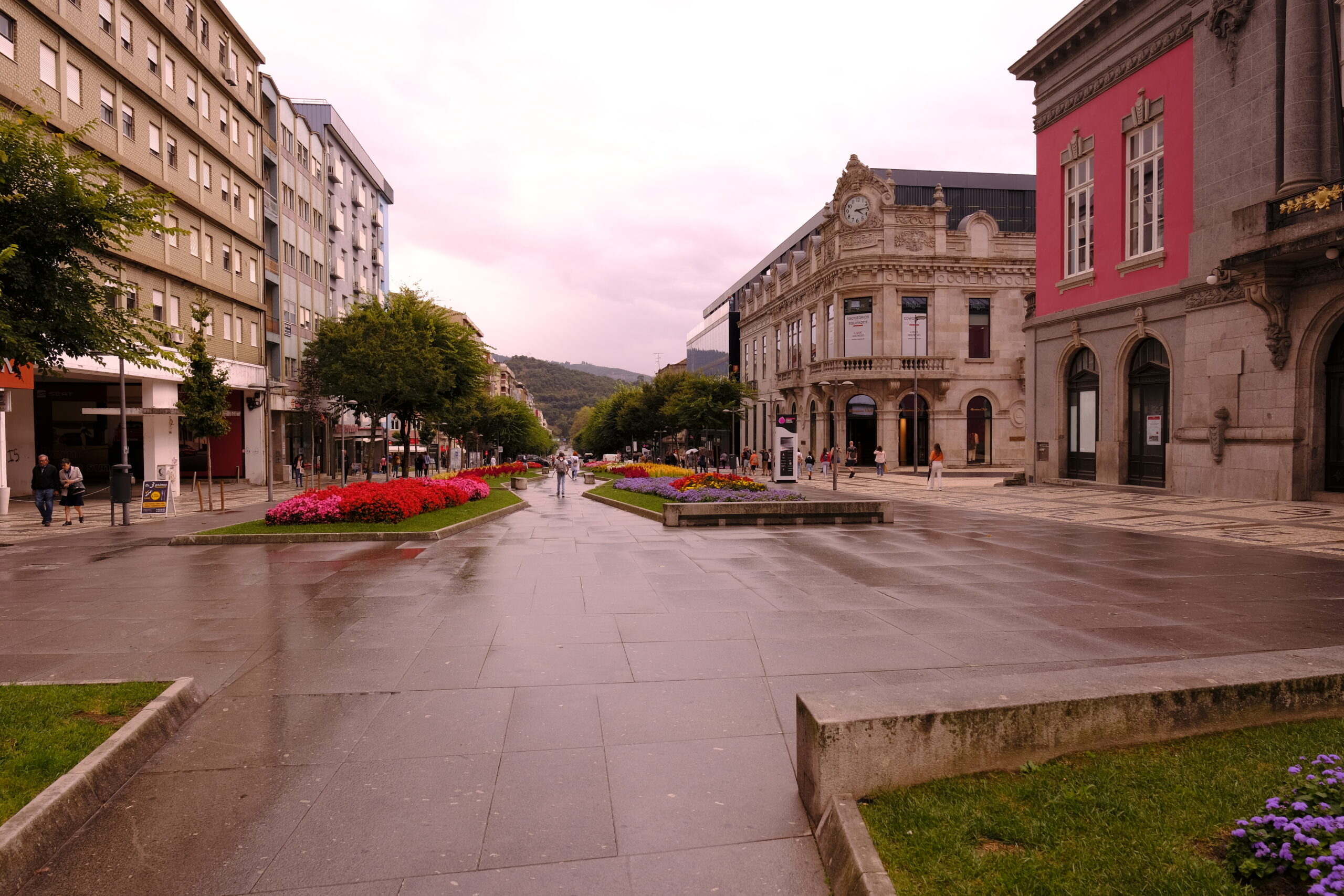
Upon completion of the tour of Braga, we returned to the hotel. The rainy evening led to a culinary adventure, attempting to find a recommended restaurant but settling for a local gem after getting lost (despite the help of two lovely elderly ladies who went out of their way to help us).
Camino Briefings and Tour of Guimarães – September 13, 2022
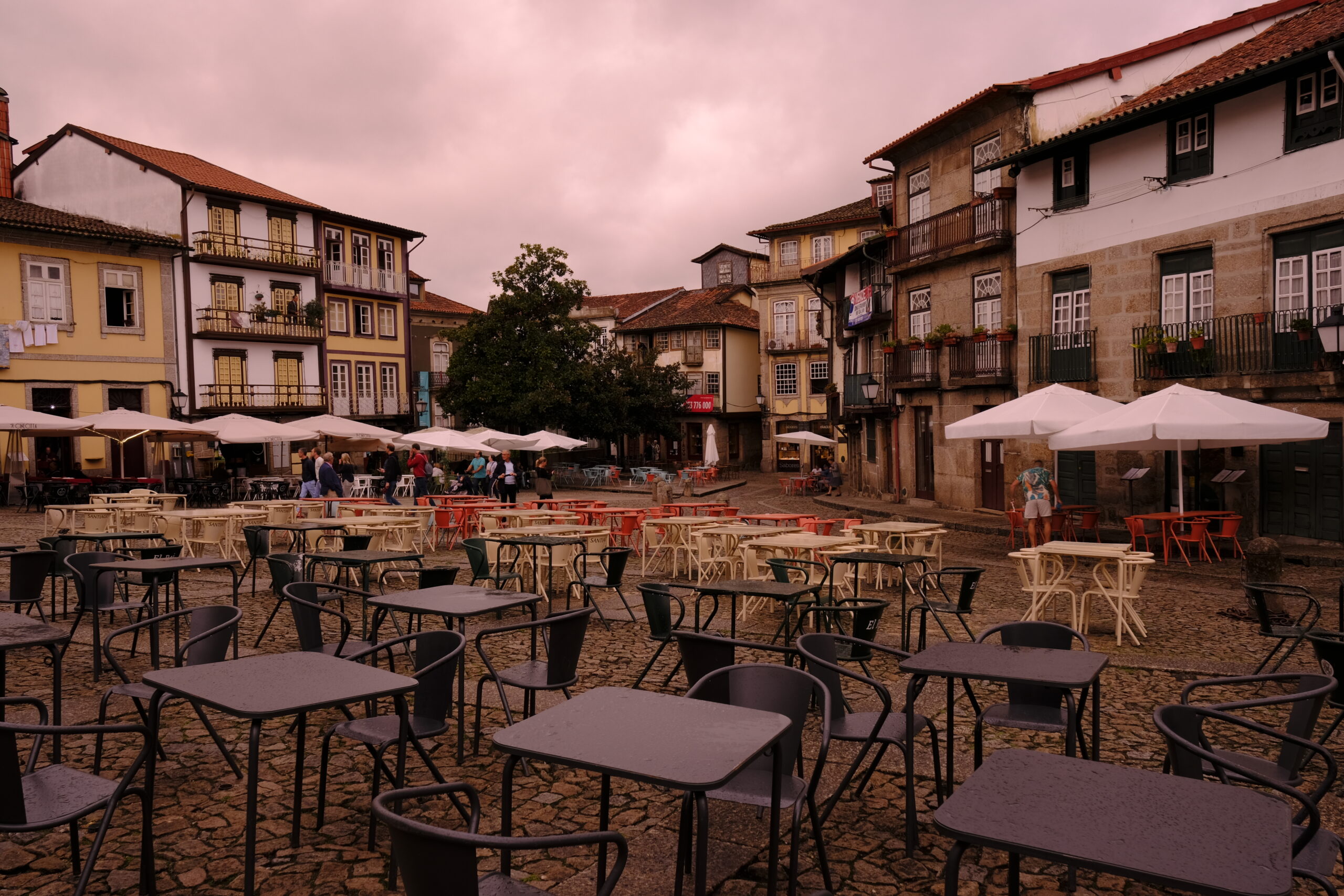
In the morning, we explored the neighborhood around our hotel, navigating through the rain, visiting the local church, and lunching at a local restaurant.
In the evening, we gathered with Héctor and Sandra, our Camino guides, and our fellow travelers to learn what to expect over the next nine days. One of our fellow travellers took a tumble down some stairs on the way to the meeting and needed medical attention, alerting the rest of us to be extra careful while walking.
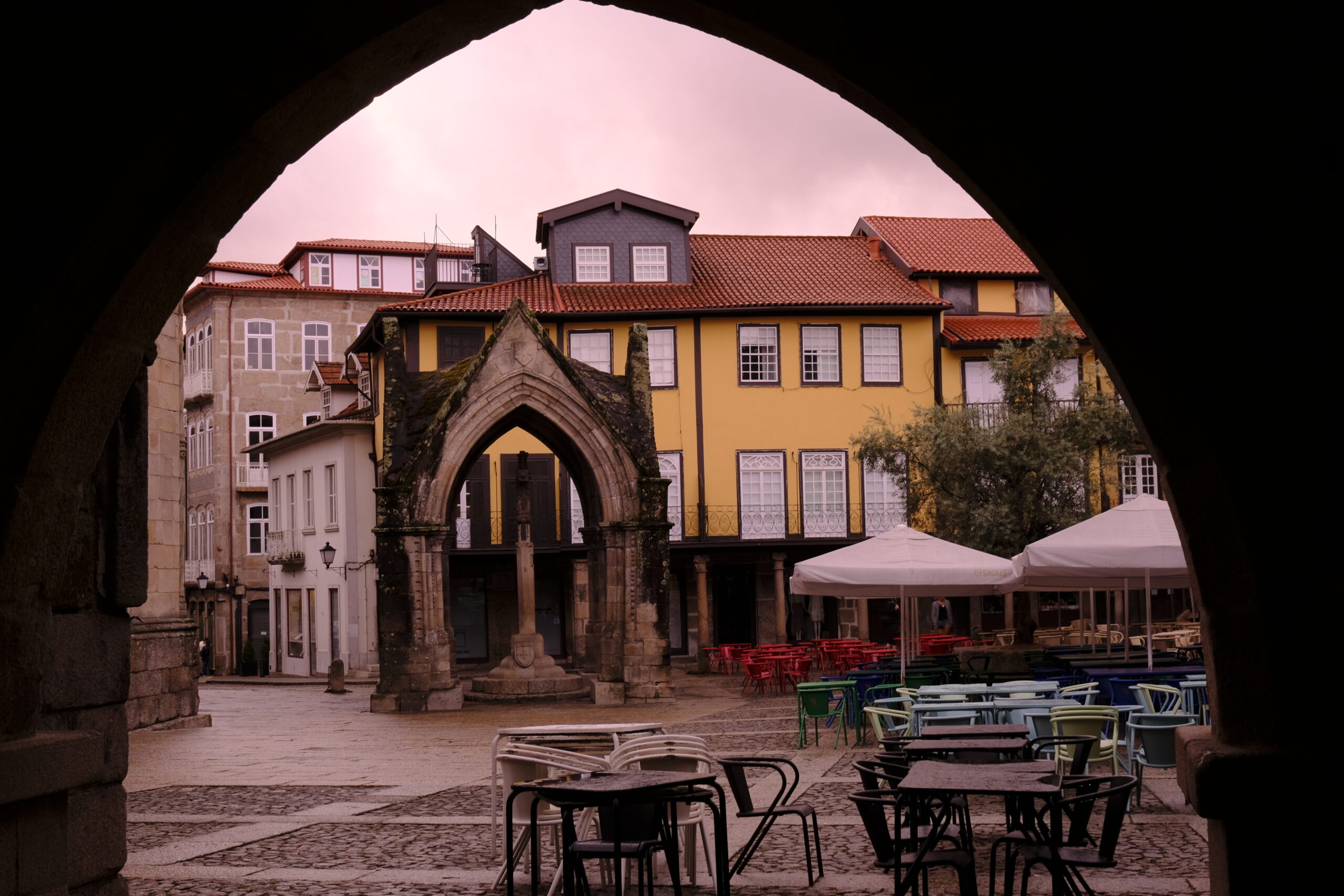
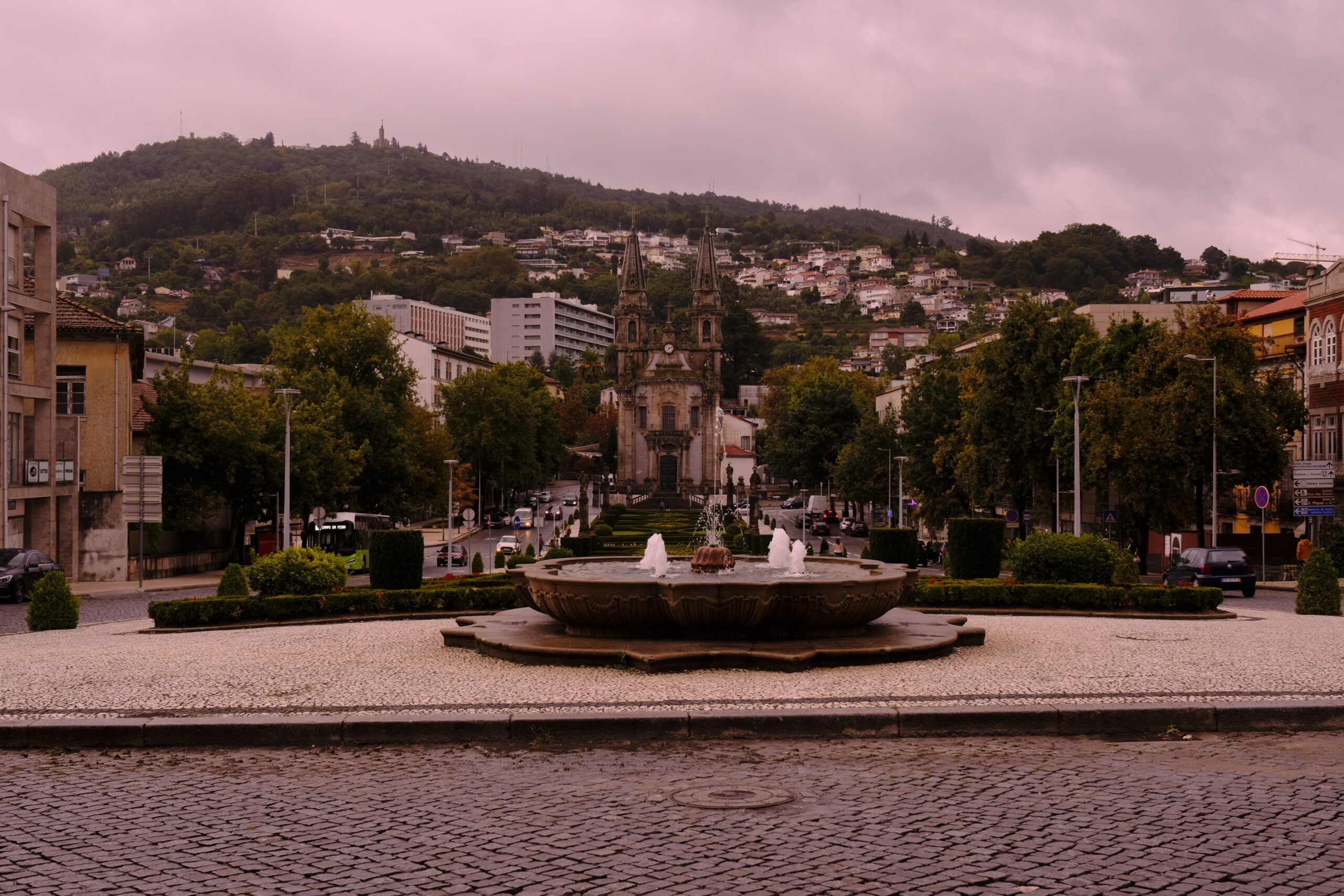
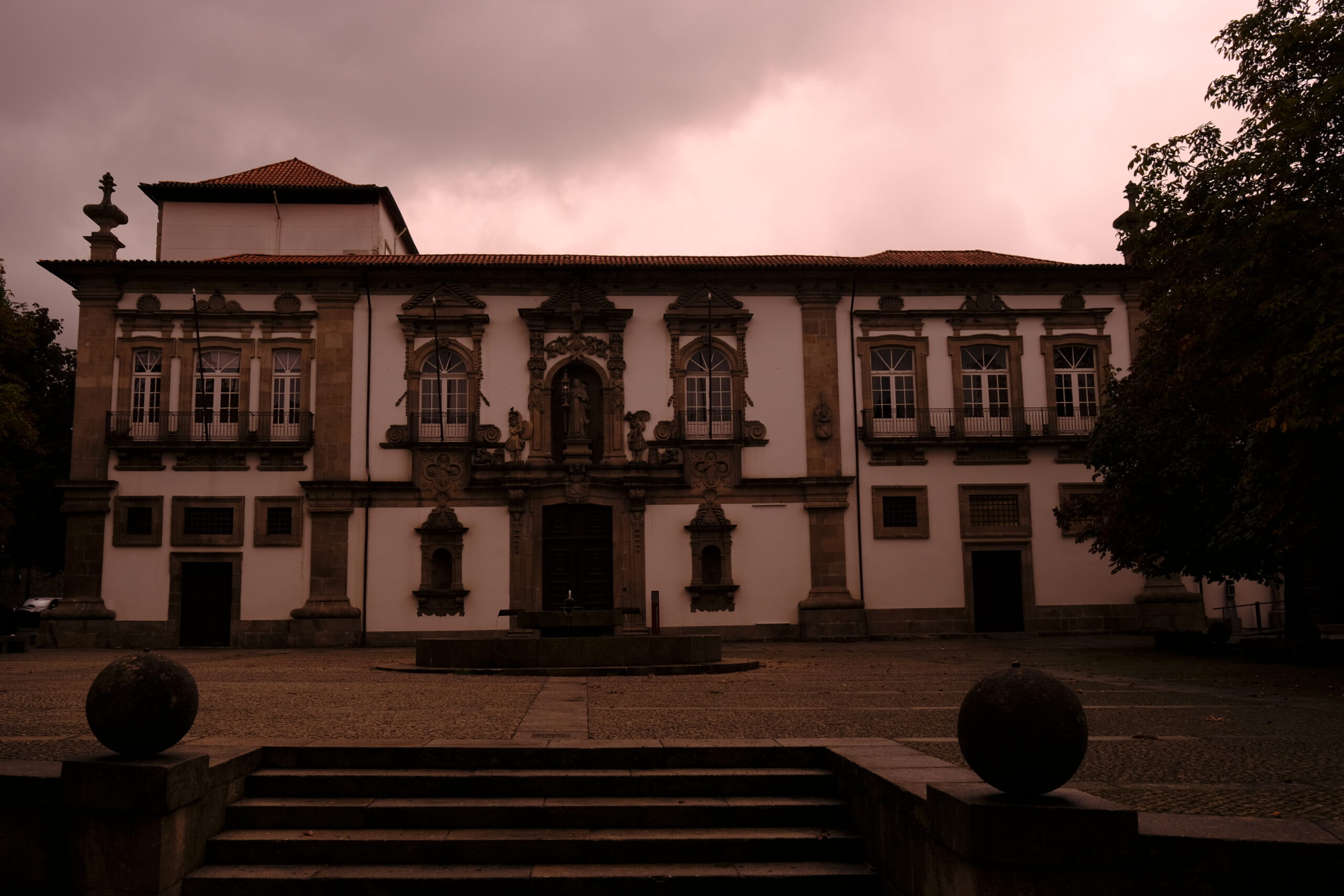
Later, we embarked on a quick tour of Guimarães led by an excellent local guide. Although his name escapes us, he shared that he holds a PhD, teaches tourism at the university, and is married to a physician. He provided a condensed history of the city, highlighting Guimarães Castle and the church. The day concluded with a delightful dinner at the same restaurant where we had lunch earlier.

Vitorino to Arcozelo (Day One) – September 14, 2022
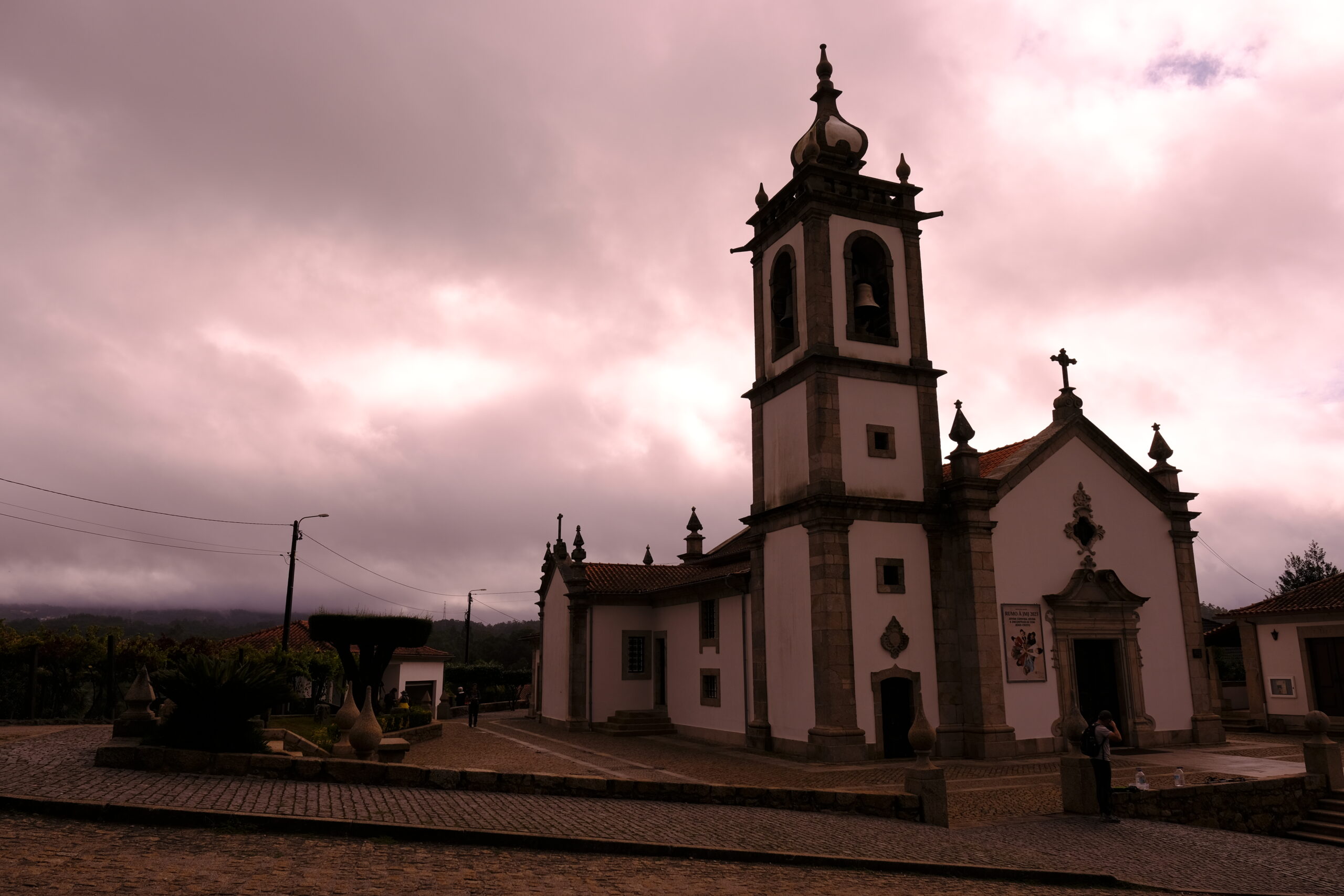
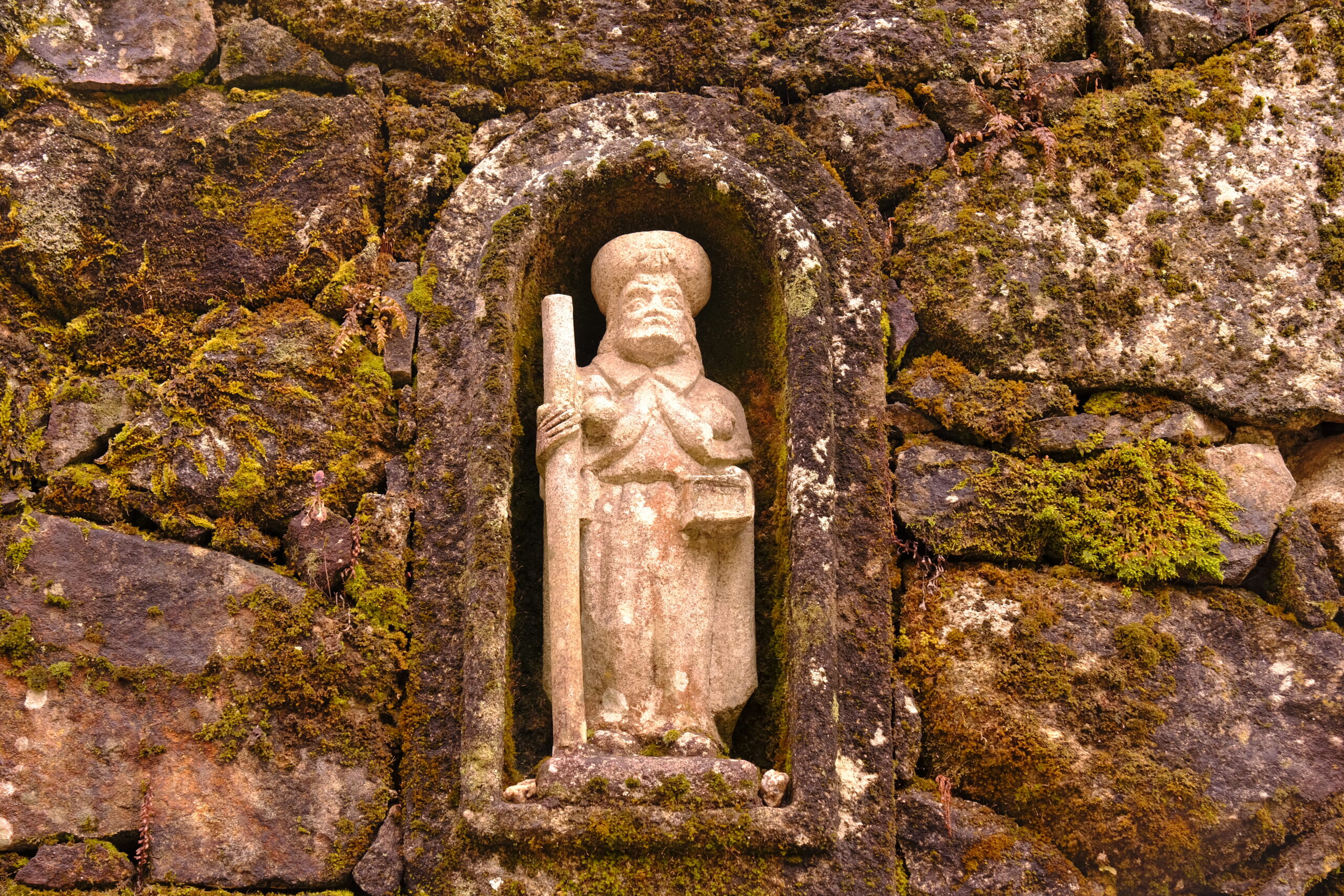
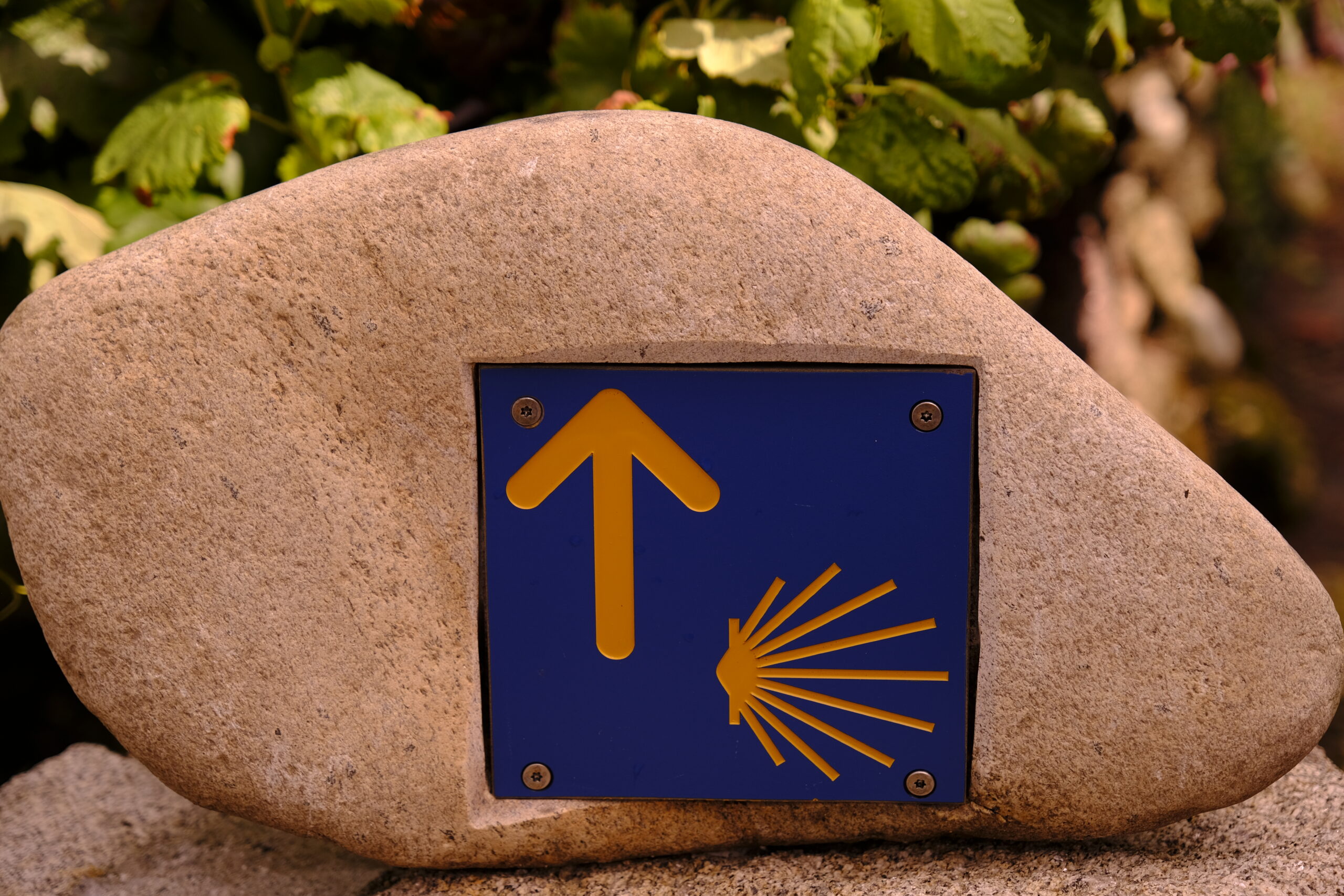
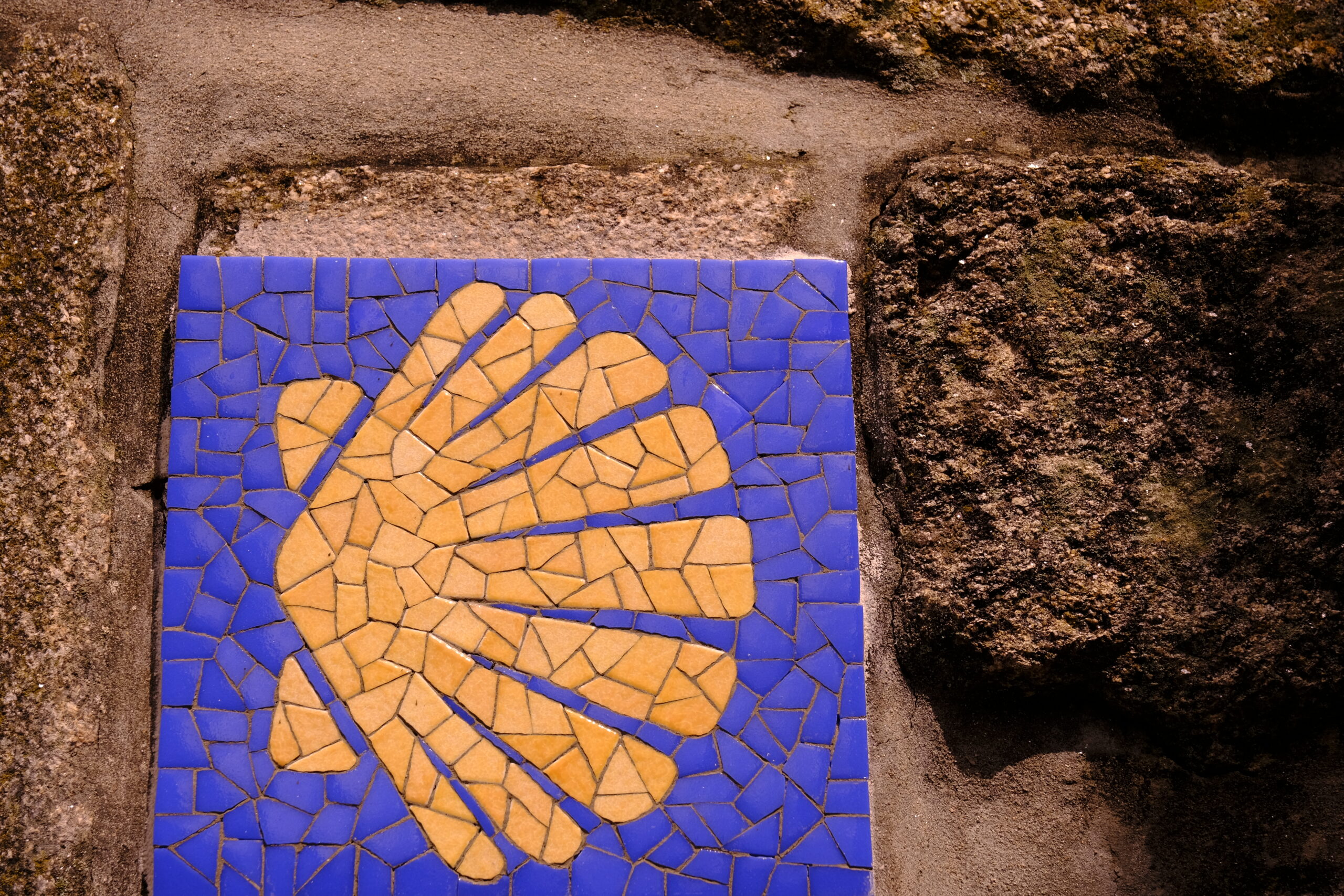
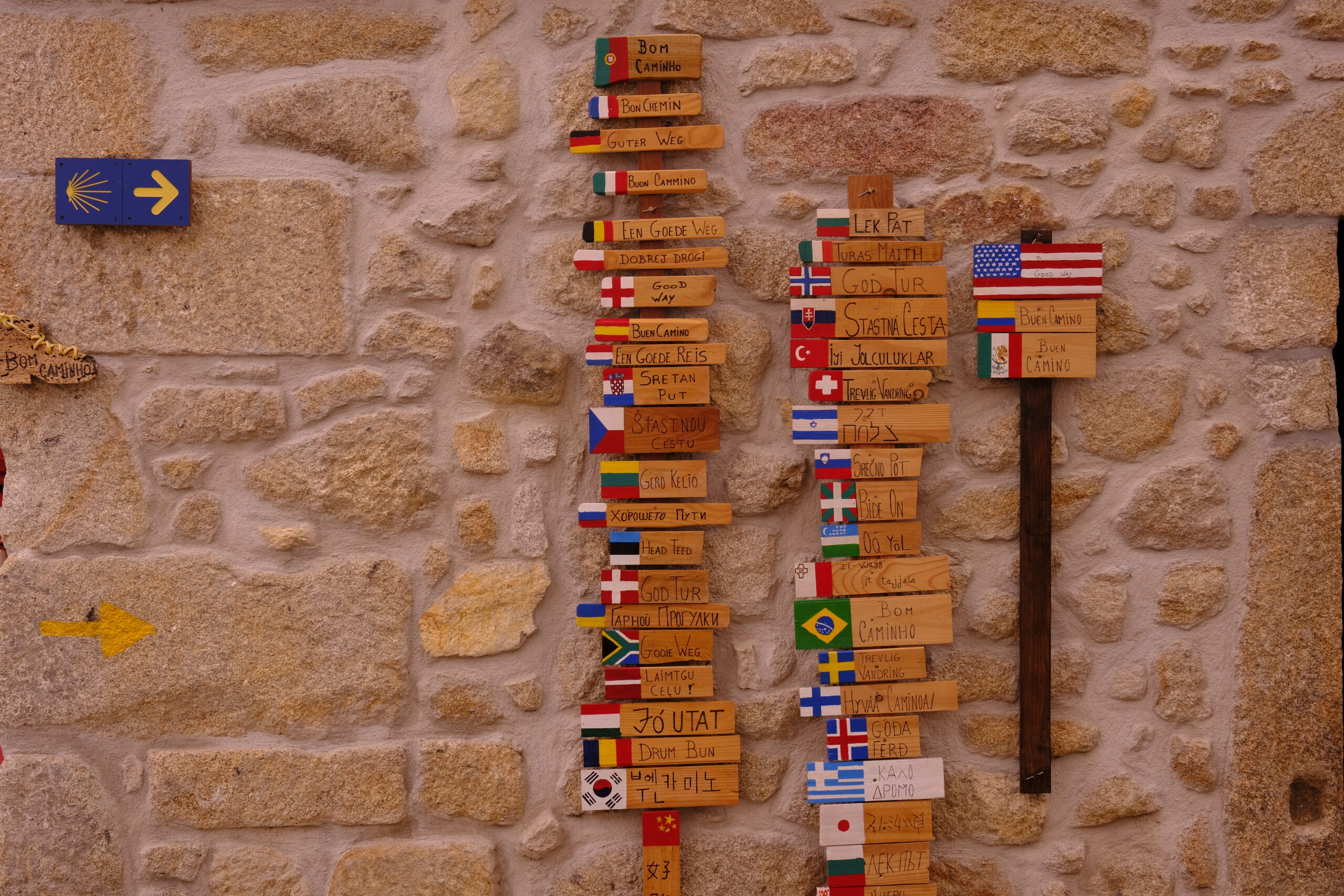
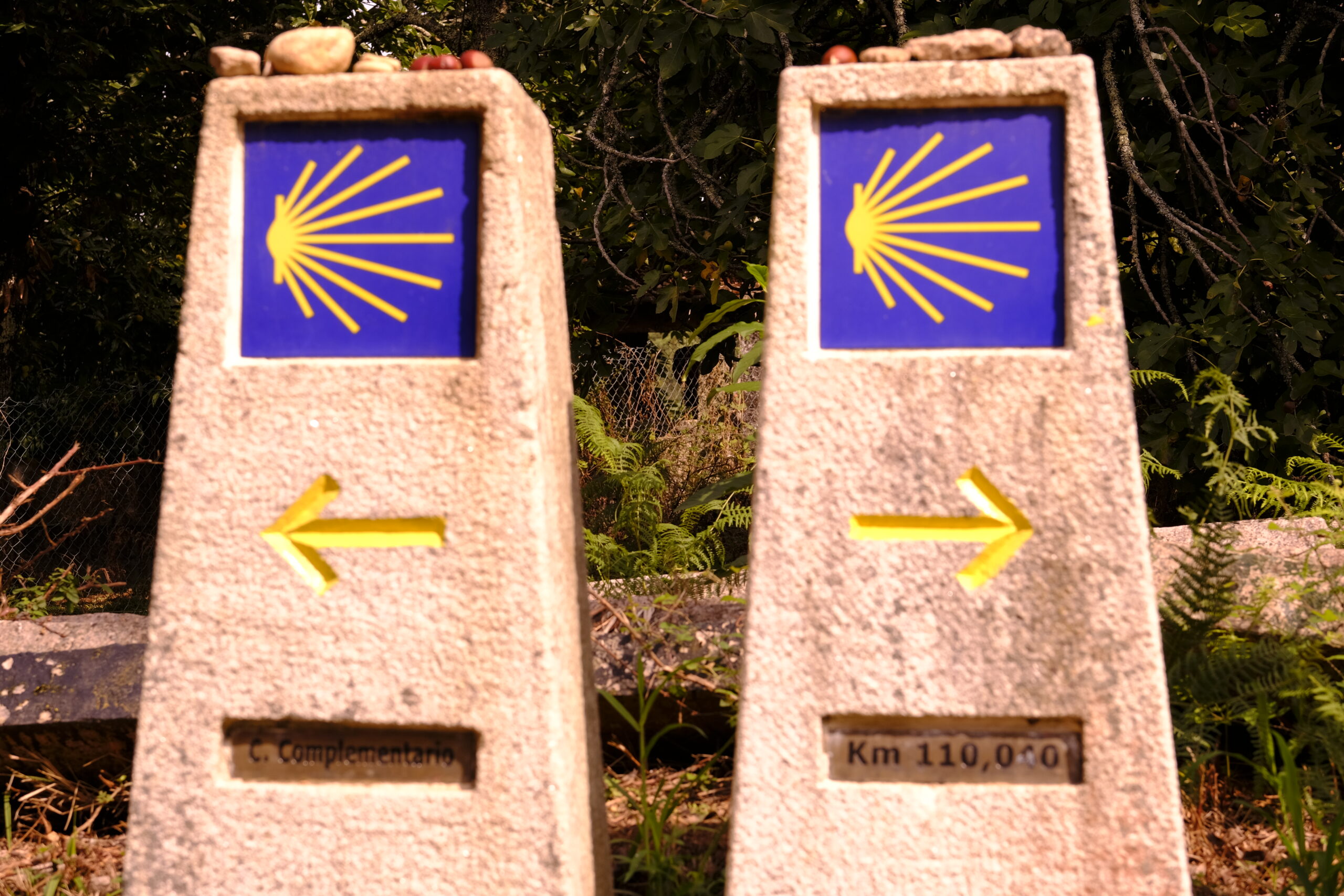
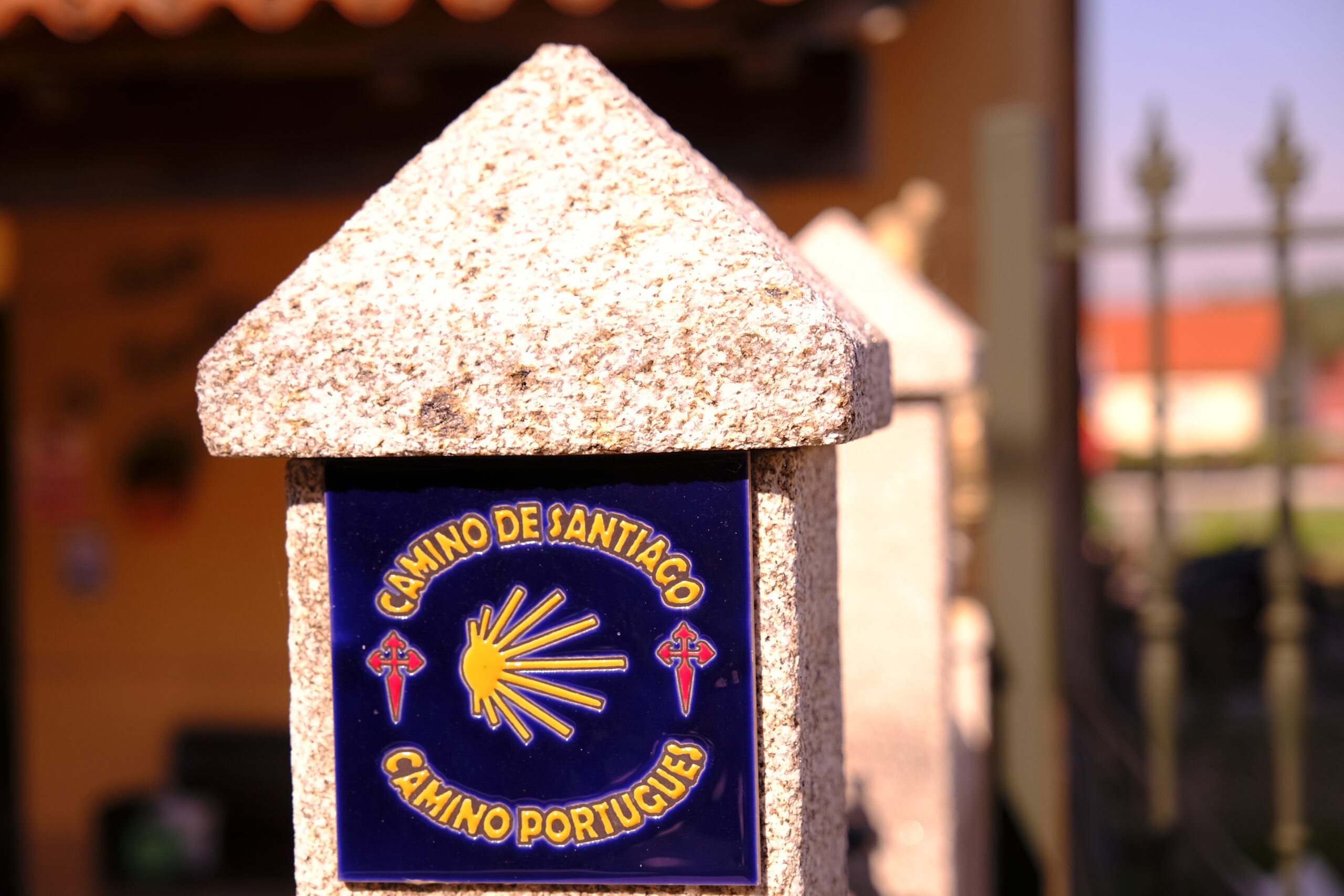
After breakfast, our journey began as we boarded the van, heading to Vitorino. With boots laced, we took our initial steps on the Camino, marking our journey with the first stamp in the charming parish town of Vitorino de Piães. The trail led us to the picturesque river valley town of Ponte de Lima, where we stopped for a delightful lunch in a local restaurant. We finished the day’s walk spanning 9 miles on the Via Romana XIX in Arcozelo.
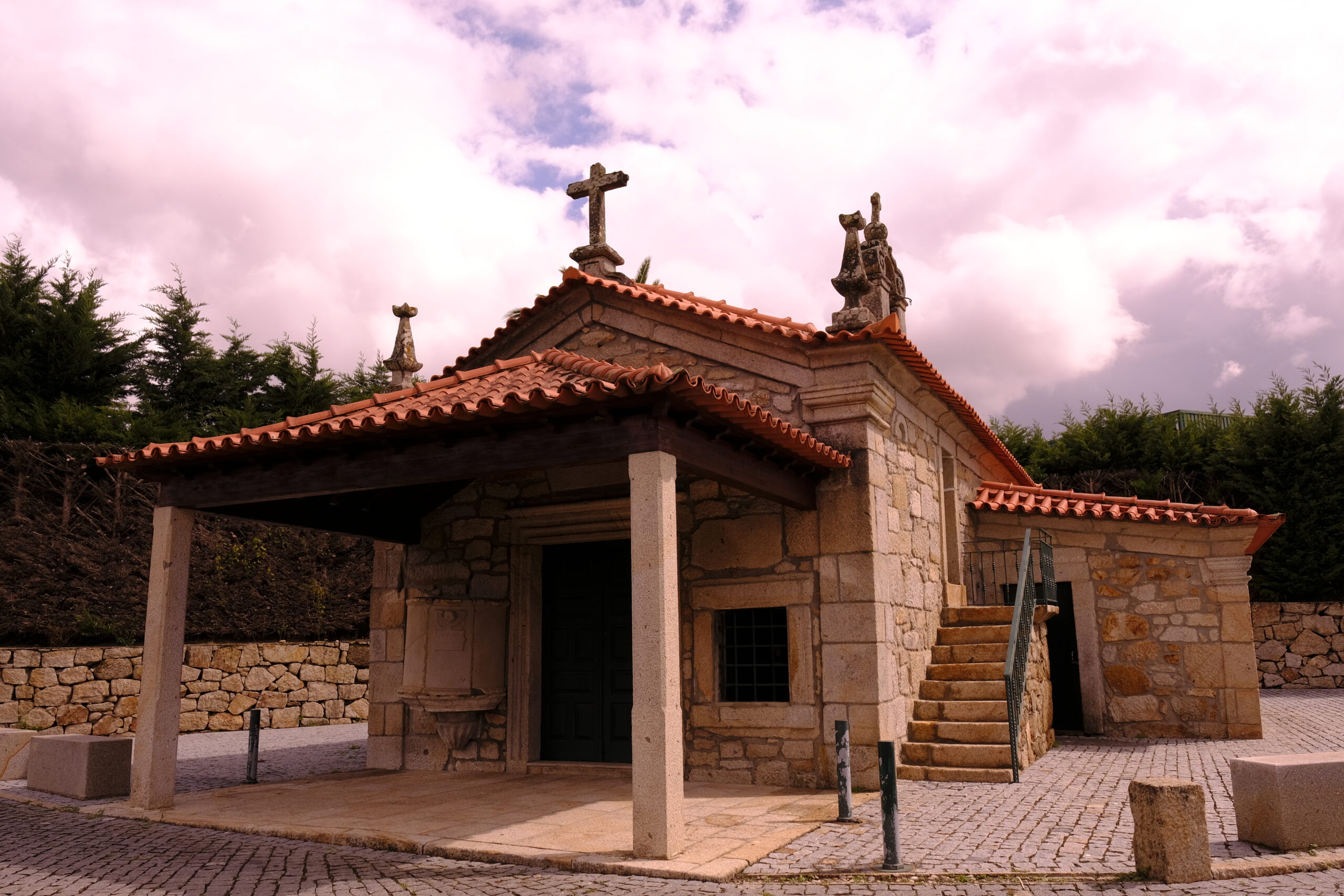
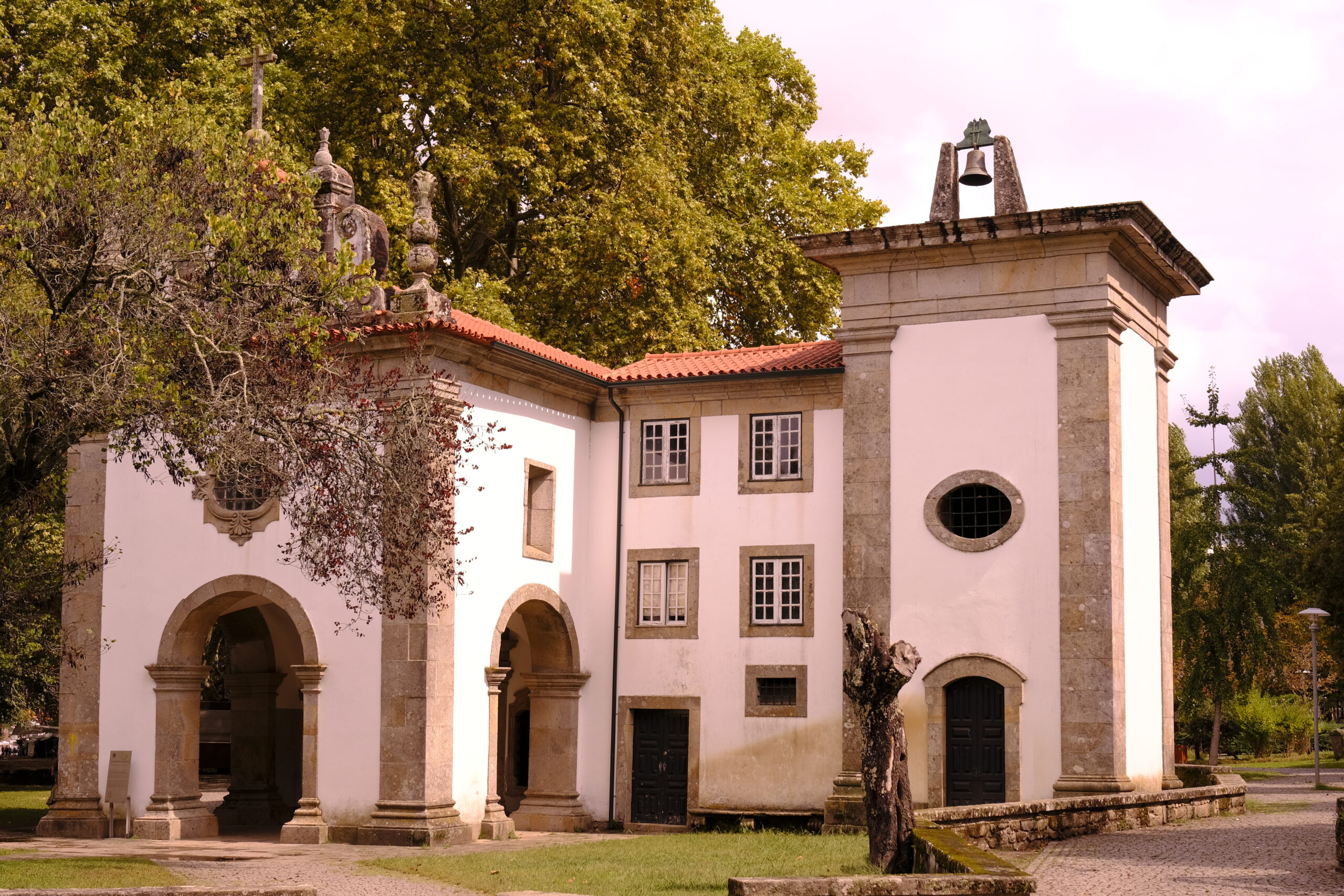

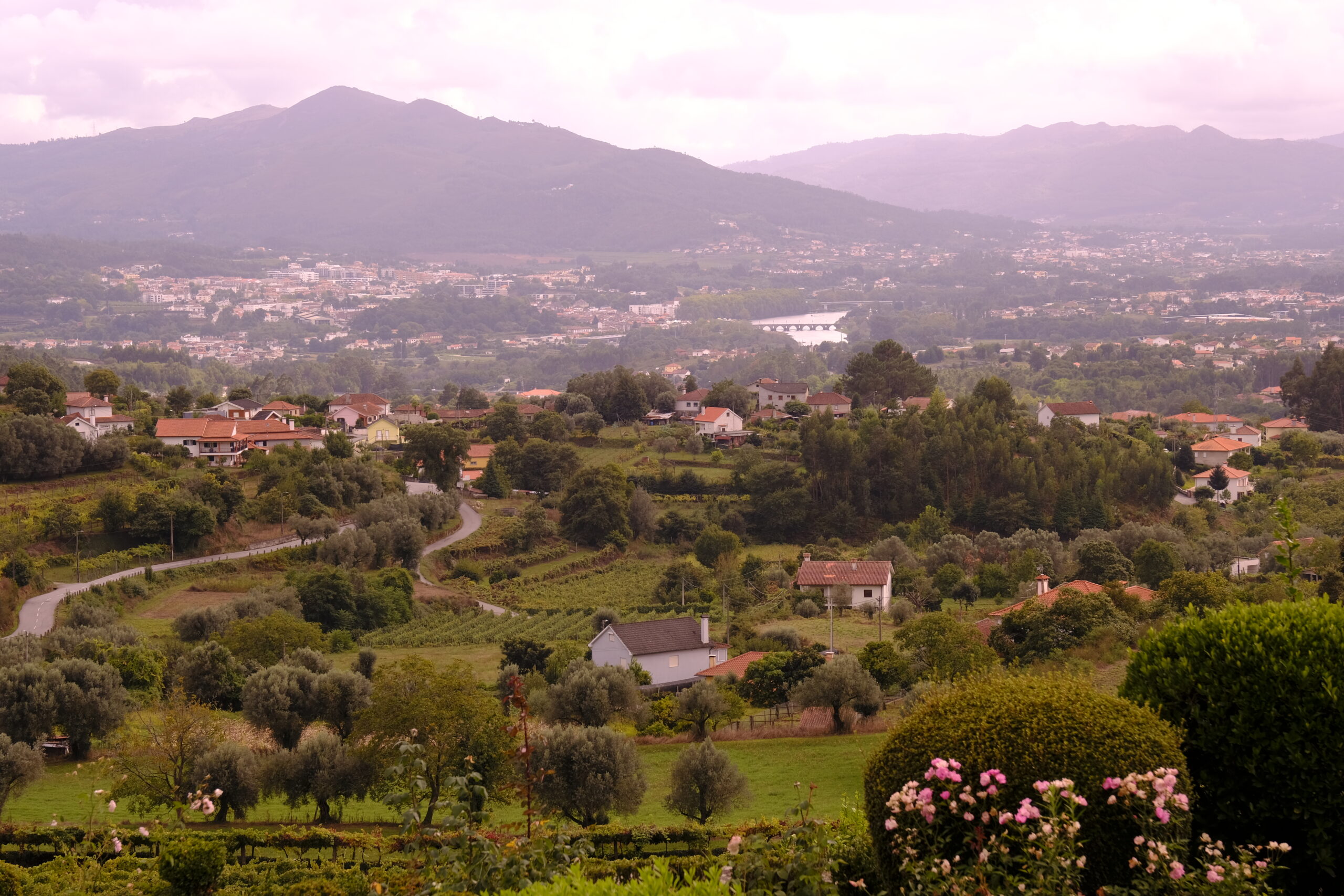
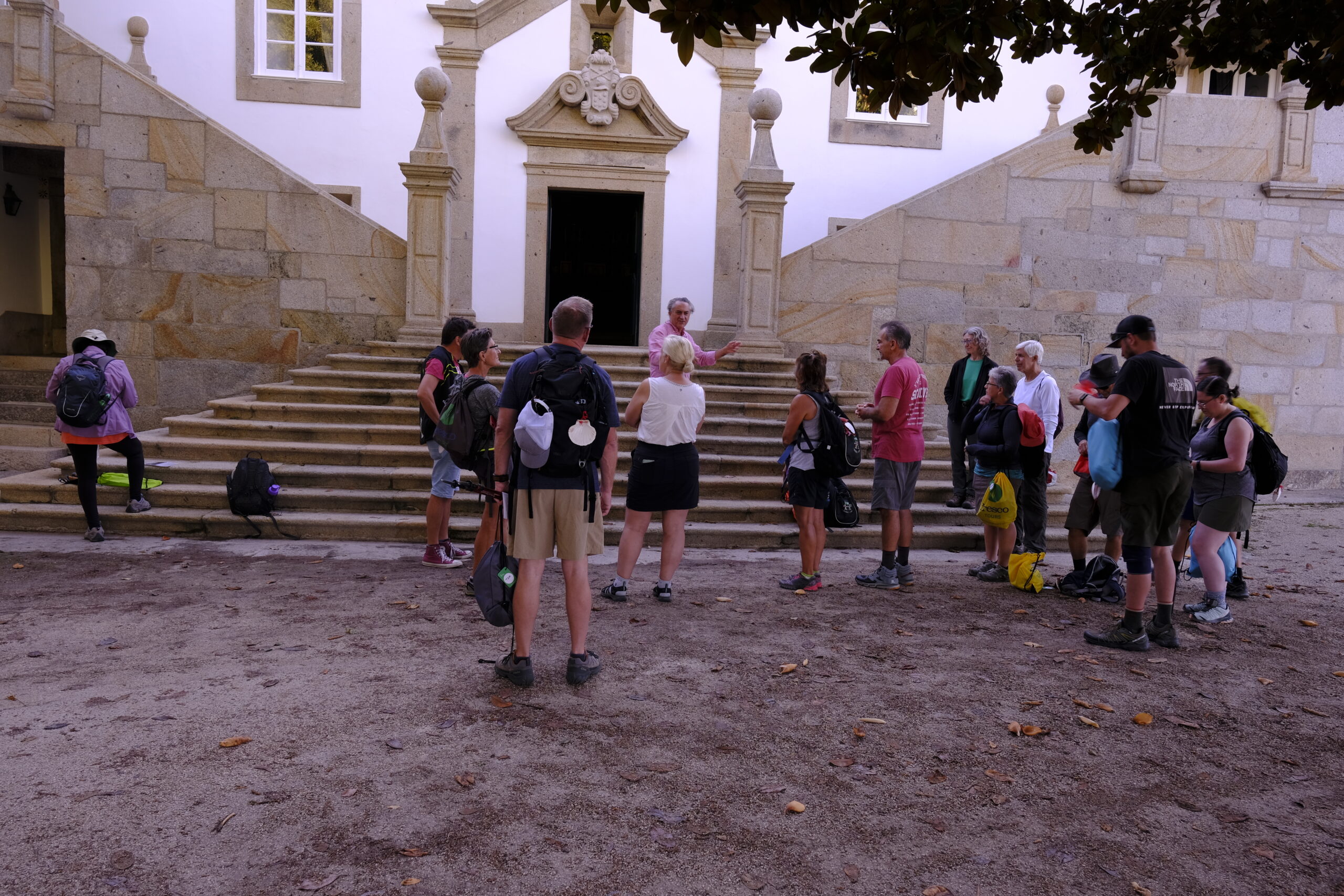
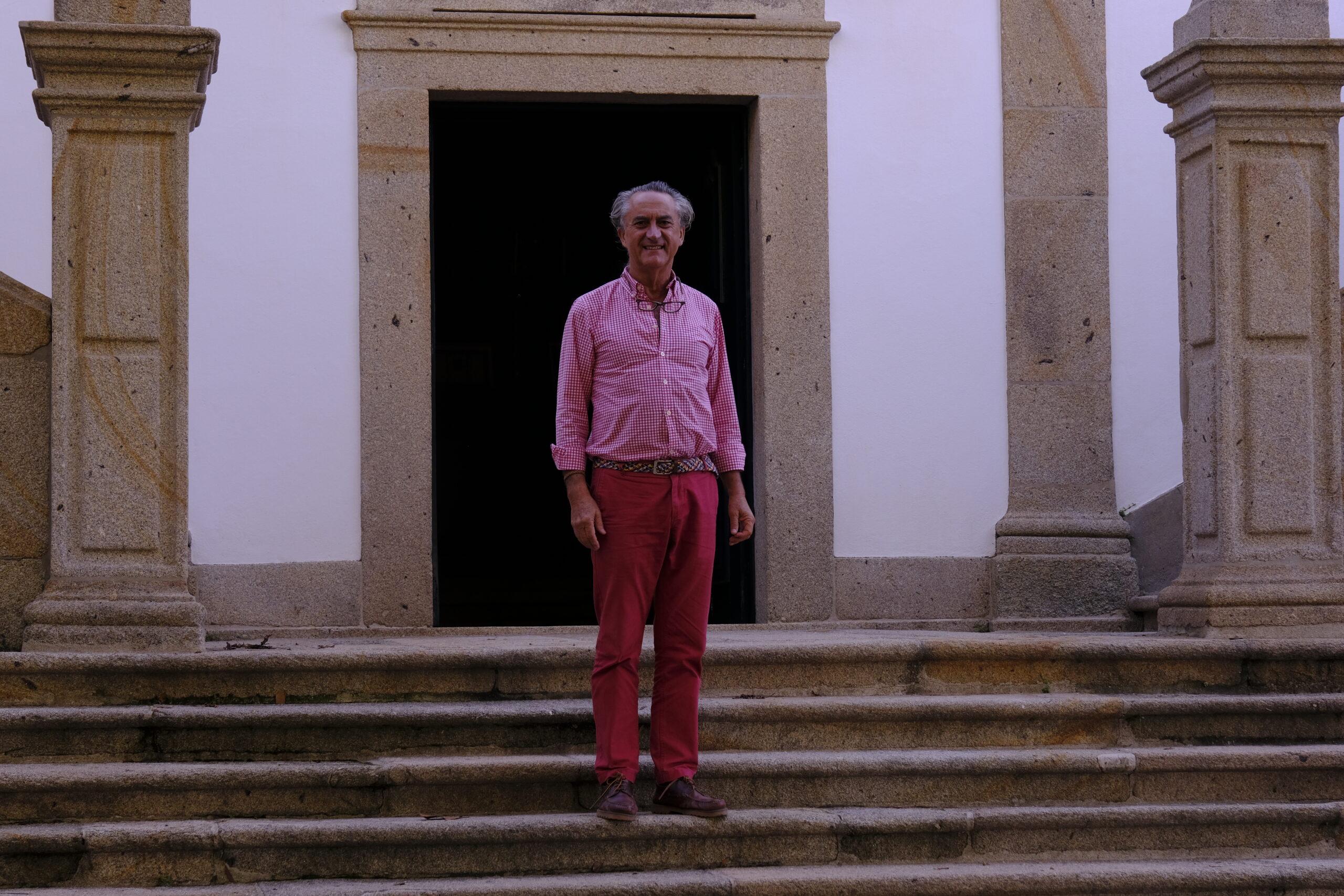
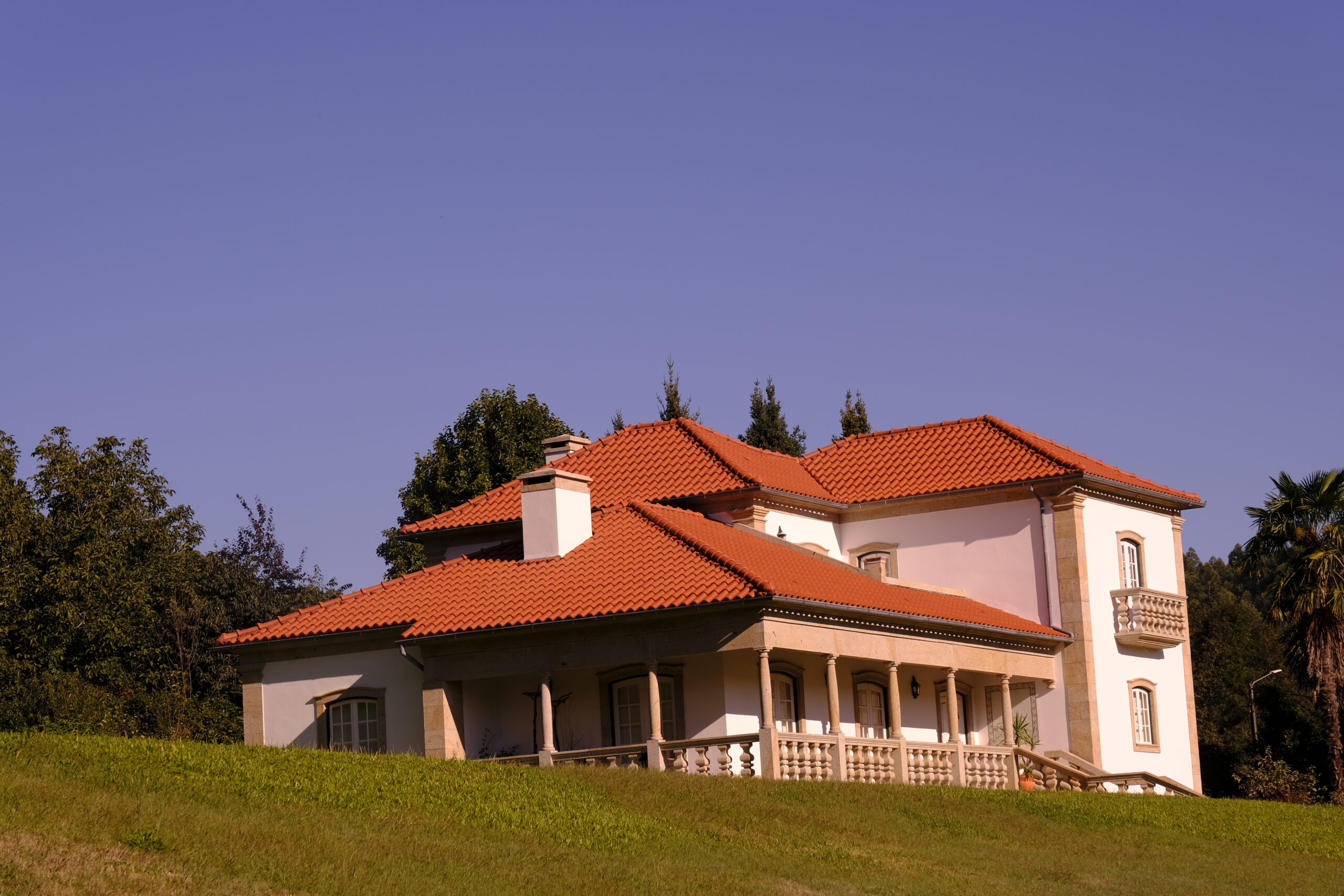
In the evening we checked into the Paço de Calheiros, a beautiful VIII century manor house located on the slopes of the Lima valley. We were welcomed to the palace by the Count, Francisco de Calheiros. After we were assigned our rooms, which were exquisitely furnished, we toured the grounds. In the evening the Count took us on a tour of the manor, and then we all had dinner together in the dining room, with much of the food sourced from their gardens. The Count also took us to see the family chapel. When we told him we were from Goa, he pointed out the statue of St. Francis Xavier that he had brought back from there. Later we found out that one of his ancestors in the 16th century, Baltazar de Calheiros, was a Governor of the Fortress of Goa.
Ascending Heights and Roman Milestones (Day Two) – September 15, 2022
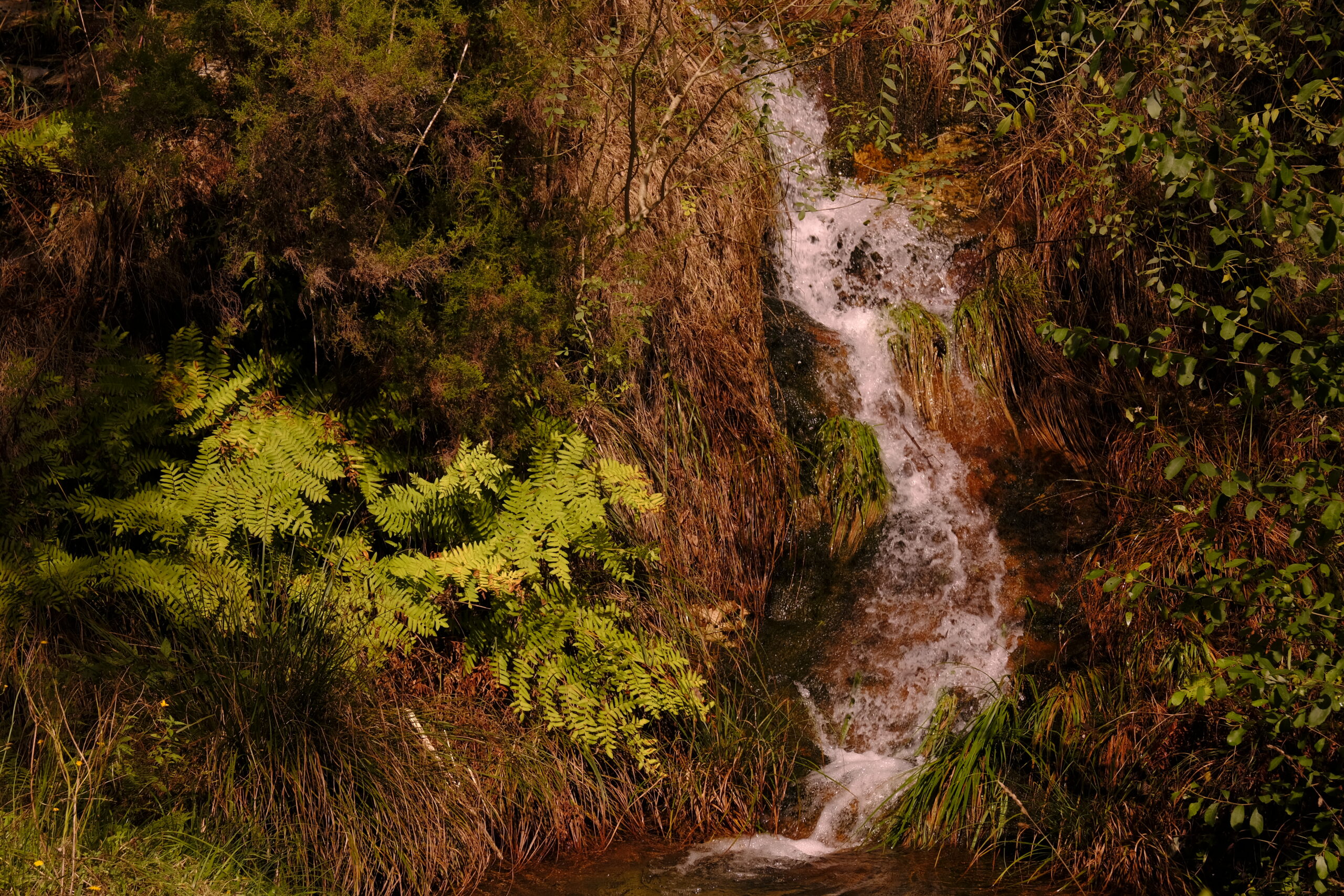
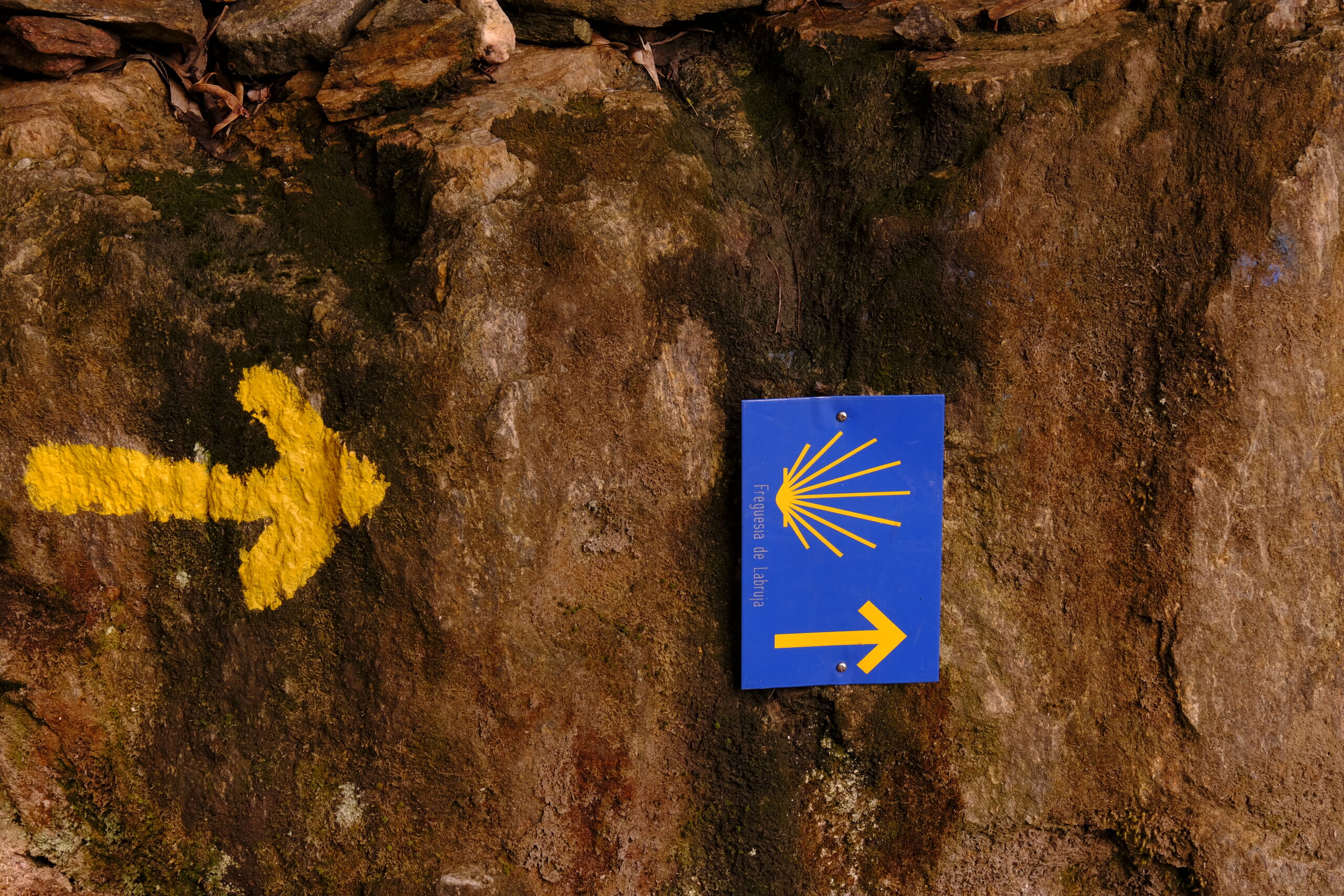
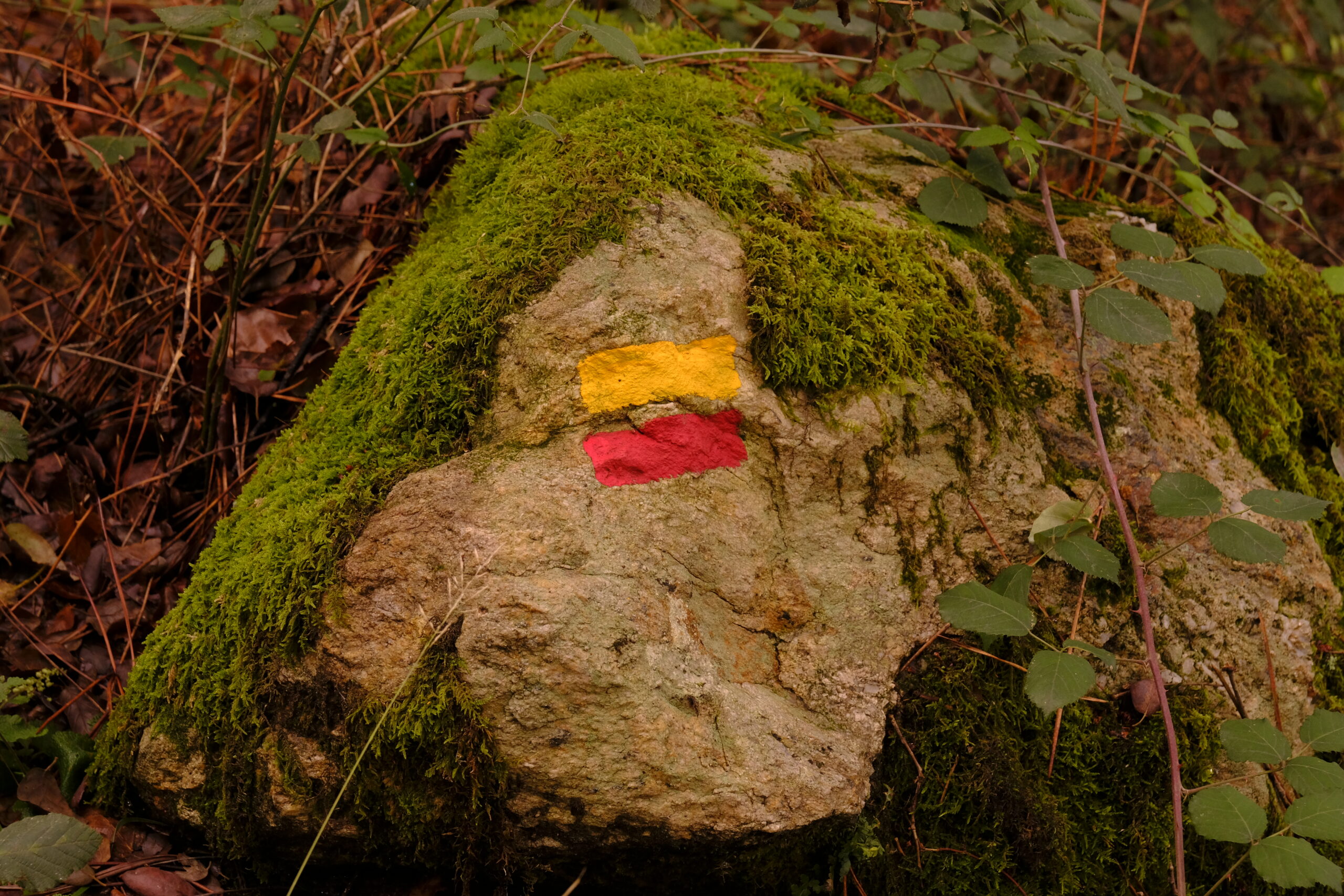
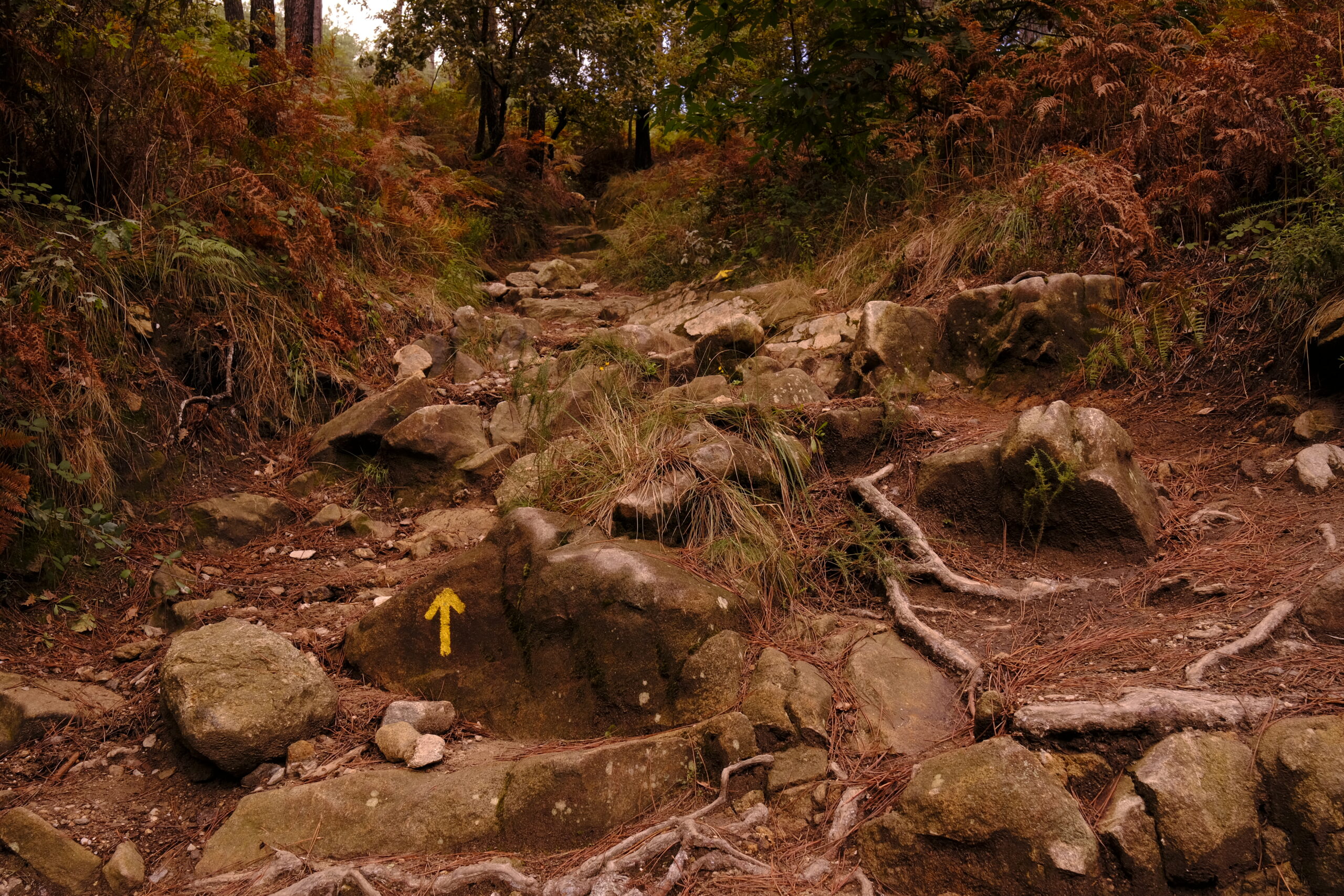
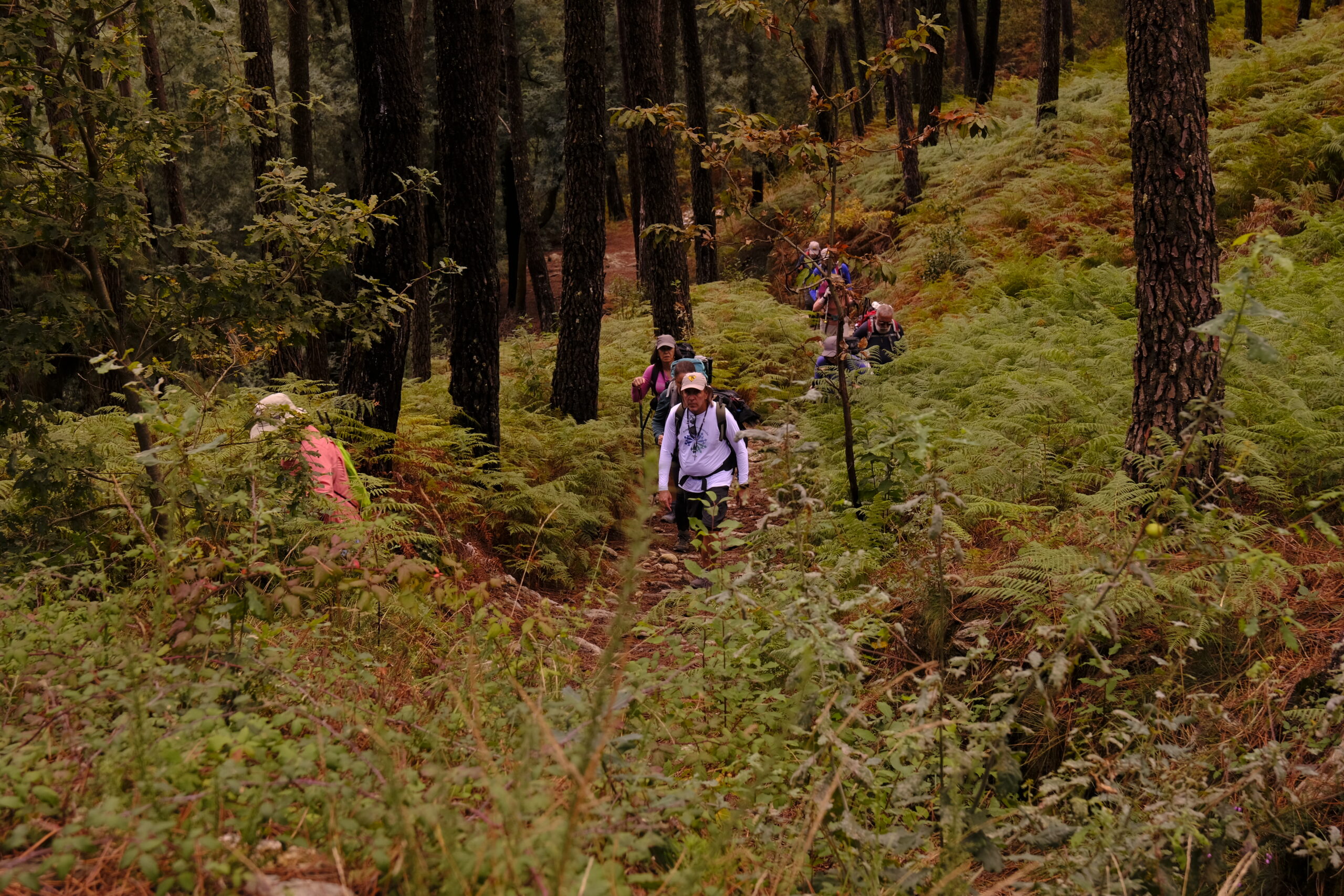
After yesterday’s walk into the river valley, today presented the challenge of ascending on the opposite side! Undertaking our most demanding climb, we headed up and over the Alto da Portela Grande, reaching the highest point of our walk at a modest 400 meters (1300 feet). The breathtaking descent brought us to the historic church of São Pedro de Rubiães, a 12th century Romanesque church which was closed. There is a well-preserved miliáro, the stone column used as a milestone, that would have marked the miles on the old roman road. We had our first picnic since the weather was warm and there was no sight of rain.
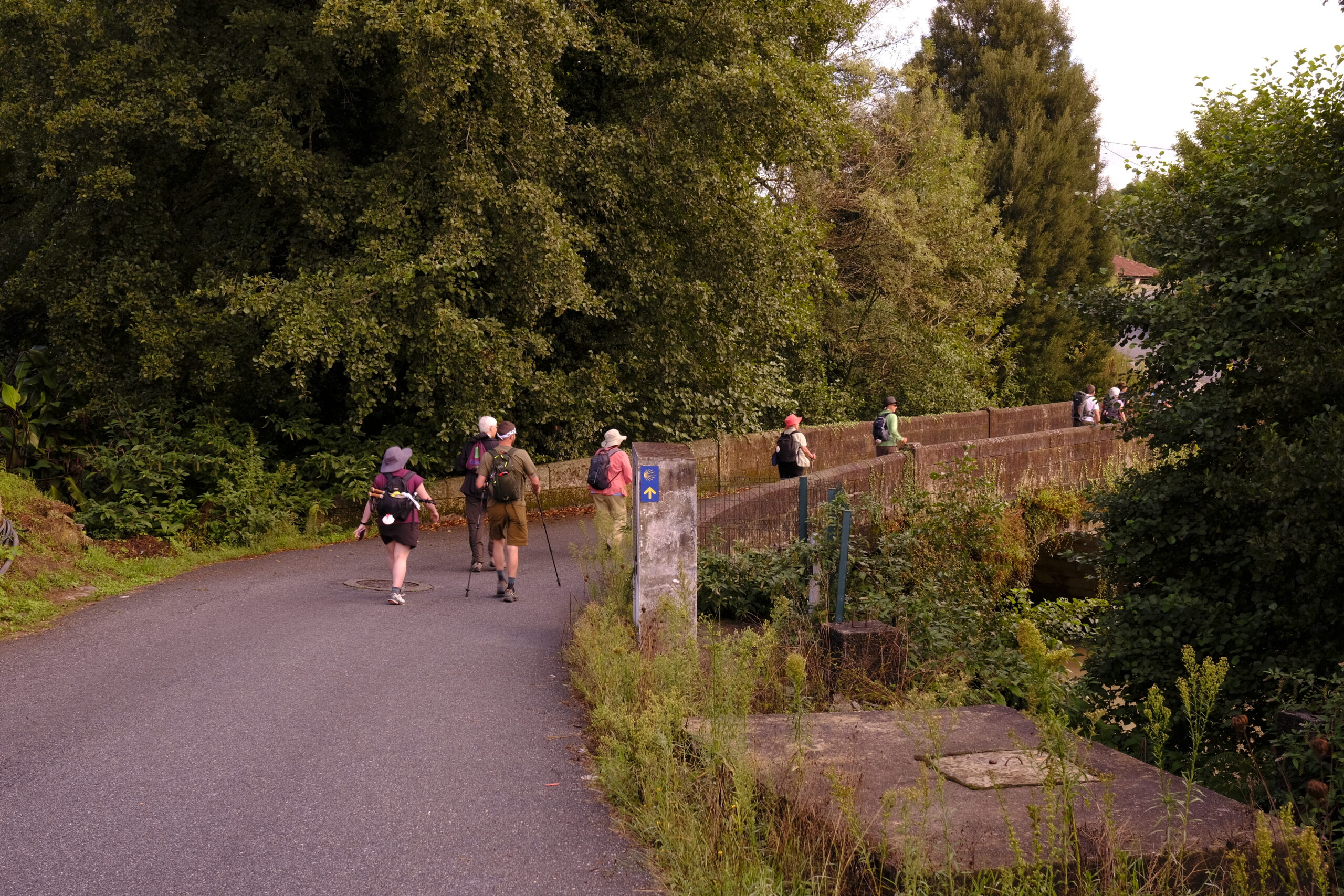
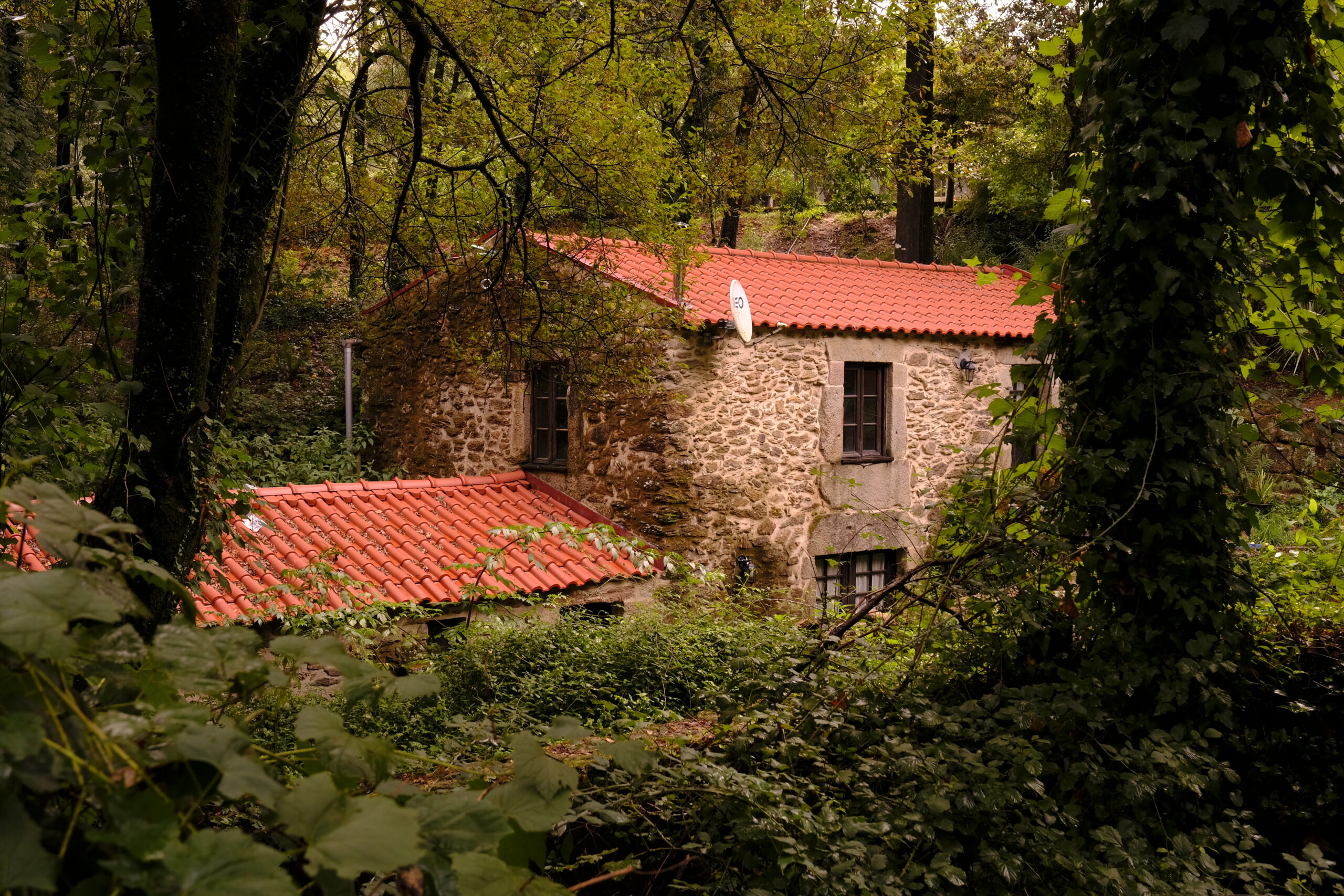

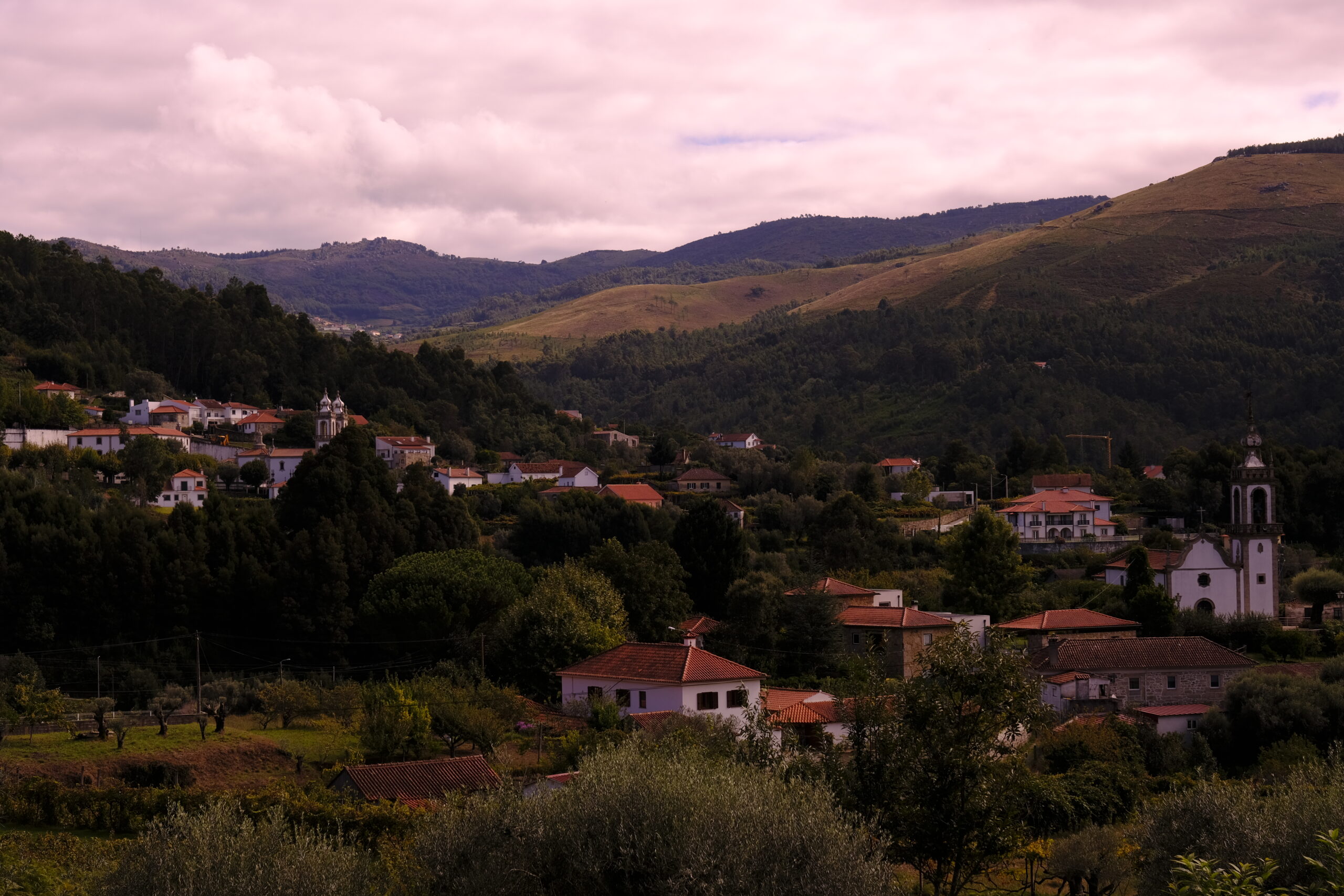
We returned to the Paço de Calheiros in the evening but went out for a family-style dinner in the town. Today, we walked 9 miles.
Cork Trees and Border Crossings (Day Three) – September 16, 2022
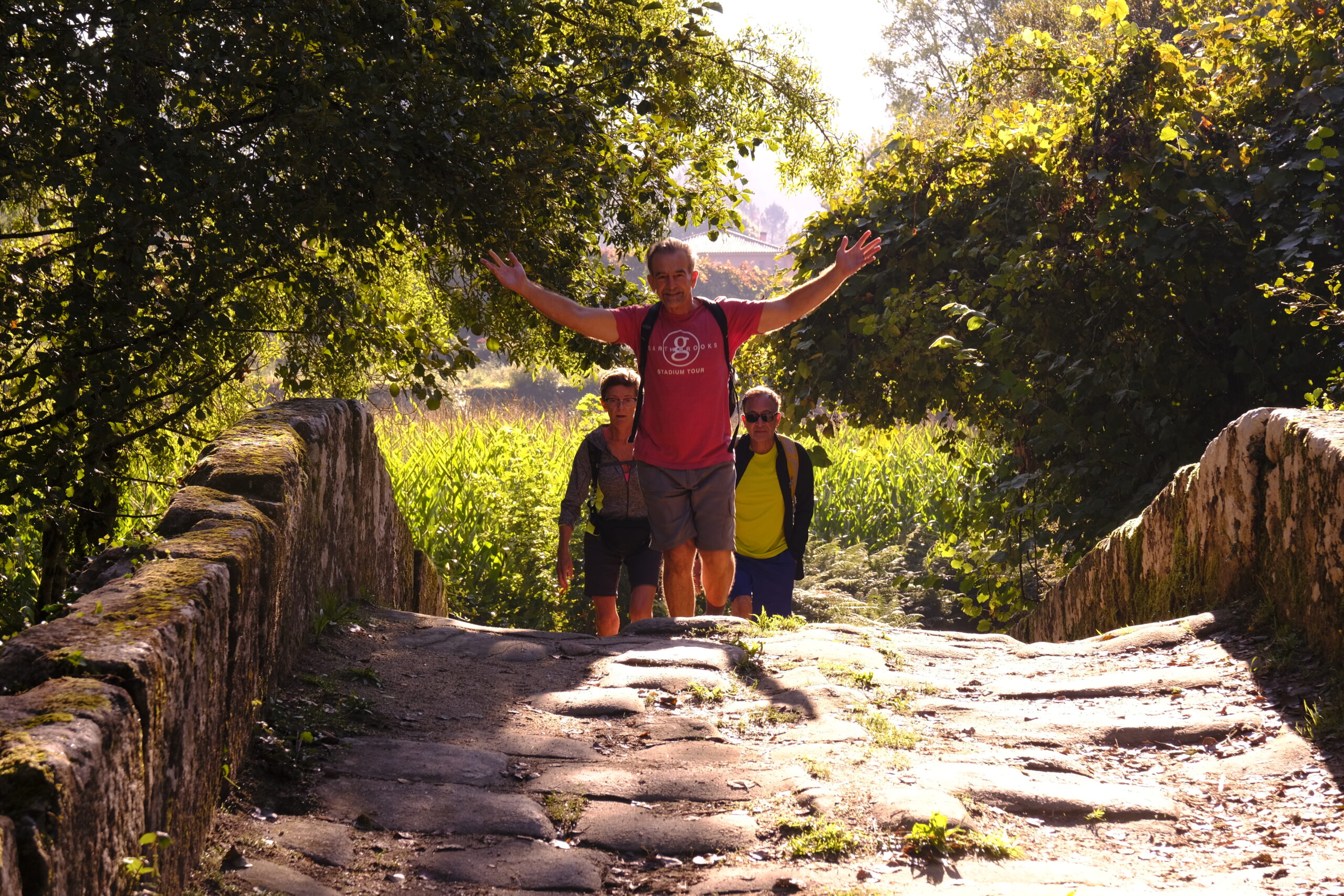
Today, we took to the trail for our last complete walk in Portugal. Wandering through various wooded pathways, we encountered the trees that make Portugal the world’s largest producer of cork! After lunch, we passed through the gate to the fortress town of Valença, where the cobblestone streets transported us back to another time. We spent some time walking on the ramparts, enjoying the sun, the music of street musicians, and the views. Passport in hand, we prepared for the day’s conclusion with a walk on the pedestrian portion of the International Bridge over the Minho River and a border crossing into Spain. The bridge has connected Portugal with Spain since the late 1800s. Since both countries are part of the European Union, we only needed our Pilgrim’s Passport to make the crossing. However, the word for stamp changed from the Portuguese ‘carimbo‘ to the Spanish ‘selo’! Today, we walked 12 miles.
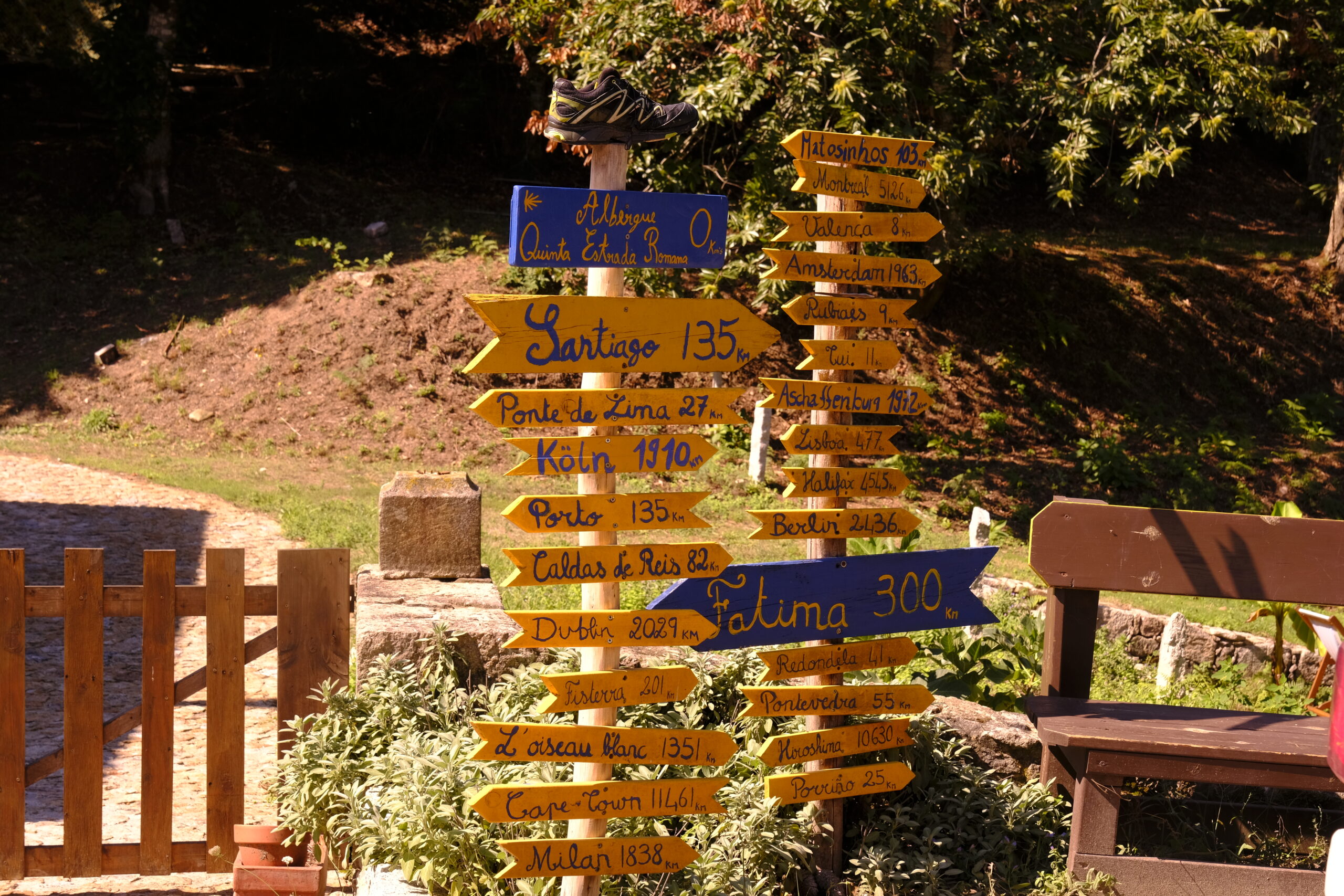
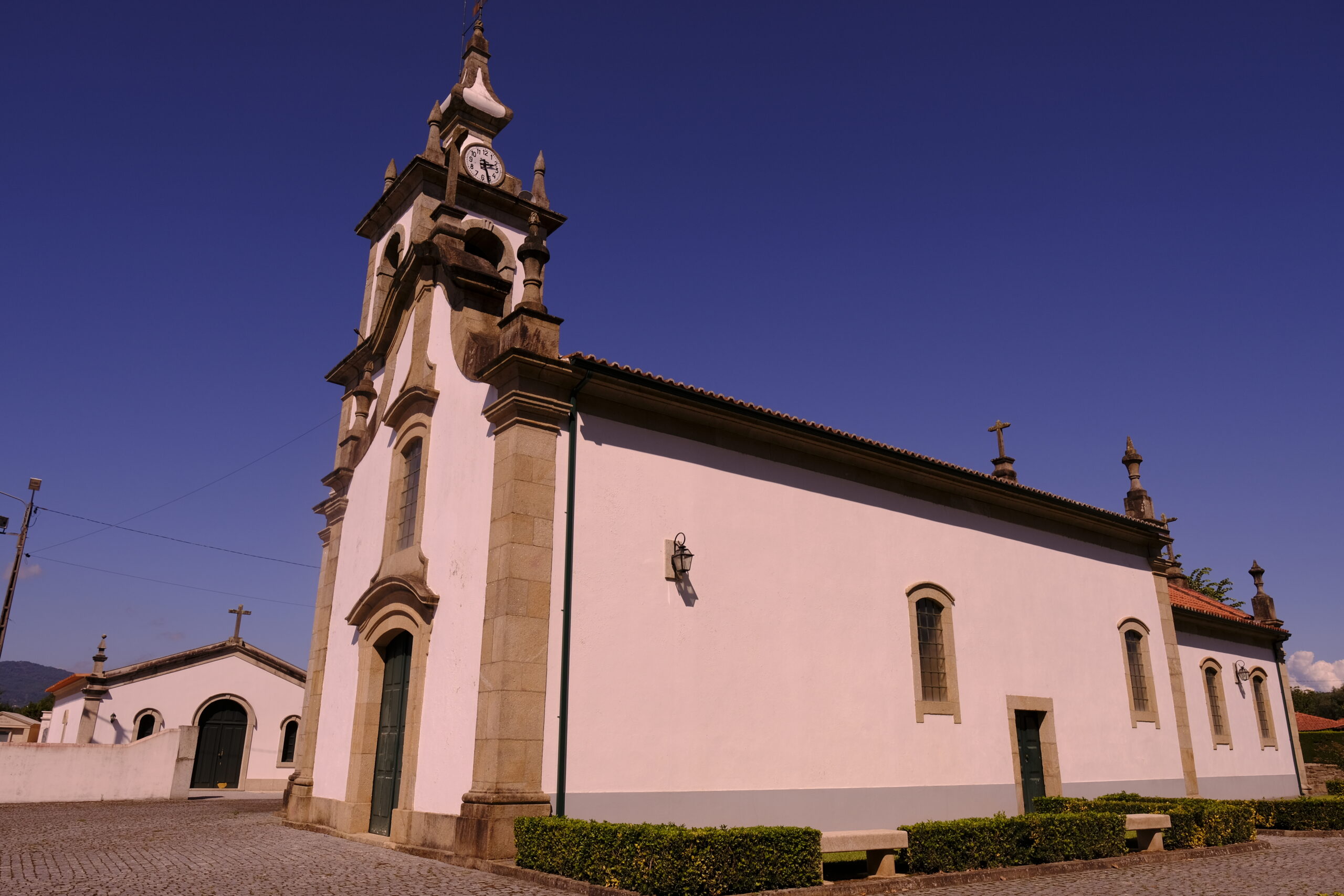
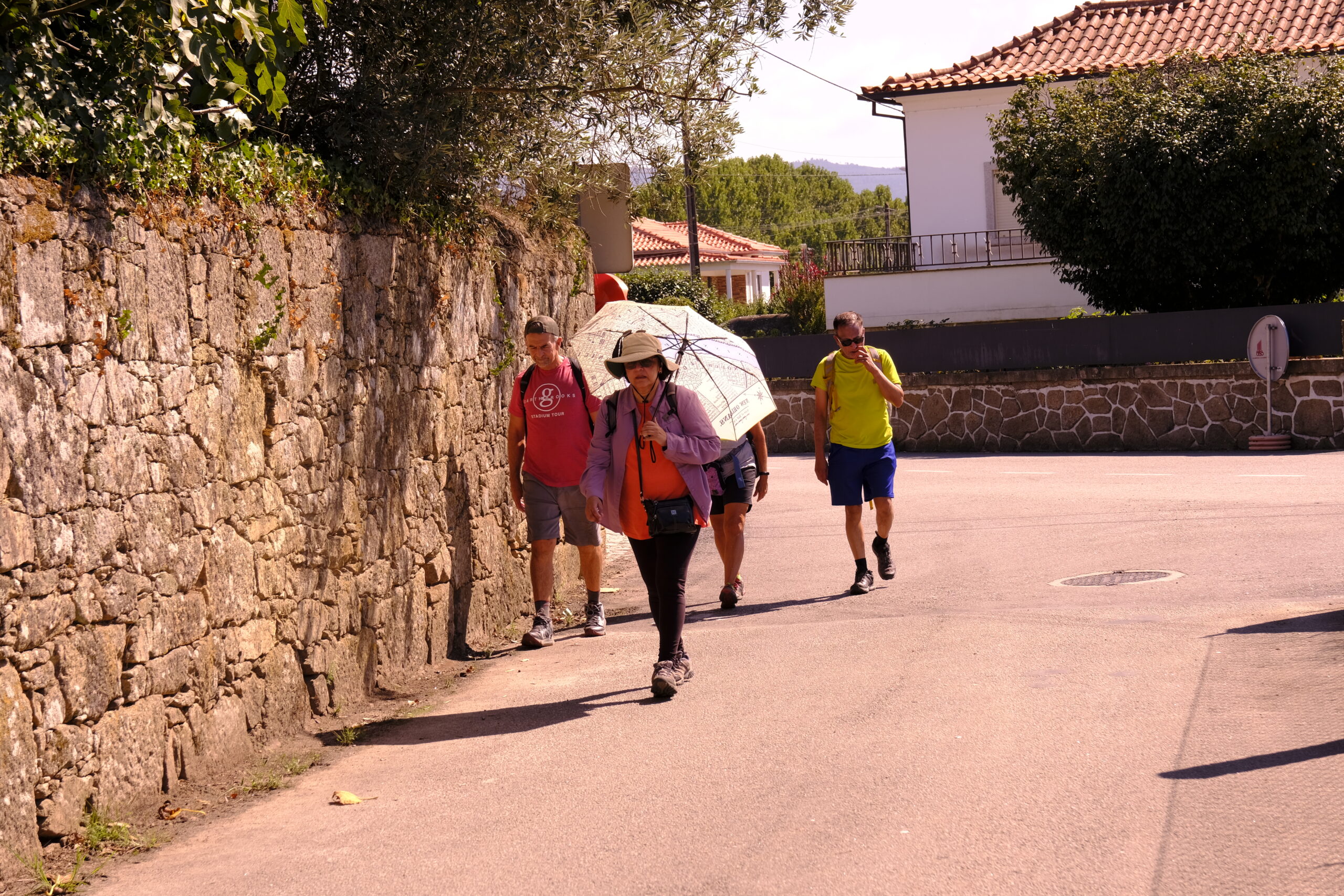
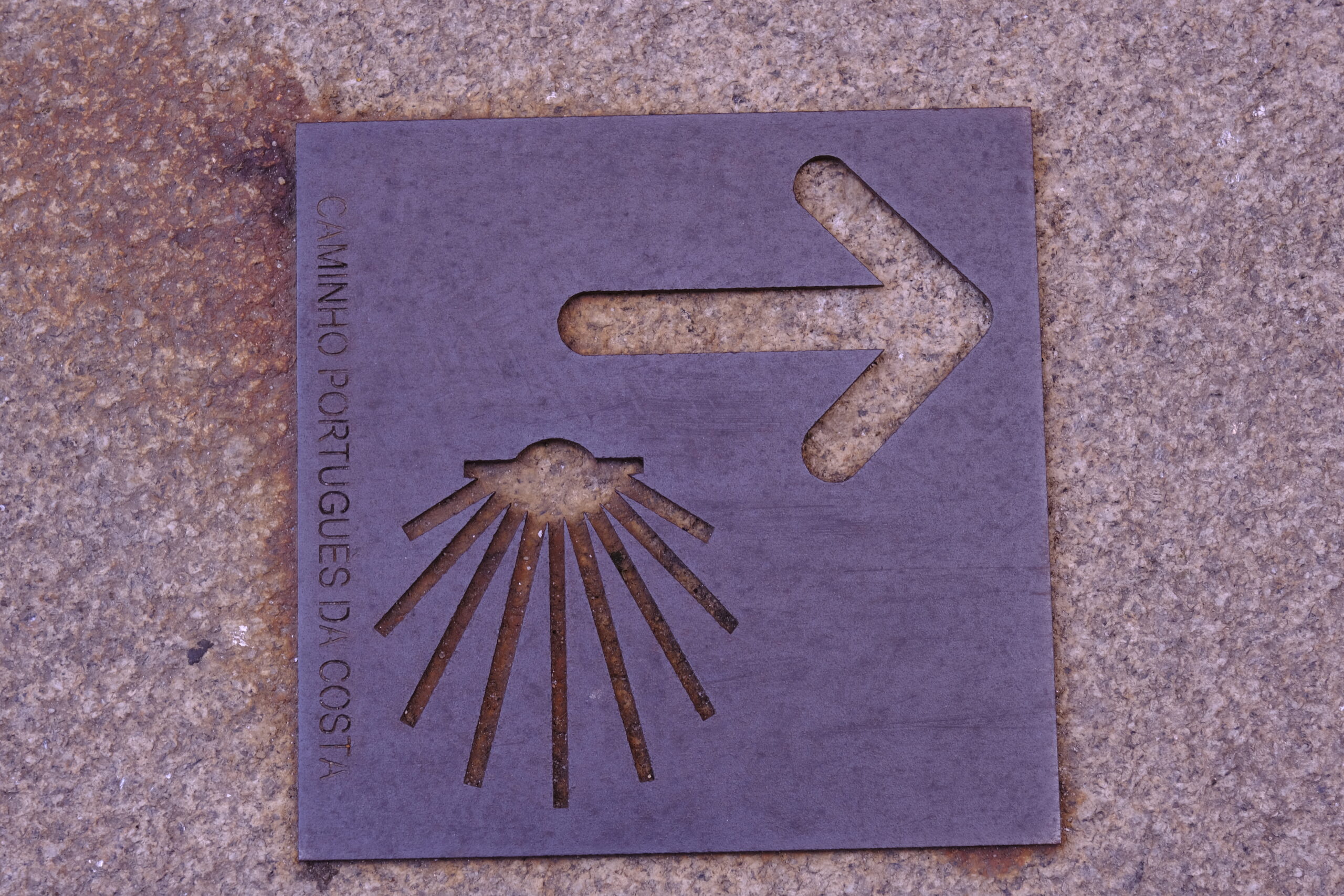
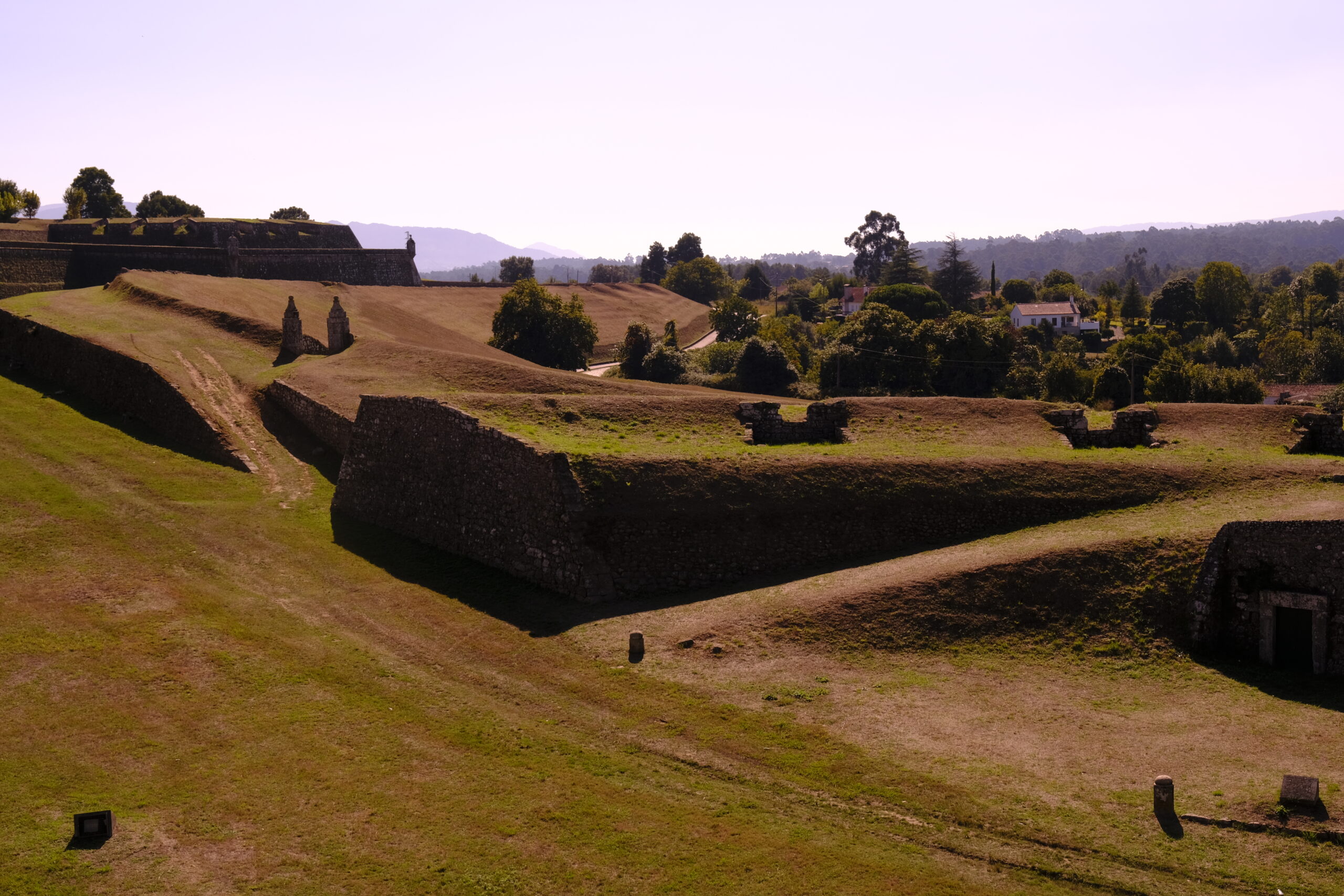
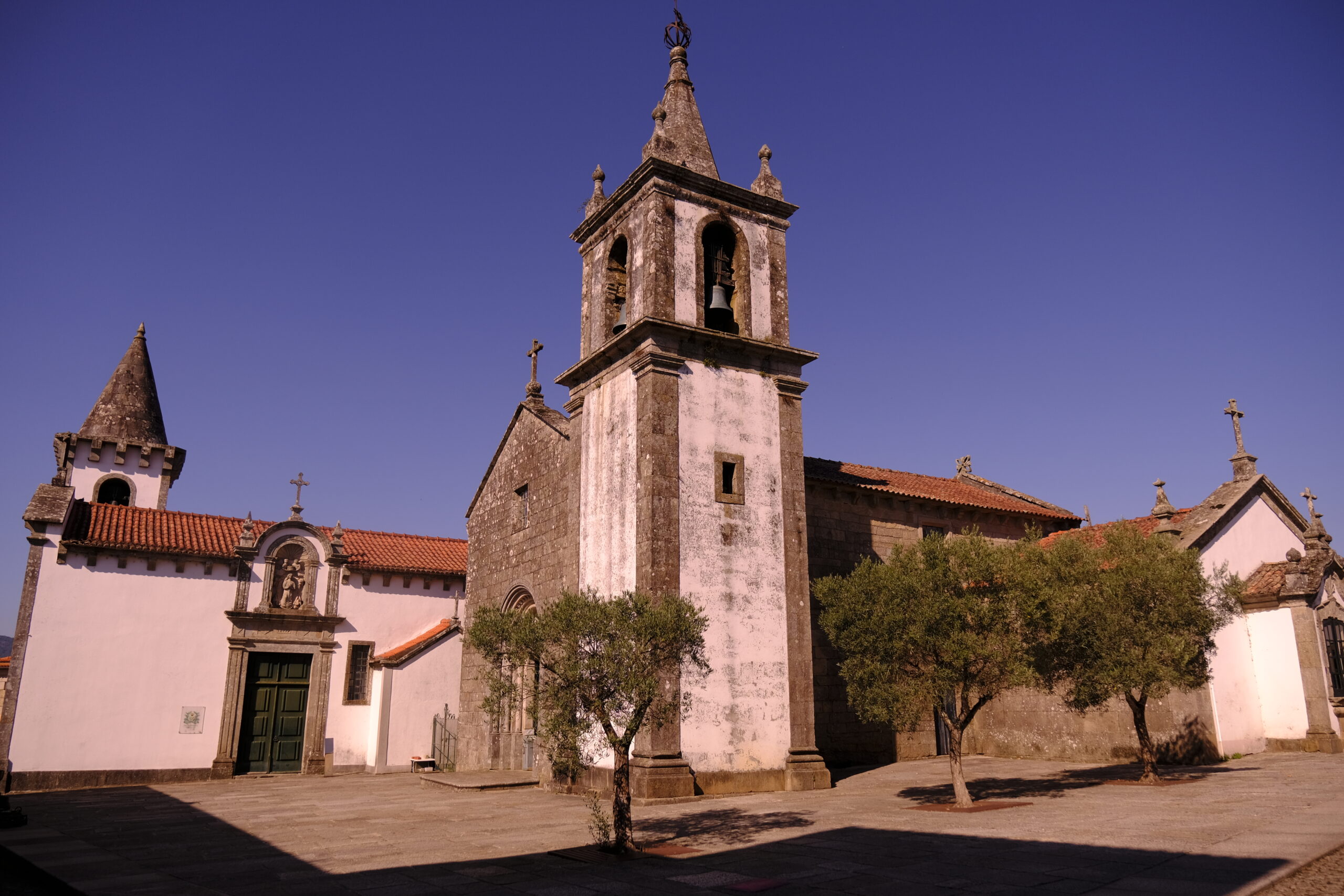
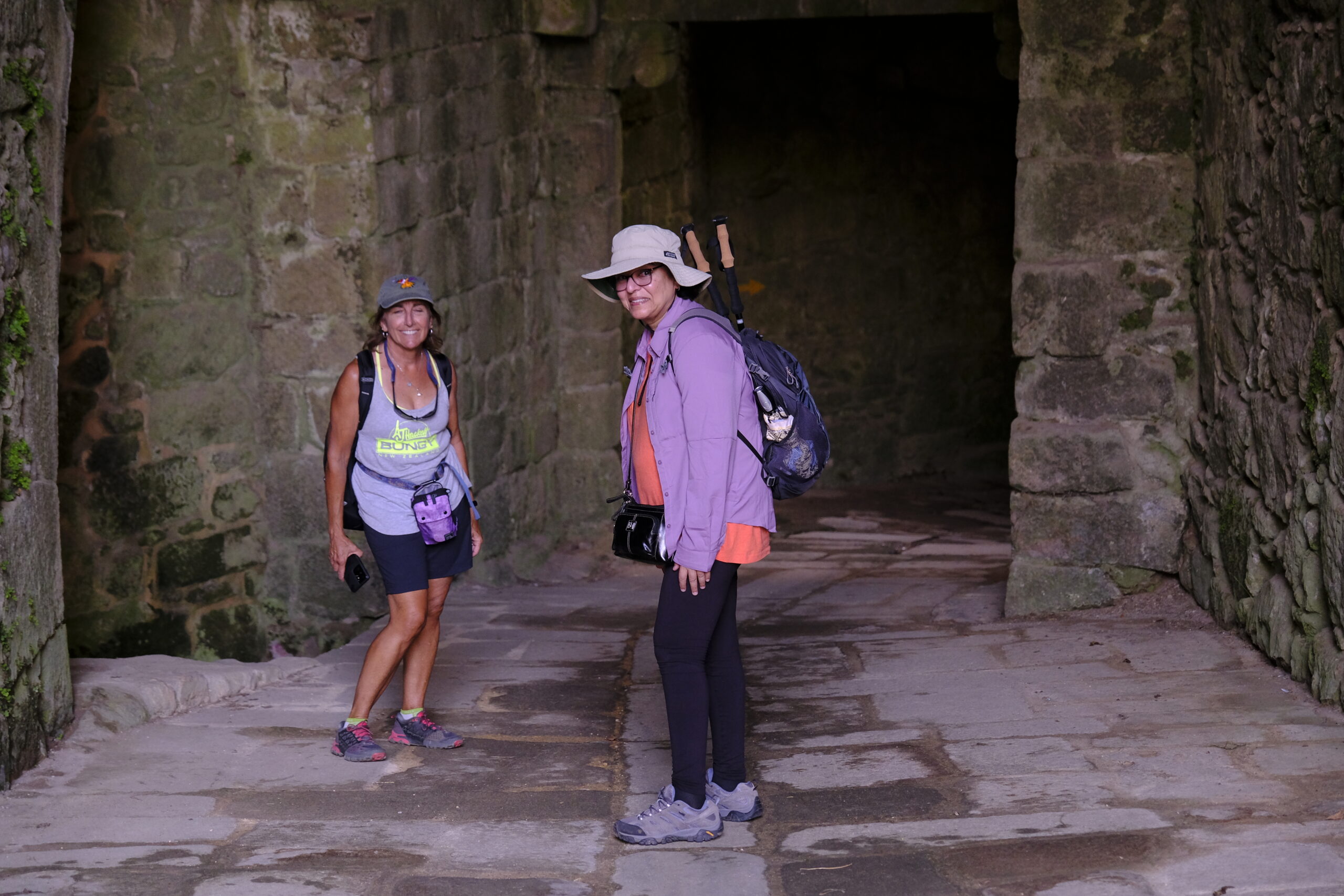
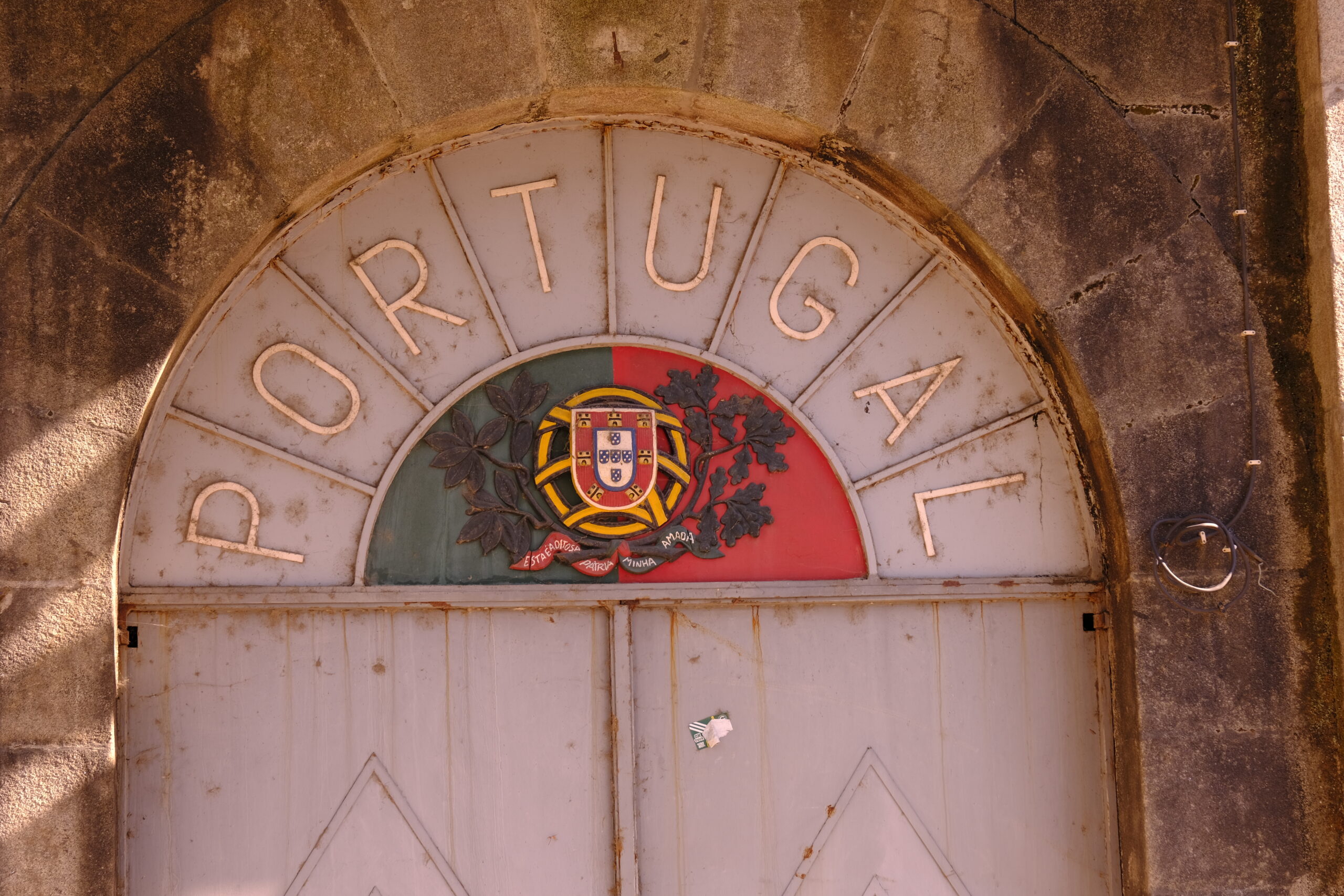
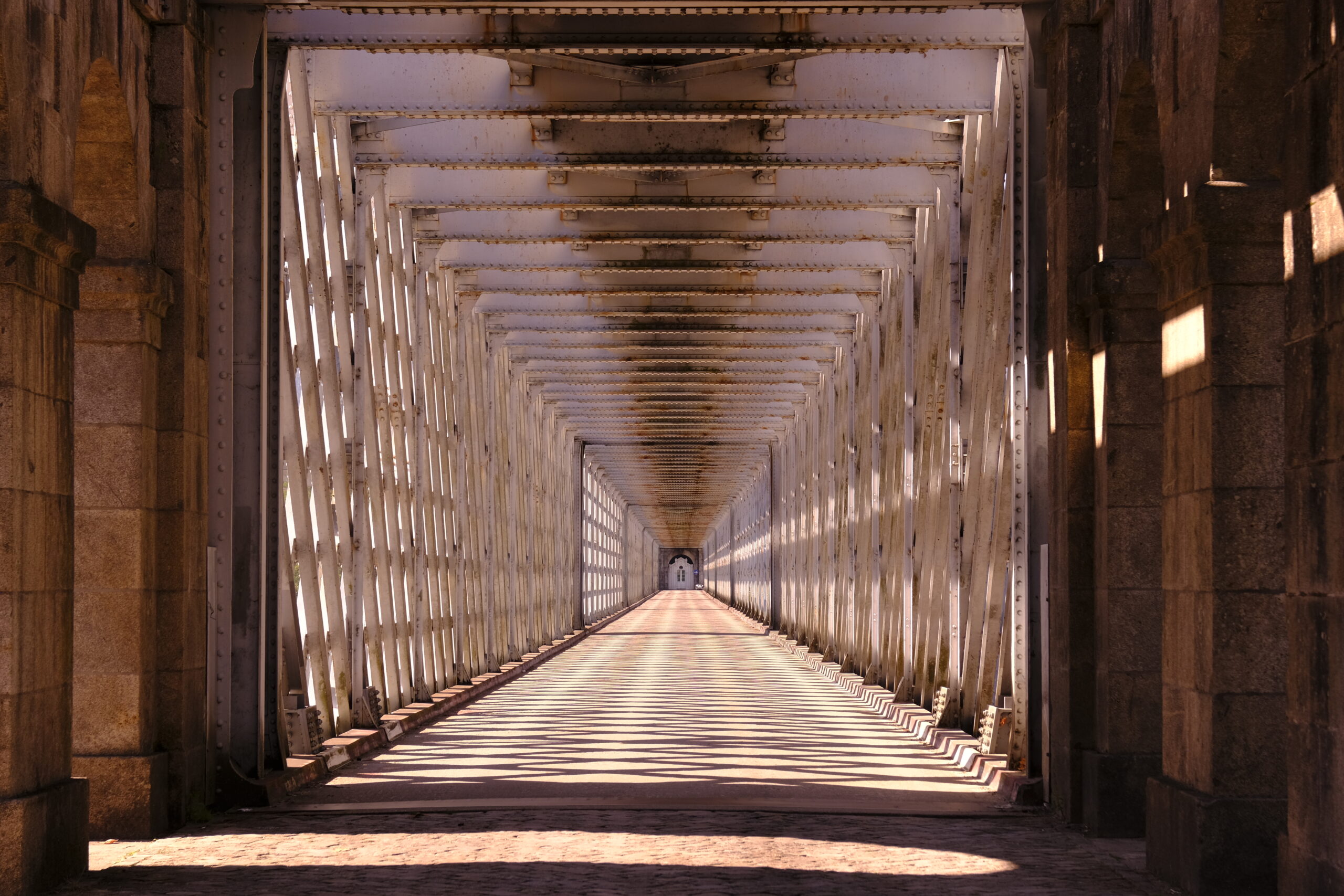
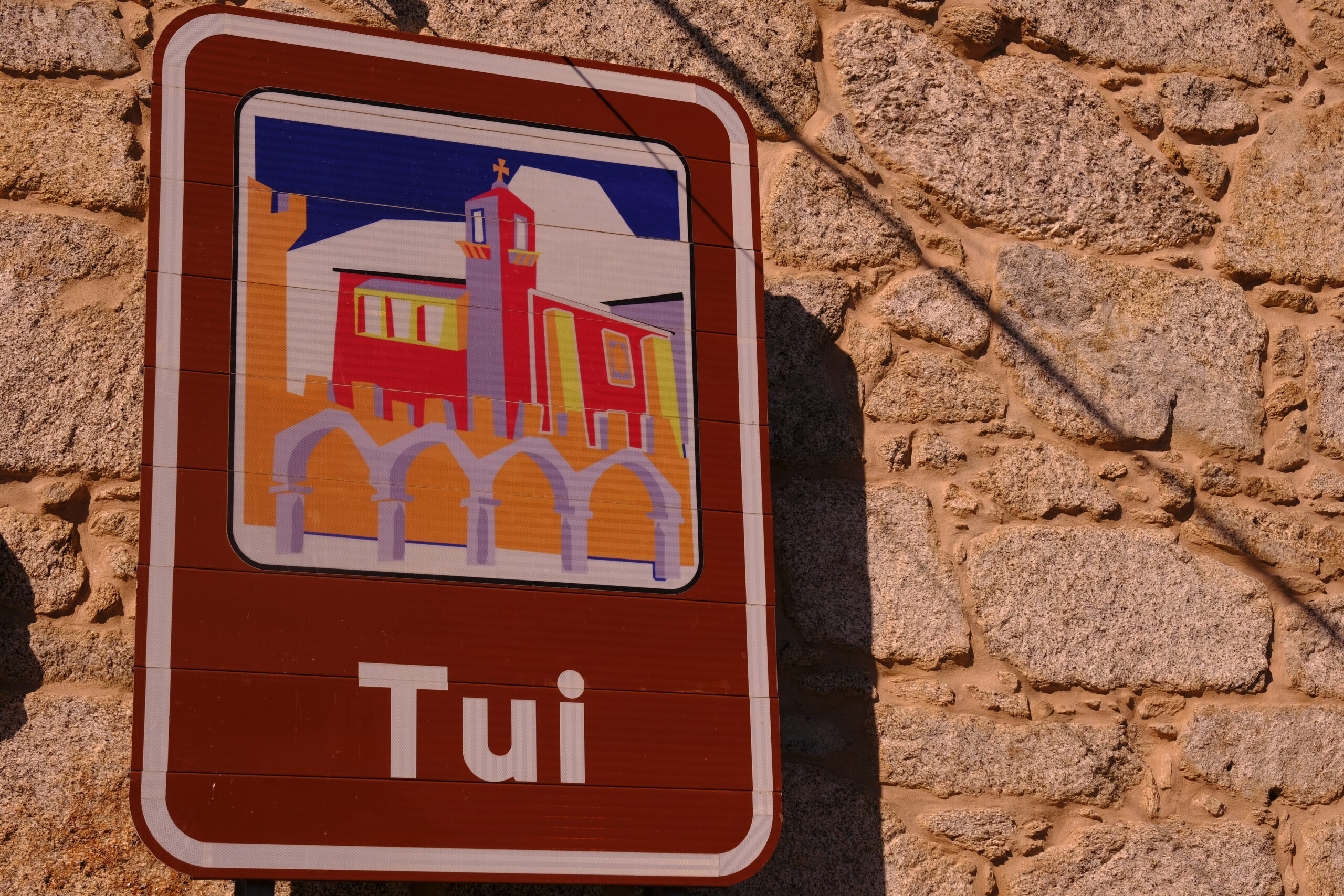
This evening, we checked into the Abadia Hotel in Tui. Dinner was in their dining room.
From Tui to Ancient Celtic Remains (Day Four) – September 17, 2022
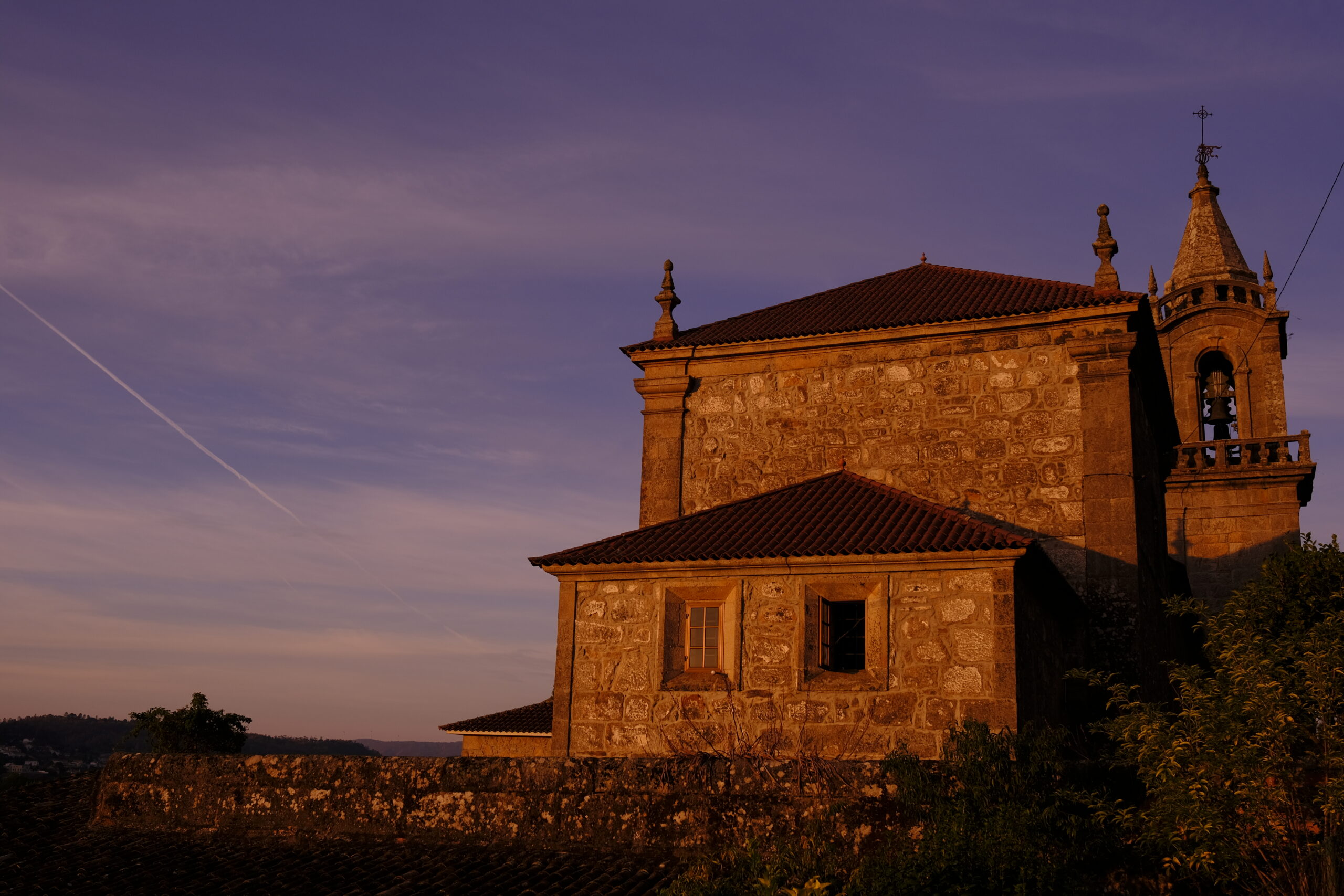
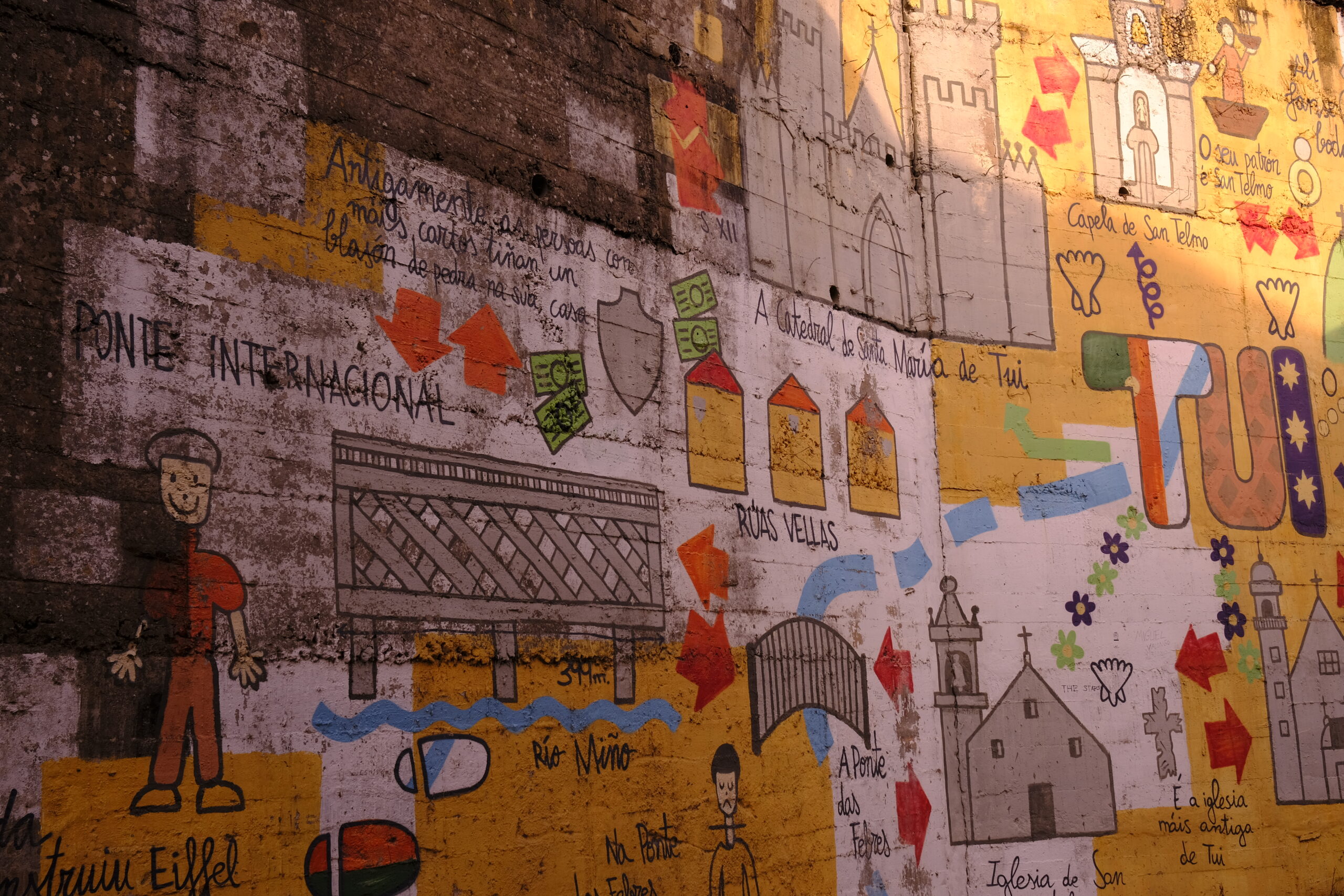
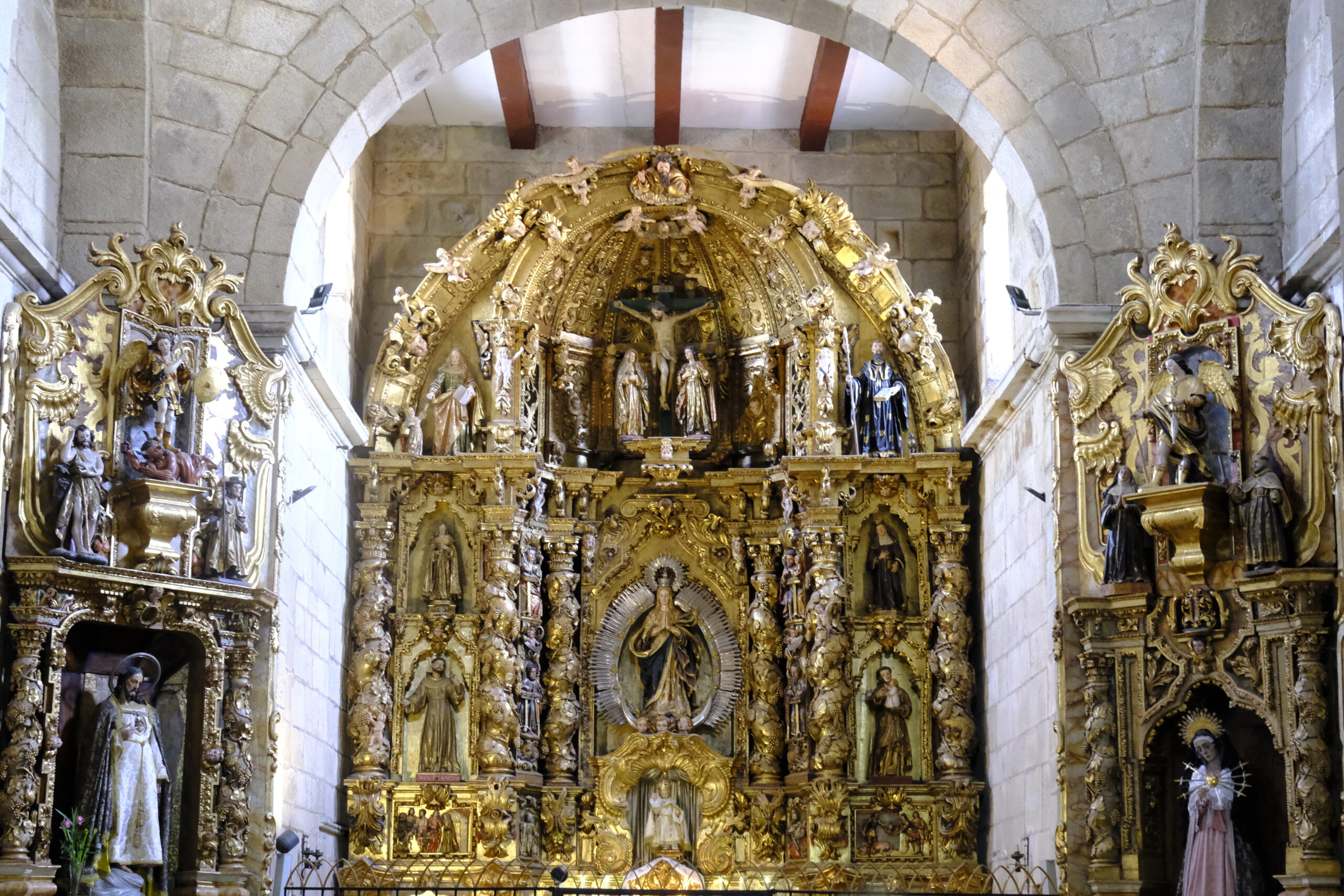
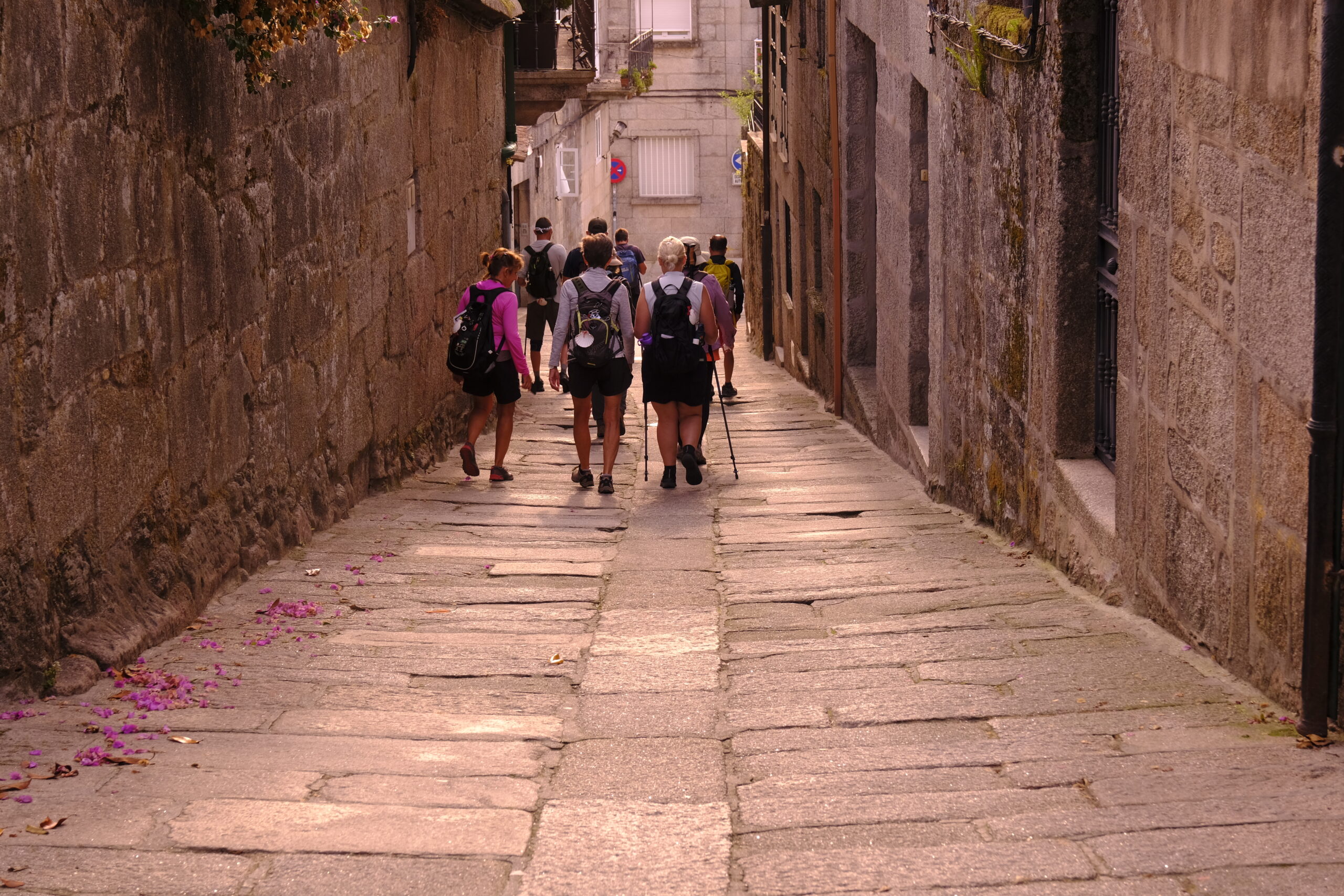
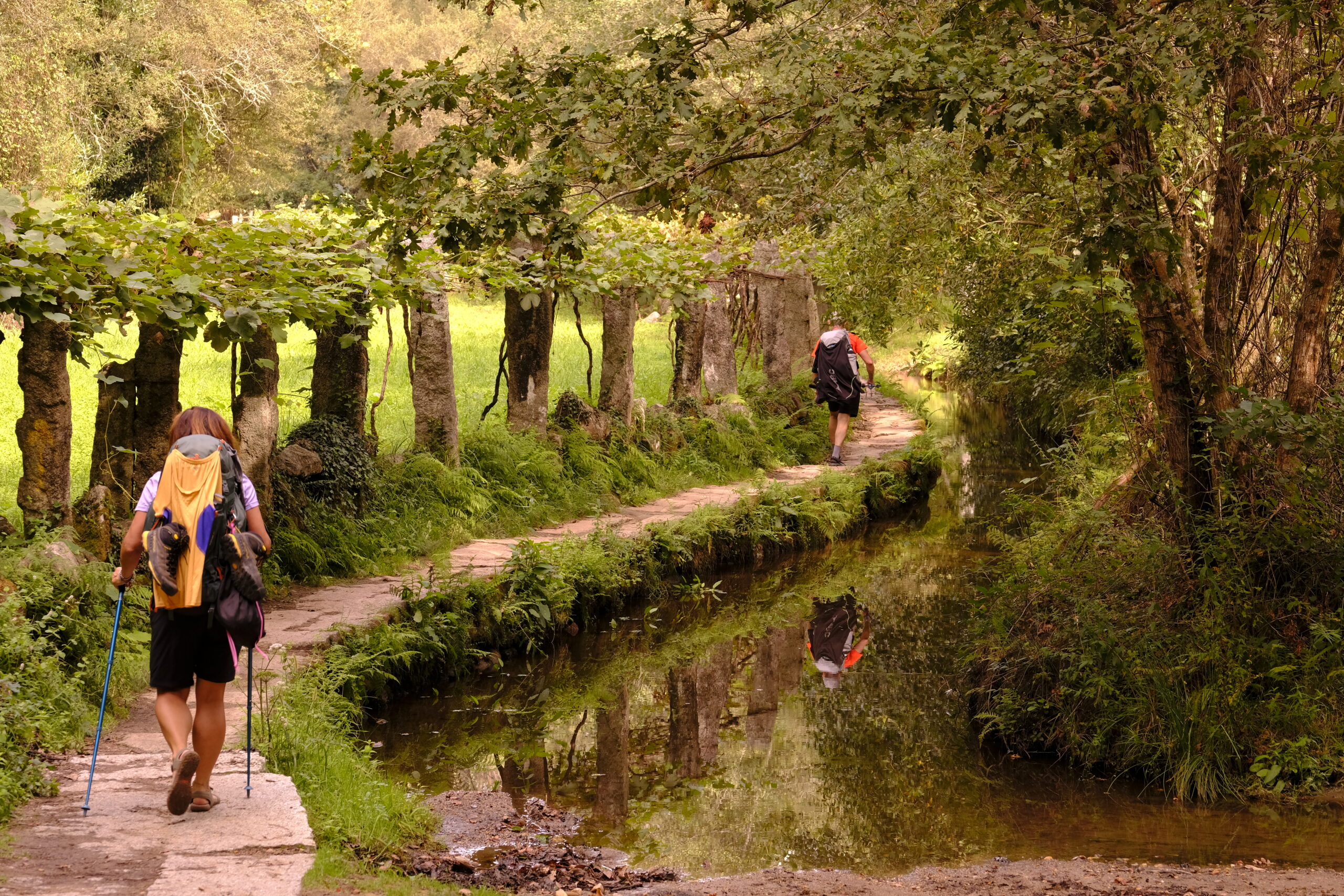
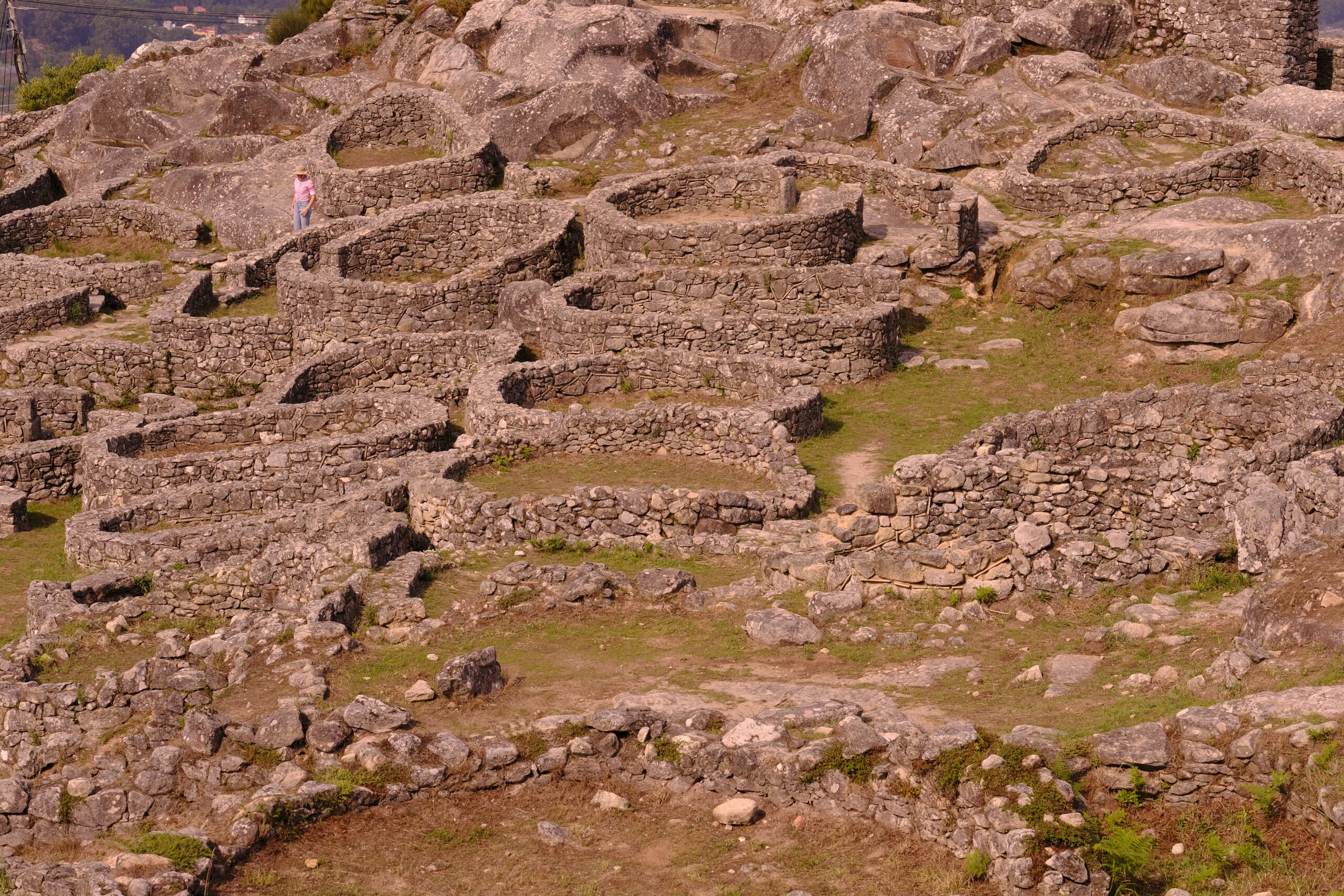
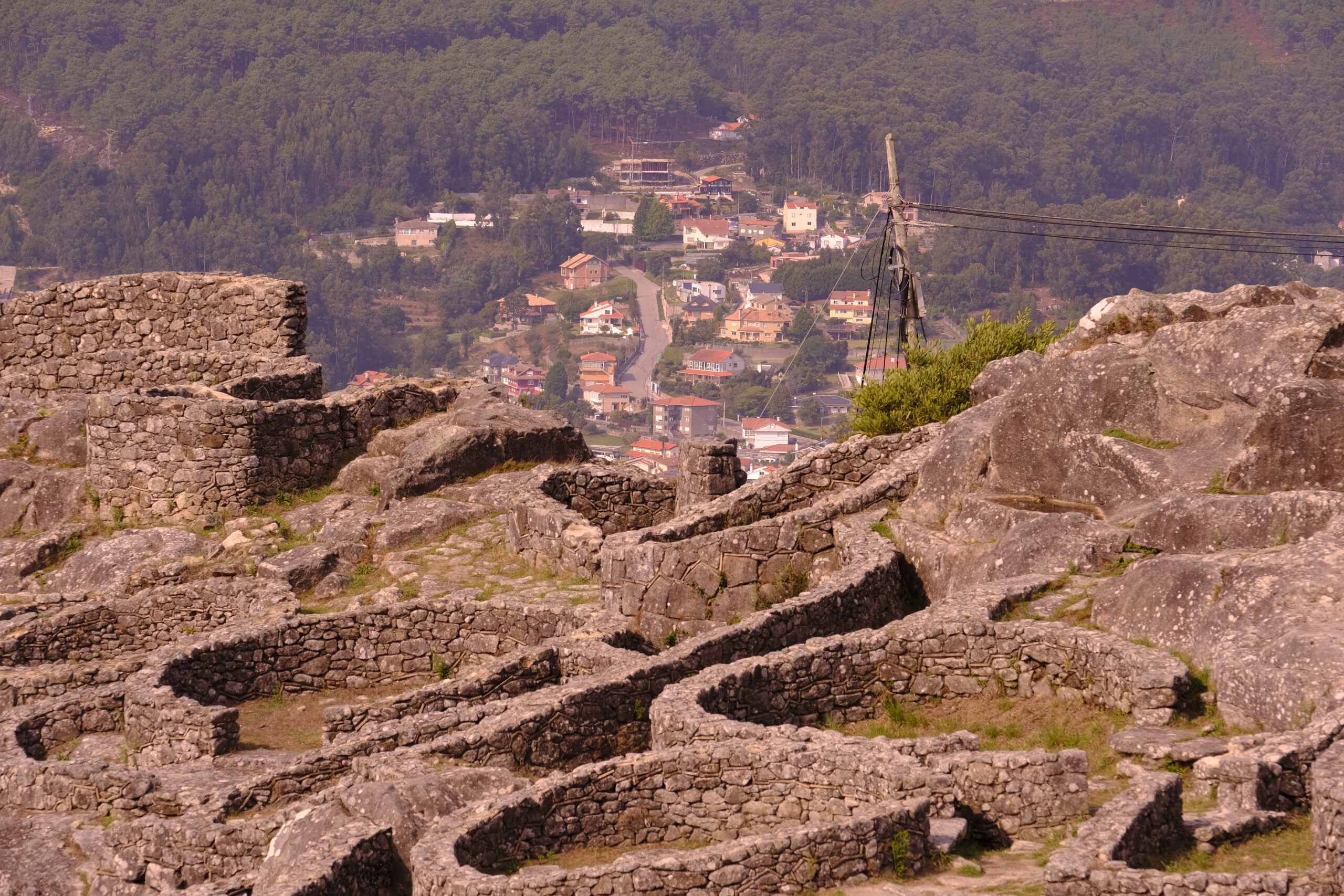
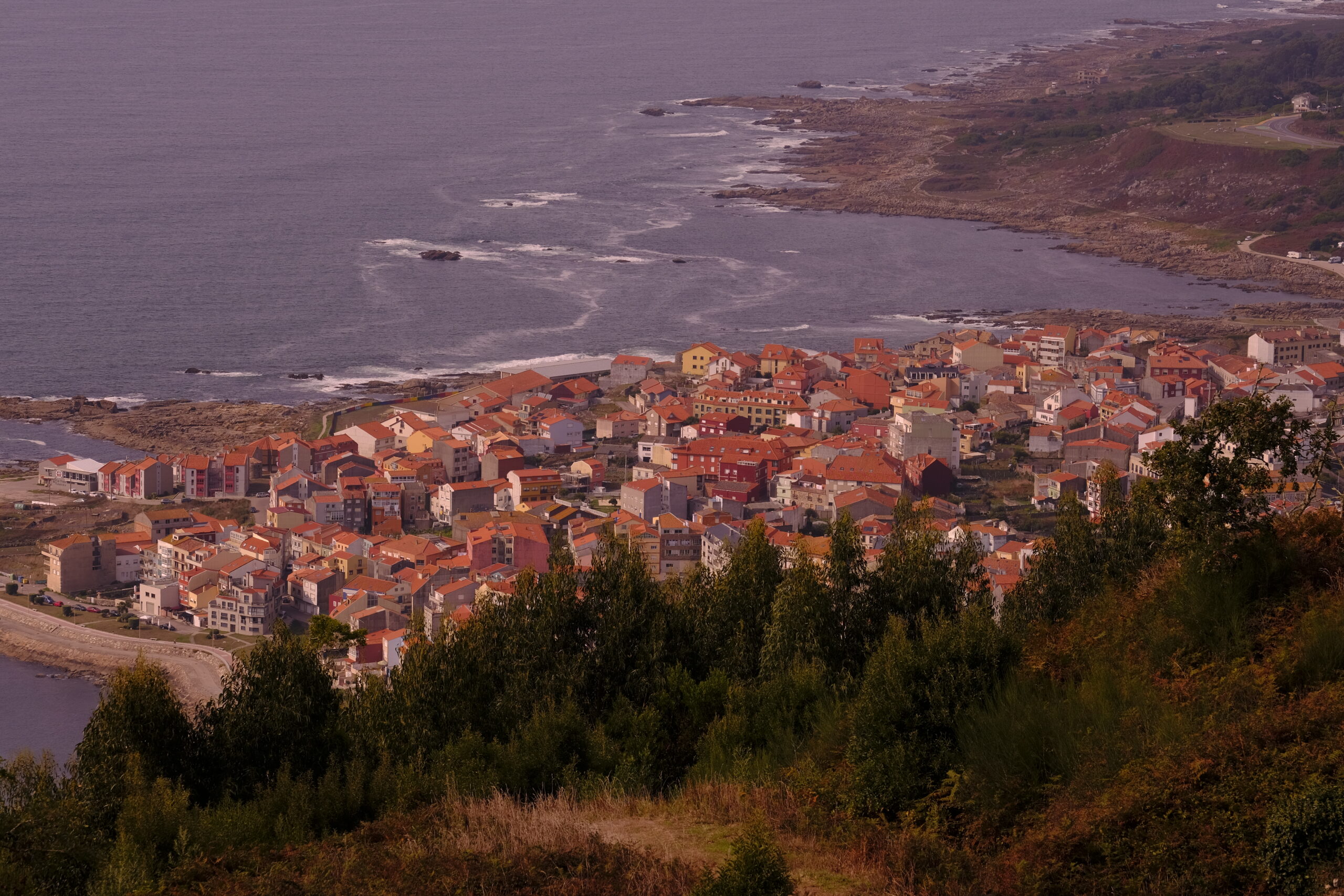
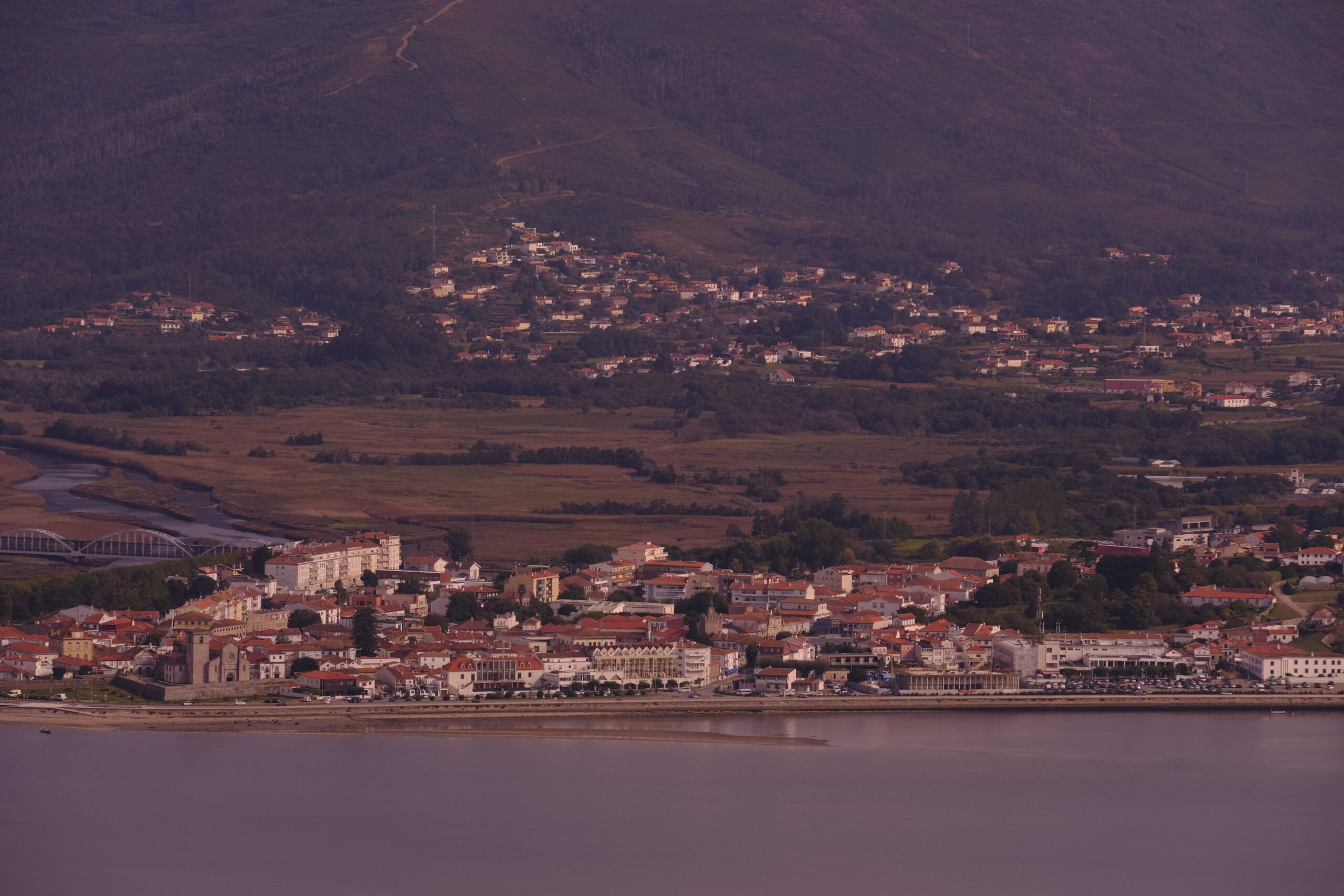
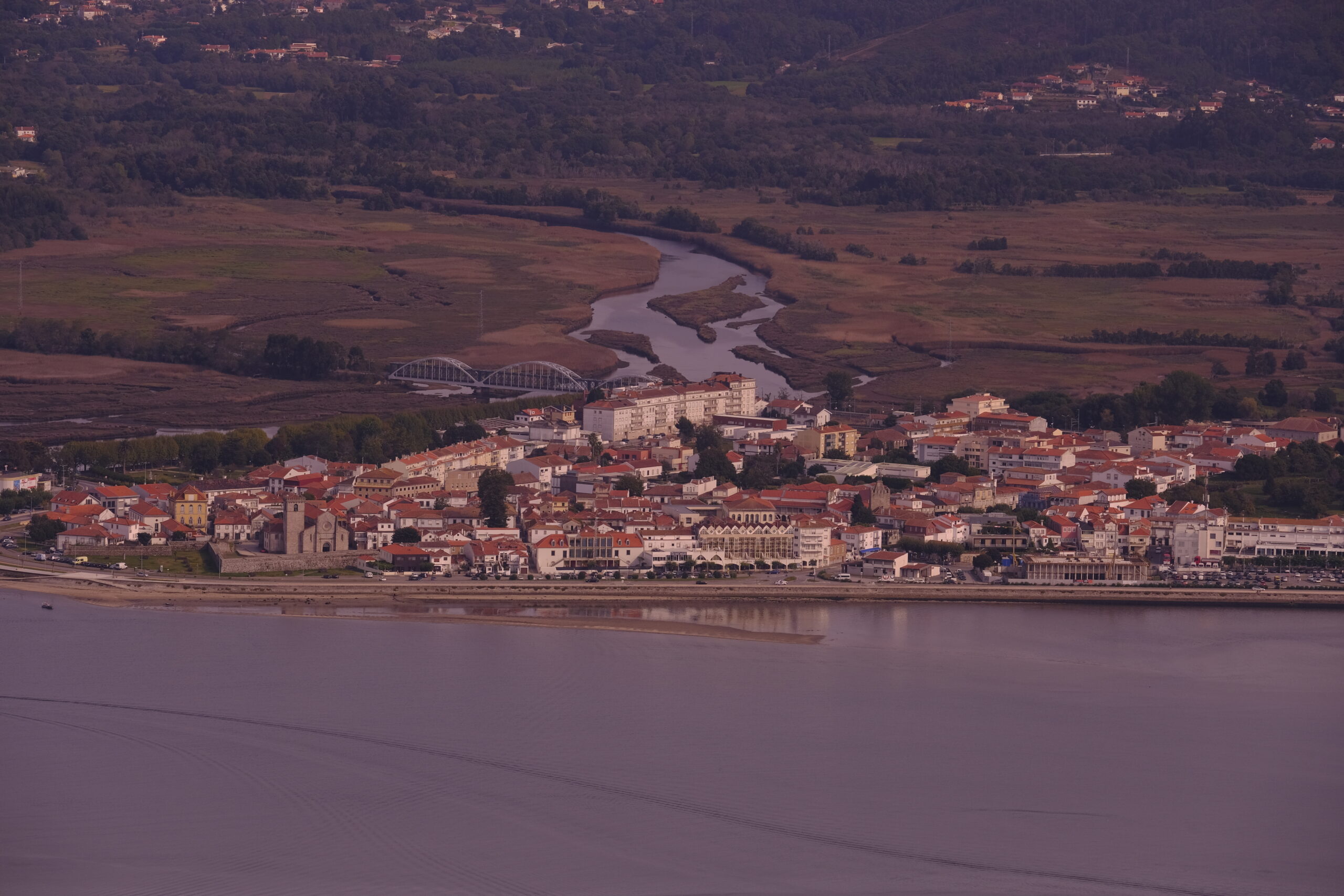
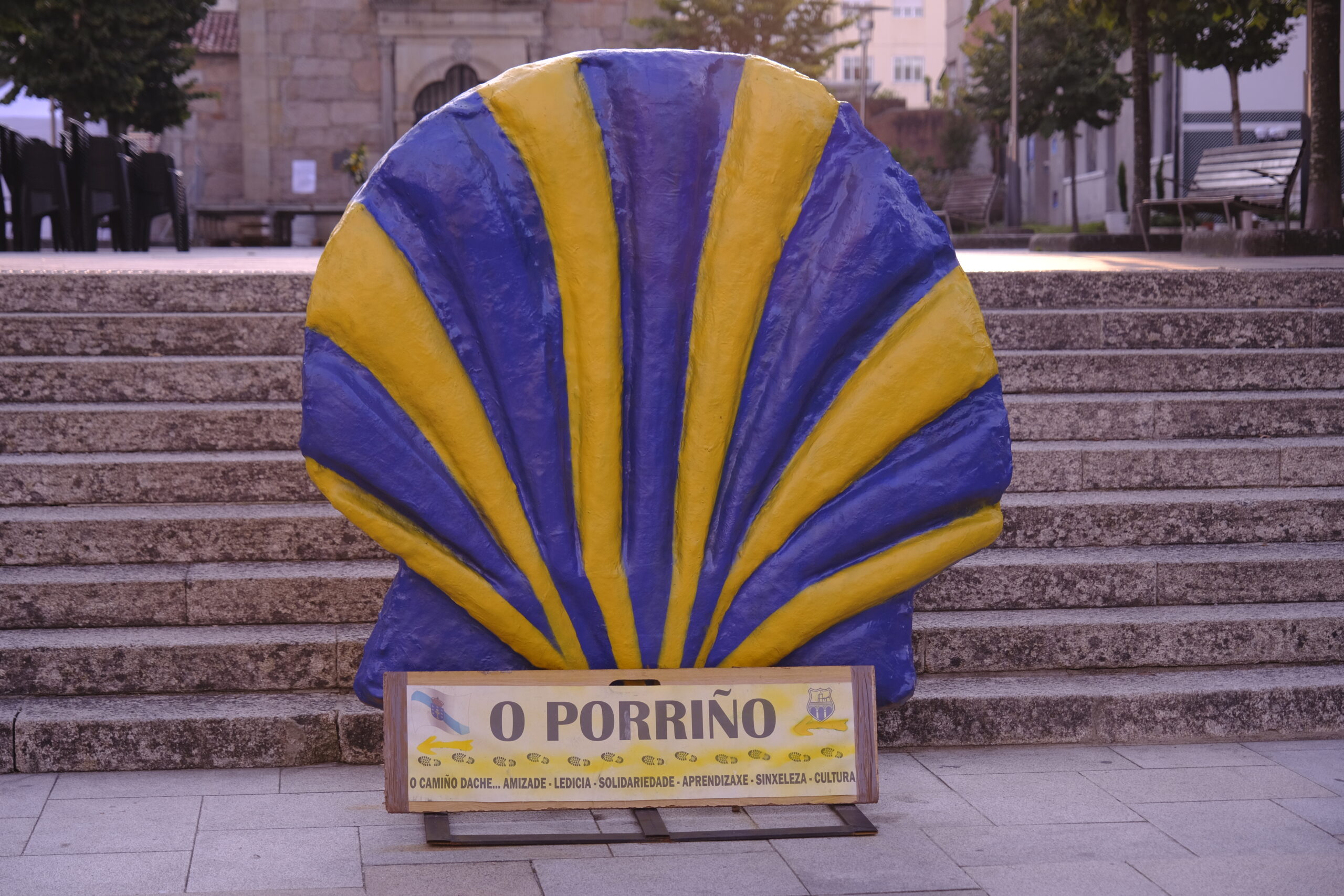
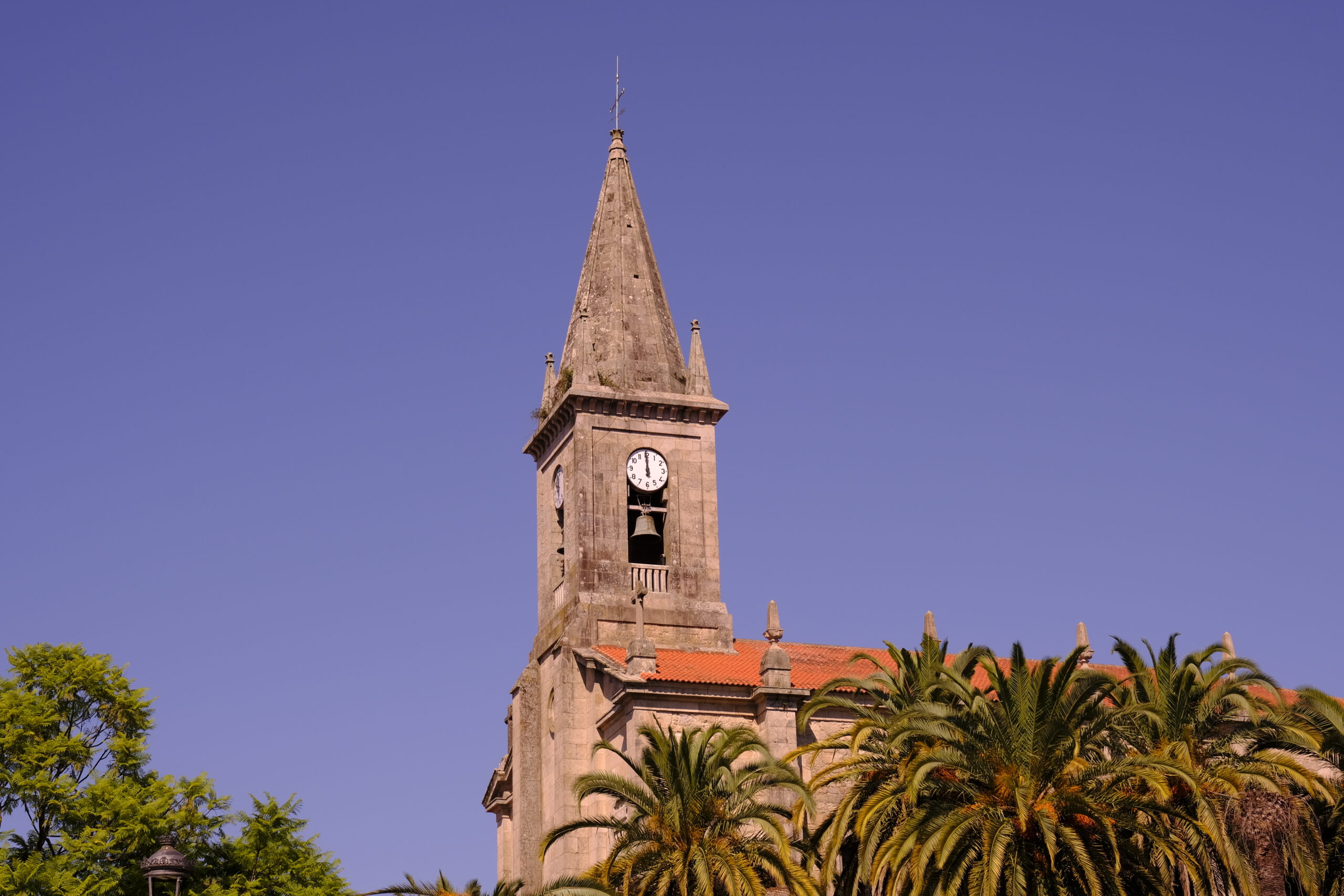
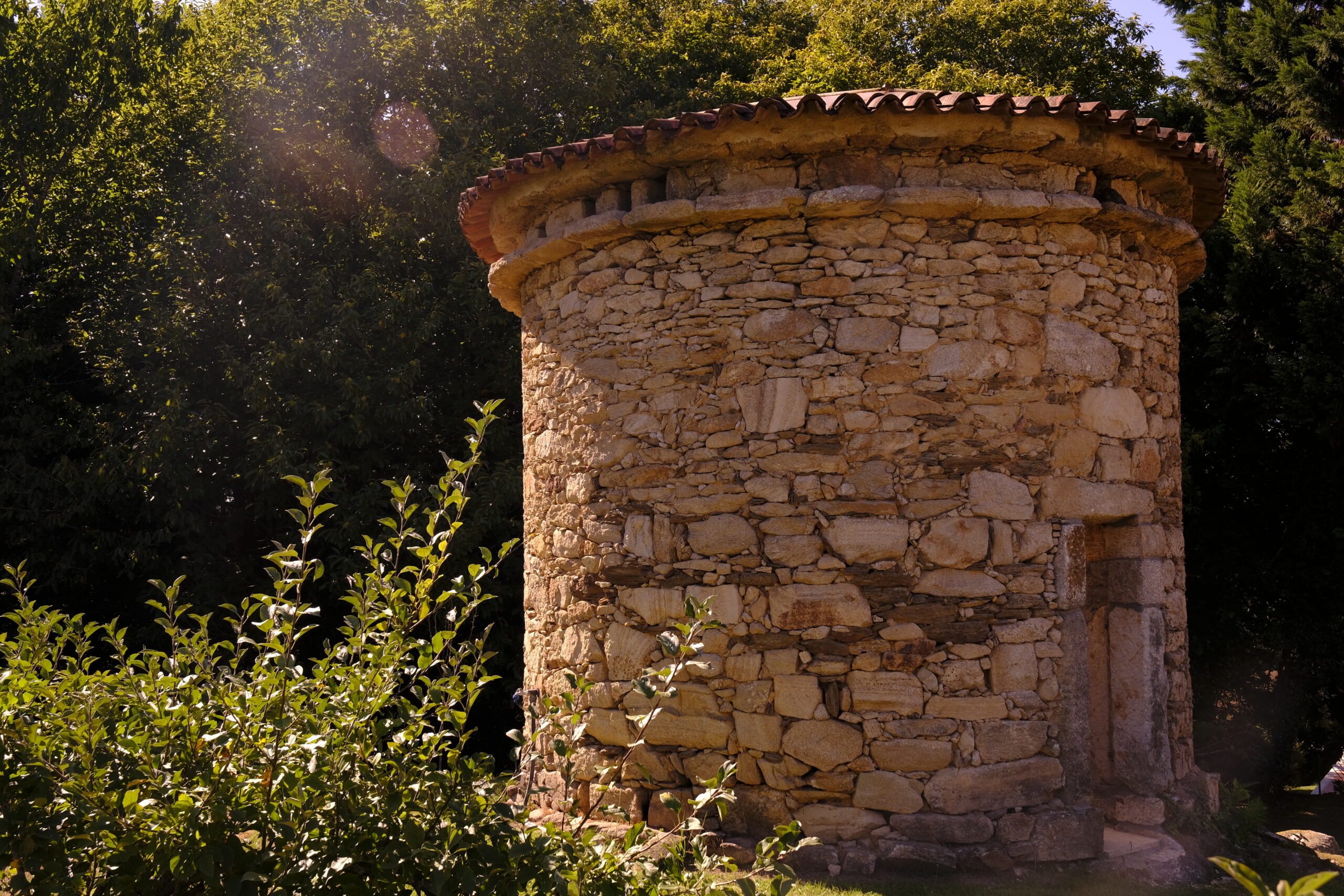
Remembering to change our watches as Spain is one hour ahead of its neighbor Portugal, we began our day by admiring the views of the Minho from the 12th-century Santa Maria Cathedral in Tui. The cathedral morphed from Romanesque to Gothic and is noted for its door with the resting Virgin and statues of royal personages and saints, and the remains of San Telmo who is often confused with the Italian St. Elmo. The Spanish San Telmo who died in the area on his way to Santiago was never actually canonized although miracles have been attributed to him. Our walk took us over the San Telmo Bridge and through a combination of wooded areas and industrial zones, witnessing the ancient Camino grappling with the fast pace of the 21st century. The day concluded with an excursion that transported us back over 2000 years to the remains of the Castro de Santa Tecla, where the views of the Atlantic and Portugal are unmatched! This area is an archeological site, with remains of stone buildings and a few restored with thatched roofs of a Celtic settlement. We walked 11 miles today through O Porriño. Our feet are now beginning to feel the relentless pounding on granite.

Monte de Santiago de Antas to Estuary Views (Day Five) – September 18, 2022
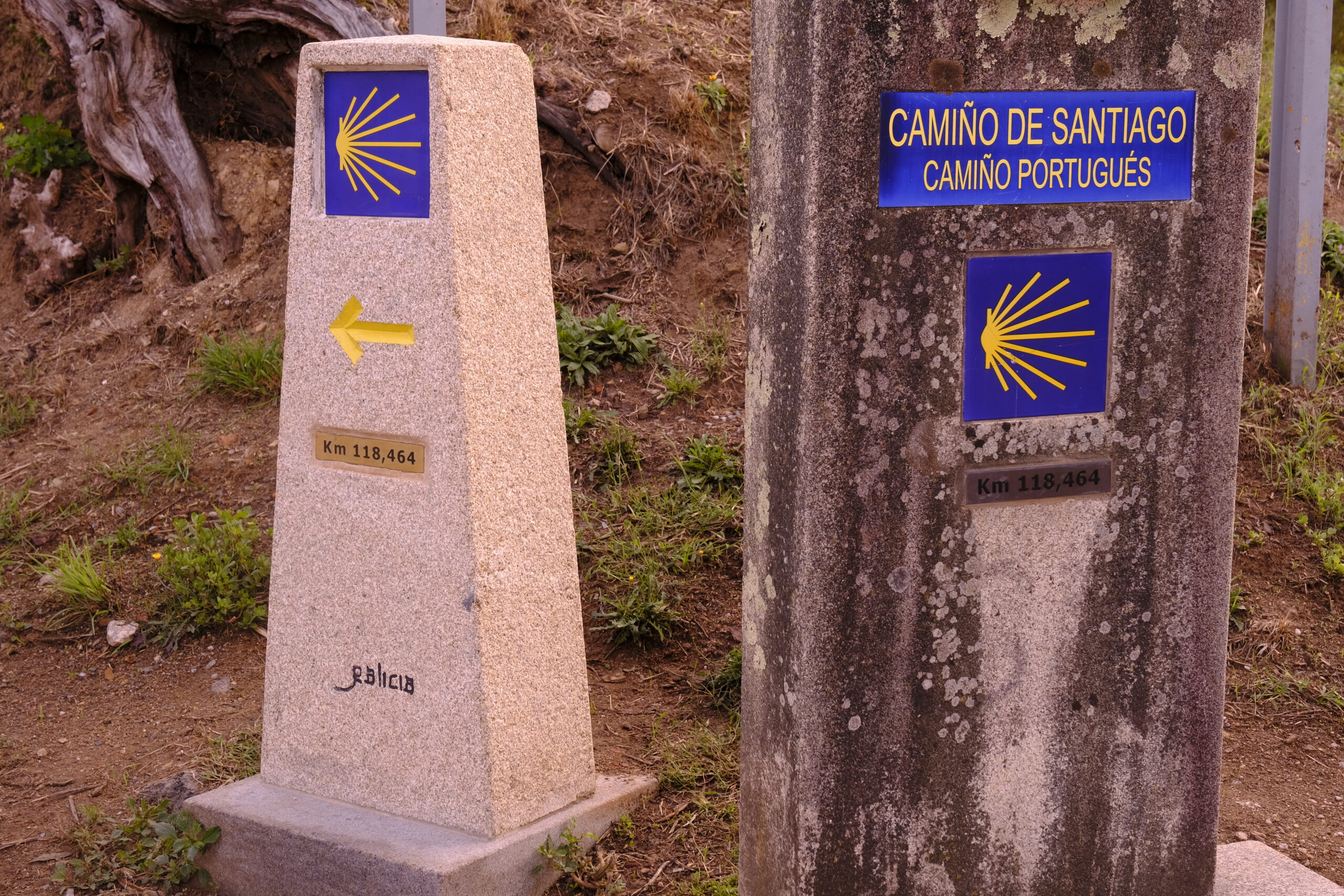
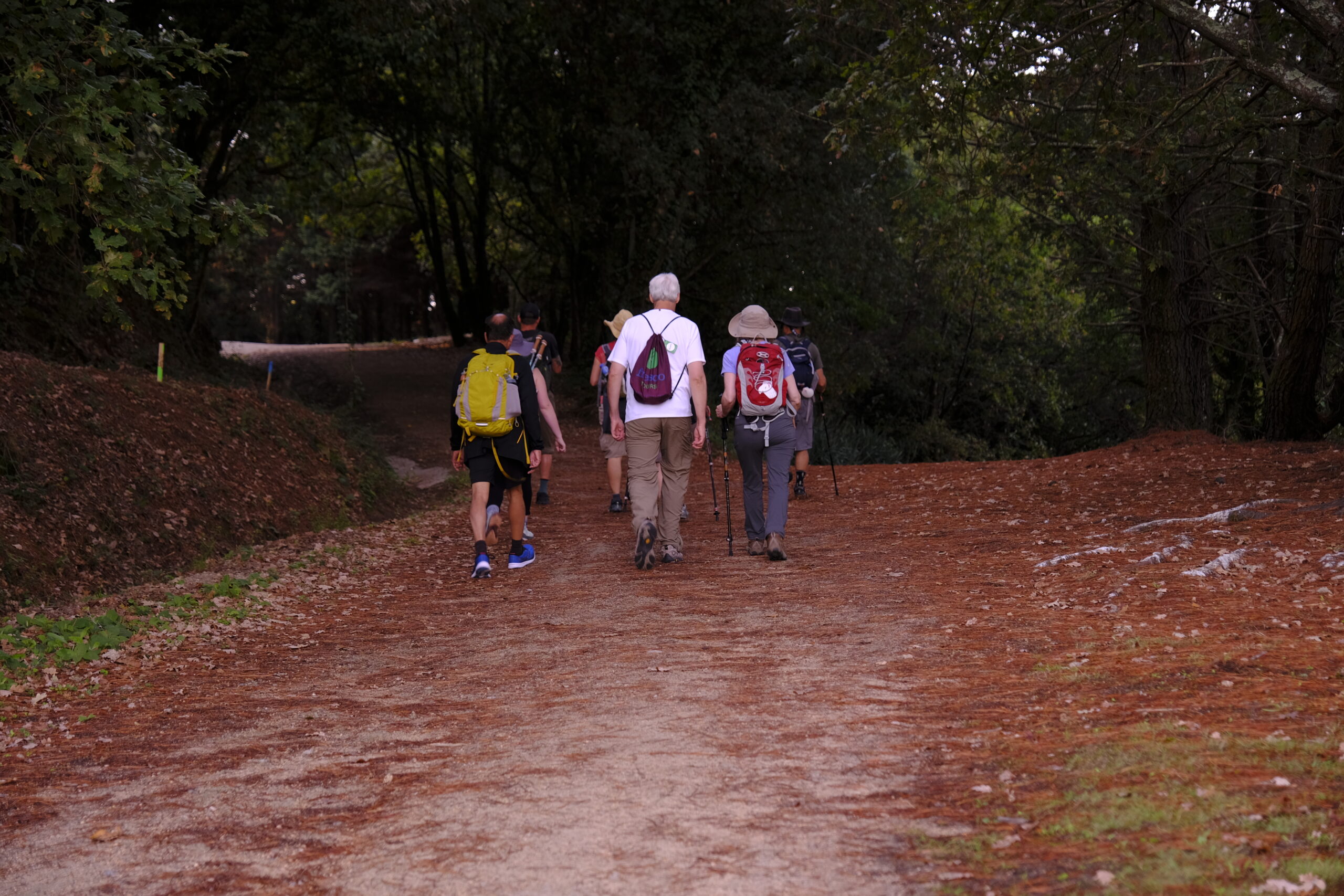
Having said farewell to the granite cutting mills of O Porriño, we climbed up to the Monte de Santiago de Antas. Here, we encountered yet another Roman mile marker, a silent testament to the historical journey of those who had travelled these paths before us. As we pressed on along the Camino towards Redondela, a captivating panorama unfolded before our eyes—the Estuary of Vigo, where mussels and scallops are farmed on floating barges. Miles walked -10 miles.

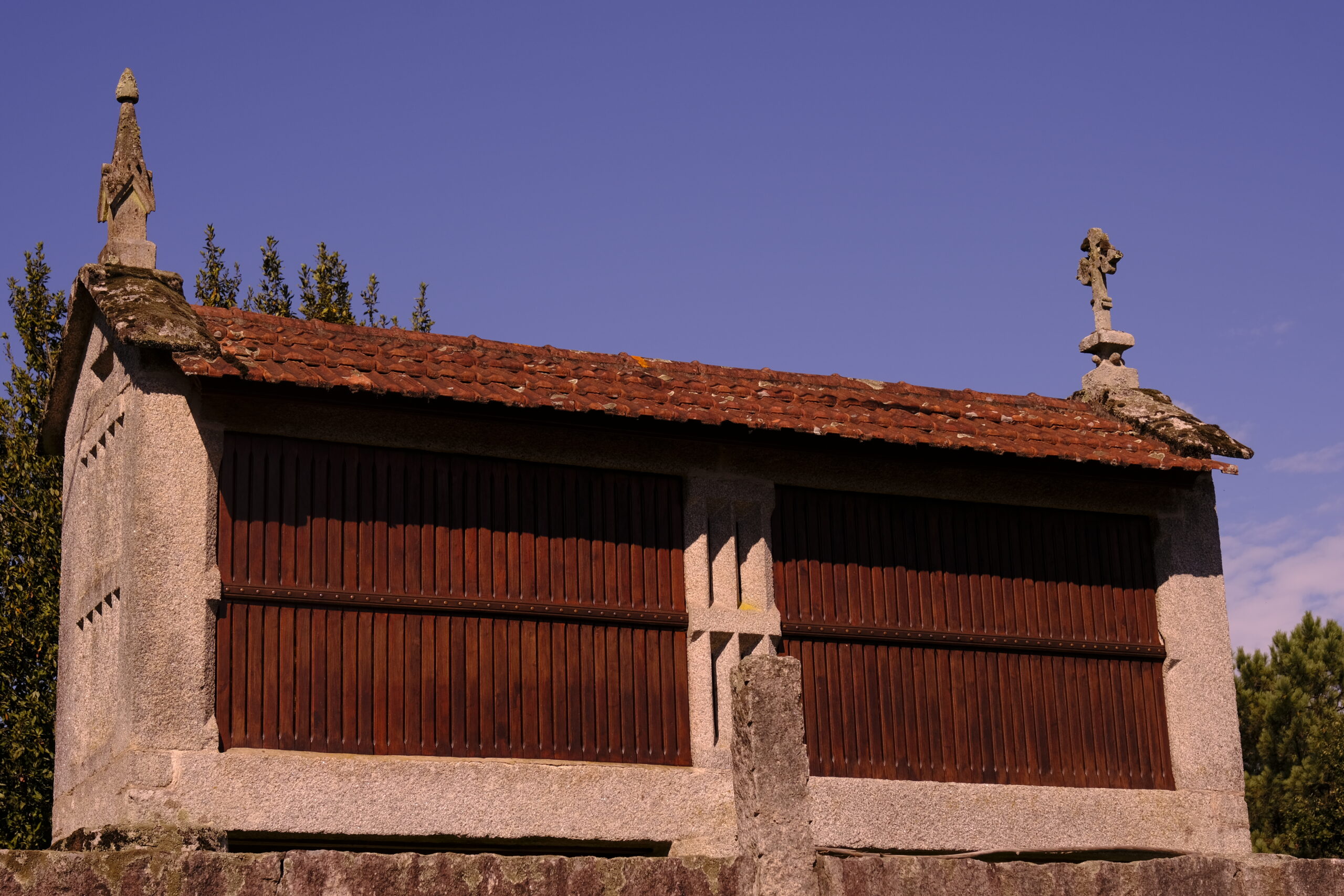
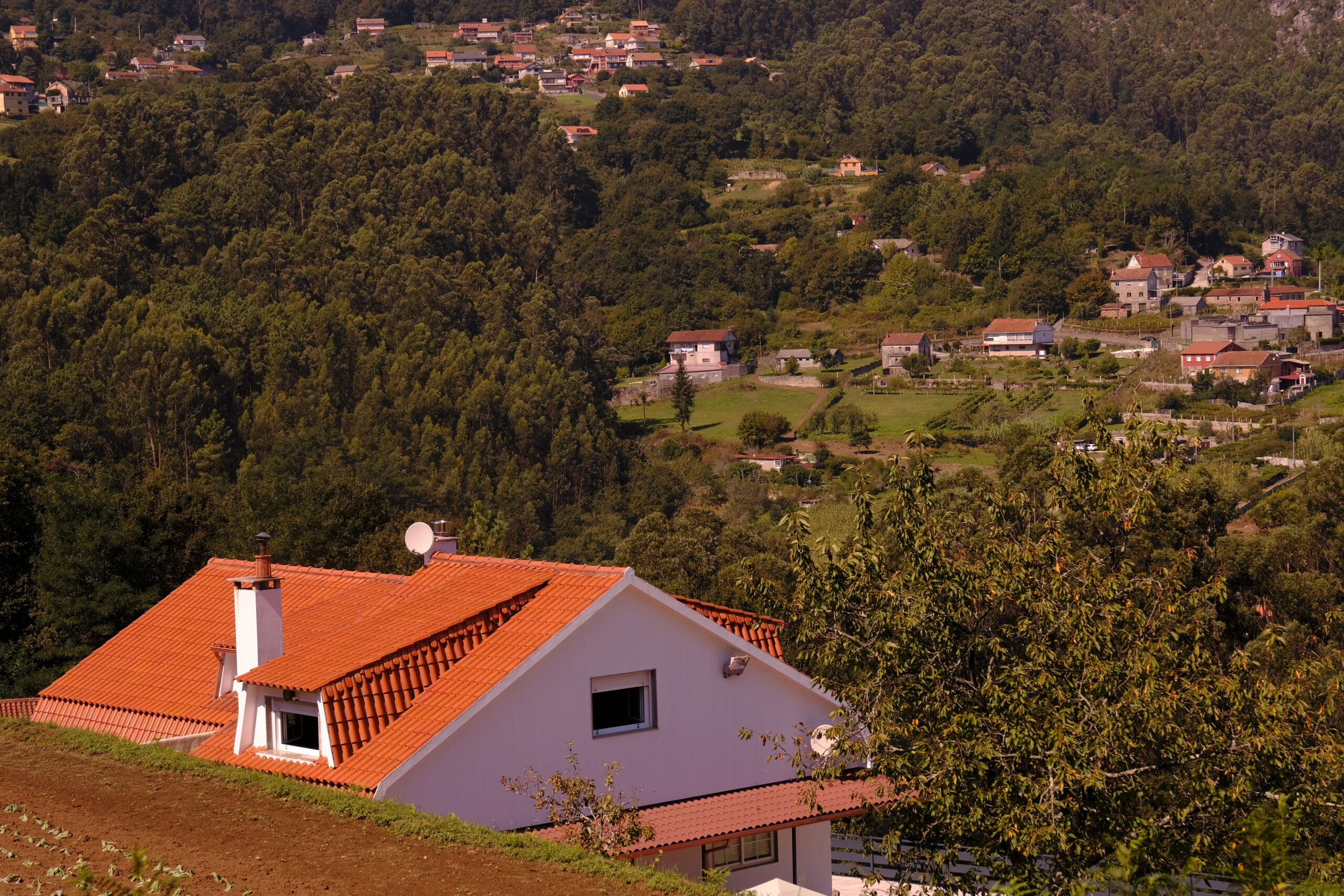
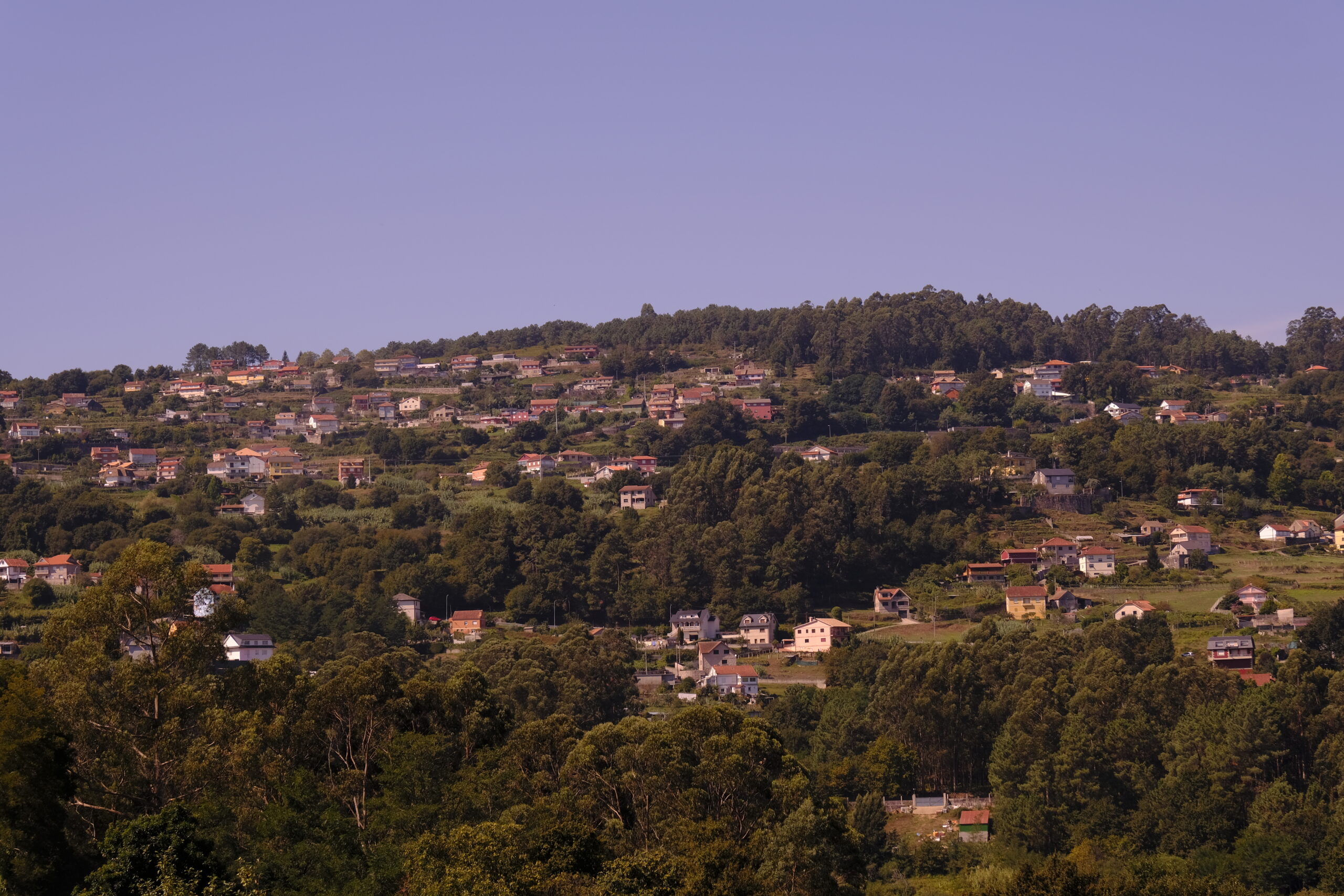
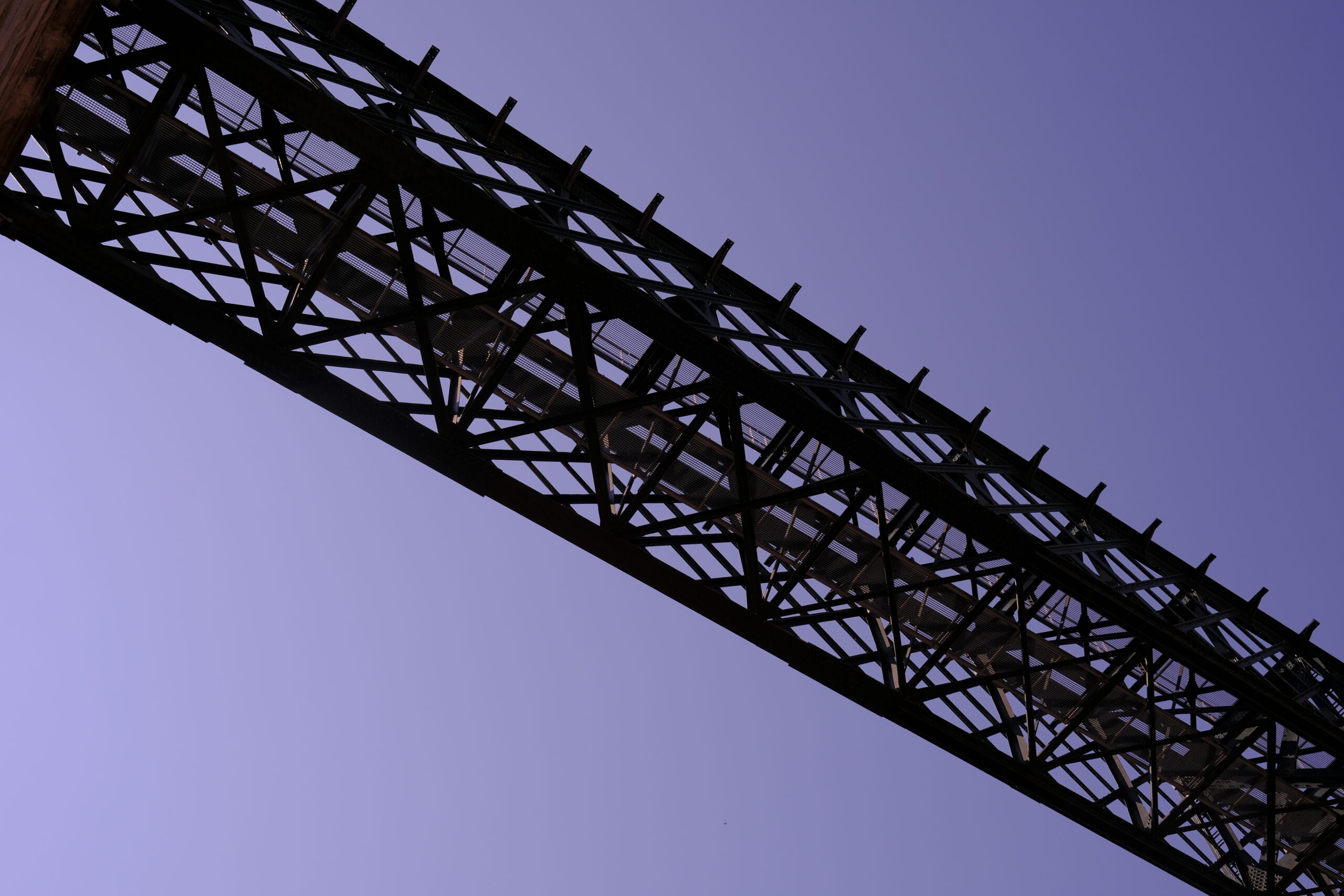
Tonight, we checked in to the Hotel Rias Bajas in the town of Pontevedra. We are now in Albariño wine country. Since it is a Sunday, a few of us go to evening mass at the St. Francis Church. Dinner was at a local restaurant.
Historical Sites and a Scallop Shell Chapel (Day Six) – September 19, 2022
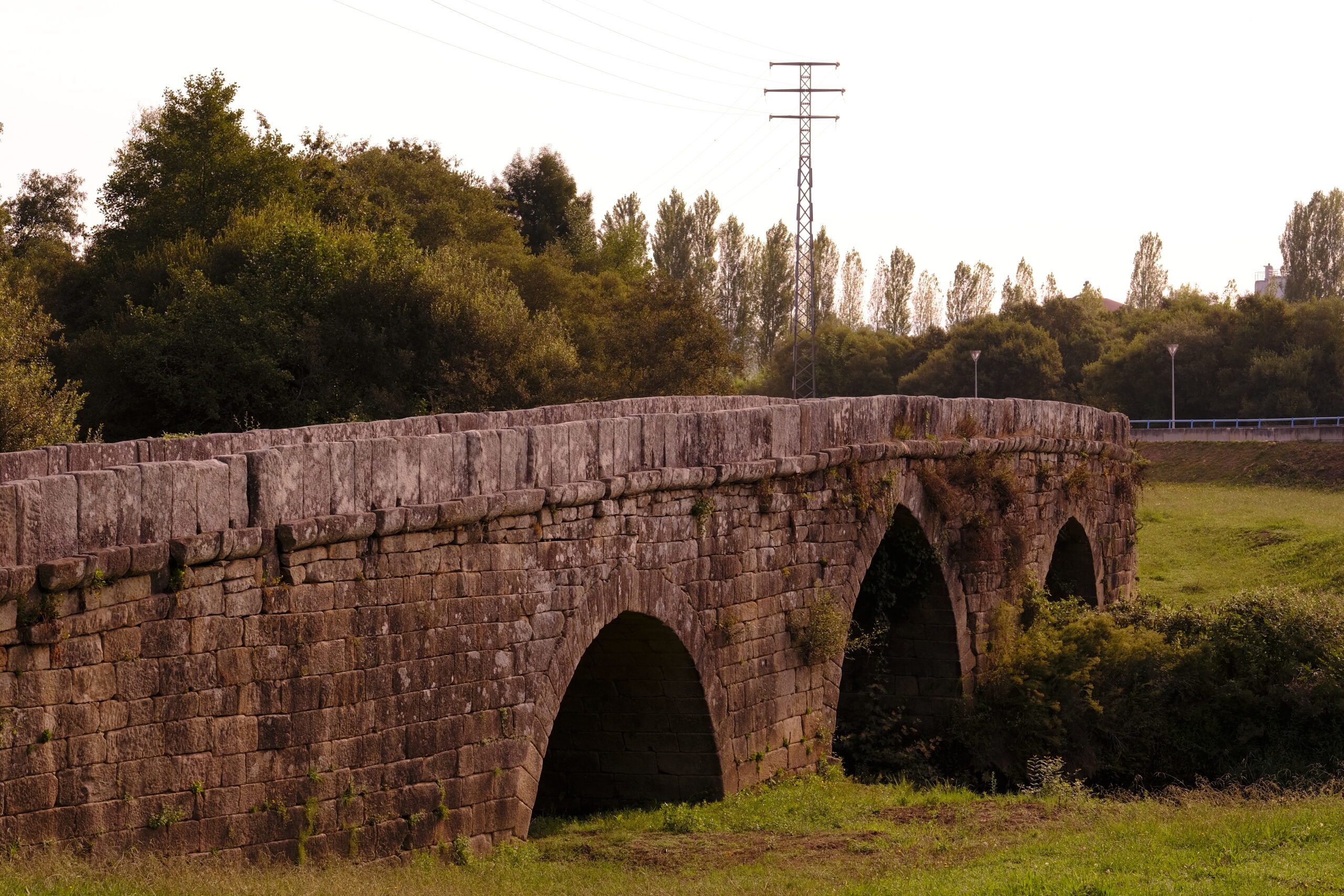
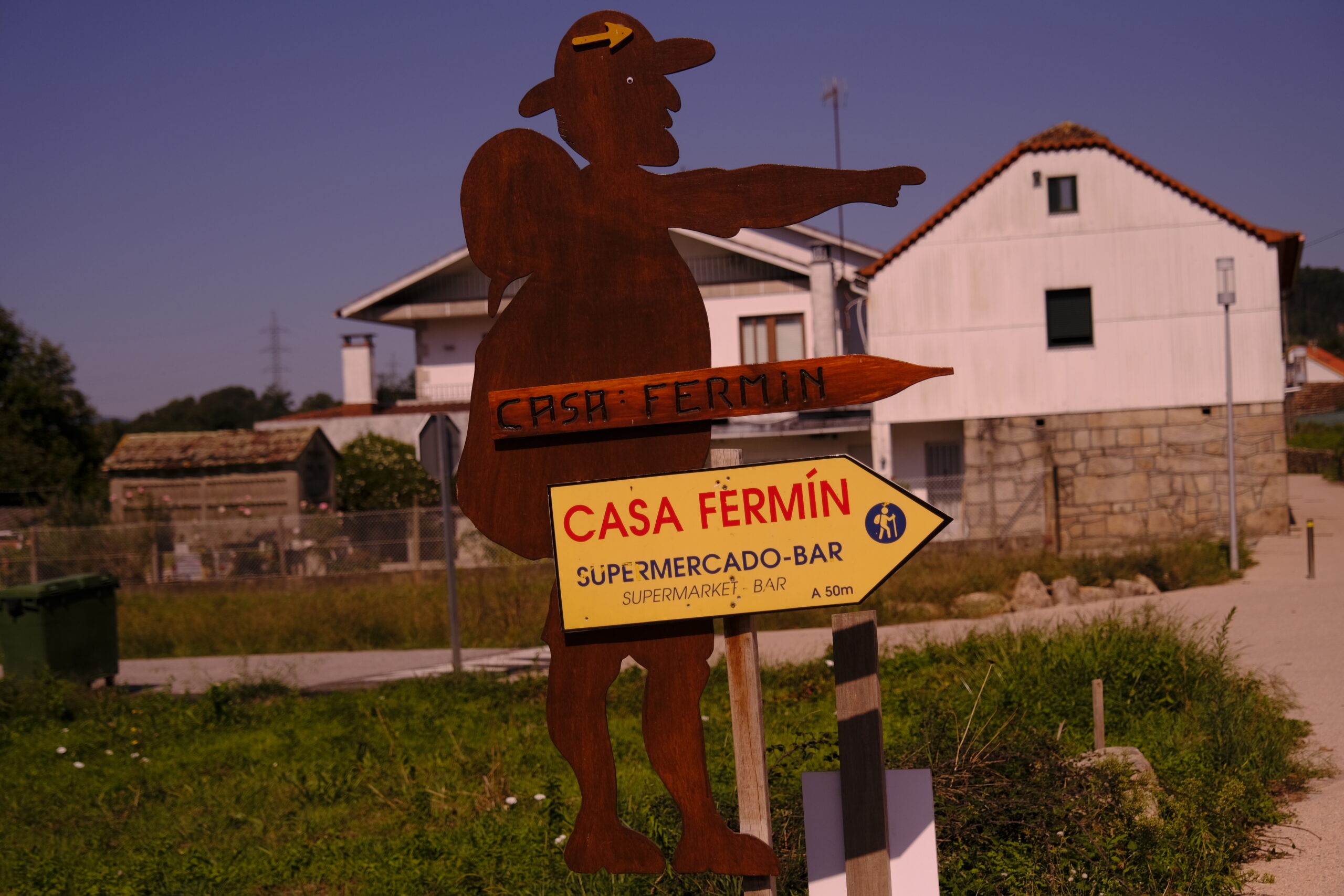
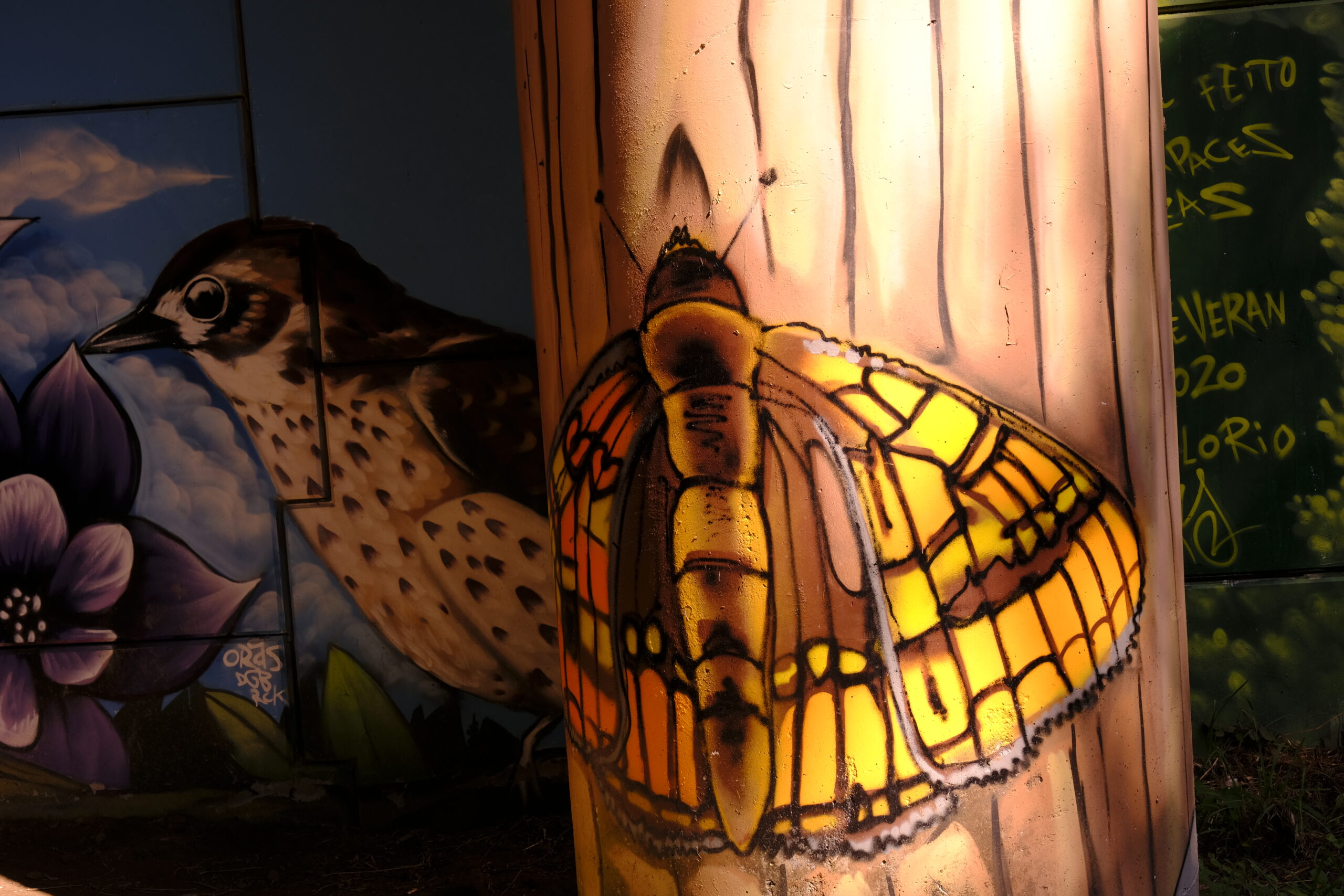
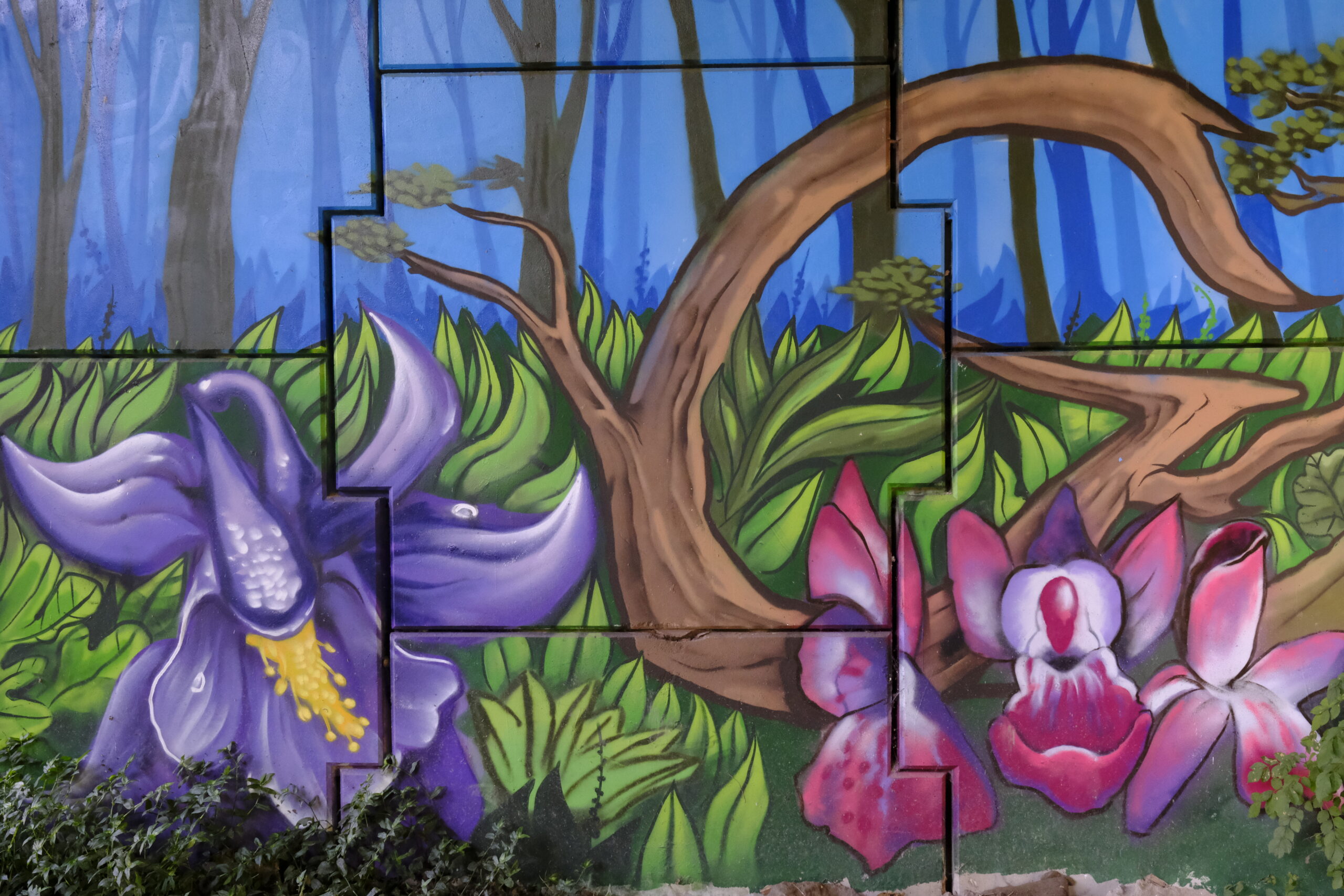
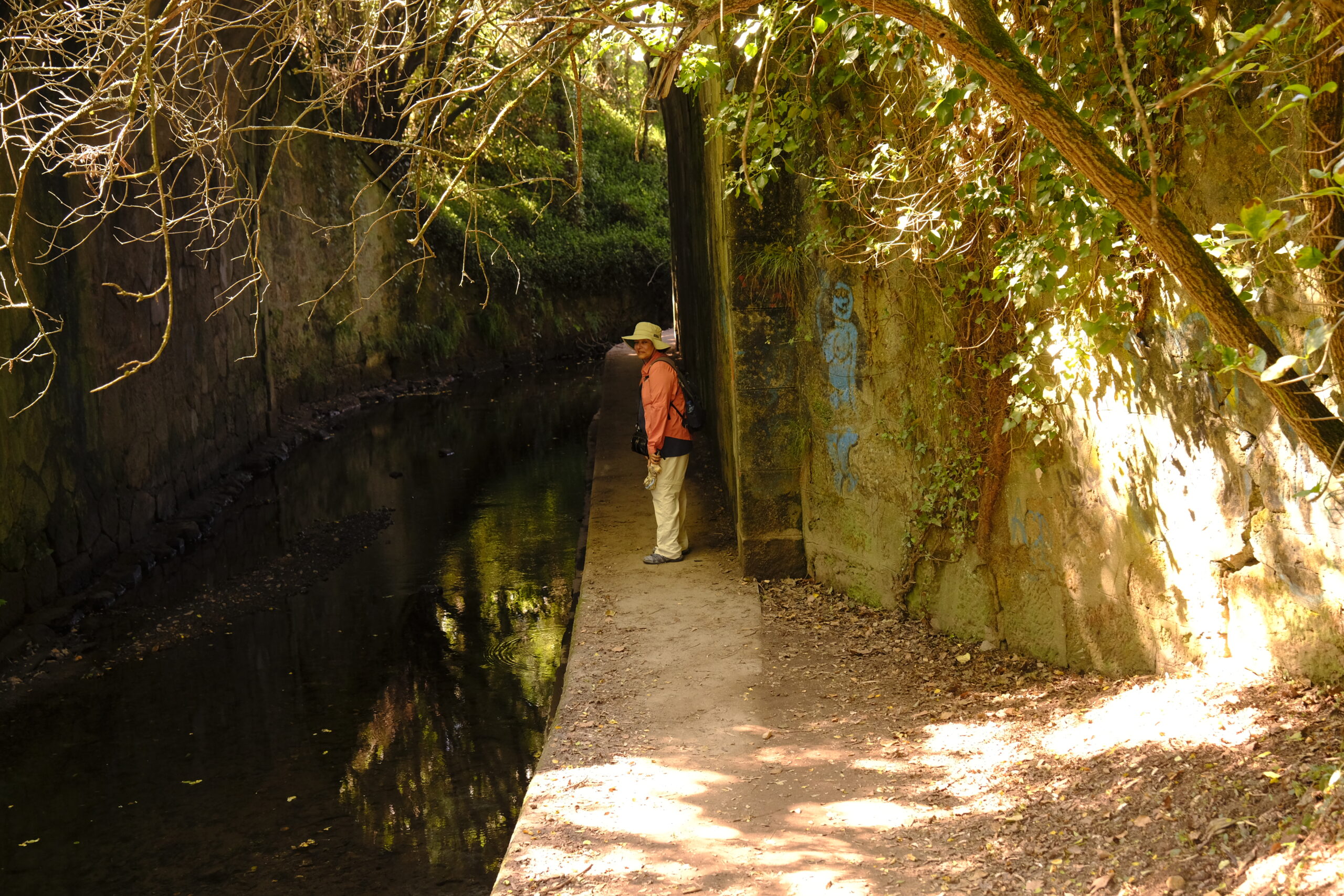
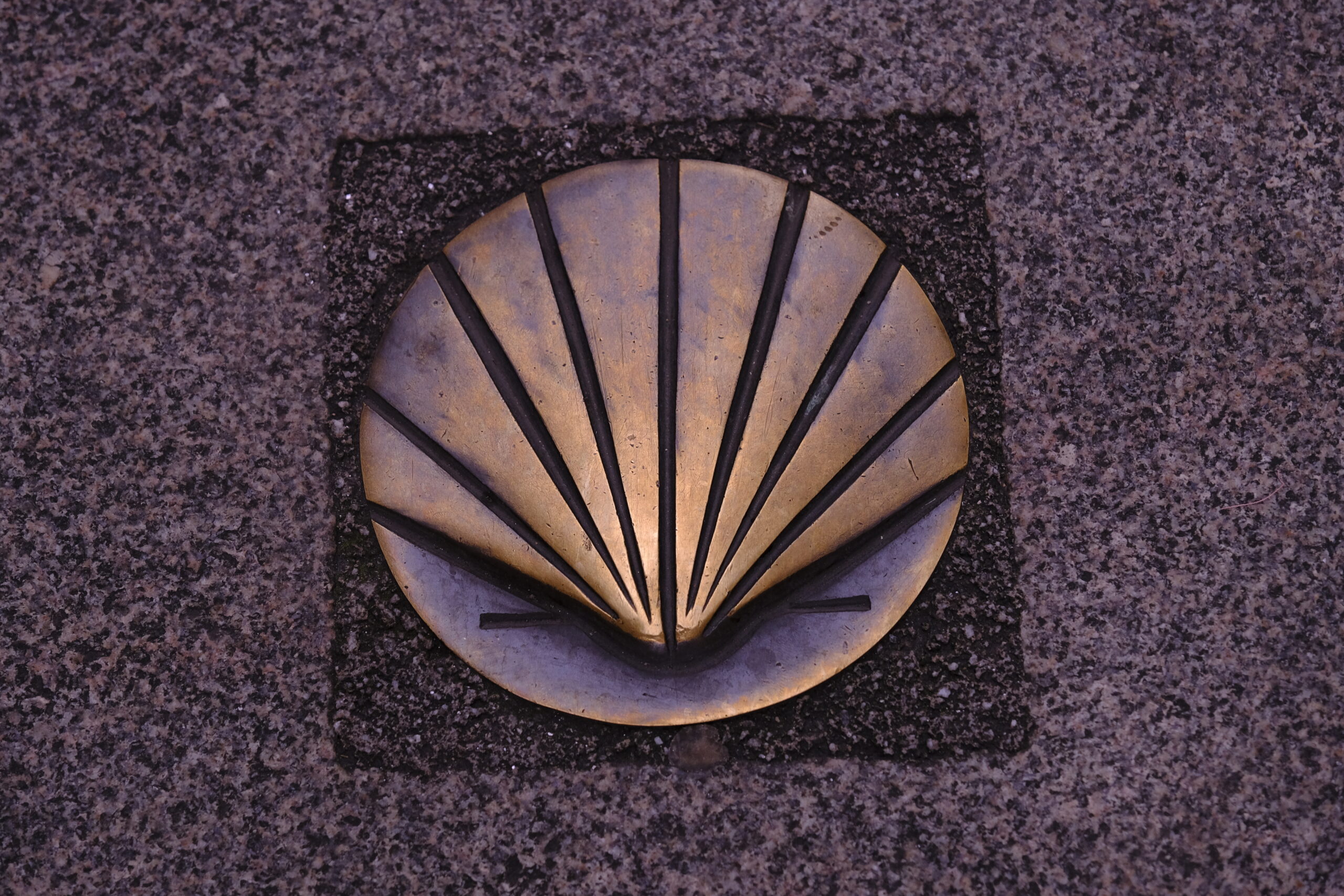
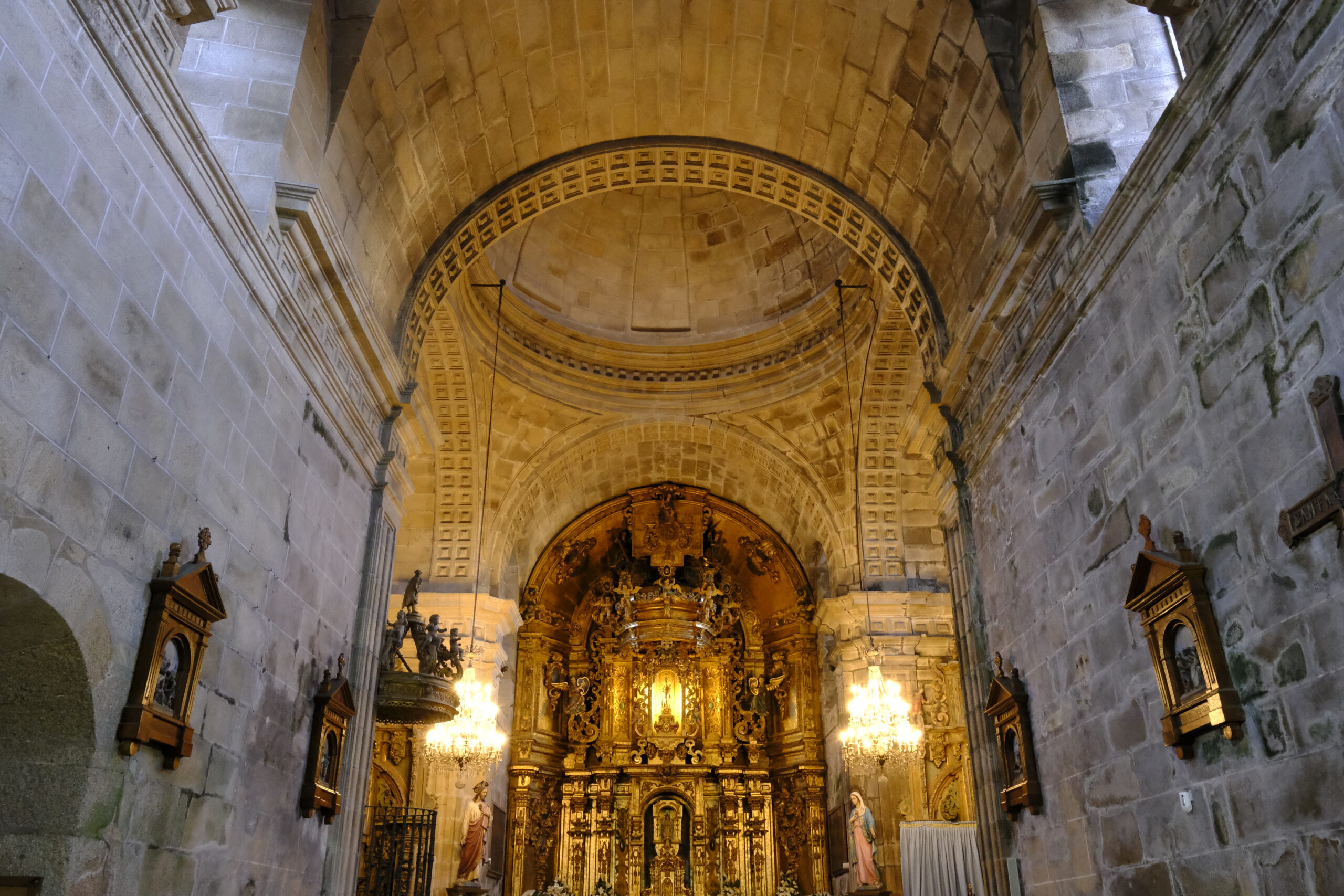
This morning our route takes us to the picturesque stone bridge in Pontesampaio, where the last battle against Napoleon’s troops was fought during the Spanish War of Independence. Our next destination was the pedestrian-friendly city of Pontevedra, where we were greeted by charming streets and historical landmarks. A noteworthy stop on our route was the 18th-century chapel La Peregrina. Here we stopped to collect a stamp and to admire its interior. This chapel was distinctive for its floor plan, shaped like a scallop shell, symbolizing the Camino de Santiago pilgrimage. We covered 12 miles today.
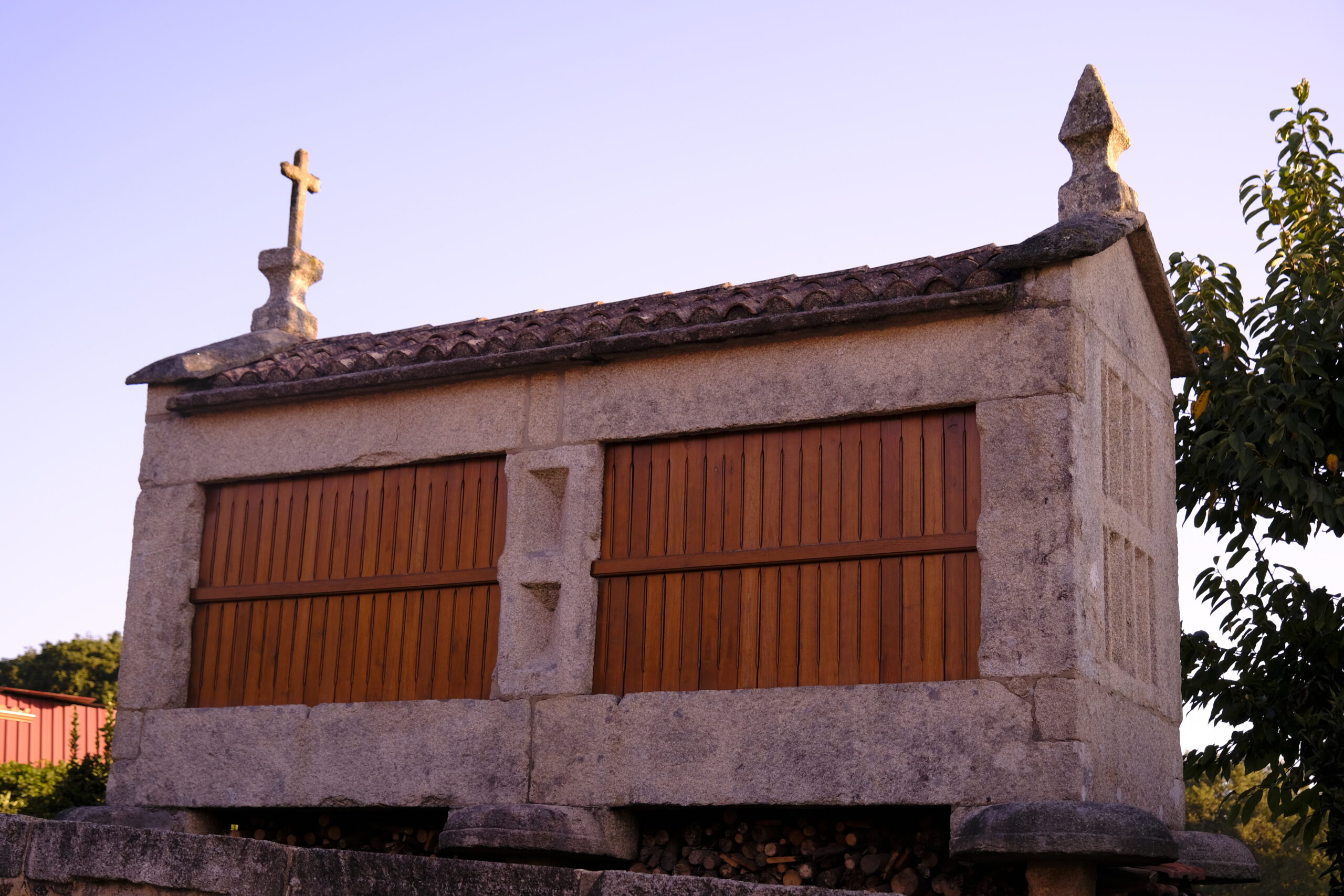
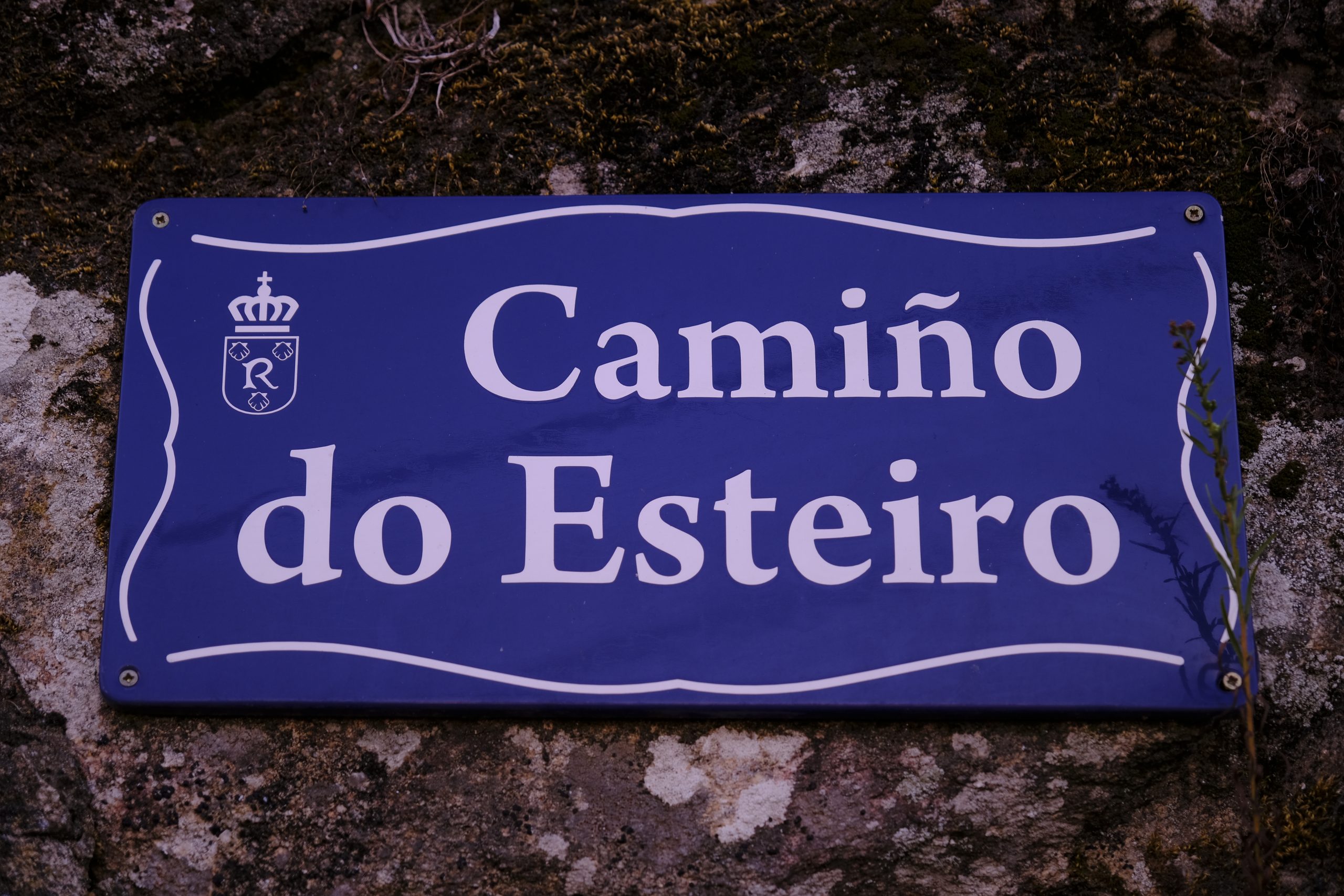
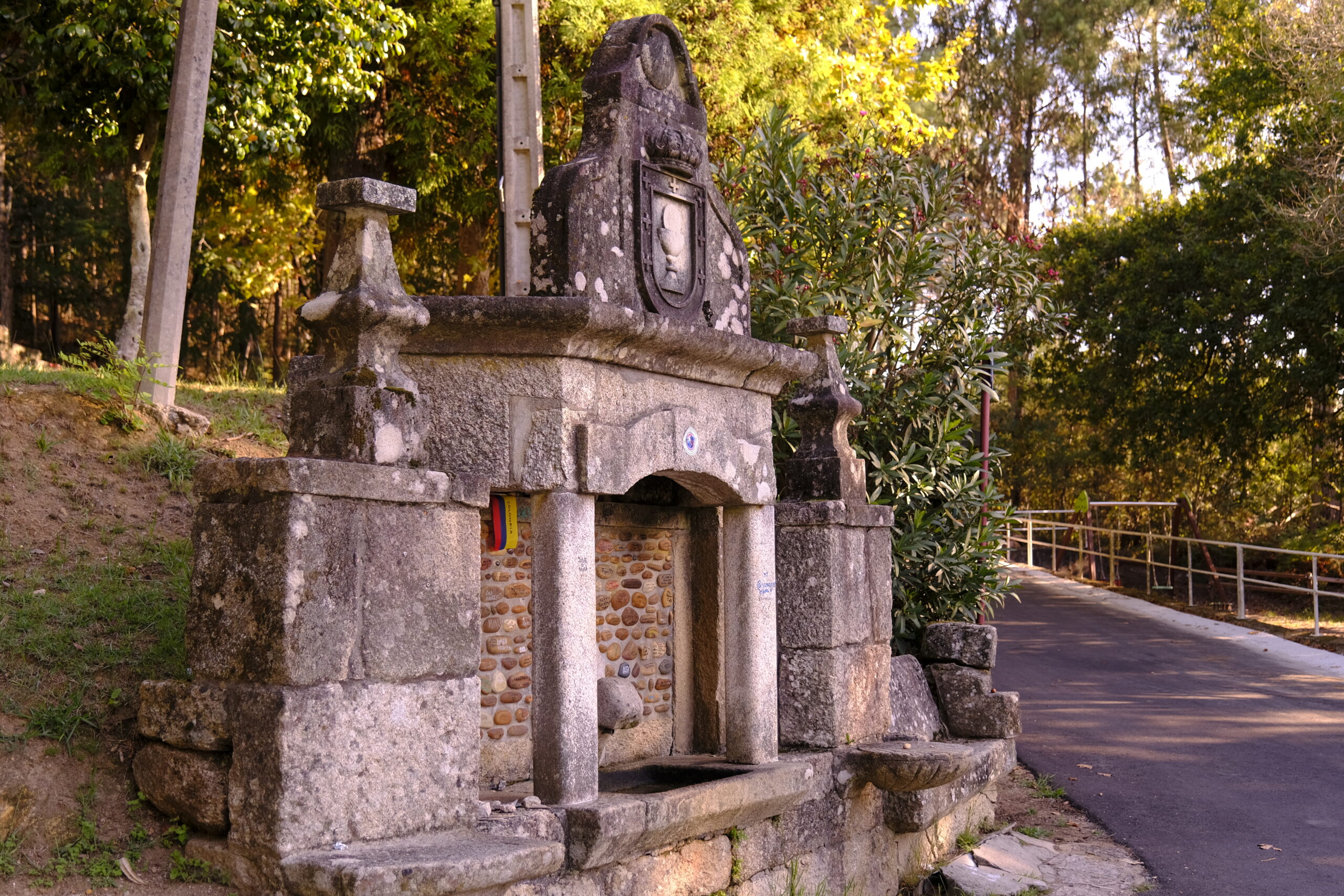
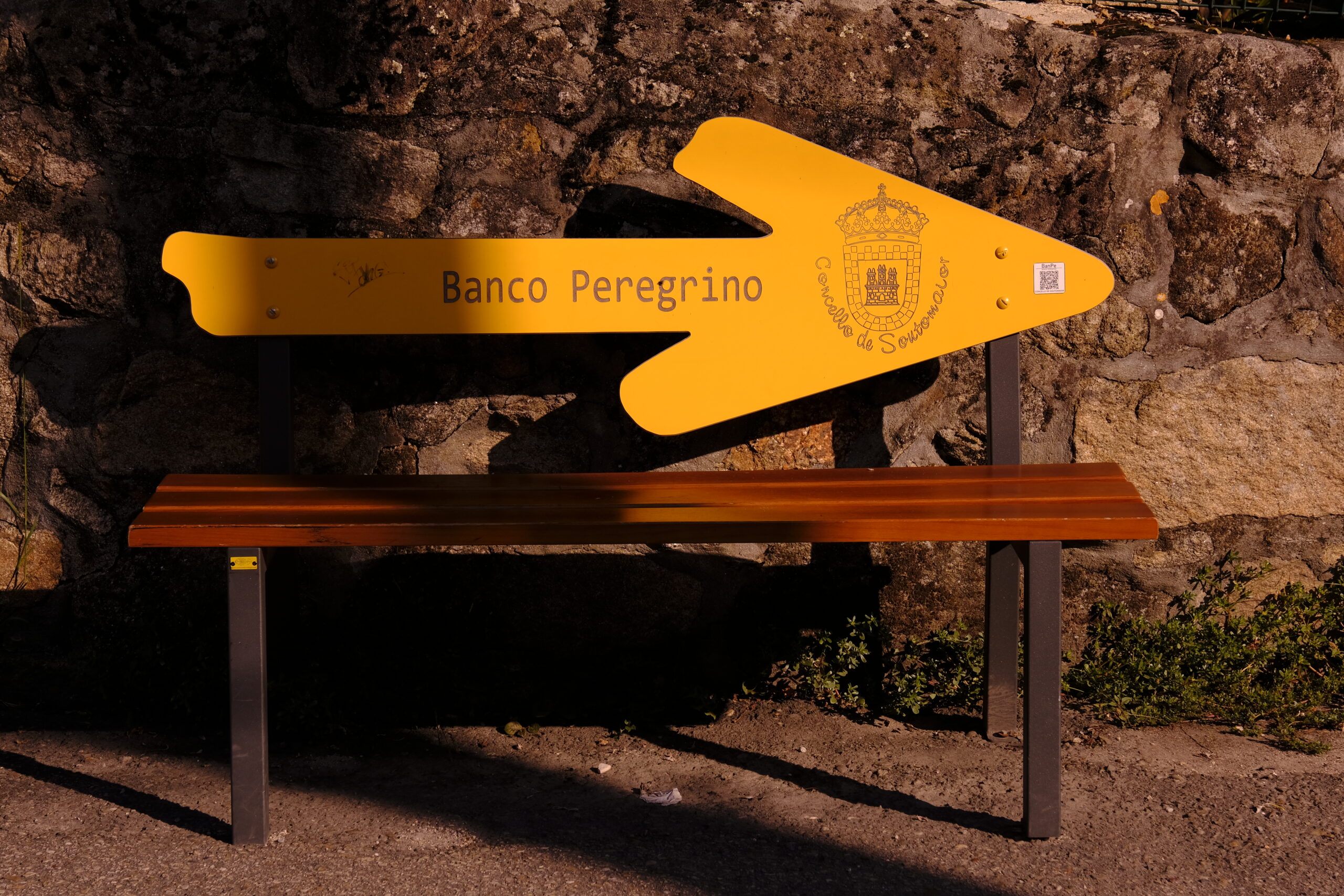
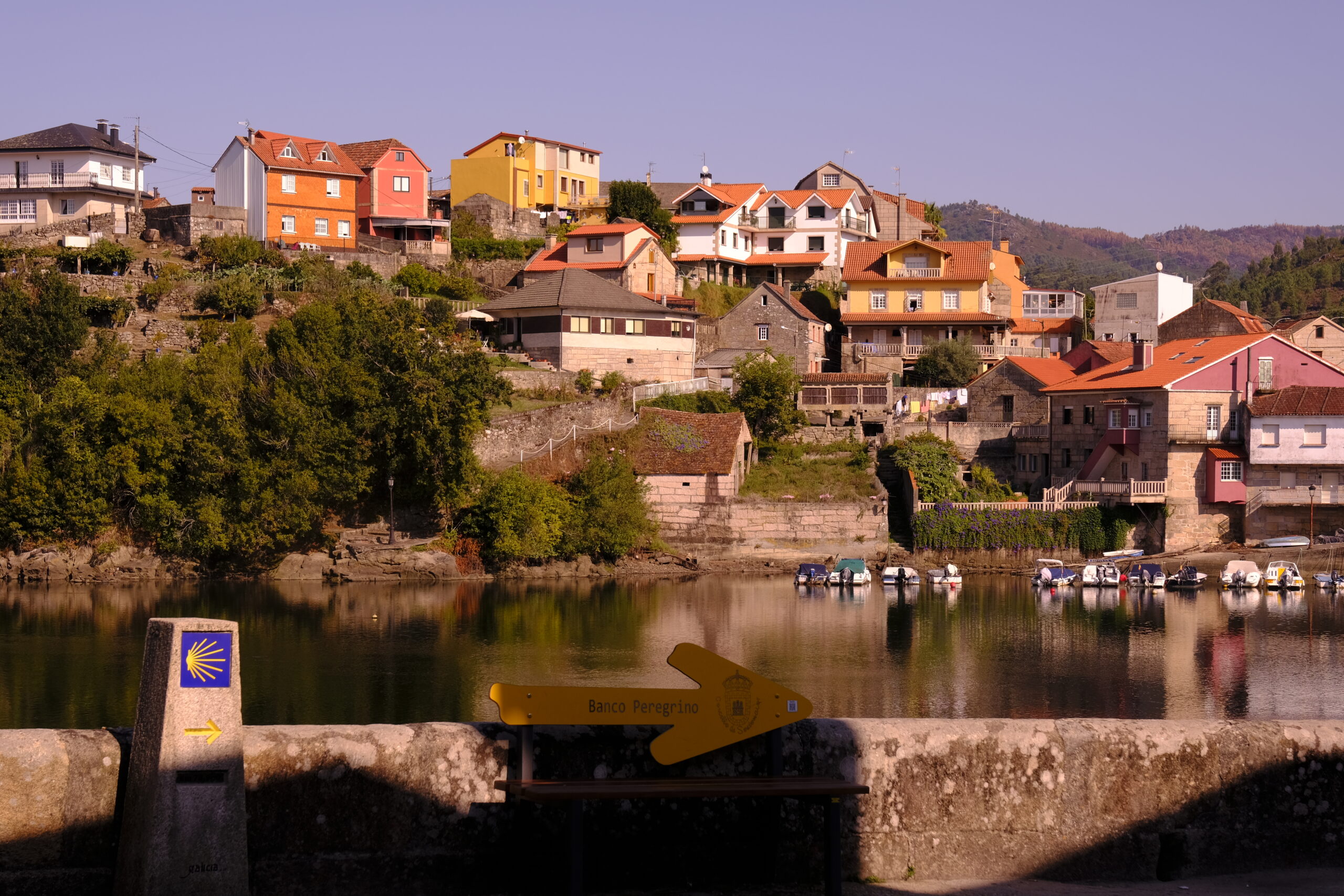

Pontevedra to Thermal Springs in Caldas de Reis (Day Seven) – September 20, 2022
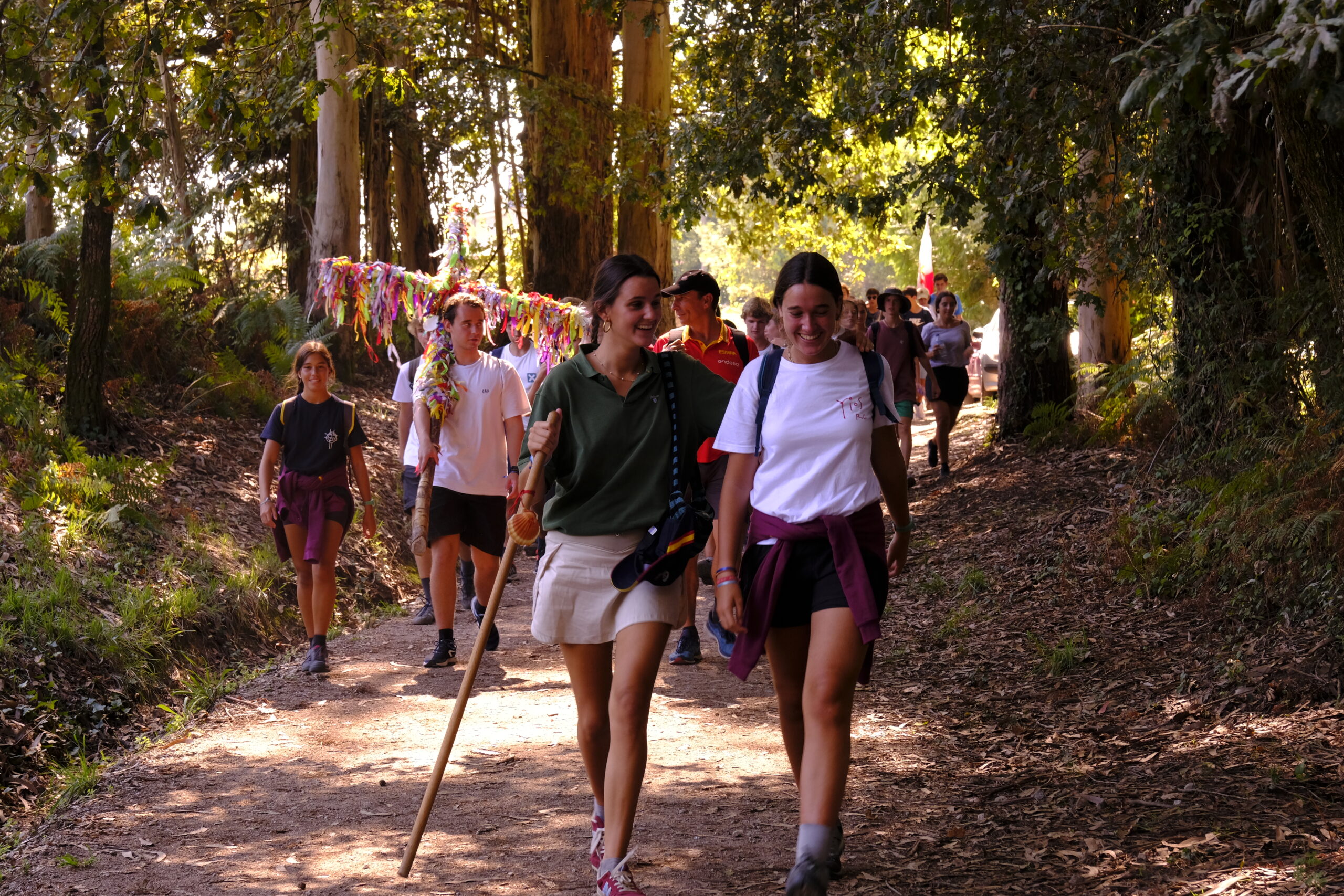
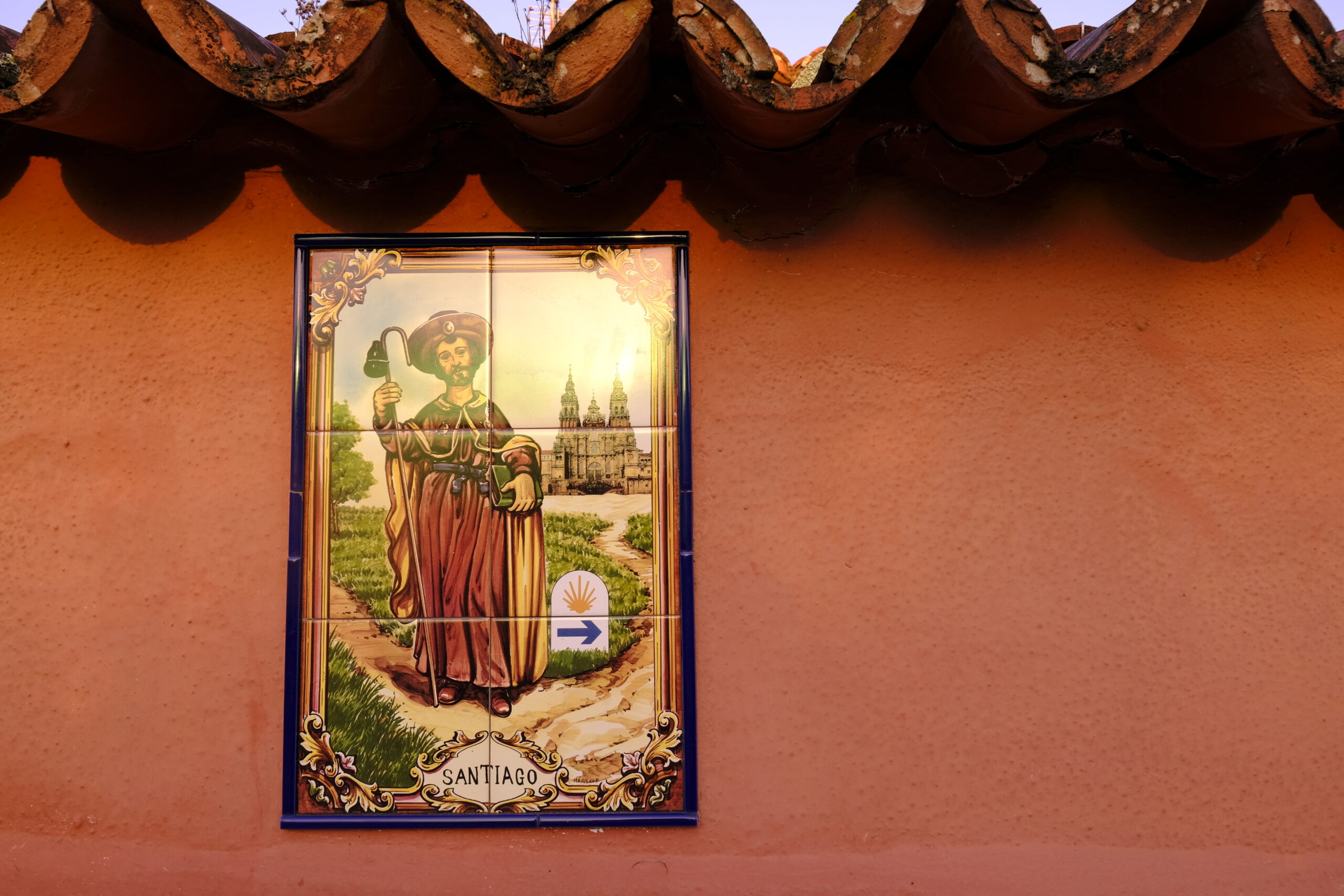
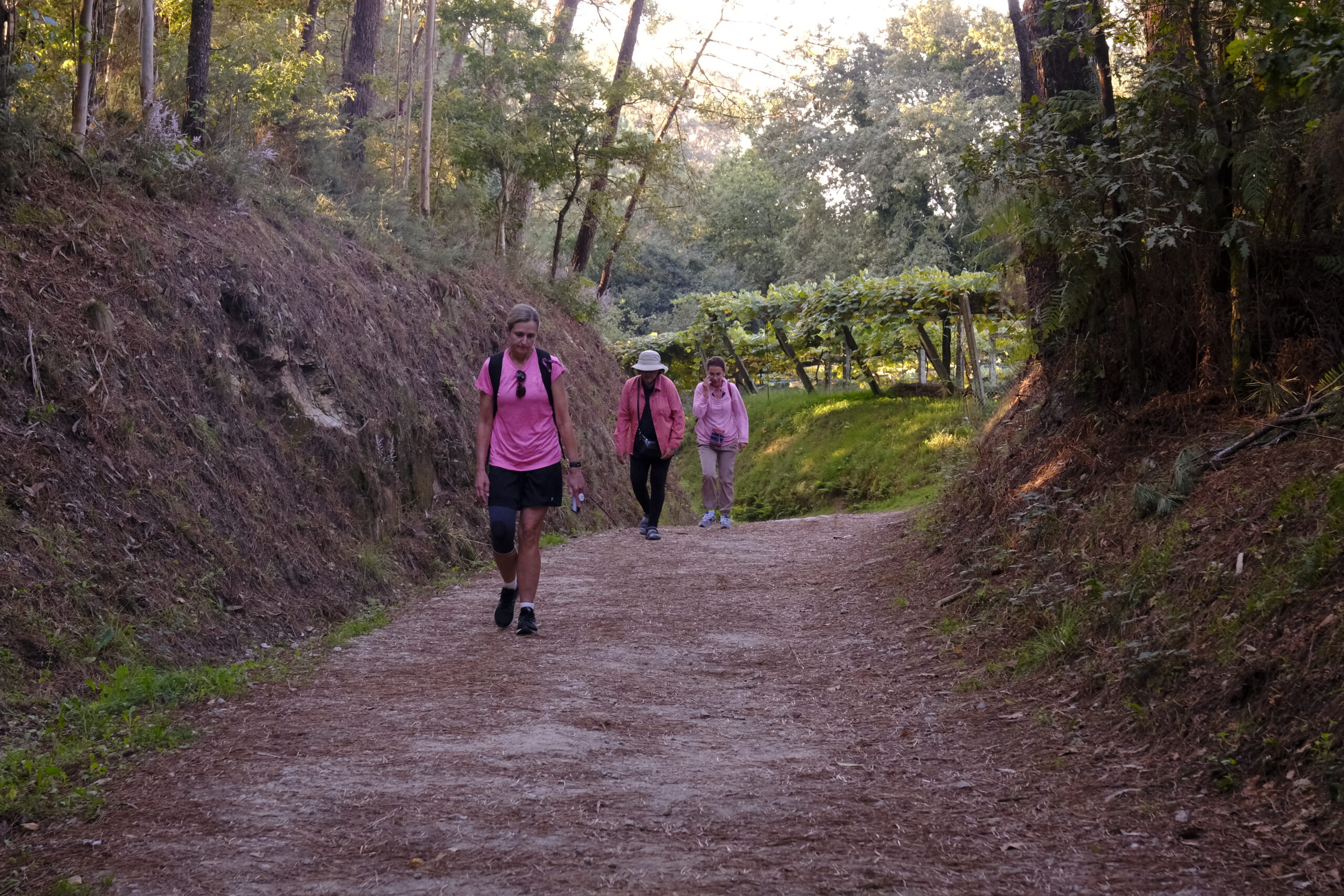
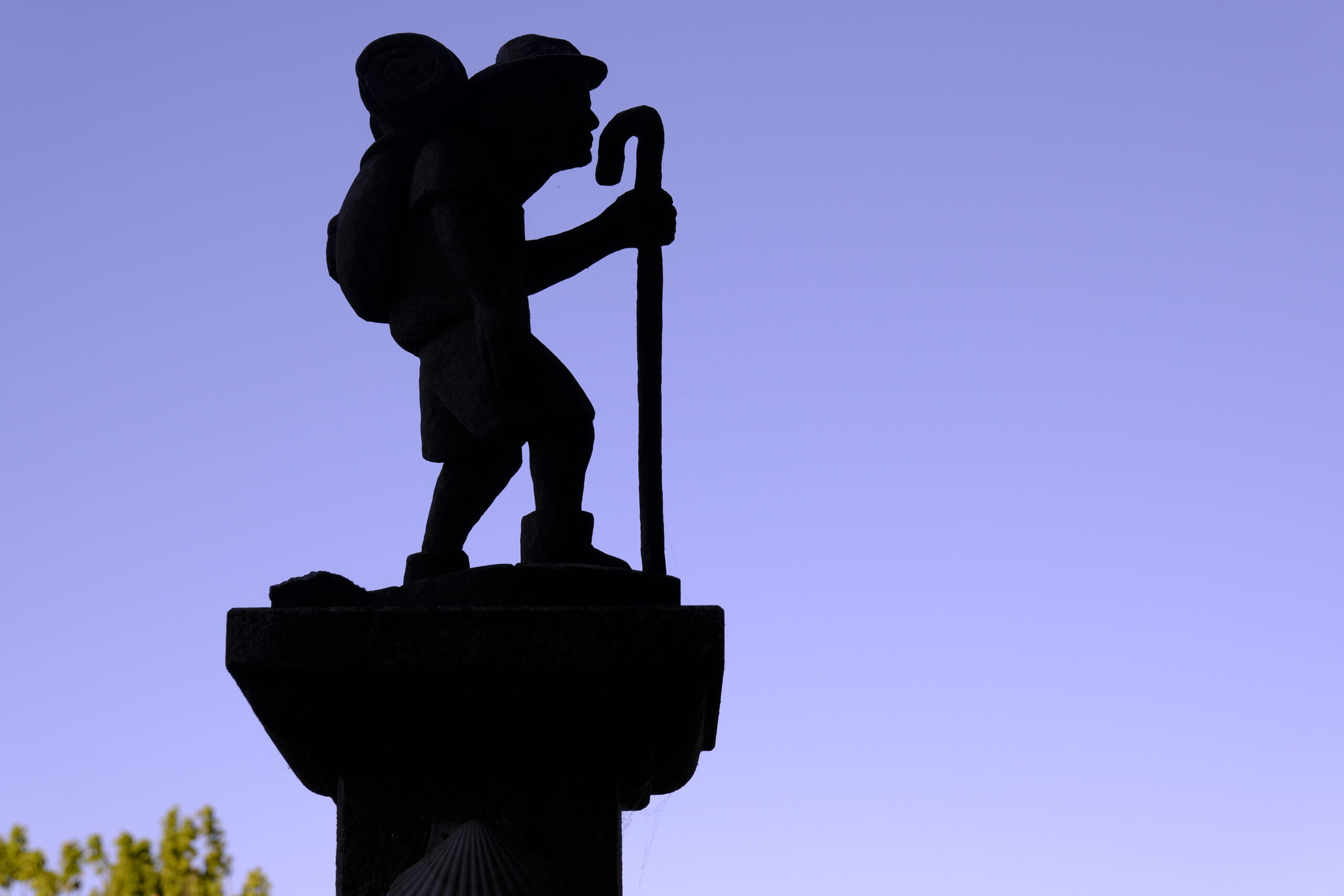
Having departed from the city of Pontevedra, we quickly returned to nature, travelling on quiet paths that led us to the granite Cross of Amonisa. Here, the weathered figure of Santiago faced our destination, marking a connection between the spiritual and the earthly. Our journey continued through serene landscapes, offering a peaceful retreat from urban bustle. Our next and final stop for the day was Caldas de Reis, a town renowned for its natural thermal springs that have attracted weary travelers for thousands of years. Some of our fellow pilgrims decided to avail themselves of the spa facilities. We walked 14 miles today, officially. Fitbit says we did something like 20 + miles. To say that we are totally zapped would be an understatement.
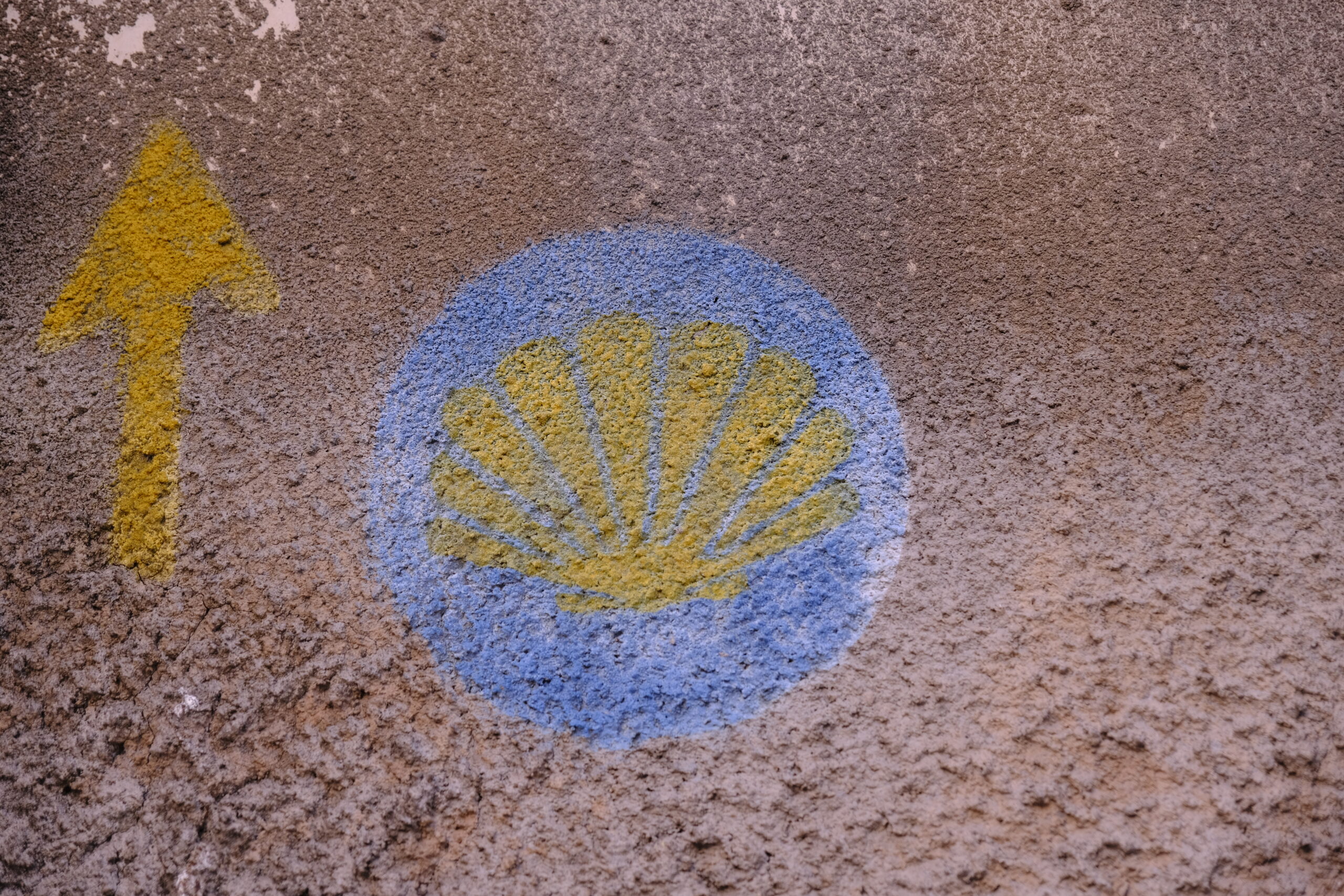
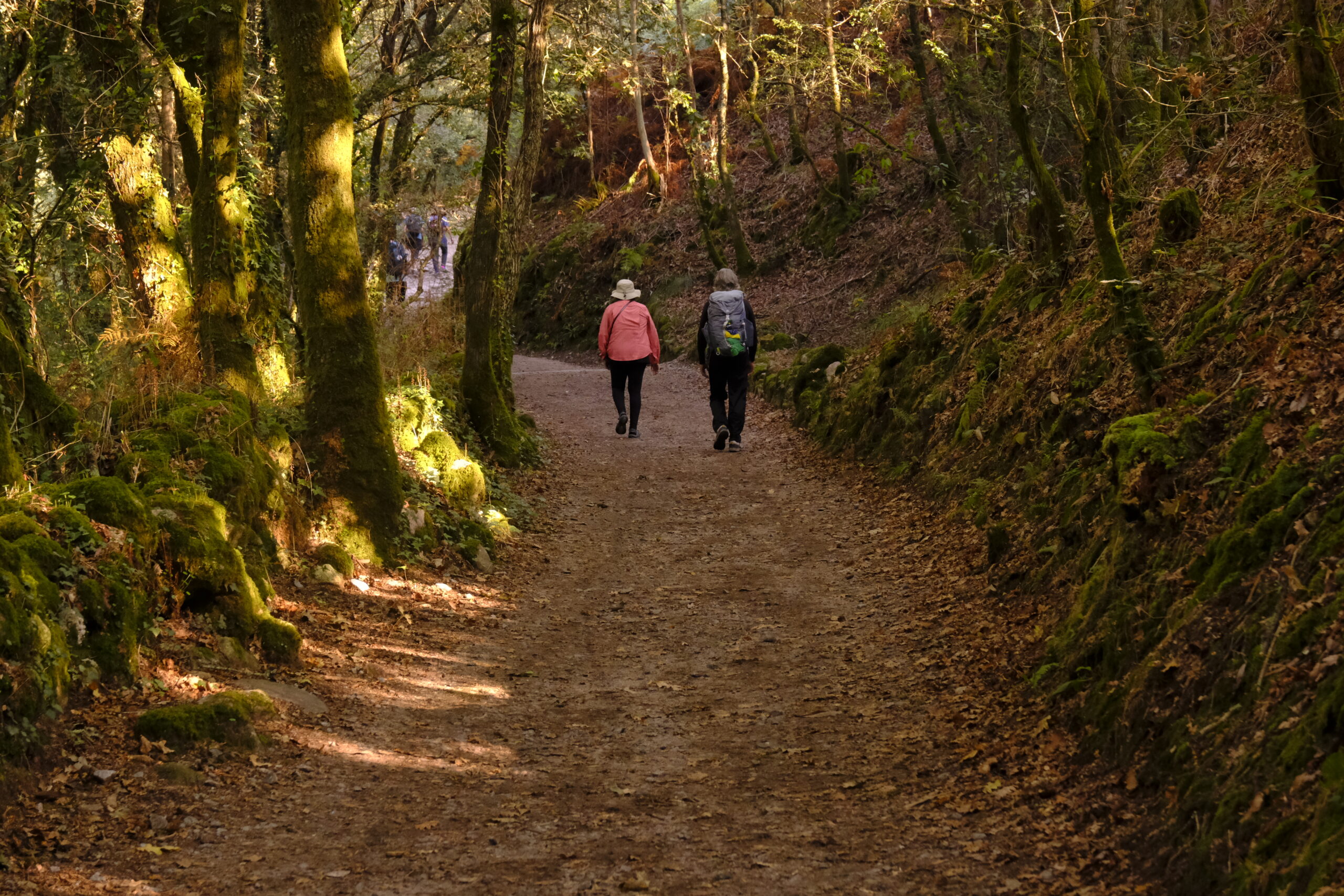
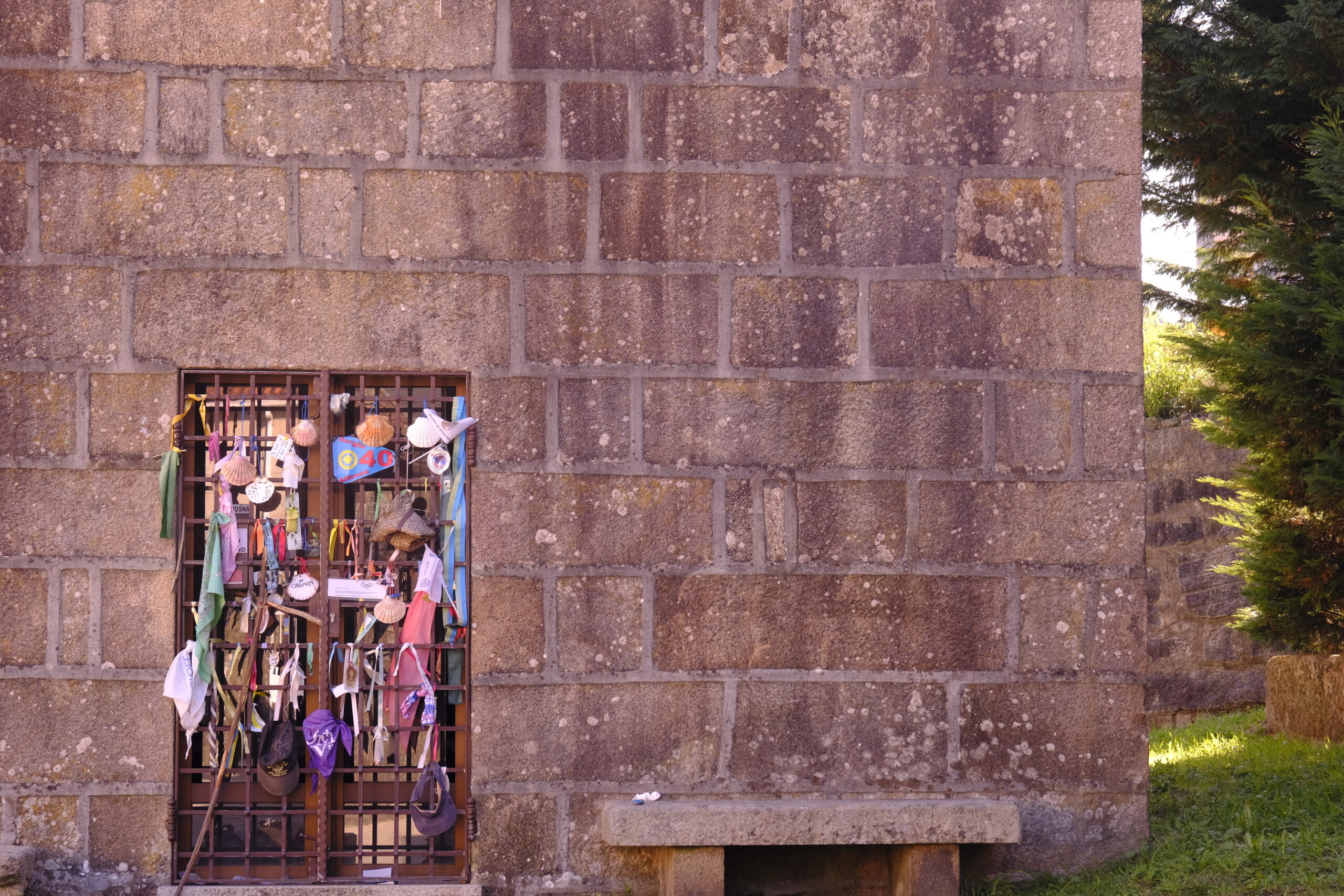
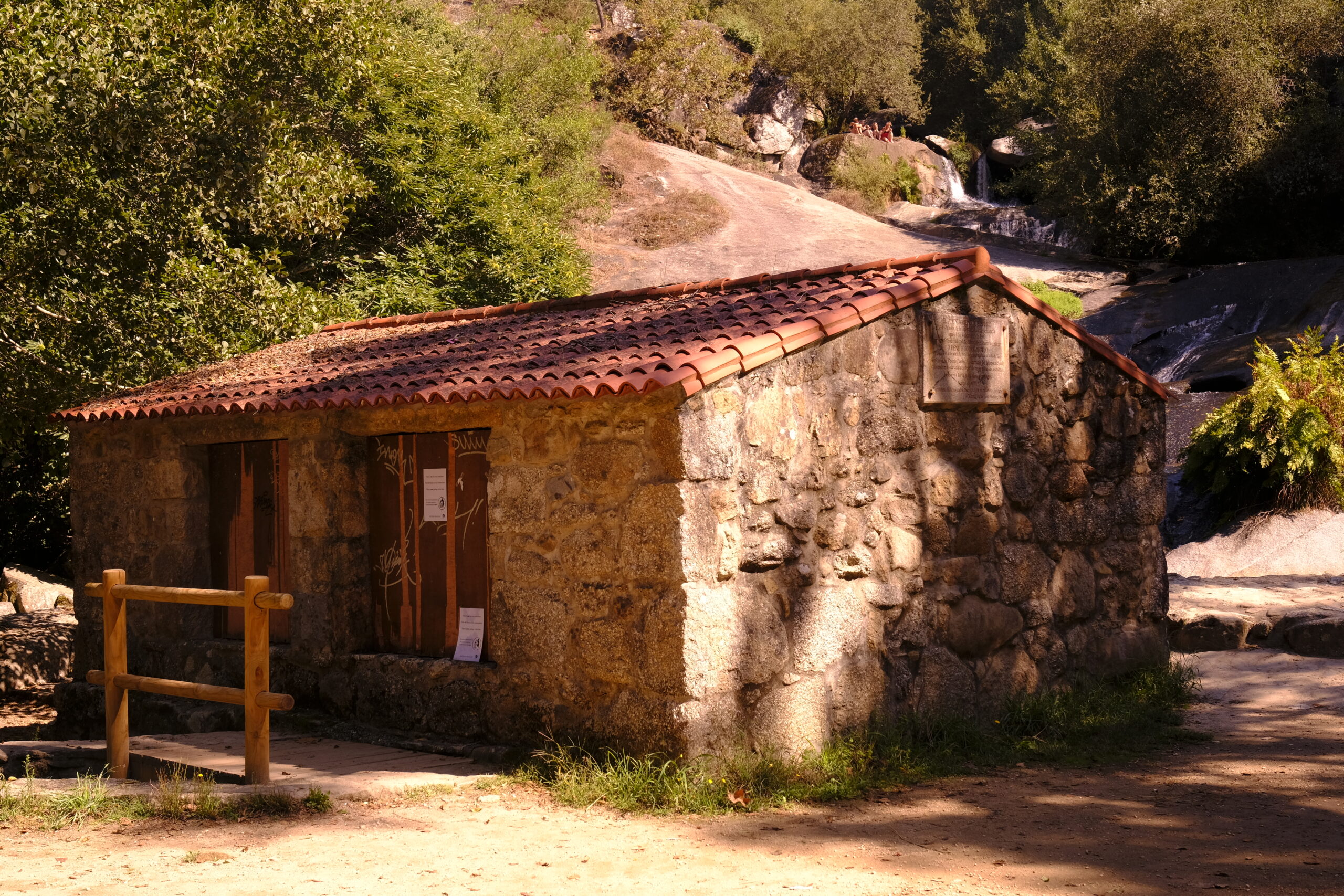
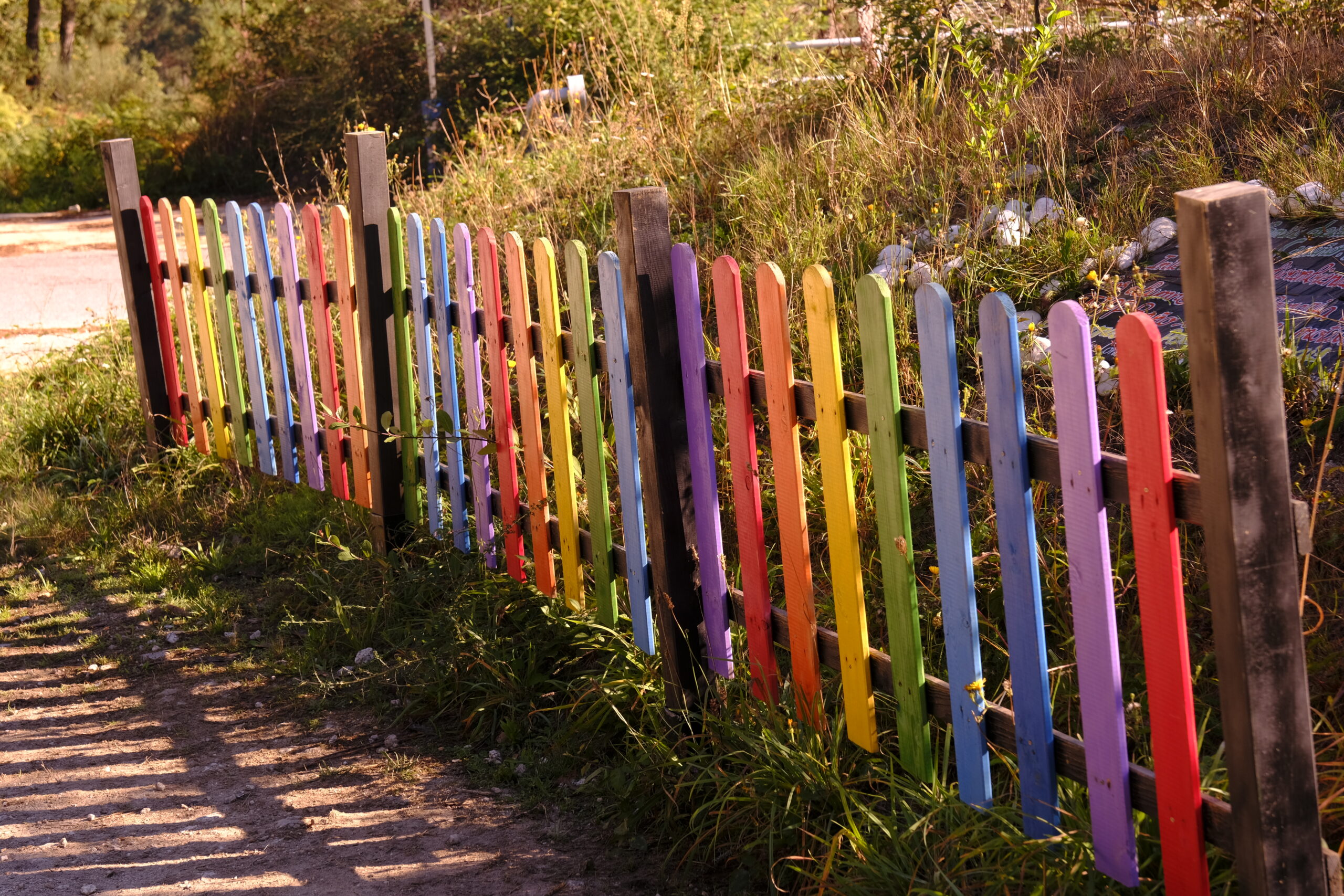
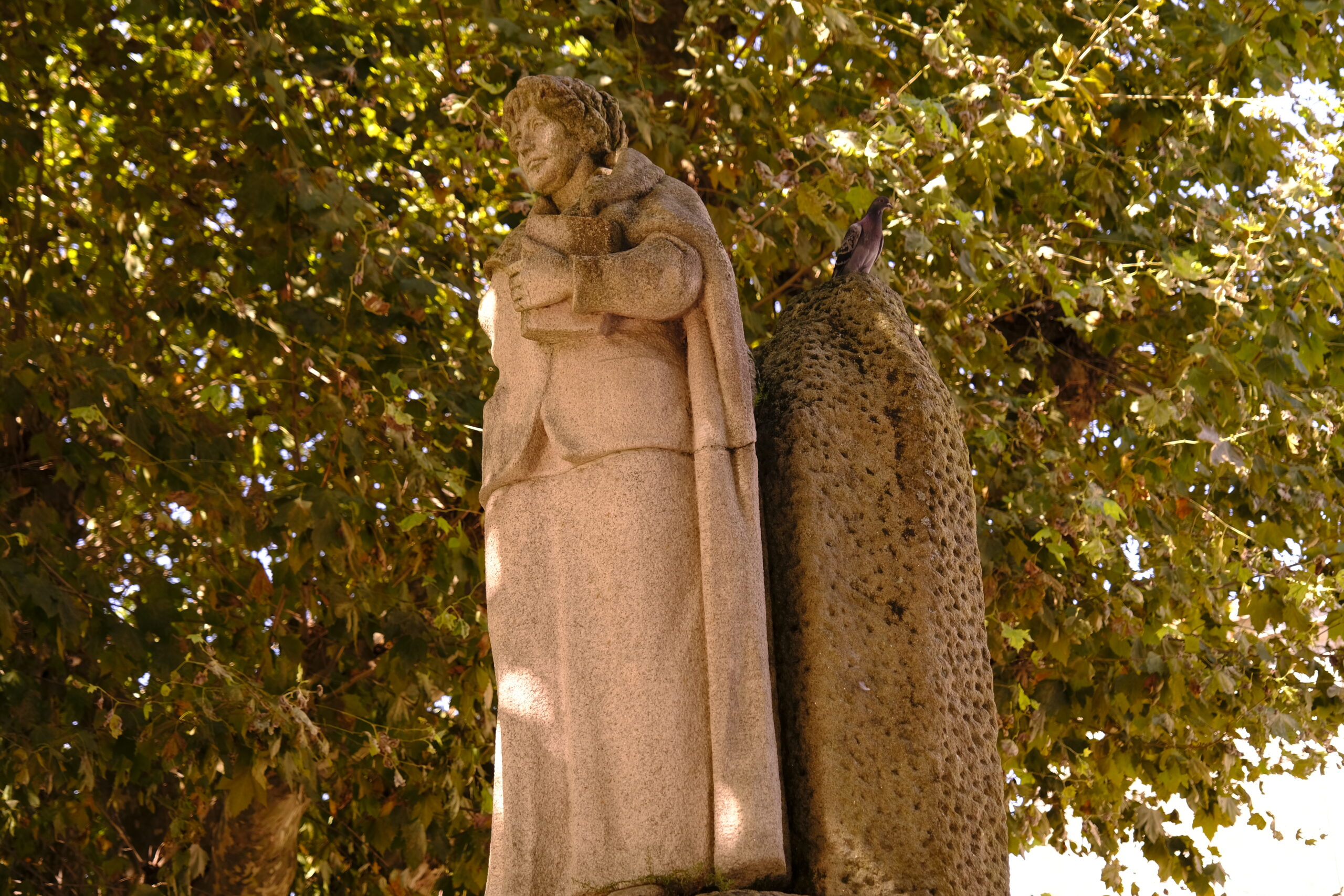
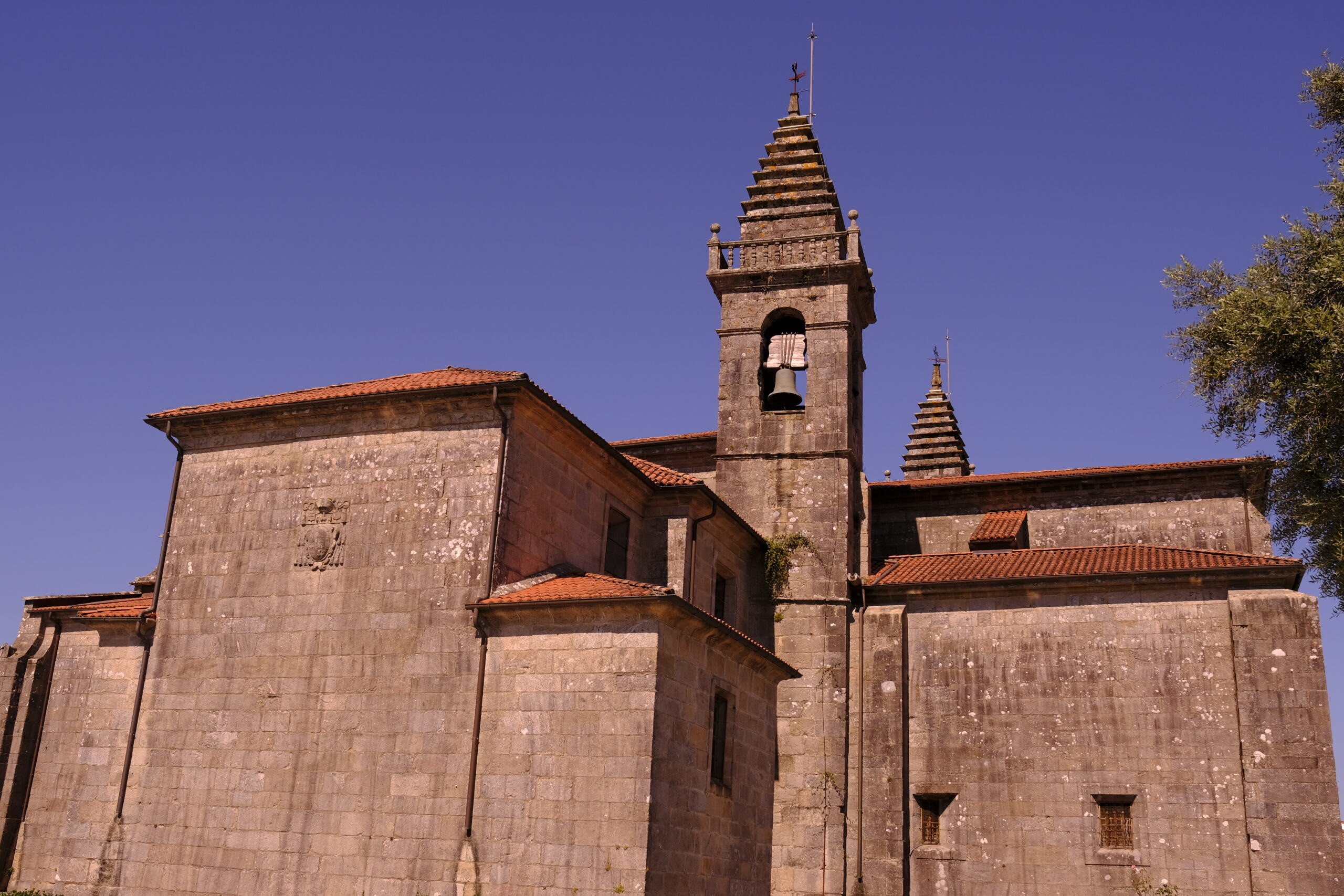
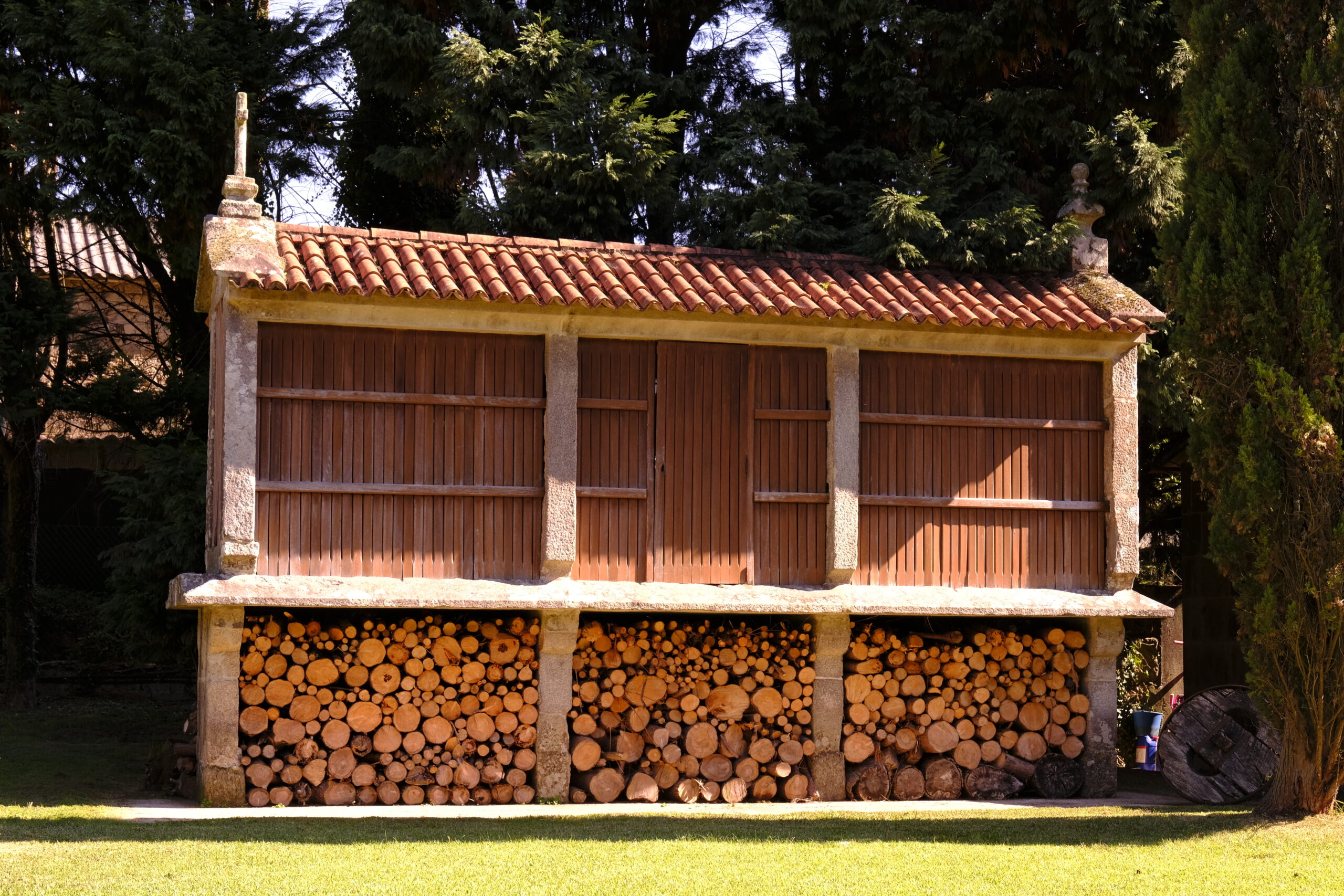
We are spending the next two nights at a boutique hotel called Casa A Pedreira. It is a beautiful property and dinner was excellent.
Homage to Padrón (Day Eight) – September 21, 2022
Today we reached Padrón, also known as “pedrón” in Galician, translating to “big stone.” Here, we paid homage to the rock where the boat carrying the remains of Saint James had been moored upon its arrival from Jerusalem, following his martyrdom. Padrón is not only steeped in religious history but also celebrated in culinary circles. The town is particularly famous for its petite green peppers, some of which pack a spicy kick, while others offer a milder taste. Miles walked – 15 miles.
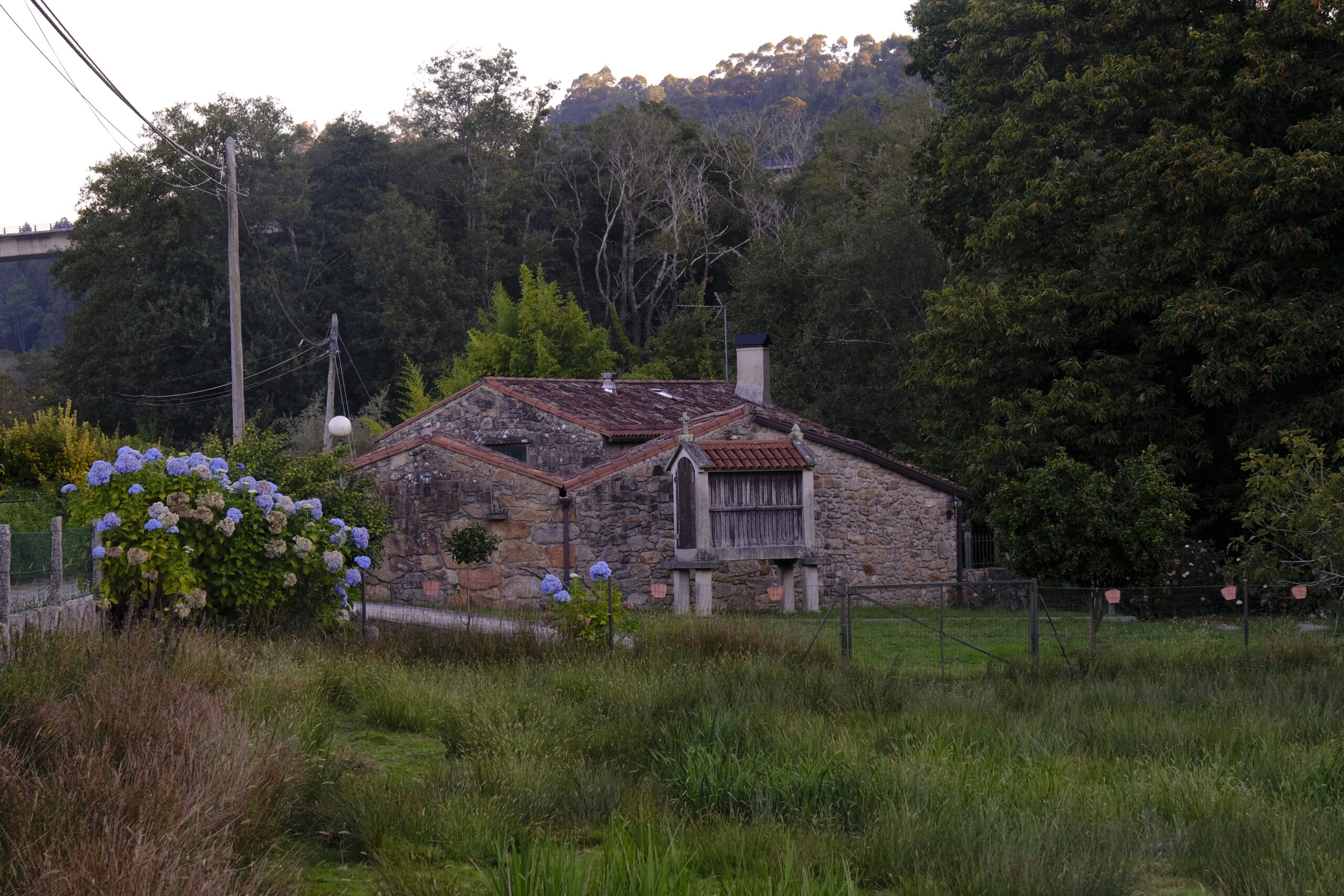
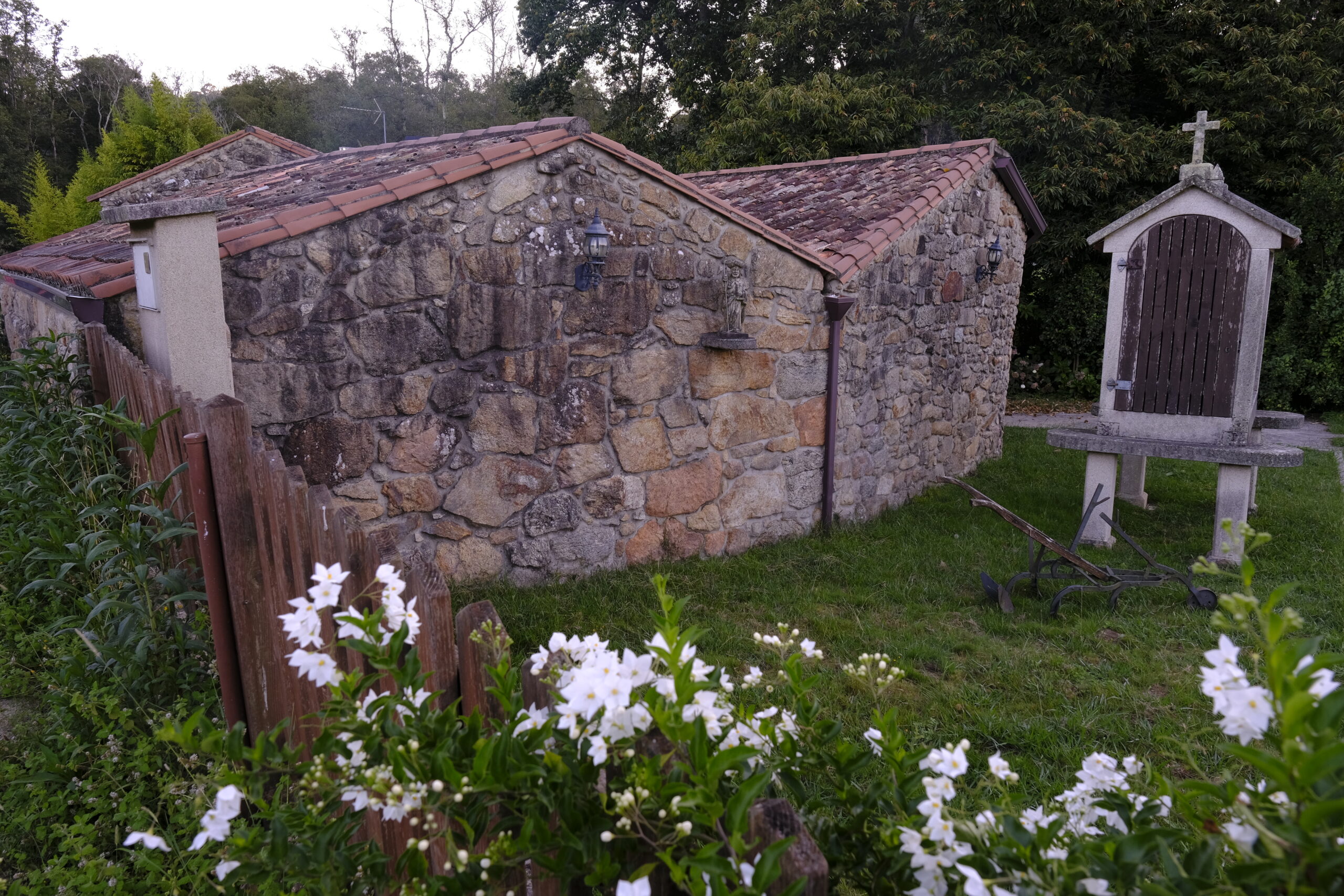
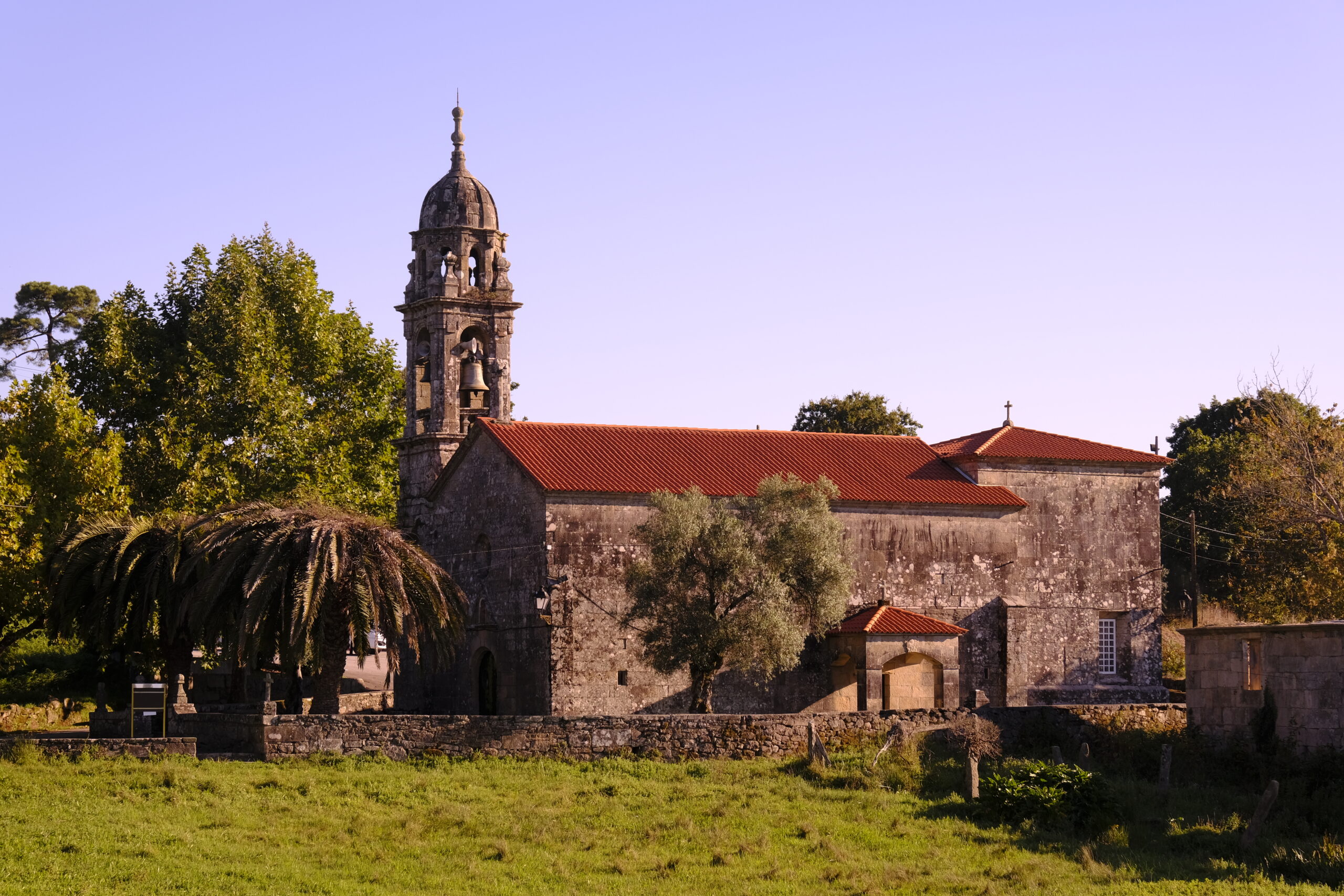
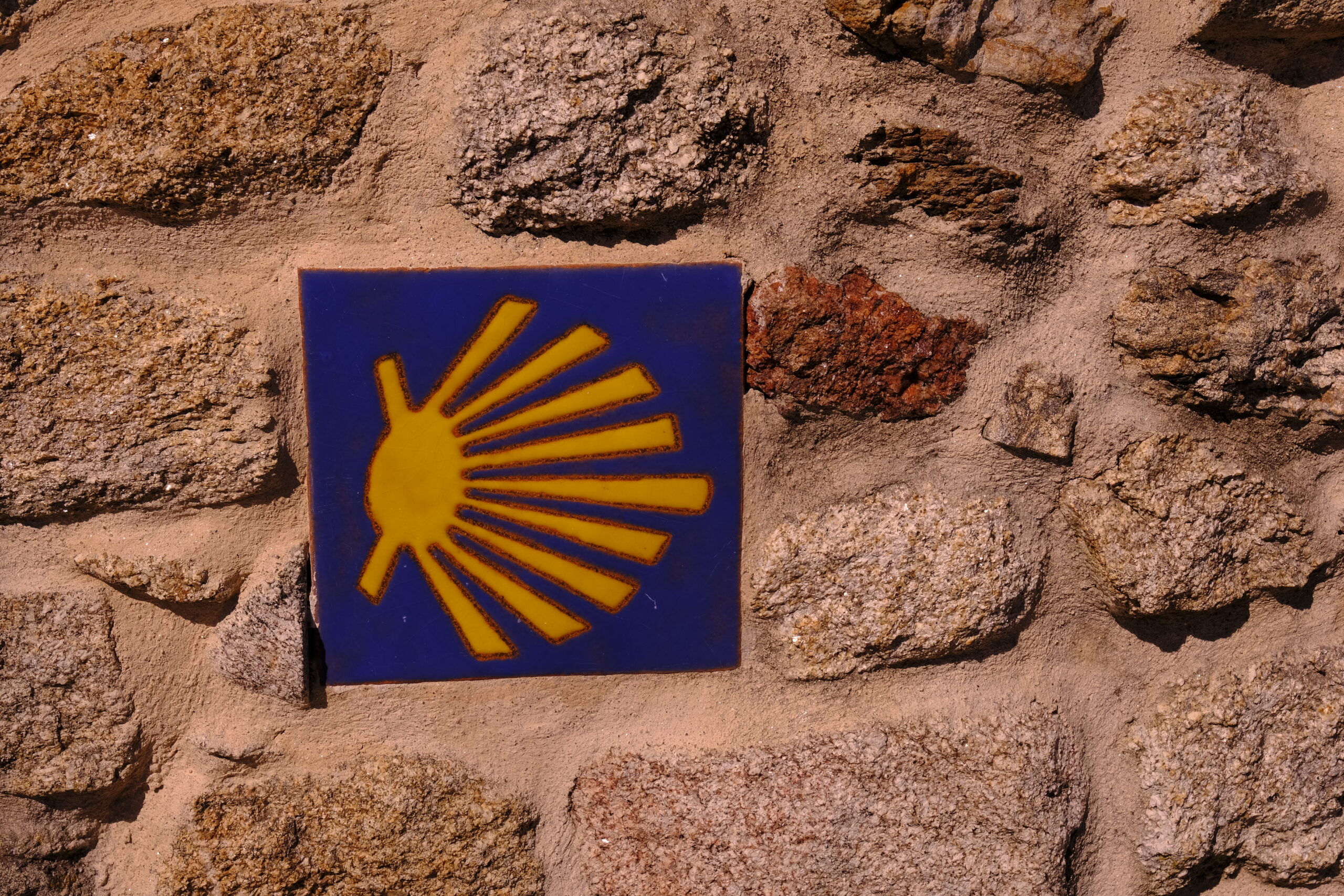
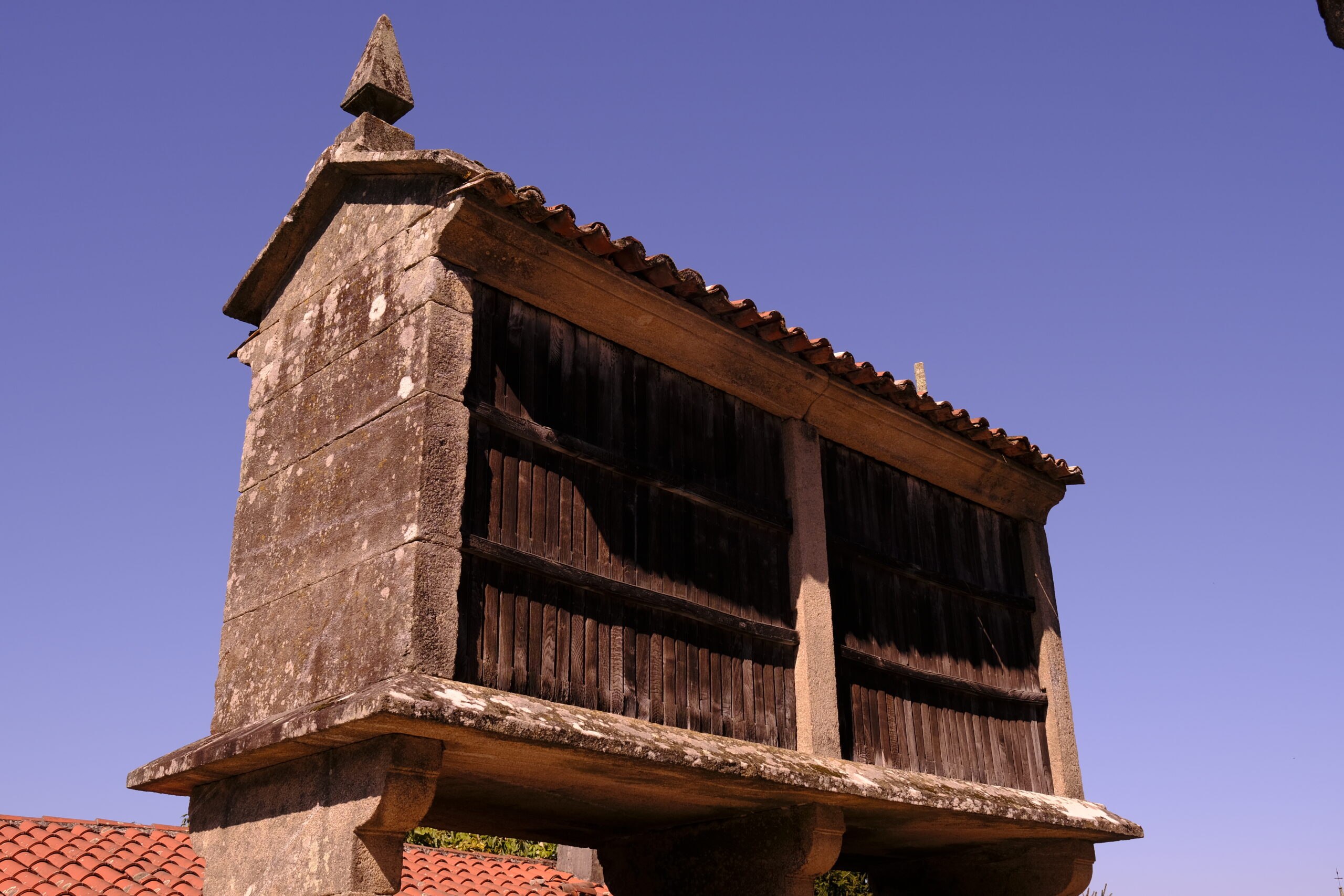
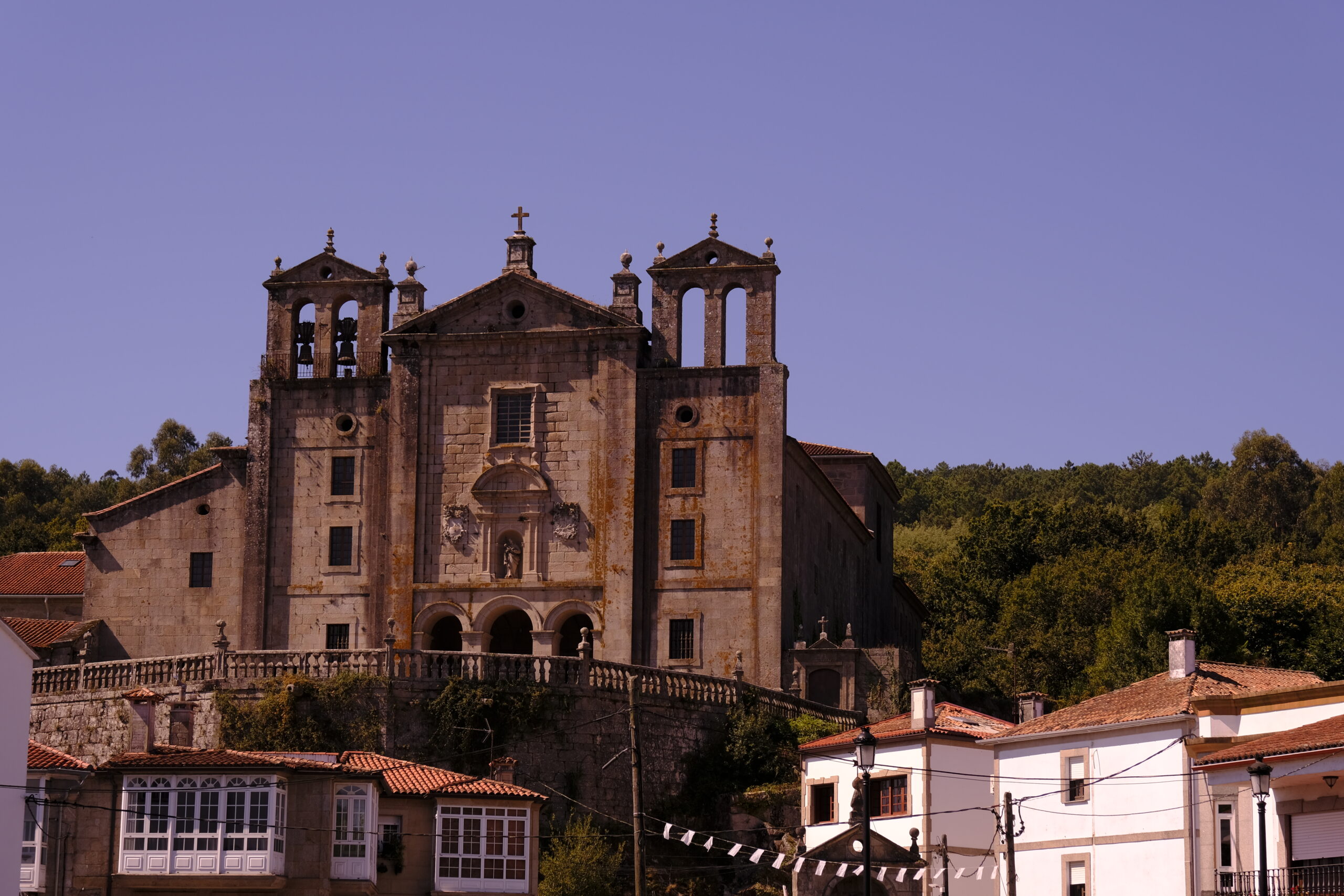
Tonight, we have drinks on the lawn and the Queimada ritual to ward off evil spirits with chanting and the burning of strong alcoholic spirit, coffee beans, sugar, and fruit peel.
Santiago de Compostela: Journey’s End (Day Nine) – September 22, 2022
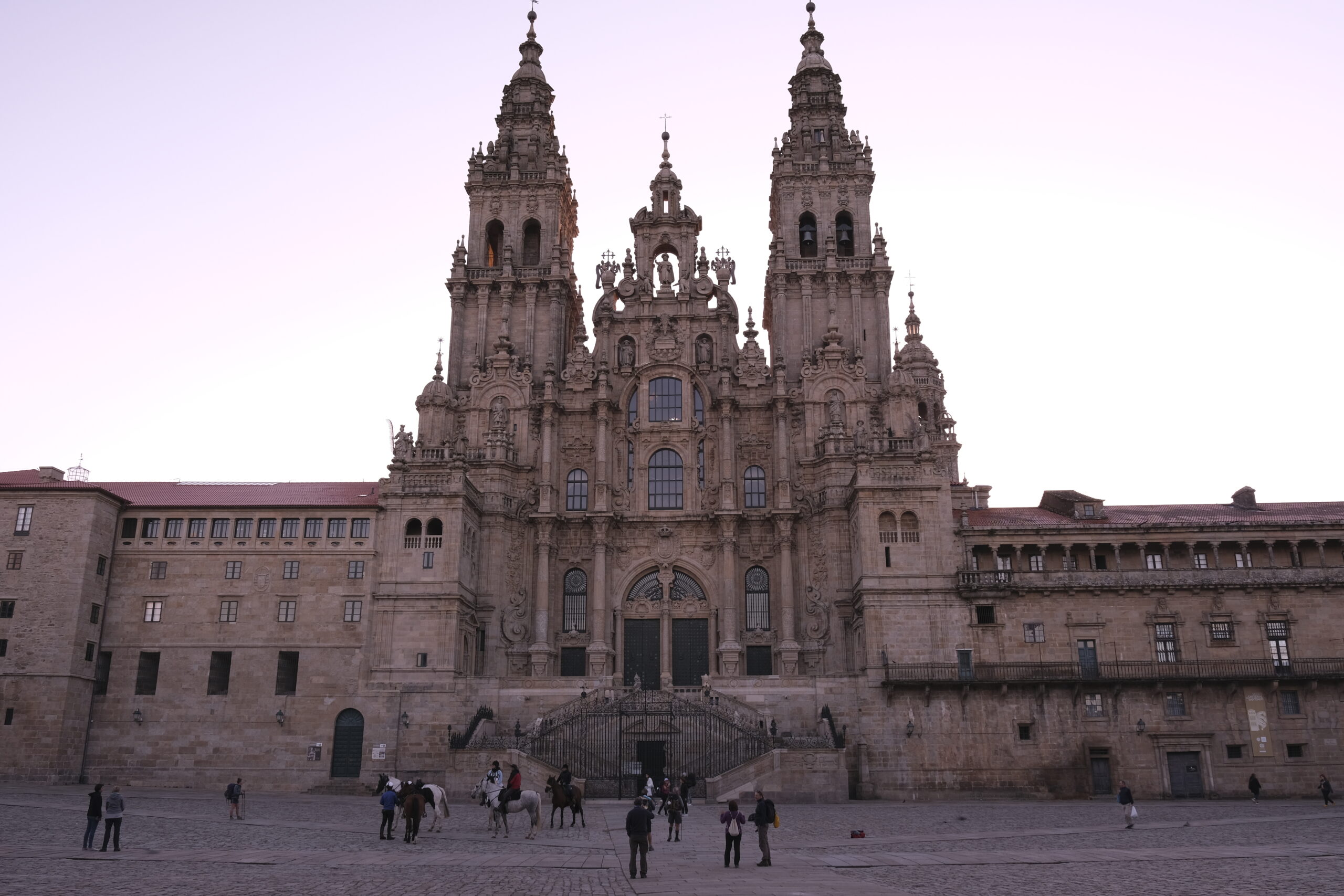
After nine days and covering over 100 miles, we reached Santiago de Compostela. The city welcomed us with its monuments, lively atmosphere, international pilgrims, and university students filling its medieval streets. Having obtained our Compostela certificates at the Pilgrims’ Office, we made our way to the Hotel Virxe da Cerca to prepare for our celebratory dinner. Today we walked 12 miles.
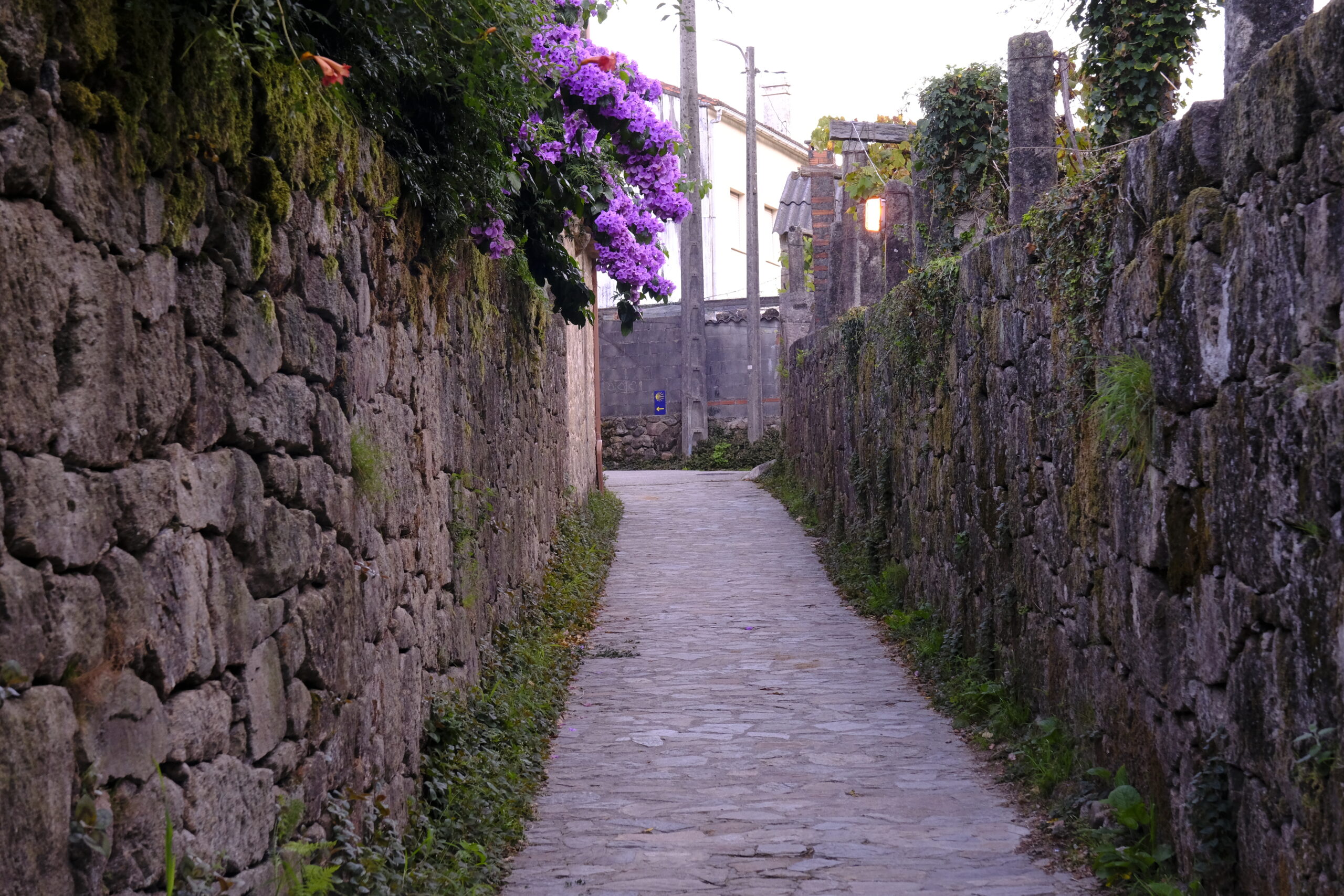
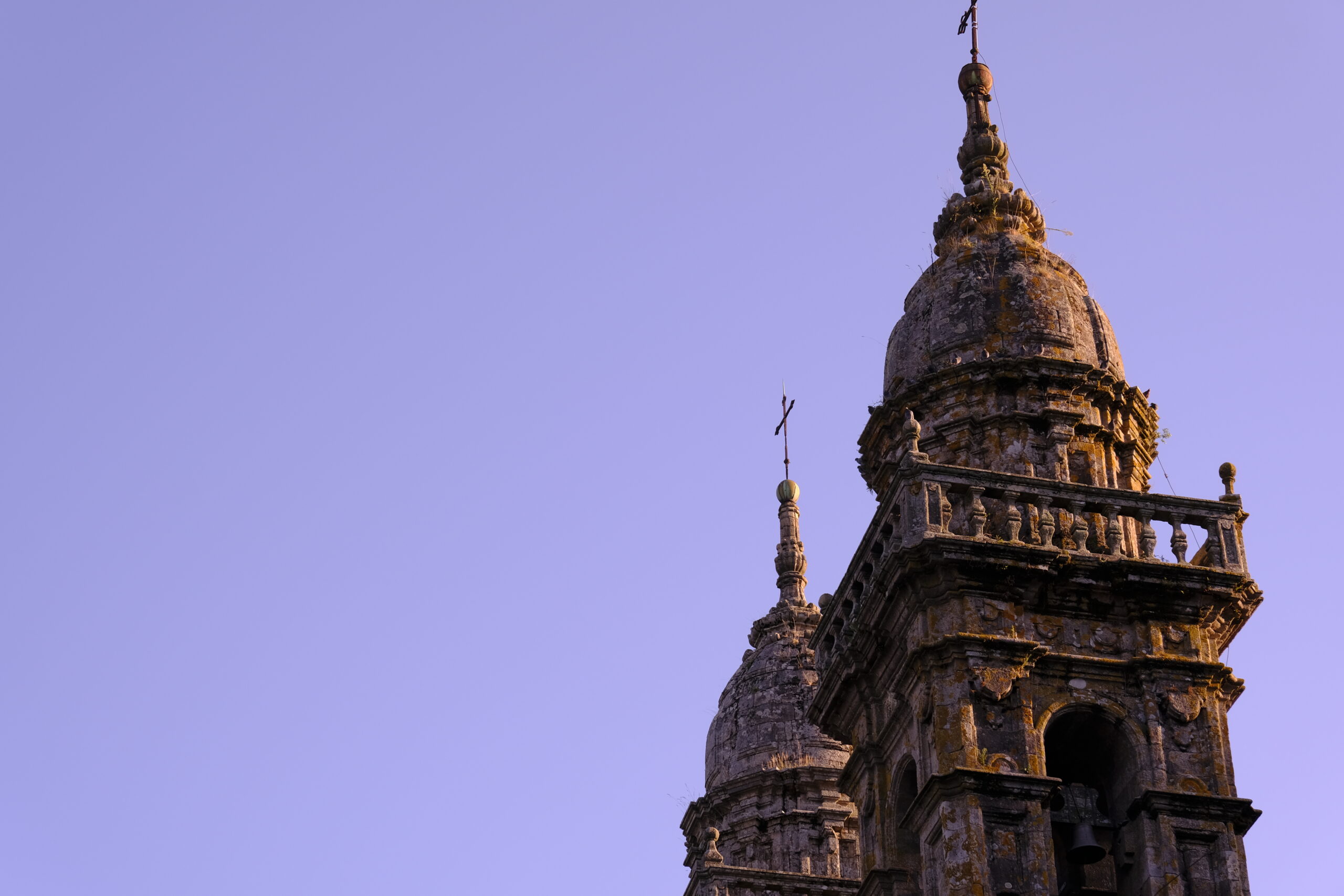


Cathedral Tour and Pilgrim’s Mass (Day Ten) – September 23, 2022
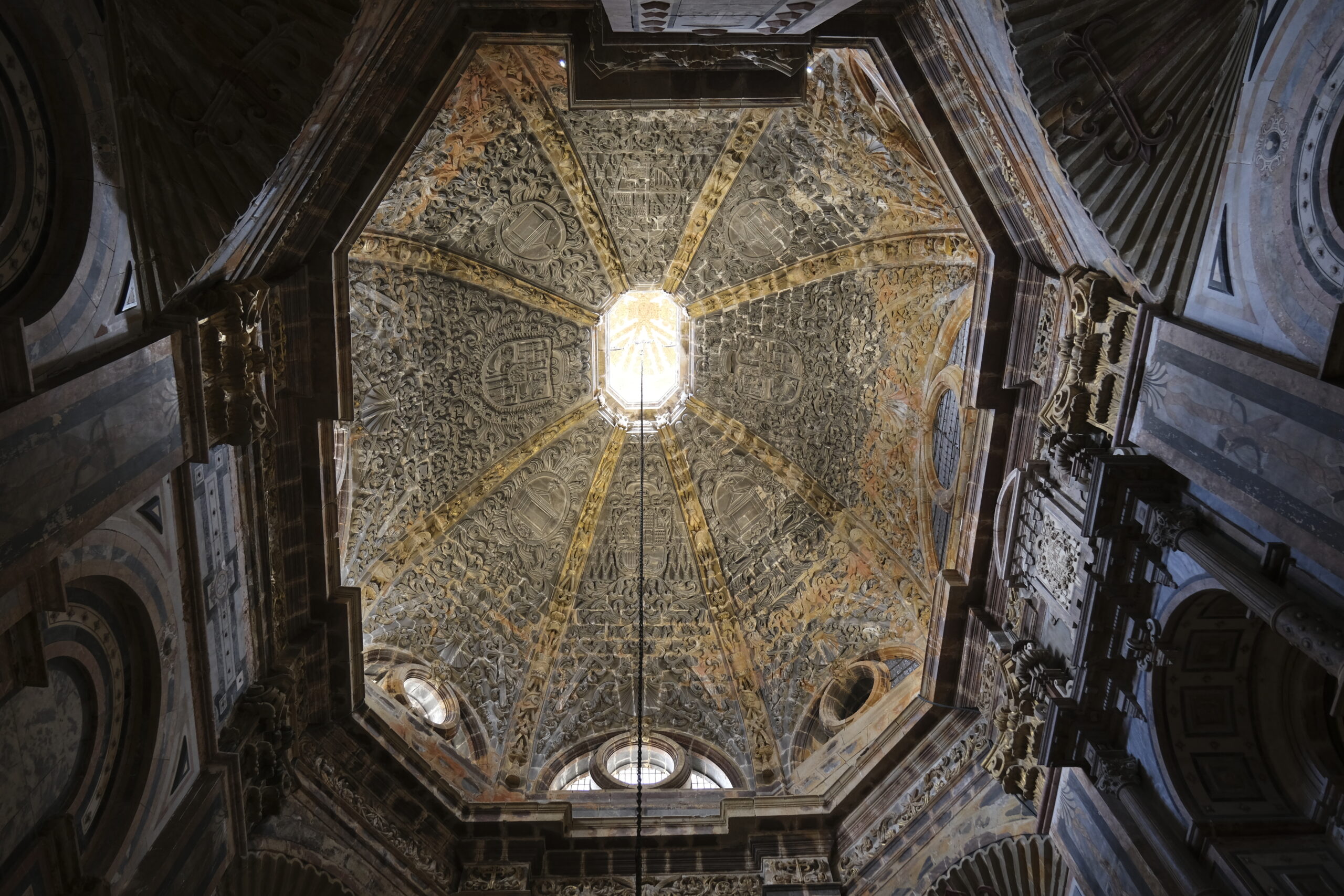
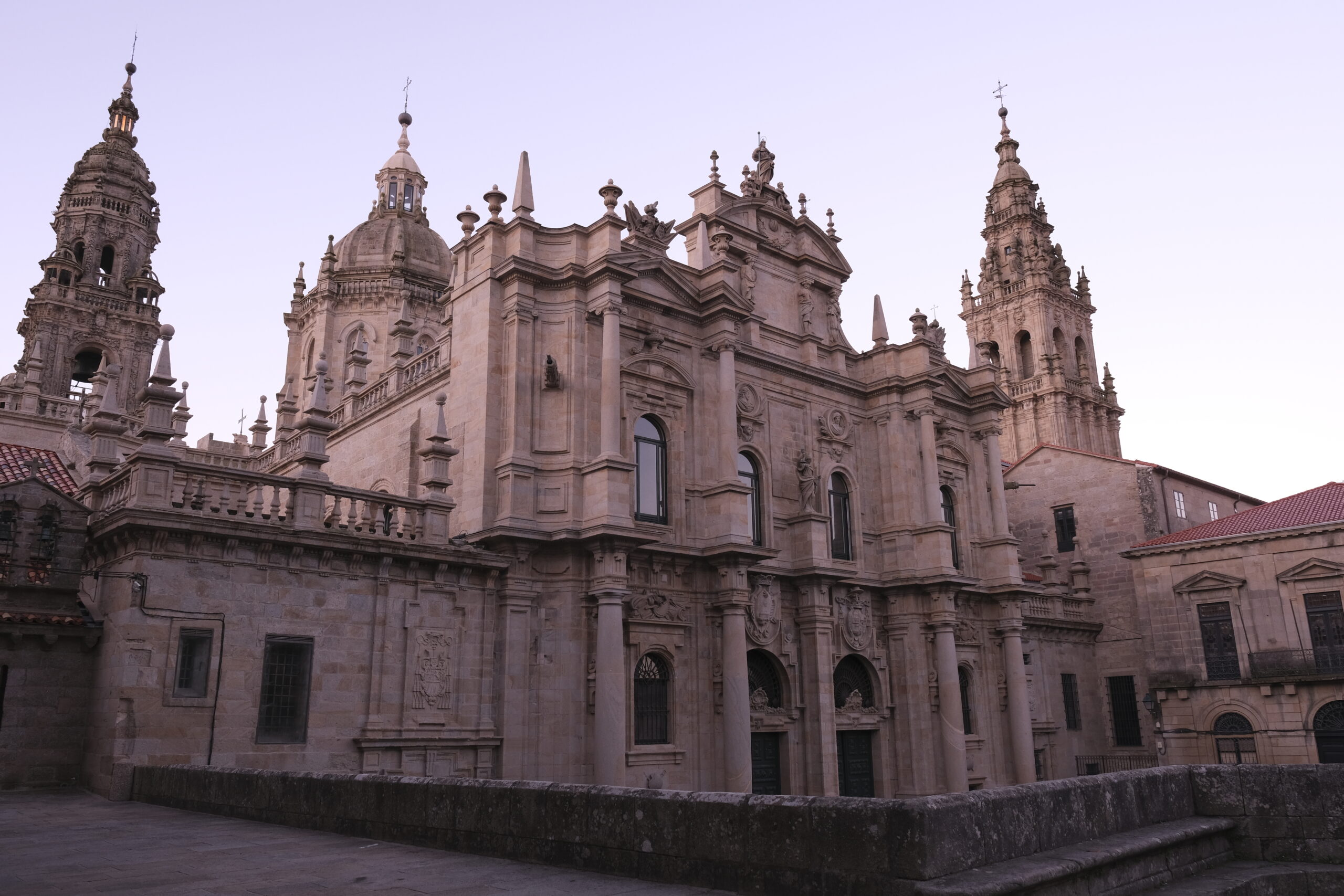
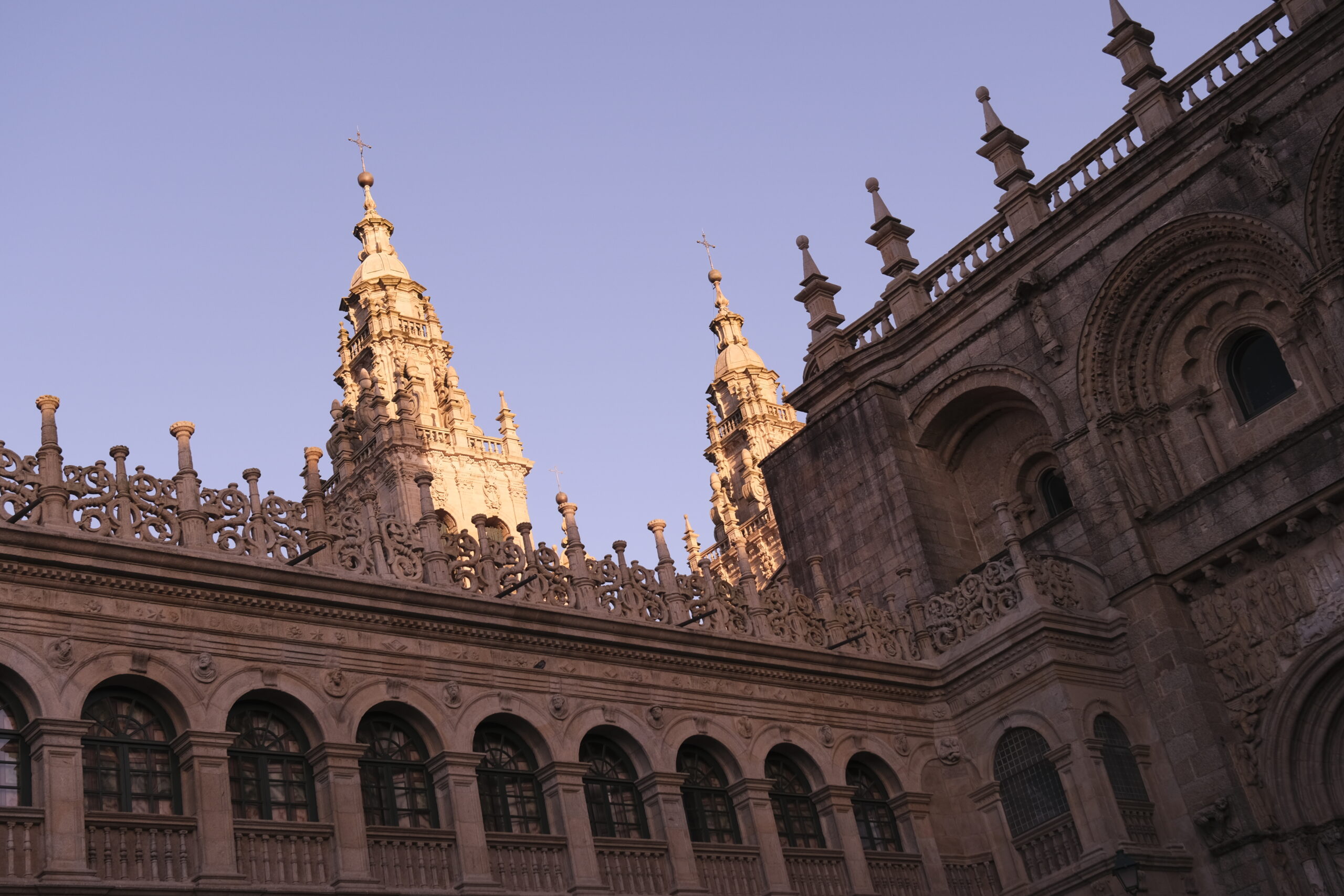
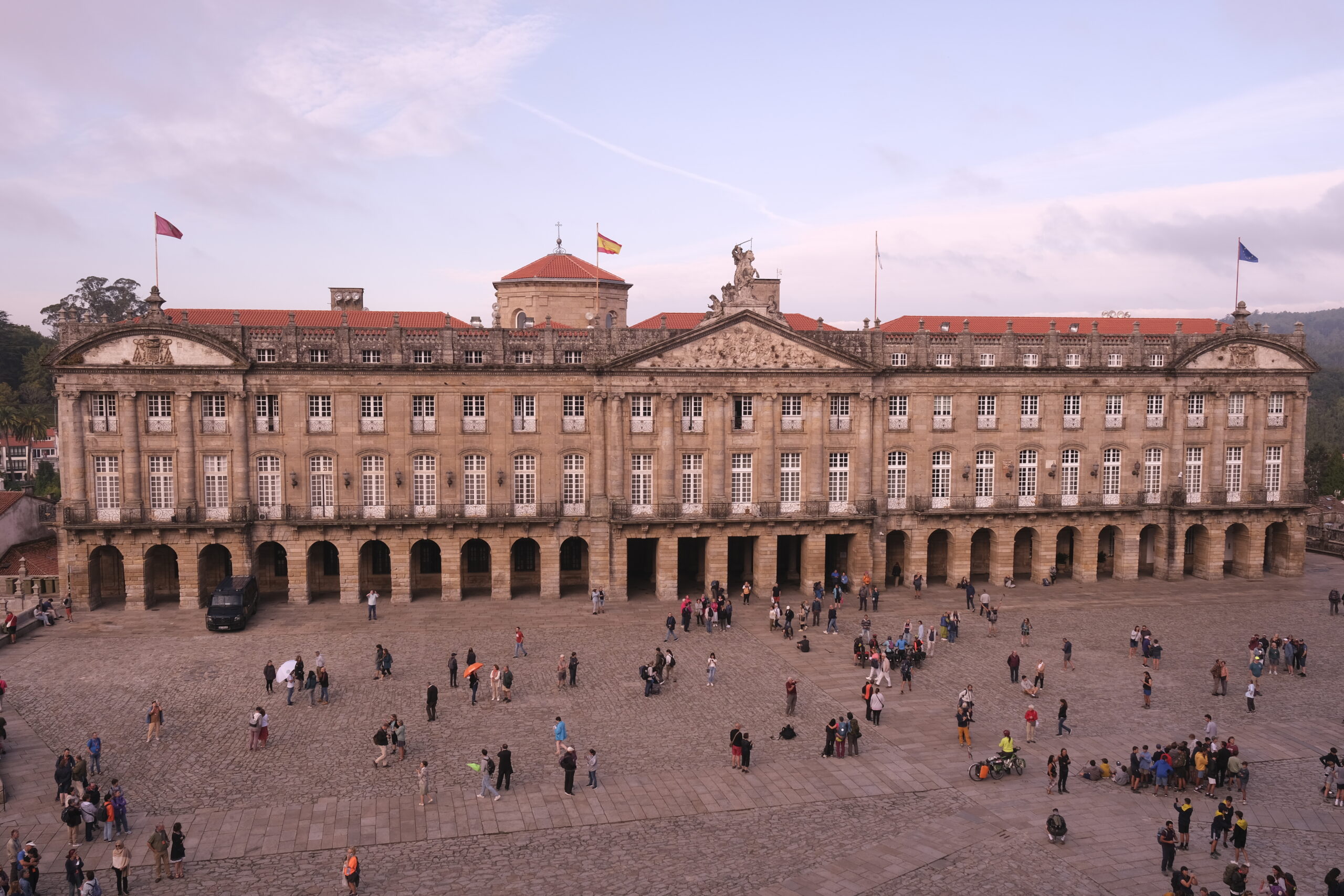
This morning, we toured the Cathedral with our guide Margariña, hoping to secure seats for the Pilgrim’s mass at noon. During our fast-paced tour, we explored the museum, founded in 1930 to preserve the church’s history. The museum showcased stone works from excavations, paintings, sculptures, and furniture spanning the 13-18th centuries. The third floor housed tapestries by Rubens, Teniers, and Goya, offering a fabulous view of Obradoiro Square and Santiago from the balcony.
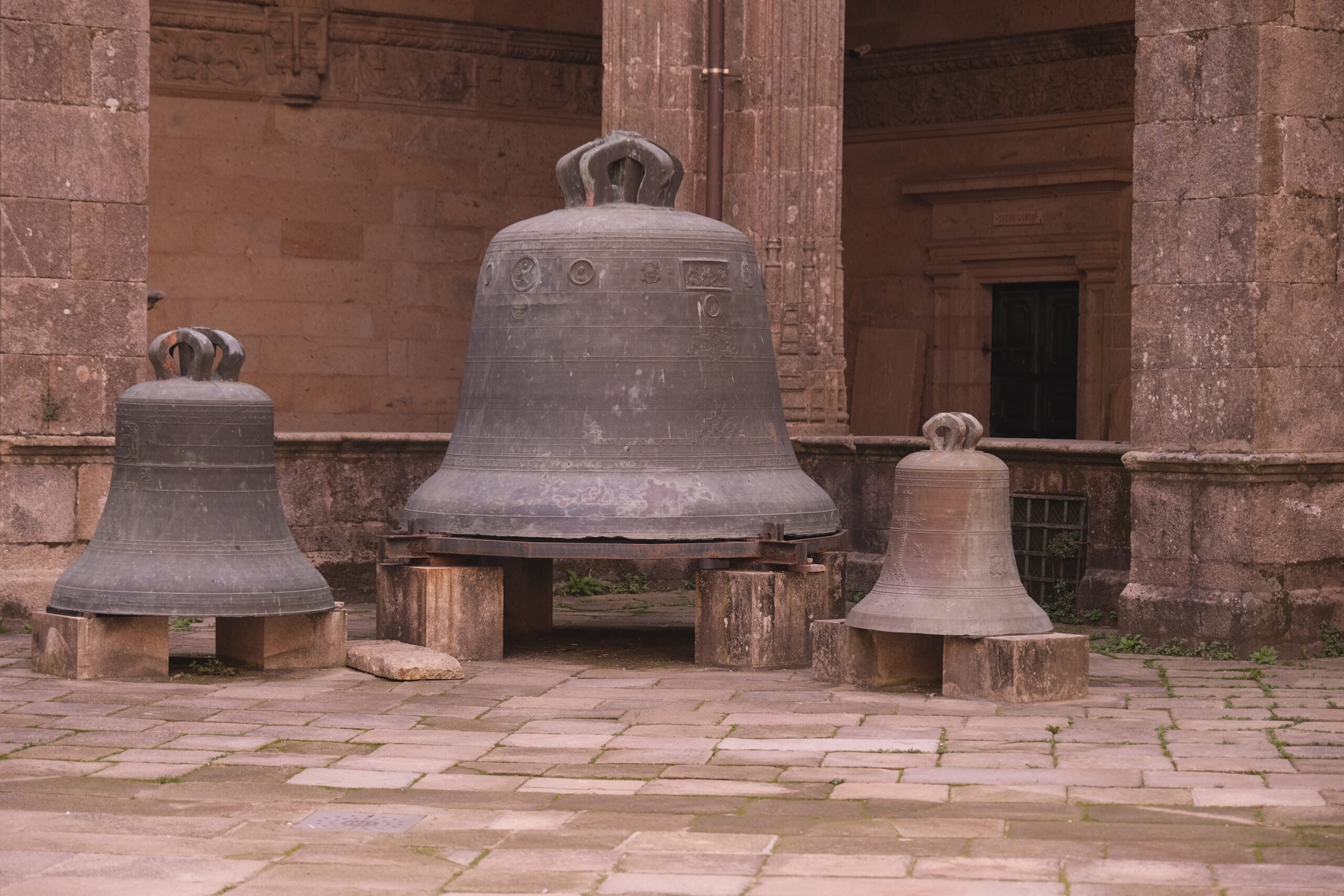
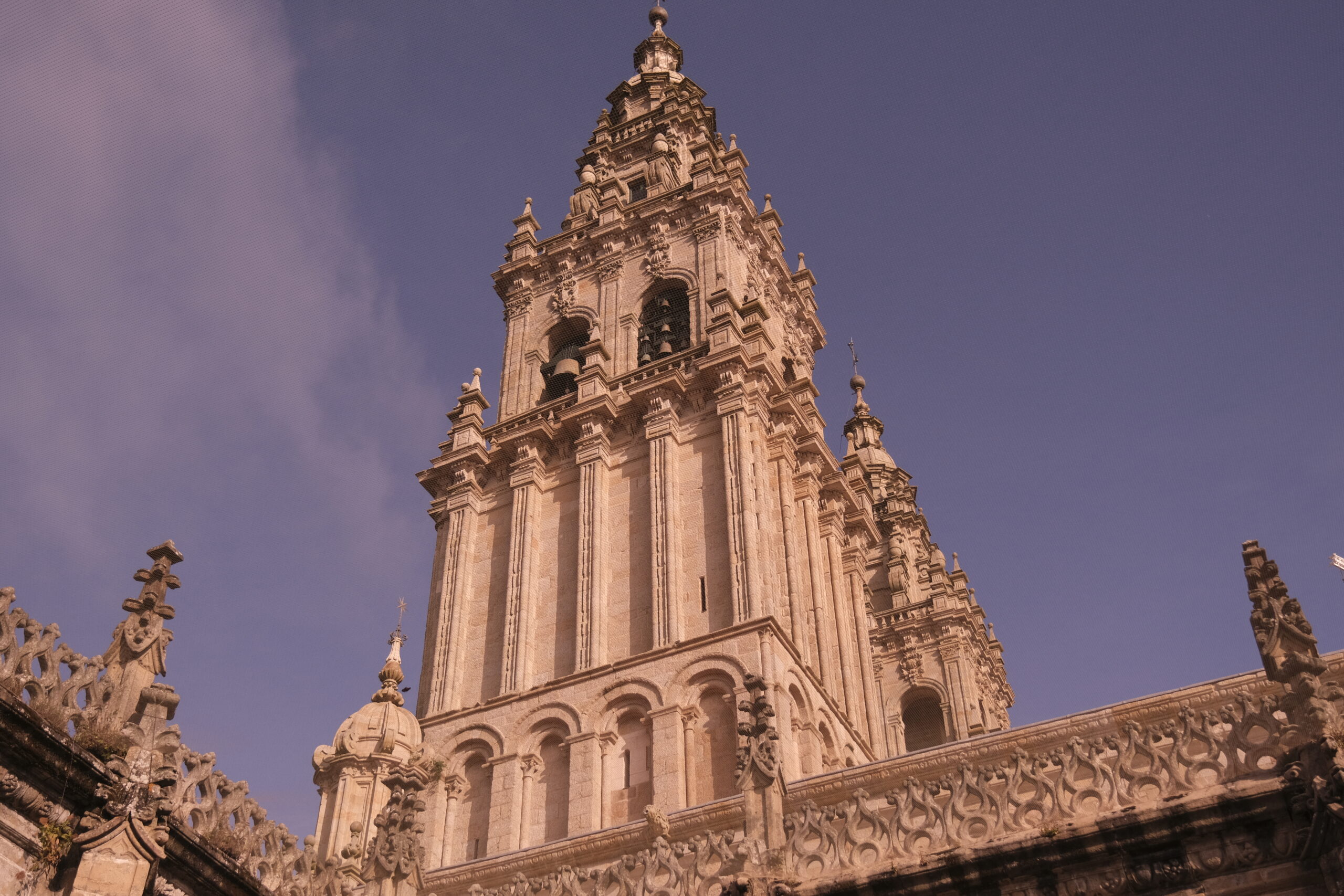
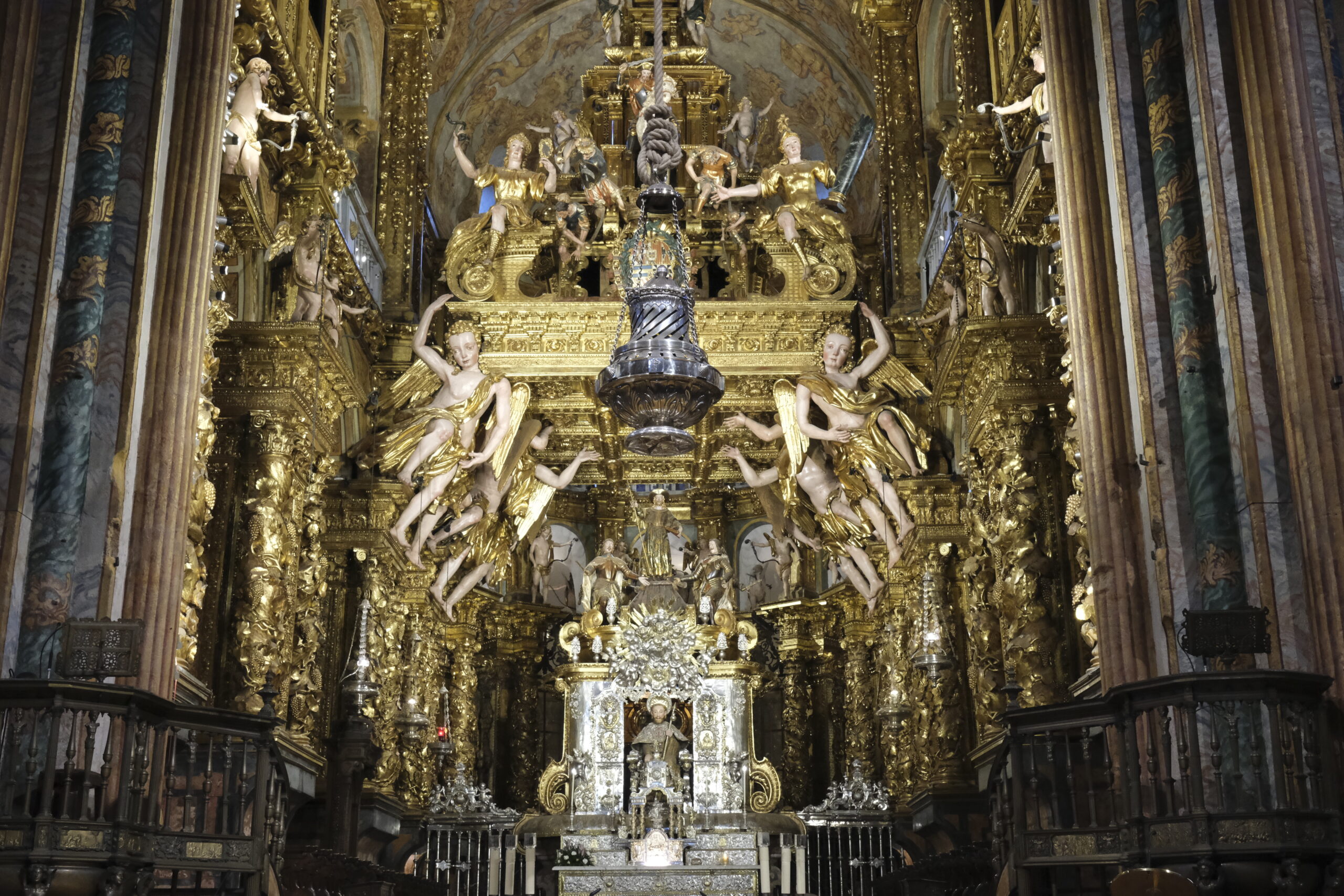
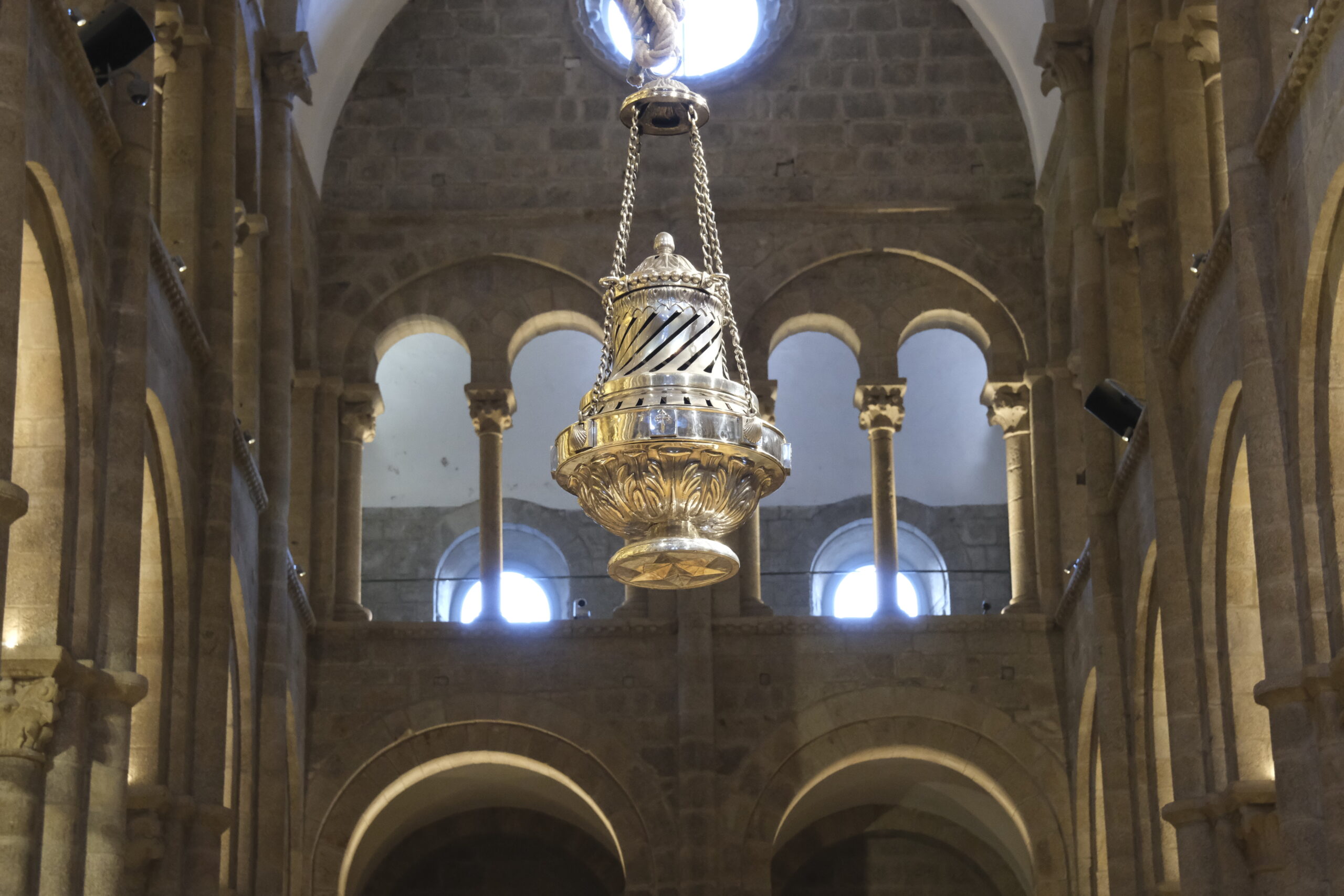
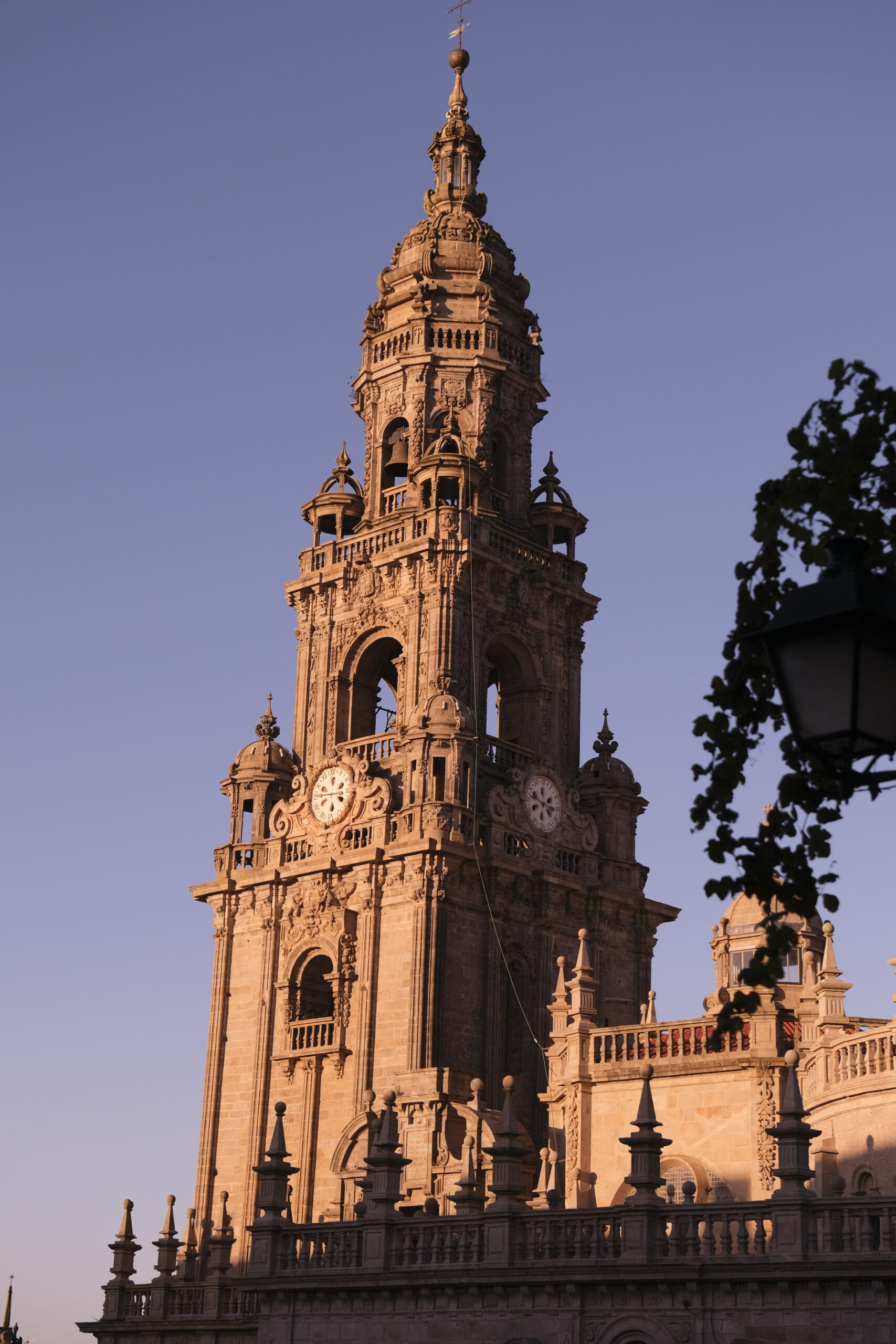
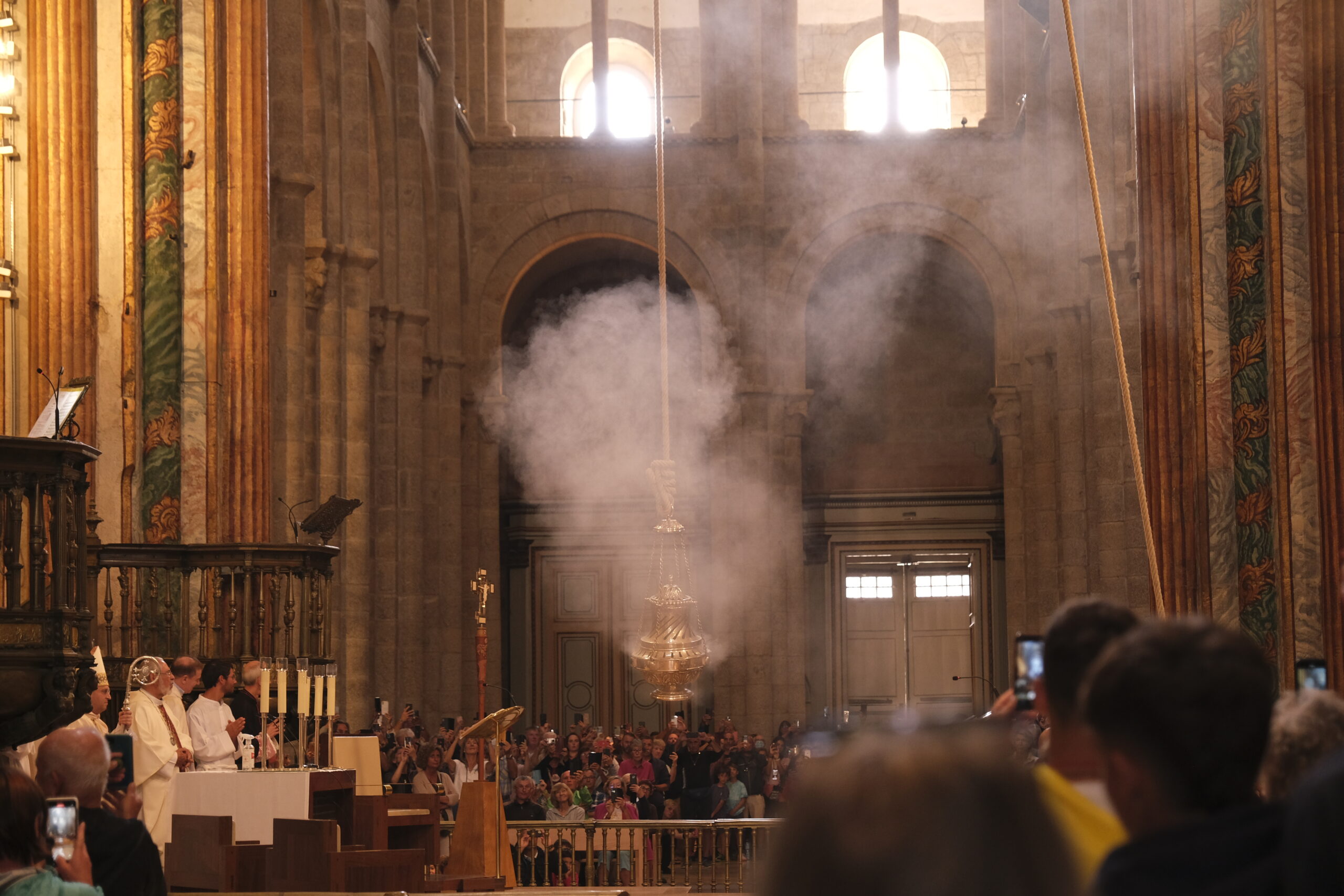
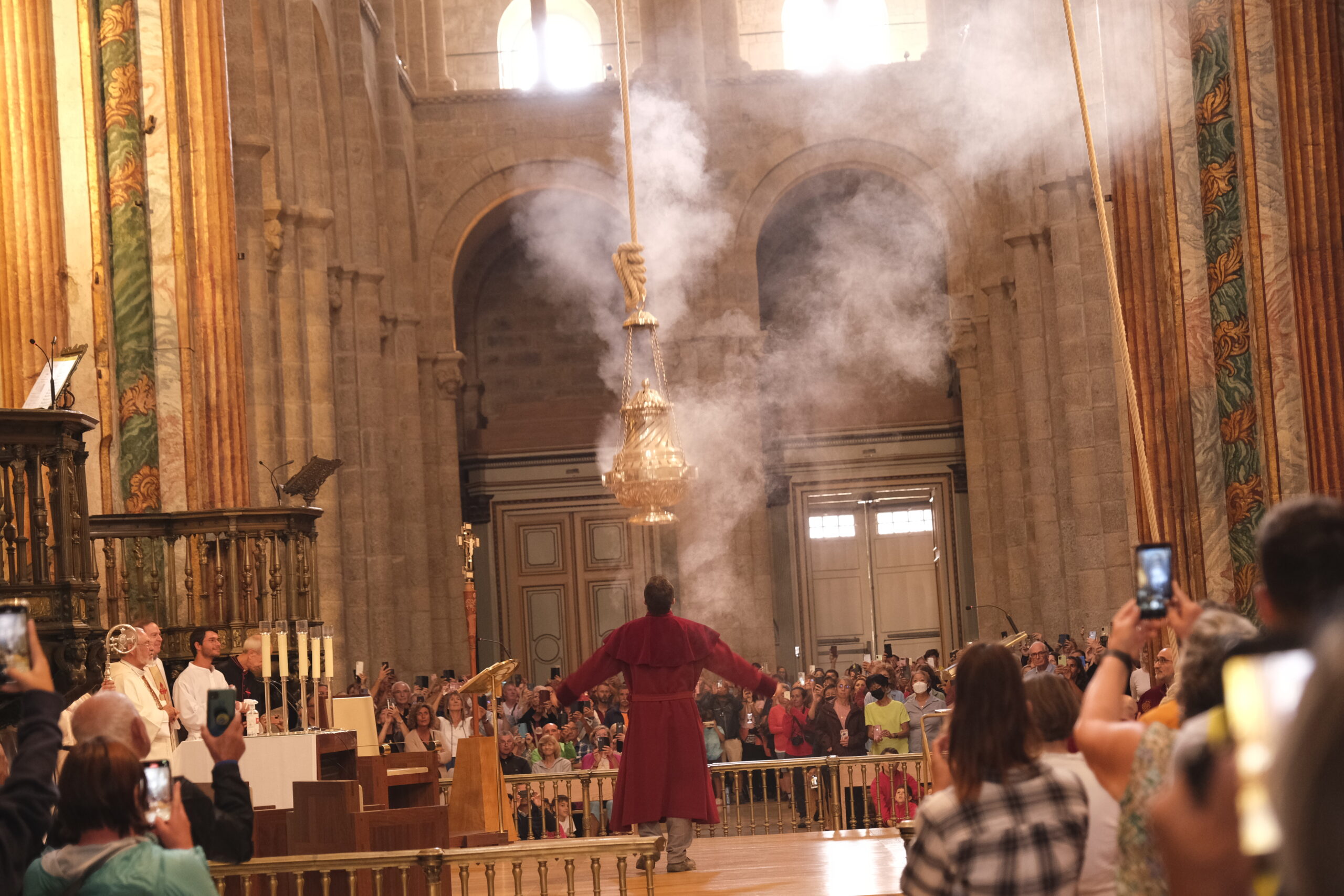
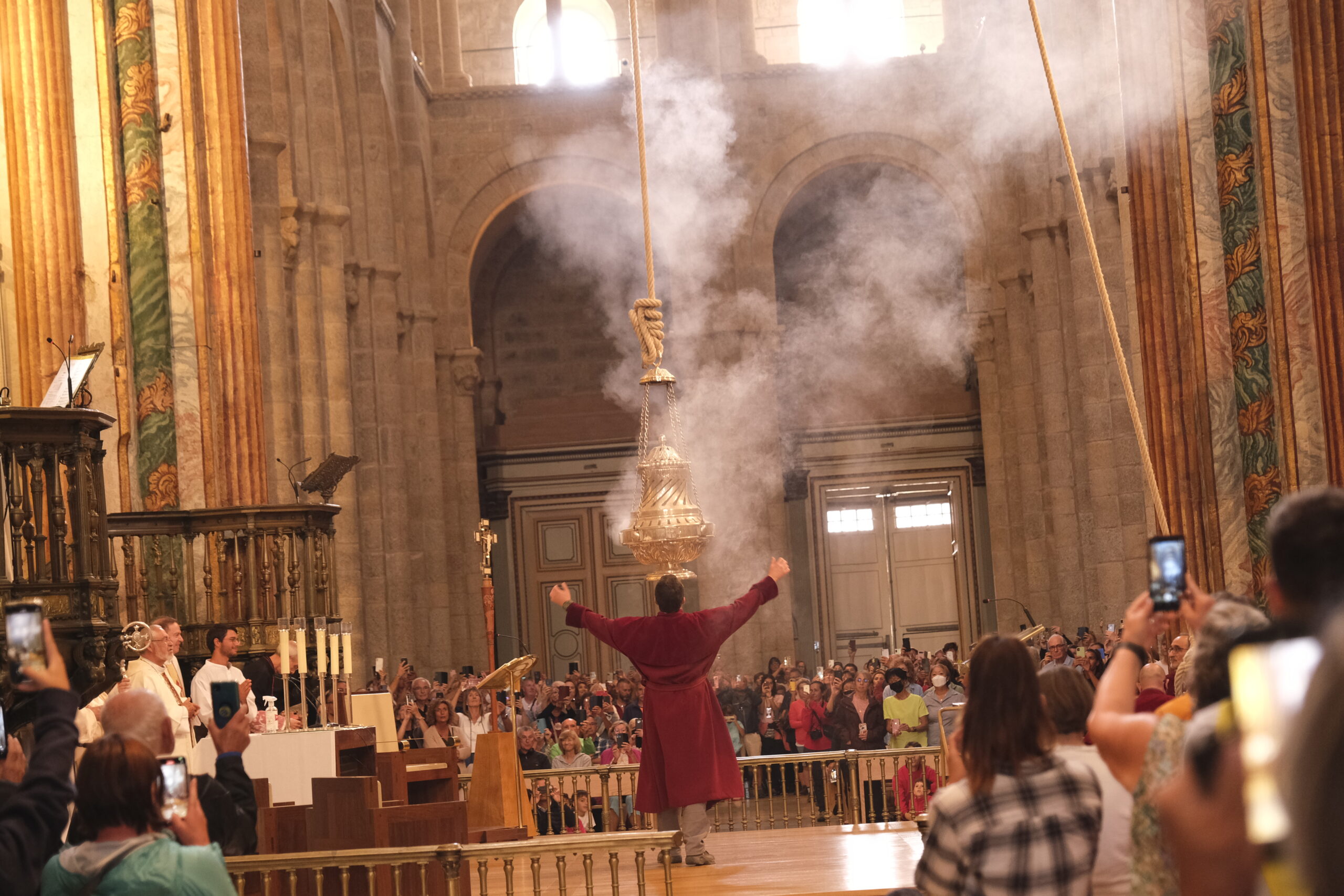
Our next stops included viewing mass artifacts, the cloister where priests are buried, and the original Berenguela bell from the Clock Tower. About 45 minutes before the mass, we secured seats in the transept for a good view of the celebrants and the botafumeiro.
The botafumeiro, an enormous incense burner, swung during the mass, a tradition dating back to the 13th century. The ornate silver and gold botafumeiro of the 16th century vanished during the Peninsula War. The mass was enjoyable, but we observed that the traffic flow for communion and collection of donations could be improved.
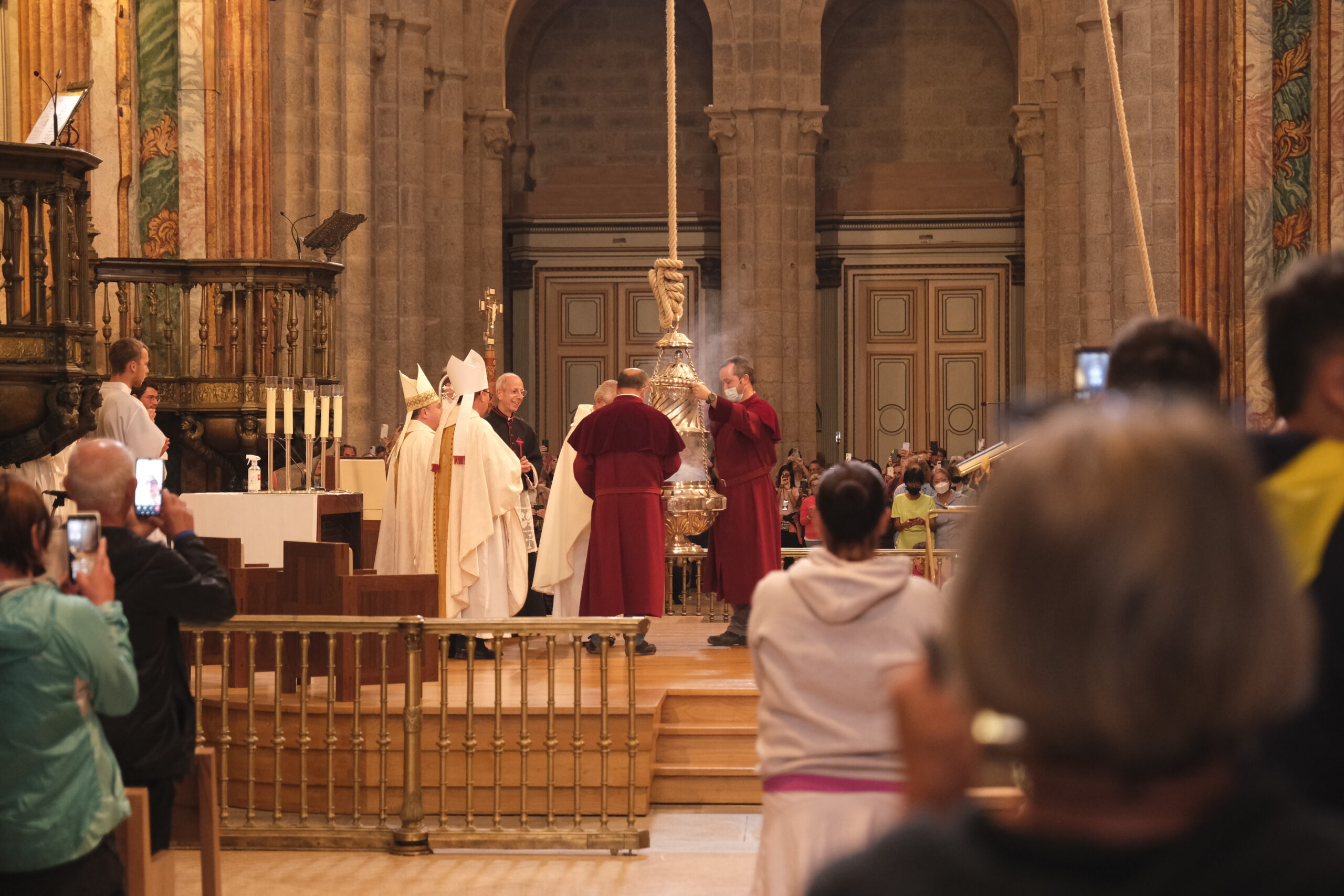
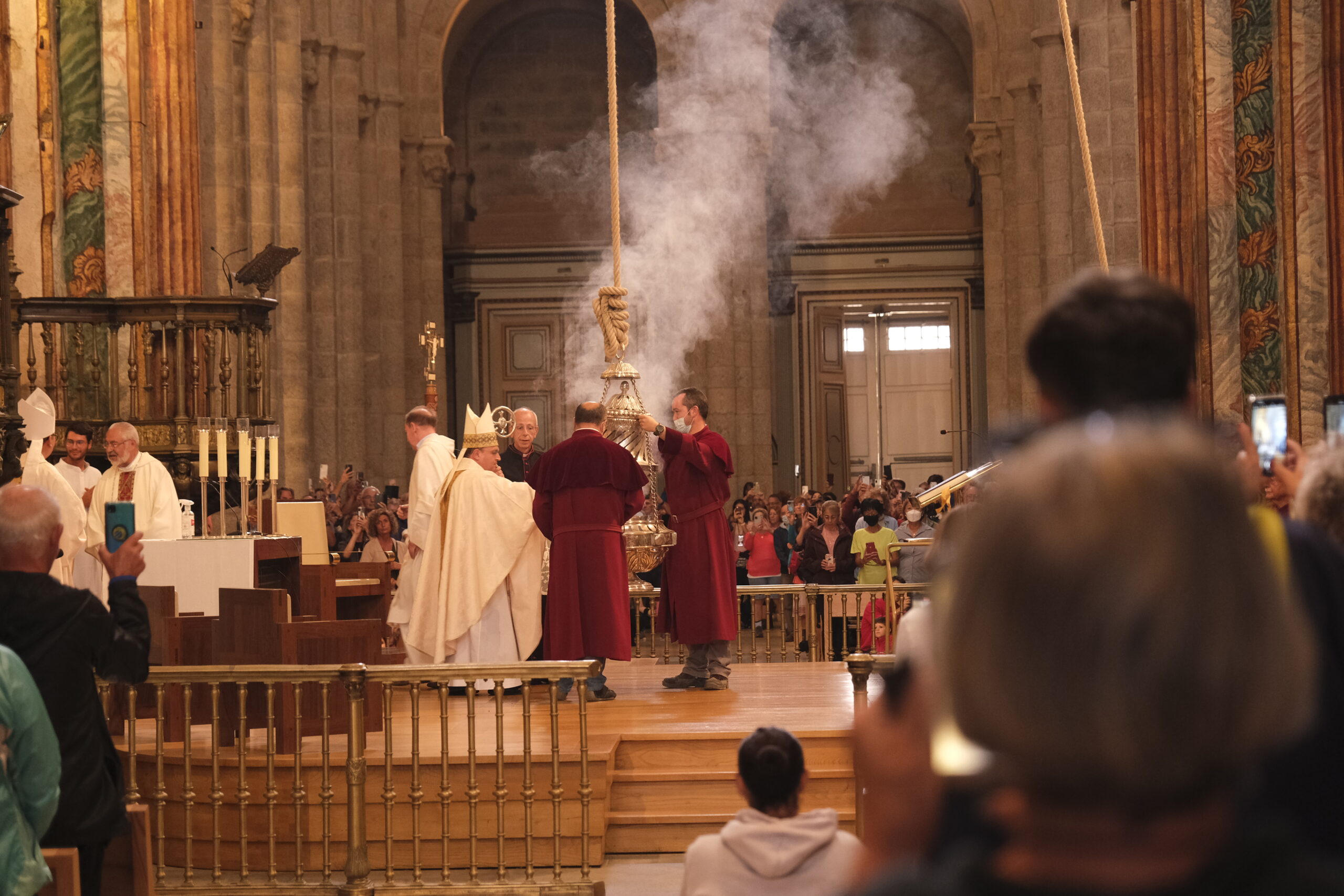
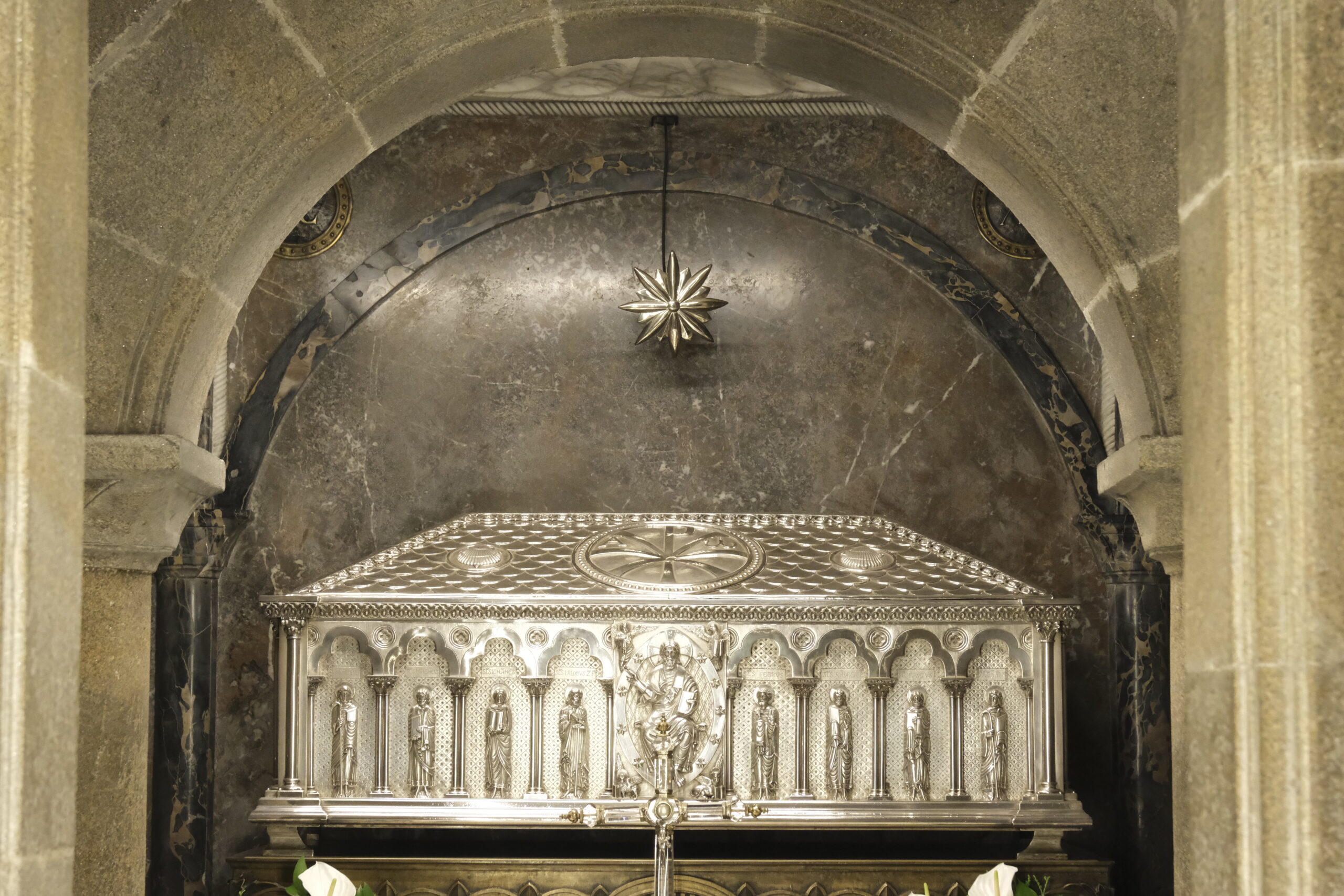
Since our last visit here in 2014, we noted changes in the pilgrimage ritual; there’s no longer a climb to hug St. James and visit the crypt. Instead, visitors can only view the silver tomb containing the bones of St. James and his disciples Athanasius and Theodore.
So what is the story of St. James? He was one of two apostles named James. He was James the Elder, son of Zebedee and Salome. He was sent to Iberia to convert the pagans but returned to Palestine after about two years because he was not successful. On his return, he was beheaded by Herod Agrippa, whereupon his disciples placed his body on a rudderless boat. Somehow the boat ended up on the coast of Galicia. His disciples asked some say a widow others say the Queen of the Celts for his body to be transported for burial. She gave them two wild bulls in mockery. They, the wild bulls, were transformed into oxen and took the body to its current location for burial. A mausoleum was erected over the burial site and his two disciples, Athanasius and Theodore, were buried there. The mausoleum lay forgotten until the ninth century when a hermit claimed he saw a field of stars (Compostela) in the forest at night. A bishop called Teodomiro proclaimed the site as the burial place of James the Elder and had a hermitage built over it. In the meanwhile, Alfonso II the King of Asturias declared James the Elder as the patron saint of Spain and July 25 as his feast day. The saint kept performing miracles and between the 11th and 13th centuries the number of pilgrims grew to between 250,000 to about 500,000 every year. A cathedral was needed to accommodate all the pilgrims, and the rest, as they say, is history.
A Relaxing Day in Santiago – September 24, 2022
After a sumptuous breakfast, we walked around the town visiting sites we were unable to see the last time we were in Santiago. We once again went back to the Cathedral, this time to view the silver tomb containing the relics of St. James. The highlight of the day was a tapas lunch. We then started preparing for our journey back home.