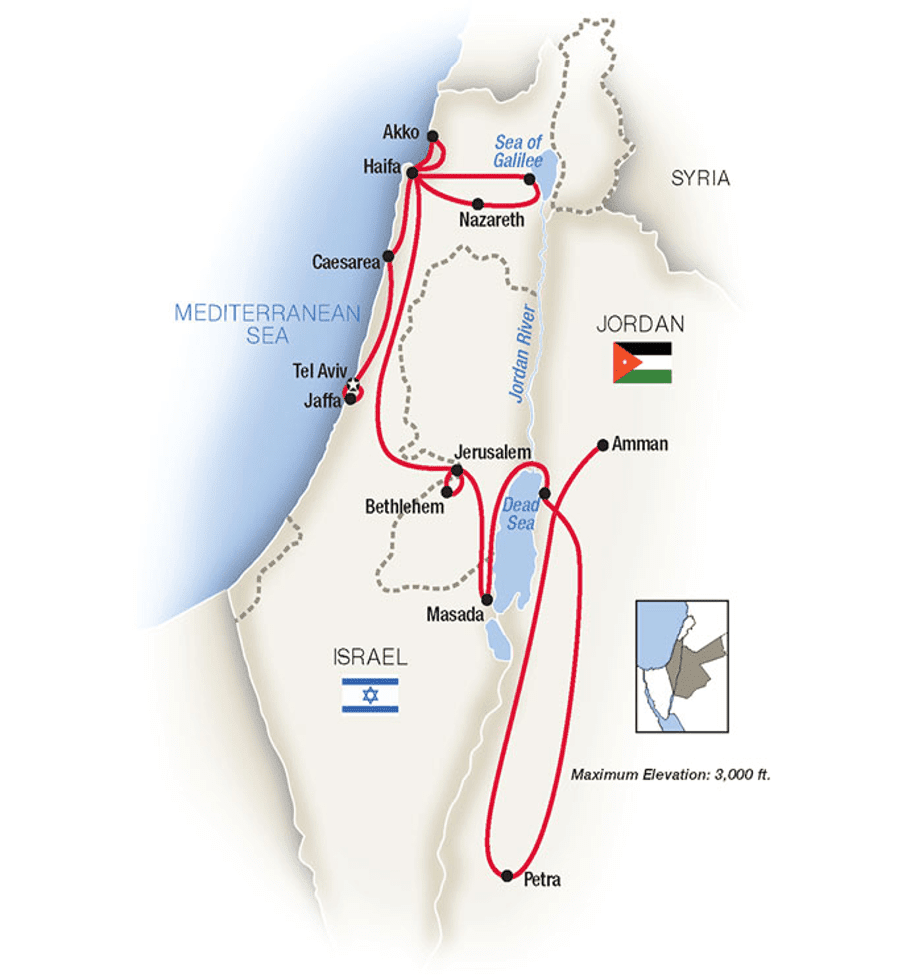
Newark to Tel Aviv – October 16, 2022
Albert and I flew out of Newark on Turkish Airlines for our trip to Israel and Jordan. It was our second trip on Turkish, the last having been on our travels to East Africa. We thought very highly of it previously, and they did not disappoint.
Arrival in Tel Aviv – October 17, 2022
Arrived very late on Monday evening at Tel Aviv’s Ben Gurion Airport and had an expeditor get us through immigration and customs. About an hour later we were in our hotel, the David Intercontinental, facing the Mediterranean Sea. Heaven!
Culinary Discoveries and Cultural Contrasts in Tel Aviv – October 18, 2022
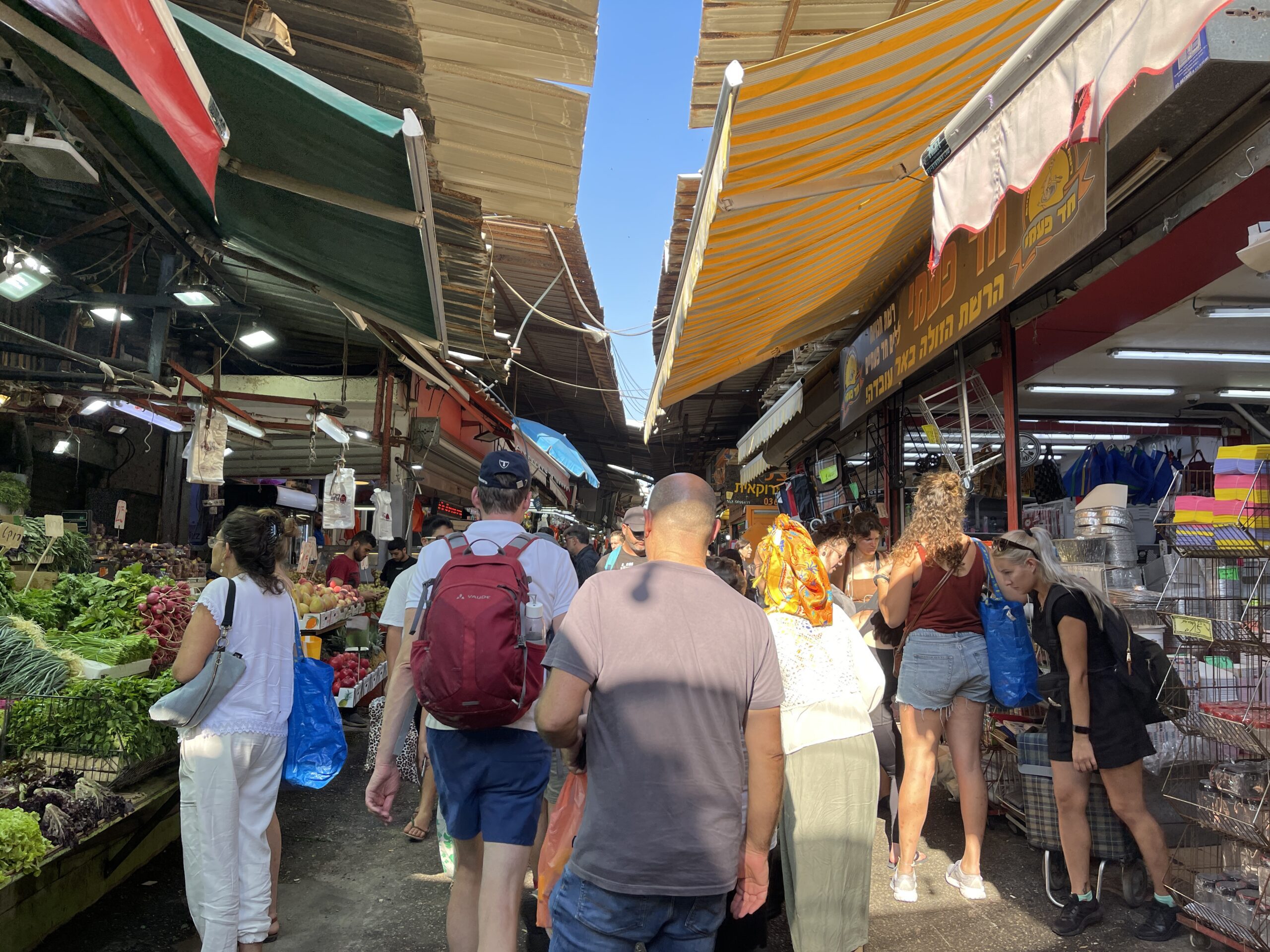
Had a fabulous breakfast and then went exploring Carmel Market, an outdoor market that sells everything from fruits and vegetables to spices, kitchenware, clothing, and Judaica; and Nahalat Binyamin, where a local artist market is open only on Tuesdays and Fridays. What we found eye raising in Carmel Market were the very short shorts that all the sweet young things were wearing. Apparently, Israel is conservative but just not in Tel Aviv.
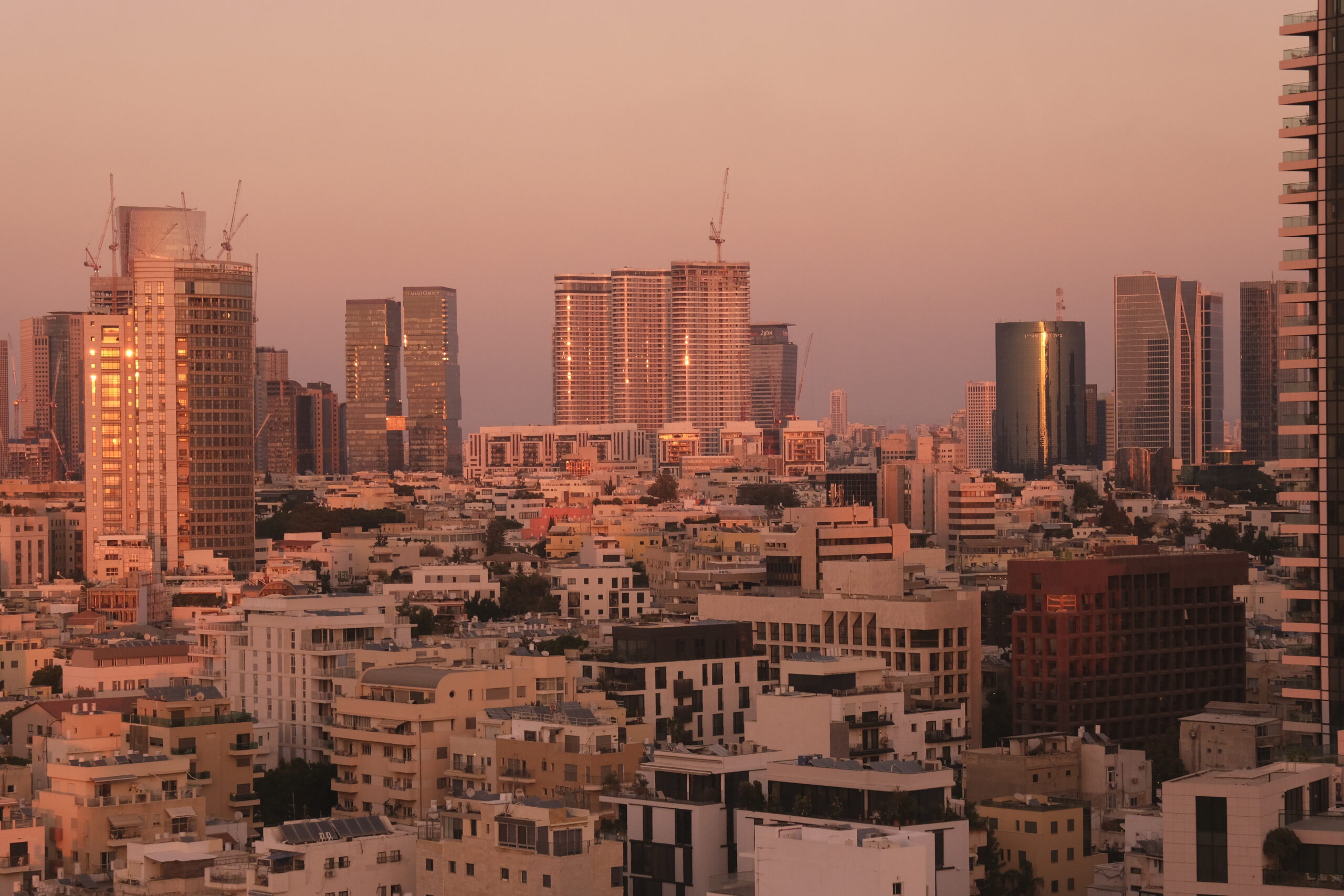
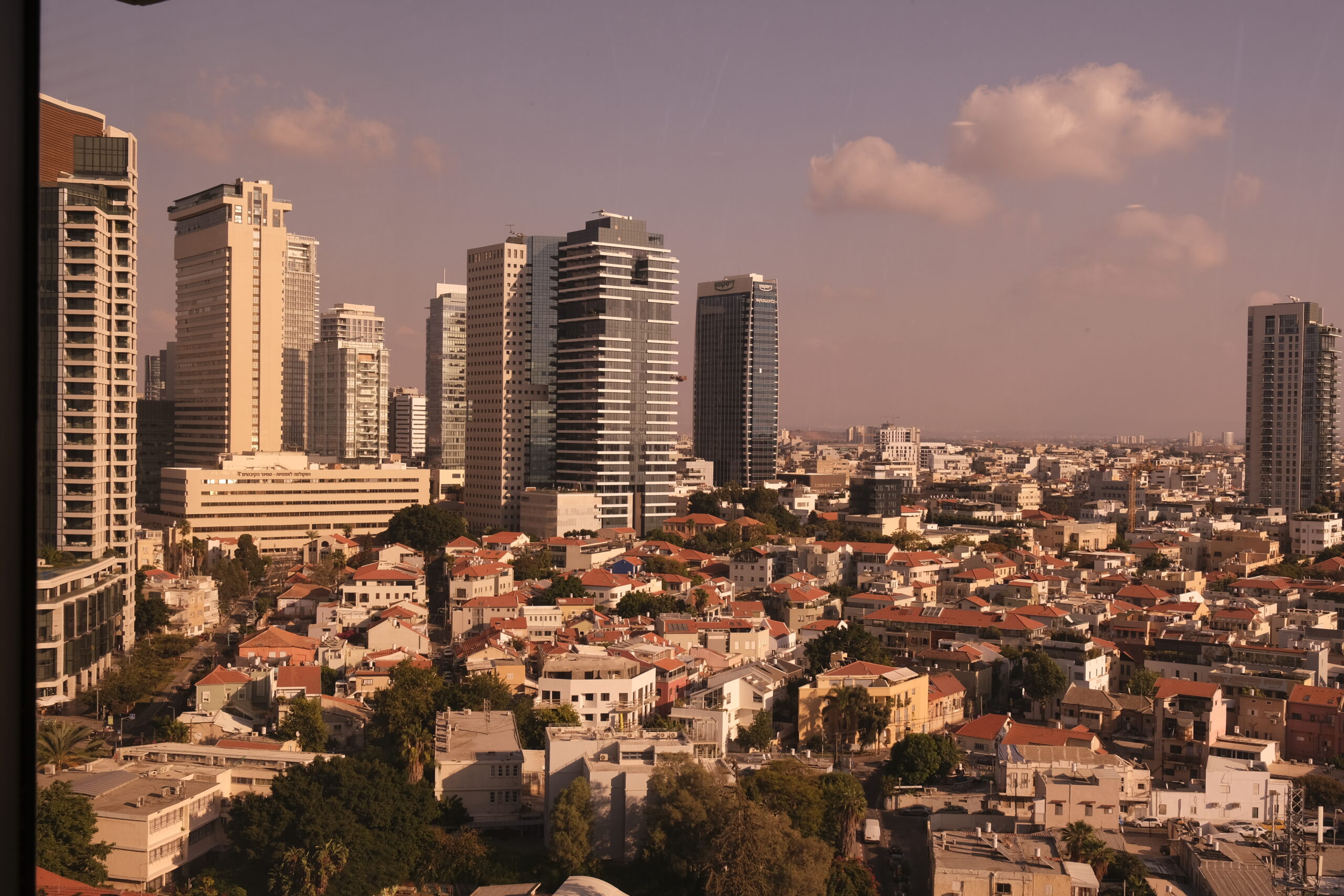
This evening we met our fellow travelers; we number 28 from the U.S. The two Canadians who were to travel with us dropped out. We dined in the hotel at the Nomi Restaurant and learned that it is a meat restaurant, which means it does not serve dairy, so no cream in desserts or milk in coffee. Our breakfast restaurant is a dairy restaurant, which means no sausage or bacon. Also learned that all hotels and their restaurants here must observe kosher restrictions, but restaurants not affiliated with hotels are not held to those exacting standards.
Ancient Jaffa and Contemporary Tel Aviv – October 19, 2022
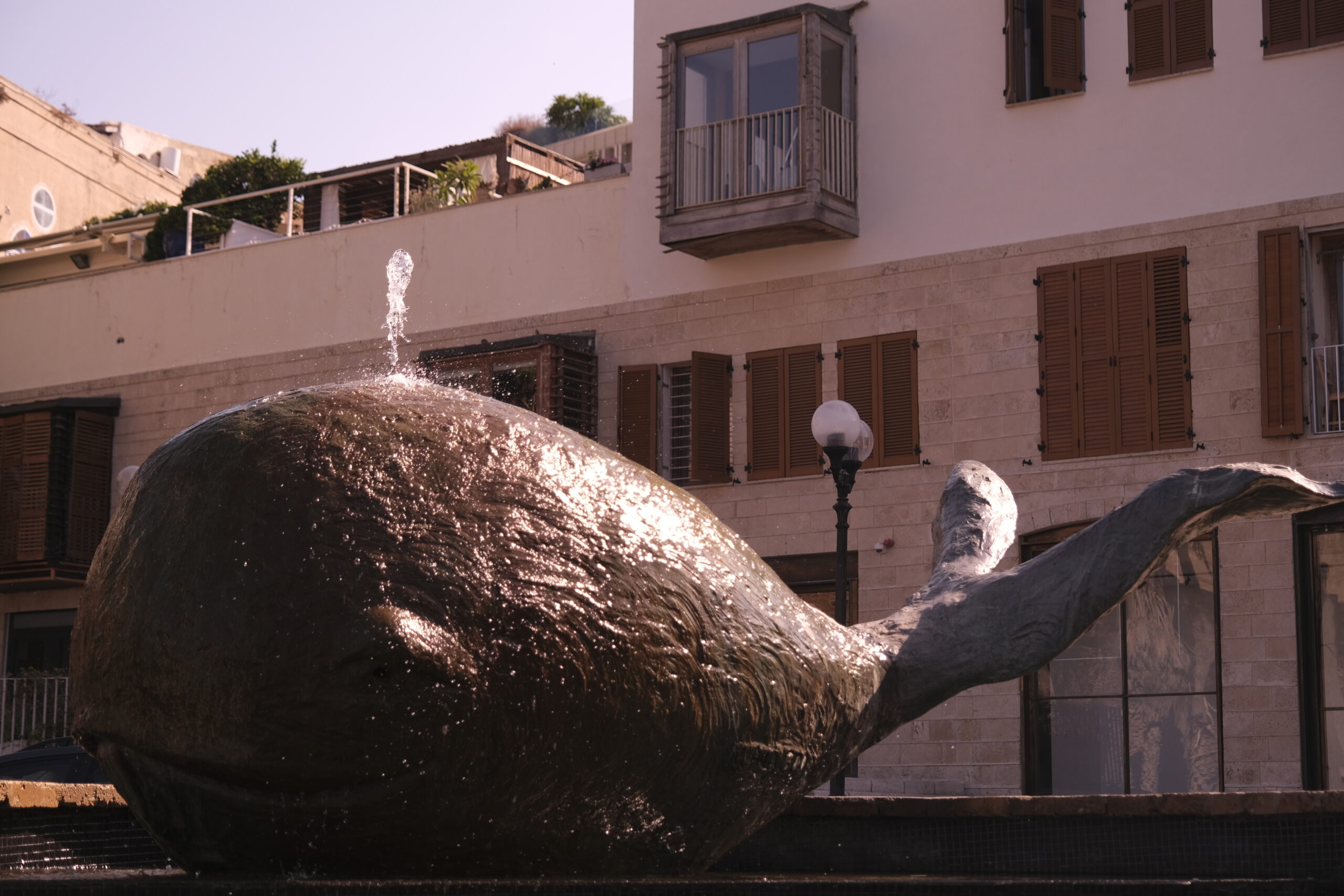
This morning we visited Jaffa which is an old port city having been around in biblical times. It is also a city that ping ponged between the Canaanites, the Philistines, the Egyptians, Kings David and Solomon, the Egyptians, the Greeks, the Romans, the Arabs, the Crusaders, the Turks, etc. Our first stop was to see a sculpture of a whale dedicated to the story of Jonah in the bible, except that the bible does not identify the type of fish. Our next stop was to a sculpture of a bent spoon dedicated to Uri Geller. Then on to Jaffa Hill to see the gates, excavated remains of an Egyptian fortress, with scarabs dating to the time of Ramses II.
Our next stop in this area was to St. Peter’s Church. Jafa is the area where St. Peter is supposed to have been offered food by the Archangel Michael which Peter refused because it was not kosher or so it says in the Acts of the Apostles (according to our guide Or Rein). Jaffa is also where Peter is supposed to have performed other miracles. Jaffa is important to the Jews because cedar logs from Lebanon were shipped to Jaffa for King Solomon’s Temple. There is not much to see of the port as it is being modernized. From the church we walked to the Clock Tower and then took a bus to Neve Tzedek which lies between Tel Aviv and Jaffa. It is where Gal Gadot (of Superwoman fame) lives.
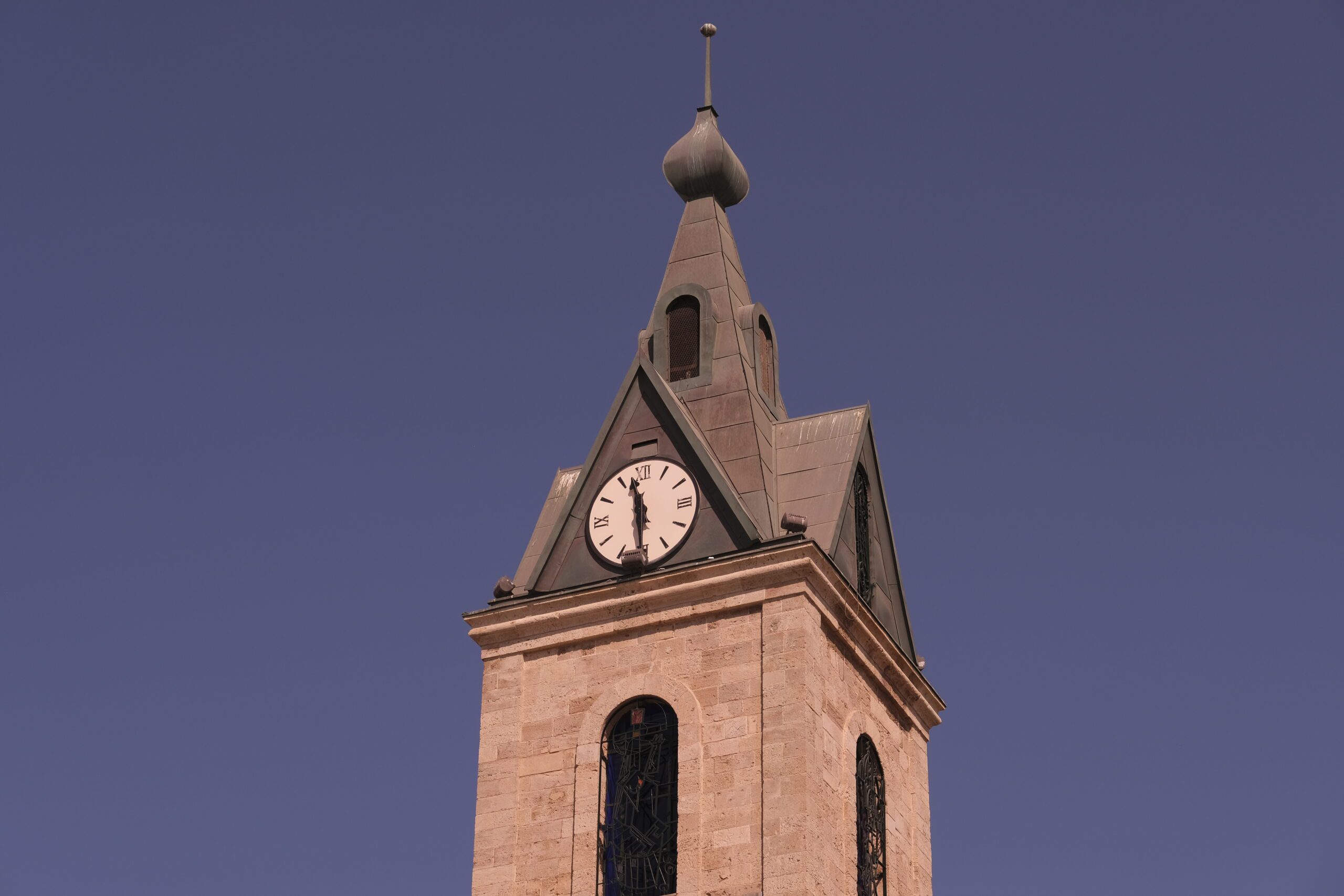
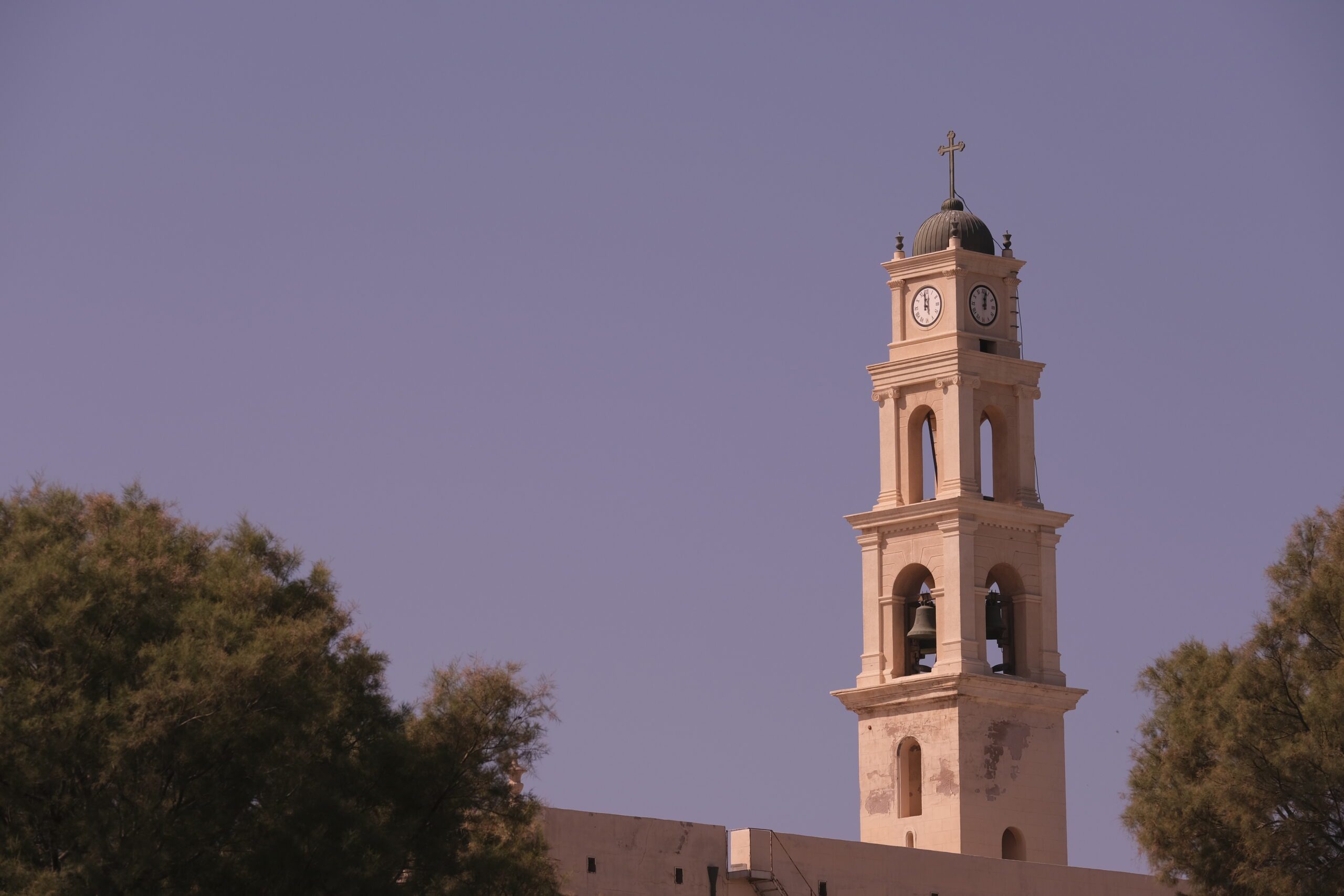
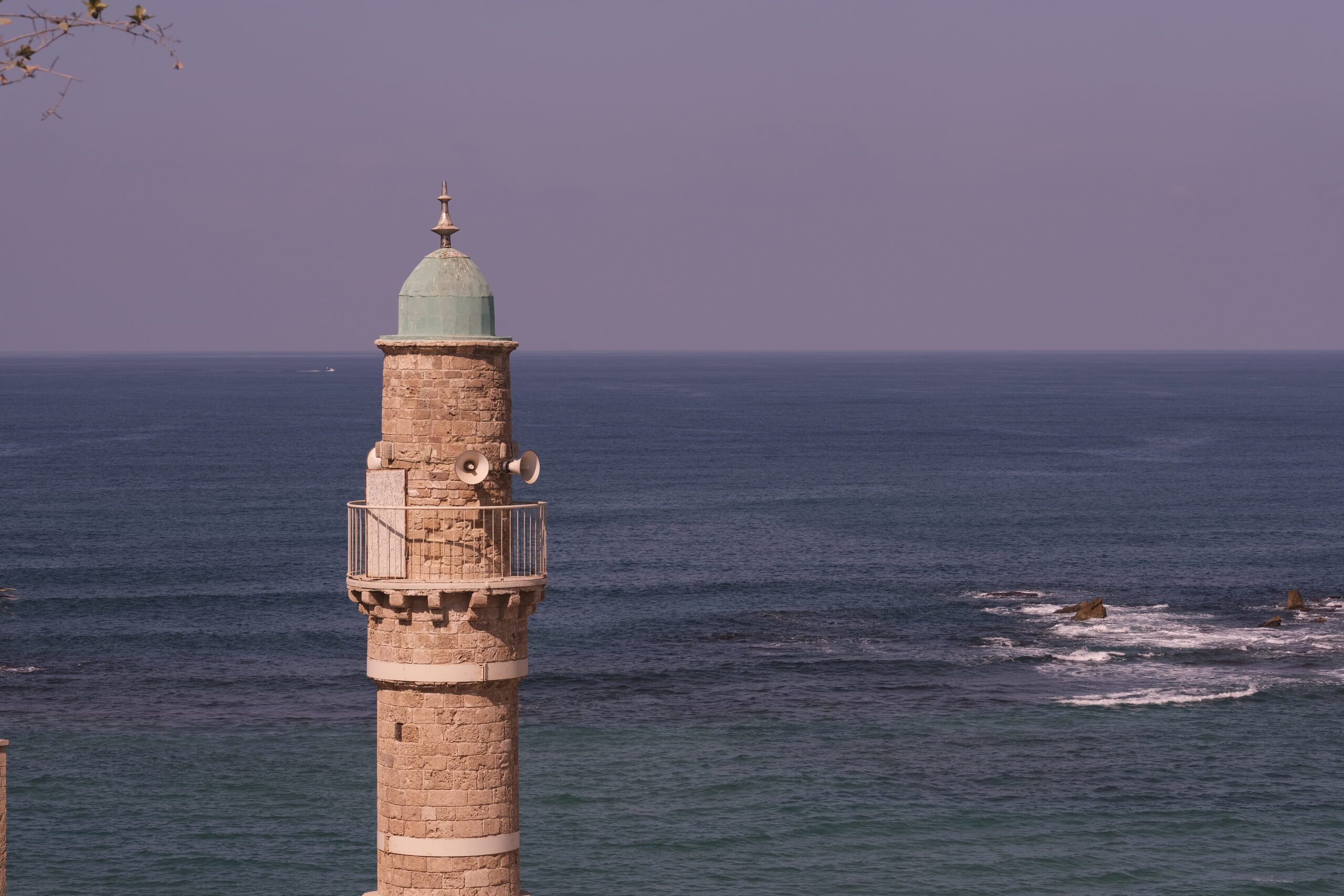
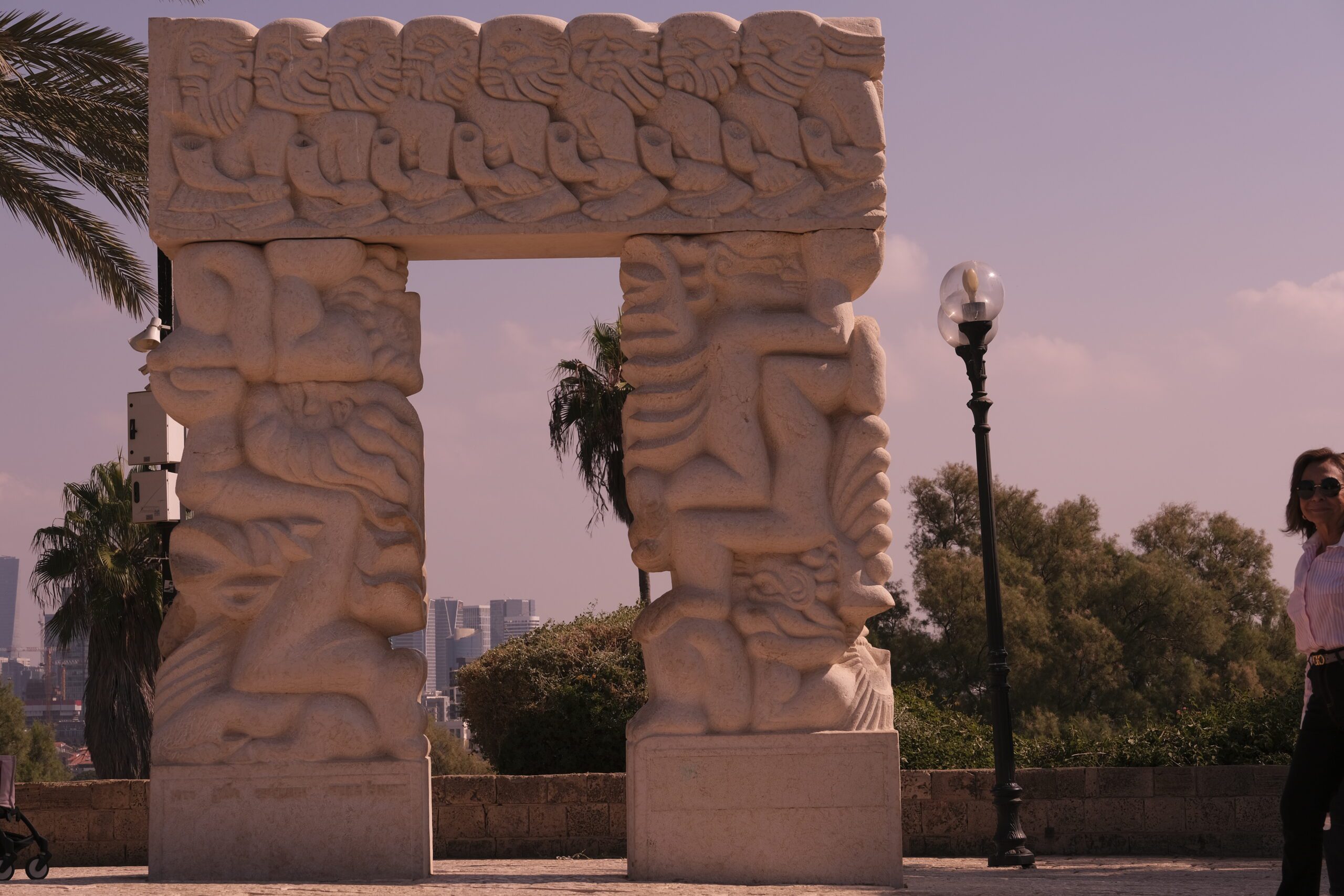
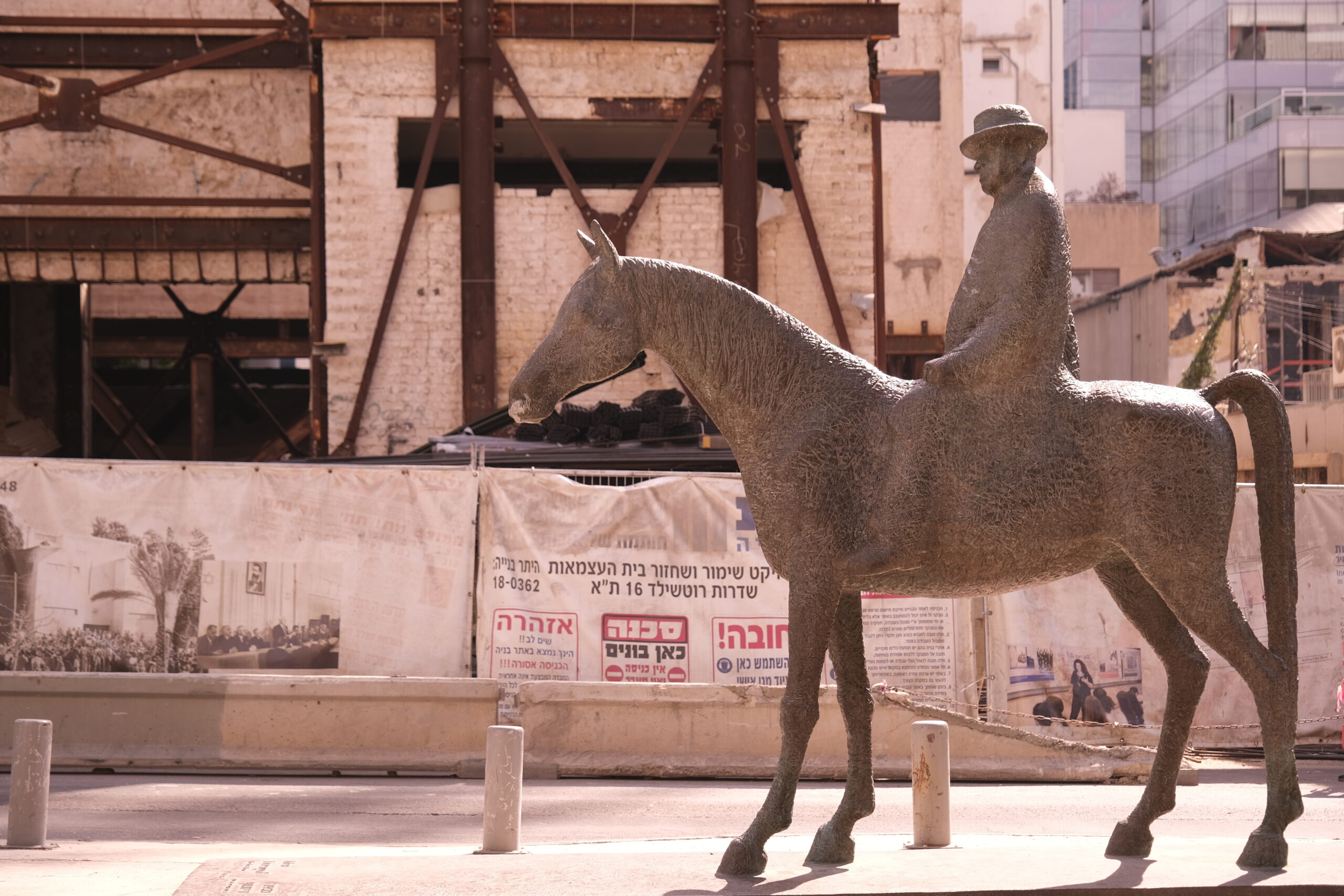
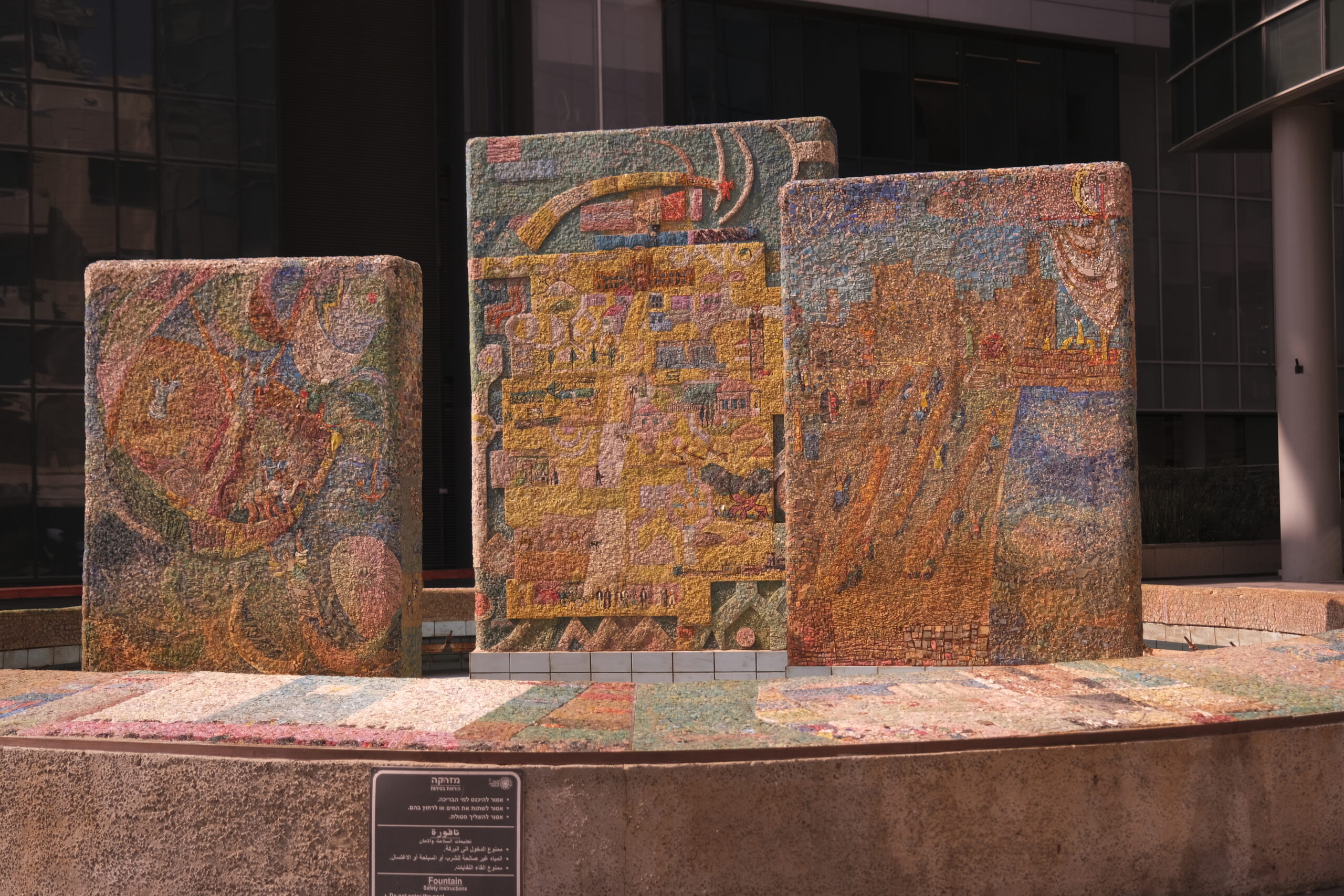
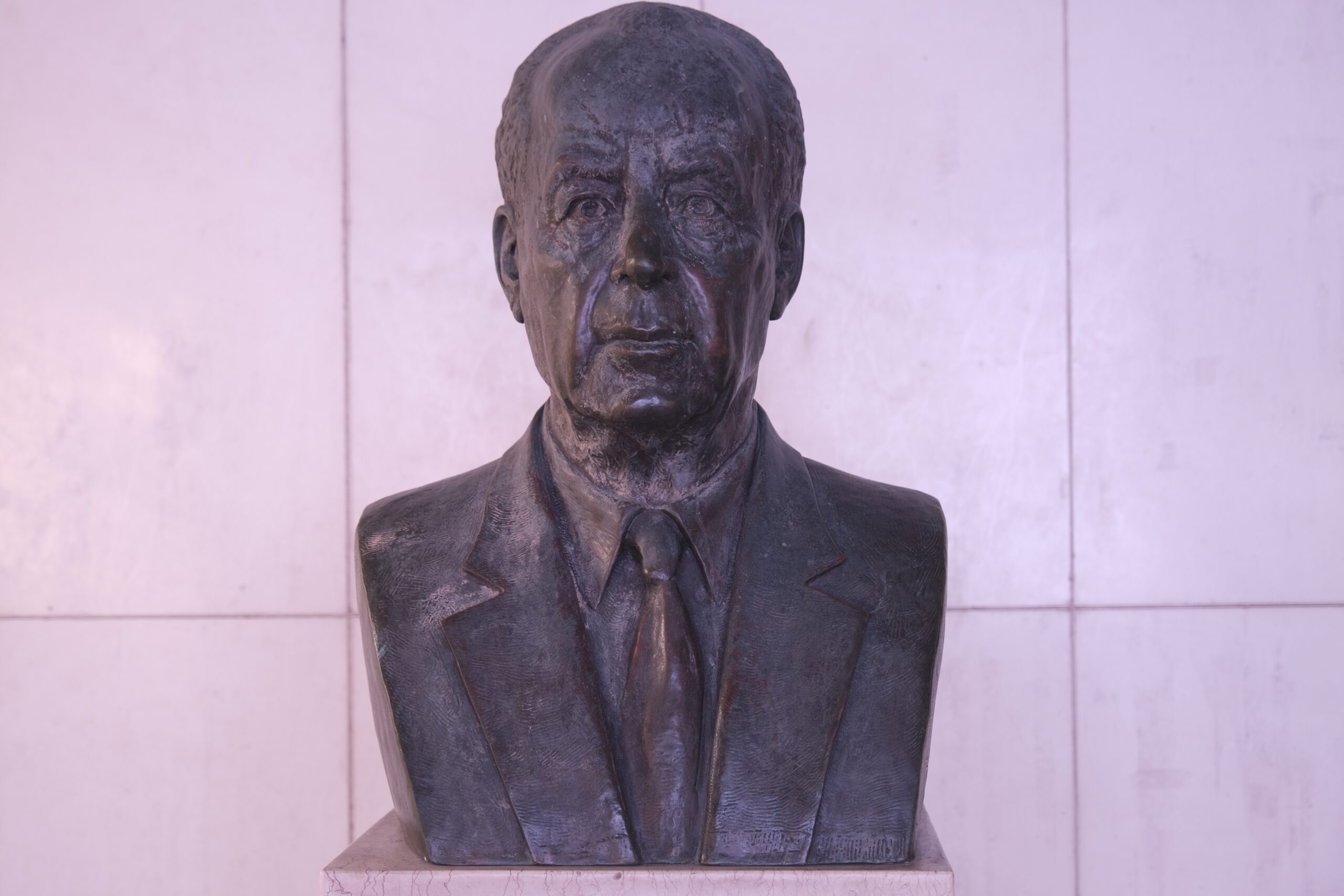
After a very leisurely lunch at Dallal Restaurant, we drove to Rothschild Avenue to see some of the sights on the Freedom Trail and the Bauhaus houses, an architectural style that was developed in Germany and was adopted by the early leaders of the freedom movement. One of the sculptures that we saw was that of Alfred Dreyfus, the Jewish French army lieutenant who was wrongly accused of treason in the late 1800s, sent to the penal colony of Devil’s Island, and later exonerated.
Our last stop for the day was at the Town Hall to see the area where Yitzhak Rabin was assassinated. Such a very tragic event for the country.
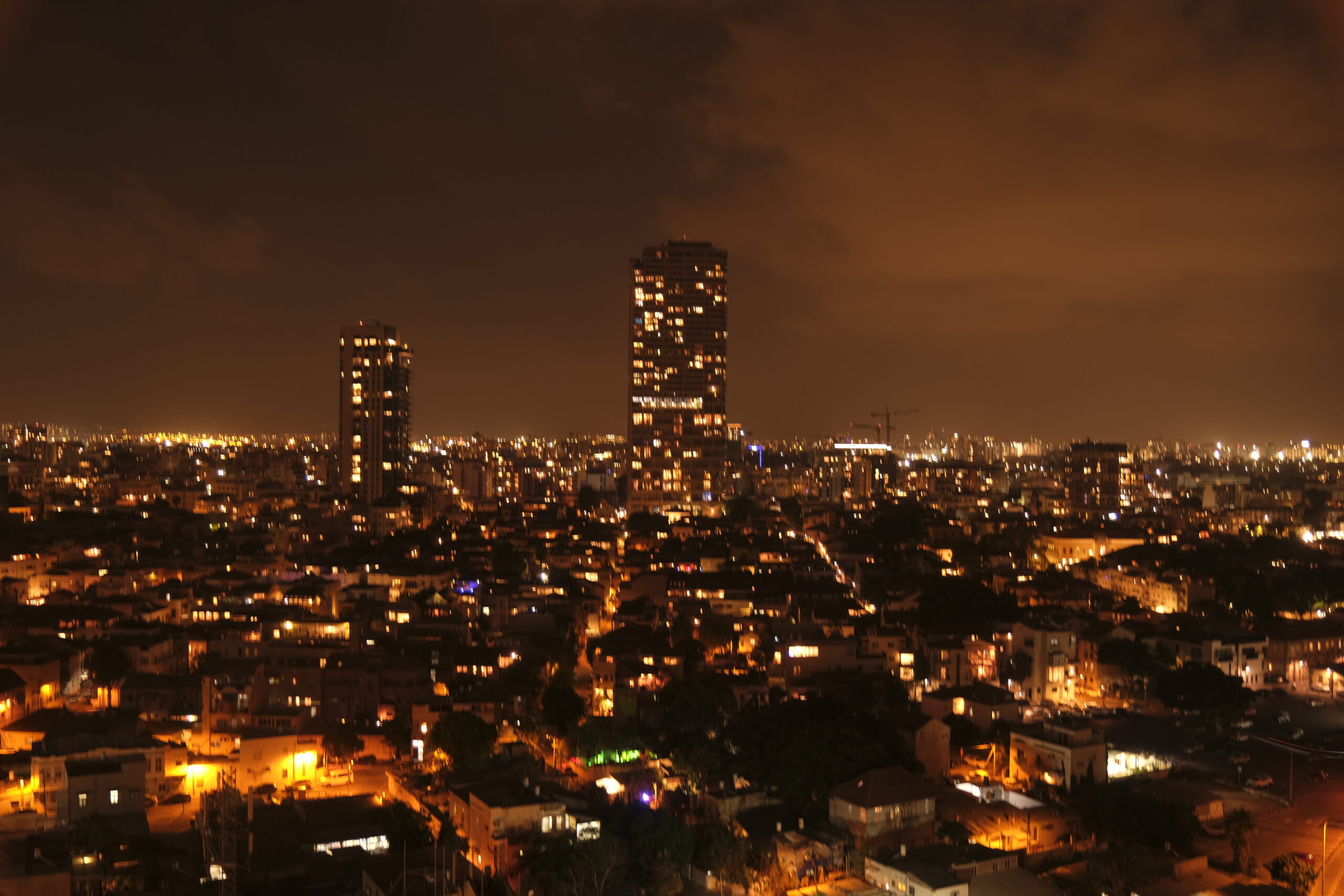
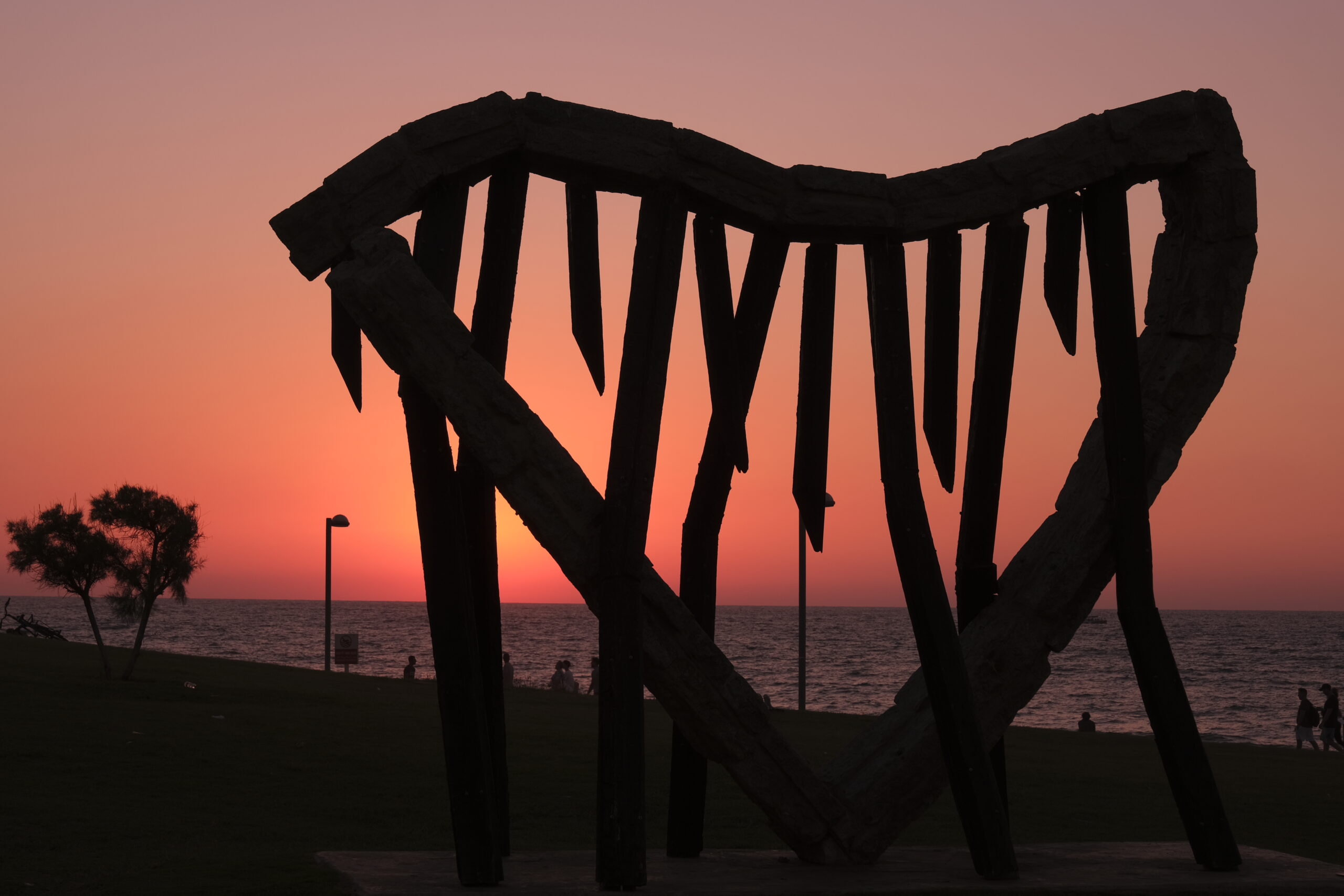
In the evening we took a stroll on the promenade and watched the sun go down. Then we walked to Jaffa to have dinner.
Grand Caesarea and Historical Haifa – October 20, 2022
We checked out of the David Intercontinental and went to Caesarea, the third largest city in the world after Rome and Alexandria during Biblical times. The area we visited was the excavated theatre, hippodrome/amphitheater, swimming pool, deep seaport, and palace of King Herod. Herod was not considered Jewish because his mother was Nabatean (an Arab princess from Petra) and his father an Edomite (a descendant of Esau). Yet he became the richest man in the world during his time but was always fearful about security and suffered from an inferiority complex. Despite his many failings, he was a master builder who is admired for his architectural endeavors and the thrifty way he managed his construction projects. Most of what we saw were remnants, but you can imagine how splendid they must once have been. The theatre is in good shape and concerts are still held here. Over the centuries the hippodrome and its surroundings were completely covered by debris and was discovered when a kibbutznik and his tractor accidentally got mired in the area. The Rothschilds then provided the funding to get it cleared. Finding these sites proved that Josephus Flavius, a historian of the period who documented much of the happenings in the Jewish world (and particularly on the battle of Masada) reported accurately about various buildings in Caesarea but they just had to be found.
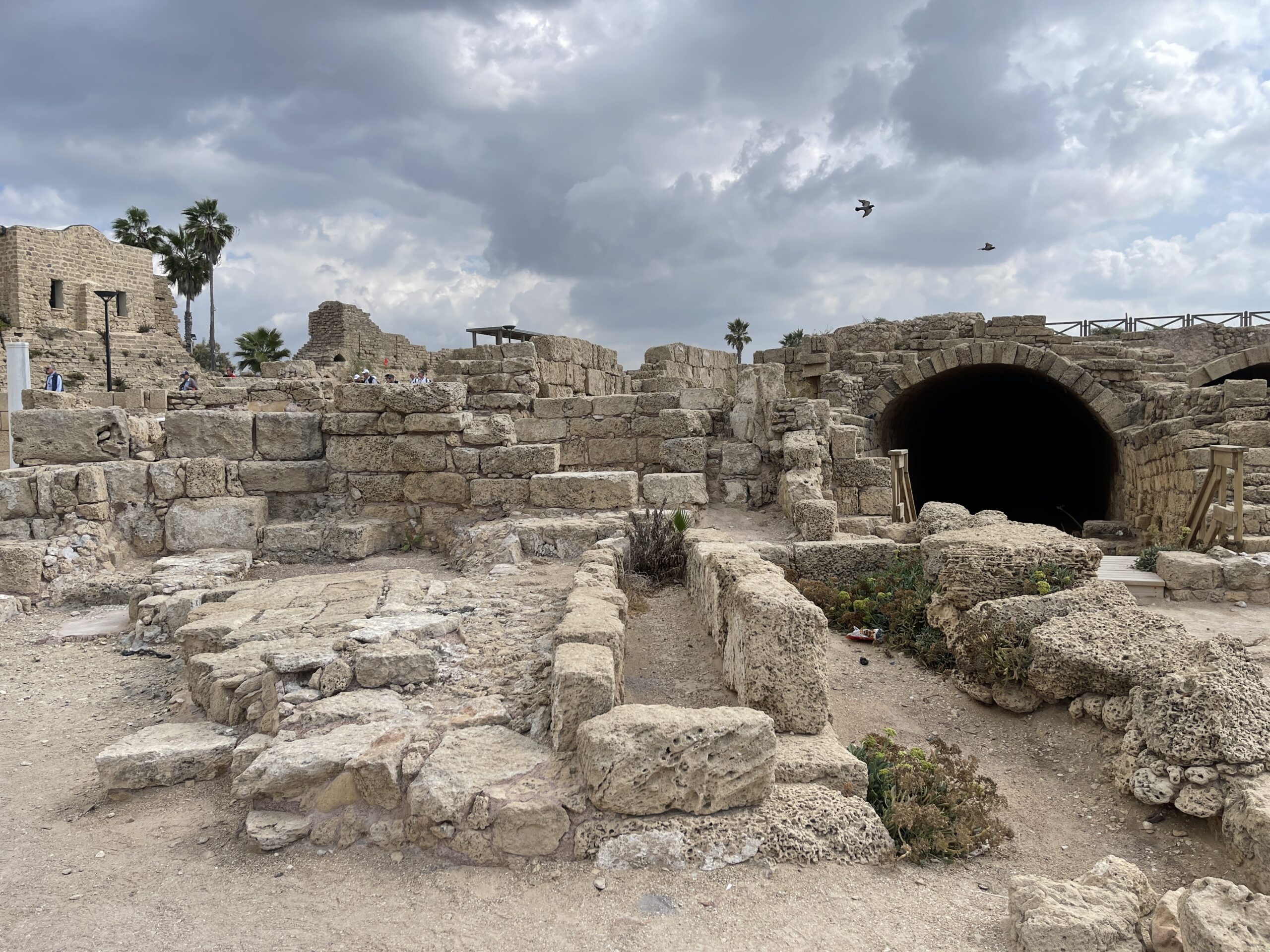
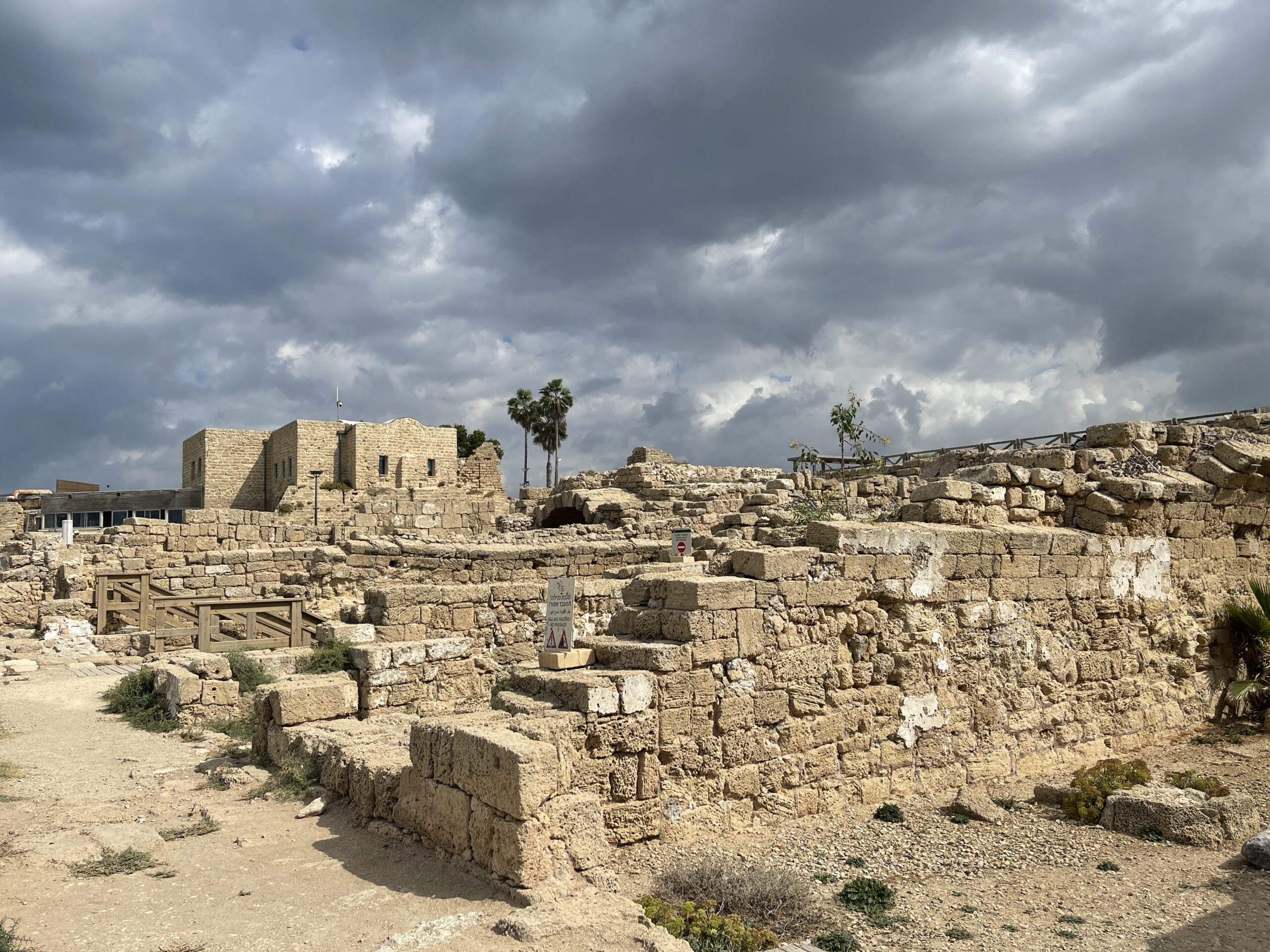
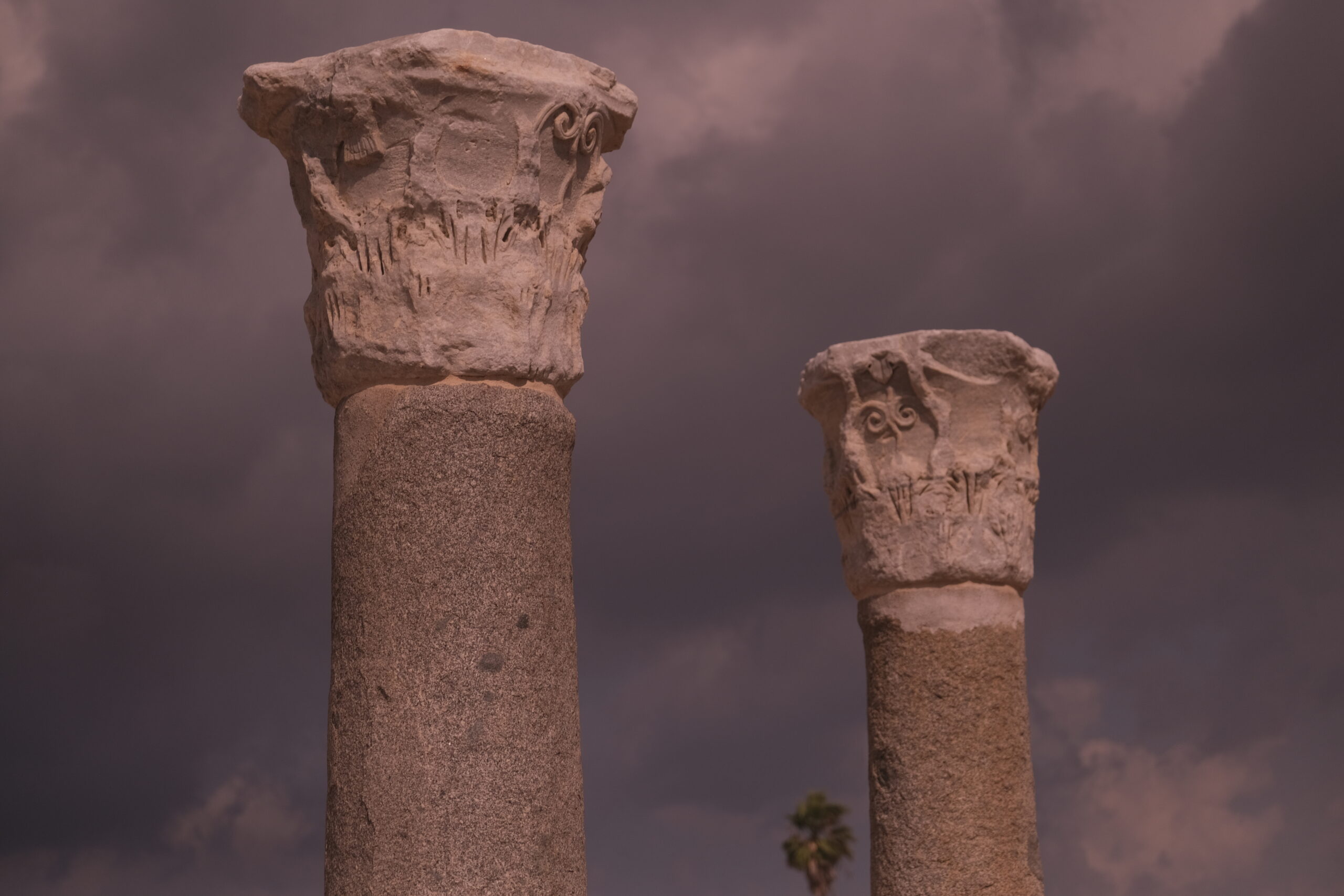
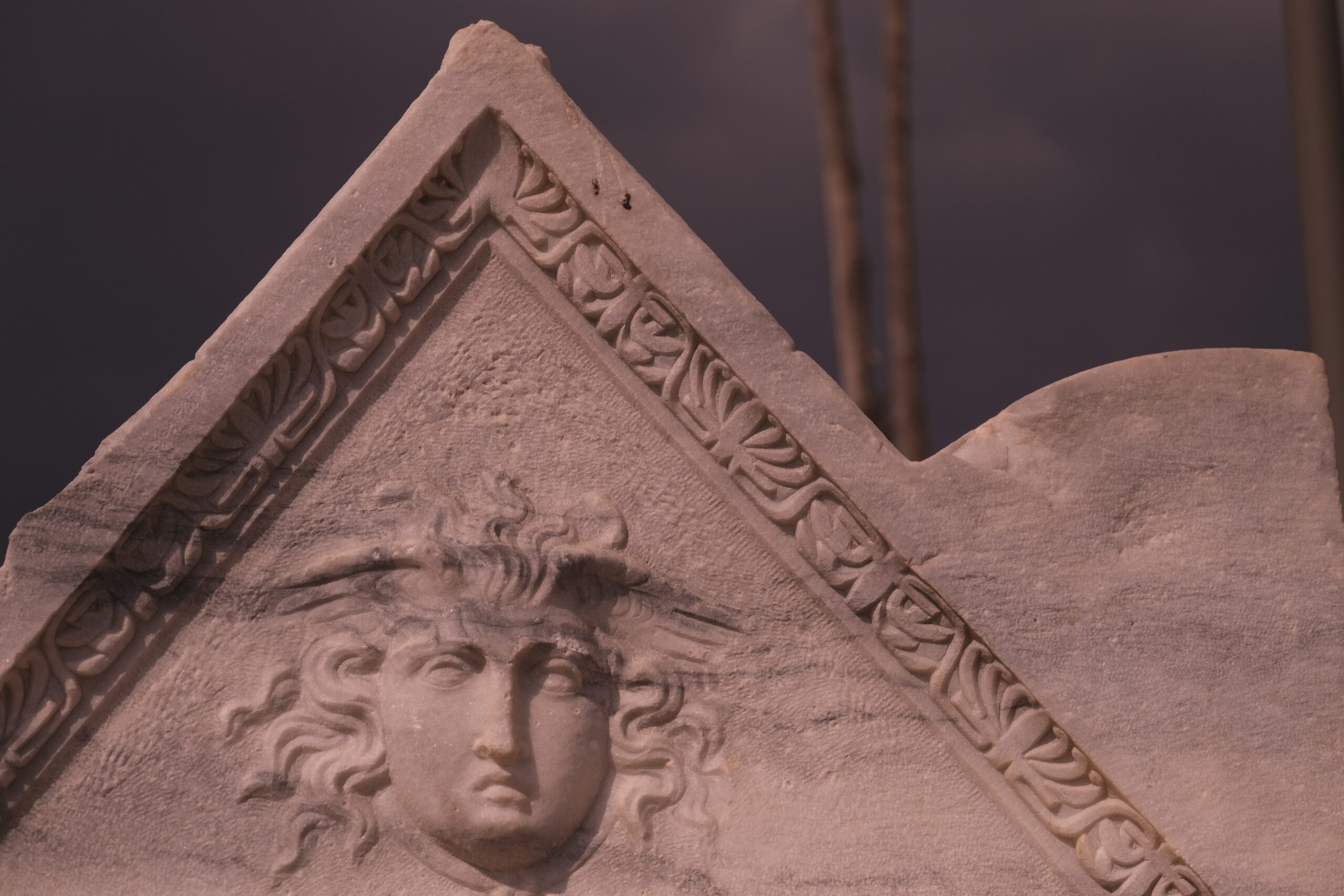
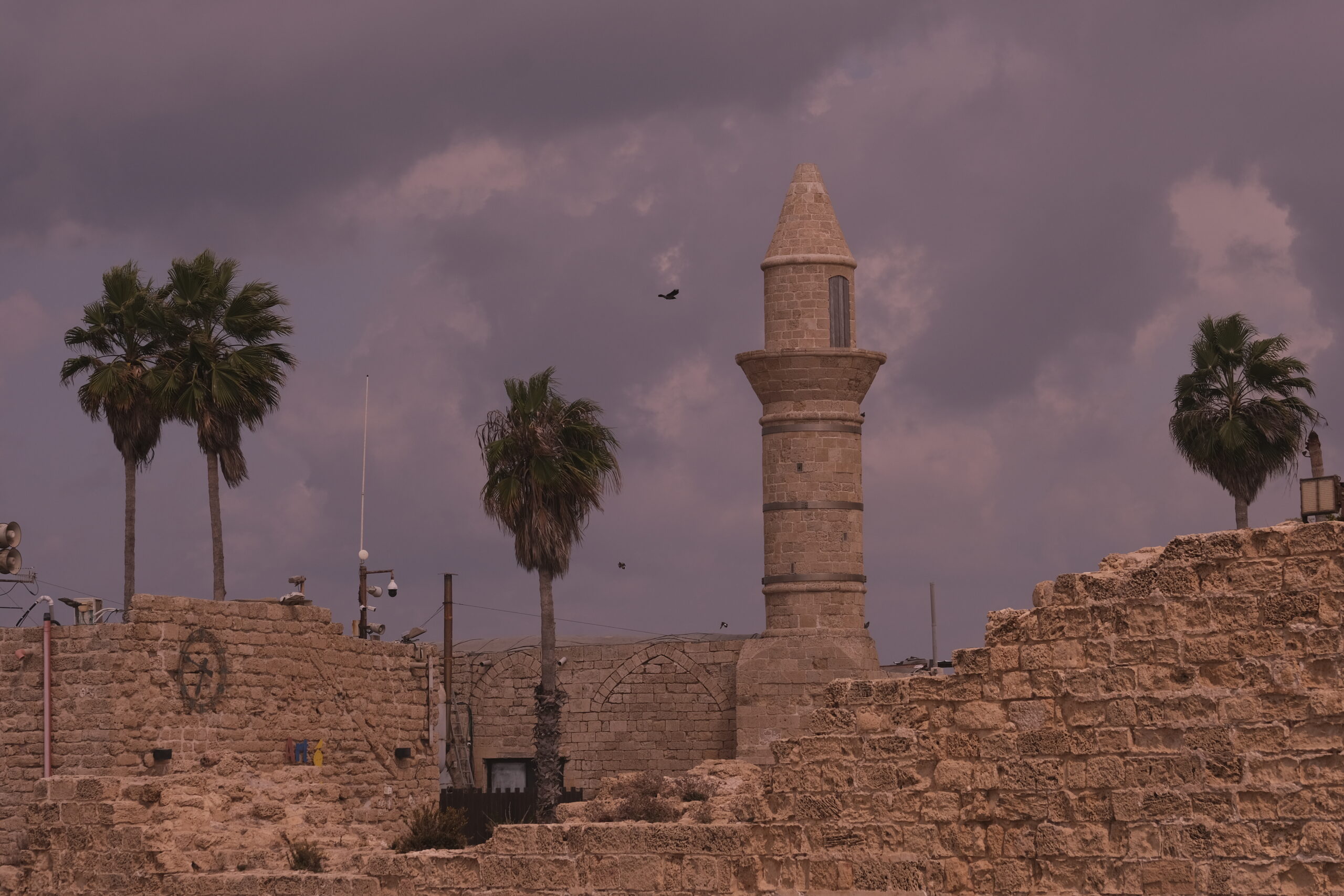
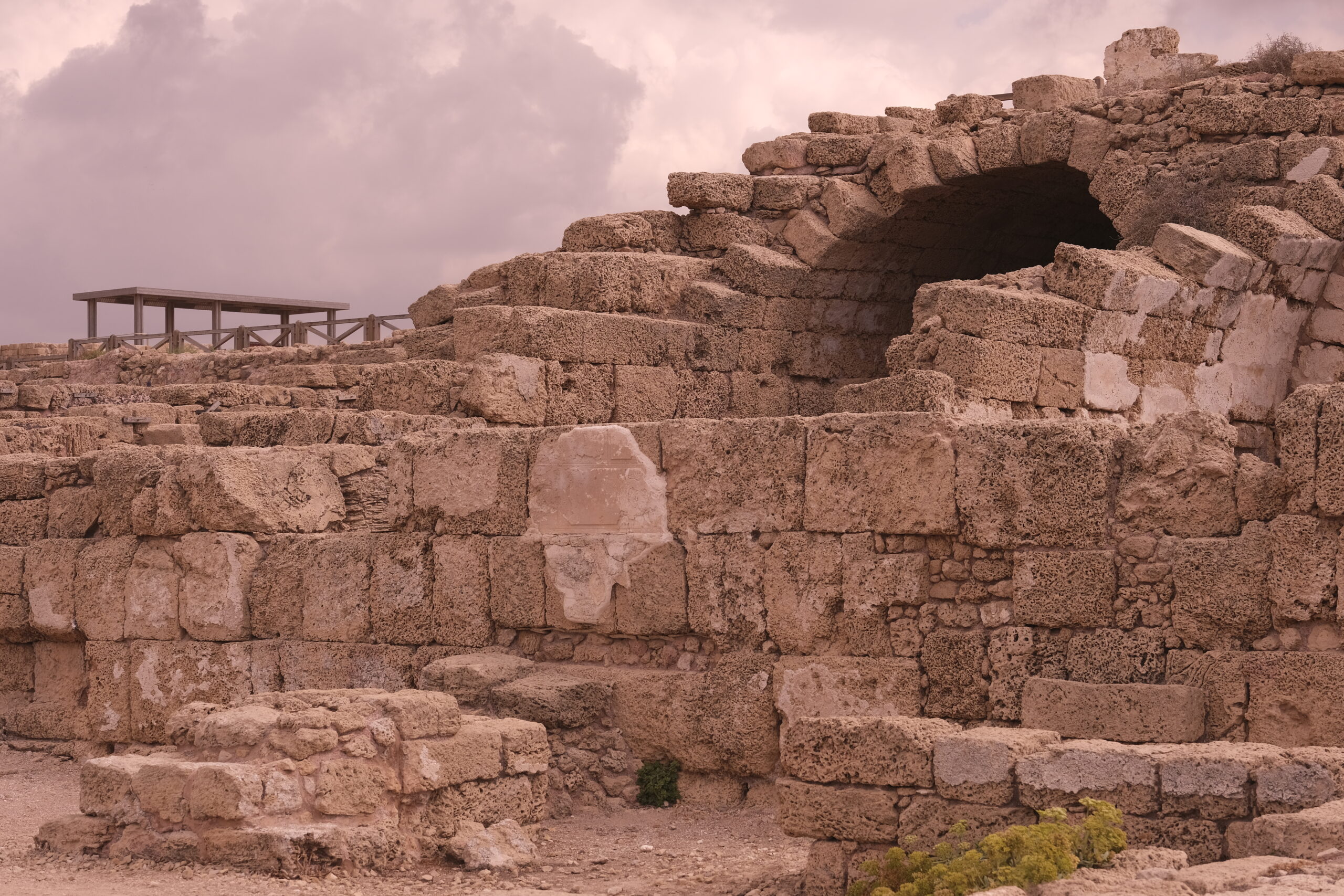
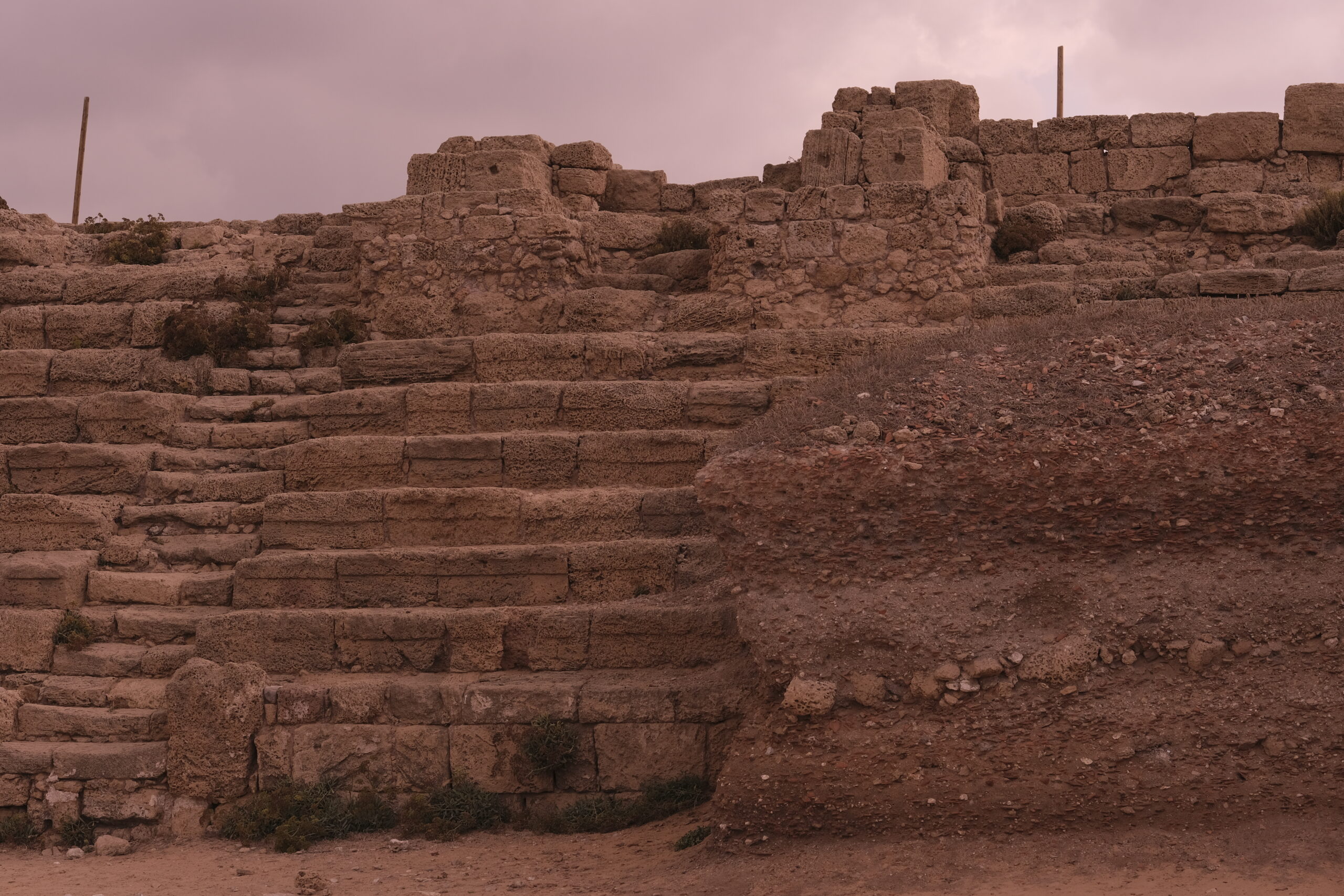
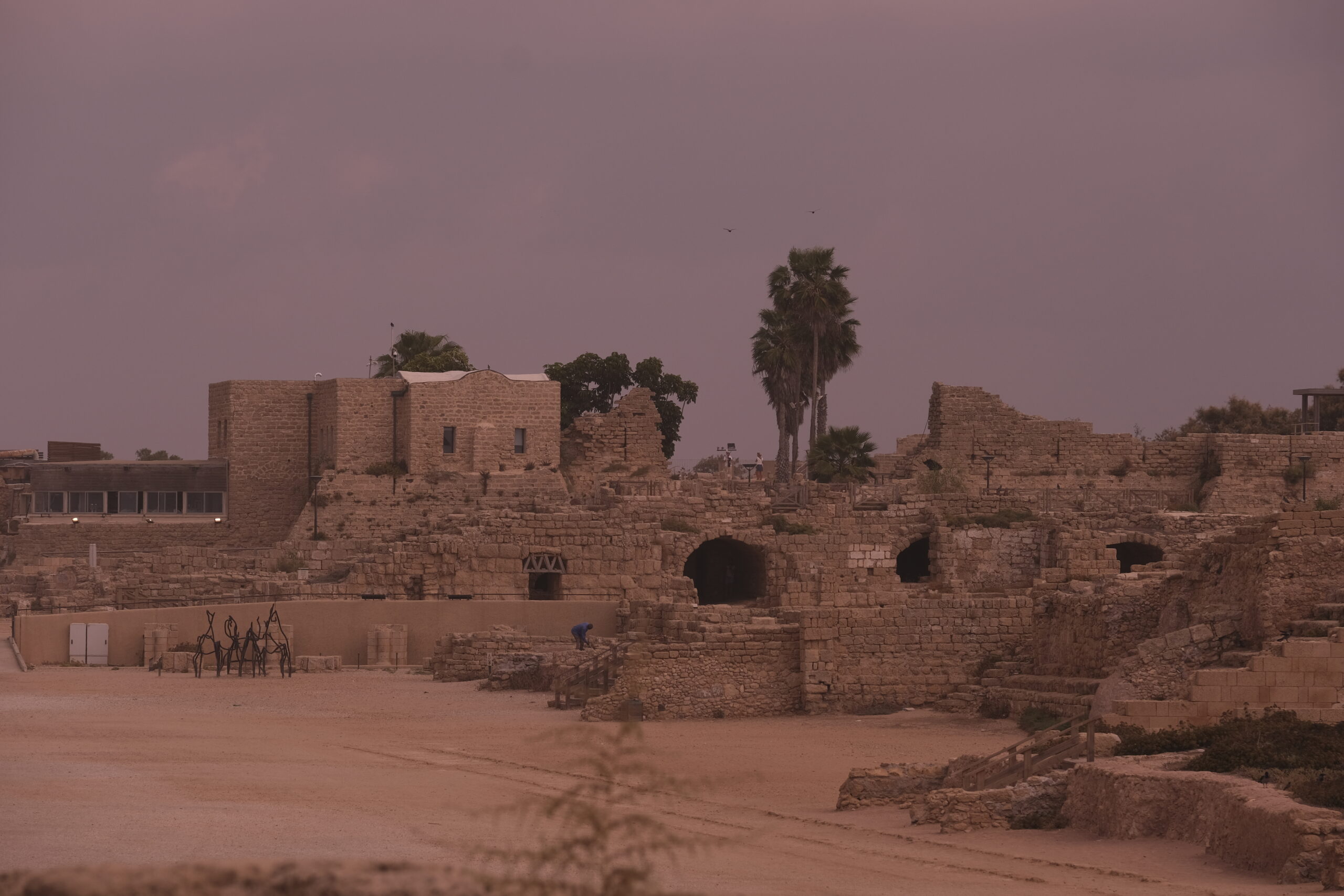
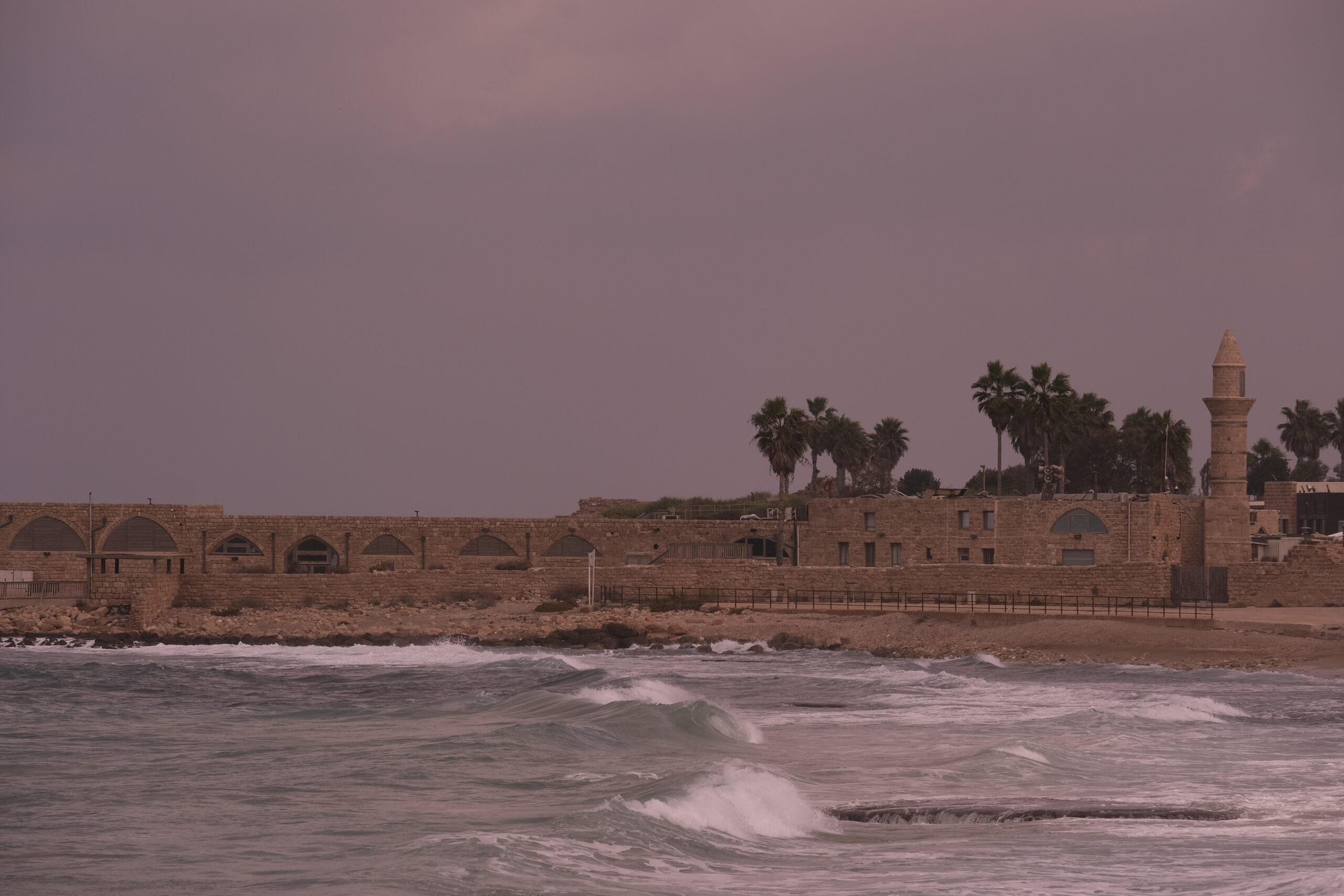
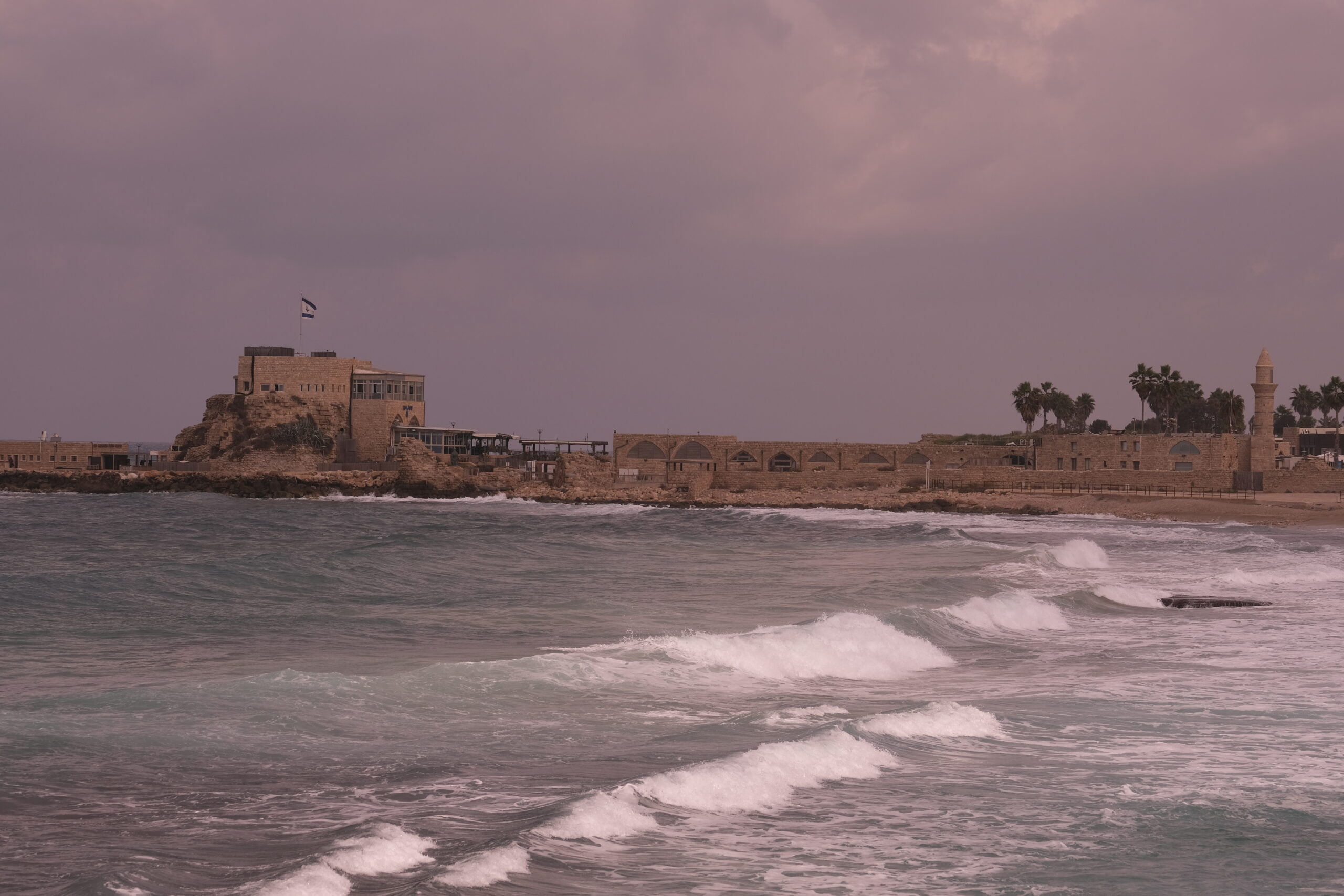
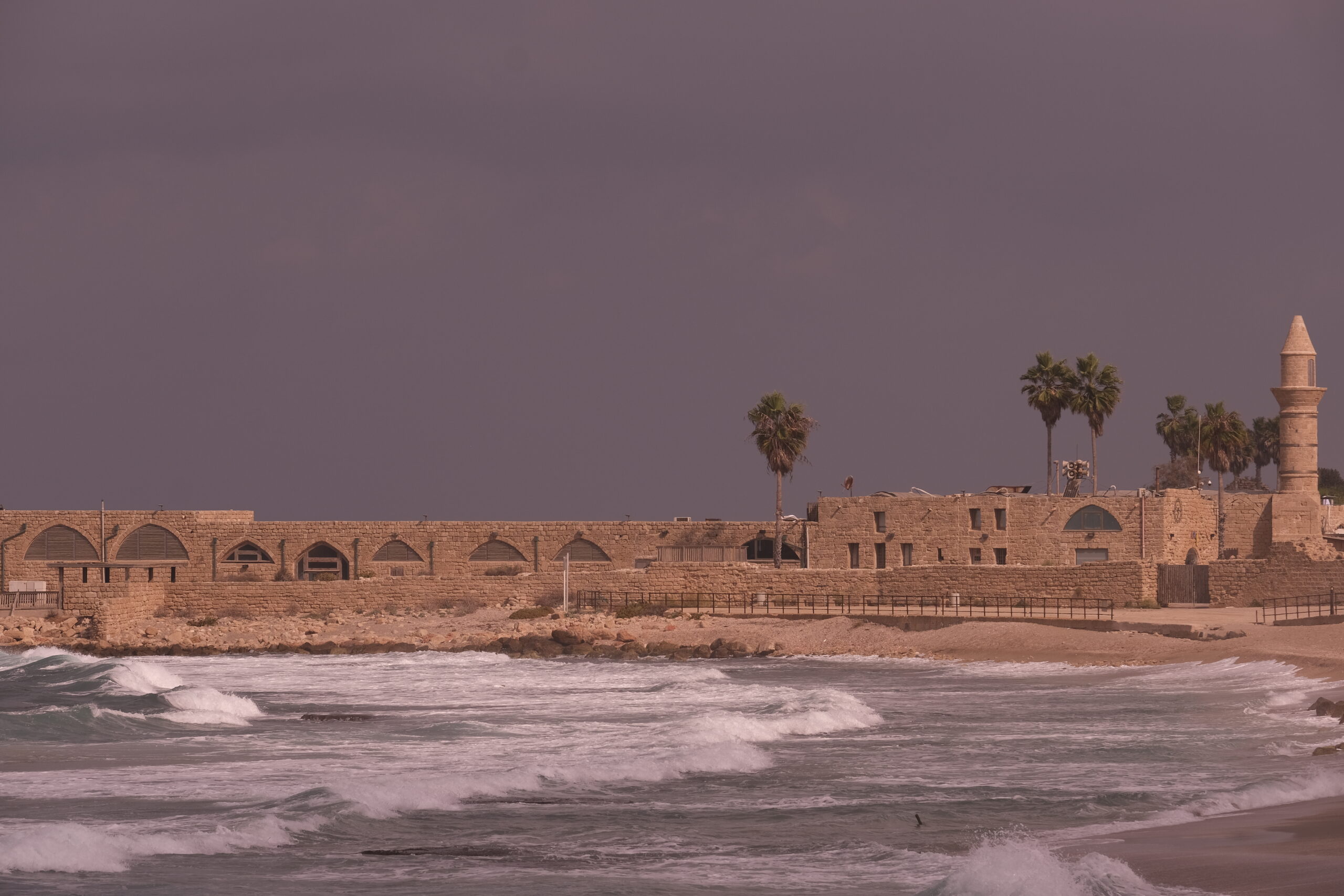
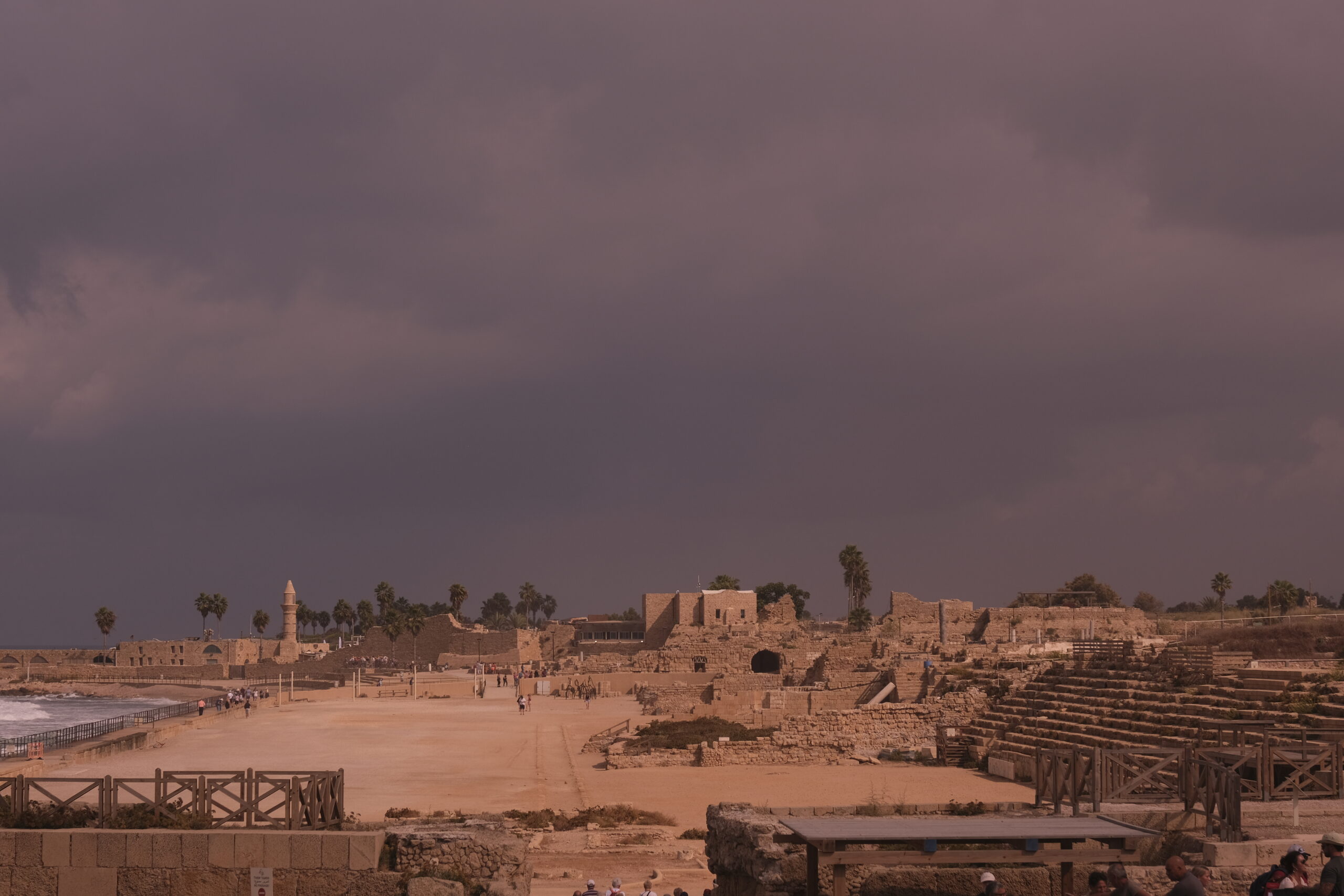
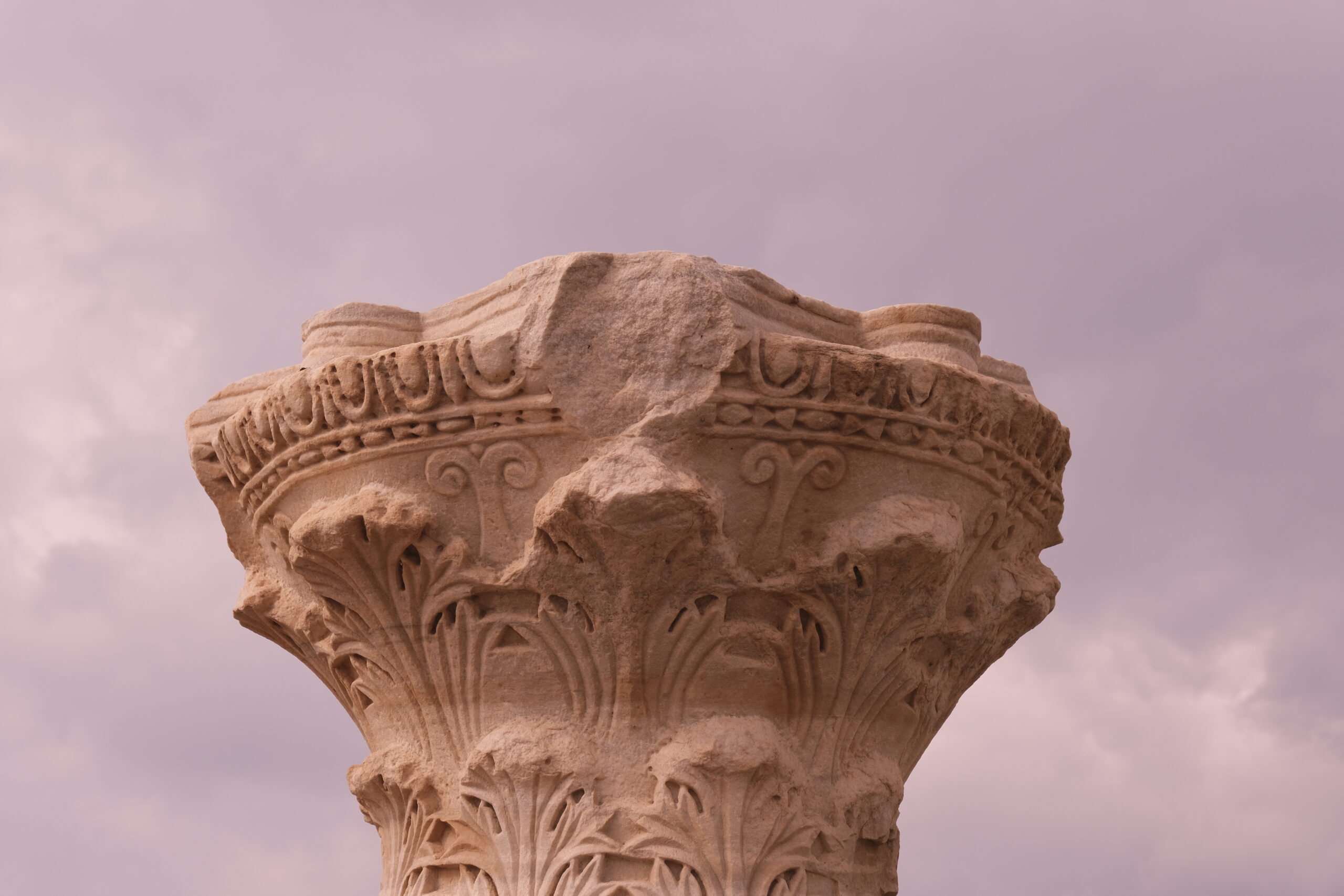

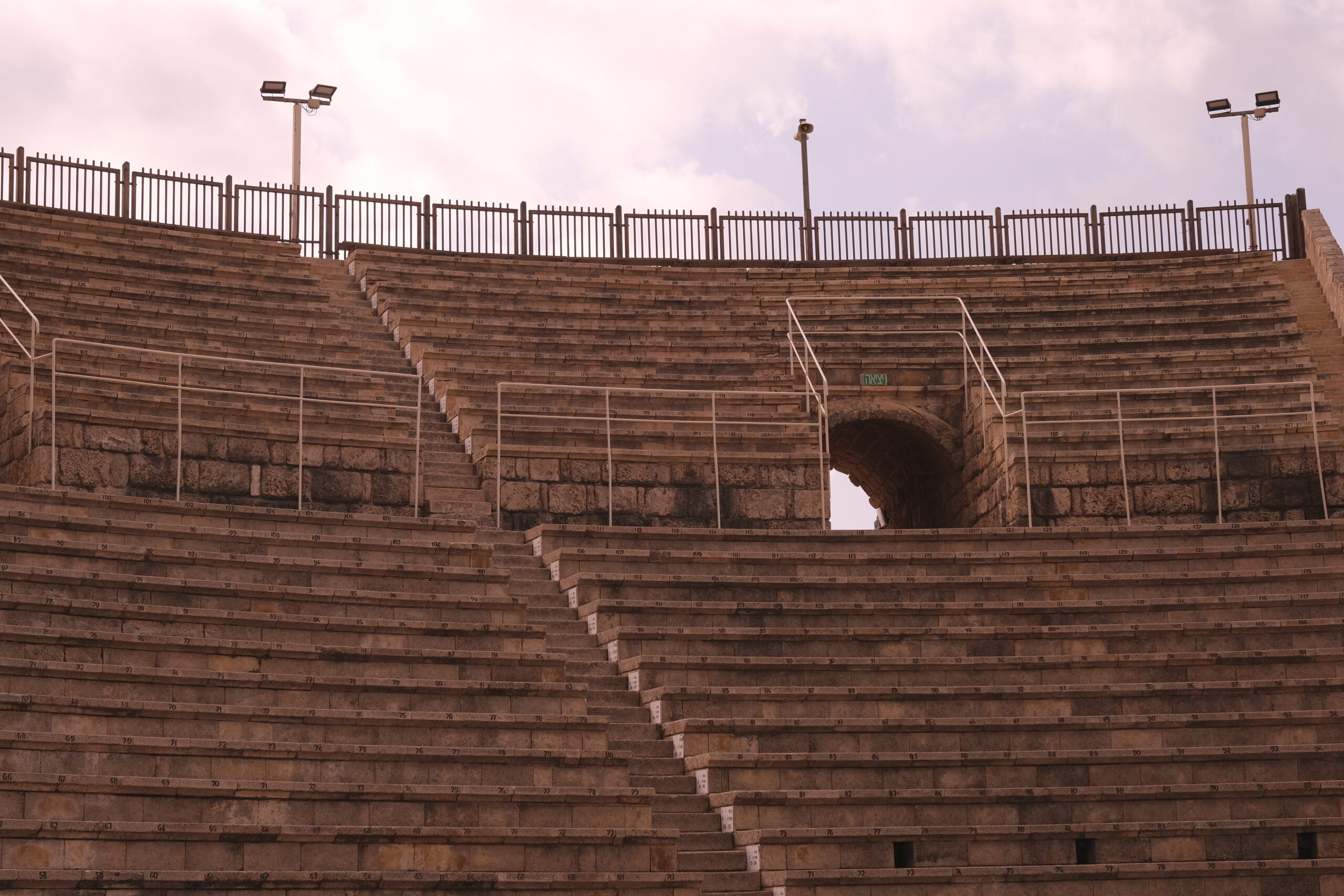
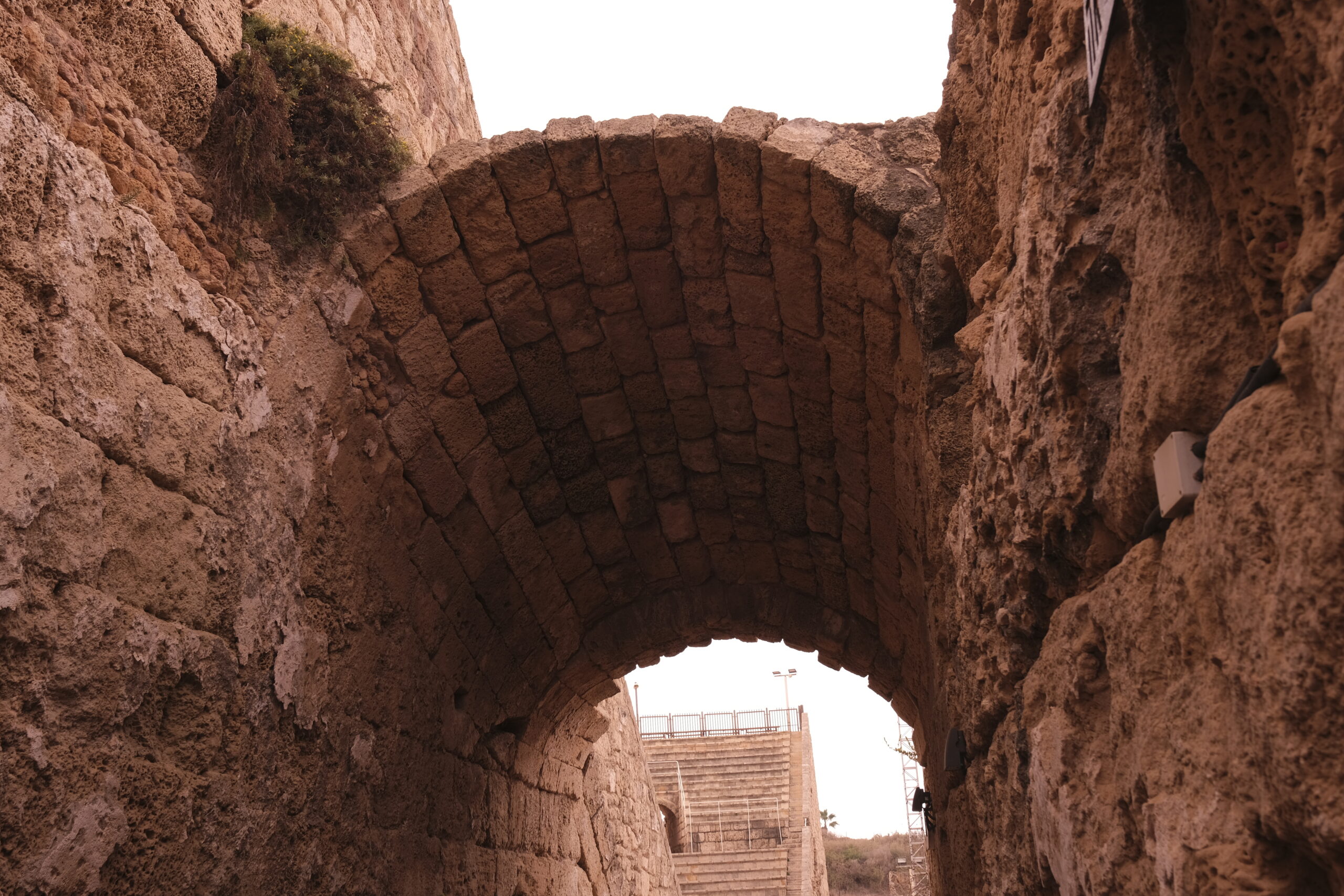
Lunch was in the complex in a restaurant called Helena (probably named after Constantine’s wife). It was fabulous but slow, so we missed going to the Stella Maris Monastery, which has one of the caves of the Prophet Elijah somewhere under the building.
Our next stop was to the Baha’i Gardens in Haifa, located on the northern slope of Mount Carmel. This was a treat because we were able to visit the gardens generally not open to the public and learn about this faith. The gardens are approached from the top walking down 700 steps, but you can only descend the stairs. Ascending the stairs is for people of the Baha’i faith. The gardens are for meditation and the only sound you hear is that of water flowing down either side of the steps. The emphasis of this faith is on symmetry and every tree, bush, shrub, statue etc. that is to the left of the stairs is repeated on the right of the stairs. The faith originated in Iran, but the Iranians imprisoned the Bab, the Prophet Herald, and after his death his followers took the body from Iran and buried him in a golden domed building on the grounds of the garden. Also located in the garden are the archives and the administrative center. About the faith…men and women are equal; one joins the faith at the age of 15; their traditions are based on Islam but their beliefs are different and they have incorporated beliefs from many other religions; there are some 700,000 followers (about 300,000 are still in Iran); they donate huge sums of money; spend a lot of their time volunteering; they shy away from conflict; when they pray, they face Akko (where the Prophet Founder of the faith, Baha’u’llah, spent the last years of his life and was buried). Akko, in Israel, is the religious center of the faith; however, the Baha’i cannot immigrate to Israel as they are not Jewish. The one negative thing about the garden is the grey ravens; they are everywhere and are very noisy and dirty.
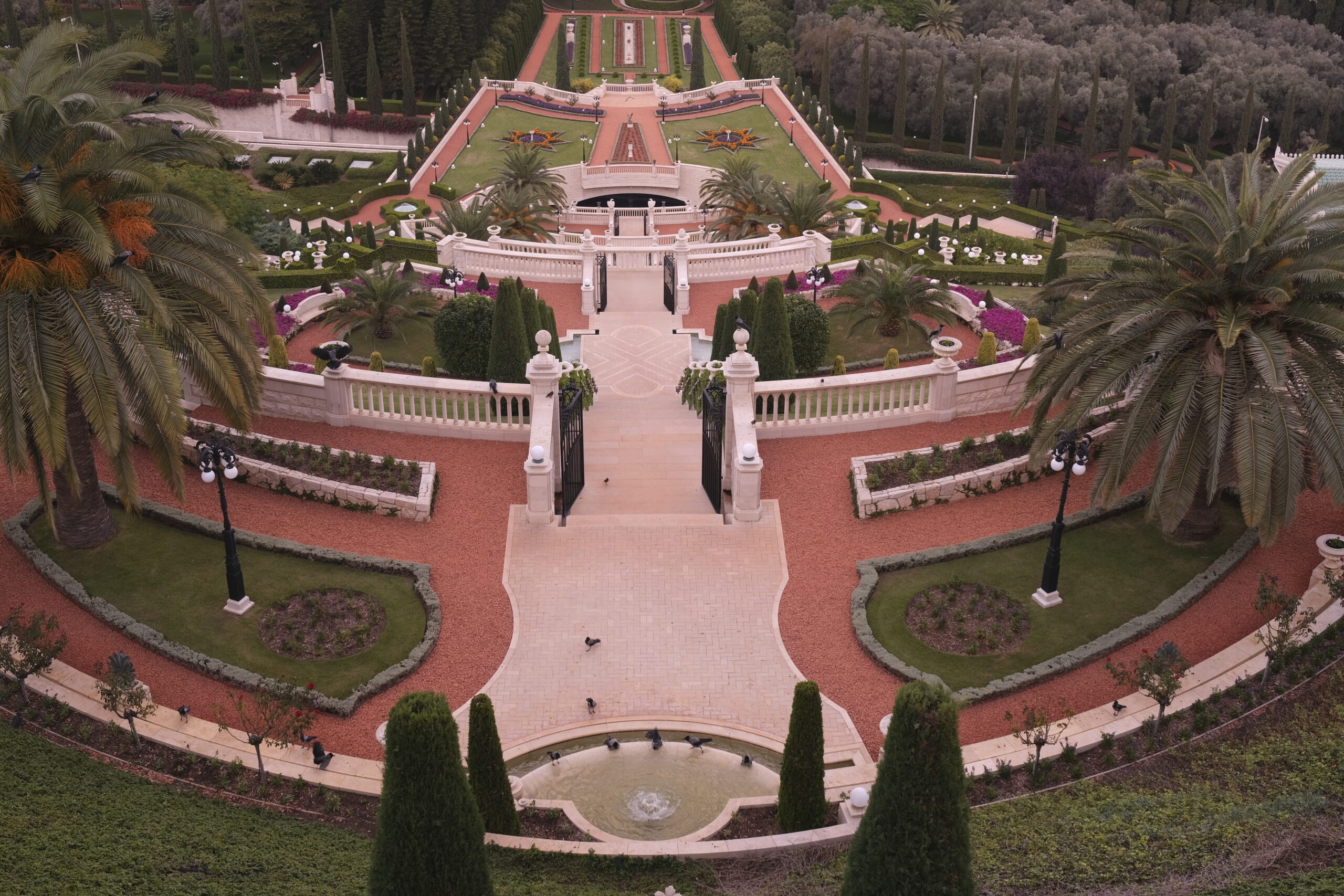
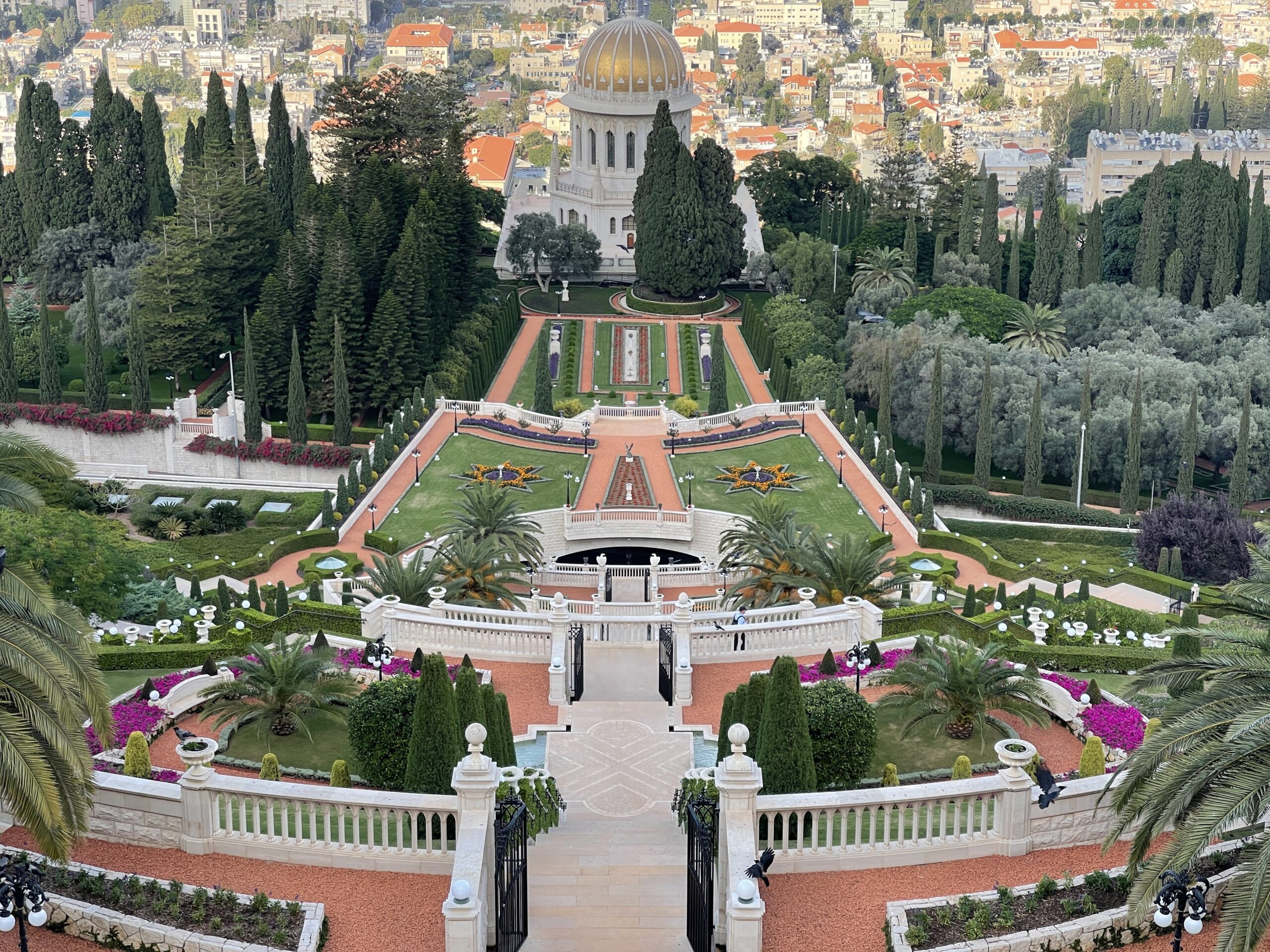
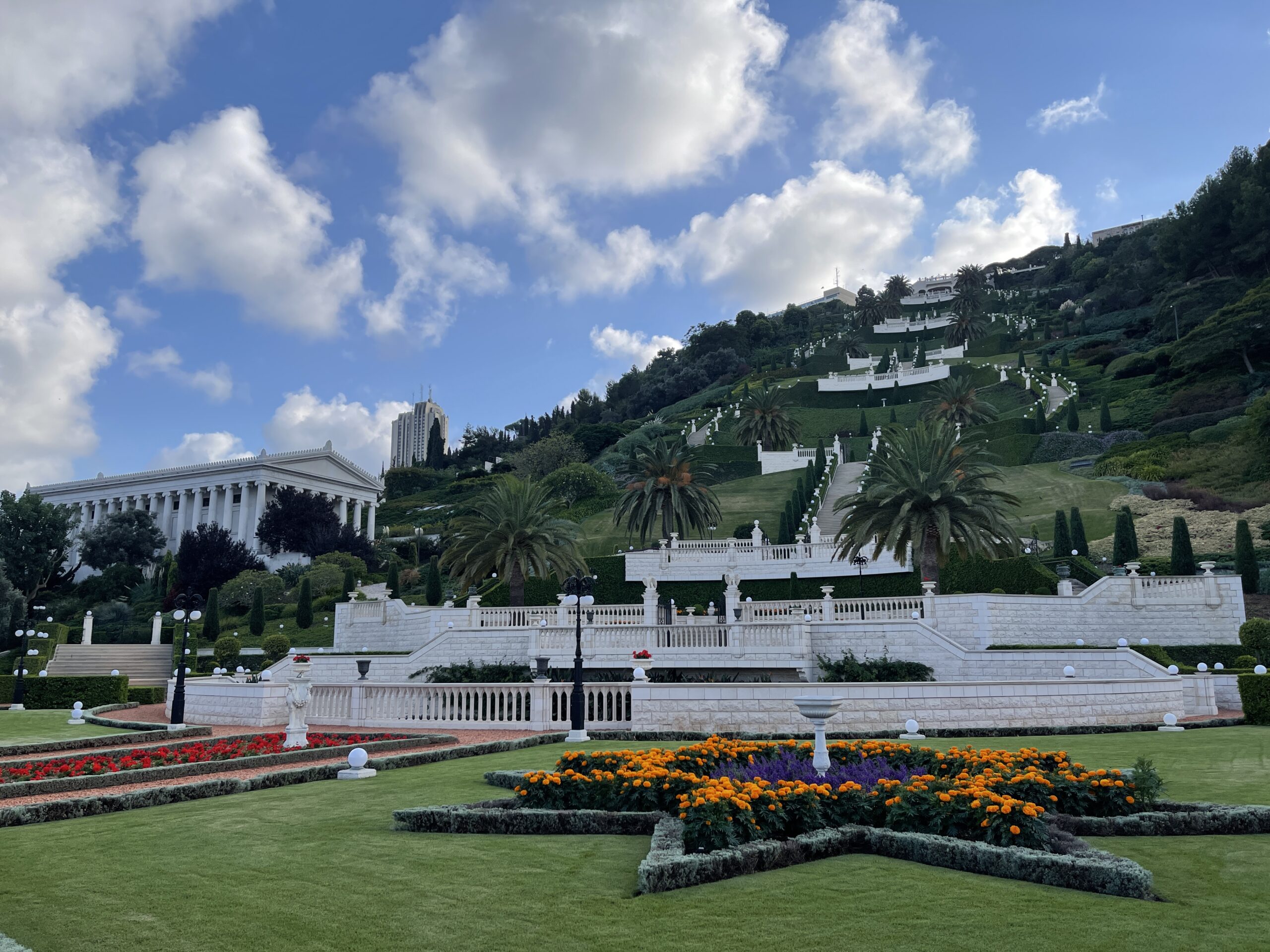
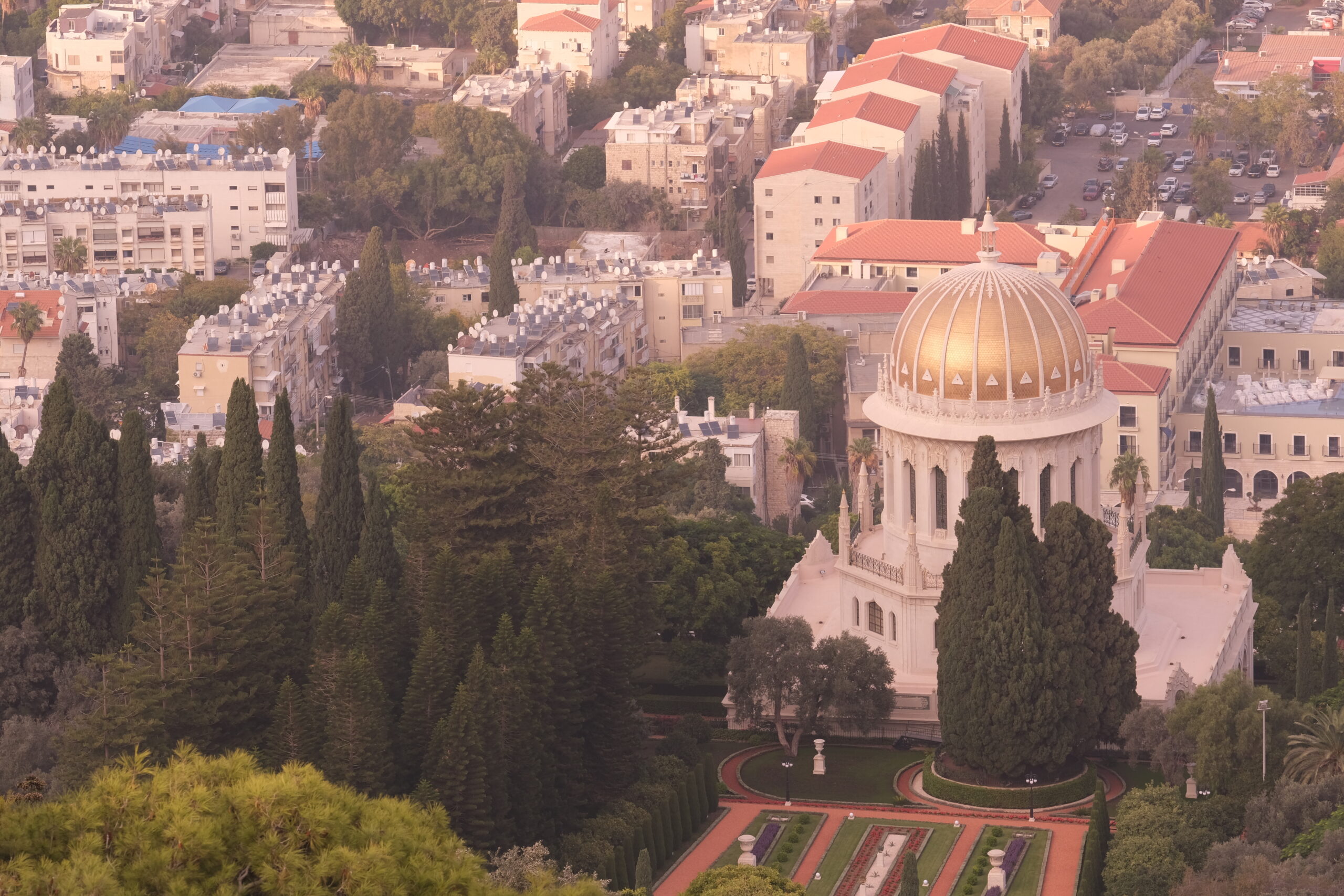
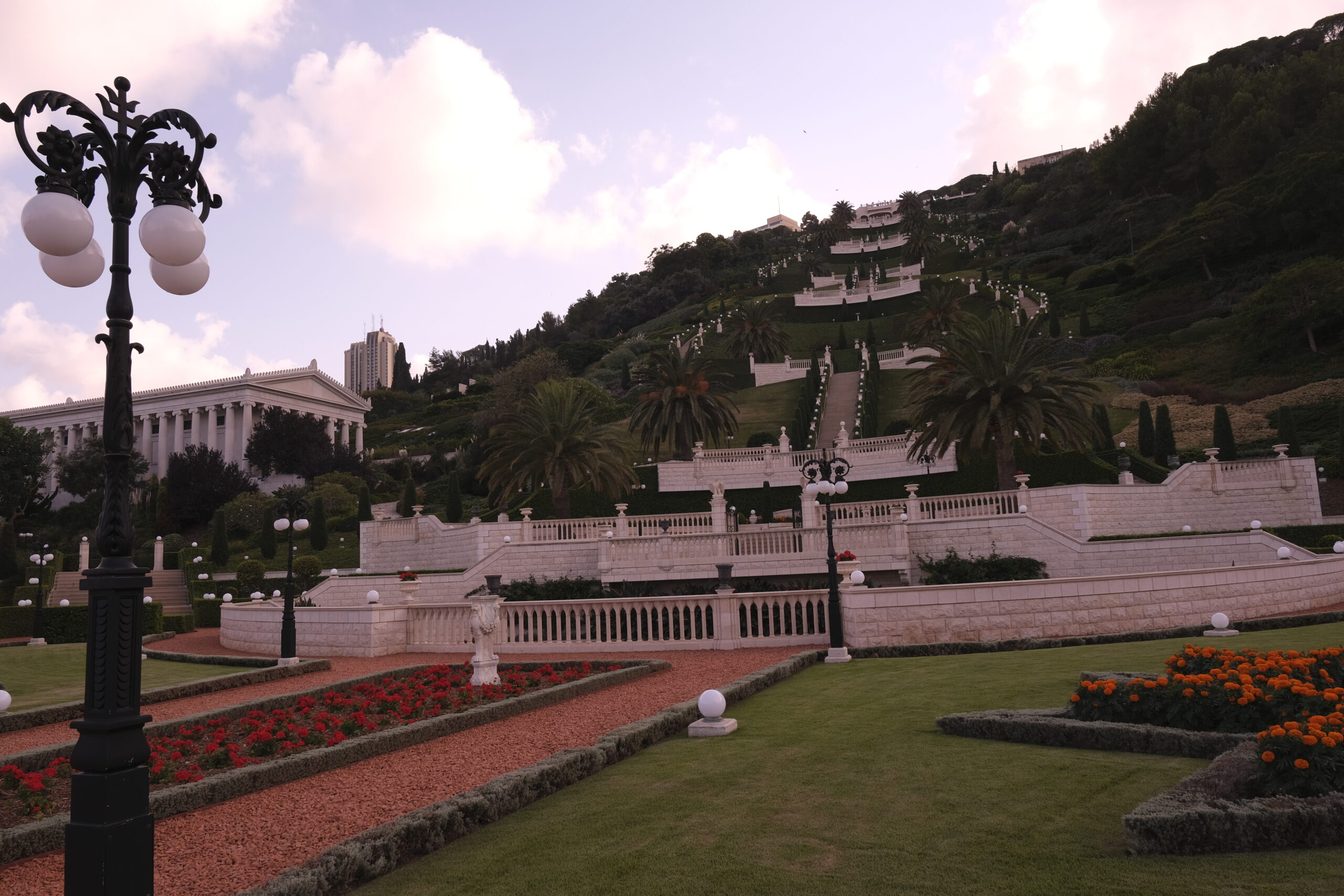
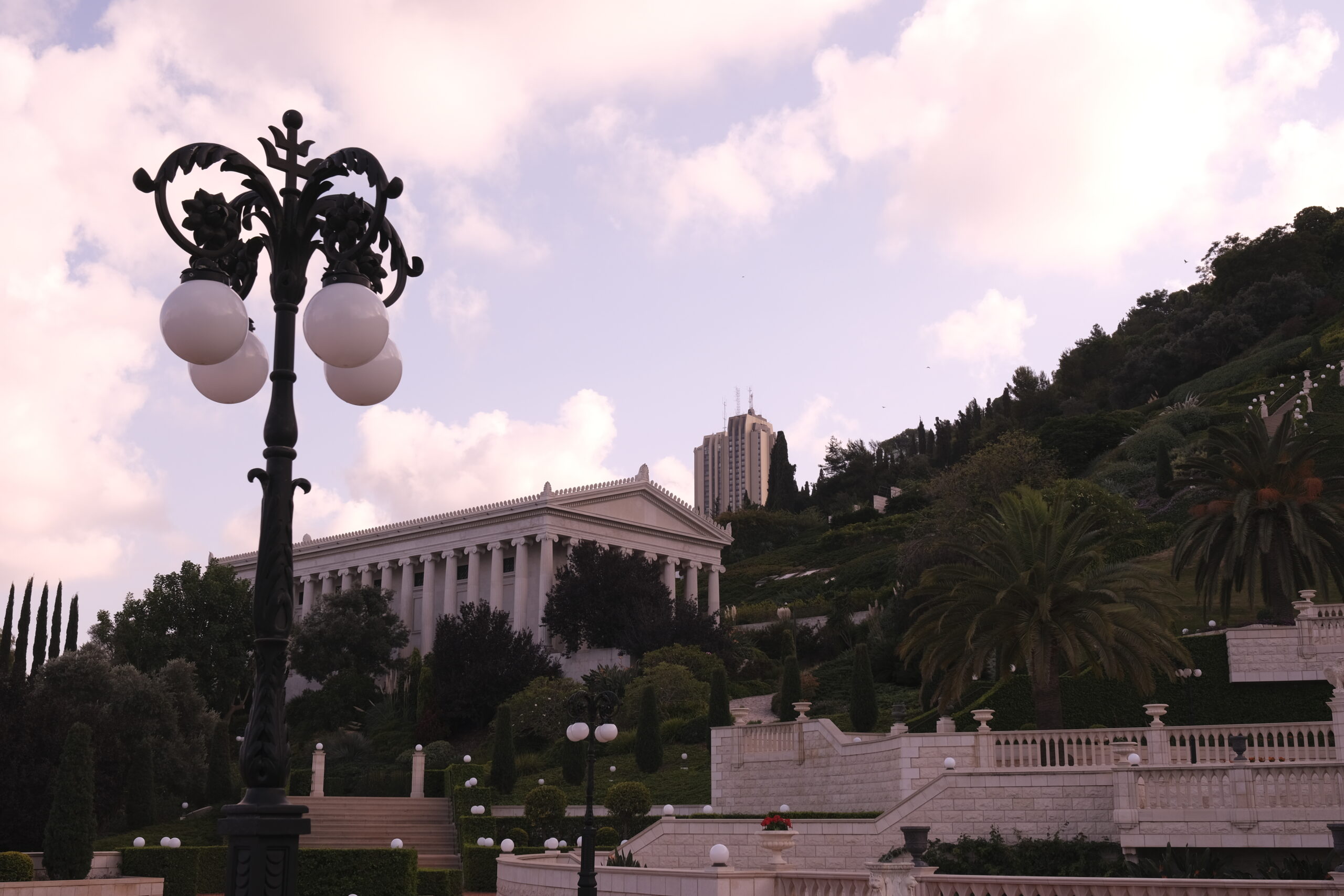
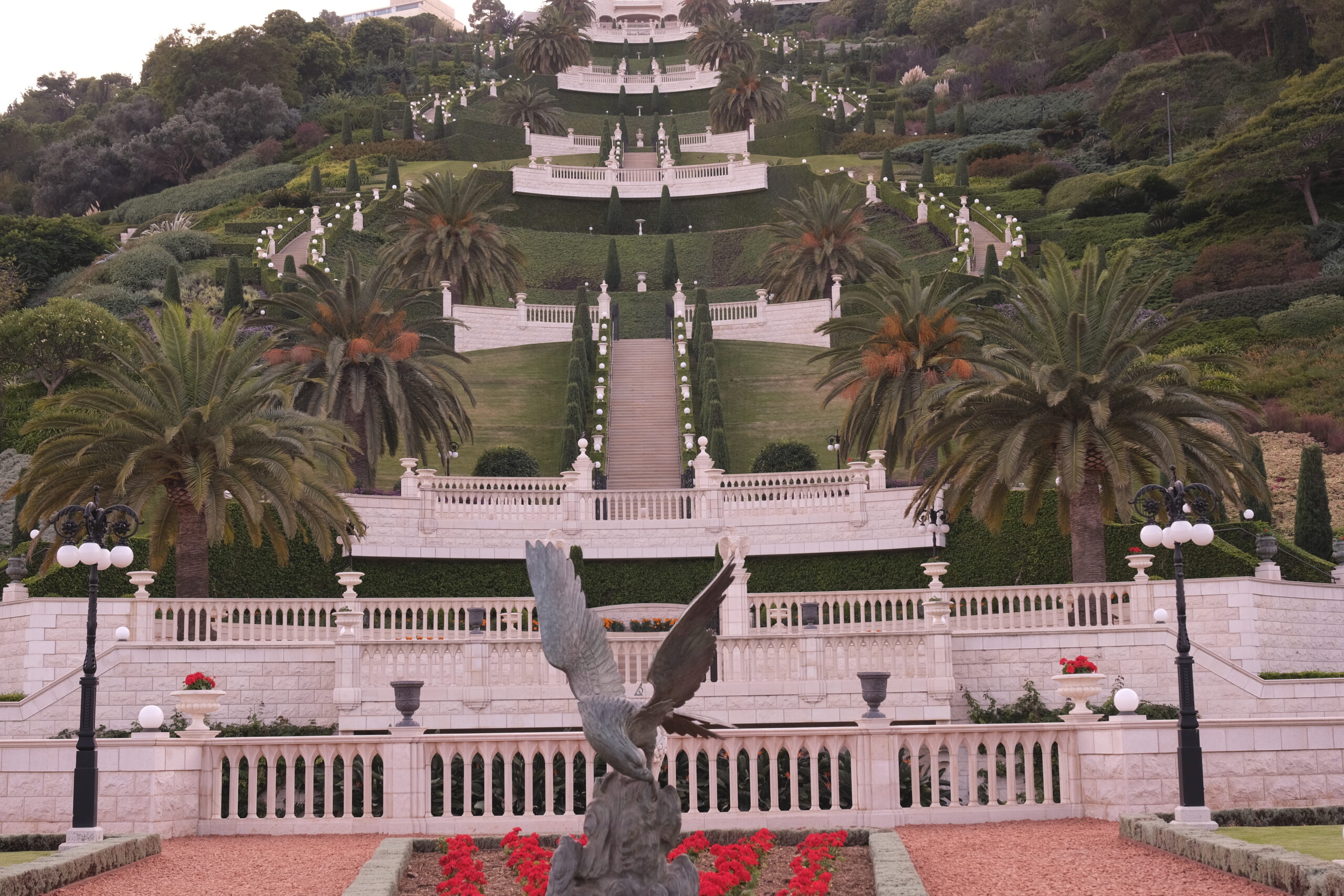

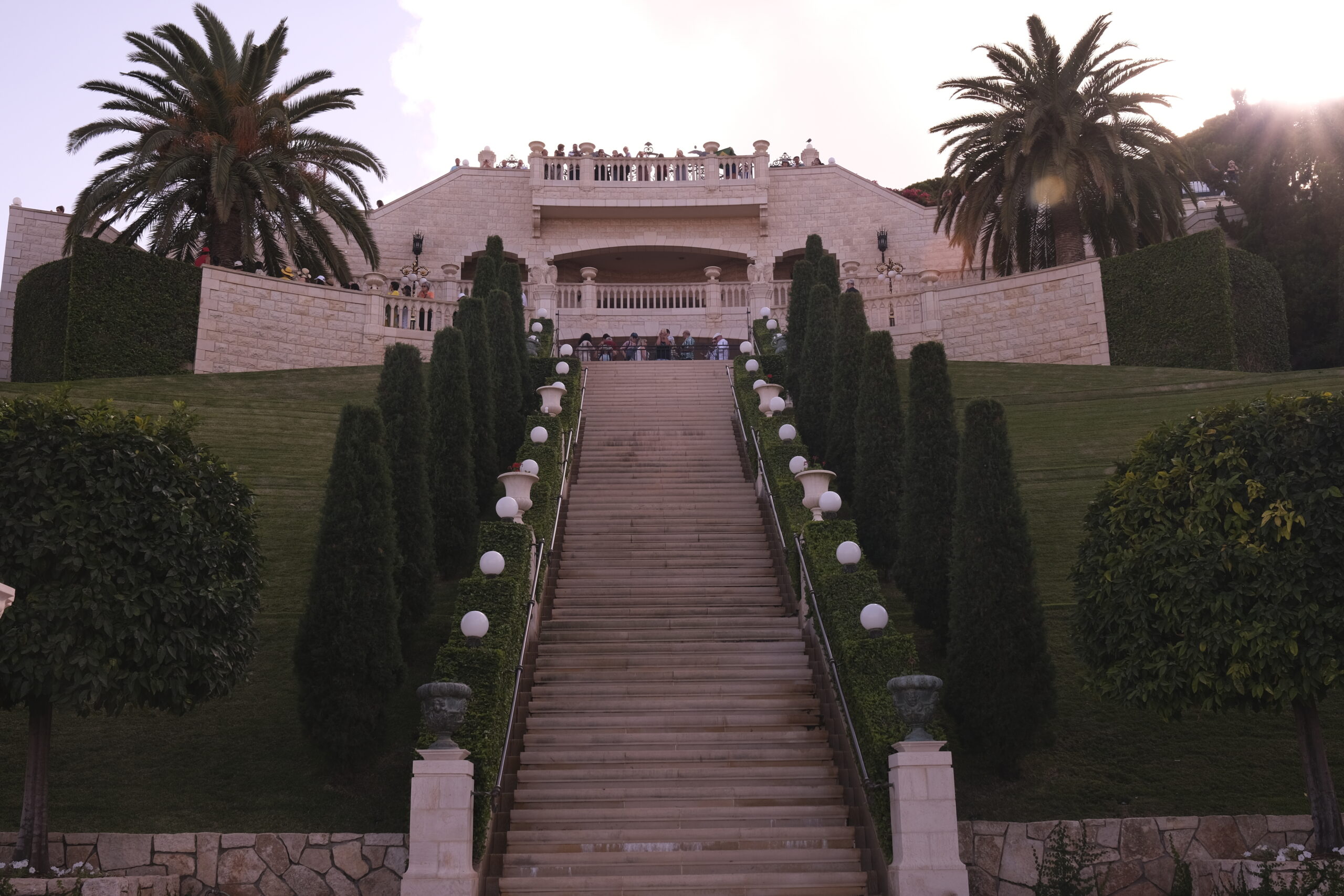
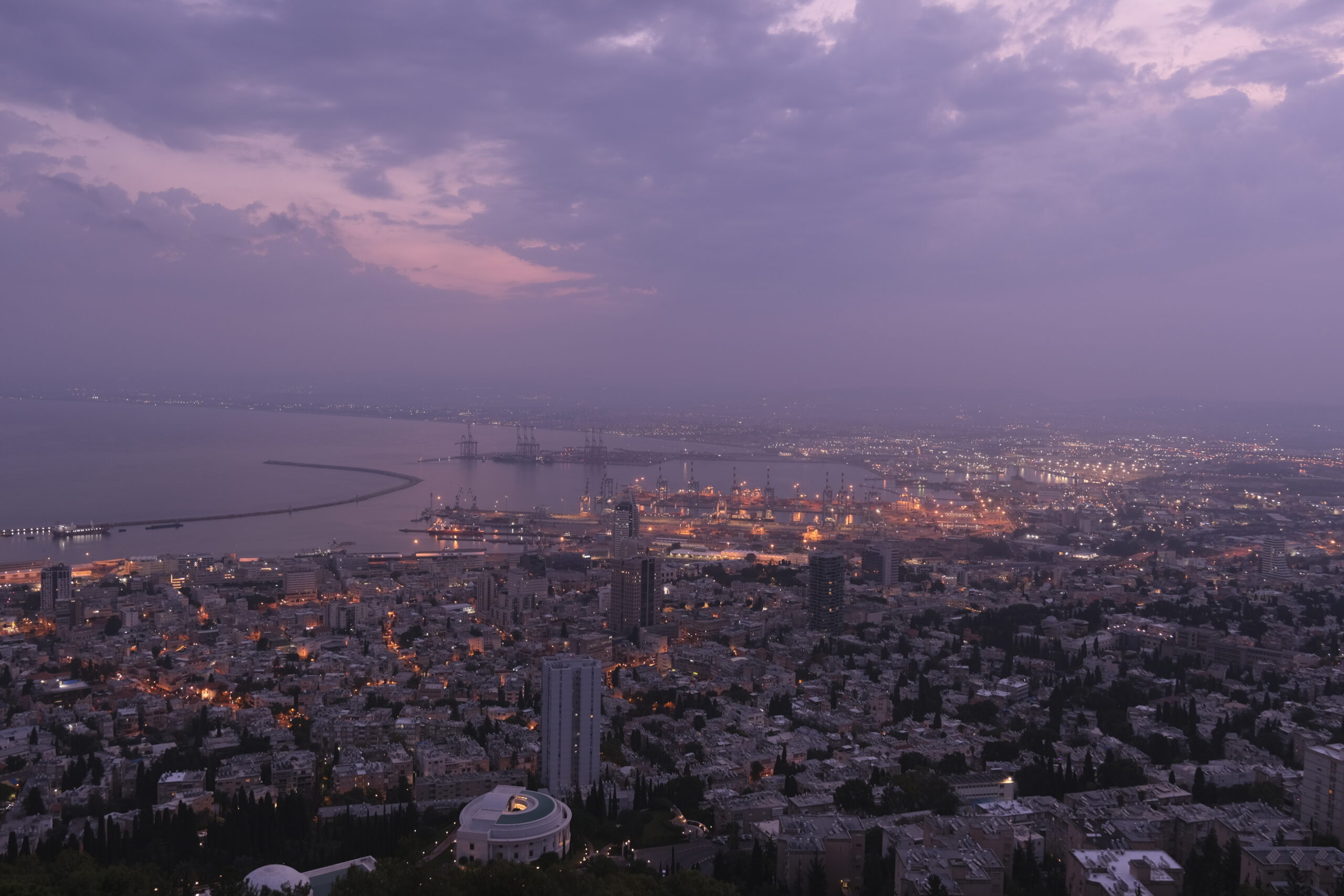
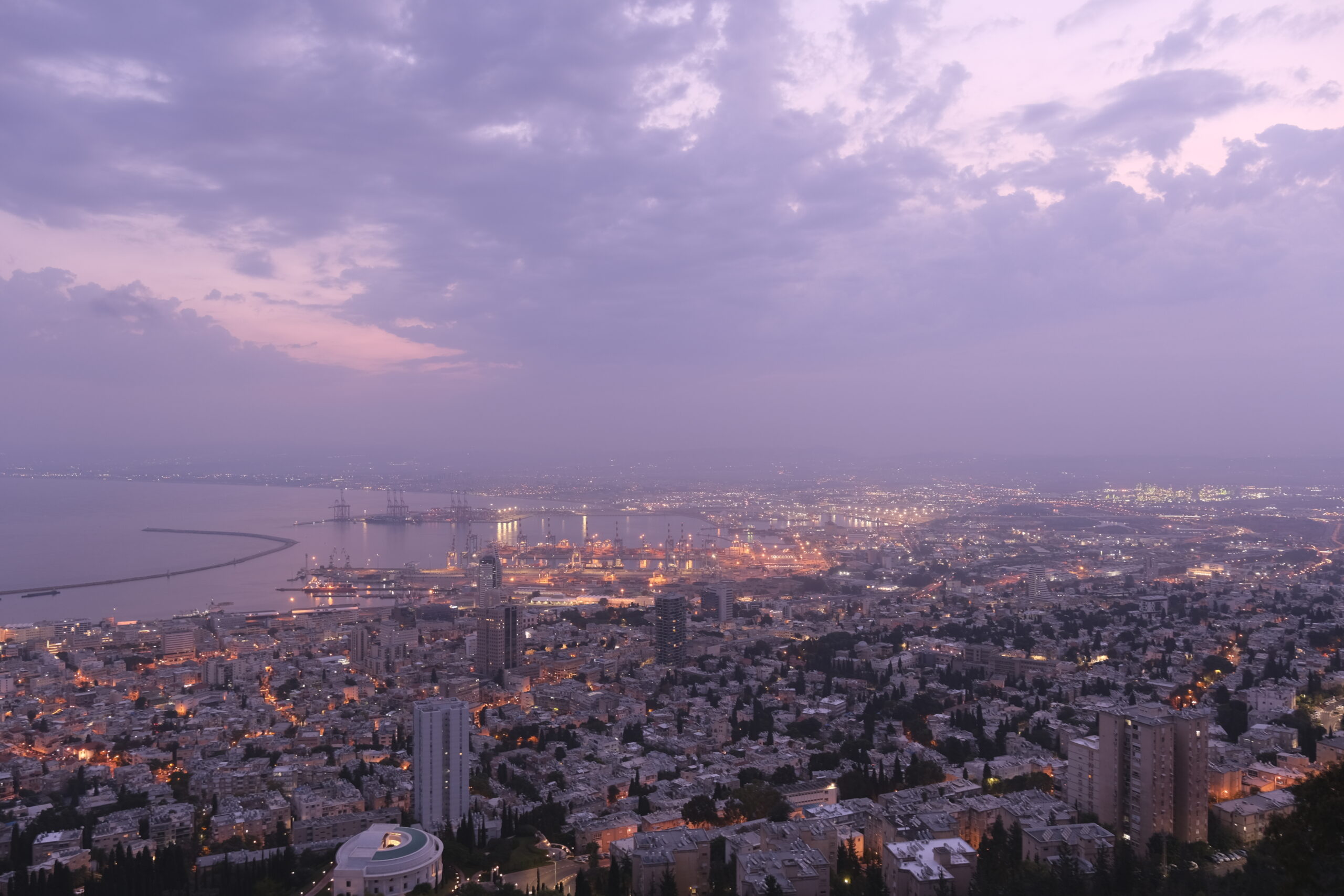
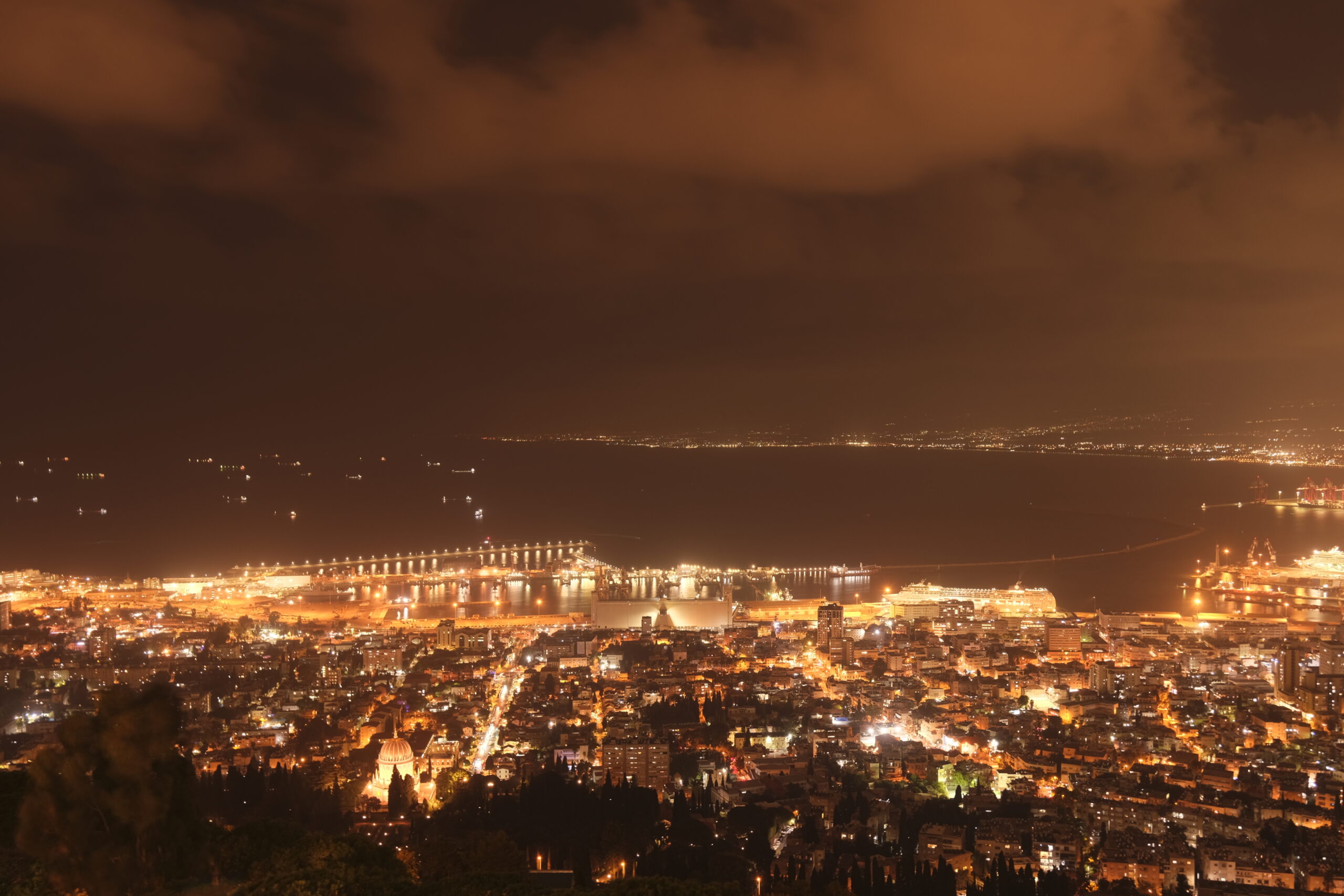
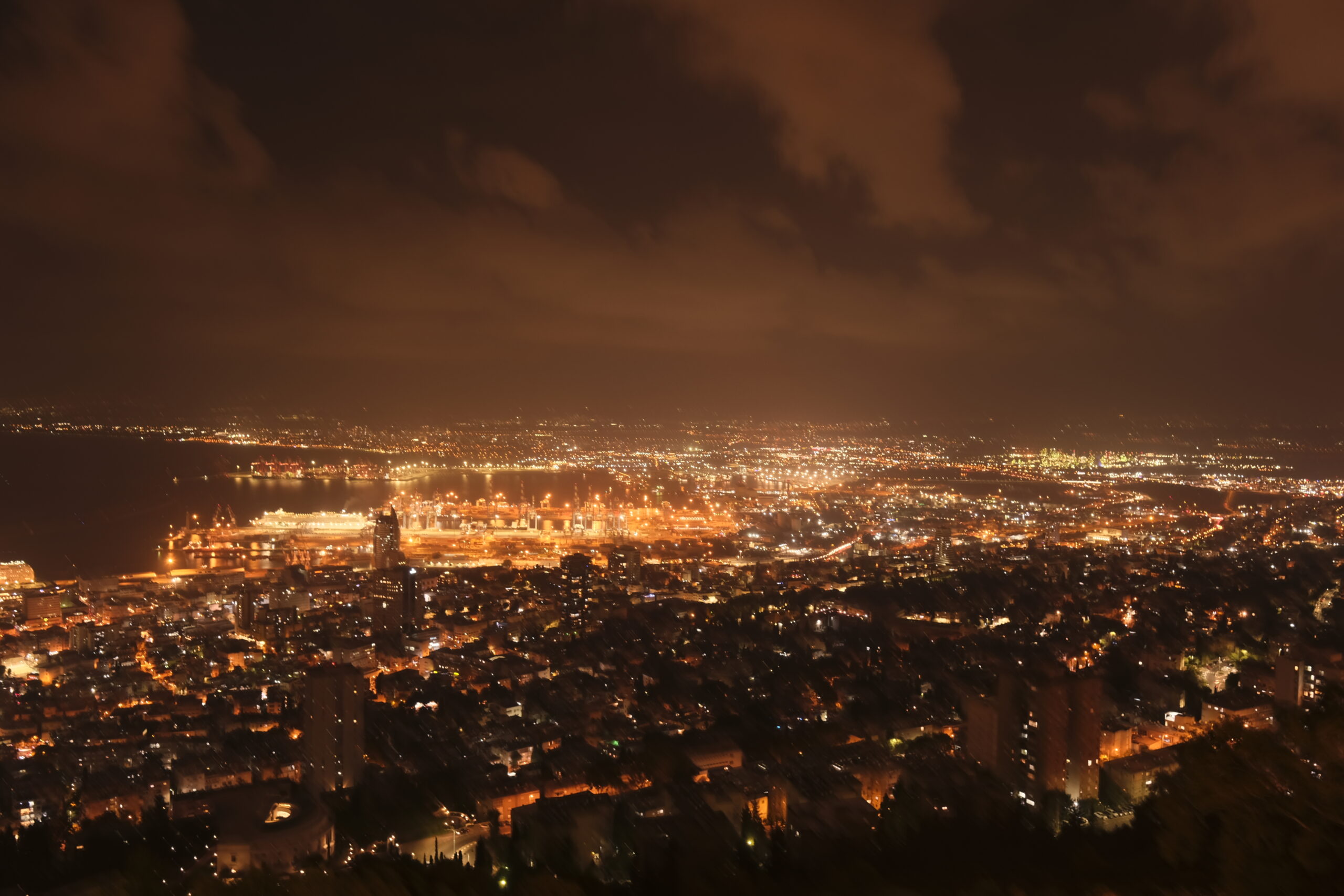
After visiting the gardens, we checked into The Dan Carmel hotel. From our room we can see the dome of the Baha’i gardens, the Mediterranean, and the Haifa port, including the new deep-water harbor built by the Chinese and leased to them for 15 years. Most of the goods that pass through the port of Haifa are for Jordan and not Israel.


Later in the evening, we attended an interfaith panel discussion led by a Jewish woman, a Baha’i volunteer from Jordan, and two men of different Muslim sects. The topic of discussion was coexistence in Haifa.
Coastal Israel to the Sea of Galilee – October 21, 2022
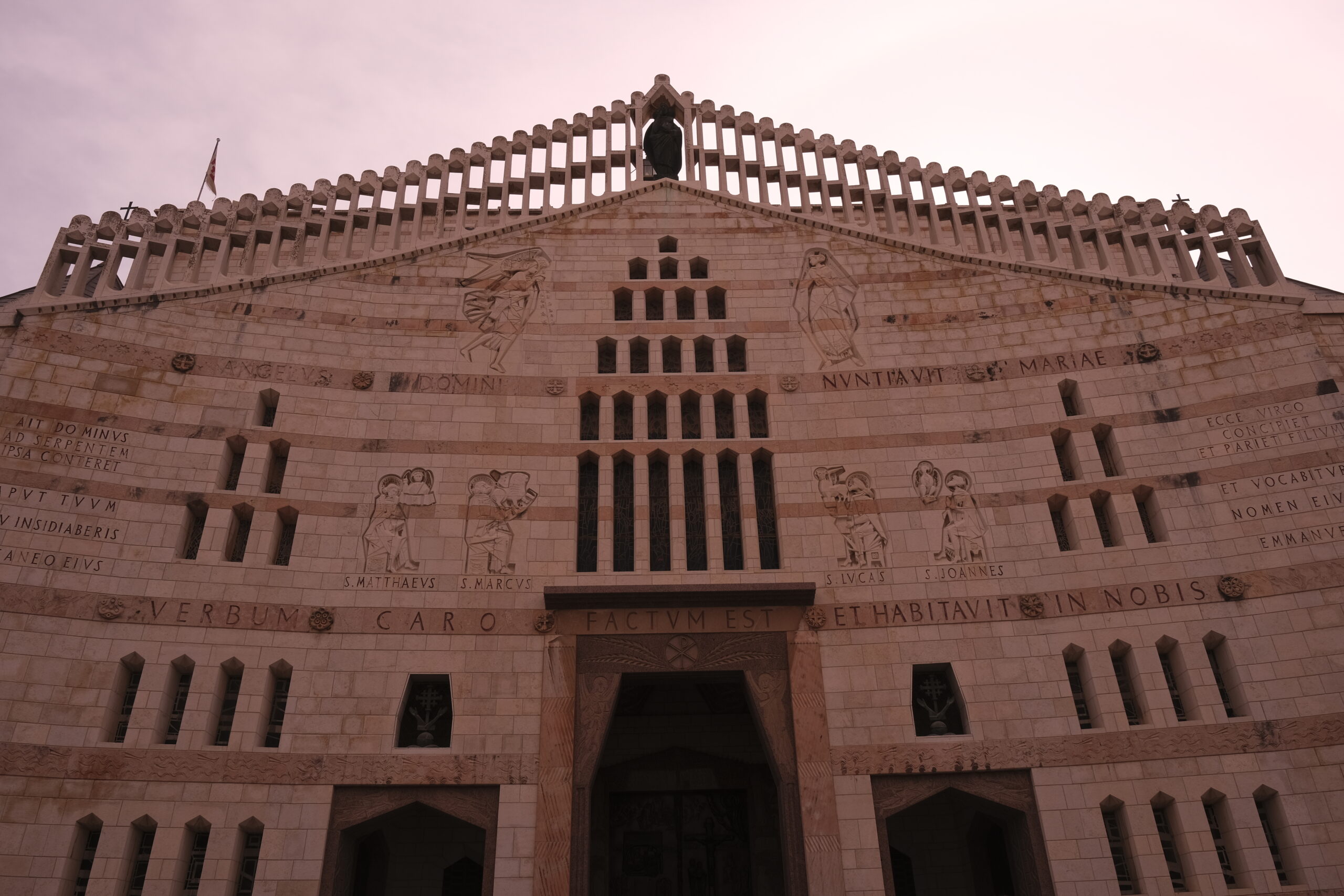
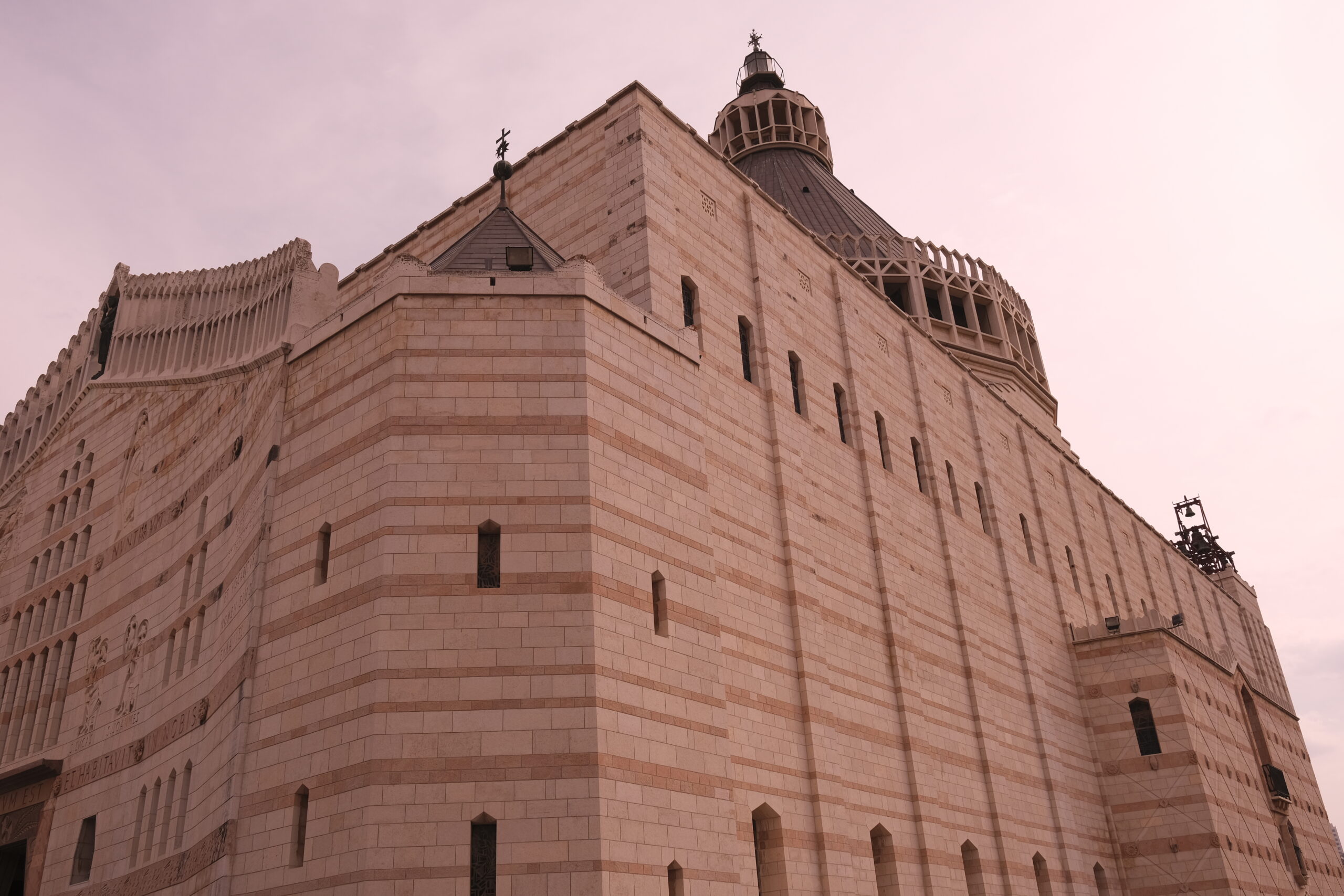
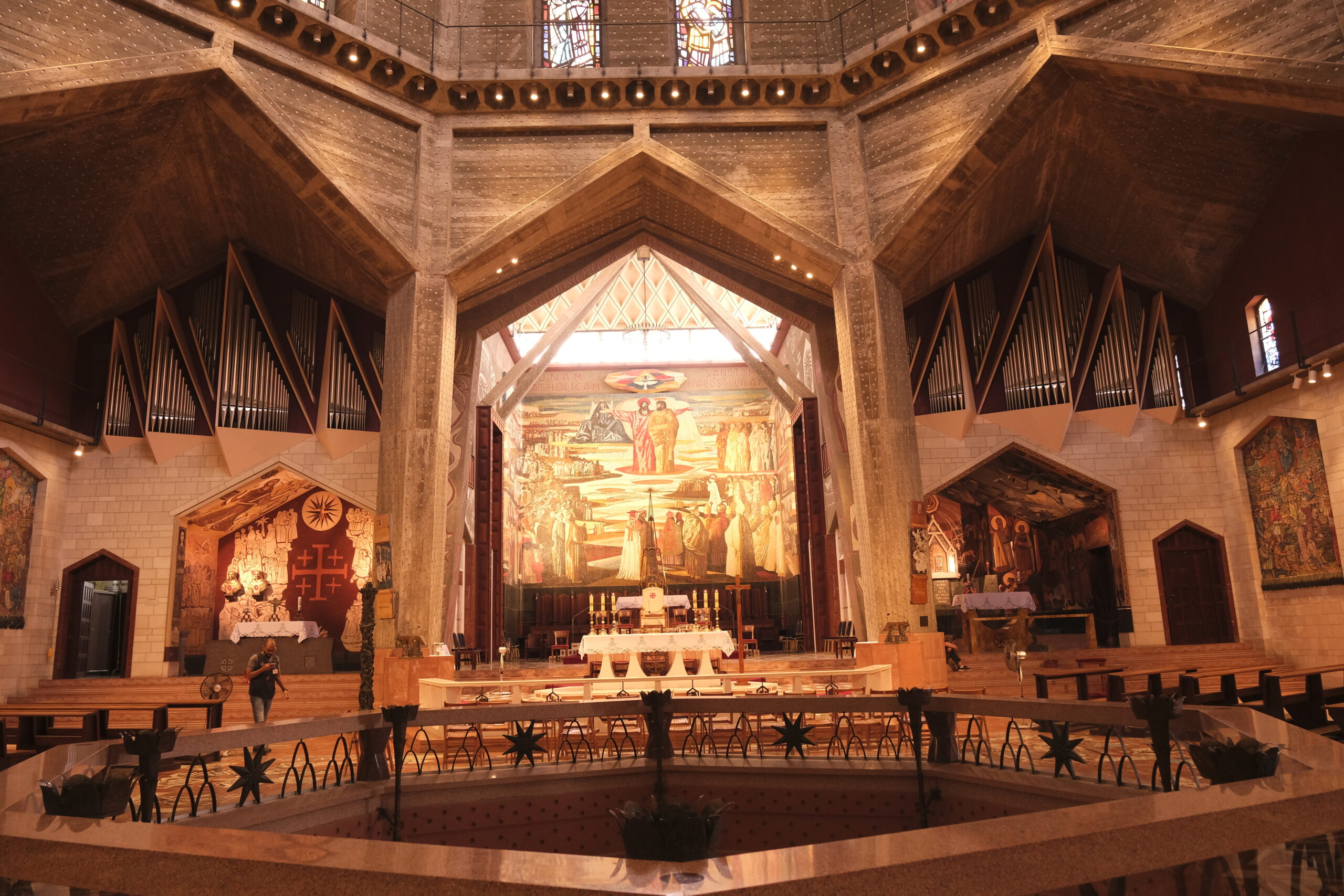
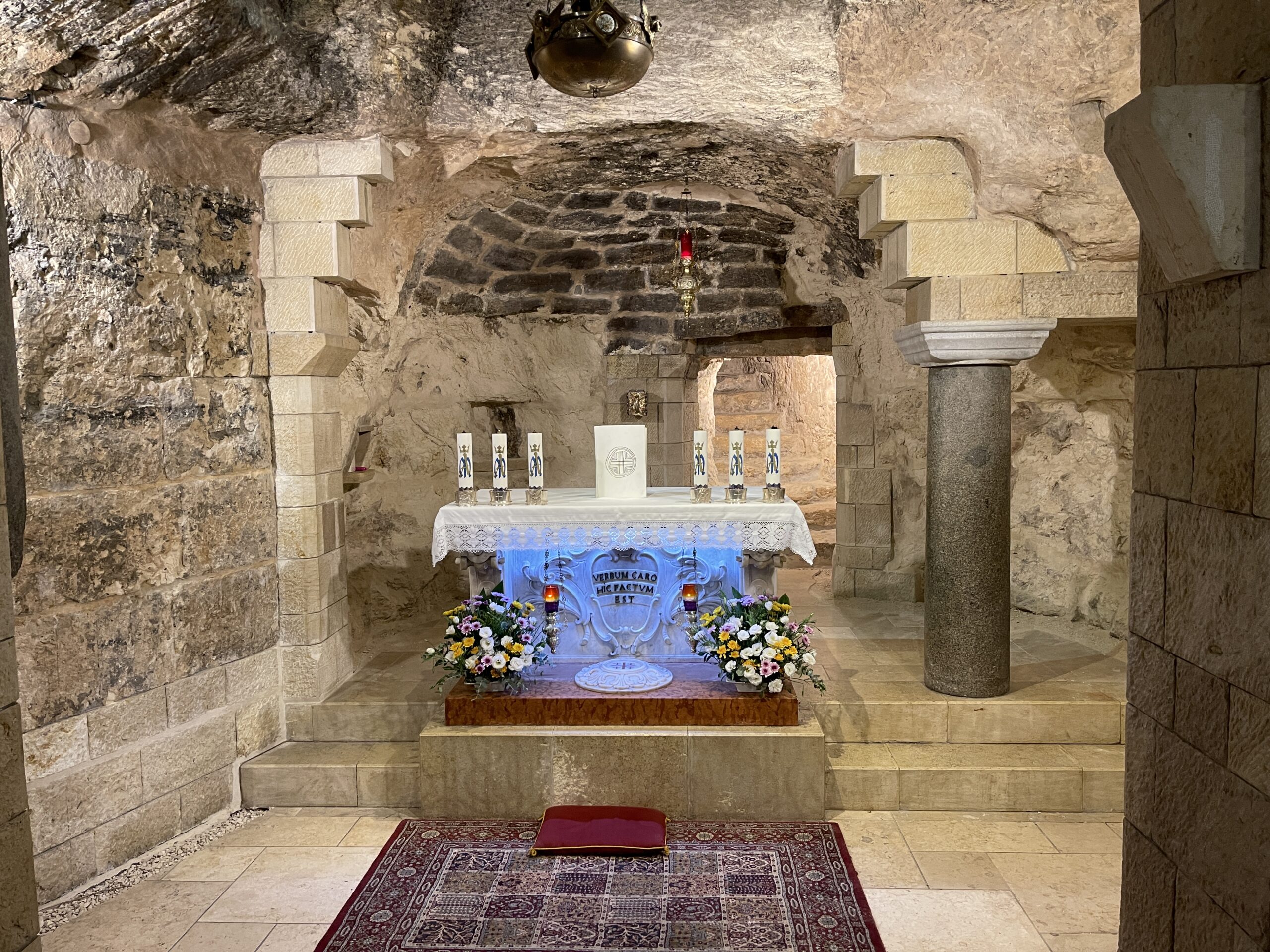
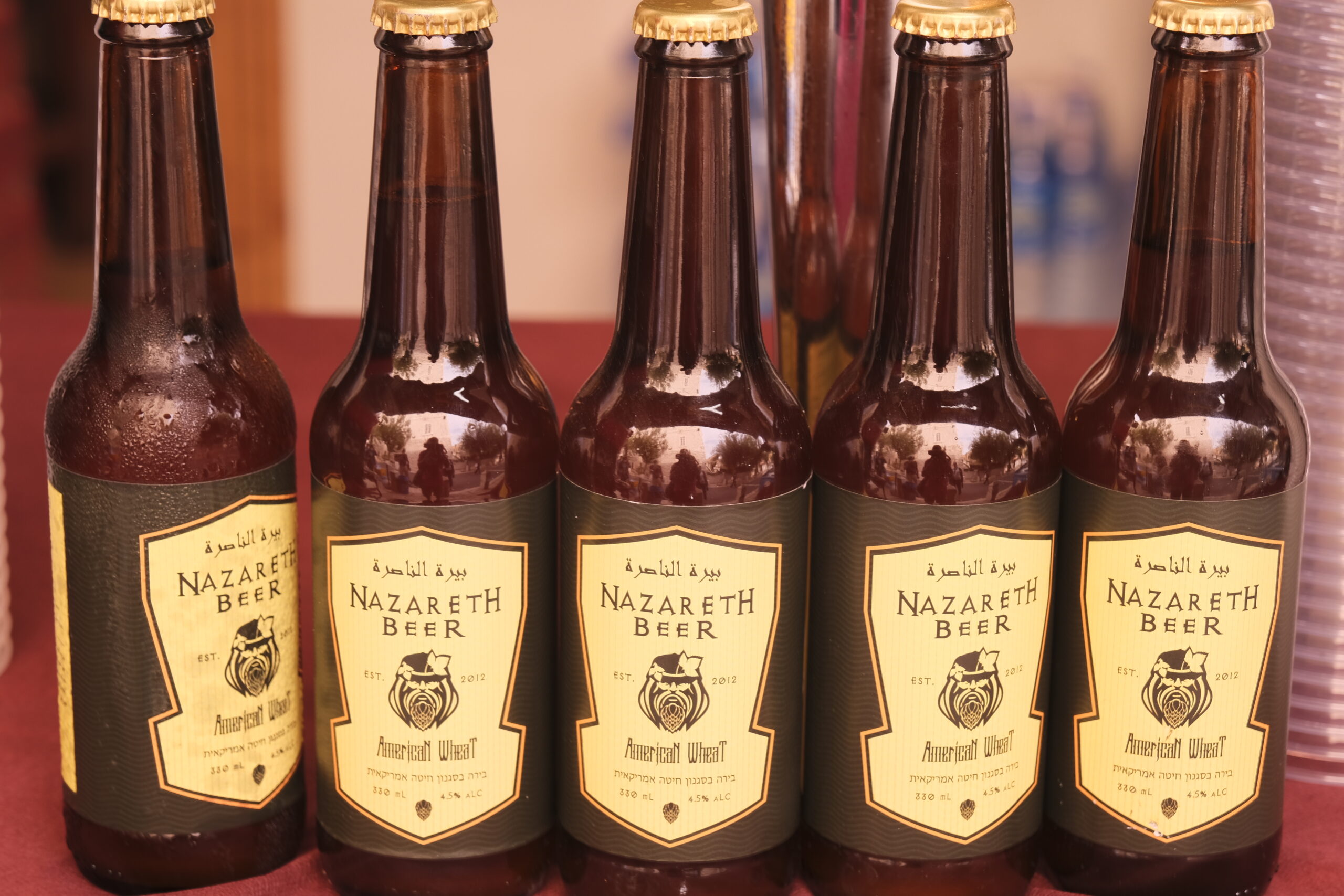
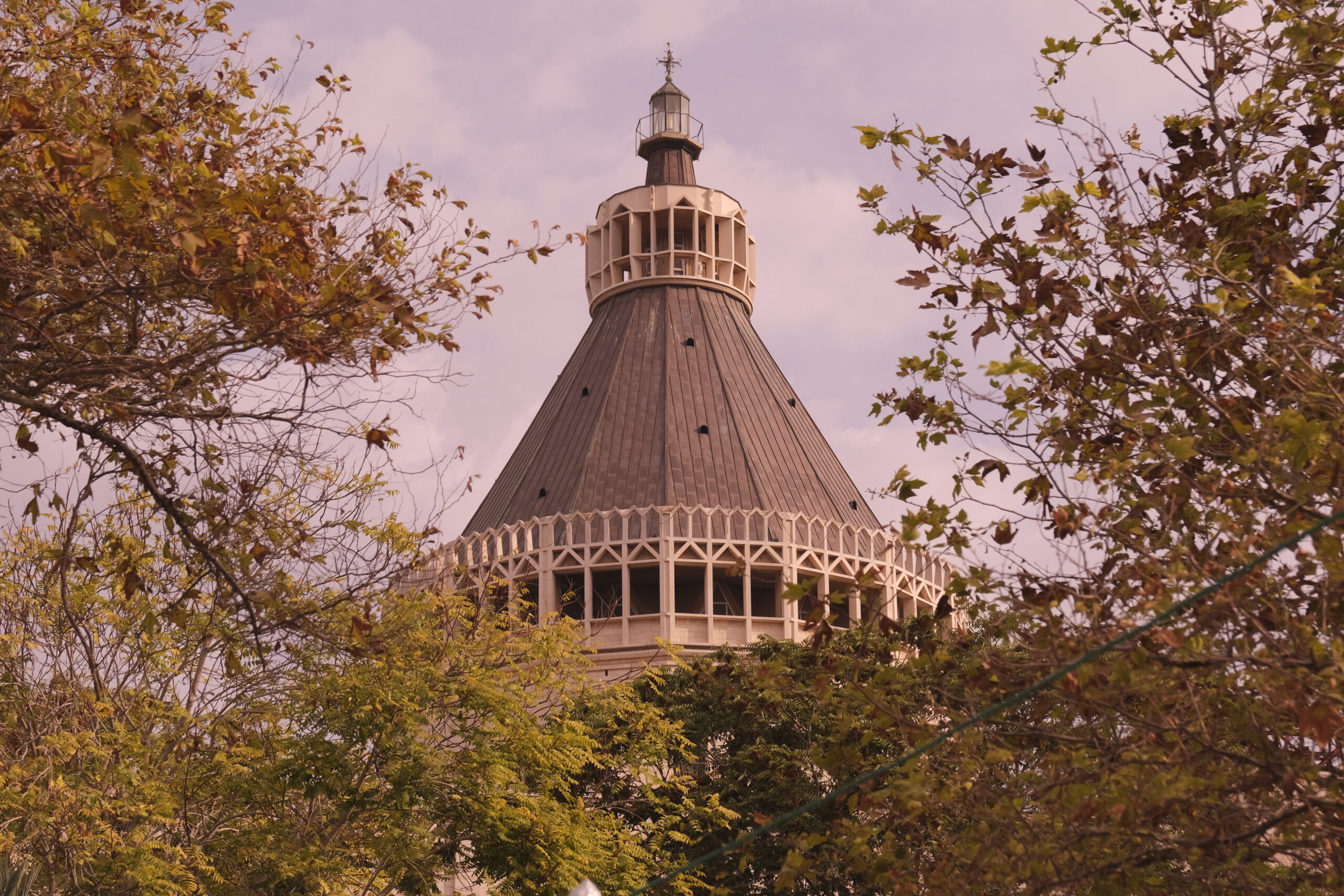
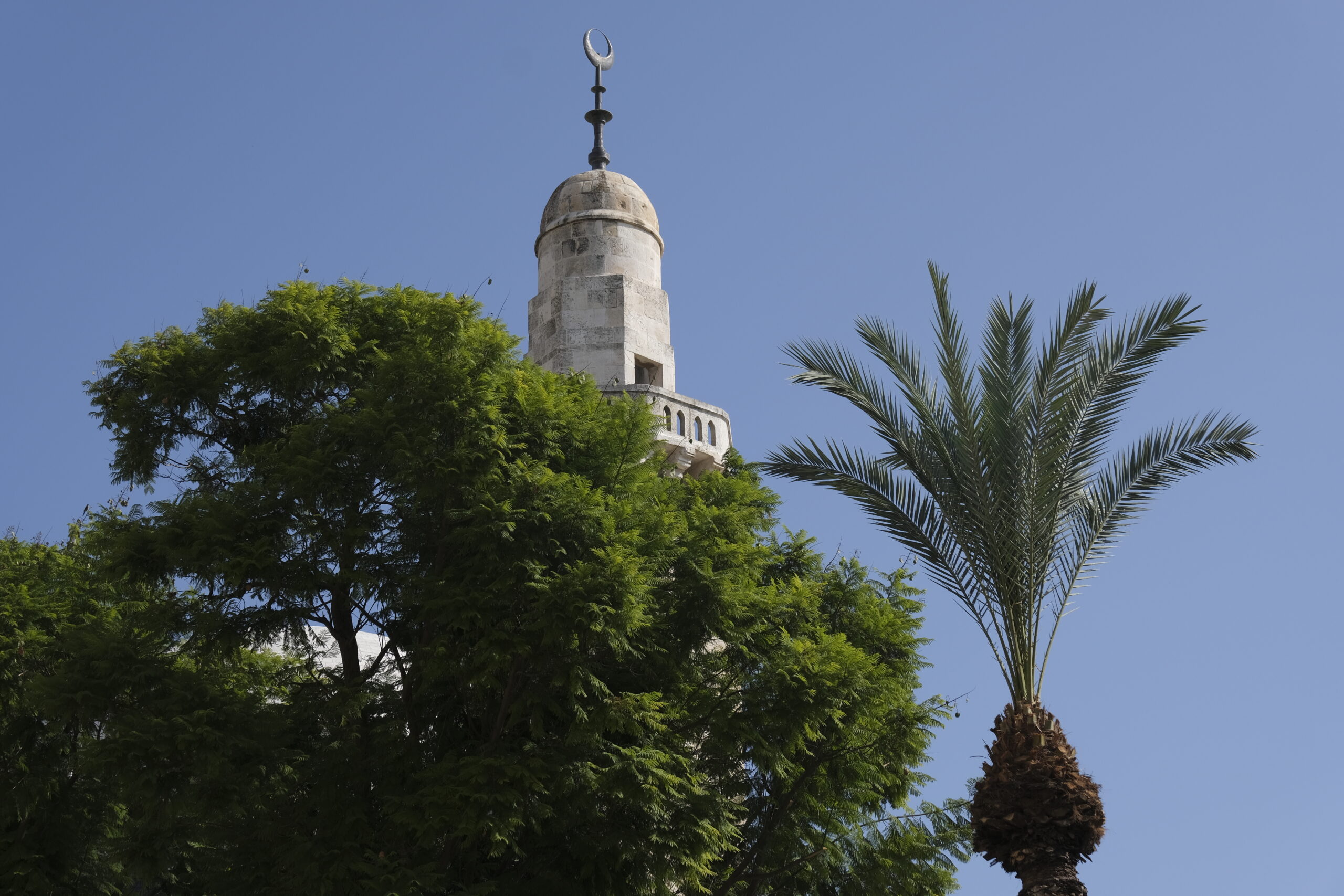
This morning we drove past the old U.S. Embassy Building in Tel Aviv and the Stella Maris Monastery on the way to Nazareth. In Nazareth, we stopped at the Church of the Annunciation. Constantine commissioned the Church, but it was destroyed by the Muslims, later rebuilt by the Crusaders, to be once again destroyed by the Ottomans, and so on. The church that stands there now was completed in 1969. Throughout the church and the compound are mosaic pictures of Mary donated by different countries. Within the church is Mary’s childhood home and a mikveh. This is a church for pilgrims. Now for local politics…The church is across from a mosque. Nazareth is currently mainly Muslim. The mosque is not allowed a minaret as that would be higher than the dome of the church, while the church (which is quite large for the very small number of Christians in Nazareth) can only be entered from a side gate. The traditional main entrance remains locked. This is the compromise reached by the two groups.
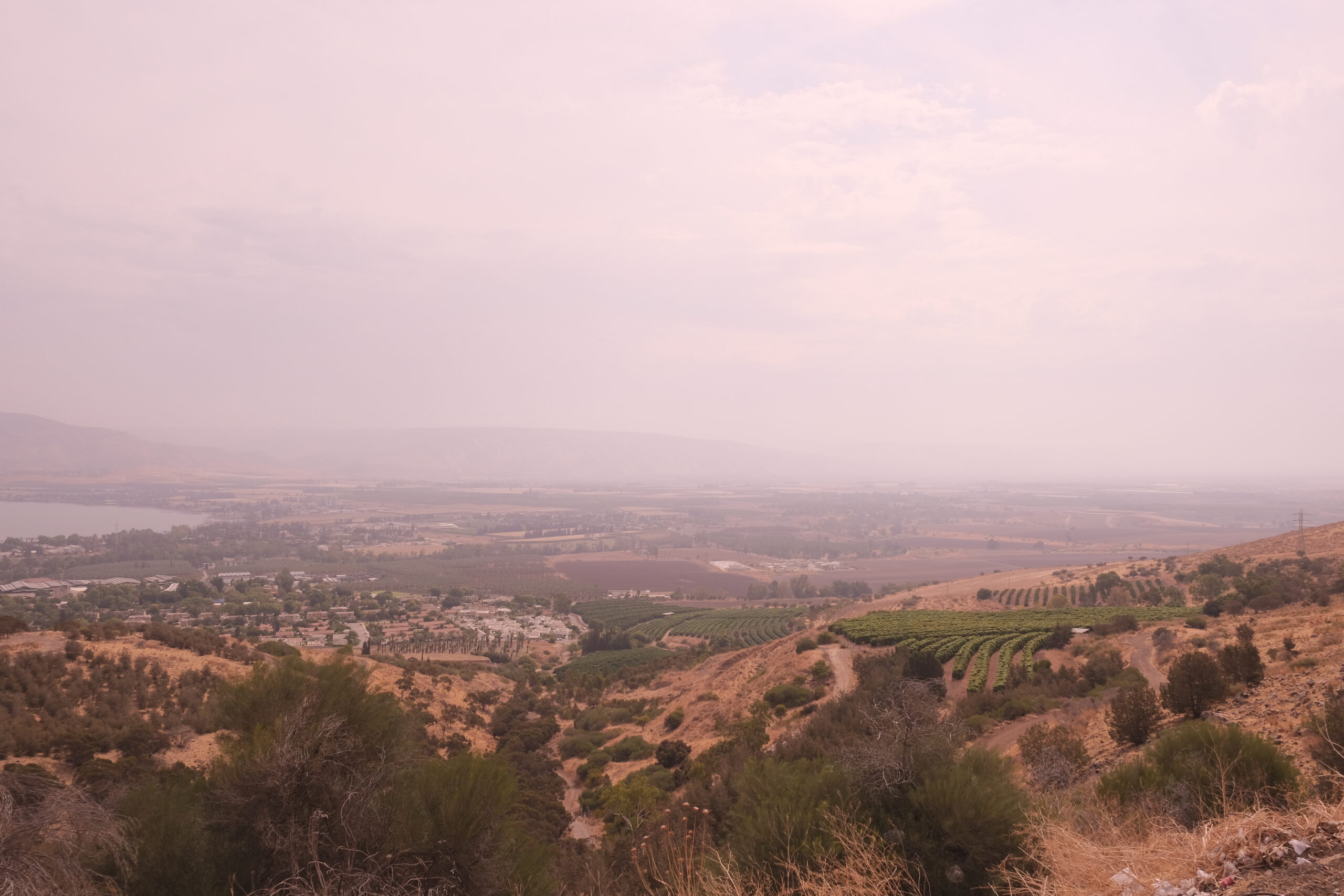
From Nazareth, we drove through Cana (where Jesus converted water into wine), Magdala (Mary Magdalene’s village), passed by Mount Tabor (where the transfiguration took place), Tiberias (the city that Herod’s son Herod Agrippa built), and the Mount of Beatitudes (the sermon on the mount).
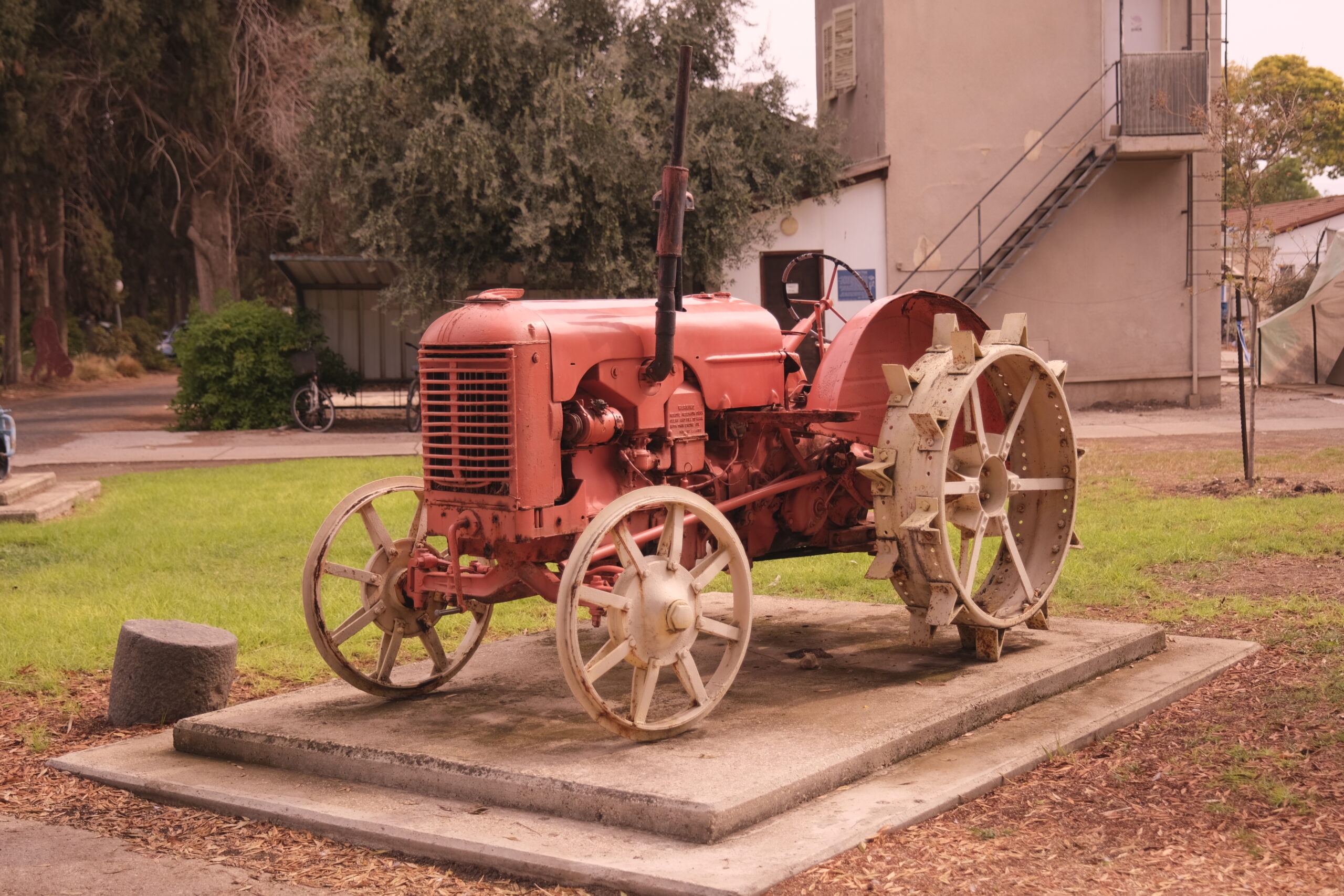
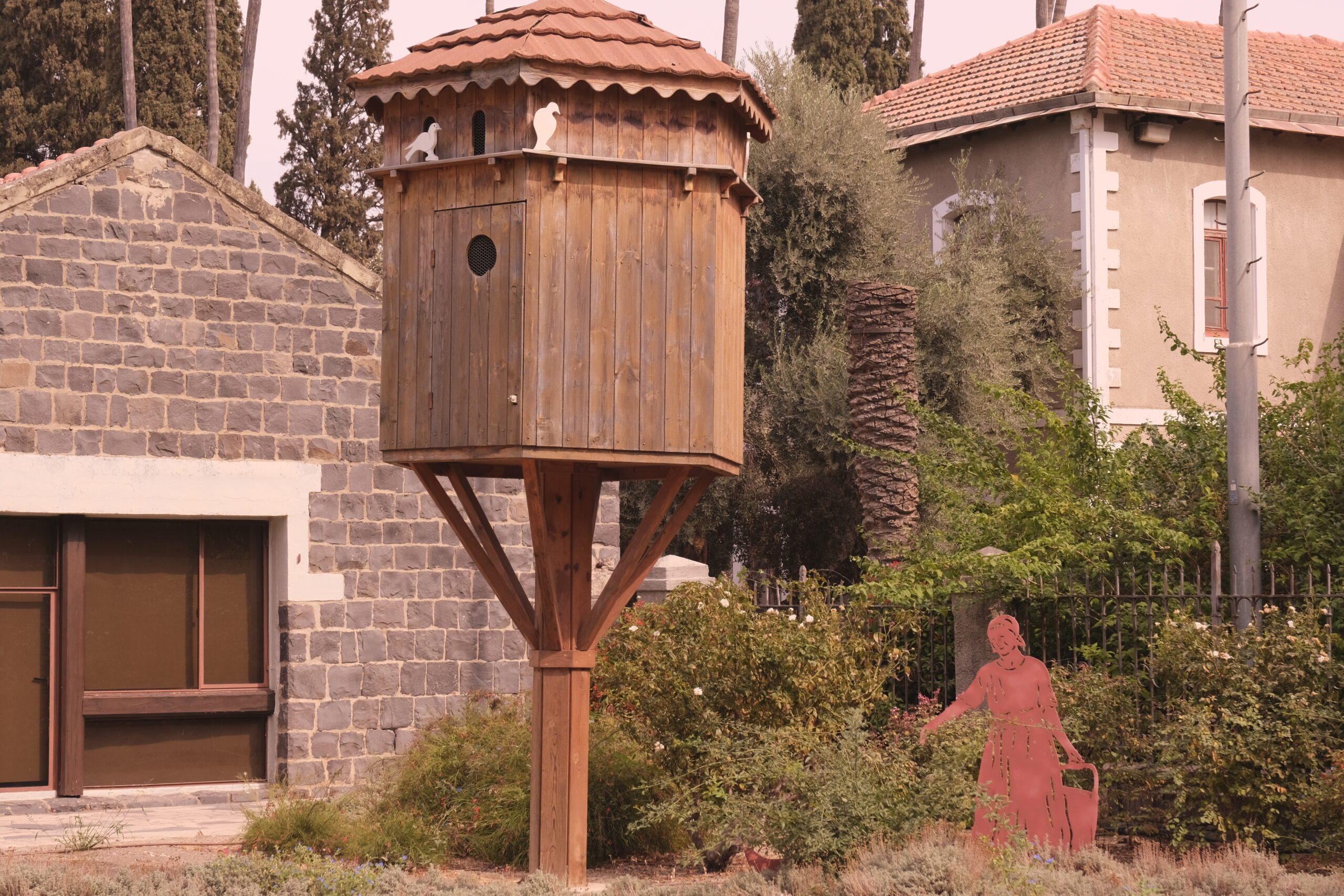
Our next stop was at Degania, the first kibbutz established in 1909 by a group of teenage Russian men and women. The kibbutz is located near the Sea of Galilee in the Jezreel Valley. It was backbreaking work, but they succeeded and are still in operation. In the beginning they worked completely in the kibbutz, were assigned duties, lived communally, and earned enough to live frugally. That is not the case today as kibbutzim can have jobs in addition to what they do on the kibbutz, and they also earn a salary. We walked around the kibbutz, viewed their gardens, and talked with a young man whose father was a Chairman of the Board of Degania. This young man had just finished his three years of military service, recently got married, and is now attending university. What they have accomplished in turning a desert into an agricultural success is amazing. Besides olives, they grow bananas, avocados, and mangoes to name a few of the fruits and vegetables grown in the valley.

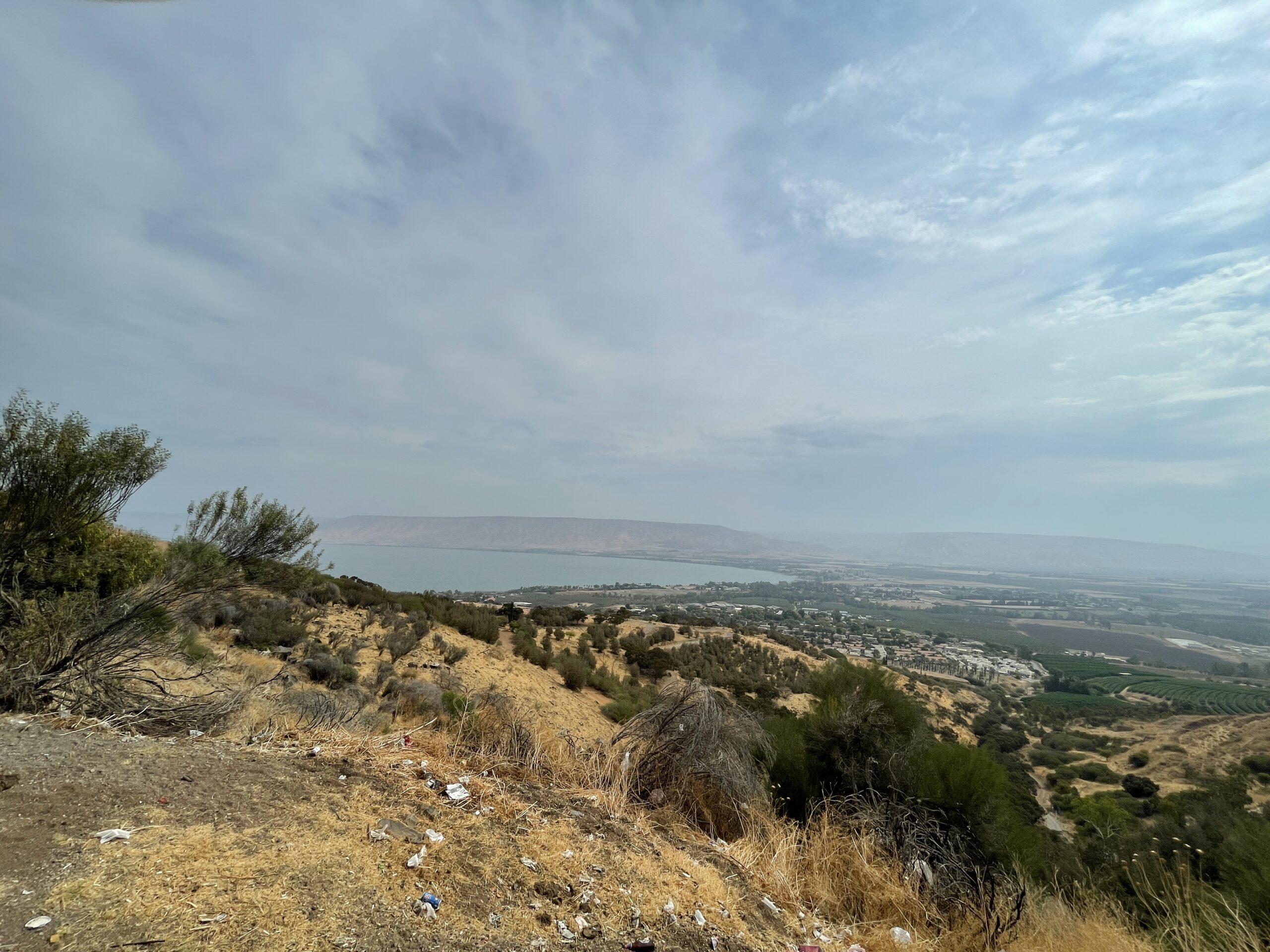
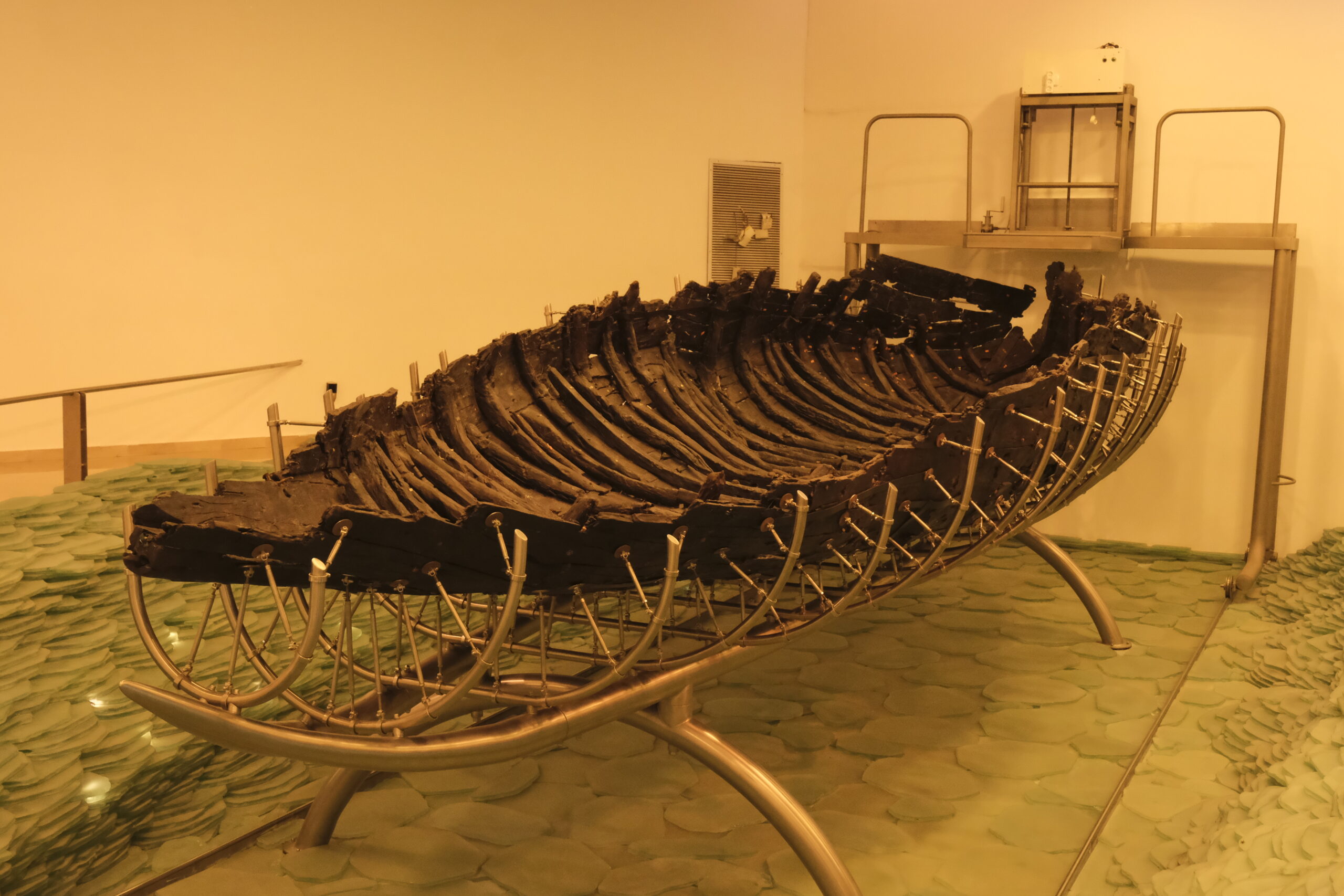
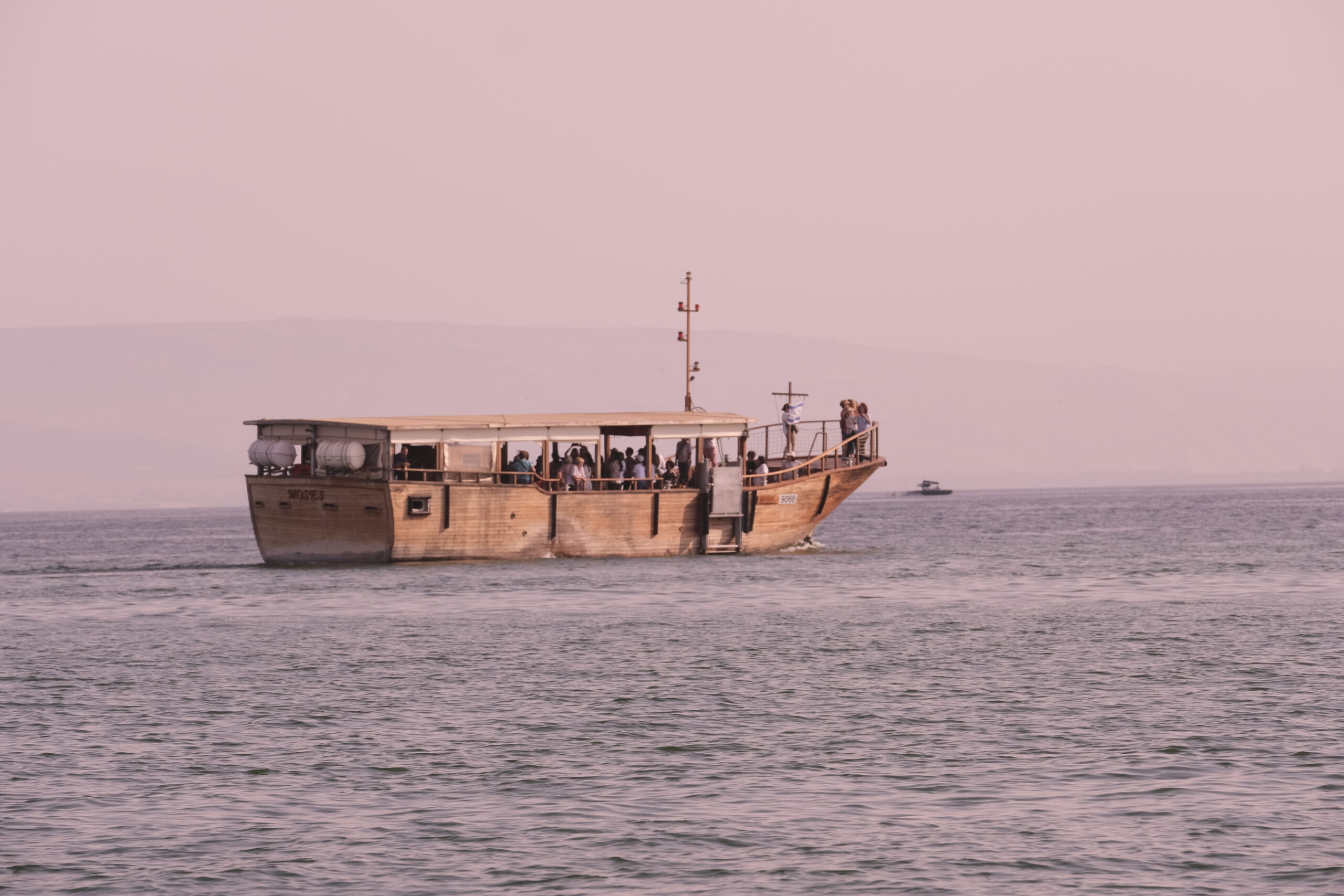
We had lunch at St. Andrews, previously a hospital run by Scots and now a hotel. What we ate was tilapia, St. Peter’s fish that is found in the Sea of Galilee, and fresh dates. And after lunch we visited the Visitor’s Center on the shores of the Sea of Galilee to see a wooden boat from 2000 years that was discovered by two fishermen and then excavated using some very imaginative techniques so that the wood would not dry out and disintegrate into powder. After viewing the boat, we took a ride in a similar wooden boat on the Sea of Galilee, which is actually a freshwater lake called Kinneret. Our guide, Zivit, pointed out where Capernaum, the place where Jesus performed many miracles, would have been located in Biblical times.
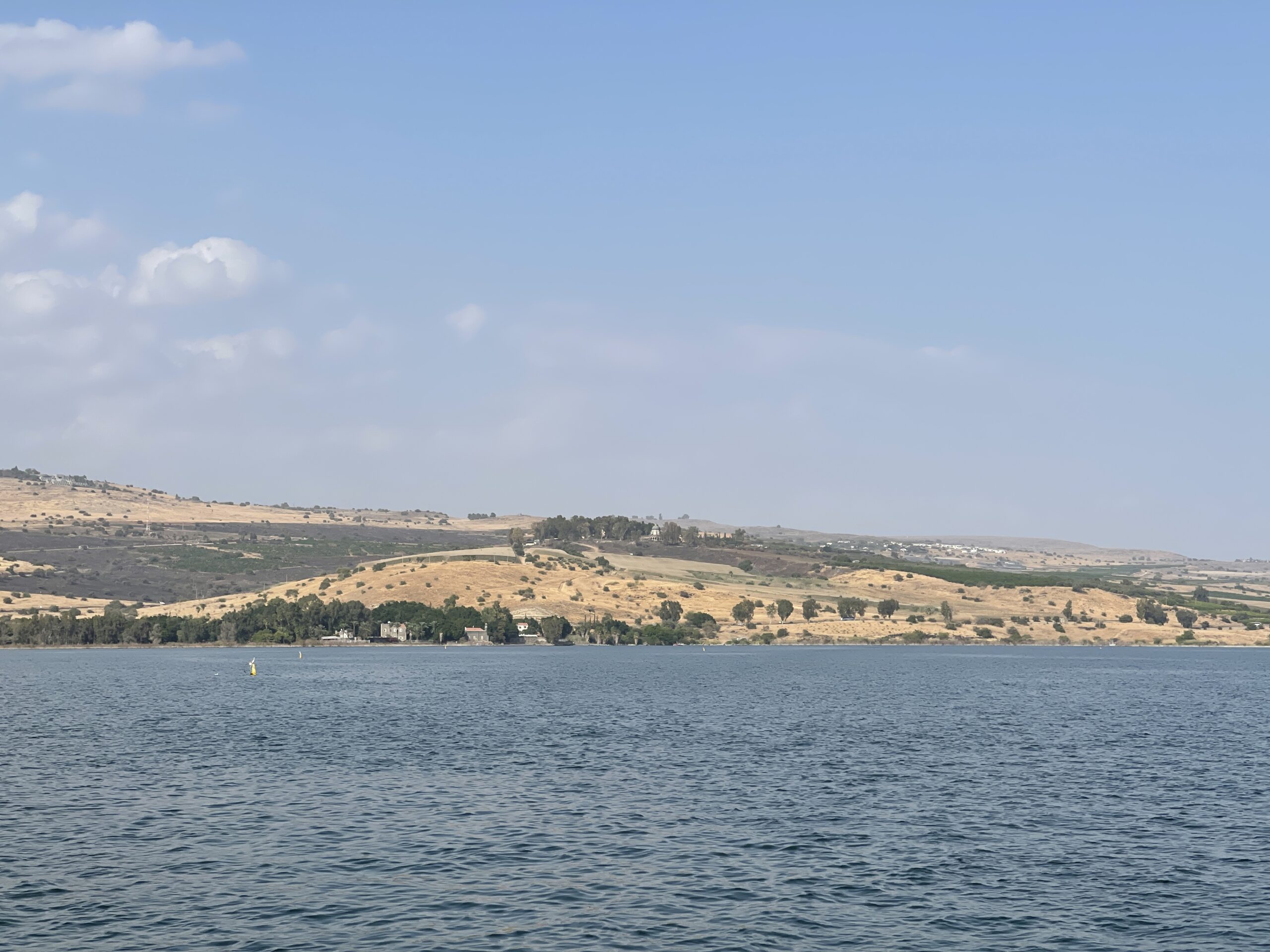
Today is the start of the weekend and traffic in Haifa is considerably less as families prepare for Shabat.
Exploring Akko – October 22, 2022
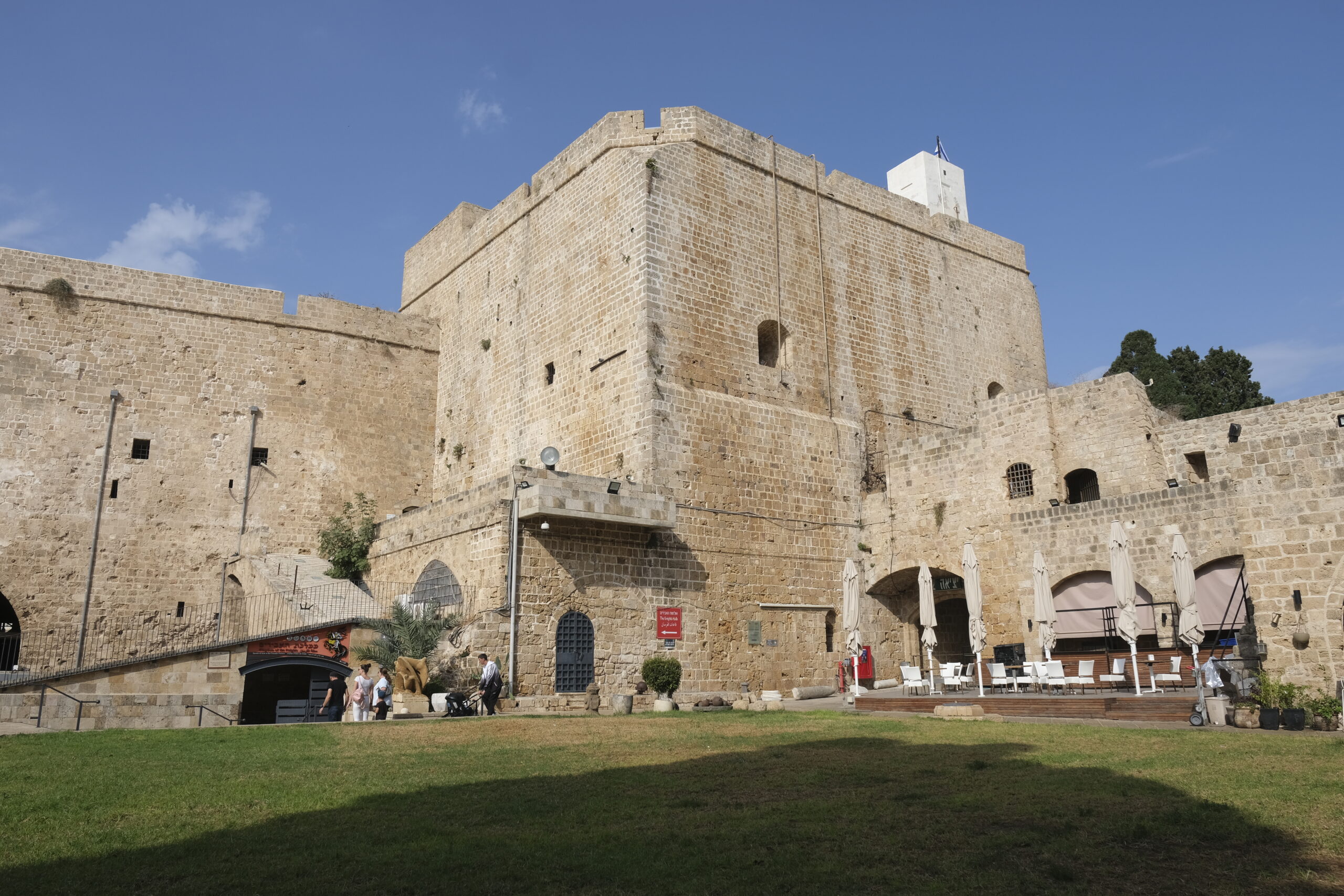
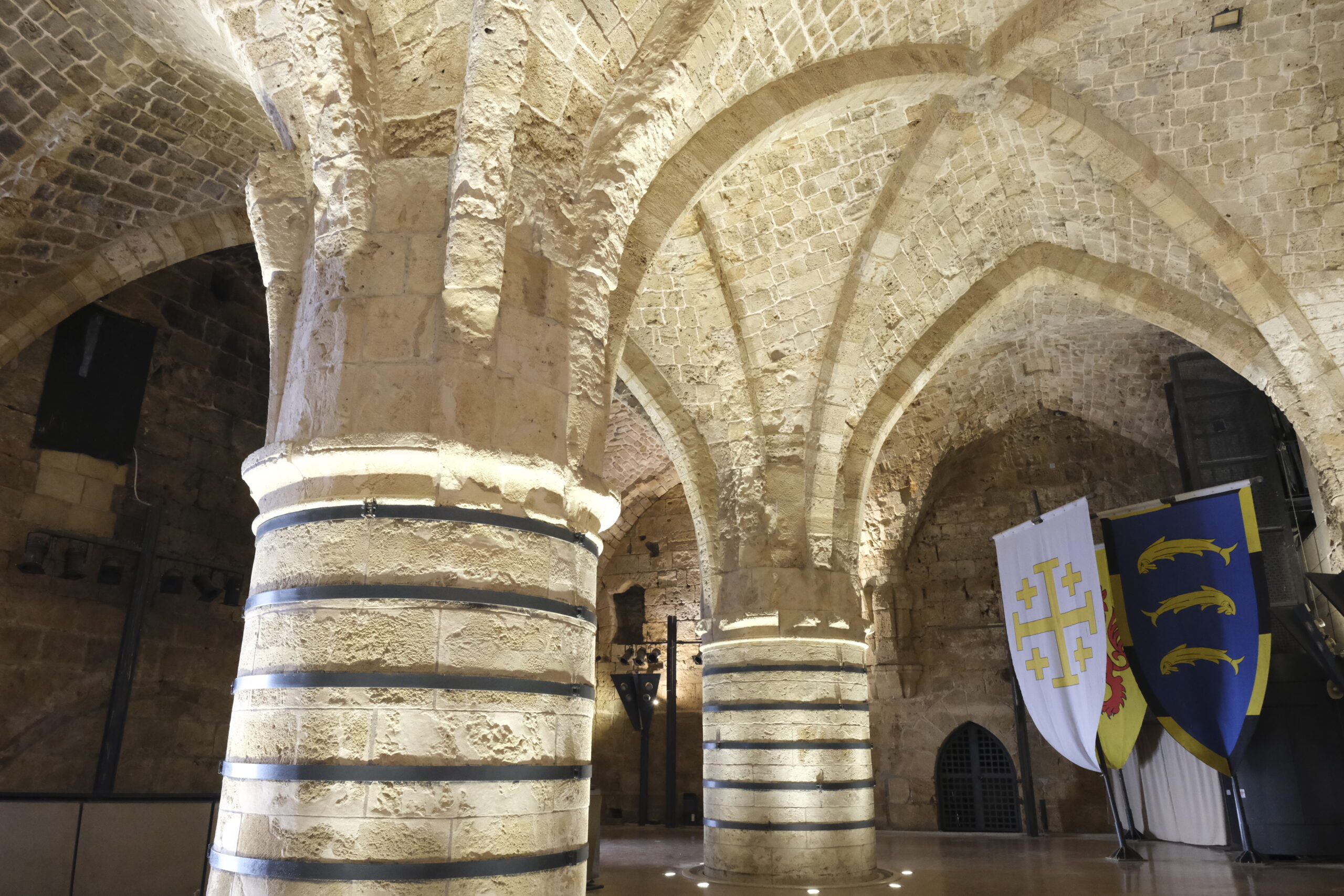
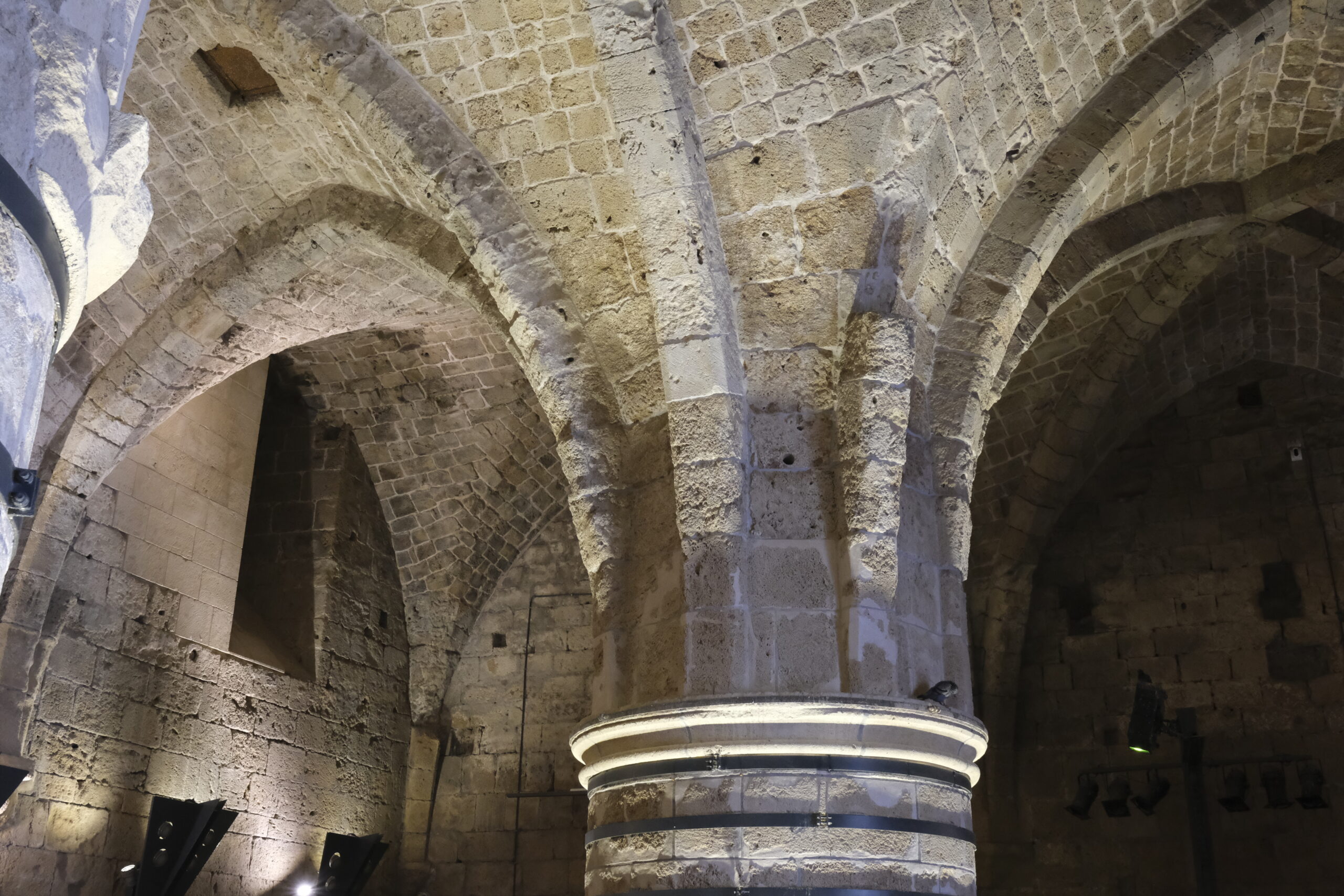
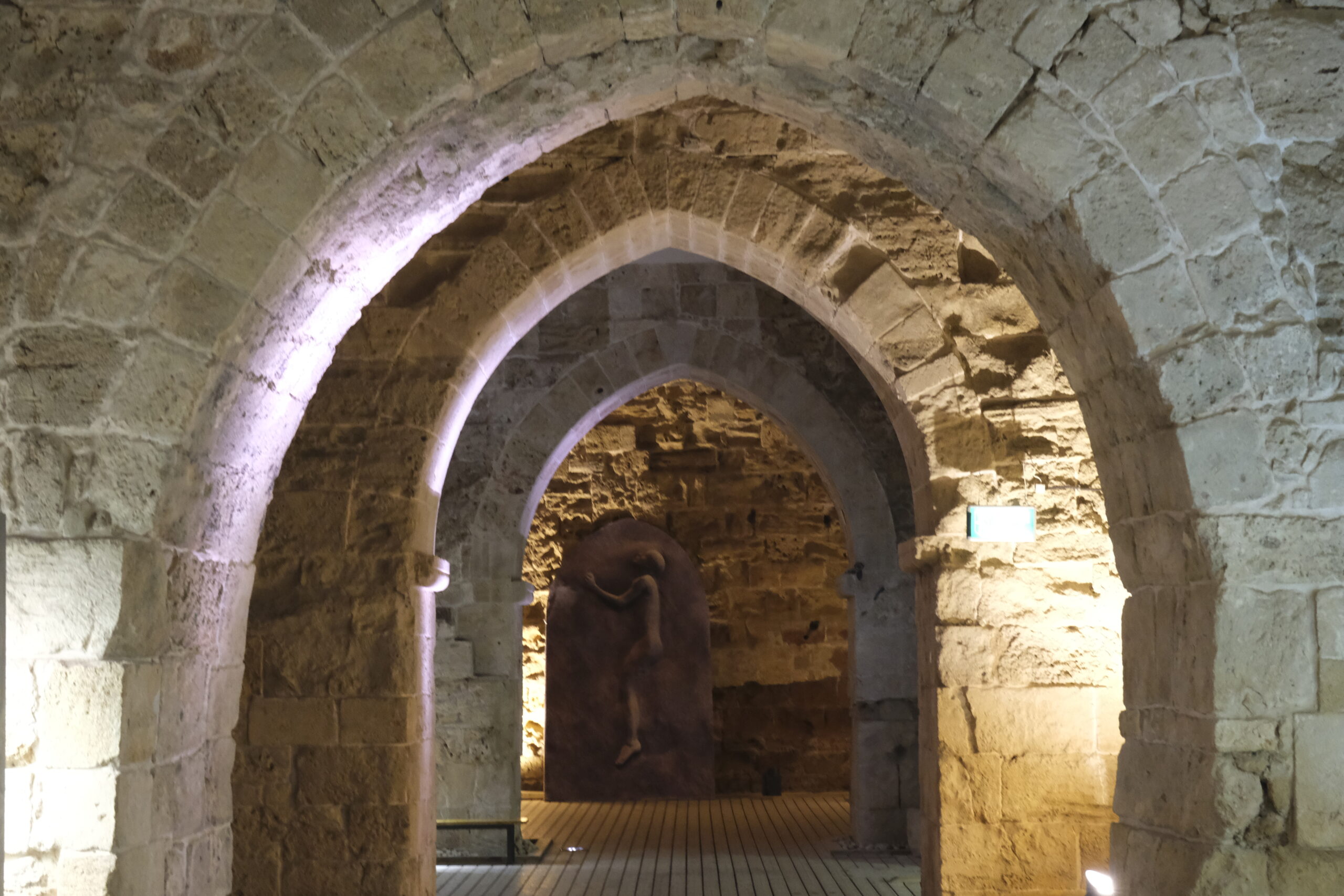
This morning we drove to Akko to visit a Crusader Citadel and Templar Tunnel. Akko, also known as Acre, sits in Haifa Bay along the Mediterranean cost of northern Israel. The citadel that is visible dates to Ottoman times and houses the jail. Zivit’s father was jailed here as he was a member of the Haganah but escaped during the Acre Prison Break organized by the Irgun.
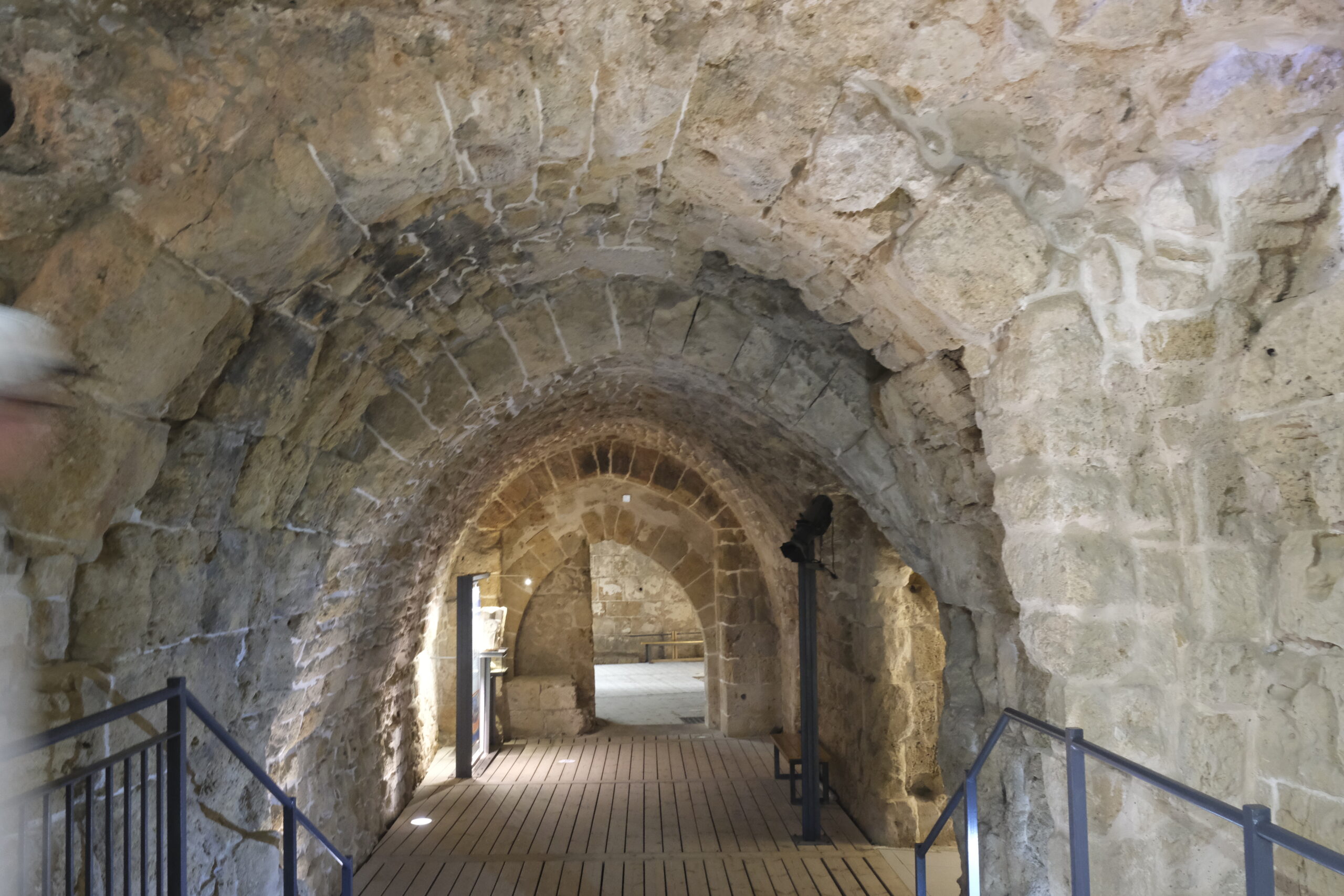
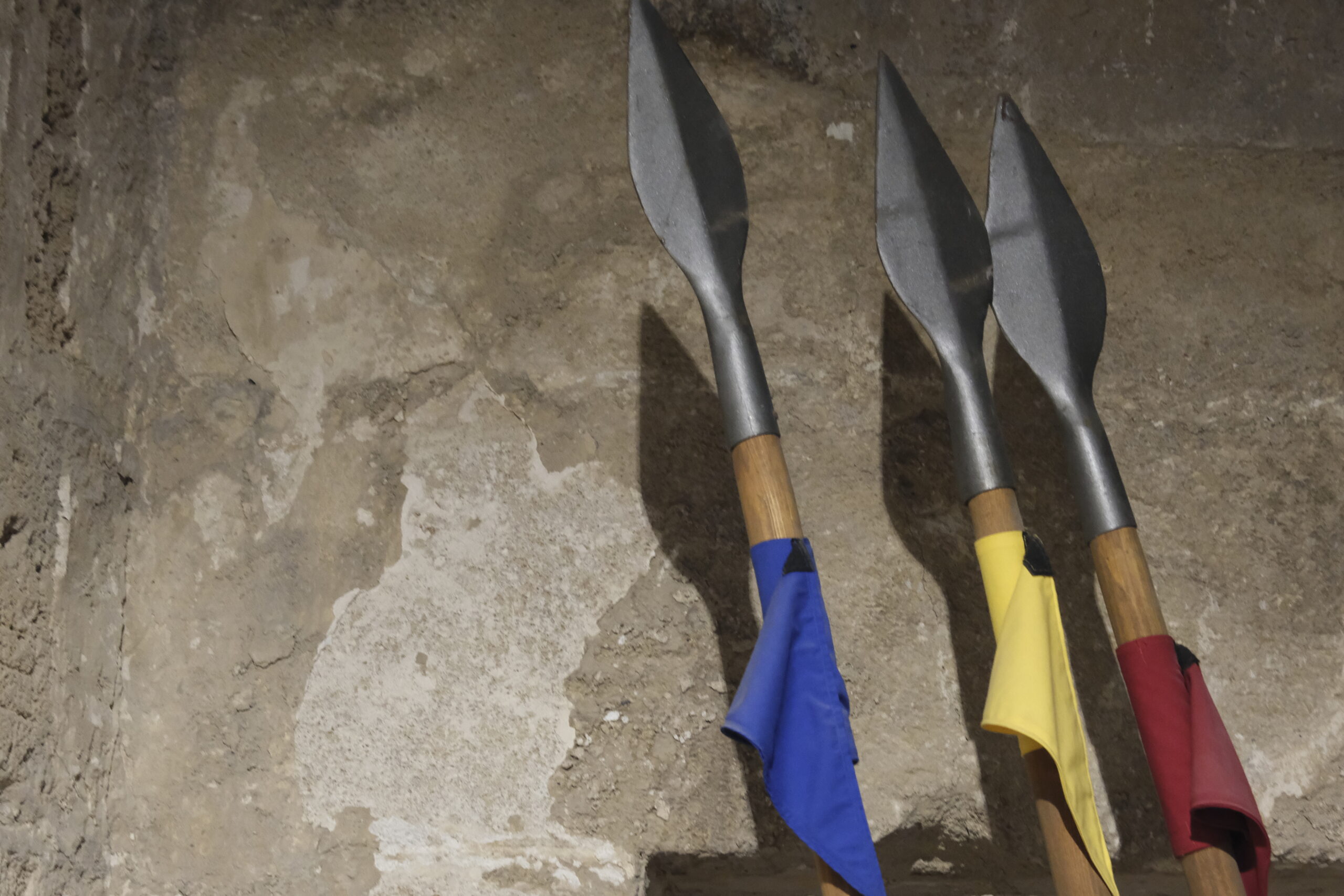
The Crusaders had their citadel under that of the Ottoman’s. The rooms are enormous with very high ceilings to help with the heat. The architecture is more Gothic than Islamic. There are dormitories, a hospital, refectory, walled in areas for exercise and drilling, storage vaults for food.

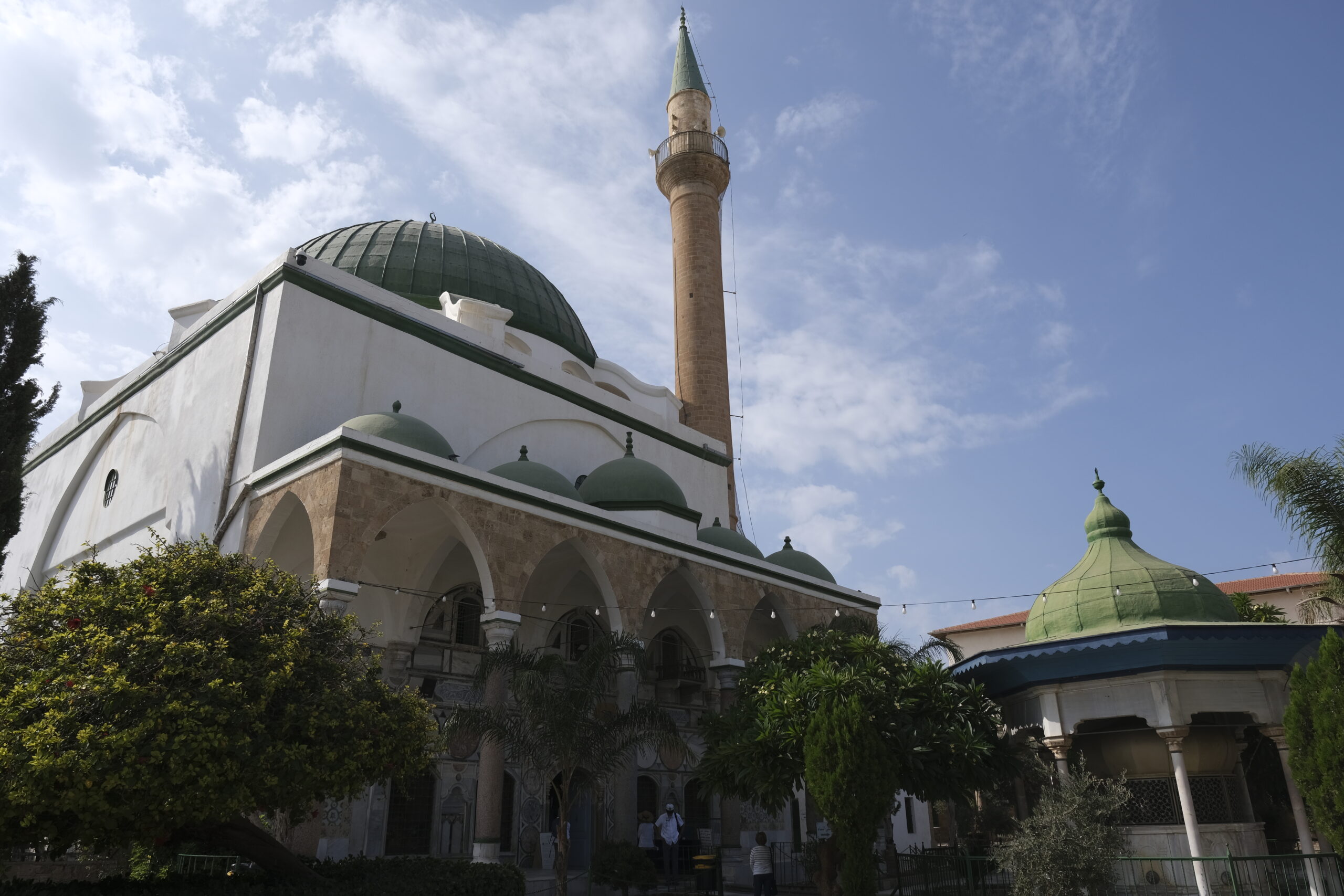
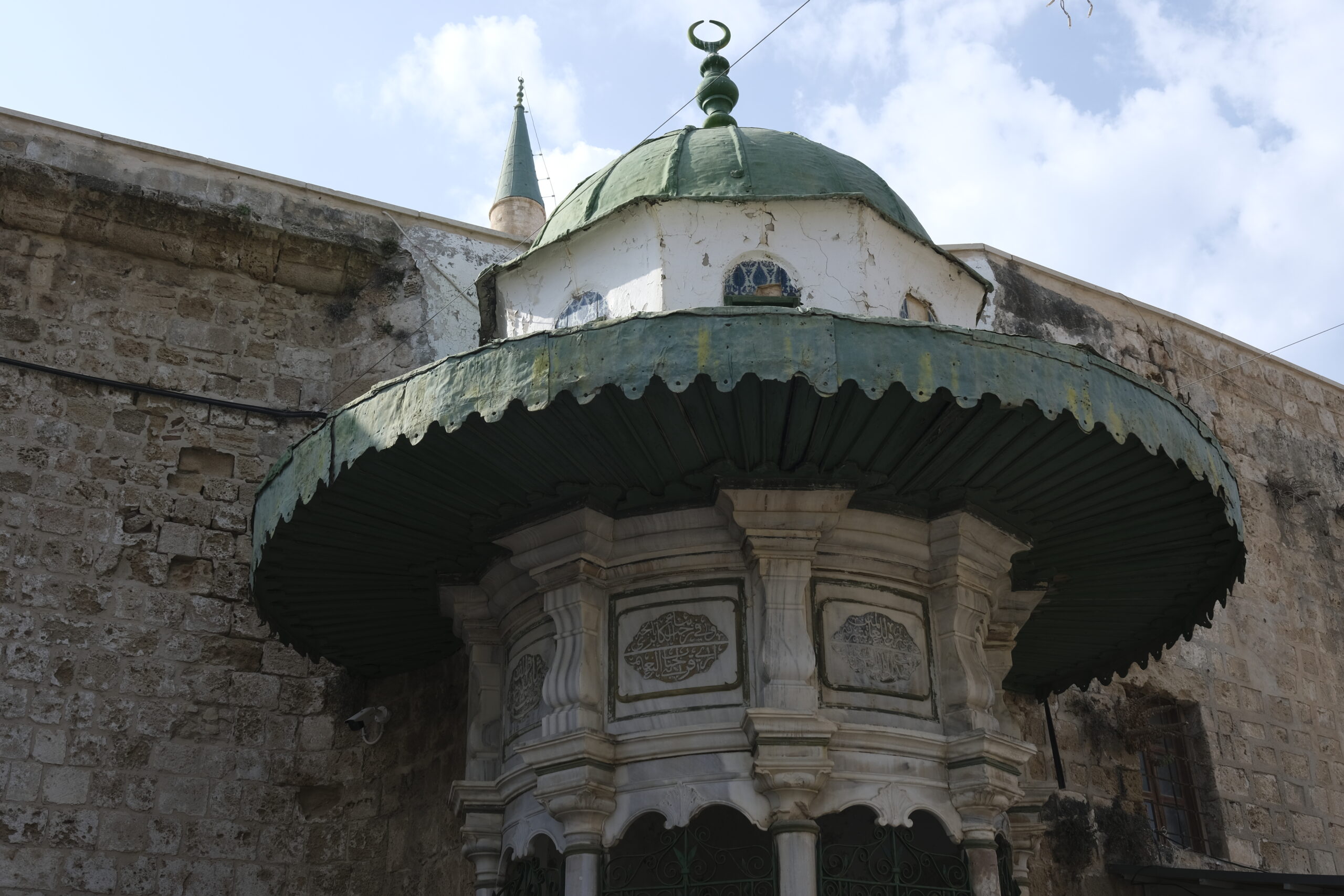
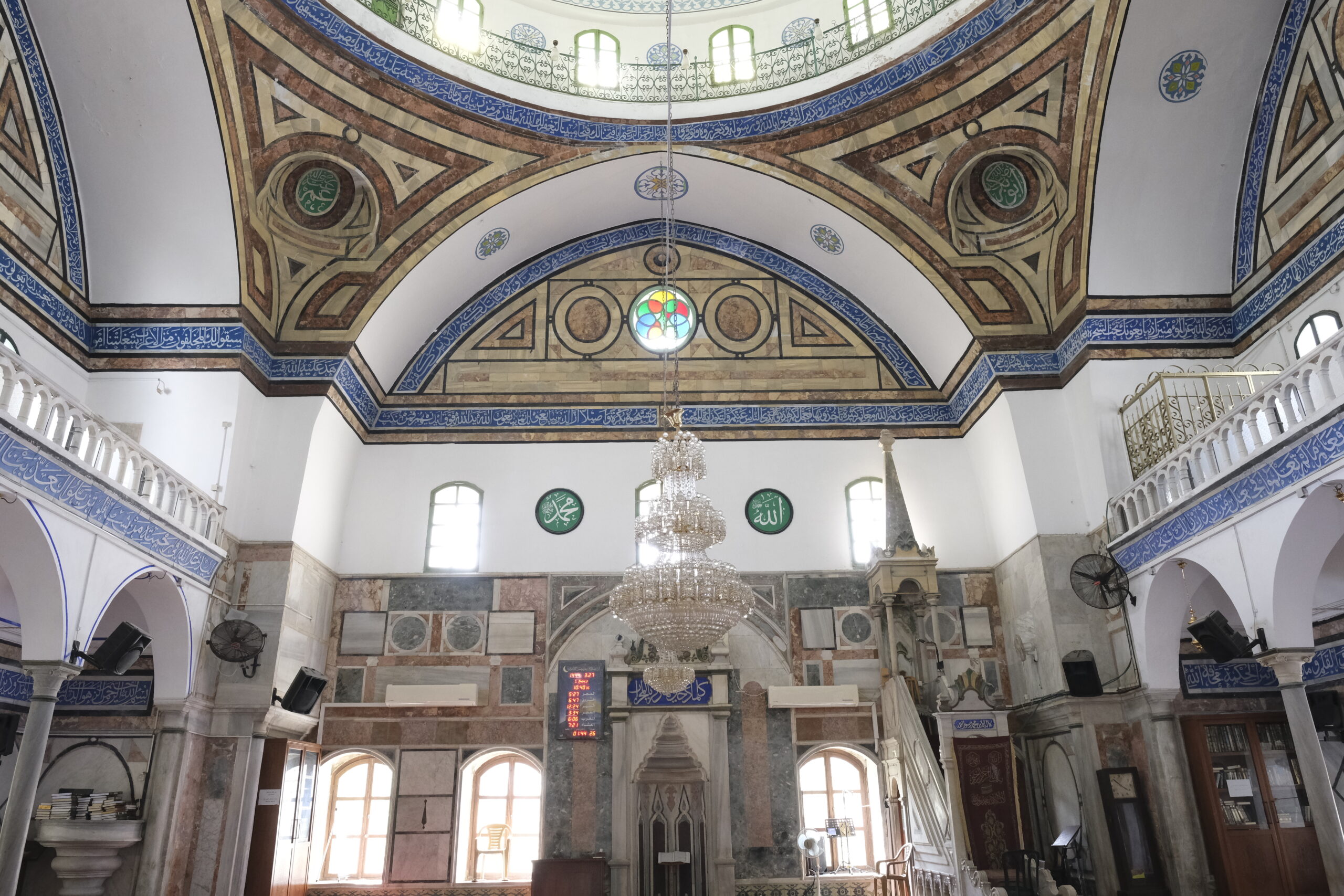
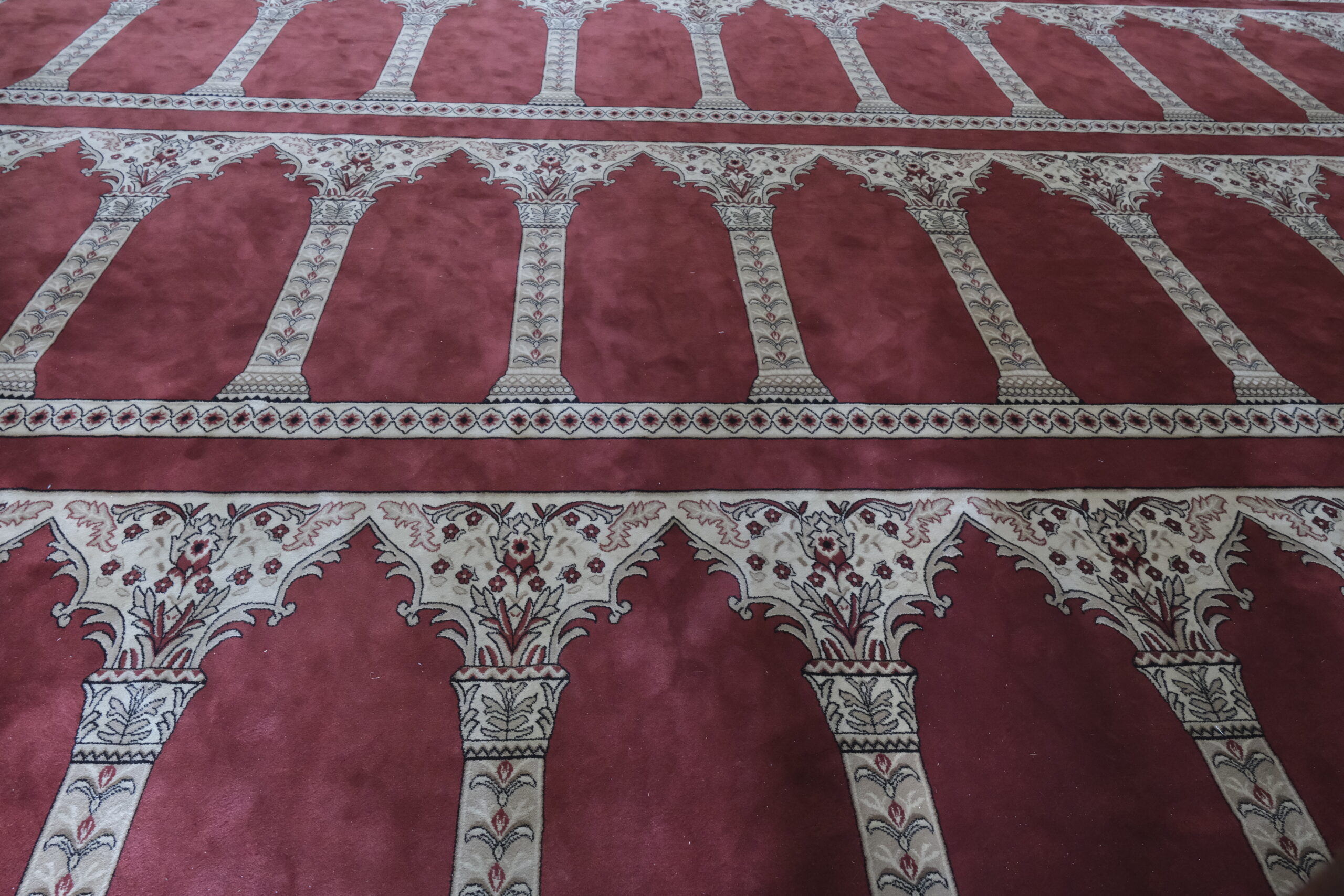
From the citadel, we visited the Al Jazzar Mosque also known as the White Mosque. It was built by Ahmad Pasha el-Jazzar who was governor of Sidon and Damascus. He was known for defeating Napoleon, preventing him from making a deeper incursion into the Middle East, for his construction works, even though he was neither trained as an architect or engineer, and for his cruelty, he was not above deforming his slaves, workers, etc. so that they could not leave his employ. On leaving the mosque, we had a freshly squeezed glass of pomegranate juice. Delicious.
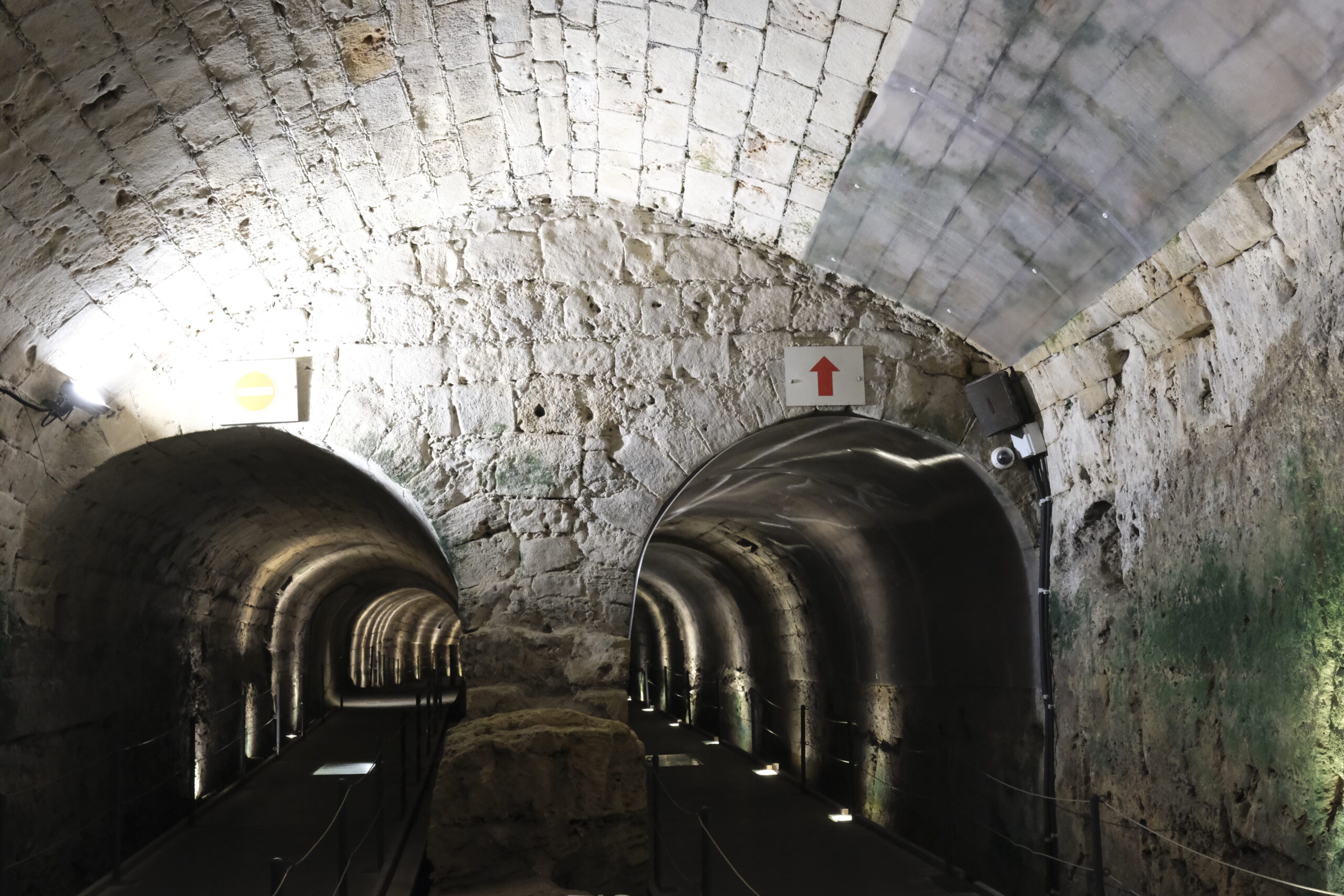
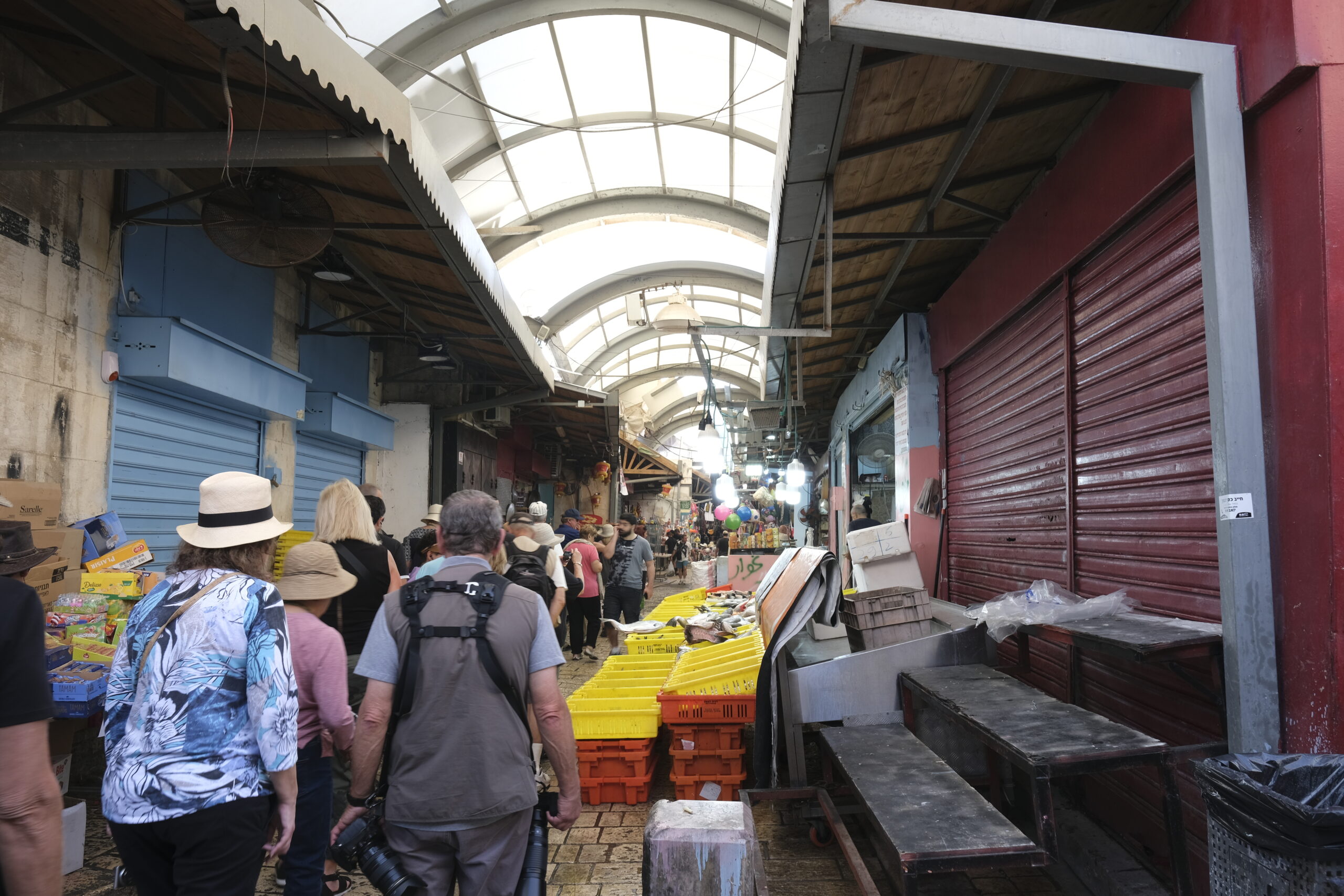
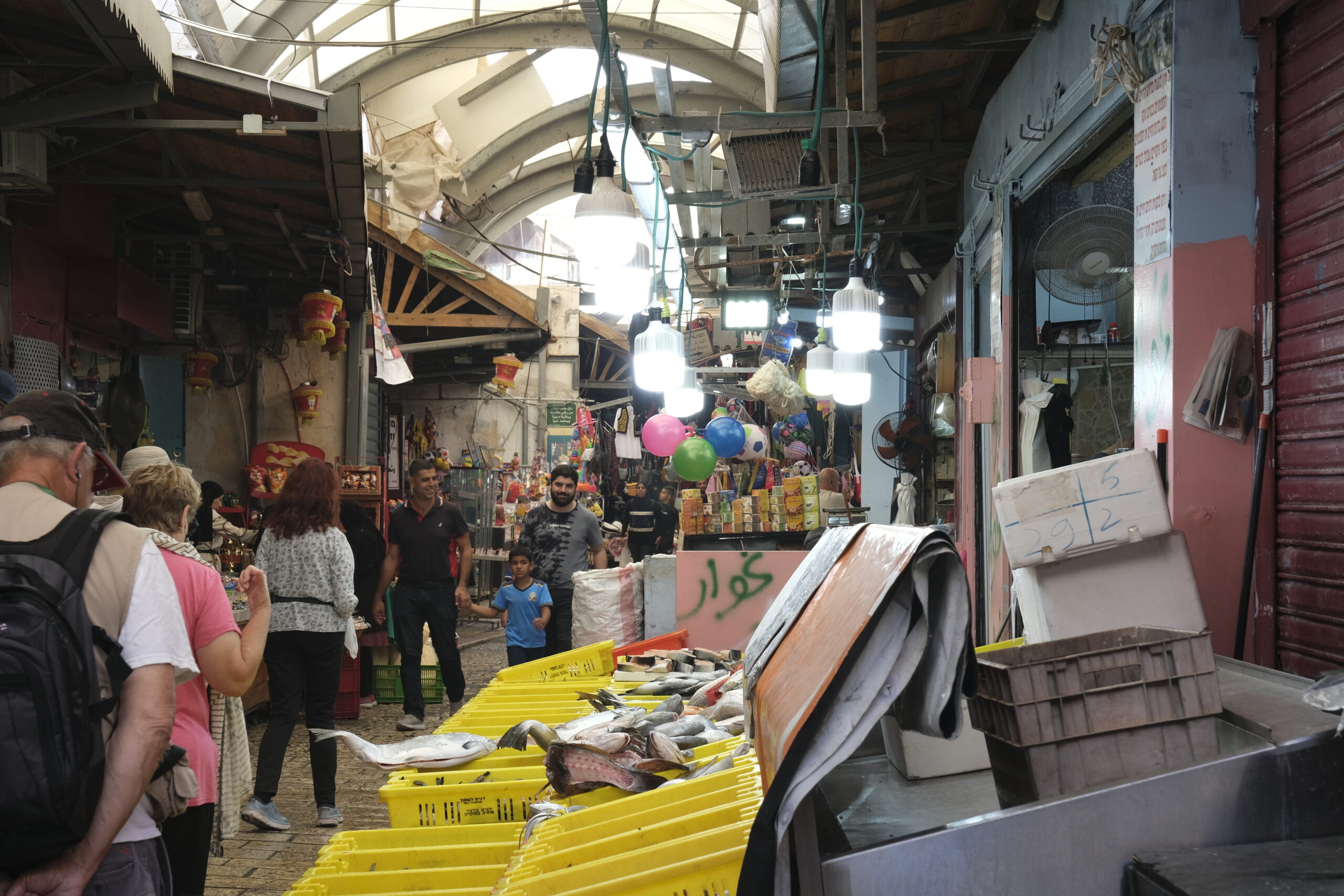
We then walked through the market to look at the fish, vegetables, and fruit, and to buy some spices, zaatar and sumac. At the end of the market, we descended into the Templar tunnel, discovered by accident when water started trickling into a woman’s apartment. It is quite long and is thought to connect the citadel with the port so that the Templars could bring treasure into Akko and take it out quickly without alerting the tax collectors.
Lunch at Uri Buri (https://tastecooking.com/bearded-chef-akko/) was fabulous. I have never eaten so many delicious fish dishes before. It was difficult to decide which one was best.
In the afternoon, we drove to Jerusalem and checked into the Waldorf Astoria. We spent the evening walking through the souk, the Western Wall, and the Mamilla mall. The mall was closed for Shabbat.
Jerusalem, a City of Diverse Cultures – October 23, 2022
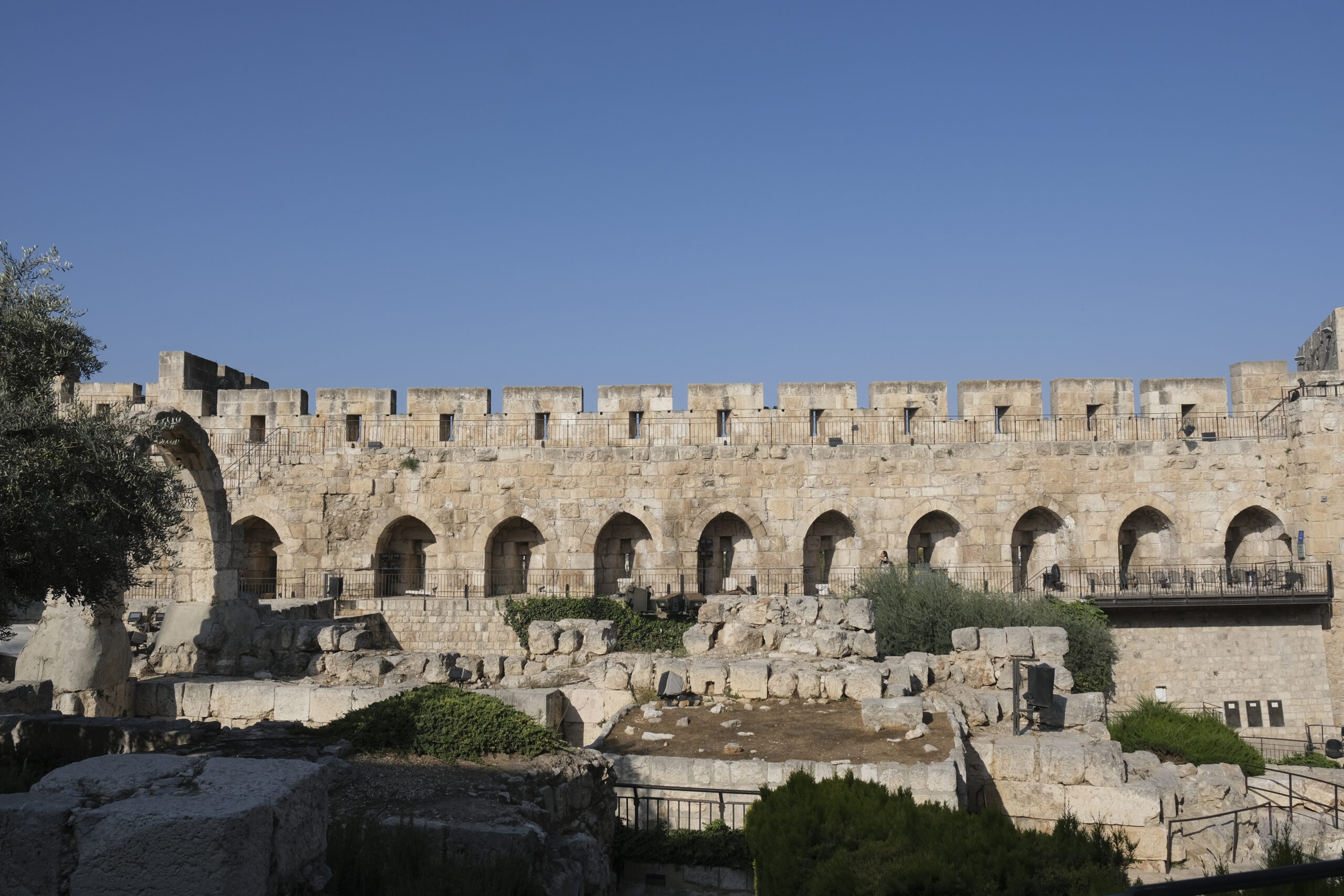
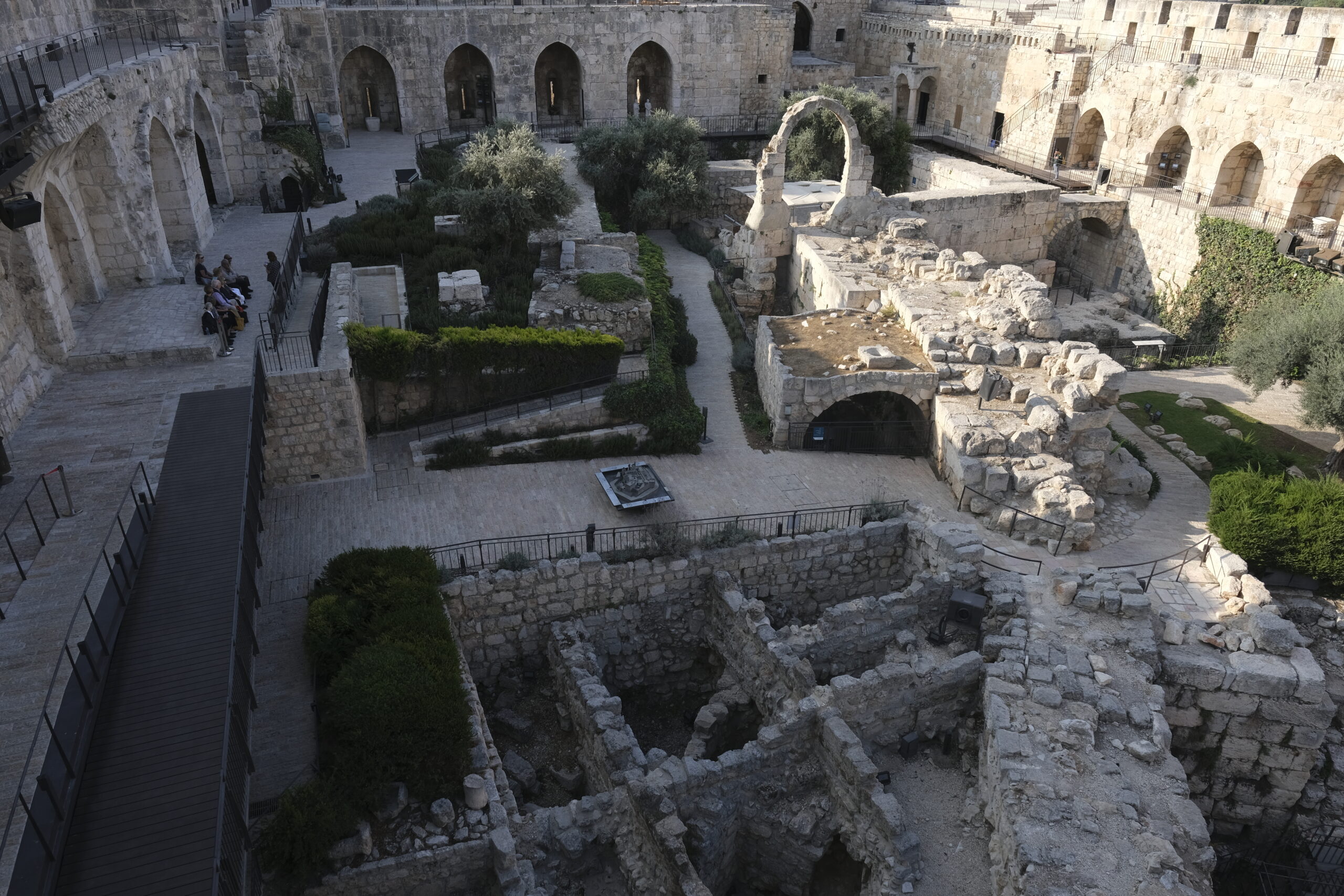
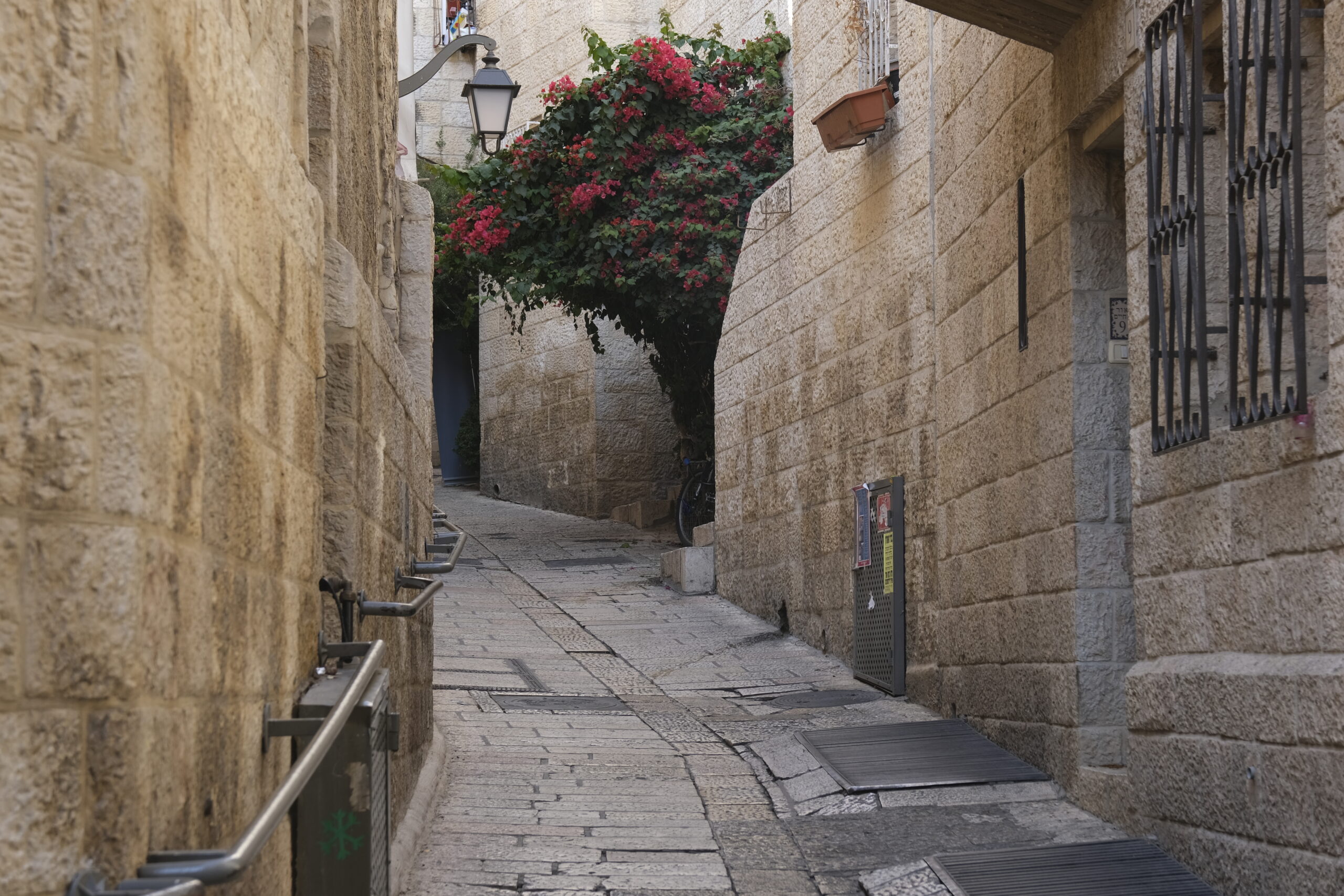
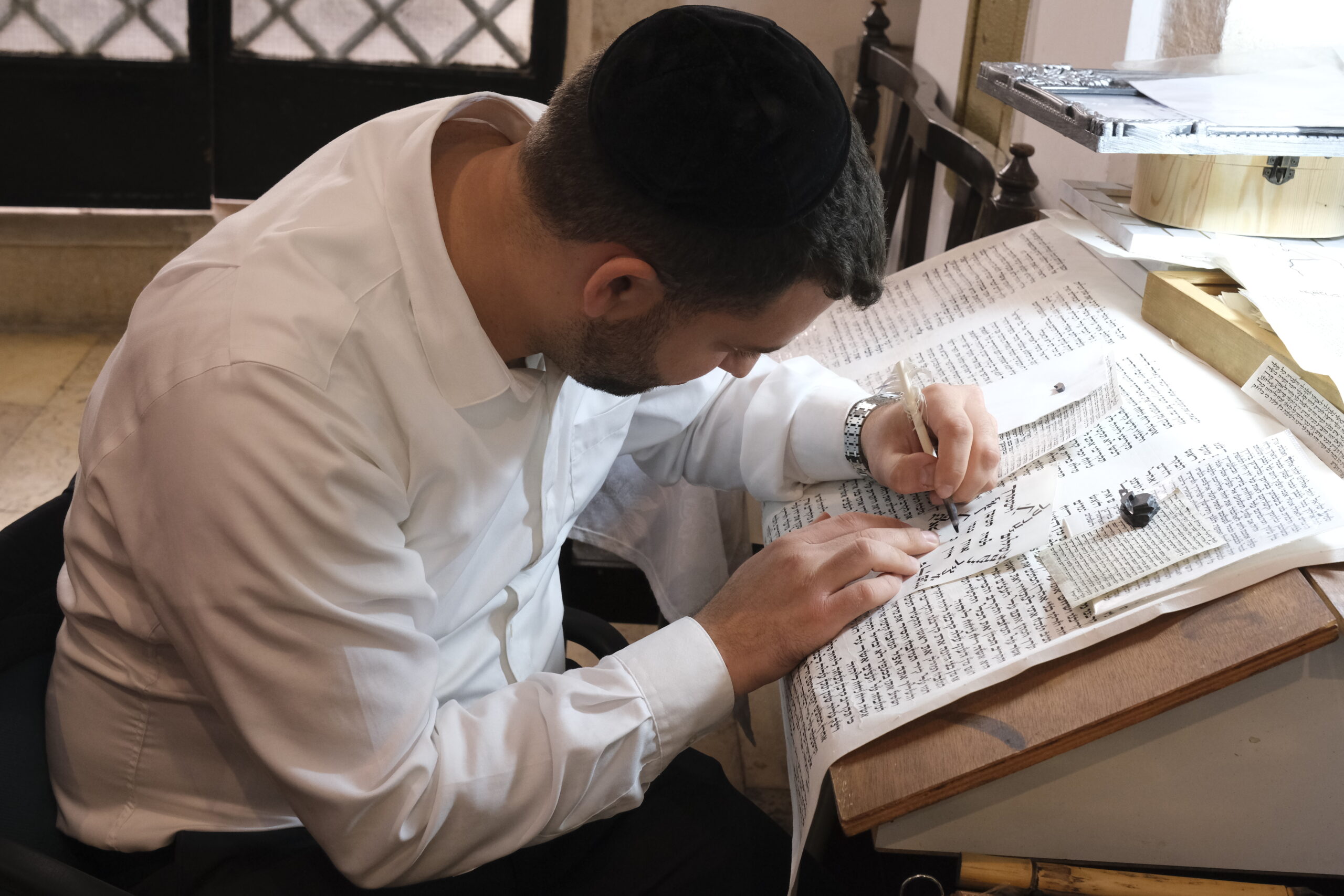
This morning we visited the Tower of David, a citadel dating back to the time of Herod, the Mamluk and the Ottoman periods, which is located near the Jaffa Gate entrance to the Old City of Jerusalem. It was built on a series of earlier ancient fortifications and contains important archaeological finds going back more than two thousand years. One of the three towers is called the Tower of David. From the top of the ramparts, one can see many of the famous monuments that we will be visiting in Jerusalem. We walked through the Jewish Quarter in the Old City, first through the Cardo and then to the square in front of the Damaged or Ruined Synagogue (Hurva) and from there to one of the Four Sephardic Synagogues to see a scribe (Josef) write a page of the Torah on vellum (cow skin). His work is checked for accuracy by a Rabbi, and it takes him a year to complete writing a Torah.
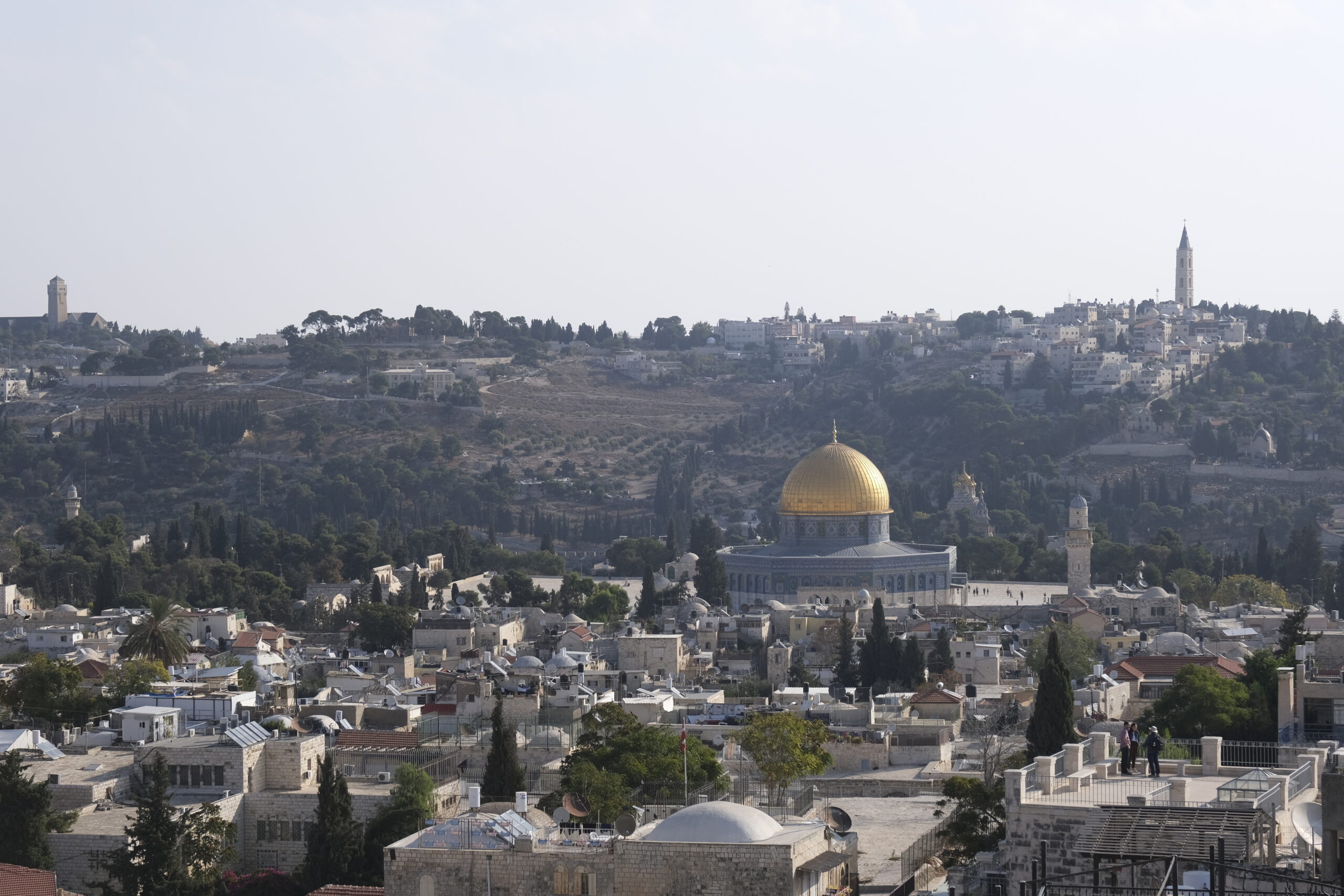
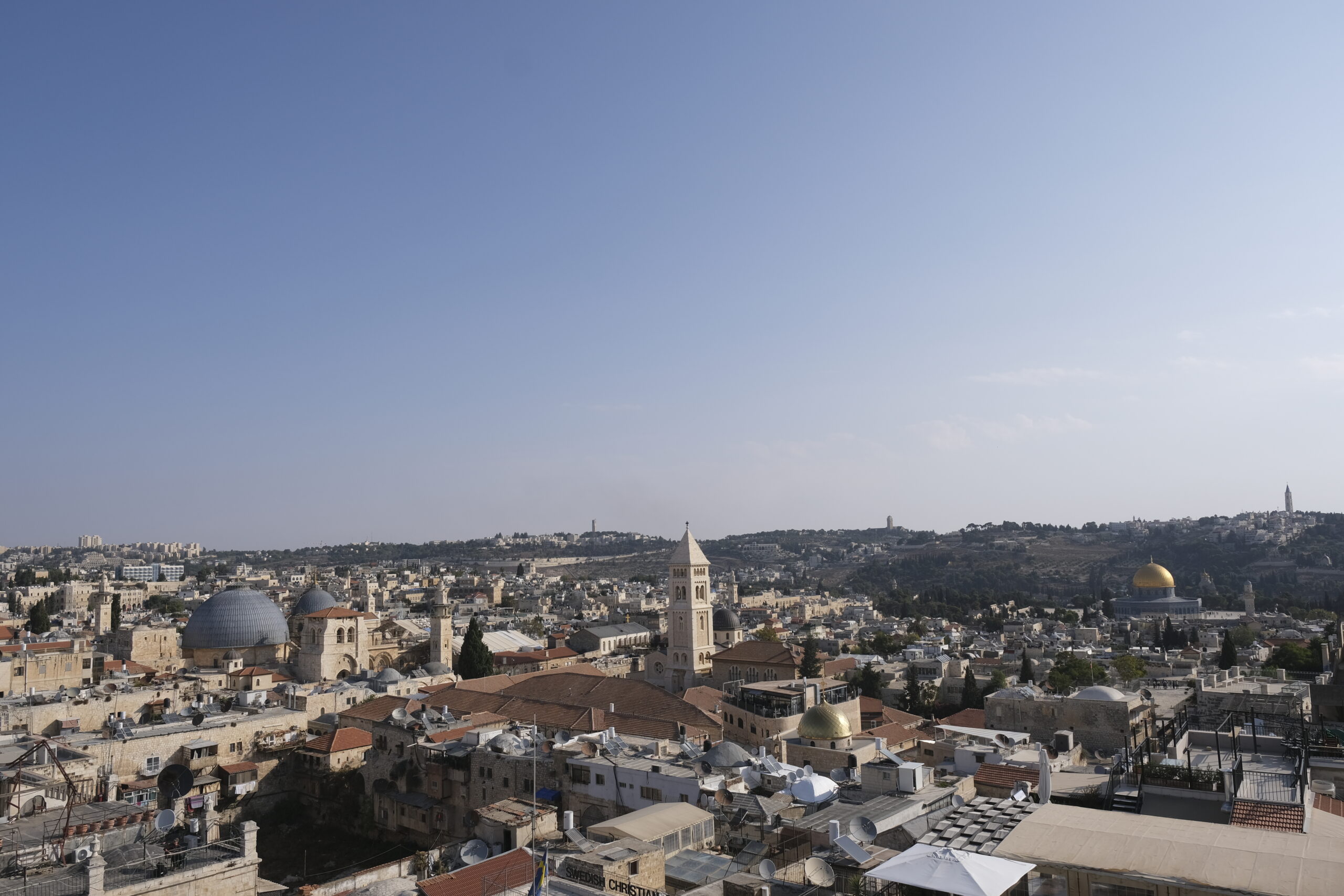
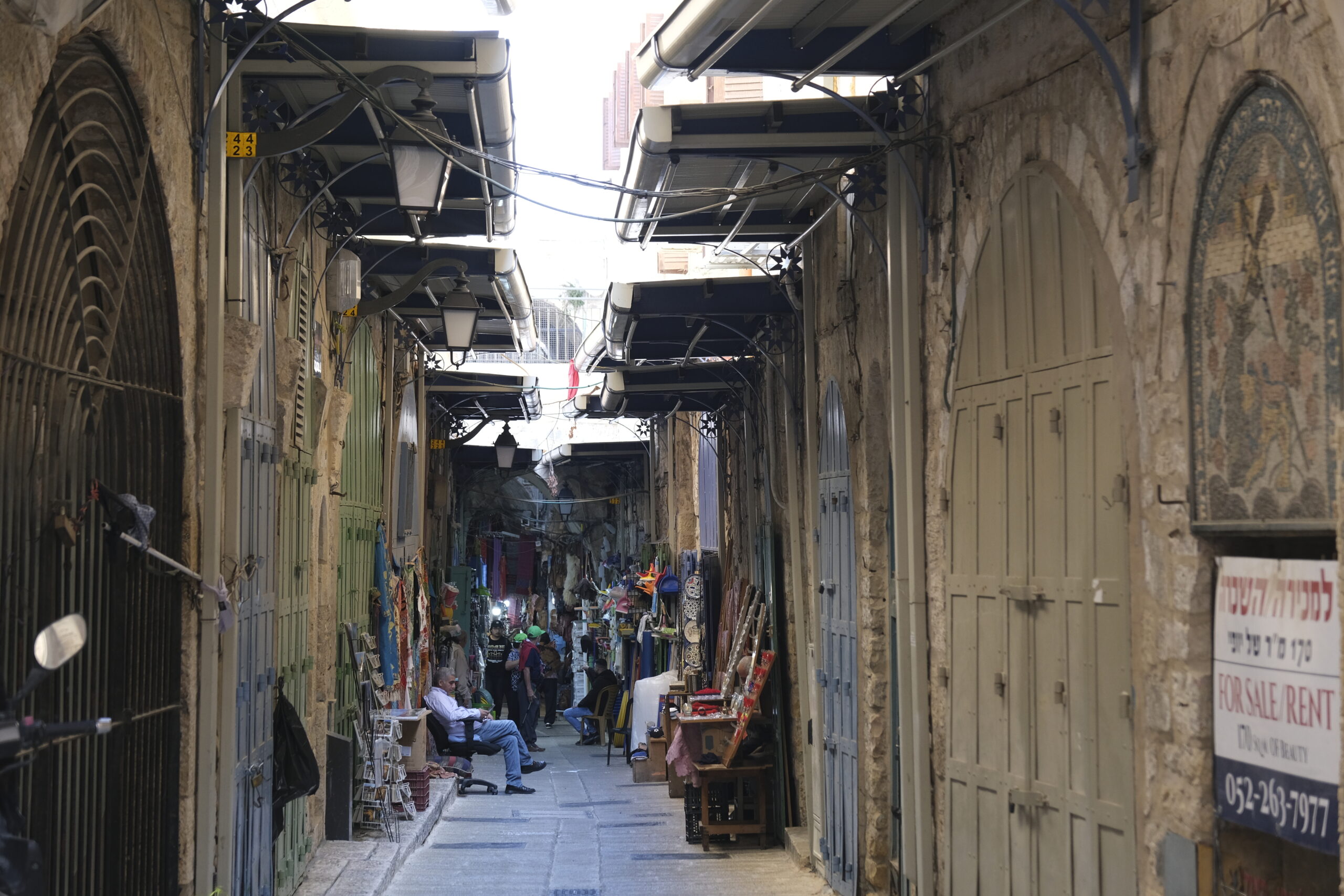
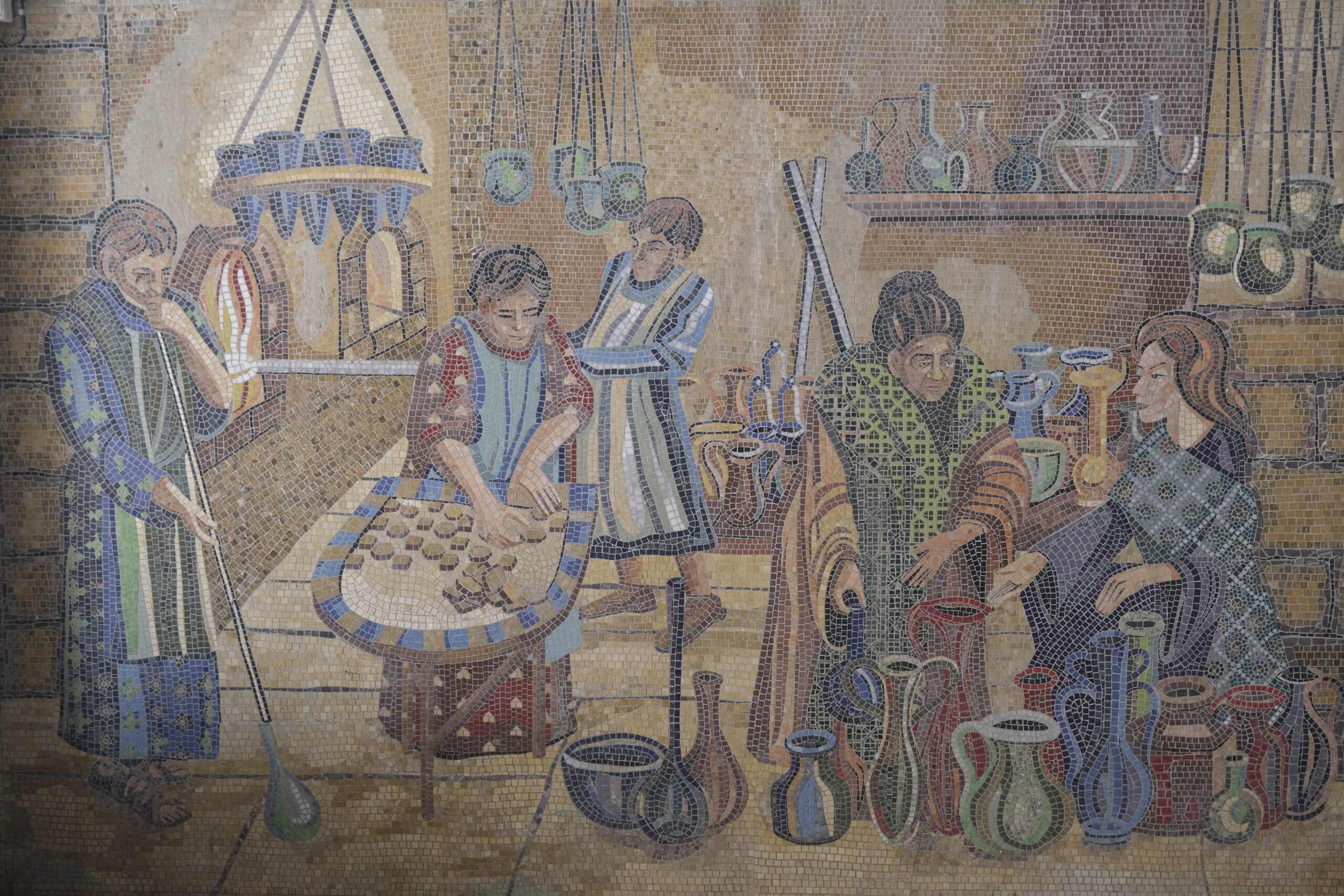
We had lunch at The Quarter Café, located next to the Burnt House (which is a residential building from the Second Temple period that was burnt around 70 CE during the revolt against the Romans).
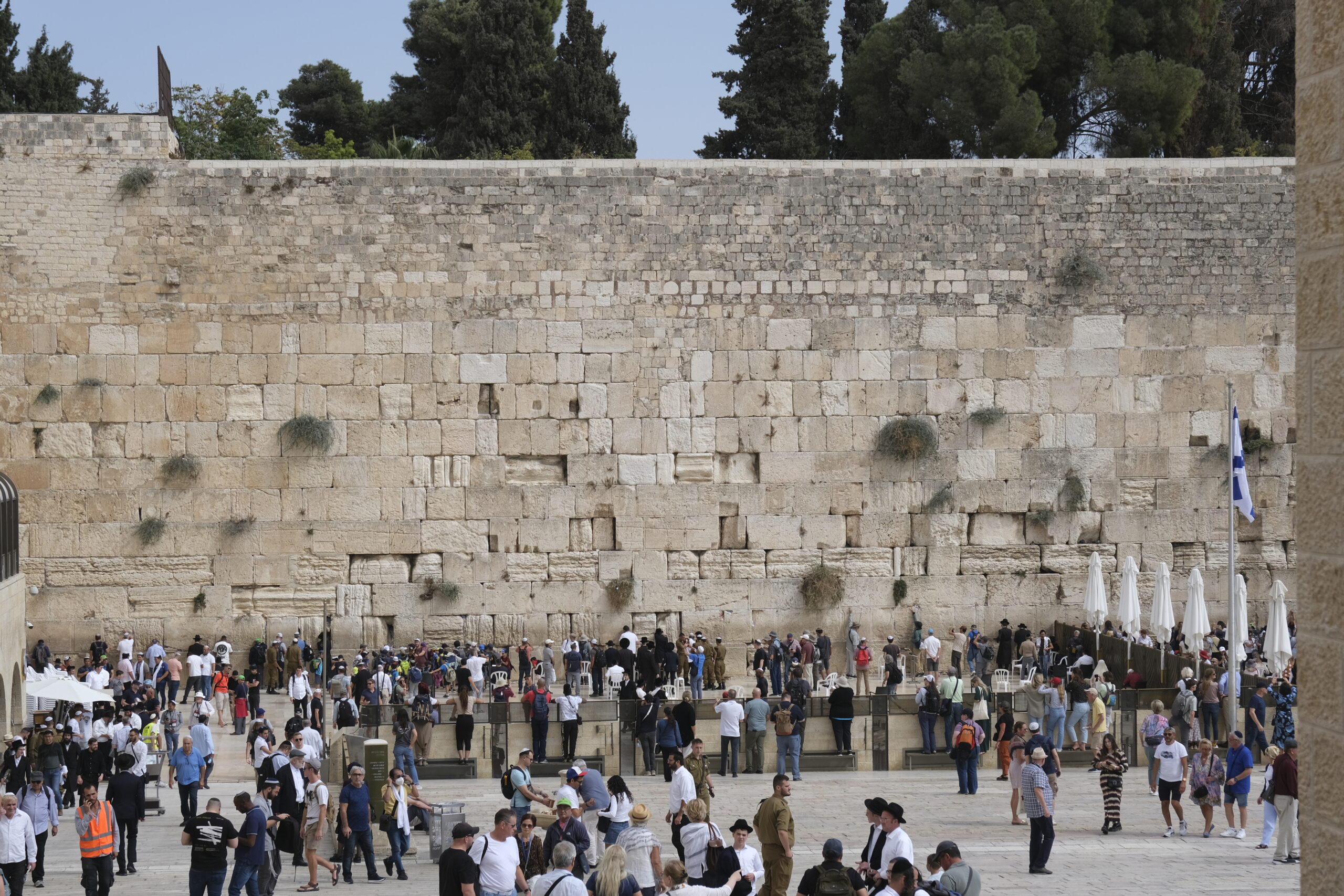
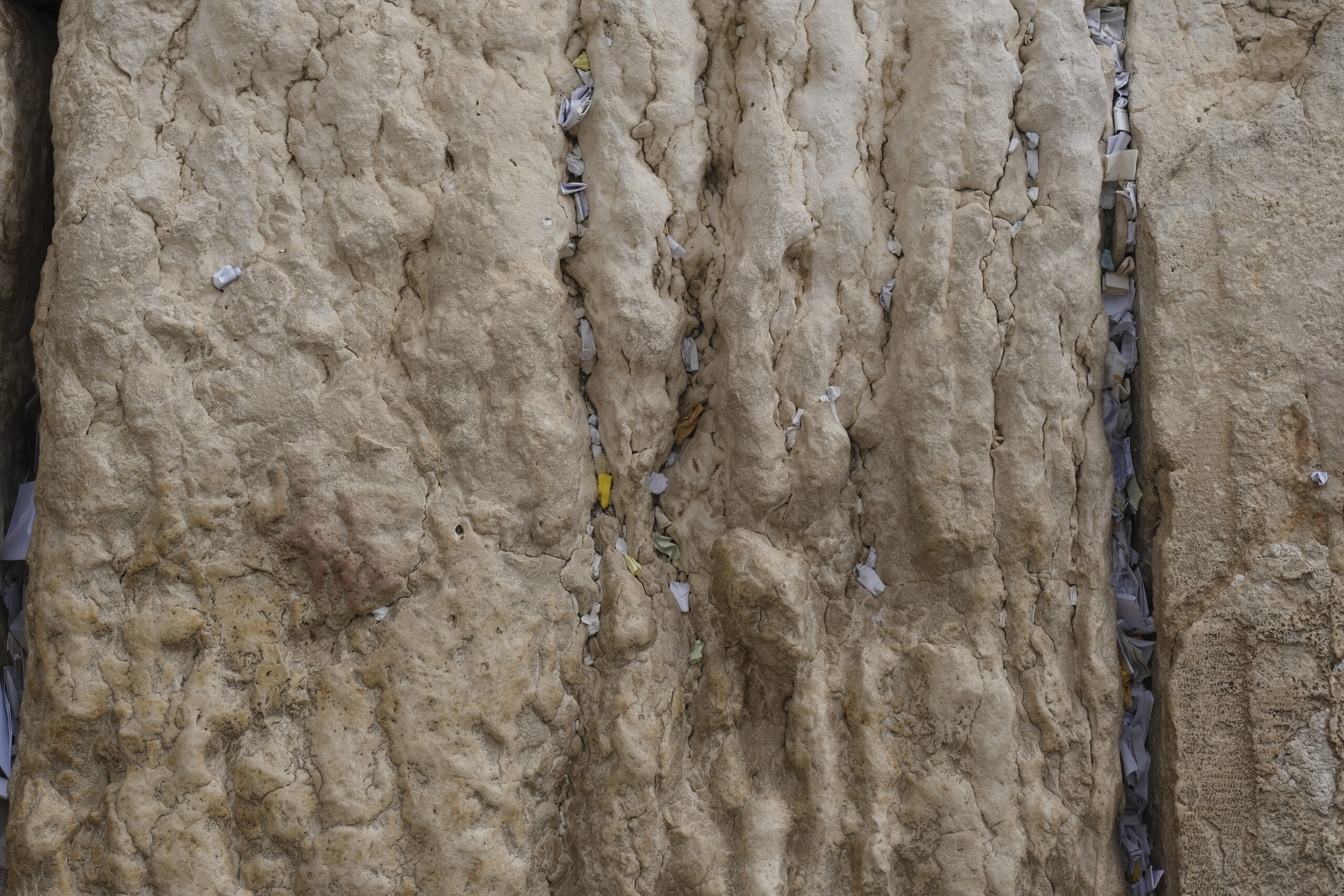
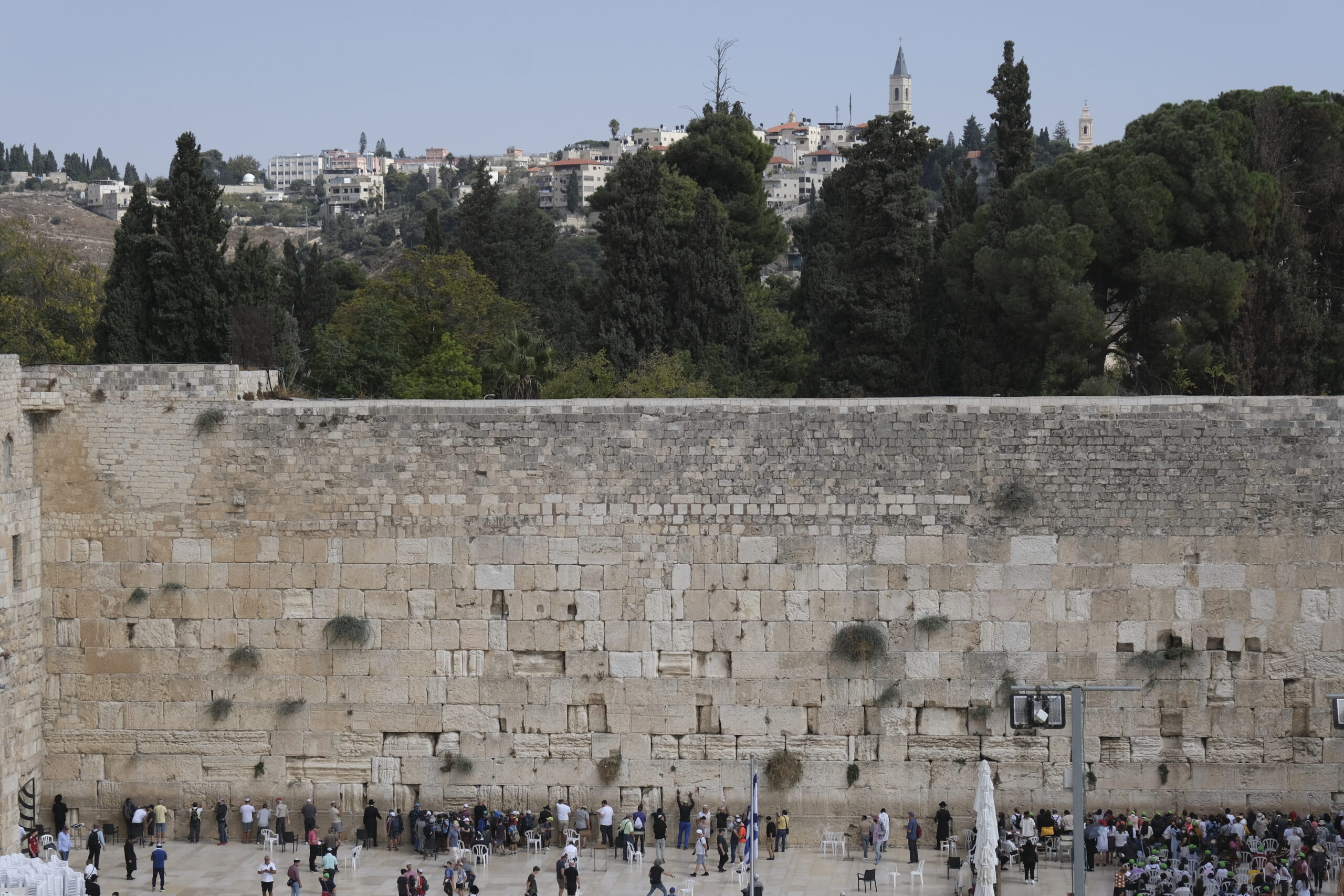
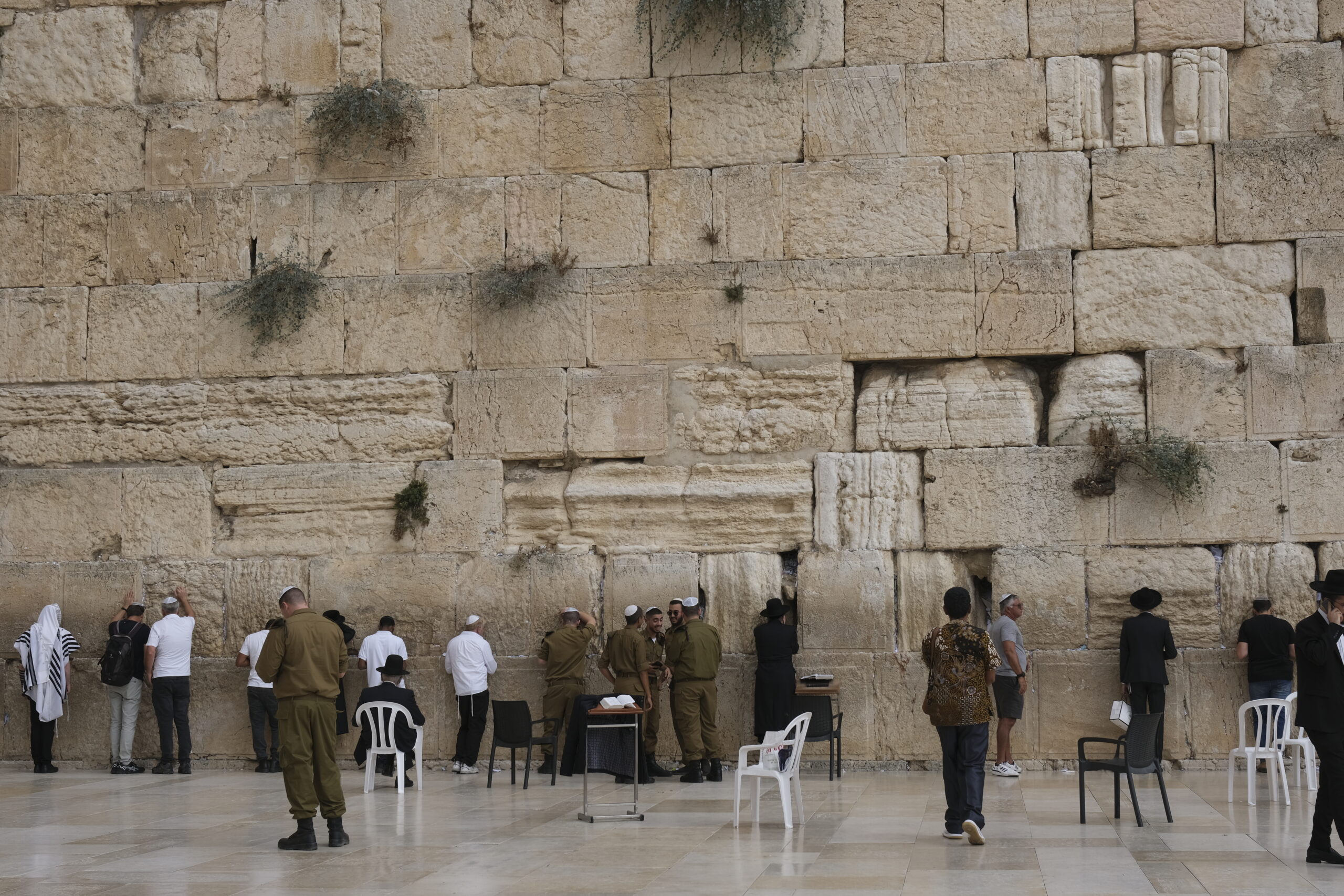
After lunch, we visited the Western Wall. Men and women went to separate parts of the wall and placed their prayers on little pieces of paper and slipped them between the cracks in the wall.
From the wall we then visited Yad Vashem (the Holocaust Memorial), where we spent more than two hours while our guide Sharon described all the exhibits. I think because of her narration and because she’s Jewish, this was even harder viewing than Auschwitz.
On our way back to the hotel, we passed by the new US Embassy in Jerusalem. Much scaled down from that of Tel Aviv.
Exploring Jerusalem: From Temple Mount to Tower of David – October 24, 2022
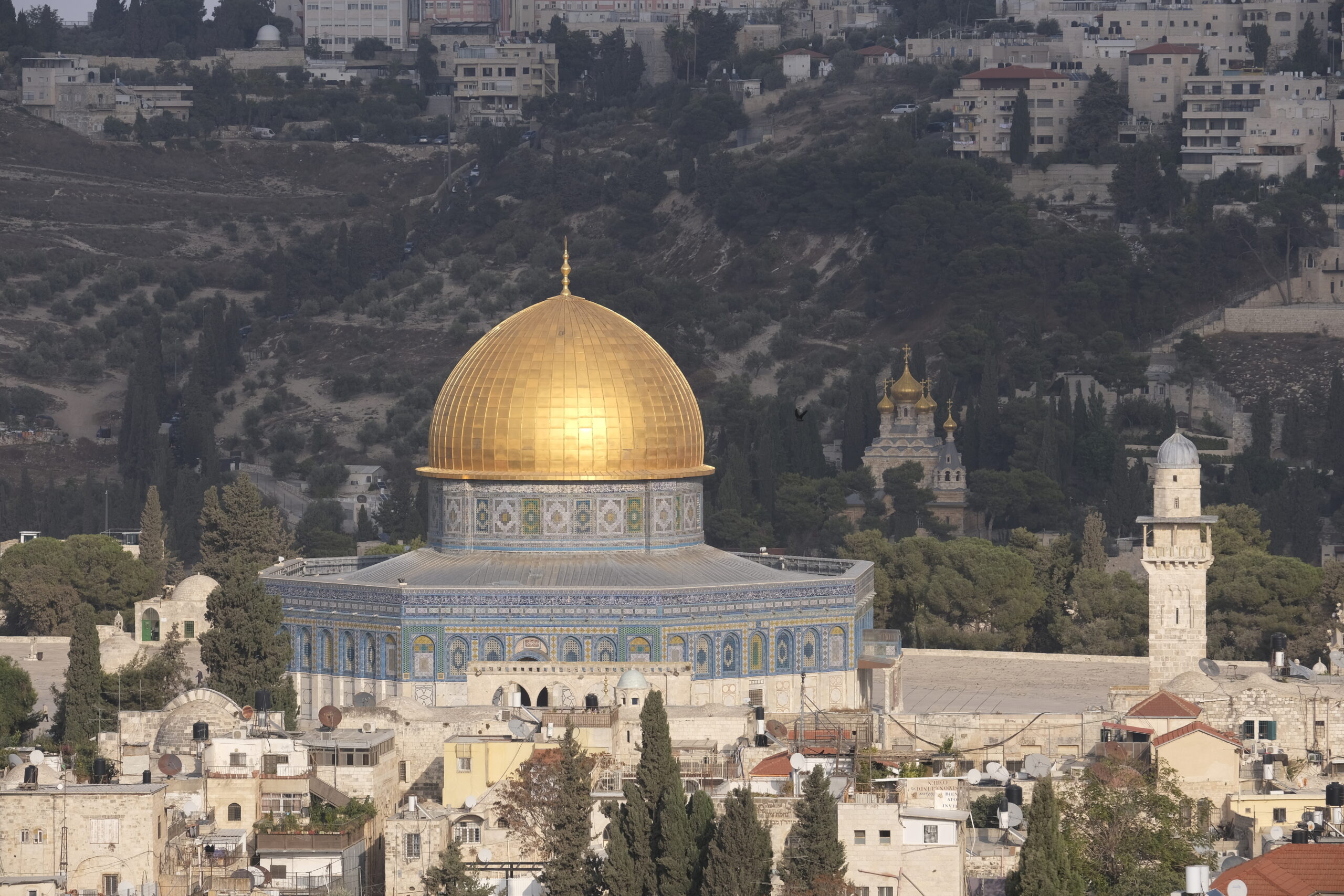
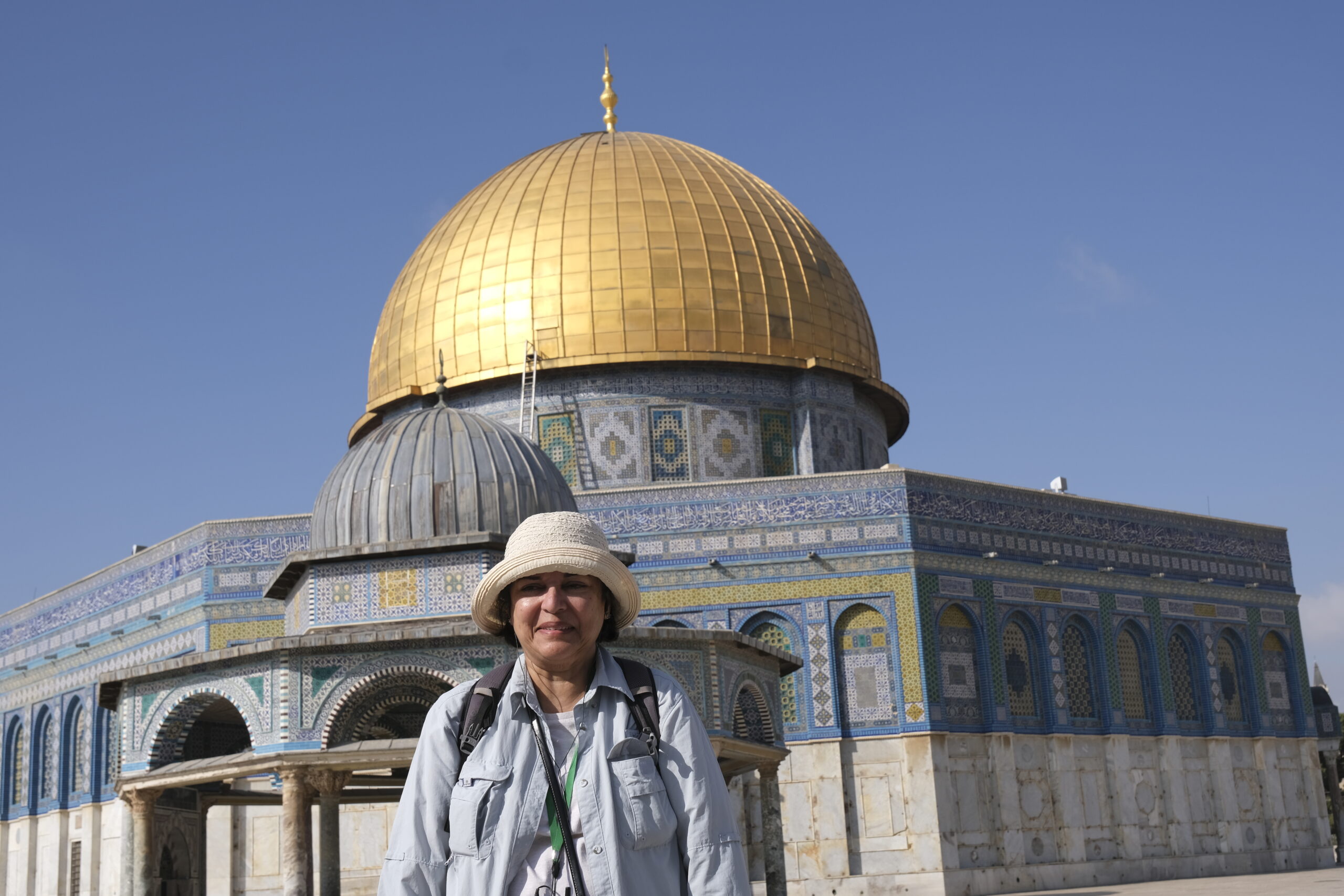
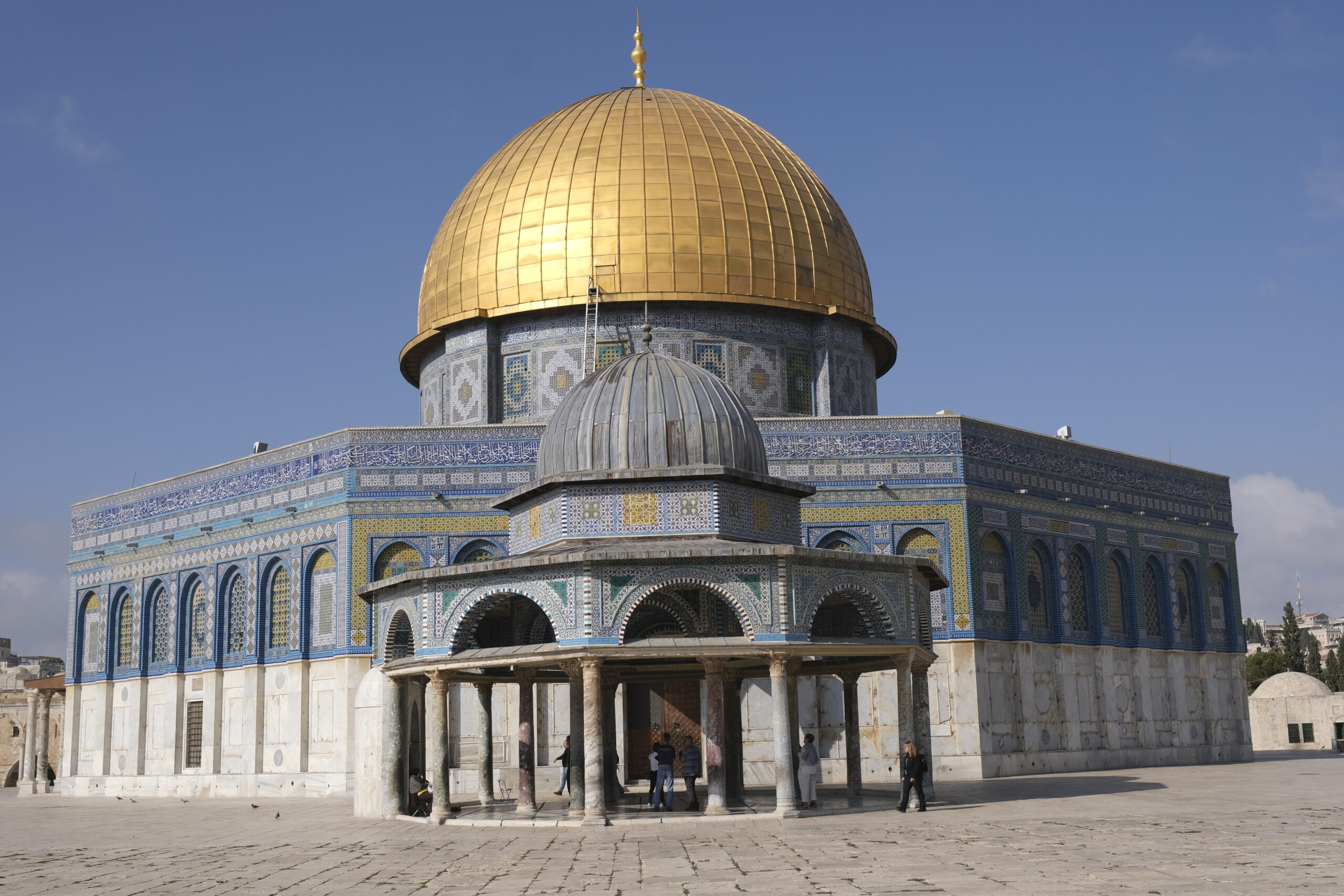
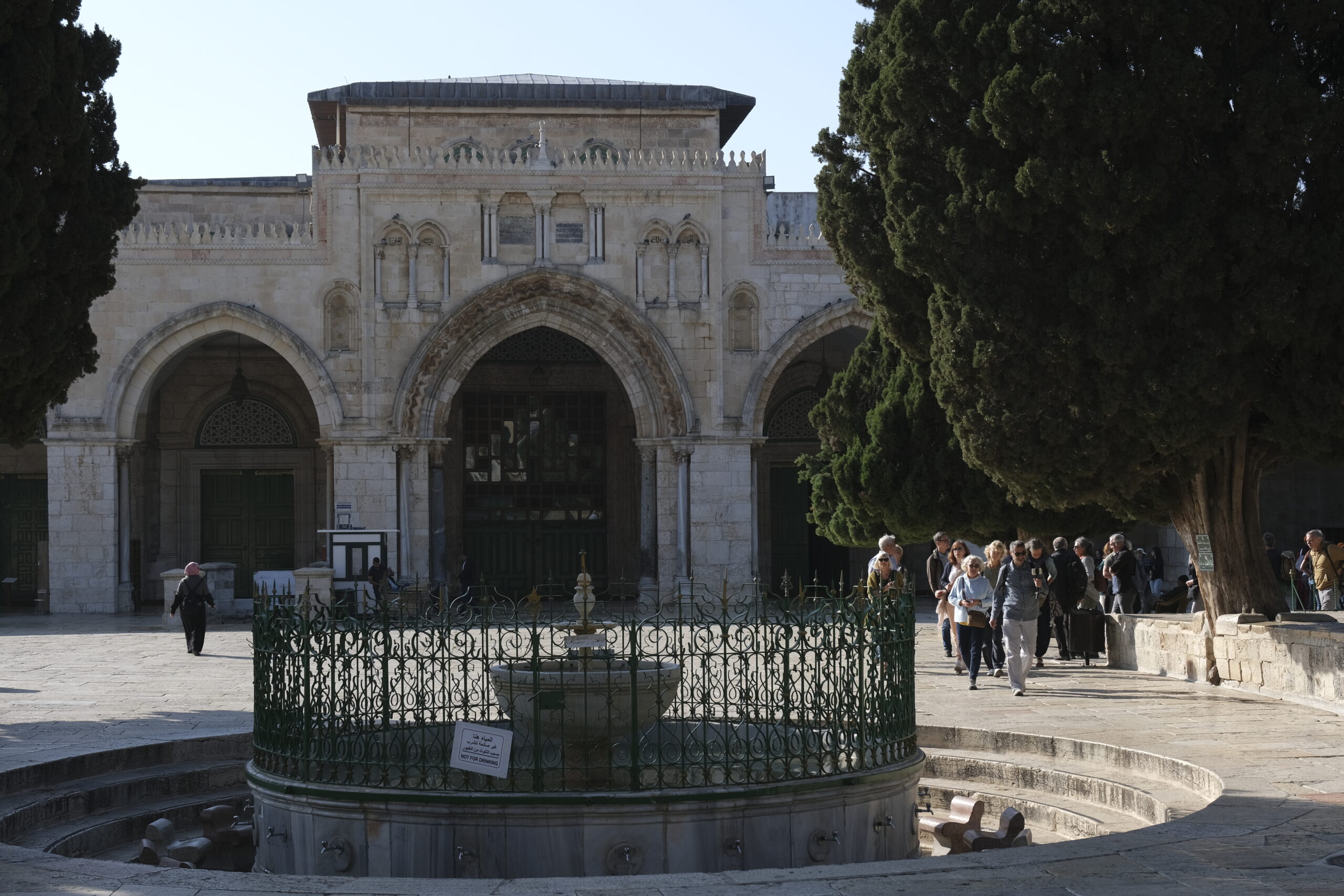
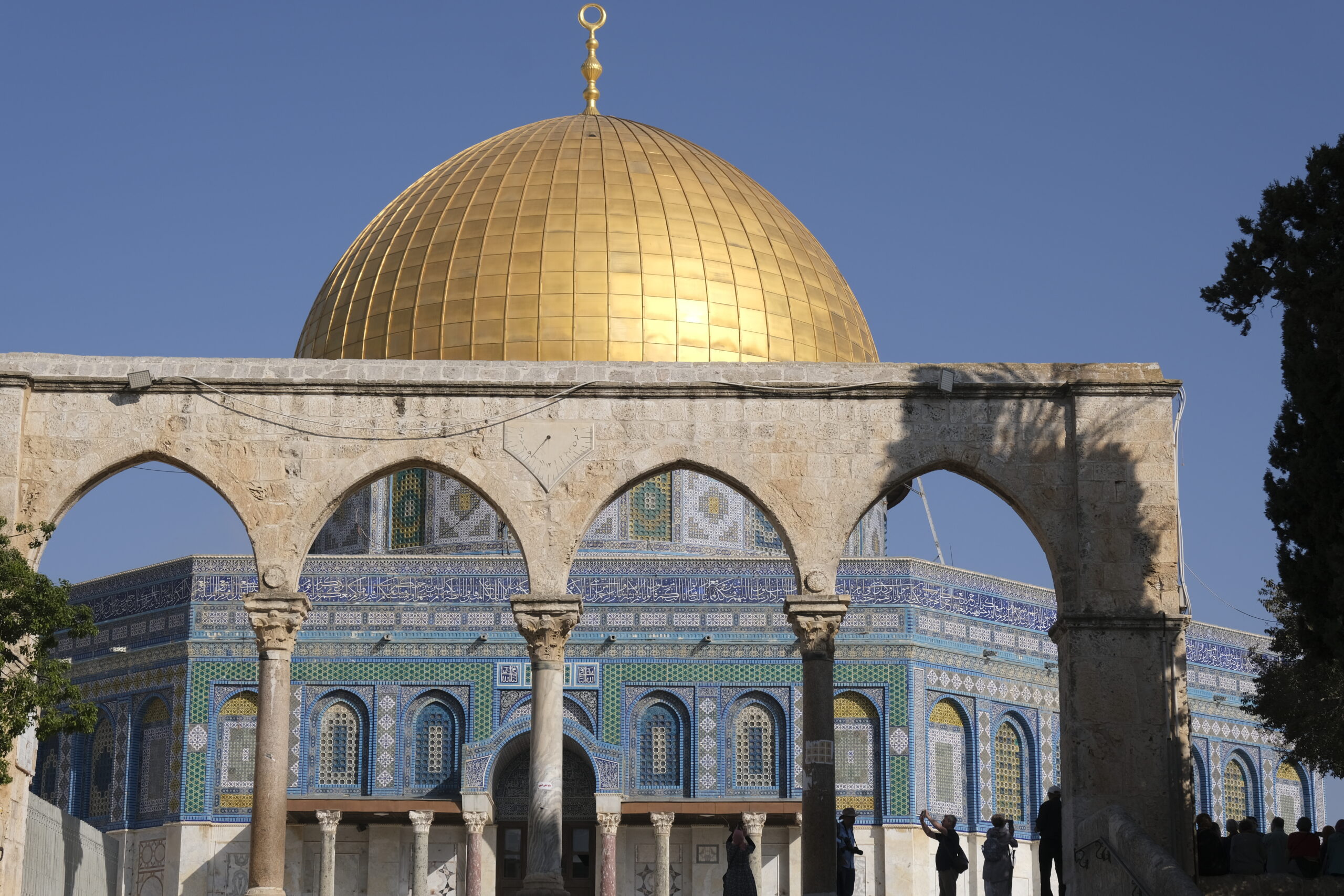
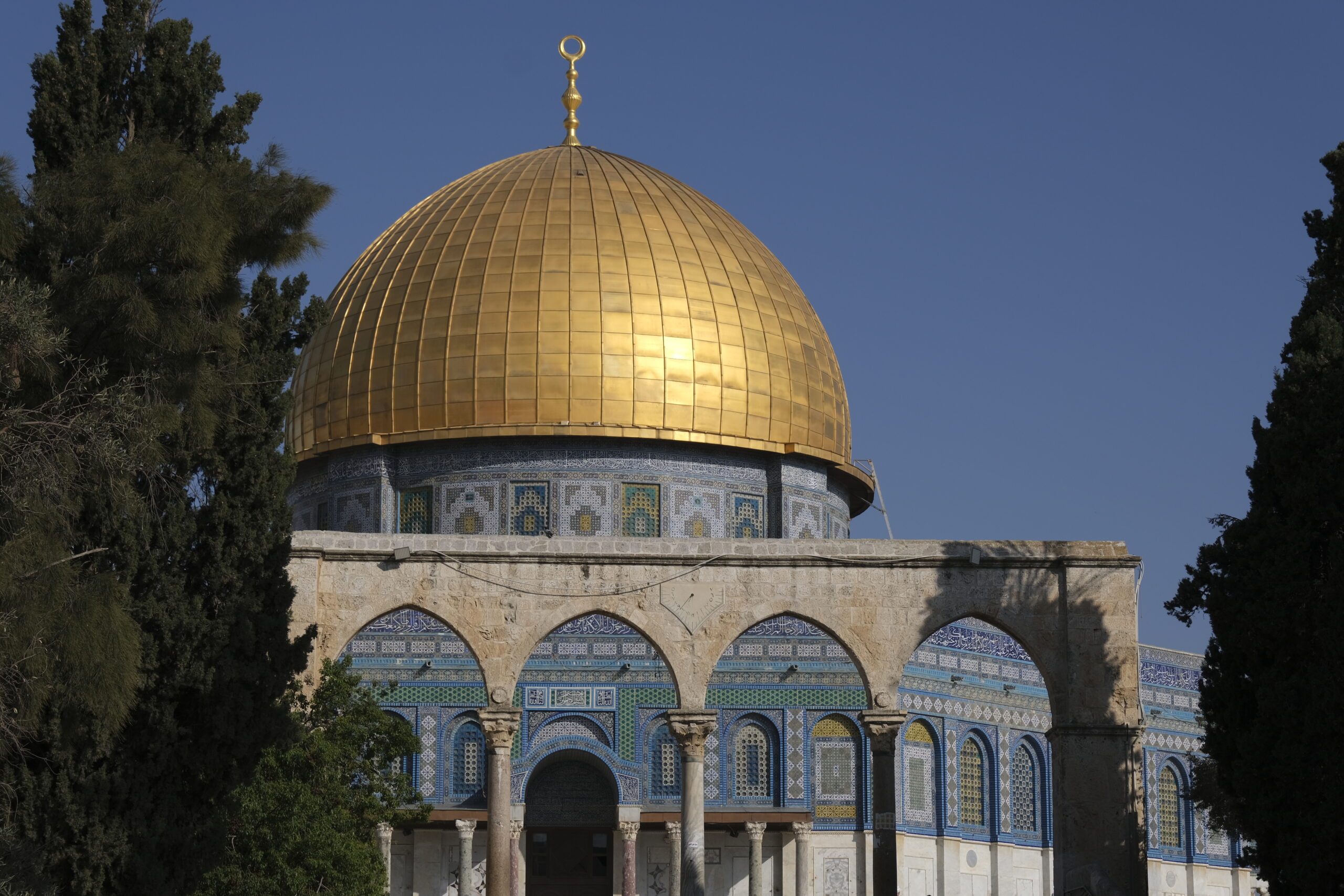
We visited the Temple Mount today. This is the plateau that Herod built for the Second Temple. The Dome of the Rock now sits in the middle of the Temple Mount and is believed by Muslims to be the place of the Prophet Muhamad’s night journey. It is quite beautiful on the outside and, of course, there’s all that gold on the dome. Non-believers are not allowed in this mosque, but you are allowed to walk on the Temple Mount provided both men and women are dressed appropriately. If you are not, the dress police make you wear a skirt (both men and women). The Church is a lot more lenient in this regard.
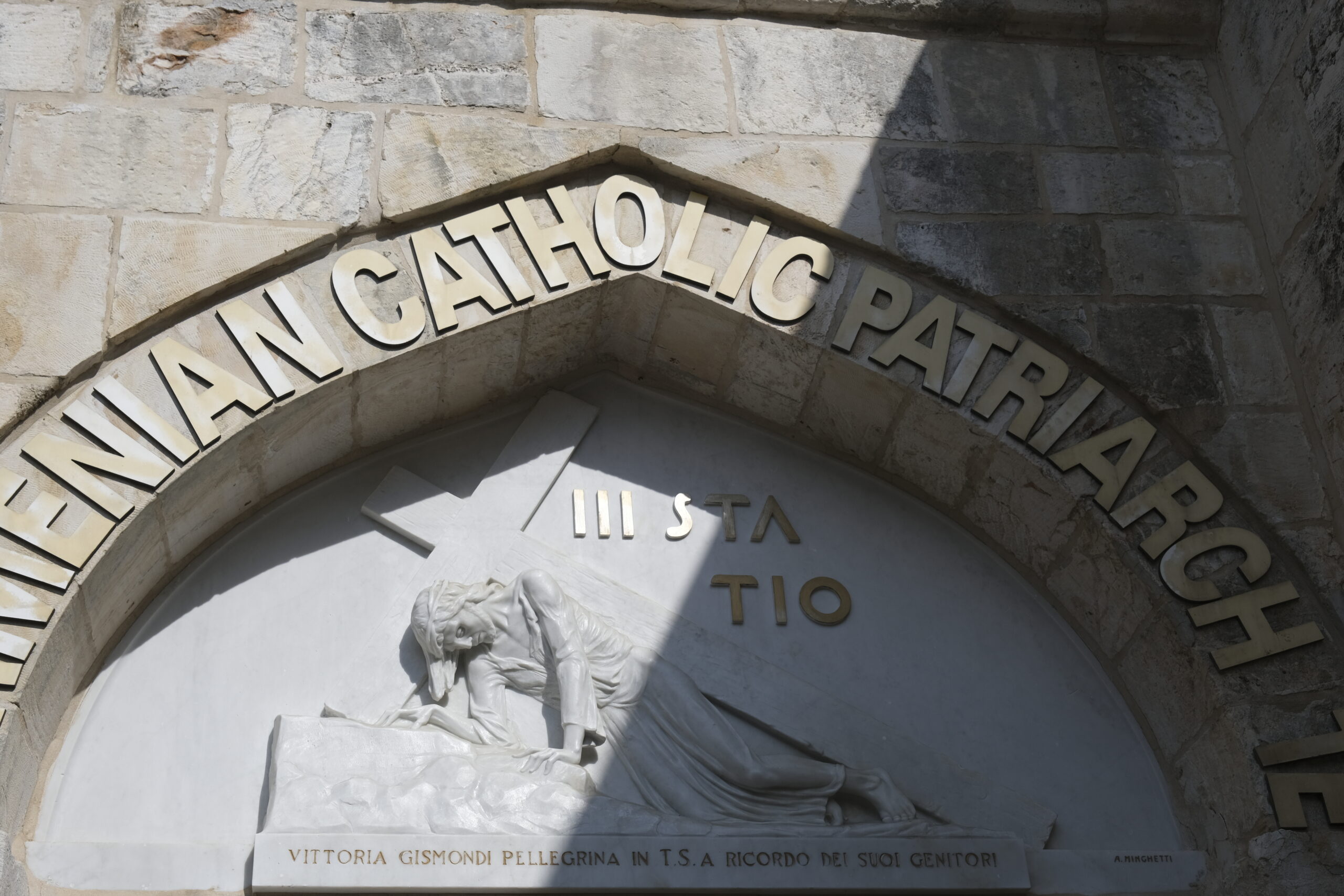
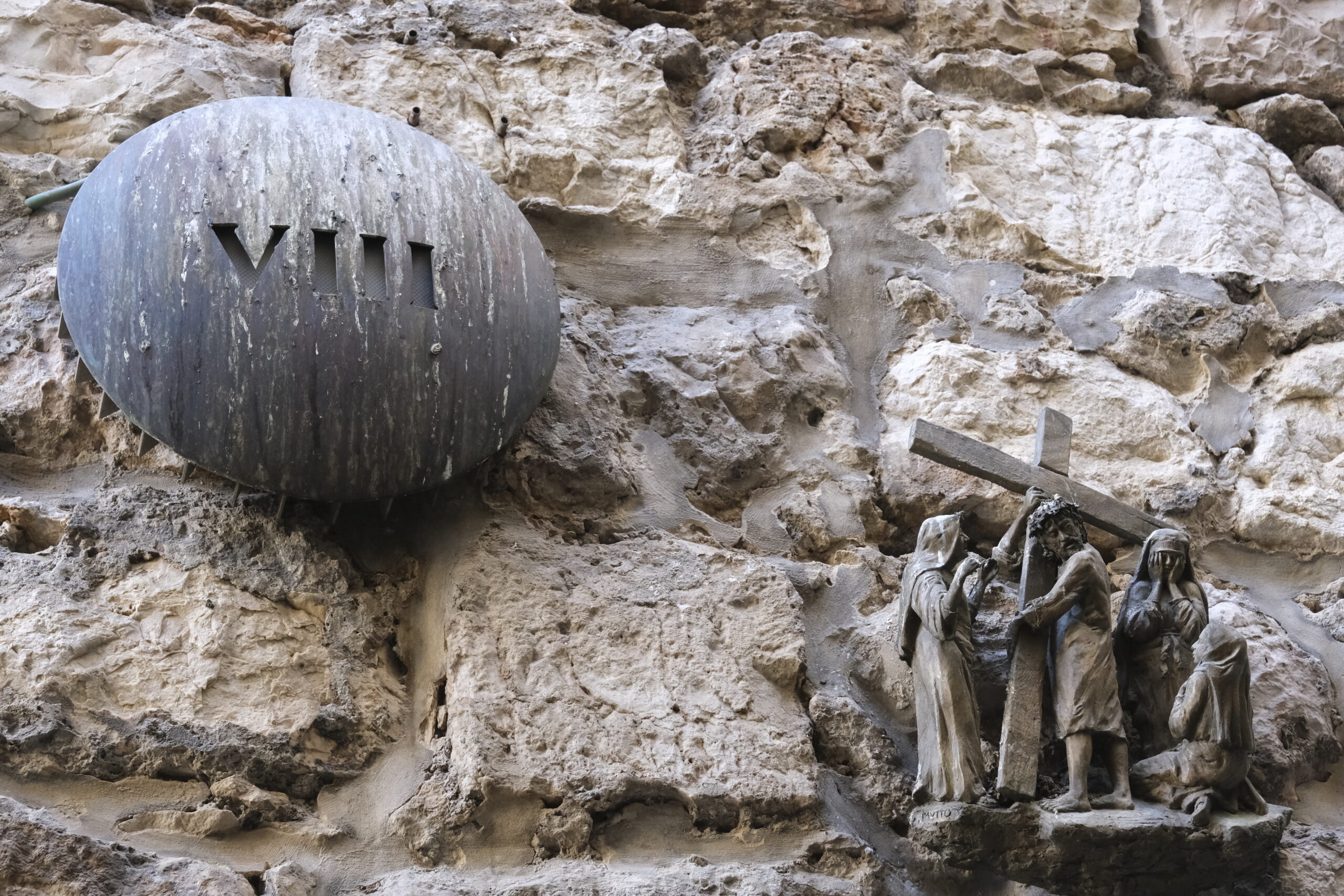
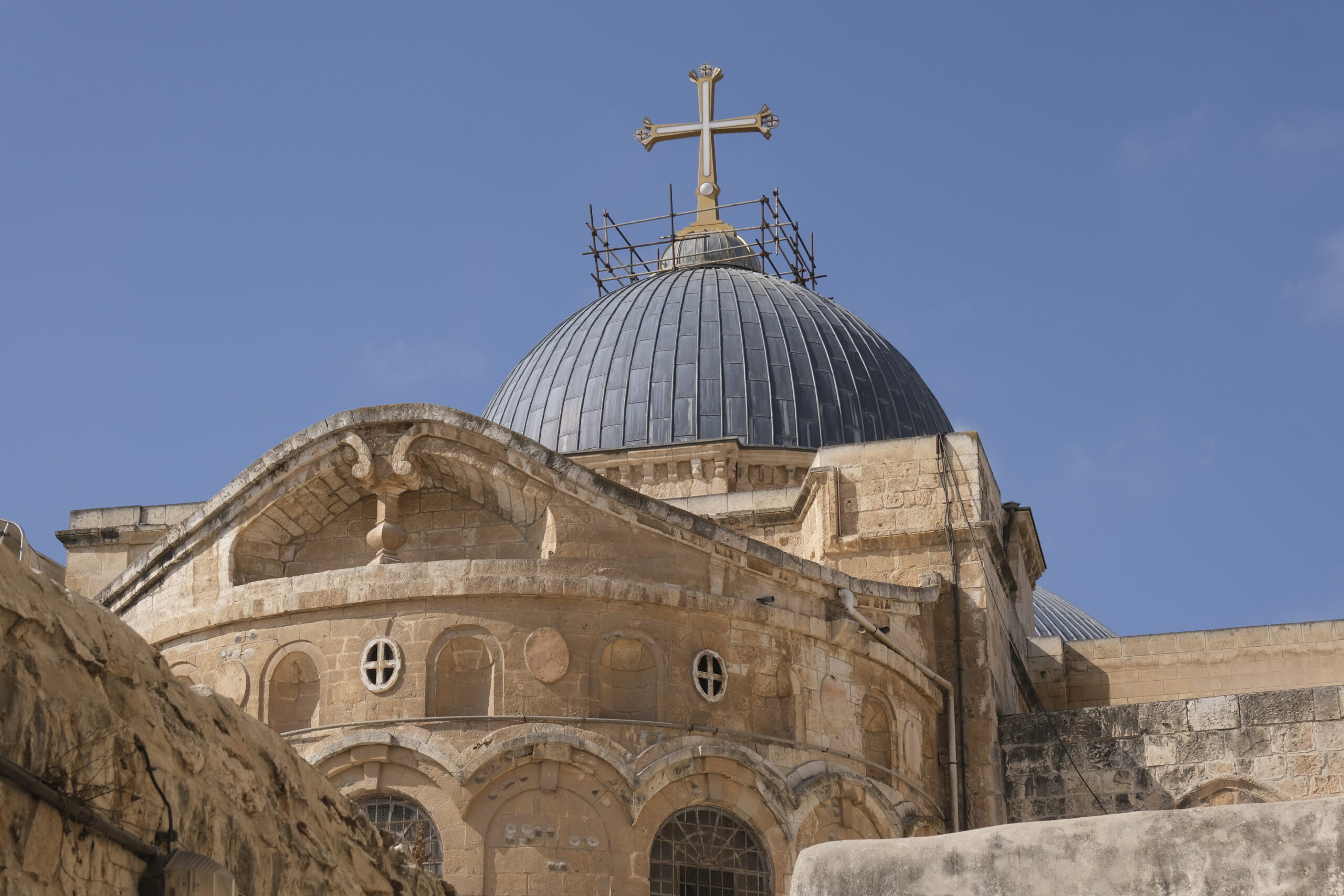
Our next stop was to walk part of the Via Dolorosa starting at Station III (Jesus Falls for the First Time) up to Station IX (Jesus Falls for the Third Time). From there we entered the Church of the Holy Sepulchre, which is divided among six pre-Reformation Christian groups (the Armenian, Greek Orthodox, Roman Catholic, Coptic, Syriac, and Ethiopian Orthodox churches). The church is undergoing extensive renovations, the first in centuries. Relations between the churches and the amount of space each church has can be quite contentious and the key to getting in and out of the church is kept by a Muslim family that has been doing this for centuries. It was extremely crowded in all sections of this church, so it’s difficult to explain or remember clearly all the different areas we visited, such as the place where Jesus was crucified, where his body was laid out to be washed, and where he was buried.
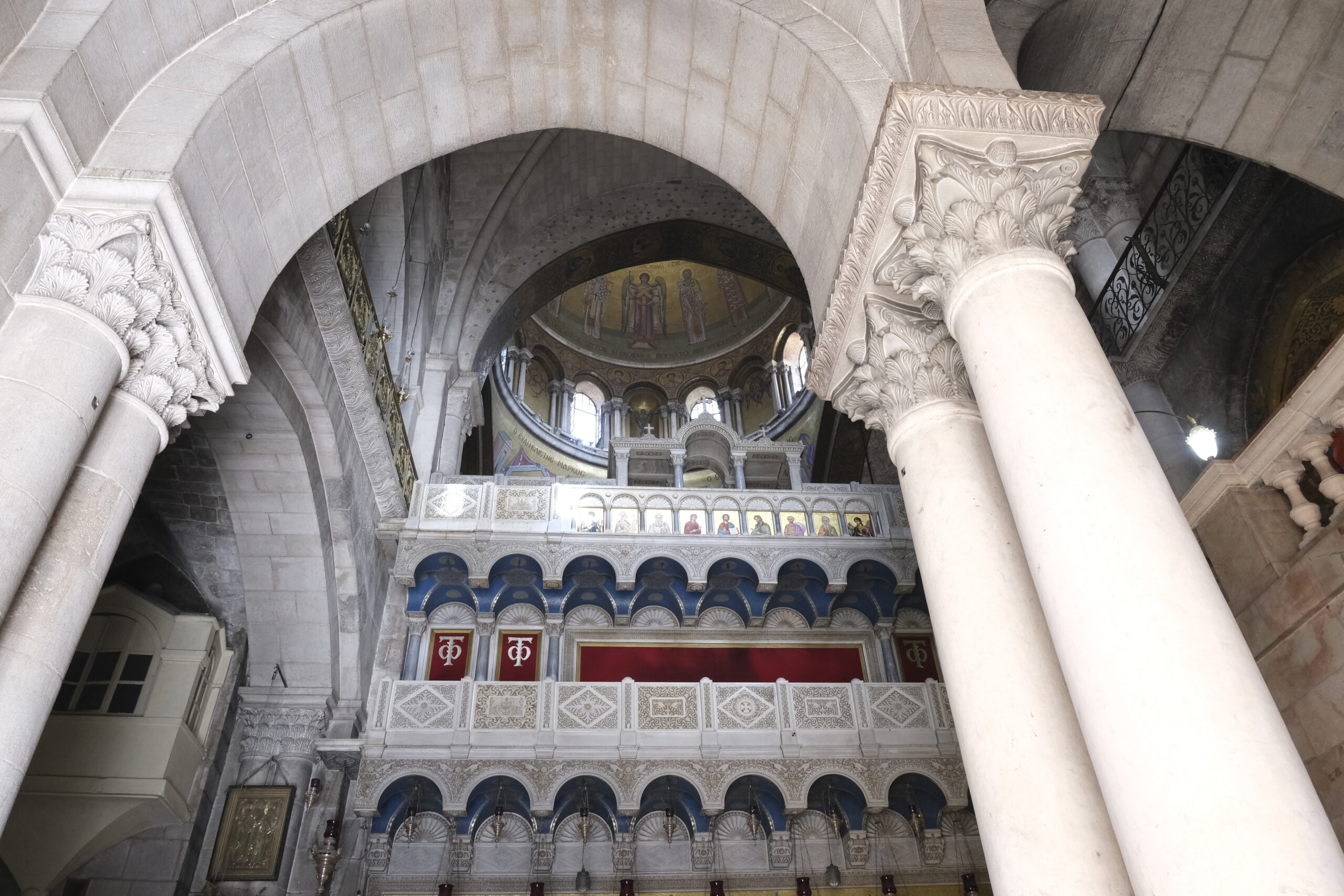

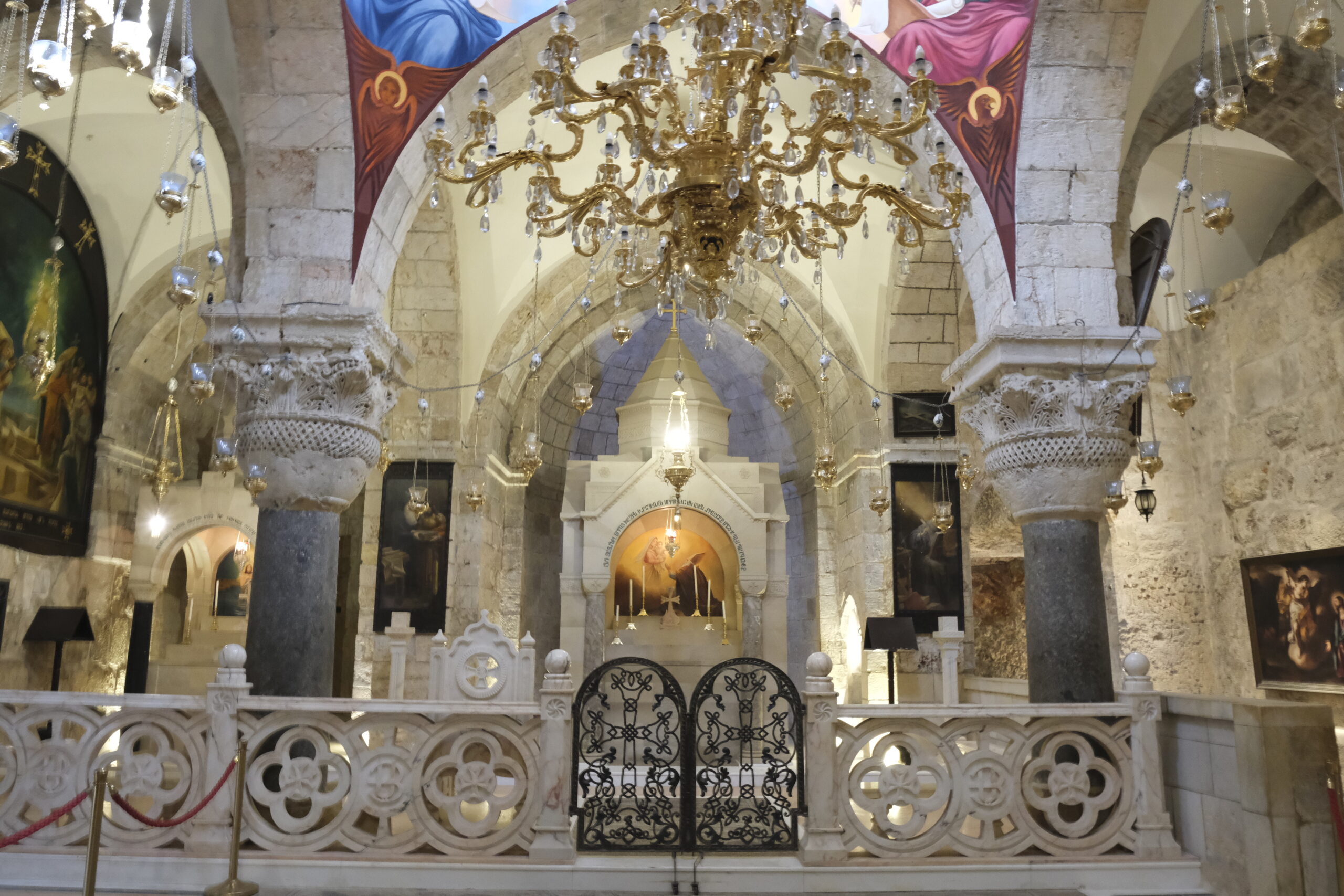
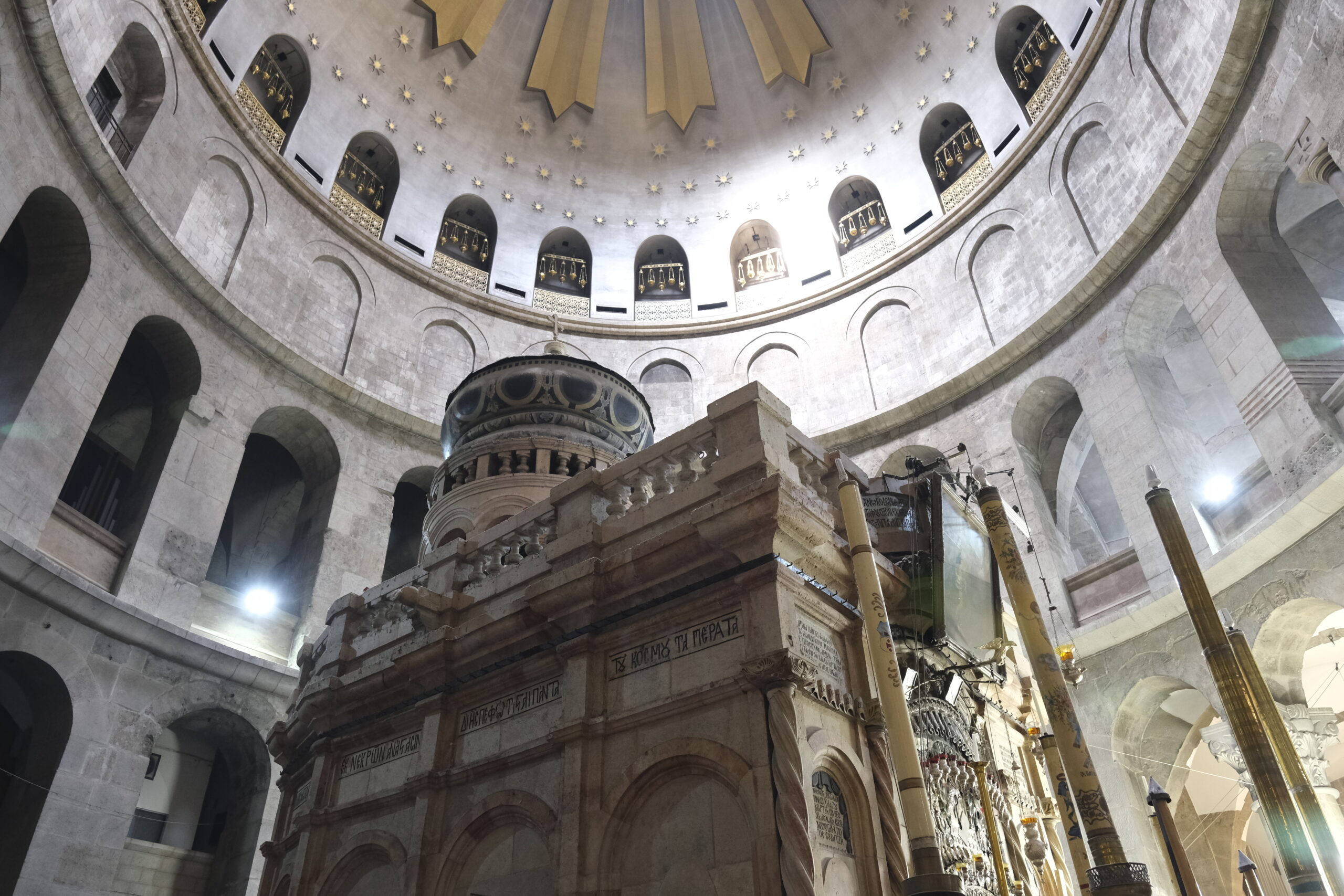
After a quick lunch, we walked to the area where the Last Supper is said to have been held (although the room looks much too modern for that to be true) and then to view the tomb of King David. Both locations were extremely crowded.
This evening we had a fabulous dinner at Eucalyptus. The chef is Moshe Basson, and he’s known for serving local, traditional cuisine and blending old world recipes and historic ingredients with new world plating and food styling.
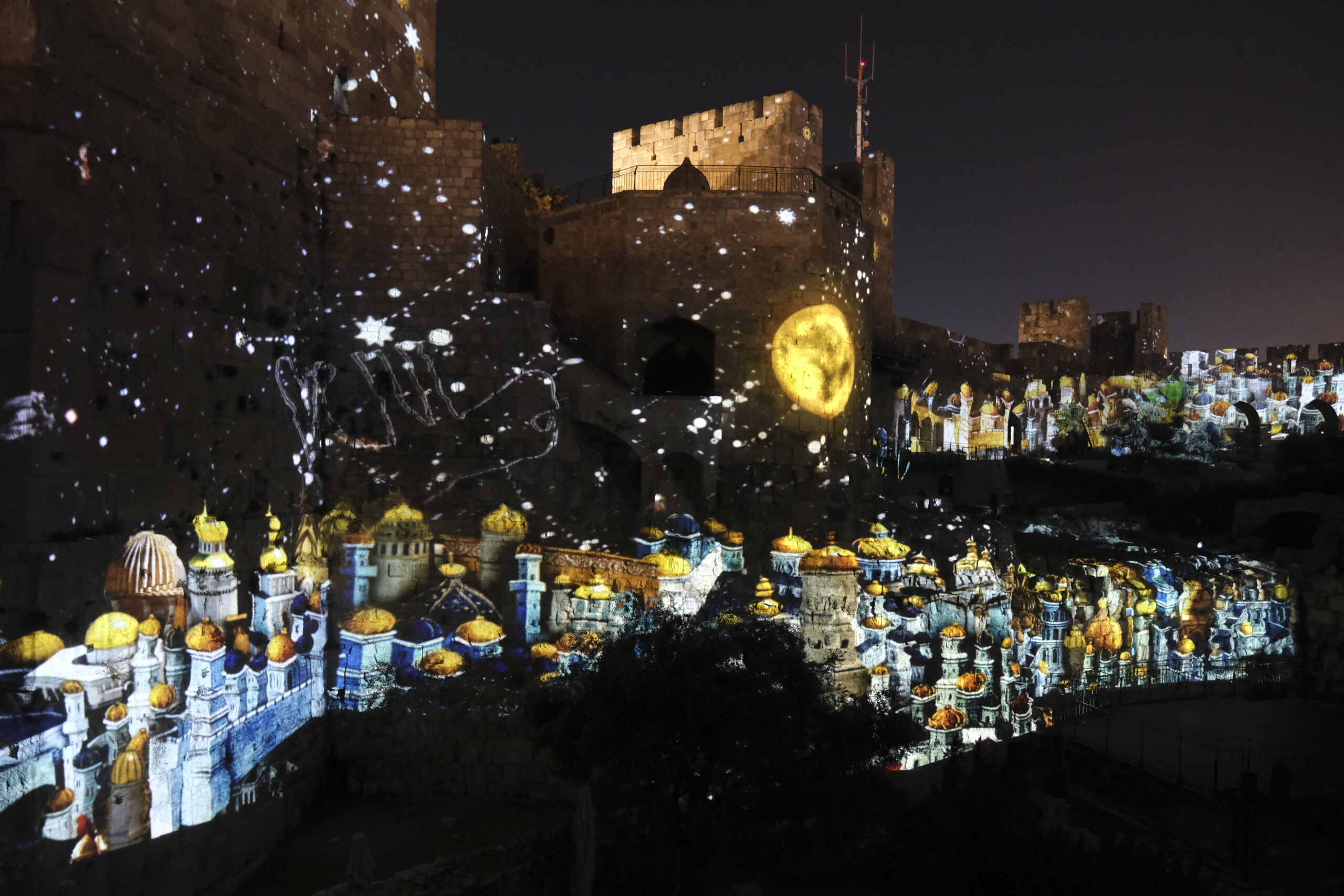
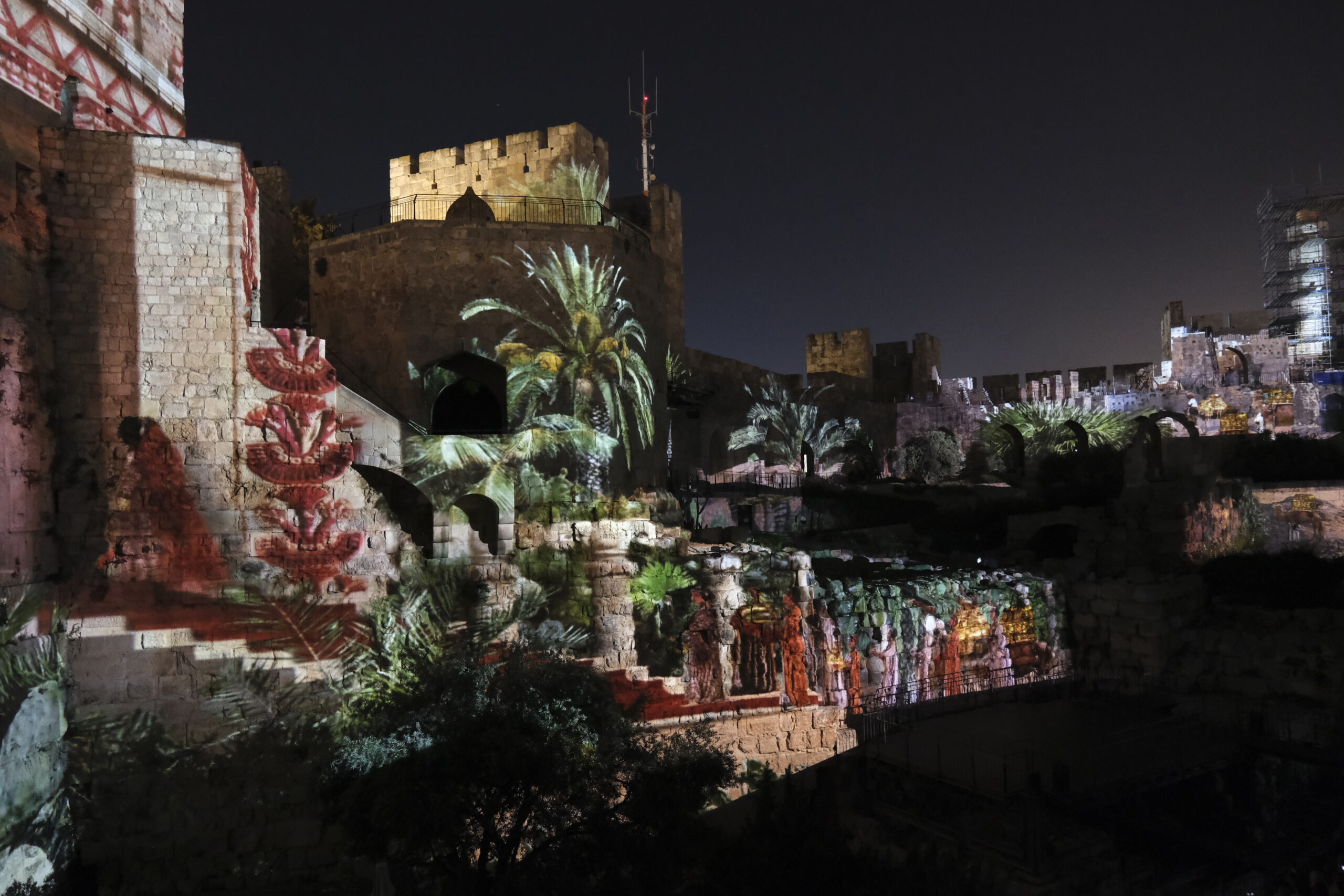
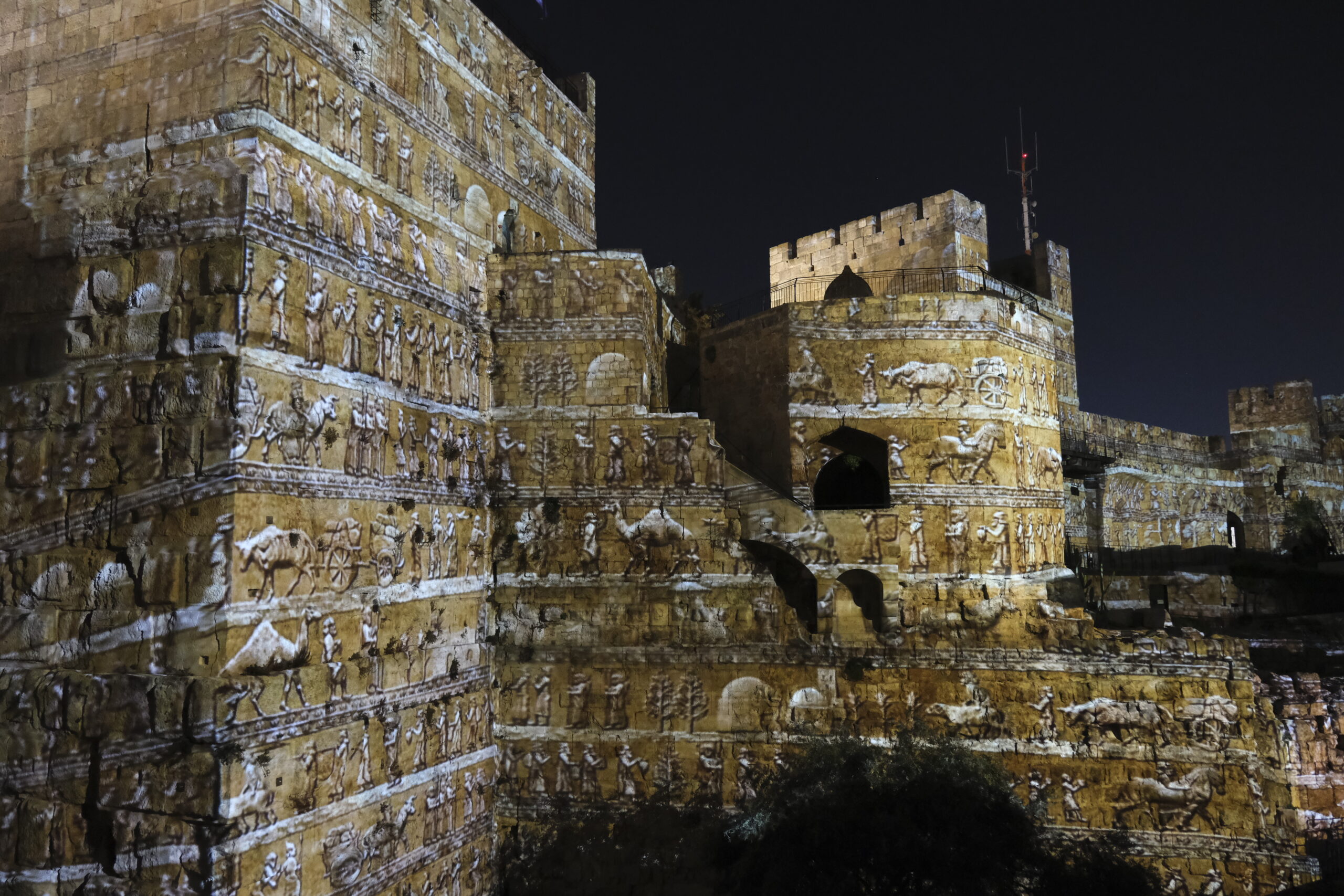
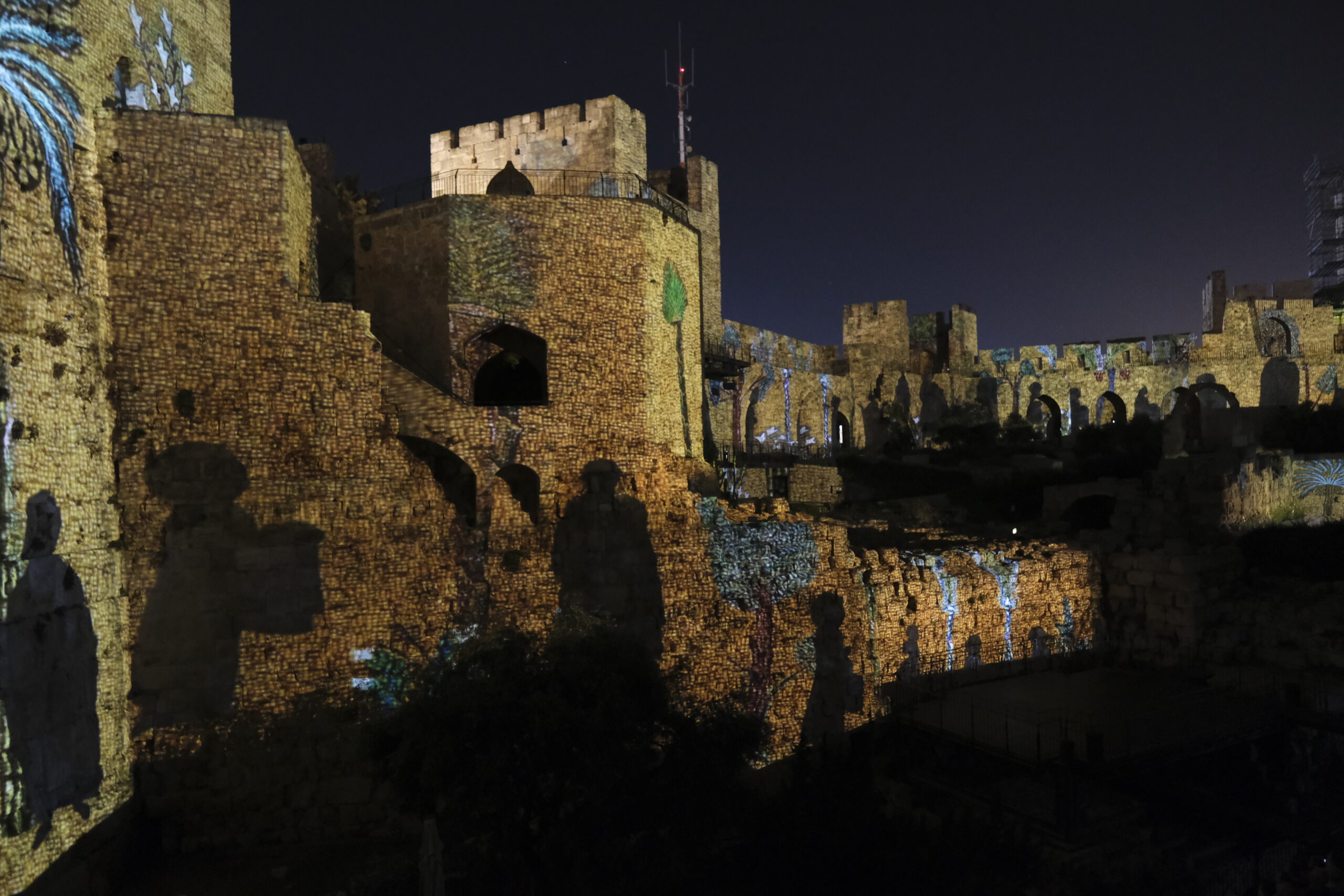
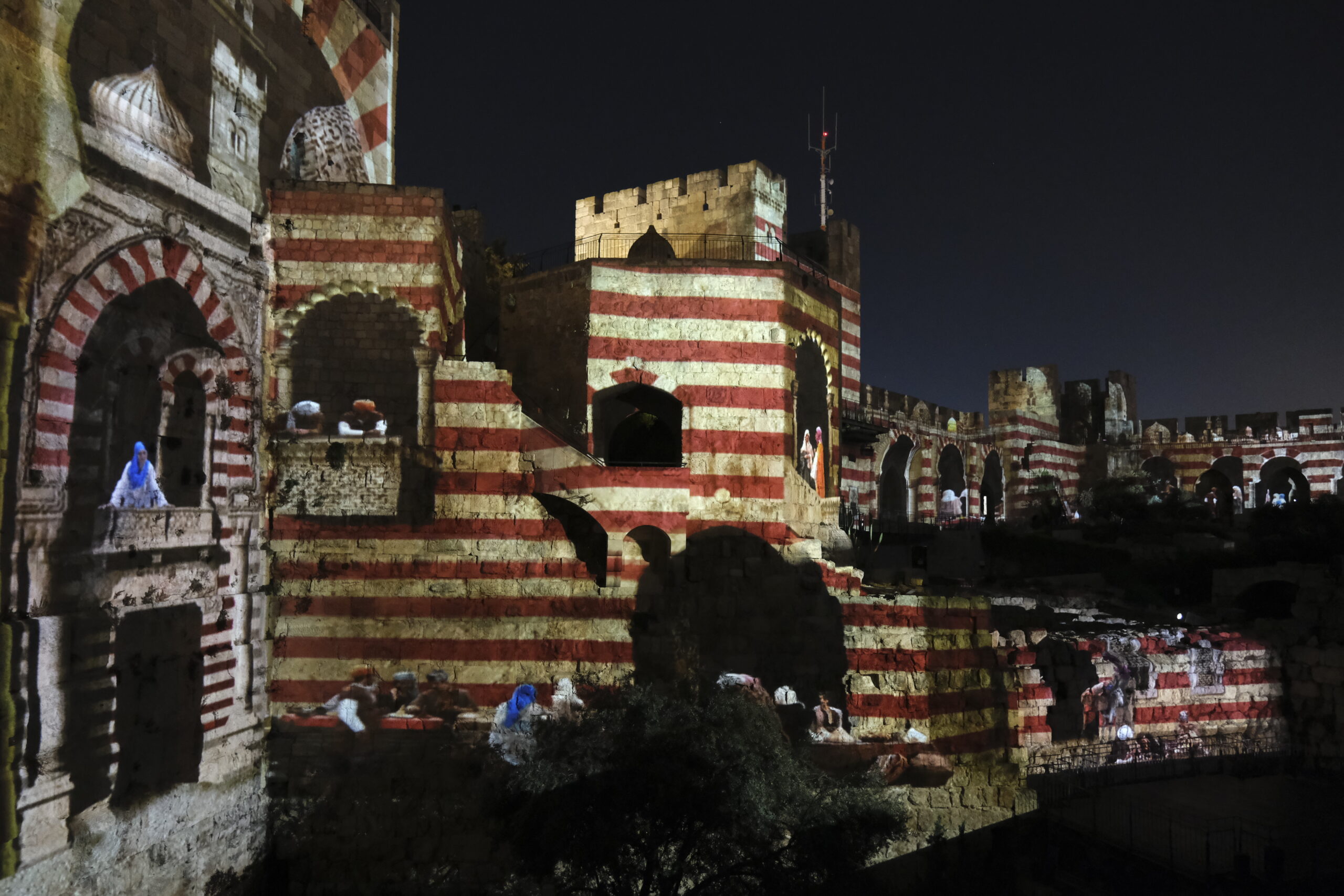
And the last thing we did today was to see the light and sound show at the Tower of David Museum that explains Jerusalem’s various periods (Canaanite, Israelite, Babylonian, Persian, Hellenistic, Roman, Byzantine, Early Muslim, Crusader, Mameluk, Ottoman, British Mandate, State of Israel.

Bethlehem to Mount of Olives – October 25, 2022
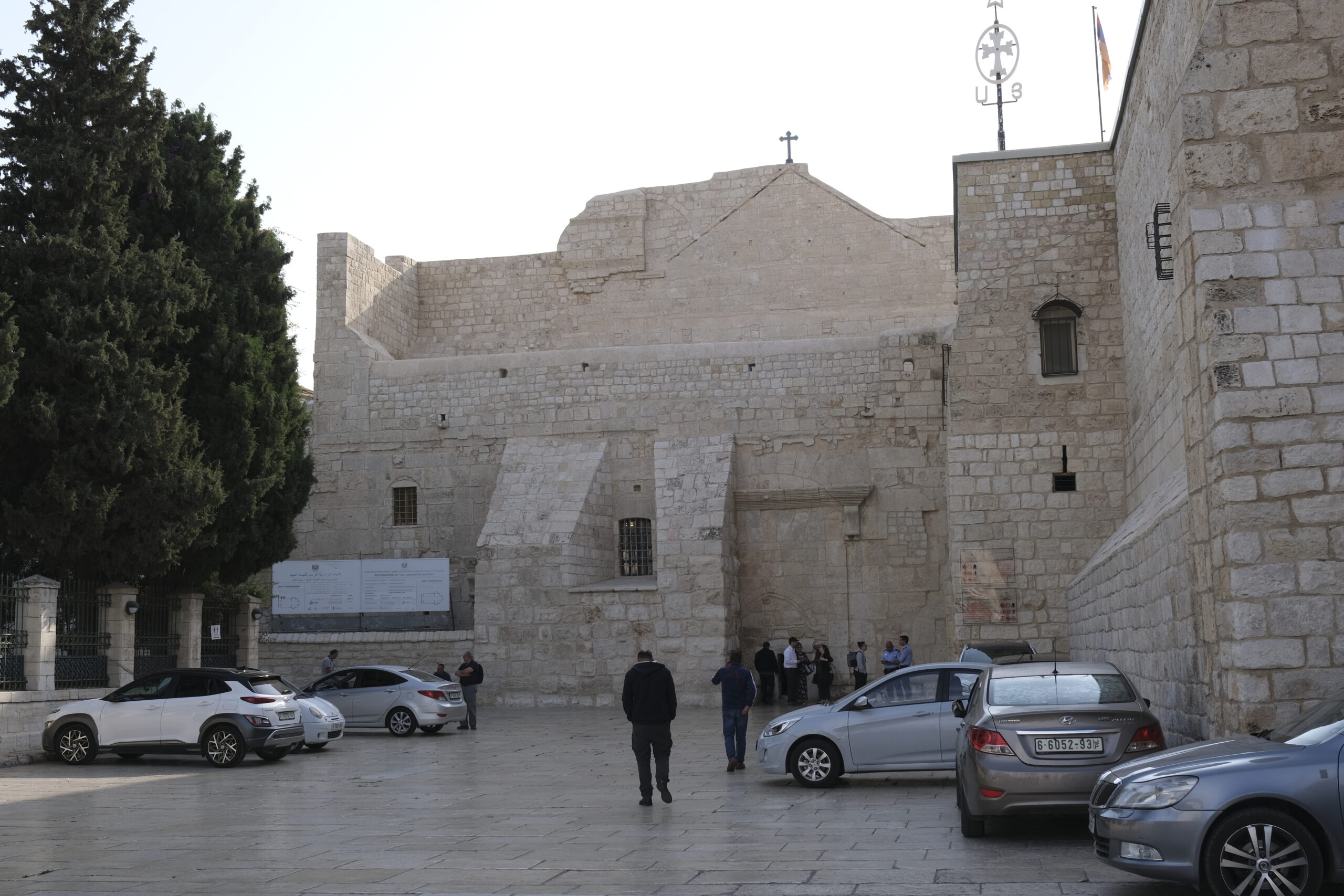
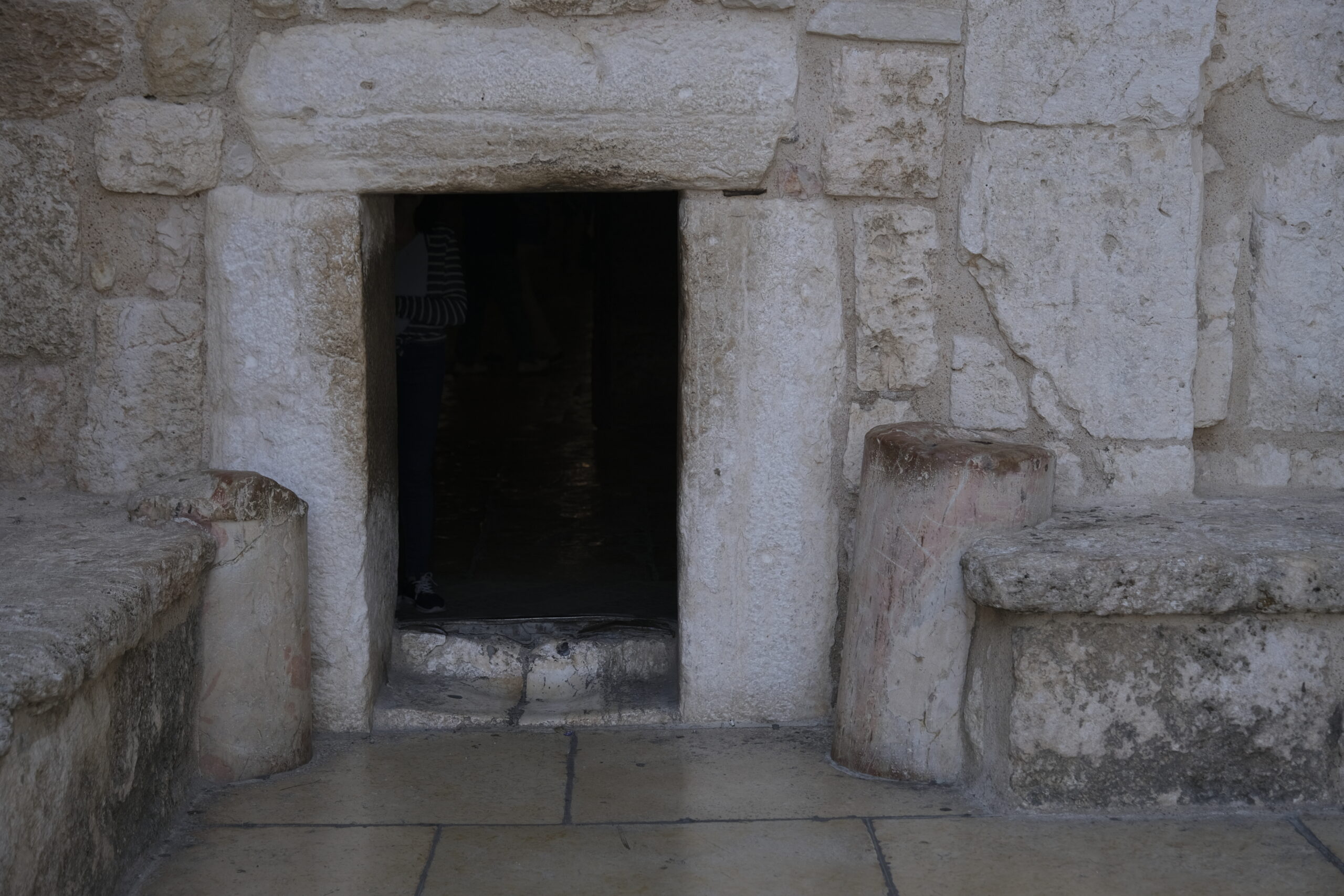
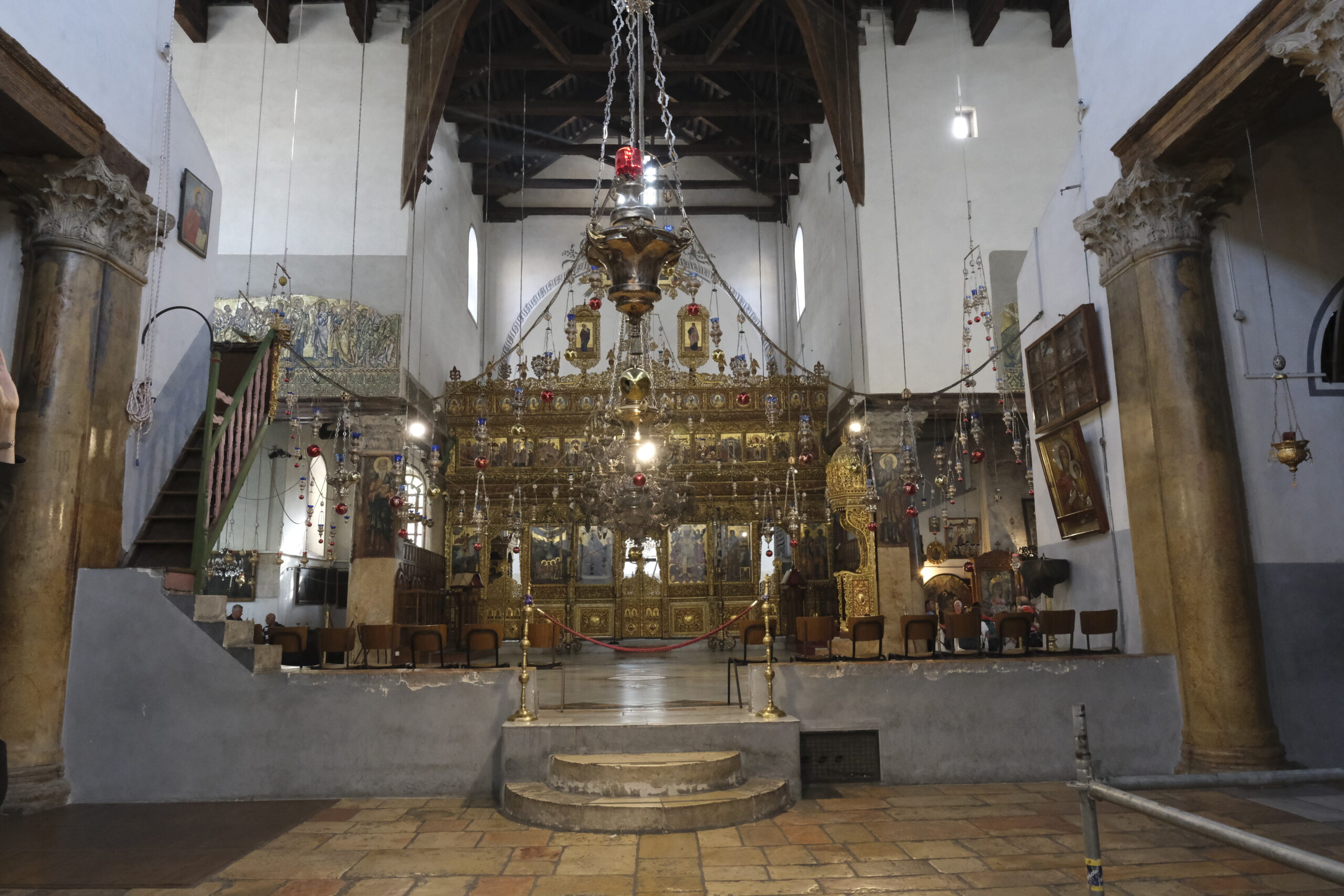
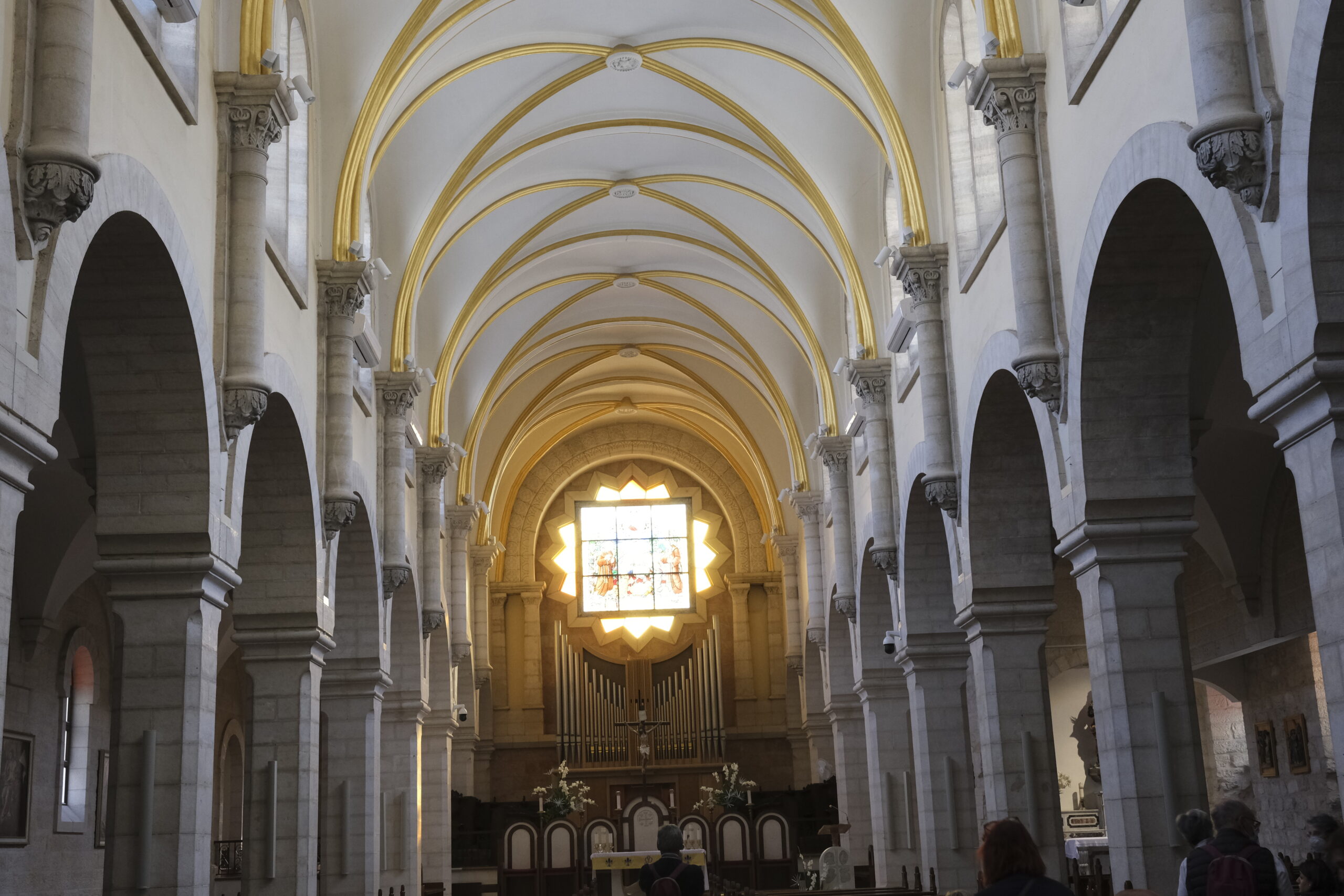
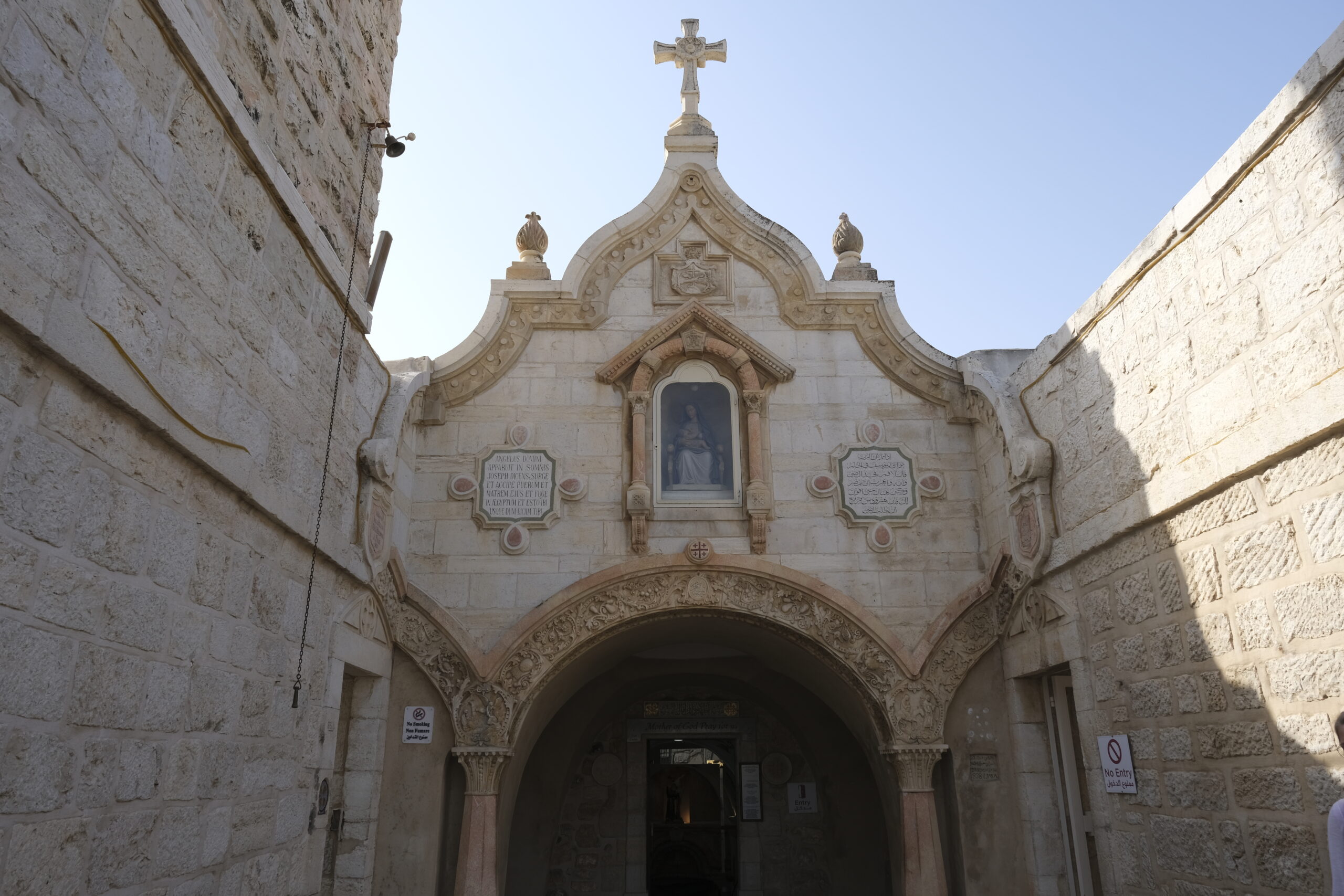
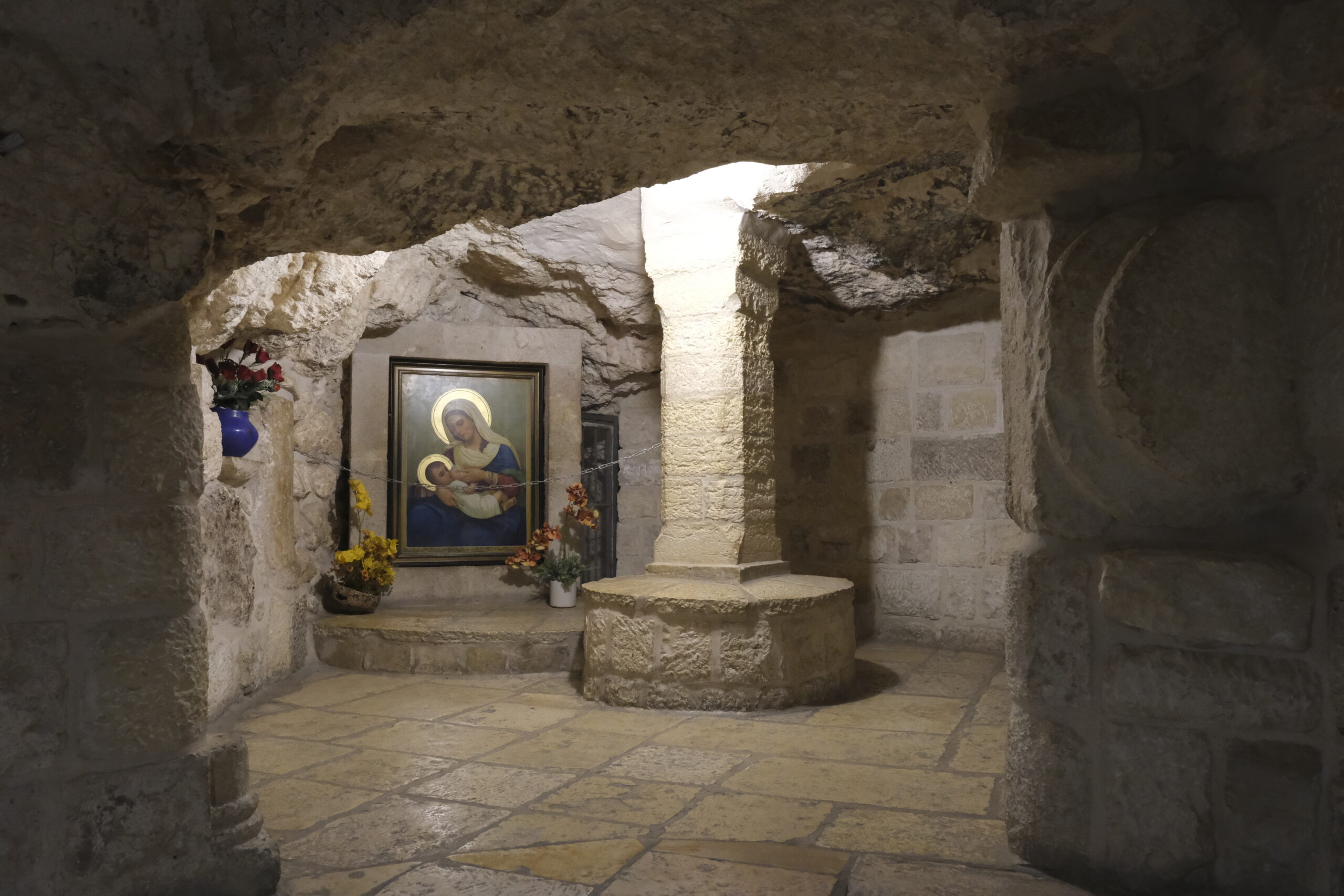
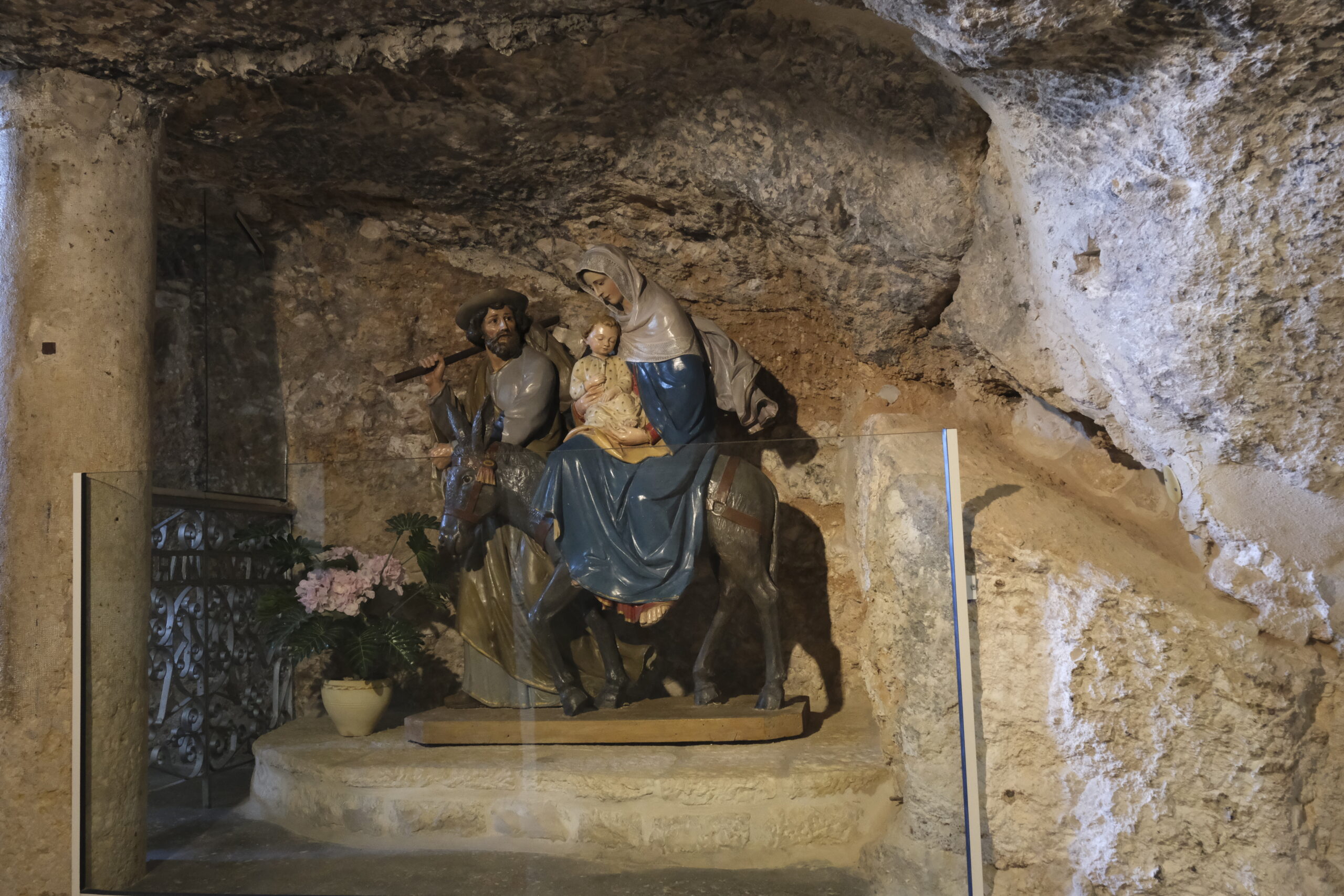
This morning we drove to Bethlehem on the West Bank. We left quite early in the morning so that we could visit the Church of the Nativity before it opens to the general public. Even at that time in the morning, it was quite crowded. We went to visit the site of Jesus’ birth but got shushed out; however, Albert managed to stay in there for a while since he was last in line. Again, each church has its own time. We were being slotted in between the Greek and the Roman services. I much preferred our visit to the Milk Grotto, which is a small church where Mary is supposed to have rested on the Holy Family’s flight to Egypt to escape the massacre of the innocents.


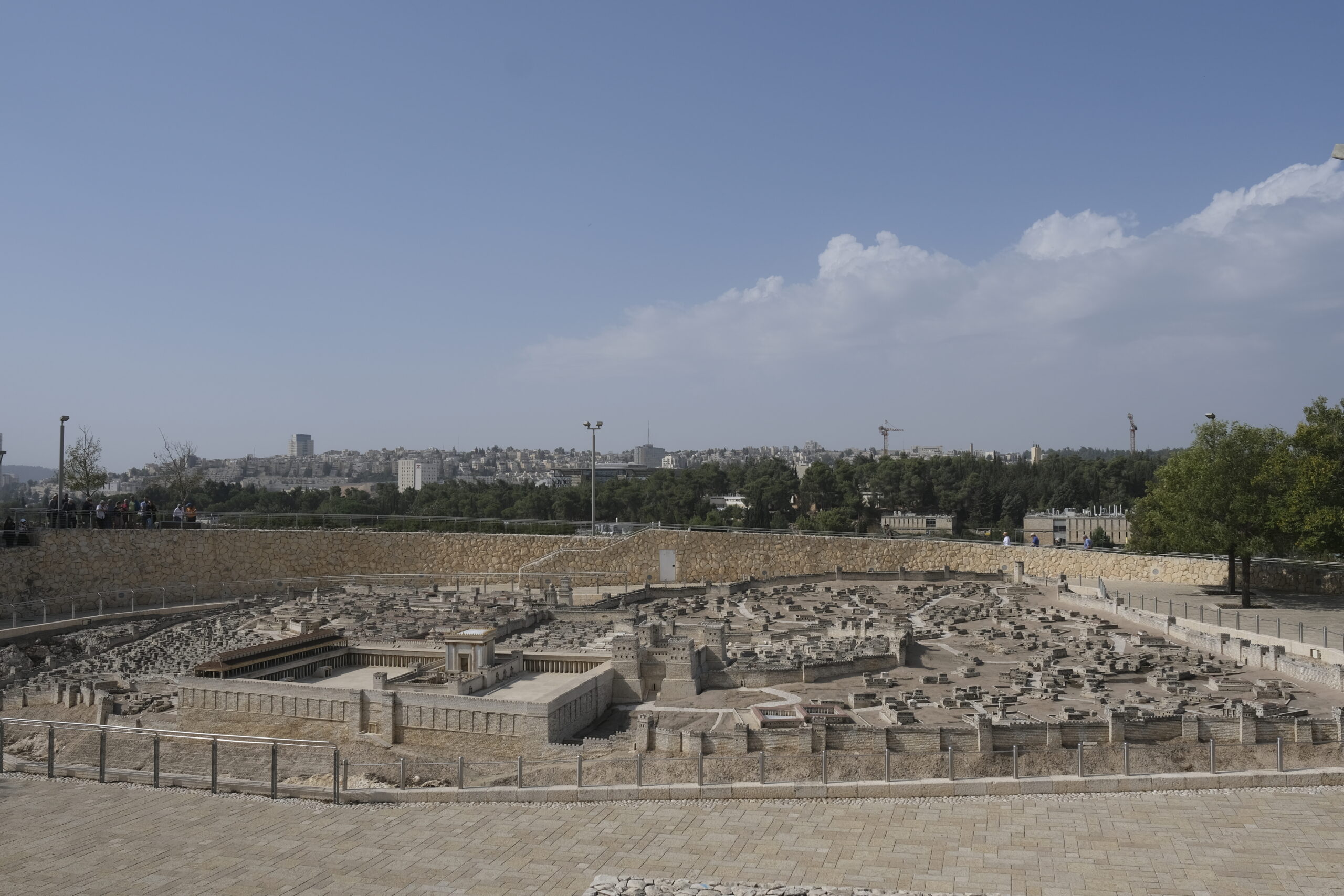
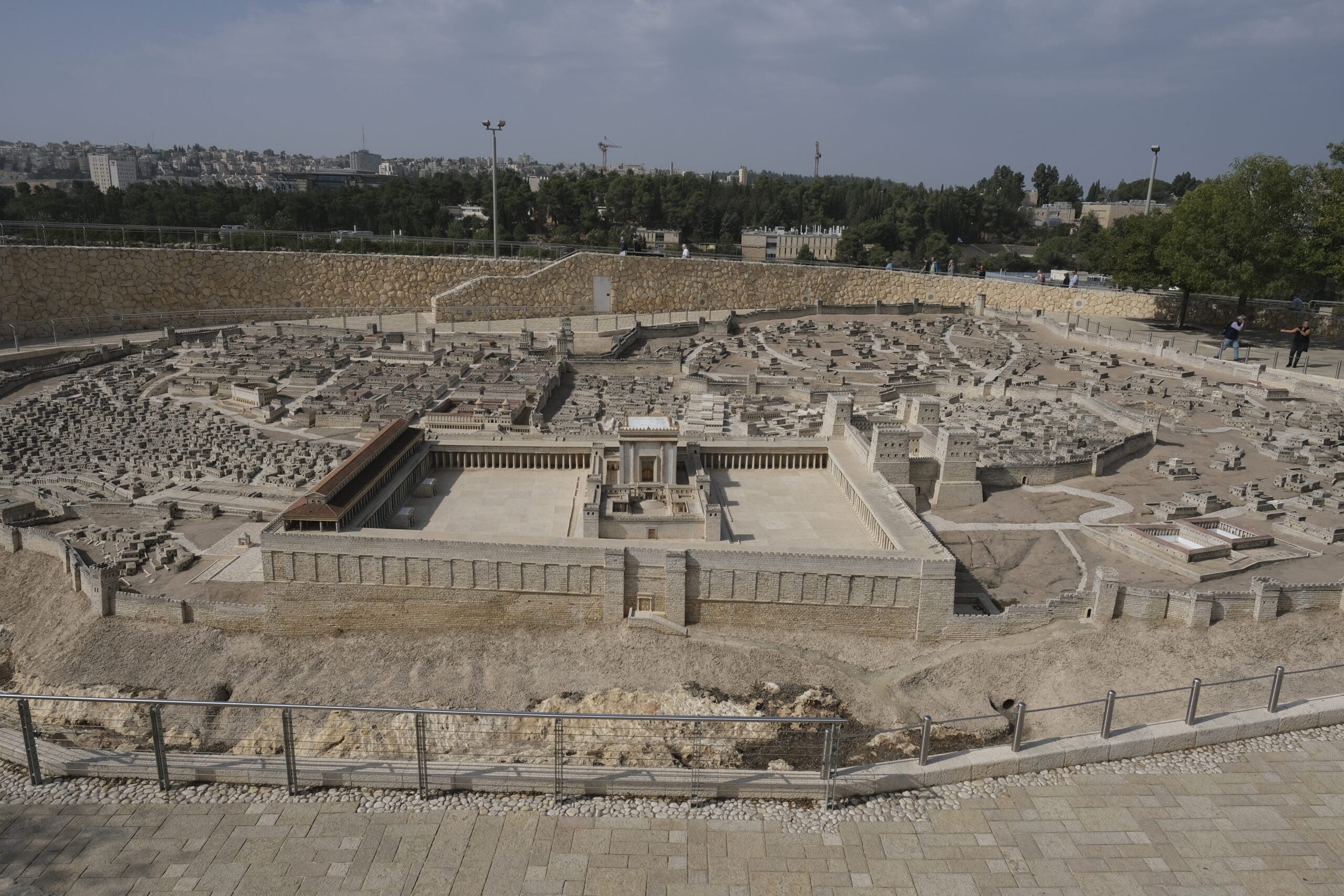
On our return from Bethlehem, we visited the Israel Museum to see the Second Temple model and the Shrine of the Book. The Second Temple model, mostly based on the work of Josephus Flavius is amazing for its accuracy and scale. It gives you a very clear idea of how impressive Herod’s buildings were. We were hoping to see the Dead Sea Scrolls in the Shrine of the Book, but they have been removed temporarily. The scrolls are rotated so they have time to rest after 3-6 months on display. Most of us were hoping to see them but the display cases were empty. The museum itself is extensive. I would have liked to have seen its art collection. Well, next time.
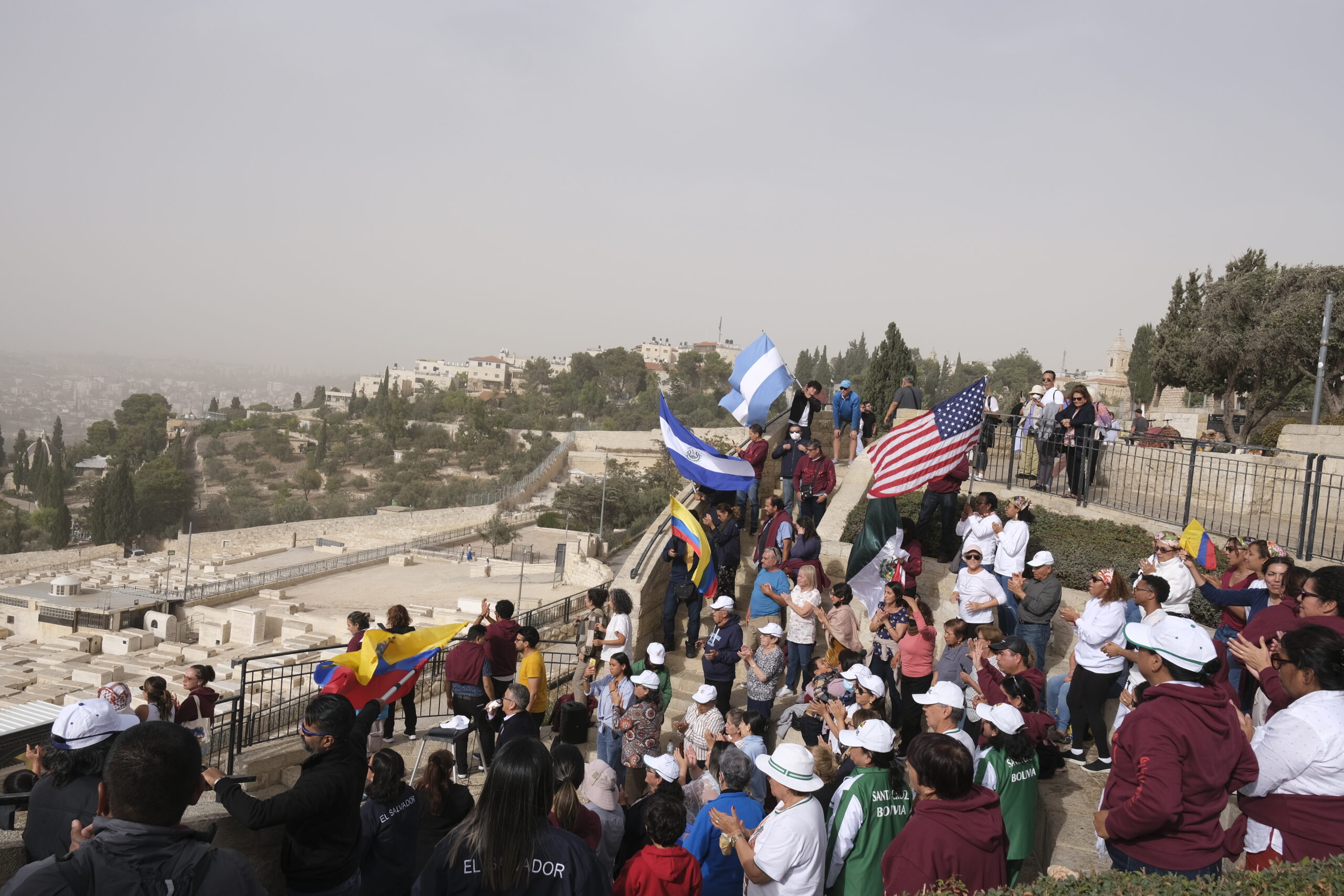
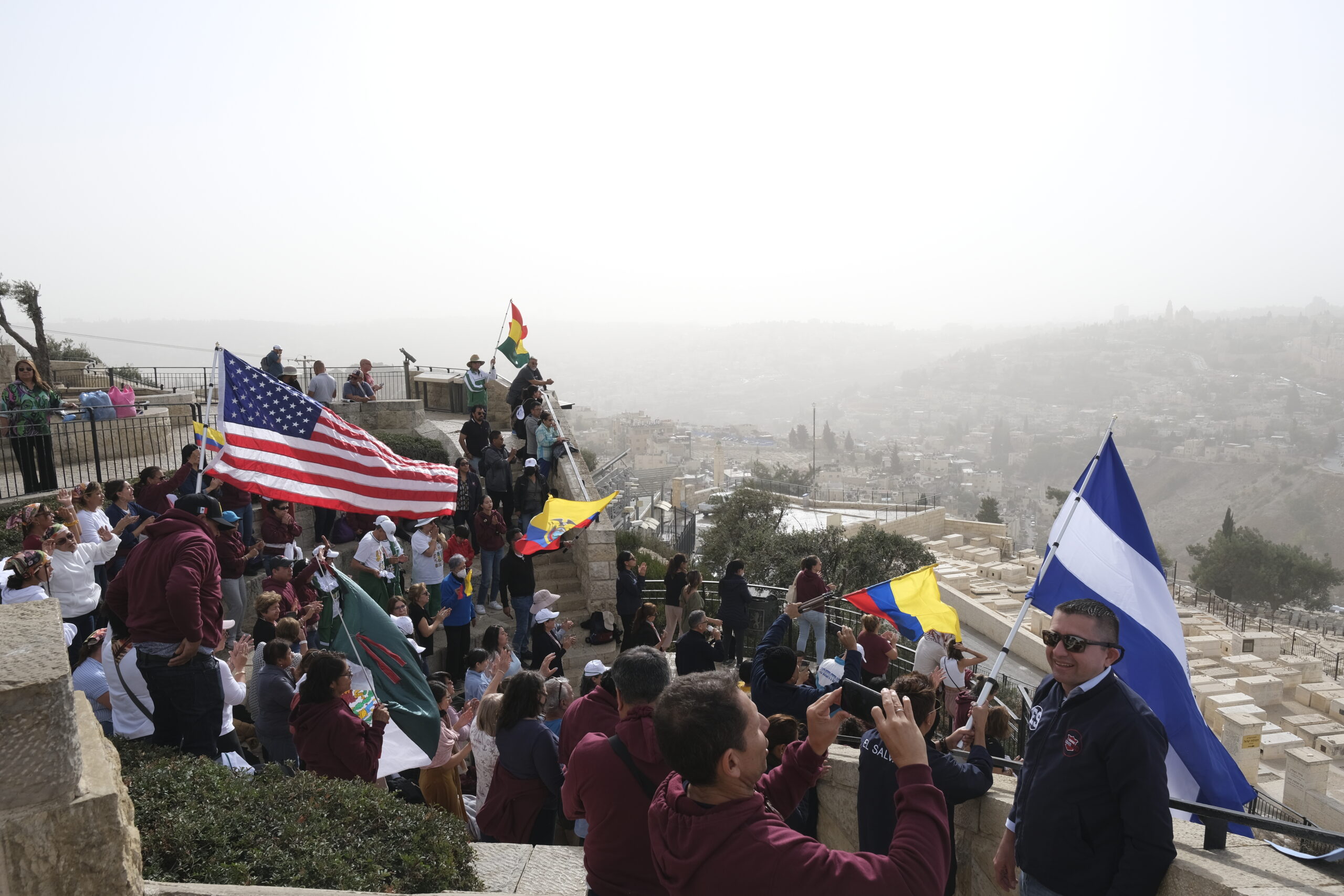
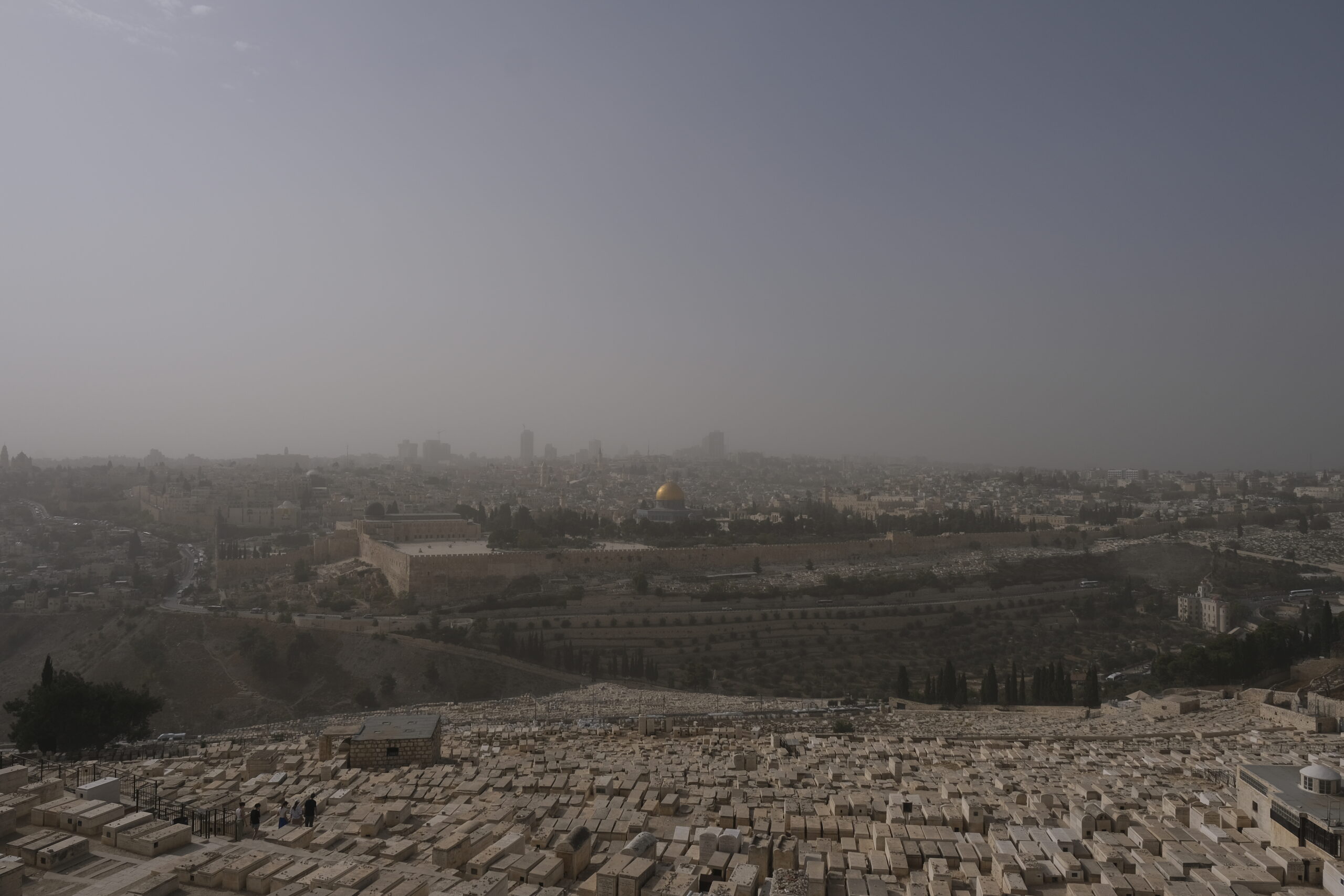
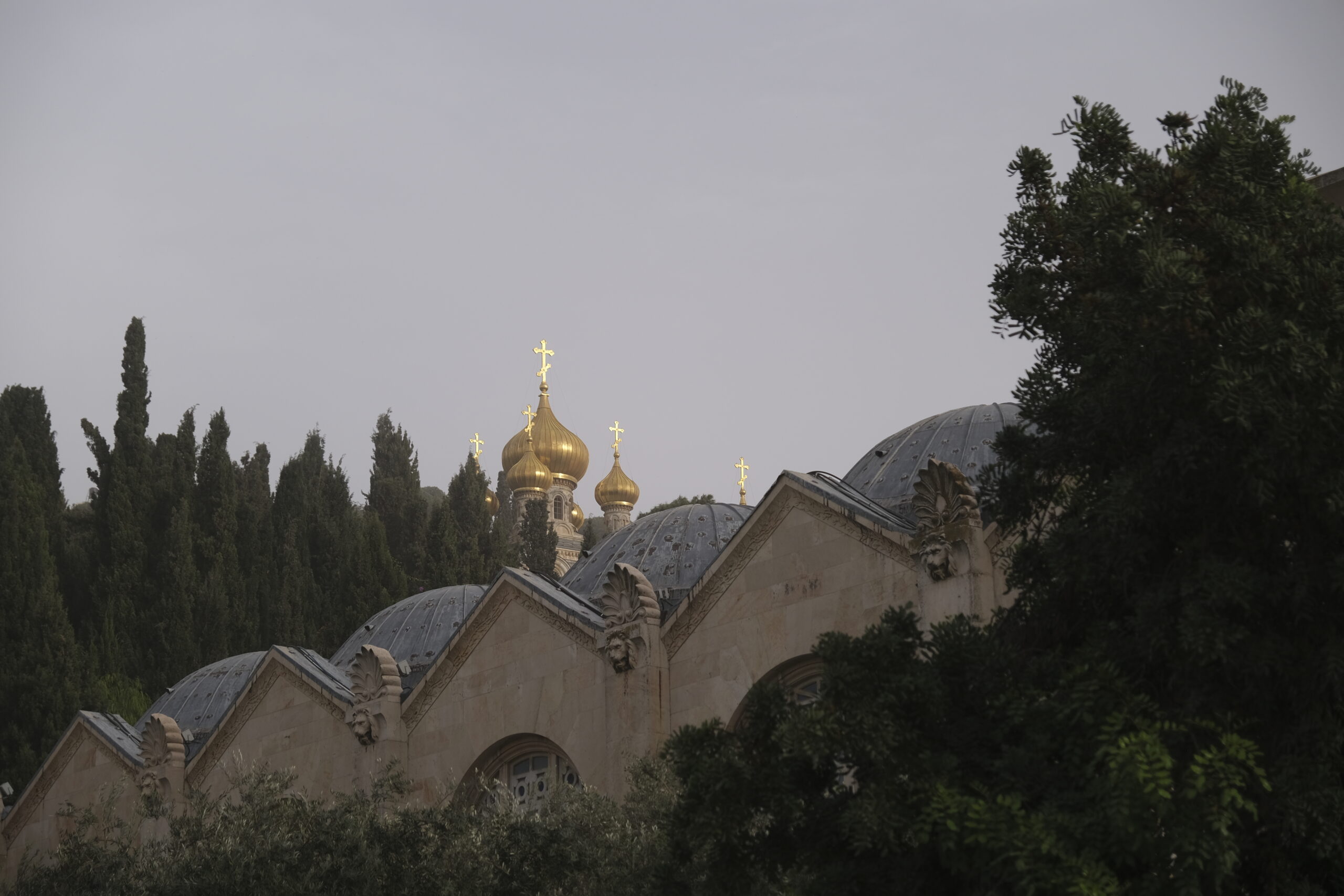
In the evening we had quite a bit of free time, so we decided to visit the Mount of Olives, the Garden of Gethsemane, and the Machane Yehuda market. So, we and another couple, Jean and Michael, hired a taxi to take us around. At the Mount of Olives, we were hoping to see olive groves, instead we saw a camel, a bunch of South American young people singing and dancing and waving their flags and having a good time, a beautiful view of the tombs of centuries of dead people, and the Dome of the Rock Mosque. We visited the Chapel of the Ascension, where Jesus is said to have ascended. We then visited Pater Noster. I think both are made available by an agreement between religious communities called the Status Quo. The last group of churches that we visited was in the Garden of Gethsemane, the Church of All Nations, the Tomb of the Virgin Mary, and the Greek Orthodox church. The fourth church is that of Mary Magdalene, with the gold onion domes, and is Russian Orthodox. We did not visit this church, nor was it suggested by our driver. The interesting thing about this last church is that King Charles’ grandmother (Alice, Prince Philip’s mother) is buried in this church at her request.
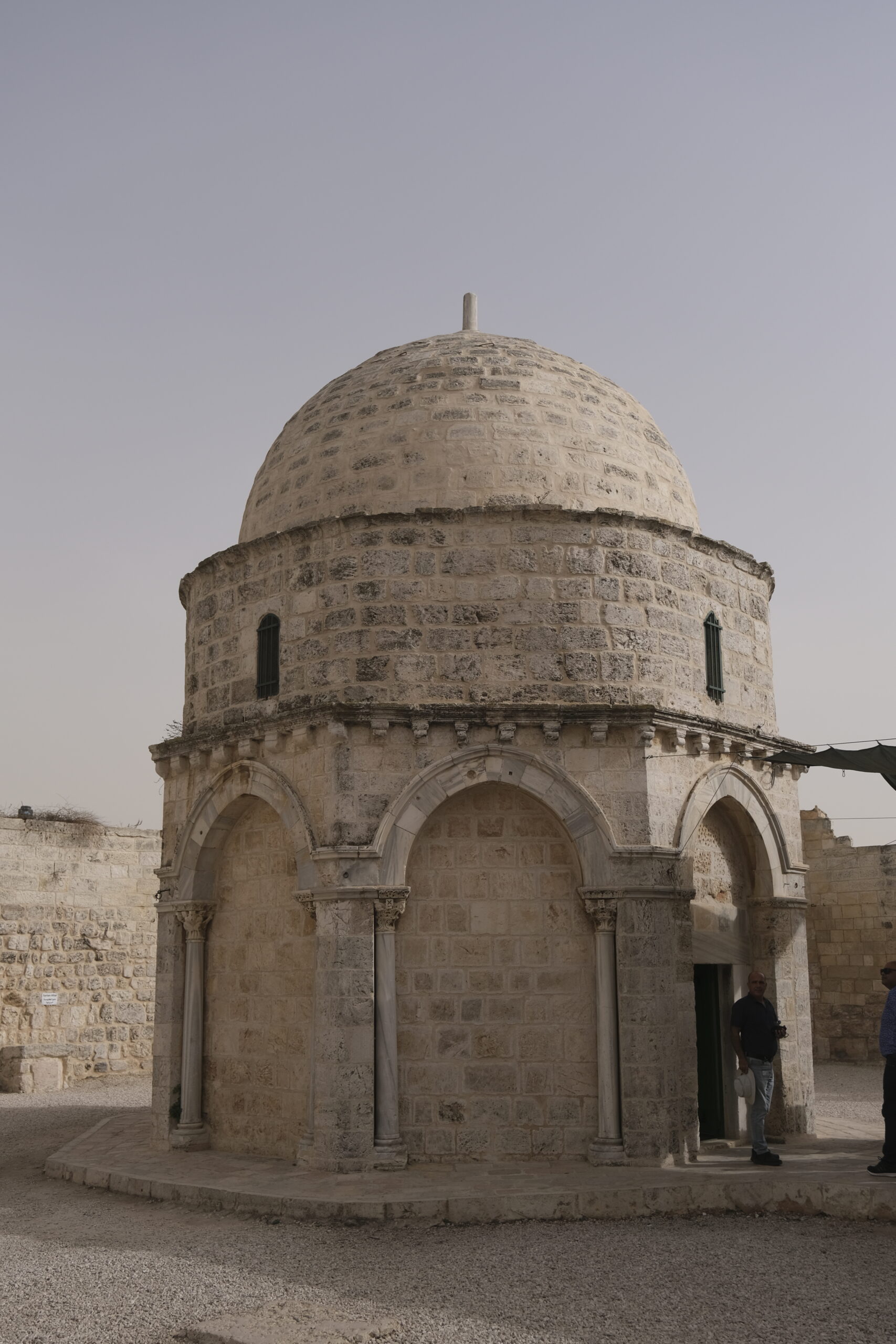
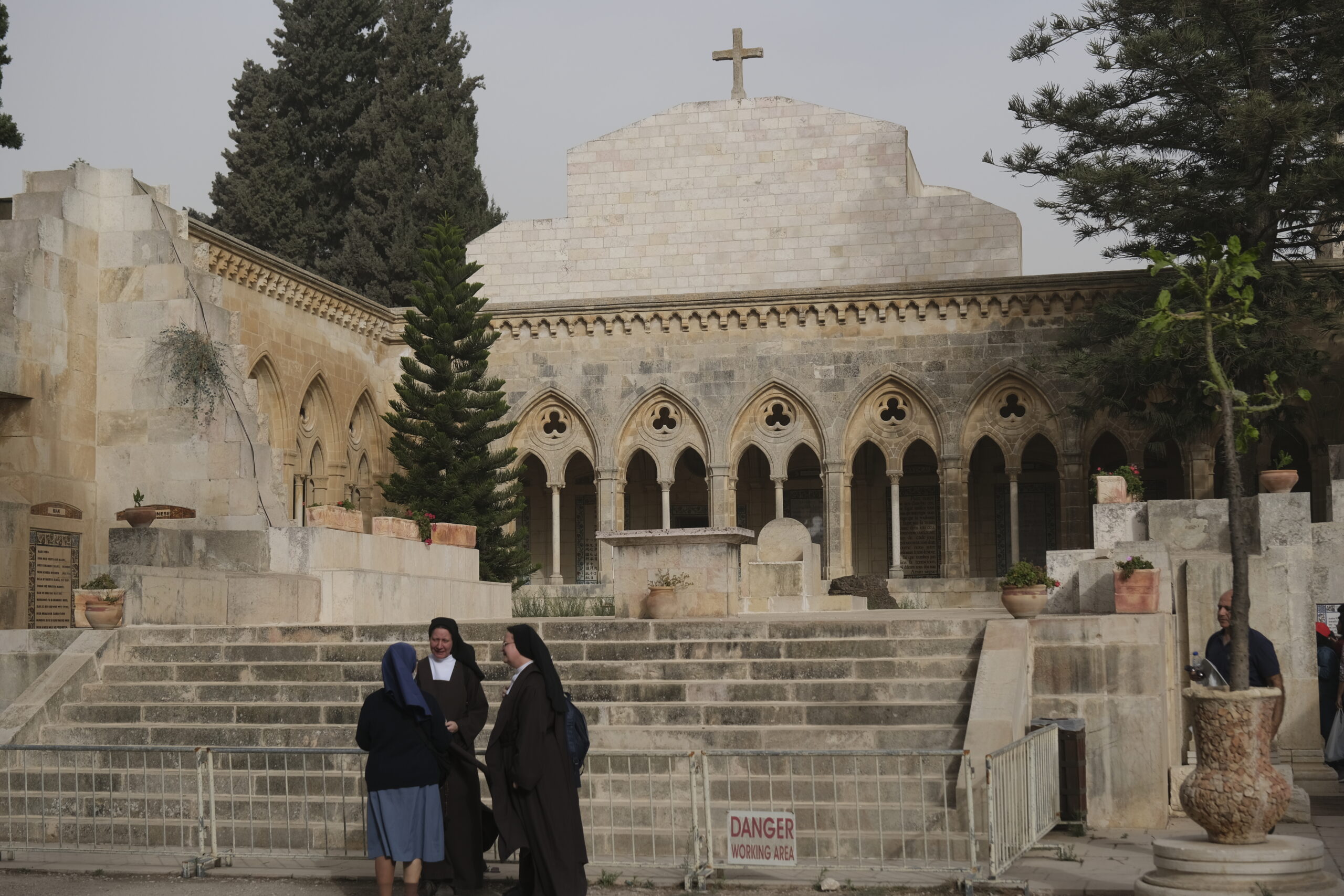
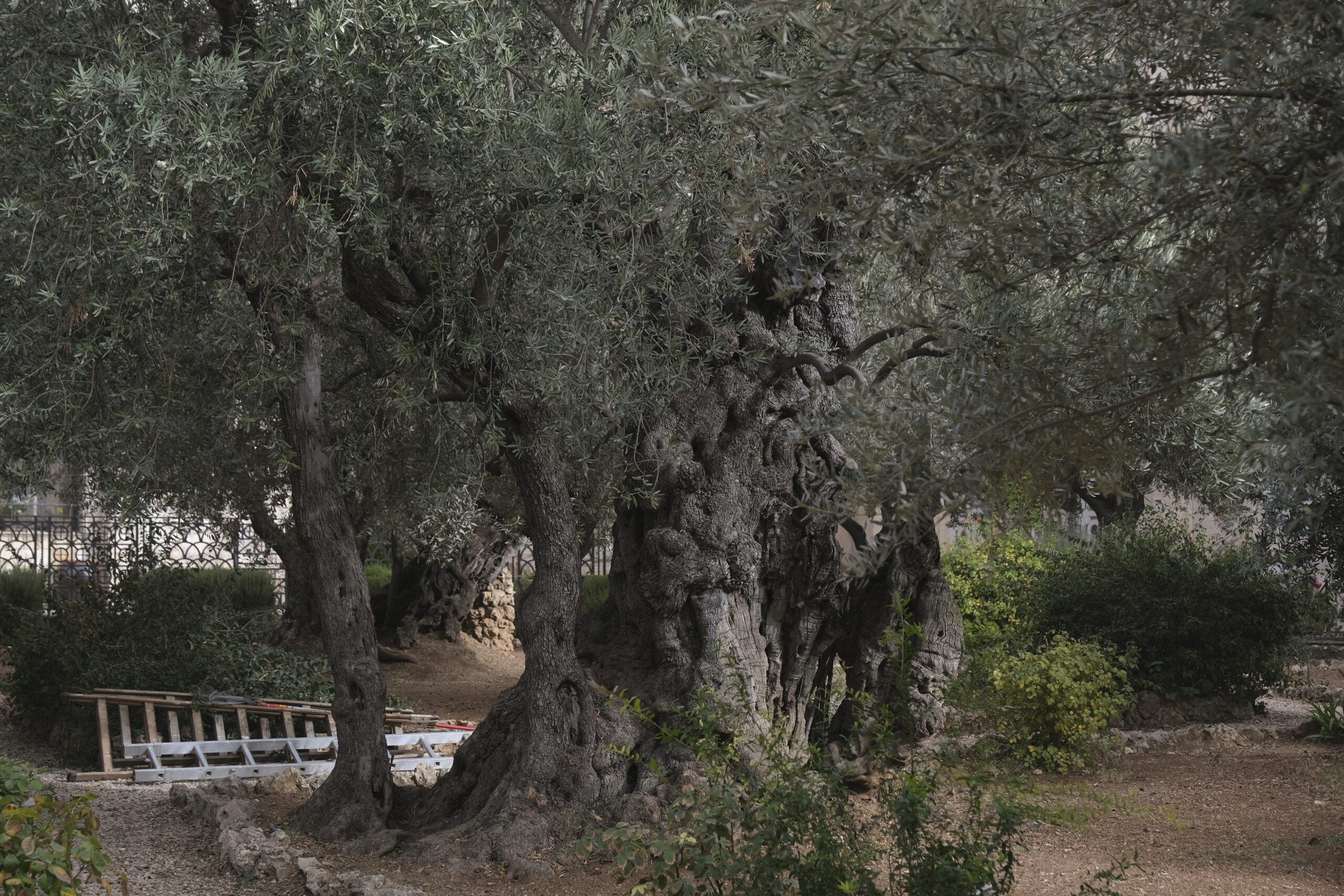
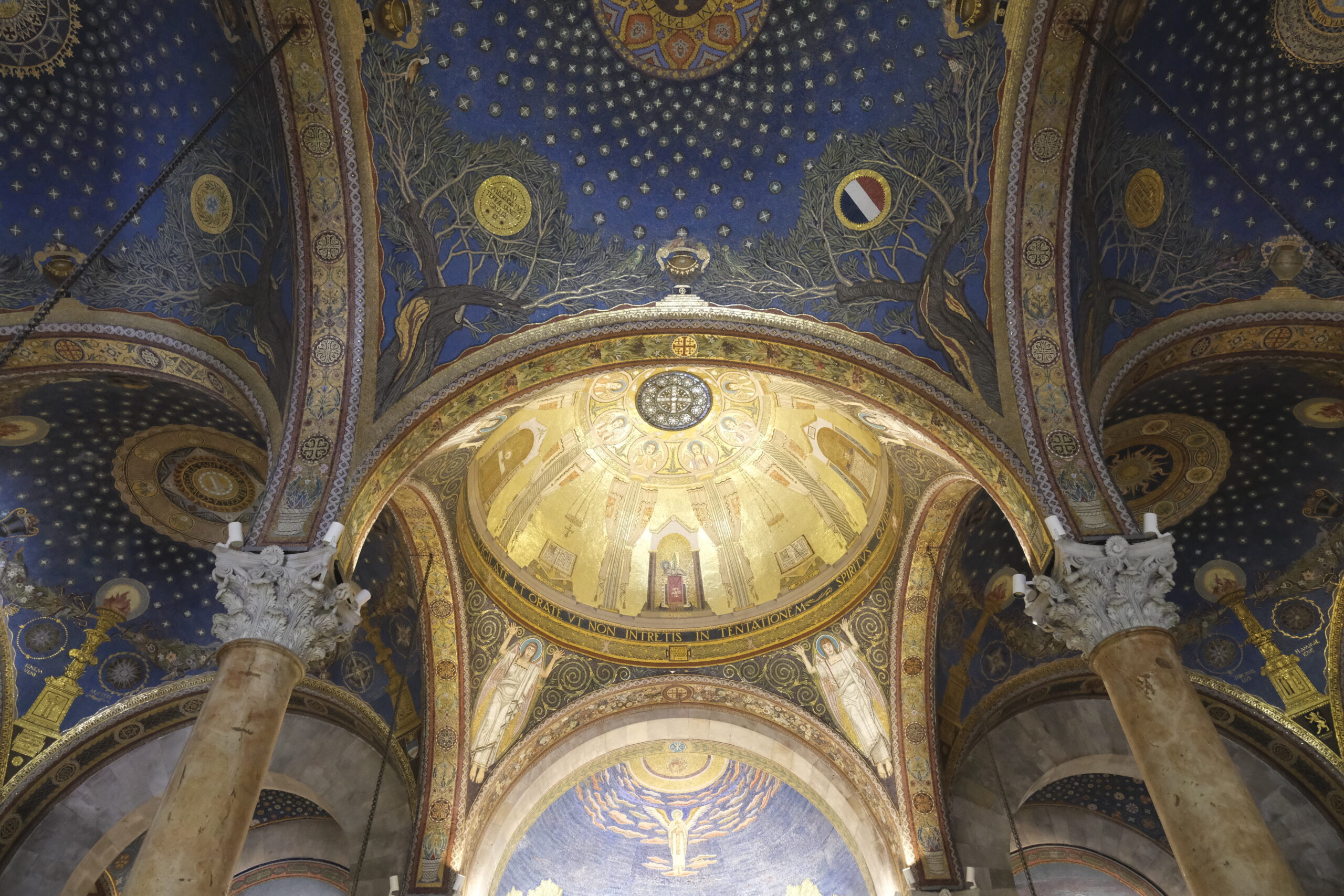
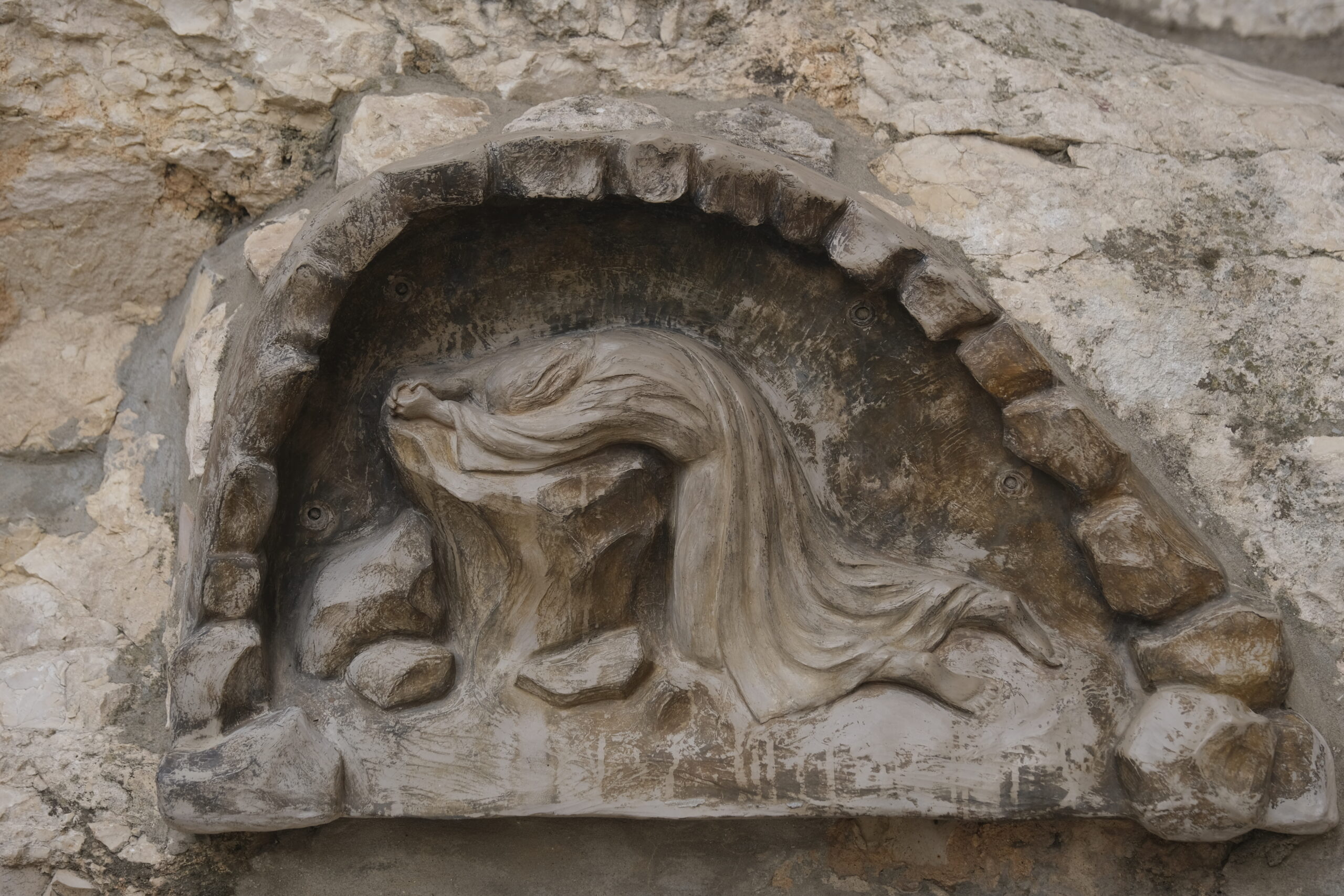
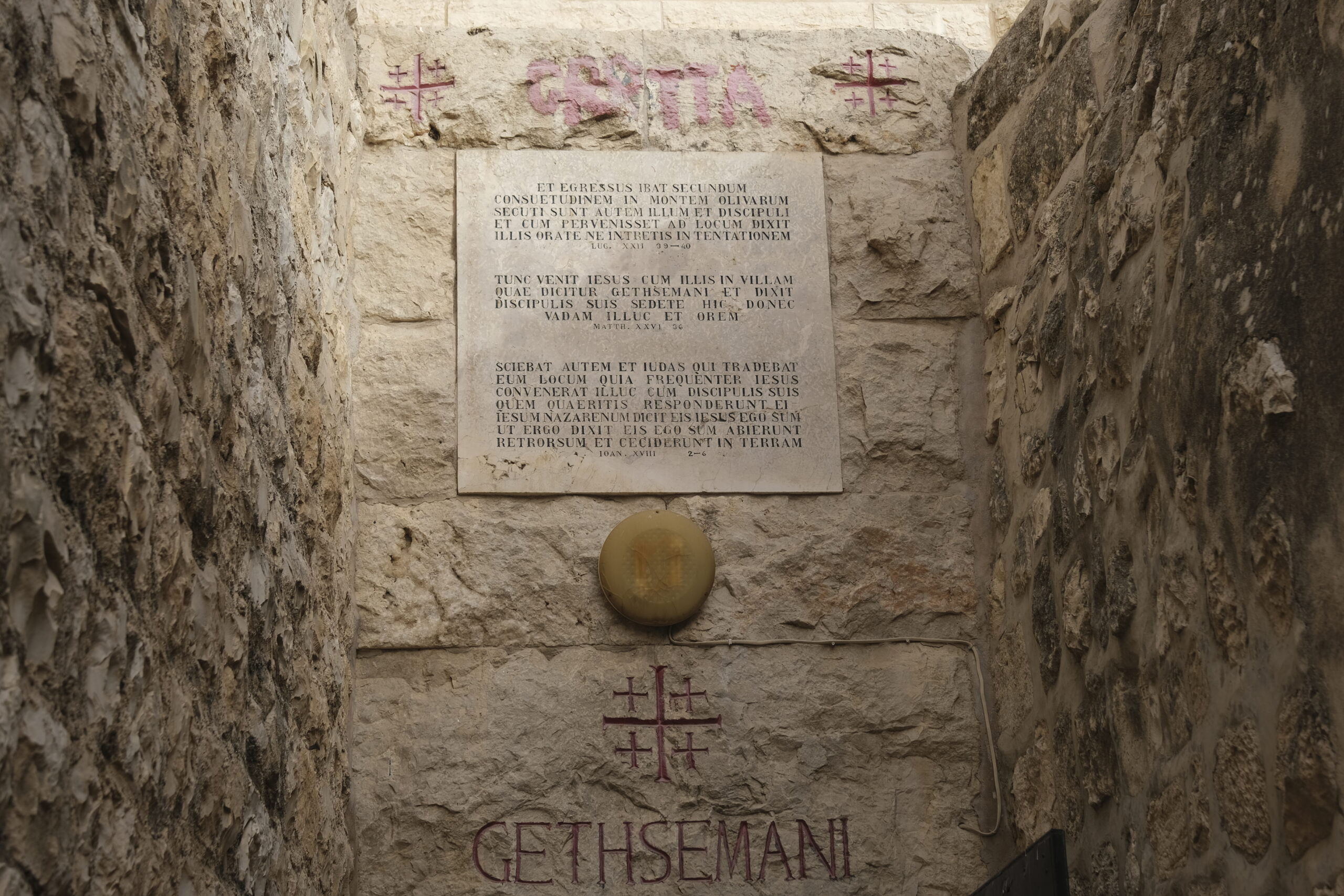
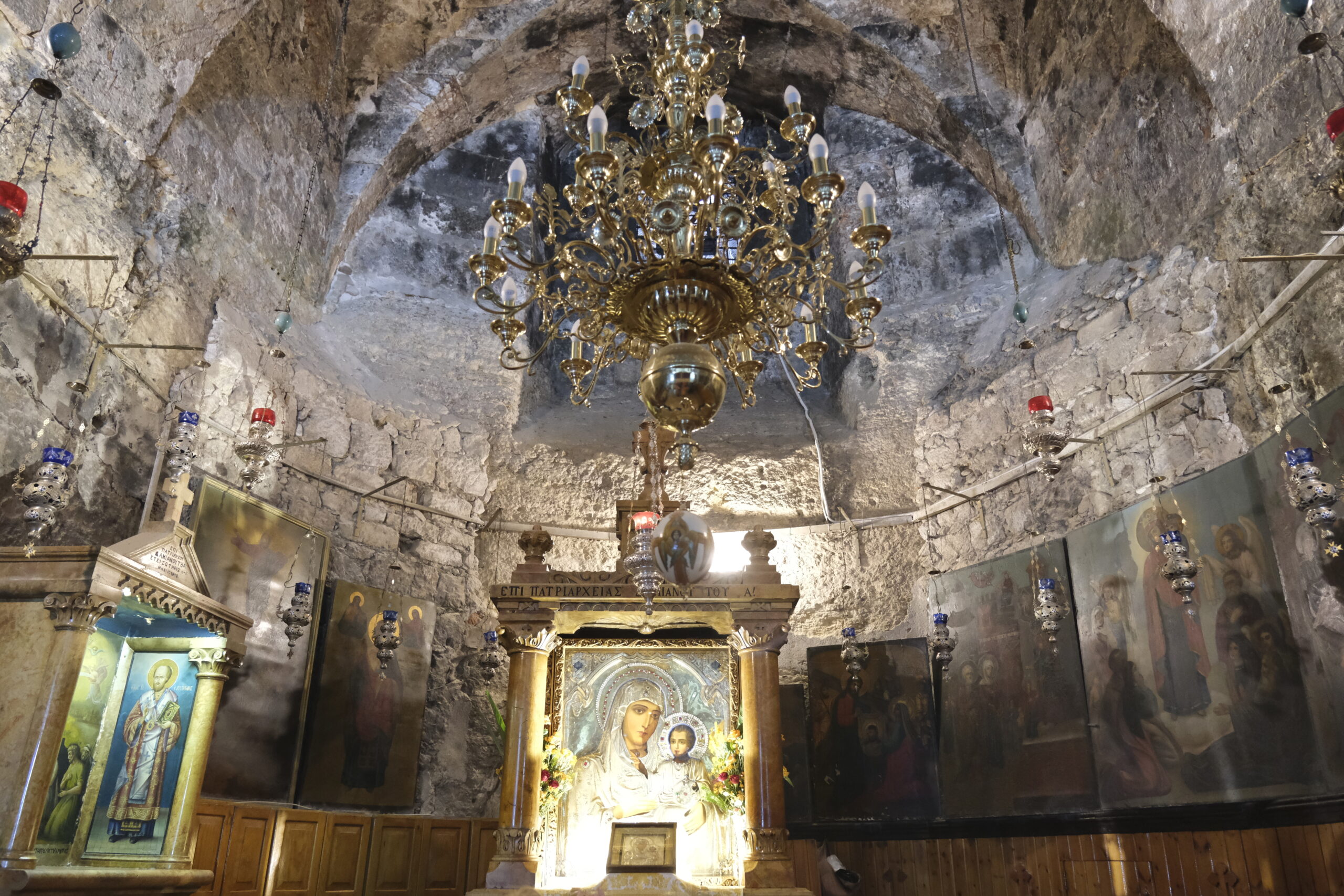
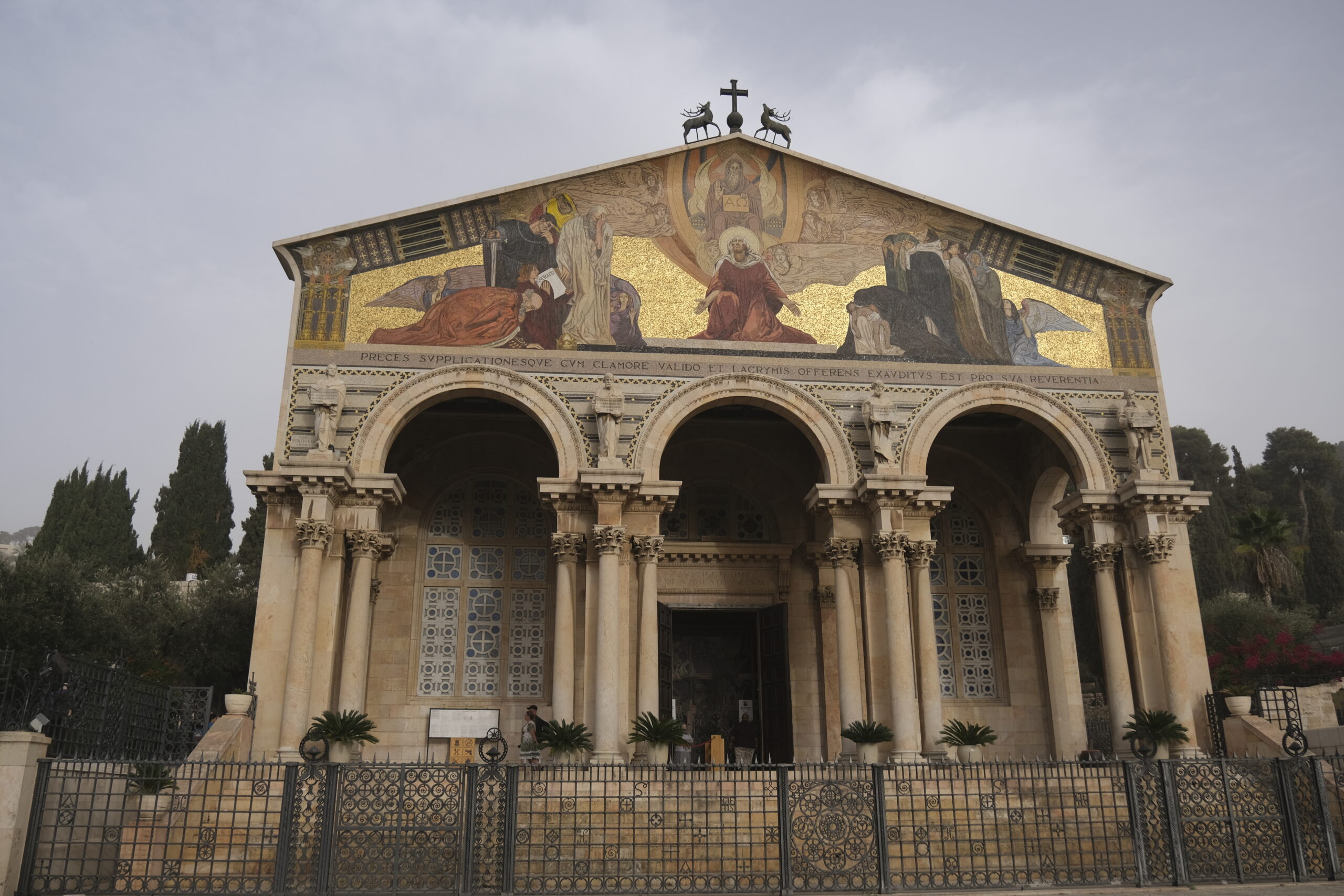
Our last visit was to the Machane Yehuda market, which is the Jewish market. It is enormous and full of interesting foods and spices. I was able to find Marzipan bakery and sample their rugalach.
Masada and on to Jordan – October 26, 2022
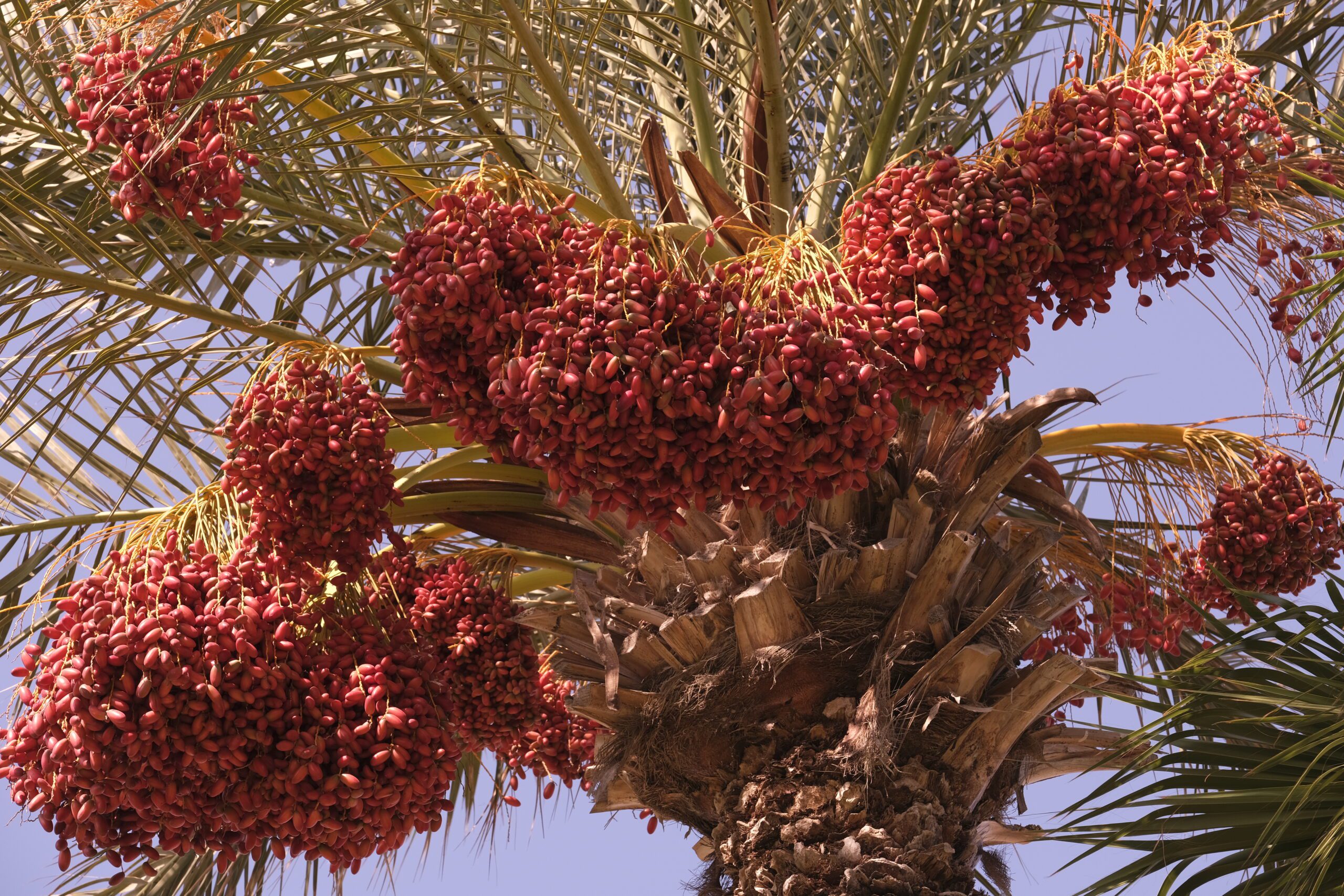
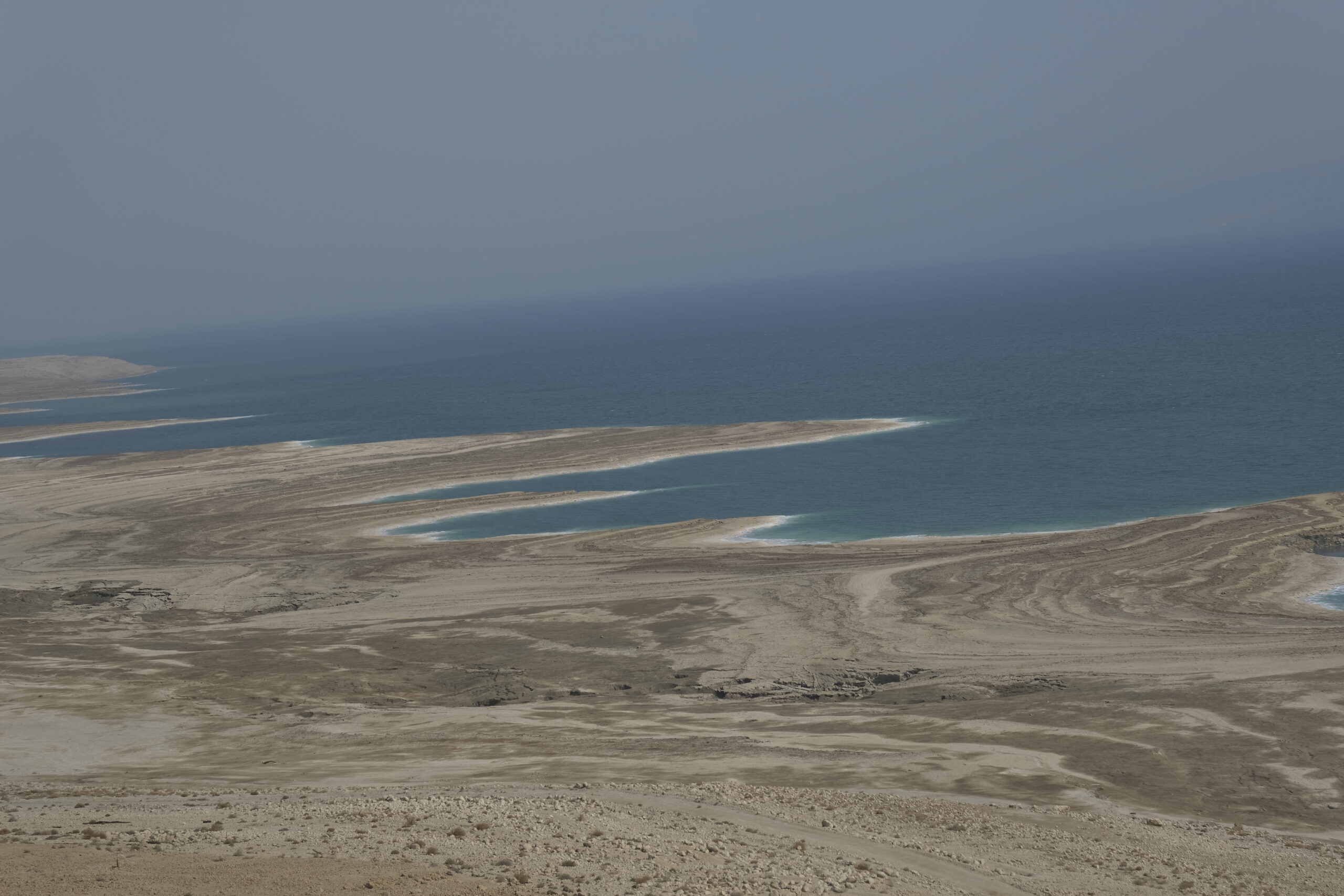
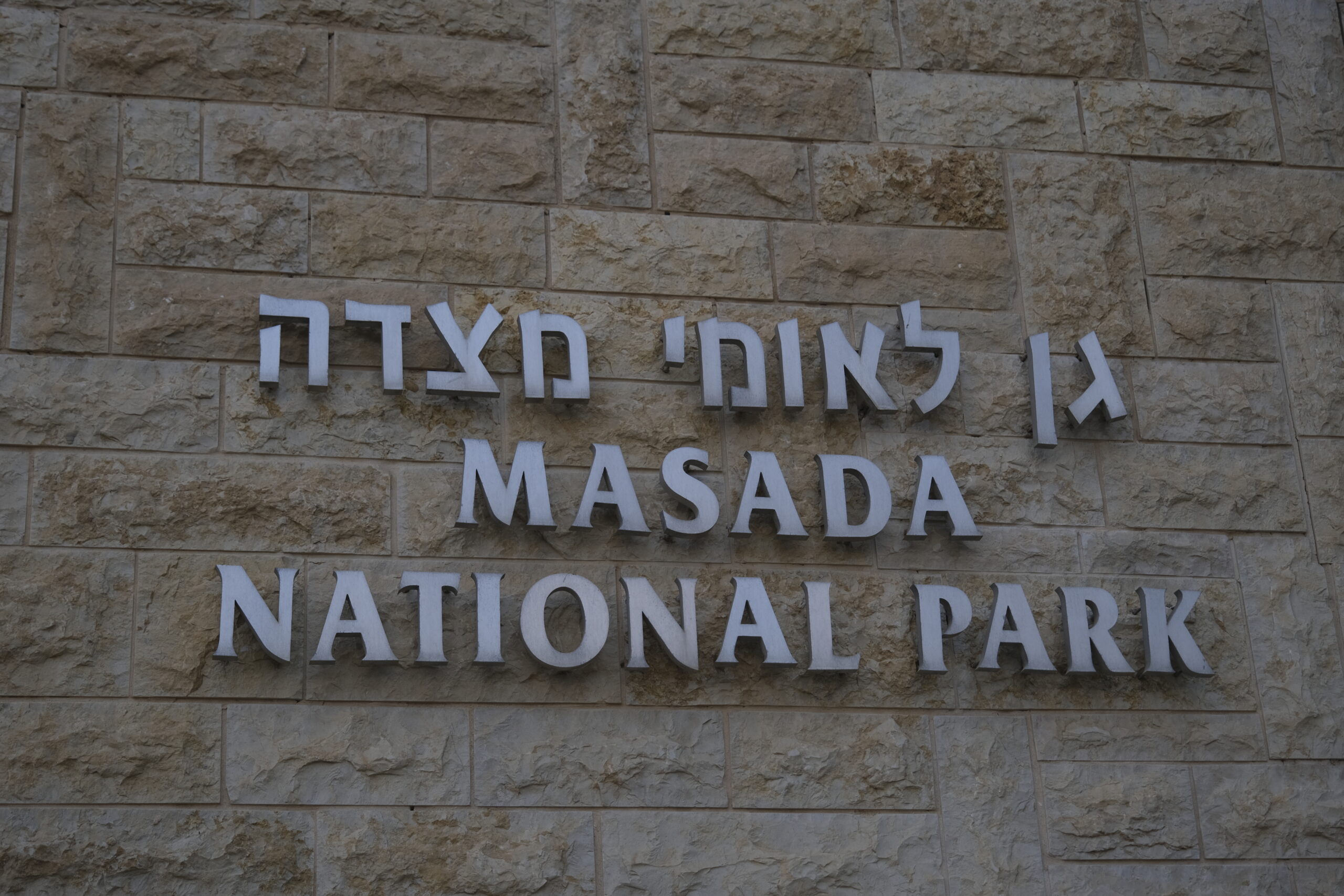
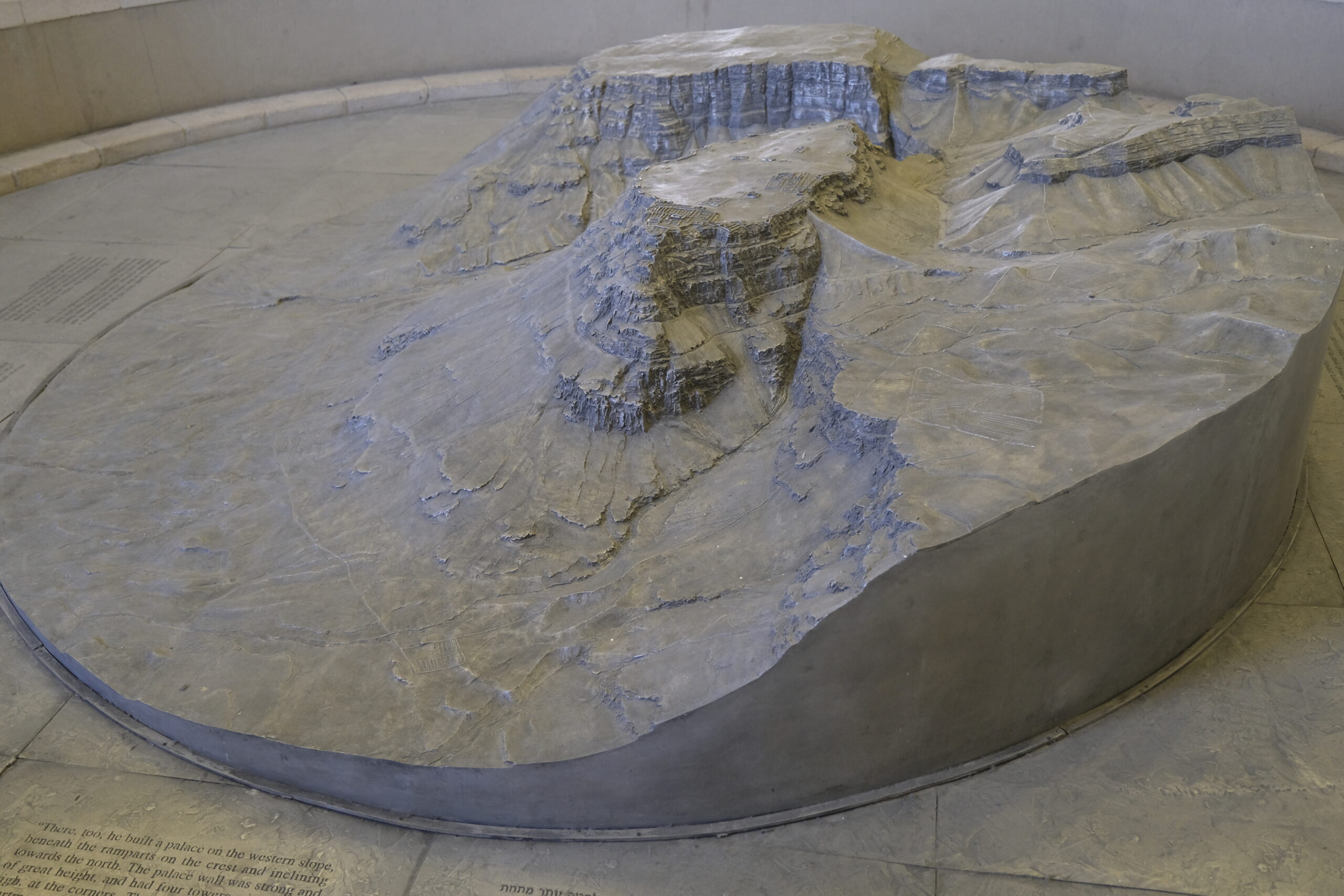
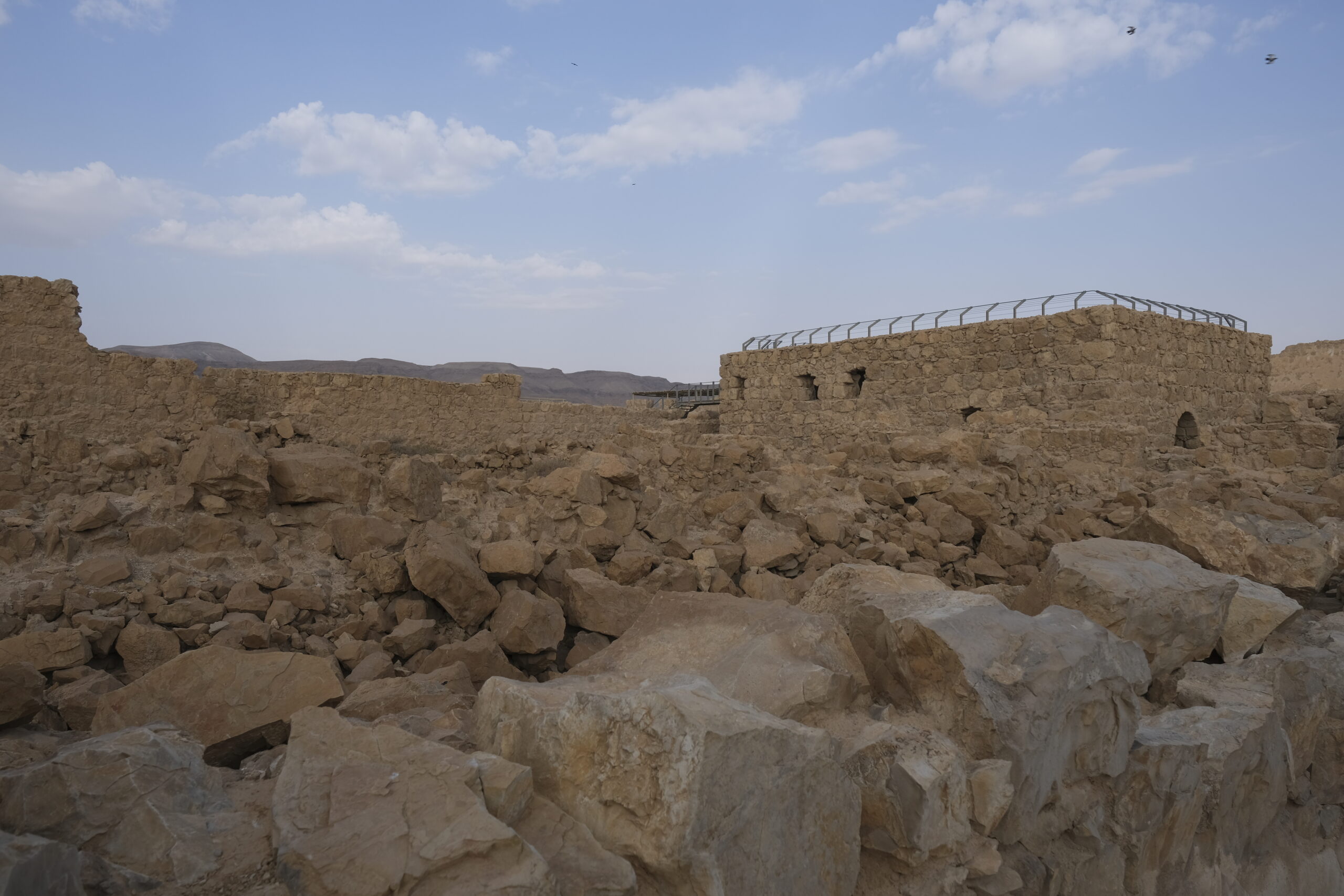
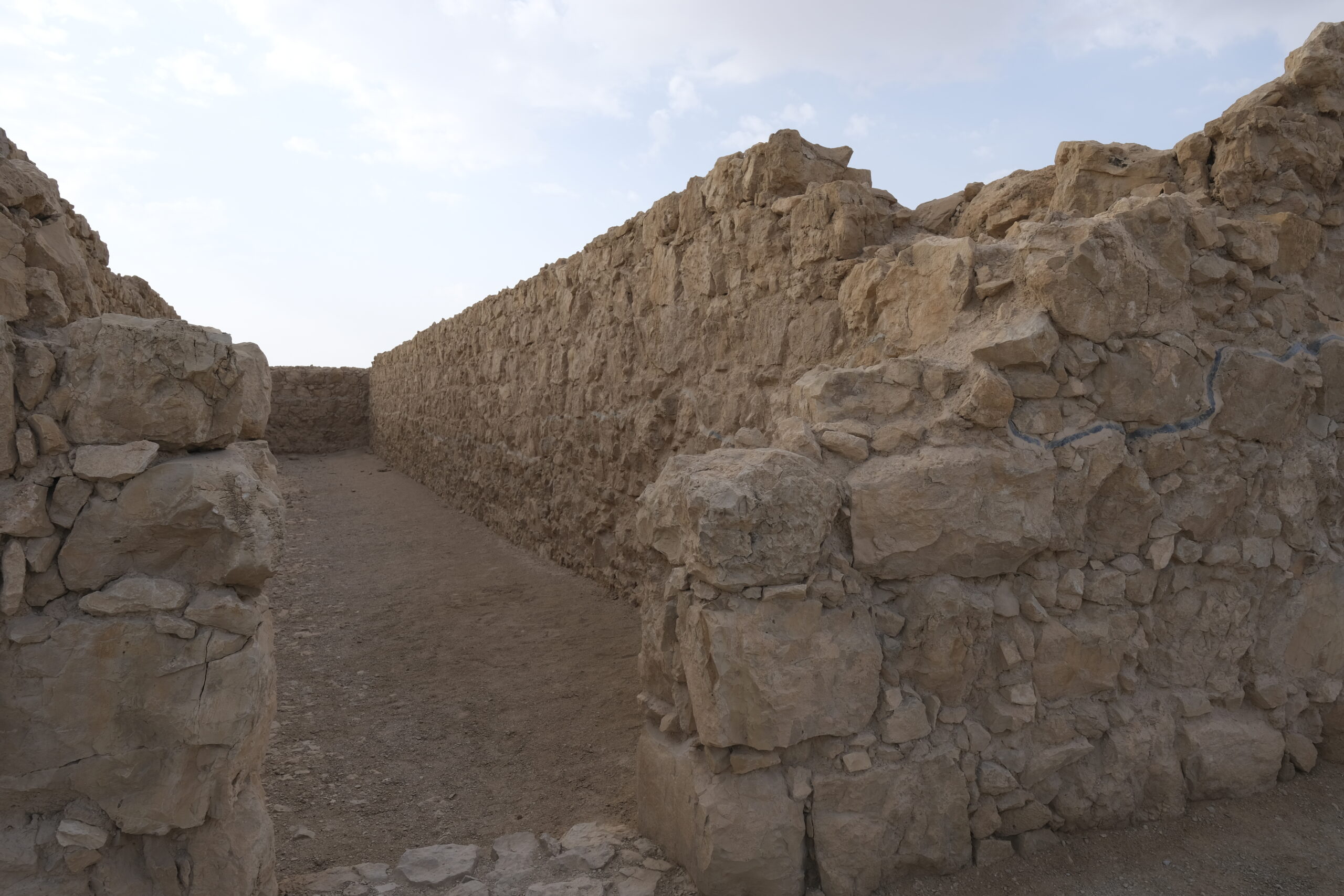
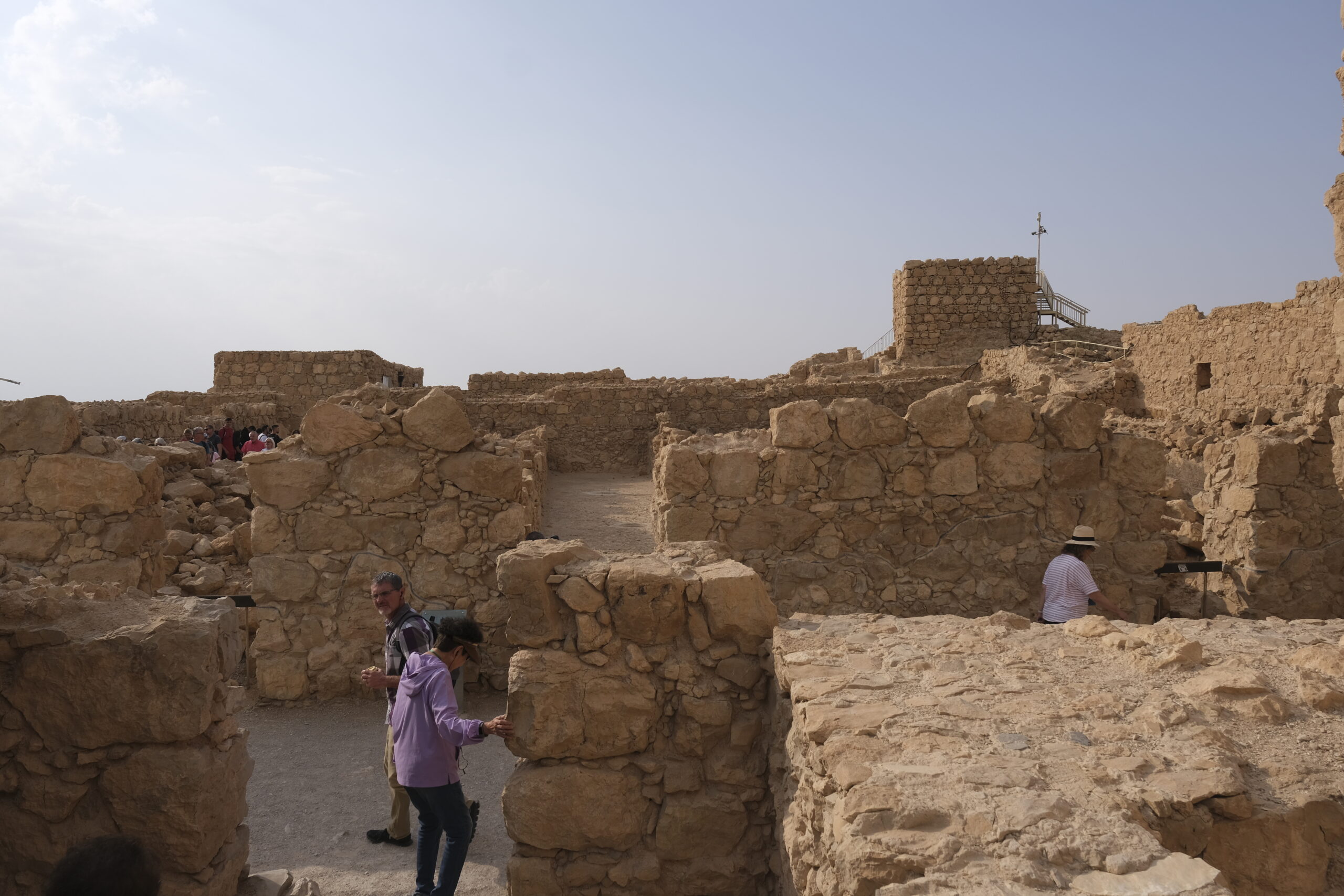
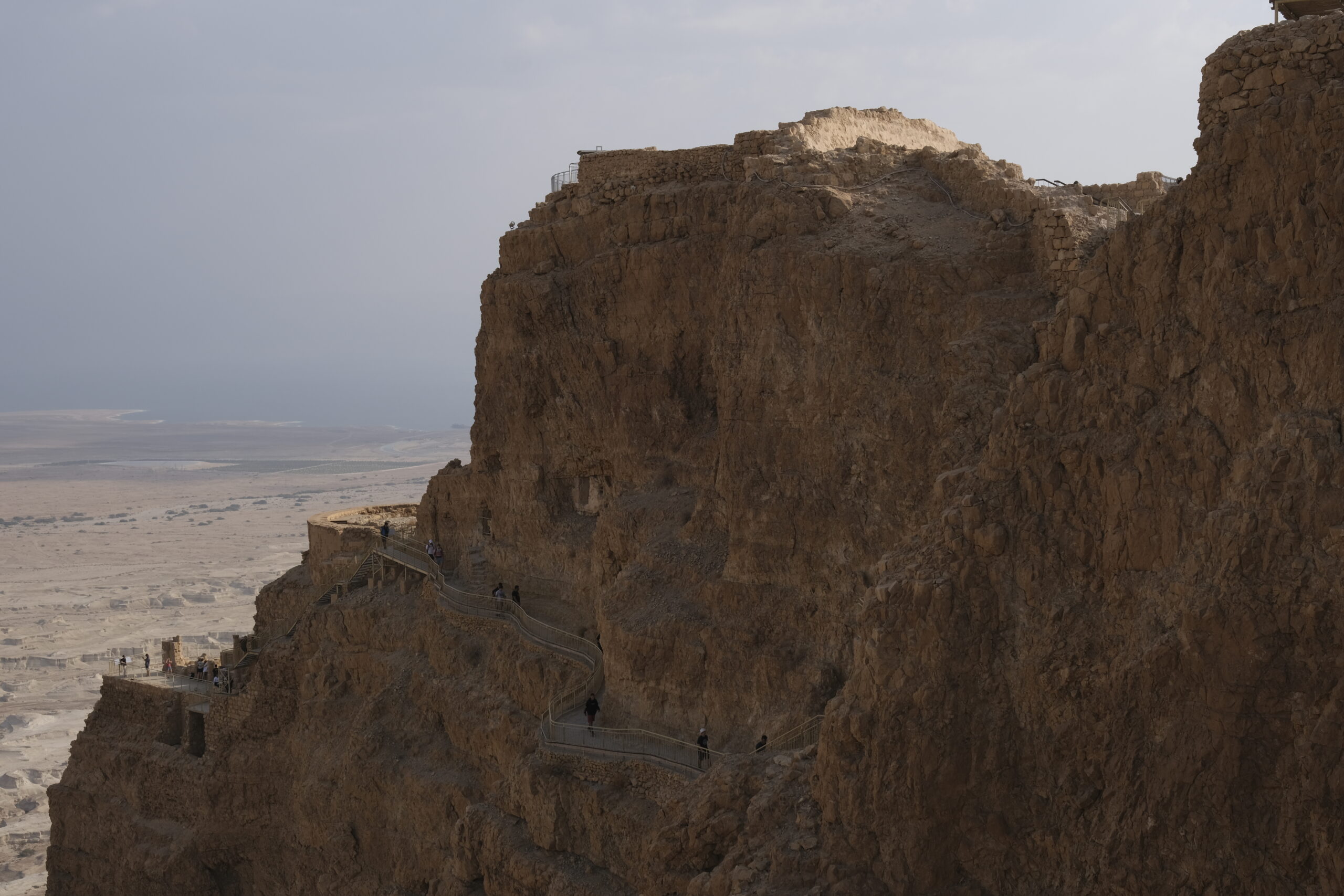
We checked out of the Waldorf and drove to Masada. On the way there, we had gorgeous views of the Dead Sea and date oases, including En Gedi where David and his men are said to have hidden from Saul. Masada was very crowded, and the cable cars were going up and down with people packed in like sardines. The fortification was built by Herod, who had a spectacular three-level palace here. Since Masada is in the middle of nowhere, a very ingenious method of collecting and storing water was devised. The area is prone to flash flooding, so the water was drained into cisterns.
We entered the fortifications through the Snake Path Gate, then visited the quarry, the commandant’s residence, the storerooms, the Water Gate, the synagogue, the bath house, the room with the ‘lots’, and an observation point. I expected Masada to be emotionally taxing given that the people who defended the fortifications against the Romans for six whole weeks chose to kill their families and then the ten who drew lots killed whoever was remaining and themselves rather than become Roman slaves. This became an exercise in avoiding large groups of tourists who wanted to be in the same confined spaces all at the same time.

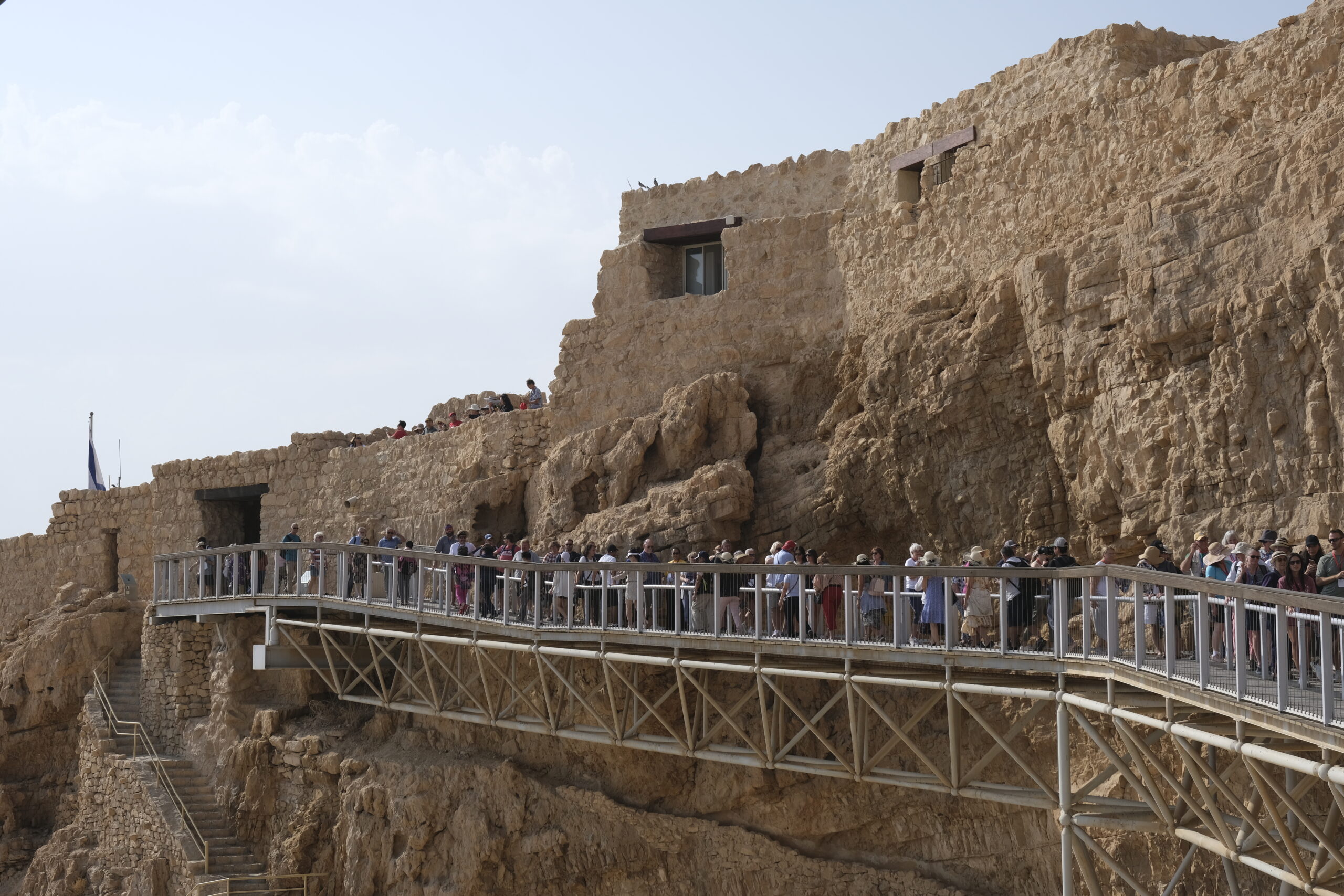
From Masada we drove through security checkpoints, first to get a pink exit pass from the Israeli side and then to go through passport control on the Jordanian side and cross the former Allenby Bridge (now called King Hussein Bridge).
We checked into the Mövenpick Resort & Spa Dead Sea this afternoon. Christabel was too tired to attend a cooking demonstration or to go down to dip her toes in the Dead Sea, which is 450 meters below sea level and drying up at a rate of 1 meter a year, thanks to no water coming in from the Jordan River and people using the water for various purposes such as the making of cosmetics.
Jerash Revisited – October 27, 2022
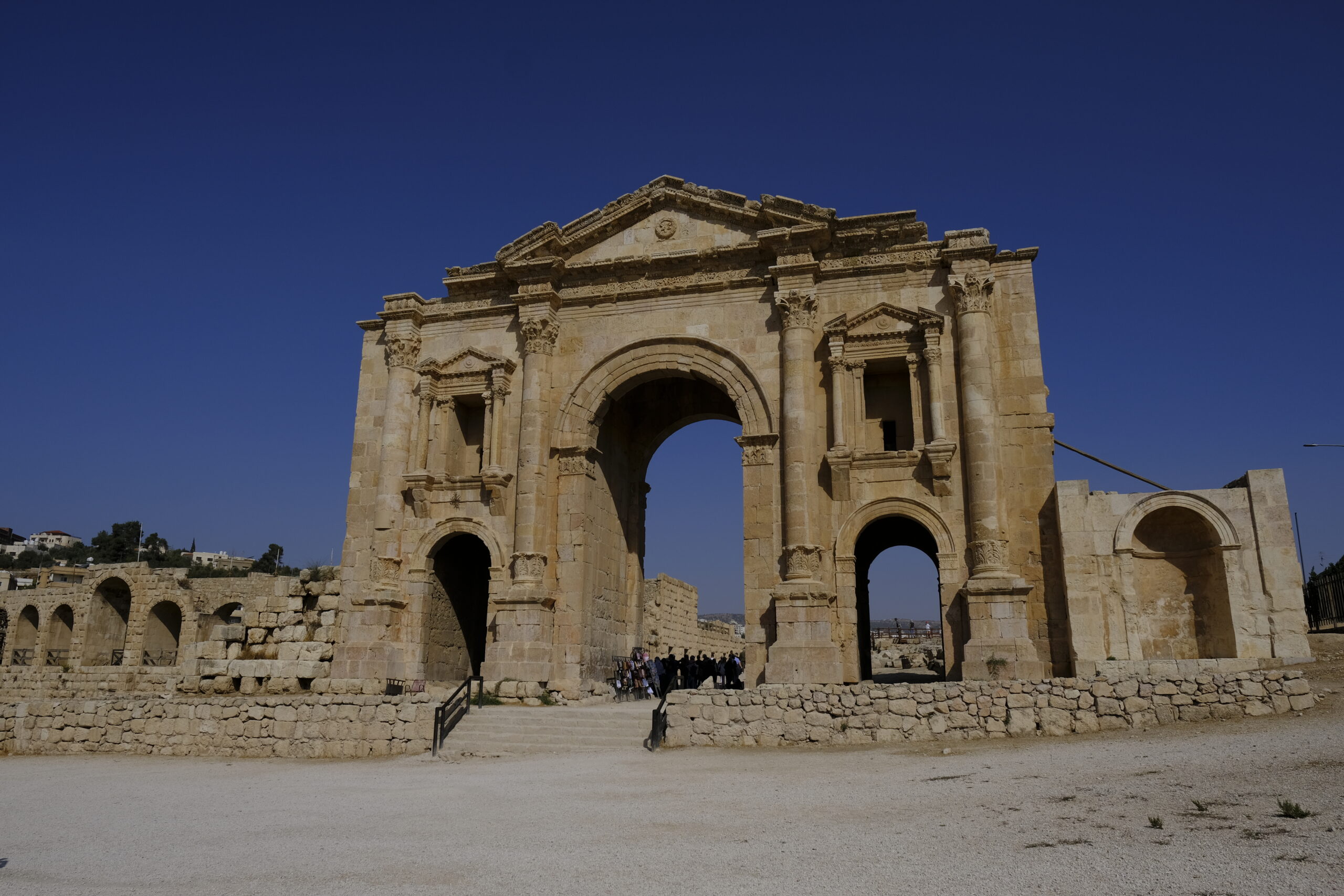
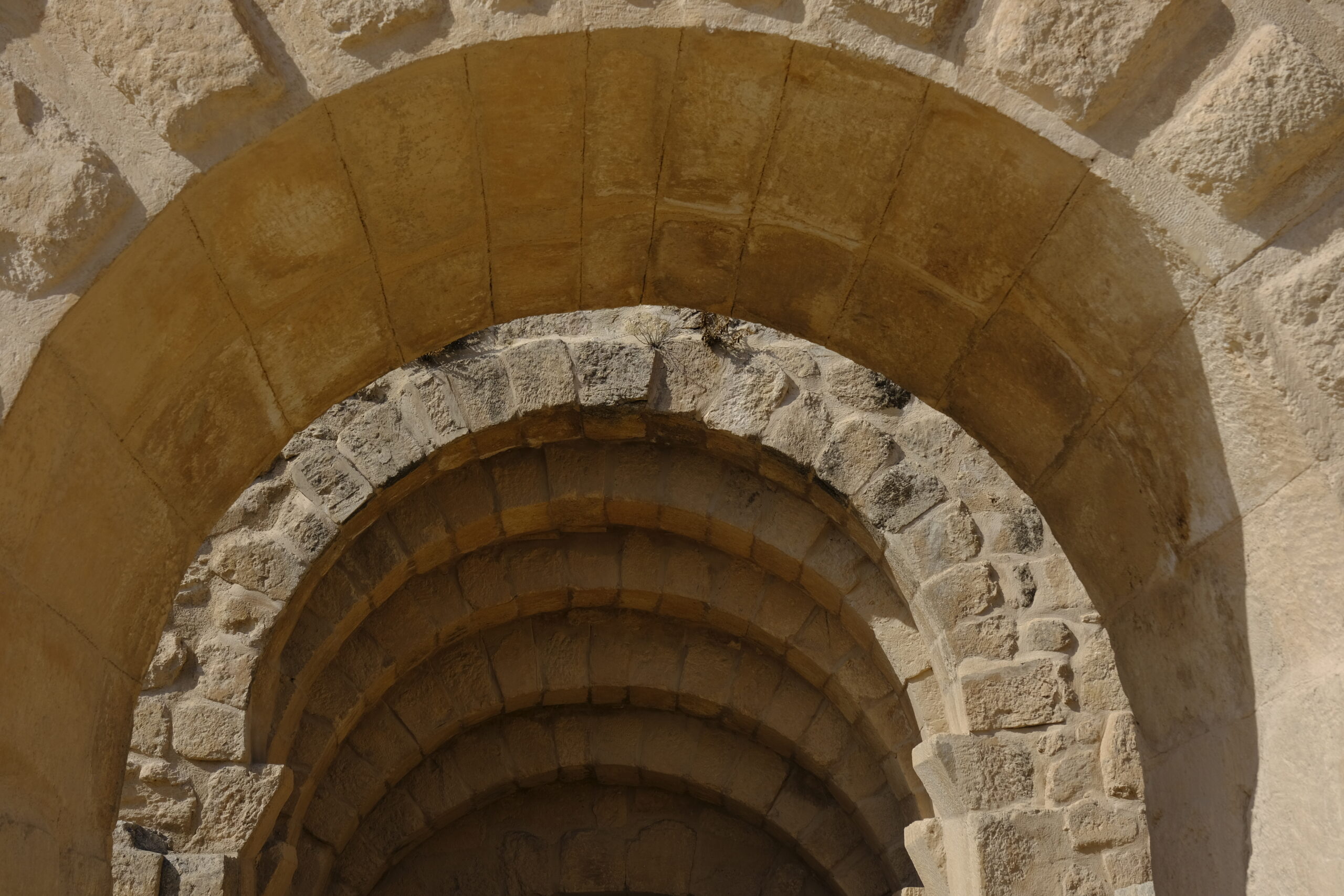
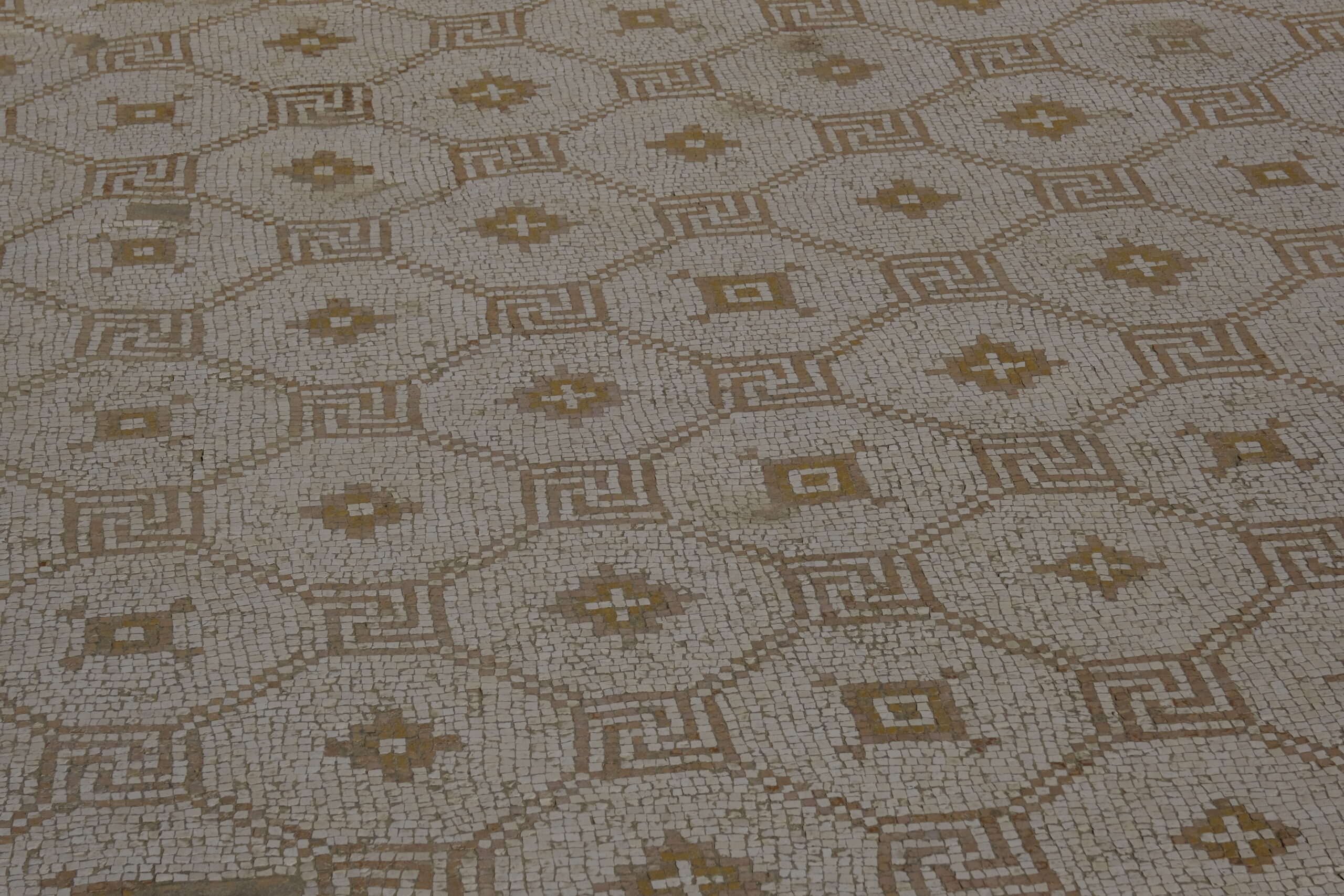
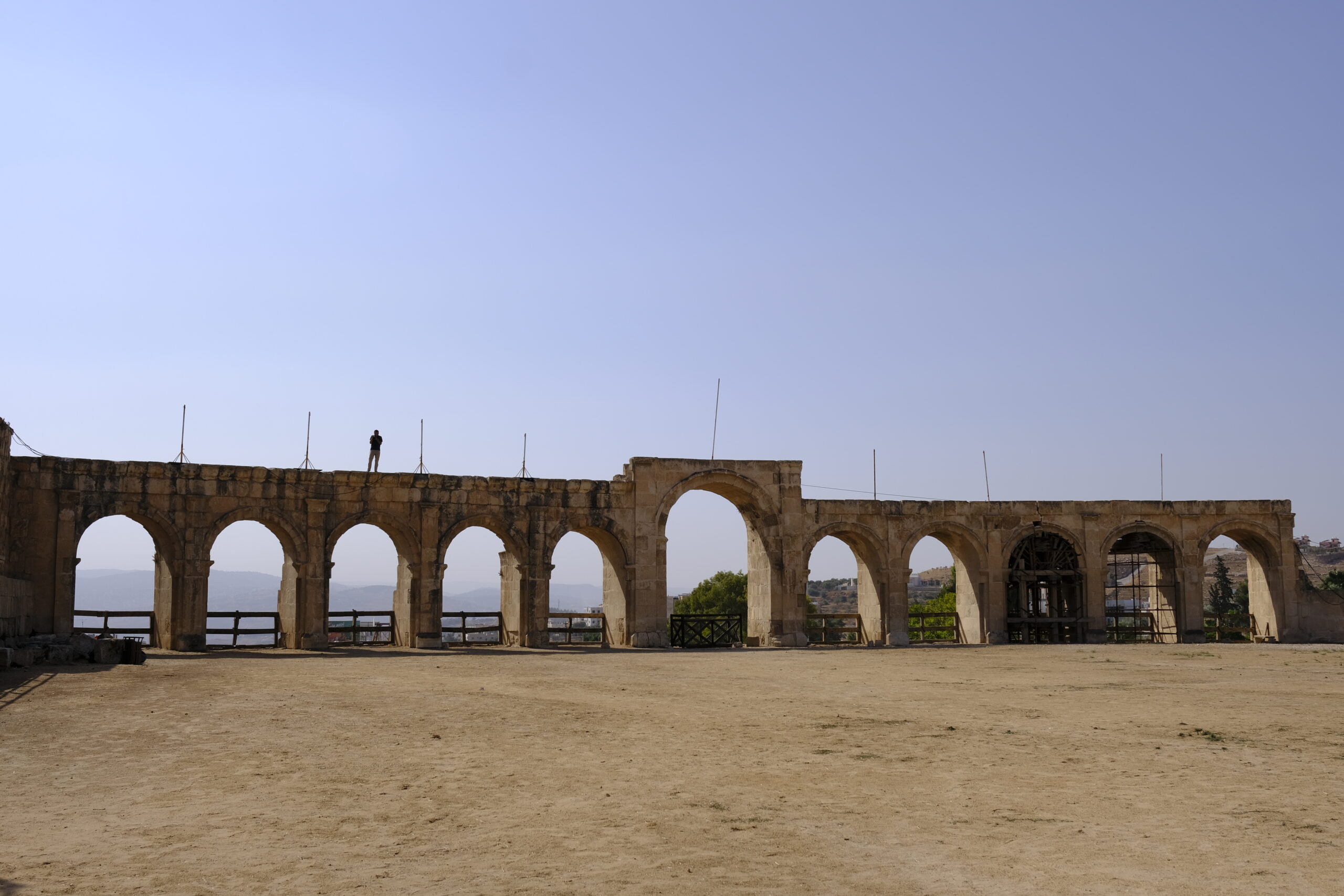
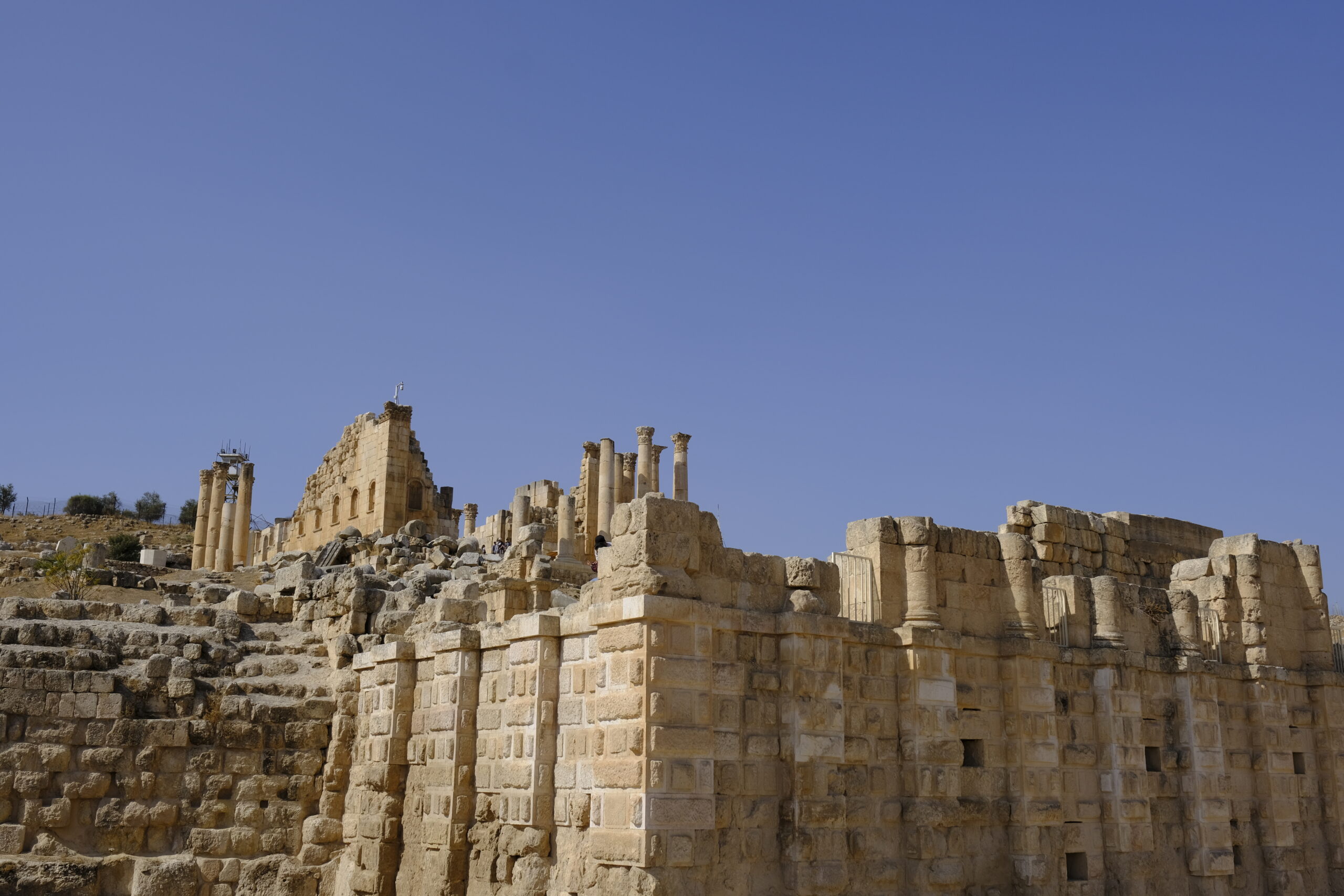
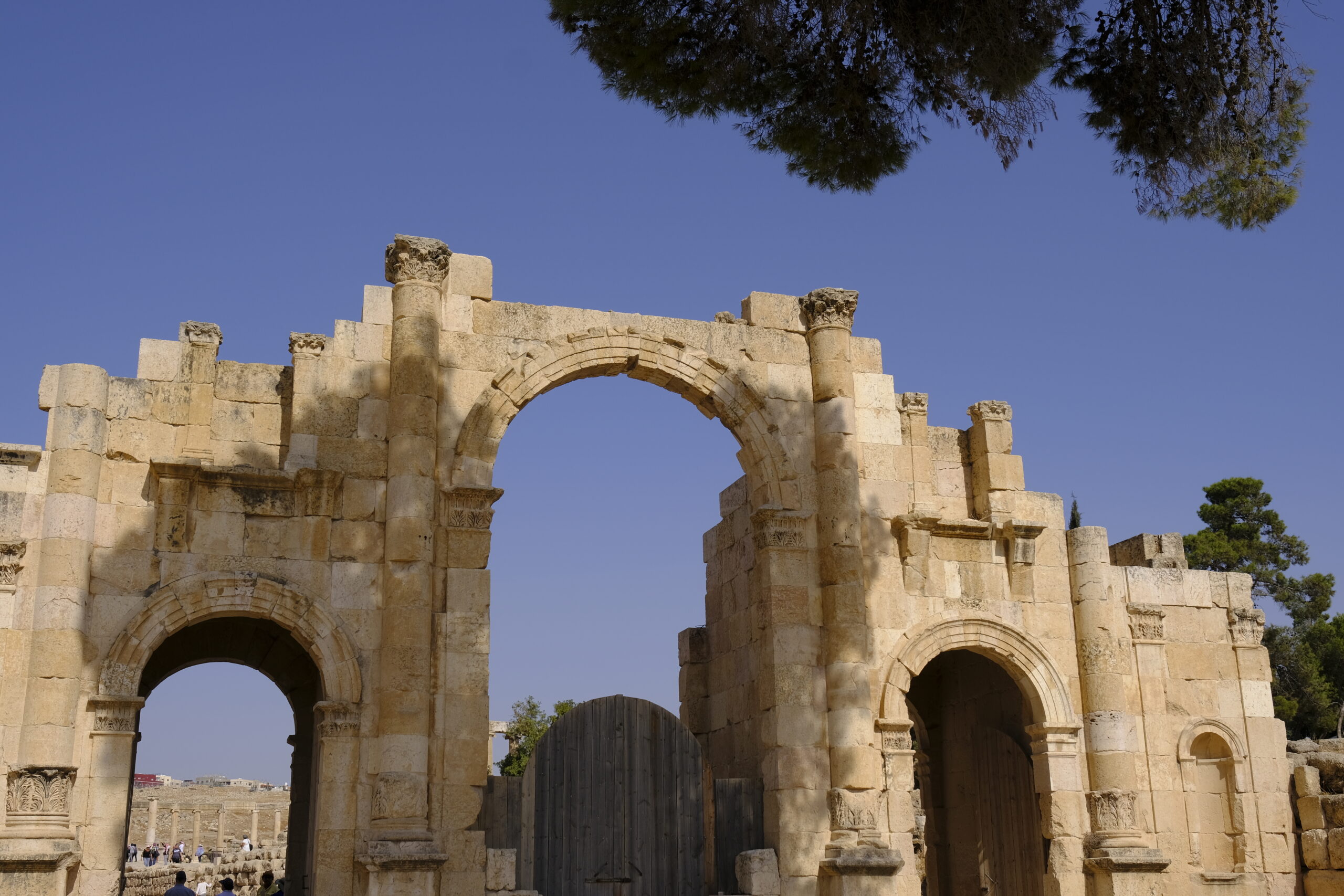
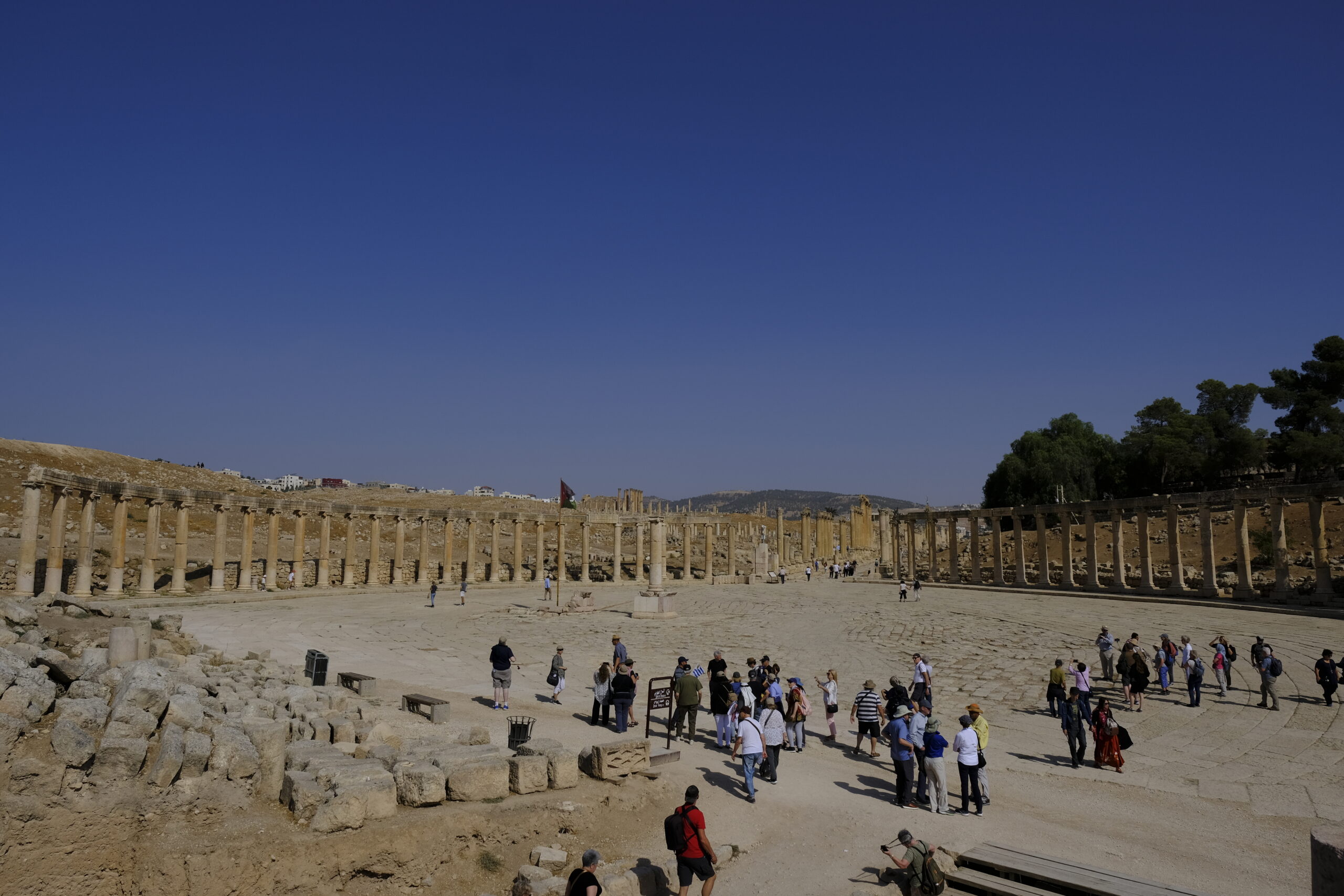
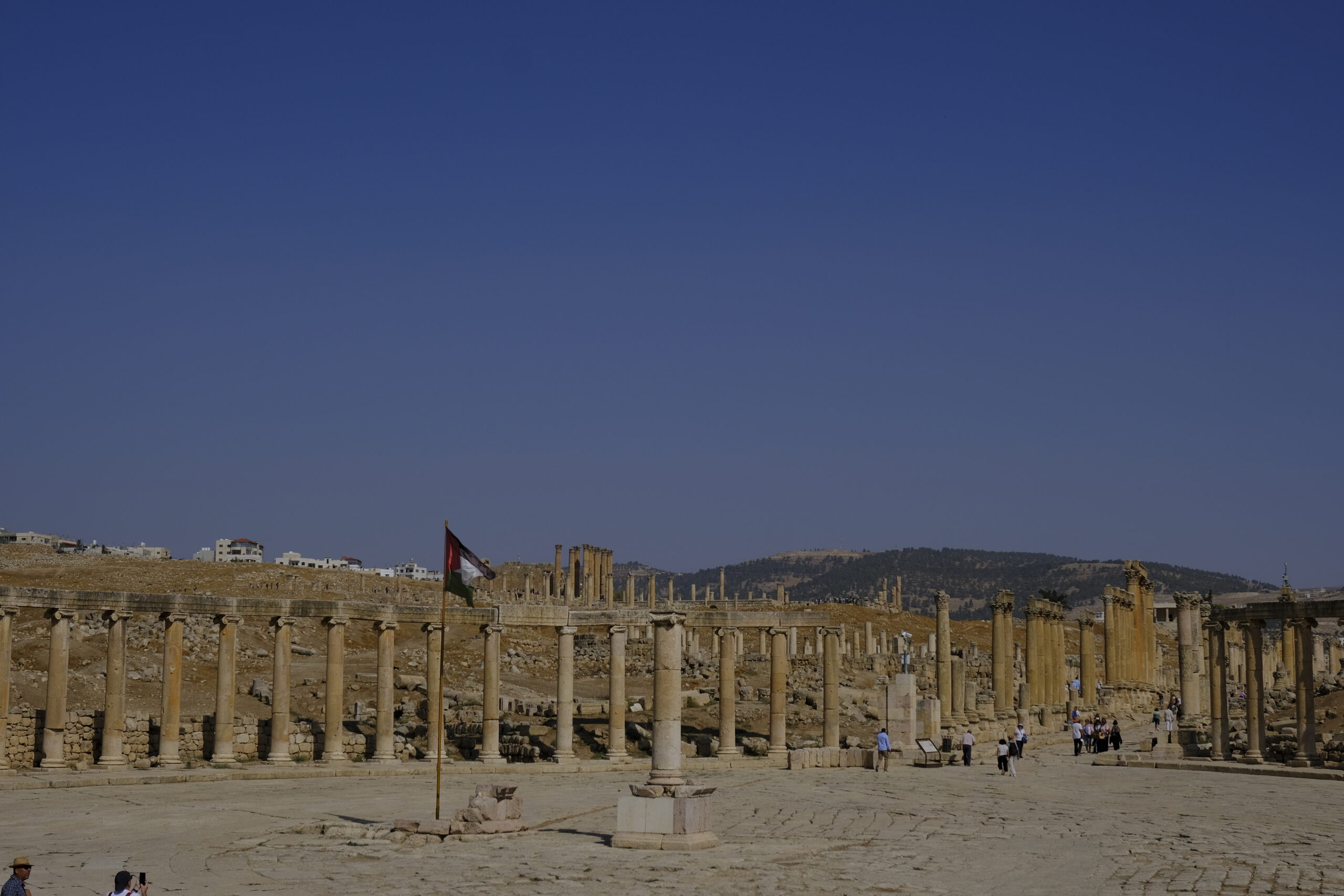
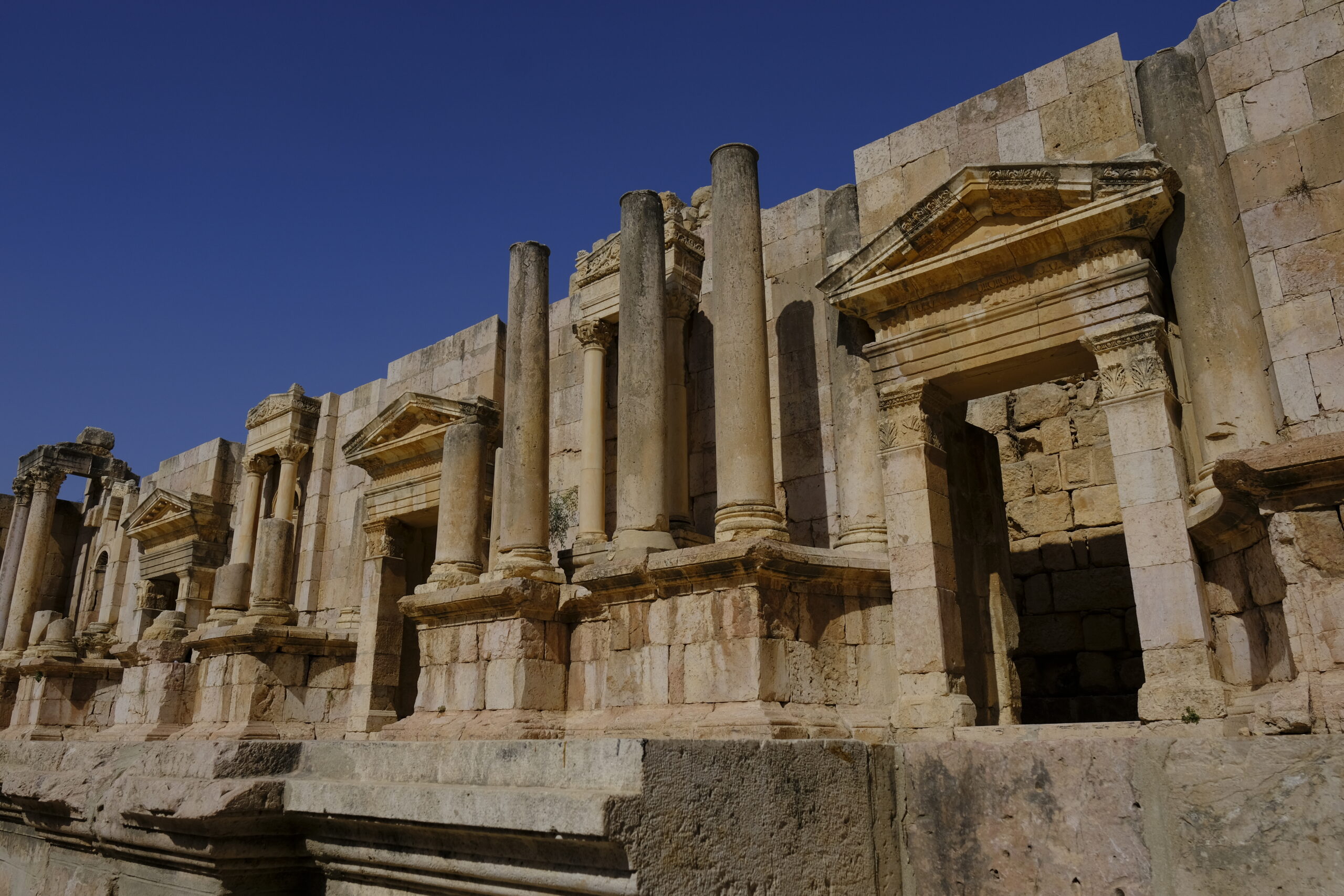
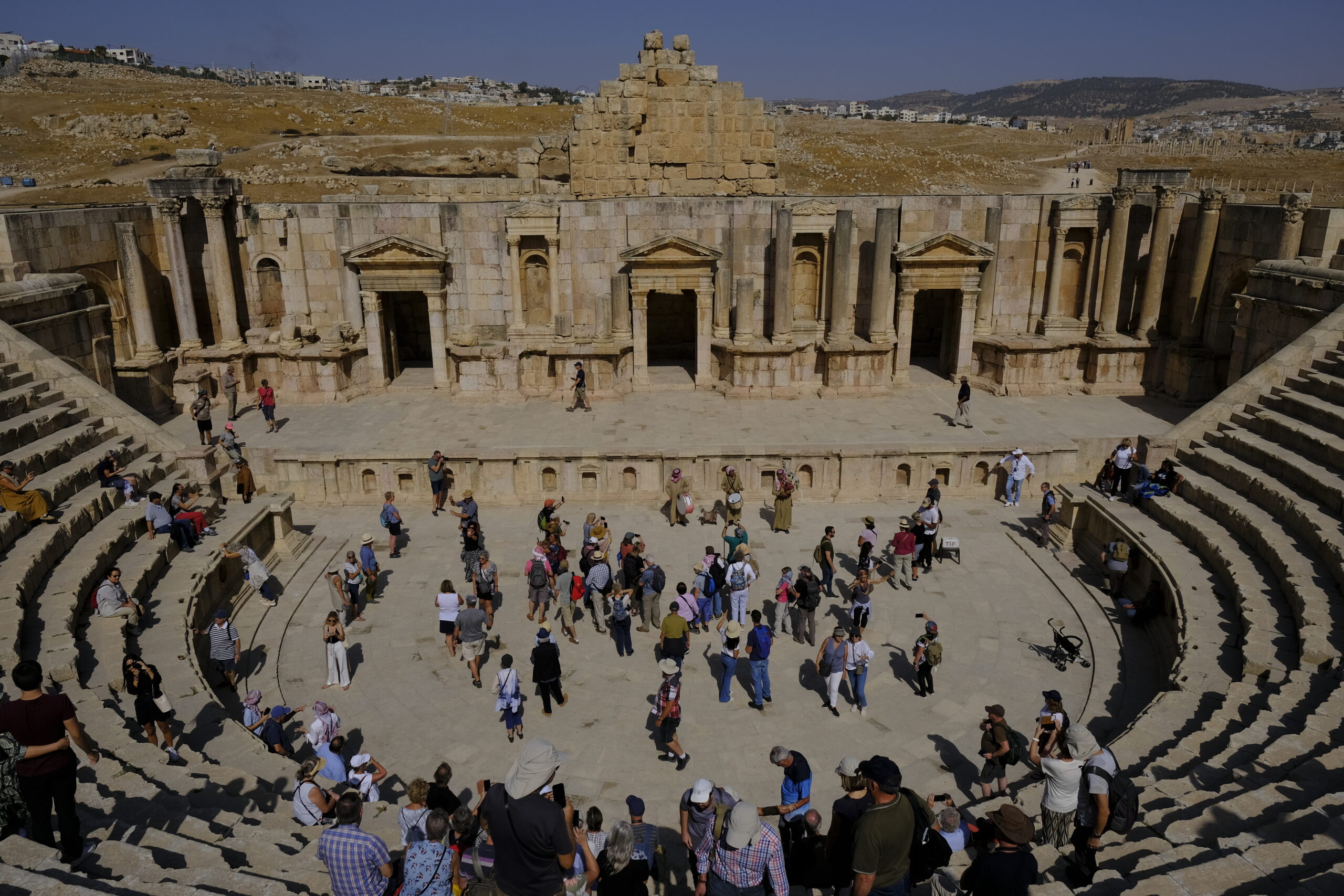
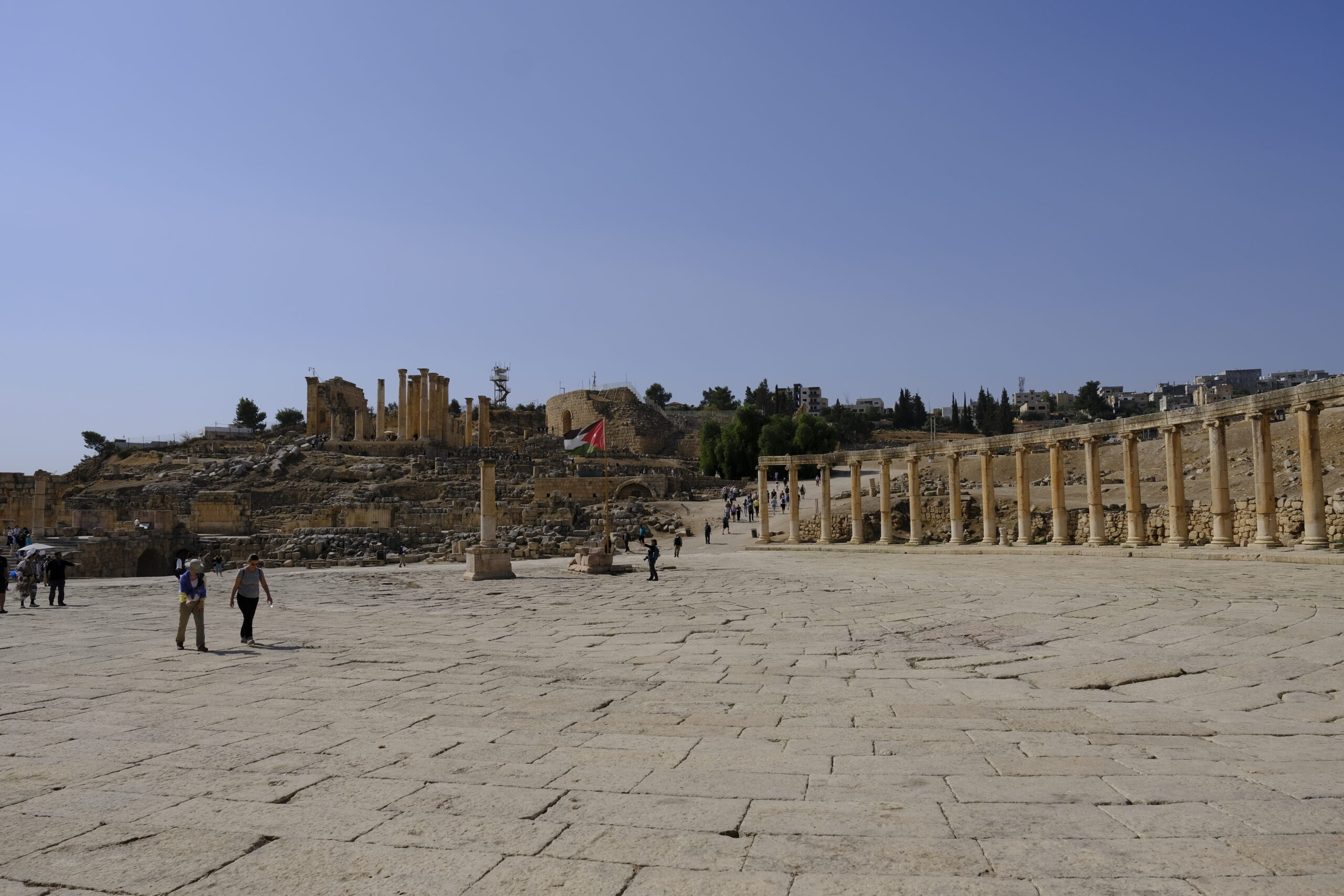
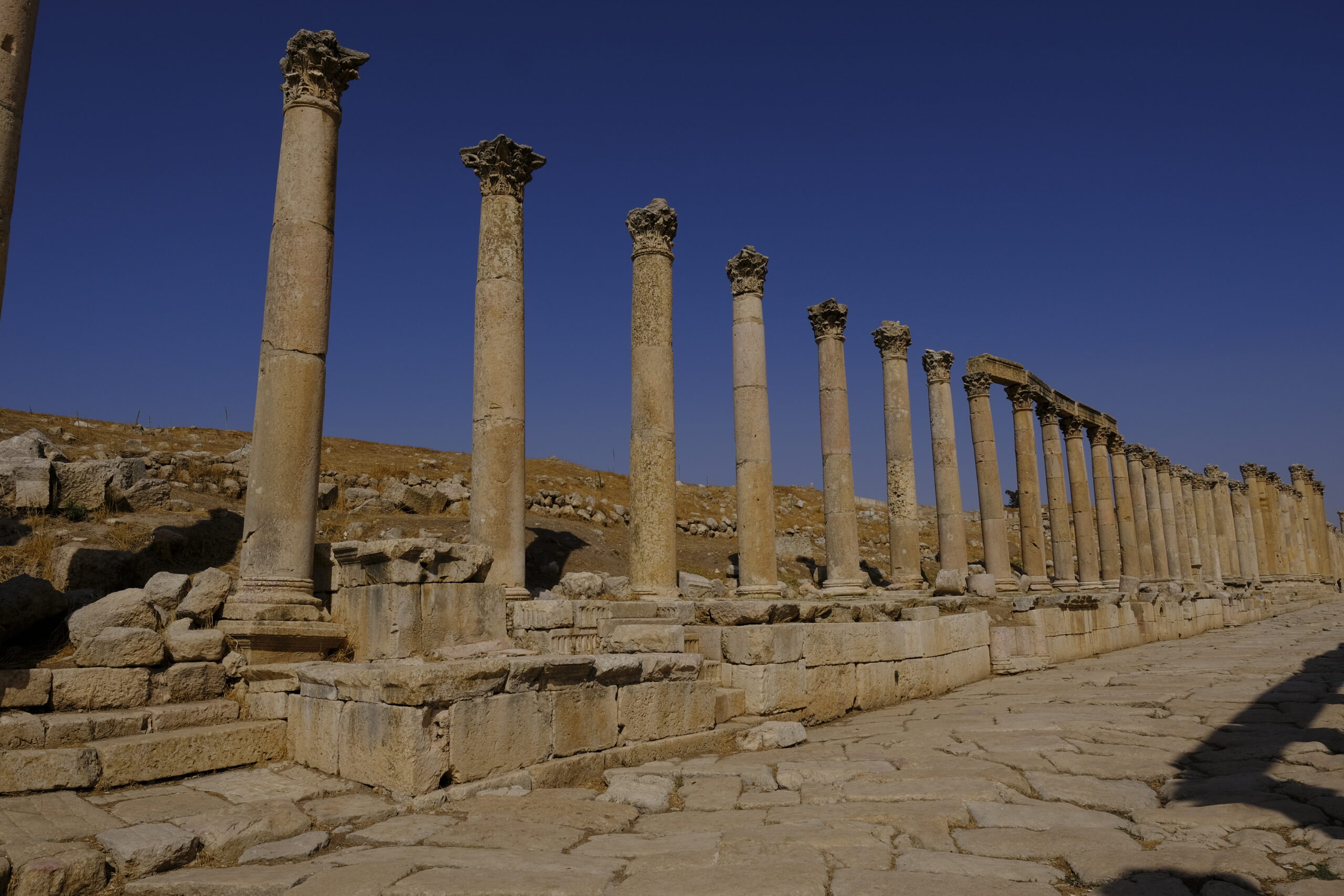
This morning we drove about an hour and a half to see the Roman ruins at Jerash. The last time we were here was in 2008. There was very little development around the ruins at that time. Now it is surrounded by houses and businesses. The ruins are being managed by the Tourism Ministry. The ruins are still every bit as impressive as we remembered them, with Hadrian’s Gate, the Hippodrome, the Cardo, the theatre, the cathedral, the temple of Zeus, etc. Sadly, this site has not been granted World Heritage status by UNESCO as there is too much that needs to be restored and only 30 percent has actually been excavated.
In the evening, we had a presentation by Lara Ayoub who is a digital news expert, has set up many newsrooms, and currently sits on the boards of many NGOs. She gave us many insights into the plight of women in Jordan. Oh, we in the U.S. have it so good!
Mount Nebo & Madaba’s Sacred Treasures – October 28, 2022
This morning we went down to the Dead Sea to dip the toes of one foot into the extremely briny water. The water was warm but getting into the water bare footed was rough as the beach is rather pebbly just at the water’s edge. One can see small salt crystals in the water. We found two that seem about right for our collection.
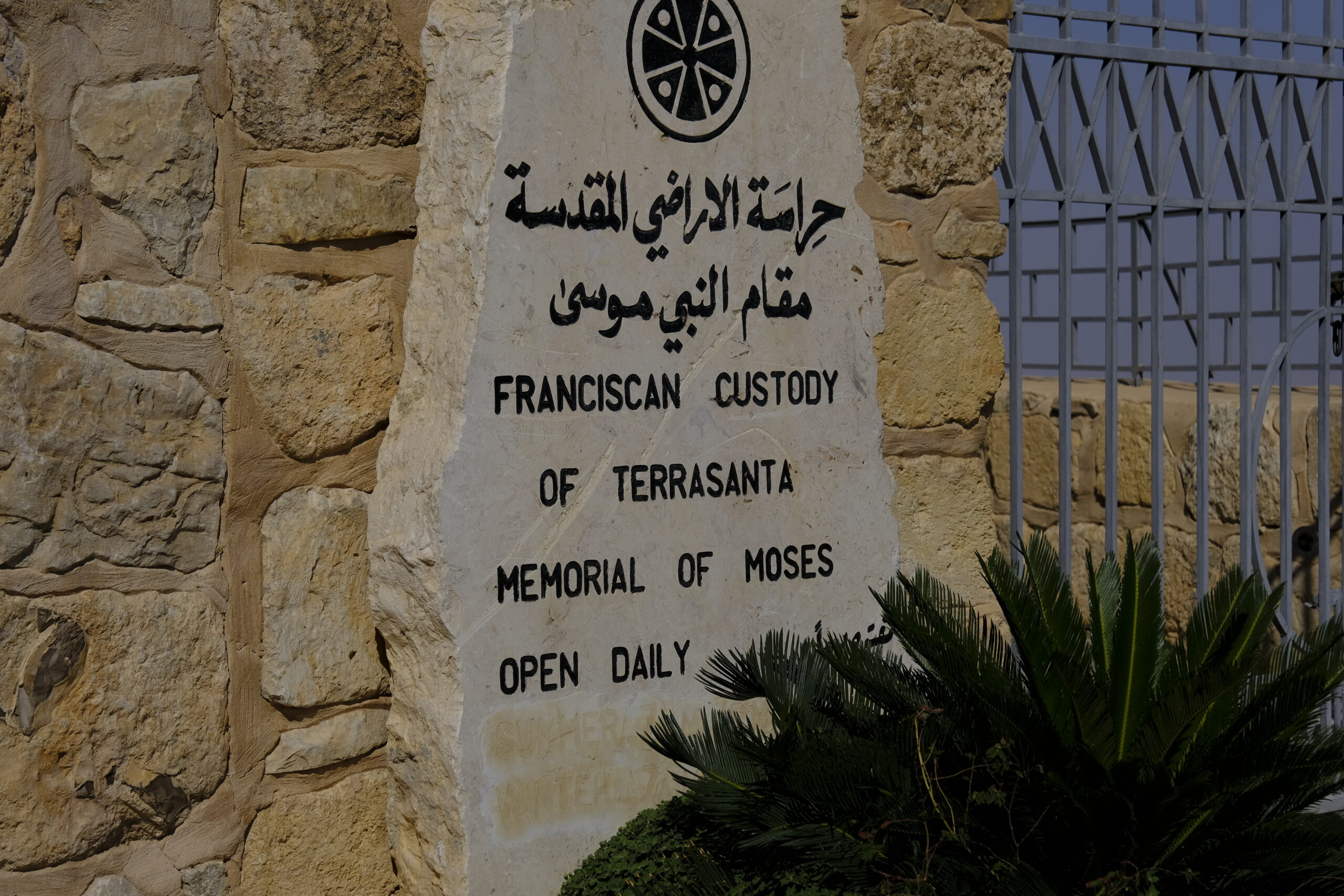
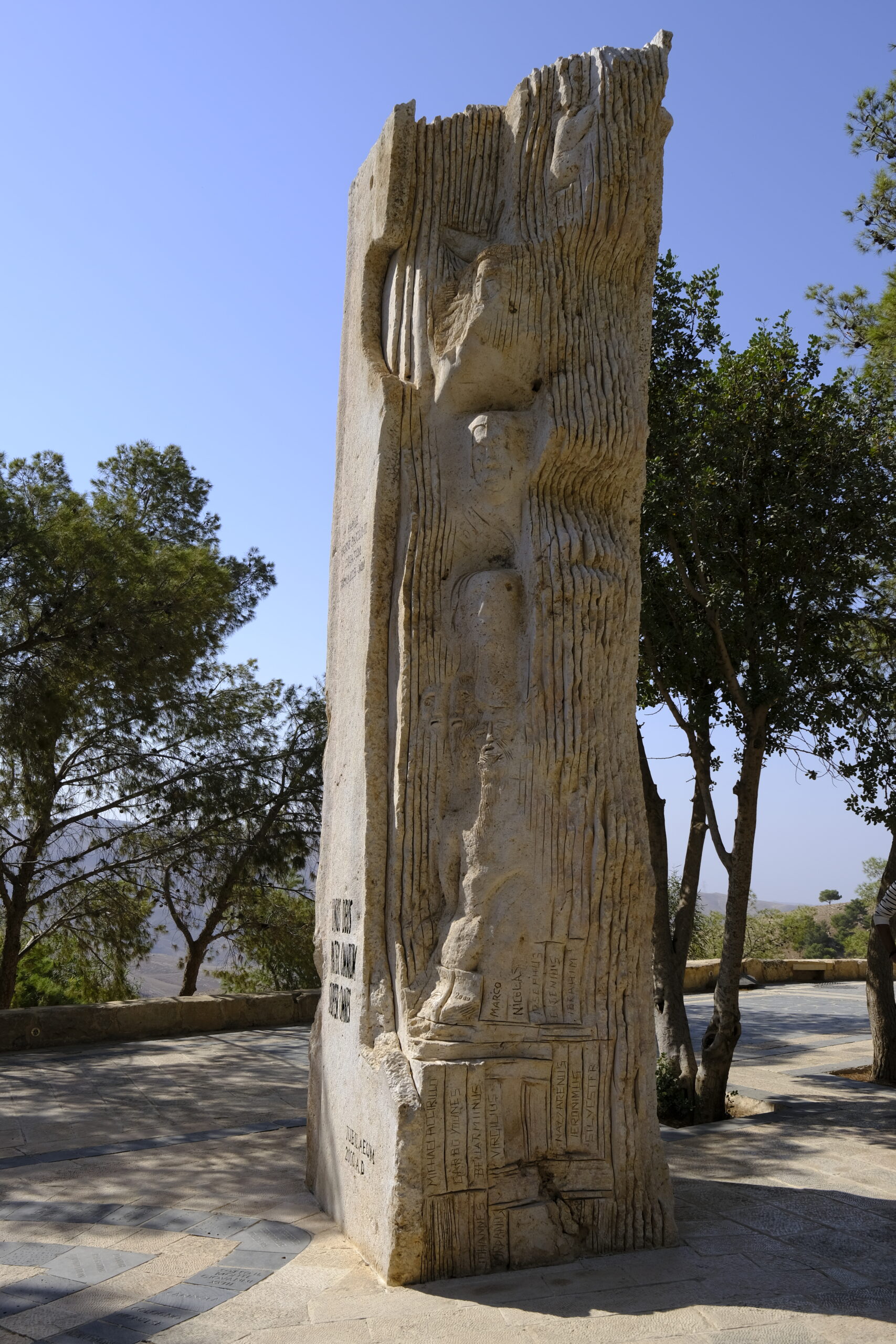
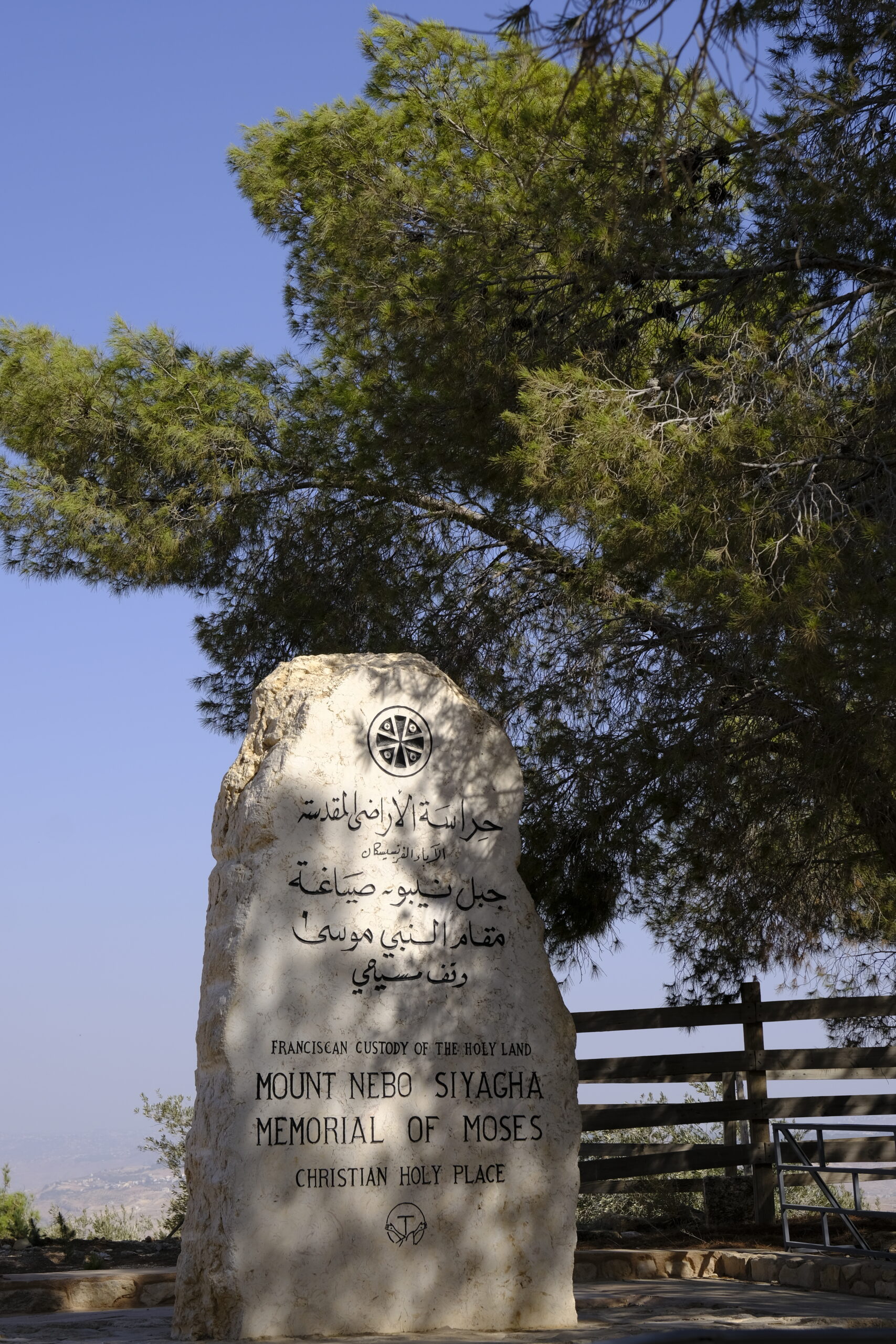
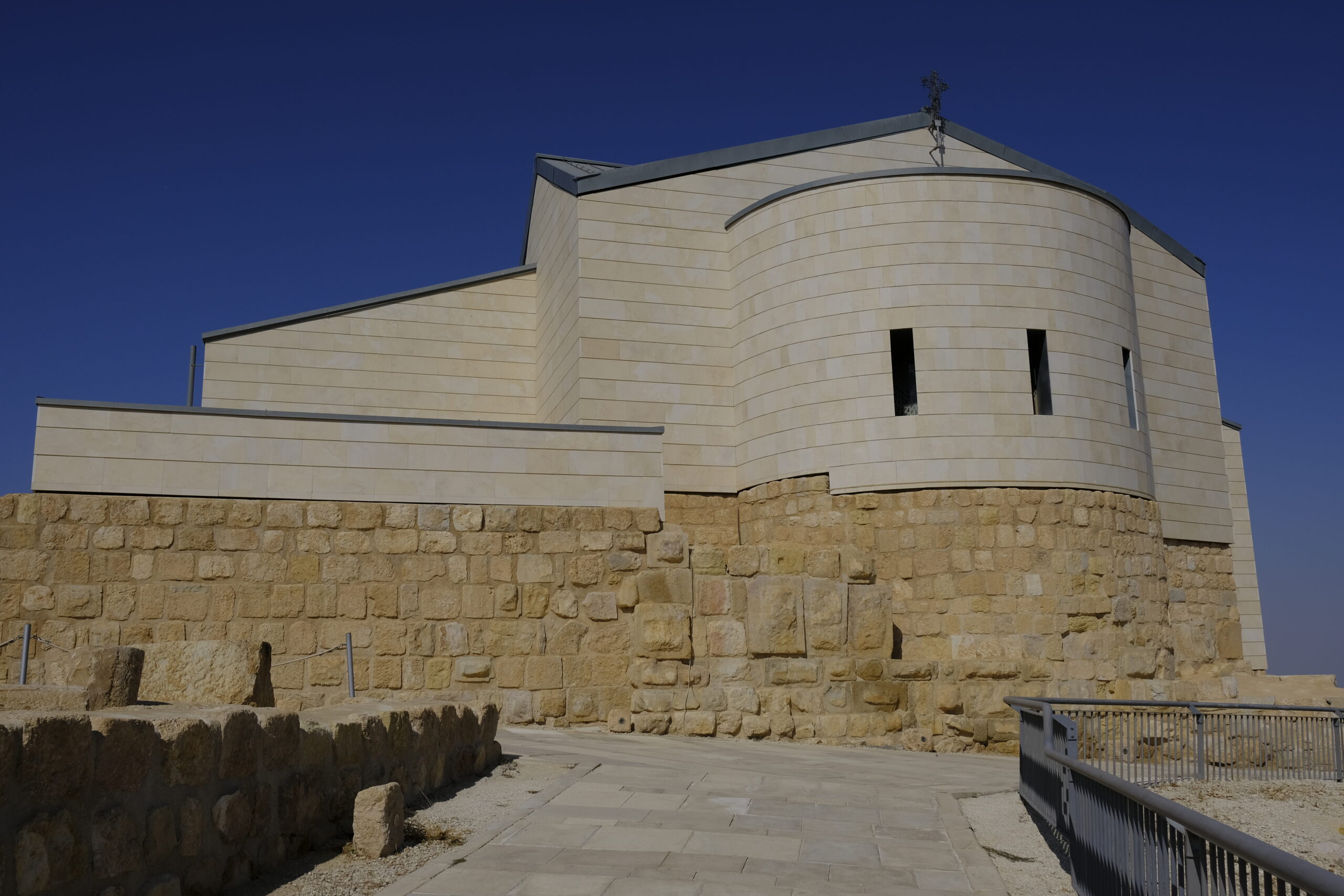
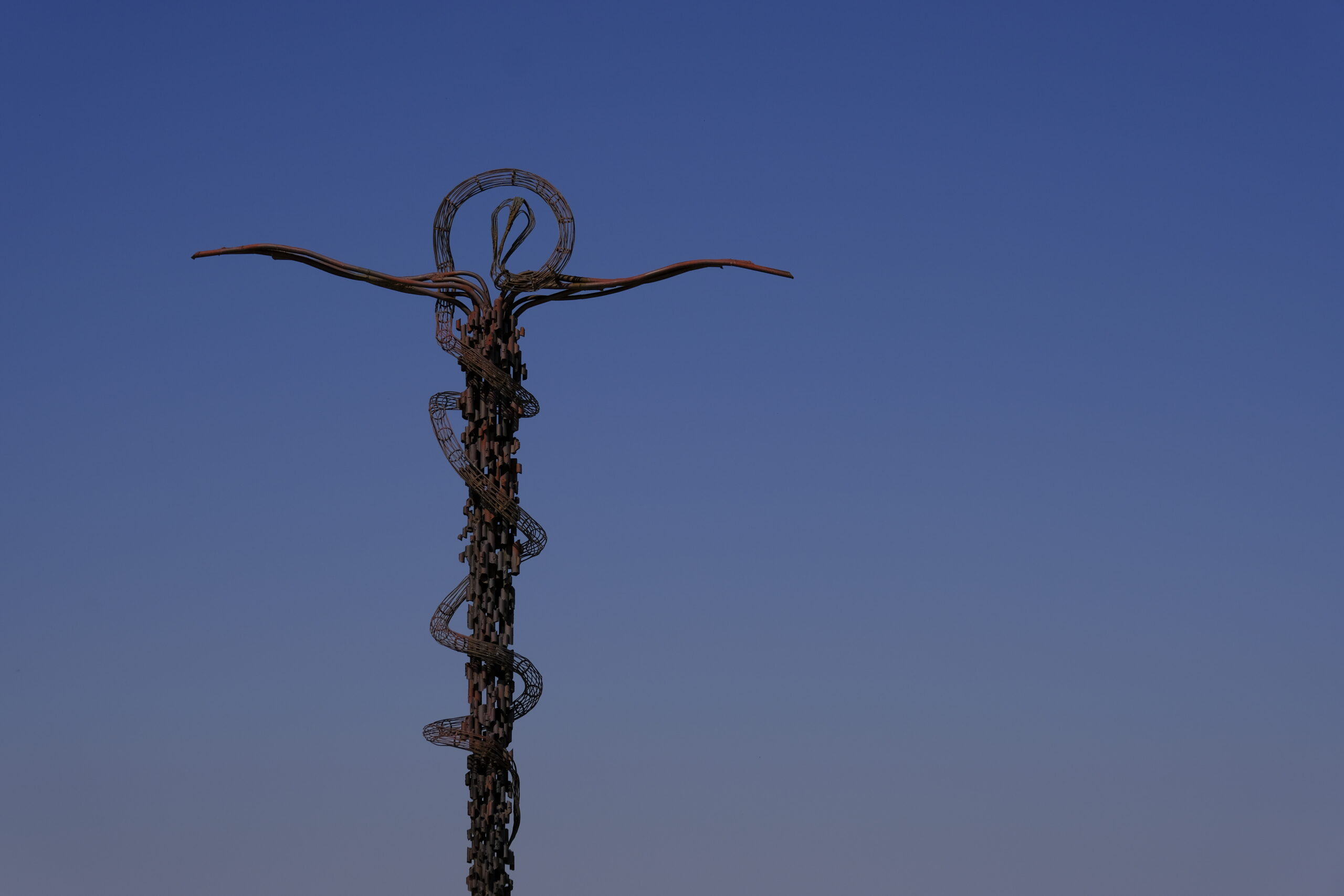
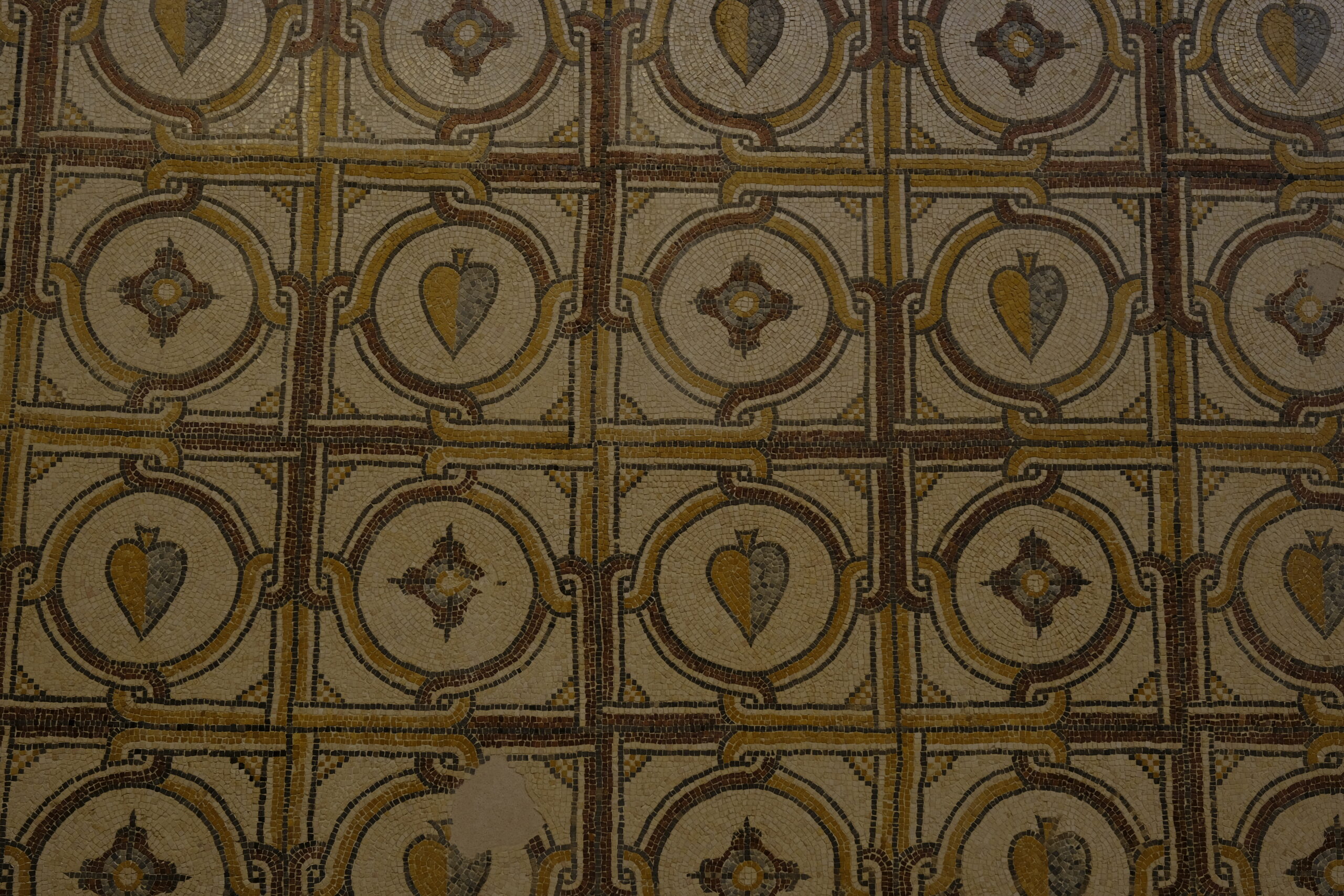
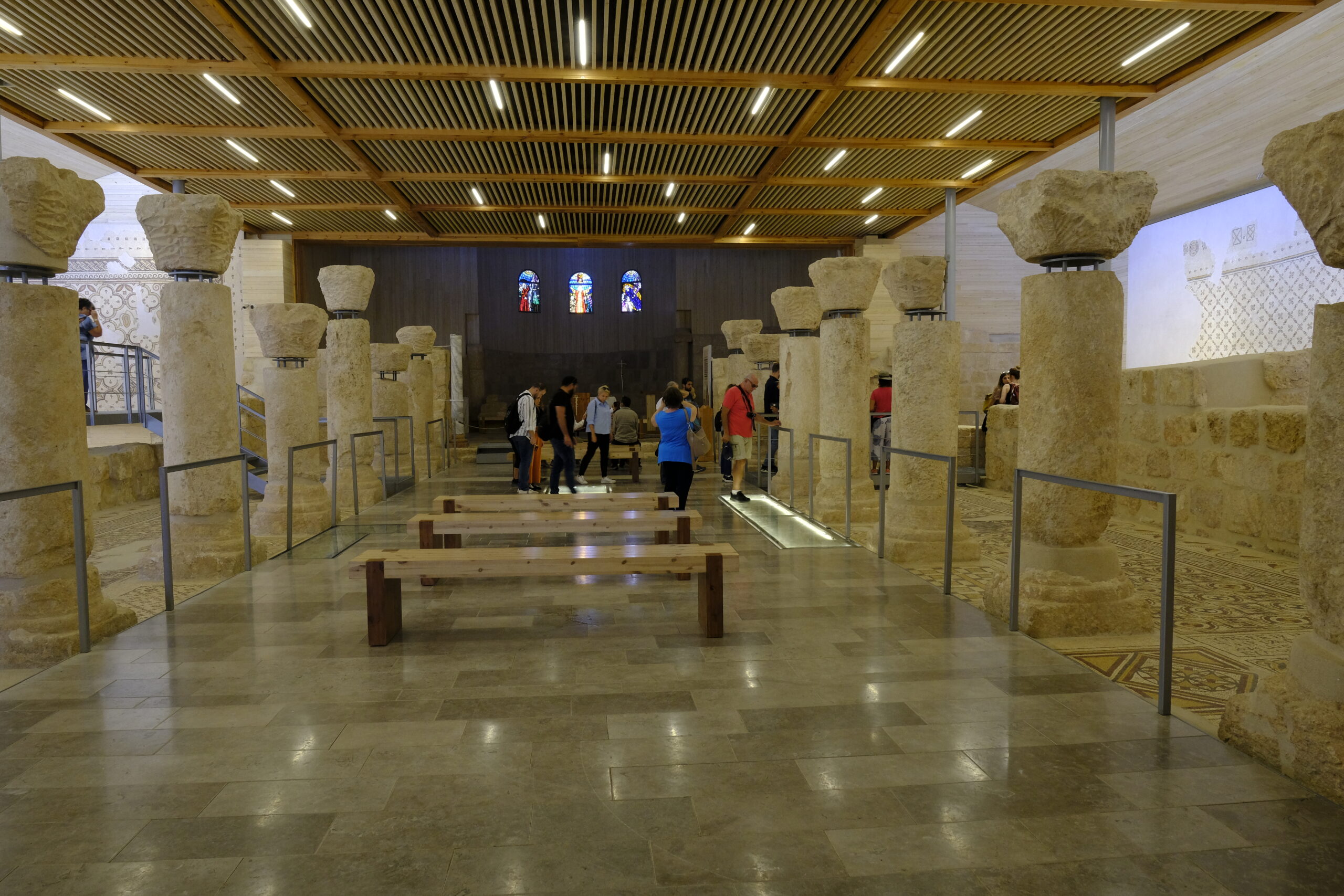
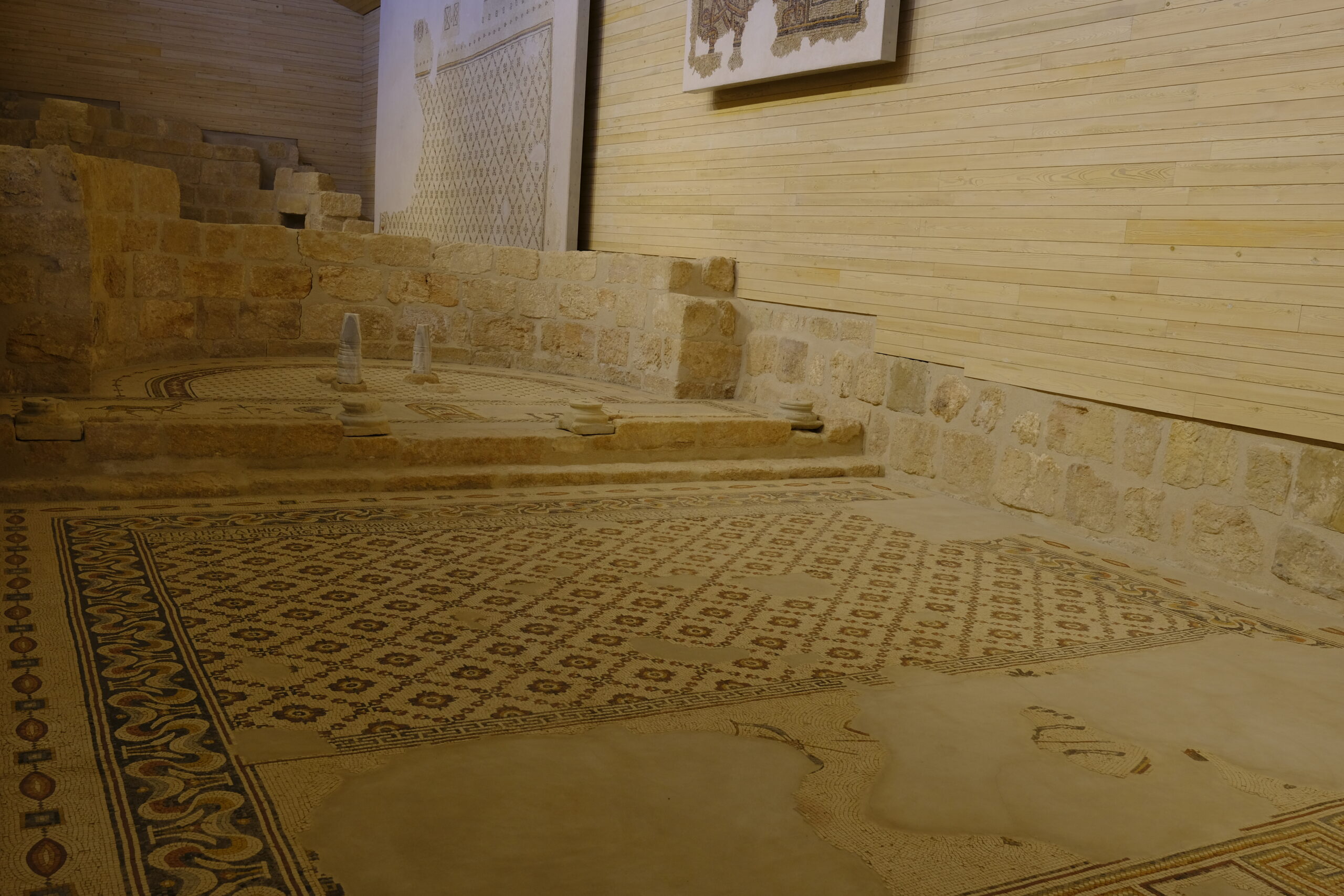
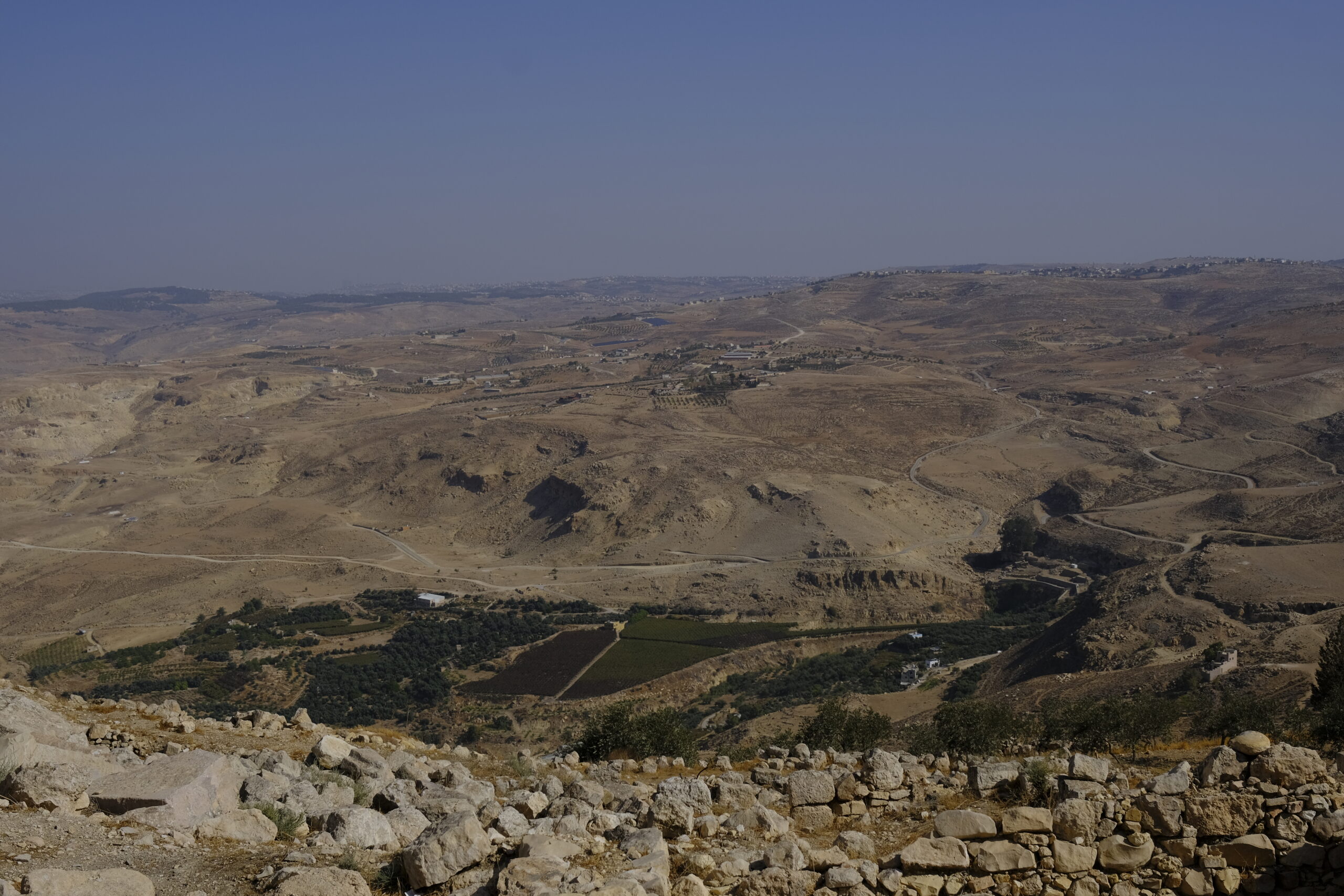
Later in the morning we visited Mount Nebo, which is considered sacred because this is where Moses was able to view the Promised Land. Located in Moabite city of Madaba, Moses is said to have died on Mount Nebo. A monastery was built in his memory by Egyptian monks in the 4th century, which was then reconstructed into a basilica in the 5th century which still stands on Mount Nebo today. It has a collection of Byzantine mosaics which we were able to see. The mosaics depict a variety of images but at the time images were restricted to flora, fauna, and hunting themes. Outside the basilica, stands the Brazen Serpent sculpture created by Giovanni Fantoni. It represents a combination of the serpent from the Bible that Moses built to save people from the plague and the cross of Jesus.
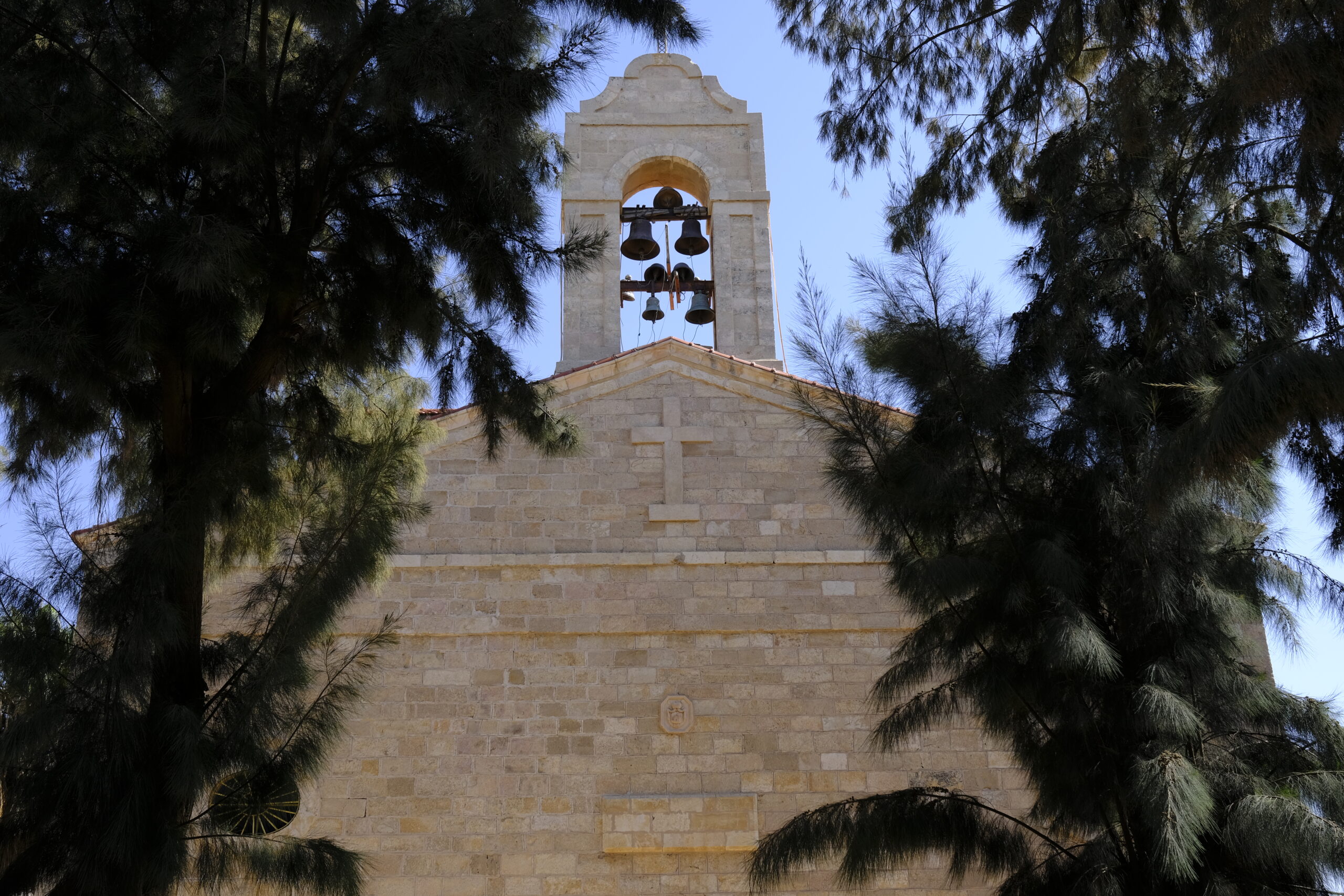
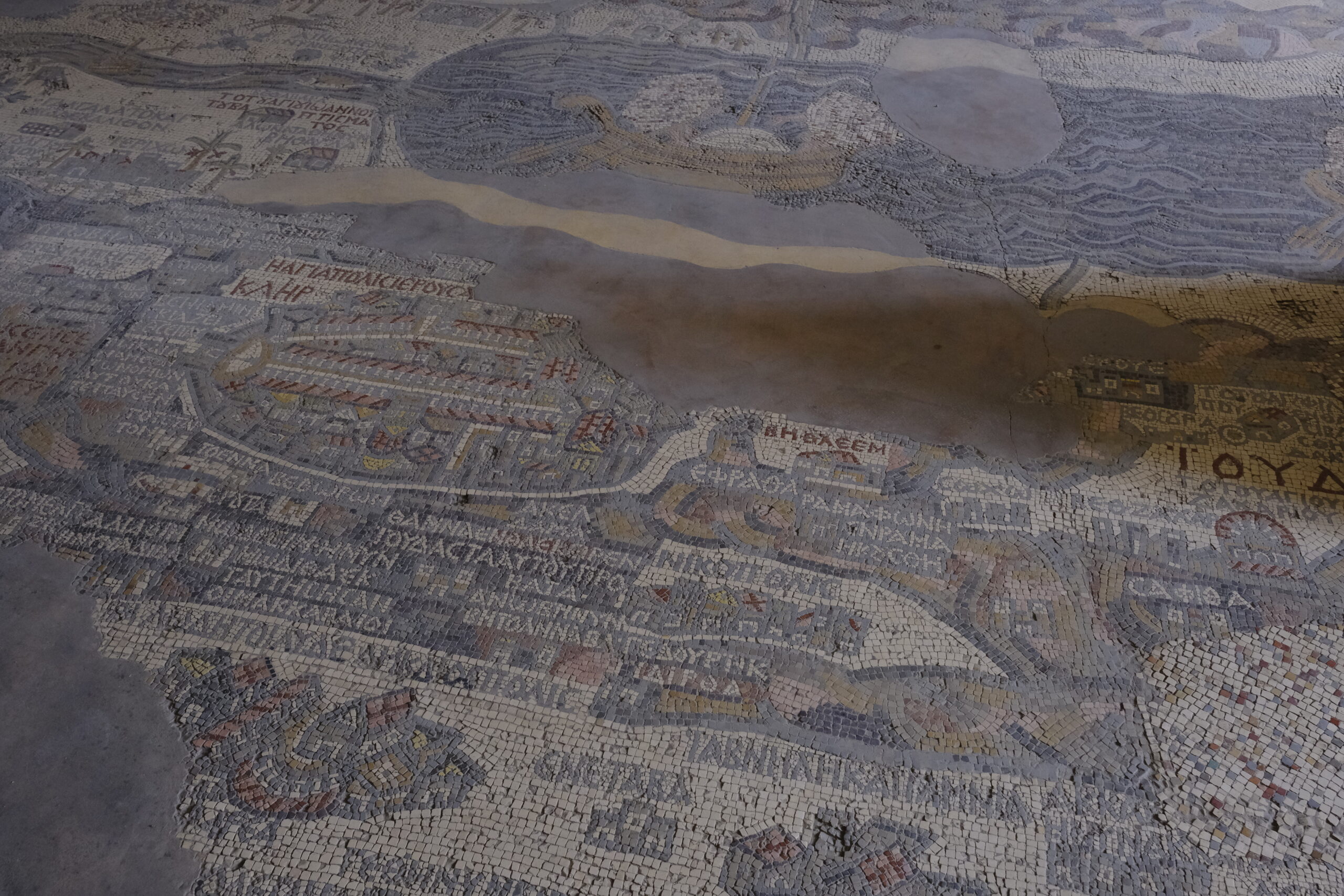
From Mount Nebo we visited the Madaba Map which is part of a floor mosaic in the early Byzantine church of St. George in Madaba. The map contains the oldest surviving cartographic depiction of the Holy Land, especially Jerusalem, dating to the 6th century CE. The map shows many significant structures in the Old City of Jerusalem, such as the Damascus Gate, the Church of the Holy Sepulchre, the Tower of David, and the Cardo Maximus. The map has suffered due to the effects of fires, earthquakes, moisture, and the efforts of religious zealots to remove some of the figures from the mosaics. It was rediscovered when the new church was built, but no effort was made to save it until the 1960s when the Volkswagen Foundation paid for the restoration and conservation.
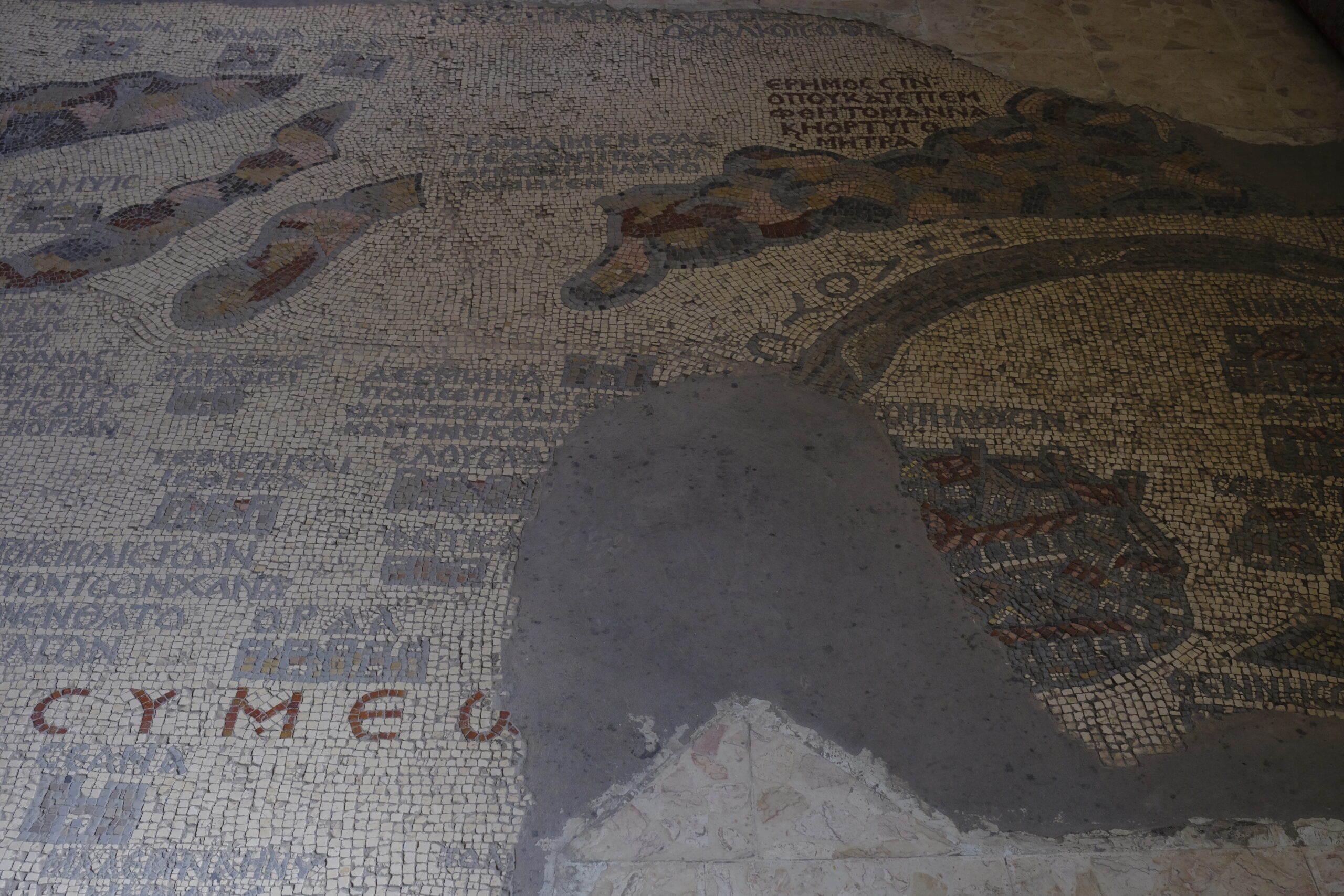

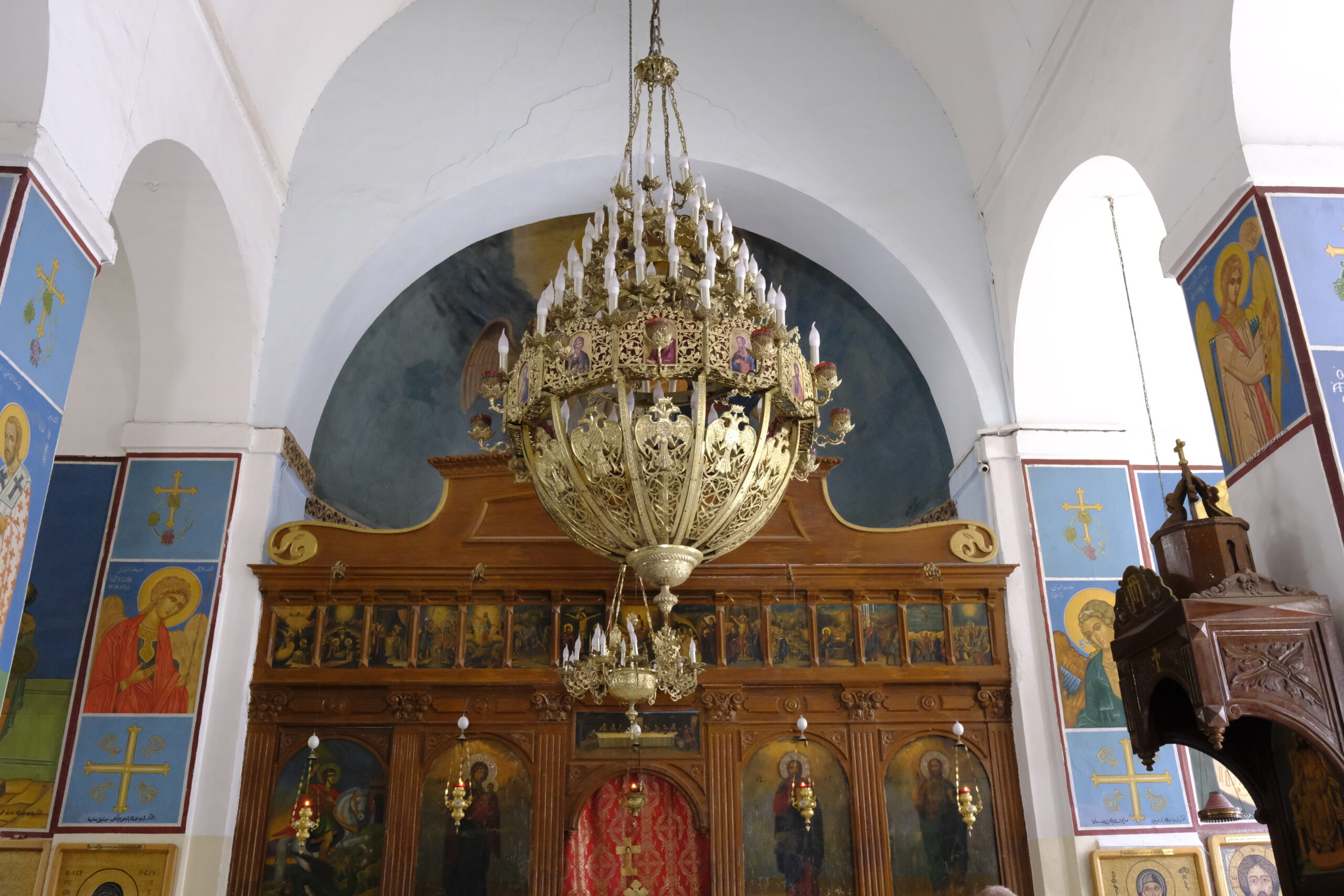
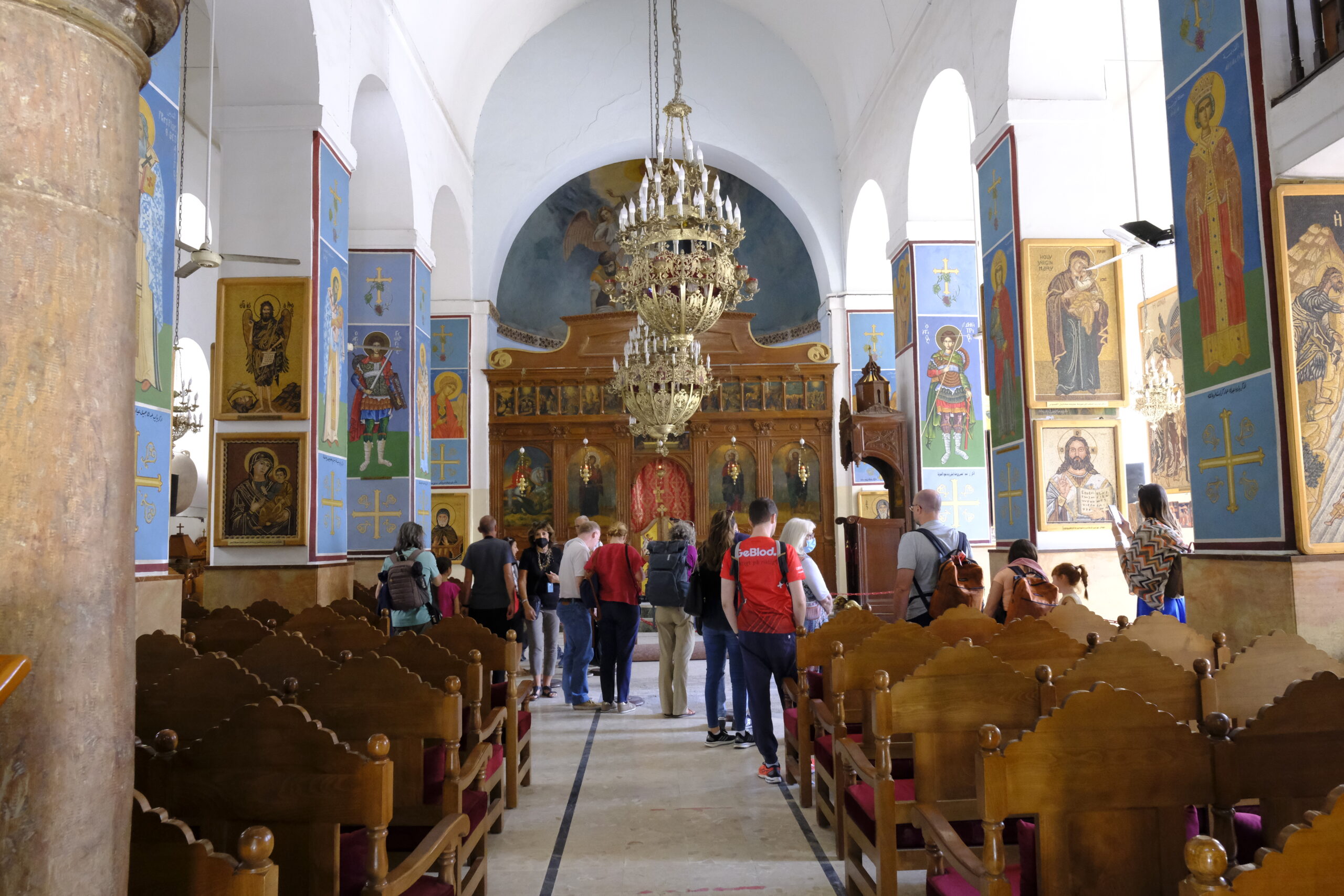
After lunch we drove to Petra and checked into the Mövenpick Hotel located outside the entrance gate to Petra.
The Pink City of Petra – October 29, 2022
Great excitement today as we entered the ruins of Petra, now one of the wonders of the world. In the distance we could see the white tomb of Aaron, the brother of Moses. We walked down to view the sights. Petra was the capital of the Nabataeans (remember Herrod was partly Nabataean) and flourished in the first centuries BCE and CE and was a trading route connecting Mesopotamia and Egypt. It declined after the Romans built roads and deep-water ports and was largely destroyed by a major earthquake around the 4th century. By the 7th century, it was abandoned and only the local Bedouin stayed on. In 1812, a Swiss explorer called Johannes Burckhardt set out to ‘rediscover’ Petra and was able to convince his local guide to take him to the lost city. From then on, the rose-red city has become known to the rest of the world.
Petra was a lot more chaotic than we remembered it in 2008. There were more people, more camels, more horses, more donkeys, more hawkers, more souvenir stalls, and more food shacks. And let’s not forget the electric golf carts. We were not able to go into the Treasury, instead we were able to see what they’ve excavated directly underneath through iron grills. Along the main trail, we saw the Djinn Blocks, the Dam, the Treasury, the Street Facades, the Theatre, and the Royal tombs.
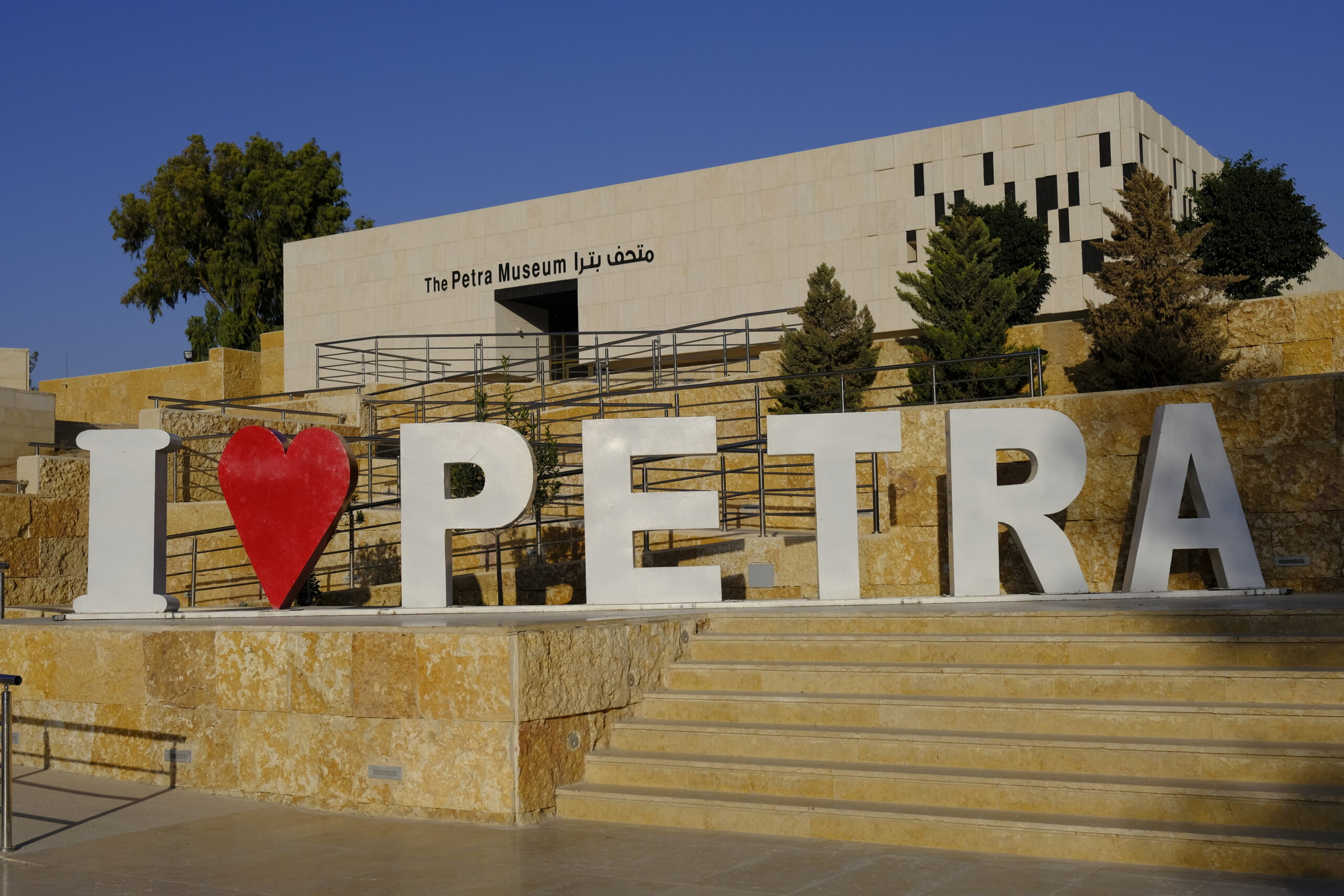
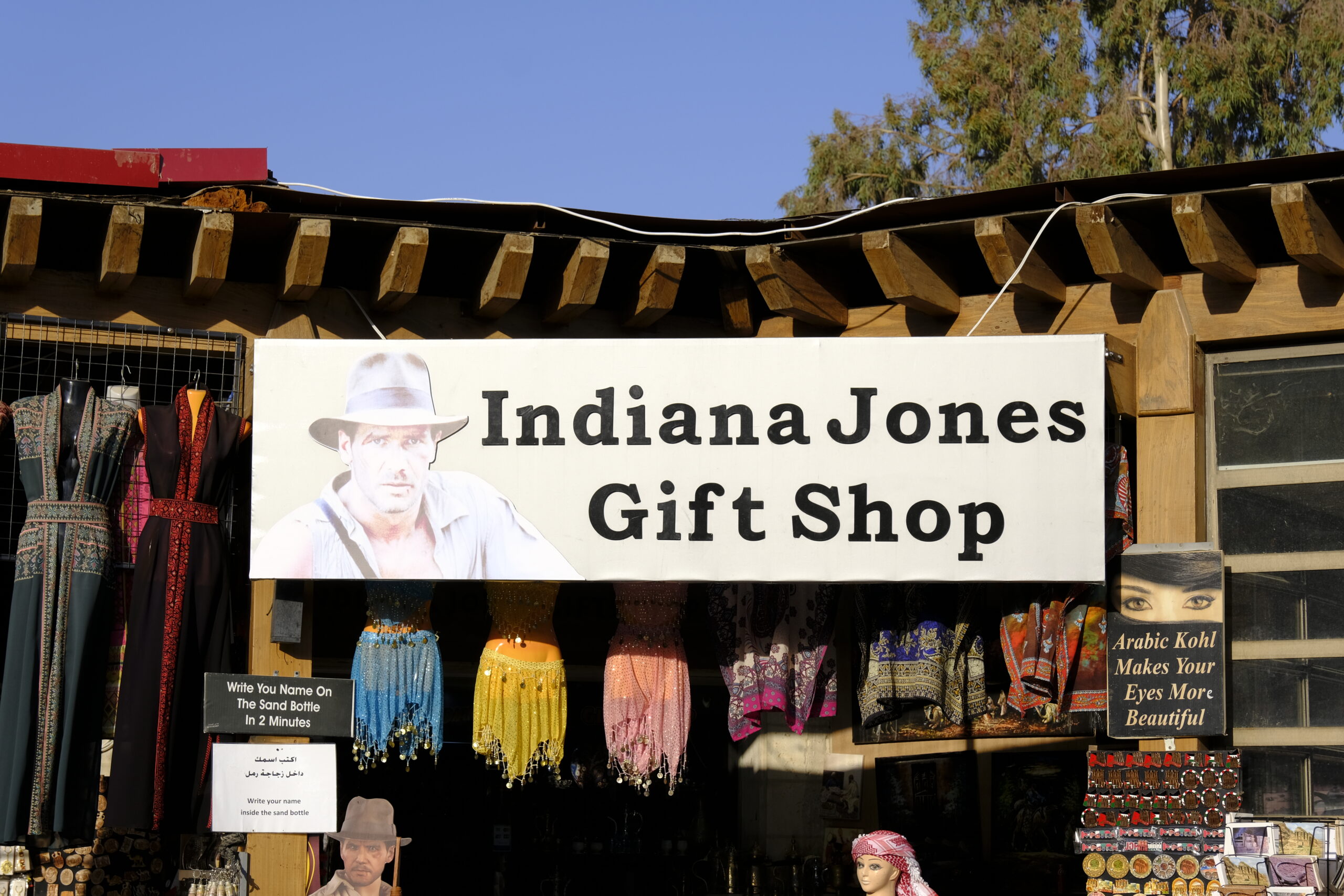
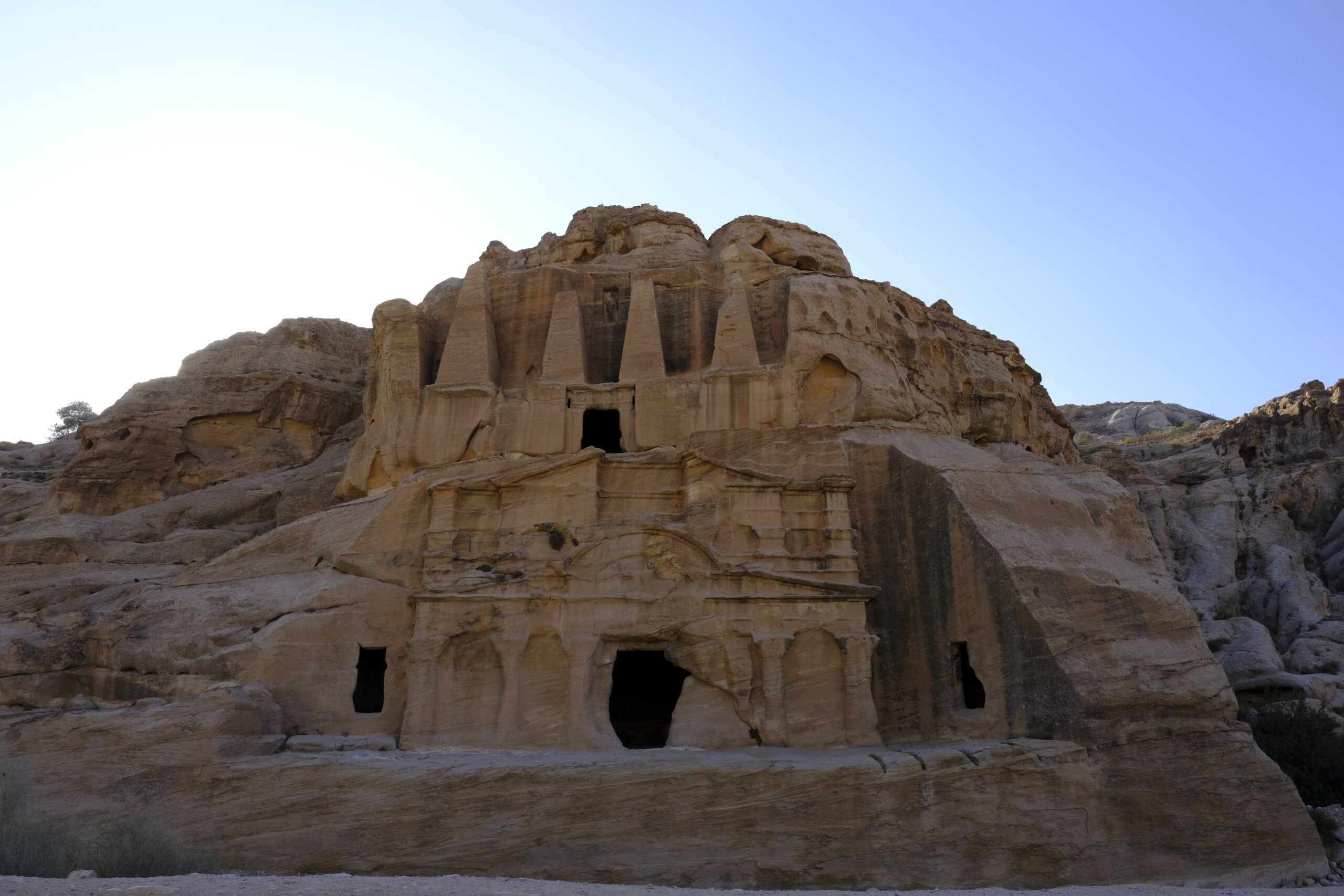
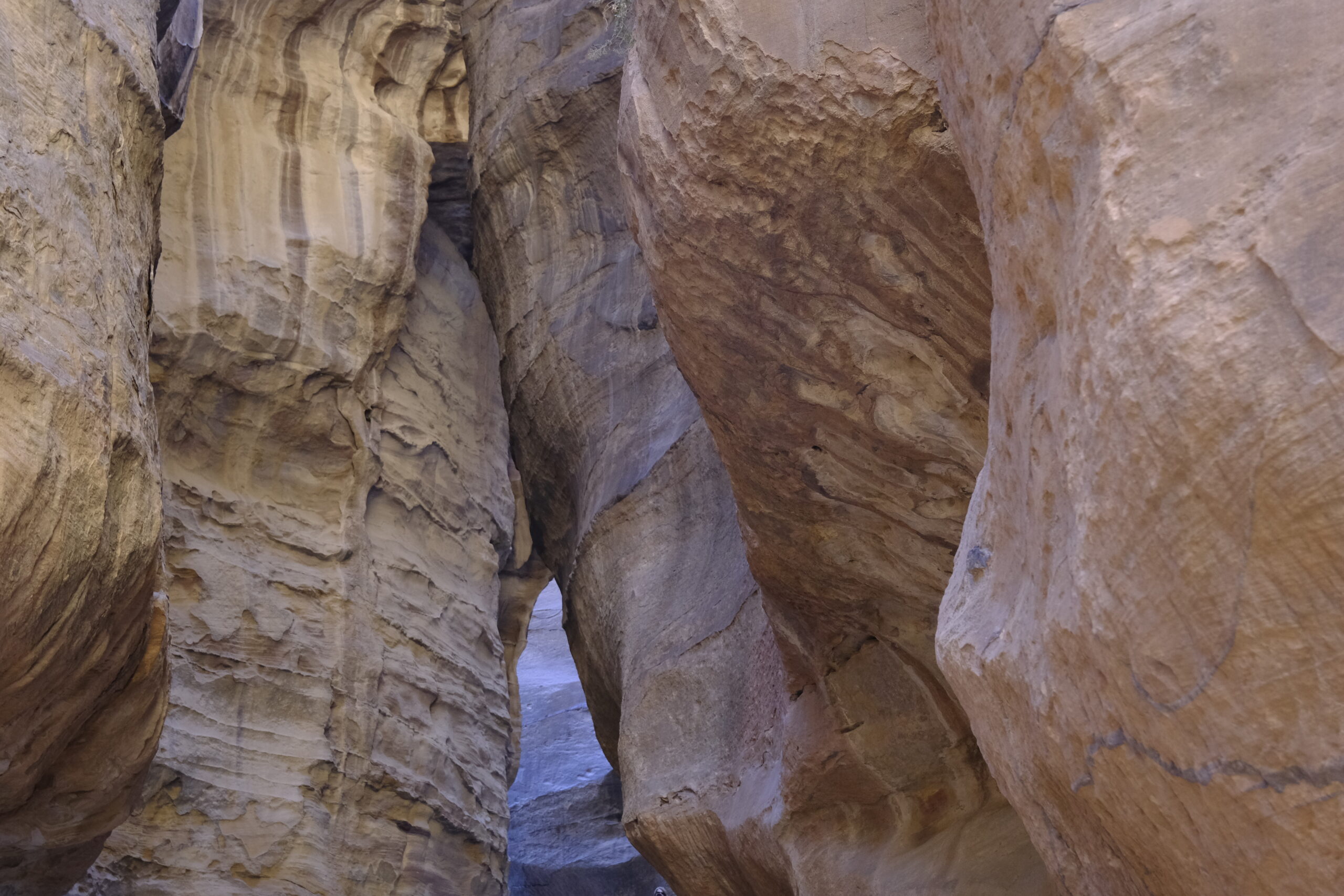

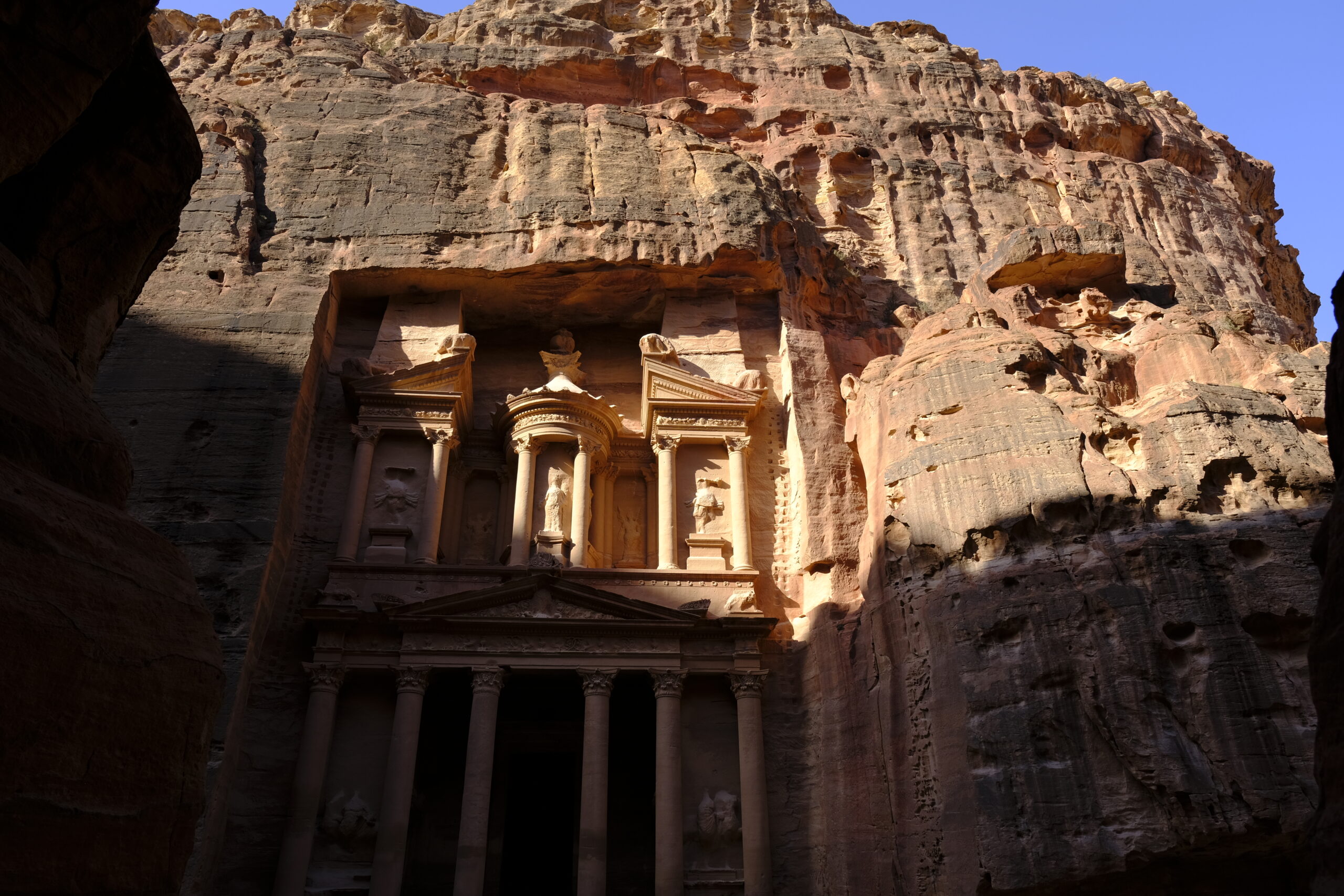
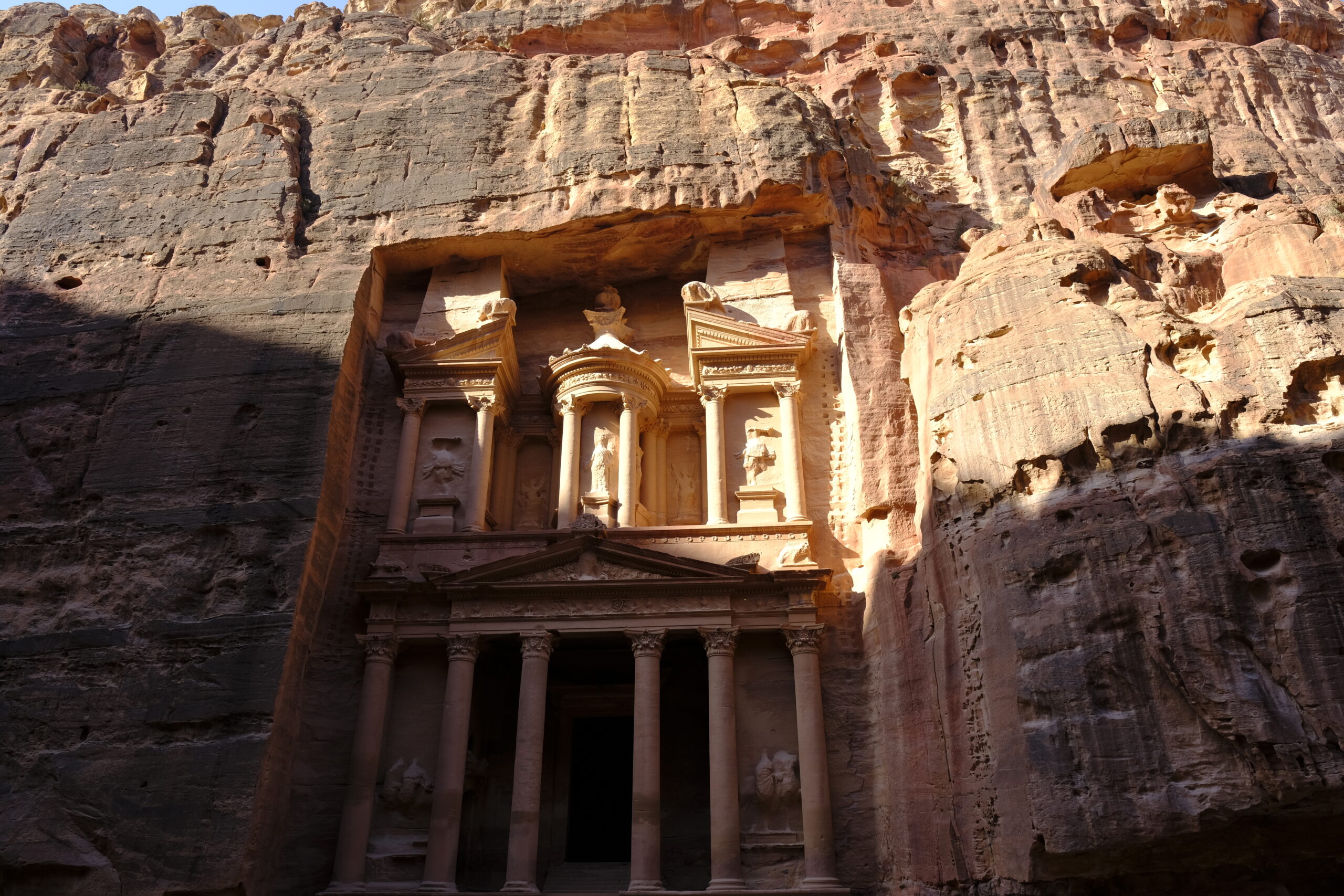
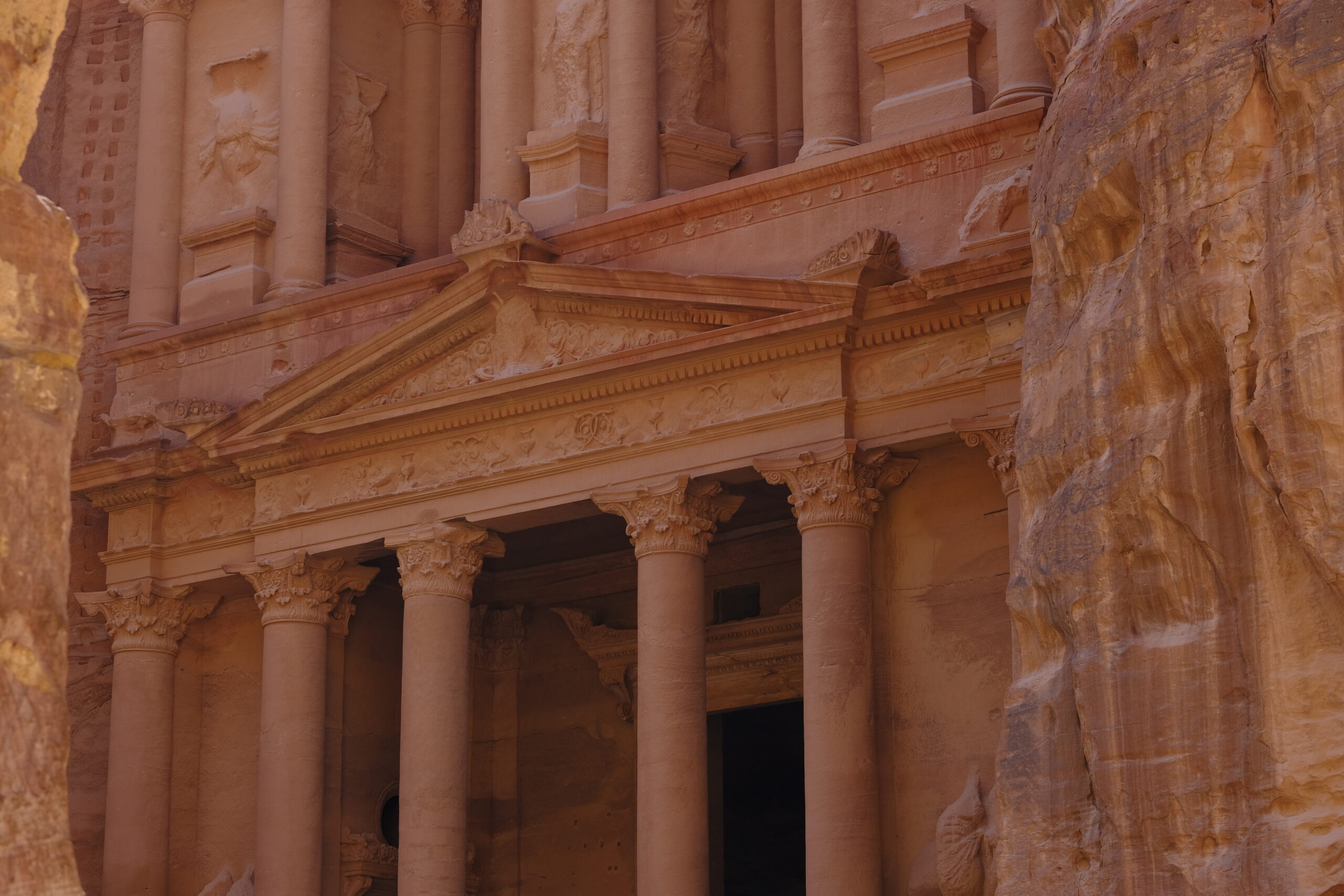
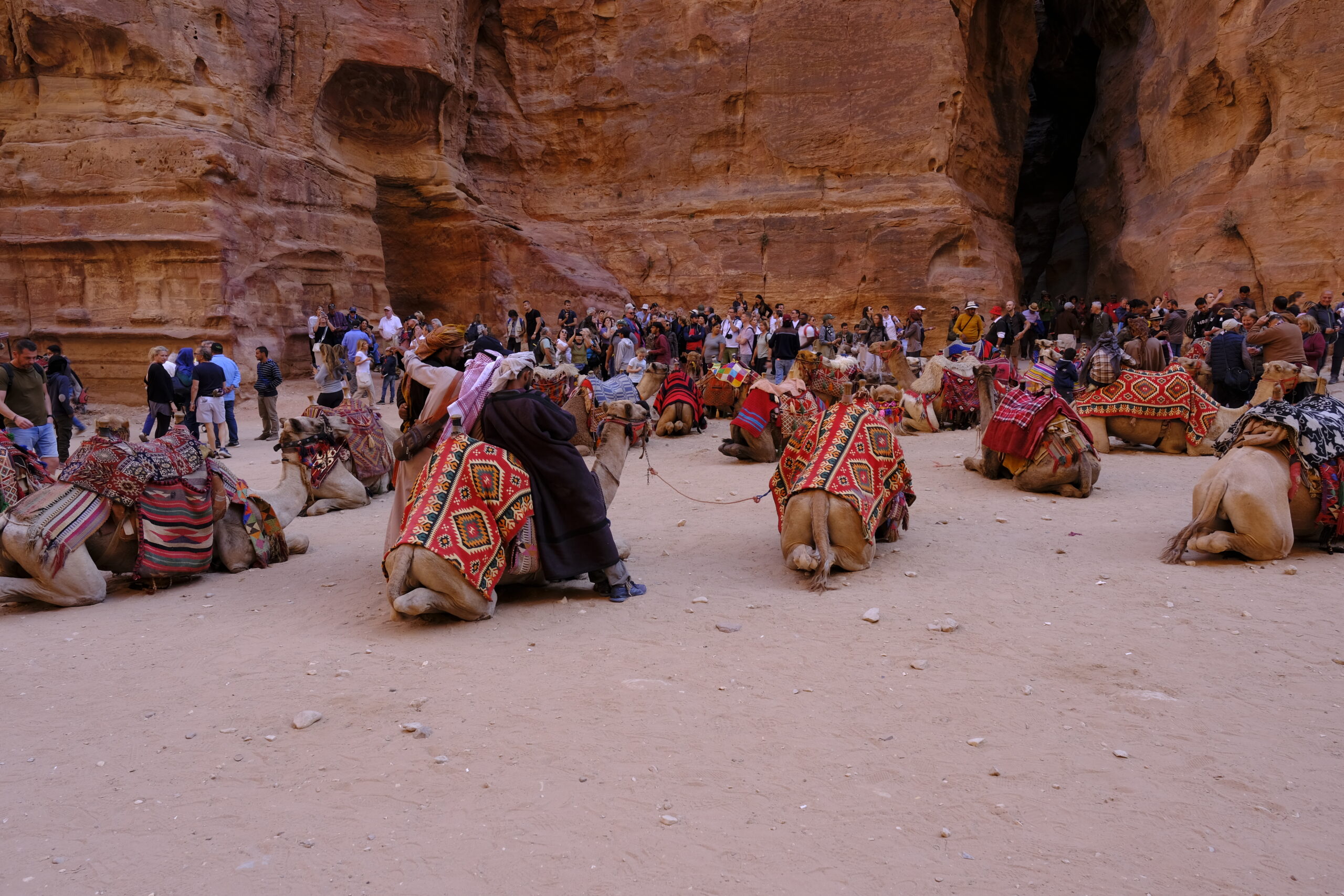
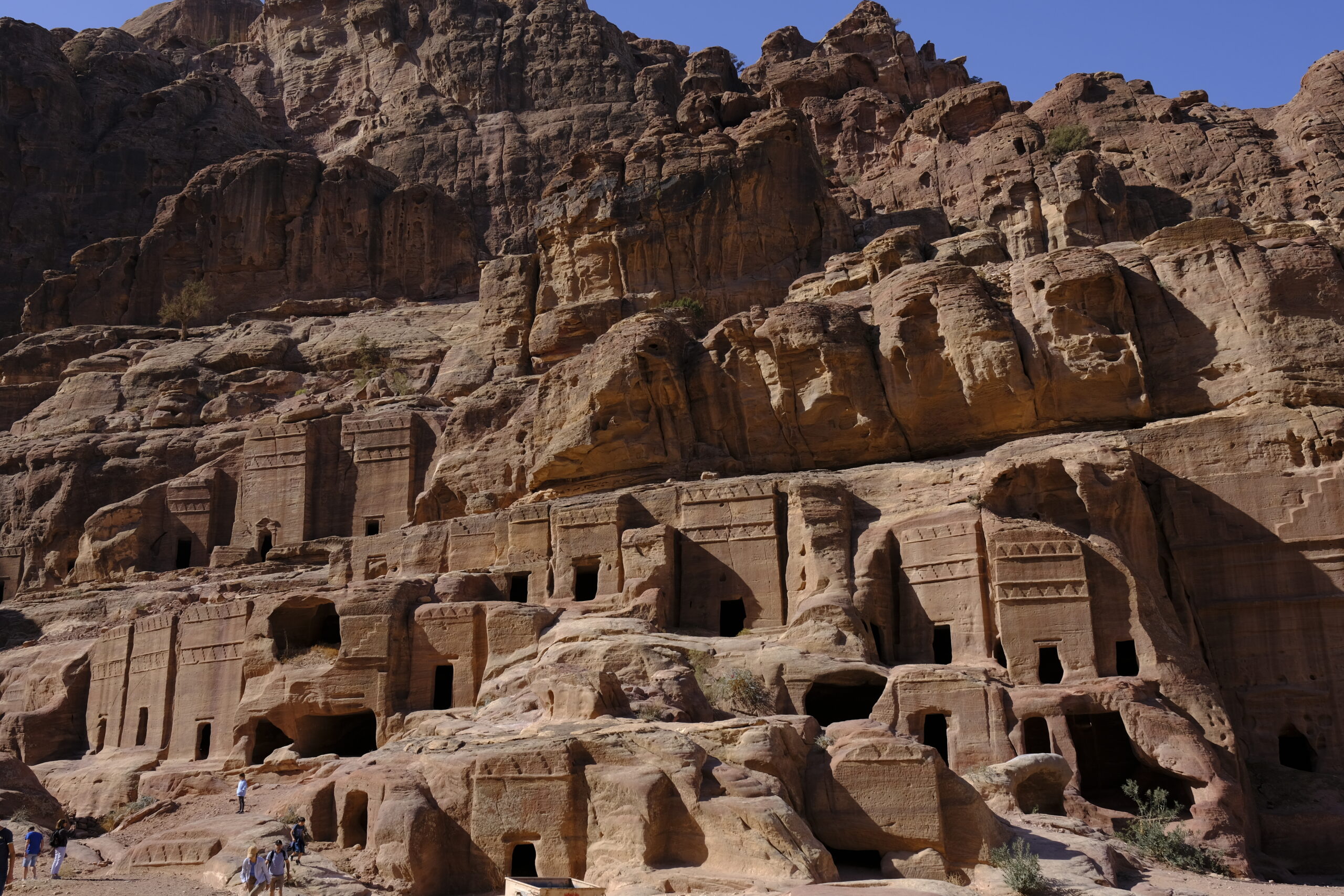
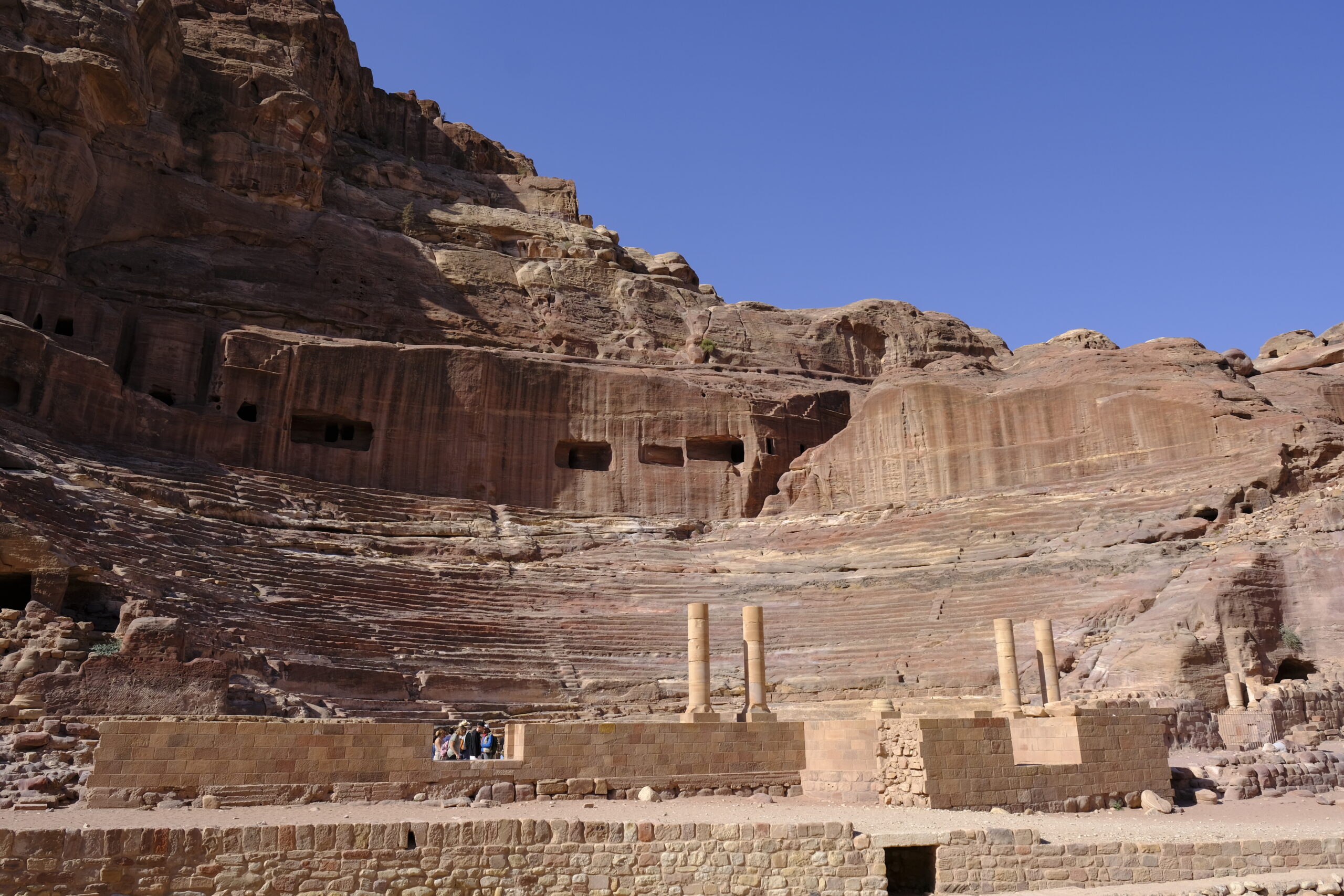
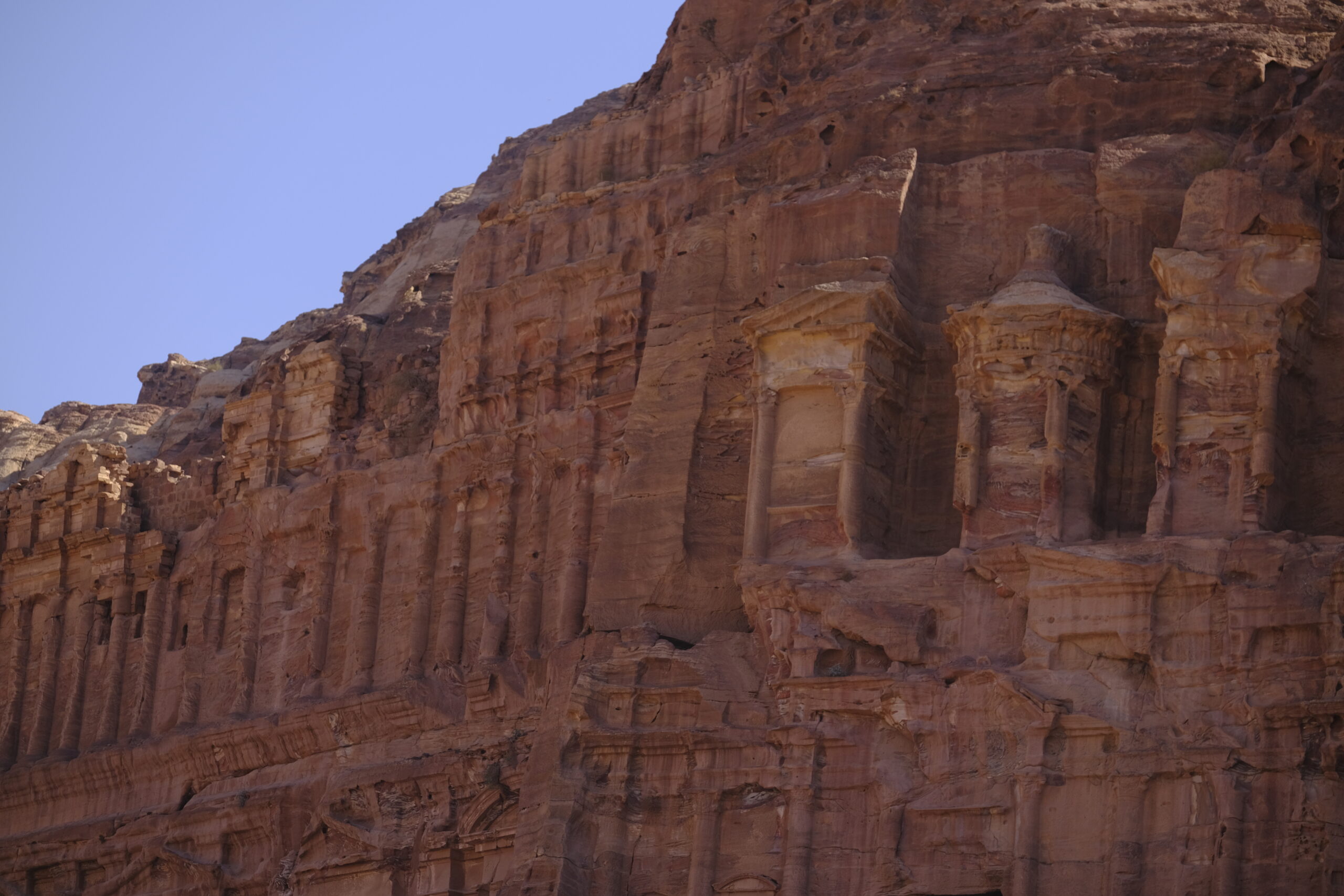
While we walked down all the way, on our return some in our group elected to ride camels up to the Treasury and then all of us took the golf carts back to the gates.
In the evening, we had dinner in a Bedouin camp, music provided by two Bedouins. After dinner, the musicians were joined by a bagpipe player. Following that we had dancing by a troupe of young Arab men, and then we all joined in the dancing and some of us (yours truly included) got to dance with a sword. It was quite a lively night
Jordan’s capital Amman – October 30, 2022
Our agenda for today was to check out of the Mövenpick and drive to Amman. Amman is a big city, with lots of posh villas and tall buildings. Our hotel, the Rotana, is in one of those tall buildings. It is an extremely modern hotel, everything is high-tech. All one must do is press buttons (the trick is knowing which ones to press).
Journey Home – October 31, 2022
On our way home: Amman to Istanbul; Istanbul to DC; DC to Newark. We arrived home at 1:30 Tuesday morning. We had been journeying home for almost 24 hours. Home at last and we are staying put for the rest of the year!