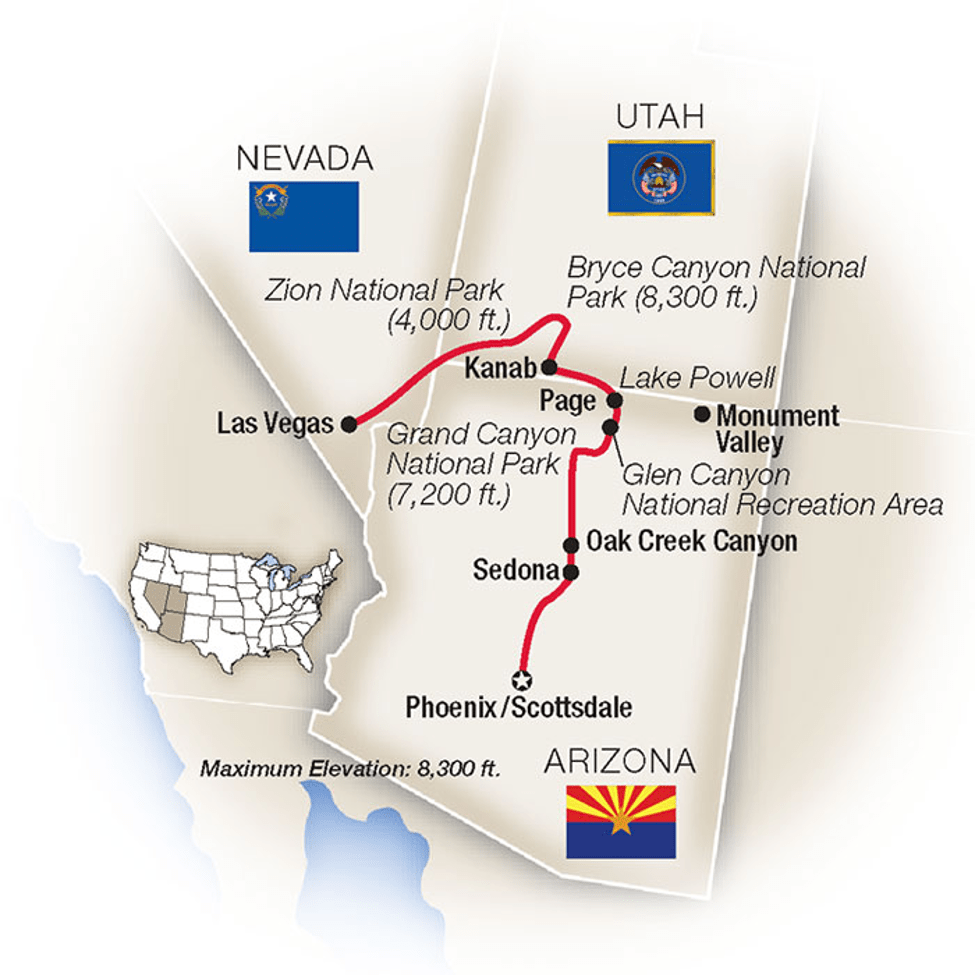
Smooth Arrival in Phoenix – October 4, 2021
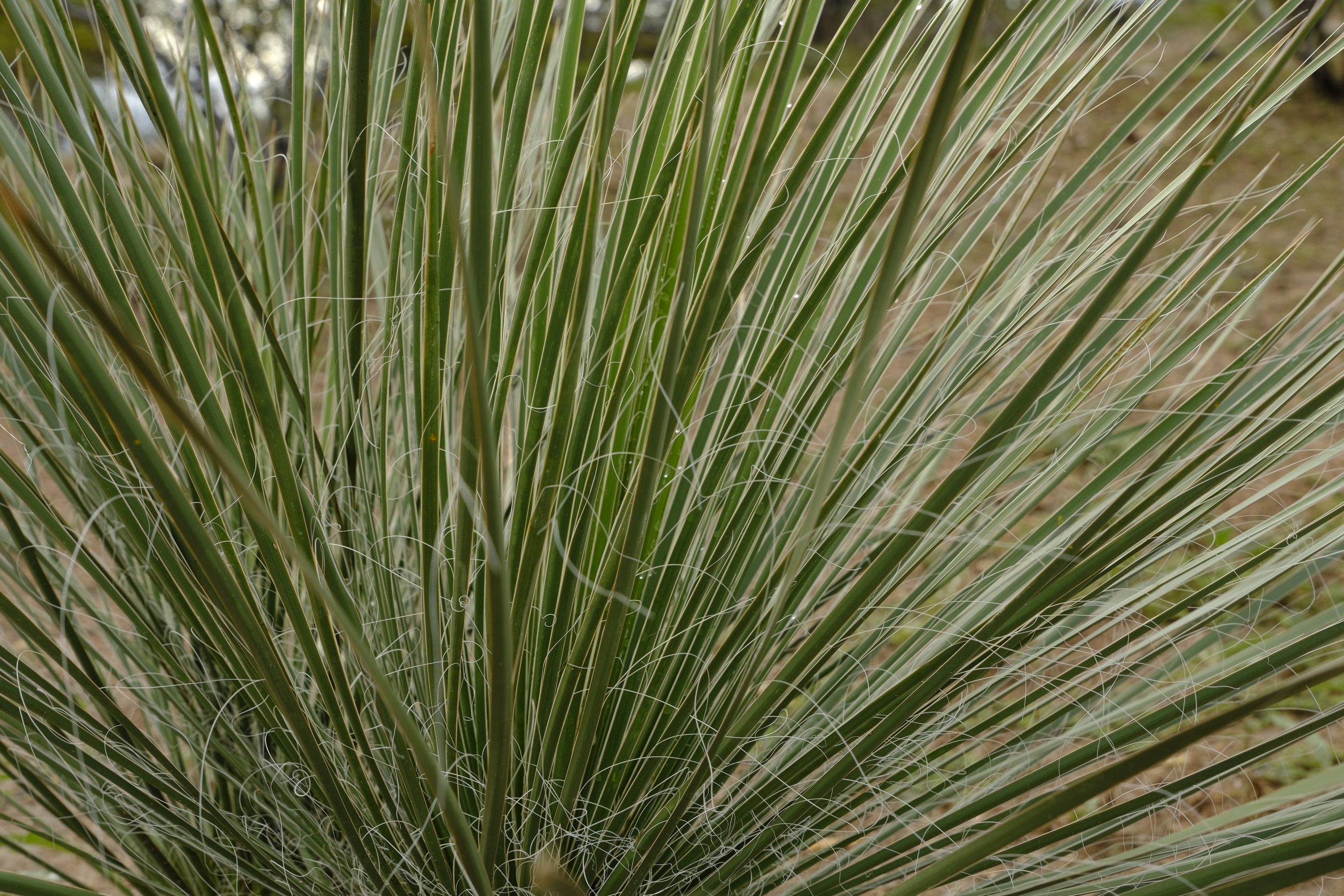
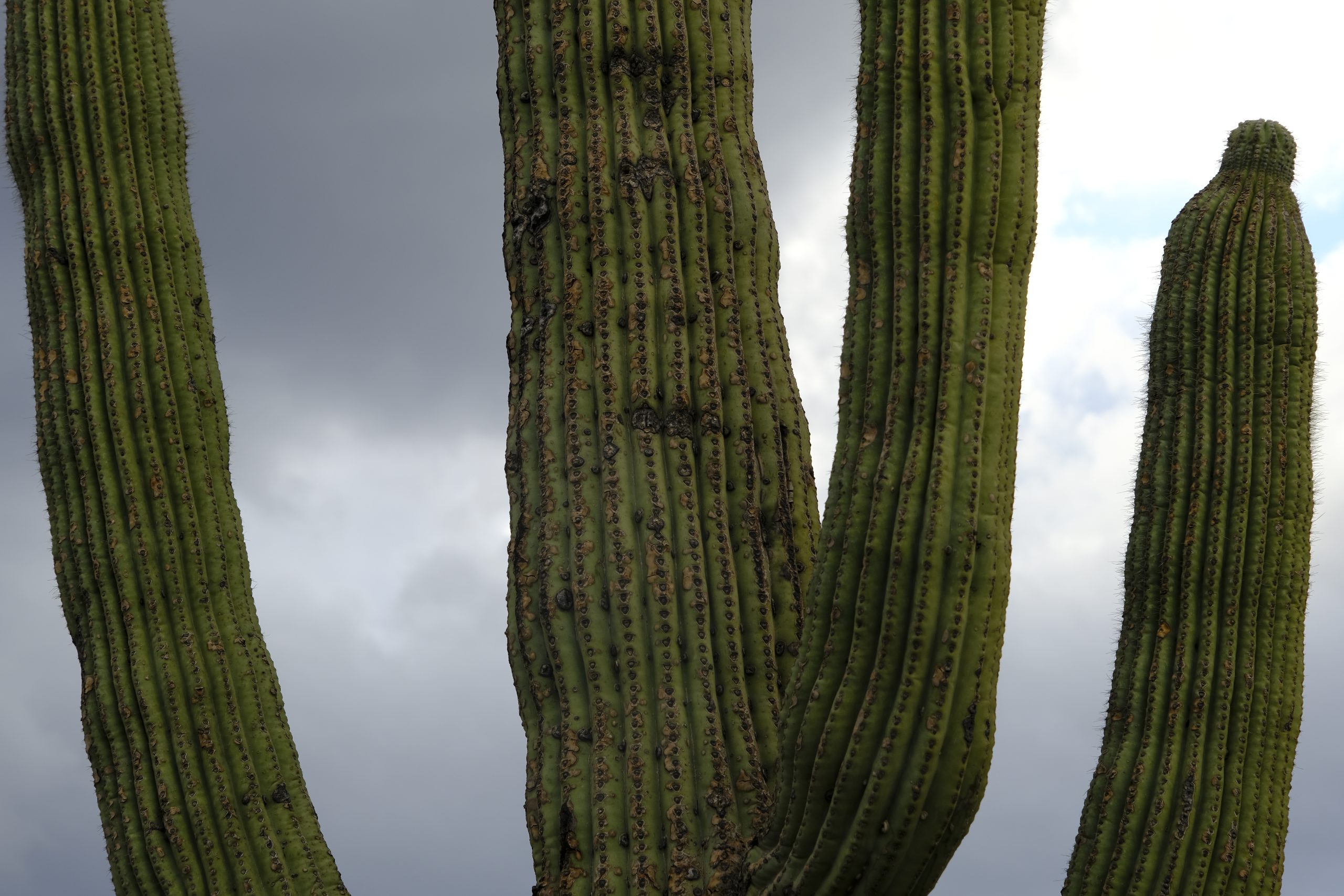
With only a slight delay due to mechanical issues in Newark, our journey to Phoenix Sky Harbor International Airport was uneventful and safe. On our transfer to the Four Seasons Resort in Scottsdale, we couldn’t help but notice how the buildings, art installations, and vegetation all bore the unmistakable imprint of the Sonoran Desert. And the same was true for the resort. All the plants, whether prickly, spiny, or flowering, were beautiful and unusual. We felt very pampered by all the luxuries in the room.
For lunch we had beetroot hummus and turkey in lettuce wraps. Both dishes were delicious. In the evening, we met up with our tour director Ernst Mutchnick and our fellow travelers. We number 36.
Sedona’s Red Rocks to the Grand Canyon – October 5, 2021
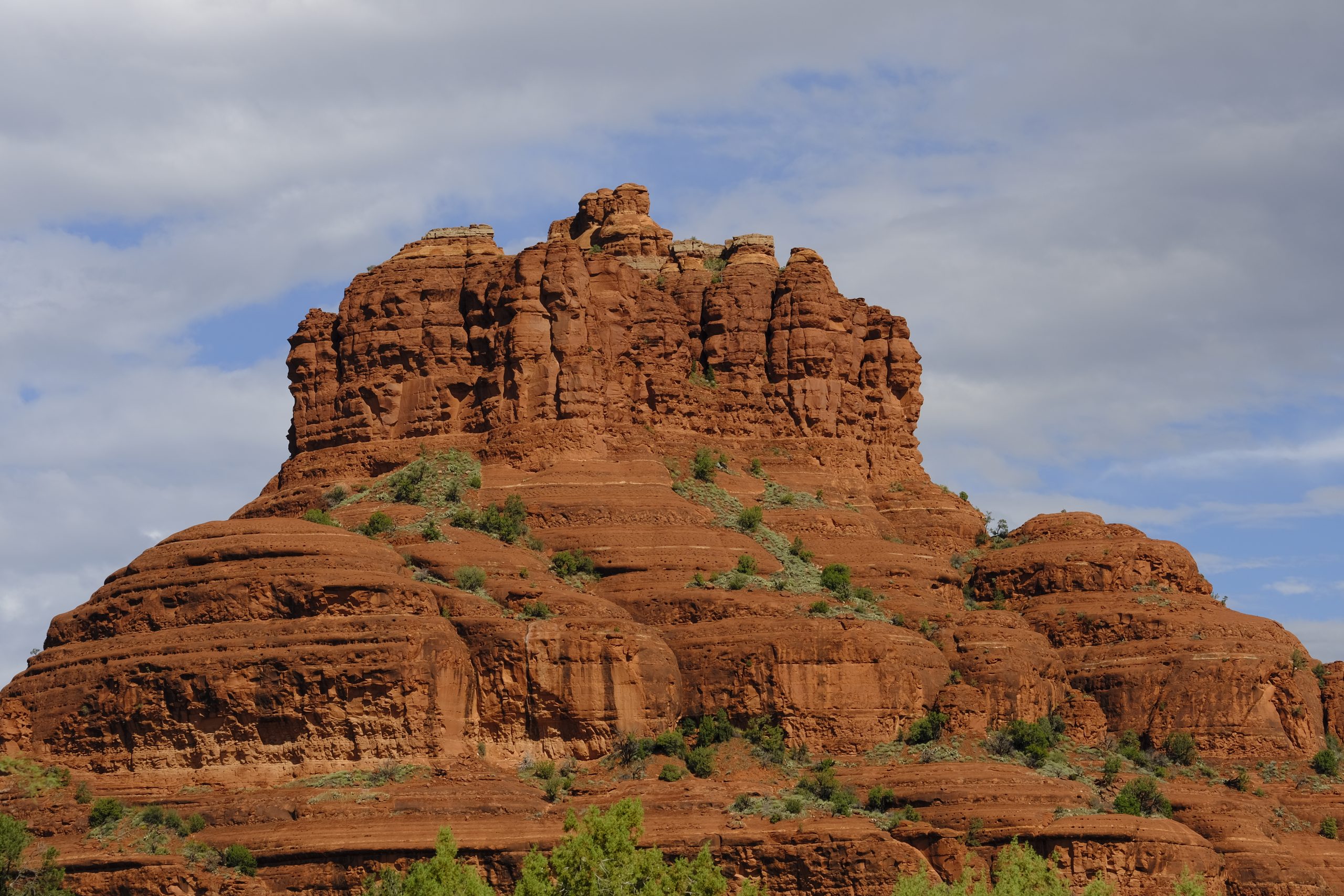
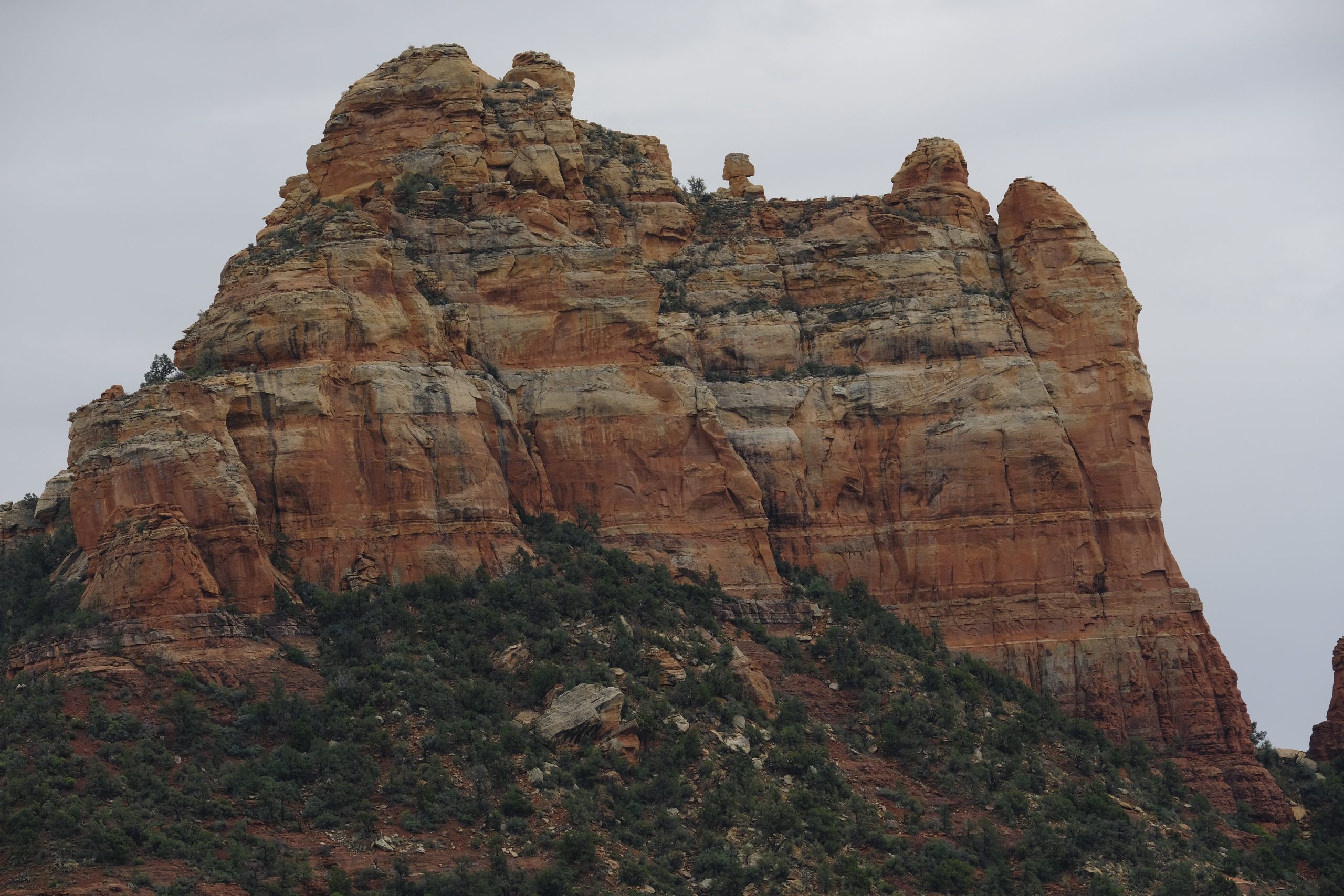
We checked out of the Four Seasons after breakfast, where we enjoyed orange, date, and honey oatmeal topped with pomegranate—a fabulous meal that Christabel hopes to recreate at home. Our driver, Scott Holt, drove us to Sedona, an artsy, touristy town surrounded by red granite cliffs. Many movies have been filmed in this area, including the John Wayne movie Angel and the Badman, Broken Arrow with Jimmy Stewart, Johnny Guitar with Joan Crawford, etc.
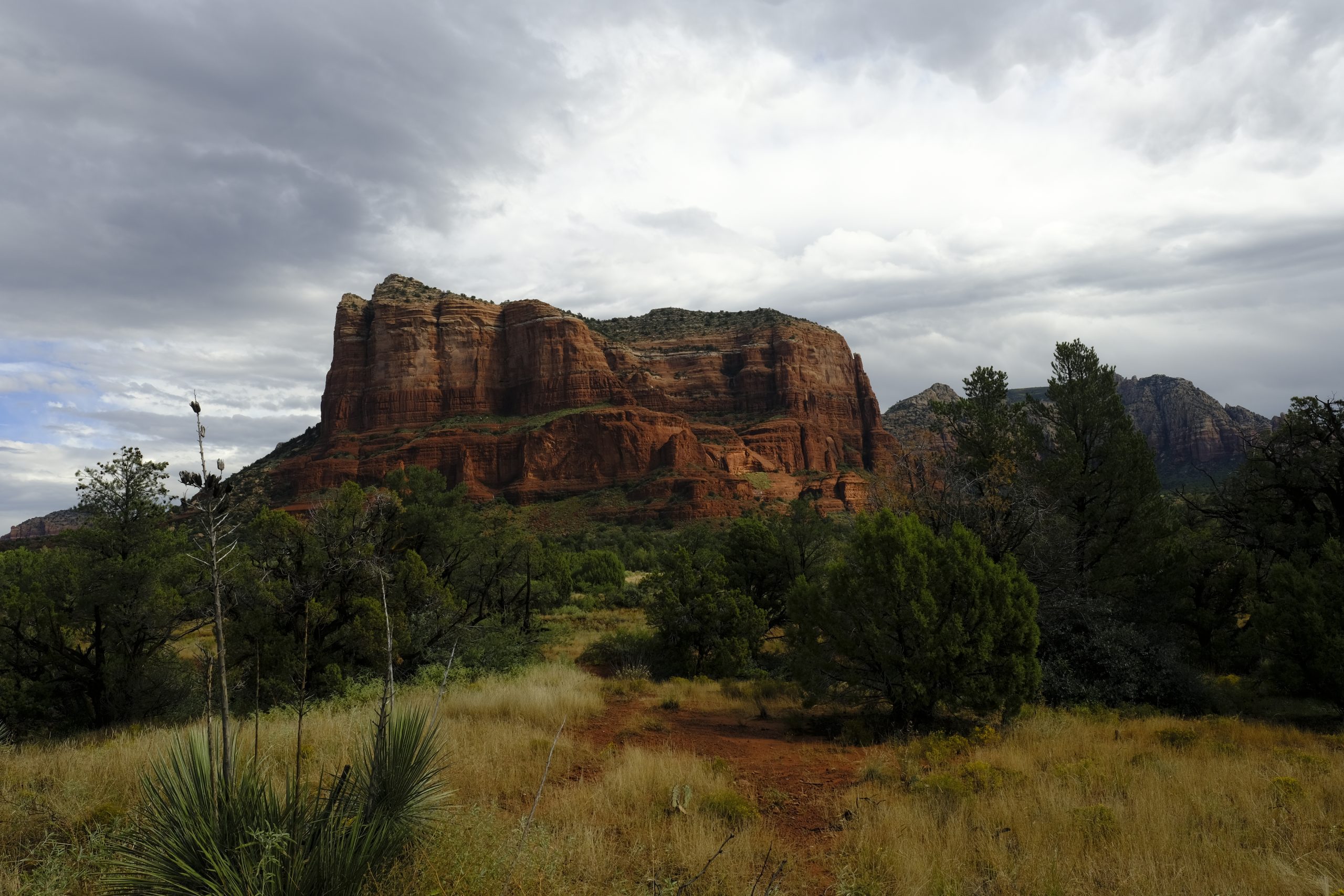
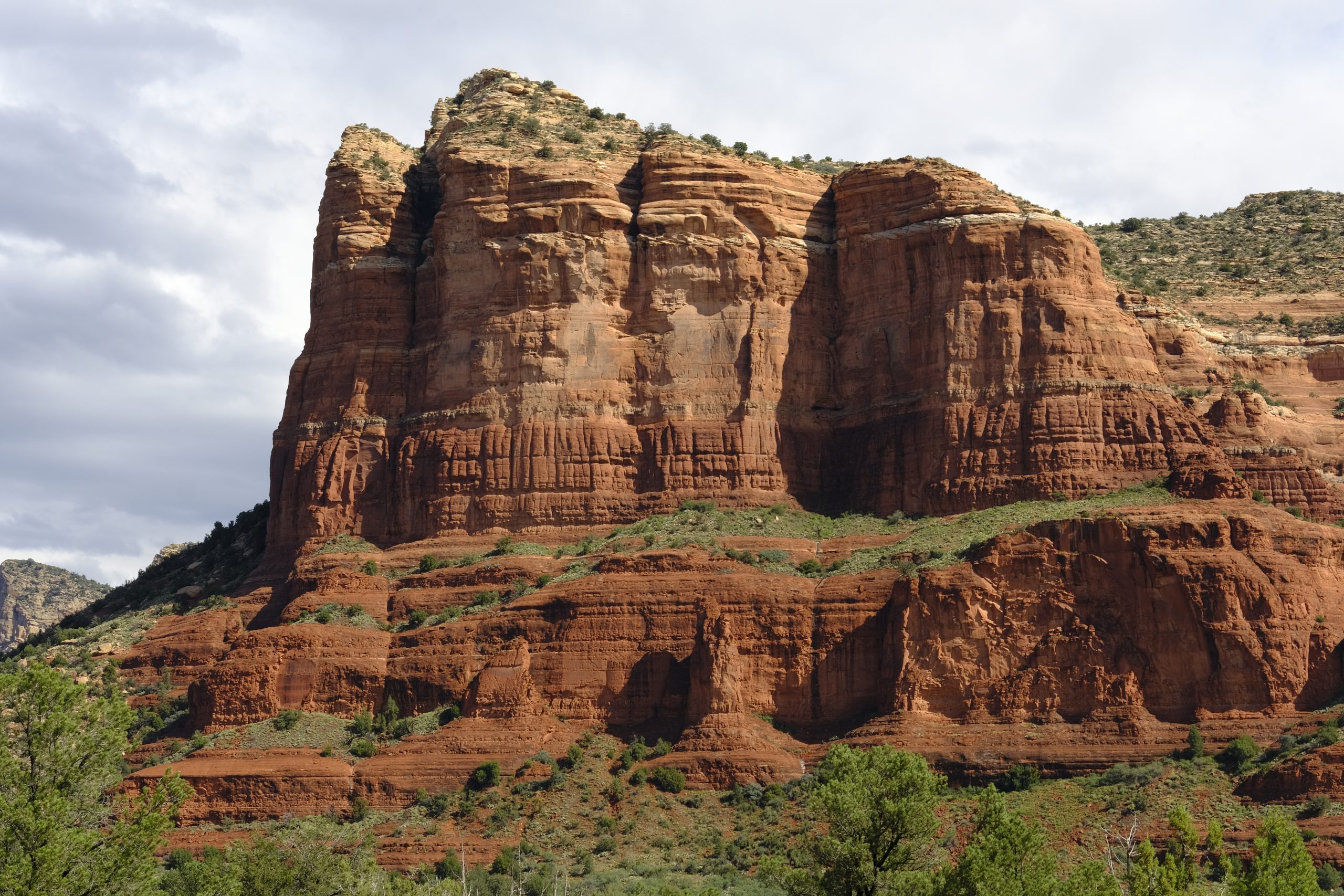
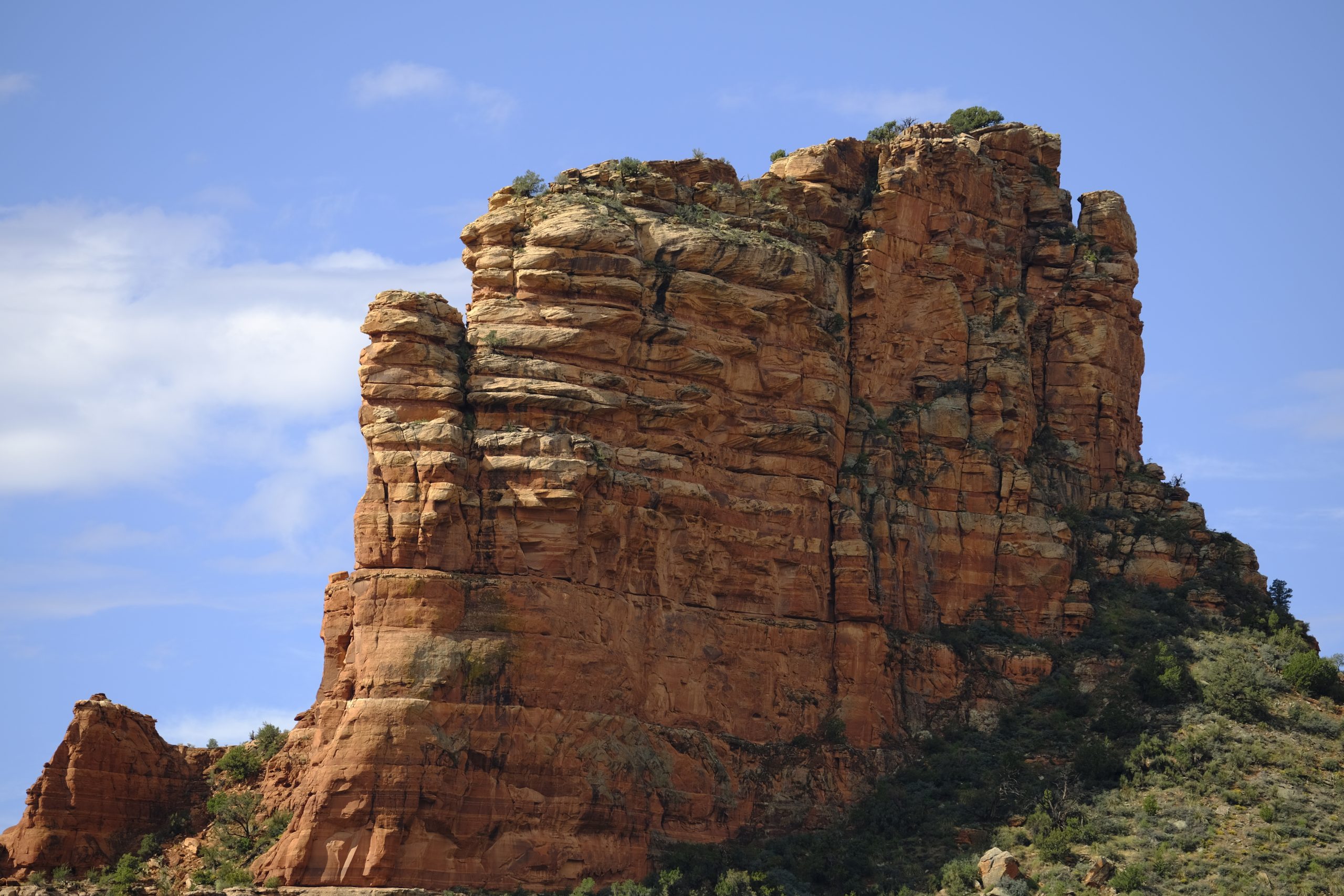
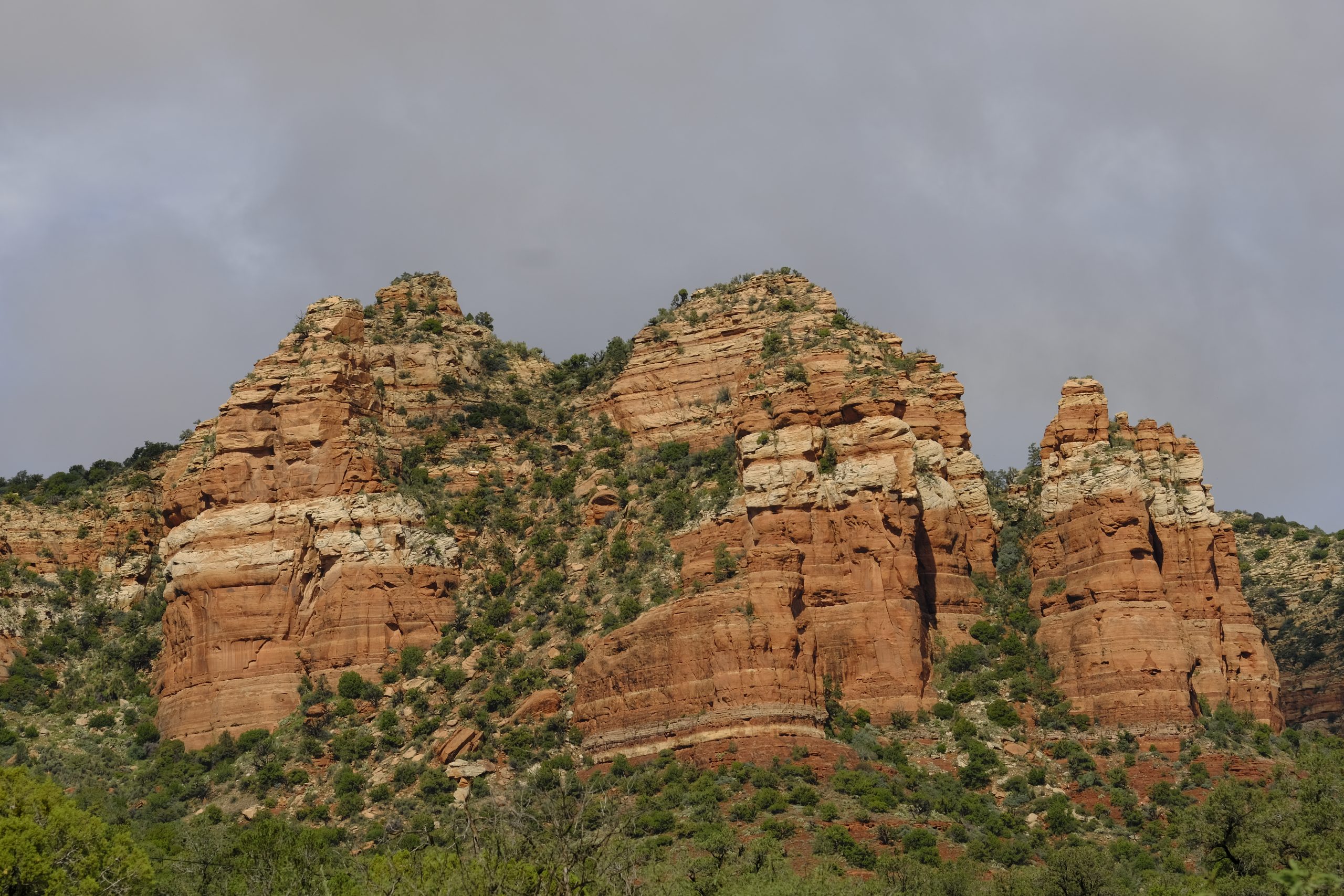
Later in the afternoon, the weather changed as we drove through Oak Creek Canyon and on to Grand Canyon National Park. It began to rain in thick sheets, with heavy mist and extremely poor visibility, so we couldn’t do much in the evening other than having dinner with fellow travelers from Louisiana and Georgia. Dinner was at the Big E Steakhouse, where both the food and service were ho-hum. One table was even asked to leave to make room for another group before their dessert was served.
Grand Canyon: A Natural Wonder – October 6, 2021
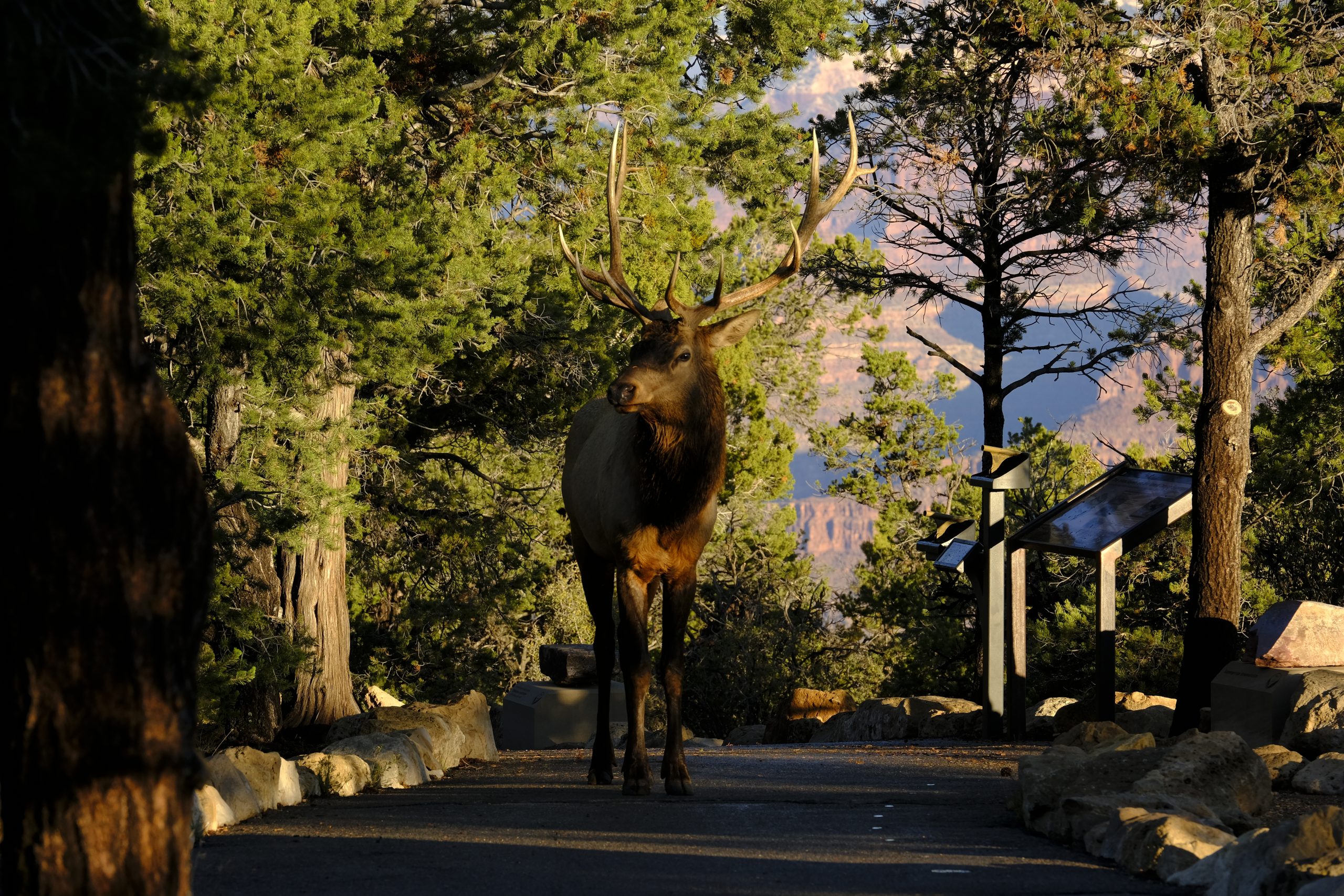
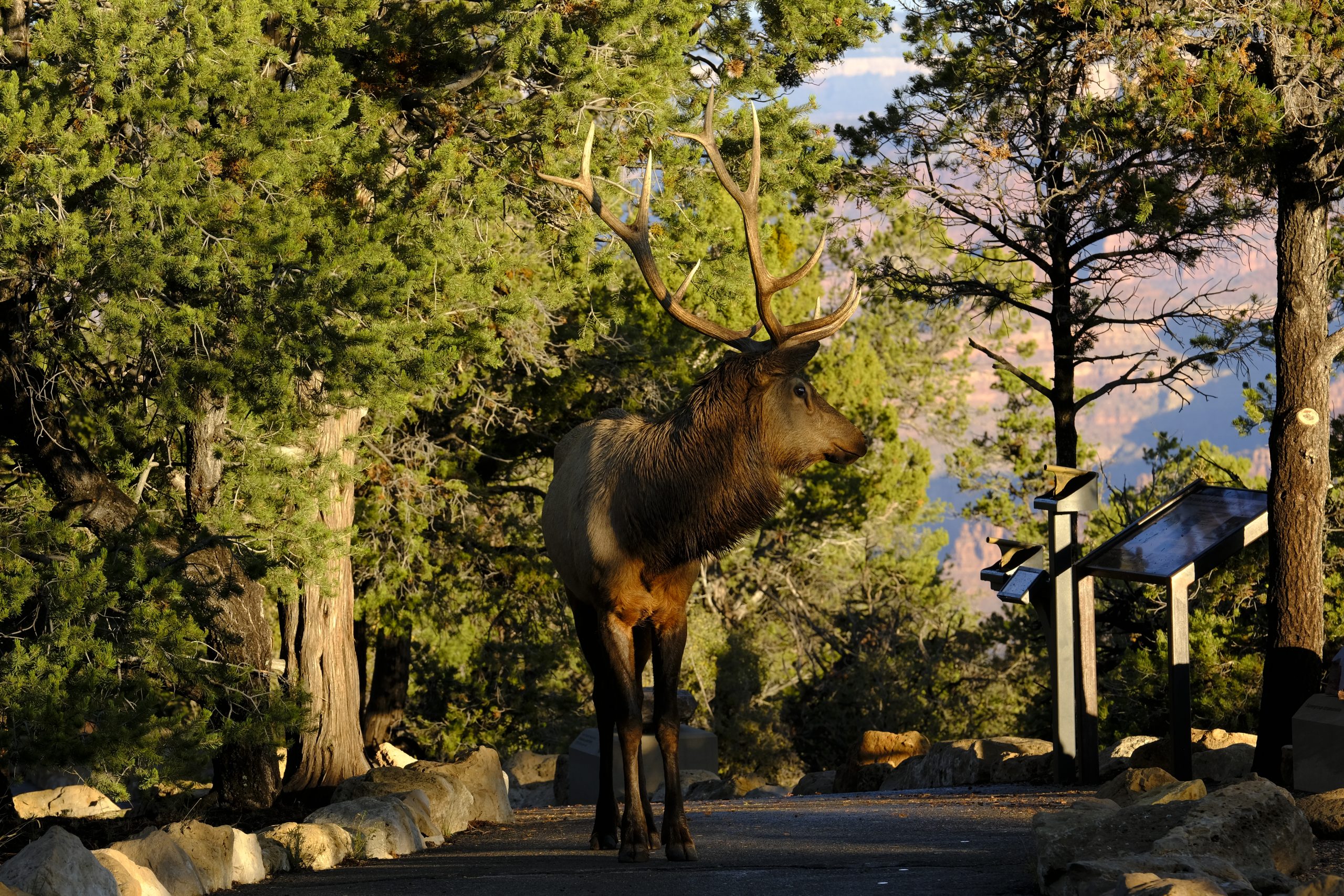
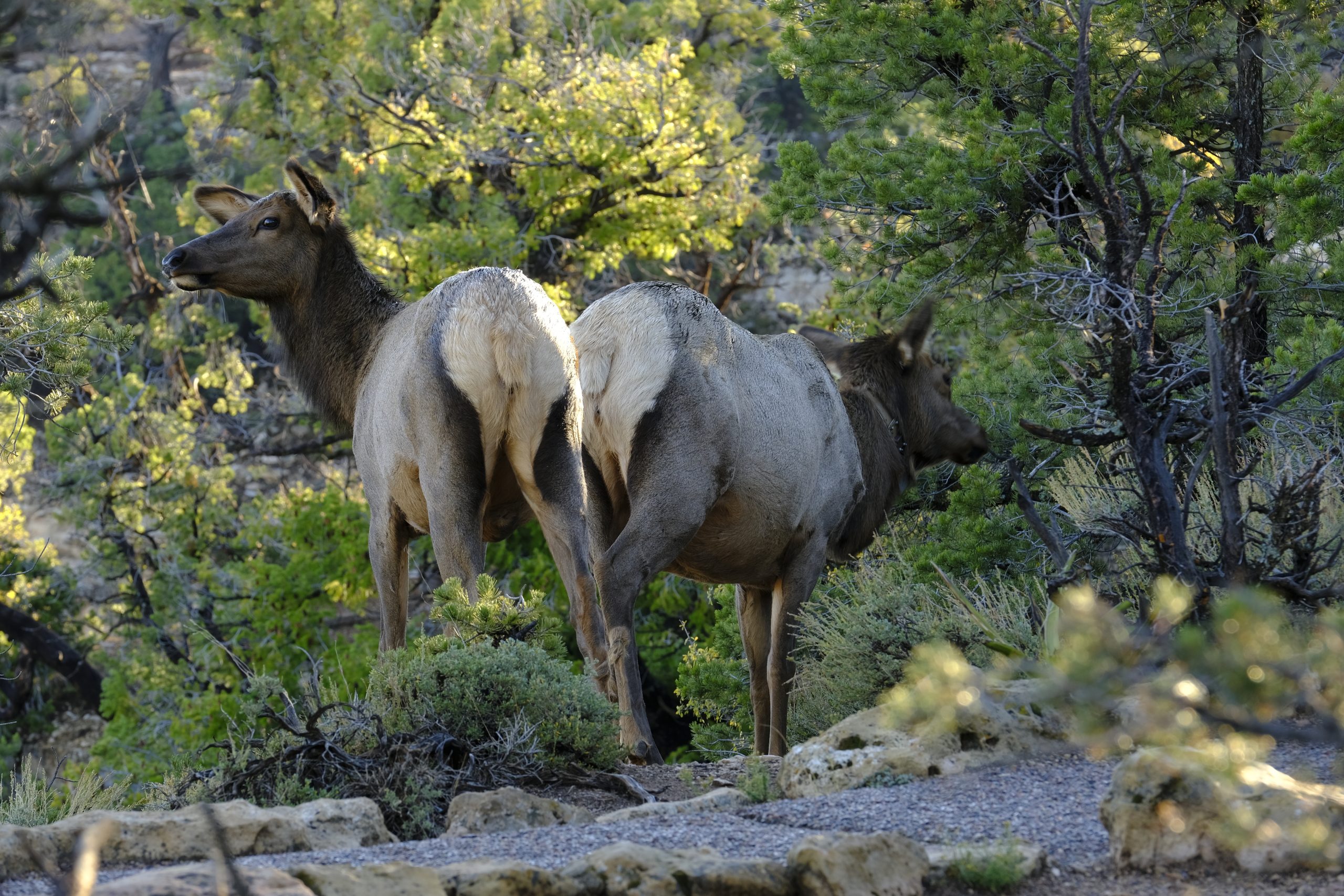
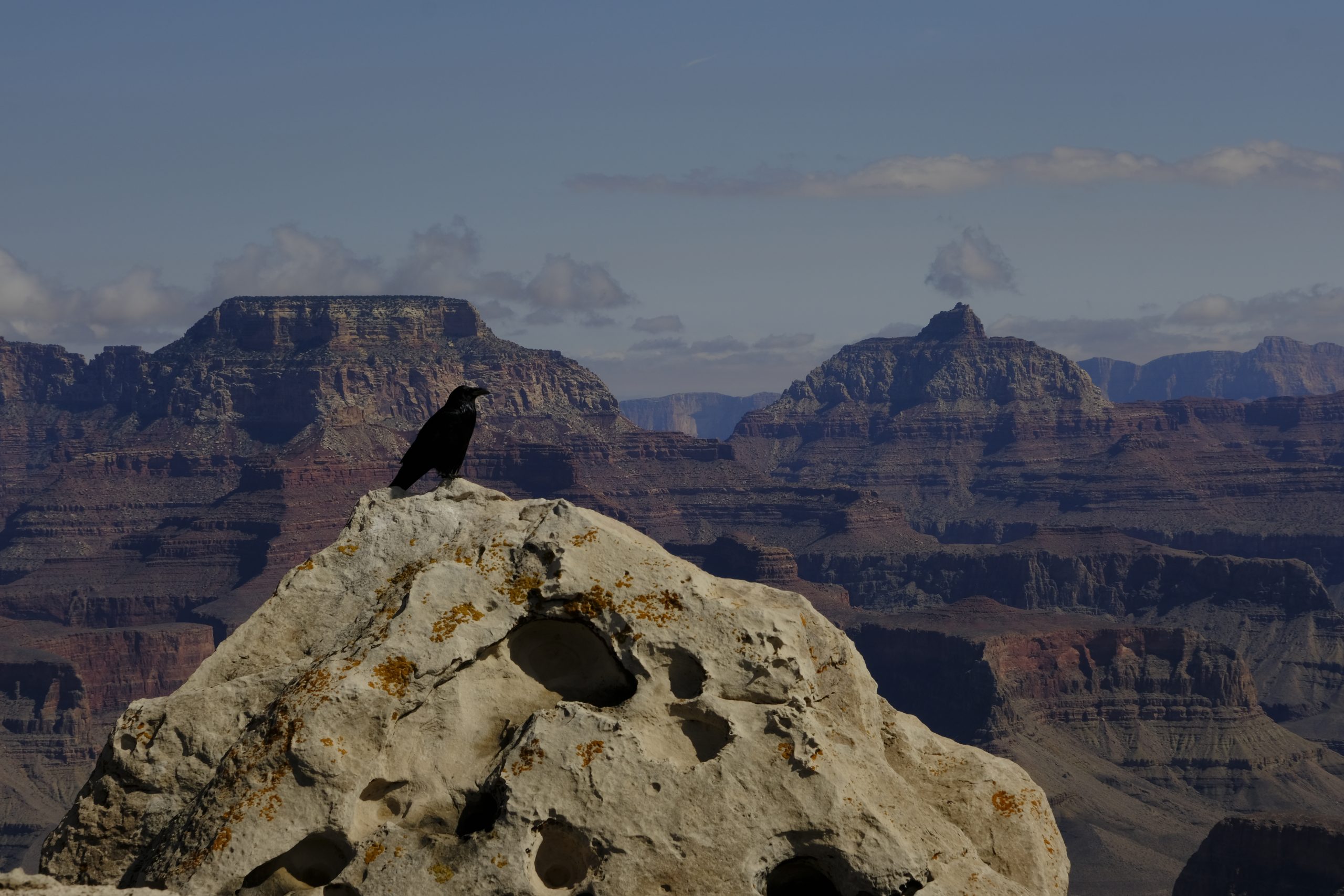
It was a very busy day. We woke up early to see the sunrise over the rim of the Grand Canyon. Ken Burns had convinced many of us that doing so was a must. The Grand Canyon, besides being a UNESCO World Heritage site, is also one of the seven natural wonders of the world. We hiked about 1.6 miles on the south rim to the Yavapai observation station to see the sunrise. It was a beautiful sight watching the red globe light up the different layers of rocks, some of which were a billion years old. On the way back, we had an extra special treat when we encountered a male elk with a magnificent rack and five young female elk. The male was just a few feet from us at one point, on guard to charge us if we stepped out of line.
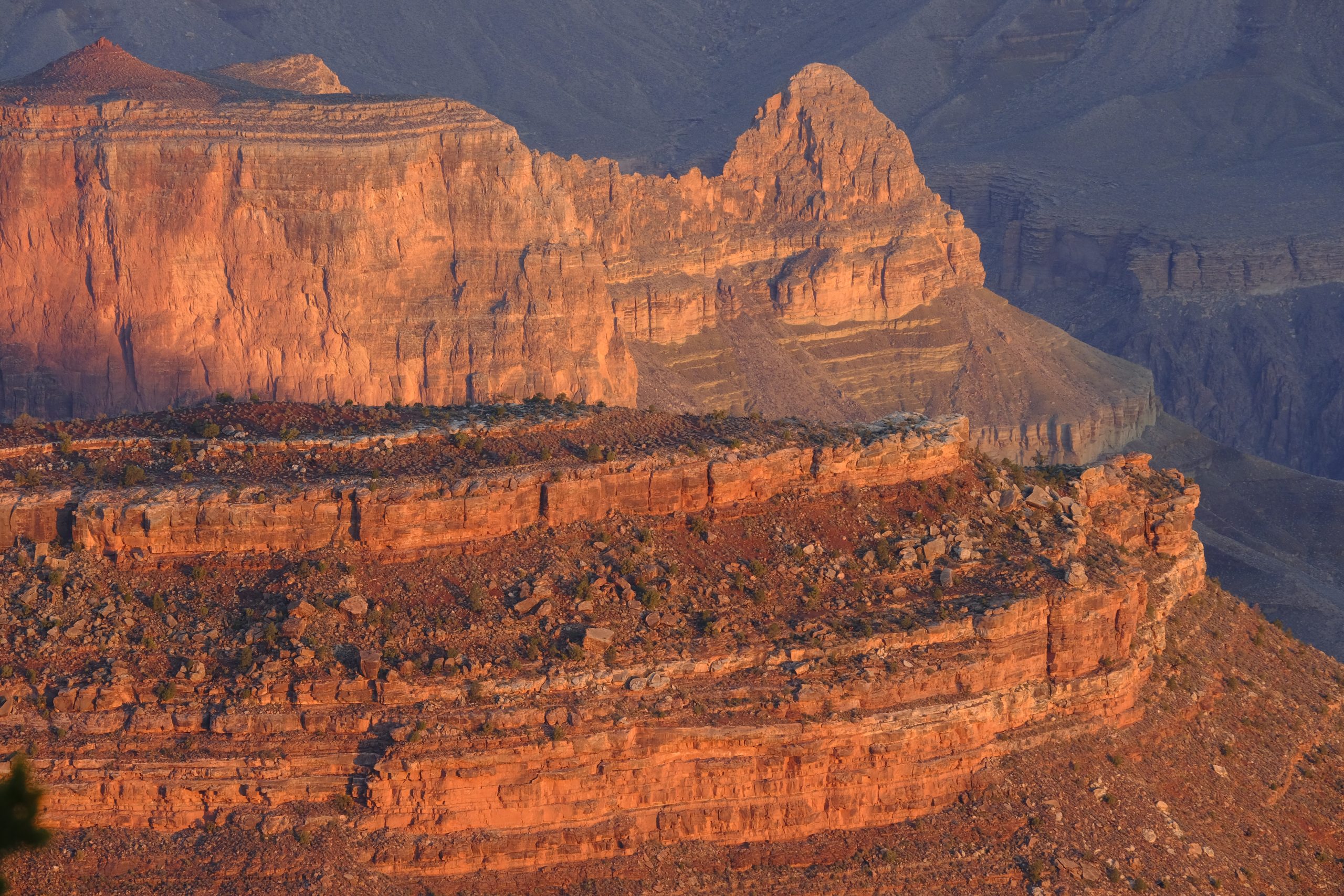
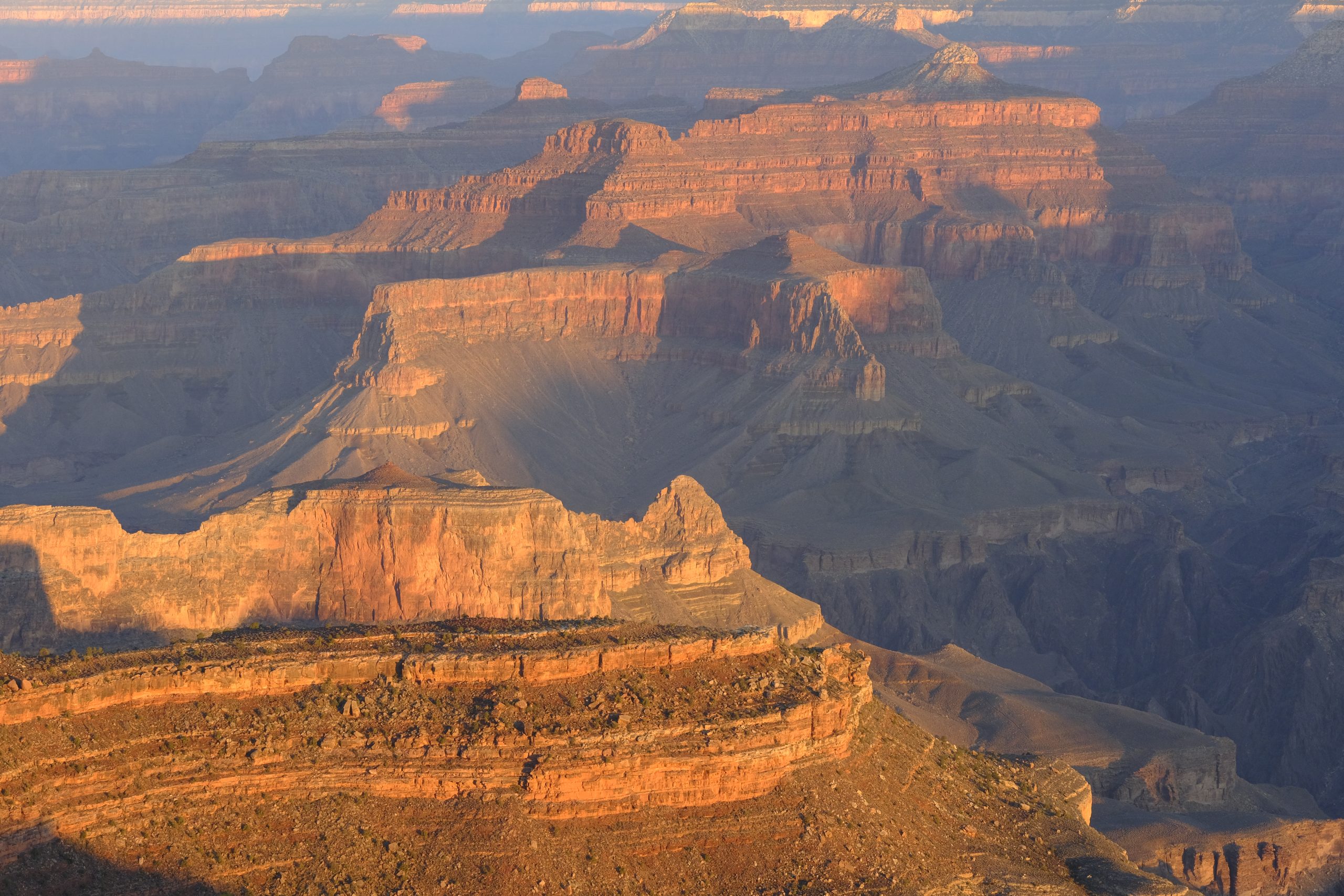
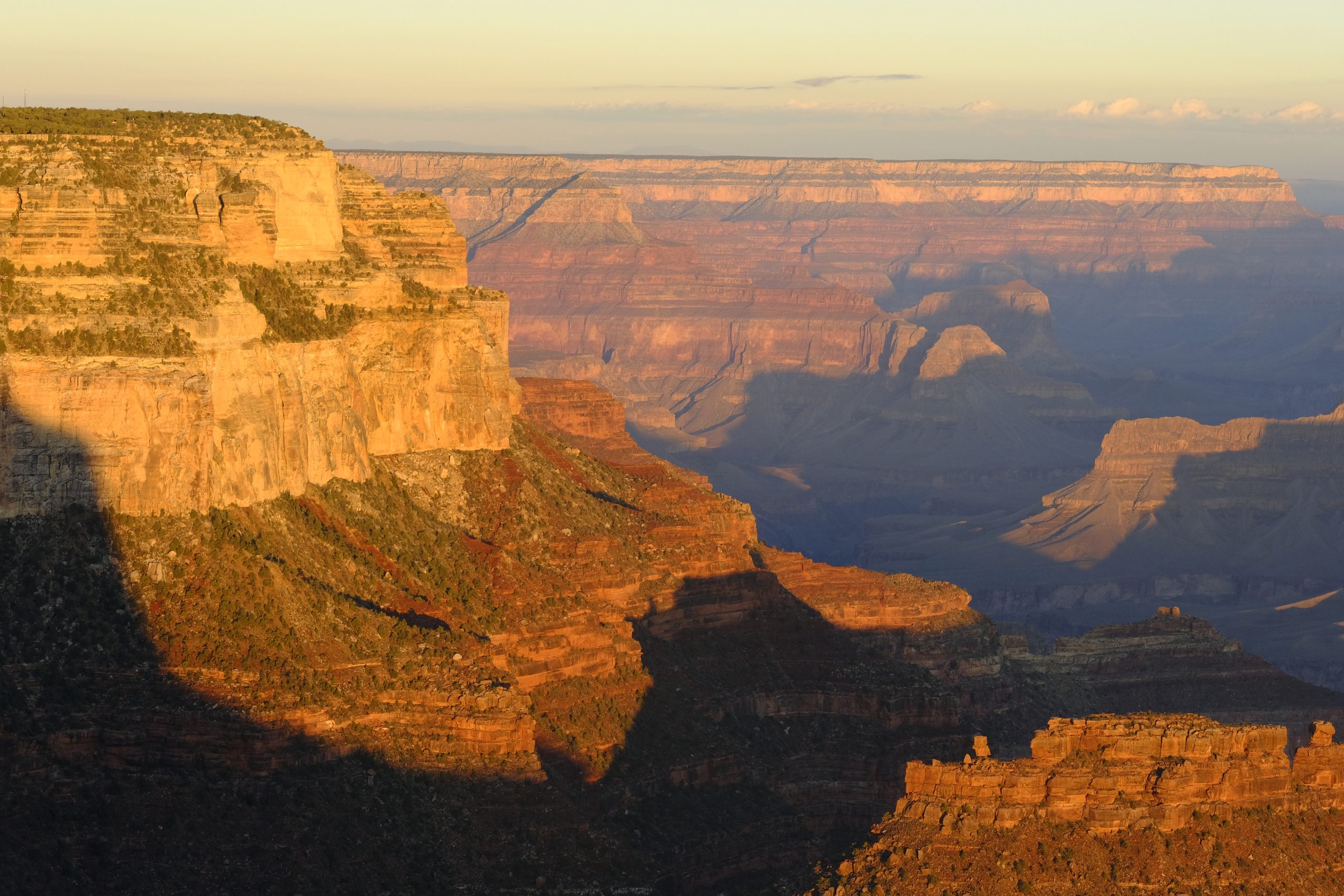
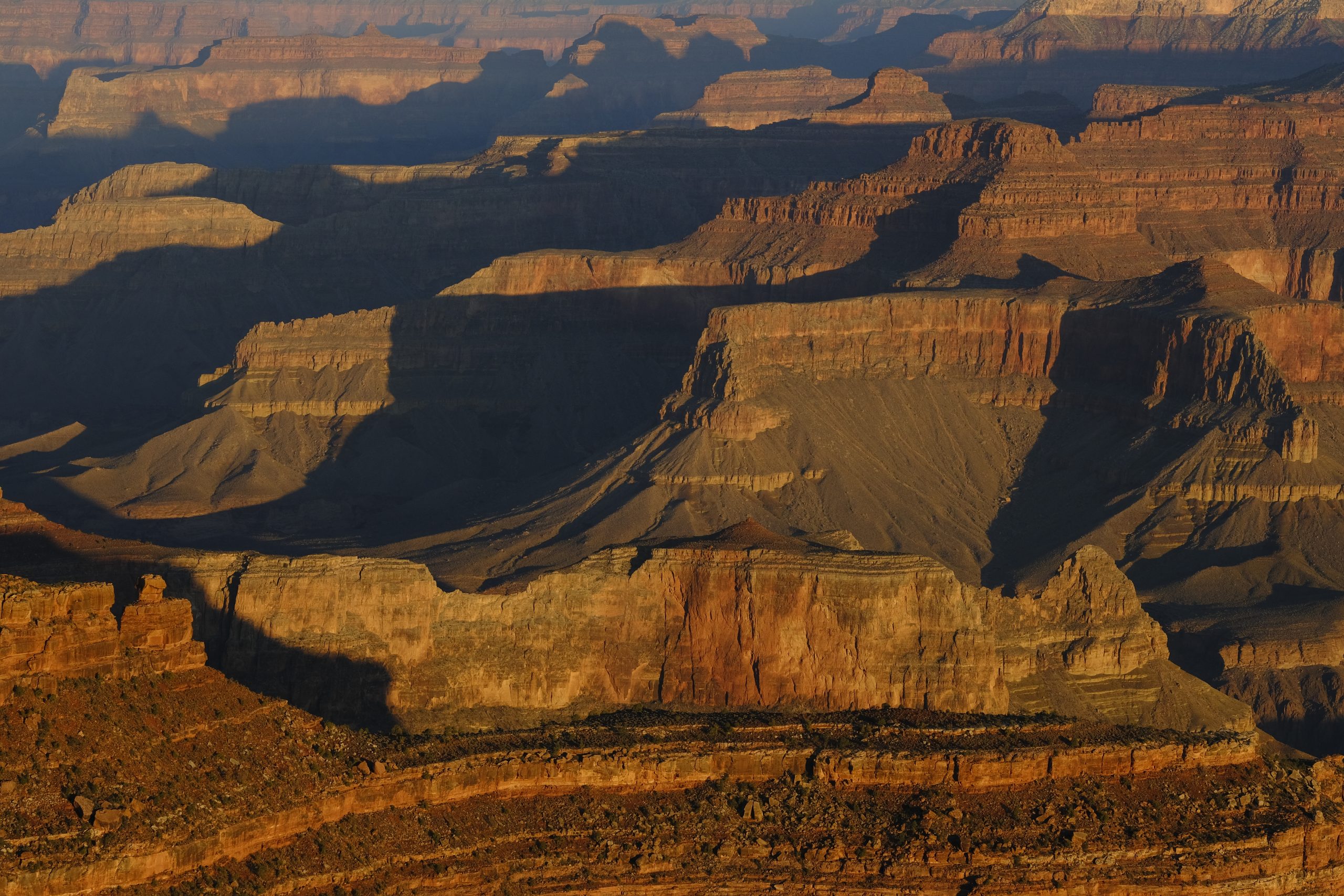
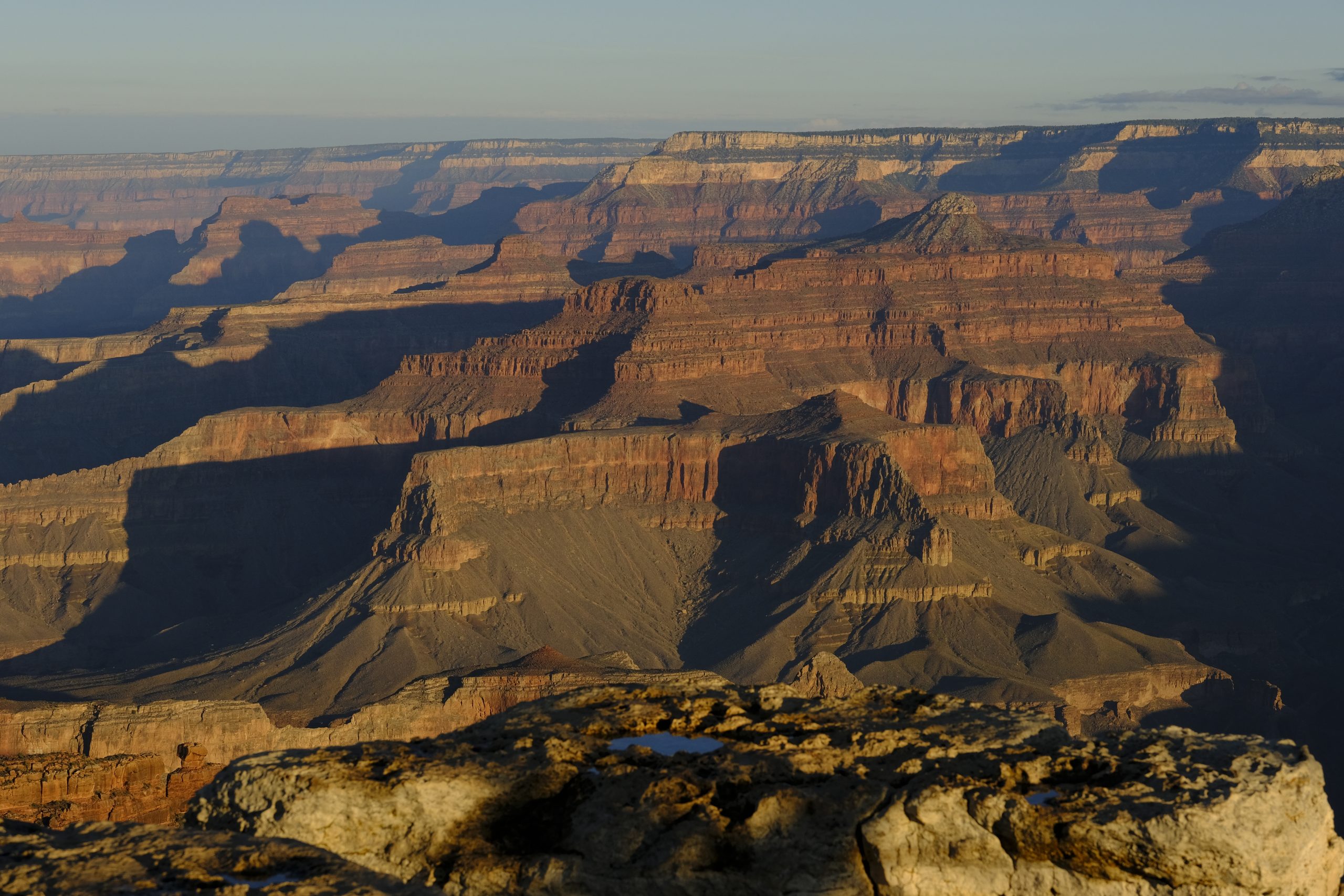
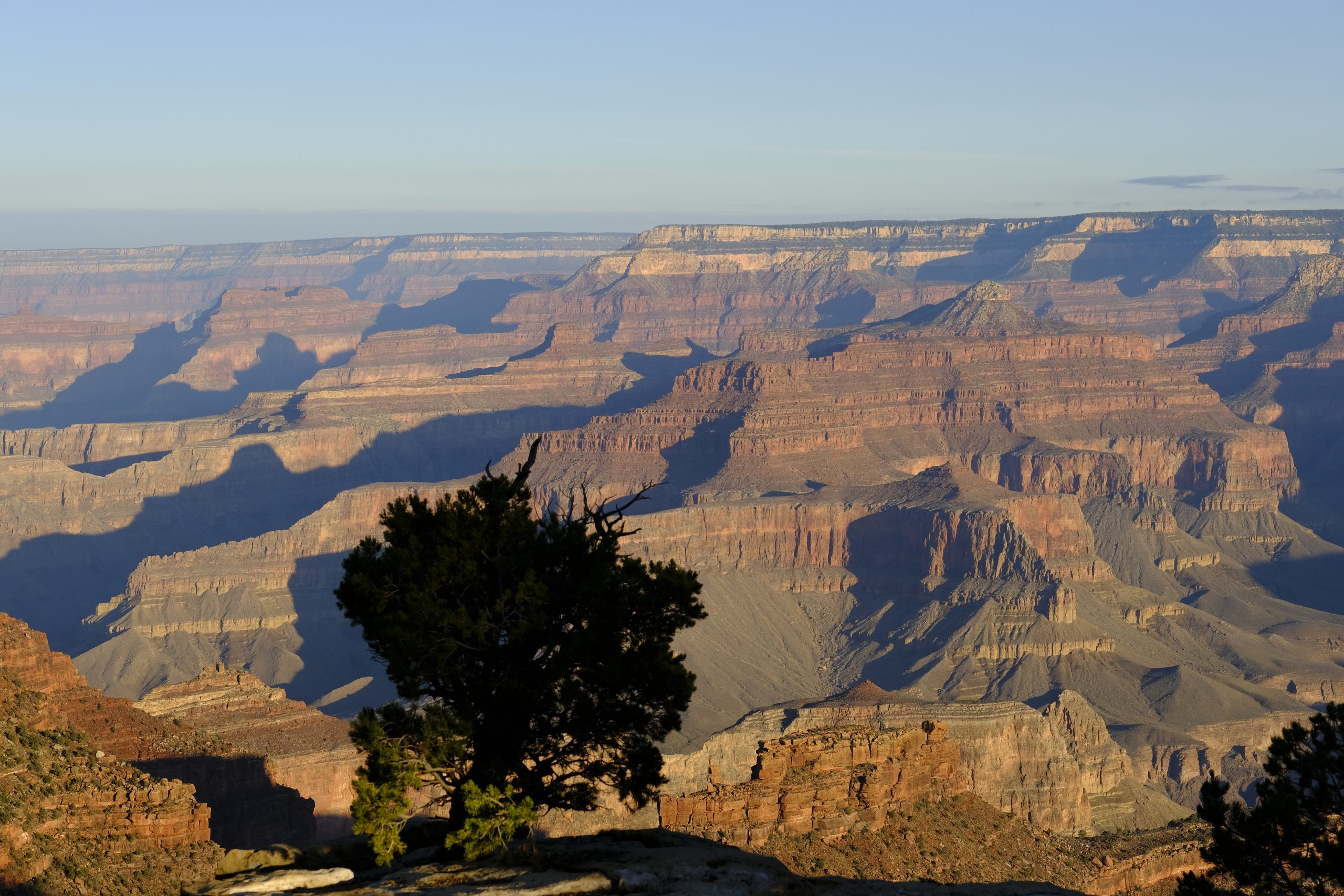
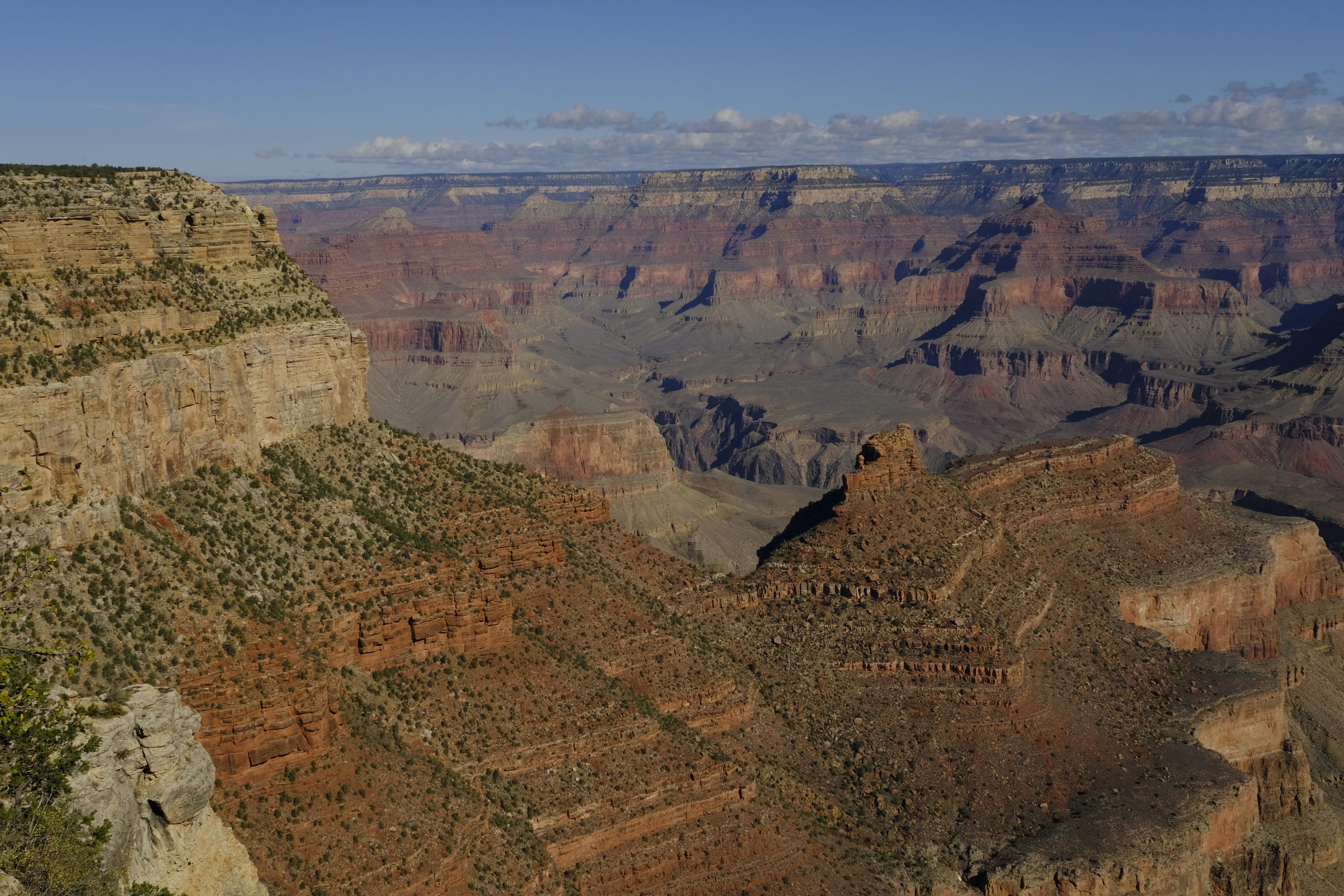
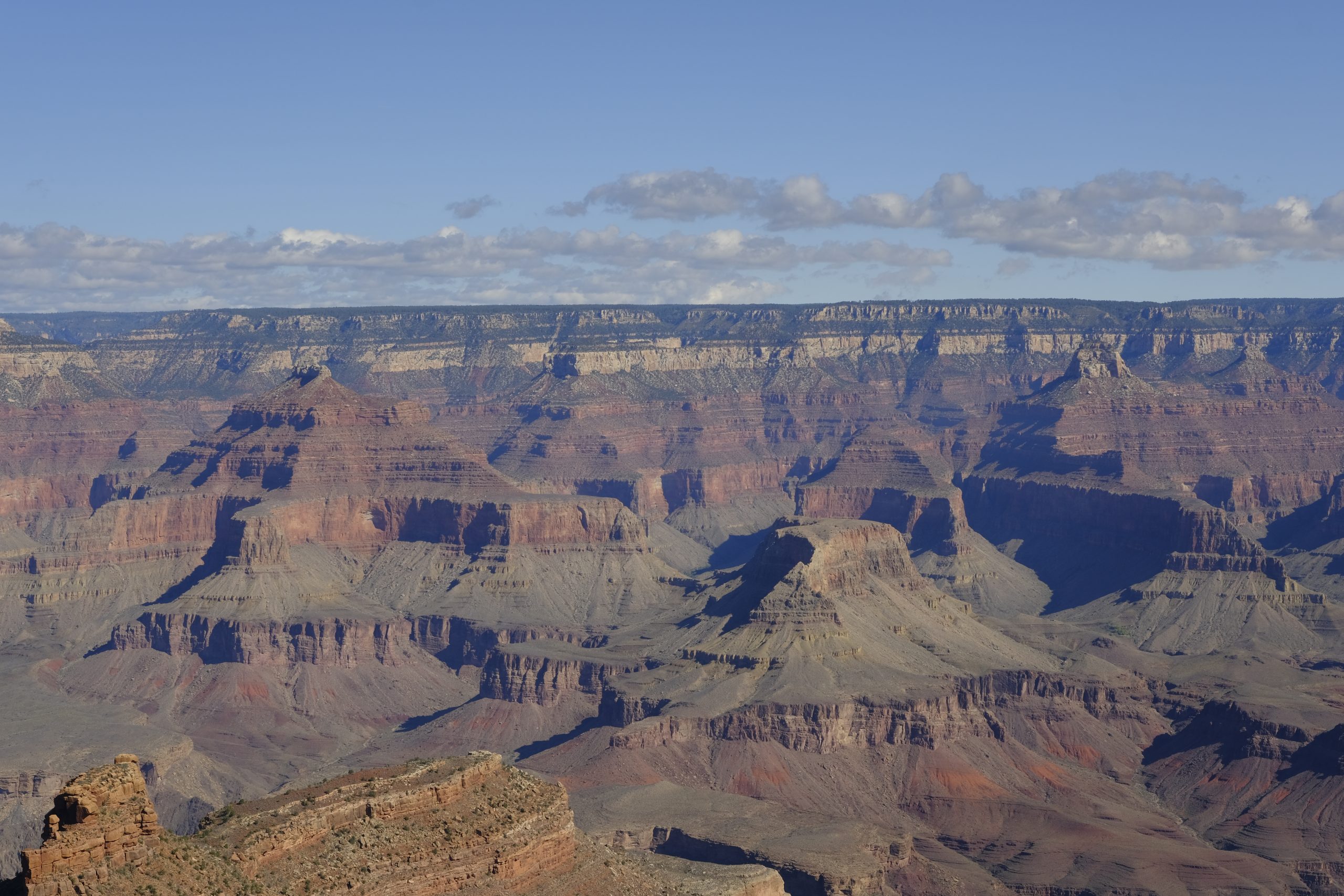
Mid-morning we attended an interesting presentation by a young geologist on the rock formation in the canyon. Here’s what we learned: there are three types of rocks: igneous, sedimentary, and metamorphic. Igneous form when molten rock (lava or magma) cools and hardens. Examples are basalt and granite. Sedimentary results from erosion of any rock, followed by the sediment being deposited into a natural basin, and finally the sediment being cemented into stone. Examples are sandstone, shale, and limestone. All the layers in the Grand Canyon are sedimentary, except for the bottom layer. Metamorphic rocks form when any rock is subjected to great heat and pressure, but not enough heat to melt the rock. Examples are schist and gneiss (pronounced ‘nice’), and both occur with granite, in the bottom of the canyon, sometimes called the Vishnu Complex. There are 10 layers of rocks and strata altogether. Four main events formed the Grand Canyon. About 1.7 billion years ago mountain ranges formed here. Then the mountains eroded to sea level, leaving the Vishnu Complex at the canyon bottom. About 500-250 million years ago rock layers 1-9 formed on top of the Vishnu Complex. All these layers were deposited very close to sea level as the land sank. About 50 million years ago tectonic processes lifted the Grand Canyon region to its present altitude. About 5 million years ago the Colorado River took its present course through the Grand Canyon. All the lifting, lowering, depositing, flowing, eroding has left behind the breathtaking geological formation that is the Grand Canyon.
In the afternoon we stopped at Mather’s Point, named after Steven Mather the first director of the National Park Service. This is a vista that is usually viewed first when one enters the Grand Canyon Park from the south entrance, but rain had prevented us from doing so the previous day. From here one can glimpse the North Rim, the Colorado river and layers of Kaibab limestone and Coconino sandstone, and the Vishnu Complex.
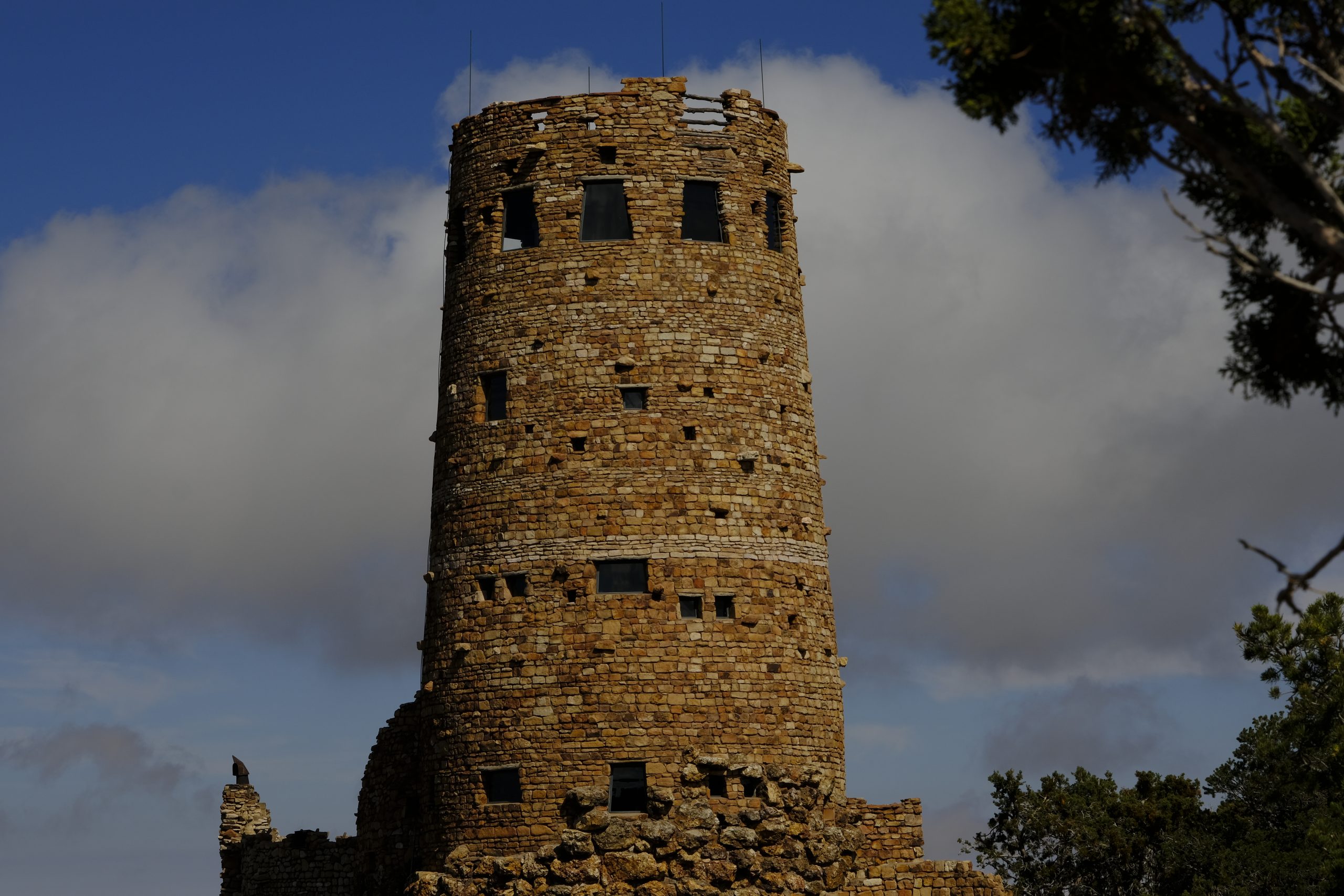
Next, we stopped to see the Desert View Watchtower. Designed by Mary Elizabeth Jane Coulter in 1932 as a composite of several native American structures, the round tower blends in with the surroundings as the stones used to build it were kept weathered. She refused to let the stones be cut or polished so that the tower could match the environment. Coulter designed six structures in the area, including the Hopi House and Bright Angel Lodge. This is quite impressive when one considers that in the 1930s, it was rare for women to be architects.
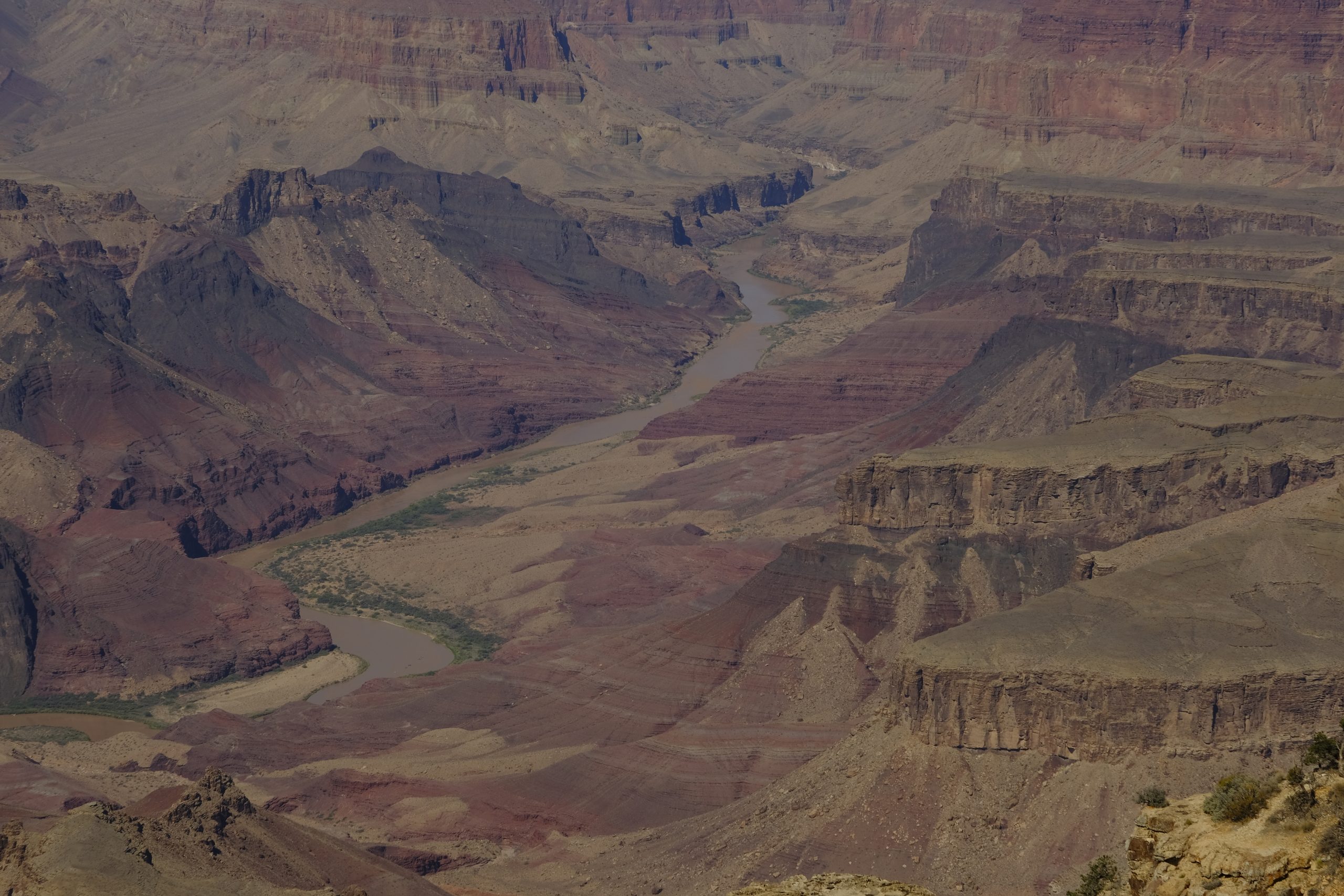
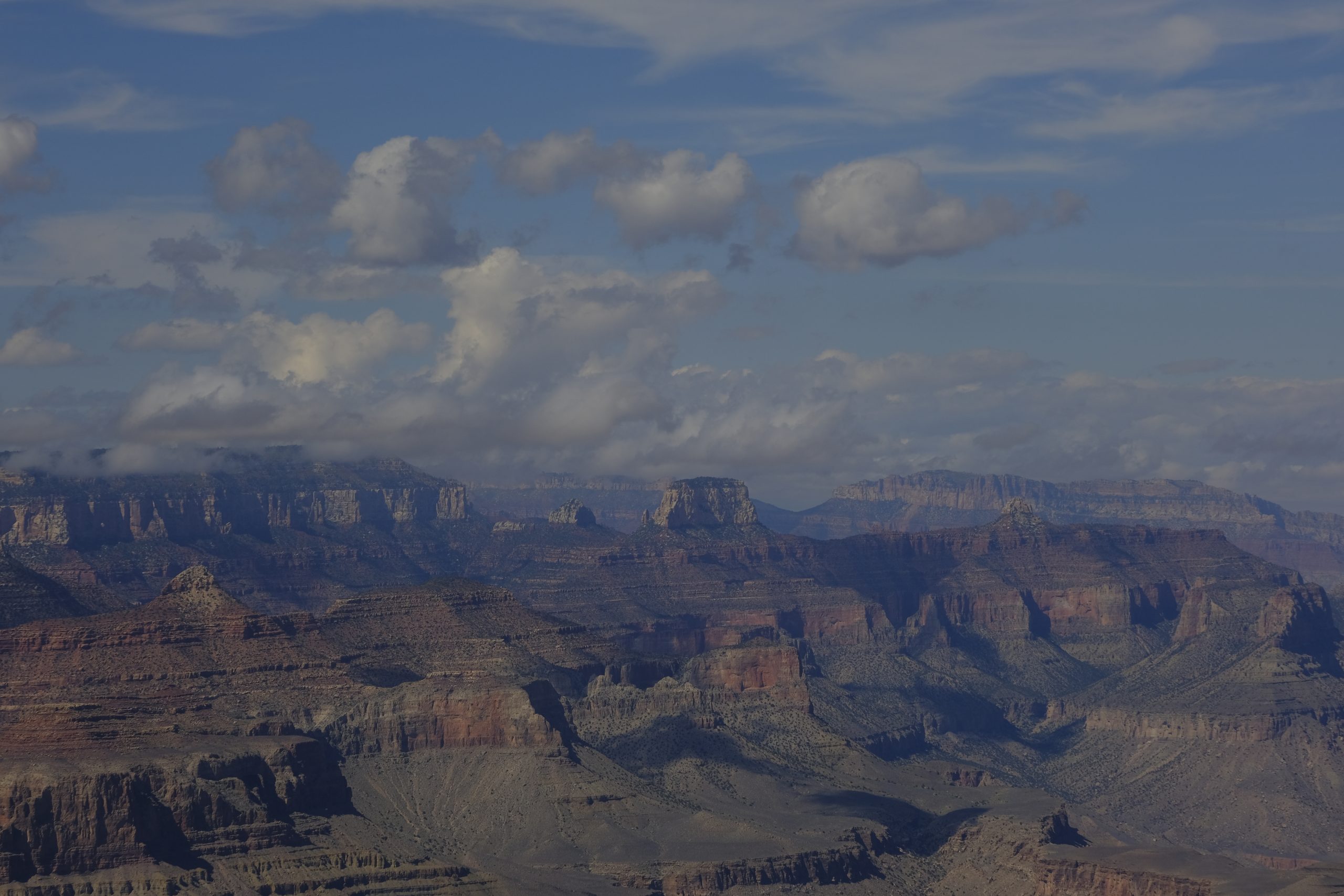
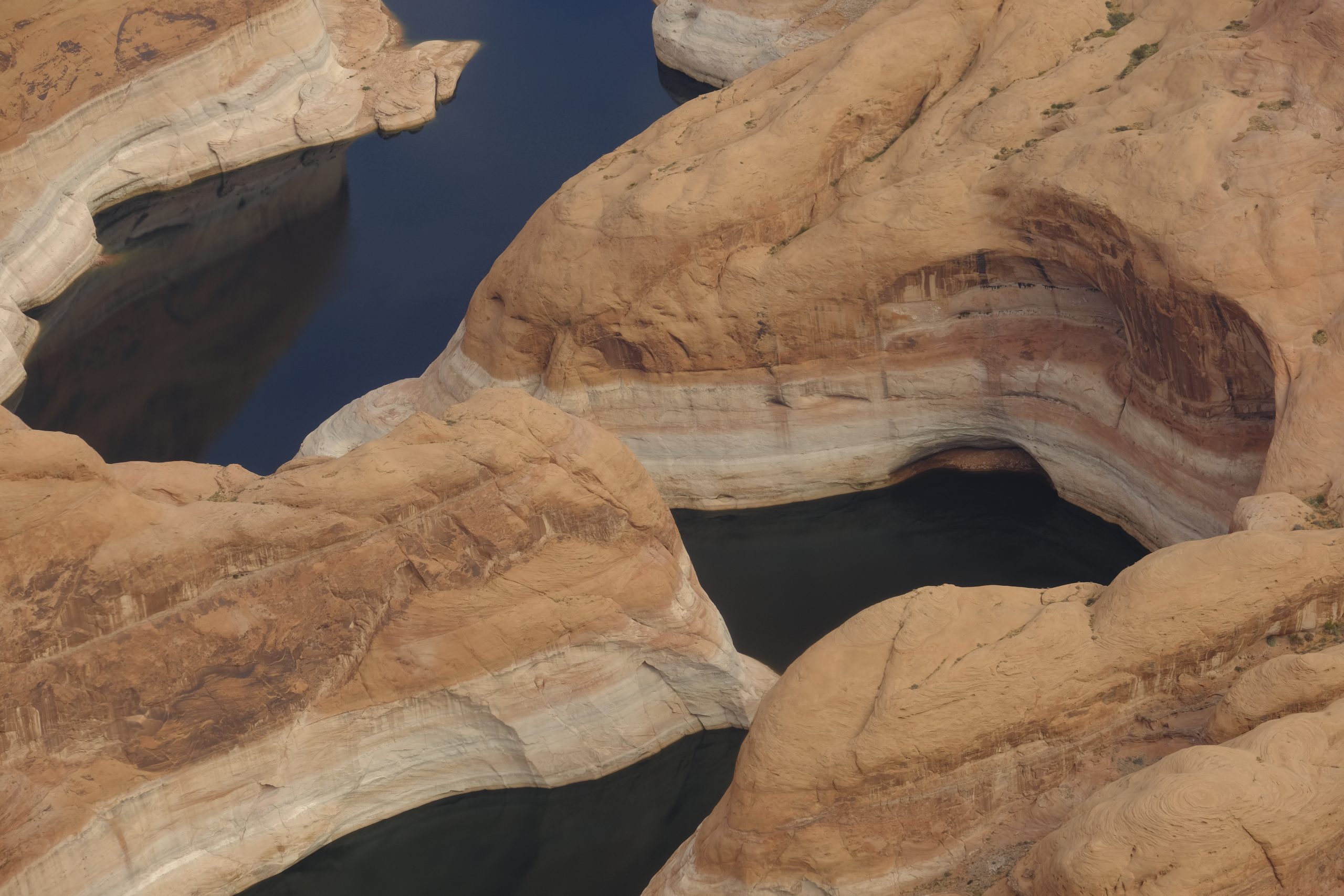
After an ice cream break, we drove through the Navajo Nation Reservation and on to Page, Arizona. We checked into the Lake Powell Resort. Lake Powell (named after civil war veteran Major John Wesley Powell, who lost an arm in the Battle of Shiloh and later led two explorations of the Colorado river) is the 2nd largest man-made lake in the U.S. It was created by damming the Colorado River at Glen Canyon with the purpose of generating hydroelectric power and providing water to the southwest United States.
Rainbow Bridge and Monument Valley Adventure – October 7, 2021
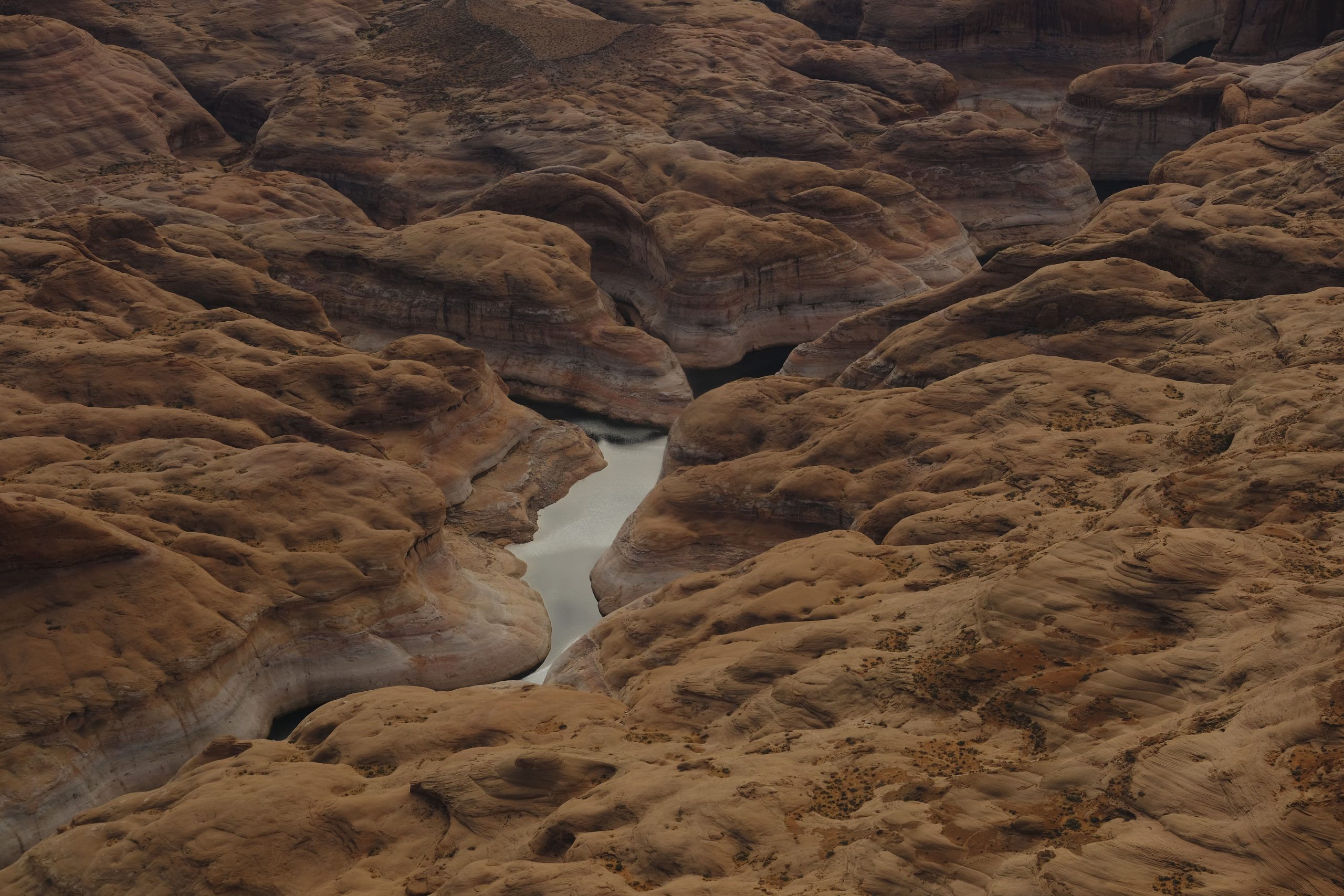
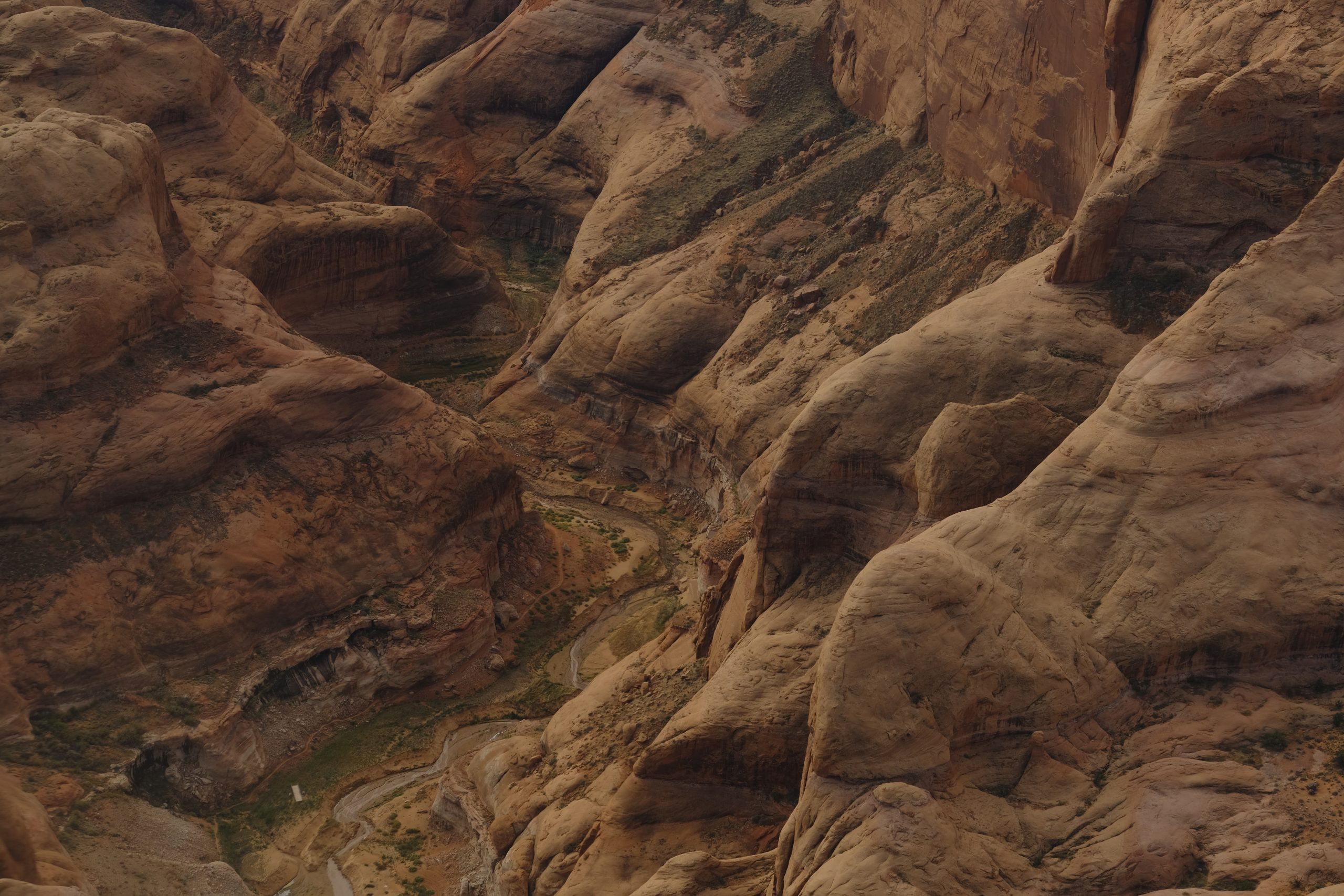
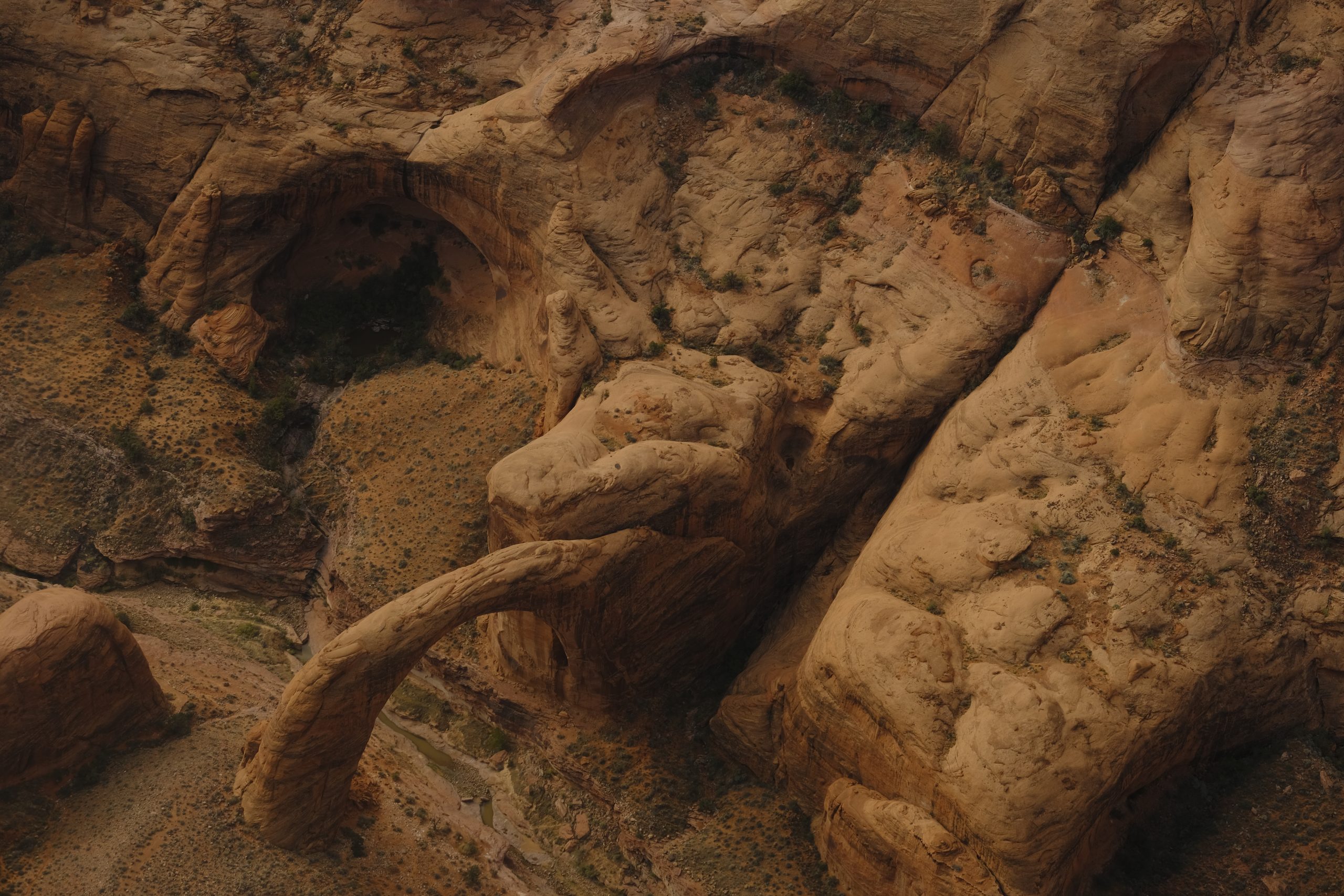
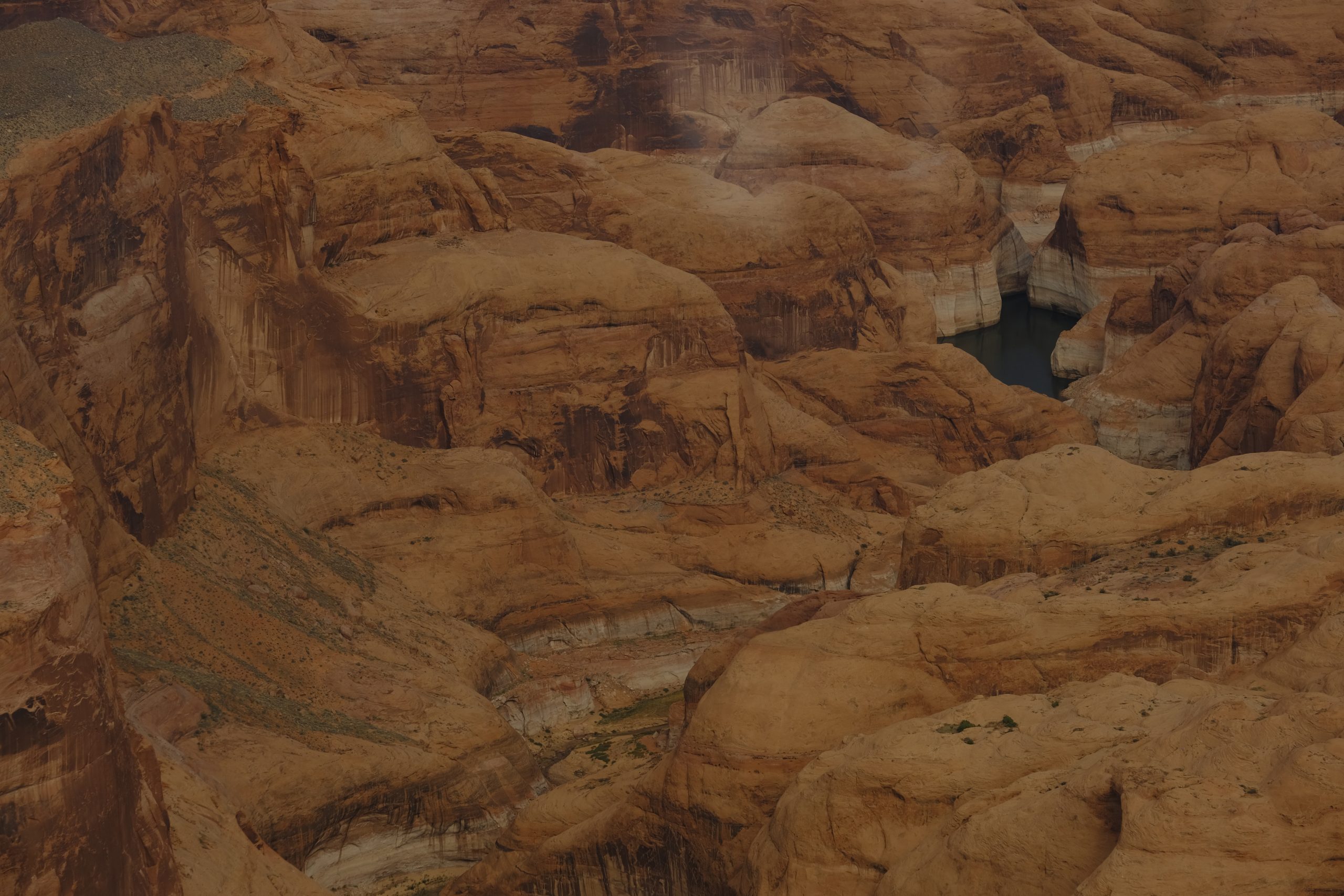
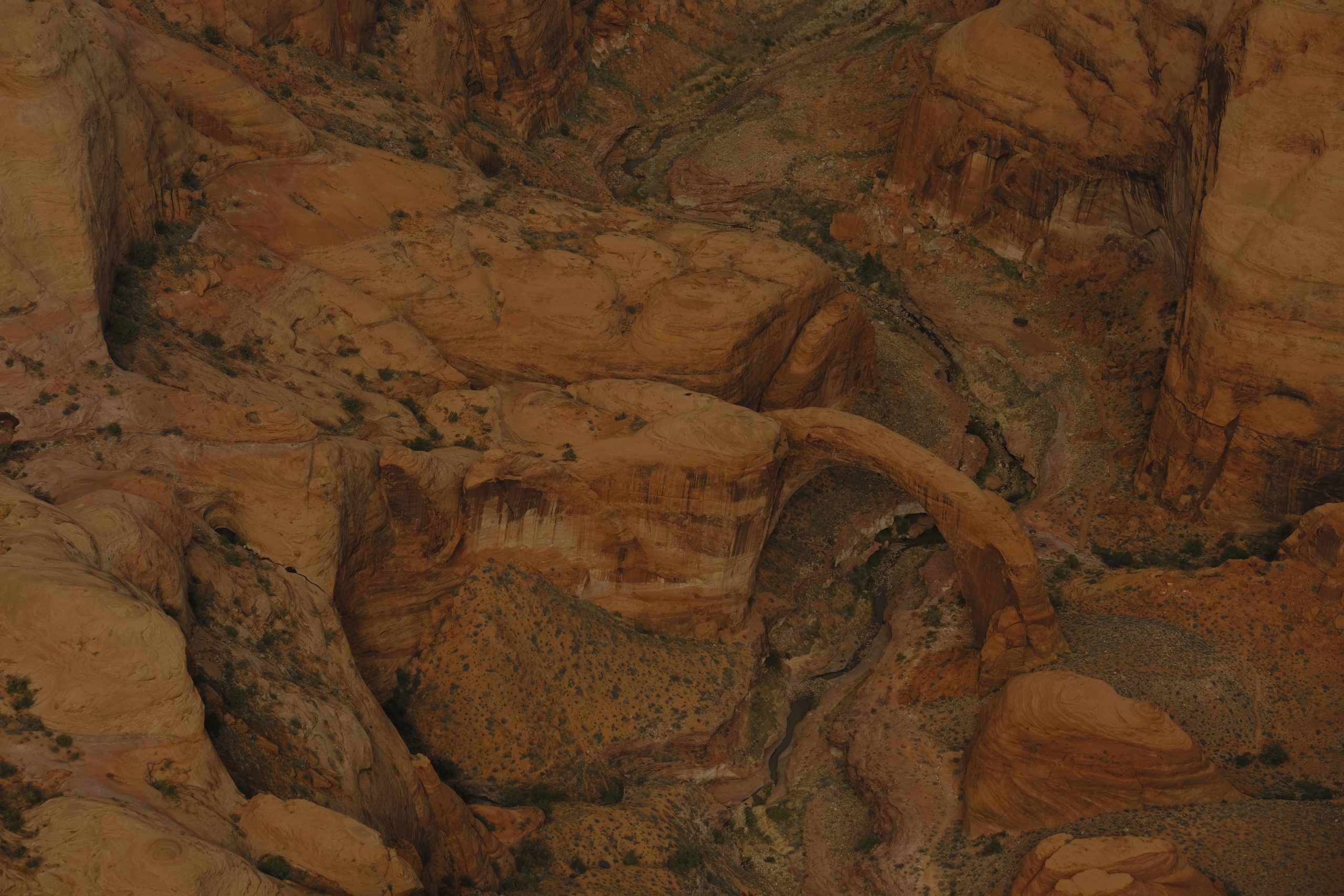
This morning, we embarked on a 30-minute ride in a small airplane to view Rainbow Bridge. This bridge is the sixth-longest natural bridge in the world. Arching over the dry bed of Bridge Creek and composed of Navajo sandstone, it is 290 feet high and spans 270 feet across and is higher than the U.S. Capitol Building. We oohed and aahed appreciatively, capturing the breathtaking sight in lots of pictures. One of our Chinese travelers enjoyed the experience so much that he requested to fly twice!
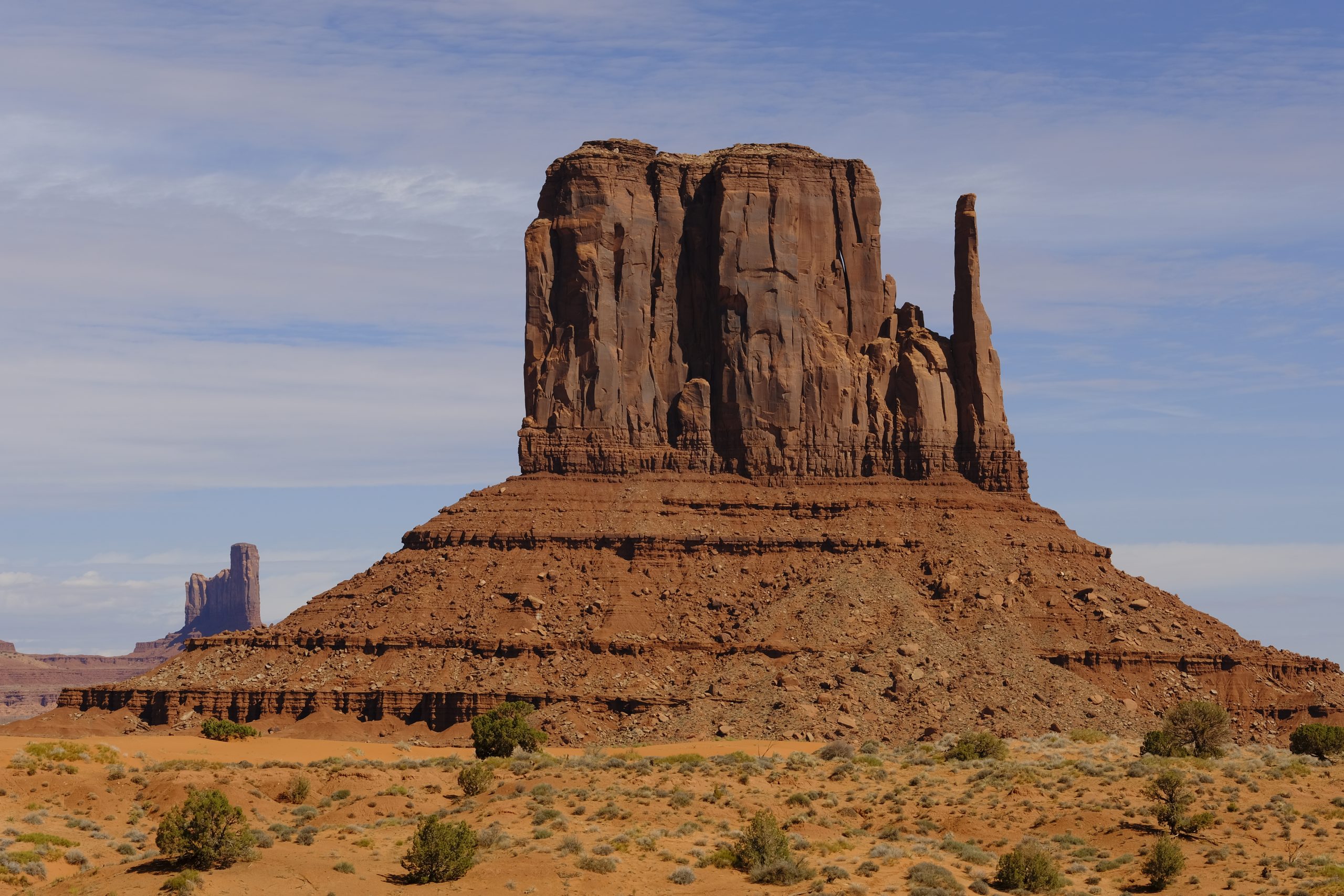
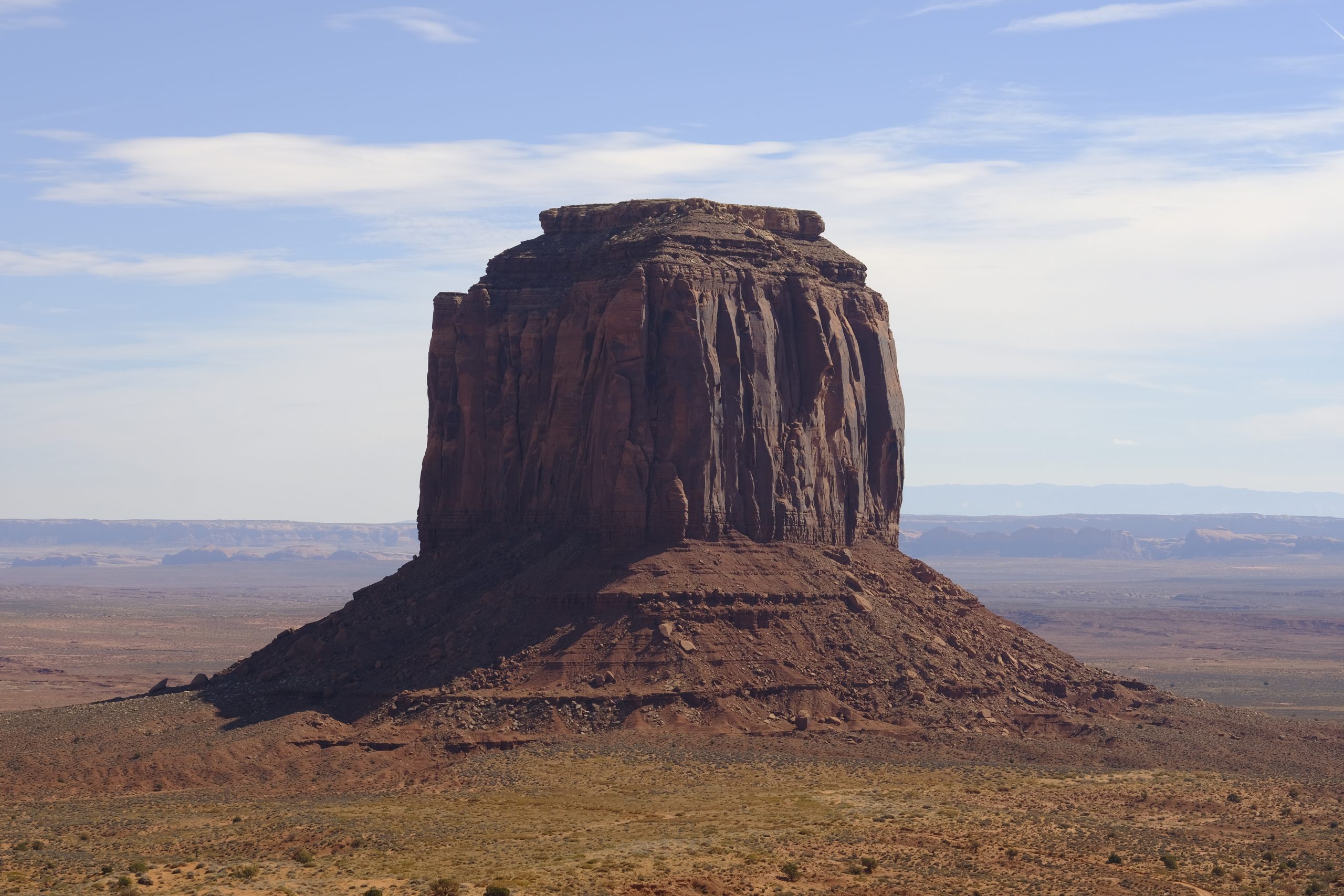
After the flight, we stopped at a Hogan, a Navajo house constructed of wooden poles, tree bark, and mud—remarkably environmentally friendly. The entrance faced the east, welcoming the morning sun. Separate Hogans were designated for men and women, with a woman’s Hogan typically round, featuring one large room with a central hearth and a smoke hole at the top, while a man’s Hogan was usually smaller with a peaked roof. Our guide, Rita, explained to us the traditional practices of women, such as spinning and dyeing wool, weaving rugs, and grinding corn. Then, she led us on a bus ride through Monument Valley, where we marveled at the majestic red sandstone formations of the Mittens and Merrick Buttes, alongside other iconic landmarks like Elephant Butte and Three Sisters. These buttes, sculpted by erosion and weathering in arid landscapes, stood distinct from mesas being taller while mesas were larger and flatter resembling tables. Monument Valley held significance as the backdrop for many of John Ford’s classic Western films, including Stagecoach, Fort Apache, and My Darling Clementine.
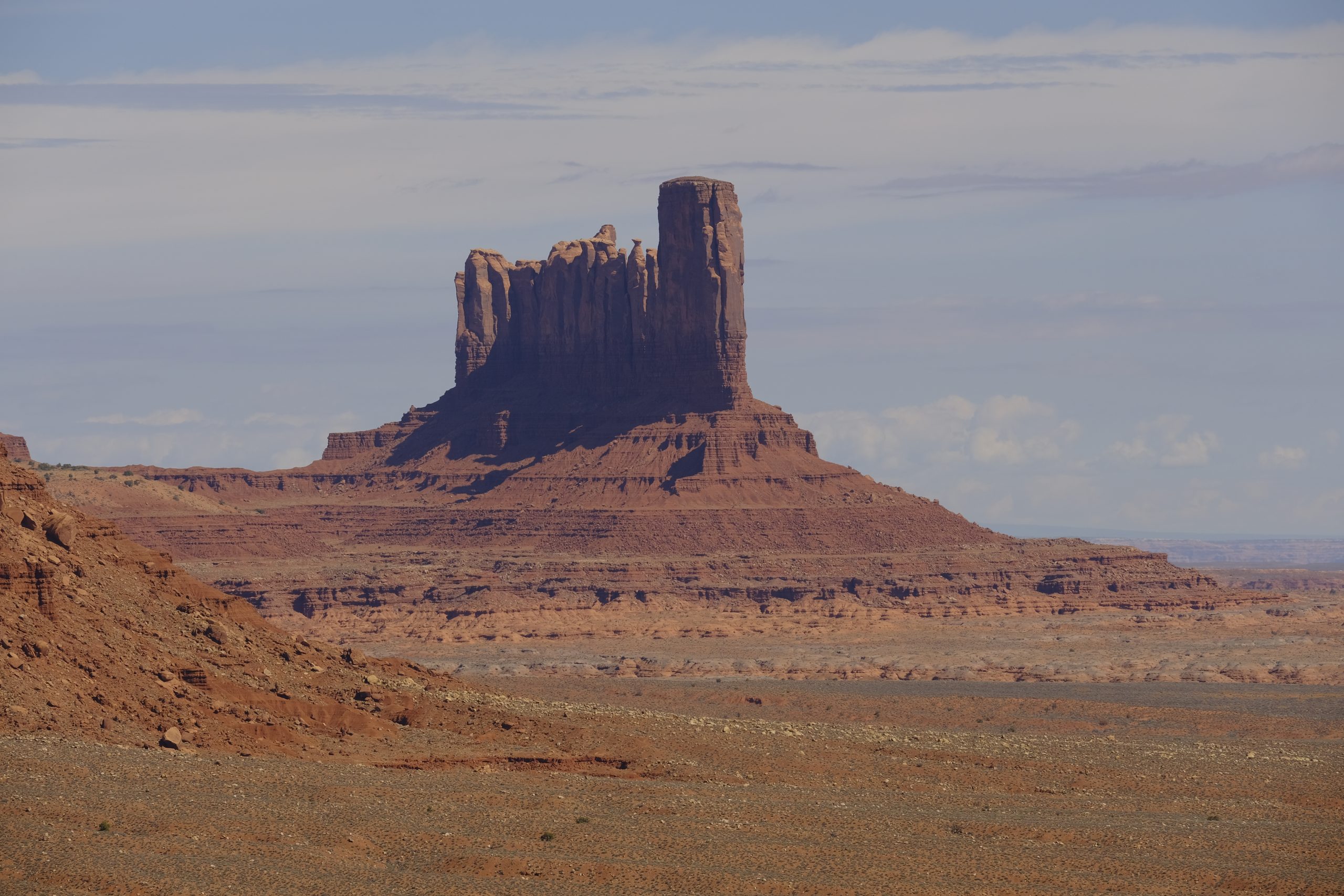
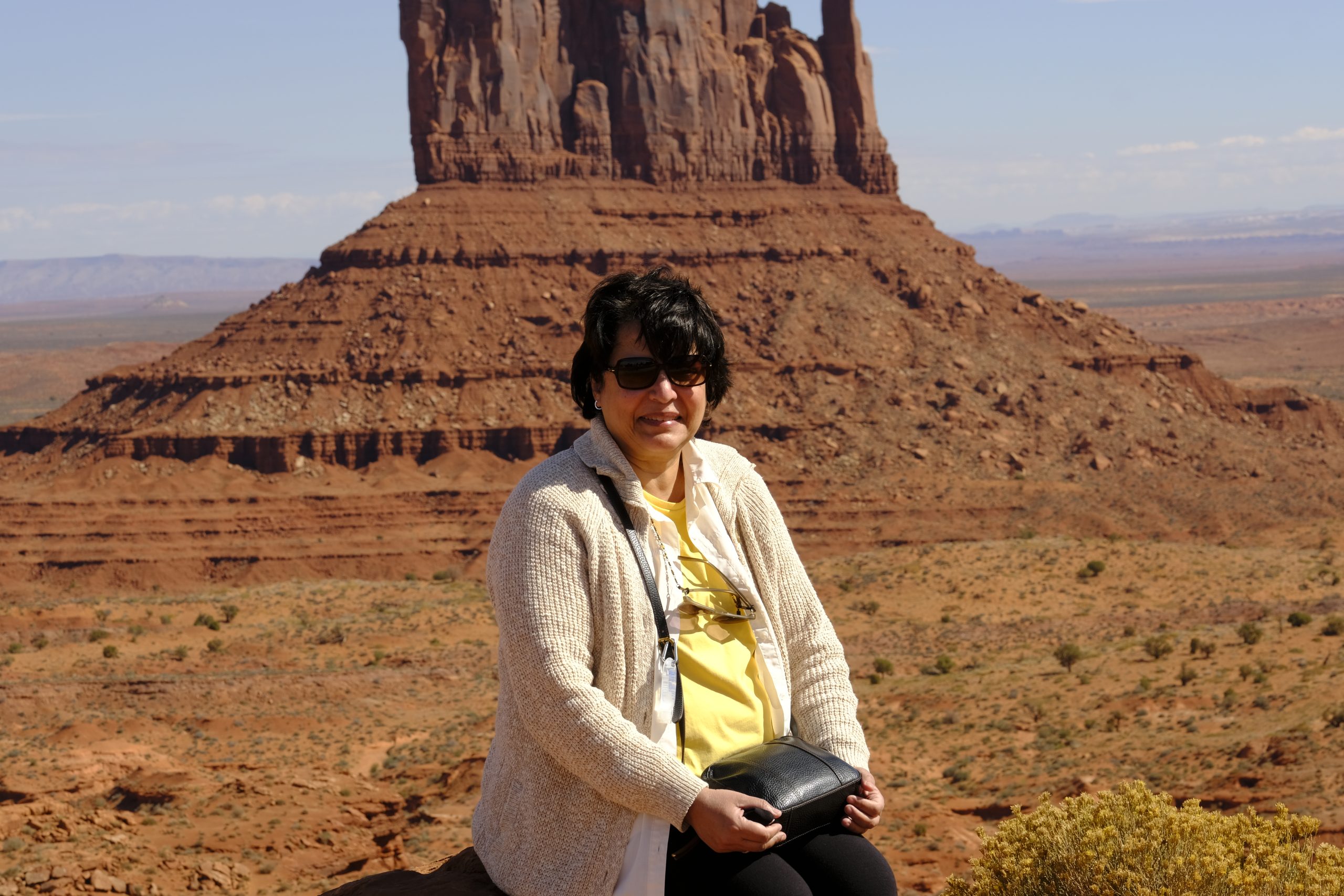
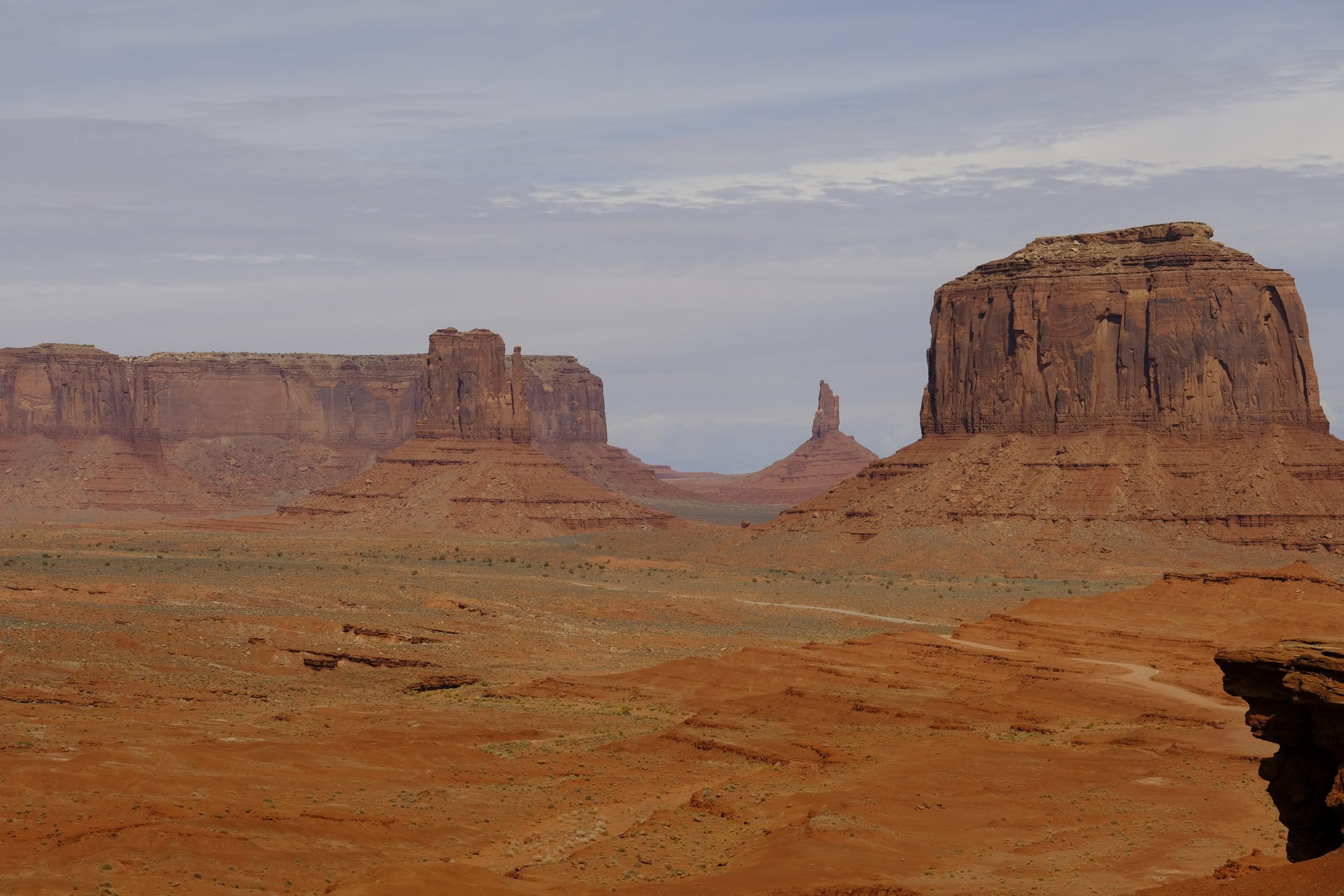
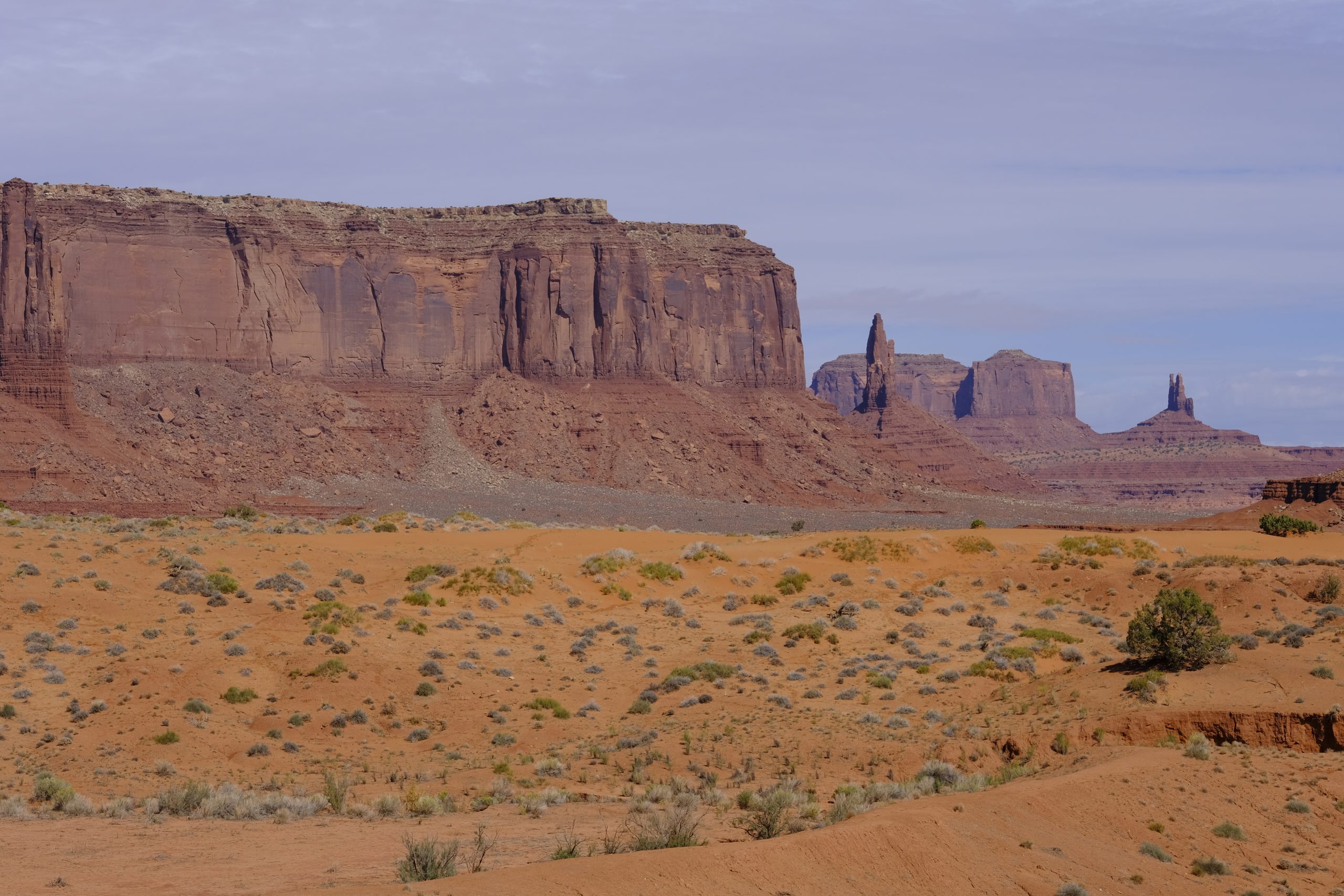
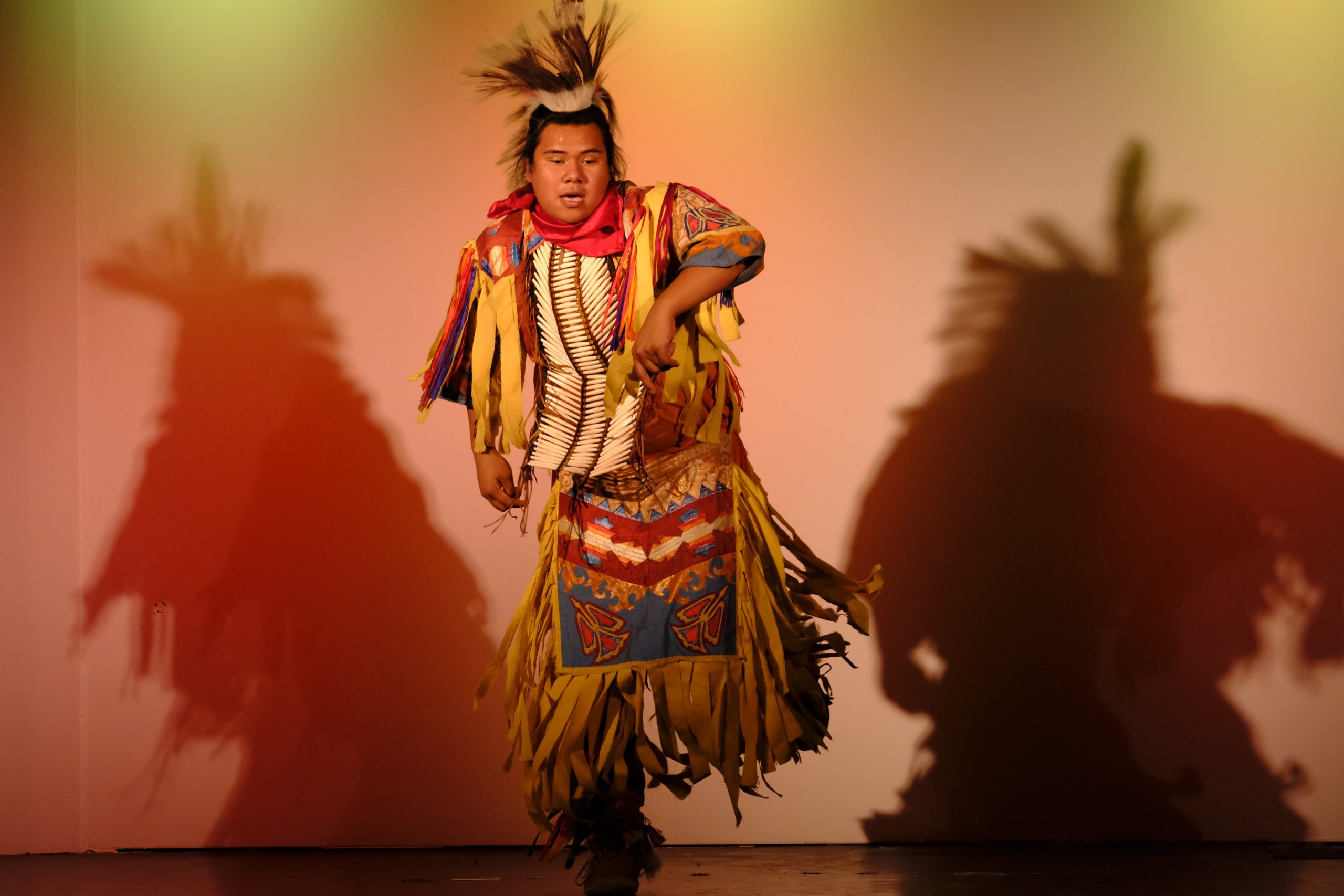
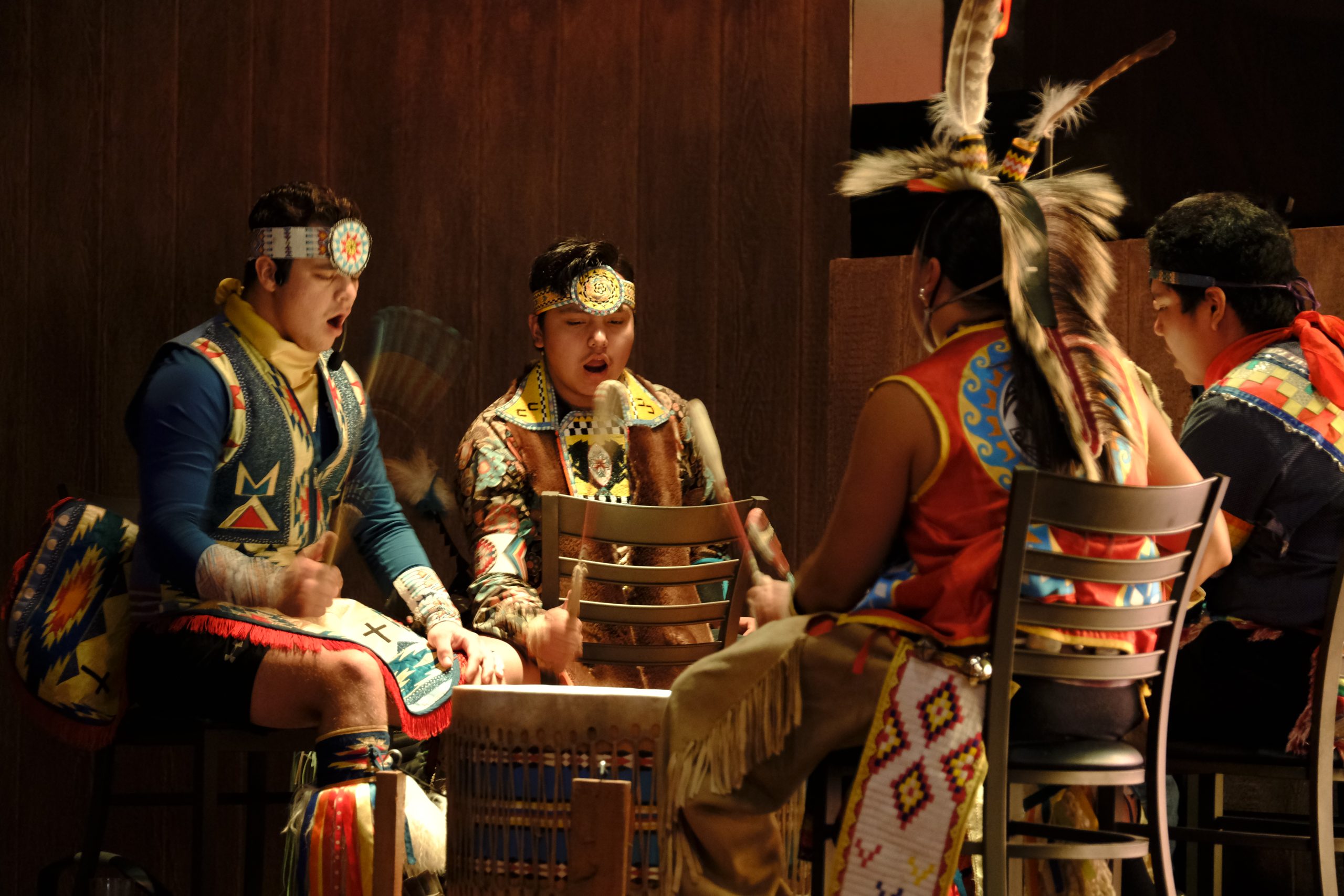
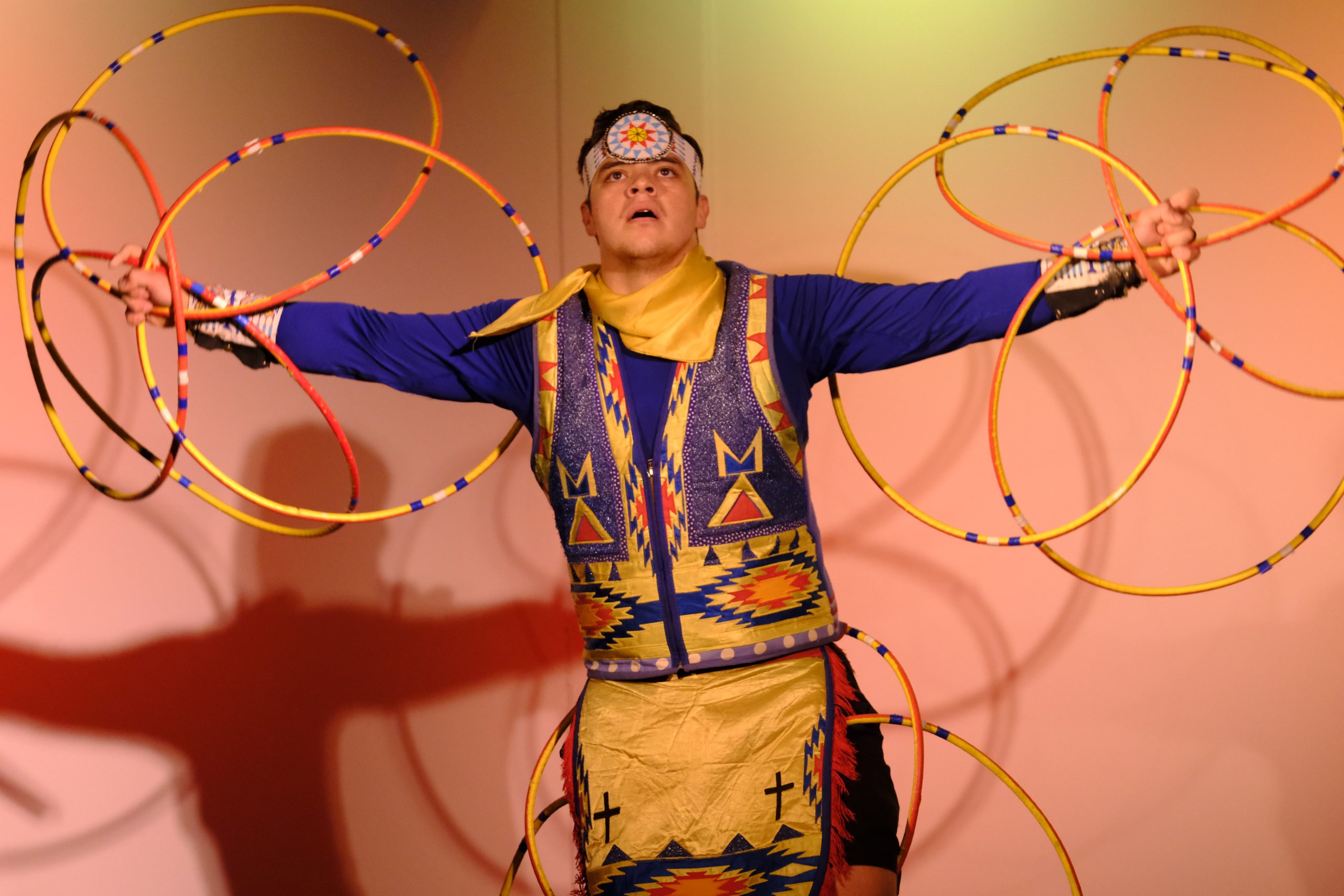
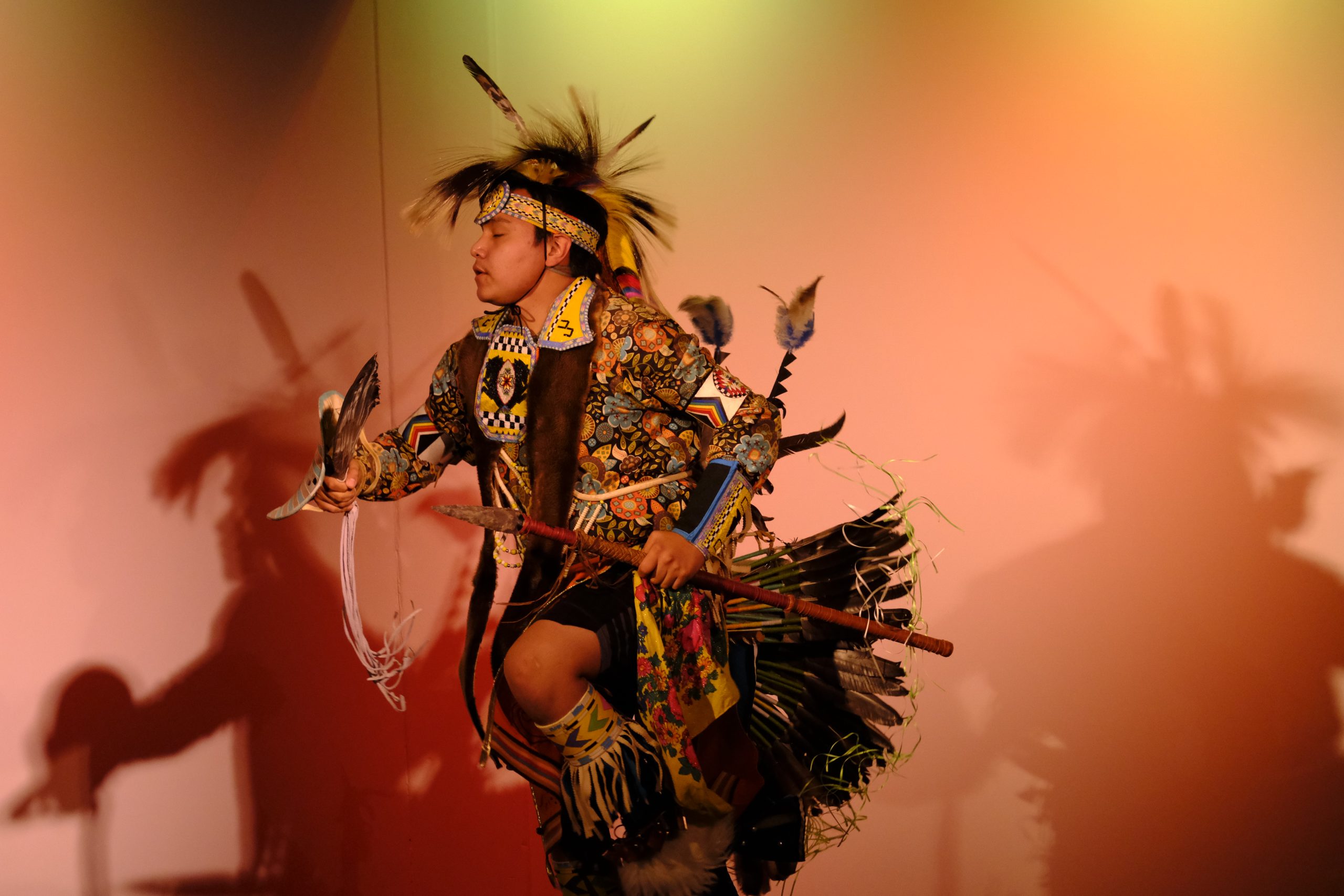
Returning from Monument Valley after indulging in some shopping opportunities, we had lunch at the Indigenous Peoples Hall. The entertainment featured flute solos, drumming, hoop dancing, and audience participation in tribal dances. The matriarch of the performers echoed much of what Rita had previously shared, including insights into carding, dyeing, and weaving.
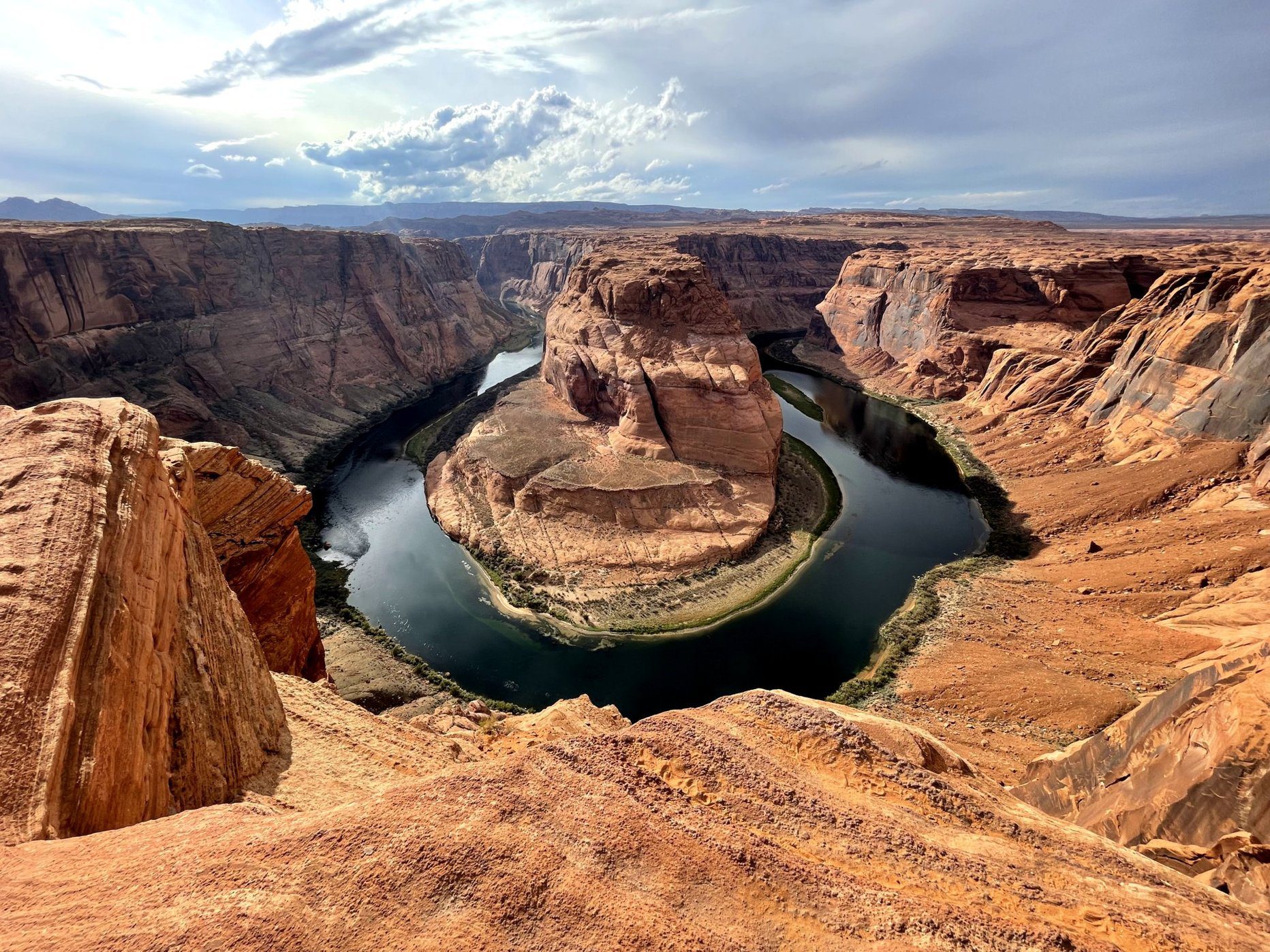
Following lunch, we drove to Horseshoe Bend in Glen Canyon and went on a 1.5-mile hike under the blazing hot sun to catch a glimpse of the Colorado River.
Rafting Adventure on the Colorado River – October 8, 2021
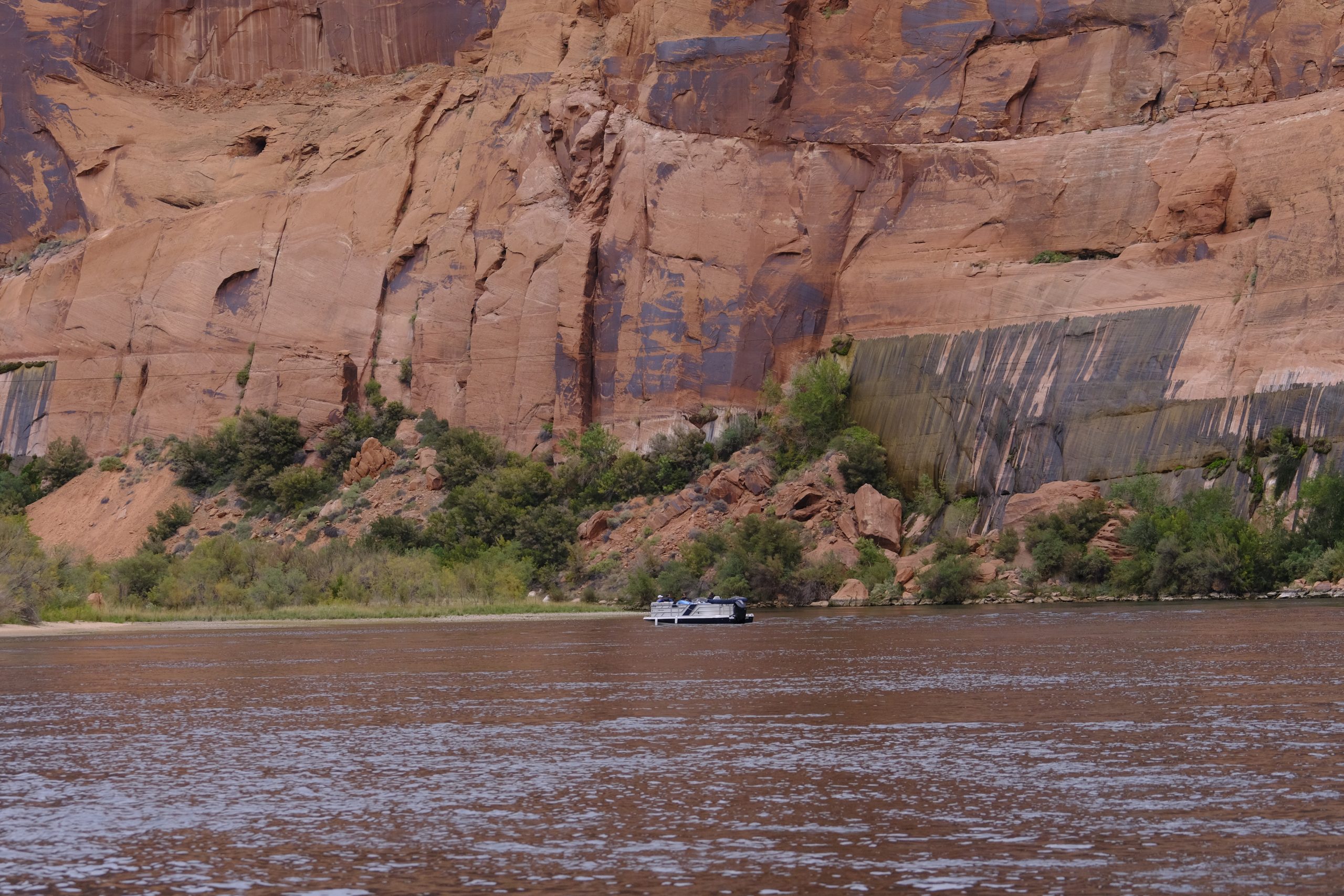
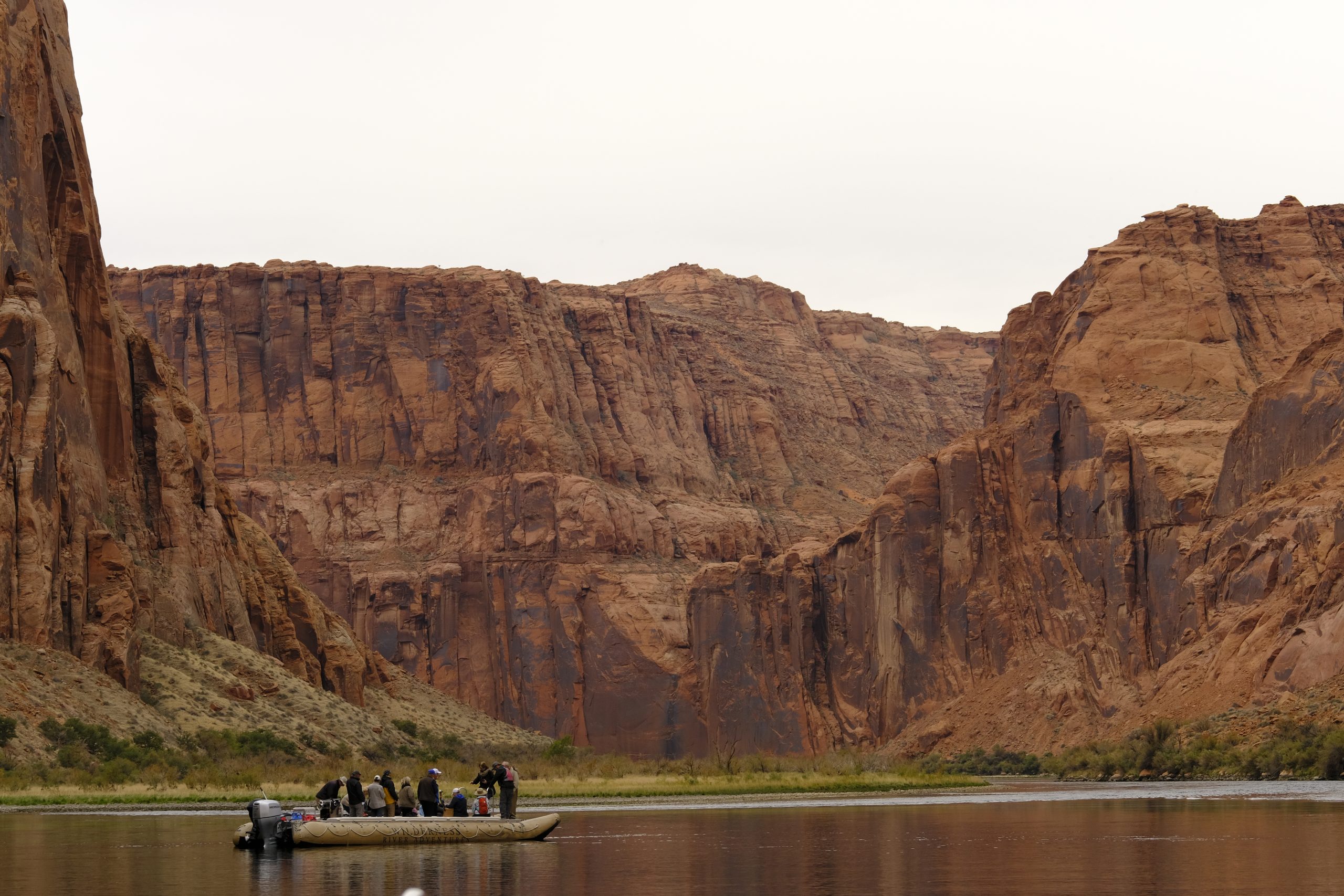
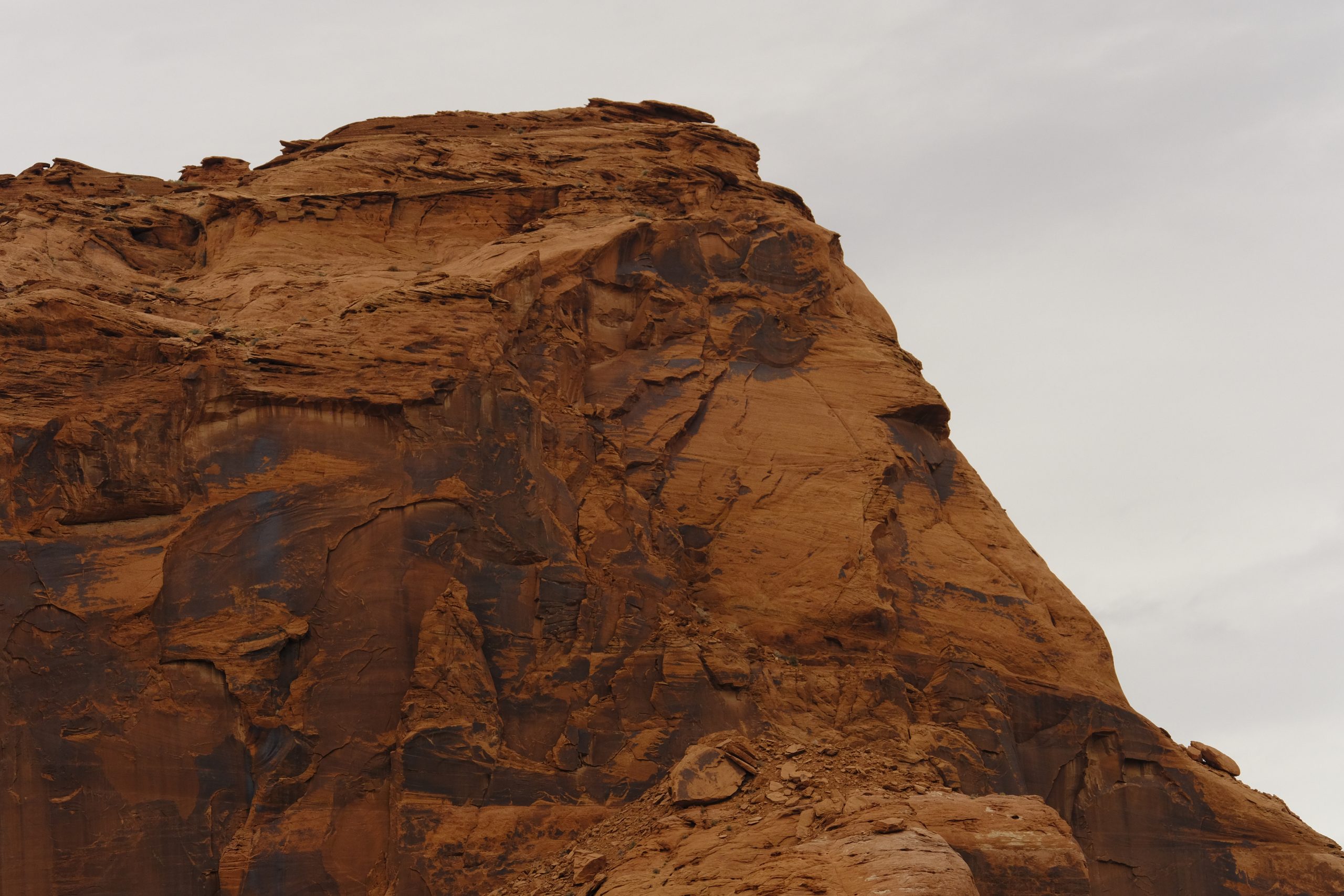
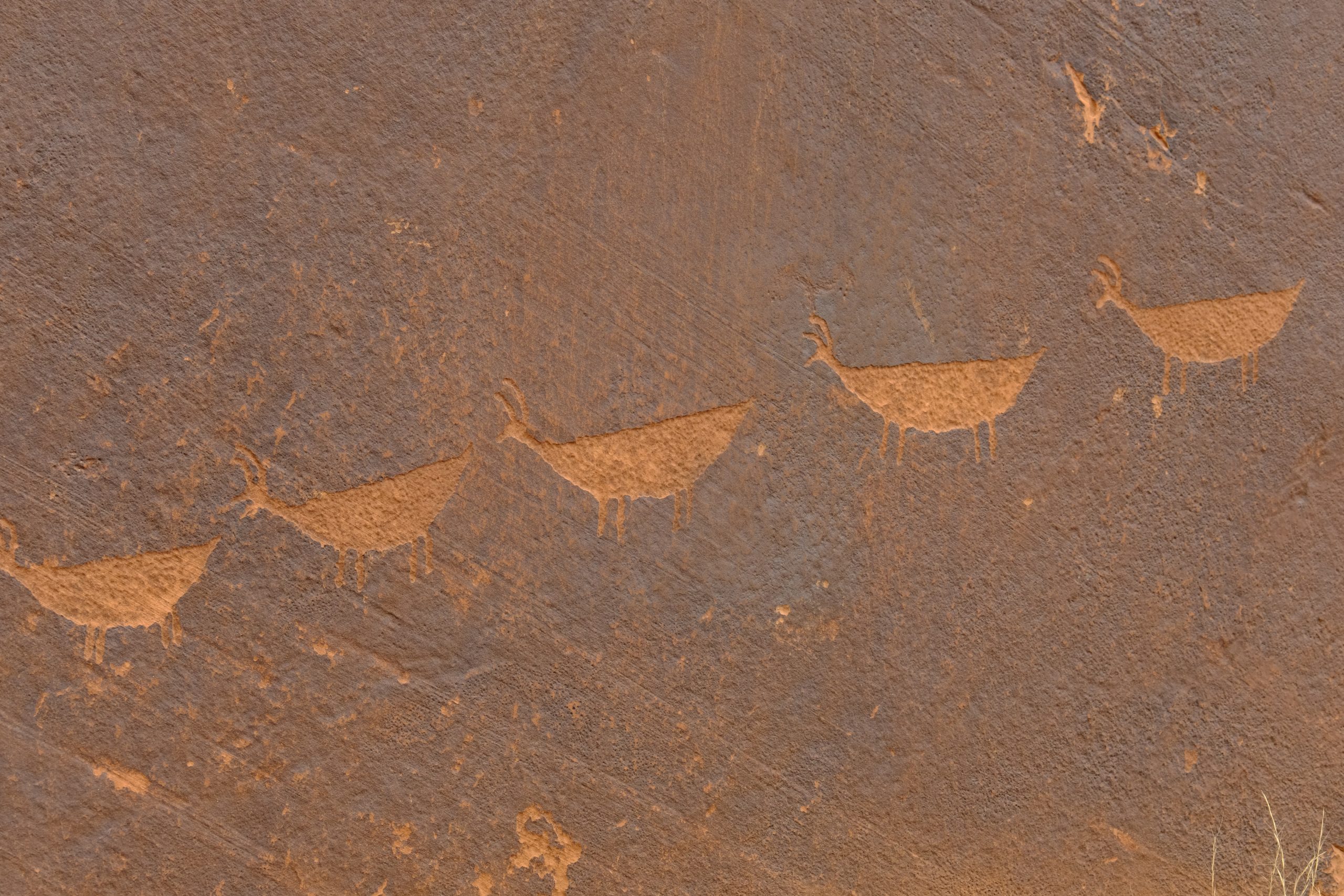
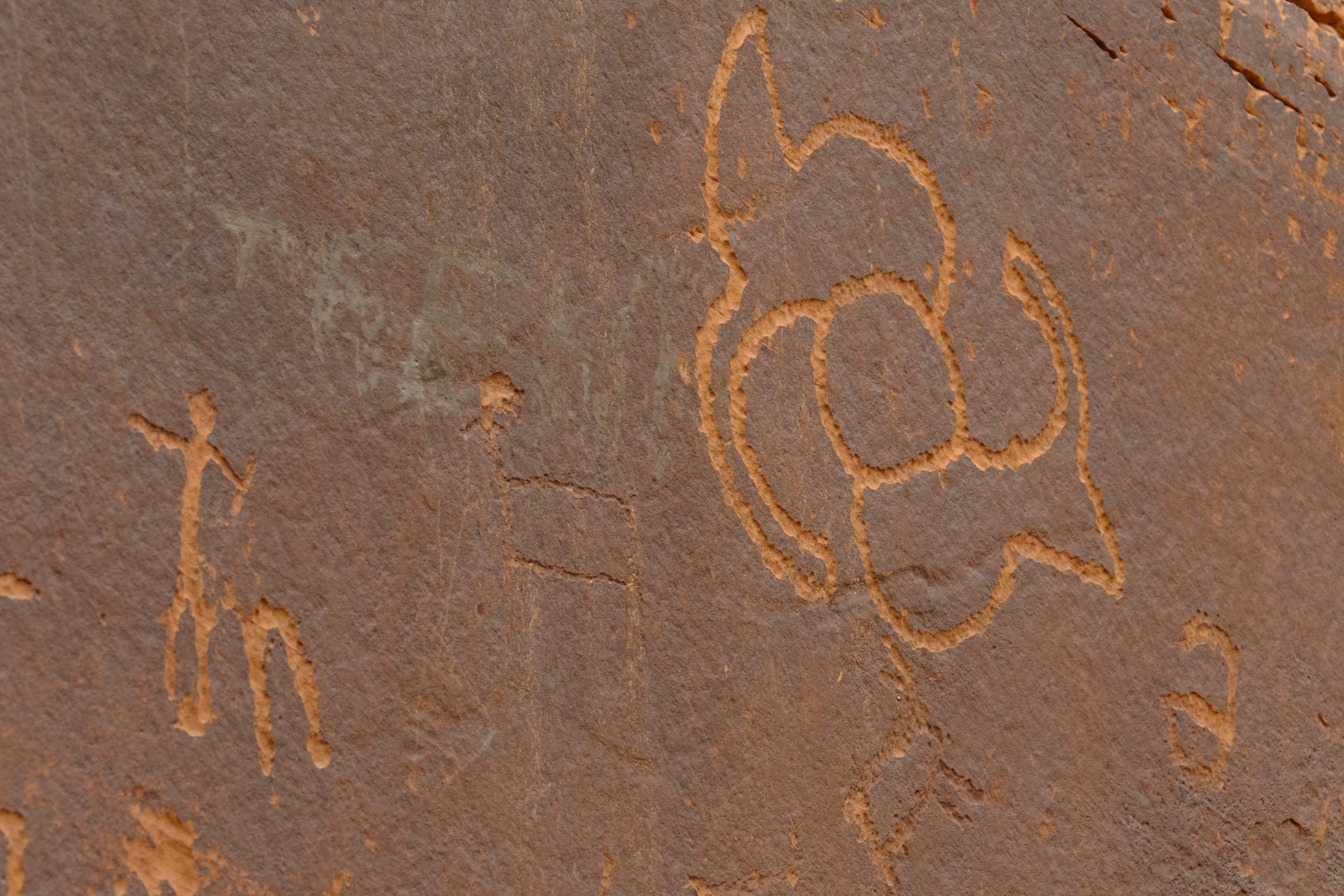
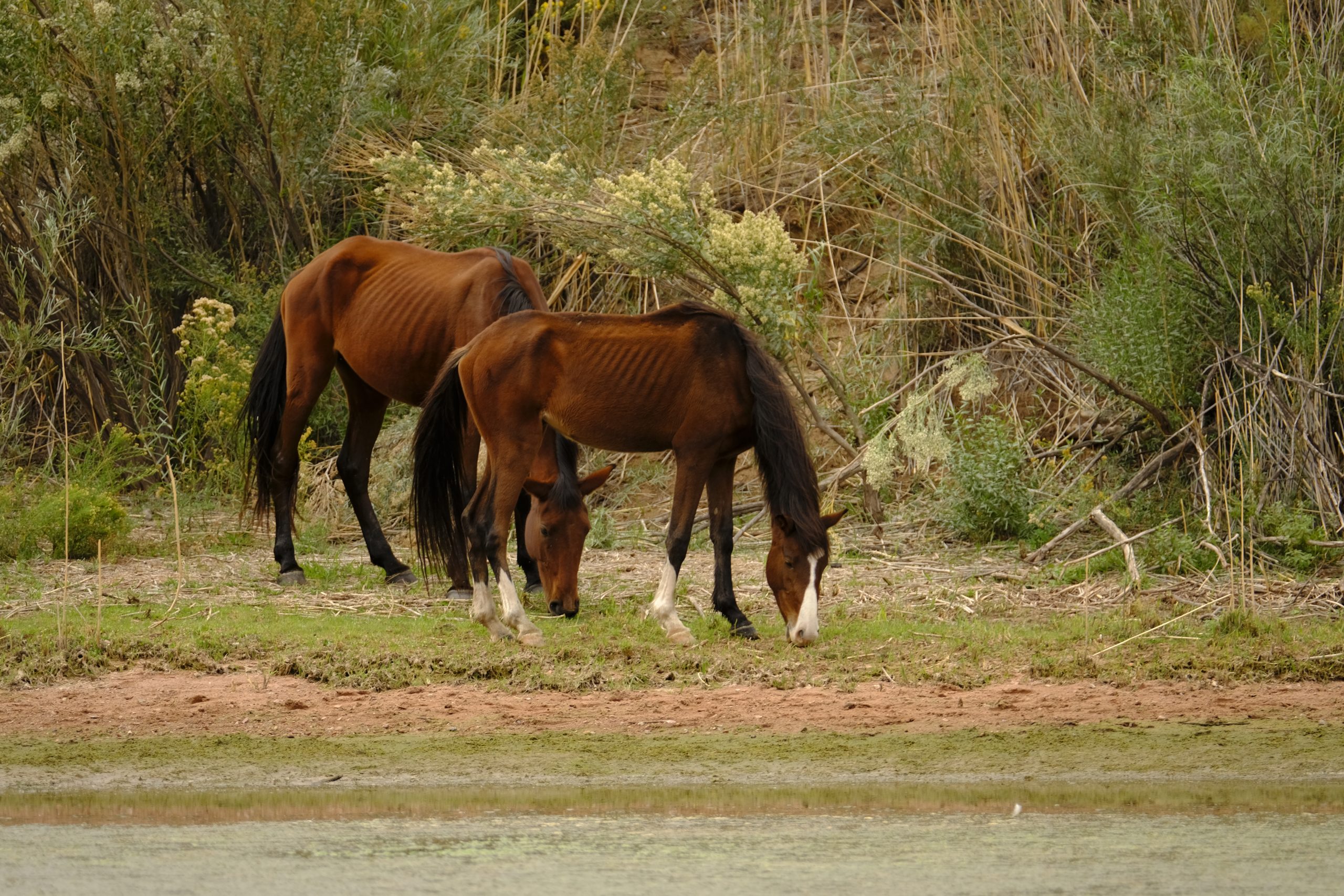
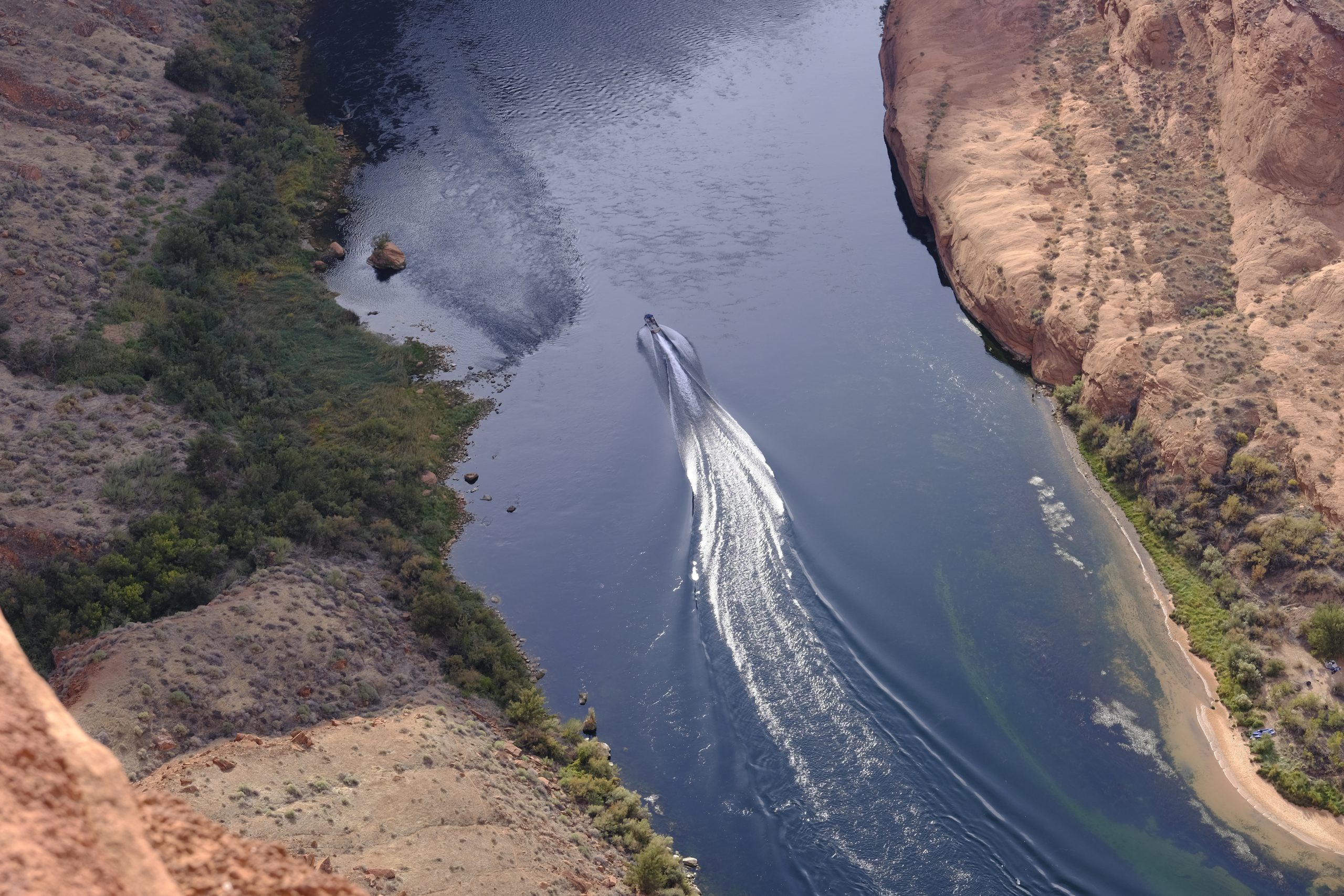
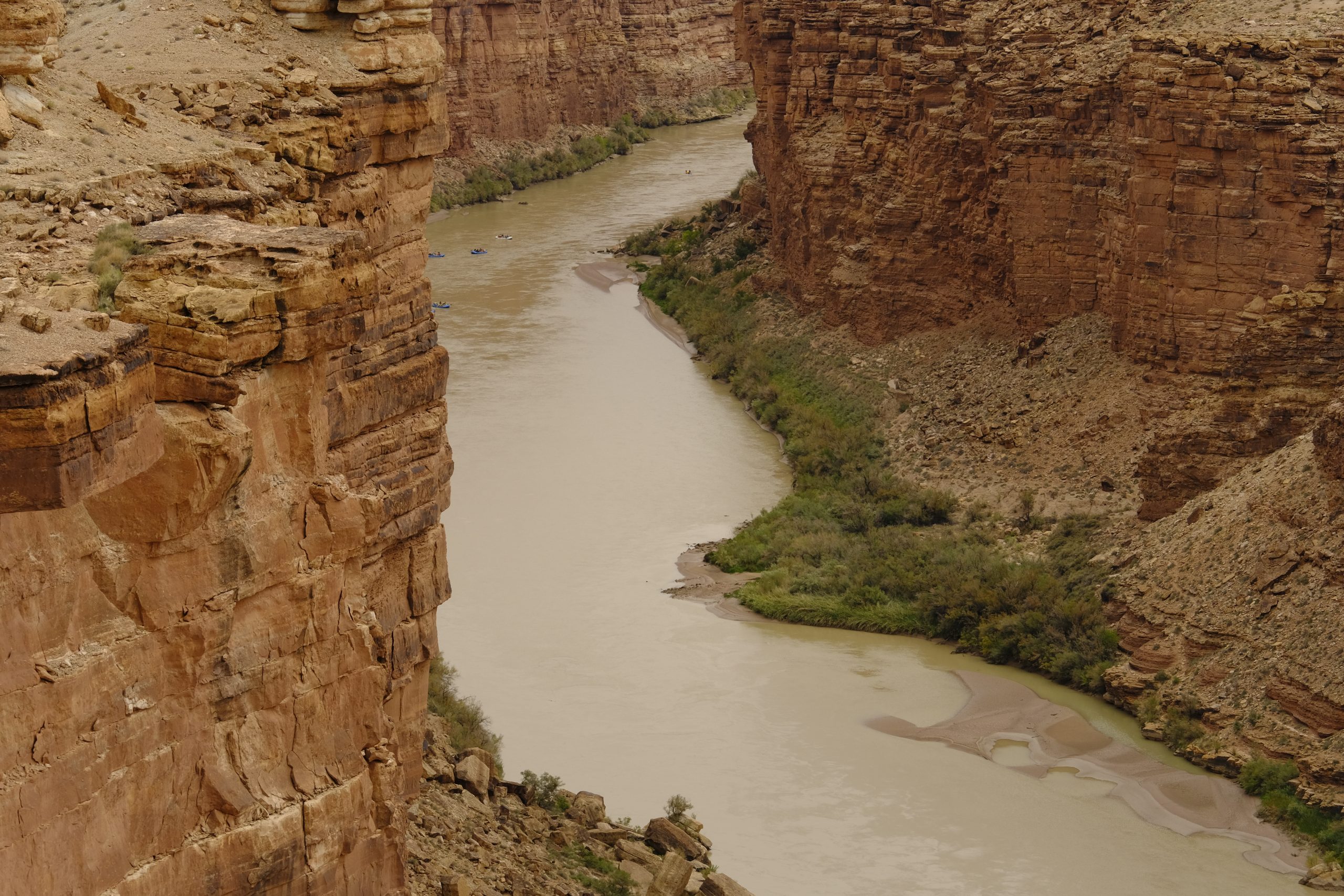
This morning was cloudy, and rain was forecasted. It was also the day we would be rafting around 15 miles on the Colorado River. We went to the power station, through security, took a short bus ride, and then boarded the raft. It was very peaceful on the river, with people kayaking and several standing by the banks in thigh-high waders fly fishing. Up top, one could just see the iconic Horseshoe Bend. We kept an eye out for the bighorn sheep but did not see any. However, we did see some wild horses. Midway, we stopped at Petroglyph Beach to see the etchings of bighorn sheep, coyotes, and other animals, some of which were several thousand years old. Sadly, a man from North Carolina, who was on a fishing trip in the area, thought it would be cool to etch his own name on the historic panel. He did this in 2010, and one can still see the letters among the rest of the glyphs. He was fined $10,000 for defacing a historic site.
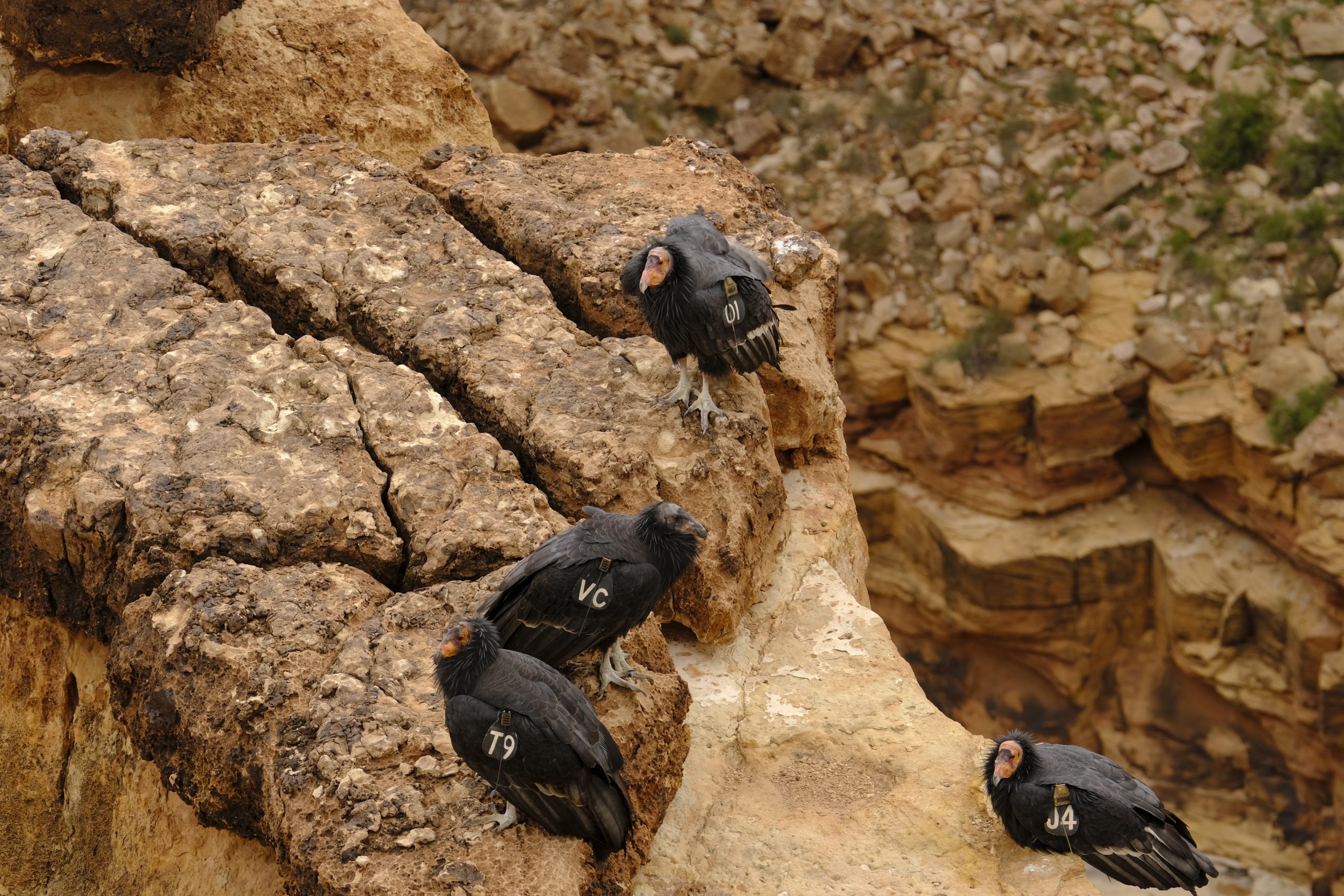
At the end of the two-hour ride, we disembarked at Lee’s Ferry and were fortunate to see a group of California condors. These birds were on the brink of extinction when 6 birds were introduced in the area. Today, their population has increased to about 500. While these are some of the ugliest scavenger birds on the planet, this is a remarkable success story for all the rangers involved in the program.
After a cowboy buffet lunch with lots of meat, potatoes, beans, and cornbread, we made our way to Bryce Canyon in Utah to see the hoodoos. It was late by the time we got to Bryce Canyon Lodge, and the room was very cold. Heating it was a challenge.
Bryce Canyon: Nature’s Sculpted Masterpiece – October 9, 2021
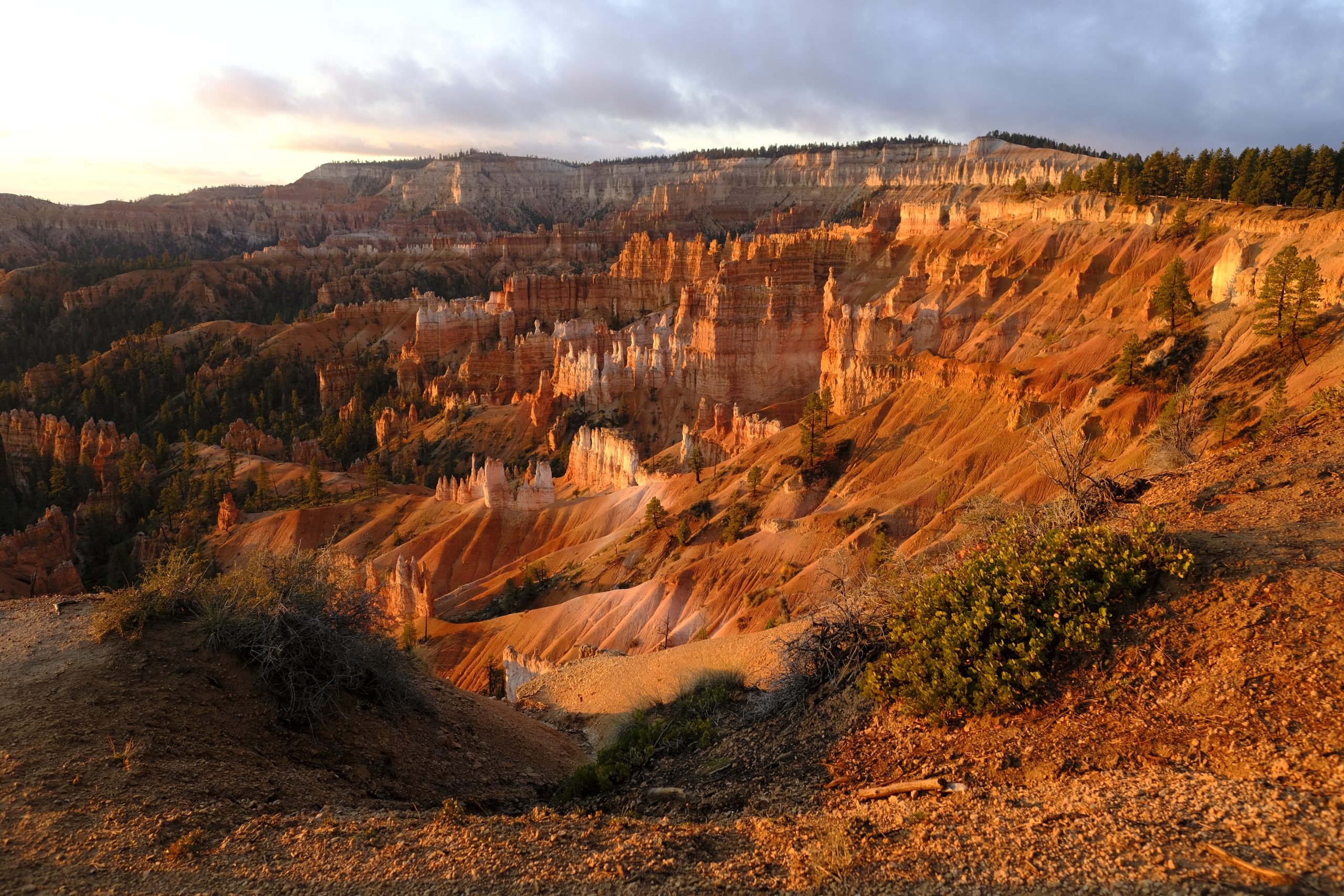
We woke up early to walk to Sunrise Point, one of the viewpoints that overlooks Bryce Amphitheater. At an elevation of 8,000 feet, the sunlight reflecting off the hoodoos makes them look like they are moving, as some parts light up and some go dark. It also shows up the striations in the rock very well. The wildlife on display this morning was mule deer.

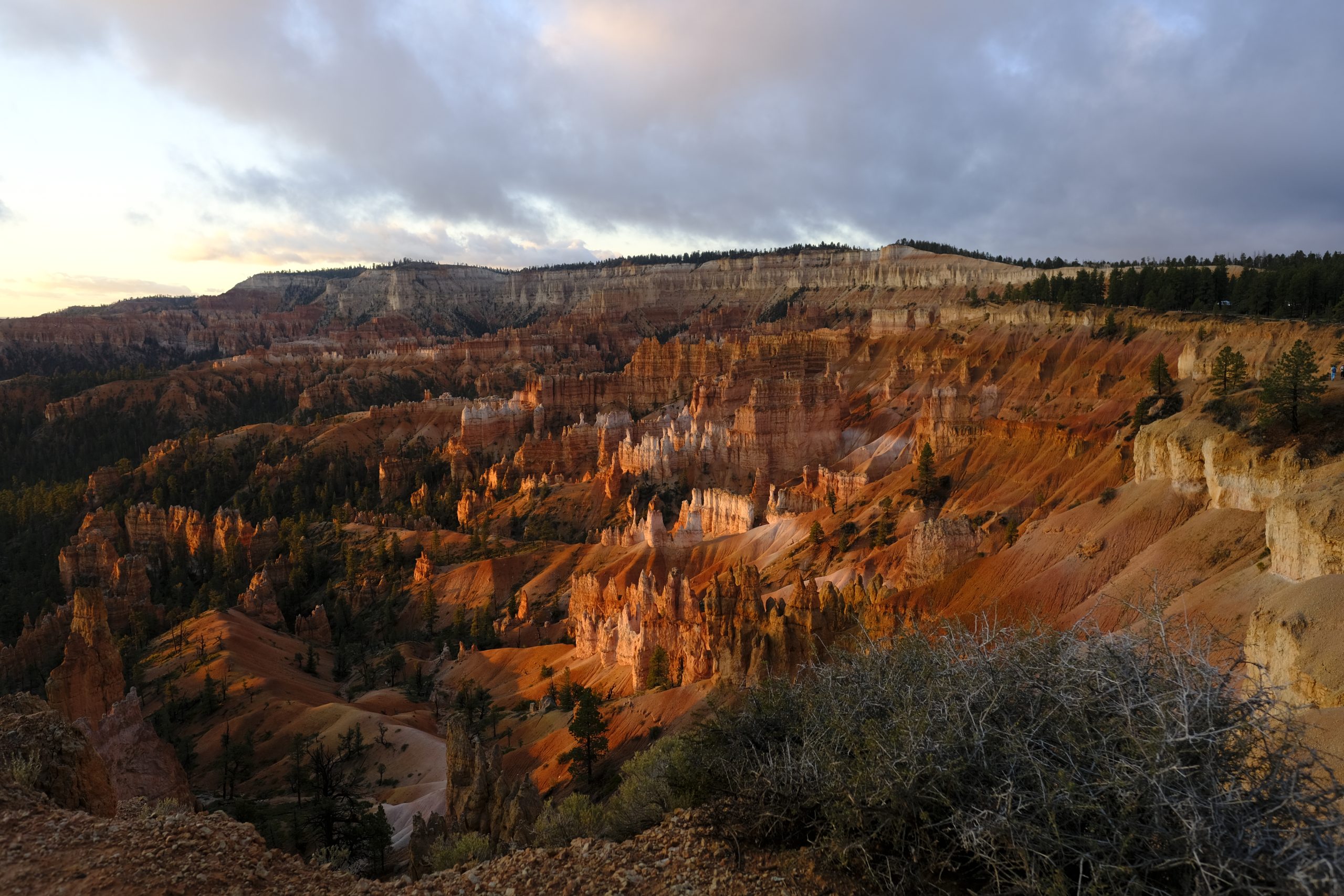
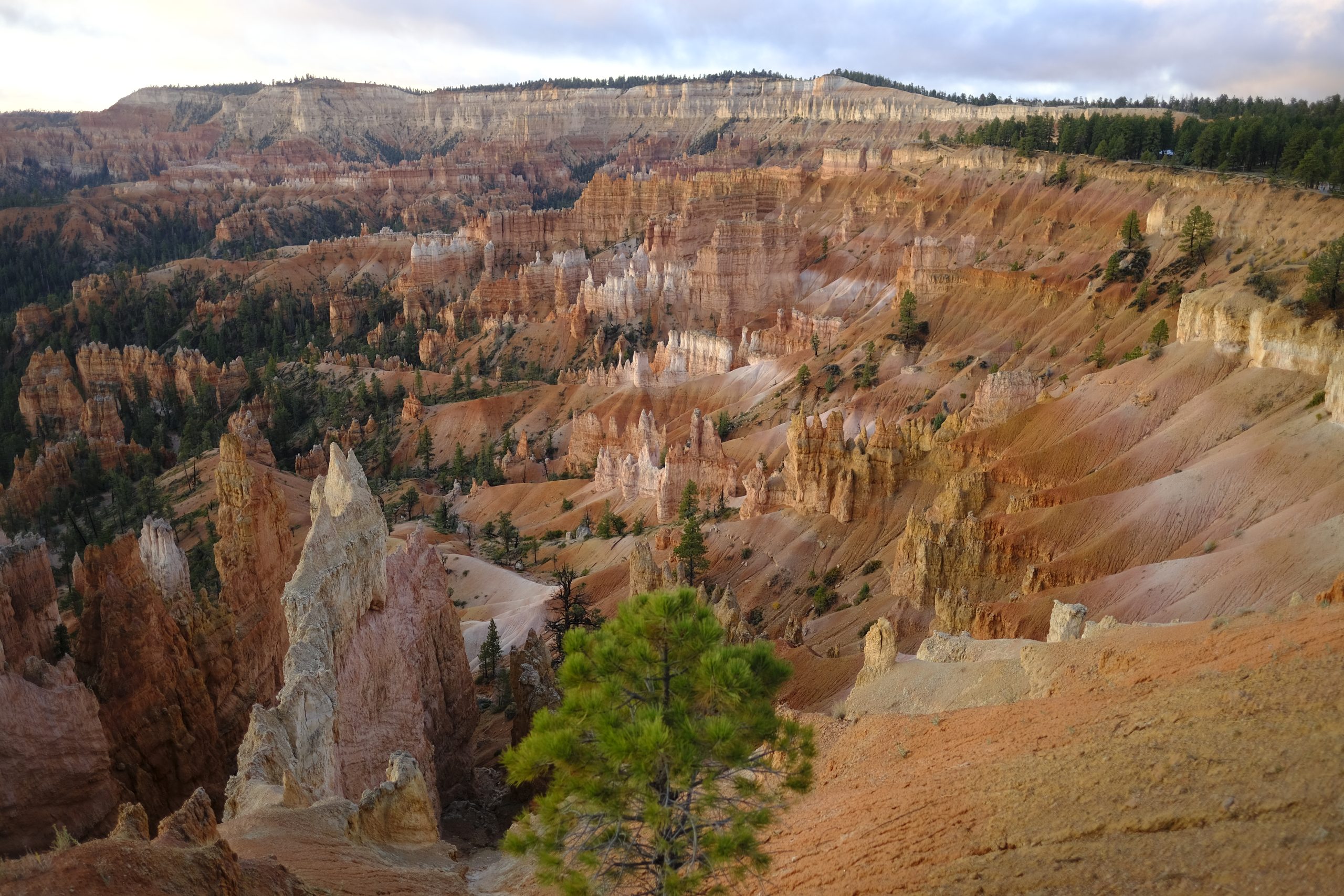
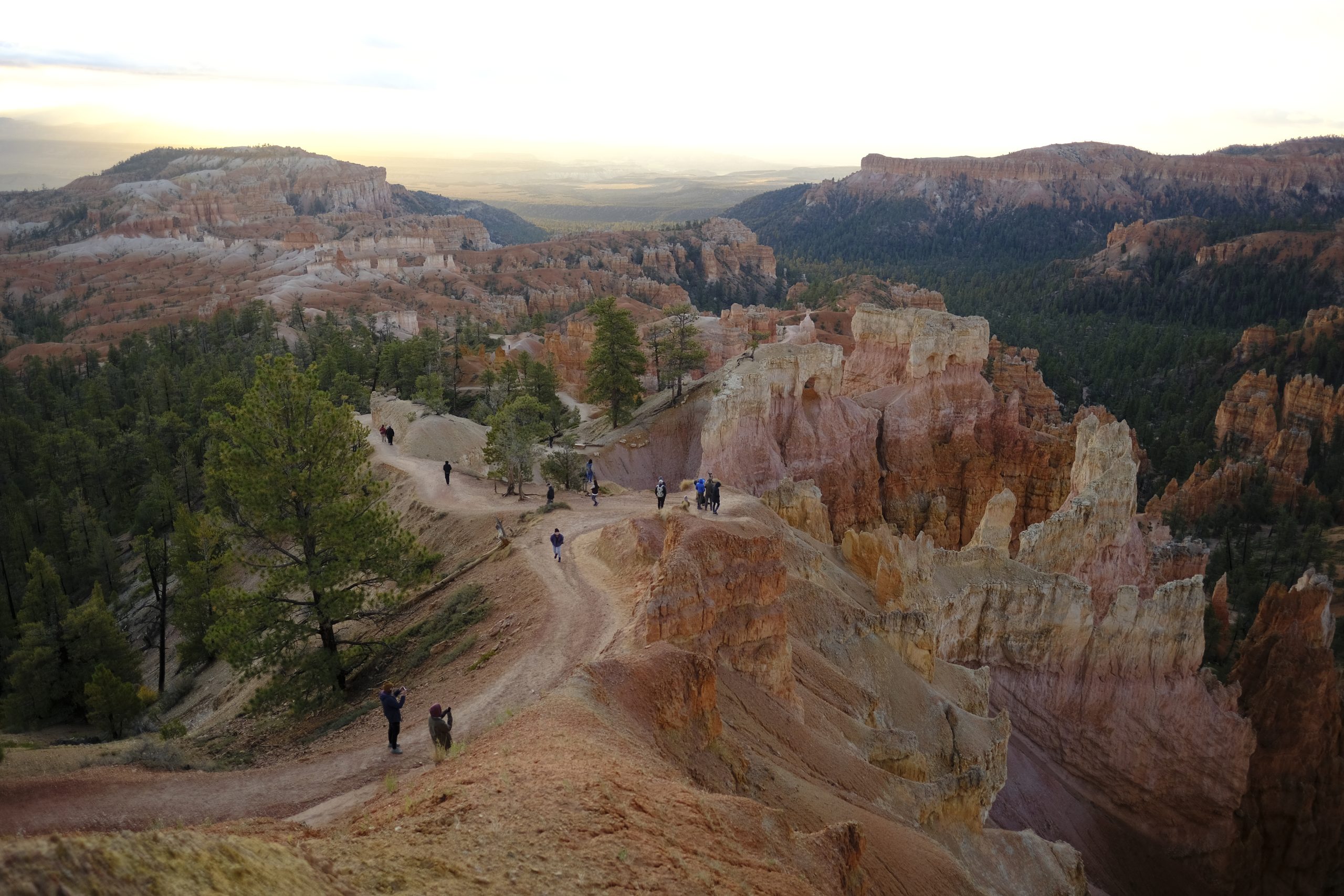
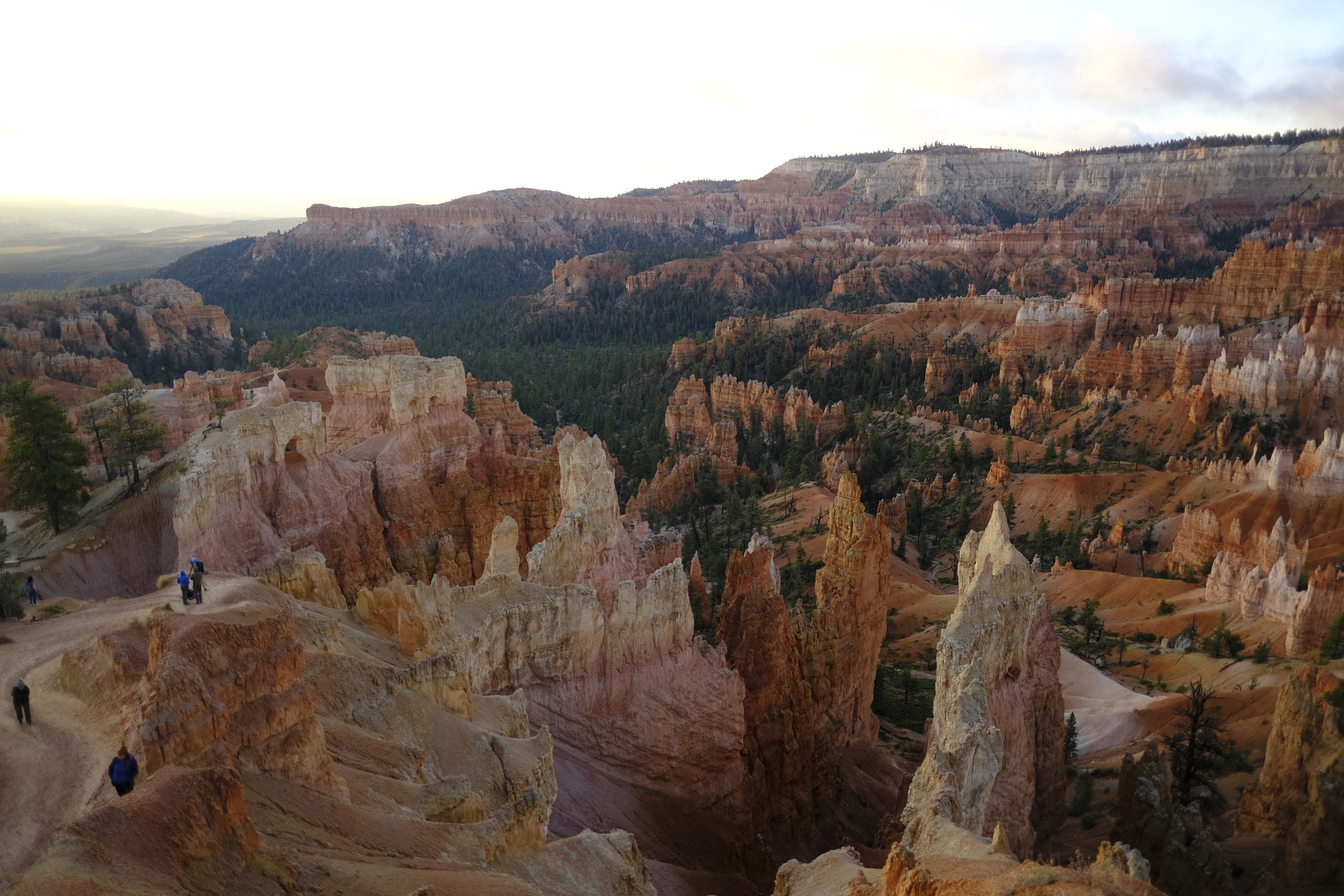
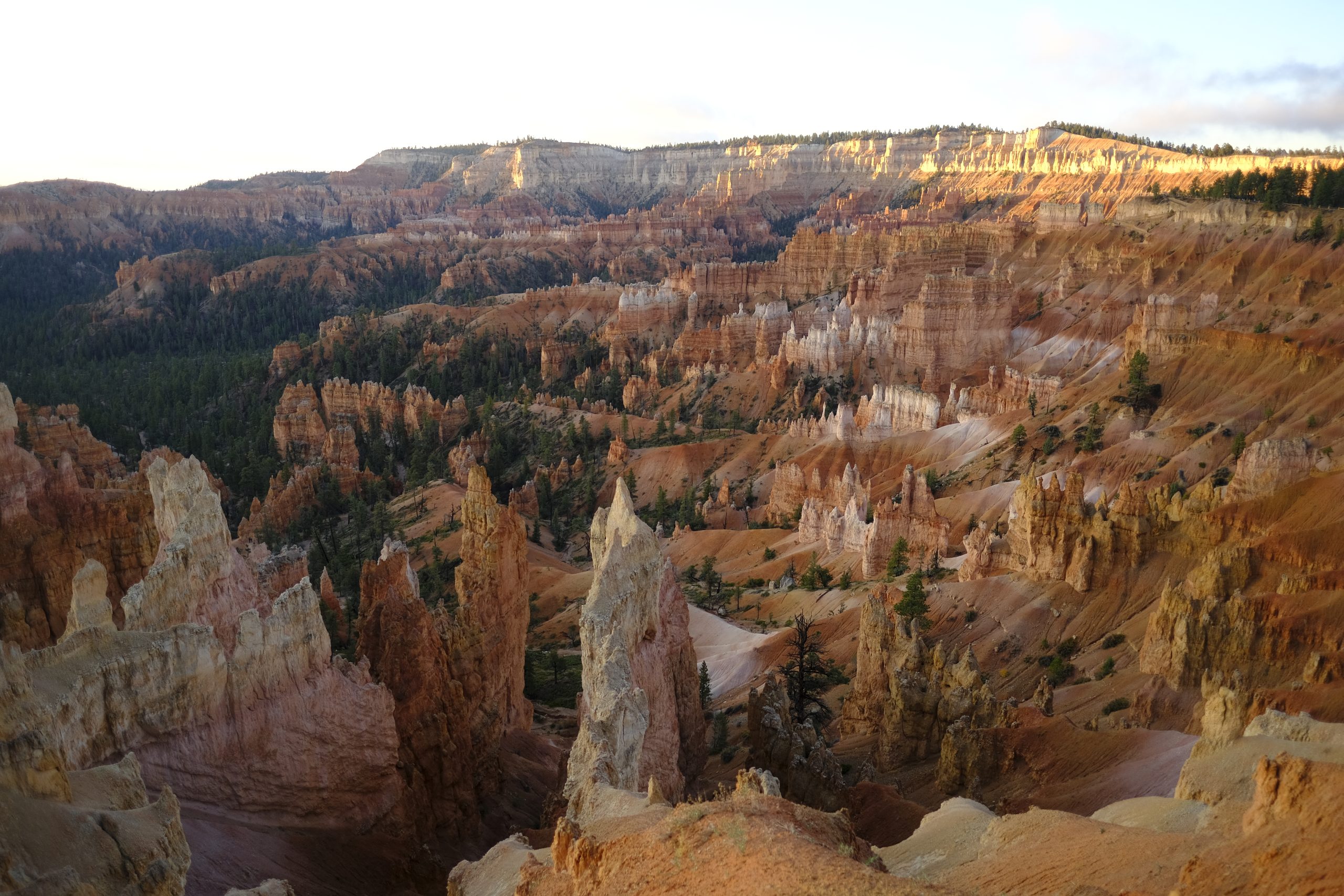
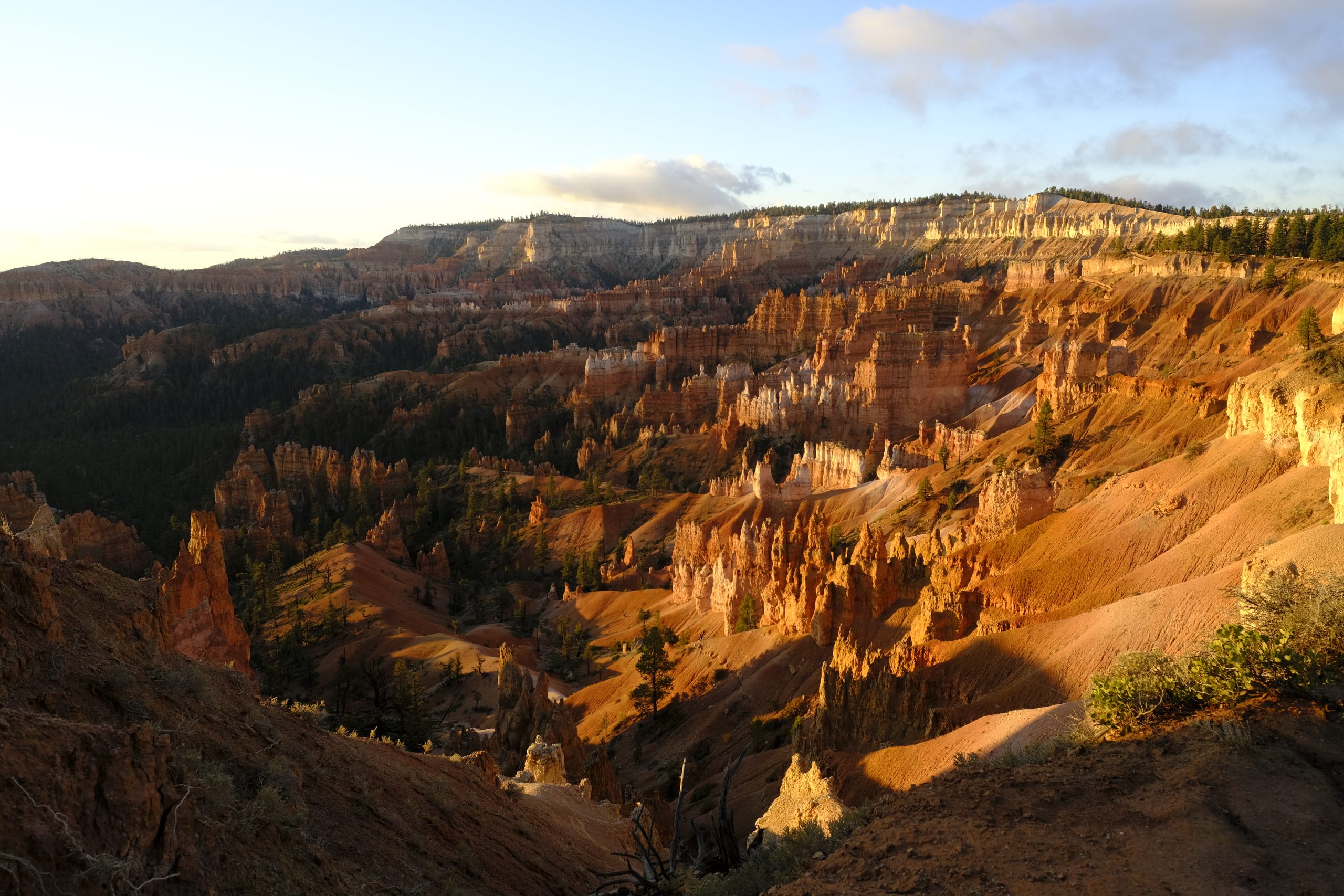
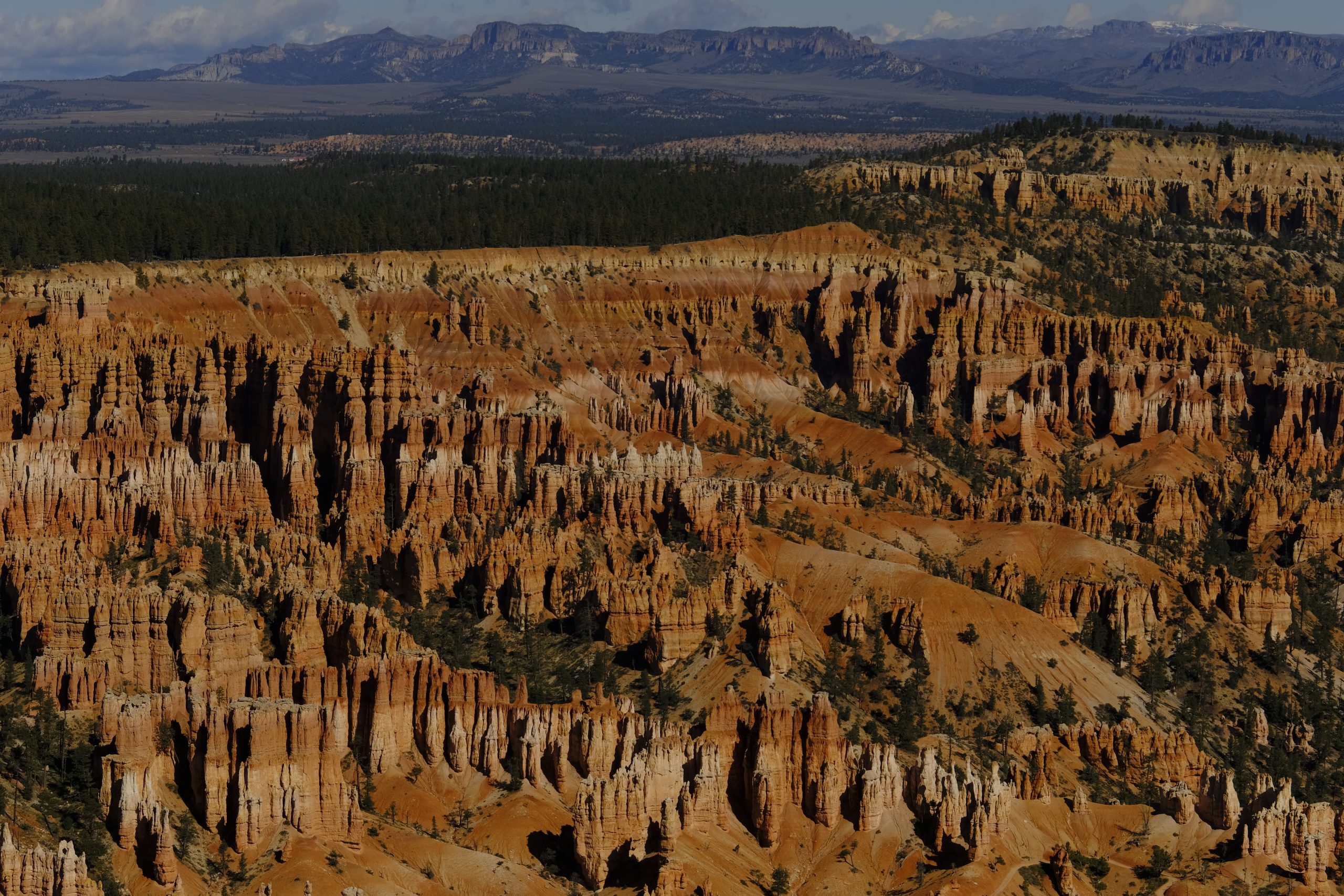
After breakfast, we took a bus ride to Fairyland Point, Bryce Point, and Inspiration Point to see even more hoodoos and ponderosa pine. The more active among us walked some of the trails or went horseback riding.
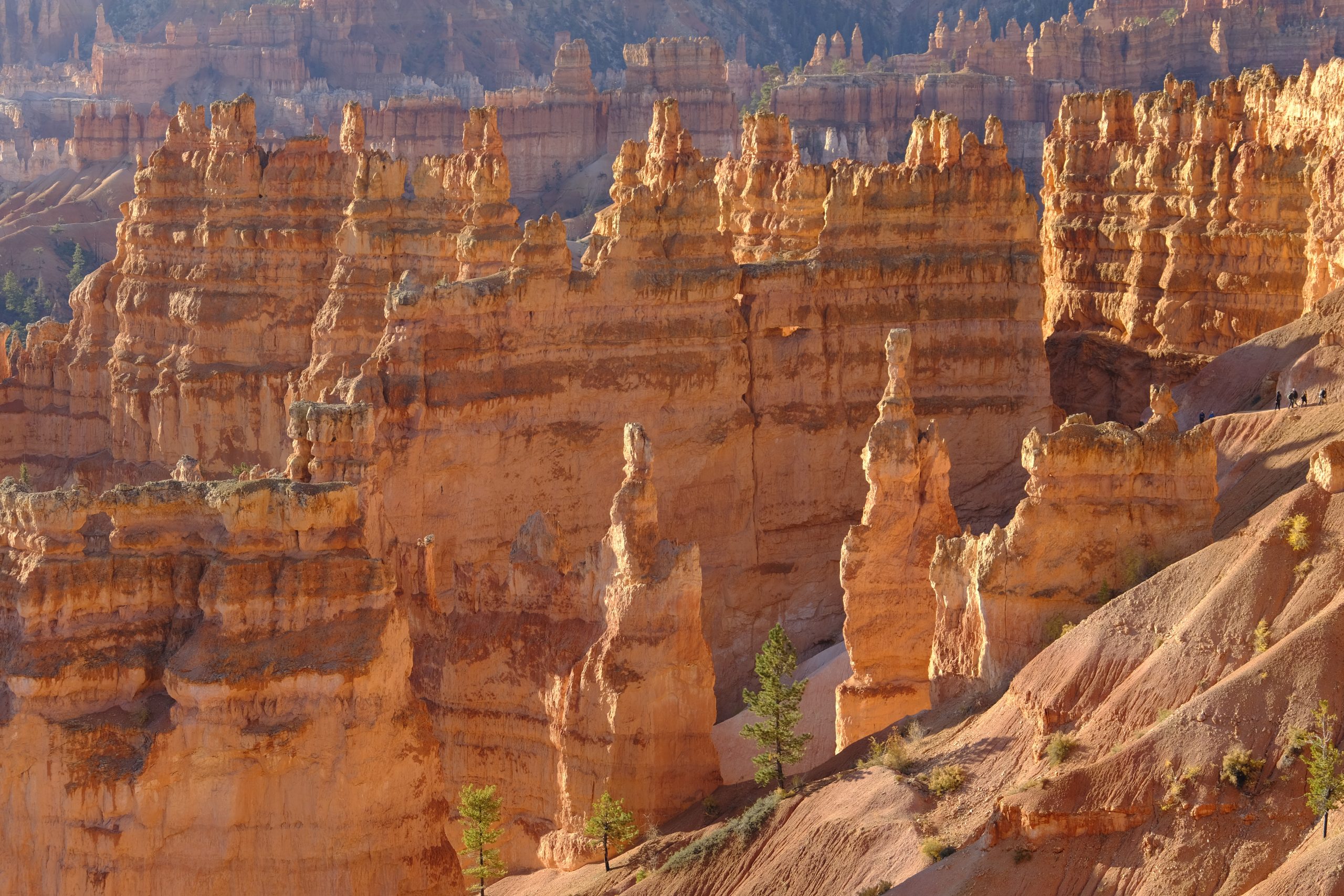
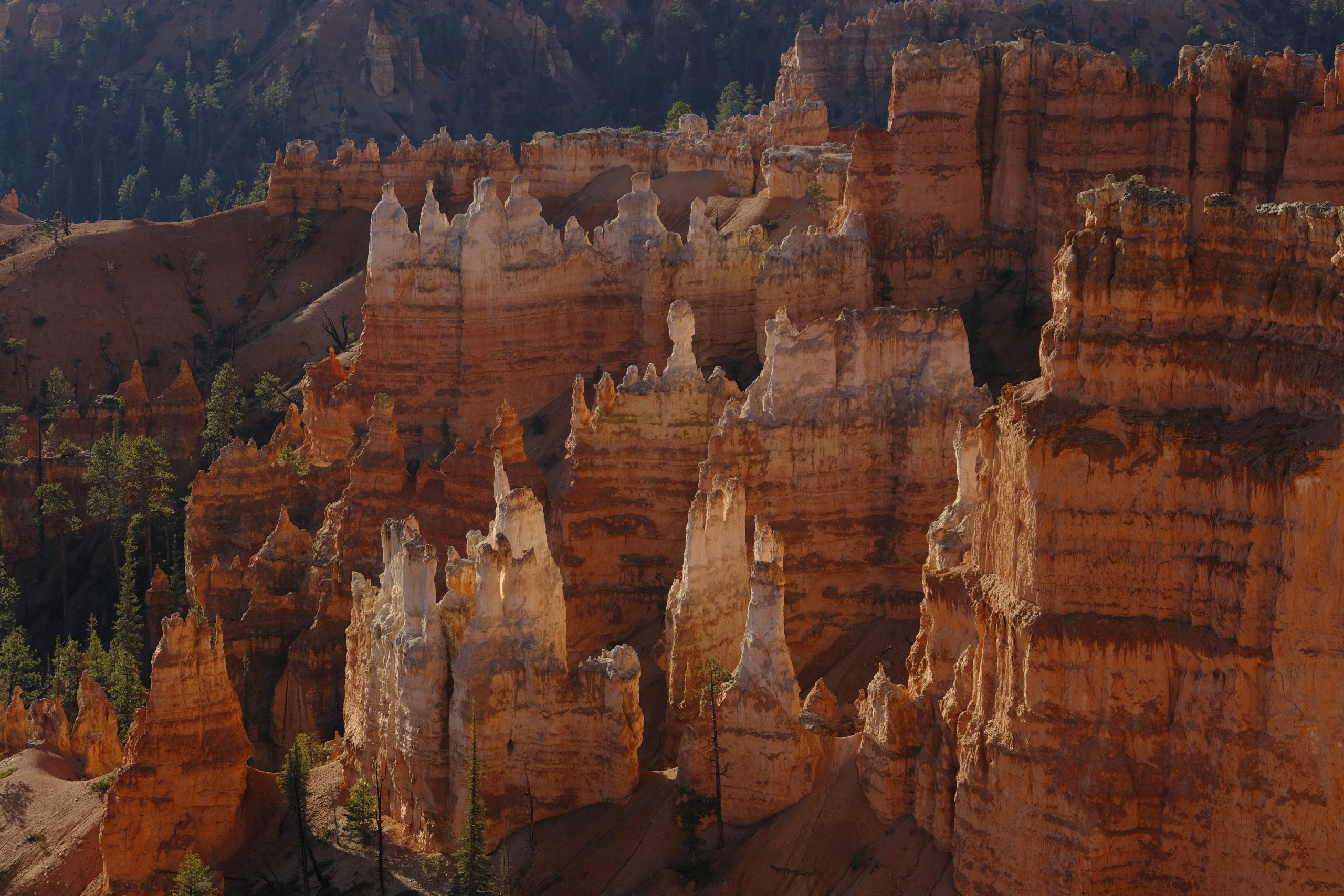
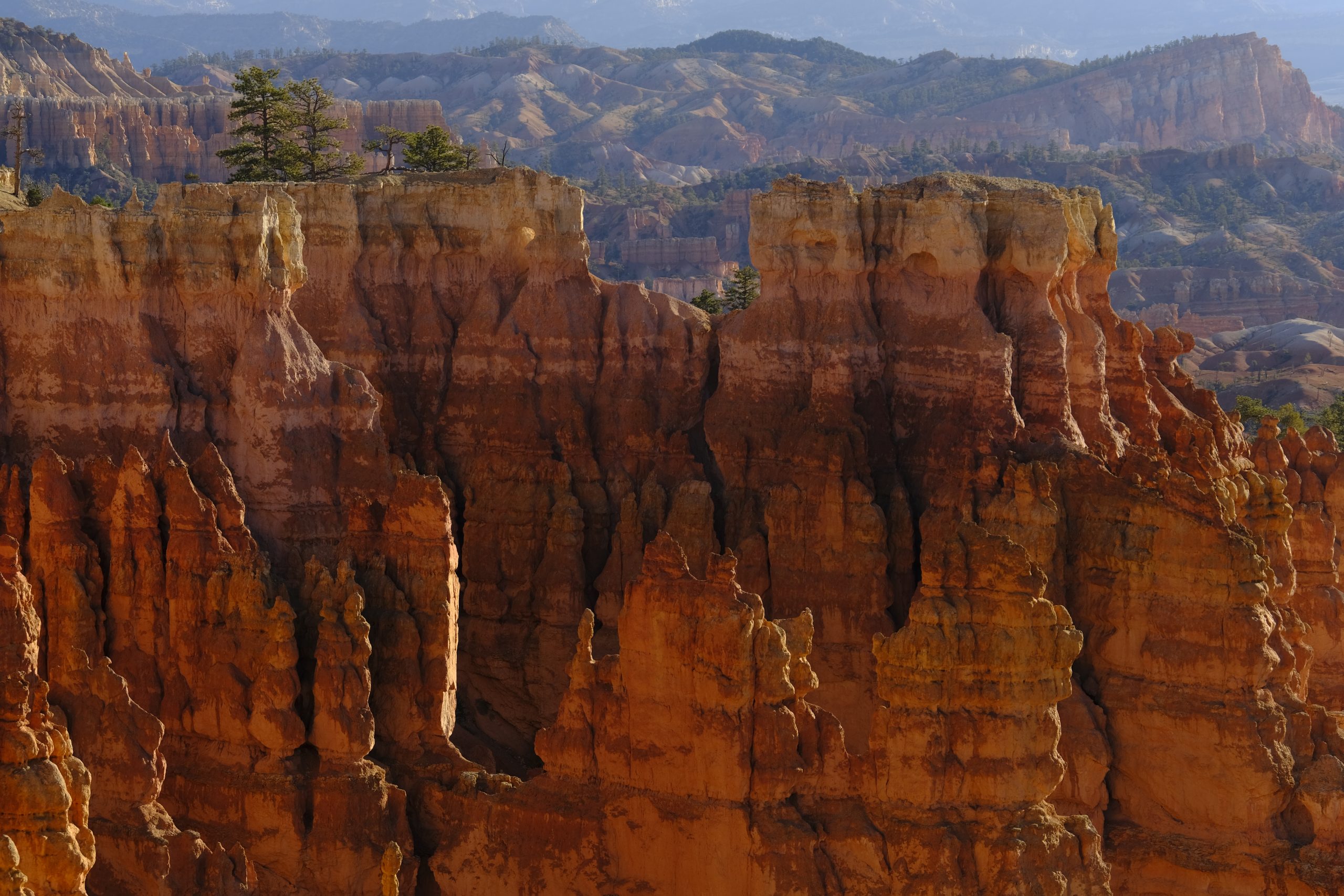
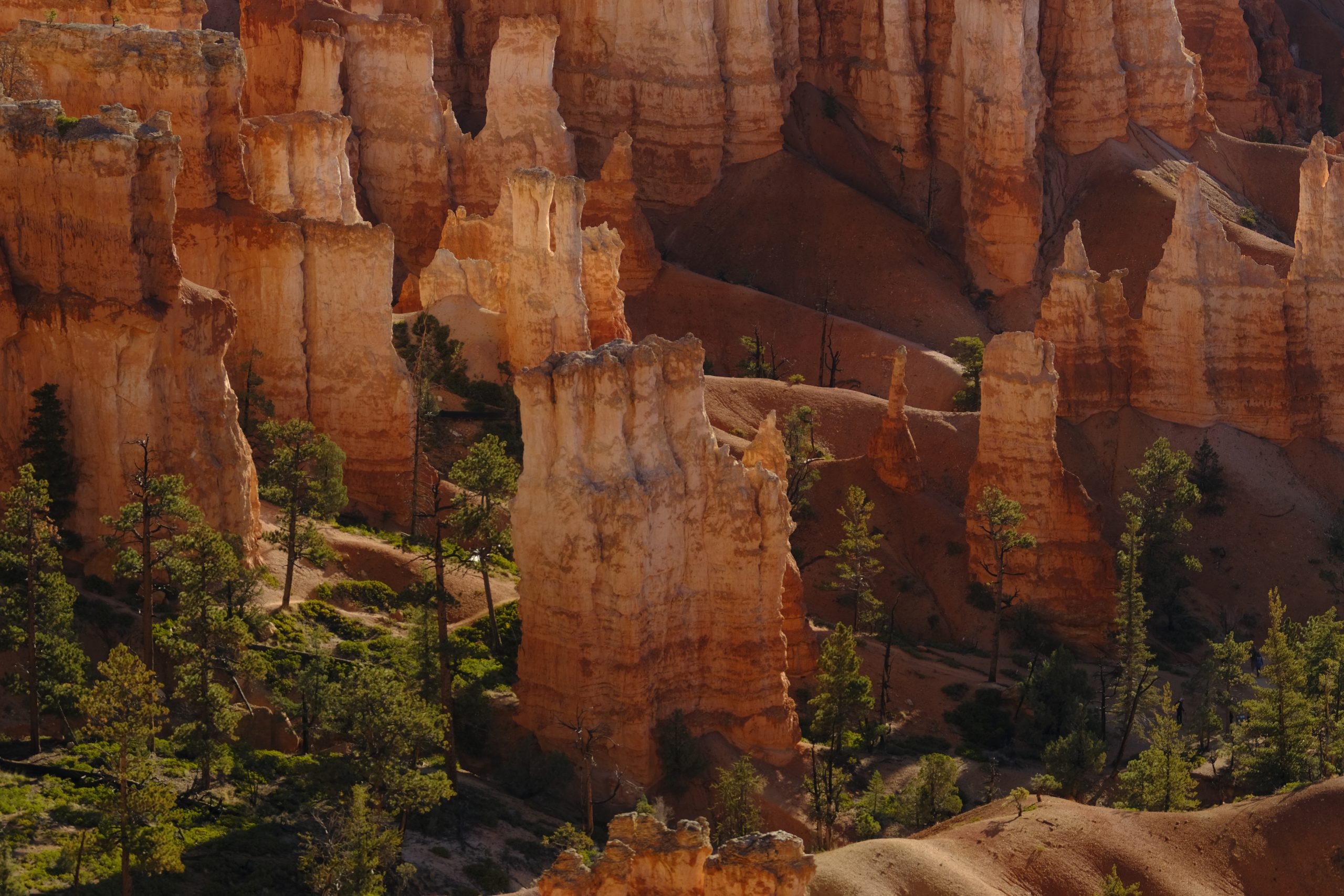
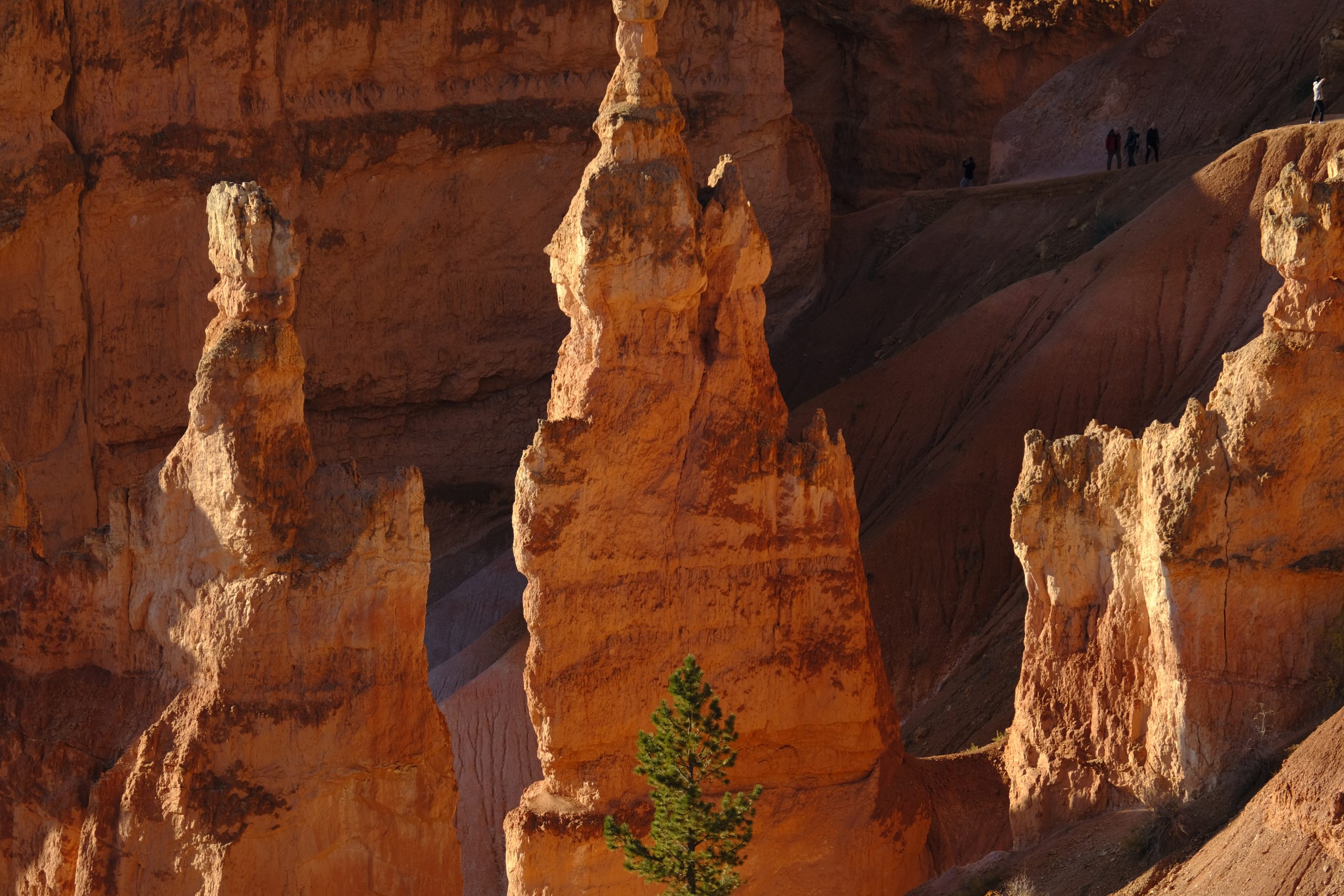
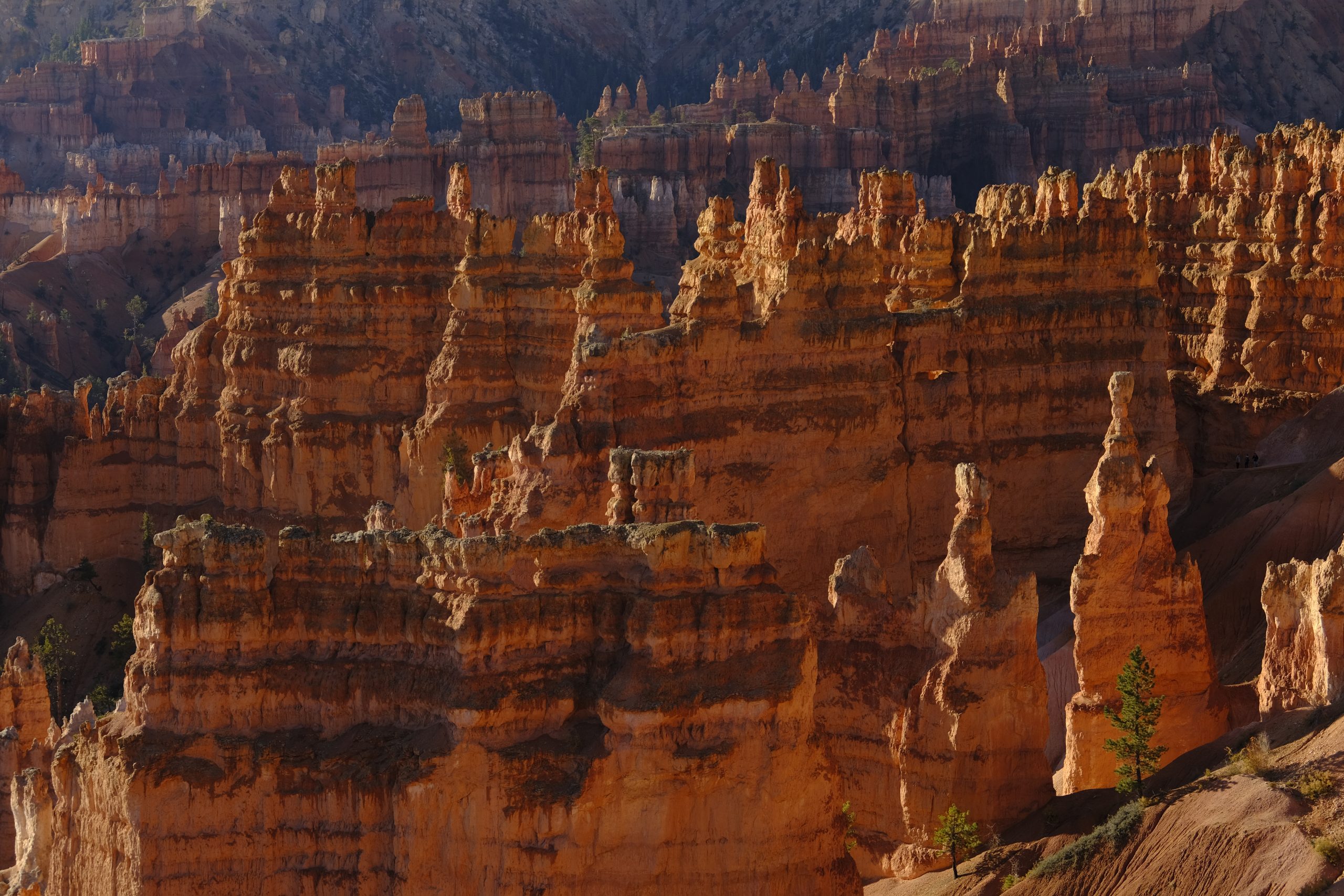
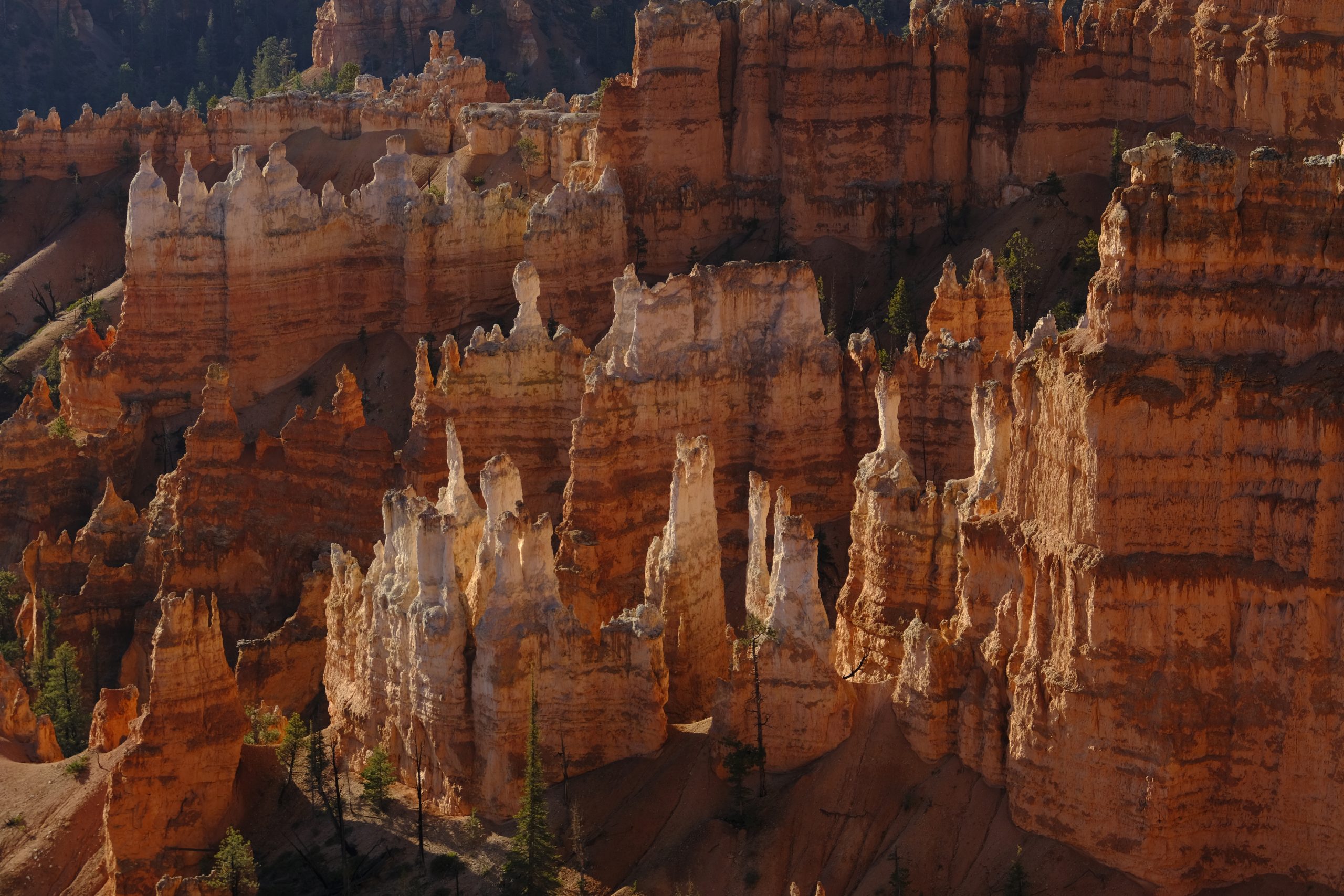
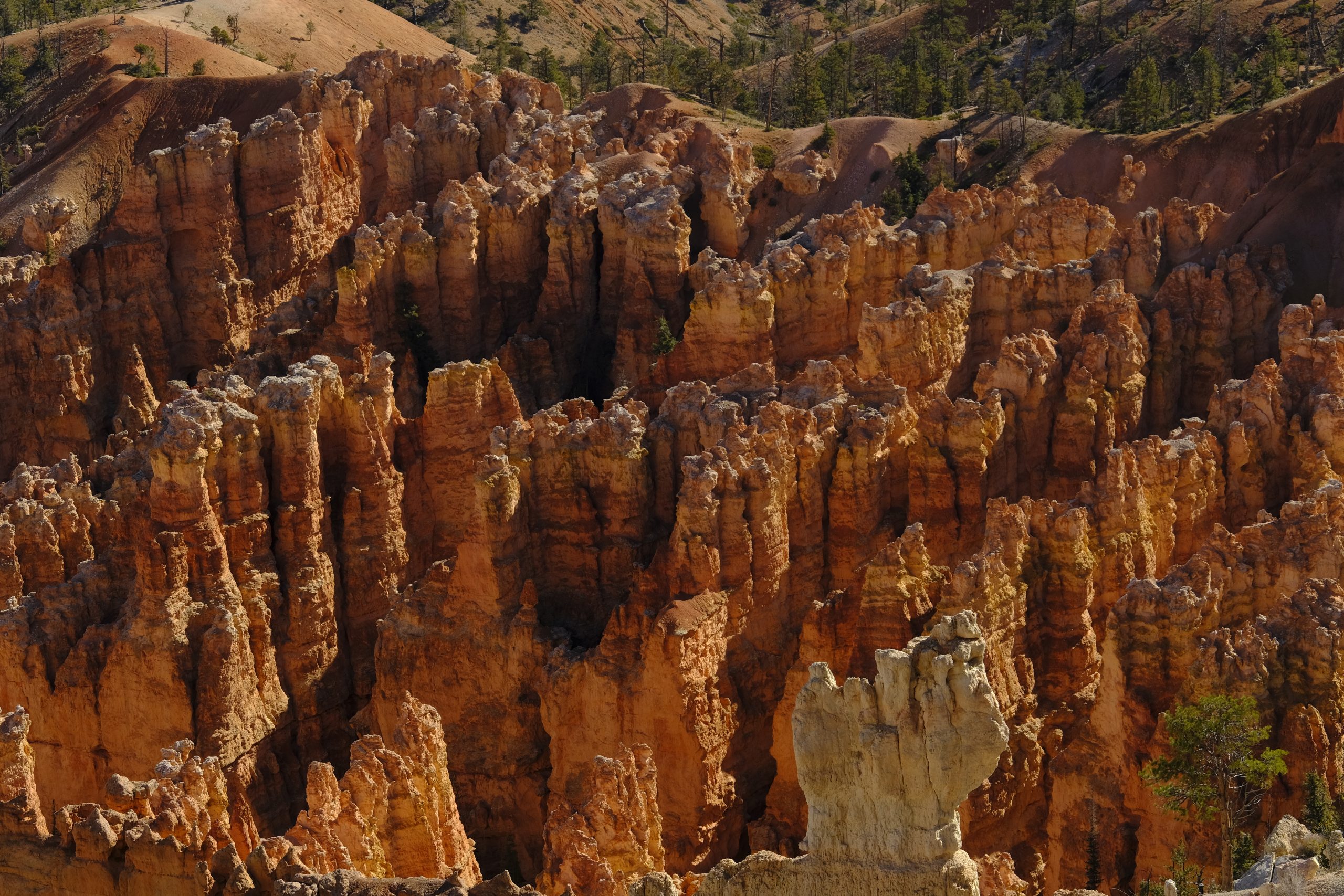
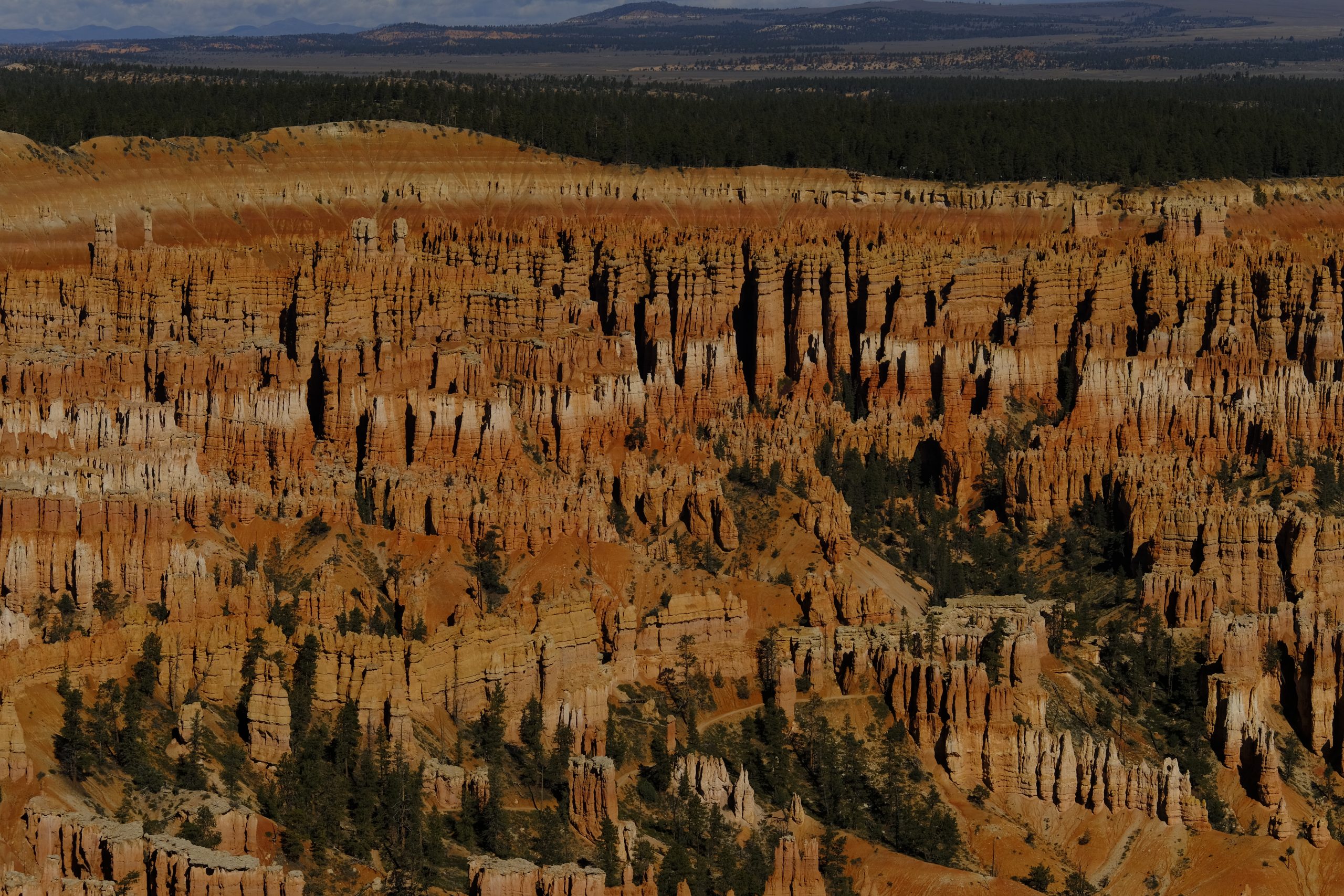
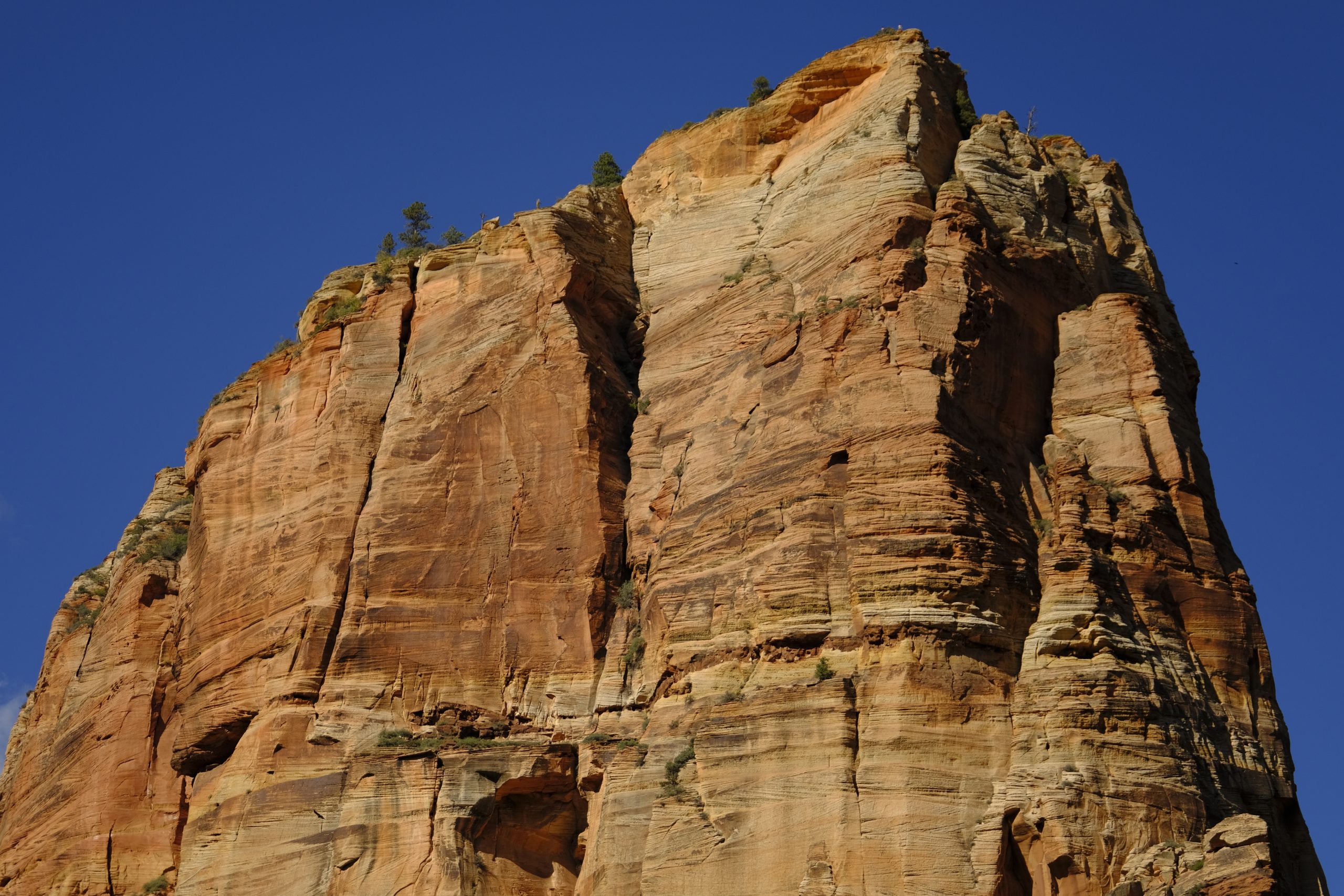
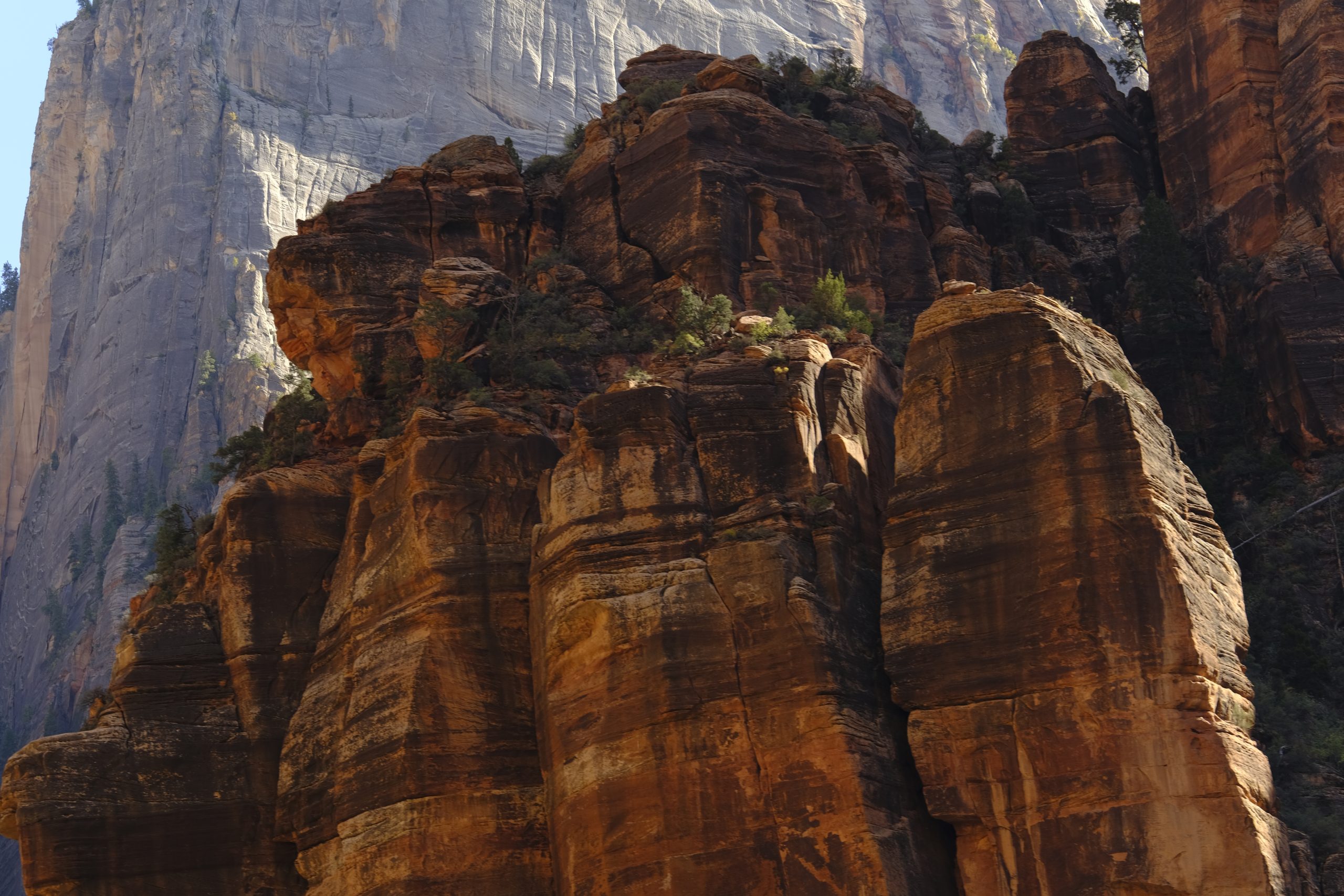
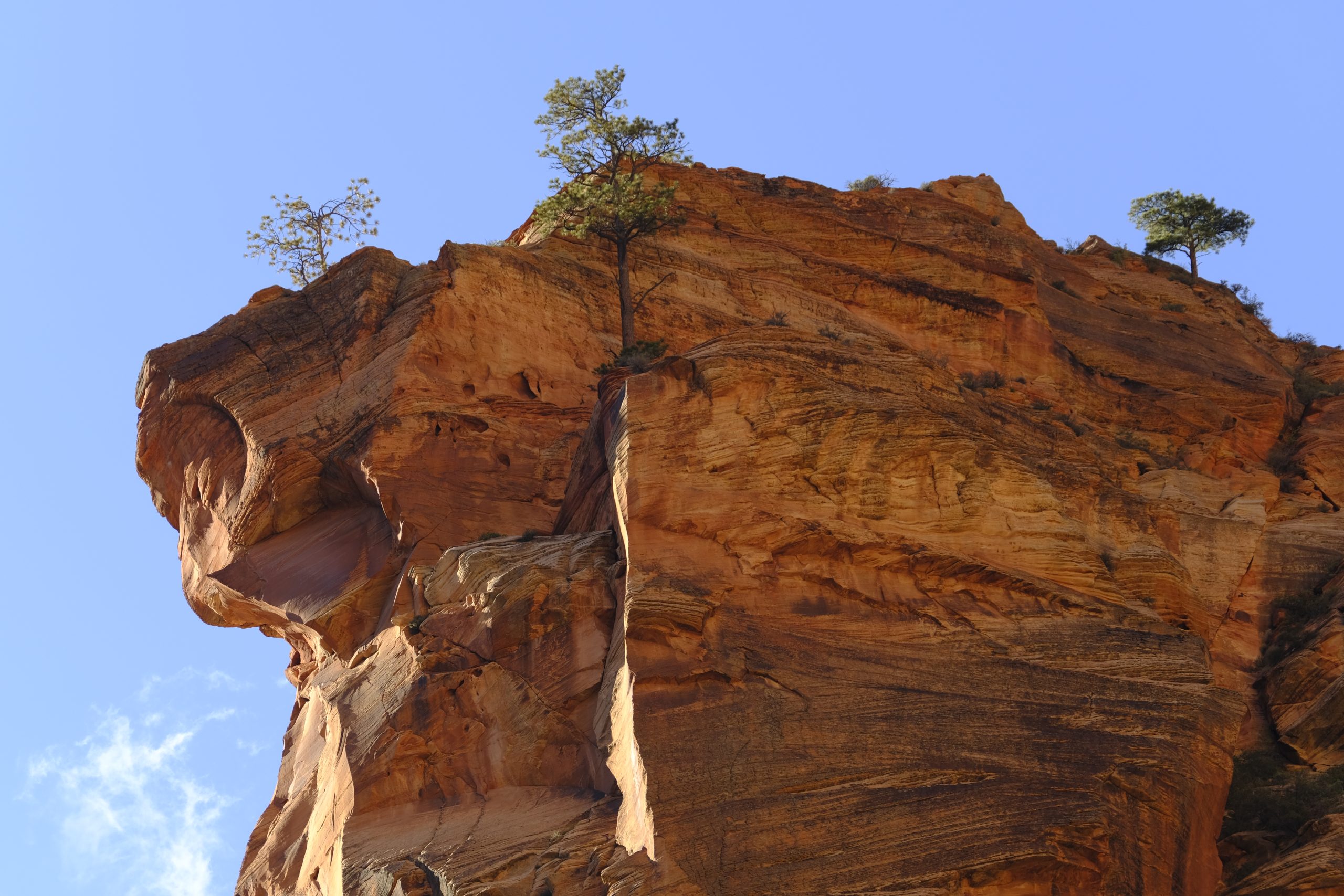
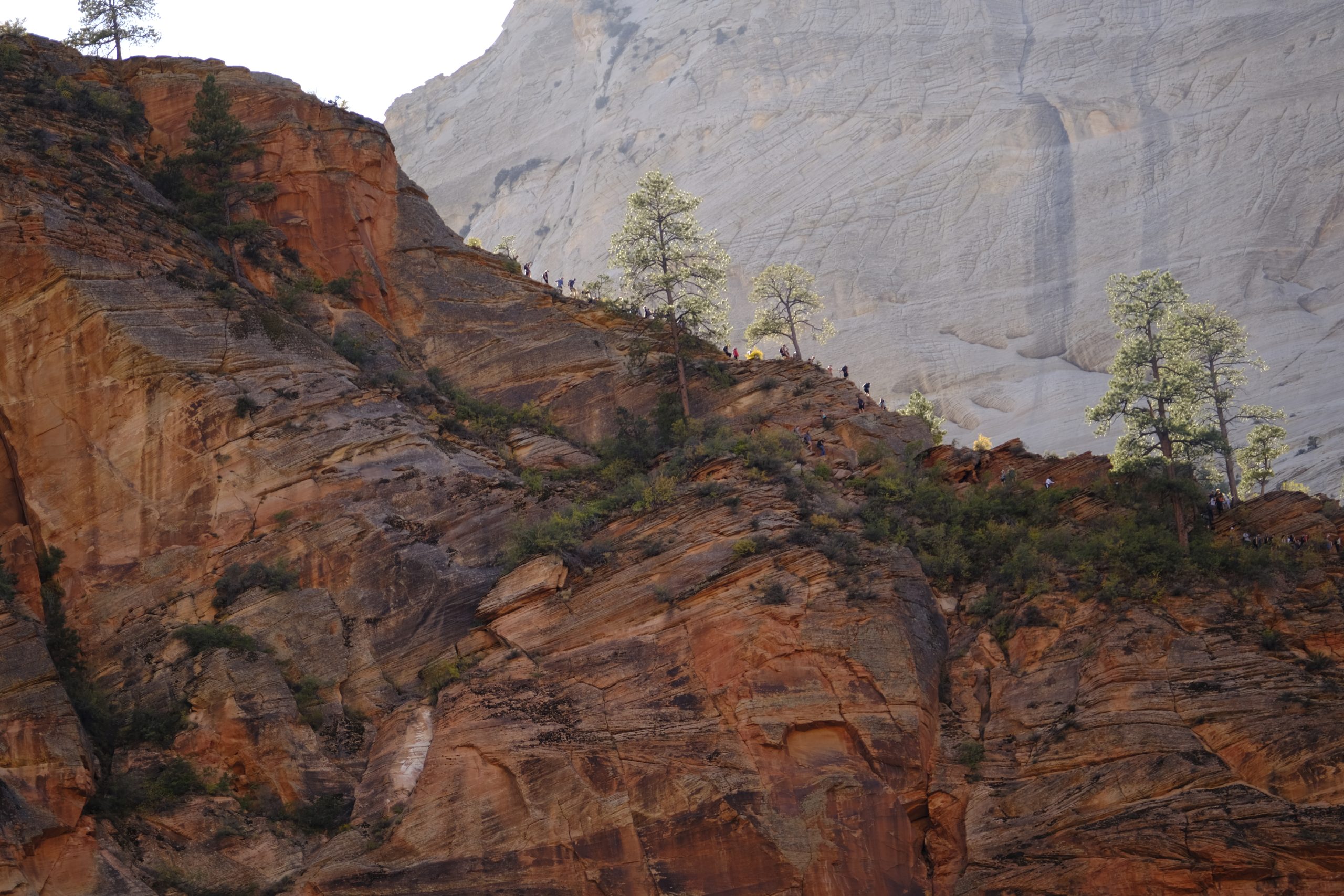
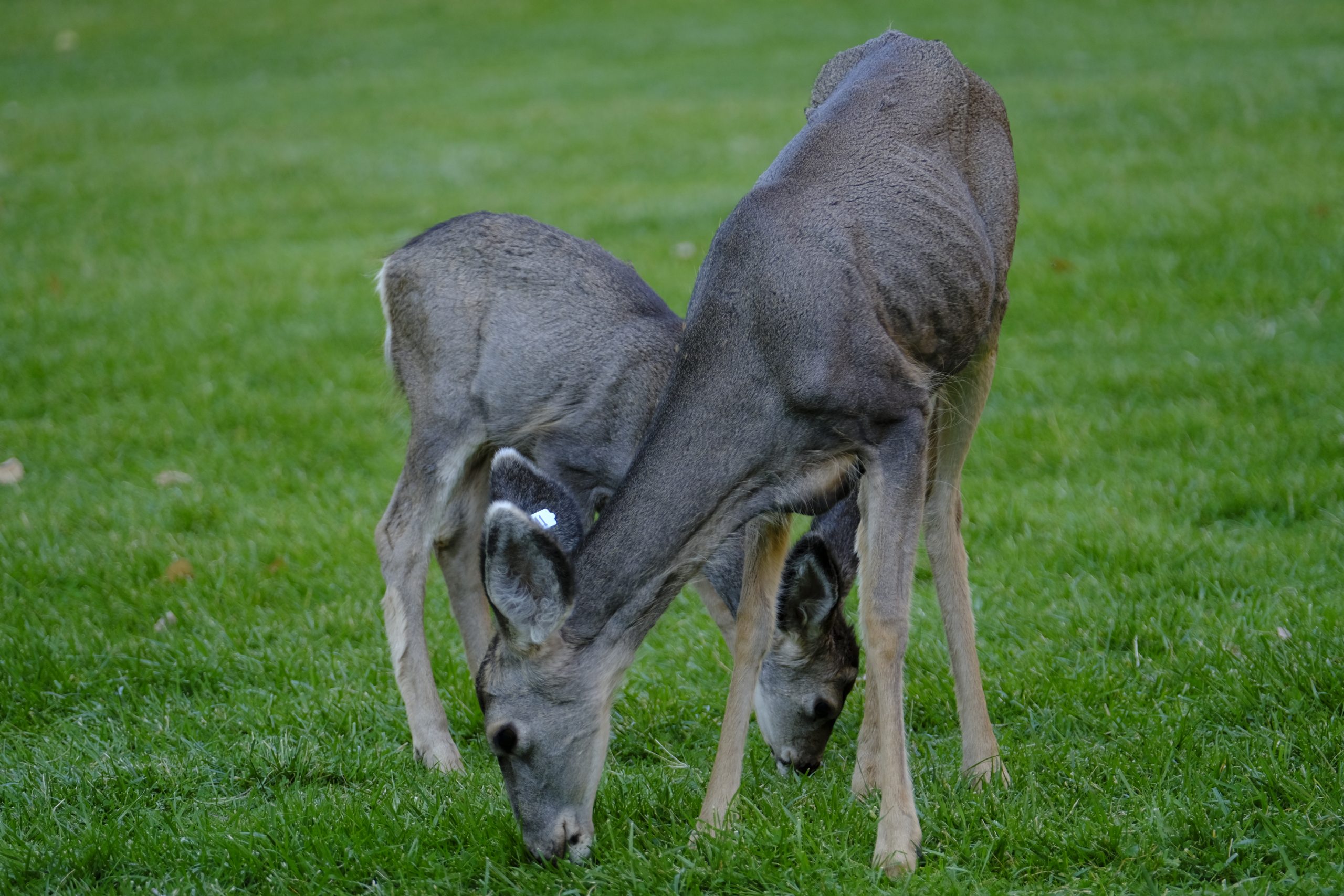
After lunch, we were on the move again, this time to Zion National Park. We arrived at Zion Lodge early in the afternoon and took a guided bus ride to the Temple of Sinawava. Upon our return to the lodge, we saw mule deer grazing on the front lawn, completely undeterred by human attention.
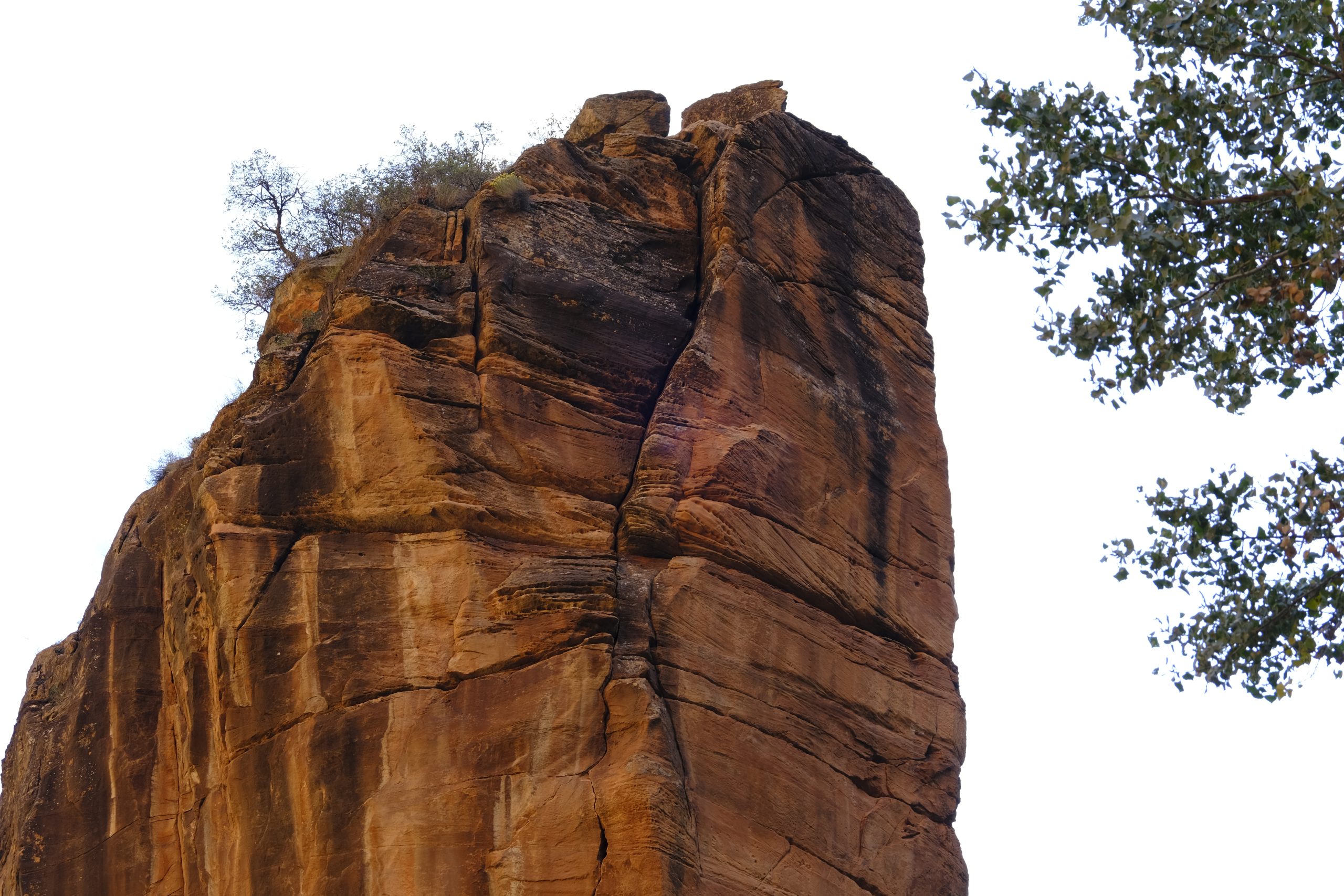
Hiking at Zion National Park – October 10, 2021
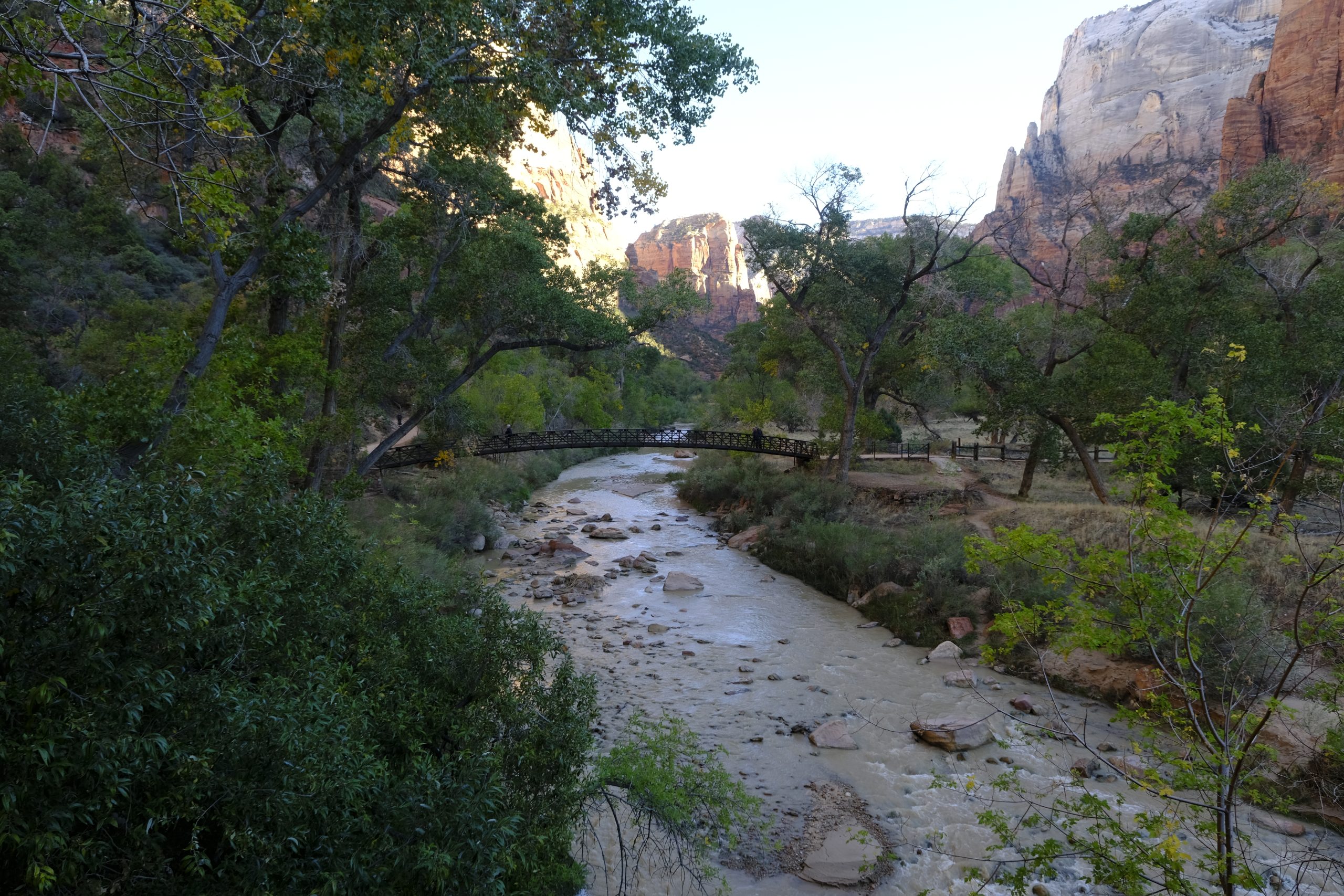
We went on a long hike today, first to the lower Emerald Pool; then returning to the starting point and walking in the opposite direction to the middle Emerald Pool, and finally returning to the lower pool and to the starting point. All in all, it was a 5-mile-plus trek, thanks to all the confusing instructions we received. In the afternoon, we crossed the Mojave Desert to get to the Four Seasons in Las Vegas. Tonight was our farewell dinner.
Exploring Hoover Dam and Old Las Vegas – October 11, 2021
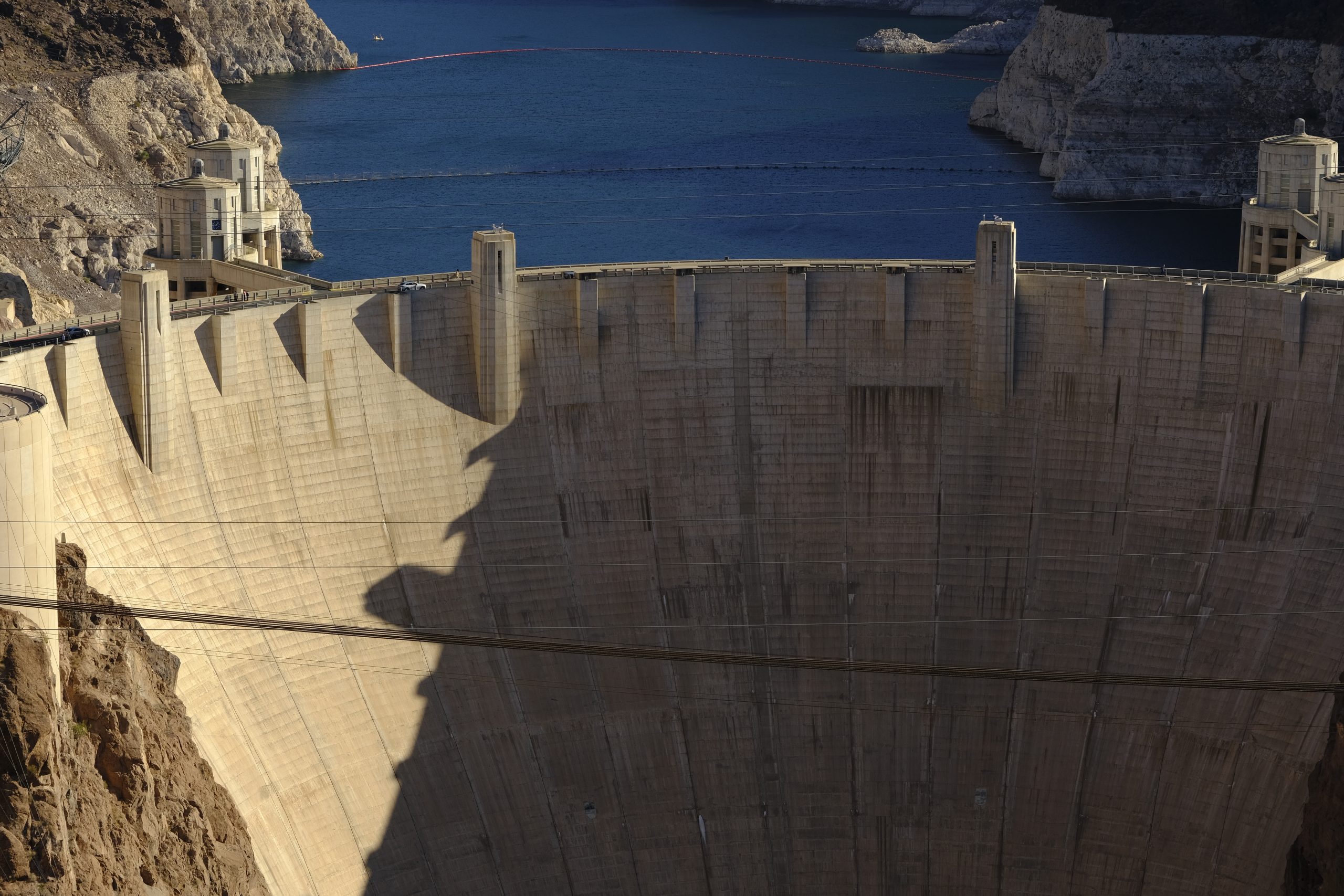
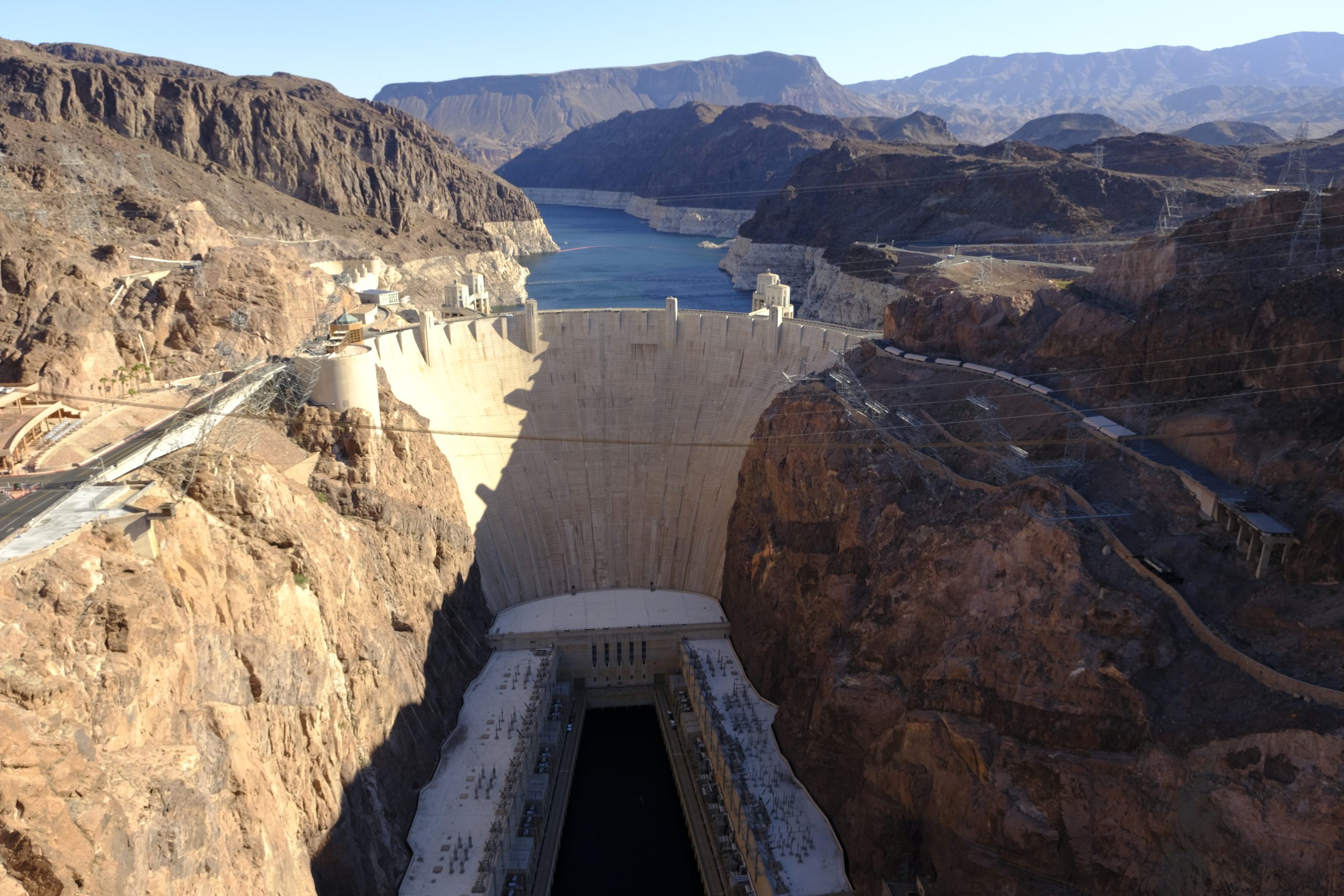
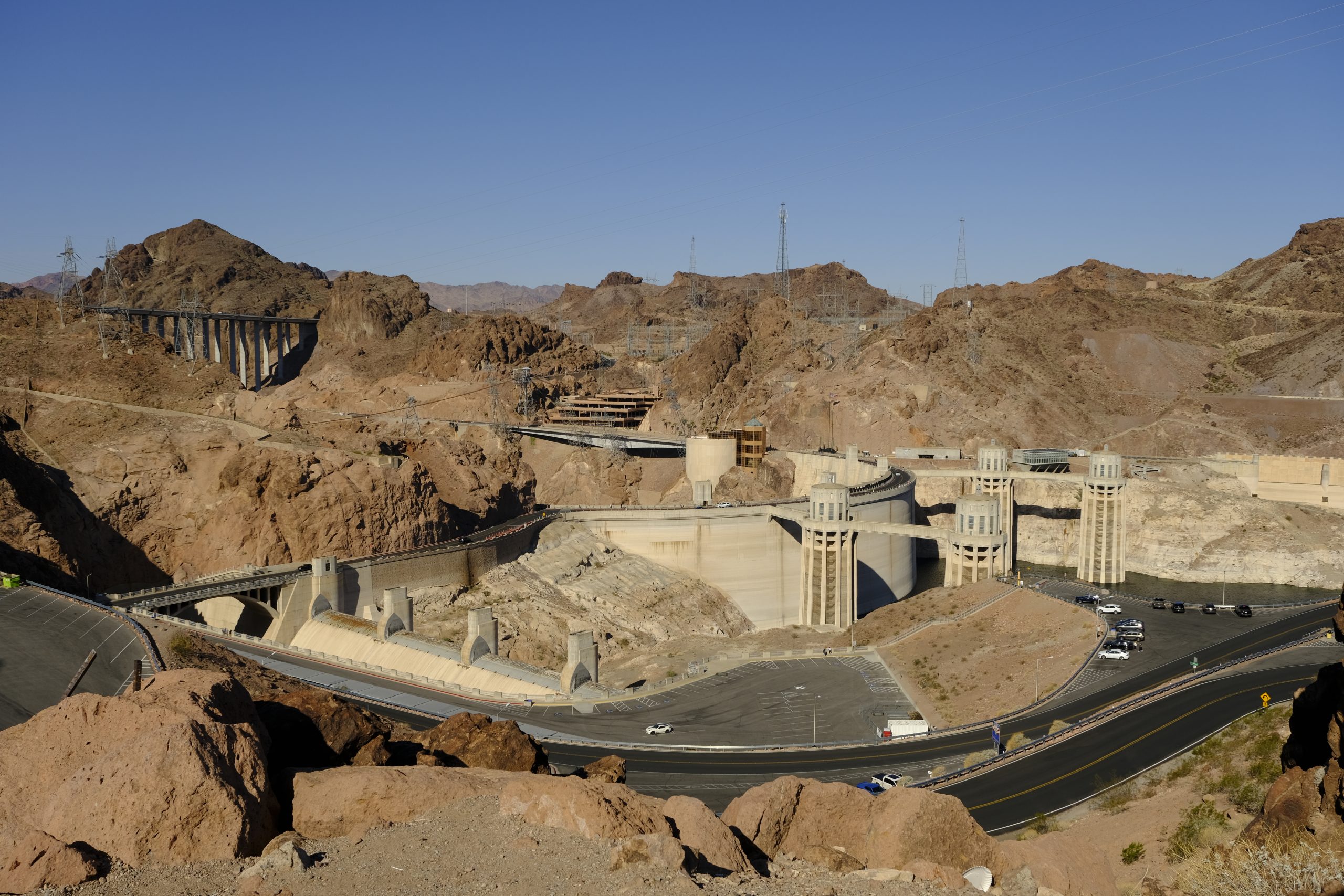
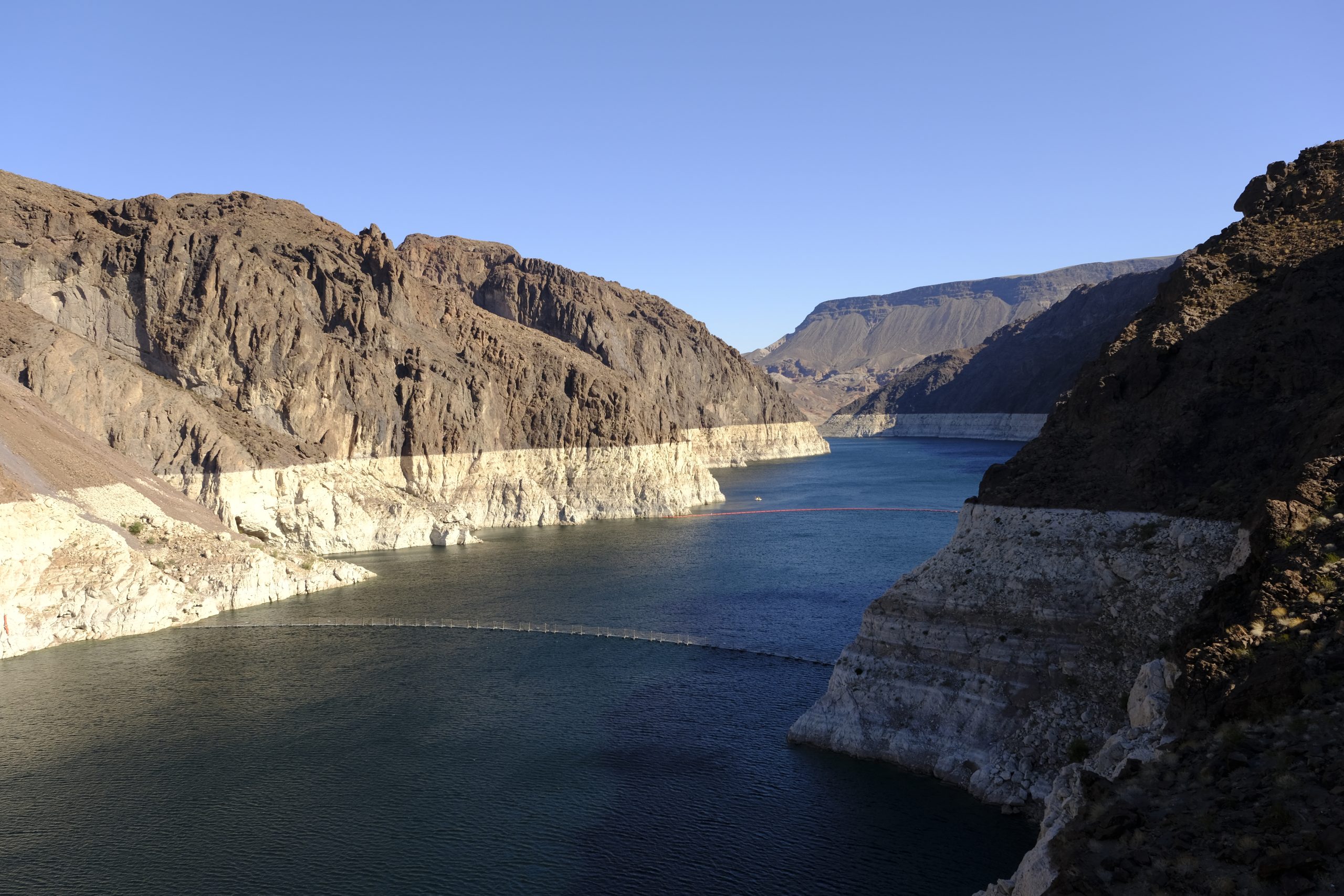
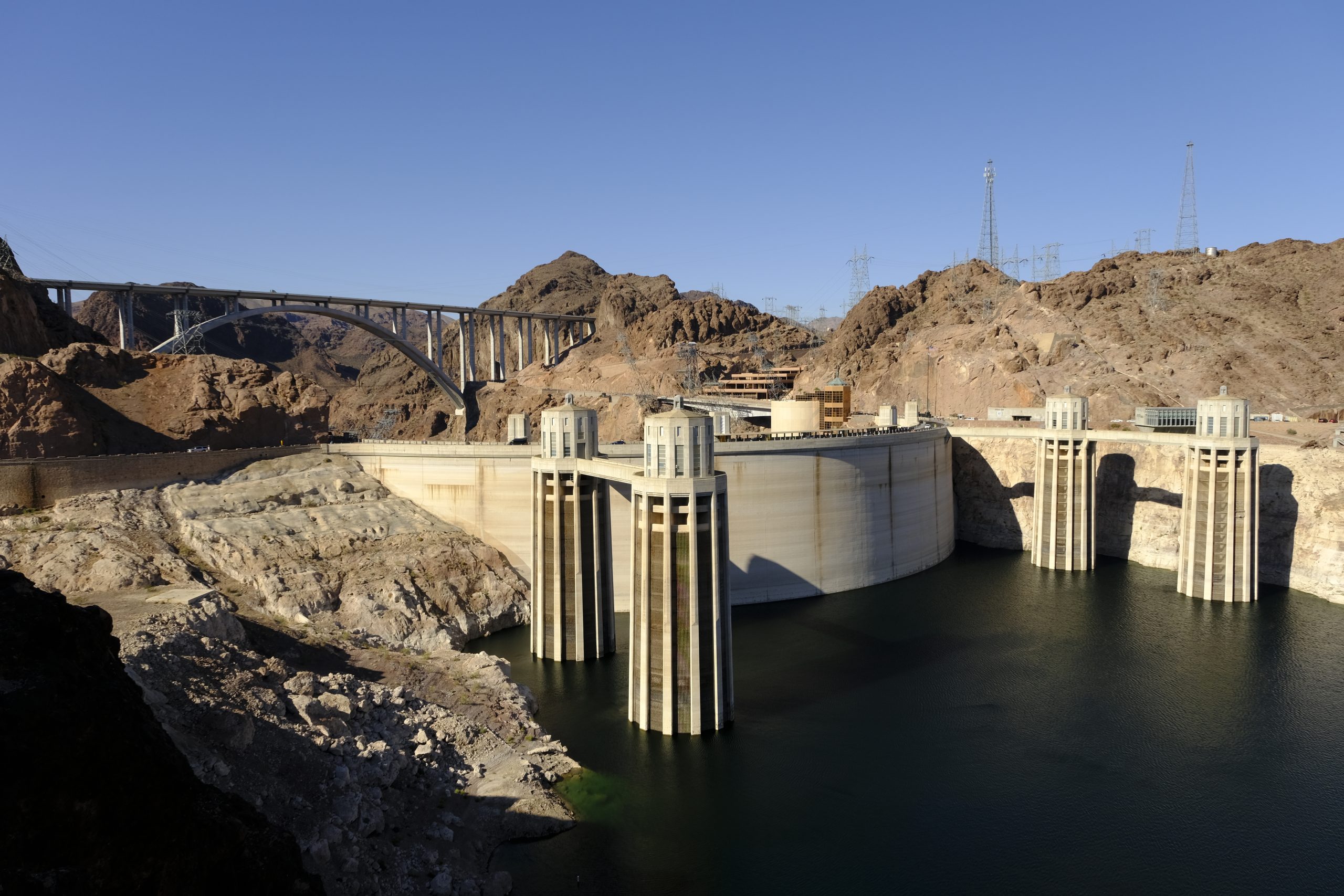
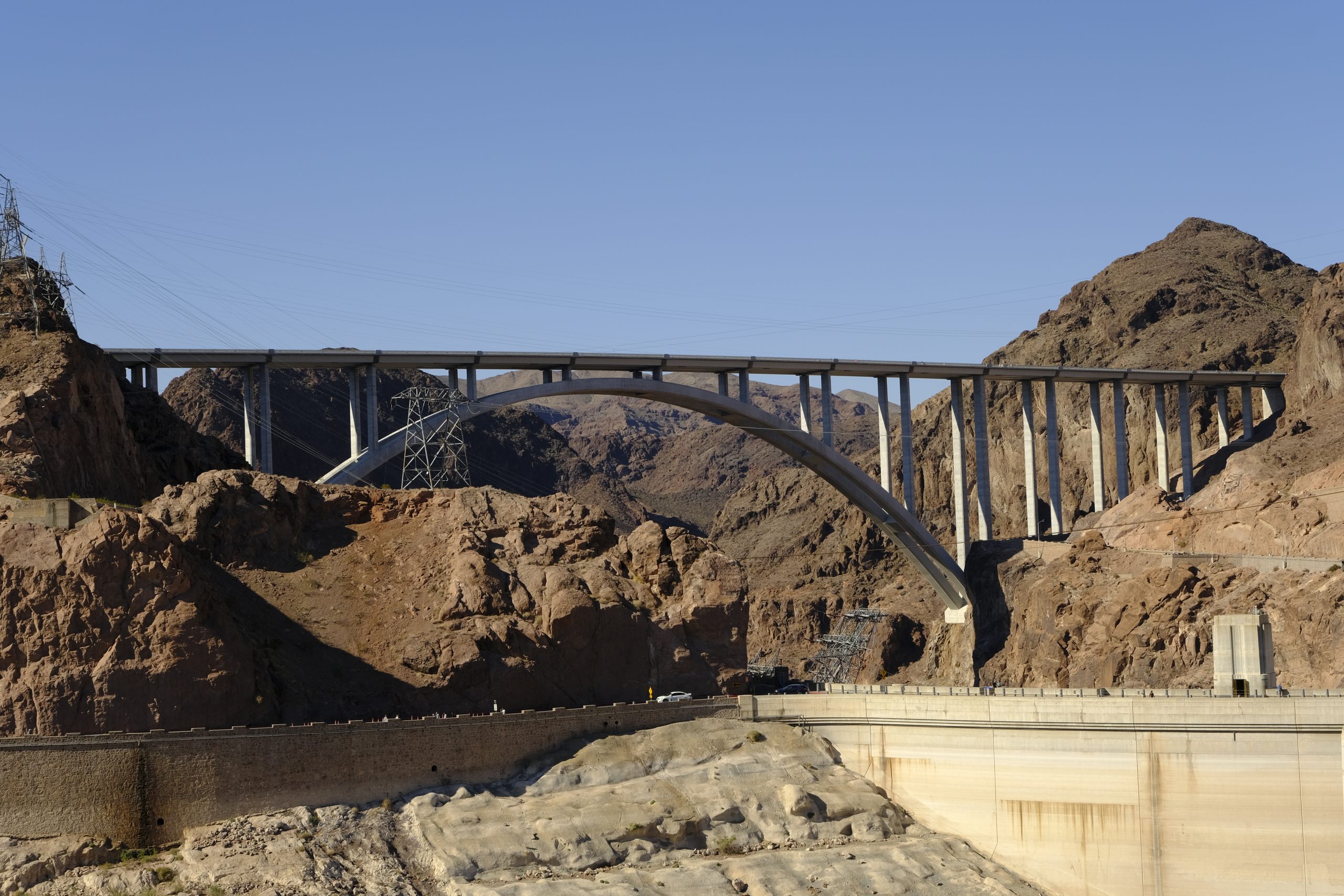
This morning, we embarked on a guided tour of Hoover Dam. We viewed the dam from several different vantage points and also saw Lake Mead, the largest man-made lake in the country that was formed by building the dam on the Colorado River. The ingenuity behind the construction, using rudimentary equipment and often unskilled laborers seeking employment during the Depression, was truly remarkable. Thanks to climate change, the water level in Lake Mead was at its lowest and getting lower.
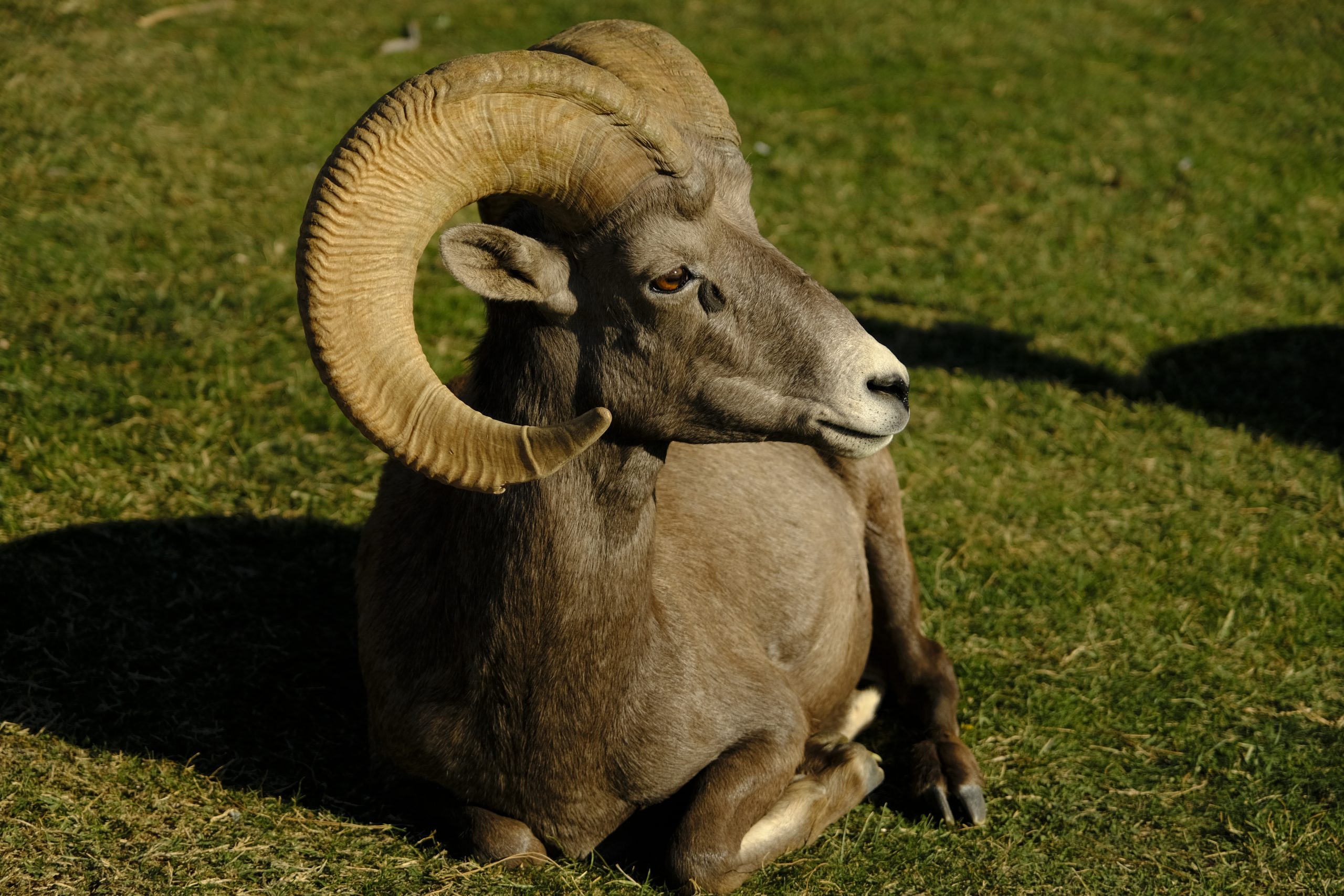
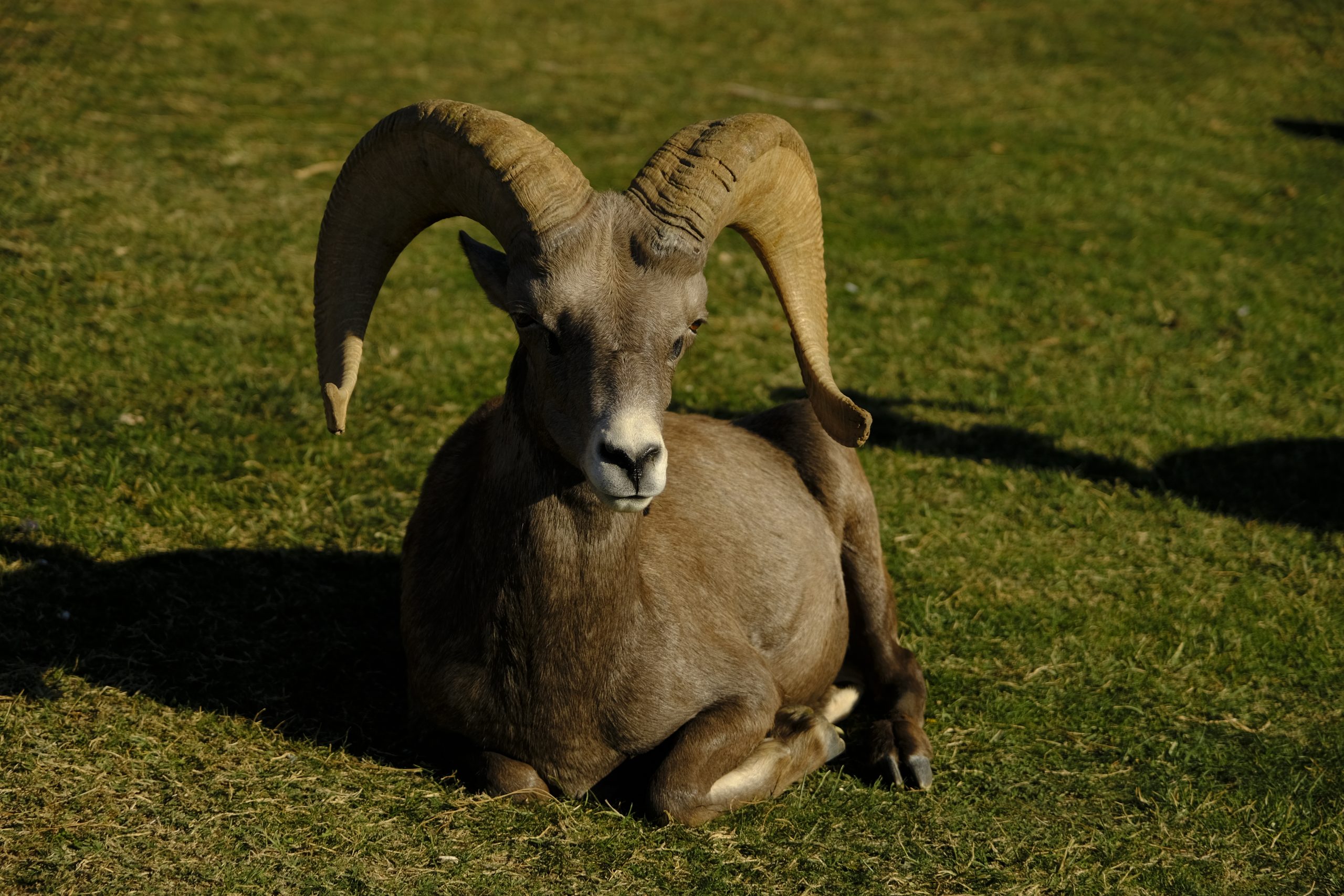
Later, we were pleasantly surprised to see a large herd of big horned sheep in one of the suburbs of Las Vegas, fulfilling our earlier hopes of seeing them in Glen Canyon.
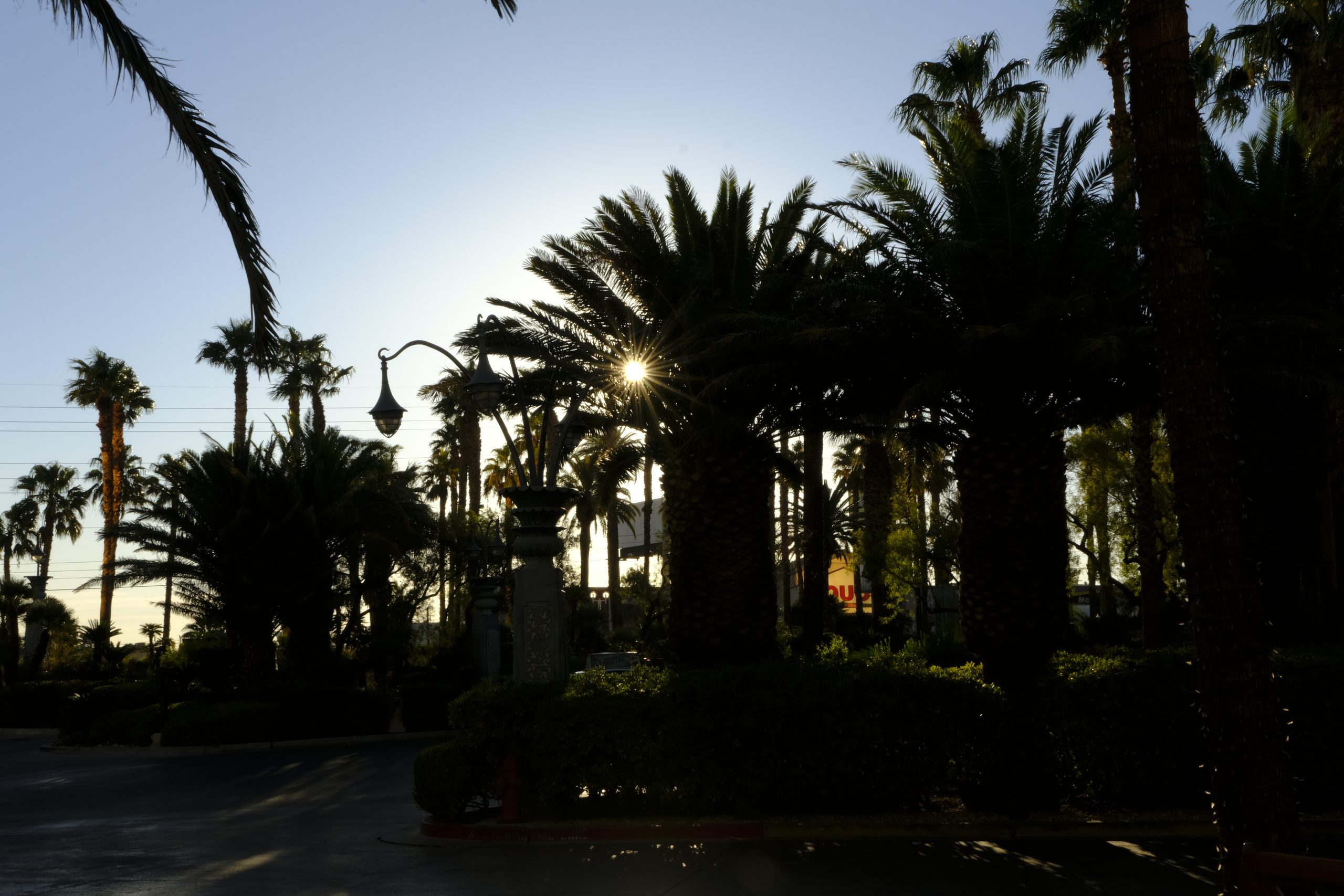
In the afternoon, we went on another tour, this time to downtown Freemont Street and Old Las Vegas. Guided by an informative local, we learned about the history of the city’s iconic casinos, tracing their ownership through time.
Mystical Night at the Venetian – October 12, 2021
We stopped by the Bellagio to visit their art gallery, only to find it closed in preparation for a new exhibition. This evening, we attended Cirque Du Soleil’s Mystère — a delightful and entertaining show.
Homeward Bound – October 13, 2021
After bidding farewell to the Four Seasons, we boarded our flight home. The journey was uneventful, until we reached Newark and attempted to get an Uber, which proved to be a nearly hour-long wait. Vacation is over!