
When we started traveling in 2010, we used to post our travel diary with pictures on a commercial website. Unfortunately, we lost all the posted content as this website shut down without notice, leaving us scrambling to come up with a more permanent alternative.
Now that we have our own travel website, we are attempting to recreate some of the lost blogs based on notes, itineraries, Wikipedia, and good old-fashioned memory. This is one such recreation. It’s a labor of love, piecing together the adventures that shaped our lives and sharing them with you once again.
In this recreated blog, we share our thrilling journey through the scenic Straits of Magellan, a visit to the breathtaking Iguazú Falls, along with tours of Buenos Aires—the tango capital of the world, and Rio de Janeiro—the samba capital of the world.
Buenos Aires: Tango and Much More – December 23, 2011
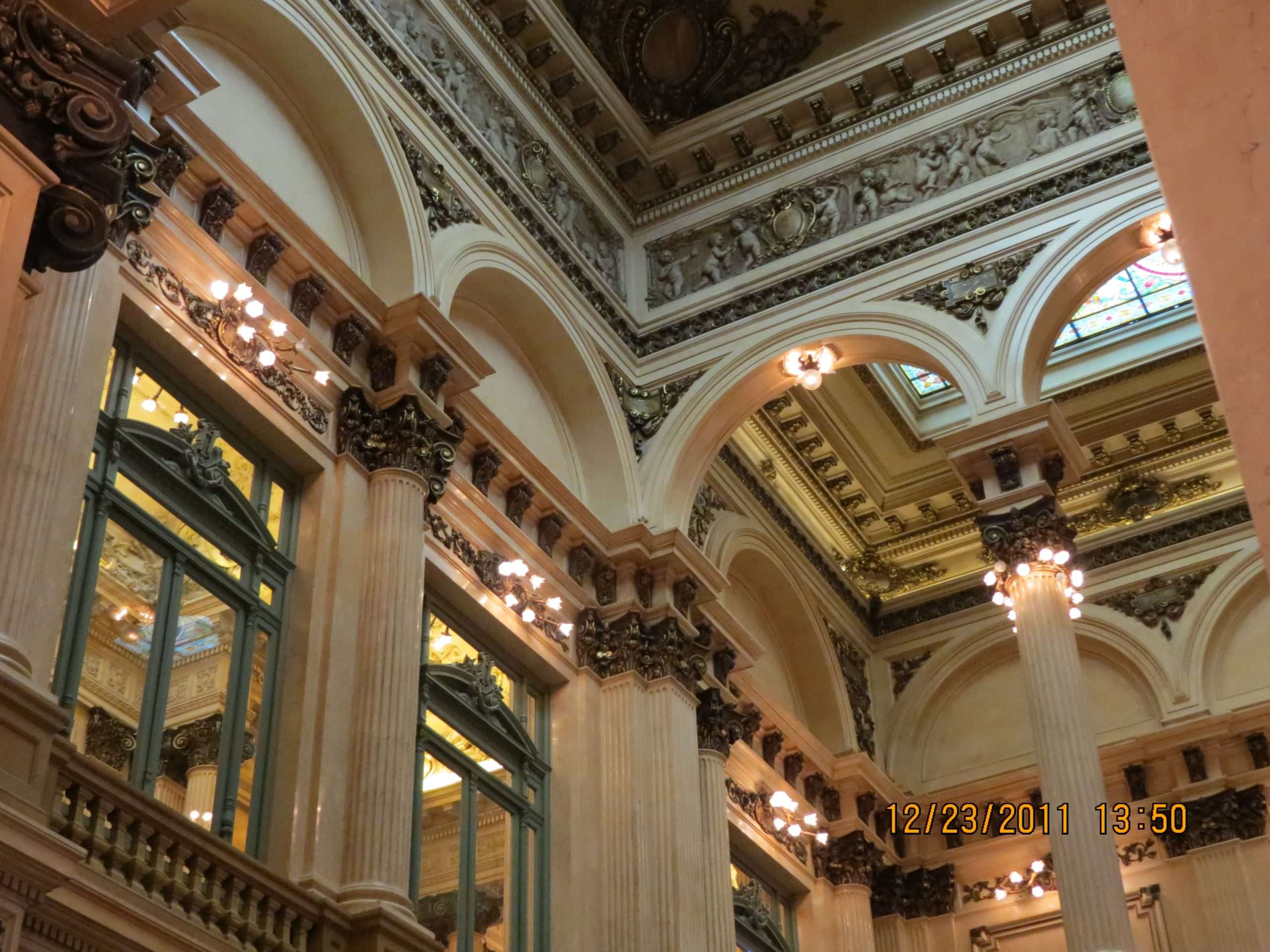
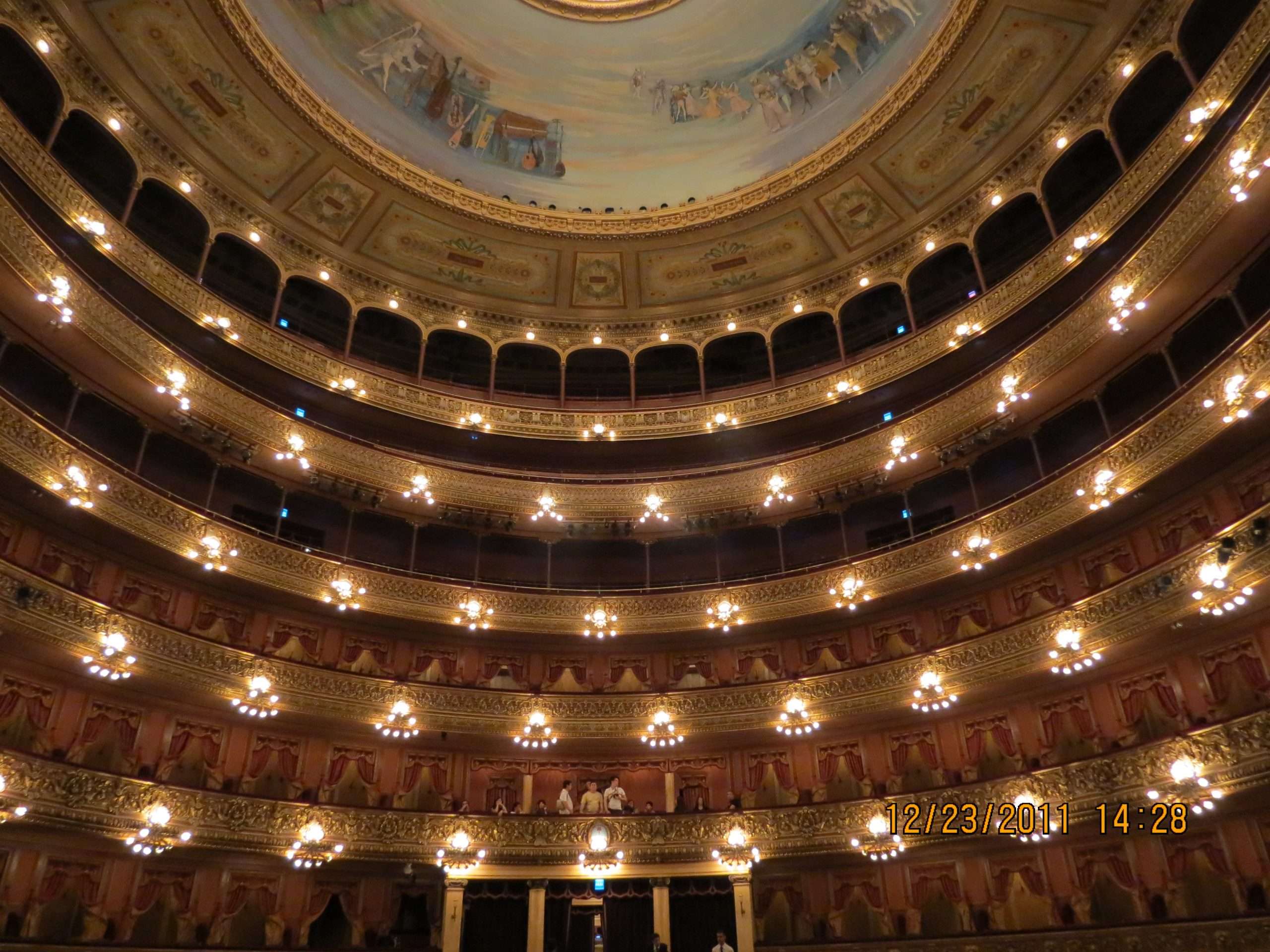
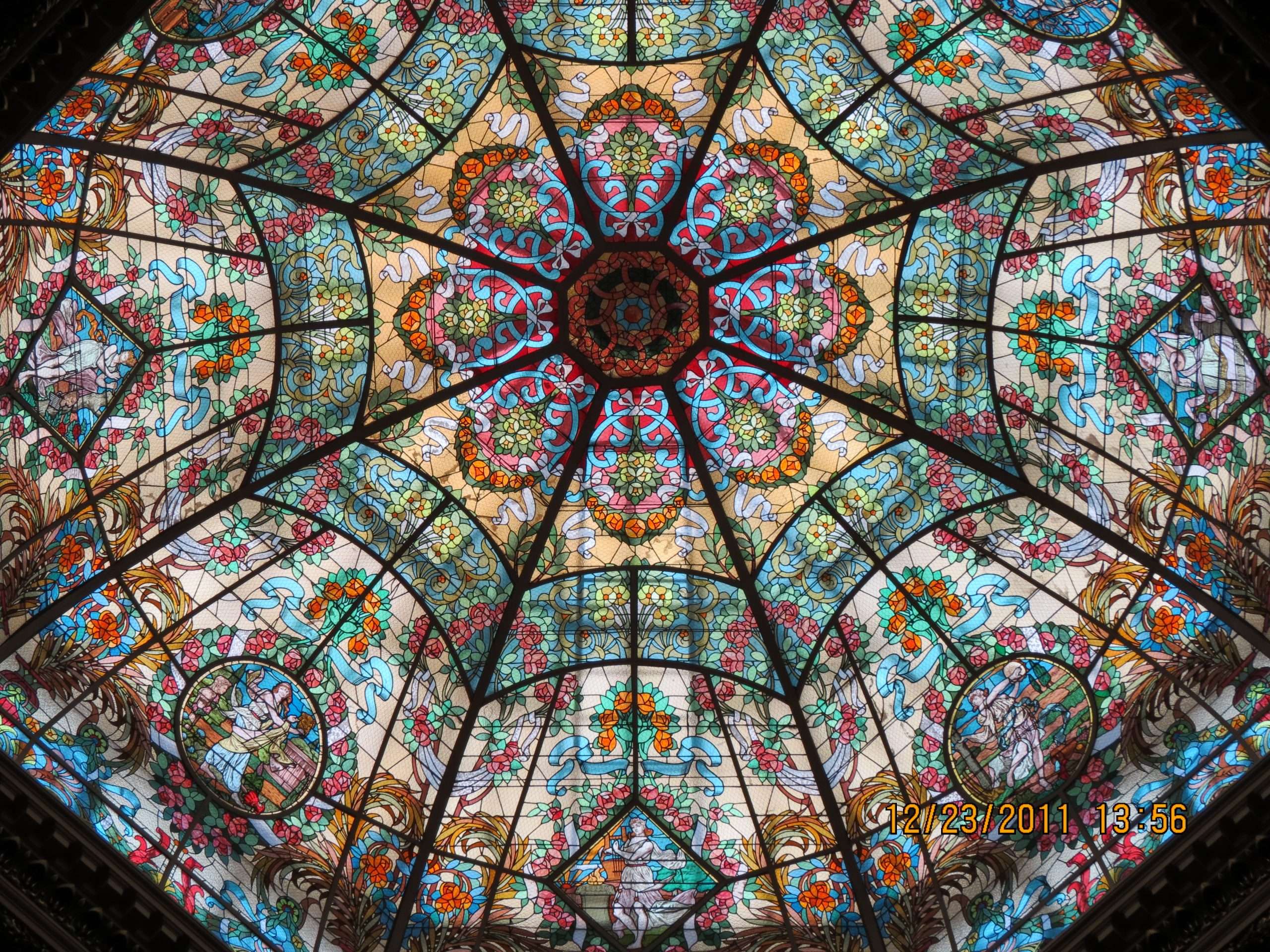
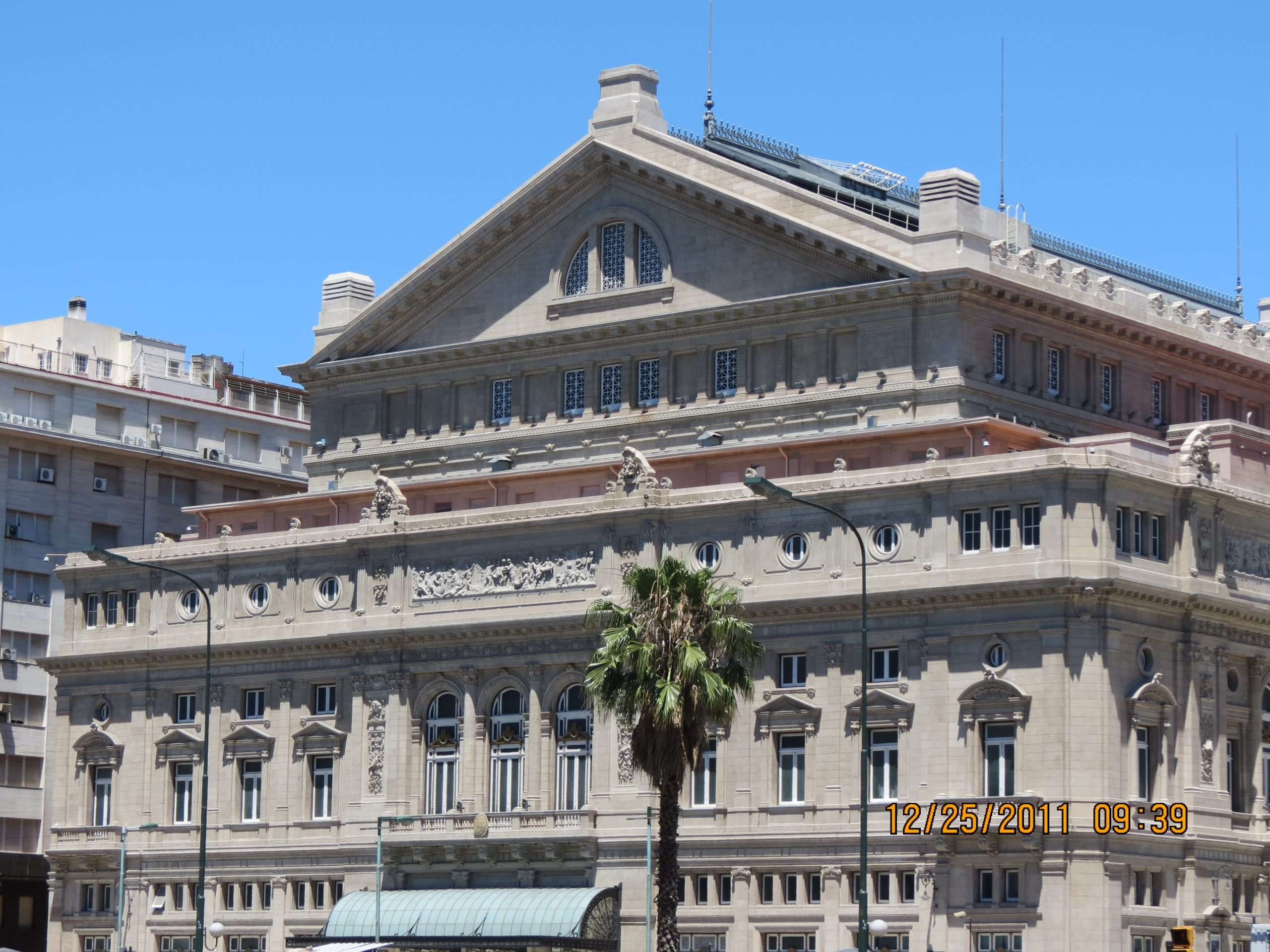
Upon arriving at Buenos Aires Ezeiza Airport in the morning, we (Albert, Christabel, and Evan) transferred to the Sofitel Arroyo Hotel, which was our home for the next three nights. We were then met by our guide, Cecilia. We began our tour of Buenos Aires with a visit to the renowned Teatro Colón. The stained-glass ceilings were stunning. The theater had recently been restored, not refurbished, as our guide Cecilia pointed out. Since she used to work there, she was able to take us into the auditorium near the stage, not just to one of the boxes. The Teatro Colón, also known as the Opera House, hosts operas, ballets, concerts, and more. Around 3,000 people work there.
Our next stop was MALBA (Museo de Arte Latinoamericano de Buenos Aires), where we saw our first Diego Rivera and Frida Kahlo paintings up close. Cecilia, who was an art major, also teaches, curates, and deals in art. MALBA has paintings from Latin America created between 1910 and 2010. It opened in 2000, making it a relatively new museum. Christabel found Manifestación by Antonio Berni to be the most impressive painting. It depicted very lifelike faces of Argentine protesters, though it was unclear what they were protesting.
After MALBA, she took us to see an art gallery. Since it was the 23rd, most art galleries and museums were closed for the holidays. However, she called around and found one that was open. There, we saw several paintings by Benito Quinquela Martín, La Boca’s native son.
In the evening, we went to see Tango at Tango Porteño, which was next to the Opera House. The dancing was spectacular, as was the orchestra. However, the singing was a bit too loud. The orchestra included four to five accordionists, providing the traditional harsh tango sound.
Classic City Tour of Buenos Aires – December 24, 2011
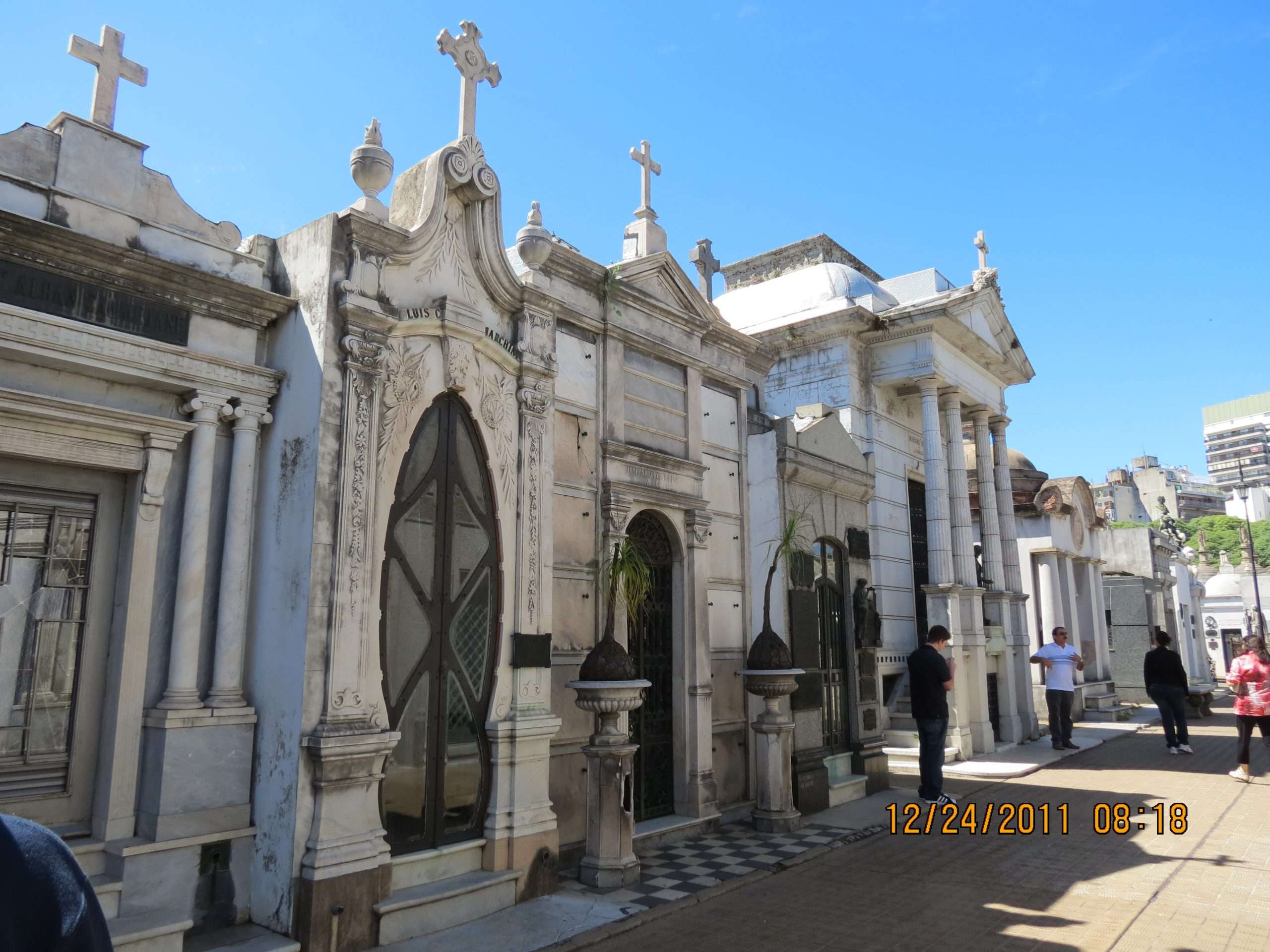
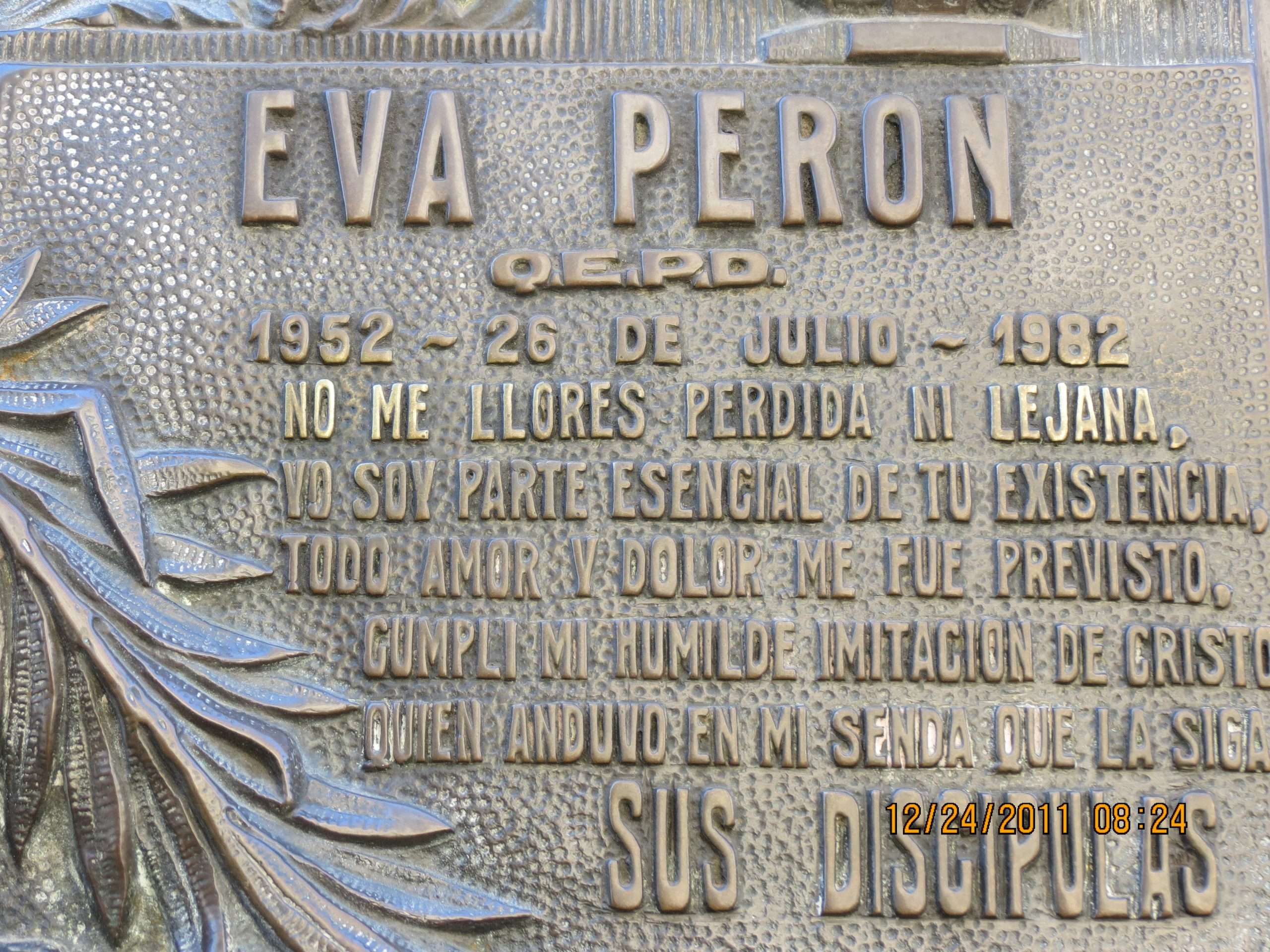
Today, our guide Sylvia took us on a tour of the city. Our first stop was Recoleta, a public burial site. The mausoleums there are purchased by families, where members are first buried and later cremated, with the ashes stored in the mausoleums. These monuments are expensive to buy and maintain, and some are for sale because the families have died out. Eva Perón (Evita) is interred in her family’s mausoleum here.
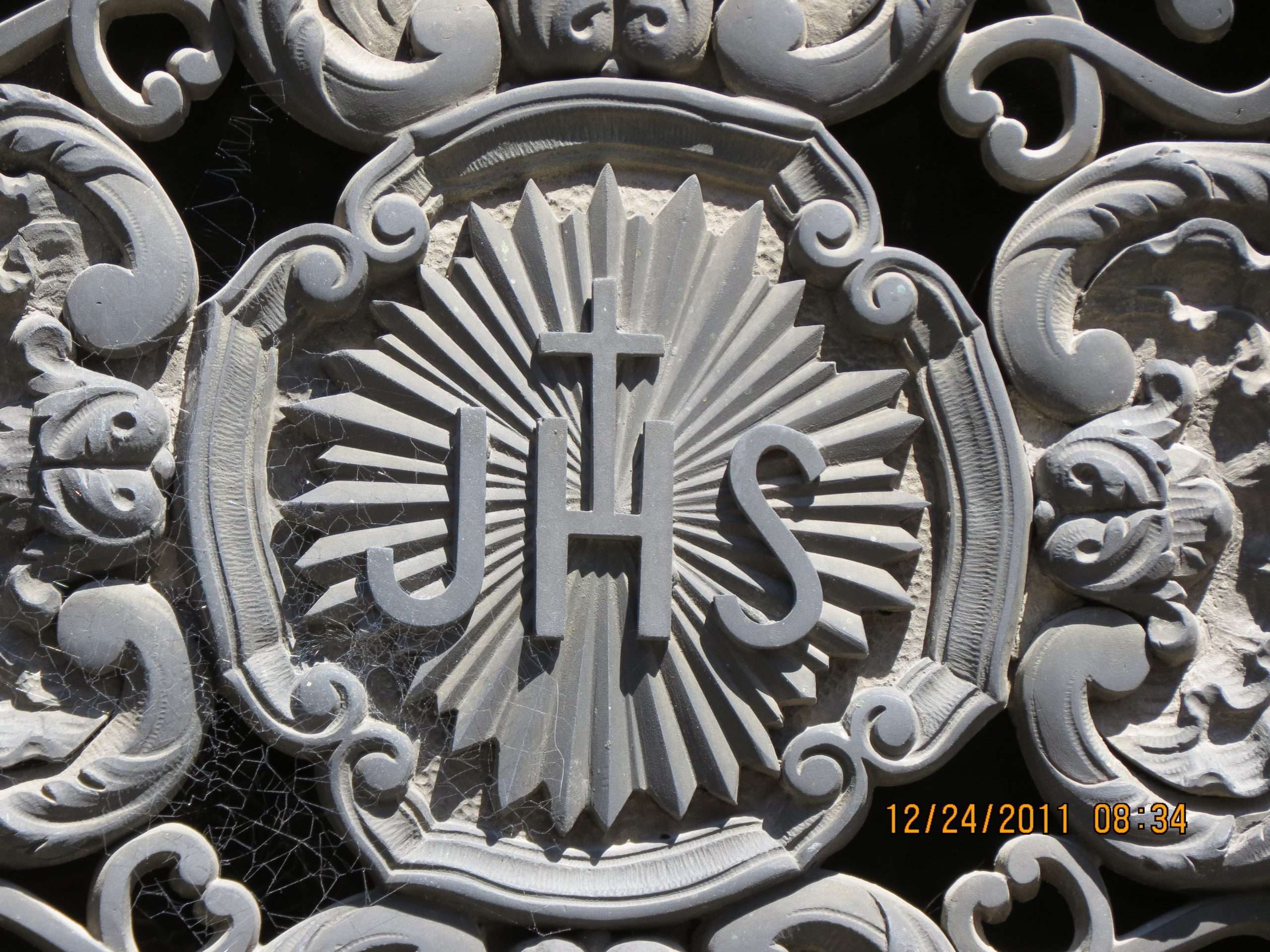
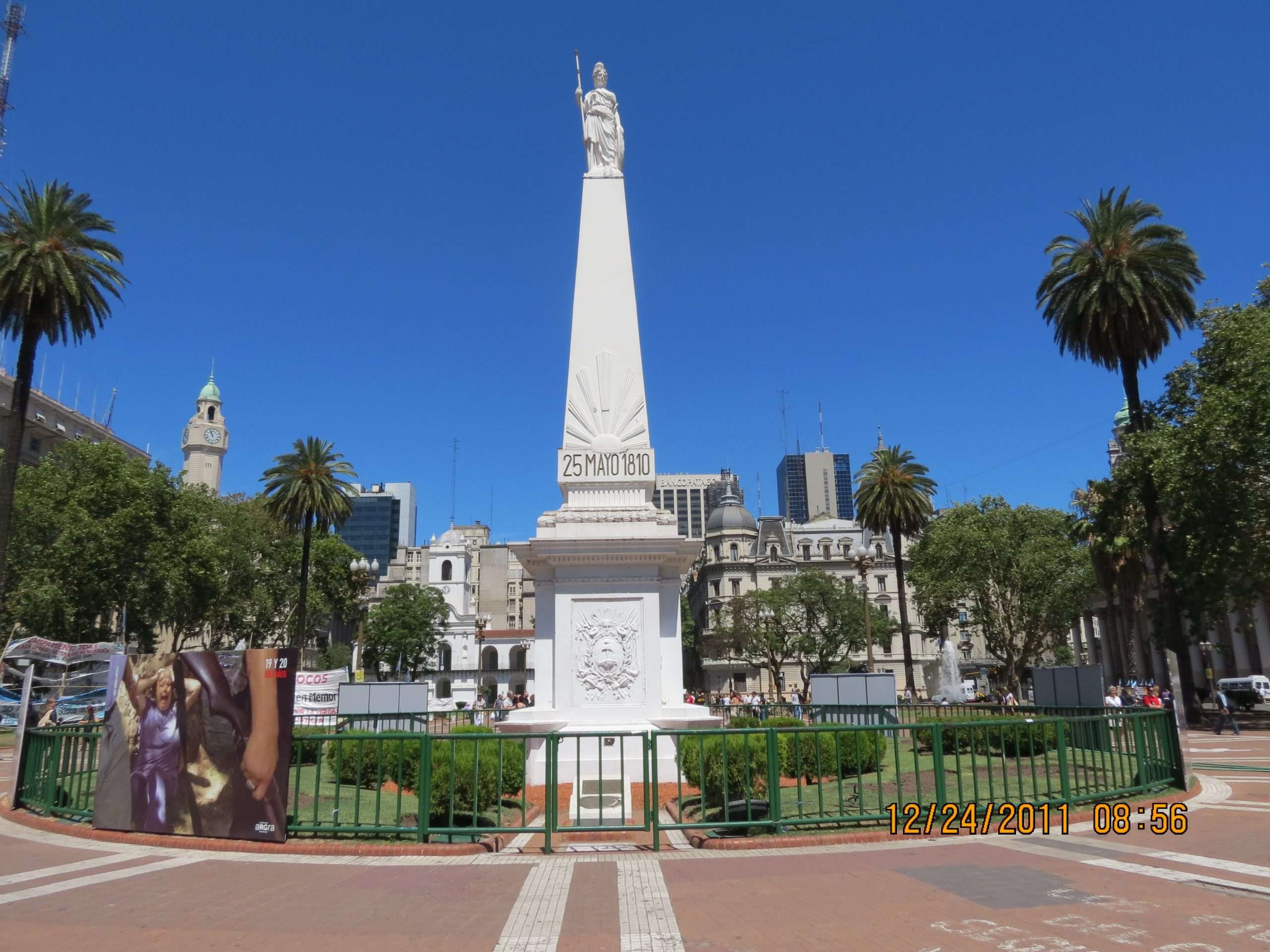
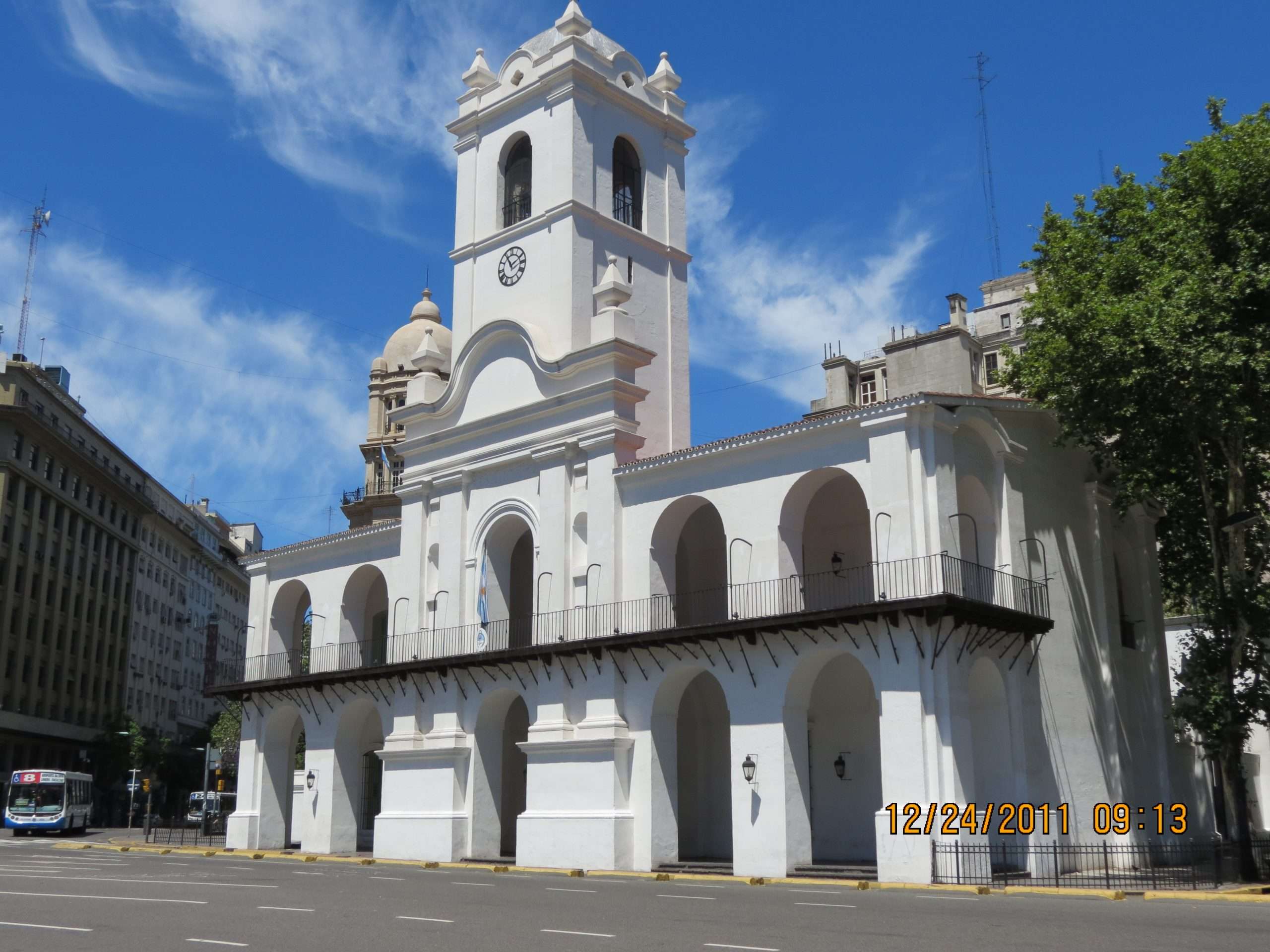
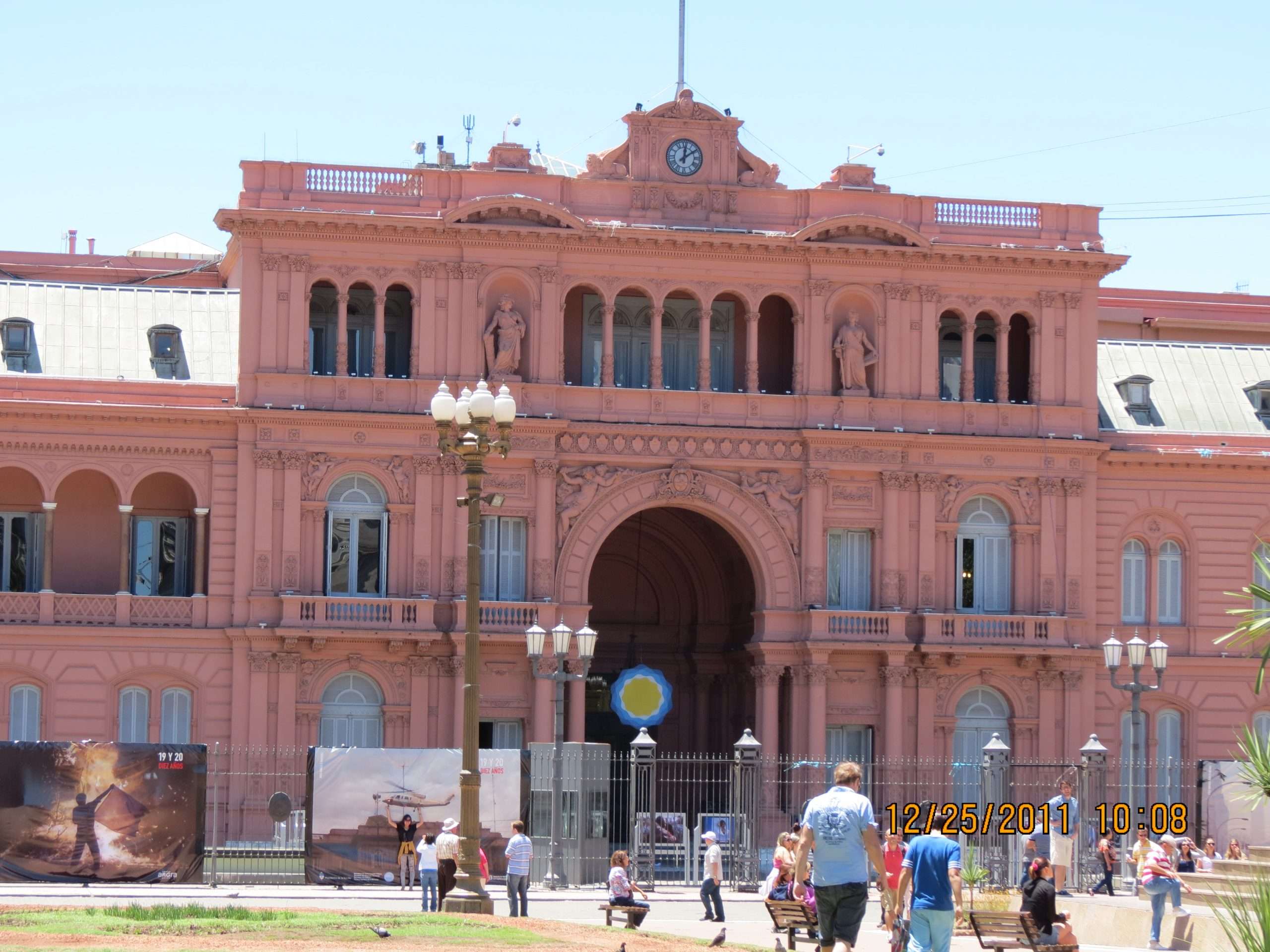
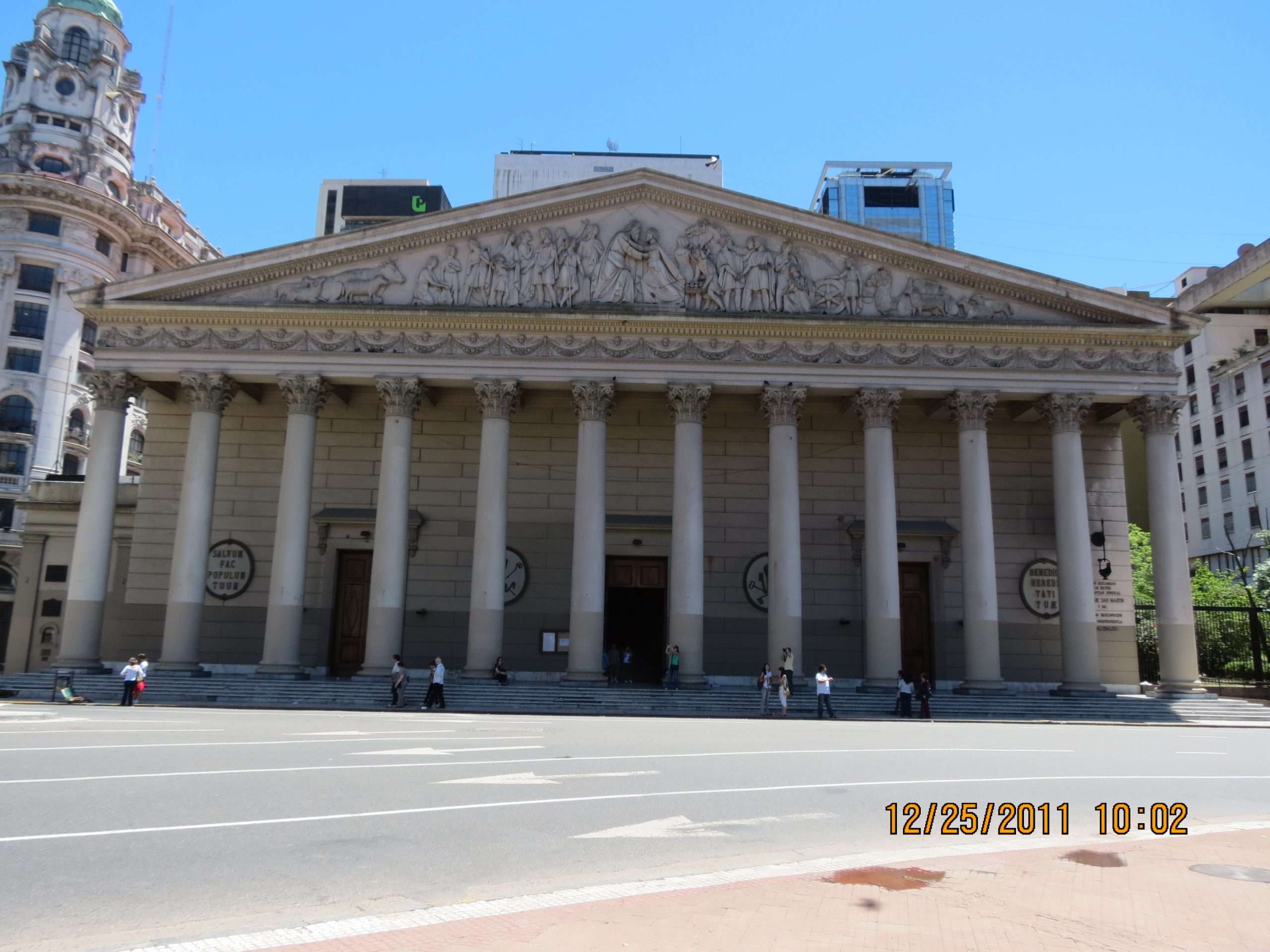
Next, we visited the Pink House, where then President Cristina Kirchner worked. Beside the Pink House is the national cathedral, and adjacent to the cathedral is the Cabildo (the building where the town council used to meet during colonial times). In Plaza de Mayo, there is a circle with white headscarves on the paving stones, representing the mothers who used to hold vigils for their missing loved ones. They are still discovering some of these missing persons. The square also features photographs of riots that occurred fairly recently. We briefly stopped by the cathedral, where General San Martín, who liberated Argentina and several other South American countries from Spanish rule, is buried. His mausoleum is guarded by two soldiers from his brigade.
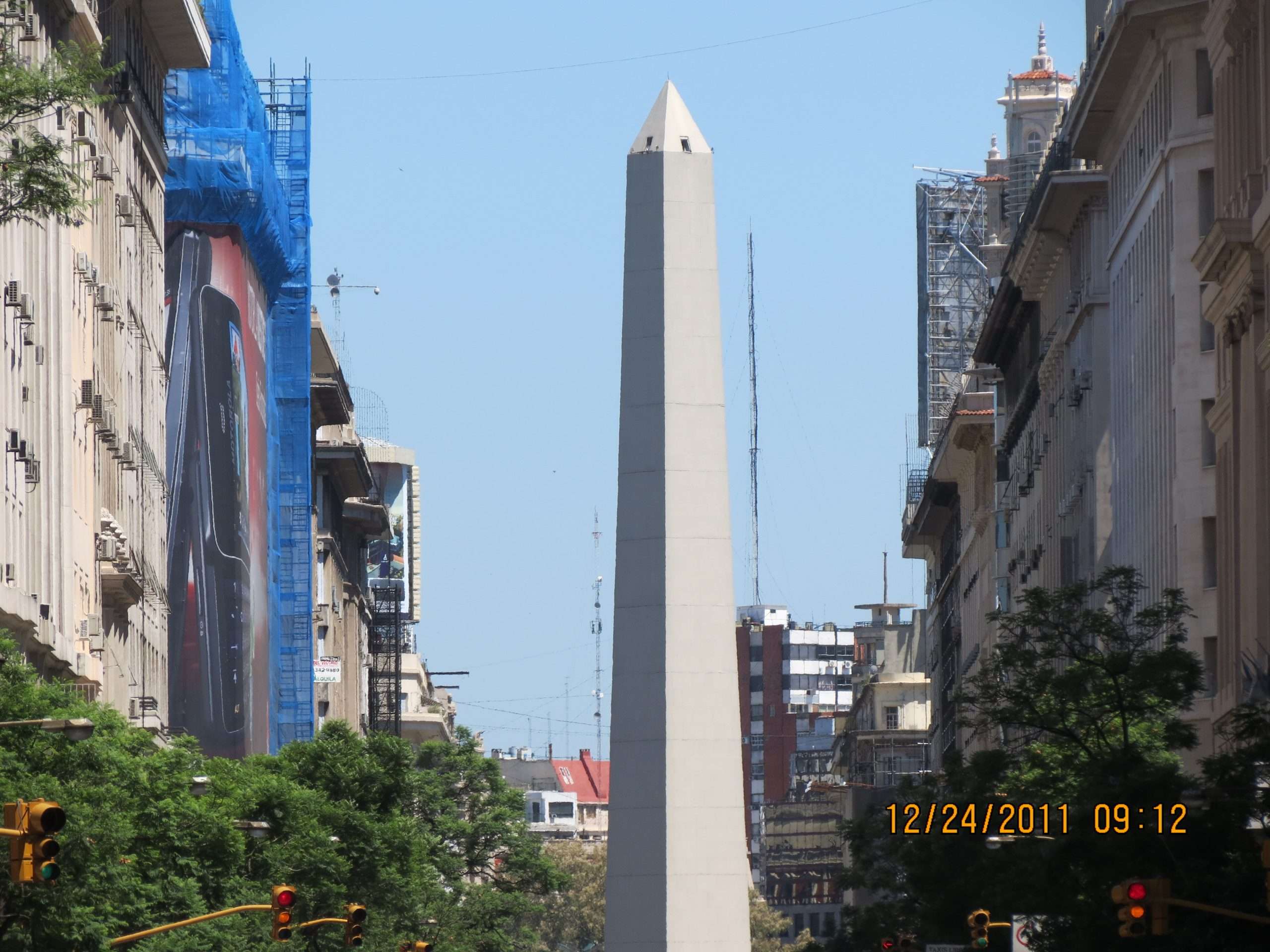
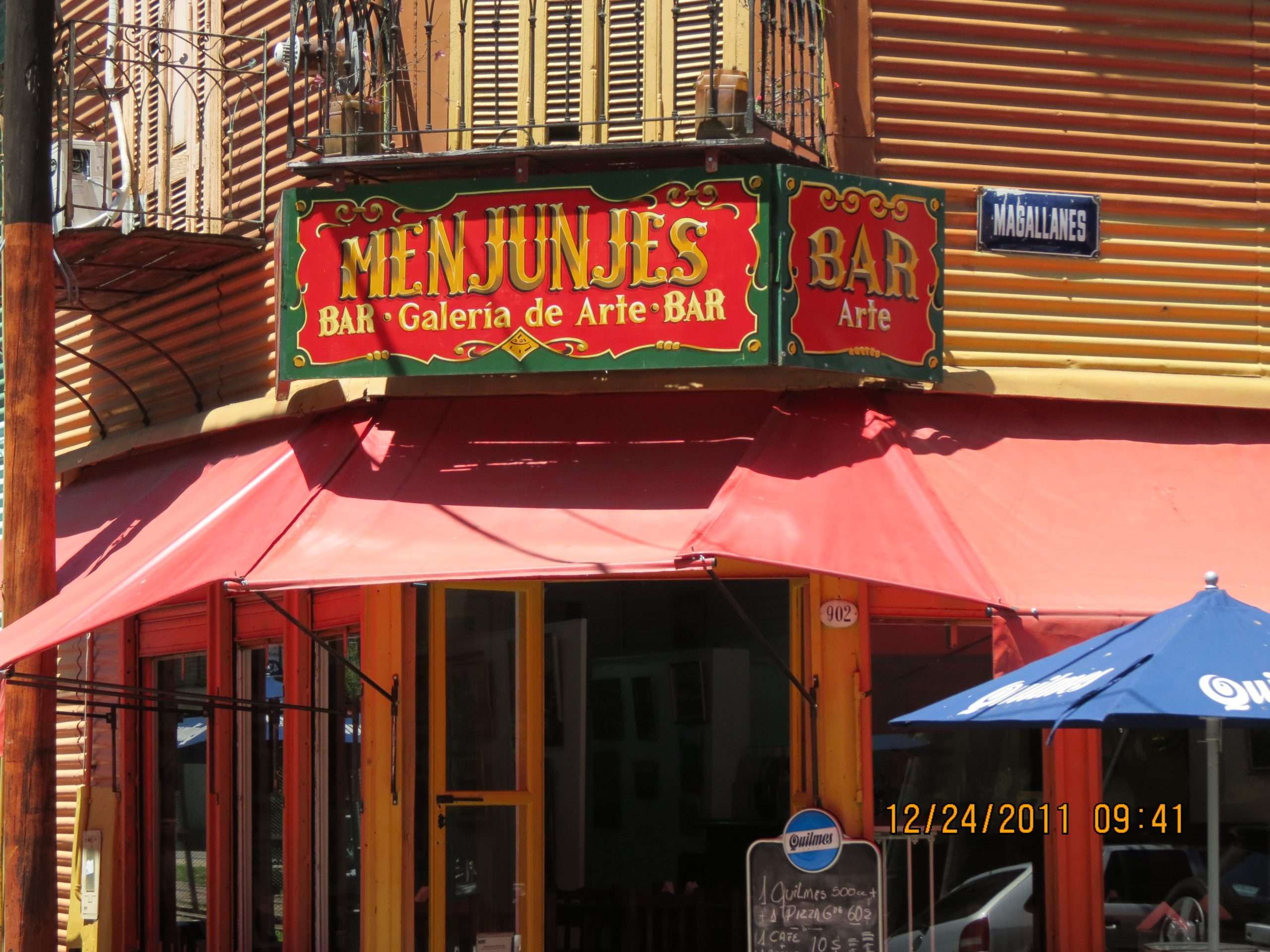
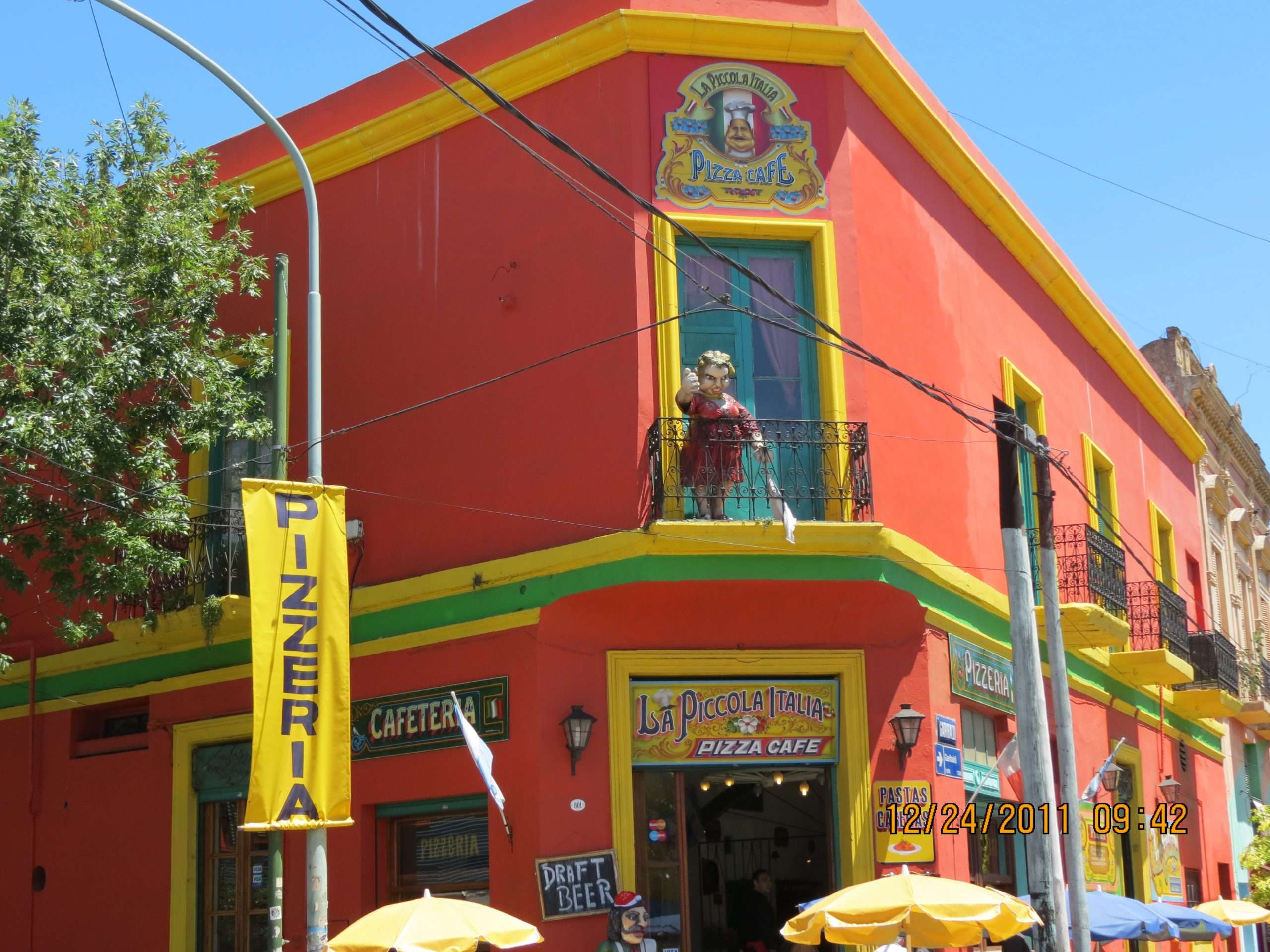
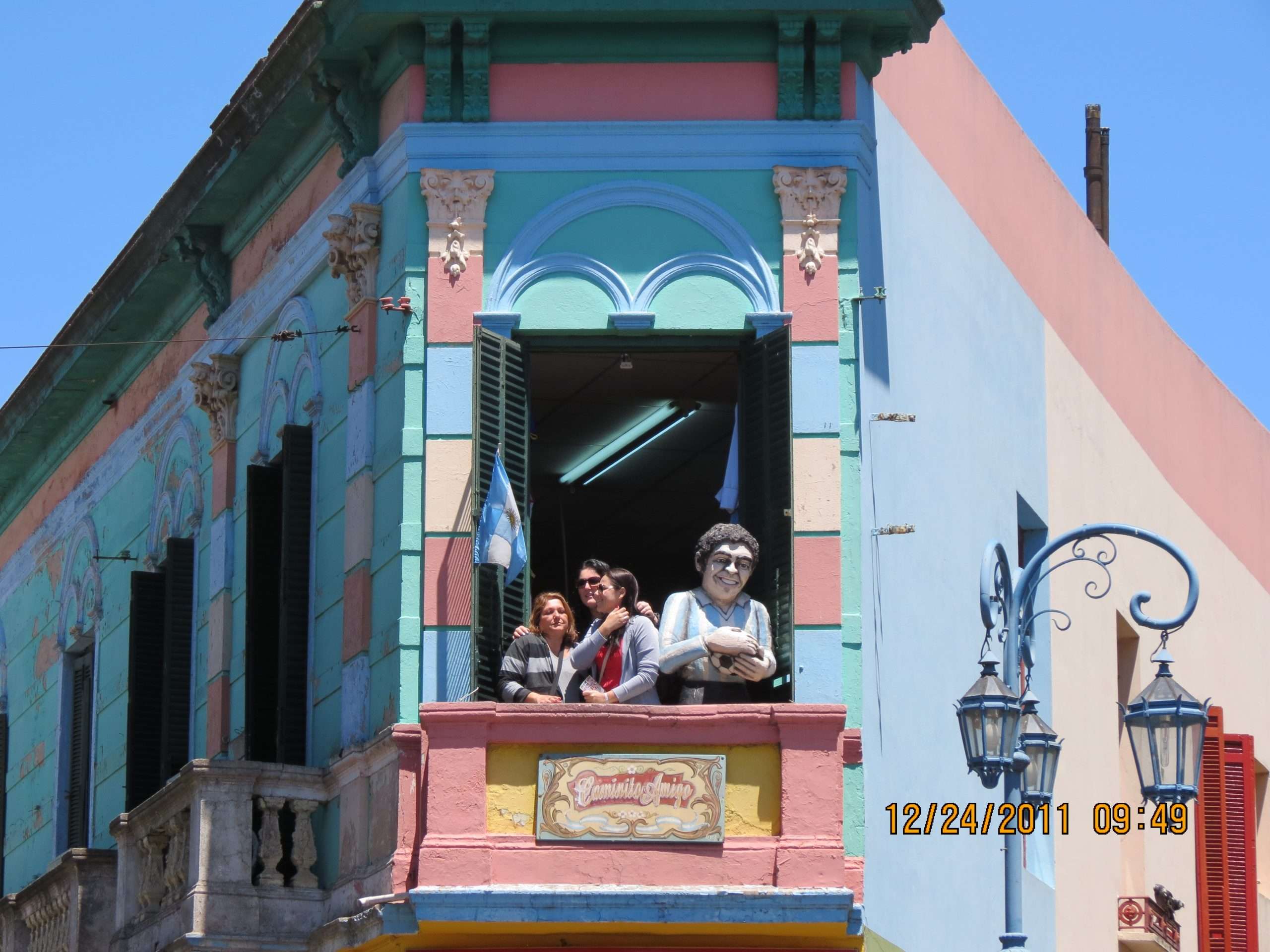
Next, we visited San Telmo, where immigrants settled upon arrival, often living in very small houses—12 people to a house—with one bathroom and kitchen. This area is believed to be the birthplace of the tango, as music and dance were universal languages. Men originally danced the tango with other men; women were introduced only after the tango became popular in Paris. After San Telmo, we visited La Boca, a vibrant block of colorful houses. Maradona, the famous soccer superstar, grew up here. Many lively-looking characters are displayed in the top rooms of some of the houses, and there were numerous vendors hustling tourists for tango lessons, food, and leather goods.
We then visited Palermo and finally Puerto Madero. We got off at Puerto Madero, the upscale area of Buenos Aires. The area, which resembles San Diego, has many ships and yachts, and all the streets are named after women. After lunch, we visited Florida Avenue, a long shopping street, and stopped by a department store just to have a look. Then we took a taxi back to the hotel.
Our impressions of Buenos Aires were very favorable. It’s a well-laid-out city with many squares, sculptures, museums, and coffee bars. The people are civil, and there isn’t much noise or dust, which is unusual for a city.
Christmas in Buenos Aires – December 25, 2011
Since Argentina is predominantly Catholic, almost everything was closed on Christmas Day, including grocery stores and cafes. The city felt unusually quiet and empty.
We attended Mass at the church on Arroyo Street, the last English-language service of the season. Afterward, we explored some of the city’s landmarks, returning to the historic Plaza de Mayo to admire the Pink House and stopping by the Metropolitan Cathedral.
Hoping to see more of the city, we strolled along Florida Avenue. But to our disappointment, the usually bustling street was deserted, with every shop and café shuttered for the holiday.
An Evening in Santiago de Chile – December 26, 2011
We have just completed the first leg of our South American trip and are now at Buenos Aires Ezeiza Airport, waiting for our flight to Santiago, Chile. Unfortunately, our flight has been delayed.
Despite our late arrival around 5:00 PM, James, our guide, still took us on a city tour. Santiago reminded us of Mumbai, with its smog and dust, but it’s less crowded. The major street downtown is named after Bernardo O’Higgins, a national hero of Chile, who was of Irish descent but born in Chile.
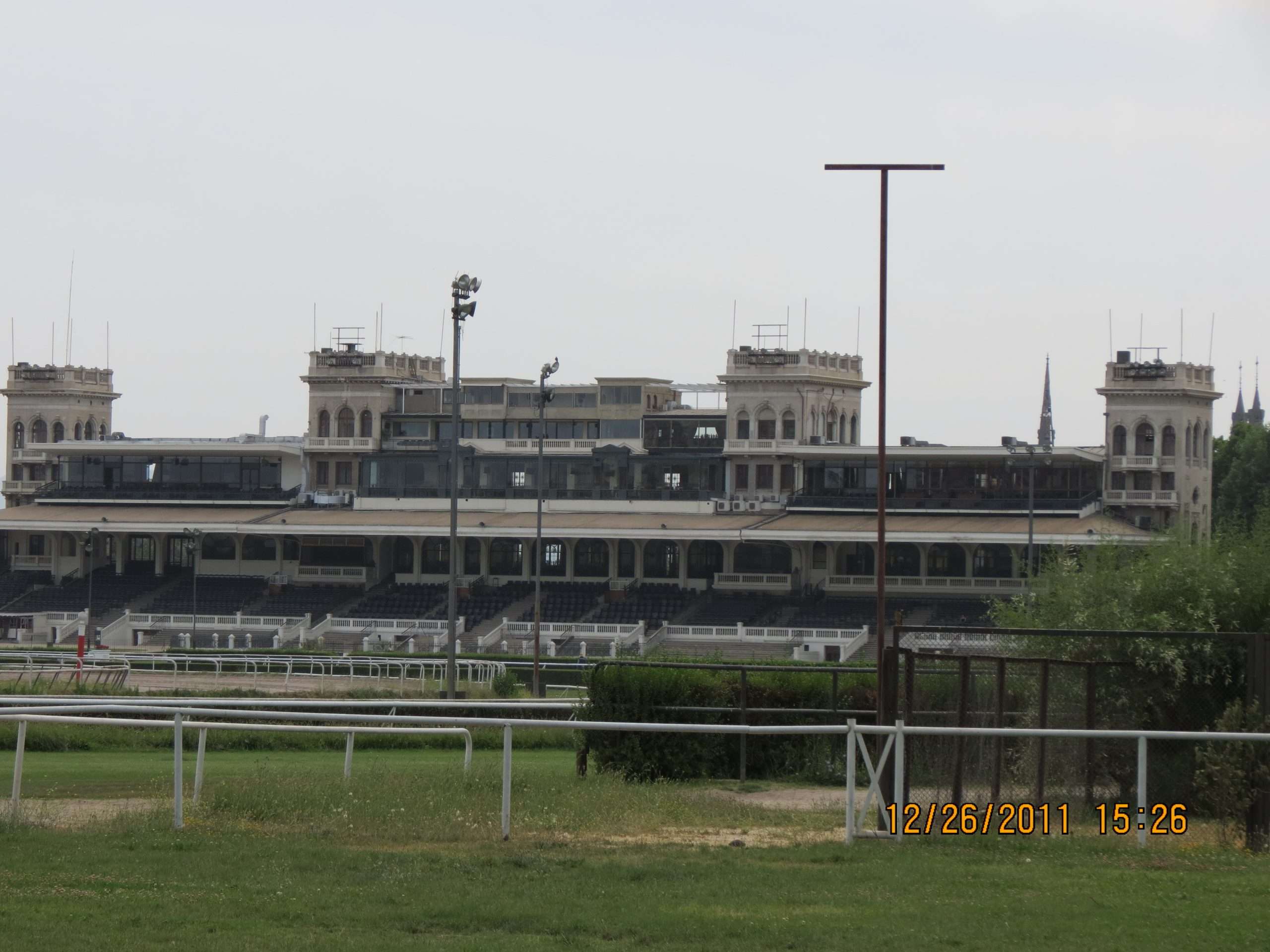
We visited the Club Hípico de Santiago, a racecourse modeled after the Longchamp Racecourse in Paris, and it bore some resemblance to the racecourse in Mahalakshmi, Mumbai. The architectural style of the buildings is charming if a bit heavy. Some buildings still showed damage from the most recent earthquake in 2010.
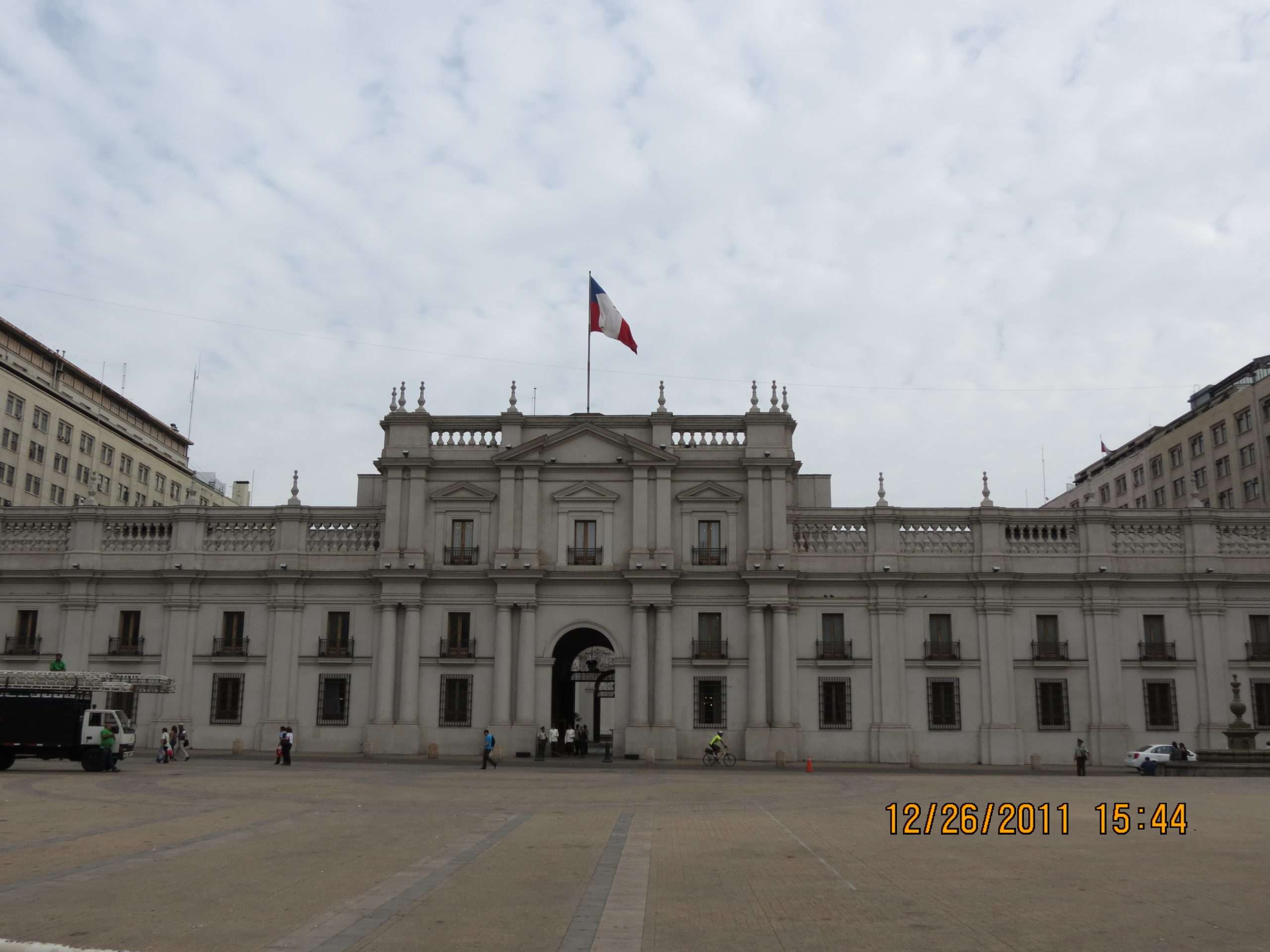
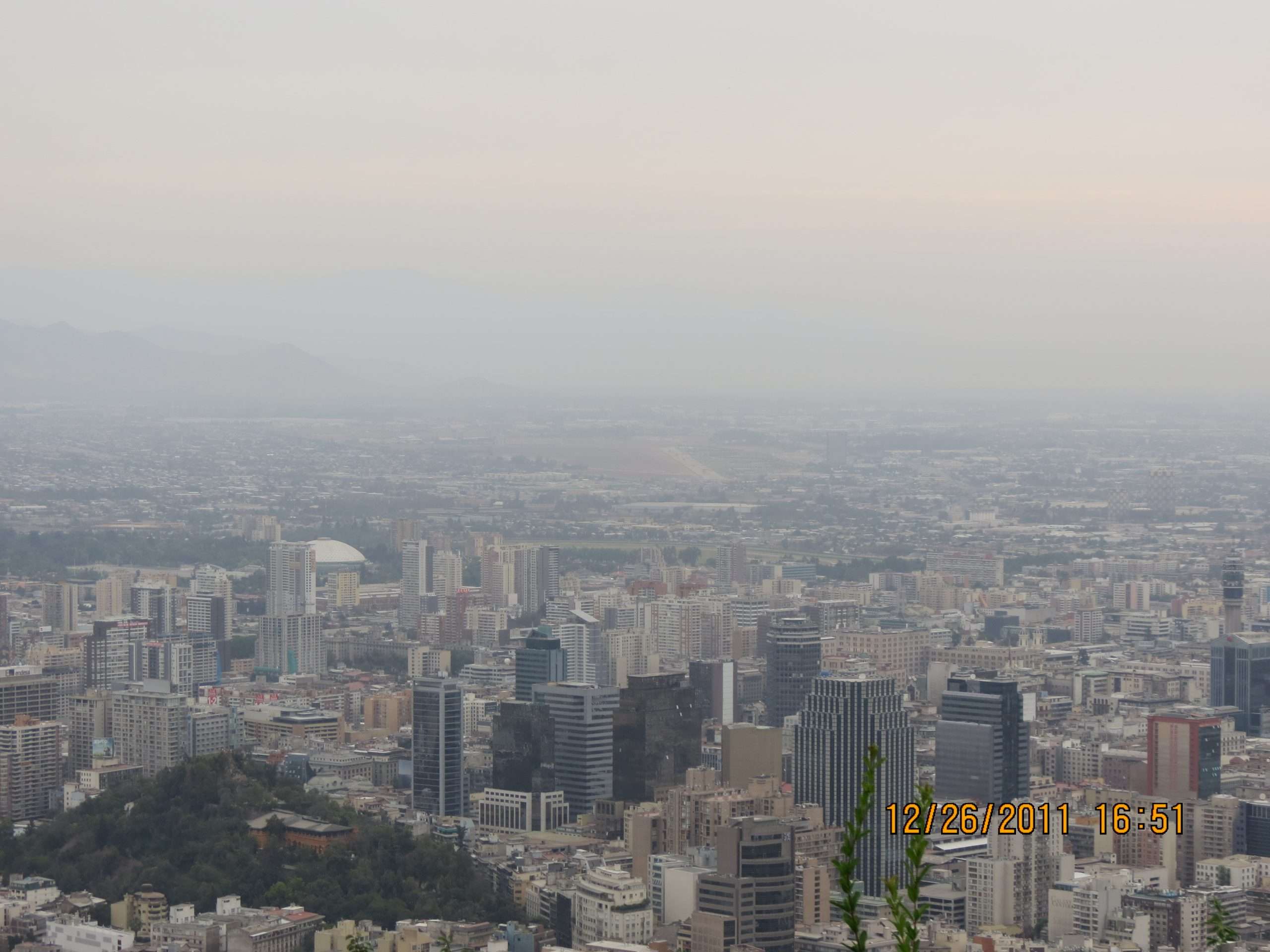
We crossed the Mapocho River, which was brown and nearly dry, adding to the town’s parched appearance. We then went up San Cristobal Hill, where the wind was strong, but the view of the city was fantastic. On our way to the hotel, we stopped at a handicraft store called Faba. It was crowded and seemed a bit overpriced, but Christabel couldn’t resist buying a lovely flower pin. The petals were made of lapis lazuli, Chile’s national stone, the leaves of malachite, and the center (calyx) of jasper.
We ended the evening with a seafood dinner at a Spanish restaurant called Pinpilinpausha, conveniently within walking distance from our hotel. We stopped by a bodega on the way to the hotel to buy a bottle of water and found that the shopkeeper would only take cash in the local currency. We did not have any on us. Fortunately, a good Samaritan paid for our water. This experience made a powerful impression on us.
Punta Arenas & Embarkation – December 27, 2011
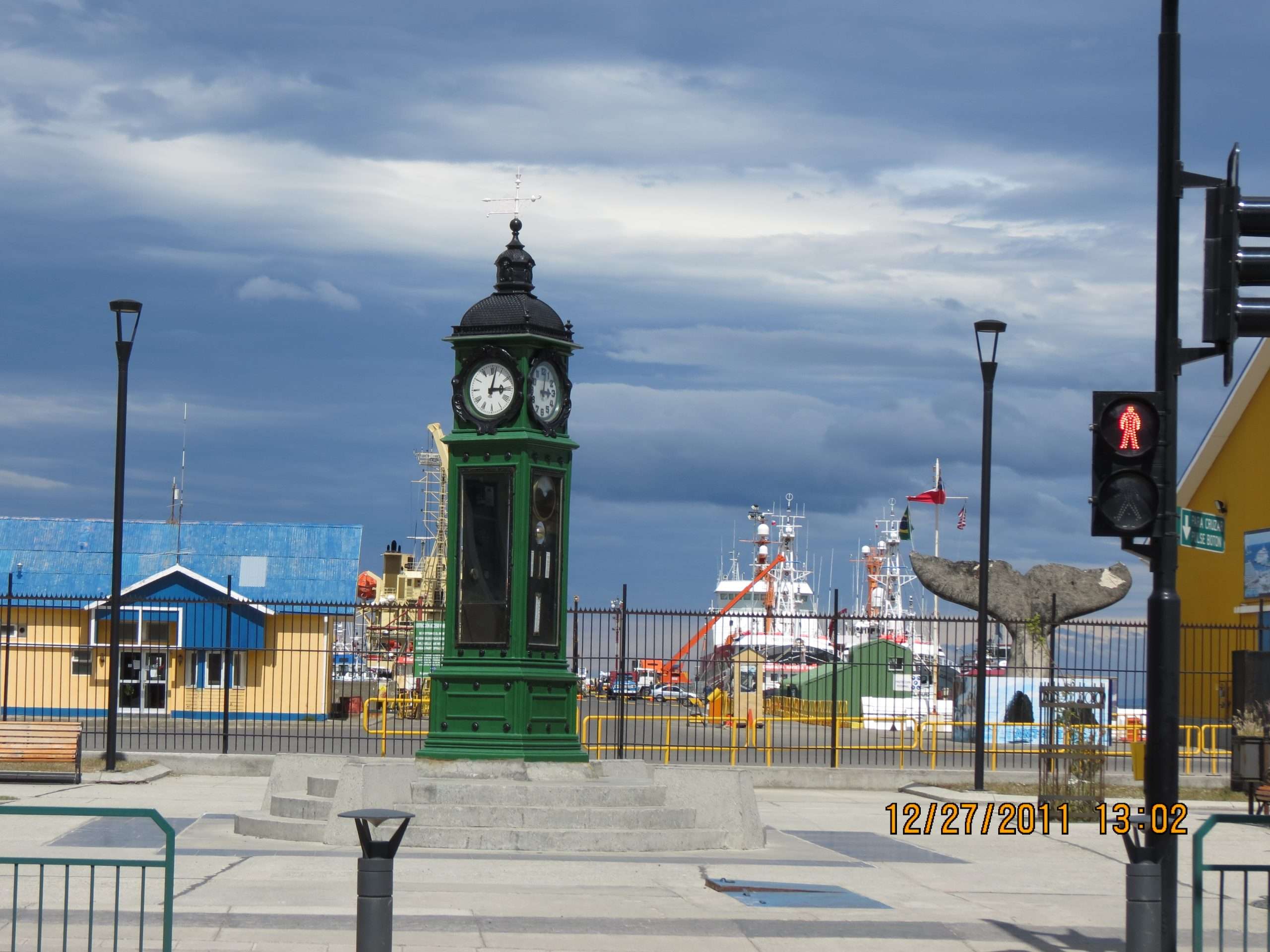
We were transferred to the airport for our flight to Punta Arenas, arriving sometime in the afternoon. Our guide, Mathias, picked us up and took us to the cruise office. After checking in, we had some free time until we could embark at 6:00 PM. During this wait, Christabel ended up purchasing another lapis lazuli brooch.
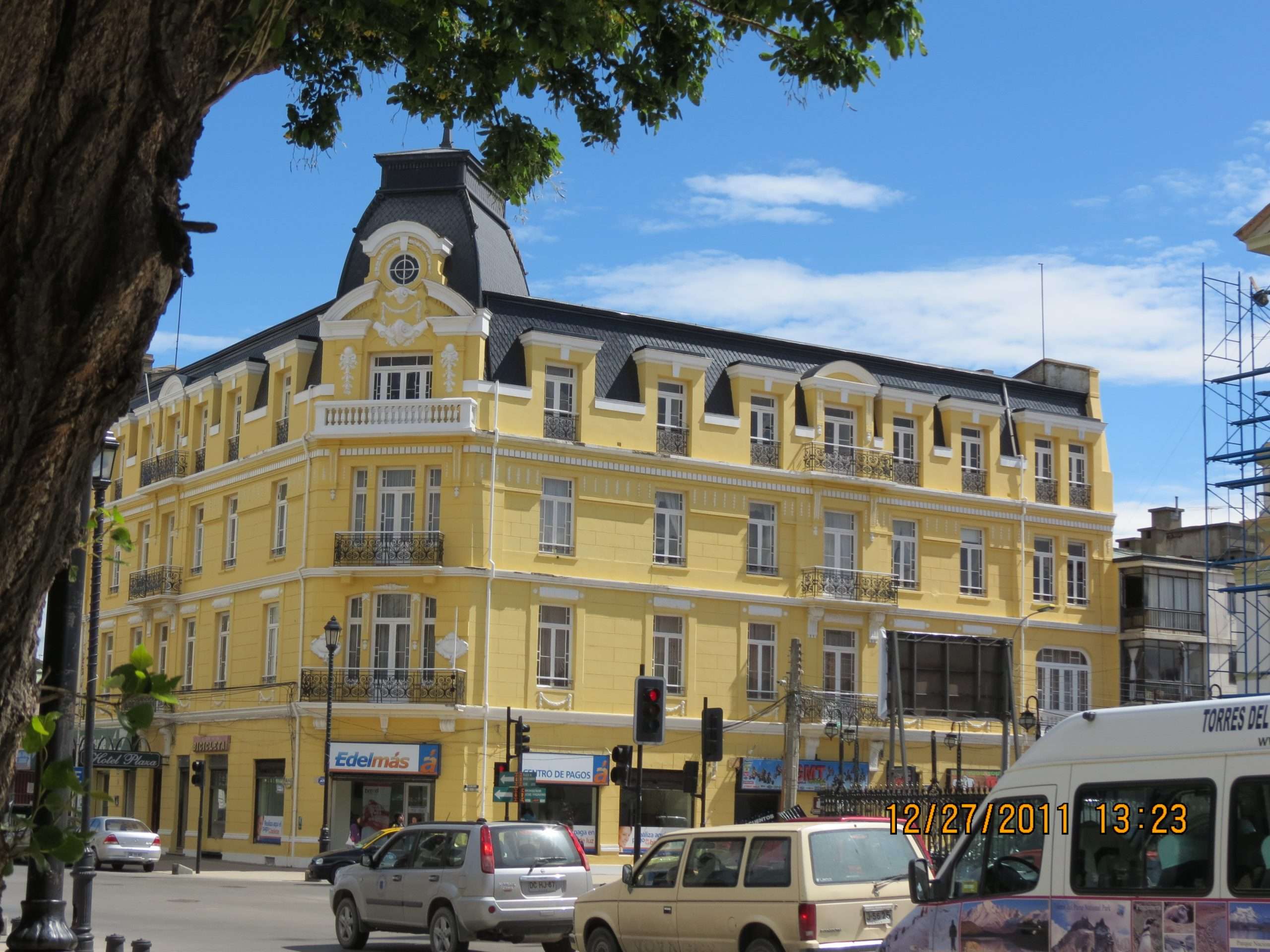
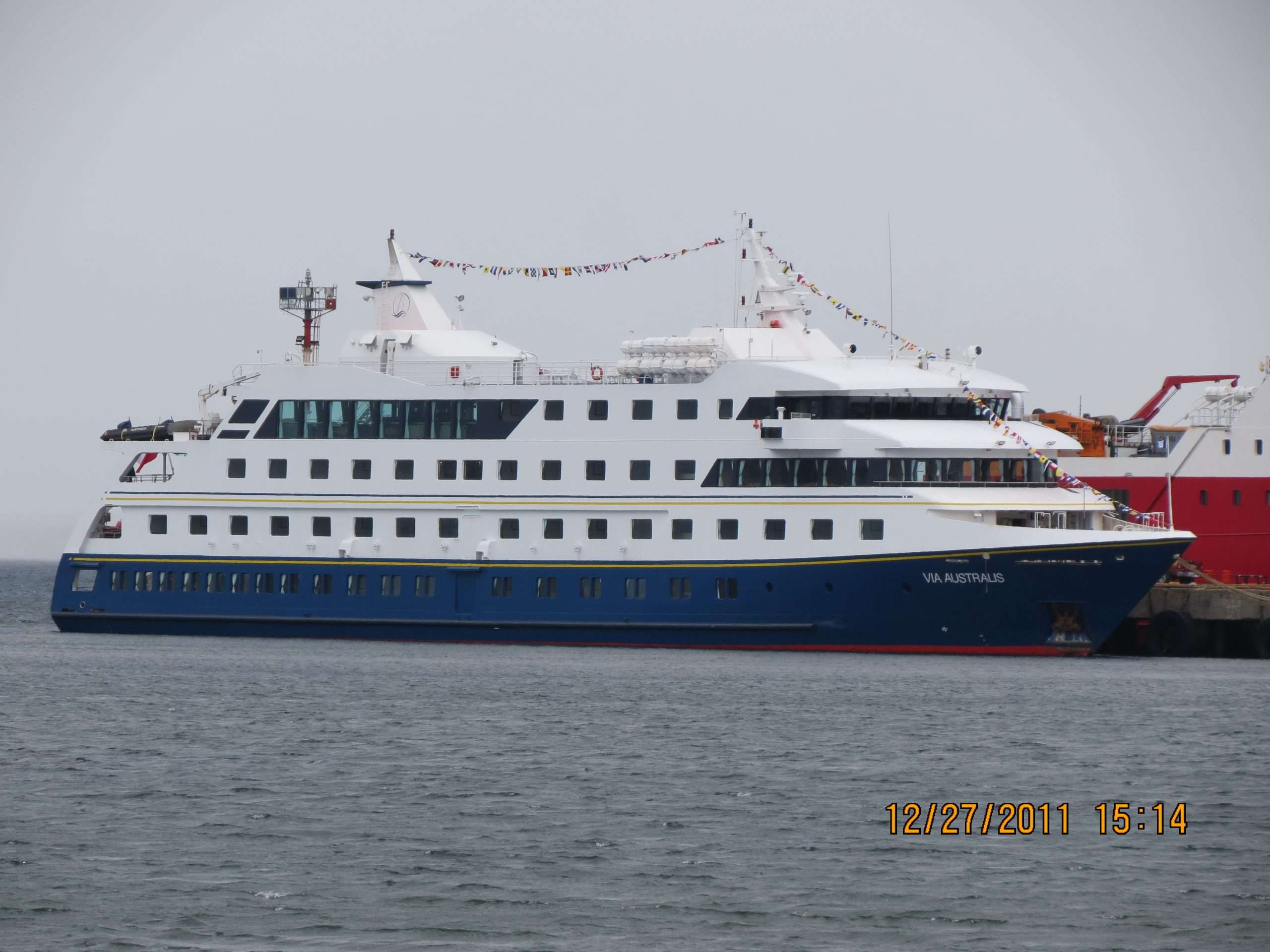
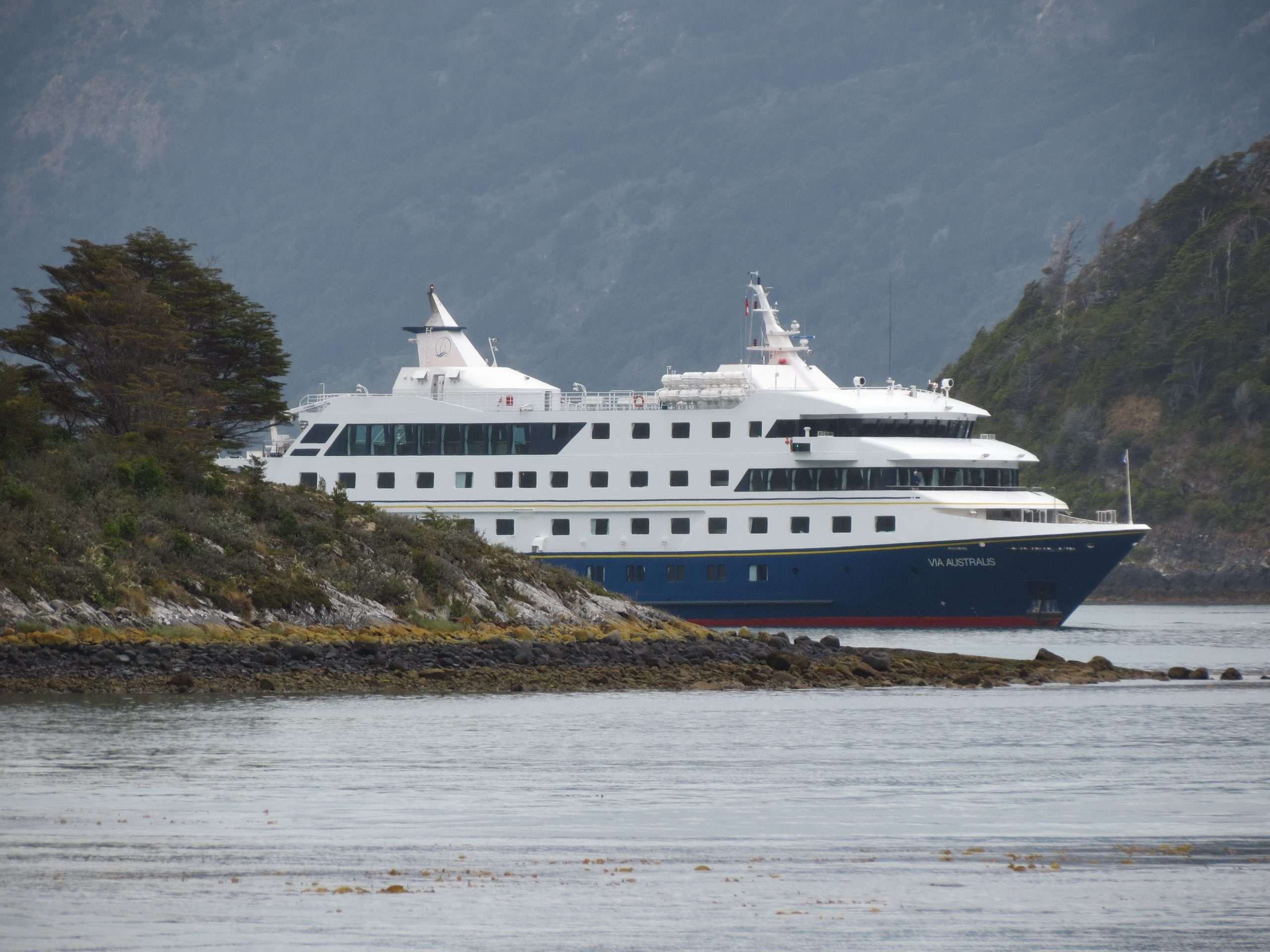
After boarding our ship, the Via Australis, and enjoying a welcome cocktail reception, we embarked on an excursion through the Straits of Magellan and the Beagle Channel. This journey took us through some of the most breathtaking wilderness regions of Southern Patagonia and Tierra del Fuego.
Dinner on the ship was an elaborate affair. We were seated at Table 2 with an interesting mix of fellow travelers: a doctor from Australia, his son, and the son’s friend, along with a Dutch couple and a German couple.
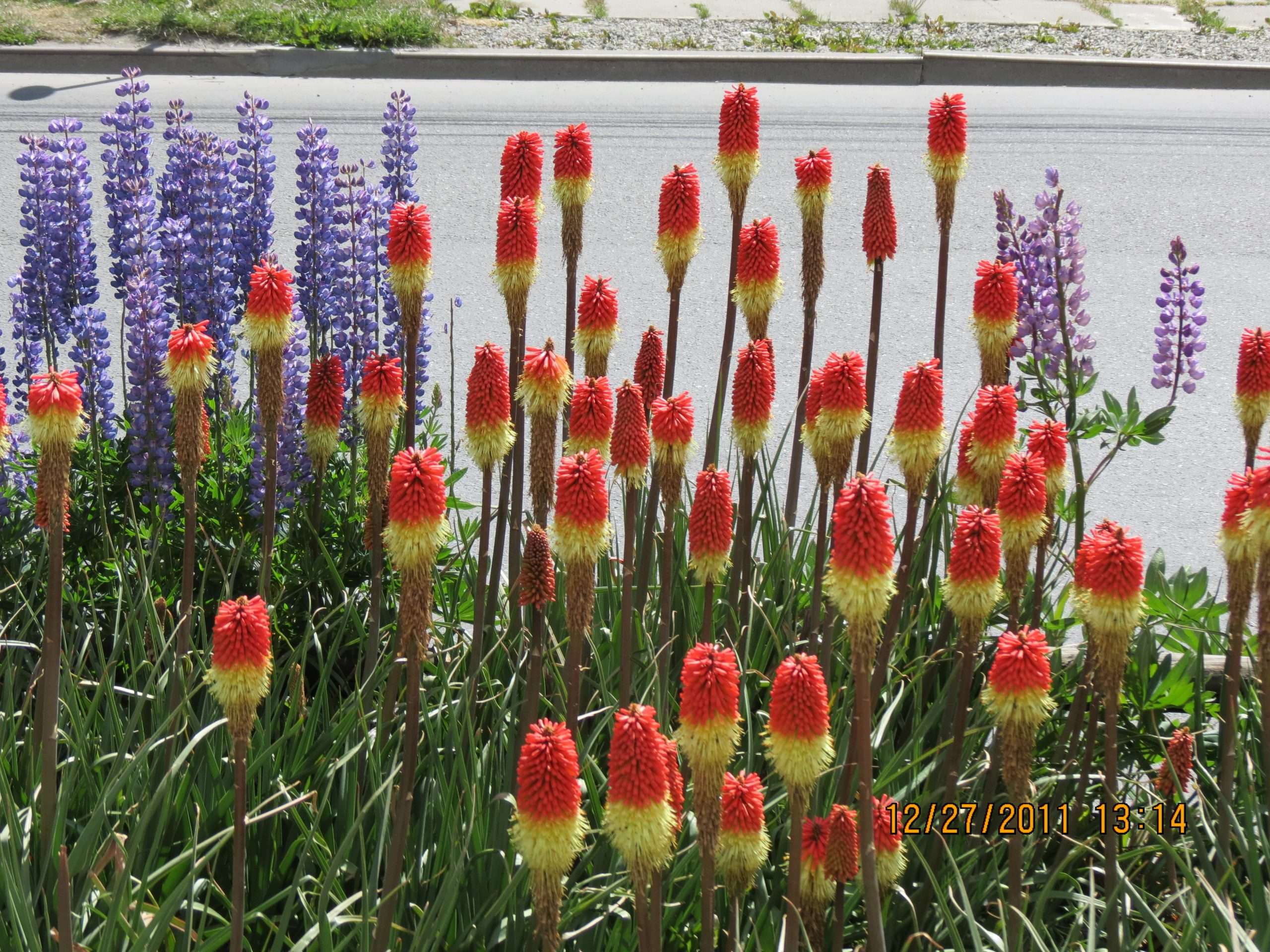
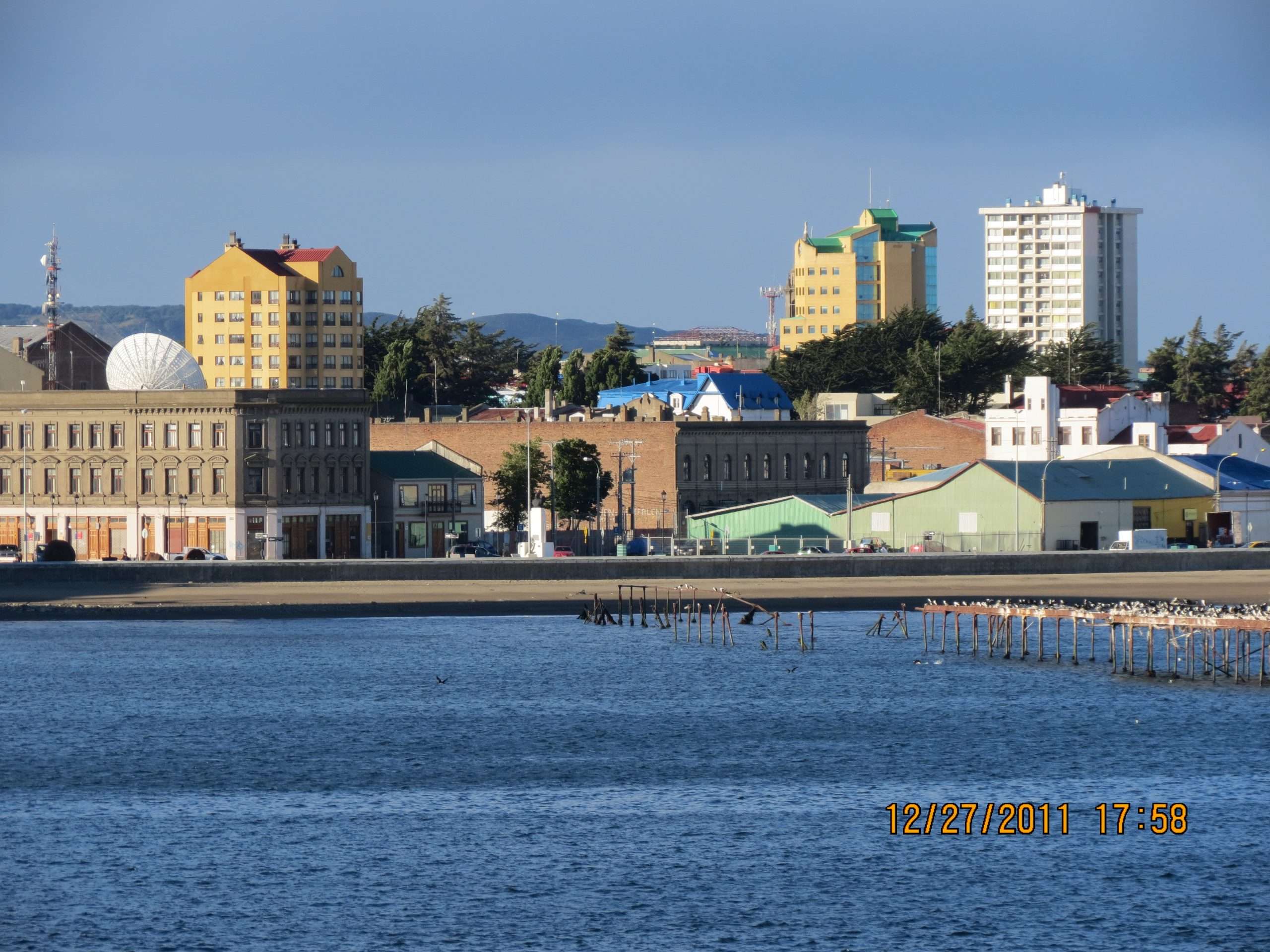
Our first impressions of Punta Arenas were of a place that seems desolate but is unexpectedly covered with Scottish broom, pink and purple lupines, and white roses. While tourism is a significant part of the economy, it ranks fourth behind the region’s primary industries: fishing and aquaculture, oil and gas exploration, and sheep farming and wool production. On the way from the airport to the cruise office, we passed a replica of one of Magellan’s ships, a notable tourist attraction in the area.
Ainsworth Bay & Tucker Islet – December 28, 2011
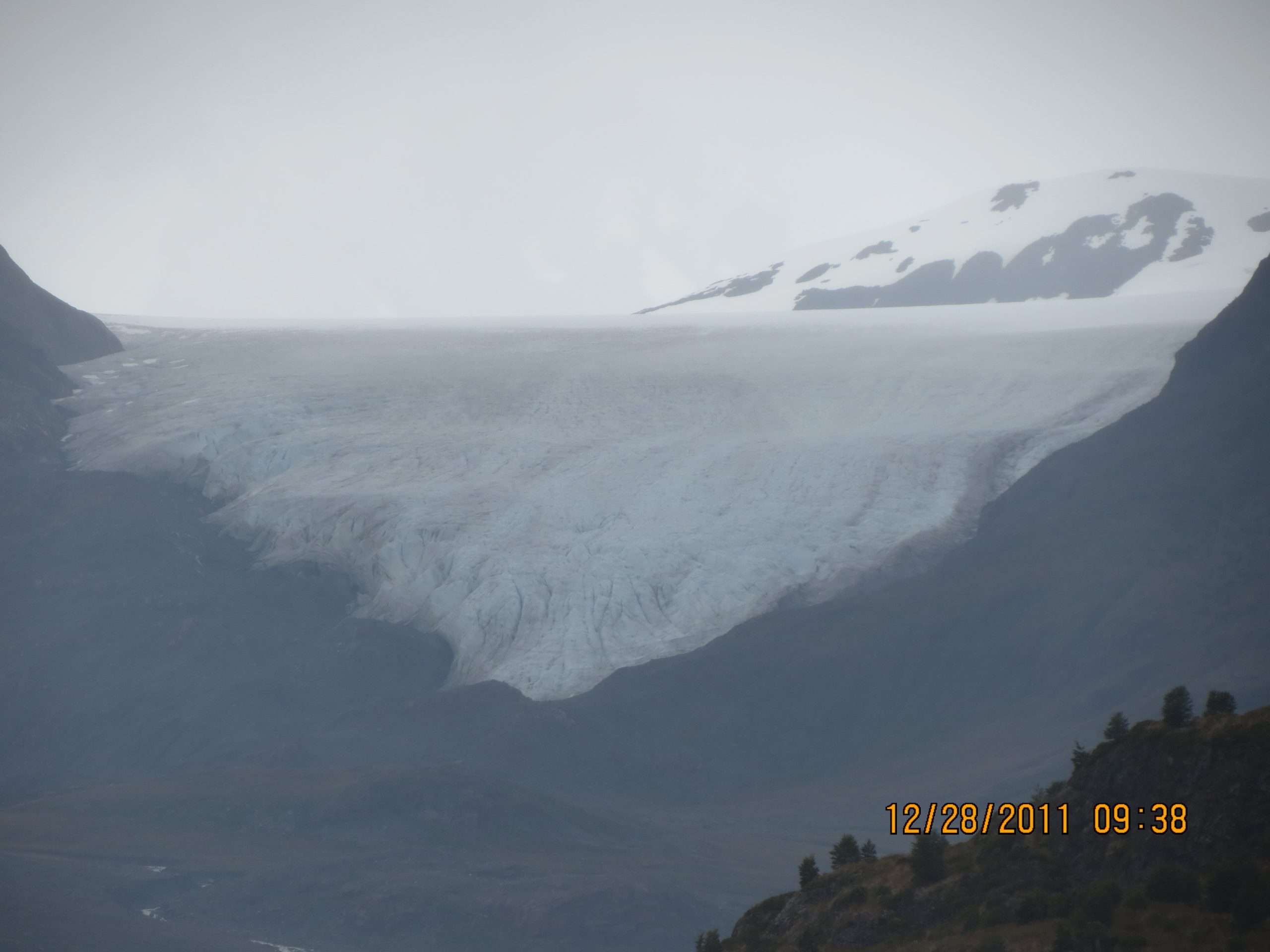
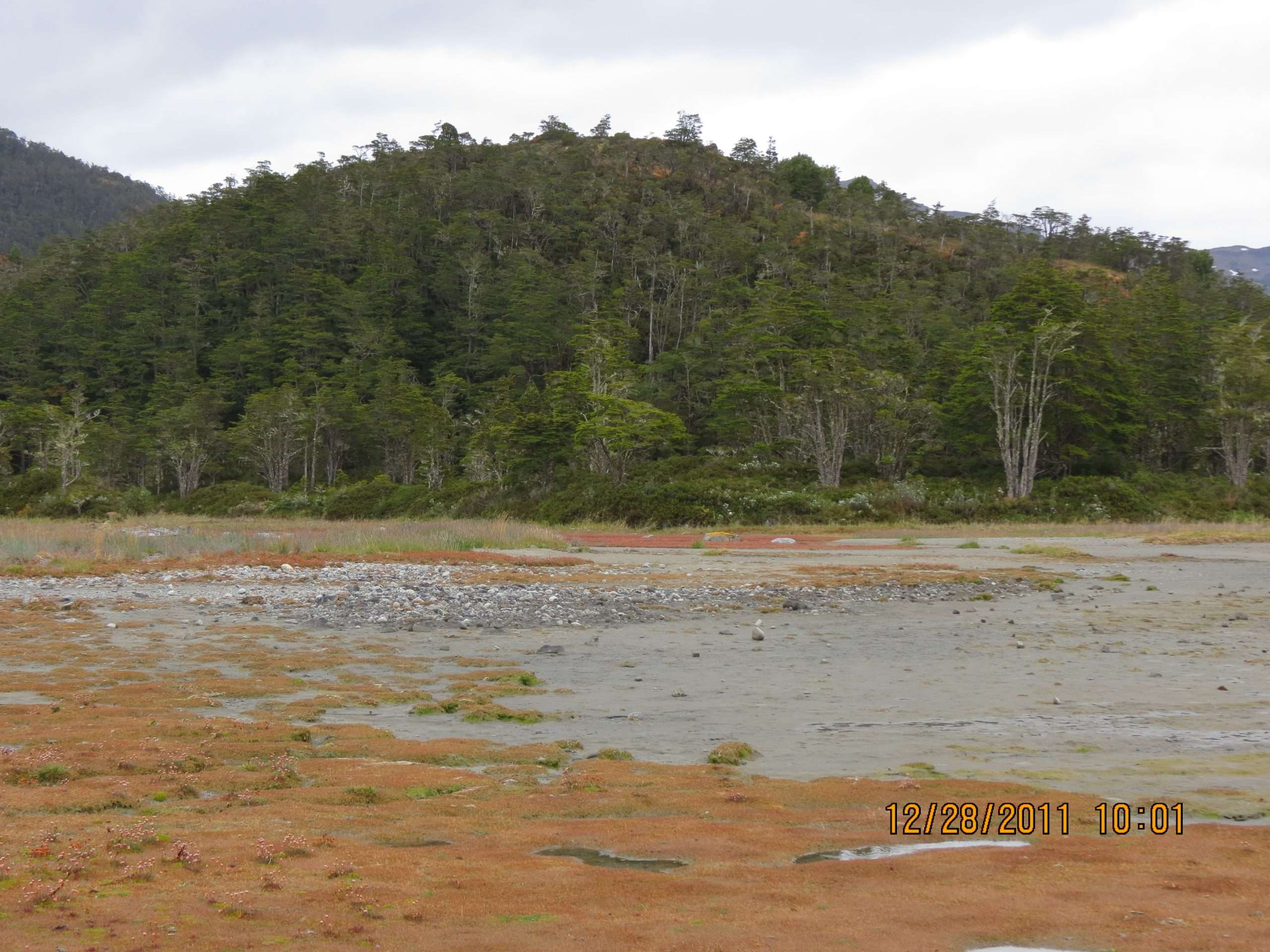
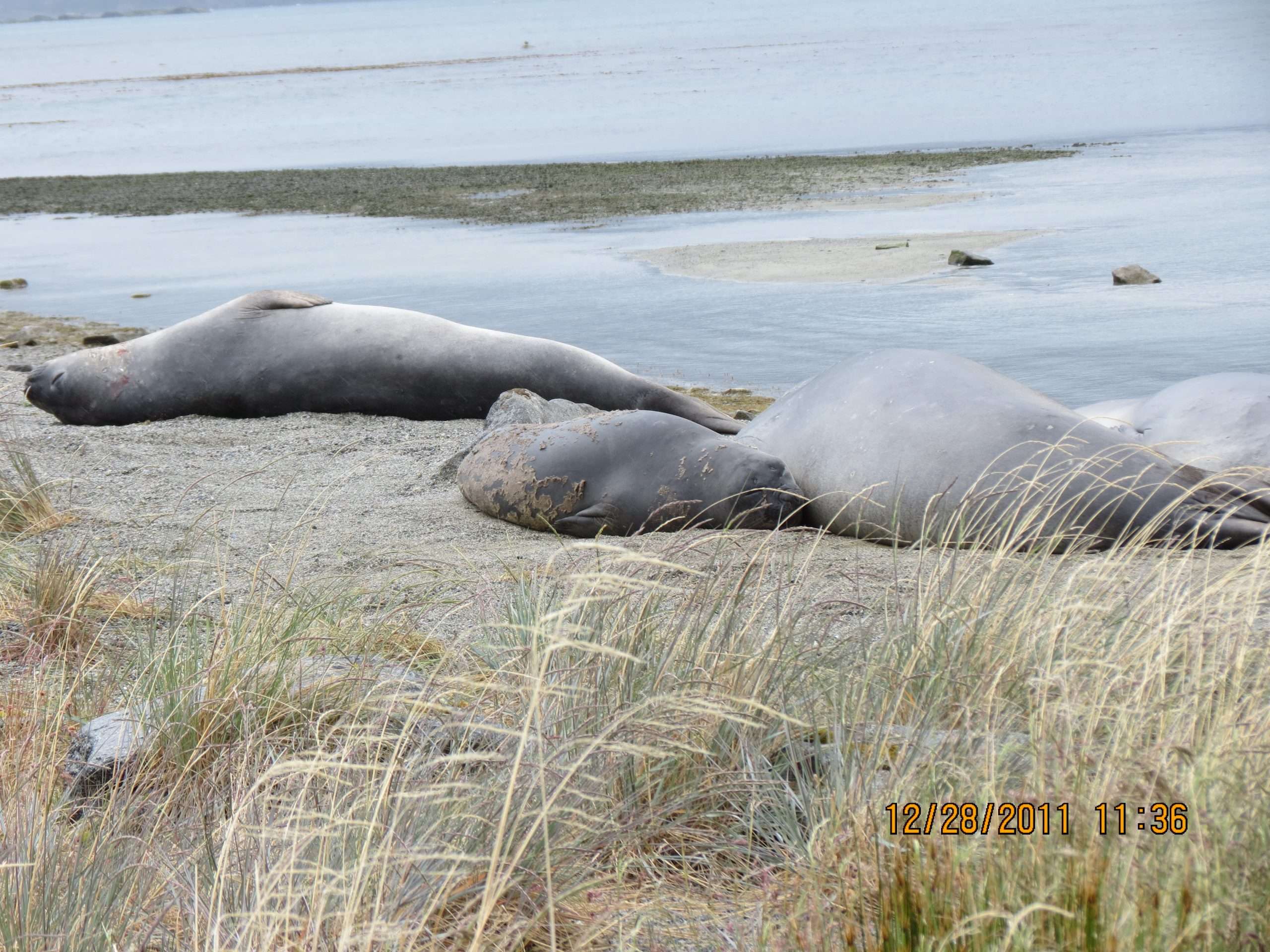
This morning, we arrived at Ainsworth Bay and boarded Zodiac boats for a short ride to Alberto de Agostini National Park. There, we visited the Marinelli Glacier. We walked on land that was once covered by the glacier and observed the unique flora left behind. One plant that caught our attention was the winter bark, which resembles a rhododendron. Also known as cinnamon, it’s rich in vitamin C and has medicinal properties, especially for treating scurvy and lumbago. We also spotted several bird species and a few molting elephant seals.
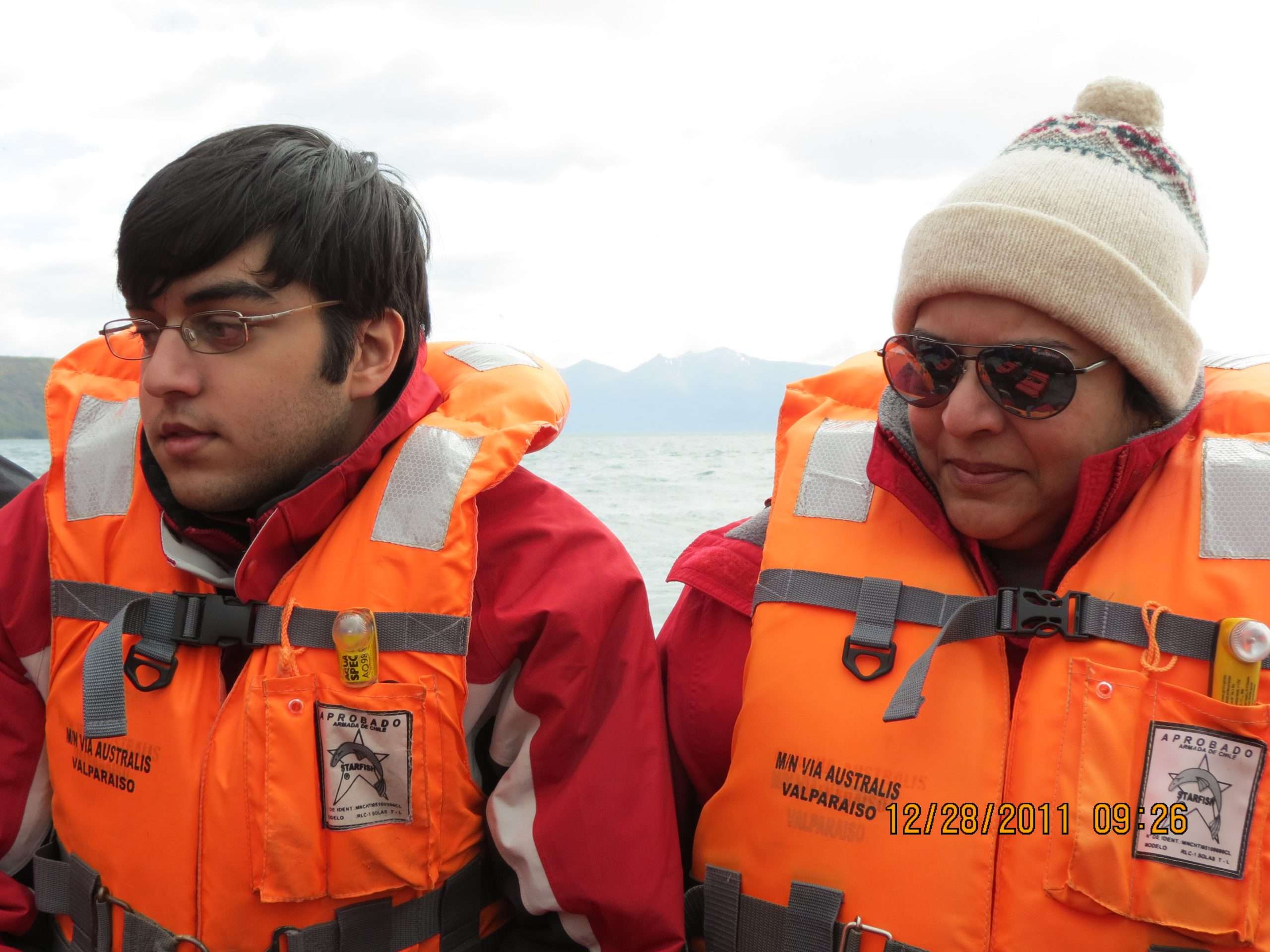
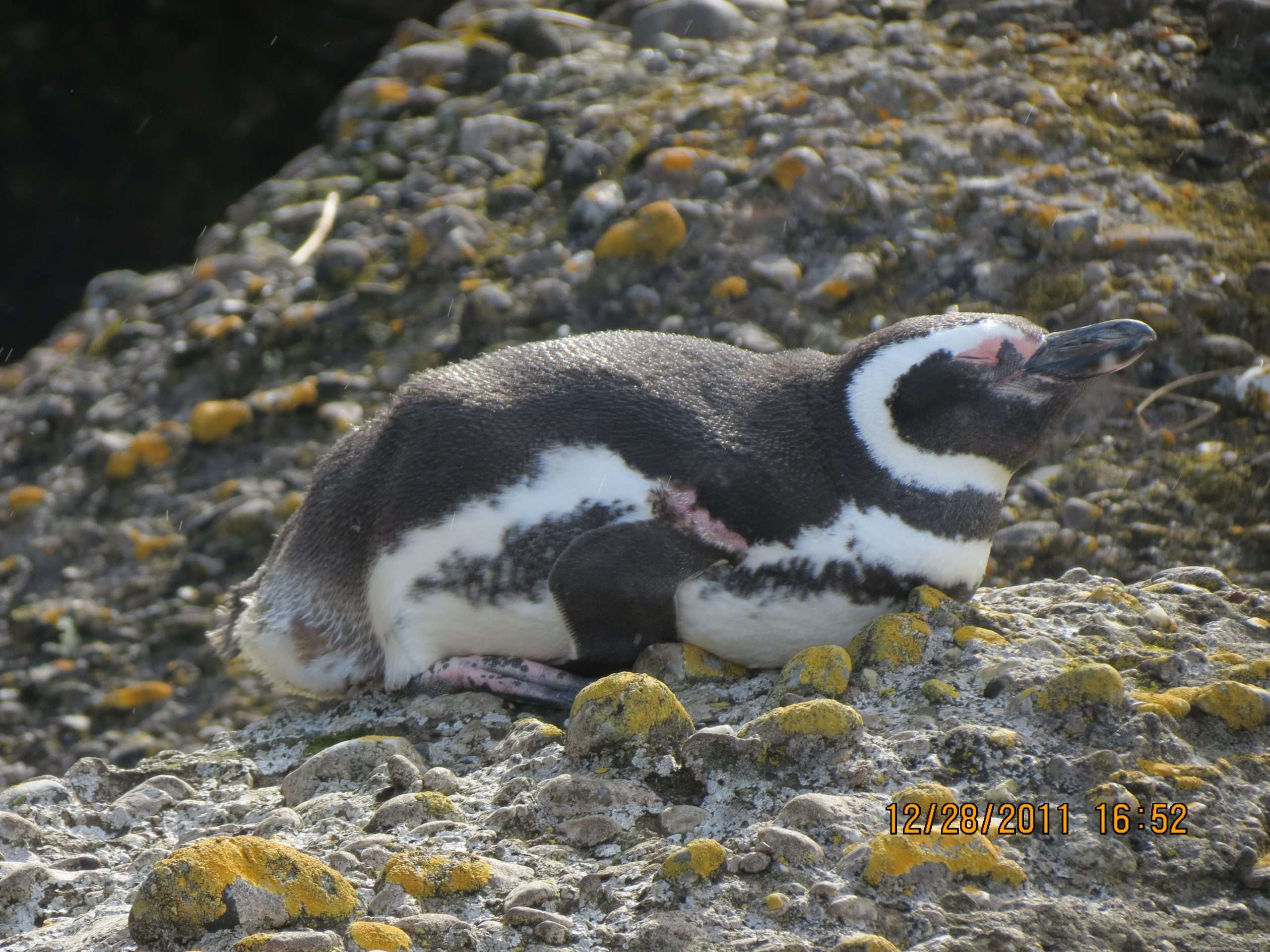
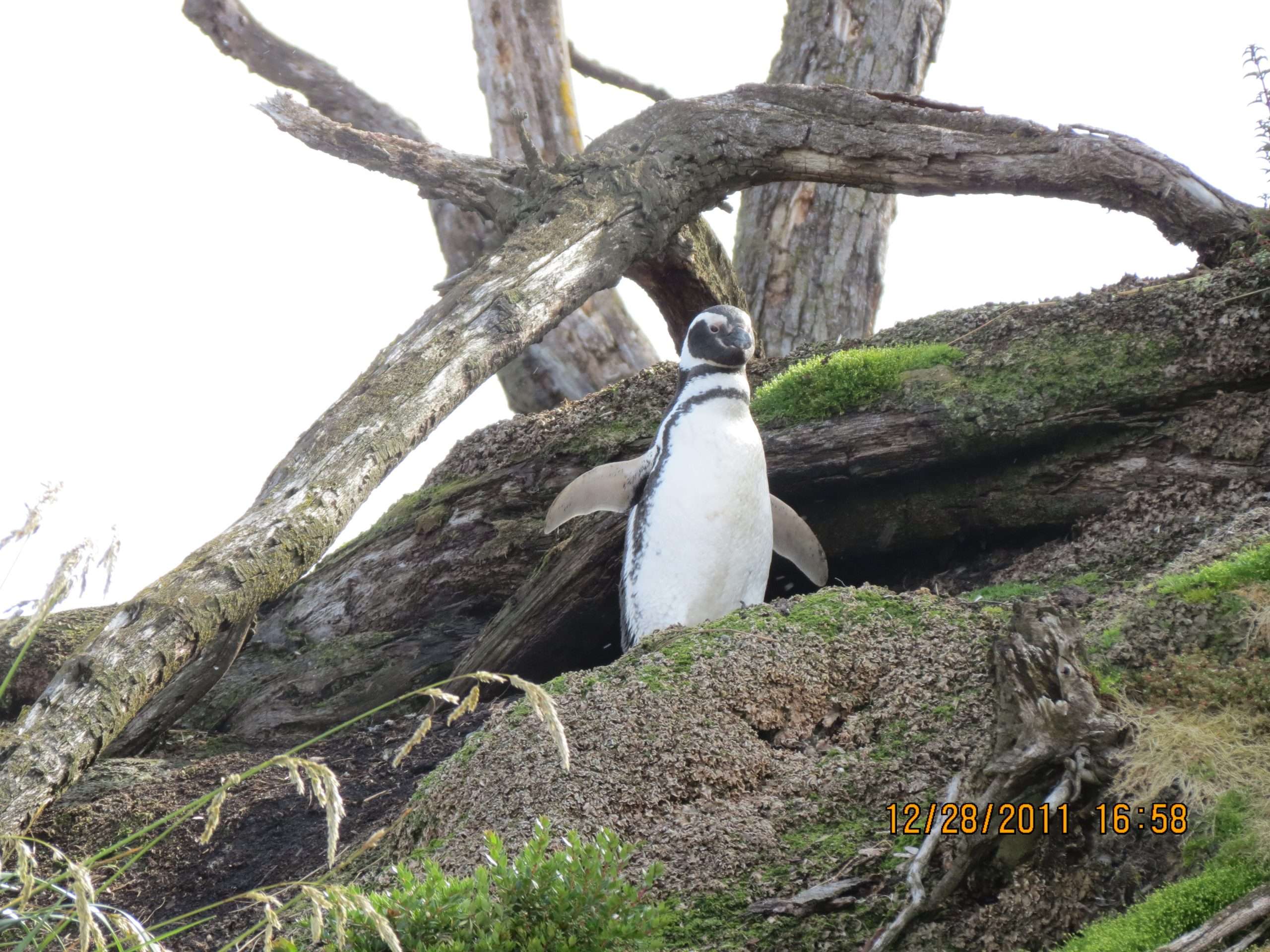
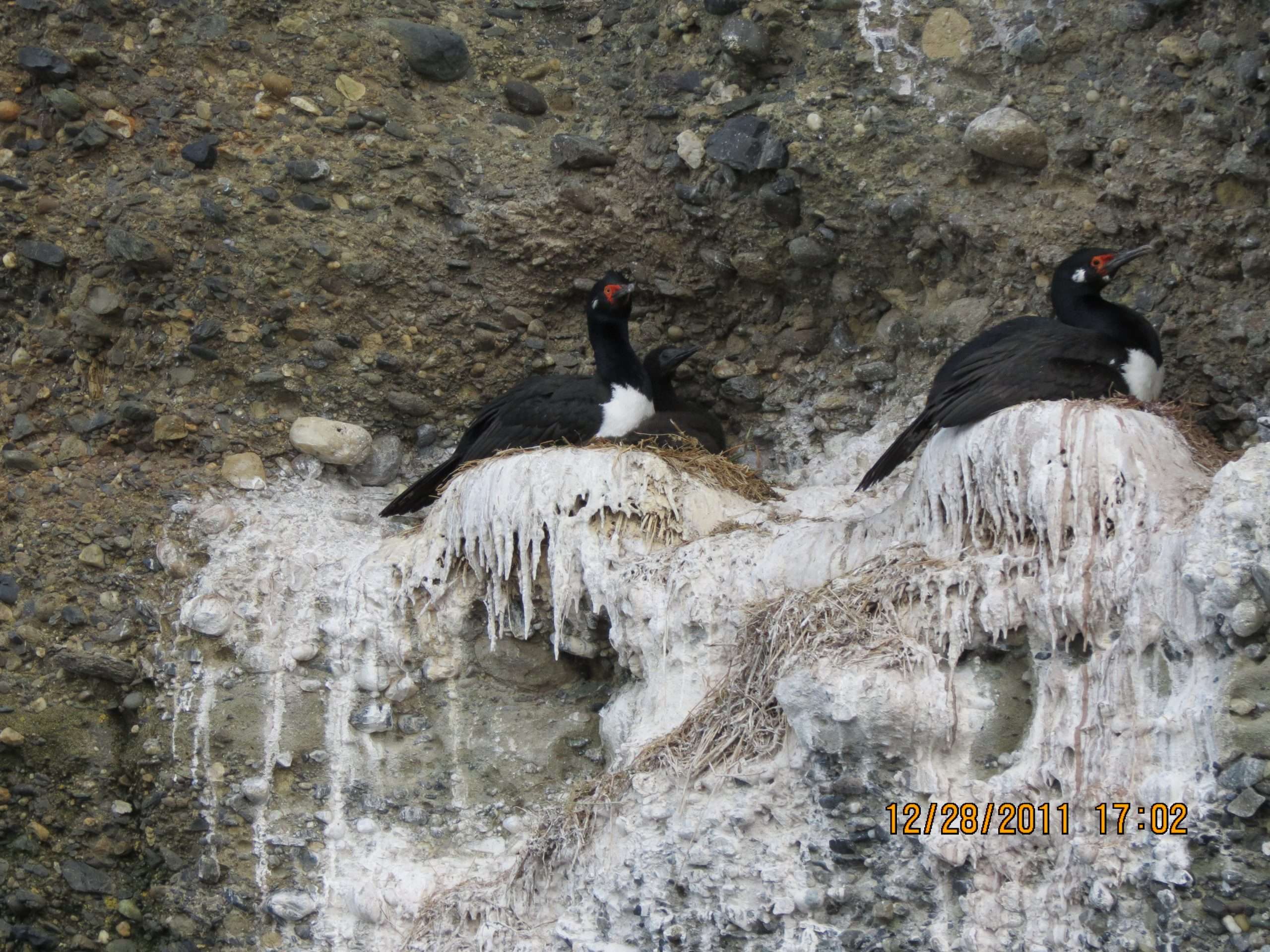
In the afternoon, we took the Zodiacs to visit the Tucker Islets. The ride was rough, but we saw Magellanic penguins and cormorants, both tending to their young. On the way back, we got soaked, which was uncomfortable, but we were fortunate. The group after us couldn’t disembark due to worsening weather. The conditions change rapidly here—one minute it’s windy, the next it’s raining.
Pia Glacier & Glacier Alley – December 29, 2011
We just returned from visiting Pia Glacier in Glacier Alley. Although we had suited up, the weather was unusually warm. The Zodiac ride to the glacier was smooth, thanks to calm waters, though we did bump into a small ice floe. Many ice floes, some submerged, were scattered around.
The climb to the lookout point was steeper than expected, and Christabel needed help in some areas. The flora here is similar to what we saw in Ainsworth, including small yellow mushrooms known as Indian’s bread, which grow on trees. This fungus forms a knot around the tree and feeds on its sap, eventually killing it.
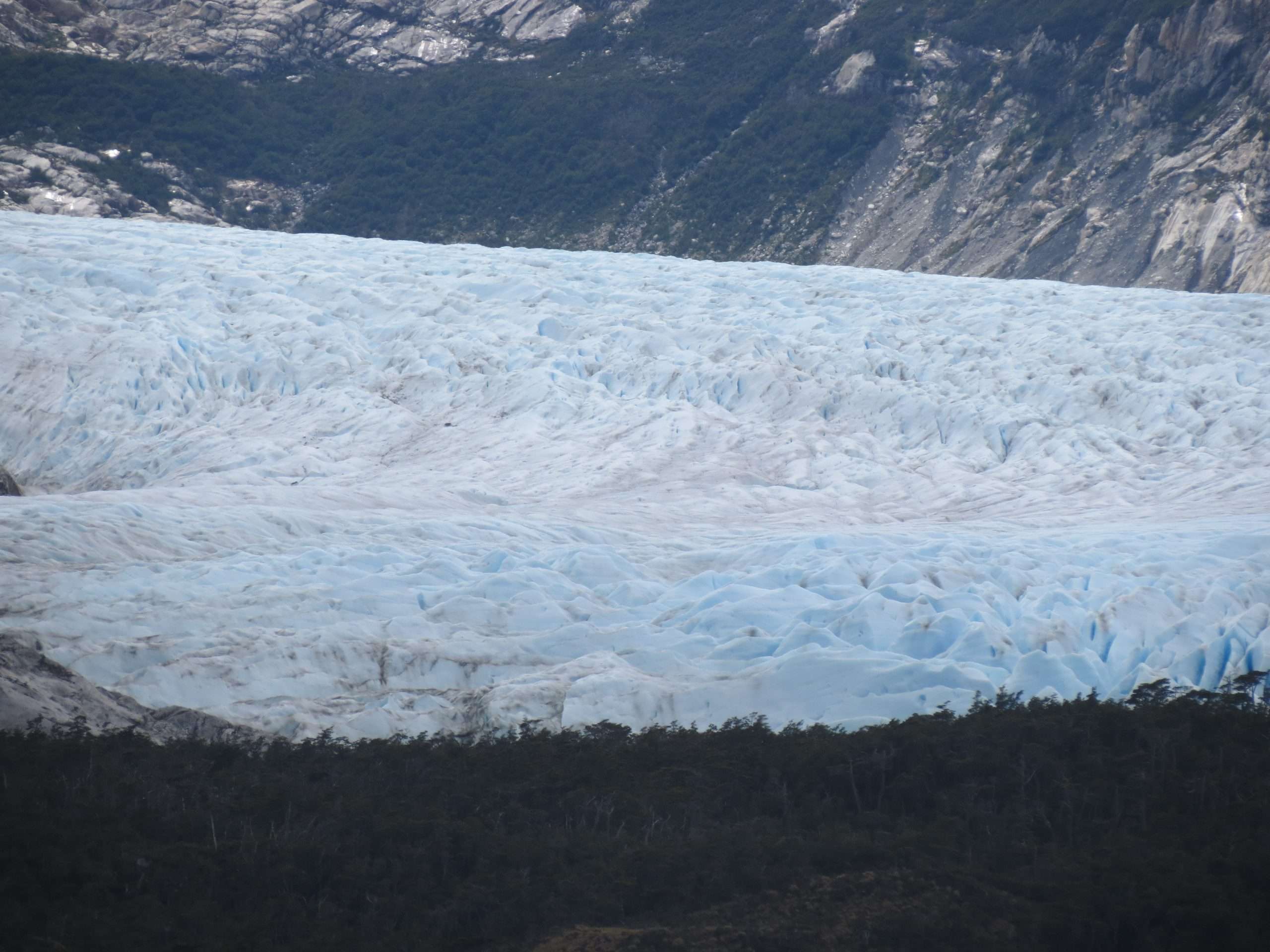
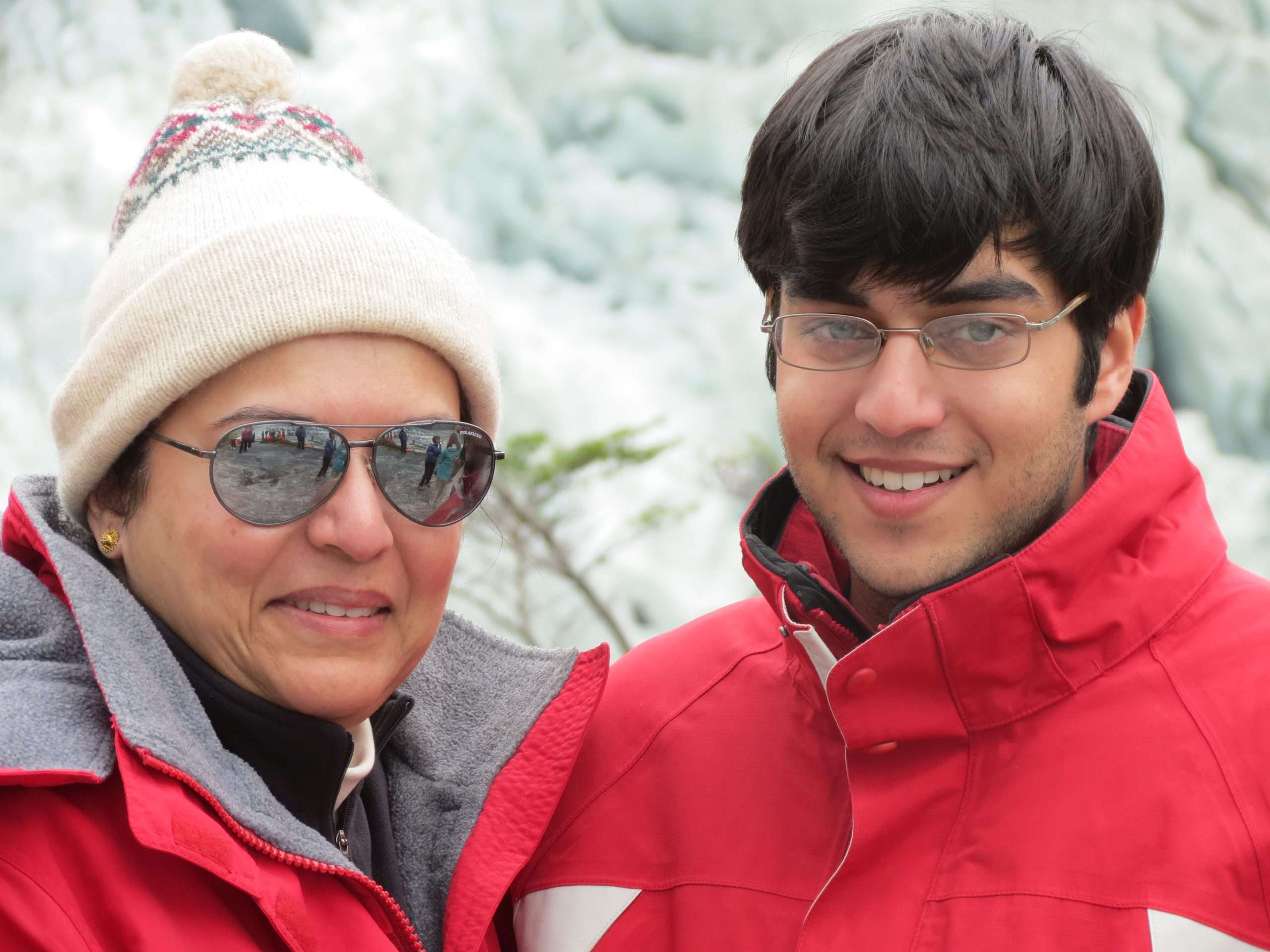
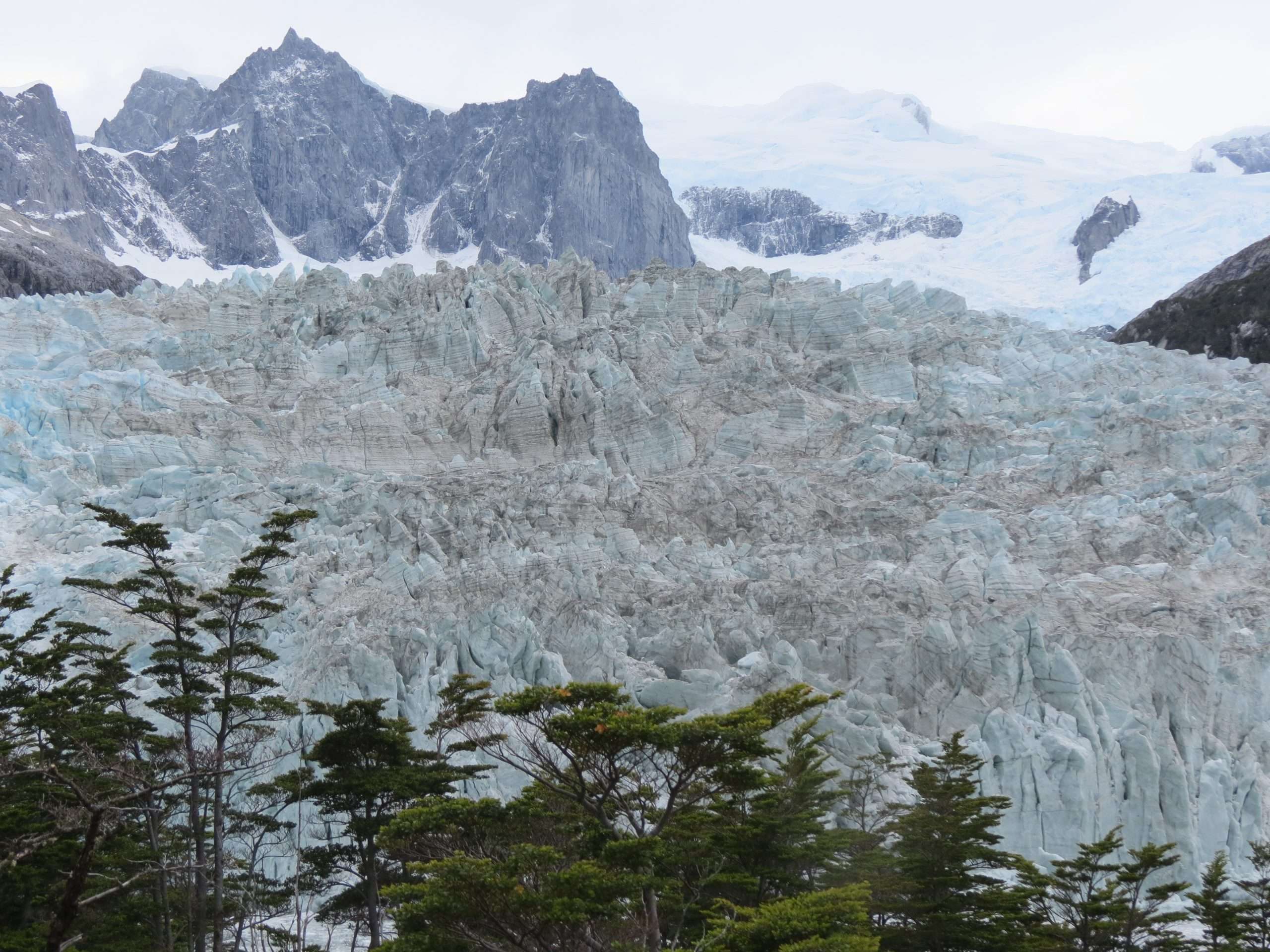
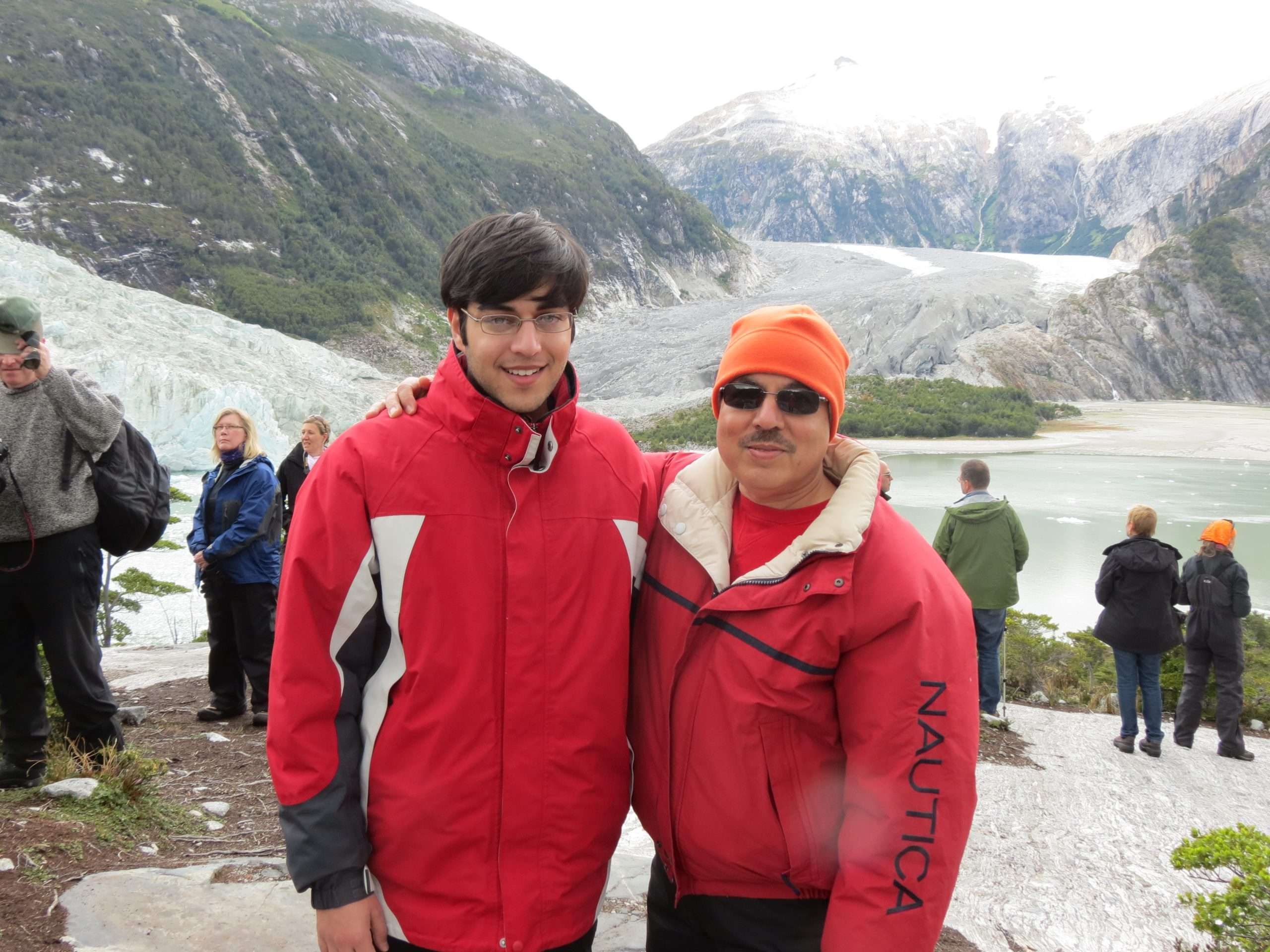
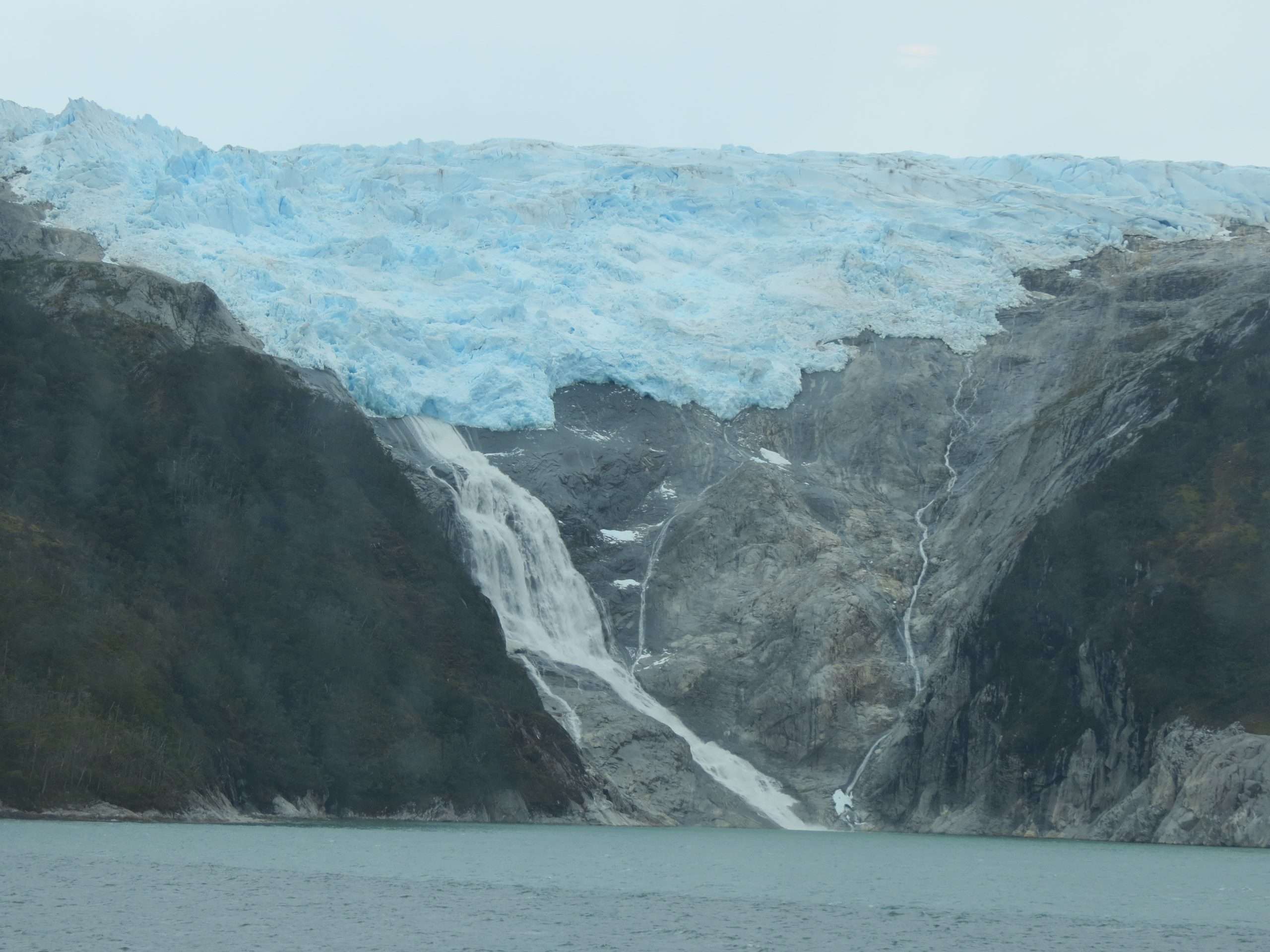
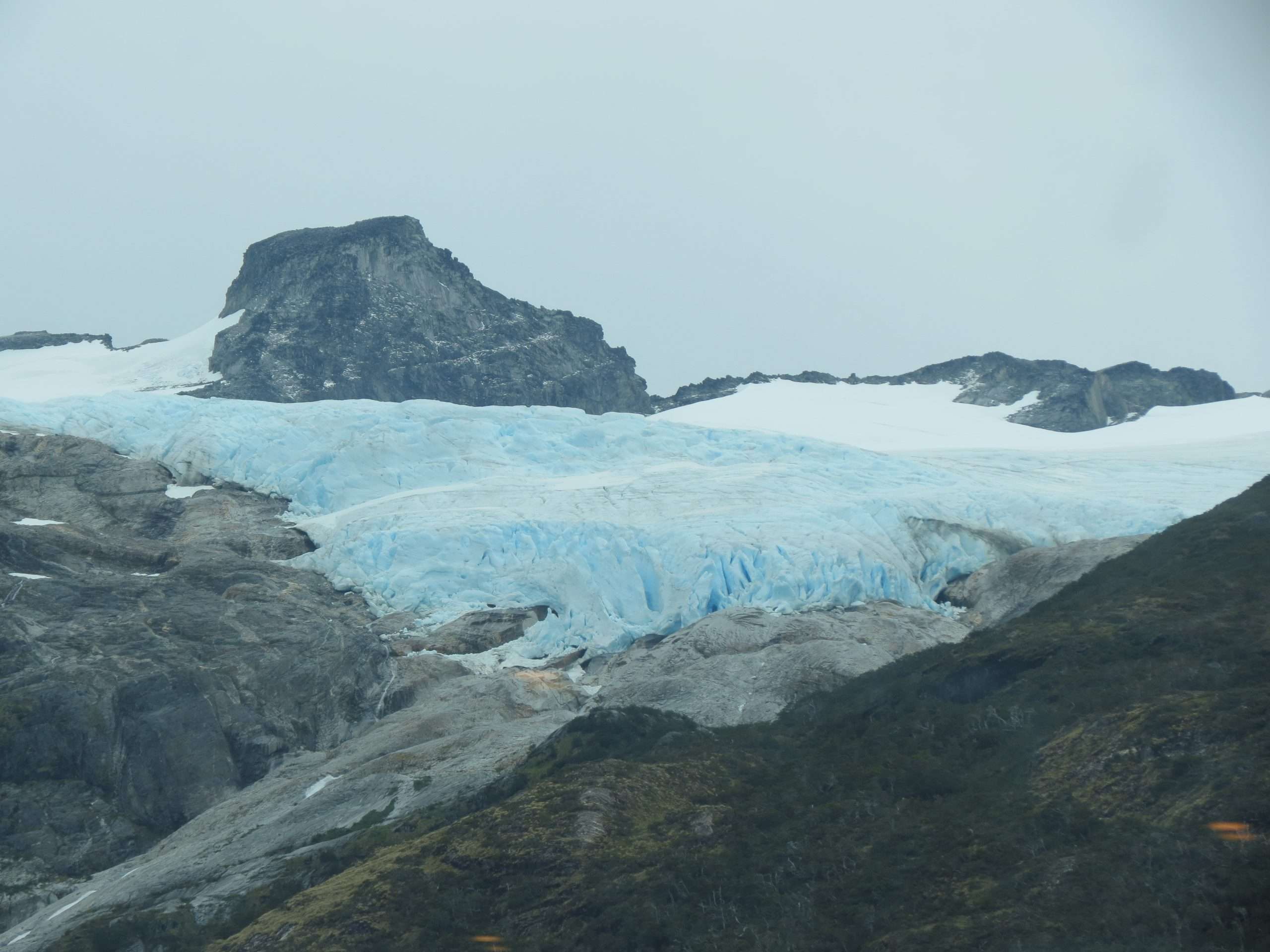
We witnessed small avalanches as ice broke off the glacier, each announced by a loud rumble. On the way back, we spotted a rock with a few small birds perched on it. We made it safely back to the Australis, a ship built in Chile in 2005. It’s the second of three ships in the fleet. The crew is professional, and everything runs smoothly.
Cape Horn & Wulaia Bay – December 30, 2011
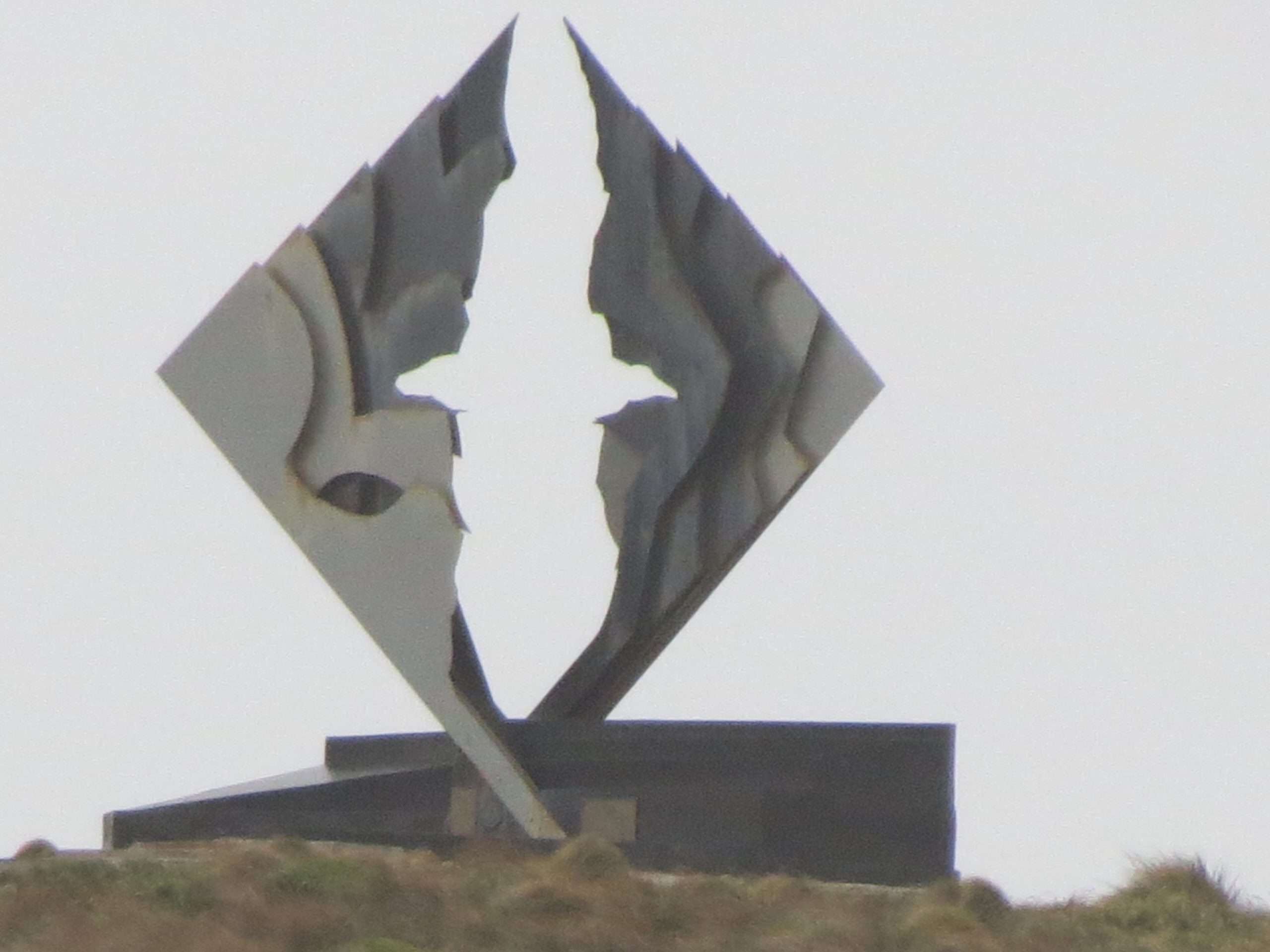
We set off early today for Cape Horn, which is actually an island rather than a cape. The weather was exceptionally favorable, making our landing smooth. After climbing 160 steps, we reached the albatross sculpture. The wind was at 16 knots, and light rain began to fall. The view was stunning, as this is the point where the Pacific and Atlantic Oceans meet, marking the southernmost tip of South America. This stretch of water, Drake’s Passage, is named after Sir Francis Drake but was not discovered by him.
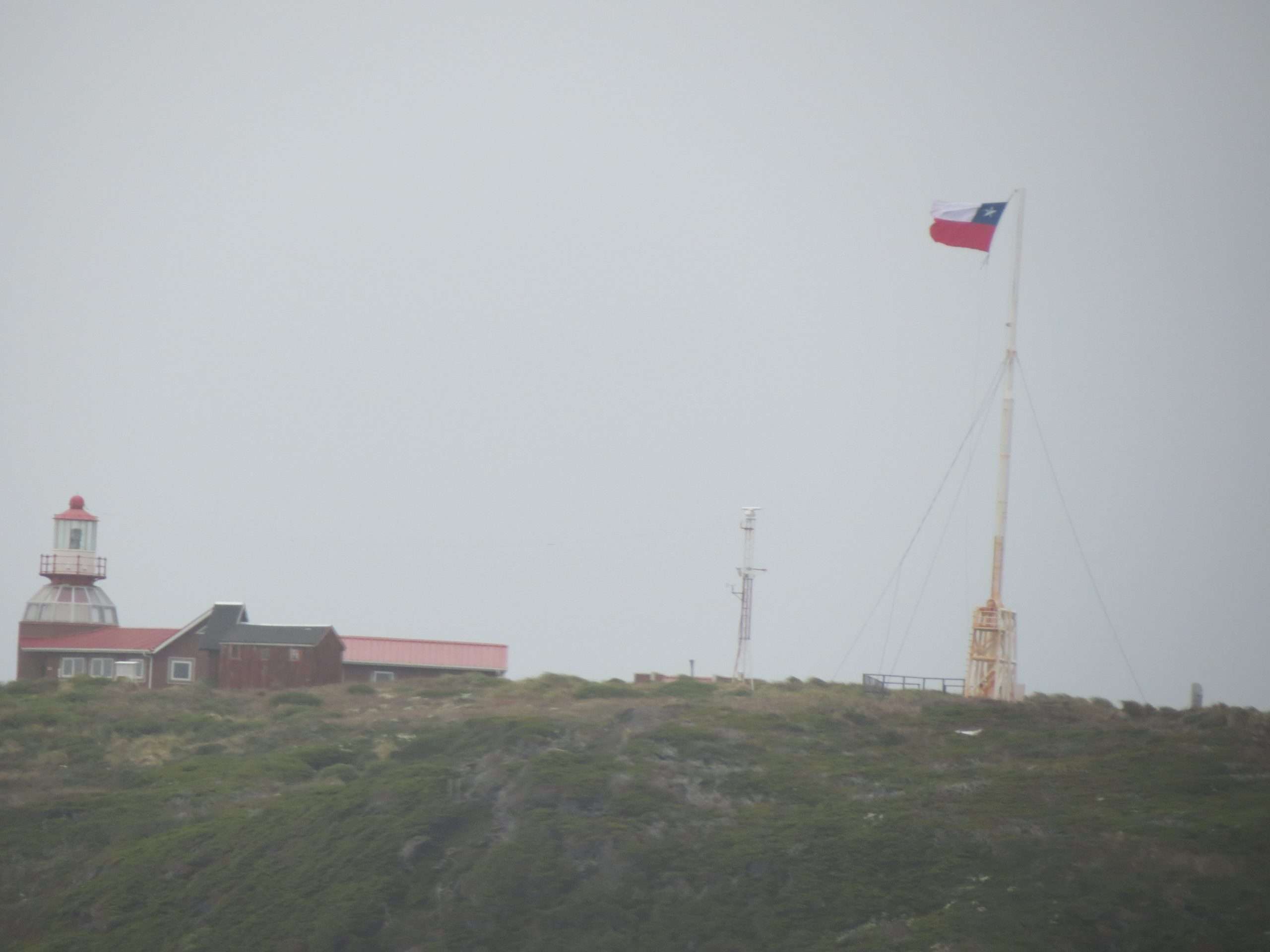
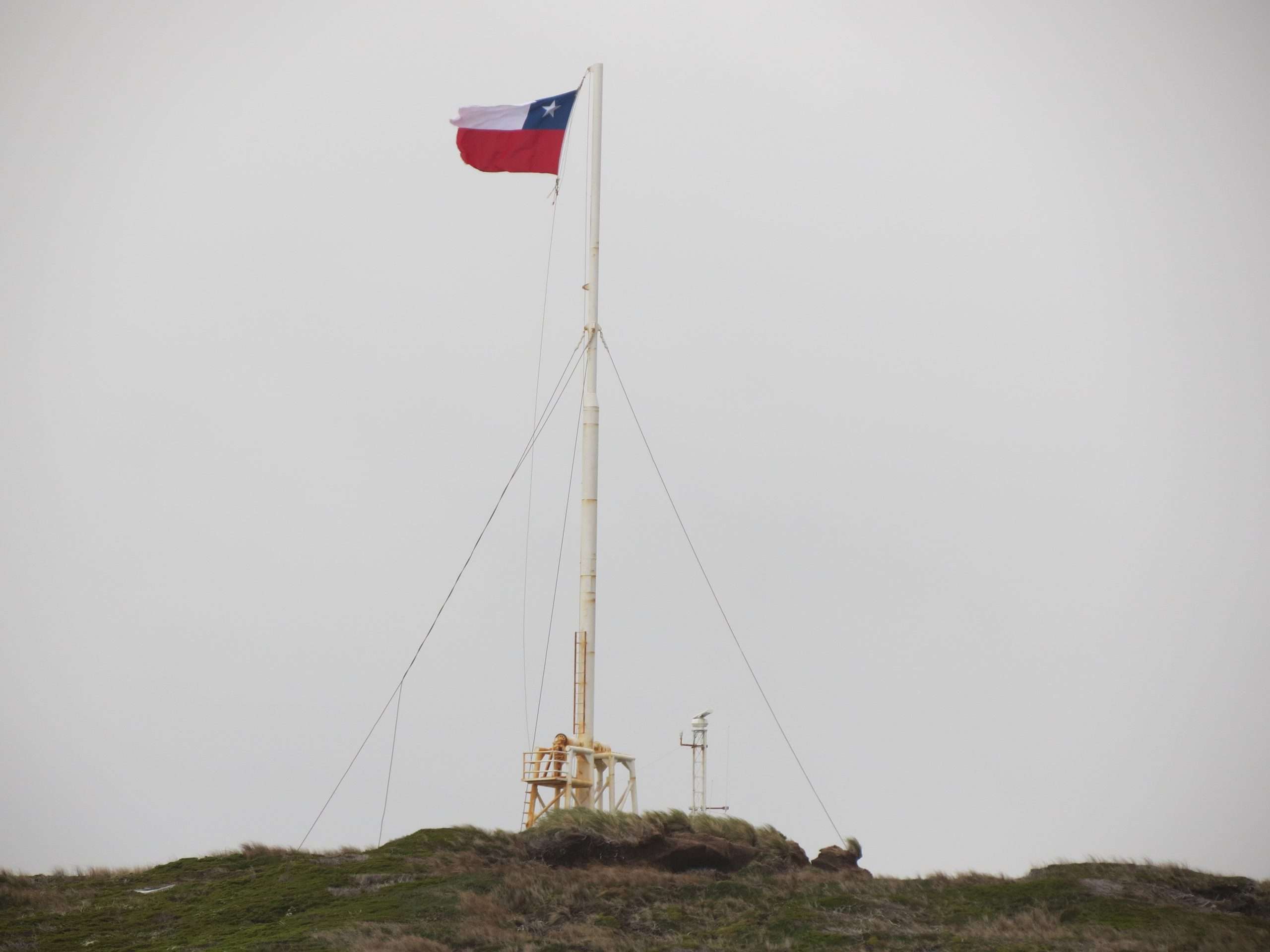
Next, we visited the Stella Maris Chapel, commemorating the near conflict between Chile and Argentina, averted through the mediation of Pope John Paul II. We then proceeded to the lighthouse, but as the weather worsened, Diana suggested returning to the Zodiac. Christabel spotted the lighthouse keeper, a navy officer who had just begun his one-year post in December. He lives on the island with his wife, two children, and their dog, Goofy.
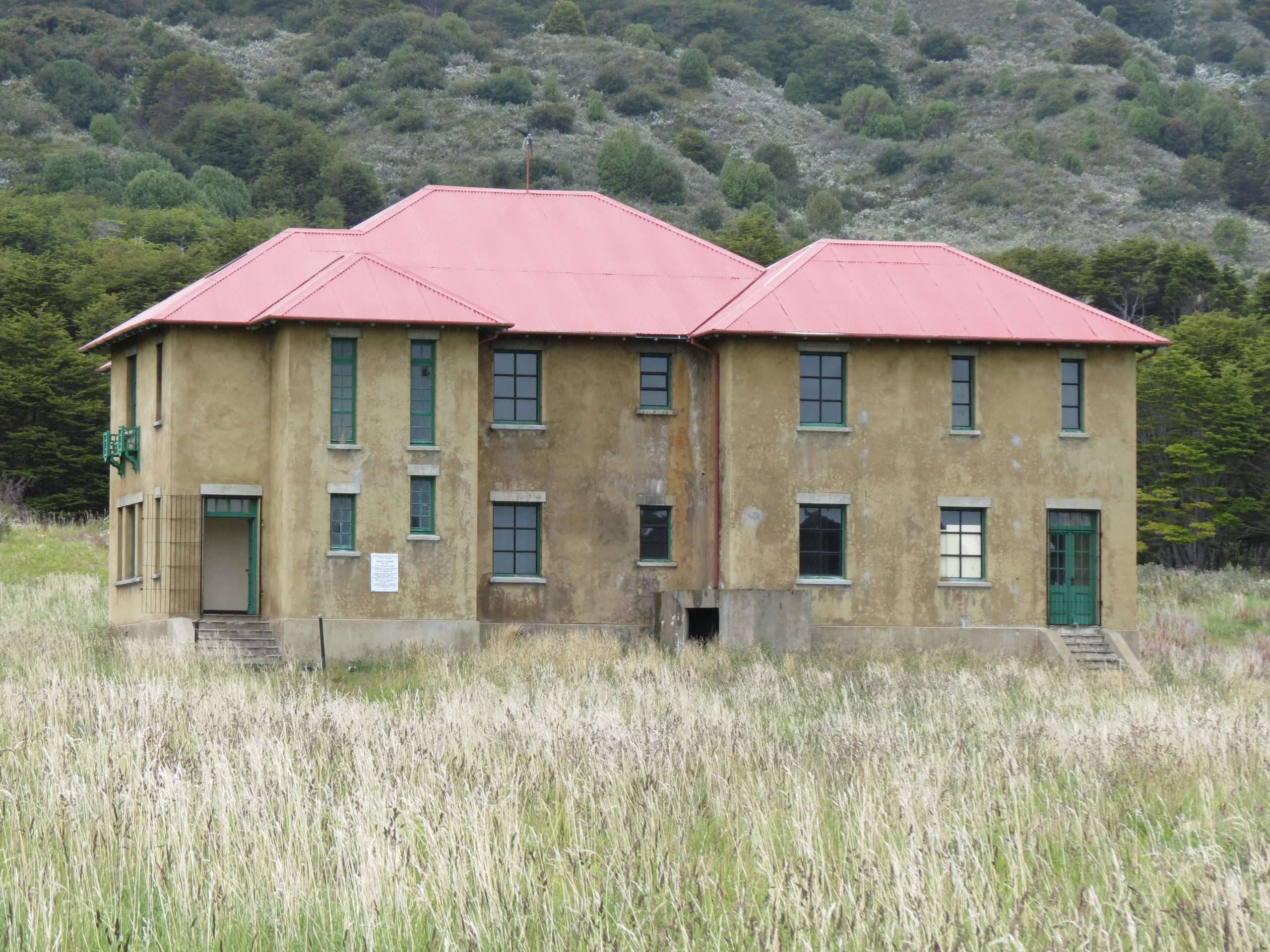
In the afternoon, we disembarked at Wulaia, meaning “beautiful bay.” The trip was gentle but accompanied by drizzle. Christabel and Evan walked the coast with a Dutch couple, while Albert and the German couple hiked up the hill. Christabel and Evan also visited a converted radio station that documented the story of three Yaghan natives taken to London by Pastor Sterling to be “civilized.” The plan was for them to return and “civilize” their tribe, but it failed, as they reverted to their original way of life upon returning home. It’s a reminder of the arrogance in assuming one culture’s superiority over another.
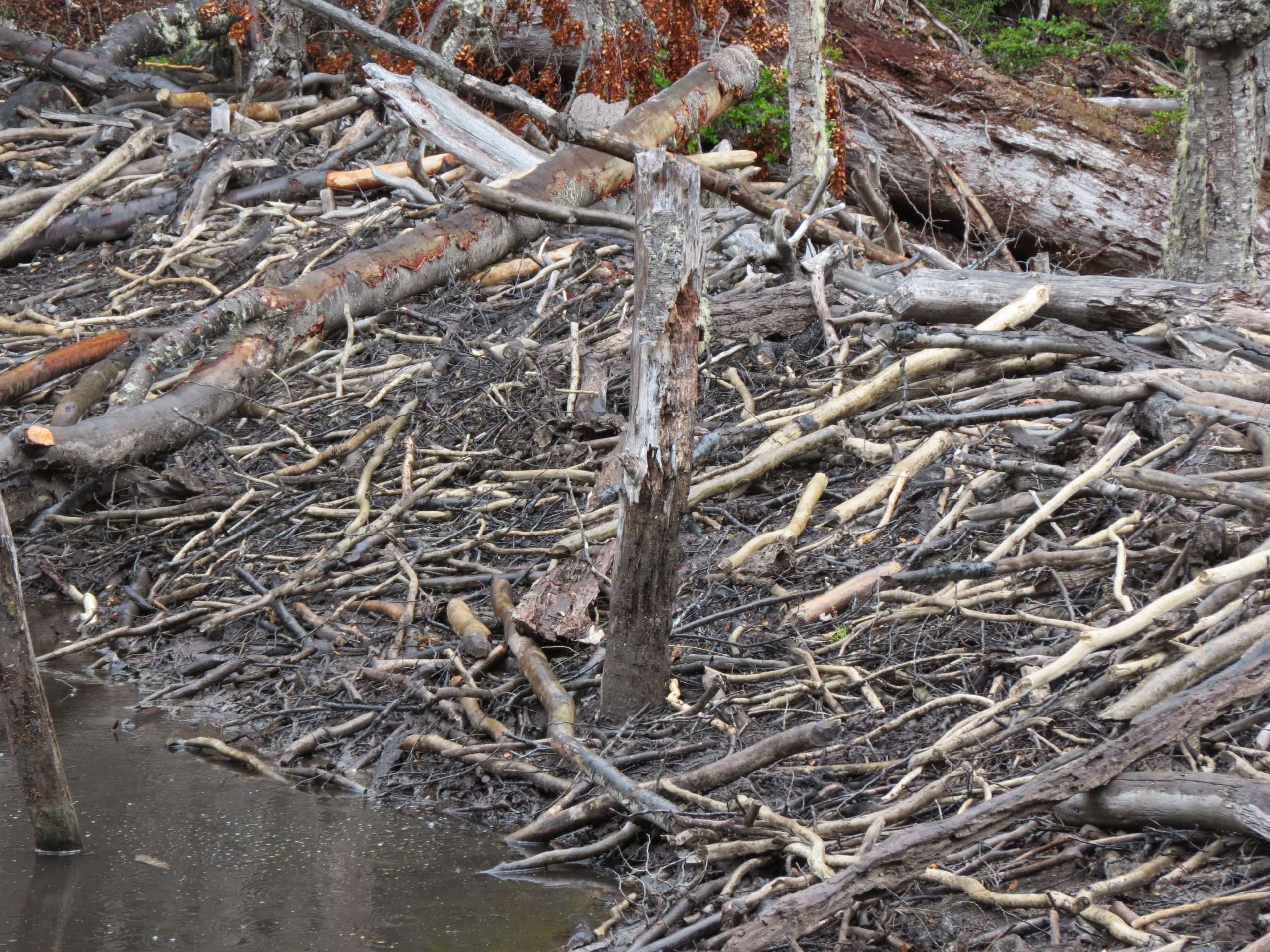
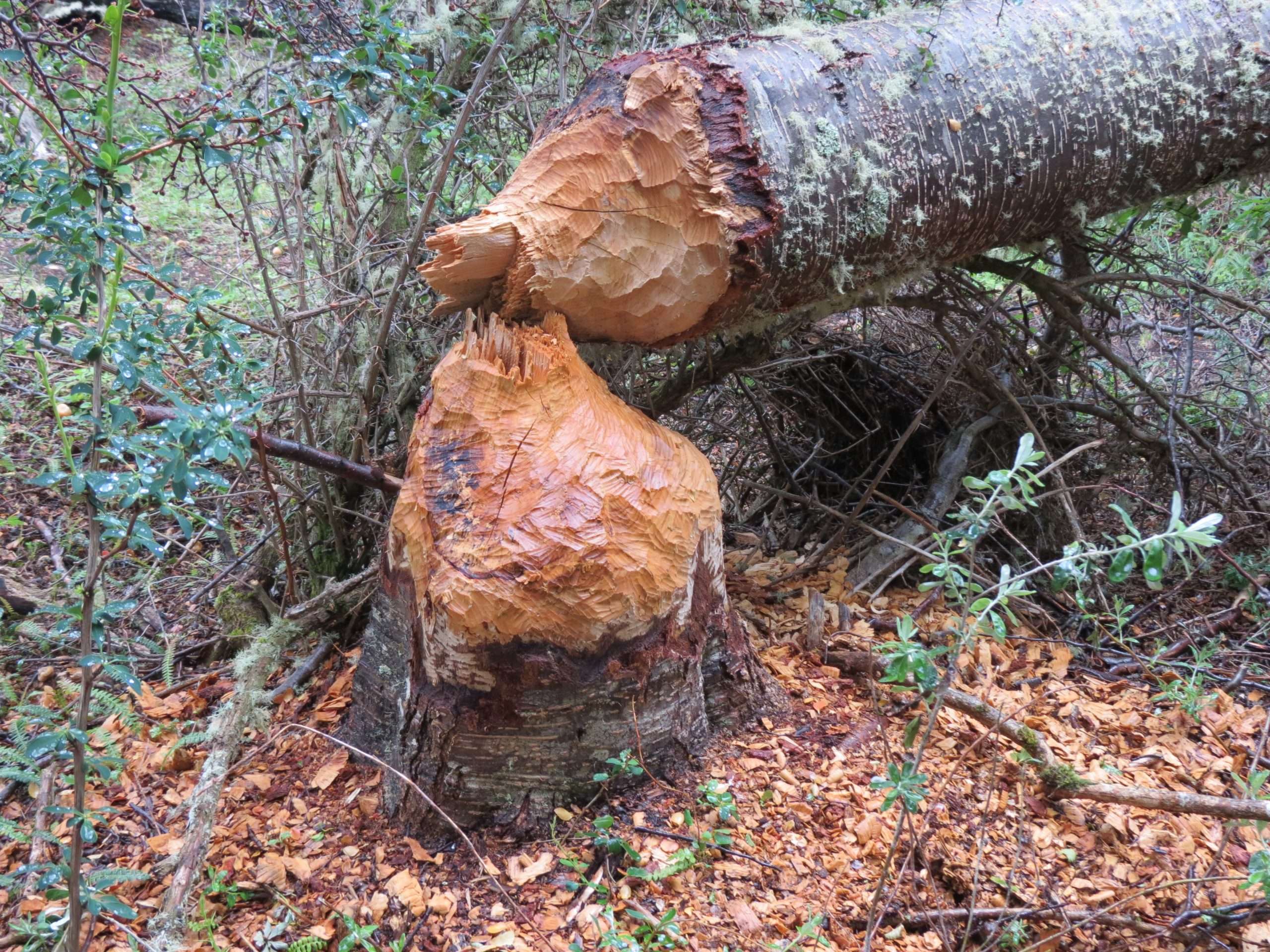
Meanwhile, the three Australians—father, son, and a friend—kayaked with a guide listed in the Guinness Book, for $120 per person.
After visiting Wulaia, the ship sailed to Porto Navarino, the last stop in Chile, where customs officials came aboard to check our papers before we left the country.
Ushuaia & Flight to Iguazú – December 31, 2011
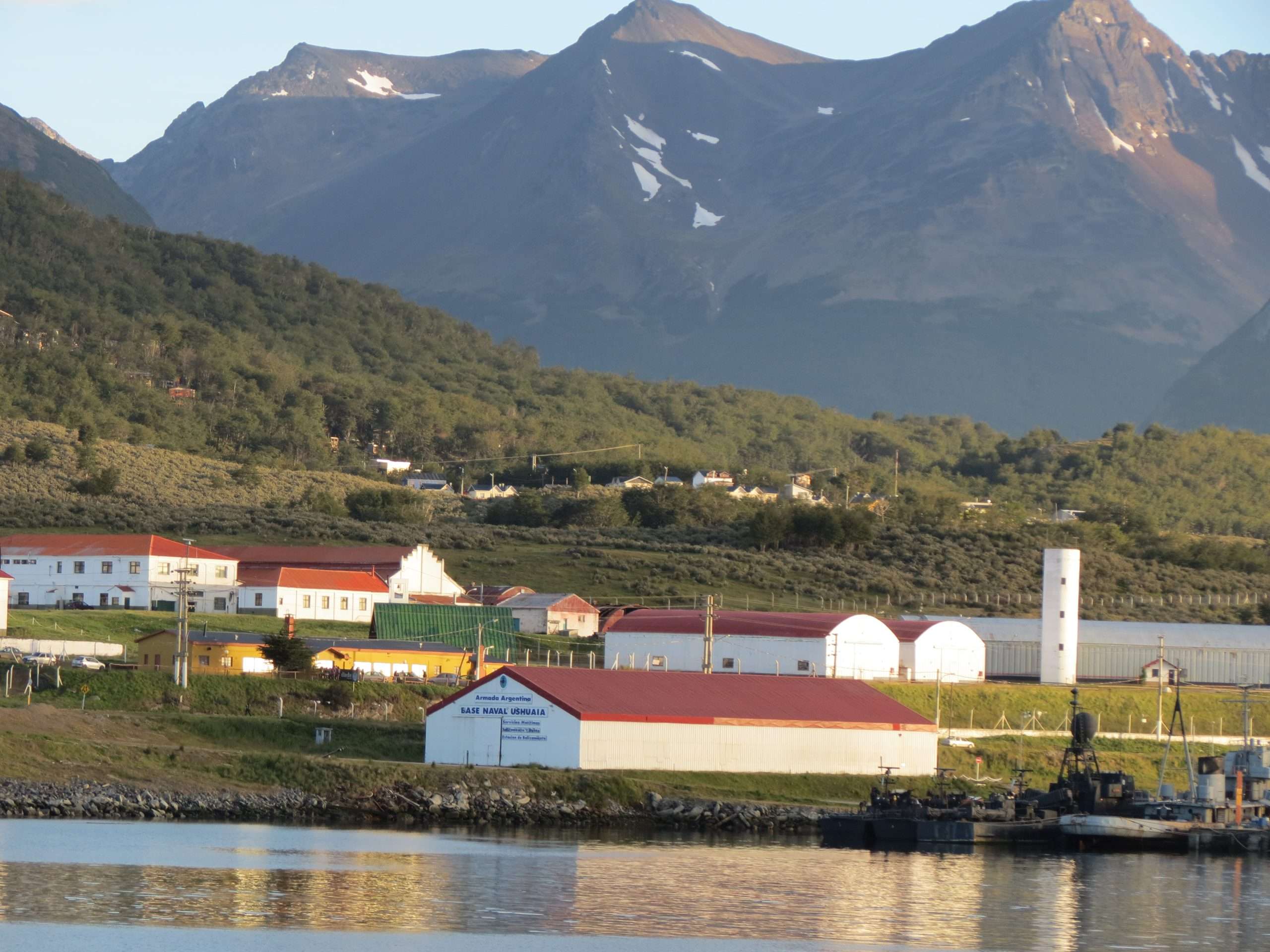
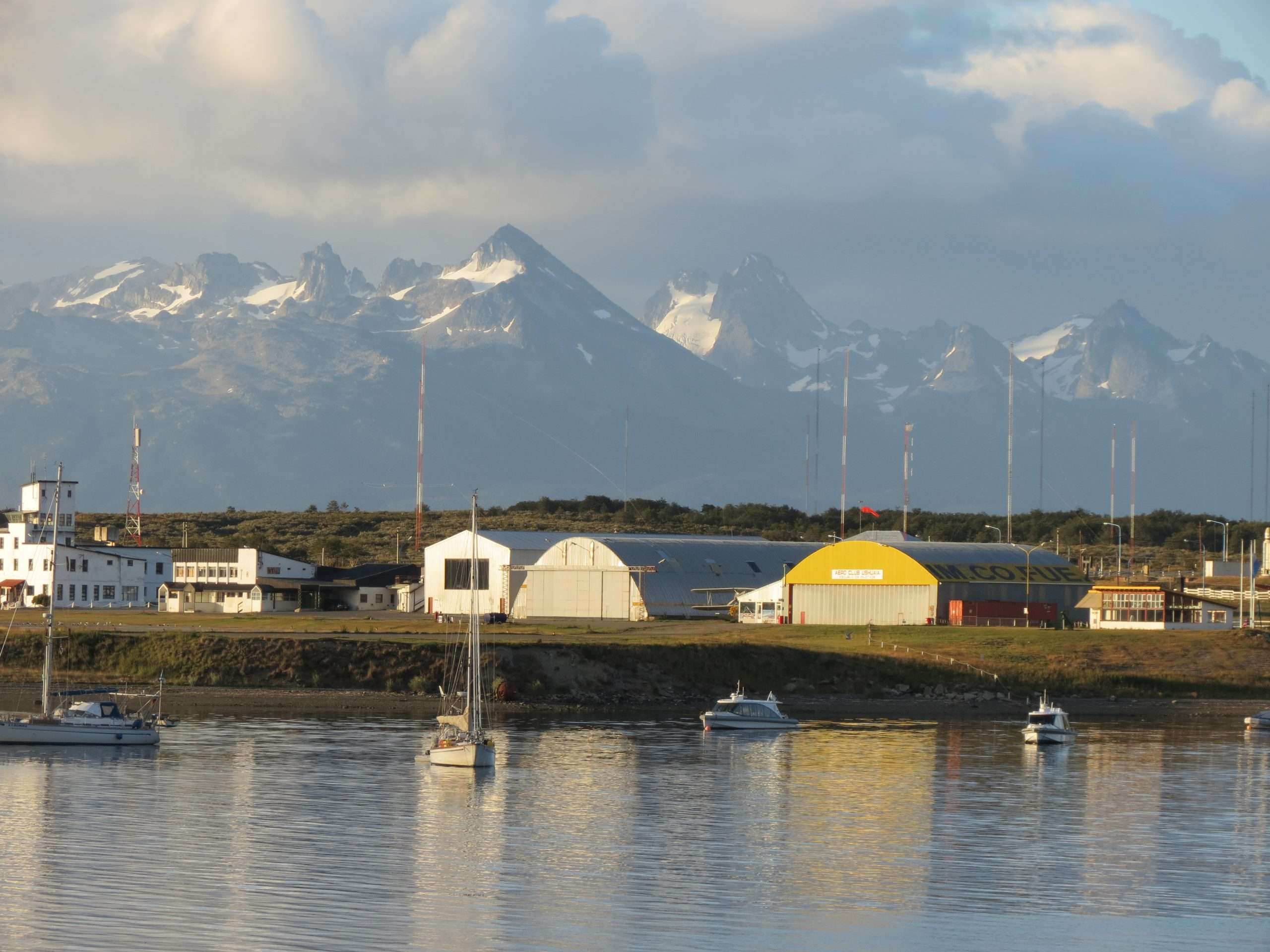
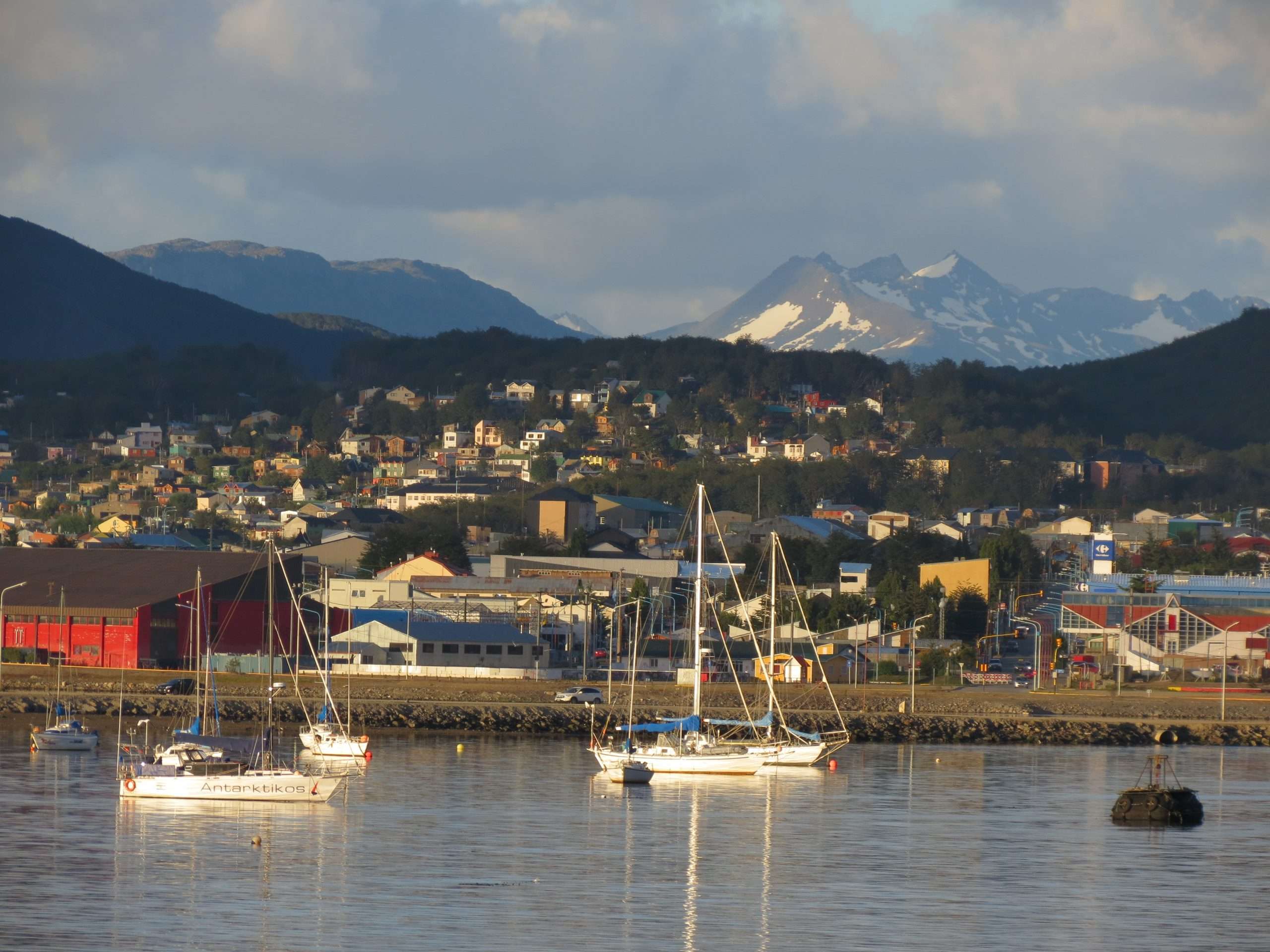
Around midnight, our boat docked in Ushuaia, the southernmost city in the world. It was very cold there. We woke up early, finished packing, had breakfast, said goodbye, picked up our passports, and waited for the transfer to the airport for our flight to Iguazú.
Upon arriving in Iguazú, we were greeted by Juanita, our local guide who resembled a Goan widow, dressed in a black skirt, white blouse, sandals, and carrying a large purse, with her hair in a ponytail. She and our driver took us to the Sheraton International Hotel inside Iguazú National Park. Our room had a stunning view of Superior Falls.
Although the hotel had a buffet and a party planned, we skipped it and opted for hors d’oeuvres in the lounge, which turned out to be disappointing.
Argentine Iguazú Falls – January 1, 2012
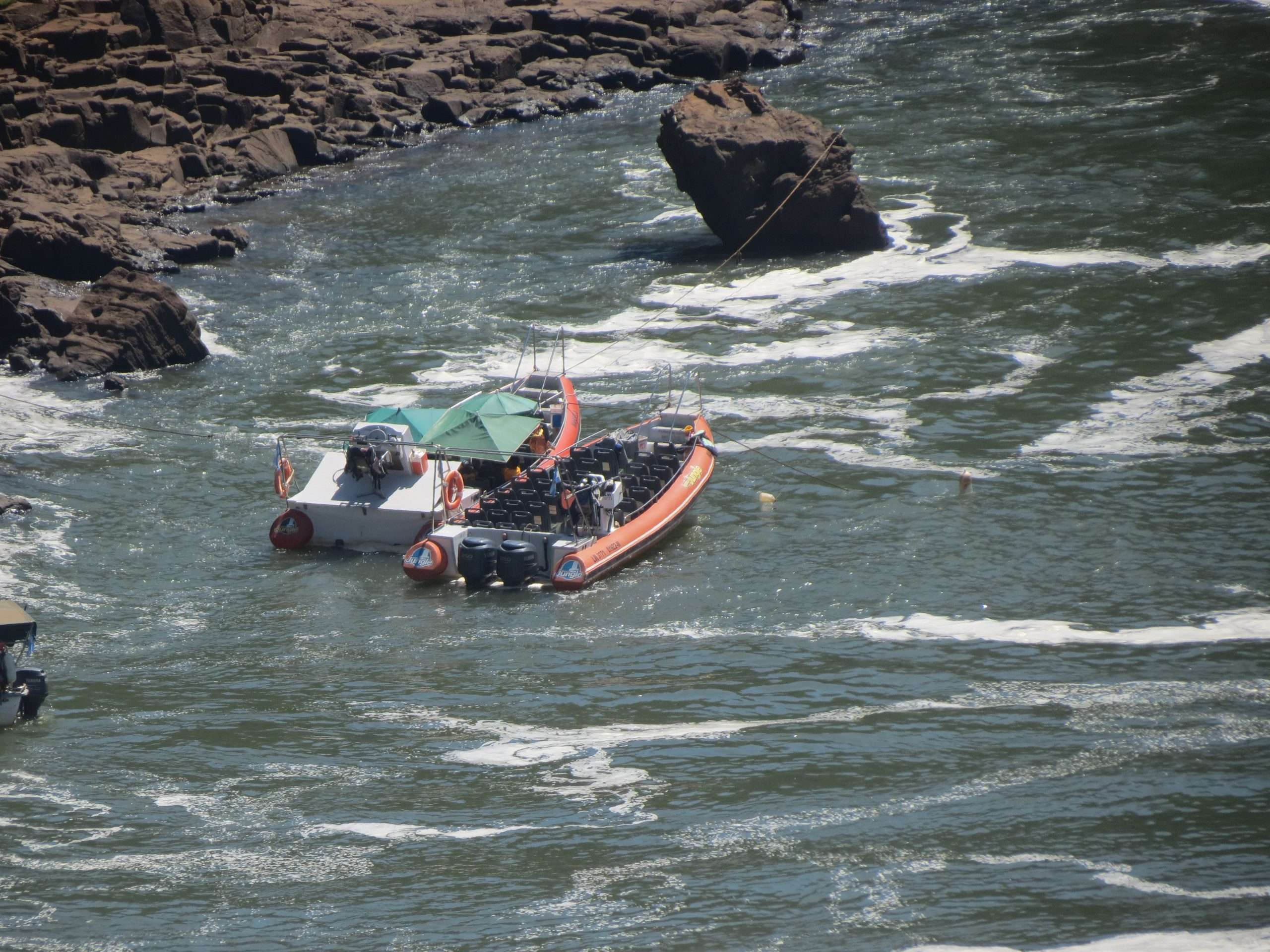
Today, we visited Iguazú Falls on the Argentinian side, and it was incredible! Despite the intense heat, we spotted some amazing birds and animals. Albert and Evan went on the Great Adventure tour, which included a 30-minute ride in a four-wheel Jeep and a 30-minute Zodiac boat ride to get up close to the waterfalls.
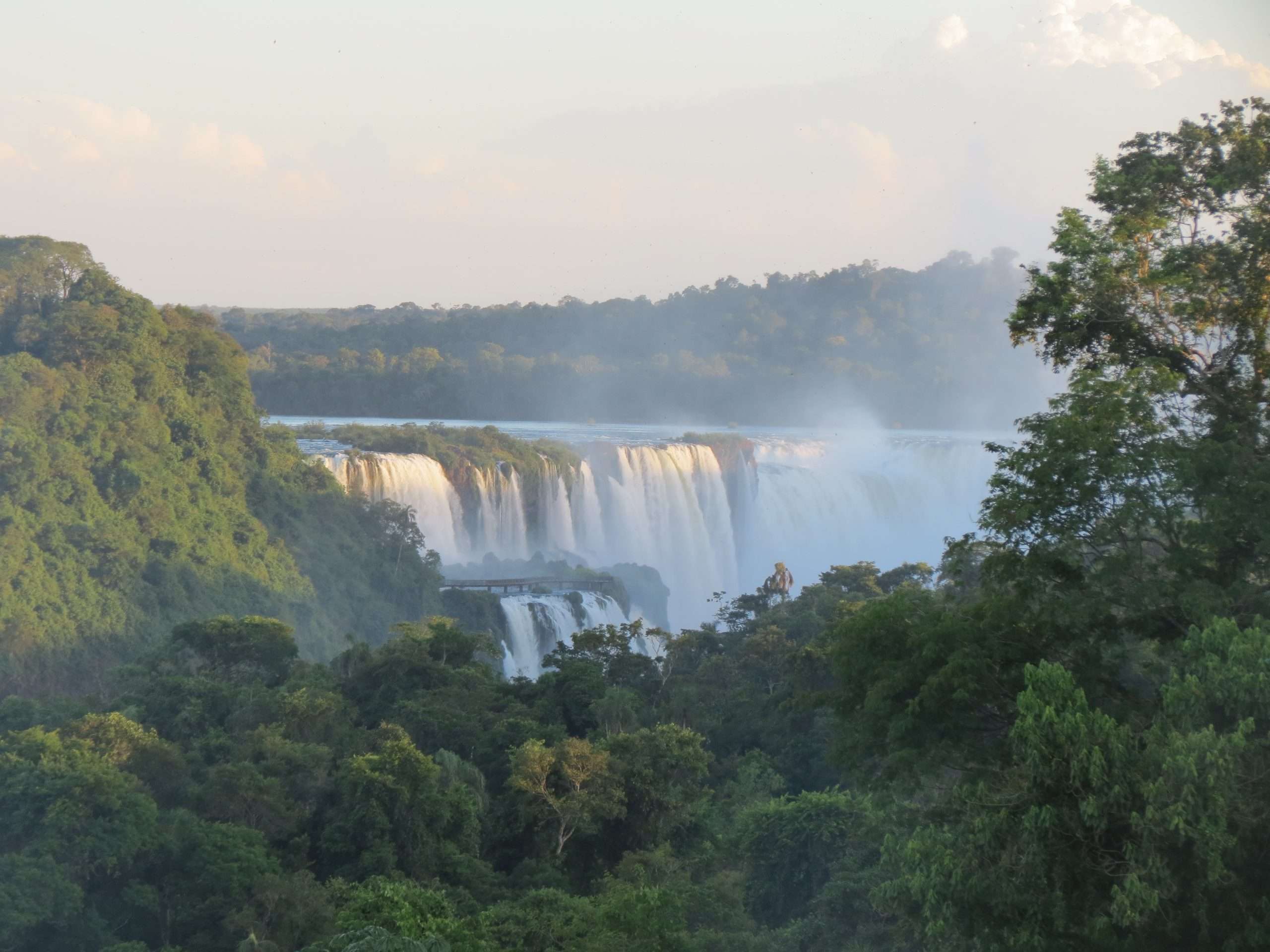
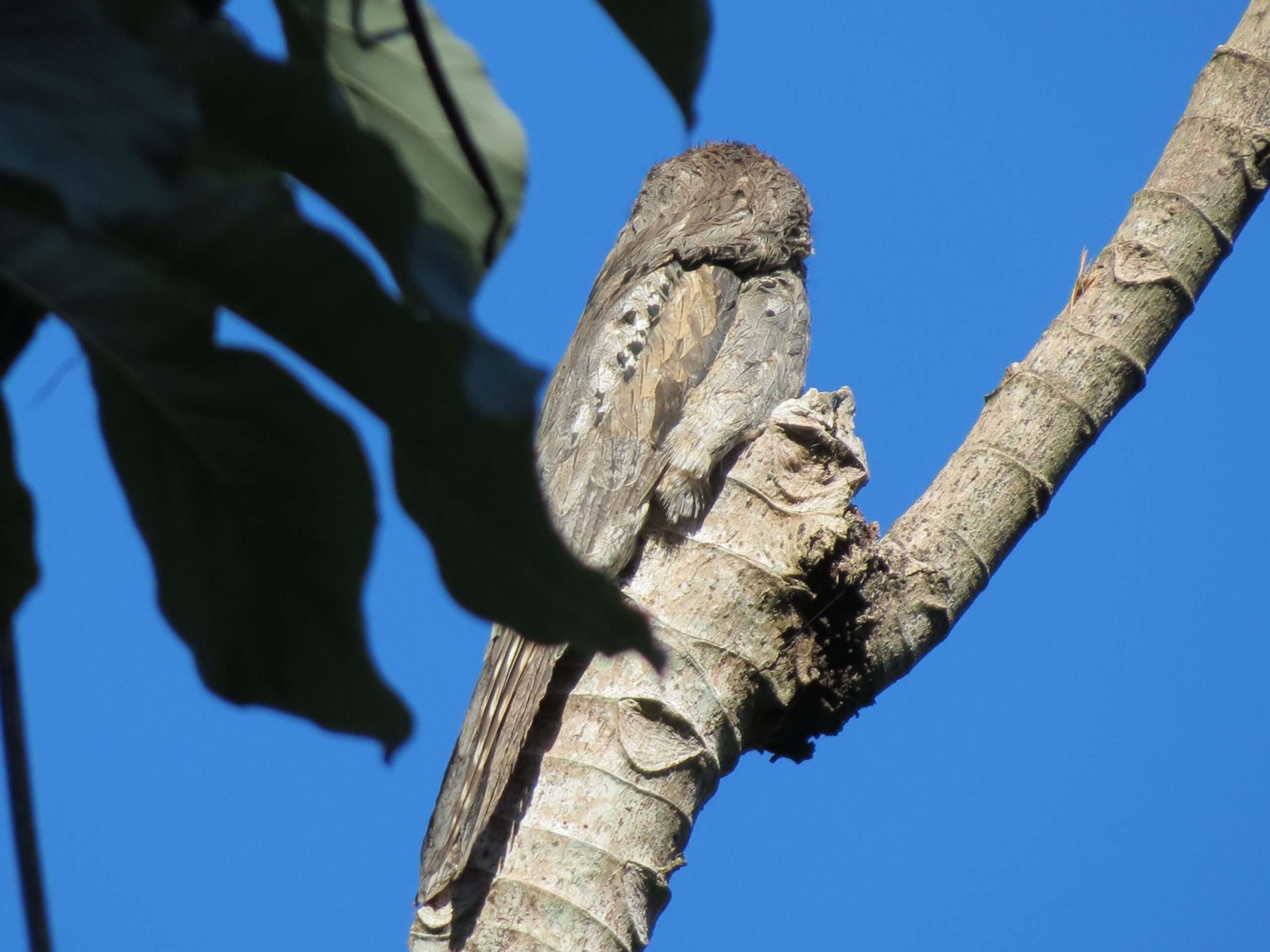
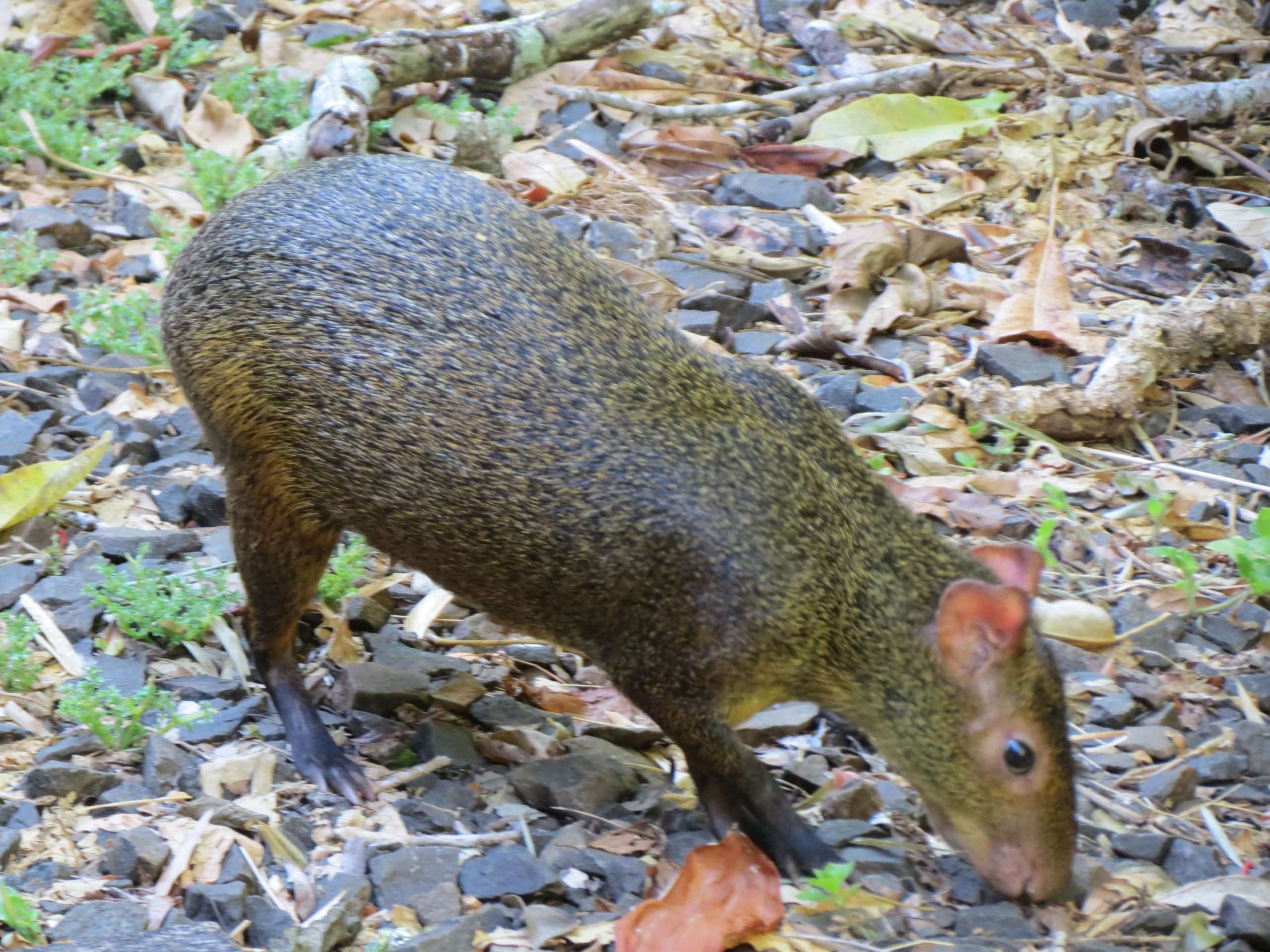
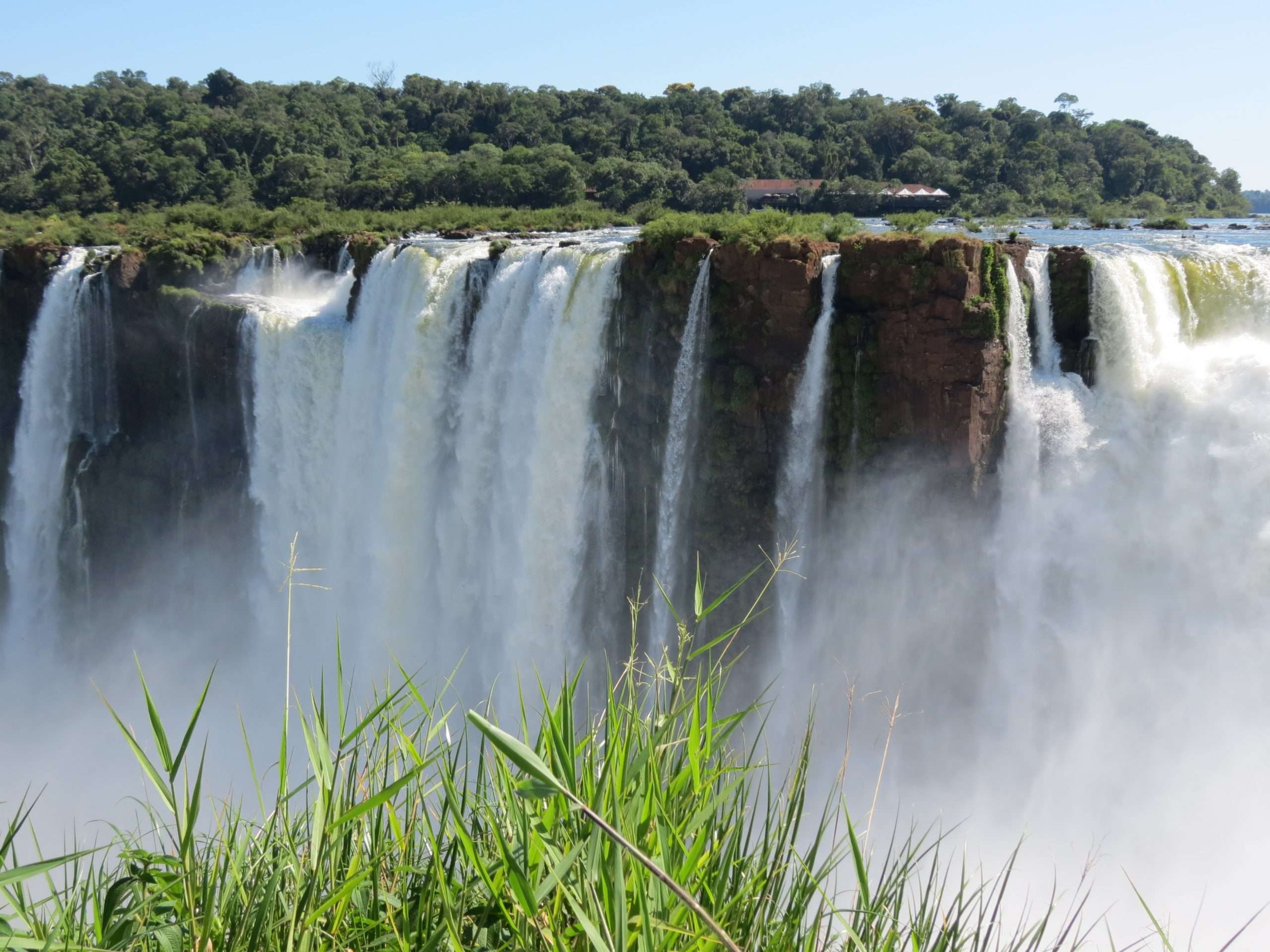
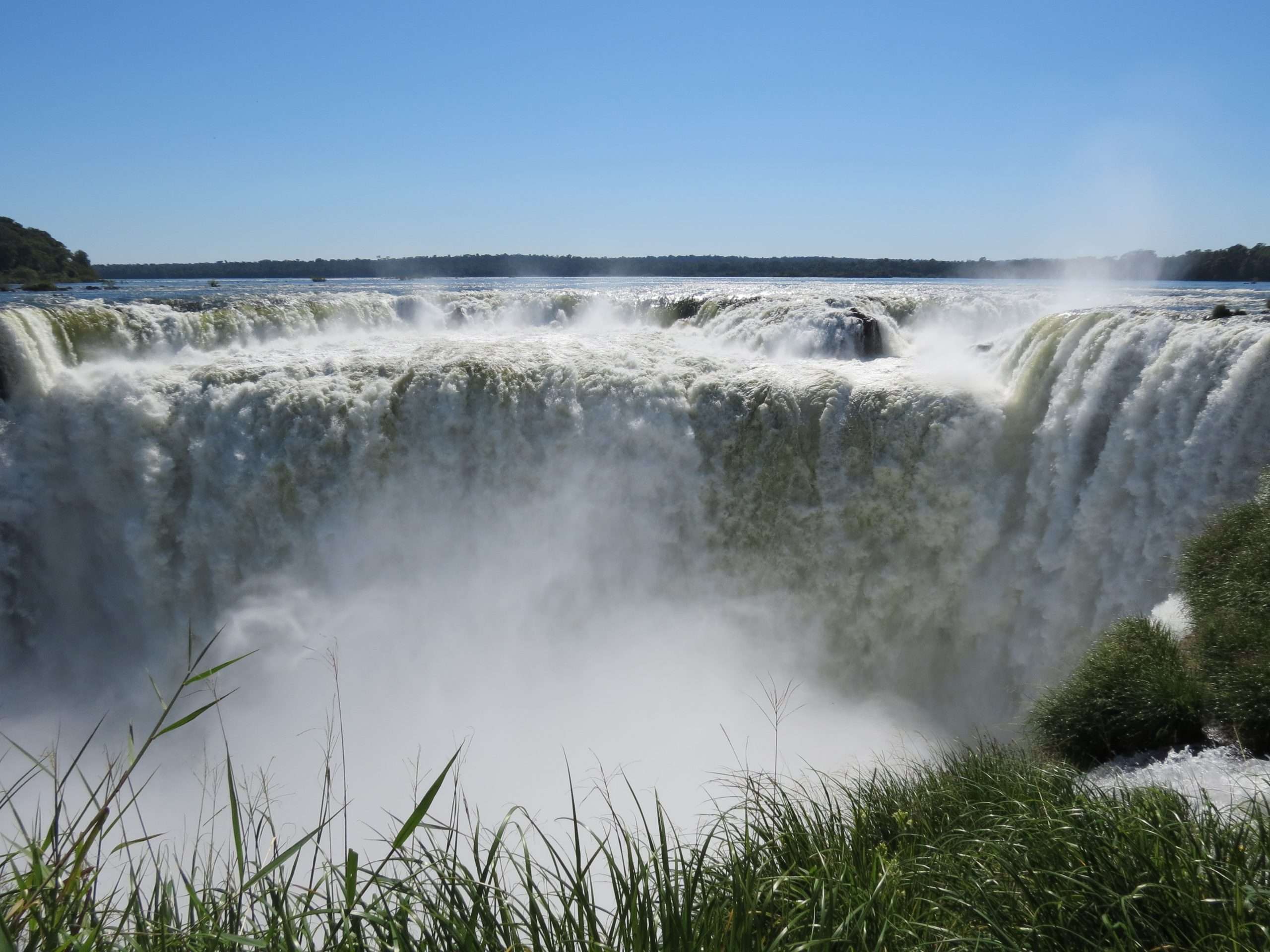
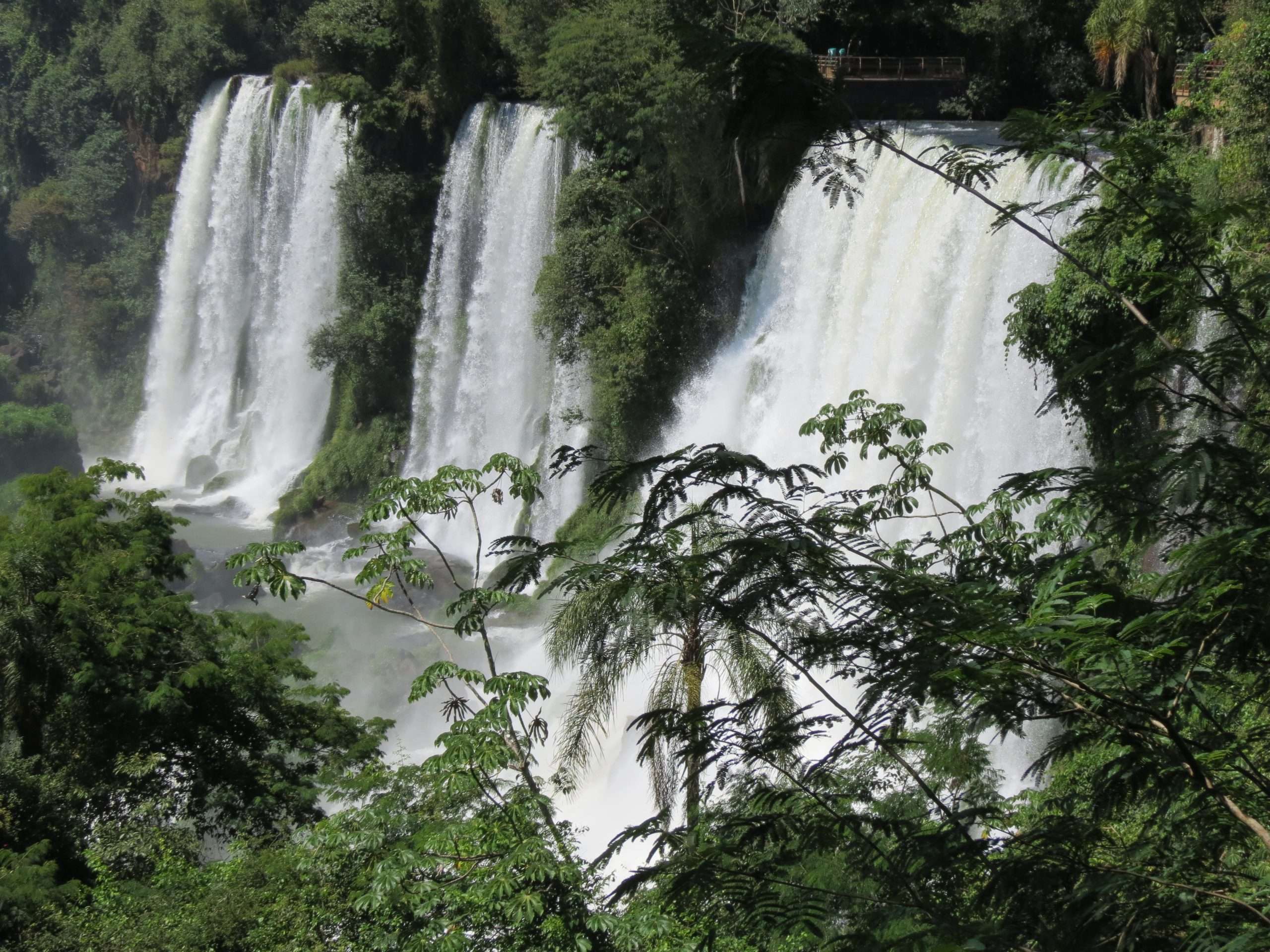
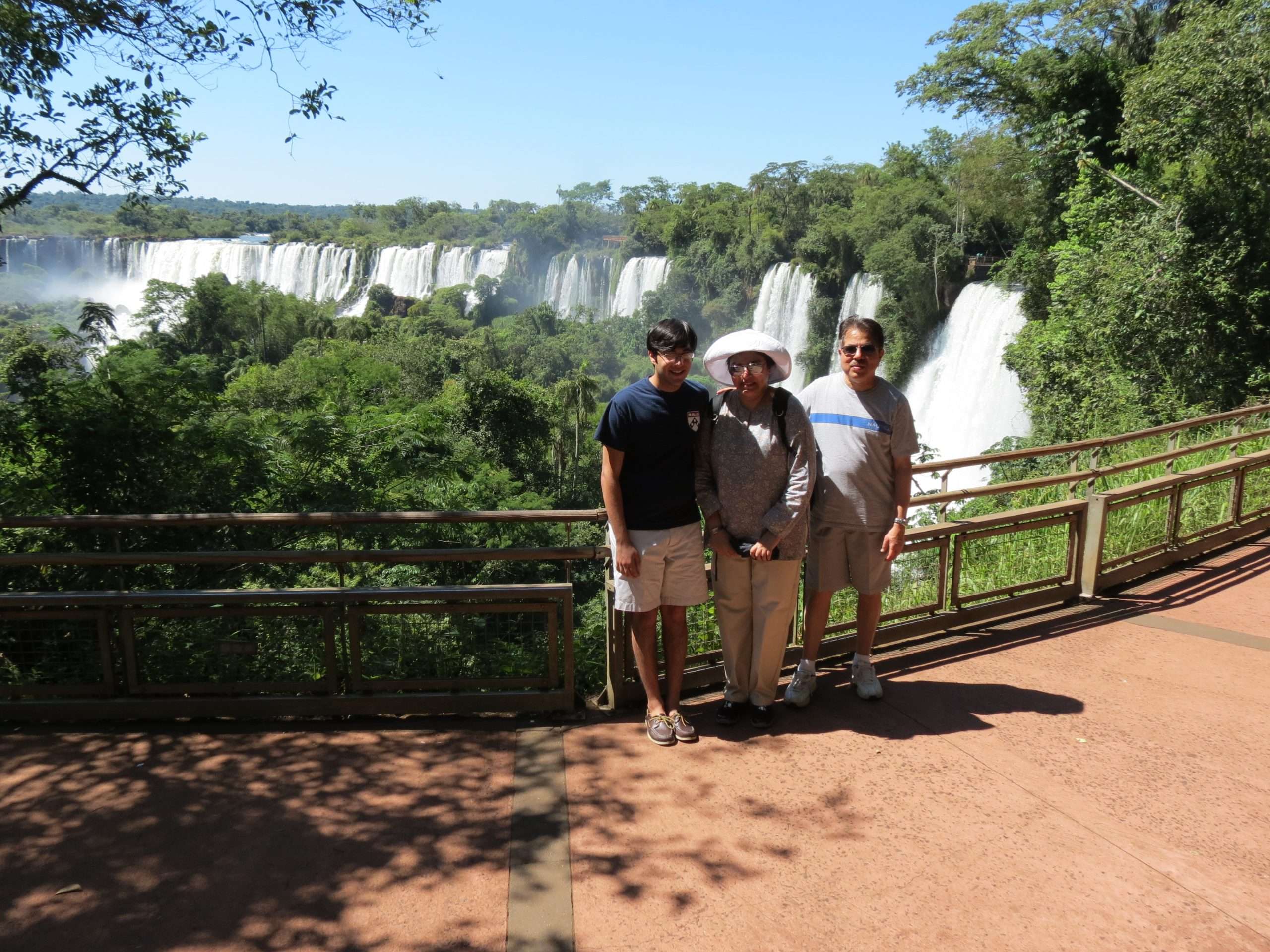
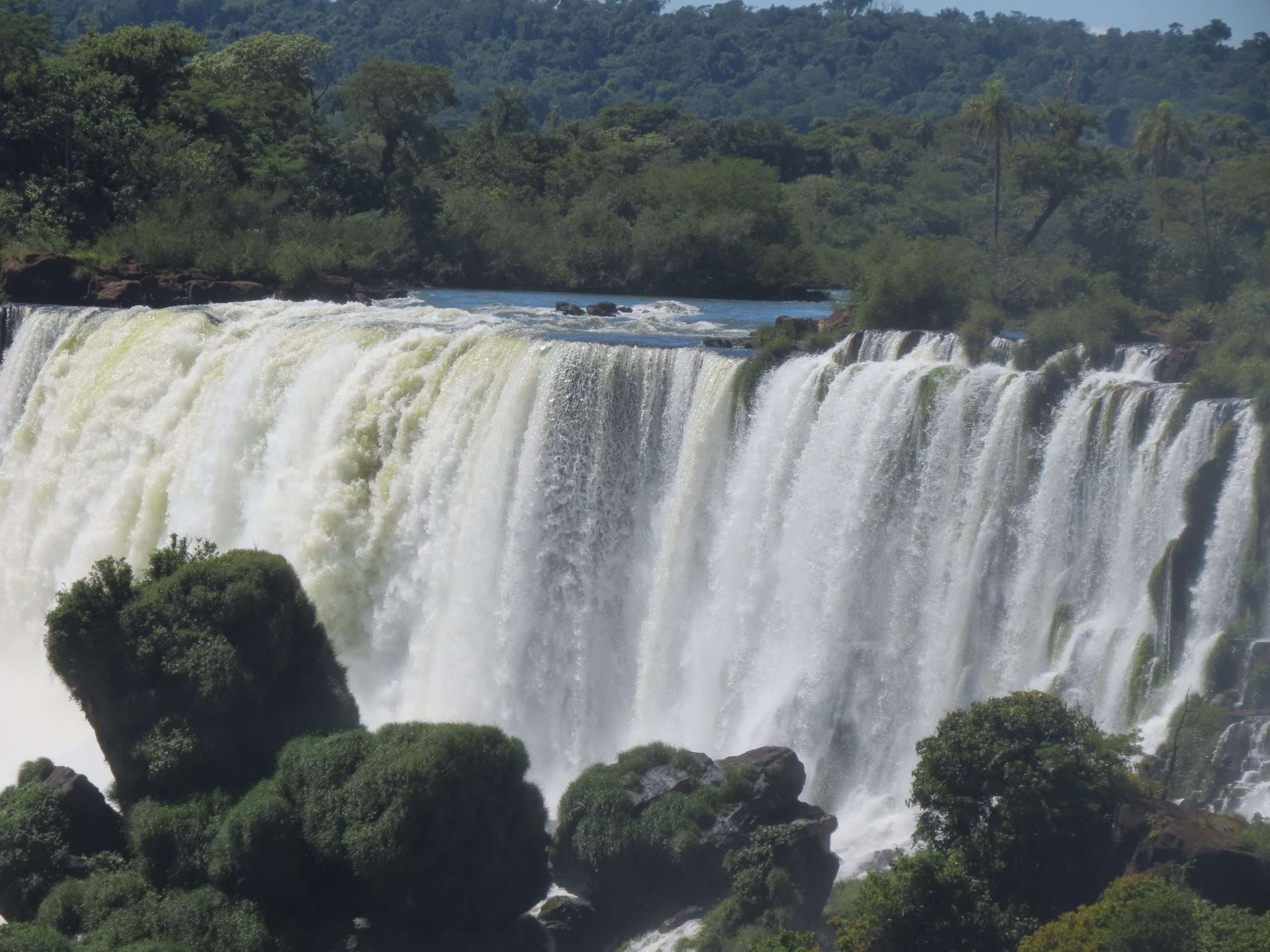
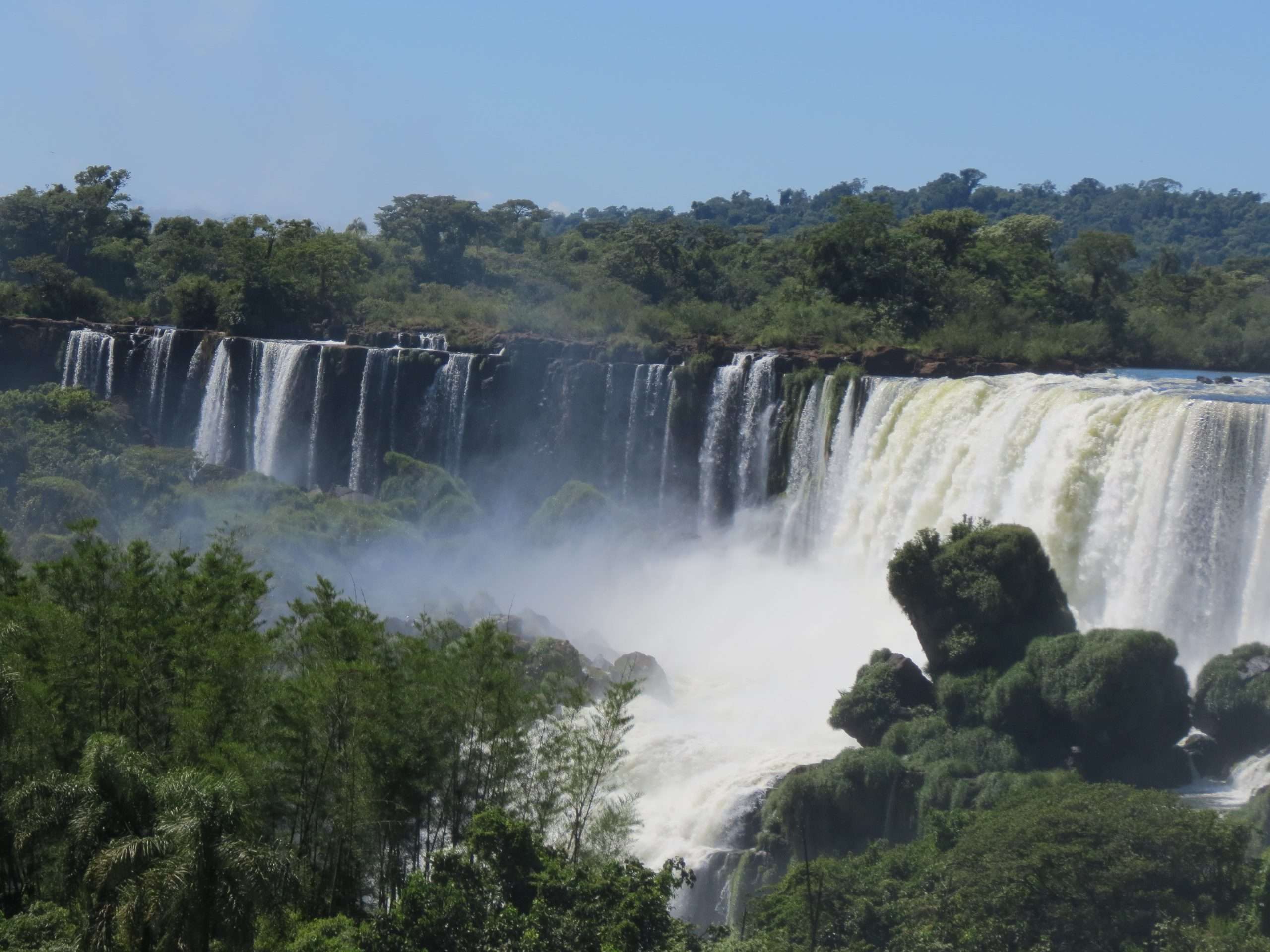
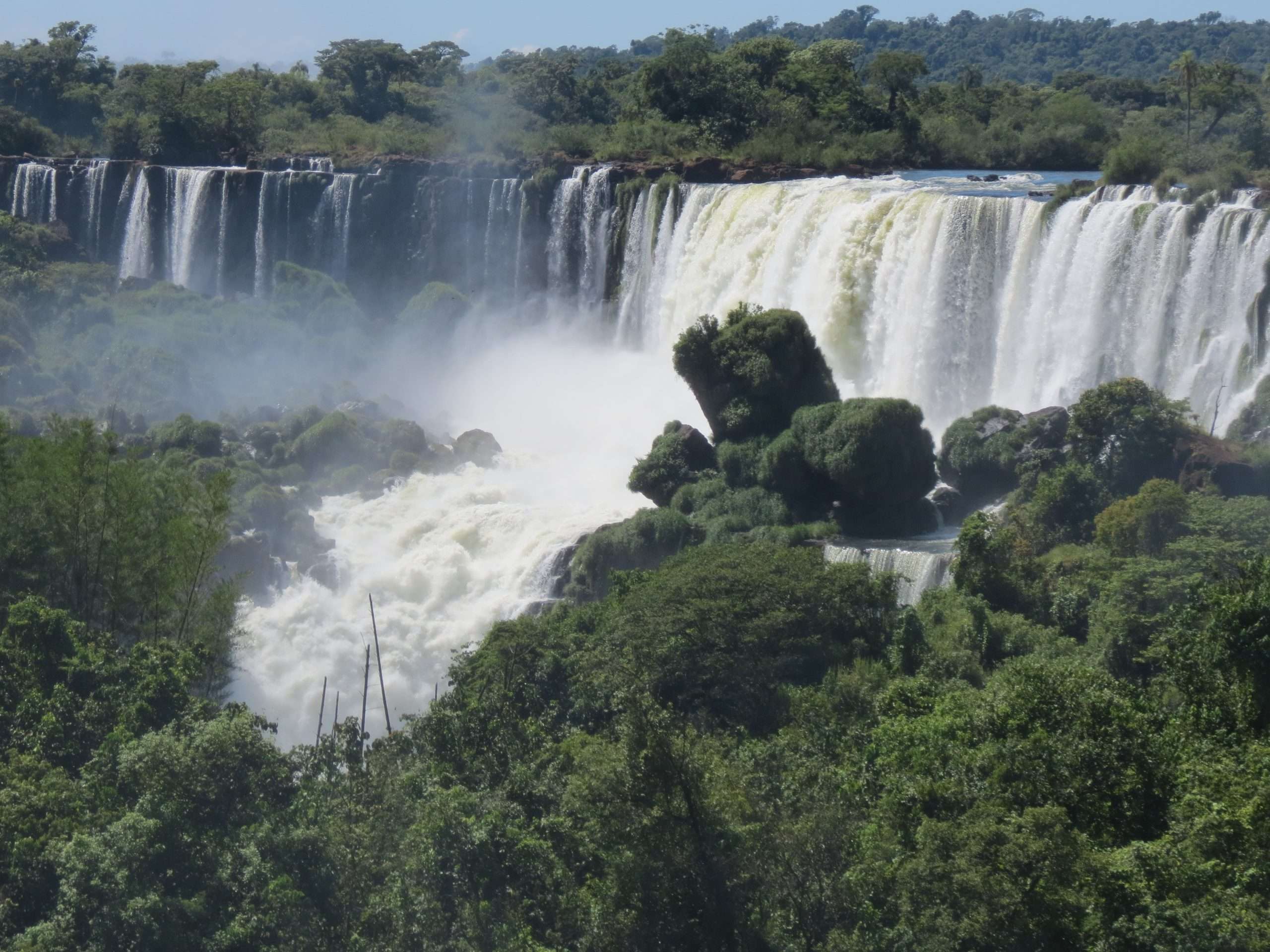
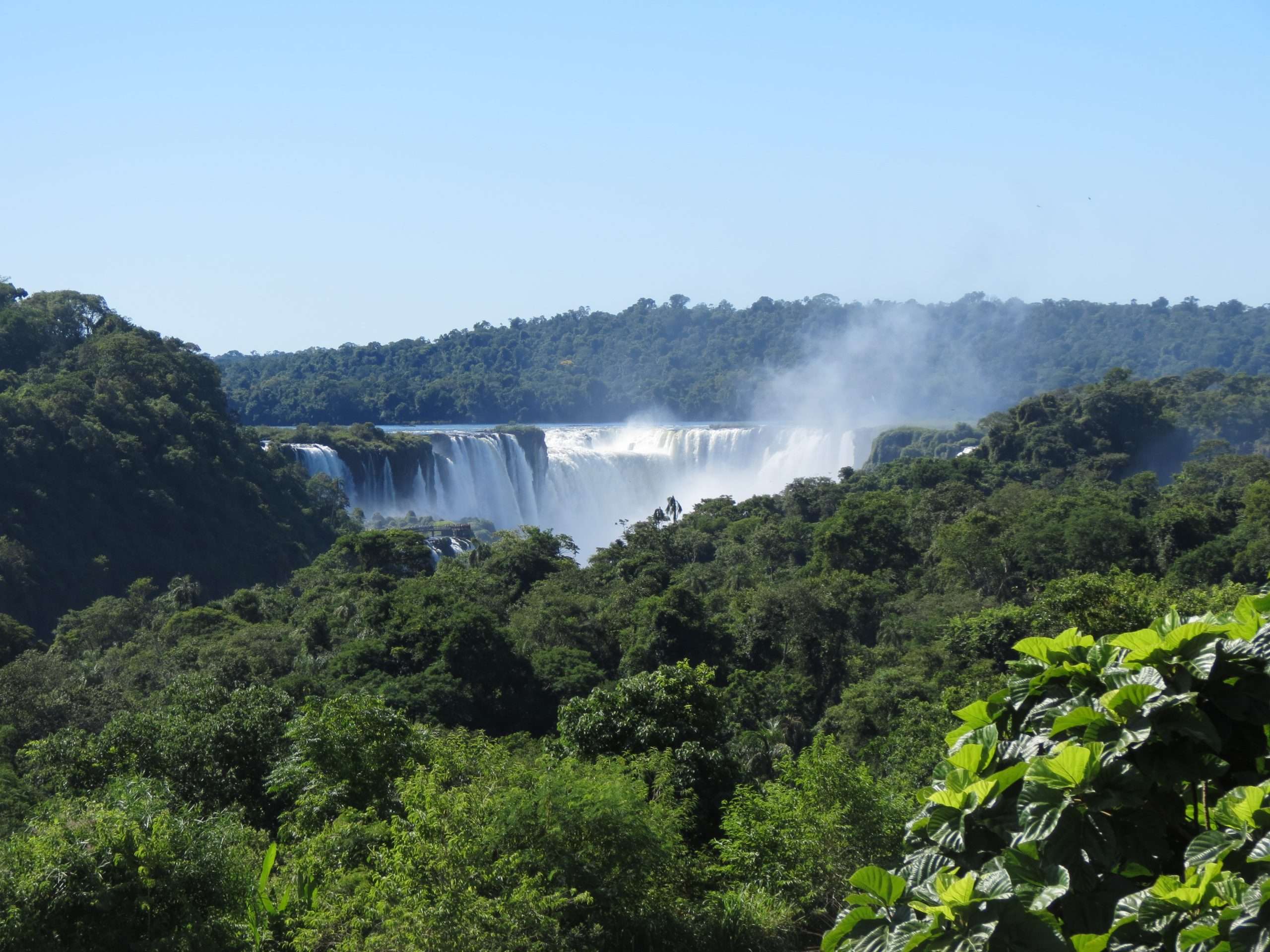
In the evening, we took a short walk and came across a whole colony of coatis. For dinner, we ate at a restaurant named after Garganta del Diablo (Devil’s Throat), the largest waterfall in the park, and enjoyed surubí, a delicious white fish from the Guaraní River. We also learned that Juanita is Brazilian and speaks four languages: English, Spanish, Portuguese, and French.
Brazilian Iguazú Falls – January 2, 2012
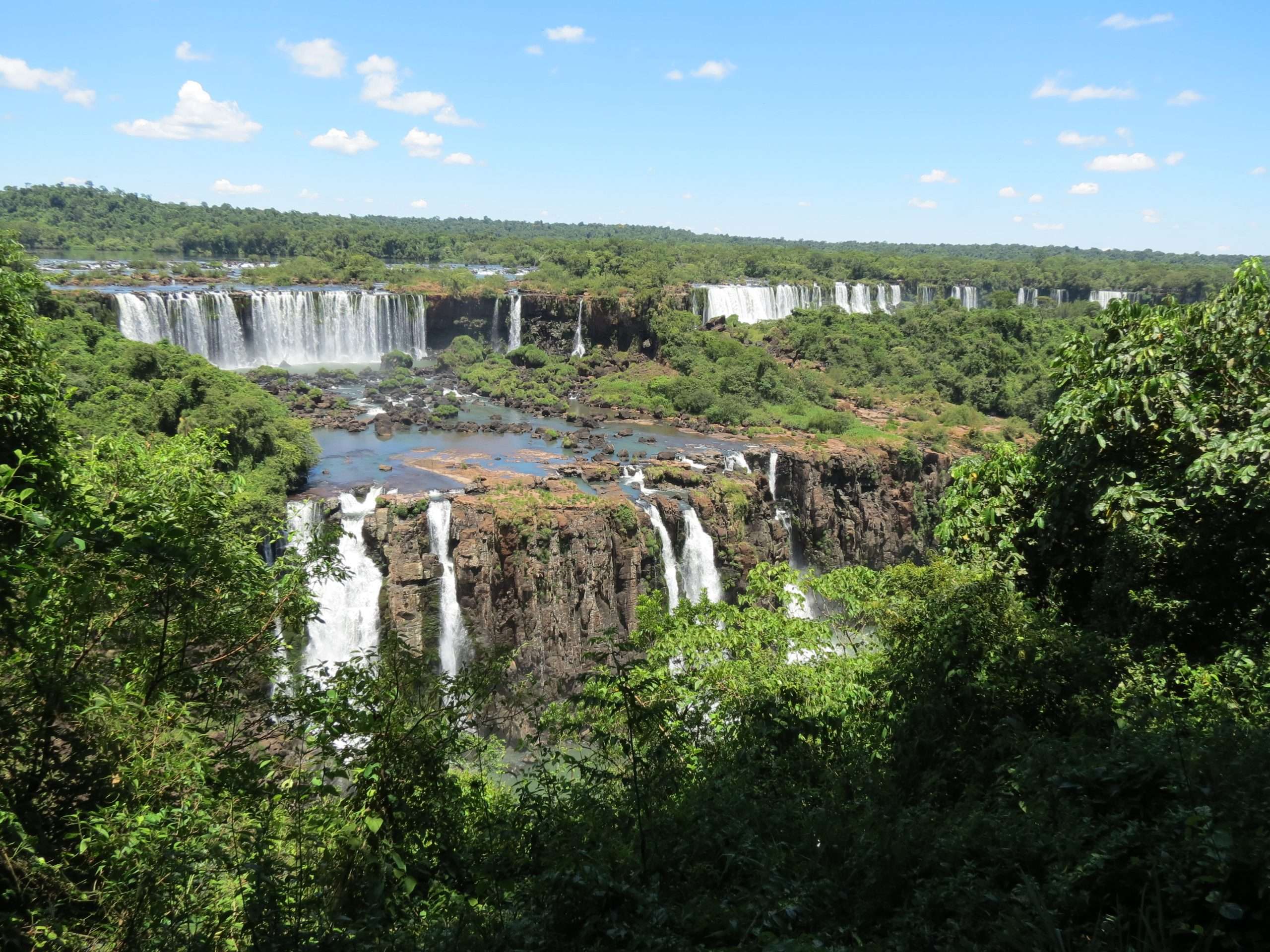
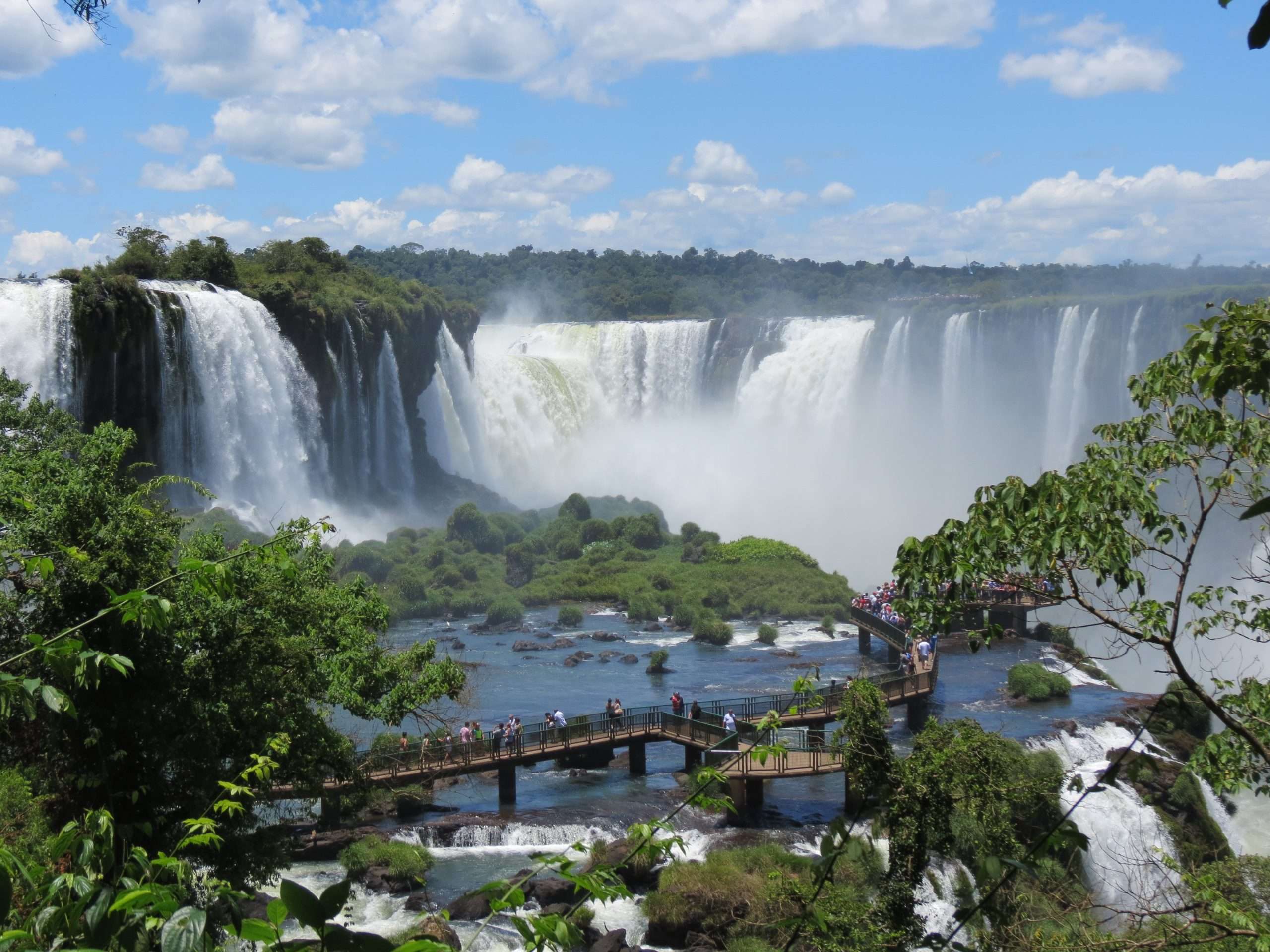
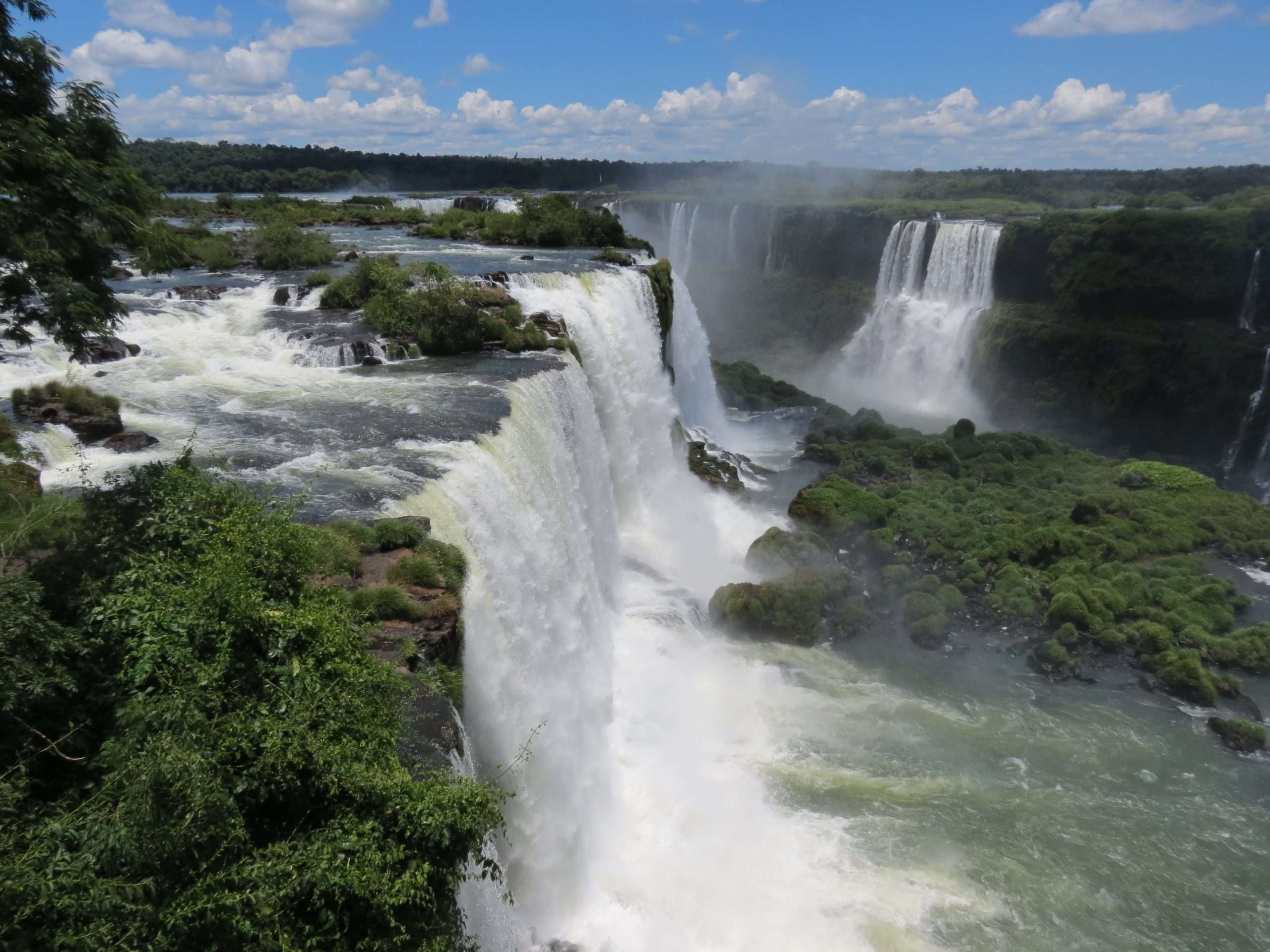
We visited the Brazilian side of Iguazú today, and our guide pointed out an interesting difference: while Argentina has most of the falls, Brazil offers the best views—and she wasn’t exaggerating. The panoramic view was absolutely stunning, with the waterfall visible for over a mile.
There are also practical differences between the two sides. In Argentina, you take a train with three short stops and walk quite a bit, mostly under the sun. On the Brazilian side, you ride a double-decker bus for a longer journey, followed by a shorter, mostly shaded walk that brings you very close to the falls. There’s also an elevator to take you back up. Wildlife is more abundant on the Argentine side. Both the Argentine and Brazilian sides of Iguazú Falls are UNESCO World Heritage Sites and absolutely worth visiting.
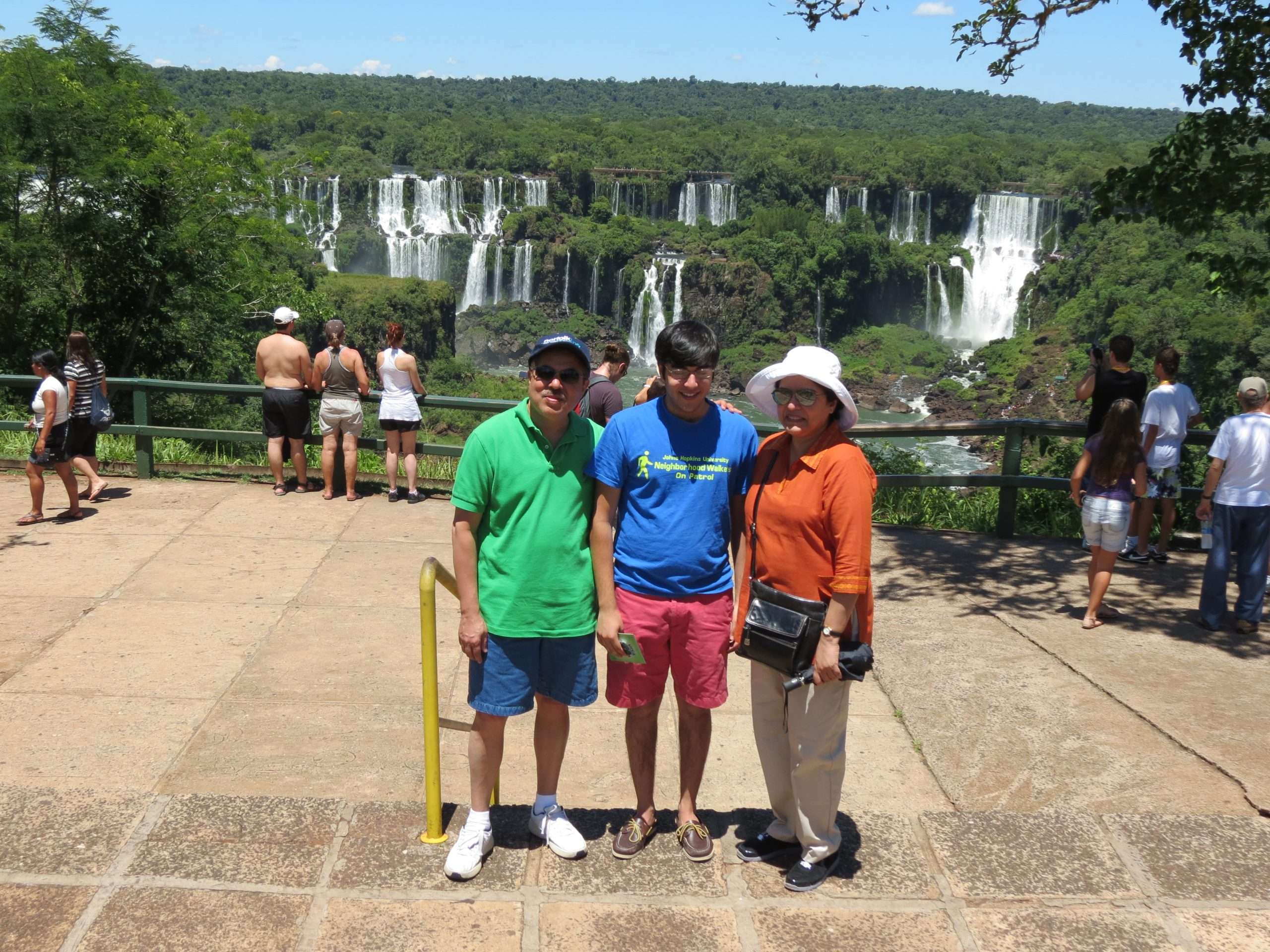
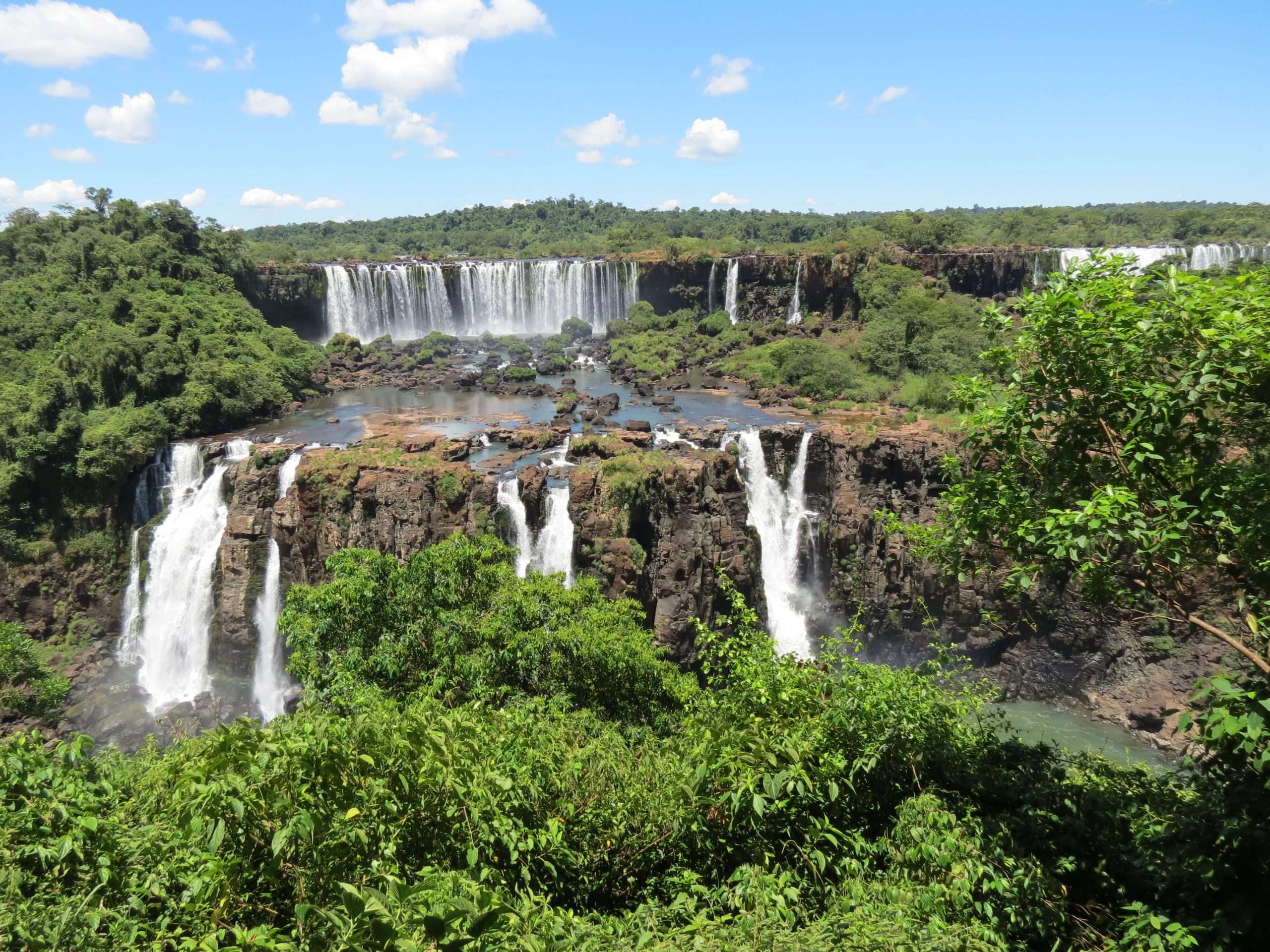
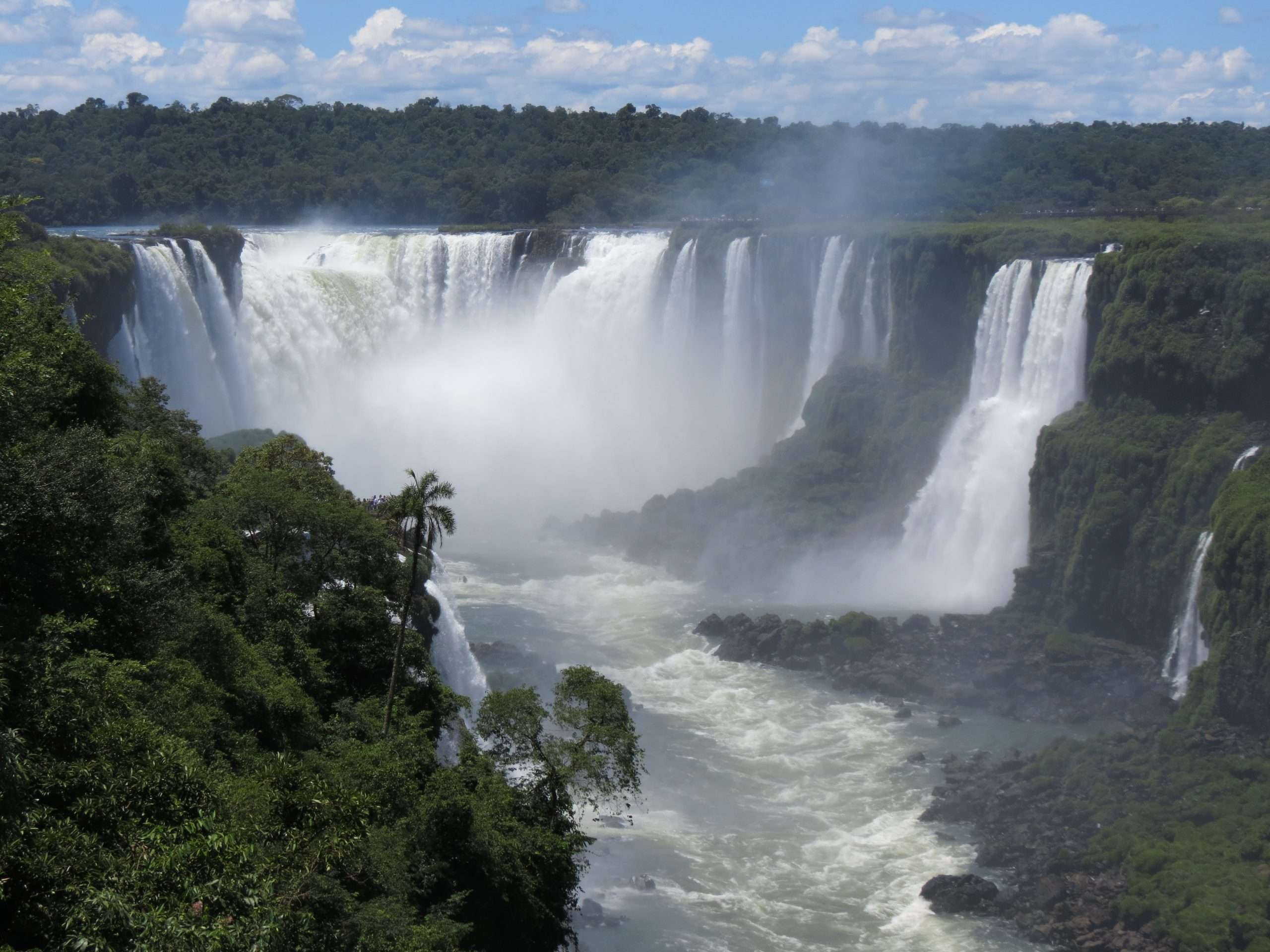
In the afternoon, we flew from Foz do Iguaçu Airport to Rio de Janeiro. Upon arrival, our guide and driver met us and took us to the Windsor Atlantica Hotel, where we’ll stay for the next four nights.
A Day in Rio de Janeiro – January 3, 2012
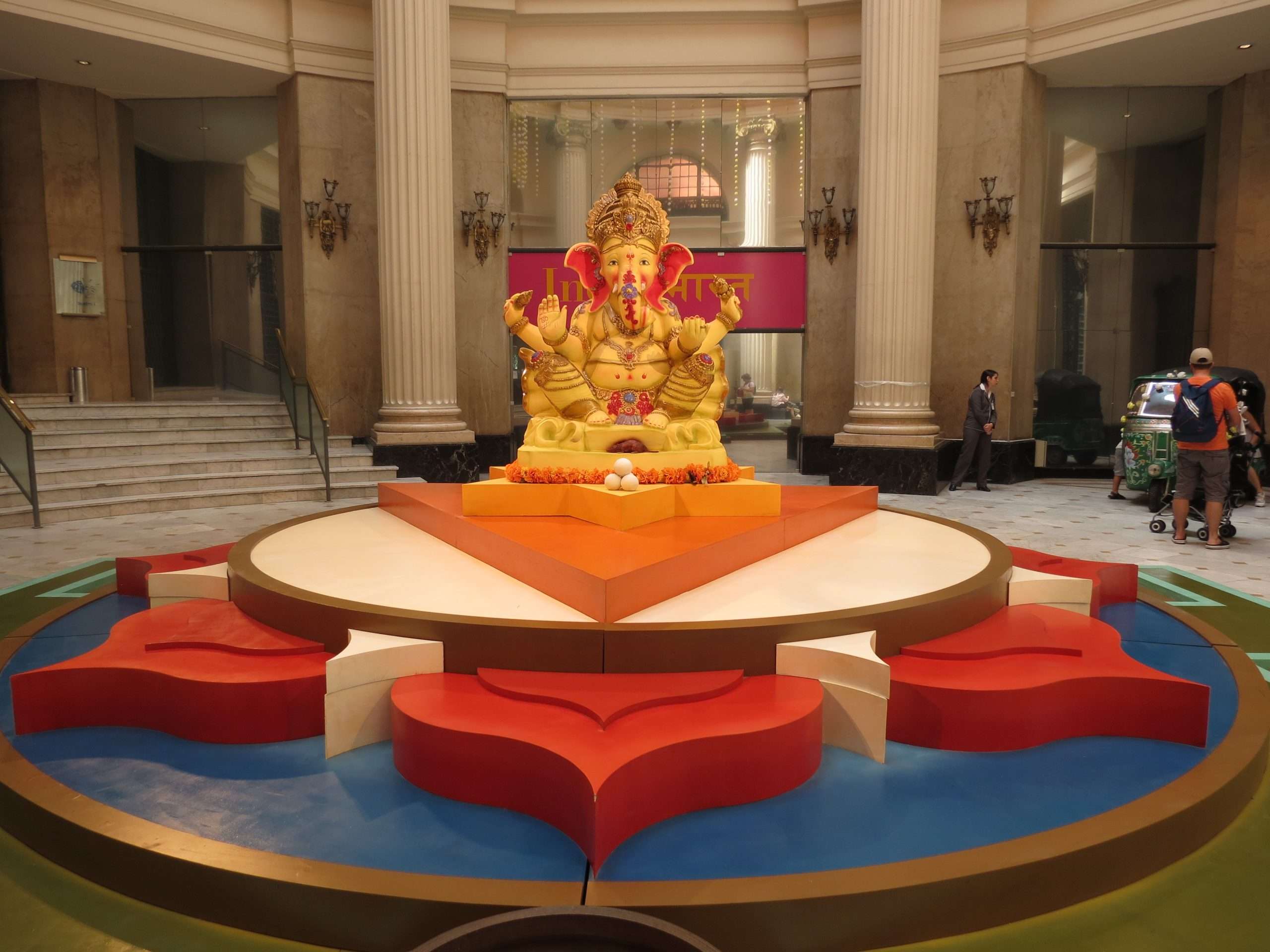
We went downtown to visit the Candelaria, a historic church. We noticed many churches close to one another, all quite ornate but dark, and most could benefit from restoration. After Candelaria, we visited a Cultural Center where we saw an exhibition titled India – Side by Side. It featured many interesting displays, especially artwork, though it wasn’t really to our taste. In the same building, we found a fascinating exhibit on coins, banknotes, and the promises of a bank.

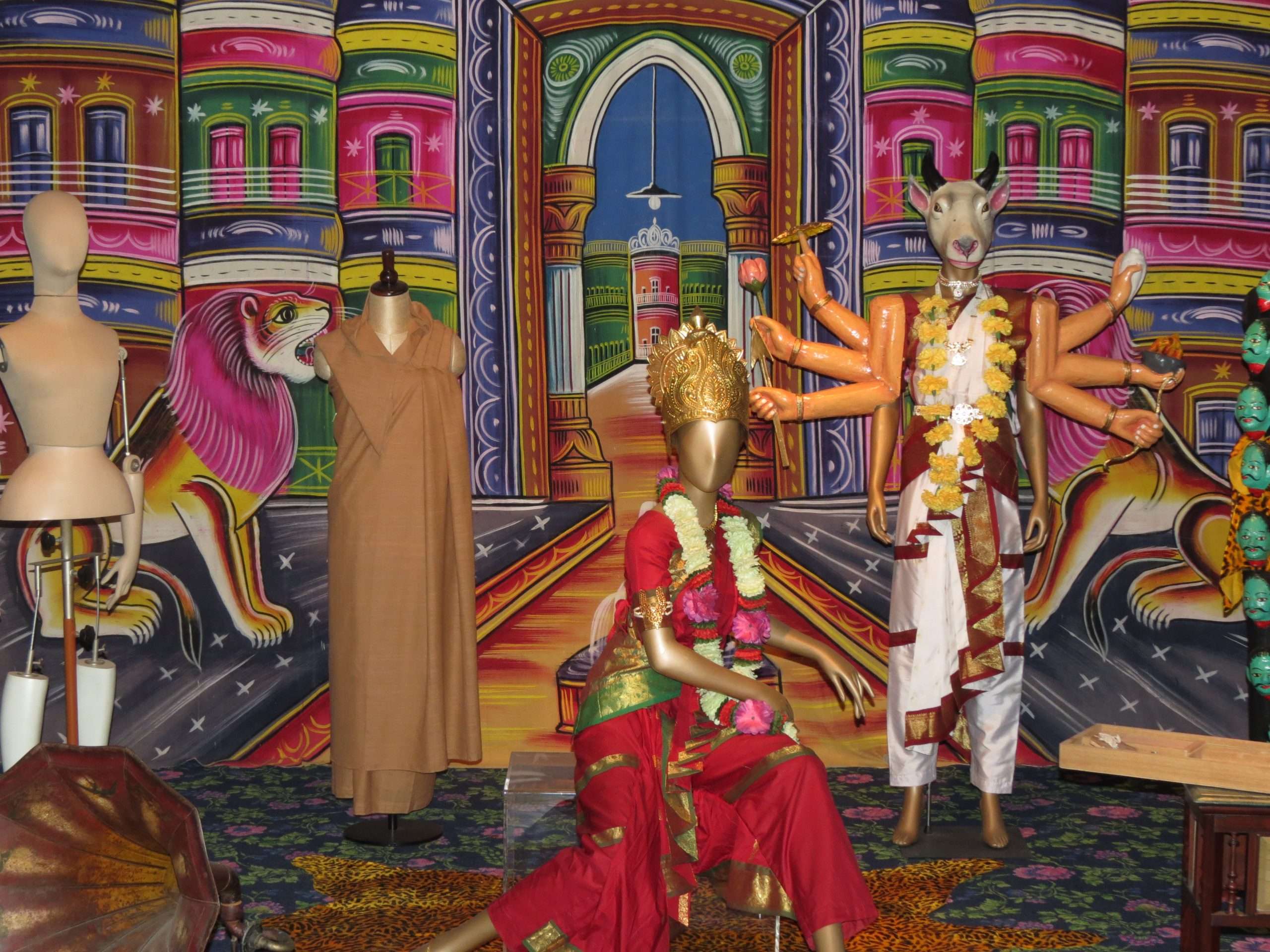
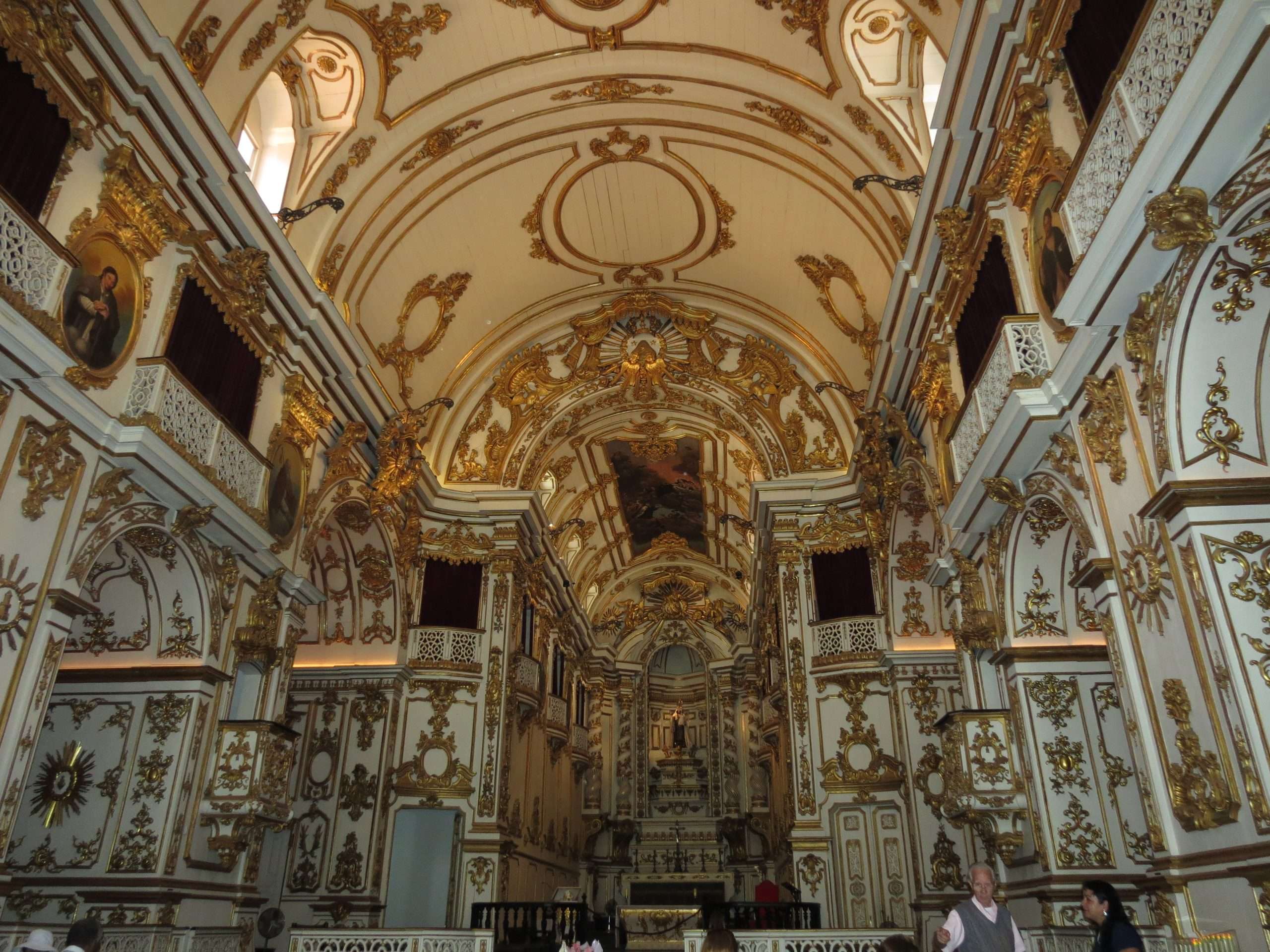
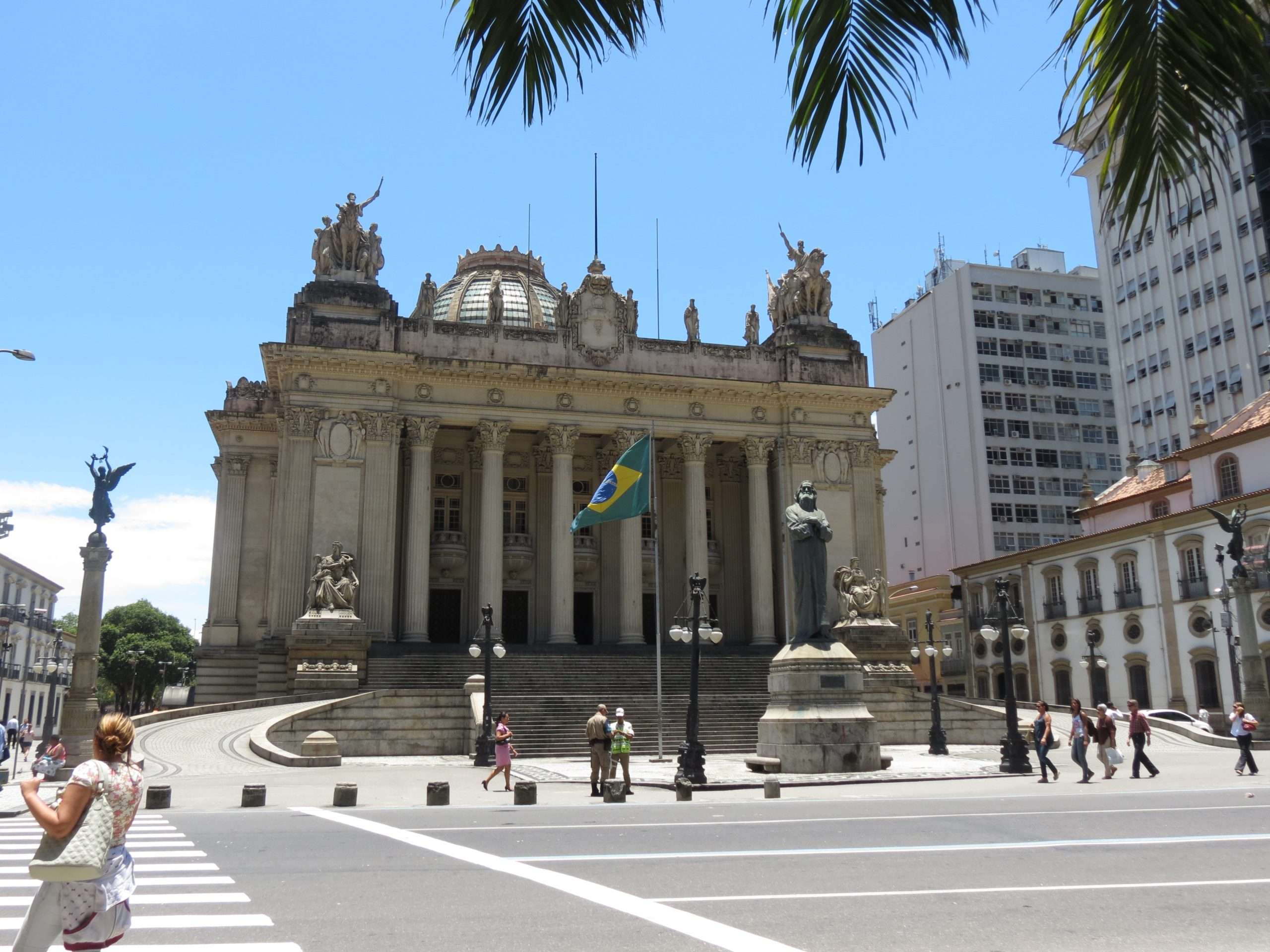
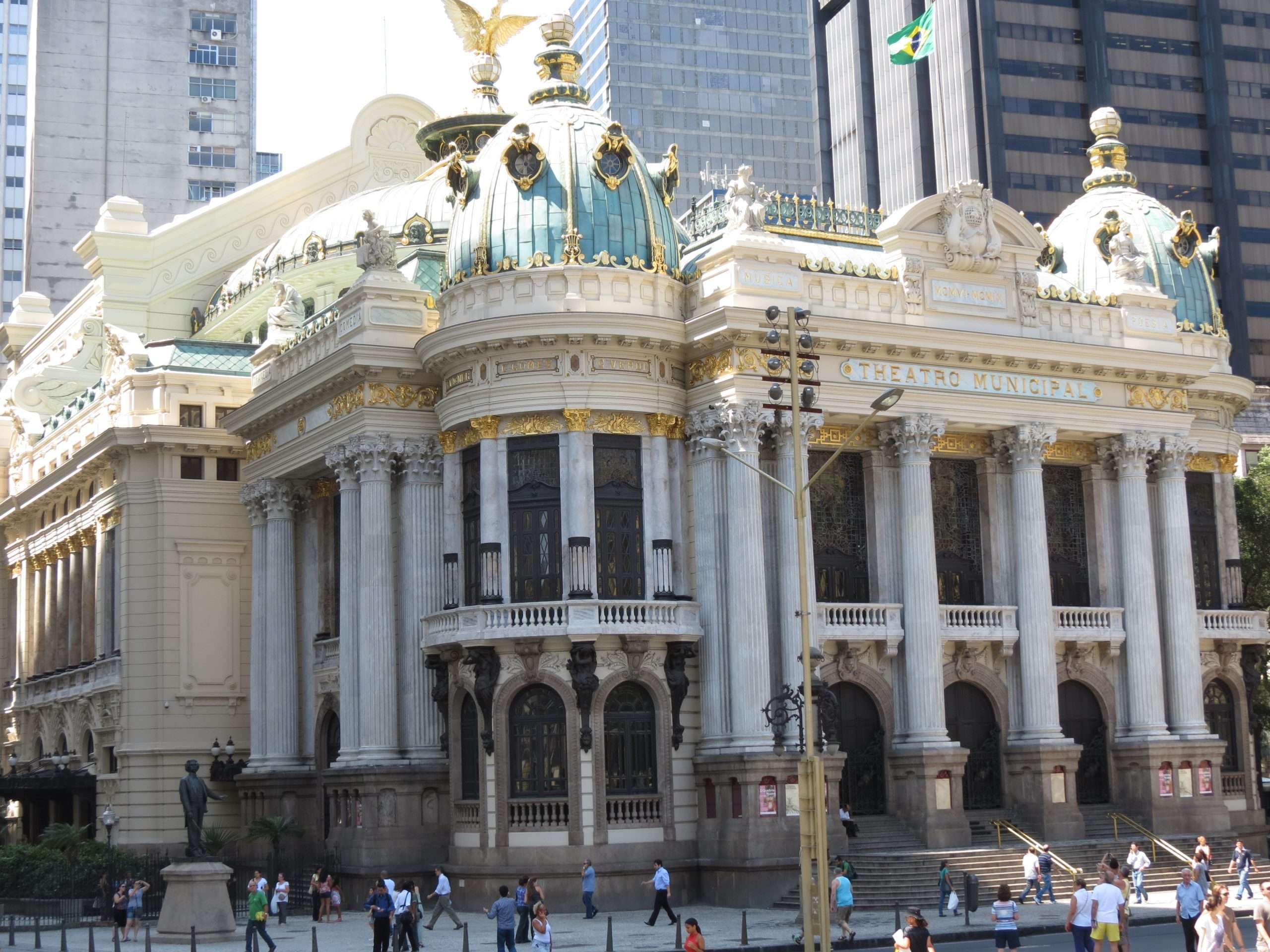
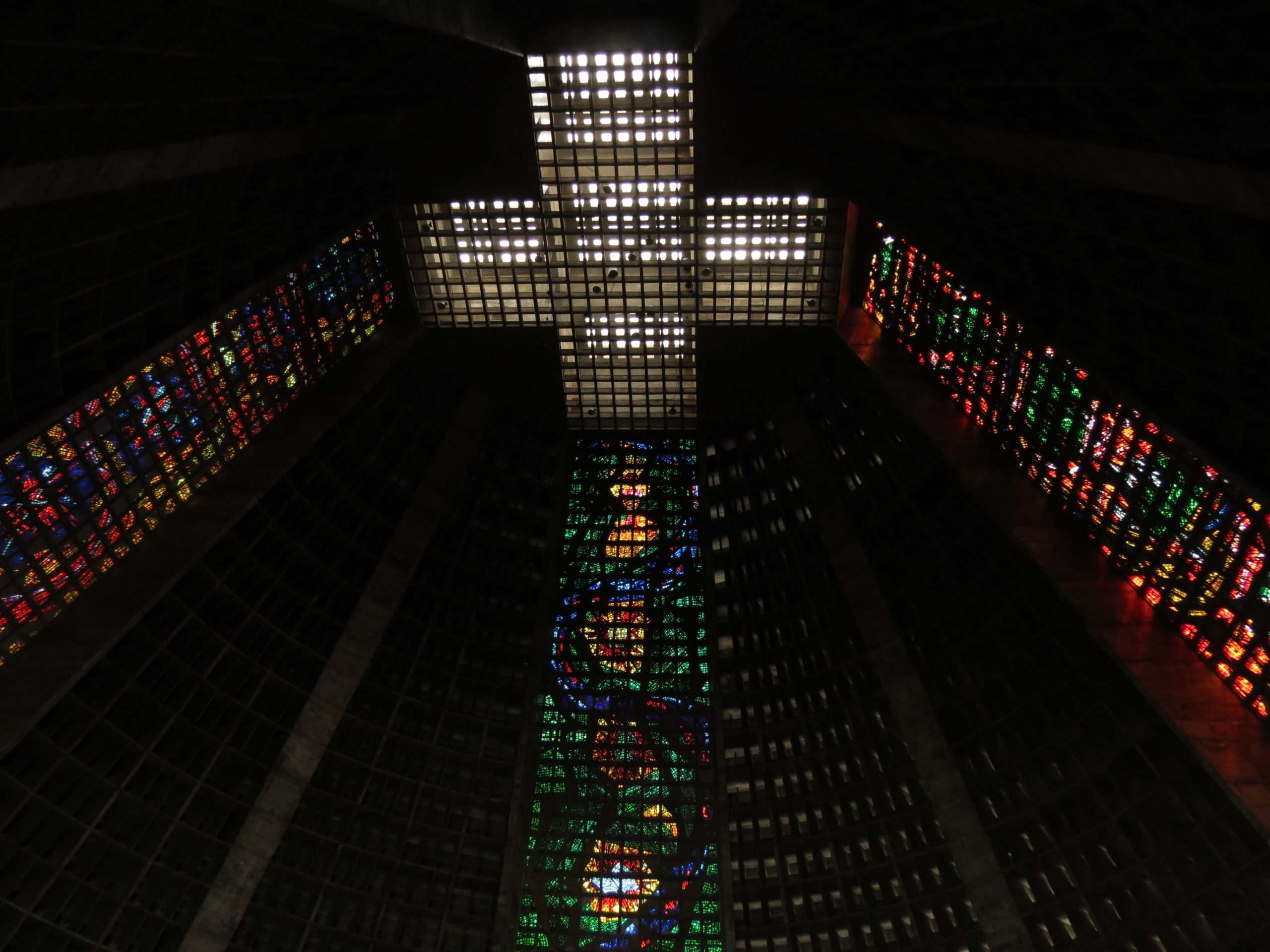
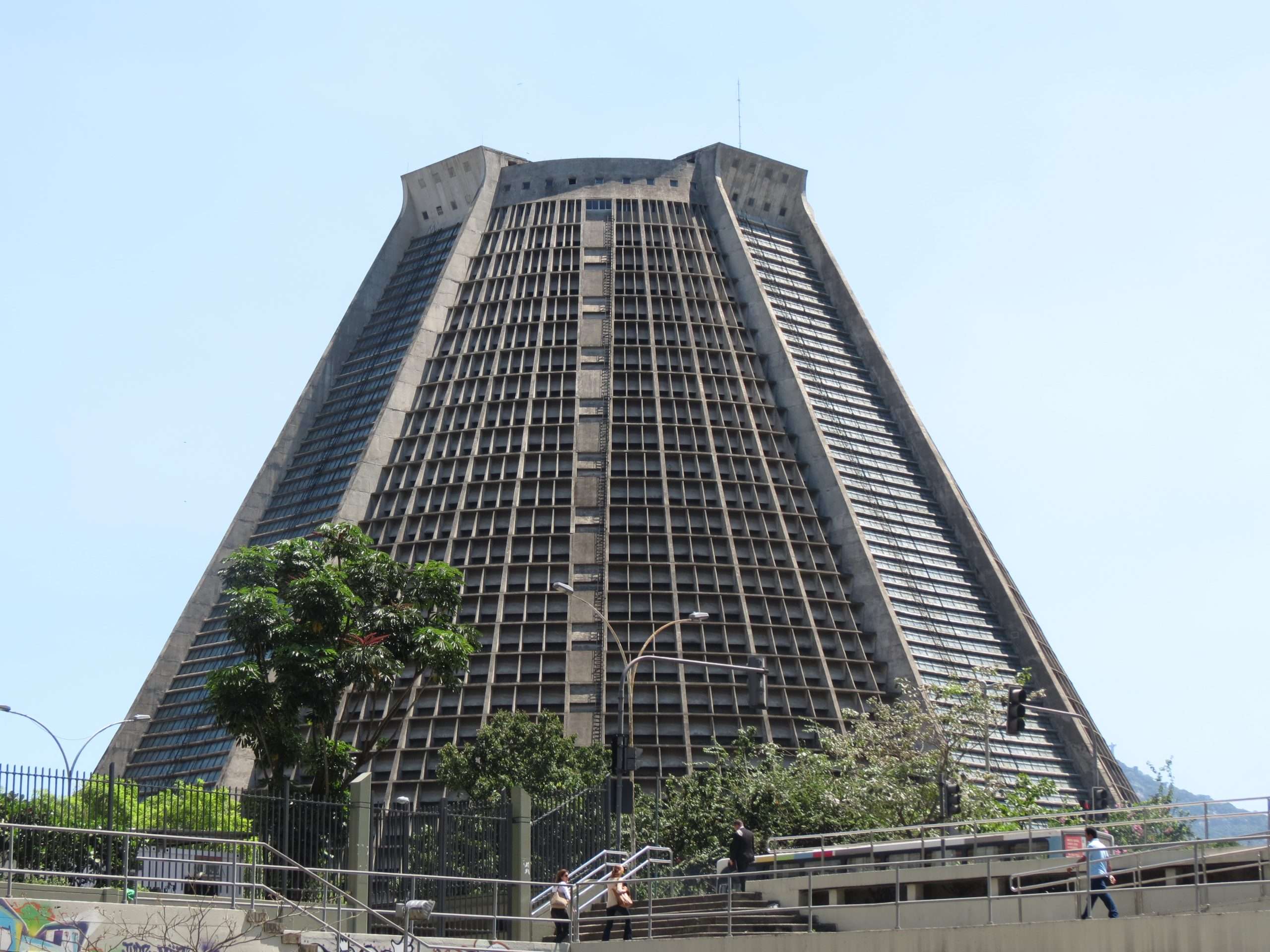
We had lunch at a charming French bistro, then visited the Metropolitan Cathedral, an ultra-modern, cone-shaped building. Oddly enough, it’s the only downtown church that really stood out.

Afterward, we tried to visit the library, but English tours were only at 1:00 PM and required passports. We also missed the art gallery (no shorts allowed) and the municipal theater tour.
Christ the Redeemer and The Tijuca Forest – January 4, 2012
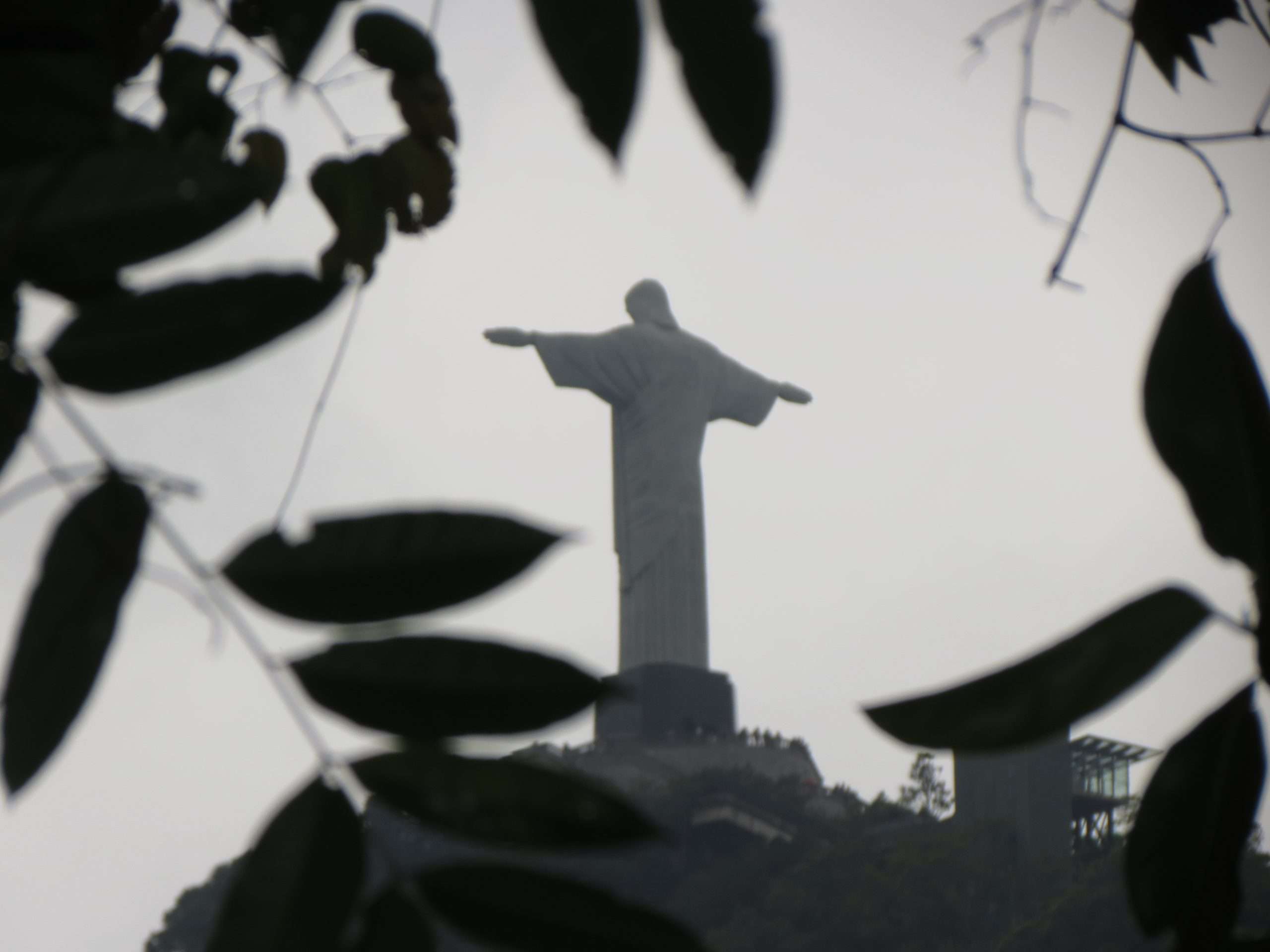
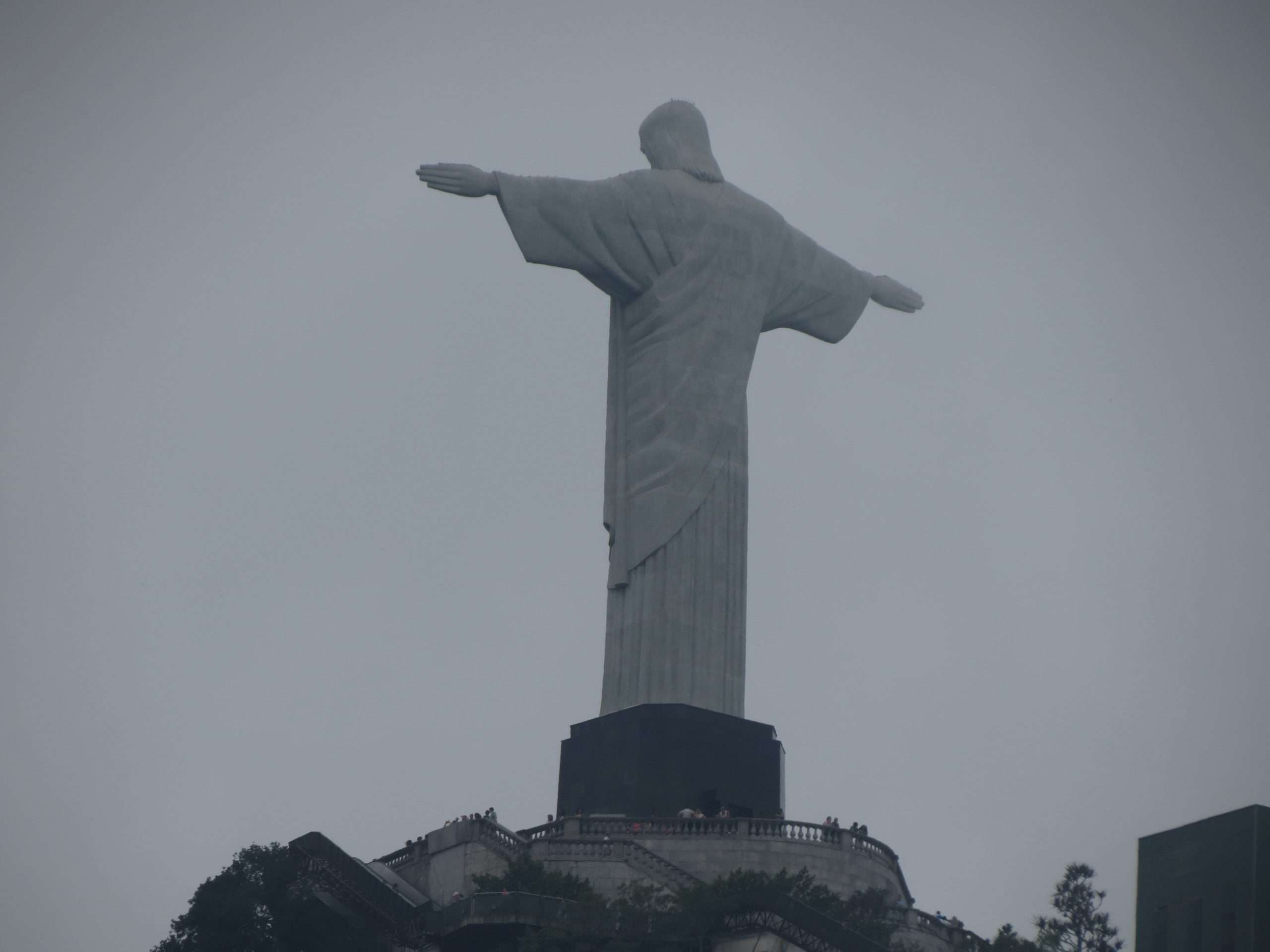
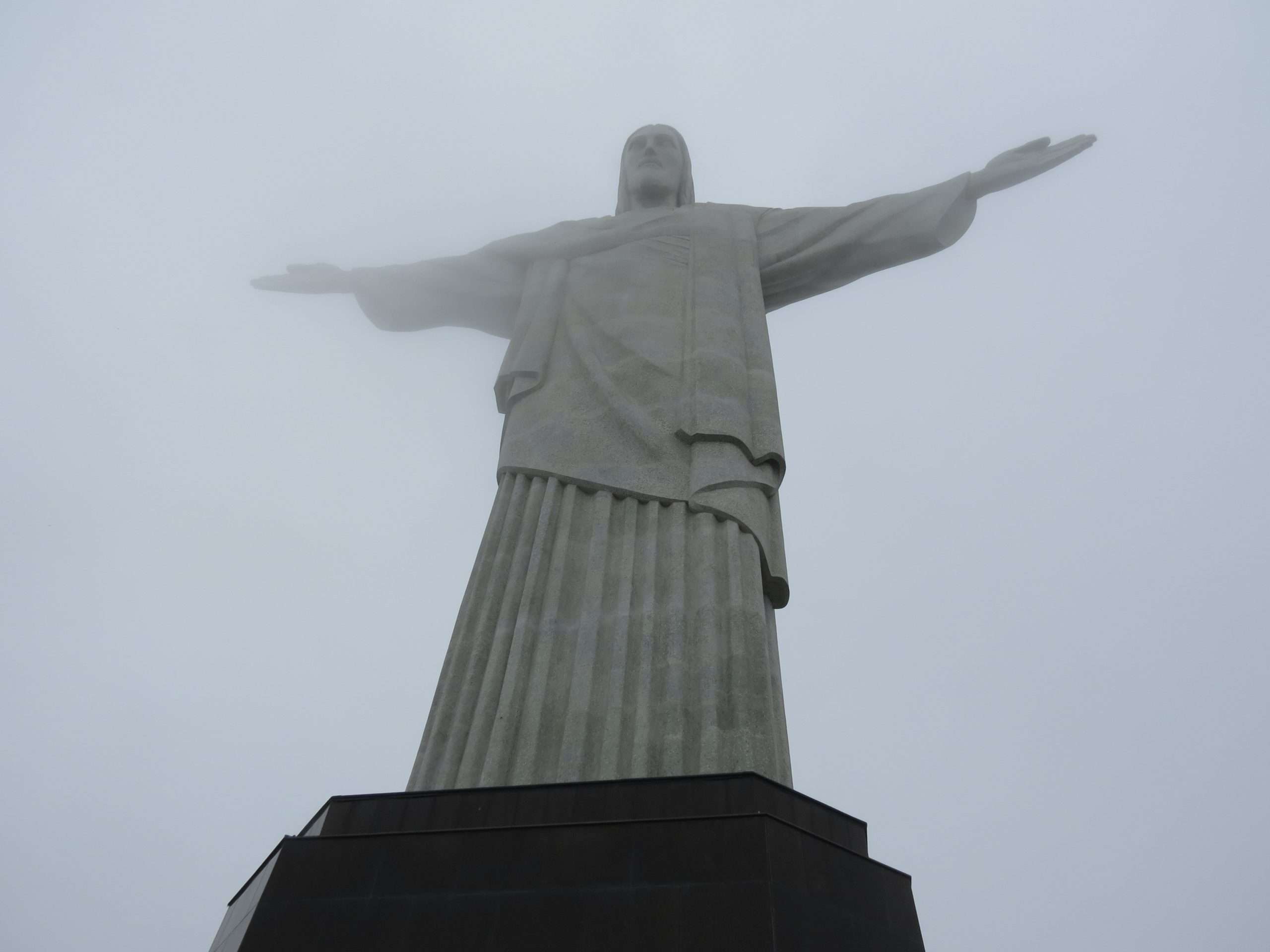
Today, we visited Corcovado (Hunchback Mountain) to see the iconic Christ the Redeemer statue, one of the Seven Wonders of the World. It was an awe-inspiring sight, and despite the fog, we were fortunate enough to catch a glimpse of Christ’s face. The journey up the mountain was a bit of a challenge.
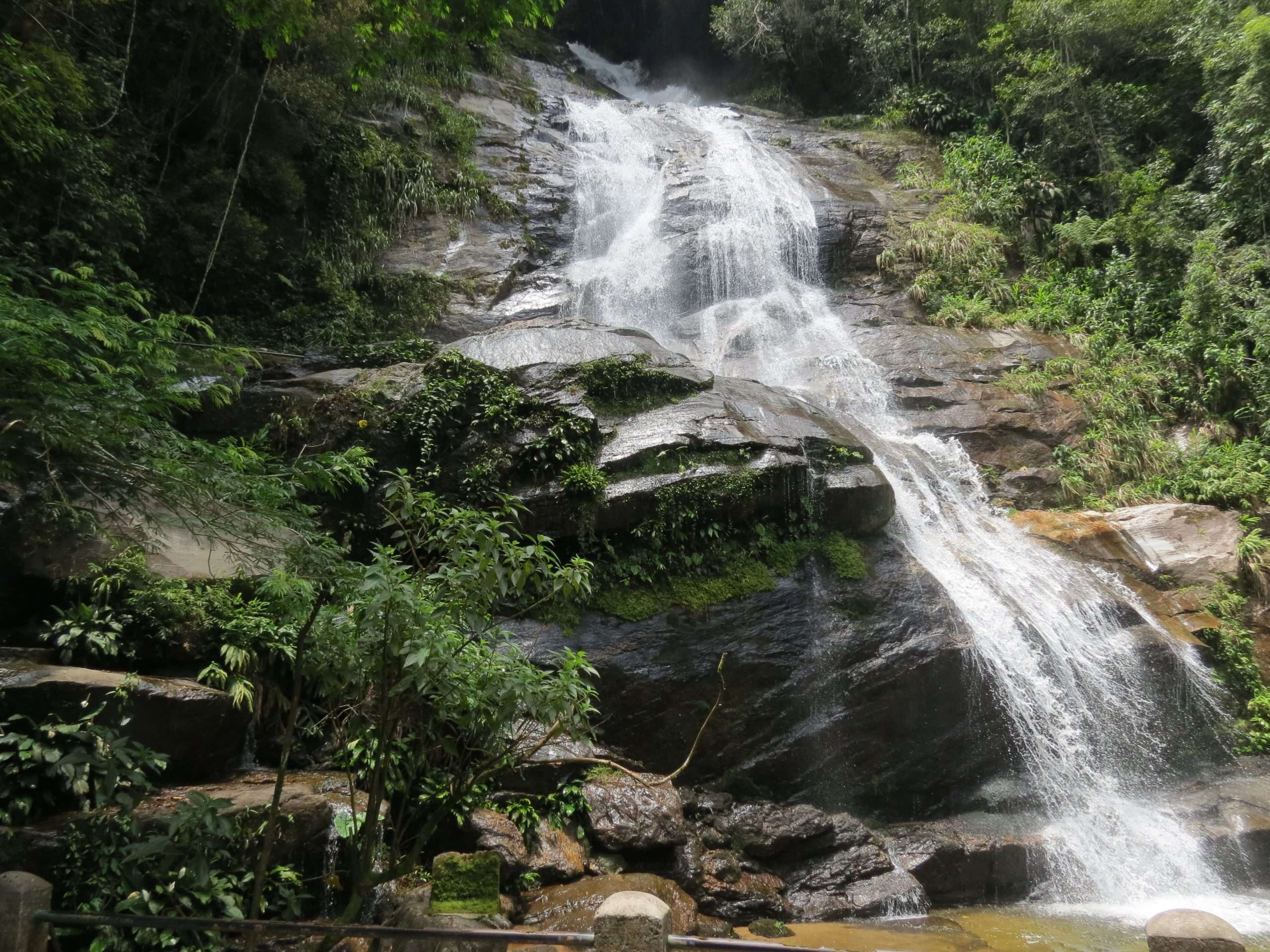
Afterward, we explored the Tijuca Forest and saw the Cascatinha Taunay Waterfall. Taunay, a French artist, once owned the land, but his house no longer remains. We strolled through the forest, stopping at Vista Chinesa, a concrete structure designed to resemble bamboo with dragon heads on top. The view from there was breathtaking. On the way back, we passed Monkey’s Waterfall before returning to the hotel.
As for Christ the Redeemer, while it’s impressive, it didn’t quite measure up to the grandeur of the Taj Mahal. There seems to be room for better crowd and traffic management. Mornings often bring fog that obscures the statue, so a late afternoon visit might be ideal—though the crowds could be an issue then.
Sugarloaf Mountain & Beaches – January 5, 2012
We began with a visit to Sugarloaf Mountain, but the views were mostly blocked by fog. Shortly after joining the queue, the cable cars paused for maintenance, which took about 30 minutes. The ride to the top lasted around 3 minutes, and we spent about 25 minutes at the peak.
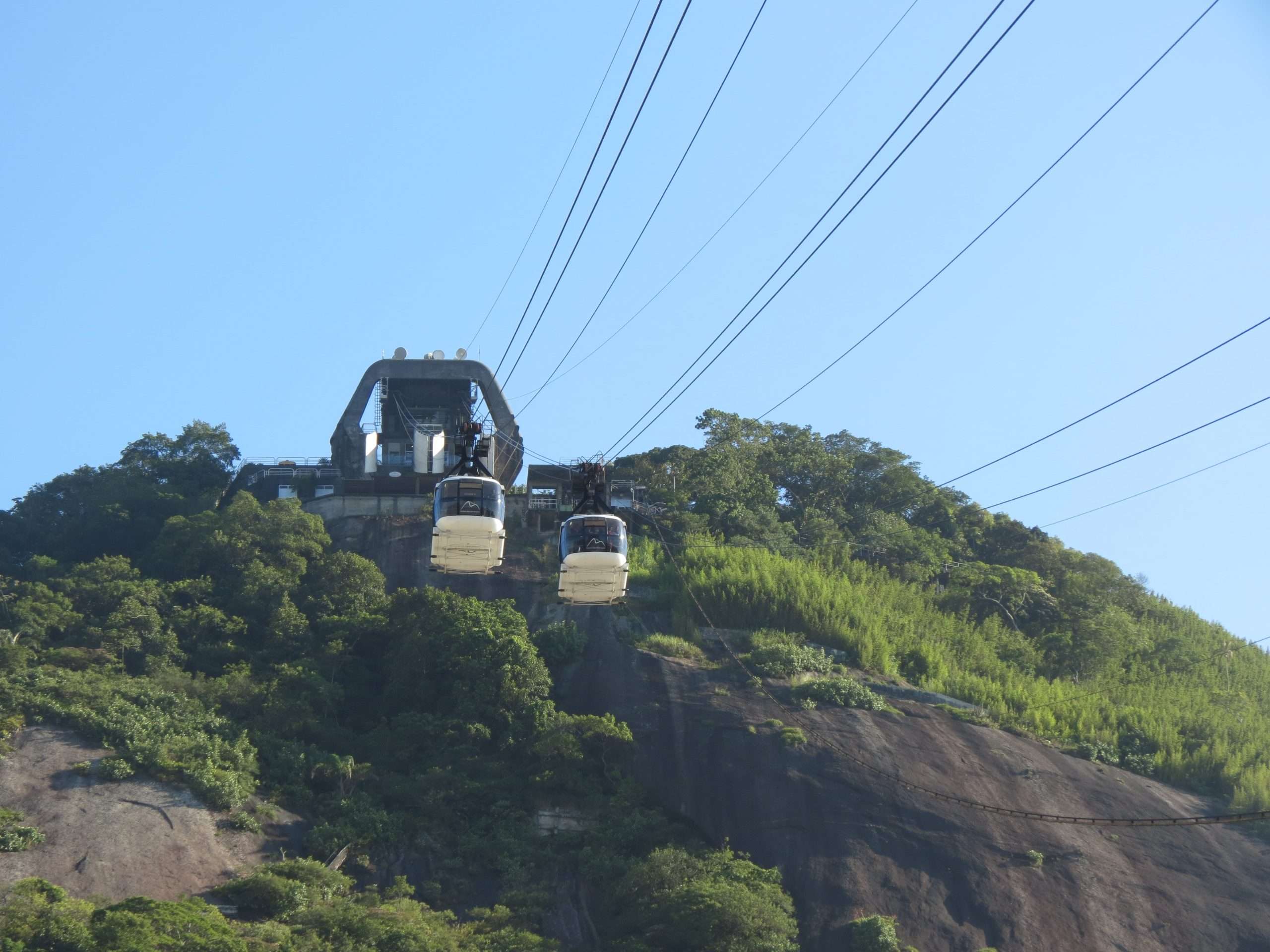

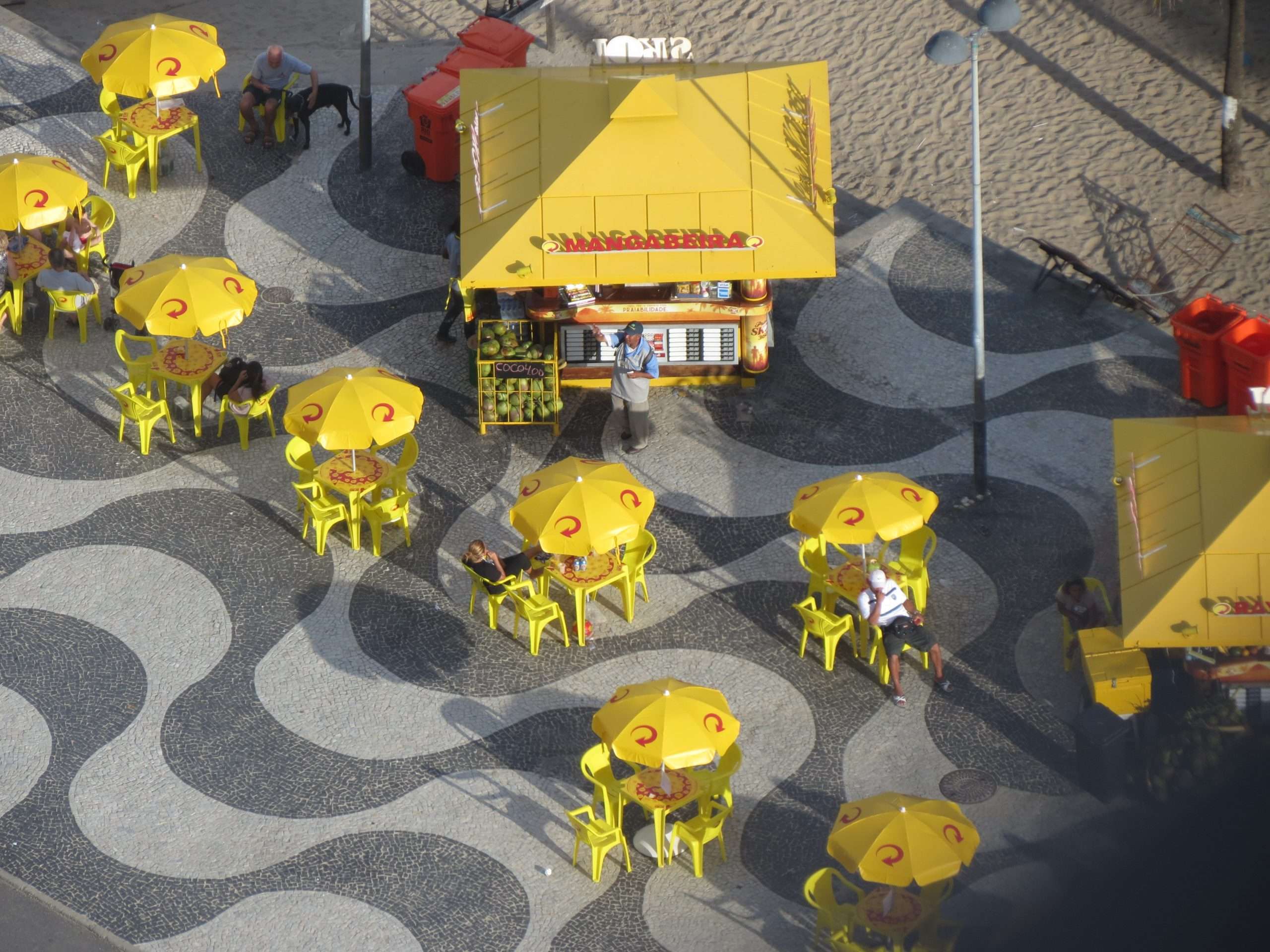
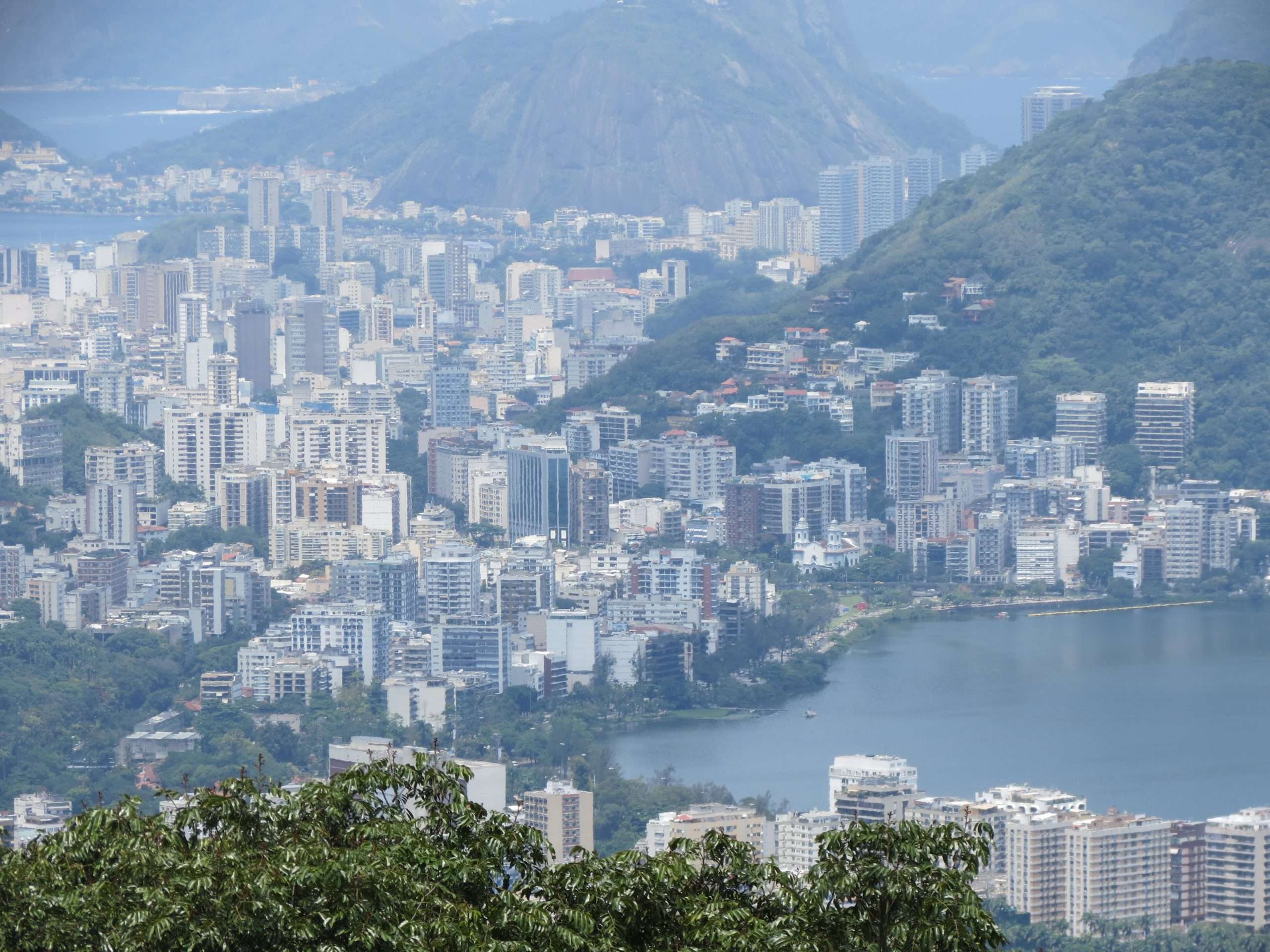
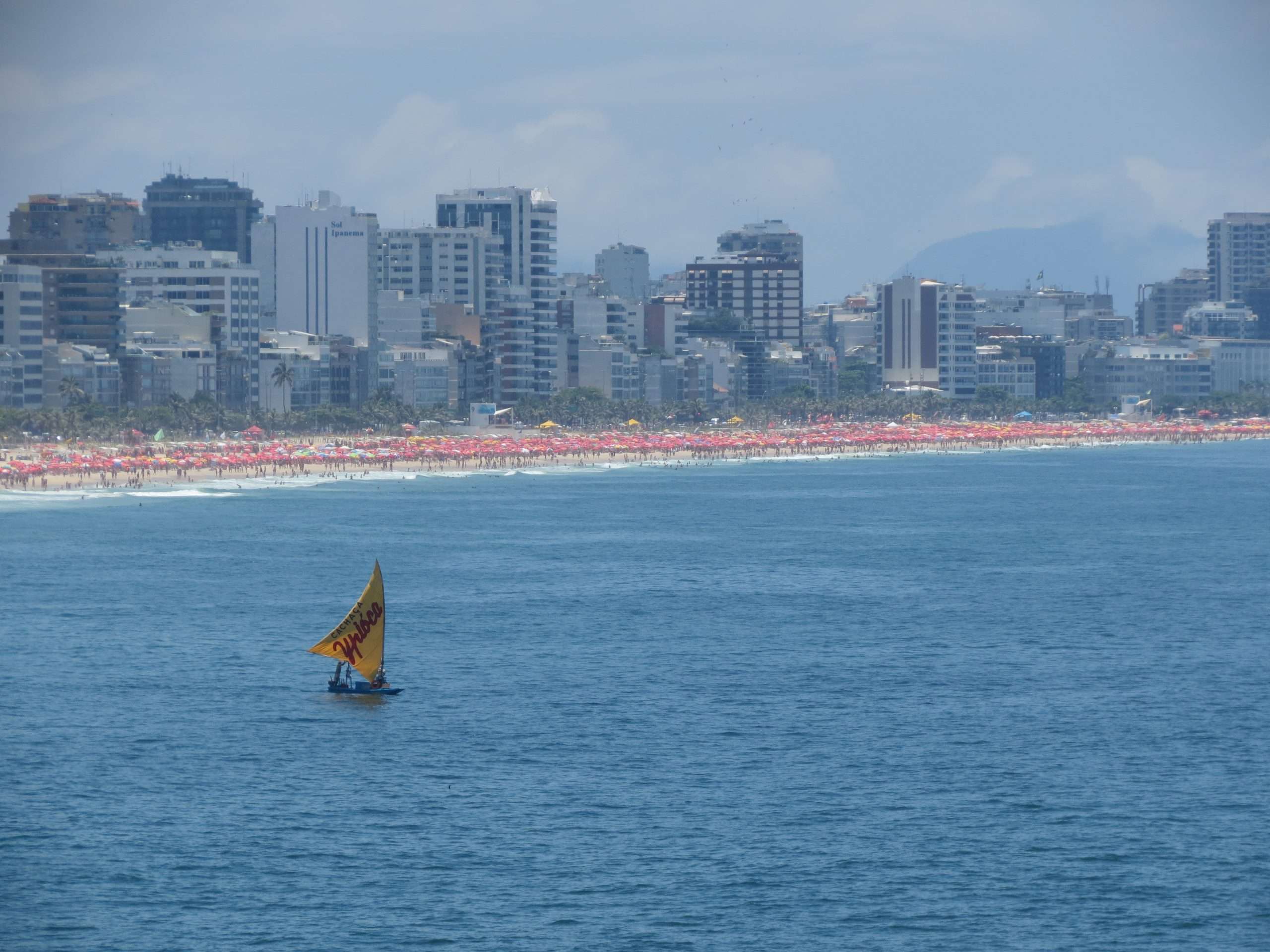
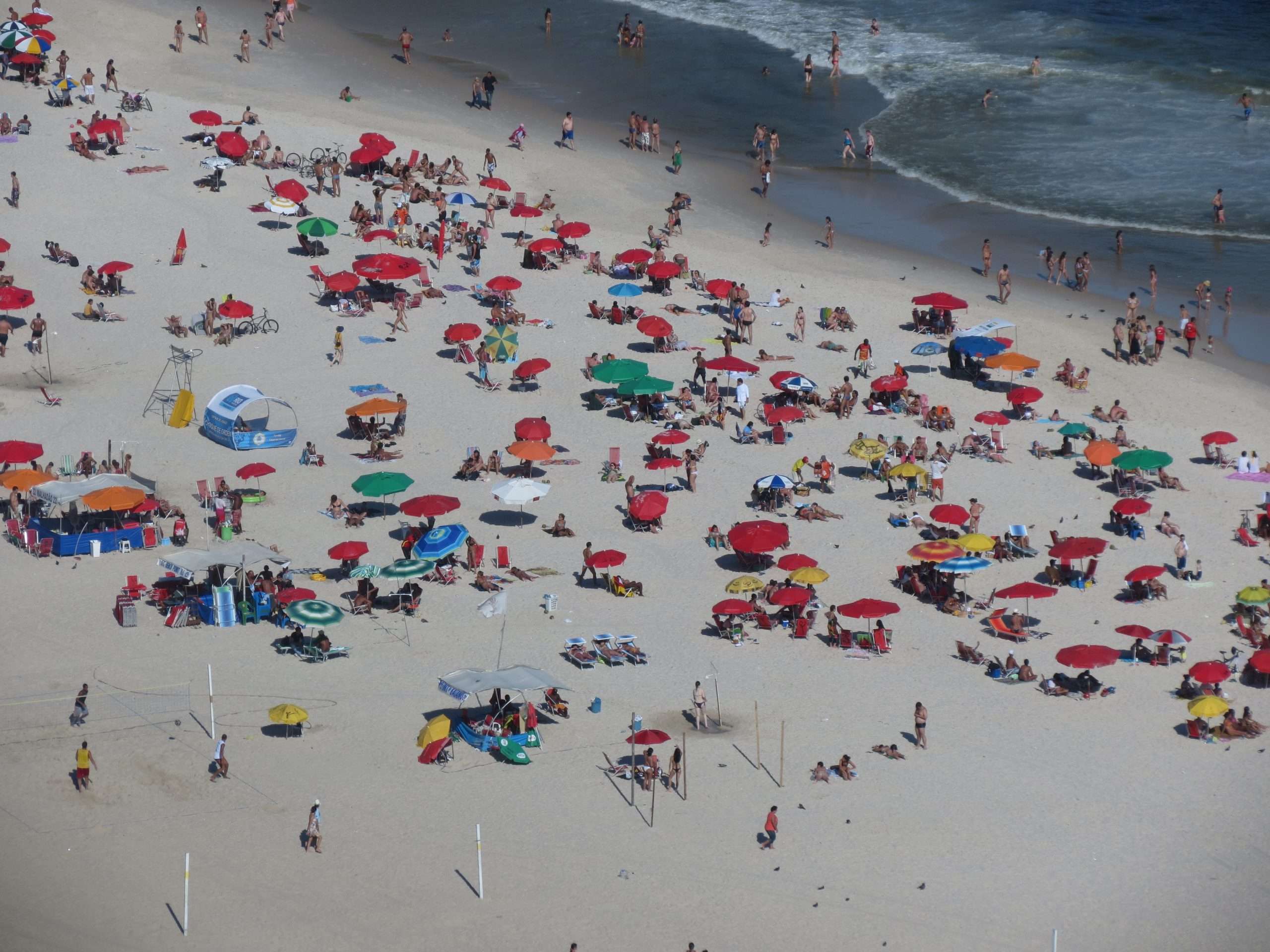
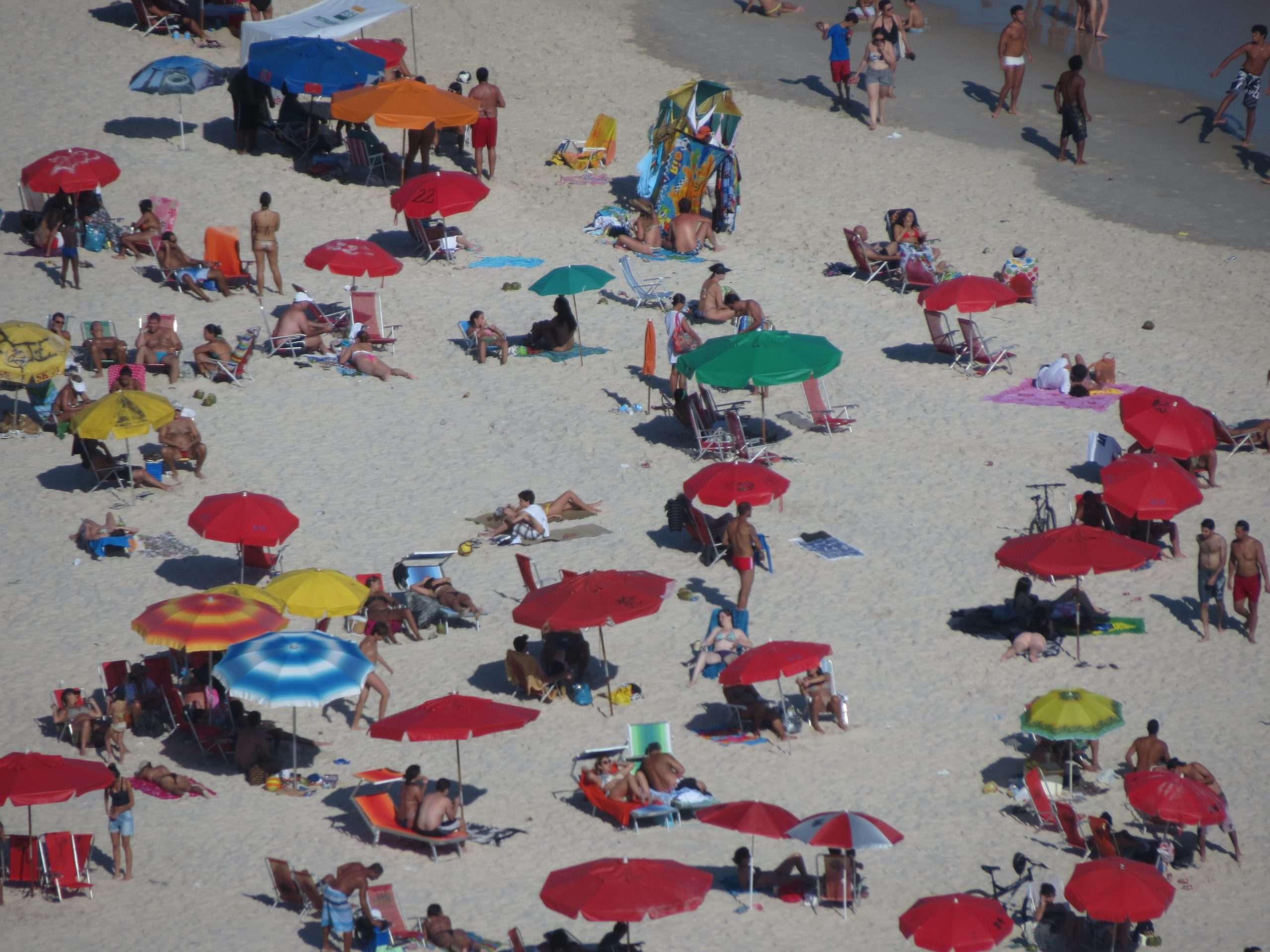
Next, we visited the São Bento Monastery, a Benedictine church from the 1600s. It’s stunning, though in need of restoration. Afterward, we explored several beaches, including Leblon, Ipanema, Praia Vermelha, and the Urca district.

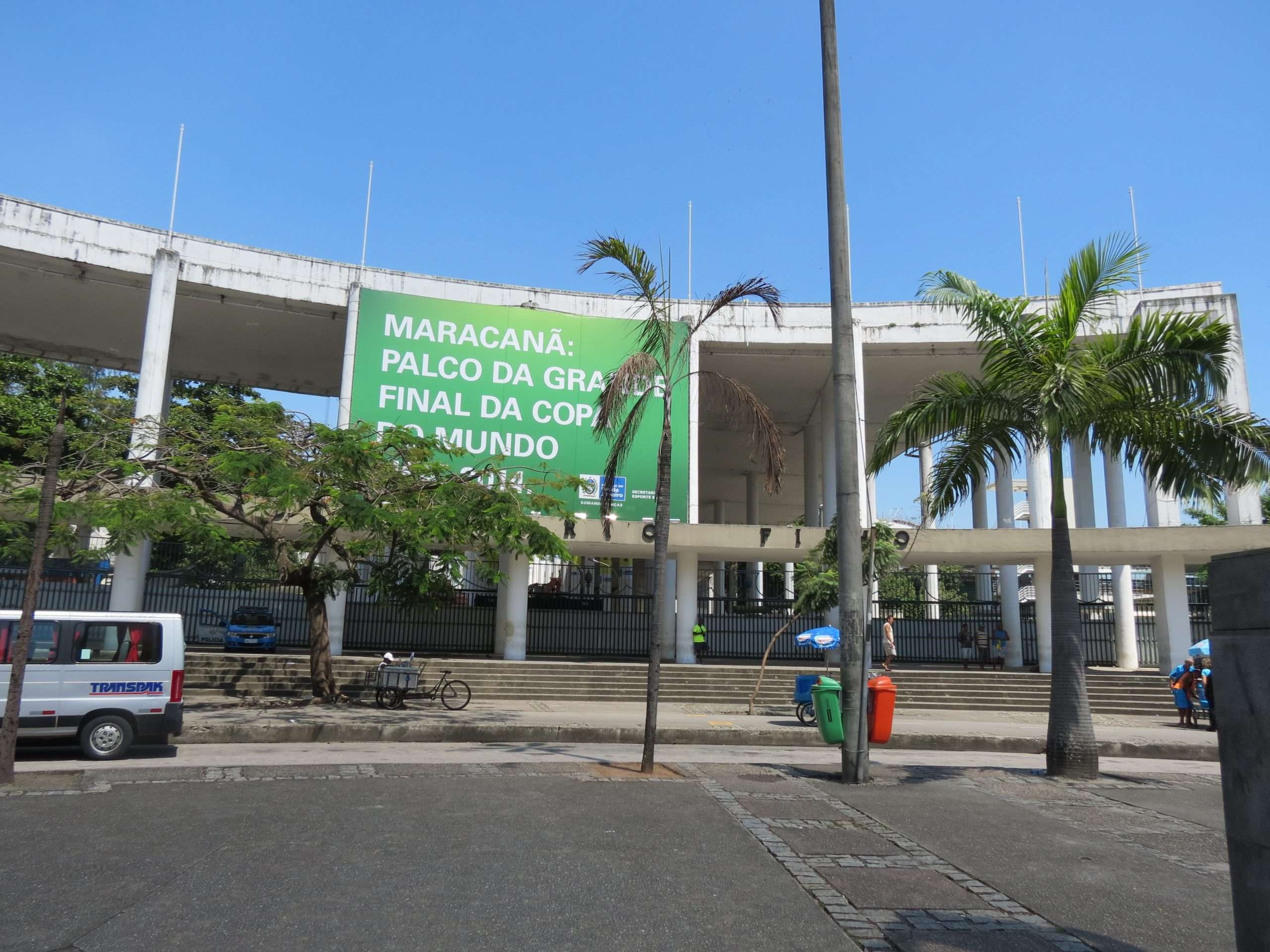
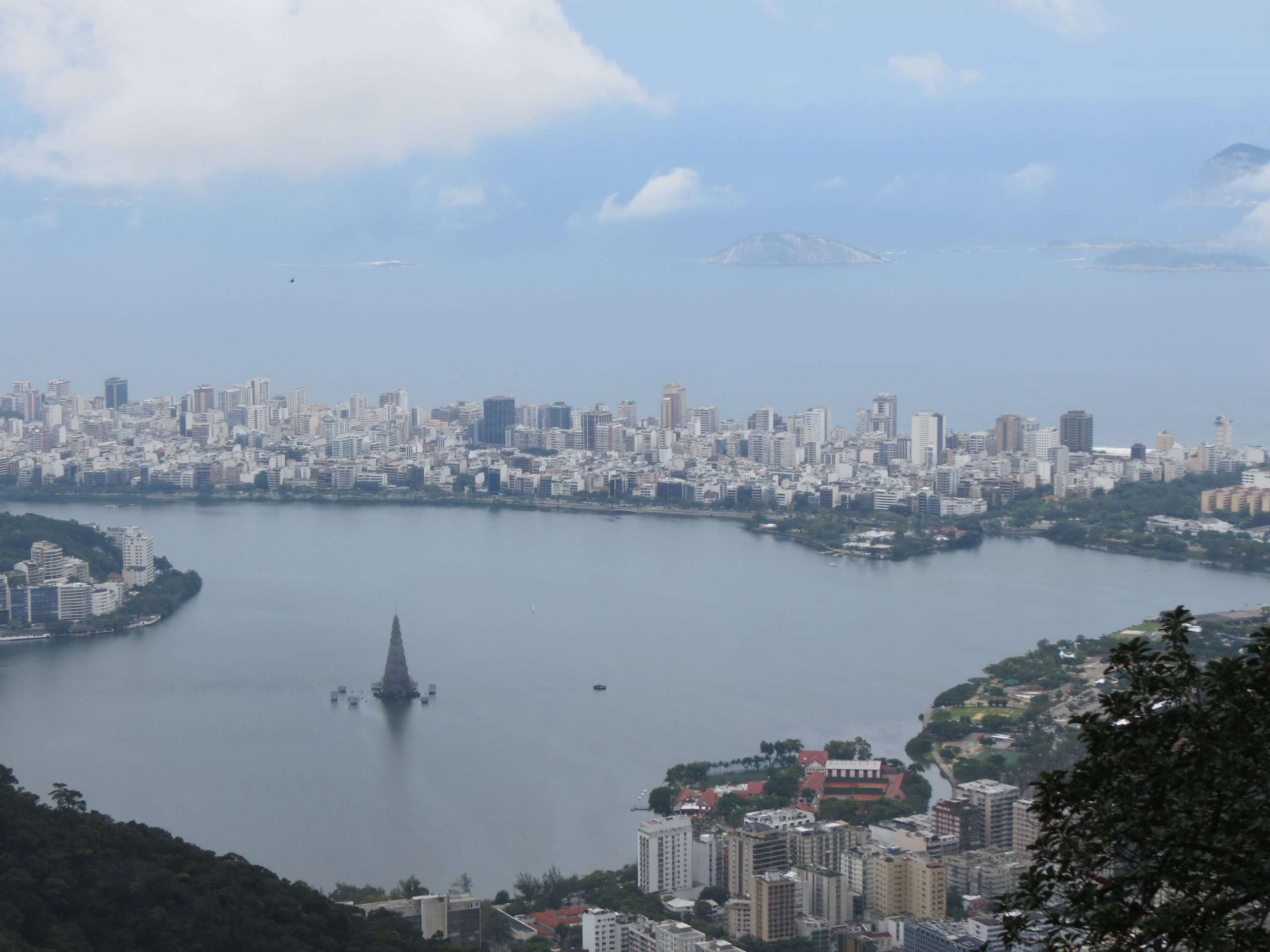
We then visited the neighborhood famous for its samba schools, where the Carnival parades take place. Following this, we made a stop at Maracanã Stadium, the venue for the 2014 World Cup. Finally, we passed through Flamengo Park, circled Rodrigo de Freitas Lagoon, and drove through the tunnel under Corcovado Mountain.
Last Day in Rio – January 6, 2012
Our last day in Rio was wonderful. Breakfast at the Windsor Atlantica was incredible, featuring a variety of Brazilian snacks and delicious papayas. We also visited a local grocery store where we bought custard apples and guavas—the custard apples were the best we’ve ever had.
In the evening, we headed to the airport for our flight home. The traffic was so heavy that we arrived at the airport late. Fortunately, our flight crew also encountered the same issue and arrived an hour after we did. All was well after that.