
This marks our fourth walking tour in Spain, following two Caminos and a walk through the picturesque Andalusian region over the past decade. While it may not encompass the entirety of the Camino leading to Santiago, our route retraces the ancient path along the Northern Coast, passing through the legendary Basque Country. We hope to discover this corner of the Iberian Peninsula and enjoy views of the sea on the right and the foothills of the Pyrenees to the left.
En Route to Bilbao – June 6, 2024
Flew Lufthansa to Munich and then on to Bilbao. The only notable event occurred in Munich, where all immigration officers left their cubicles to observe a one-minute silence in honor of a colleague who had passed away the previous week.
Initial Impressions of Bilbao – June 7, 2024
After checking into our hotel, we ventured out to explore the surroundings and get some dinner. We walked by bar after bar trying to decide where to eat. After going round in circles and watching all the little groups in huddles conversing animatedly, we ended up in a restaurant directly across from the hotel. The food was quite good. Our first impression of Bilbao was equally favorable. It appears to be a pleasant city with pedestrian-friendly sidewalks and a charming blend of historic elegance and contemporary architecture.
A Day Trip to Gaztelugatxe, Mundaka & Guernika – June 8, 2024
Arriving a couple of days before the start of our walking tour of the Basque Country, we decided to sign up for a day trip to explore interesting places on the outskirts of Bilbao.
This morning, we walked to the Guggenheim Museum to meet our guide, Adur, before starting our tour of three distinct areas: Gaztelugatxe, Mundaka, and Guernika. On the way out of the city, we passed by Deusto University, a large private university run by the Society of Jesus, with campuses in Bilbao and San Sebastián. We also passed by the Bilbao Museum, which is currently undergoing extensive renovations and therefore waiving its usual entrance fee.
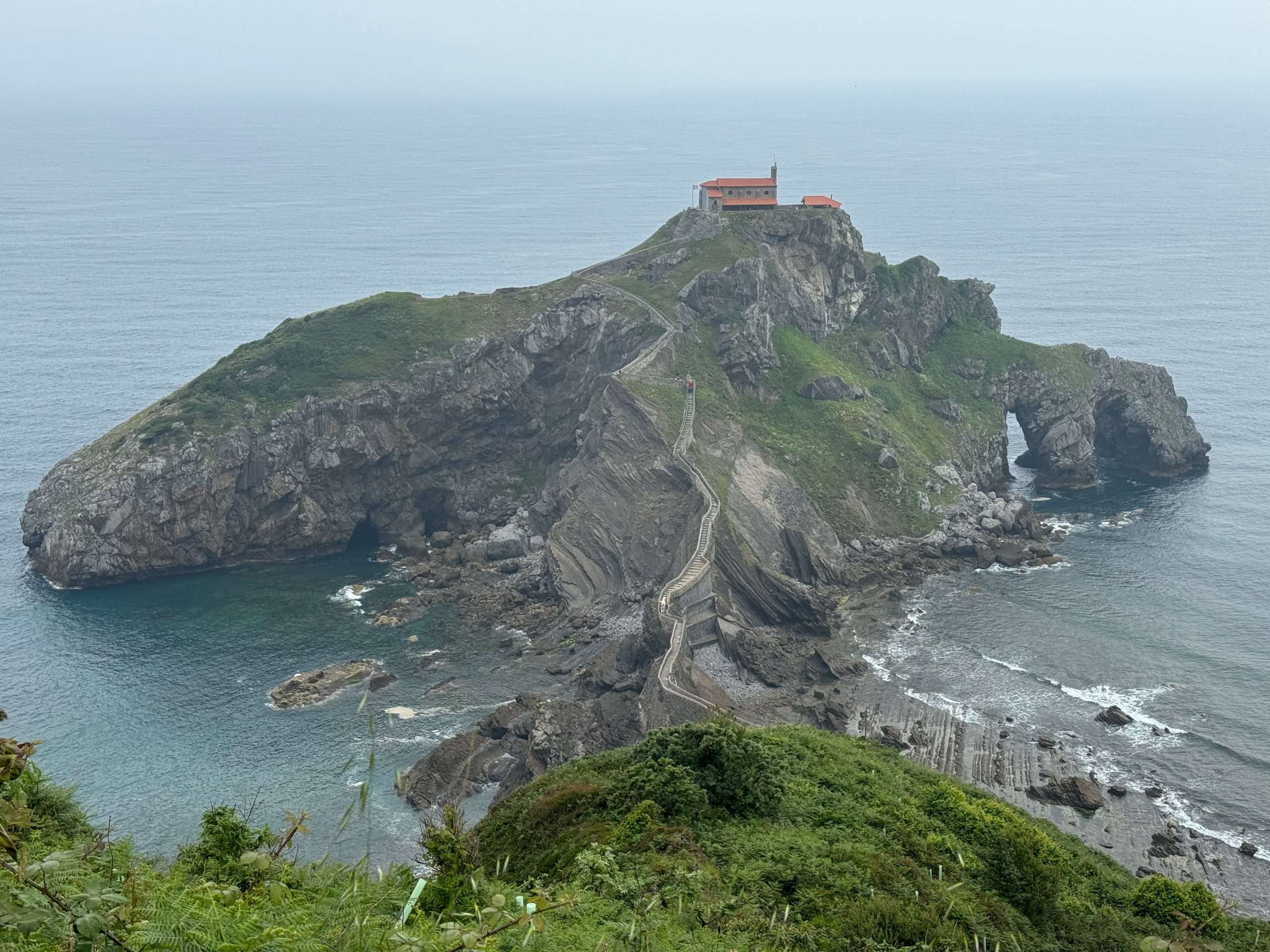
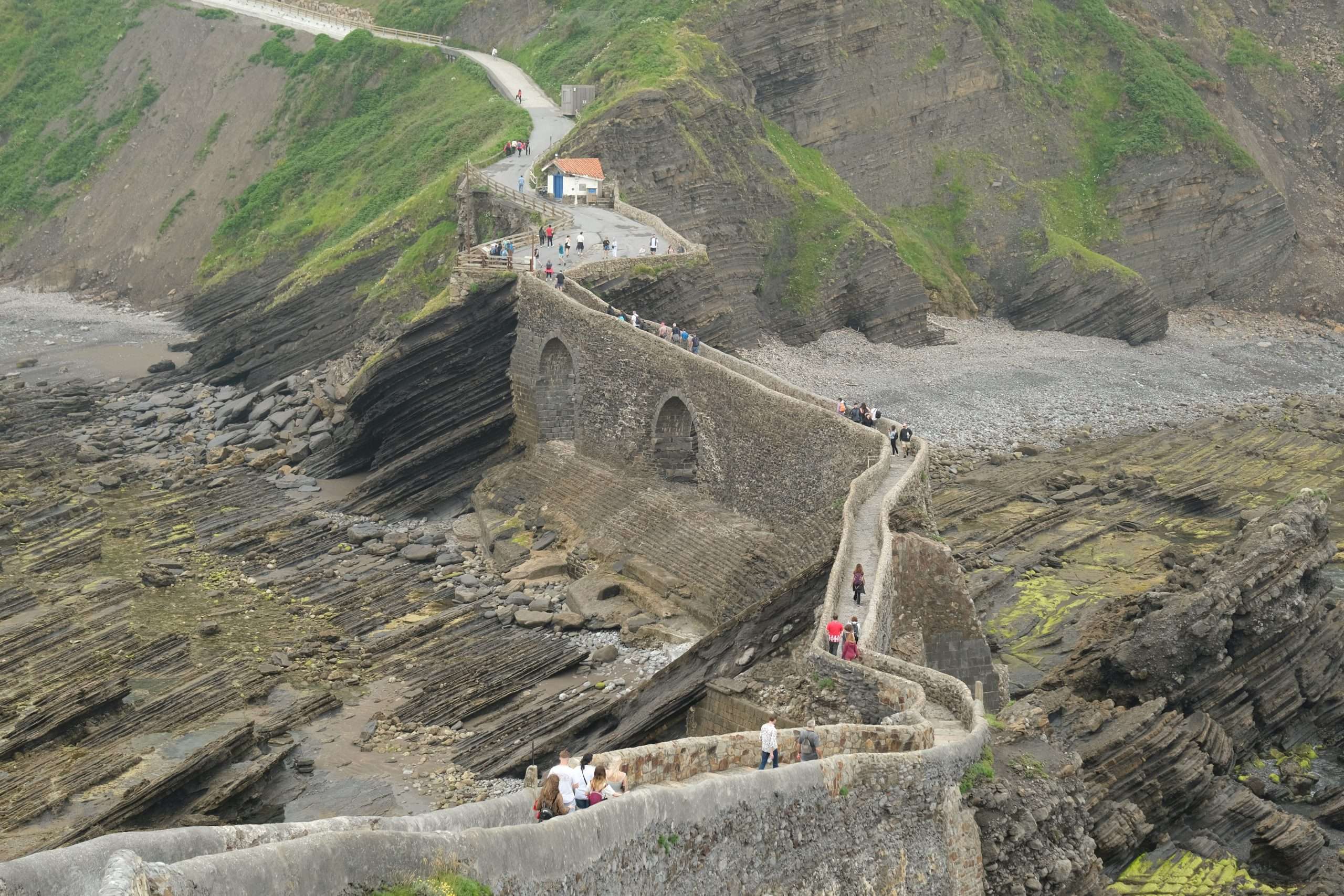
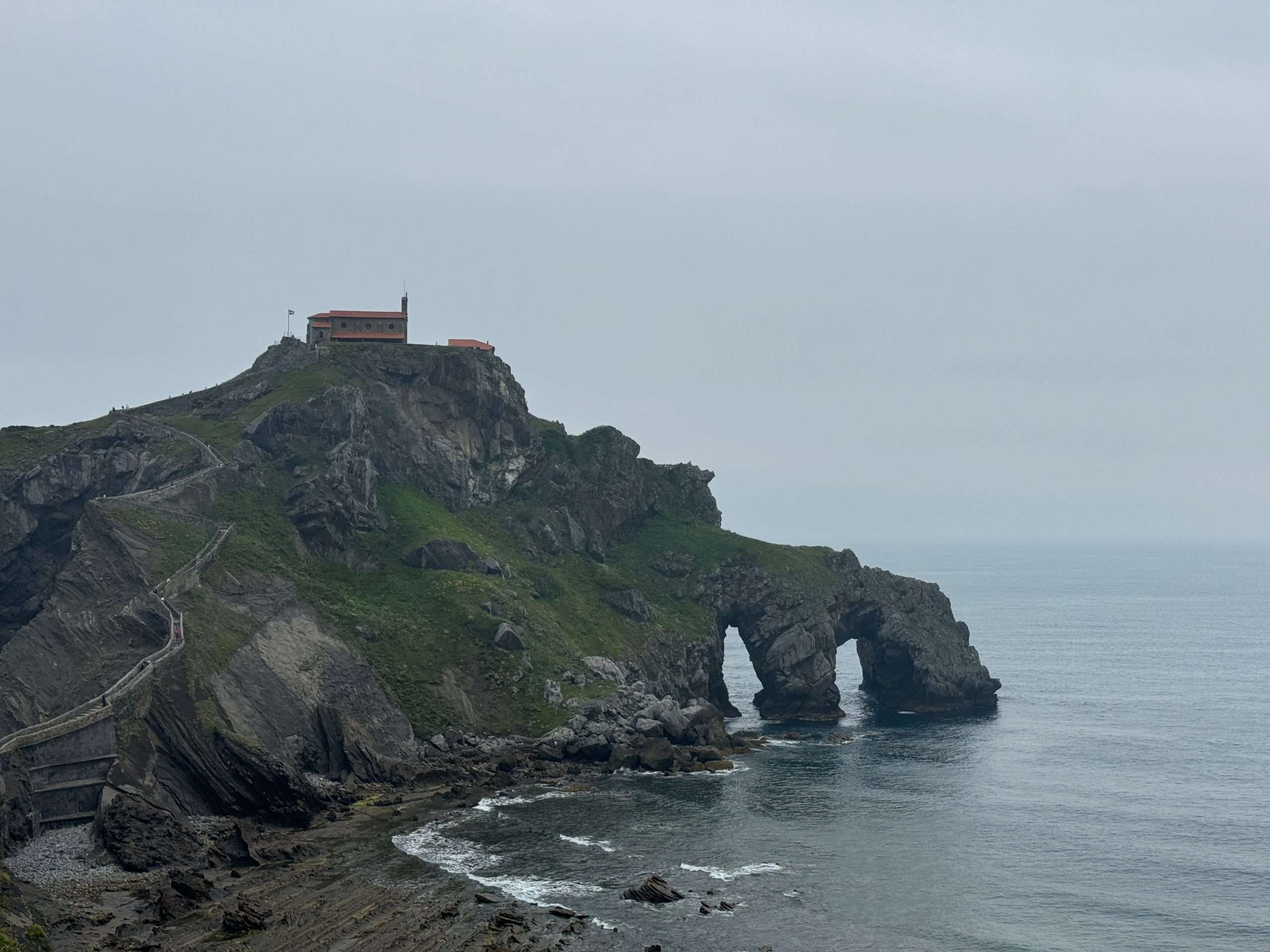
When we reached Gaztelugatxe on the coast of Biscay in Bermeo, Basque Country, we were informed that we would visit the church of the Hermitage of San Juan de Gaztelugatxe. To get there, we first had to descend steep slopes and then climb up a long set of stairs. Before this trek, we stopped at a lookout point to enjoy stunning views of the hermitage, which has stood on a cliff in the sea since the 10th century. After retracing our steps from the lookout, we tackled the steep descent. Midway, we encountered a film crew with outsized props resembling medieval fair characters. Then, we climbed over 200 stone stairs, passing a small footprint in the stone, believed to be Saint John’s, and small crucifixes representing the stations of the cross. By the time we reached the church, our thighs were literally talking back to us. At the chapel, we each rang the bell three times, lit candles, and rested on a stone bench before beginning the return journey. Fans of Game of Thrones will recognize the winding staircase, which was transformed by the show into Dragonstone, the ancestral home of the Mother of Dragons.
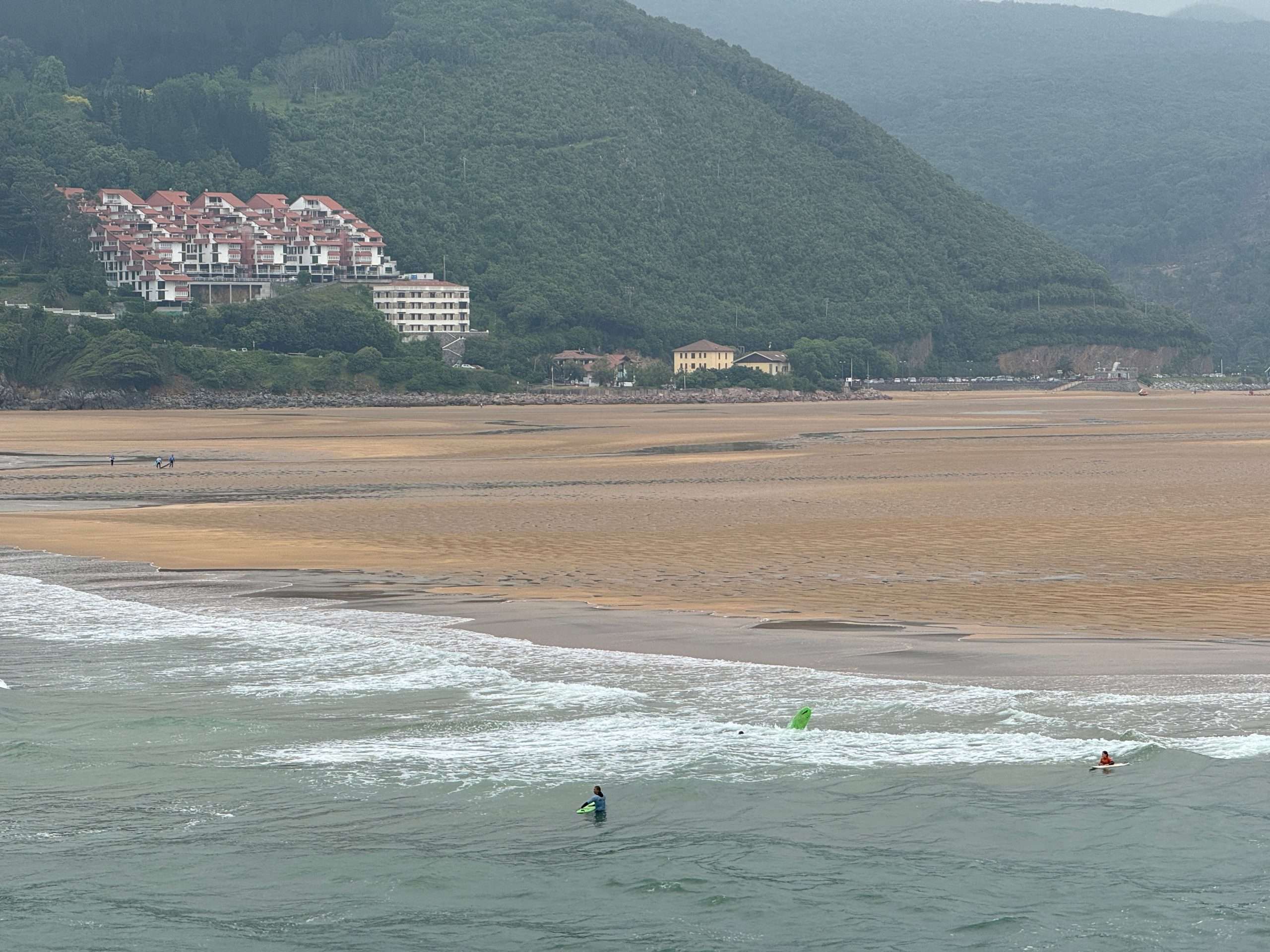
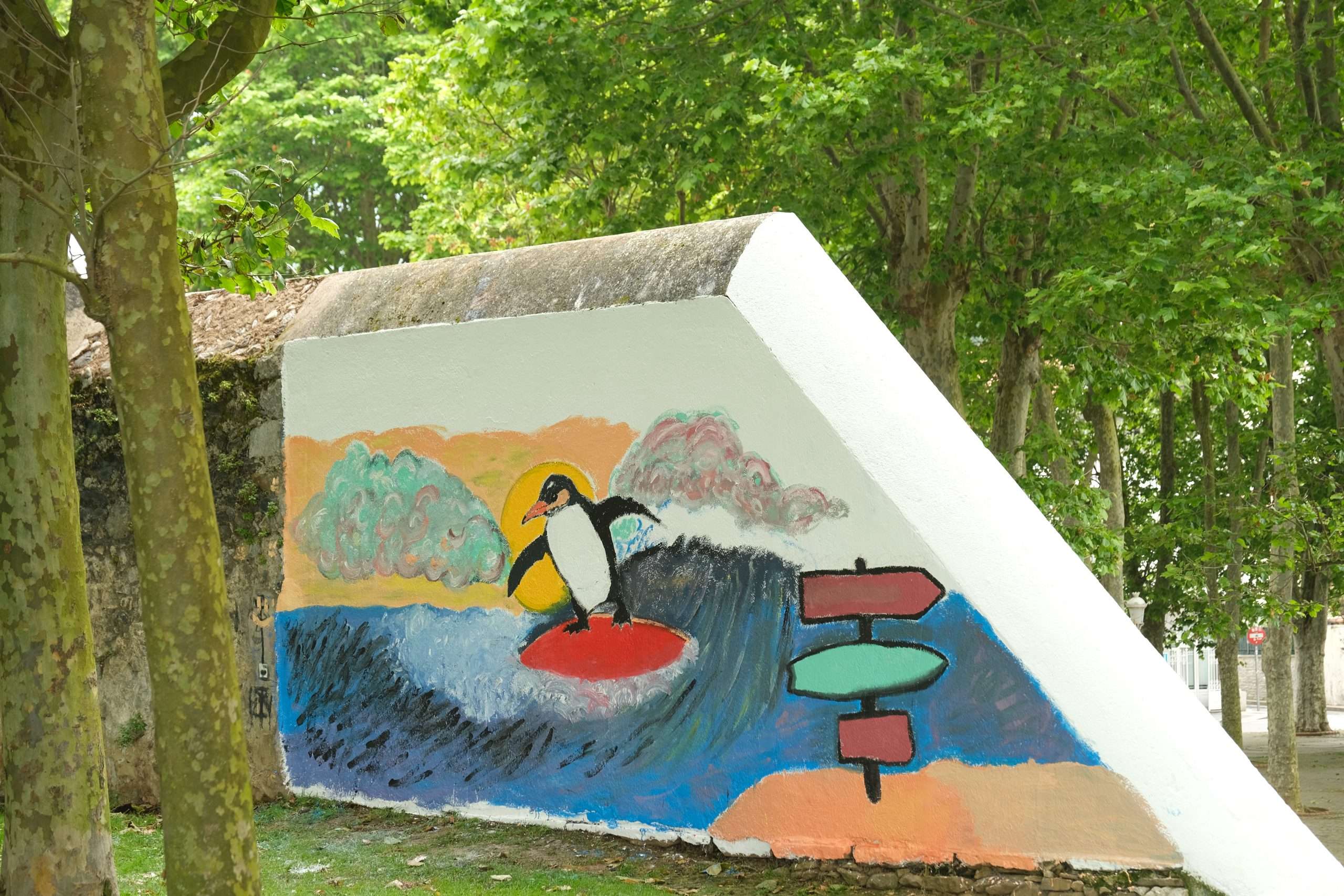
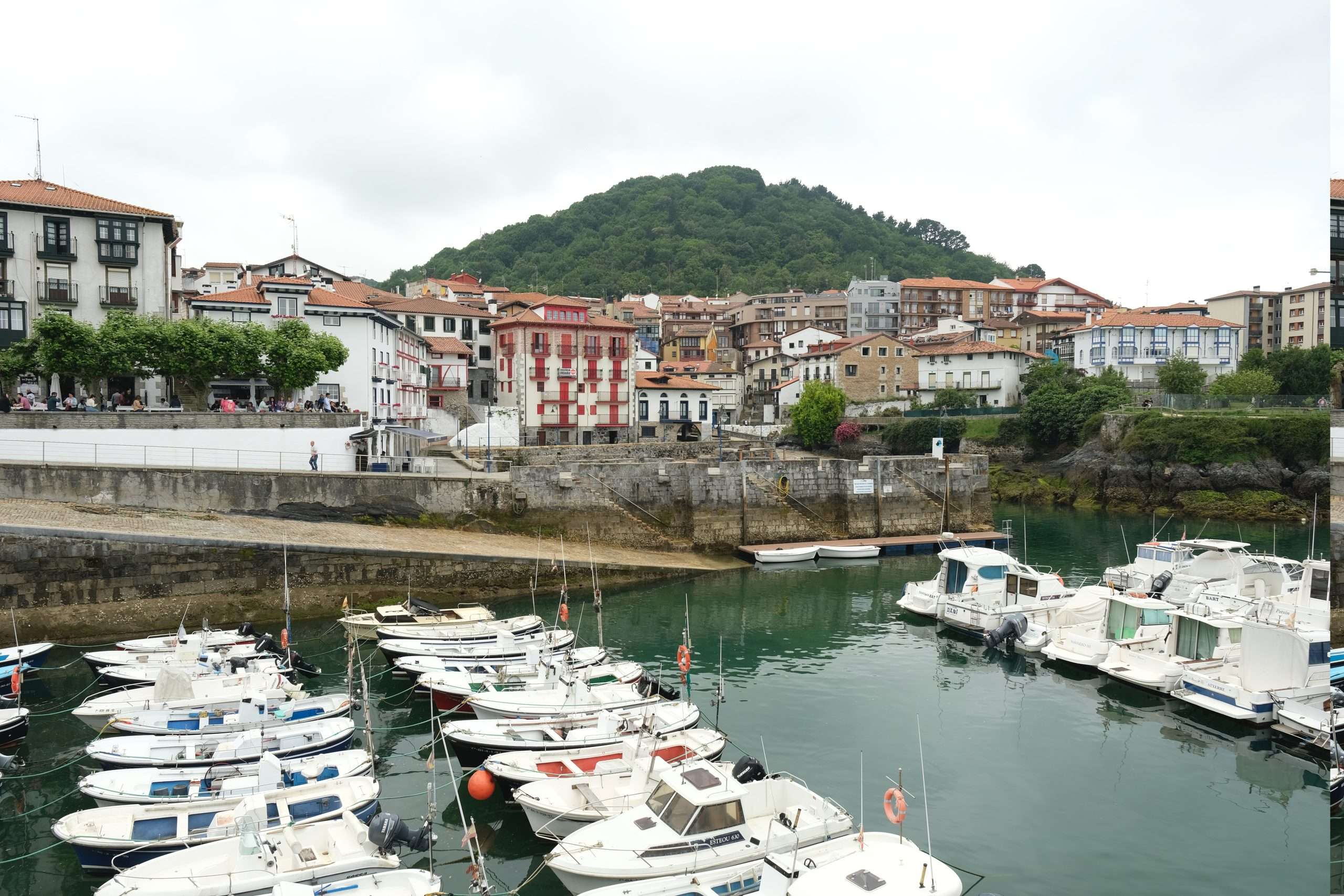
Our next stop was Mundaka, a historic fishing town with Celtic and Danish connections, now famous for attracting surfers from around the world. Once a prosperous whaling town, its whaling industry ended in 1903 after the last whale was killed. Whaling had brought significant prosperity to the Basque Country. Our guide shared a story about Basque whalers stranded in Iceland who resorted to theft to survive, leading to their execution and the enactment of a law to kill any Spanish who entered Iceland, which supposedly remained in place for a long time. This tale is likely apocryphal. During our visit, the tide was out, revealing more sand than surf. After exploring Mundaka, we had lunch at the bar of the Hotel El Portua. Albert learned how to order pintxos in a bar, discovering that the tallest, loudest, and quickest patrons are the most successful in the ordering scrum. Additionally, juggling pintxos, drinks, and finding a place to sit can be challenging.
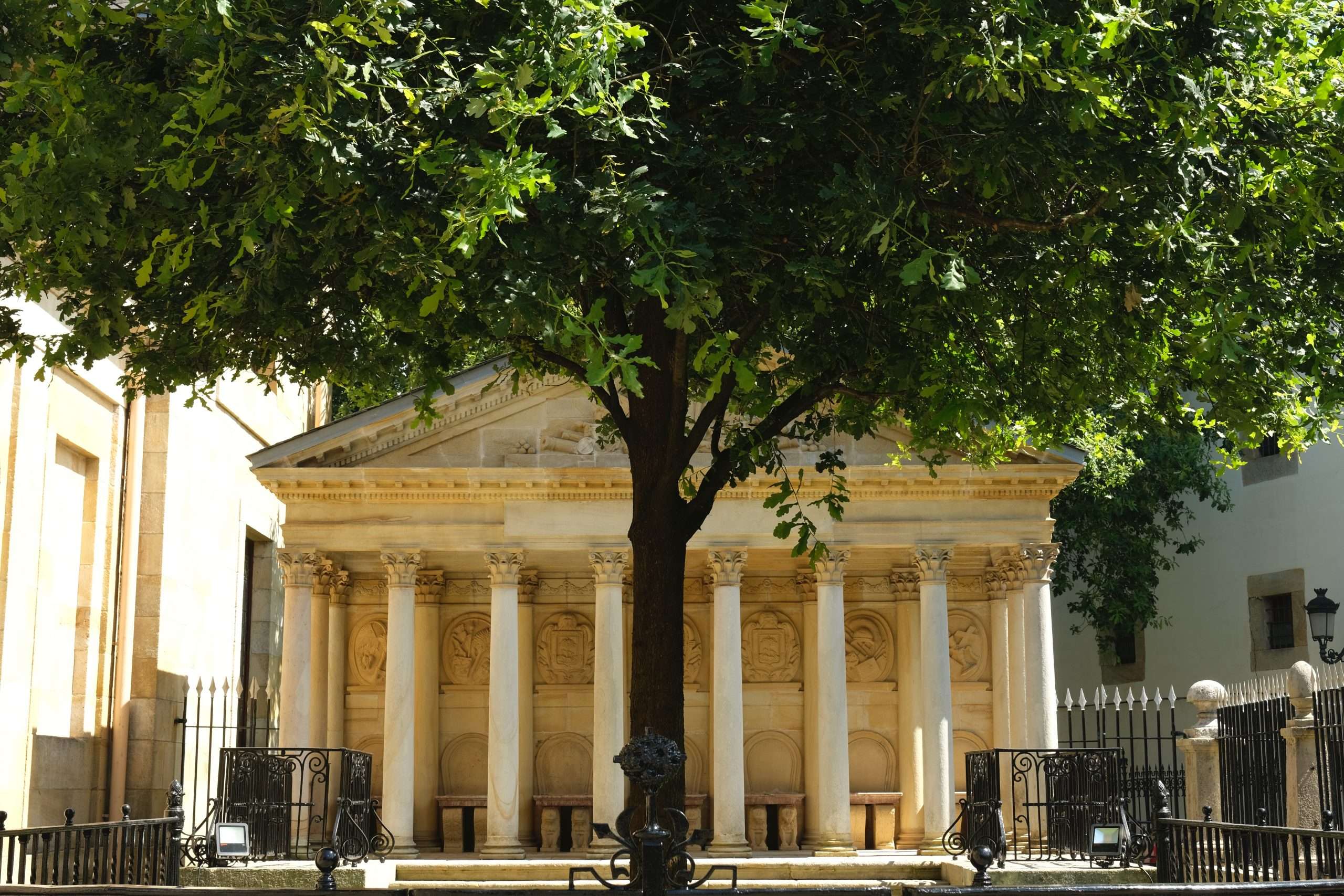
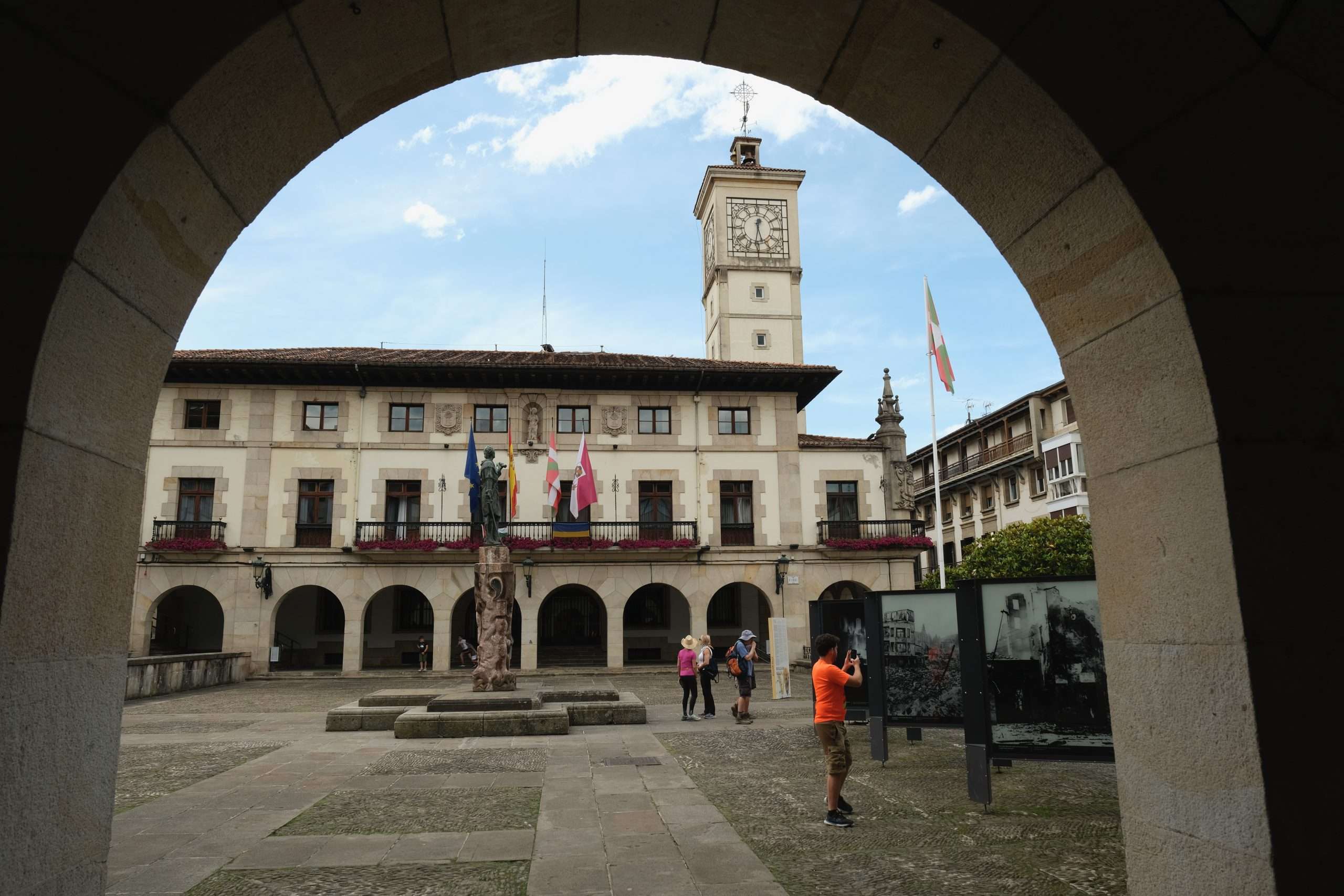
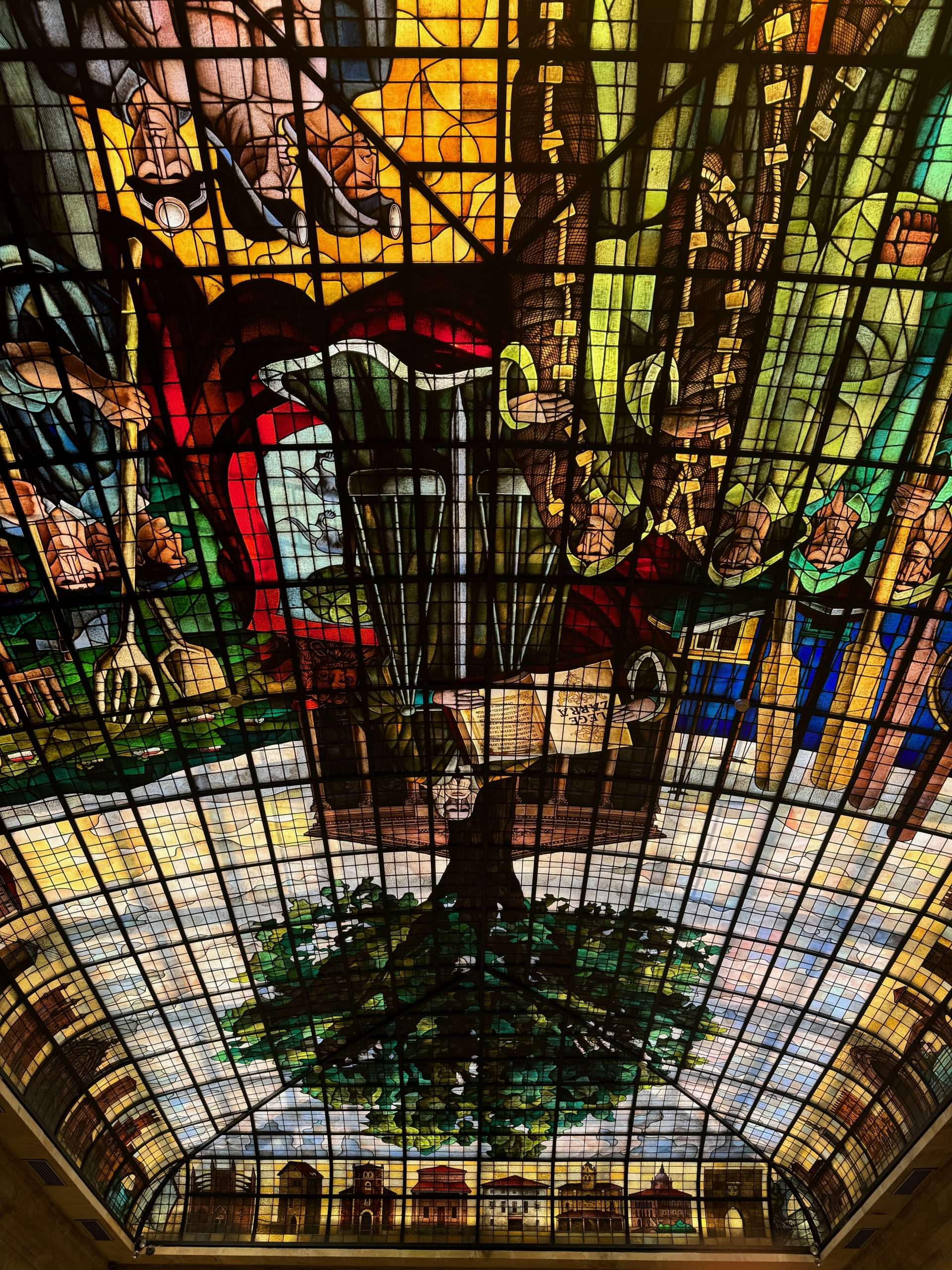
After lunch, we drove to Guernika, a town founded in the 1300s, now remembered for the tragic events of April 26, 1937. On that day, the German Luftwaffe, with Italian and Spanish support, bombed the town for several hours, killing hundreds of civilians, mainly women and children. Francisco Franco requested this aid to help him overthrow the Basque and Spanish Republican governments. Monday was market day, so many people from Guernika and surrounding areas were in the town. The destruction was horrific, but the Oak of Guernika, around which the heads of the various provinces would meet, and the Assembly building survived. There is still an oak growing between the Assembly building and the Santa Clara Convent, a descendant of the original oak from the 1500s.

In the summer of 1937, Spanish painter Pablo Picasso painted the “Guernica” mural for the Paris Exposition held later that year. Commissioned by the Republican government, Picasso chose to create an anti-war mural after reading about the atrocities in Guernika in newspaper articles. Picasso, living in Paris at the time, never returned to Spain after leaving in 1934. The original mural now resides in the Reina Sofia Museum in Madrid, but a grey-scale tiled version is installed in Guernika. Various tourist groups can be seen assembled before the mural, discussing the animals, people, and symbols depicted. Picasso was reticent about explaining the symbolism, so most interpretations are attributed to art historians and scholars.

On our return to Bilbao, we visited the Bilbao Fine Arts Museum and briefly viewed their collection of classical and contemporary art. We then grabbed a few pintxos and some typical Spanish pastries from a bakery for a quick dinner and fell into bed, exhausted.
Exploring Bilbao – June 9, 2024
This morning, we had a fabulous breakfast at the hotel and then attended mass at the Iglesia de San José, a neo-Gothic Agustinian church. Like many other churches, the congregation was mainly senior citizens.
Later in the day, we met our tour guides, Héctor, Jon, and Nagore, and the 12 people we would be hiking with on the Camino del Norte trail. Héctor, who was also our guide on the Portuguese Camino two years ago, advised us to think of the Basque Country within the framework of four words: tradition, nature, pride, and mystery. He explained that the Basque Country is nestled between France and Spain, with geography helping to preserve its traditions. The Basque people are proud to be different, with unknown origins and a language unrelated to other European languages.
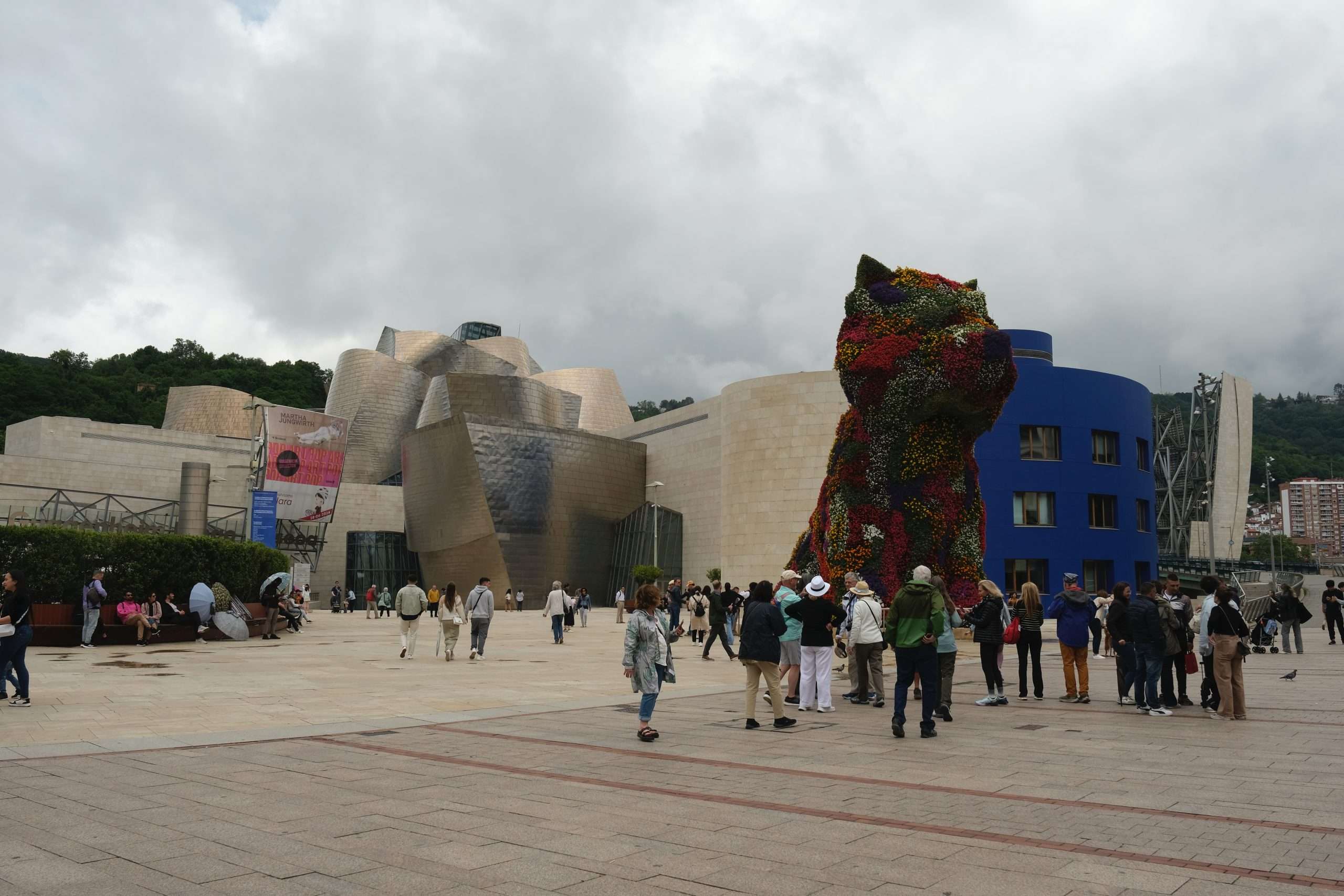
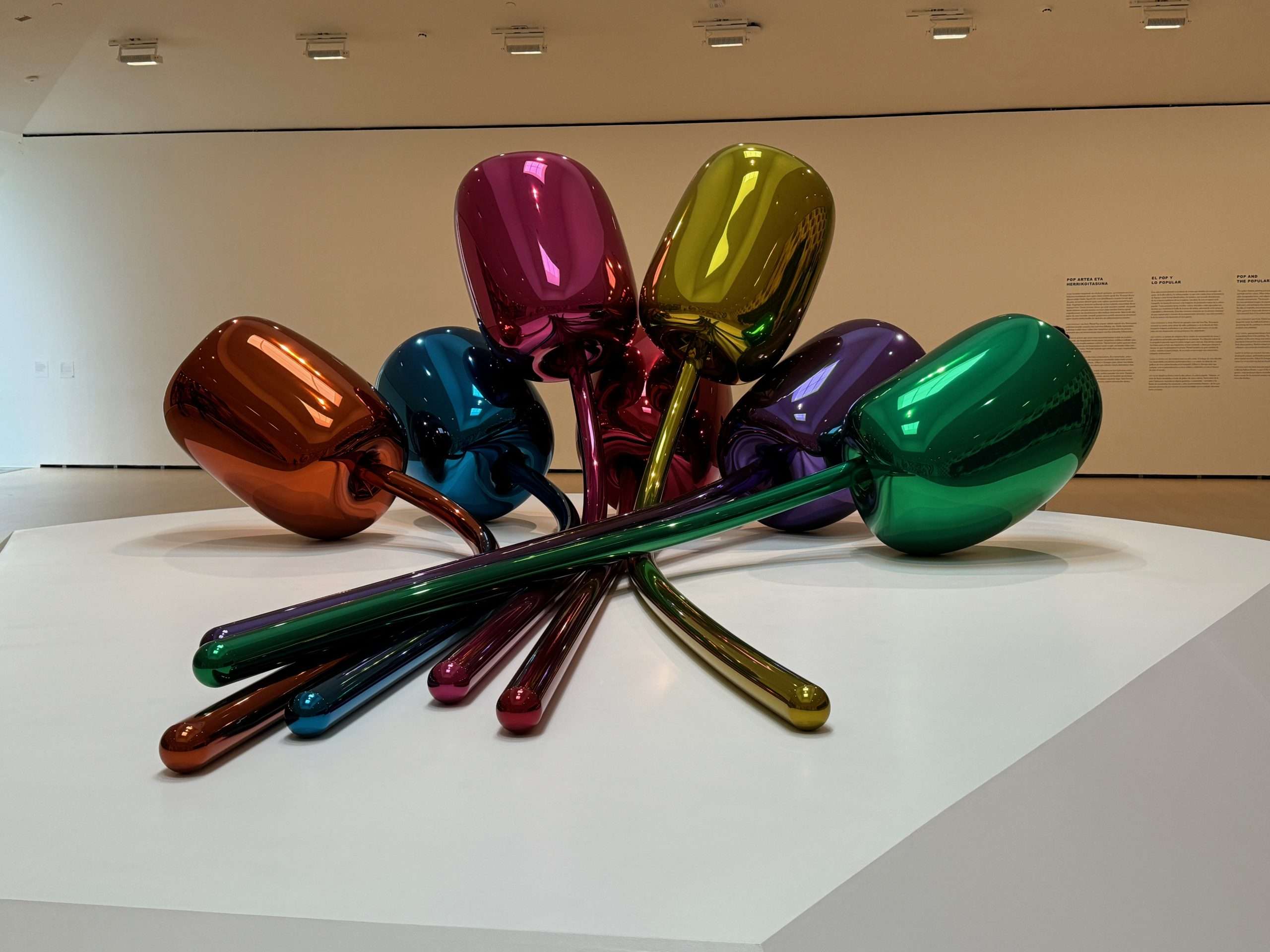
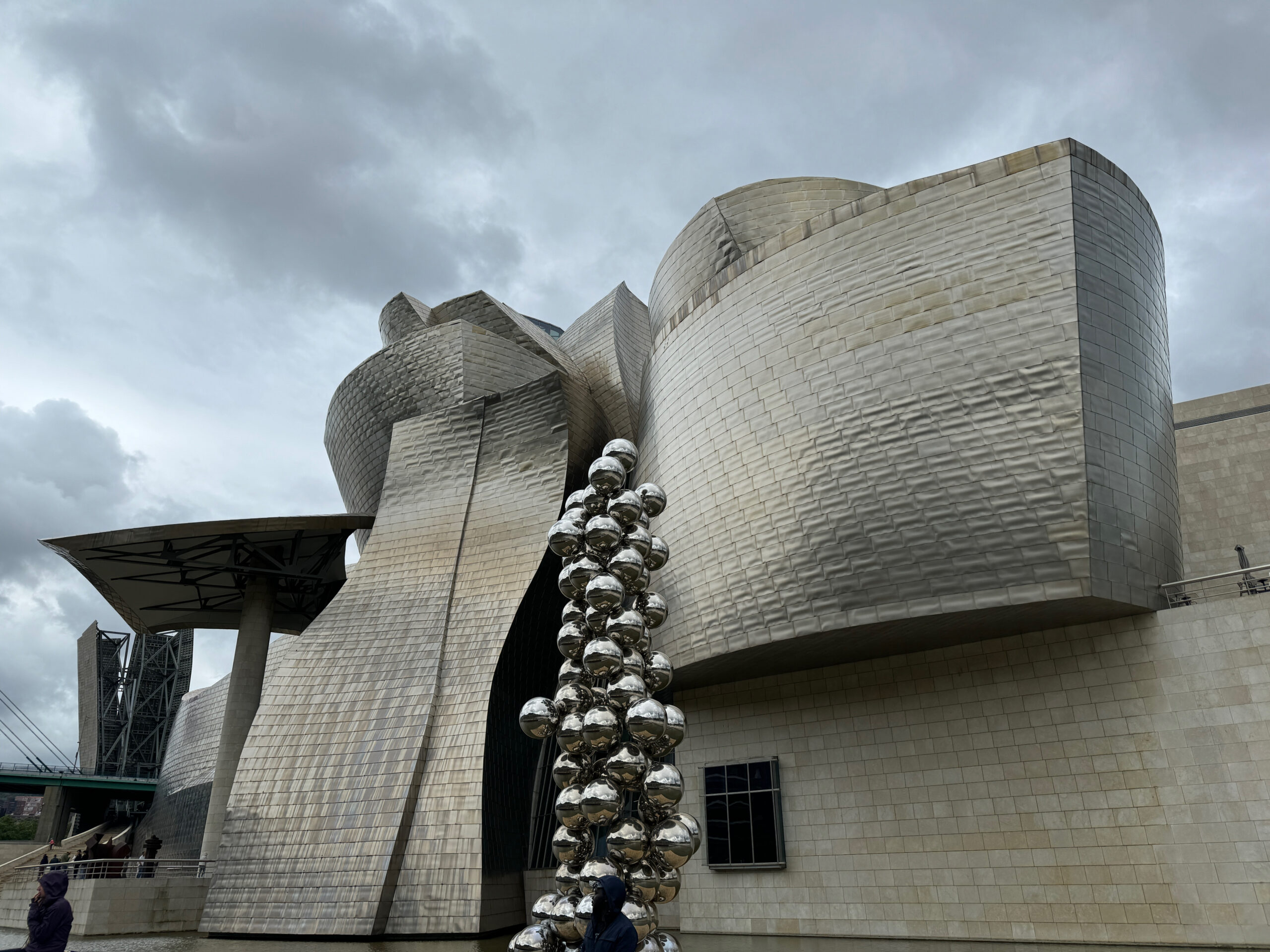
After our introductory meeting, we walked to the Guggenheim Museum and posed for a group photograph in front of Jeff Koons’ Puppy. We then met our guide, Alfonso, who led us through the museum. We explored Richard Serra’s Snake, Torqued Ellipse, Spiral Ellipse, and The Matter of Time in the Arcelor Gallery, Eduardo Chillida’s iron and alabaster sculptures, Koons’ Tulips, Andy Warhol’s One Hundred and Fifty Multicolored Marilyns, Gilbert and George’s Waking, James Rosenquist’s The Swimmer in the Econo-mist, and Louise Bourgeois’ giant spider, Maman. Designed and constructed by Frank Gehry, the museum is unique, filled with light, spacious, and seemingly weightless due to its glass and titanium cladding. It has not only become a must-see destination for serious travelers but also transformed Bilbao into a modern European city, attracting millions of visitors and significant tax revenue.
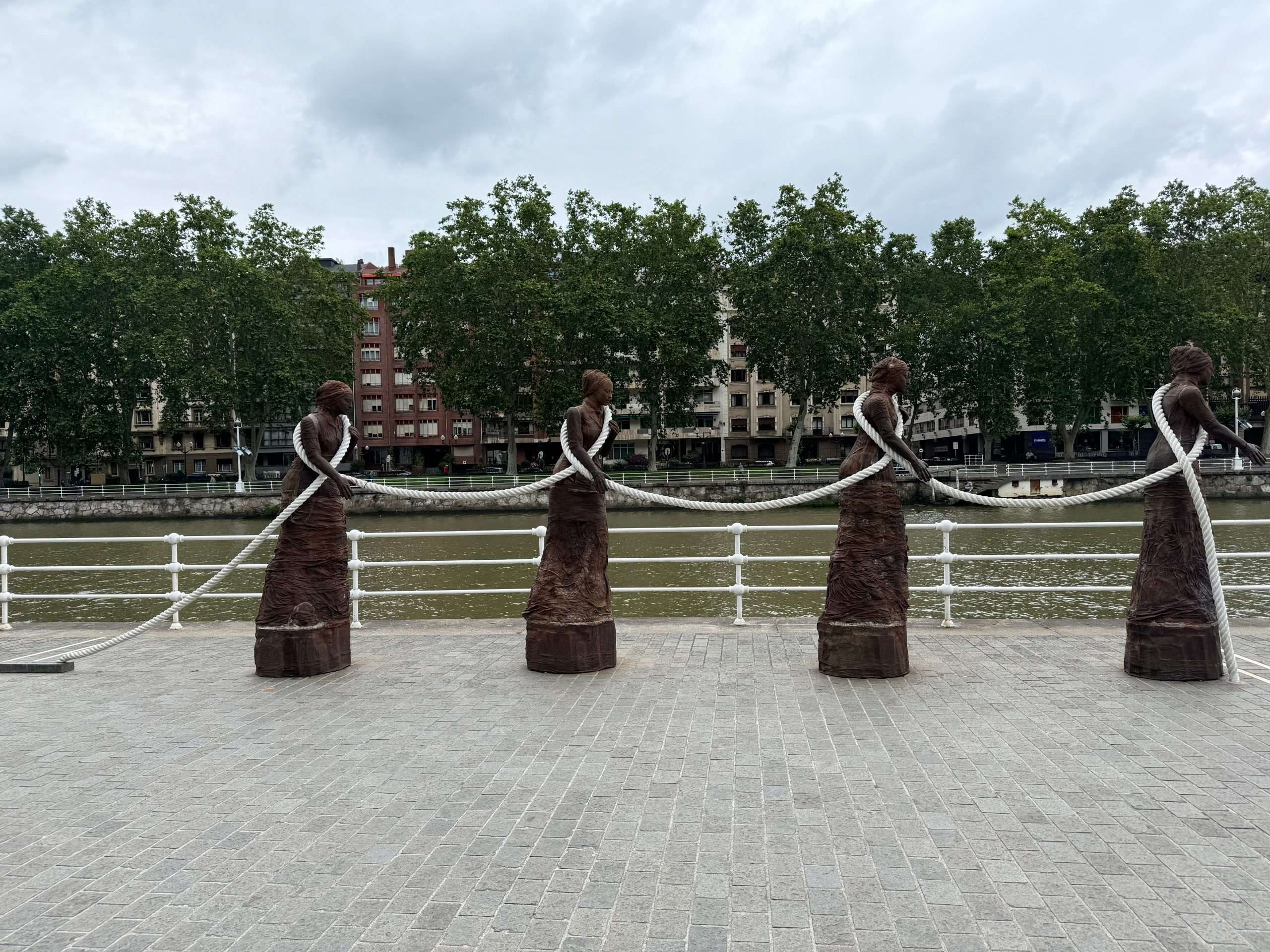
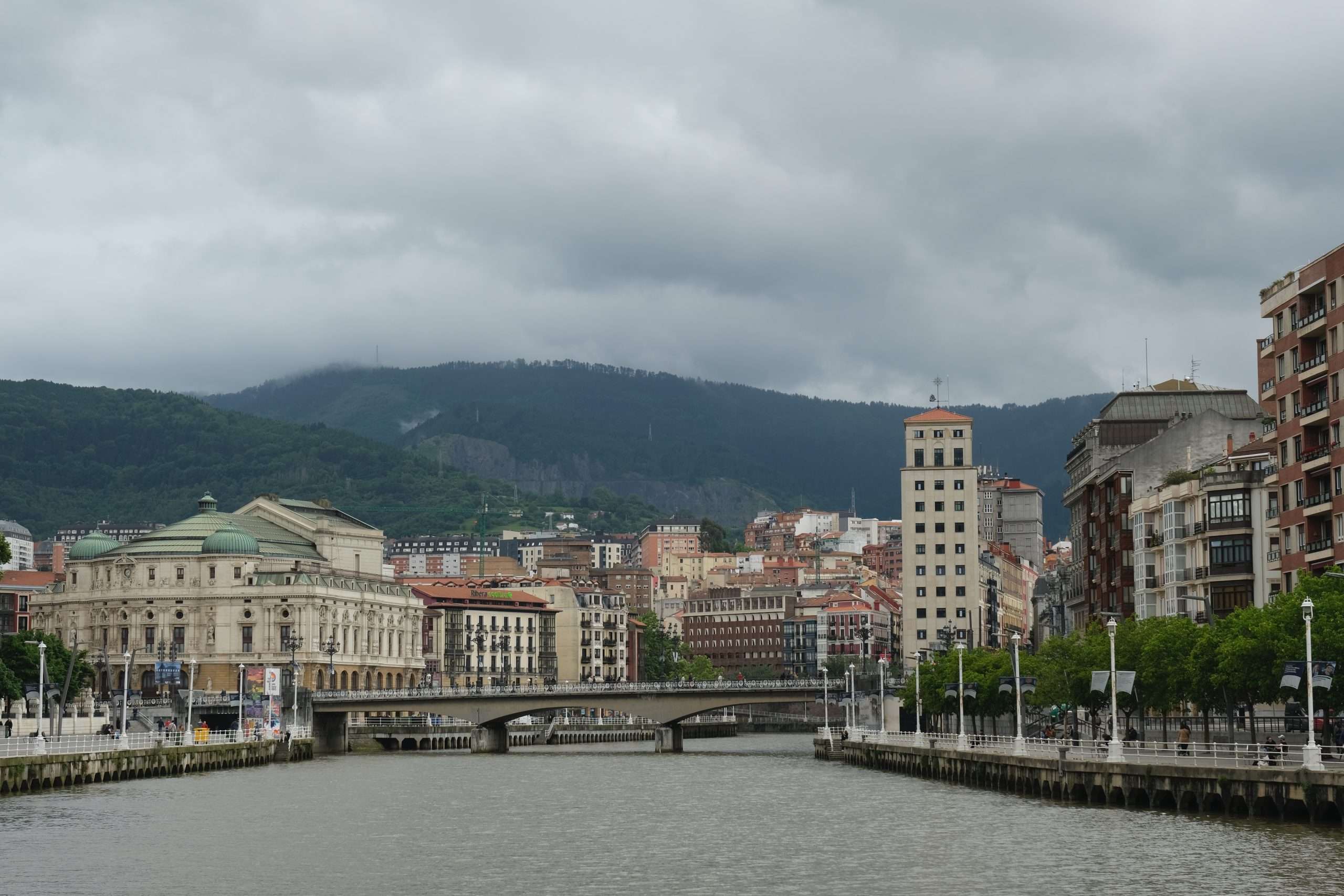
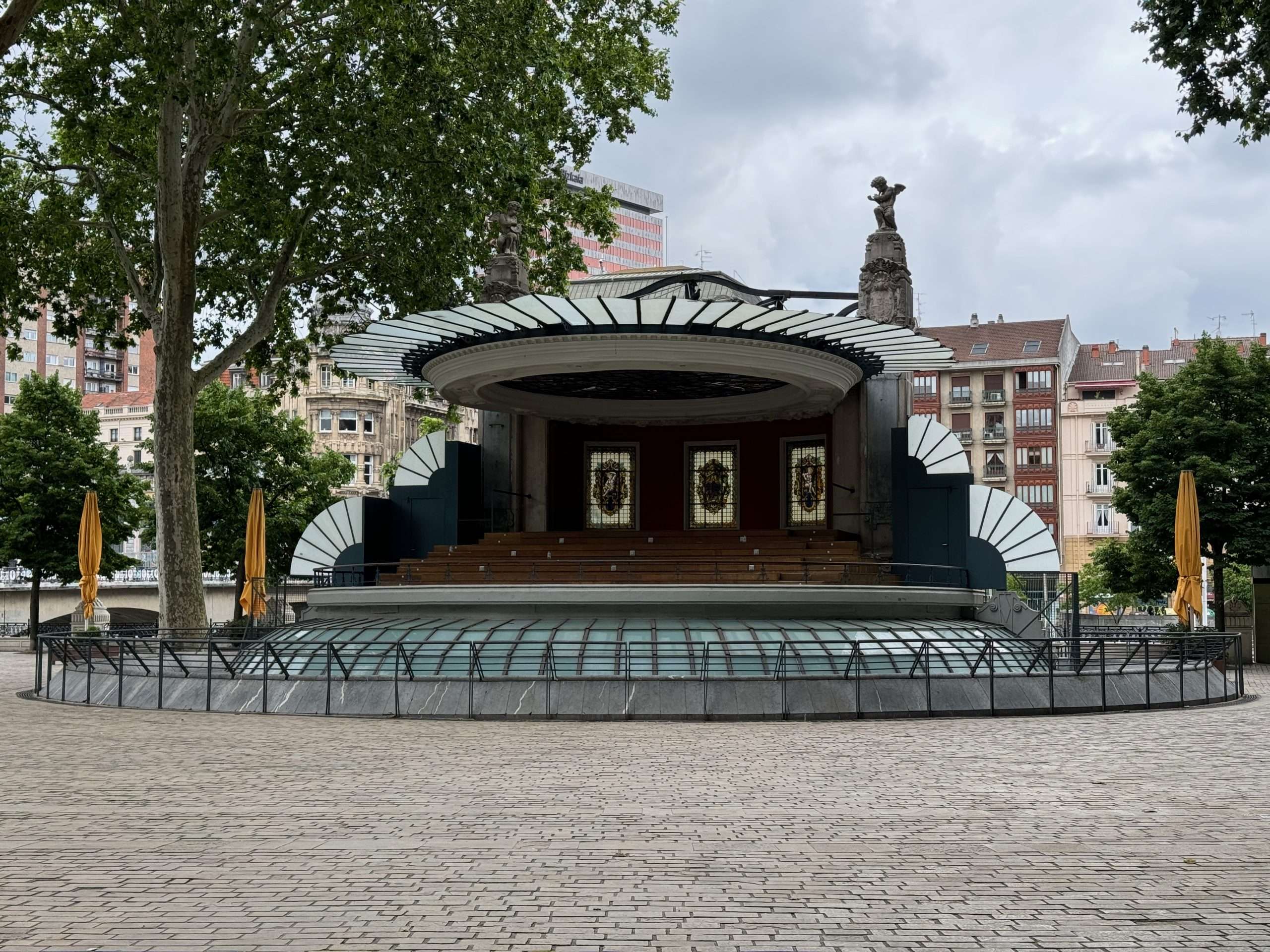
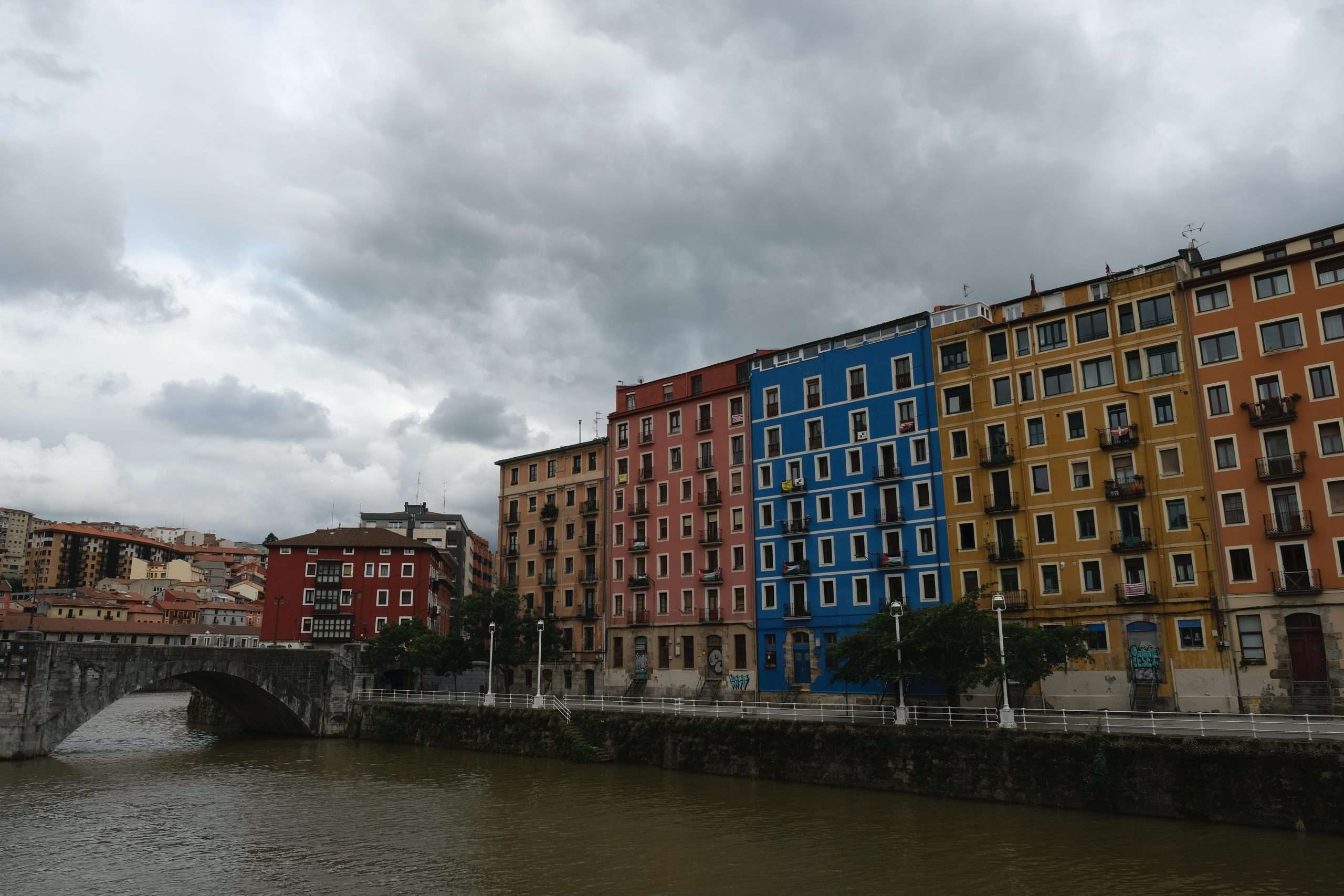
From the Guggenheim, we walked to Bilbao’s Old Quarter via Paseo de Uribitarte, passing Dora Salazar’s Las Sirgueras, a tribute to the rope girls towing boats along the estuary. We then continued via Paseo Arenal to see City Hall, the Church of St. Nicolás de Bari, the Arriaga Theatre, Plazza Nueva, the Mercato de Ribero, and the Cathedral of Santiago. Along the way, our guides talked about the flooding that occurred in 1983 that severely damaged some of the buildings in the Old Quarter. We finally arrived at Café Iruña, a beautiful restaurant with azuelo tiles and an artesonado ceiling, in operation since 1903 and making it the oldest restaurant in Bilbao. Dinner was very enjoyable.
Exploring Chillida’s Legacy and the Northern Camino Trail – June 10, 2024
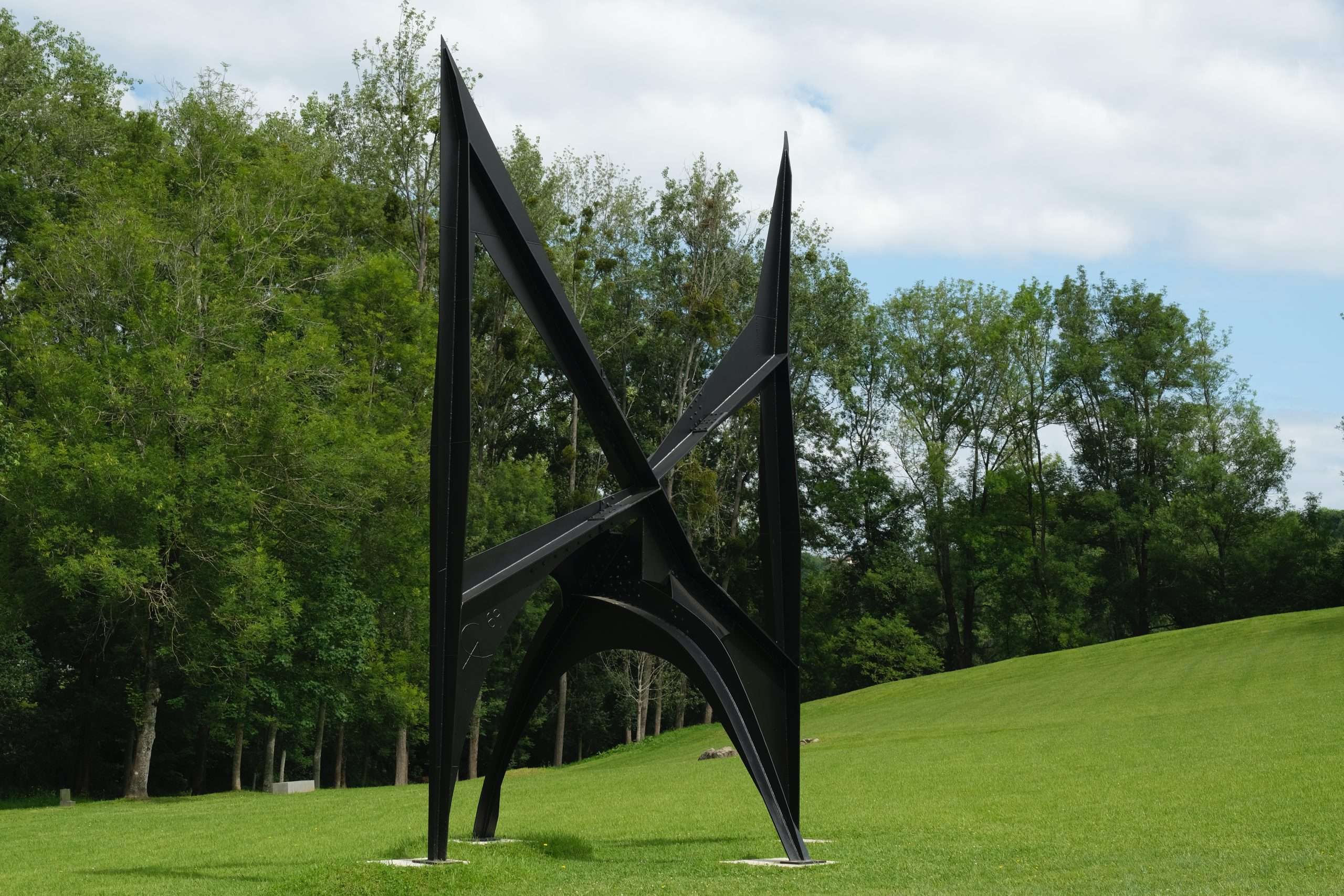
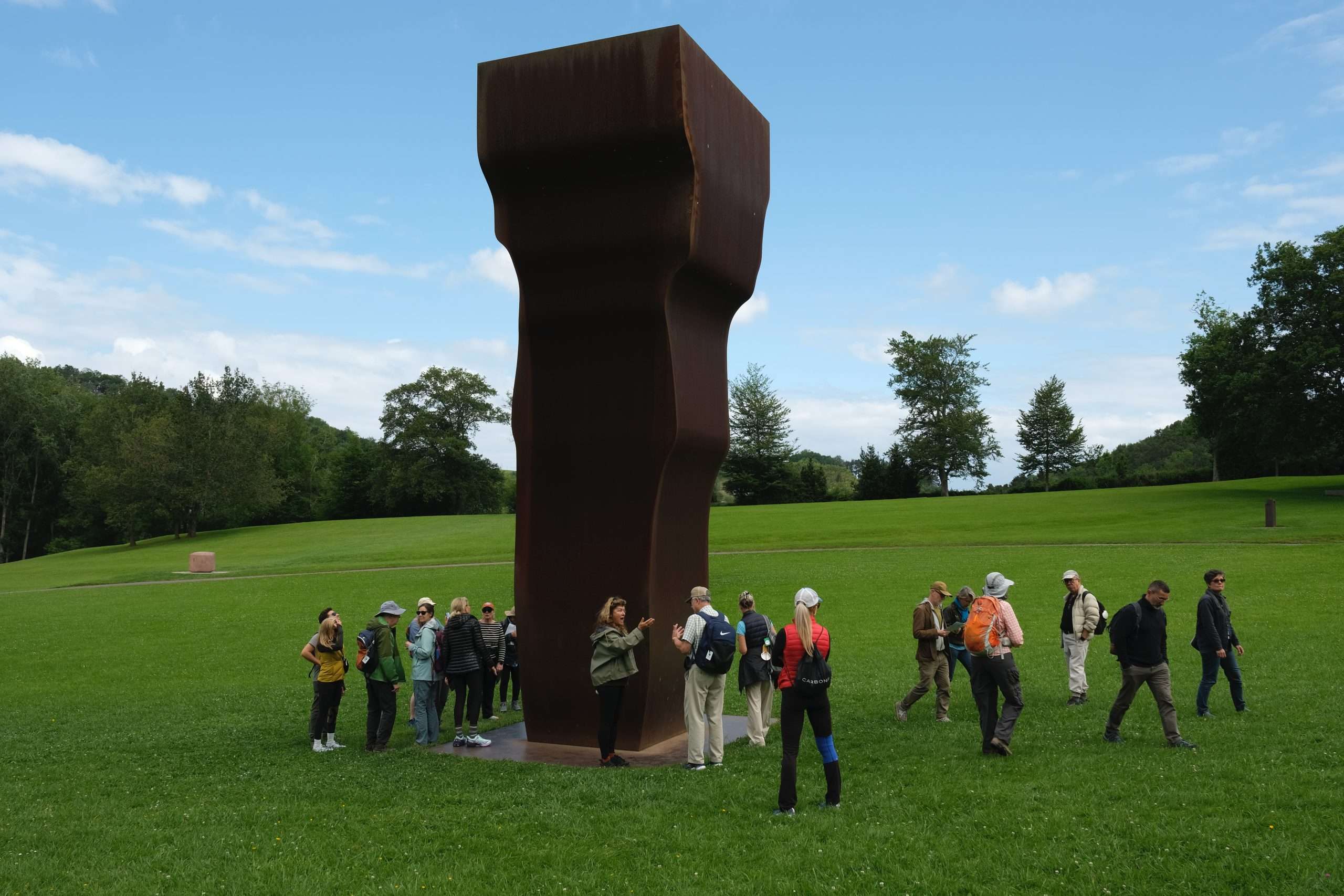
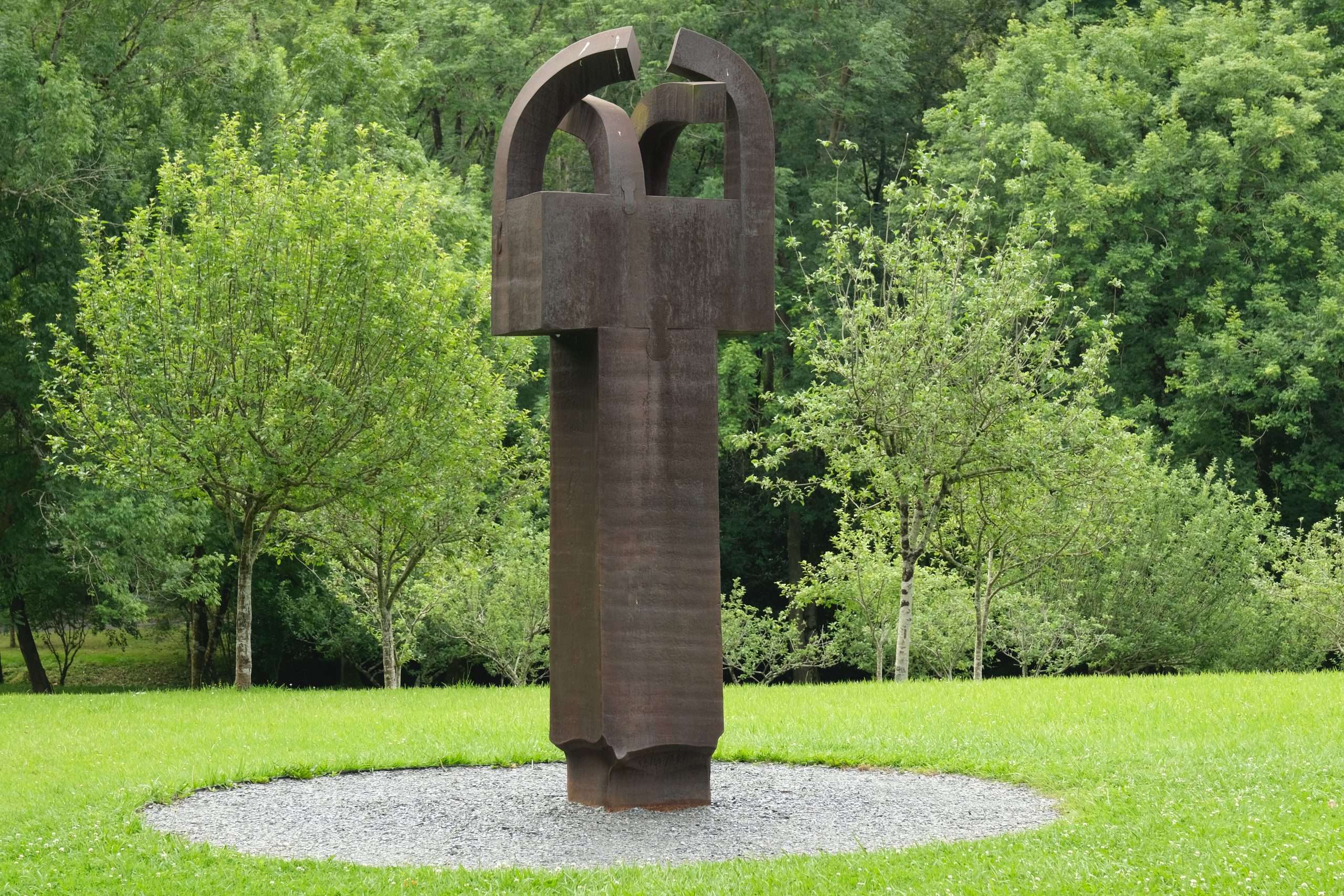
After breakfast, we visited the Chillida Leku Museum in Hernani, similar to the Grounds for Sculpture in NJ. Our guide Lizzie shared that Chillida, born in San Sebastián, was a promising footballer for Real Sociedad until an injury shifted his path to studying architecture in Madrid and later art in Paris. He worked in plaster and clay in Paris, never completing his degree, and returned to San Sebastián in 1959, where he stayed until his death in 2002. January 2024 marked his 100th birth anniversary.
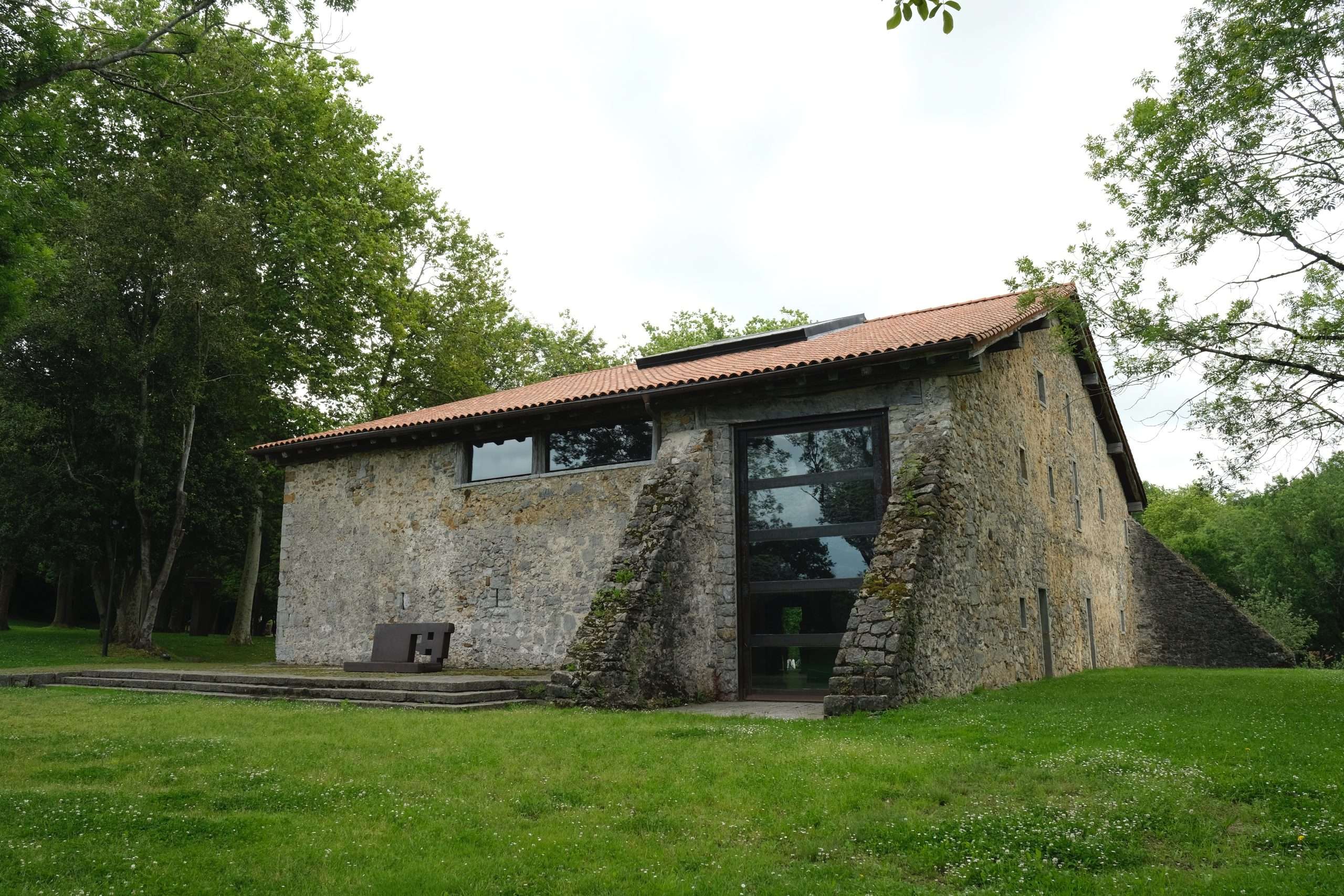
In Hernani, Chillida bought land and over 20 years, placed many sculptures in the park. Managed by his children after his death, the park’s operations were reduced in 2011. It reopened in April 2024 with help from Swiss gallery Hauser & Wirth and a Dutch landscape gardener, showcasing 40 works, including Buscando la Luz (Searching for the Light), Chillida, working with a local blacksmith, preferred testing ideas in the foundry and added alloys for a rusted look. After touring the park and the restored Zabalaga family house, we saw more of Chillida’s works. Our guide pointed out his son who was present in the house and serves as a curator.
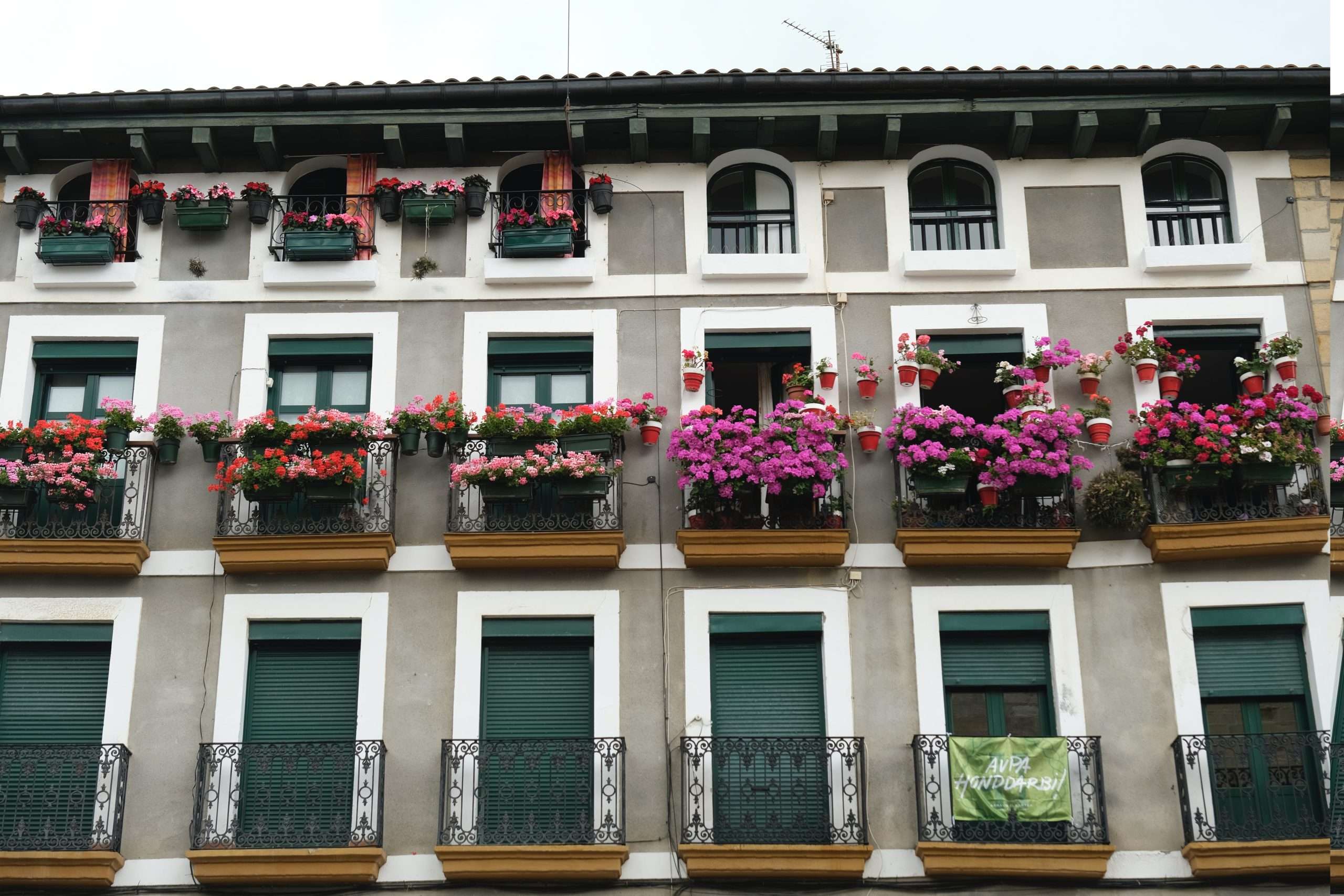
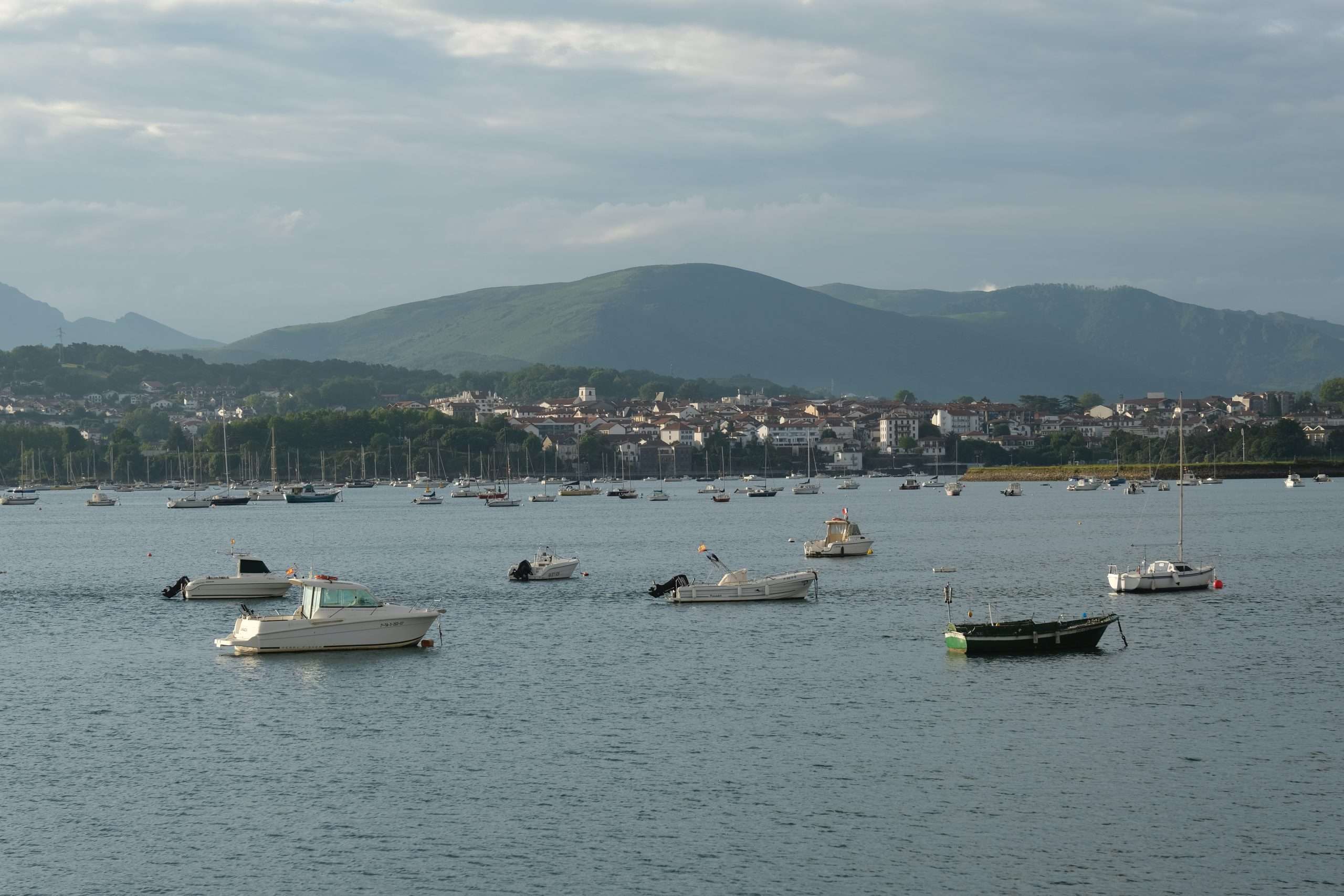
After a picnic lunch prepared by Héctor, we left Chillida Leku park for Hondarribia, a fishing village once a starting point for Santiago pilgrims. We began the Northern Camino trail with a 2.5-mile hike to the Sanctuary of Guadalupe. Our first stop was Charles V’s 10th-century castle, now the Parador de Hondarribia, with 3-meter thick walls bearing Thirty Years’ War cannon fire marks. The castle has hosted monarchs and artists like Velázquez and now it hosts tourists to the area. The hike to Santiago Chapel was gentle until a steep final incline. The Sanctuary of Our Lady of Guadalupe was built when six gold ducats were donated by the seafarer Juan Sebastián Elcano. The current chapel was probably built at a much later date.
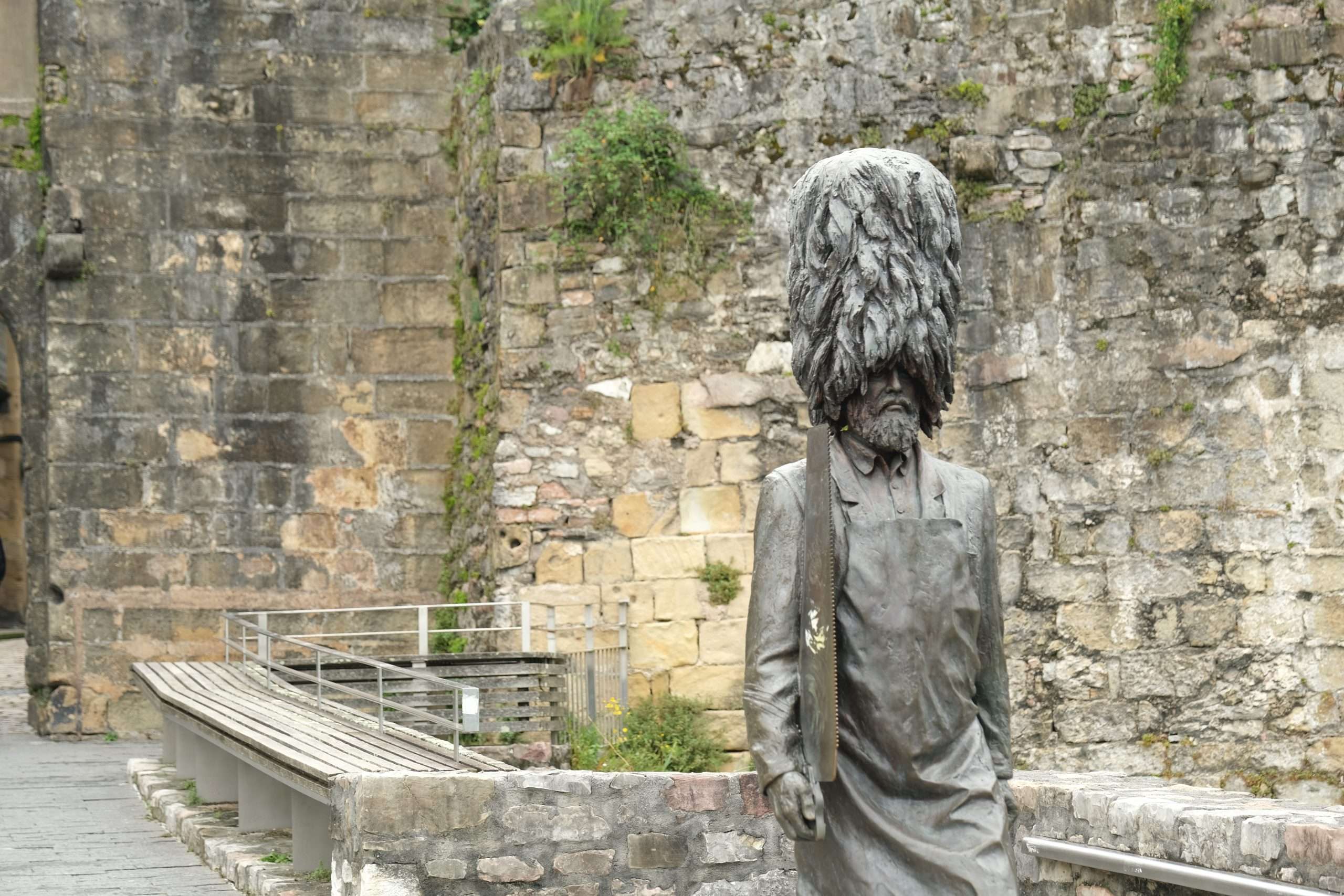
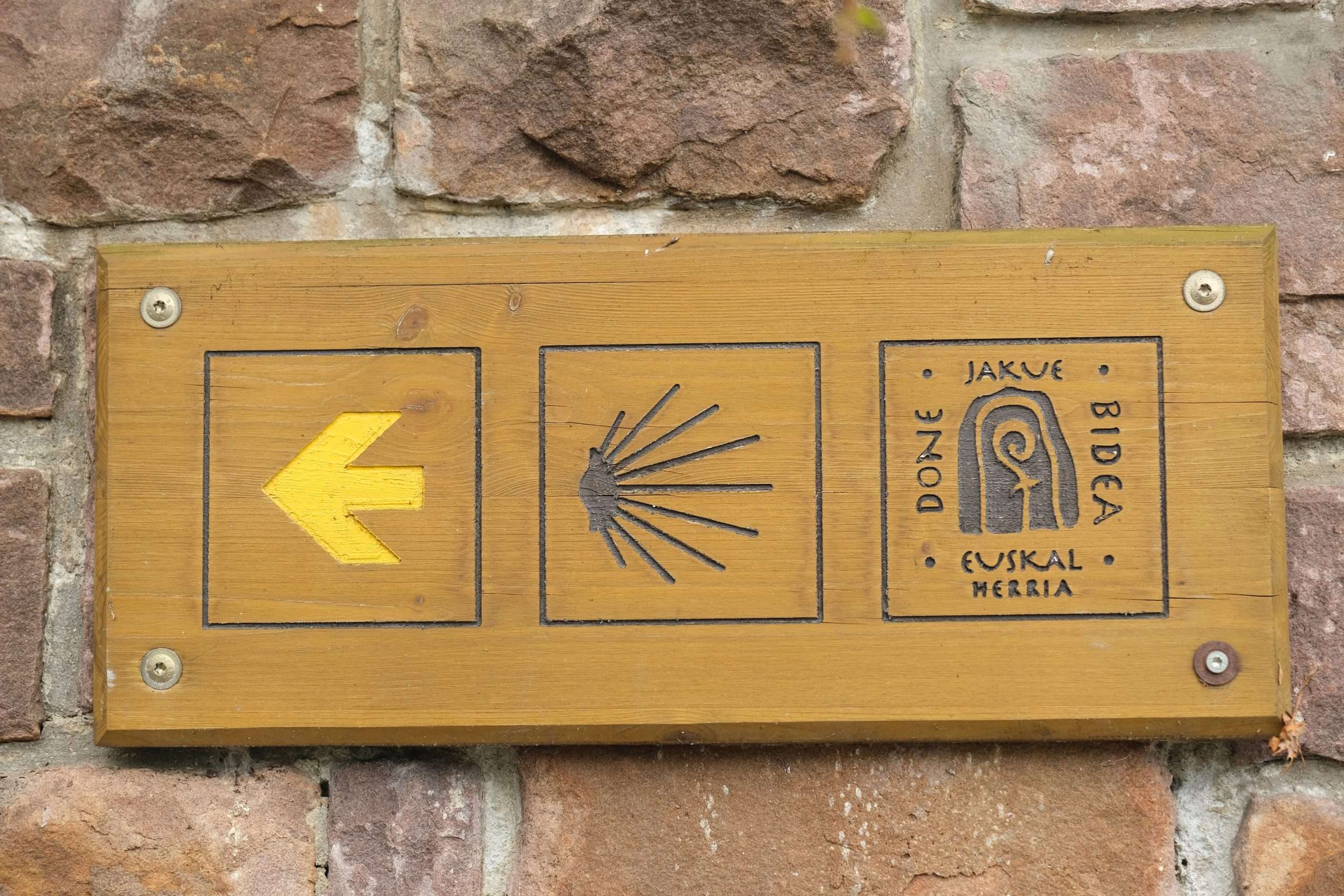
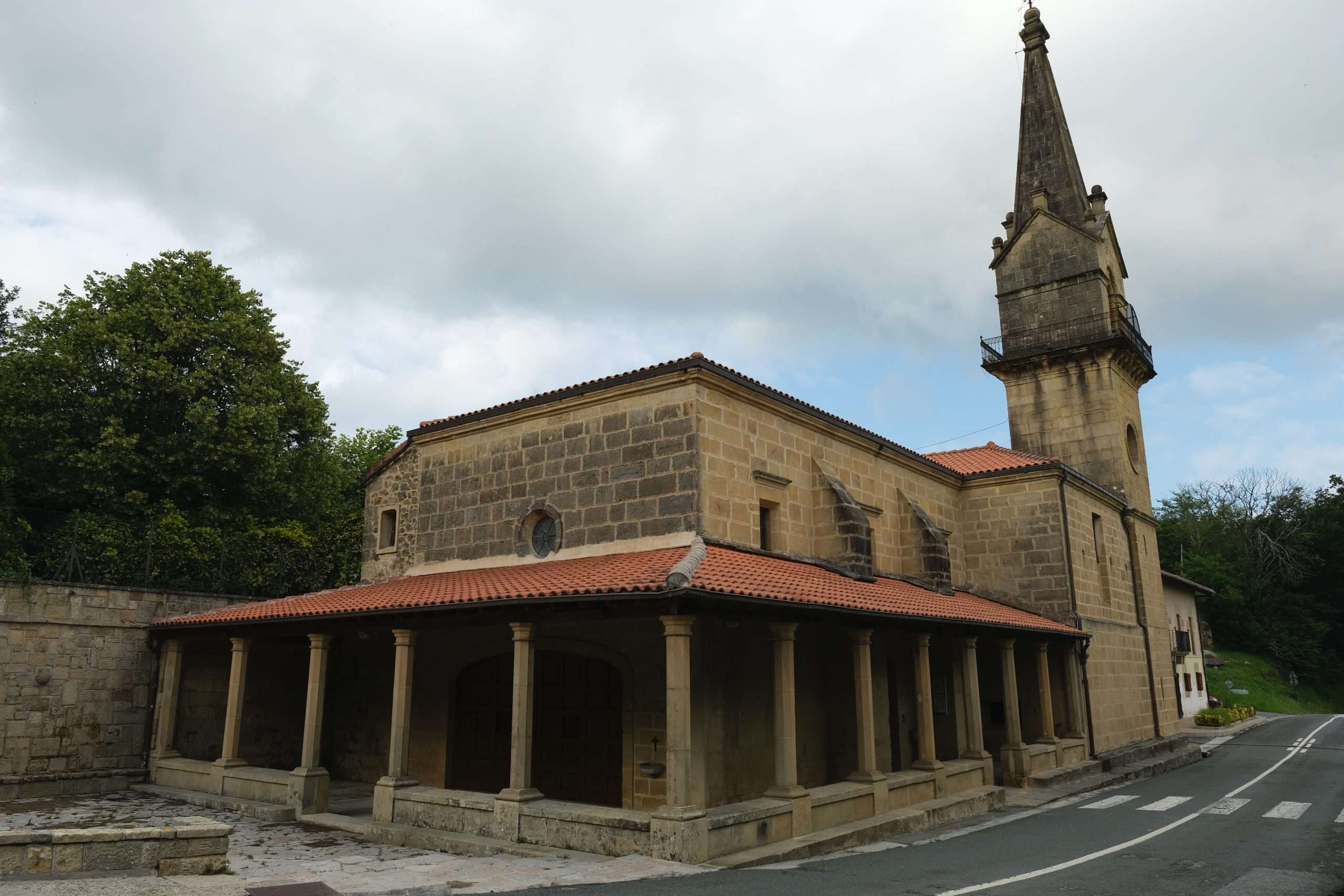
Dinner was on the waterfront, with a view of the coast of France.
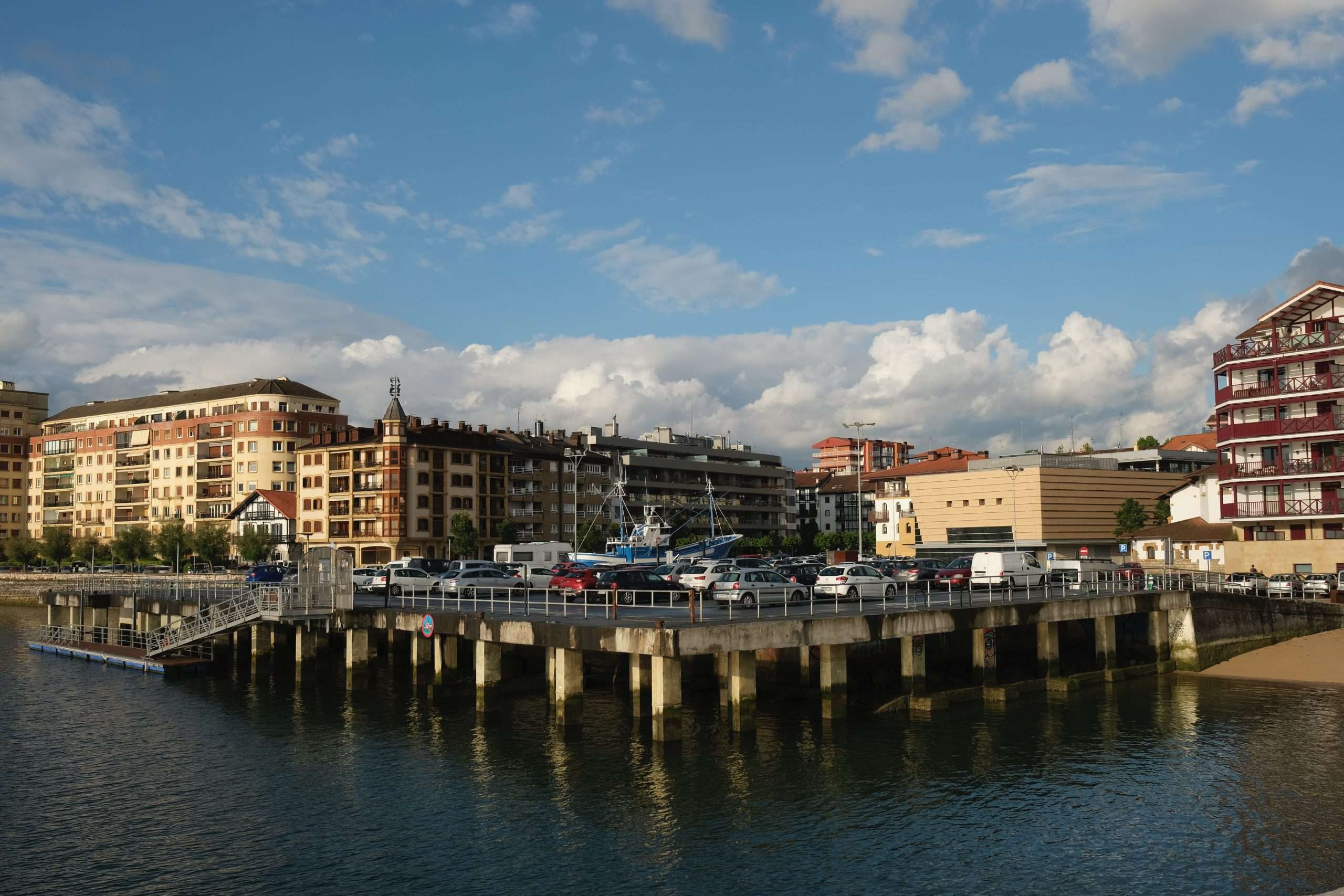
Hiking Jaizkibel – June 11, 2024
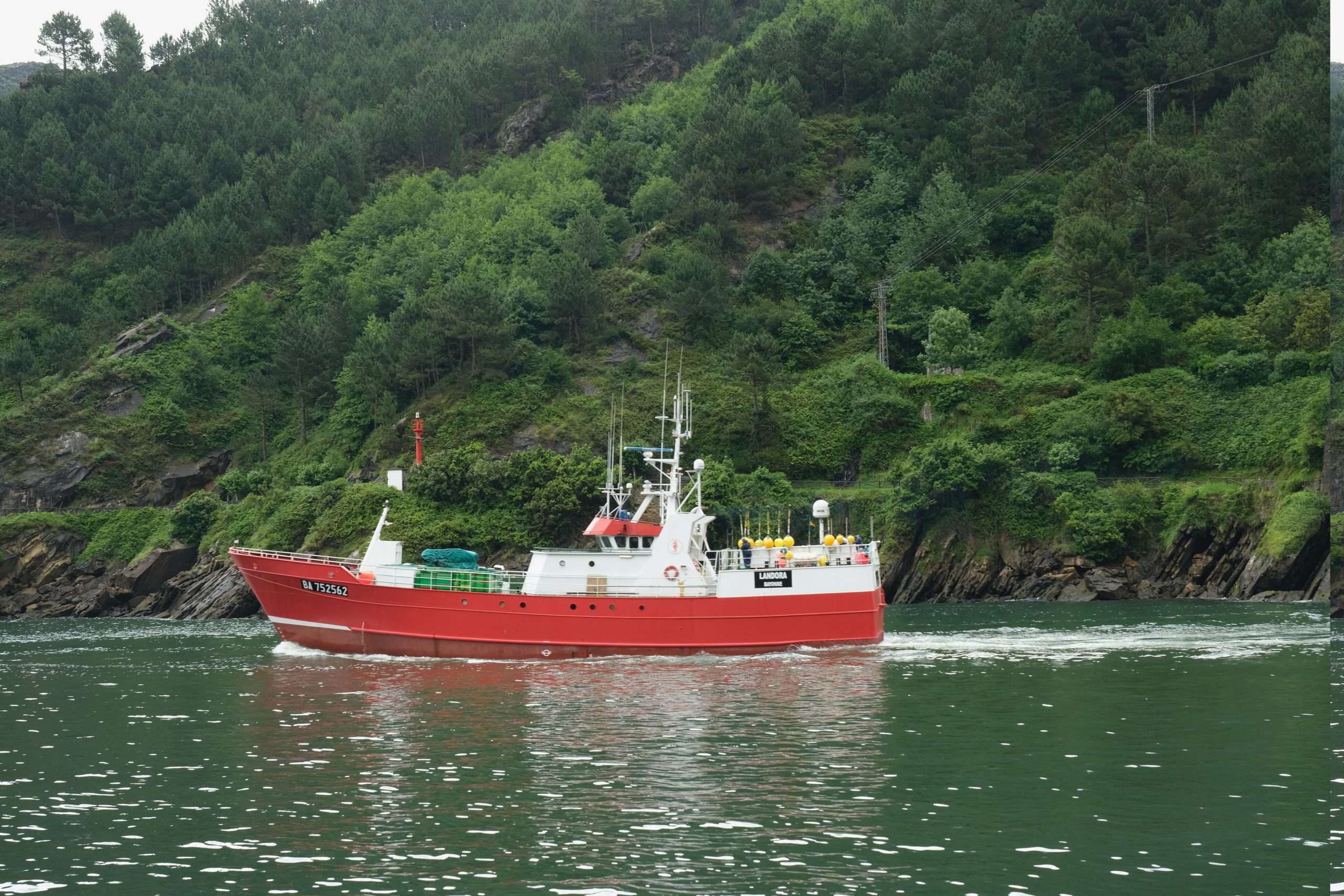
This morning, our driver Patxi drove us back to the Guadalupe Sanctuary to continue our hike. The hike began with a steep 100-meter climb, followed by a series of ups and downs along the ridge of Jaizkibel mountain, ending with a very steep descent. The steady drizzle made parts of the trail treacherous. Contrary to our expectations of high temperatures, the weather was cool, and the landscape lush and green. The 7.5-mile hike ended at the harbor of the fishing community of Pasaia, specifically on the San Juan/Donibane side. Pasaia is a picturesque town with small fishing boats, narrow cobbled streets, old stone buildings, and arches.
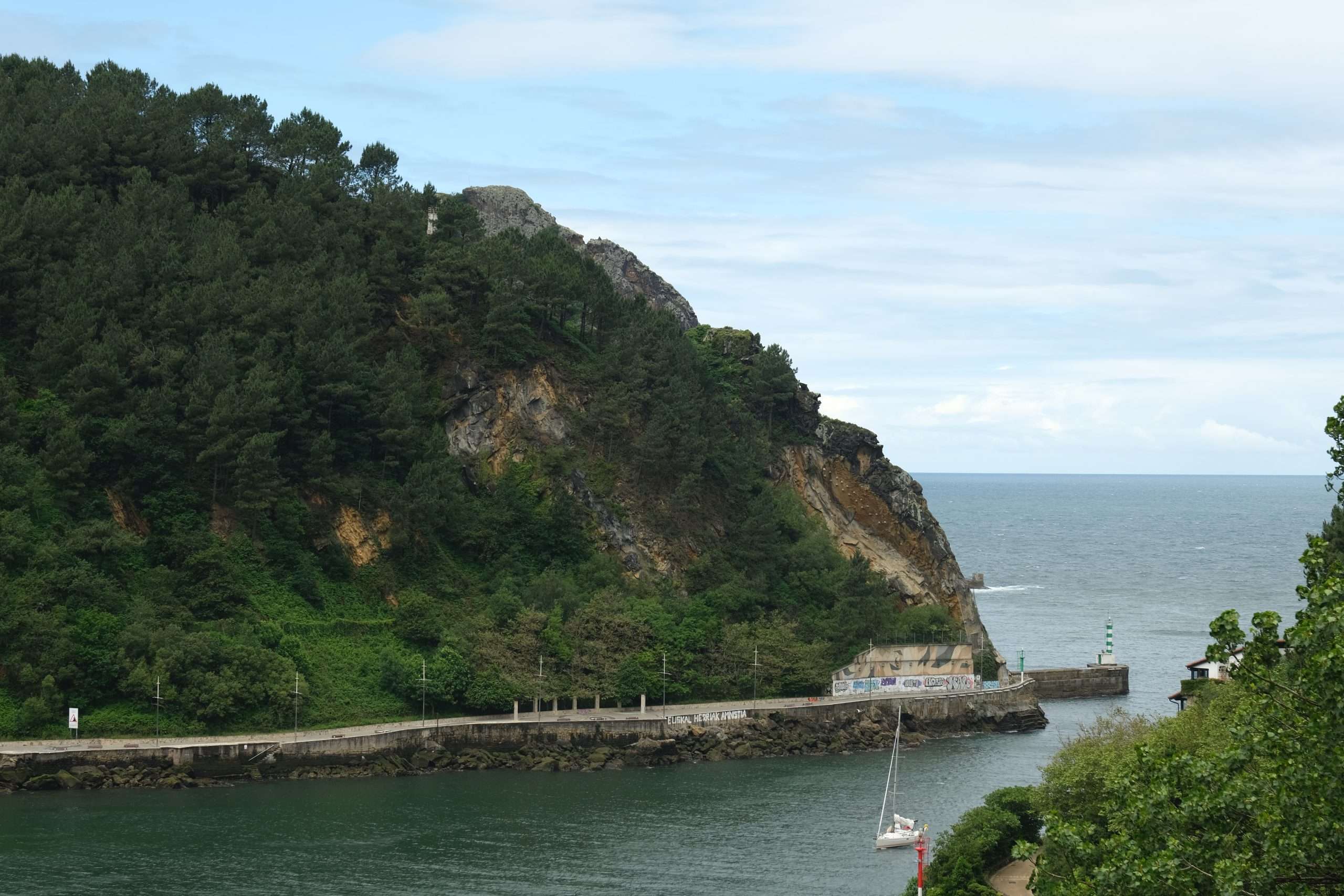
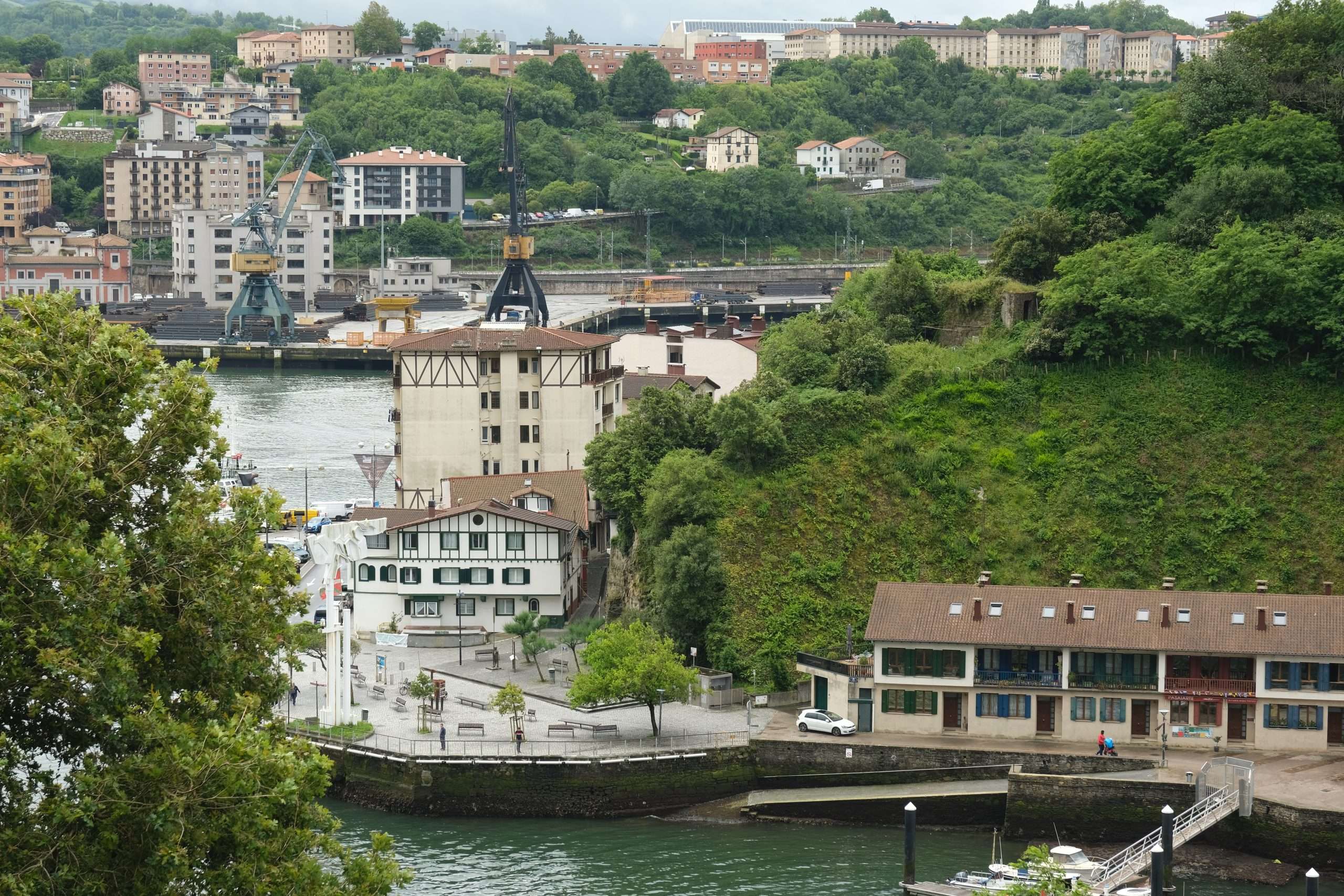
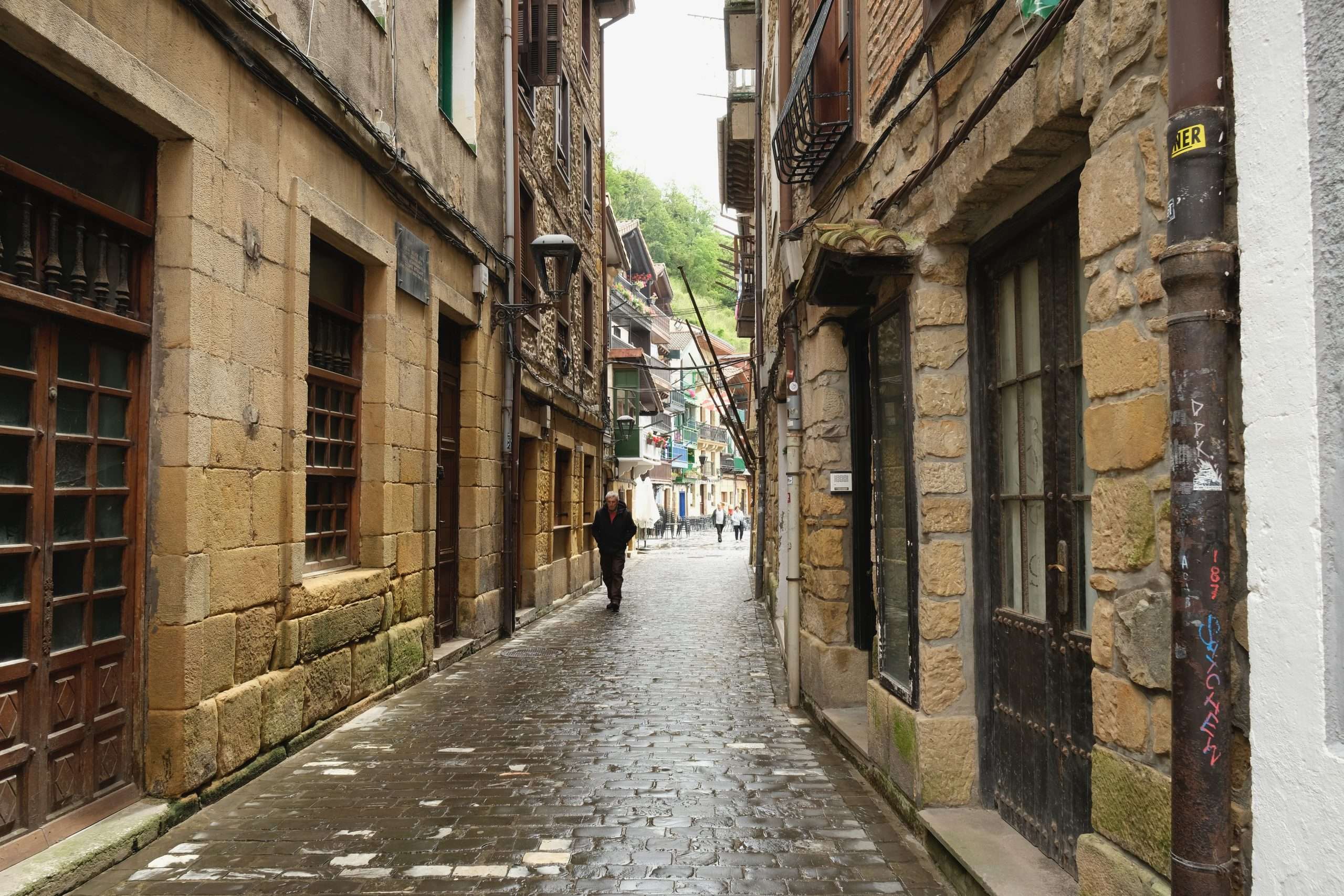
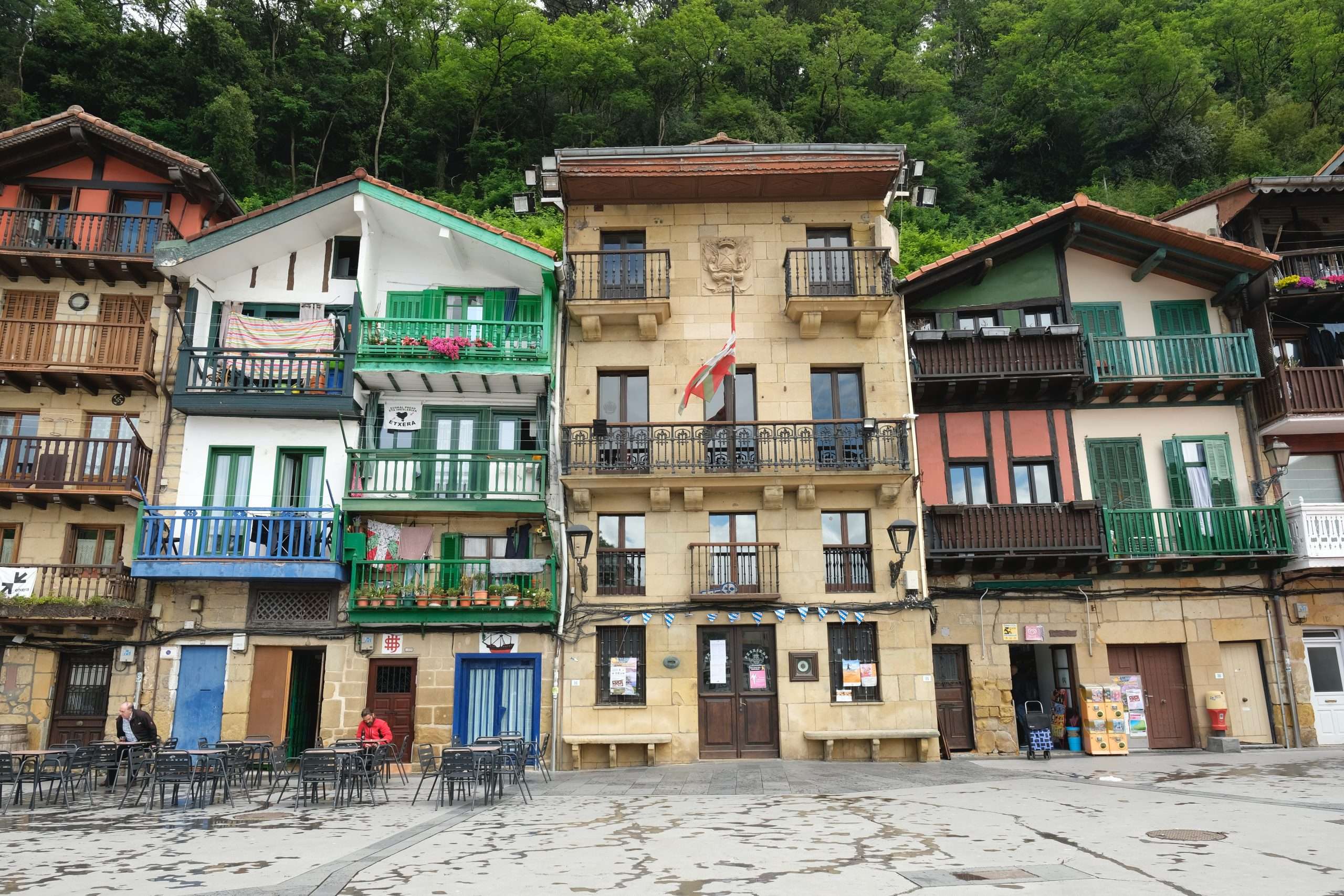
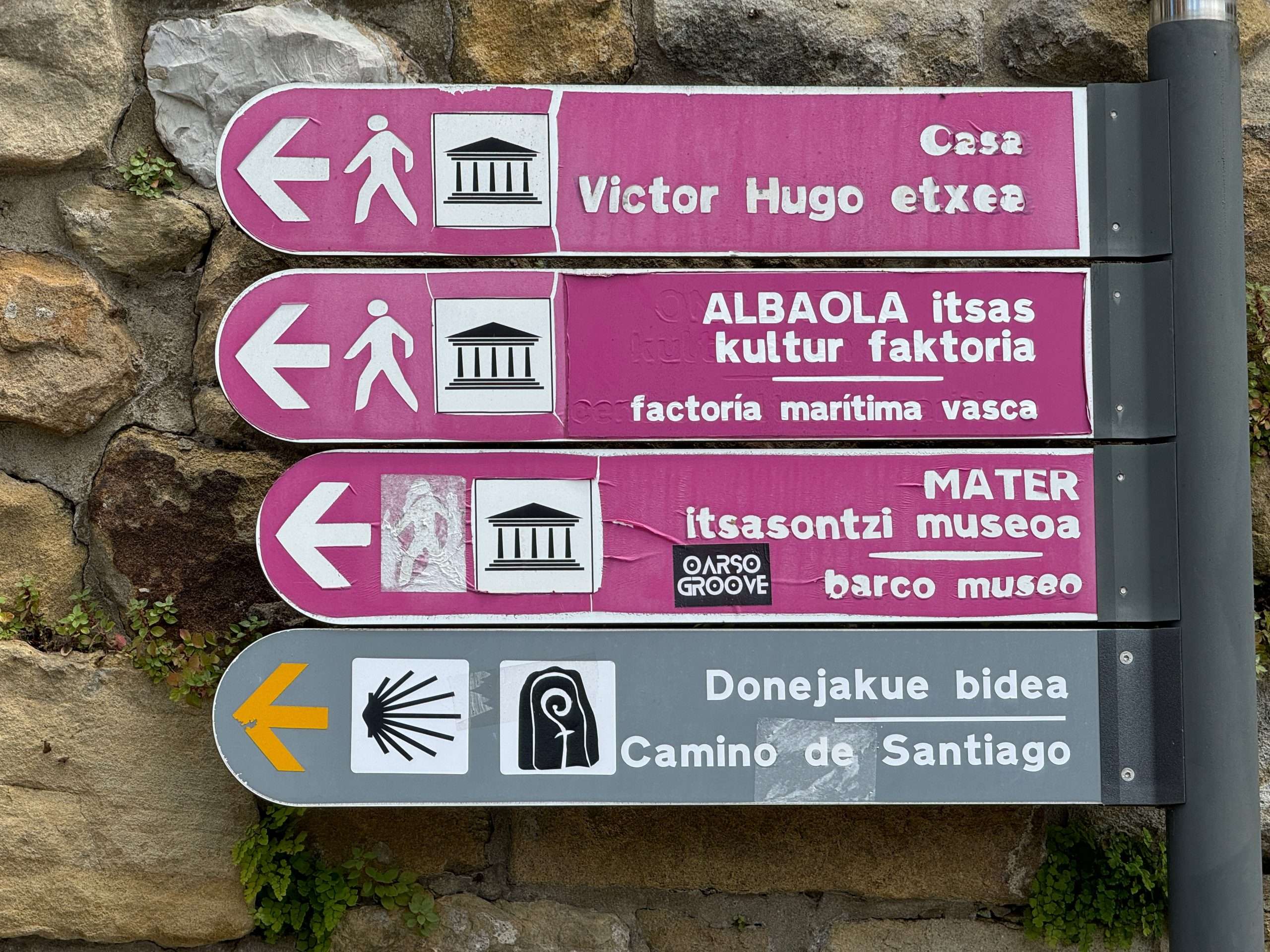
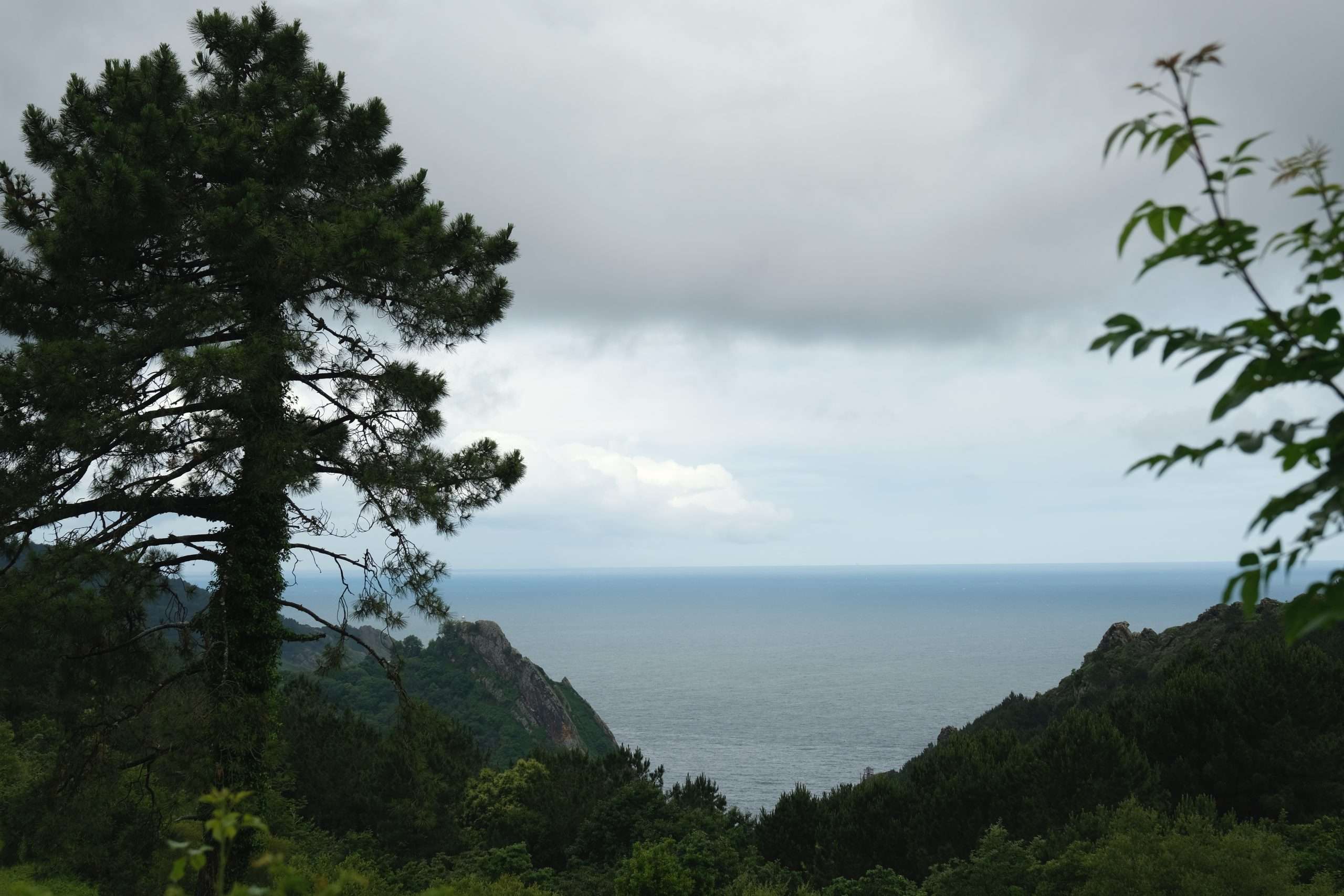
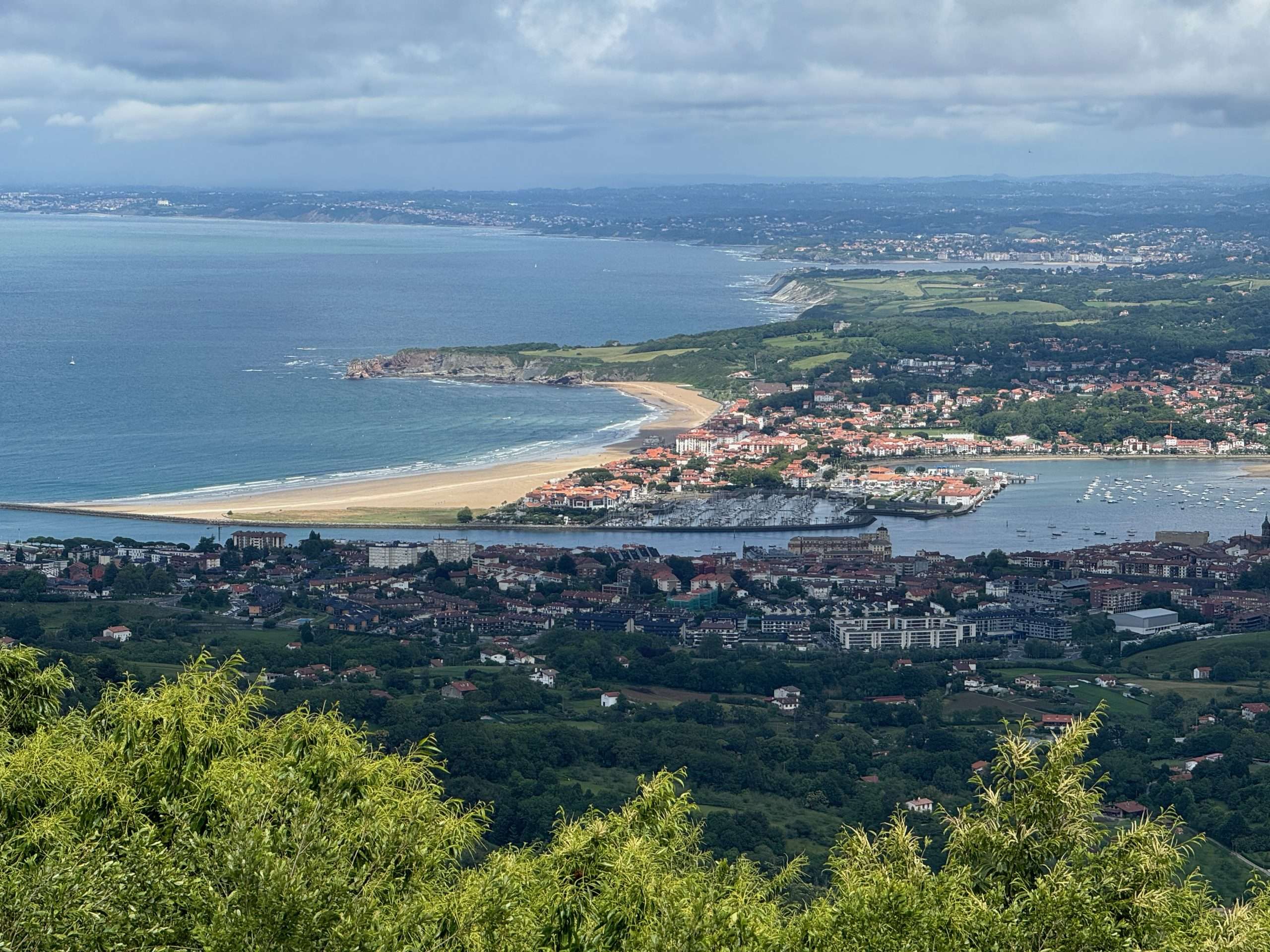
Near the end of our hike, we saw the house where Victor Hugo spent a summer in 1843. He was writing his travelogue “The Alps and Pyrenees” at the time, which was published in 1890. The house is now a museum commemorating his stay. Due to the rain, we skipped our picnic lunch and enjoyed a magnificent three-course meal at Ganbara Donibane, a restaurant favored by locals. After lunch, we drove to the other side of Jaizkibel mountain to view the French coast, the Pyrenees, and the Atlantic. The rest of the afternoon was free to visit the French town of Hendaye, accessible by ferry from Hondarribia.
Hiking from Pasajes de San Juan to San Sebastián – June 12, 2024
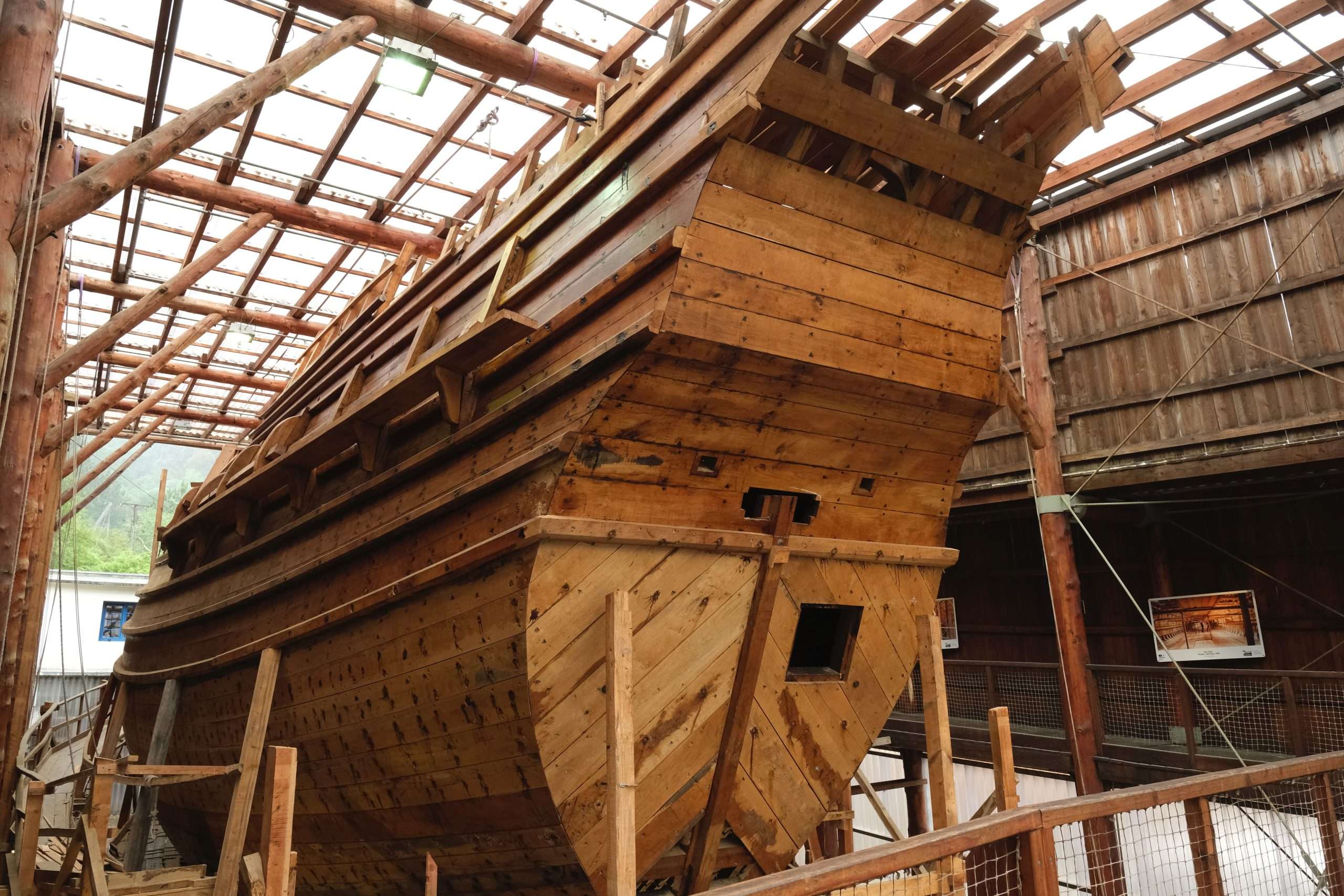
Patxi drove us to Pasajes de San Juan to start our next hike, a 7-mile trek to San Sebastián’s Ondarreta Beach. First, we took a short boat ride to the San Pedro side of Pasaia and visited the Albaola Boat Factory, which houses a museum and boat-building school. The Basque people were among the first to be involved in commercial whaling. One of their whaling boats, San Juan de Pasajes, was discovered in the waters of Red Bay, Canada. The wreckage of the 16th-century ship was found in 1978 and thoroughly studied. The information unearthed and a model of the ship are displayed in the museum. Of greater significance is a replica of the ship being built to scale, using the same methods and materials as in the 16th century, in the factory portion of the museum. Students come here to study these shipbuilding methods before they are completely lost.
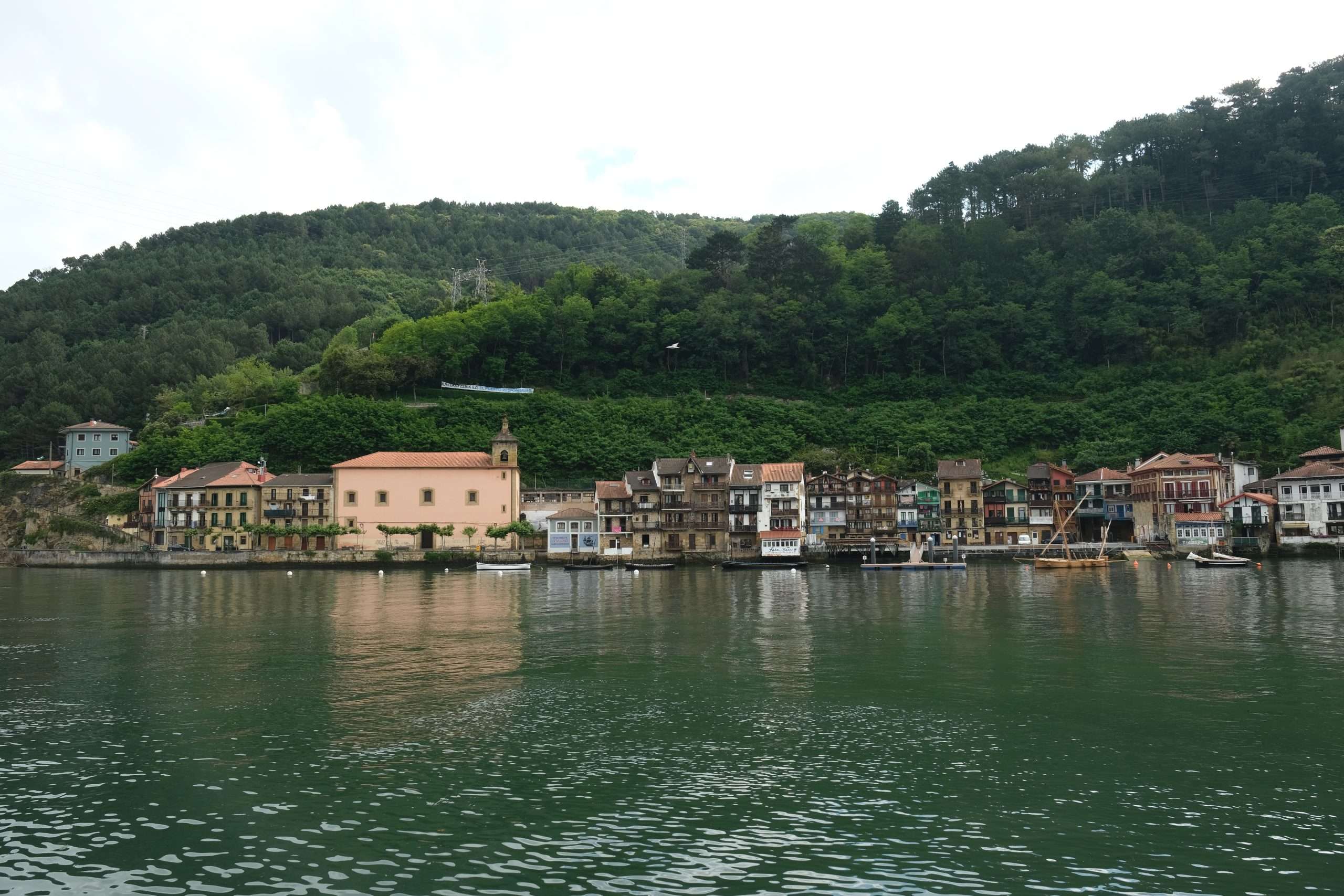
Shortly after leaving the museum, it started to rain. At the beginning of our hike, we encountered steep stairs that kept going, eventually leading us to a dirt trail. The landscape, dotted with old Basque stone farmhouses called caseríos, was beautiful. We stopped to have a picnic lunch at an Albergue with a covered terrace overlooking San Sebastián. It started to rain in earnest. Immediately after lunch, there was a steep drop which, given the weather conditions, we elected to sit out. We picked up the trail again at San Sebastián’s Zurriola Beach and then walked on to Ondarreta Beach and our hotel. Along the way, Hectór, Jon, and Nagore pointed out all the spots to visit: where to get the best pintxos, burnt Basque cheesecake, and gelato; the two main churches, which happen to be across from one another but at two different ends of the town; and the town hall, which was formerly a casino.
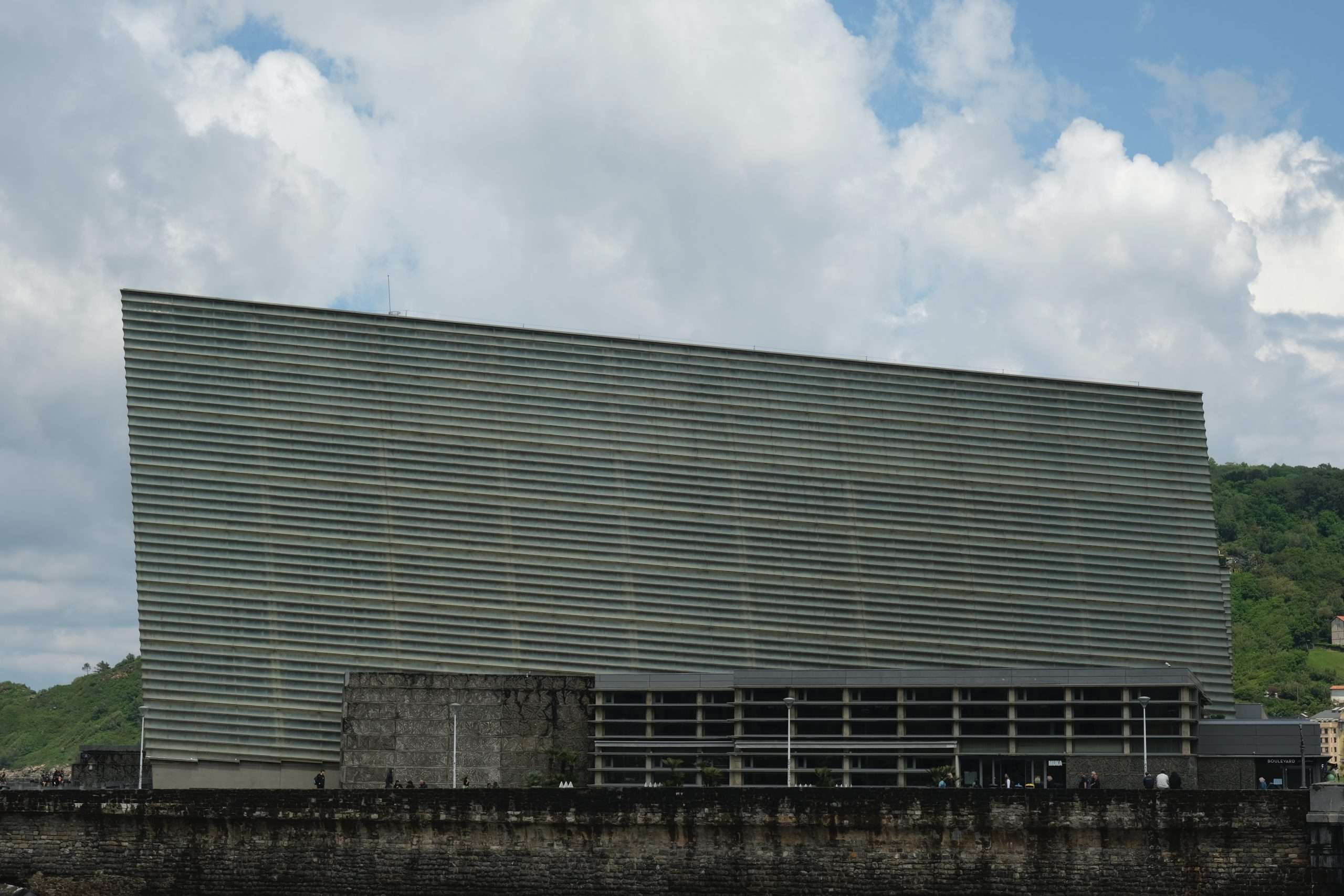
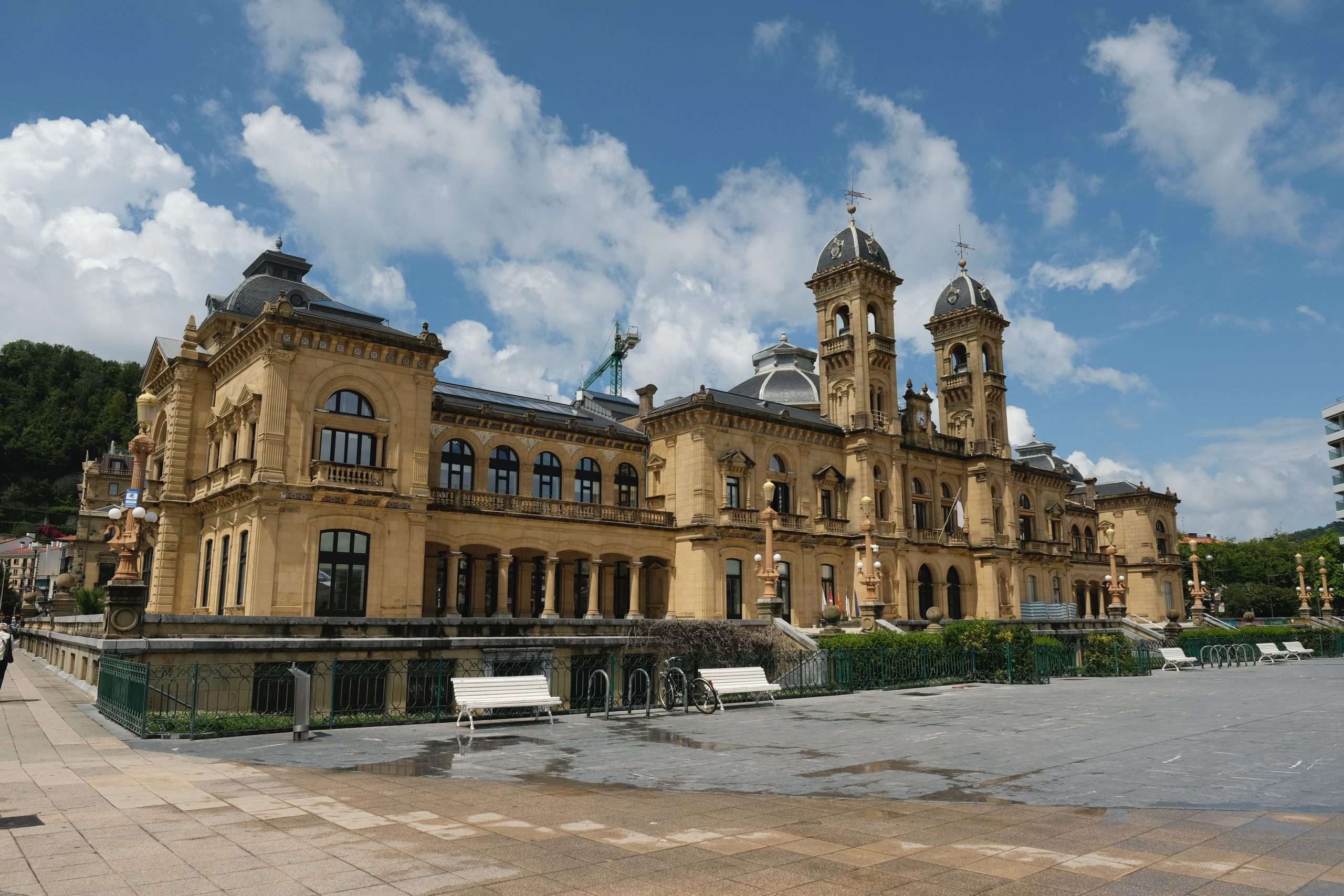
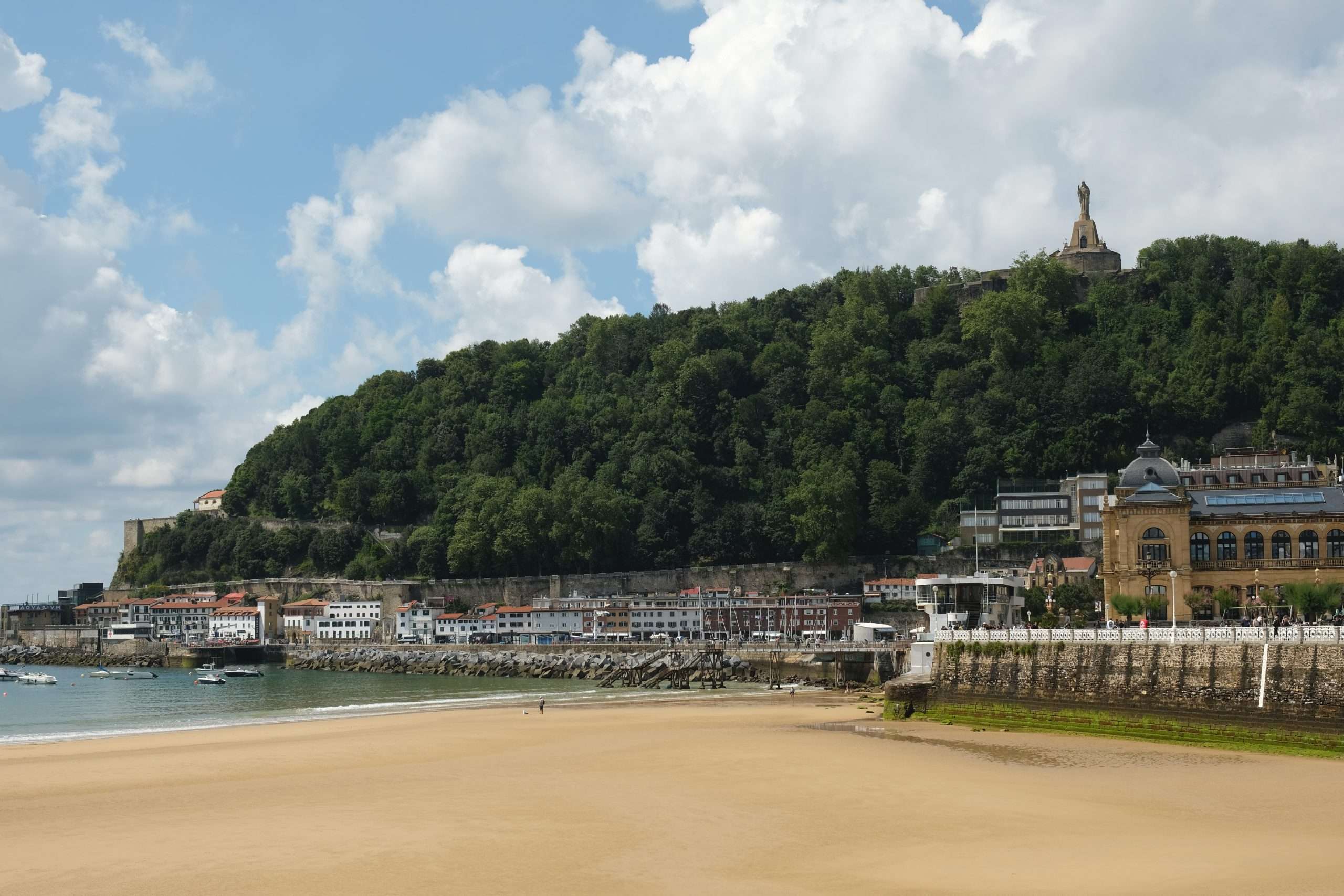
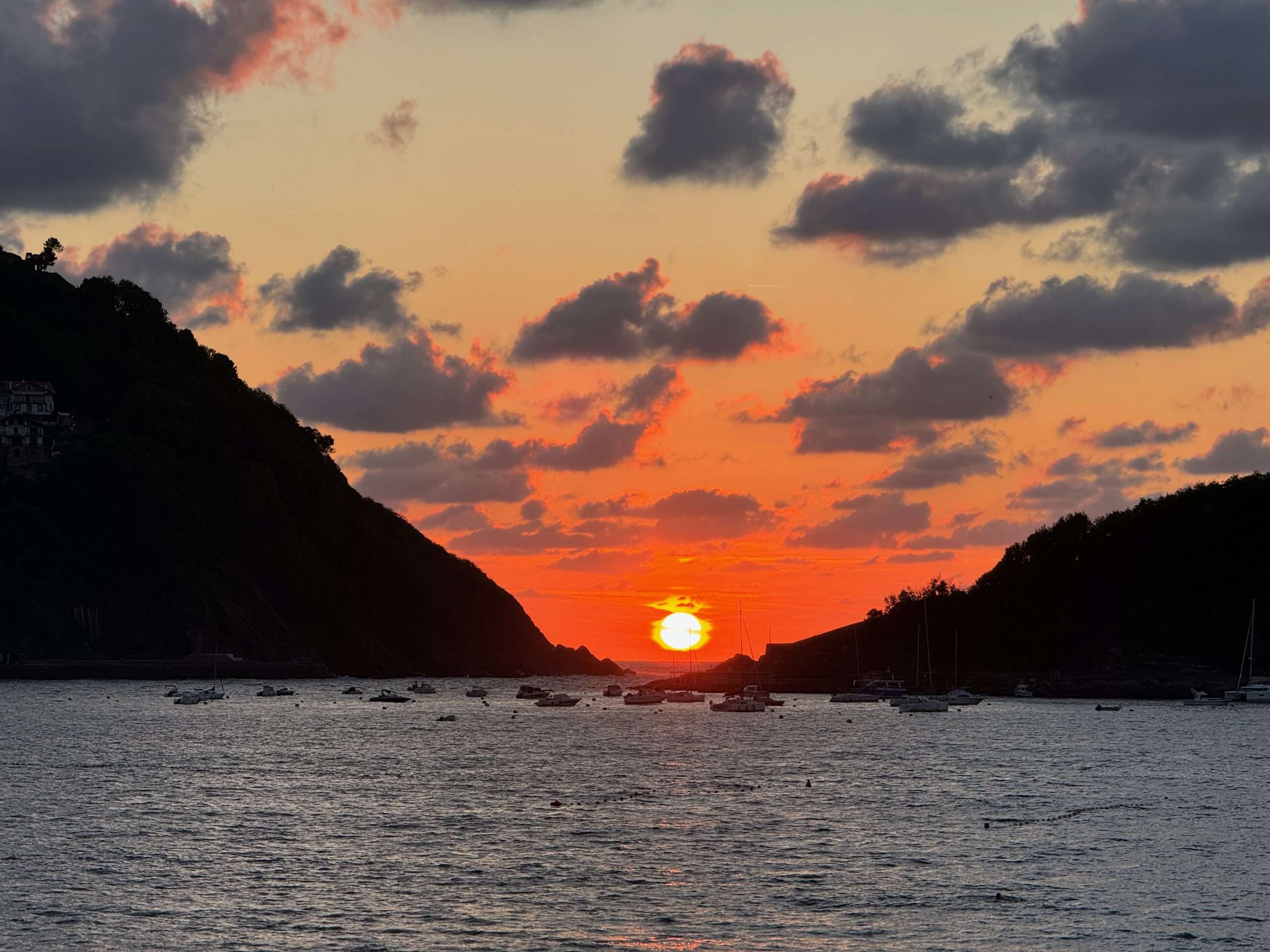
Dinner this evening was on La Concha Beach at La Perla, overlooking the sea. The food was delicious.
Sightseeing in San Sebastian – June 13, 2024
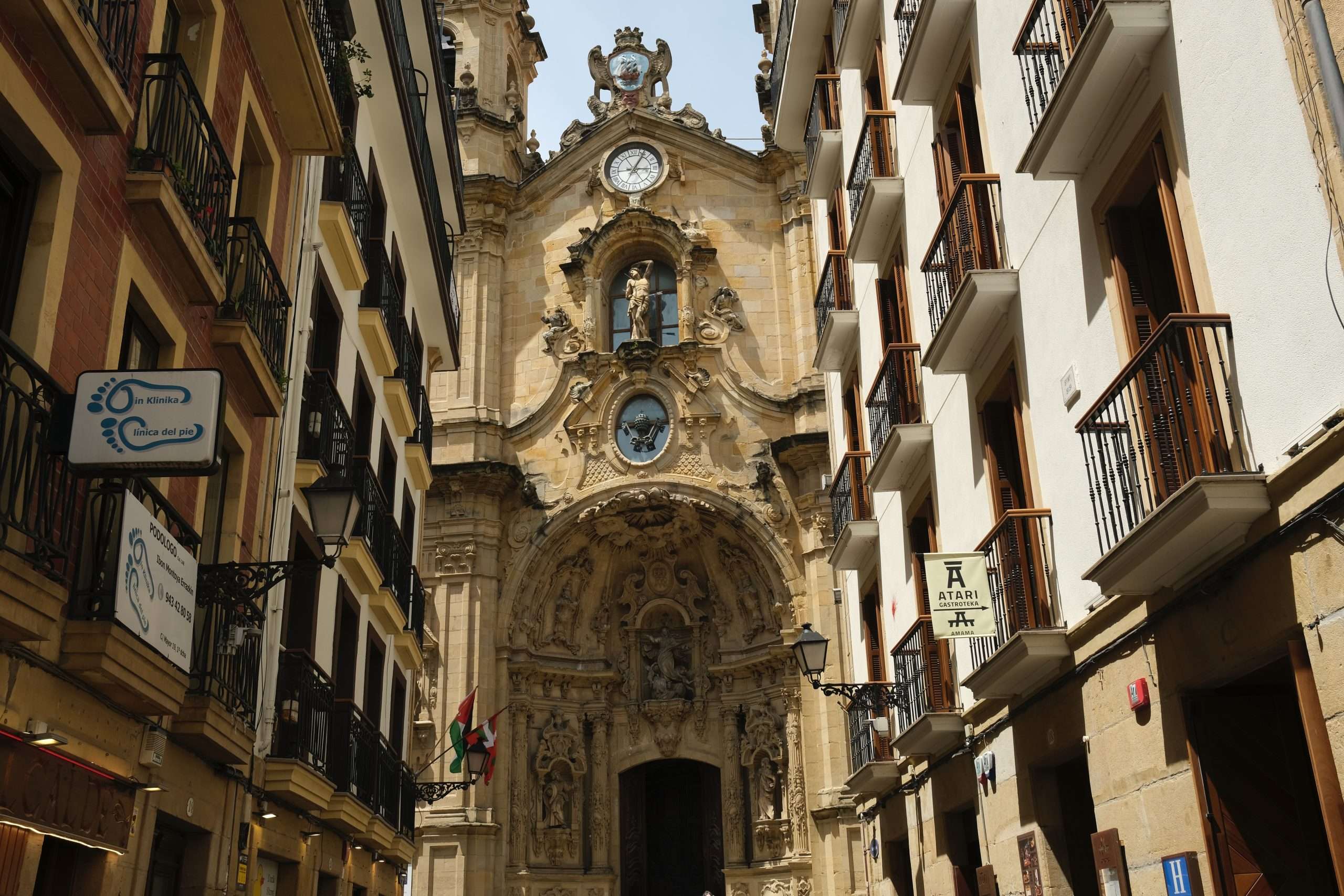
We decided to skip the hike today and explore the town instead. After breakfast, we walked along La Concha beach promenade, enjoying views of Monte Igueldo and Monte Urgull. In the Old Quarter, we started with the Basilica of Santa Maria del Coro, which was unfortunately closed. We moved on and discovered a Dora Salazar sculpture honoring women’s contributions to the city’s reconstruction after the 1813 fire during the Peninsula War. St. Vincent’s Church was open, and strangely someone was practicing secular music on the organ.
Next, we visited Bretxa market to see the various stalls. For lunch, we had pintxos at Gandarias and Basque cheesecake at La Viña (in 2021 The New York Times dubbed it the Flavor of the Year although the establishment has been making this cheesecake since the 1980s). After lunch, we returned to Santa Maria Church, got our pilgrim passports stamped, and saw another Chillida alabaster sculpture, the Cross.
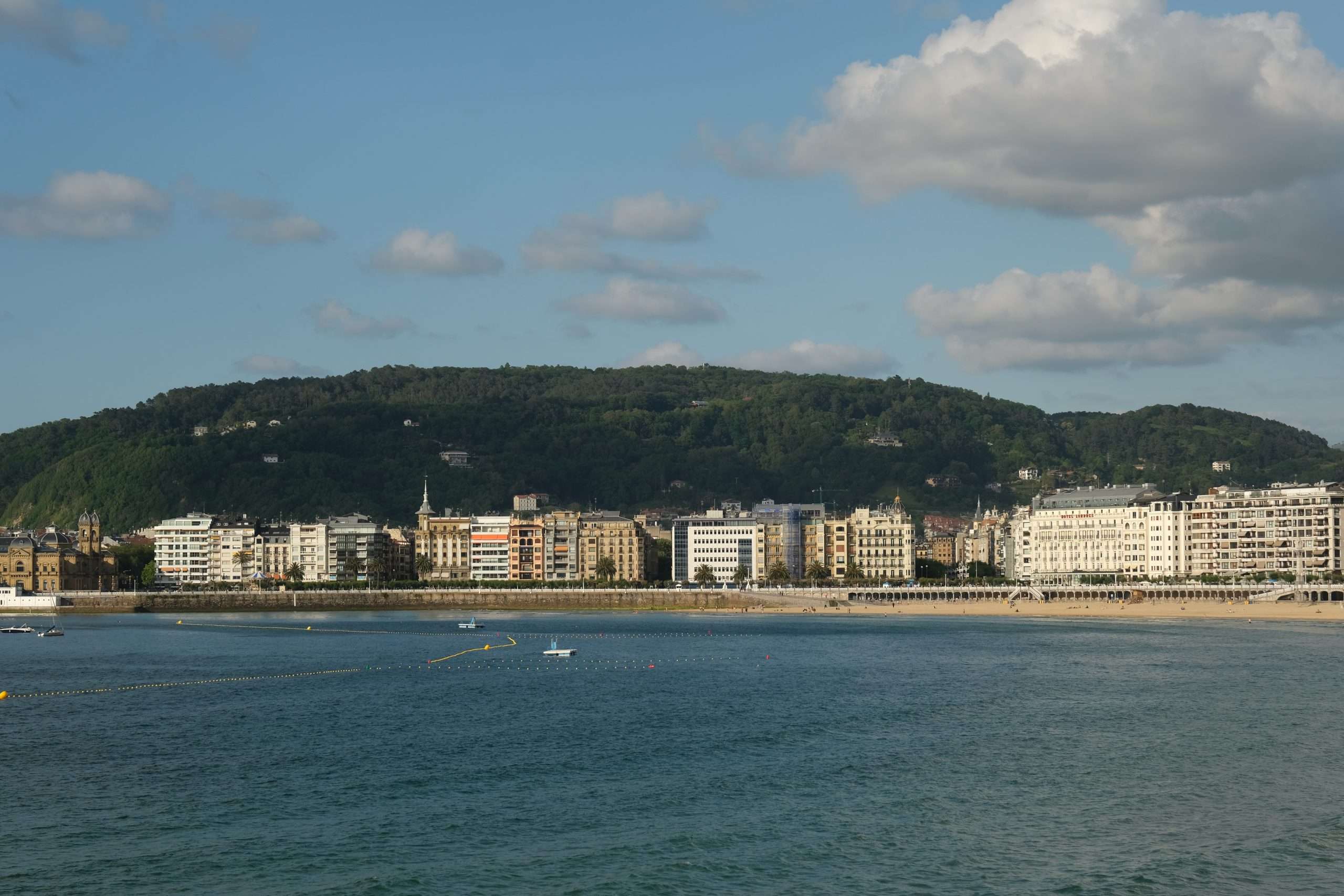
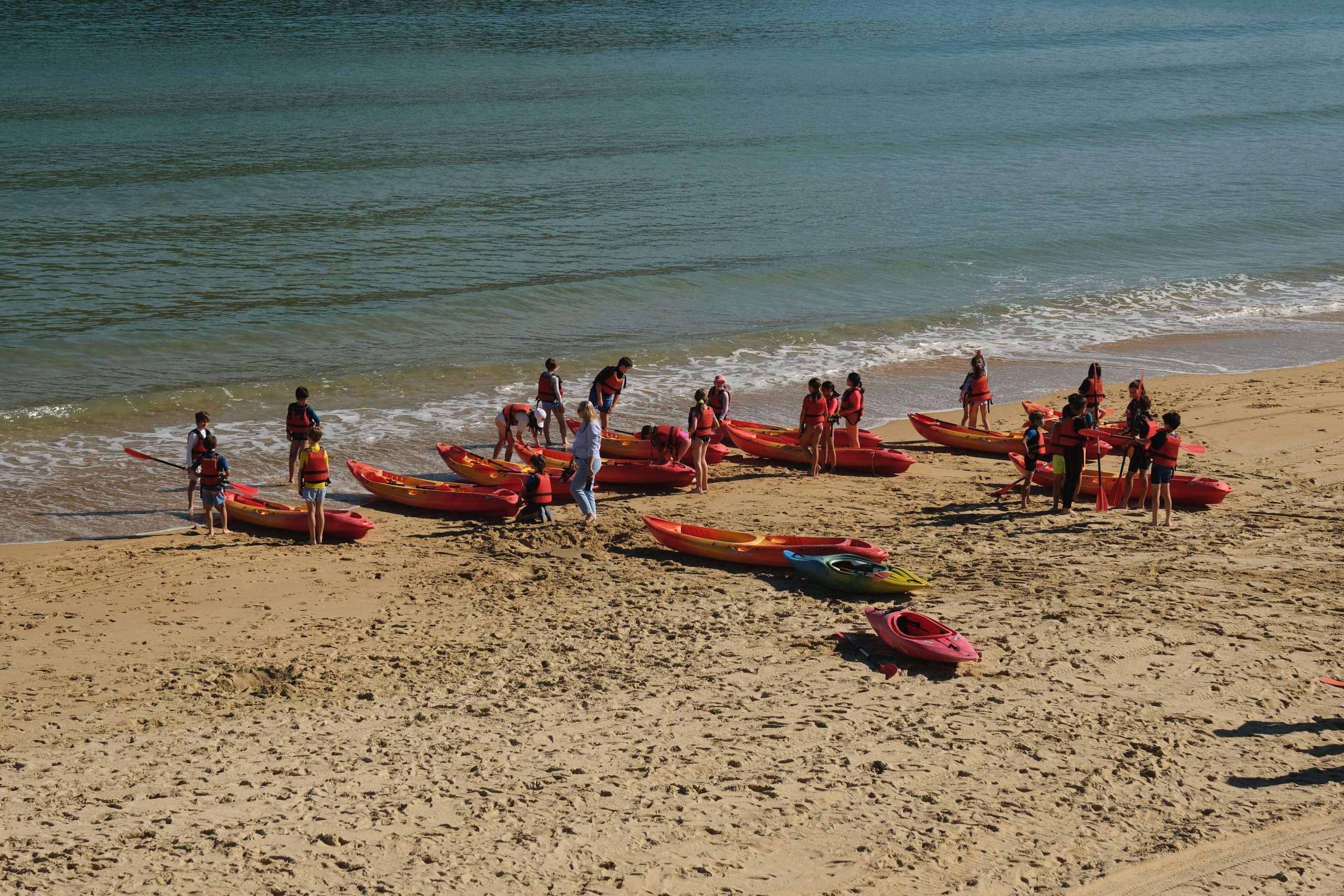
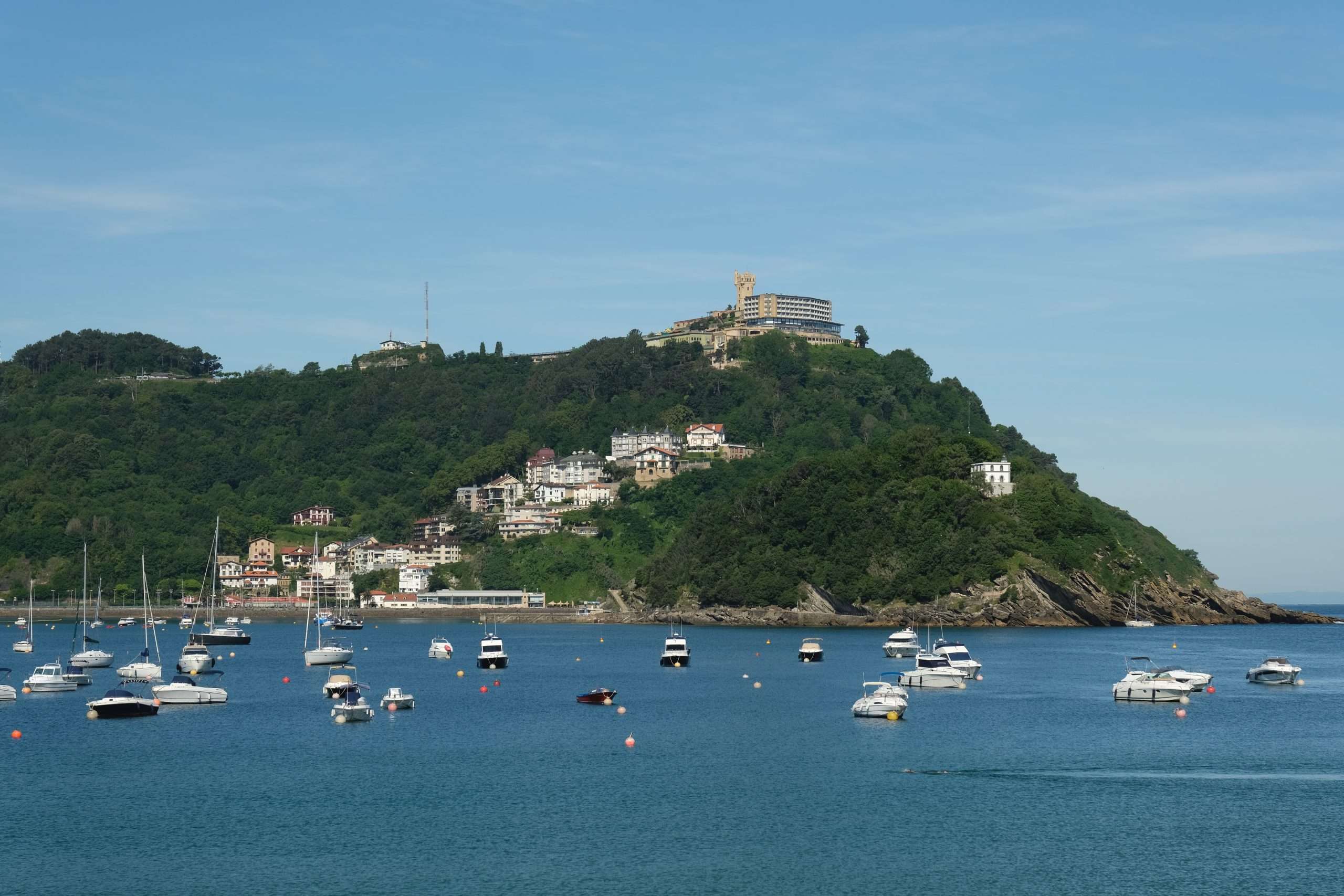
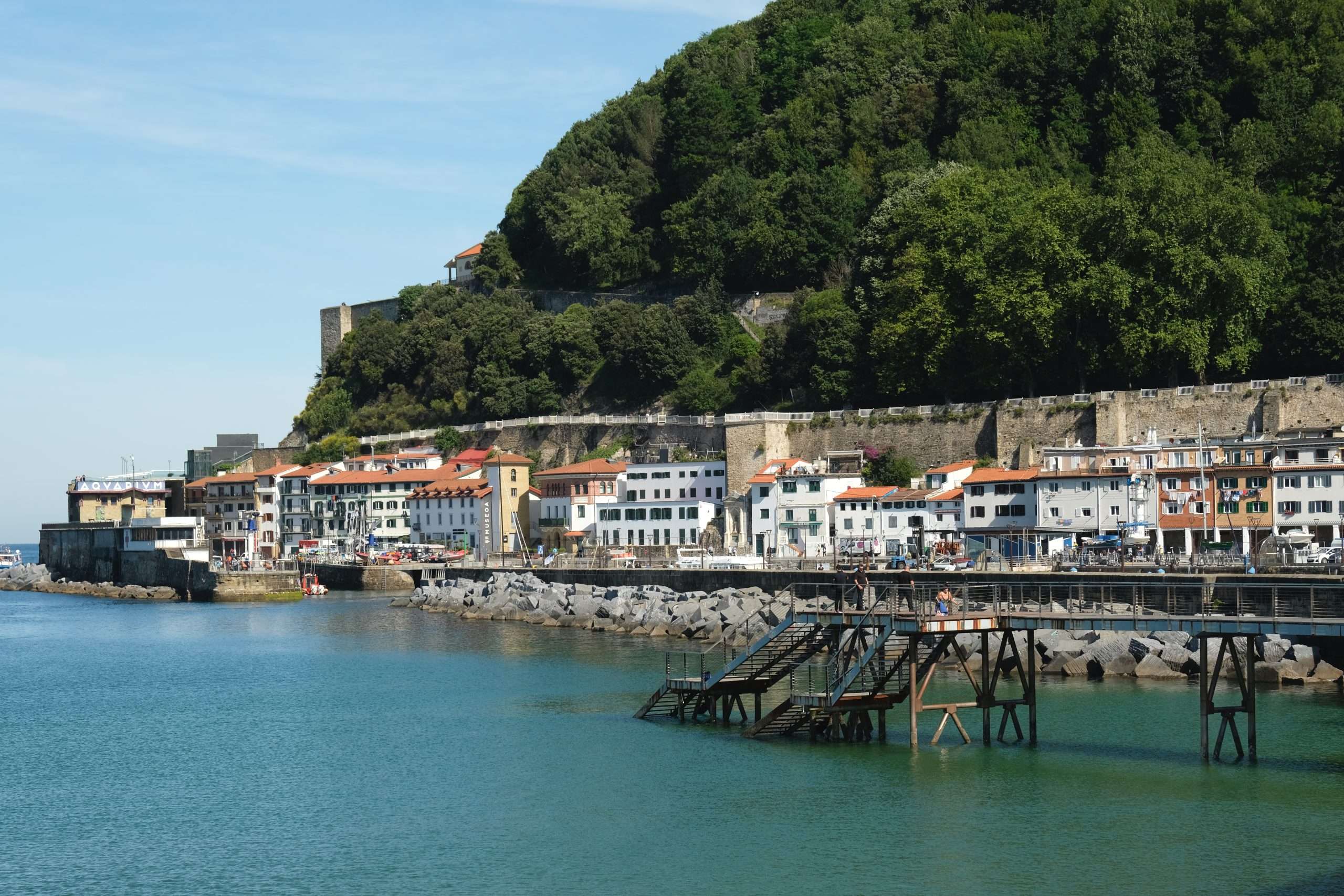
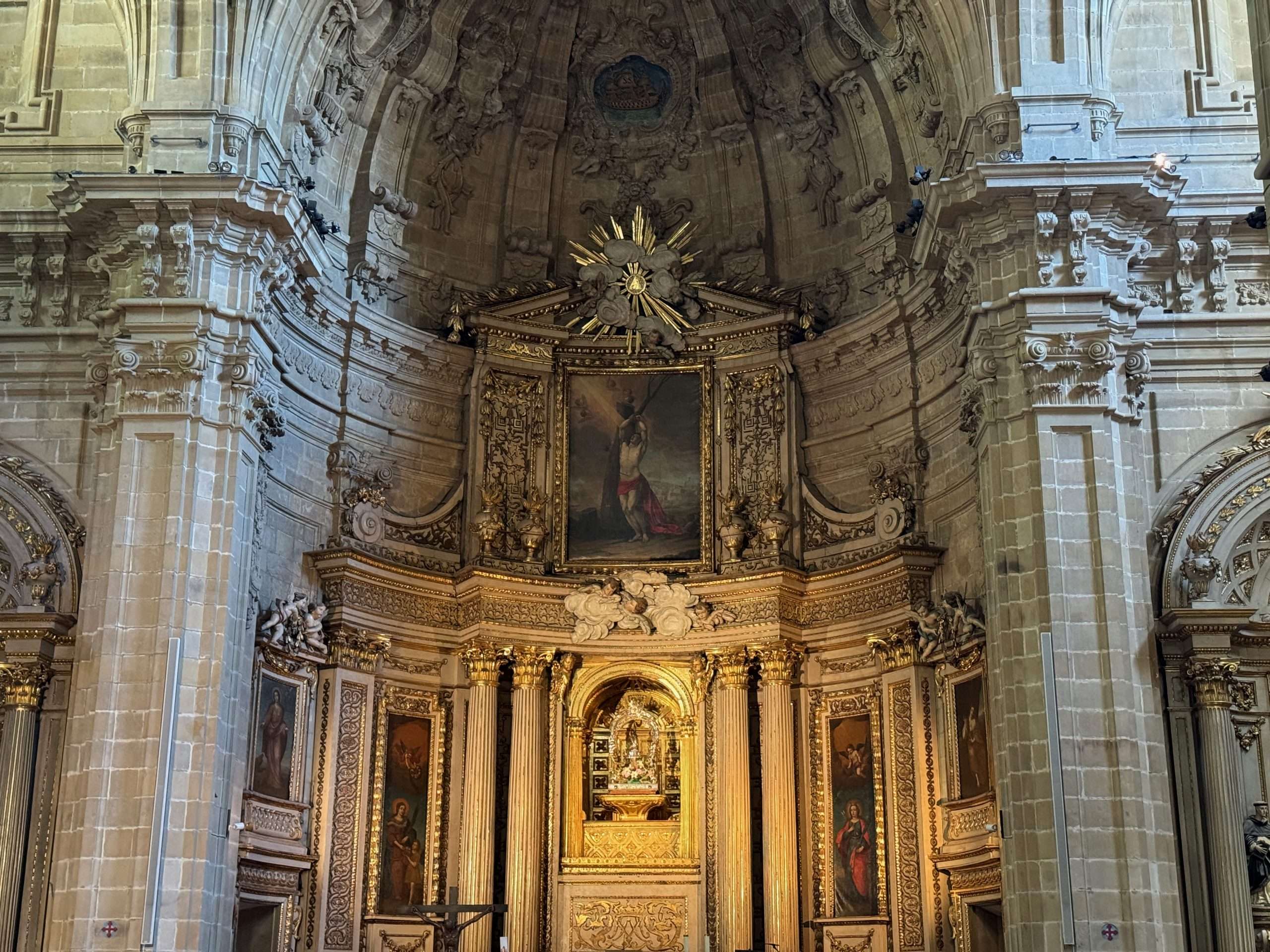
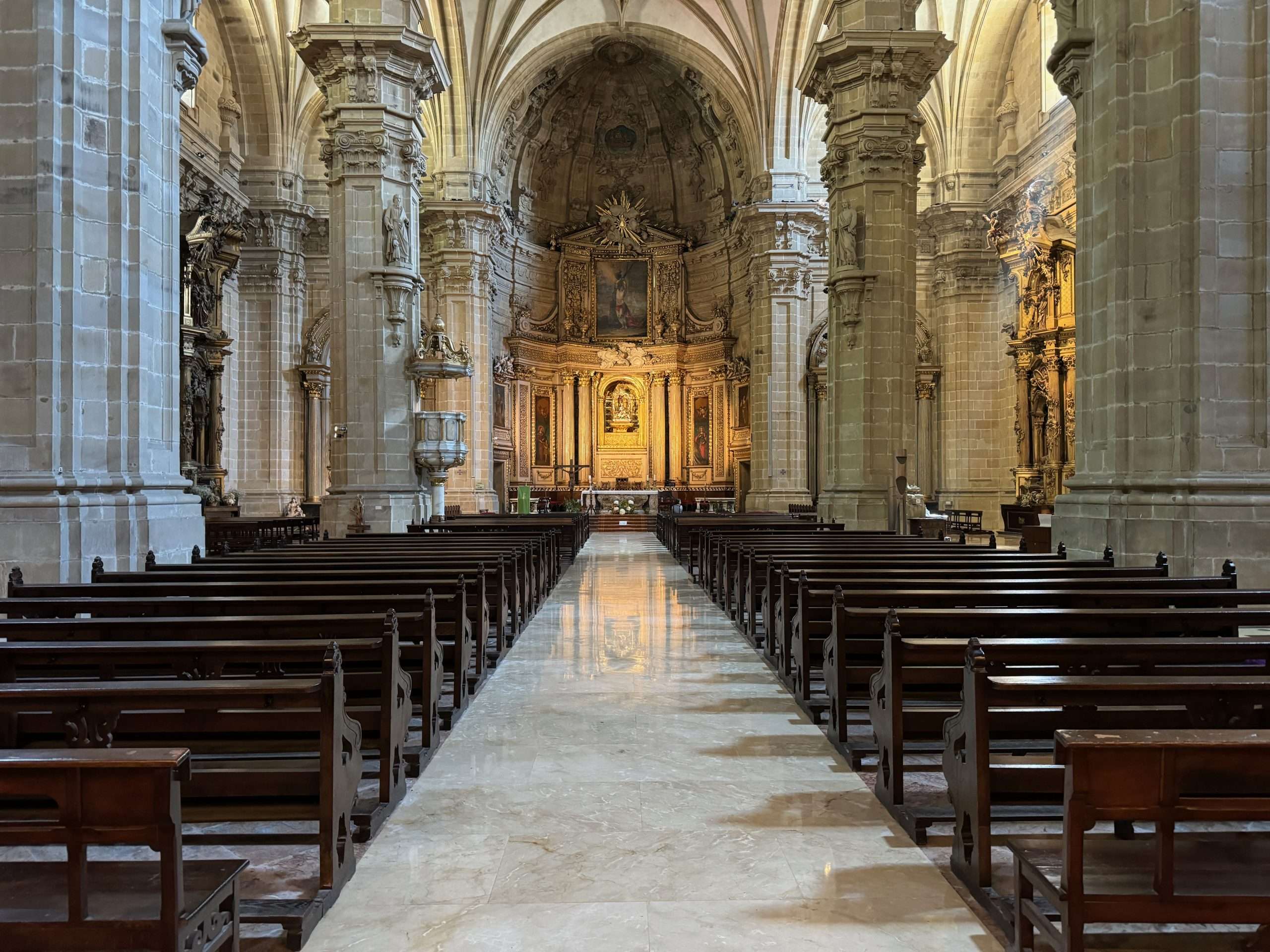
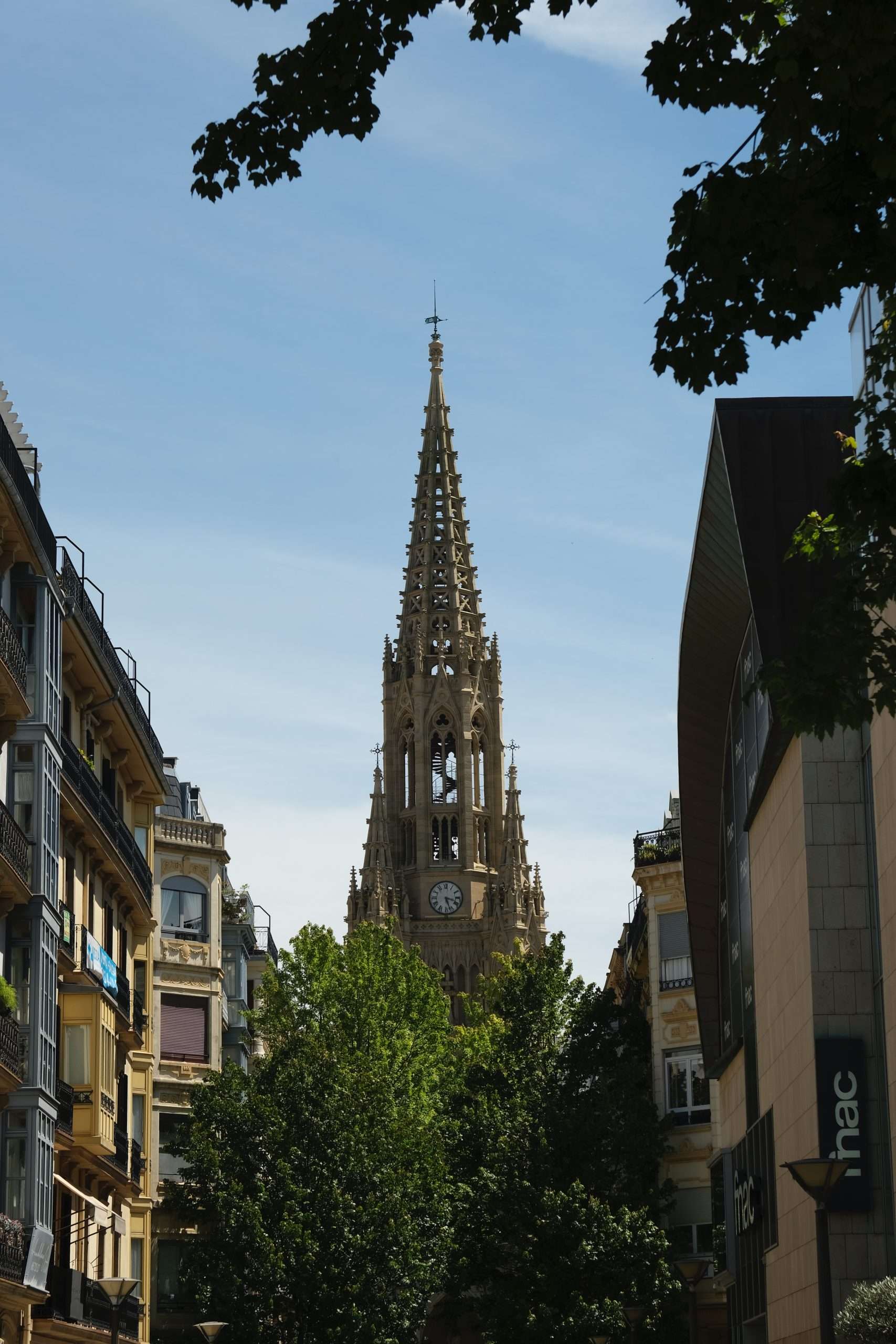
We then visited the San Telmo Museum, housed in a former Dominican monastery with 21st-century extensions. We were particularly interested in the 11 Josep Maria Sert varnish-on-metal murals depicting the Basque people and the old Basque kitchen. Our last stop was the Catedral del Buen Pastor, perfectly aligned with Santa Maria Basilica. It was closed for siesta, so we walked back to our hotel along the promenade. Despite opting for a break from hiking, we walked a lot.
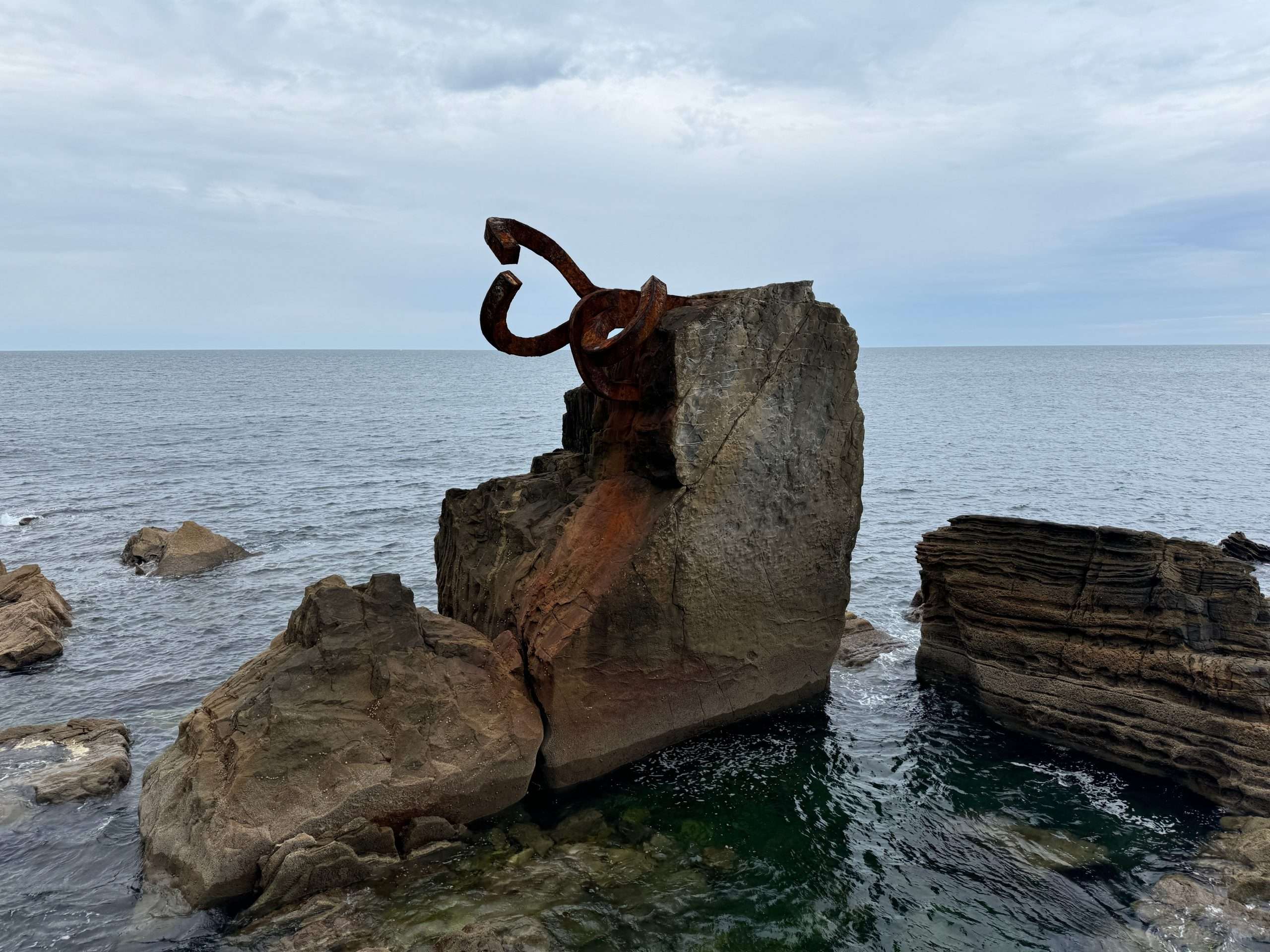
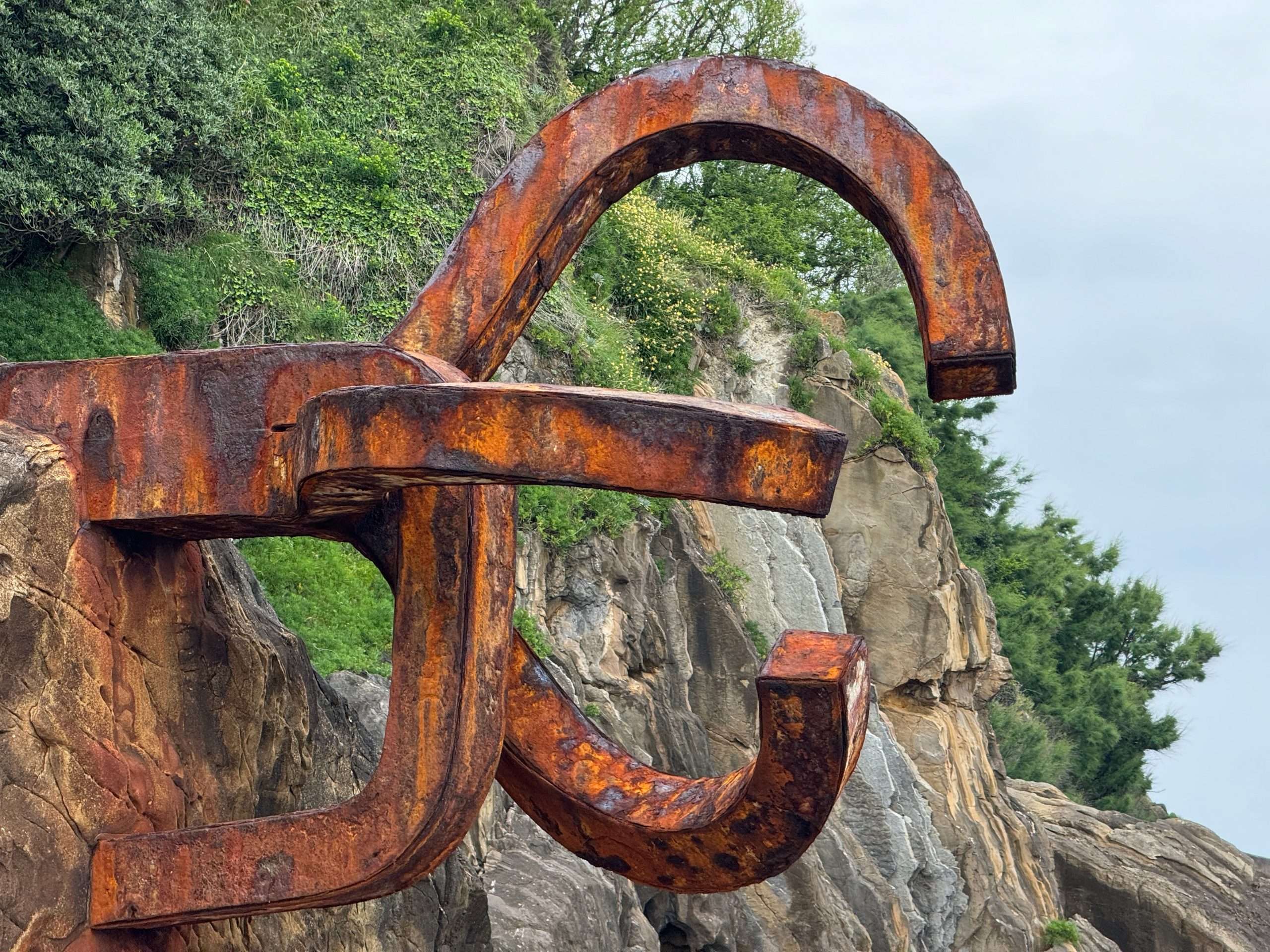
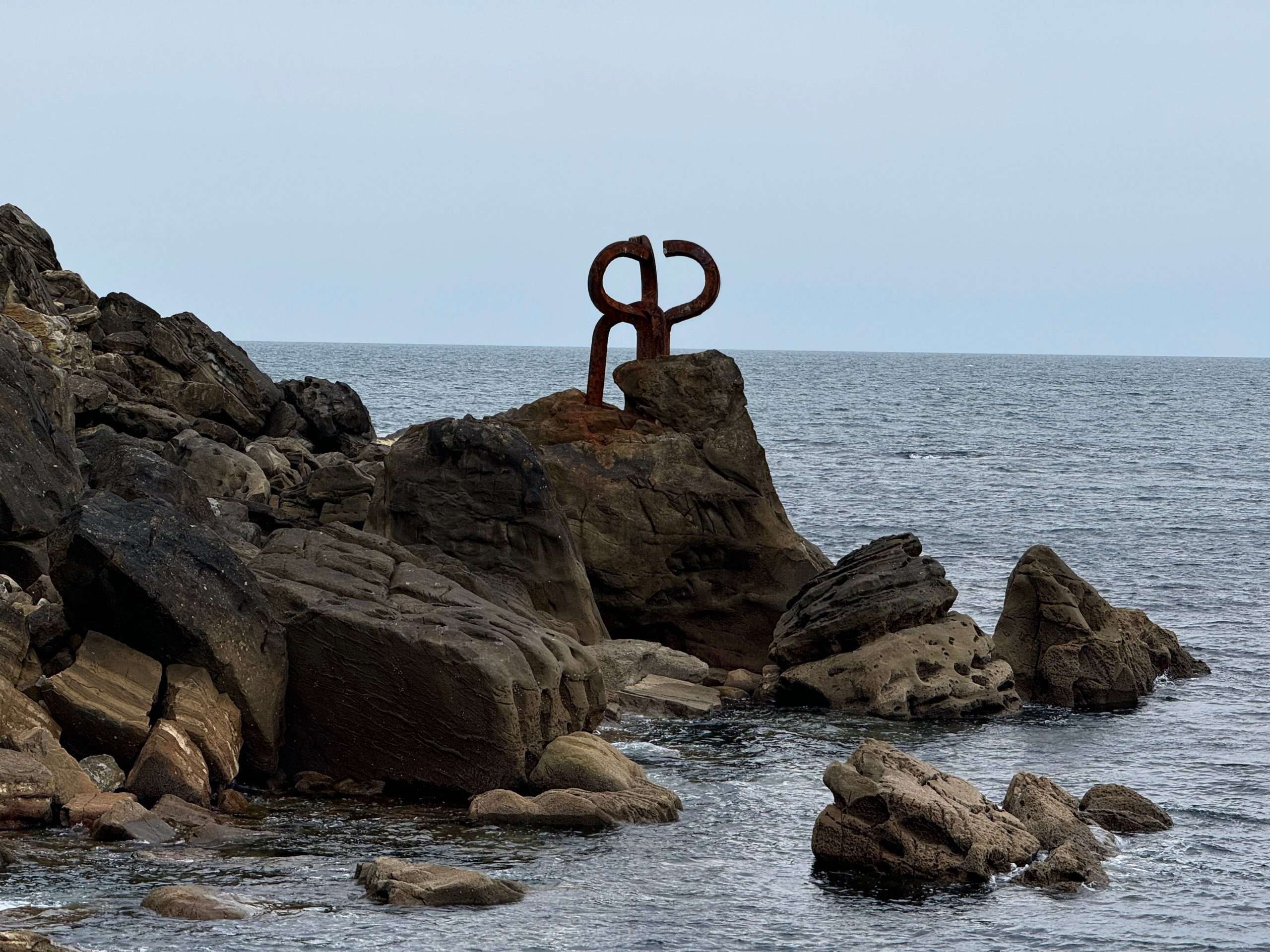
In the evening, we visited Chillida’s Comb of the Wind, a set of steel sculptures embedded in the rocks that rise out of the Cantabrian Sea at the far end of Ondarreta Beach. On the way back, Christabel fell and needed medical attention. A visit to a private hospital and a few X-rays later, she was released with a magnificent black eye. This was our first experience needing urgent medical help abroad, and many people in San Sebastián were incredibly kind, helping us with the language barrier and transportation.
Something to note about San Sebastián, it has many eating clubs. These clubs are for men only. Our guide Hectór belongs to one such club in Barcelona. If we recall correctly, he said his club meets once every few months and in pairs take it in turn to cook for the rest of the membership. They also pick a topic for discussion. We thought this was a neat idea.
Scenic Hike from Orio to Zumaia – June 14, 2024
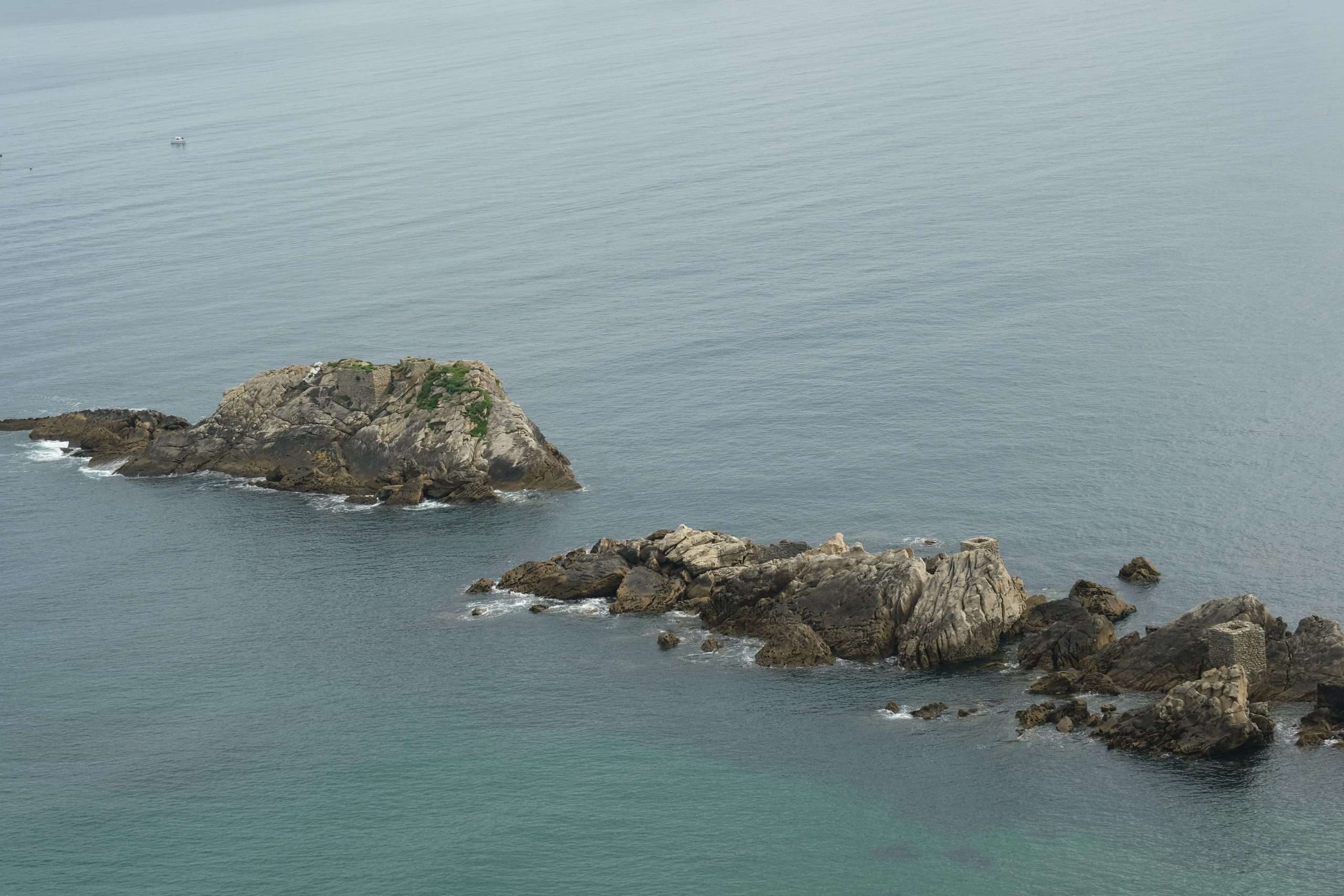
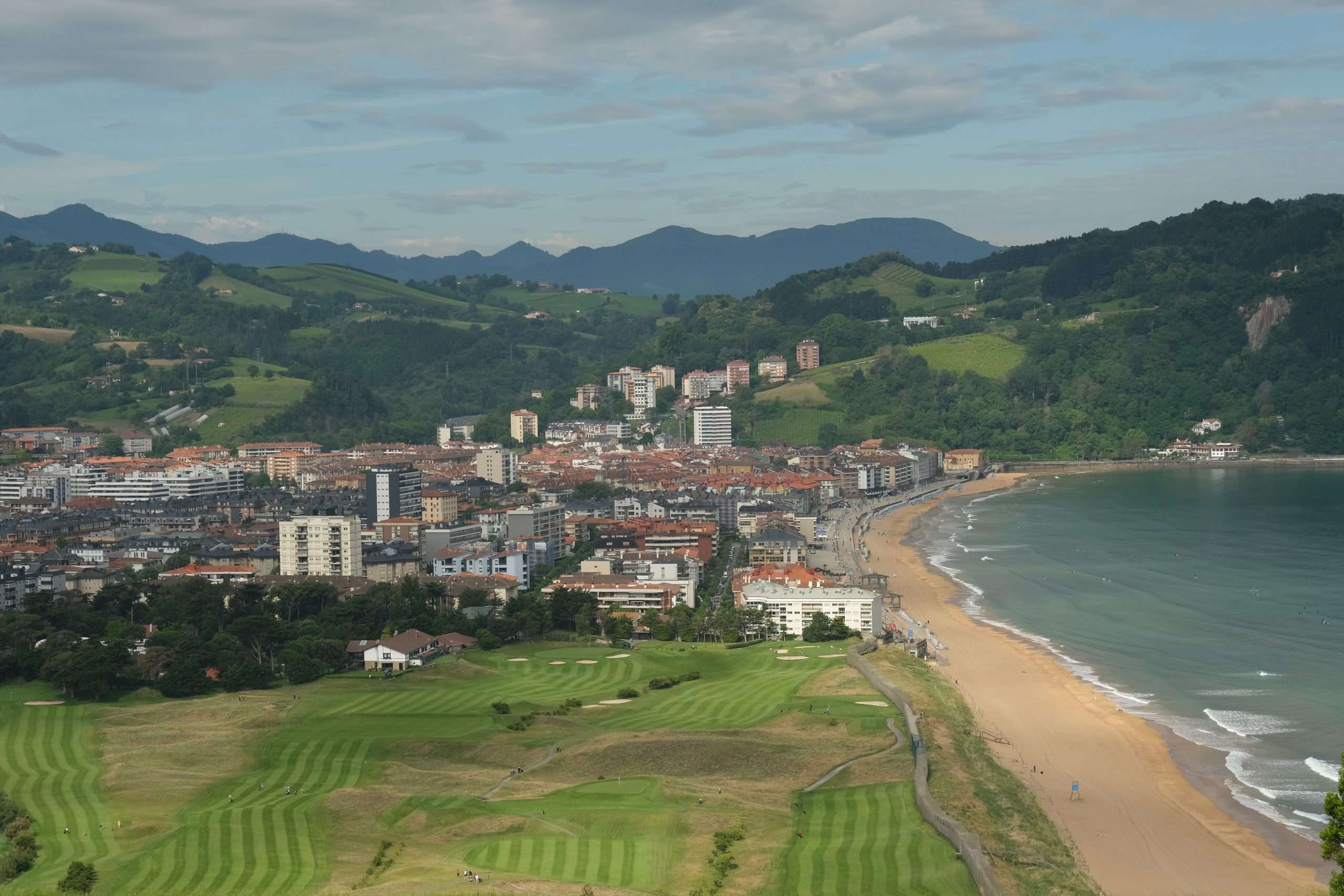
This morning, we began a 10-mile hike from Orio to Zumaia. Orio is a fishing town known for its rowing regatta, with yellow as the team color. The hike started gently but included steep inclines and declines between the 1.5 and 3.5 mileposts. Along this stretch, we saw the ruins of fortifications rising from the sea. We reached Zarautz, famous for its long sandy beach and vibrant surfing scene. We walked on the promenade along the beach, stopping midway to rest and people-watch. The next part of our hike continued along a flat promenade flanked by a highway on the left and the sea on the right, offering magnificent views.
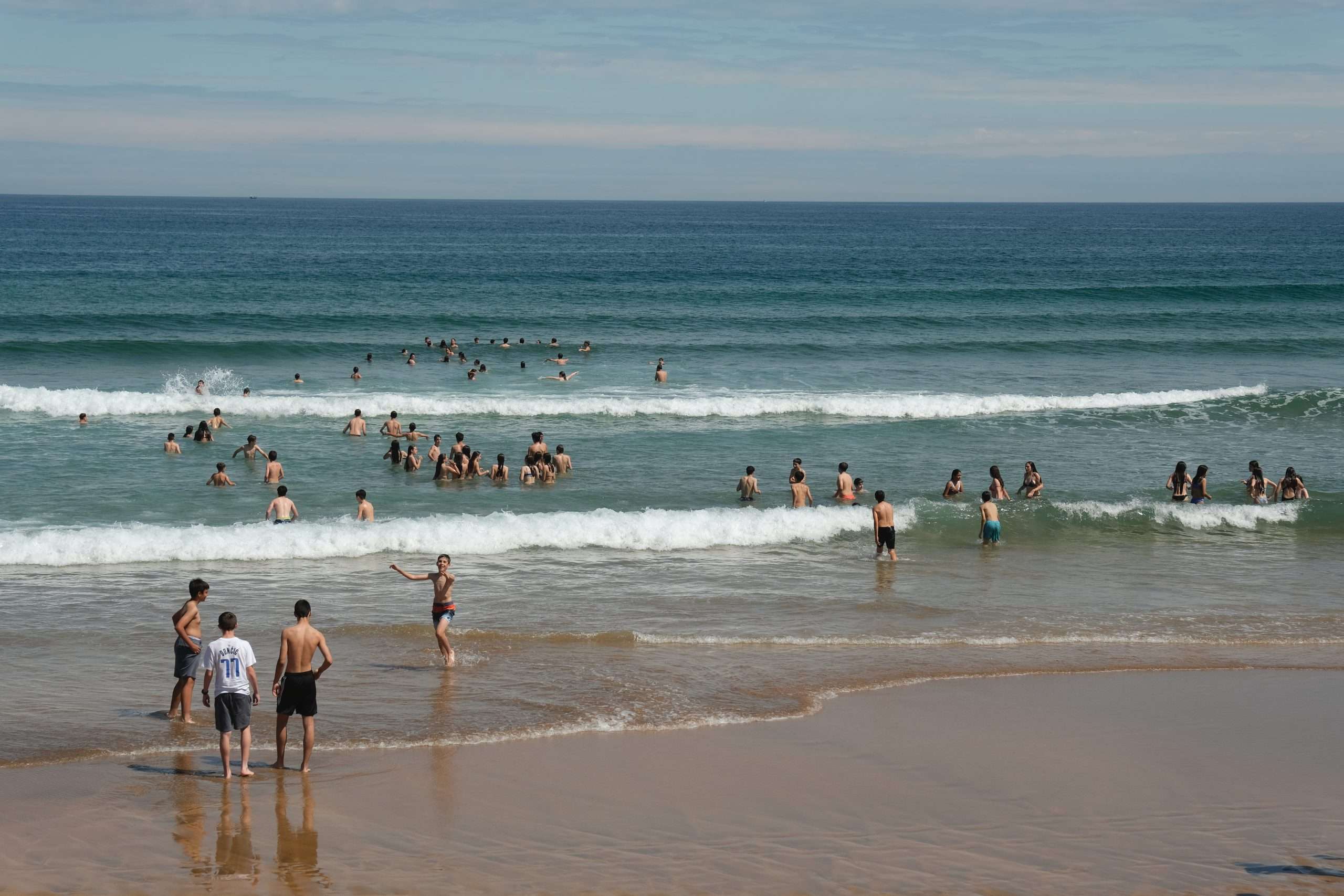
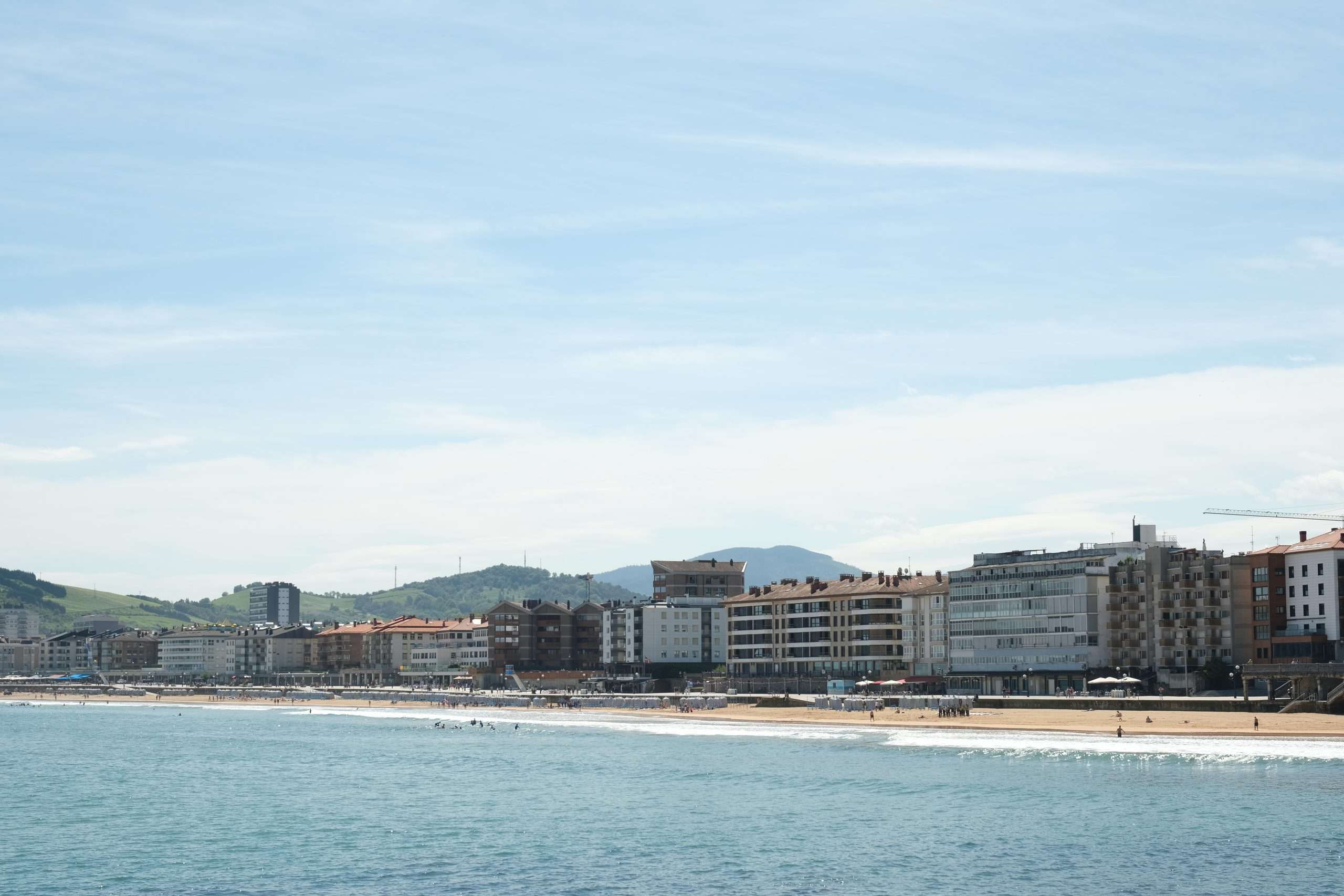
We arrived in Getaria and continued to the San Prudencio Chapel for a picnic lunch. Our guides had the chapel key, allowing for a quick visit. After lunch, Christabel checked into the San Prudentzio Hotel, while Albert walked the remaining 3 miles, encountering another steep incline and decline, to Zumaia. Zumaia, once a whaling town, is now known for shipbuilding.
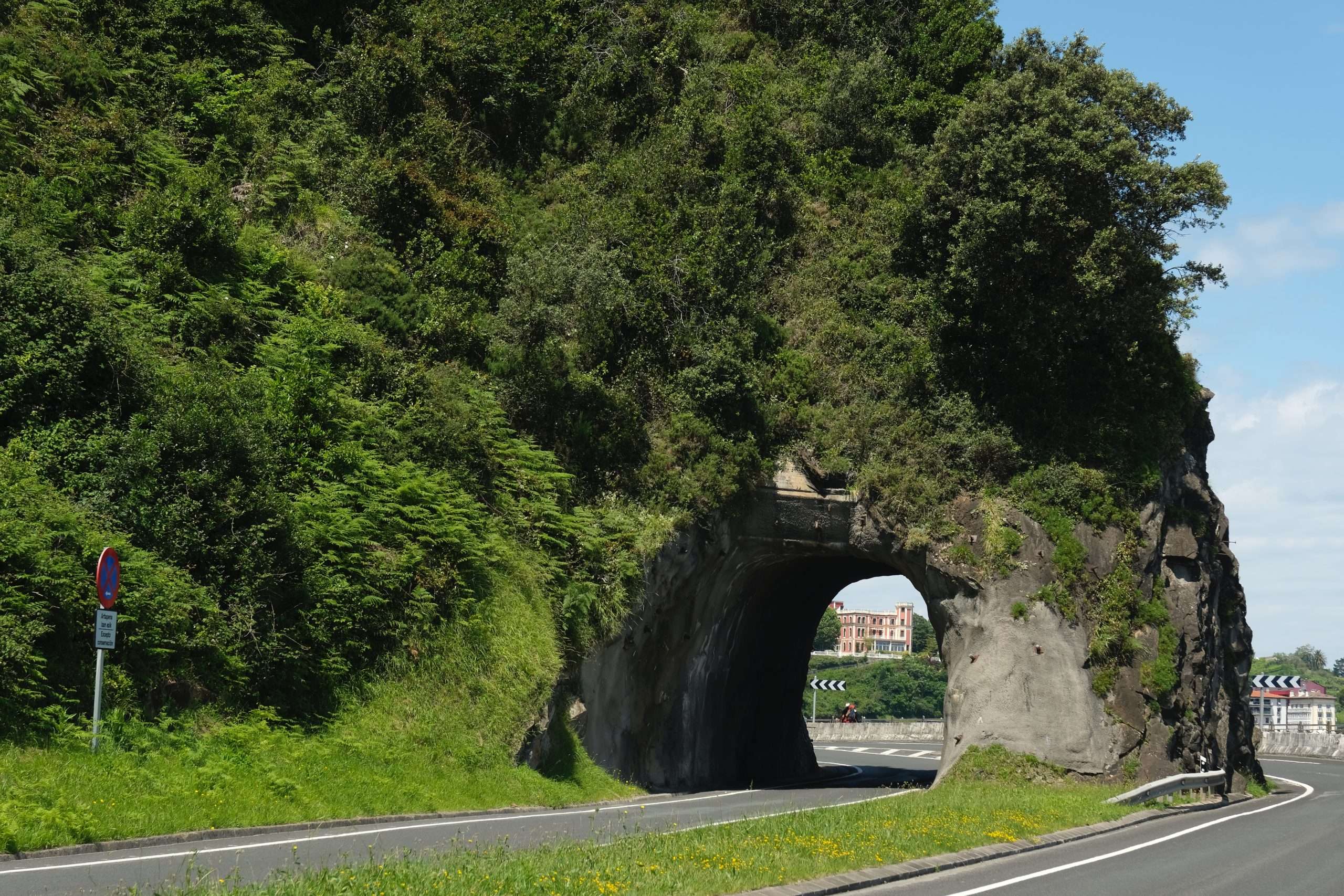
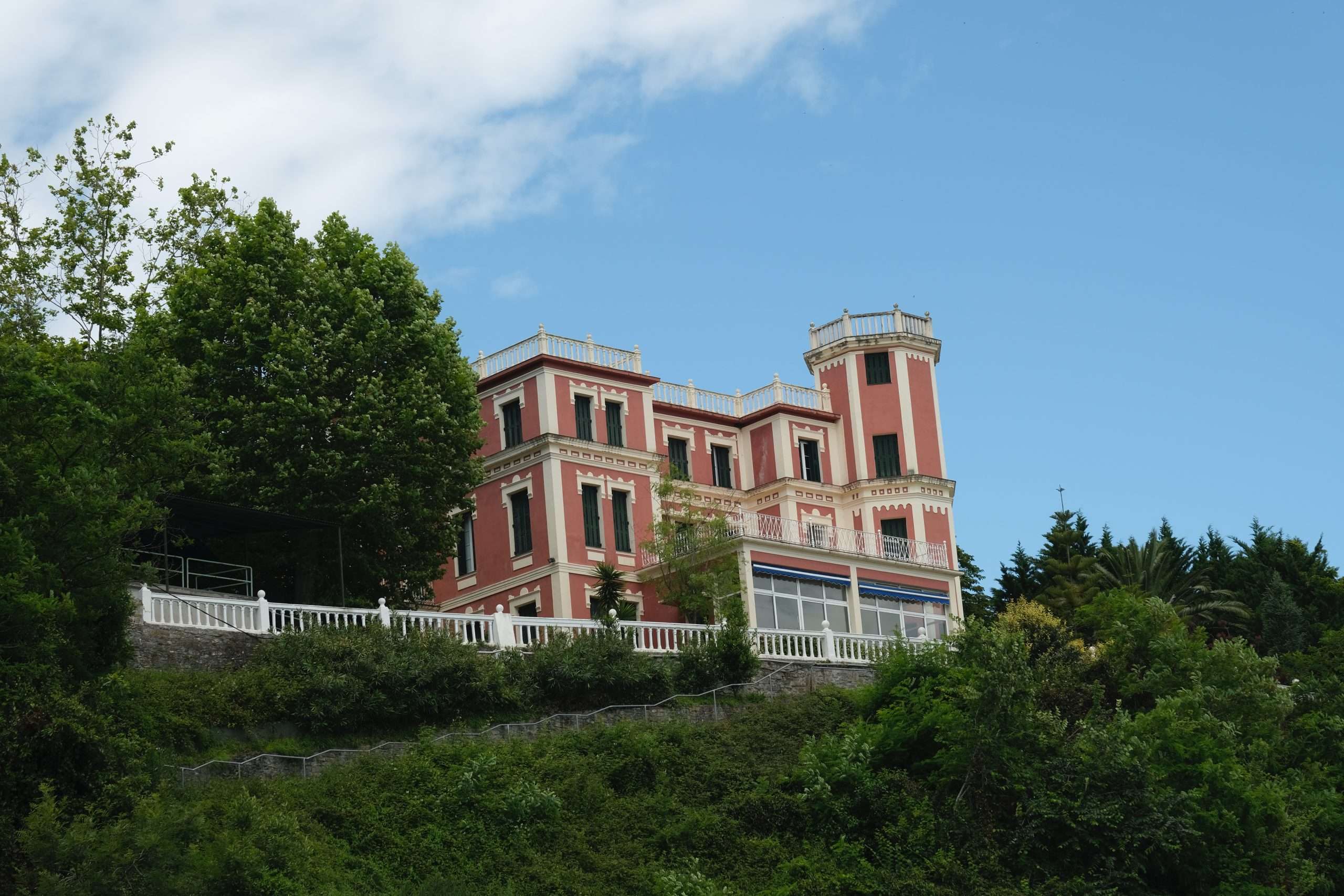
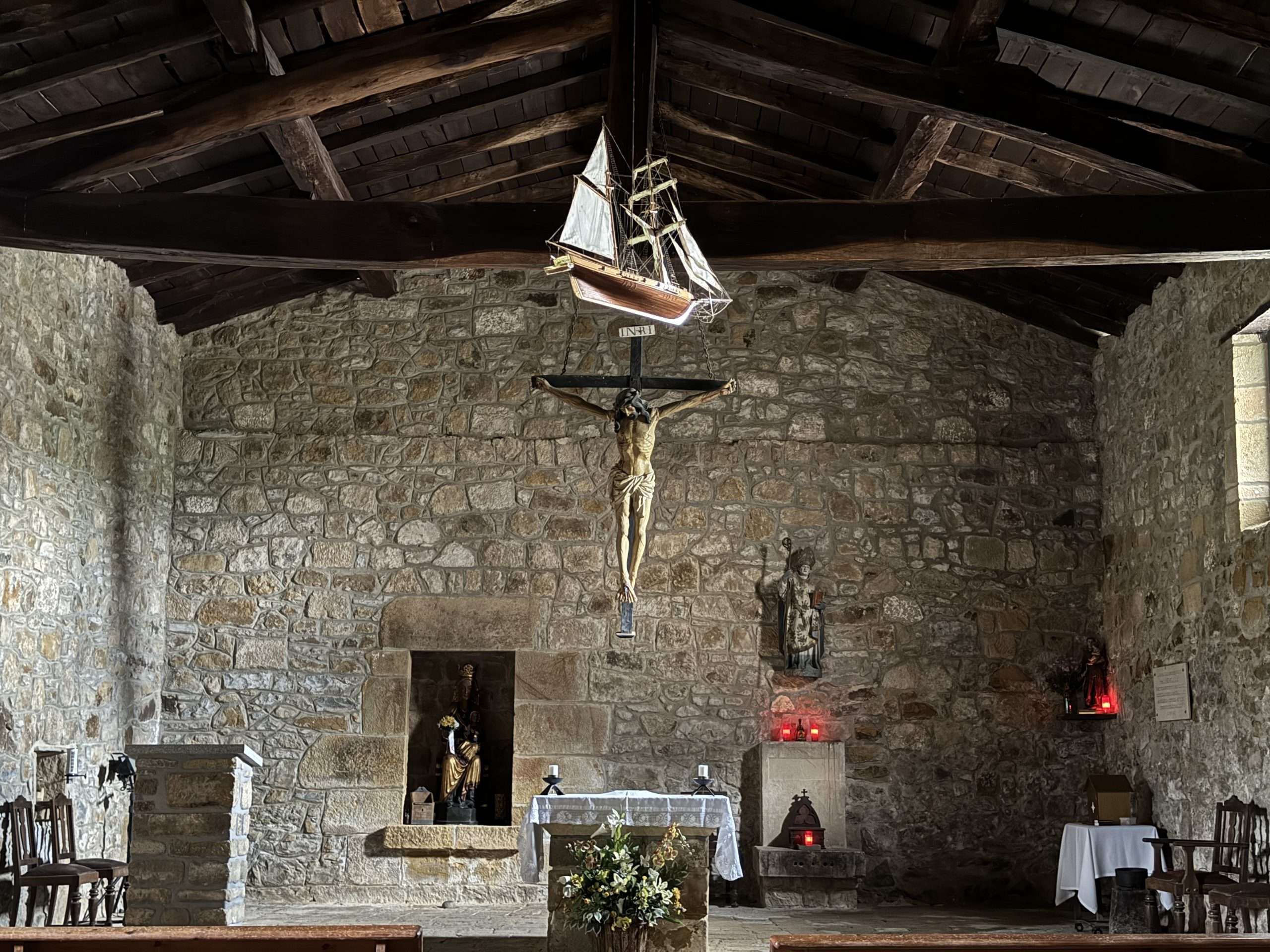
In the evening, we explored Getaria, viewing monuments dedicated to Juan Sebastián Elcano, who completed the first circumnavigation of the earth after Magellan’s death. We also passed by the Balenciaga Museum, dedicated to the fashion designer Cristóbal Balenciaga, a native of the town. Getaria is also associated with a local white wine called txakoli. During our walk, we encountered protestors campaigning for Basque political prisoners to be relocated closer to their families in the Basque Country, citing Spanish regulations that permit such moves but have not been applied to this group.
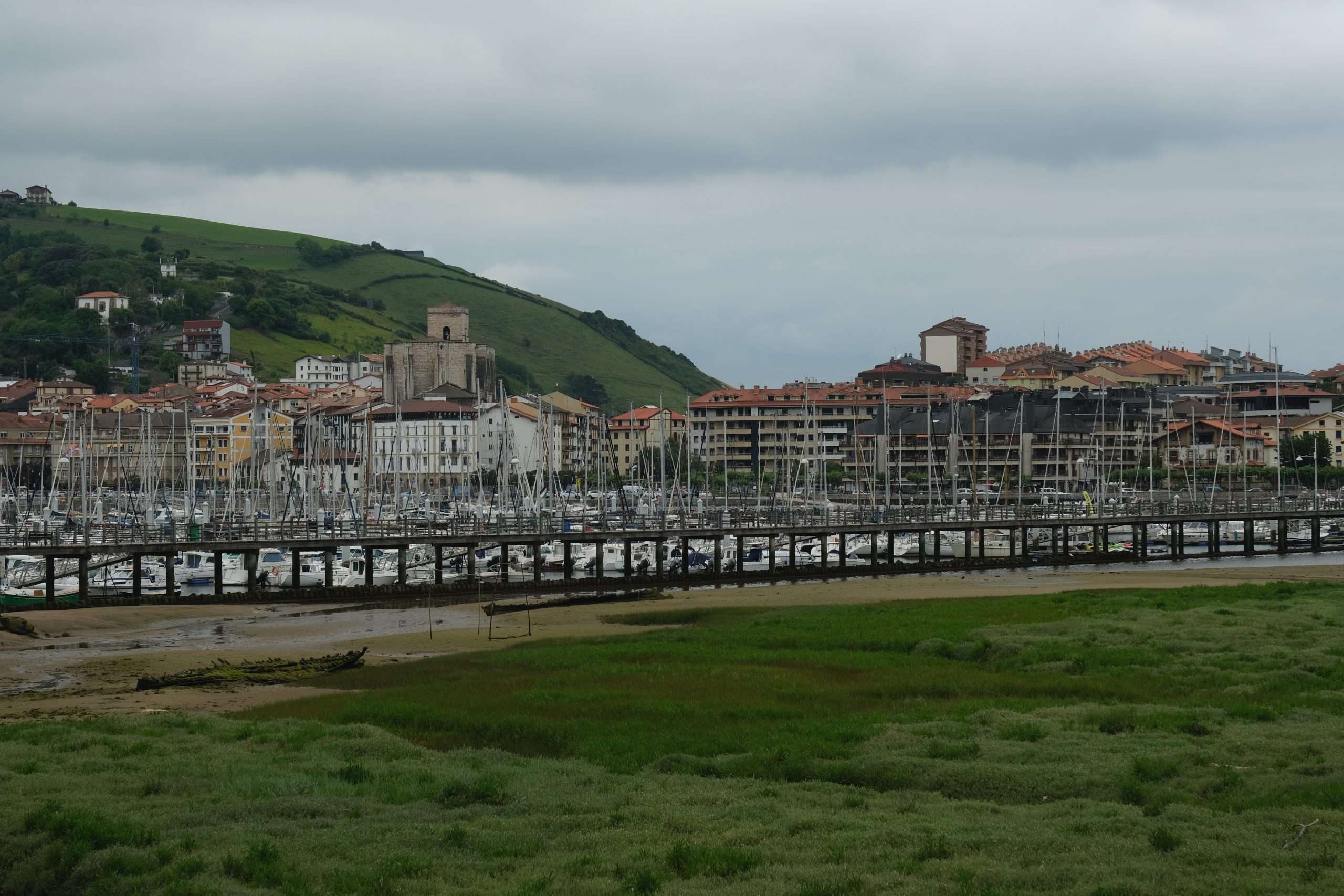

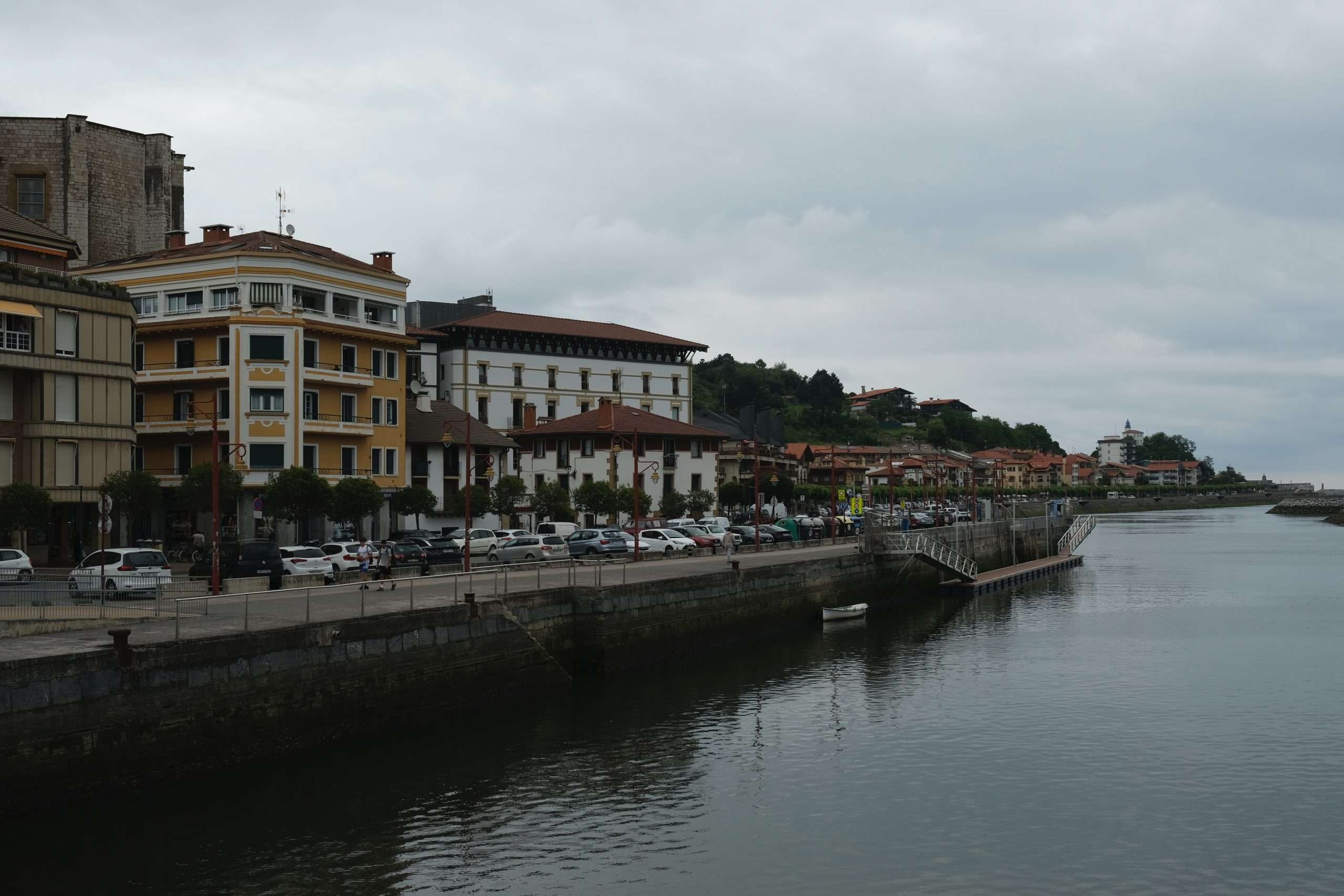
We enjoyed a fabulous dinner at Txoko Getaria, with delicious grilled fish prepared near our table. Eva Longoria had reportedly lunched there earlier, and someone in our group mentioned they had sold a house to her parents.
Hiking from Zumaia to Deba – June 15, 2024
We drove to Zumaia to visit the Basque Coast Geopark, a UNESCO Global Geopark since 2015 due to its exceptional geological importance. It lies between the western Pyrenees and the Cantabrian Sea, stretching about 23 kilometers, featuring steep cliffs and wave-chiseled rock formations representing 60 million years of history. The coastal area includes records of geological boundaries, such as the Cretaceous/Tertiary (K-T boundary) and the Palaeocene/Eocene boundary. The coastal formations are called flysch, while the inland formations are known as karst. This geopark reminded us of the breathtaking rock formations in America’s Canyonlands.
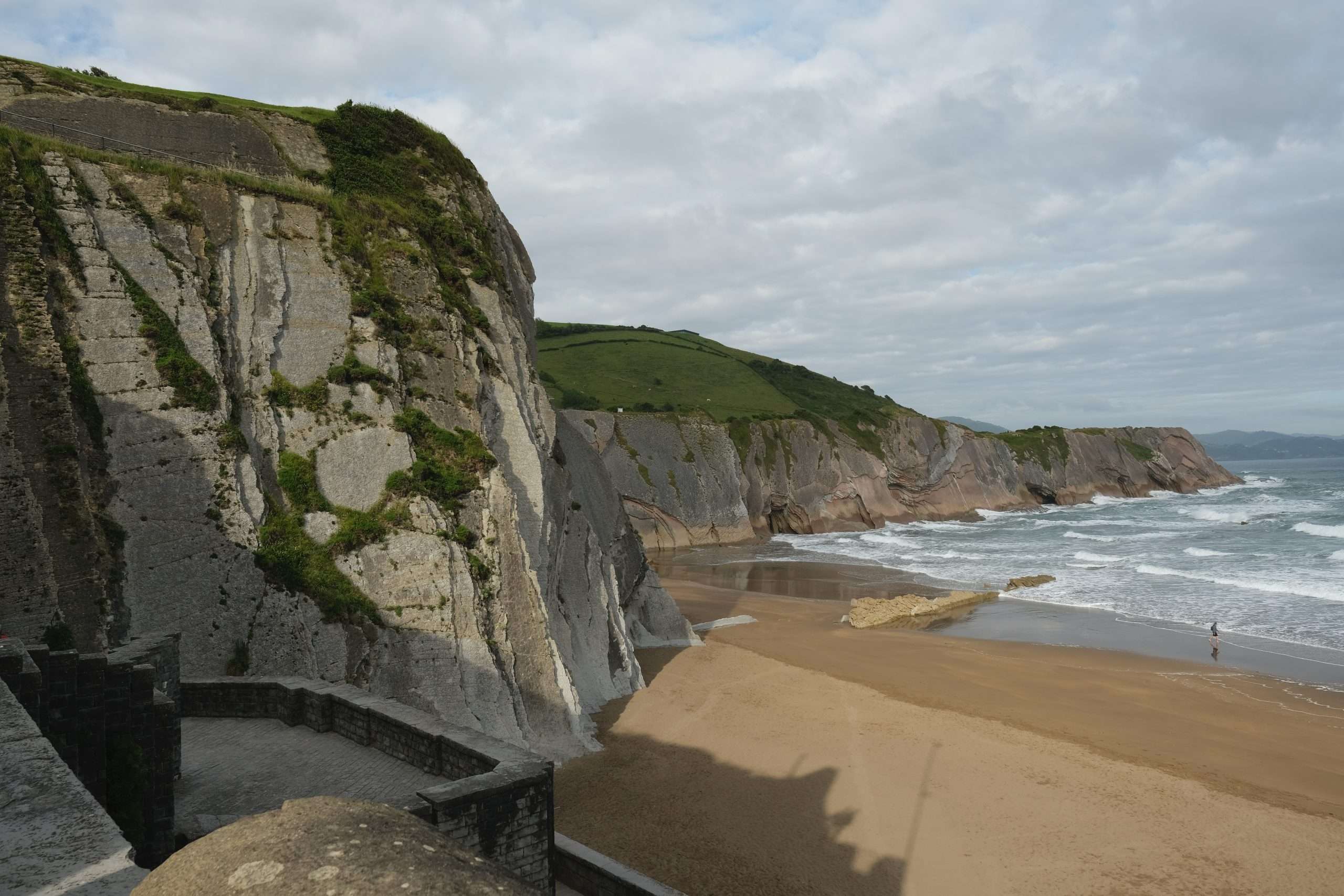
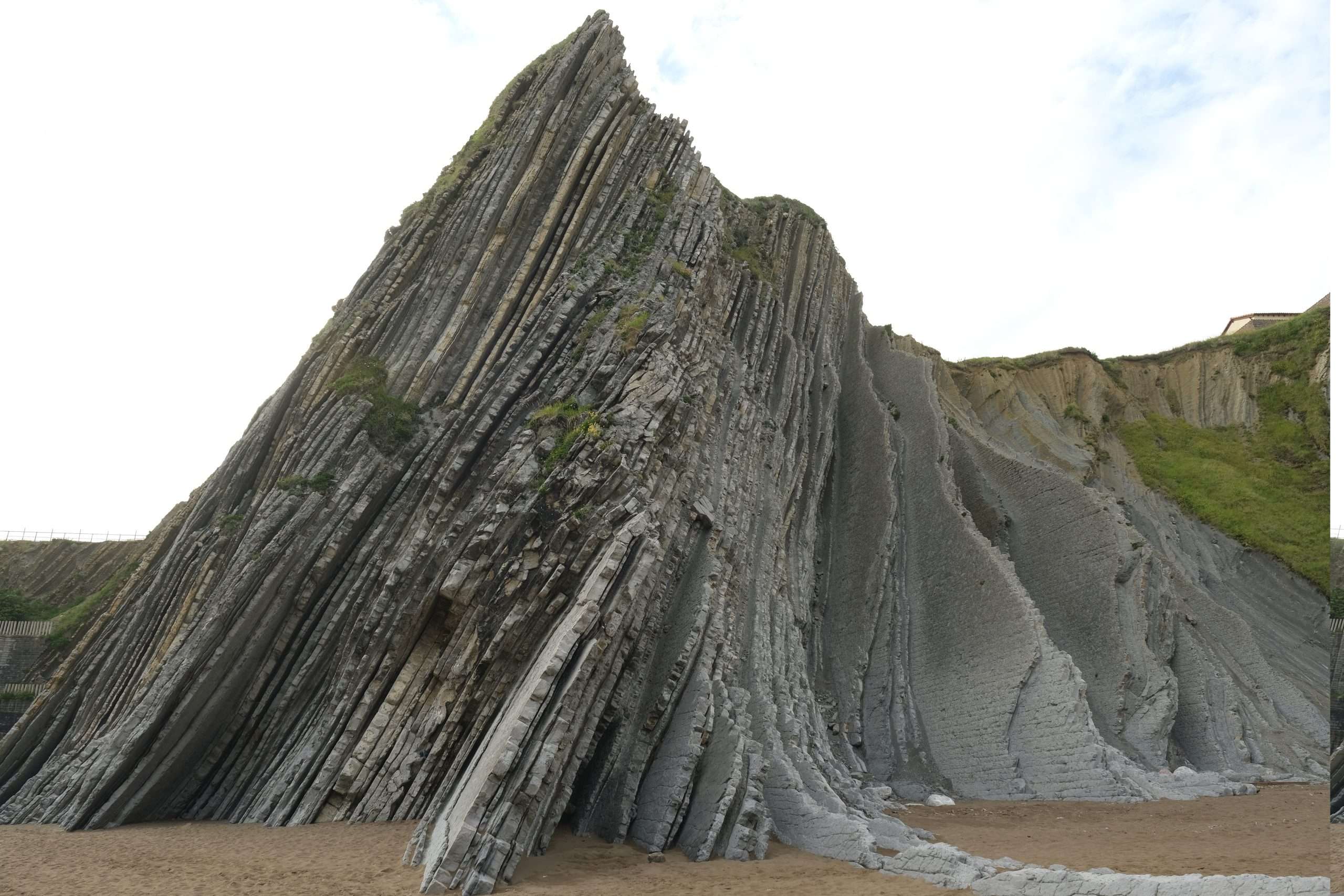
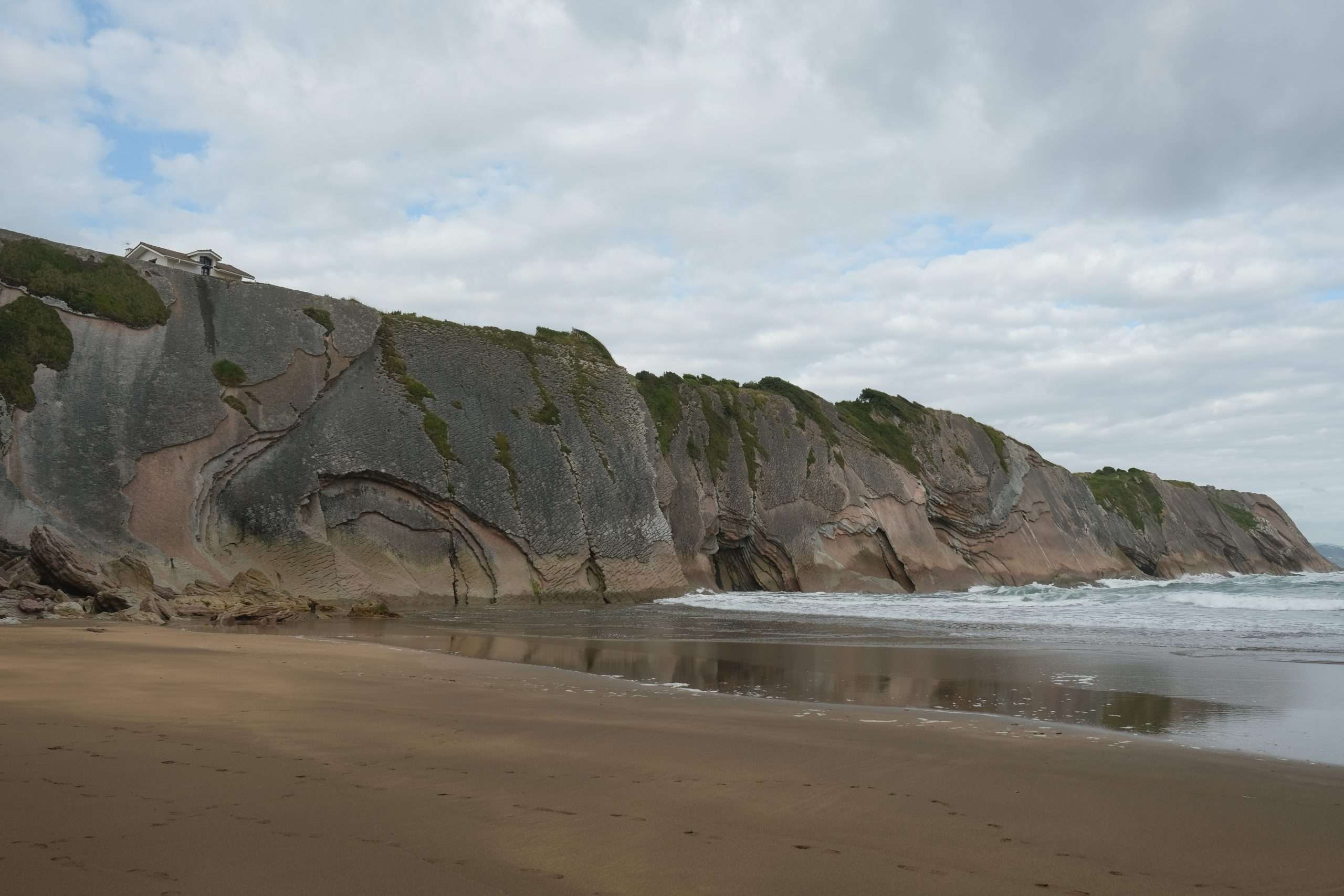
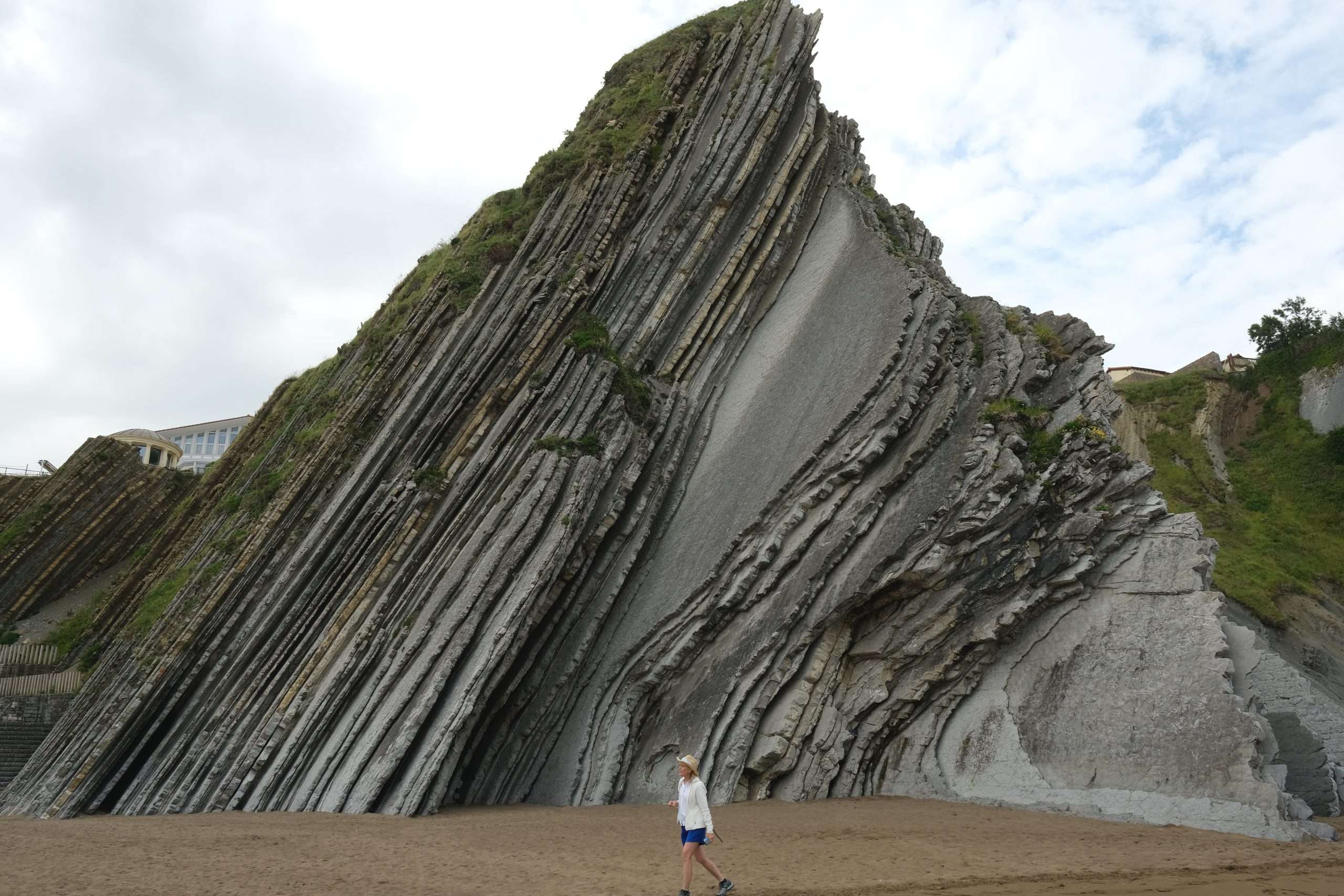
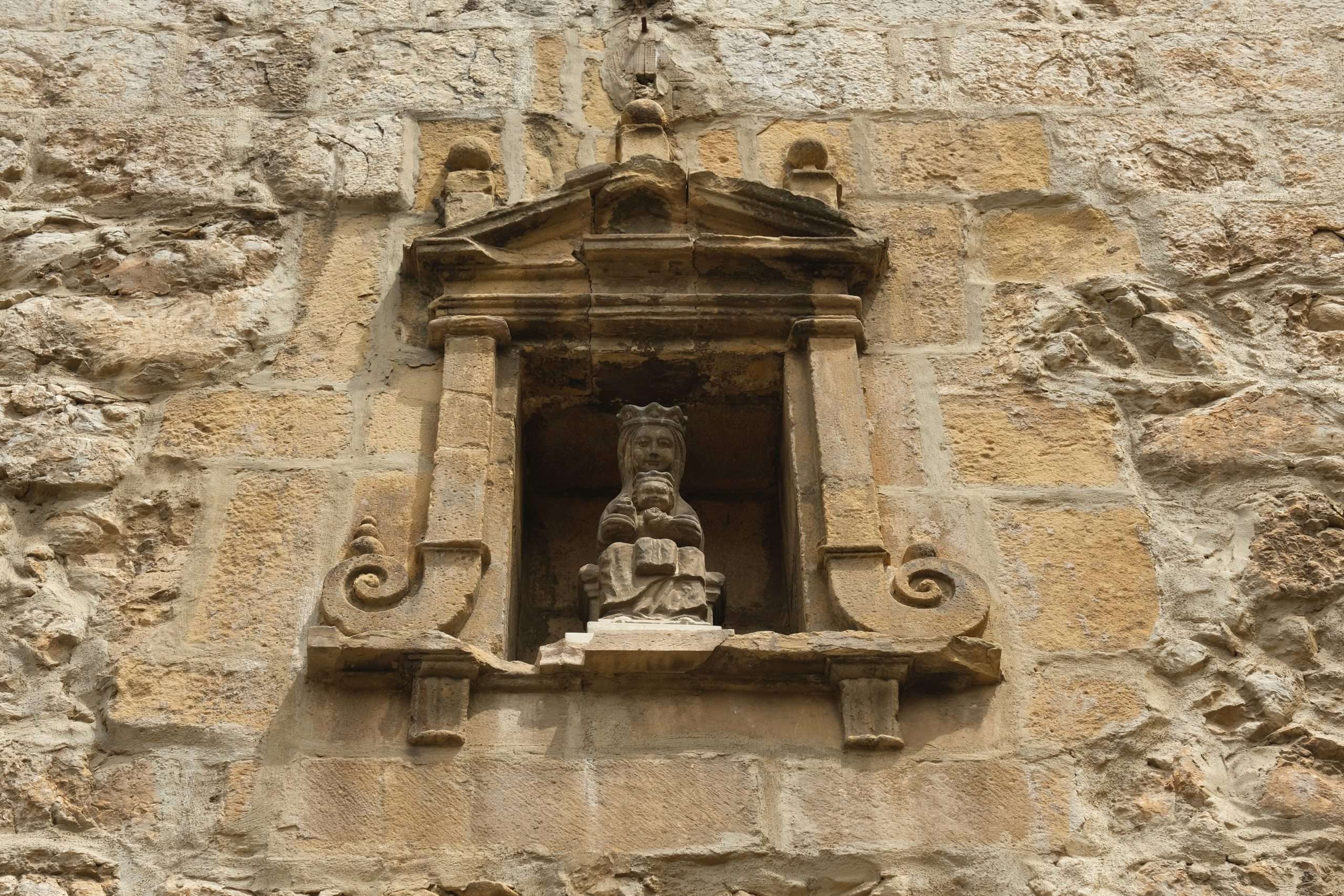
After viewing the park, we started our 8-mile hike. We broke for lunch at the Sanctuary of Santa Maria de Itziar, an ancient church dating back to the 8th century. We quickly visited to see one of the oldest images of the Virgin in the Basque Country and then enjoyed another fabulous picnic. The grounds feature an interesting sculpture called “Motherhood” (Amatasuna) by Jorge Oteiza, which depicts different stages of motherhood depending on the viewing angle.

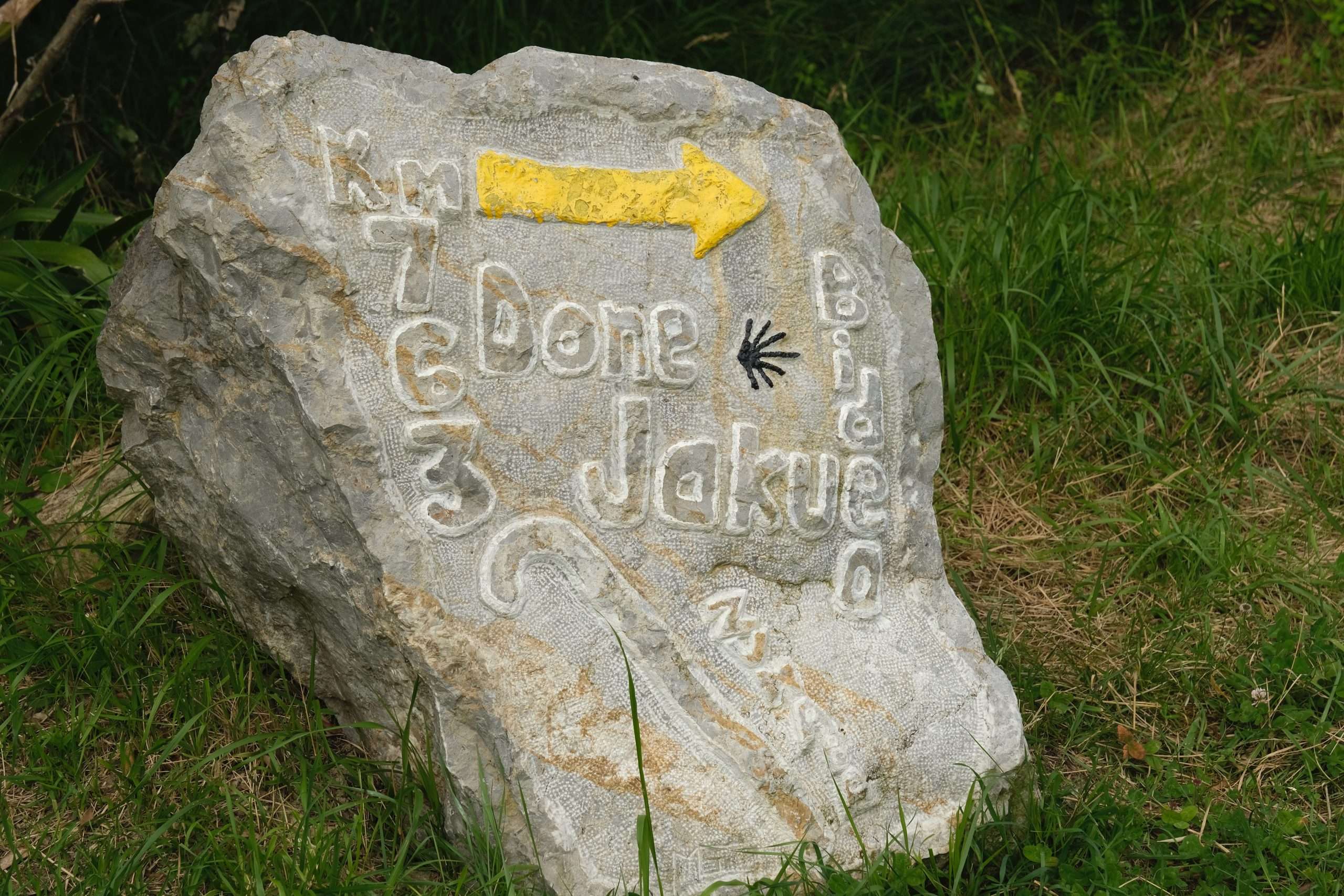
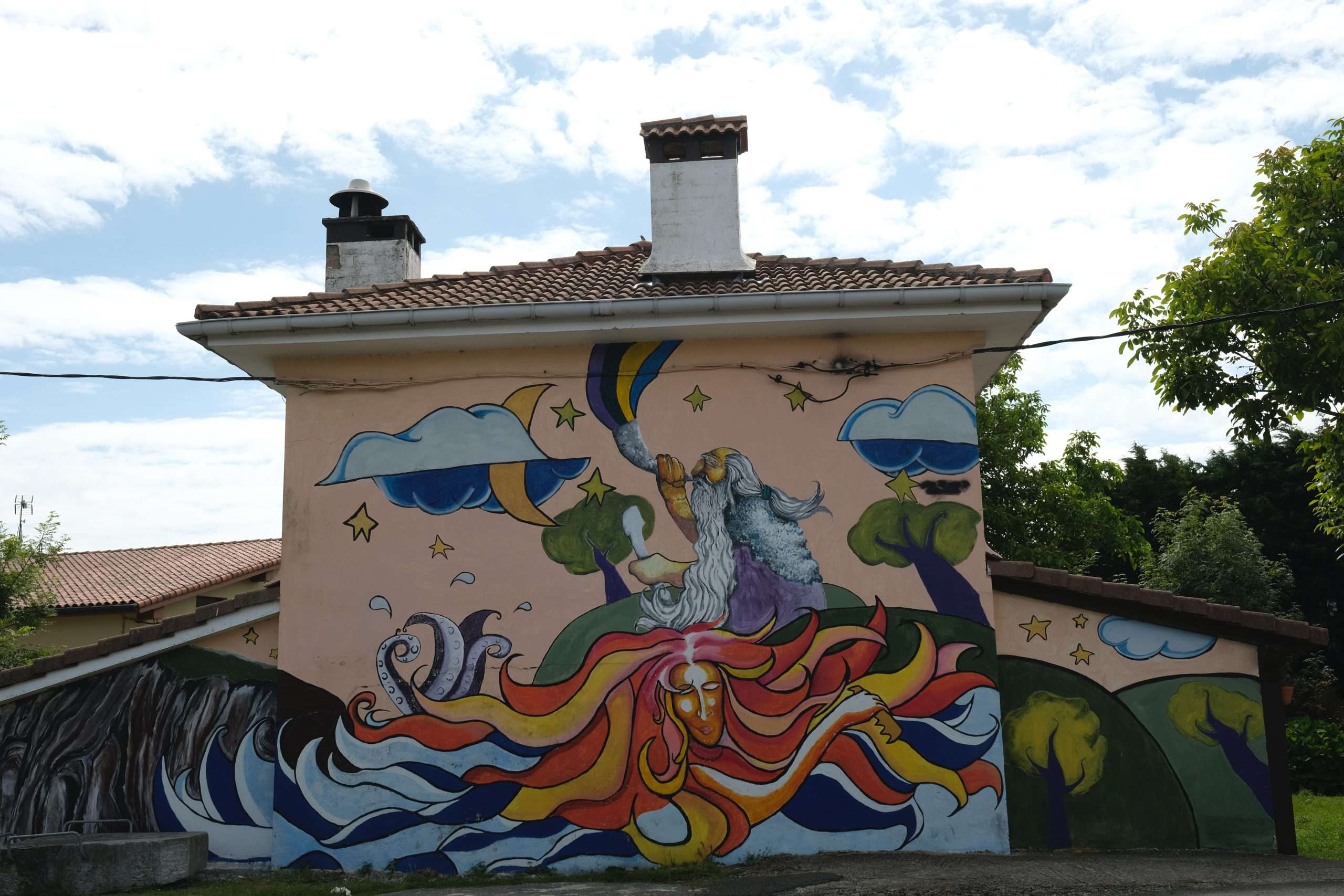
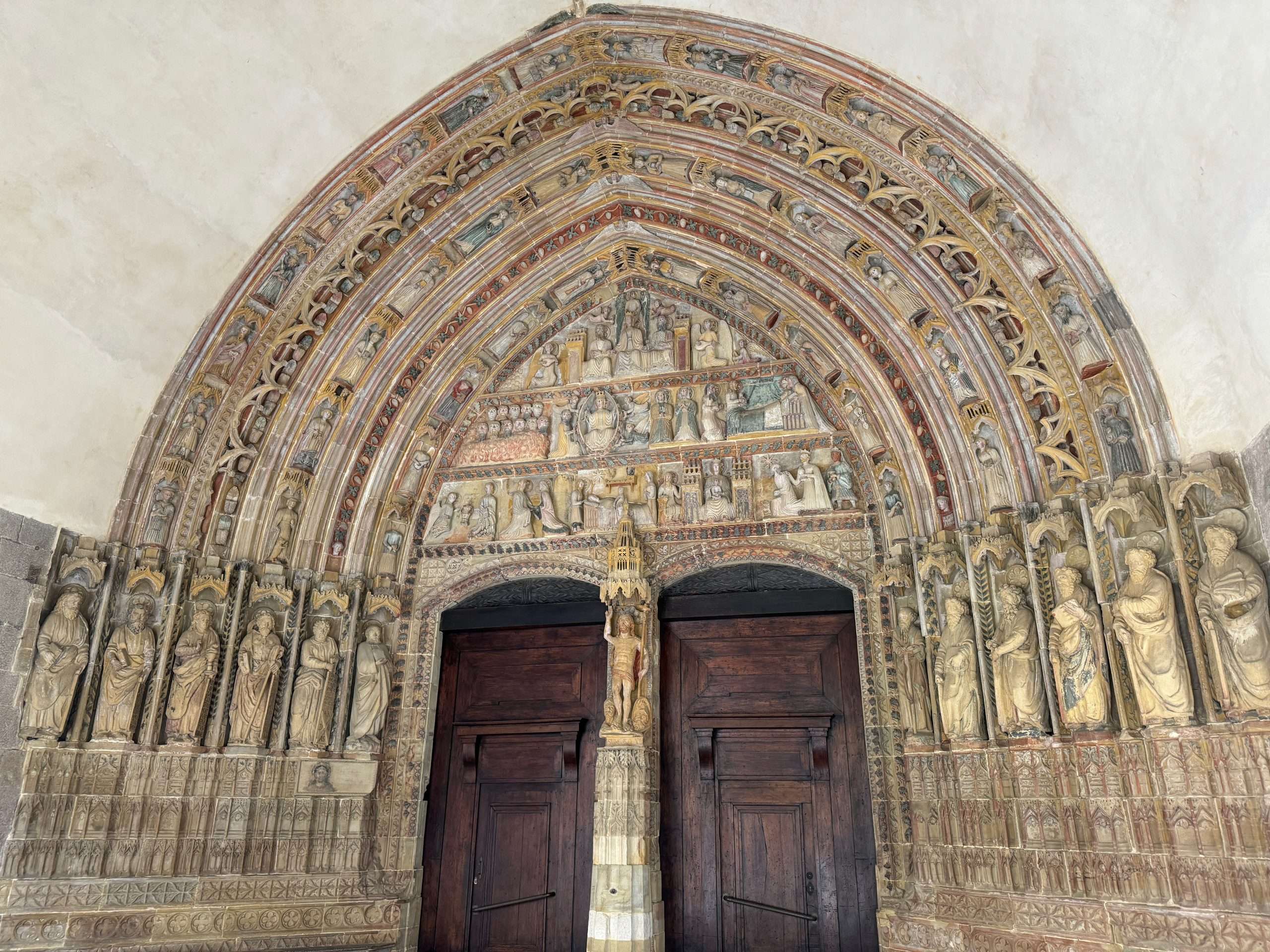
After lunch, Christabel took the bus to Deba, while Albert and others walked down the steep incline to Deba. Once the group was together, we visited the Church of Santa Maria to see the elaborately decorated tympanum. It is divided into three sections: the first depicting scenes from Mary’s life (the Annunciation, the Visitation, the Birth, and the Epiphany), the second depicting the Death and the Assumption, and the third depicting the Coronation. Unfortunately, the church was closed, so we could only admire it from the outside.
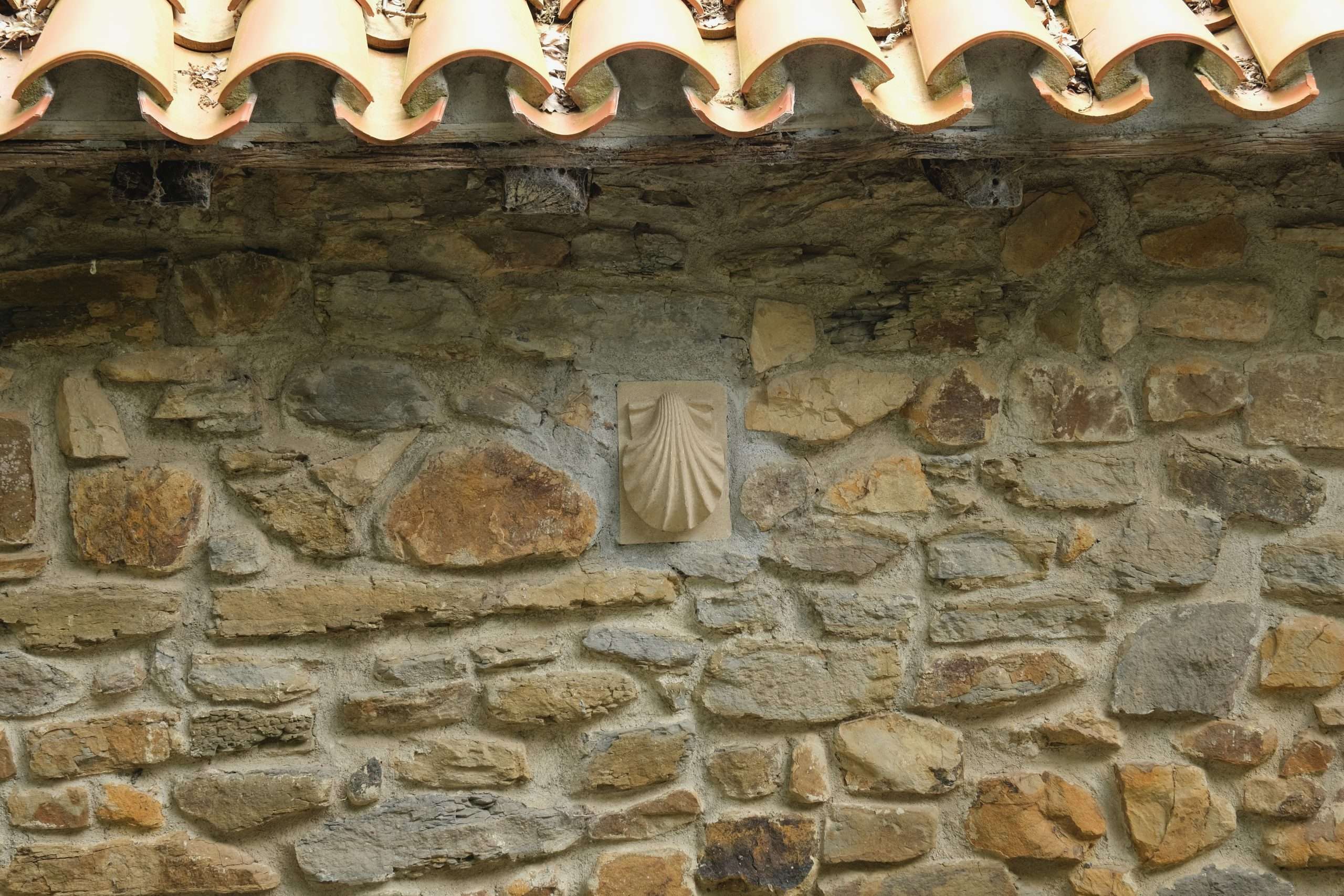
Dinner was at the hotel. We sat on the terrace and enjoyed the fabulous view and food.
St. Ignatius’ Birthplace and Hike to Zenarruza Monastery – June 16, 2024
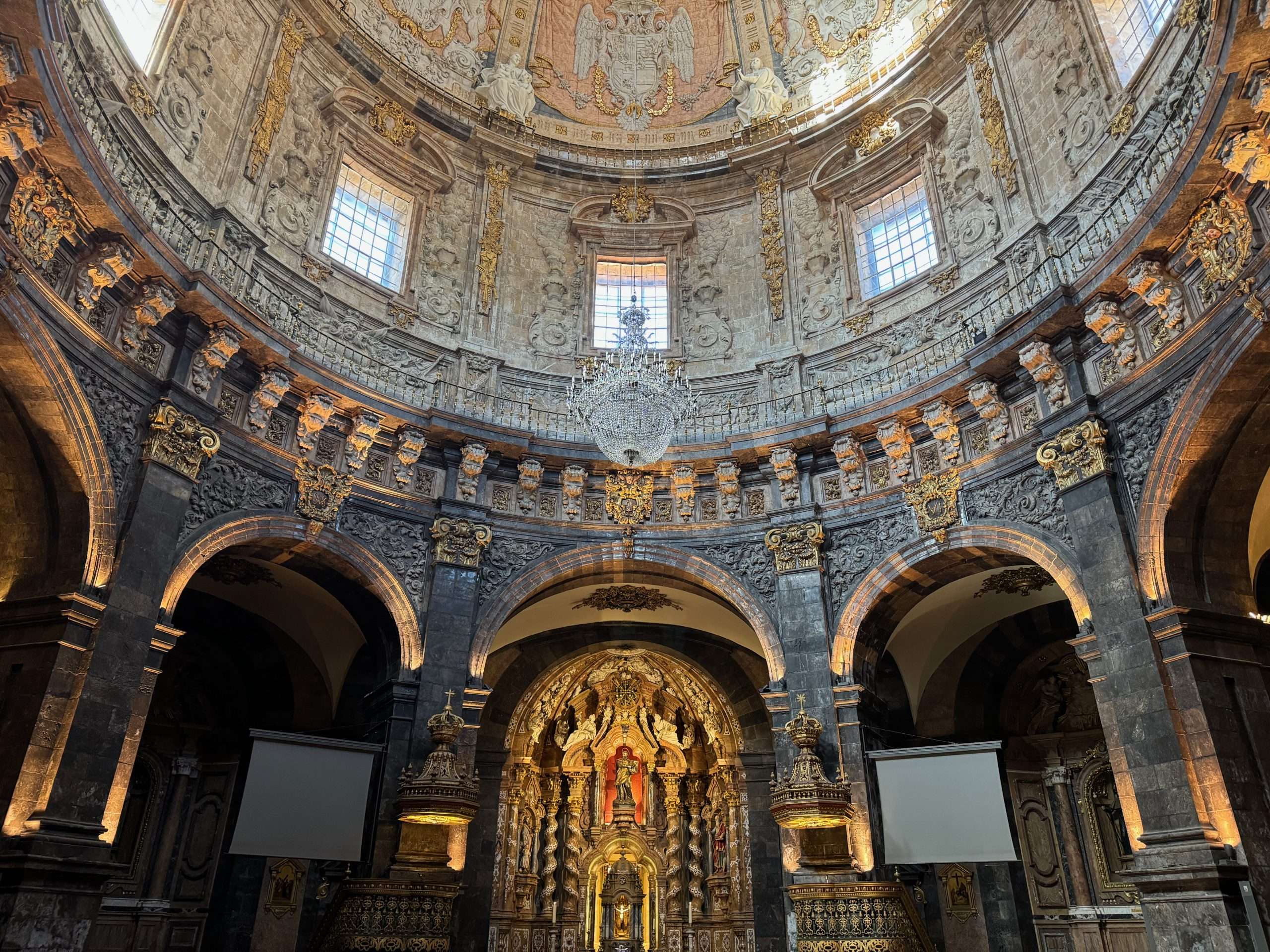
This morning, we boarded the bus to visit the birthplace of Saint Ignatius Loyola, the founder of the Jesuits. Born into a noble family, Ignatius was raised to be a knight but underwent a conversion after being injured in battle. We toured his family home, Casa Torre, including the Chapel of the Conversion, and attended mass at the Basilica of San Ignacio de Loyola. We then drove to Markina to start our hike to Zenarruza Monastery.
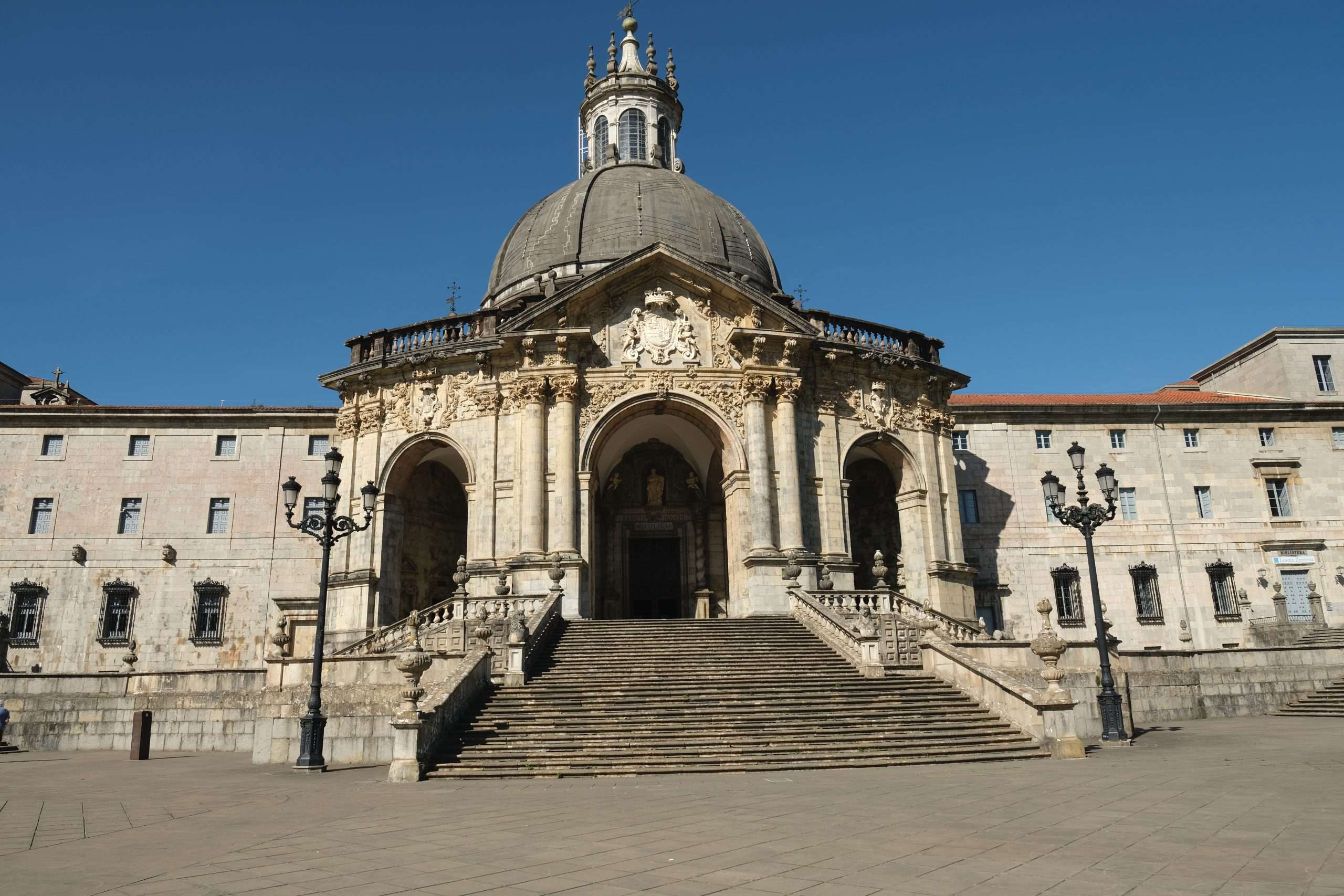
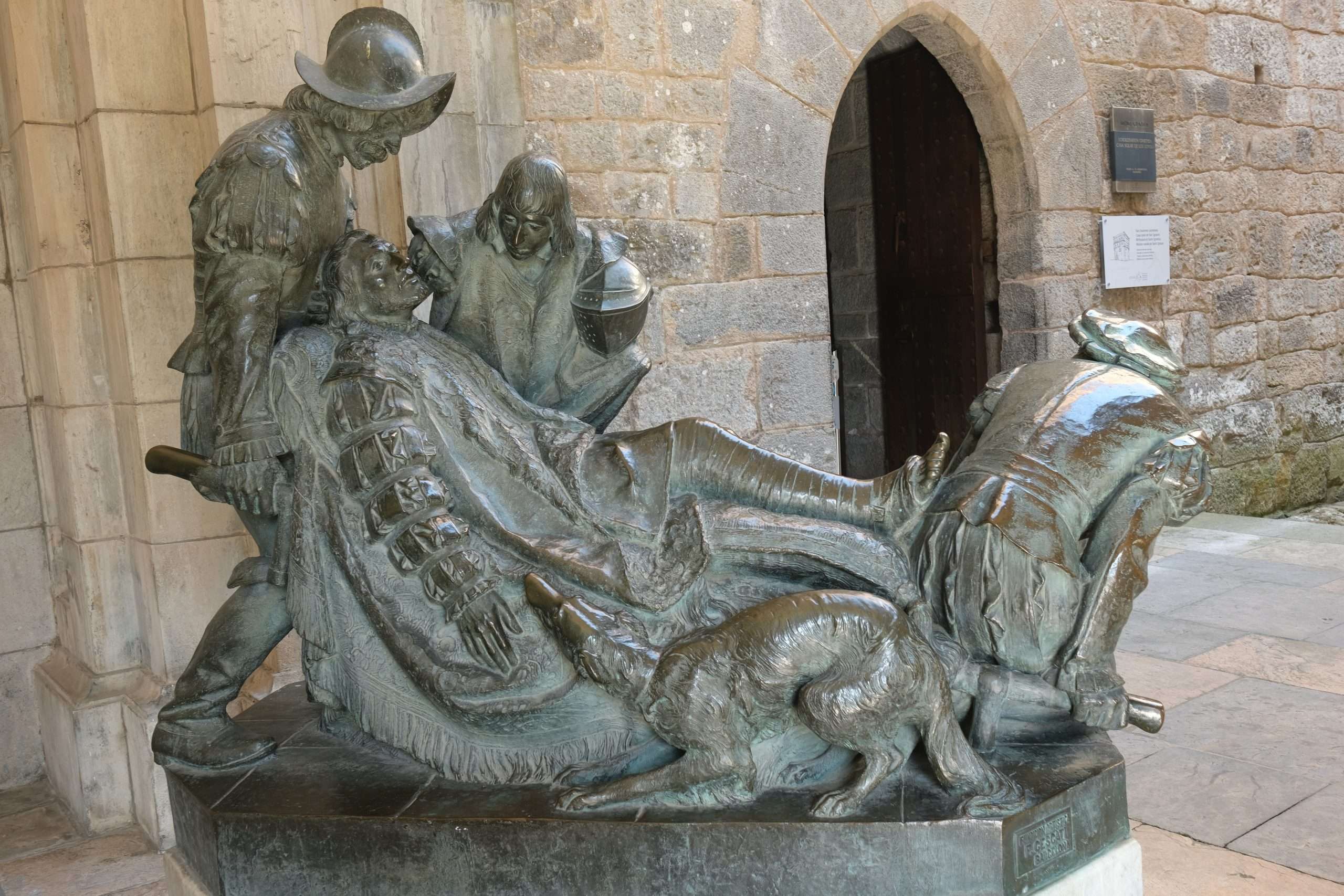
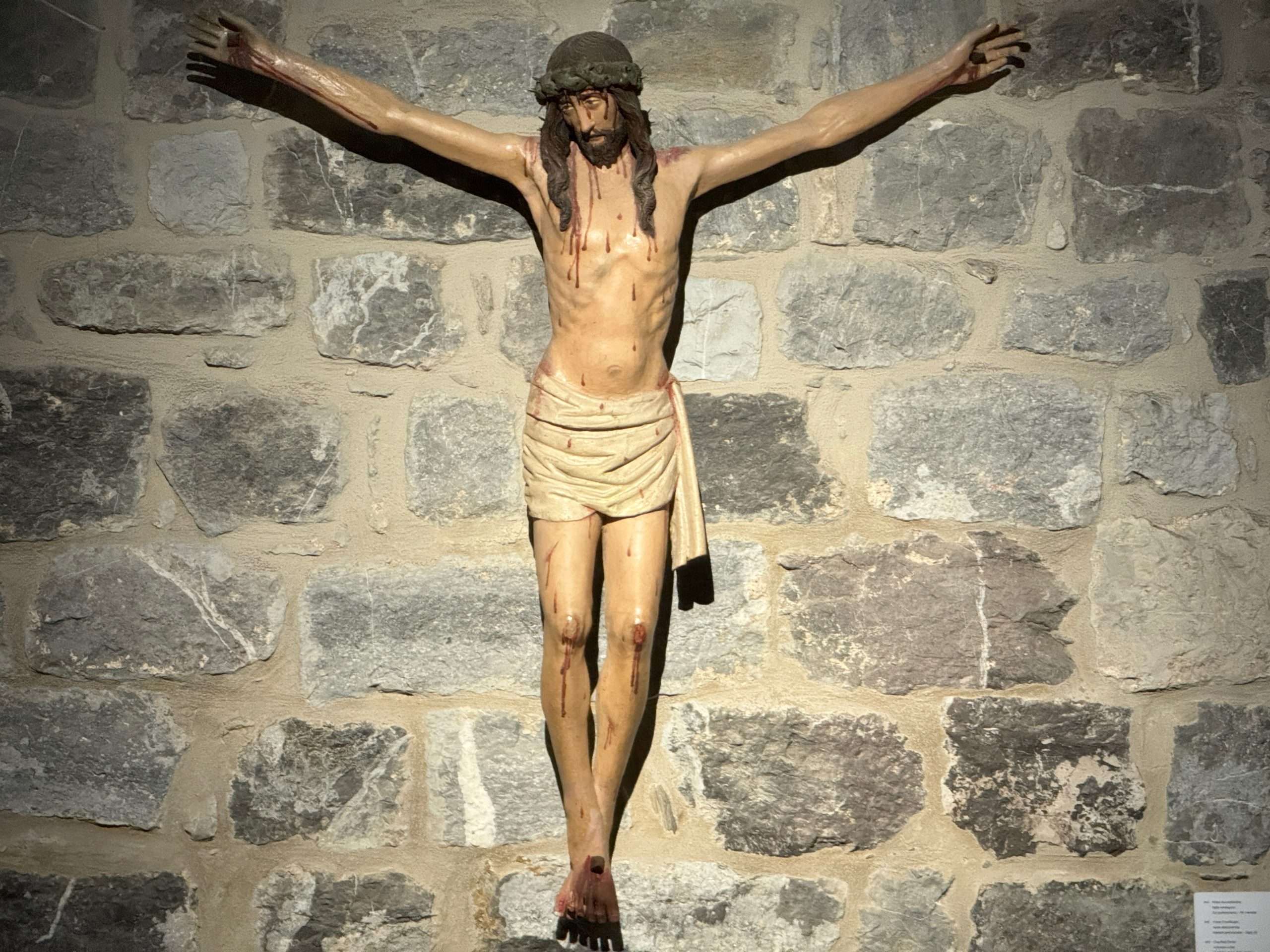
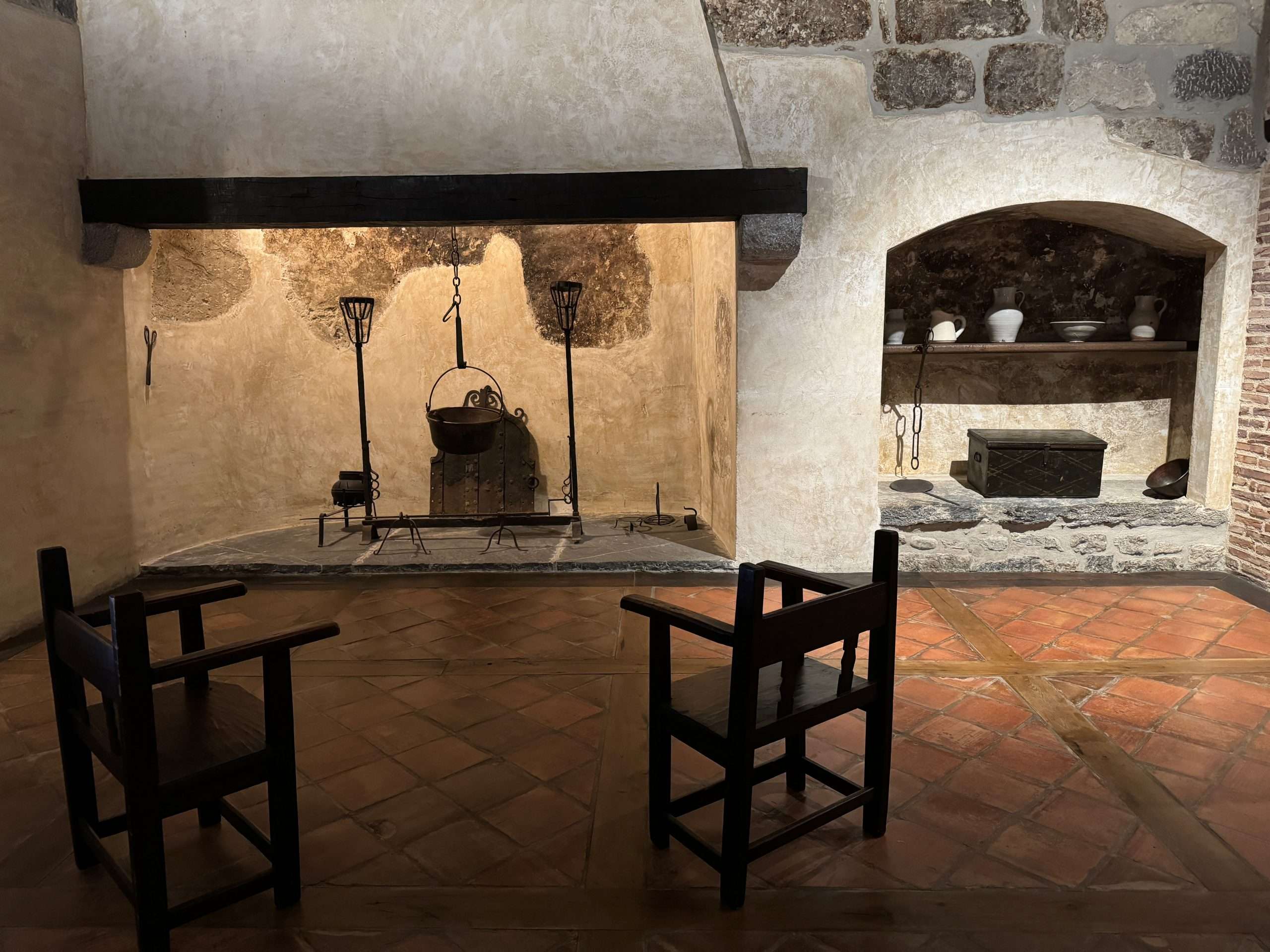
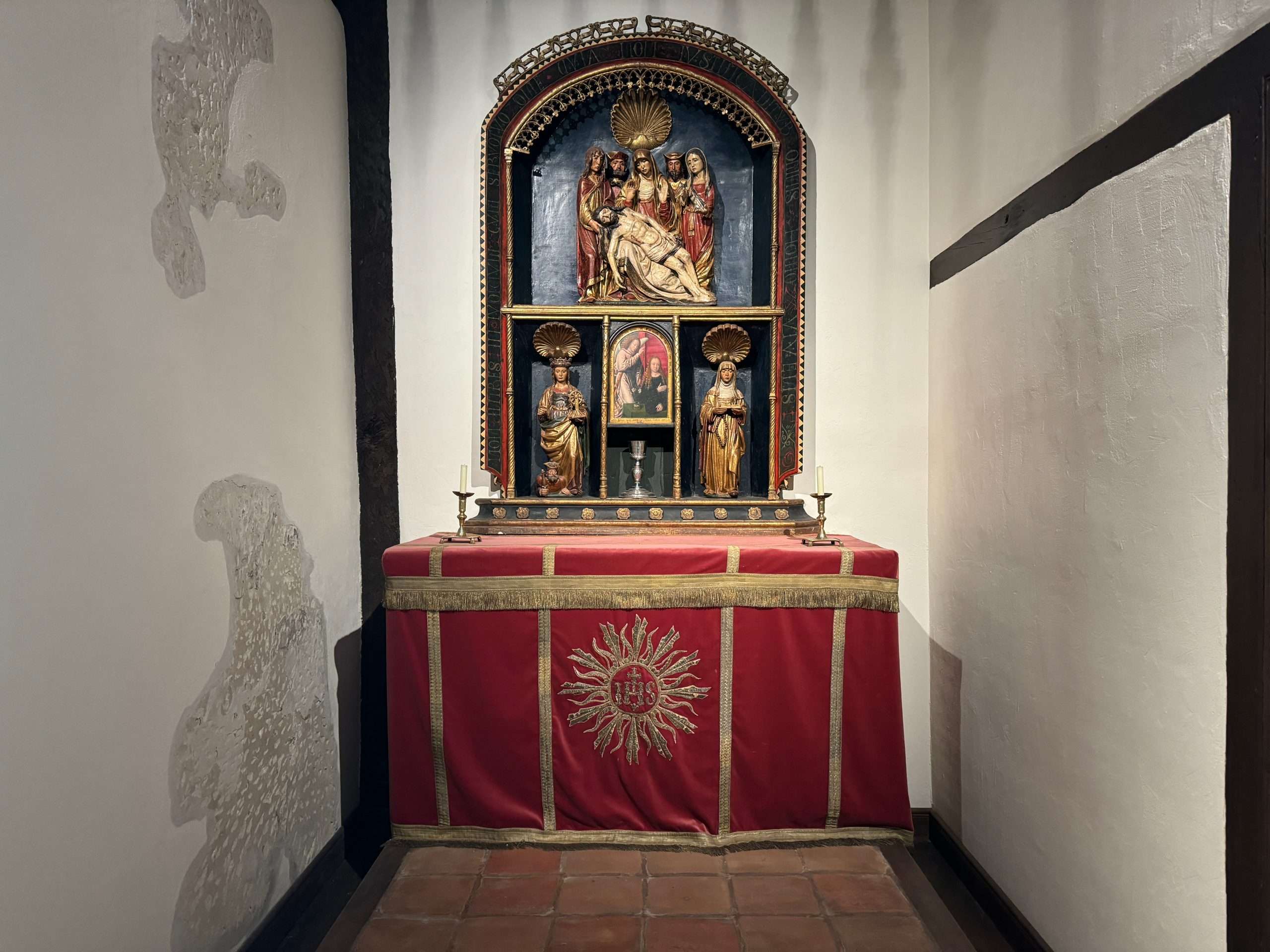
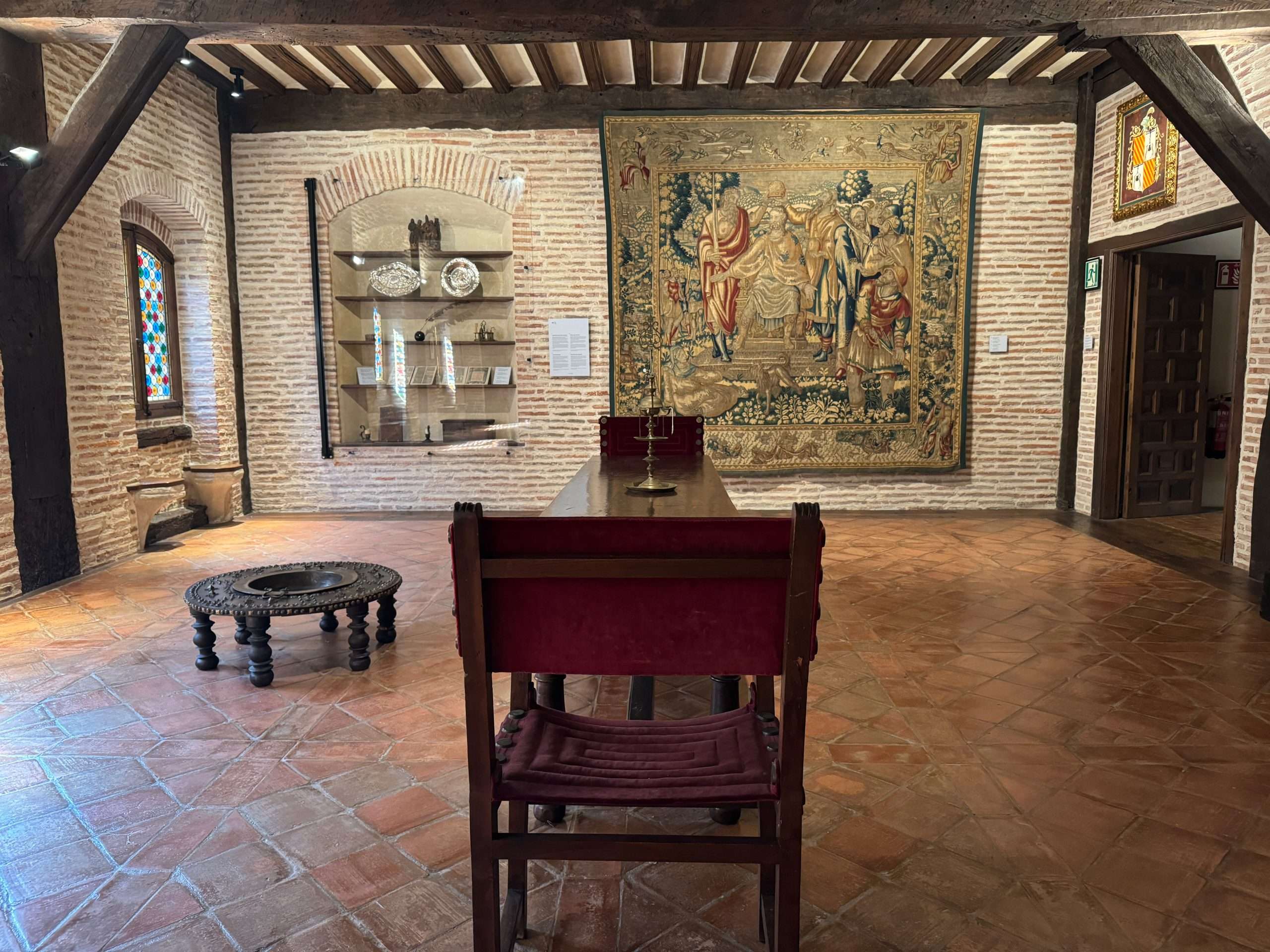
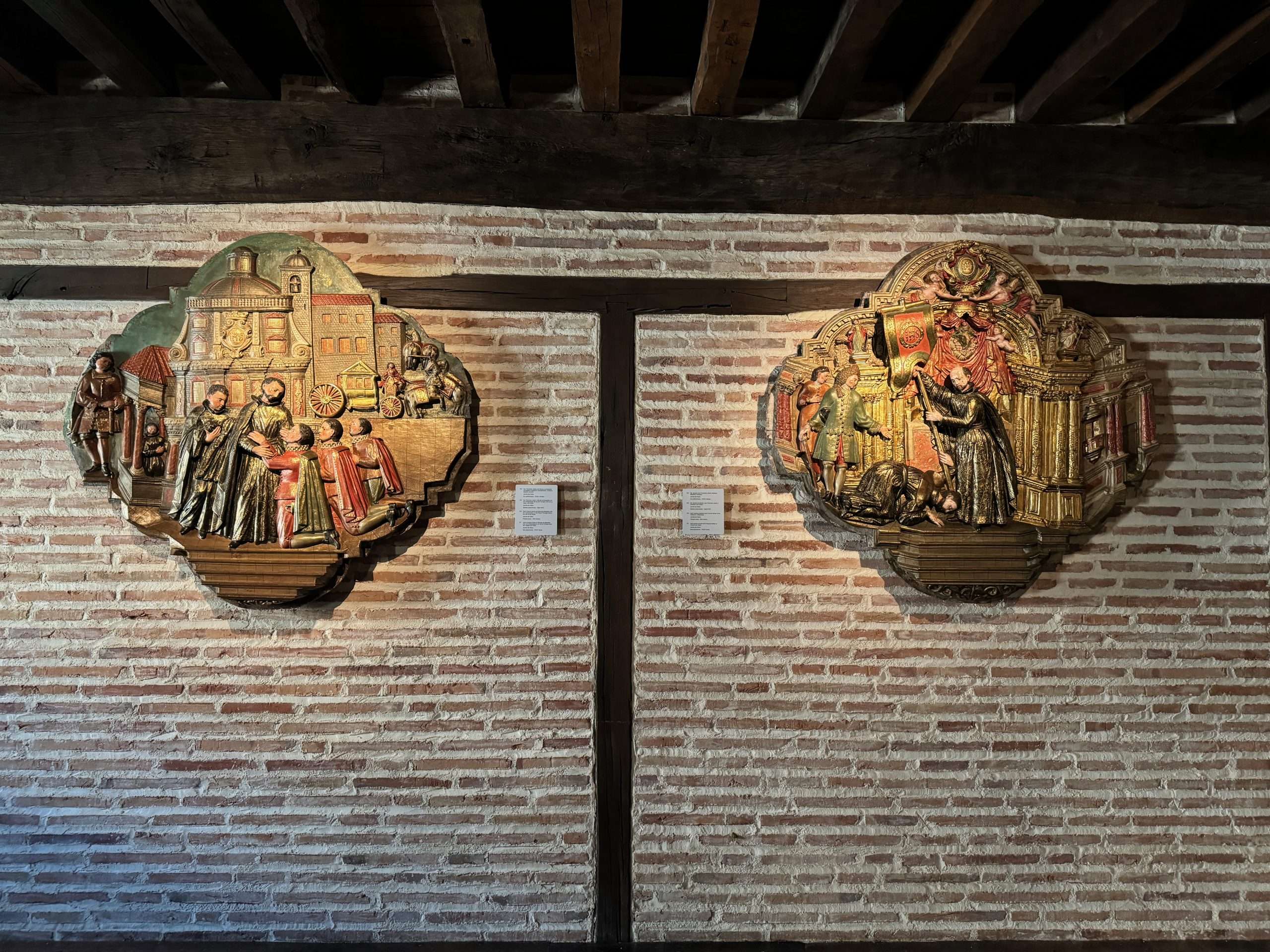
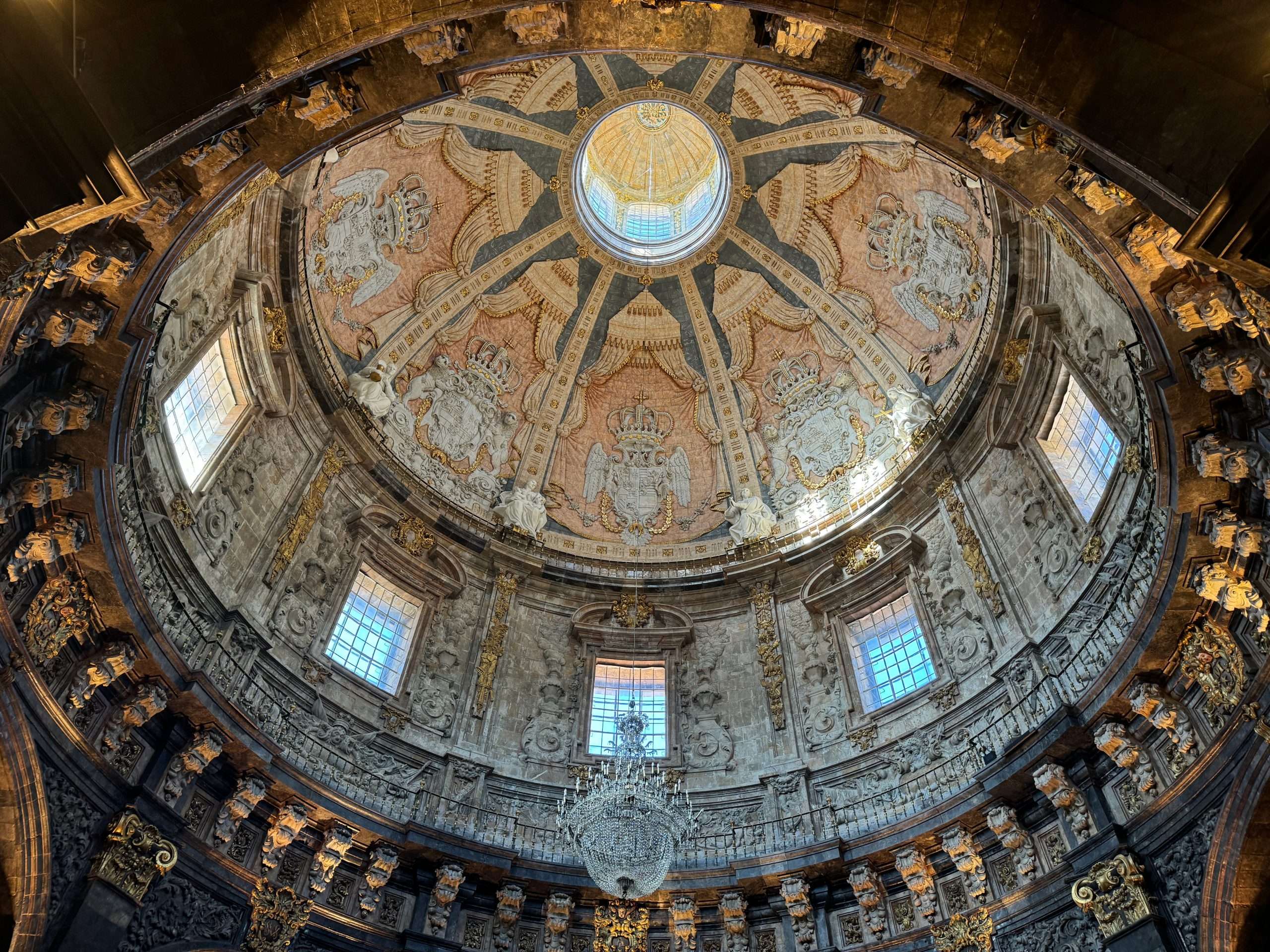
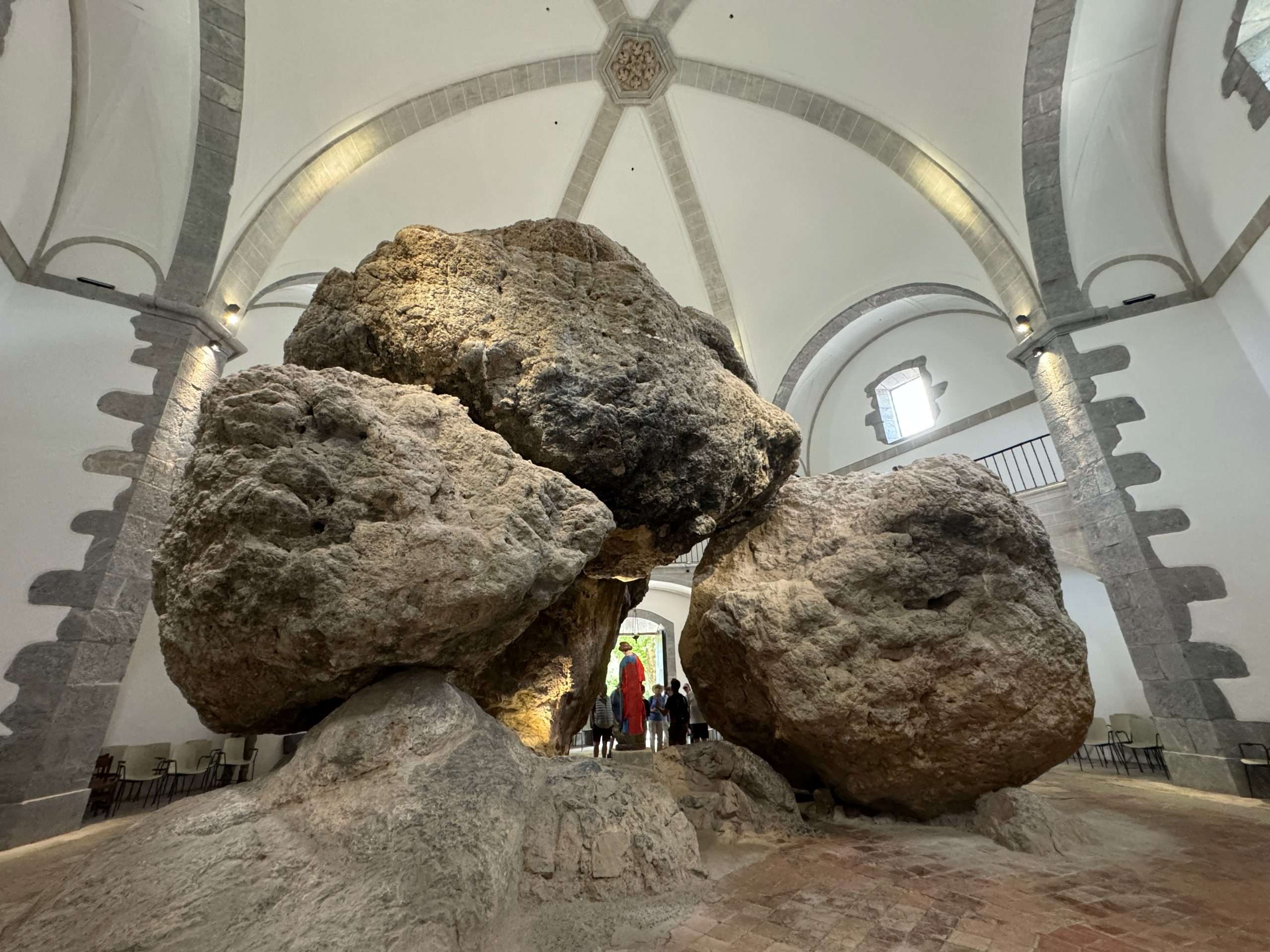
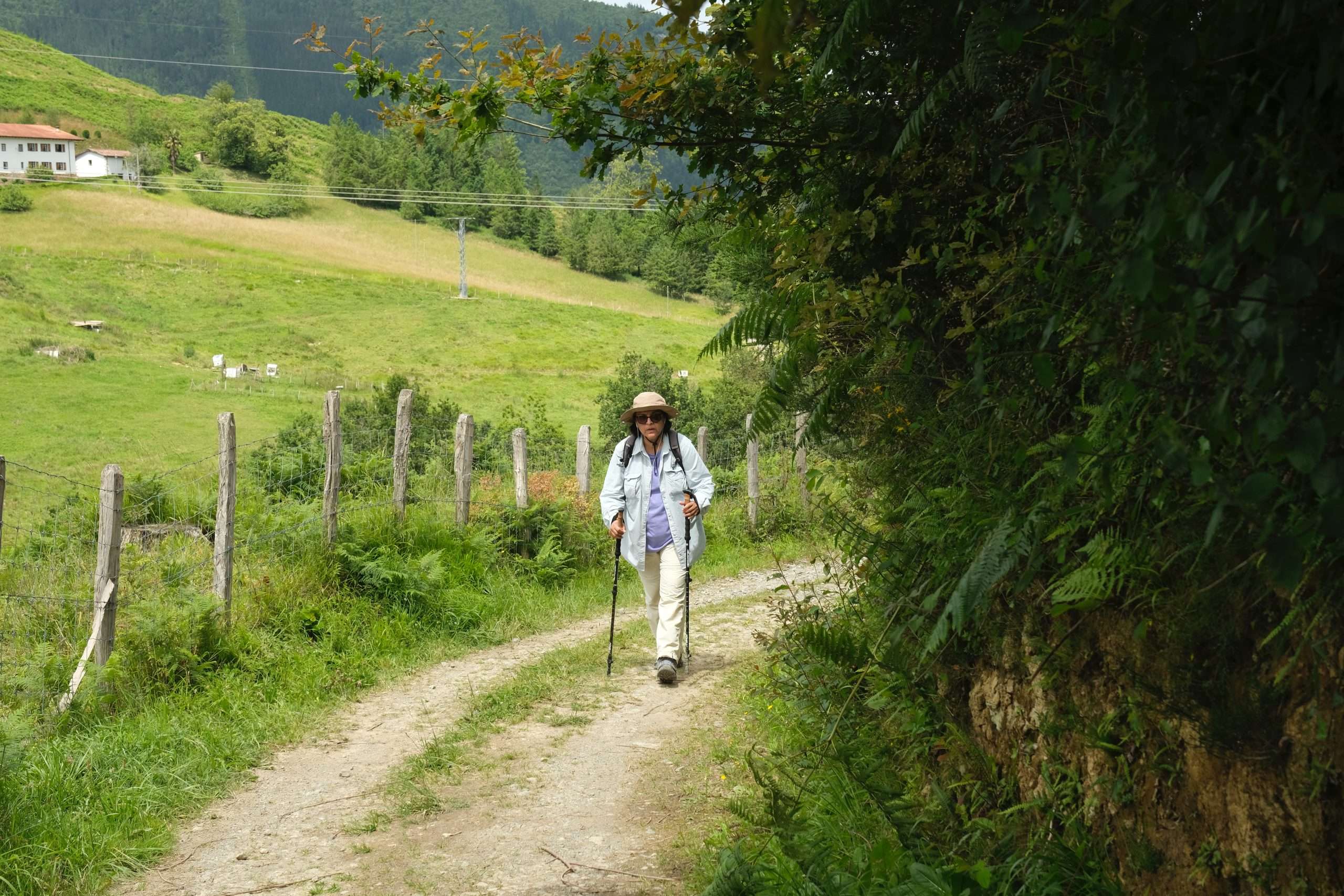
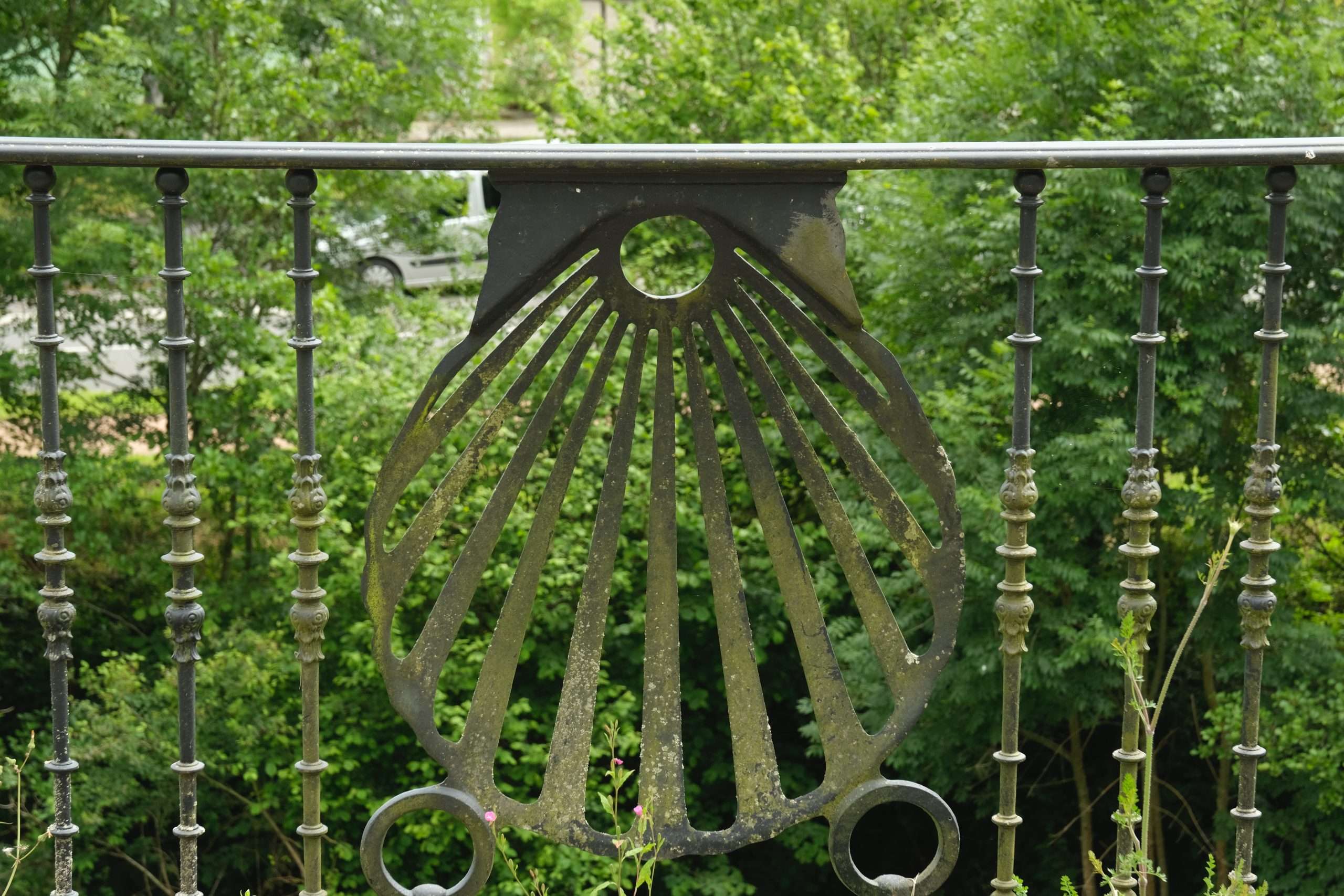
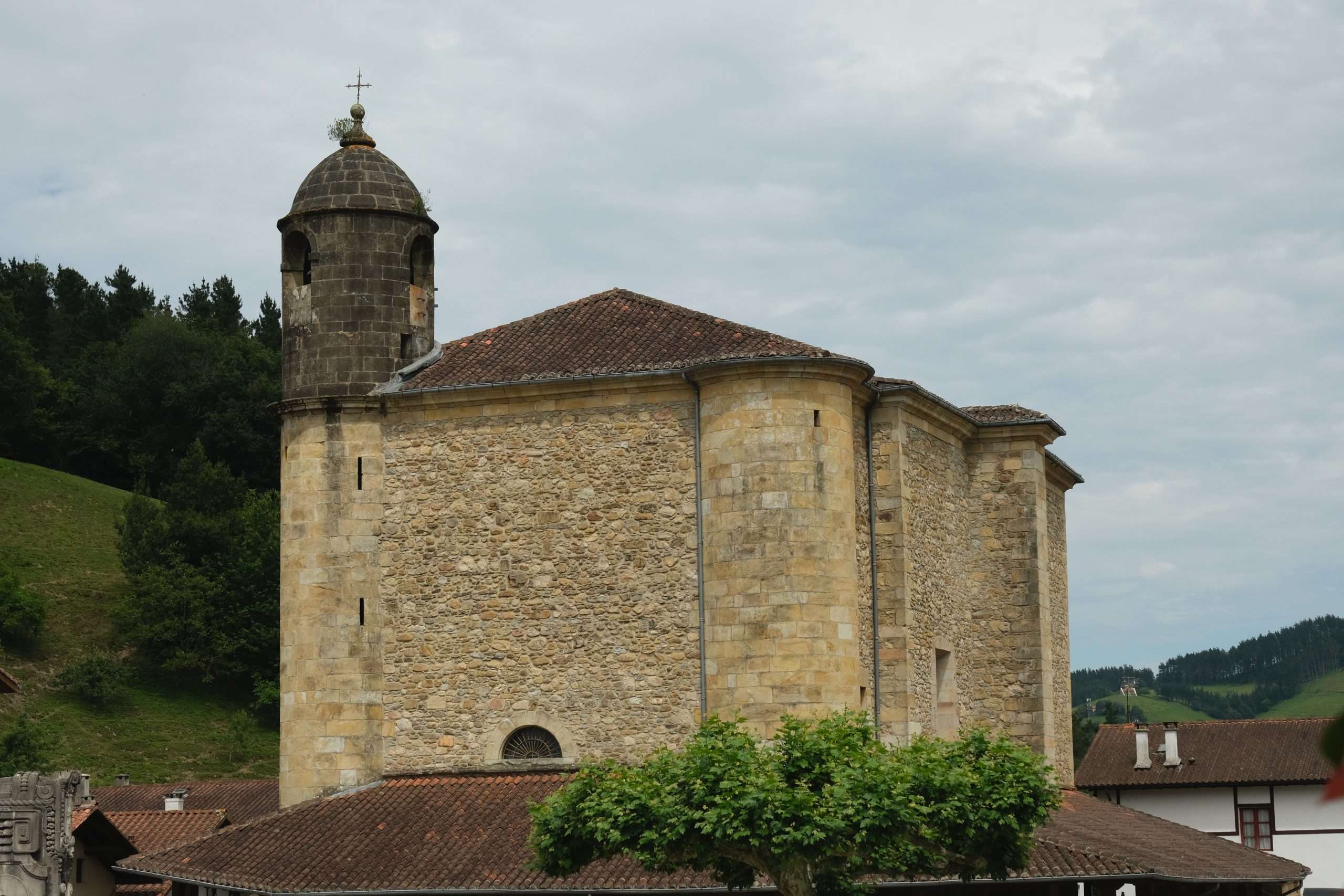
Today’s 5.5-mile hike began with a gradual ascent until Iruzubieta, where the inclines became steeper. In Markina, we visited the Chapel of San Miguel de Arretxinaga, notable for its three large boulders formed 40 million years ago. After a picnic lunch in a park, we continued our steep, cobbled path to Zenarruza Monastery. This Cistercian monastery, which is a few miles from the town of Bolibar, includes a 15-century church and a 16th-century cloister, although the complex itself is much older. The hospital that was once a part of this complex and built specifically for pilgrims has burnt down.
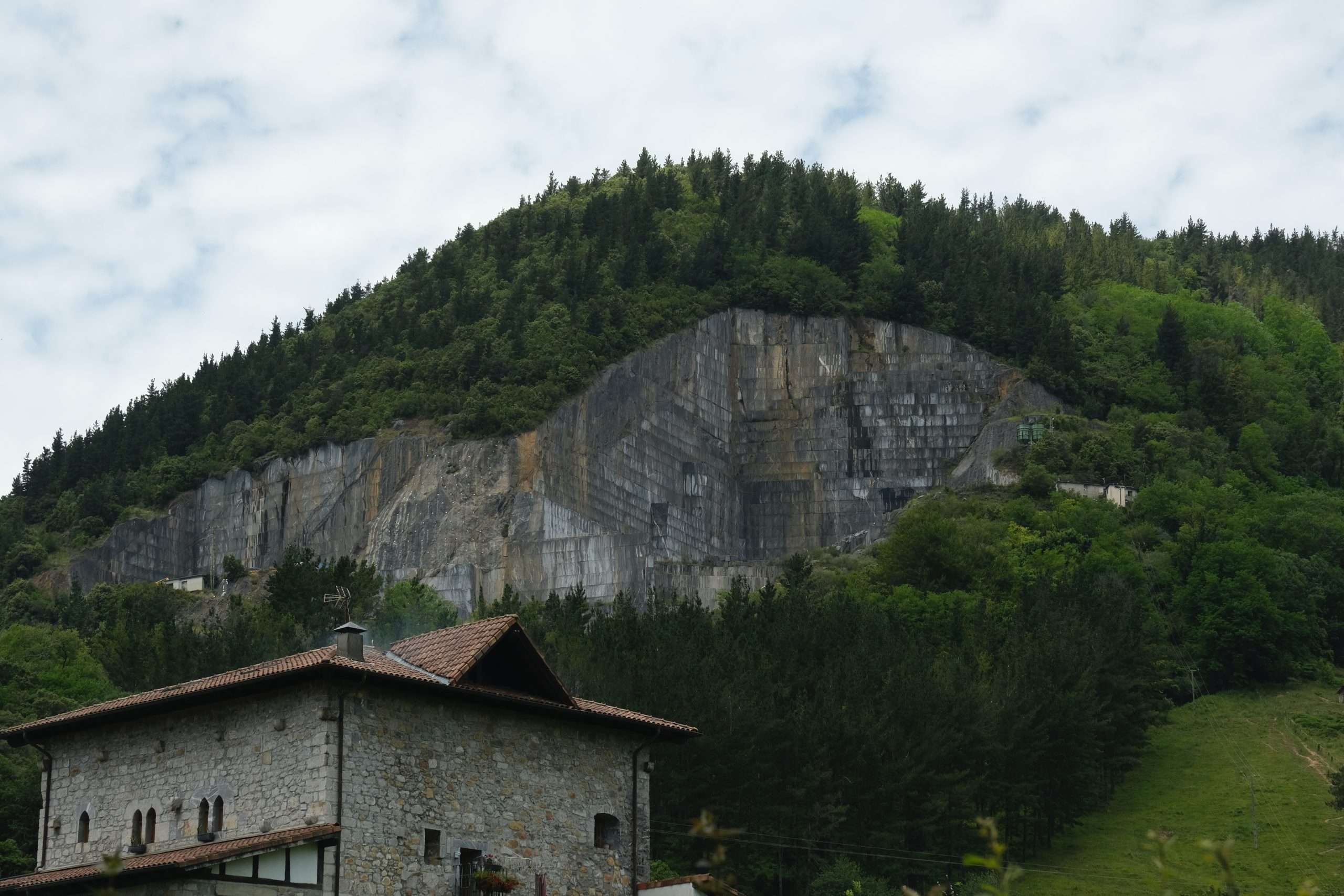
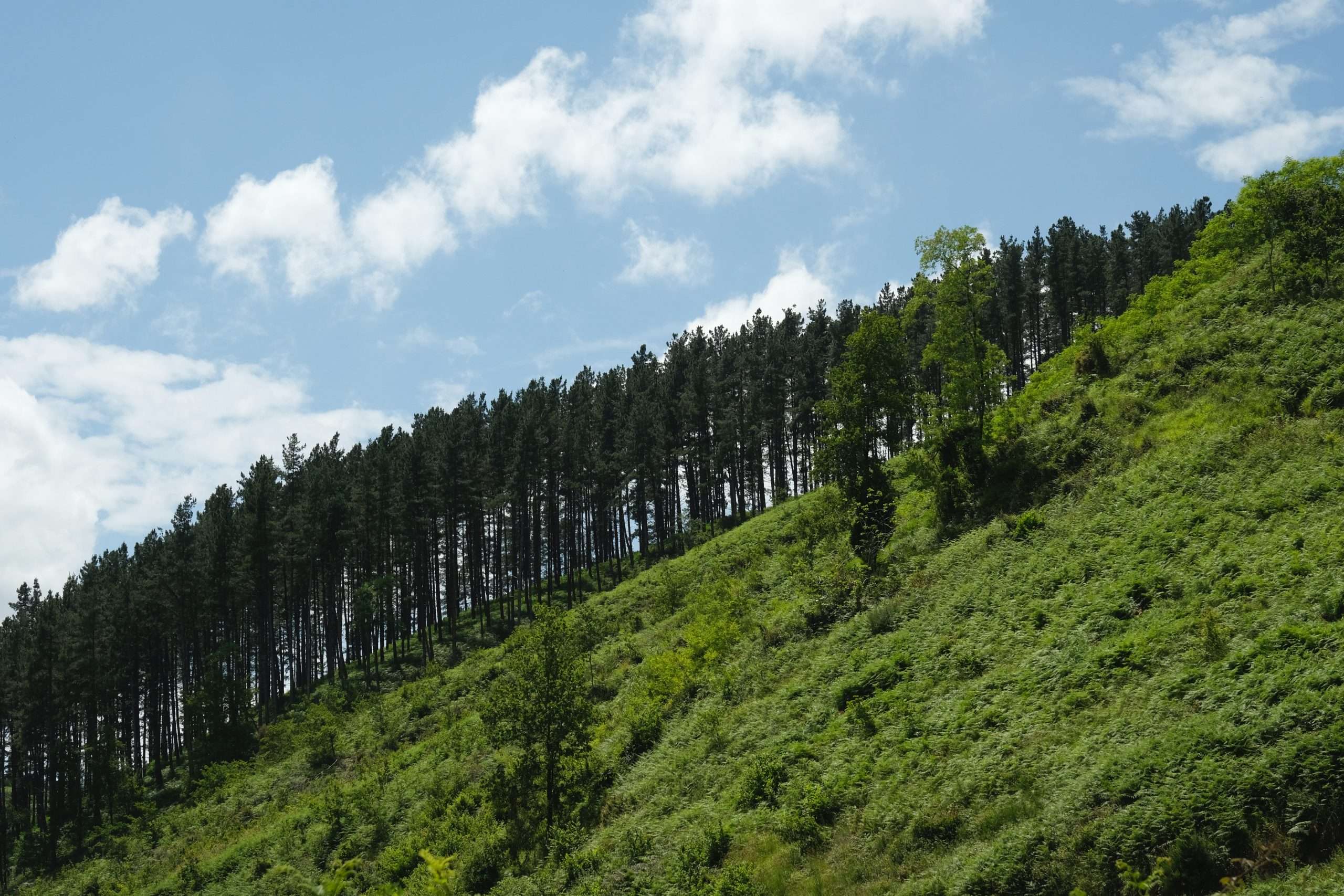
We then drove to Durango, checked into our hotel, and had dinner there.
A Challenging Hike and an Evening in Durango – June 17, 2024
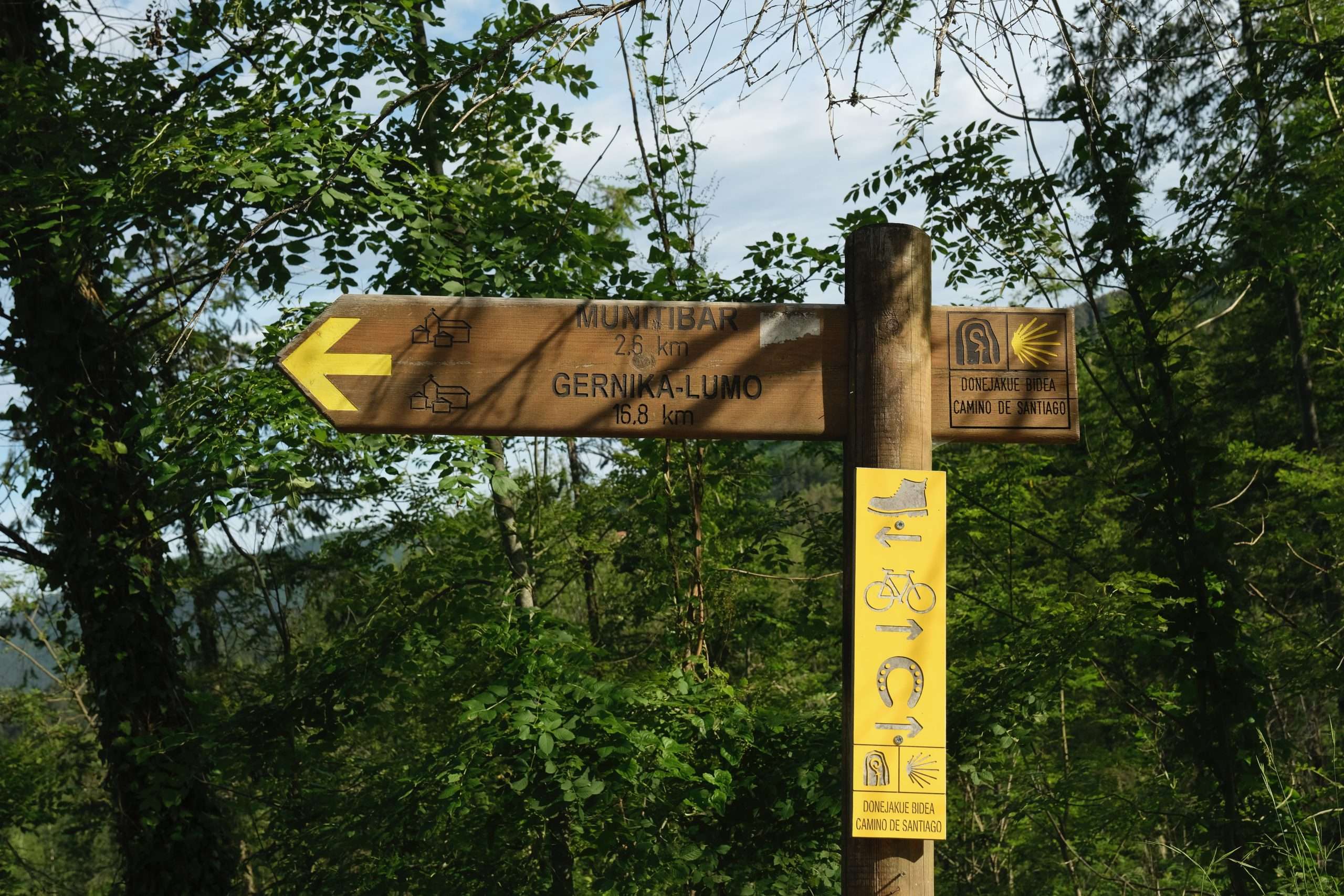
Today’s hike from Zenarruza Monastery to Gernika-Lumo was the longest and most challenging, with four major inclines and declines. The trail was primarily wooded, which was preferable to steps, cobbled stone, or asphalt. We passed through several small towns: Munitibar, Zarrabenta, Eleizalde Auzoa, Marmiz, and Mendieta, before reaching Gernika. We enjoyed a delicious picnic lunch on the verandah of the Santo Tomás Church, prepared by Jon. Jon and Hectór have been alternating between preparing meals and guiding us on the trails. After lunch, Christabel and some others opted to ride to Gernika, while Albert continued hiking. Upon arrival, we relaxed like the locals, sitting in the sun with our beverages. In addition to the sites, we had previously seen on June 8th afternoon, we visited the Casa de Juntas Assembly Hall to see the stained glass window with the giant oak tree and the gathering of the Lords of Biscay and the Air Raid shelter between the two public schools.
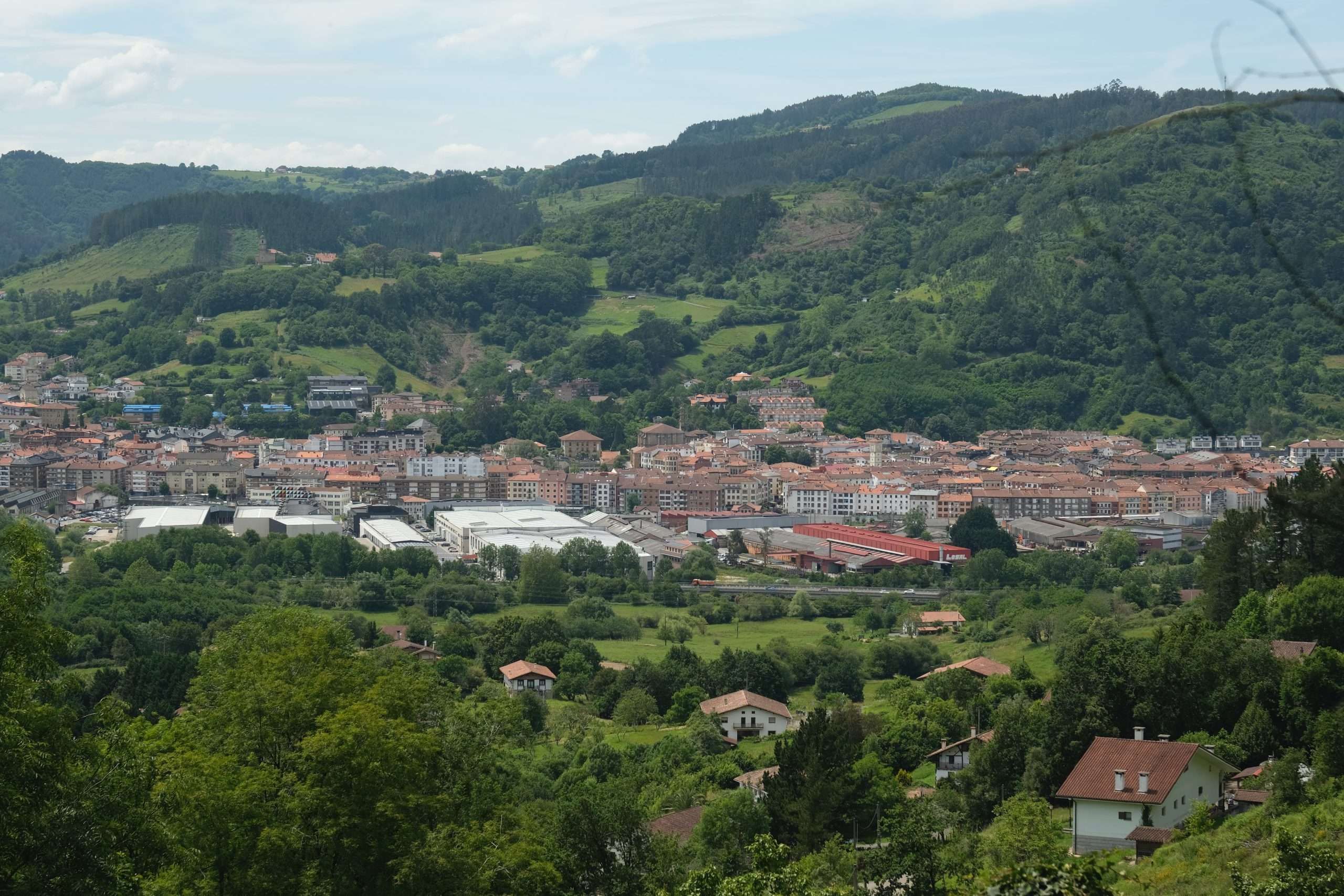
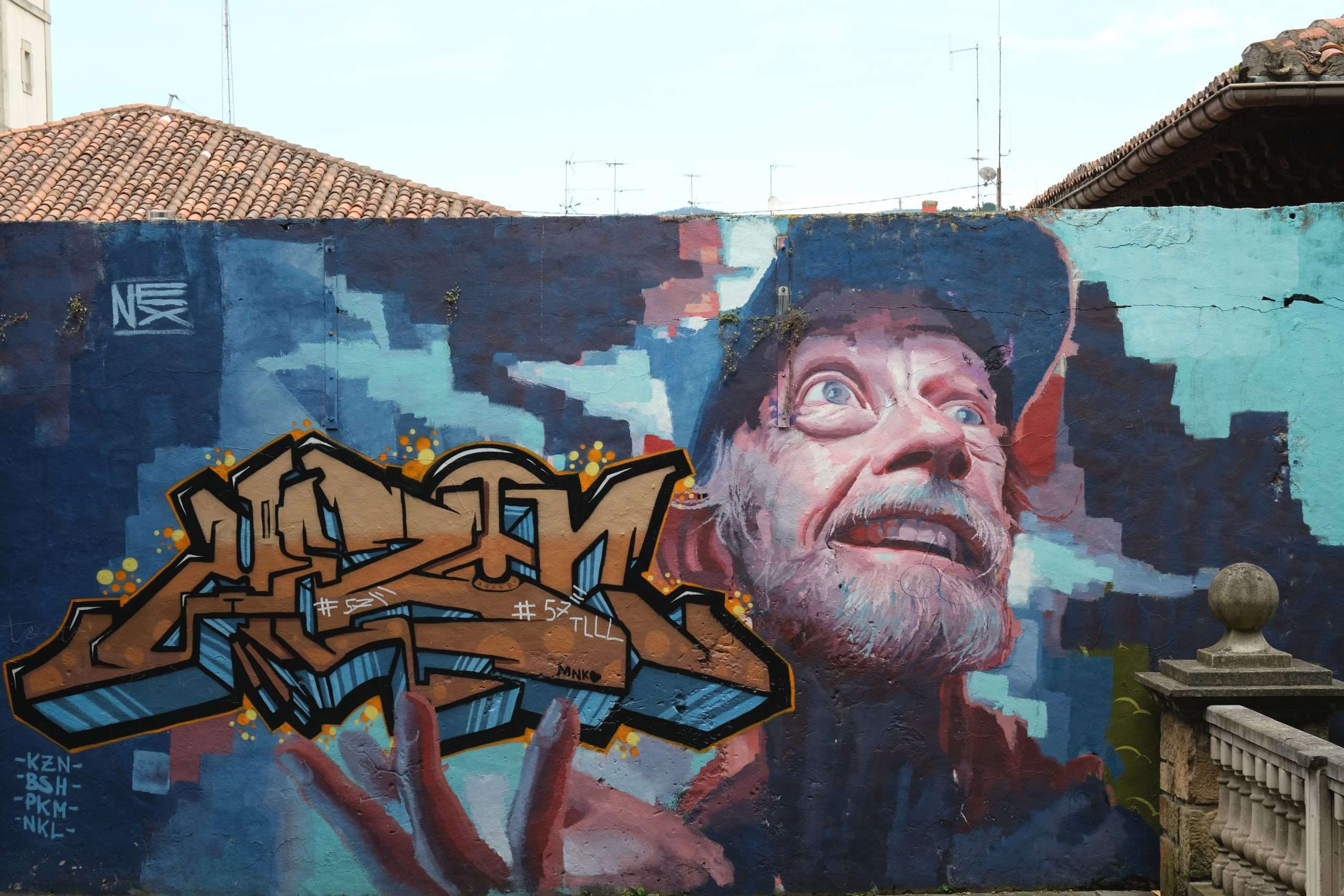
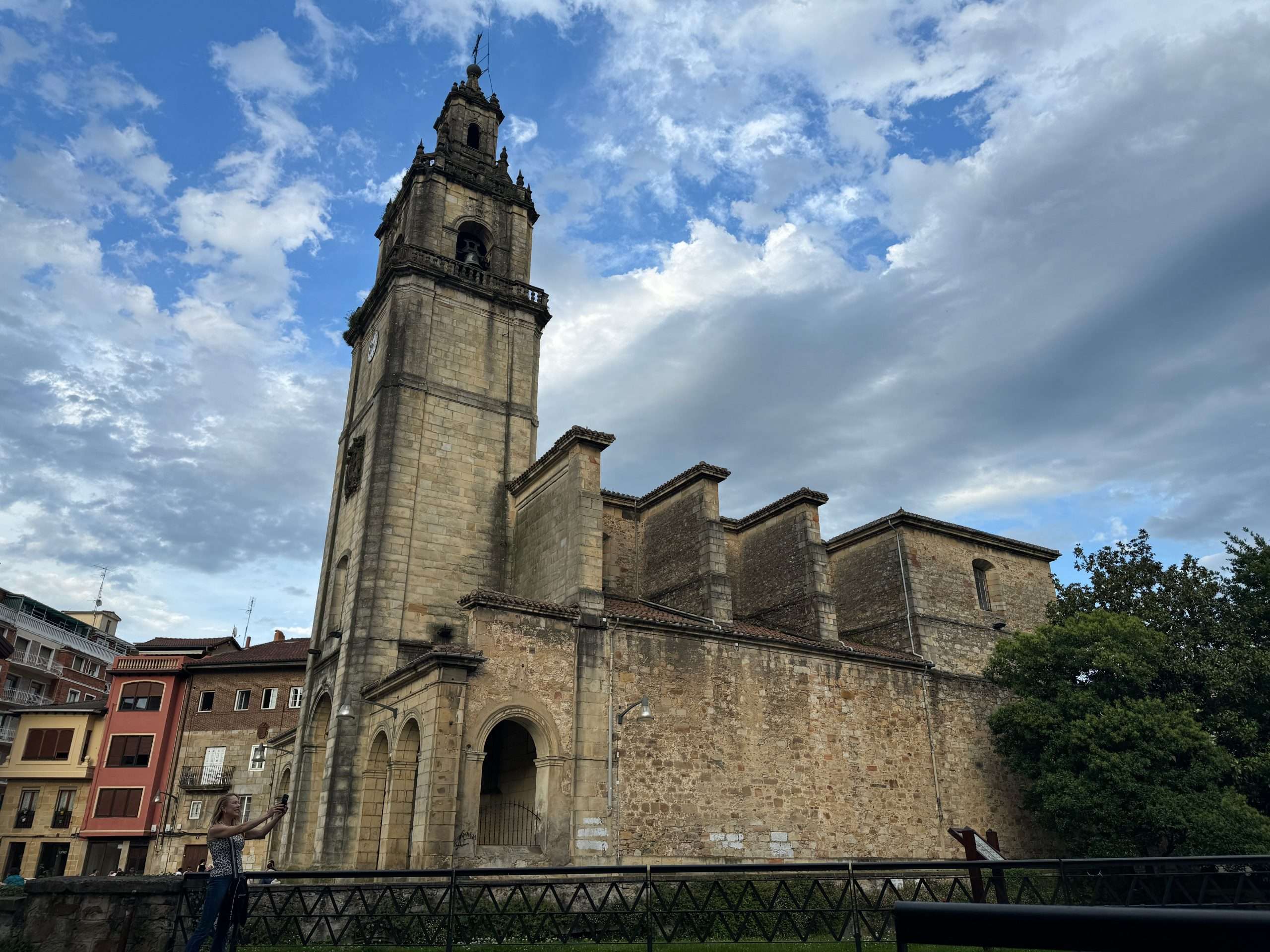
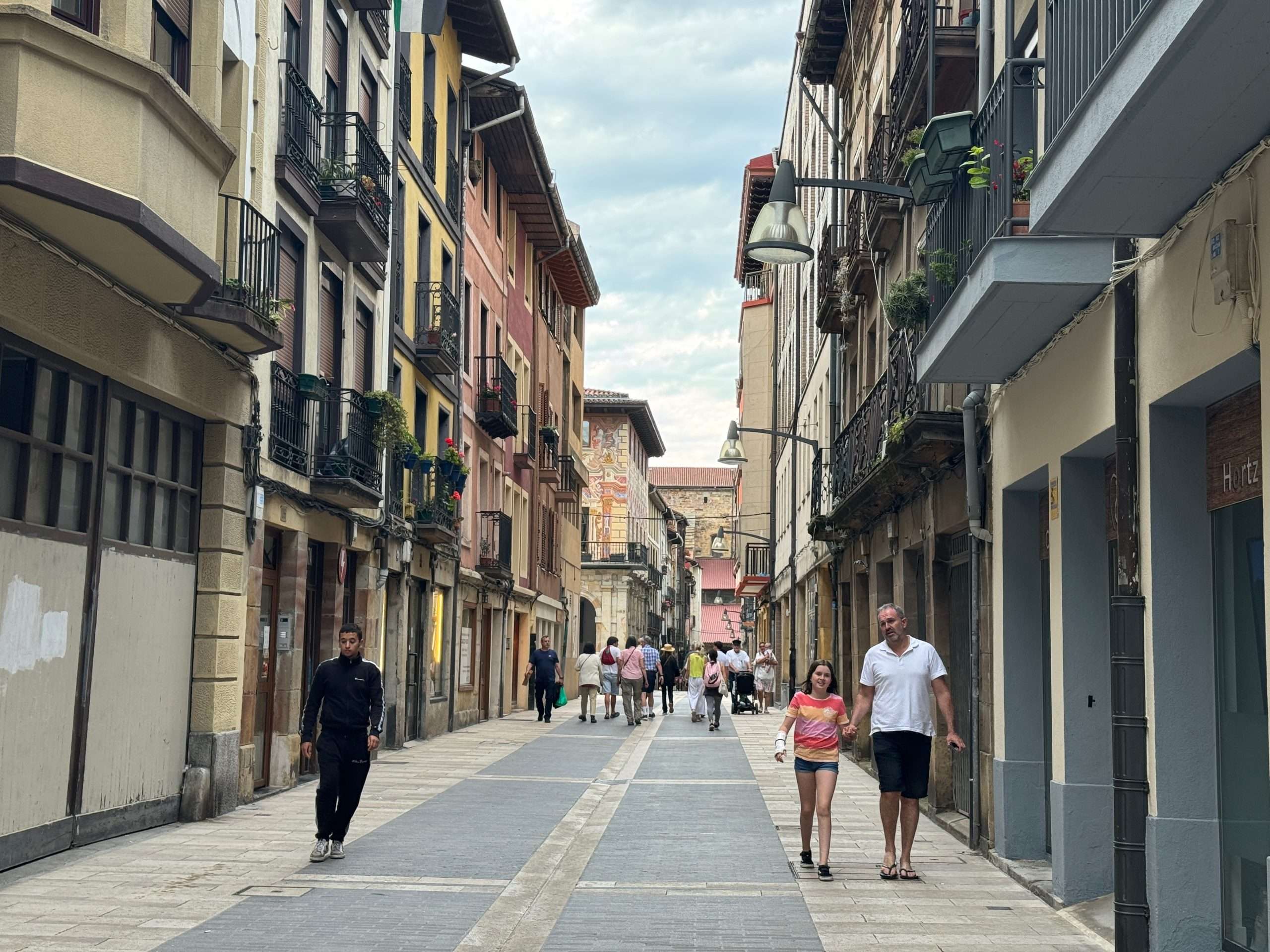
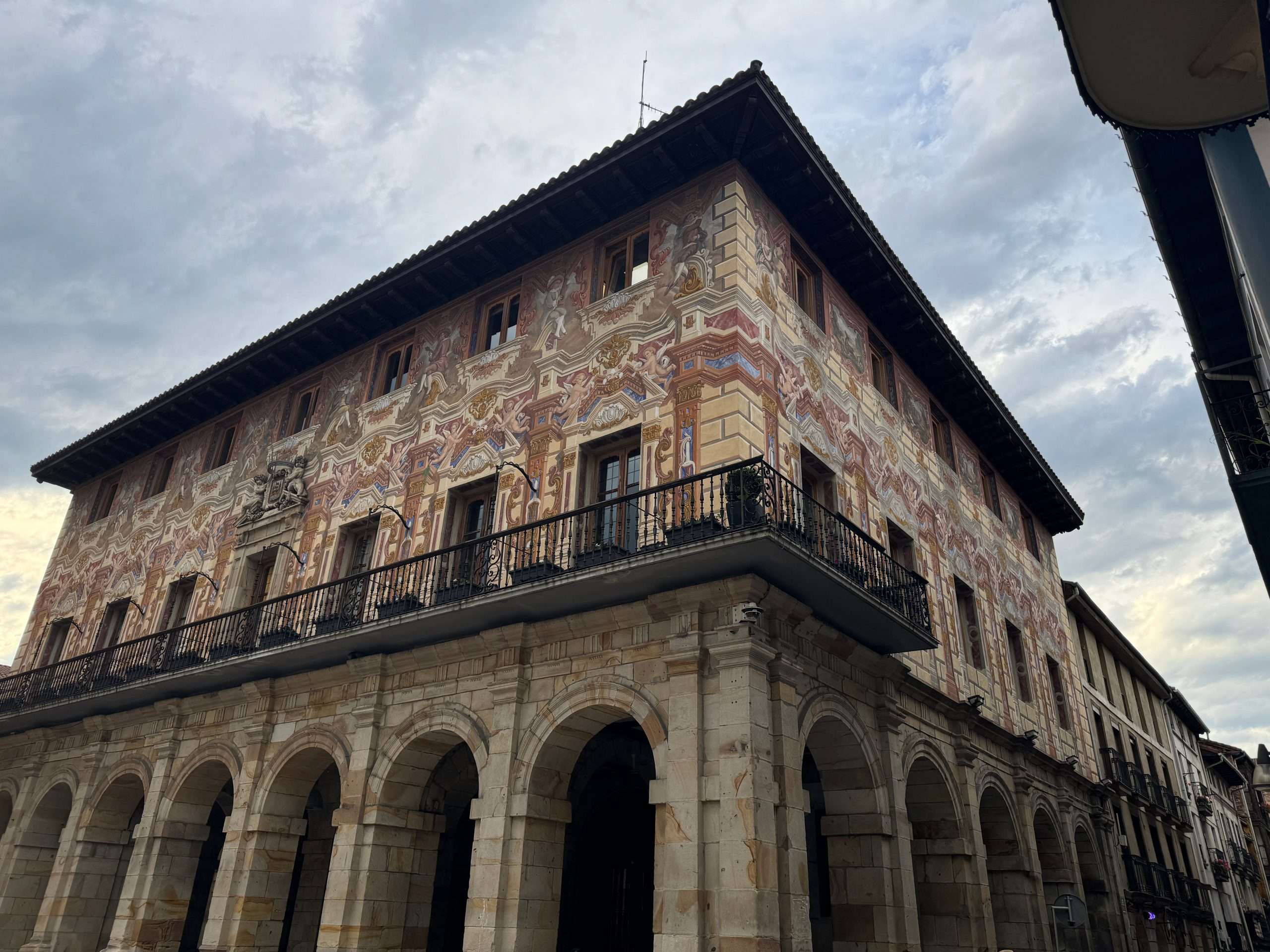
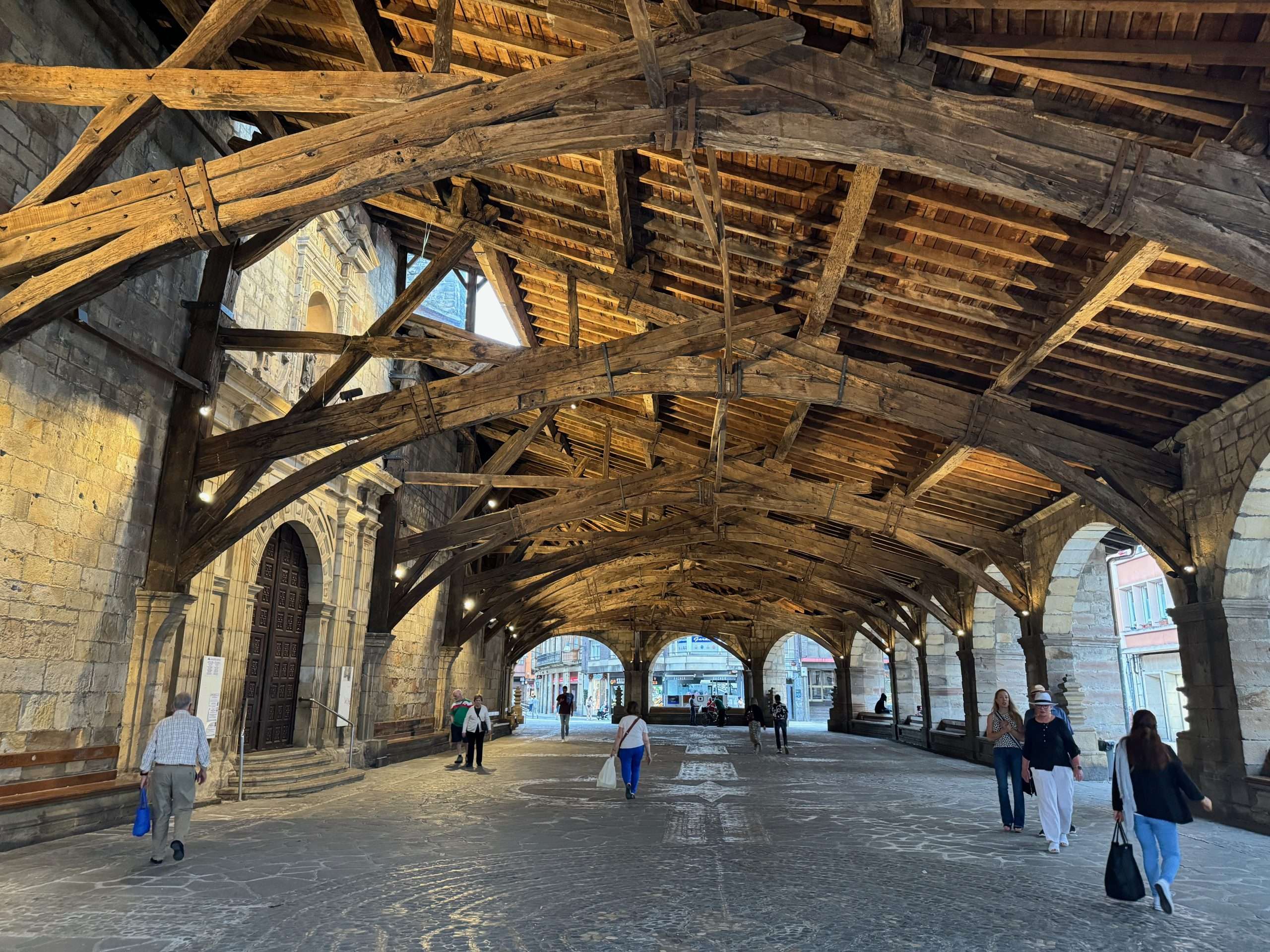
In the evening, we explored Durango, entering through the Arch of Santa Ana, a remnant of the original town wall from the Middle Ages. This gate, formerly known as the Market Gate, was the entry point for all merchandise. We walked under the wooden portico of the Basilica Church of Santa Maria de Uribarri, a Gothic and Baroque structure from the late 15th to early 16th centuries, which underwent extensive repairs after being damaged in the 1937 bombings. We strolled around town, browsing shop windows and historic buildings. Dinner was delightful, in an upstairs room of a small restaurant overlooking a scenic river. The food was excellent
Coastal Hike from Sopelana Beach to Portugalete – June 18, 2024
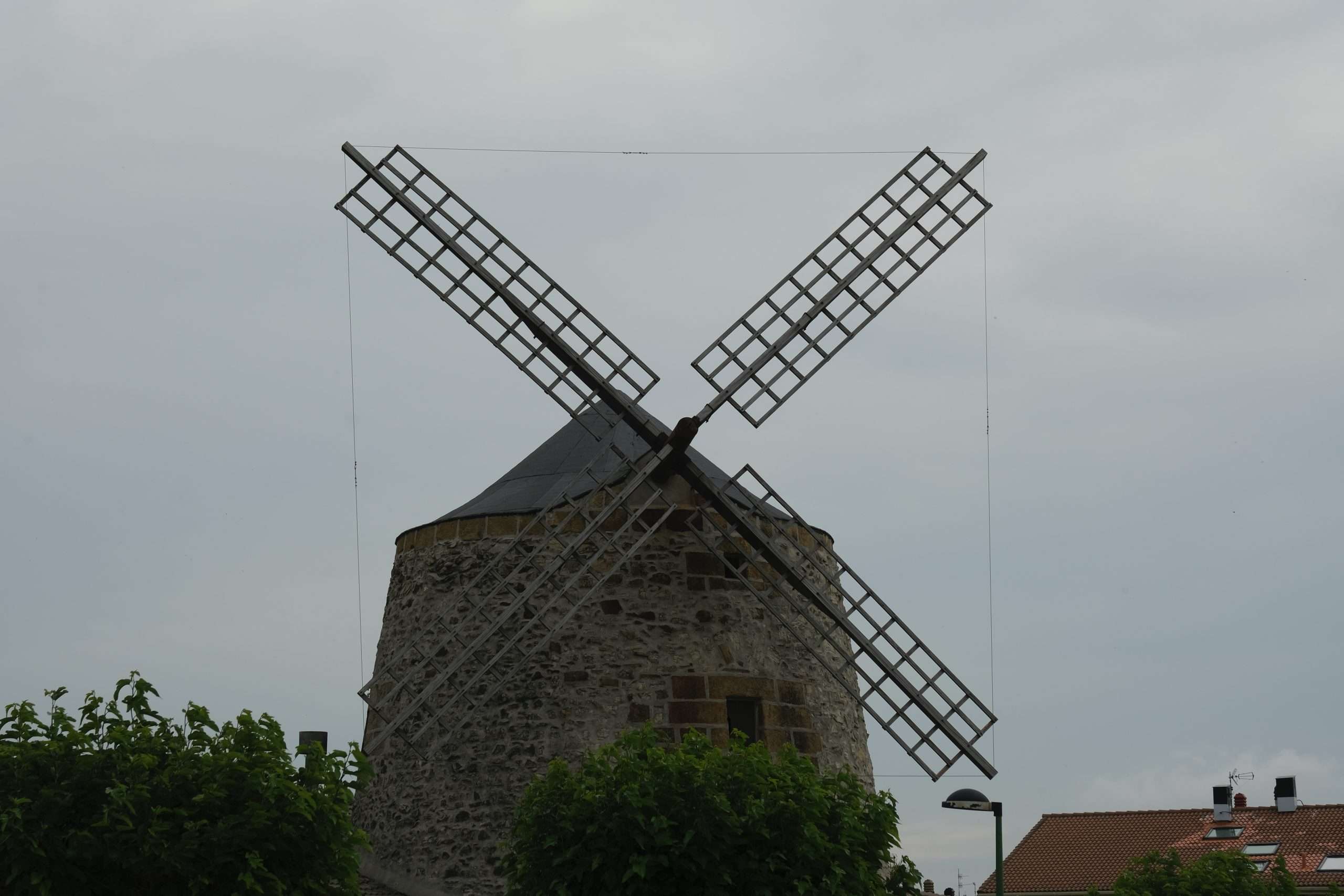
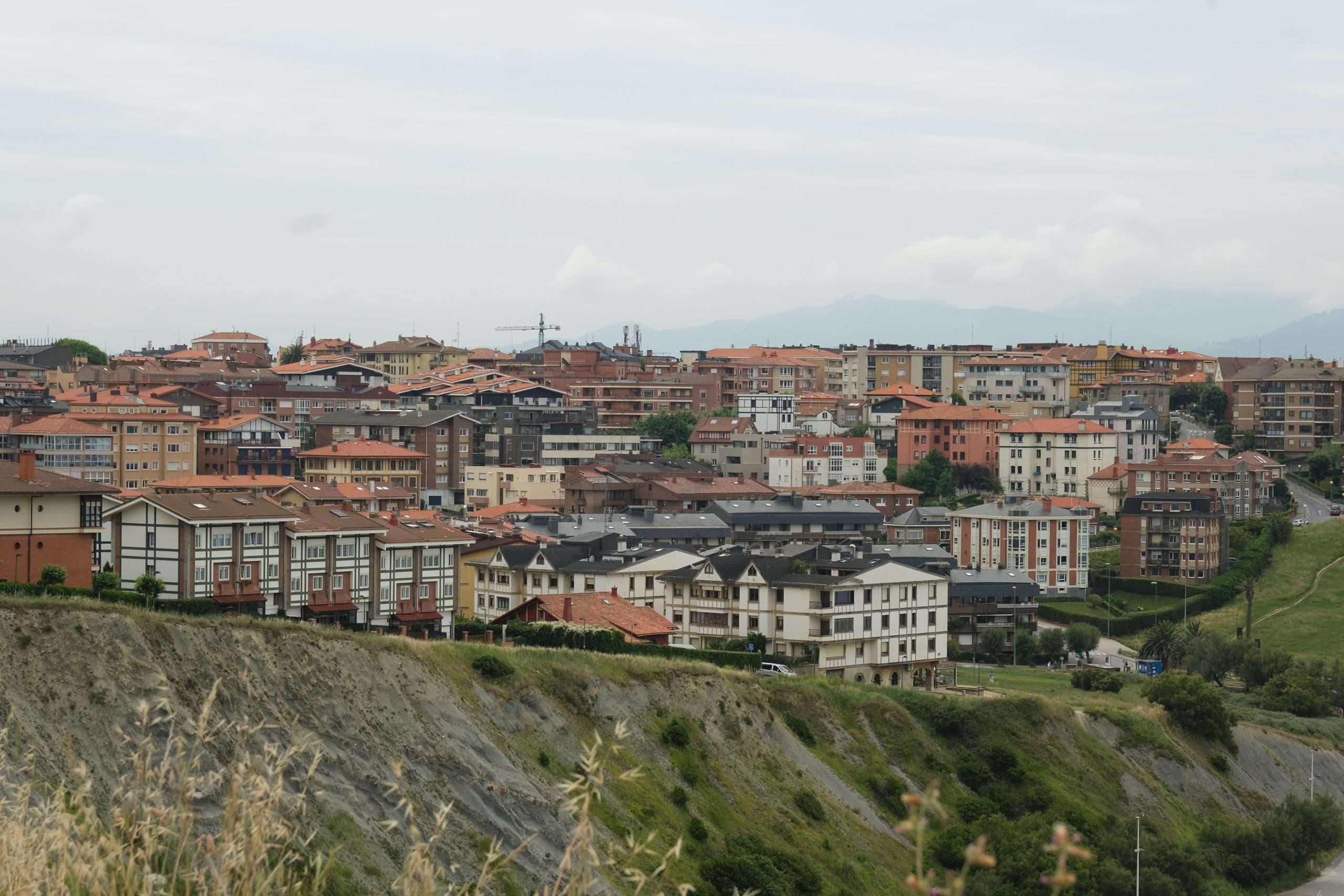
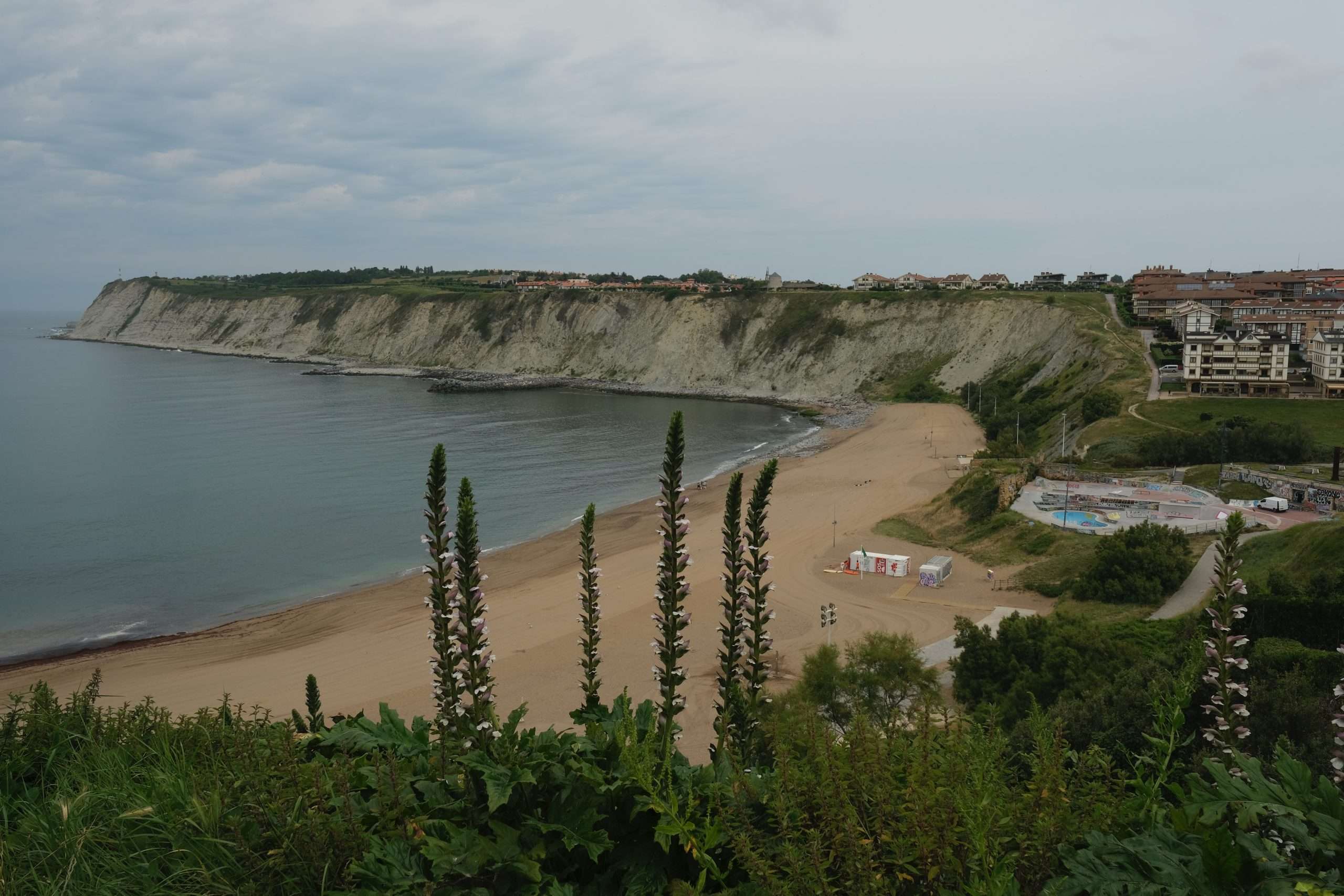
This morning, we started our last hike from Sopelana Beach, a coastal town with stunning views of the cliffs and sea that attract hikers, walkers, and nature lovers. We walked through several beaches along the Getxo coast, covering a distance of 7.5 miles on the La Galea trail. Along the way, we saw Fuerte de la Galea, an 18th-century military fort inspired by the lighthouse on Mount Igueldo in San Sebastián, and the Aixerrota Windmill. As we approached Punta Galea, we caught a glimpse of El Abra Port in Bilbao.
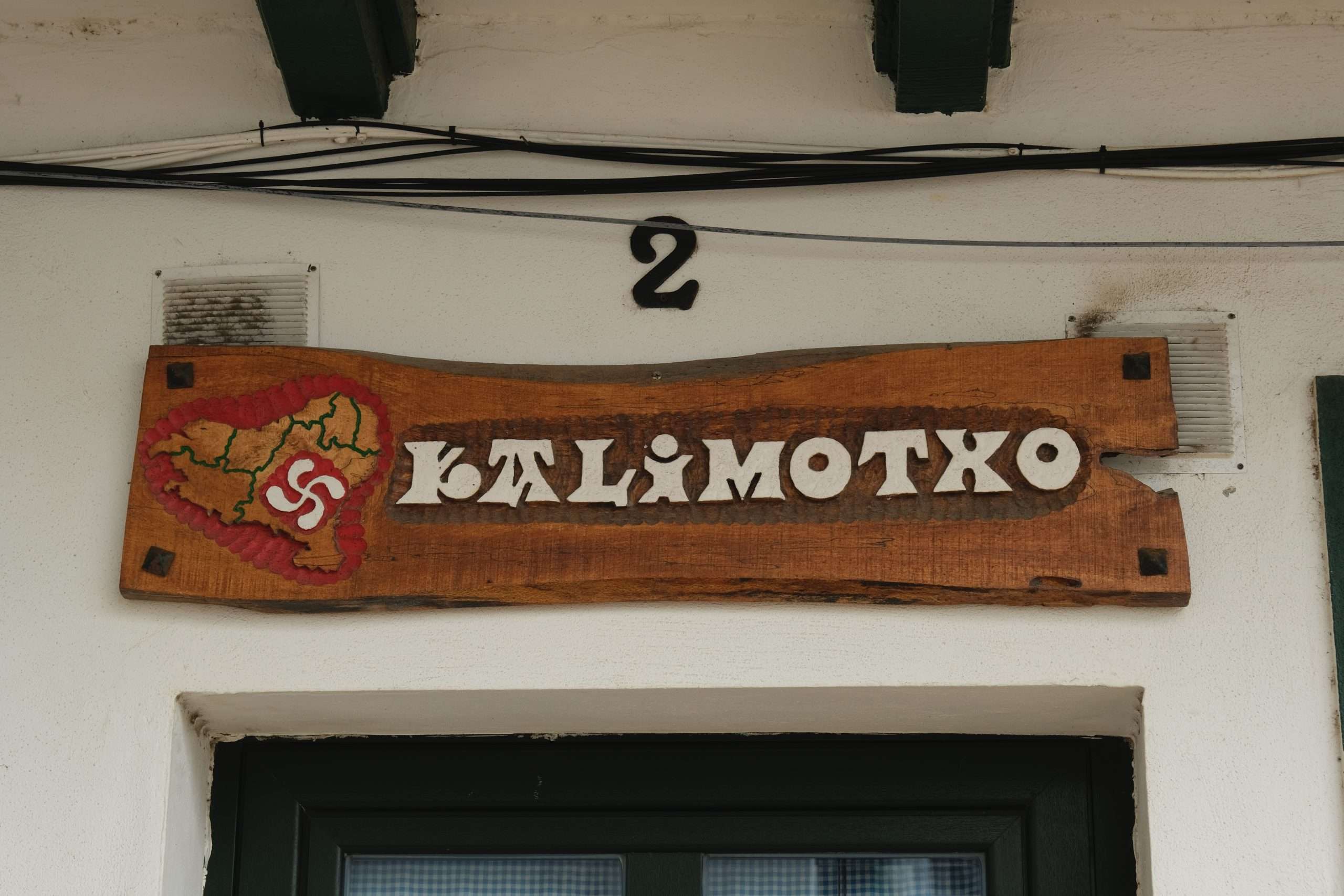
We stopped for a photo op at a bar known as the birthplace of Kalimotxo, a concoction of red wine and coke. There are many stories about who invented this popular drink (servers trying to save spoiled wine or two men named Kali and Motxo) and when it was invented (the 1920s or the 1970s). Those who tasted it say it is unquestionably refreshing. We also enjoyed some of the best pintxos at a small bar.
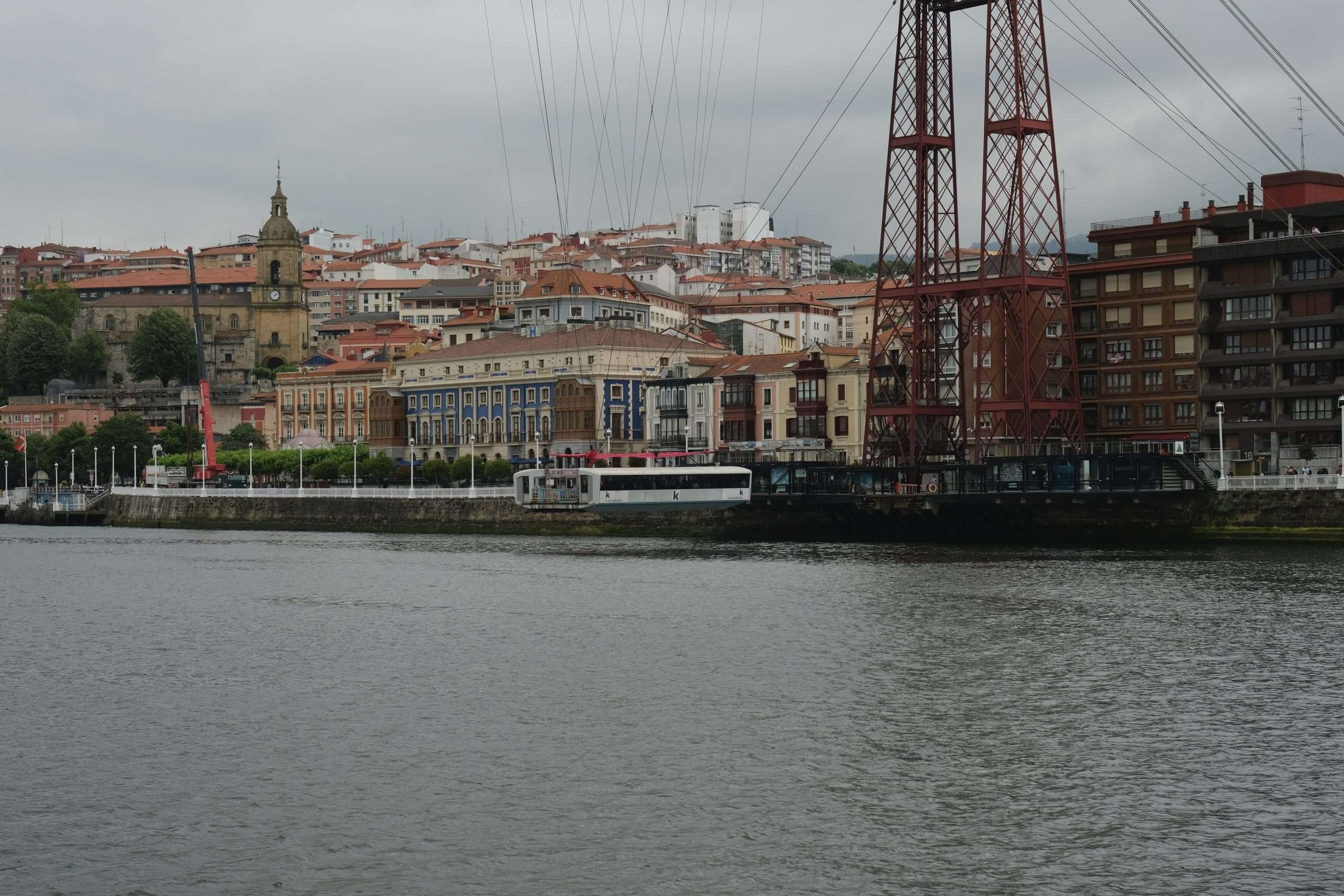
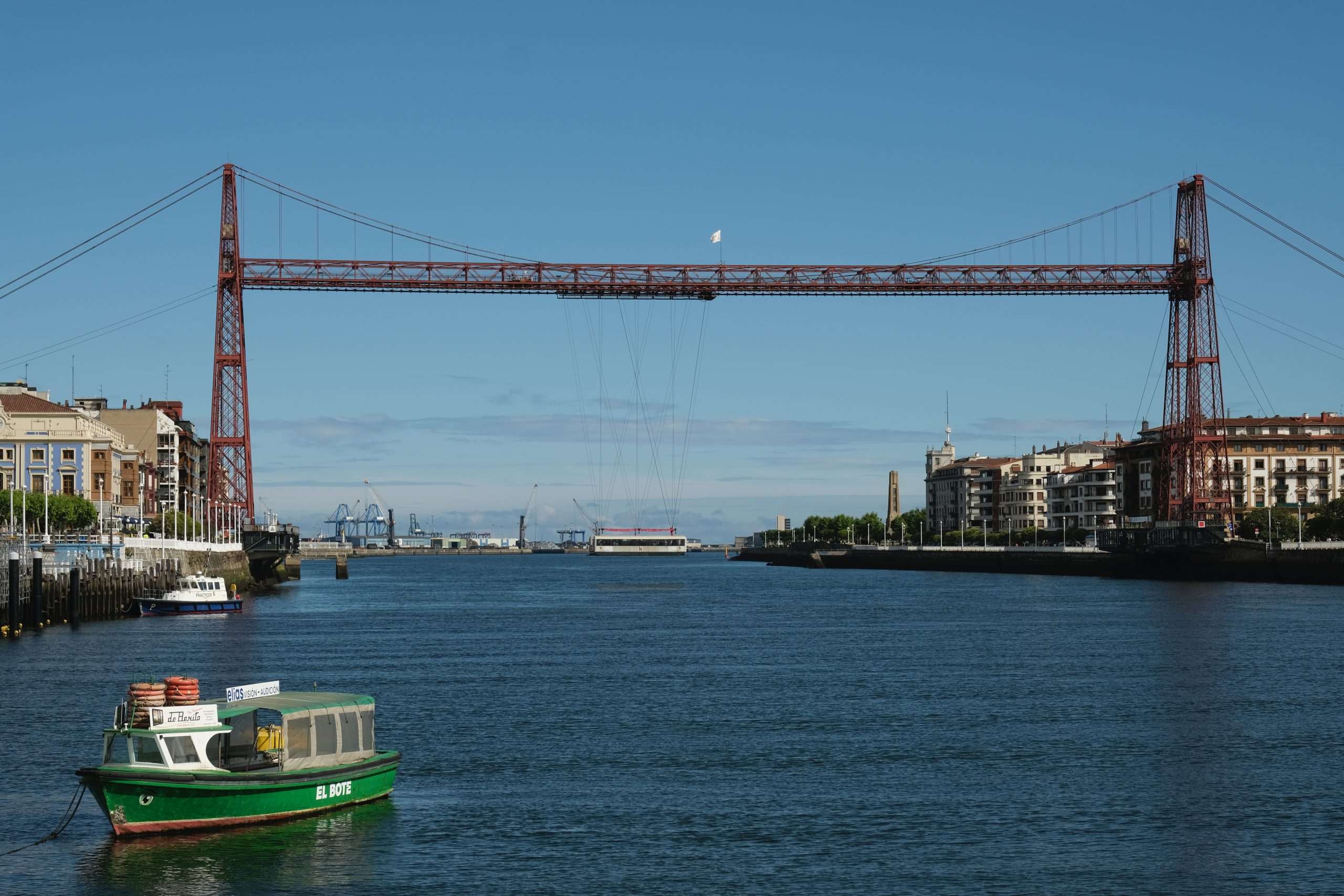
When we finally reached Las Arenas, we saw the Vizcaya Bridge, also known as the Hanging Bridge or Puente Colgante. This UNESCO World Heritage site is considered a perfect example of beauty and functionality. Designed by one of Eiffel’s disciples, it transports people across the Nervión River without disrupting maritime traffic from Bilbao. We took an elevator up to the bridge and walked its length to the Portugalete side, marveling at the courage of the men and a woman who were rustproofing a portion of the structure. Then we walked back across the length of the bridge to have lunch in Las Arenas. After lunch, we said goodbye to Patxi, our driver, and took the gondola suspended from the bridge, along with several other people and a few cars. It transported us within a few minutes across the river to Portugalete and to our hotel.
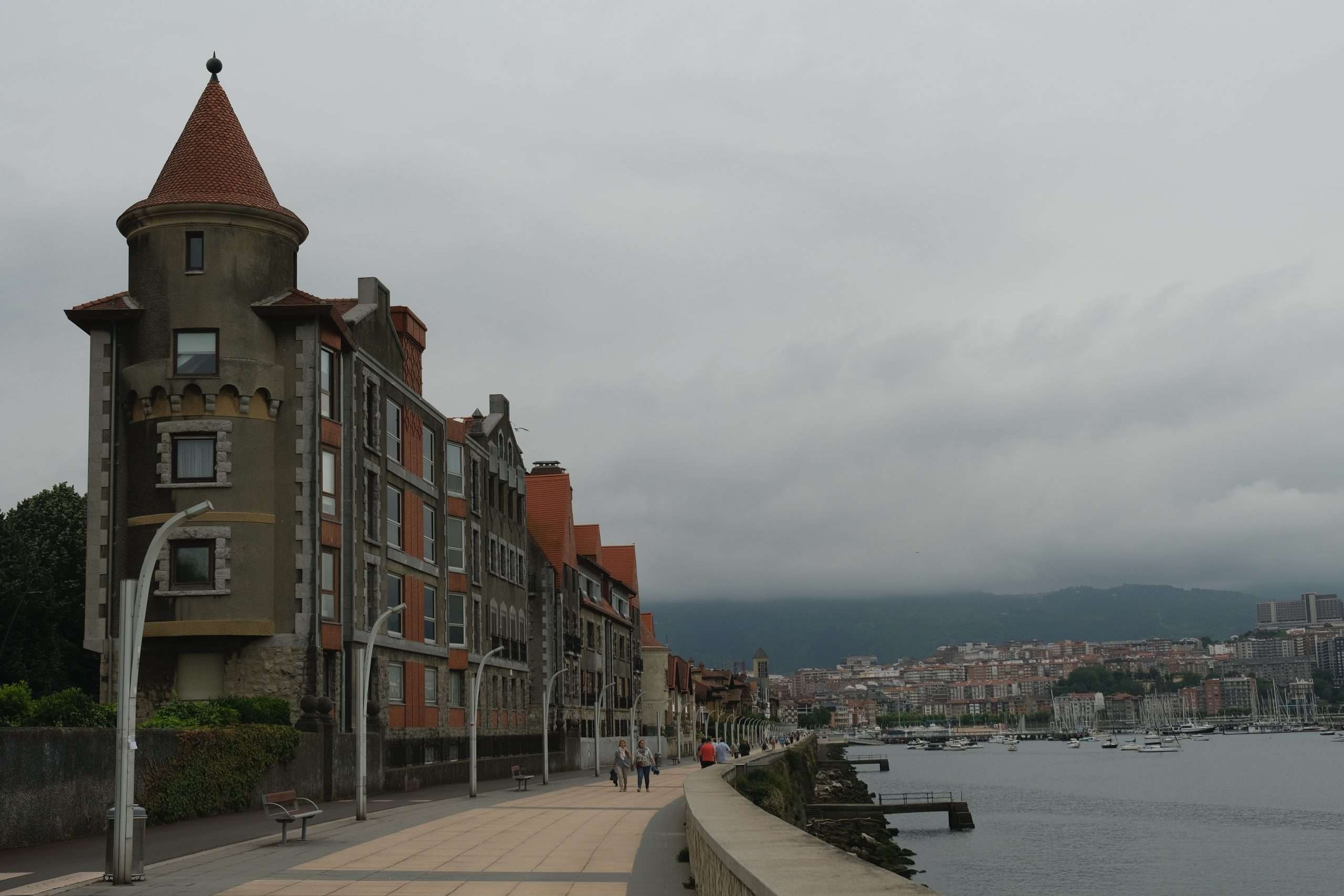
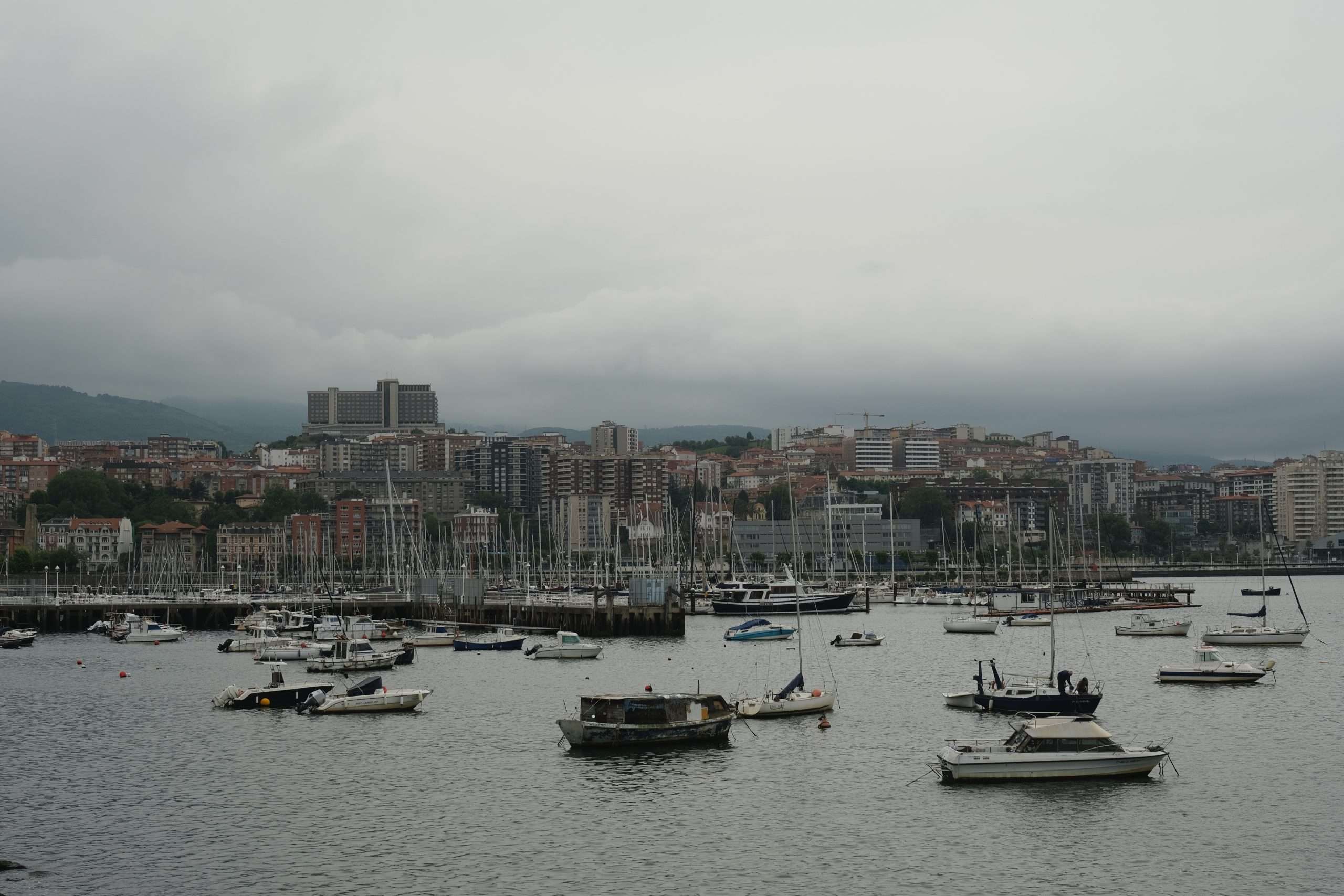
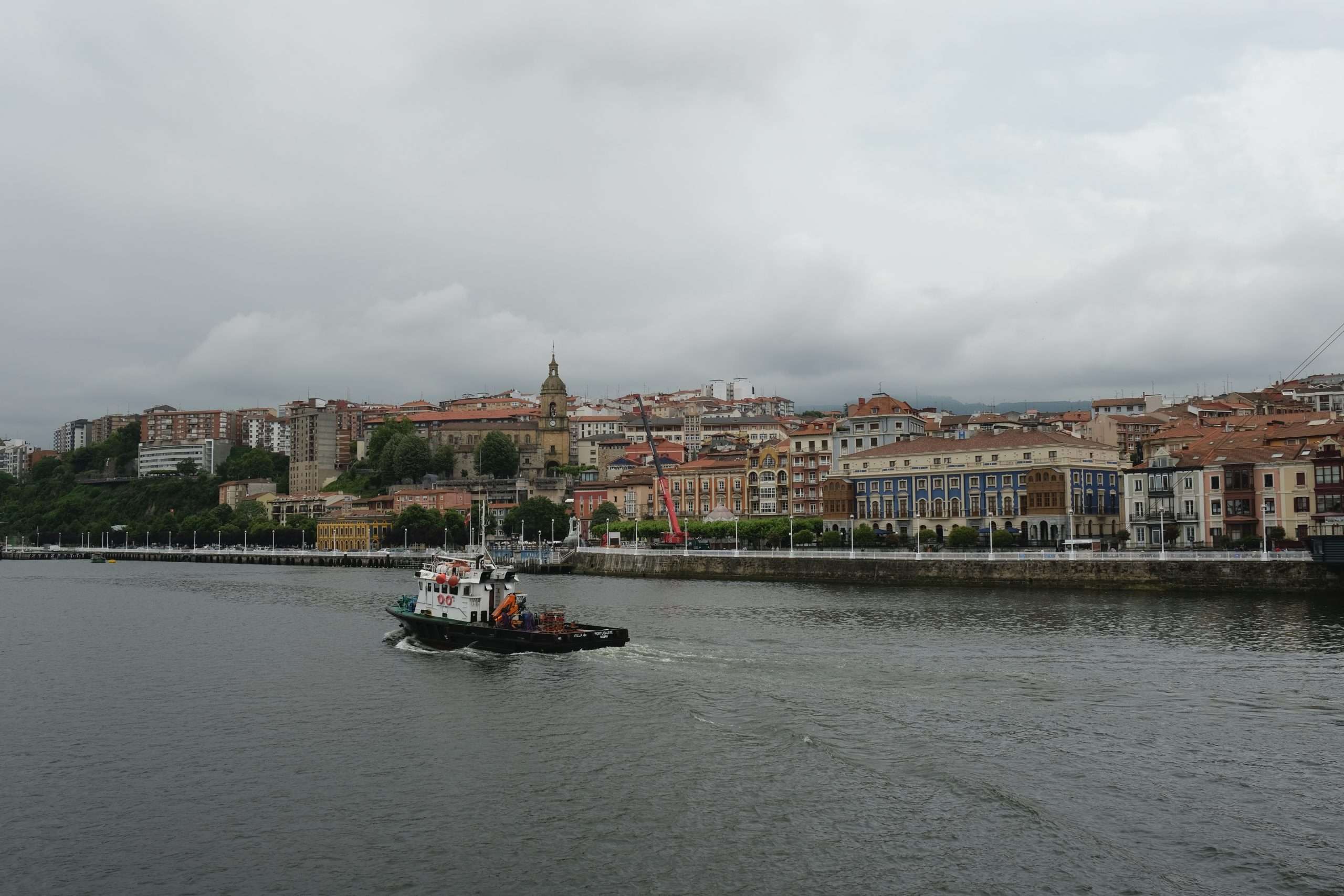
In the evening, we had a fabulous farewell dinner at the hotel and wished our fellow travelers and guides Agur! (Basque for goodbye).
Relaxing Day in Portugalete – June 19, 2024
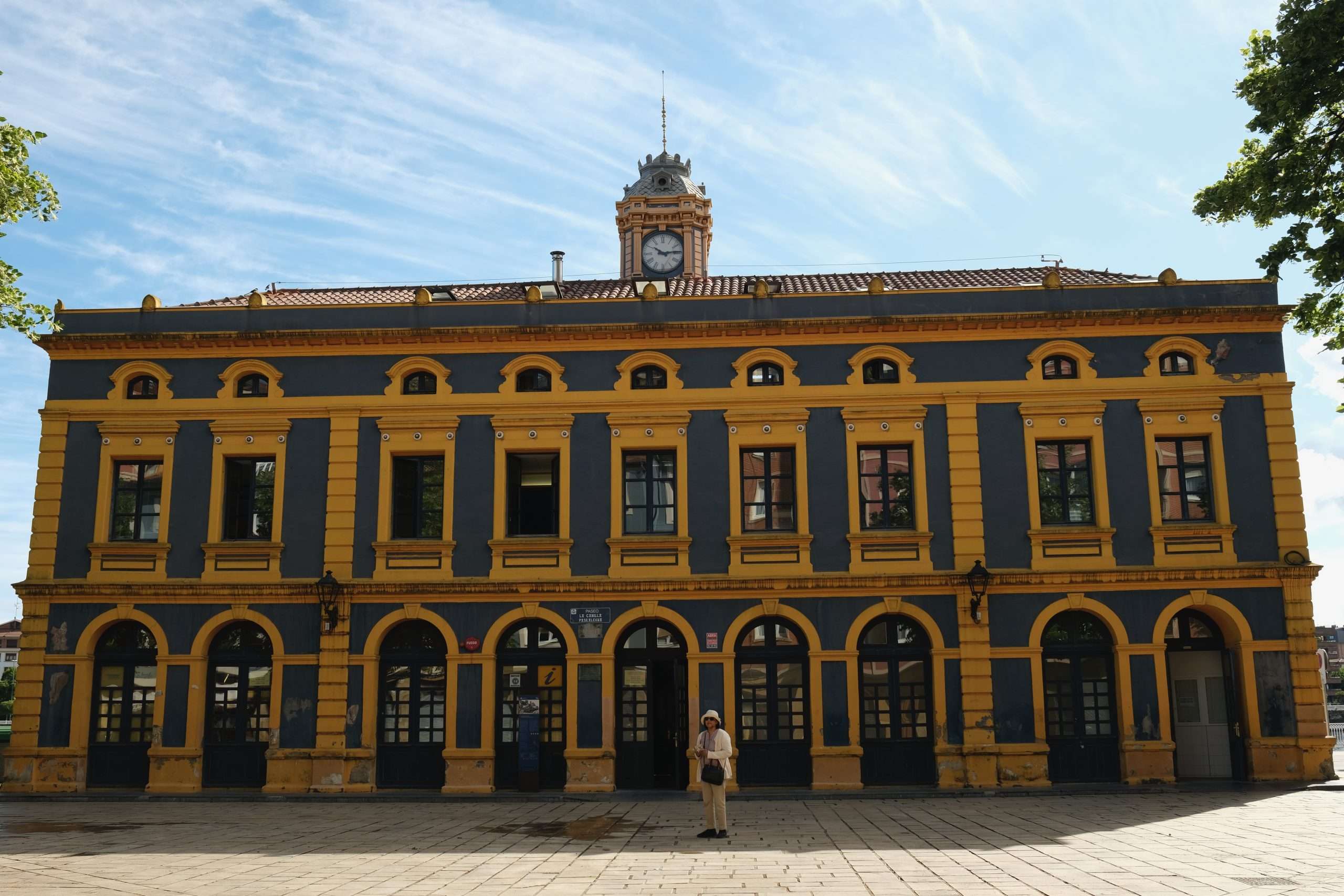
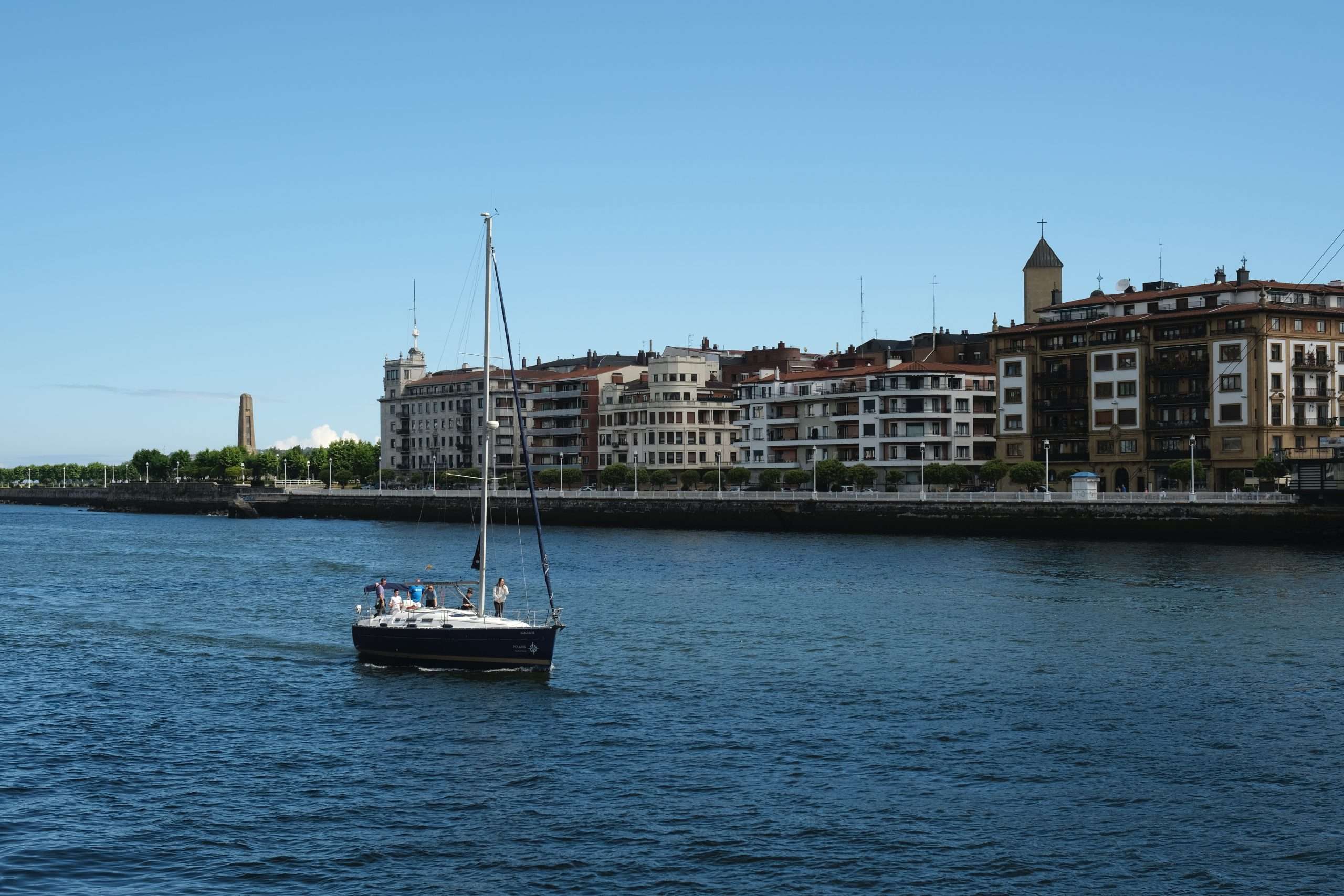
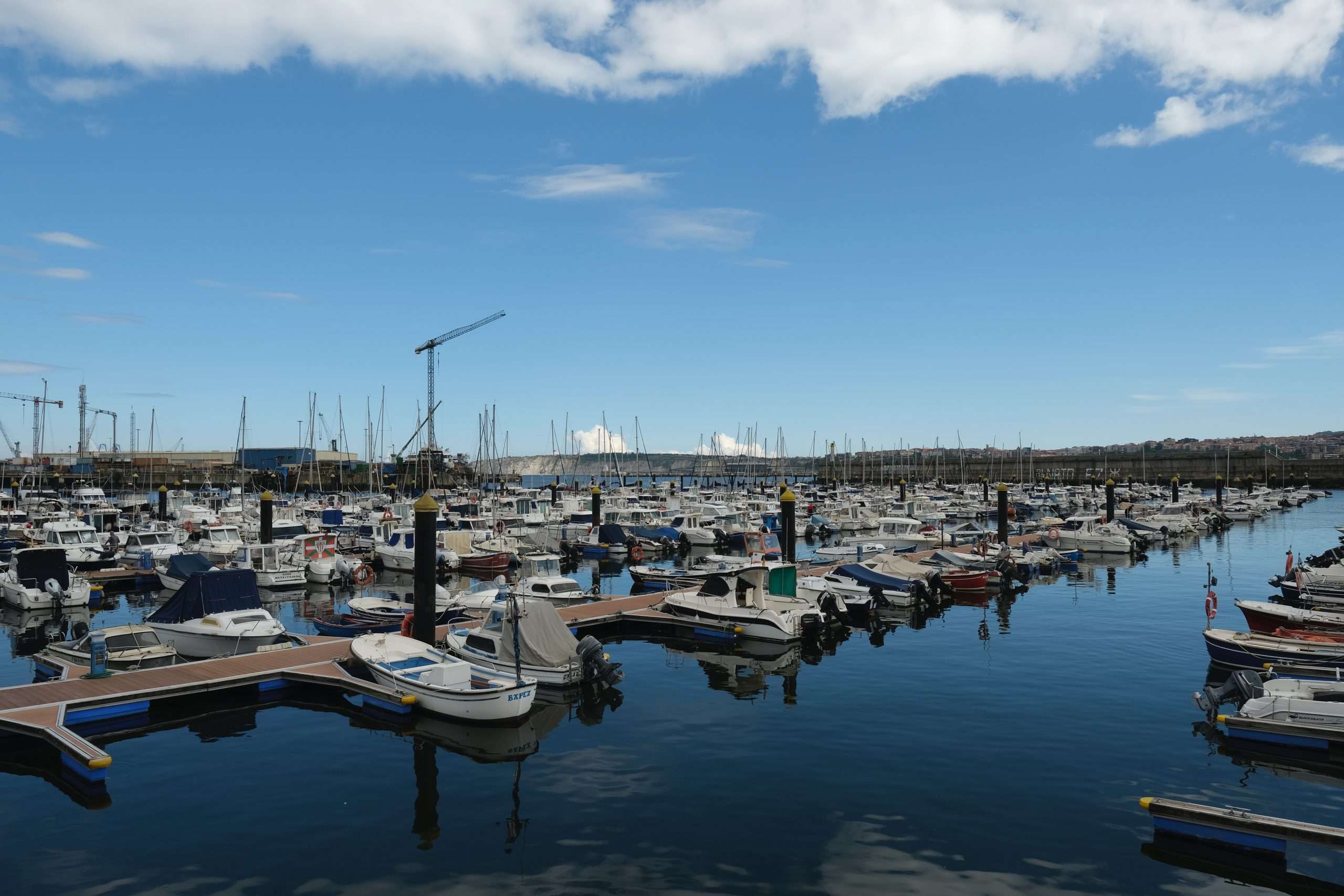
This morning, we walked into town to do some shopping at a supermarket. On the way up, we took several outdoor escalators—a first for us. However, on the way down, we had to use our own two feet. Later, we walked to Santurtzi, a port town at the mouth of the Nervión, where we lunched on pintxos, of course.
Homeward Bound – June 20, 2024
Said goodbye to this wonderful part of Spain and headed home.
Our Impressions of the Basque Country
After nearly two weeks in the Basque region, we were captivated by its breathtaking beauty. The local people are renowned for their deep-rooted pride, rich cultural heritage, and world-class cuisine, all of which we encountered at every turn. The harmonious blend of natural wonders—from rolling hills and lush vineyards to pristine beaches and rugged cliffs—left us mesmerized. Our tour of the Basque Country was an unforgettable experience that we would gladly repeat, minus the steep hikes!
Awesome! Thanks
Mick & Sharon