
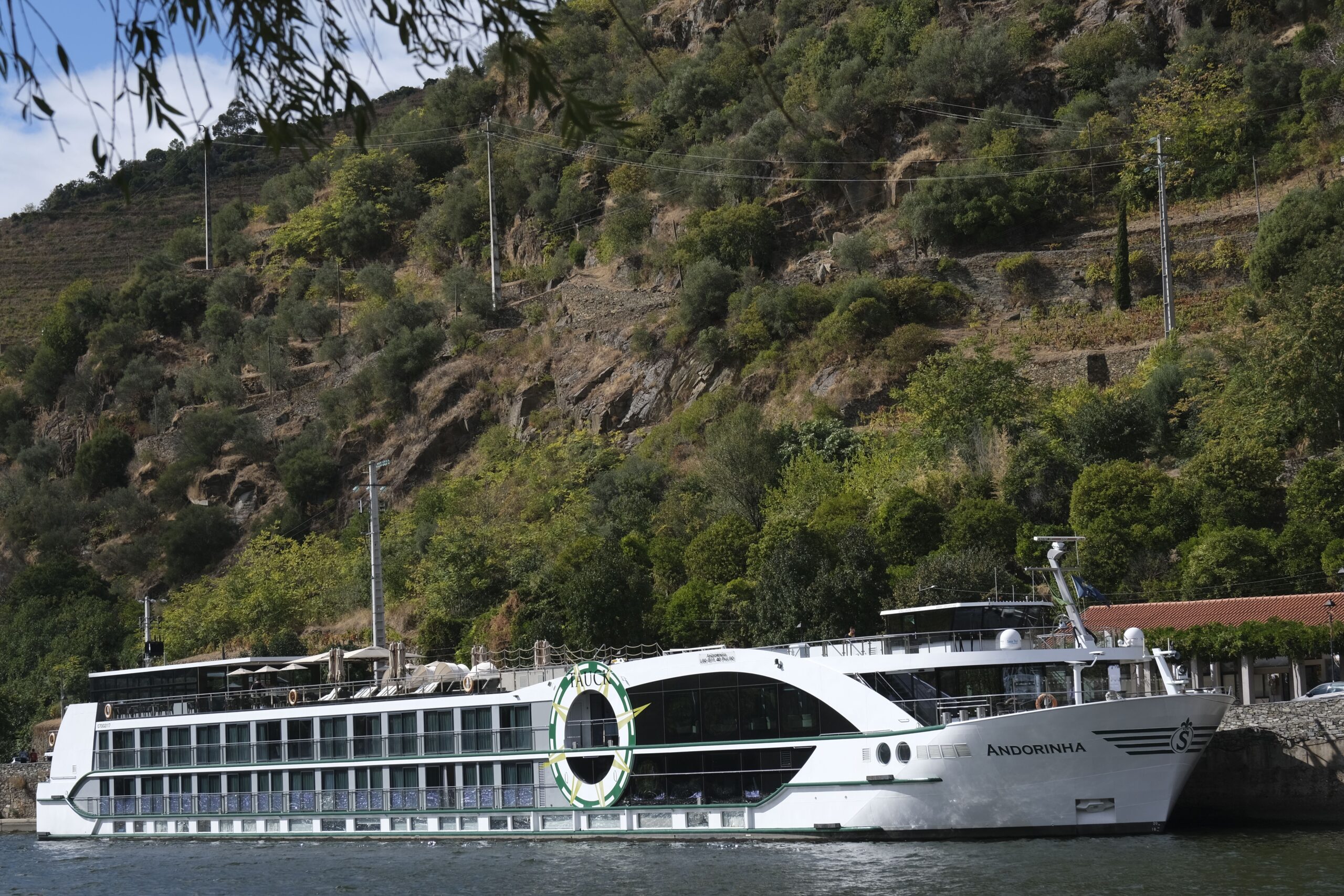
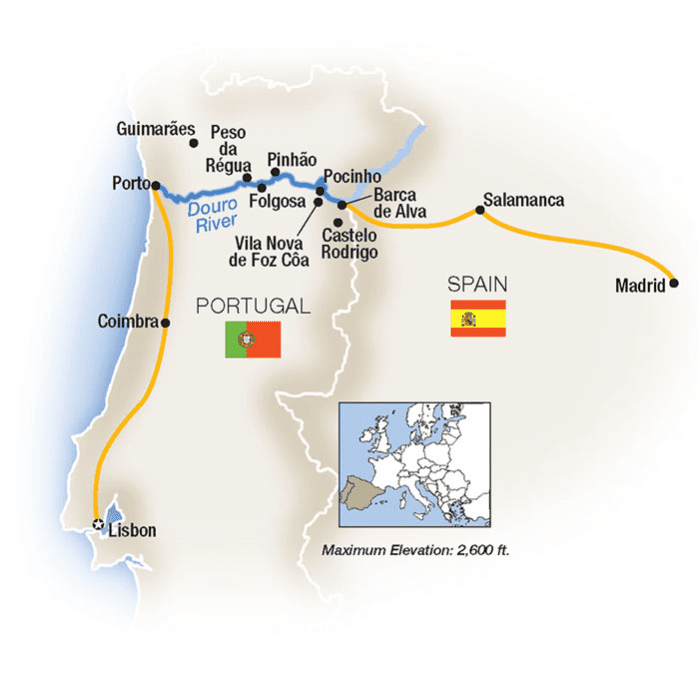
We, along with Derek and Cheryl (Christabel’s brother & his wife), embarked on a 12-day journey through one of the world’s oldest and most picturesque wine regions, beginning with stays in Lisbon and ending in Madrid. This adventure included a 7-night cruise aboard the MS Andorinha, a ship custom-designed to navigate Portugal’s scenic Douro River. Our trip started in Lisbon, the capital of Portugal, and concluded in Madrid, the capital of Spain, featuring visits to eight UNESCO World Heritage sites along the way.
Arrival in Lisbon to a Rainy Day – September 24, 2024
The flight to Lisbon was uneventful. After a 2-hour layover in Madrid, we arrived mid-morning but couldn’t check in until late afternoon. We met up with Derek and Cheryl (Christabel’s brother and sister-in-law) and decided to explore the neighborhood. We made our salaams to Marques de Pombal, the 18th-century statesman who helped rebuild Lisbon after the 1755 earthquake. However, a light drizzle soon turned into steady rain, cutting our plans short. We hurried back to the hotel as quickly as the steep streets allowed. That evening, we enjoyed a very tasty dinner at L’Osteria Italiana before calling it a night.
Exploring Lisbon’s Monuments and an Elegant Evening at Queluz Palace – September 25, 2024
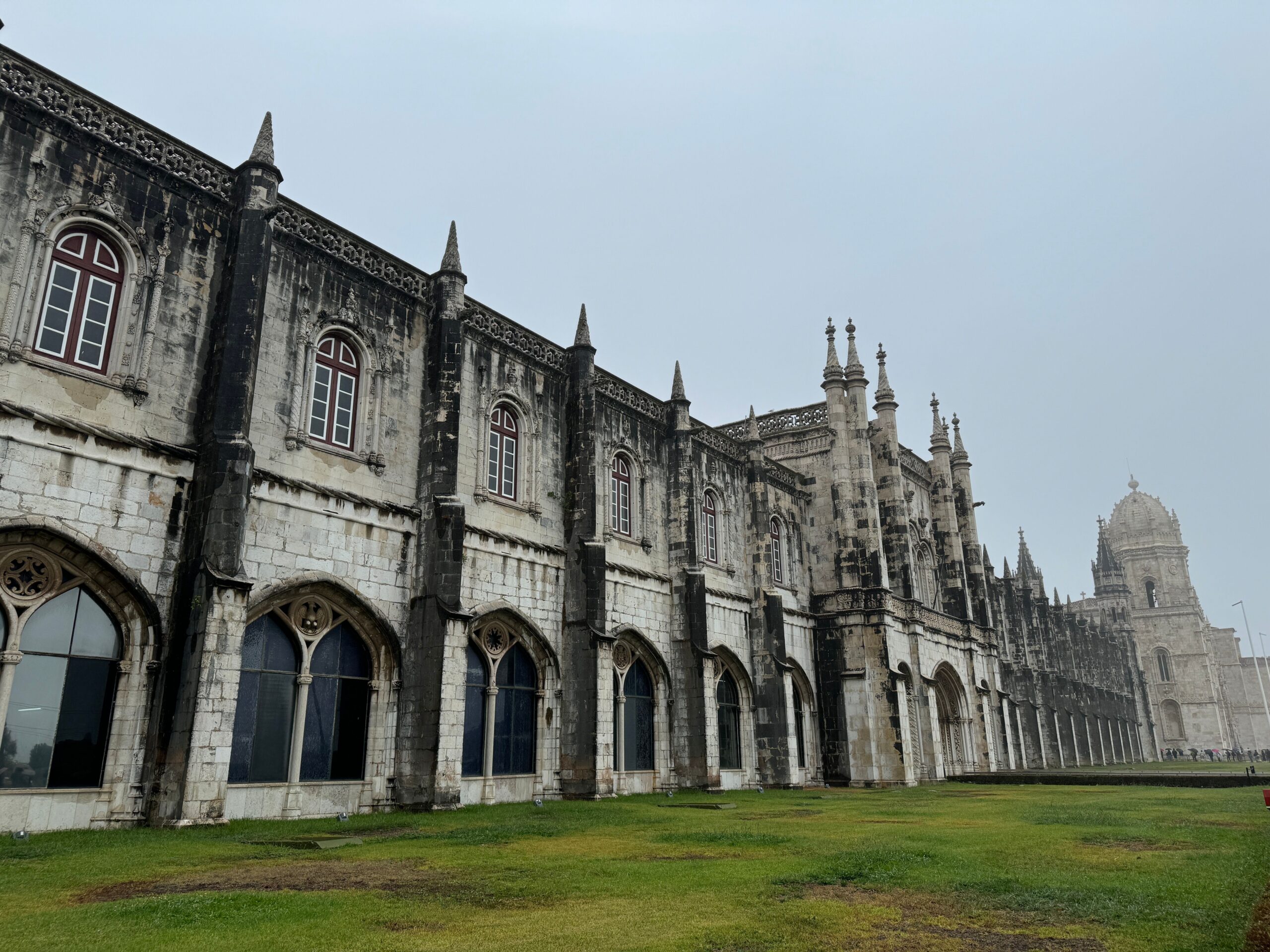
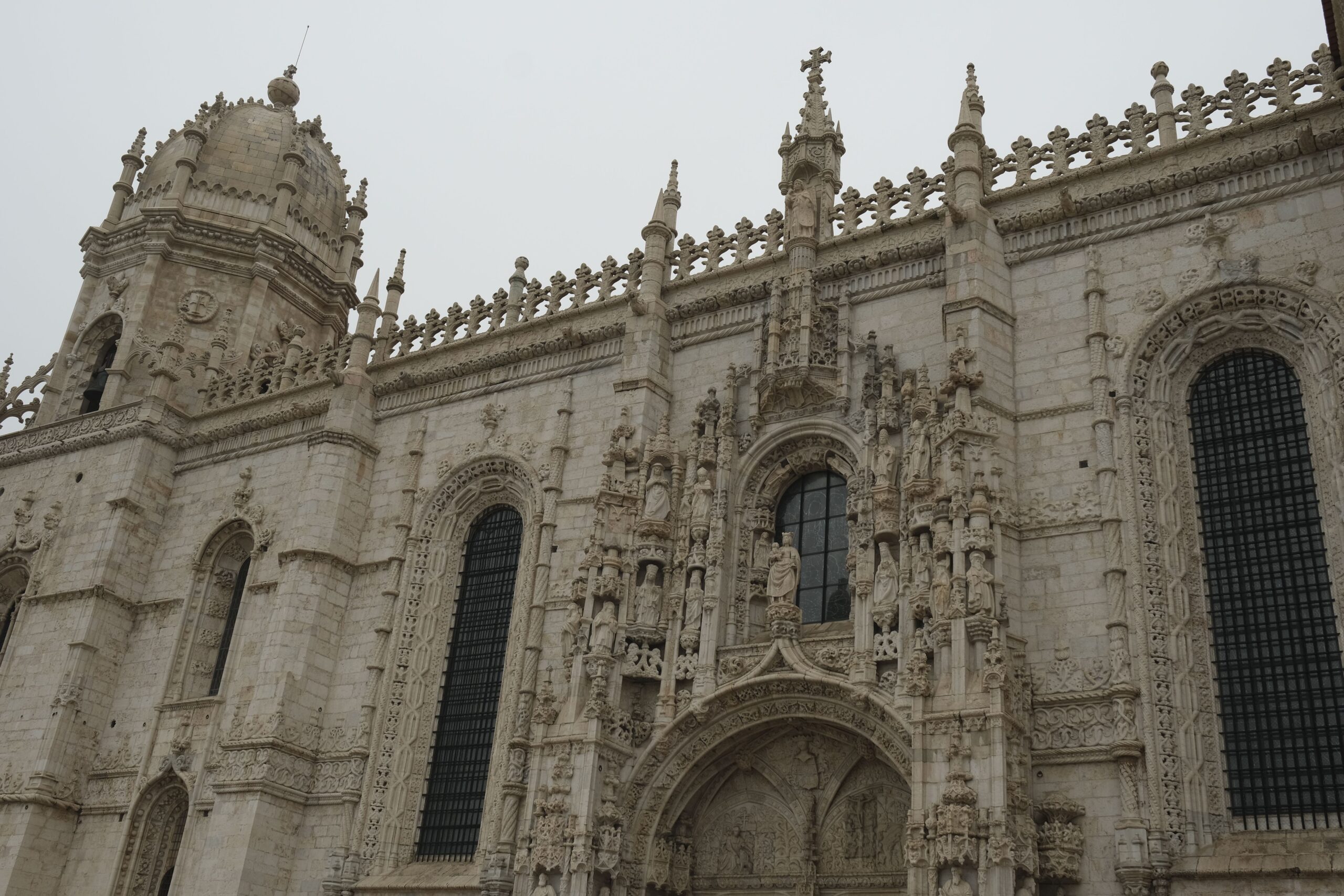
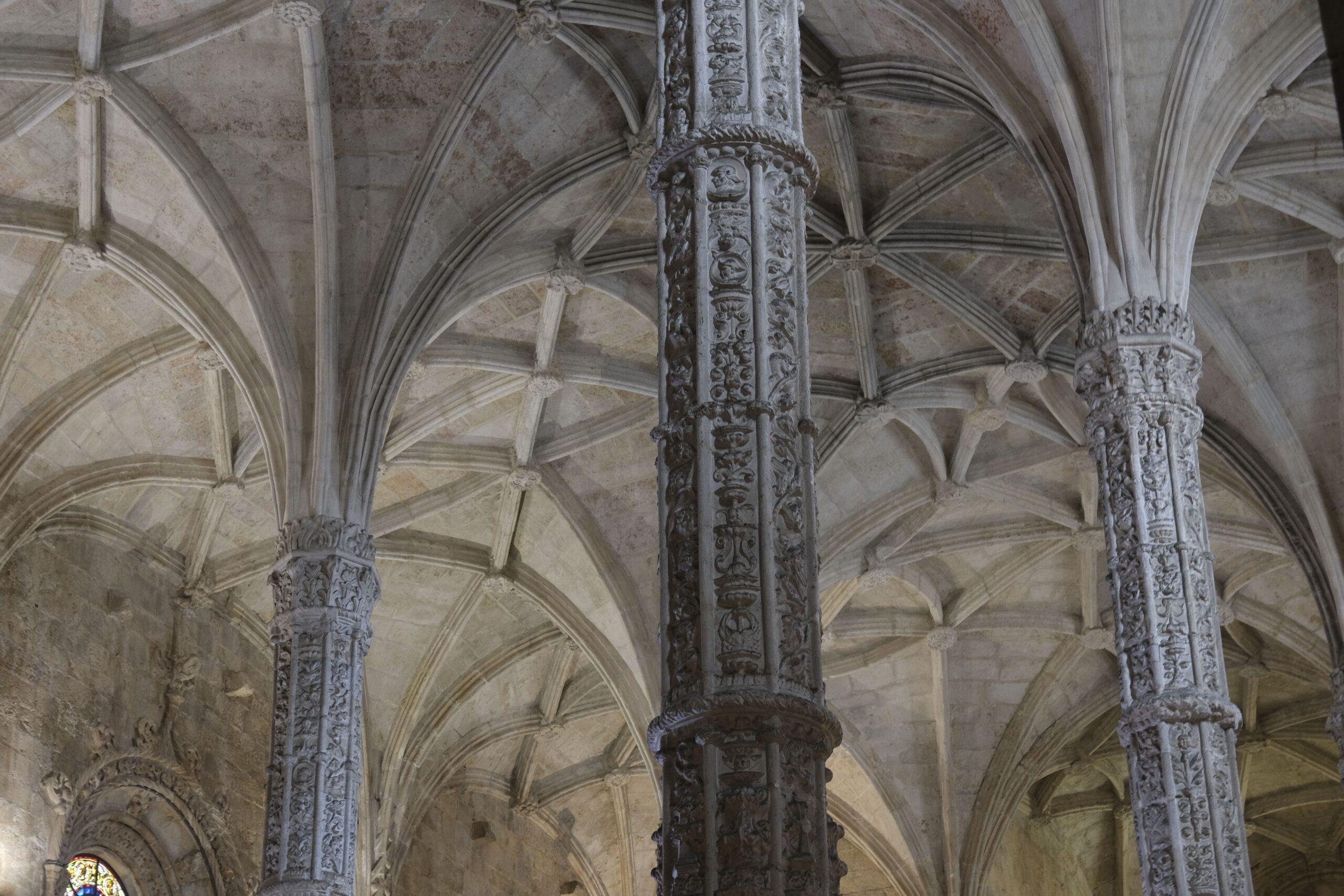
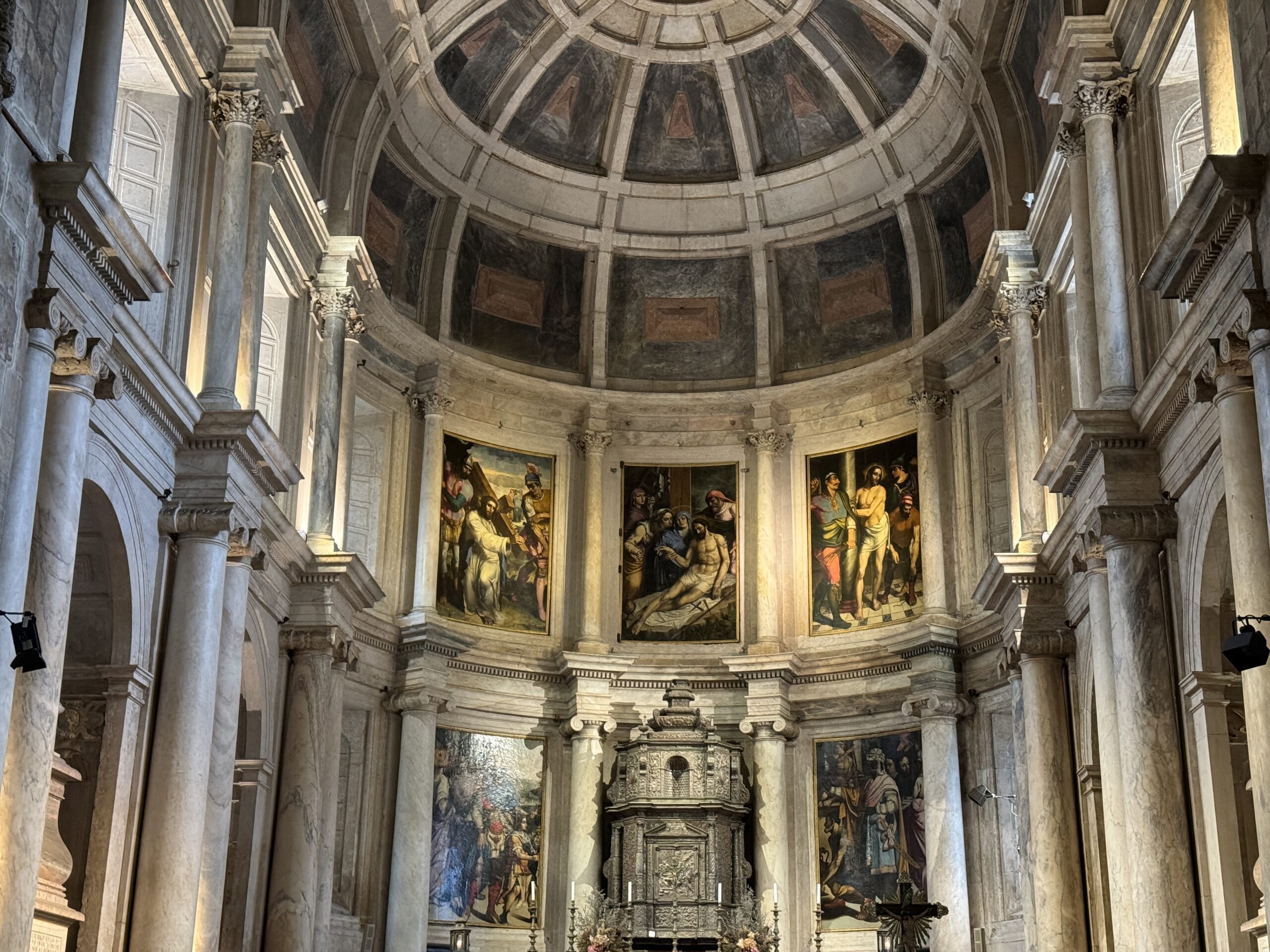
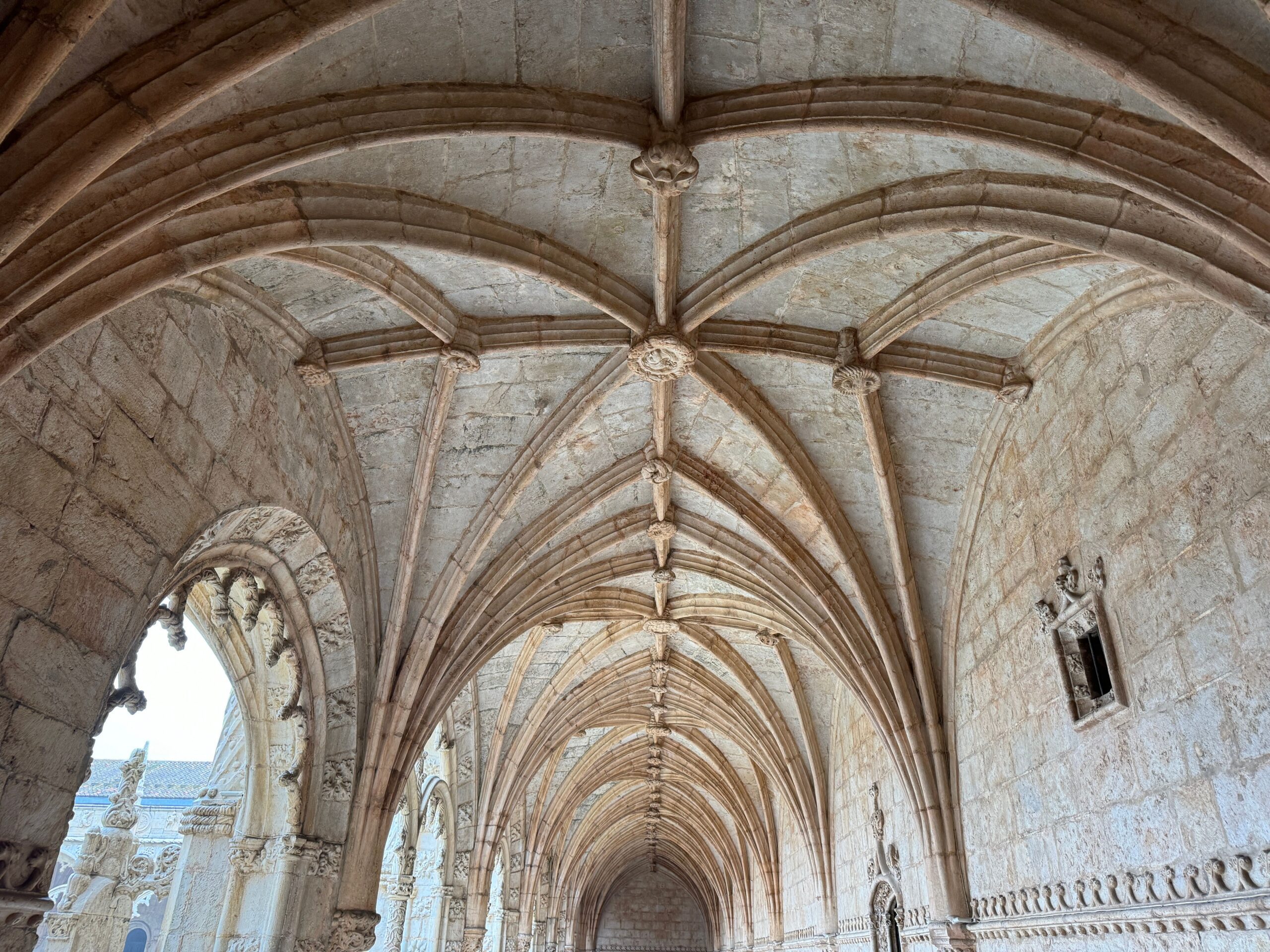
This morning, we Ubered to the area of three must-see structures in Lisbon: Jeronimos Monastery, Belem Tower, and the Monument of Discoveries, collectively all a UNESCO World Heritage Site since 1983. When we got there, we stood in line for tickets to the monastery, then stood in line to see the Church of Santa Maria of Belem which is attached to the monastery, and then stood in yet another line to see the cloisters because the area that links the two is undergoing restoration.
The monastery was built in the 1500s by King Manuel I for the spiritual support of seafarers. It is situated near the Tagus River and is a prime example of the Portuguese Gothic Manueline style of architecture, meaning that all the pillars, vaults, portals, etc., are overly ornate, slender, and include nautical motifs. Its construction was funded by a tax on the profits of the trade with India. In addition to being a religious institution, it also served as a necropolis for royalty (King Manuel I and King John III among others are buried here) and notable Portuguese such as explorer Vasco da Gama and poet Luis de Camões. We walked around the church and visited the sacristy where we saw several paintings of scenes from the life of St. Jeronimo. We also walked around the arcades of the two-storied cloister and every hall that was open for viewing. The architecture in the cloisters was every bit as lovely as that in the church. The azulejos of biblical scenes in the refectory are outstanding and you can imagine the monks congregating there. What was missing was a view of the monk cells and the confessionals.
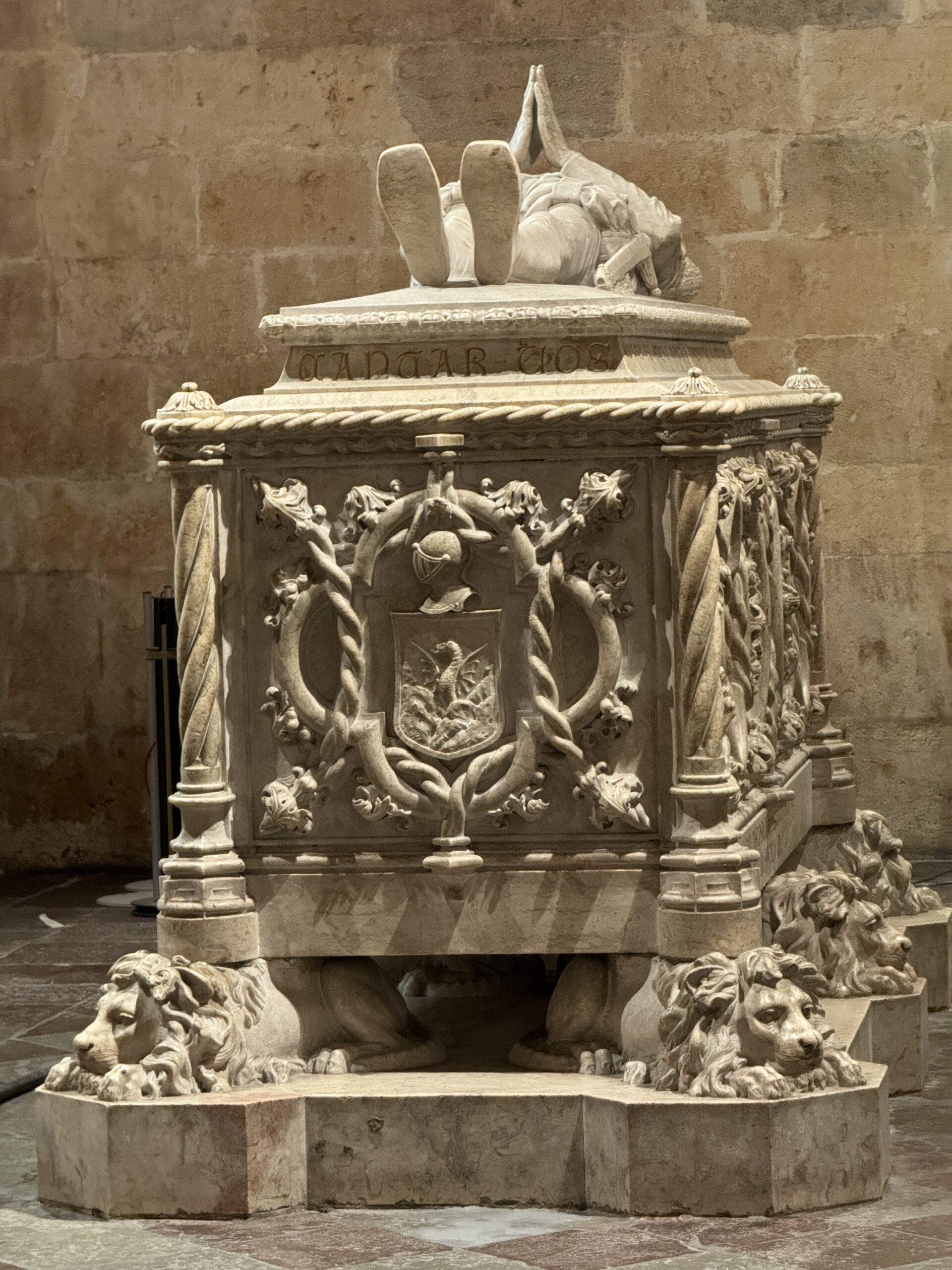
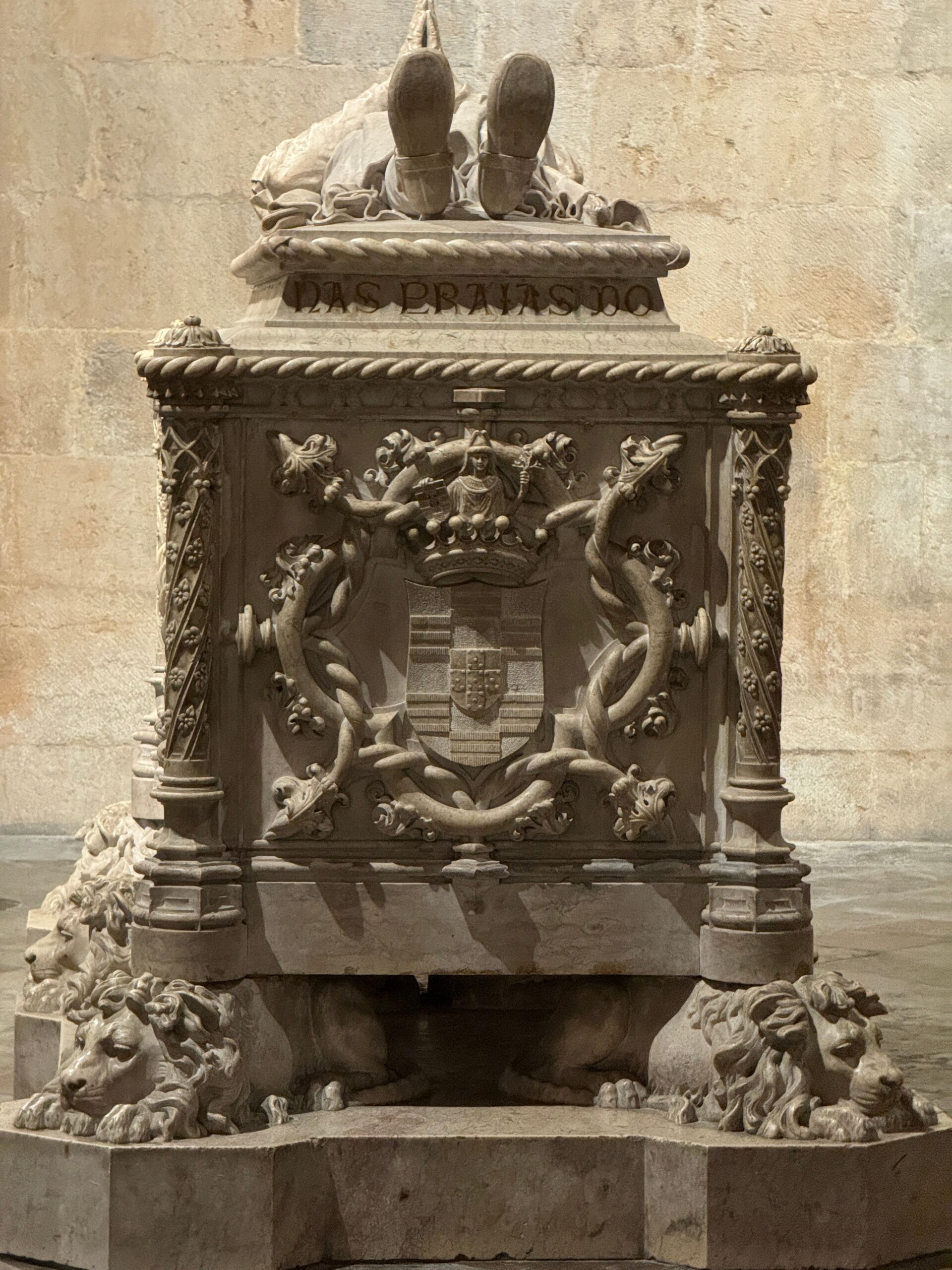
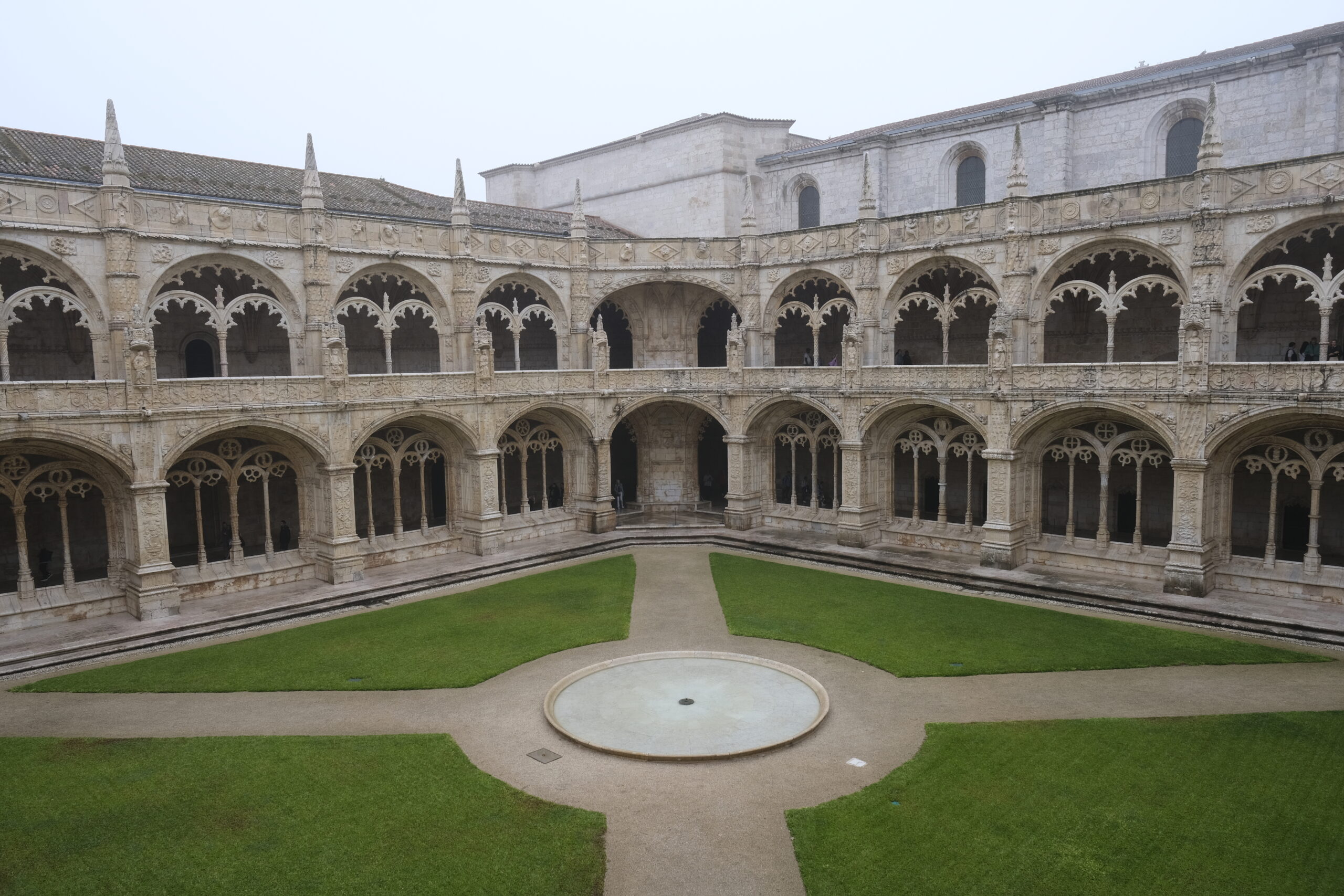
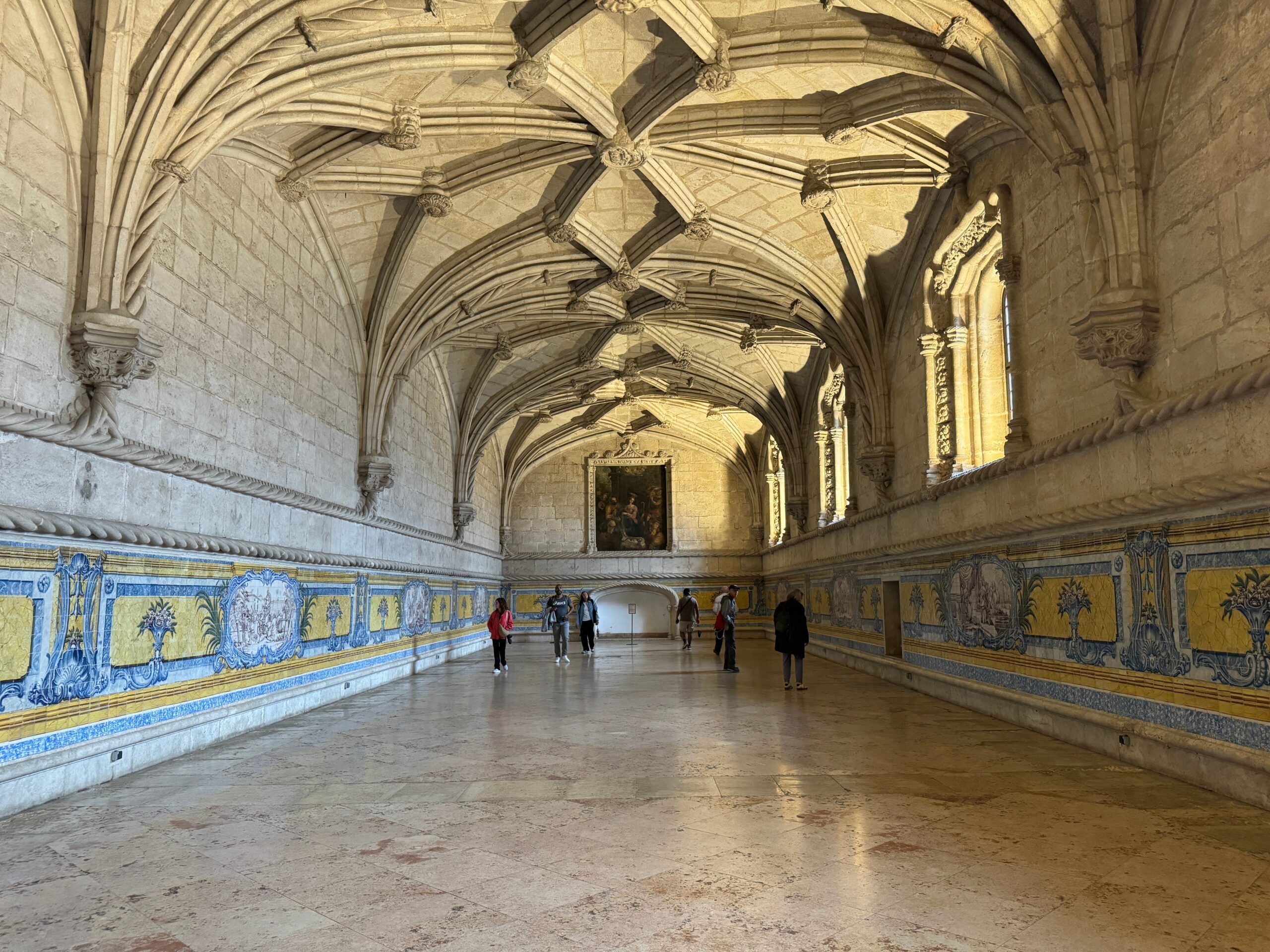
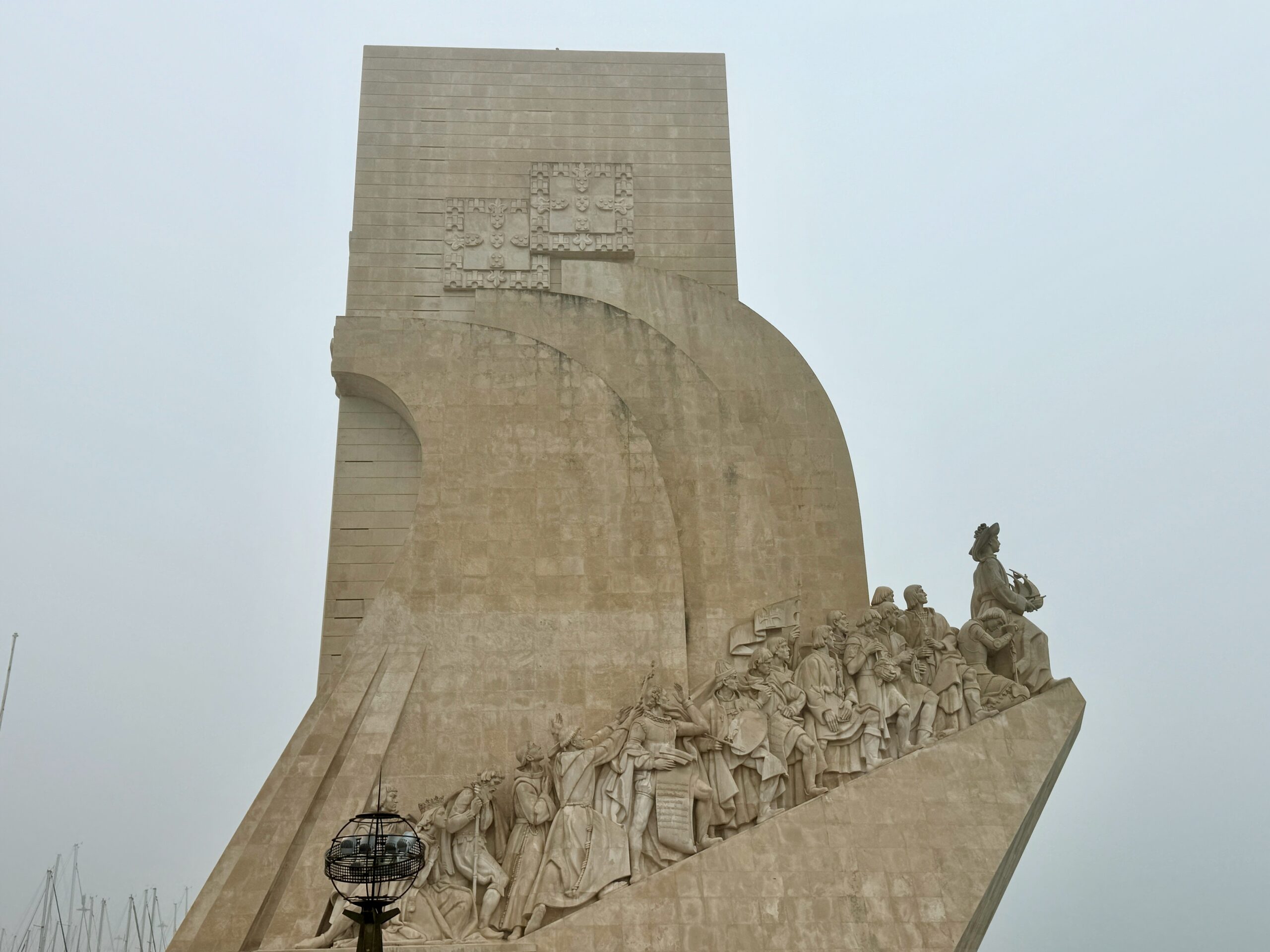
Our next stop was the Monument of Discoveries. The approach to the monument is decorated with a compass rose (Rosa dos Ventos) and a world map (Mappa Mundi) showing the routes of Portuguese carracks and caravels during the Age of Discoveries. The monument itself is made of different types of limestone from the Sintra area of Portugal. The exterior of the monument contains 33 individuals, such as monarchs, explorers, cartographers, scientists, missionaries, perched on the prow of a caravel that sits at the edge of the Tagus River. At the head is Henry the Navigator holding a carrack. He is flanked on either side by the remaining 32 individuals. The interior has an auditorium and exhibition halls.
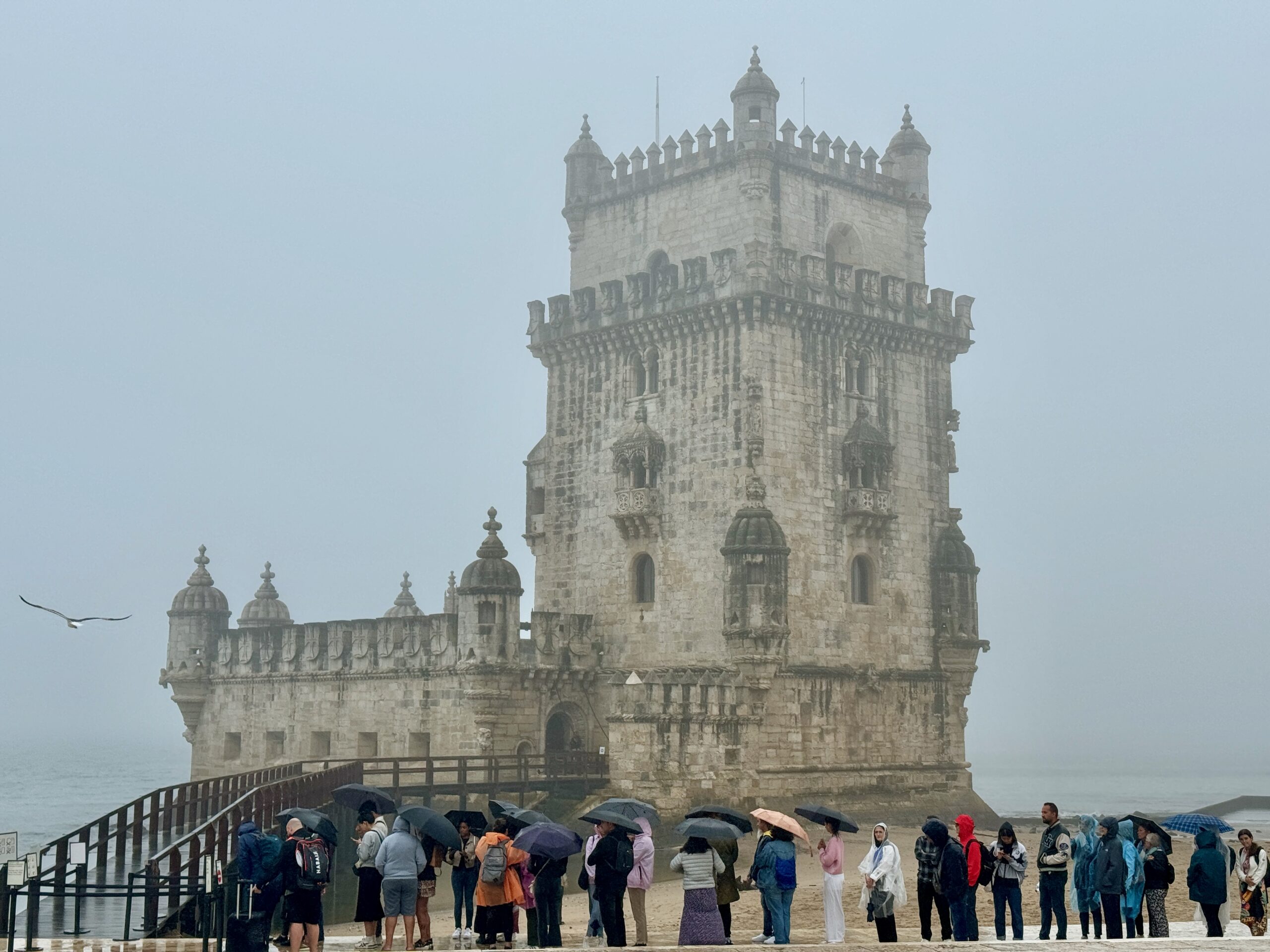
Our last stop of the morning was the Tower of Belém. We did not join the line to see this impressive structure from where many expeditions of discovery were launched. It was built to protect Lisbon but now stands as reminder of Portuguese maritime and colonial power. It was constructed using limestone and completed during King Manuel I’s lifetime. Its architecture is predominantly in the Manueline style with Moorish minarets.
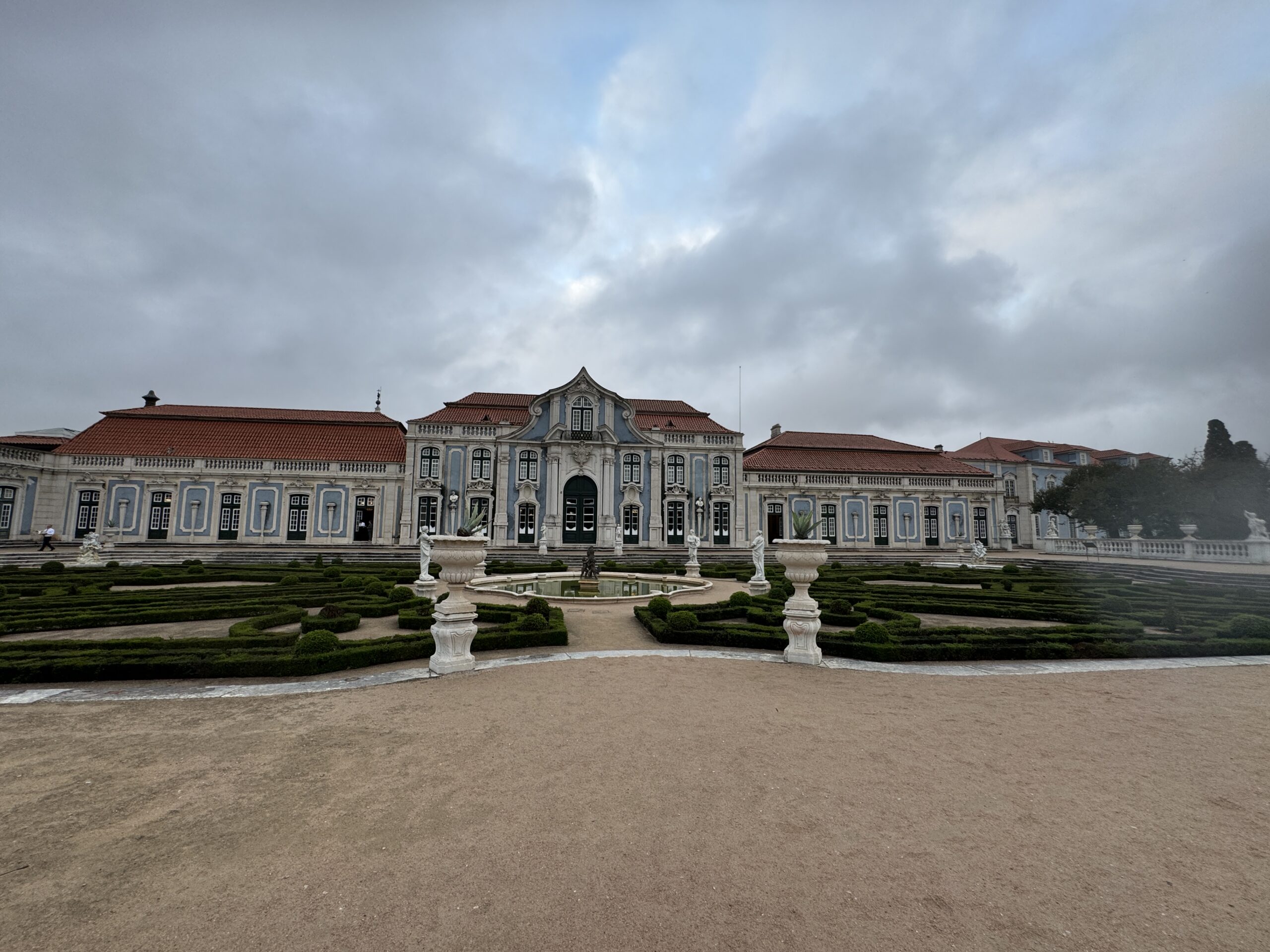
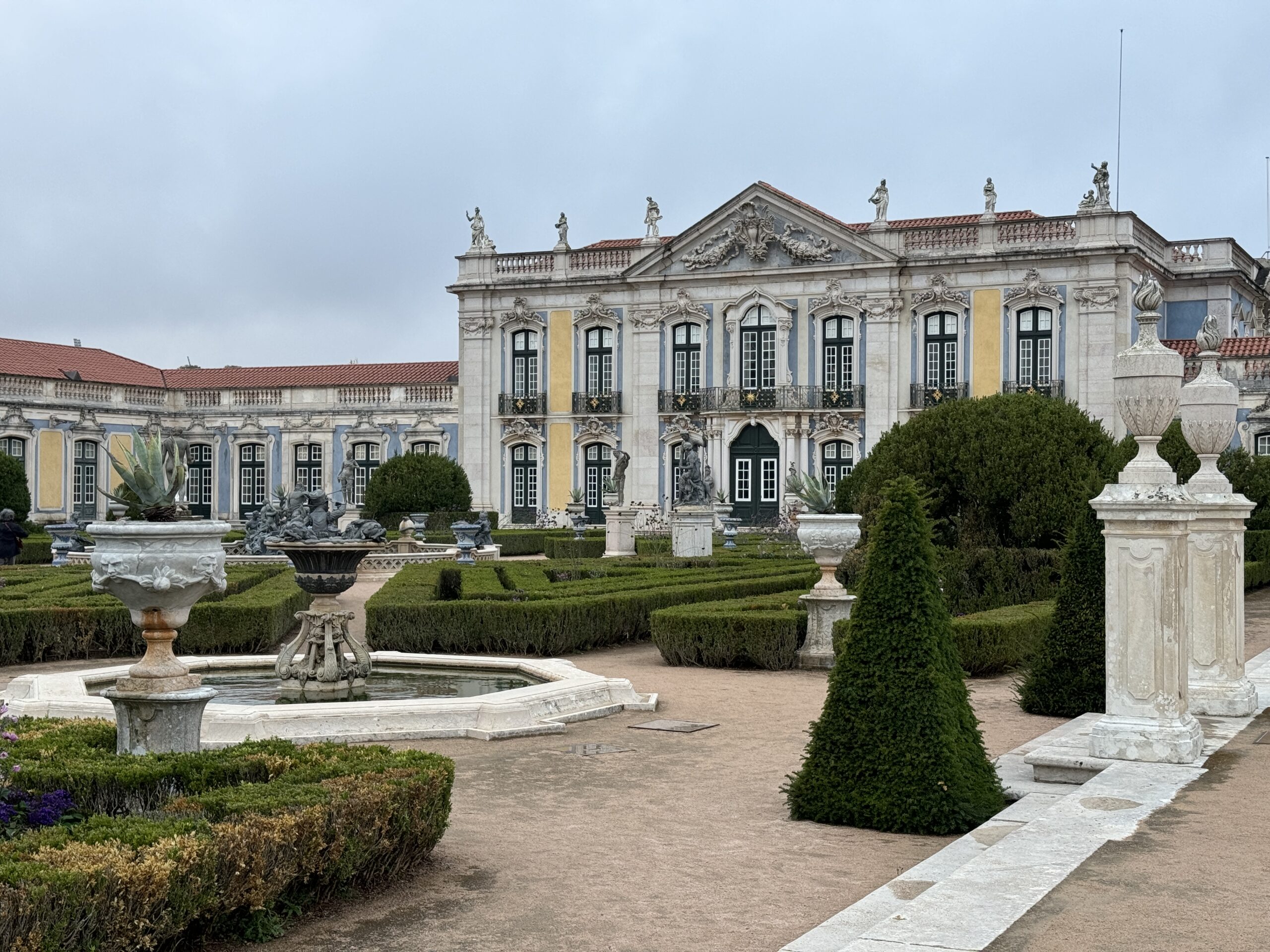
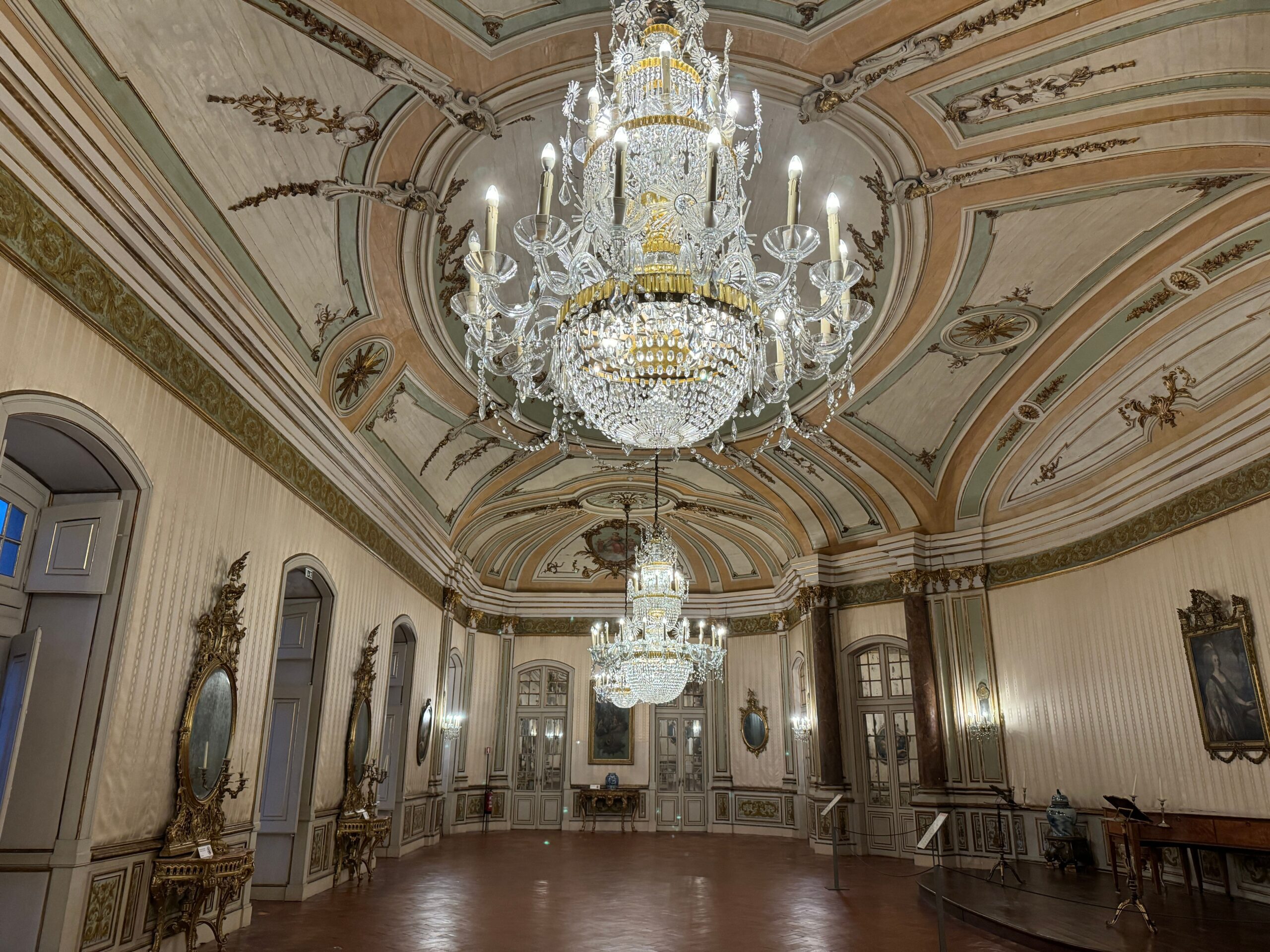
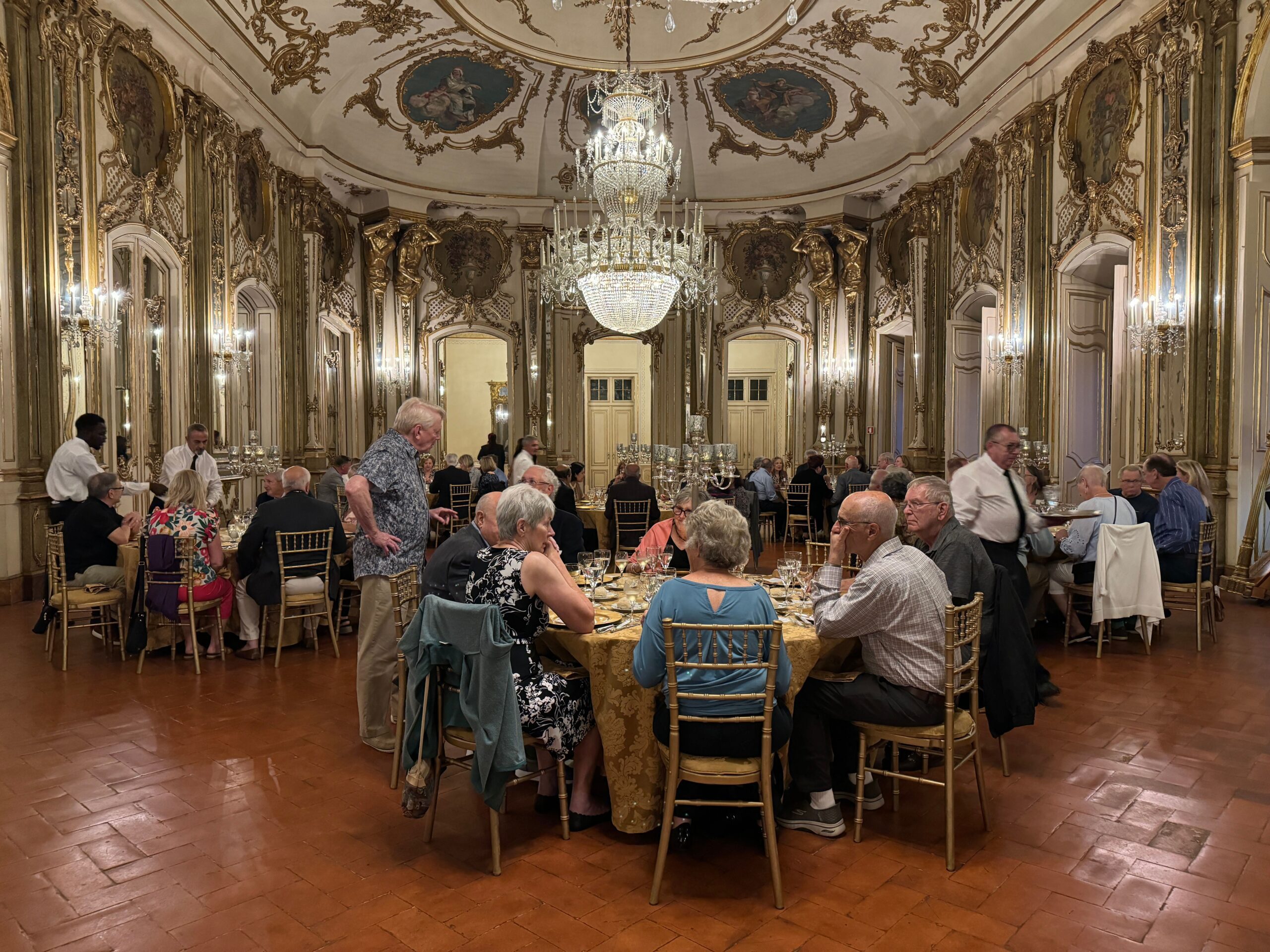
In the evening, we were bused to Palacio Nacional de Queluz in Sintra where we met our fellow travelers and toasted to new friends and a safe voyage on the Douro in the palace gardens. This palace is often referred to as the Portuguese Versailles. Much smaller than the French palace, nevertheless it is an exquisite example of Rococo architecture. The gardens are charming as is the Neptune fountain. The palace was a favorite of the royal family until it fell out of favor in the mid-1800s and was taken over by the state in the early 1900s. It is now used as a guesthouse for important dignitaries. We had a grand dinner in a gorgeous dining room with smoked duck, codfish, beef tournedos, and a caramel pudding called Pudim Marfim. Interestingly, the pudim was garnished with sweetened egg yoke strings very much like how our mums garnished the Goan coconut sweet called Letri. Music was provided by a harpist.
Discovering Sintra, Cascais, and Lisbon Adventures – September 26, 2024
This morning, we visited Sintra, a charming town once visited by literary greats Lord Byron and Hans Christian Andersen. After breakfast, our guide took us to the Palácio Nacional de Sintra, one of Portugal’s oldest palaces. It was continuously occupied until the founding of the Republic in 1910, when it became a national monument. Today, it is a UNESCO World Heritage site.
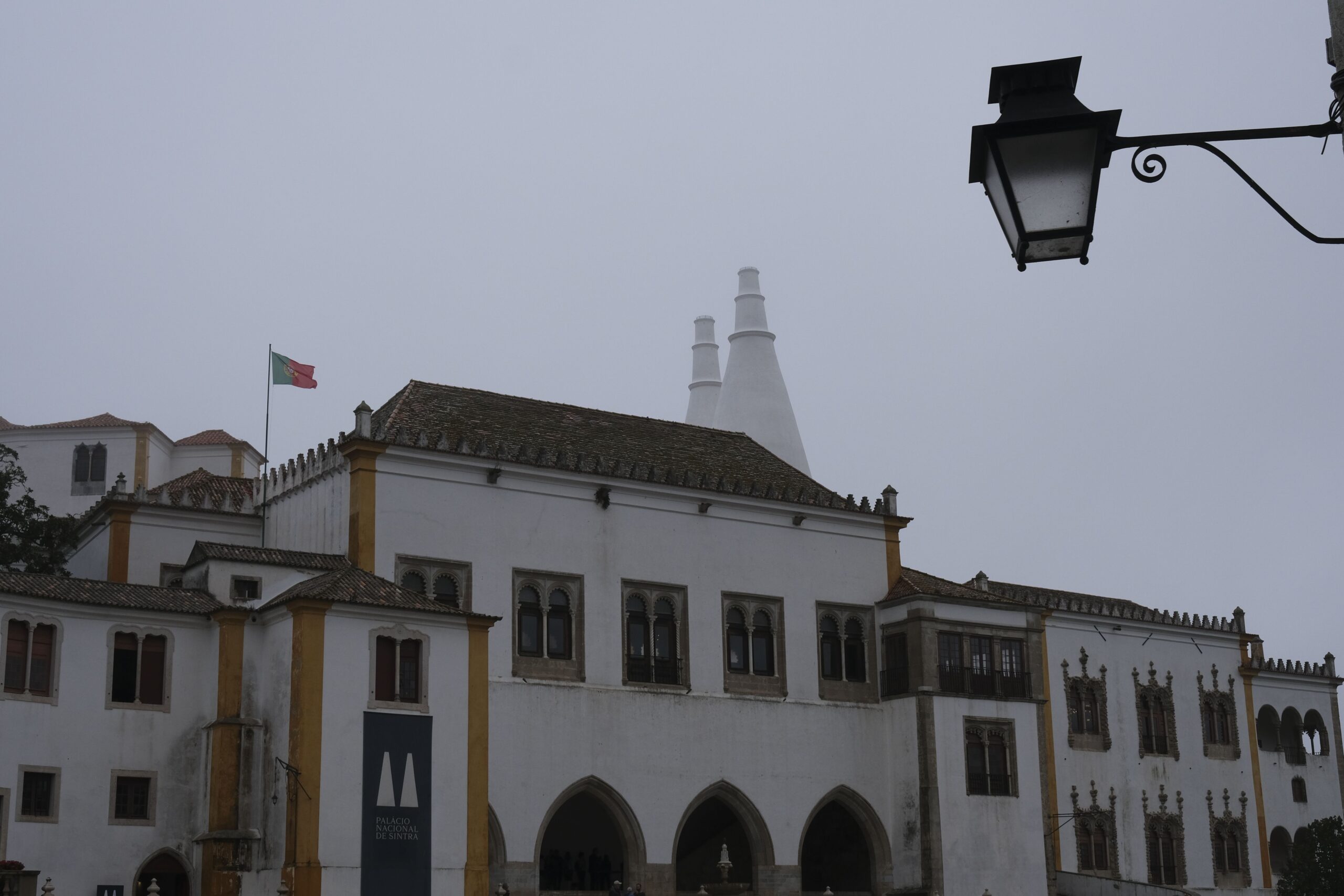
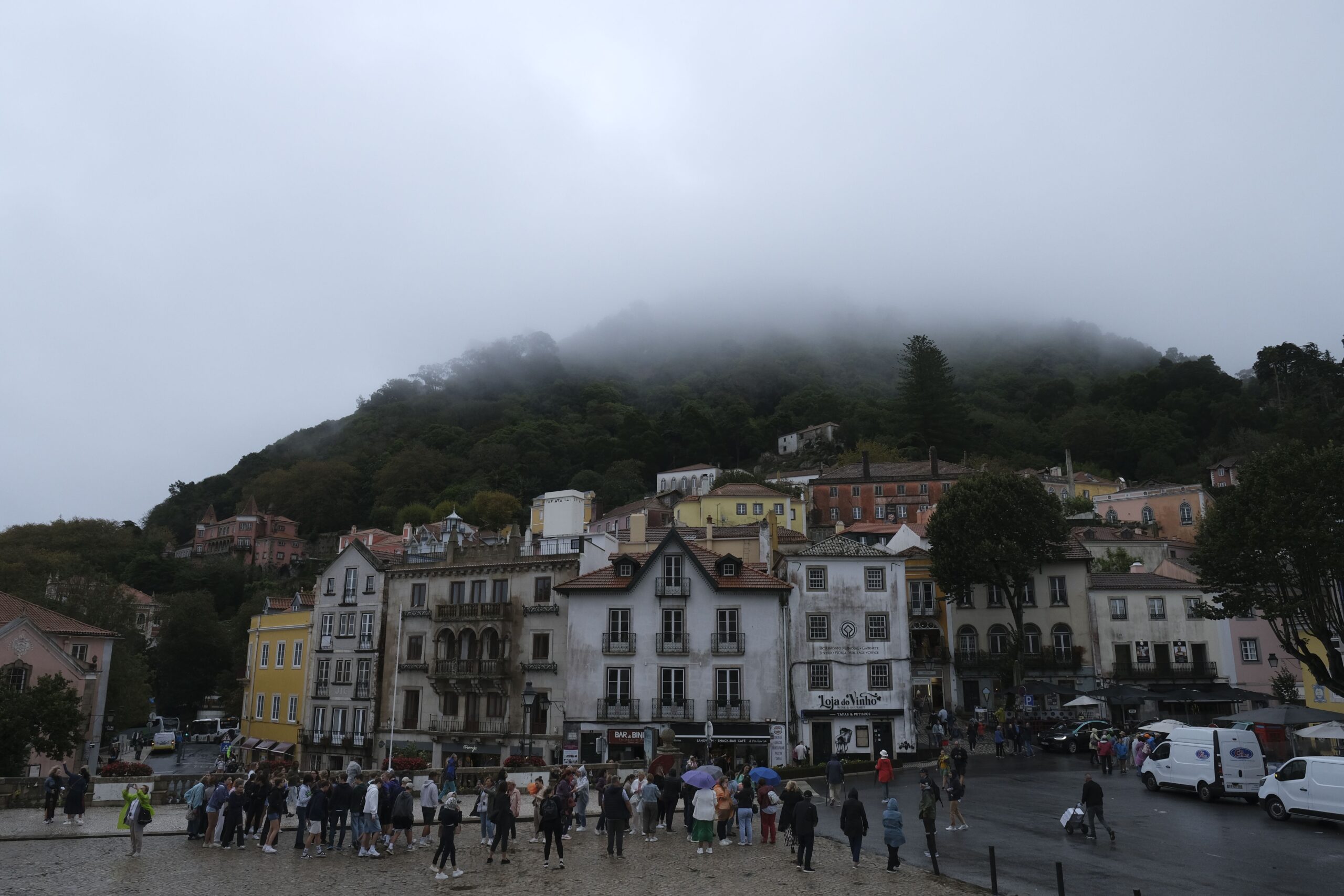
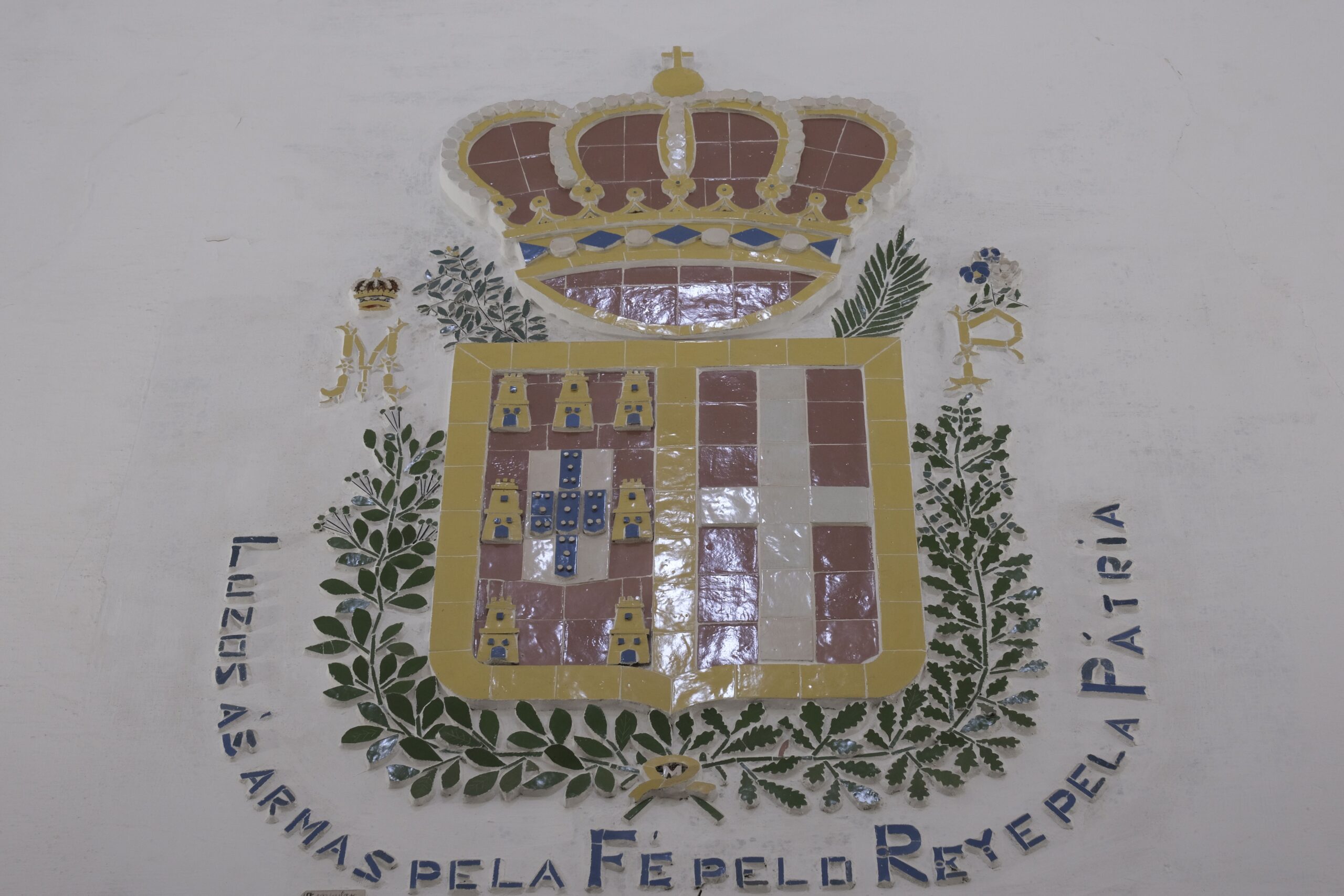
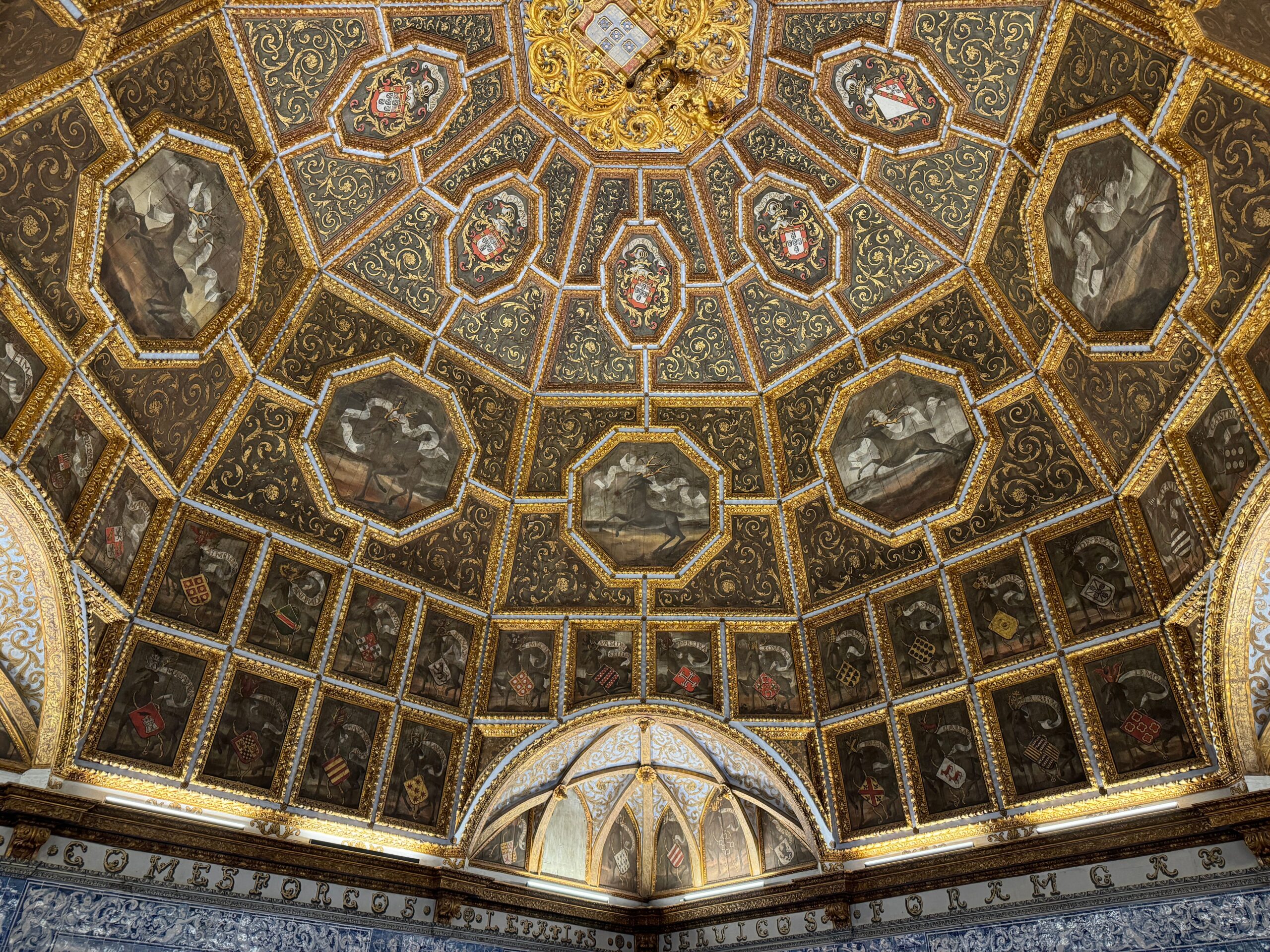
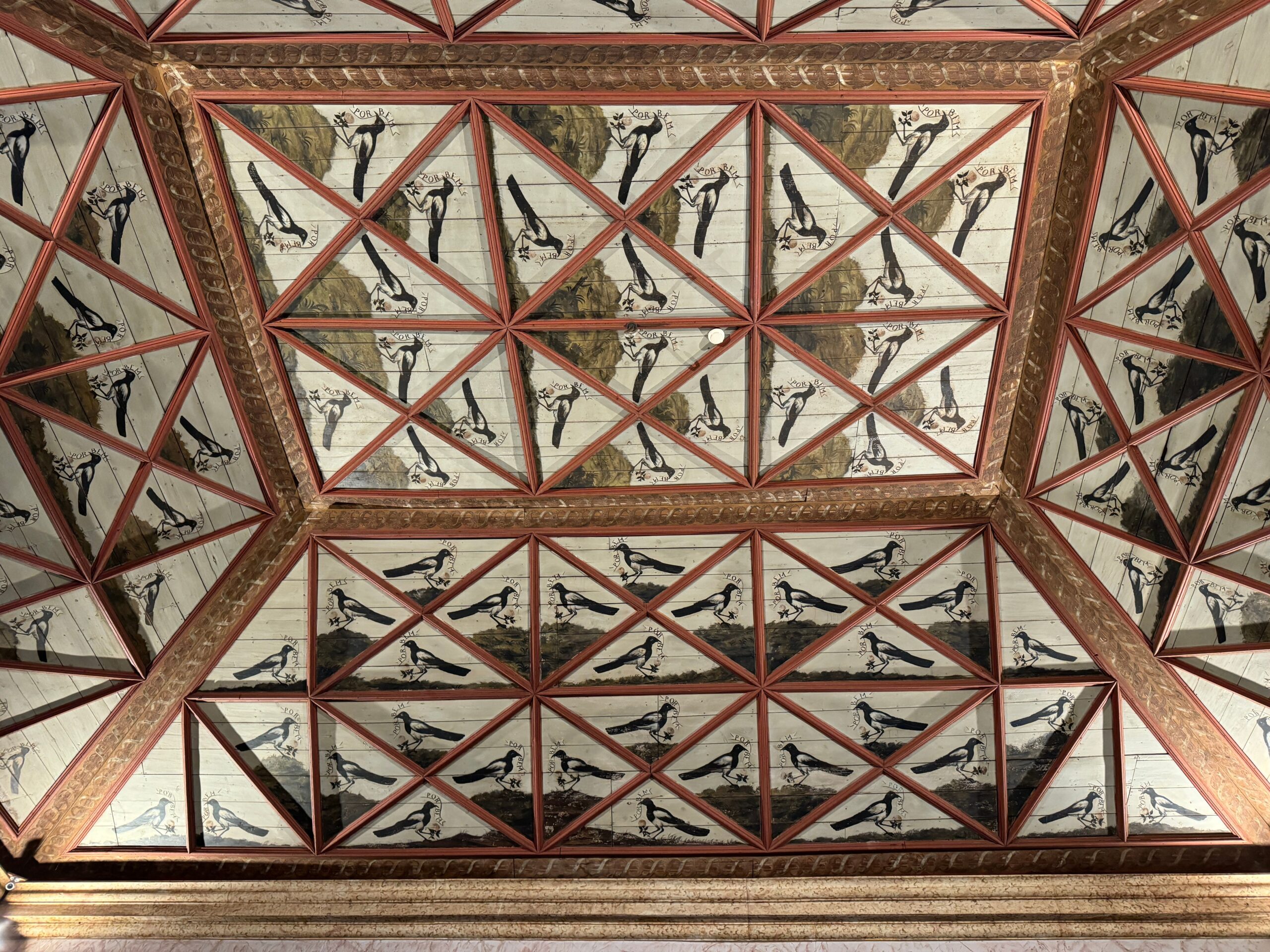
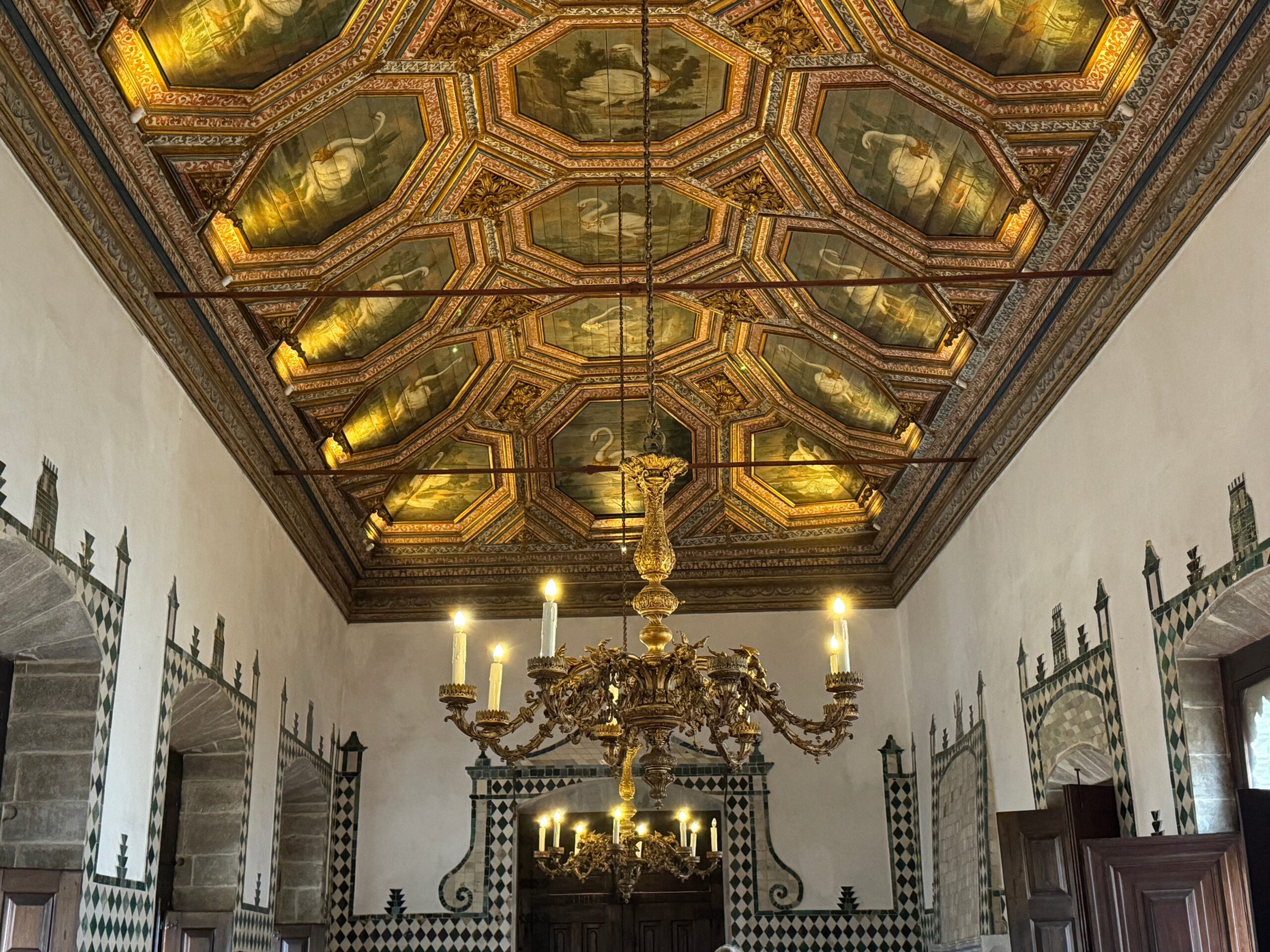
At the palace, we were treated to architectural delights from additions made in the 15th and 16th centuries, a blend of Manueline, Gothic, and Moorish styles. We saw the Swan Room with 27 swans painted on the ceiling, the Magpie Room with 136 magpies painted on the ceiling, the Golden Room filled with tapestries, books, paintings, and a golden globe, and the Galleys Room, where Portuguese, Dutch, and Ottoman ships decorate the ceiling. We also visited King John III’s Chambers, the Heraldic Hall with 72 family crests (including Lima, Lobo, and Ferreira but not Nazaré), the Chapel, the Arab Room with a central fountain, the Council Chamber, and the Kitchen with its two towers. The tower above the Arab Room was destroyed in the 1755 earthquake and never rebuilt. We were fortunate to see these rooms before public hours. We wrapped up our trip to Sintra with a stop at Piriquita, a local pastry shop founded in 1862 and famous for its Travesseiros, a puff pastry filled with almond cream and Queijadas de Sintra, a ricotta cheese confection encased in pastry.
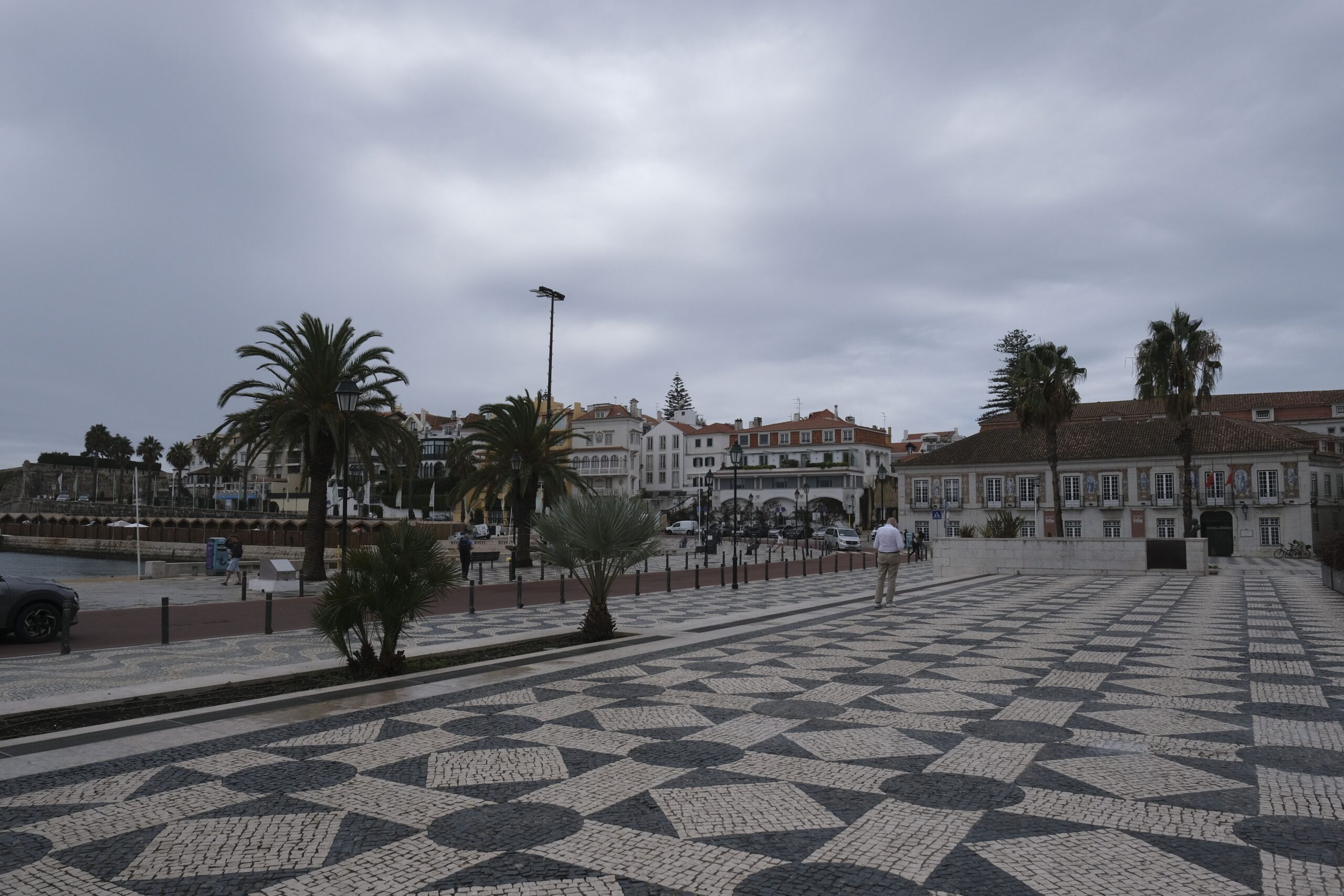
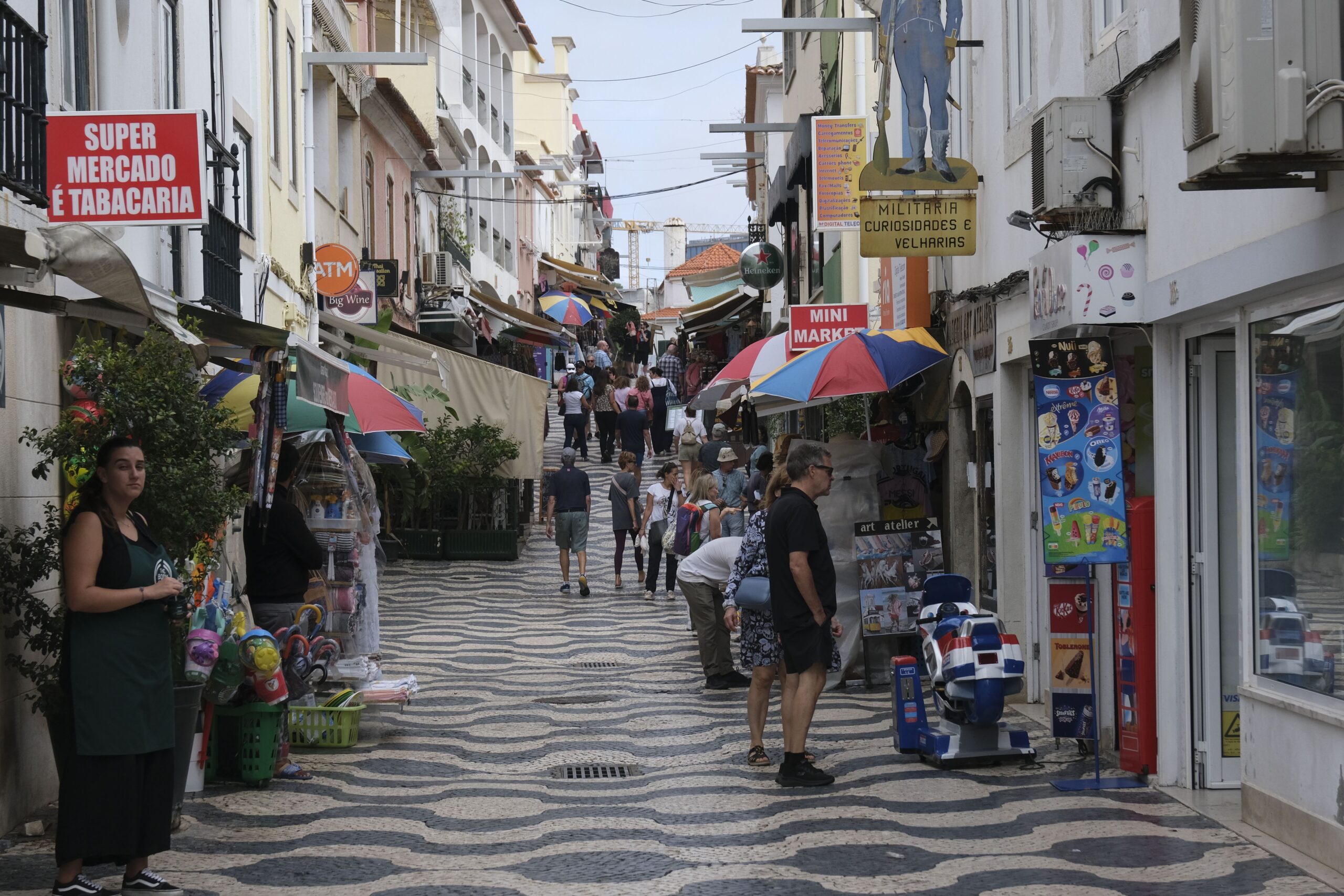
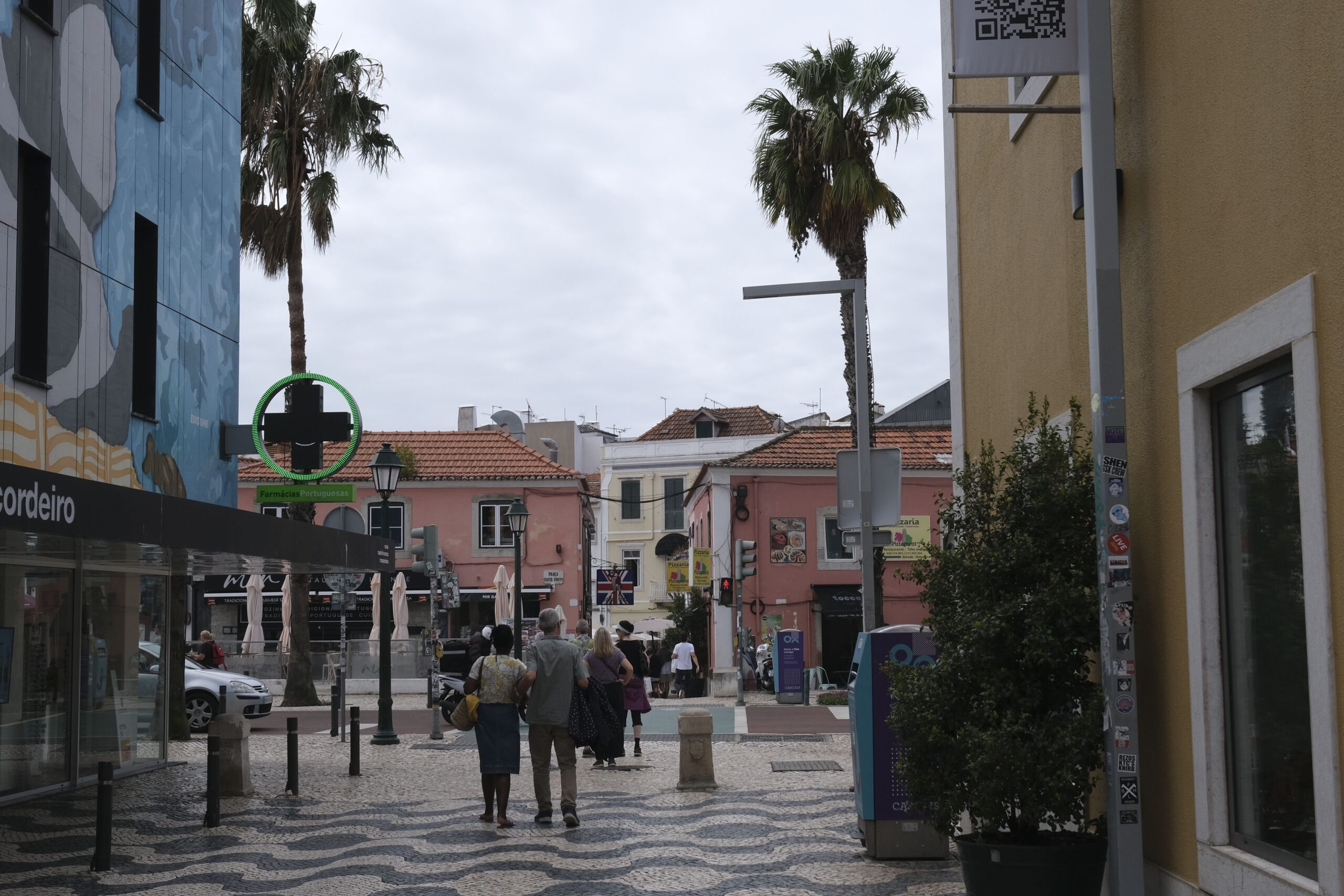
Our next destination was Cascais, a charming coastal town located about 30 kilometers west of Lisbon that was a favorite with royalty and fishermen. It is also known as the Portuguese Riviera because of its pristine beaches and well-heeled inhabitants. After a brief orientation walk with our guide, we had lunch and then hit the shopping area. On our way back to Lisbon, we passed through Estoril and its casino and Palácio Hotel that inspired Ian Fleming to create James Bond and Casino Royale.
Later in the afternoon, we experienced buying metro tickets and took the Blue Line in search of Conserveira de Lisboa, a fish shop from the 1930s highly recommended by travel guides. The directions were confusing, so we ended up taking an Uber and, after some detours, finally arrived. The shop was packed with tourists from the U.S., France, and Japan, all buying canned fish. From there, we walked to Martim Moniz Square to catch Tram 28. After a long wait and about seven trams later, we finally boarded the yellow tram for a ride through the suburbs and up Alfama, getting off at Campo de Ourique. We then took the subway to Marques Pombal station, walked to L’Osteria Italiana for a quick dinner, and returned to the hotel, thoroughly exhausted.
Exploring Medieval Coimbra – September 27, 2024
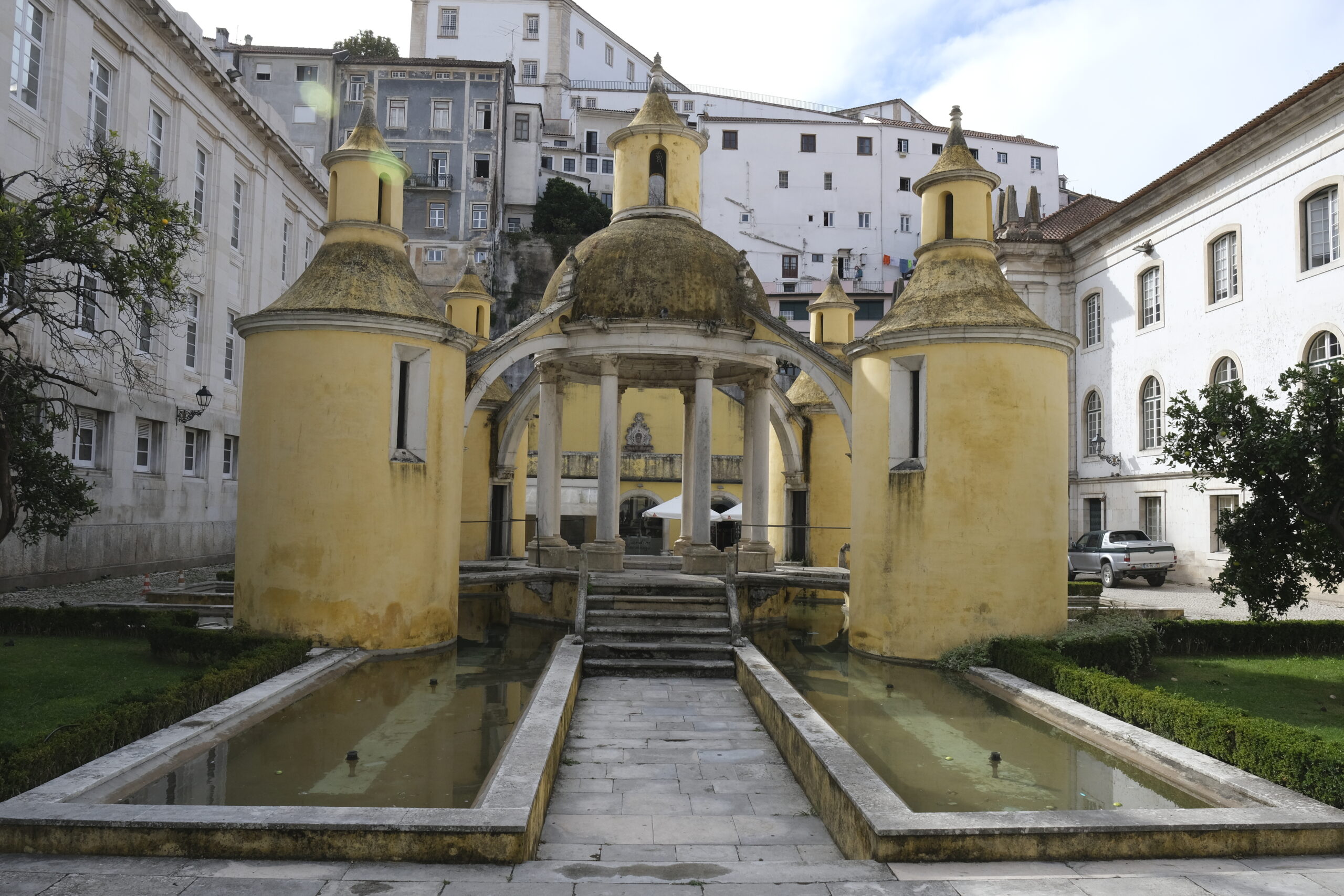
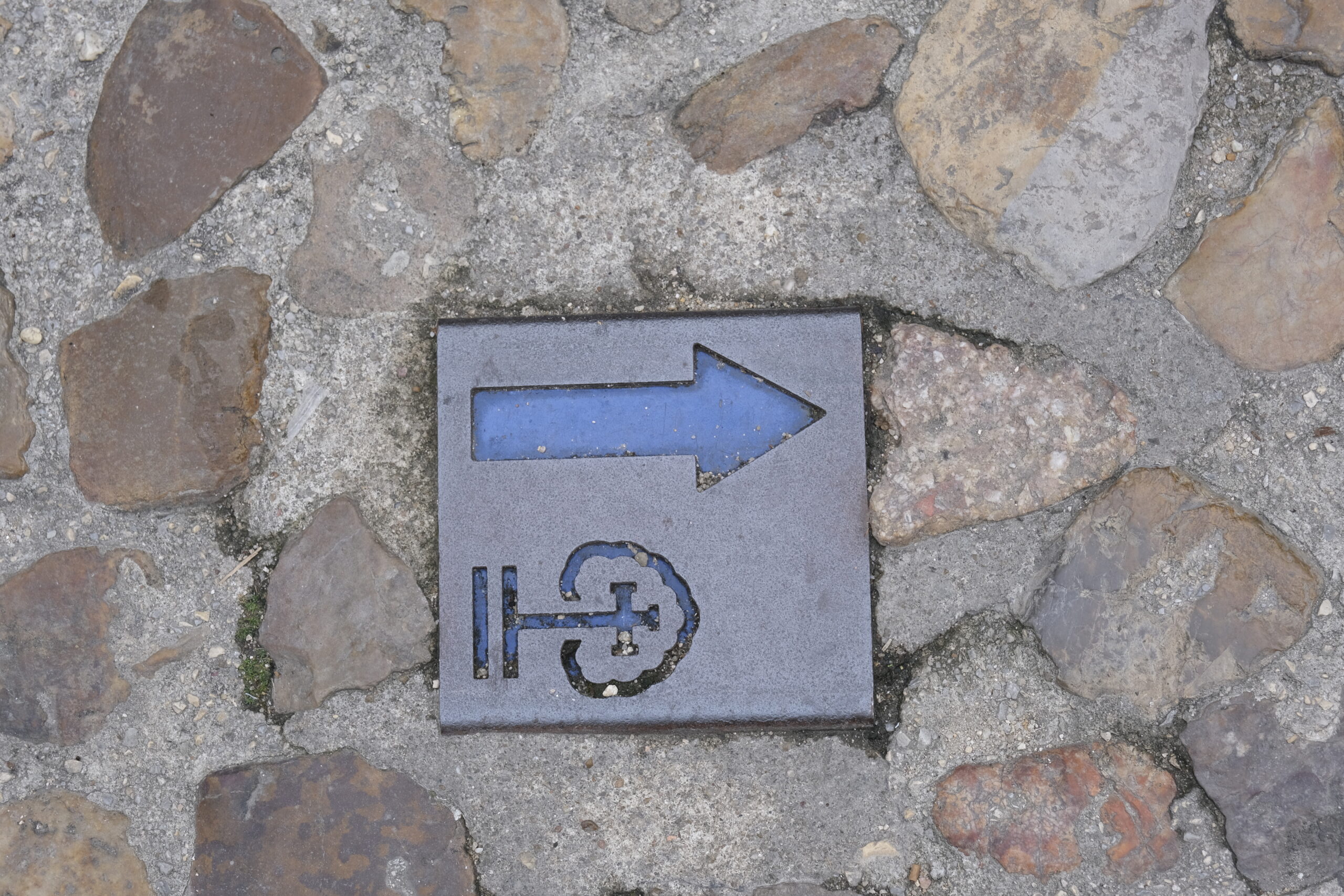
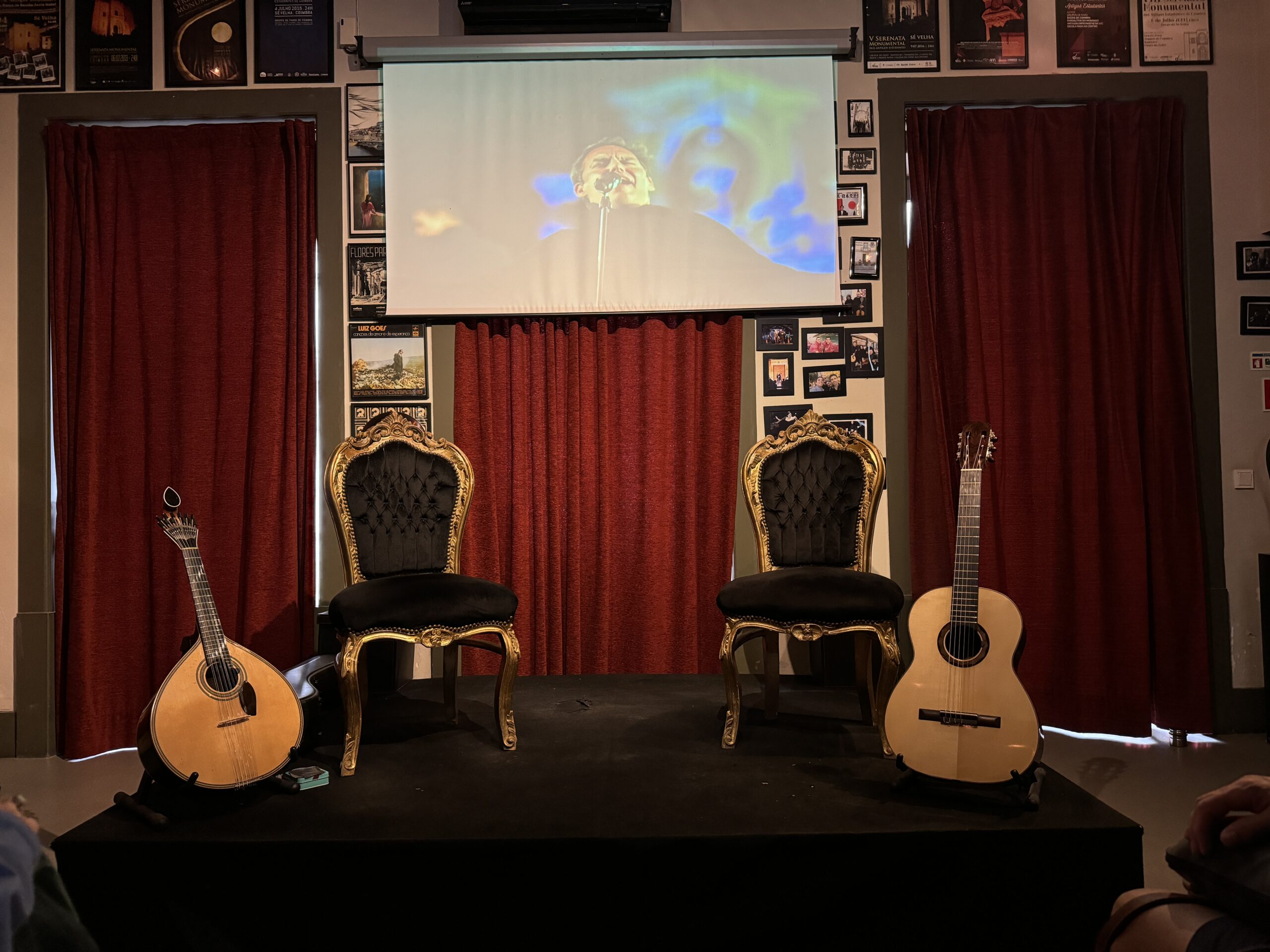
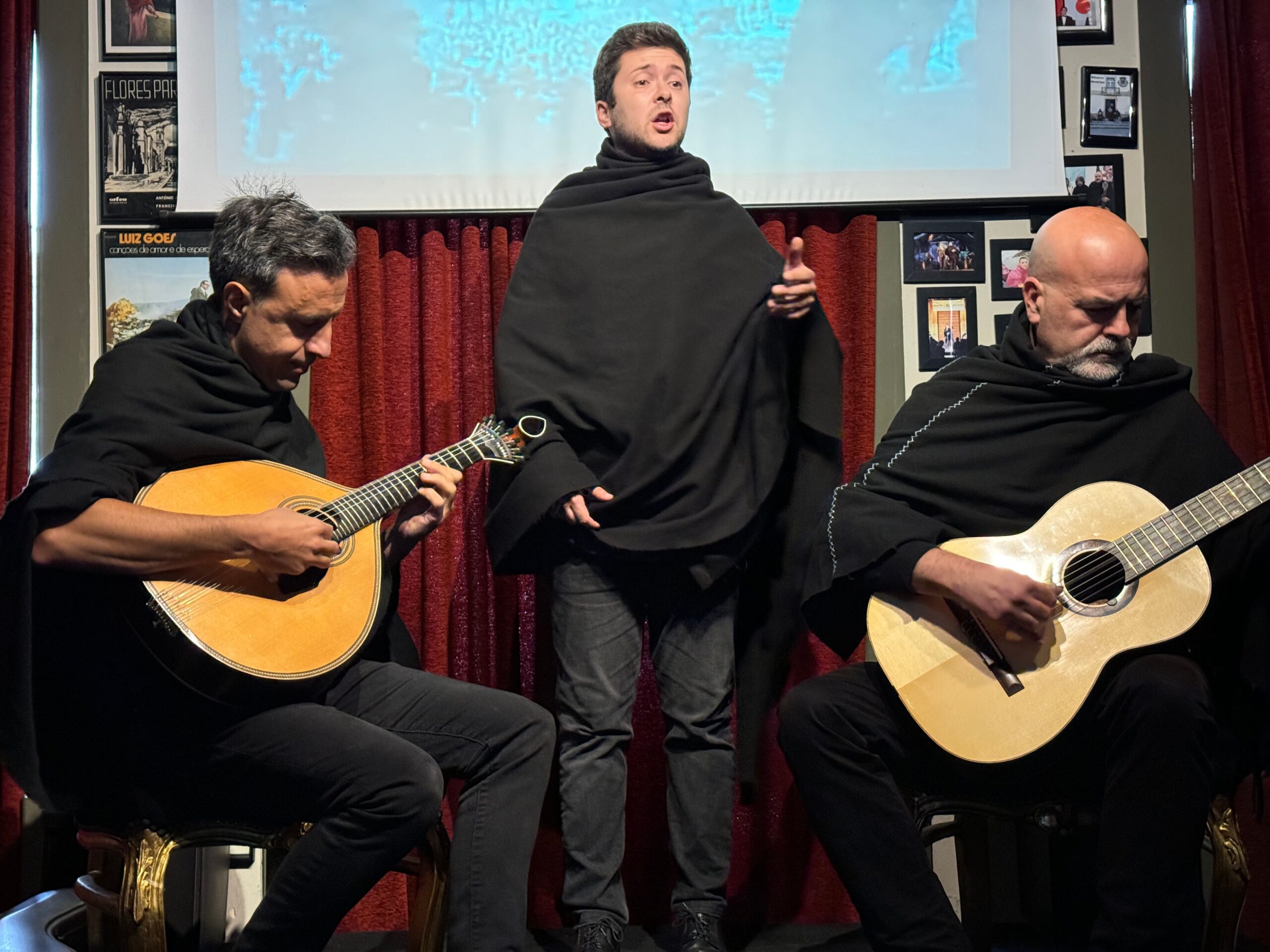
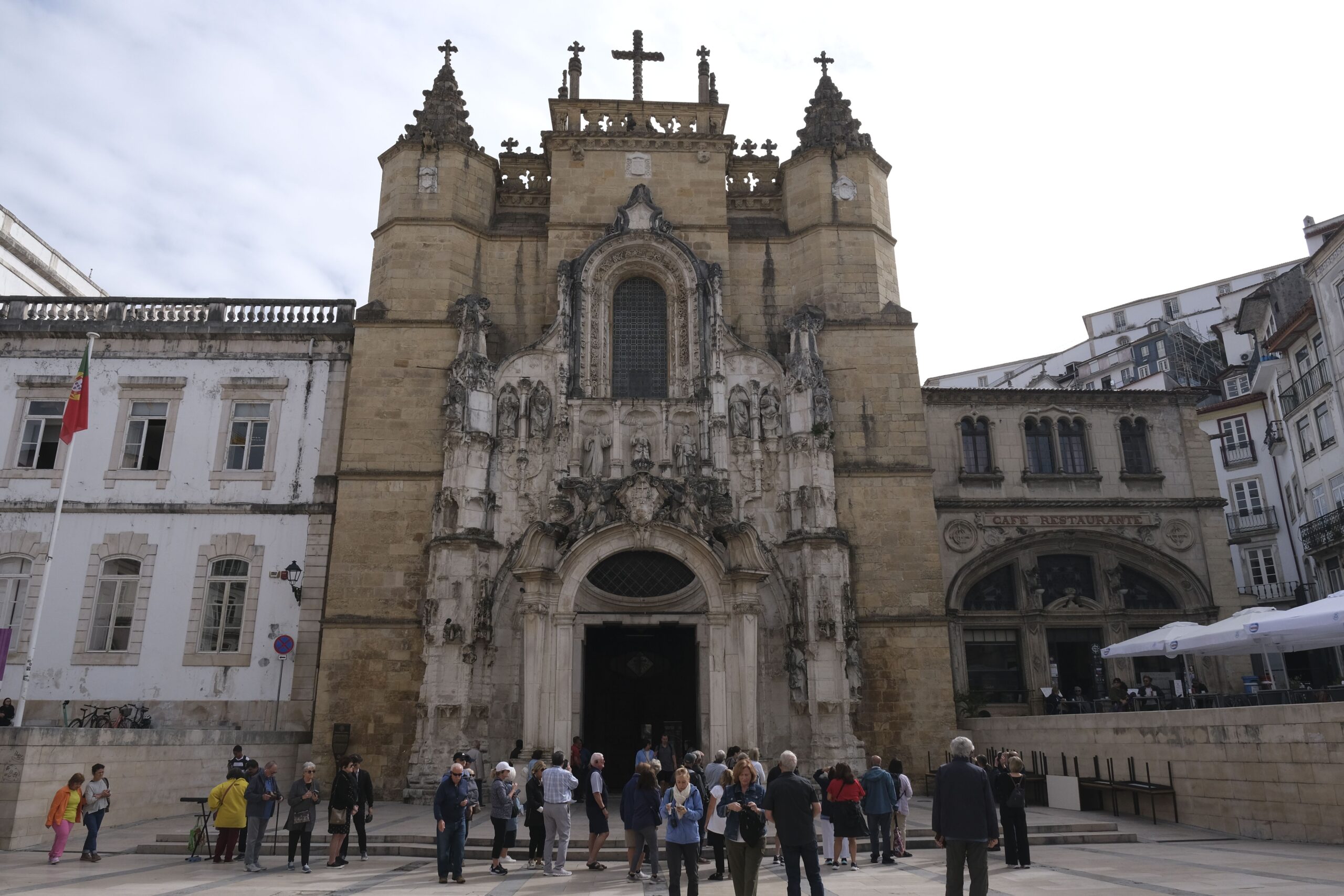
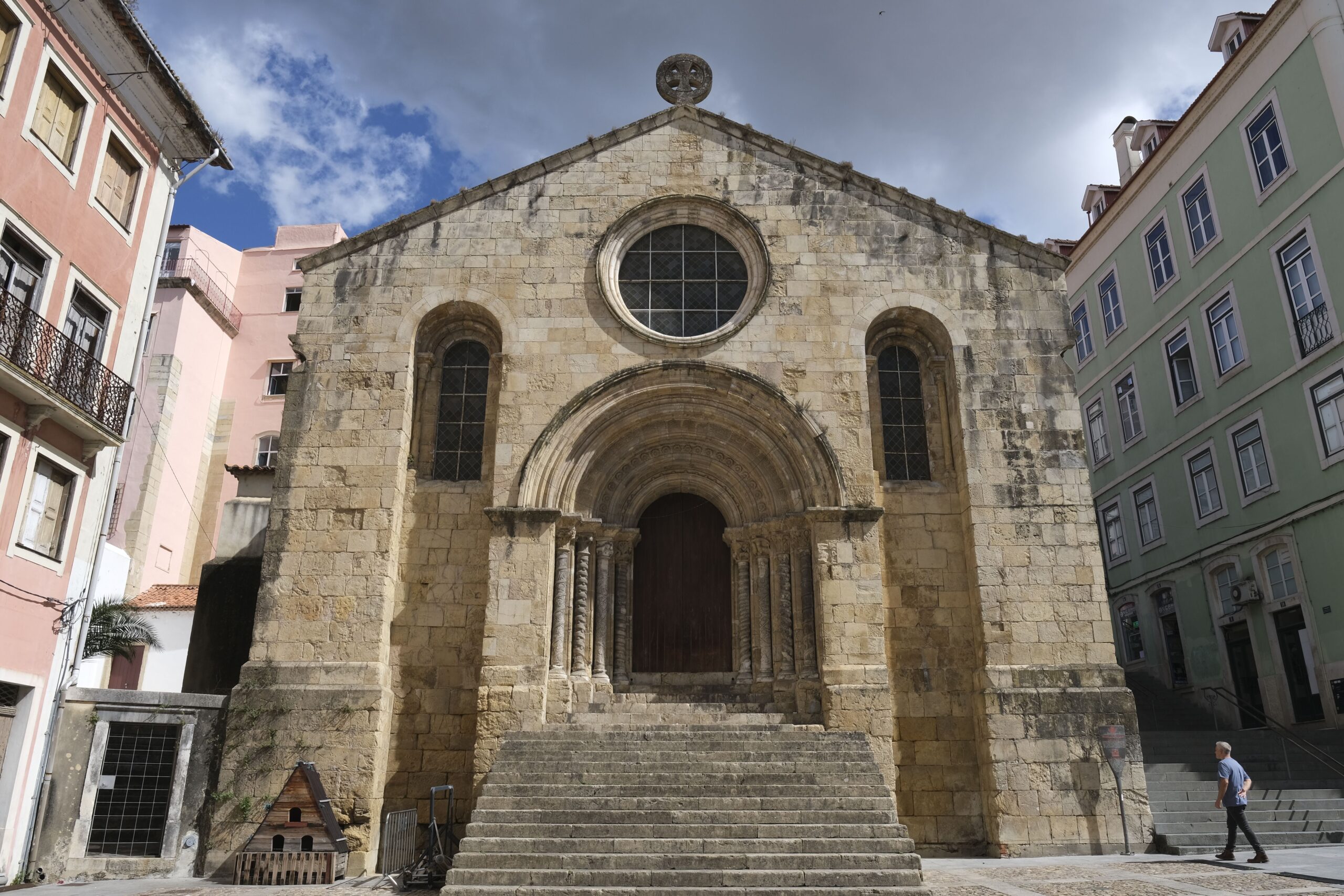
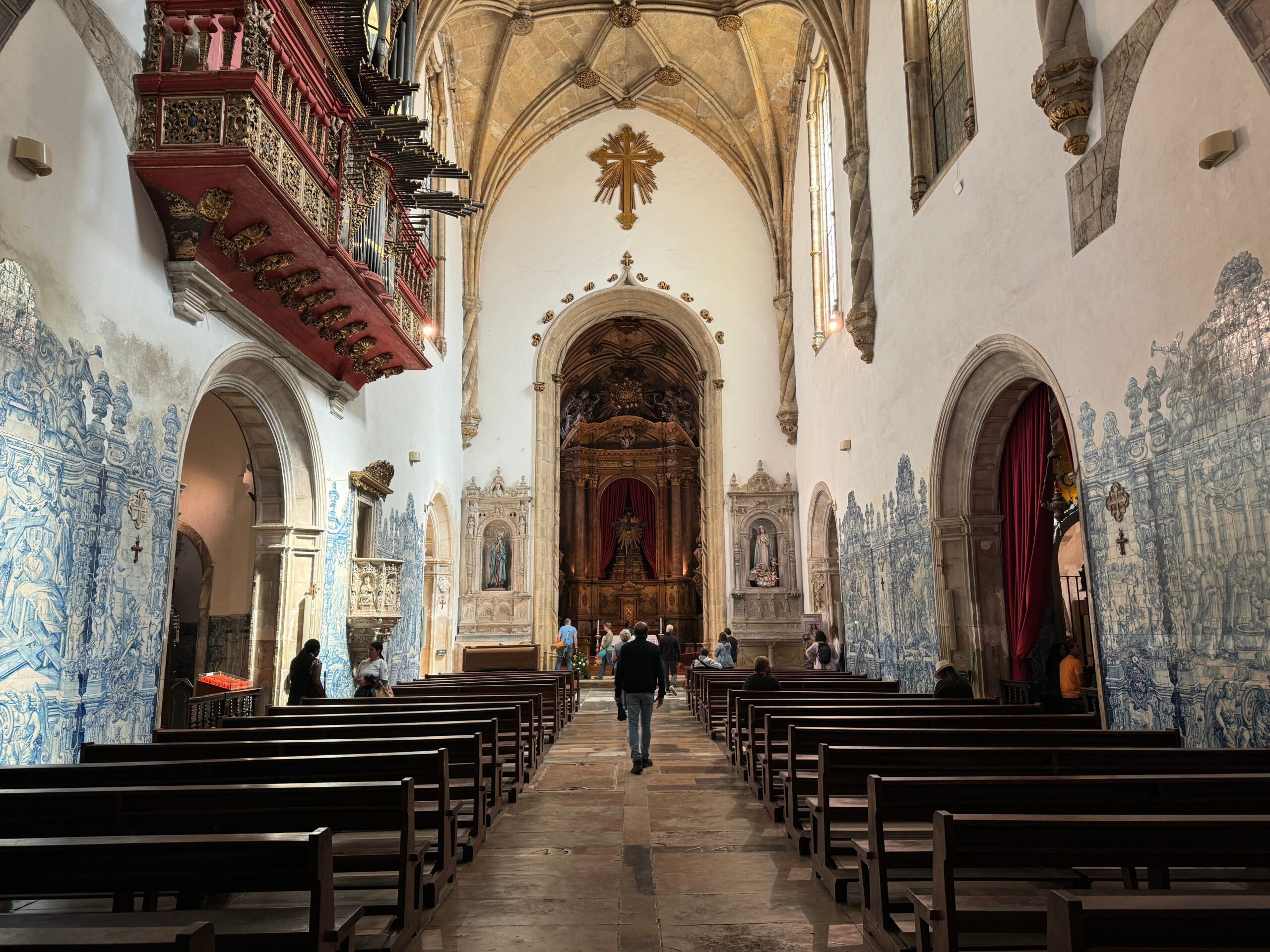
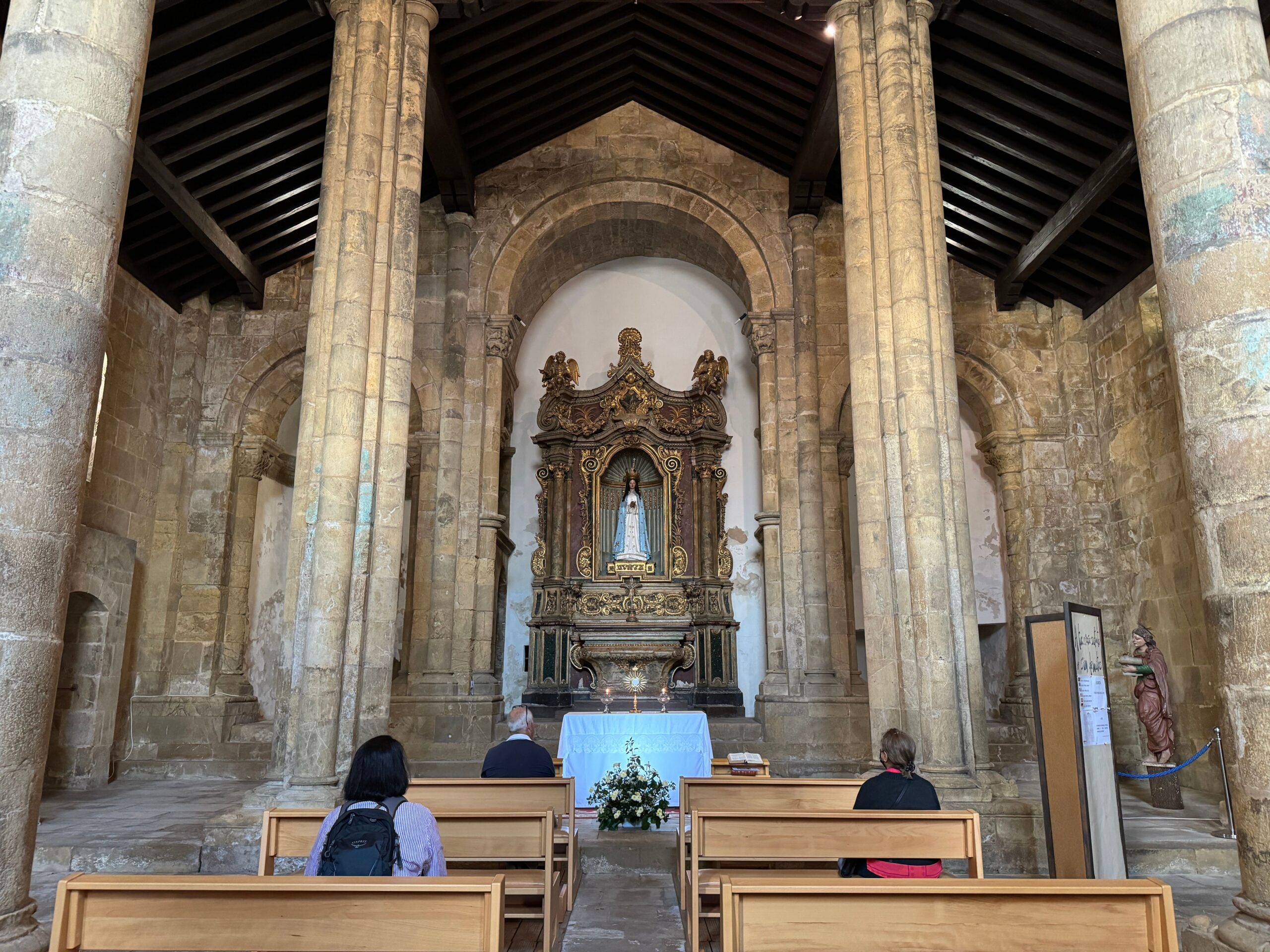
We checked out of our hotel and left for Coimbra early this morning. Coimbra, about 125 miles north of Lisbon, sits on a hill by the Mondego River and is the fourth largest city in Portugal after Lisbon, Porto, and Braga. It is also a UNESCO World Heritage site. When we arrived, we met our local guide, a University of Coimbra alumna, who gave us a brief tour of the city. She pointed out the Monastery of Santa Cruz and explained the yellow symbol marking the pilgrimage route to Santiago de Compostela and the blue symbol for the route to Fátima. She took us past the Church of Santa Cruz and showed us the recently discovered Mikvah (ritual bath) found after a flood, revealing the town’s Jewish history. We also saw the Church of St. James and the last remaining gate of the Almedina. Later, we visited a concert hall where we listened to Fado music performed by former and current university students wearing the traditional black capes. Coimbra’s Fado is different from traditional Fado because its music and lyrics are more complex, often composed by music students. After the performance, we enjoyed Beirão, a local liqueur made from herbs and spices.
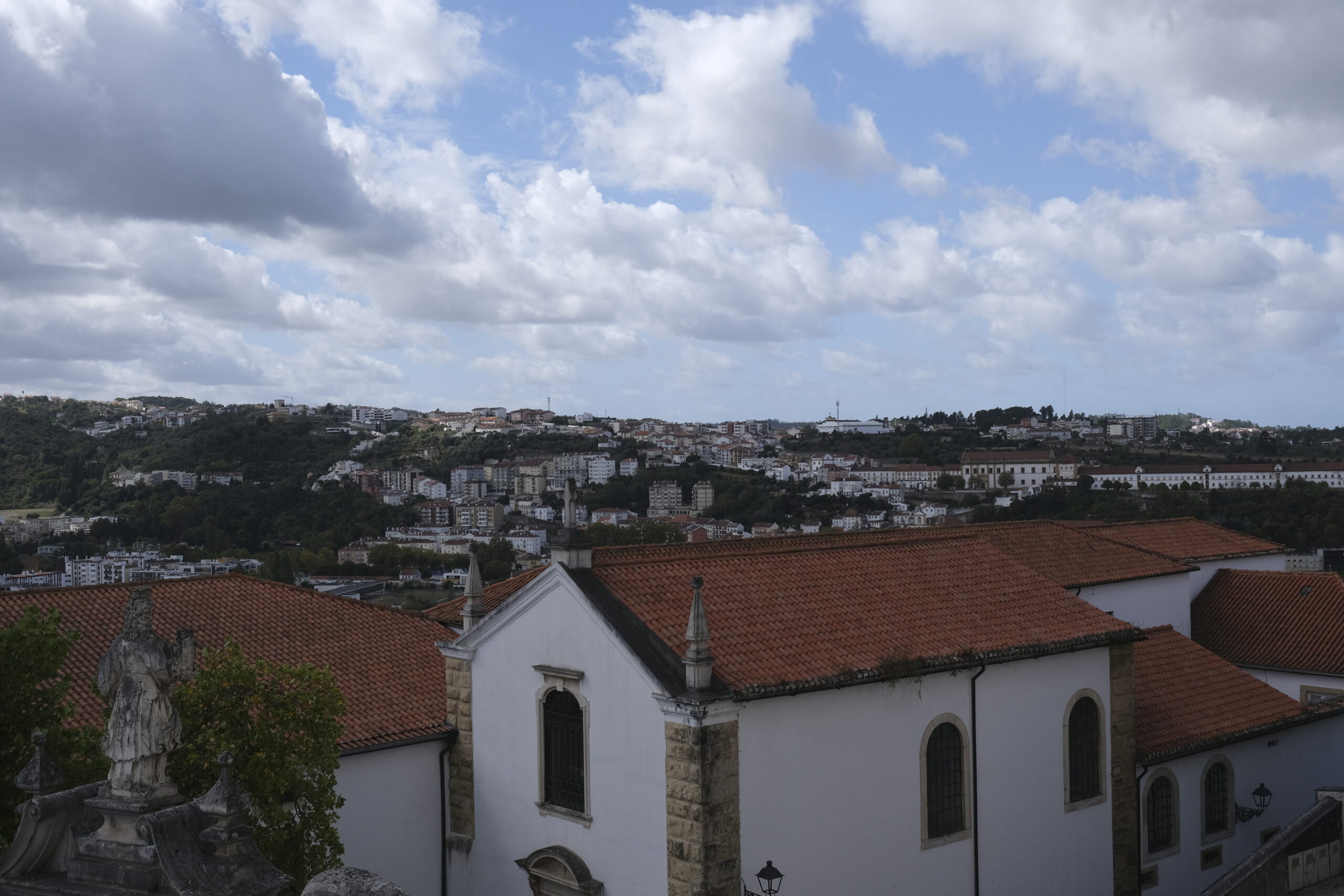
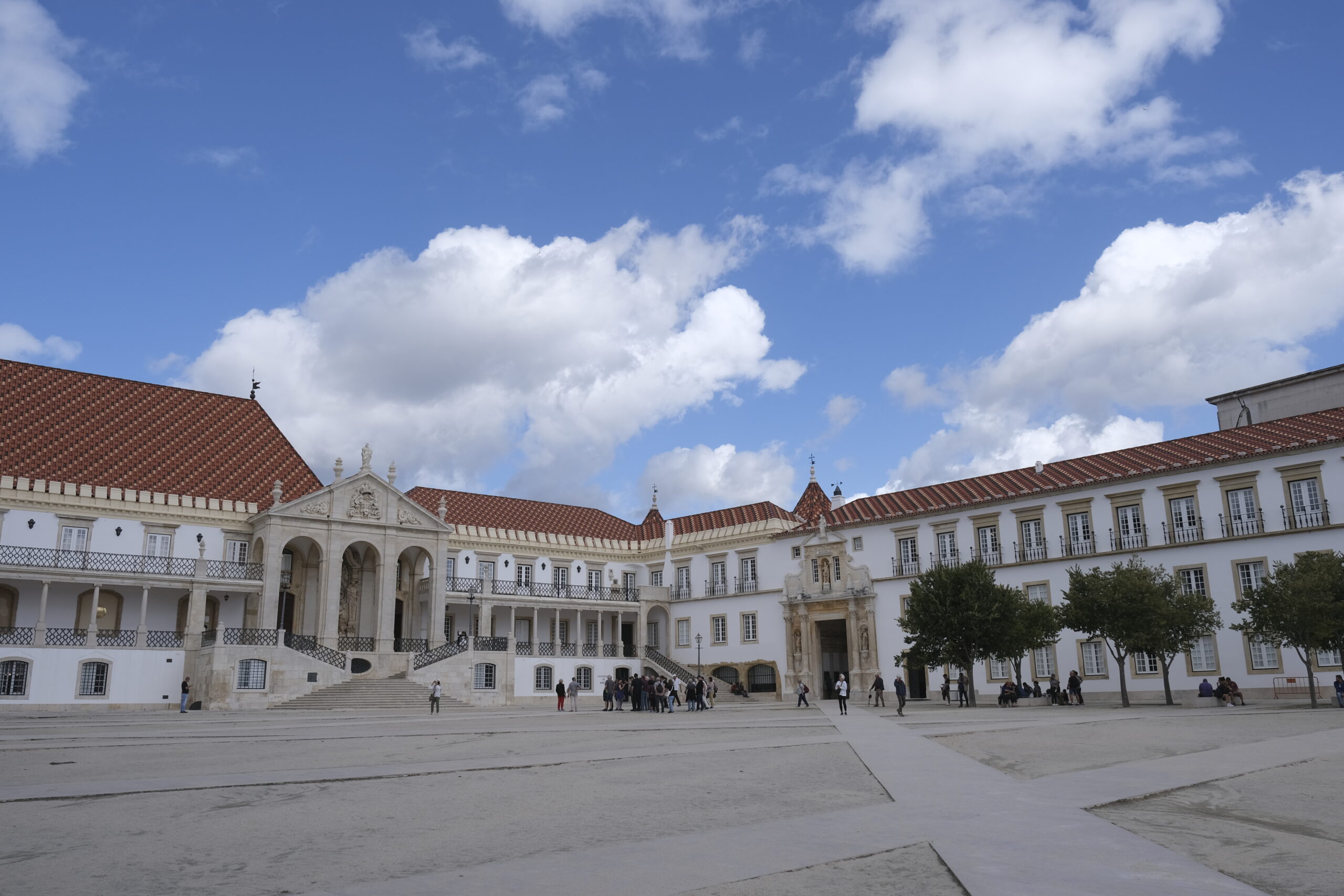
Our next stop was the Joanina Library at the University of Coimbra, considered one of the most beautiful libraries in the world. It was built in the 1700s, sponsored by King John V. The library is three stories tall and holds over 200,000 books. The ground floor has three halls showcasing Portugal’s colonial wealth, with displays of Brazilian gold, Chinese chinoiserie, African wood, trompe l’oeil ceilings, and paintings. The library was constructed with thick walls, oak bookcases, and large windows to allow natural light. One floor was dedicated to book preservation, while another once served as a prison for misbehaving students. Most of the books are written in Latin and are still accessible to those with the proper credentials. The library even has a door for cats, which were used to catch rats. Bats are also used to control insects that could damage the books, and librarians cover the books with leather at night to protect them from bat droppings. Today, insect control is managed by lowering the oxygen level in the library. The books are currently being digitized to preserve their knowledge. The library is said to have inspired the one in Disney’s Beauty and the Beast. Understandably, photography was not allowed.
During our free time, we visited the Santa Cruz Church and the Igreja de São Tiago. After a light lunch, we left for Porto where we embarked the newly minted MS Andorinha.
Porto by Land, River & Air – September 28, 2024
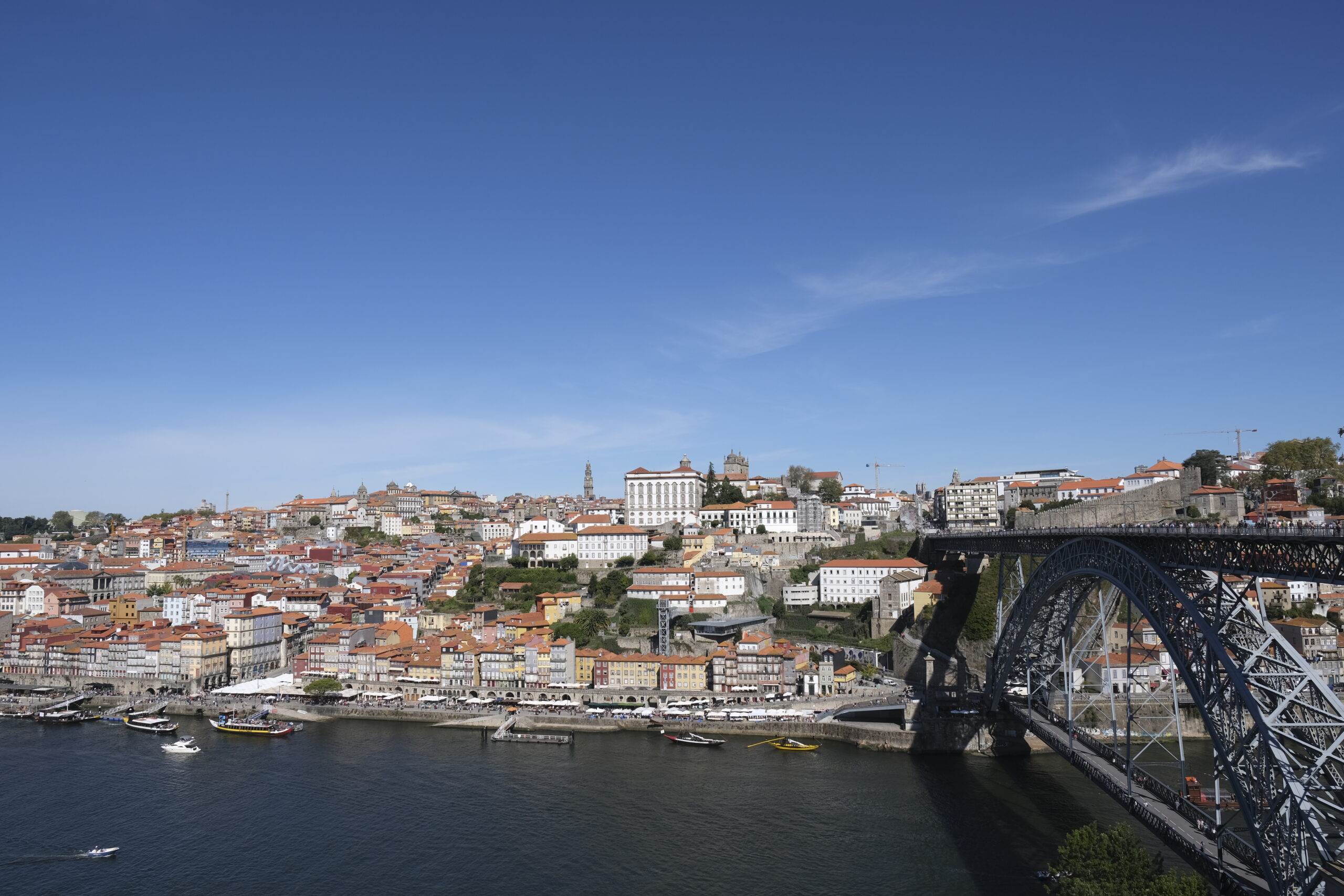
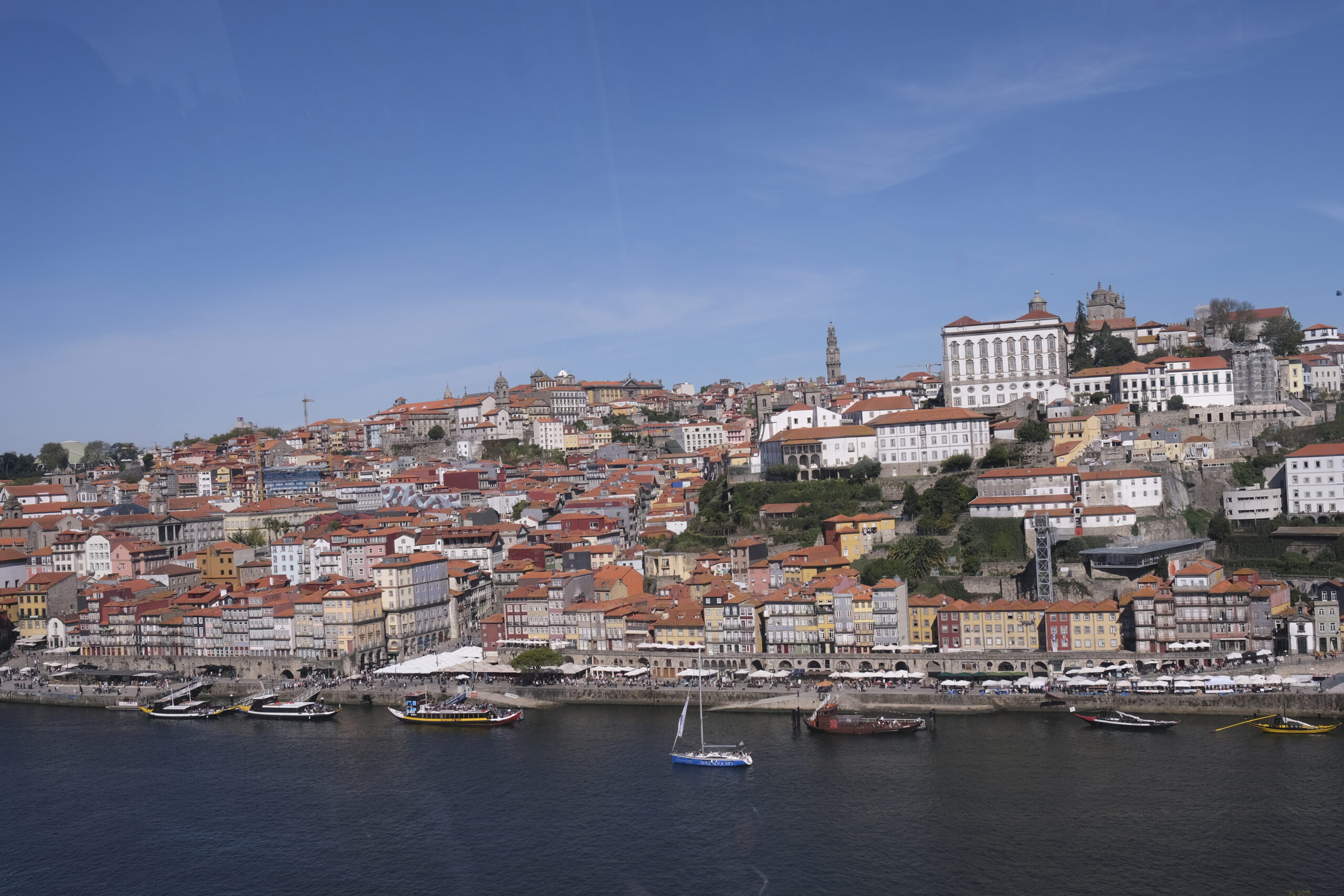
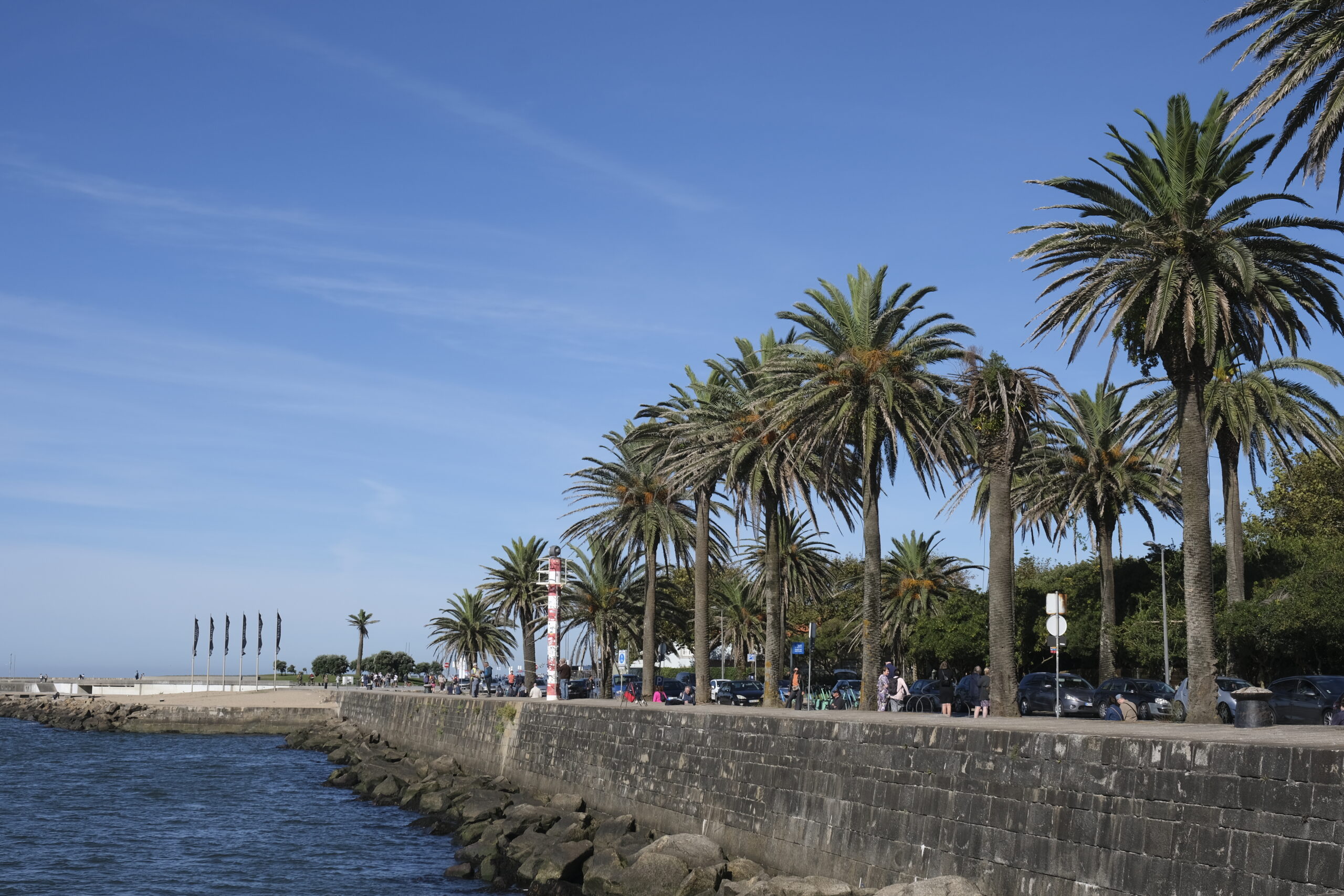
We are still in Porto as ships are not allowed to sail at night on the Douro. After breakfast, we took a rabelo to cross over from the Gaia side where we are docked to the city center. Rabelos are the flat-bottomed boats that were used to ship barrels of port from the wineries to Porto for distribution. Now, they are mostly used by tourists or during Porto’s big June celebration of the St. John festival. The historic center of Porto was designated a UNESCO World Heritage site in 1996.
We disembarked at the city center and walked about a mile before boarding the bus for a city sightseeing tour. Our local guide gave us a brief history of Porto, describing how the city where Henry the Navigator was born grew to commercial prosperity, the six bridges across the Douro, with a seventh bridge being built for the metro, the Ribeira which is one of the oldest neighborhoods in Porto where buildings have commercial spaces downstairs and proprietors and their families living upstairs, how Rio de Janeiro was Portugal’s capital briefly during the 1800s civil war, known as the War of the Brothers. The conflict involved King Pedro in Brazil and Prince Miguel in Portugal and was resolved when Pedro abdicated in favor of his seven-year-old daughter, Maria. We also passed by notable sites like Livraria Lello, known as the most beautiful bookstore in the world and rumored to have inspired J.K. Rowling in writing her Harry Potter books. We saw the university and its lion fountains, where students are baptized in green water, a church and convent separated by a narrow house, and finally the Clerigos Tower.
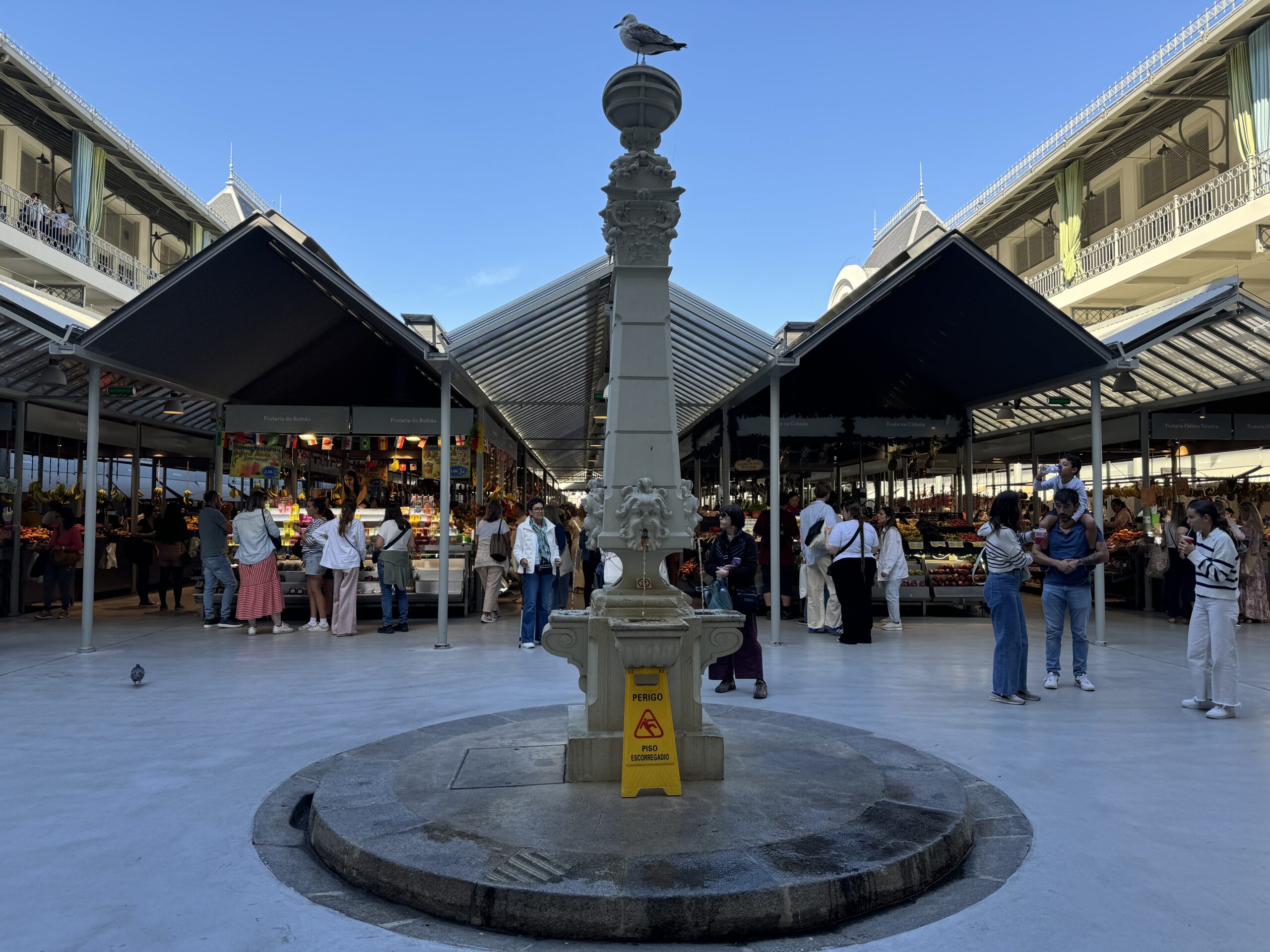
After being dropped off in the Gaia area, we took a gondola ride to the top of the Luiz I Bridge where we were treated to a Port and Tonic cocktail (white port, gin tonic, rosemary twig, and a slice of orange) at the Jardim do Morro. The views from the terrace were spectacular. We returned by bus to the ship for lunch and later headed back to the city center. Due to a snafu, we arrived late and just walked around in the Mercado do Bolhão, a large outdoor food market.
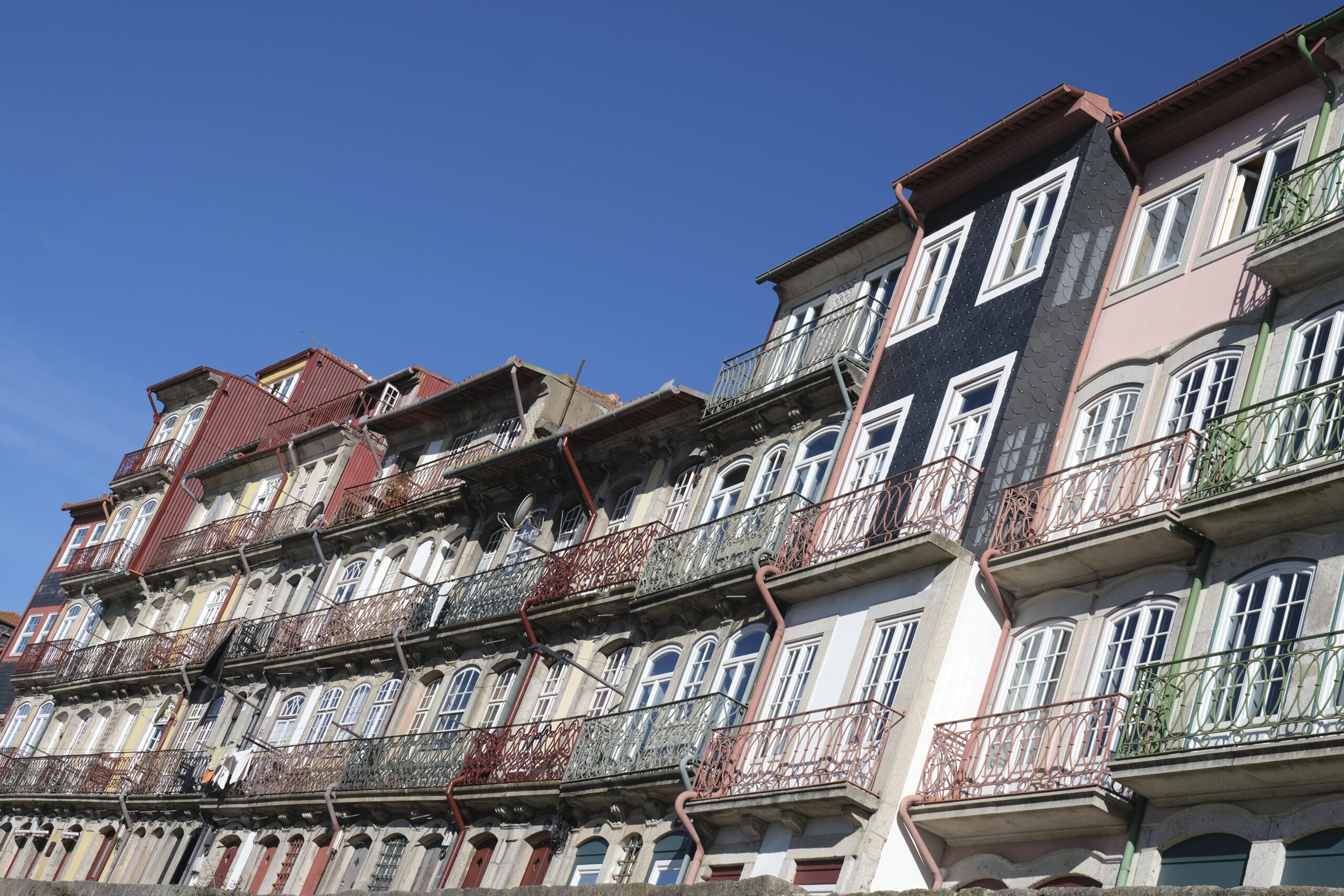

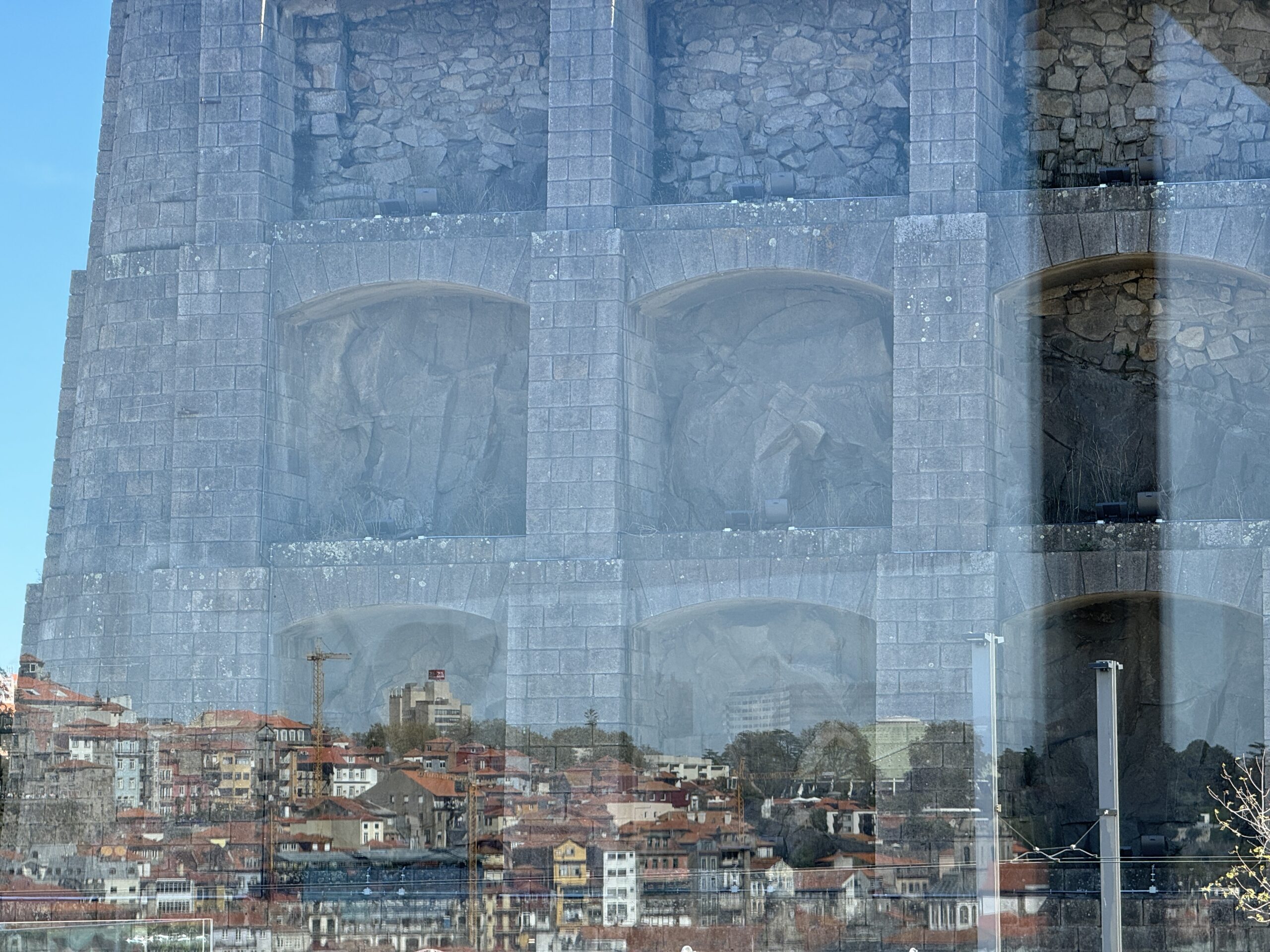
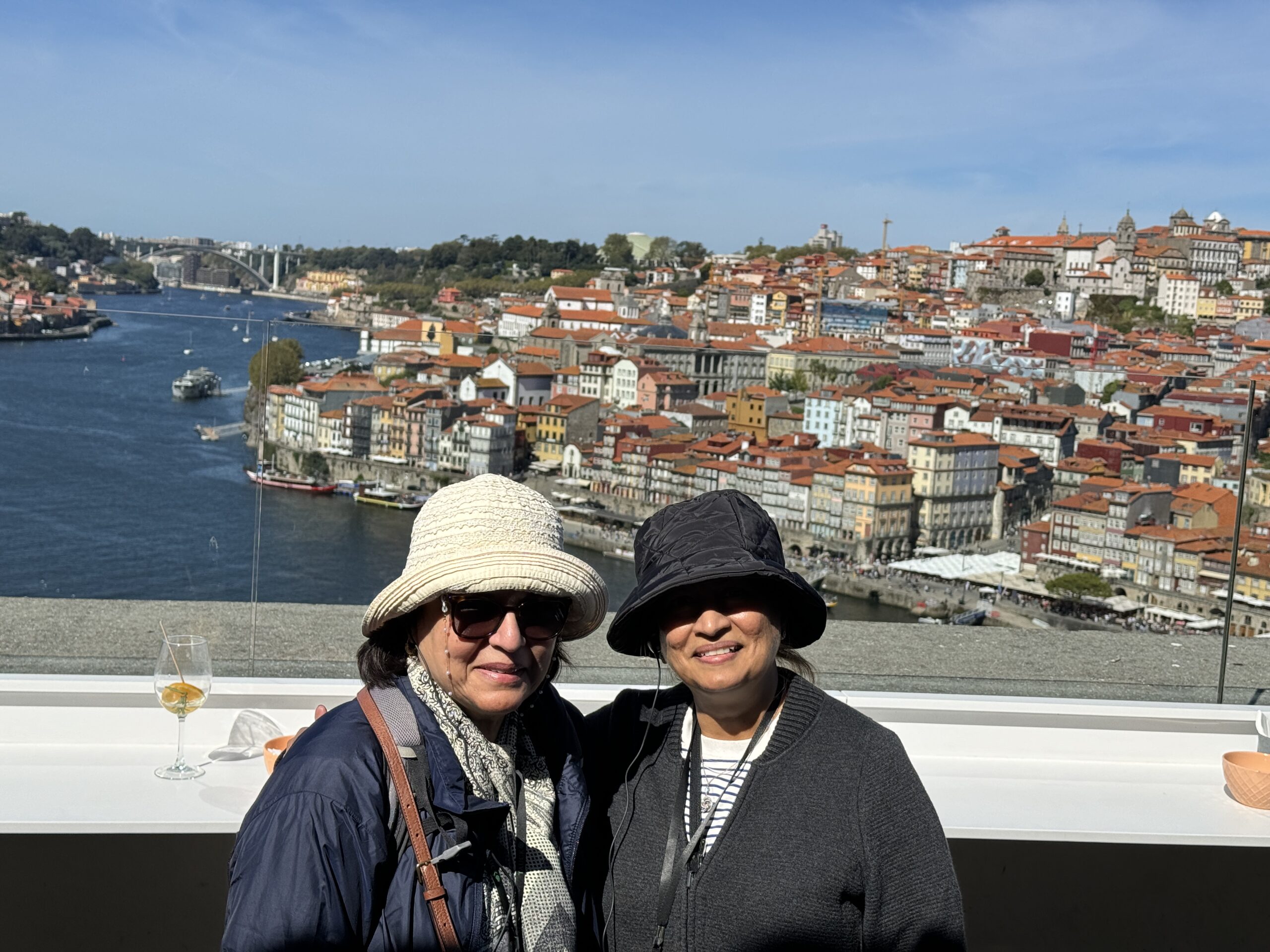
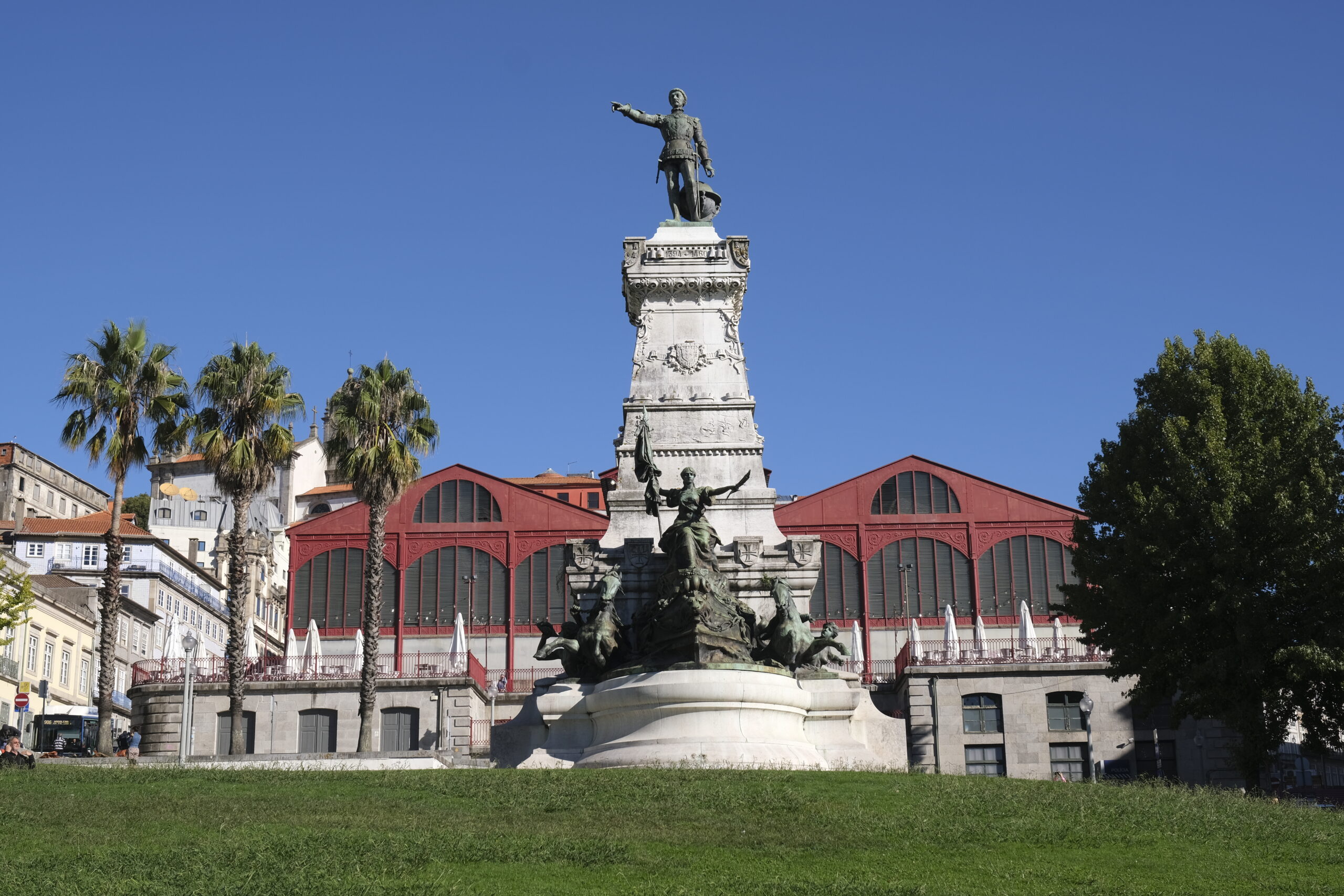
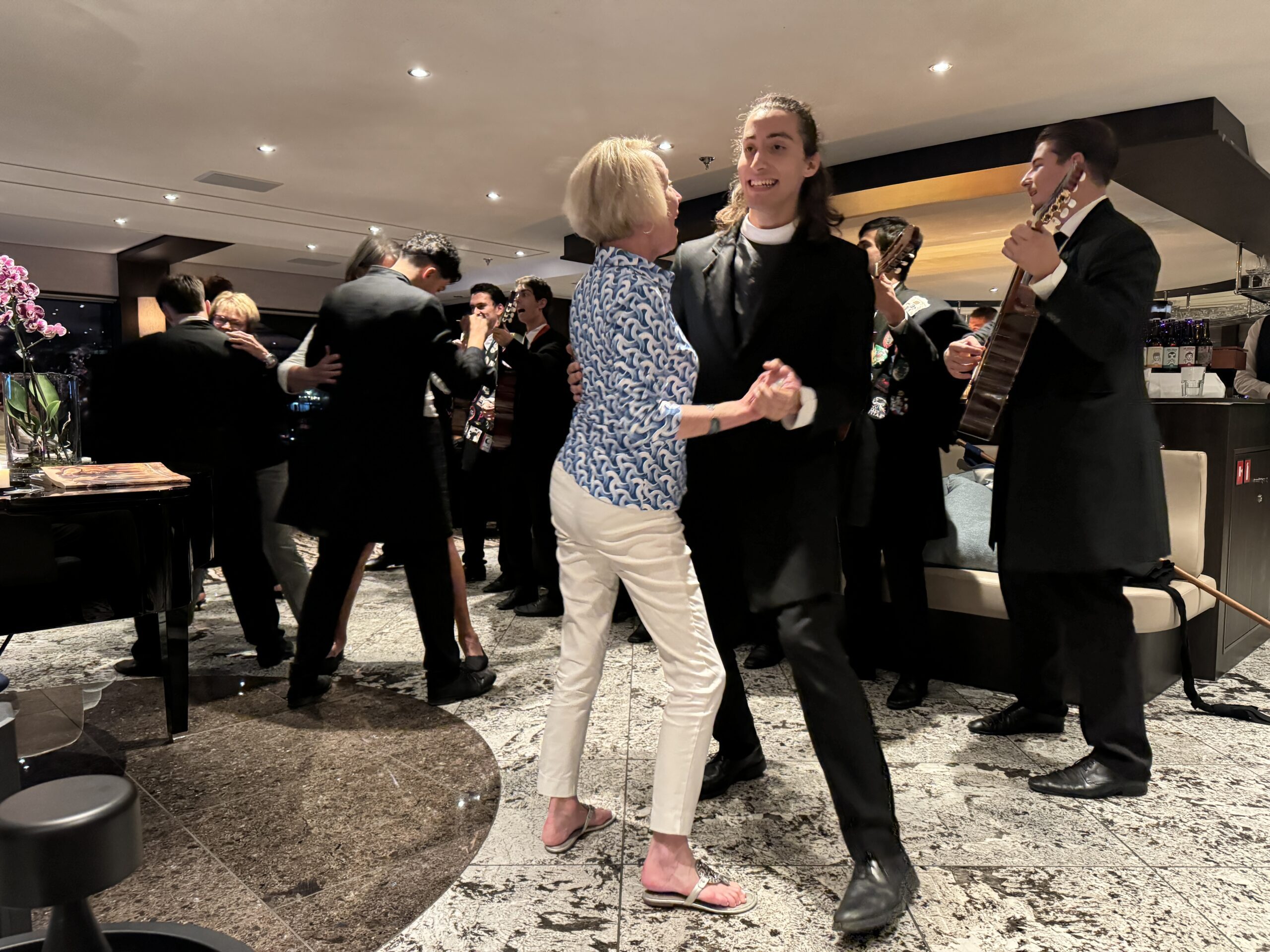
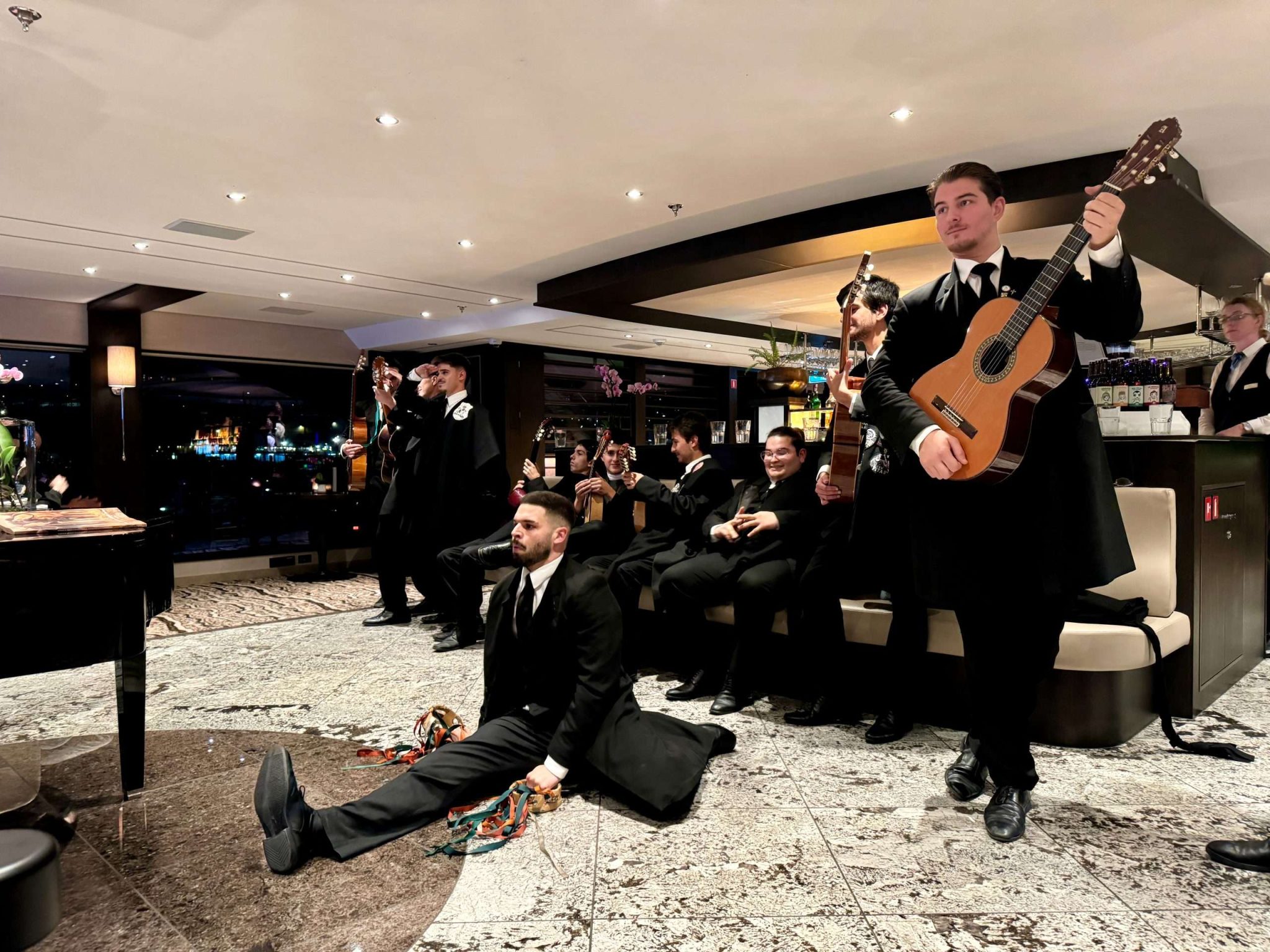
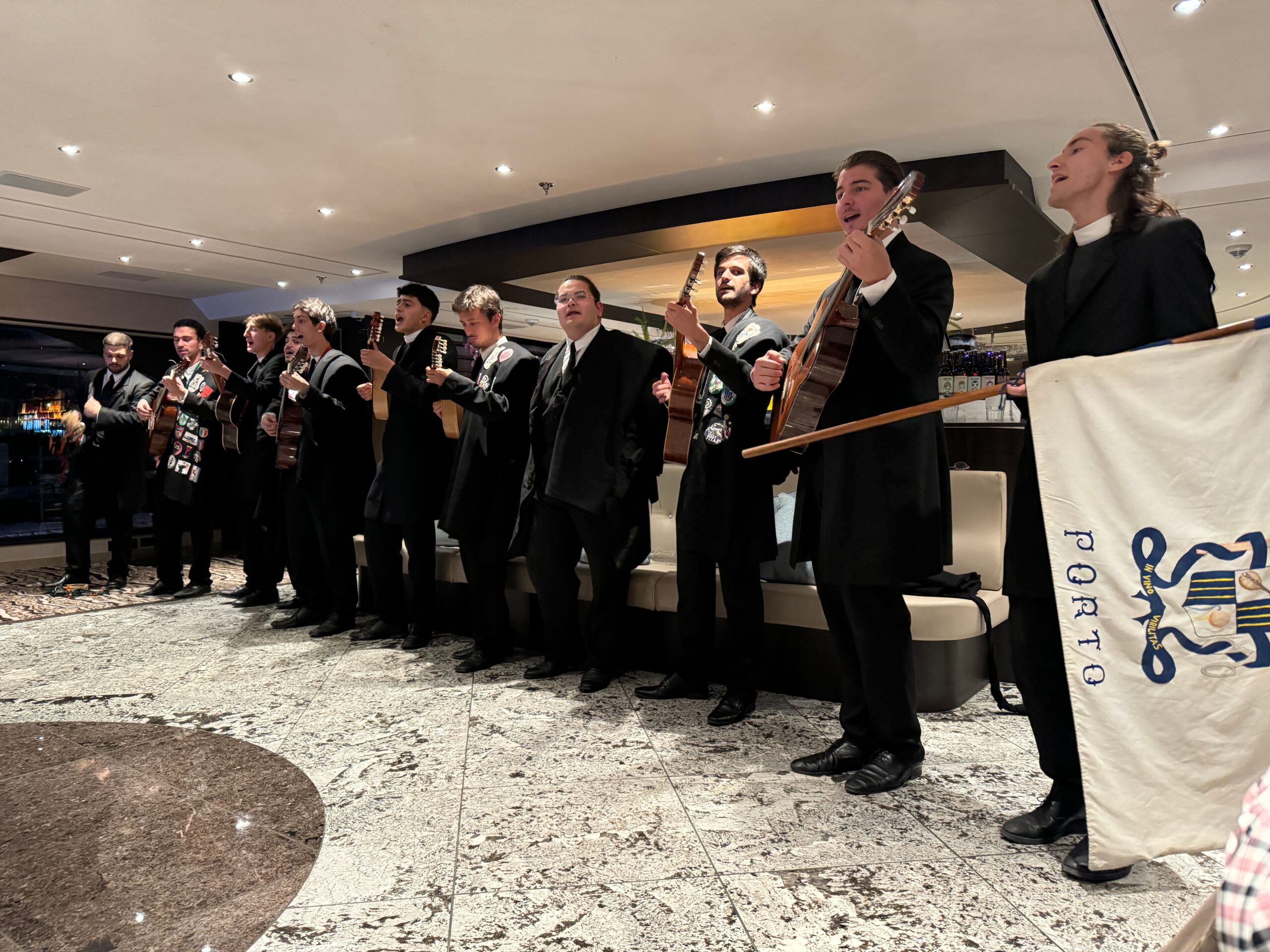
Back on the ship, we enjoyed some Portuguese specialties and wines, followed by a fantastic performance by a tuna group—a lively band of male college student musicians as they performed a repertoire of music well known in Portugal and Spain. (A tuna is a group of university students in traditional attire who perform serenades and dance, a tradition that began in Spain and Portugal in the 13th century and continues today to keep the custom alive.)
Exploring Guimarães and Quinta de la Aveleda – September 29, 2024
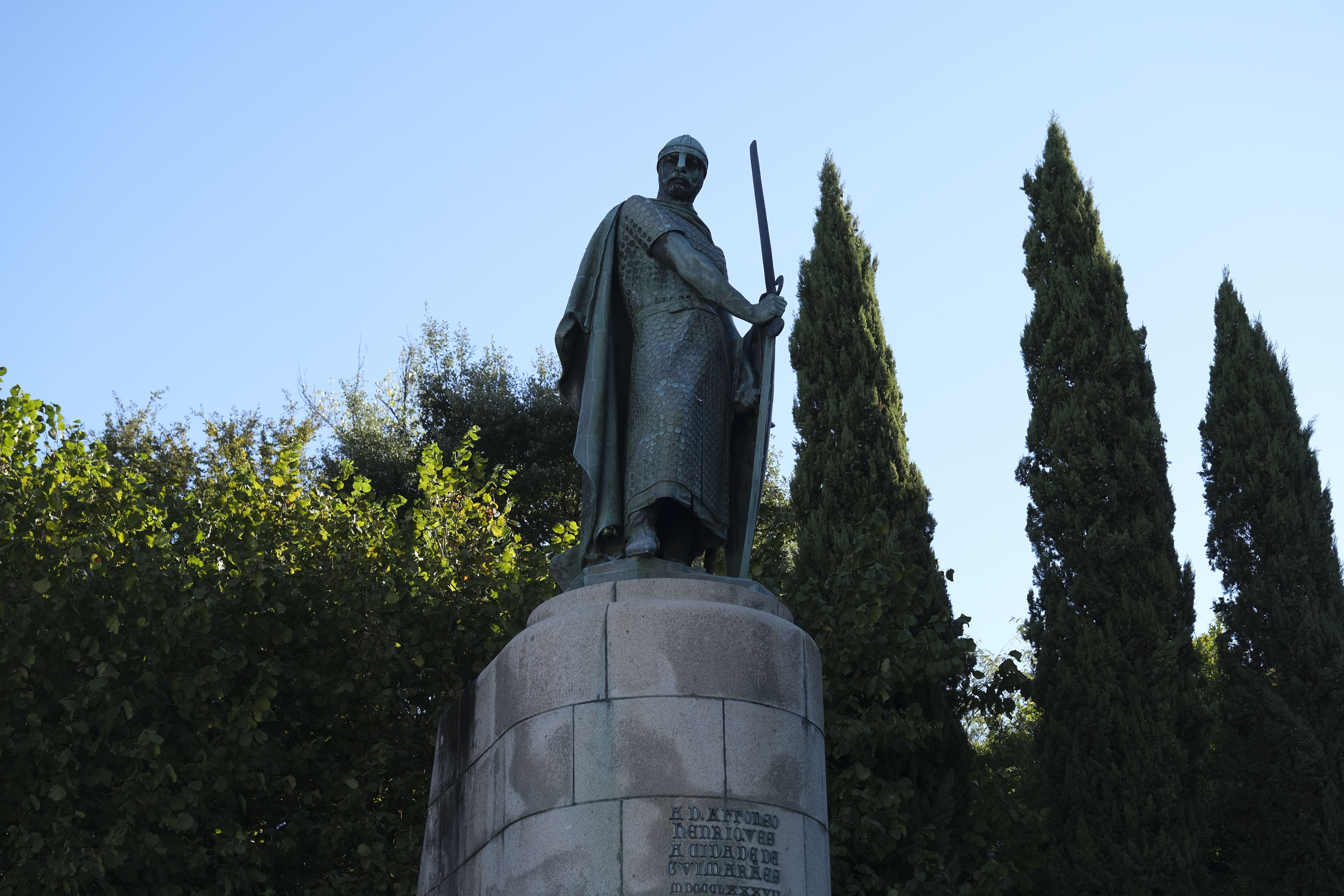
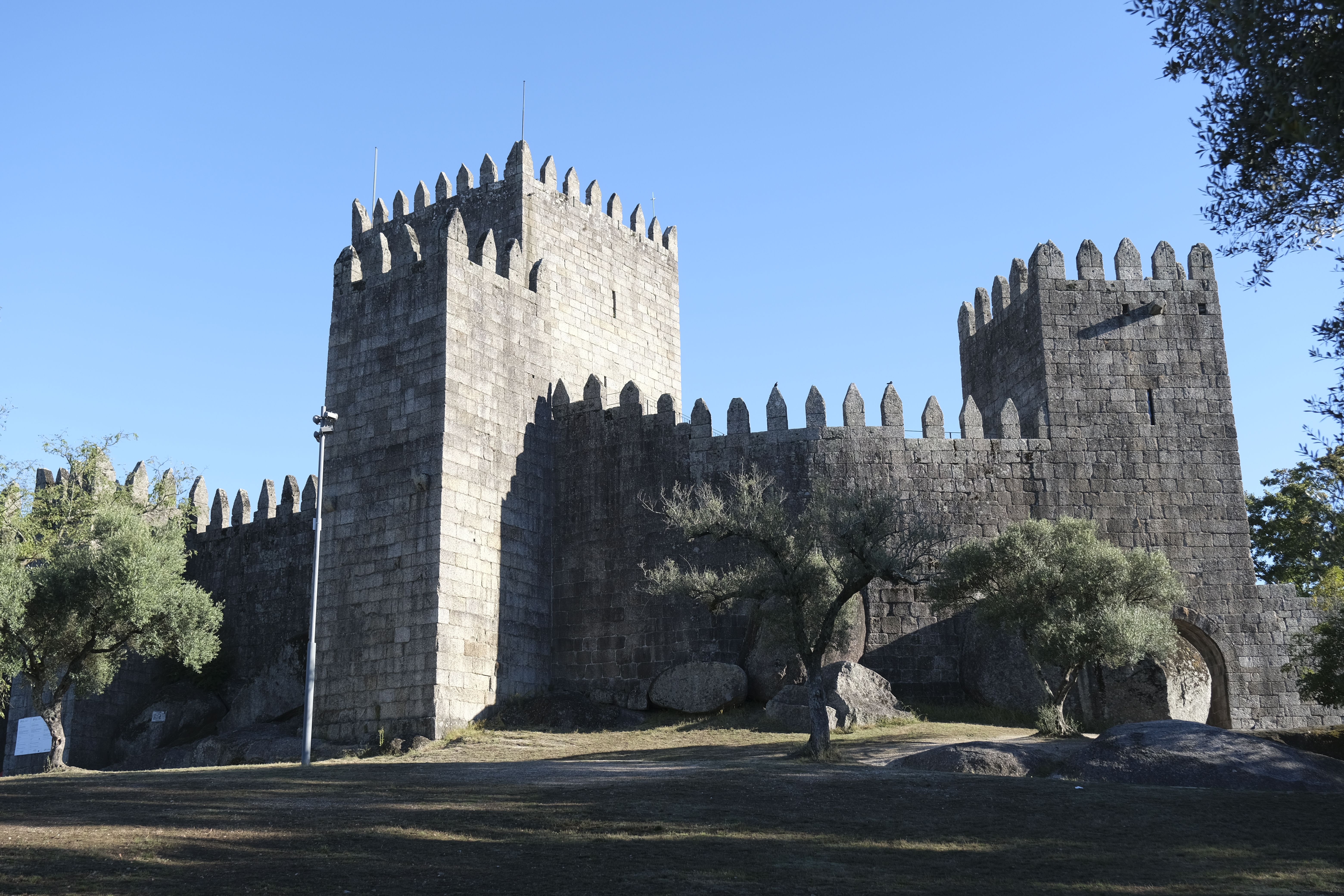
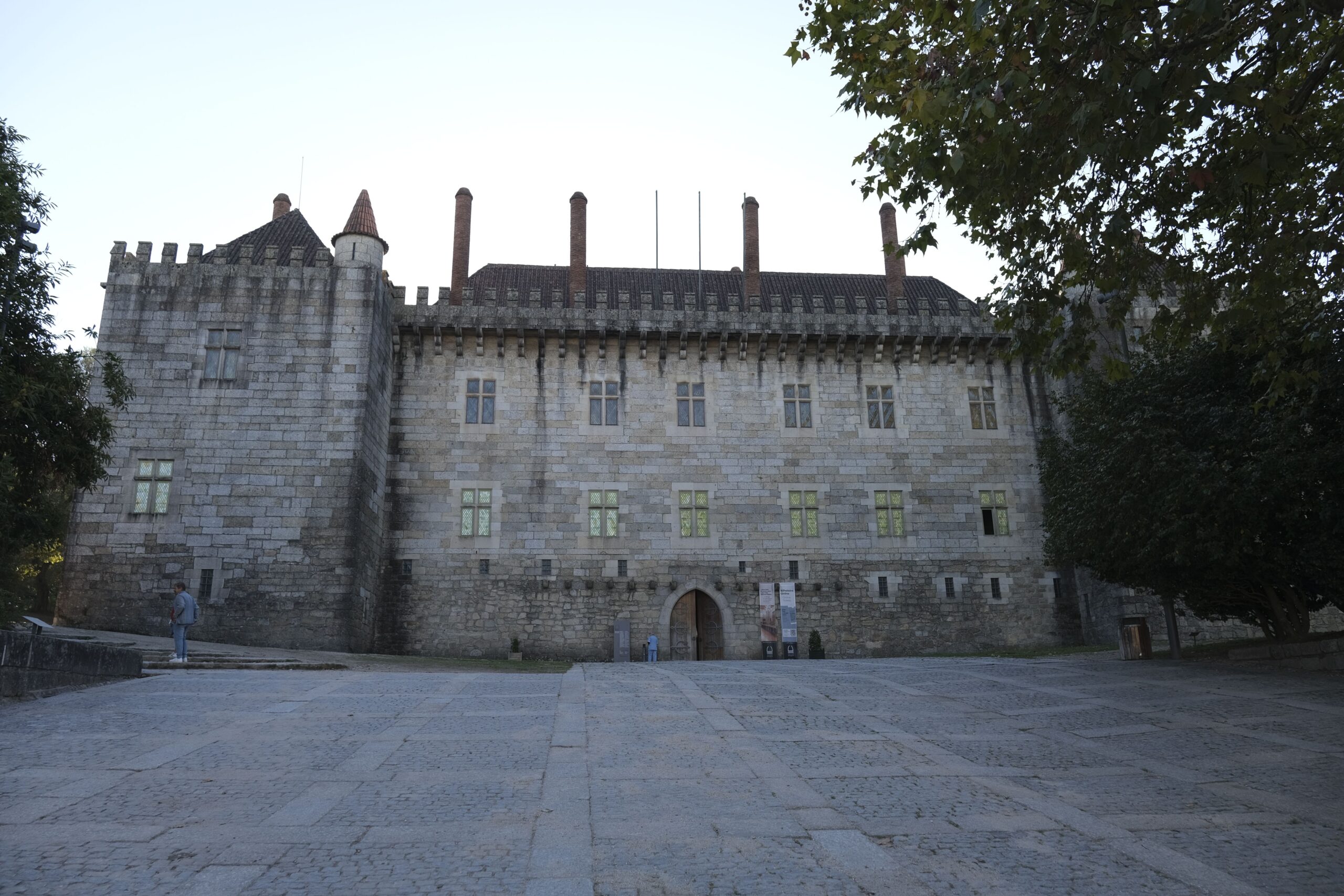
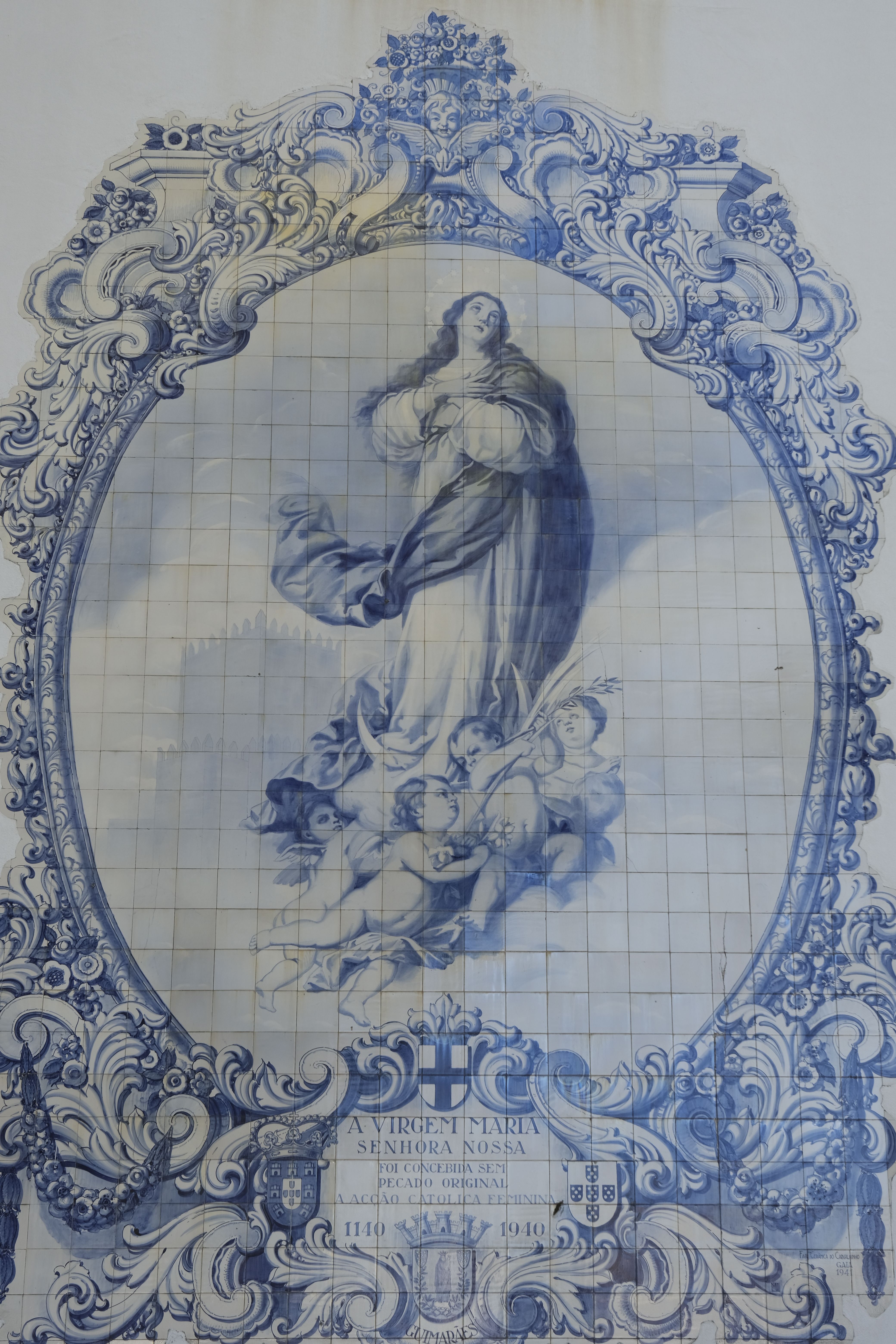
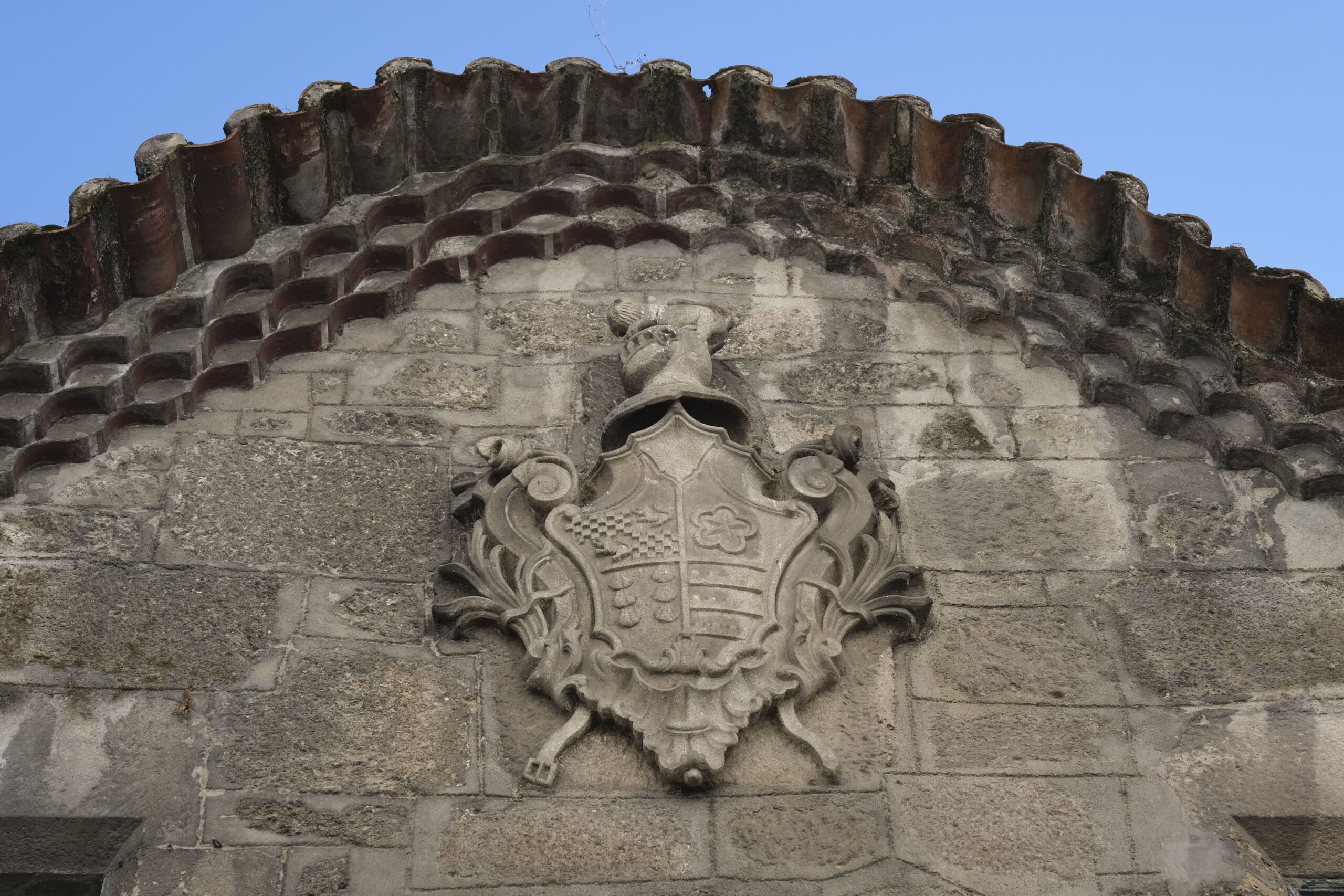
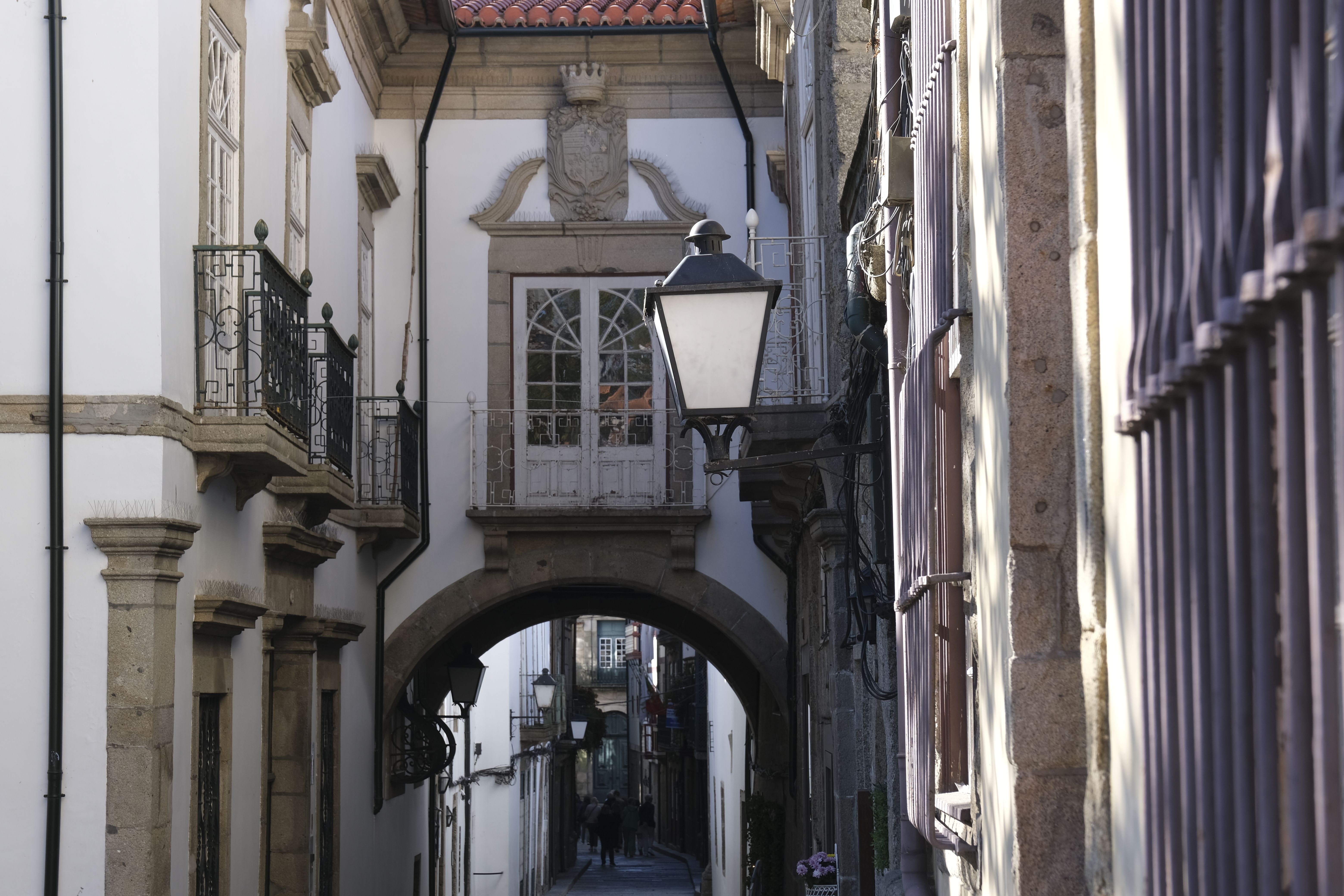
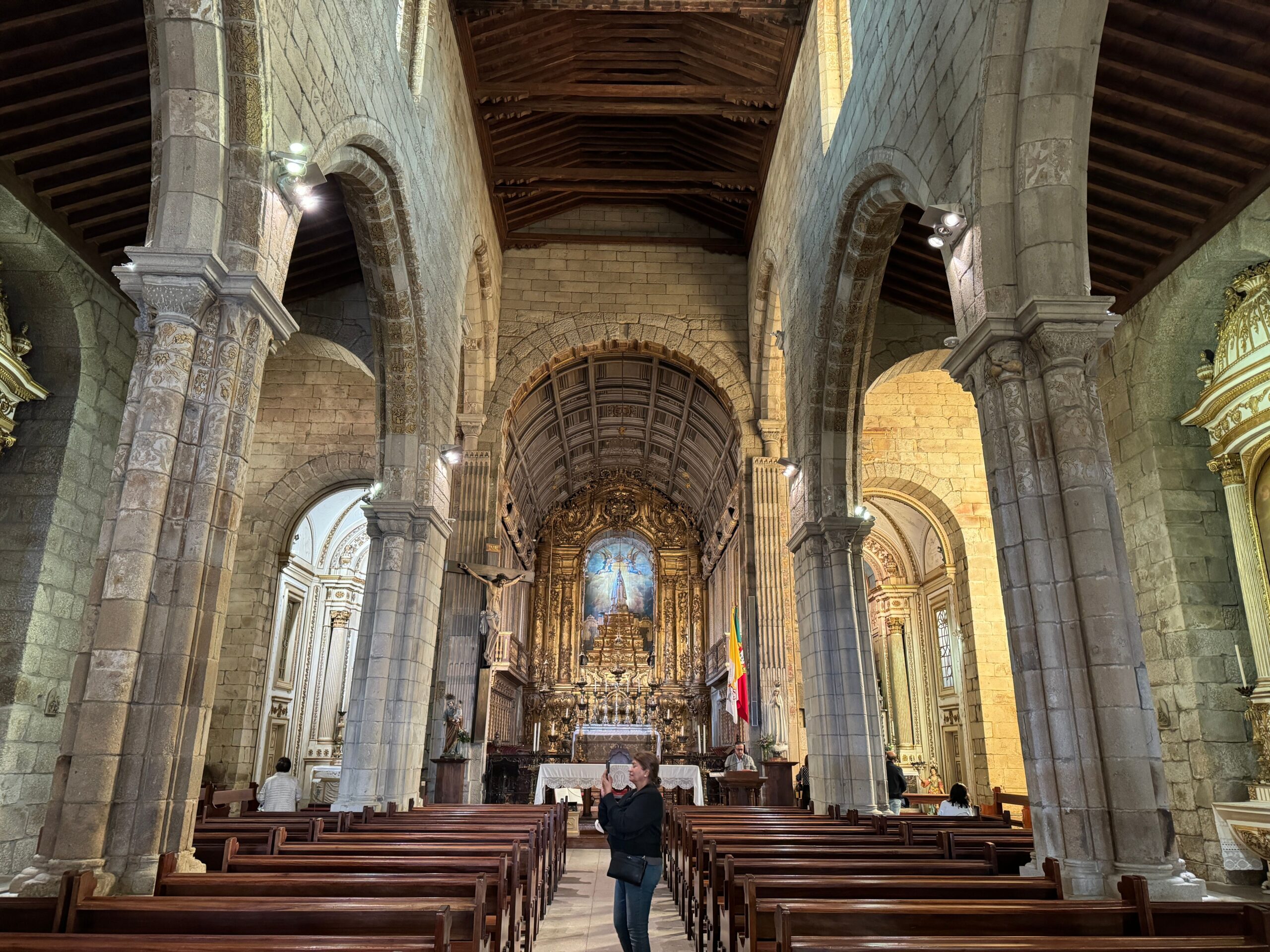
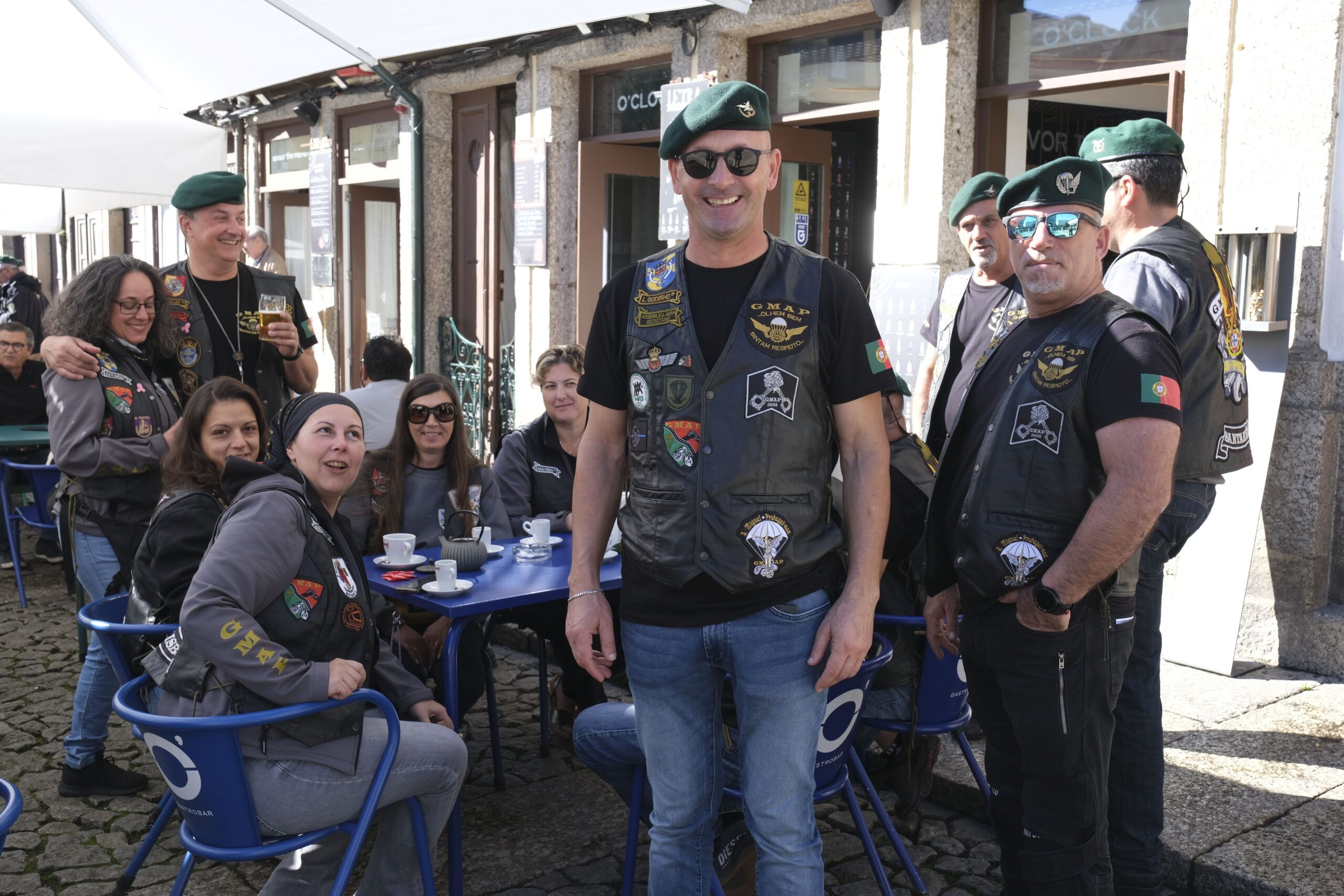
We drove over an hour to the historic city of Guimarães, a UNESCO World Heritage site and the starting point of our Portuguese Camino in 2022. Our visit began at the Castle of Guimarães, near the statue of Afonso Henriques, the first king of Portugal. Although Afonso was reportedly baptized at the nearby Church of São Miguel, this is disputed, as the church was consecrated in the 1200s and Afonso was born in the early 1100s. Afonso was exiled at the age of 12 but later returned to defeat his mother, who had ruled Portugal after his father’s death. The battle took place in Guimarães, which is why the city is considered the birthplace of Portugal. Although Afonso is buried in the Church of Santa Cruz in Coimbra, we didn’t recognize his tomb when we visited the church a few days earlier. After walking around the Church of São Miguel, we admired the Palace of the Dukes of Braganza, now a museum and a residence for visiting dignitaries. From there, we walked to Largo da Oliveira and visited the Church of Nossa Senhora da Oliveira (Our Lady of the Olive Tree). Despite it being Sunday, we were able to explore the church and were even invited to visit the organist in his loft. When we came down, we were surprised to find the church suddenly filled with older, very fit-looking men carrying a statue of St. Michael the Archangel, adorned with flowers and flags, as they marched down the aisle. We later learned that these men were veterans of the Portuguese army, who had traveled from different parts of the country to celebrate St. Michael’s feast day. Outside, the square was packed with even more military-looking men.

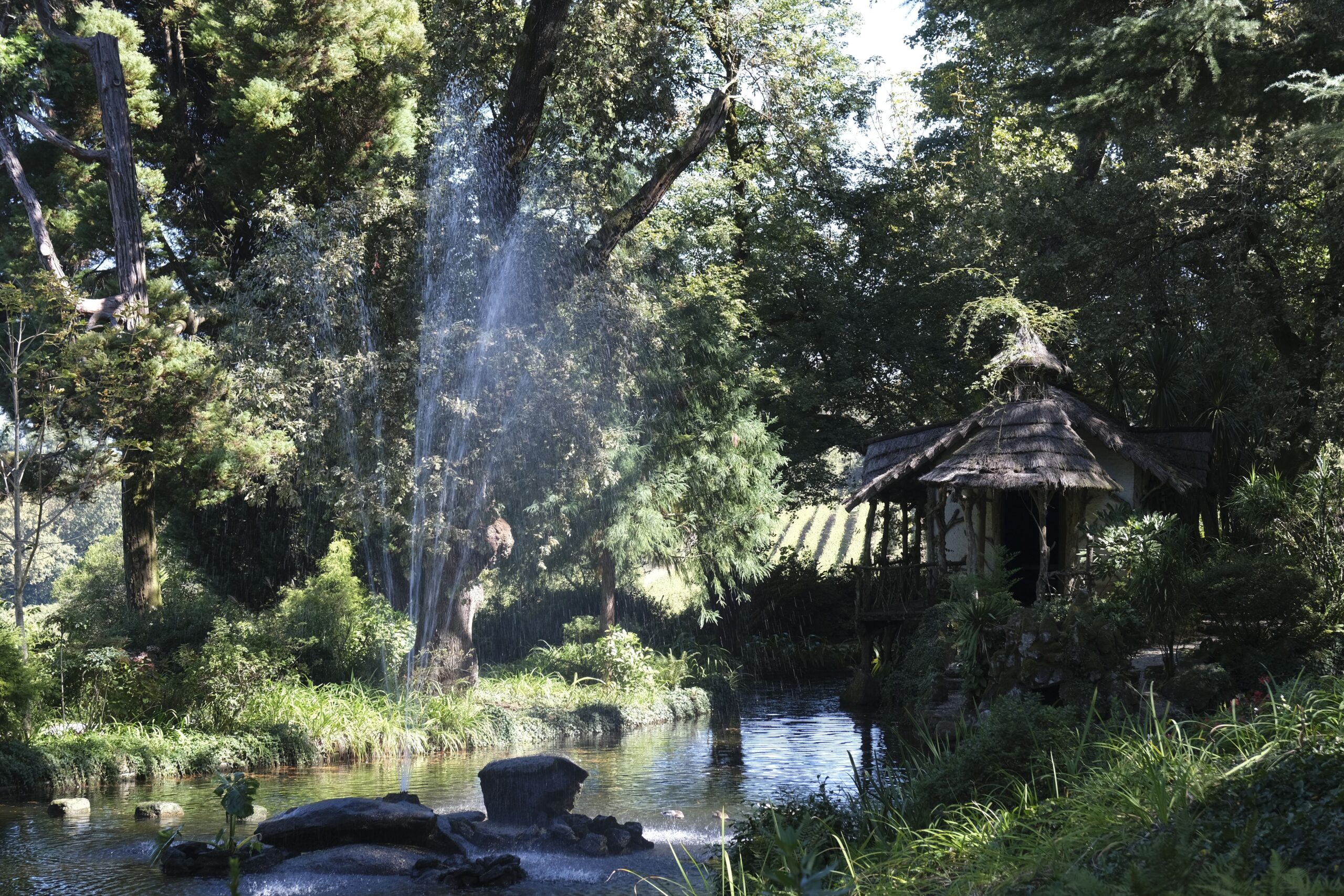
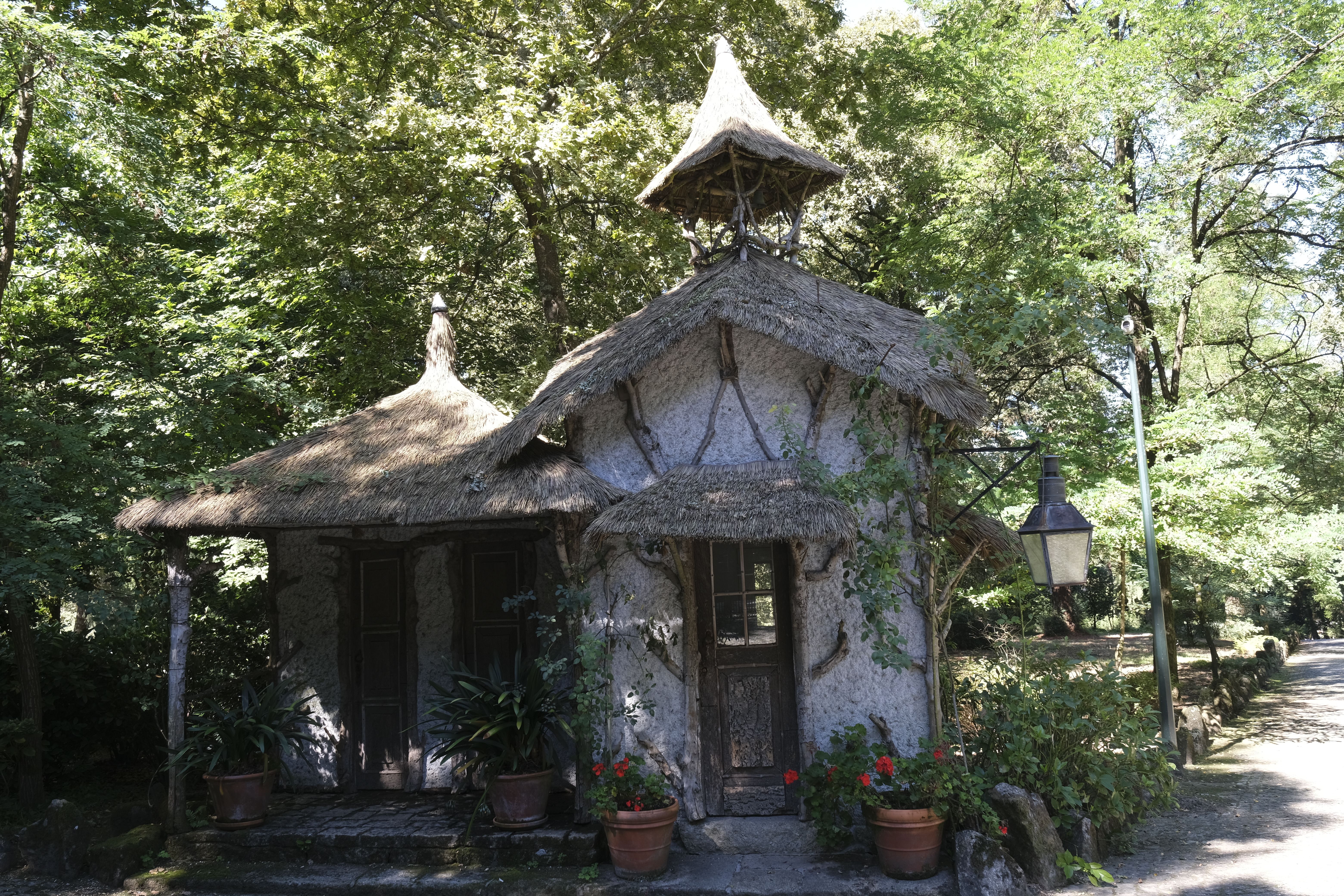
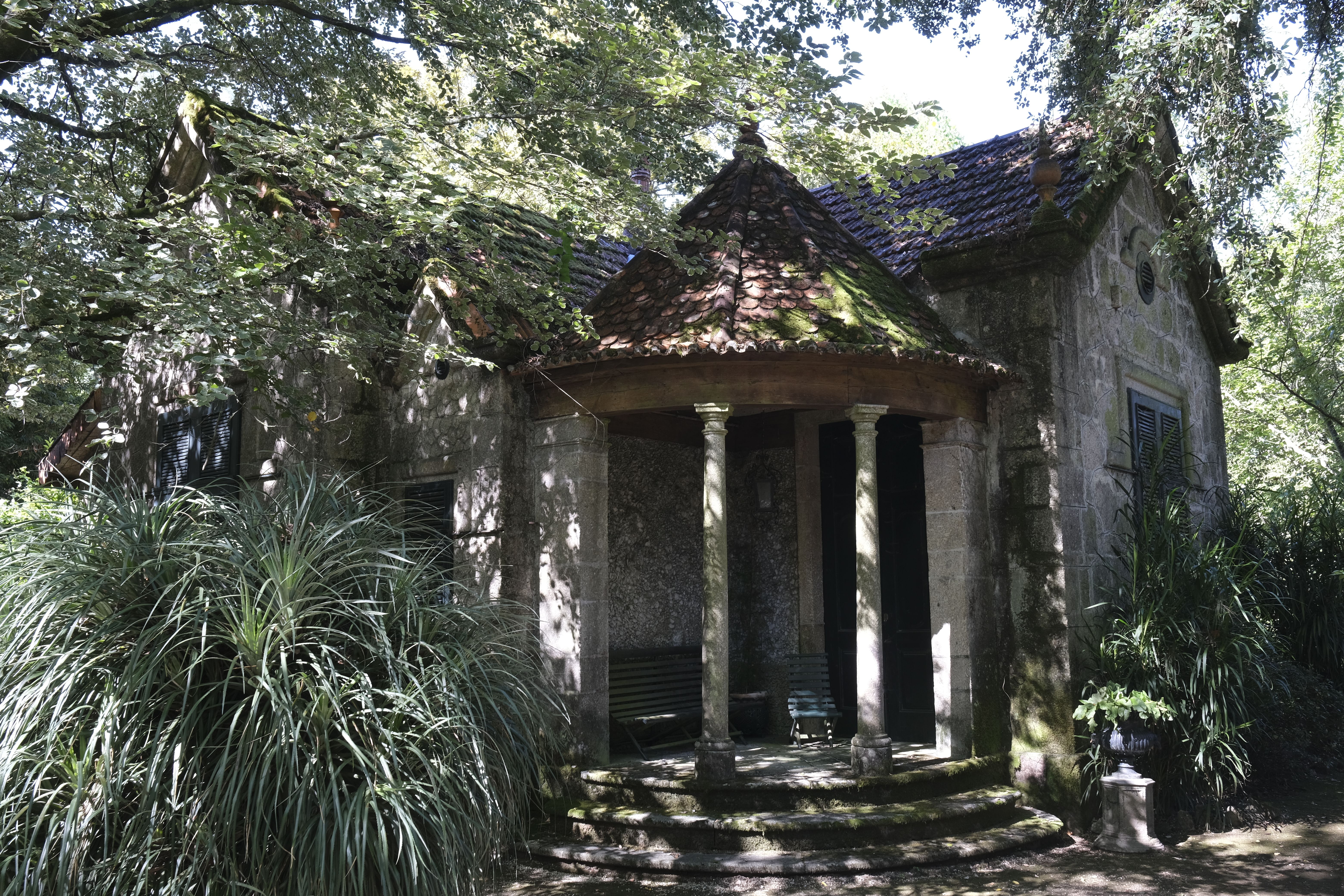
We continued our journey to Quinta da Aveleda, located in Penafiel in the heart of the Vinho Verde wine region. The property has been in the Guedes family for over 300 years, with the main house dating back to the 17th century. The family started the wine business in the 1870s, with the fifth generation now producing its 21 million bottles of wine a year. We strolled through the estate admiring the various structures, such as the guard house, the 1888 window, the holiday house, the fountains, the chapel, the bird house, the honeymoon house, and the goat tower. We also enjoyed seeing the 200-year-old eucalyptus tree, the red woods, the cedar, cypress, and cork trees. Unfortunately, it was not the season for azaleas, cherry blossoms, and camellias but the hydrangeas were still in bloom. After viewing the gardens, we had a brief tour of the old cellars and then sat down to a leisurely lunch pairing local cuisine with the estate’s Vinho Verde wine.
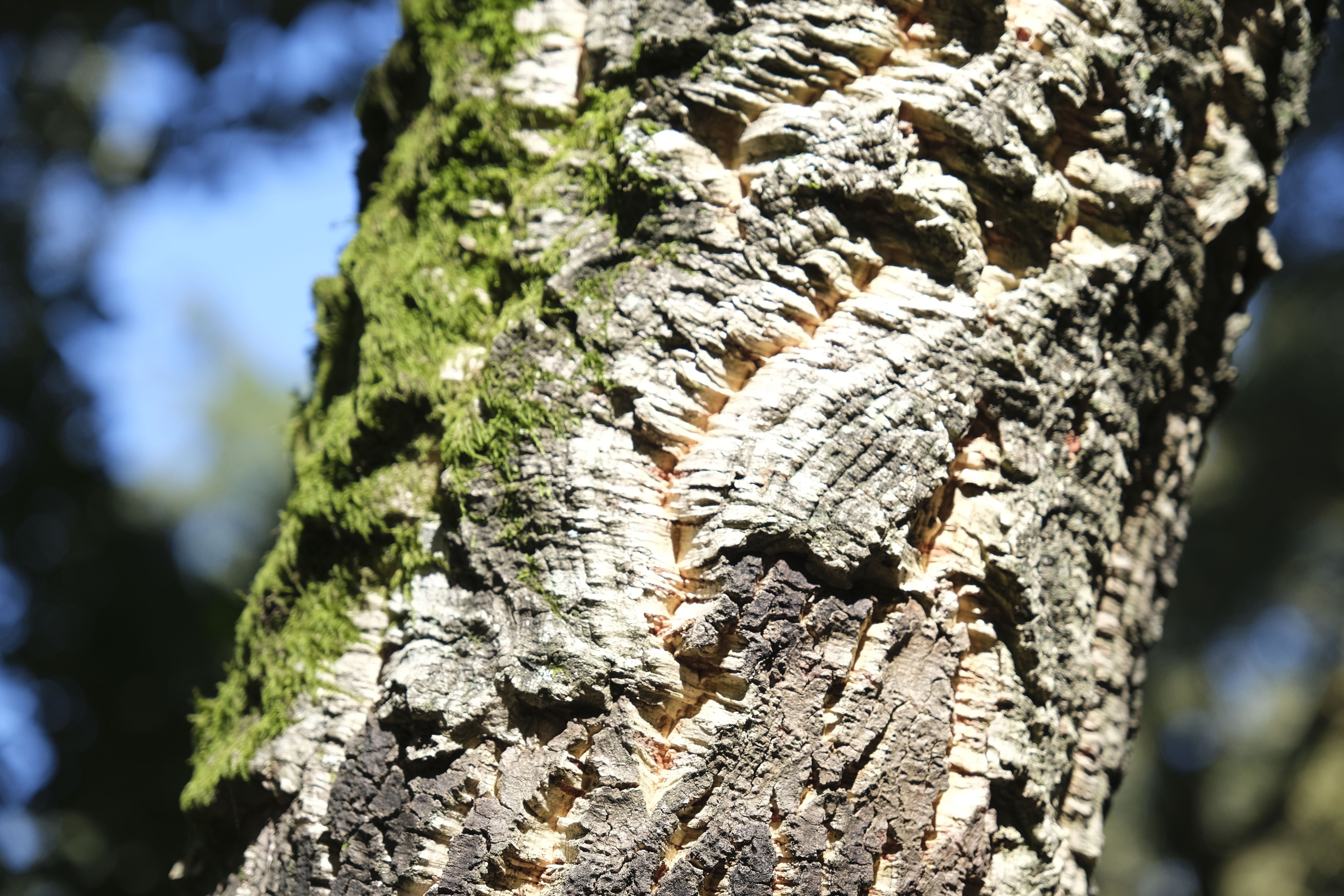
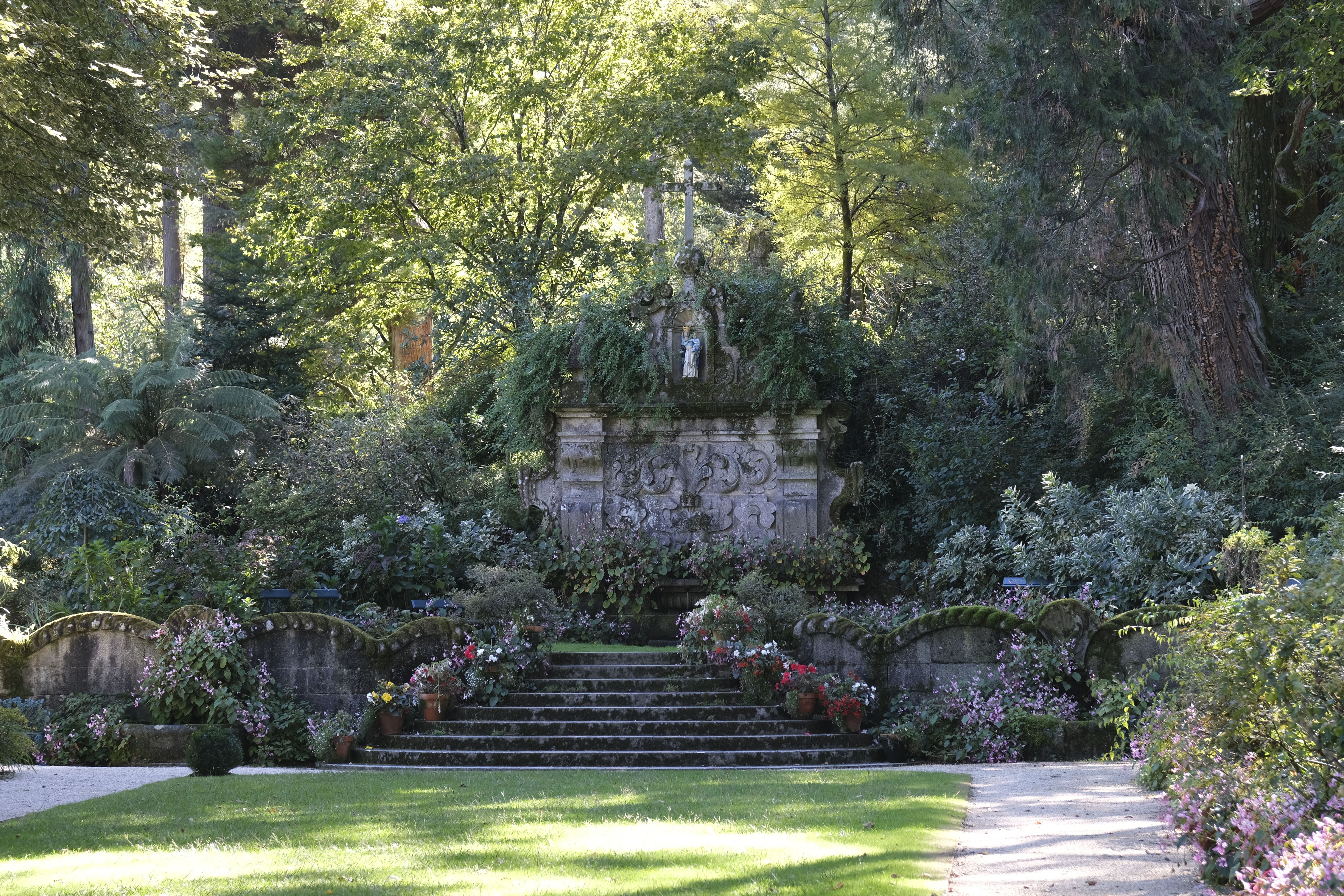
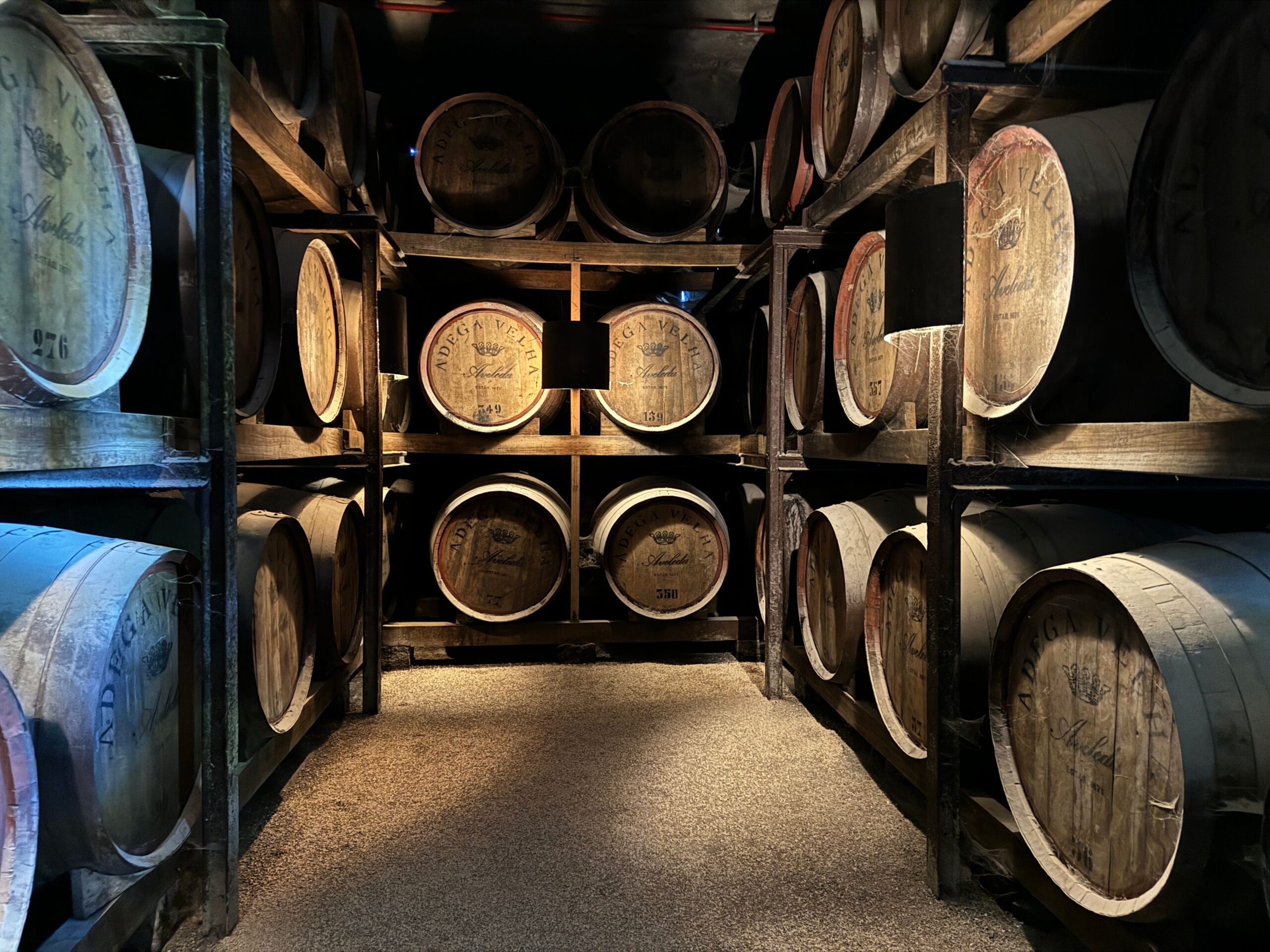
After lunch, we drove to Entre-Os-Rios to board our ship, which had departed from Porto earlier in the day while we were visiting the Quinta. Around 4:30 PM, we passed through the Carrapatelo Dam Lock, the tallest of the five locks we will navigate on this cruise.
We ended the day with an extravagant seafood dinner, celebrating Christabel’s birthday with a special cake and winning Quiz Night. The ship is now docked in Lamego, ready for the next adventure.
Vineyard Walk & Cocktail Making – September 30, 2024
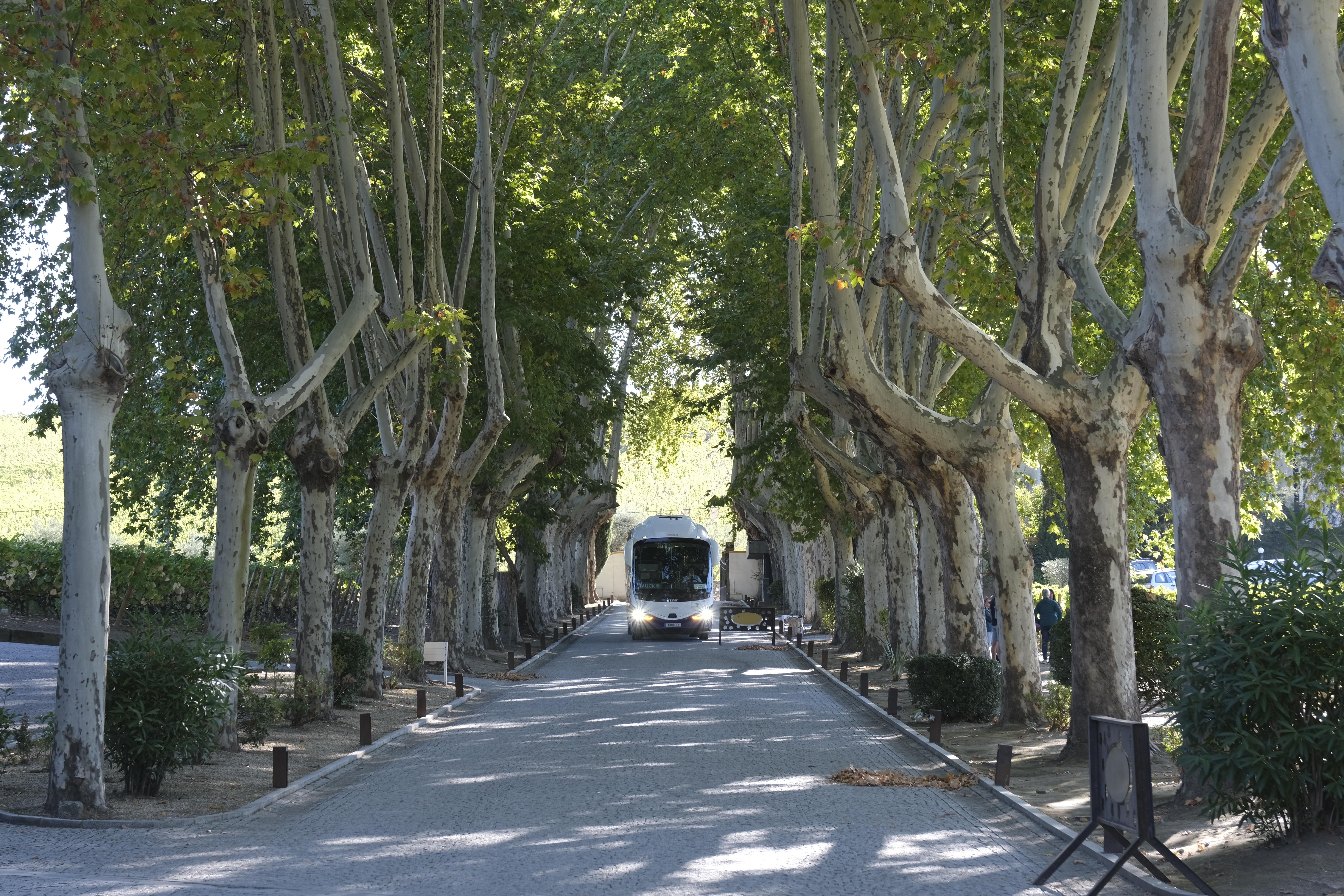
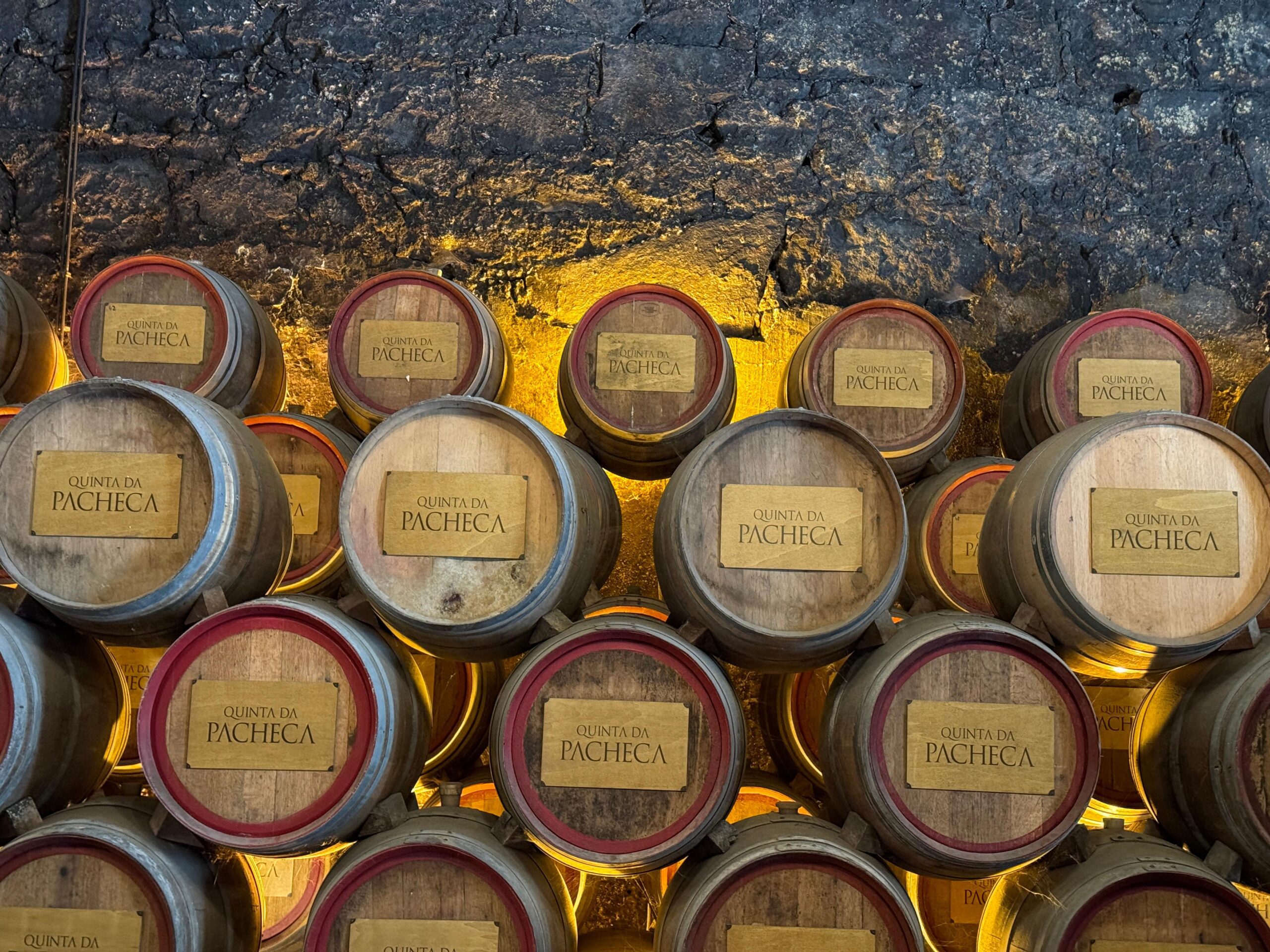
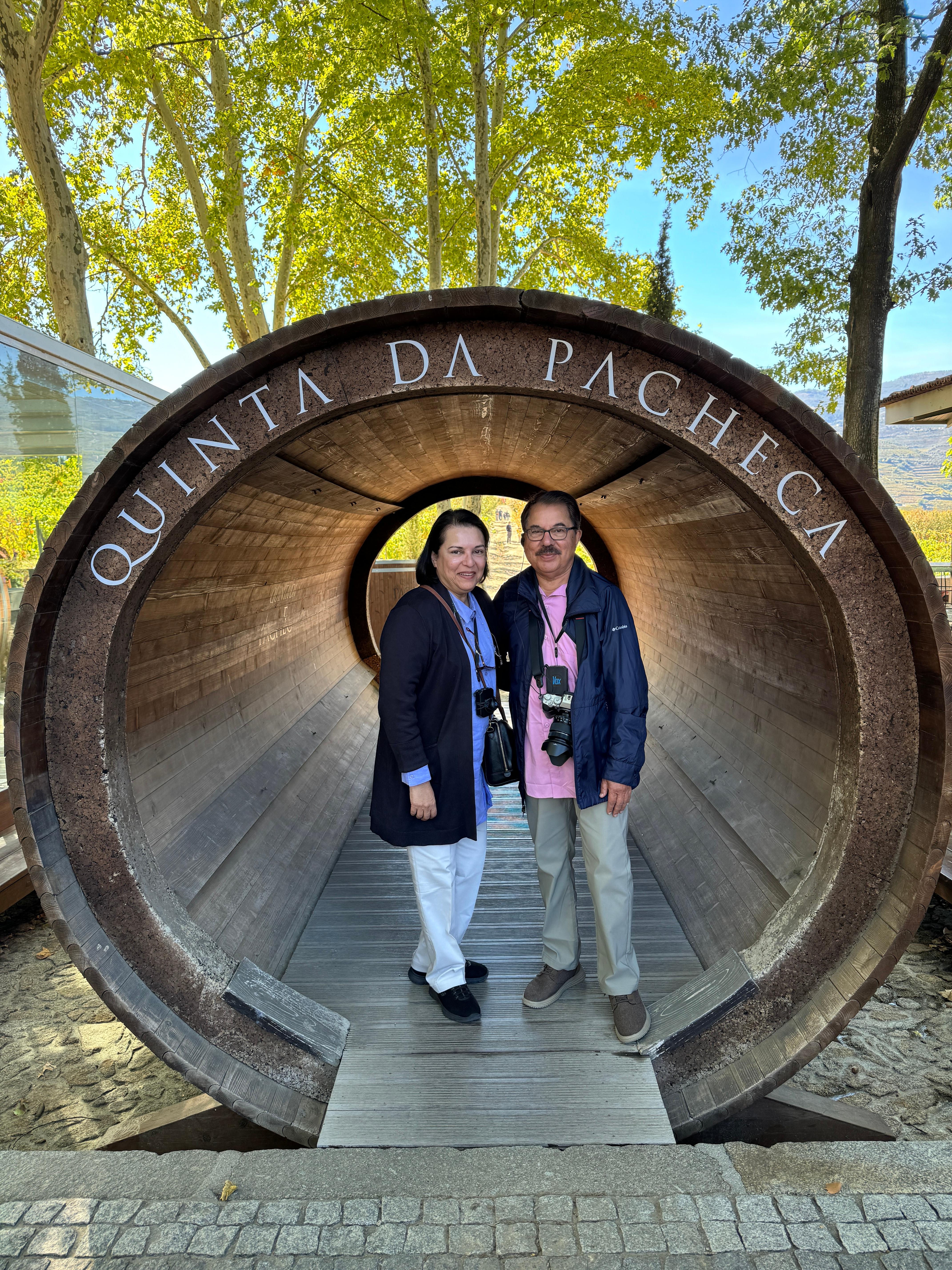
Today, we took a short bus ride to Quinta da Pacheca, a family-run winery that produces around 600,000 bottles of port wine annually, including white, tawny, and ruby varieties. Quinta da Pacheca is located in the same wine region as larger producers like Sandeman, Graham’s and Cruz, which produce millions of bottles each year. Despite its smaller scale, the winery holds a unique charm and heritage. After a guided tour of the vineyard and production facilities, we learned about the estate’s history and winemaking process. The tour concluded with a fun and informative session on making three types of cocktails using white, tawny, and ruby port wine, offering a creative twist on traditional port tasting. Our favorite was the Porto Tonic made with white port. It was very refreshing. After the cocktail session, we visited the shop and bought some extra virgin olive oil. In addition to making port wine, the family also has olive groves and makes excellent EVOO. Christabel paid a quick visit to the family’s chapel and on the way out we admired the 1974 Silver Shadow Rolls Royce parked on the grounds (this one was used by Glenn Close’s Cruella de Vil in Disney’s 101 Dalmatians live-action adaptation from 1996).
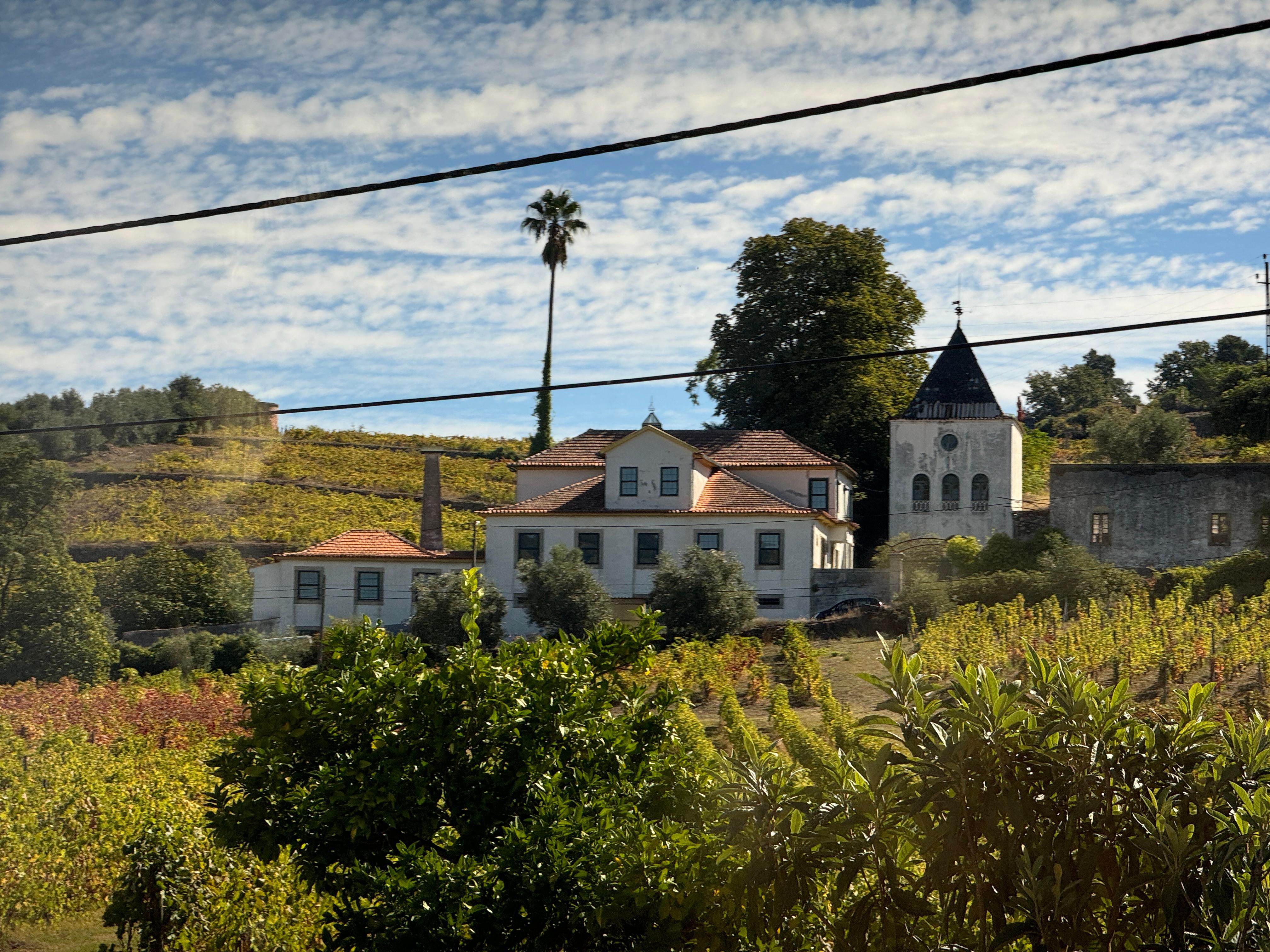


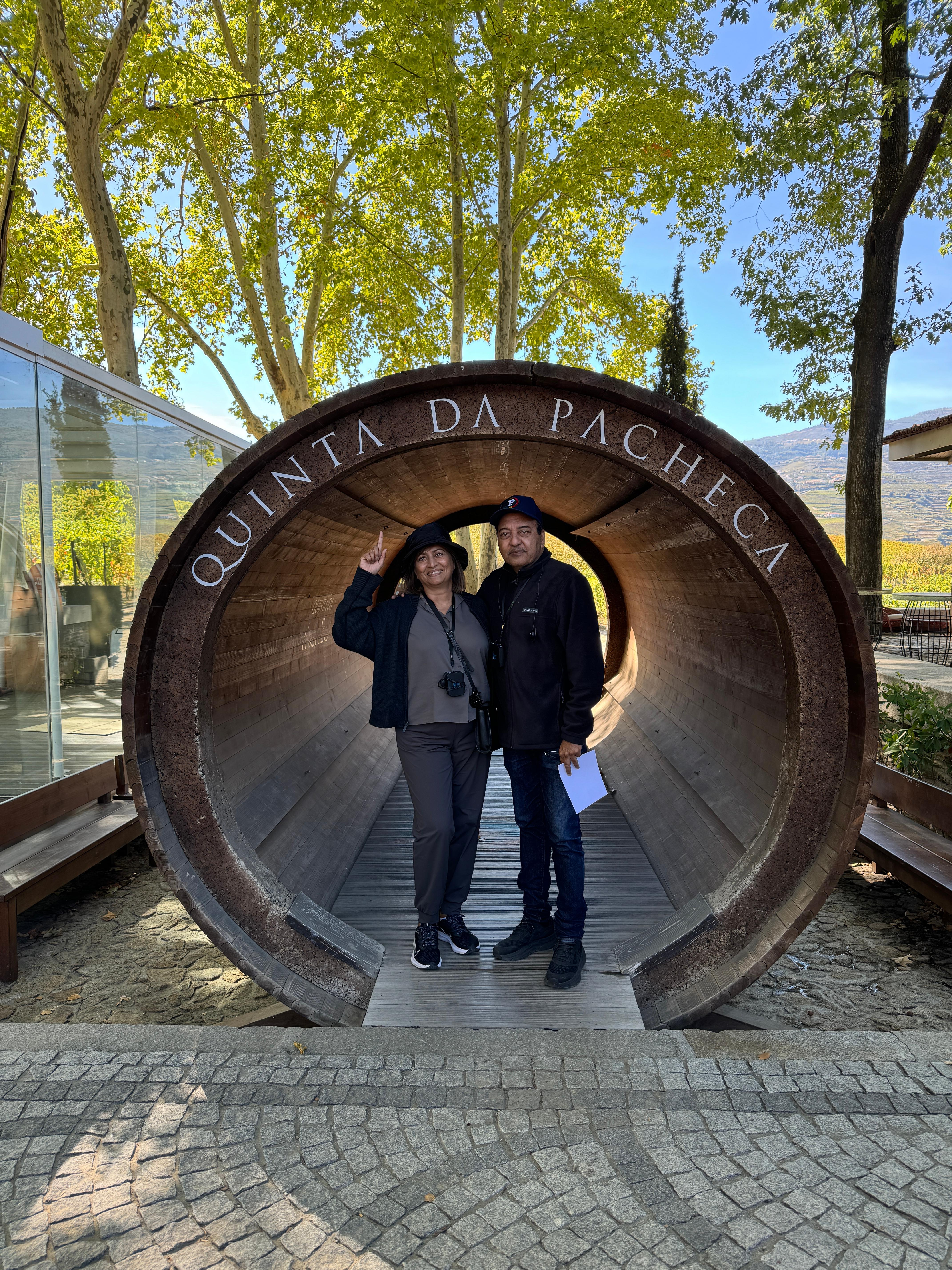
We returned to the ship for lunch, followed by an engaging presentation by Manuel titled “Who Are You, Christopher Columbus?” As we enjoyed the talk, the ship passed through the Lock of Régua (Bagaúste Dam), one of the key locks on our journey. By the afternoon, we docked at Folgosa.
Later, we participated in a galley tour where we got an inside look at the ship’s kitchen operations. Following the galley tour we attended a demonstration of how to make the Francesinha sandwich, which includes several different meats and a fried egg within two slices of bread, covered with cheese and surrounded by sauce and fries. A very serious sandwich indeed!
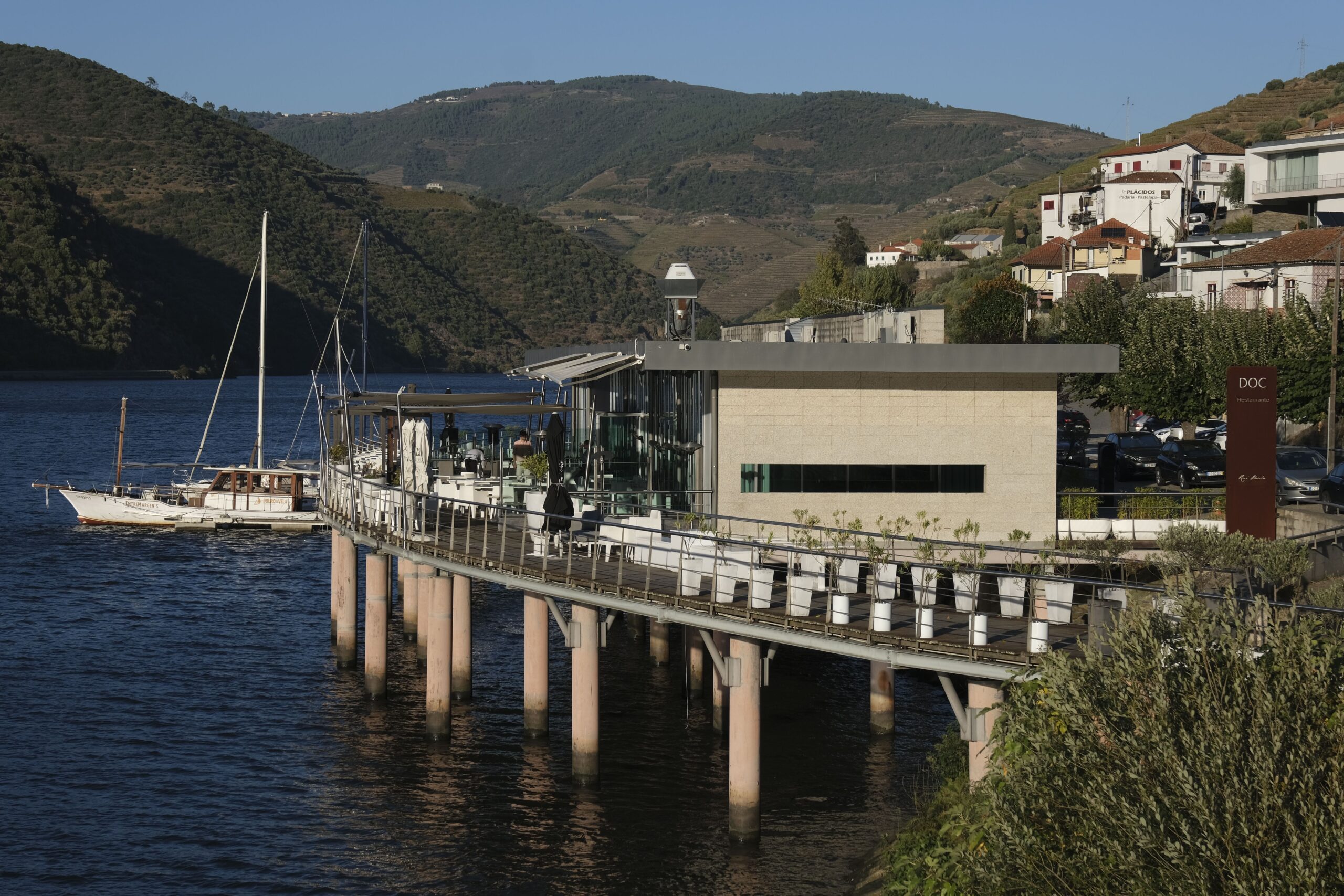
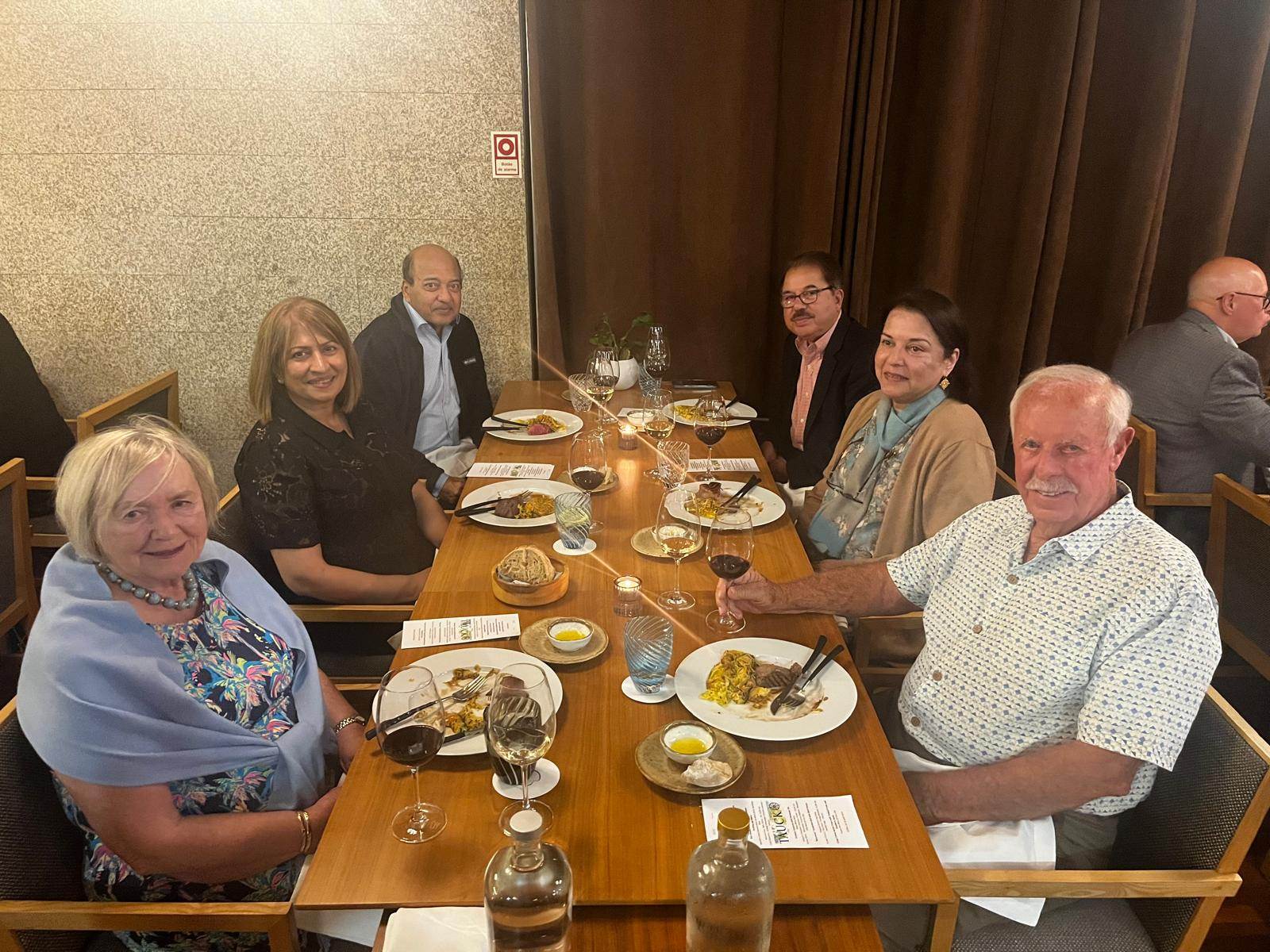
For dinner, we walked from our ship to DOC, a renowned restaurant owned by Michelin-starred chef Rui Paula, where we enjoyed a memorable meal to end the day.
Exploring the Charms of Pinhão – October 1, 2024
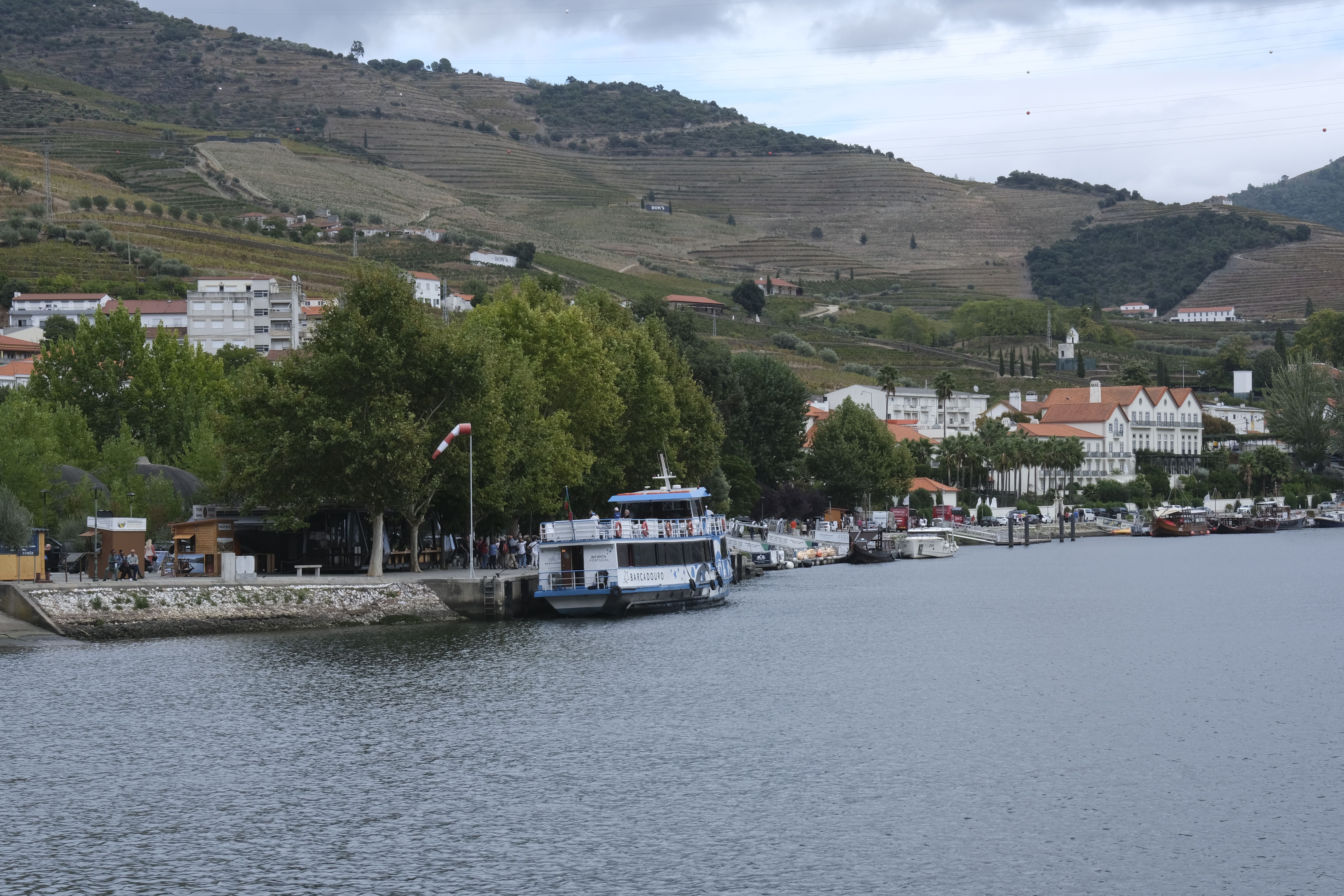
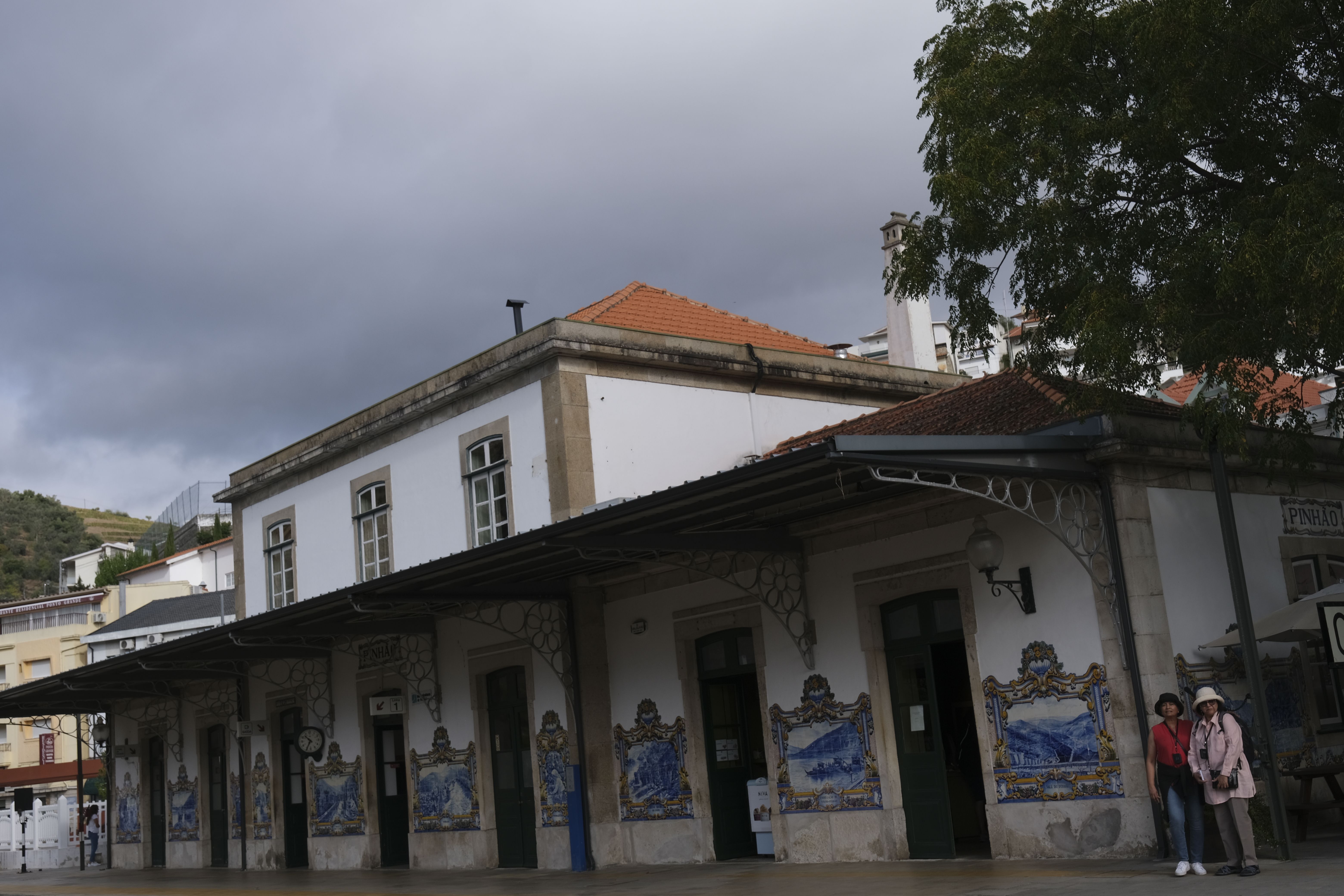
We are currently docked in Pinhão, a cute little town that is surrounded by terraced hills where the grapes are grown. After breakfast, we set out on a walking tour of the town. One of the highlights was sampling the local specialty, the “Calça Curta” hotdog, a regional favorite at the Café Beira Rio. The main attraction of our tour was the Pinhão train station, renowned for its beautiful azulejo tiles depicting stunning scenes of the Douro Valley and its wine culture. Upon returning to the ship, we enjoyed a picnic lunch on the deck, taking in the scenic views of the river.
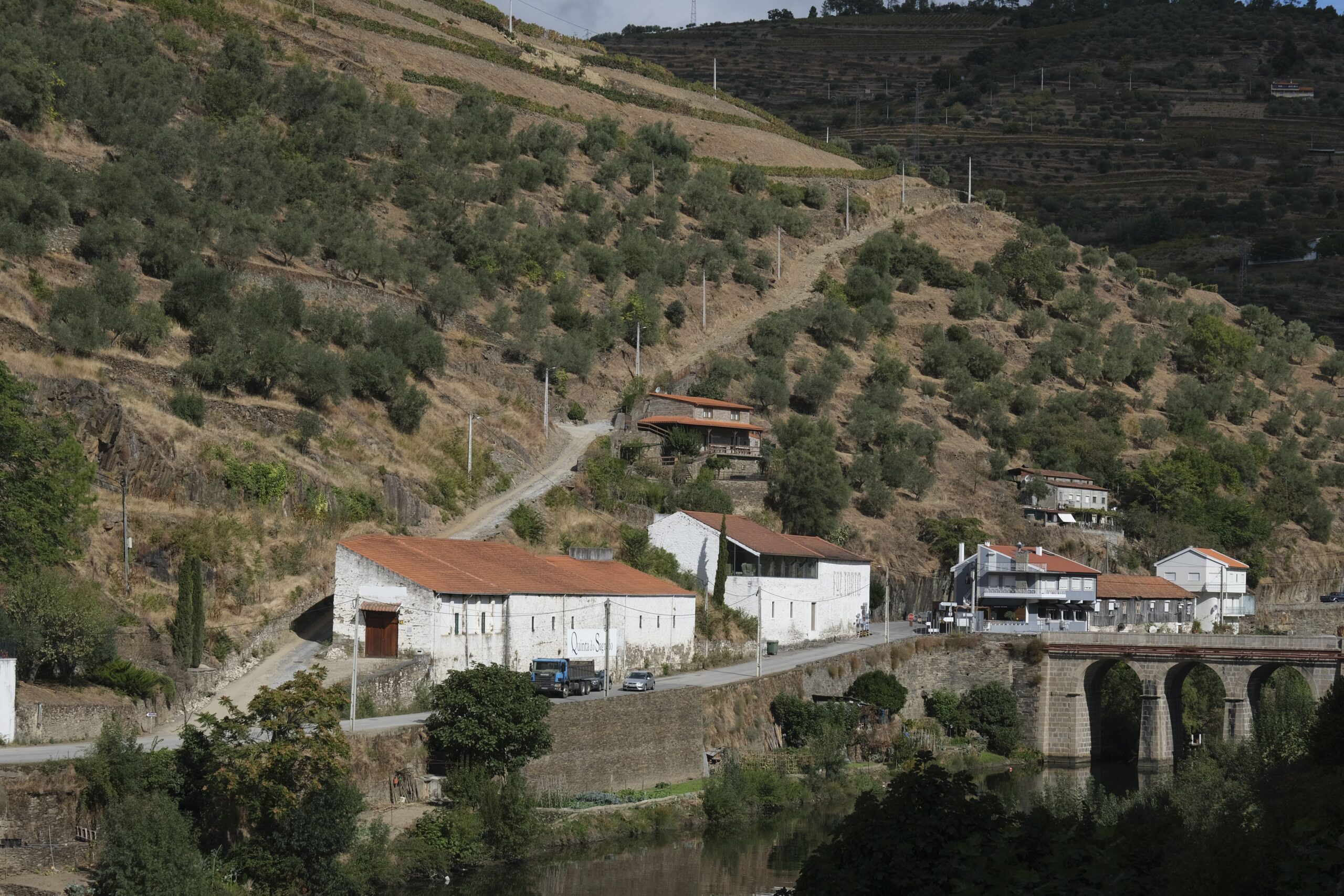
In the afternoon, we took a bus ride to visit the D’Origem Olive Oil Museum, housed in a beautifully restored family estate. The museum showcases antique presses and equipment once used in olive oil production, blending history with local heritage. As part of our tour, we learned about the traditional hot-press method of olive oil extraction. We tasted two different EVOOs—one a blend of oil from four types of olives, and the other a single-variety oil. The views from the top of the museum were absolutely breathtaking, offering panoramic vistas of the surrounding landscape, while the estate’s garden was also quite entrancing with various kinds of fruit trees many of which were bearing fruit.
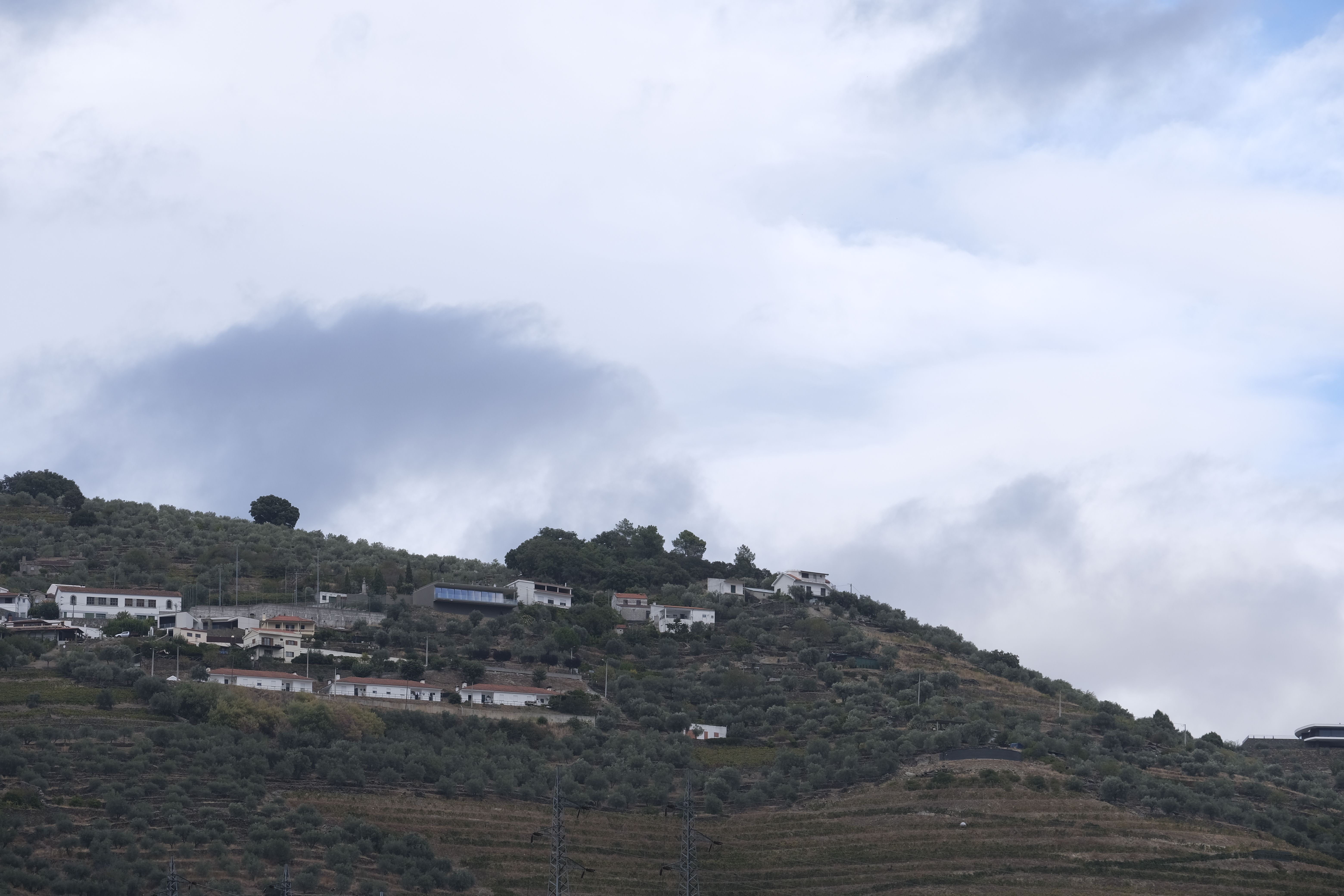
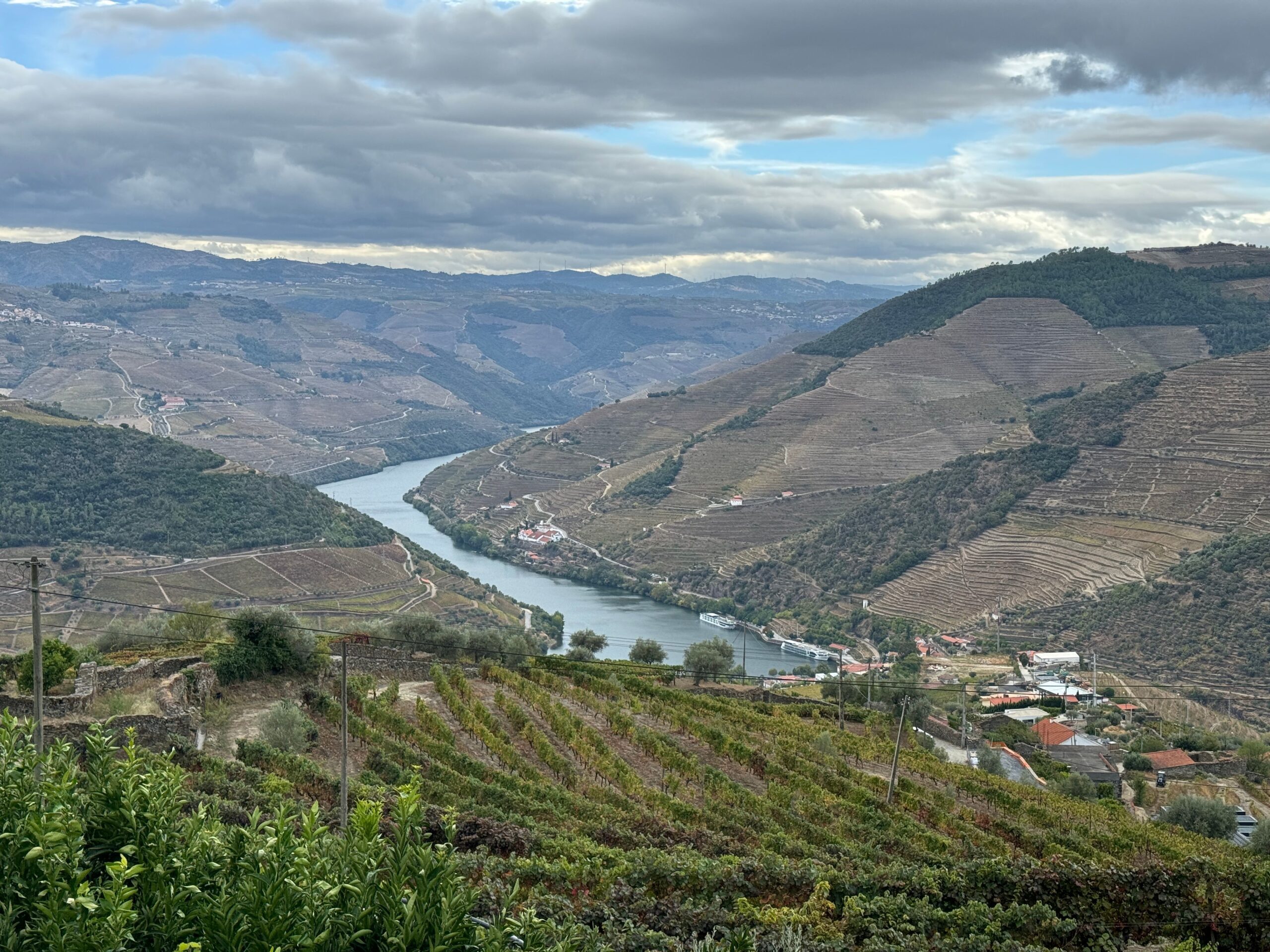
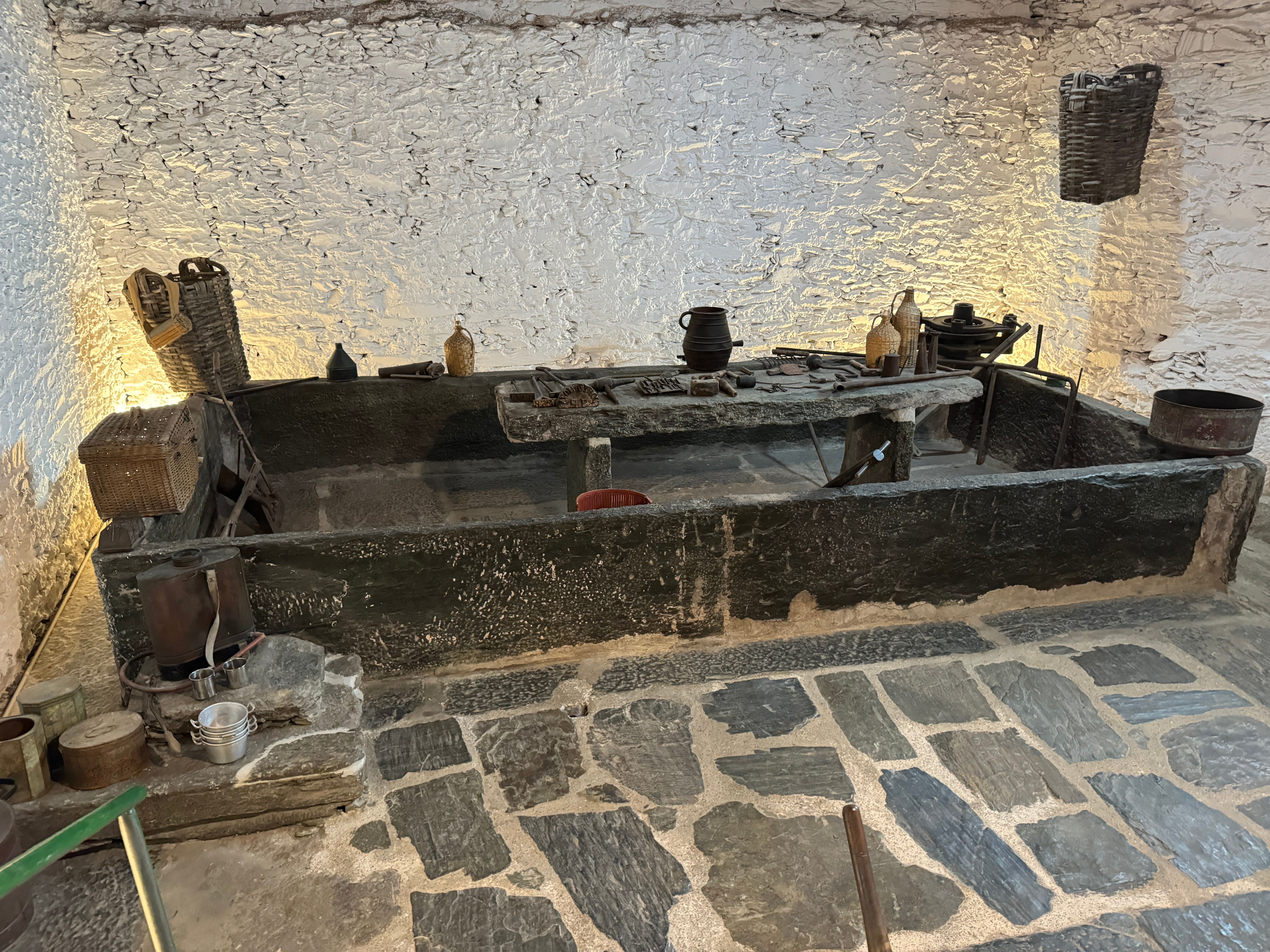

Two items of note: Ferdinand Magellan was born in a small town very close to Pinhão and Vila Mateus, makers of the world-famous rosé wine is also located in the general vicinity.
In the evening, we attended a fascinating presentation on cork, one of Portugal’s most important exports. We learned that NASA is one of the largest U.S. importers of Portuguese cork, using it in space technology due to its unique properties.
Tonight was dance night with many guests boogieing the night away.
Sailing Through the Douro: Heritage, Wine, and Cultural Delights – October 2, 2024
We enjoyed a relaxing morning sailing along the Douro River, with insightful commentary by Manuel. The surrounding area, with other wine-producing regions along the Douro, is designated a UNESCO World Heritage site. We passed through the Valeira Lock, the penultimate lock on our journey. Around 11 AM, Emil gave a presentation titled “Surprises of the Lesser-Known Portugal,” sharing his personal experiences and discoveries across the country.
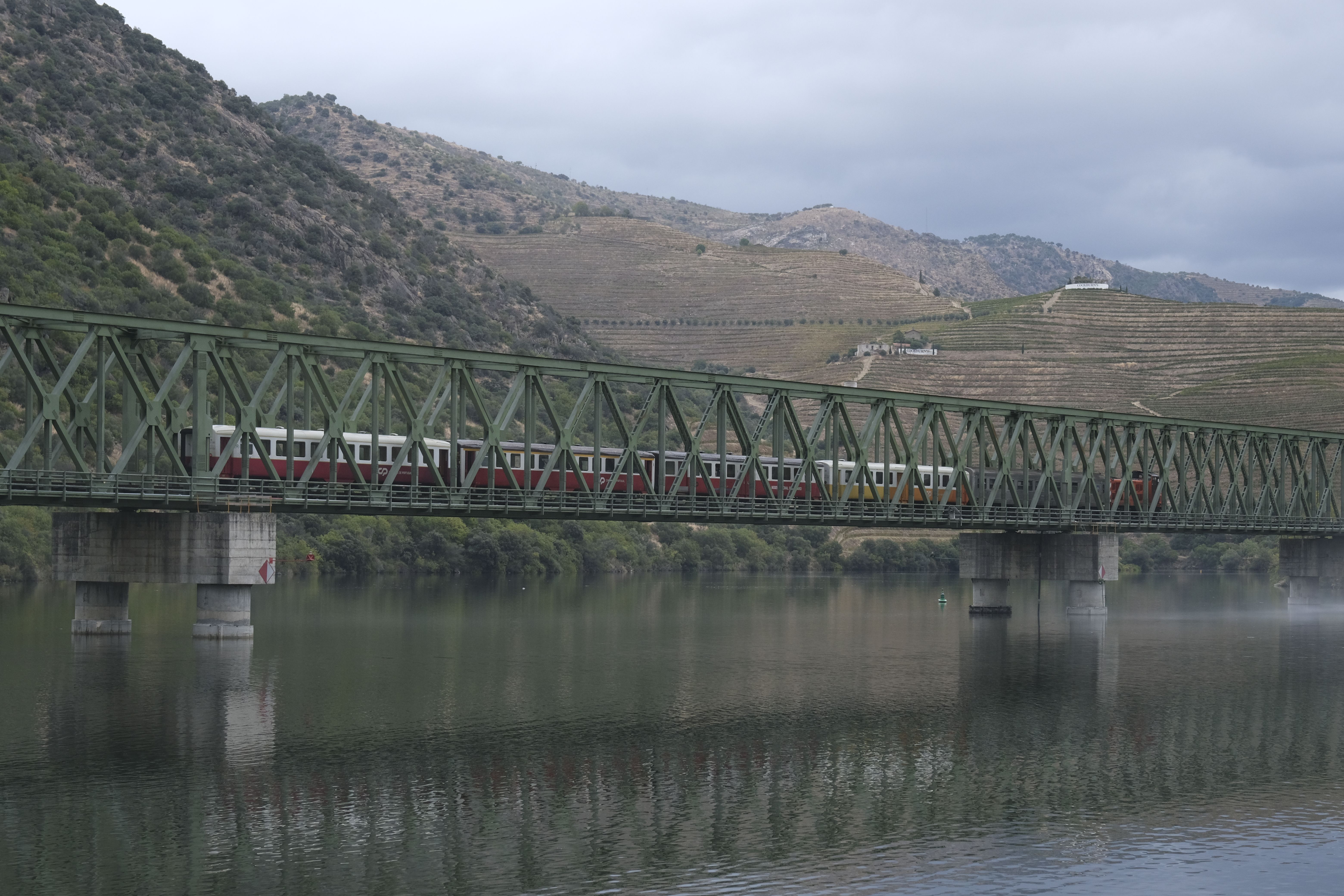
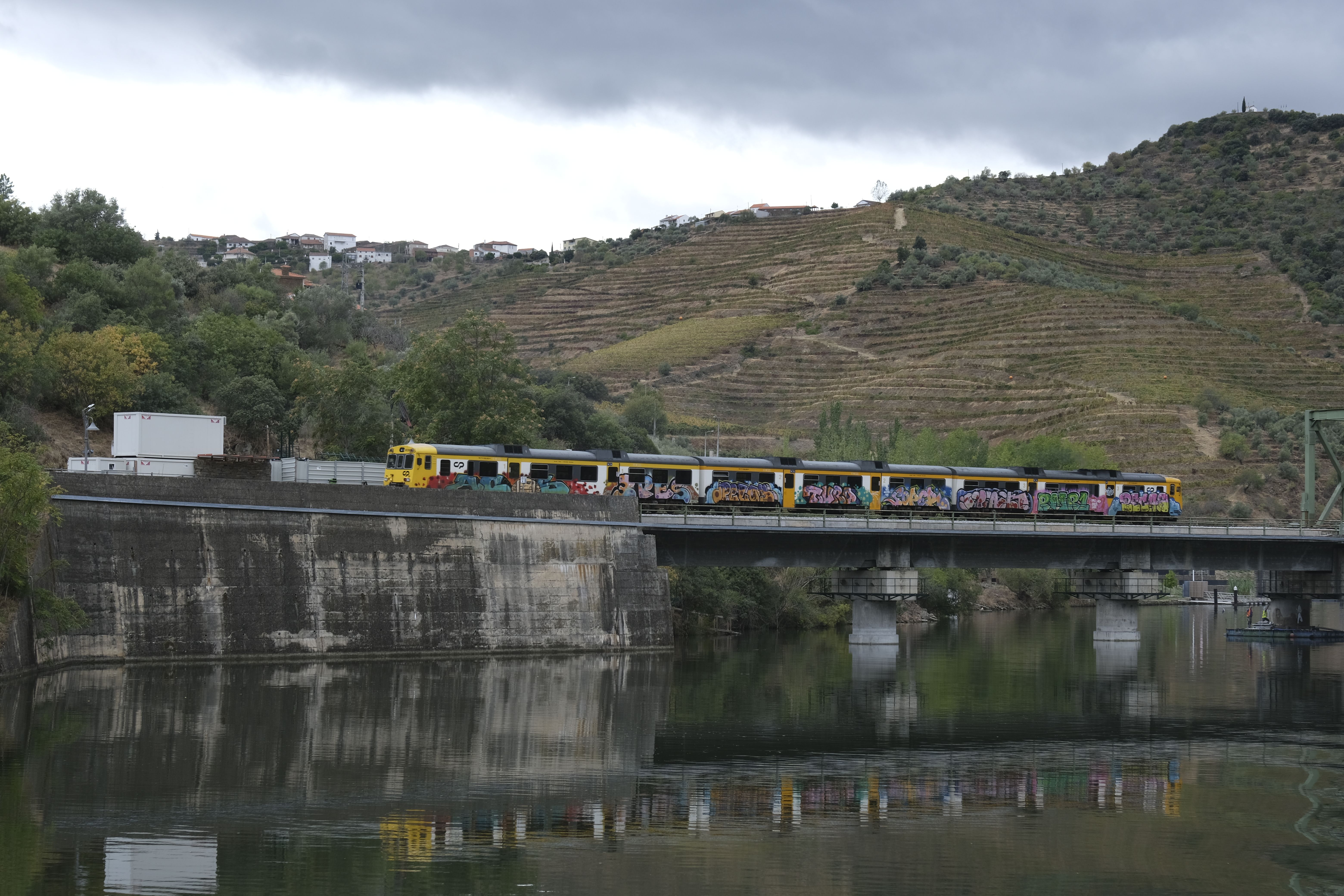
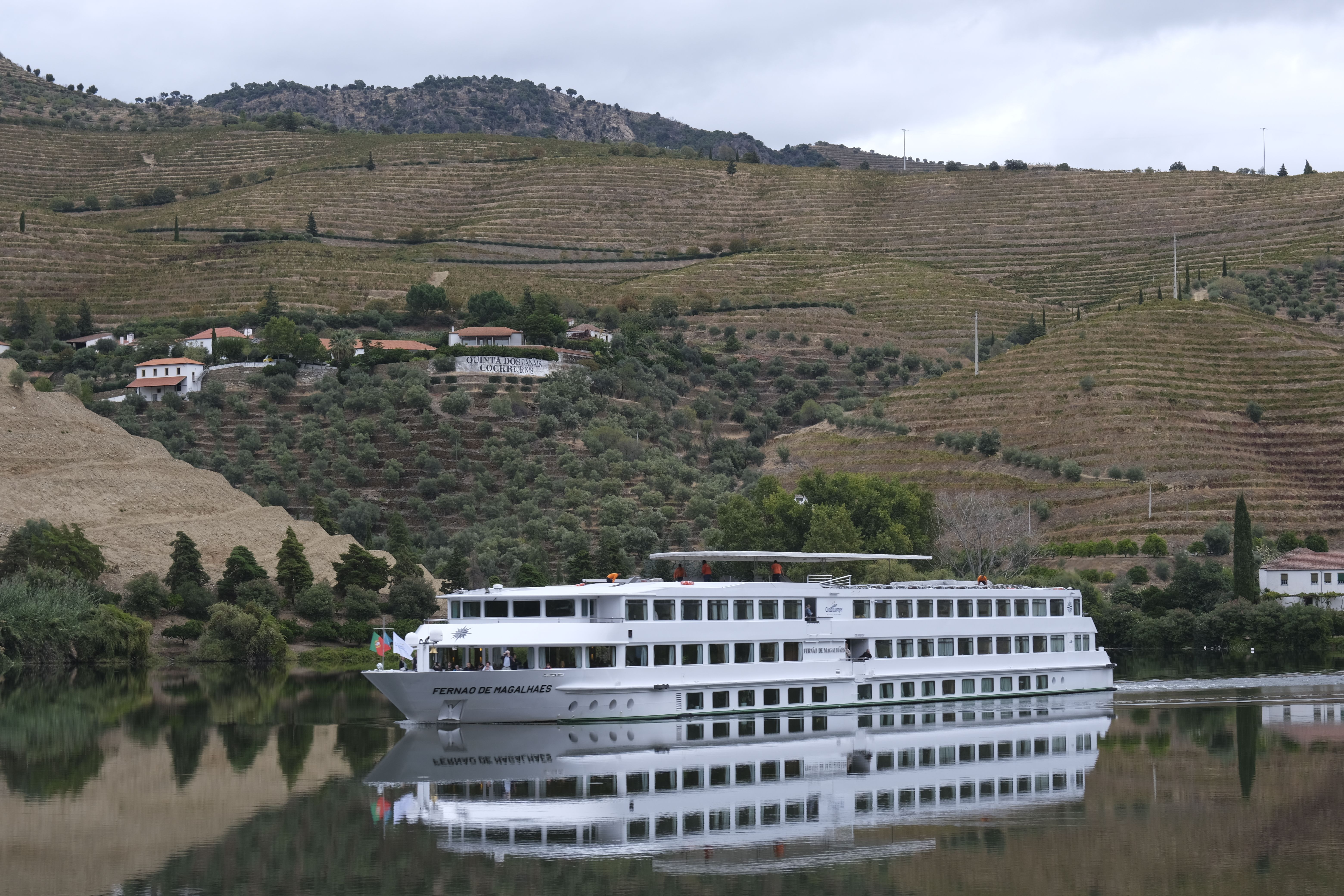
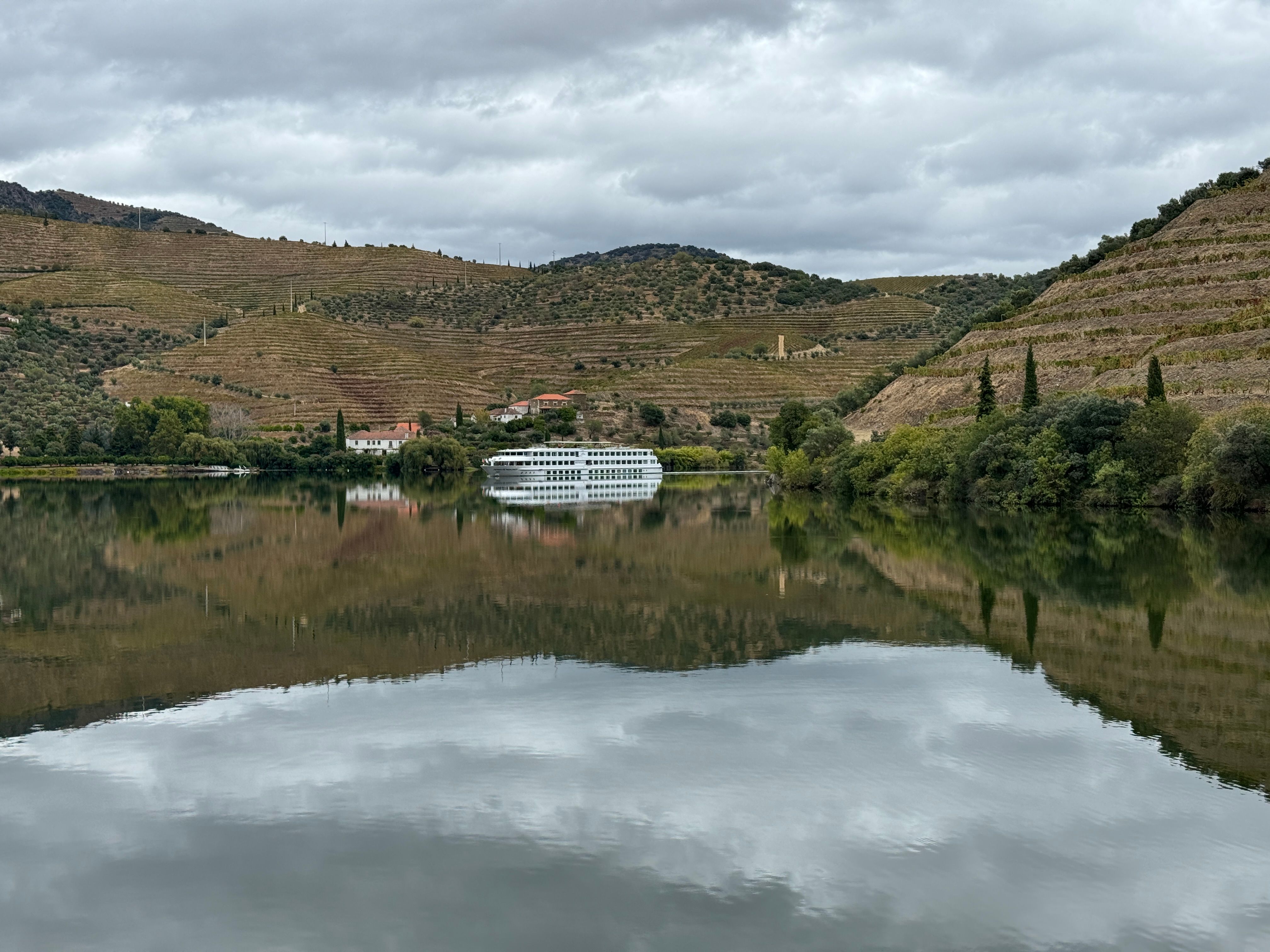
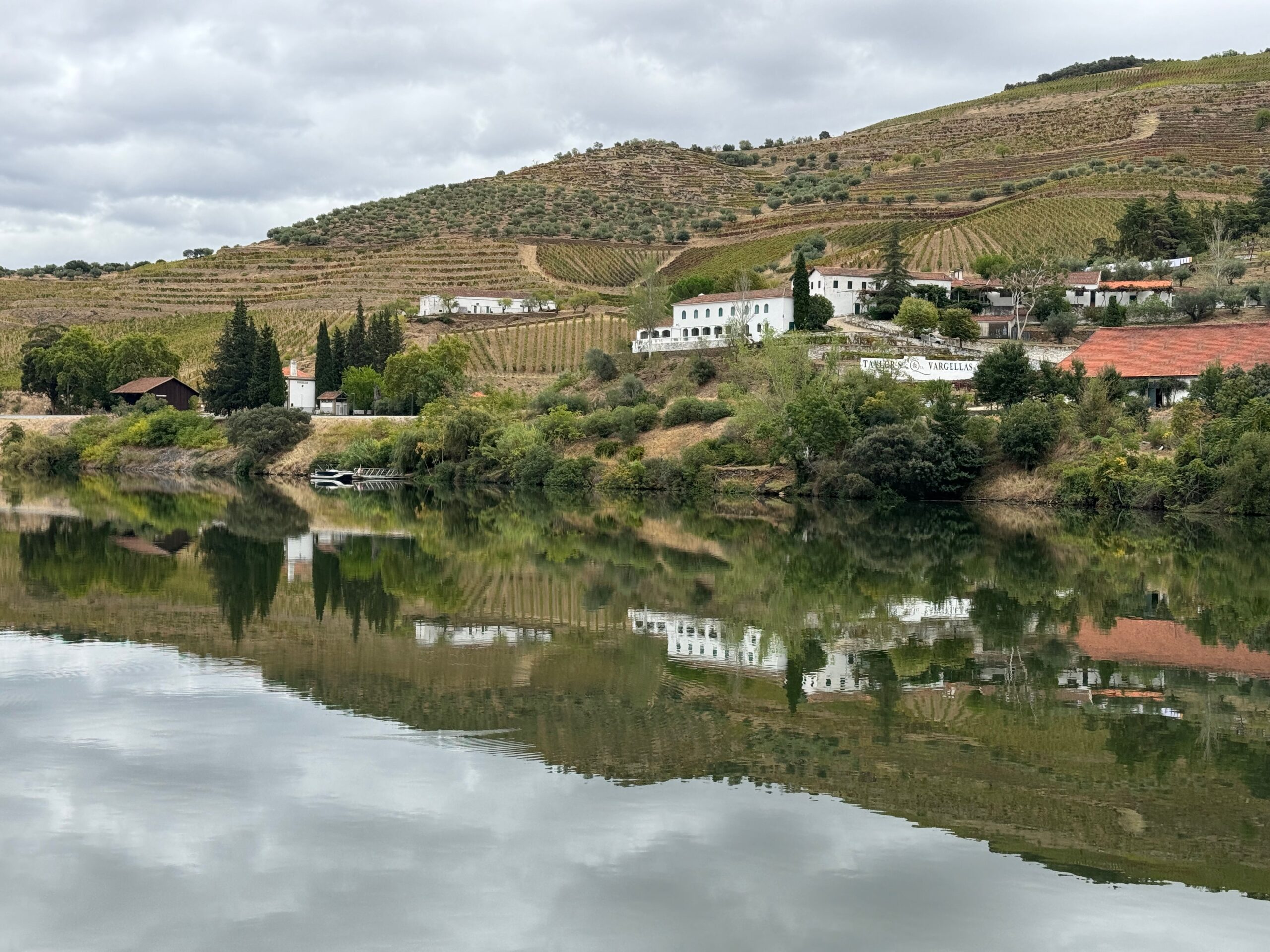
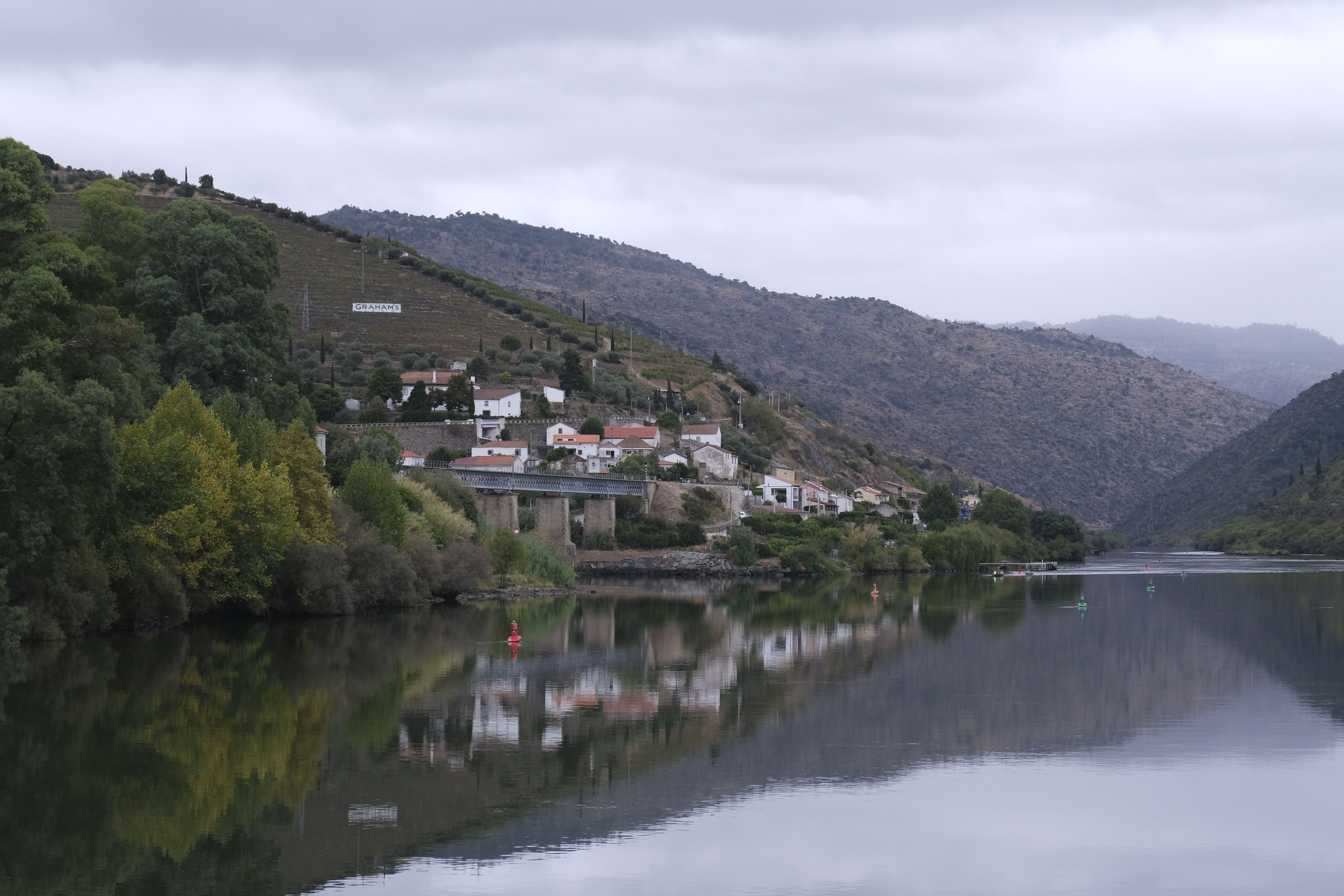
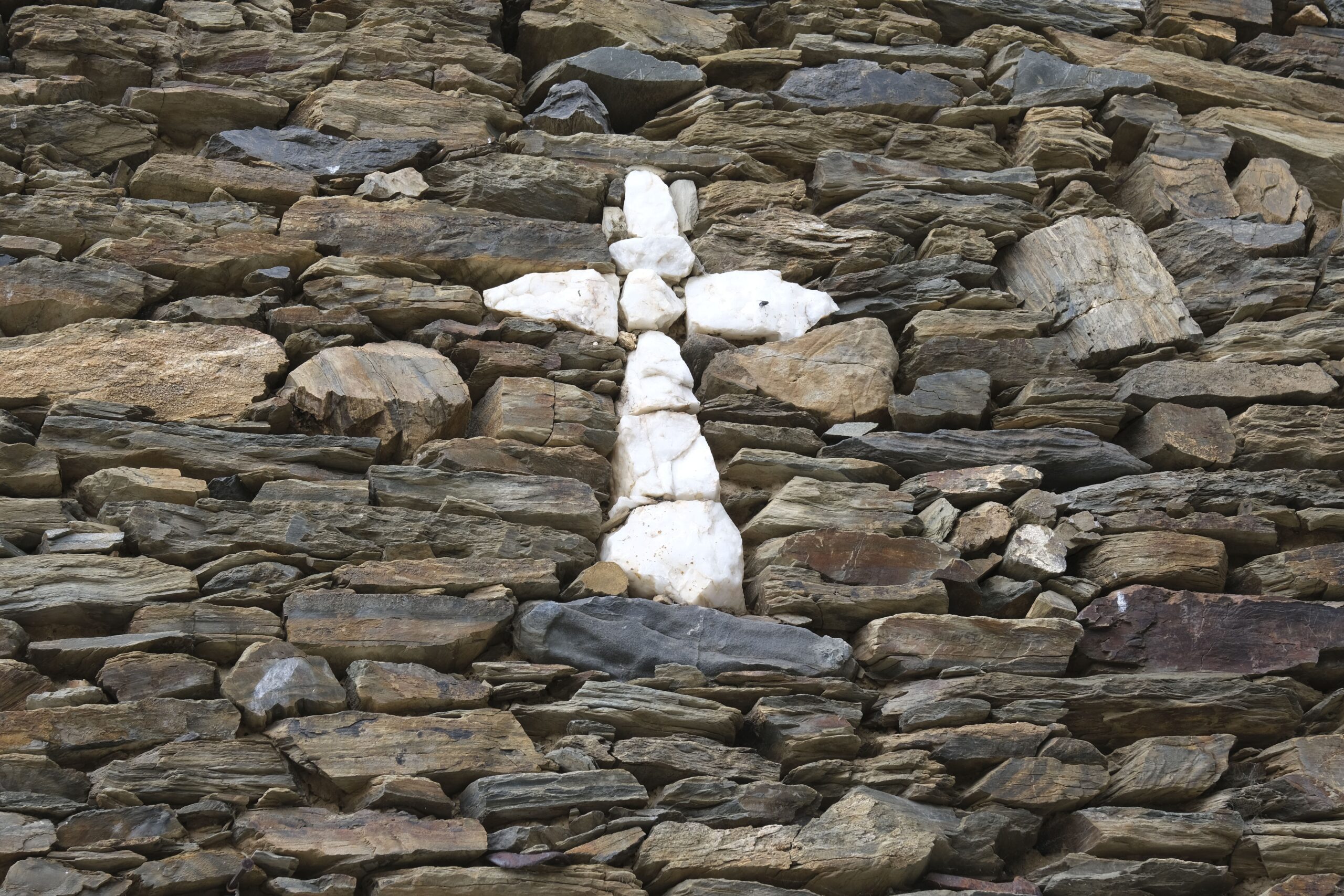
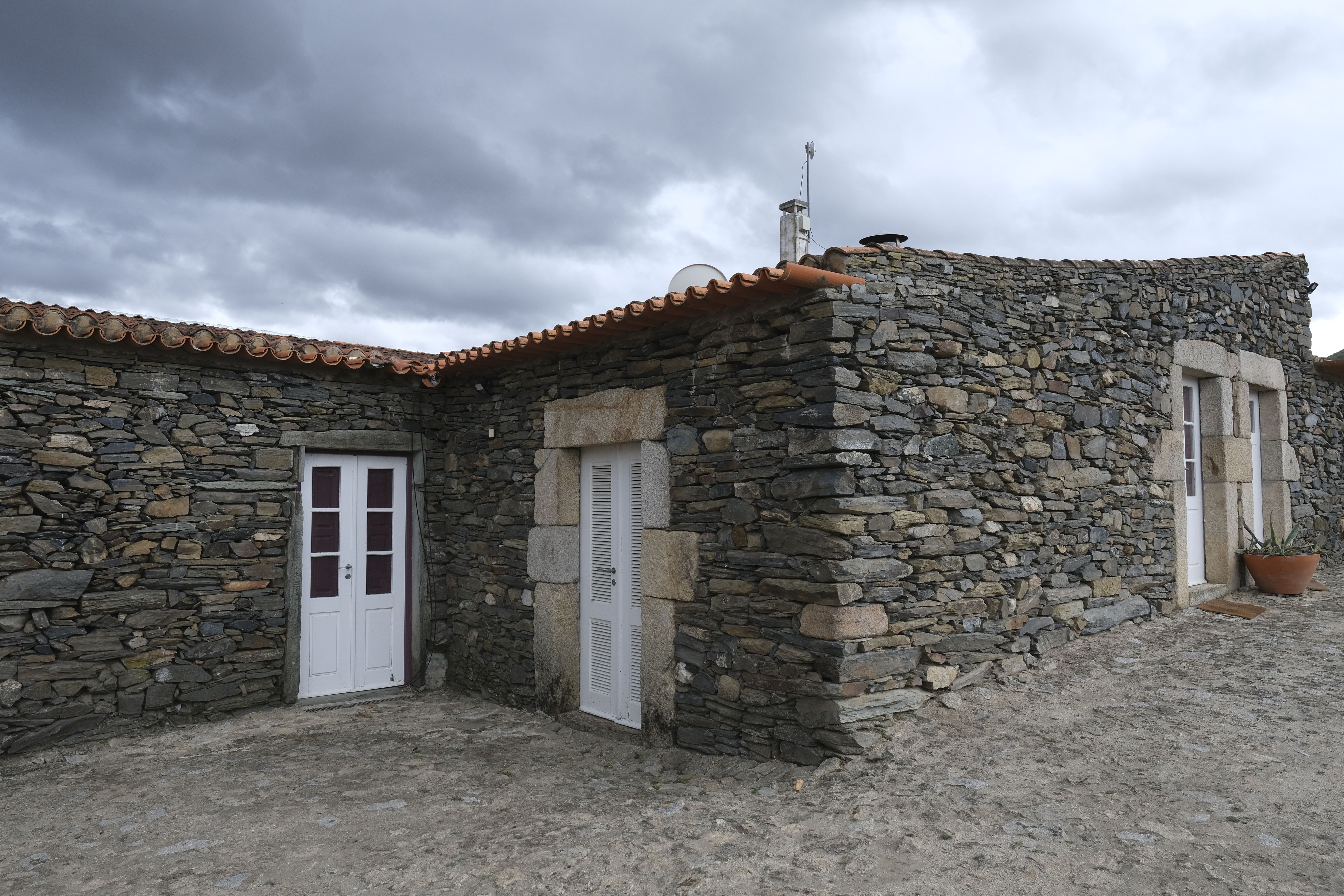
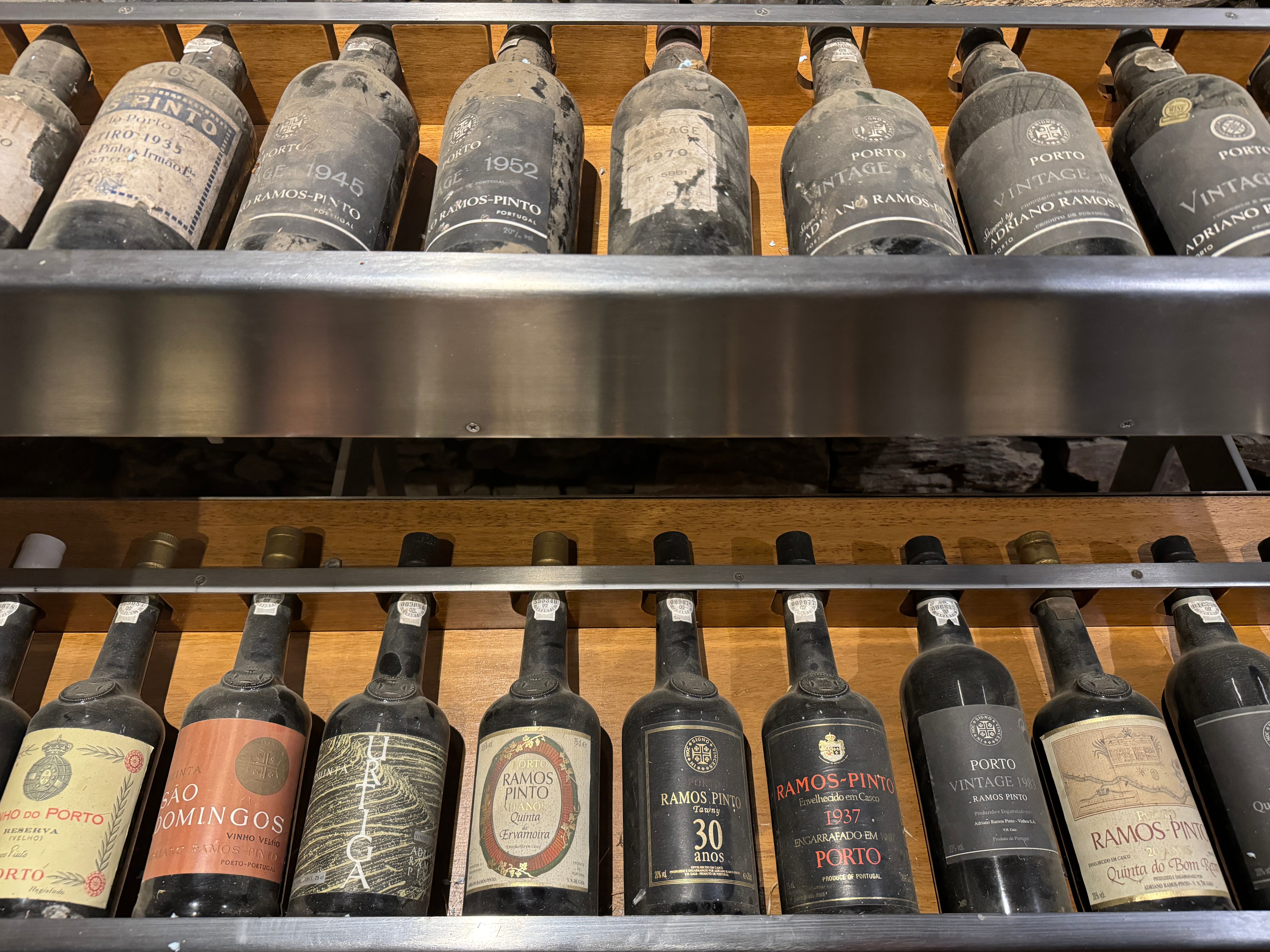
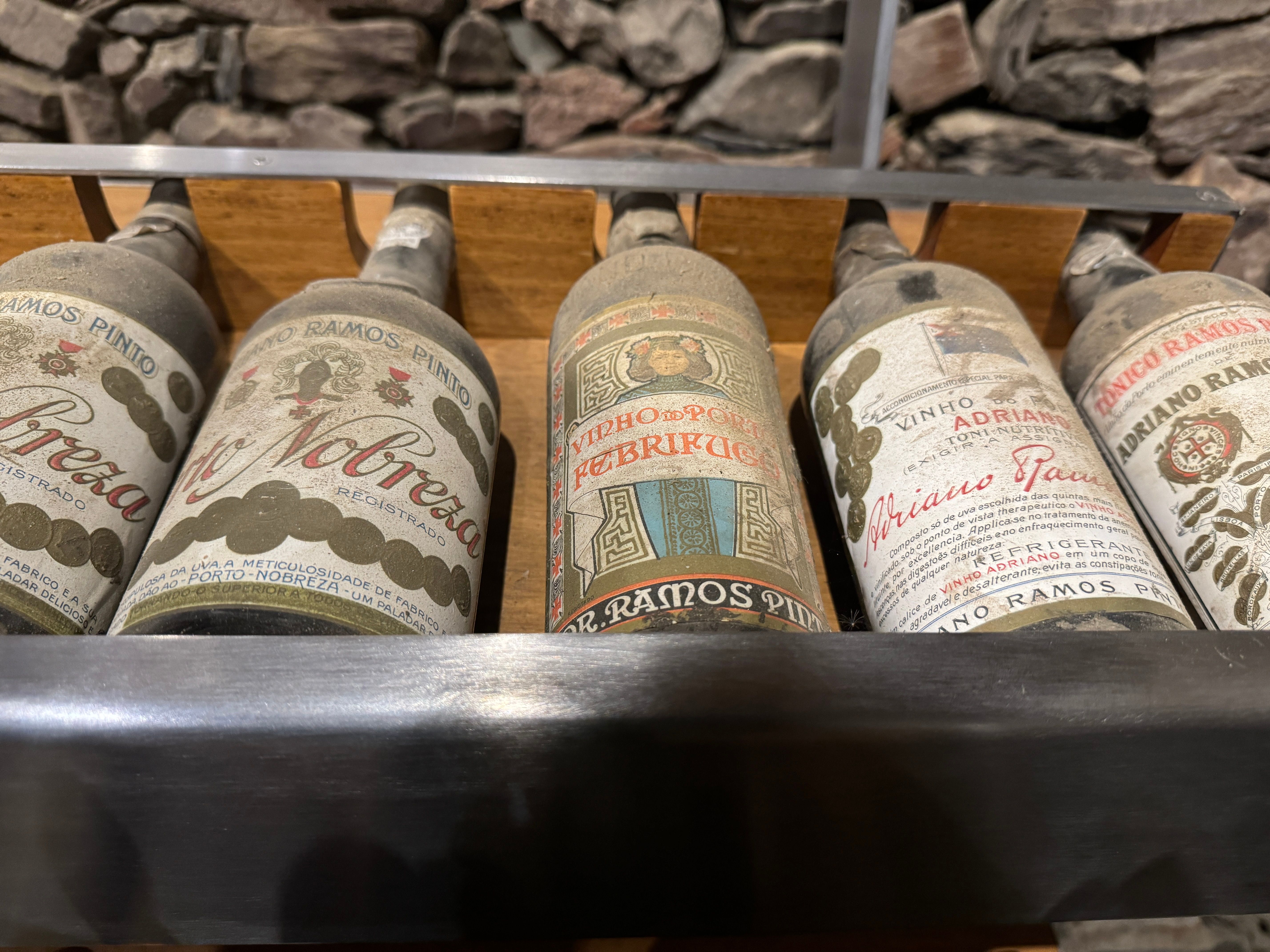
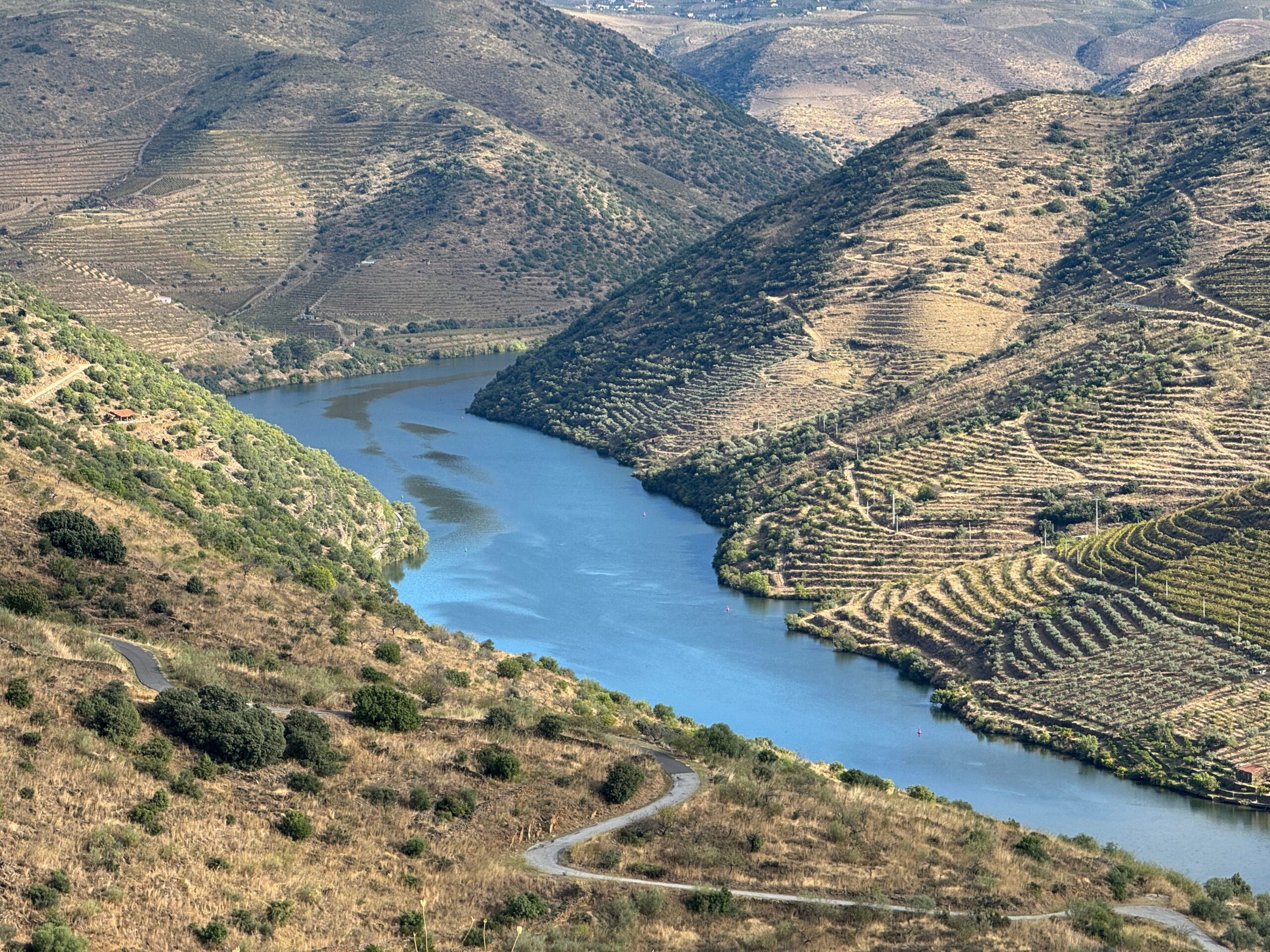
After lunch, we sailed through the Pocinho Lock, the final lock on the Douro. In the afternoon, we visited Quinta da Ervamoira, a historic vineyard in the Douro Valley renowned for producing some of the region’s finest Port wines. The estate also houses a small museum showcasing Roman artifacts discovered on the property, illustrating the rich history and winemaking traditions of the Douro Valley. Adding to the romance of the place is that the quinta was once upon a time a chapel dedicated to the Virgin Mary and the French writer Suzanne Chantal wrote a book called Ervamoira which was set in this region and the house. We were given a guided tour of the museum, followed by a Port tasting, where we sampled two varieties: a white Port and a tawny Port.
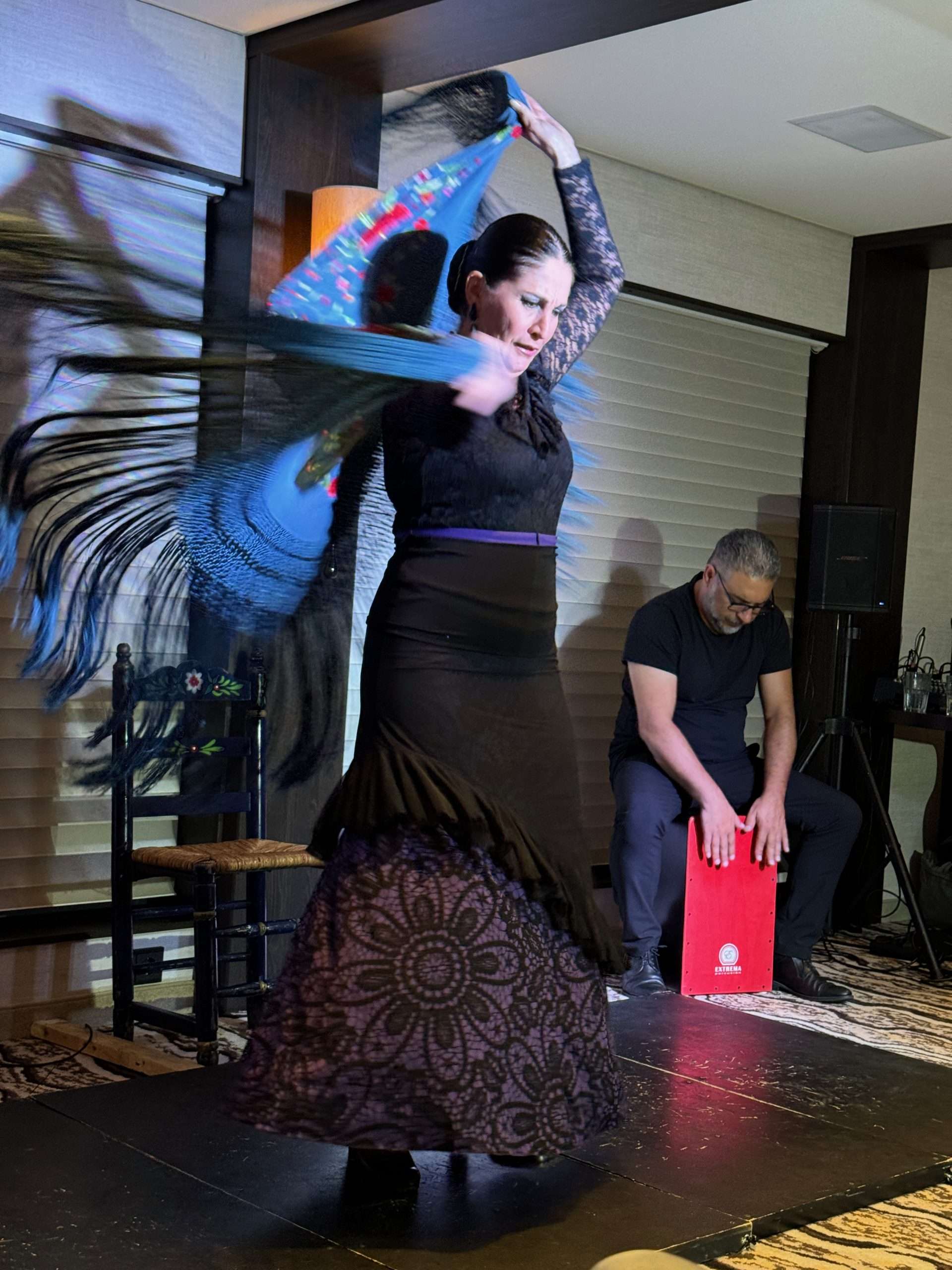
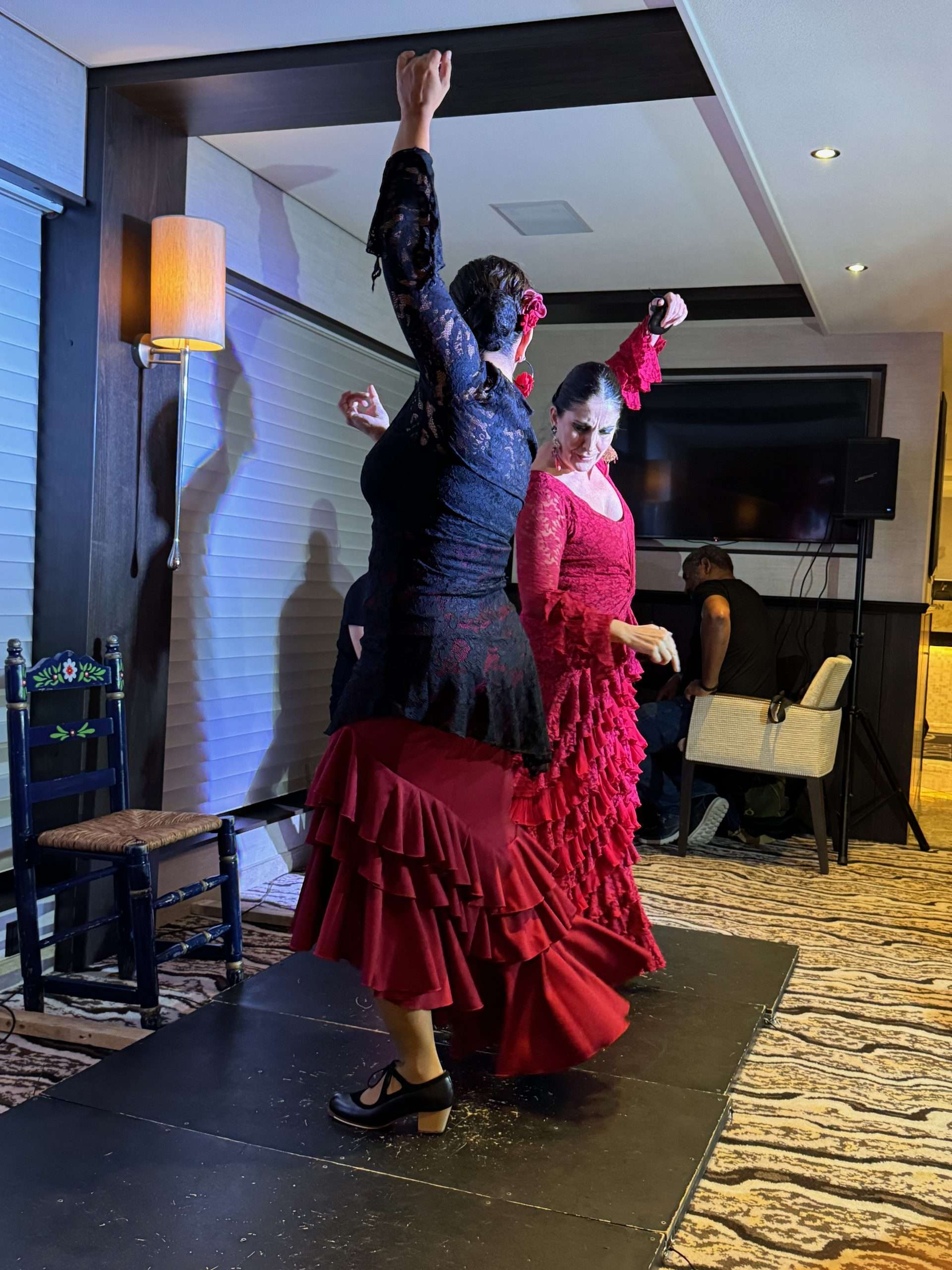
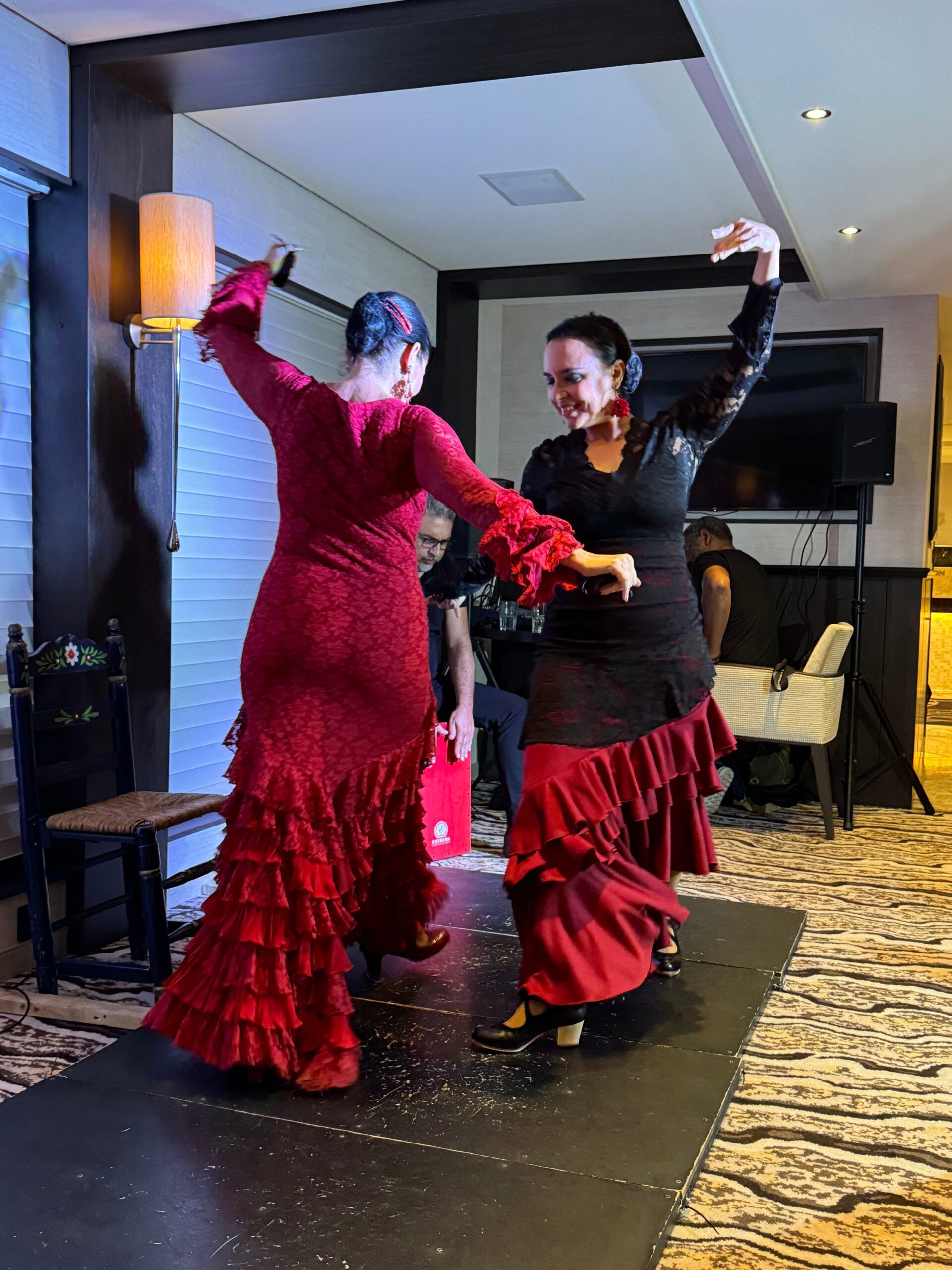
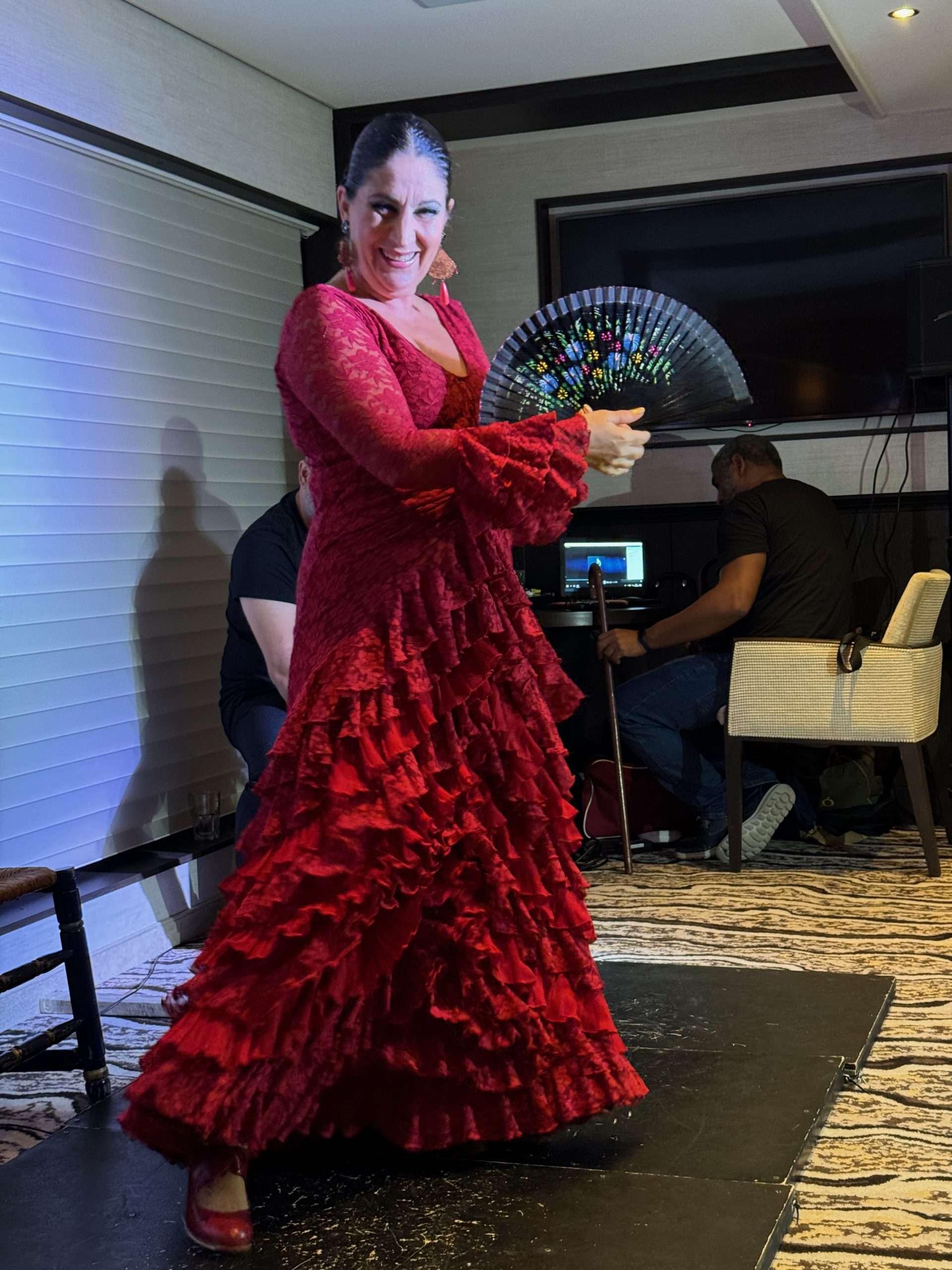
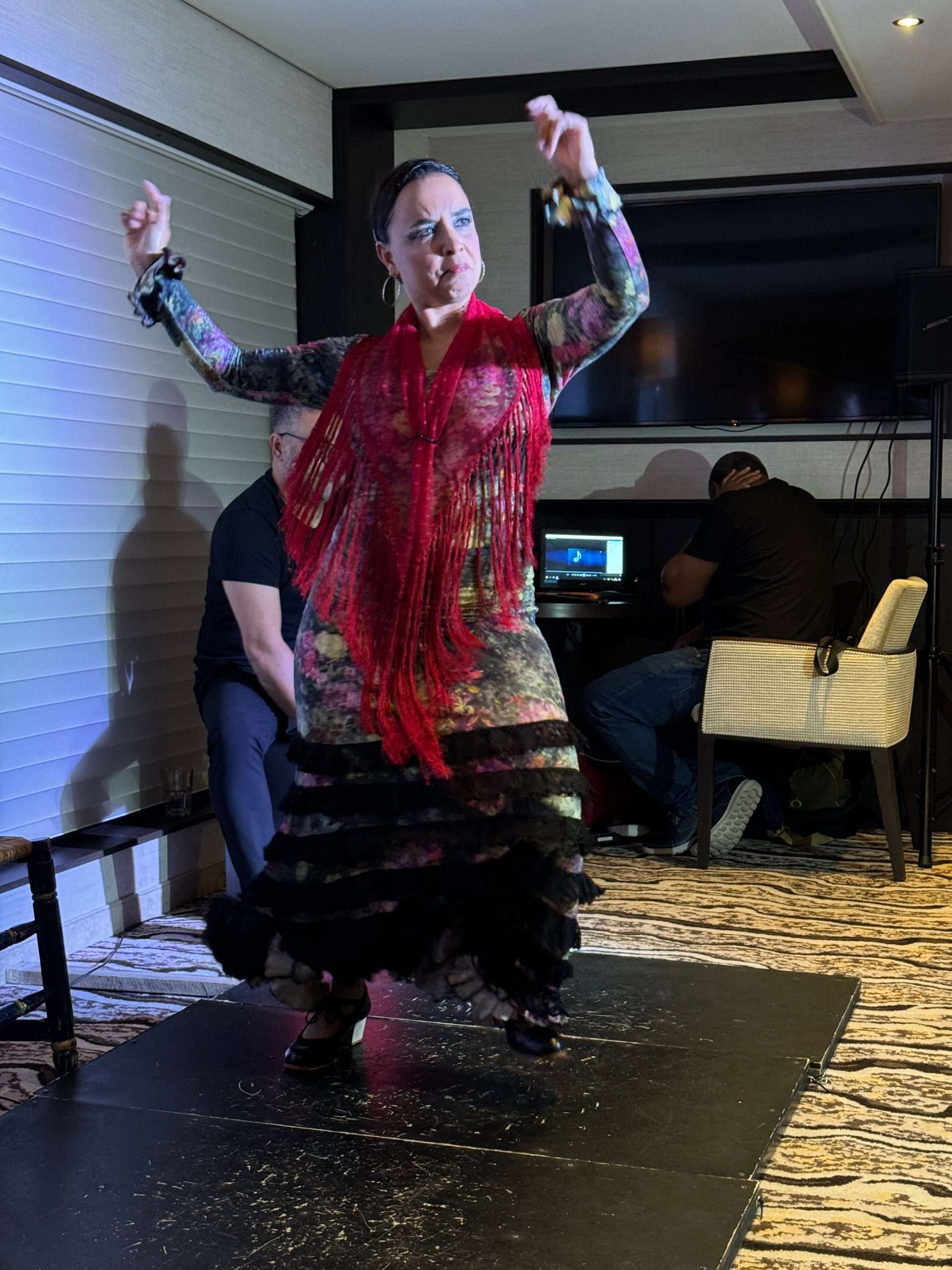
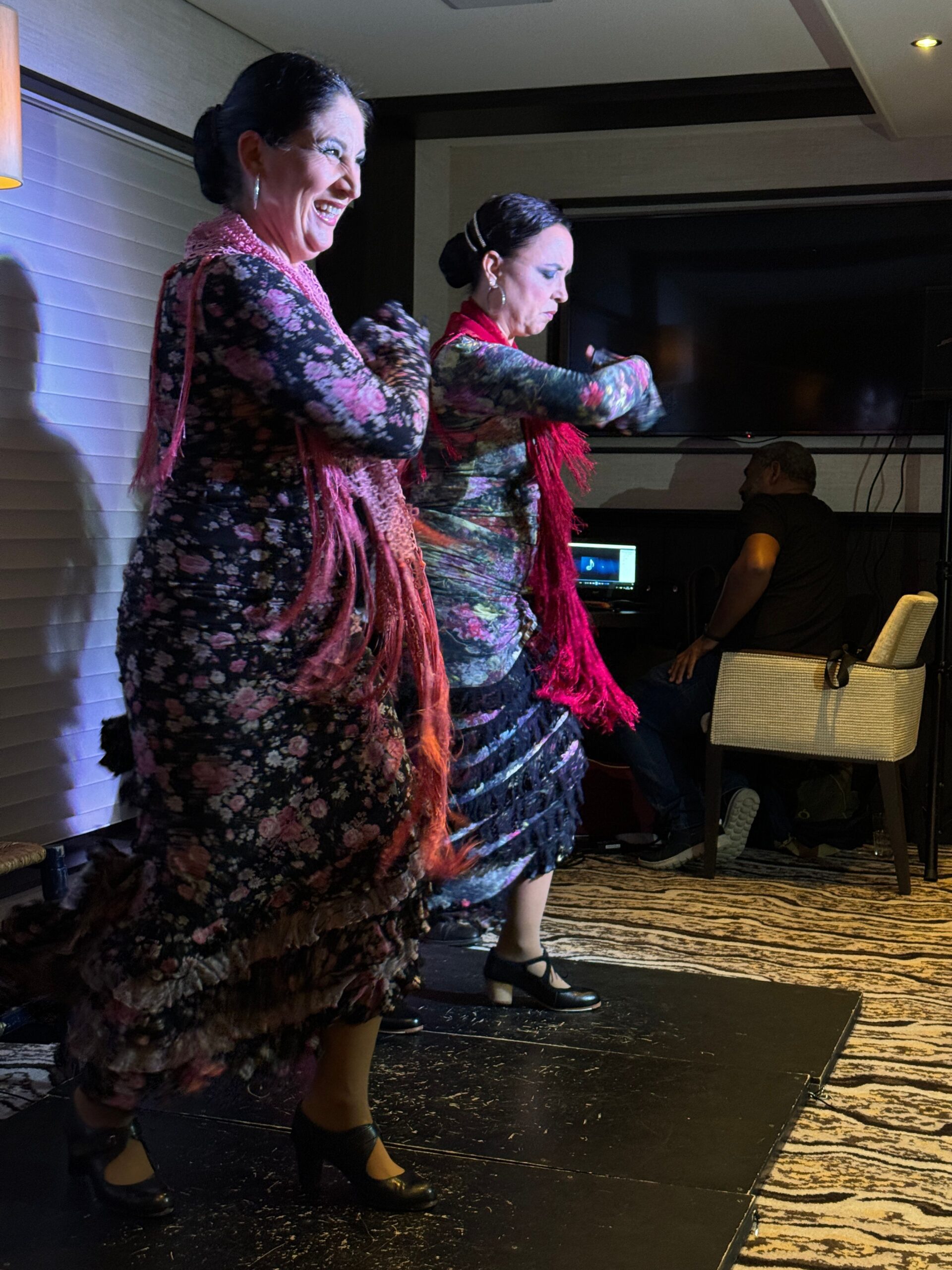
Returning to the ship, we enjoyed the traditional Chef’s signature dinner where our Indonesian chef wowed us with his cooking skills. The evening concluded with an impressive flamenco performance by artists from Salamanca. We are now docked in Pocinho, ready for tomorrow’s excursions.
Paleolithic Art And Medieval Castle Ruins – October 3, 2024
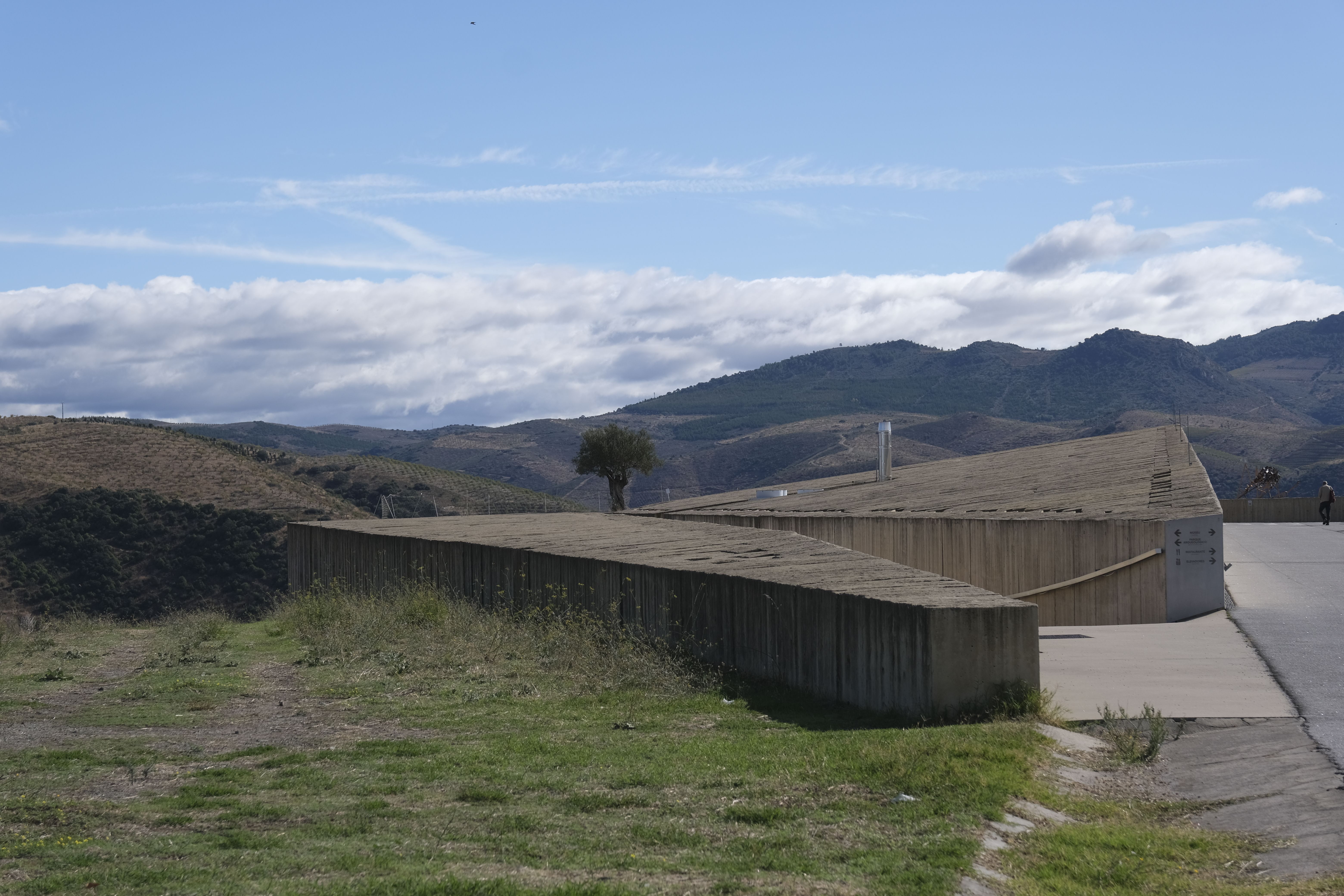
After breakfast, we set off for the Côa Museum, a remarkable facility dedicated to showcasing the ancient Paleolithic art discovered in the Côa Valley, one of the most significant open-air archaeological sites in the world. The art is said to be on par with the cave paintings found in Altamira and Lascaux. We were unable to visit the open-air site, but in the museum, we saw precise replicas of rock engravings that date back over 20,000 years, depicting animals, human figures, and geometric shapes—symbols of early human expression. Our knowledgeable guide shared the fascinating story of the discovery of these rock carvings in the 1990s. The art was at risk of being submerged due to plans for a new dam, but an international campaign ultimately led to the site being preserved as a UNESCO World Heritage site.
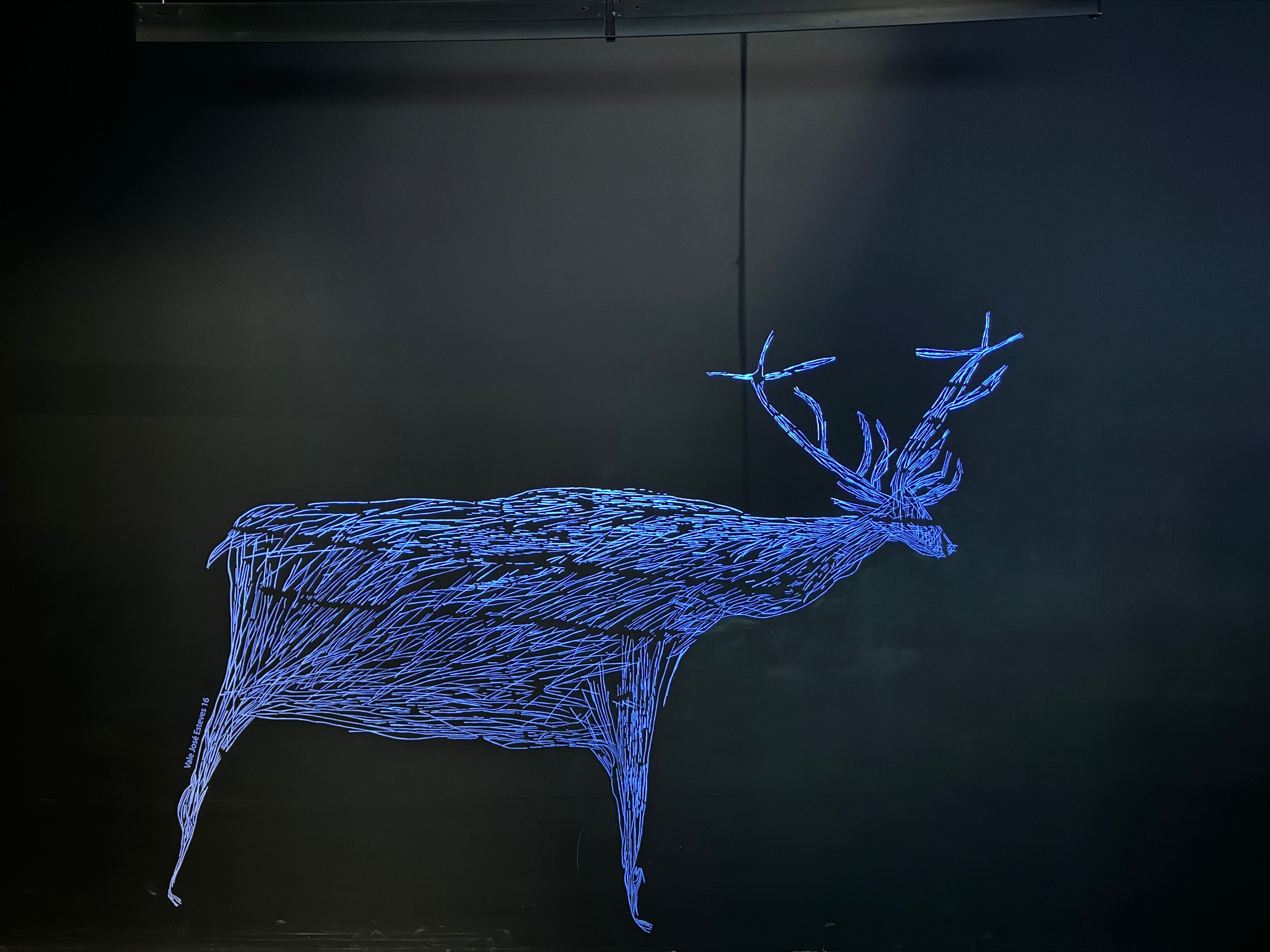
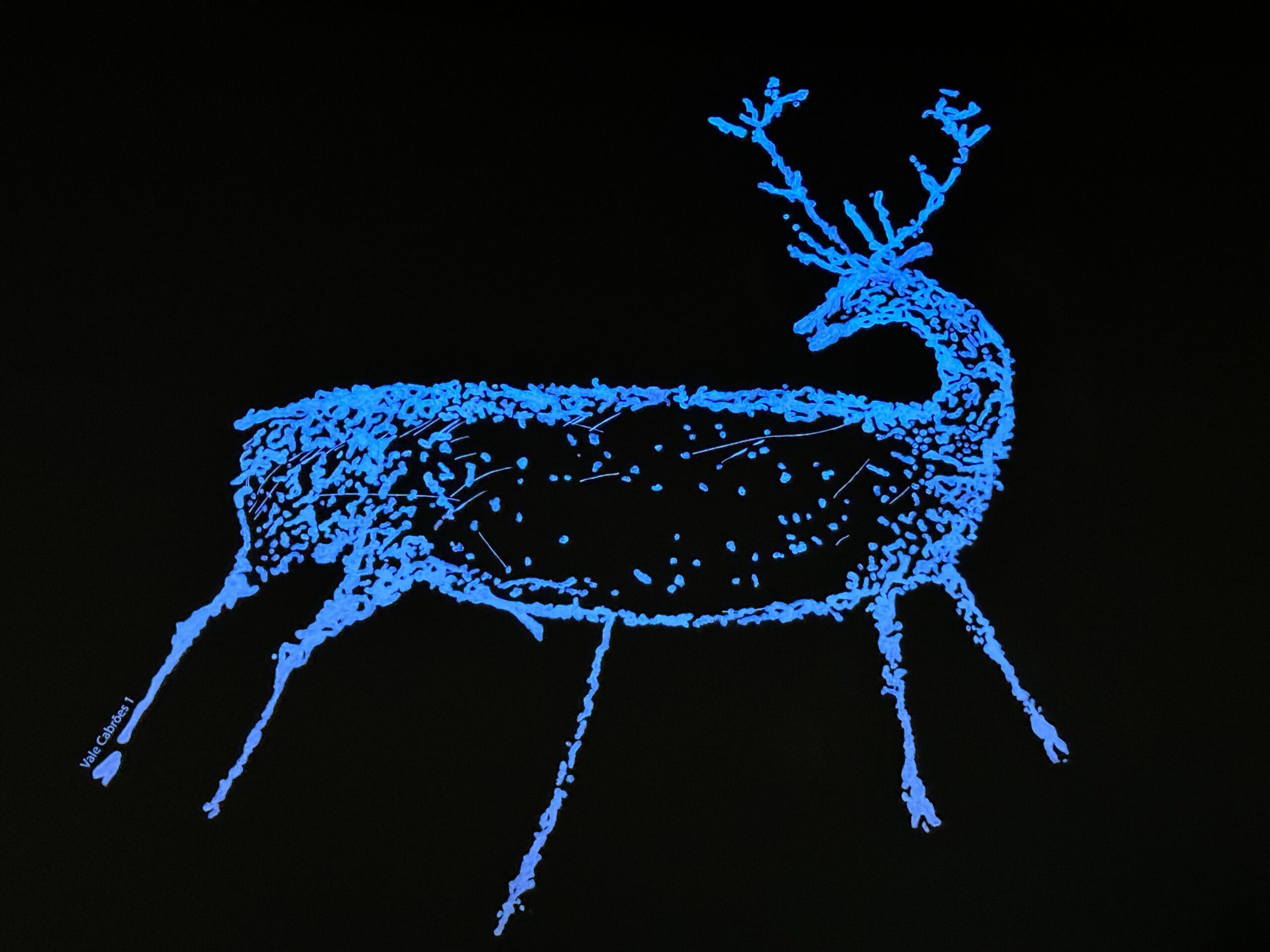
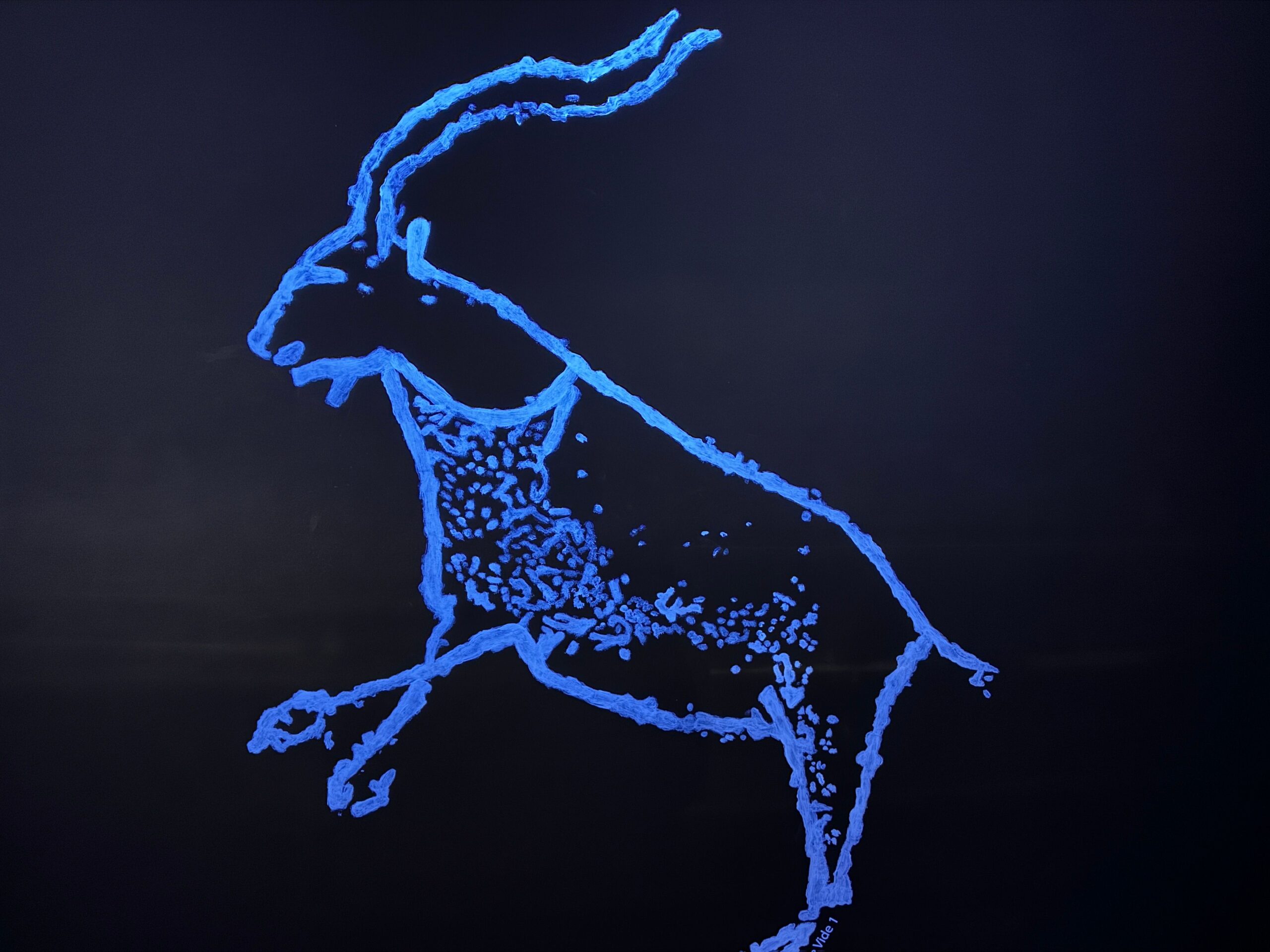
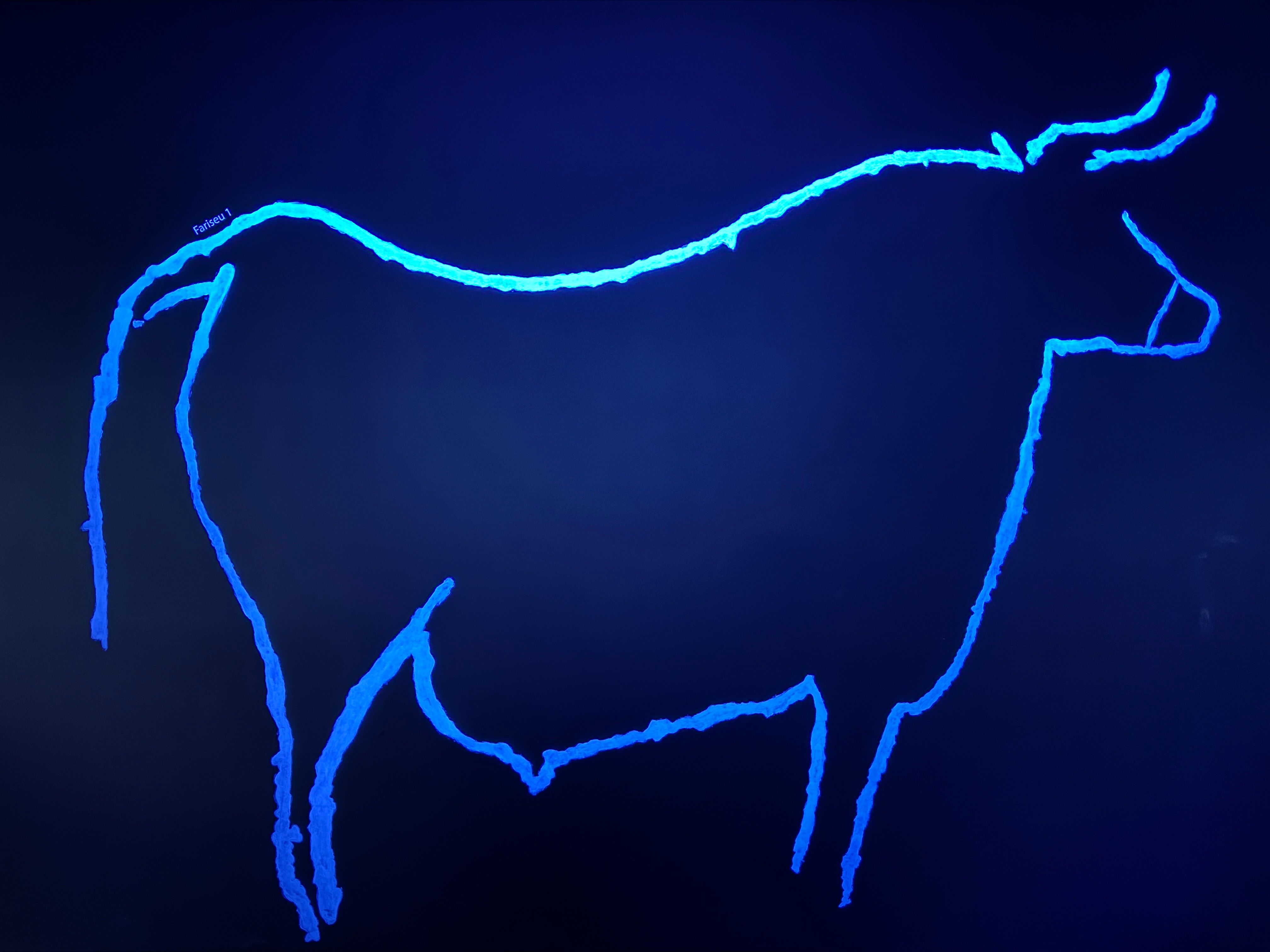
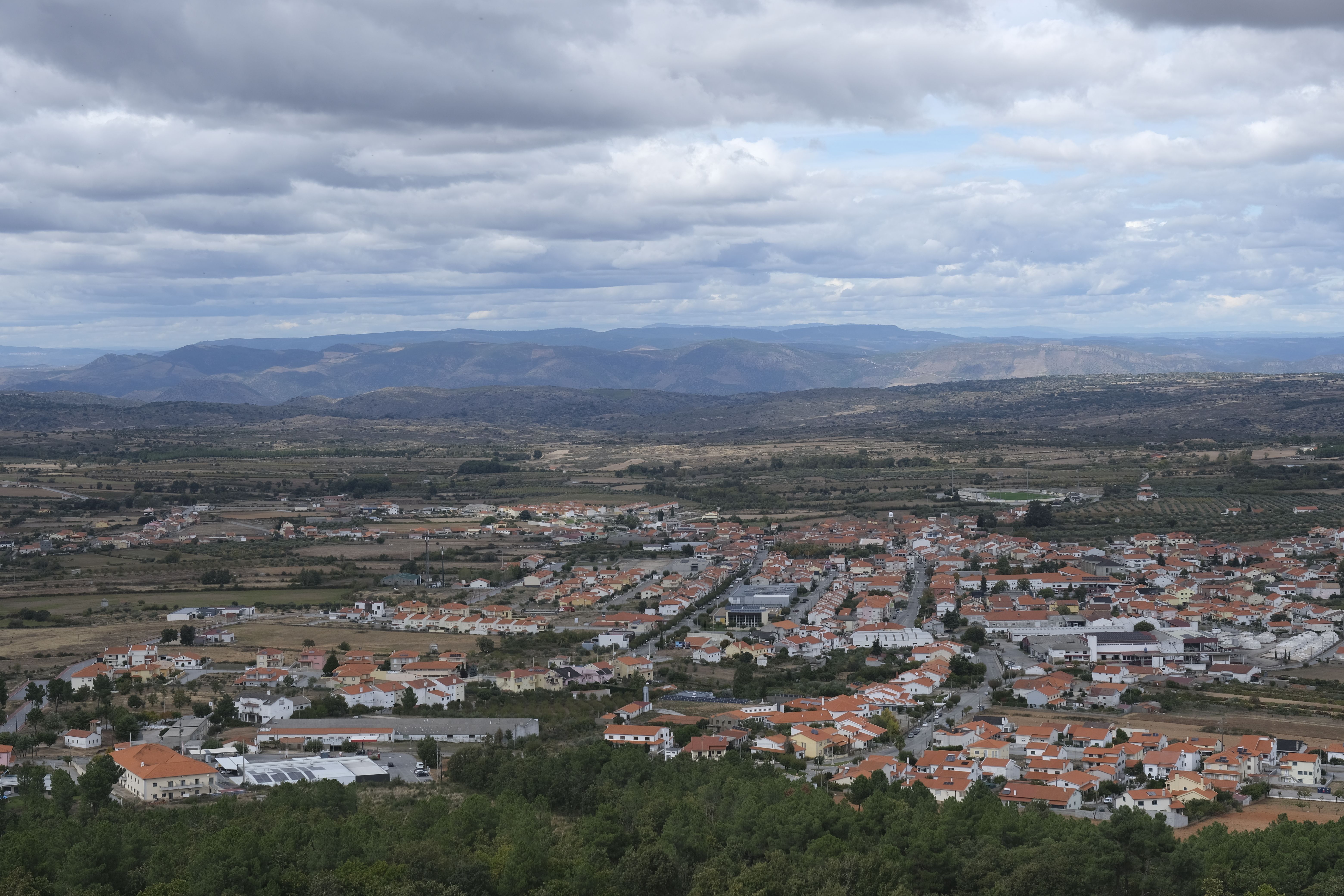
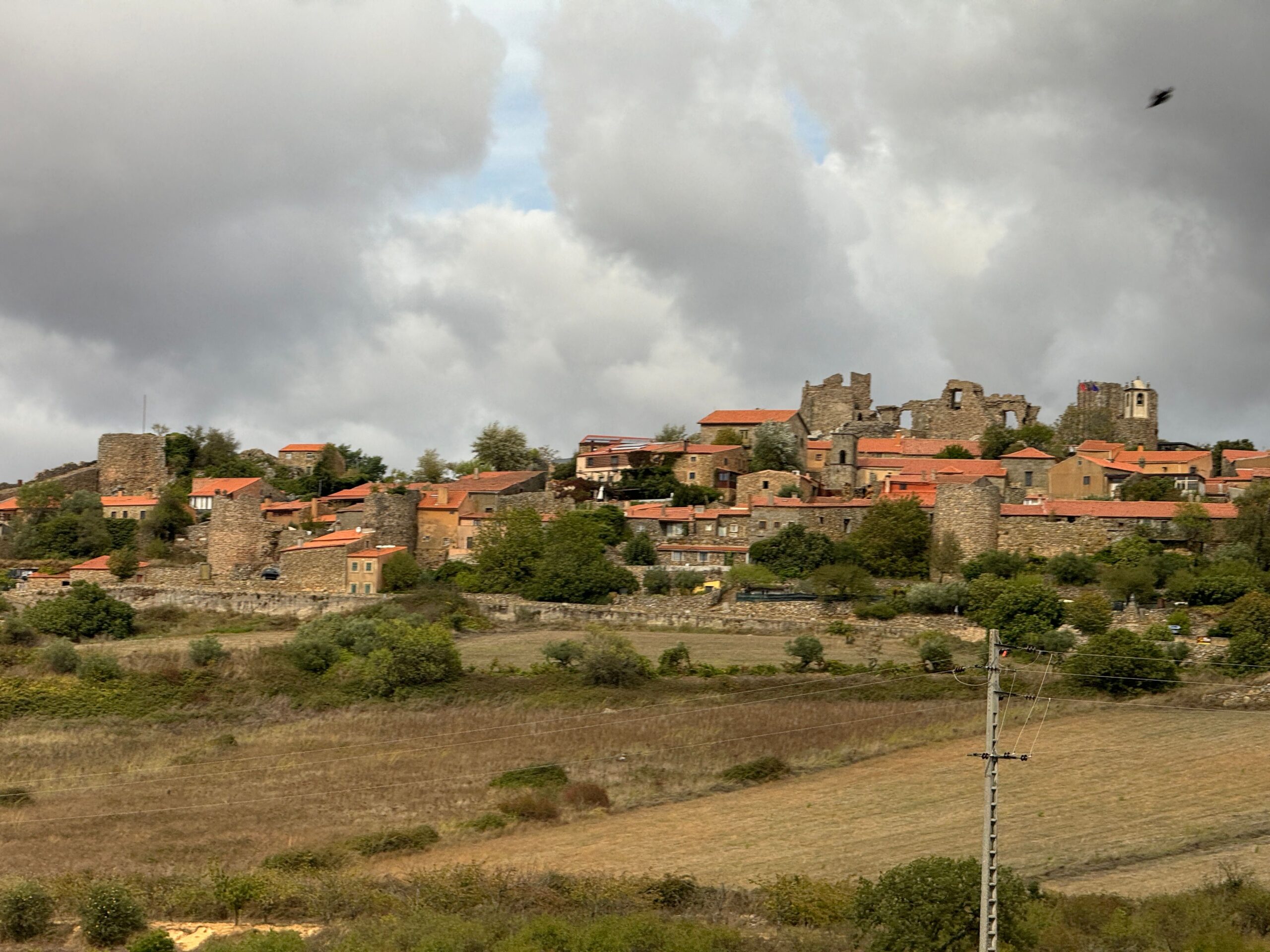
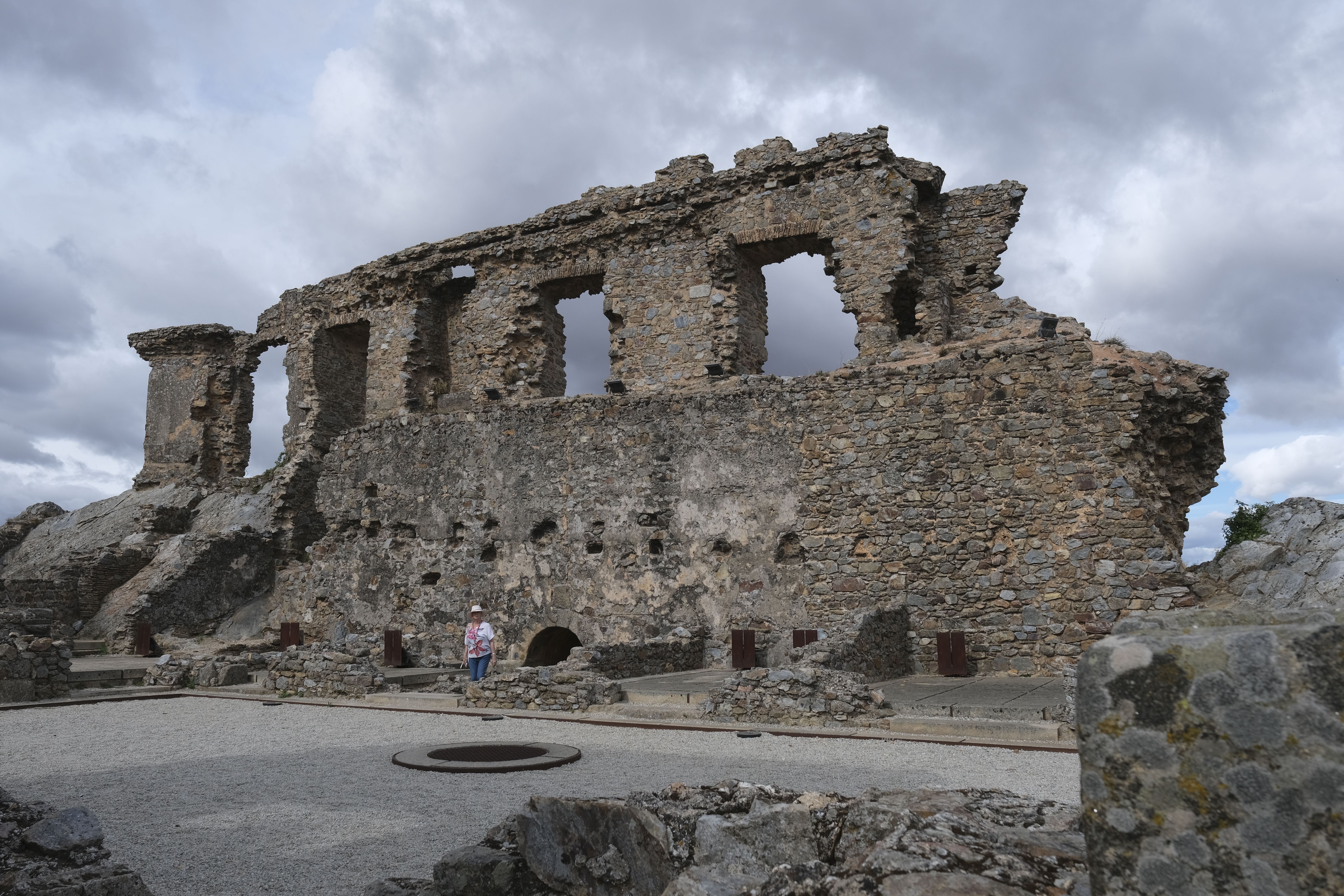
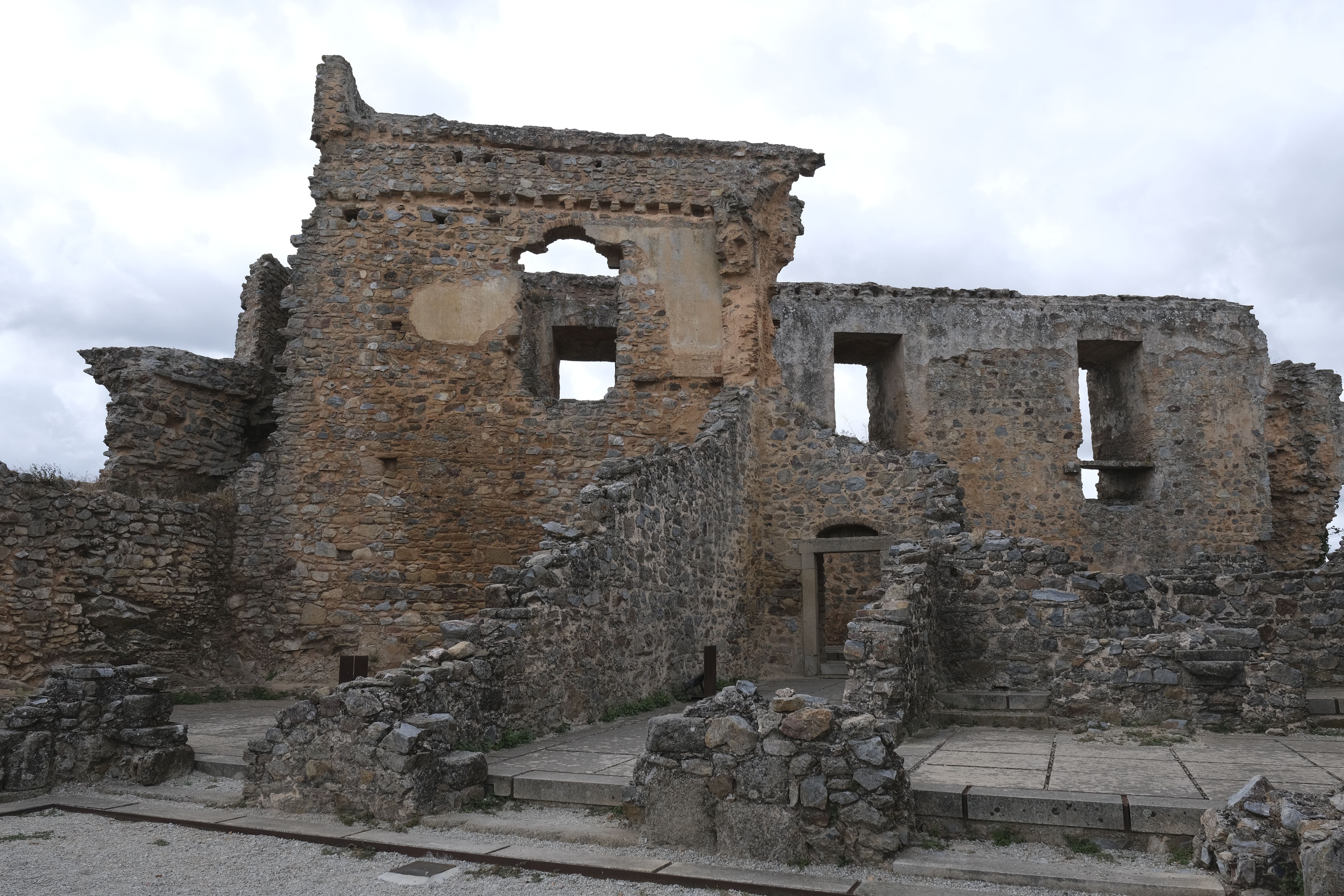
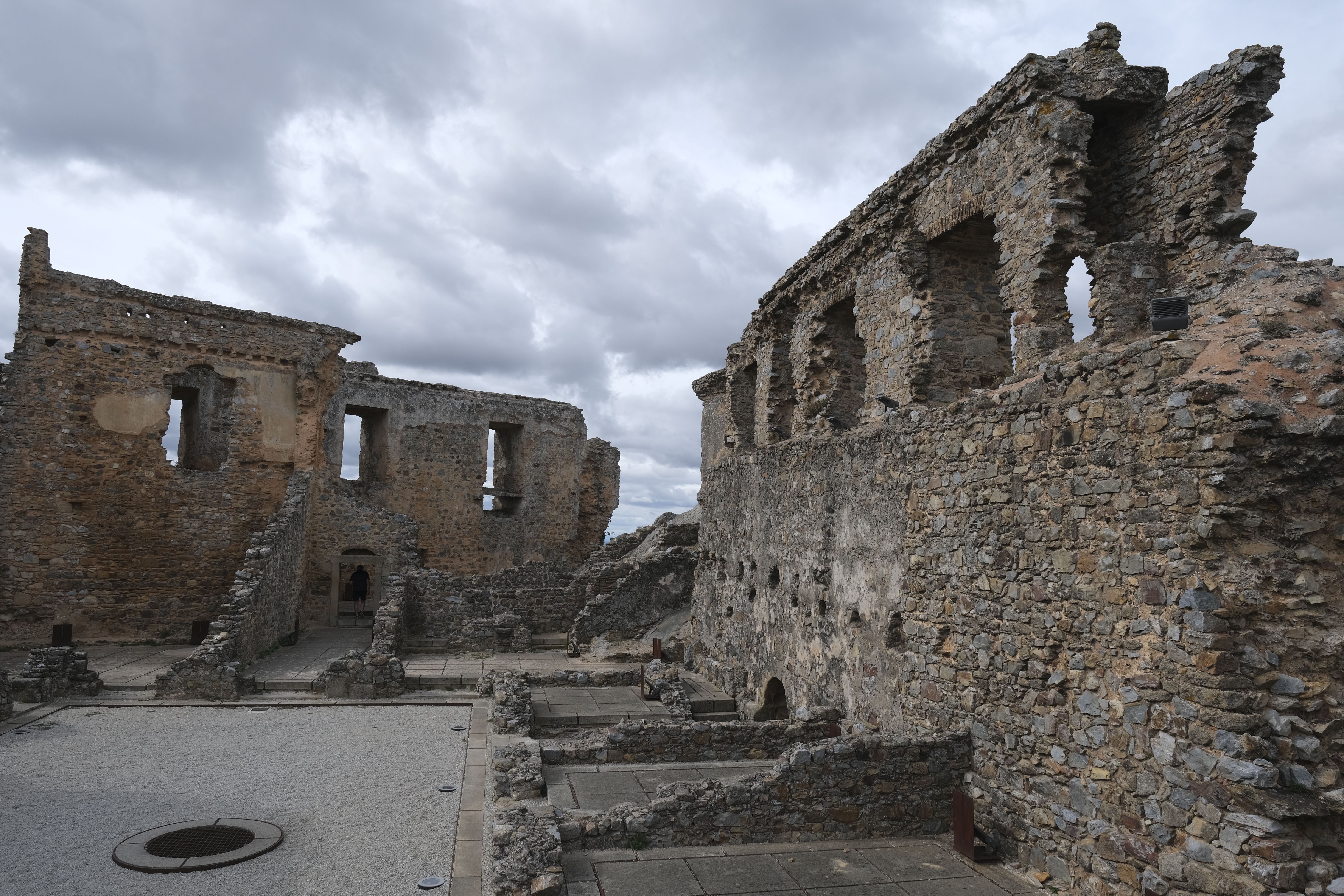
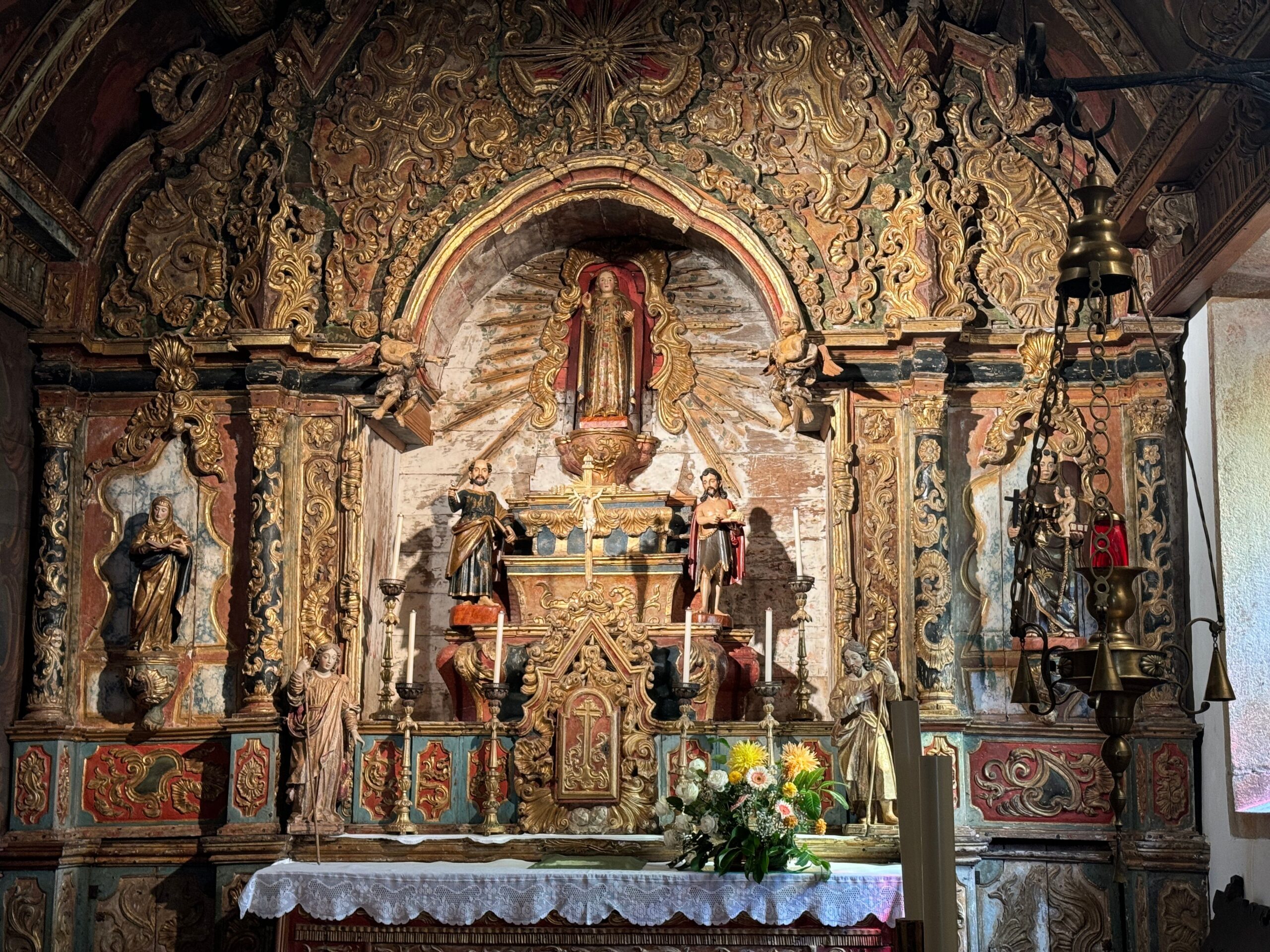
After lunch, we embarked on a scenic 45-minute drive to Castelo Rodrigo, a beautifully preserved medieval village perched high on a hill near the Spanish-Portuguese border. Since it was located on the border, the area was constantly in dispute depending on who was in power. By the time of the Portuguese Restoration in 1640, the inhabitants had had enough and set fire to the castle, causing much of the damage that can be seen today. Wandering through the narrow cobblestone streets, we explored the ruins of the castle, charming stone houses, the Jewish section, the cistern, and the chapel. Legend has it that pilgrims, including none other than St. Francis of Assisi, once passed through this village on their way to Santiago de Compostela.
Later that evening, back on board, we attended the Captain’s Farewell Reception—a memorable gathering marking the end of our river cruise journey. We are currently docked in Vega de Terrón.
Farewell to Portugal and Arrival in Historic Salamanca – October 4, 2024
We disembarked from the Andorinha for the last time and set off on a scenic drive to Salamanca, a city renowned for its rich history and stunning architecture. On the way, Manuel narrated the legend of the Rooster of Barcelos and of the Swallow (the Andorinha). The Rooster is about a man condemned to die for a theft he had not committed but gets a stay of execution when a roasted rooster comes to life, a resurrection the condemned man had foretold to support his innocence. The swallow is a gentler tale about love, loyalty, home, and family. Although a migratory bird, the swallow mates for life and always comes back to the same nest. You will find the little black swallows all over Portugal, both live (and ceramic in all colors thanks to Rafael Bordallo Pinheiro who first made them in his ceramics factory in 1891). Manuel was implying that, despite currently being in Spain, we would all be returning to Portugal.
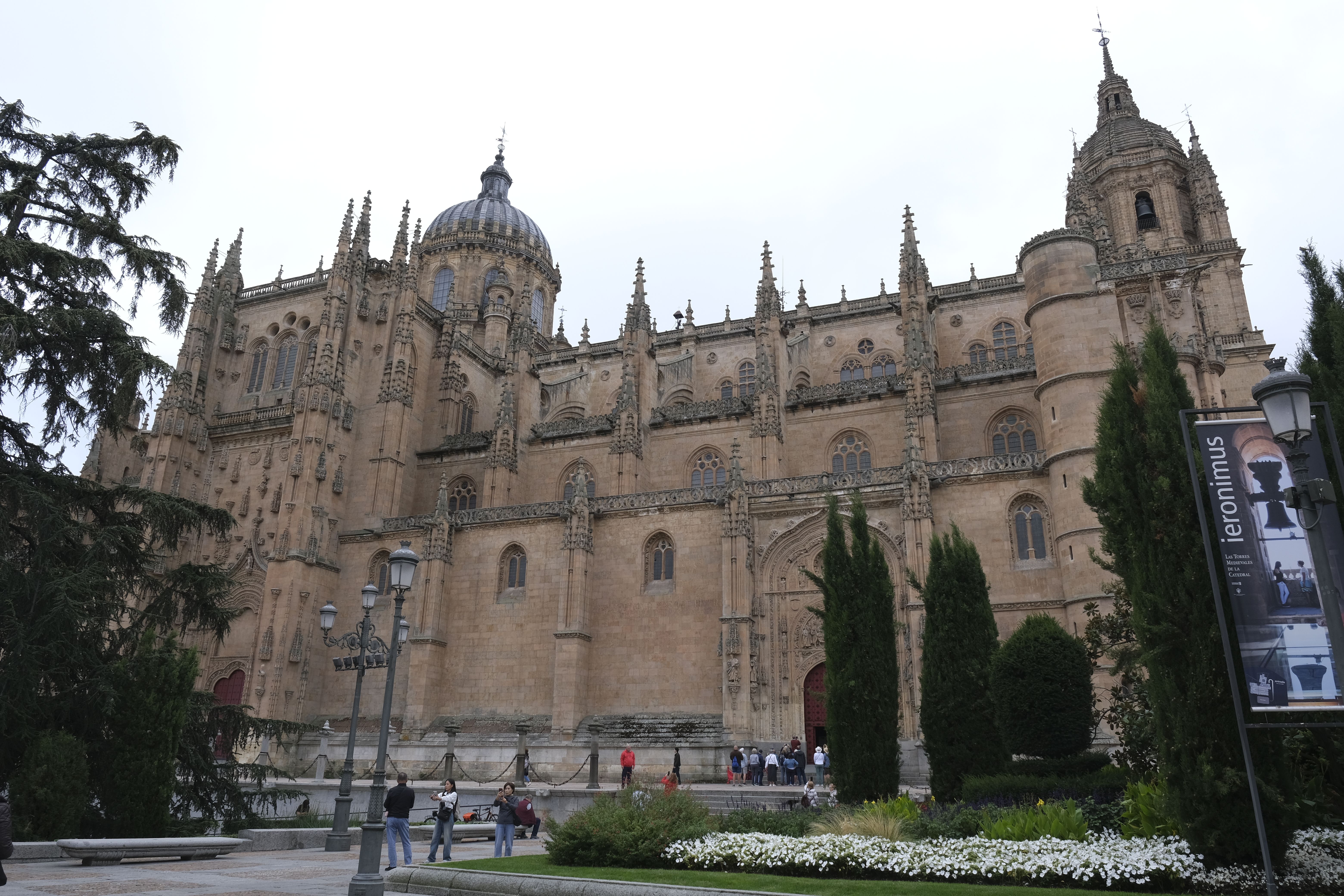
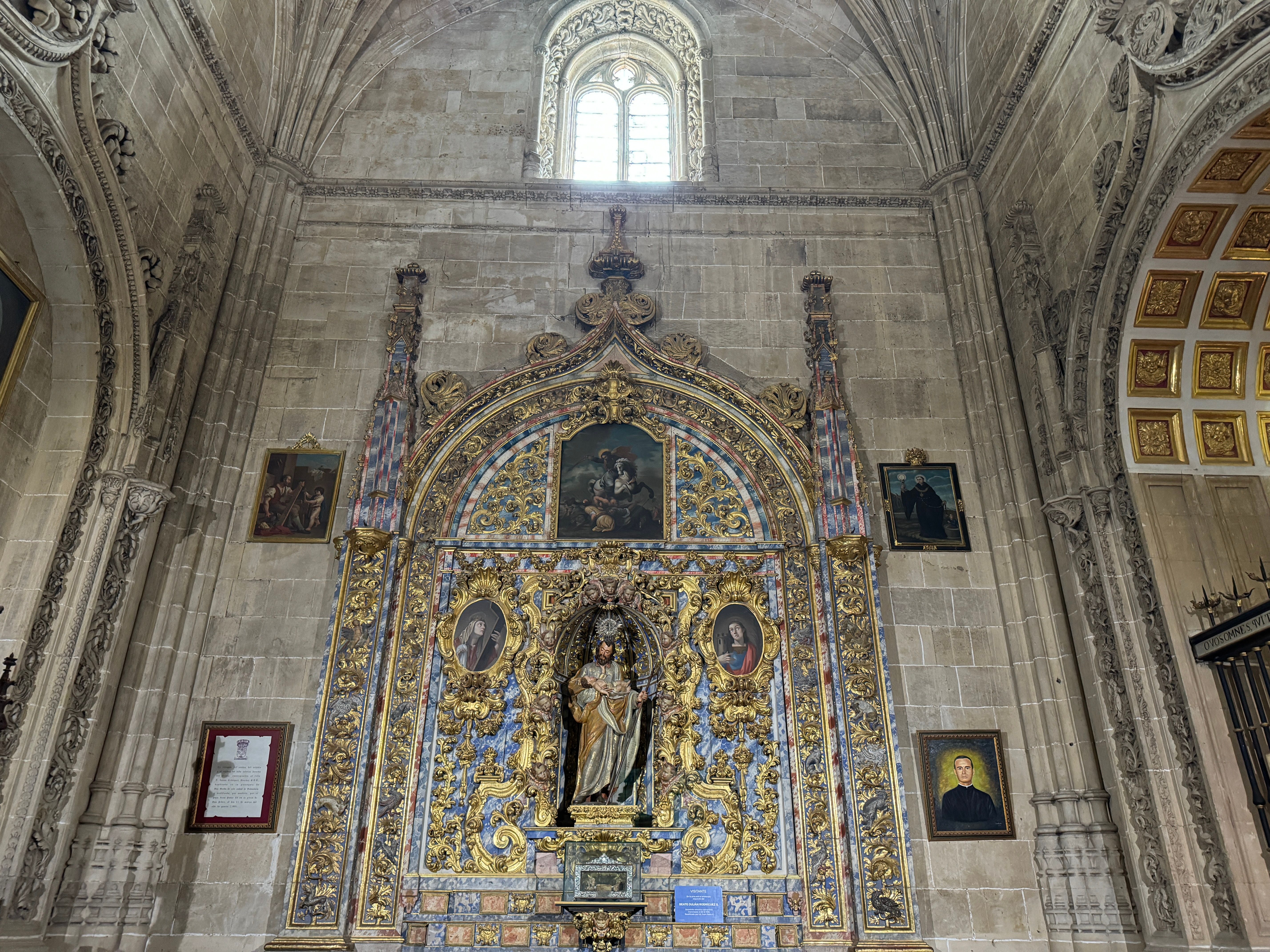
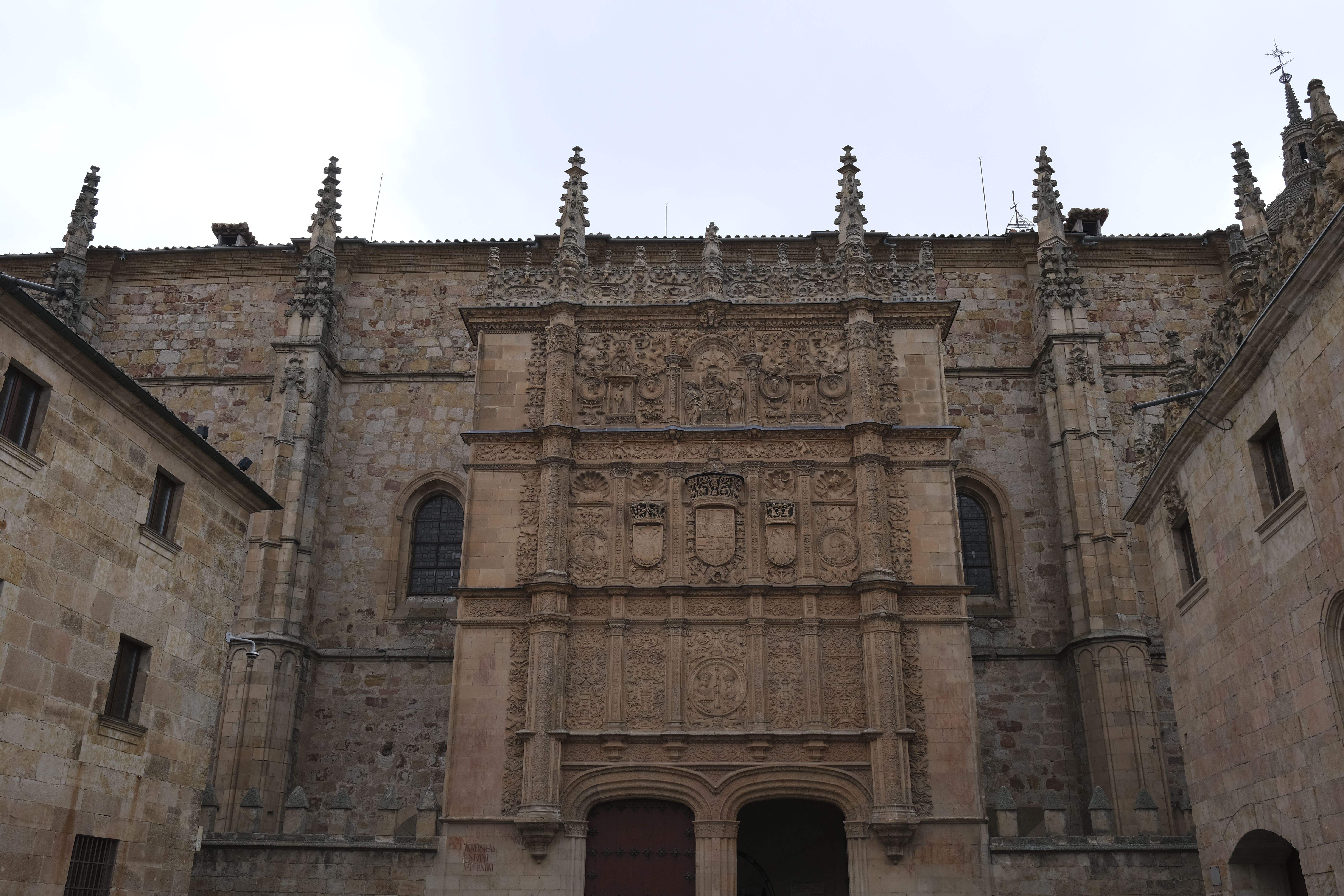
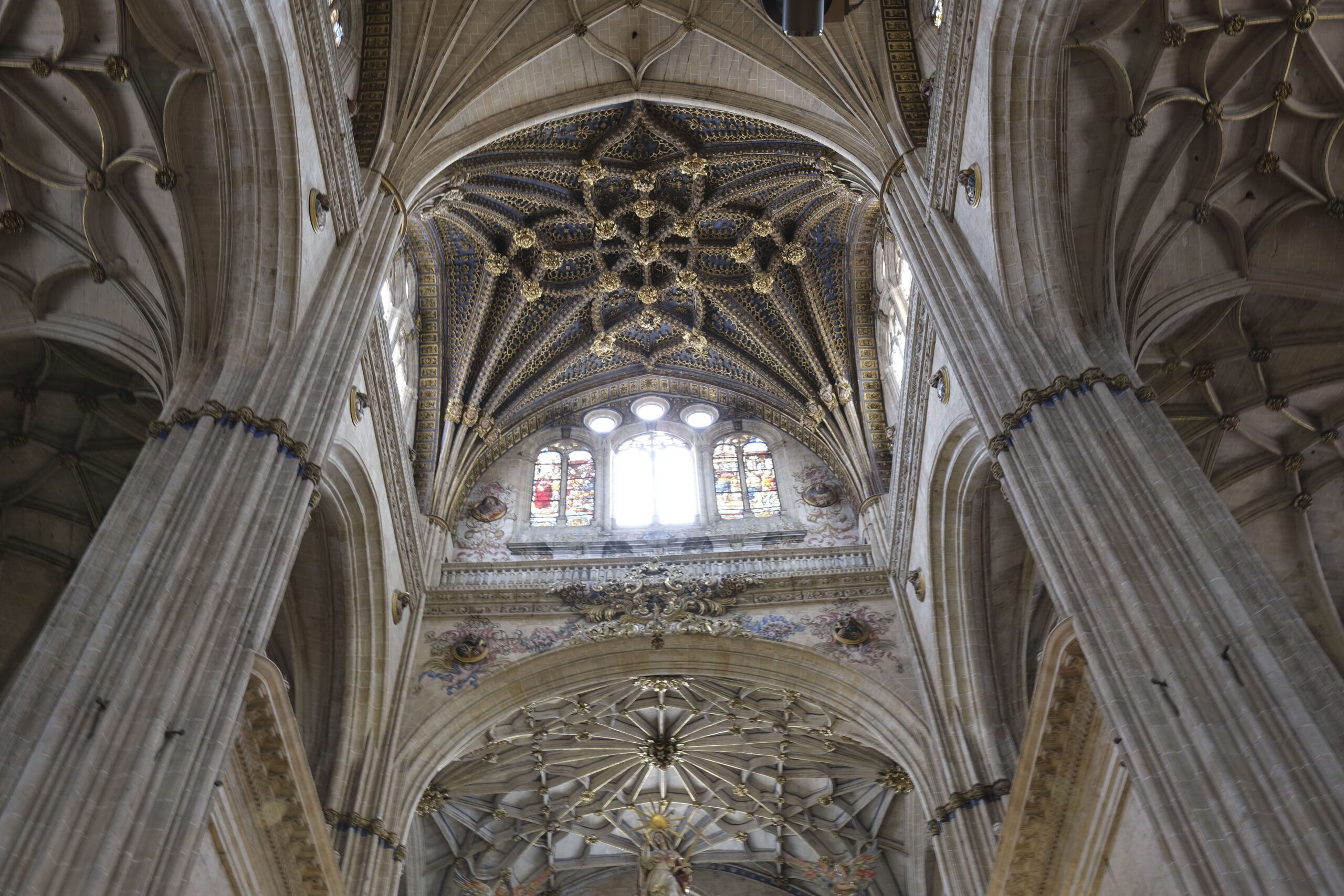
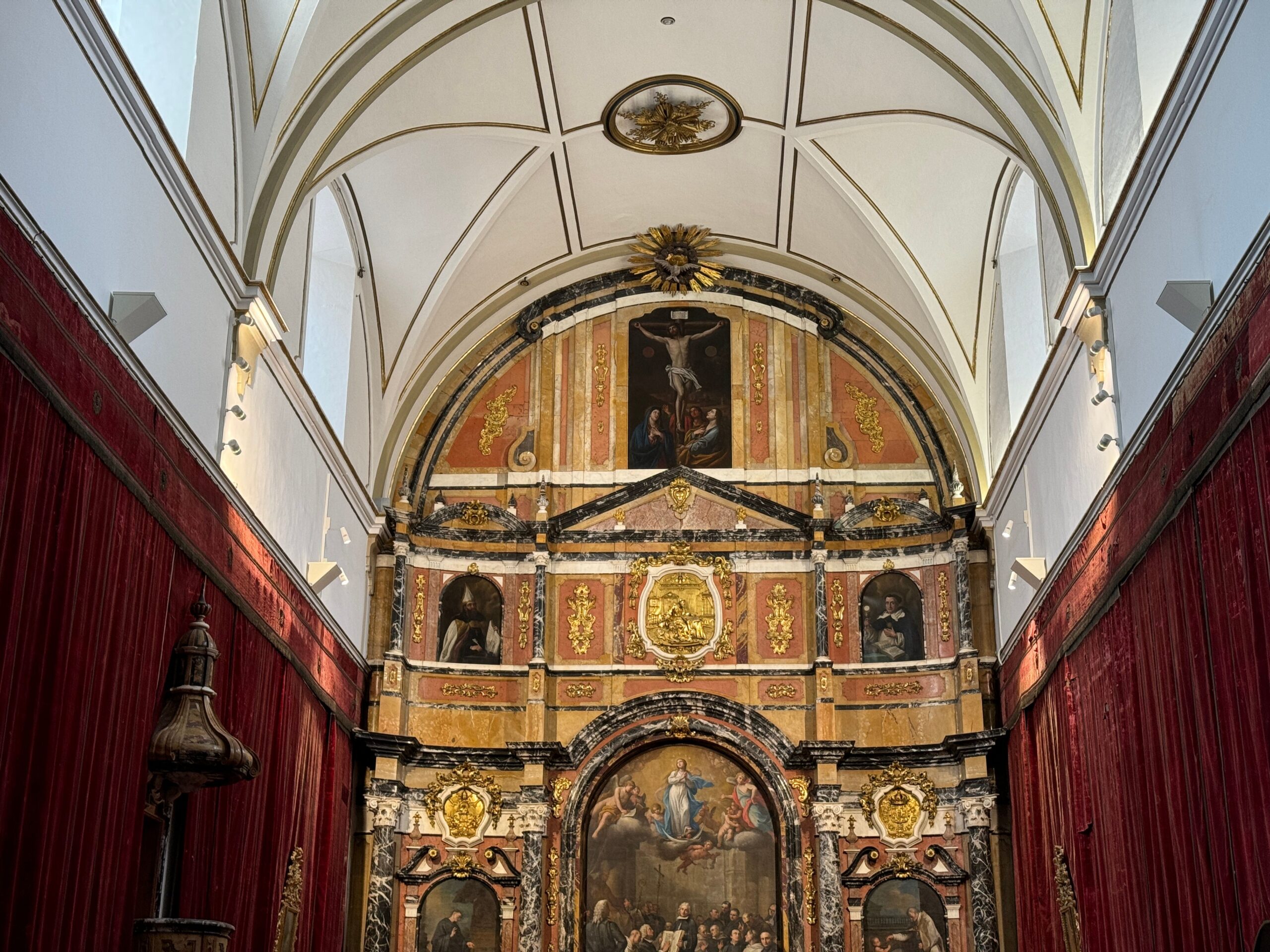
Upon arrival in Salamanca, we enjoyed a guided tour, which took us through the highlights of Salamanca’s historic center, a UNESCO World Heritage site. We explored the magnificent Salamanca Cathedral, a stunning fusion of Gothic and Renaissance styles, marveling at its intricate façade (which includes what looks like an astronaut and a monkey eating an ice cream), 18 ornate chapels, chestnut wood choir, and stained-glass windows that are placed very near the ceiling. It took over 200 years to build. Our tour continued to the University of Salamanca, one of Europe’s oldest continuously operational universities. We were able to enter the premises to admire the Plateresque architecture (the style of Spanish Renaissance architecture so named because it resembles the work of a silversmith), a few of the old classrooms, and the library.
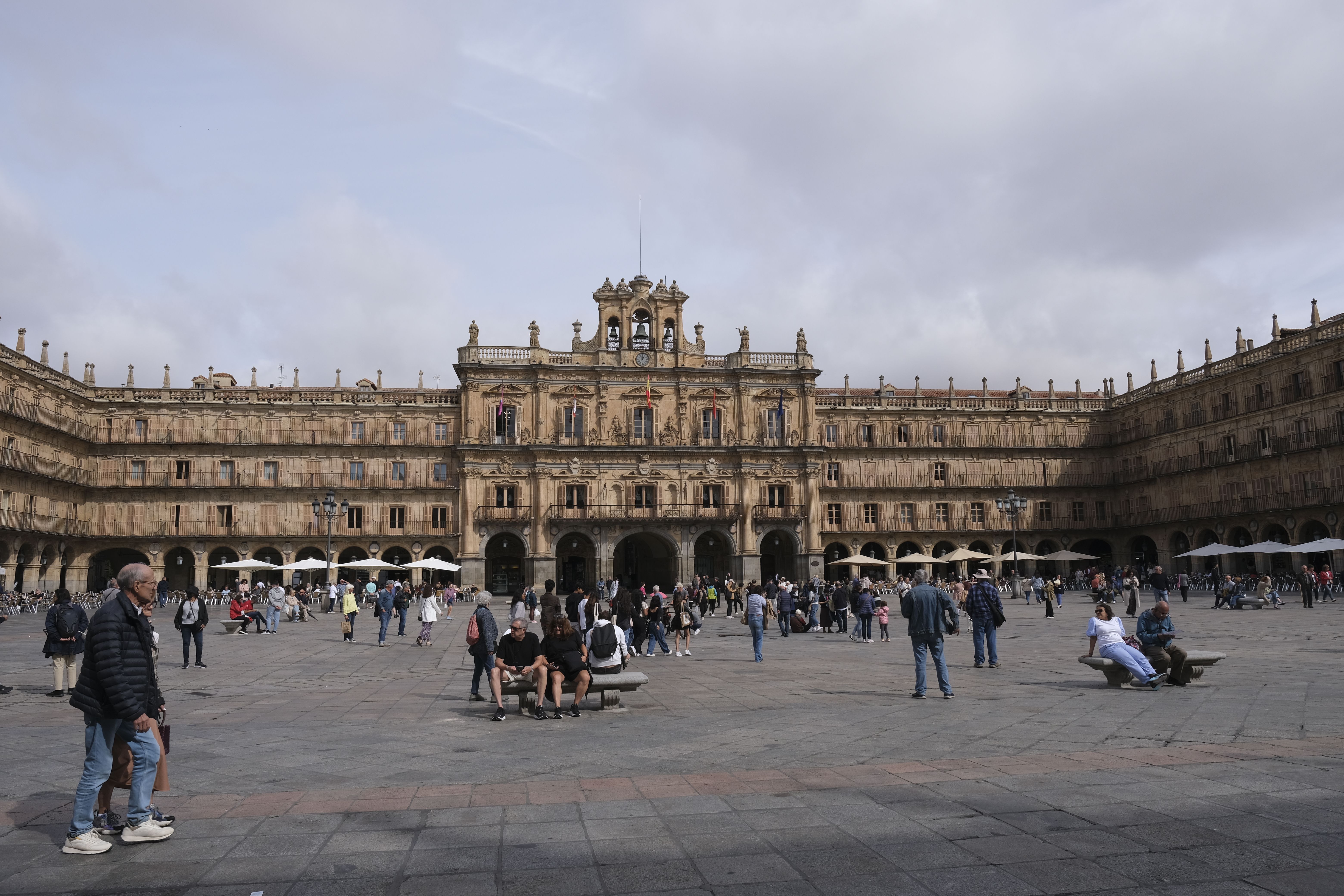
With some free time to explore on our own, we wandered through Salamanca’s beautiful Plaza Mayor, shopped at a Zara store, and enjoyed a quick lunch before resuming our journey to Madrid, a drive of just over two hours. Along the way, we caught glimpses of Avila, known for its perfectly preserved medieval walls. Upon arrival in Madrid, we checked into our hotel.


In the evening, we explored Madrid’s vibrant food scene on a tapas tour, tasting an array of traditional Spanish small plates.
Exploring Madrid’s Historic Heart and Royal Treasures – October 5, 2024
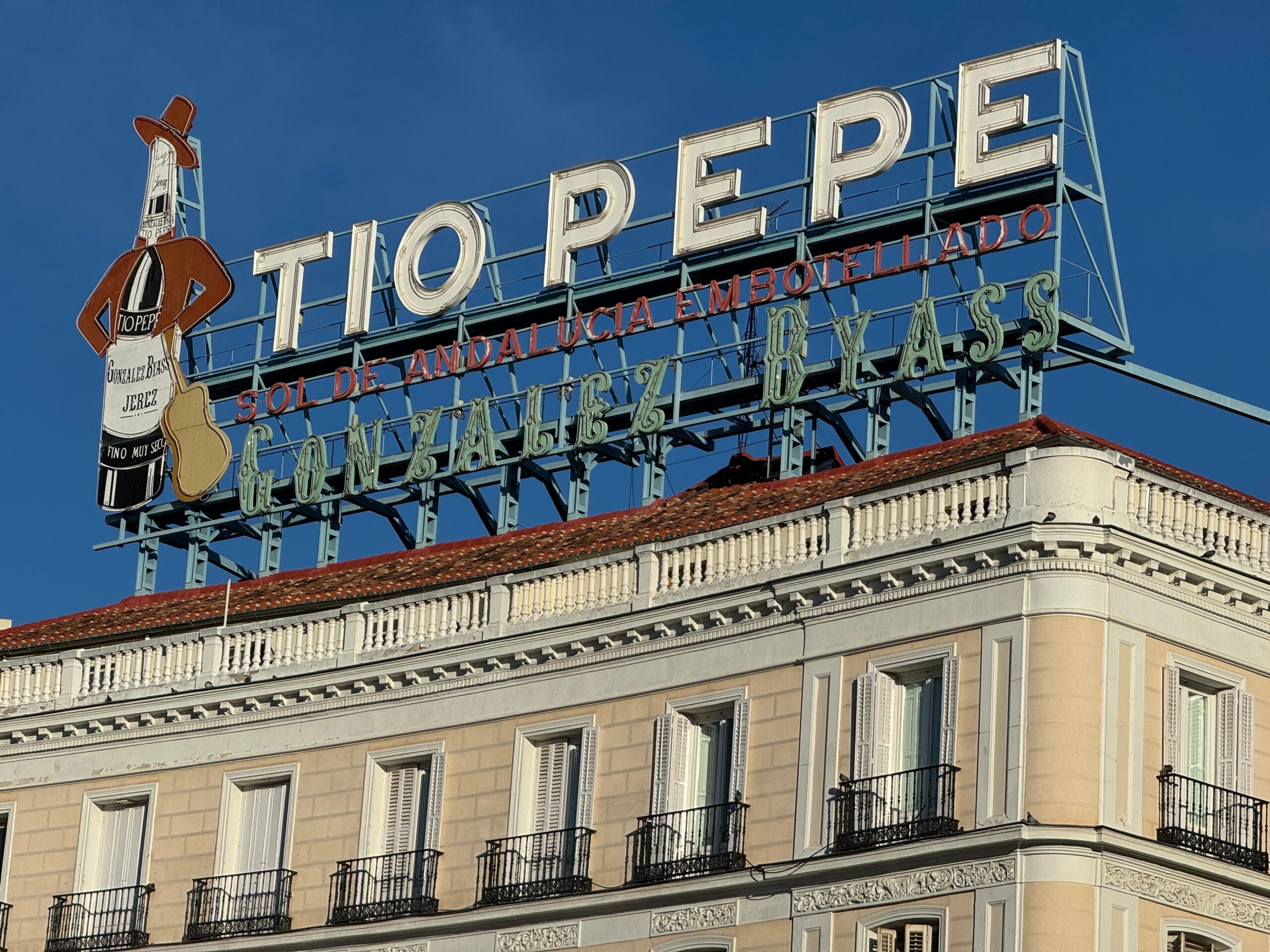
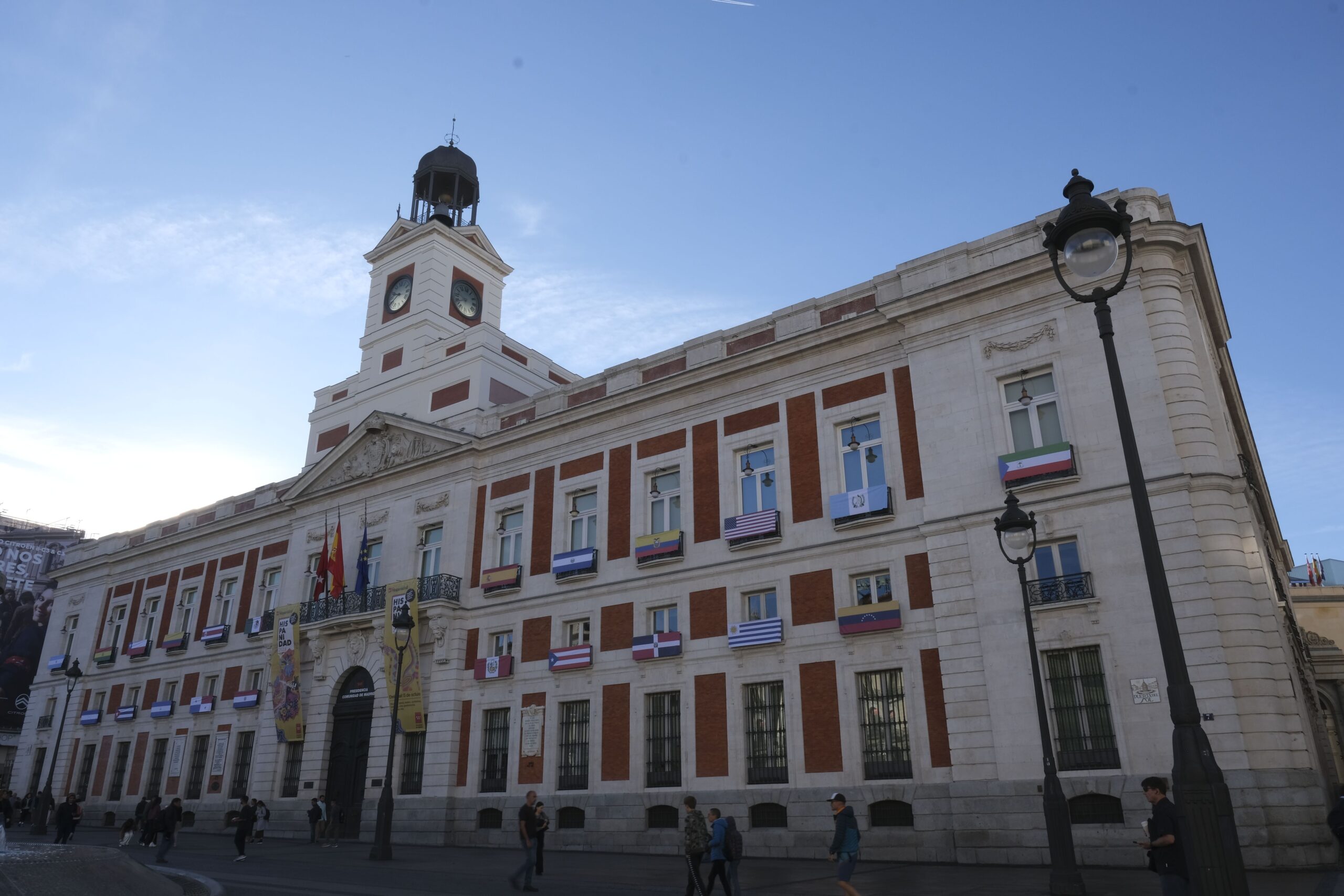
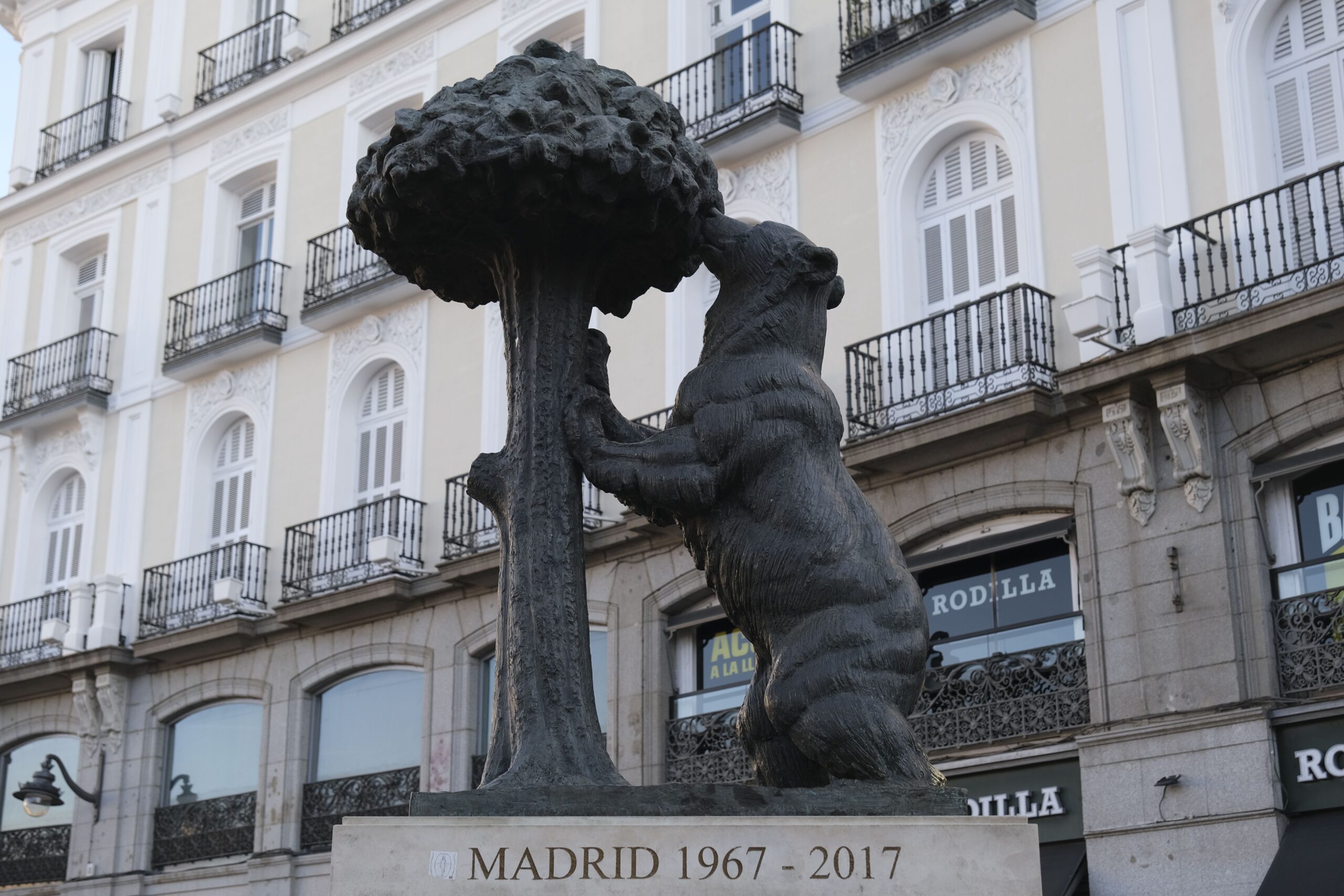
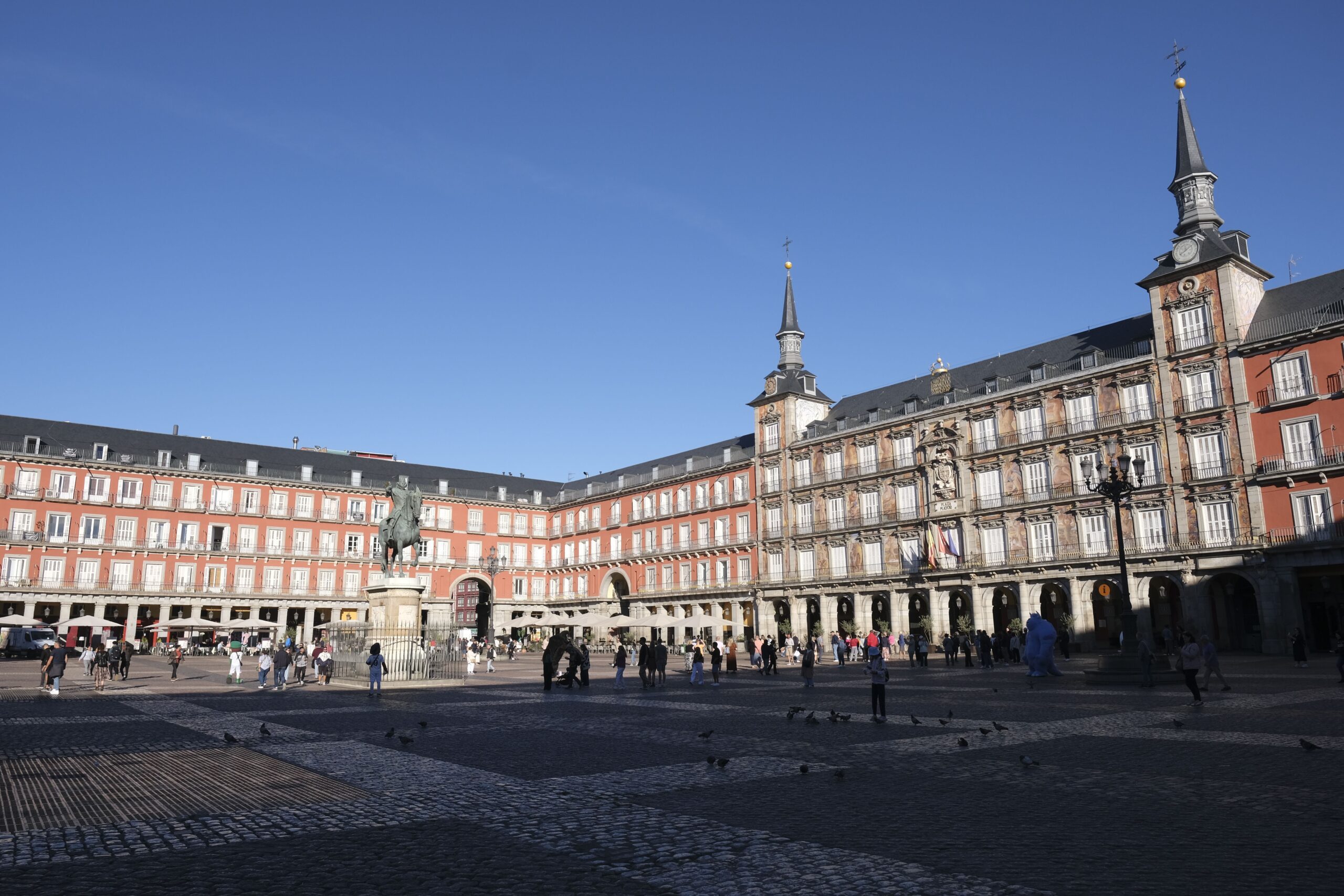
After breakfast, our local guide took us on an orientation walk of the city center, which we had previously visited in 2014. She provided insights and helpful tips for the day ahead. We strolled past several familiar landmarks, including the statue of Miguel Cervantes, Puerta del Sol Plaza with the statues of the Bear and the Madroño Tree and King Carlos III, Ratón Pérez on Calle Arengal, Plaza Mayor, and the bustling San Miguel Market (the mercato), and Plaza de Santiago with the oldest church in the area, revisiting some of the city’s vibrant spots.
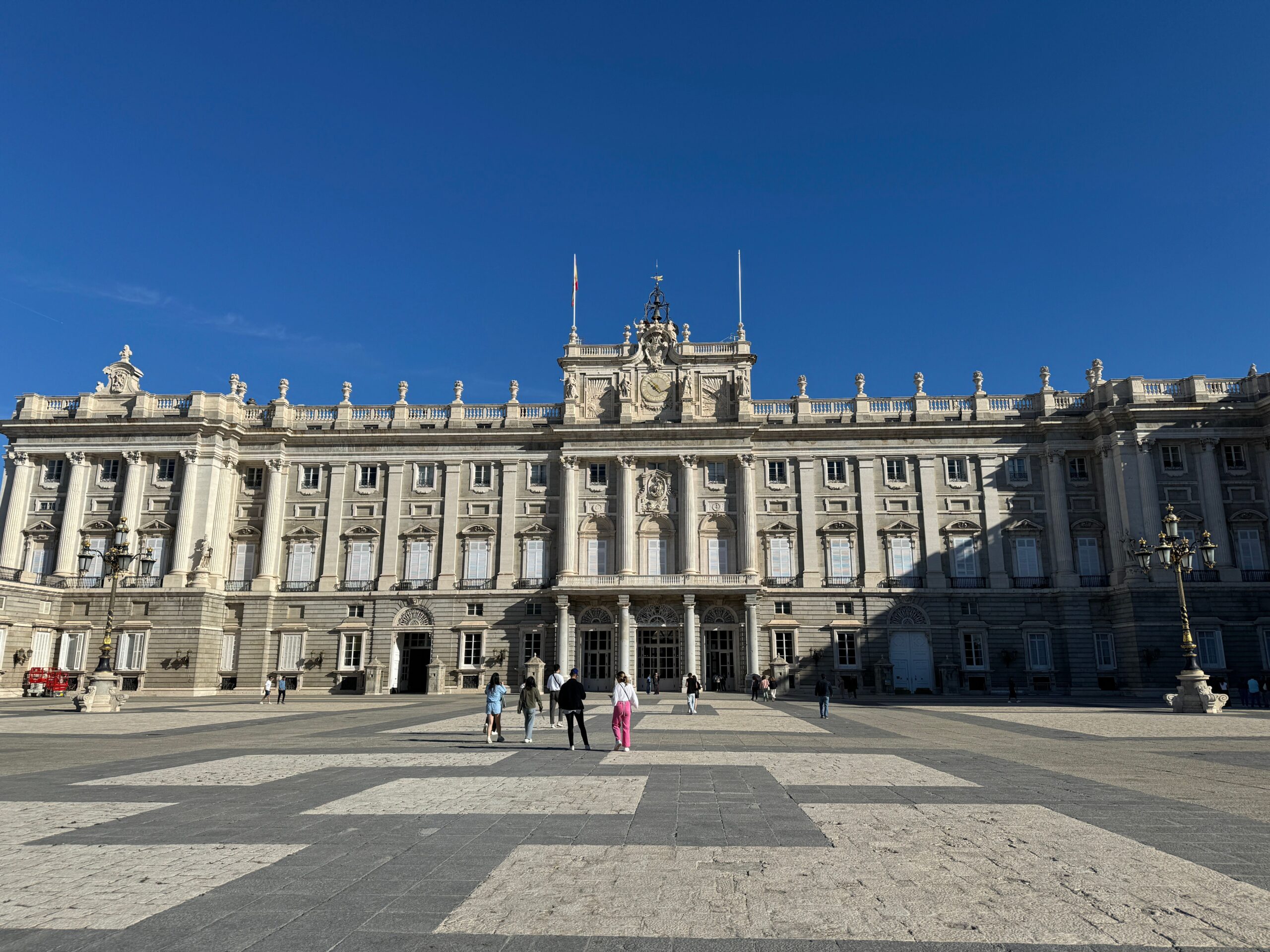
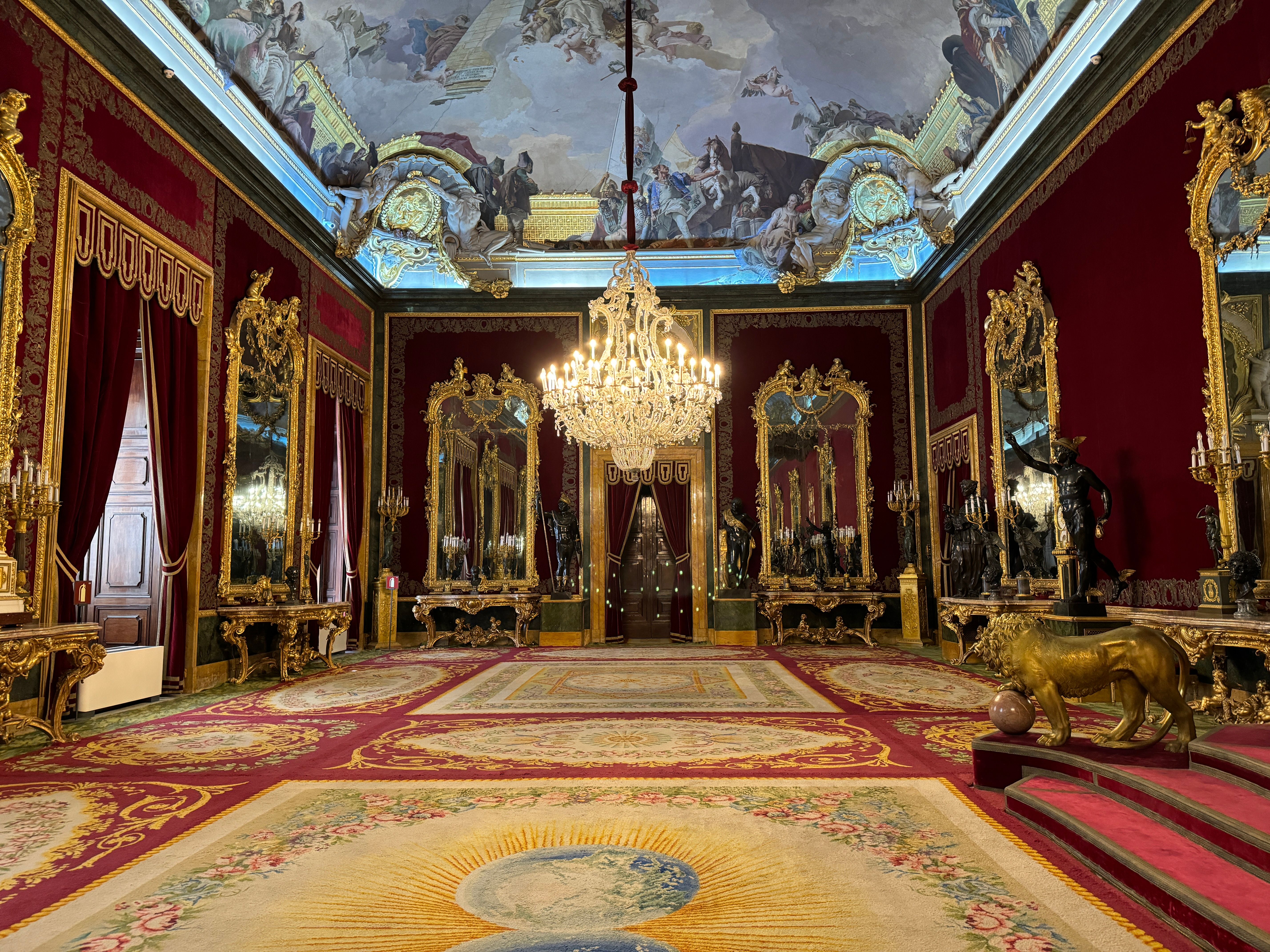
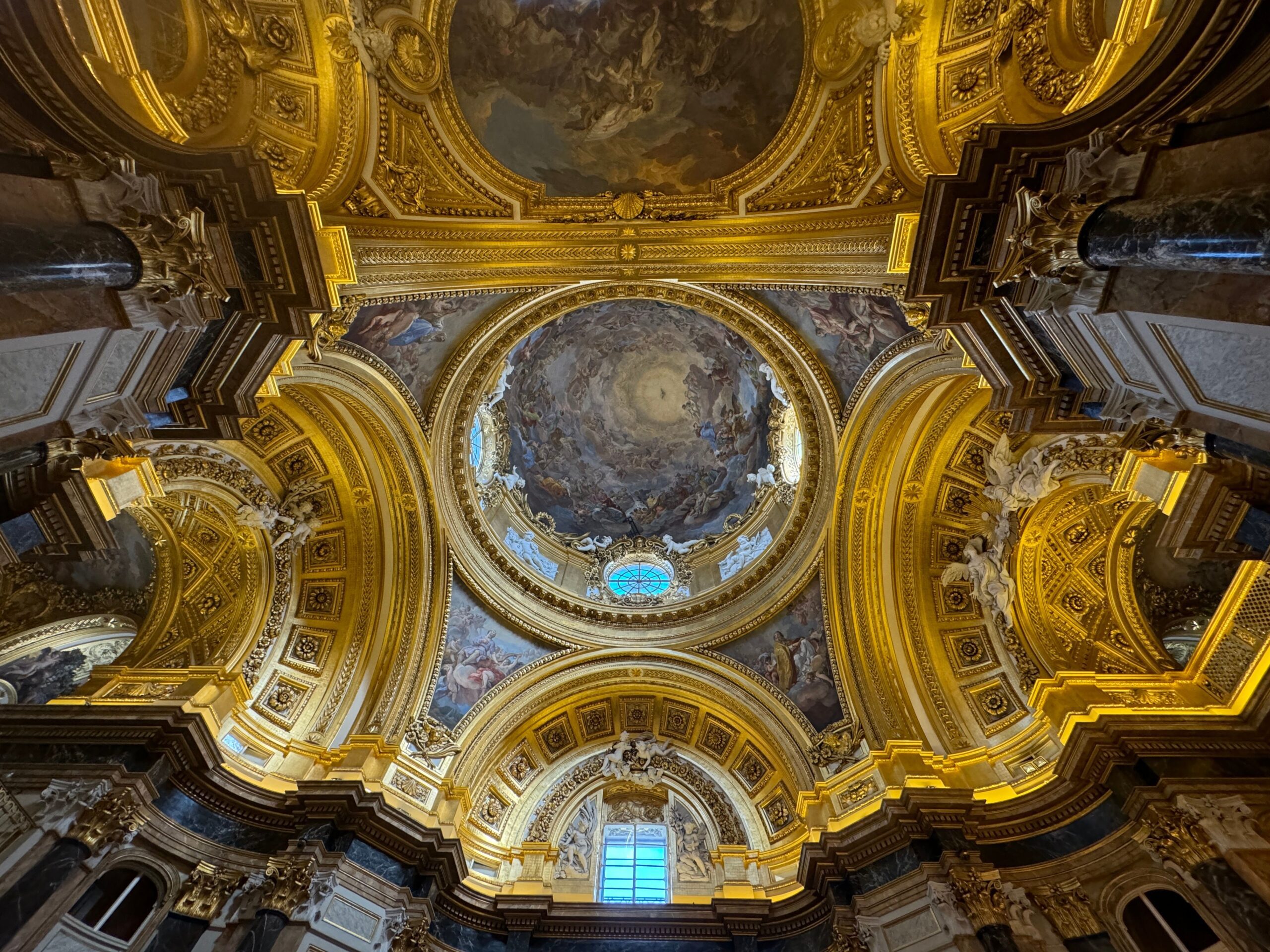
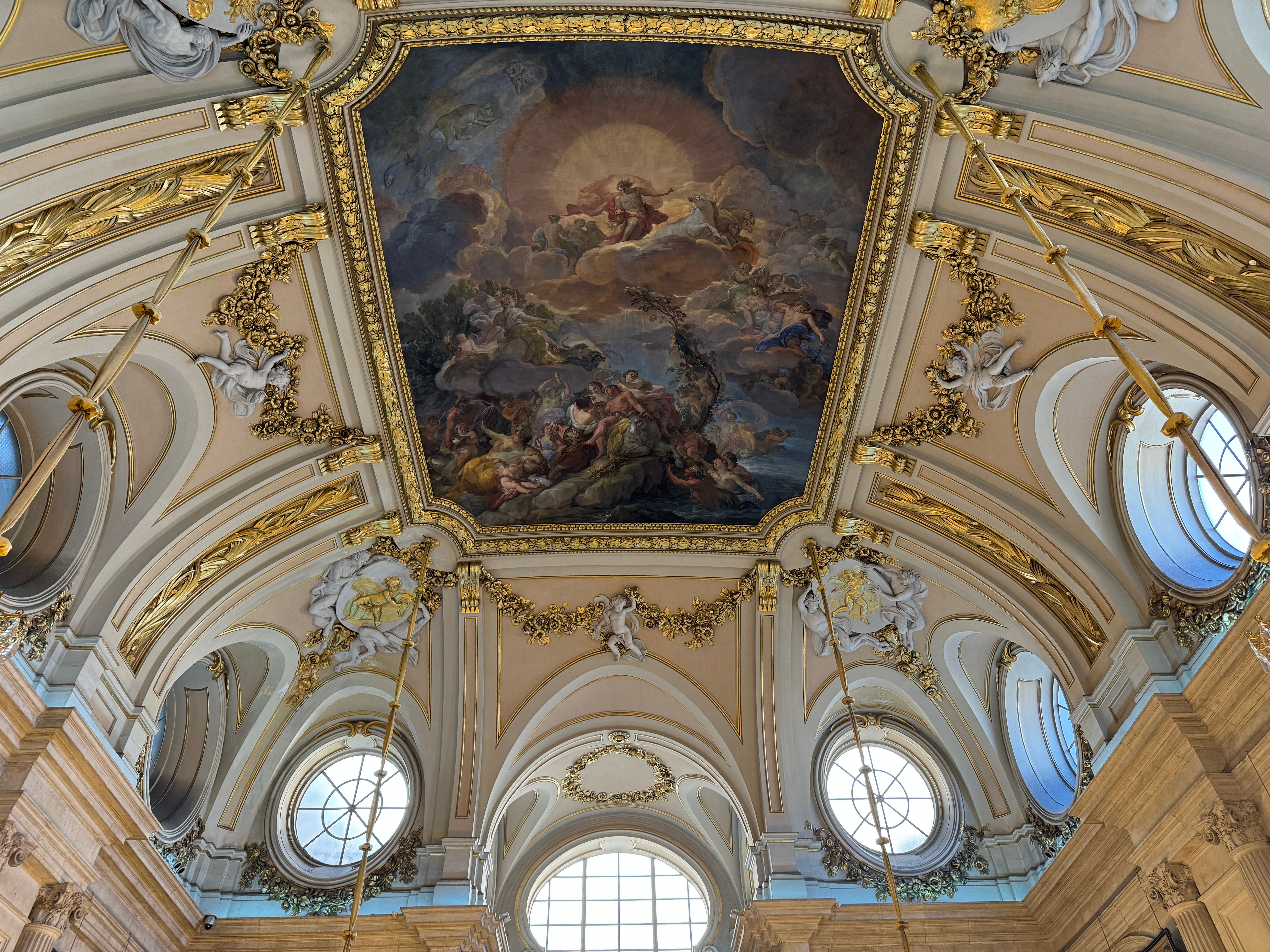
Next, we embarked on a guided tour of the Royal Palace of Madrid, known as Palacio Real. It is the official residence of the Spanish Royal Family, though it is now primarily used for state ceremonies. Built in the 18th century, it stands as one of the largest palaces in Europe, with over 3,000 rooms showcasing lavish decor, priceless art, and historic artifacts. Highlights include the Throne Room, the Royal Armory, and frescoes by artists such as Goya and Velázquez. Some of the rooms we visited were the rooms of Carlos III, the Porcelain Room, the Yellow Room, the Gala Dinner Room, the Band Room, the Silver Room, the Souvenir Room, the Royal Chapel, the Crown Room, and the Throne Room.


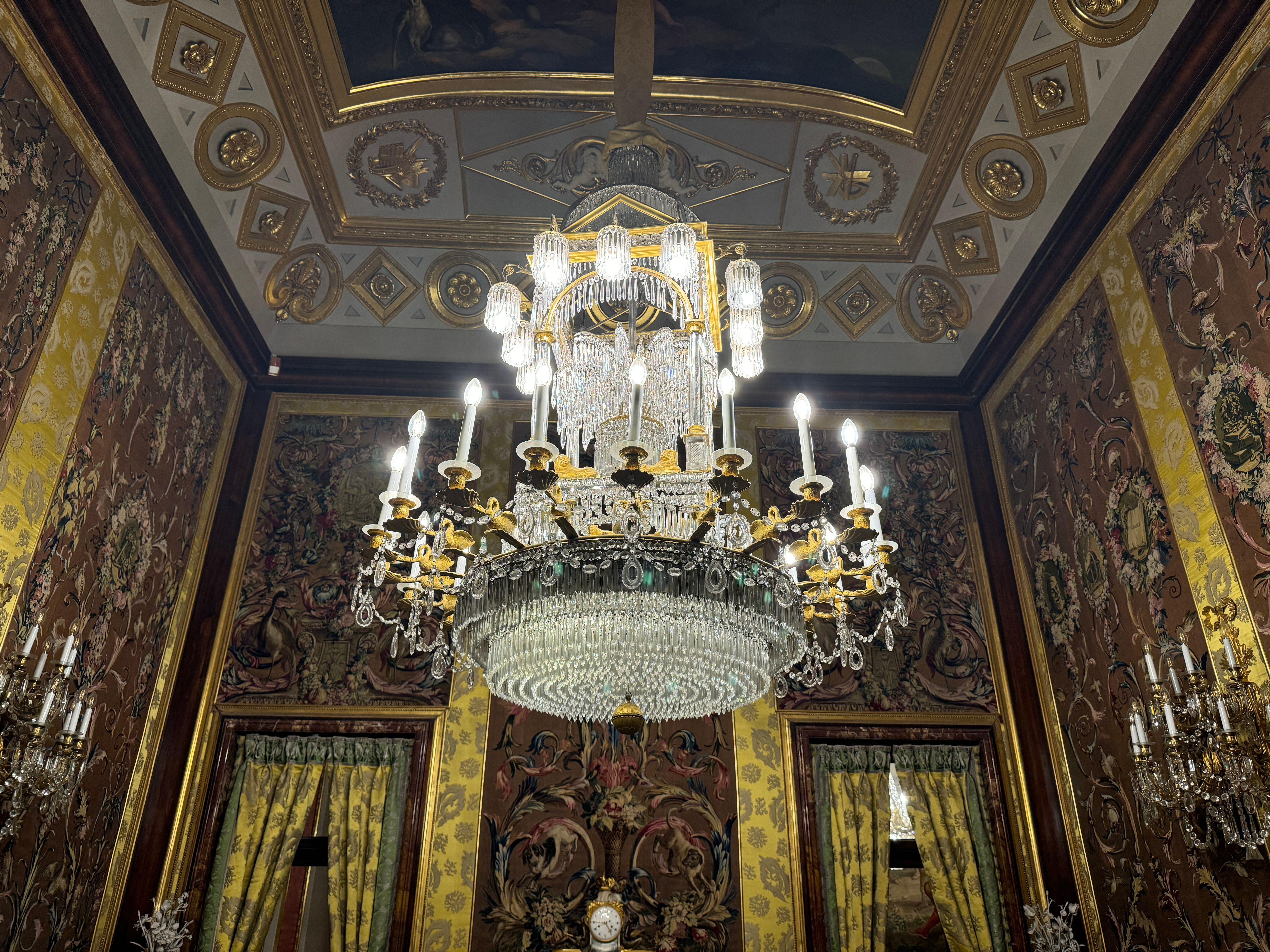

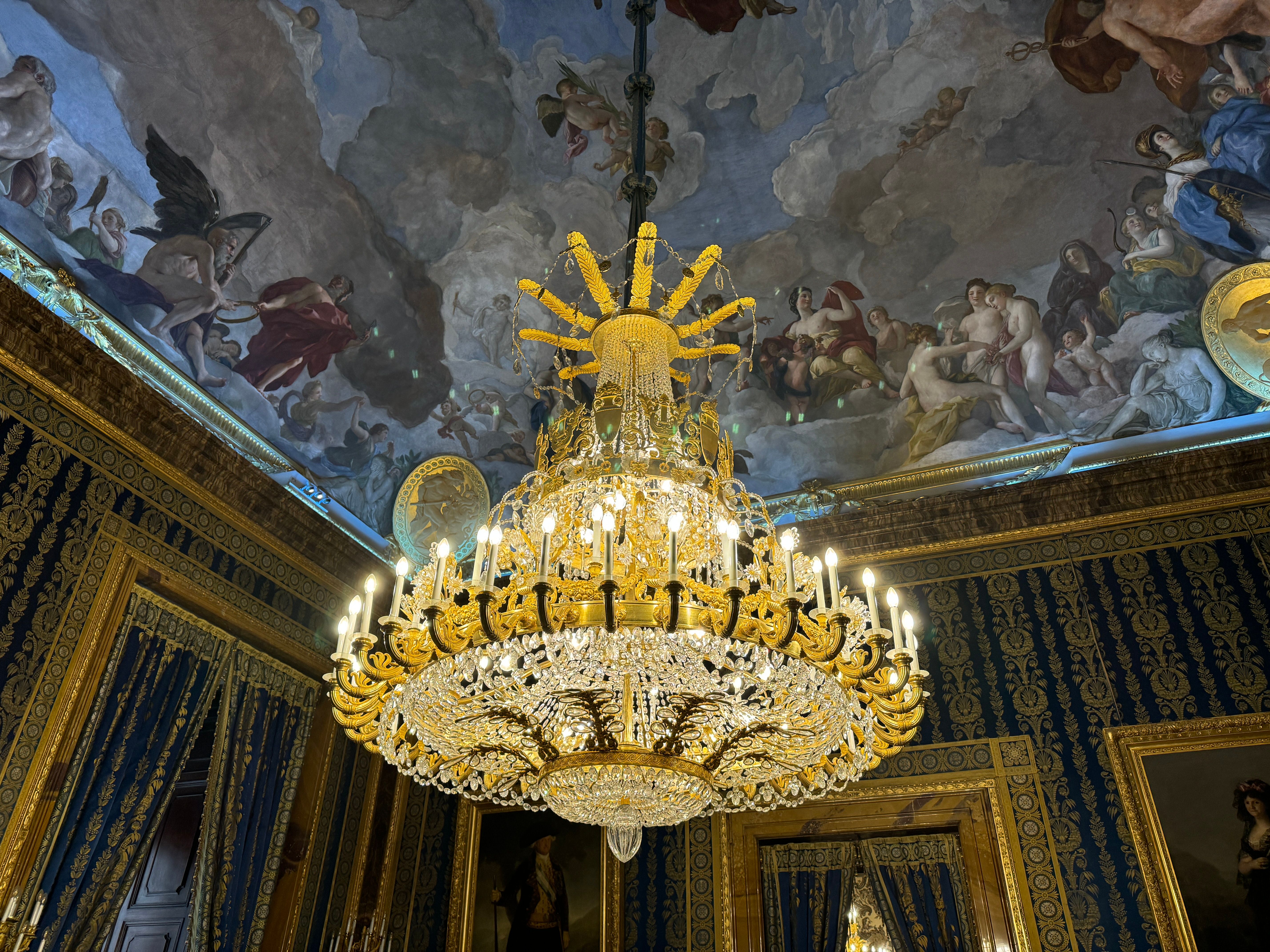
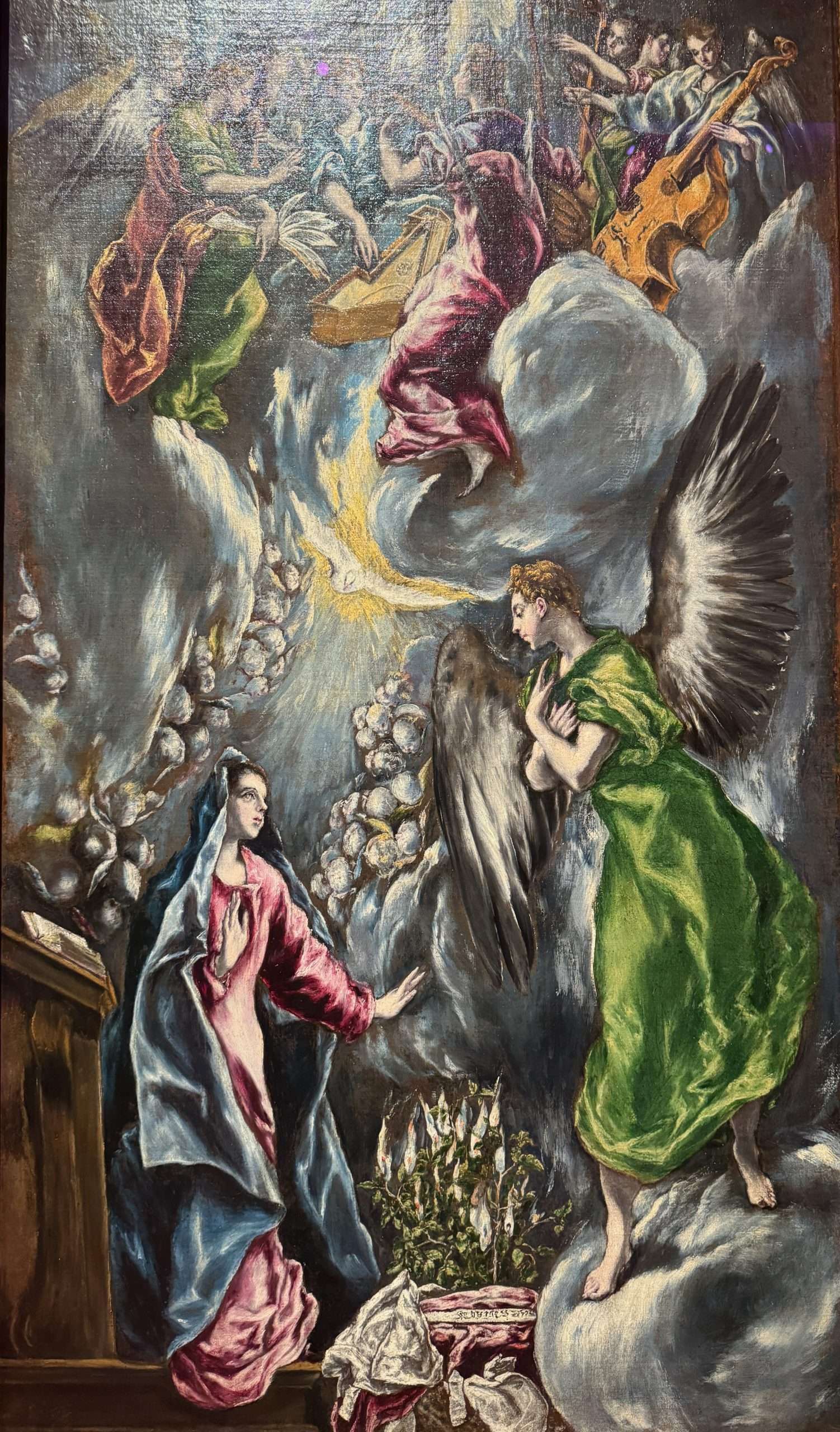
In the afternoon, we took a guided tour of the Prado Museum, where we viewed masterpieces by renowned artists. Our guide focused specifically on works by Spanish painters, including Goya, Velázquez, and El Greco, among others.
In the evening, we attended the farewell reception and dinner and said our goodbyes.
Exploring the Reina Sofía and Thyssen-Bornemisza Museums – October 6, 2024
This morning, Christabel and Cheryl went to mass at the Church of Jesus de Medinaceli. What was remarkable in this church is that Christ is represented as a black figure, a departure from the usual white Euro-centric figure you see in most churches.
Although the official tour ended the previous night, we chose to spend an extra day in Madrid to visit two iconic museums we hadn’t explored on our last trip: the Reina Sofía and the Thyssen-Bornemisza. Derek and Cheryl decided to visit El Corte Inglés, the popular department store.
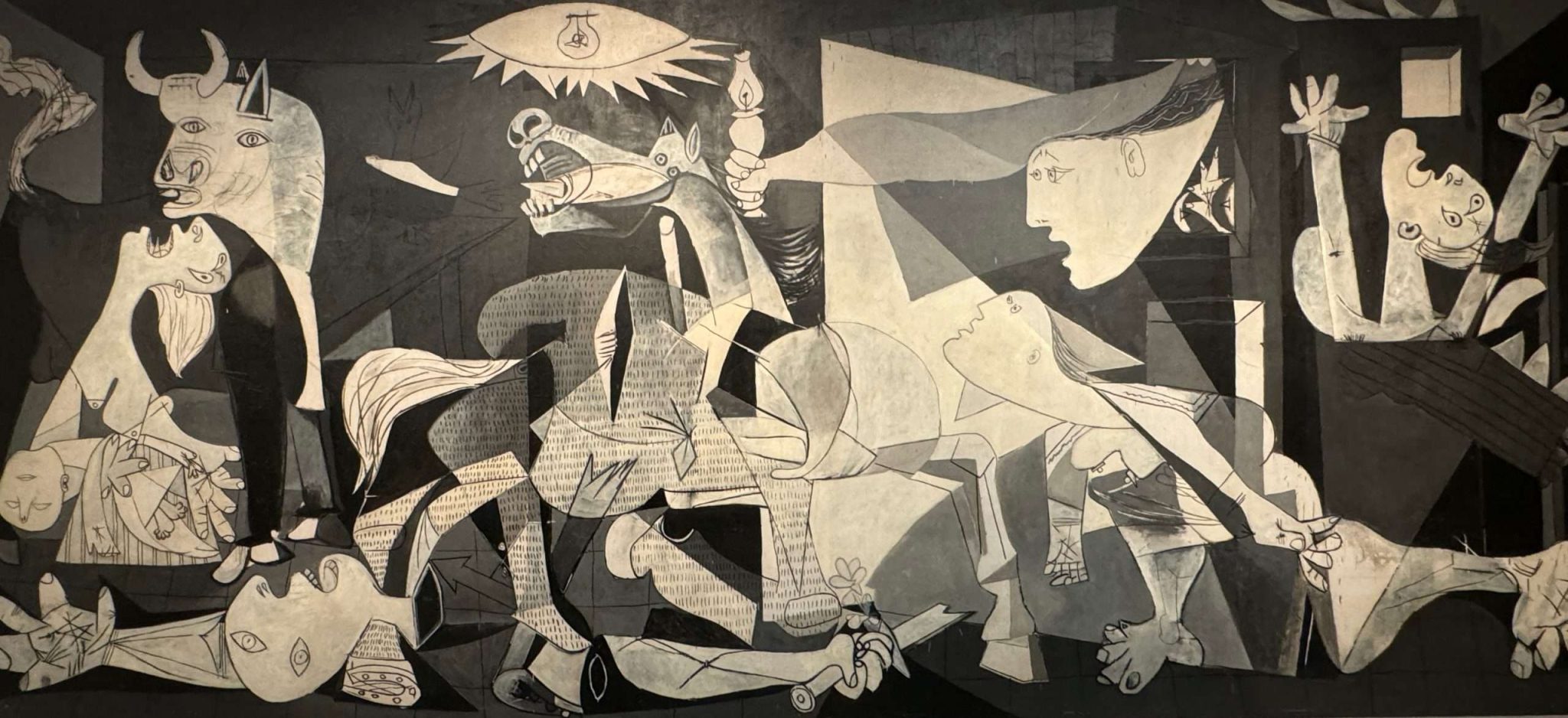
Our main reason for visiting the Reina Sofía was to see Picasso’s Guernica, the monumental anti-war masterpiece depicting the horrors of the 1937 bombing of the Basque town of Guernica during the Spanish Civil War. As expected, there was a huge crowd to view the painting, with everyone vying to get as close as possible to the front of the barrier. Afterward, we explored works by other influential artists, including Salvador Dalí.
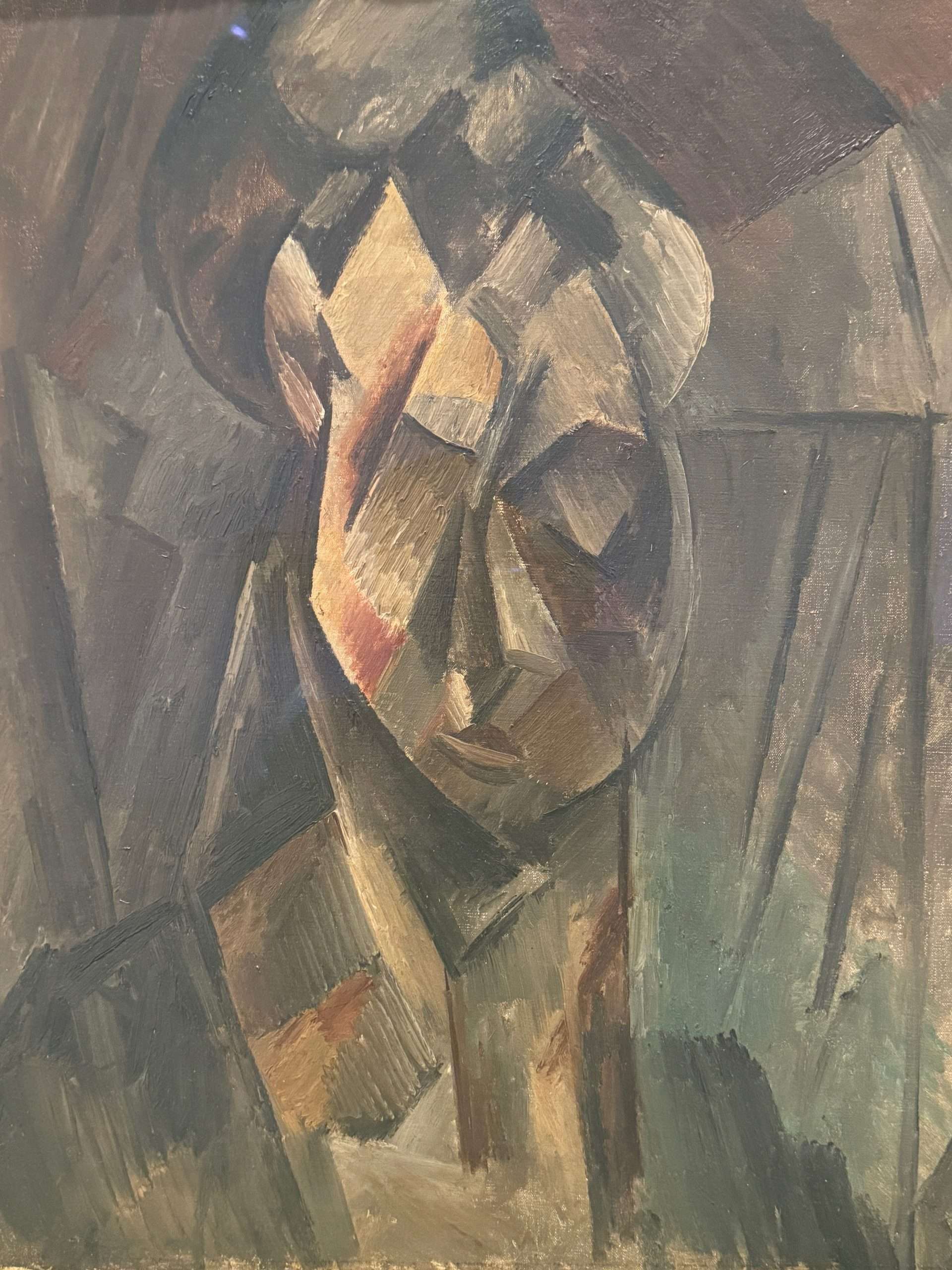
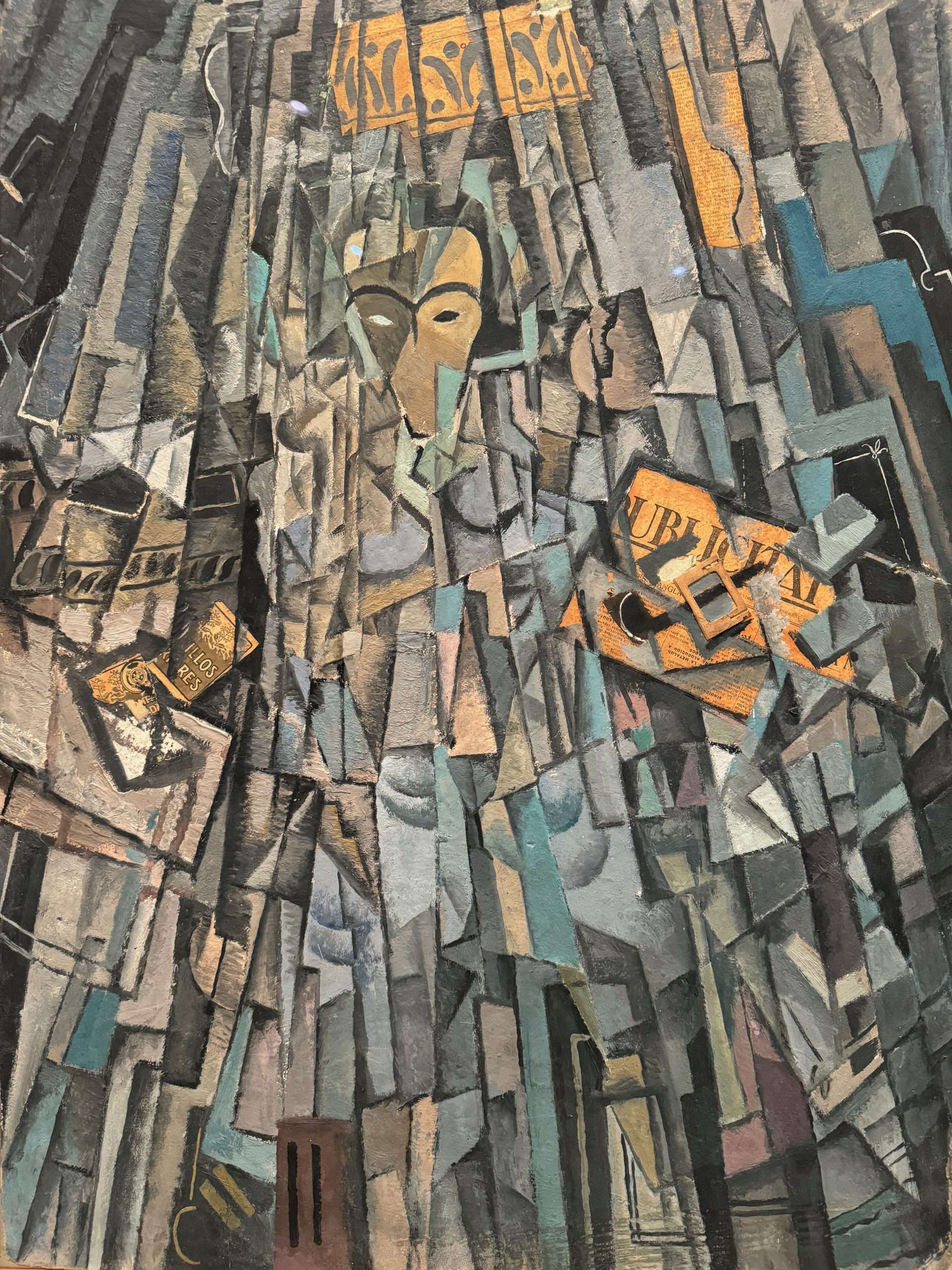
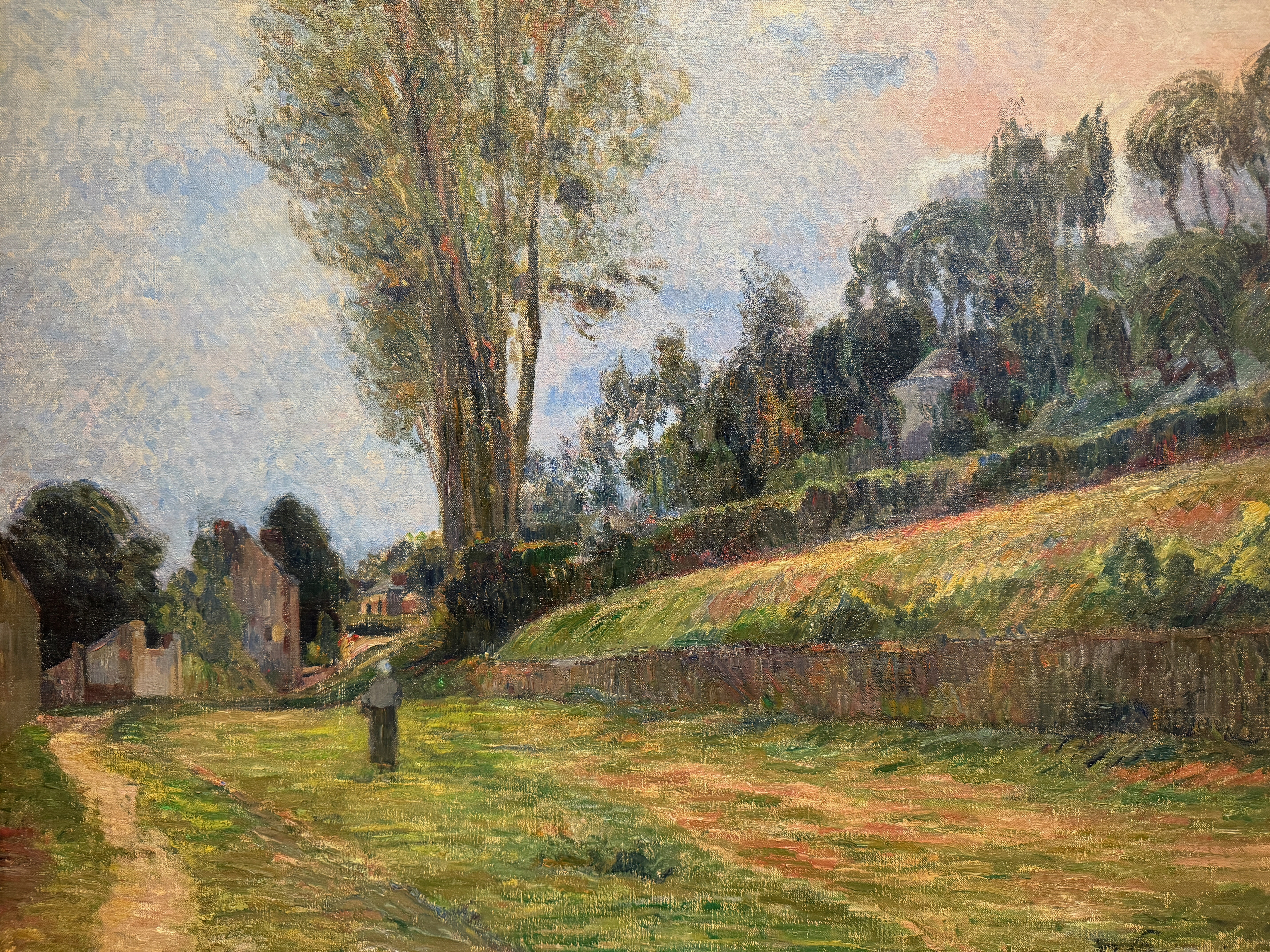
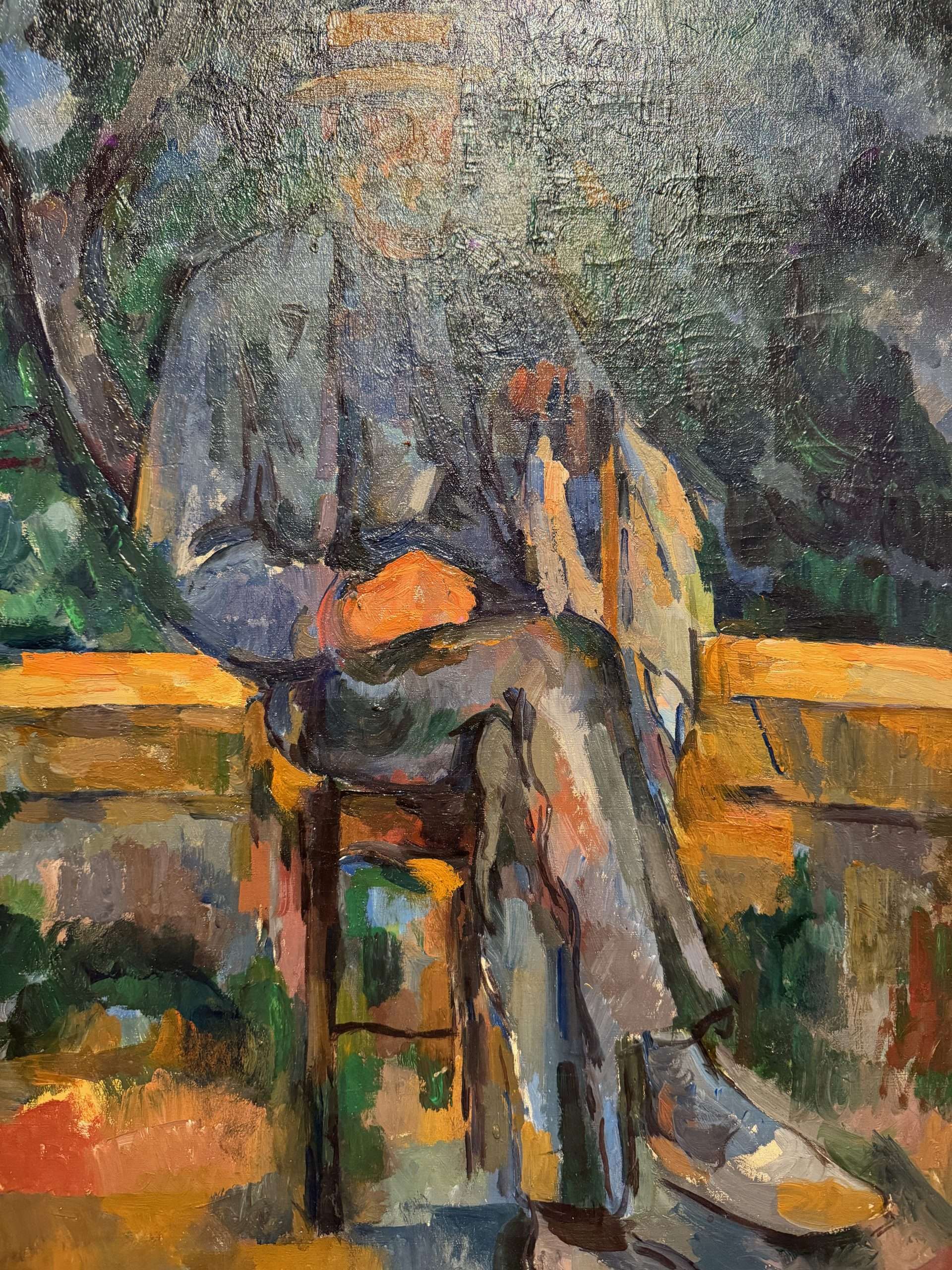
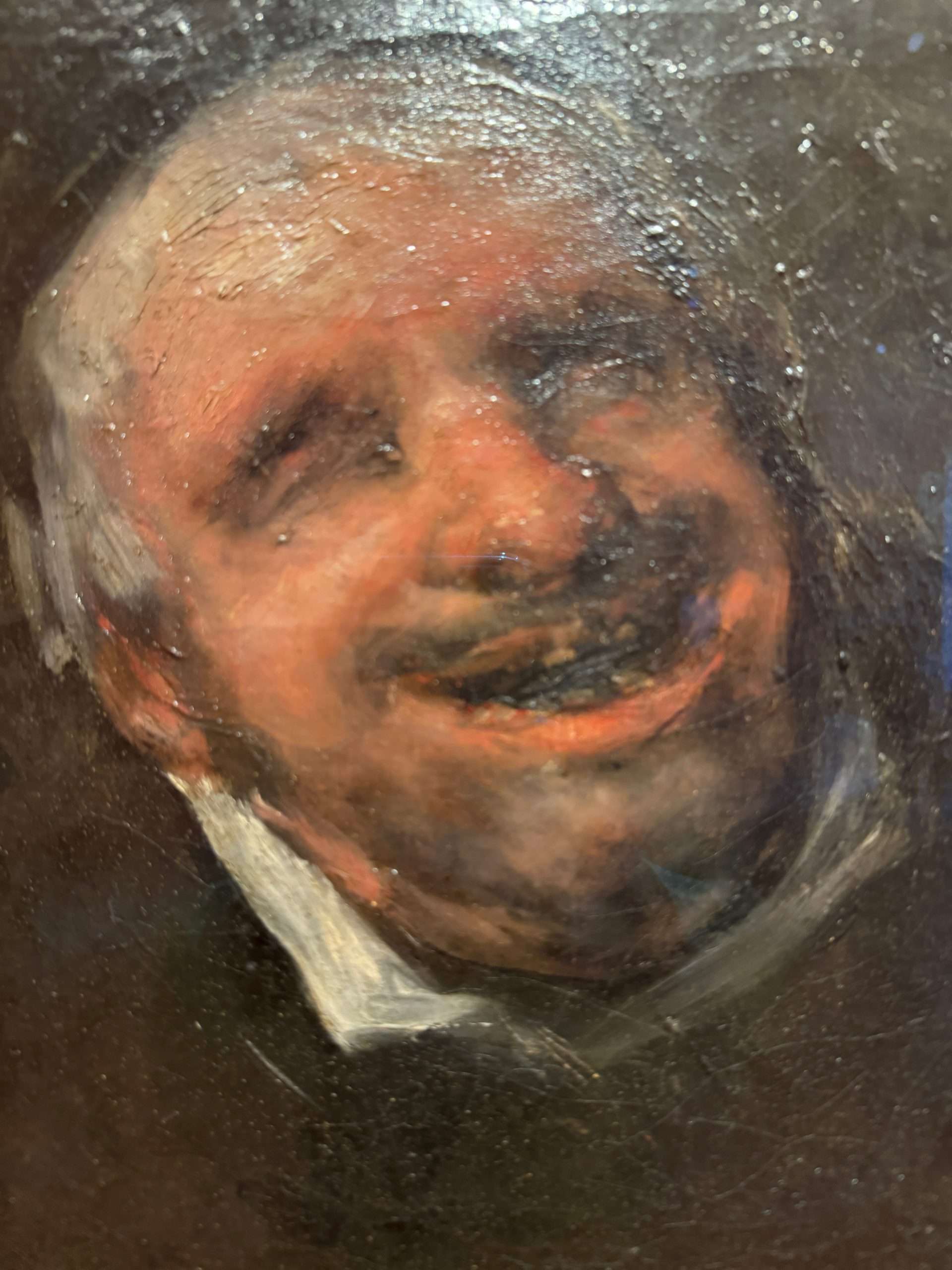
On our way back to the hotel, we made a stop at the Thyssen-Bornemisza Museum to view the impressive collection of Impressionist paintings in the Carmen Thyssen Gallery. After returning to the hotel to wish Derek and Cheryl a warm Bon Voyage as they prepared for their evening flight, we went back to the Thyssen to explore the remaining exhibits on the first and second floors.
We had tickets to visit the Prado as well, but we ran out of time. They are valid for a year. Who knows? We could be in Spain yet again next year!


We ended our evening with a relaxed dinner of chicken and broad bean paella at a nearby restaurant, then packed our bags, ready for our journey home the next day.
Homeward Bound – October 7, 2024
After nearly two amazing weeks of adventure and exploration, we said adiós to Madrid and flew home. The flight was smooth and uneventful.
Thank you for the tour of Portugal and Spain. It was wonderful to reminisce as we too walked the Portuguese Camino. Salamanca holds a special place in our hearts. Several years ago we lived in the heart of the historic town for 4 months while I attended Spanish language school.
Exploring other cultures is the best!
Where are you going next?