
Berlin Arrival – September 13, 2019
Today, we flew to Berlin. Our flight was delayed by over an hour and believe it or not, the cleaning crew didn’t have supplies. The rest of the flight was thankfully uneventful.
Berlin Exploration: Guided Tour Highlights – September 14, 2019
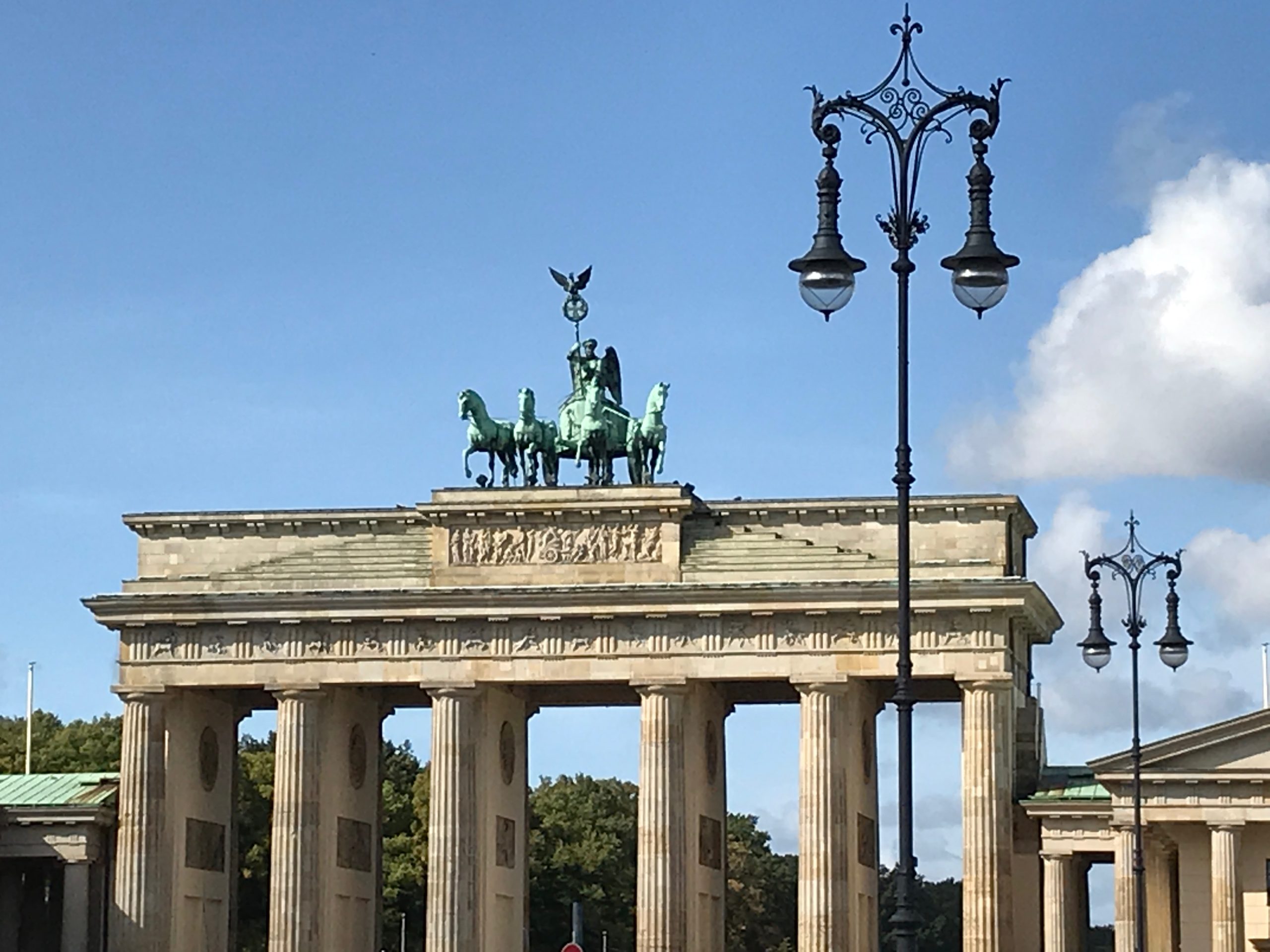
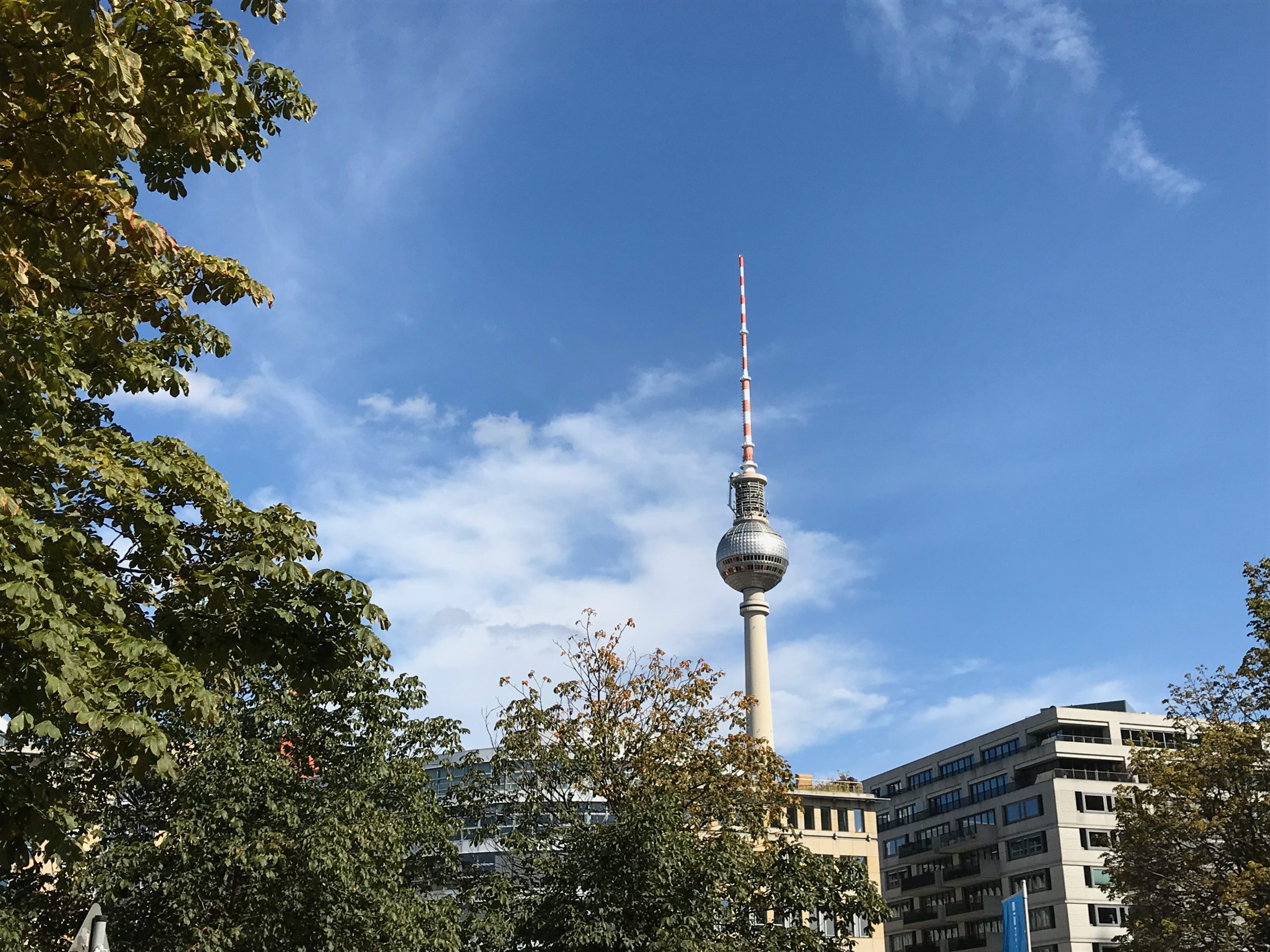
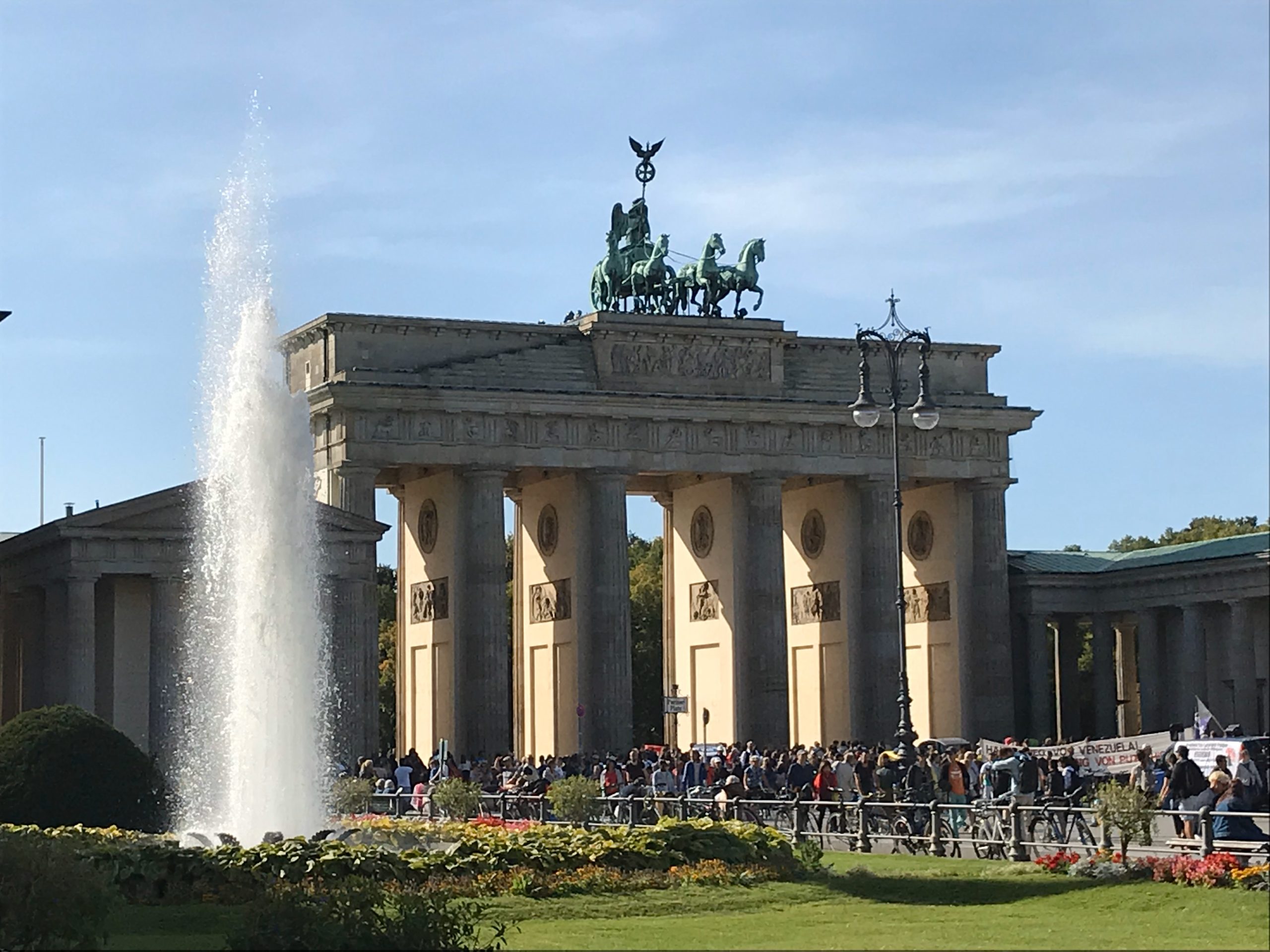
We arrived around 8 AM and were surprised by how deserted the city appeared for a Saturday morning. Our accommodation at the Grand Westin, situated on Friedrichstrasse and Berenstrasse, right next to the Komische Opera, proved to be perfectly located. We strolled to visit the Holocaust Memorial, the Brandenburg Gate, and the Reichstag, all before our room was ready.
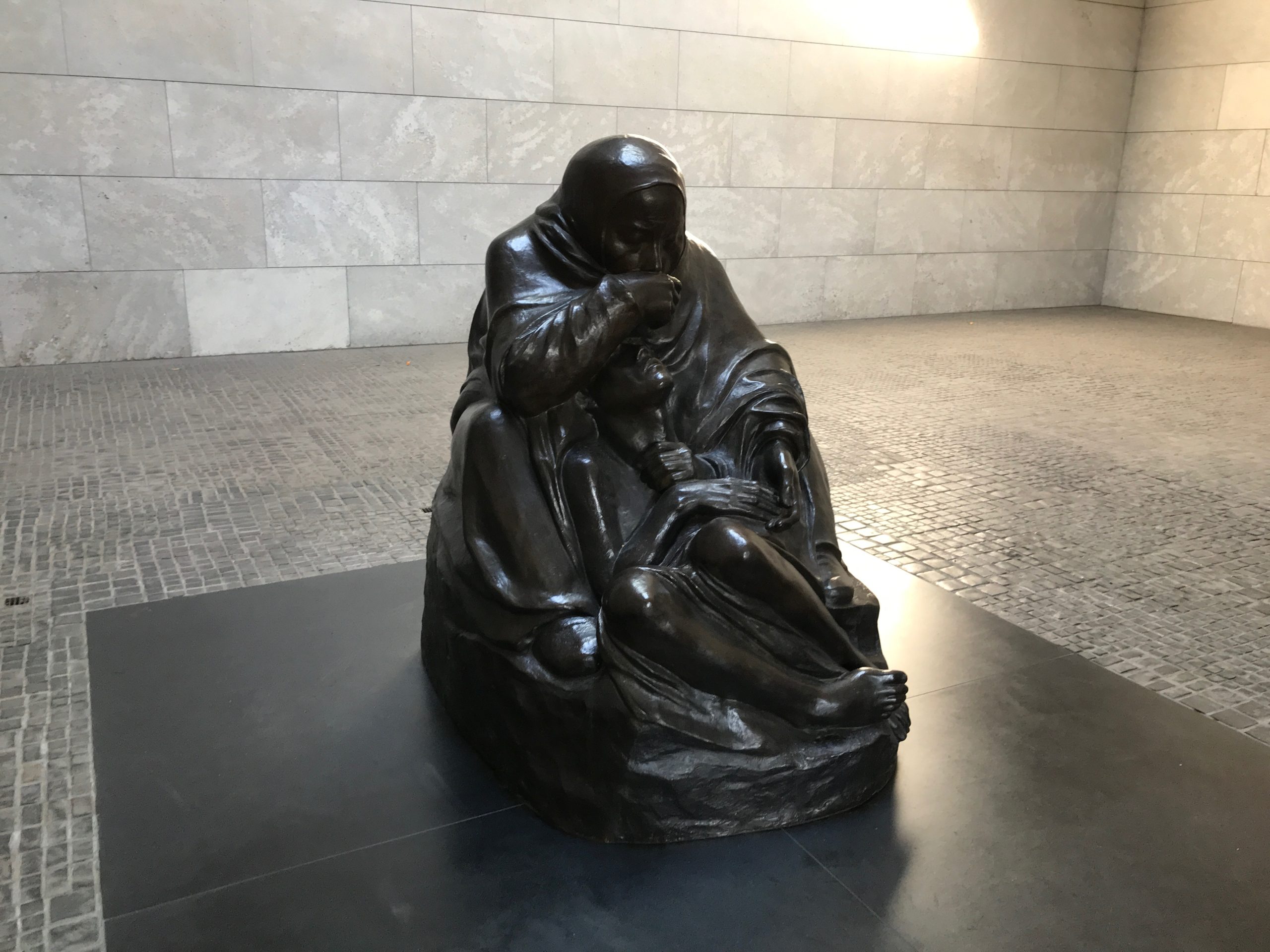
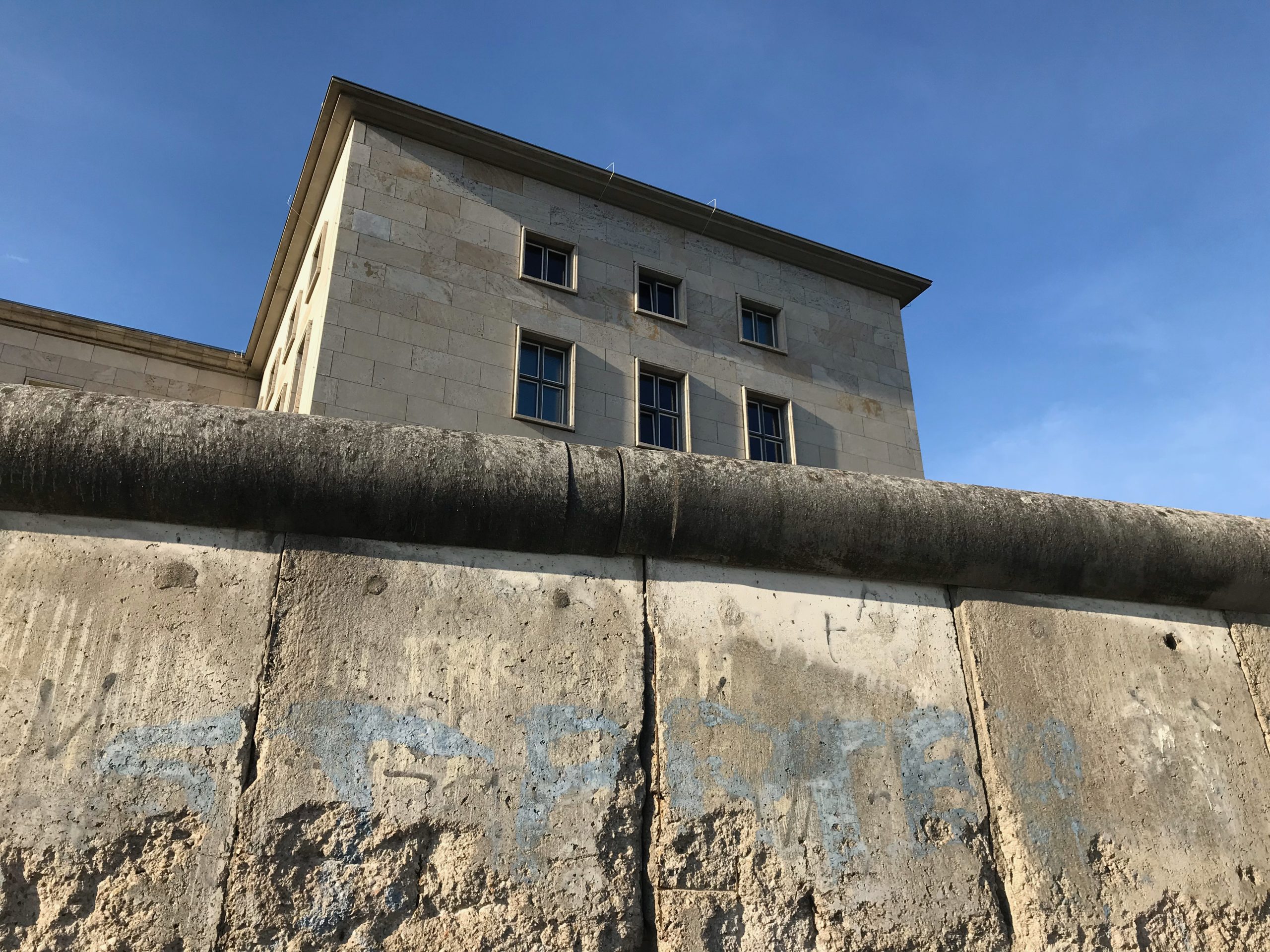
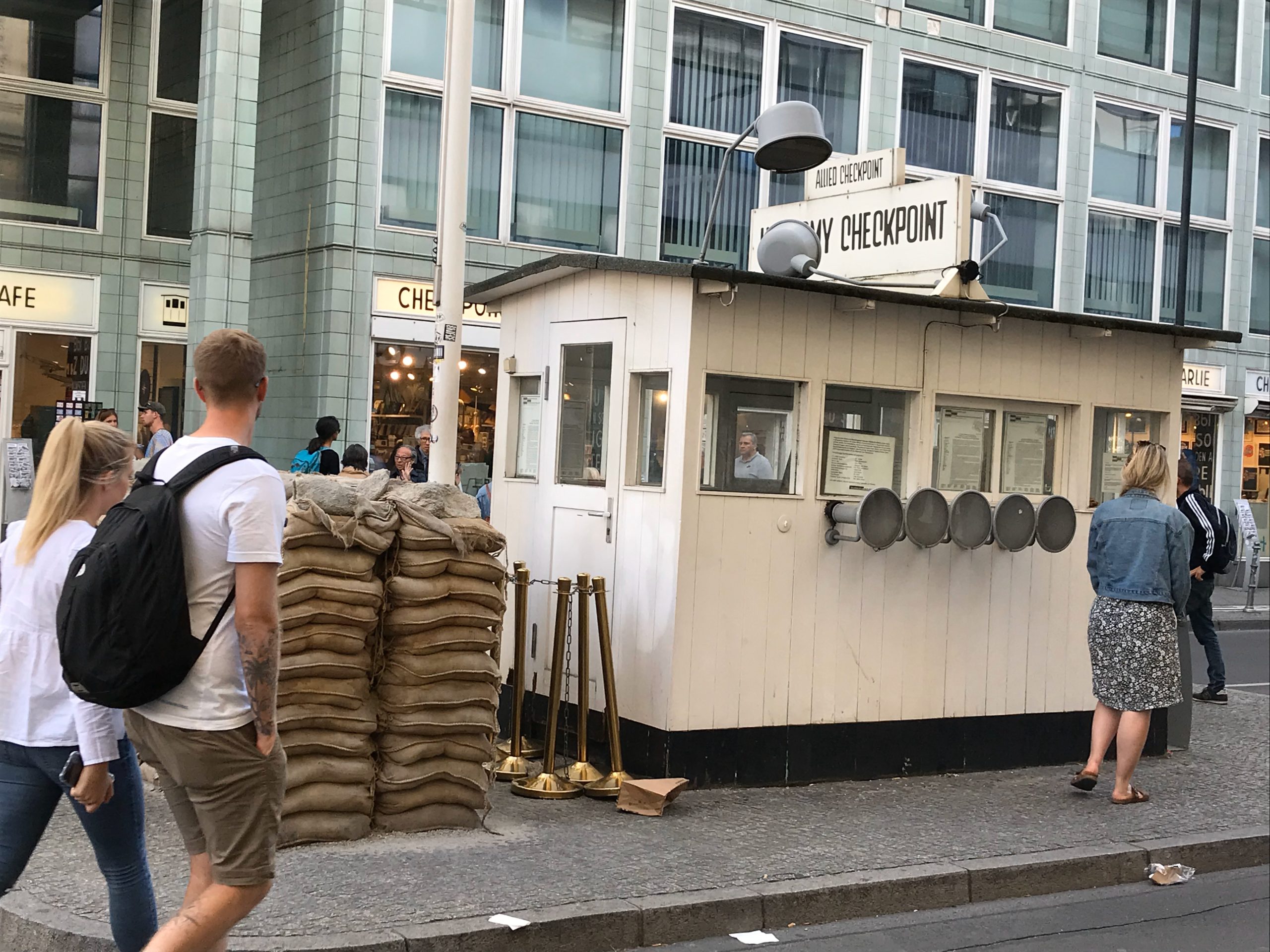
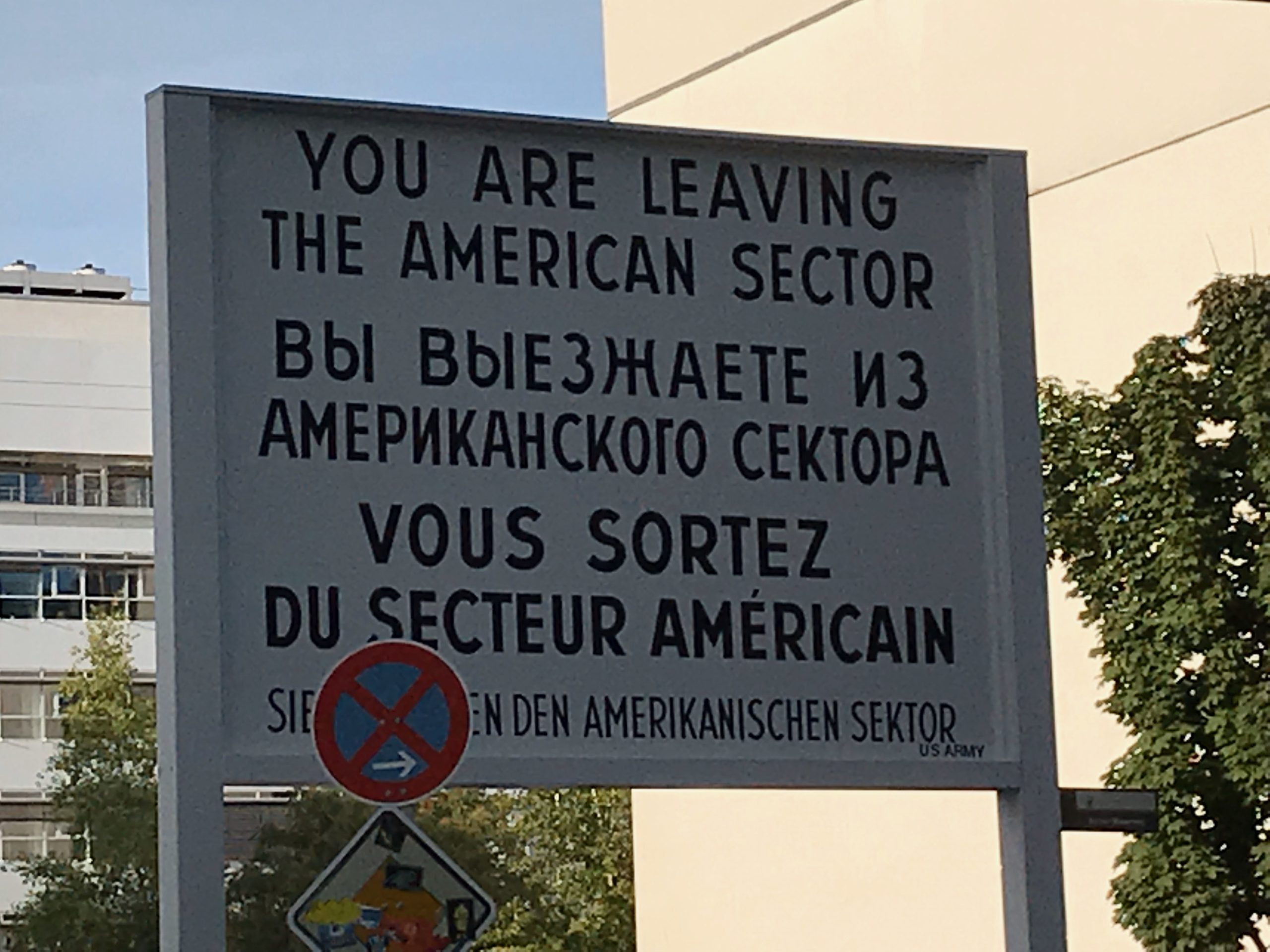
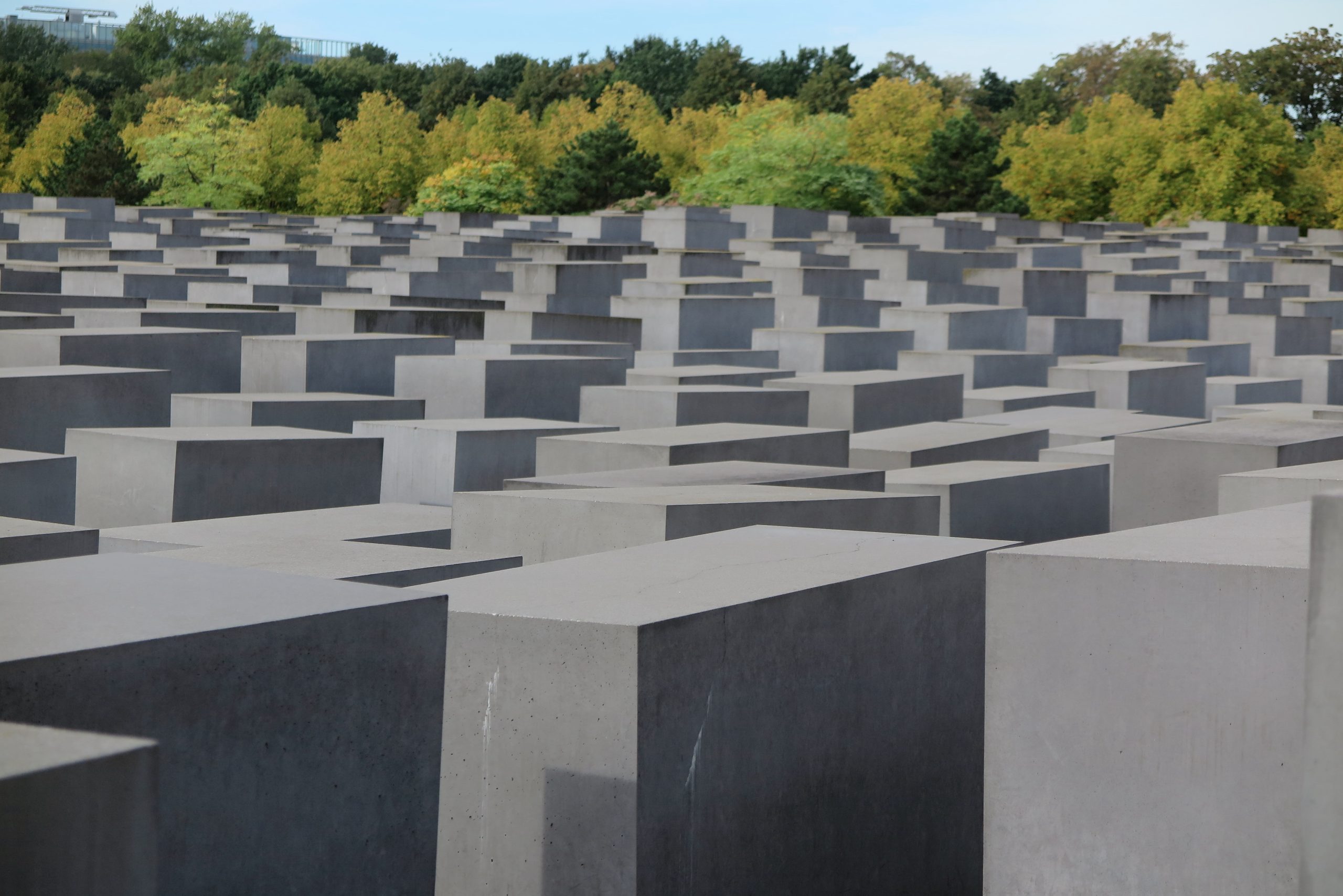
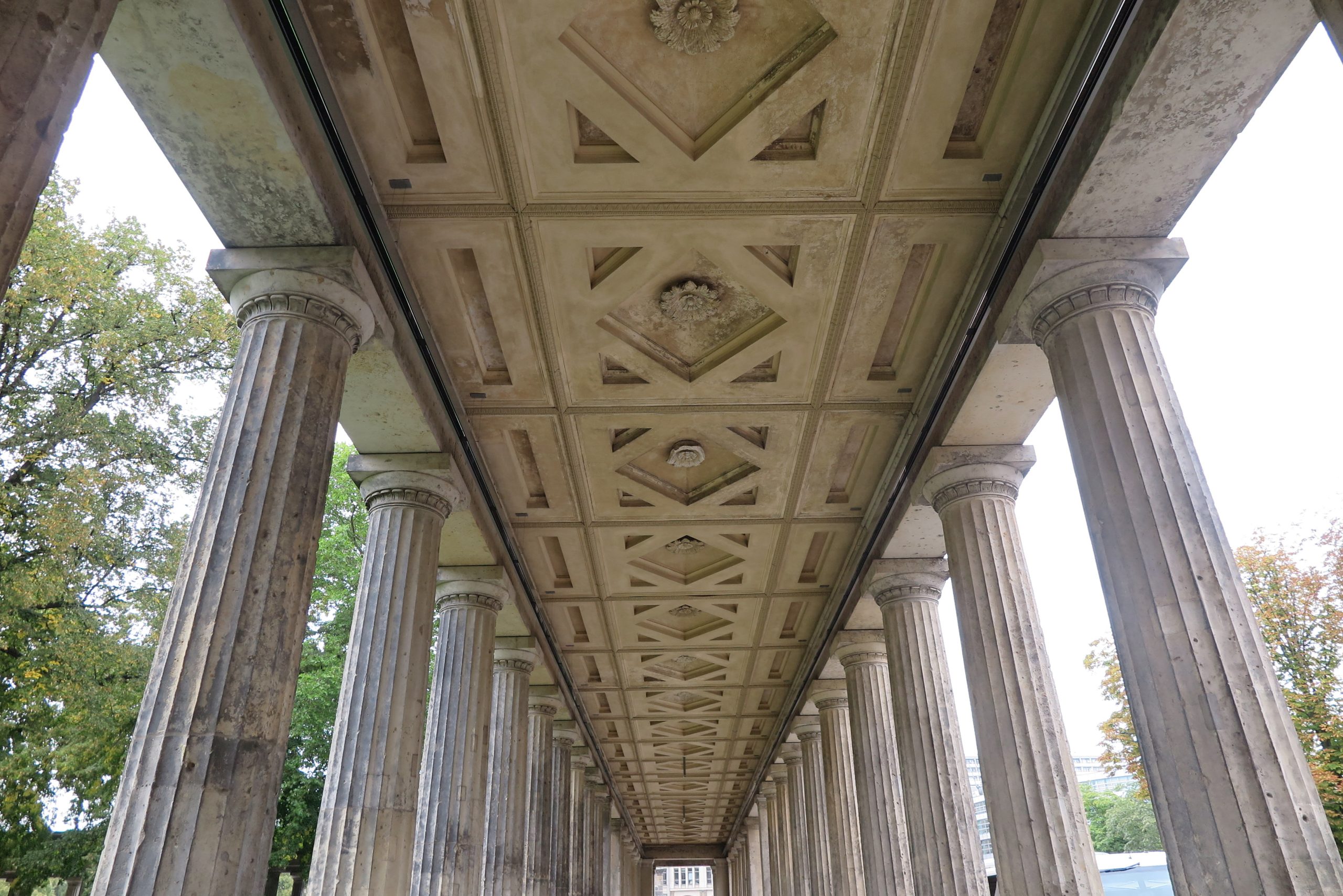
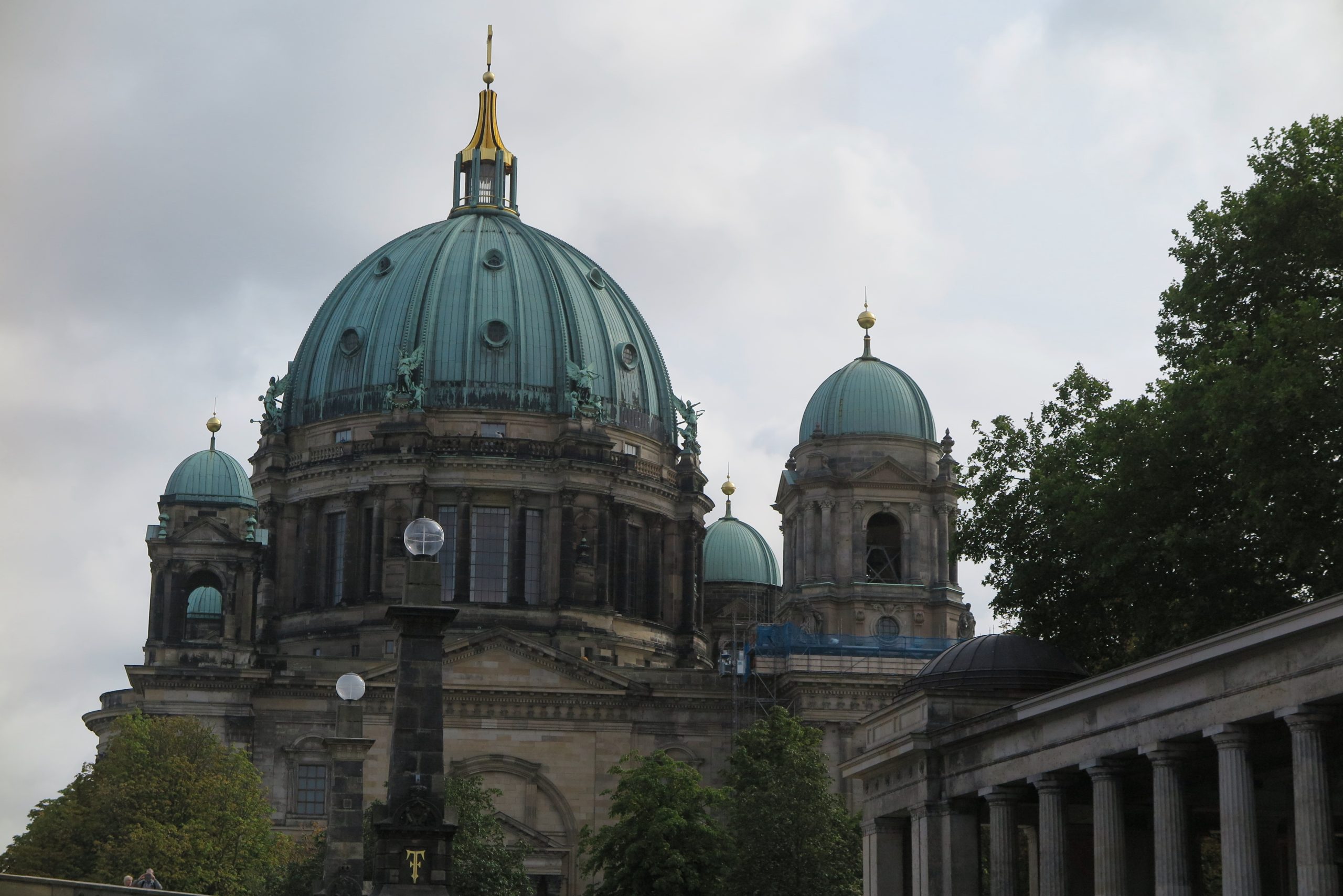
In the afternoon, we joined a four-hour walking tour to orient us to Berlin. The tour took us to the Berliner Dom, the new Guard House with the statue of Mother with Her Dead Son by Kathe Kollwitz, then on to Lustgarten and past some of the museums on Museum Island (Altes, Neues), past the Staatsopera, and on to Bebelplatz (where the books were burnt during the time of the Nazis) and the installation of the empty library that can be viewed through a glass window embedded on the floor of the square, past St Hedwig’s (built by Fredrich the Great for Catholics and now seat of the Bishop), Humboldt University, and on to the Brandenburg Gate. At the gate, we took a short break and then proceeded to the Holocaust Memorial. This time we walked through the installation. On second viewing, we found it to be stark but impressive, resembling a cemetery with grey tombs rather than the usual white ones. And then on to Hitler’s bunker, which is now a parking lot. The only reminder to the gruesome history of the place is a board that gives you the chronology of what happened there. From the bunker, we went to view the building that served as home to the Airforce Ministry during WWII. This is the only building that was never damaged during the bombing of Berlin despite the Allies’ best efforts. It is now home to the Finance Ministry. From here, we continued our walk to view the remnants of the Berlin Wall and Checkpoint Charlie. Finally, the walk ended at Gendarmenmarkt (Square of the Gens d’Armes). This has been voted the best square in Berlin, with the German Cathedral, the French Cathedral (built for the Huguenots), and the Konzerthaus, designed by Karl Friedrich Schinkel. This was an exhausting four hours, but it was so worth it as Liz, our guide, was extremely passionate about her subject and very fluent in English. She was part German and part American.
We dined at Borchardt on Franzoisische Str., a charming restaurant, where we met a couple from LA who had just returned from a walking trip in Georgia. One thing we learned quickly: German restaurants don’t do small portions. The food tends to be heavy!
Art and History: Gemäldegalerie to Reichstag – September 15, 2019
We had hoped to attend mass at St. Hedwig’s but there were no services scheduled for September.
We made our way to the Gemäldegalerie to see their collection of 16 Rembrandts, as well as works by Caravaggio, Velasquez, Botticelli, Rubens, Vermeer, and more. Two hours later, we ventured to the Decorative Arts Museum (Kunstgewerbemuseum) to view tapestries, furniture, jewelry, fashion, and other exquisite pieces.
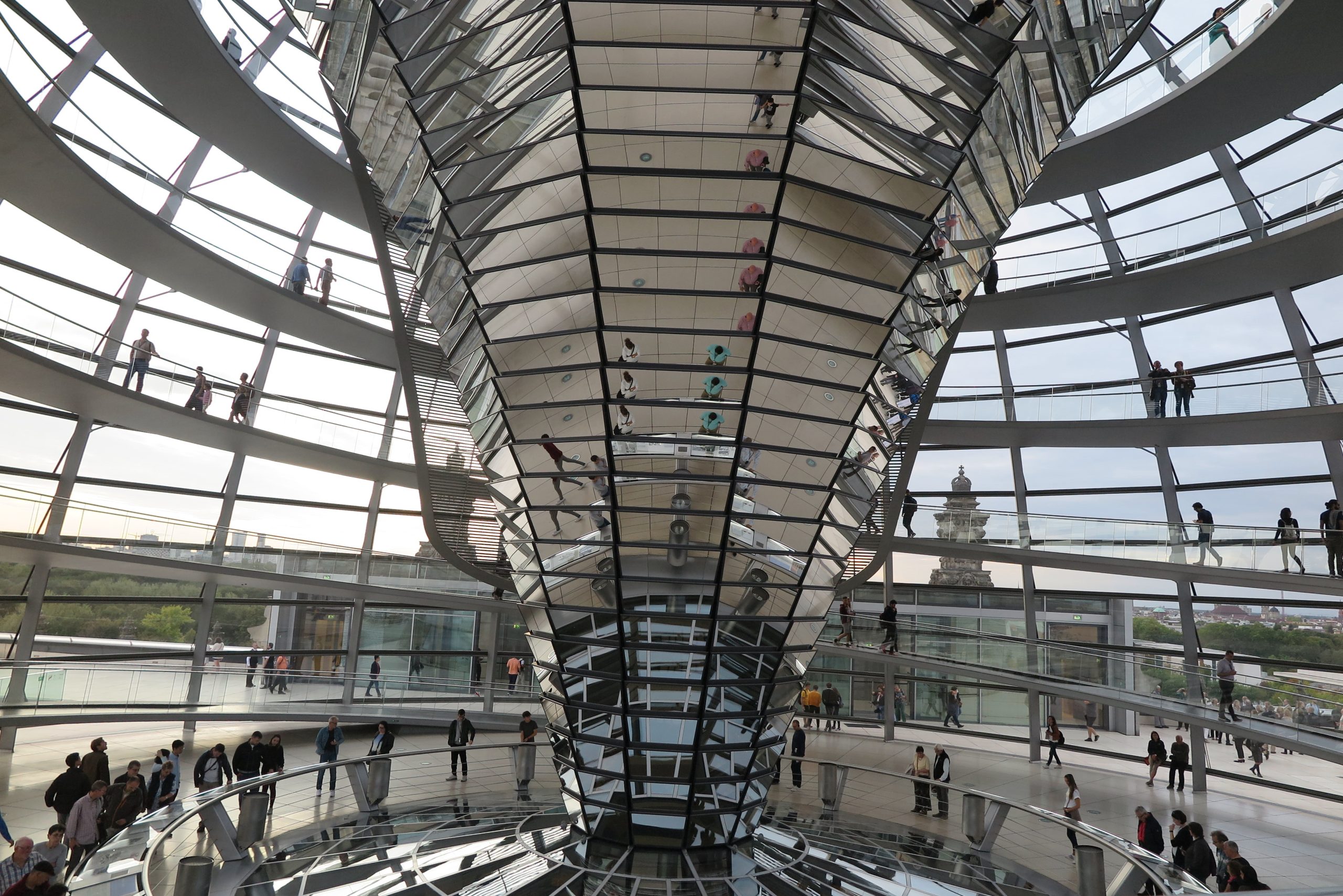
This evening we joined our tour group and visited the Reichstag. Security was heavy, which was only to be expected. While visiting is free, one has to reserve a spot and have one’s passport. On the way in, we saw the Memorial to Politicans Who Opposed Hitler. They are represented by 96 bronze colored slabs, each with the name of a victim.
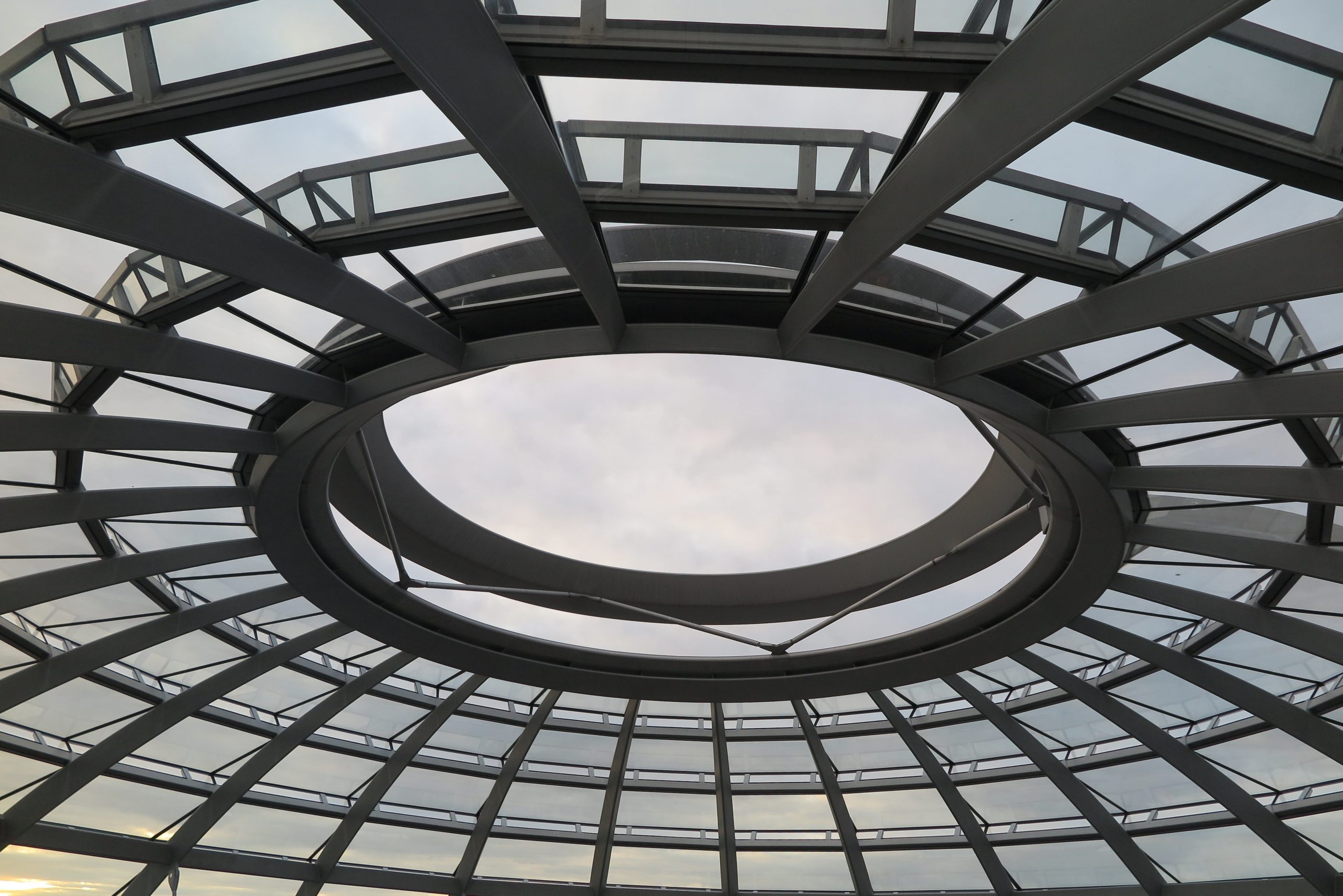
This is likely the most visited Parliament in the world, thanks to the tower designed by British architect Norman Foster, which consists of a funnel comprising mirrors and is open-aired. One can access the top either by elevator or by ramp.

We had our welcome dinner here, followed by a talk given by a film personality, Gerd Zimmerman, who managed to escape from East Germany during the Communist era. He, along with a stuntman friend, did this by escaping when on a visit in Bulgaria, where the guards were a bit more compassionate and did not immediately shoot those escaping. Nevertheless, he was captured and sent to prison, but later released when he was bought by West Germany for $95,000. Apparently, each person commanded a price depending on whether one was a student or one had a degree. He had two degrees, so he commanded a higher price. He then went on to work for P&G in Cincinnati, Ohio, producing their advertising commercials before he left for Hollywood. The stuntman friend also made it out and is supposedly a millionaire today owning some kind of a theme park.
Exploring Berlin’s Cultural Marvels – September 16, 2019
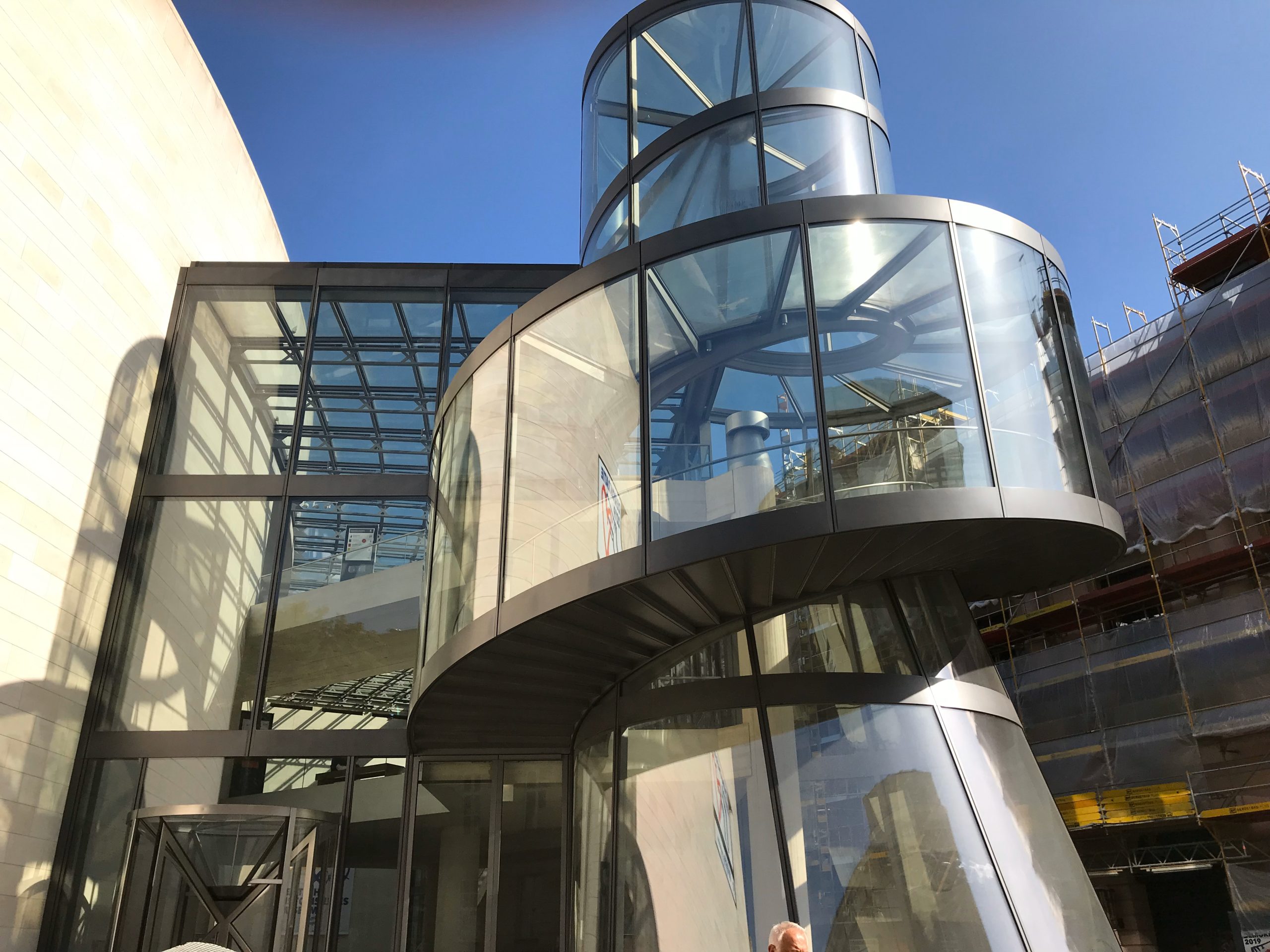
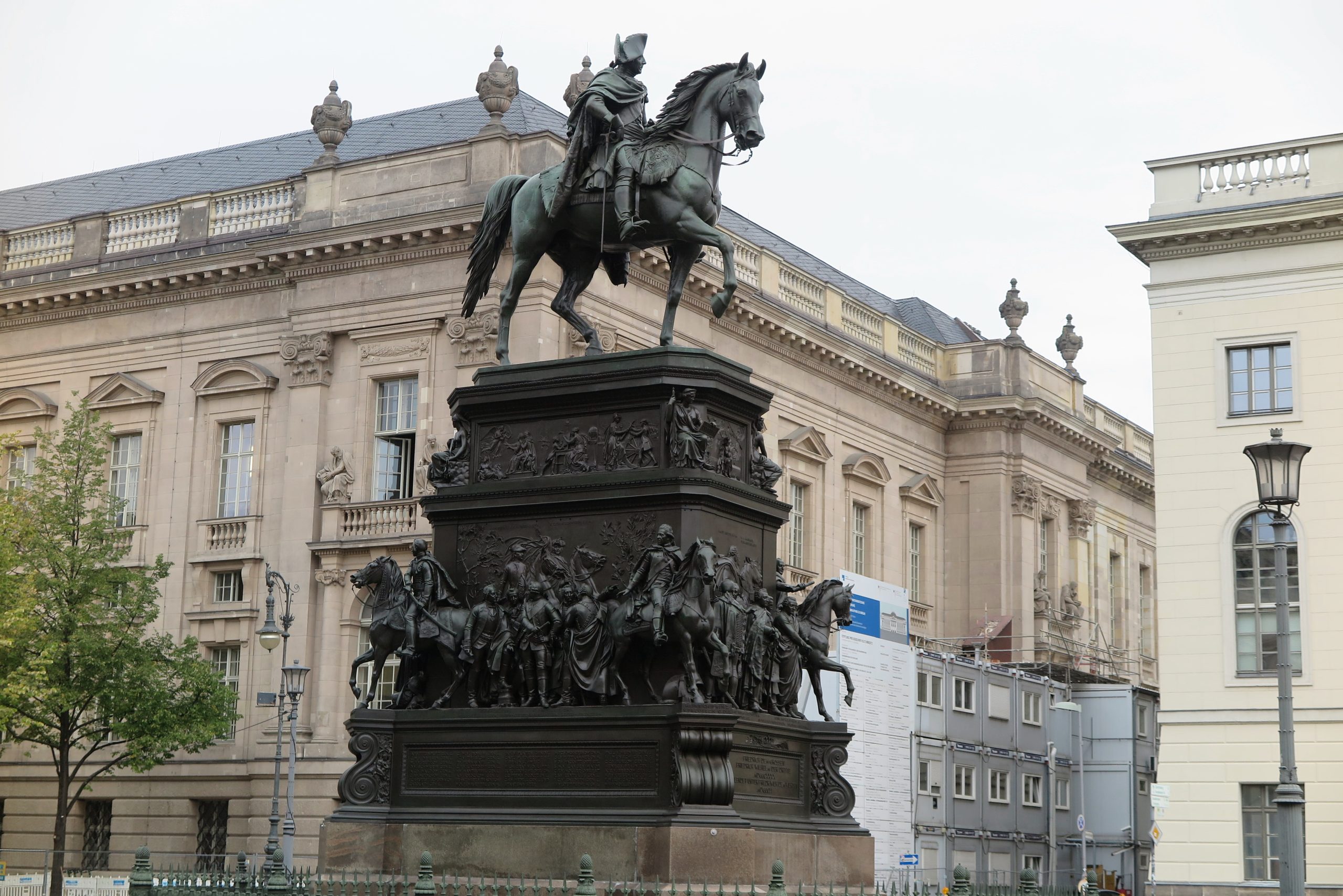
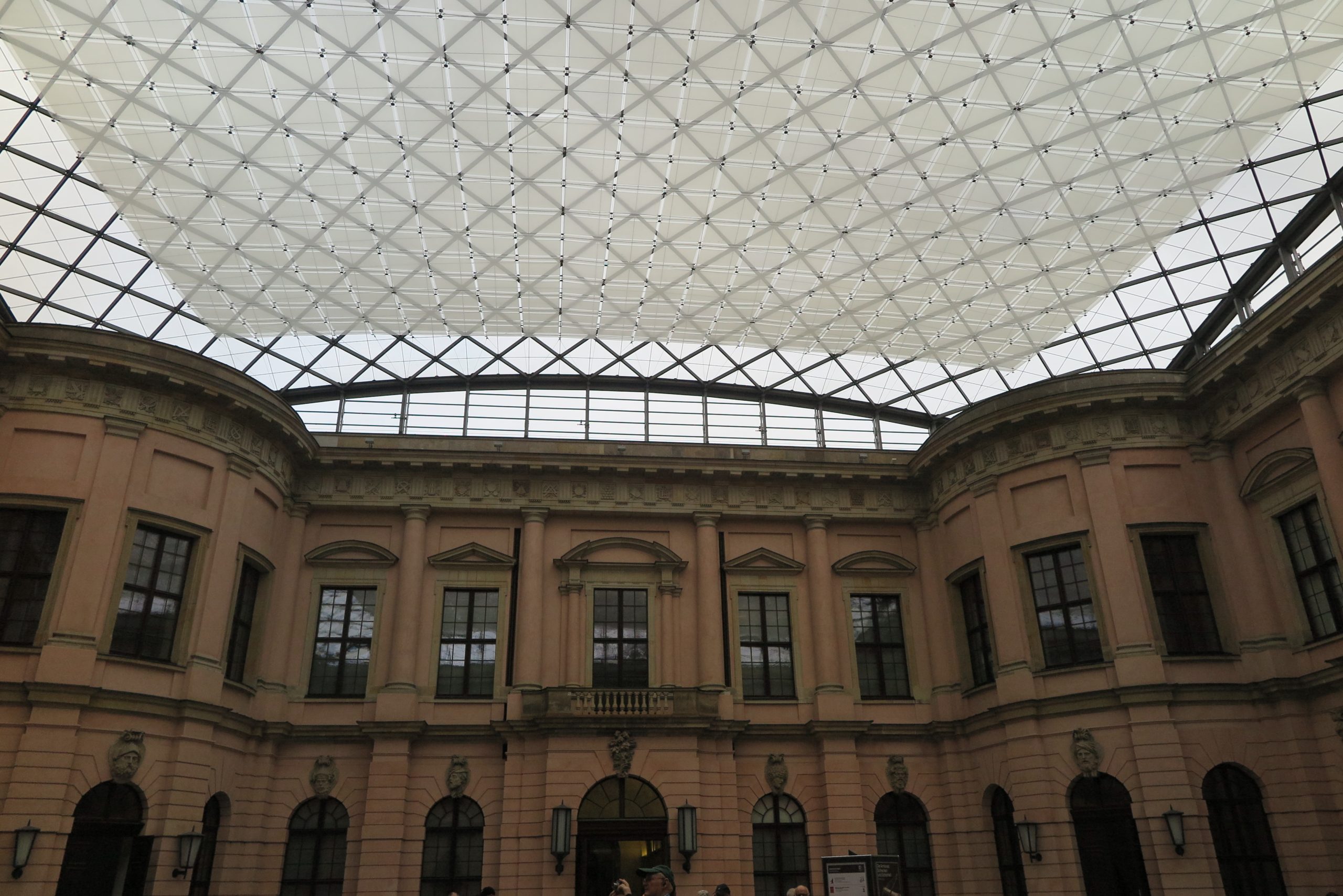
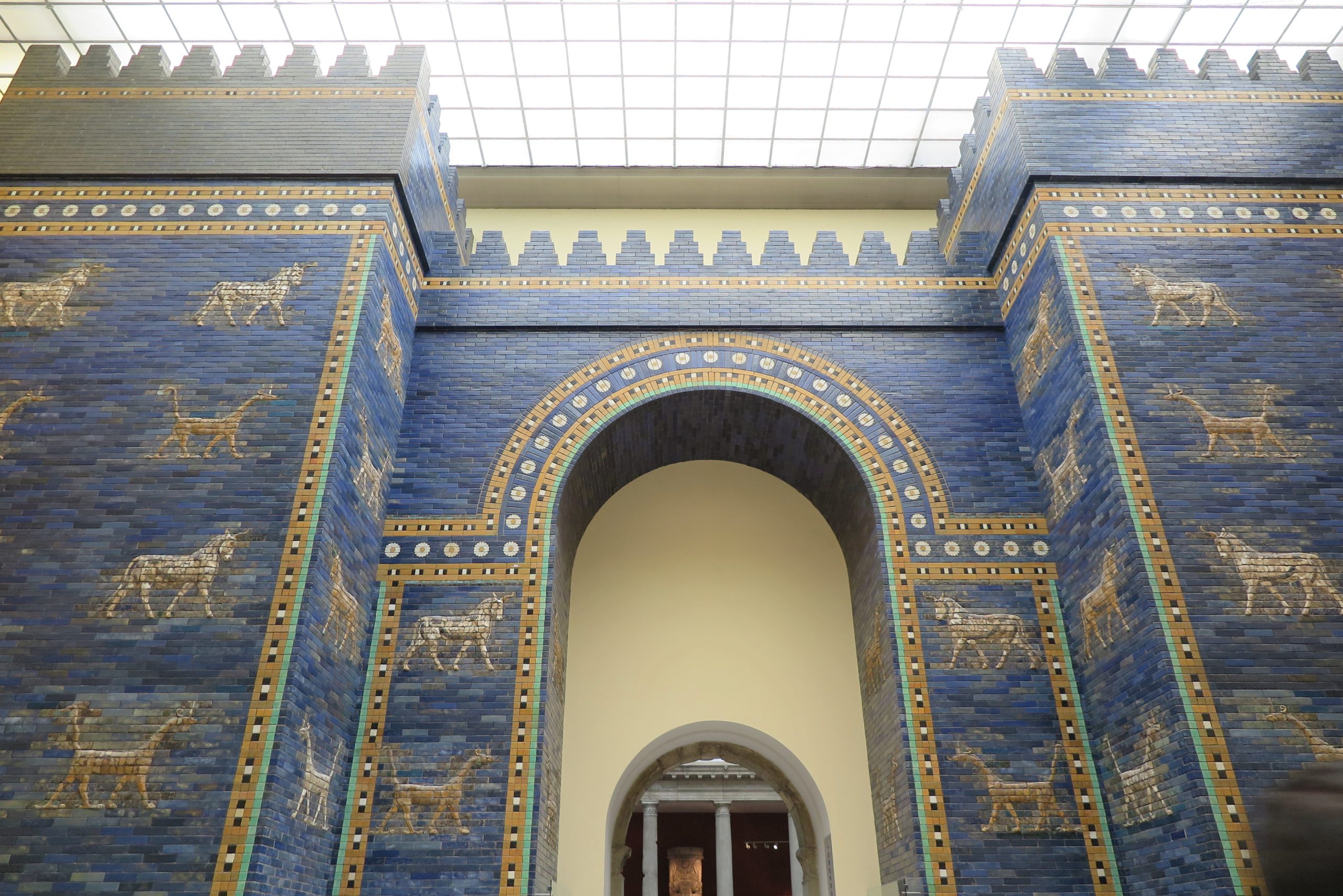
Today we visited the Pergamon Museum. On our way there, we first stopped by the German History Museum to see the modern annex designed by I.M. Pei, including the glass canopy in the courtyard. We entered the Pergamon through the gallery named after James Simon who donated many of the artifacts in the museum. We admired the Processional Way and Ishtar Gate of Nebuchadnezzar II, the Market Gate of Miletus, a Roman-ruled, Greek-speaking town that is now somewhere in modern Turkey. This was first destroyed by an earthquake and pieced back together and then destroyed again during the war and put back again. Although ongoing renovations prevented us from seeing the iconic Pergamon Altar, we were fortunate to admire other treasures, including the Mshatta Façade, the Aleppo Room, and the Alhambra Dome.

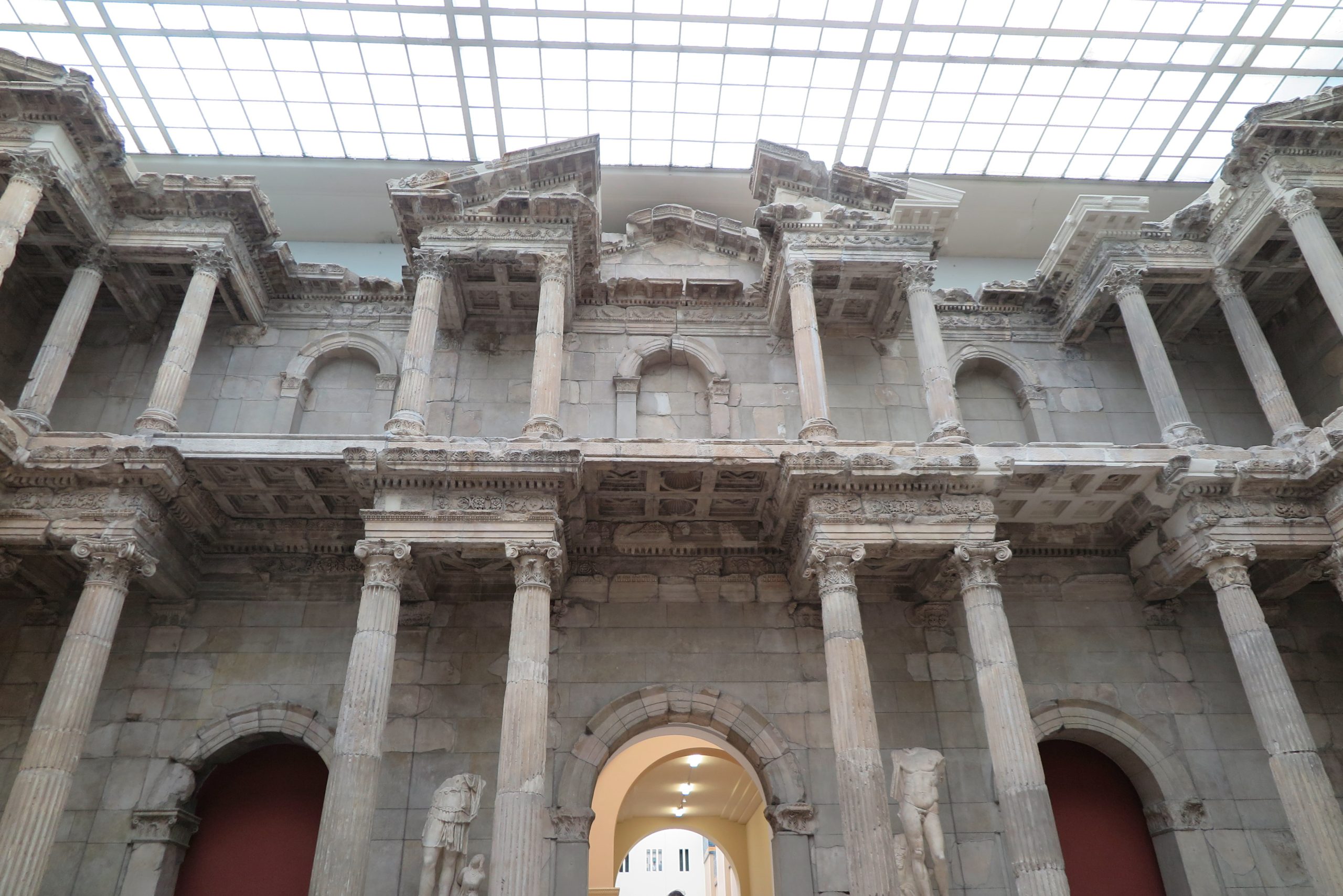
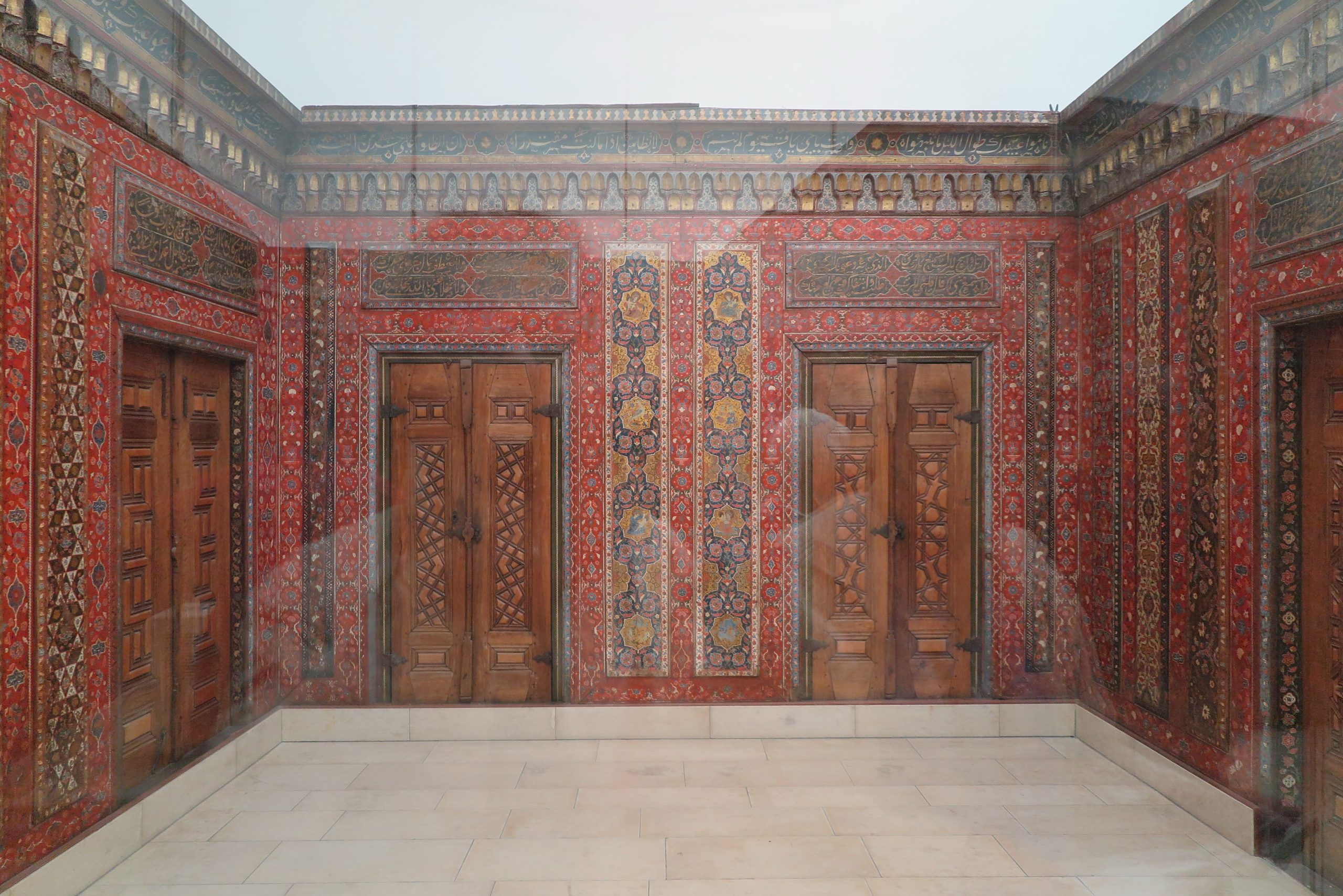
In the afternoon, we went on a two-hour boat ride on the Spree. We also received the news that the waters of the Danube were not high enough, so we may have to visit some of the places around Nurnberg and Bayreuth by coach.
Potsdam: Royal History and Cold War Remnants – September 17, 2019
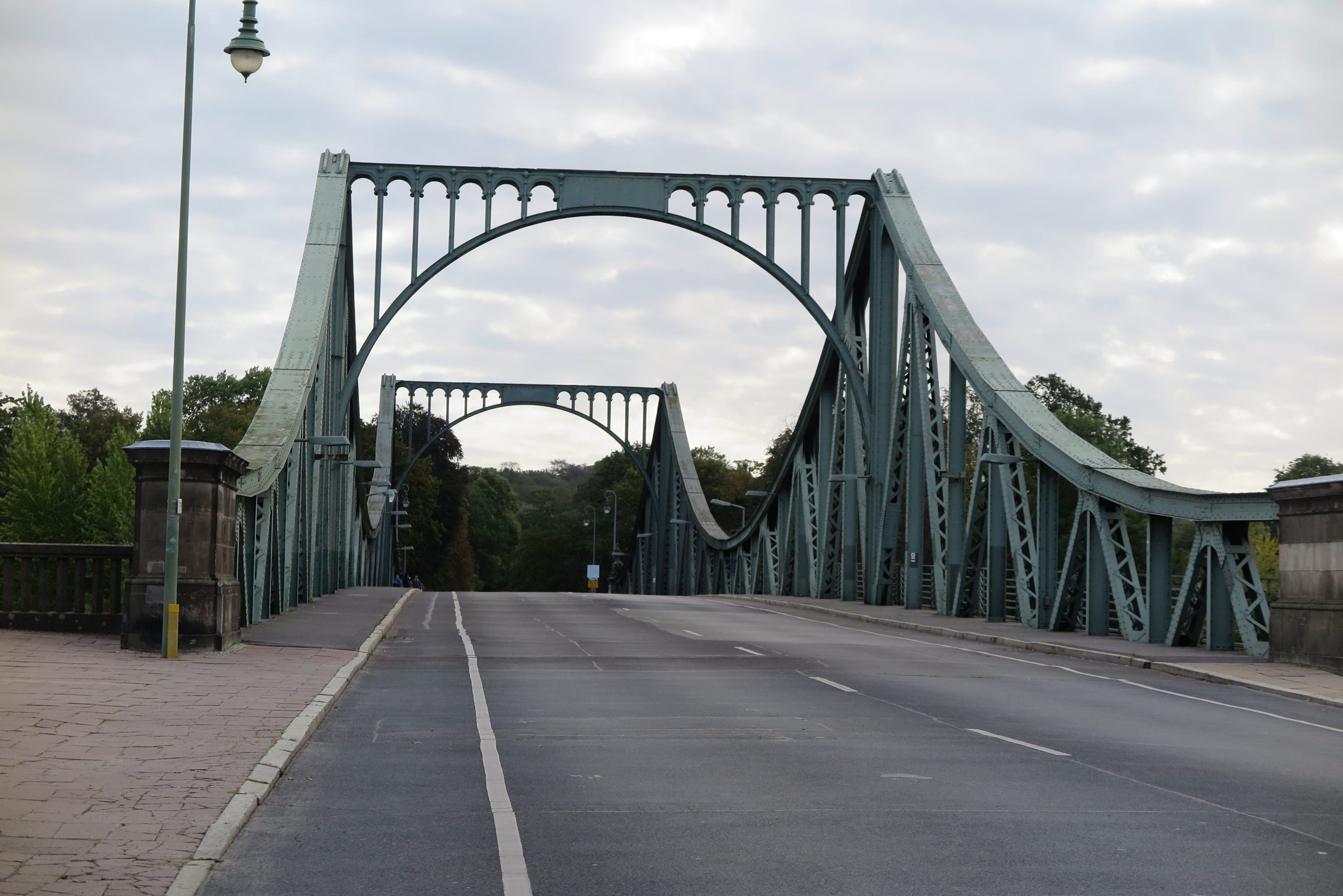
Rainy and overcast skies greeted us today, as we visited Potsdam, seat of the Hohenzollern royalty. After about an hour’s drive, we stopped at the Glienicke Bridge over the Havel River which formed a border between the U.S. and Soviet sectors. The bridge is better known as the Bridge of Spies (of Tom Hanks’ movie fame). This is where prisoners and spies were exchanged during the Cold War.
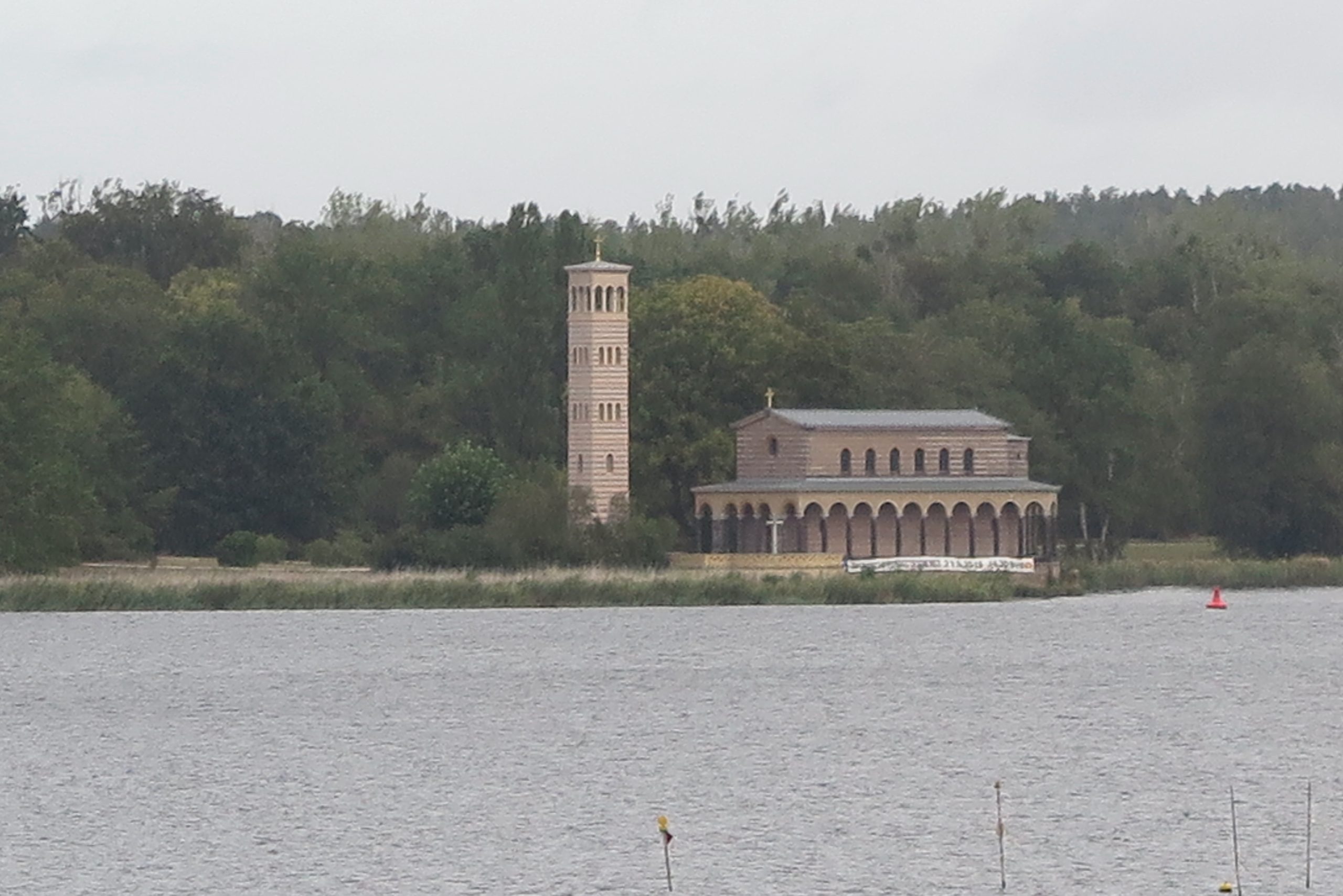
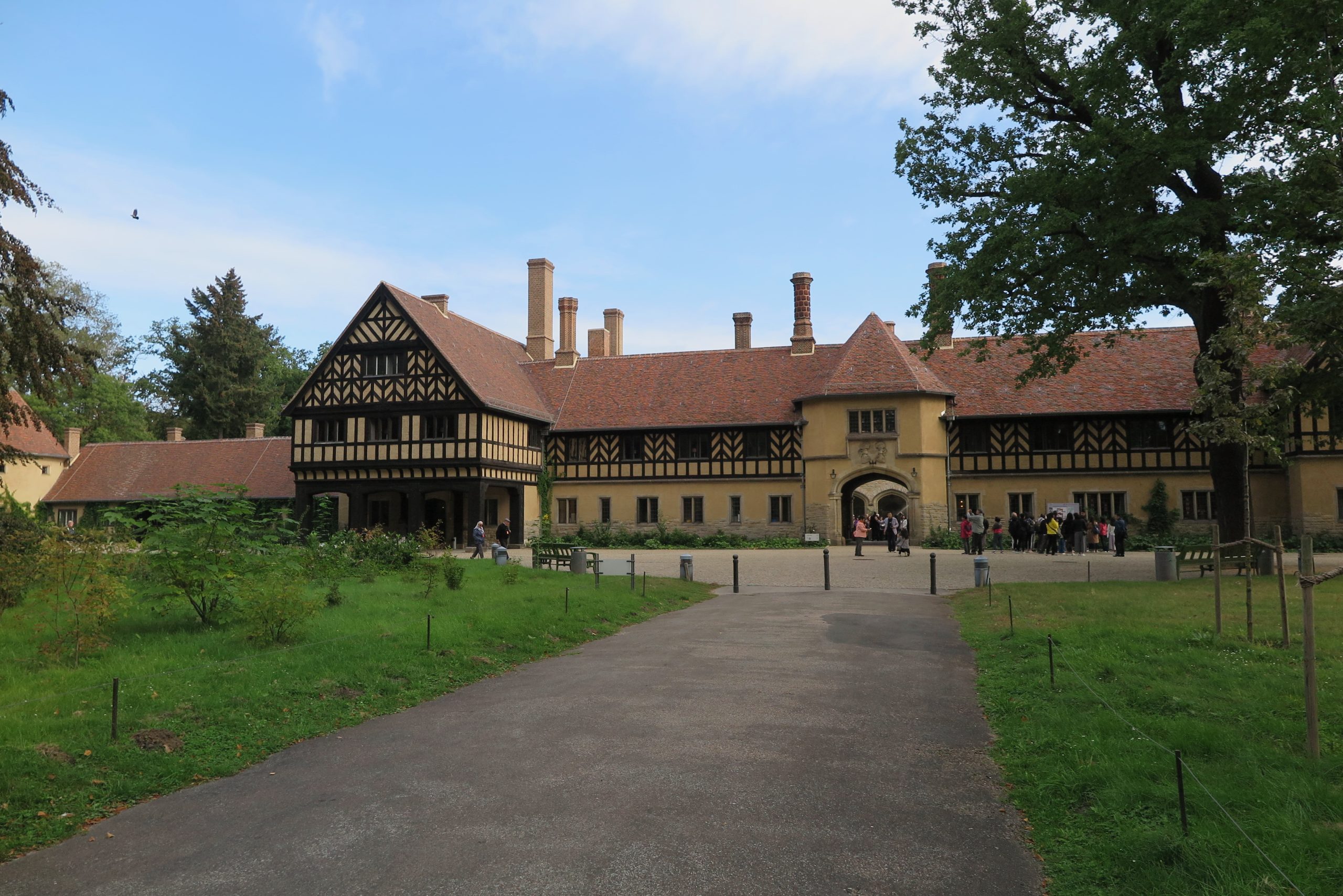
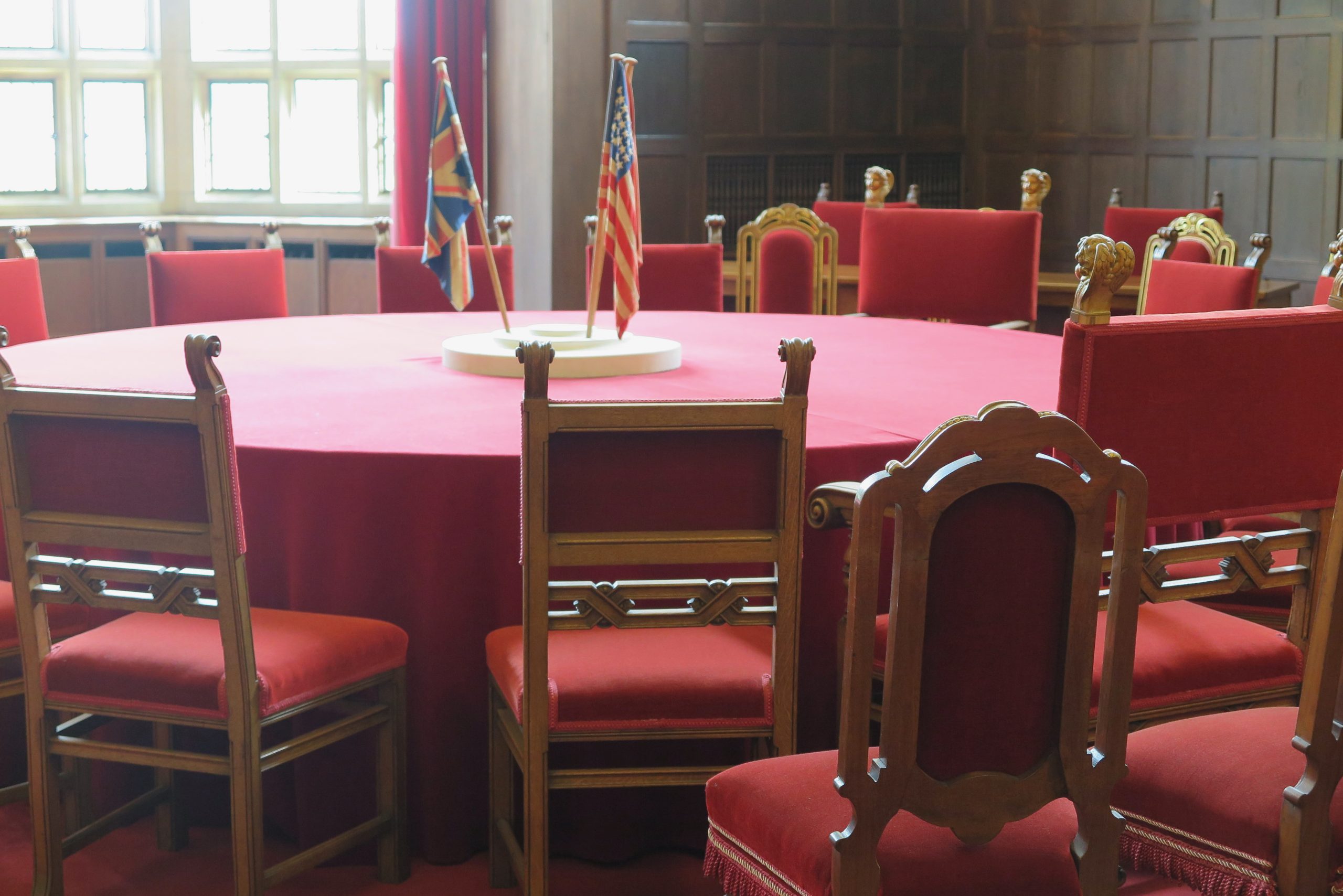
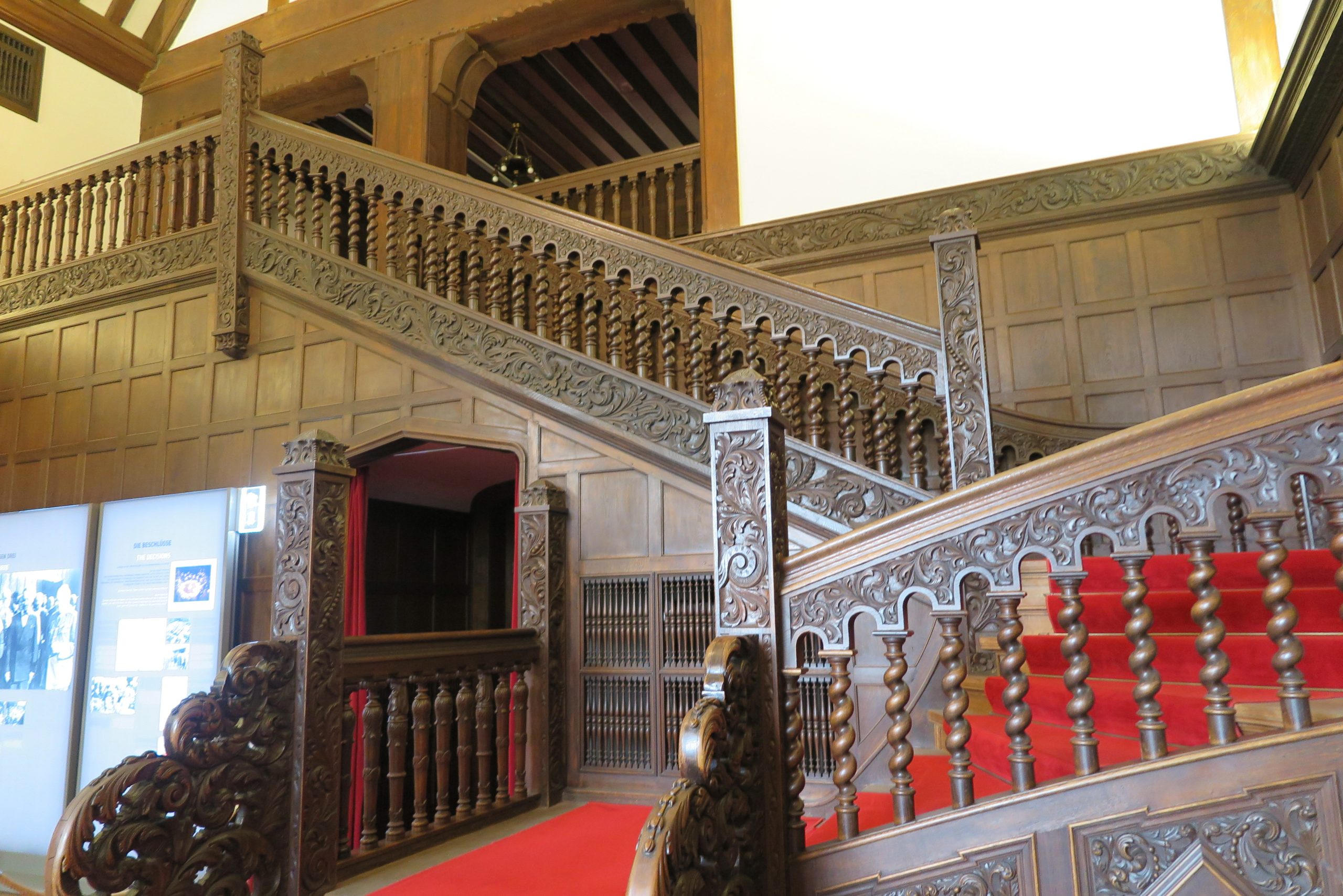
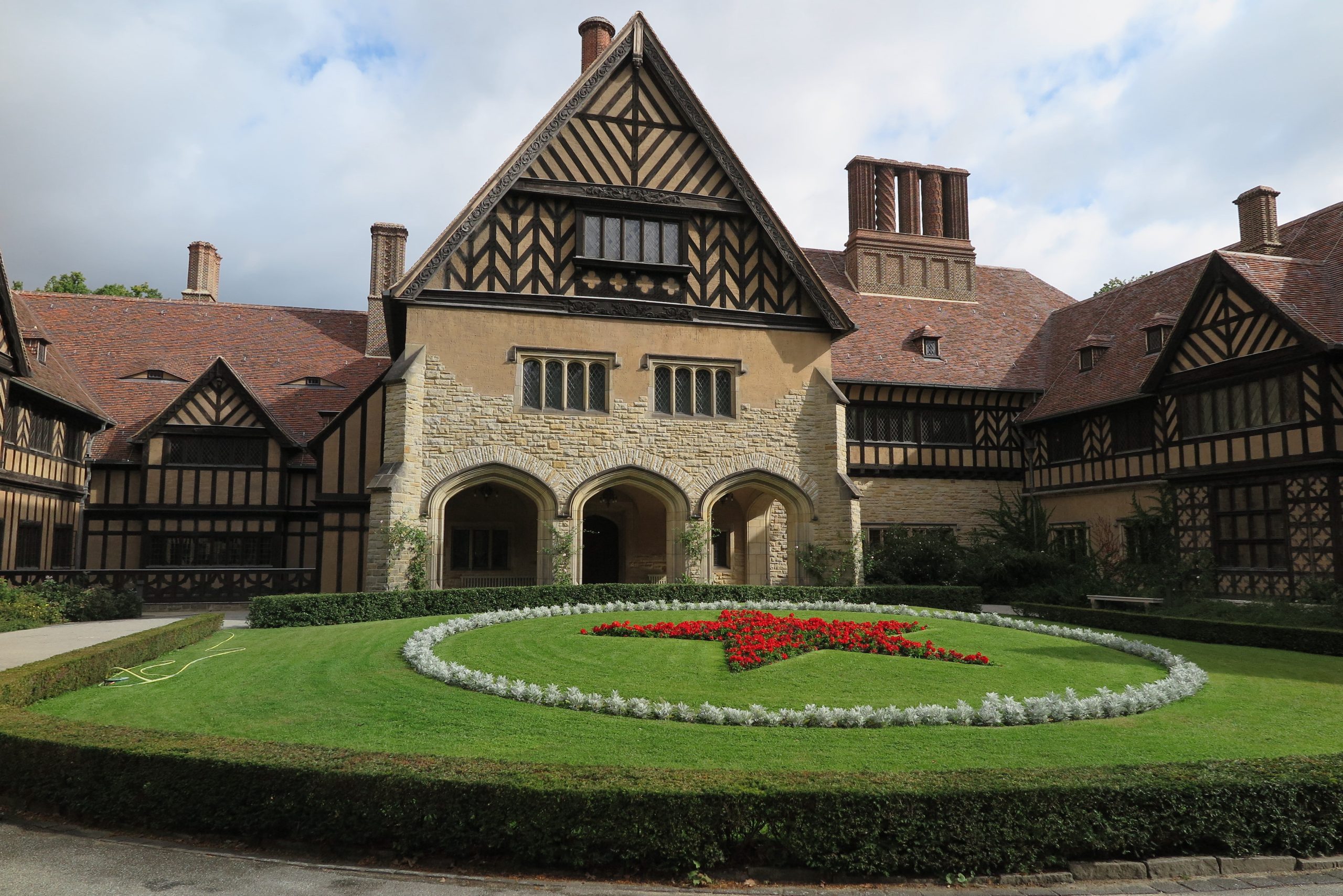
Our next stop was the Cecilienhof Schloss. This is where the Potsdam Conference was held for two weeks in the summer of 1945. Here Truman, Churchill, and Stalin met to shape postwar Europe. It was chilling to stand in the red room where discussions were held to drop the A-bomb on Japan.
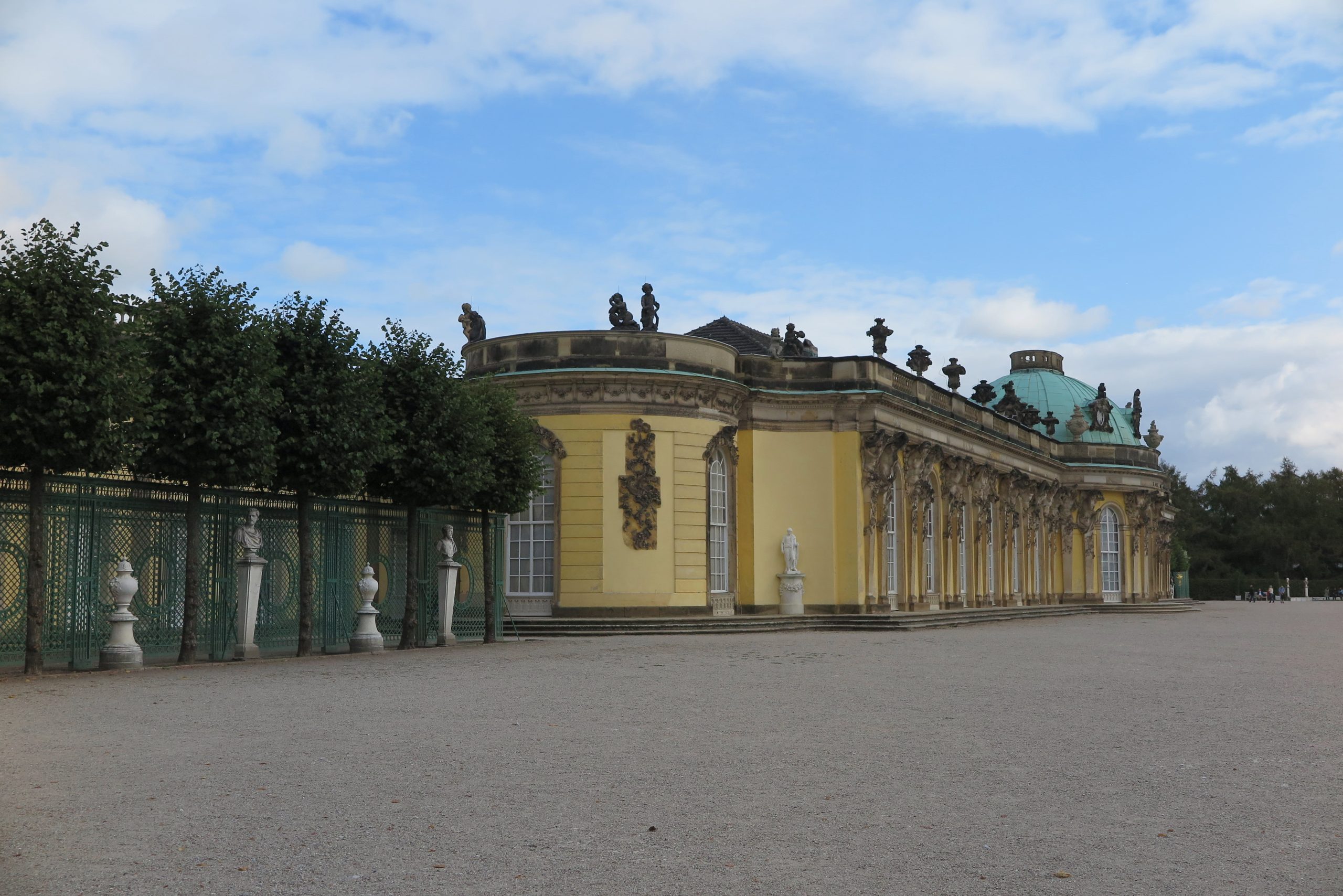
Sans Souci, Frederick the Great’s small palace, was our next stop. Here we strolled through the park, but did not get into the palace. While it is a beautiful palace, the story of Frederick’s battles with his father was more captivating. His father did everything possible to humiliate the son, including burning his books, beating his tutor, killing a friend with whom he was planning to escape to Britain and making him watch the execution, and finally forcing him to marry a woman he did not want to marry. We also think this was the king who said German should only be spoken to horses and soldiers.
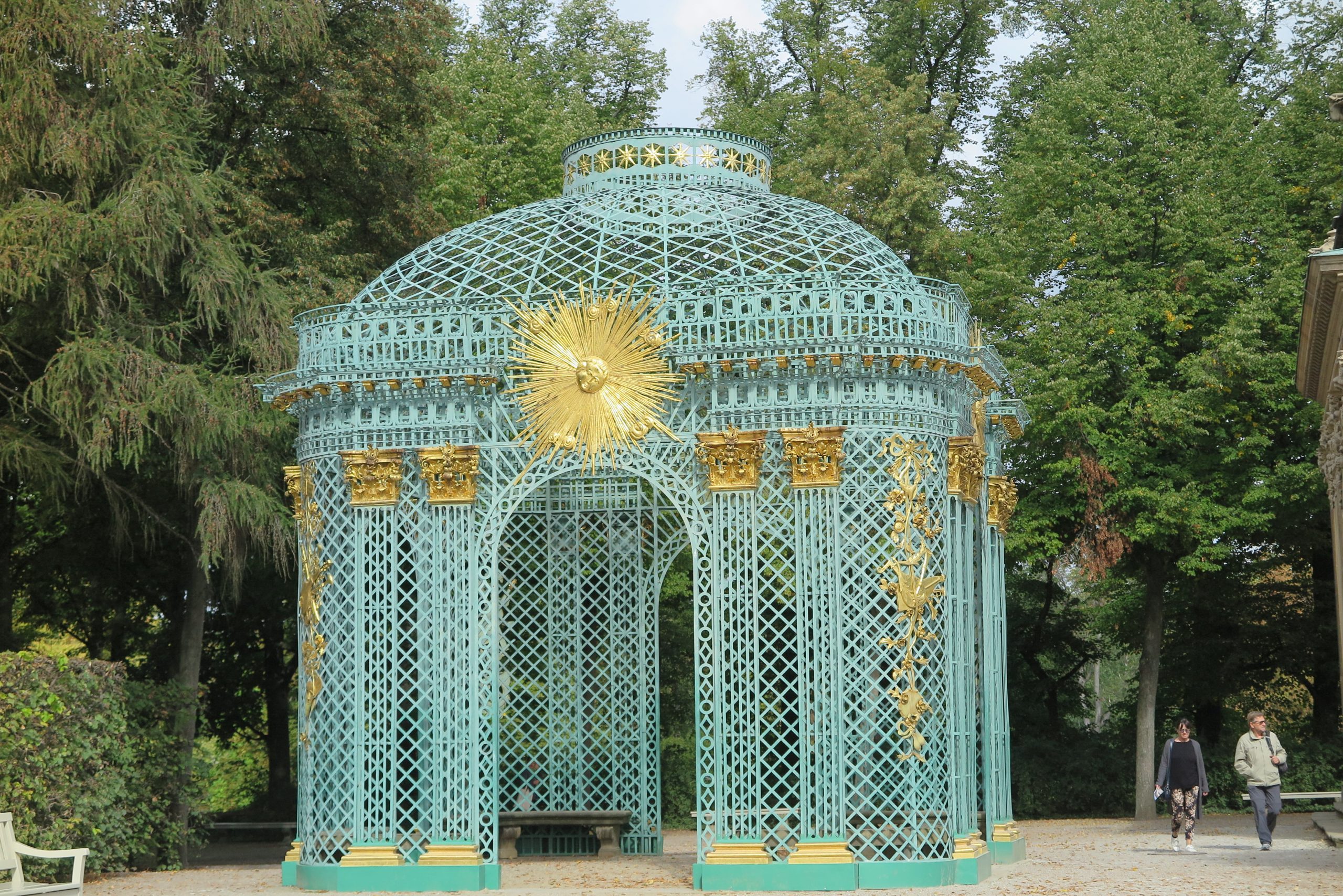
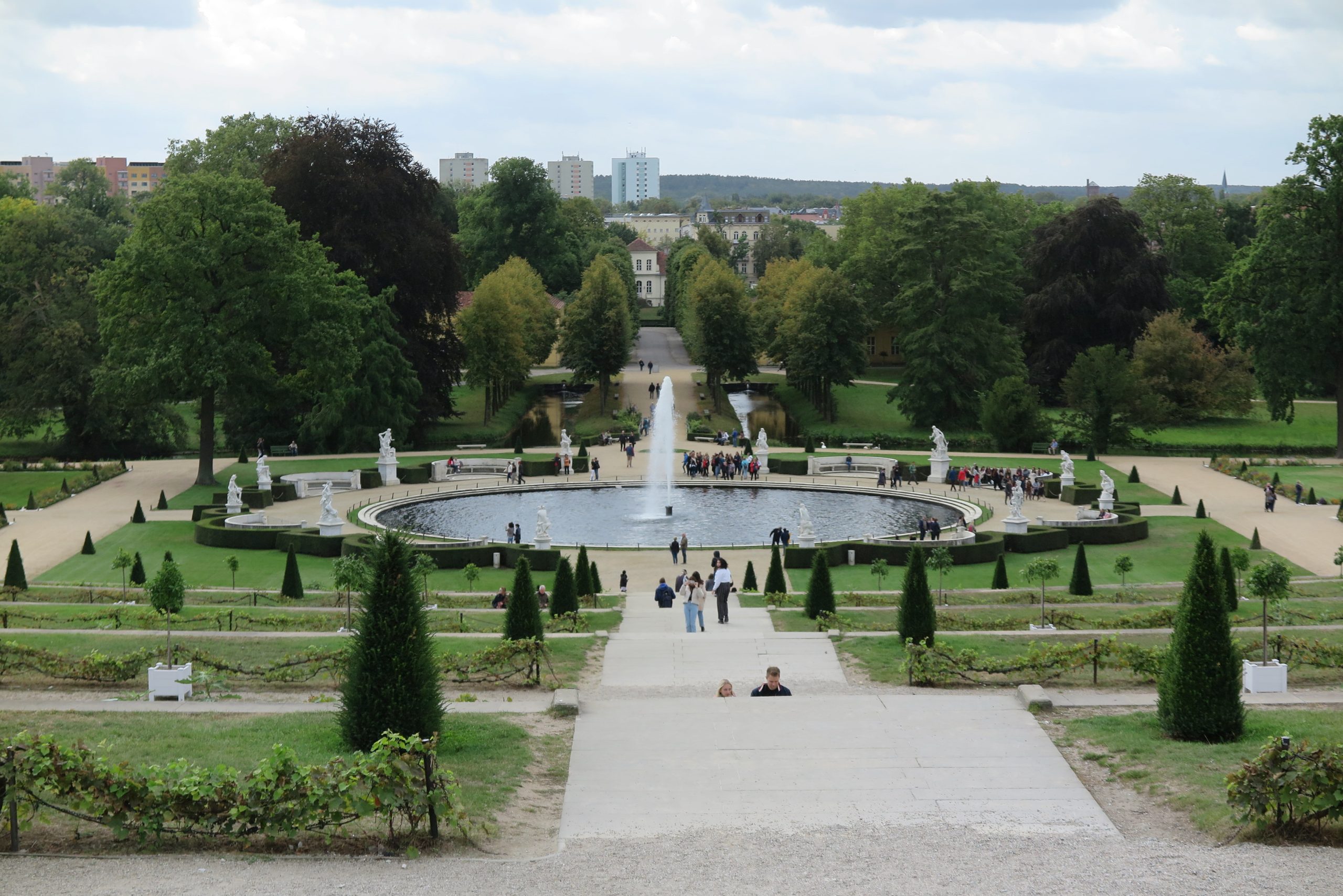
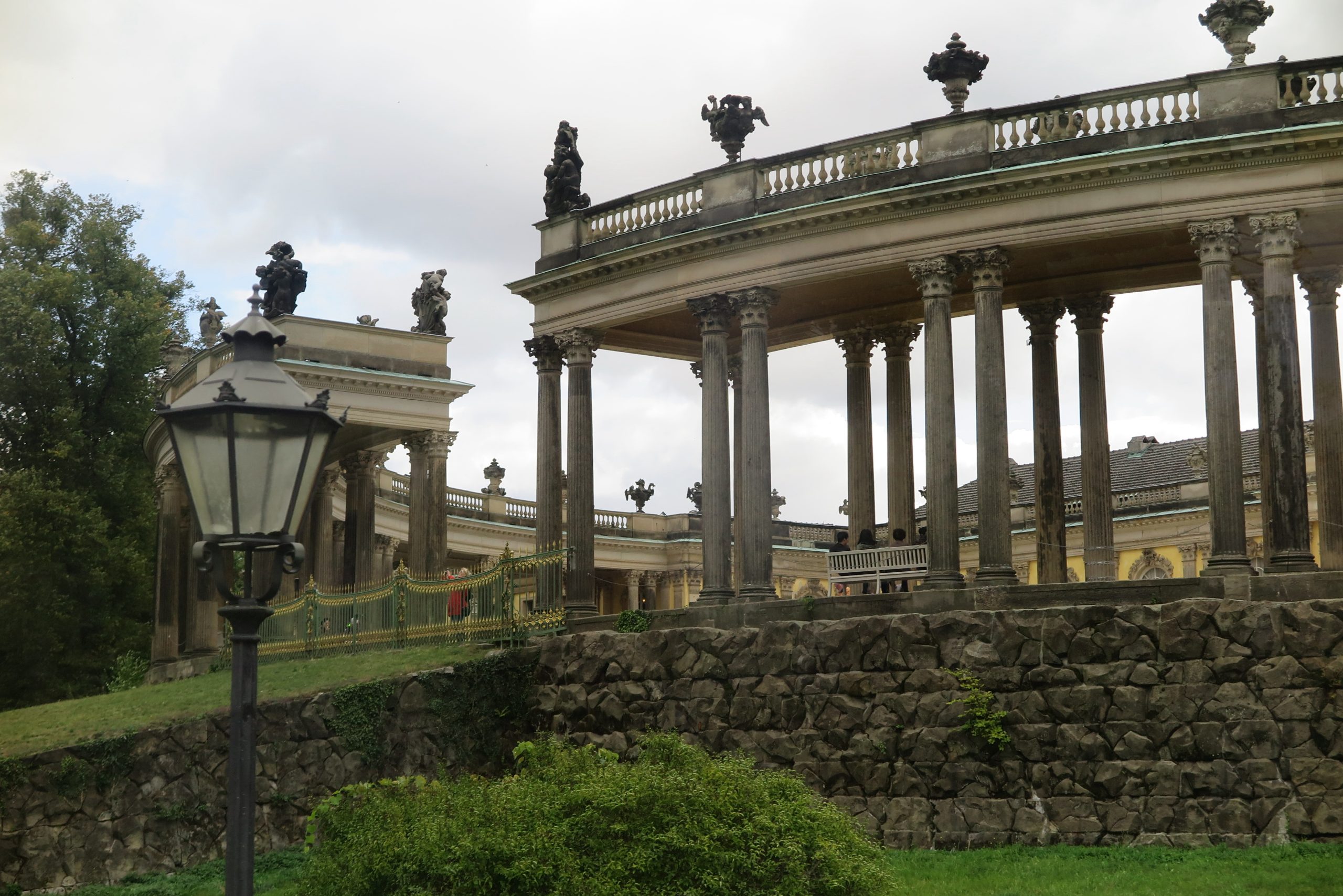
We had lunch in downtown Potsdam, at the Flying Dutchman. The food was excellent, but service was a bit slow (not a flying waitress in sight). Most of downtown was designed to entice the Dutch Huguenot to settle down here and startup businesses, but that endeavor did not succeed.
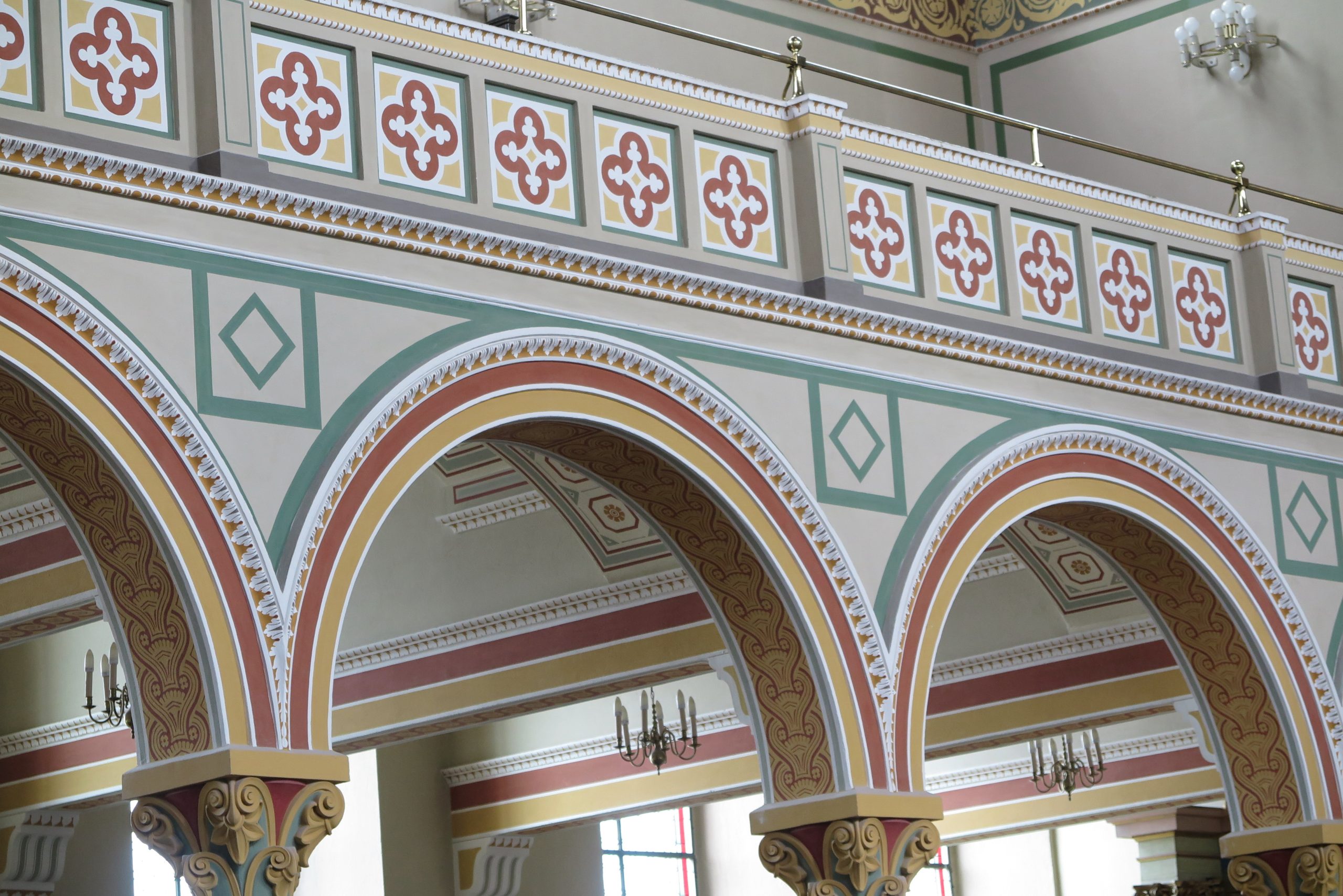
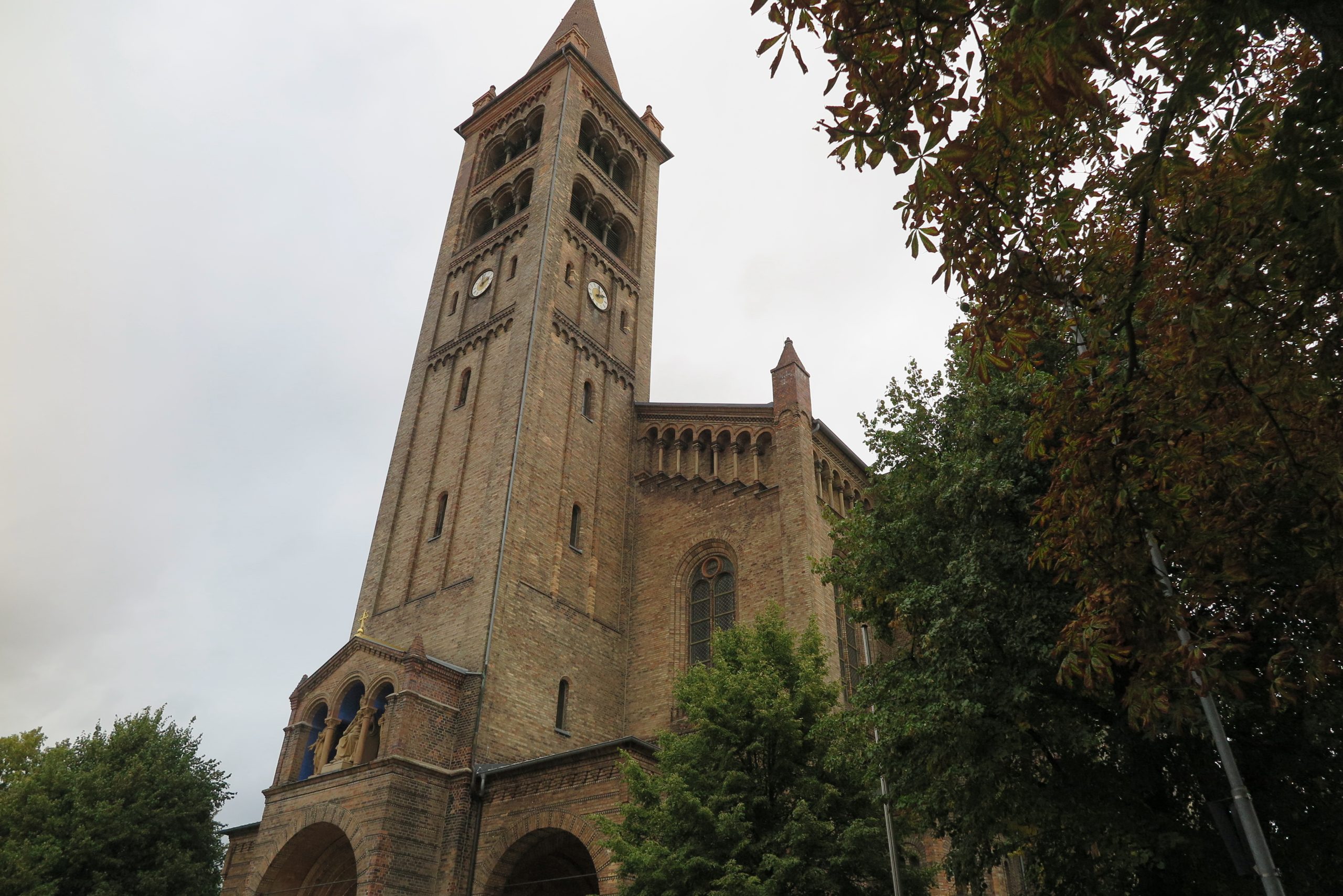
Before our return to Berlin, we made a quick stop at the Church of Sts Peter and Paul. The church has daily organ recitals from noon to 12:30 PM.
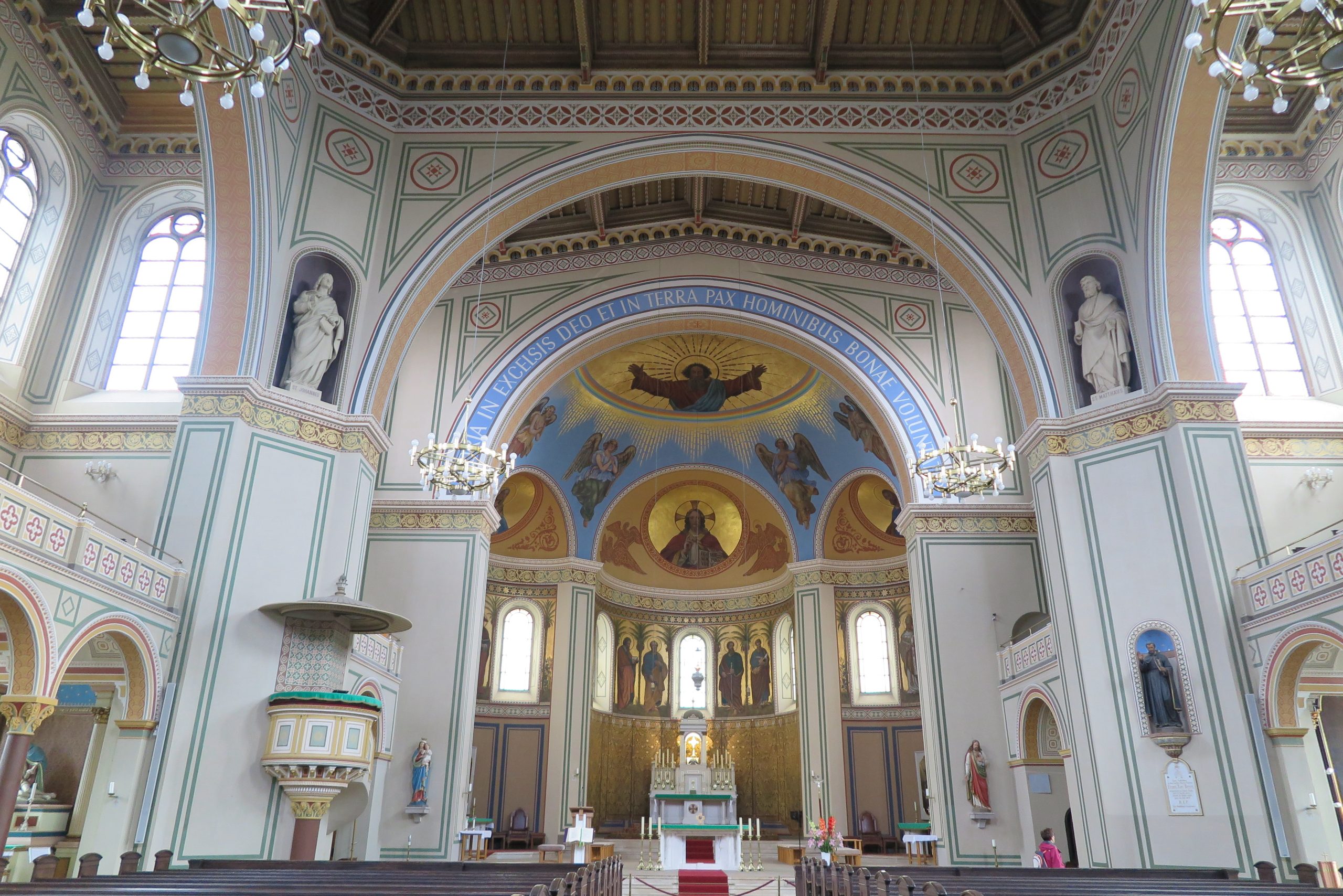
On the way back to Berlin, we passed by Checkpoint Bravo, the second of the three checkpoints, the other two being Checkpoint Alpha and Checkpoint Charlie. We also motored down the Ku’dam past Kadewe, the second largest department store in the world, currently larger than Harrods.
Train to Nurnberg – September 18, 2019
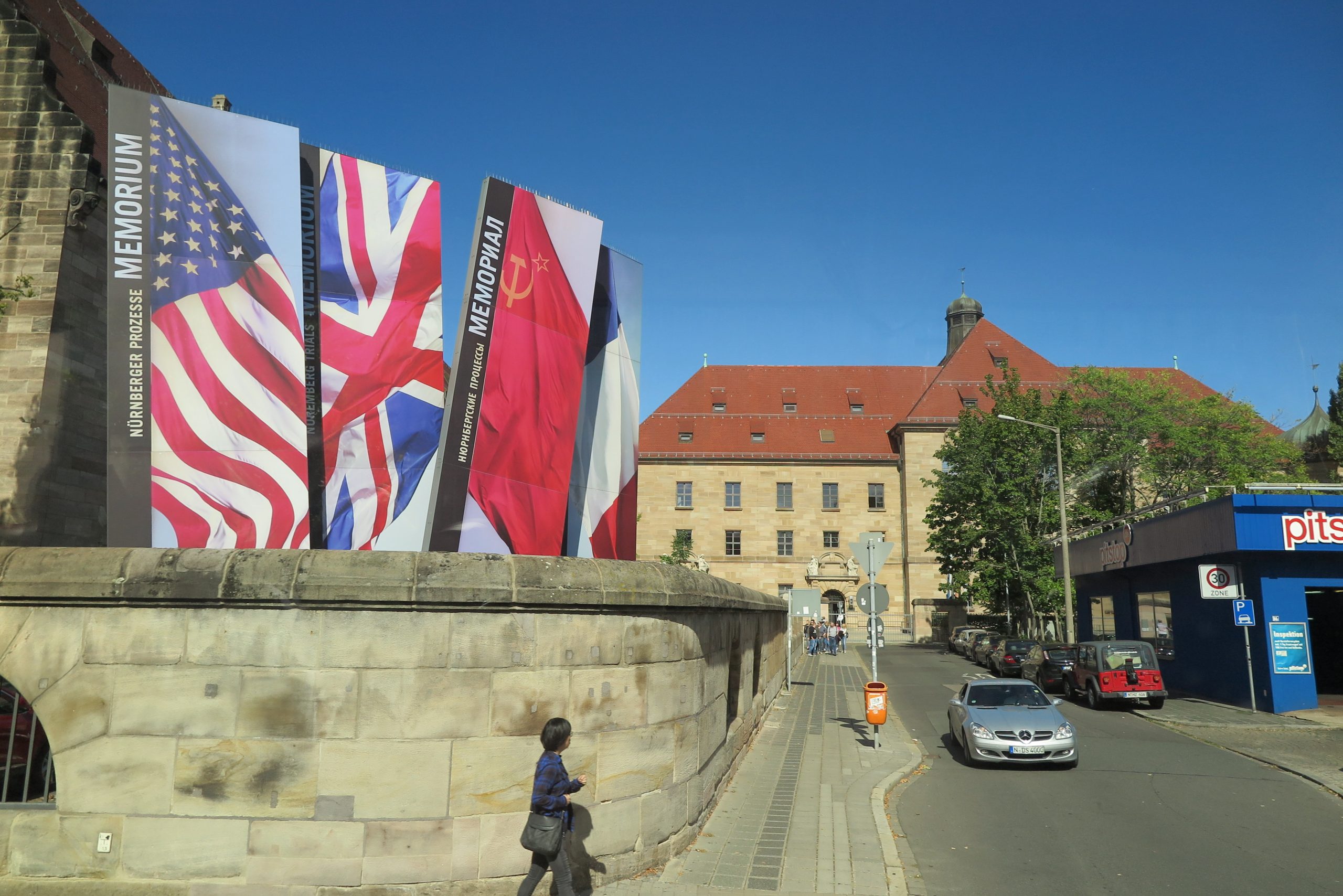
We boarded an ICE train from Berlin bound for Nurnberg. The train station had spacious elevators, capable of accommodating several people and their bicycles. Upon arrival in Nurnberg, our paths diverged. Albert went on a tour of the Zeppelin Fields, where Hitler once held grand rallies, the courthouse renowned for holding historic trials, and the Documentation Center Museum housing the permanent exhibition “Fascination and Terror”.
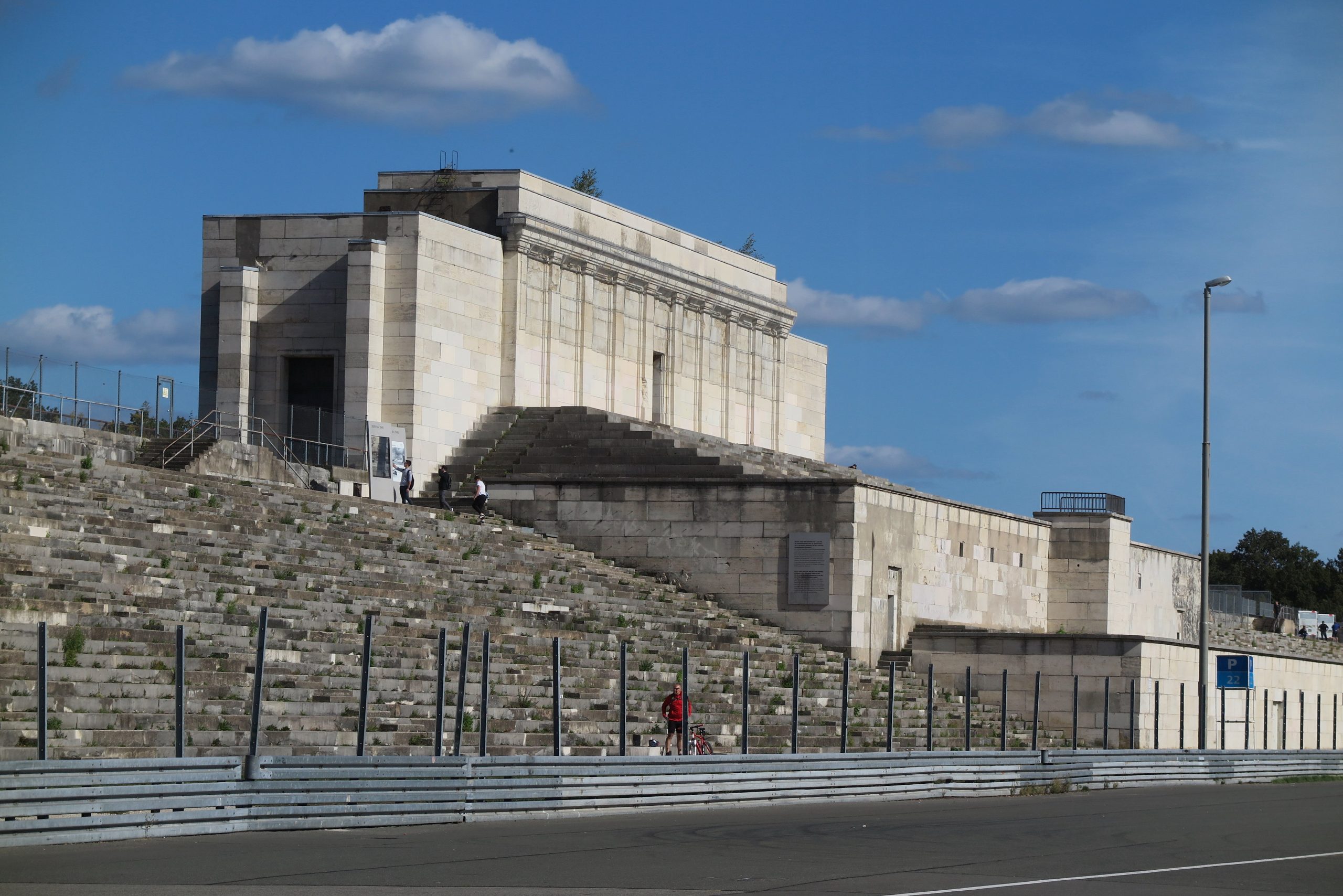
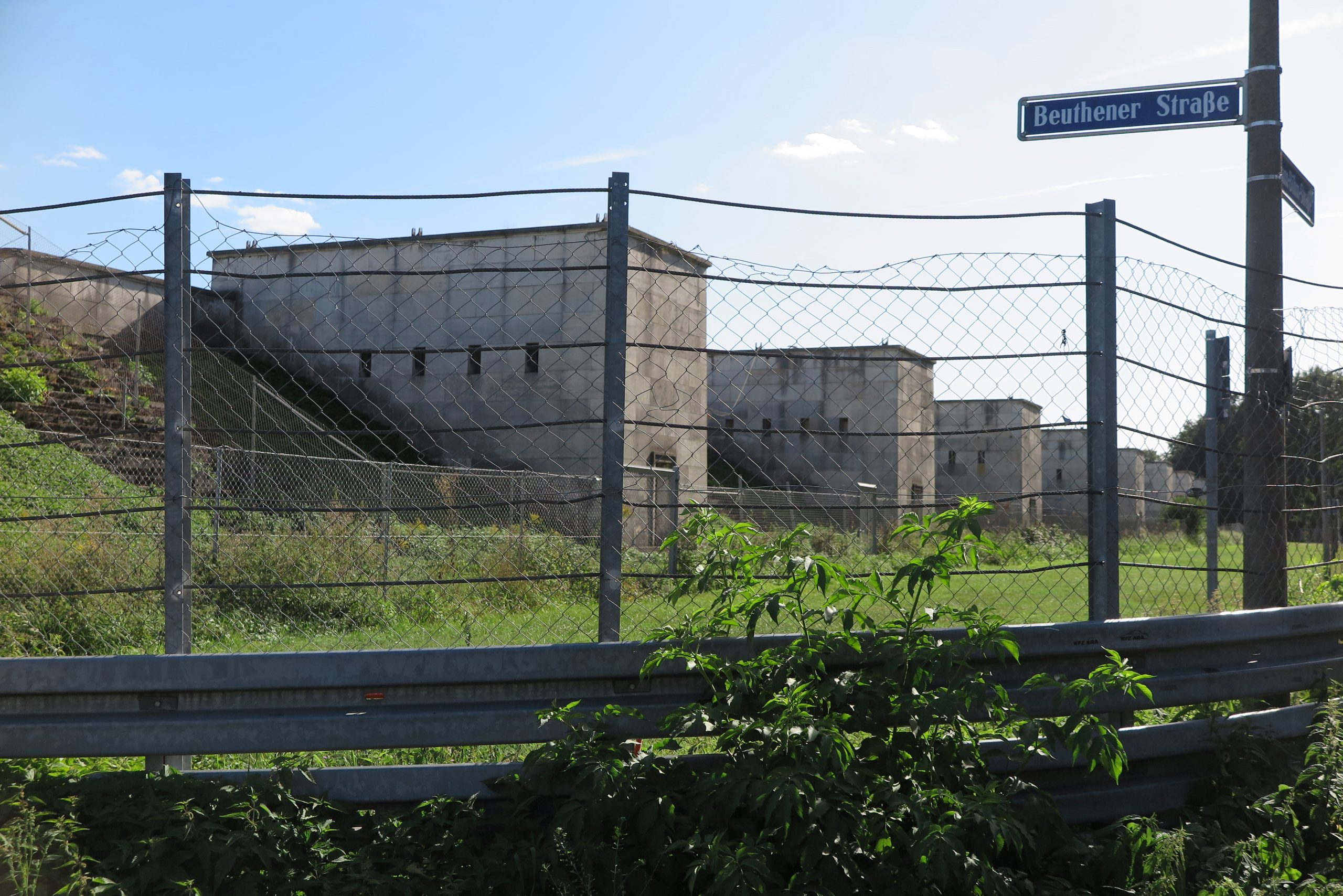
Meanwhile, Christabel boarded a coach to join our river ship at Vilshofen. Enroute to the ship, Christabel noticed that signposts were strategically placed along the highway, facilitating easy communication of one’s location to authorities in the event of a breakdown.
Day Tour to Bayreuth – September 19, 2019
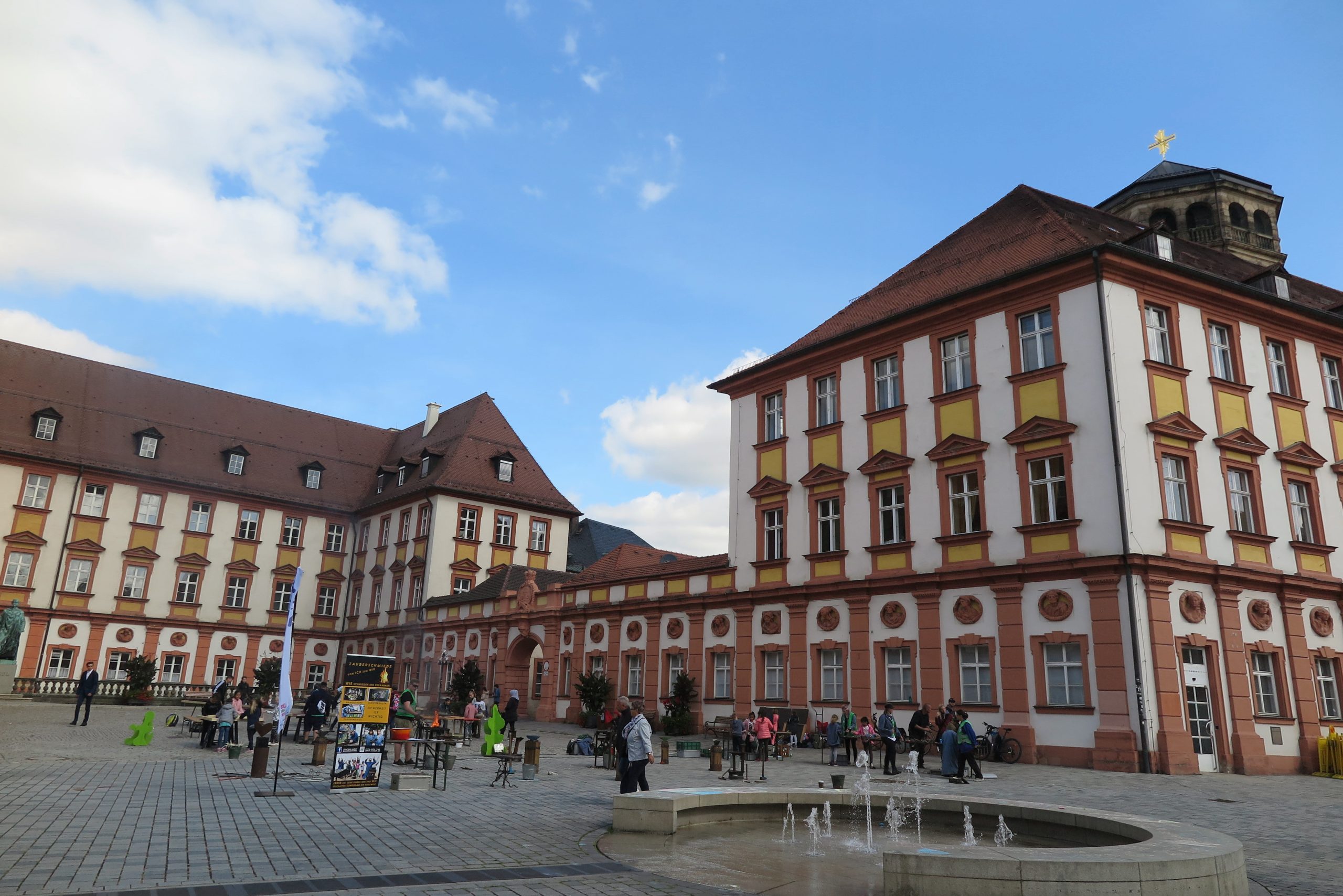
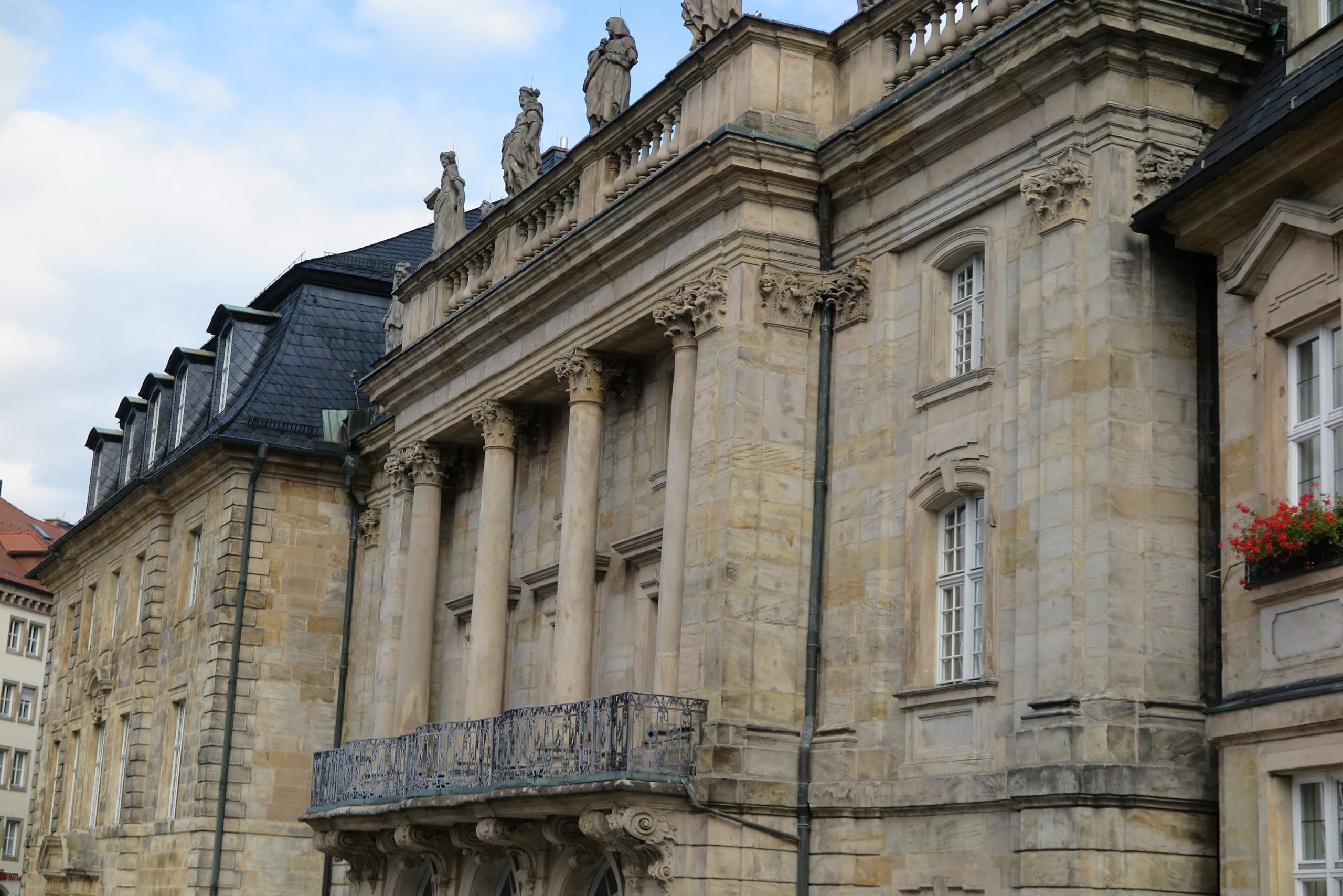
Christabel had initially planned to visit the Wagner Museum and the Margravial Opera House in Bayreuth, but gave it a miss. Instead, she considered visiting the Bavarian Forest Museum Village of over 150 buildings from between 1580-1850 in a small town called Tittling, but gave that a miss as well.
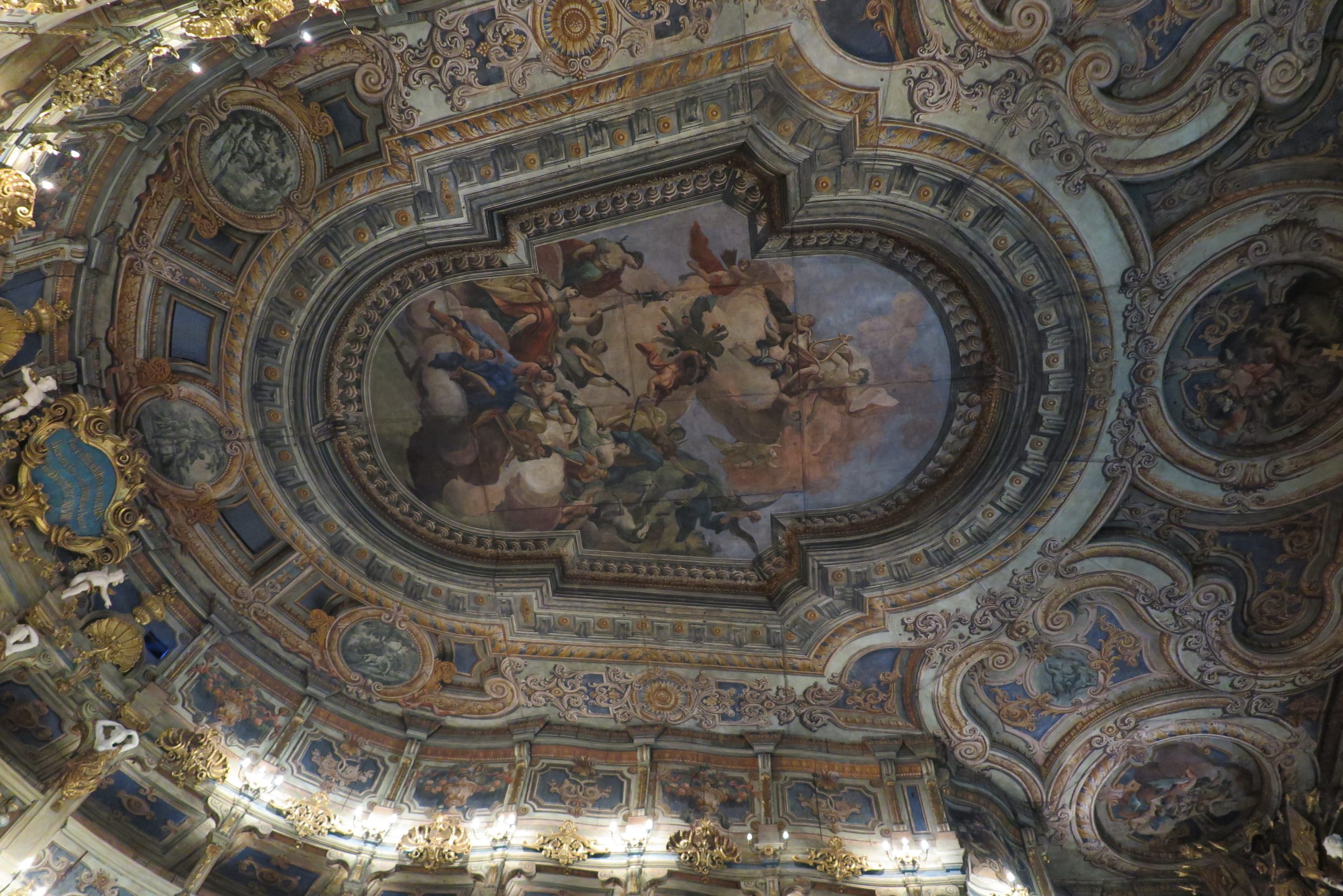
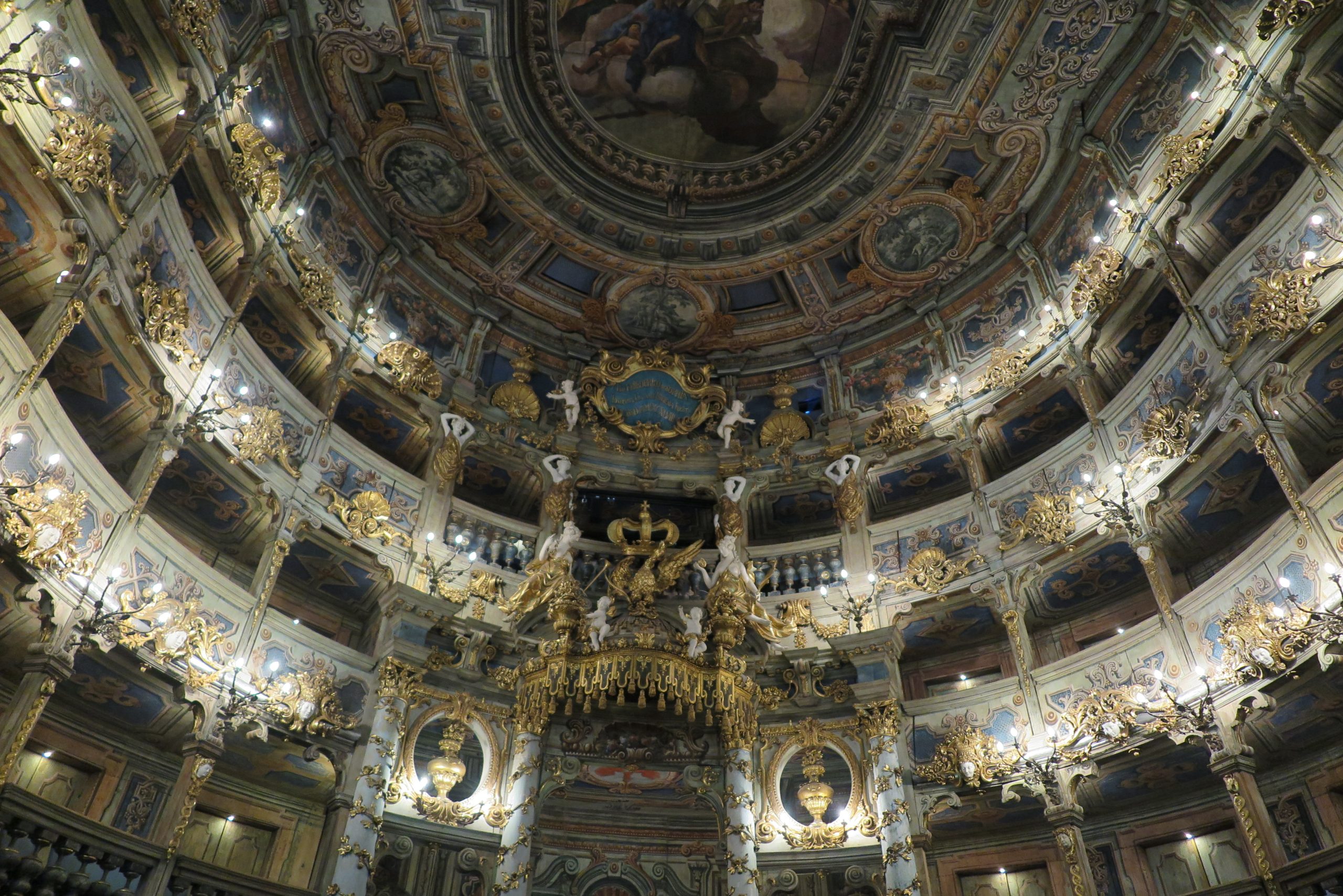
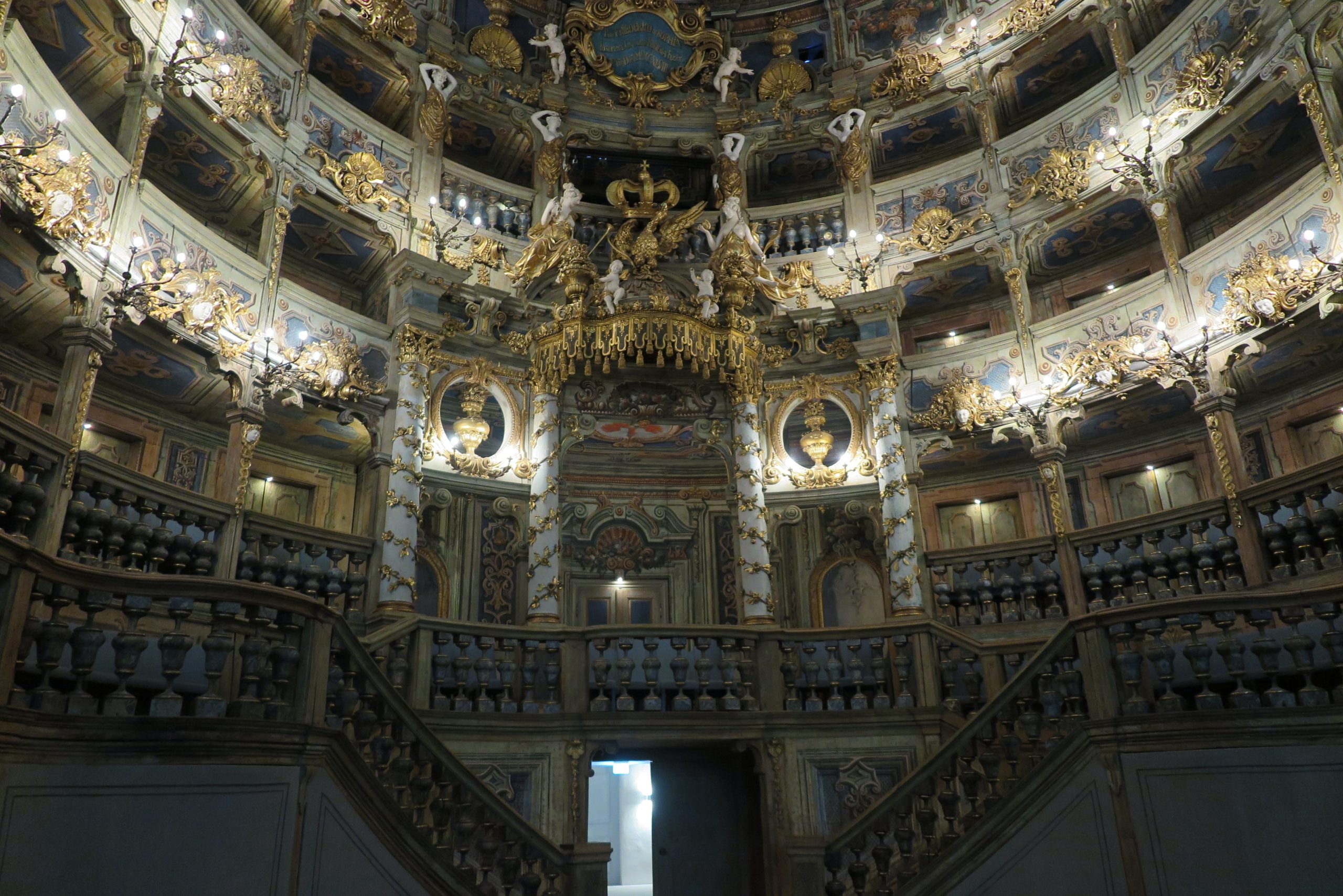
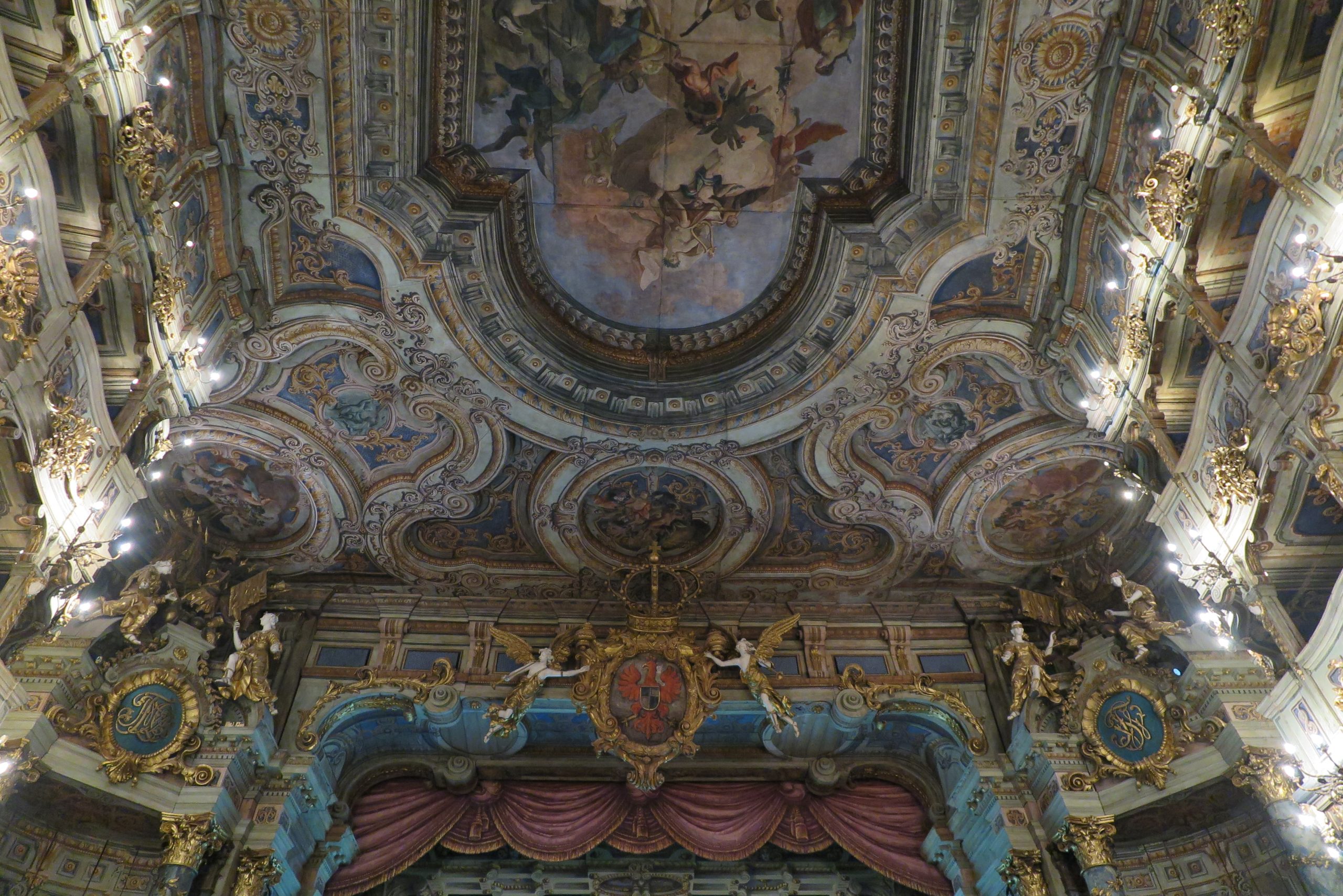
Albert, however, went on the Bayreuth tour and was very impressed with the Margravial Opera House which is now a UNESCO World Heritage site and a fine example of Baroque theatre architecture. It was recently comprehensively restored with 90 percent of the original paintings preserved and stabilized.
Kelheim’s Historic Treasures and Passau’s Musical Marvels – September 20, 2019
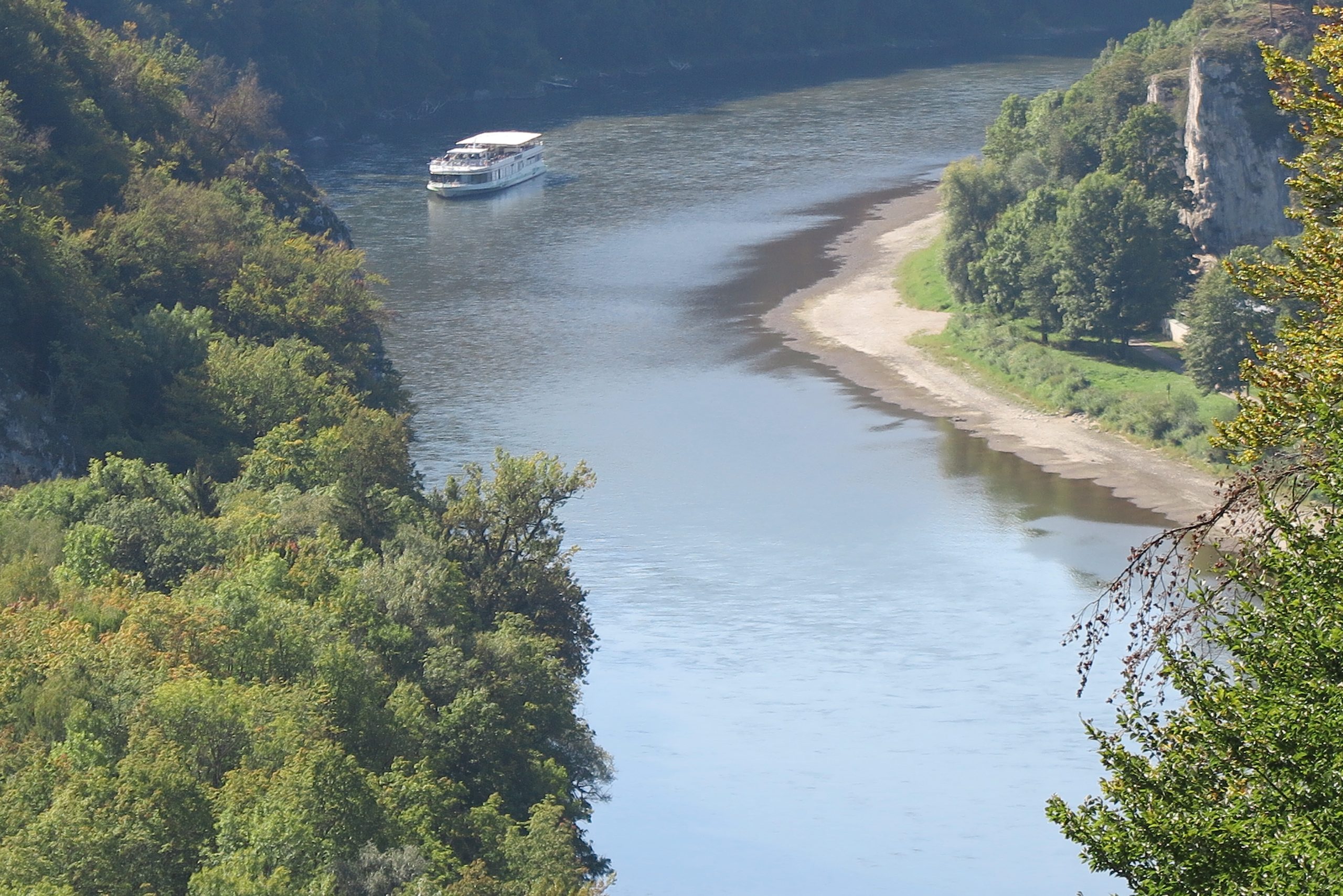
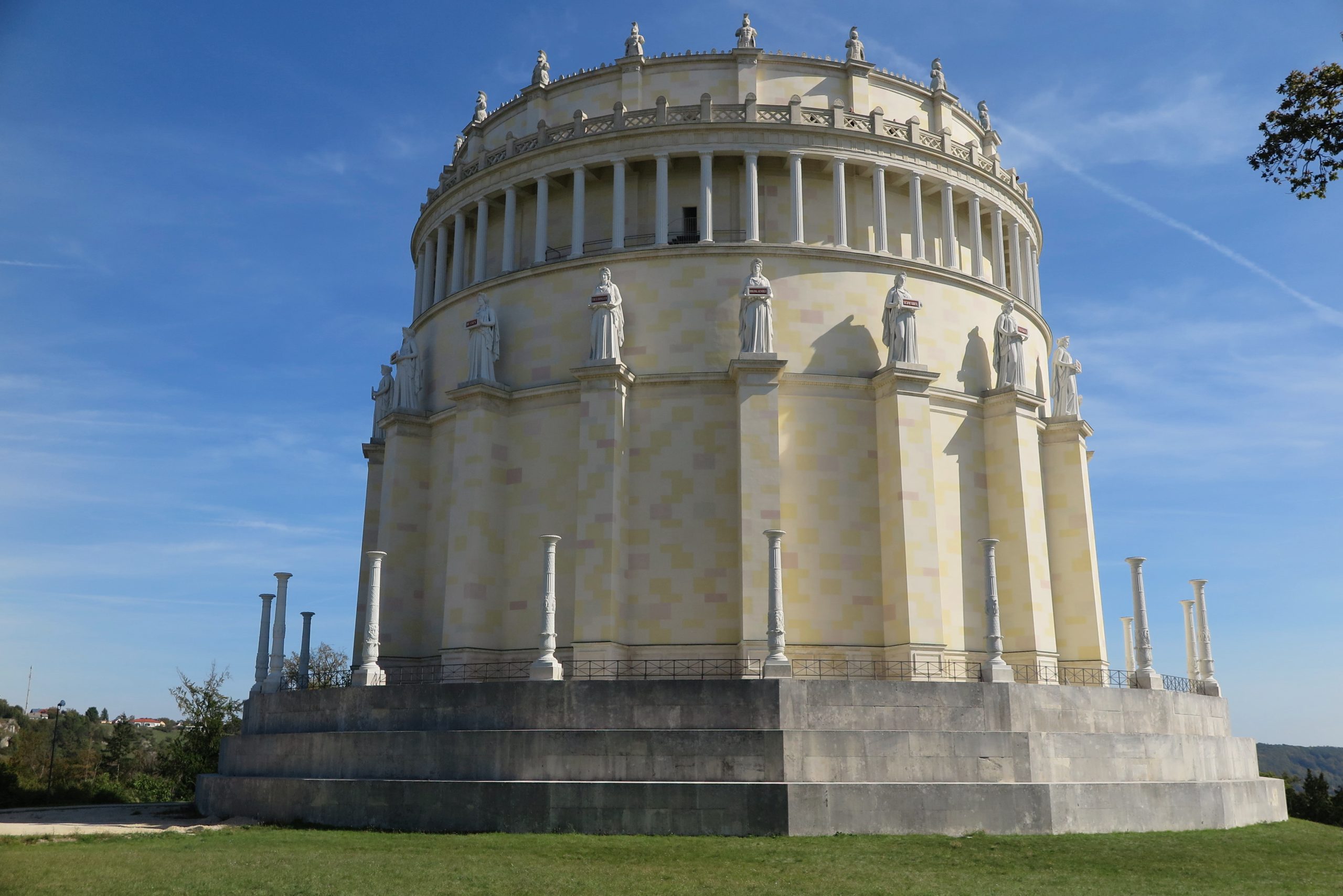
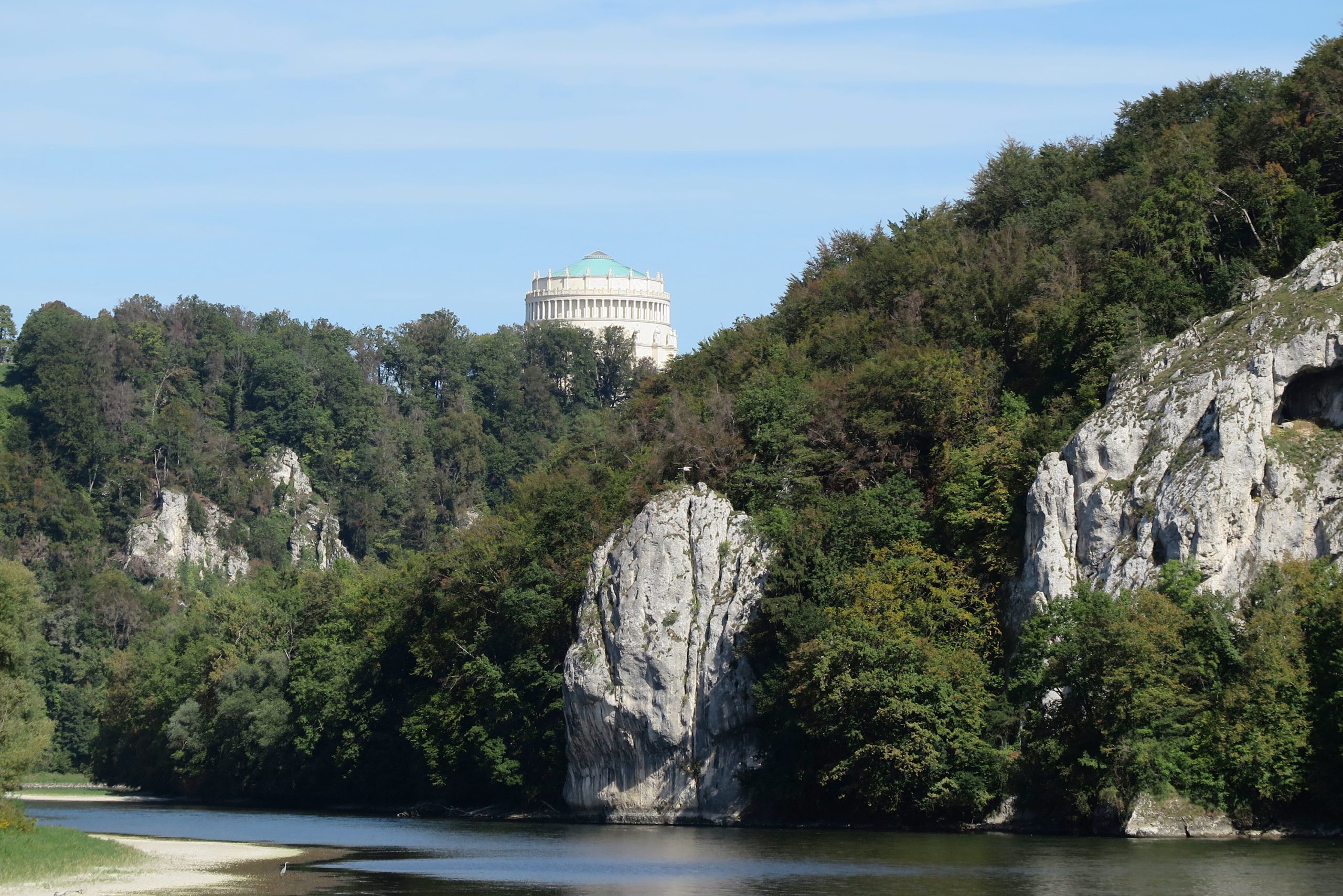
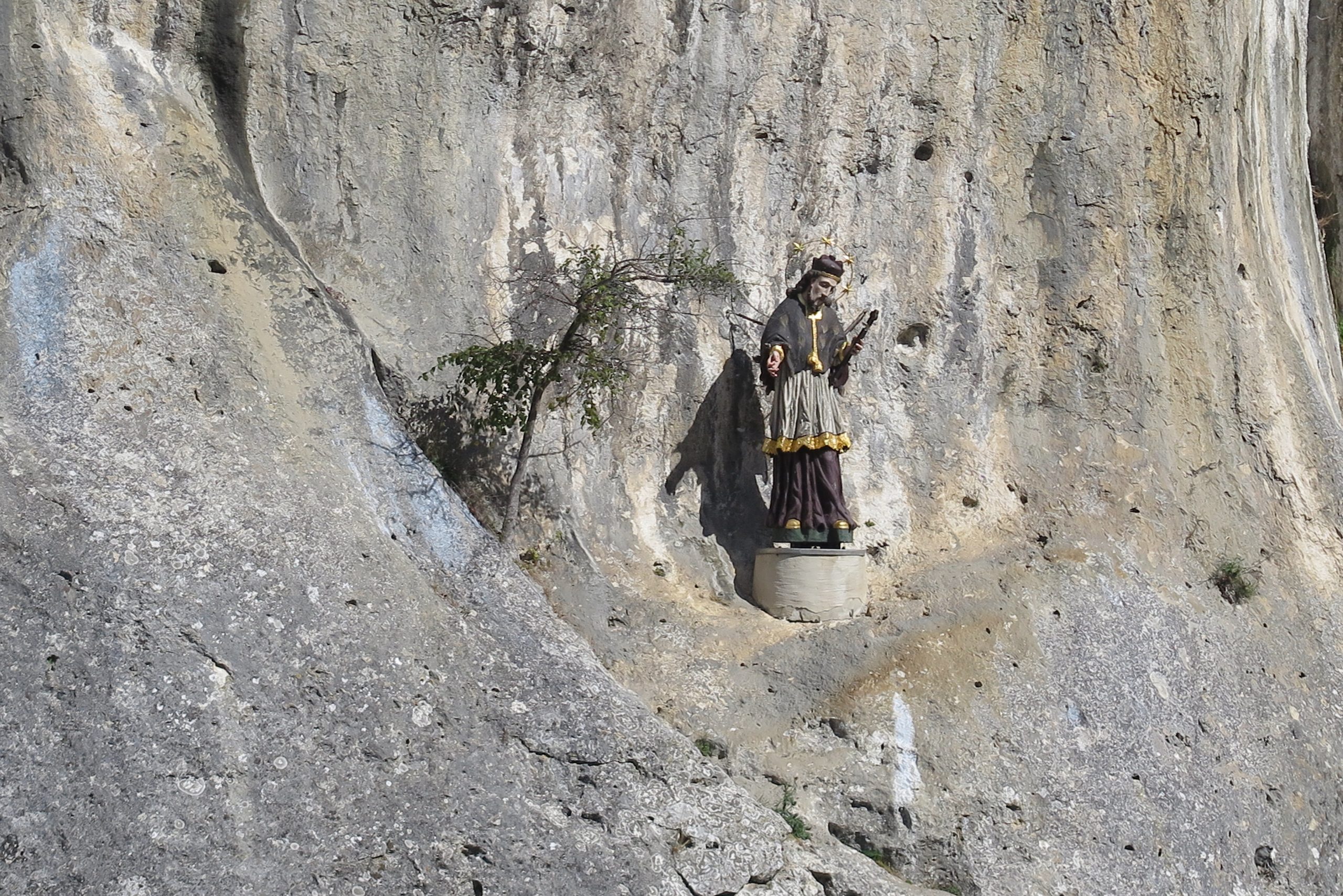
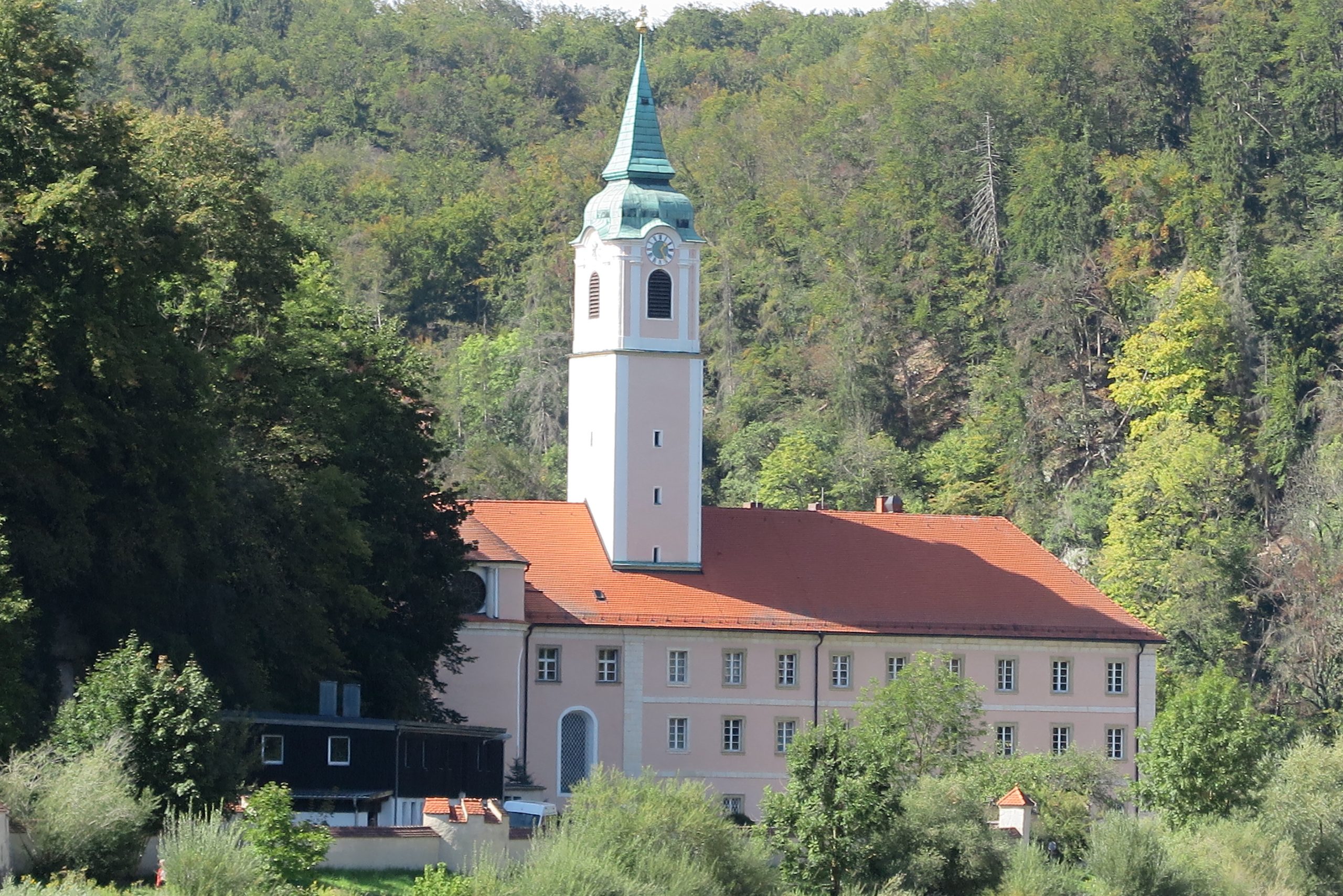
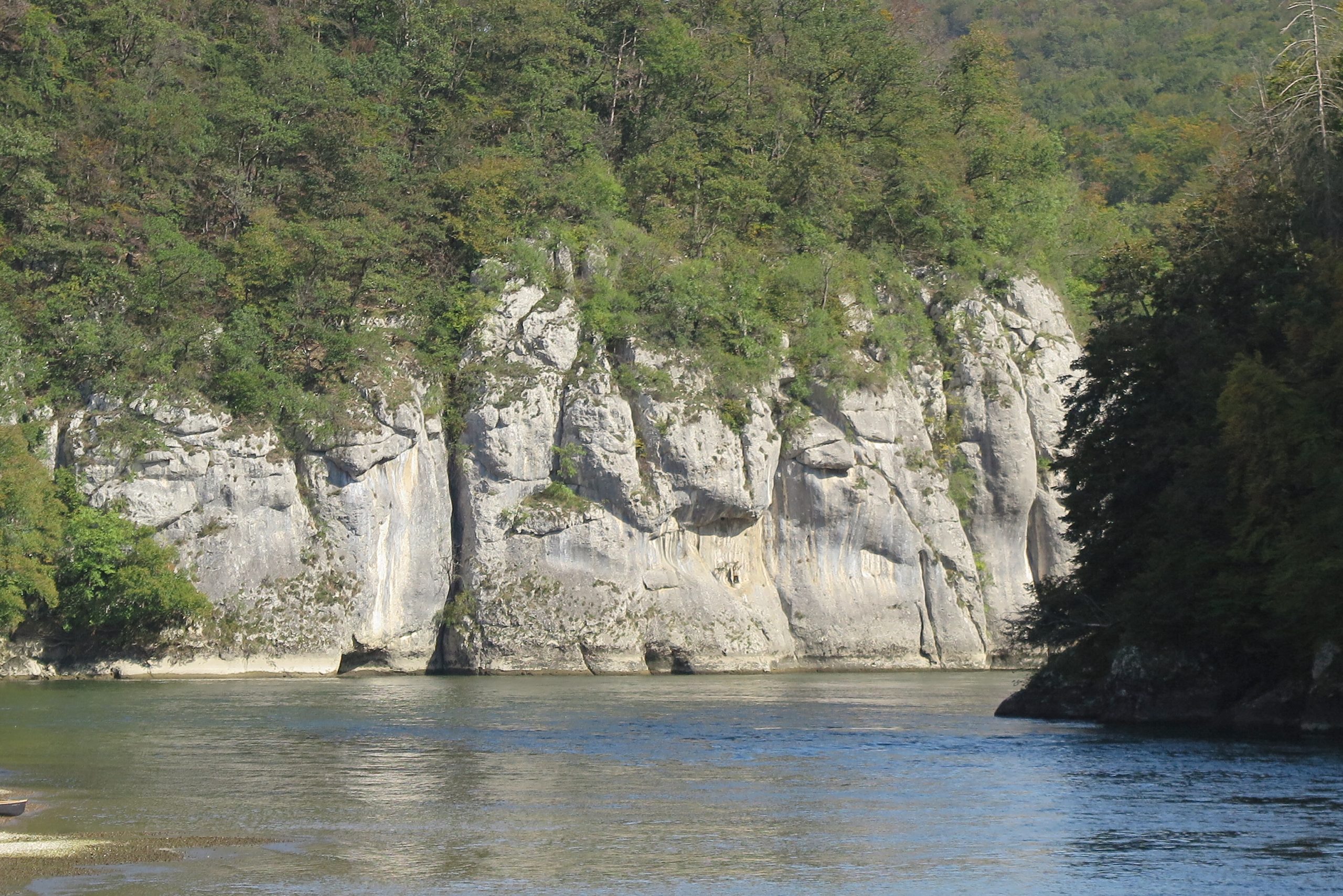
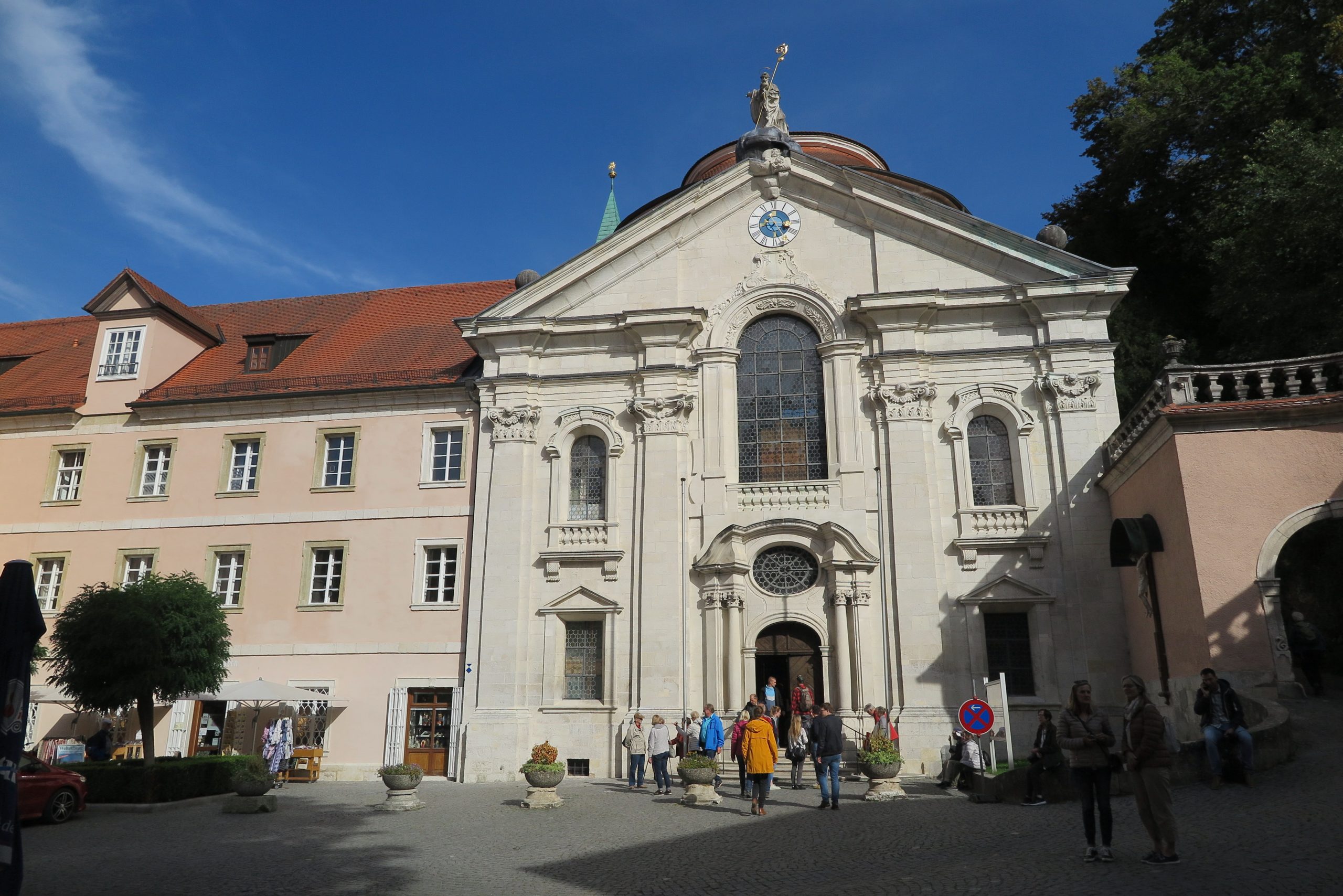
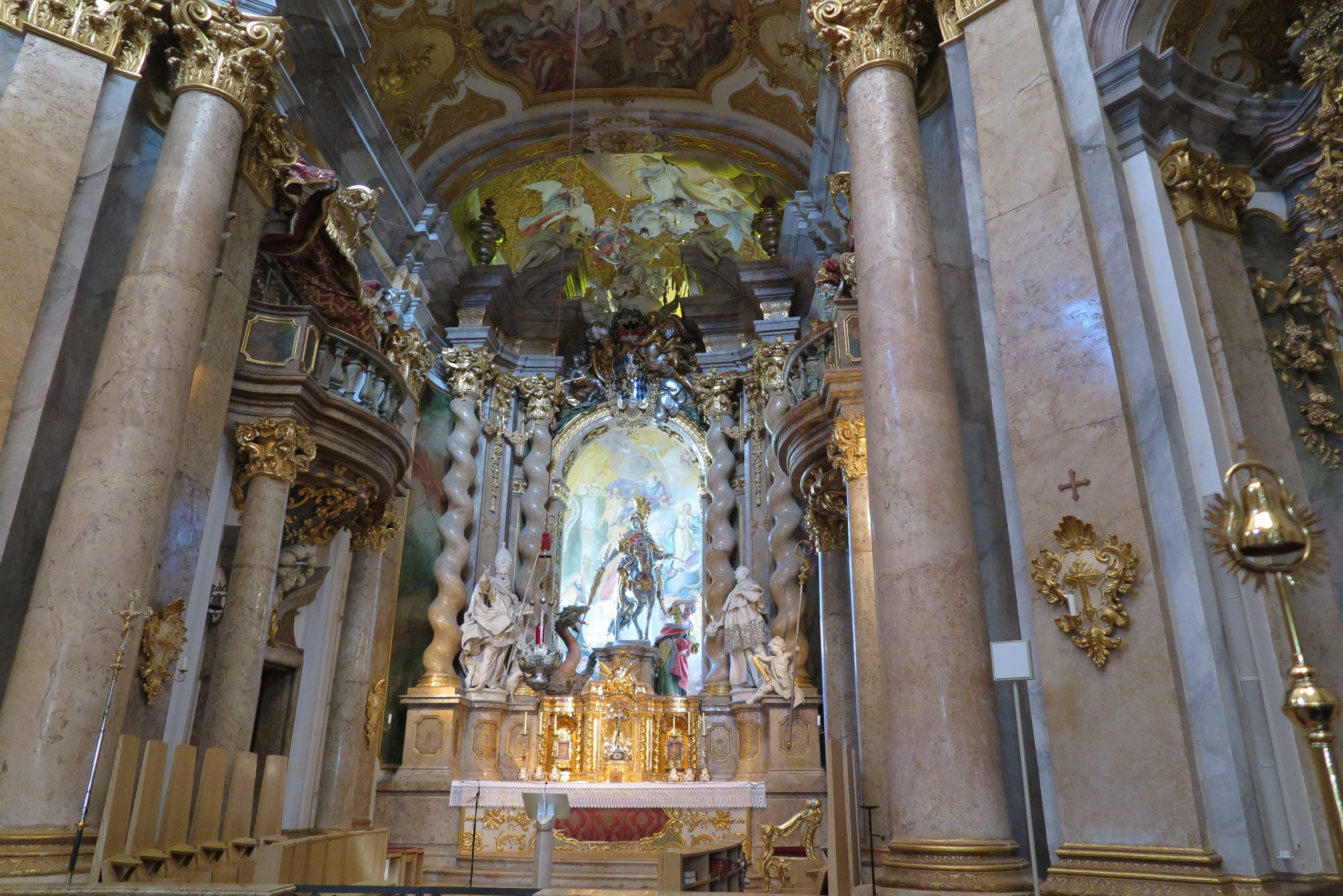
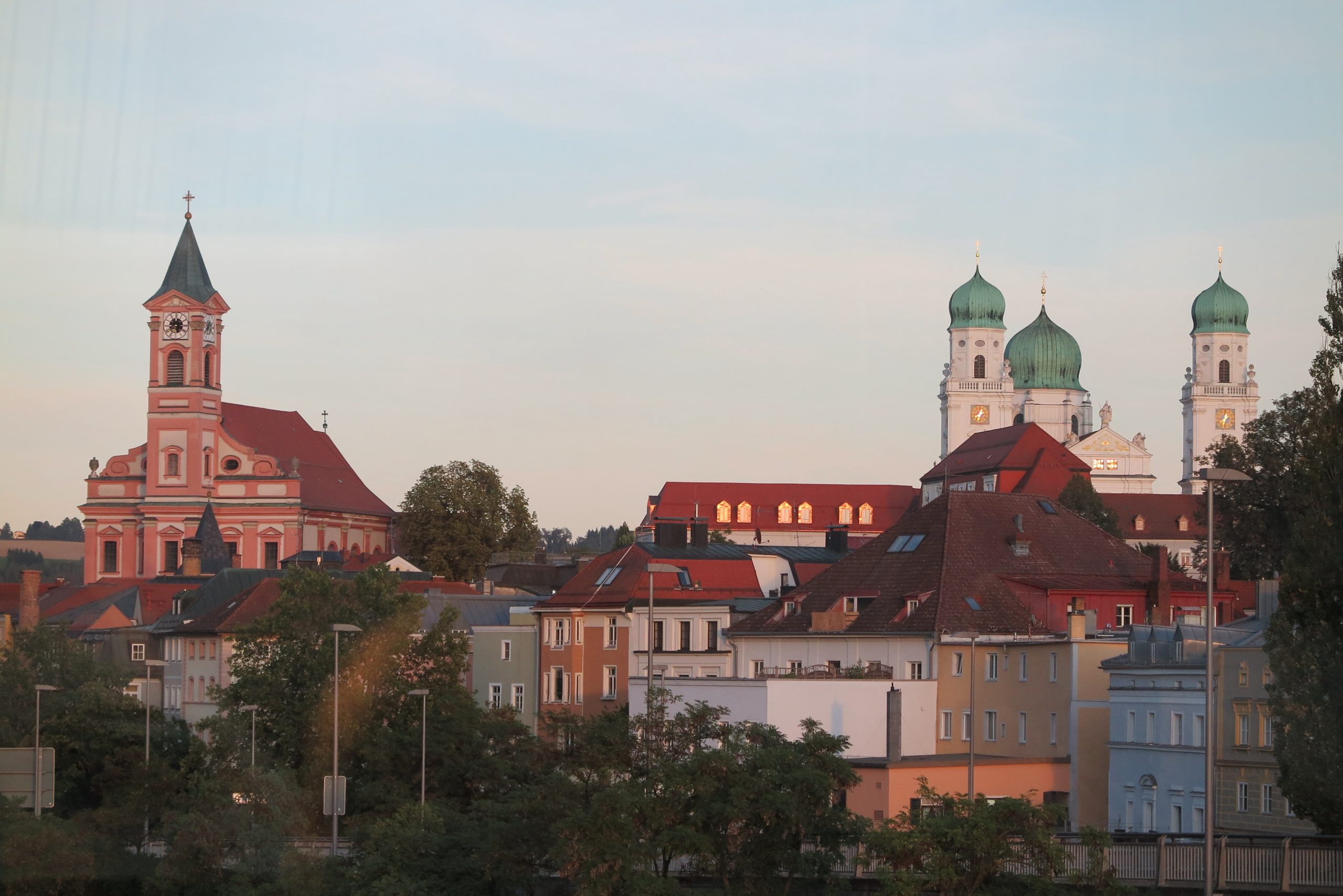
Today, Albert went to Kelheim to see the Liberation Hall, followed by a 45- minute ferry ride through the Danube Gorge and then on to Weltenberg Abbey. The abbey runs the oldest monastic brewery dating back to 1052. Christabel went on a walking tour of Passau and then attended an organ recital at St. Stephen’s Cathedral. This is supposed to be the largest pipe organ in the world, with 17, 974 pipes and 233 stops. (This may not be true, as it is believed there’s a larger organ in Los Angeles.) Bach’s Toccata and Fugue in D Minor sounded grand played by Andreas Unterguggenberger, the Domkapellmeister. The cathedral is located on the Old Town’s highest point. The original structure was burnt down and the present one was rebuilt by the famous Baroque architect Carlo Lurago, the stucco by Giovanni Battista Carlone, and the frescoes by Carpoforo Tencalla (Christabel did not make these names up!).
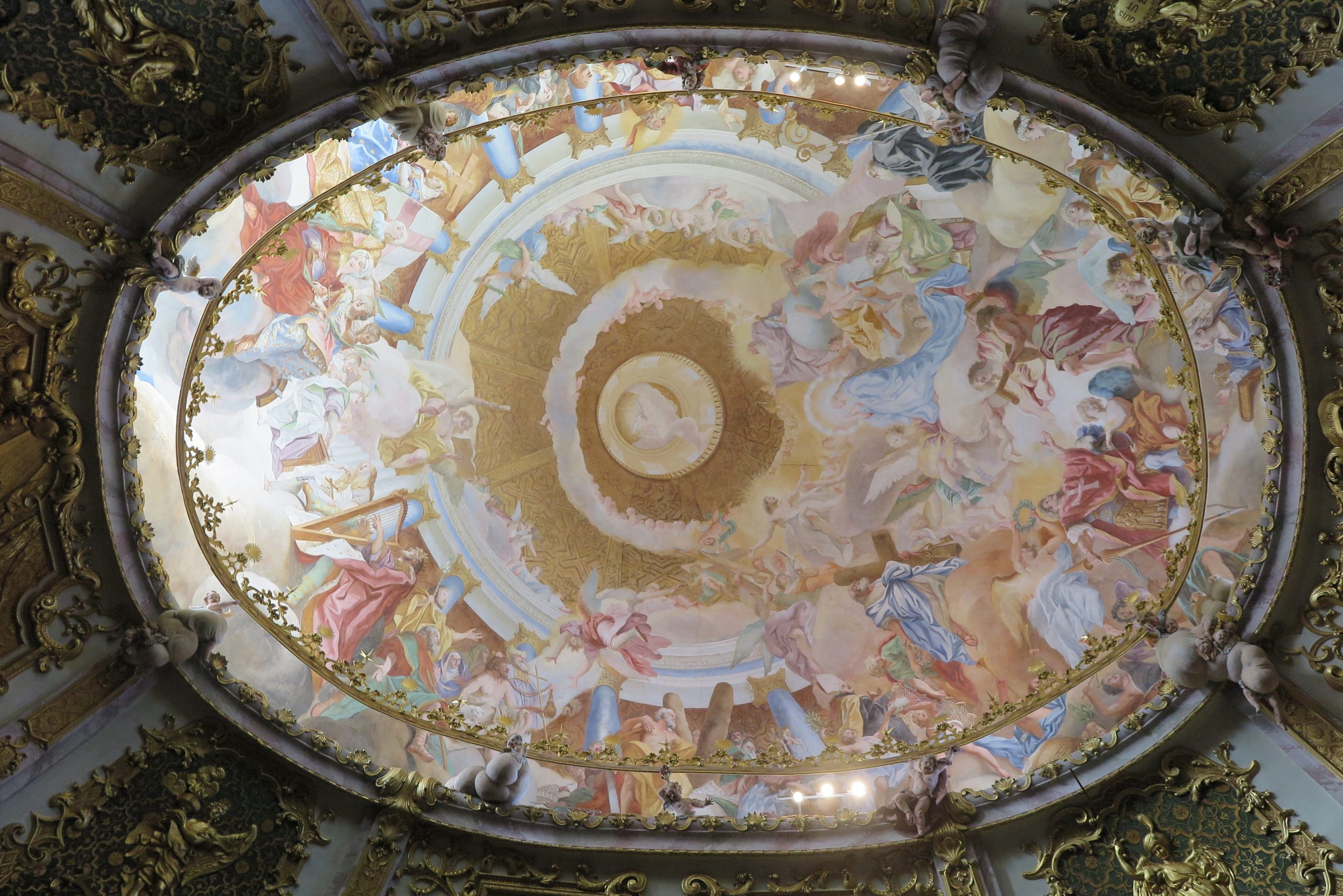
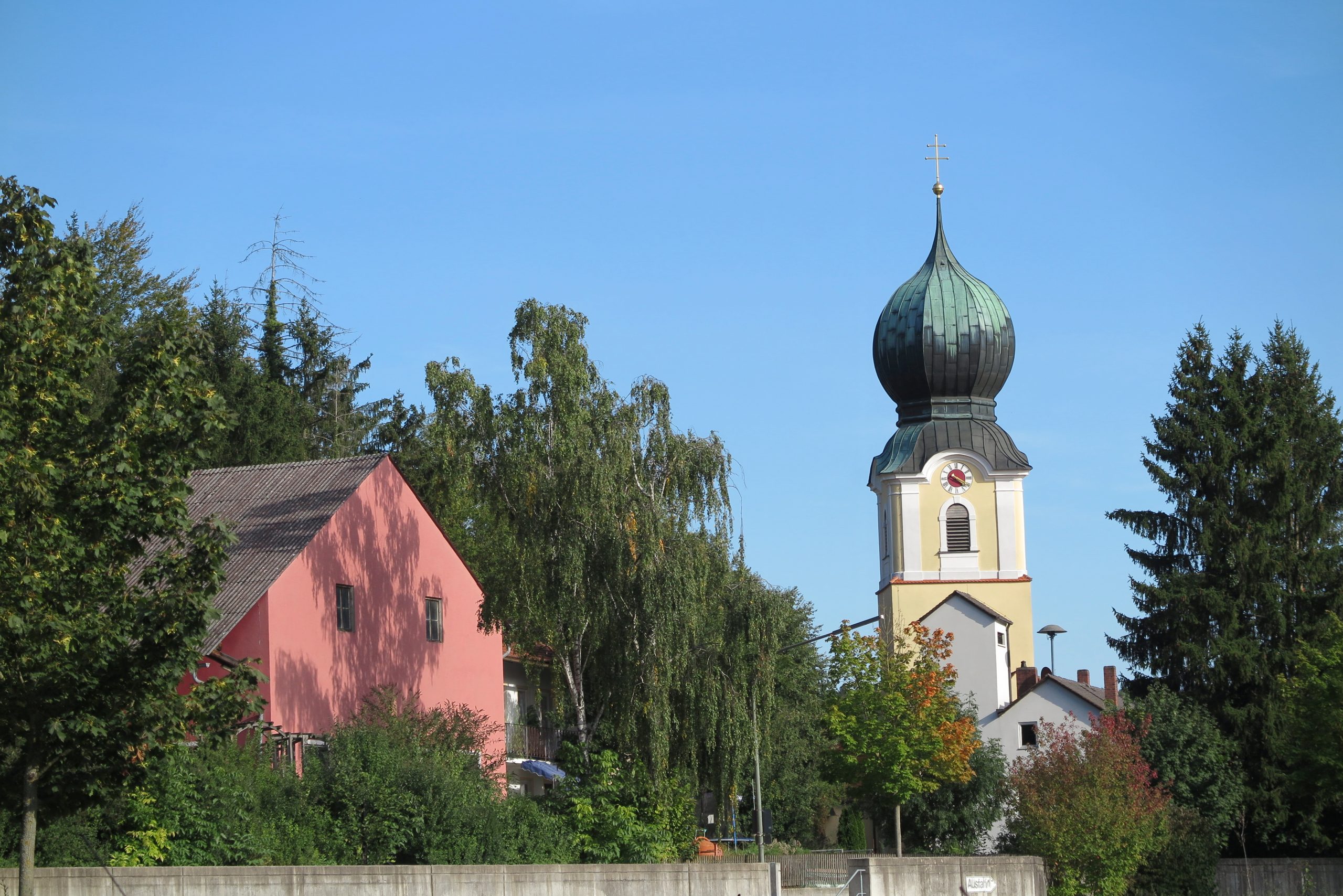
Passau, renowned for its picturesque scenery, is a favored destination of many riverboats, resulting in an influx of tourists crowding the small town. The weather miraculously was warm and there was a demonstration by the town’s youth advocating action on climate change. There were more police than demonstrators.
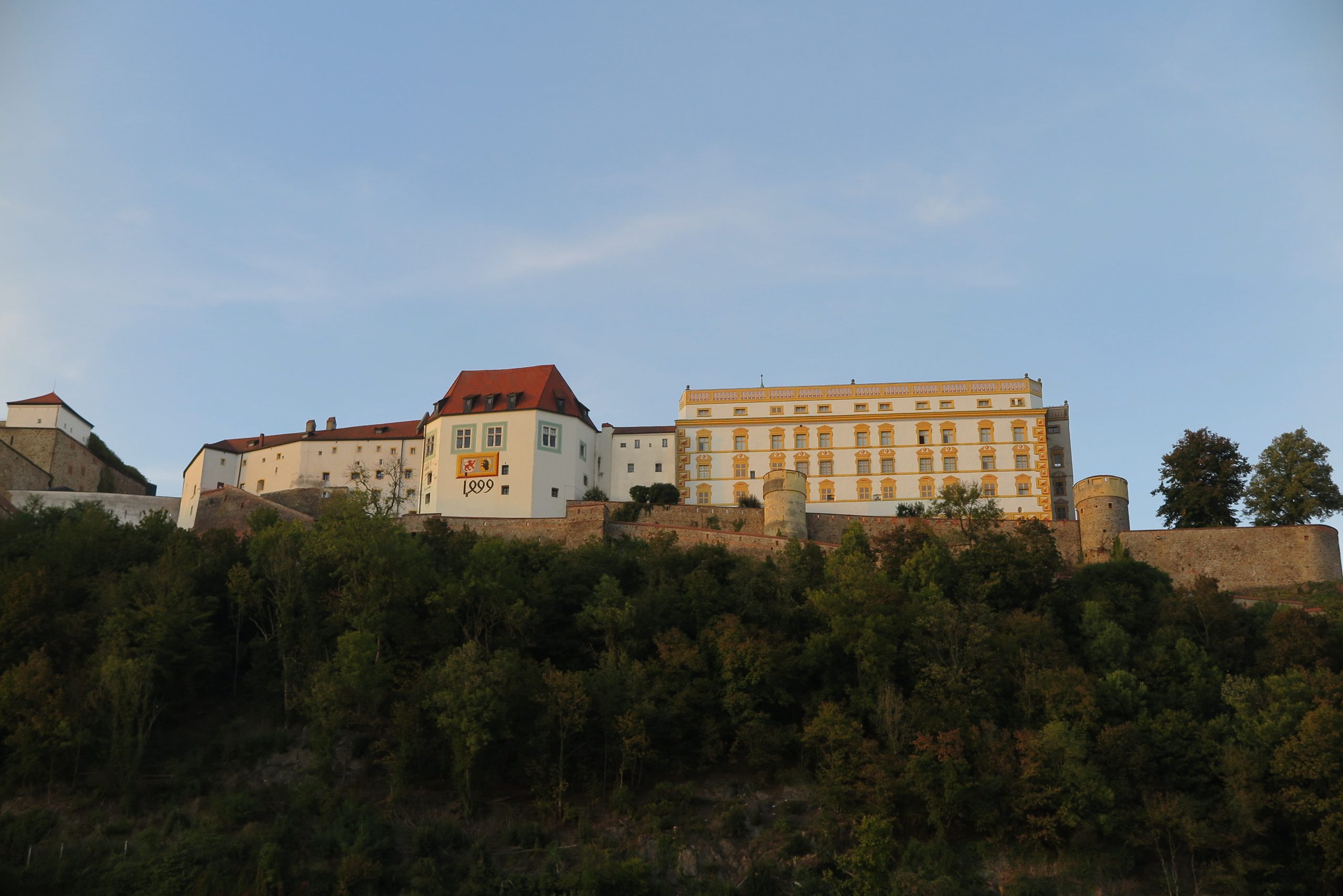
Opposite where we docked, is the Fortress Veste Oberhaus, the house of Passau’s prince-bishops’ grand residence. This year it celebrated its 800th anniversary.
Straubing: Old Graveyards and Romantic Chapels – September21, 2019
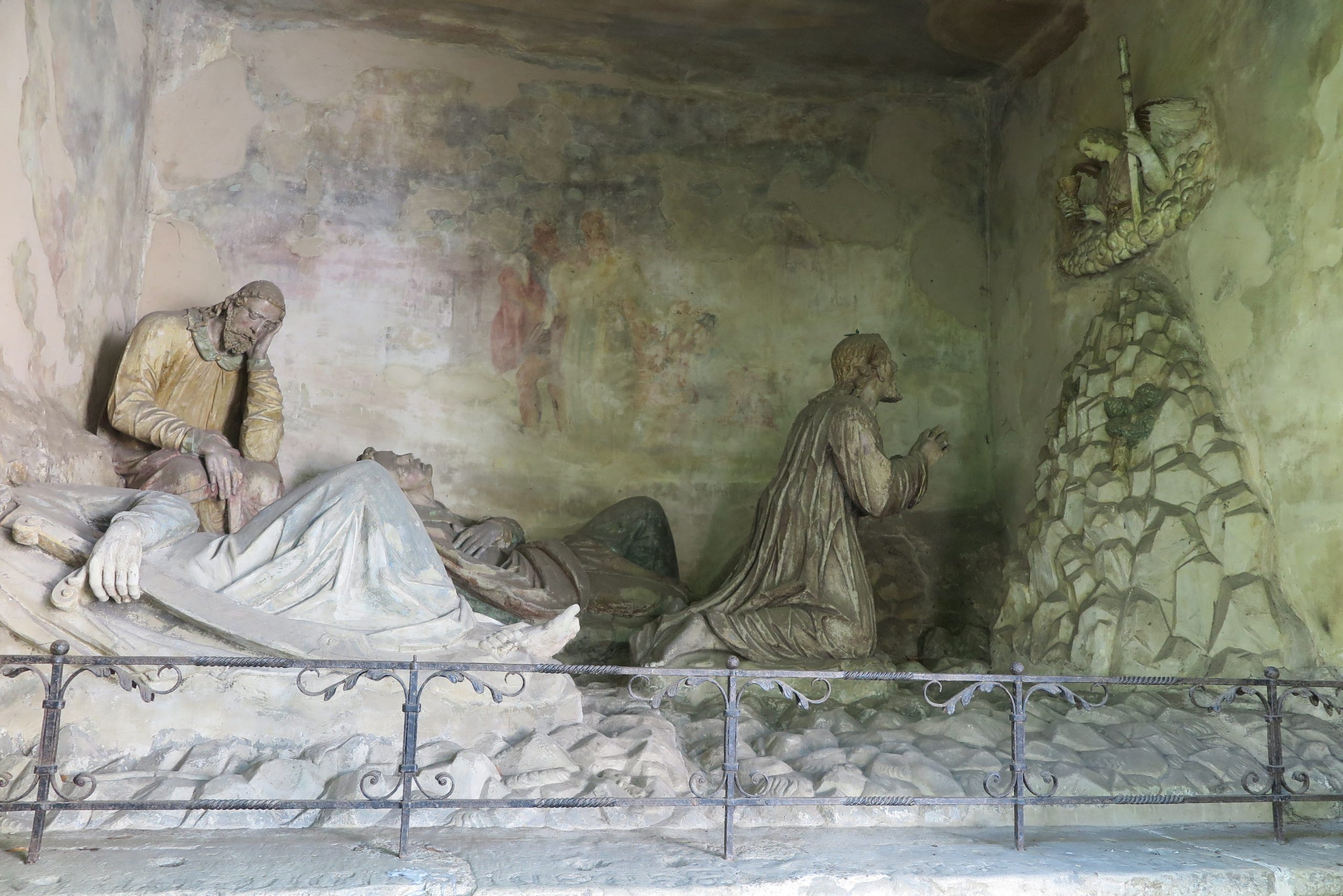
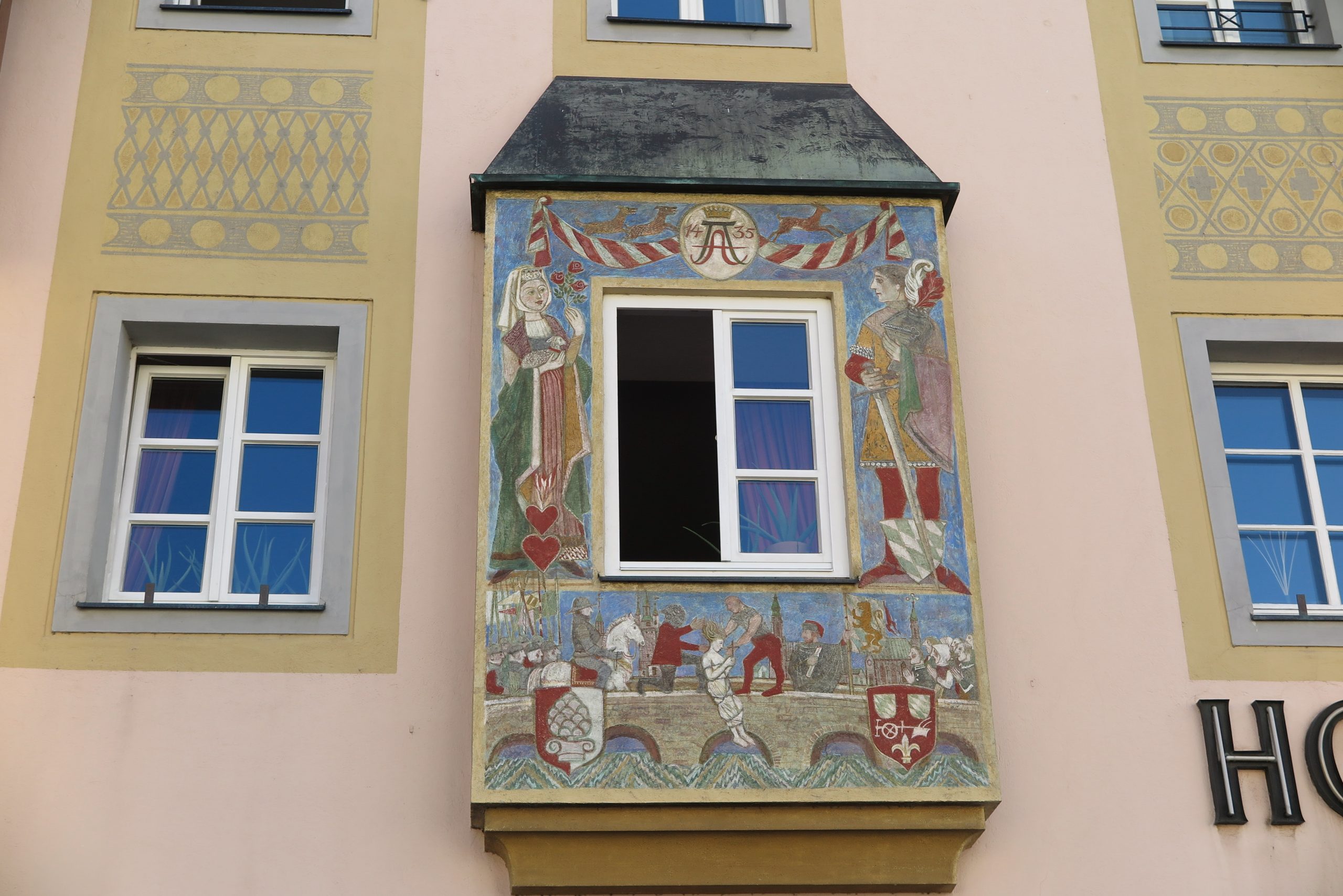
The excursion today was to St. Peter’s Church and the Graveyard in the Bavarian town of Straubing. The graveyard goes back to 1050 and the tombs look really old. They are extremely ornate and include very fancy sculptures, stone masonry, iron works, except for the graves of those who died around 1945 at the hands of the Nazis. Those memorials are simple brown crosses with the person’s name. We visited the bone chapel (the tour guide’s description). The frescoes on the wall show people at their various occupations, but always shadowed by death in the guise of a skeleton. The other chapel we visited was that of Agnes Bernauer who had the good fortune to marry a Duke’s son but was not accepted by the family because of her lowly status. When the son was away, the Duke had the girl murdered by pushing her into the Danube. This troubled the local people, so to appease them the Duke had the chapel built in her memory. This cemetery is considered romantic and many couples get married in St. Peter’s Church. One such couple was having their wedding photographs taken against this backdrop while we were touring the site. The church was rather simple, but it does have a Roman sarcophagus.
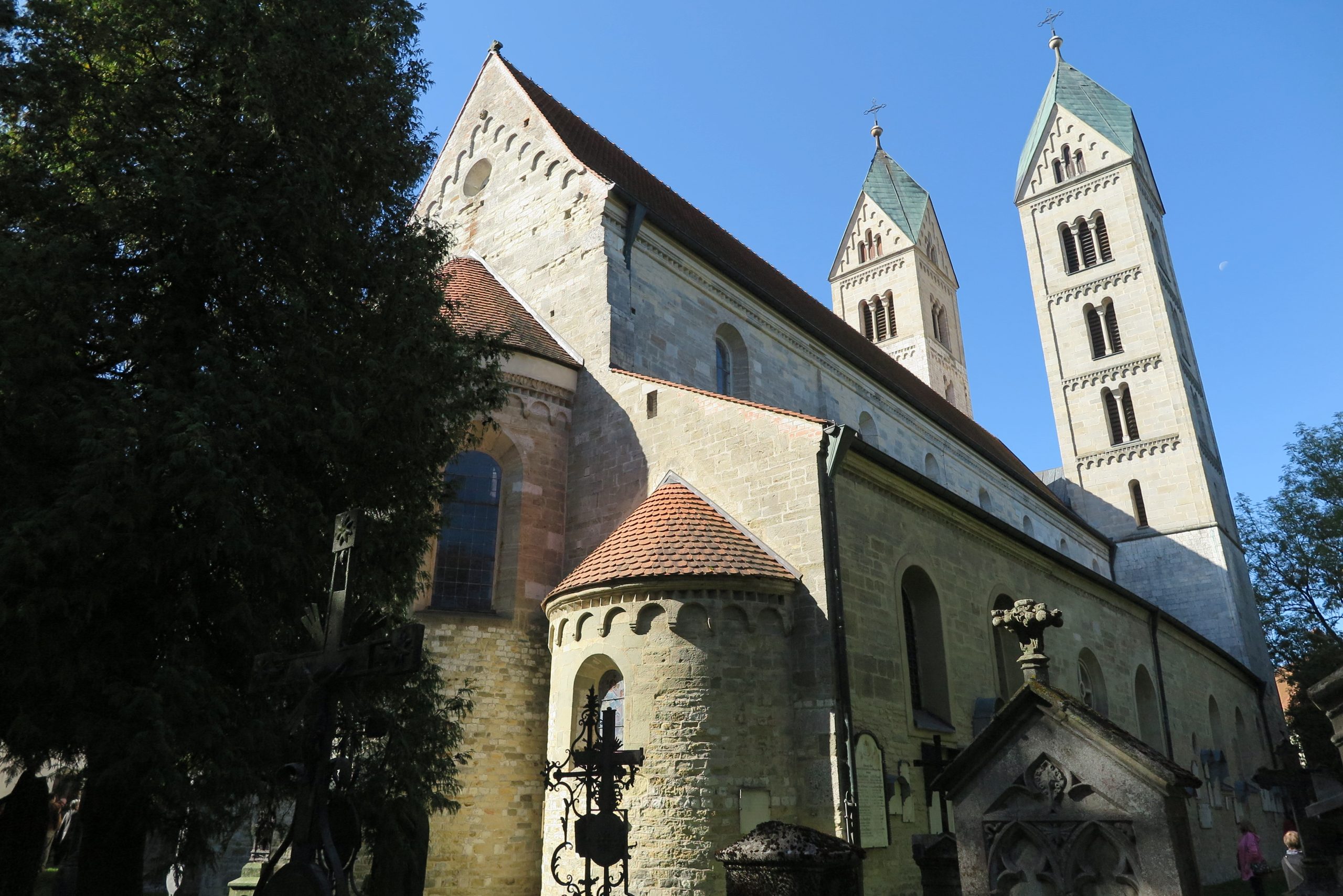
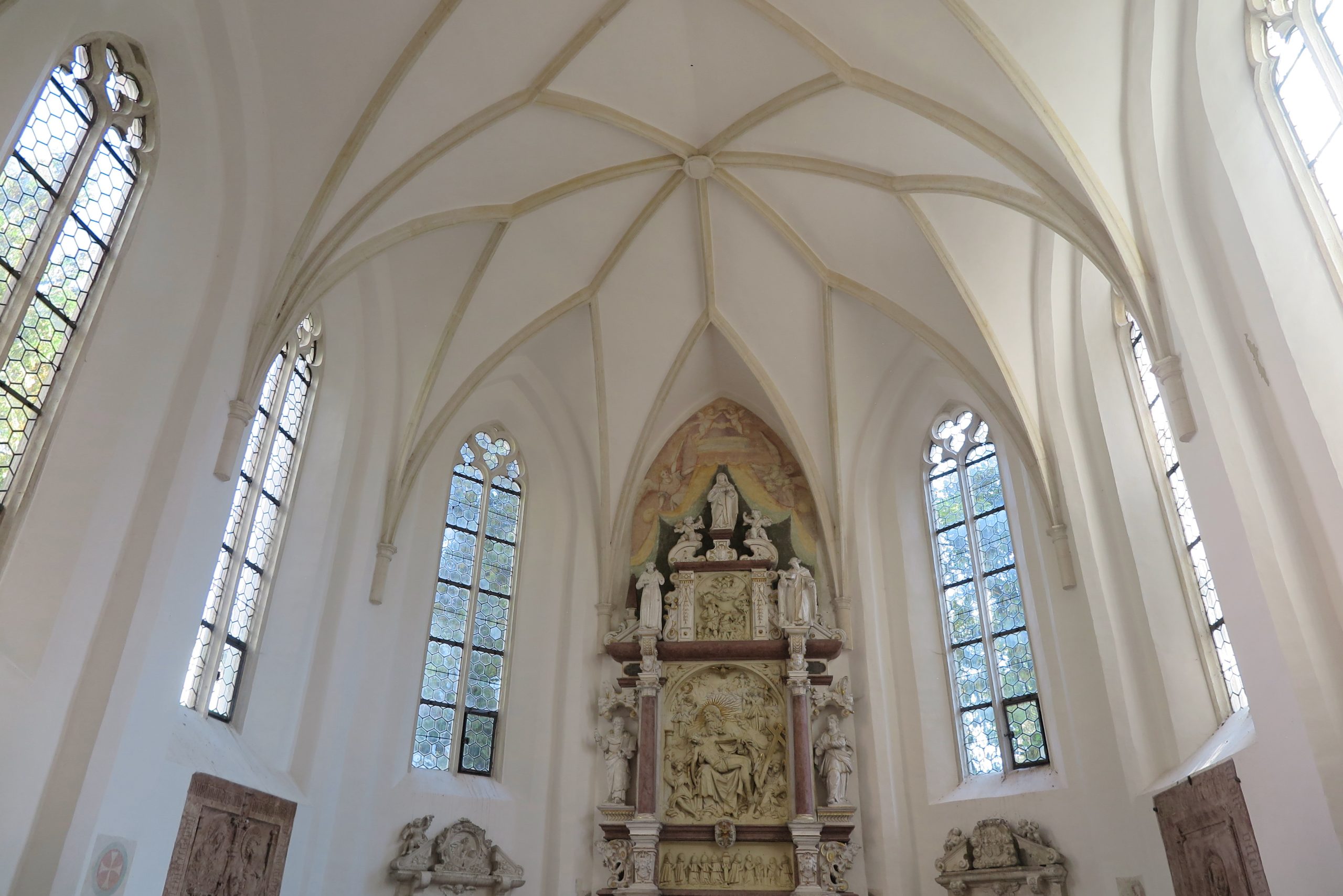

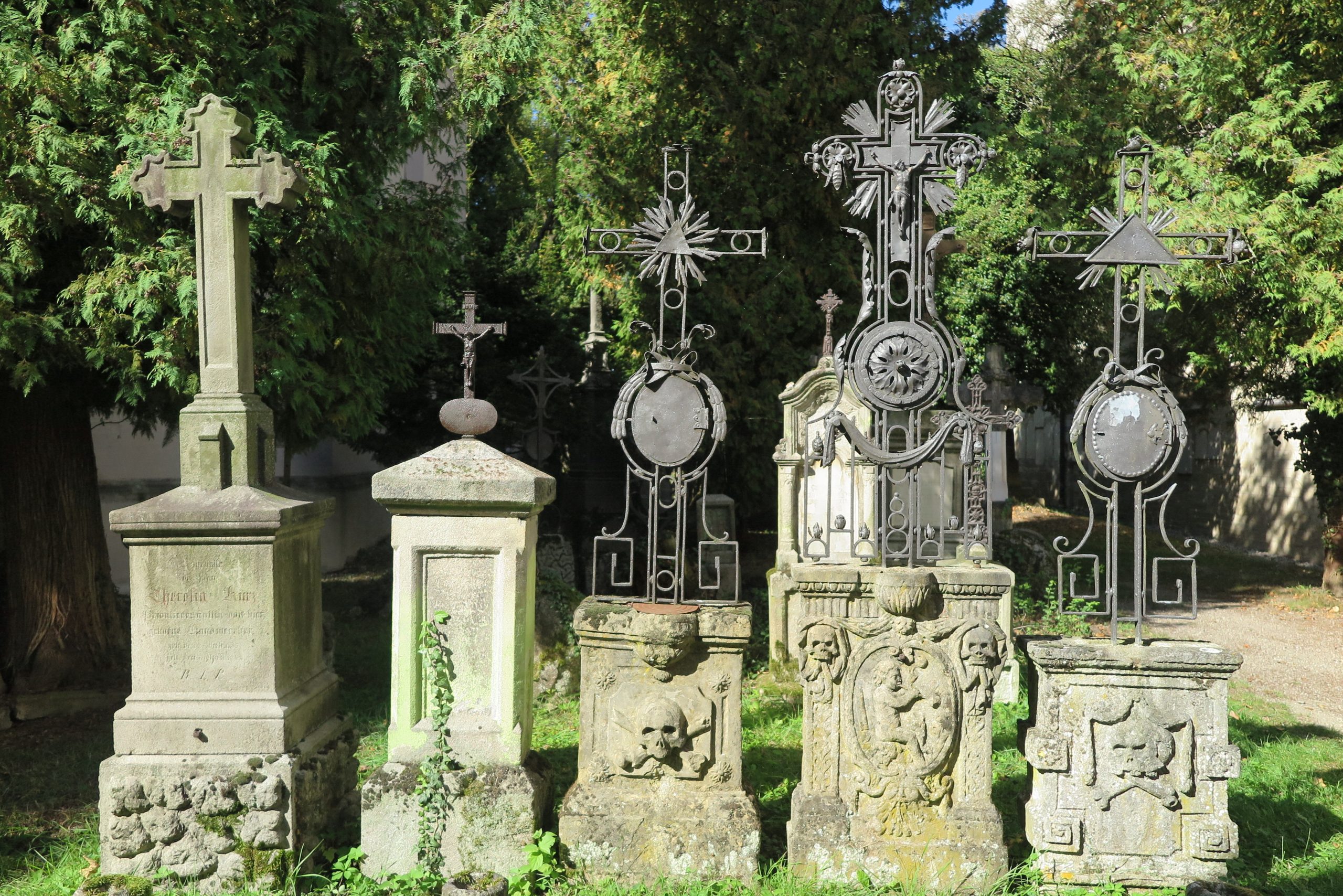
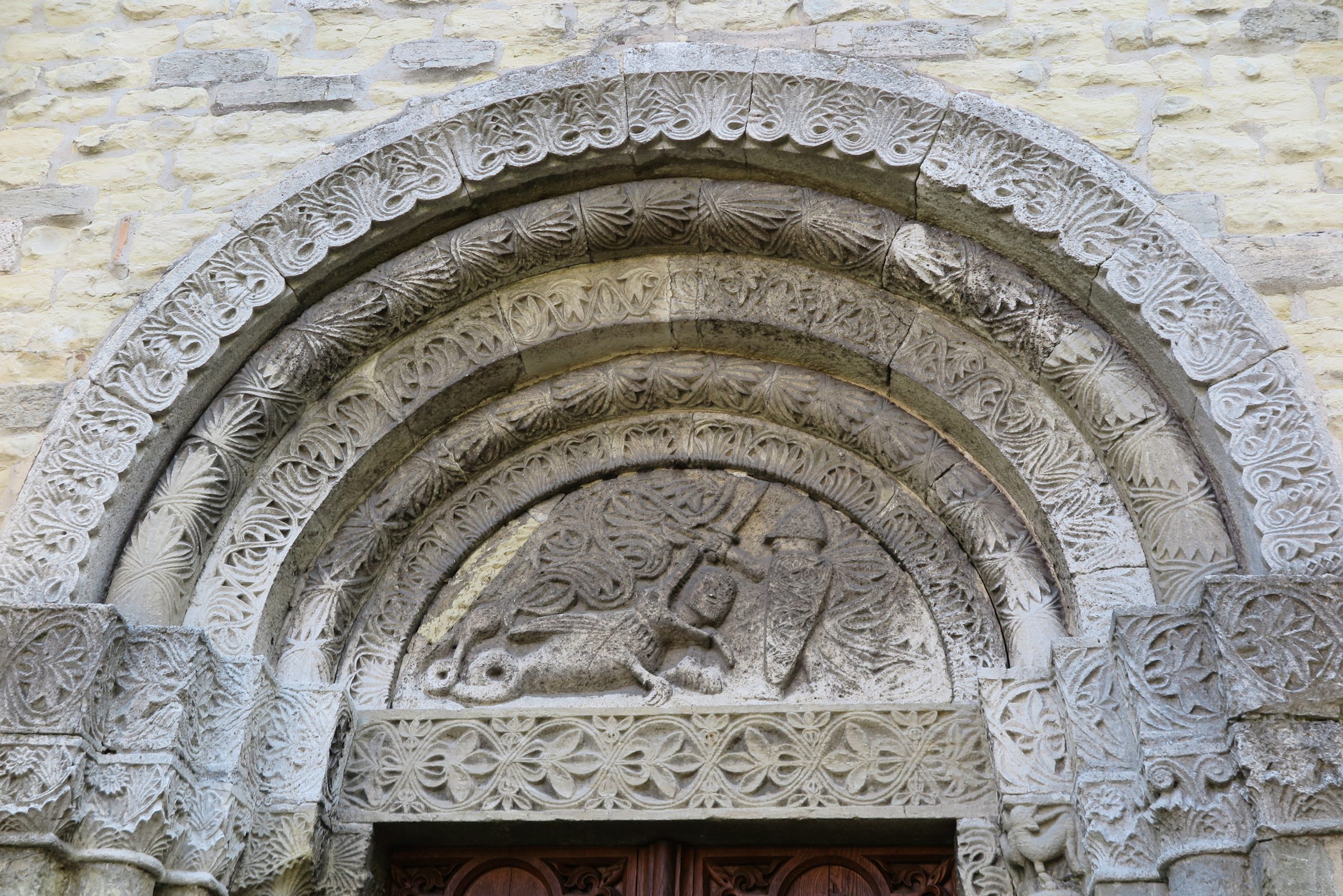
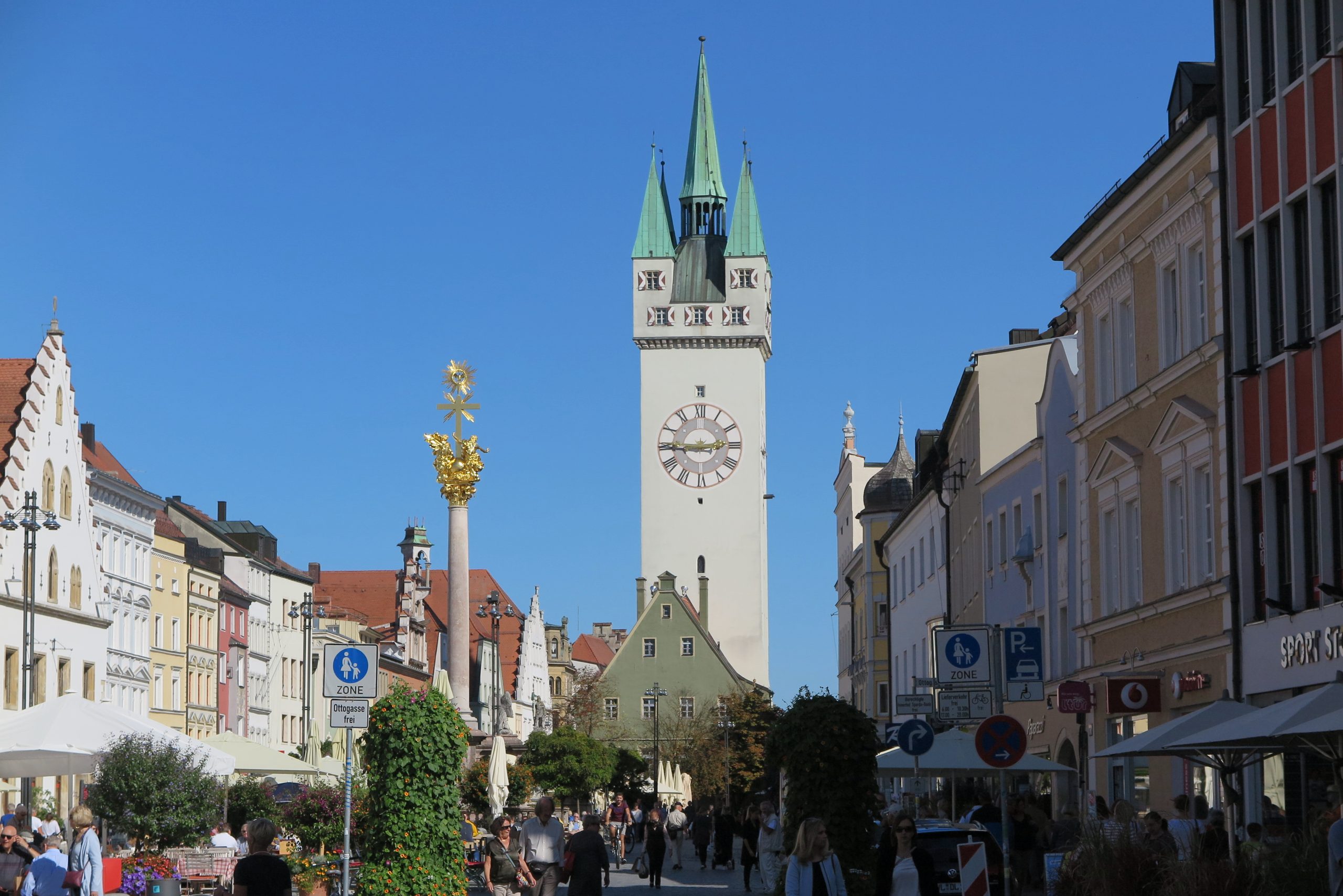
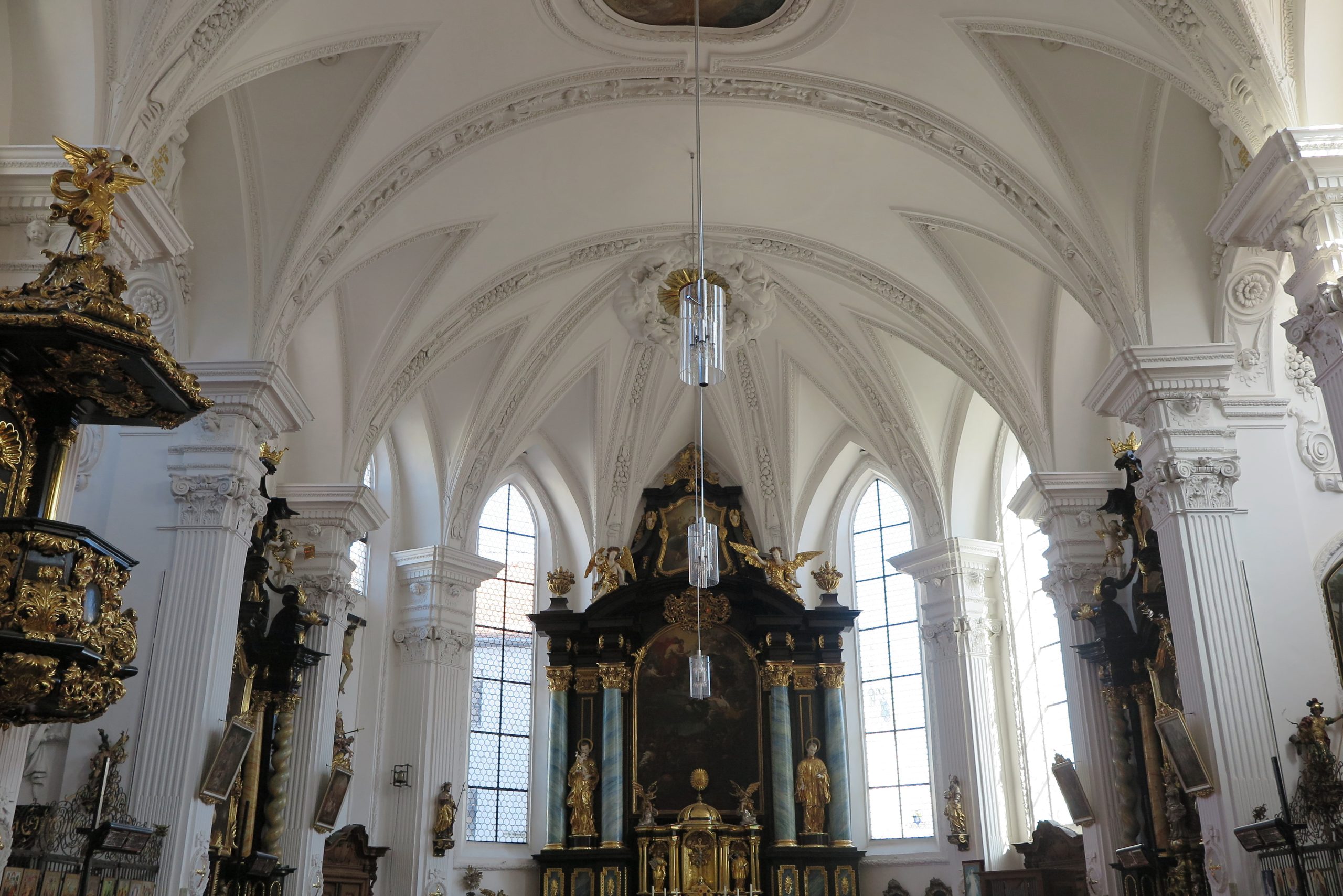
From the graveyard, we visited the New Town, which has a very beautiful platz (which can be a square or a circle in Germany, but in this case seemed to be a rectangle). For some strange reason, it had many of the same businesses, such as five or six pharmacies, lots of bookstores, and toy stores and jewelry shops, etc. It also had a number of churches, but the only one we visited was the Jesuit Church, which was completely abandoned but quite beautiful. The Trinity Pillar, the guard tower, the town hall, were all exquisitely decorated. And the square is completely ornamented by flowering bushes, such as trumpet flower vines, fig trees, and lantanas. We stopped by Café Krönner for a slice of Agnes Bernauer torte, which consists of several layers of a nut meringue held together by a mocha cream filling. Incredible!
Lakeside Journey: St. Wolfgang and Mondsee – September 22, 2019
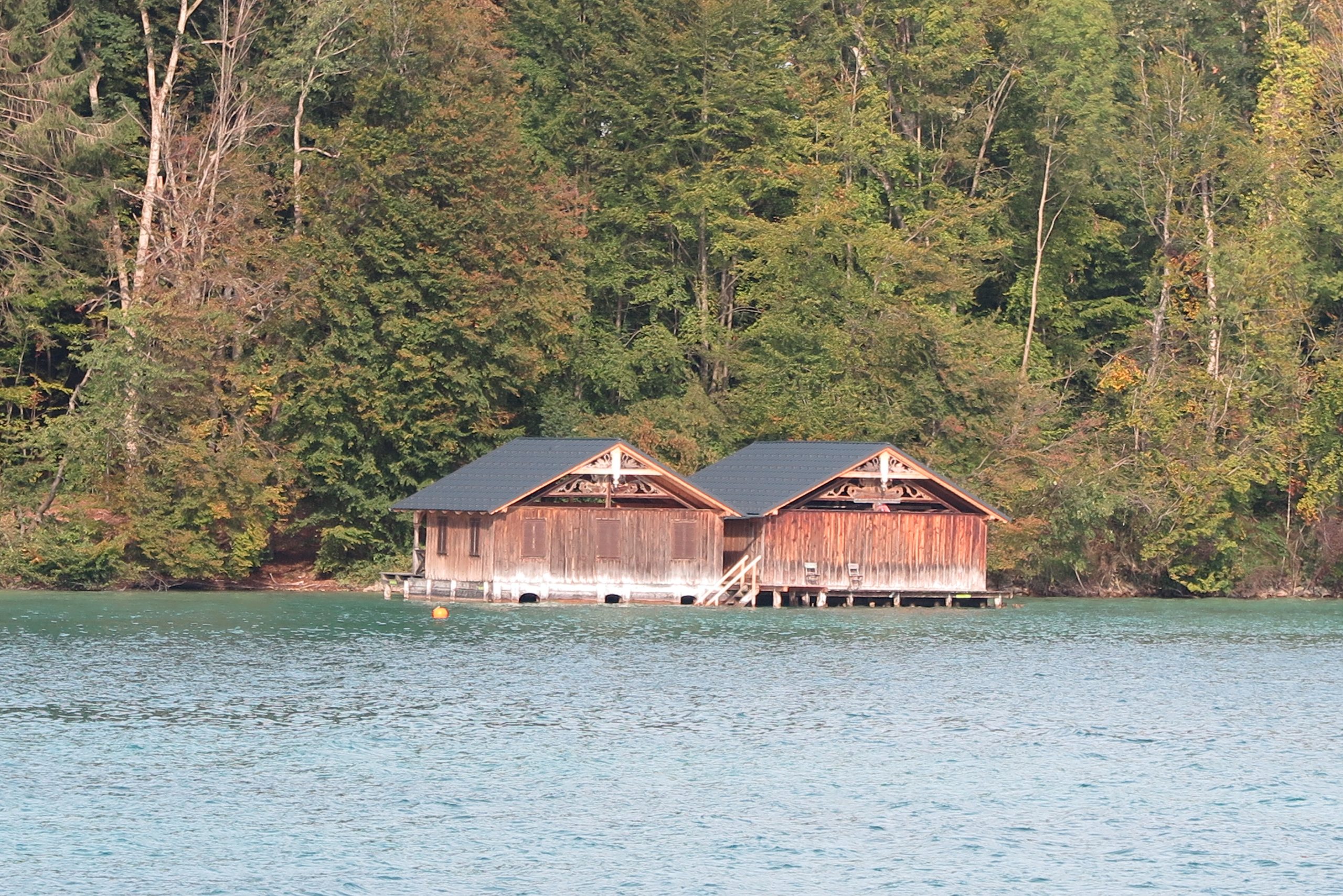
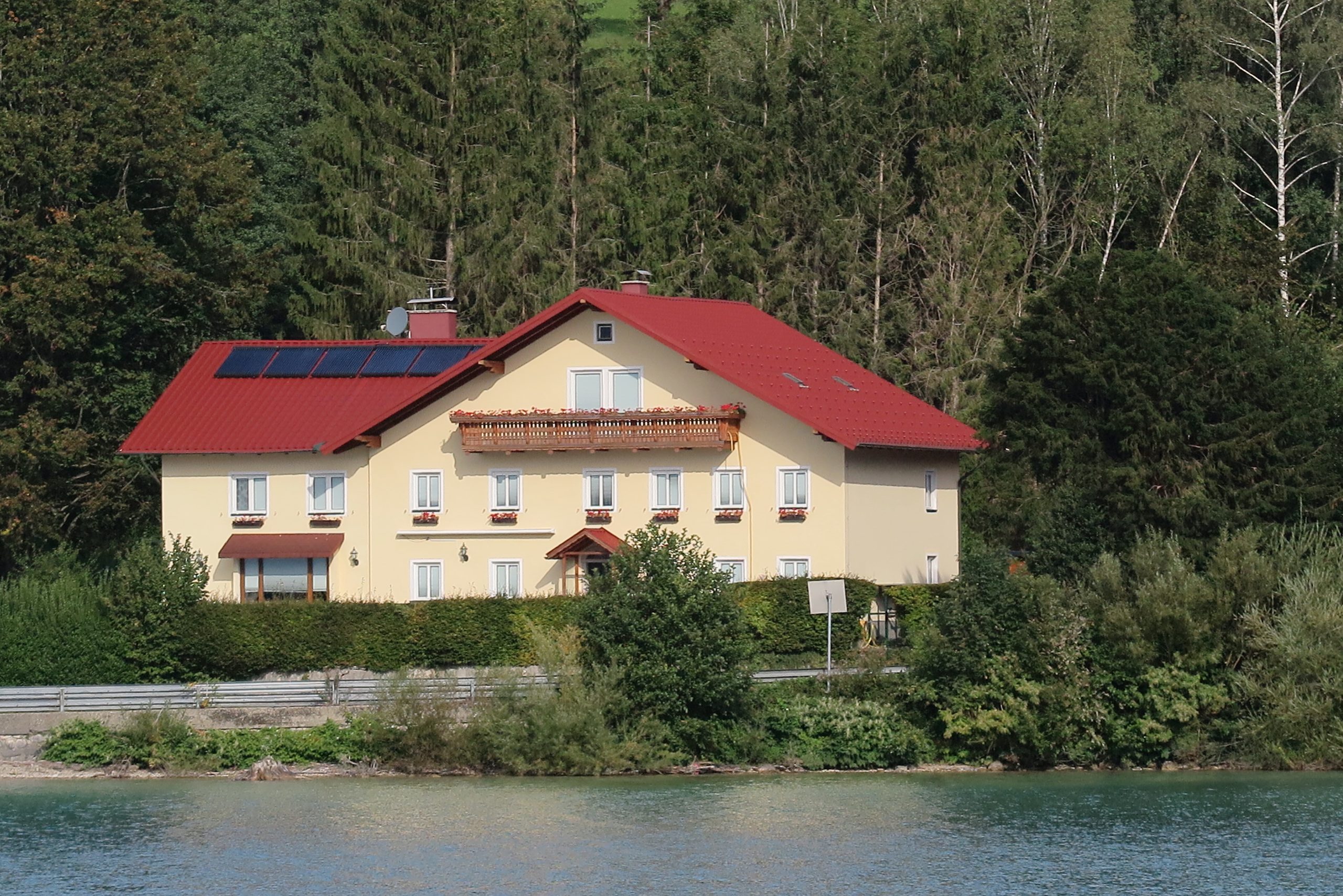
We’ve arrived in Austria’s lake district, beginning our journey with a boat ride across Attersee Lake. Next, we stopped off in the village of St. Wolfgang on Wolfgangsee, before concluding our lake tour at Mondsee.
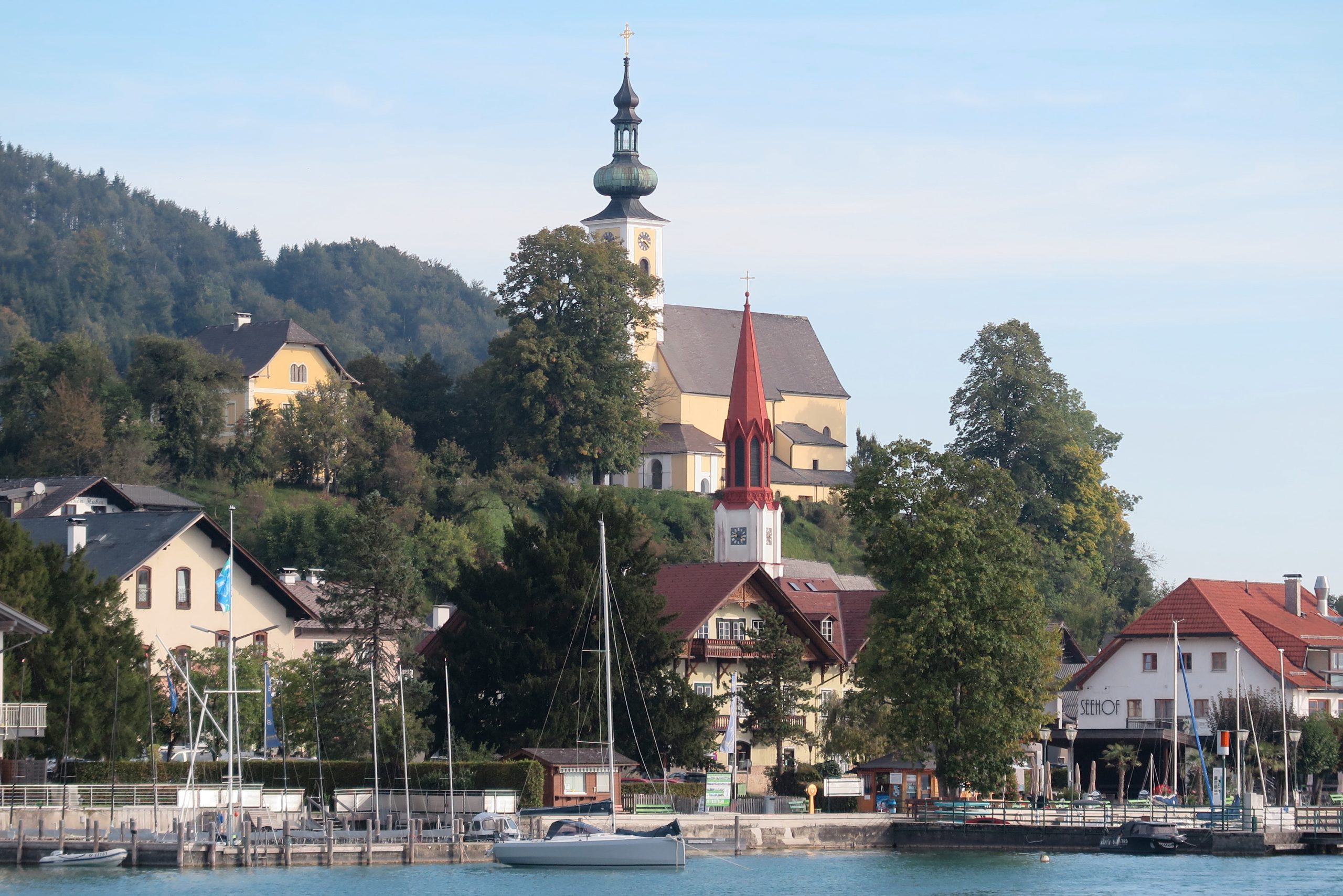
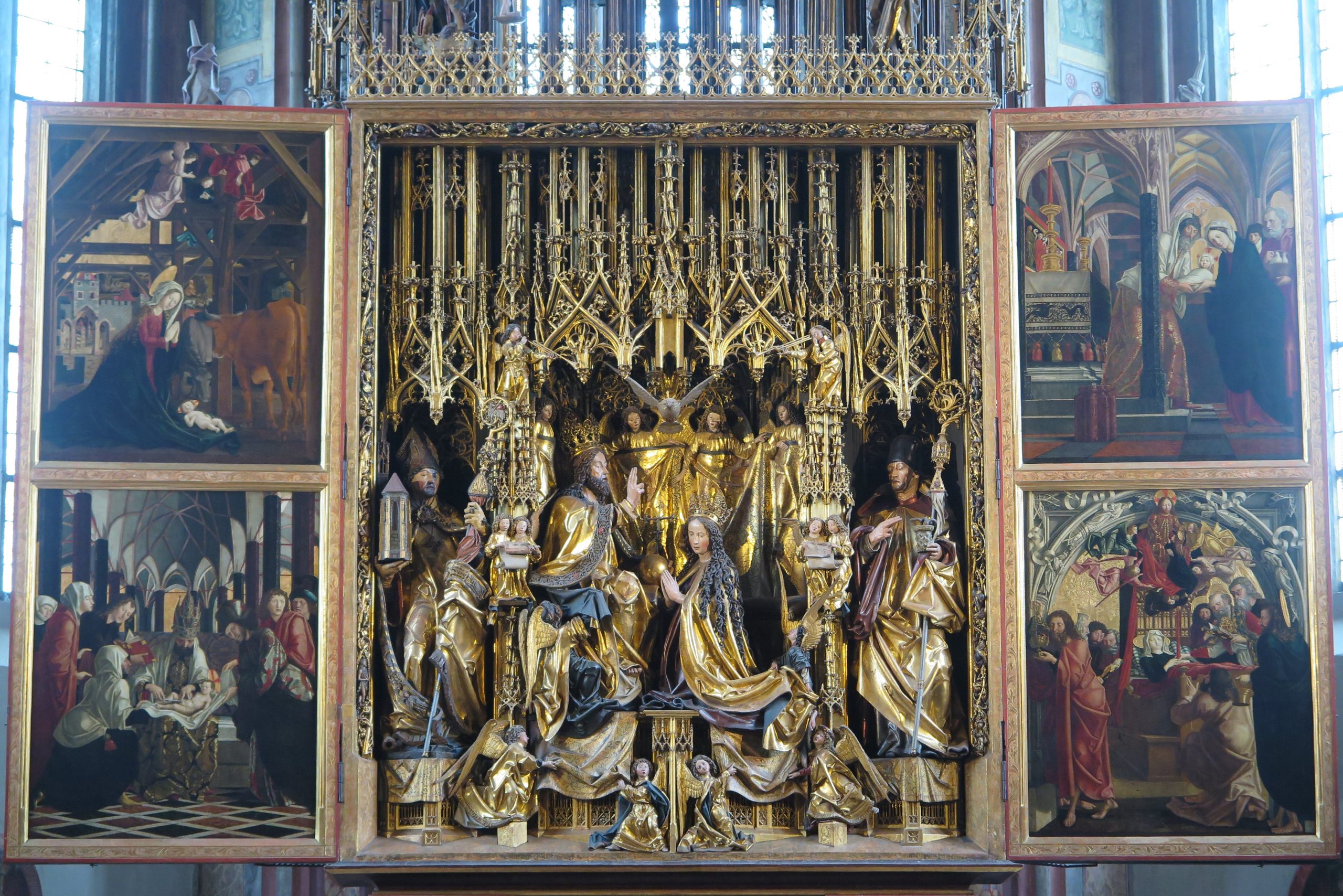
In St. Wolfgang, we visited the local church and the two shops famous for gingerbread. For lunch, we stopped at the Leopoldshof for a typical Jause, family style light lunch of bread, cheese, cold cuts, and desserts.
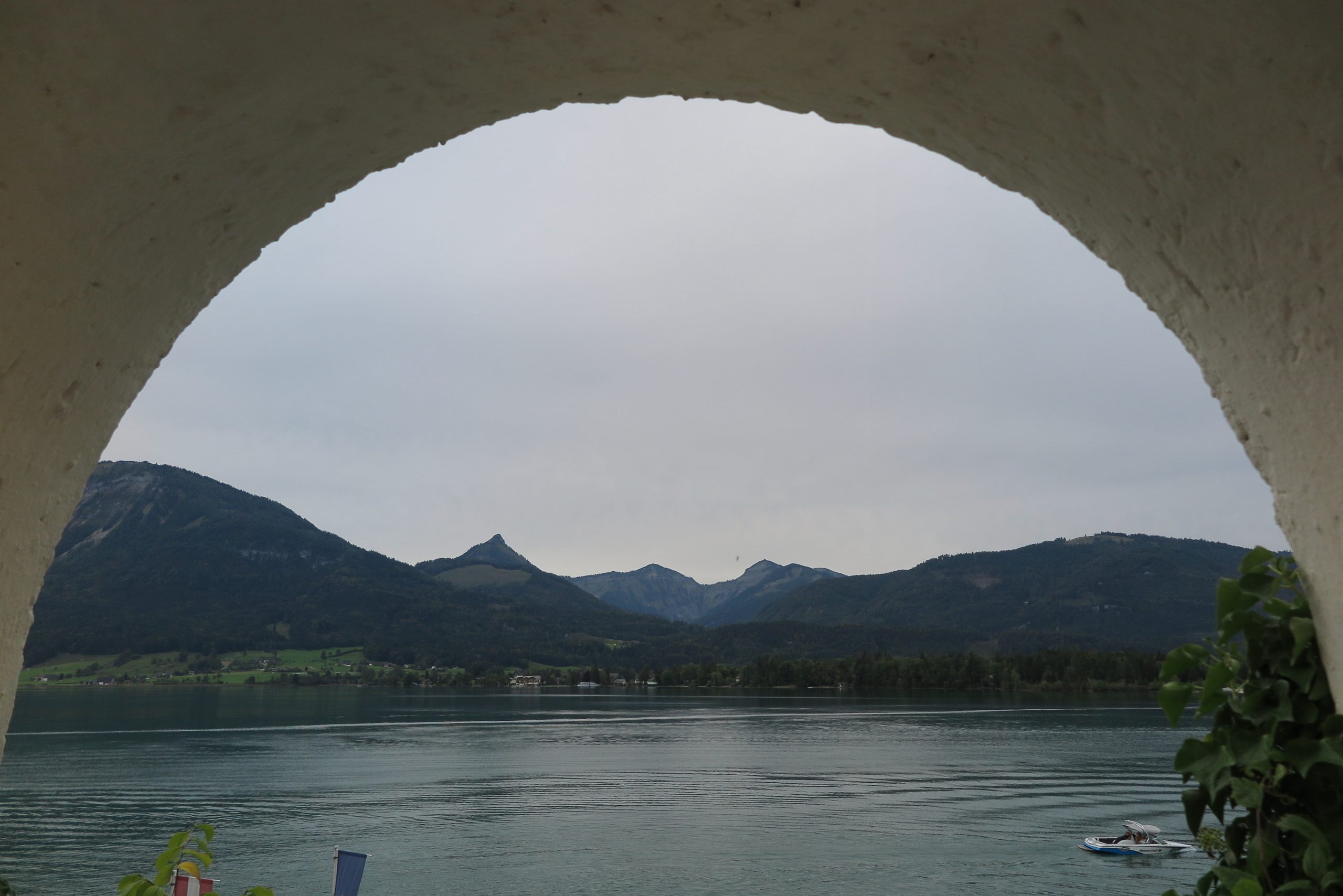
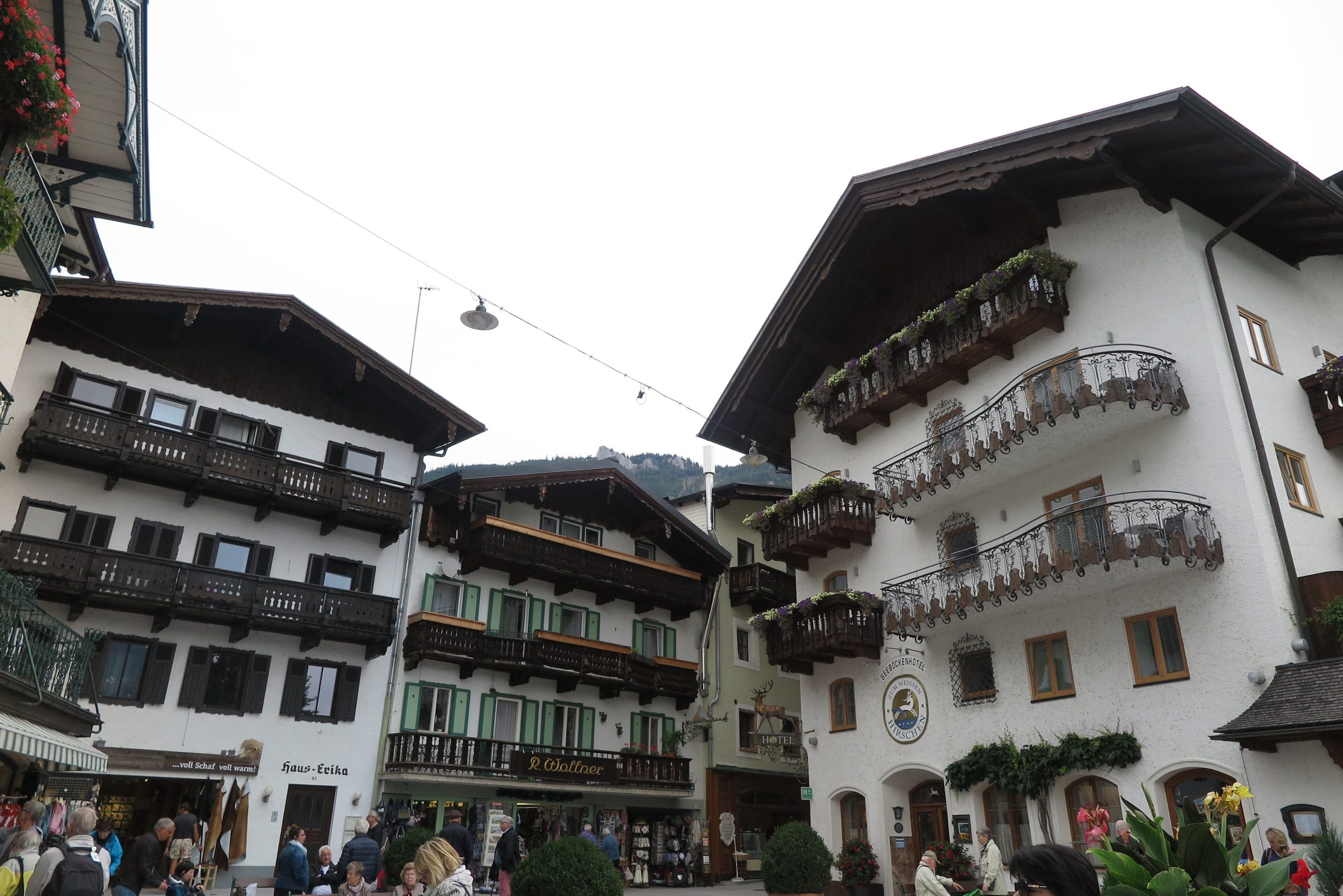
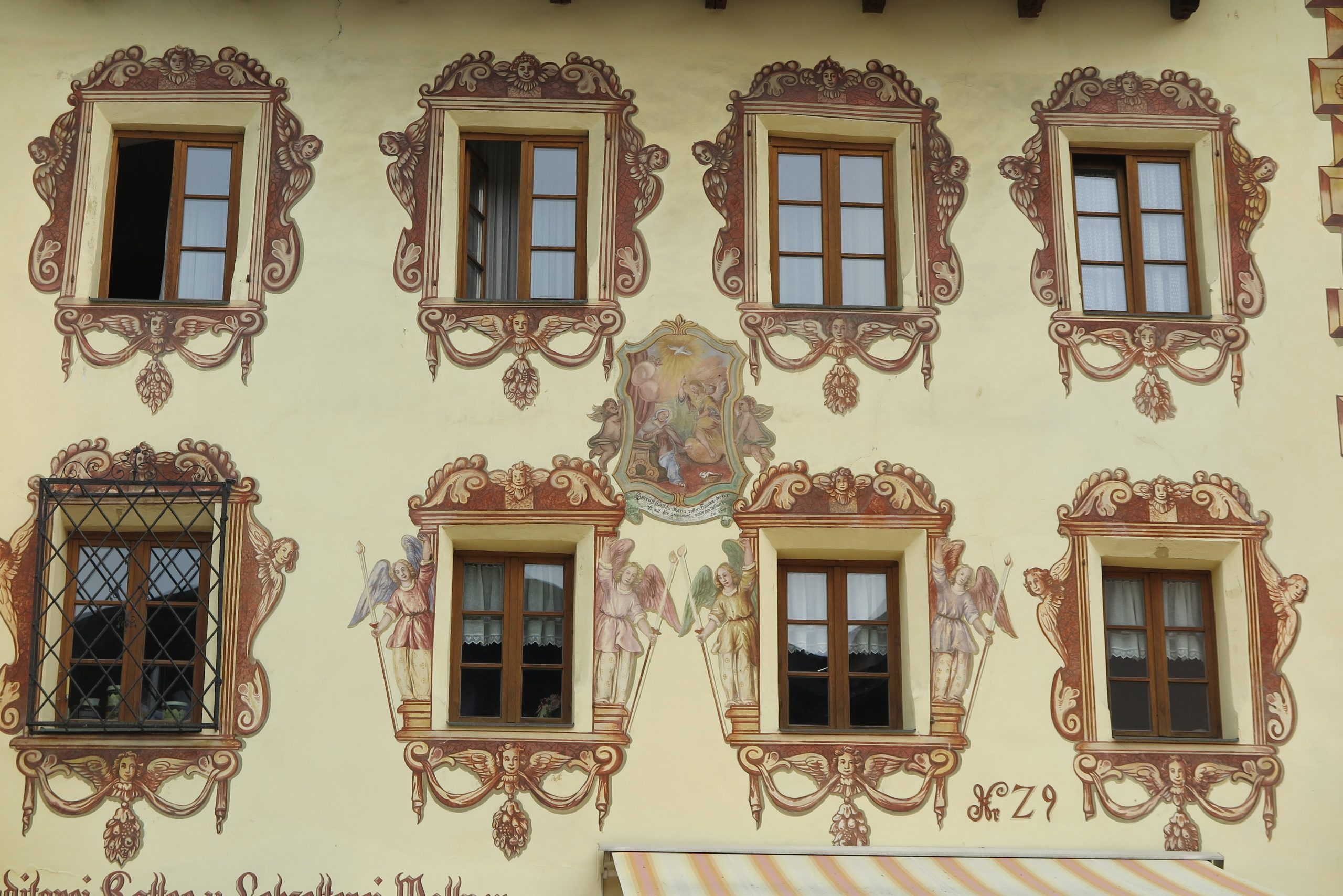
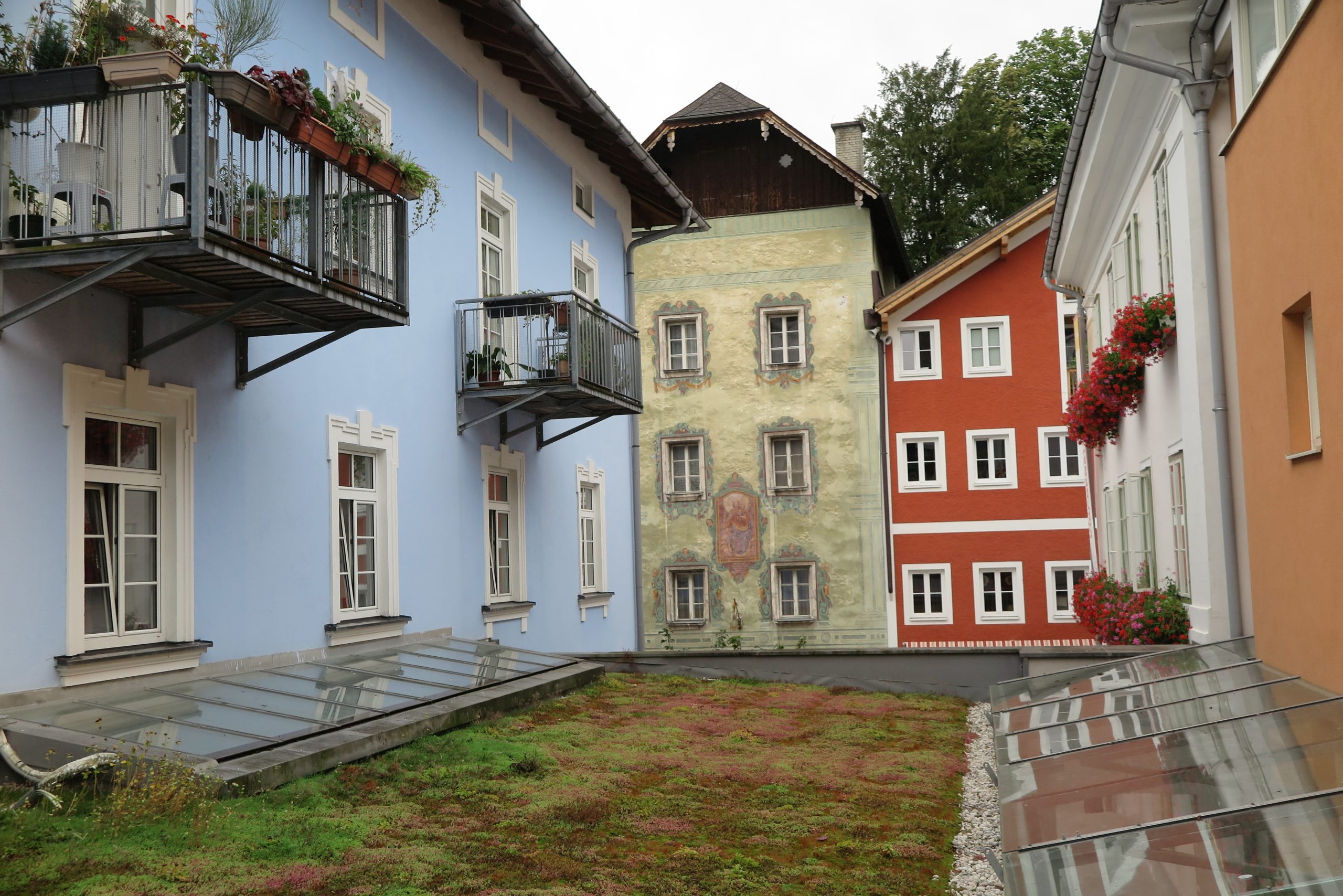
Our guide, Noelia, hails from Guatemala and resides in Bad Ischl with her Austrian husband, who is a musician in two bands. During lunch, he entertained us on the harmonica and with some traditional songs.
Krems: A Brief Visit – September 23, 2019
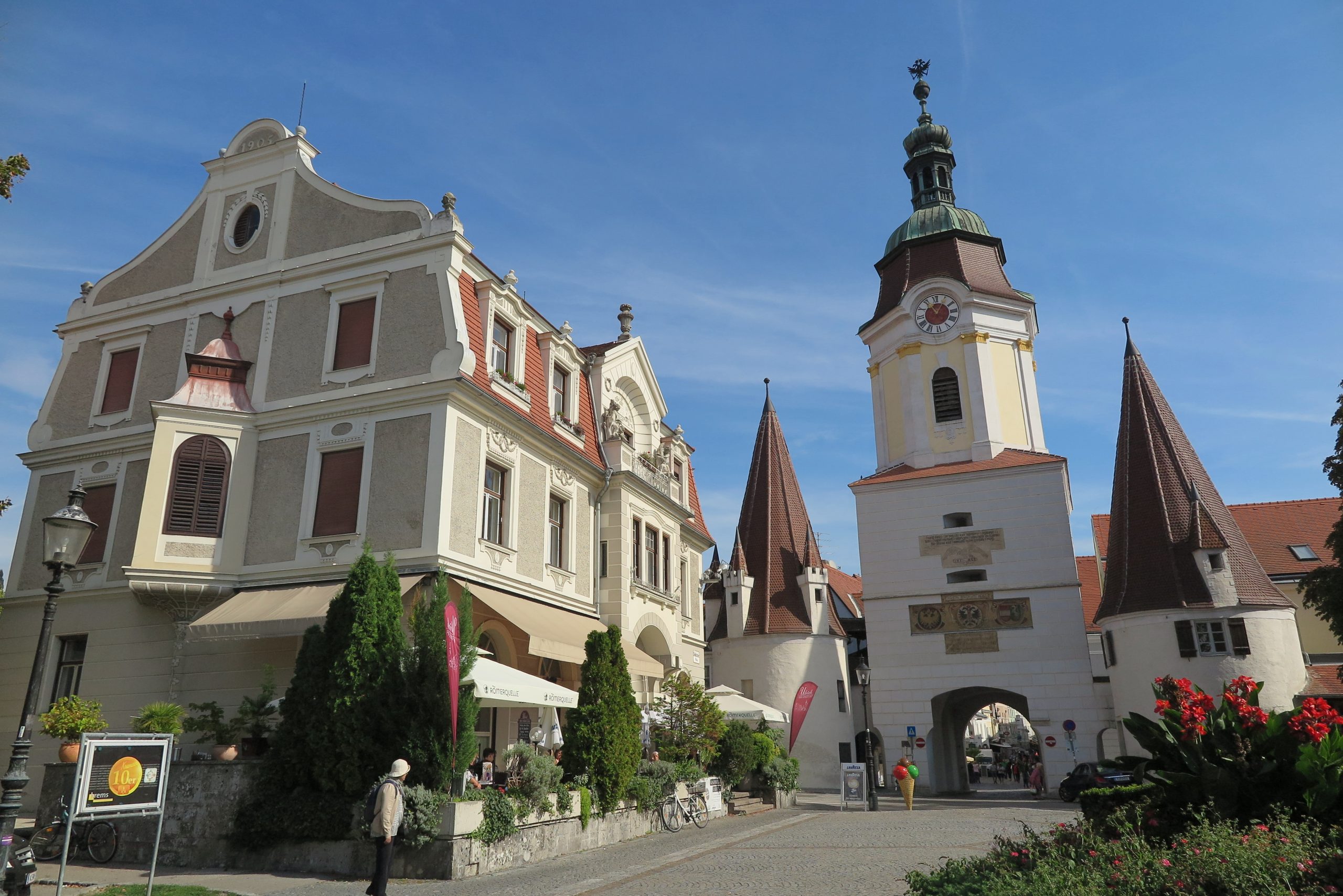
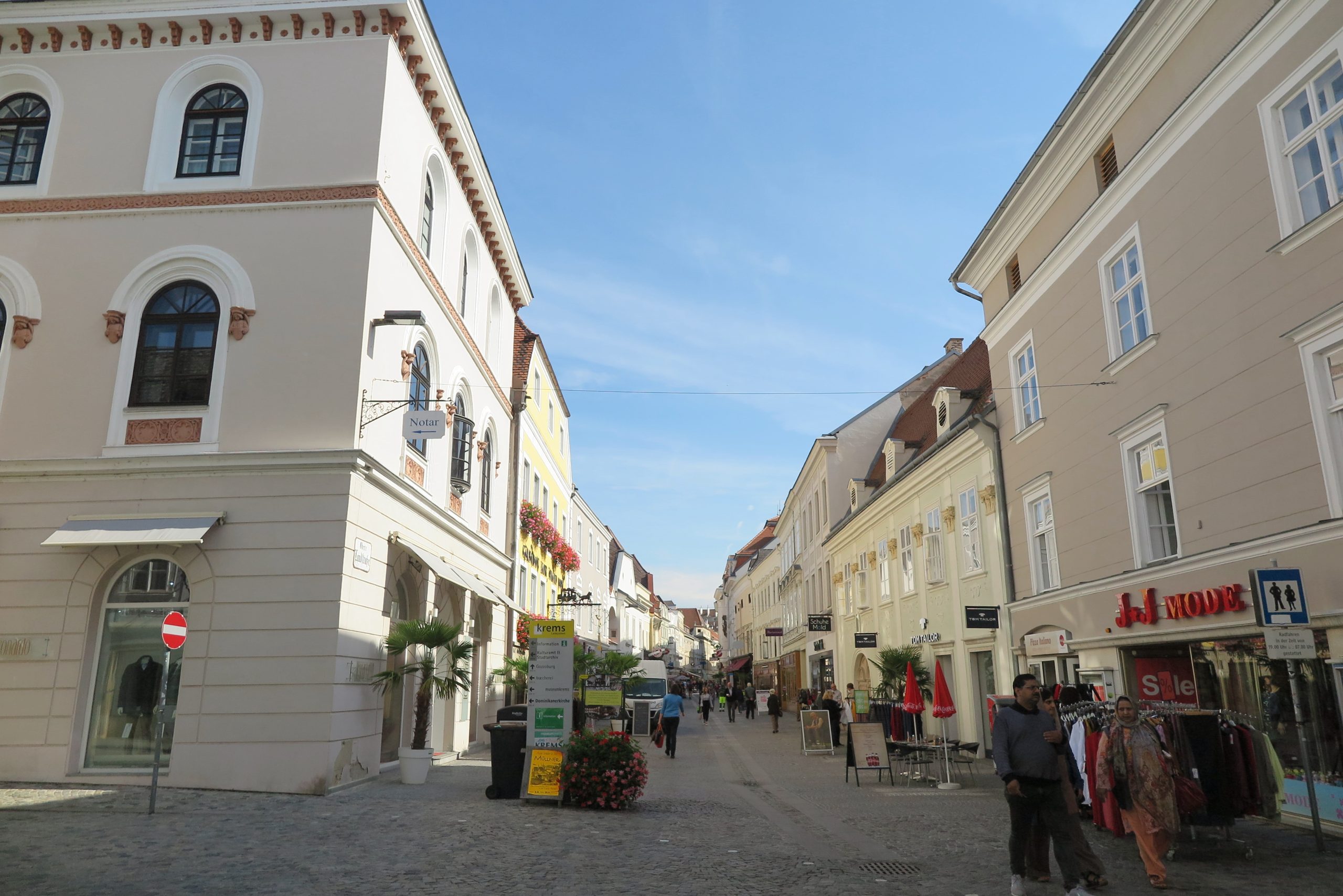
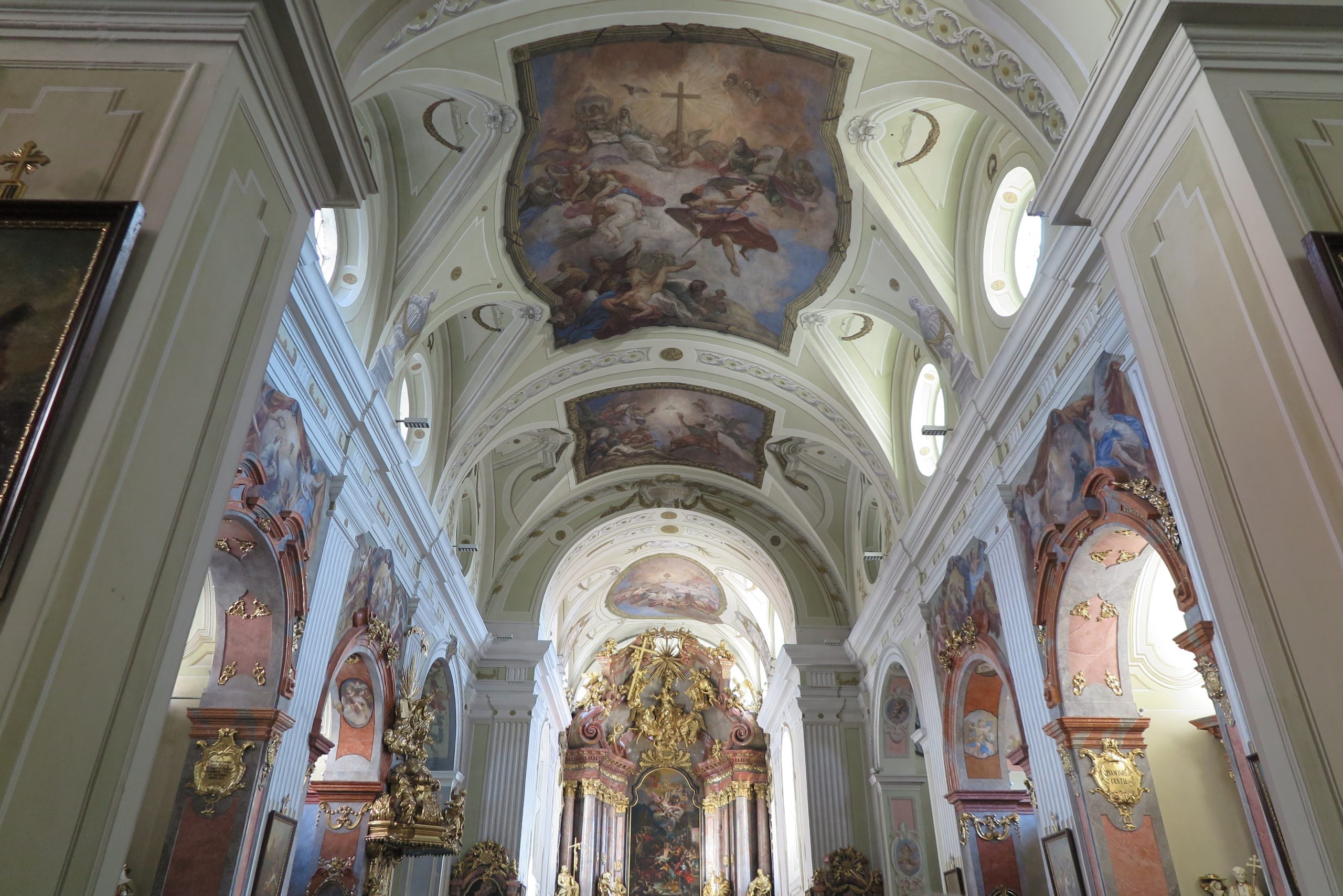
We arrived in Krems, Austria, later than expected due to delays at the lock, resulting in a condensed tour of the town. Our brief visit included stops at the Steiner Tor, the Dominican Kirche (currently non-operational), and the gorgeous local town church. While Albert and the rest of the group departed for a winery tour, Christabel stayed in town to shop.
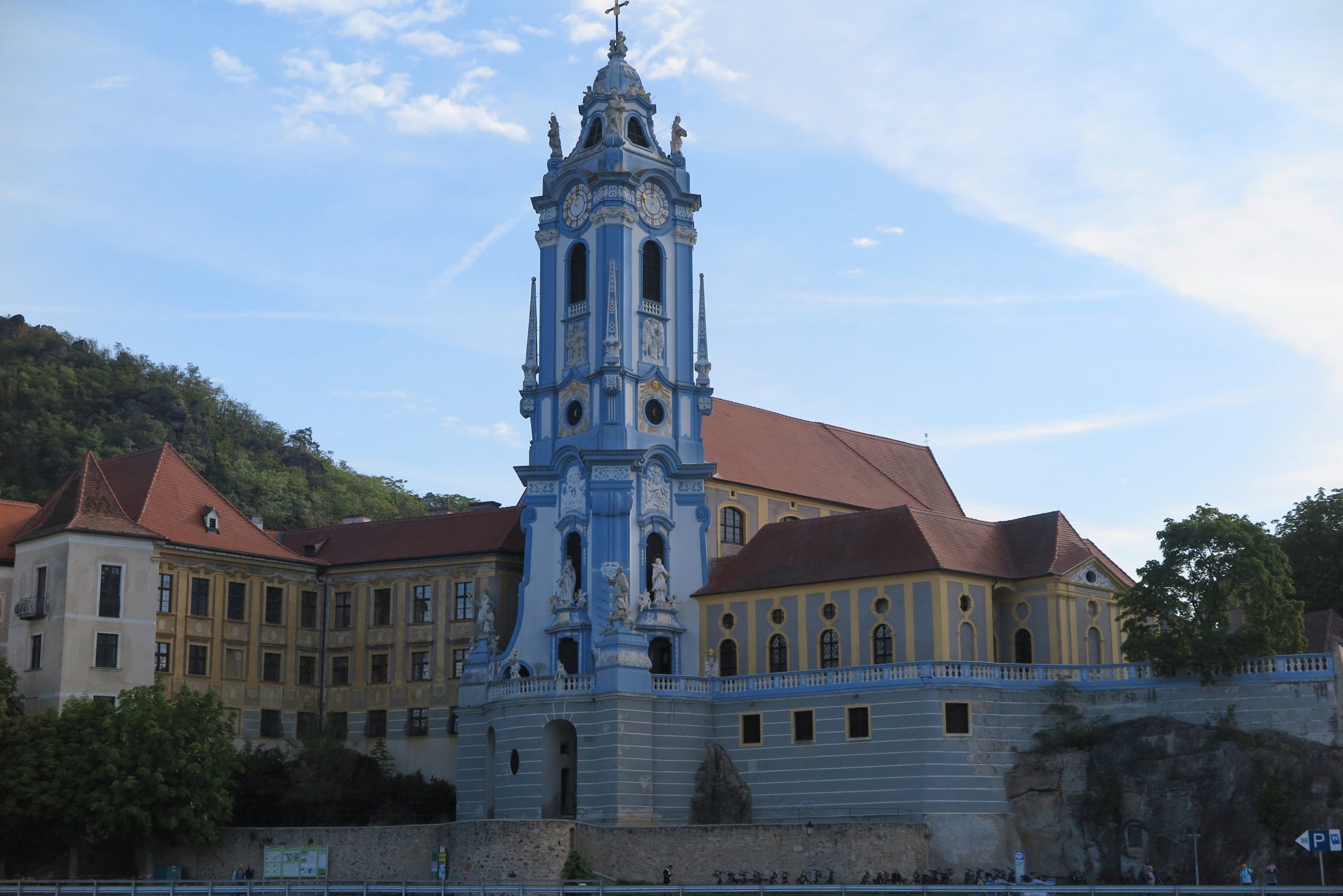

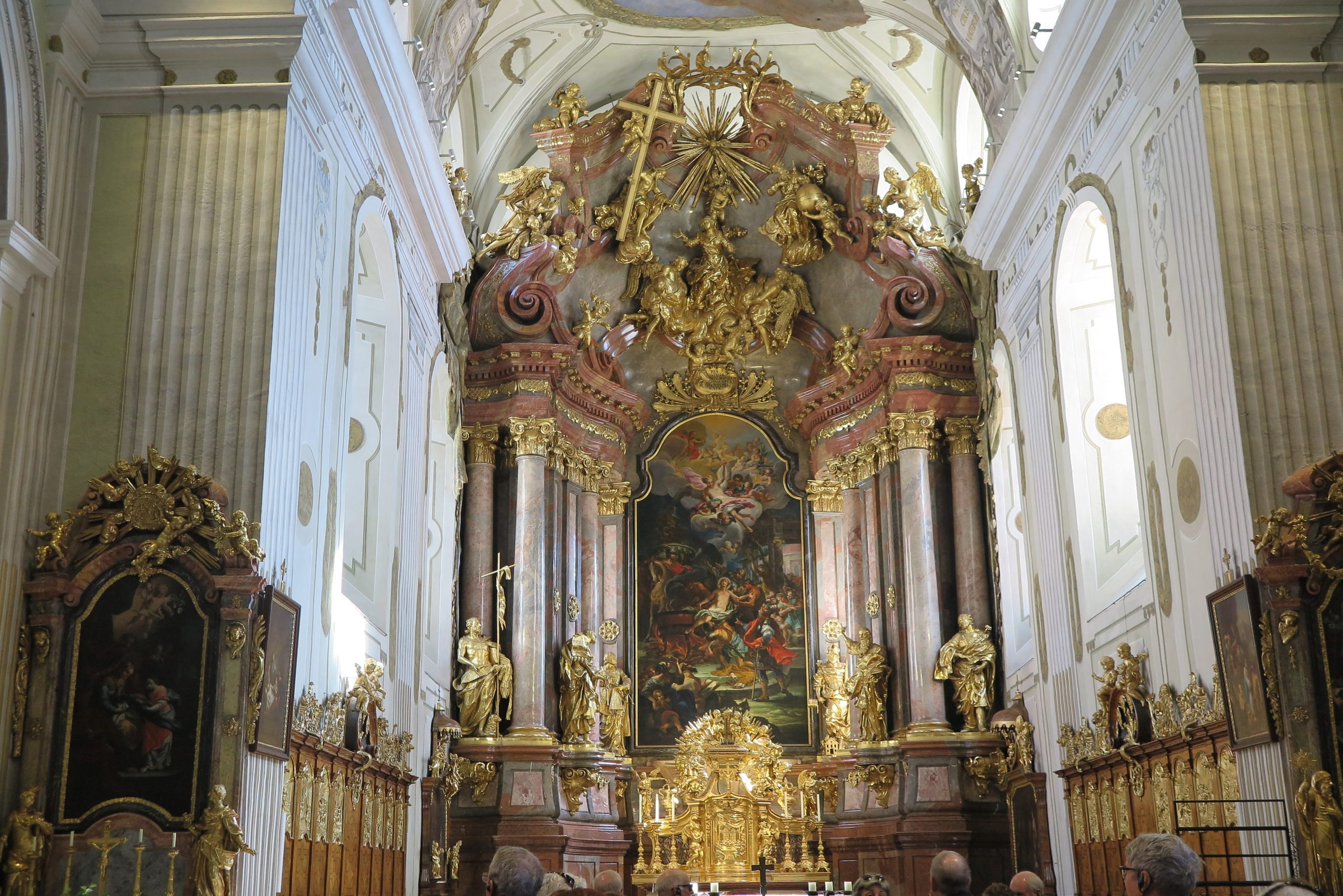
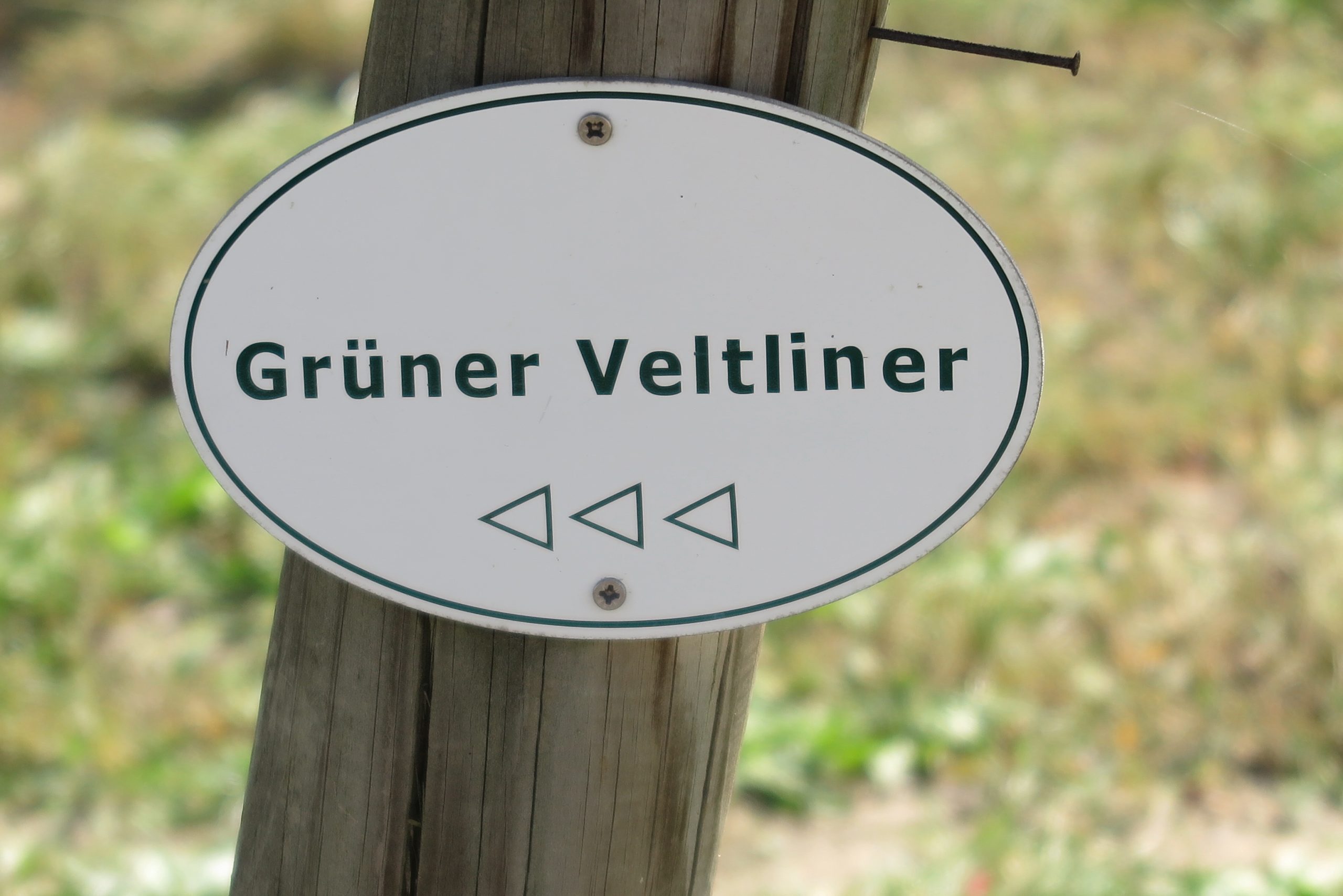
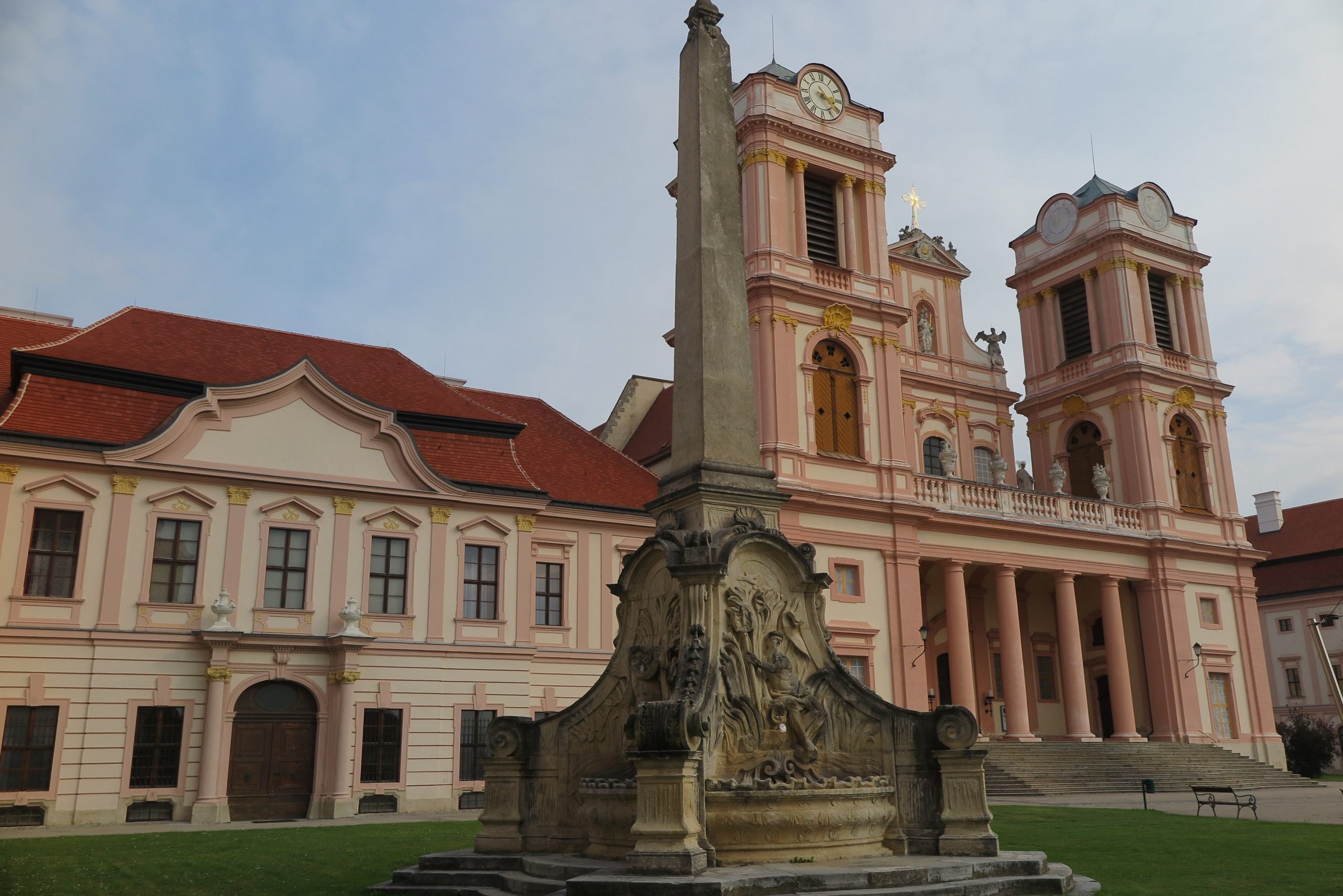
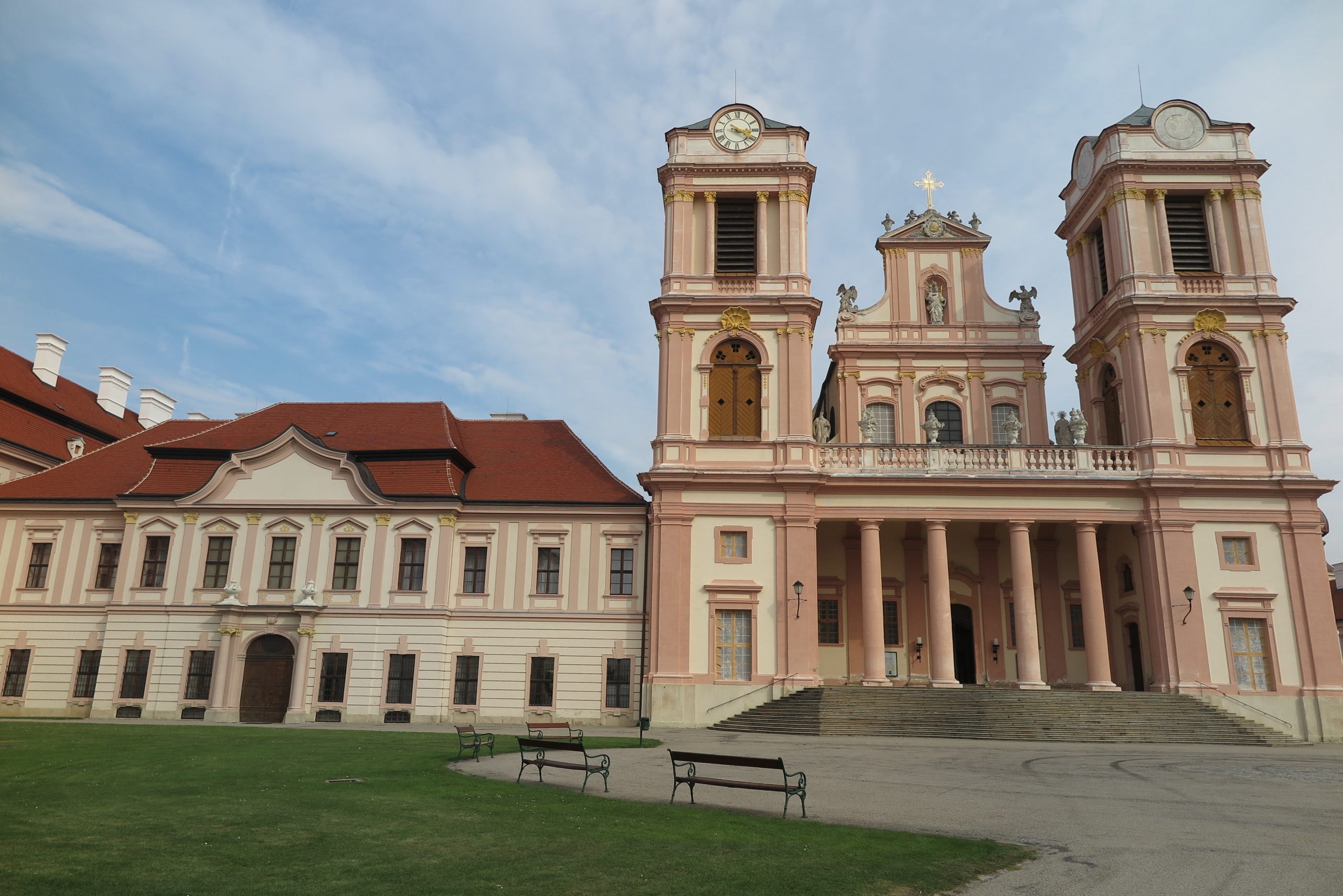
Albert loved the Reislings at the winery. He also enjoyed the unscheduled stop at Melk Abbey, the Benedictine monastery founded in 1089.
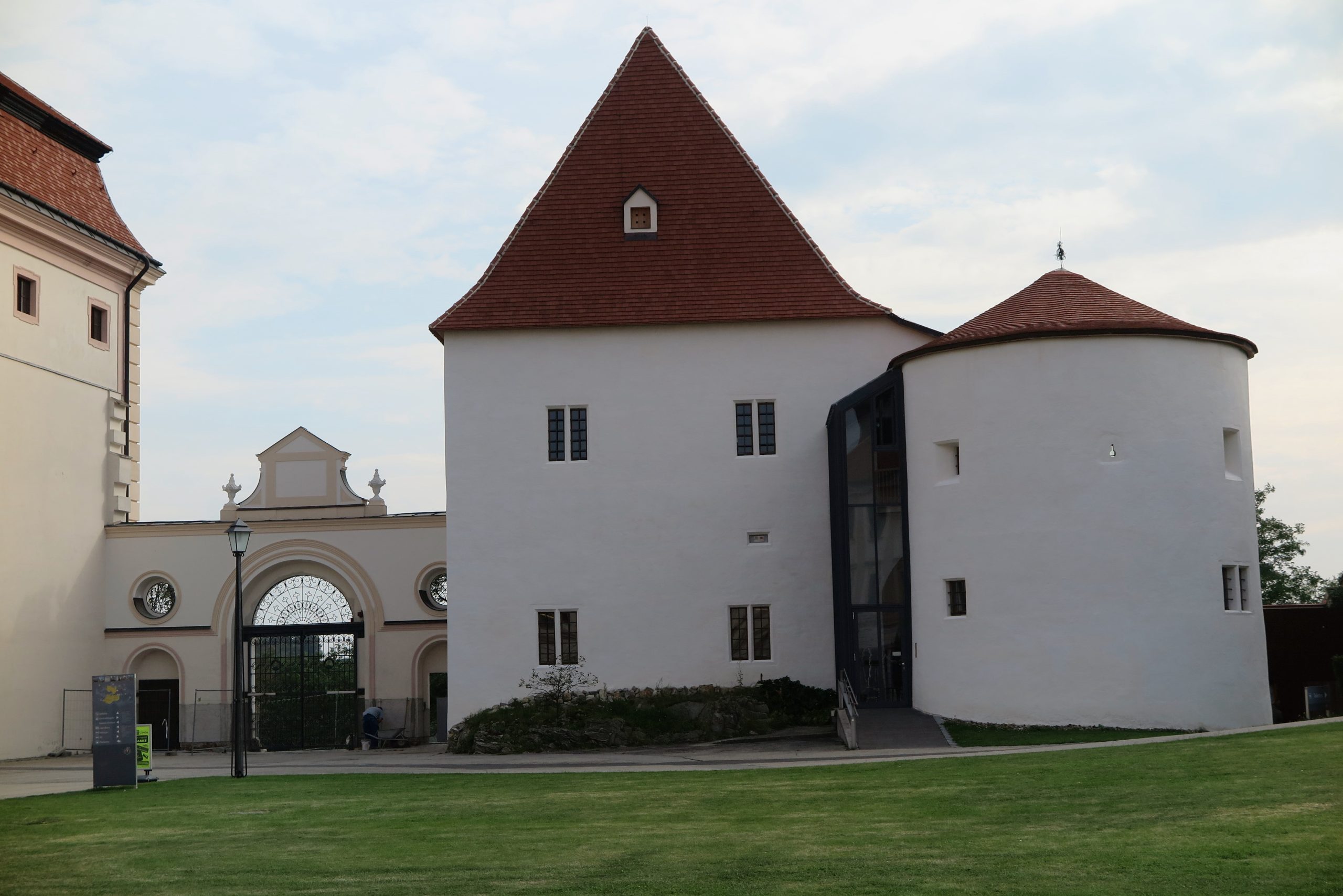
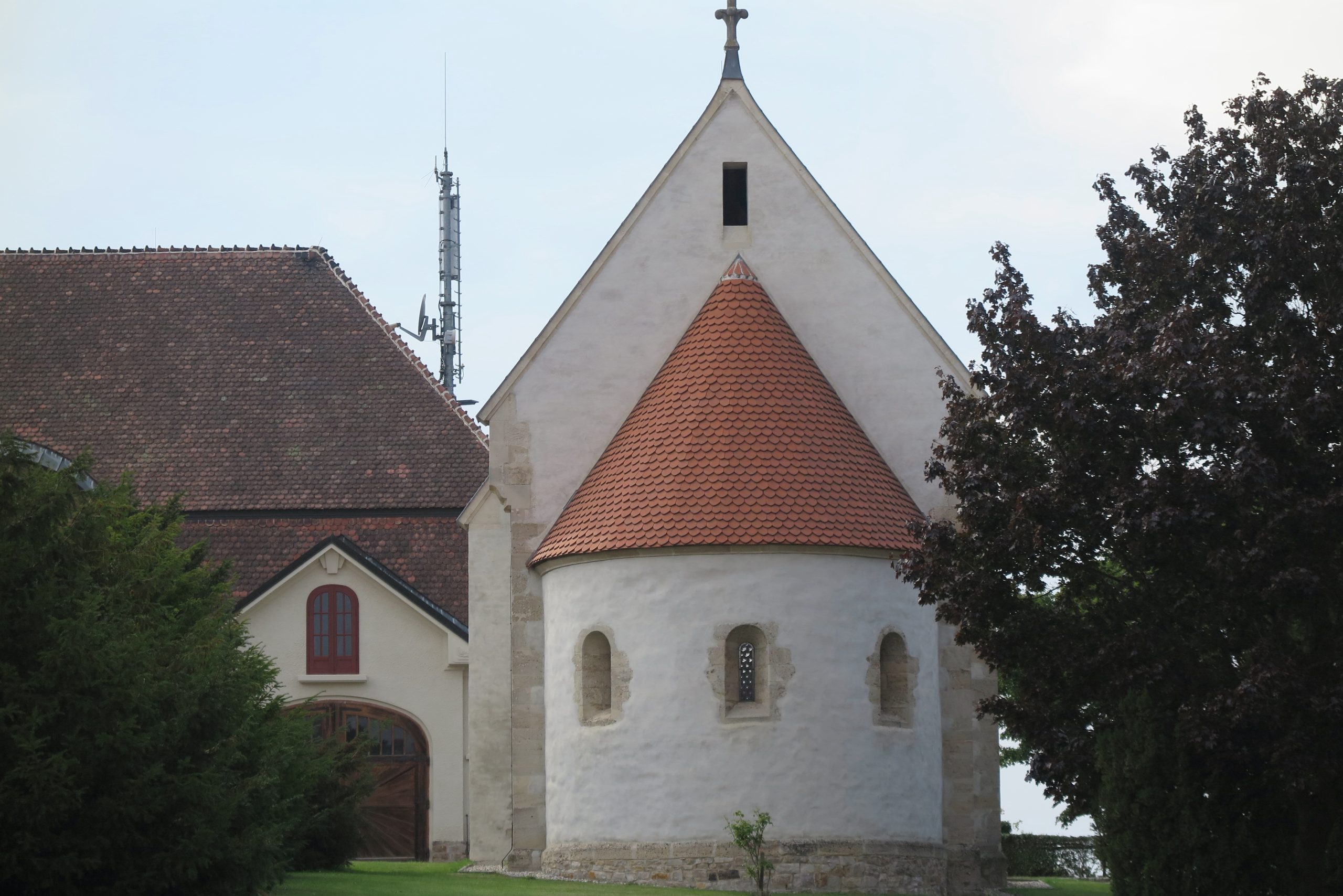
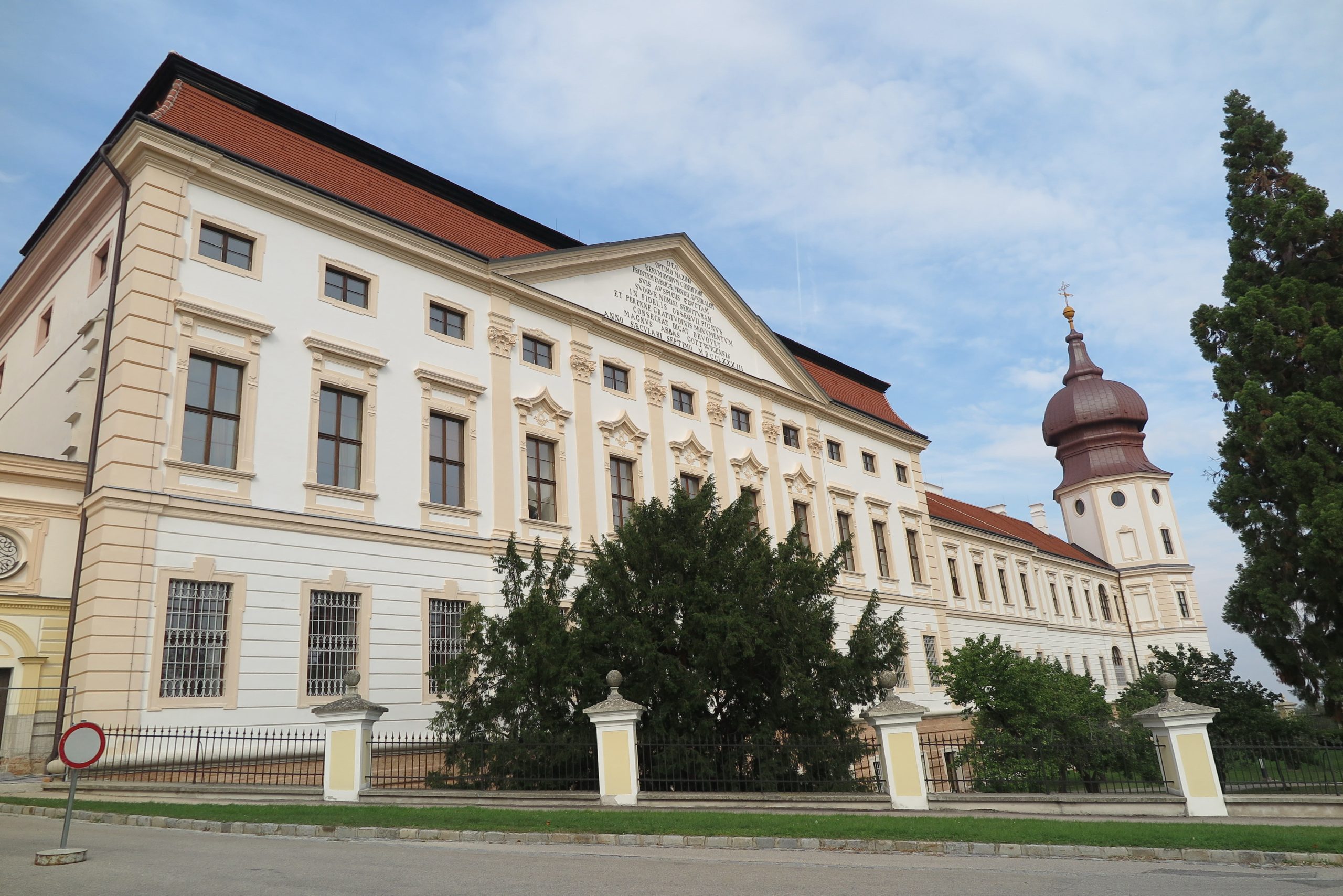
Krem’s claim to fame is that Franz Liszt’s mother was a baker’s daughter who lived across from the Dominican Kirche. And Beethoven’s brother owned an estate in the town.
A Memorable Day in Vienna – September 24, 2019
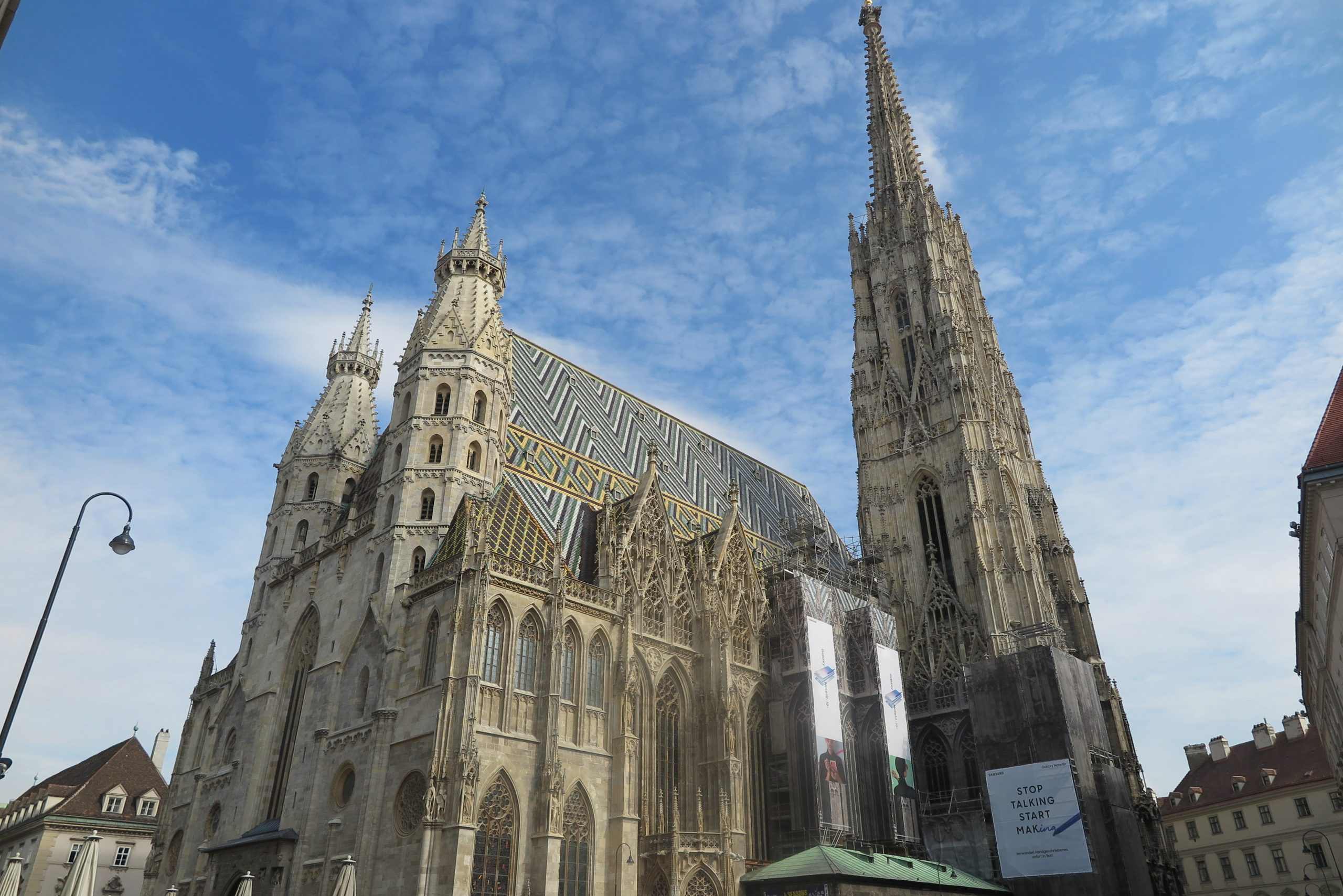
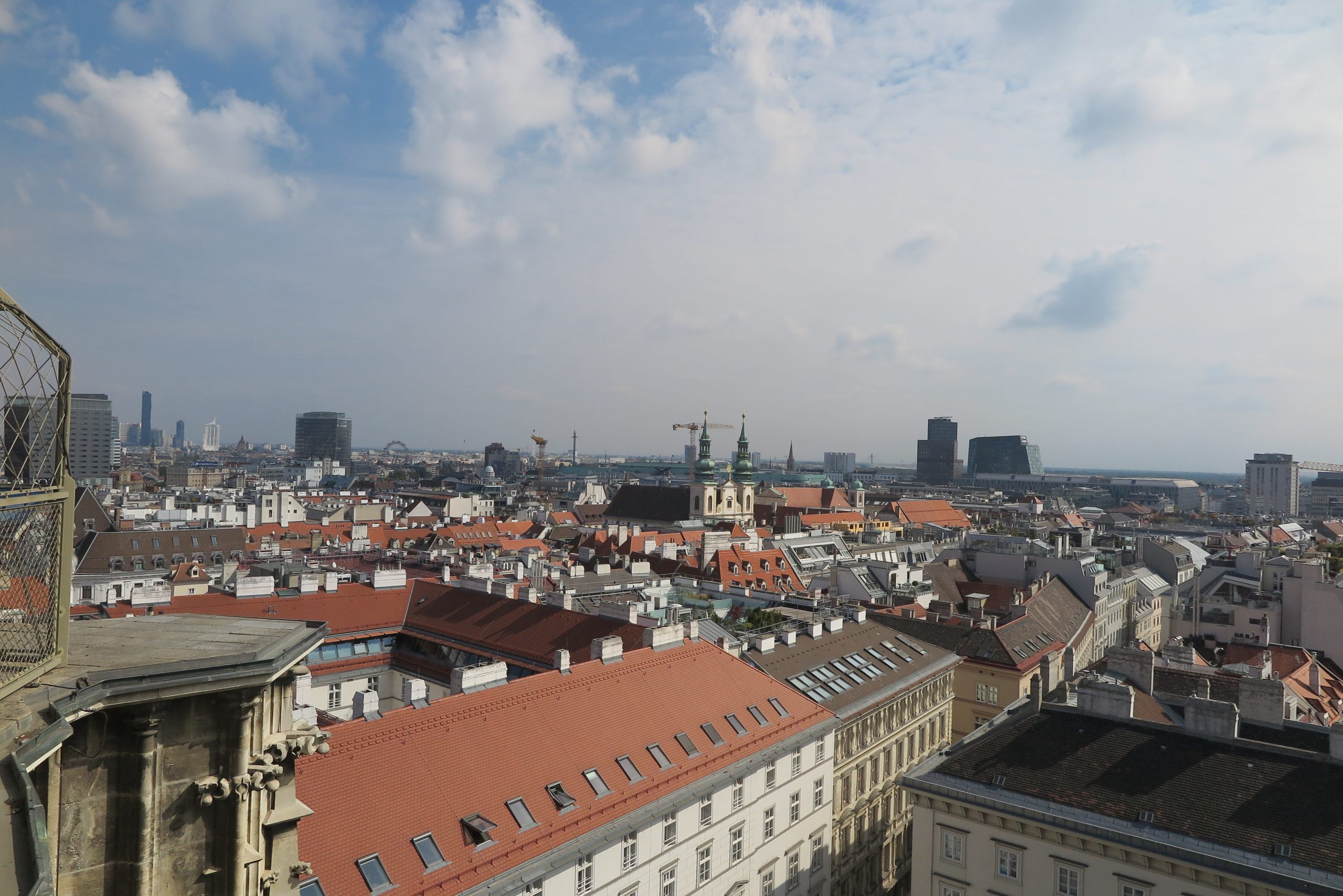
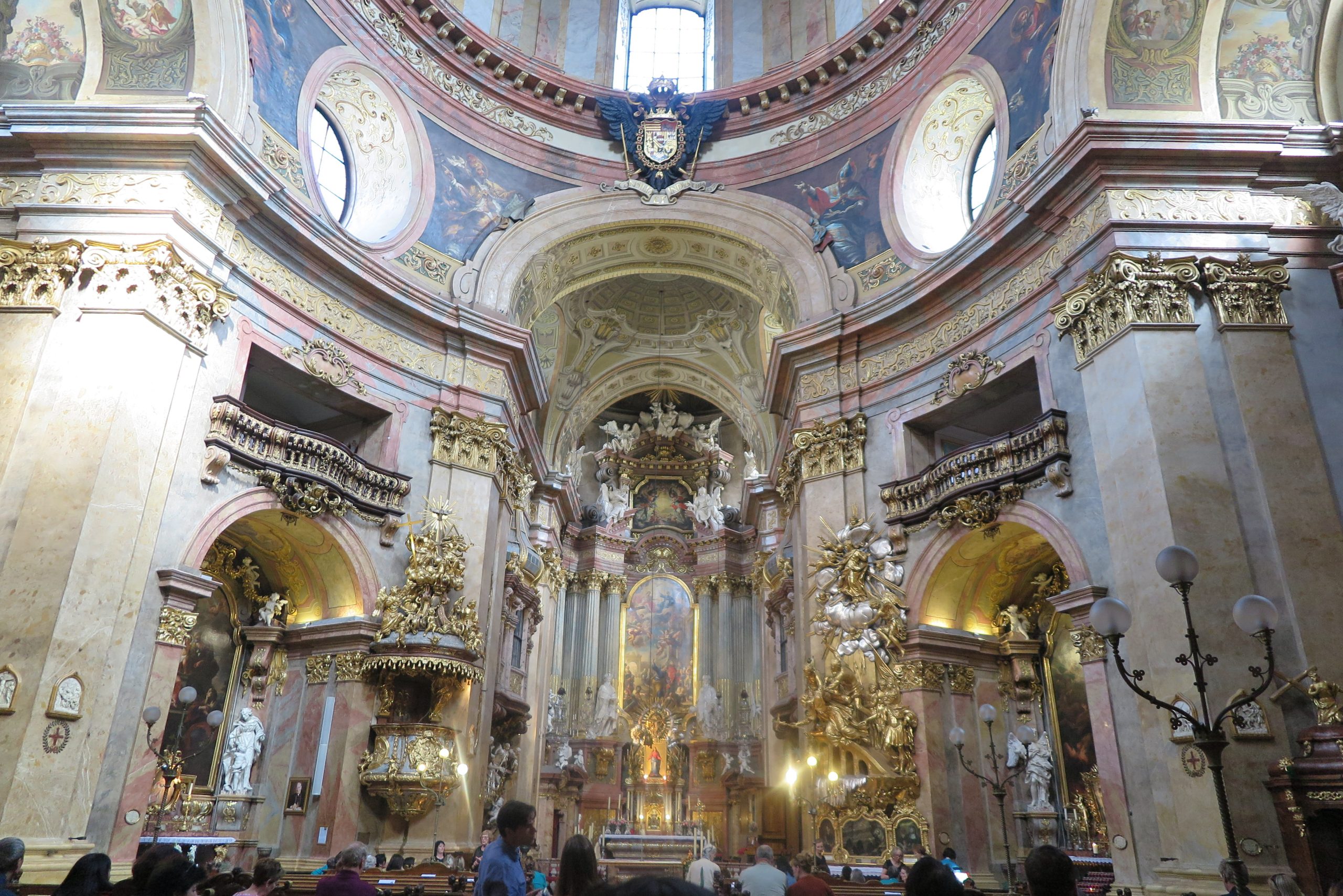
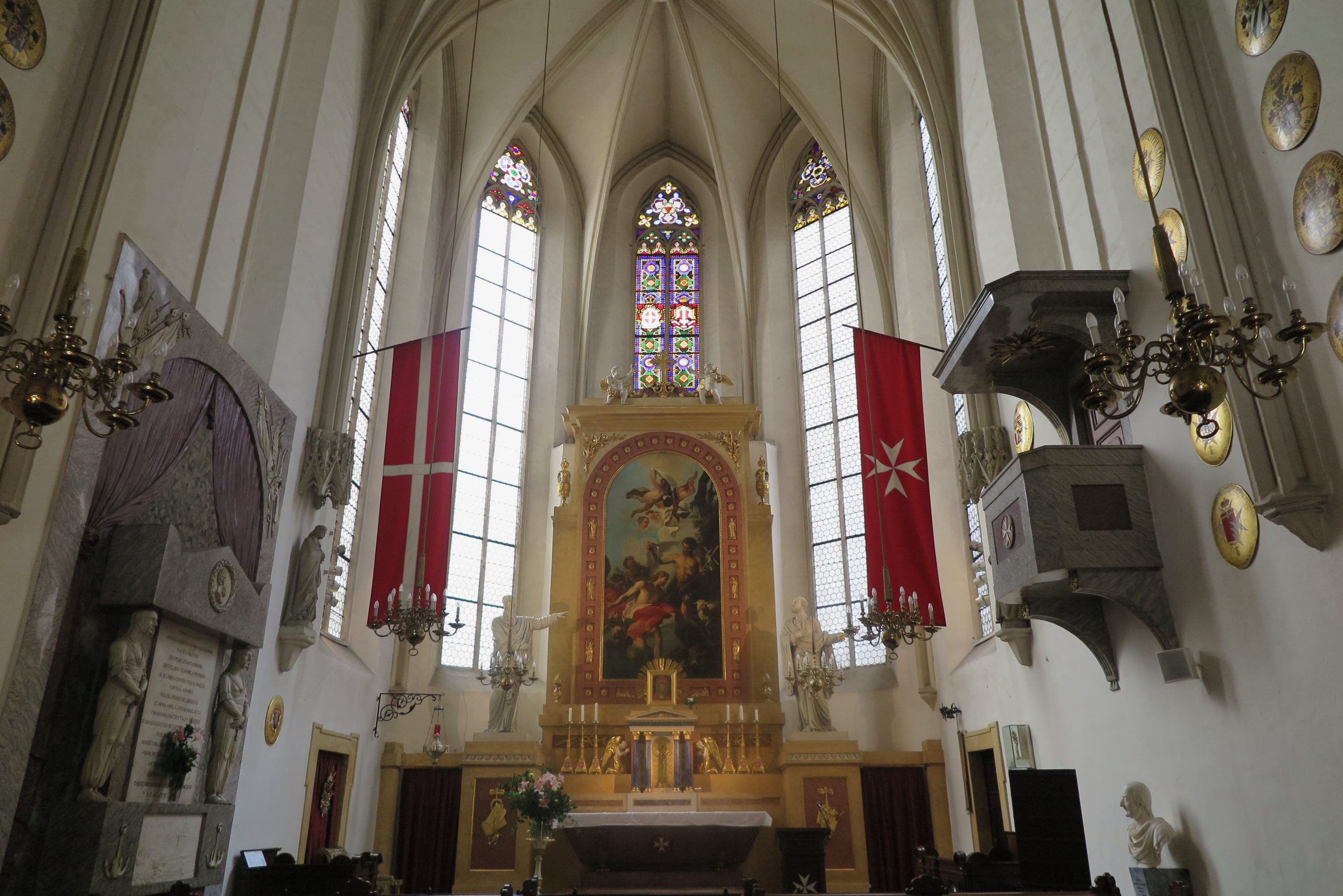
Today, after our arrival in Vienna, we went into downtown and visited St. Steven’s Cathedral and went up the North Tower for panoramic views of the rooftops and the skyline. Then we attended mass and had lunch. Later, we stopped by St. Peter’s Baptistry, an exquisite little church, where a women’s choir from Australia was preparing to perform. On the way back, we spotted a Maltese Church and couldn’t resist a visit.
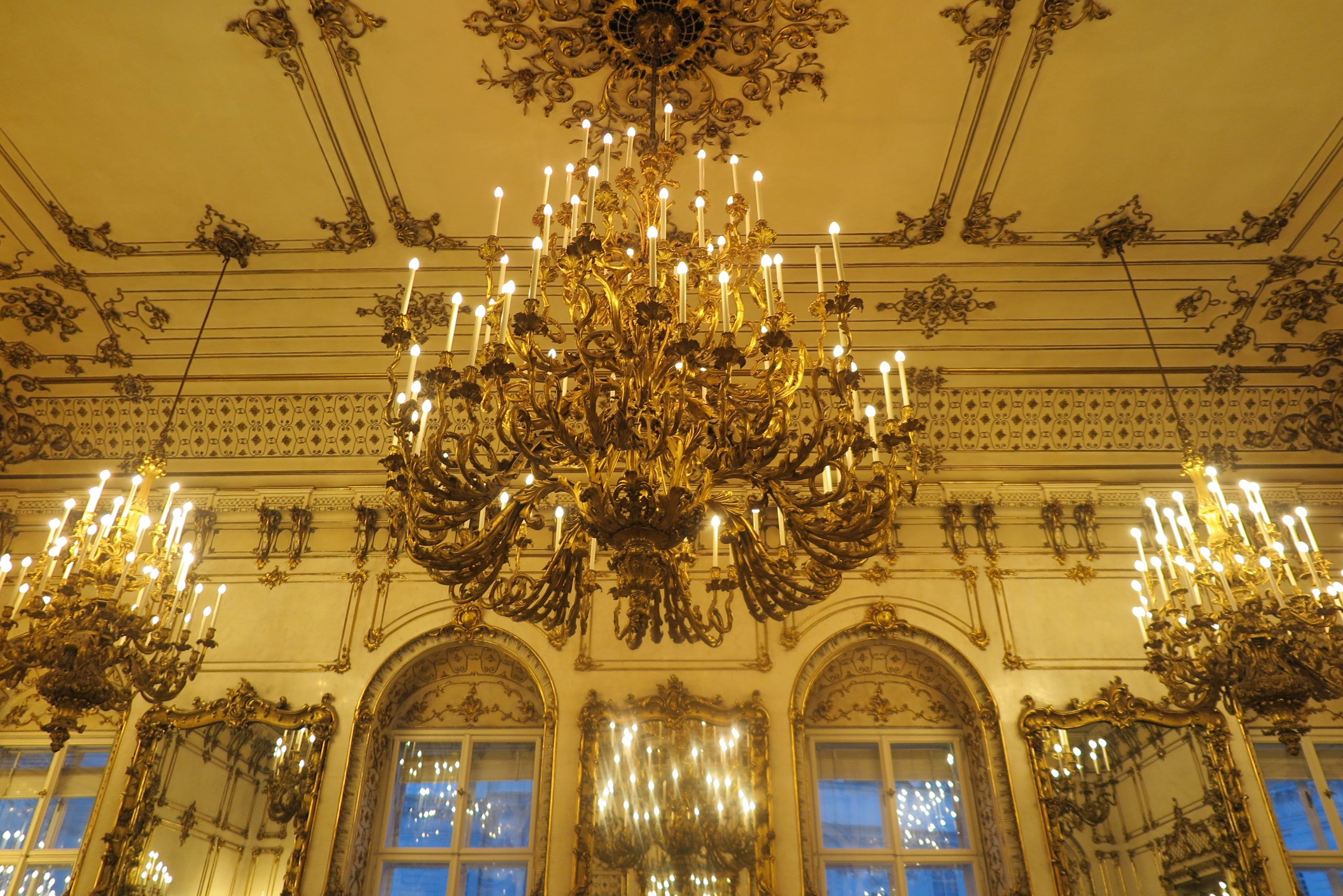
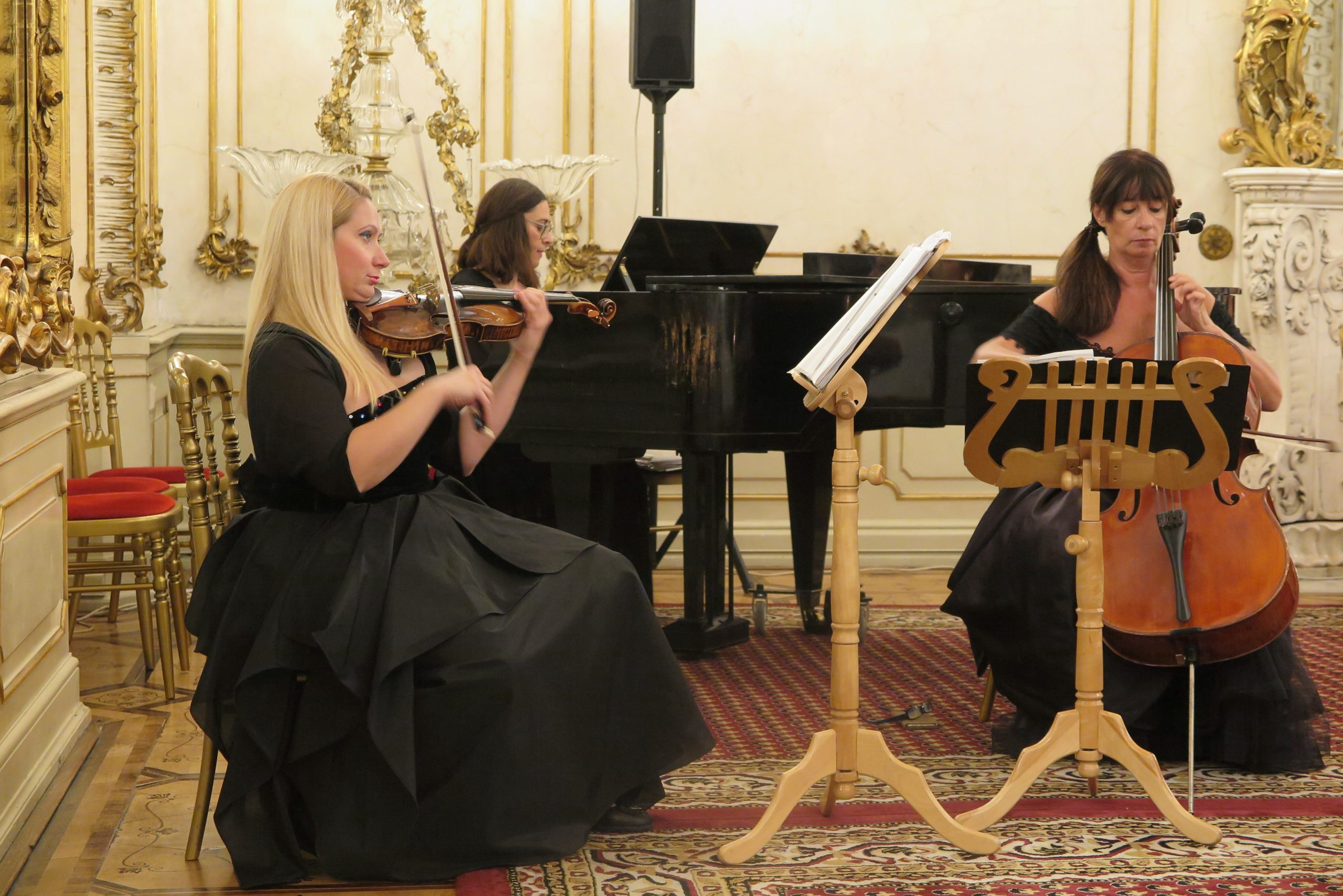
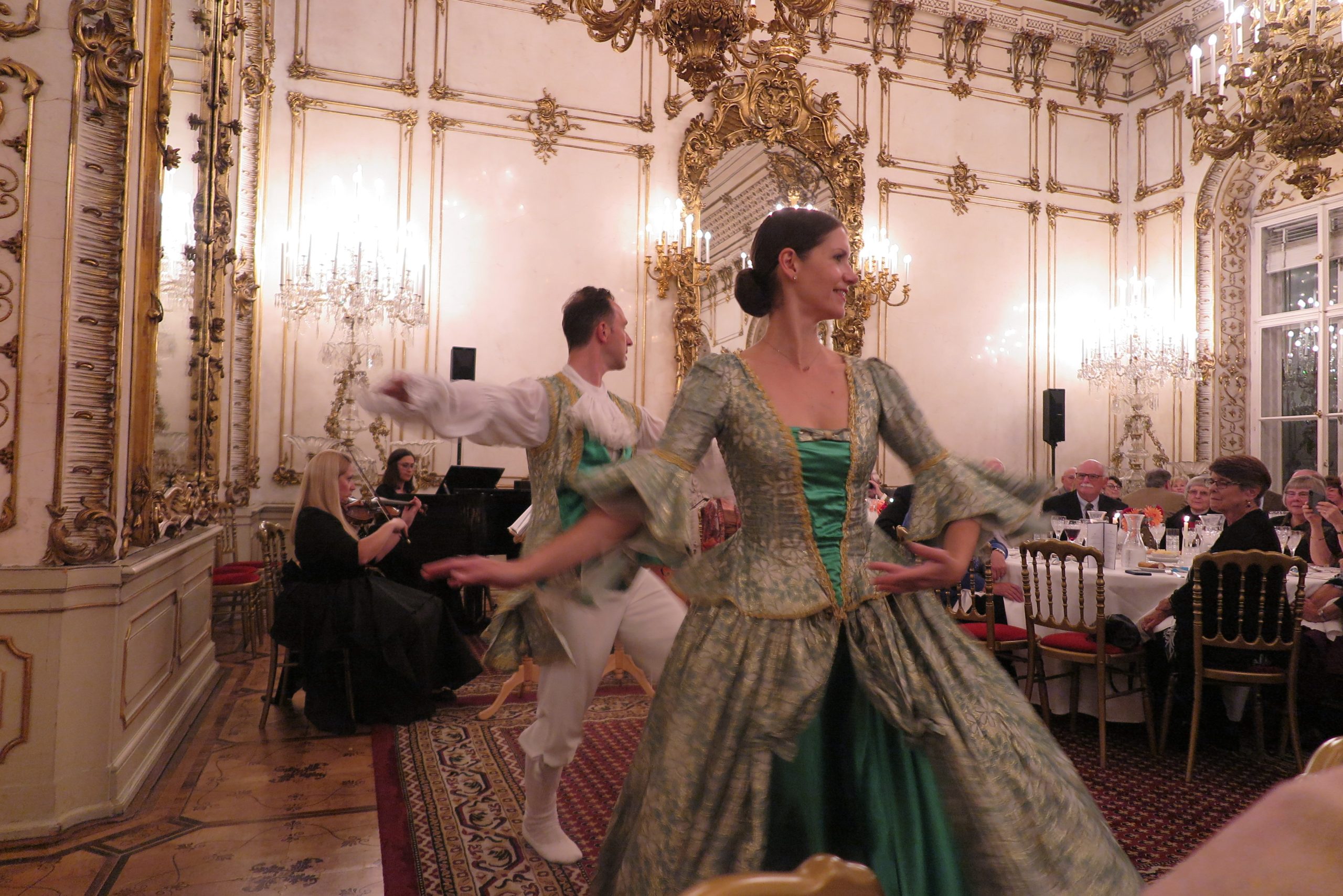
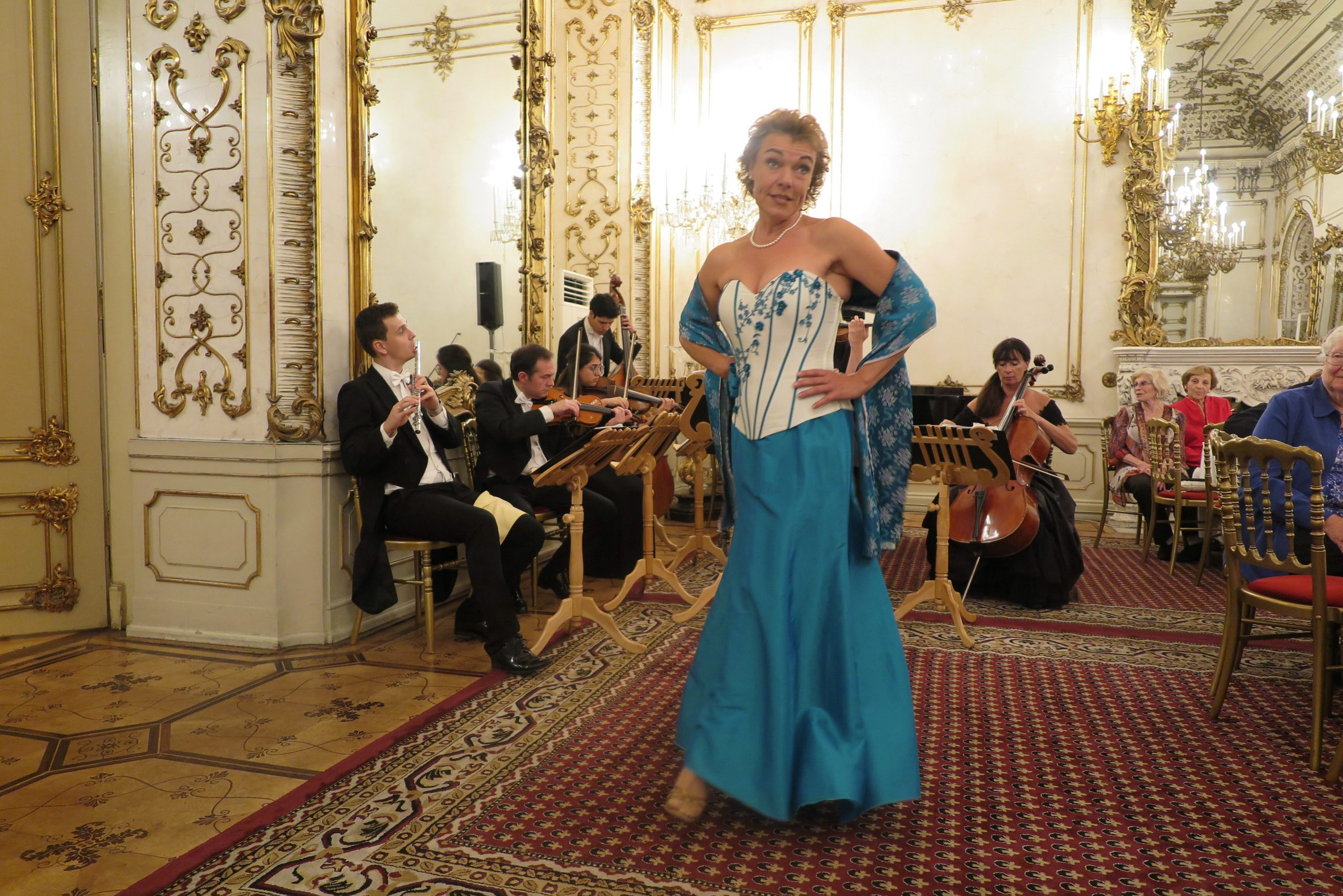
This evening, we were wined, dined, and entertained at the Palais Pallavicini, one of three private palais in Vienna. The food was satisfactory, but the entertainment was much better. After dinner, we had to walk to the Ringstrasse as there was a marathon going on, so the roads were closed and the coaches could not get to the palais to pick us up.
A Long Drive to Krakow – September 25, 2019
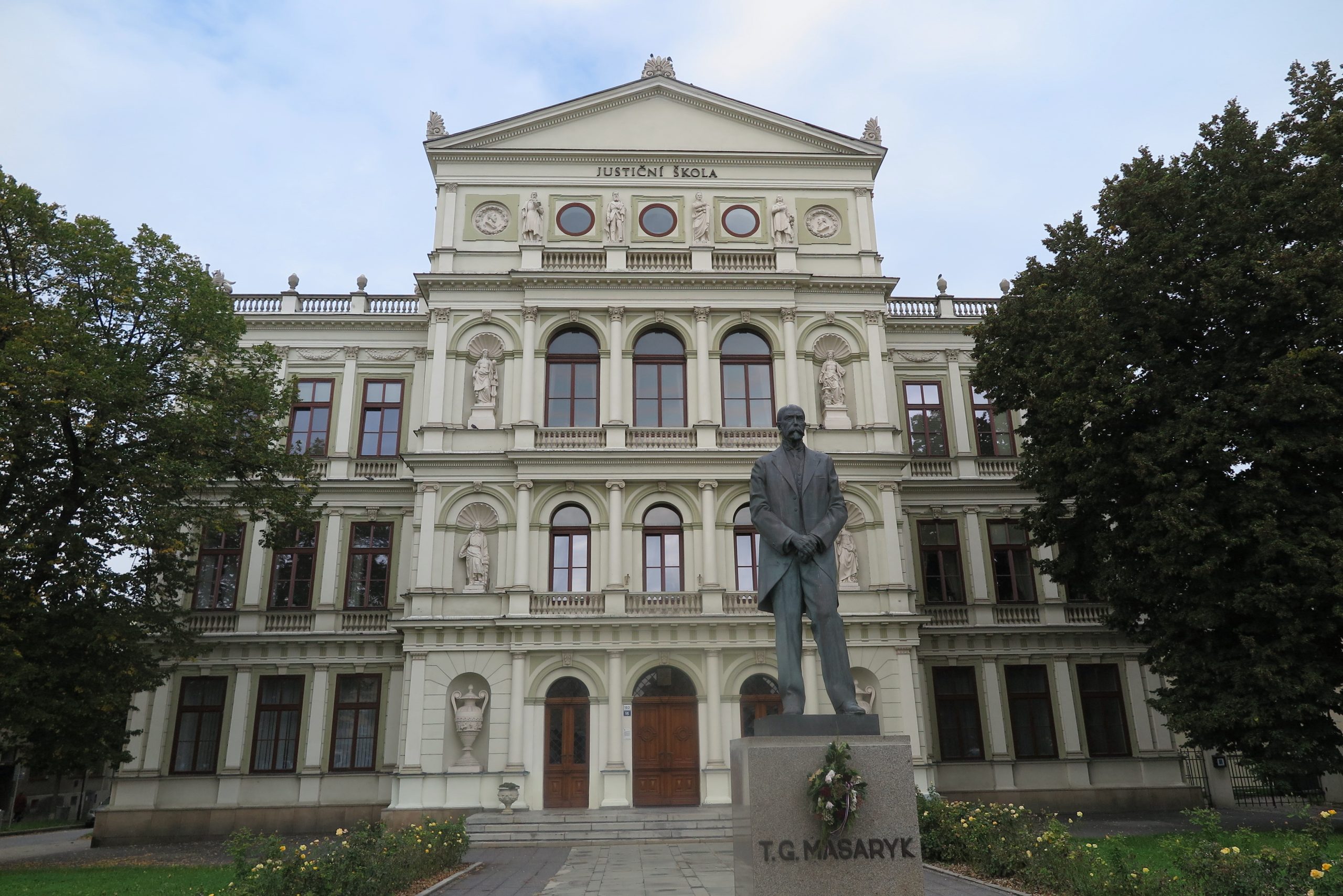
Today was primarily a travel day, spending too many hours on a coach through the Czech Republic on our way to Krakow, Poland. We made a brief stop for lunch and a chance to stretch our legs in the small town of Kromeriz. The lunch was heavy and forgettable, but we made the most of our time by climbing the 262 steps of a nearby tower to get a bird’s eye view of the town. During our stroll, we stumbled upon a set of crystal liqueur glasses, perfect for enjoying the exotic liqueurs Christabel favors.
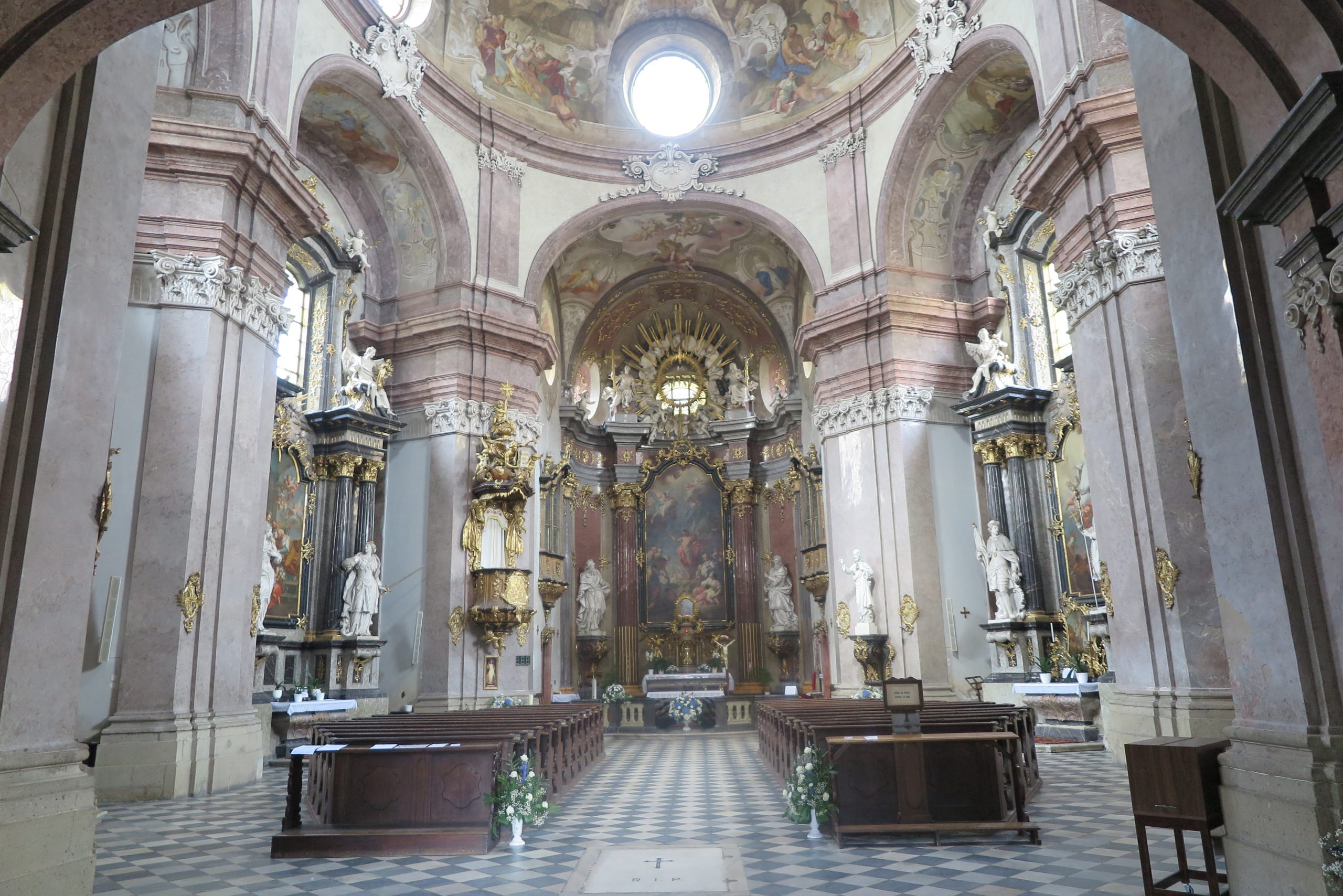
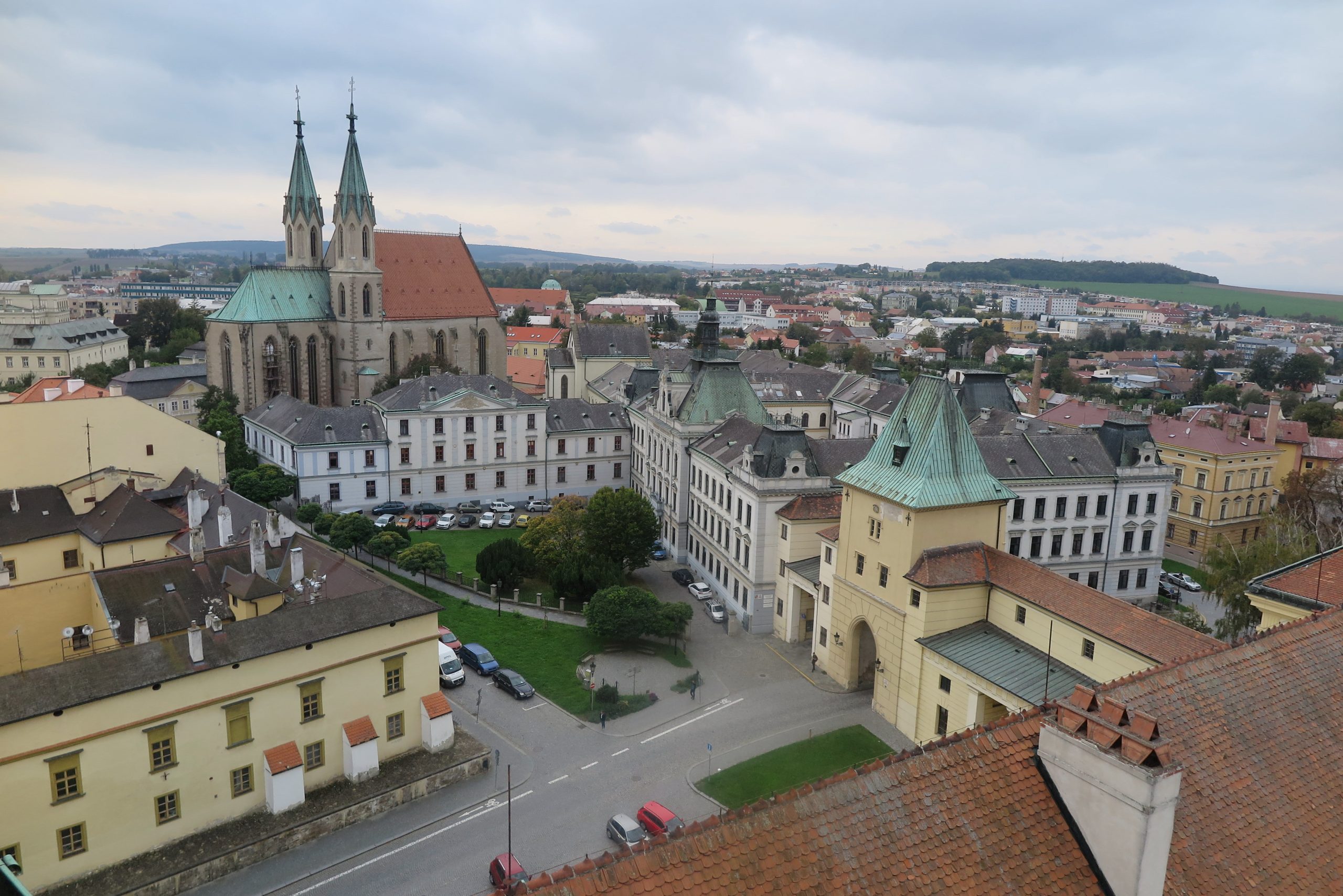
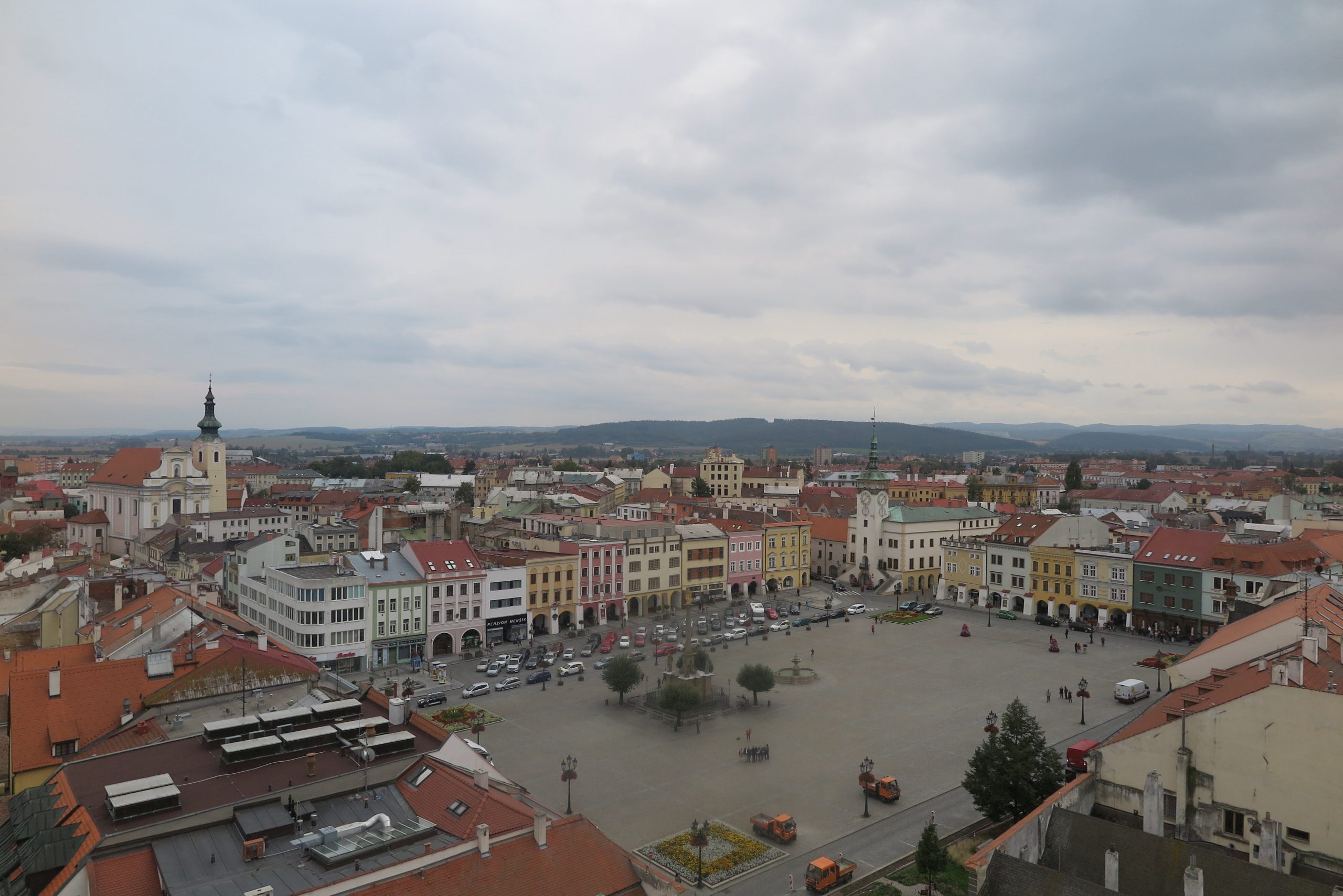
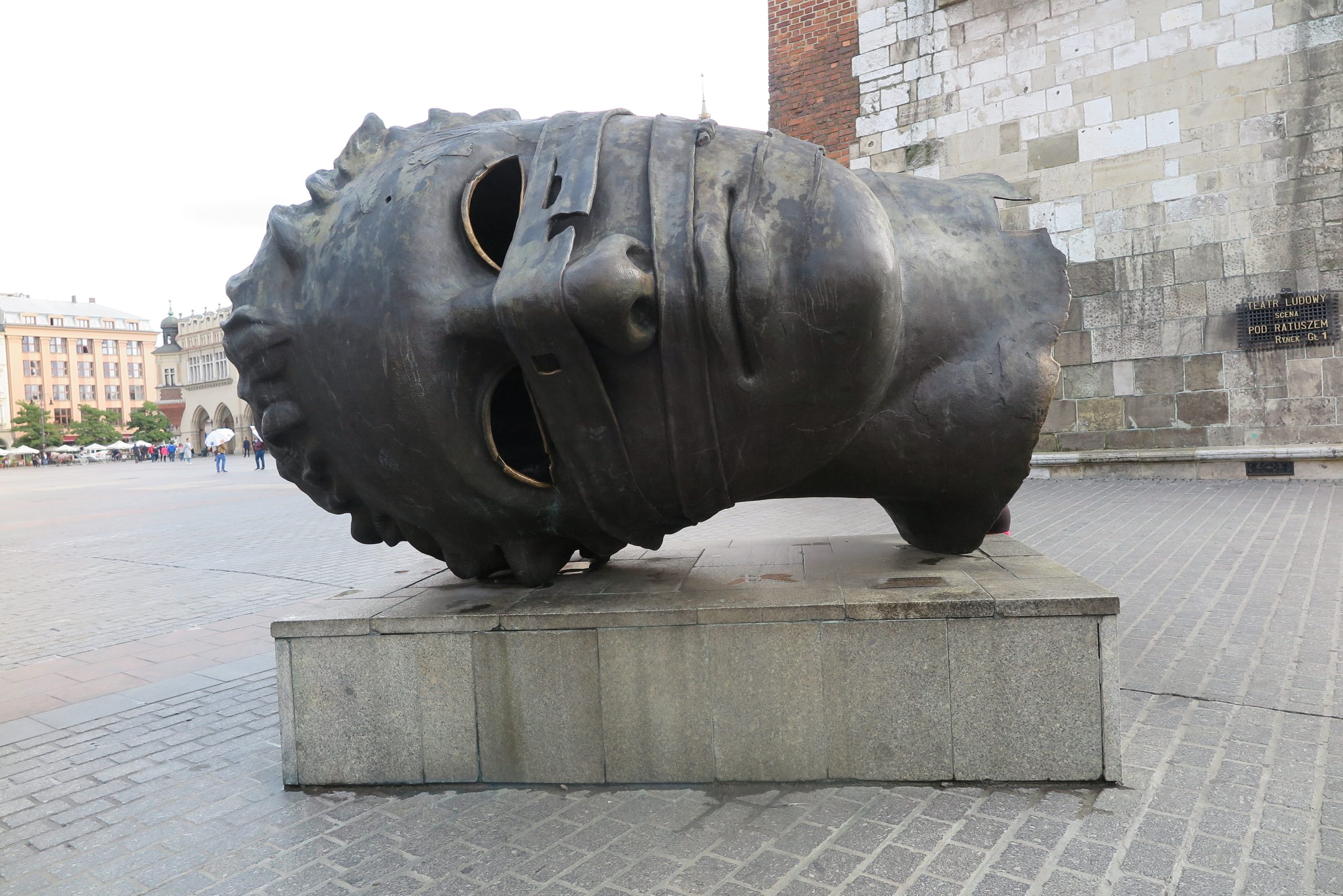
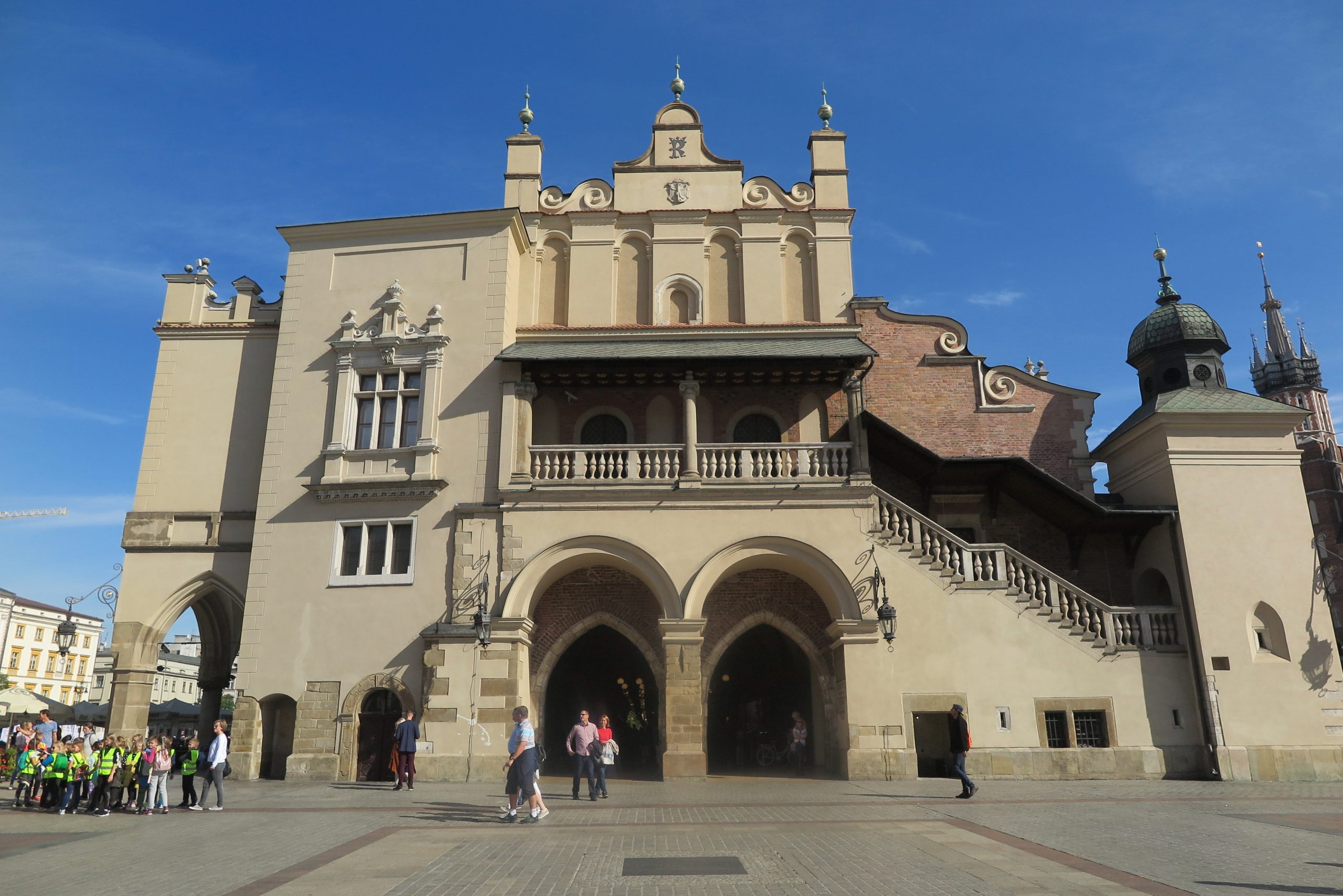
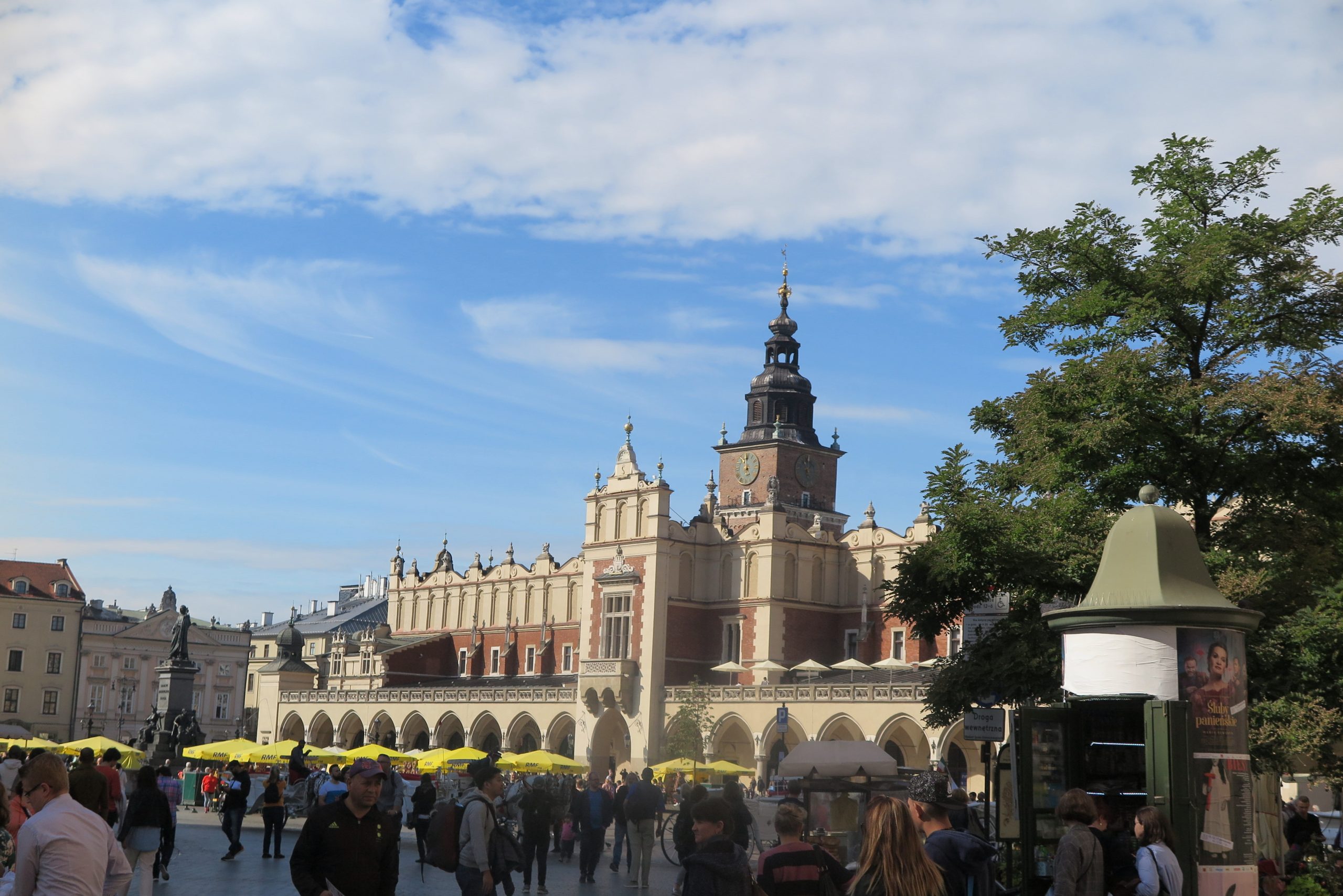
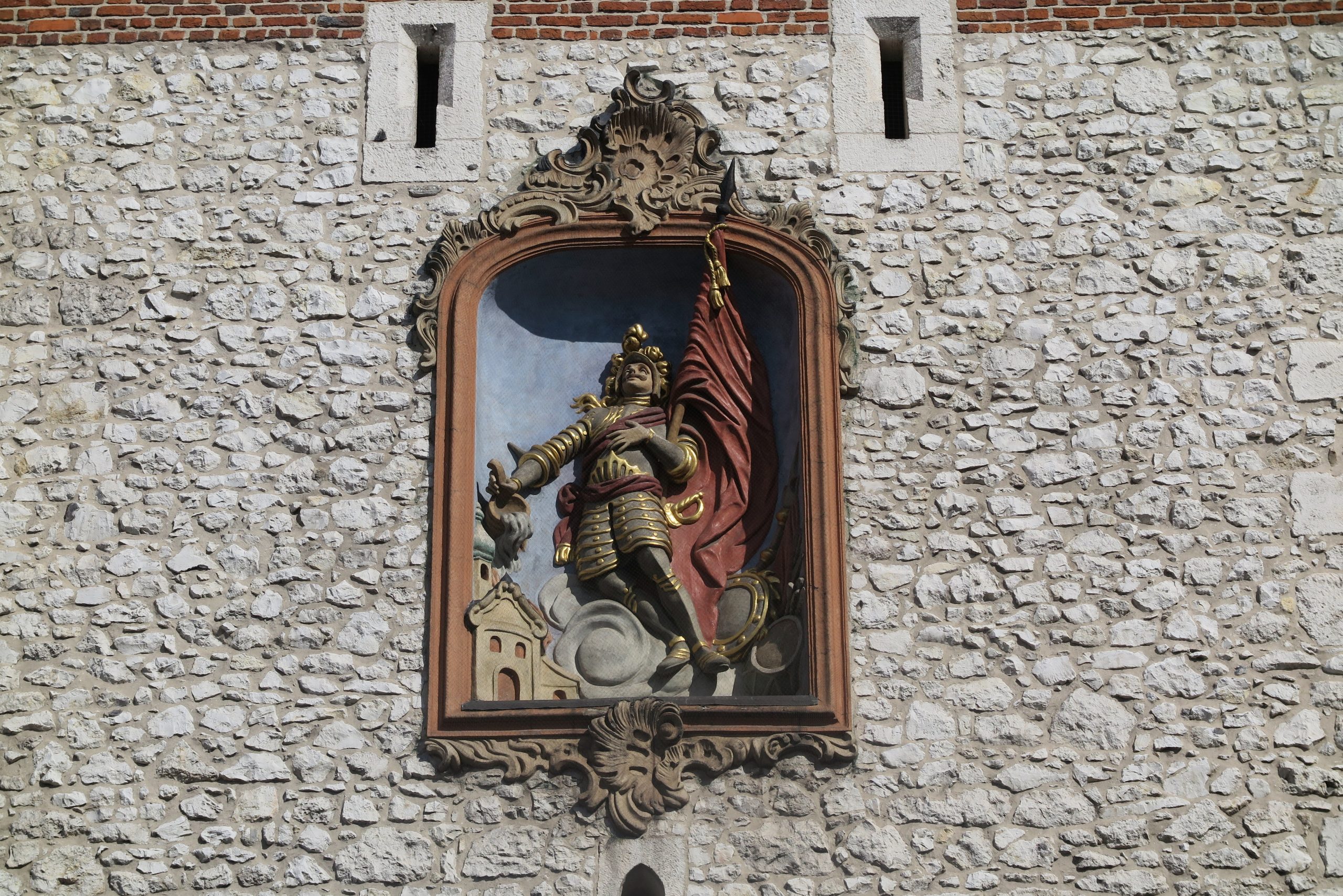
Upon arriving at the Sheraton Grand Krakow after 6 PM, we went on a brief orientation walk of Krakow. Our evening ended with a fabulous dinner at a local eatery before calling it a night.
Wawel Hill and Auschwitz: Reflections on History – September 26, 2019
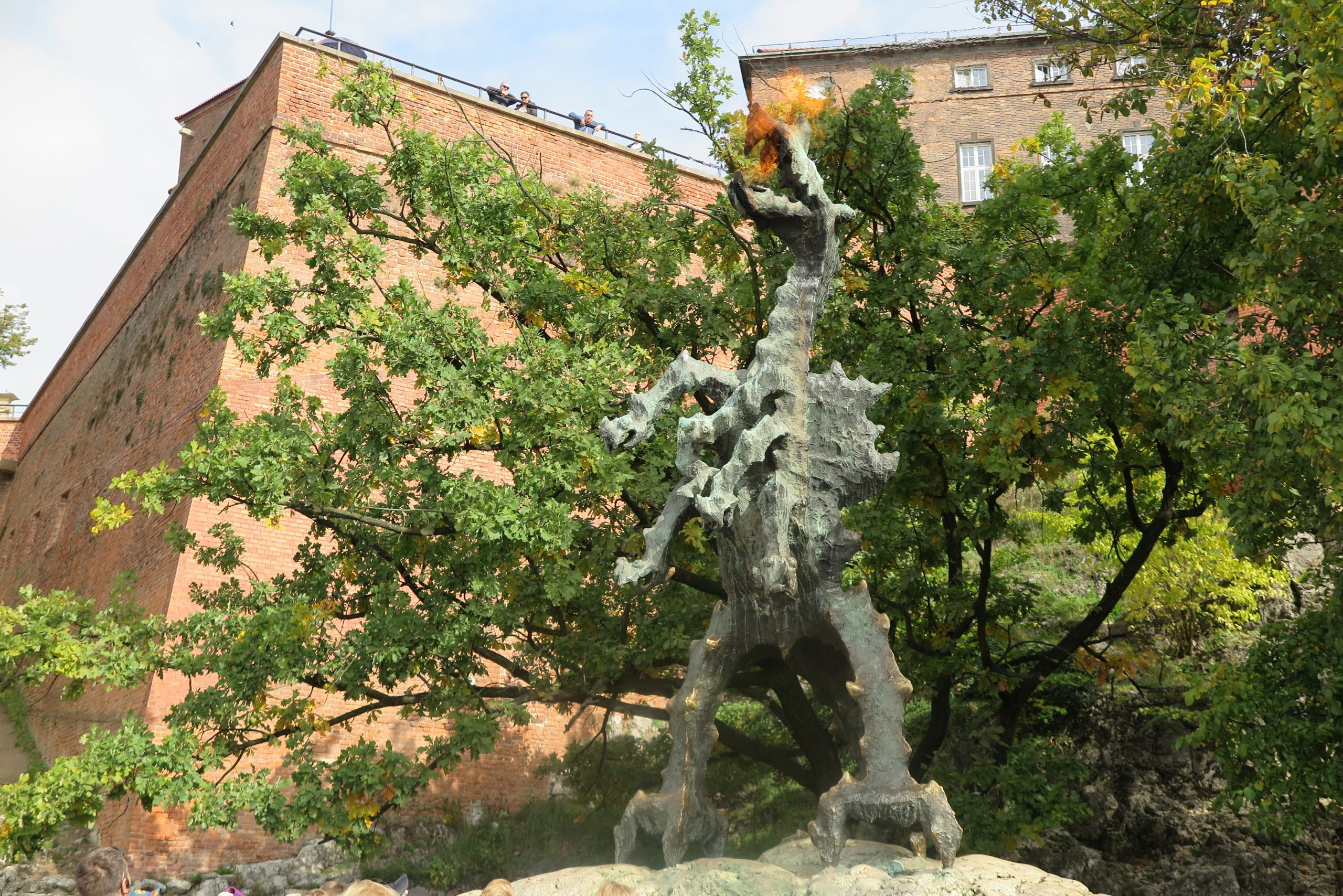
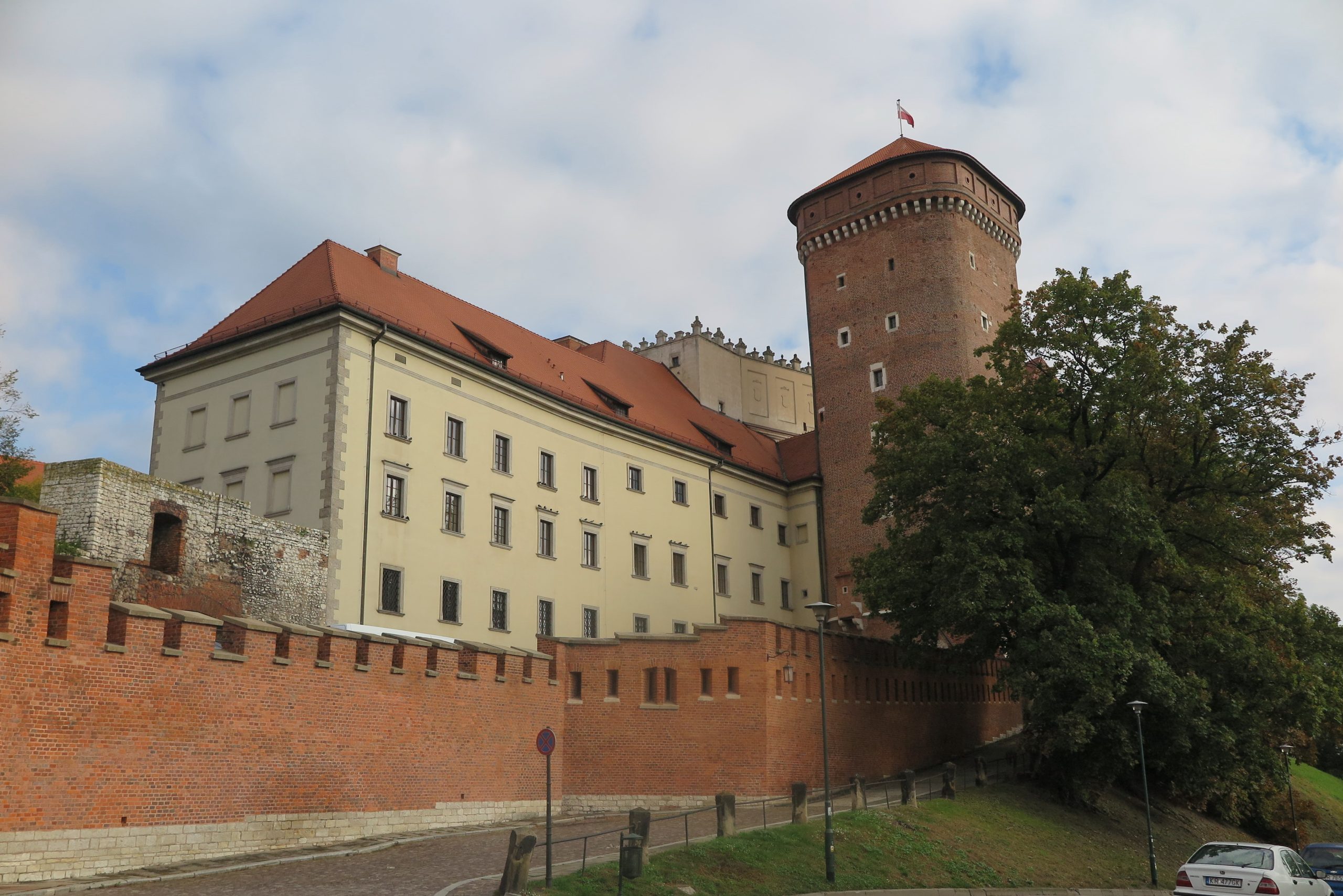
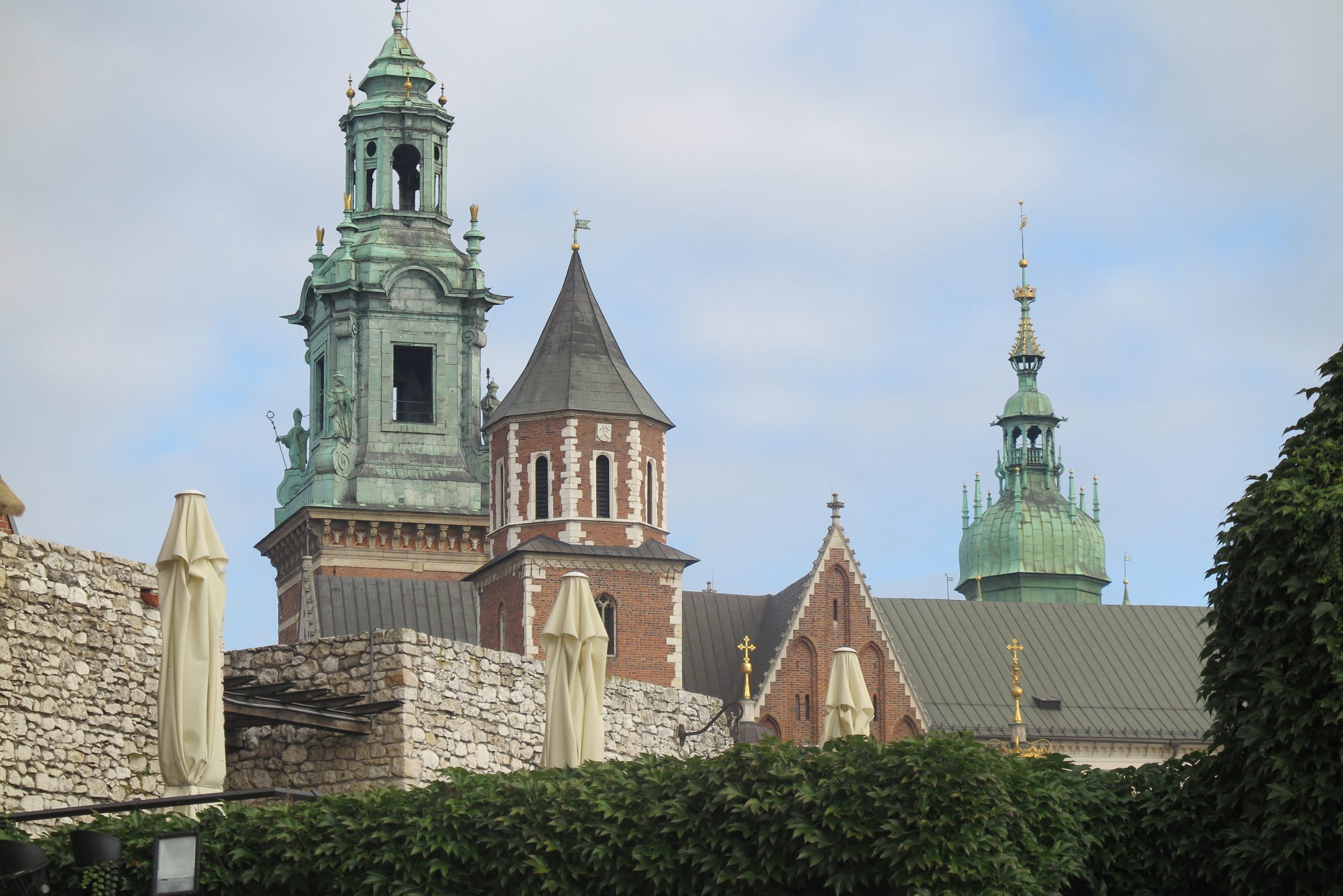
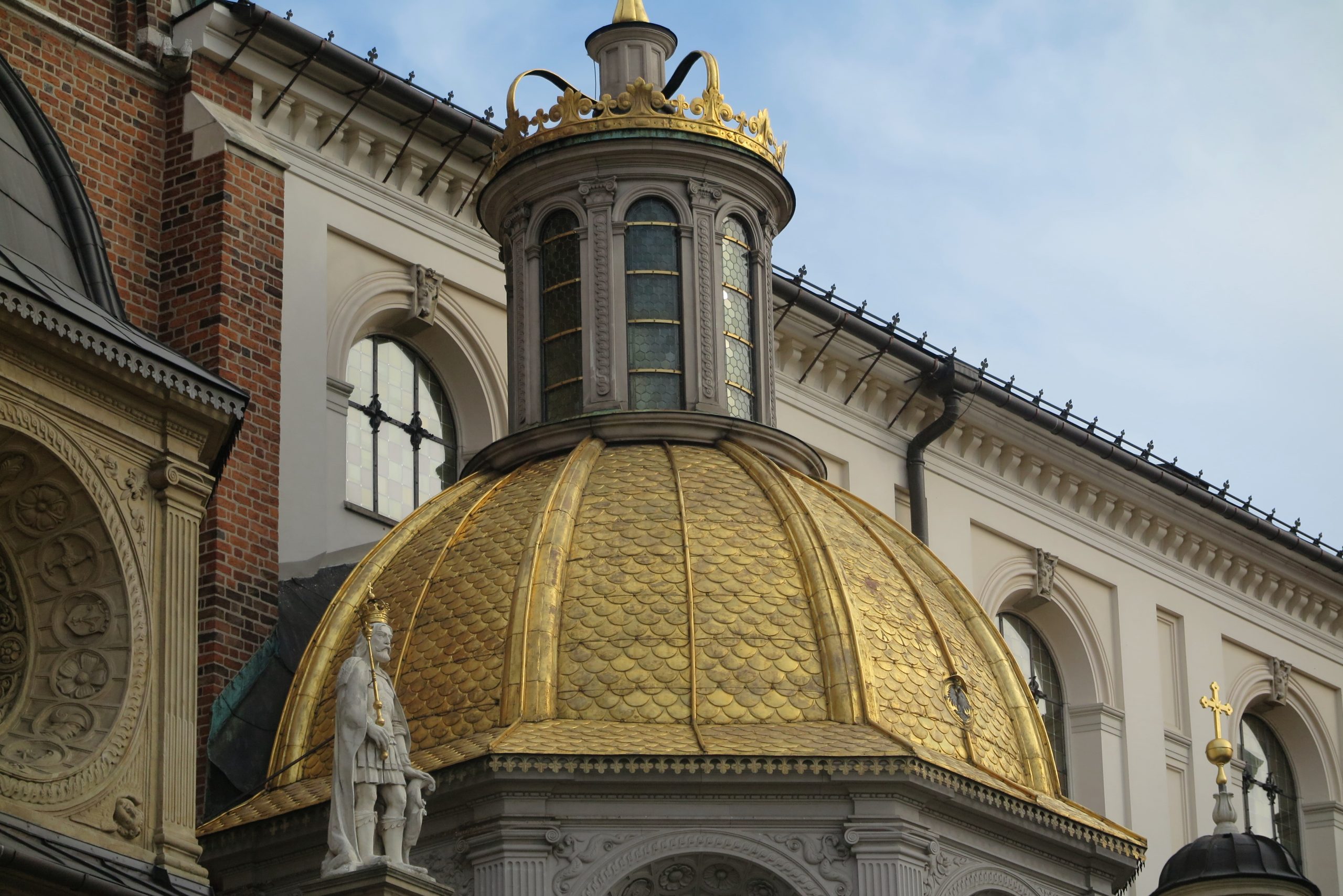
This morning, we walked up Wawel Hill, stopping by to wish the famous dragon and see him breathe fire and then on to Wawel Cathedral, dedicated to St. Stanislaw and burial place of Polish kings and national heroes. Pope John Paul II celebrated his first mass here. He lived on Kanonicza Street from 1951-1963, a stone’s throw from the cathedral. And that house is now a museum. He was born about 20 KM from Krakow. The cathedral is beautiful but difficult to navigate due to strict directions from guards. The cathedral has many reliquaries, particularly of all the Polish saints that Pope John Paul II canonized. There was a vial of his blood embedded in the silver covers of a book, likely a missal.
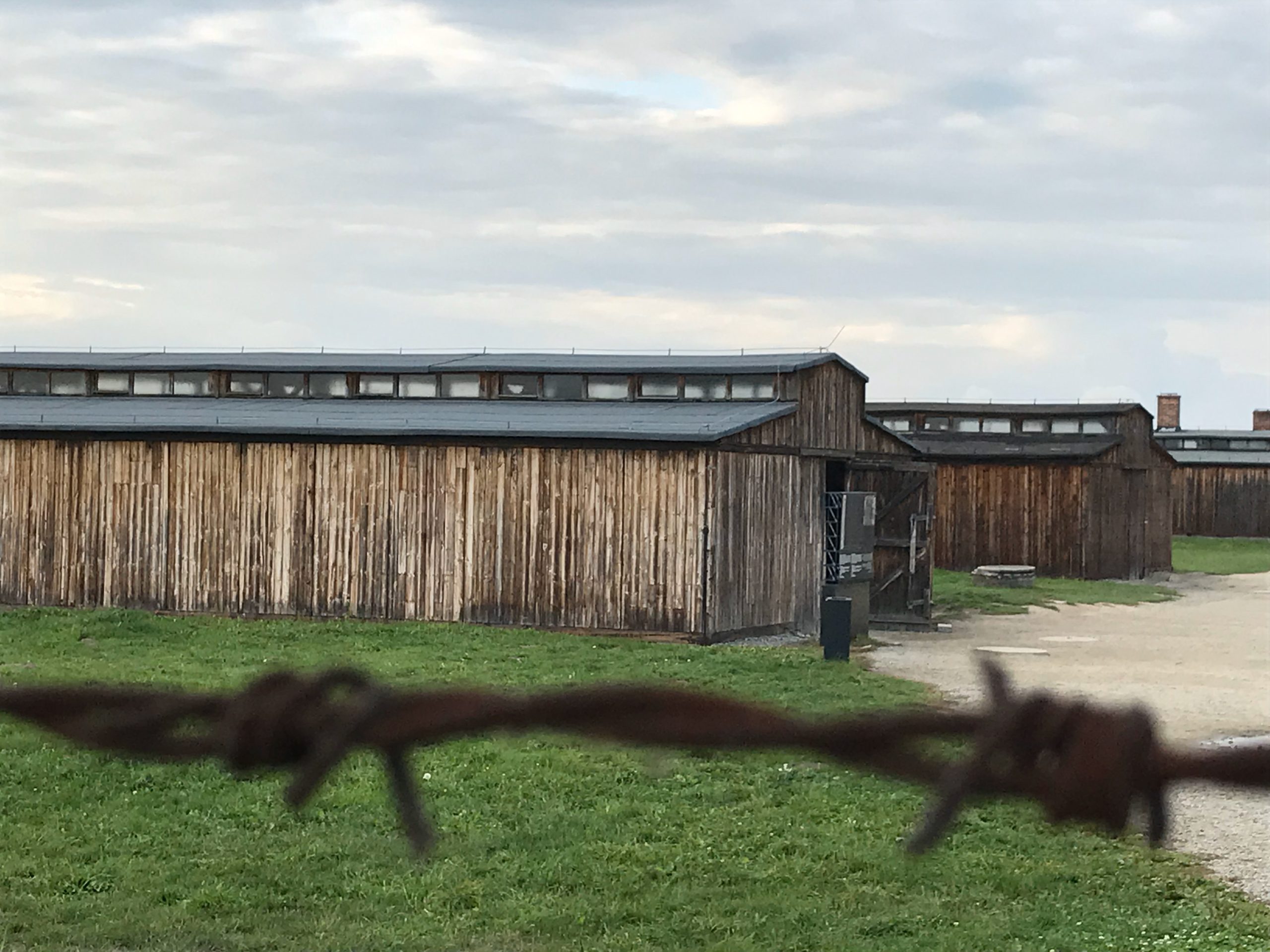
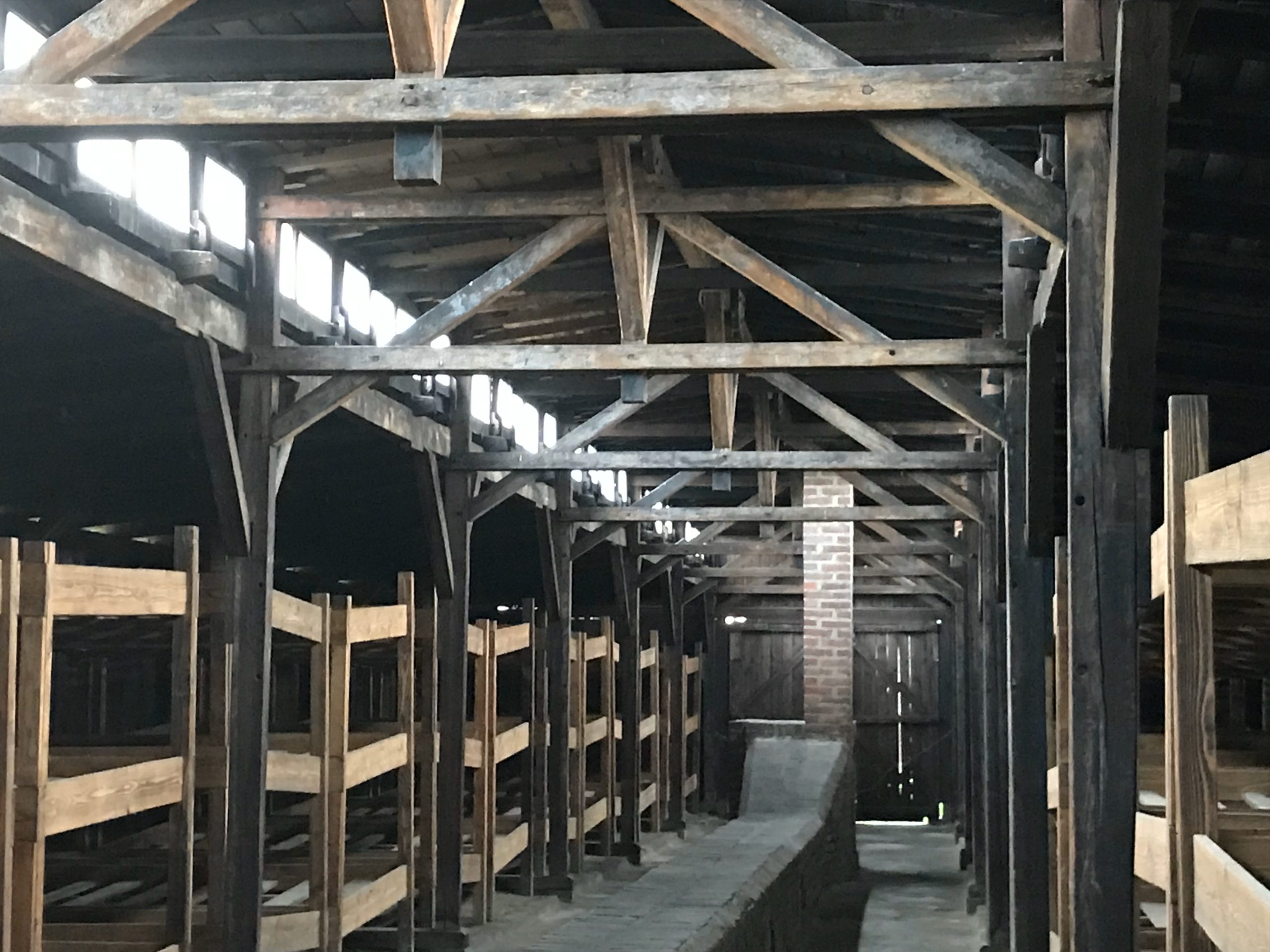
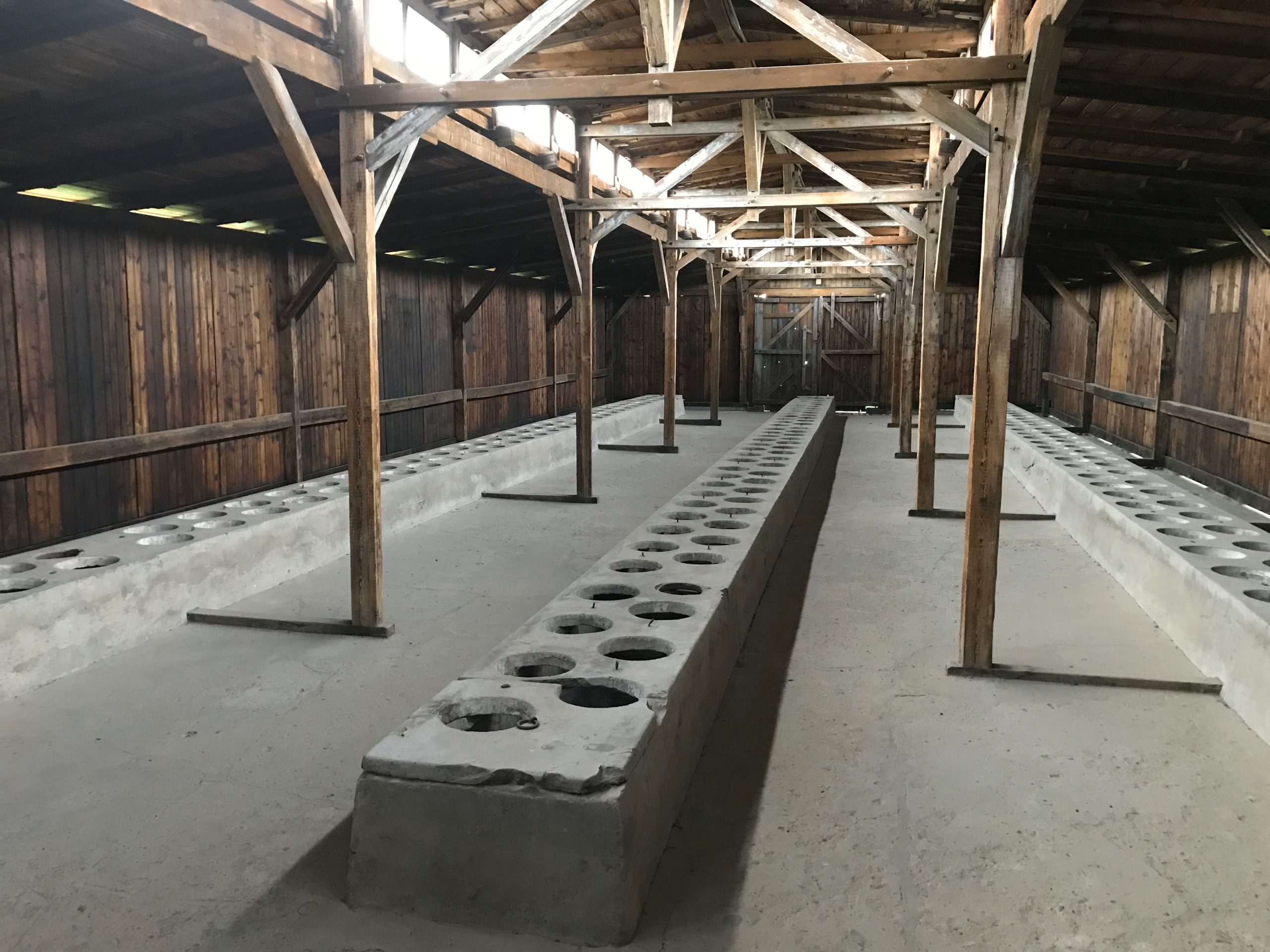
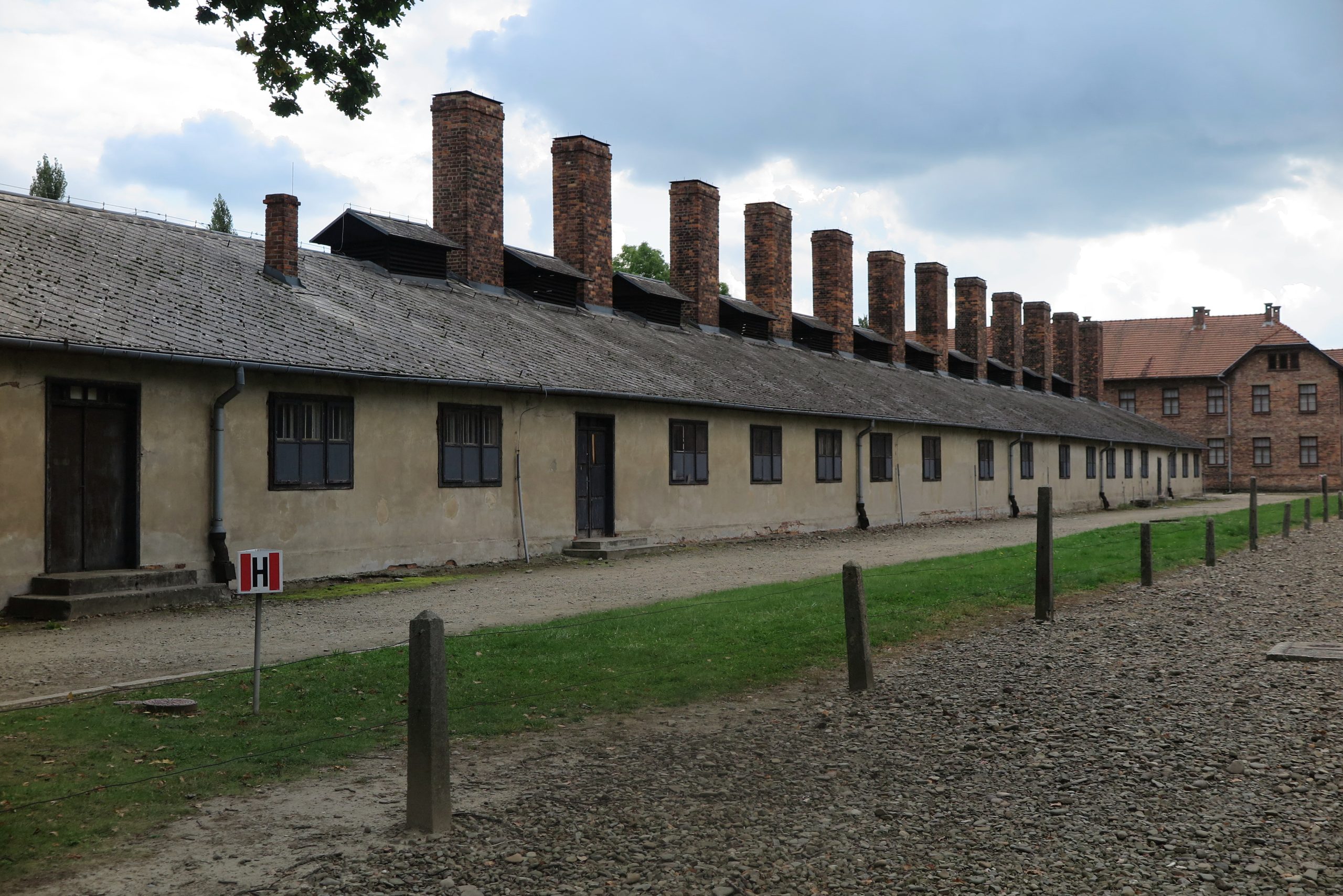
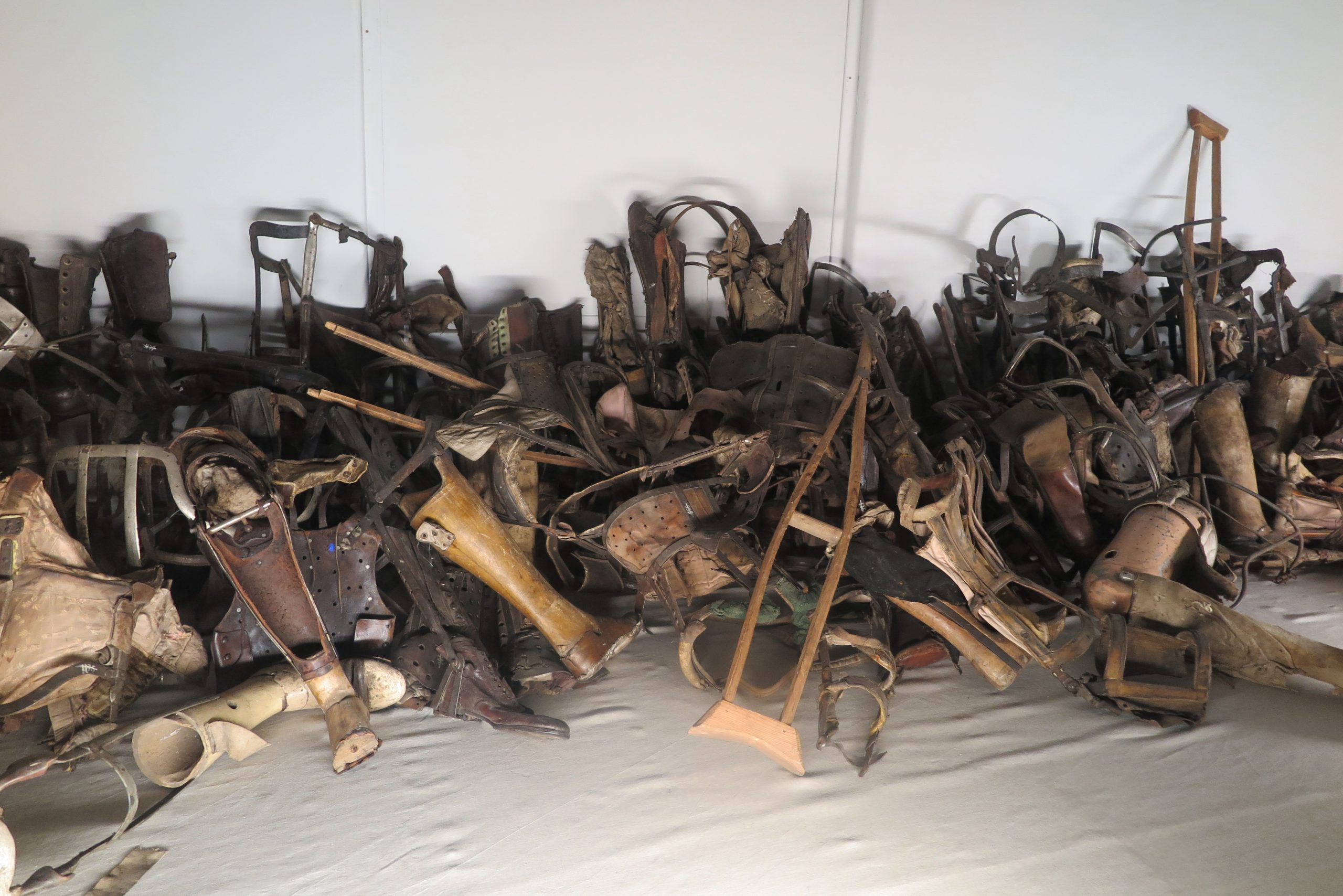
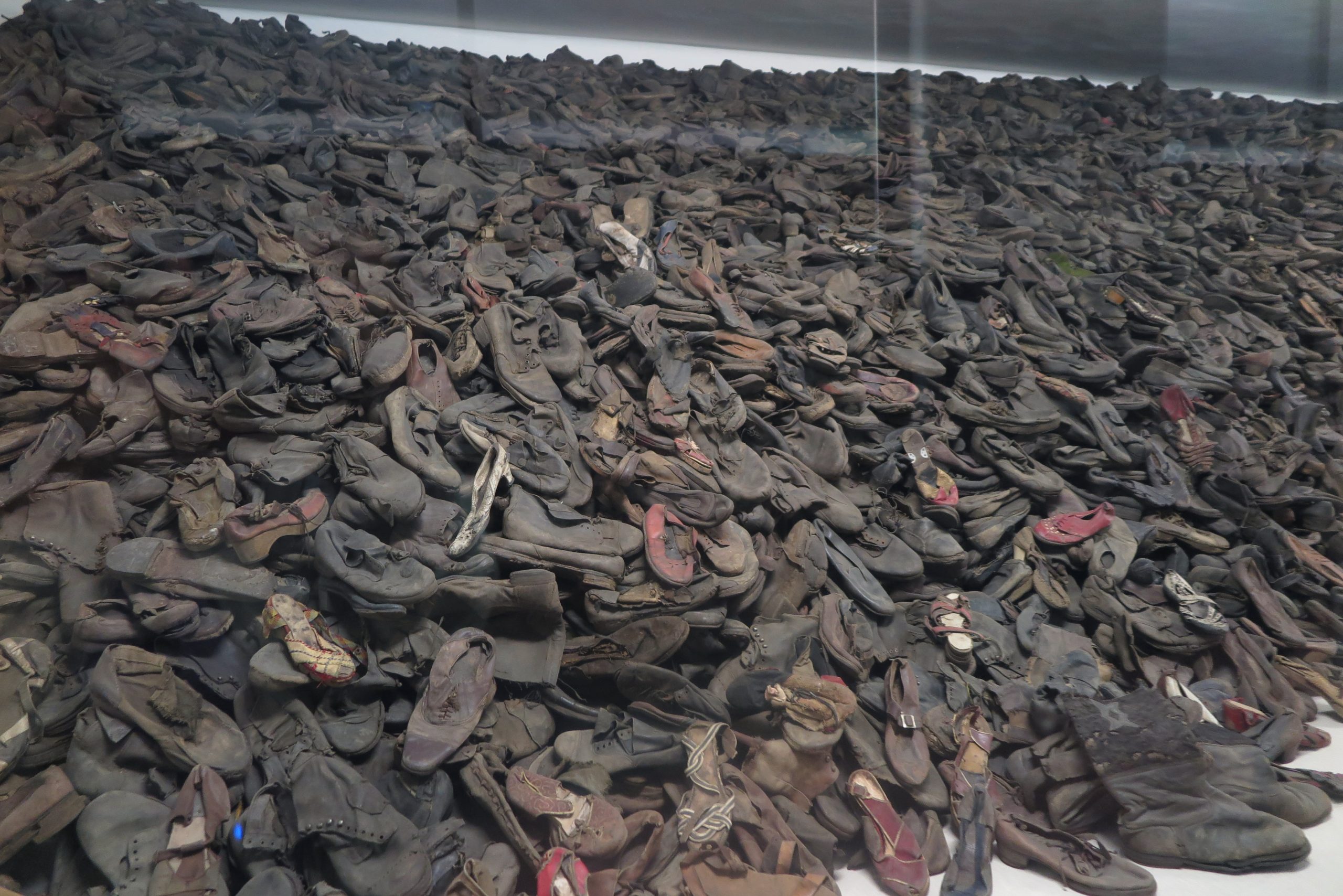
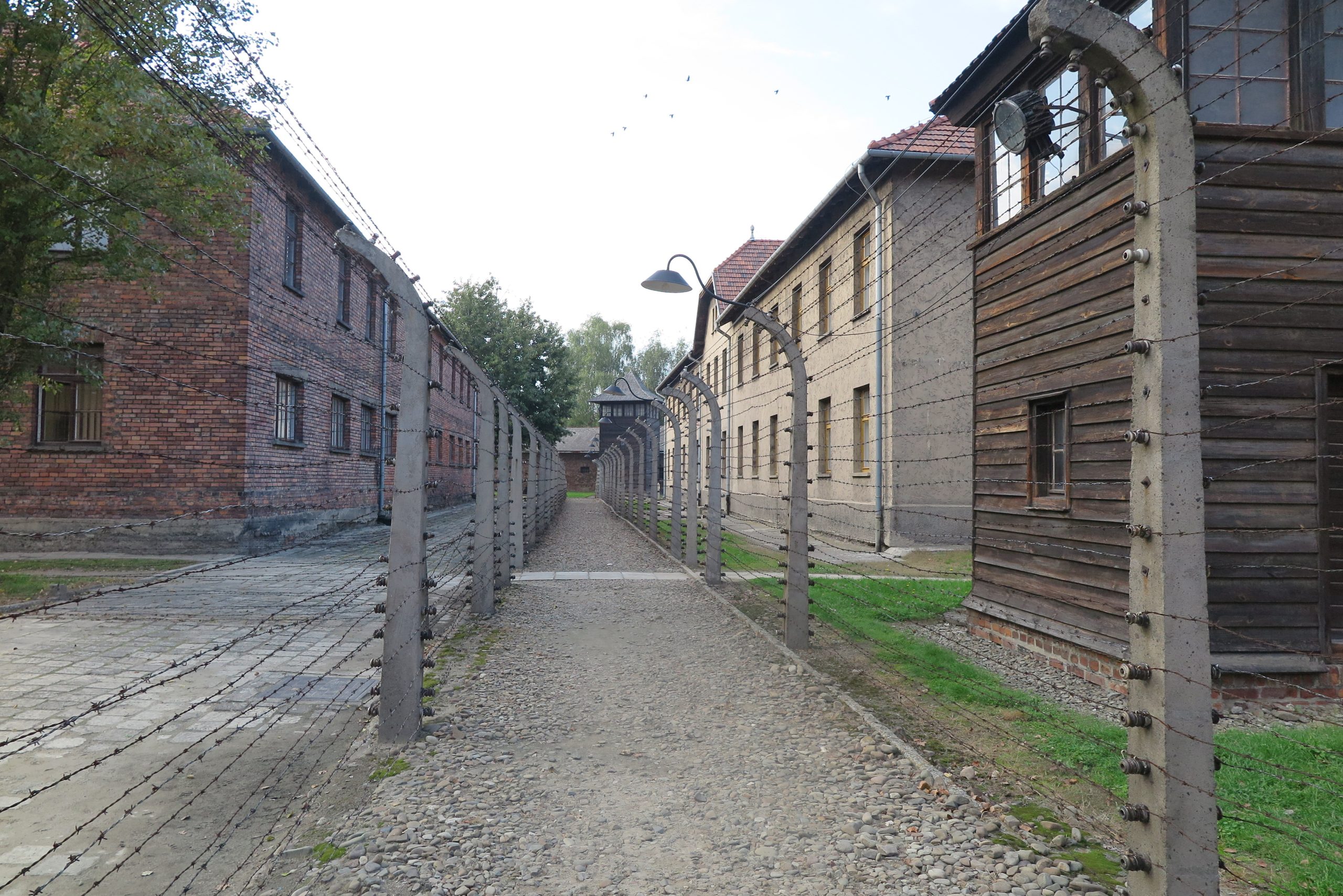
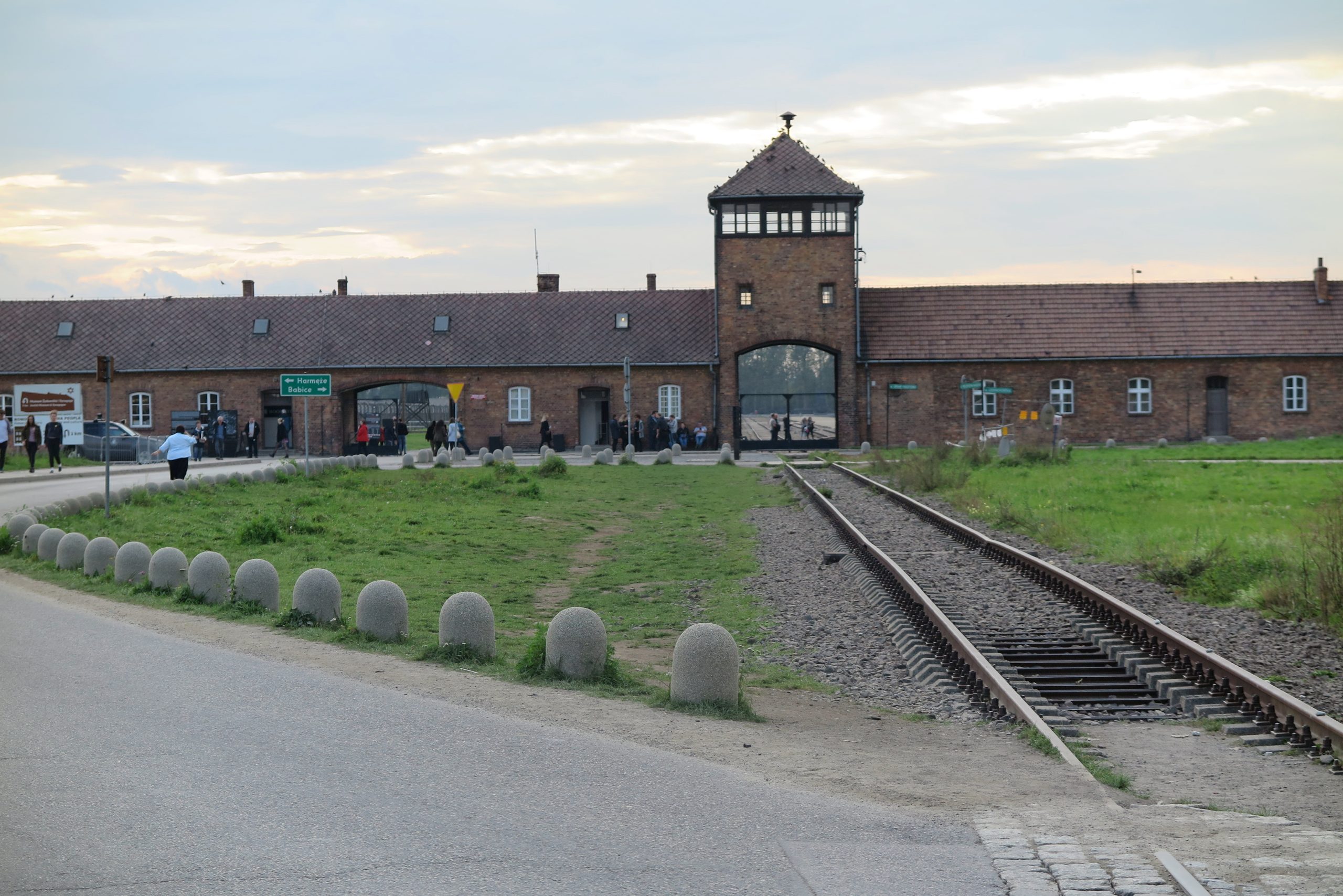
This afternoon, we visited Auschwitz and Birkenau, confronting the harrowing realities of the Holocaust. The gas chambers, the confiscated shoes, the hair, etc., were all profoundly disturbing. Even today, it is so difficult to believe how a few people colluded to exterminate so many human beings. Security was tight entering Auschwitz, but one person in our group who generally travels around using a walker, was found carrying a knife. Now this begs the question: How could one using a walker possibly utilize a knife for self-defense?
Exploring Krakow: A Day of Culture, Cuisine, and Underground Wonders – September 27, 2019
Early this morning, Christabel attended mass at Wawel Cathedral. To her surprise, it turned out to be a double mass. Despite the few people in the chapel, everyone remained on their knees throughout the service. She also couldn’t help but notice the youthfulness of the priests conducting the service. It seems that in this region, there is no shortage of priests.
This morning, we opted for the food tour instead of a 2-hour ride into the Zakopane and the Tatras mountains. The tour treated us to a variety of pierogis with various fillings, although we found the cuisine a bit on the heavy side. The trip to the market was interesting and the desserts looked wonderful.
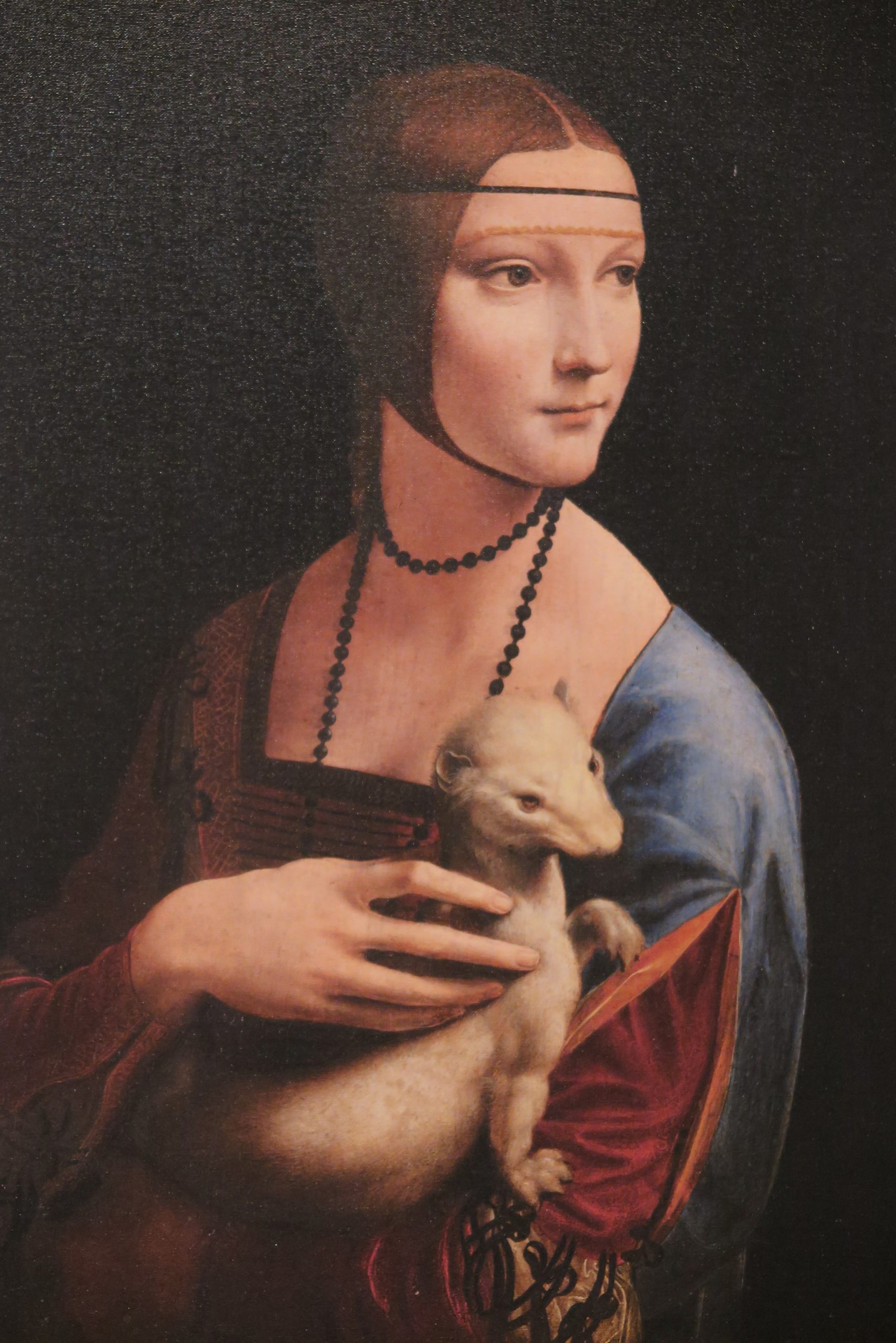
In the afternoon, we visited the National Museum in the Old Town to see Leonardo da Vinci’s Lady with an Ermine. We were incredibly fortunate to find that timed tickets were not needed, and there were no crowds to contend with. Moreover, tickets were readily available and were extremely cheap. There was a moment when we found ourselves alone with the painting, with only the security guards and the lady herself. We stood just 4-5 feet away from the painting, reminiscent of a time, about 25 years ago, when one if fortunate, was able to see the Mona Lisa that up close. Today it is virtually impossible, unless one happens to be Béyonce!
The lady in question is Cecilia Gallerani, reputed mistress of Lodovico Sforza, Duke of Milan, who was Leo’s boss. The painting was bought around 1800 in Italy by Prince Adam Jerzy Czartoryski and sold by the family to the Polish Republic in 2016. The painting is beautiful, very serene and full of symbolism, but not enigmatic like the Mona Lisa. This is one of four portraits of women painted by Leonardo, who was known to take his own sweet time to complete commissions.
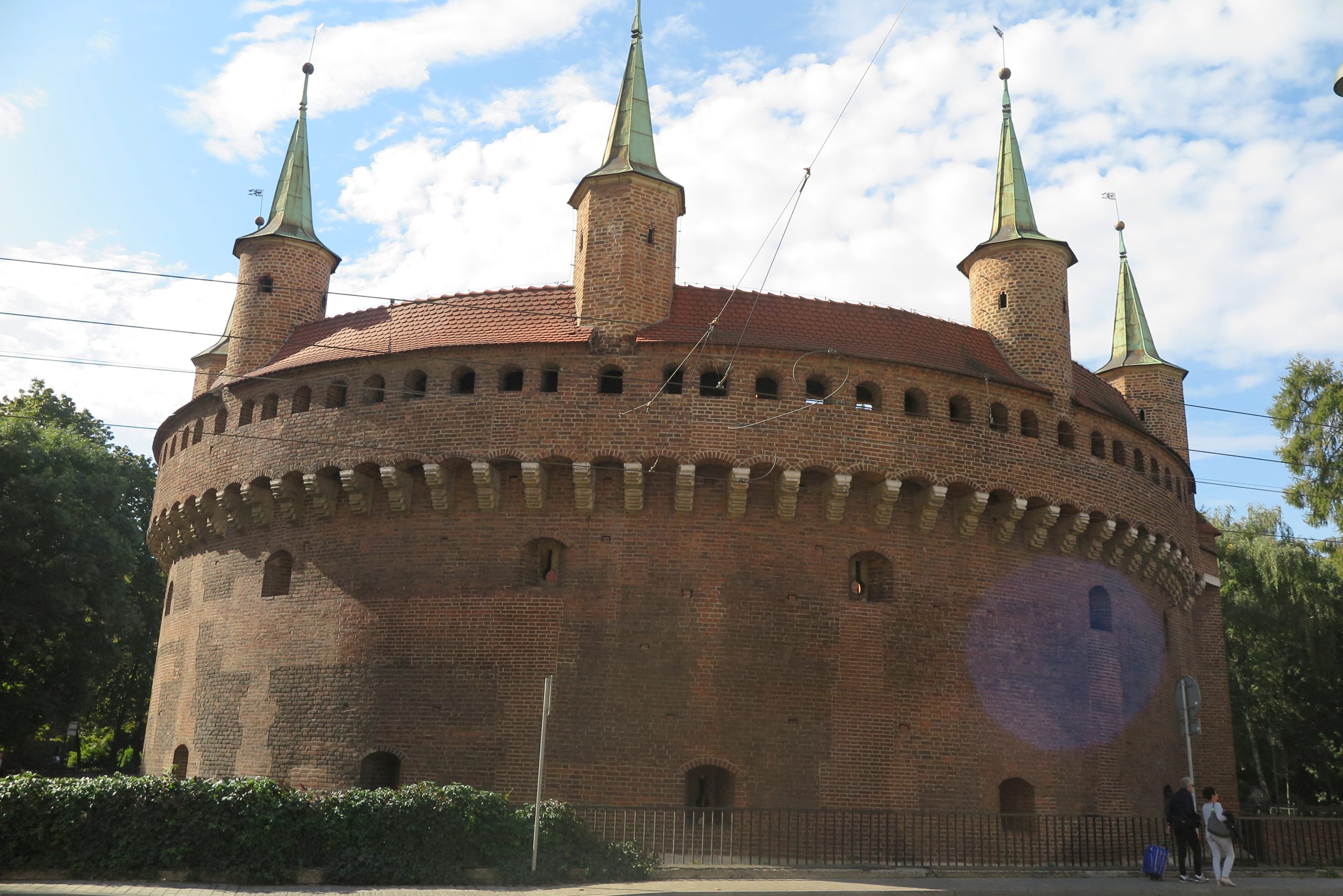
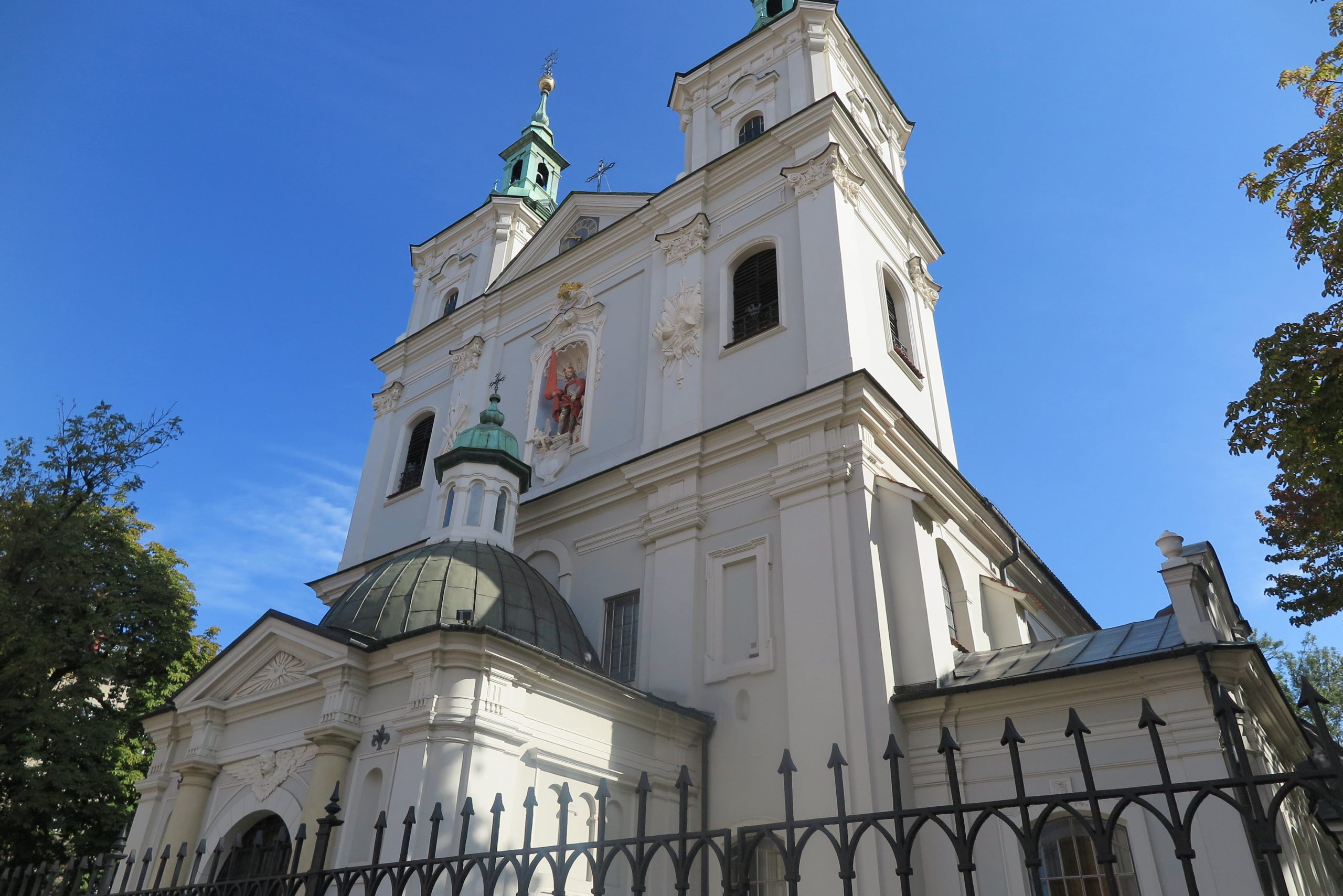
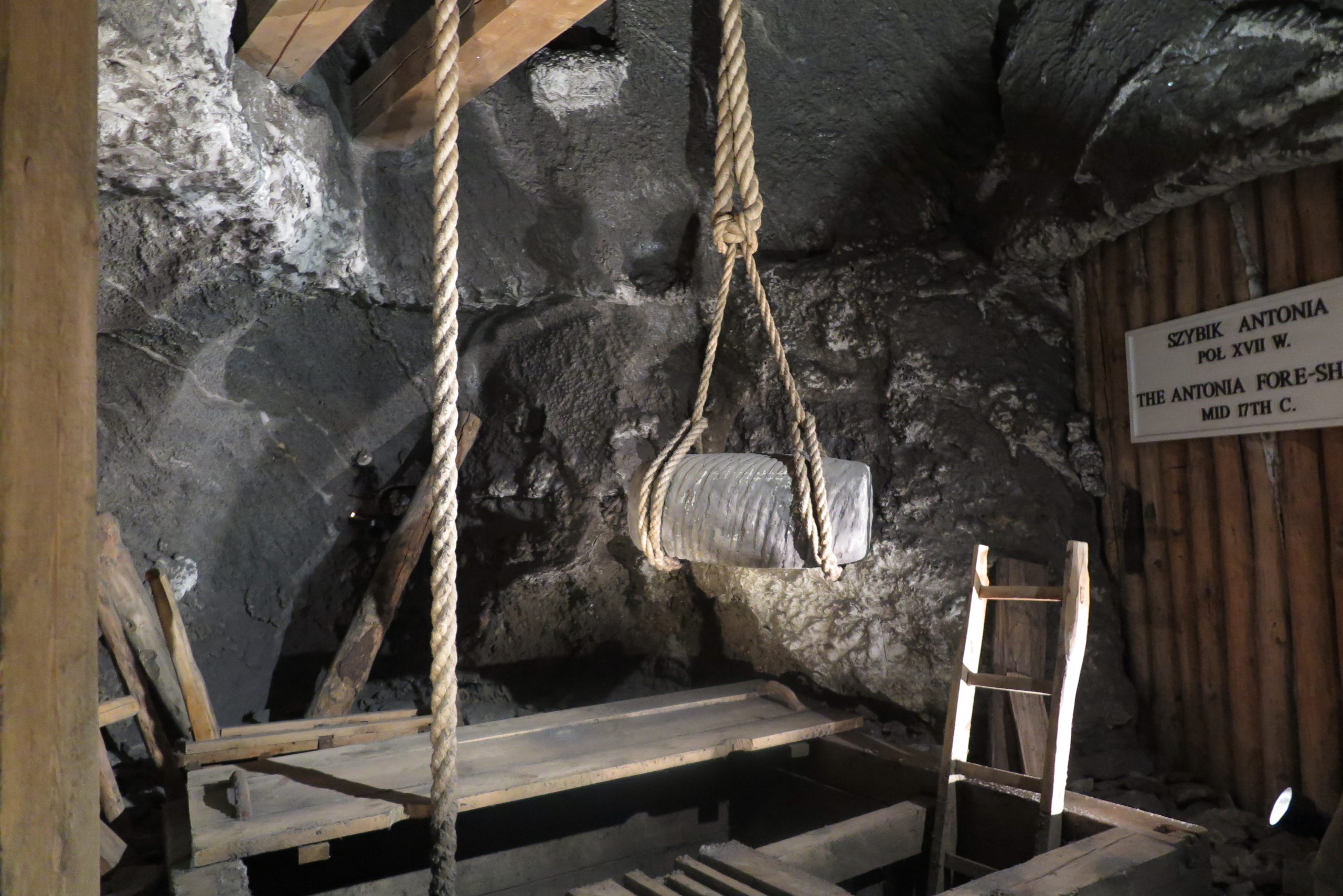
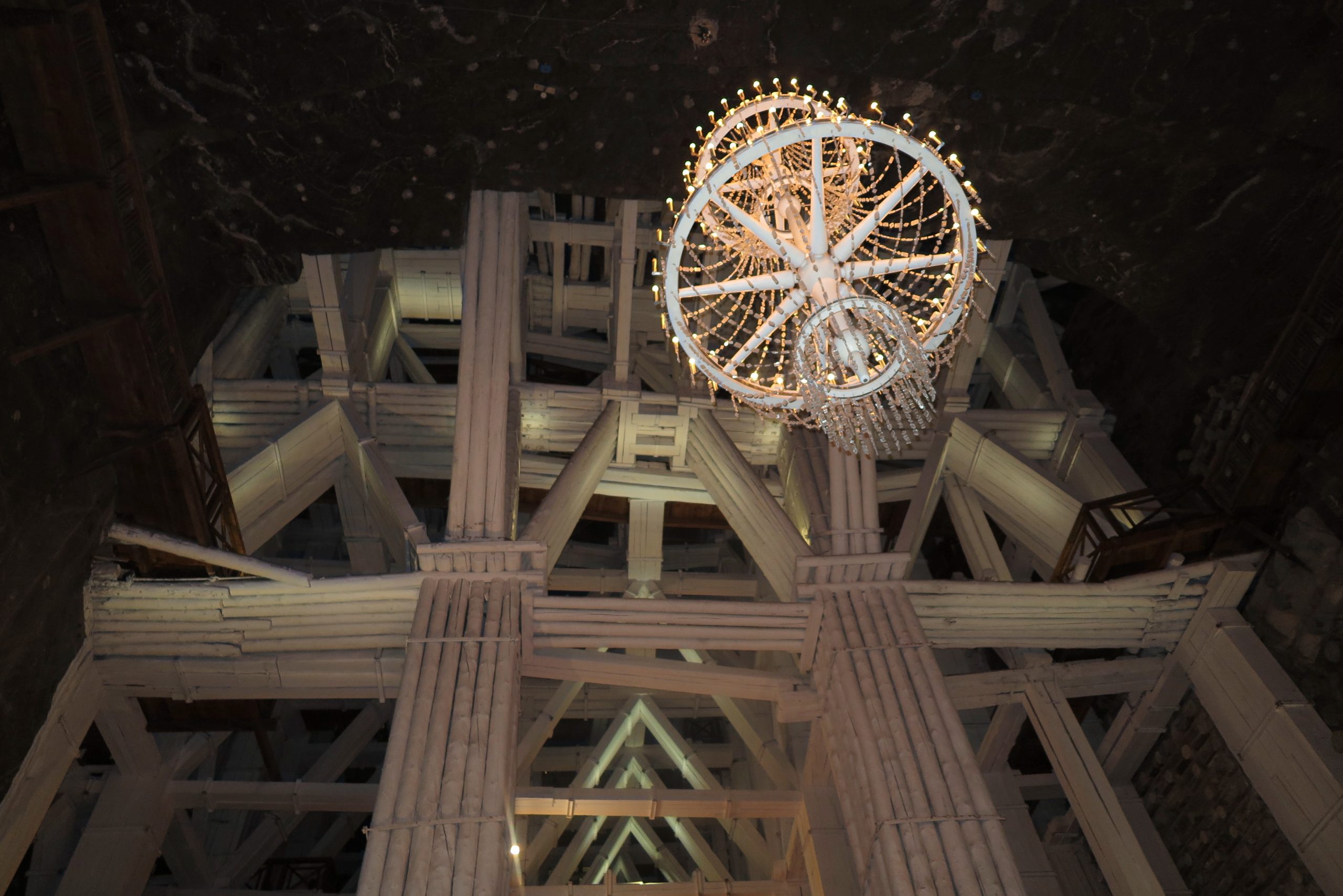
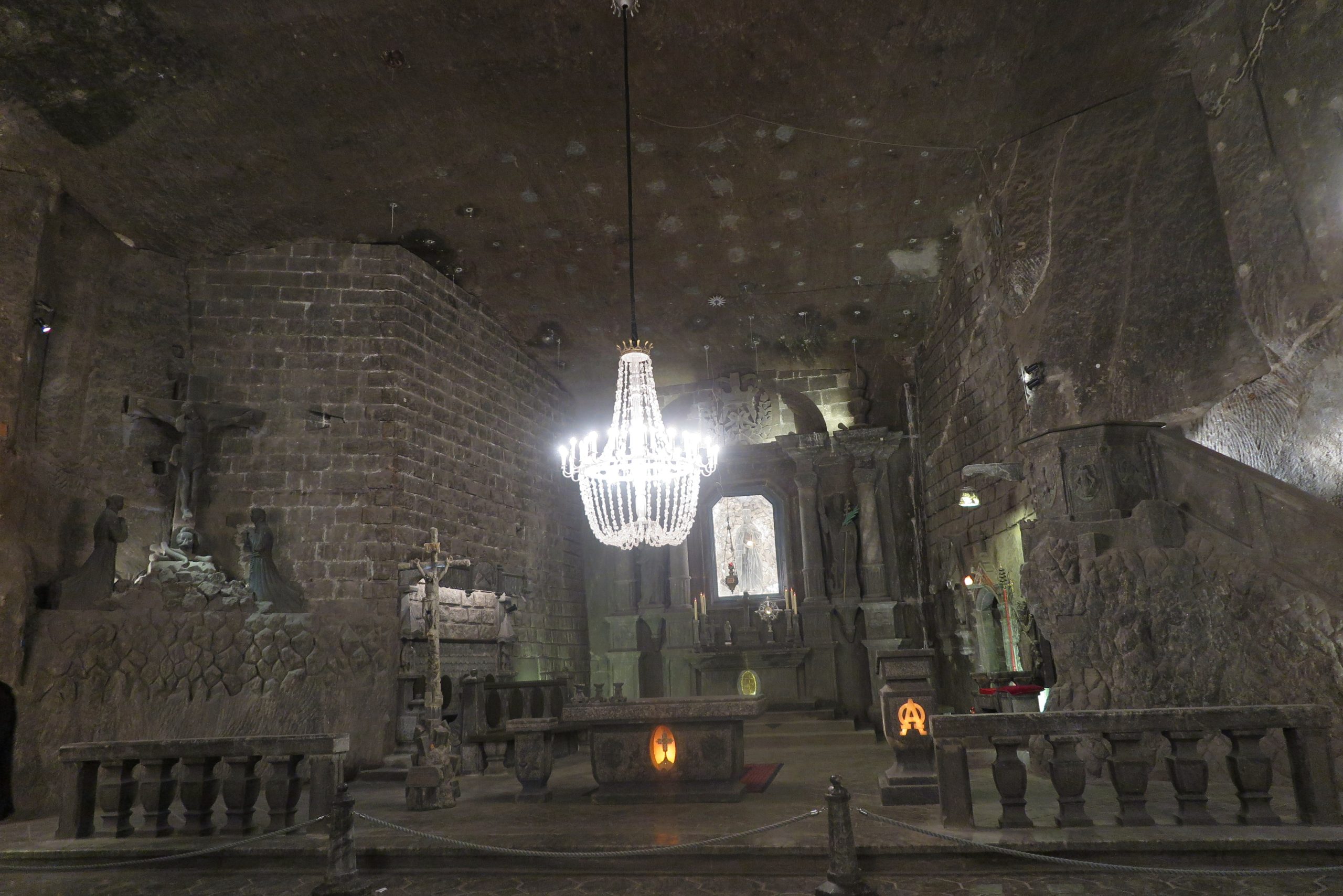
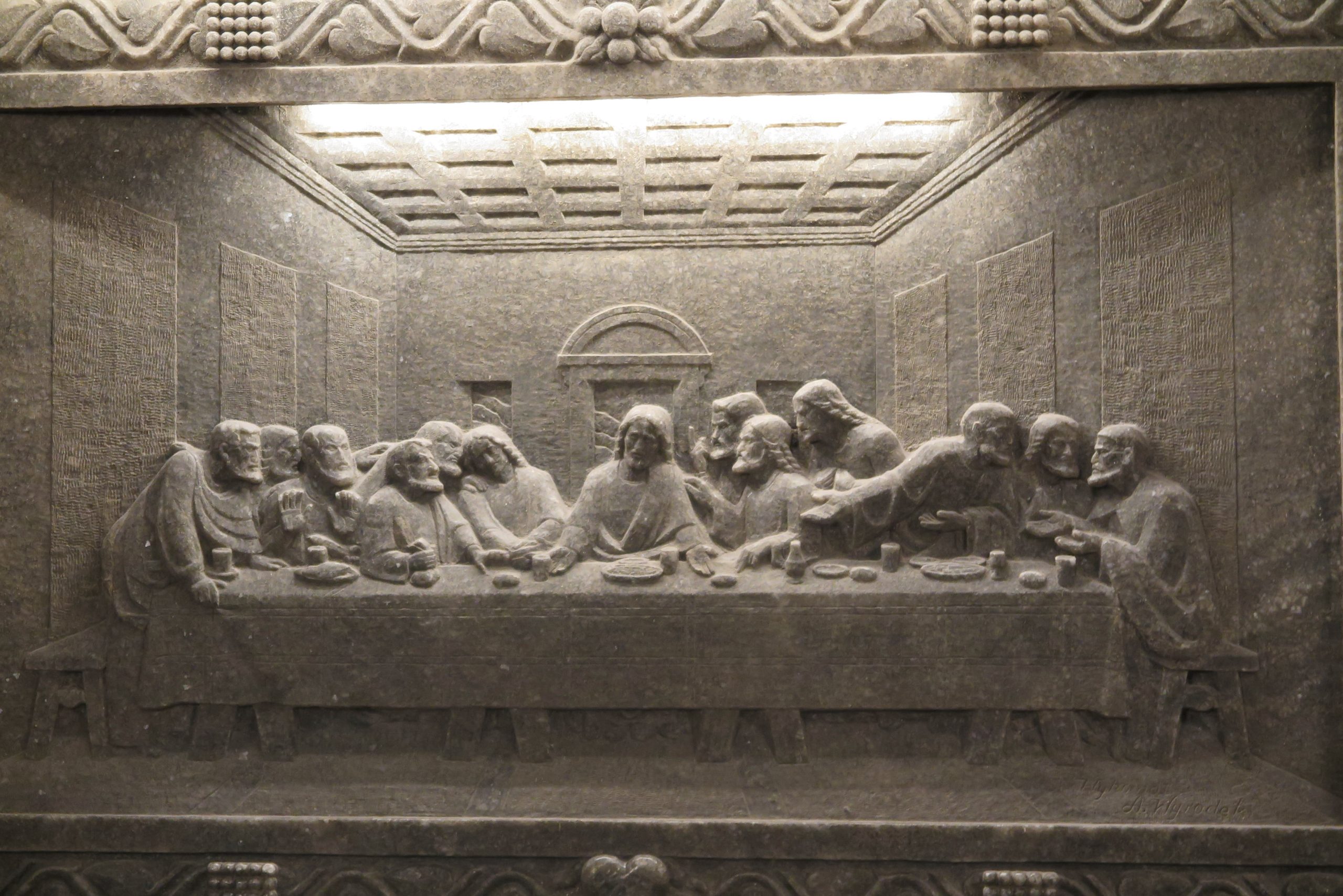
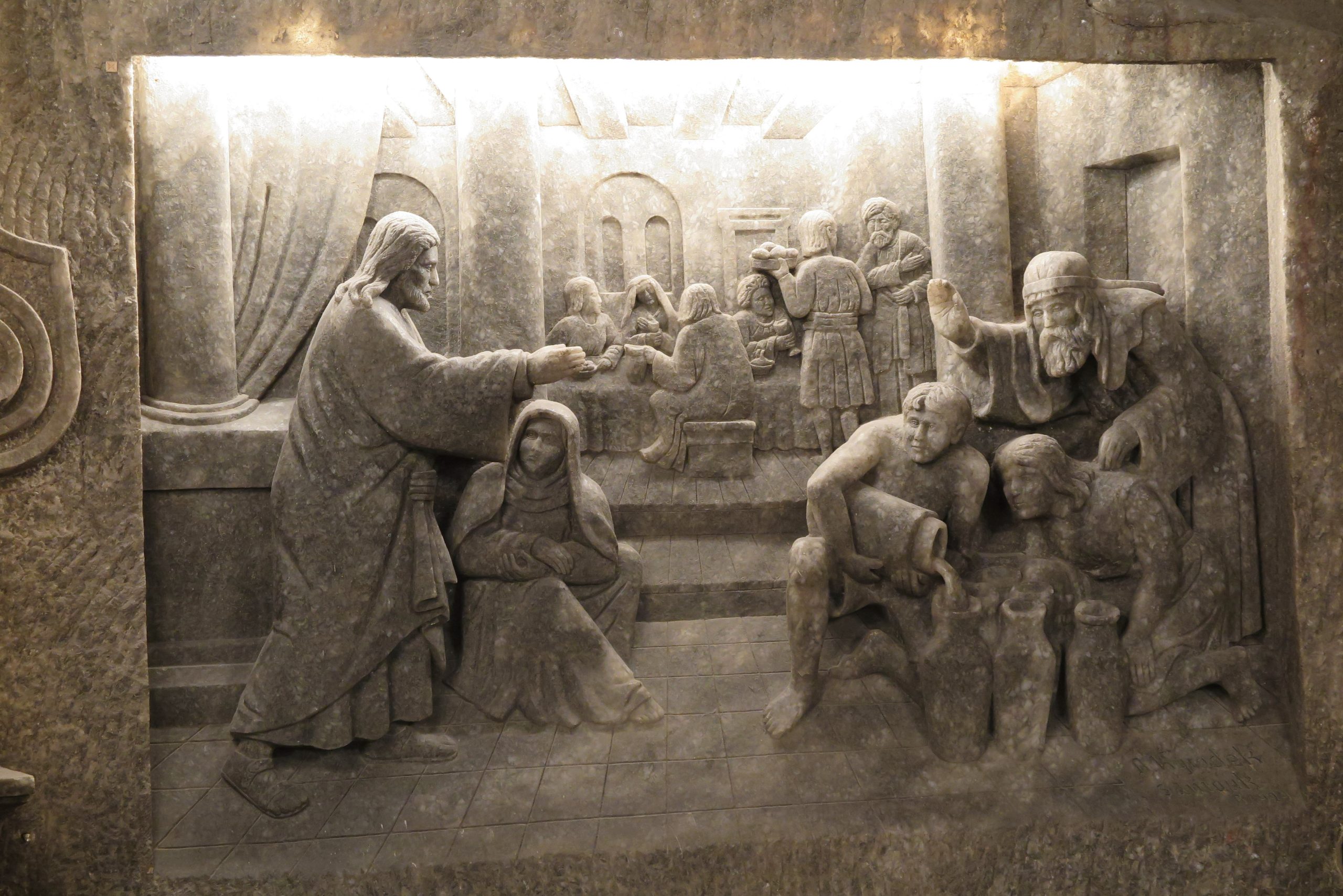
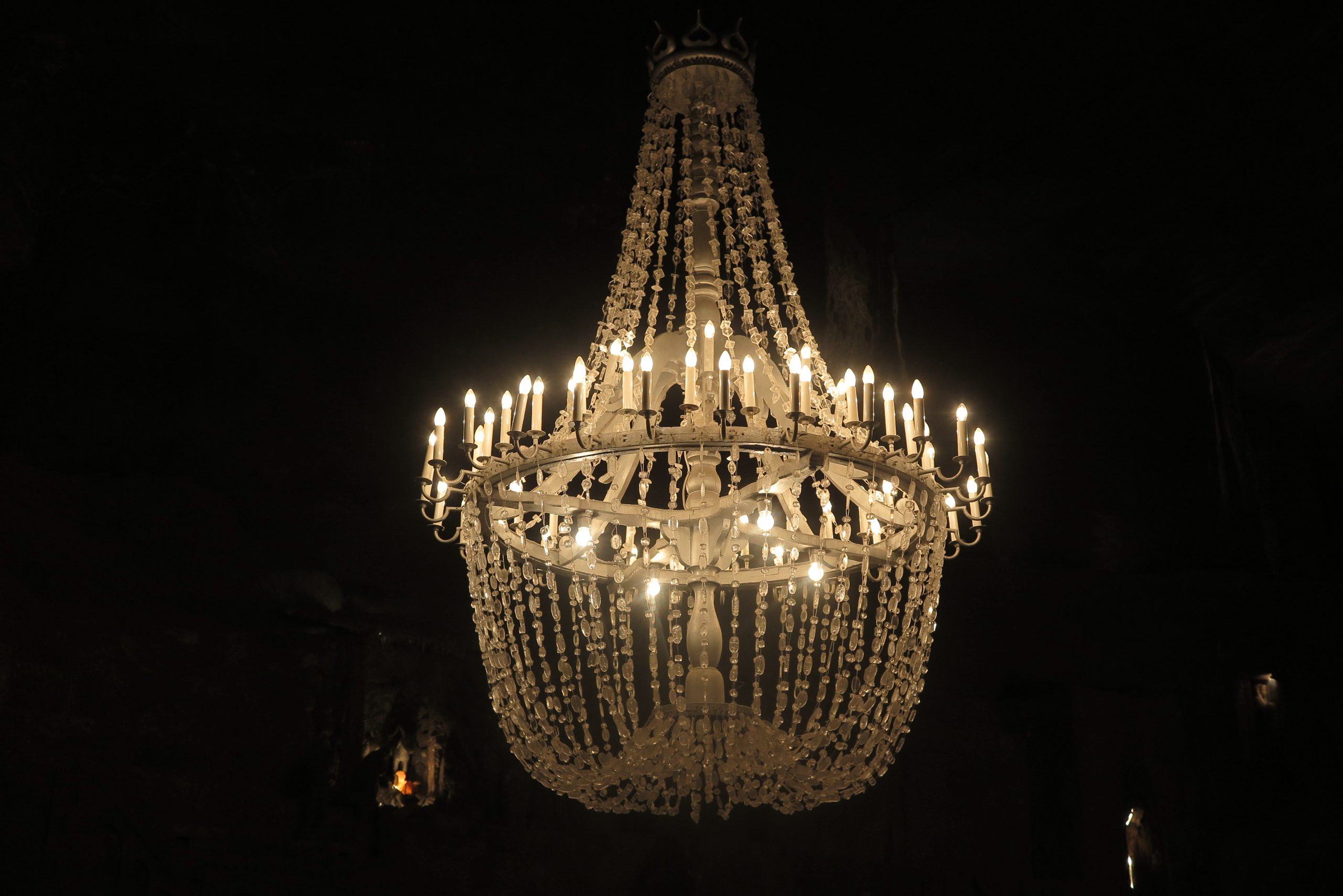
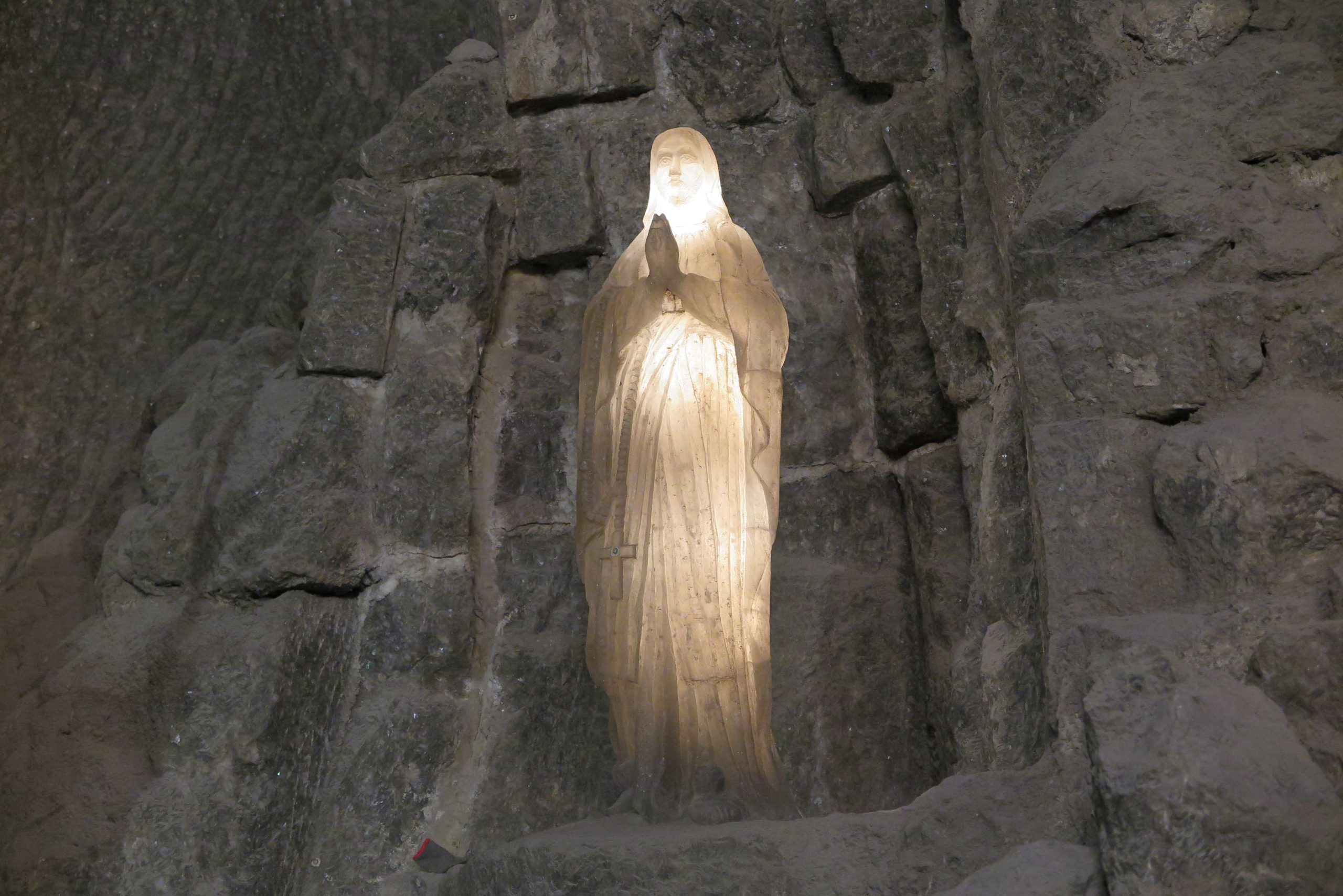
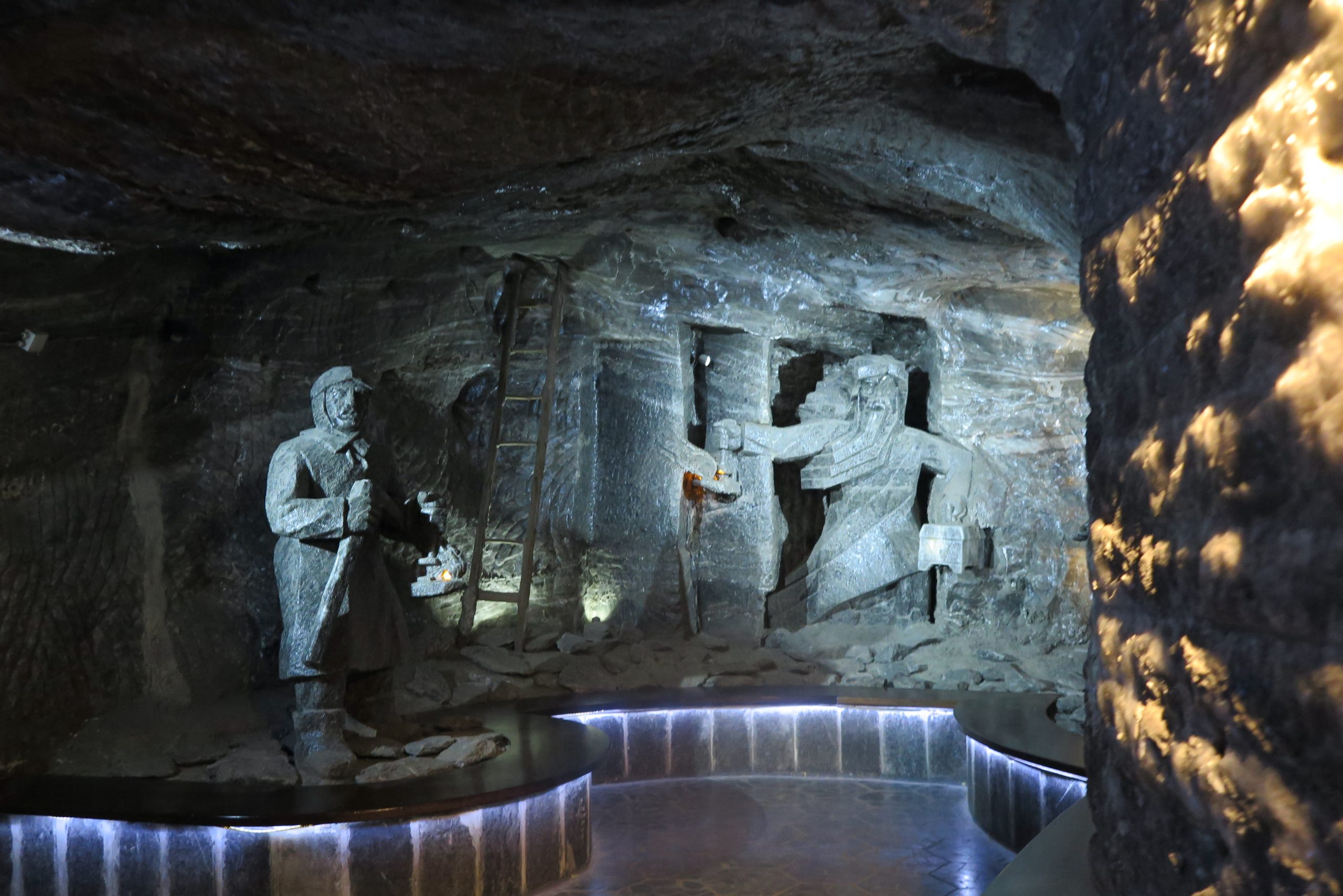
This evening, we visited the Wieliczka Salt Mine. It entailed climbing down three levels of the mine involving 800 steps. And even though we were considerably underground, the mine was well lit and well aired and free of unpleasant odors, likely due to the presence of salt. We expected to feel claustrophobic but that was not the case. We visited St. Kinga’s chapel which is full of sculptures and friezes carved out of rock salt. Most of these are biblical, such as the Flight out of Egypt and the Last Supper. The most recent is a huge statue of Pope John Paul II. The chandeliers are also made of rock salt and are quite stunning. All the sculptures in the chapel were carved by three miners who worked individually over a long period of time. The mine is no longer operational but is a very popular tourist destination and a UNESCO World Heritage site.
And, finally, we had a formal sit-down dinner in the mine with live music and wine and goose.
On our return journey, we opted for the elevator. Climbing 800 steps to the surface wasn’t part of anyone’s plans.
Goodbye Krakow and Welcome Home – September 28, 2019
Checked out of the hotel around 3 AM for the journey back home.