
Arrival in Split: A Wet Welcome – May 13, 2019
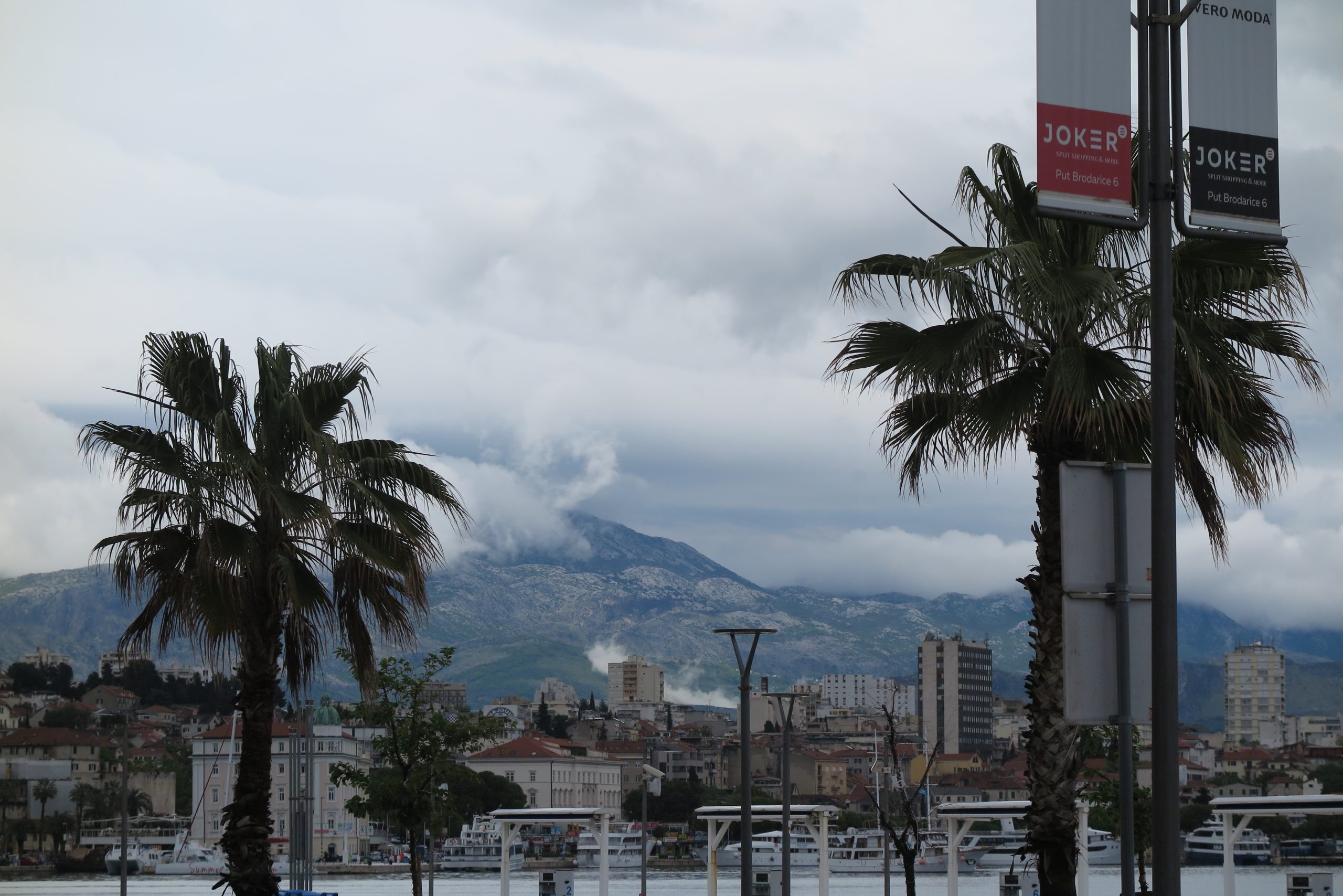
Upon landing on a wet and rainy tarmac in Split, we were greeted by a Country Walkers representative and joined by four fellow travelers from Arizona. Our accommodation for the stay, the Atrium Hotel, proved to be efficient and tidy, with helpful staff readily providing good directions.
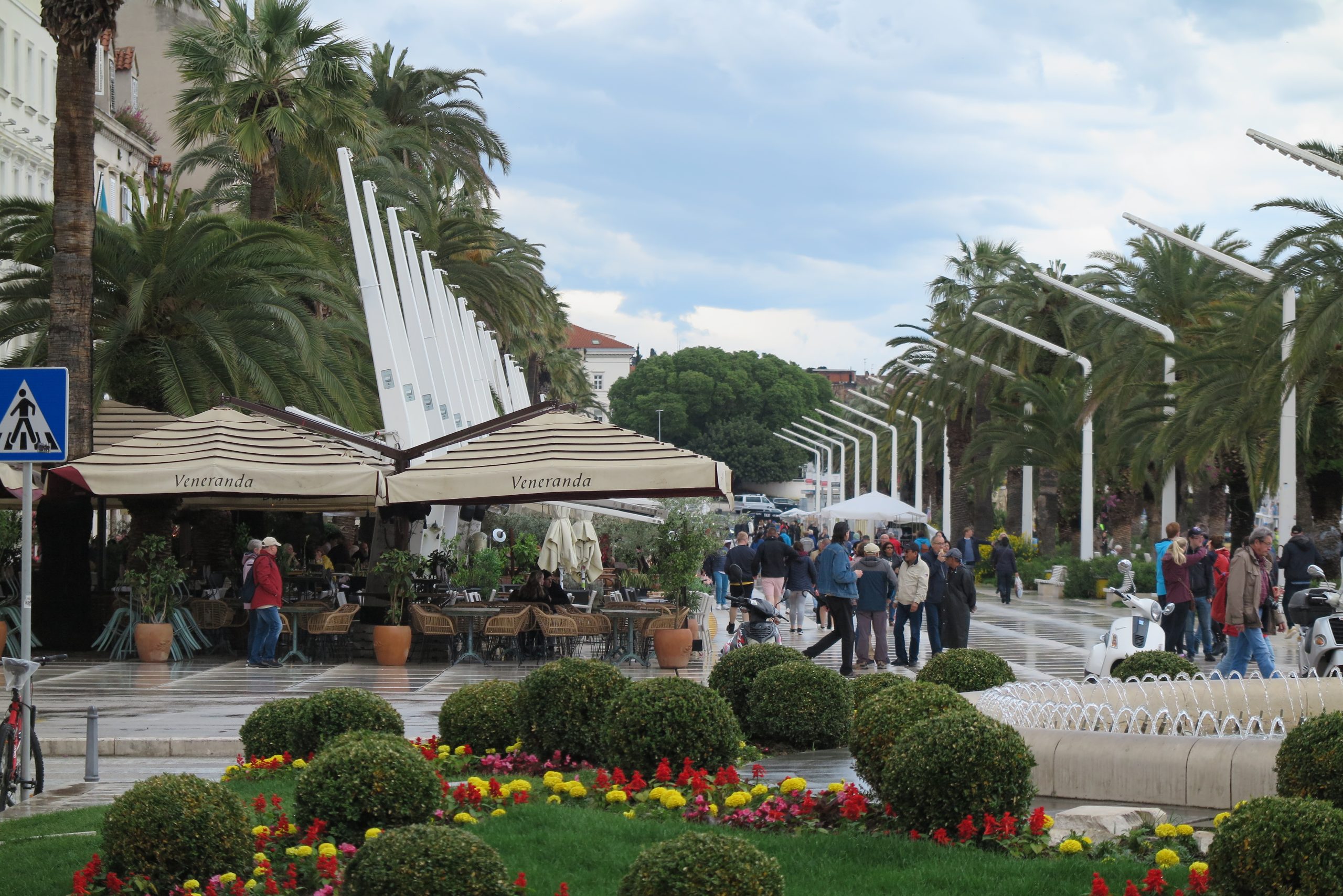
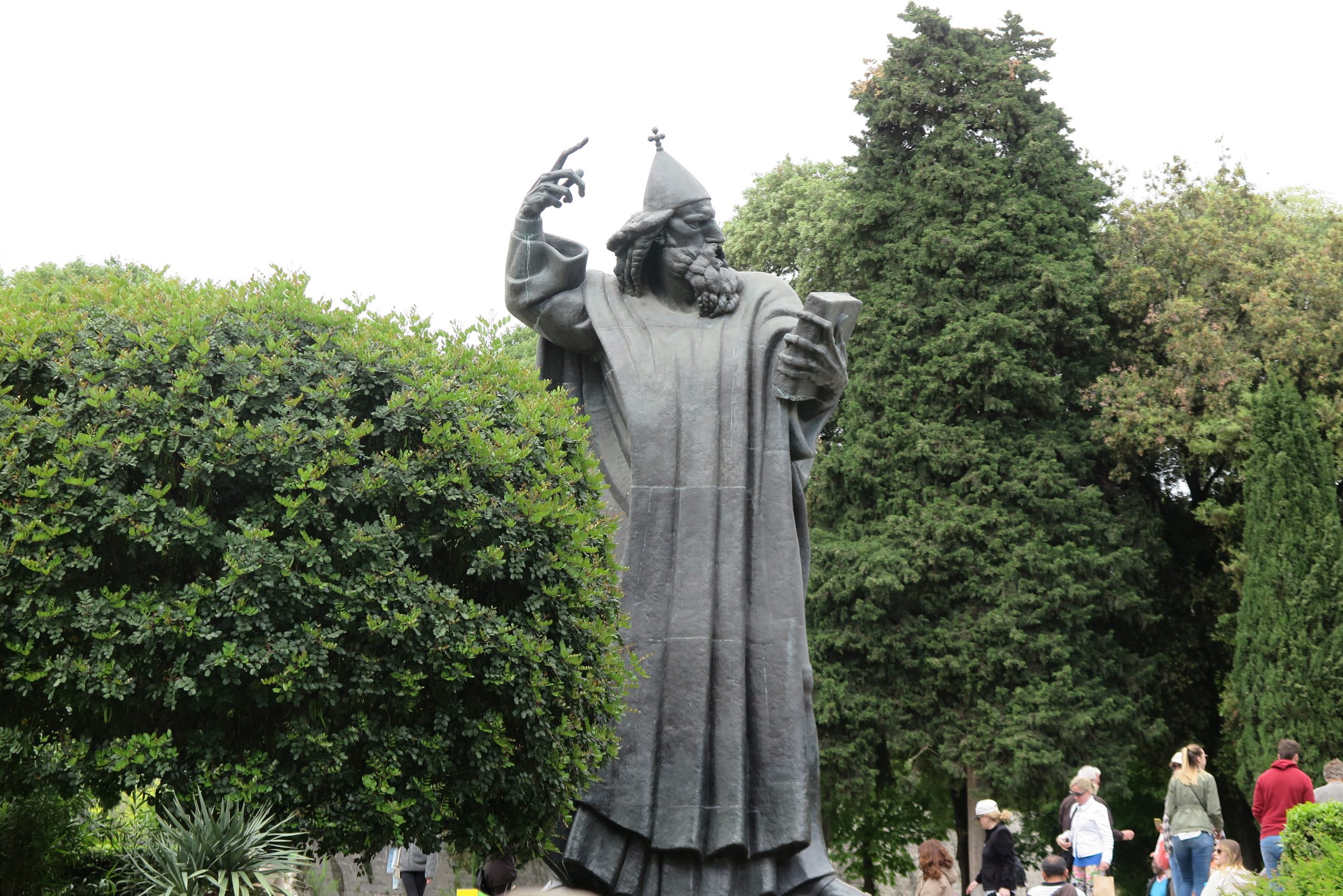
Despite the weather, we walked to the Meštrović Gallery, dedicated to the renowned Croatian sculptor Ivan Meštrović who was born in Croatia but died in South Bend, Indiana. His works are all over Croatia, the first one that we saw on the way to the gallery was that of Bishop Gregory of Nin.The gallery was unexpectedly closed for filming, but our journey provided a good orientation to the city’s high-rent district, boasting elegant residences overlooking the harbor.
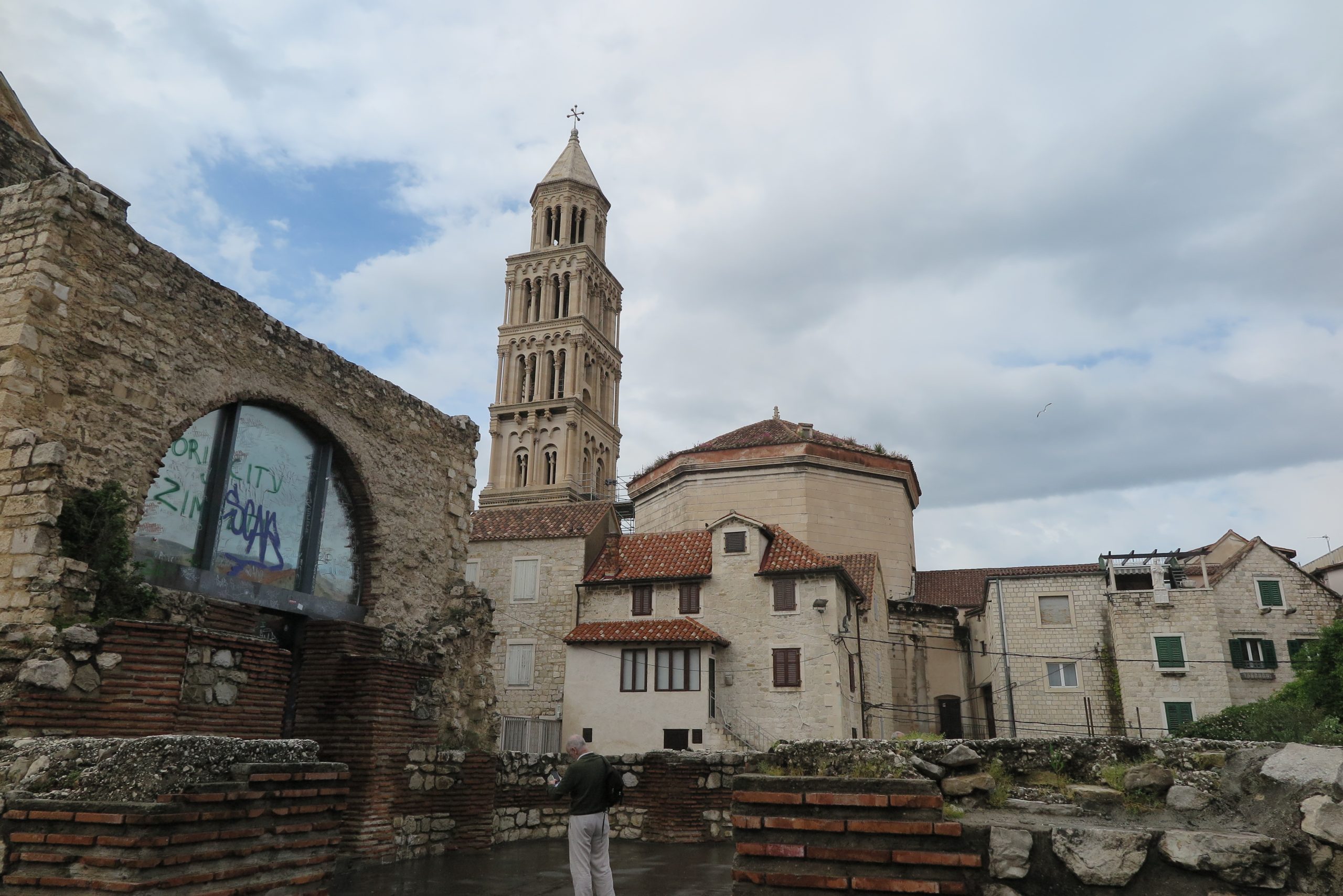
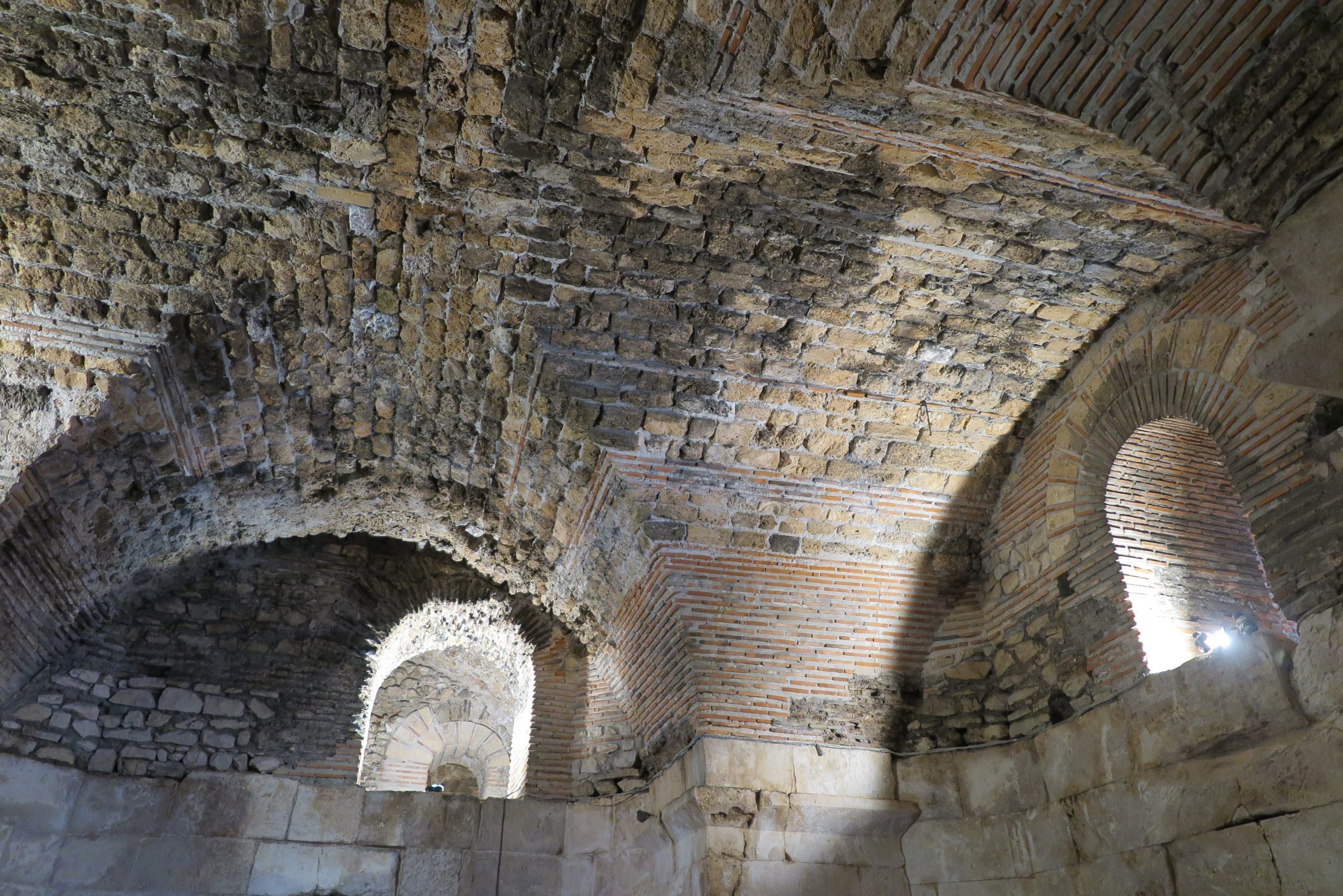
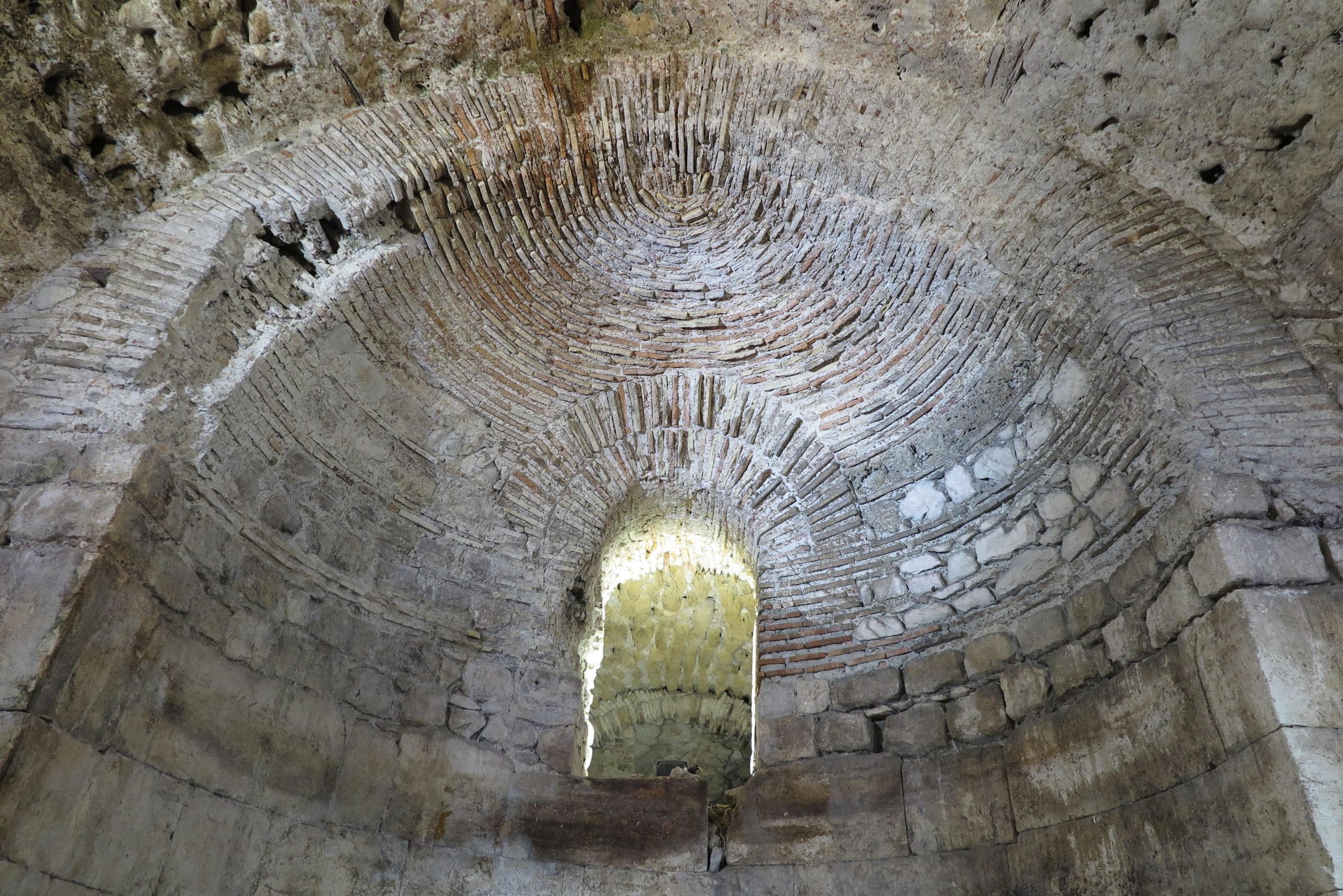
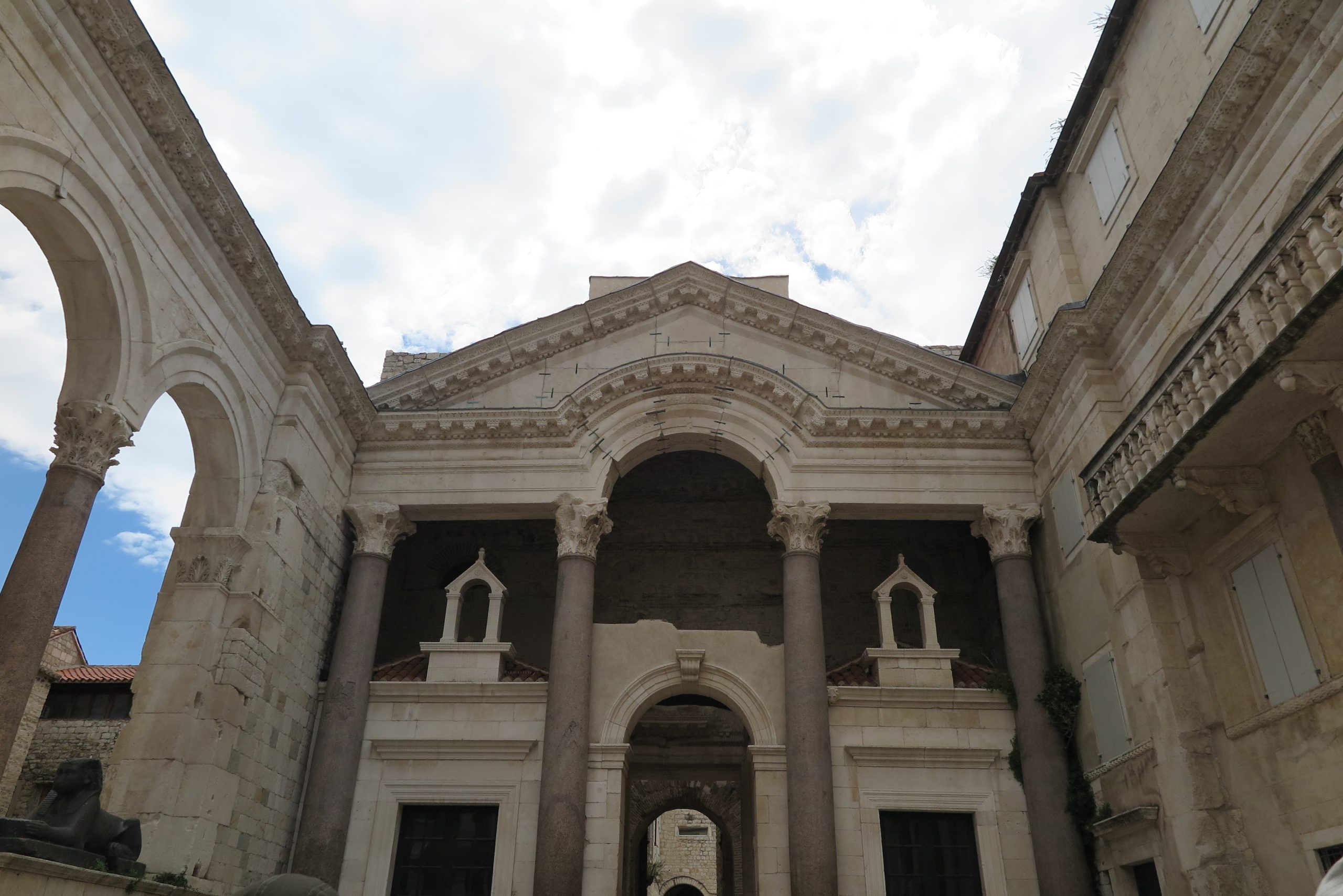
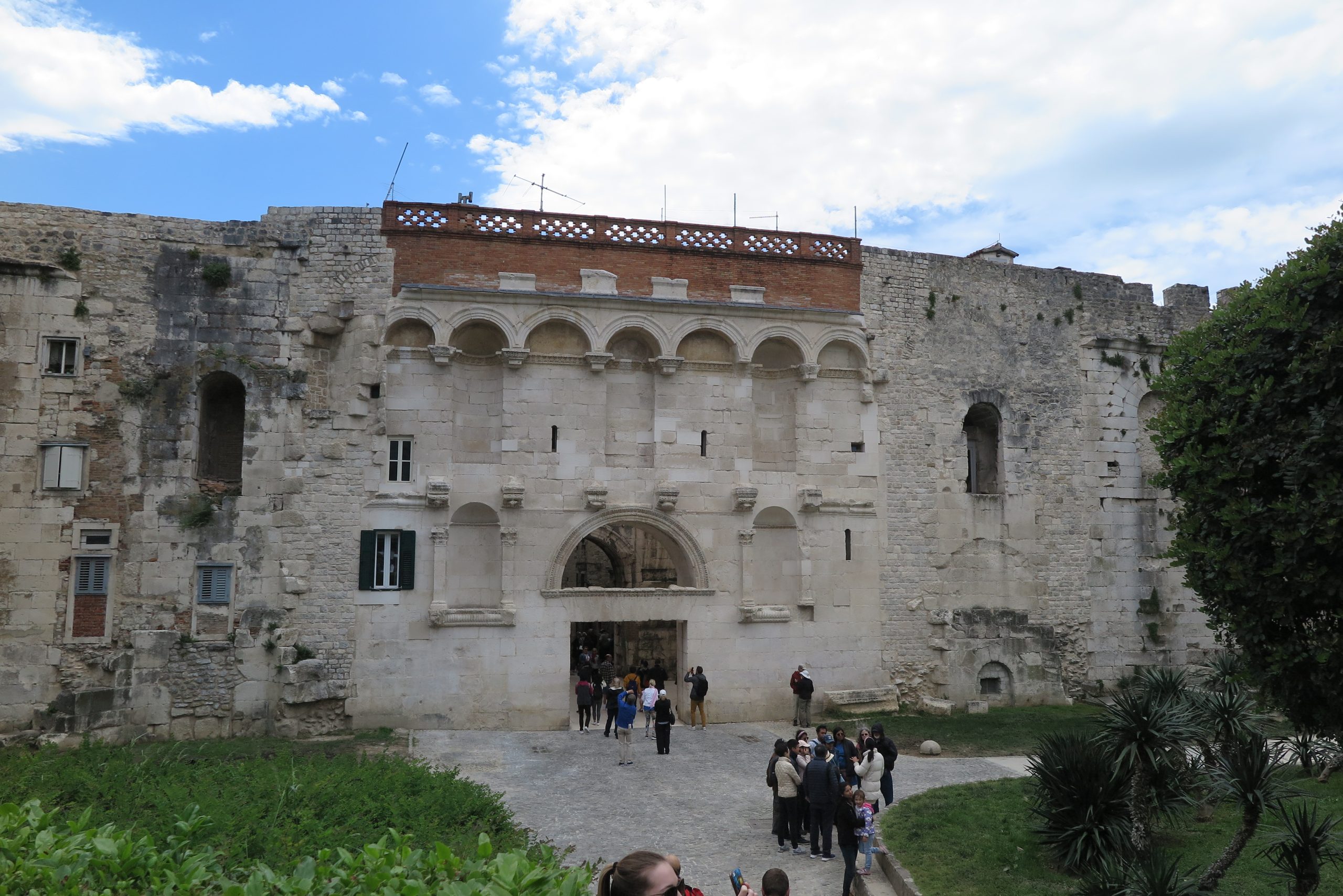
On the way back, we decided to visit Diocletian’s Palace, the home he built for his retirement. This palace was built around 284-305 AD. Diocletian was born in Salona in the general neighborhood of Split. The palace is a massive structure but took only 11 years to build. We entered through one of the gates (there are Gold, Silver, Brass, and Iron gates). We thought we entered through the Golden gate as the plaque said so, but actually it was the Brass gate. We bought tickets to see the Basement/Cellars aka Podrumi). These cellars are huge and not in great condition. Thanks to the rain, it was flooded in several places. Over the centuries, people used to dump their garbage here through holes in the ceiling. There used to be wooden pillars holding up the roof that have since deteriorated, leaving those holes behind. This is a fascinating place.
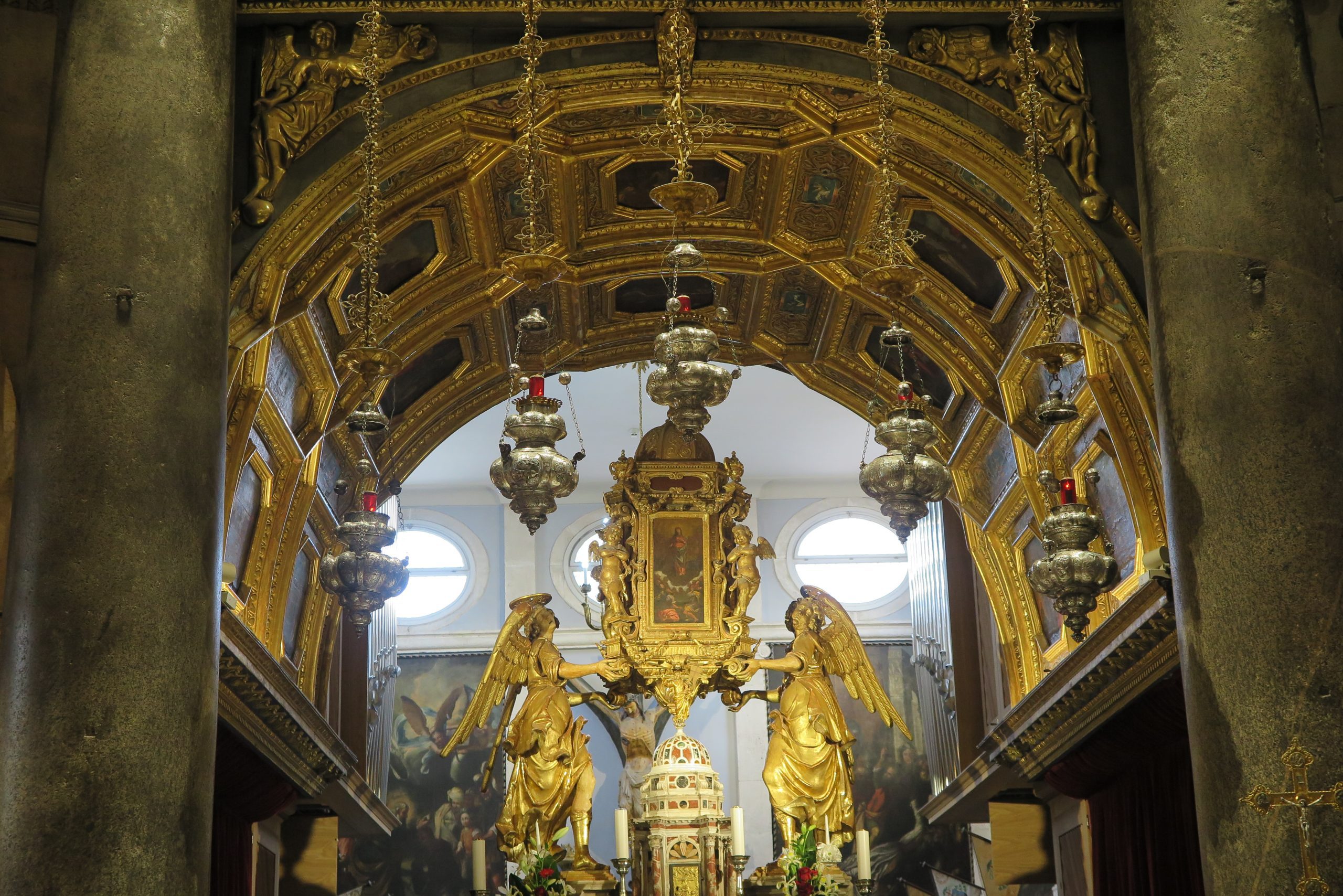
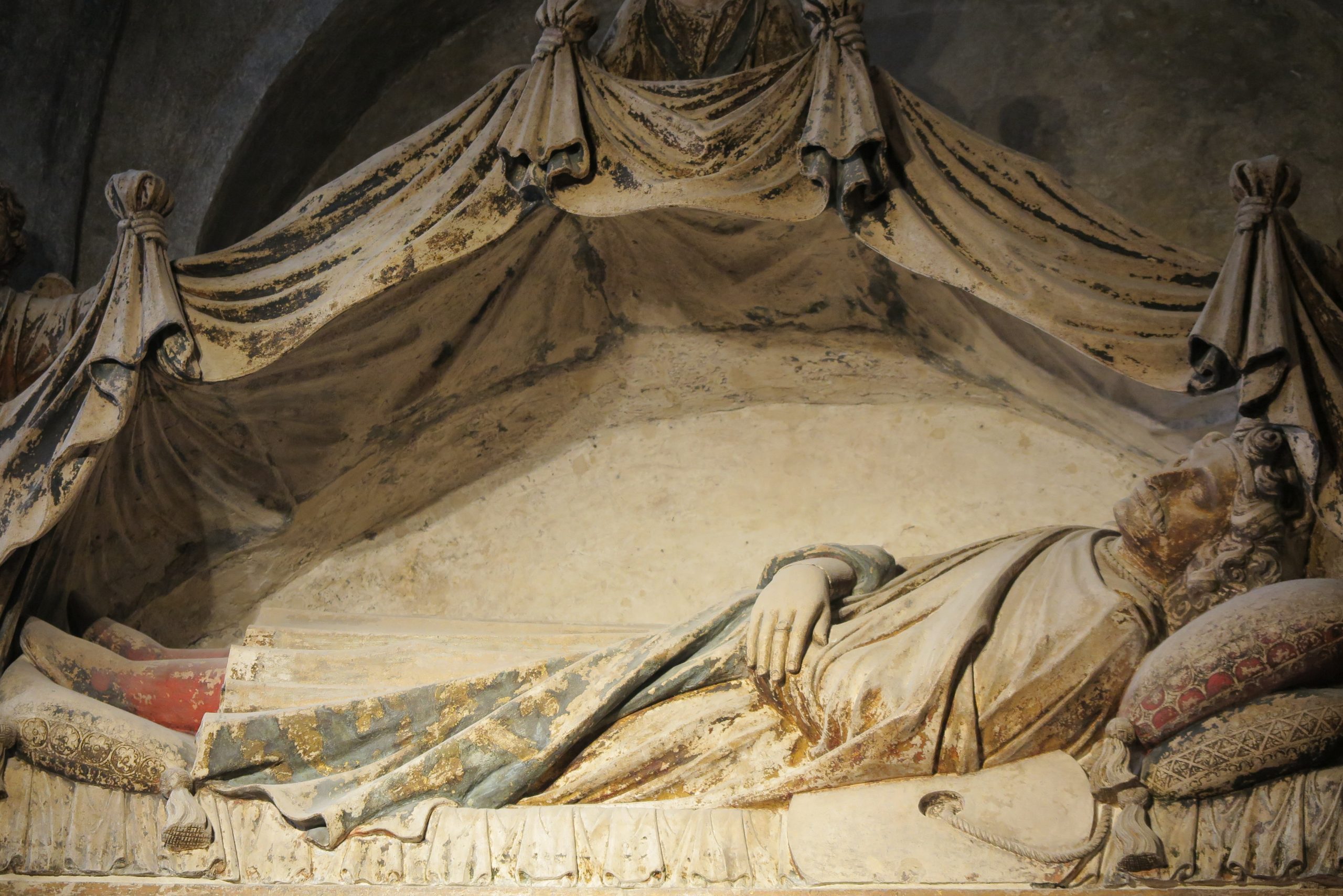
Our next stop was the Cathedral of St. Domnius (dedicated to the Assumption of the Blessed Virgin). You enter from the rear into a very tiny cathedral, probably the tinniest in Christendom. Not in great condition for a UNESCO World Heritage site. Thanks again to the rain, there were lots of leaky spots. This is where Diocletian built his mausoleum, but he’s not buried there. Instead, St. Domnius and St. Anastasius are buried here. From the church, we visited the crypt. It was flooded and dank. It has a statue of St. Lucy. She was martyred by Diocletian.
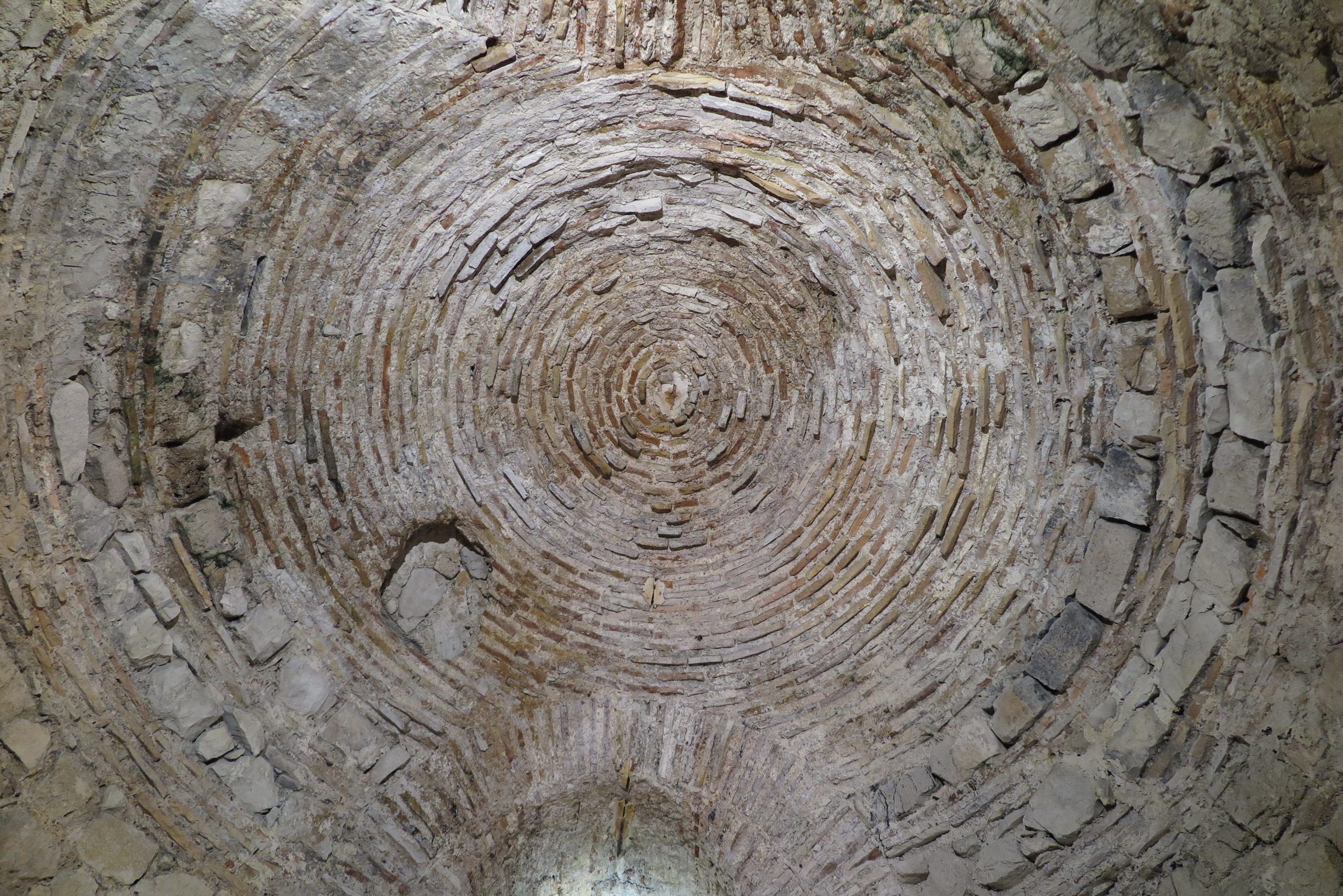
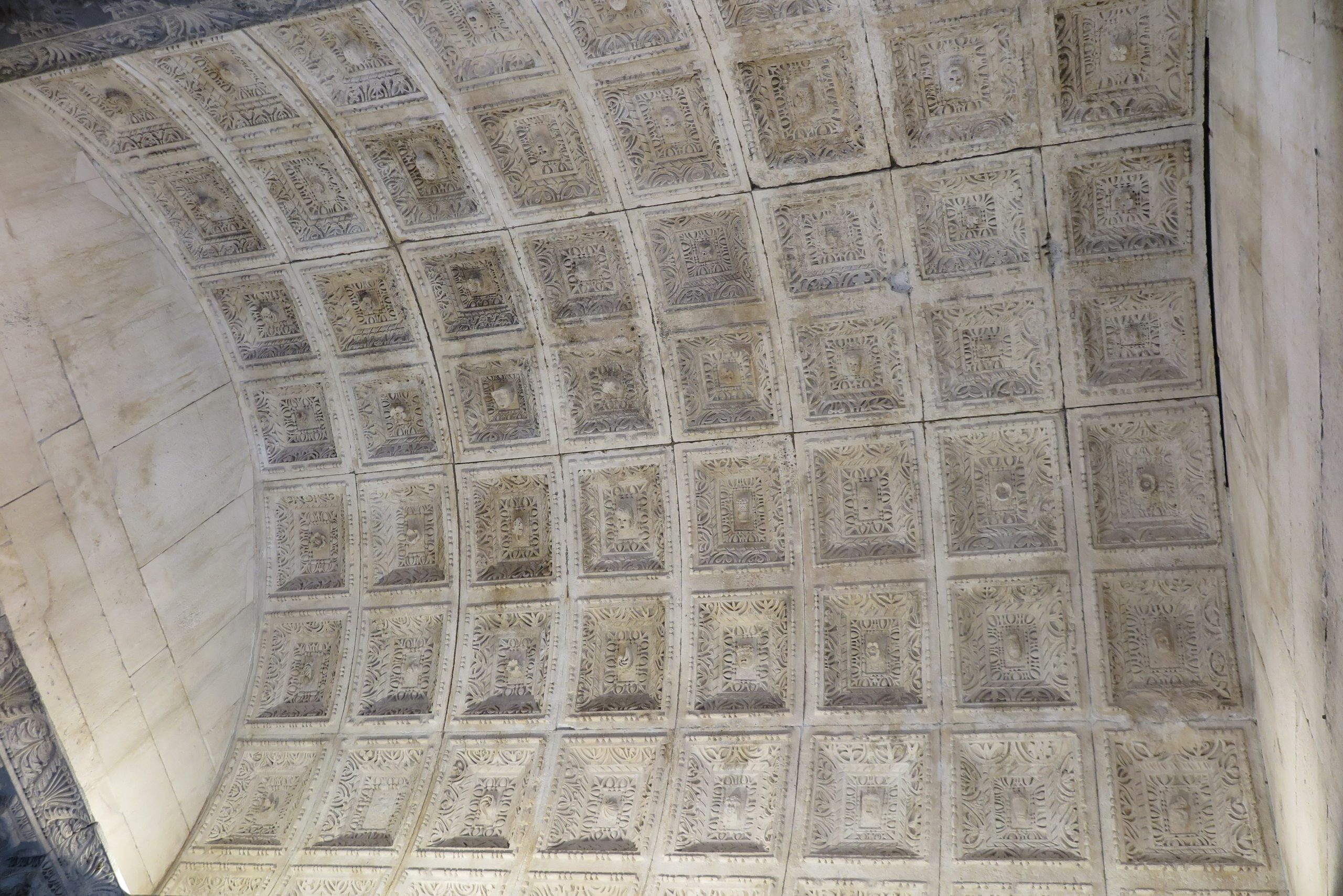
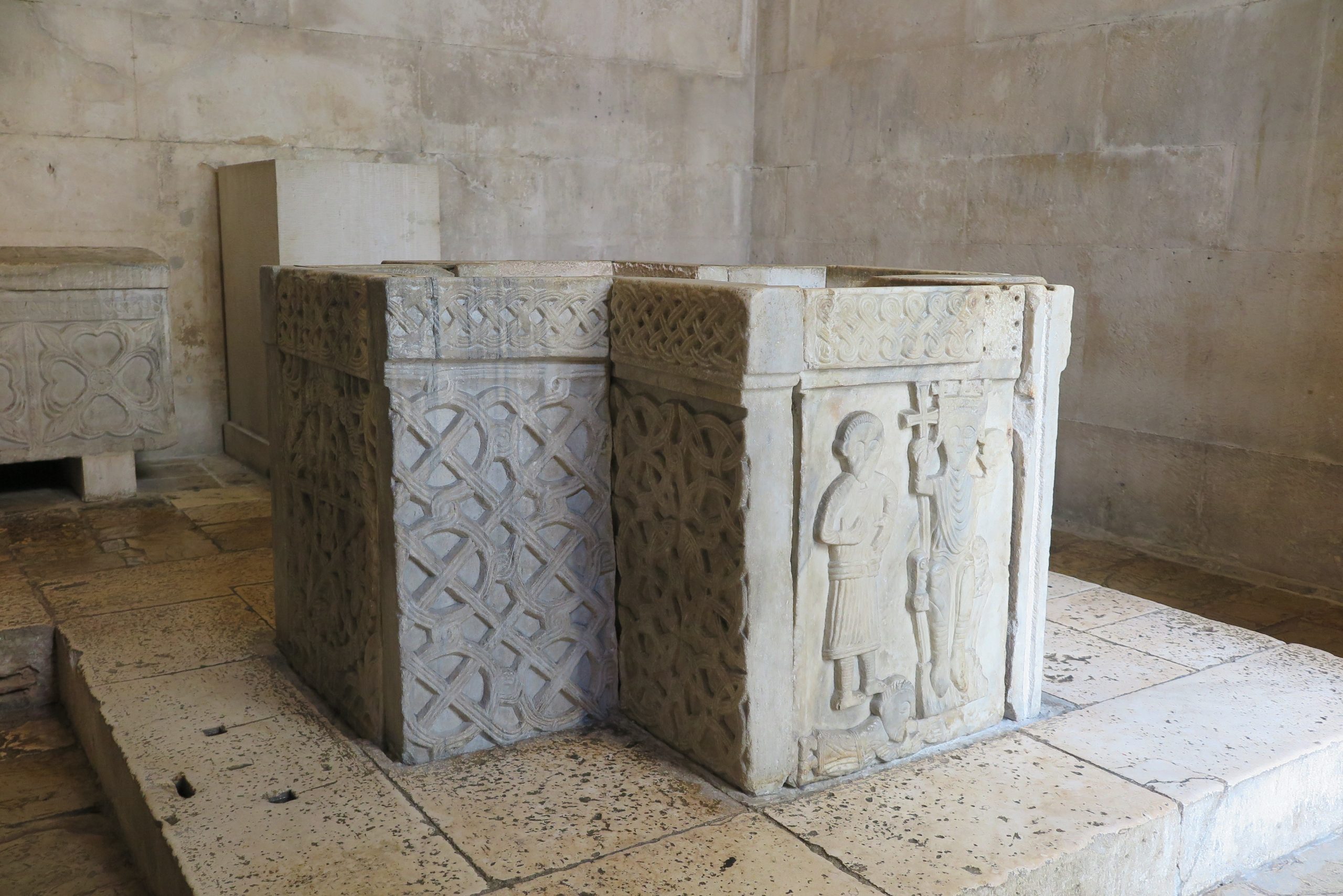
We then explored Jupiter’s Temple/St. John’s Baptistery, hoping to see the renowned statue of St. John the Baptist by Meštrović, only to find it was temporarily being exhibited elsewhere. Nevertheless, the baptistry, designed in the shape of a cross for full-body immersion, captured our attention with its vastness and intriguing half-barrel-vaulted ceiling. Each box within the ceiling displayed a unique pattern and face.
Both of us marveled at all the fig trees that were growing, so effortlessly out of the walls of the palace while we are struggling with the one that we have.
After nearly a 6-mile hike, we made our way back to the hotel. Dinner was a simple affair: Albert opted for veal with potatoes, while Christabel chose stuffed chicken with potatoes.
Walking Tour of Historic Sites: Solena, Trogir and Split – May 14, 2019
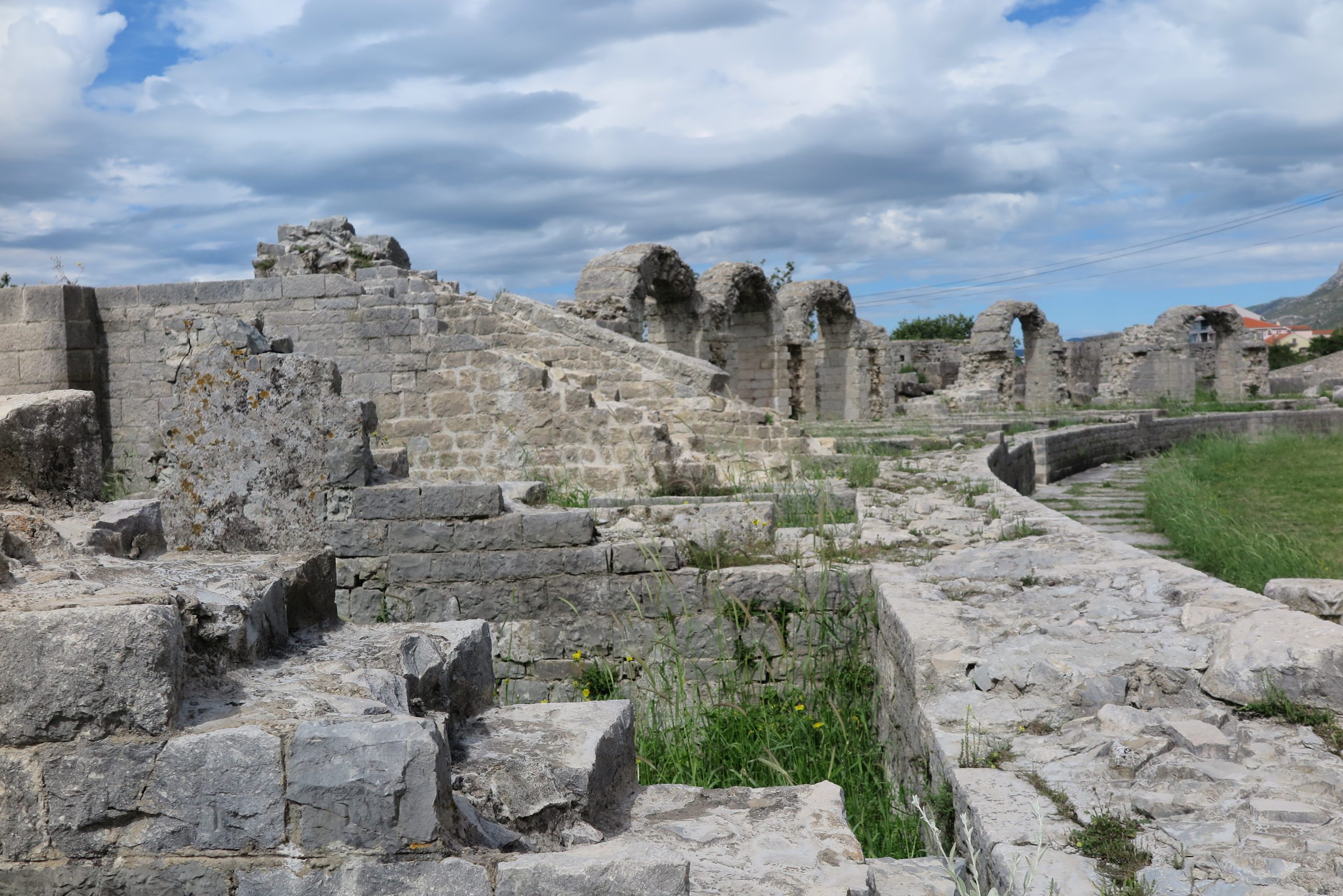
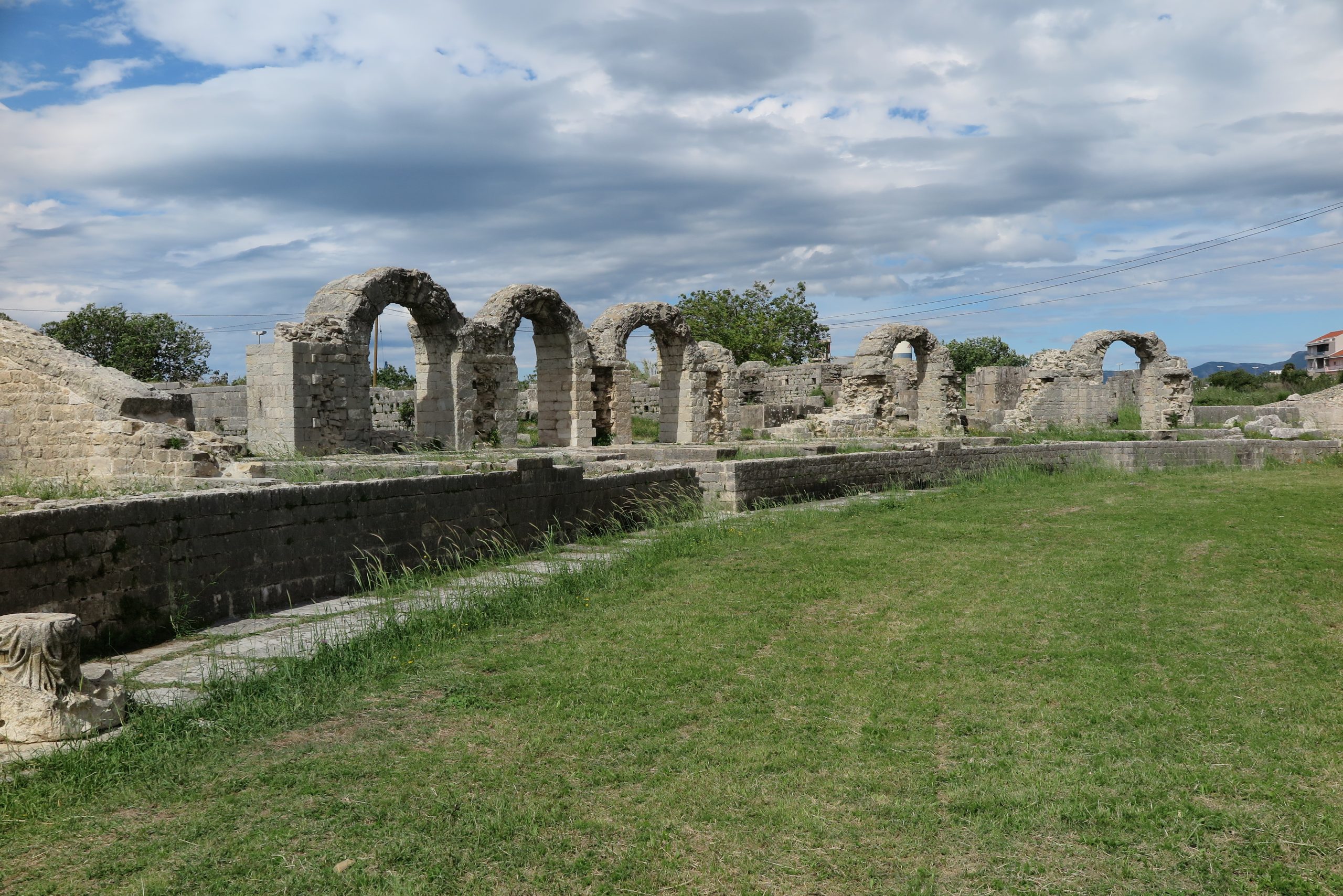
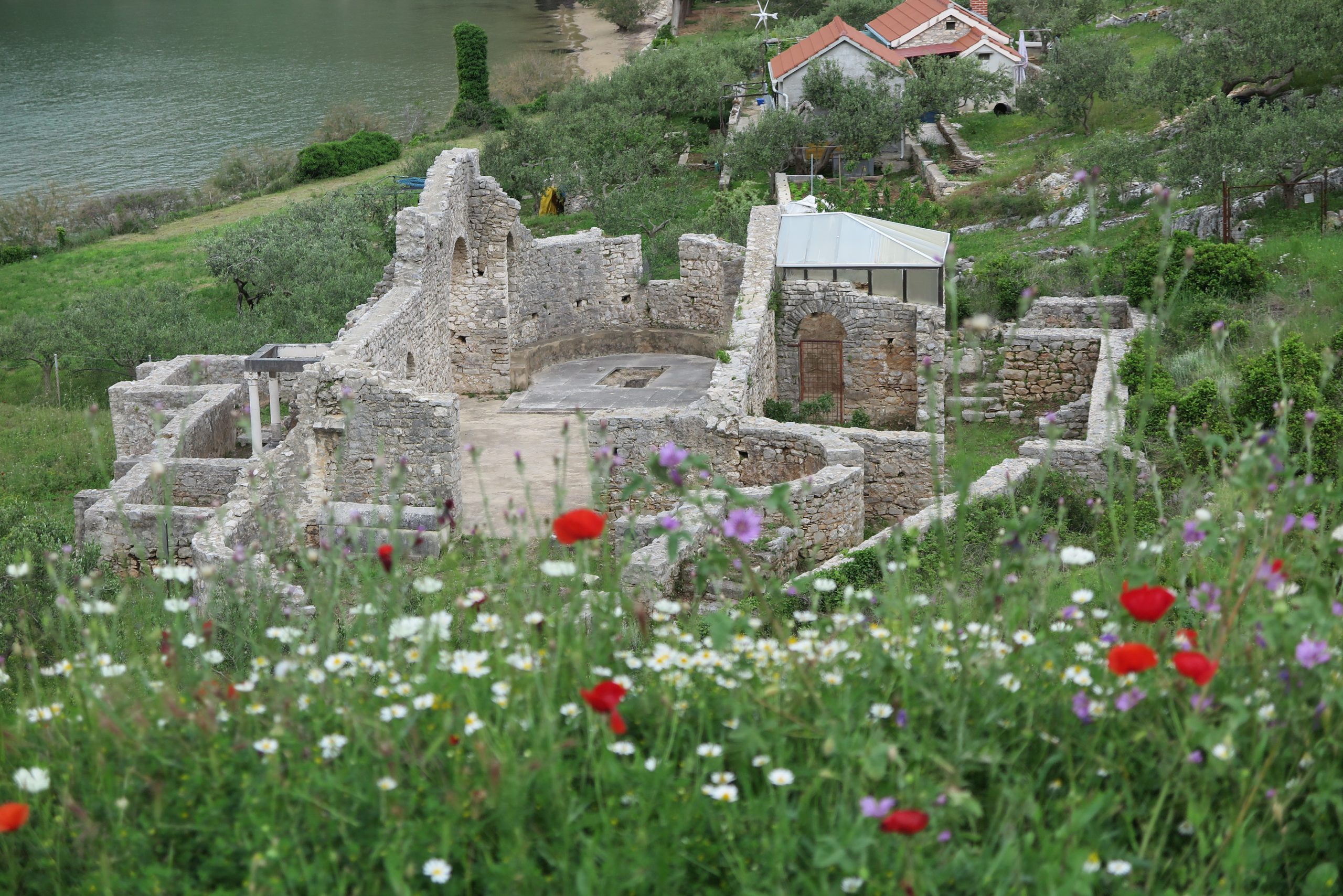
Today, our group, led by guides Ivana and Daniel, started our adventure, meeting fellow hikers, many of whom are seasoned veterans in their 70s. Notably, one couple has traveled with Country Walkers eight times. Our journey began with a coach ride to Solana, Diocletian’s birthplace, where we were greeted by our local guide, Nella. At Solana, we explored an amphitheater now in ruins, resembling a meadow with wildflowers instead of a site where Christians would face lions and gladiators battled.
Continuing our tour, we drove to Trogir (derived from the Greek Tragos, meaning goat), passing Communist-era factories along the Adriatic coast, notably the operational Mexico-owned Cemex plant. We saw flowering broom everywhere. Apparently, the name Split is derived from this yellow flower.
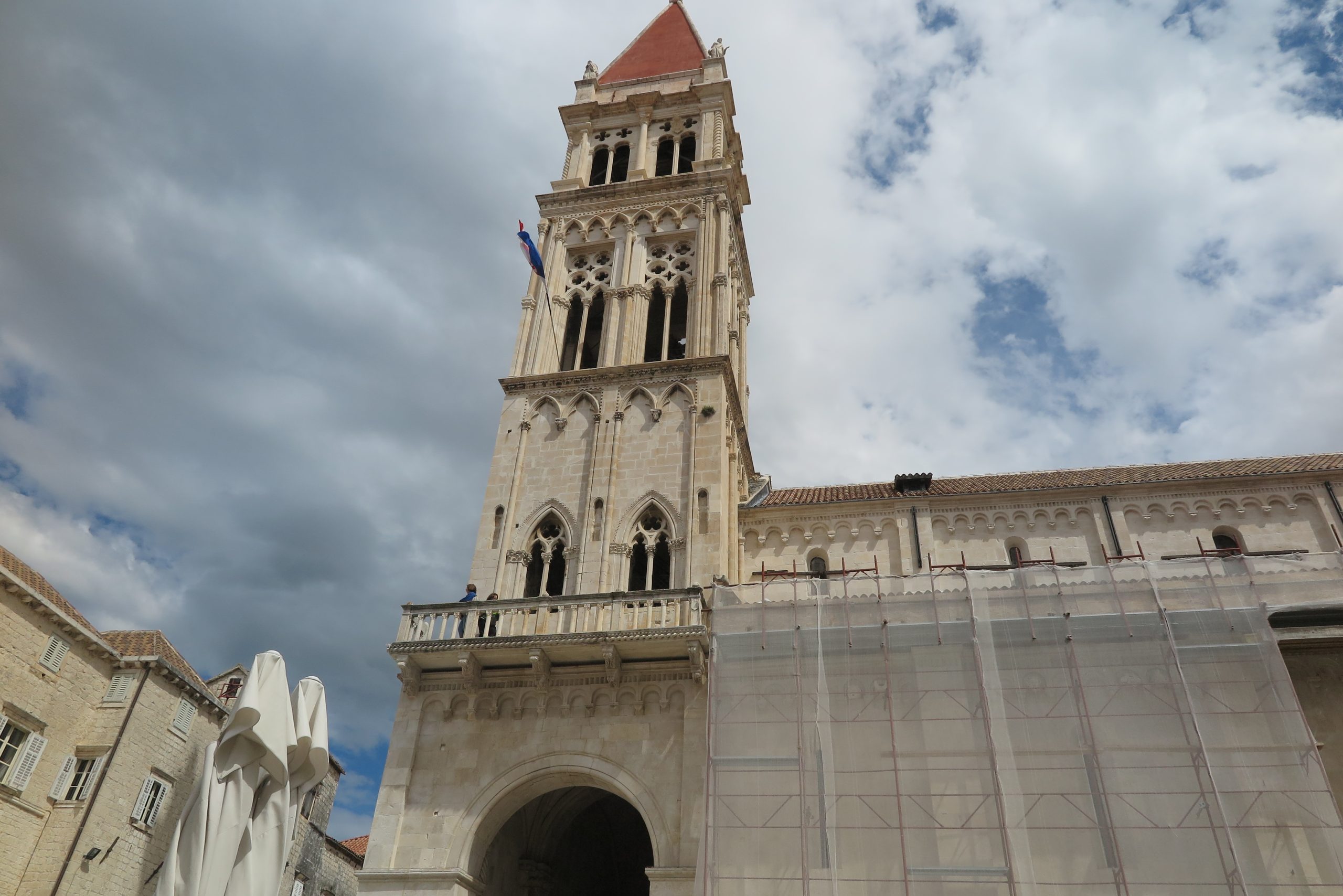
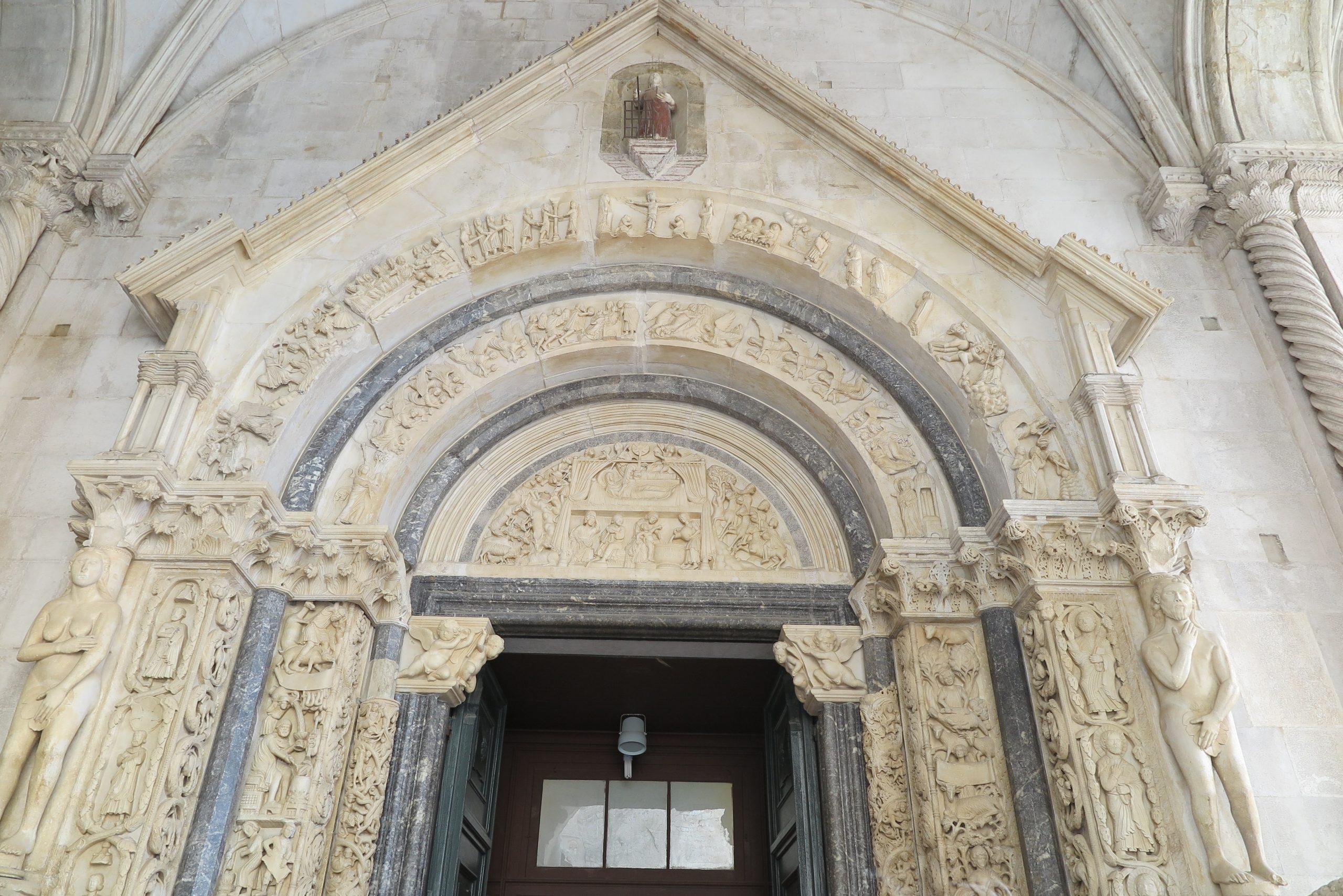
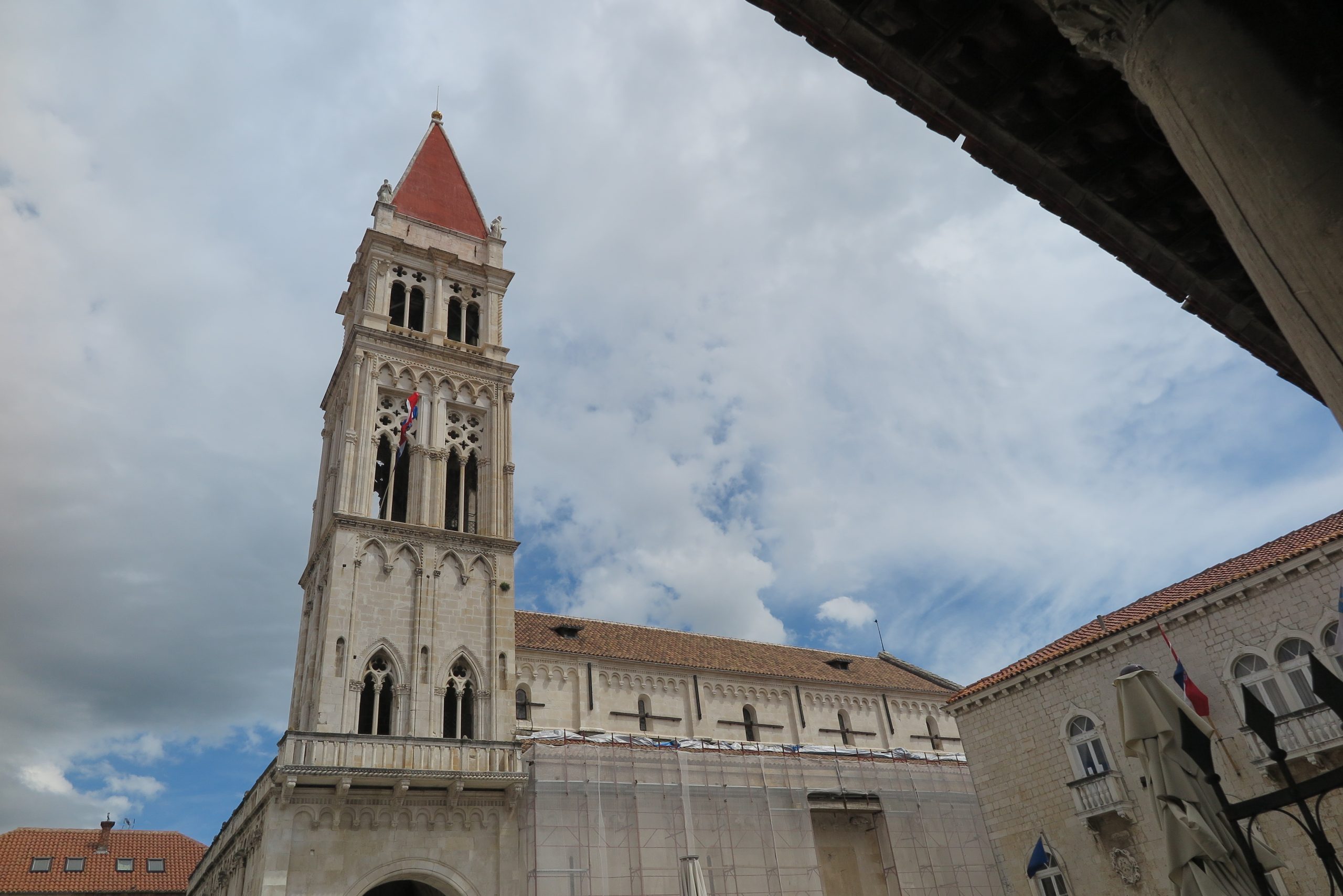
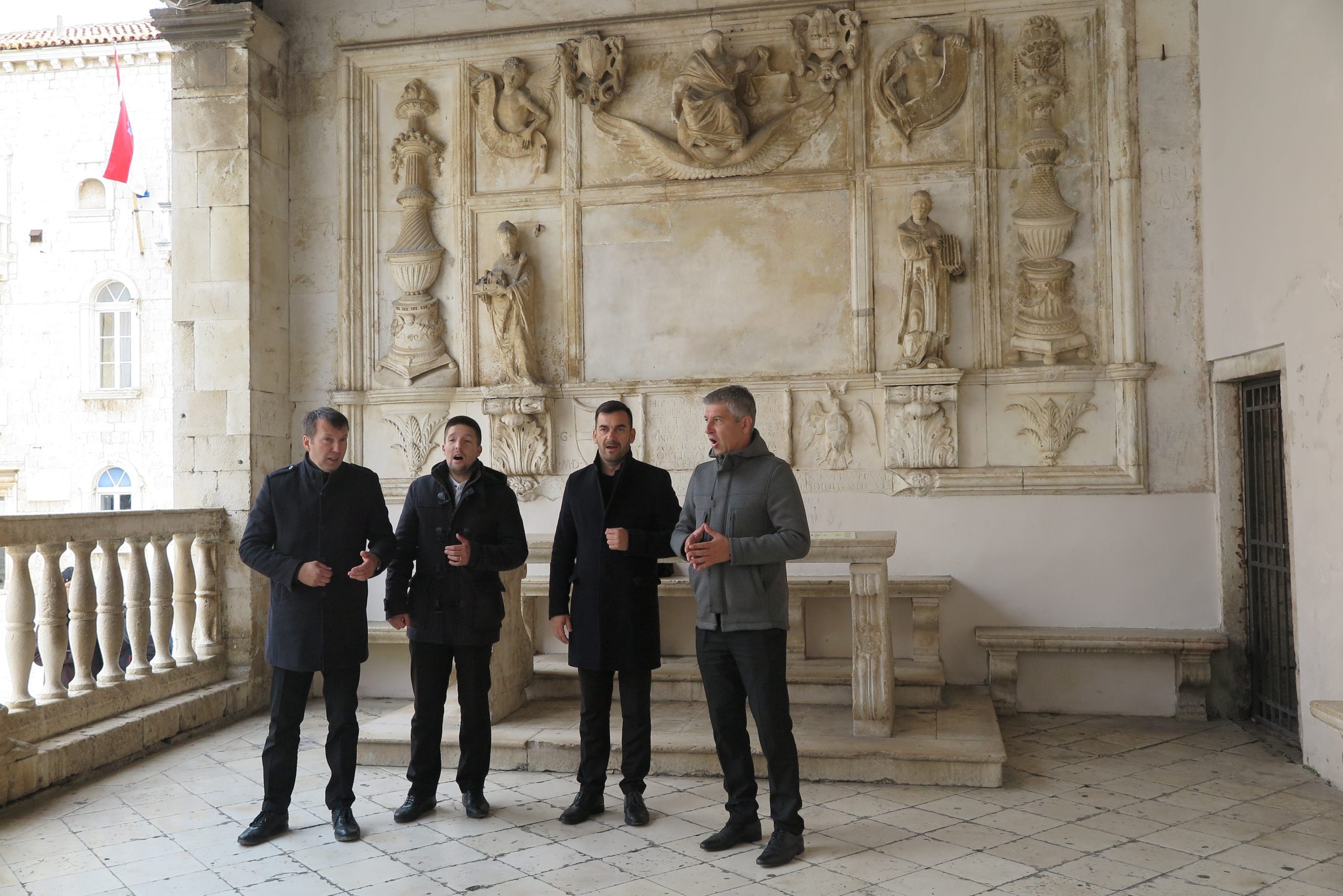
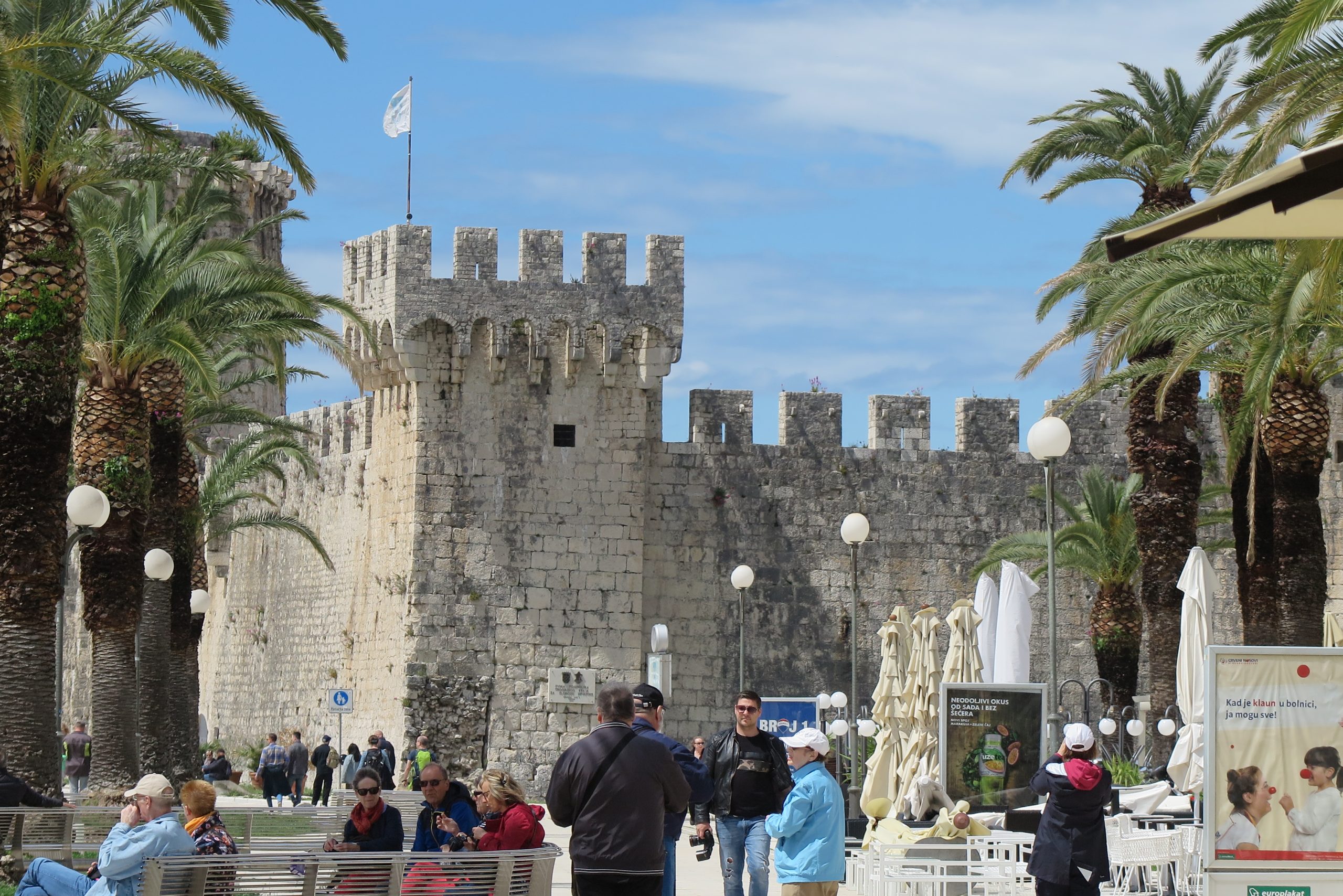
In Trogir, we marveled at Venetian architecture, including the Kamerlengo fort and the Cathedral of St. Lawrence. The entrance of the cathedral boasts stunning stone carvings depicting scenes such as Adam and Eve, zodiac signs, and the seasons represented by tasks performed by people at the time. Venetian-style lions flank the doorway. Nella pointed out the cathedral’s original wooden chandelier and its single bell tower, built over 400 years; plans for a second tower were abandoned due to the long construction process. Following our cathedral visit, we were treated to a serenade by a male a cappella group at the nearby court. Strolling through the narrow lanes of the beautifully preserved fort, we admired its well-maintained walls with intact crenellations.
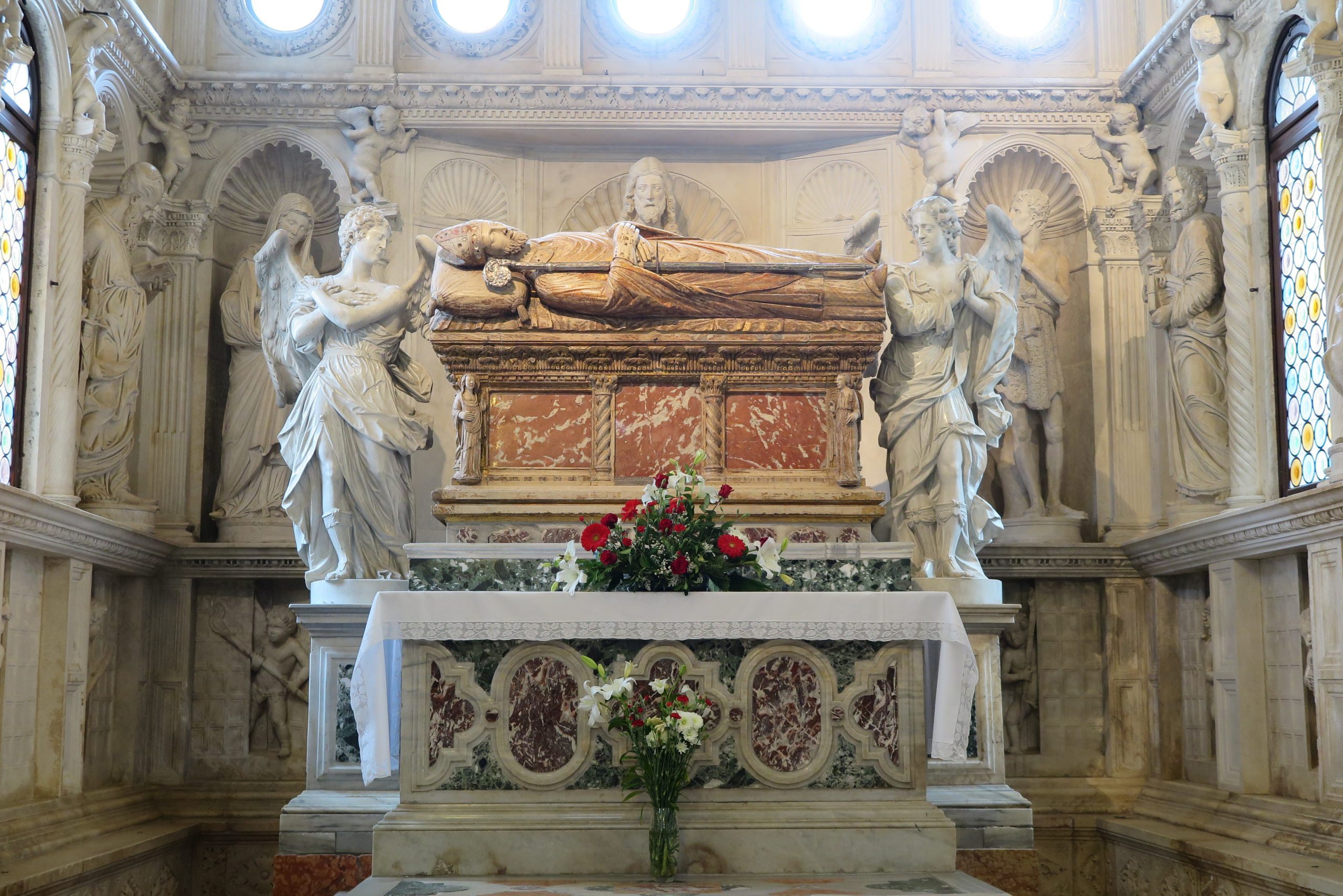
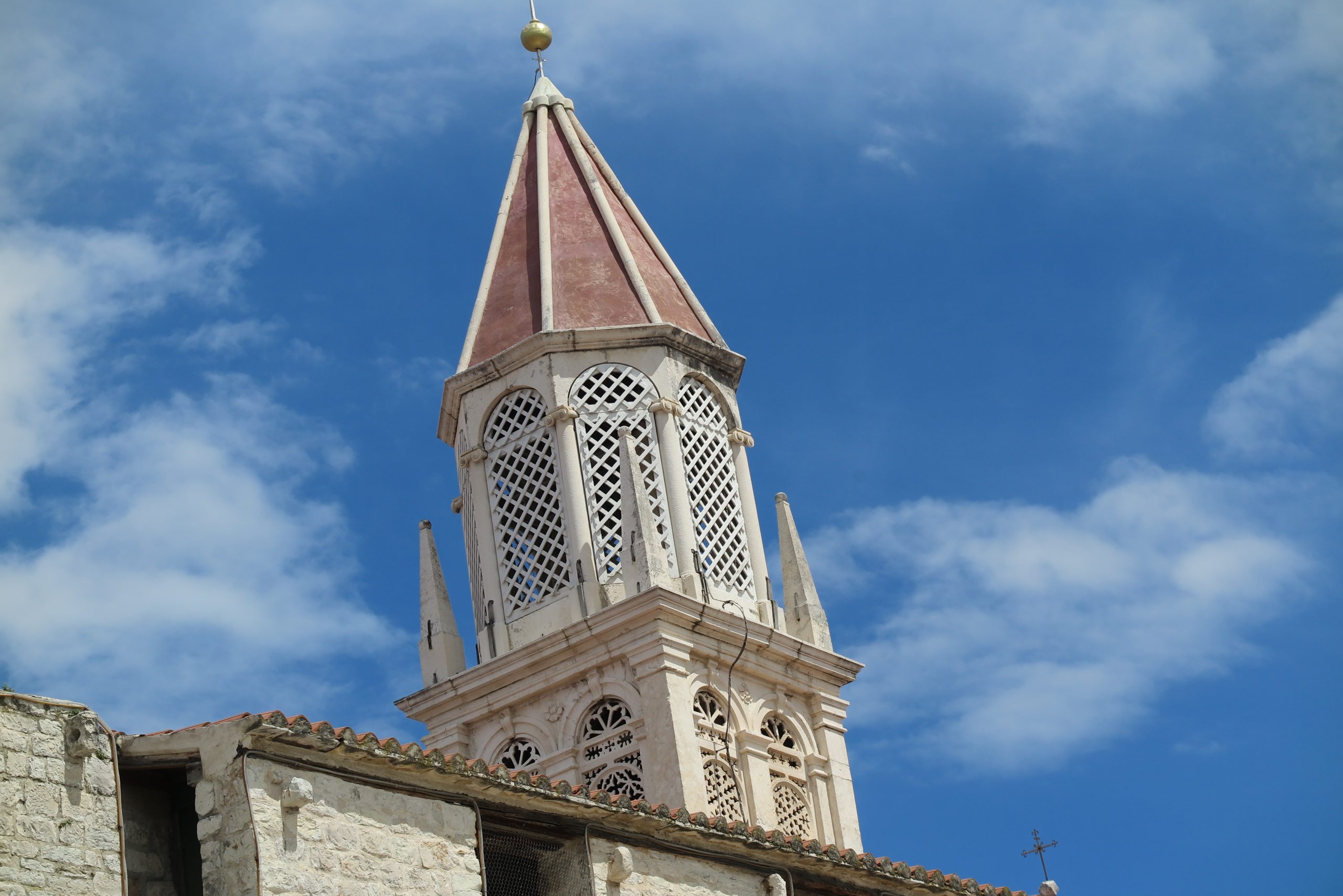
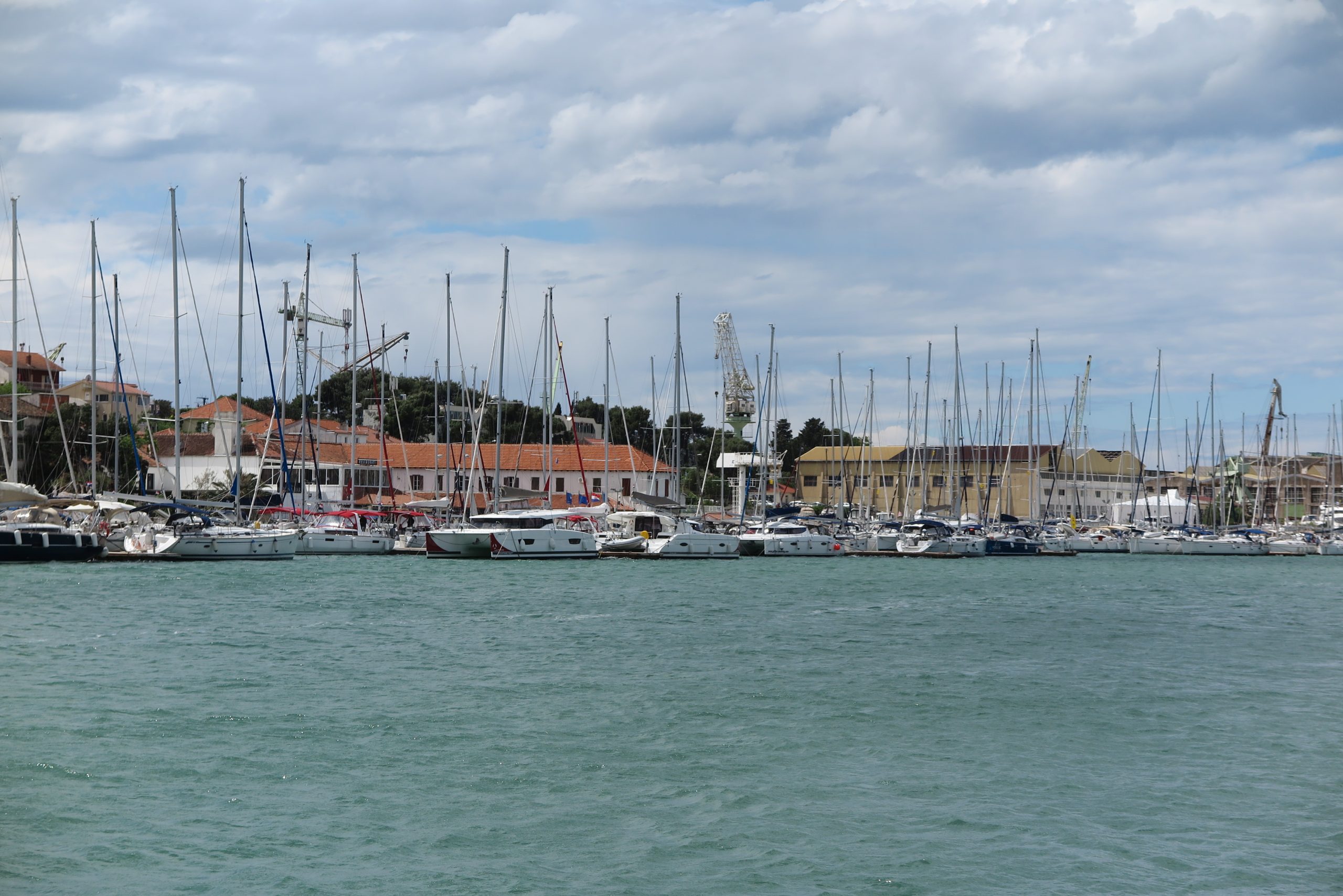
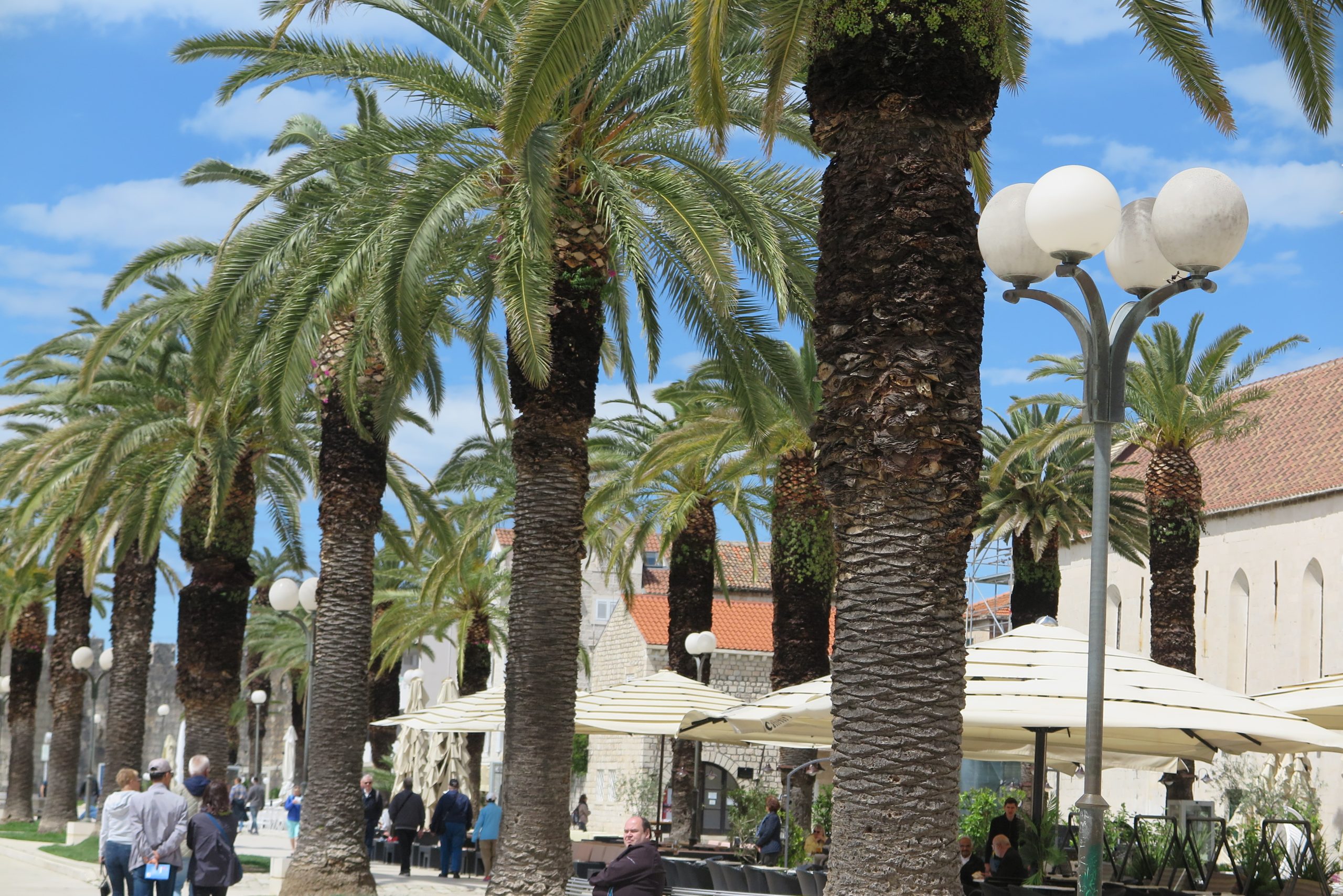
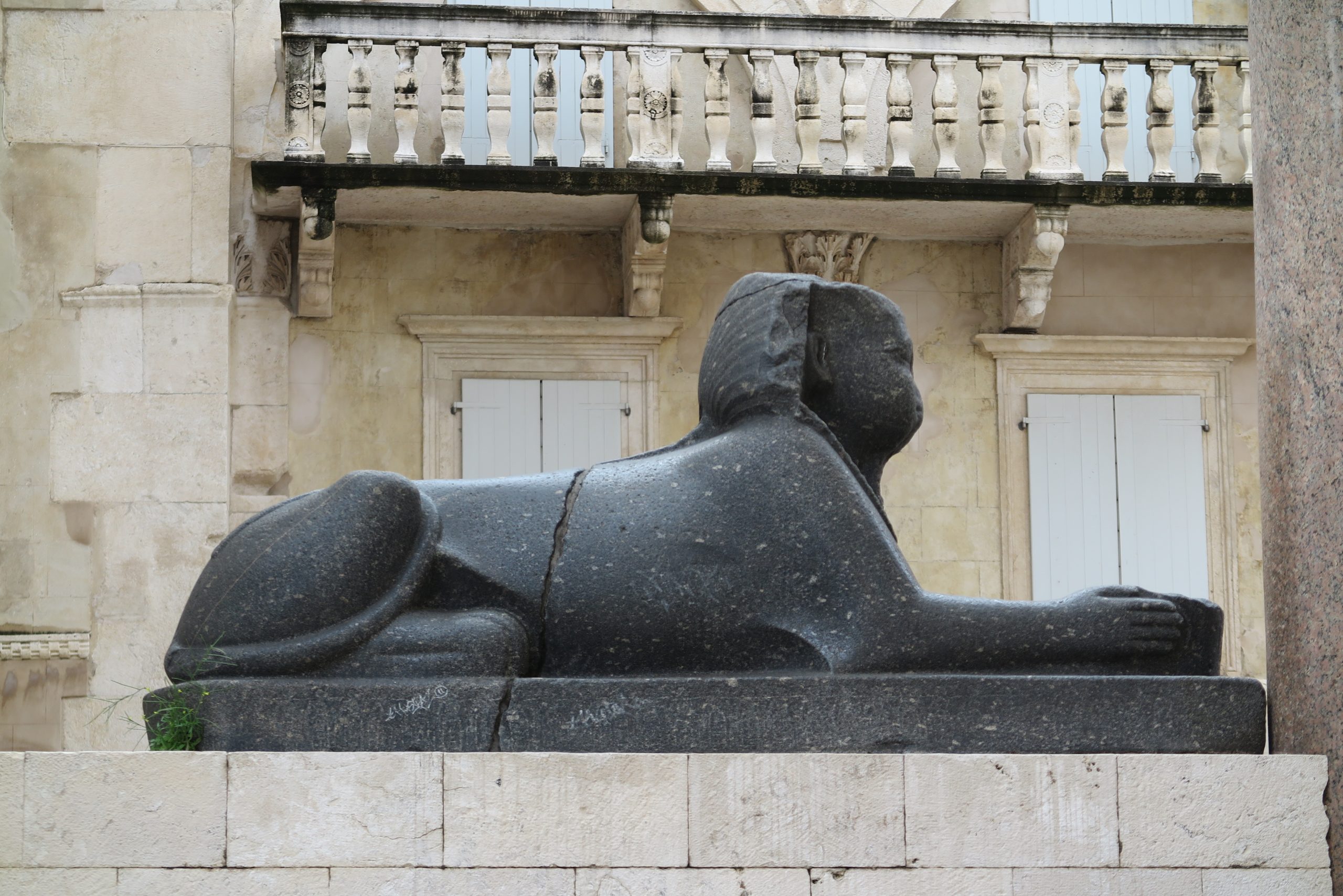
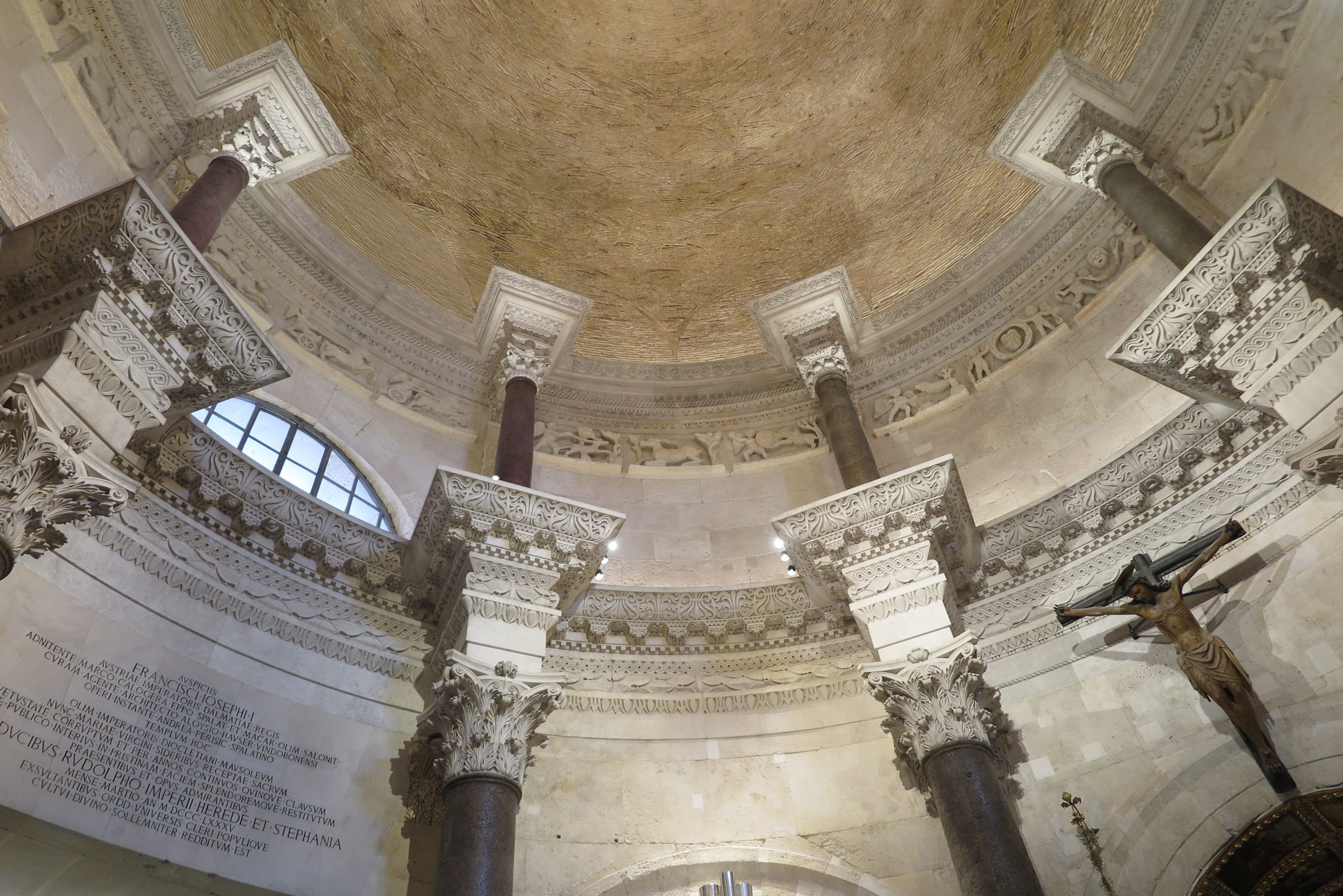
After returning to Split, we explored Diocletian’s palace, marveling at a model of the entire complex and a reconstruction poster from 1912 by Ernest Hébrard. The palace, once the retirement home of Emperor Diocletian, was a refuge for many of his successors. Passing through the Brass Gate, still known as the Golden Gate, we toured a section of the basement, now bathed in sunlight and looking more like a World Heritage site. Inside the cathedral, pillars brought from Egypt by Diocletian himself, alongside a sphinx, adorned the space. We said hello to Sts. Domnius and Anastasius, and viewed the relics of St. Domnius, commemorating his birthday on the 7th of May. Exiting the cathedral, we admired its intricate carved doors before visiting the Baptistry. Our journey continued to the Golden Gate, where once again, we saw Meštrović’s statue of Bishop Gregory of Nin, and rubbed his toe. (According to tradition, a wish is granted, provided it is non-material.
Afterward, we enjoyed a delicious lunch at Zug (meaning sauce), followed by leisure time in Split’s Old Town, including a visit to St. Martin’s Church.
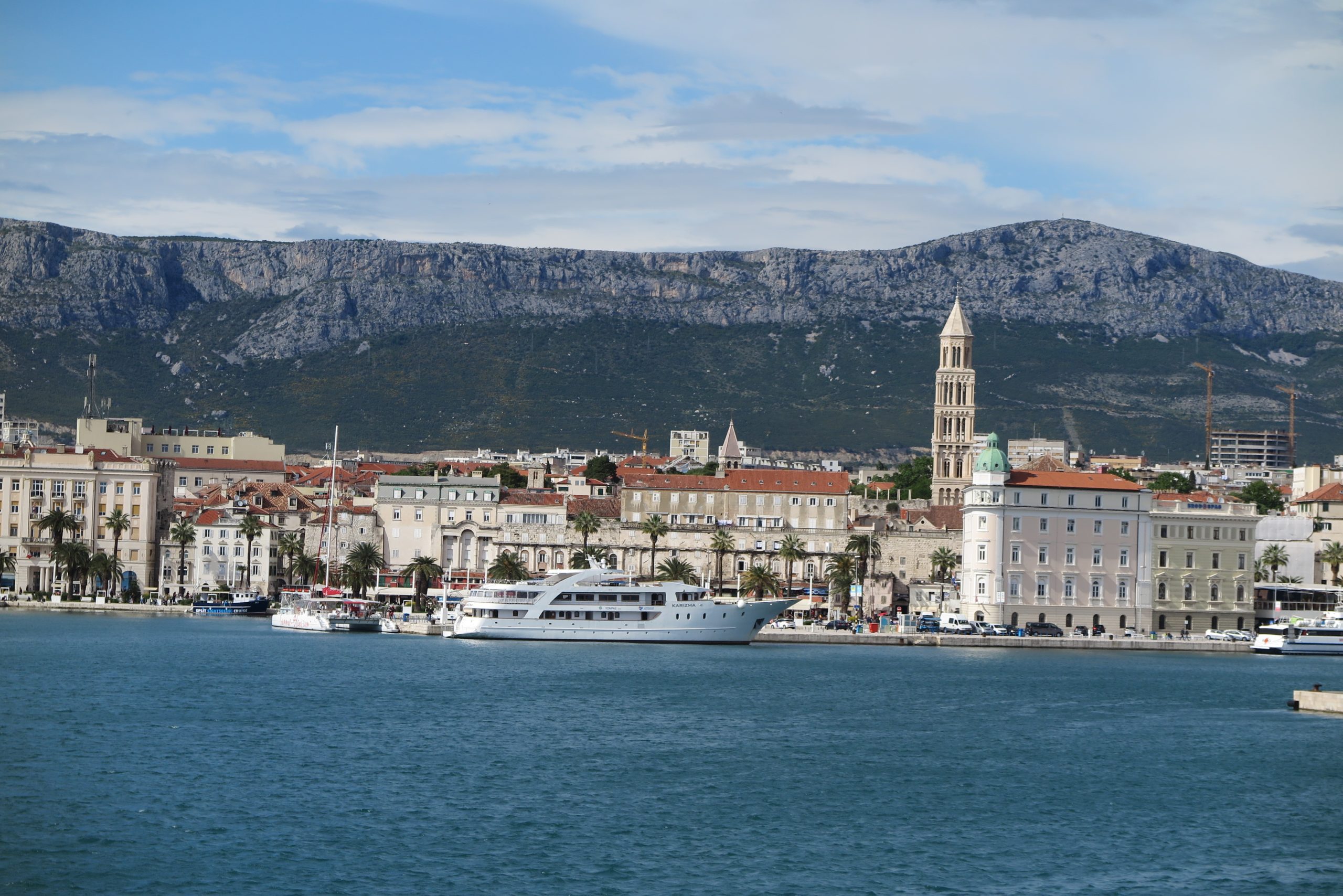
Our journey then continued with a 50-minute ferry ride on Jadrolinija to Supetar on the island of Brač, where the strengthening Bura wind cleared the fog without bringing rain. This is in contrast to Yugo, where the wind brings rain.
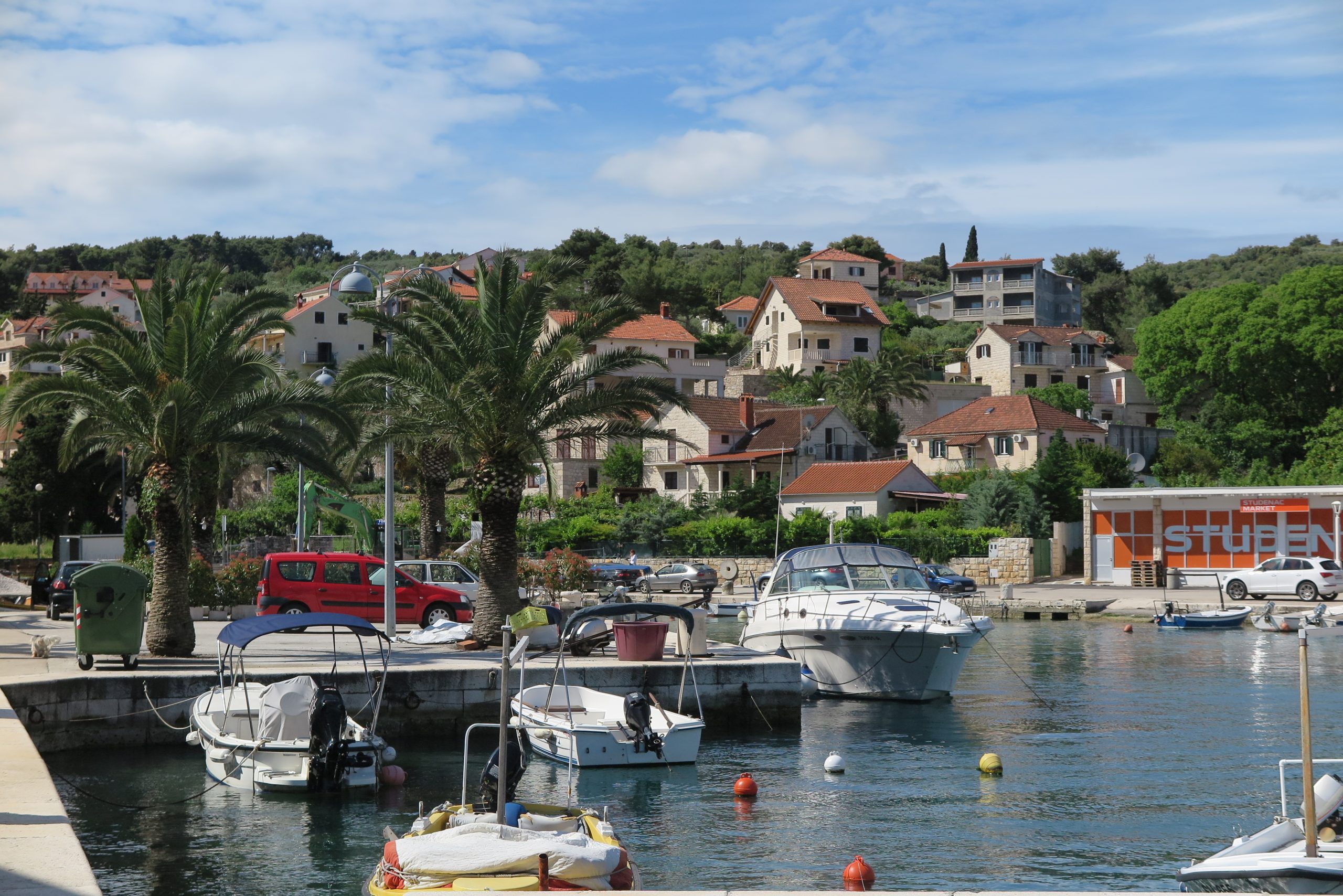
From Supetar, a small coach drove us to Postira, our home for the next two nights. We dined at Konoba Gustirna, housed in a former cistern. Here, we sampled housemade grappa before witnessing the traditional peka-style cooking of our dinner, featuring octopus and accompanied by vegetable broth, salad, and a delectable walnut and chocolate tart for dessert.
Hiking from Postira to Splitzka and Škrip – May 15, 2019
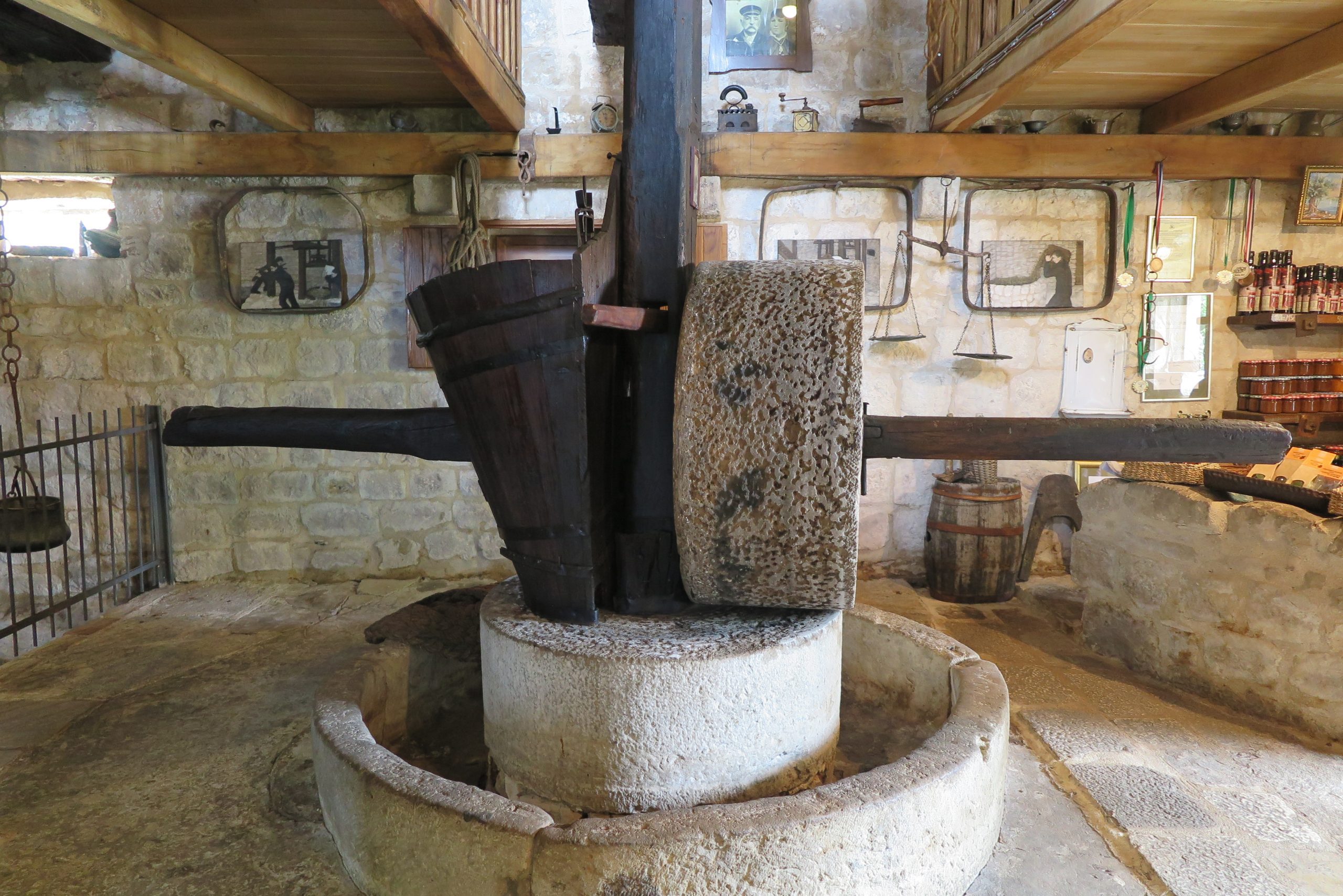
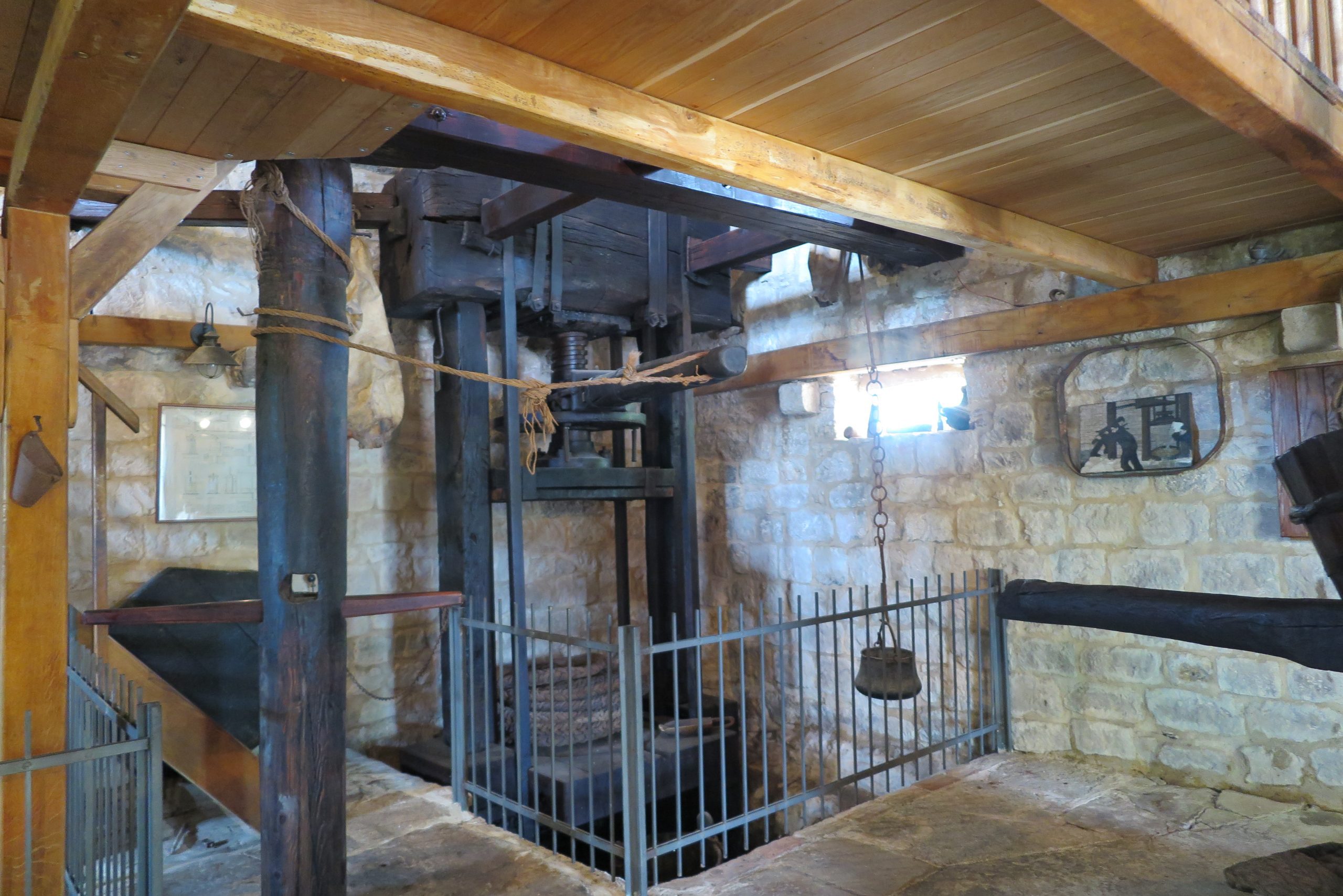
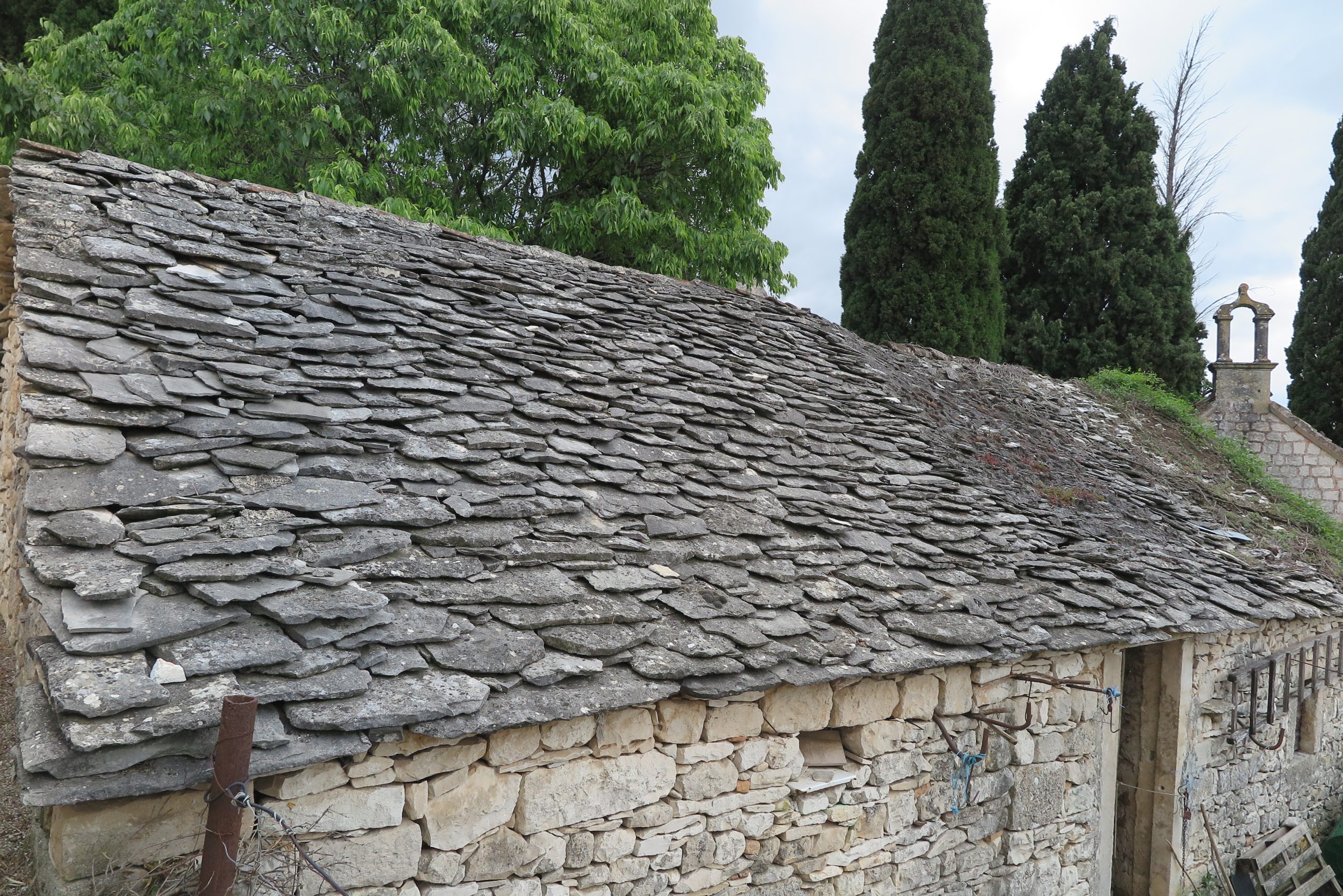
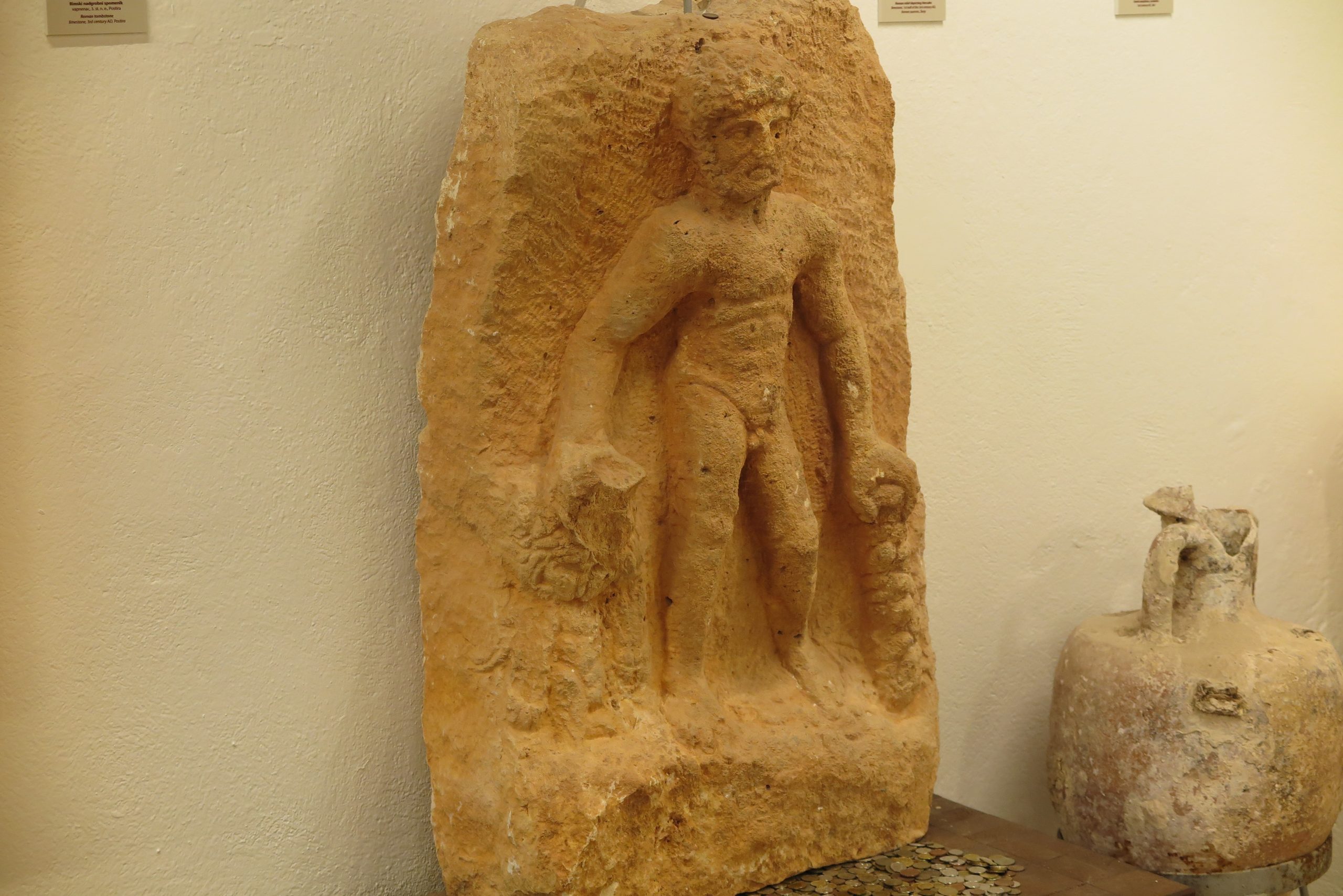
Today marked our first real hike, starting from Splitzka and walking approximately 3 miles to an olive oil museum. The journey proved somewhat challenging, with a stretch reminiscent of an Indiana Jones adventure. Along the way, our guide Ivana pointed out various flora and herbs. The mill, owned by the Krstulović family since 1864, stands as the only one that survived among Brač’s once numerous mills. Inside, a cousin of the family demonstrated the olive pressing process, from manual labor to modern machinery. We sampled walnut grappa, green olive oil, almond and black olive tapenades, and a variety of marmalades. The museum’s stone roof was repaired by an eighty-year-old craftsman and has a lifetime warranty. Next, we walked to the Brač museum in Škrip. The museum was built partly of Illarian stone and Roman stone. Highlights included a mausoleum, a stone carving of Hercules, which was a god that was also worshipped although the people had been converted to Christianity (folks here were hedging their bets). The museum also had a lot of old cooking implements, such as a grinding stone for the making of flour.
Lunch at a local guesthouse featured a traditional Croatian dish, pašticada. We then walked a leisurely 3+ miles along the coast.
Dinner was at Kanoba Toni in Dol. Toni cooked us calamari, fried sardines, stuffed squid, and sea bass. Dessert was crème caramel and cake of Dol (Hrapoćuŝa).
Hermitage Blaca Trek and Island Exploration – May 16, 2019
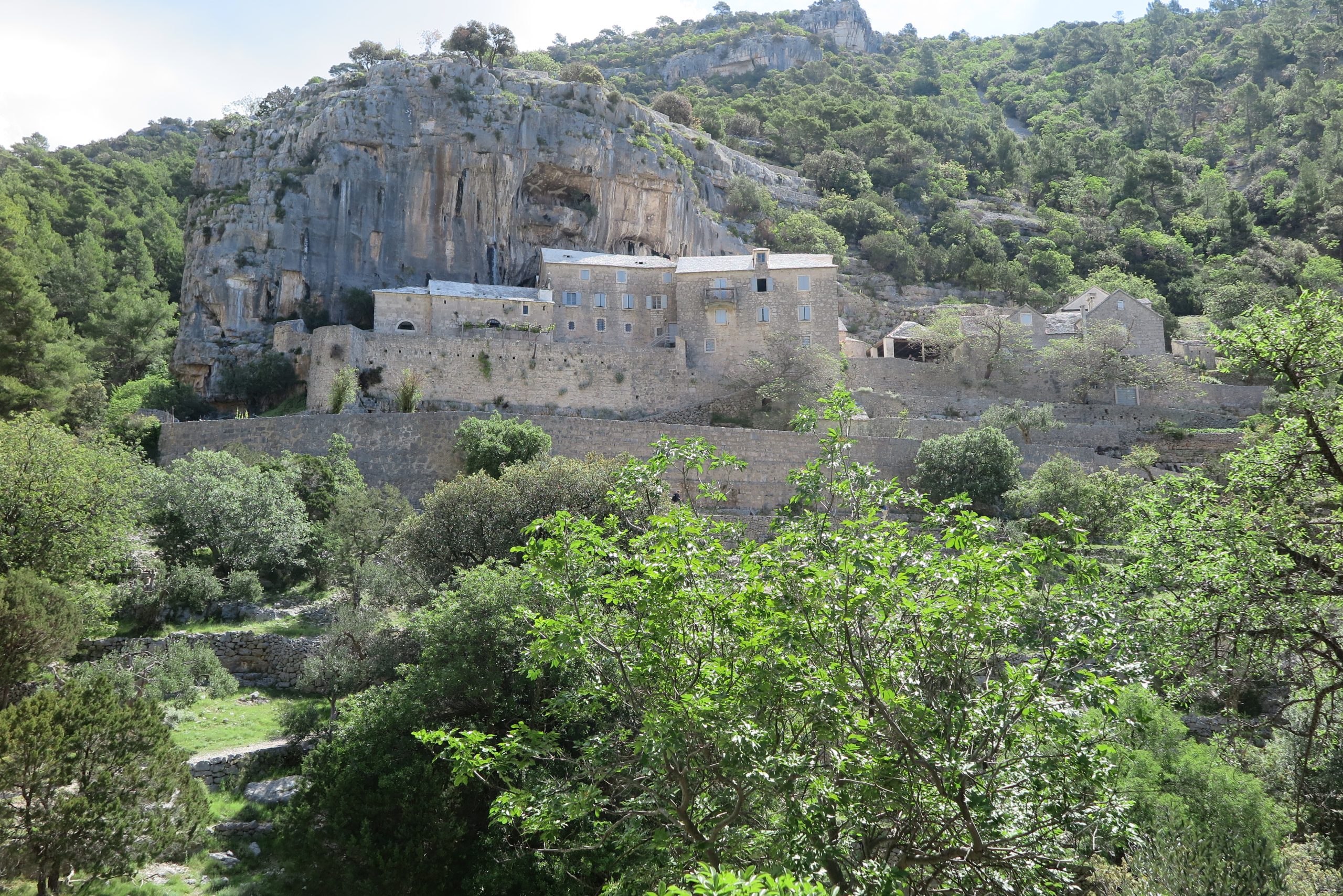
Today, we went on a challenging trek to the Hermitage Blaca, reachable only by foot. It was established in the 16th century by Glagolitic priests who were fleeing invaders. The hermits worked hard and produced wine, honey, olive oil, and more. The community’s wealth was envied by the townspeople and at one point the hermitage was sold to the Austrians only to be bought back from the Austrians. Nikola Millčević, the last hermit, a physicist and amateur astronomer, made notable celestial discoveries with his telescope, chronicling events like the Titanic’s sinking. We toured the hermitage and saw the kitchens, the school rooms, the piano room, the library, and the church. The grand piano was carried by several men up to the monastery. A lot of wine was needed to facilitate this feat.
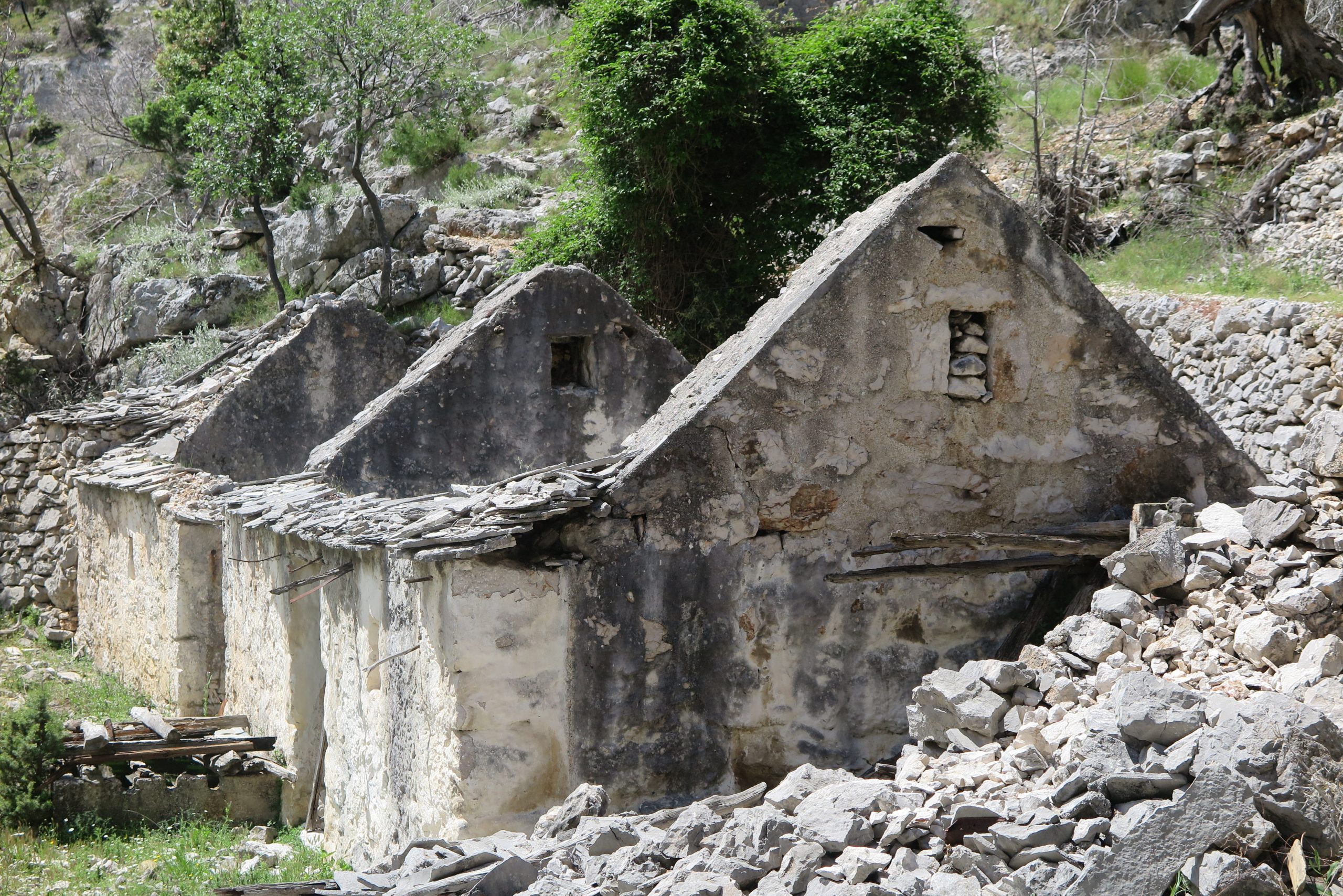
We hiked back to the bus for an al fresco lunch at a former shepherd’s dwelling, where we had grappa and a lamb stew cooked peka style. After lunch, we toured the peka kitchen, the grounds, and the kitchen garden, and met Luna, a friendly Macedonian mountain dog.
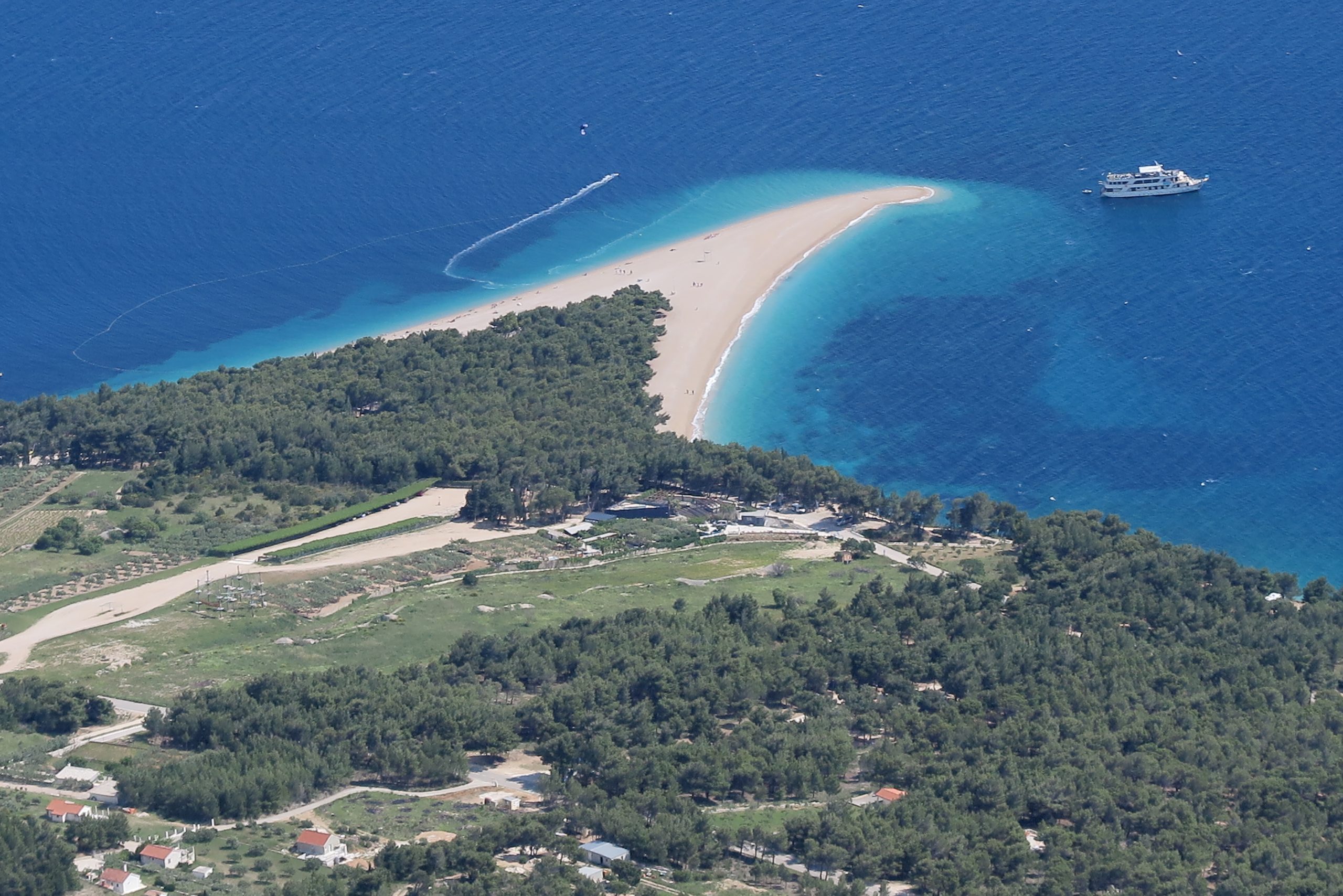
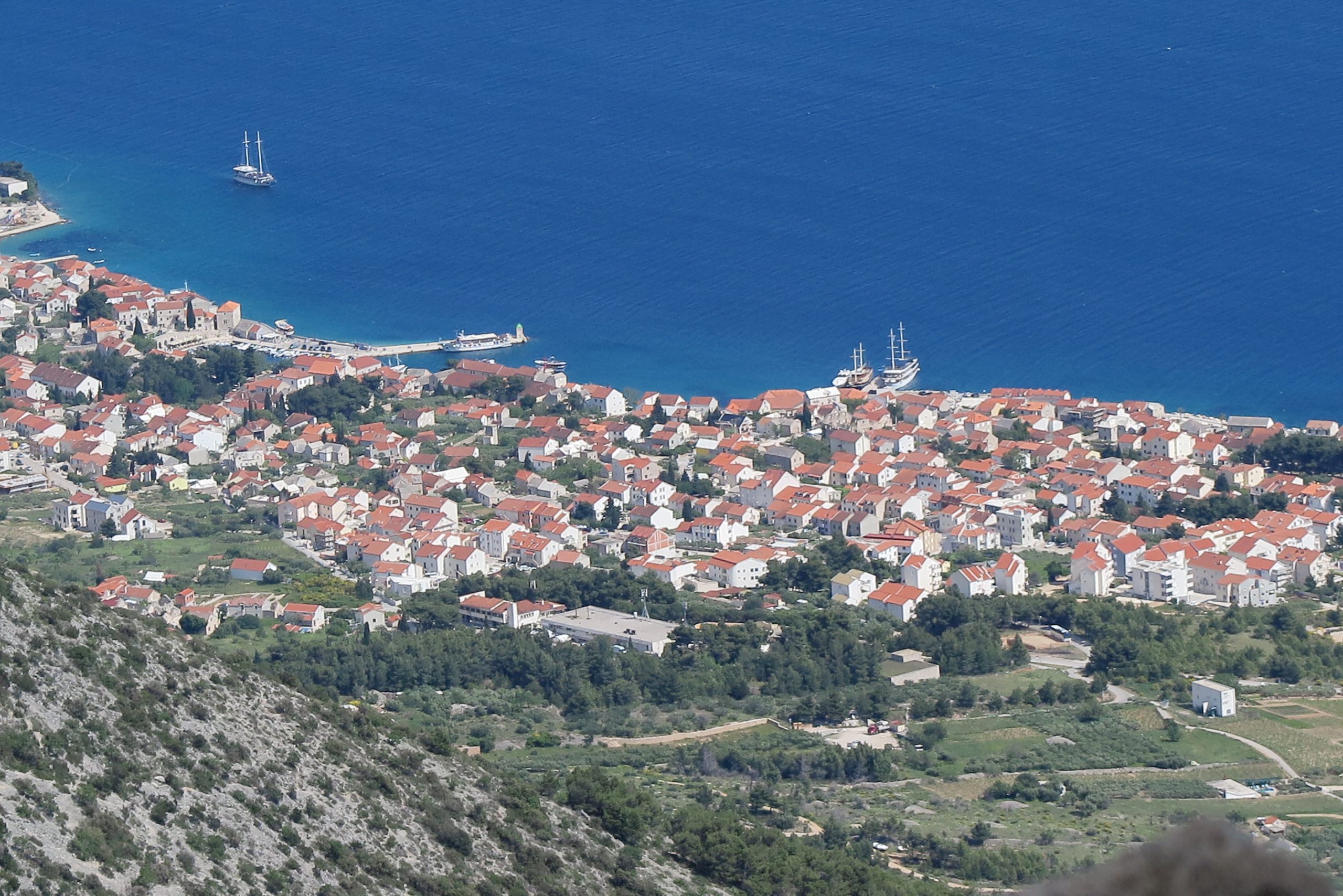
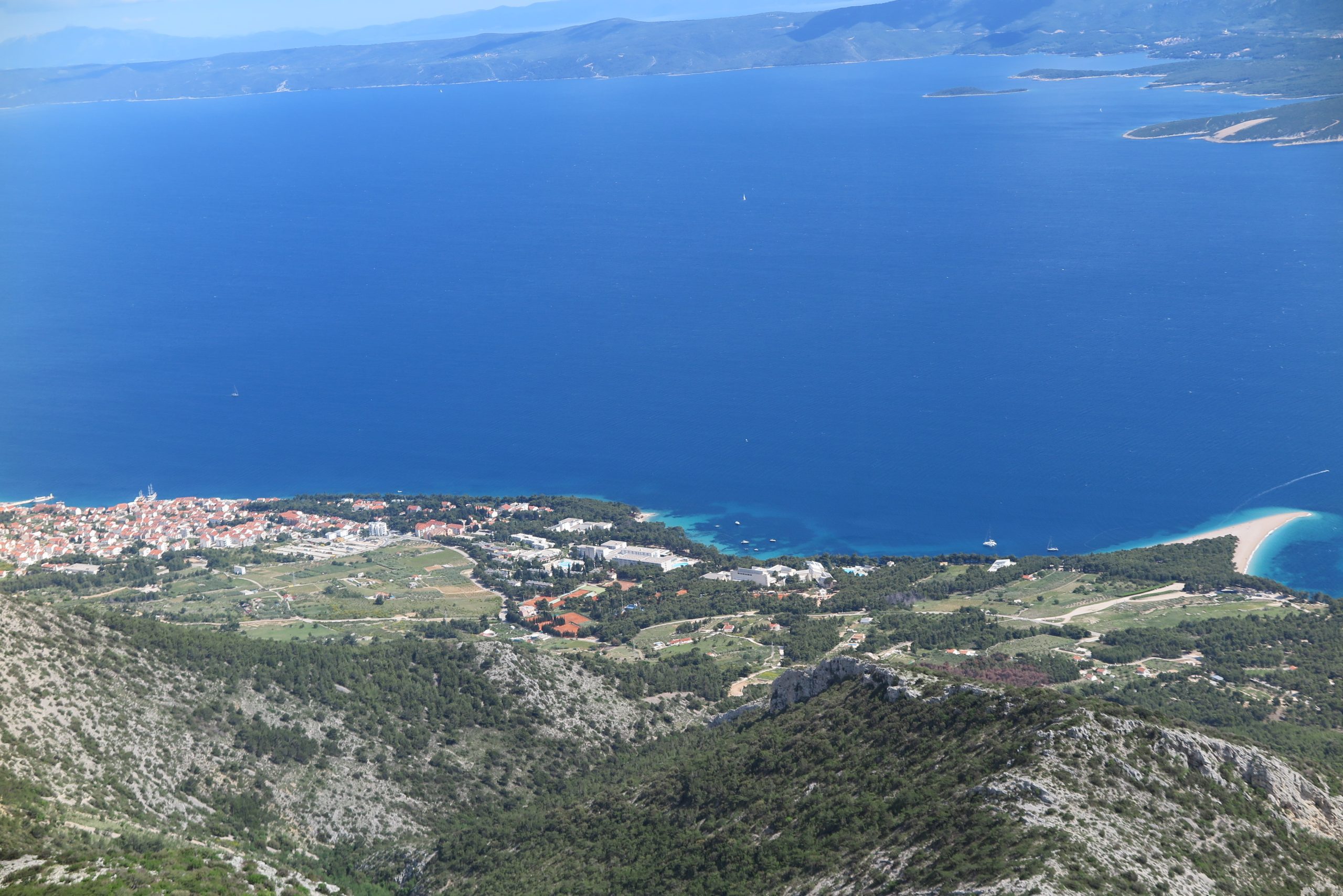
A bus ride to Vidova Gora treated us to stunning island views before hiking down to a cove and boarding a speedboat to Postira, passing the famous Zlatni Rat beach, also known as the Golden Cape. After a brief harbor visit, we boarded a Jadrolinija catamaran to Hvar, then a bus to the Adriana hotel, noted for its trendy but dark ambiance despite numerous lamps.
Both of us enjoyed a wonderful dinner at Giaxa, housed in a 15th-century loggia, of baked John Dory with vegetables.
Walk Through Vineyards to Stari Grad – May 17, 2019
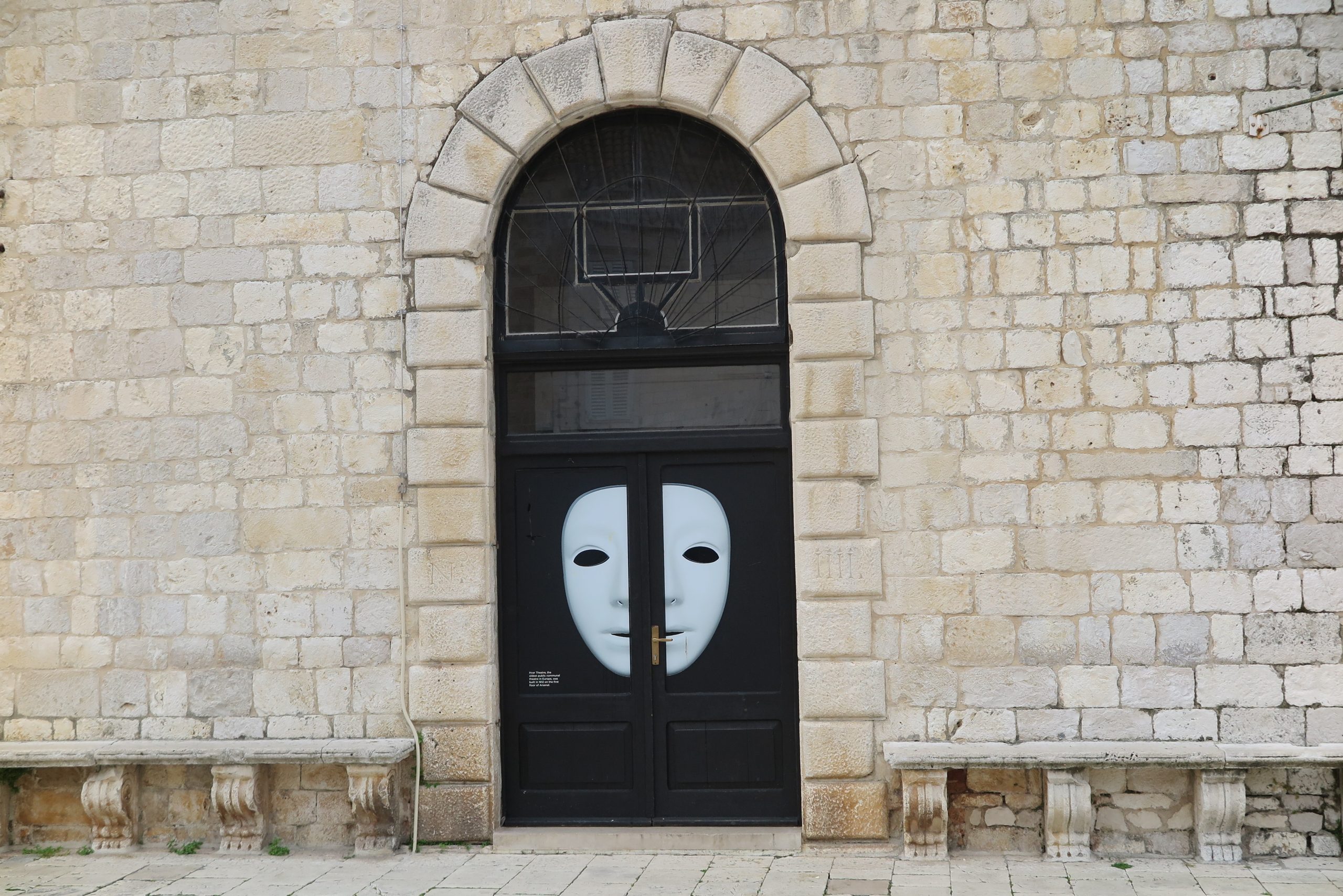
This morning Christabel attended mass at the baroque Church of St. Anthony the Abbot. In attendance were four Benedictine nuns, one playing the organ and the other three singing the hymns. They sang beautifully. The convent has been located here since 1664. The nuns make absolutely exquisite lace from agave thread.
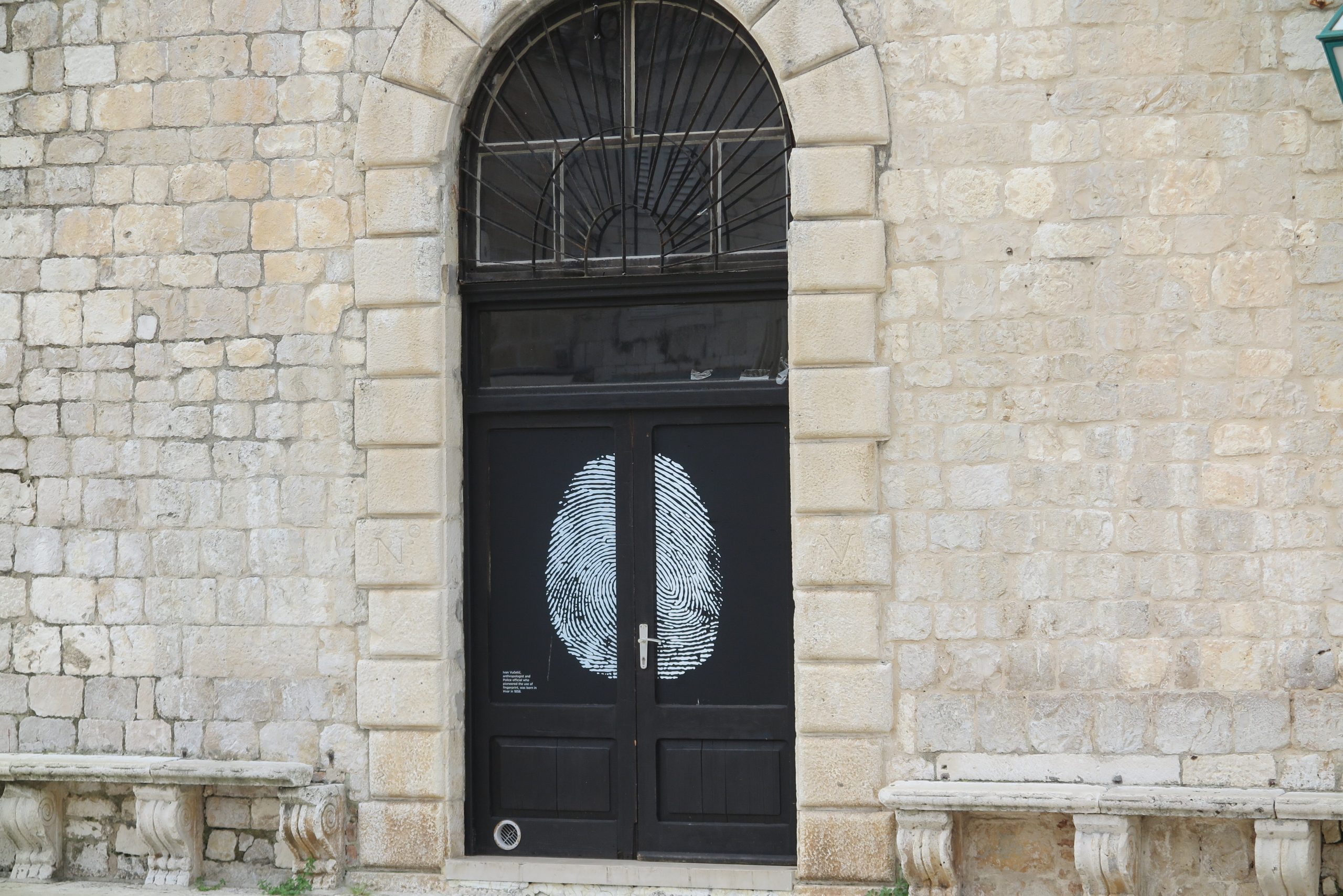
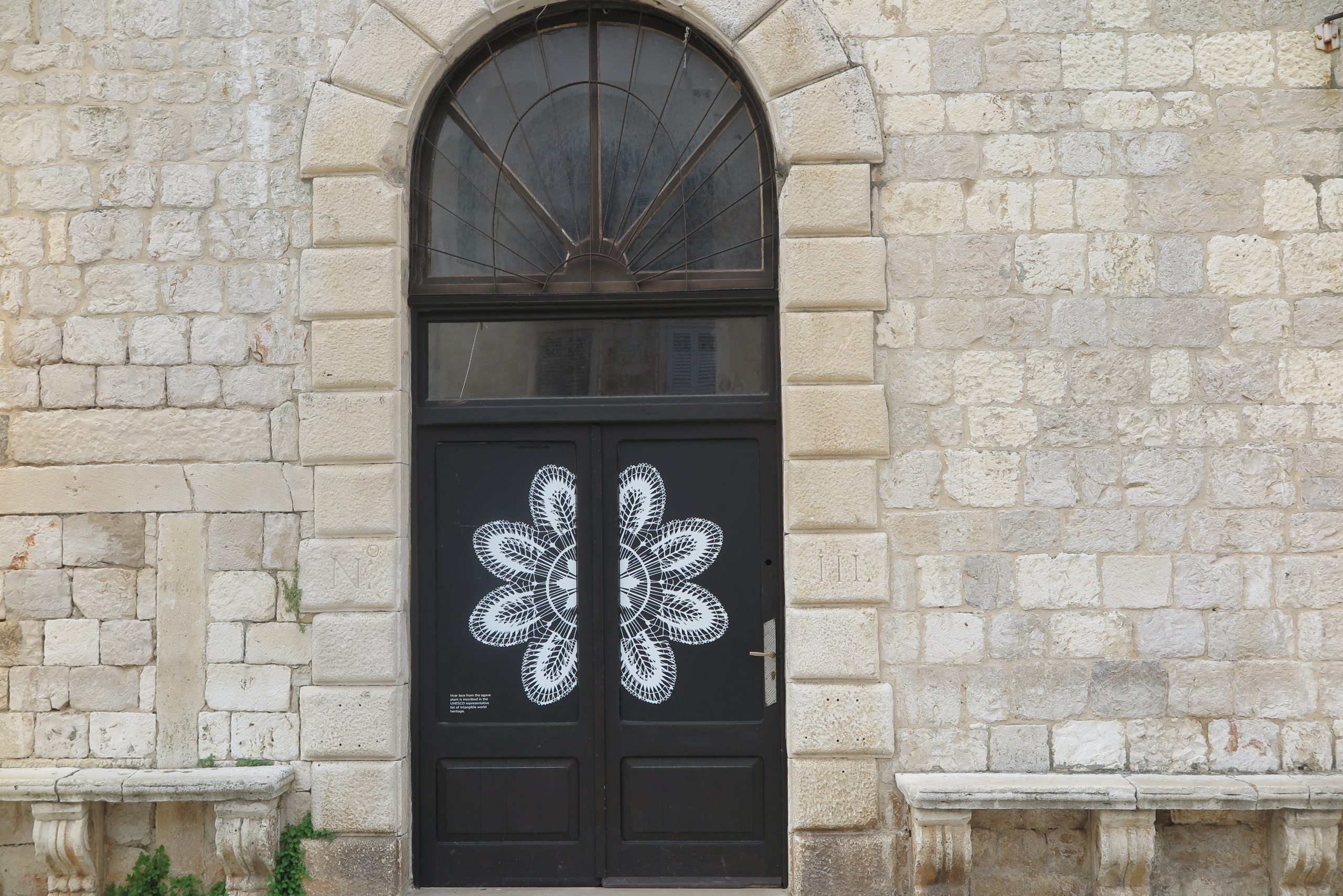
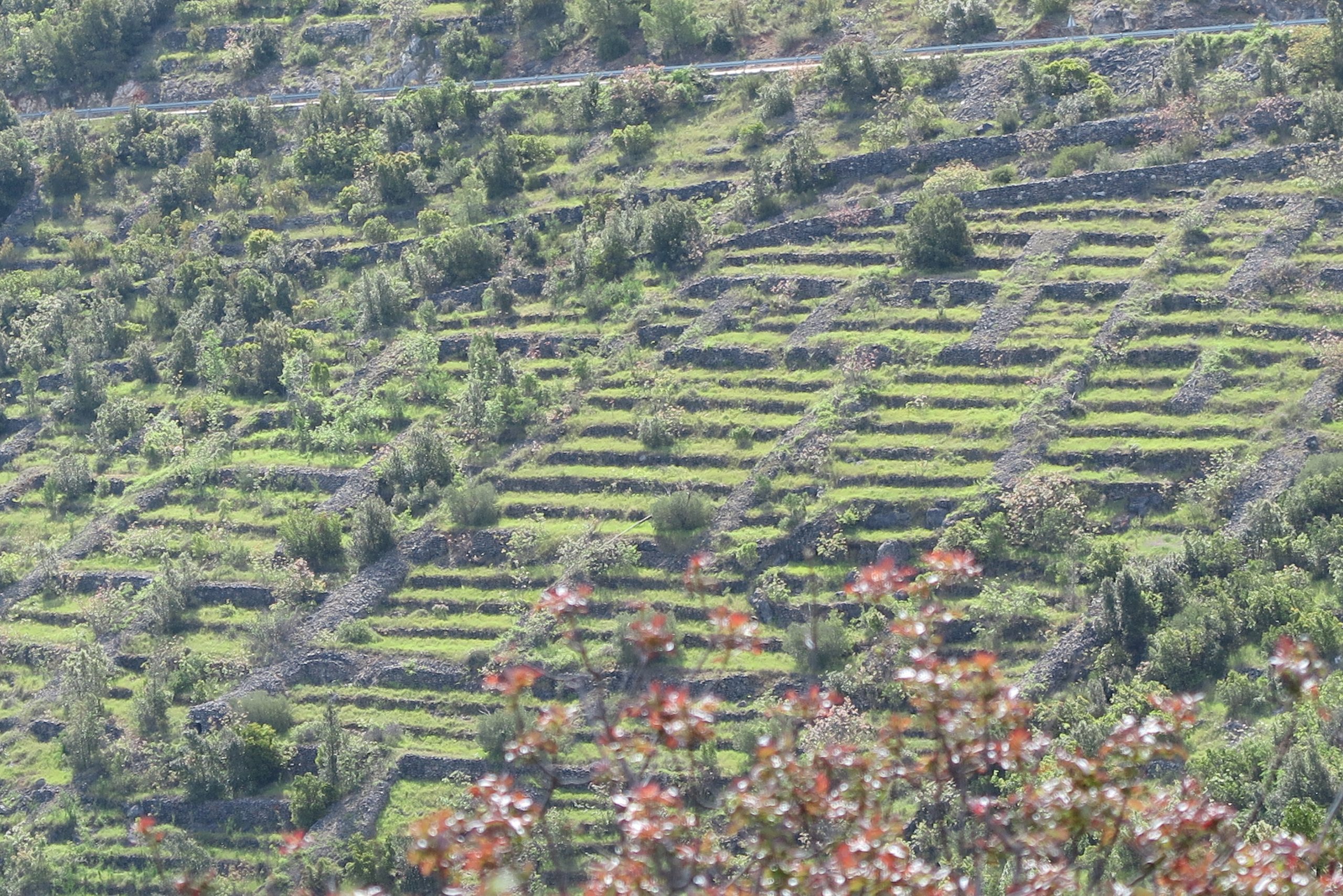
At 9 AM, we left for a five-mile trek to Stari Grad. The trail was quite tough. We walked through the terraced Greek vineyards. The Greeks were here before the Romans, so the vineyards were probably around since before the time of Christ. These are designated UNESCO World Heritage sites.
In Stari Grad, we visited the poet Petar Hektorovič Fortress. He wrote a poem called Fishing and Talks with Fishermen that is a required reading for all Croatian high schoolers. The fortress took 40 years to complete and served as a hostel for travelers and the needy.
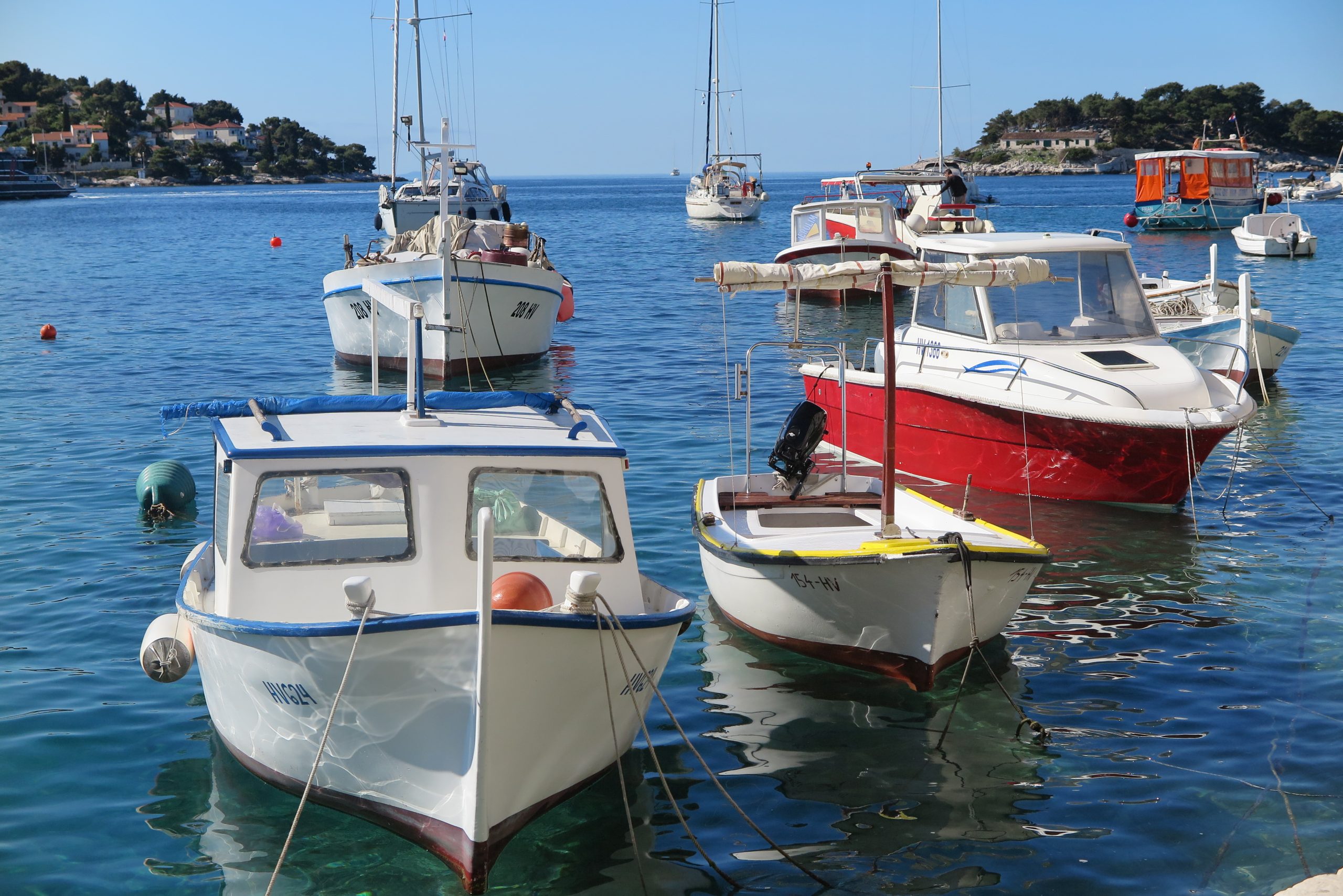
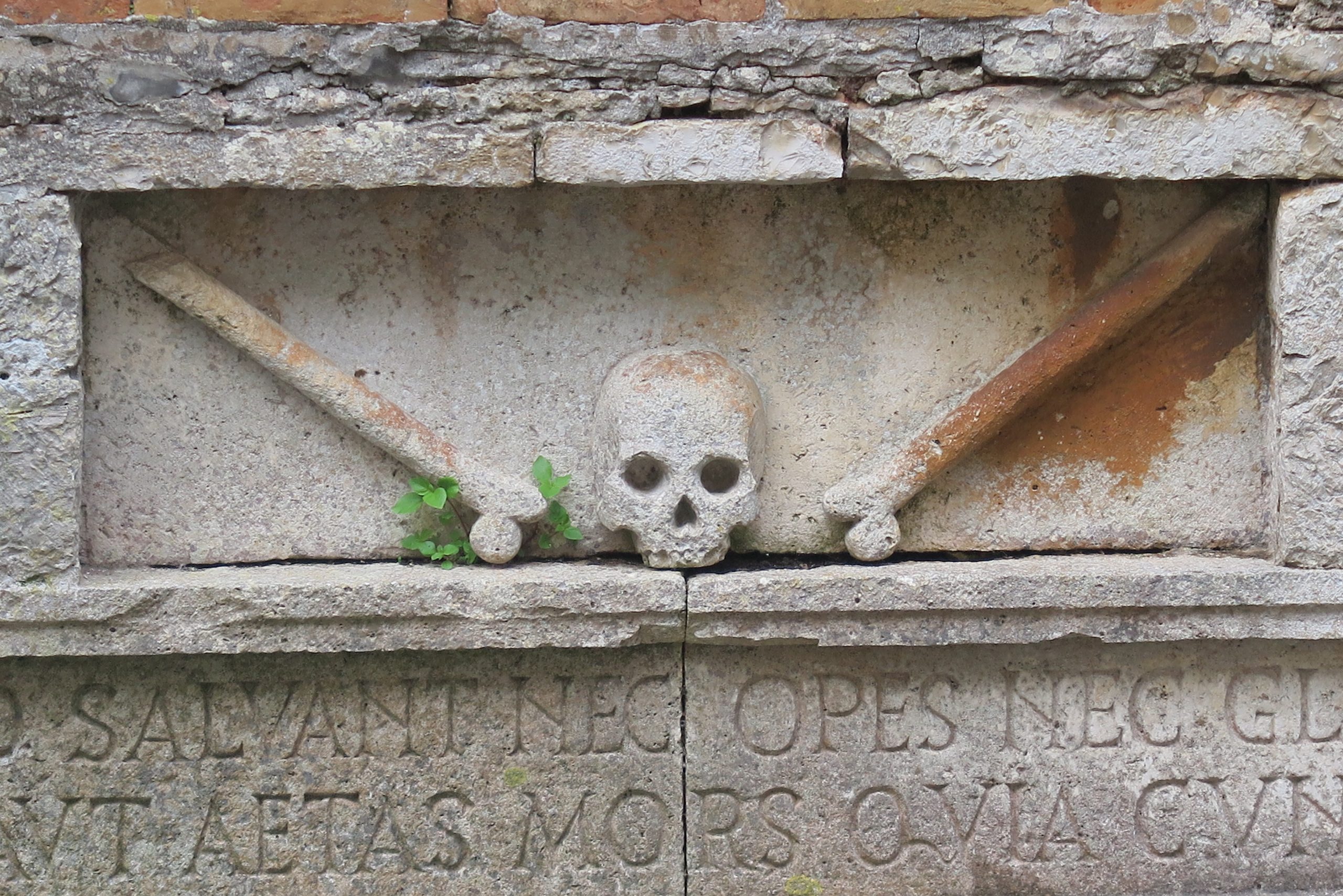
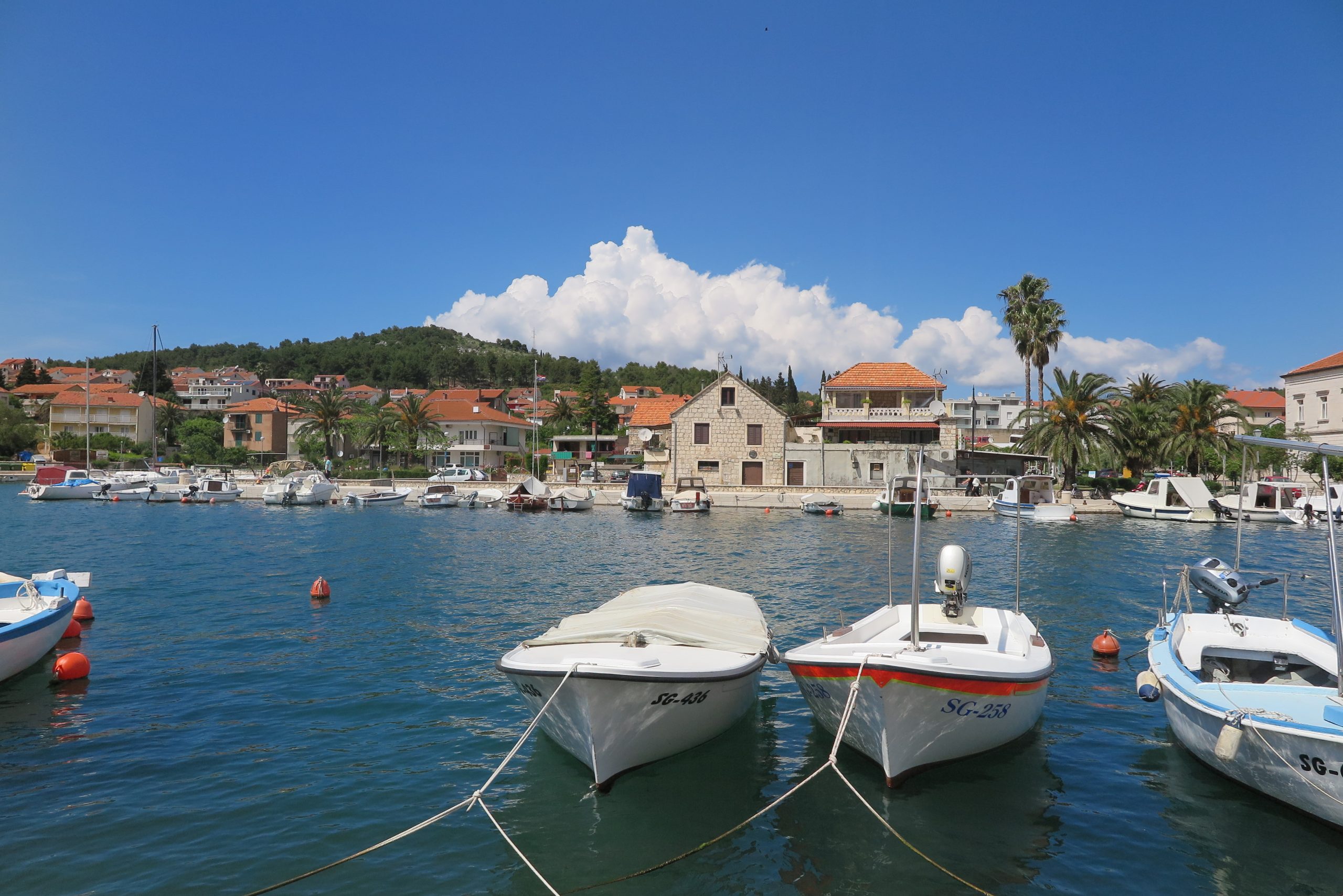
We ate lunch at Restaurant Pinetta in Stari Grad. The restaurant has been around since 1888. Lunch was interesting: phyllo pie with swiss chard, anchovies, and capers; crostini with tomatoes; green salad; and ravioli with prosciutto, prawns, and pesto. The white wine was called Gift of the Gods, and it was delicious.
Dinner was at a nearby kanoba called Menogo. The food was served in a family tapas style.
Spanjola Fortress and a Catamaran Ride to Korčula – May 18, 2019
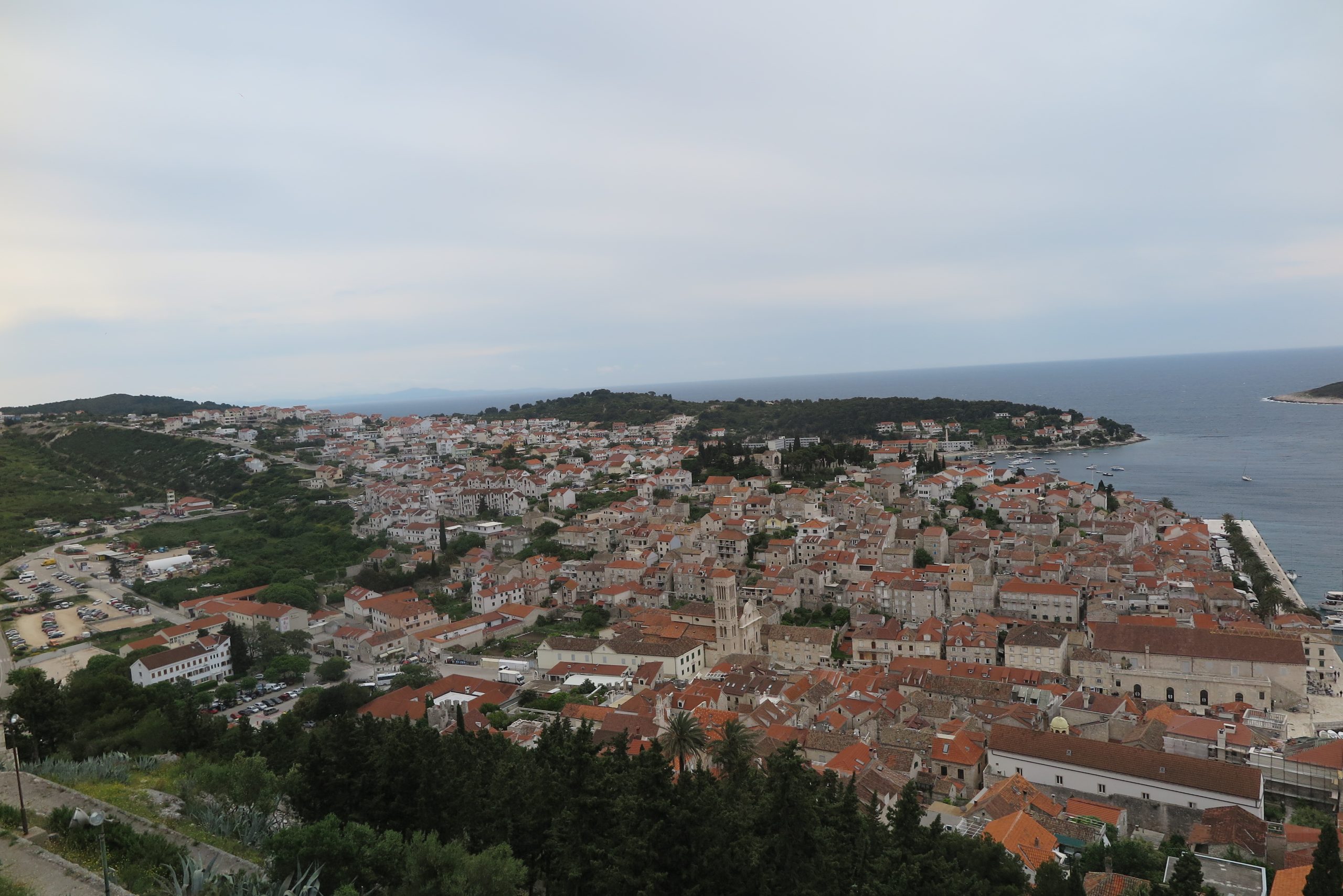
This morning, we climbed up lots of steps to the Spanjola Fortress for a panoramic view of the island. Named after the Spanish engineers who bulked up the fortifications after the gunpowder explosion destroyed the previous structure, this fortress was instrumental in saving the people of Hvar during one of the Ottoman raids. The history of Hvar seems to be one of invasions, either by the Romans, the Venetians, the Ottomans, the French, and finally the Austrians.
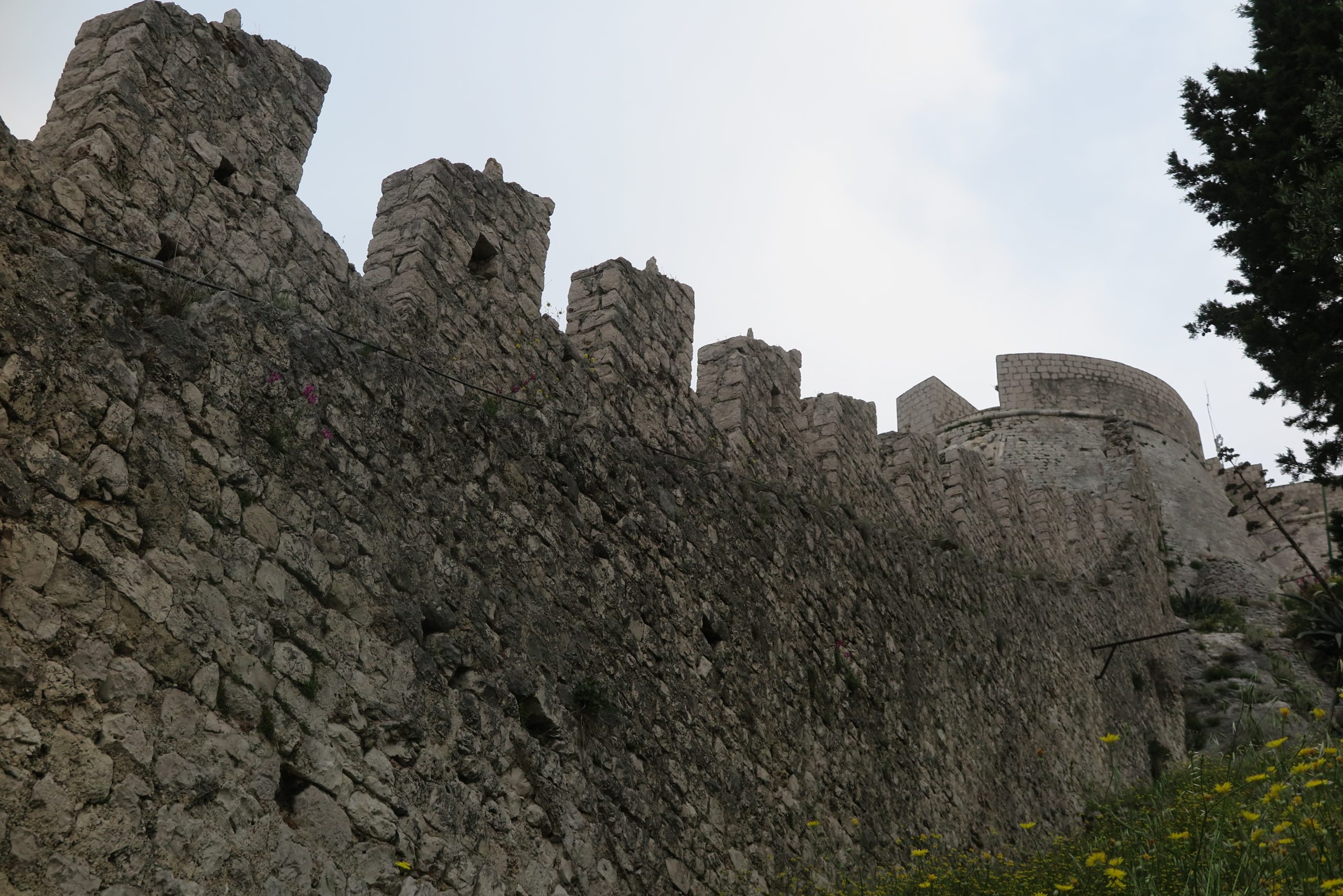
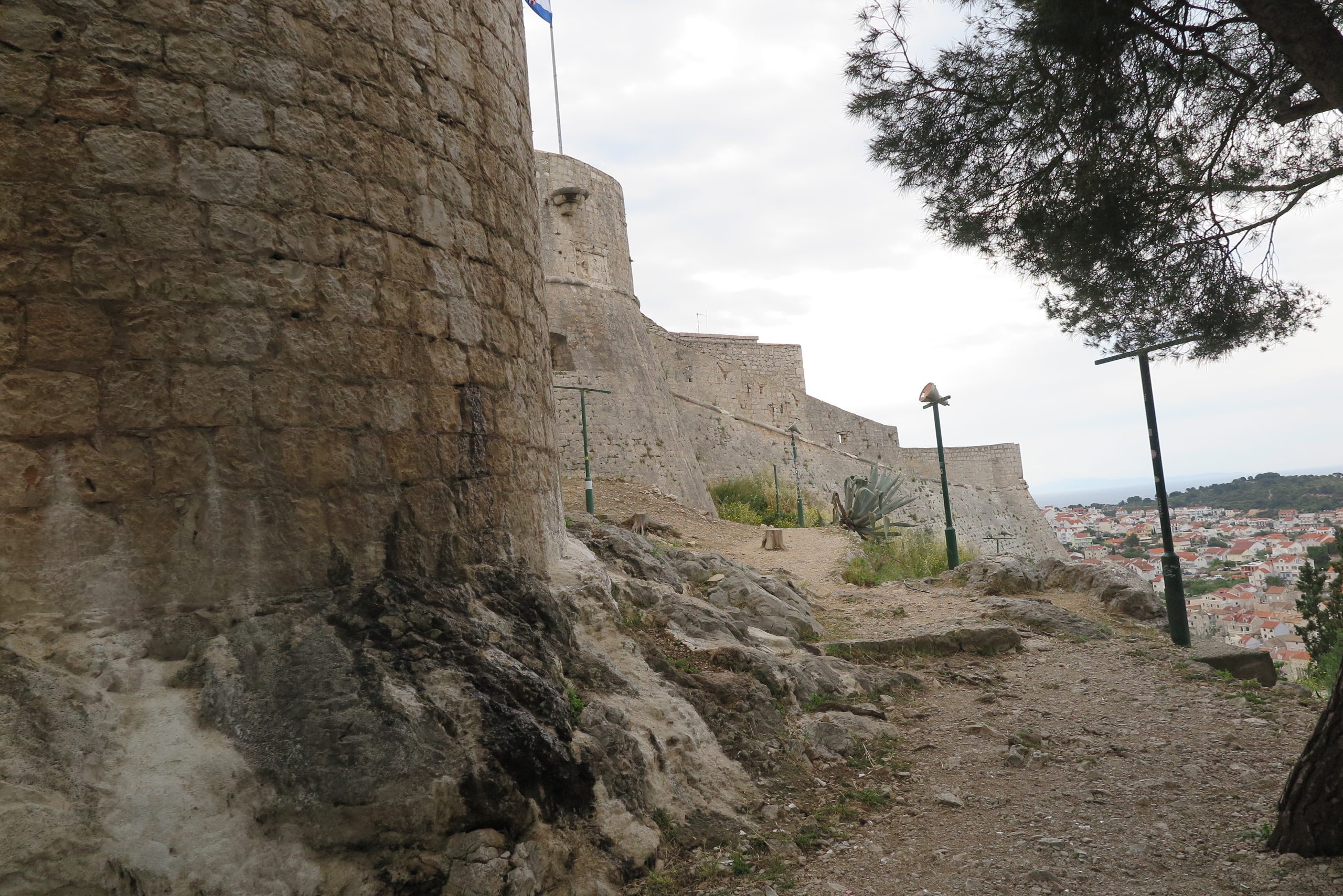
Today’s hike was long. We ate at a roadside eatery that overlooked a small marina. The food was delicious, a choice of pastas and cuttlefish risotto. The proprietress of the restaurant gave each of us a cube of lavender-perfumed soap. Hvar is famous for its lavender.
After lunch, the Yugo appeared in earnest and it started to rain. We drove back to Hvar and waited for the catamaran to arrive. After an extremely rough crossing, we got off at Vela Luka on the island of Korčula and then transferred to the Marco Polo hotel by bus. Tonight was party night and traditional entertainment was provided by local musicians.
Winery Visit and a Tour of the Old Town of Korčula – May 19, 2019
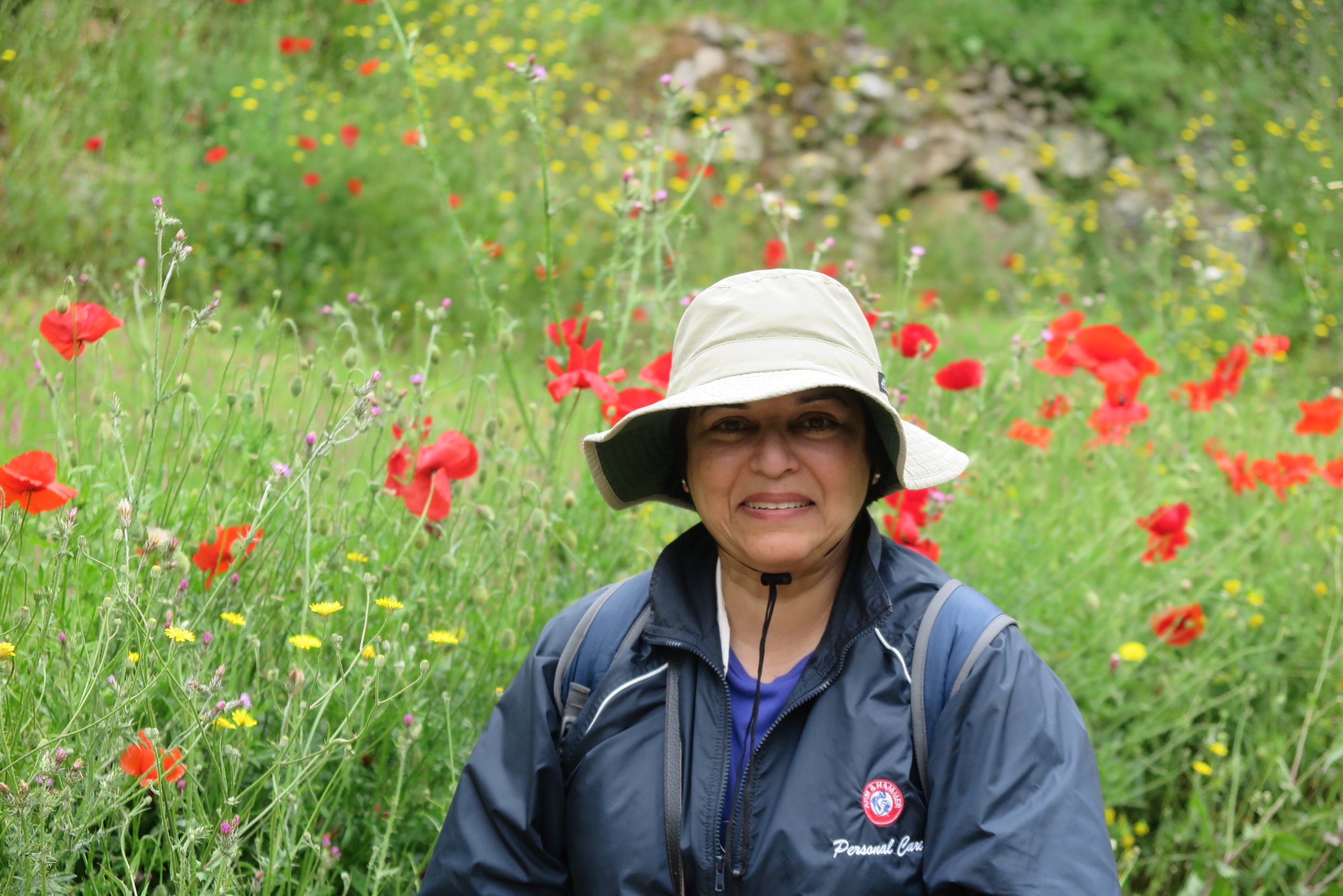
A long stretch of today’s hike was through thick vegetation and rain-slicked rocks, passing by an abandoned village and a field of pink and red poppies.
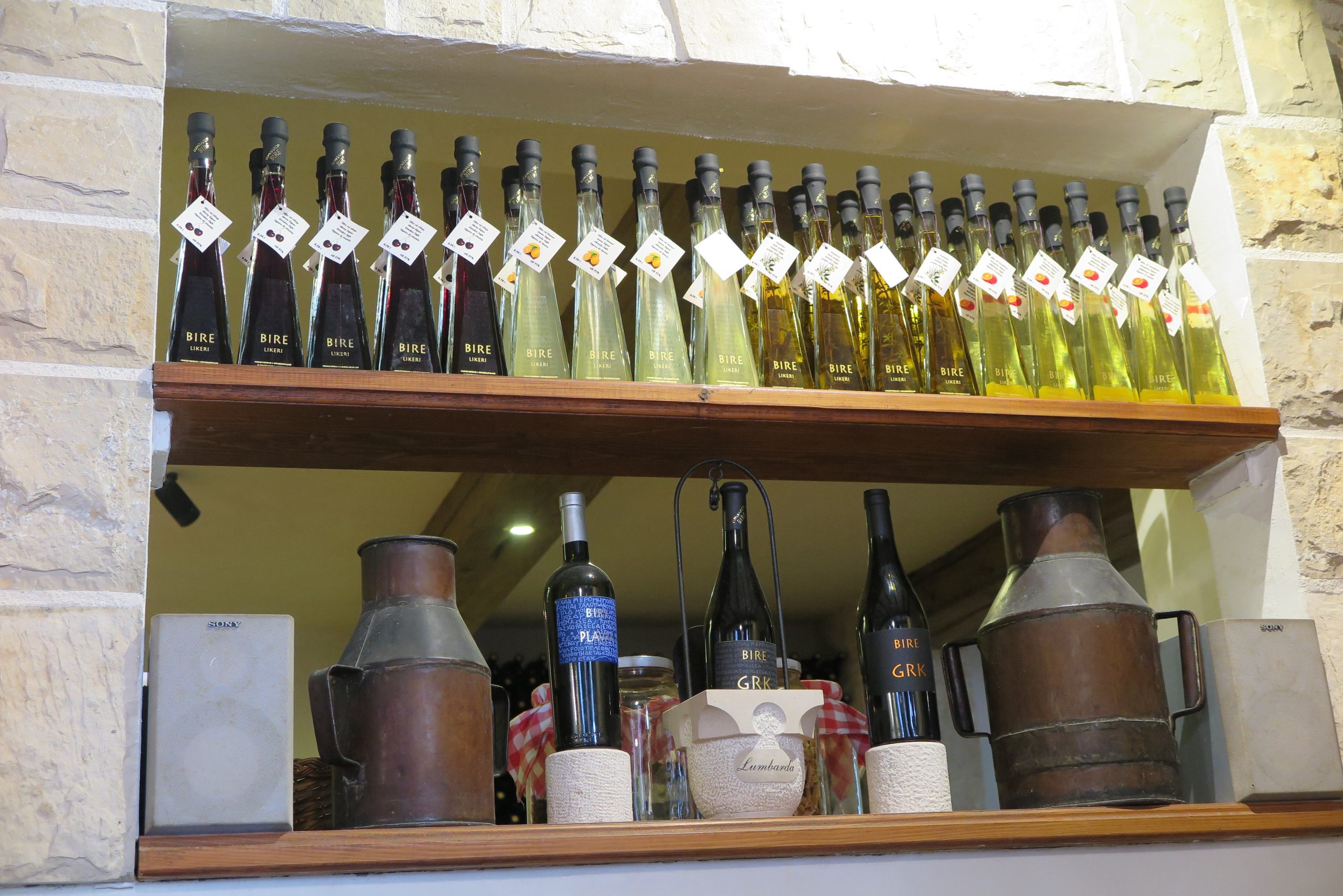
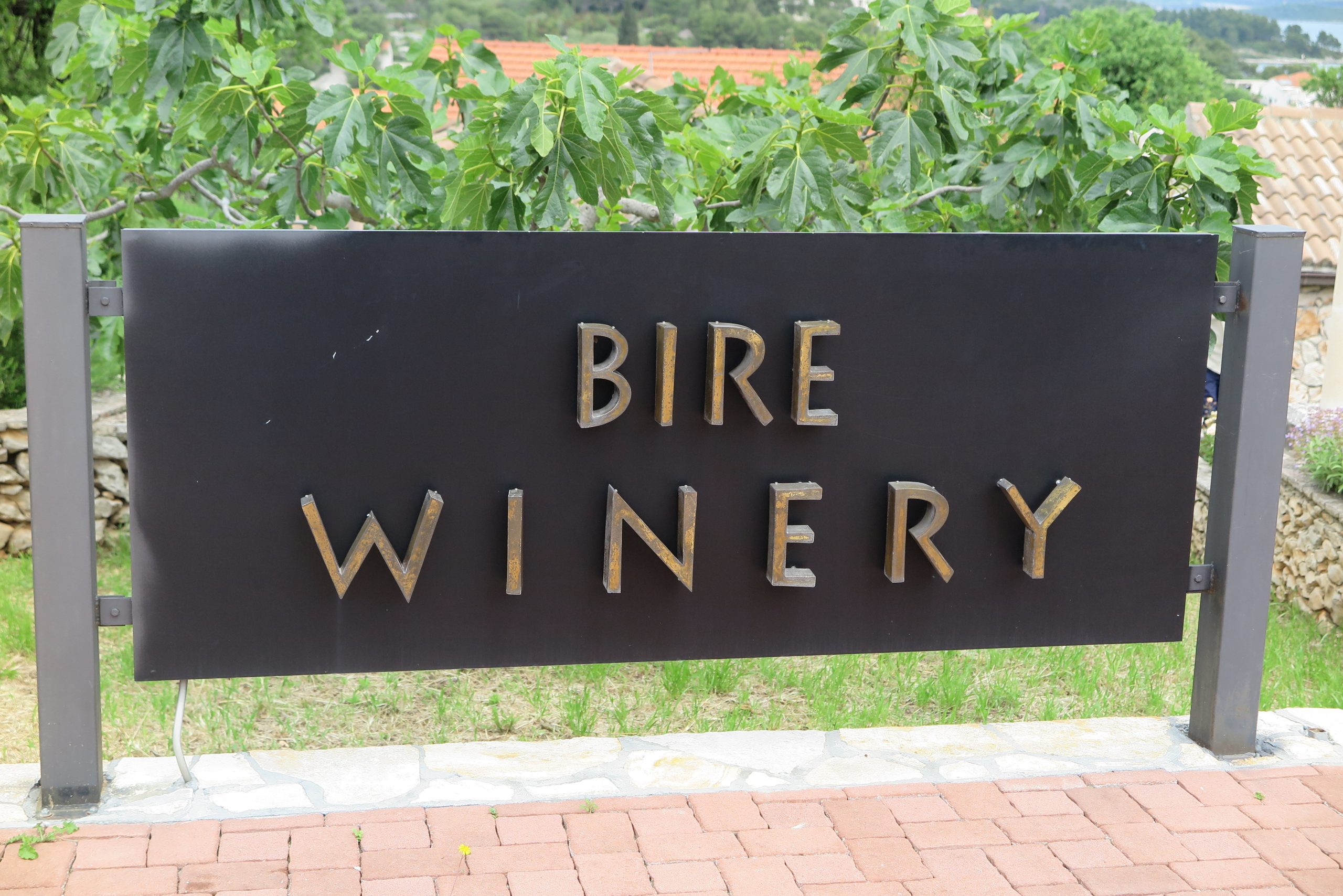
Later, we went by taxis to the Bire winery in Lumbarda, where thanks to the sandy soil, the Grk white grape is grown. Bire is a family owned and operated winery and their Grk white wine is famous. We had a lovely picnic lunch accompanied by lots of wine and grappa.
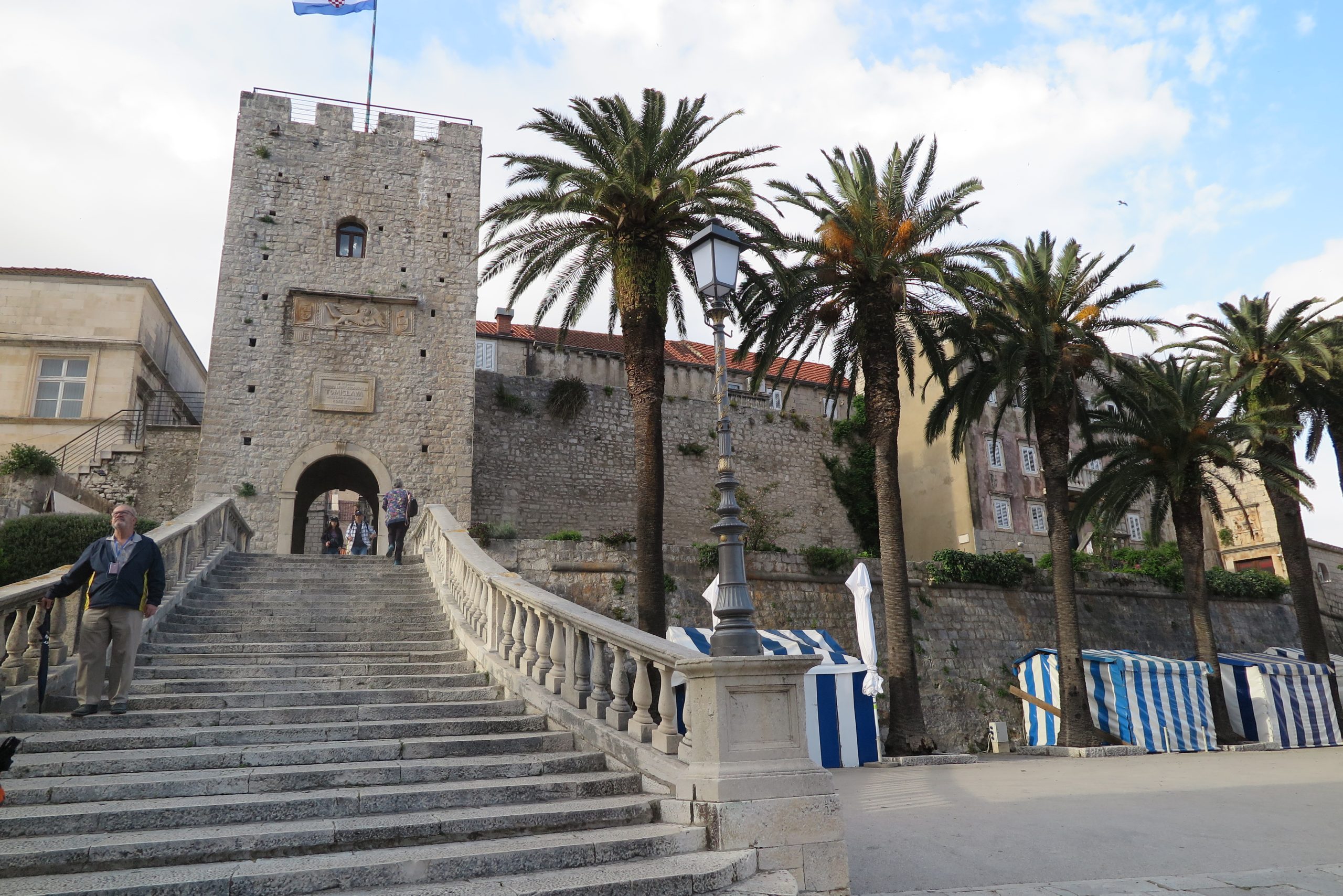
In the evening, our stroll to the Old Town led us through the grand entrance of the Great Land Gate, with streets designed to optimize airflow. Exploring the historic streets, including the famed Street of the Korčulan Statute of 1214, we marveled at landmarks such as St. Mark’s Cathedral, housing exquisite artworks including a Tintoretto altar piece and a bronze statue by Meštrović.
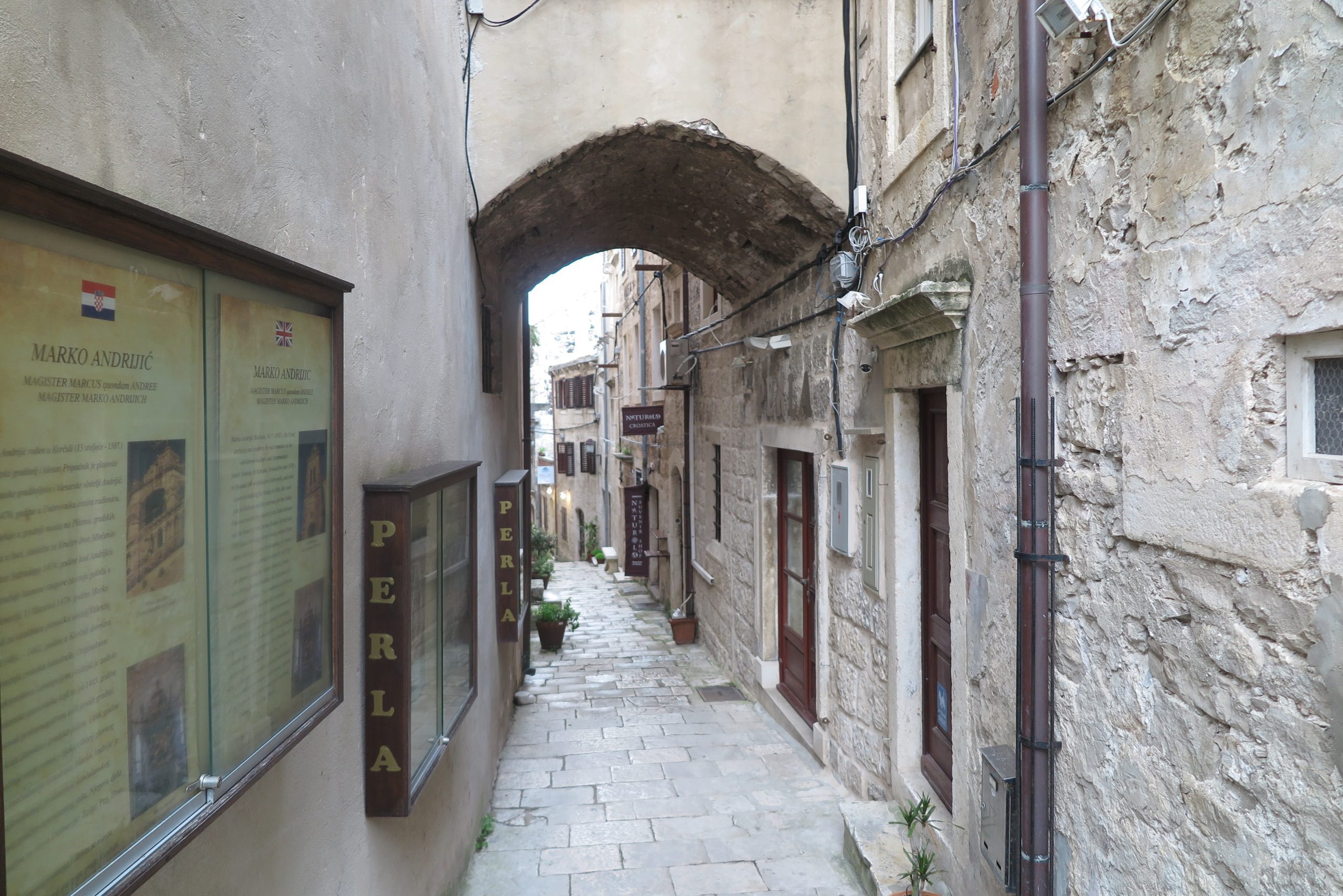
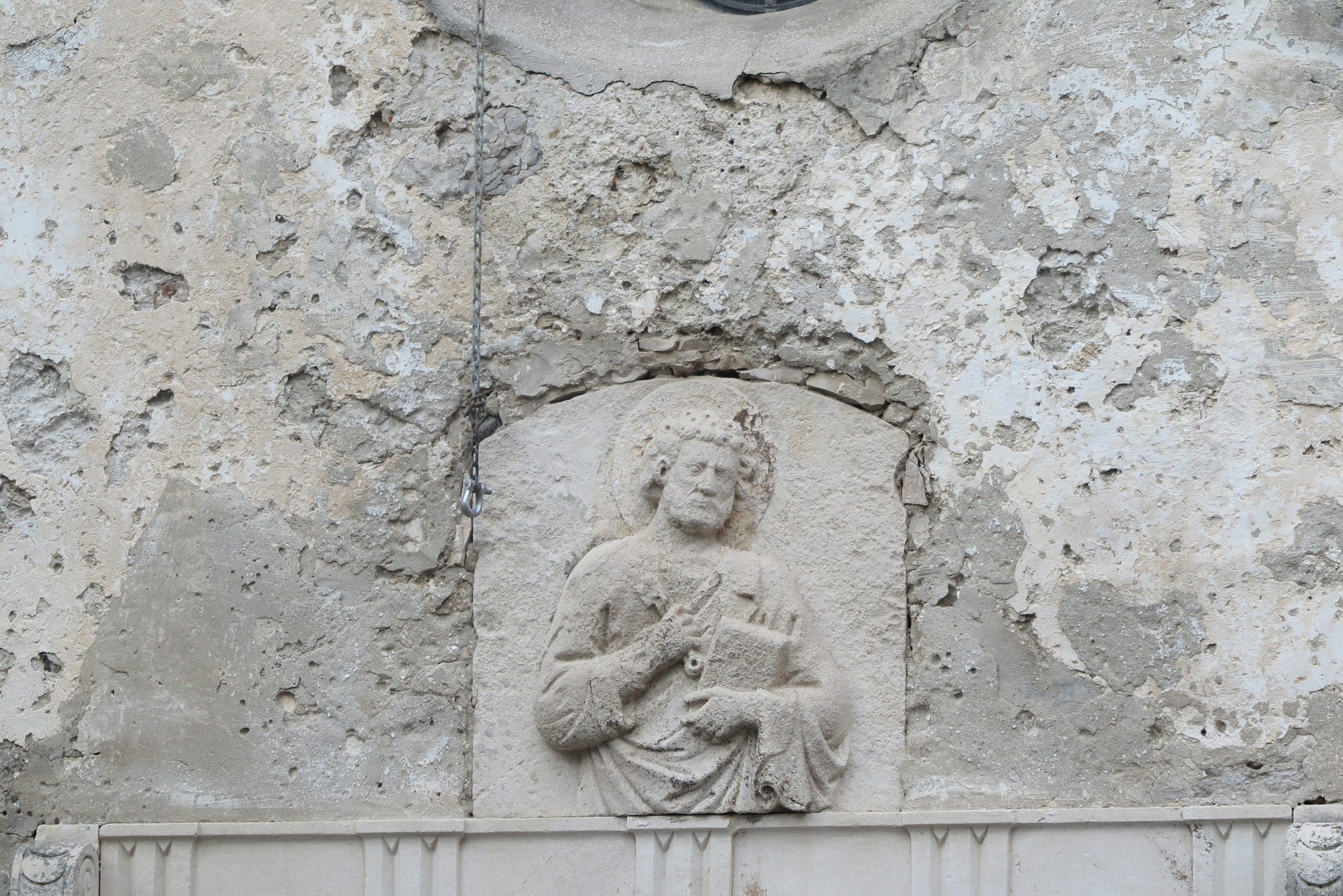
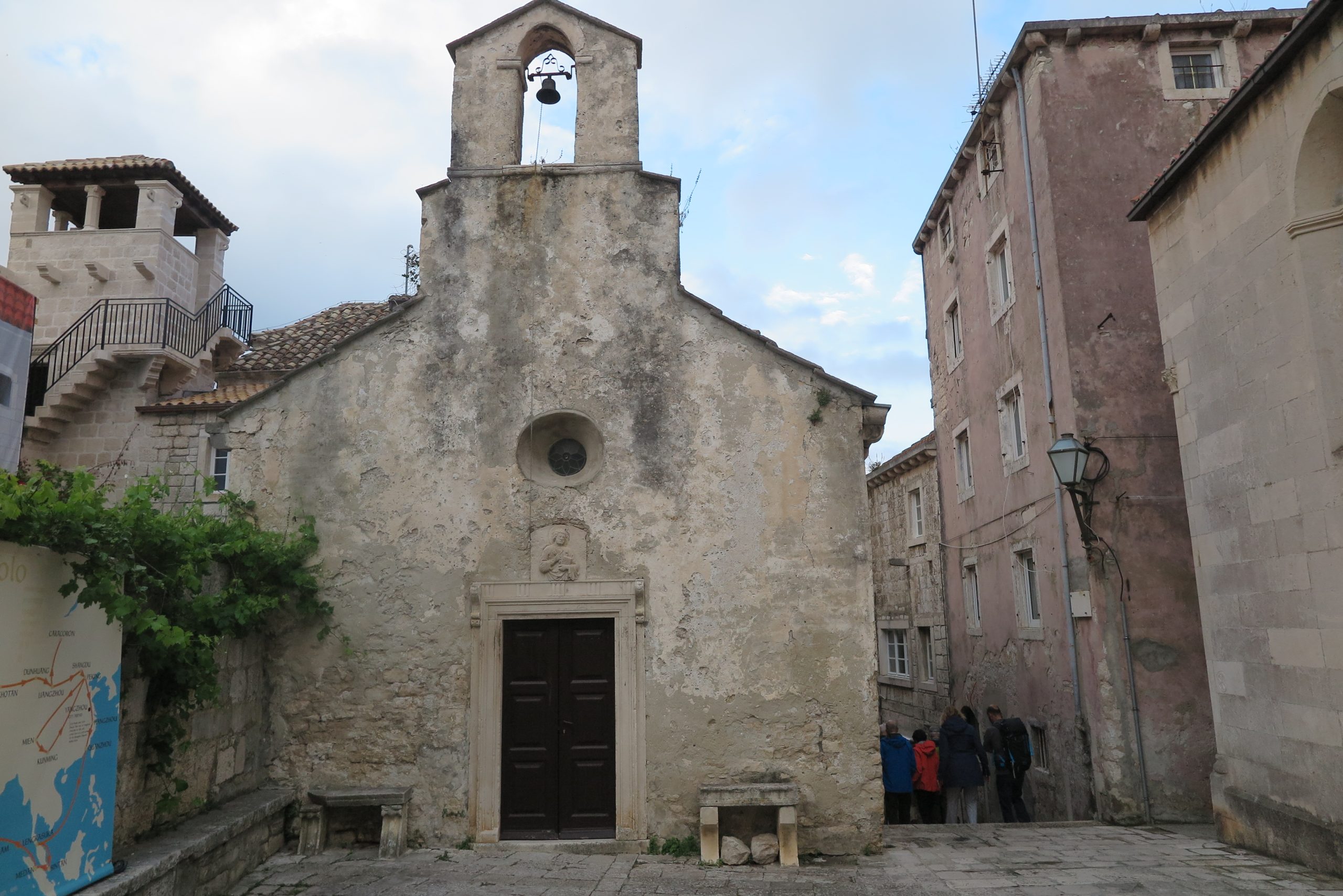
In the evening, we walked to the Old Town entering it through the Great Land Gate. The streets to the West are straight to let in the breeze and to the East are curved to keep out the bad winds. The main street is called Street of the Korčulan Statute of 1214. The statute covered all sorts of things pertaining to everyday life and instructions on building a house, keeping animals, maintaining the city walls. This is supposedly Marco Polo’s birthplace. We could not visit the house where he was born as it was undergoing restoration. We were able to visit St. Mark’s Cathedral, which boasts a Tintoretto altar piece called Three Saints, The Annunciation by Tintoretto’s workshop, and a bronze statue of St. Blaise by Meštrović. It also has a beautiful bell tower, and on its façade lions in the Venetian style, a two-tailed mermaid, an elephant, and a crocodile.
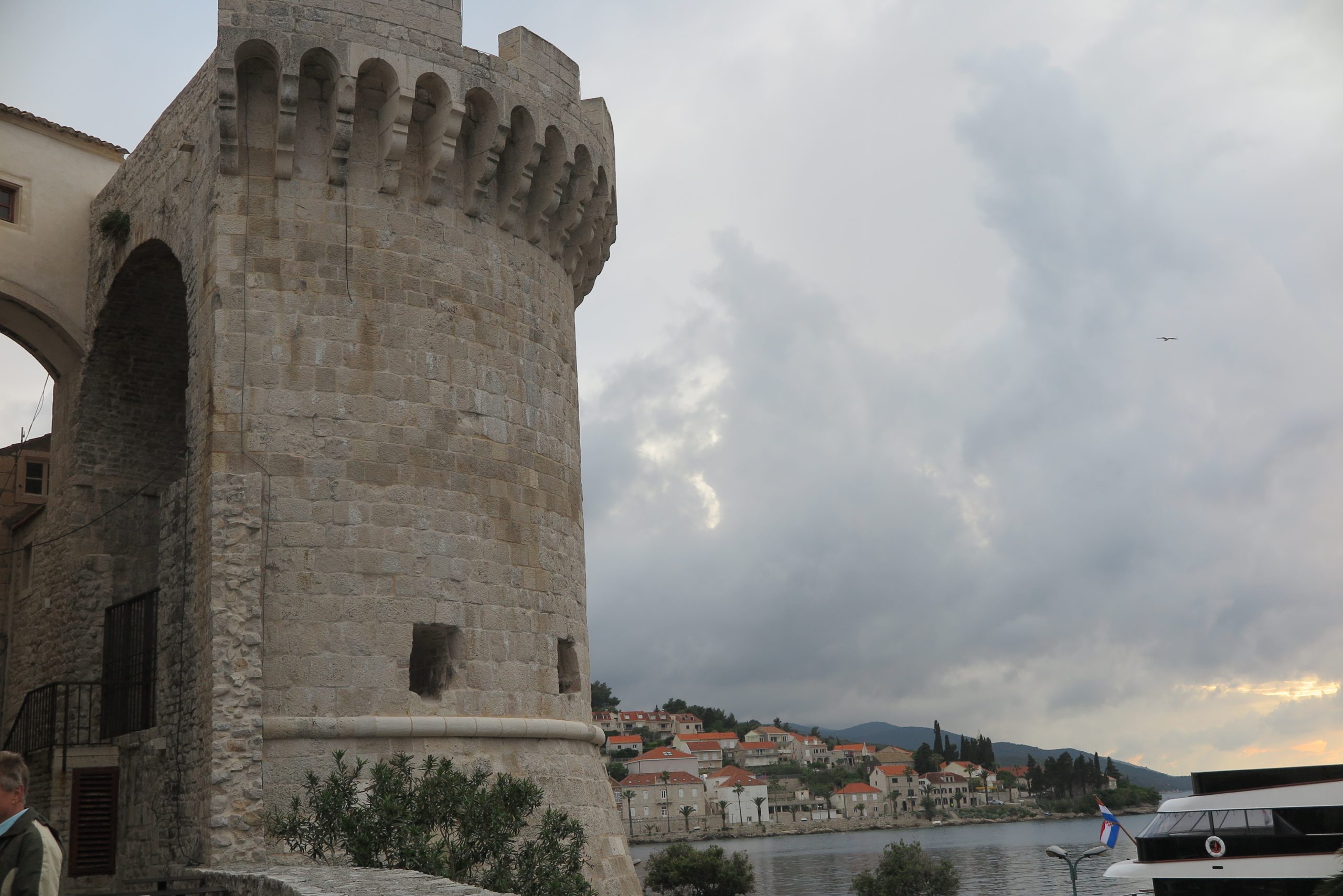
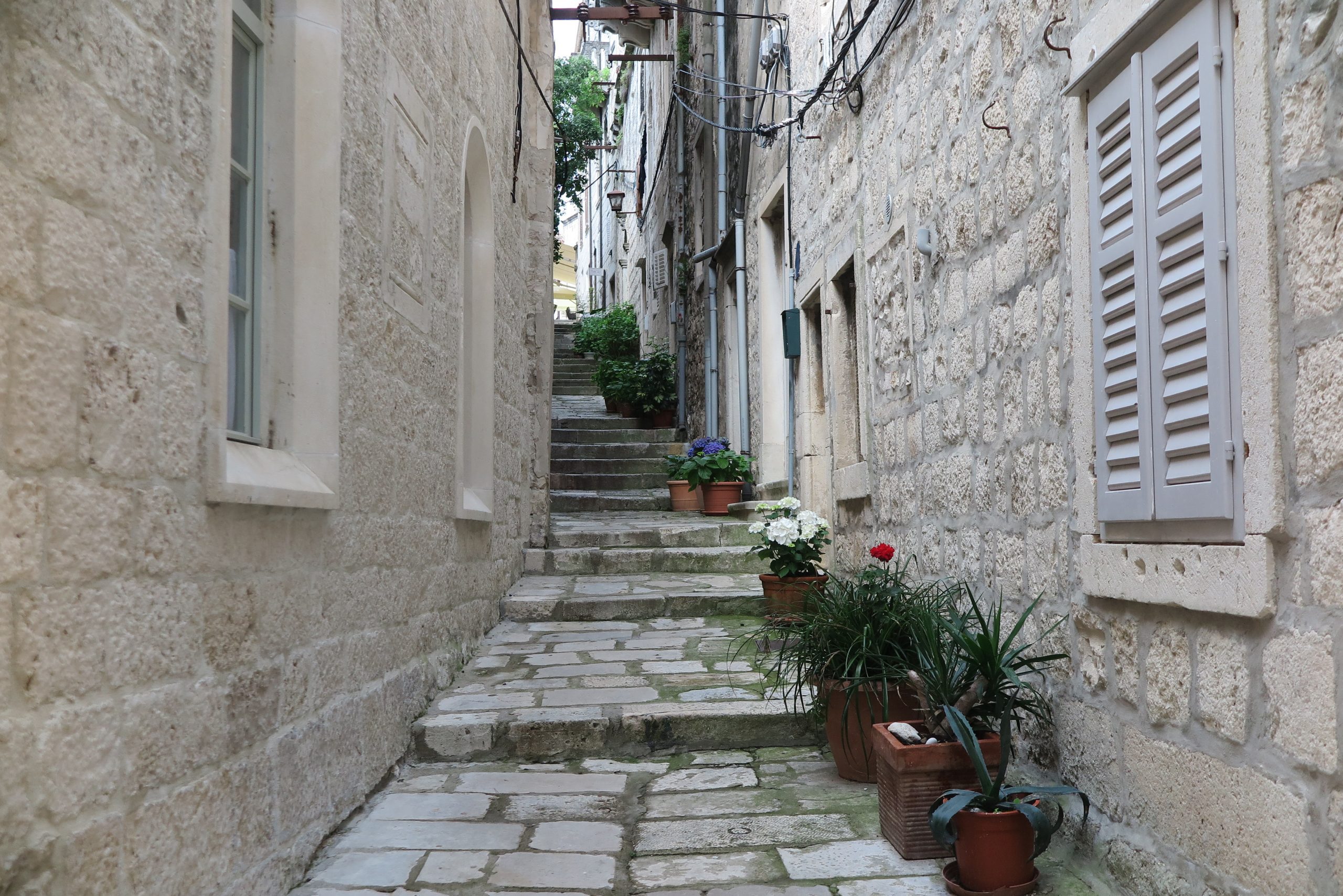
We had a fabulous dinner at Adio Mare: octopus salad and squid ink risotto.
Our Final Walk Through Orebic and Ston to Dubrovnik – May 20, 2019
At breakfast this morning, we attempted to sit at a table for two but were informed it was reserved for a special guest, a German lady who had been visiting the hotel every year for the past 25 years. Now that is a loyal customer!
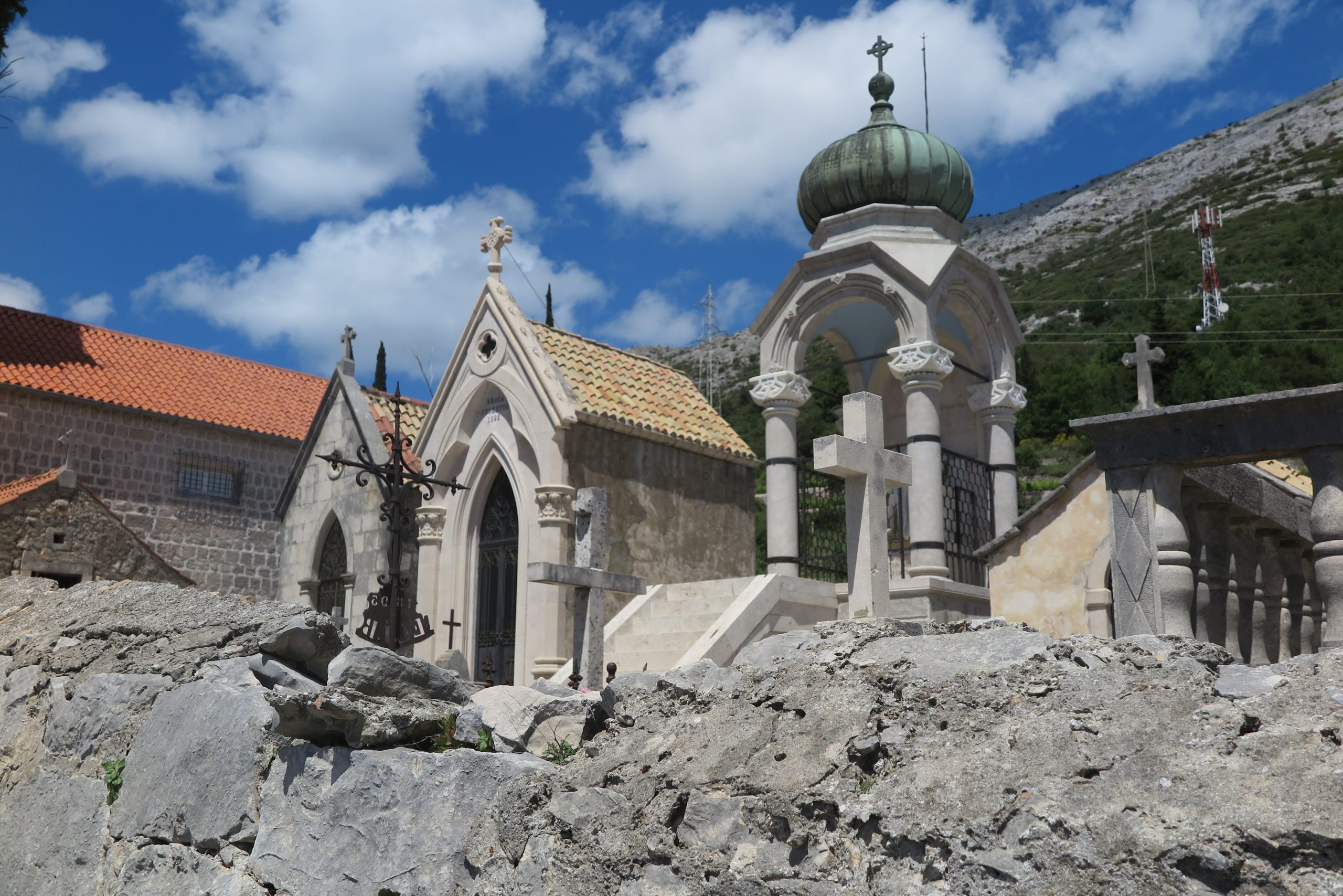
We went on our final hike after taking a boat to Viganj, enjoying stunning scenery, encountering a tied-up bull (known to startle hikers), and meeting an Icelandic horse along the way. We stopped by a cemetery to visit the grave of Anton Mimbelli. Anton came from a wealthy family who had a Russian maid who had a beautiful daughter. Anton wanted to marry the daughter. His family was having none of that so he was sent to visit distant lands. When he came back, the Russian maid and daughter had been packed off to Russia. Anton could not locate them, so to spite his parents he said he would never marry. He never did and the family died out with him.
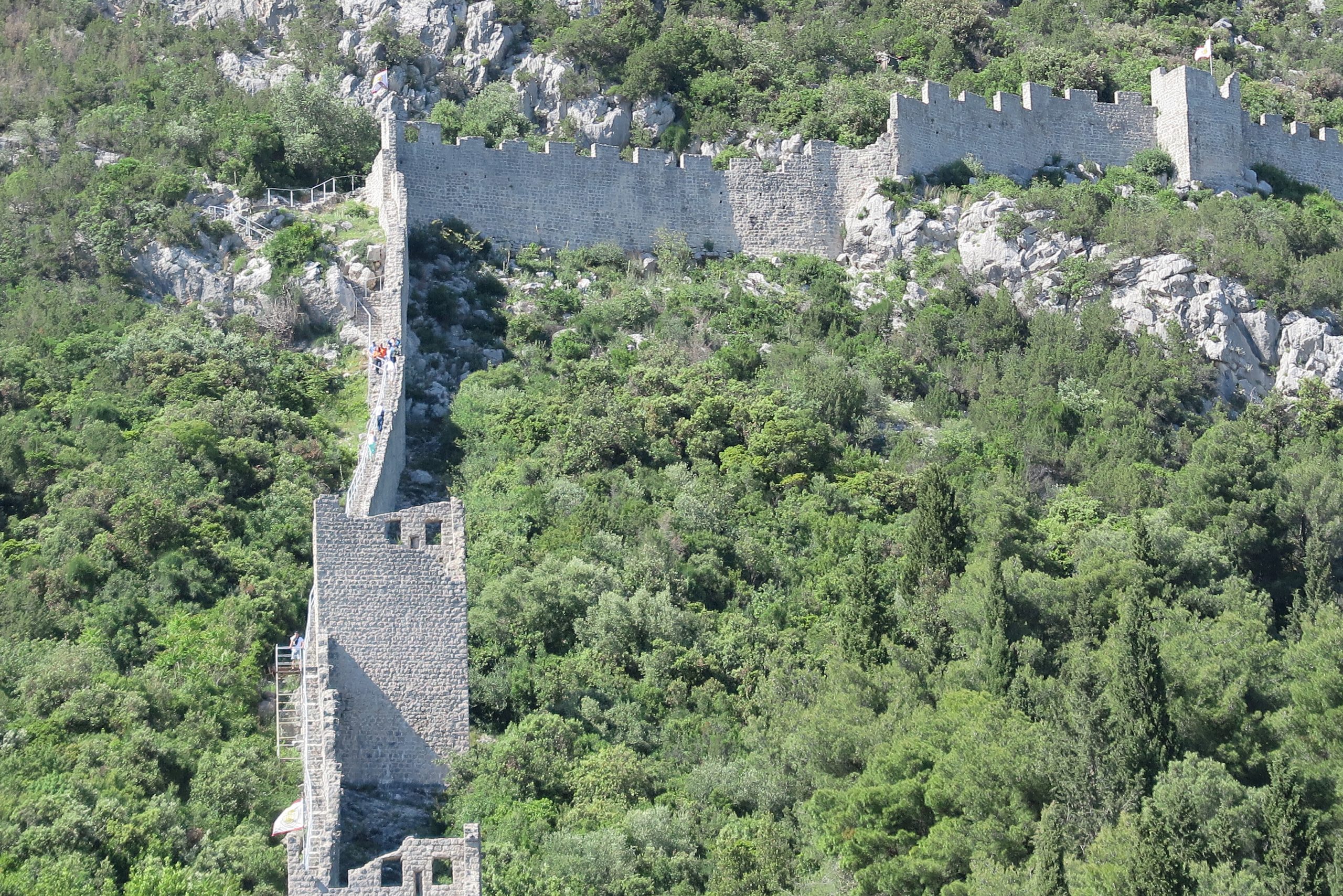
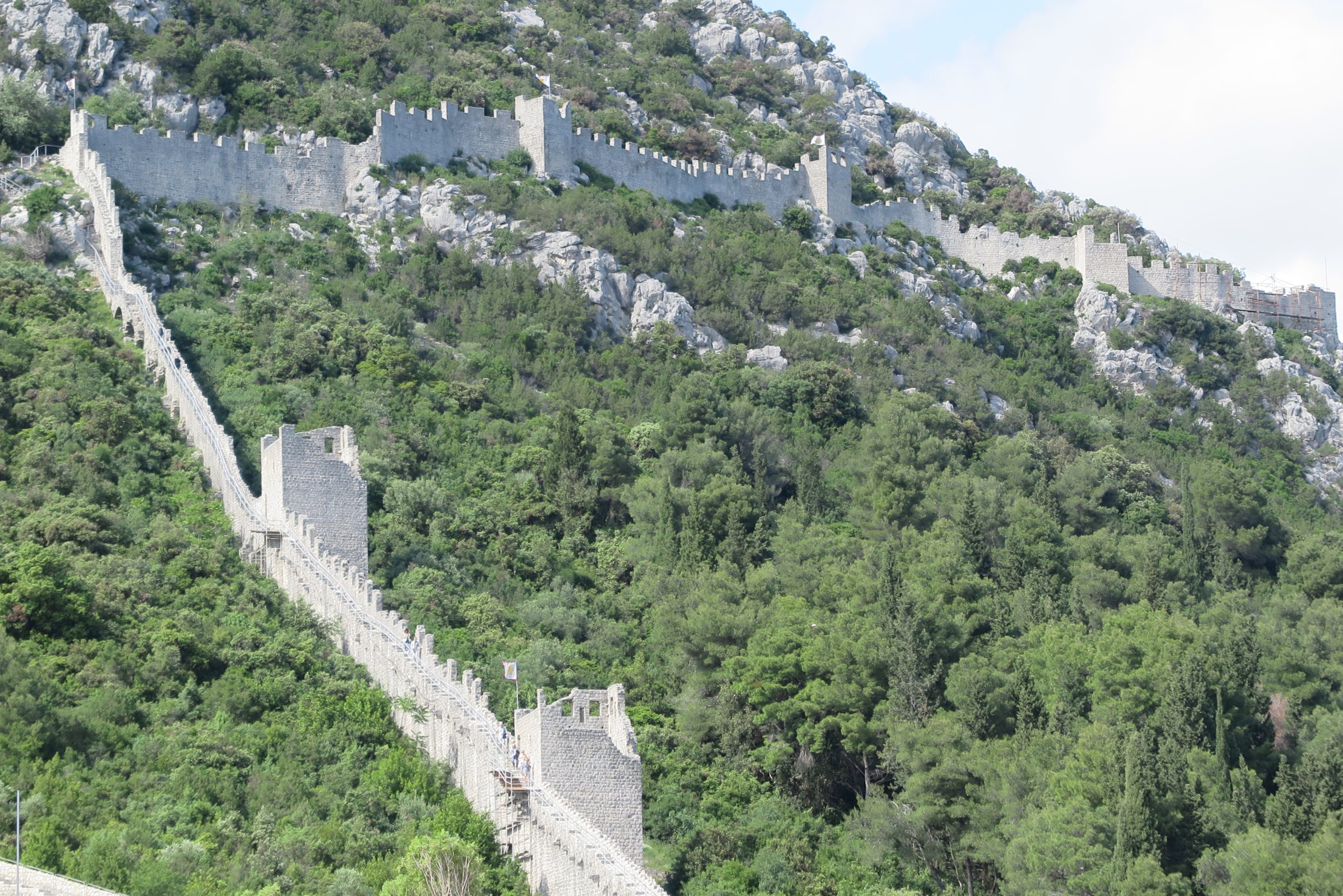
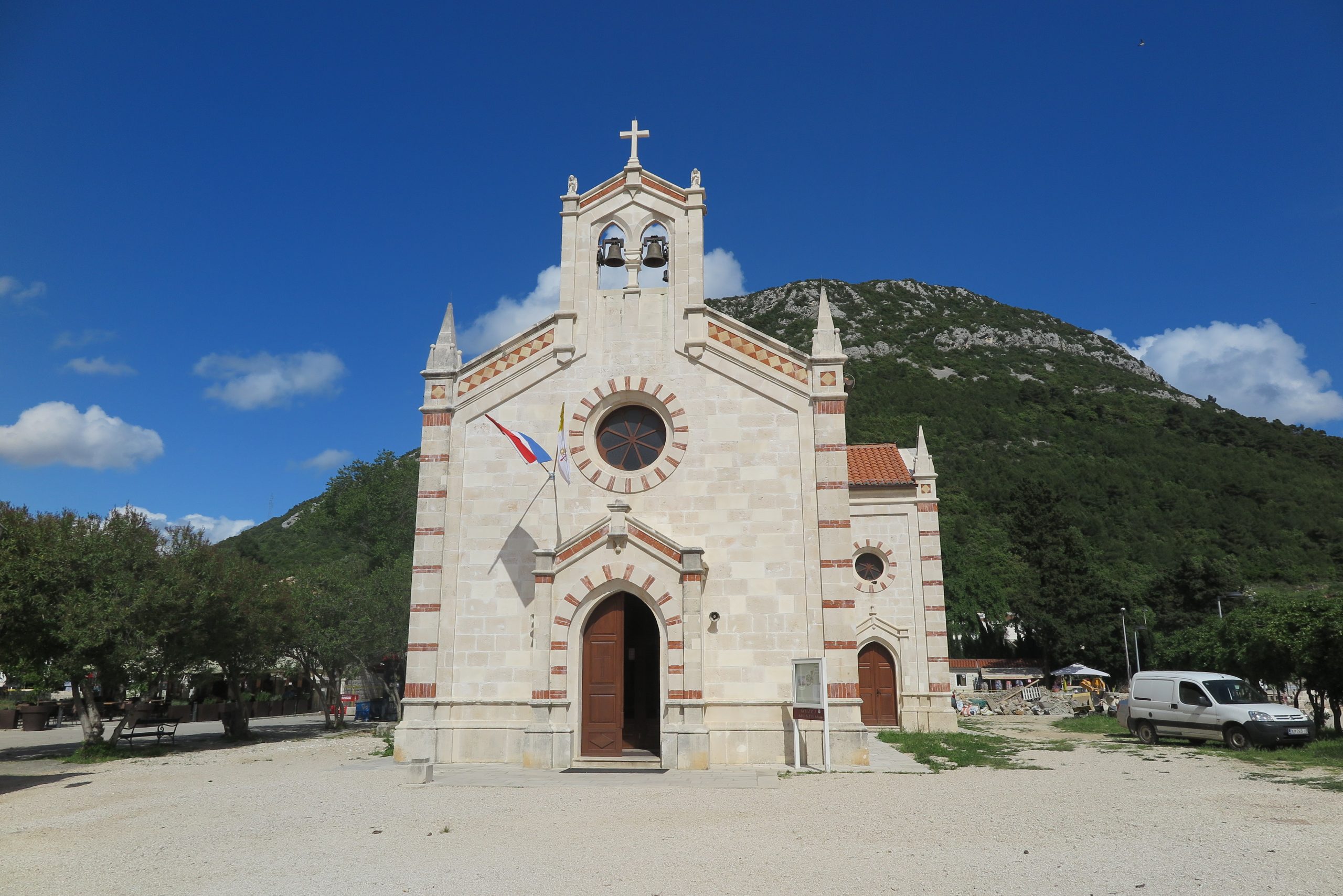
After a five-mile trek, we descended to Orebic for lunch of pizza and octopus salad. Then, we went by bus to Dubrovnik, stopping at Ston, famed for its salt pans and imposing city walls reminiscent of the Great Wall of China.
Finally, we arrived in Dubrovnik at the Grand Villa Argentina. Our room had a great view of one of the quarantine islands. The quarantining of visitors and people infected with plague and other infectious diseases in Lazarettos appears to have been a Croatian invention. Many of the islands we visited, seemed to have had an area reserved for this function.
This evening, we had a fabulous meal at the hotel, with grappa and lots of other spirits.
Exploring Dubrovnik’s Treasures – May 21, 2019
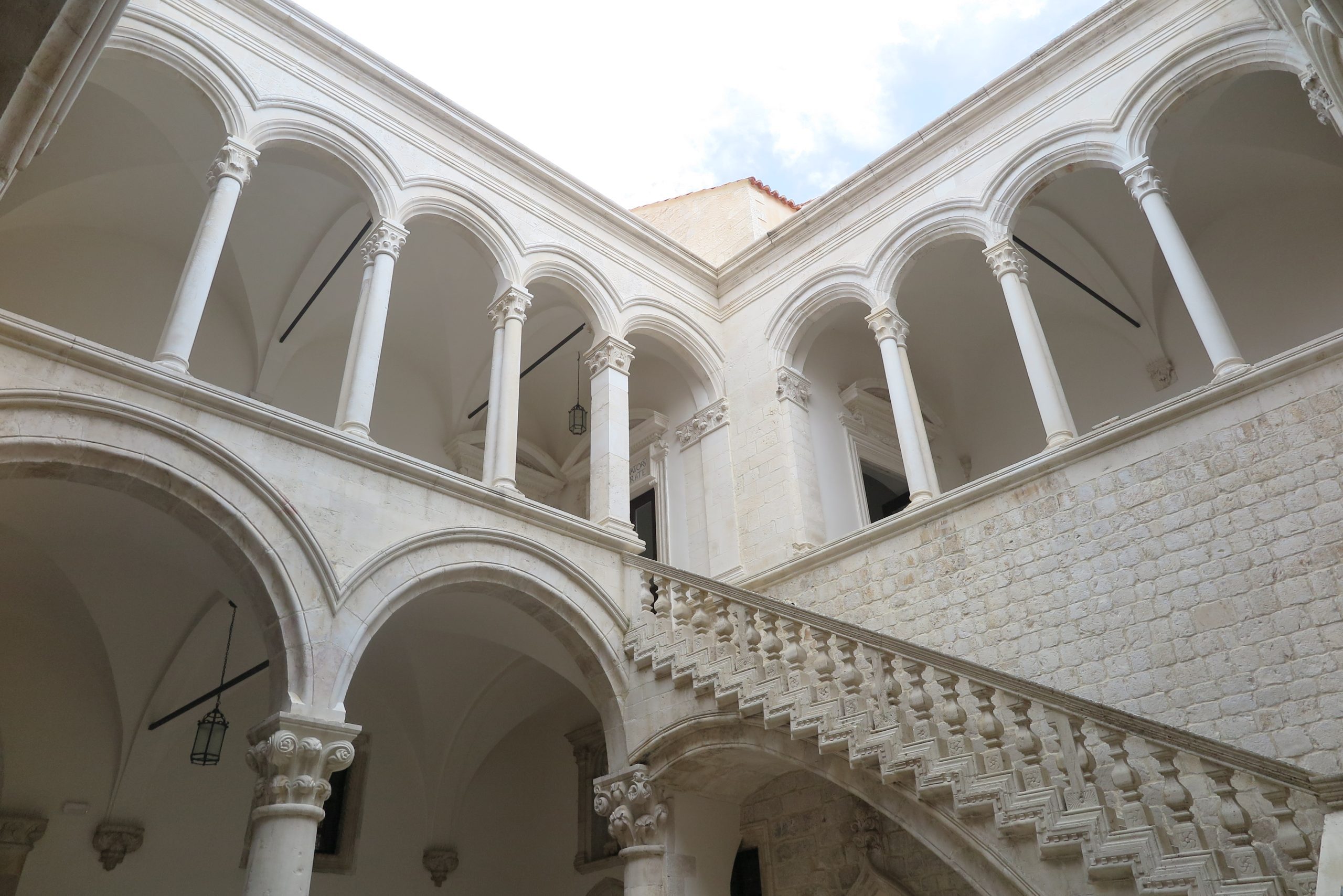
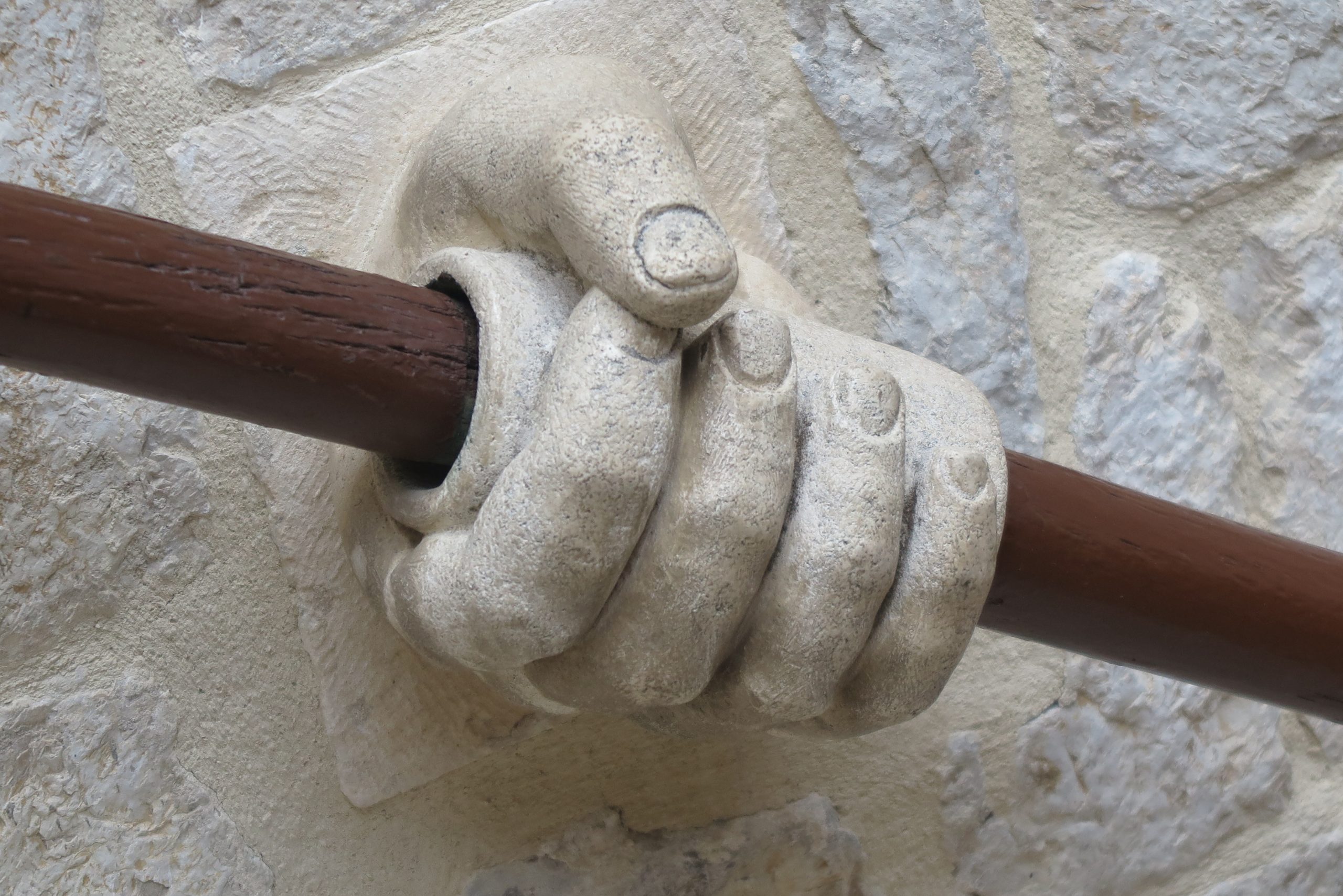
We walked to the Old Town, which was about 10-15 minutes away from our hotel. We entered through the Ploče Gate. First, we stopped at the Rector’s Palace. The rector was the equivalent of a Venetian doge and ruled the Republic of Dubrovnik. There was not a whole lot to see inside, as all the furniture was stolen by invaders, the last being Napoleon’s army. Worthy of note were the handrails, in the form of clasped hands.
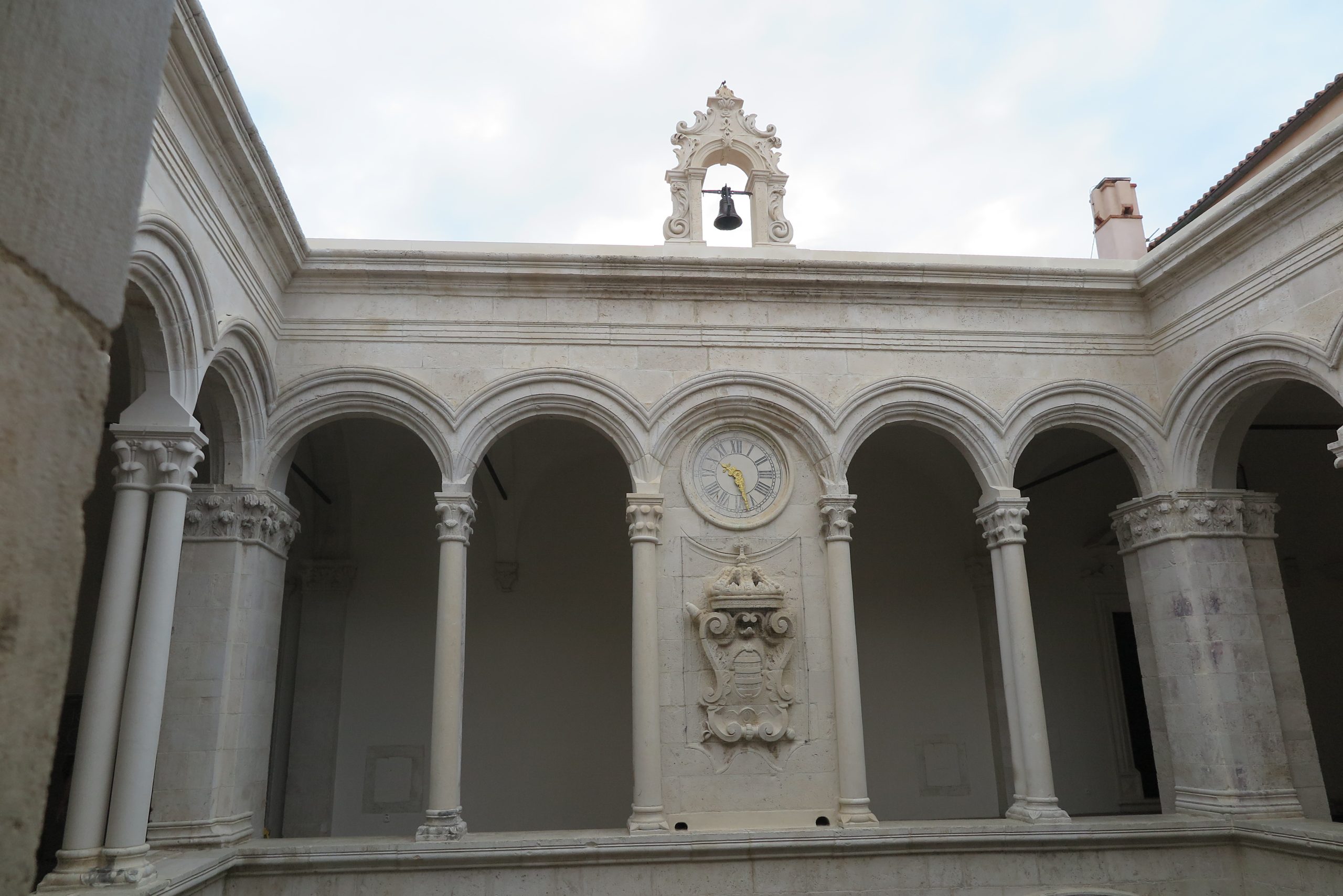
Next, we visited the Memorial Room of Dubrovnik Defenders, situated on the ground floor of the Sponza Palace. Once a customs office, the palace now houses the city’s archives. Inside the memorial room, images of men lost in the Yugoslav conflict are displayed on the walls.
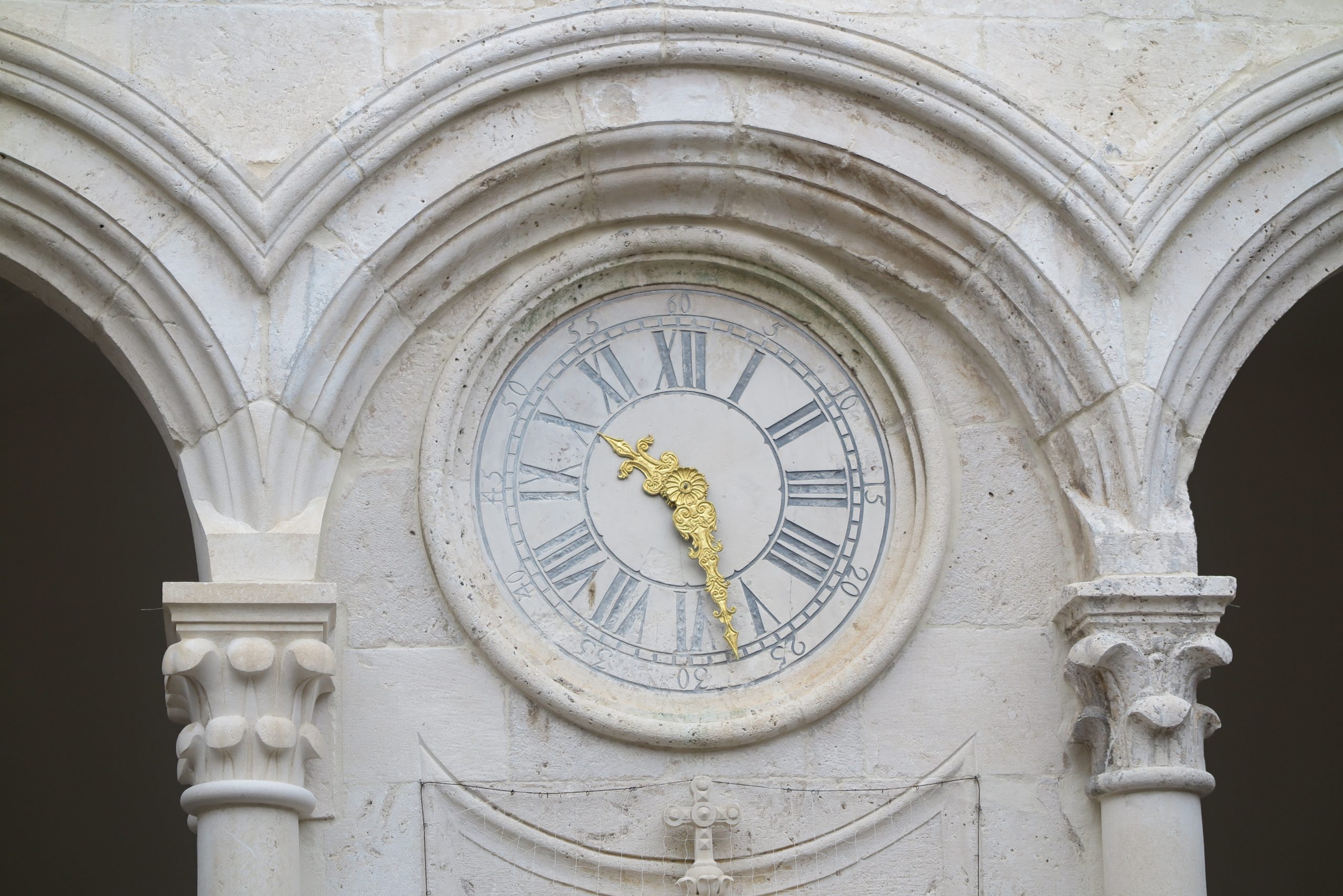
From the war, we moved back in time with a visit to the Franciscan Monastery and its century old, still operational pharmacy; the cloister, and the medieval pharmacy originally opened in 1317. Lastly, we visited St. Savior, a Renaissance church that was built in thanksgiving for surviving the earthquake of 1520. The church survived the earthquake of 1667 and survived shelling during the Yugoslav War, when a shell exploded in front of it leaving faint pockmarks on the walls. In front of the church, is Onofrio’s Big Fountain, dating to the middle ages it supplied with water from the aqueduct in Ston and allowed Dubrovnik to survive sieges. With this visit, our tour formally ended, and we said goodbye to Ivana and Daniel.
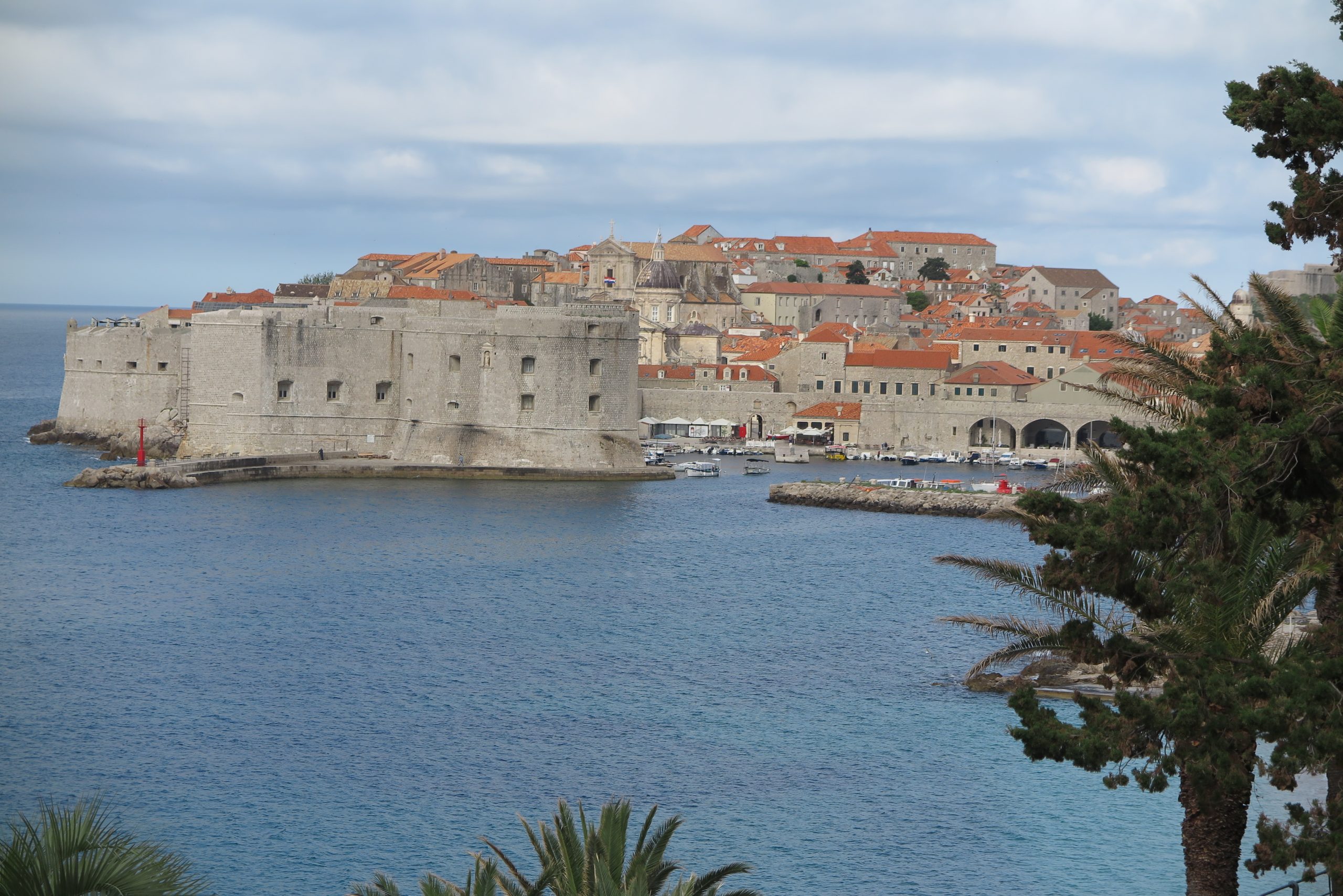
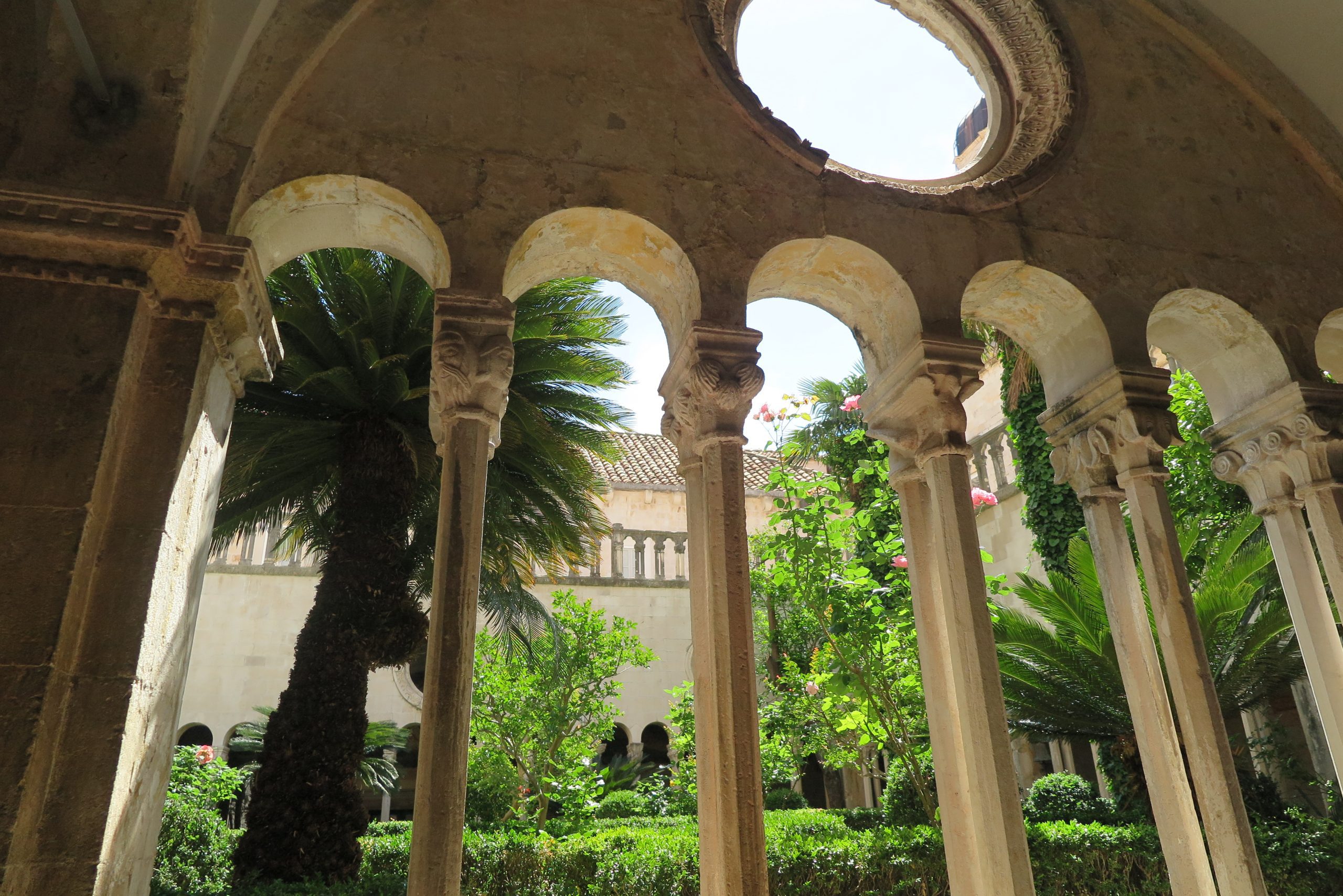
We then visited the House of Marin Držić, a famous Croatian playright. Despite difficulty locating it, we eventually found the museum next to the Rector’s Palace, identifiable by a Meštrović statue featuring Držić’s shiny nose, rubbed by people for good luck.
In the evening, we went on a long stroll towards the New Town. The walk seemed endless and it started to rain, so we returned to the Old Town for dinner.
Dubrovnik’s Old Town Wonders – May 22, 2019
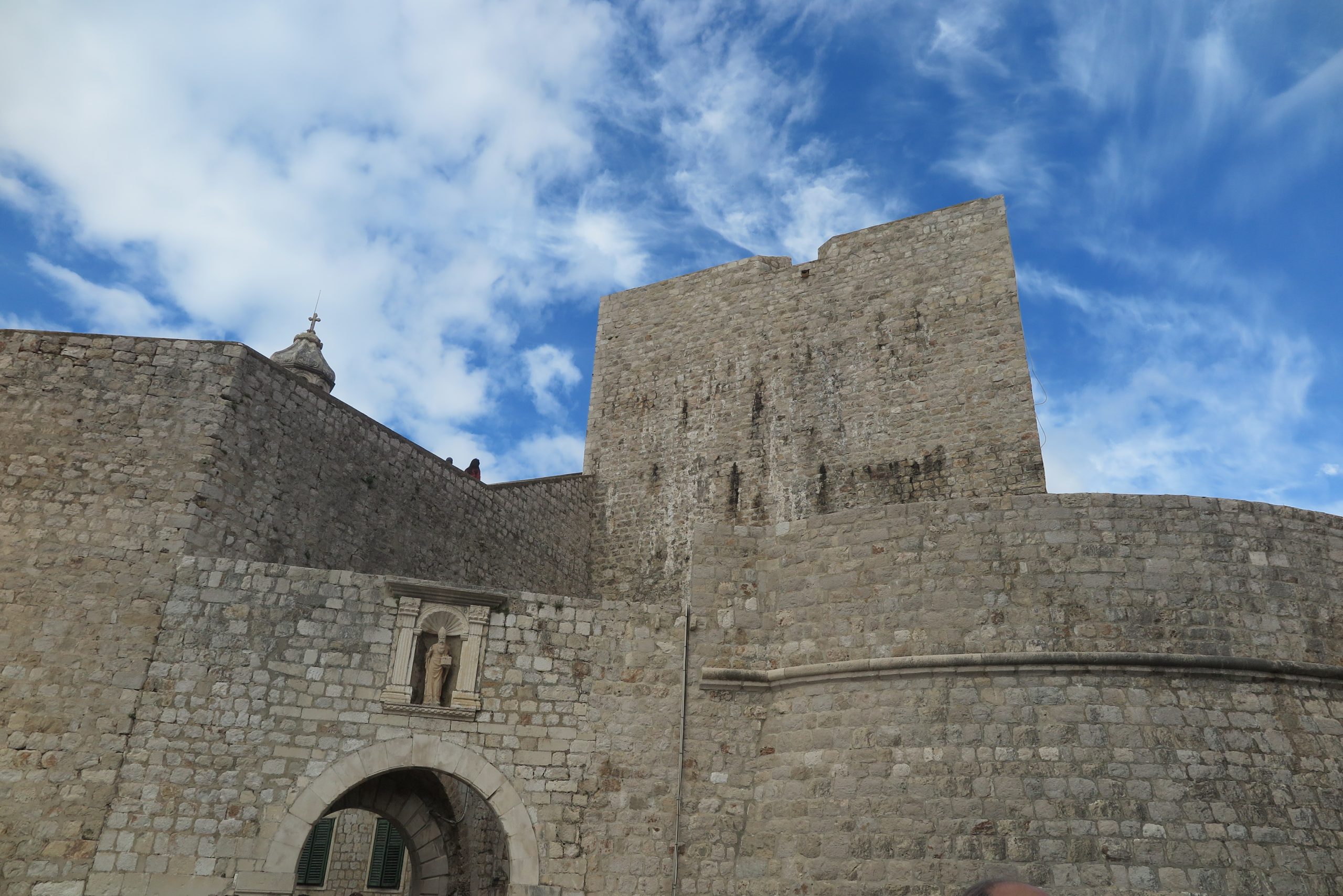
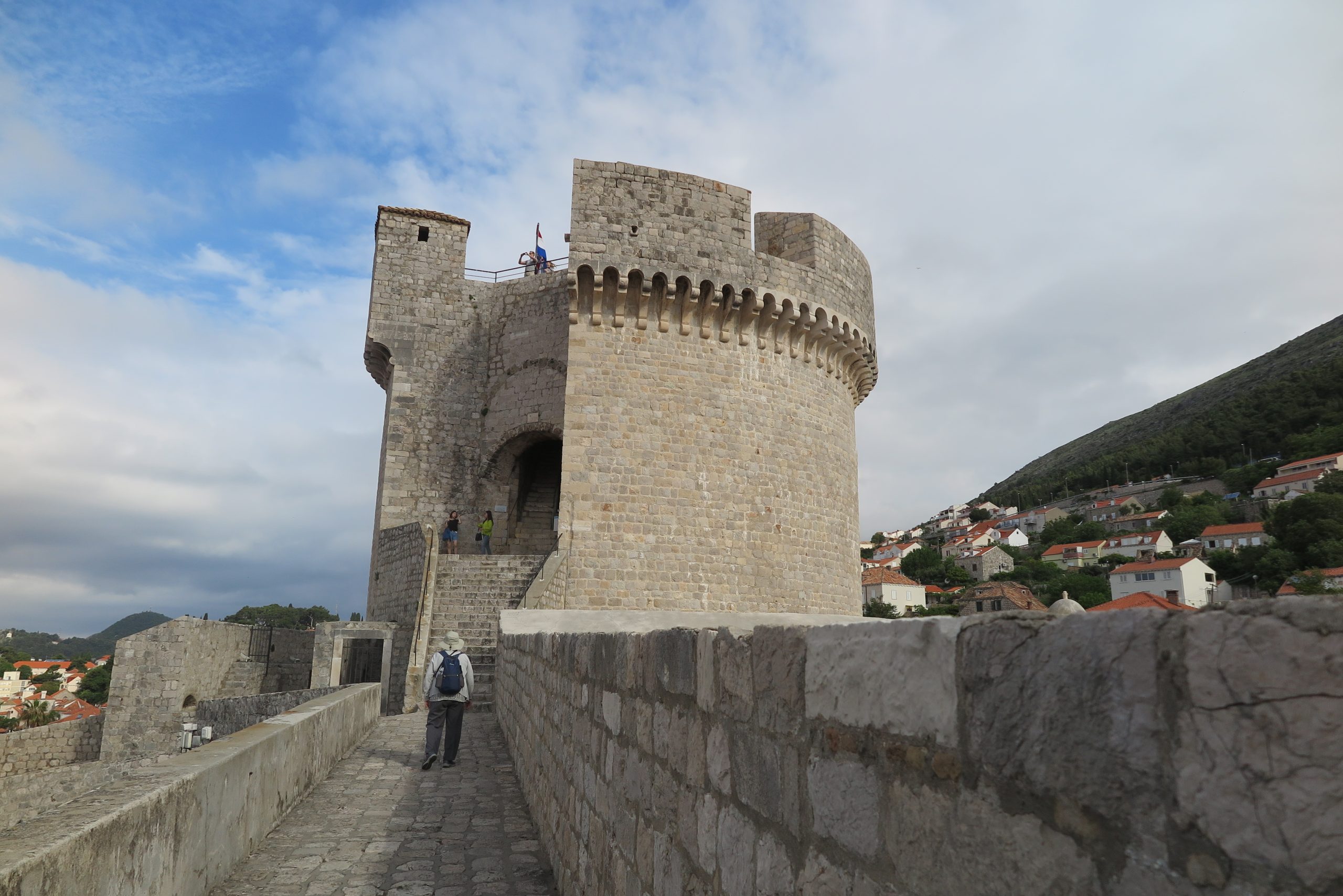
On our last day in Croatia, we walked back to the Old Town and climbed up the ramparts for a mile-long hike of the walls. We started at the Ploče Gate and walked up to the Minčeta Tower, past the sports court, the view of the fortress on Mount Srd, past all the churches, and past Fort of St. Lawrence, visited the Maritime Museum, and the Duičić Masie Gallery to see the works of a modern artist on the theme of people as tourists.
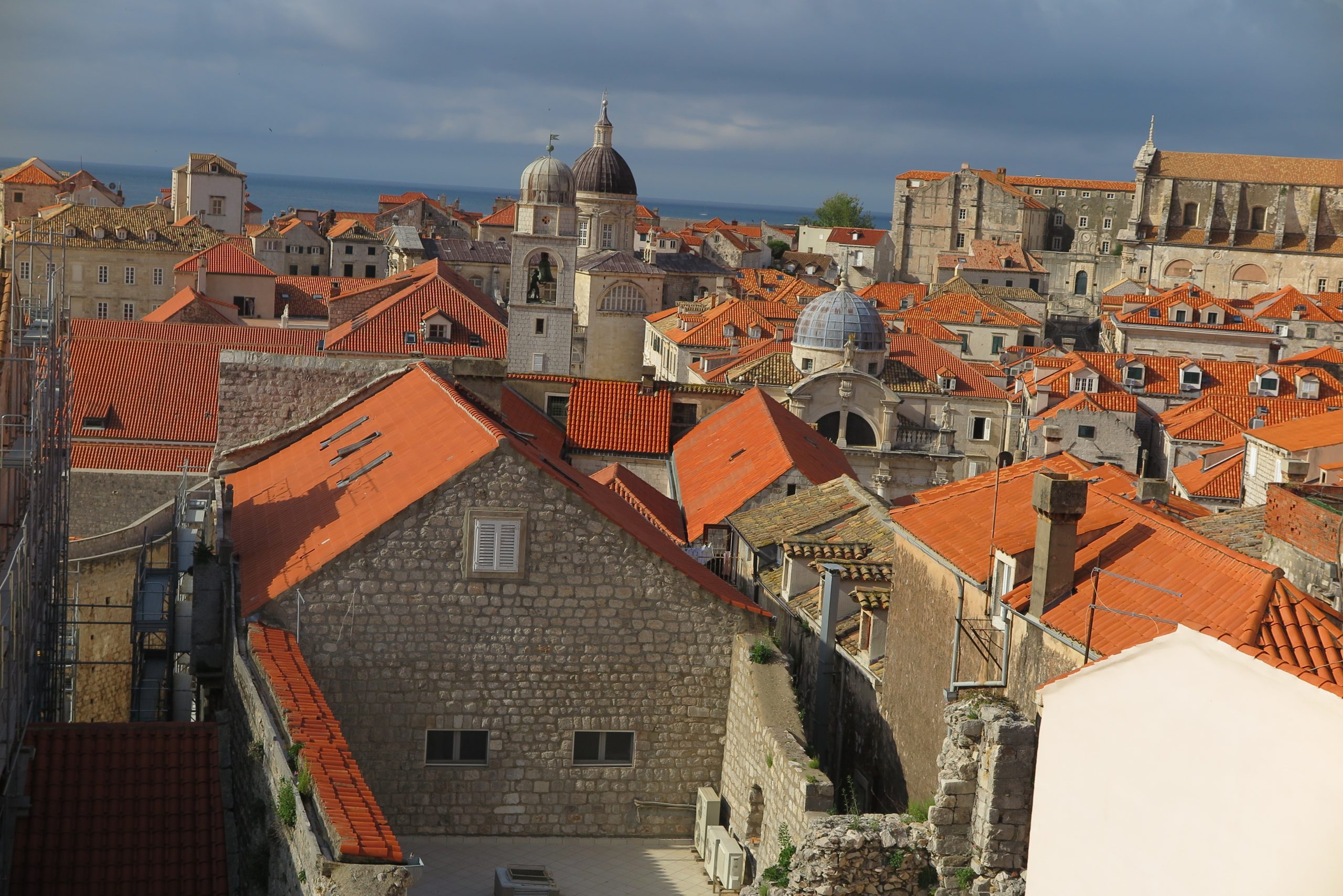
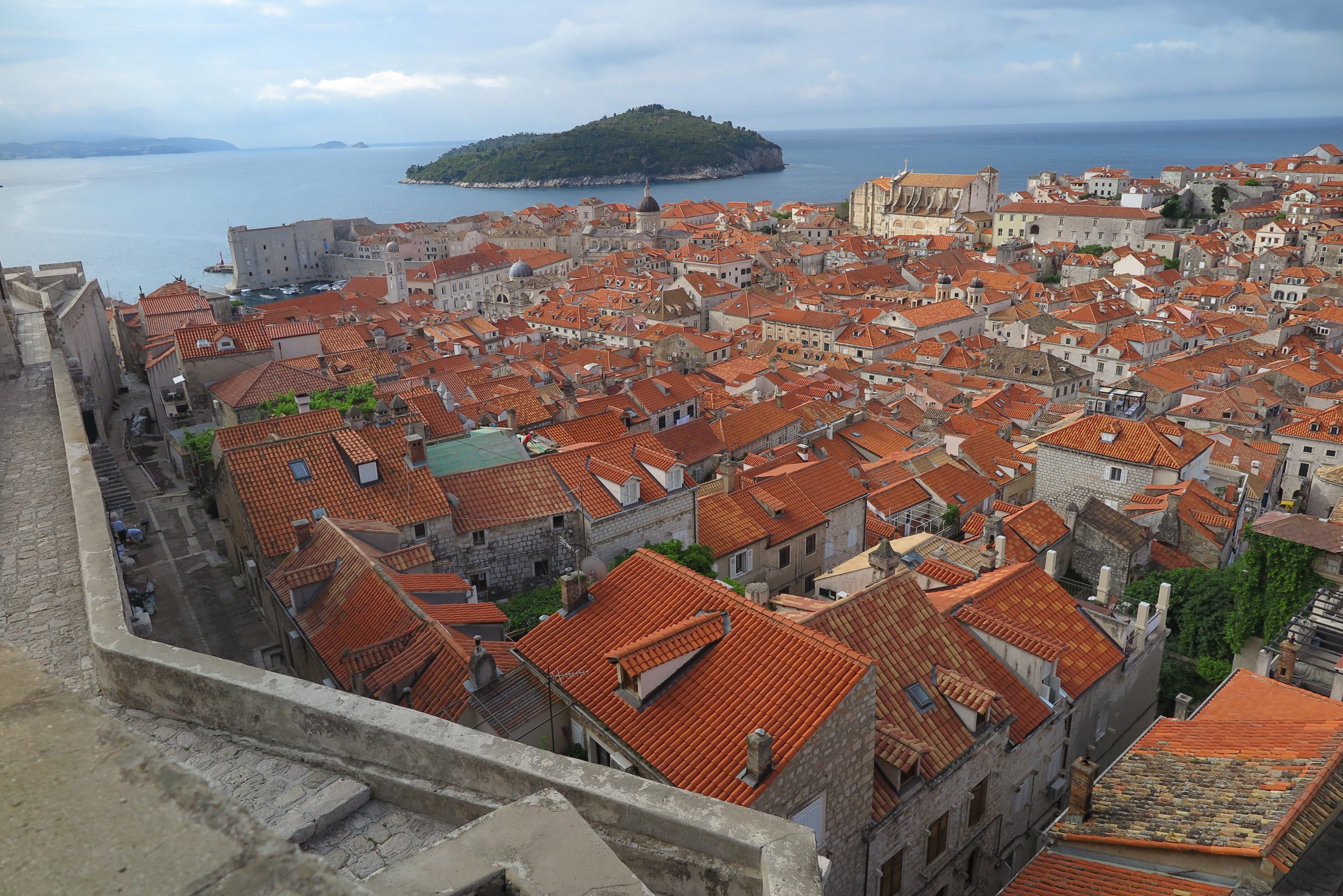
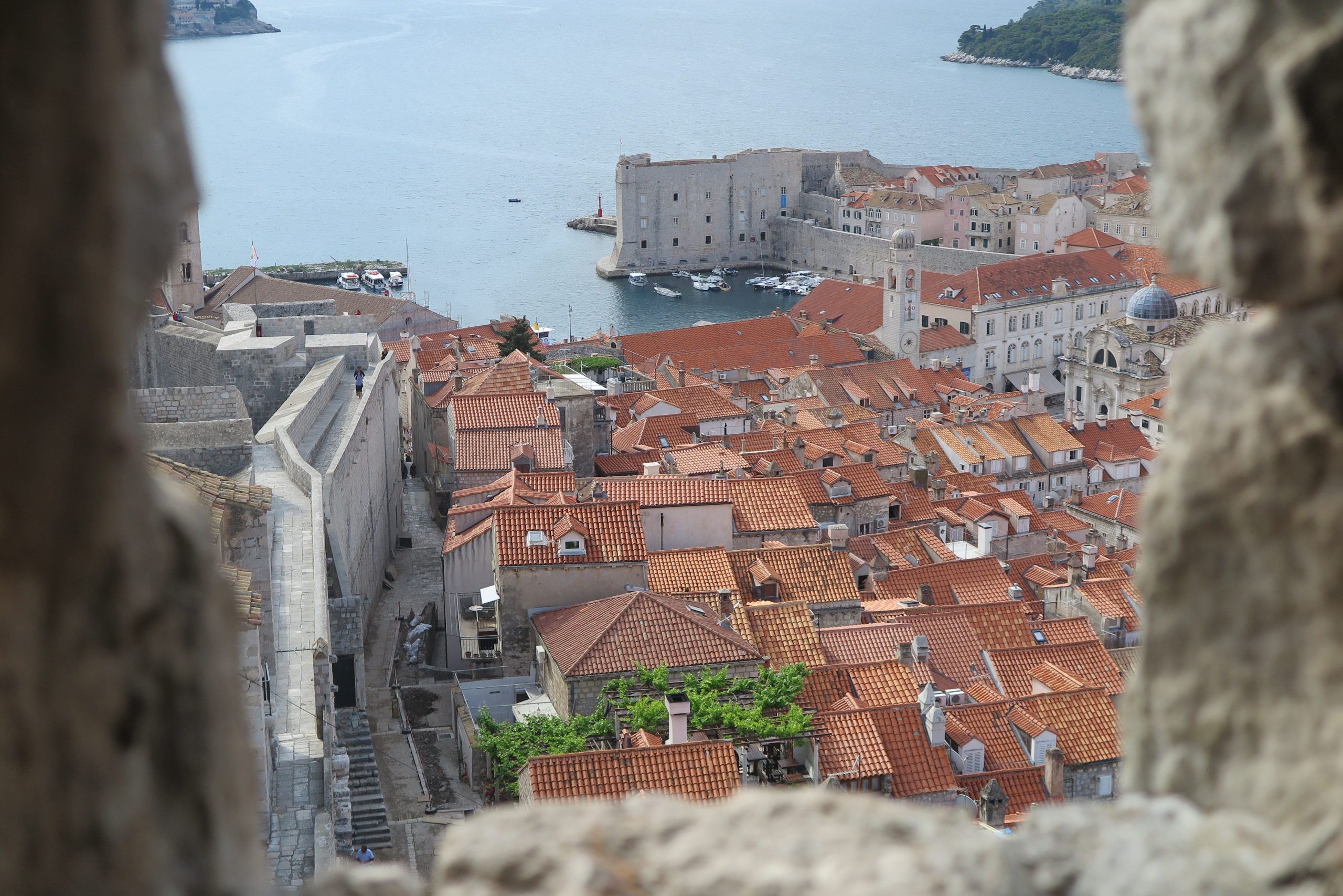
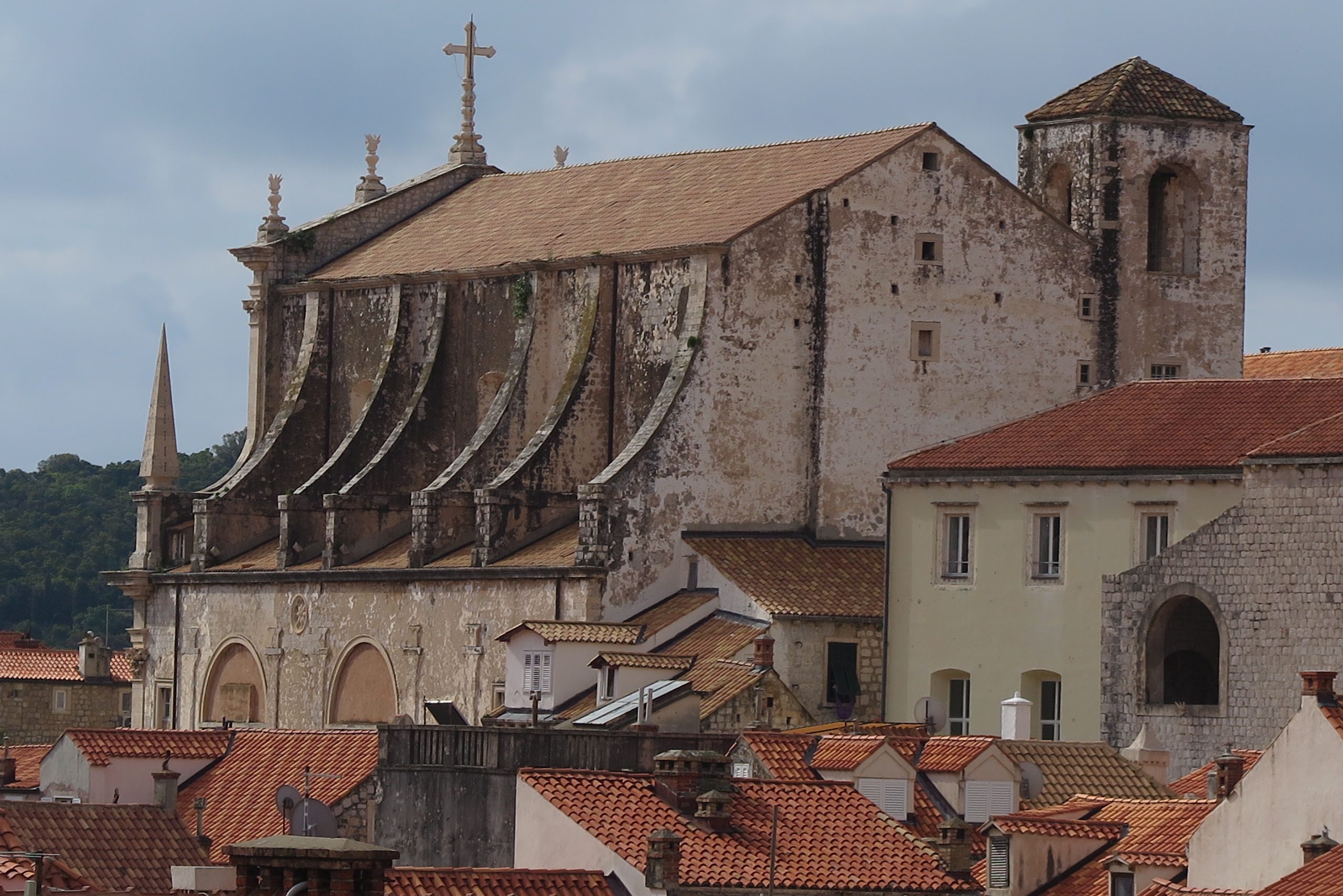
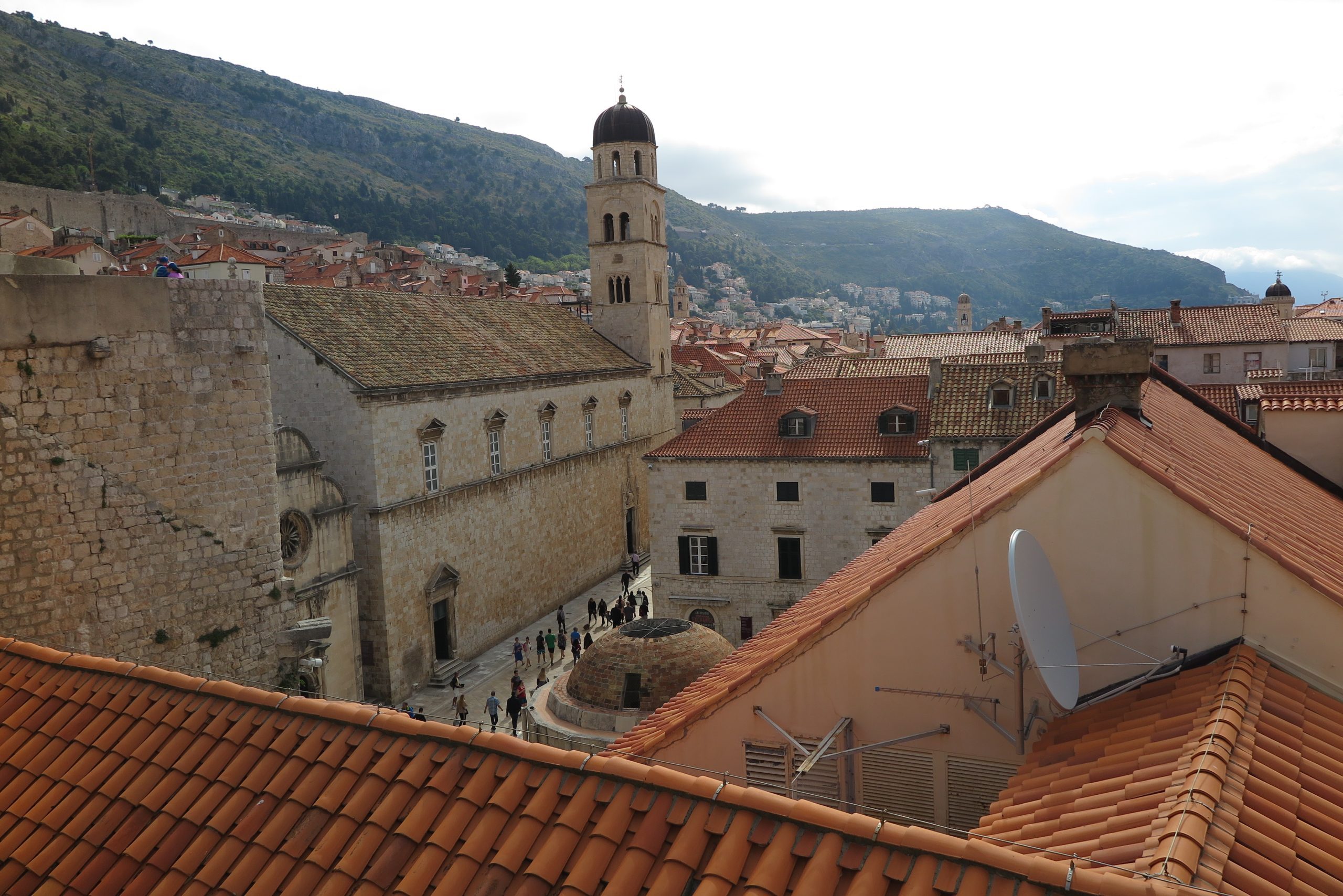
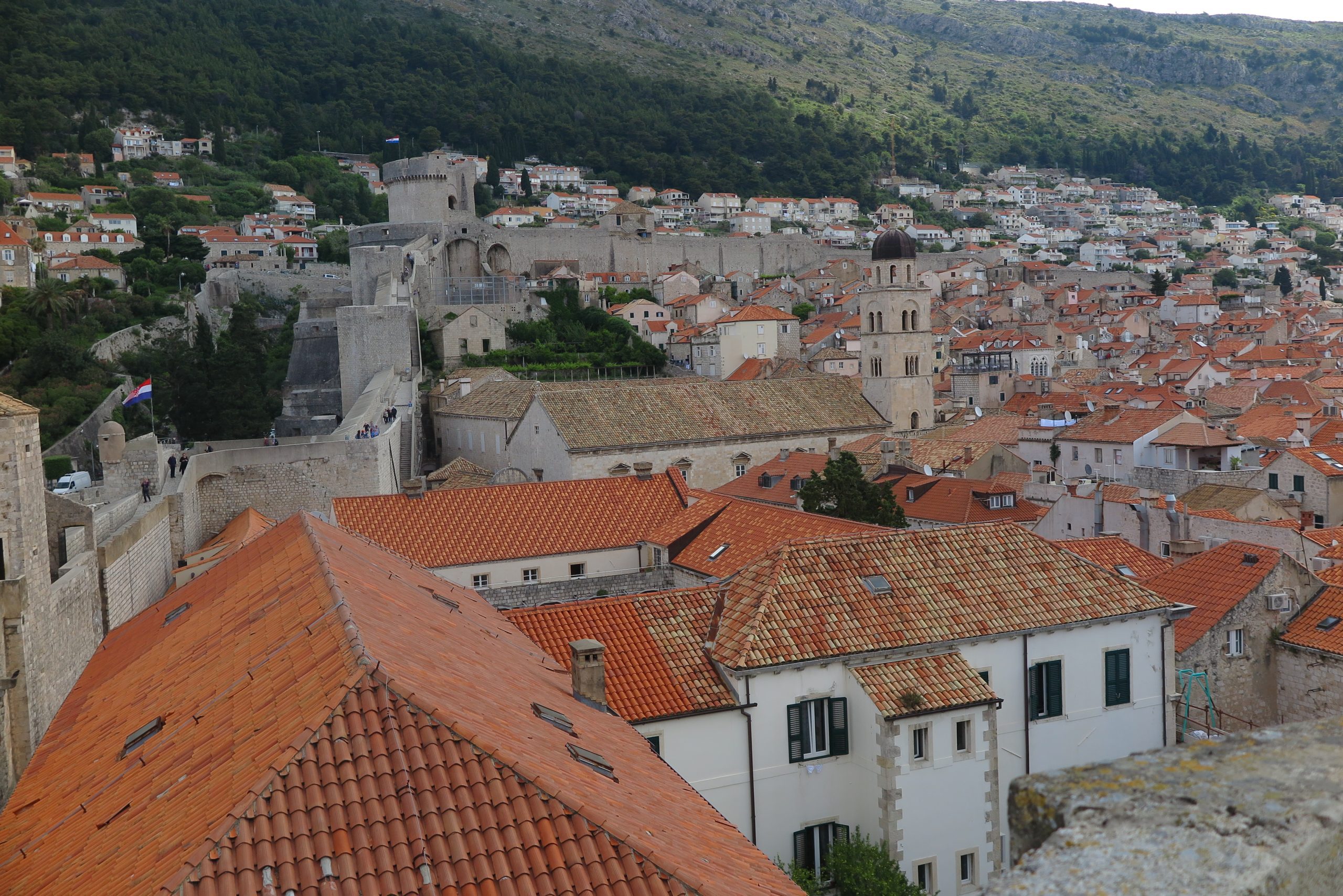
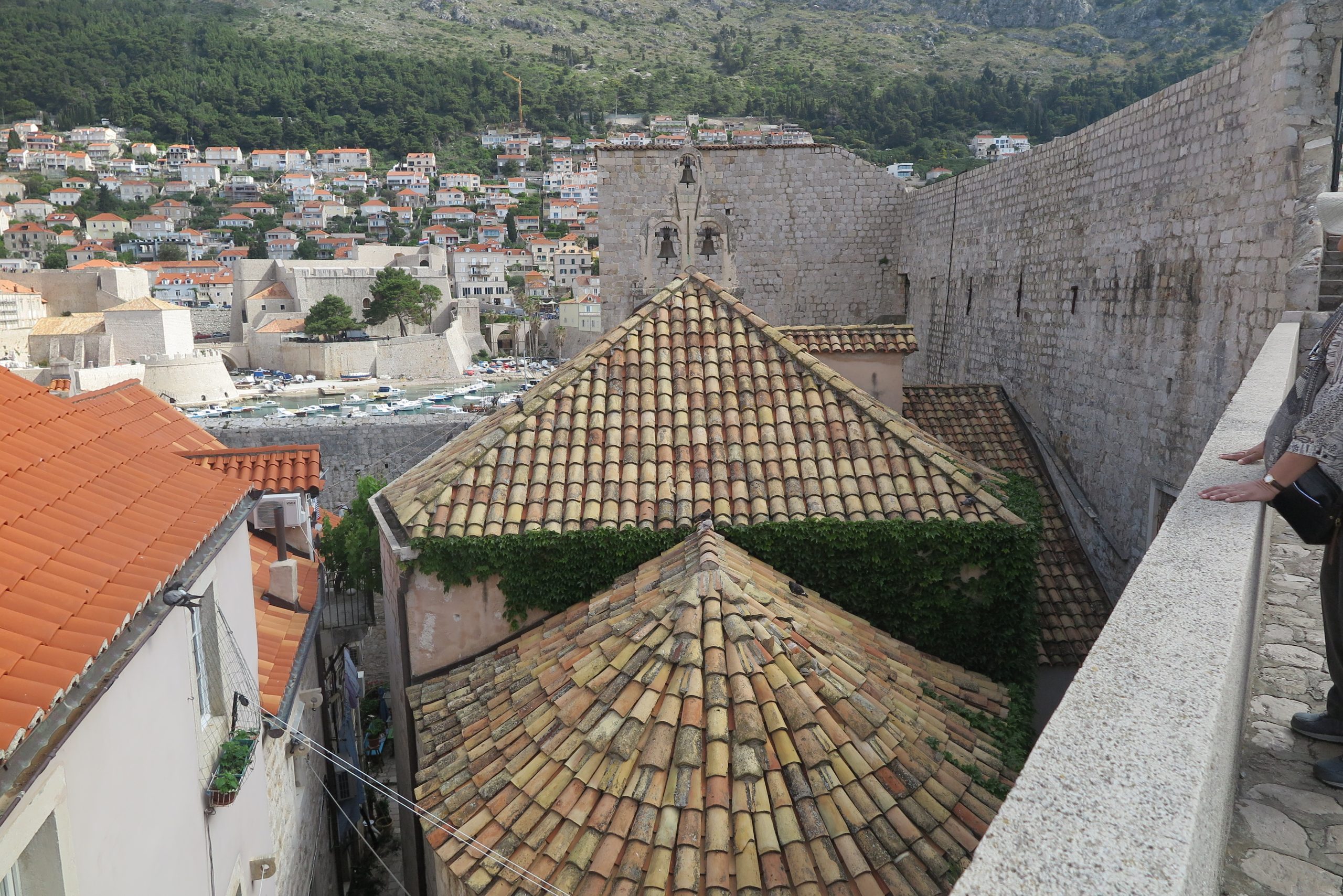
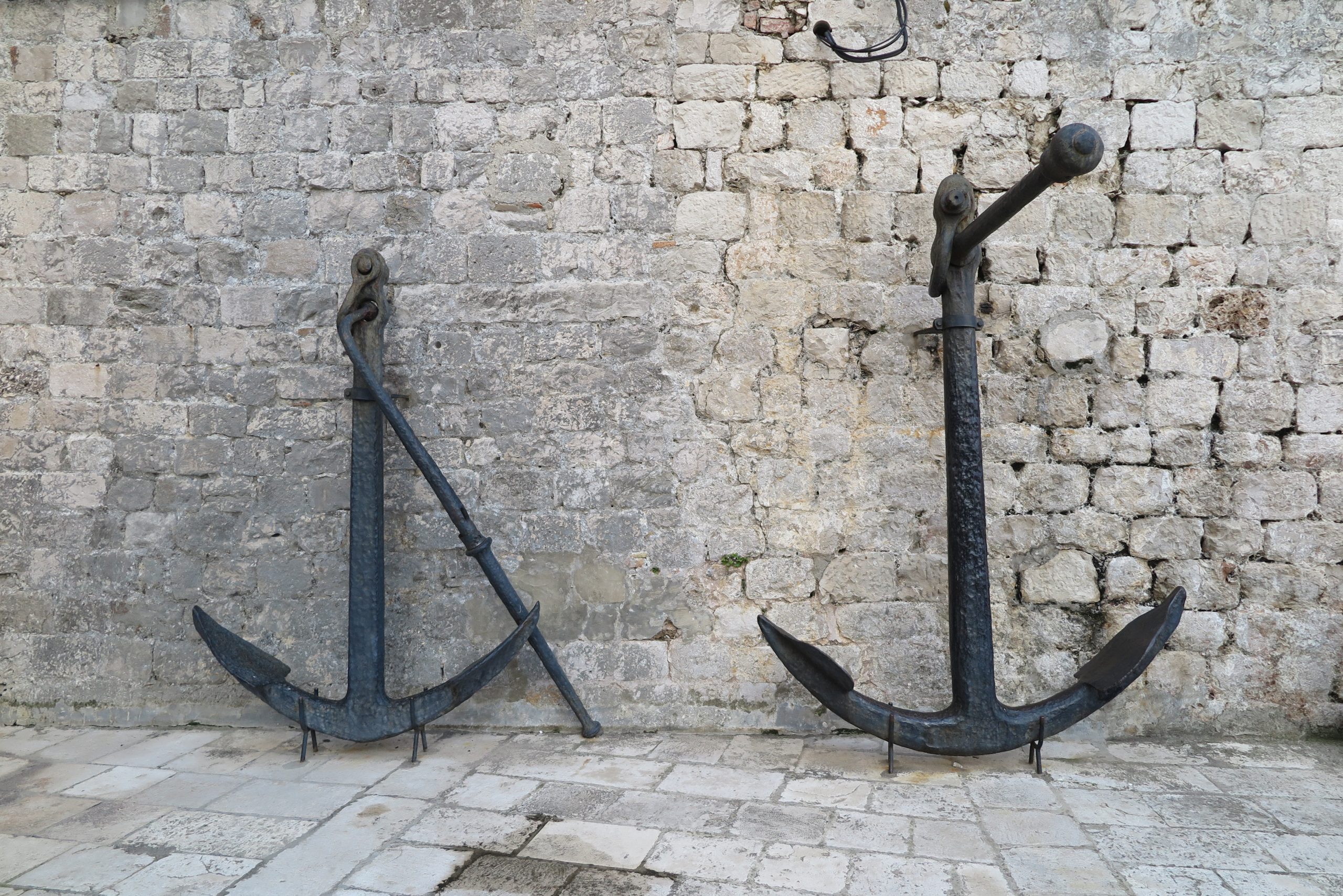
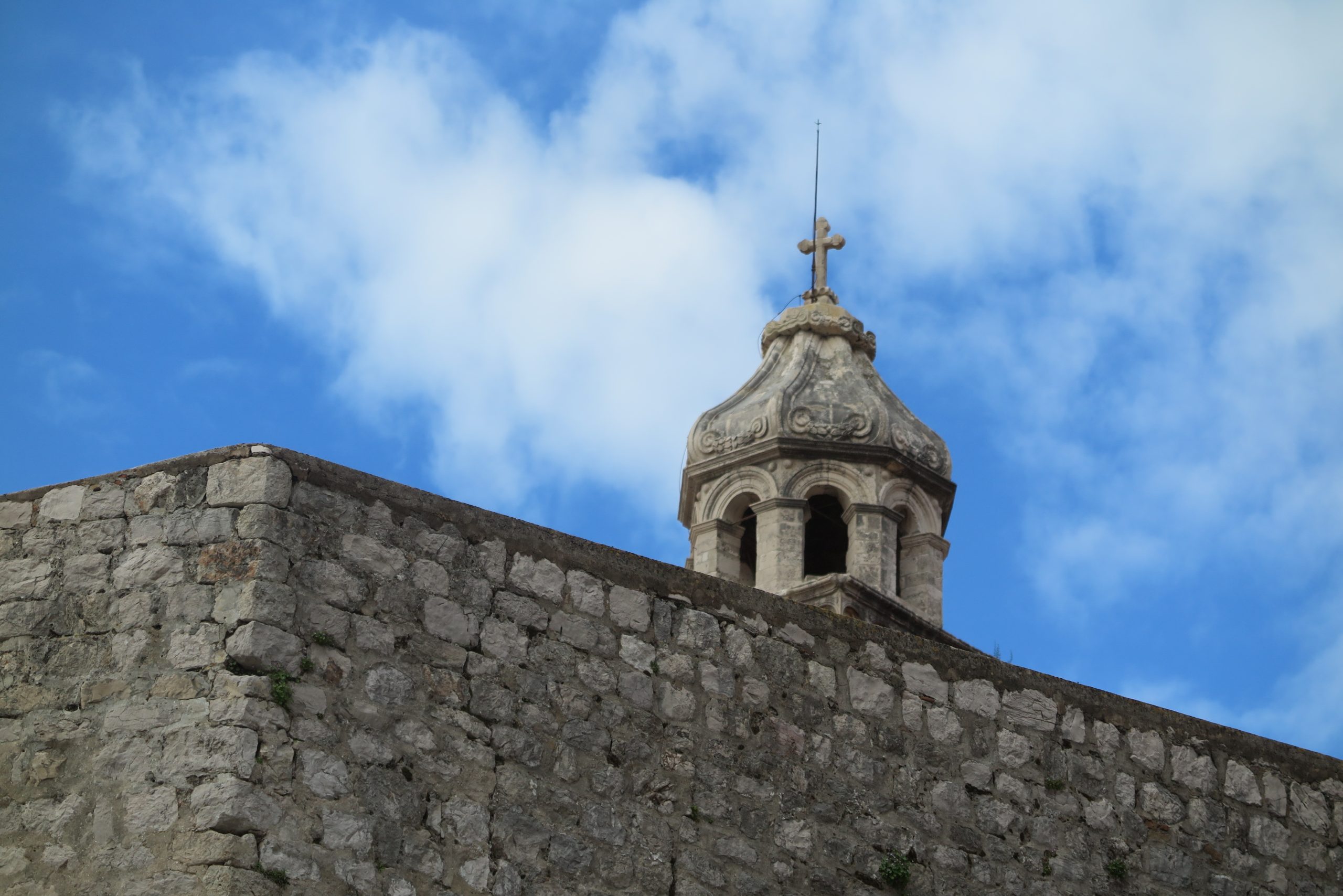
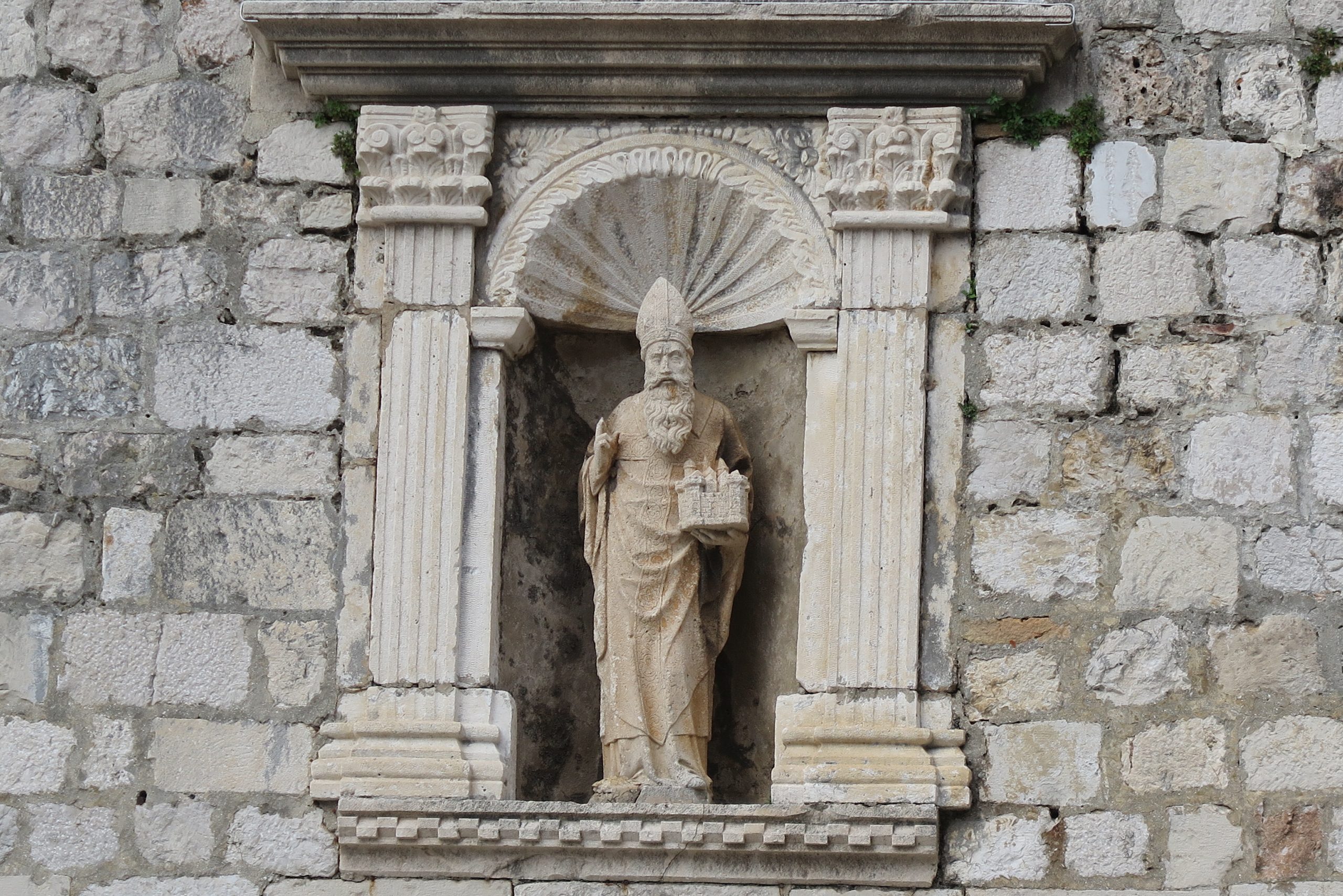
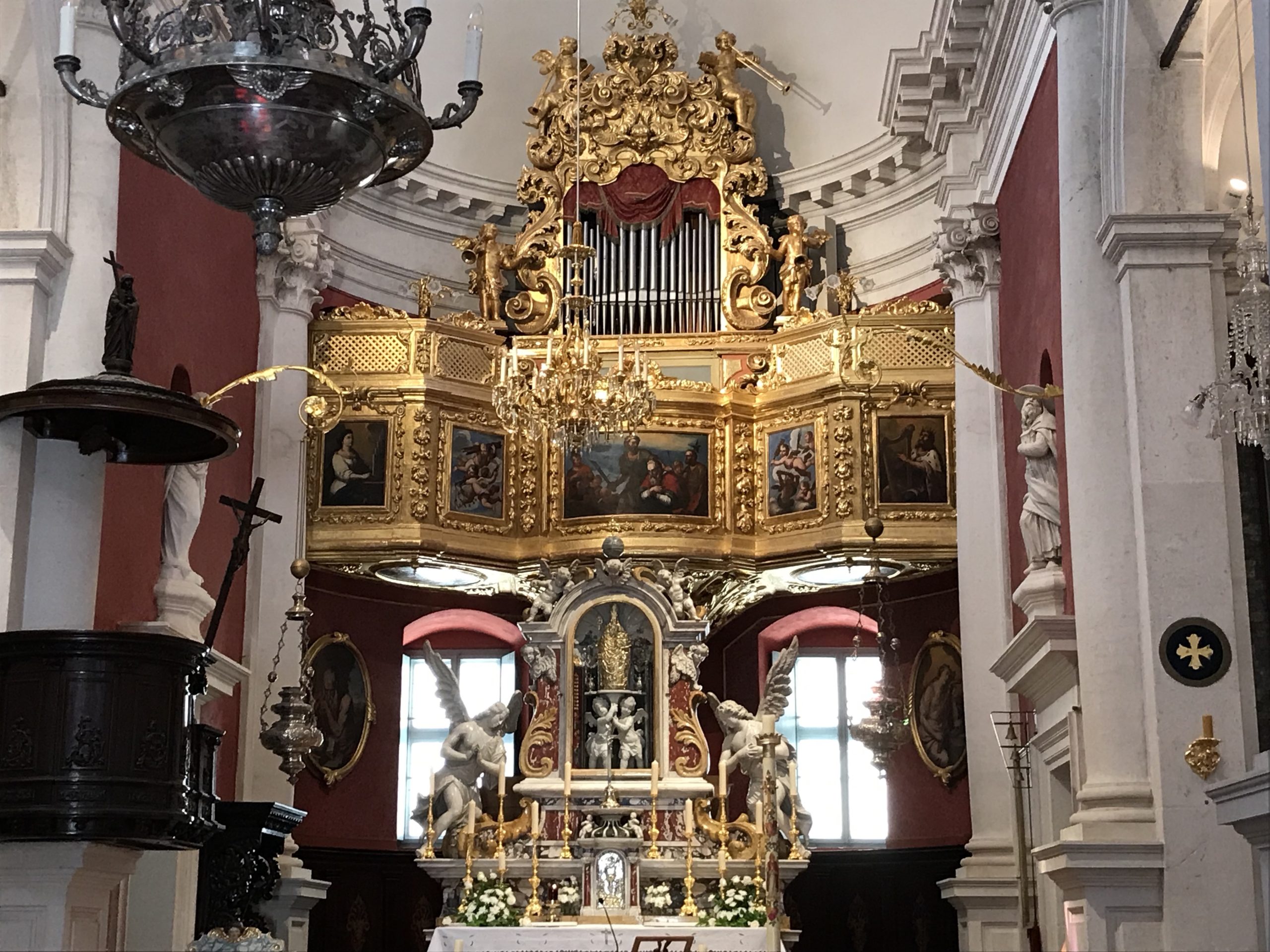
Back in Luža Square, we passed by Onofrio’s Little Fountain and the Orlando Pillar, where the town crier would make his announcements. We stopped by the Church/Cathedral of St. Blaise, the patron saint of Dubrovnik. It stands on the site of a previous cathedral funded by Richard the Lionheart who was on his way back from the Crusades when he was shipwrecked nearby. That cathedral did not survive the 1667 earthquake. This current cathedral houses many of St. Blaise’s body parts in reliquaries made of silver and gold. There’s a reliquary for his arm, leg, skull, etc.
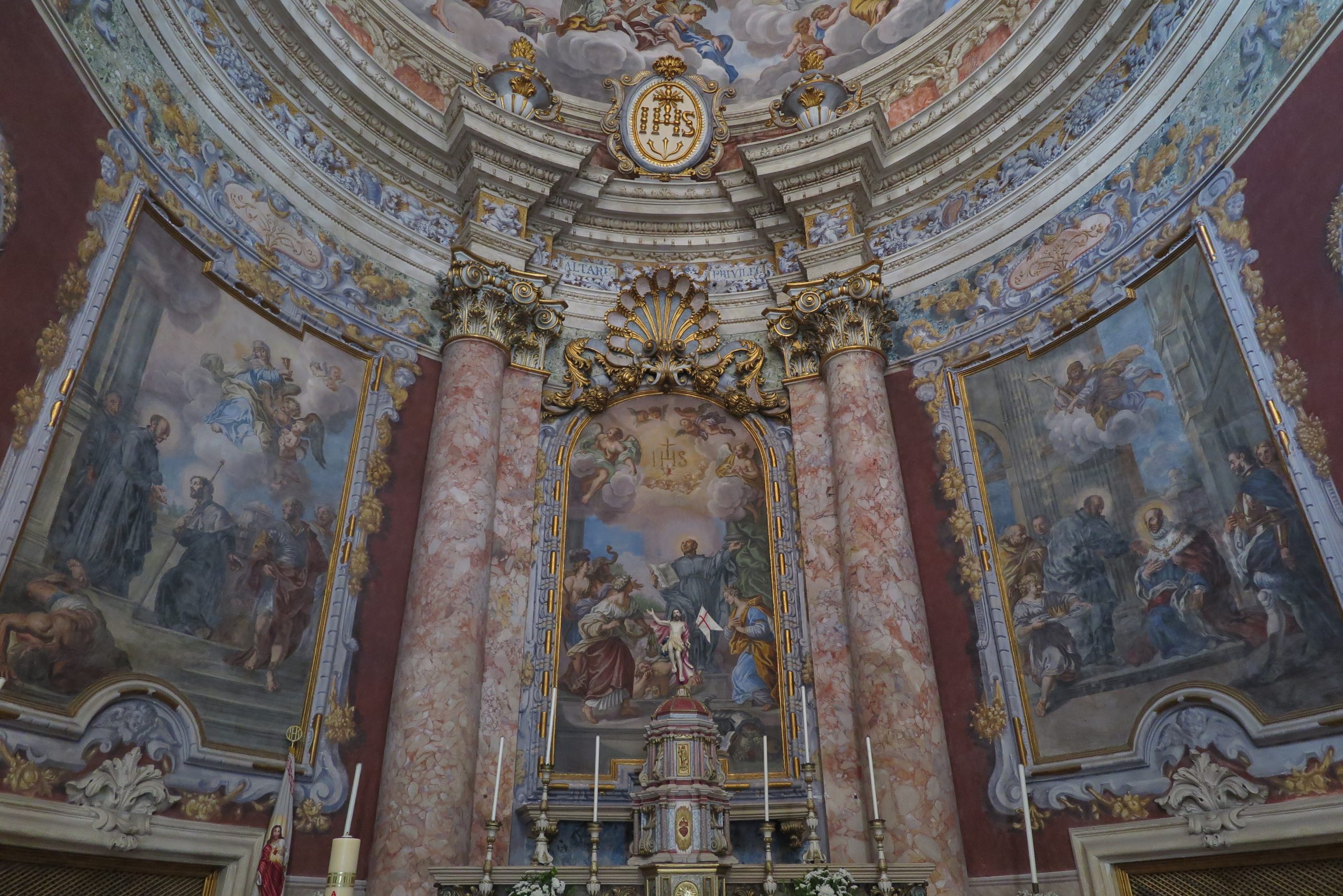
Next, we walked through the market and up to St. Ignatius, the Jesuit church. Game of Thrones fans will likely recognize the steps built in the 1730s by a Roman architect Pietro Passalacqua along the design of the Spanish steps in Rome. The altar in this church is intriguing as it looks like marble but is actually made of wood, as the ship carrying the marble sank.
We spent the rest of the day shopping and walking the Stradun, the main street in the Old Town. We stopped by a jewelry store and bought some traditional filigree earrings patterned after a Konavle (folk costume) button but looking very Indian thanks to the trade with Goa. (according to an article by Vikram Doctor in The Economic Times dated July 13, 2018, the parish church of Sao Bras in the village of Gandaulim in Goa, not far from Panaji, is supposed to have been largely built by traders from Dubrovnik). Sao Bras is the Portuguese name for St. Blaise, and the church is similar to the church in Dubrovnik.
Farewell Croatia – May 23, 2019
A group of us took a shuttle to the airport for an early morning flight to Frankfurt and then back to New Jersey. We said a reluctant goodbye to Croatia!