
When we decided to visit Vietnam, Cambodia, and Thailand, Singapore wasn’t part of the plan. However, just before booking our flights, we decided to explore this vibrant city first. Sometimes, the best trips are unplanned. With curiosity and a spirit of adventure, we’re off to Singapore.
Early Arrival & Singapore City Tour – January 17, 2025
We arrived at Changi Airport from Narita, Tokyo, around 1 AM. Our first experience with Singapore’s love of efficiency was navigating passport control. After resolving a discrepancy in passport numbers in their online system, we cleared immigration, collected our luggage, and took a taxi to our hotel for a quick nap.
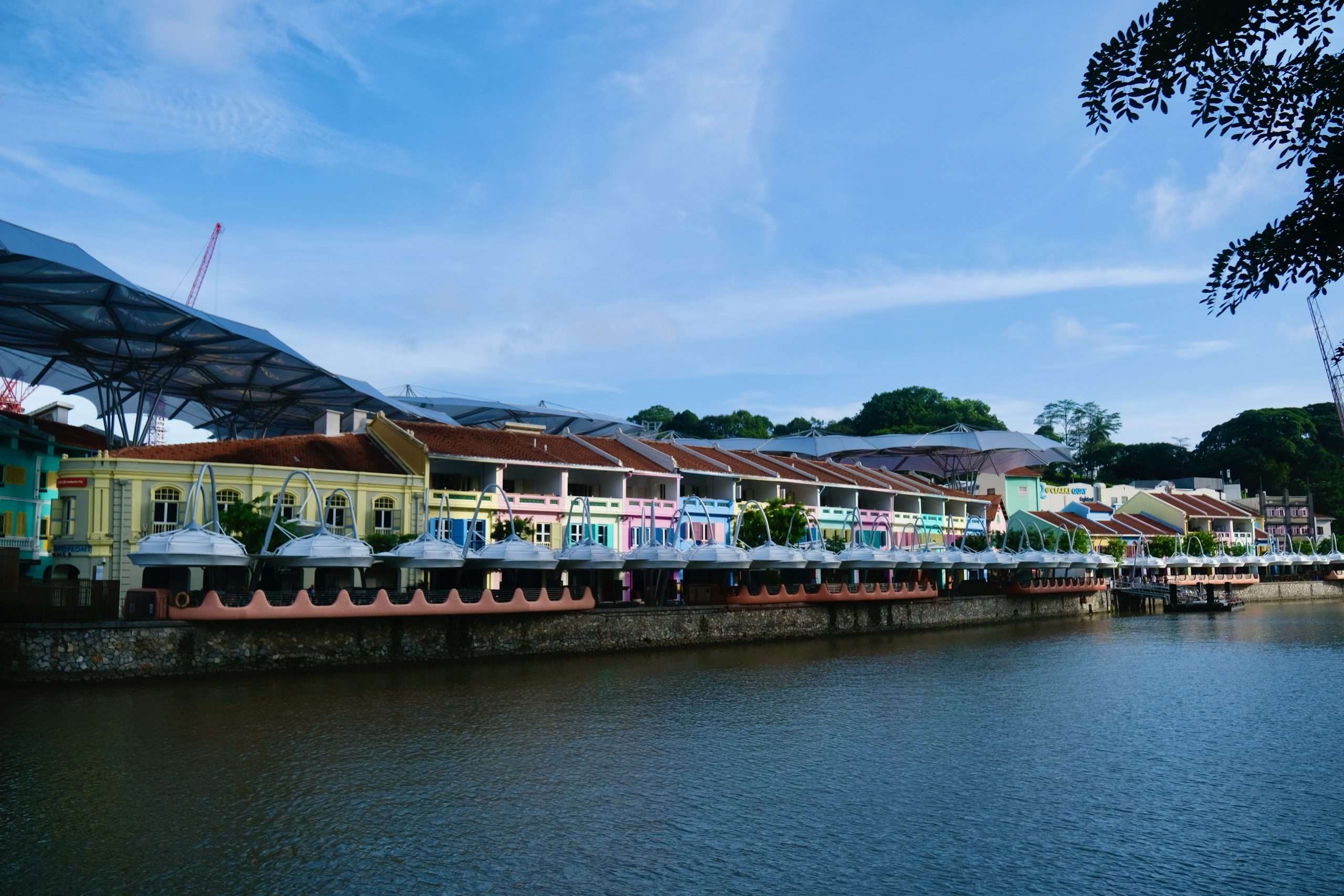
Promptly at 8:15 AM, we embarked on an orientation tour of Singapore (also known as Lion City in English or Singapura in Sanskrit) to discover its history, landmarks, and culture. First, we followed the Singapore River to Kampong Glam. The river, once heavily polluted, is now clean enough for marine life, thanks to cleanup efforts that began in the late 1970s. The river’s previous focus on trade has shifted to tourism, with the port now located to the west of the island and traffic on the river reduced to water taxis.
Along the way, we learned that one in three people in Singapore are Chinese, one in six are Malay, and one in 11 are Indian. The British moved into Singapore in 1819 when Sir Stamford Raffles of the English East India Company purchased land from the local chief (who was a cousin of Sultan Hussein Shah of Johor) to set up a trading post on behalf of the company, much to the annoyance of the Dutch, who considered Singapore part of their sphere of influence. By 1924, the Dutch ceded Singapore to the British for a monetary sum. In 1867, Singapore became a Crown Colony but was briefly lost to the Japanese during World War II. After the war, Singapore reverted to British control. In August 1965, Singapore became an independent Republic.
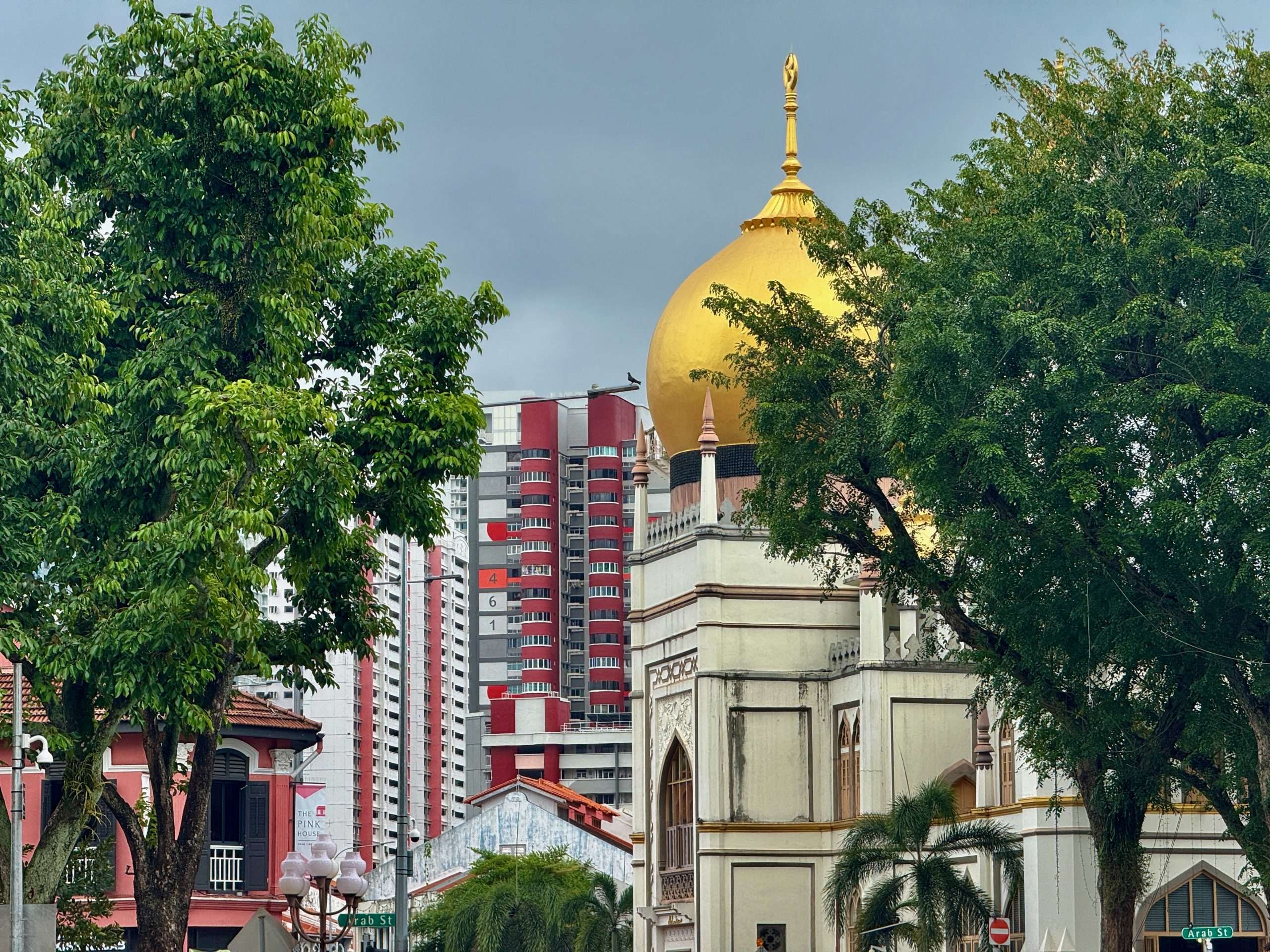
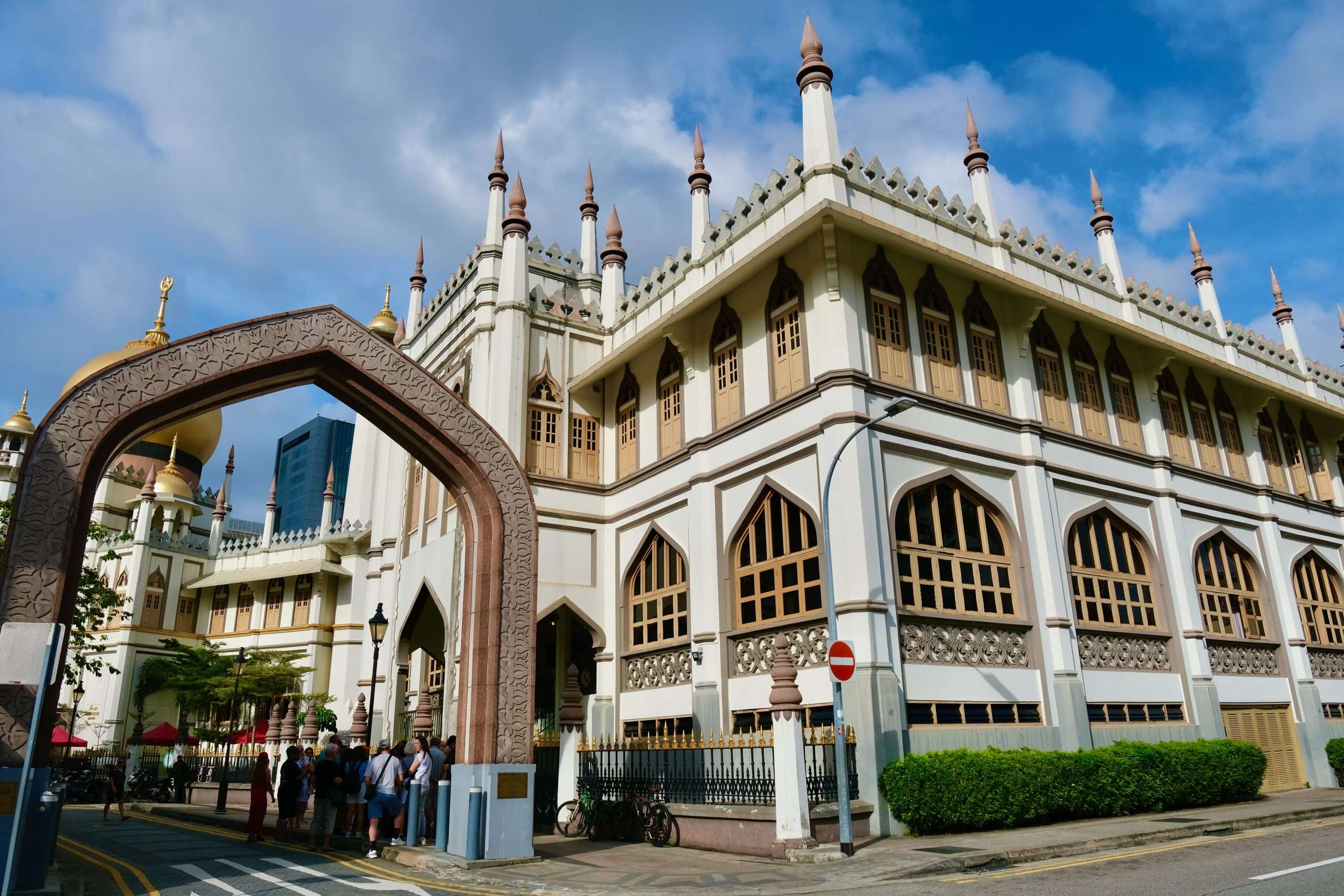
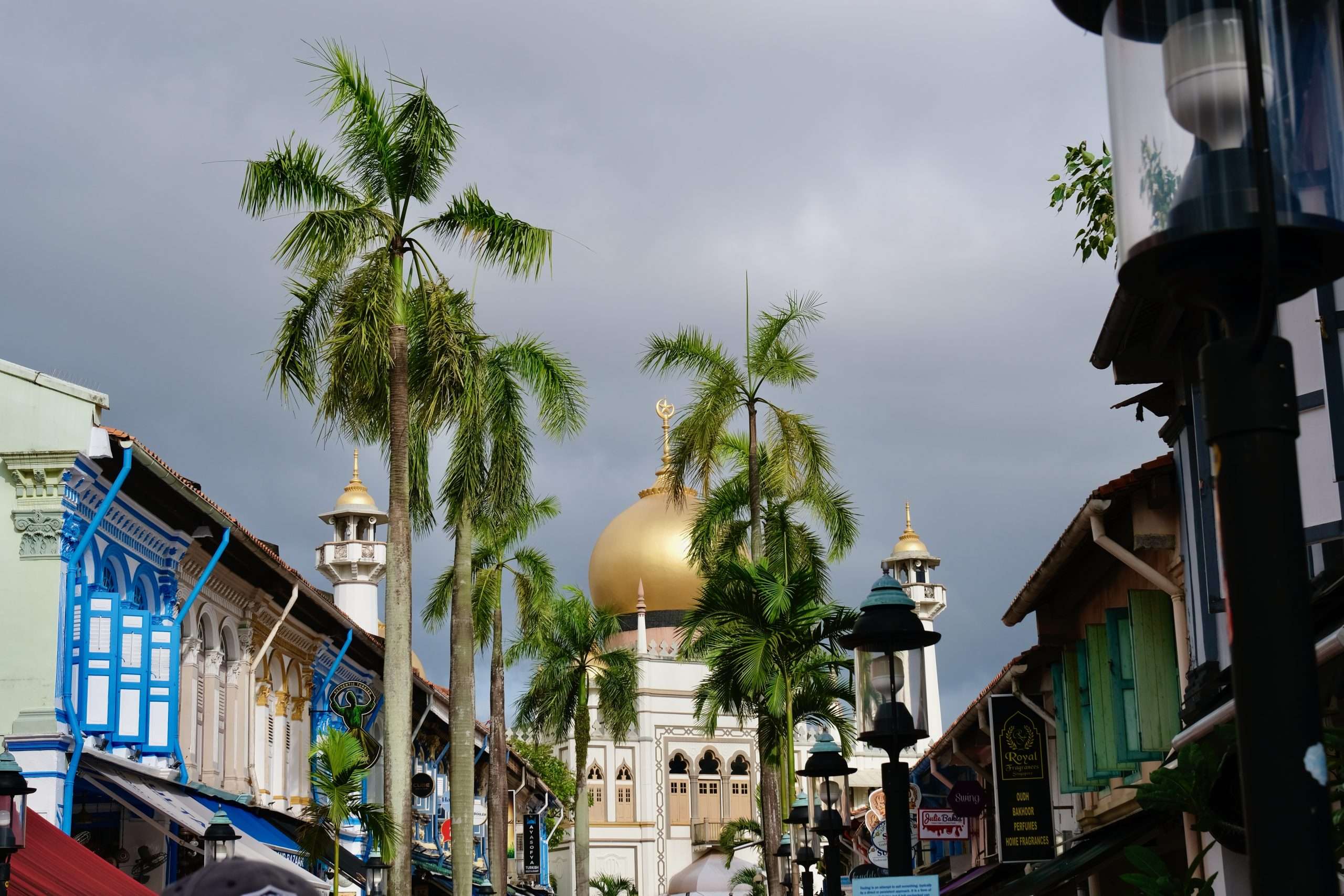
When we reached Kampong Glam (or Kampong Gelam in Malay (‘kampong’ meaning village and ‘gelam’ a species of tree), we got off the bus and explored the area, which had been given to the Sultan and his household as well as to the Malay and Arab communities. They built shop houses and residential buildings. Streets such as Haji Lane, Baghdad Street, Kandahar Street, and Arab Street and the Sultan Mosque led to this area being known as the Muslim Quarter. The mosque was initially built with funds made available by Raffles. It was torn down in the early 1900s, and construction on the current building began in 1924 in the Indo-Saracenic style, based on designs by an Irish architect. Today, this area of the Muslim Quarter has been restored and is home to art galleries, restaurants, craft shops, bakeries, and design studios. The shophouses have been restored and outfitted with modern conveniences, such as indoor plumbing.
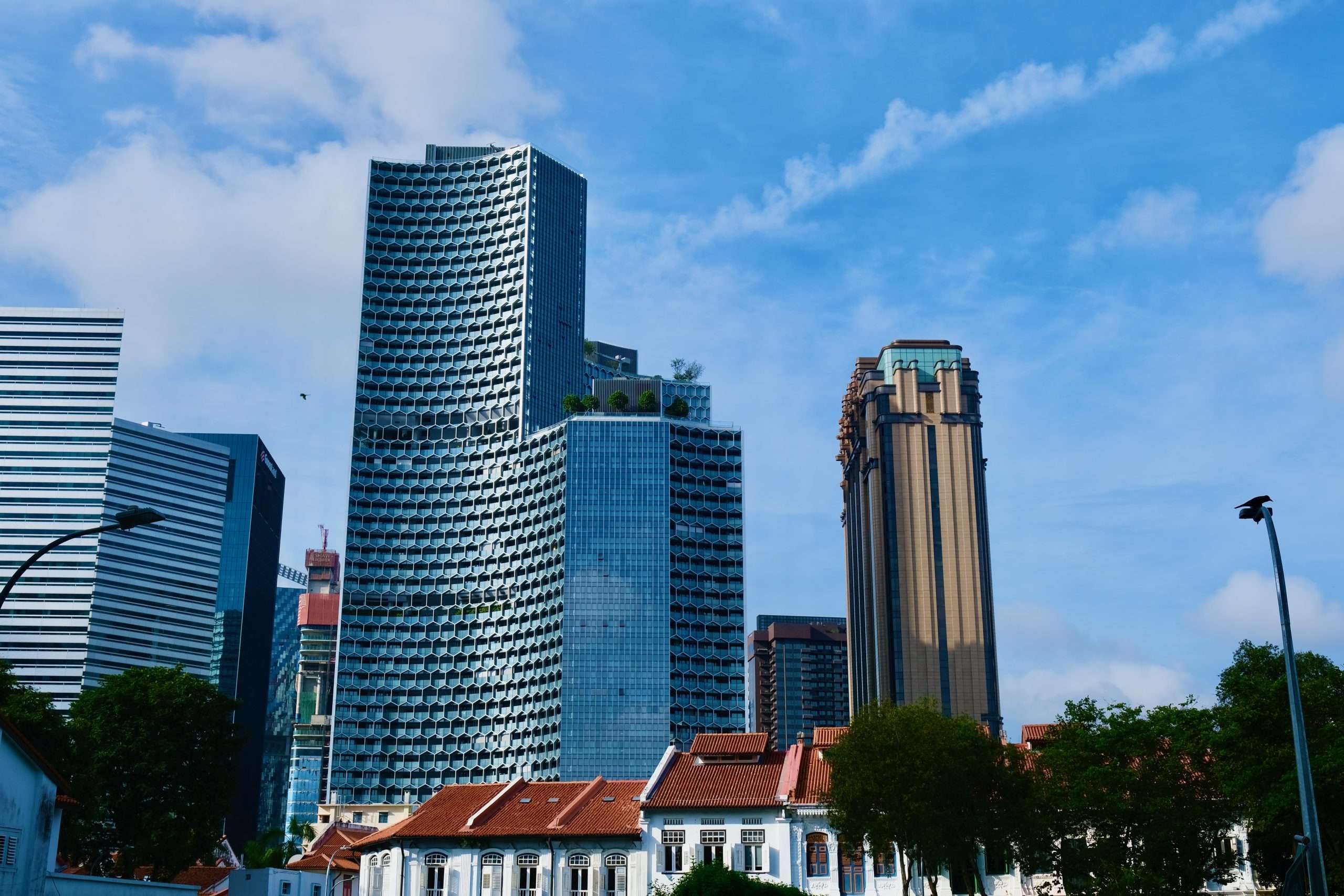
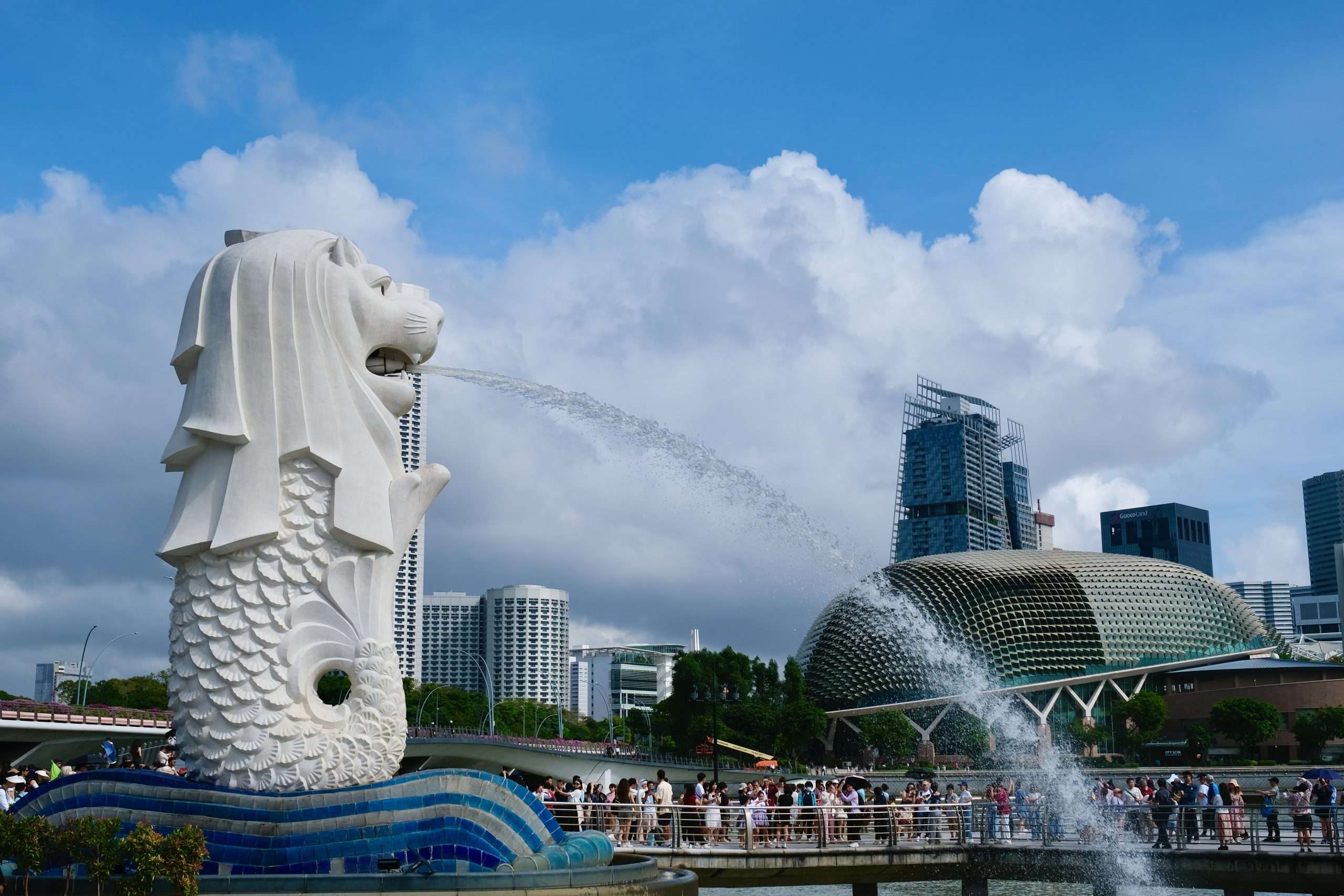
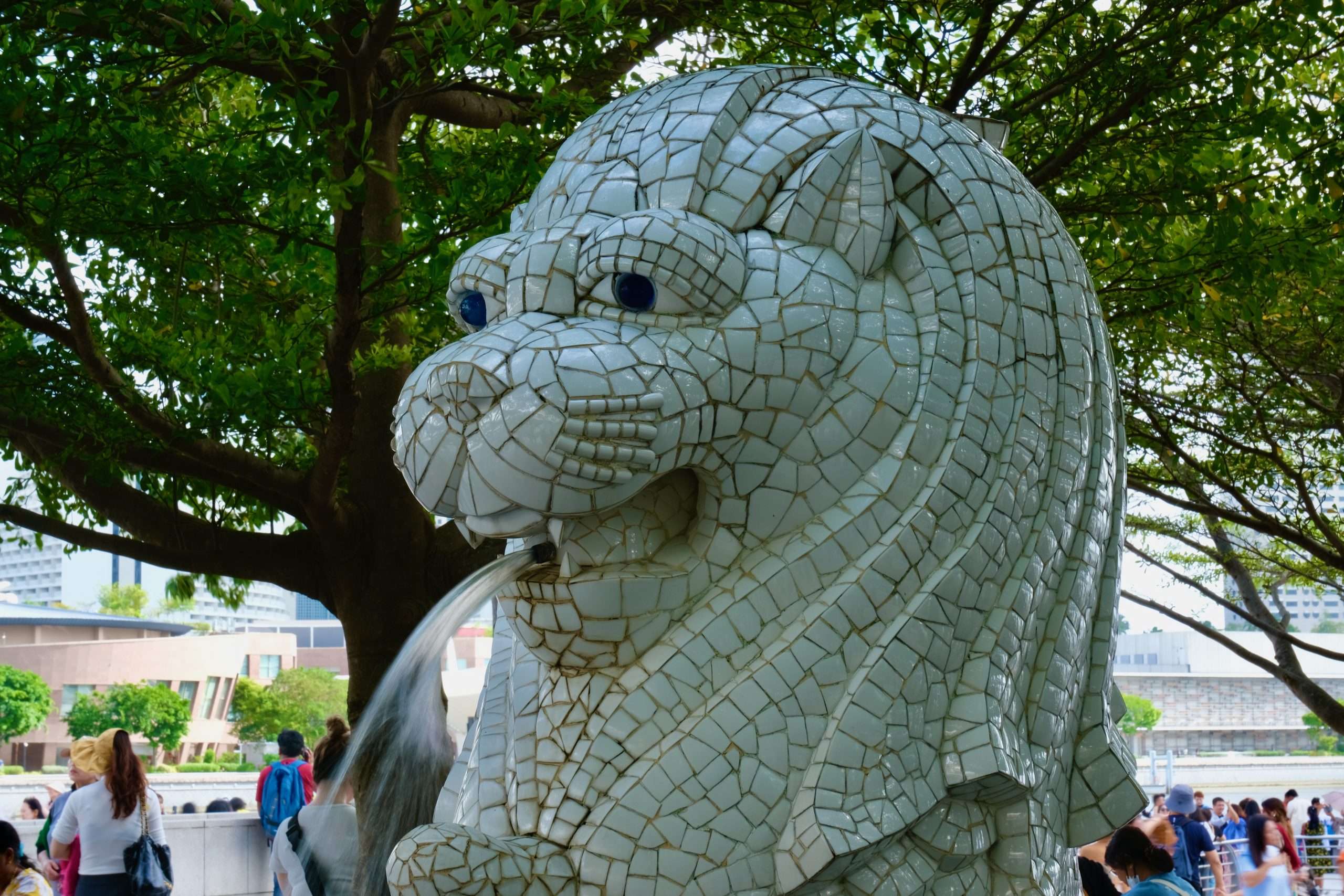
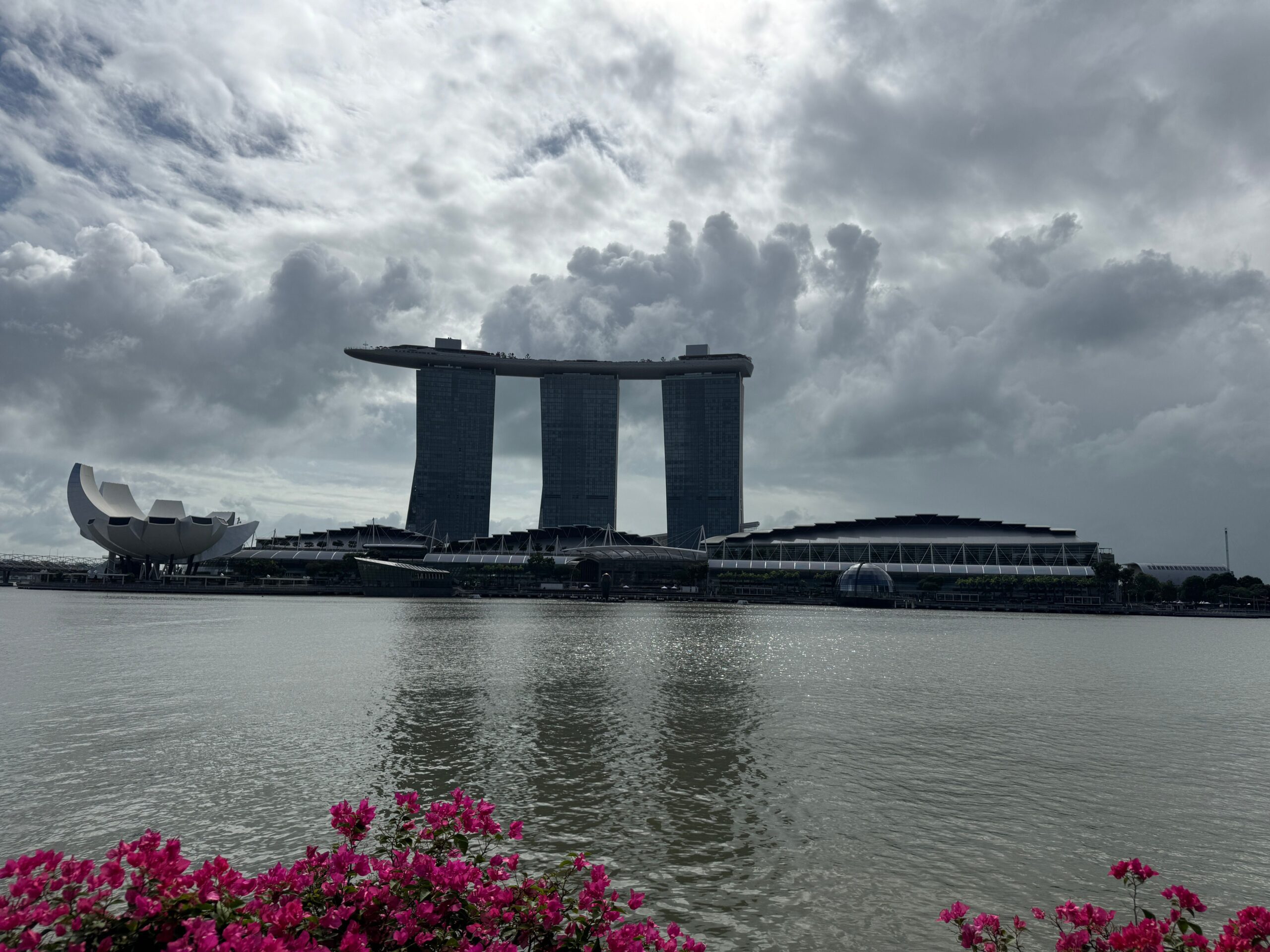
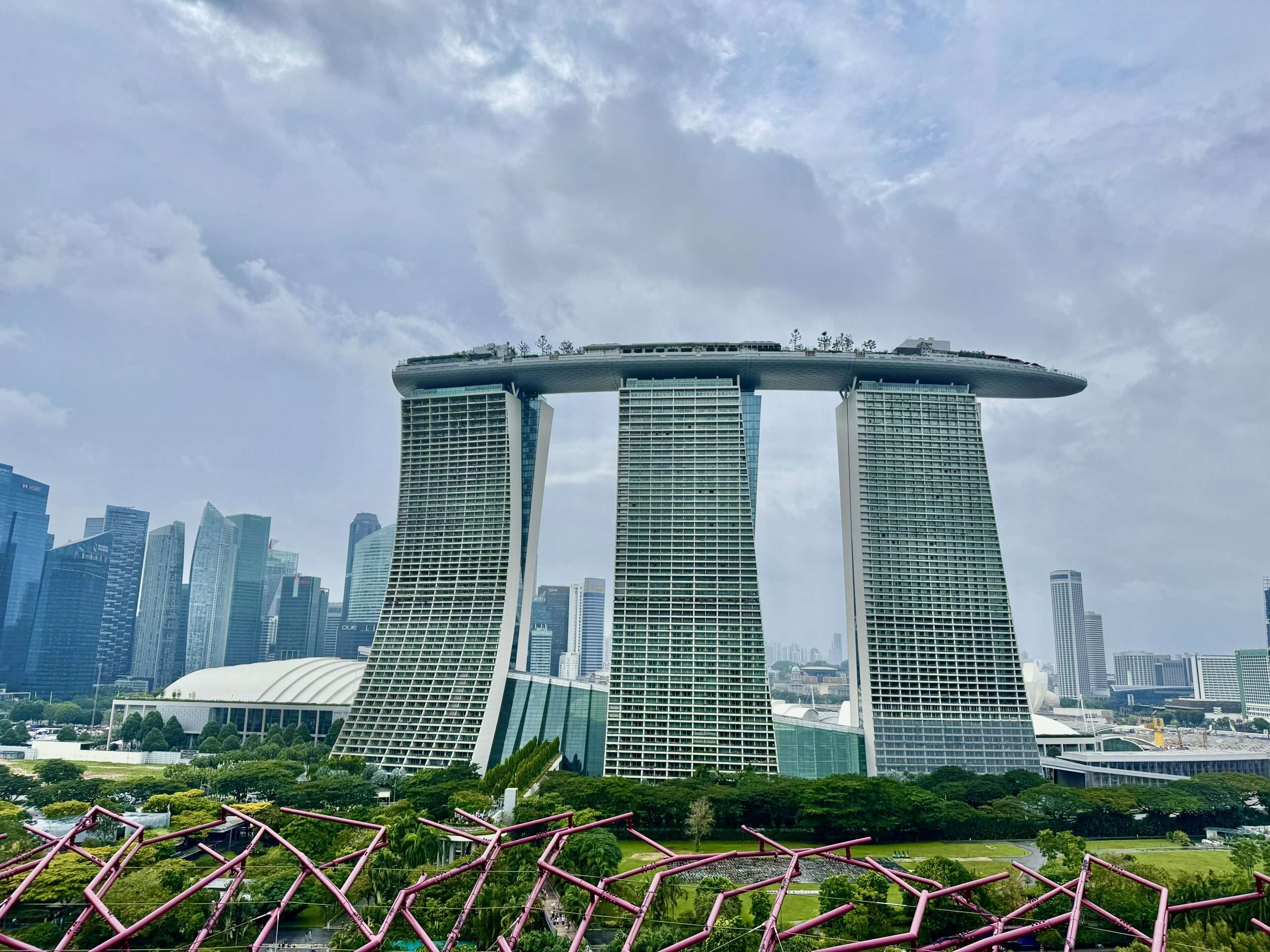
Our next stop was Merlion Park, where we admired the half-lion, half-fish statue that represents Singapore’s transformation from a fishing village to a modern metropolis. The statue, created in the 1970s by Singaporean sculptor Lim Nang Seng, has since been joined by a cub merlion. We also enjoyed the beautiful Marina Bay with the three towers of the iconic Sands Marina Bay resort across the park. This is a very popular tourist site, with no shortage of photo opportunities.
Next, we visited the Thian Hock Keng Temple, one of Singapore’s oldest and most historically significant Hokkien temples, renowned for its intricate architecture, exquisite phoenix and dragon statues, colorful ceramic tiles, and cultural importance. The temple, located in the Chinatown district, is dedicated to Mazu, the Chinese goddess of the sea. Materials and craftsmen were brought in from China to build the temple. Construction began in 1839, with funds raised by the community. Although a Buddhist temple, many Muslim Malayans and Indian Tamils helped with its construction. To enter the temple, you have to step over a very high threshold, designed to keep out floods, vermin, and ghosts.
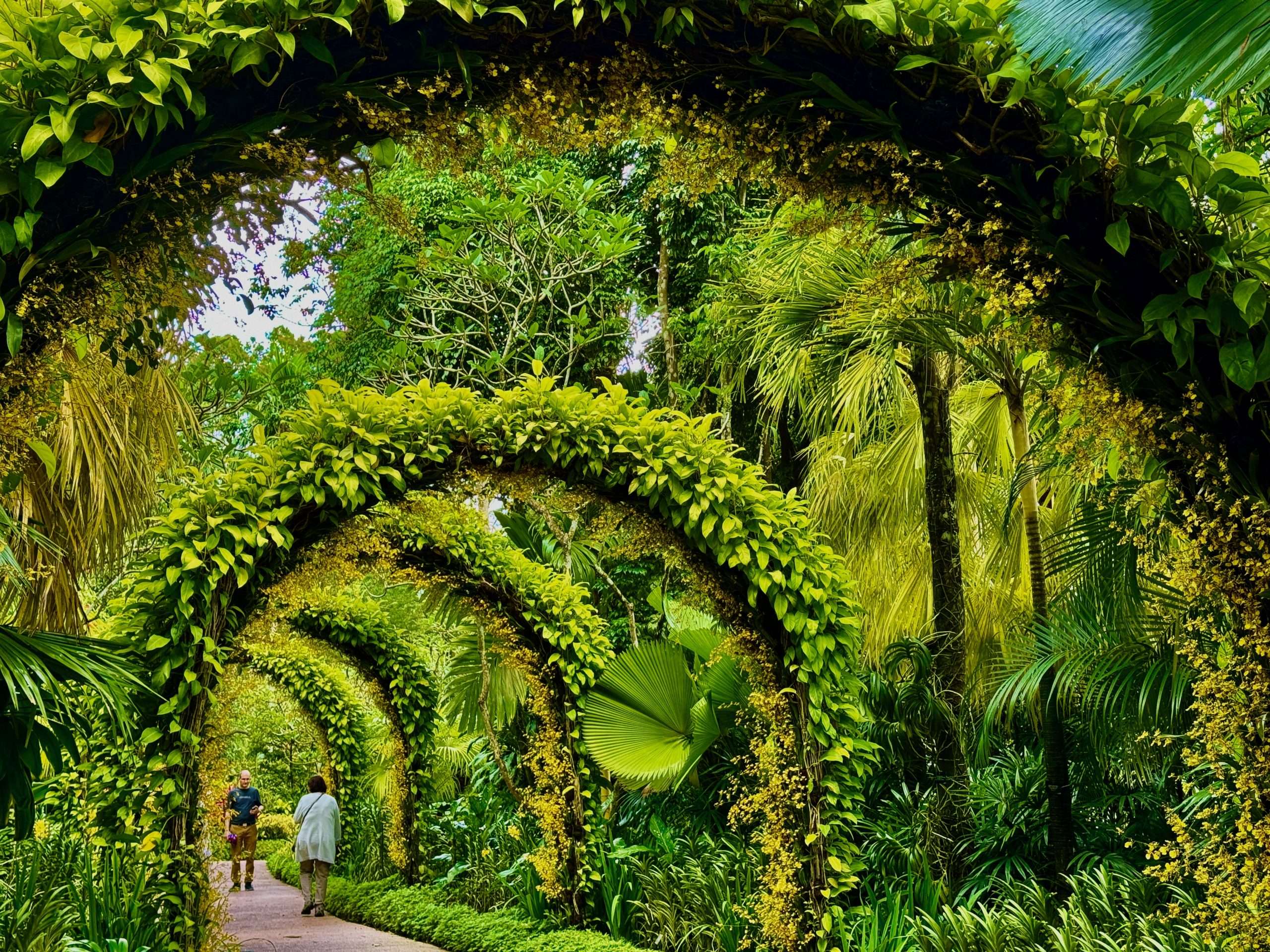
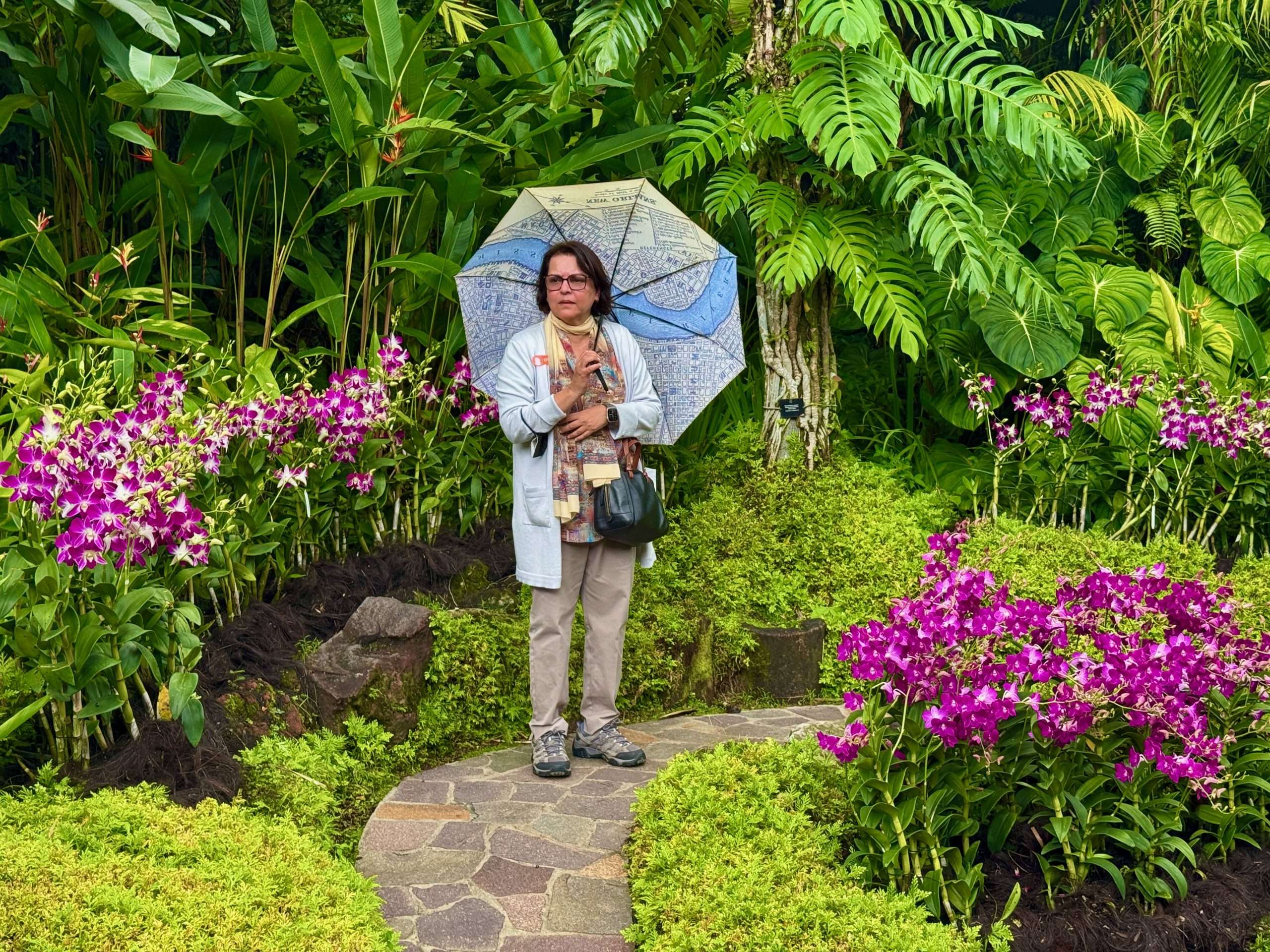
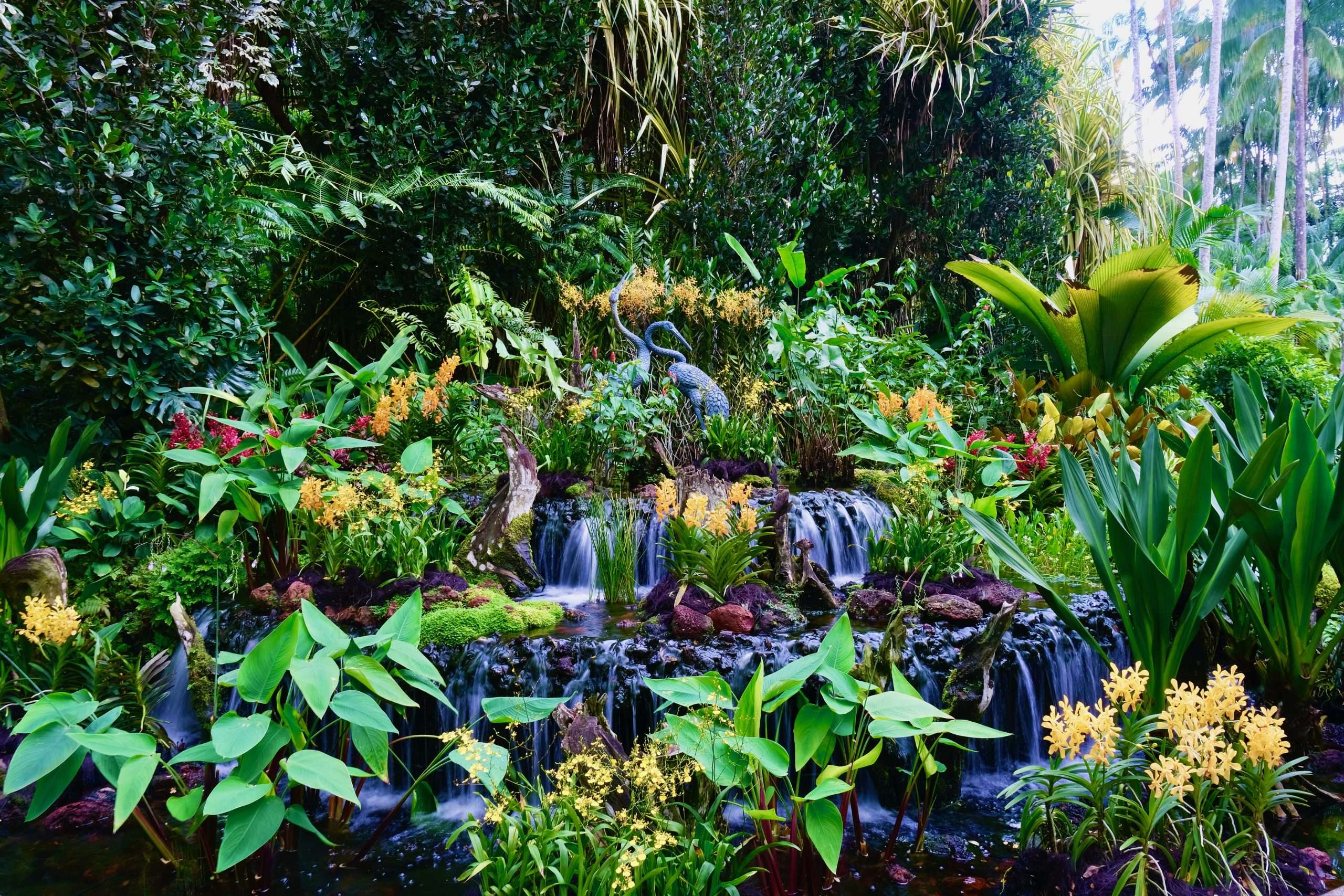
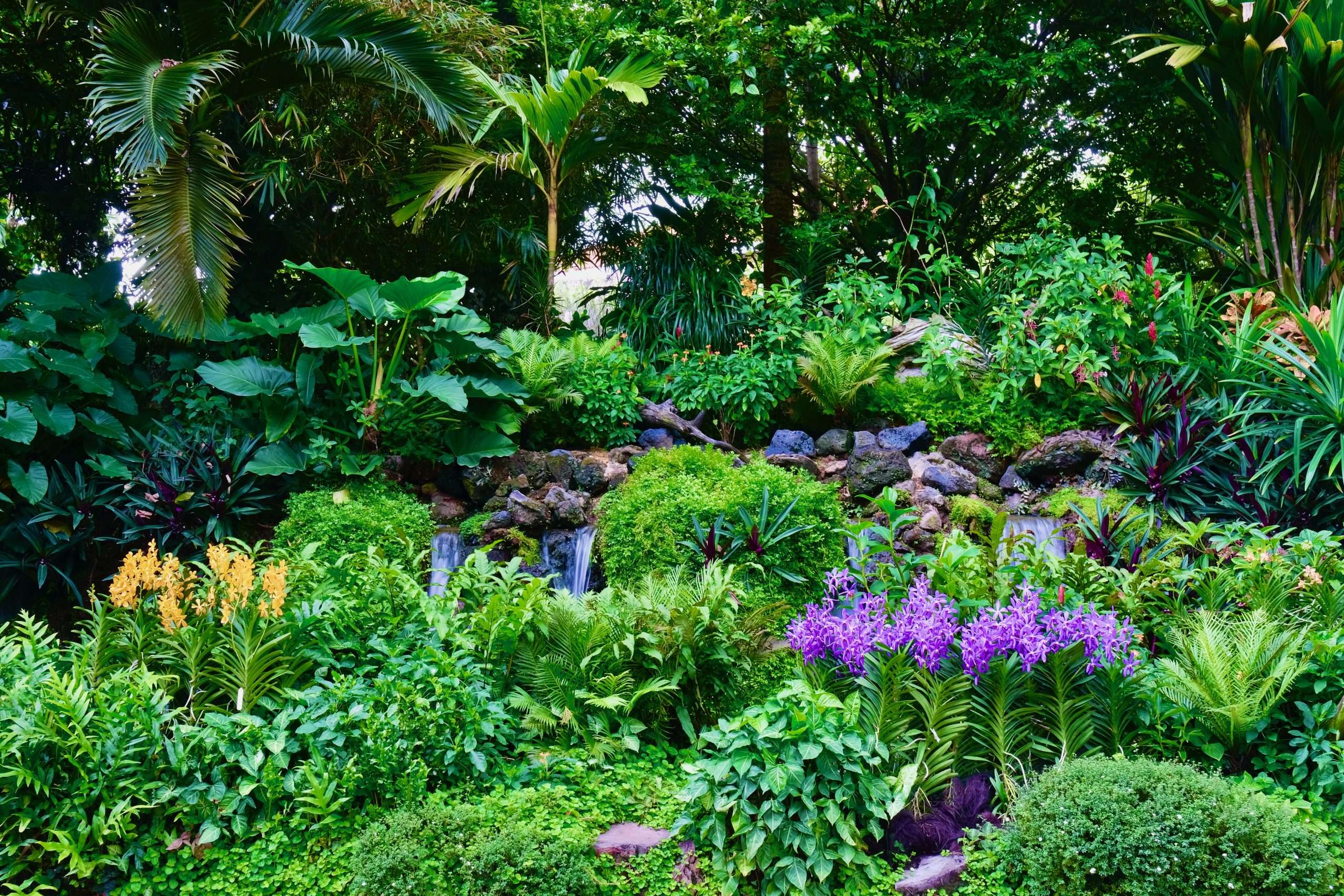
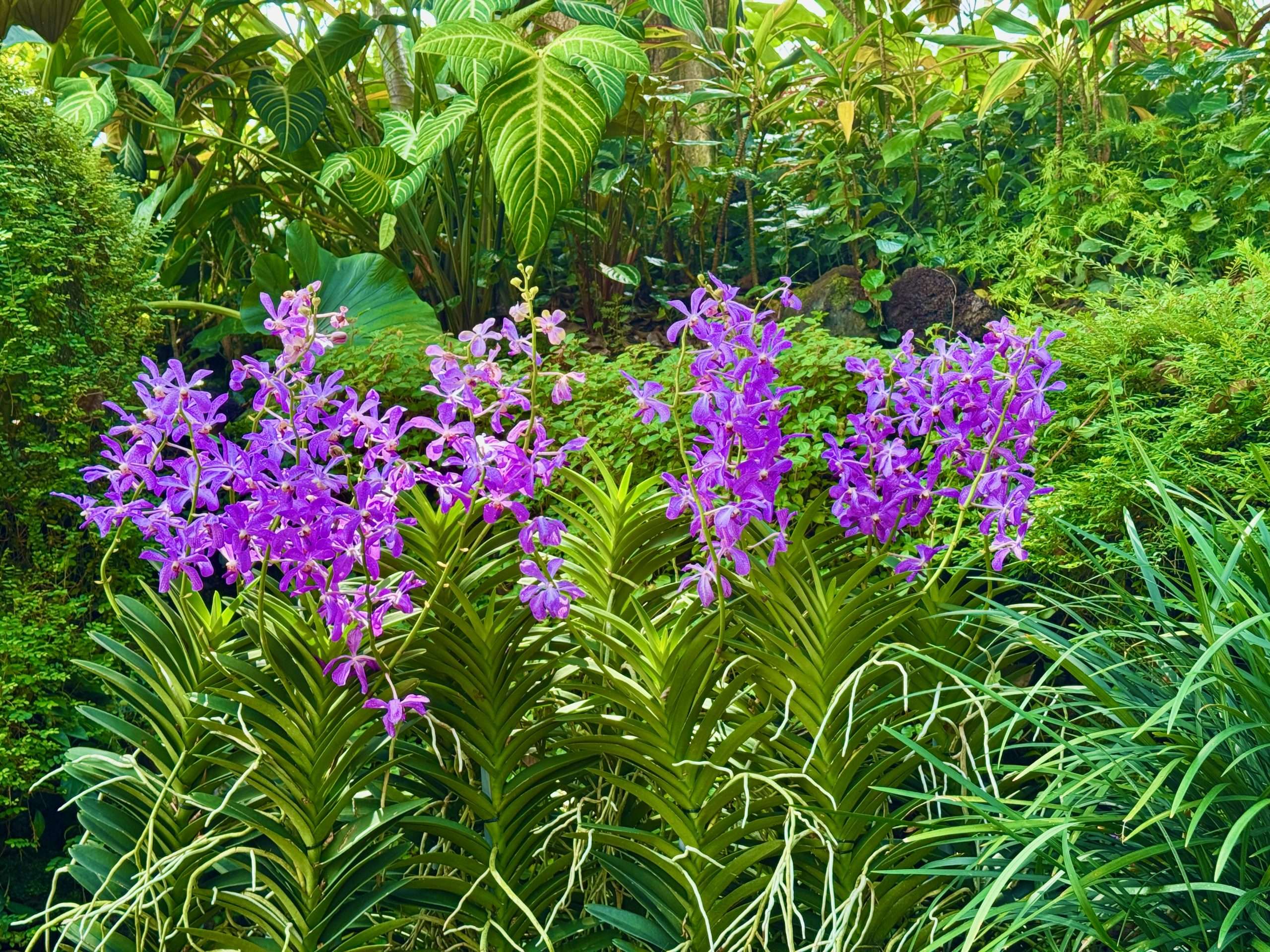
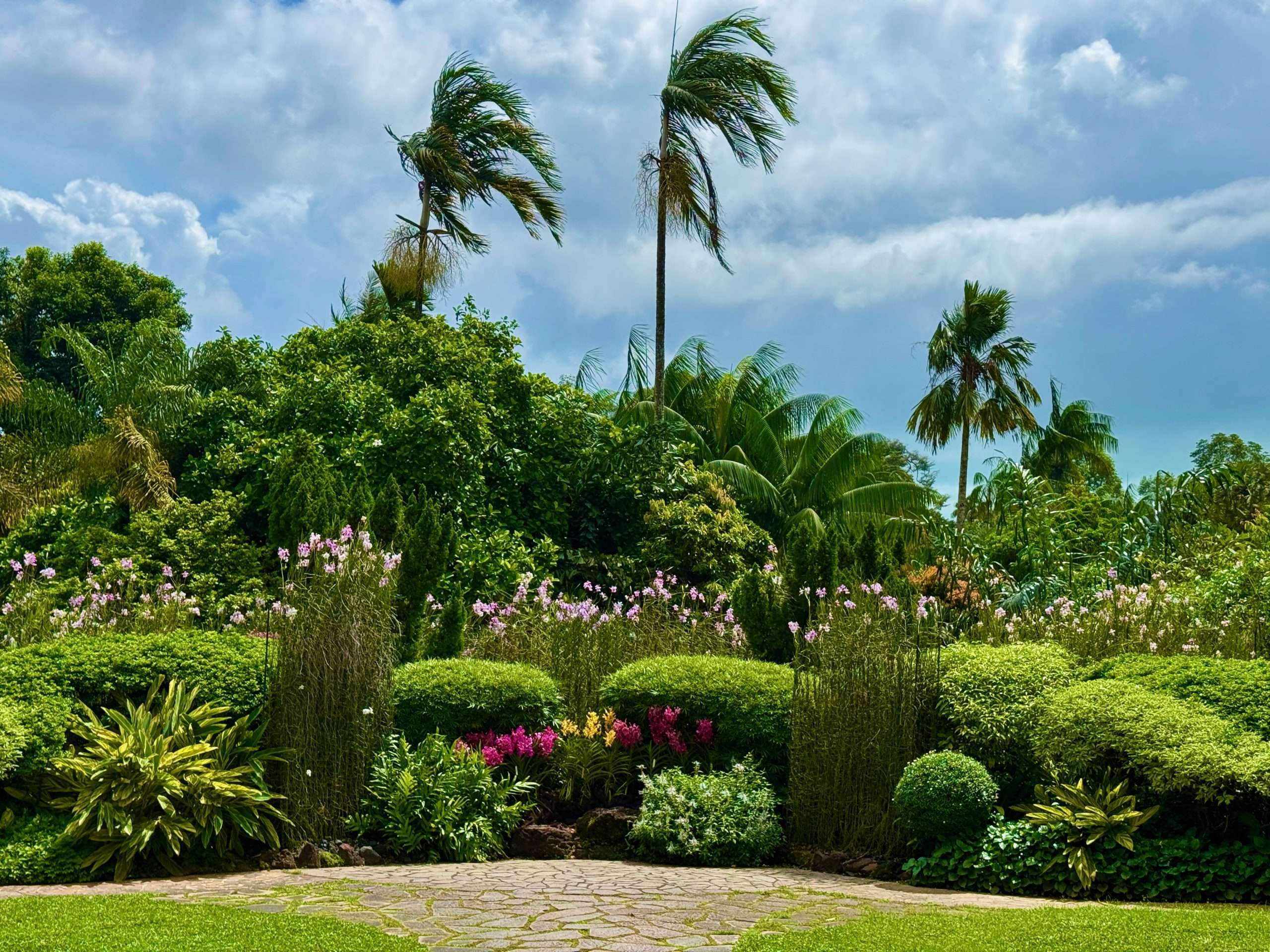
Our final destination was the stunning National Orchid Garden, located within the Singapore Botanic Gardens, the only UNESCO World Heritage site in Singapore. The Singapore Botanic Gardens is one of only three botanical gardens worldwide to hold this honor, along with Kew Gardens in London and the Botanical Garden in Padua, Italy although there are other gardens recognized by UNESCO under classical, baroque, and renaissance categories. The colorful displays of orchids, including rare and hybrid varieties, was a feast for the eyes. The gardens contain over 1,200 species of orchids and 2,000 hybrids. We would have loved to have spent more time here, but the rain cut our visit short.
In addition to these stops, we explored the city by driving through the Civic District. Along the way, we passed by several prominent landmarks, including the Padang, Singapore Cricket Club, the historic Parliament House, the National Gallery of Singapore (housed in the former City Hall and Old Supreme Court buildings), and the majestic City Hall Building. We also caught a glimpse of the legendary Raffles Hotel, a colonial-era icon synonymous with luxury and history.
While driving around all these buildings, we were extremely interested to hear that buying a car in Singapore includes the cost of entitlement certificate which is valid for a 10-year period. This makes car ownership very expensive. So only about 11 percent of Singaporeans own cars compared to 85 percent of U.S. residents. Luckily for Singaporeans, their public transport system of buses, trains, and taxis is efficient. We were also informed that Singapore follows the Westminster parliamentary form of government and all those holding cabinet posts are elected and not appointed. Lastly, we found out that 80 percent of Singaporeans live in public housing and are encouraged to do so by the government.
The tour provided a well-rounded overview of Singapore’s rich heritage, vibrant culture, and modern charm, making it an excellent start to our visit.
Savoring the Flavors of Singapore – January 18, 2025
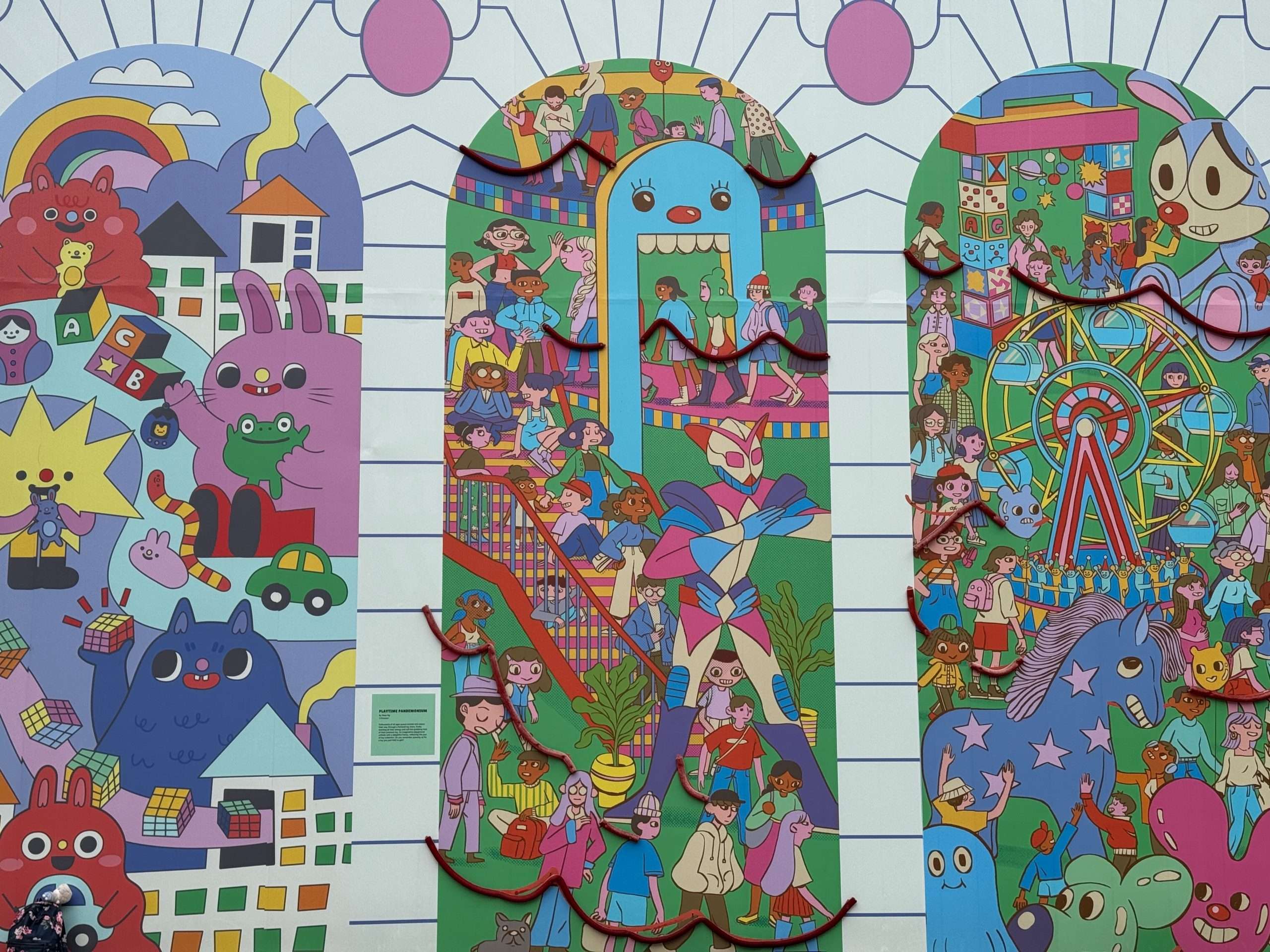
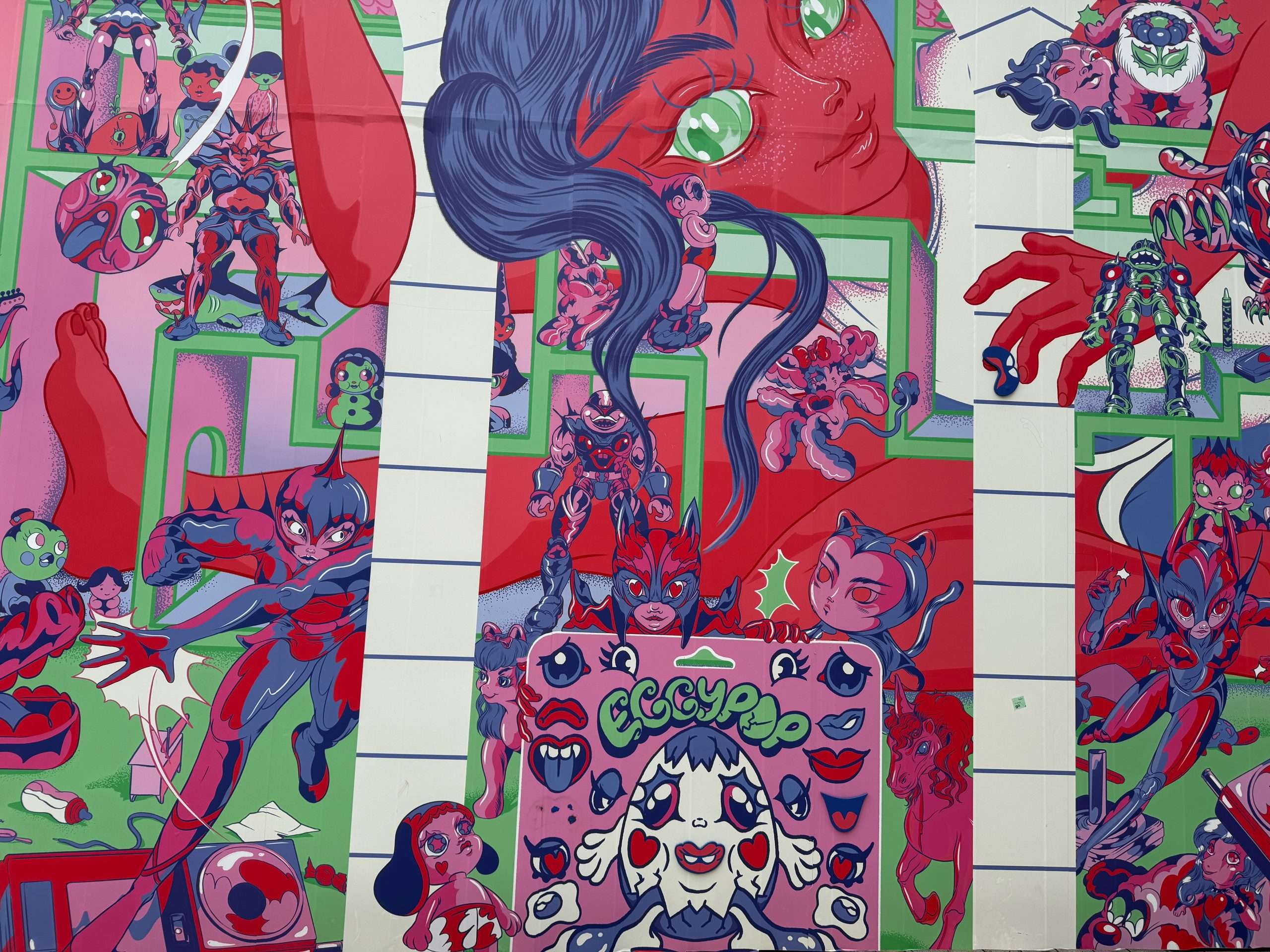
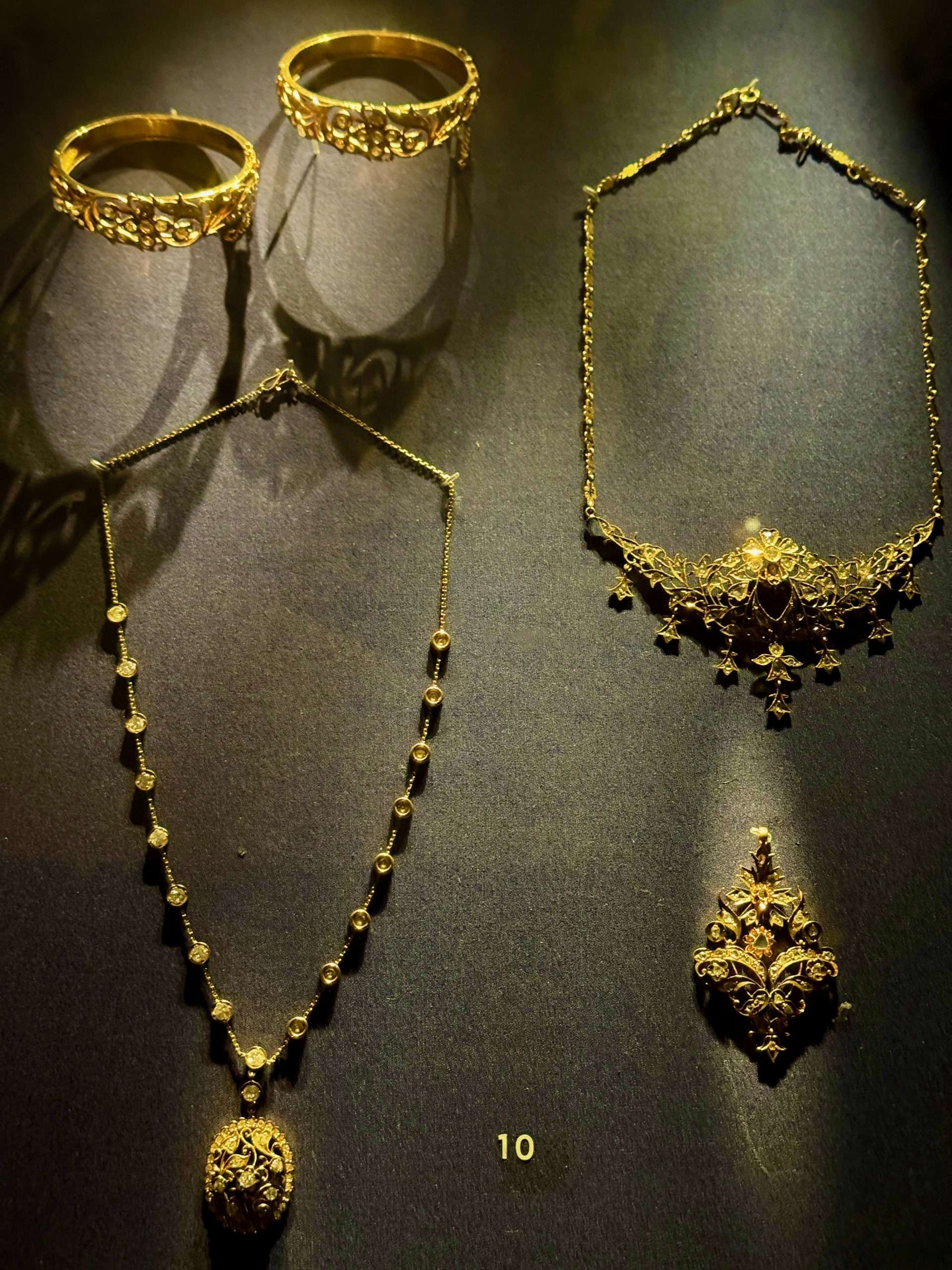
After breakfast, we took a cab to the National Museum of Singapore for a guided tour of its main attractions. As the oldest museum in Singapore, it has been relocated, renamed, and repurposed several times before being given a permanent residence on Stamford Road. Its collections include sculptures, objets d’art, paintings, drawings, and archaeological finds, along with more recent artifacts such as seats from Singapore Airlines’ first A380 Airbus, a 1970s Nanyang coffee roasting machine, and a 1979 Housing and Development Board lift.
Since it was a rainy day, the museum was packed with tourists, making it difficult to find standing room or hear the docent as she guided us through the collections. Nevertheless, the tour provided an engaging overview of Singapore’s history, culture, and development, featuring fascinating exhibits and multimedia displays that brought the past to life. Of particular interest was a painting of Sir Frank Swettenham by John Singer Sargent. Swettenham, the first Resident General of the Federated Malay States, is depicted in his prime, posed to perfection in regimental whites with a ceremonial sword. We weren’t sure whether the painting was an original or a copy, but if it were the original, it would likely be the most valuable item on display.
Another notable portrait on display was that of Stamford Raffles, painted by Xu Beihong, a renowned Chinese artist. Raffles, one of Singapore’s founders, has his name immortalized in roads, buildings, hotels, educational institutions, businesses, hospitals, and even local flora and fauna—an impressive legacy given that he spent only about eight months in Singapore over several years. The museum also houses a collection of natural history drawings by William Farquhar, who played an equally significant role in Singapore’s founding. Appointed by Raffles as Resident and Commandant, Farquhar was a pragmatist who tolerated gambling, slavery, and opium consumption, leading to the trading post’s rapid growth and earning him many allies. However, his laissez-faire approach to administration displeased Raffles, resulting in a falling out that sent Farquhar back to England. As a sidenote, Canada’s Prime Minister Justin Trudeau is a direct descendant of William Farquhar through his mother, Margaret Trudeau (née Sinclair). Another item of interest, is the half-ton bronze Revere Bell, cast at the Revere foundry in Boston and presented by Paul Revere’s daughter Maria, to the Church of St. Andrew – the predecessor to the current St. Andrew’s Cathedral.
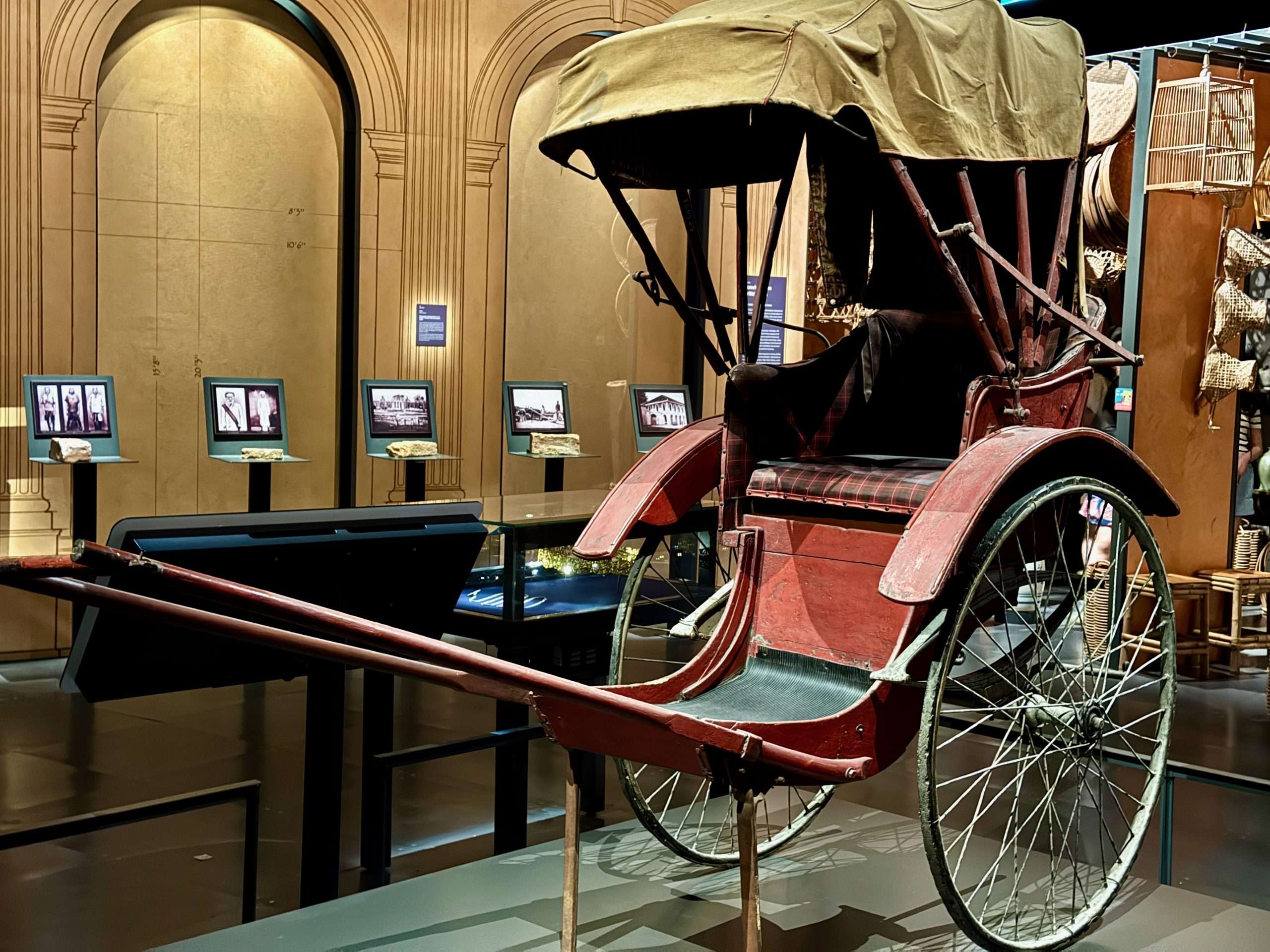
After the guided tour, we grabbed a bite to eat in the museum’s cafeteria before using Grab (the Singaporean equivalent of Uber) to reach the starting point of our next activity: the “Chinatown, Little India, and Kampong Gelam City Highlights Tour.”
Our guide, Cheyenne, began the tour in Kampong Gelam—a vibrant cultural district we had explored the previous day. Despite our familiarity with the area, we appreciated learning new historical insights. One highlight was the murals in Kampong Gelam, particularly the one on Aliwal Street depicting Malay shipbuilders alongside native animals such as the pangolin, cobra, civet, and lemur. This mural was painted by Colombia-born artist Didier “Jaba” Mathieu. We also visited Sultan Gate, where Istana Kampong Glam, the former palace of Malay rulers, once stood. From there, we walked to the Muslim Quarter, where traditional shophouses lined the streets—those with two windows dating to the 1800s and those with three windows to the 1900s.
Continuing our walk, we passed the Sultan Mosque before stopping at Jamal Kazura, a perfume shop known for its elegant glass bottles and fragrances. Next, we visited Parkview Square, also known as Gotham Square, an iconic Art Deco building that houses several embassies. Inside, the Atlas Bar boasts a three-story-high wine cellar, while the courtyard features numerous sculptures, including a golden crane pointed toward China and statues of men holding crystal balls.
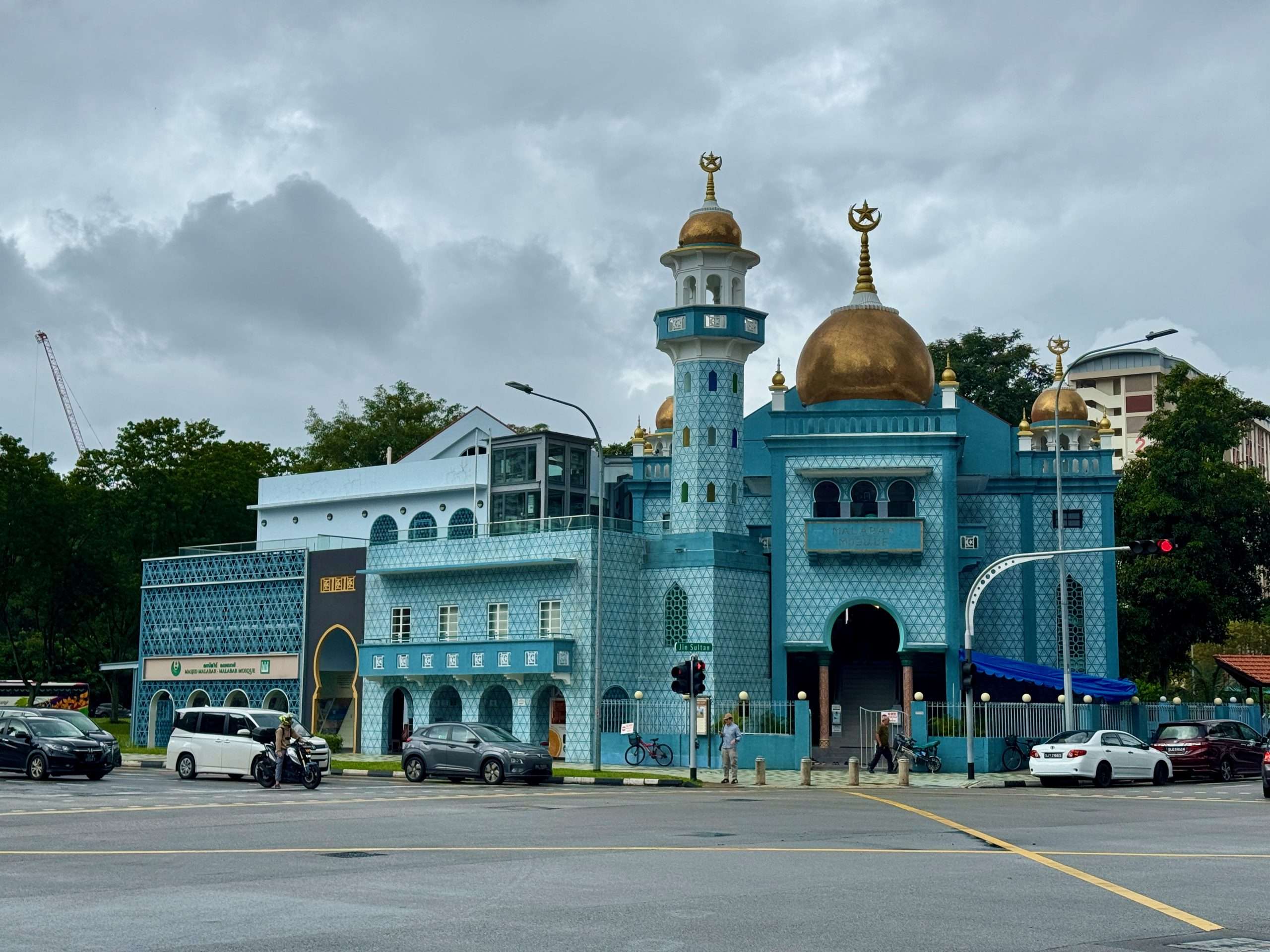
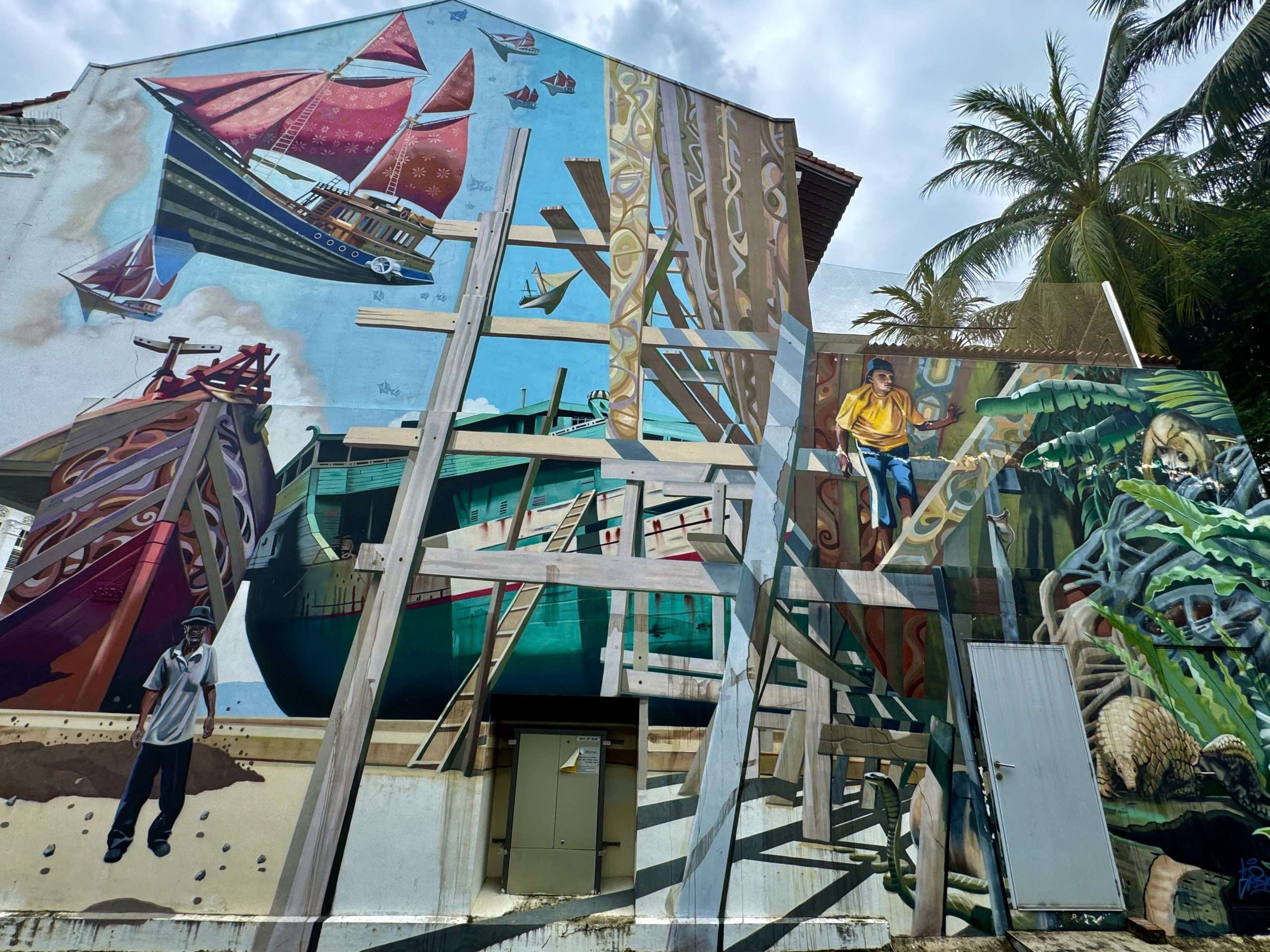
From there, we took the train to Little India. The train station was impeccably clean, with color-coded lines for easy navigation; we boarded the blue line. Upon arrival, we explored Tekka Market, where shops are rigorously rated for cleanliness—any that fail inspections are closed for three months. The market undergoes a deep clean every year and a full renovation every three years. It was bustling with the aromas of fresh produce, spices, and cooking, with people of various ethnicities enjoying the food.
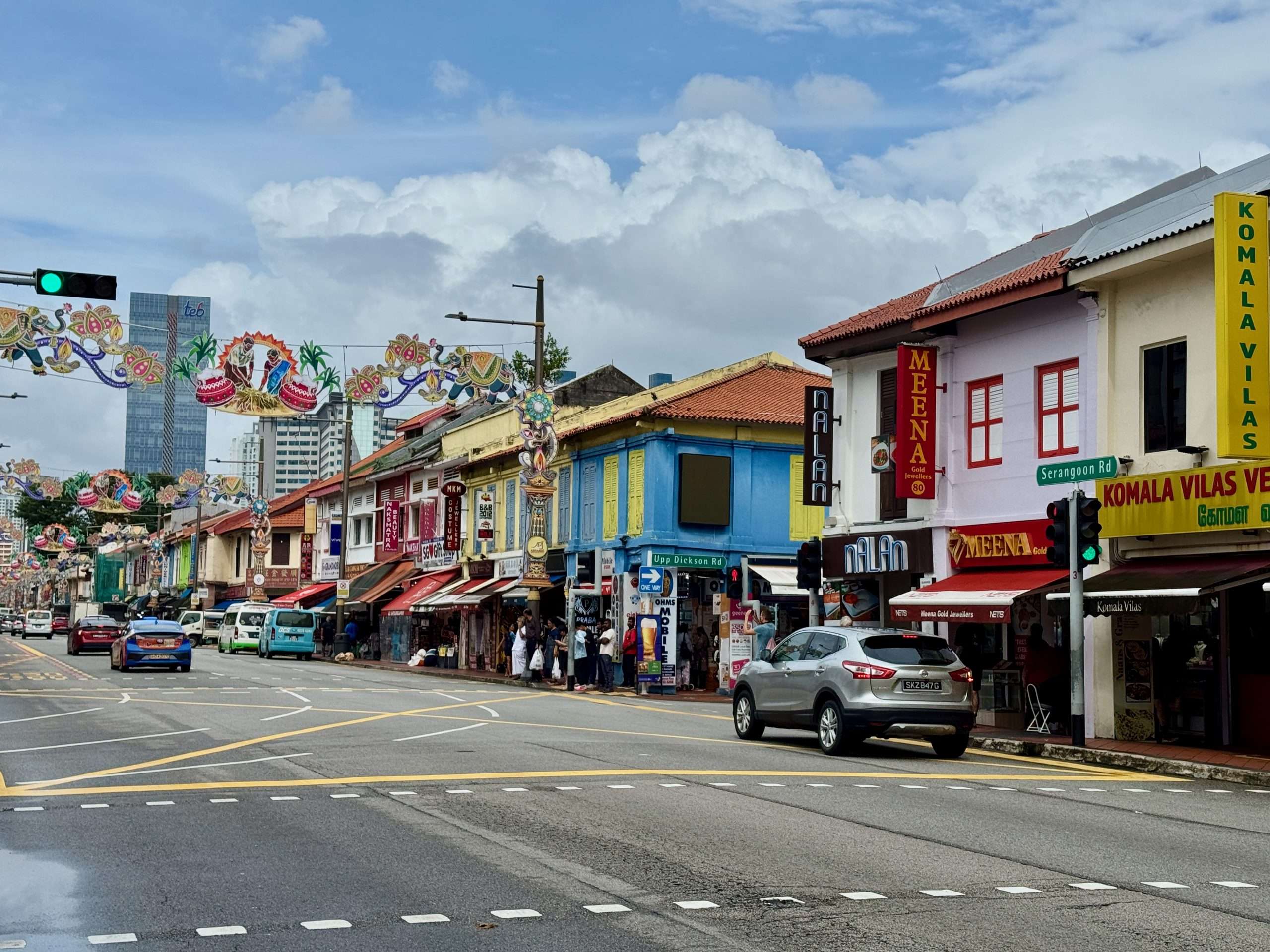
As we strolled through Little India, we passed numerous jewelry and textile shops, as well as Komala Vilas, a renowned vegetarian restaurant established in 1947. This is the same restaurant where Singapore’s Prime Minister and his wife dined with Indian Prime Minister Narendra Modi during his 2015 visit.
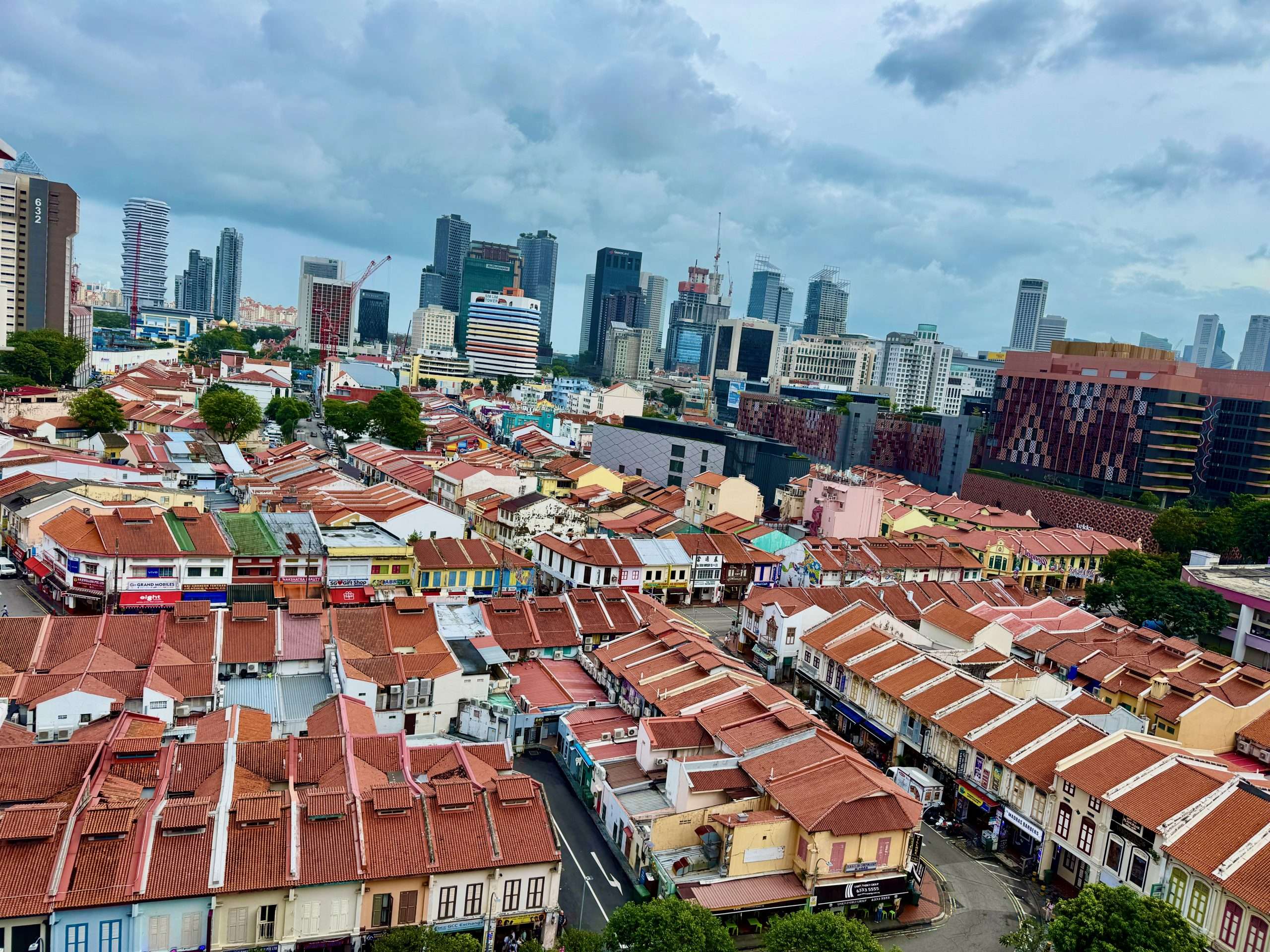
While in Little India, we visited a public housing building. In Singapore, 80% of the population lives in public housing, with strong government incentives to encourage homeownership—90% of residents in these buildings own their apartments. The apartment size is determined by family size. The building we toured was clean, quiet, and well-maintained by the government, with functioning elevators. We rode one to an upper floor for a panoramic view of the cityscape.
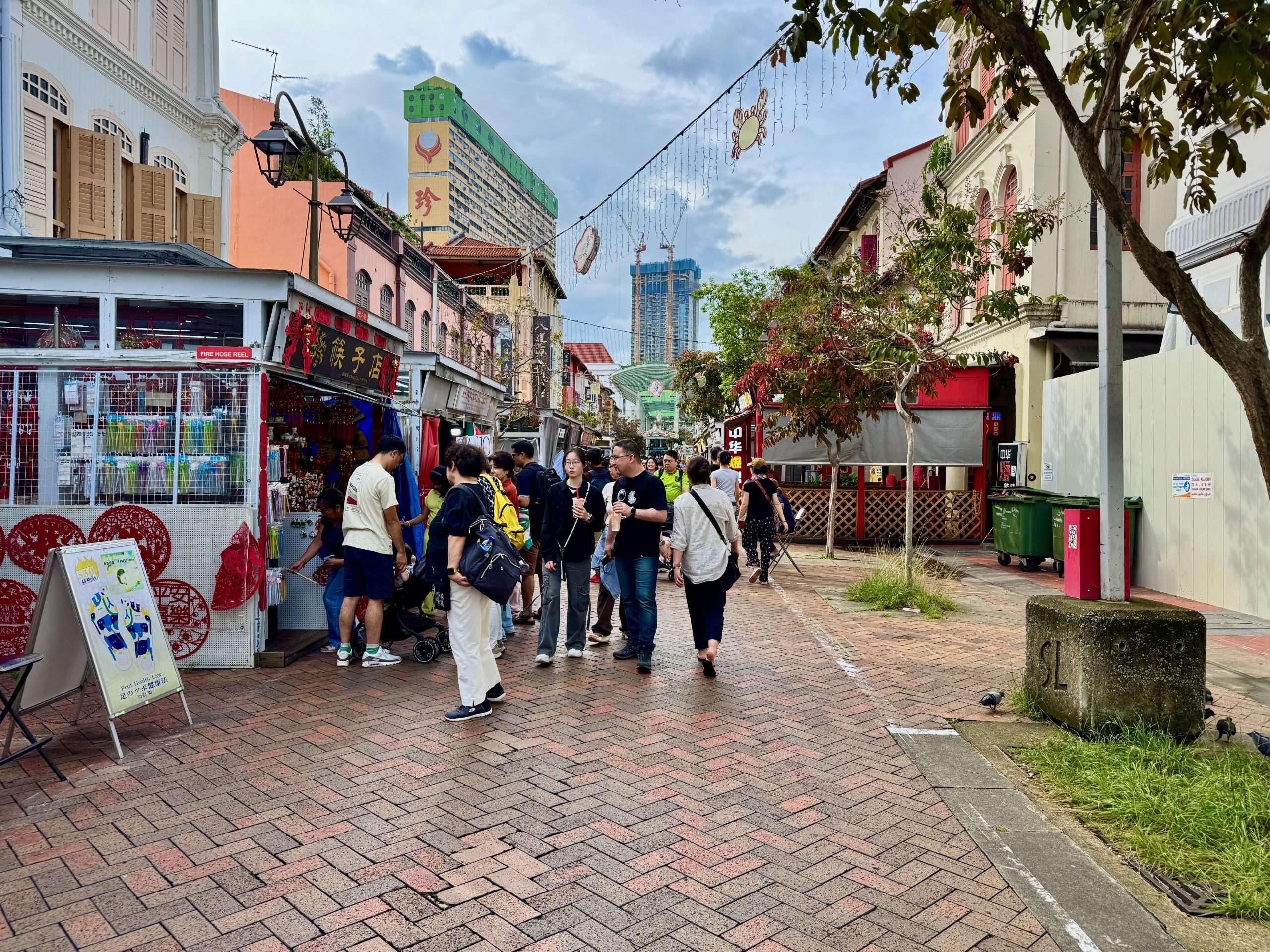
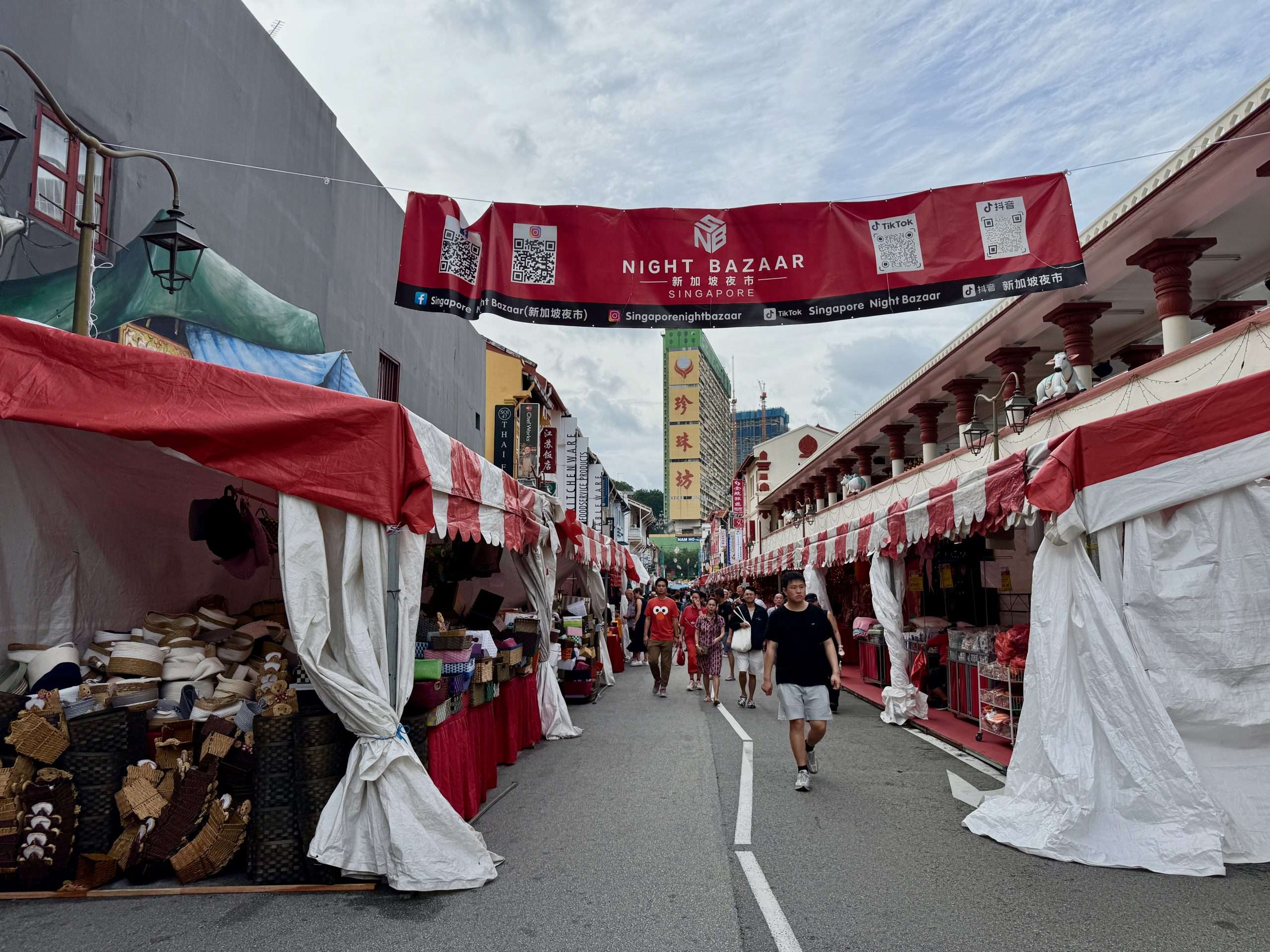
Next, we took a train to our final stop: Chinatown. The train station featured art installations and Chinese couplets written on the platform. Walking through Pagoda Street, we came across a statue of a Sanshui woman tying her shoes, wearing a red headscarf—a nod to the immigrant women from Canton who played a vital role in Singapore’s construction industry. Identified by their red headgear and black-and-blue attire, these women were instrumental in building the red train line.
We also passed the Coolie House, preserved to showcase the contributions of Chinese and Indian laborers who worked in construction. These cramped houses legally accommodated up to 200 people, though eyewitness accounts describe as many as 400, depending on work shifts.
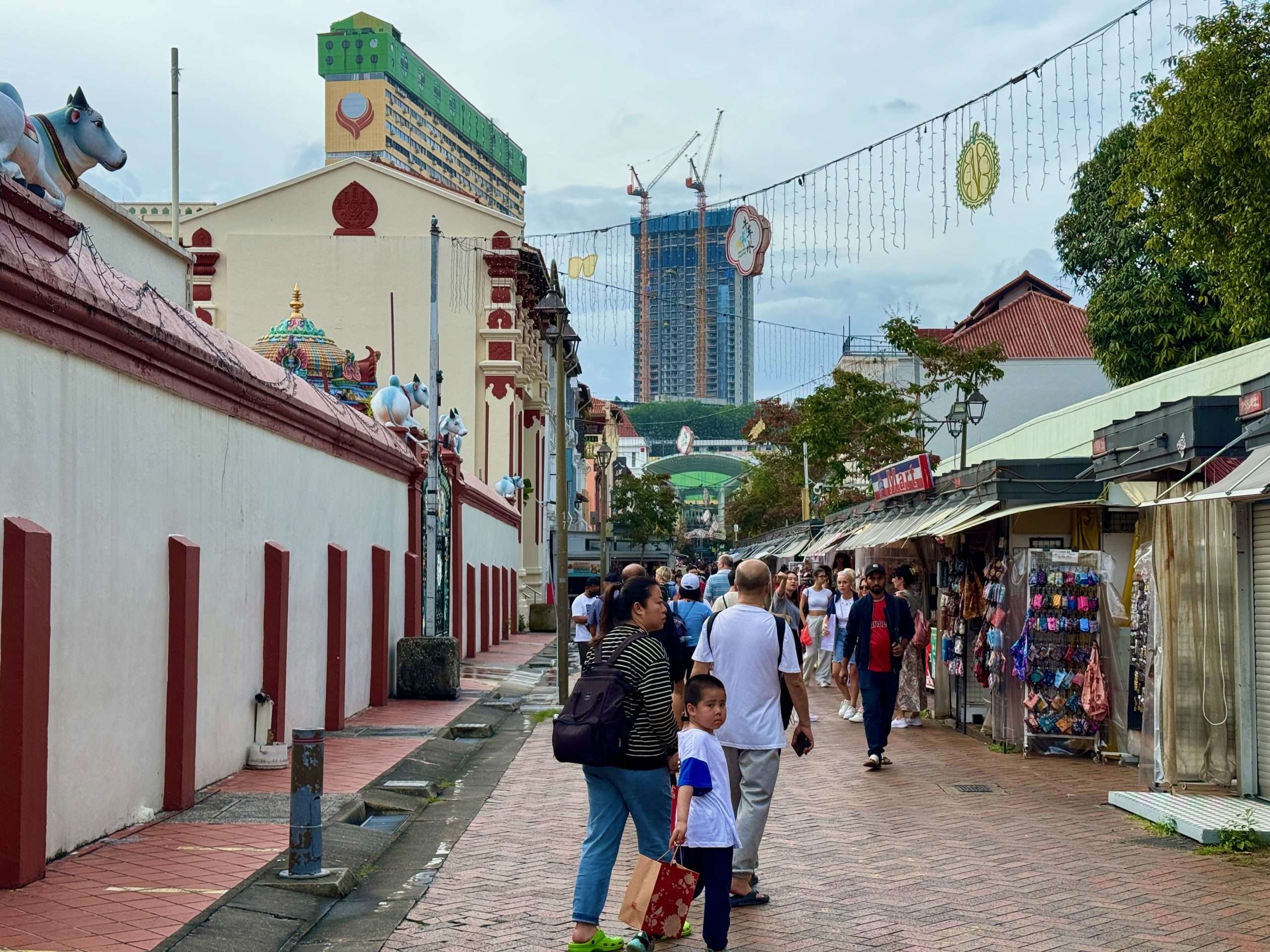
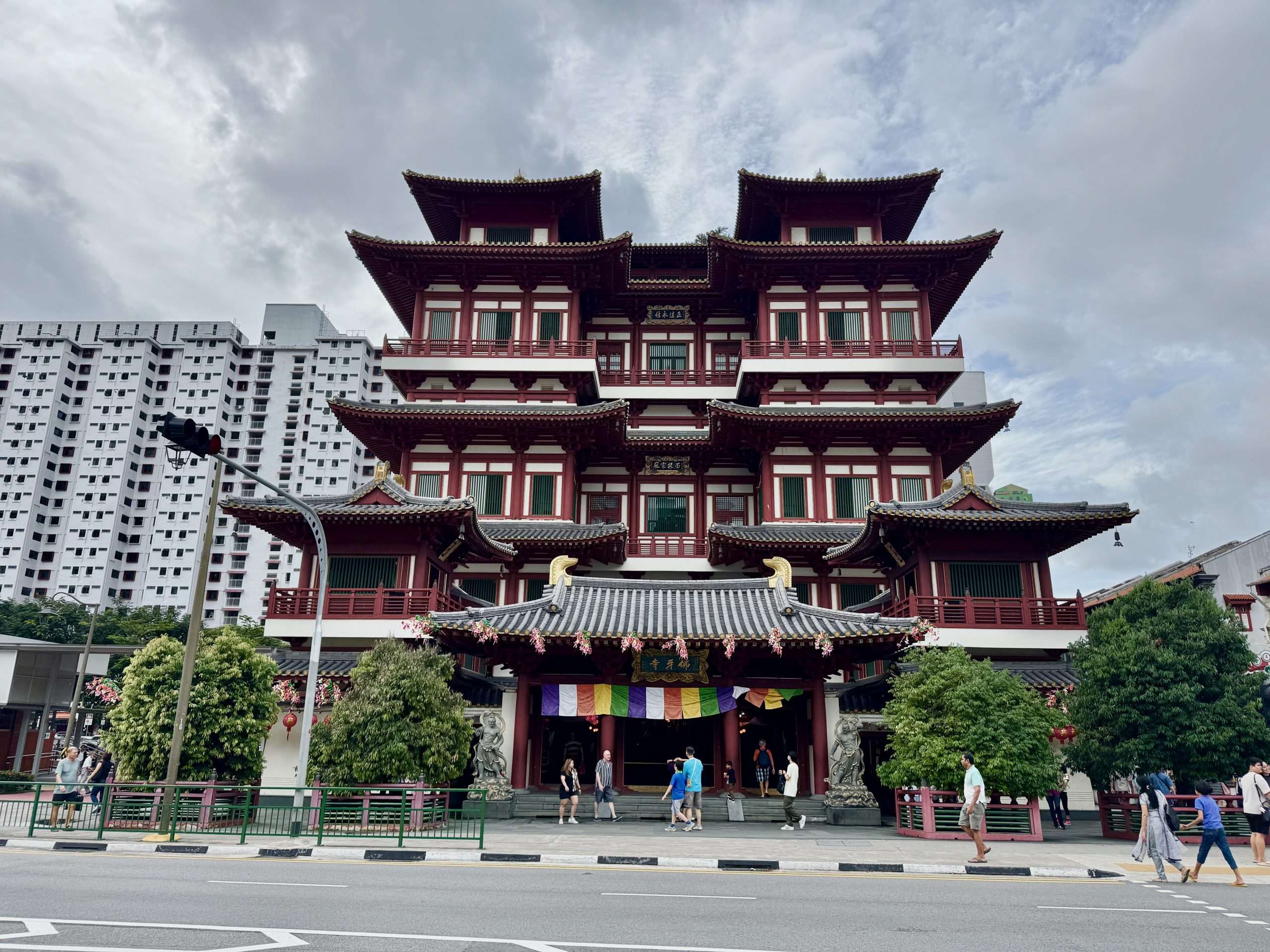
One surprising discovery in Chinatown was the Sri Mariamman Temple, Singapore’s oldest Hindu temple, located on South Bridge Street. Nearby, we spotted a Methodist church, a mosque, and a Buddhist temple. The latter, built in 2007 in the Tang architectural style, was designed to house a relic of Buddha’s left canine, recovered from his funeral pyre in Kushinagar, India.
After a full day of exploring Singapore’s rich history and culture, we called it a day and took a Grab back to our hotel.
Art, Architecture & Scenic Views in Singapore – January 19, 2025
This morning, we took a cab to the Singapore National Gallery, home to the largest collection of Southeast Asian modern and contemporary art, housed in two national monuments—City Hall and the former Supreme Court. The entrance fee was waived today; we’re not sure why, but we certainly didn’t mind!
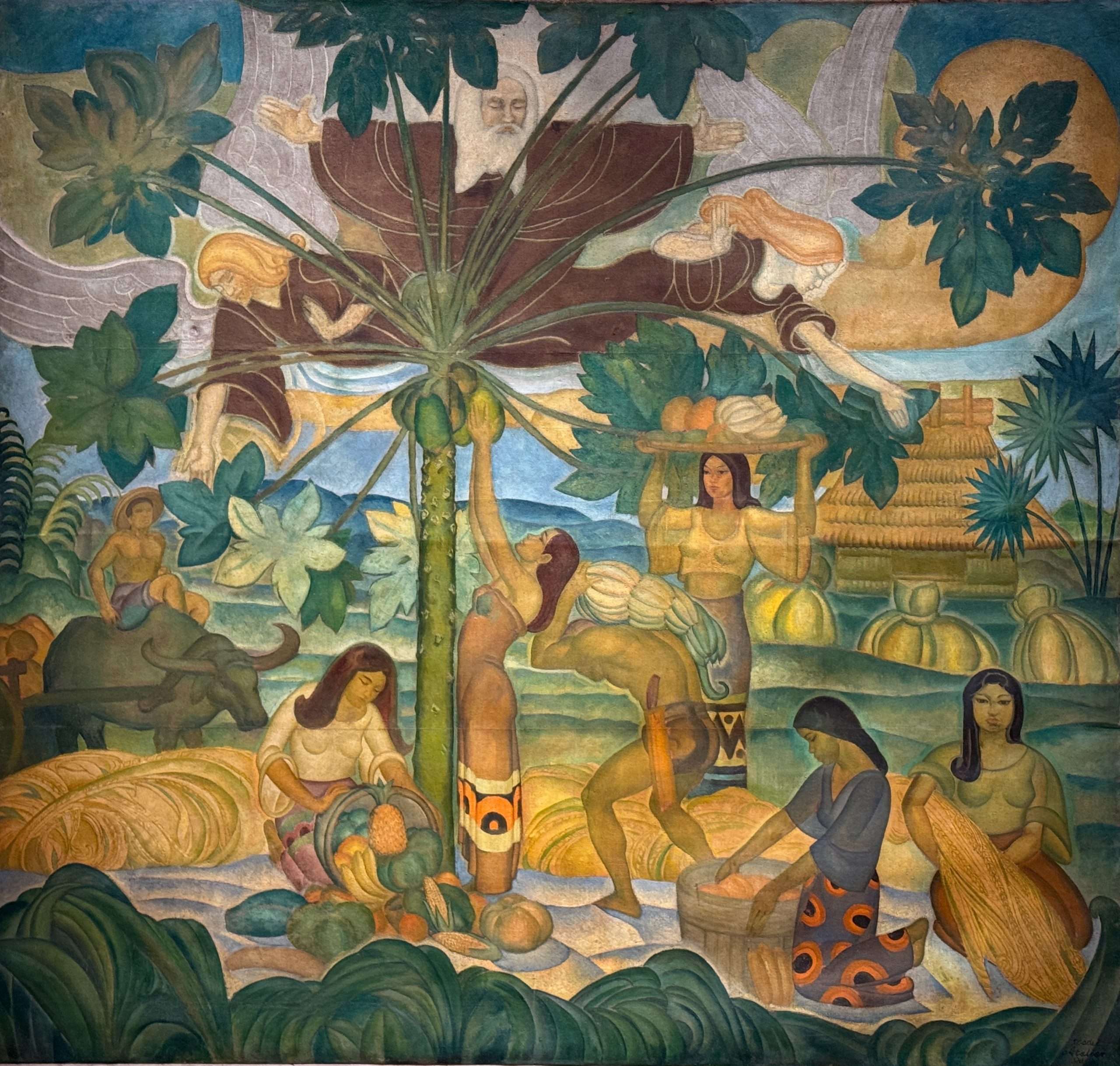
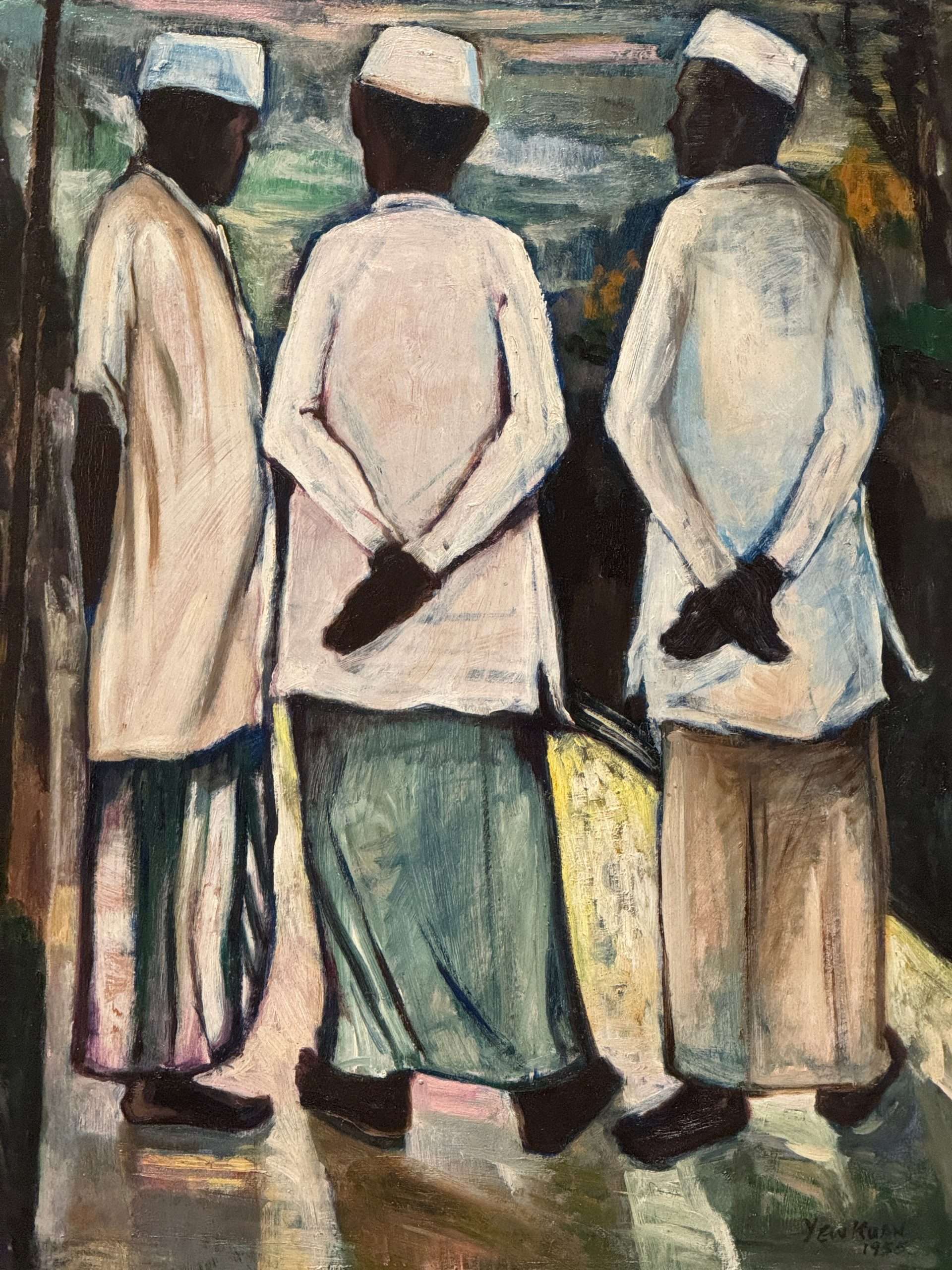
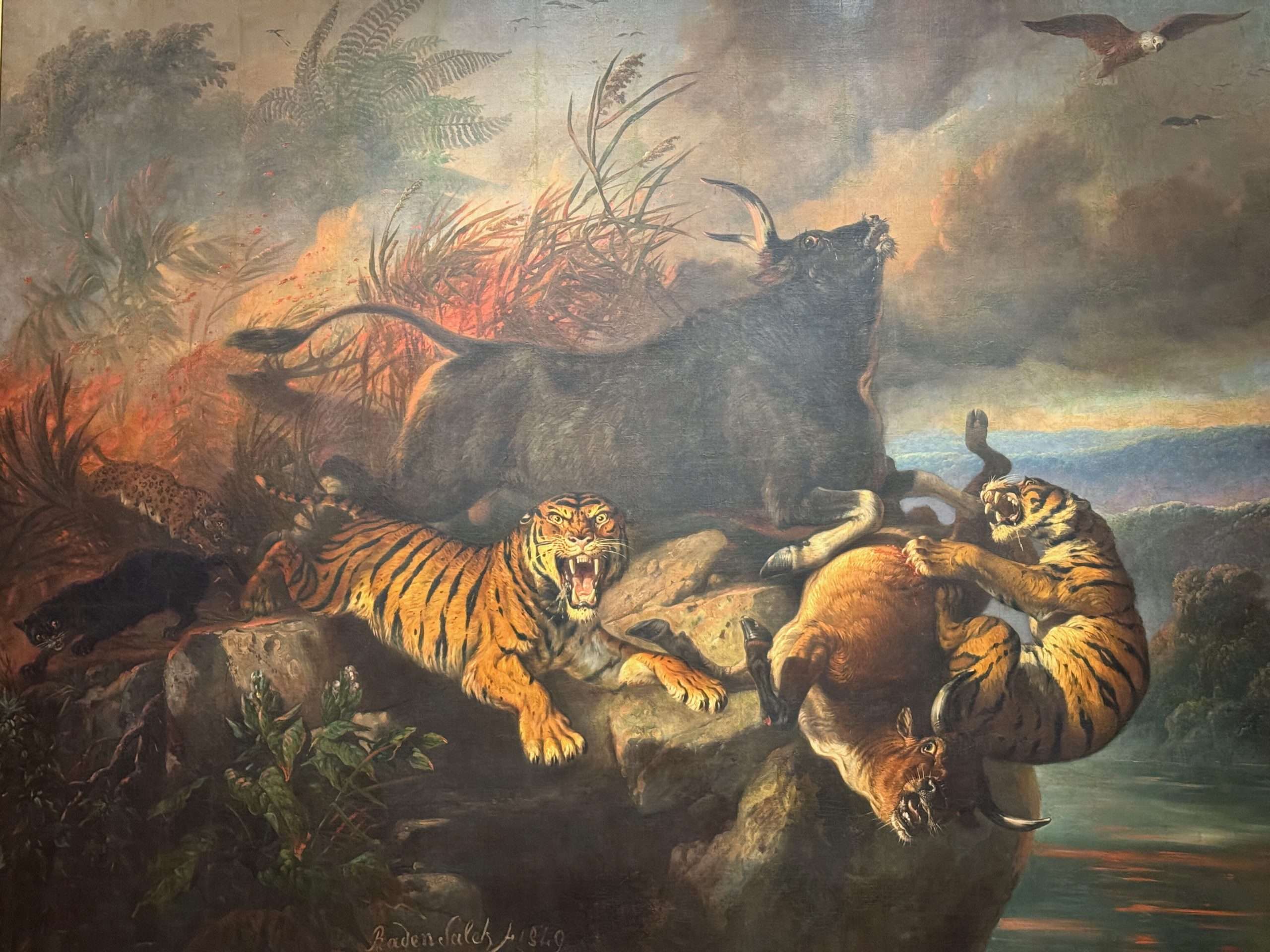
We spent a significant amount of time exploring various galleries and admiring paintings, primarily by Southeast Asian artists. The collection was both diverse and fascinating, offering insight into the region’s artistic heritage and evolution. A standout piece for us was Forest Fire by Raden Saleh, which depicts animals fleeing from the flames of a raging forest fire. One of the tigers appears to follow you with its eyes, adding an eerie, lifelike quality to the work.
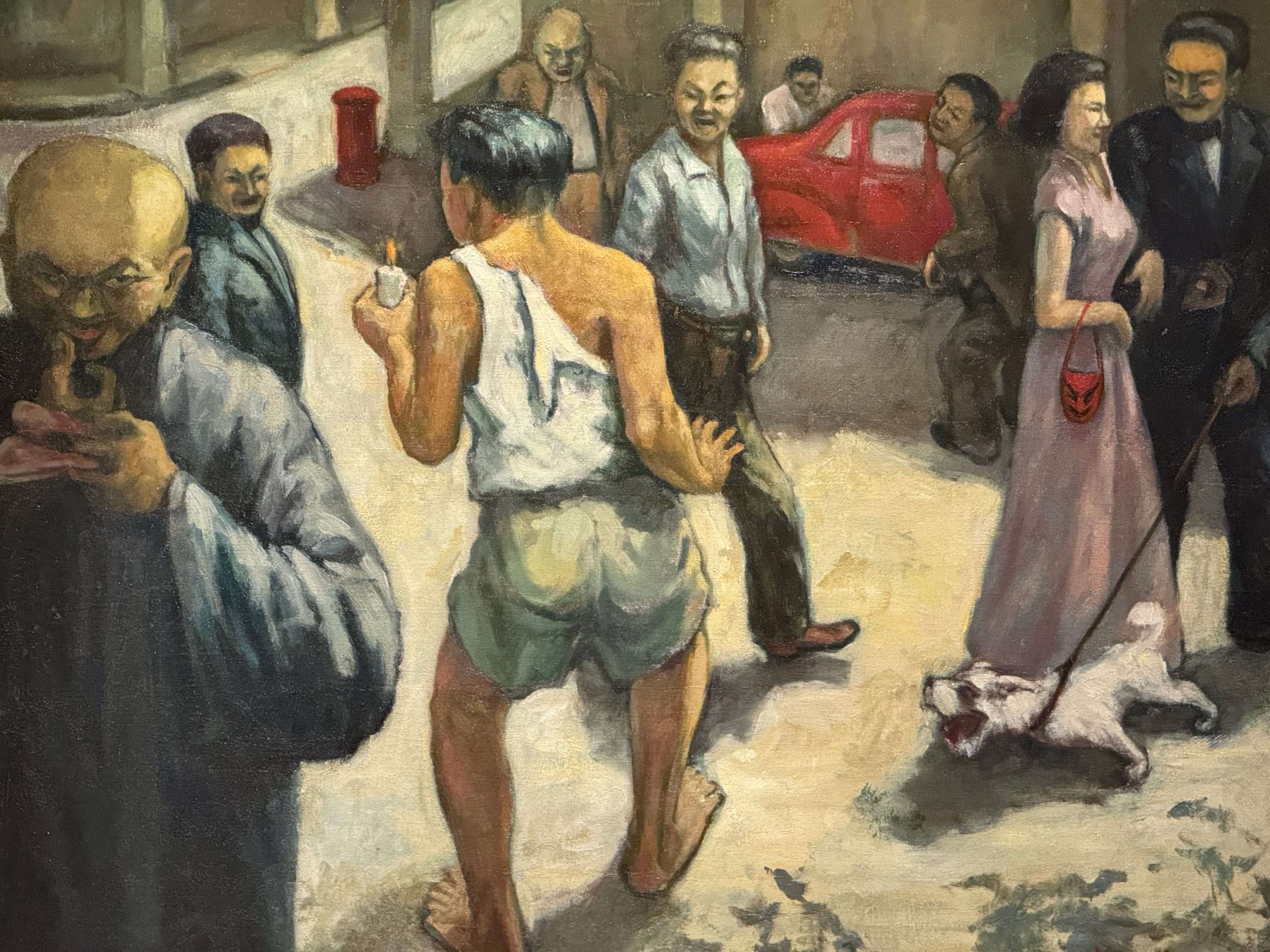
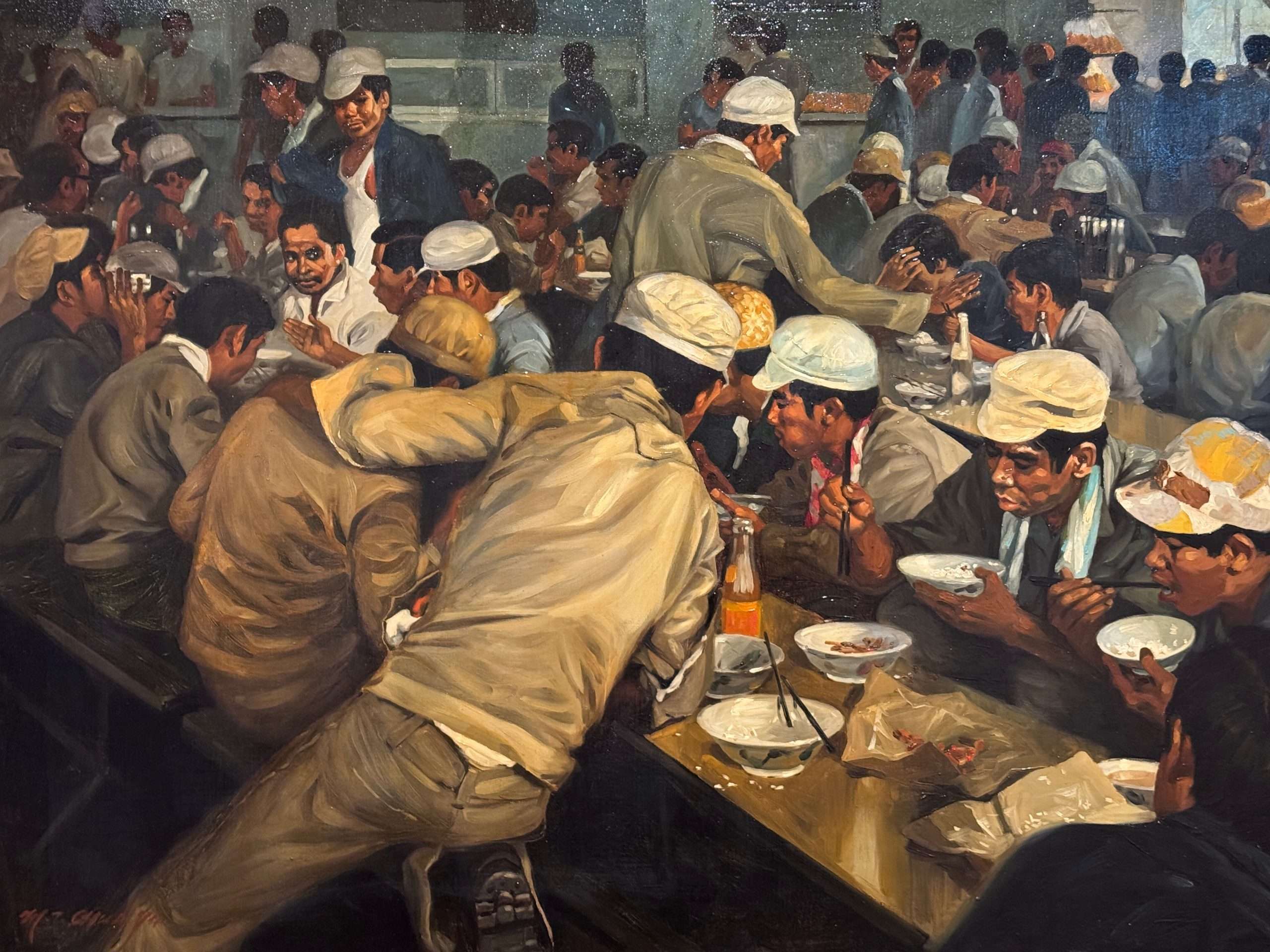
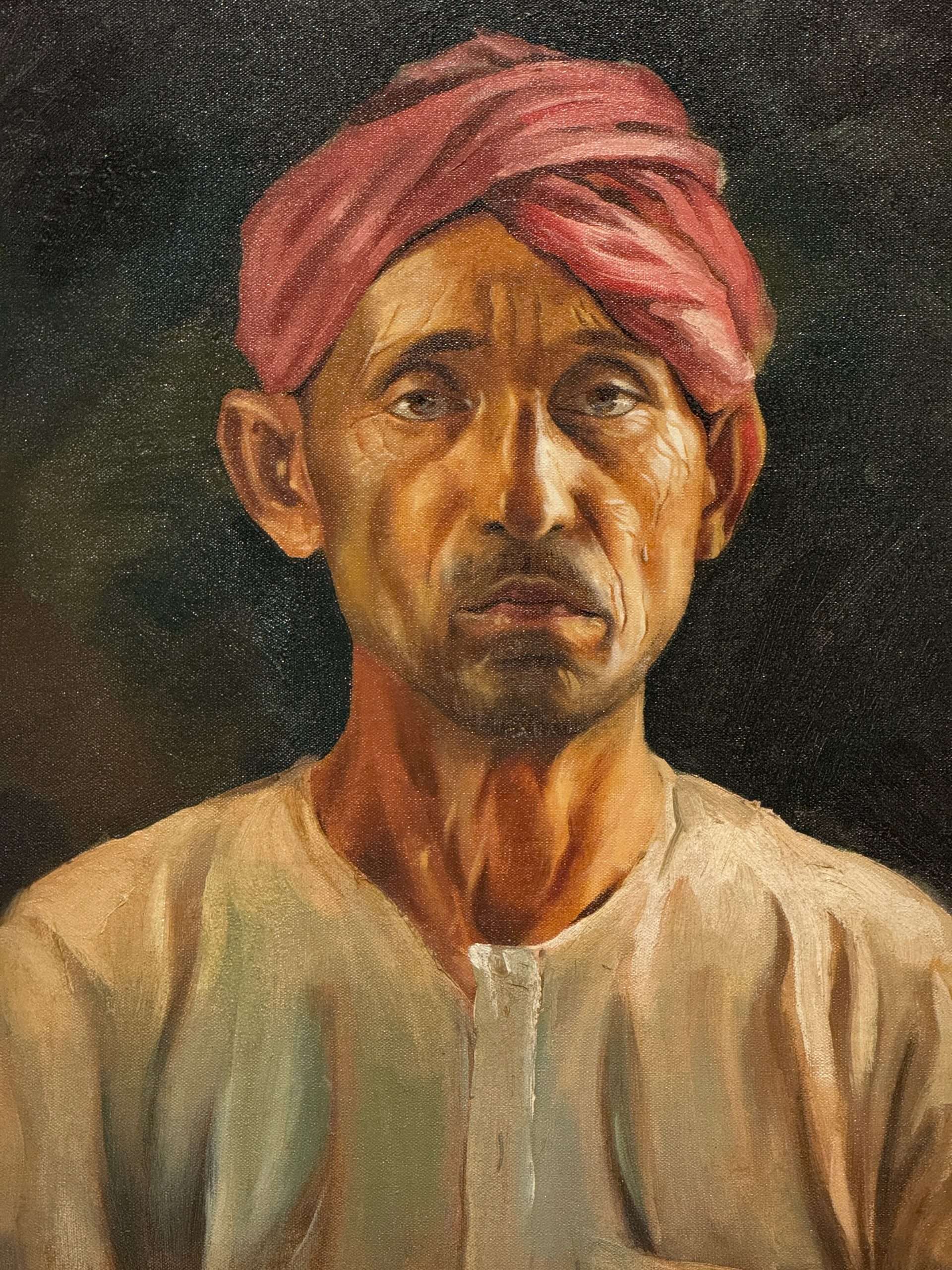
Other paintings that caught our eye included National Language Class by Chua Mia Tee, which depicts a group of Chinese students learning Malay; Self-Portrait by Georgette Chen; Artist and Model by Liu Kang; and Laborer (Lunch Break) by Lai Foong Moi.
Beyond paintings, the gallery also featured swords, coins, fabrics, costumes, and other artifacts. In the Supreme Court building, we were able to view the law library, holding cells, and judges’ chambers.
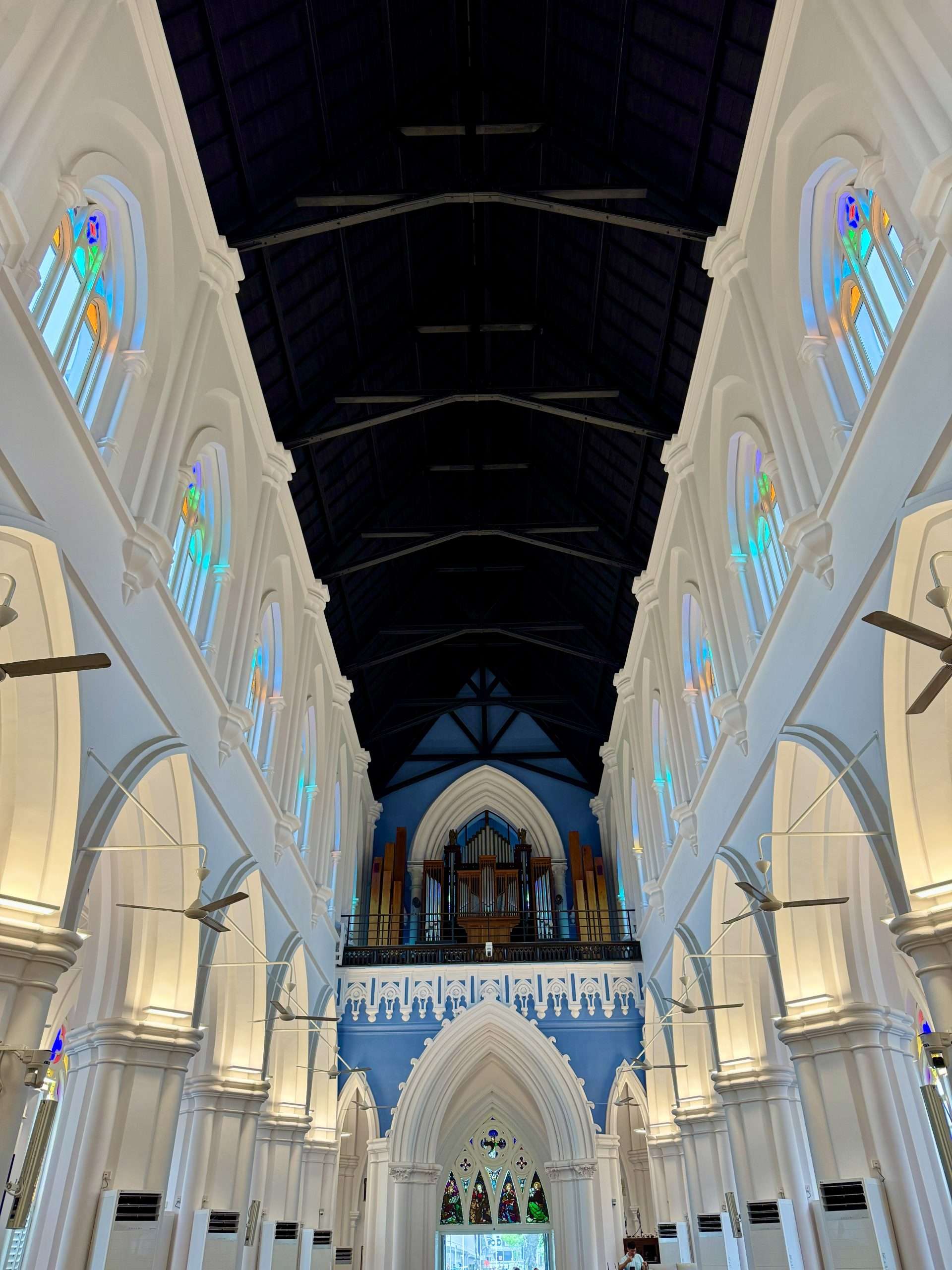
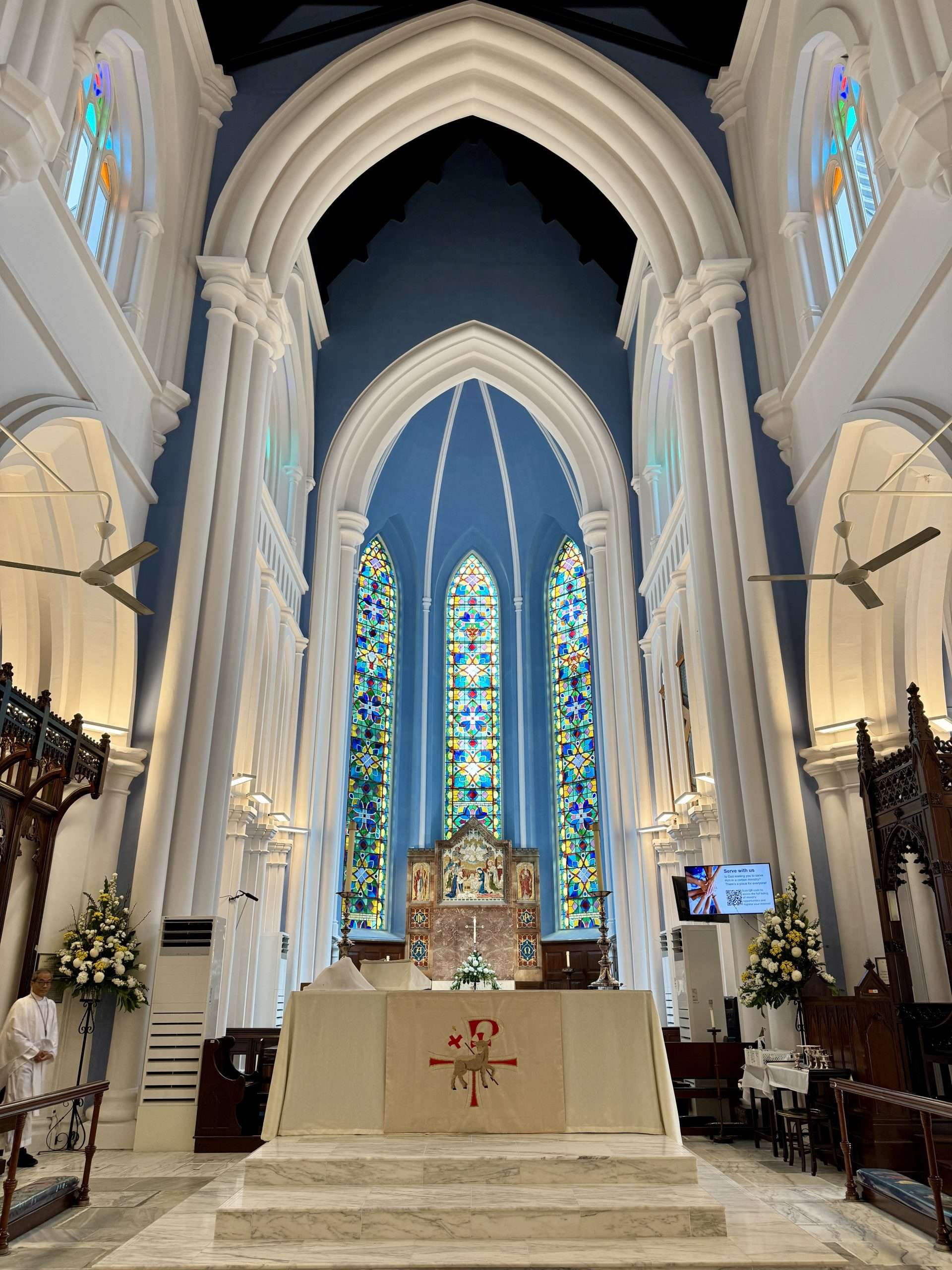
When we exited the building, it started pouring (expected when visiting during the monsoon season). We rushed across the street and took shelter in the porte-cochere of St. Andrew’s Cathedral.
The interior of the Gothic-style church is similar to that of Anglican churches elsewhere, but what caught our eye were the kneelers—individually decorated petit point cushions, making each one unique. Also distinctive is the chunam used to plaster the walls. Made by Indian convict laborers, it consists of shell lime, egg whites, and jaggery, mixed with water steeped in coconut husks to form a paste. Soapstone powder was then added, and the walls were polished with rock crystals.
Services are conducted in English, Mandarin, Cantonese, Hokkien, Tagalog, Bahasa Indonesia, and Burmese.
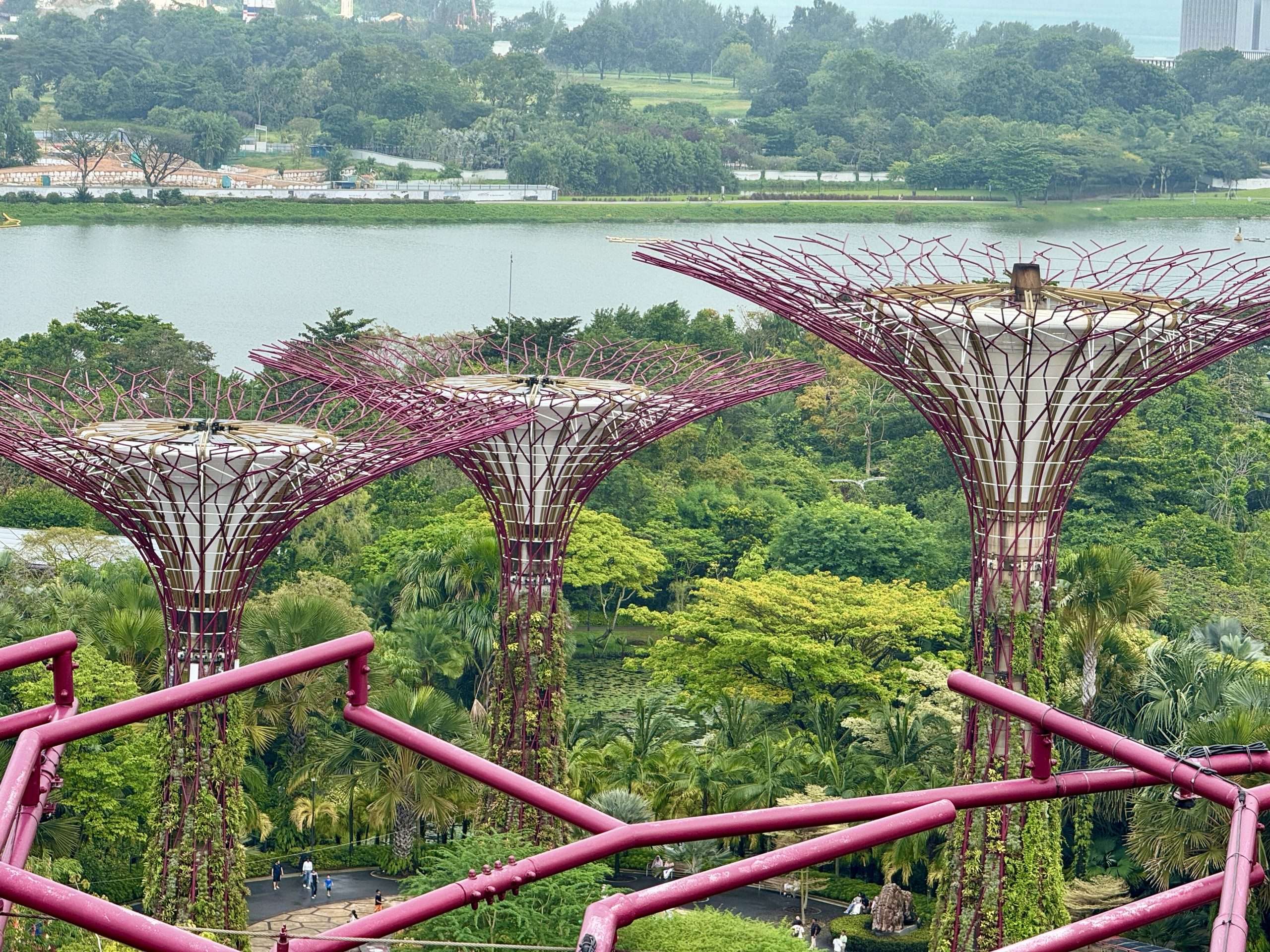
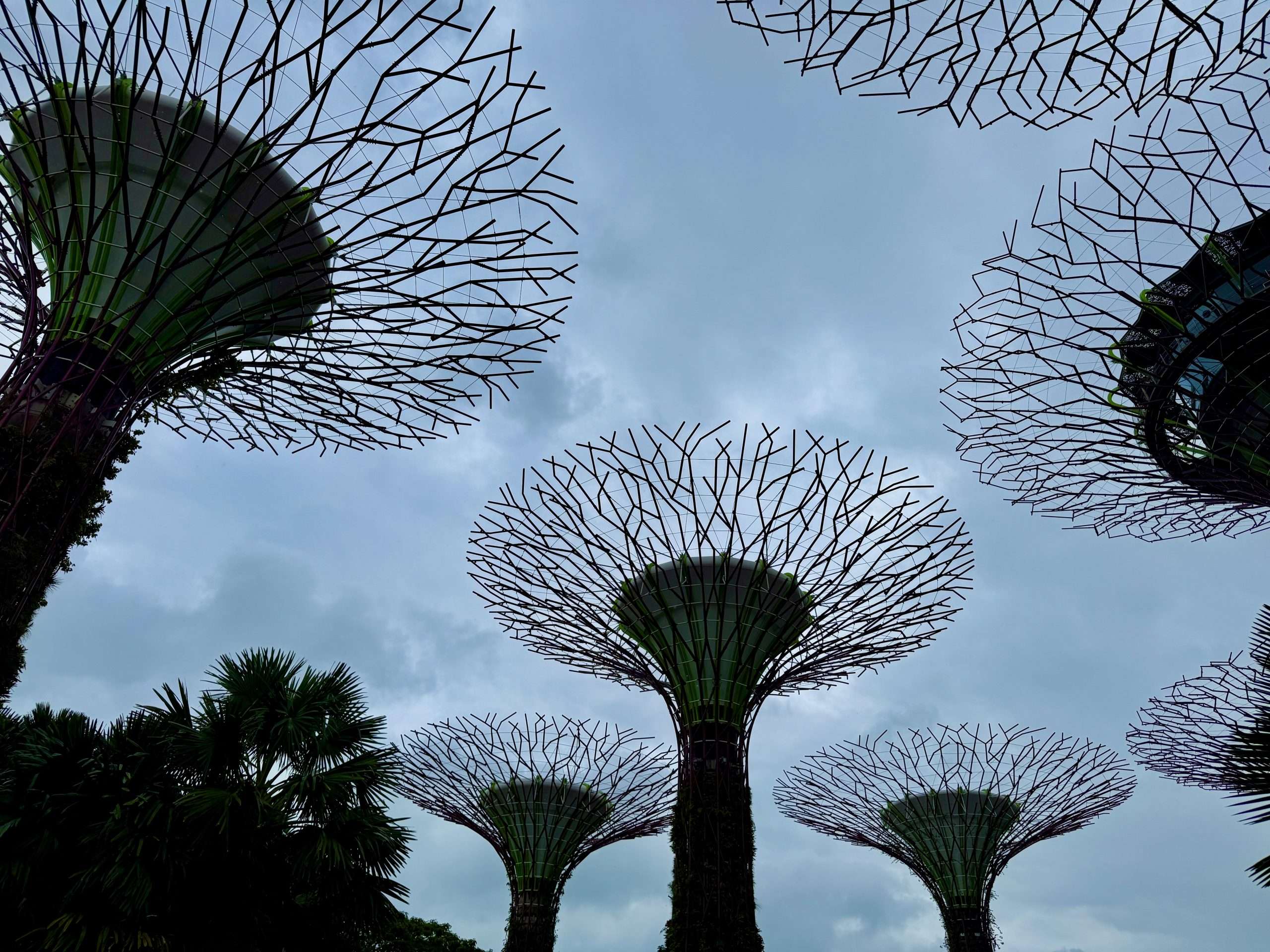
Later in the evening, we took a cab to Gardens by the Bay—an absolutely unbelievable destination. These gardens didn’t exist before 2007 when construction began. The master plan calls for the development of three bays, but so far, only the South and East Bays have been completed. Central Bay is set to be developed later. Each bay was designed by UK firms whose entries won out over 68 other competitors.
What do you do when you’re in horticultural heaven with so many attractions to choose from—Flower Dome, Cloud Forest, Floral Fantasy, Skyway, Supertree Observatory, art sculptures, and more? You could easily spend a week exploring, but we had just about an hour before nightfall and the start of the sound and light shows. We chose the observatory for aerial views of many key installations in the park, and we were not disappointed.
If we had the chance to revisit Singapore, we would definitely spend more time here and in the Botanic Gardens. For such a small country, Singapore has an impressive number of world-class open spaces.
Departure to Hanoi – January 20, 2025
We left early for Changi Airport to catch our flight to Hanoi, marking the start of our guided tour of Vietnam, Cambodia, and Thailand. Our overall impression of Singapore was extremely favorable. We could see that they are constantly planning and executing to reach their best version of the country, which accounts for how rapidly they have been able to transform from fishing village to British colony to a thriving 21st century cosmopolitan state.
Beautiful pictures, especially those of the orchid/botanical gardens. In spite of the gorgeous St Andrew cathedral and other masterful artworks, nothing is more impressive to me than mother nature in colors, diversity and grandeur!! Thank you!
Thank you, Henry.
I saw a movie (Avatar?) that ended in Gardens by the Bay. Singapore looks like a great place to visit. Excellent photos and commentary, Albert and Christabel. Safe travels.
Thanks Charlie. I believe you must be getting ready for your upcoming trip to Japan & South Korea.
Great photos – love the orchid garden’s greenery. I’m so excited that you got to see the Gardners by the Bay. We only made it to the outside on our way to the airport. I think it’s the most expensive place in the world to buy a bottle of wine! Looking forward to seeing Vietnam.
Thank you. Hope all is well with you and Bill. Fortunately, I did not have to pay for wine in Singapore as we had access to the lounge in the hotel where wine was freely available. However, I did pay $50 for a glass of amarone in Vietnam. That hurt! We are off to Italy tomorrow on a religious pilgrimage. Hope to chat with you soon.
Albert
What a wonderful account of your visit to Singapore. The photos are beautiful (I especially like the Botanic Garden photos). Your running commentary is so descriptive and informative — full of history, culture, architecture, art, and horticulture. I learned so much!
Thank you, Nancy. I am glad you liked the blog of our trip to Singapore. I hope both you and Henry are doing well.