
This church-organized trip to Italy was a special pilgrimage to celebrate the Holy Year, or Jubilee, a Catholic tradition held every 25 years since the 1300s. As part of this tradition, we journeyed to the Eternal City to visit its four major basilicas—St. Peter’s, St. John Lateran, St. Mary Major, and St. Paul Outside the Walls—passing through the Holy Doors, which are opened only during a Jubilee. Our pilgrimage began in Milan, continued through the historic cities of Florence, Siena, Assisi, and ended in Rome. The theme of the 2025 Jubilee Year is “Pilgrims of Hope.”
Arrival in Milan: History and Art – February 21, 2025
A transatlantic flight from Newark brought us to Milan, where we were met by our tour director, Luca, a native of Rome and very fluent in English. Our bus driver, Antonino, hails from Naples—a city where according to Luca nearly 30 percent of boys are named Antonino. This was our second trip to Milan; our previous visit was specifically to see da Vinci’s Last Supper.
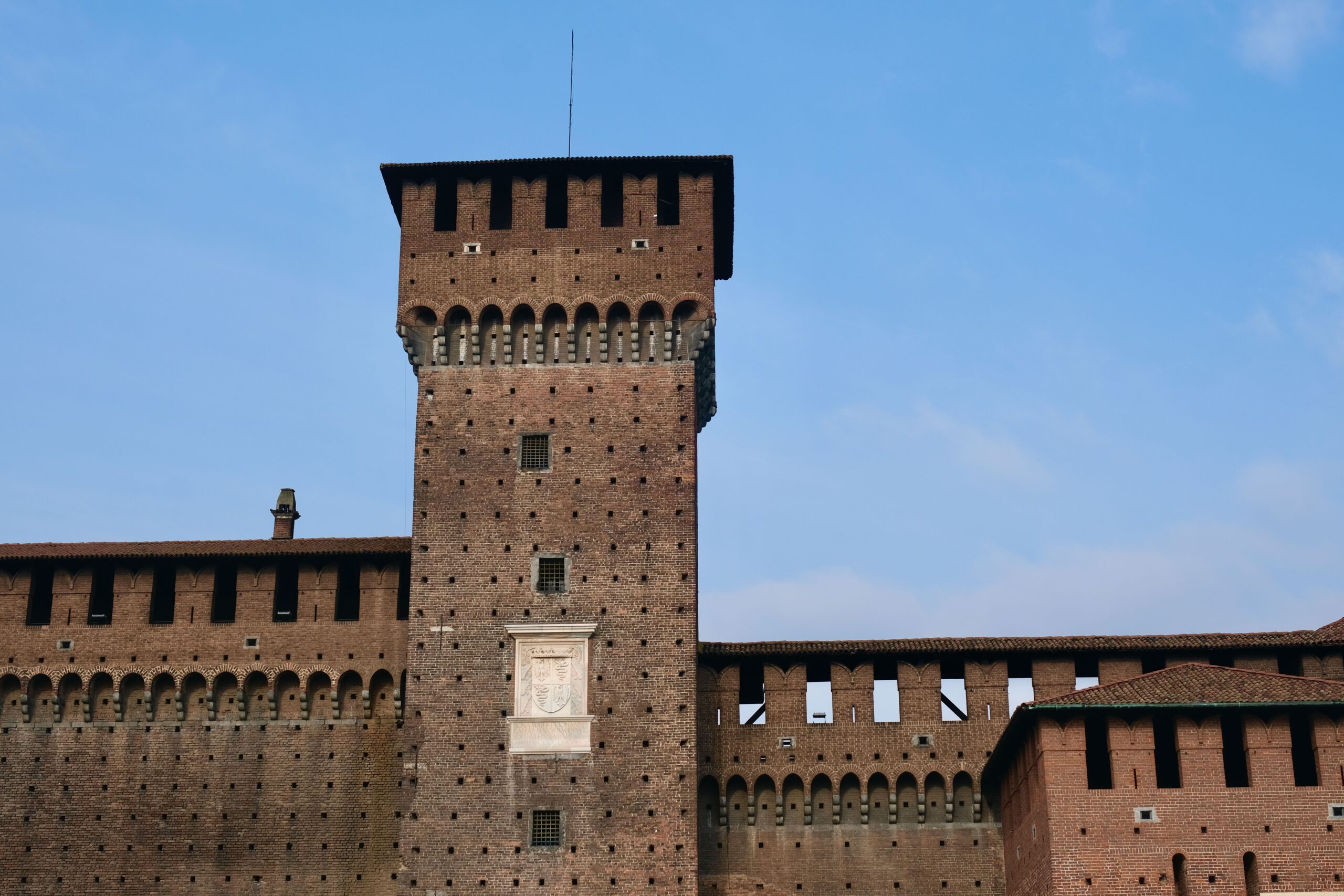
From the airport, we drove directly to Sforza Castle, a grand 15th-century fortress built by Francesco Sforza, Duke of Milan. Our local guide, Louisa, led us through its vast courtyards and towering ramparts, explaining its evolution from a military stronghold to a Renaissance palace under Ludovico Sforza, who invited Leonardo da Vinci to decorate its interiors. During his nearly two-decade stay in Milan, Leonardo inhabited one of the towers in the fortress from where he designed many of his military inventions. Strategically positioned, the castle played a key role in Milan’s defense and now houses prestigious museums, including the Museum of Ancient Art, home to Michelangelo’s unfinished Pietà Rondanini.
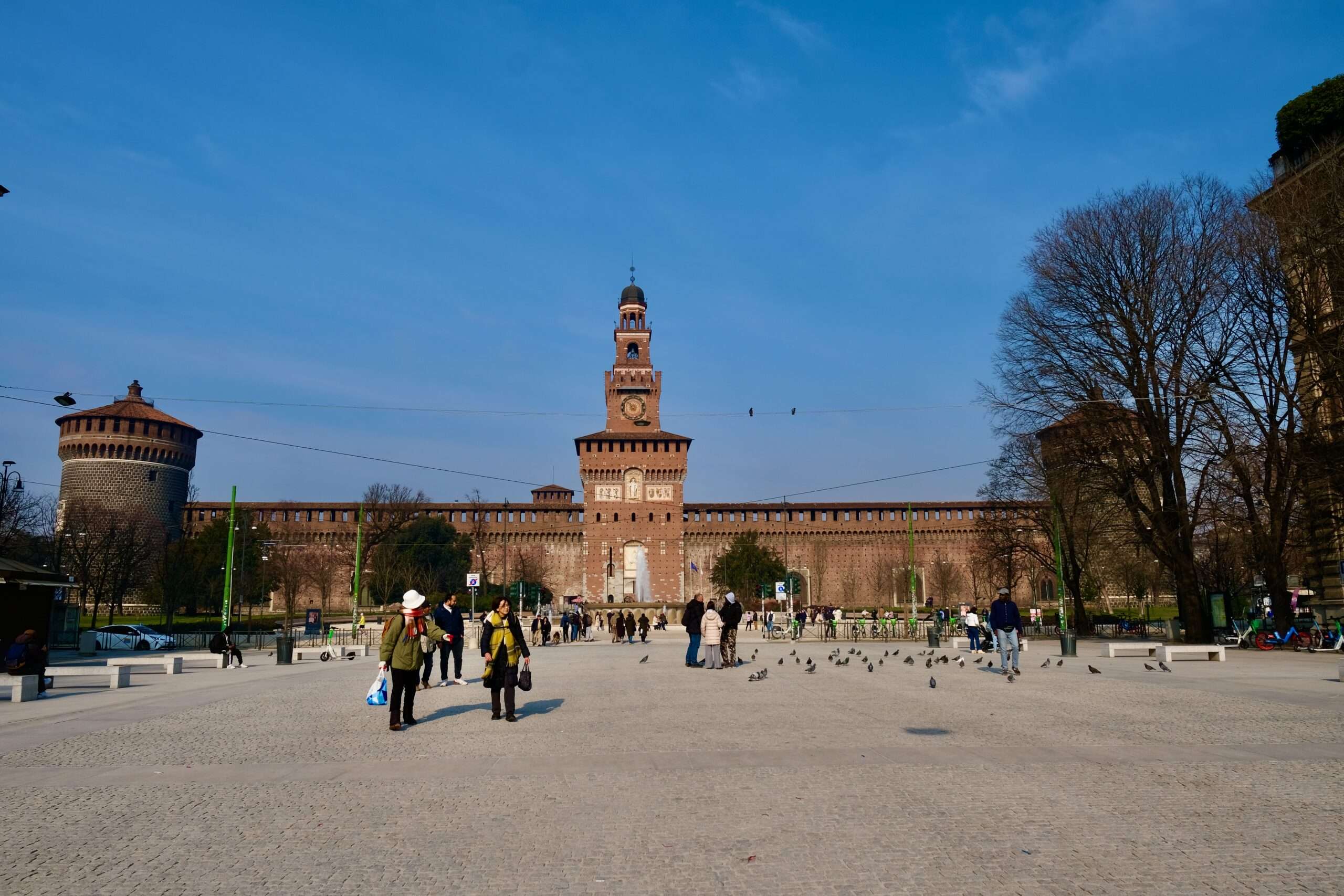
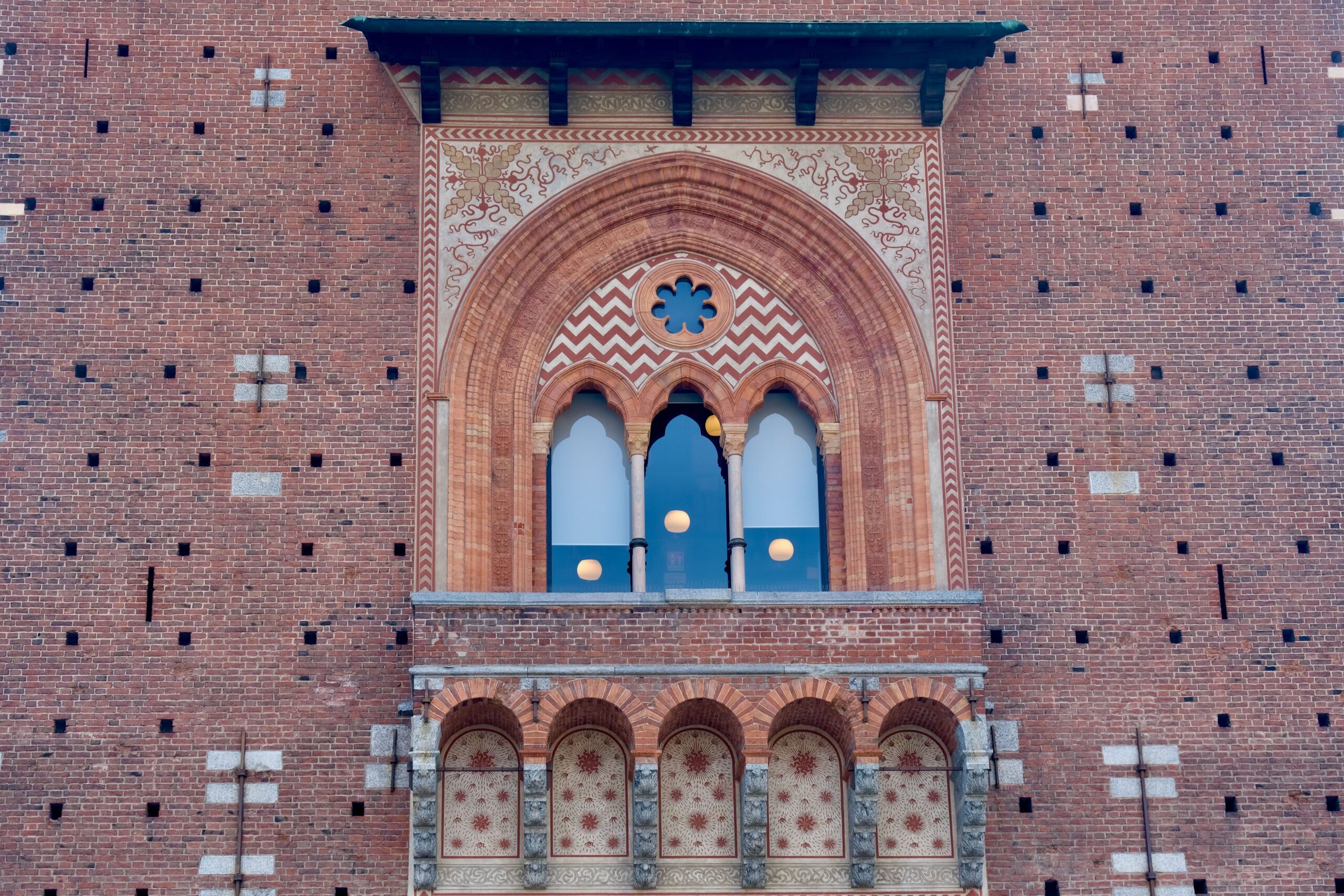
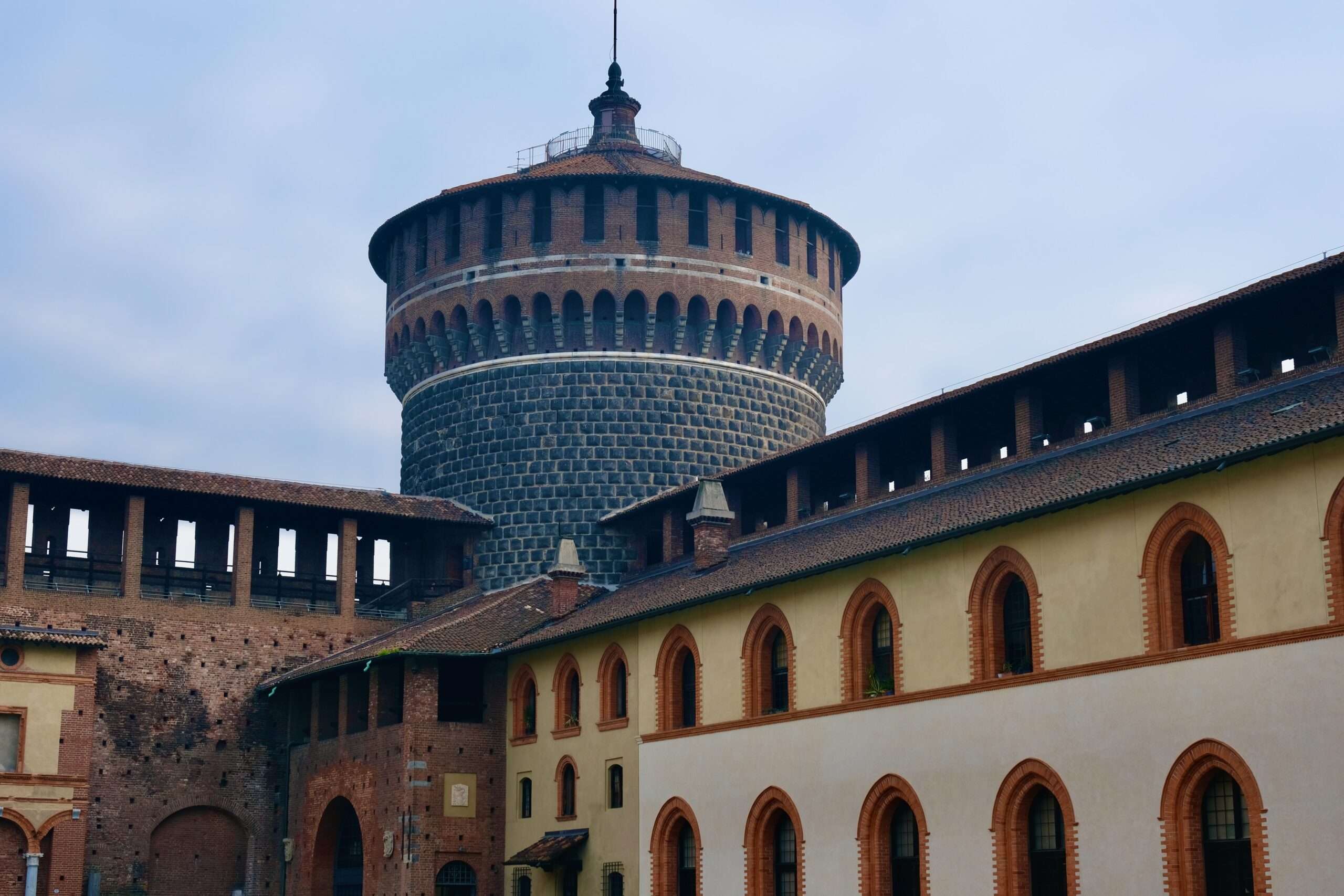

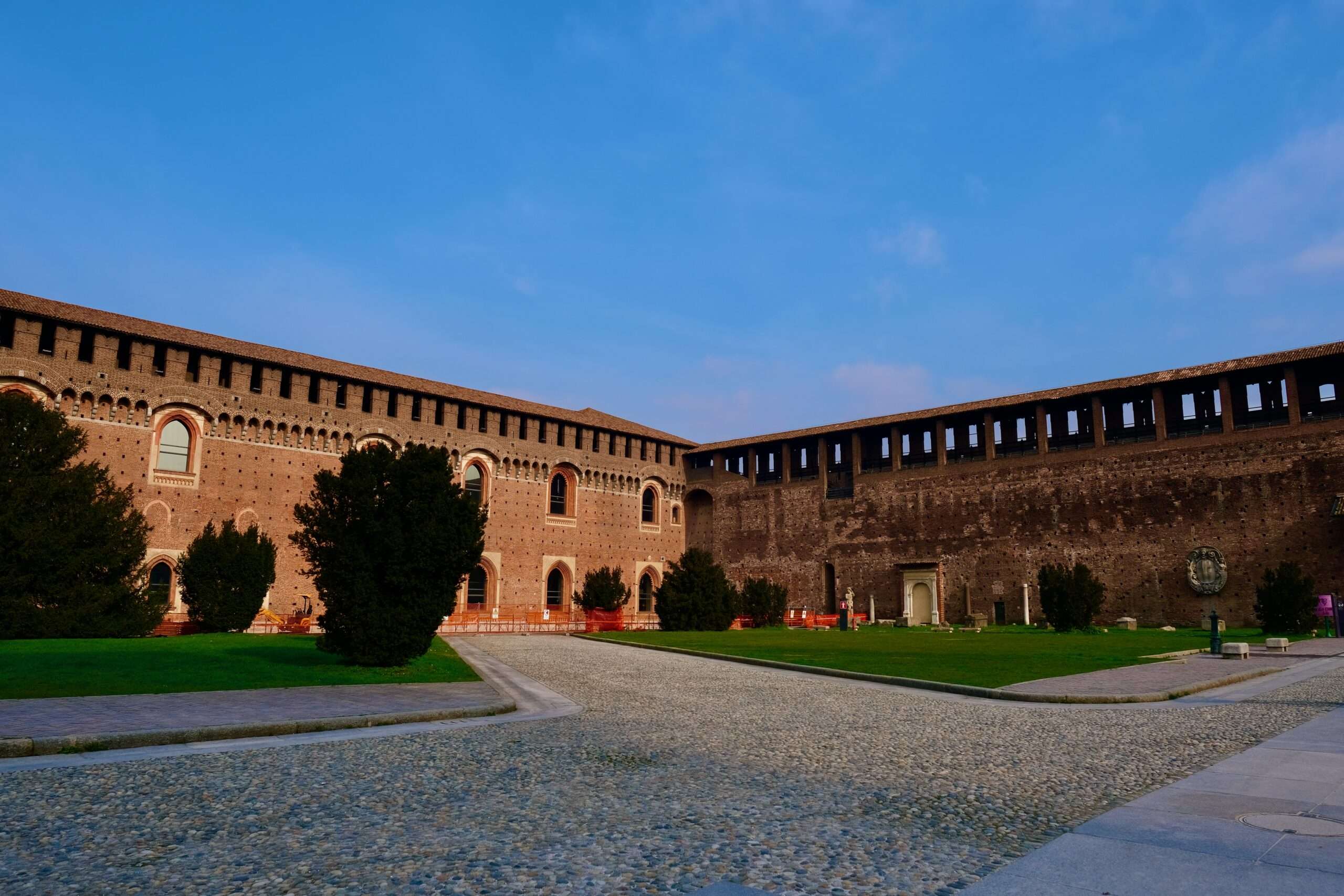
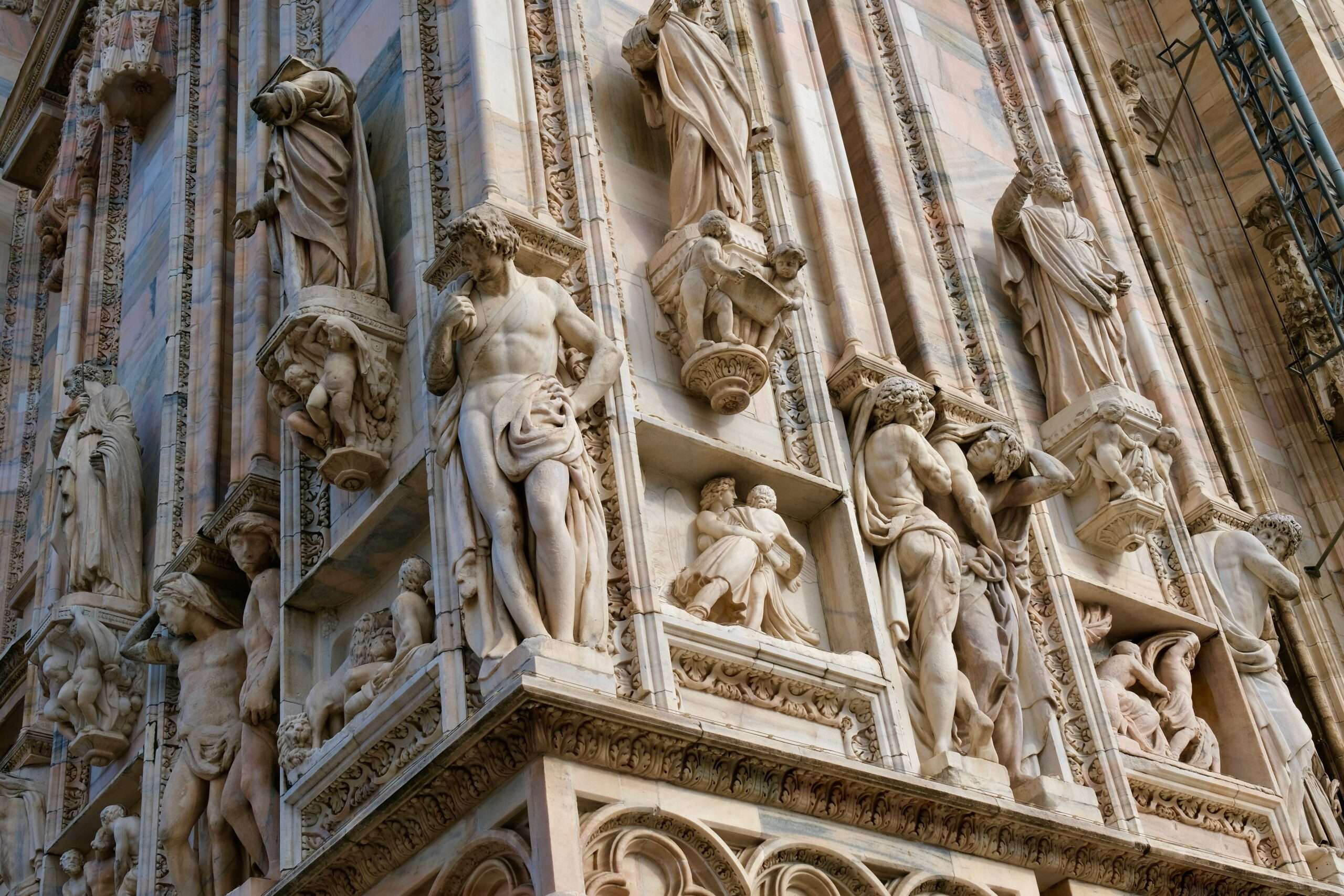
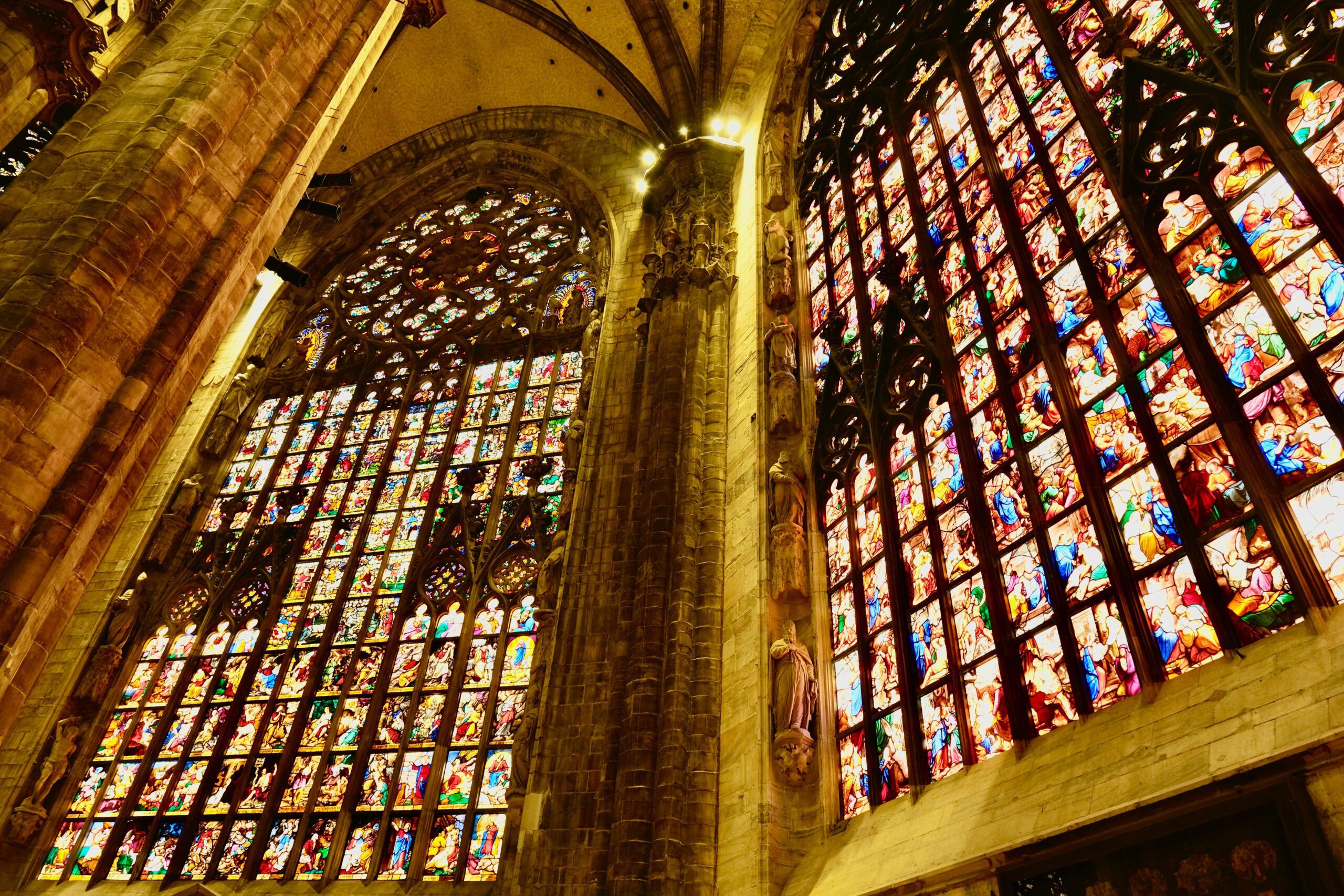
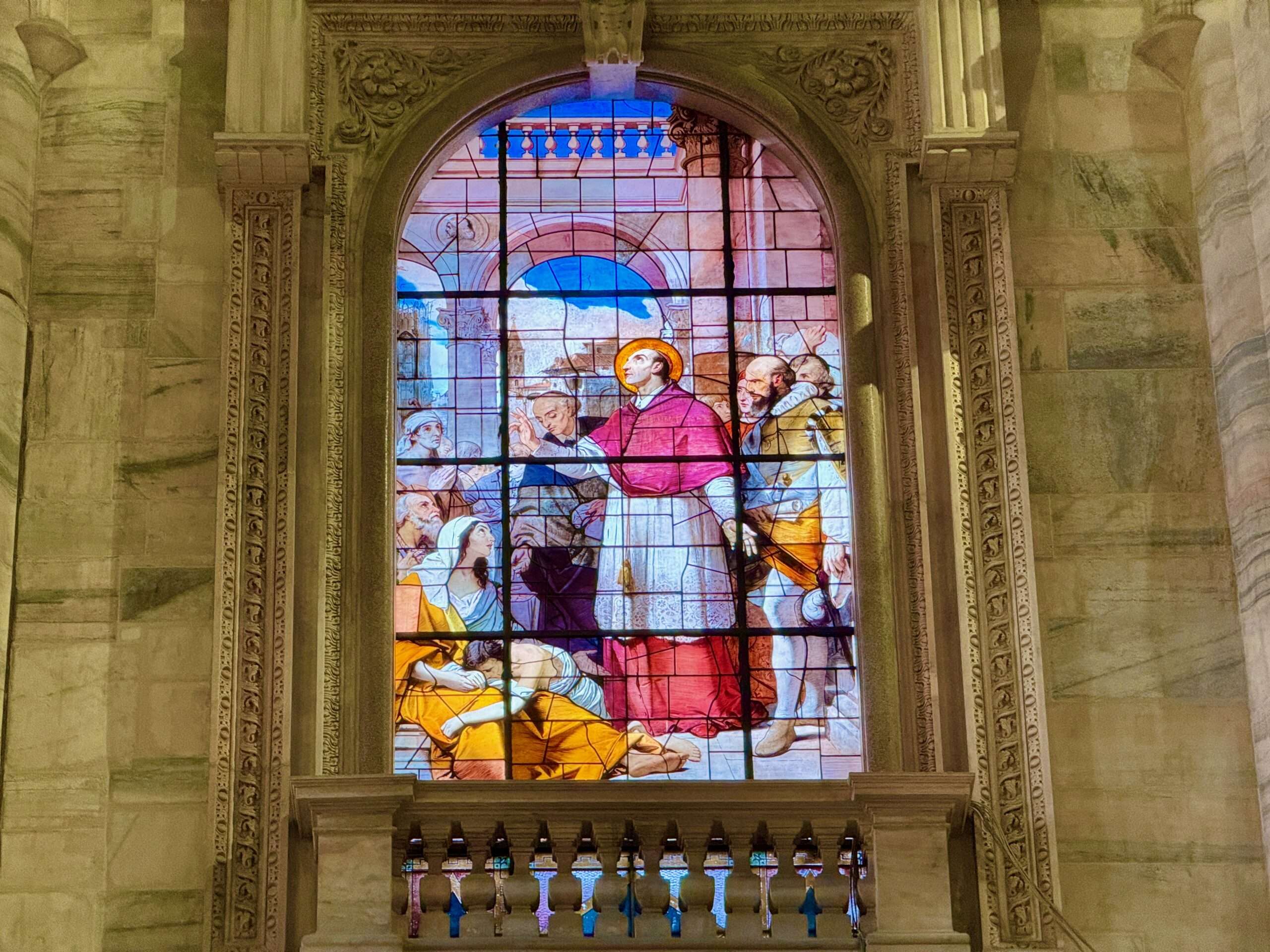
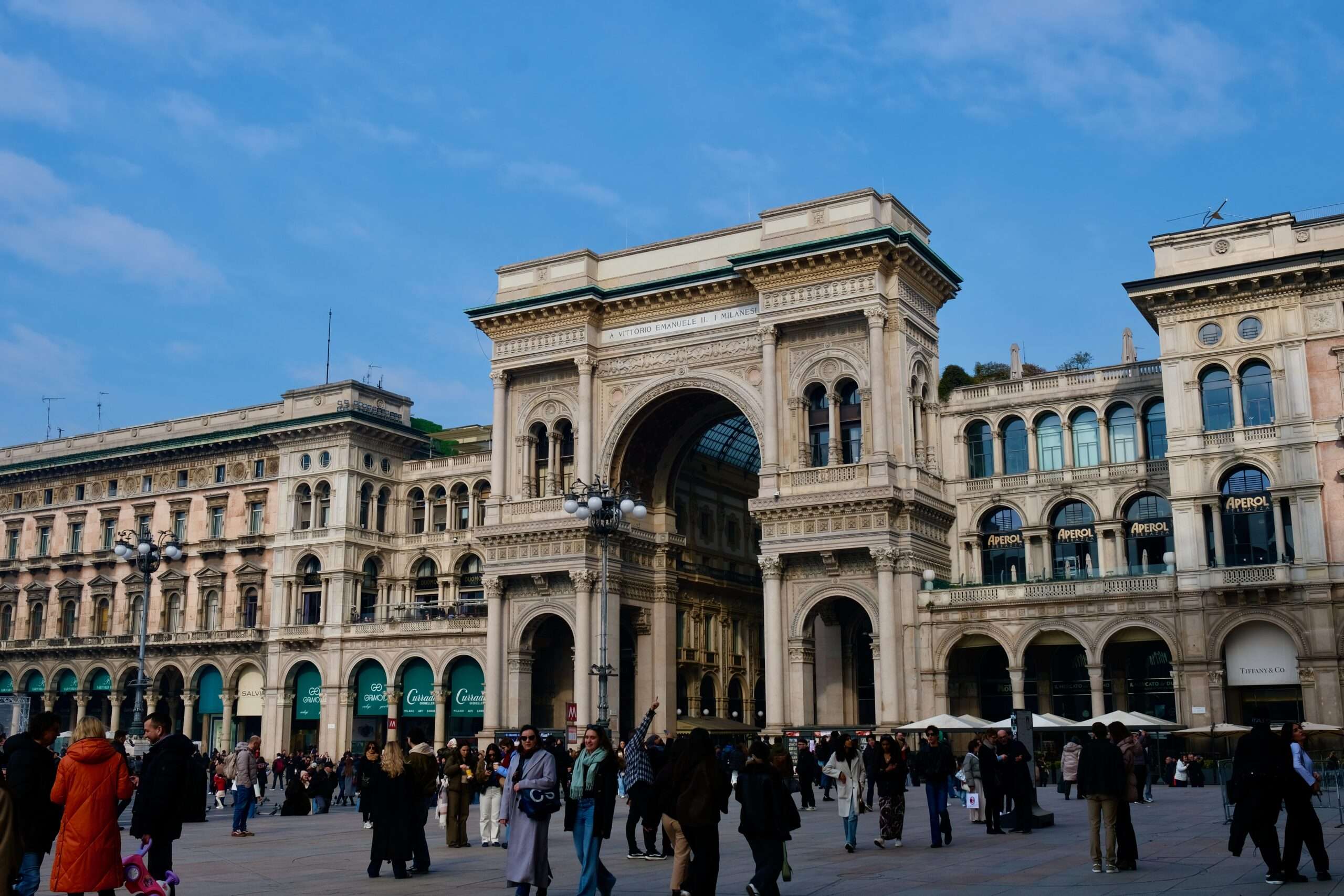
From there, we embarked on a scenic walk to the city center. Along the way, Louisa pointed out notable buildings and landmarks, enriching our understanding of Milan’s architectural and cultural heritage. We soon arrived at the breathtaking Duomo, where we had a timed entrance. Stepping inside, we marveled at the more than 50 stunning stained-glass windows, including the one created by Marc Chagall; the tall, fluted pillars with decorated capitals; and the unusual flooring.


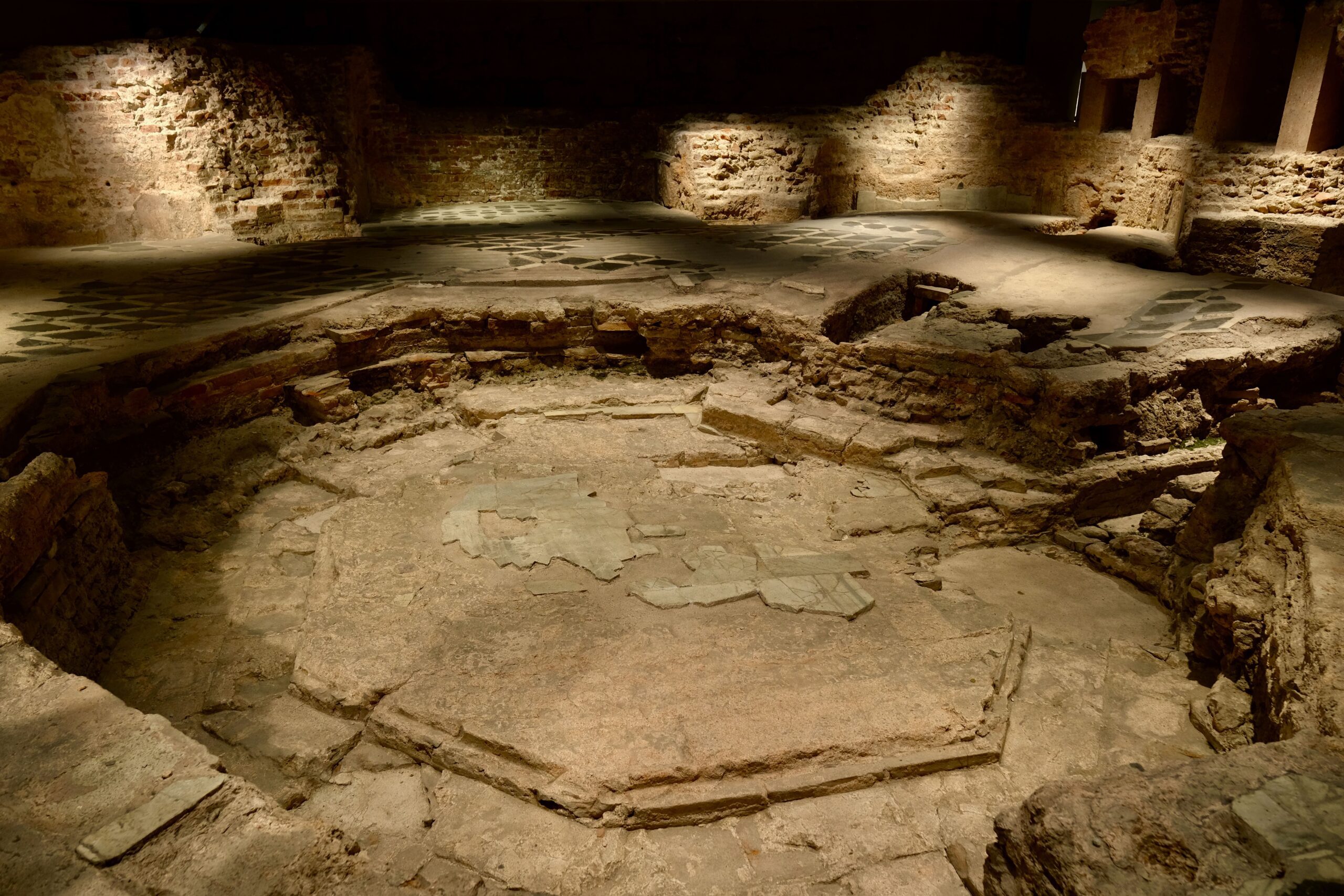
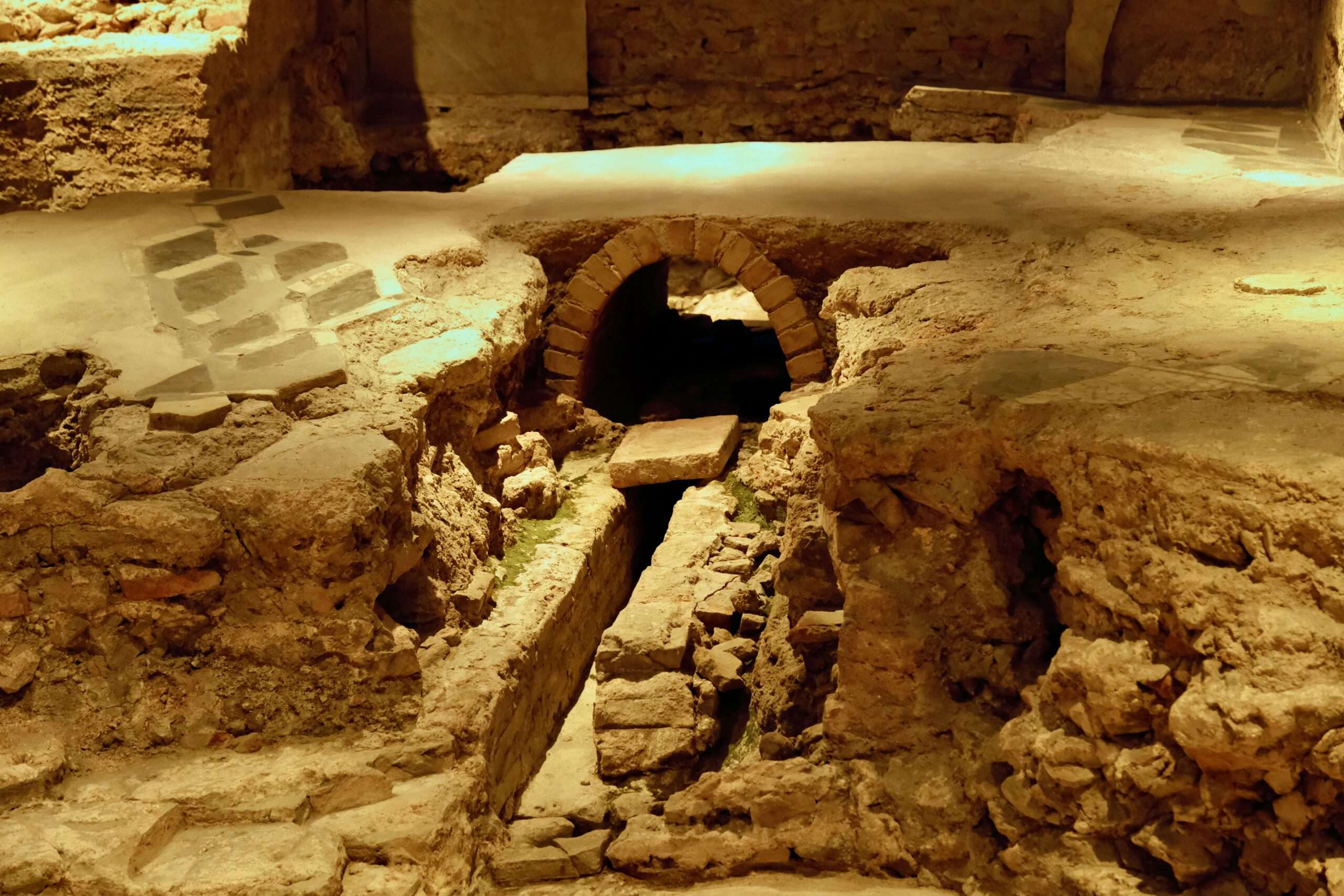
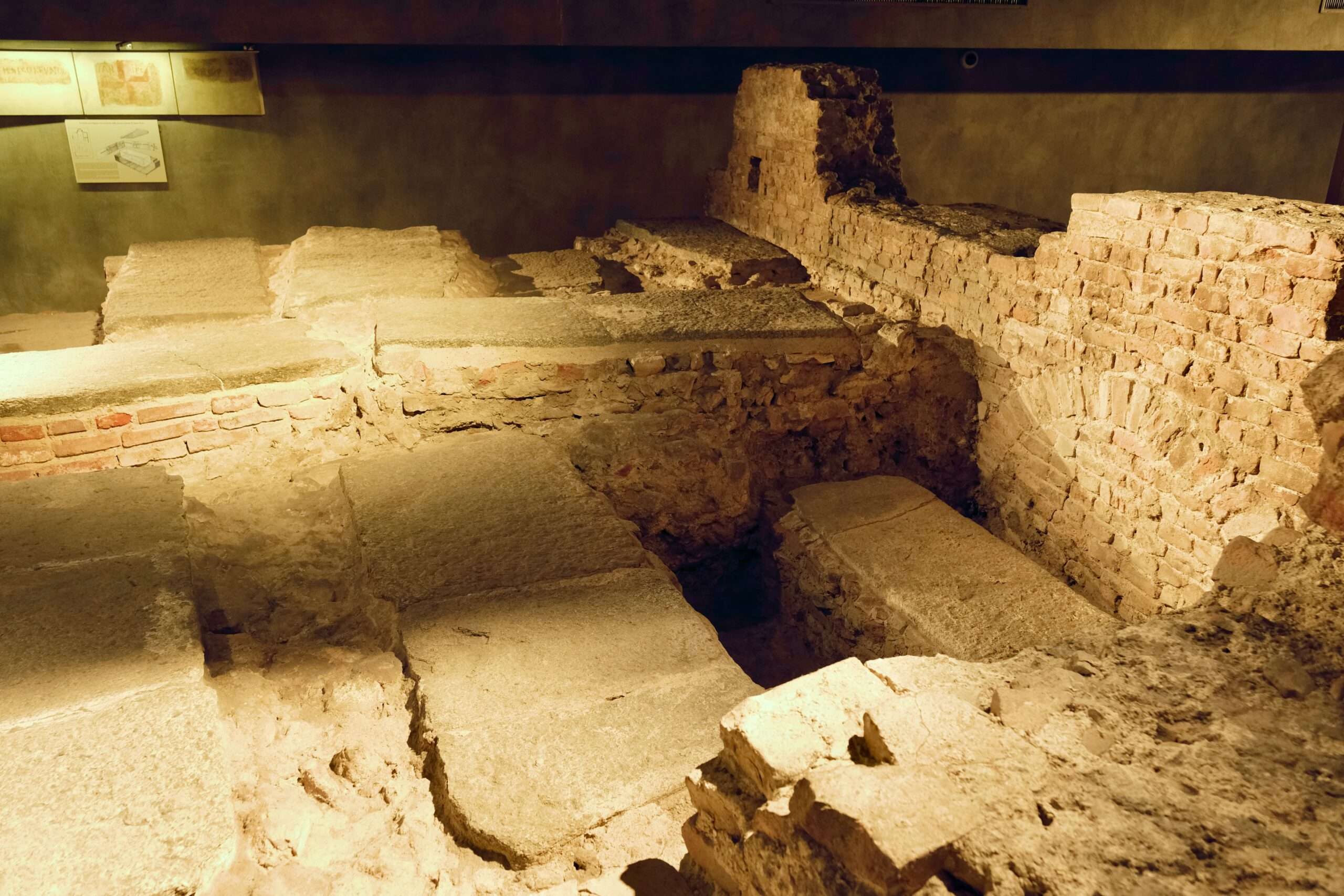
With our tickets, we then accessed the baptistery, where Louisa recounted the history of the octagonal baptismal font and its significance. The baptistry lies underground next to the remains of a church dedicated to St. Thecla which was destroyed by barbarians. It is in this baptistry that St. Ambrose, the Bishop of Milan, baptized St. Augustine during Easter in AD 387.
Following our visit to the baptistery, we attended Mass in the Capella Feriale, celebrated by Msgr. Gervasio and Rev. Felicien. Afterward, we enjoyed a classic Italian pizza lunch before embarking on a four-hour drive to Florence.our-hour drive to Florence.
Upon arrival, we checked into our hotel, had dinner, and exhausted from the day’s travels, quickly settled in for the night.
Exploring Florence: Art, History, and Iconic Landmarks – February 22, 2025
After breakfast, we enjoyed a guided walking tour of the historic center of Florence, a UNESCO World Heritage site. This was our second time in Florence. The tour began at the Basilica of Santa Croce, the biggest Franciscan church in the world built in the mid-1200s outside the city limits and in marshland. It became the resting place of many notable Italian figures, including Michelangelo, Galileo, and Machiavelli. Dante, however, is not buried here despite the memorial and being a Florentine native; he’s buried in Ravenna. Our daily Mass was celebrated by Msgr. Gervasio and Rev. Felicien in one of the chapels within the Basilica.
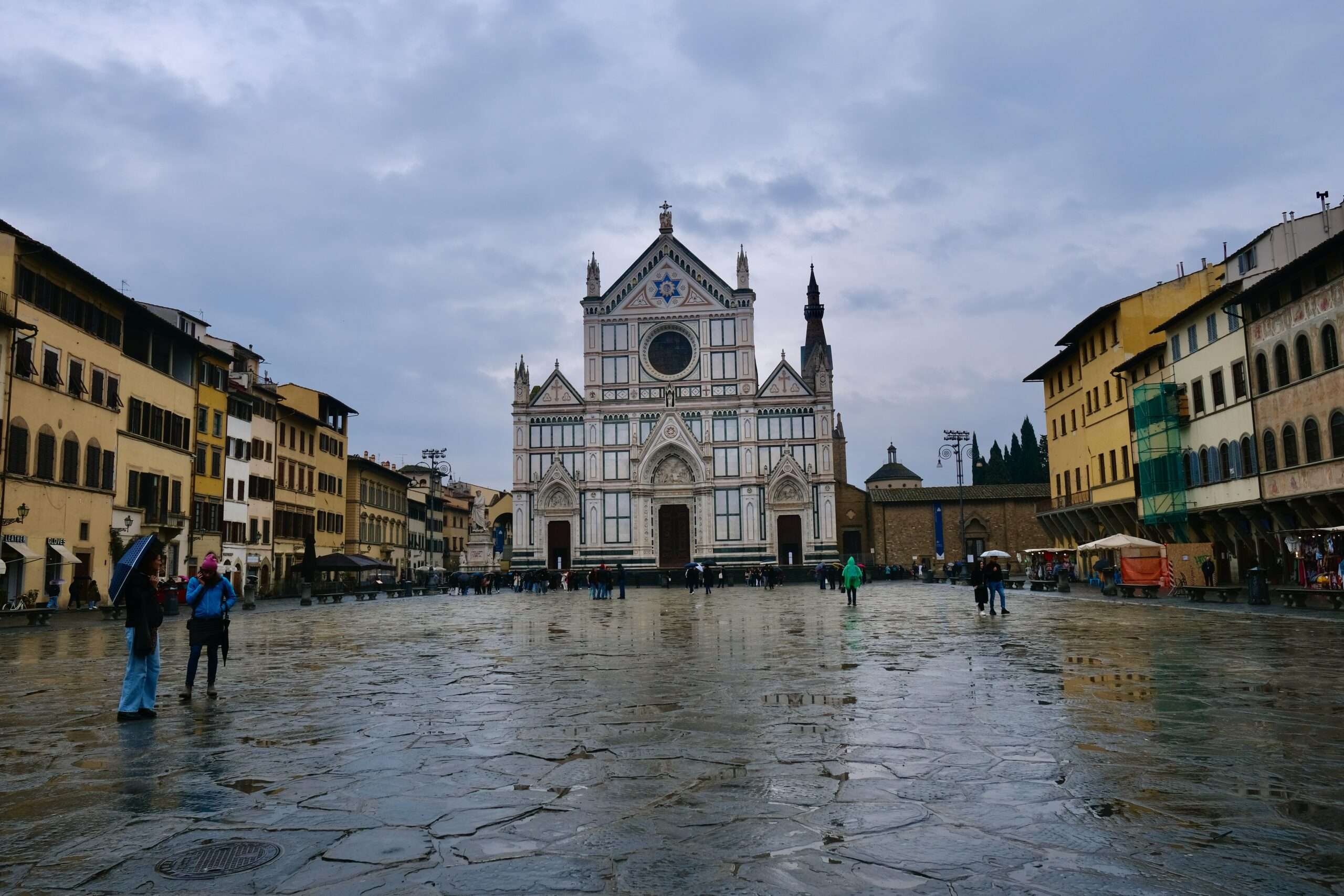
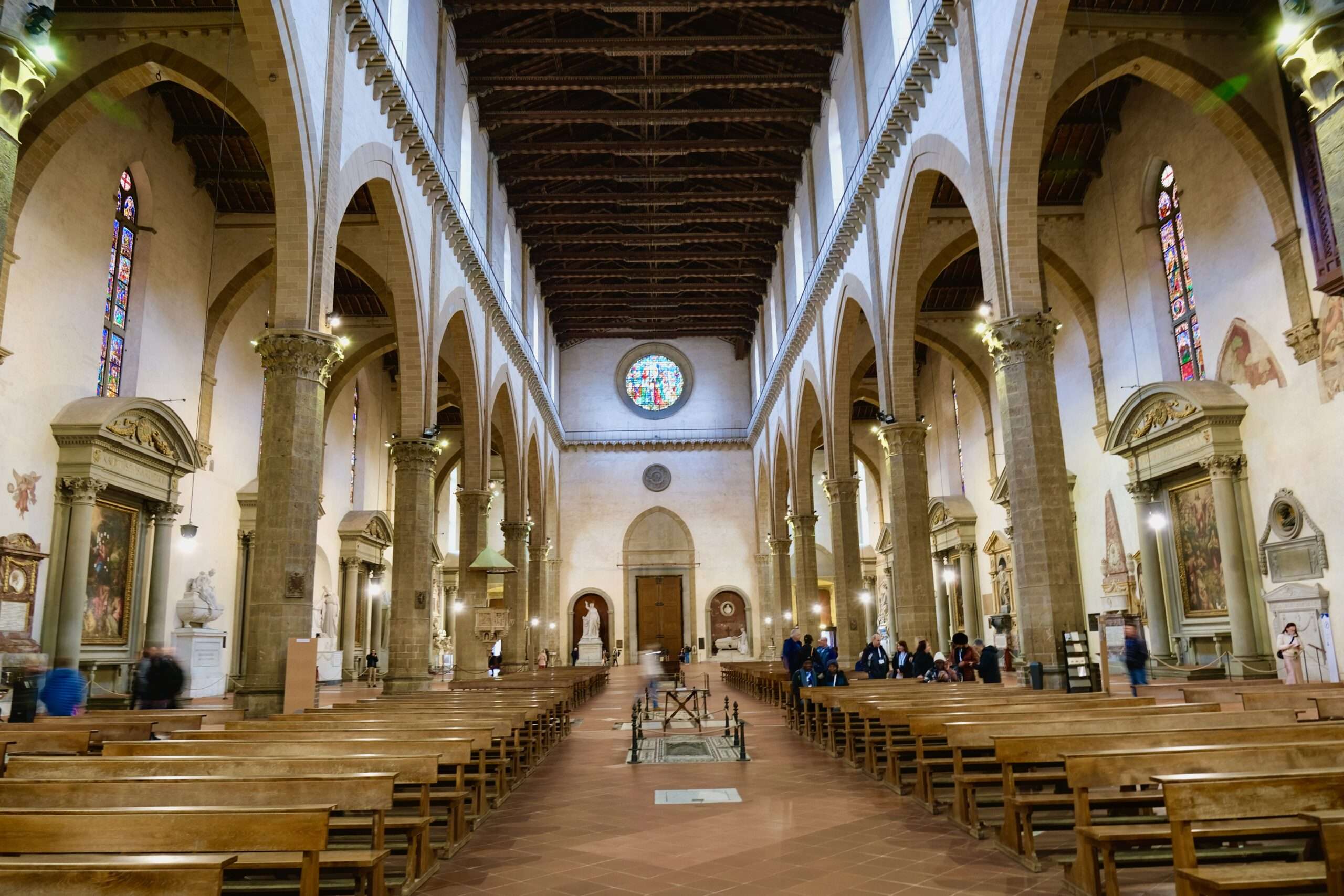
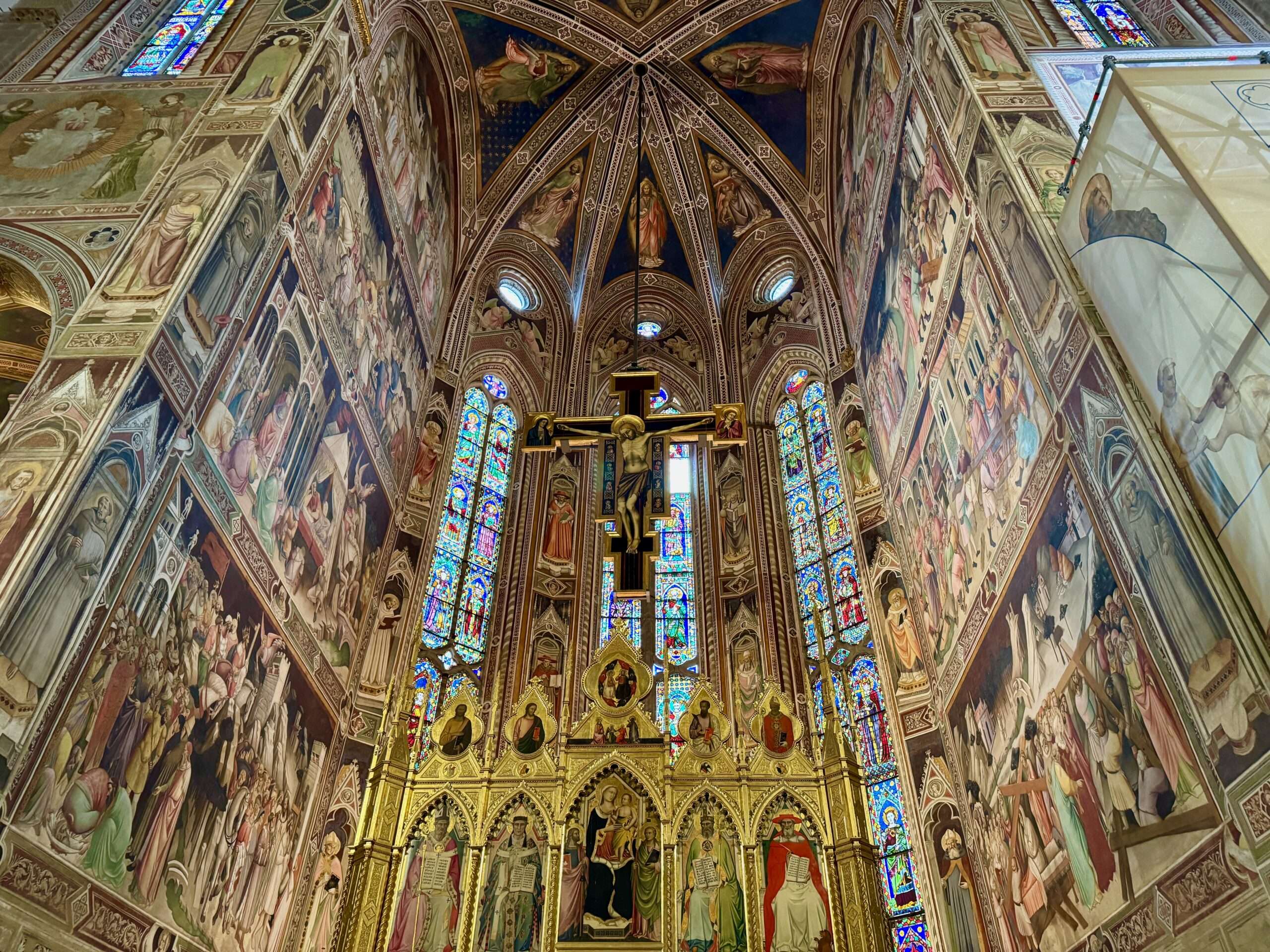
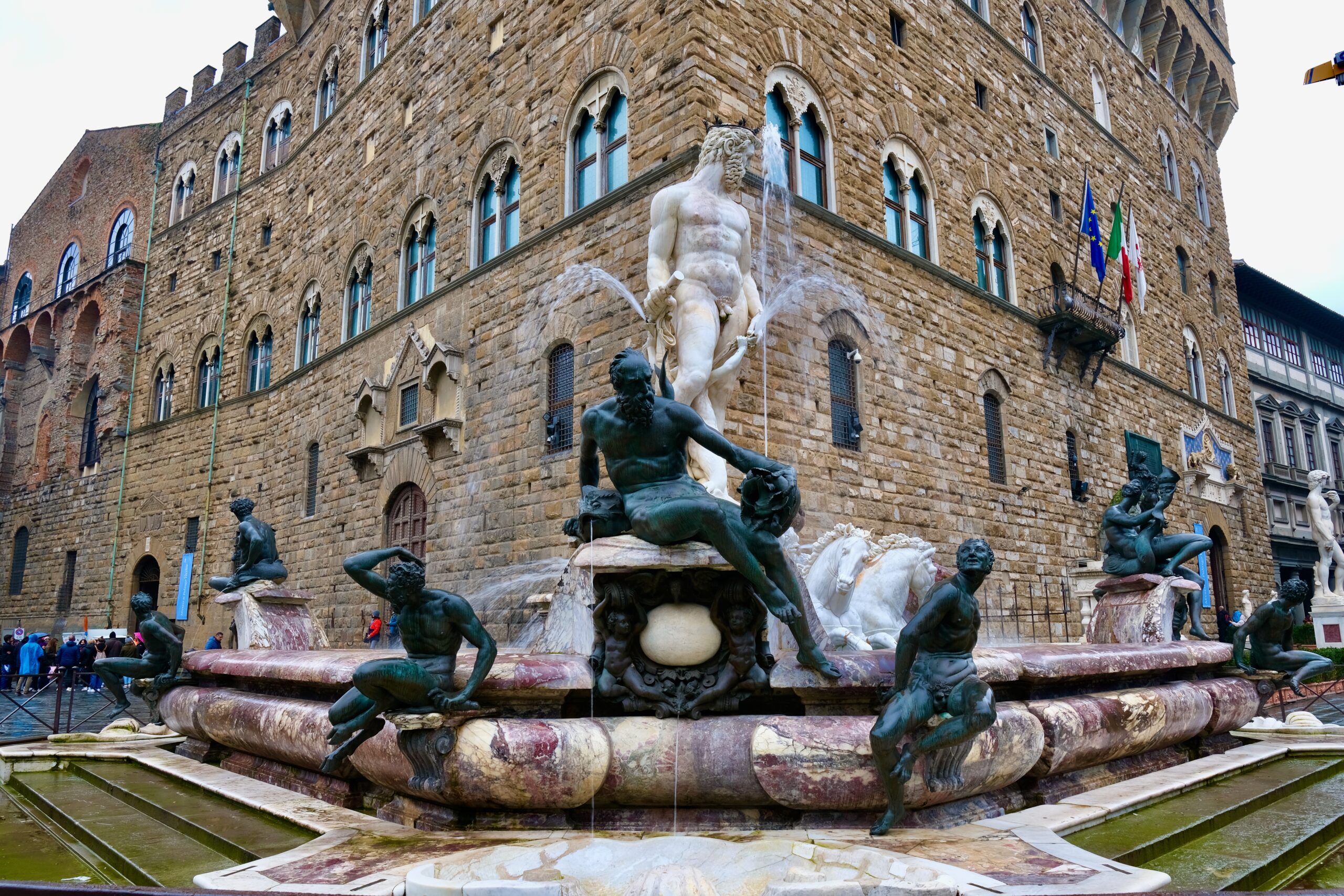
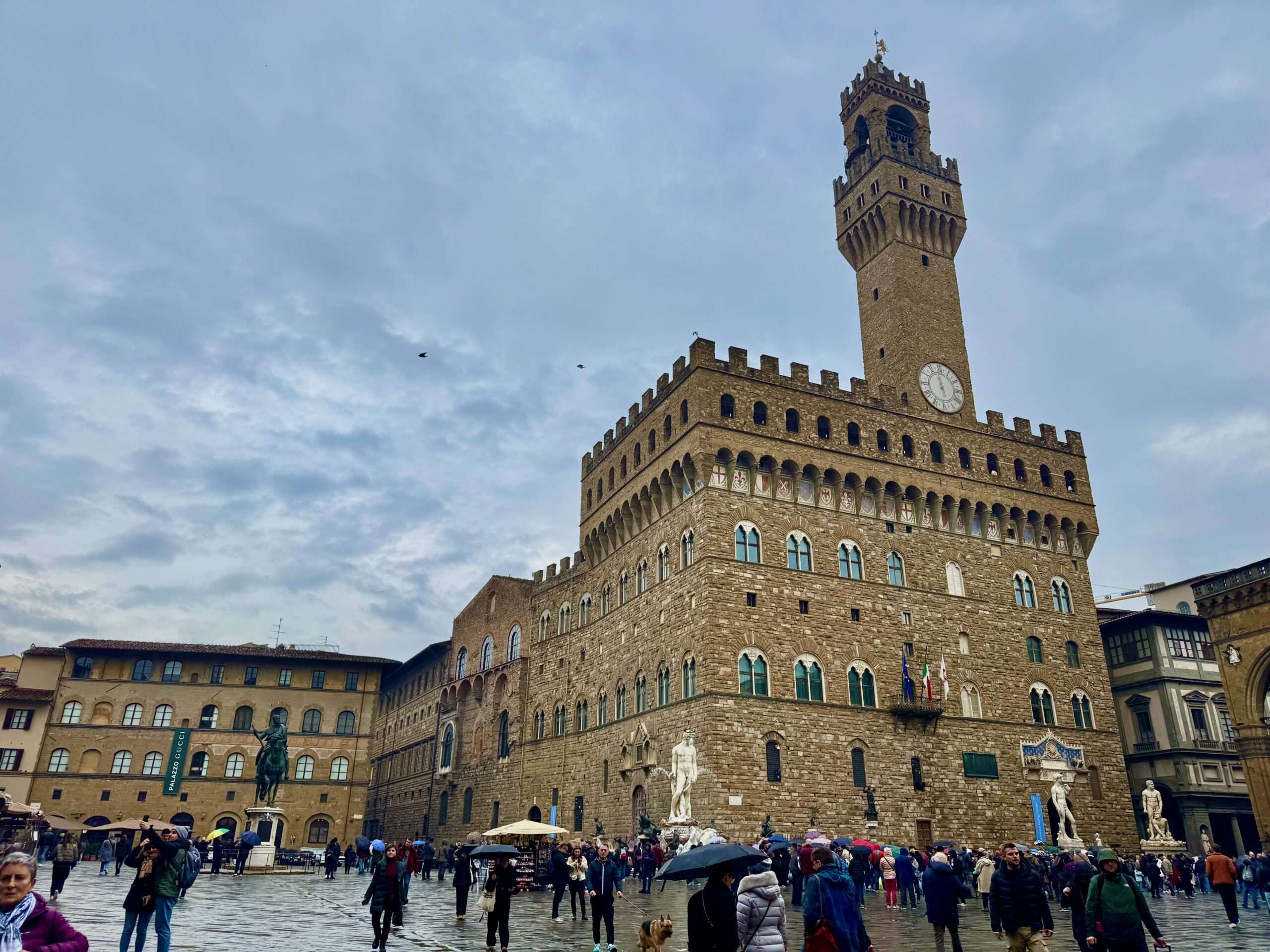
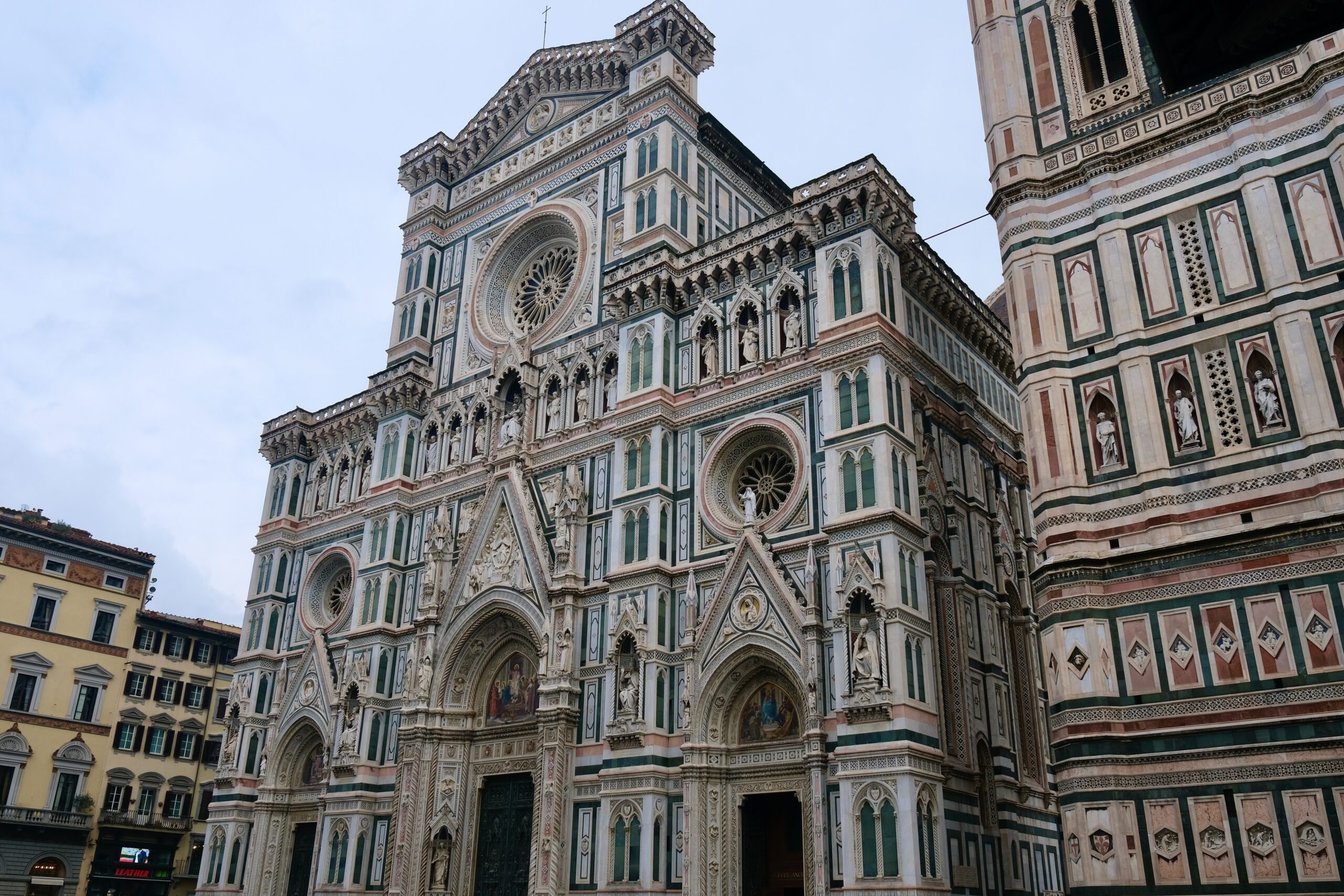
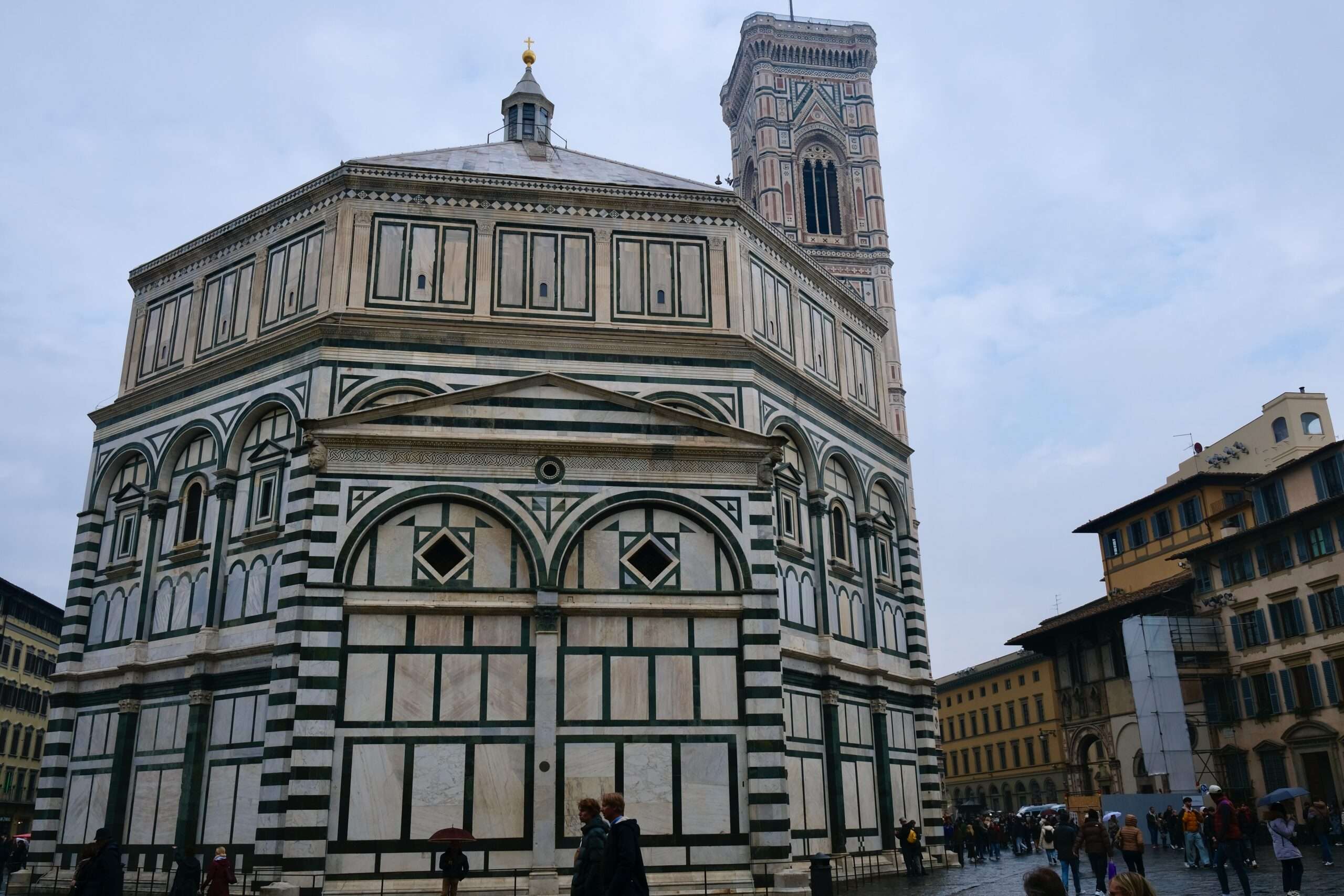
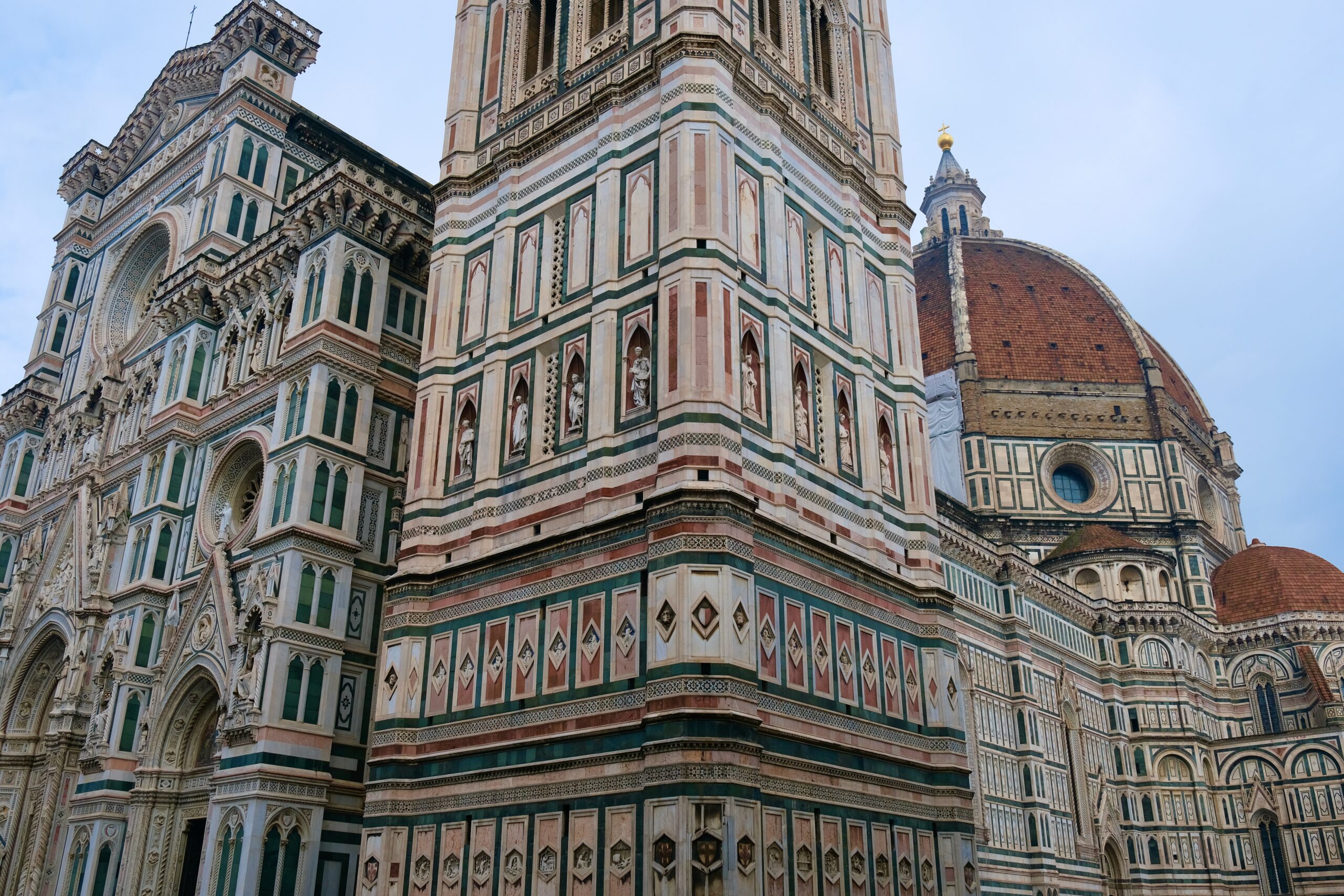
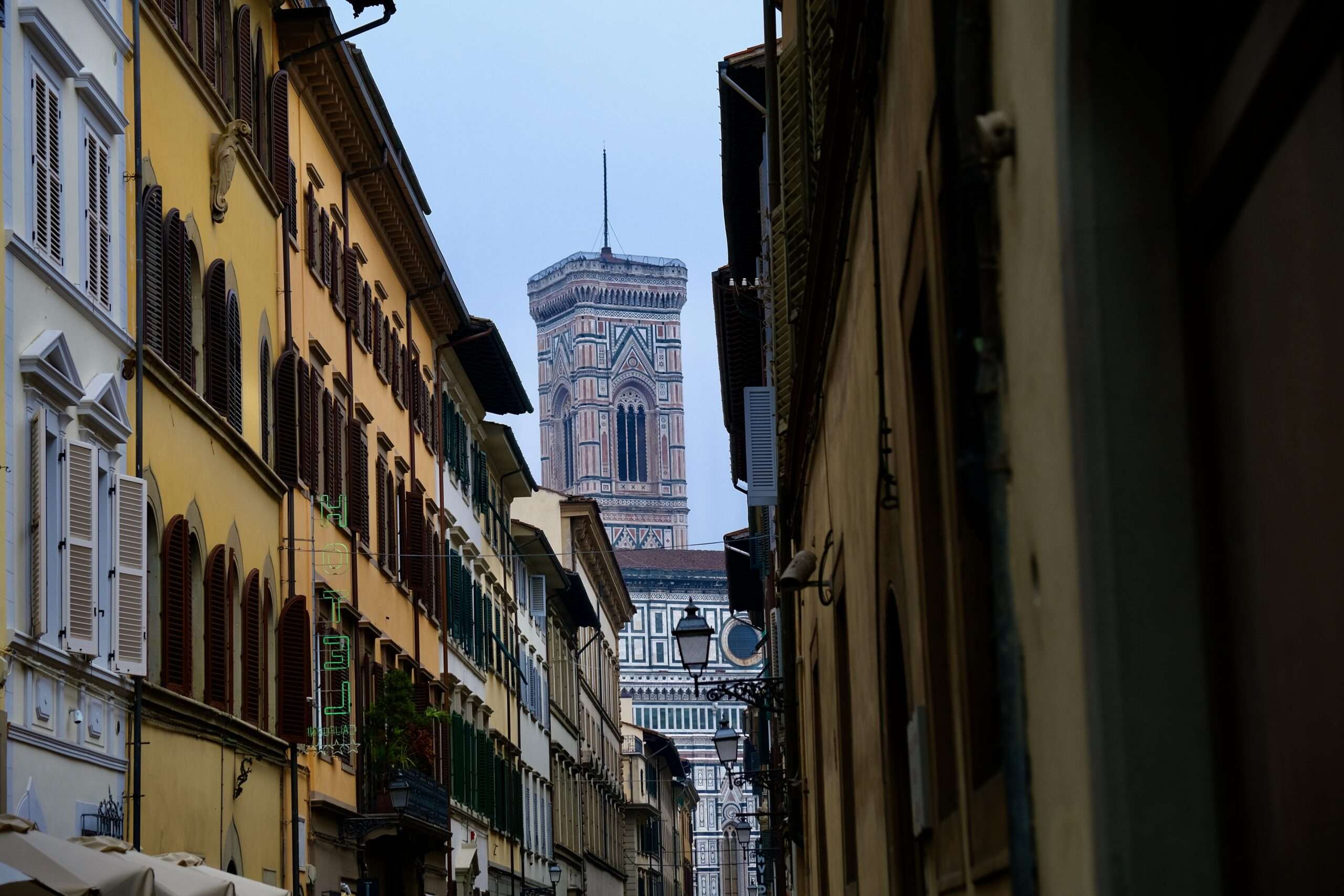
Following the Mass, we were joined by a local guide who provided a comprehensive tour of the Basilica, highlighting the tombs and memorials, statues, and the art works of Cimabue, Giotto, Della Robbia, Brunelleschi, Donatello, Vasari, and others. We then took a brief tour of Piazza della Signoria and Piazza della Repubblica before arriving at the Cathedral of Santa Maria del Fiore, commonly known as the Duomo. This iconic landmark of Florence was designed by Filippo Brunelleschi in the 15th century and is renowned for its magnificent dome. We also visited the exquisite bronze Gates of Paradise doors of St. John’s Baptistry designed by Lorenzo Ghiberti.
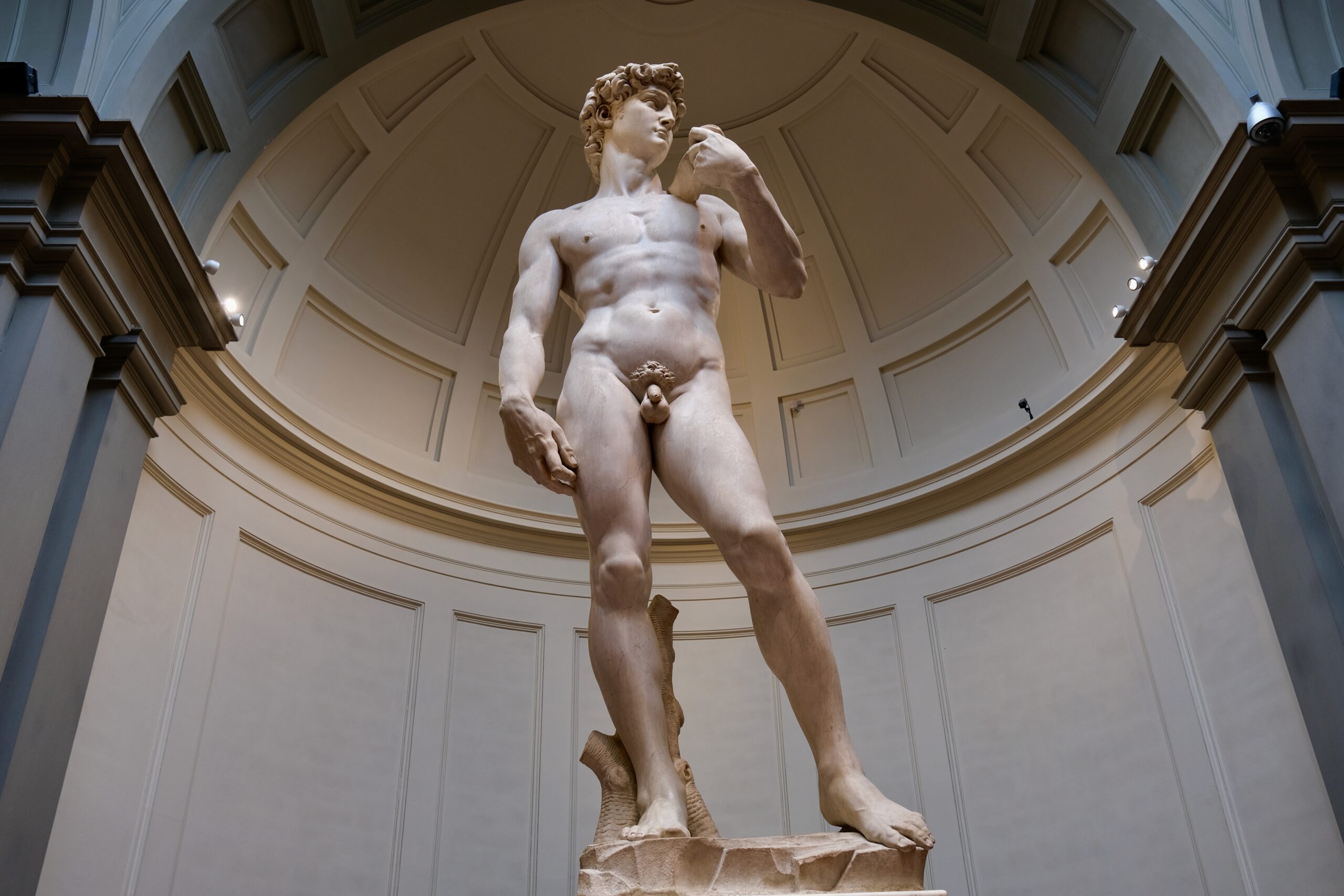
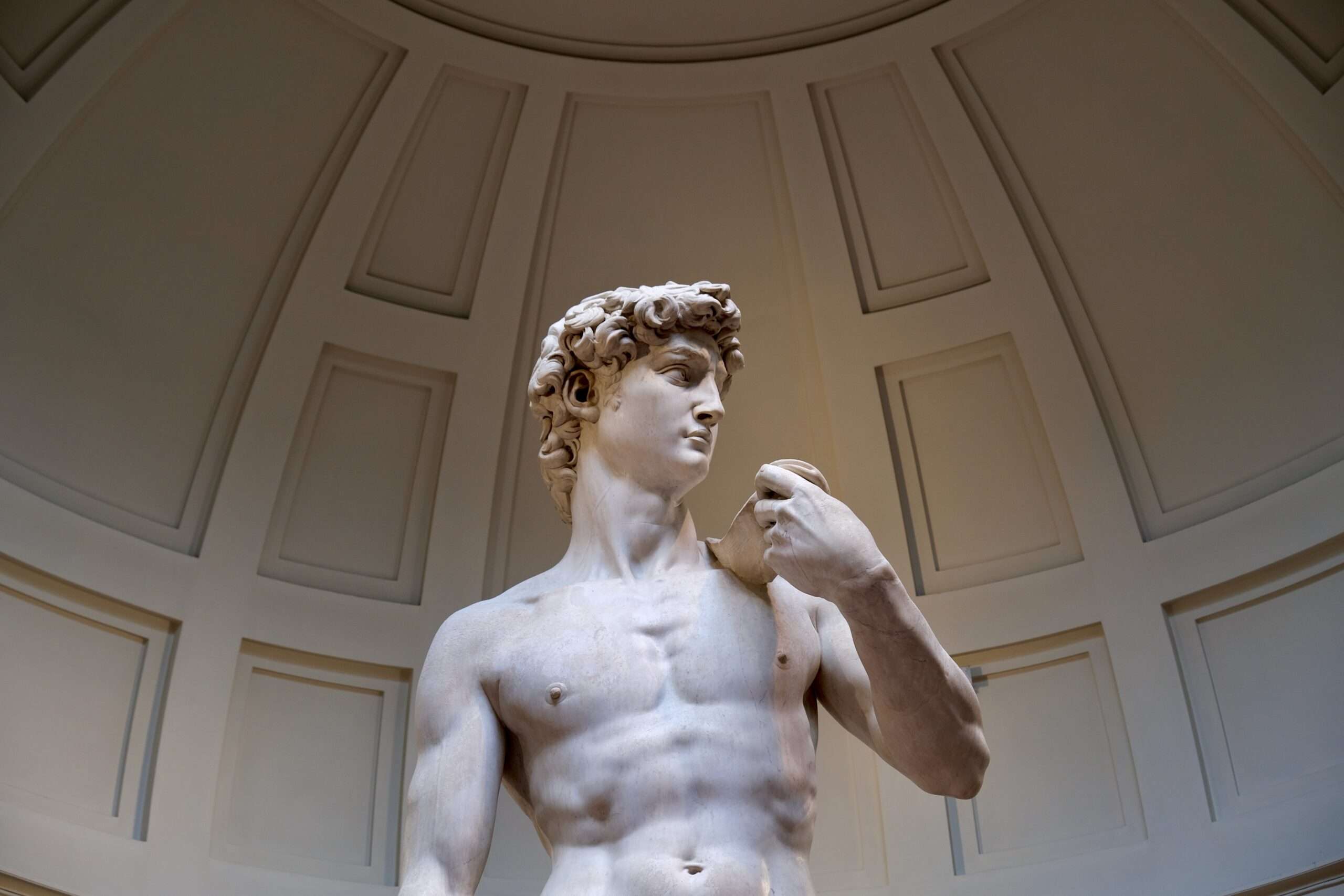
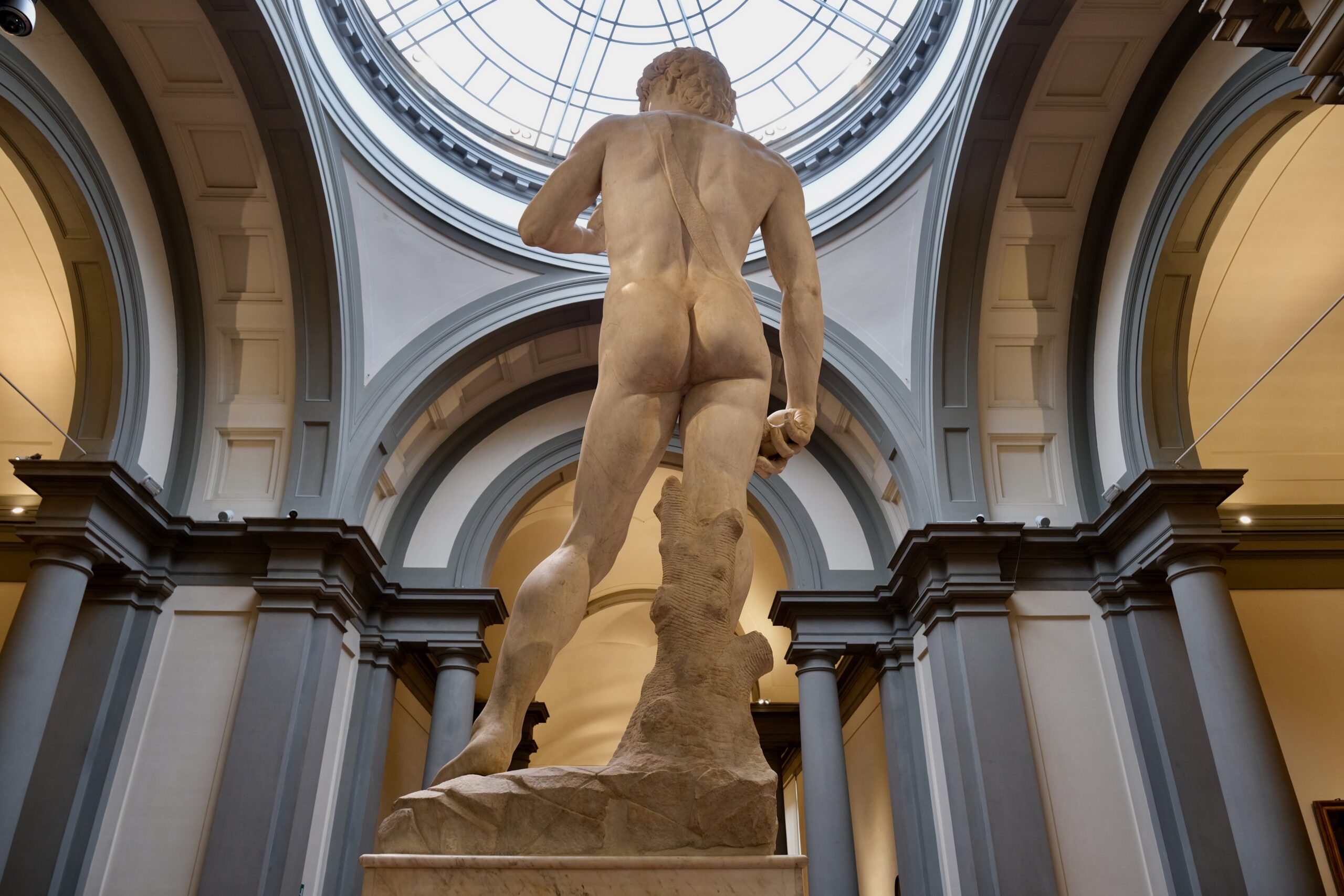
Next, we visited the Galleria dell’Accademia, a prestigious art gallery featuring works by artists such as Botticelli, Ghirlandaio, and Pontormo. However, the main highlight of the gallery is Michelangelo’s masterpiece, David, arguably the most famous sculpture in the world. David was commissioned for the Duomo but after it was completed the statue was placed in the Piazza della Signoria (the statue was too heavy to be raised to the roof, besides full-frontal nudity was frowned upon by church fathers), but when it became a target for graffiti artists, David was moved to his current location.
We had the rest of the afternoon to ourselves and decided to walk over to Mercato Centrale, hoping to grab a quick bite. However, the market was packed, so we opted to skip it. The lively atmosphere and bustling food stalls reminded us of Reading Terminal Market in Philadelphia.
Instead, we enjoyed a light pizza lunch at a nearby trattoria before retracing our steps to the Cathedral of Santa Maria del Fiore. Albert wanted to capture more photos of this majestic architectural masterpiece.
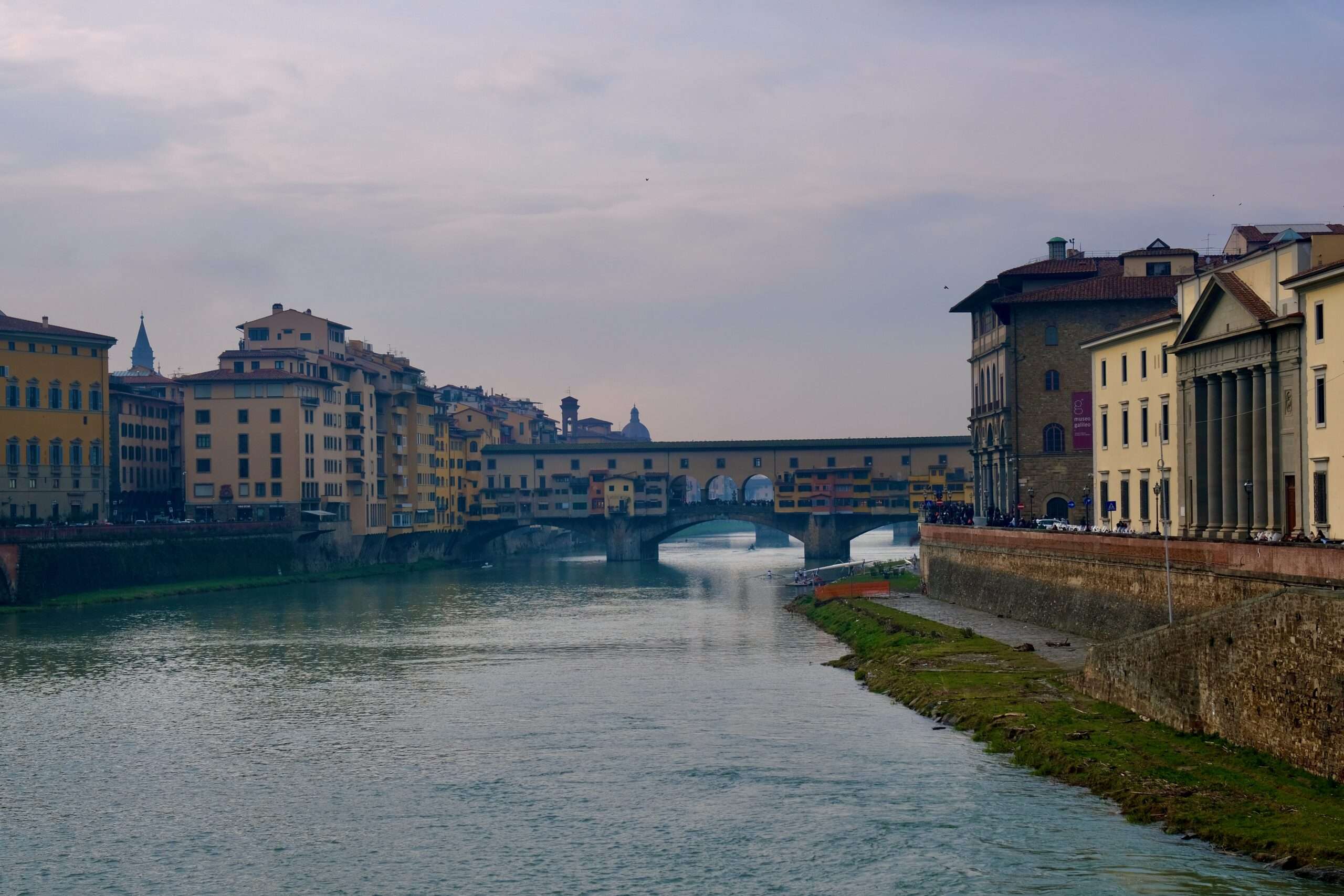
From the Duomo, we strolled to Ponte Vecchio, where Christabel was tempted by the dazzling jewelry displays. Albert, however, was relieved when no purchases were made.
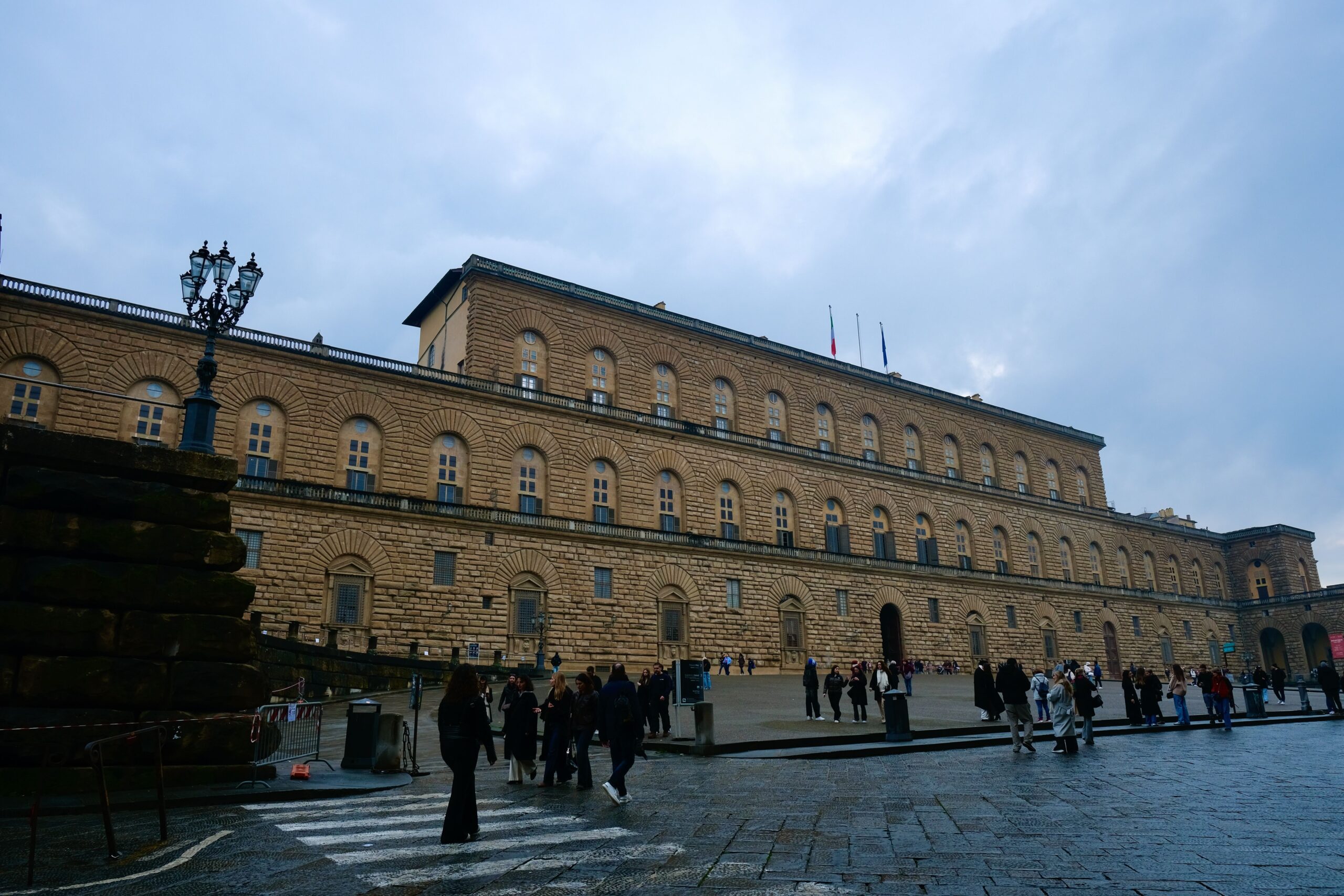
Our next stop was Palazzo Pitti, where we took a brief look at its grand exterior before heading back to the hotel to rest and call it a day.
Siena: A Pilgrimage of Faith and Heritage – February 23, 2025
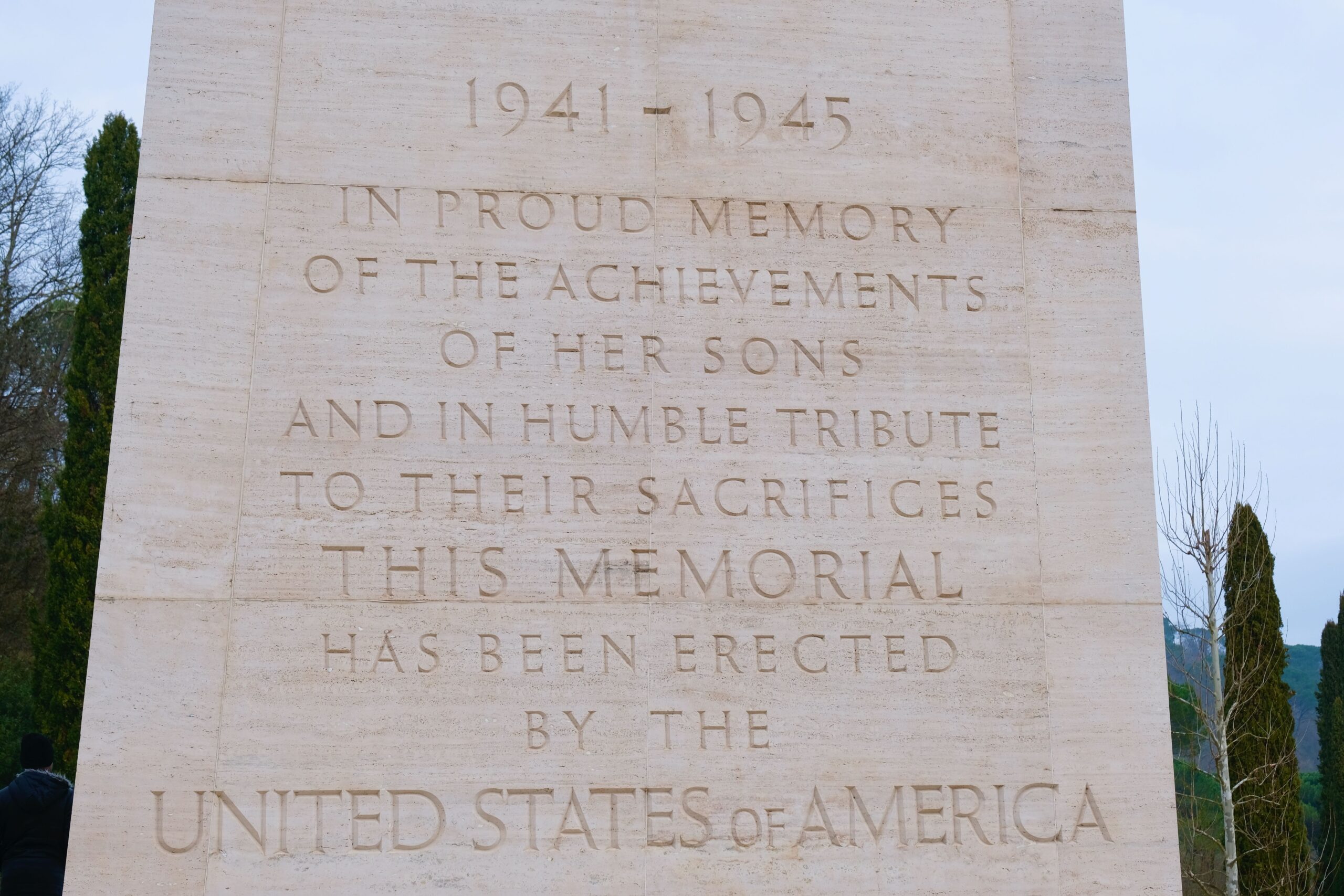
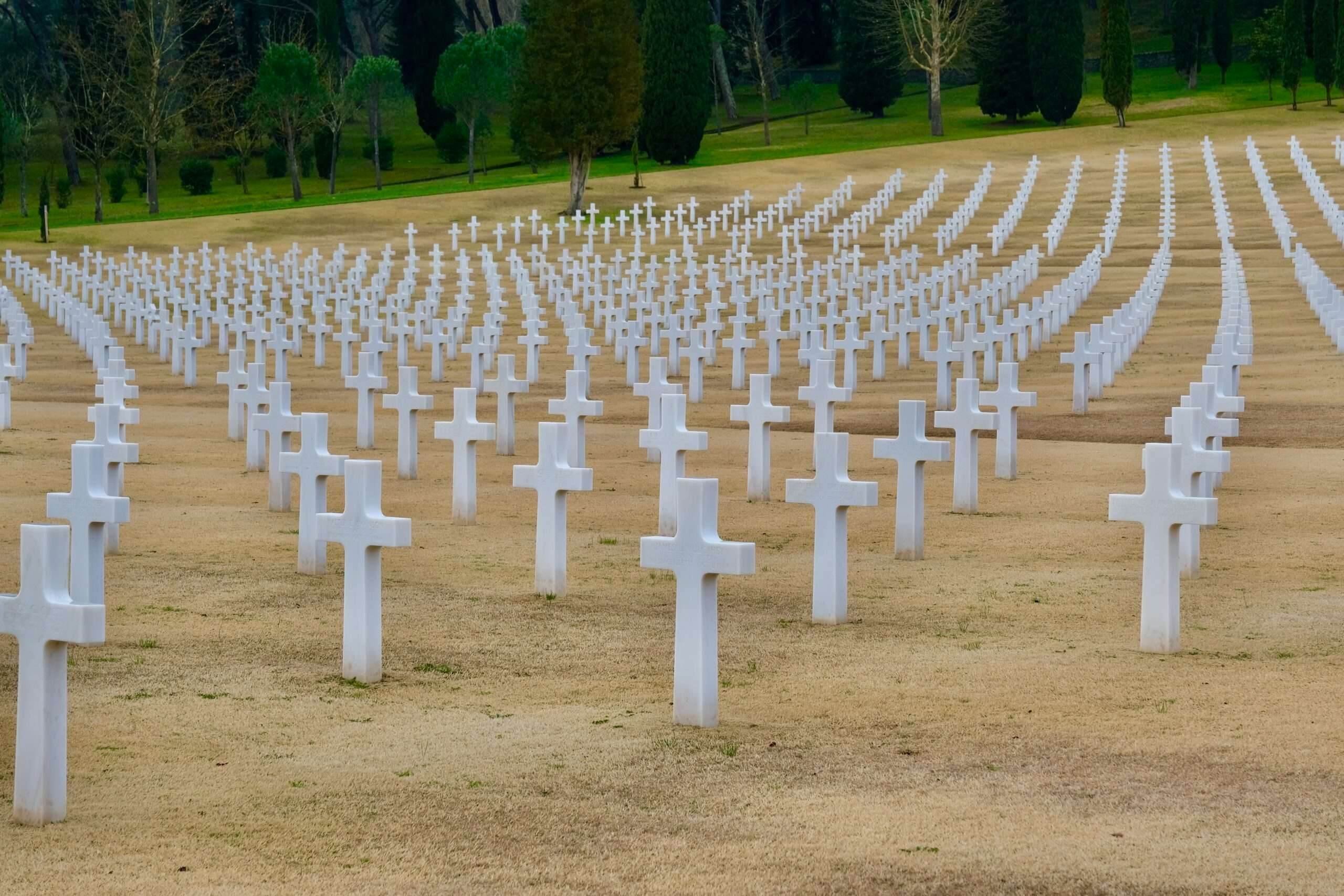
Today, we departed from Florence and drove to the historic Tuscan city of Siena, a UNESCO World Heritage site. Along the way, we stopped at the Florence American Cemetery to pay our respects to the 4,400 soldiers who lost their lives during World War II and are laid to rest there. The visit was a deeply poignant and somber experience, reminding us of the immense sacrifices made for freedom.

Siena is the birthplace of St. Catherine of Siena declared a Doctor of the Church, as well as St. Bernardine of Siena, known as the Apostle of Italy for his powerful preaching.
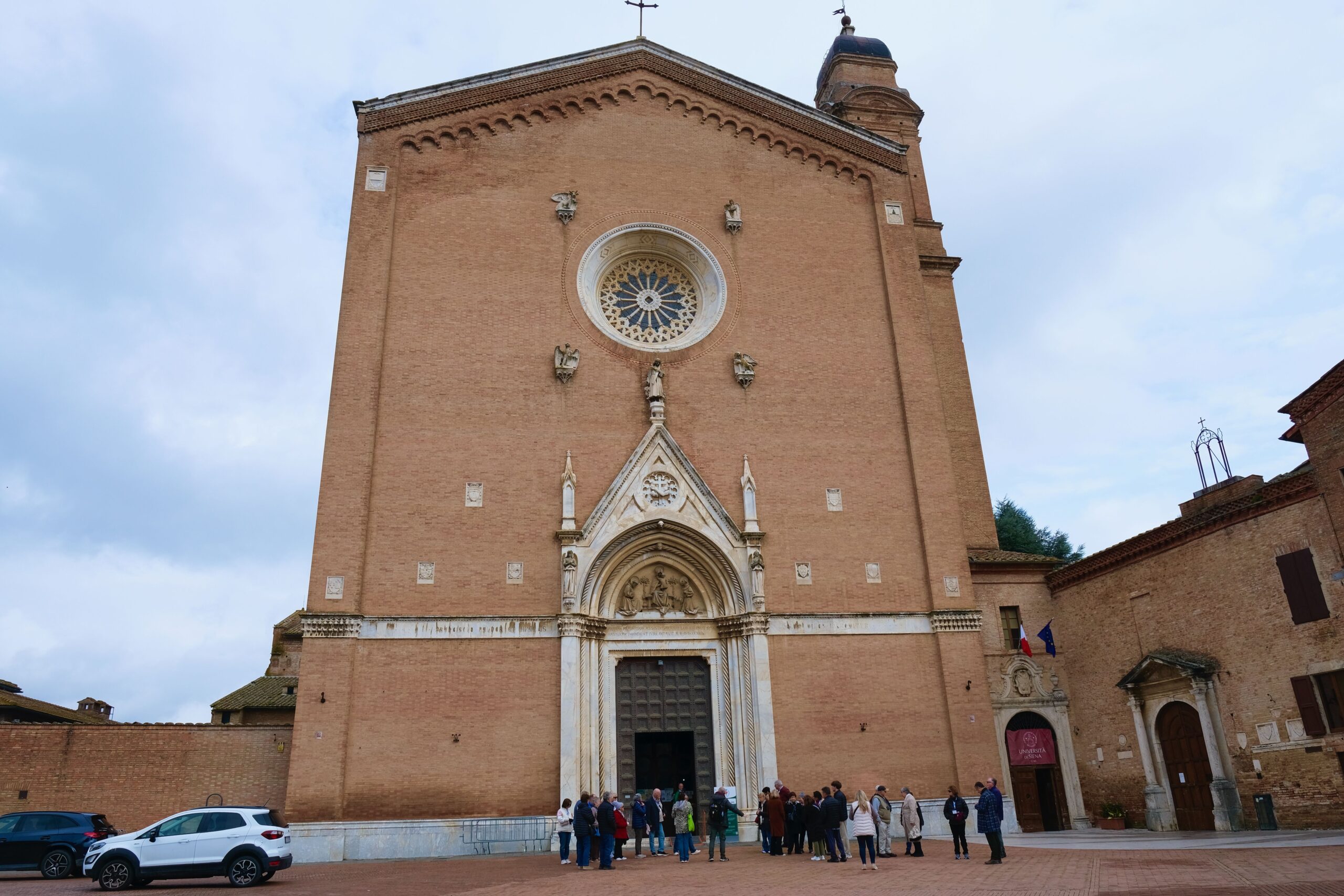
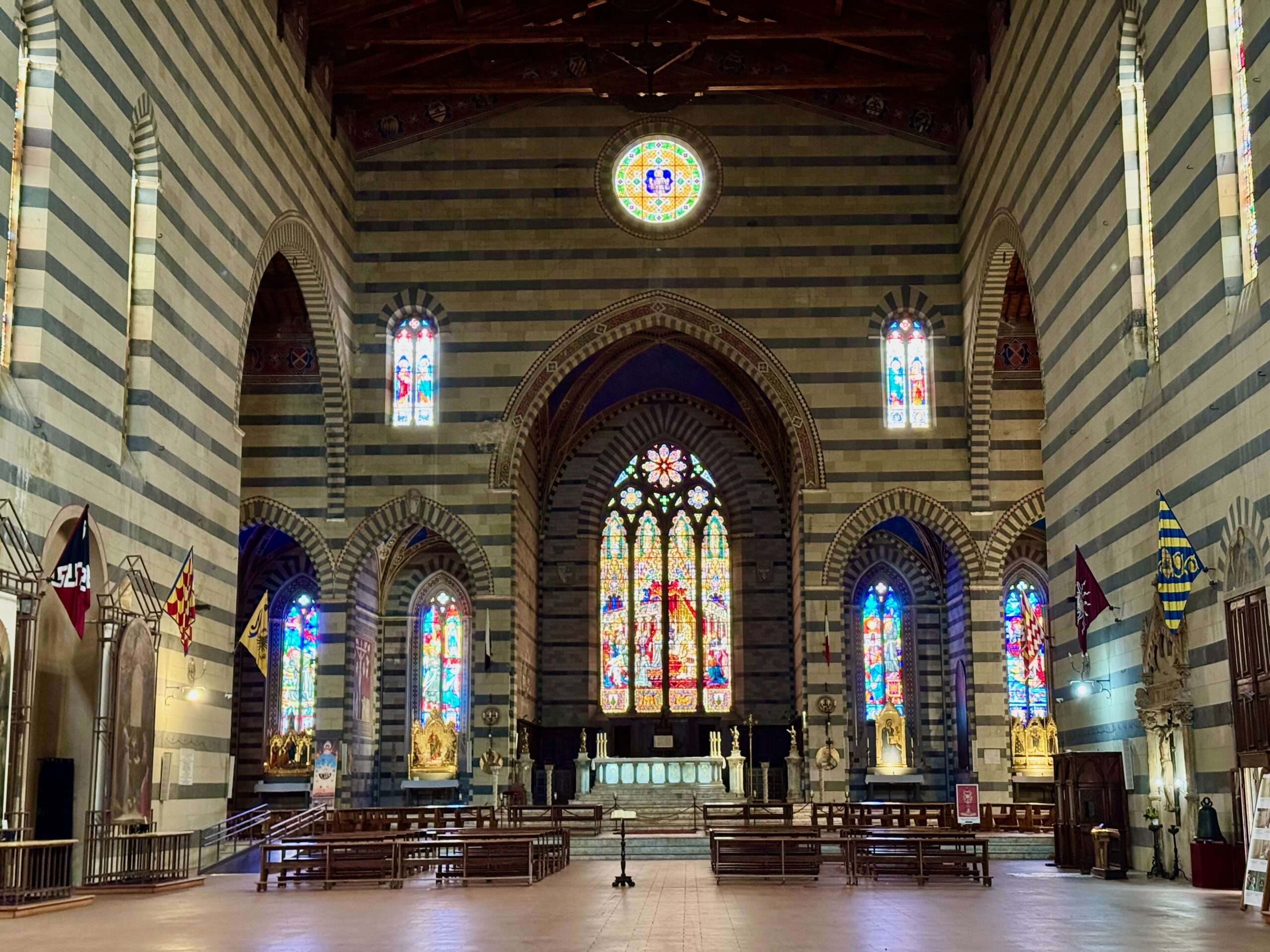
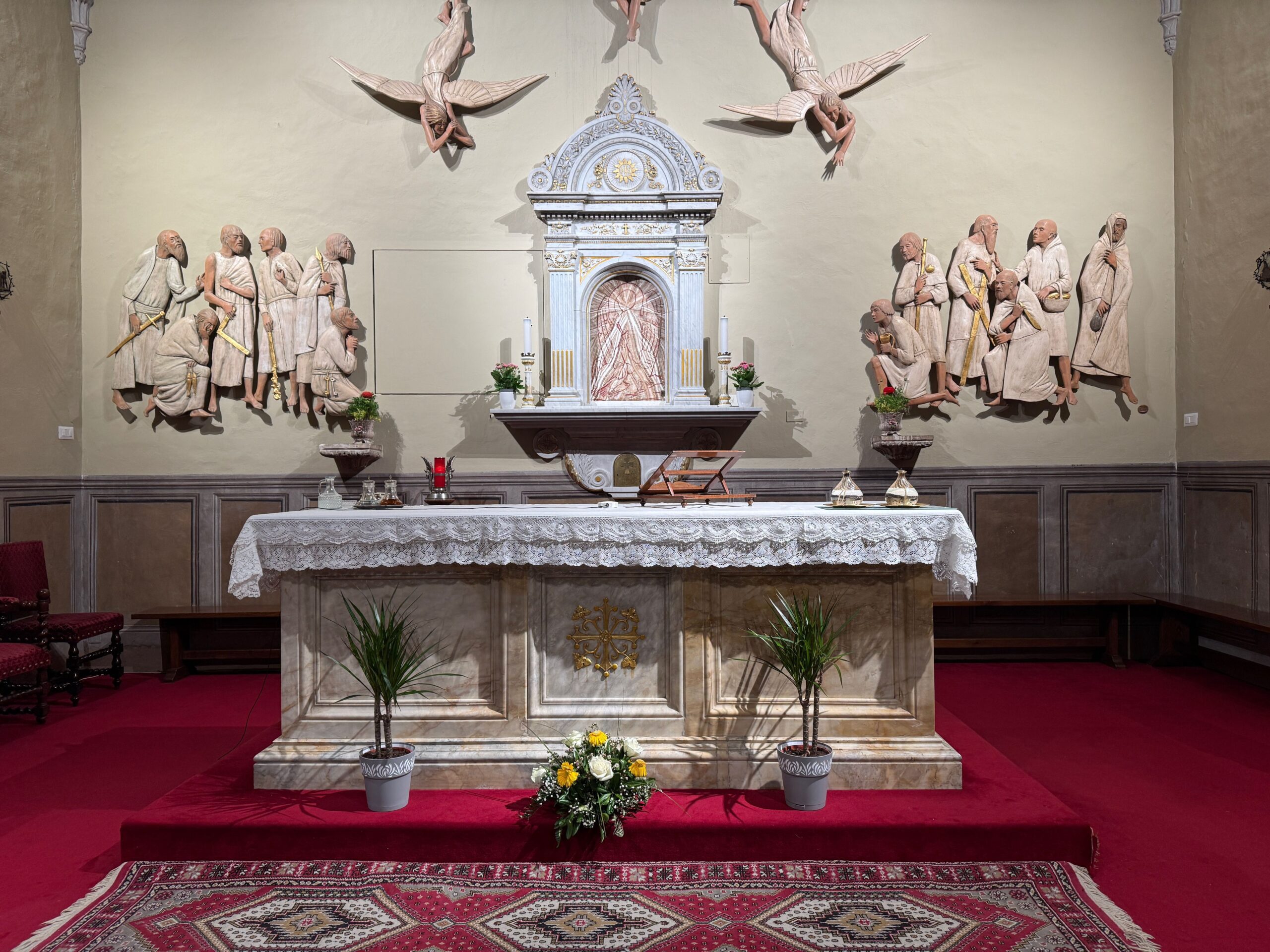
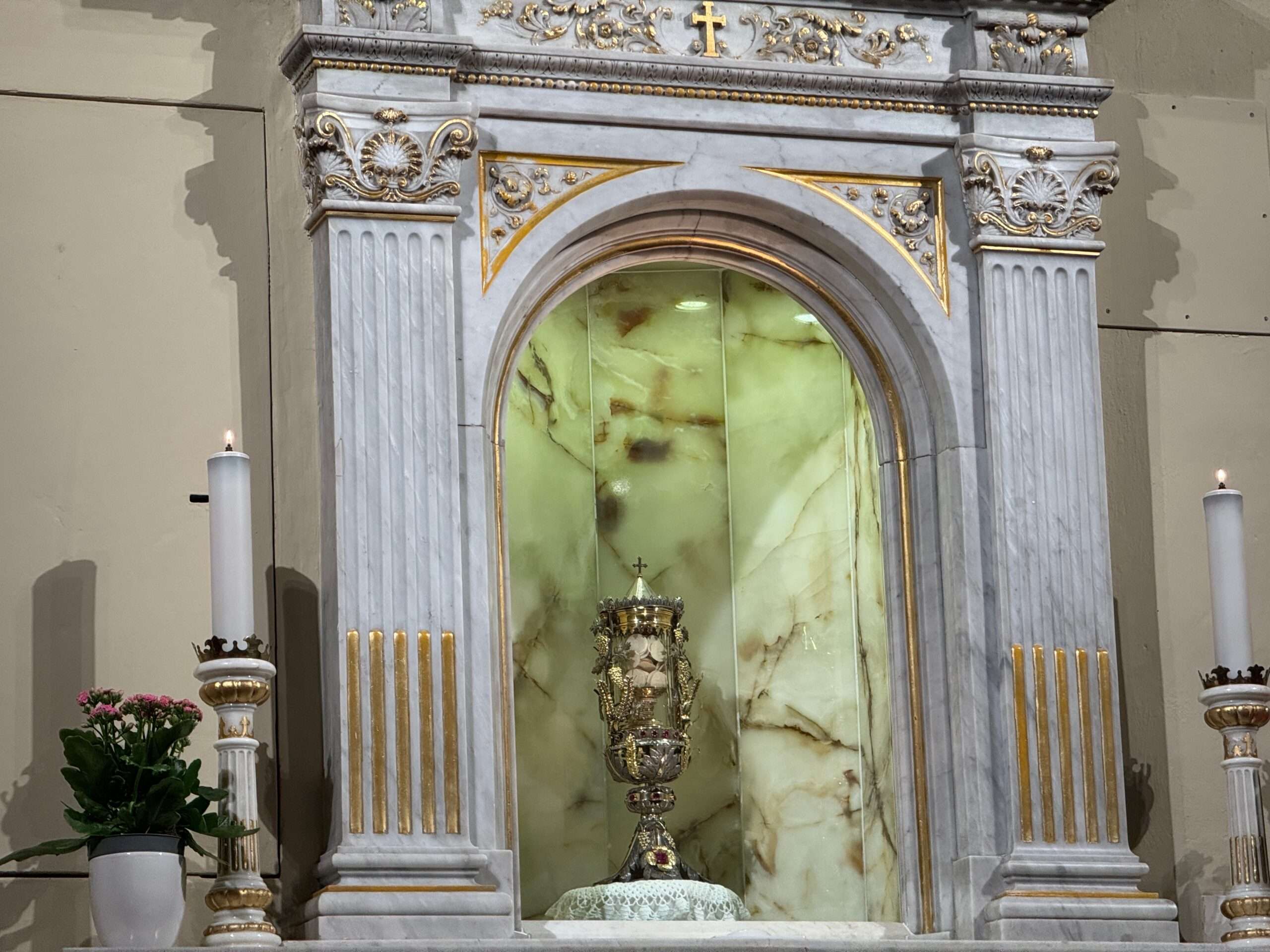
Upon arriving in Siena, we went directly to the Basilica of St. Francis, where we attended Mass celebrated by Msgr. Gervasio and Rev. Felicien. This basilica is also home to a sacred relic—the chalice containing consecrated hosts associated with the Eucharistic Miracle of Siena. These consecrated hosts that were stolen on August 14, 1730 and recovered 3 days later, remain perfectly intact today with no signs of decay (their freshness is tested from time to time). We were fortunate to view the chalice with the consecrated hosts.
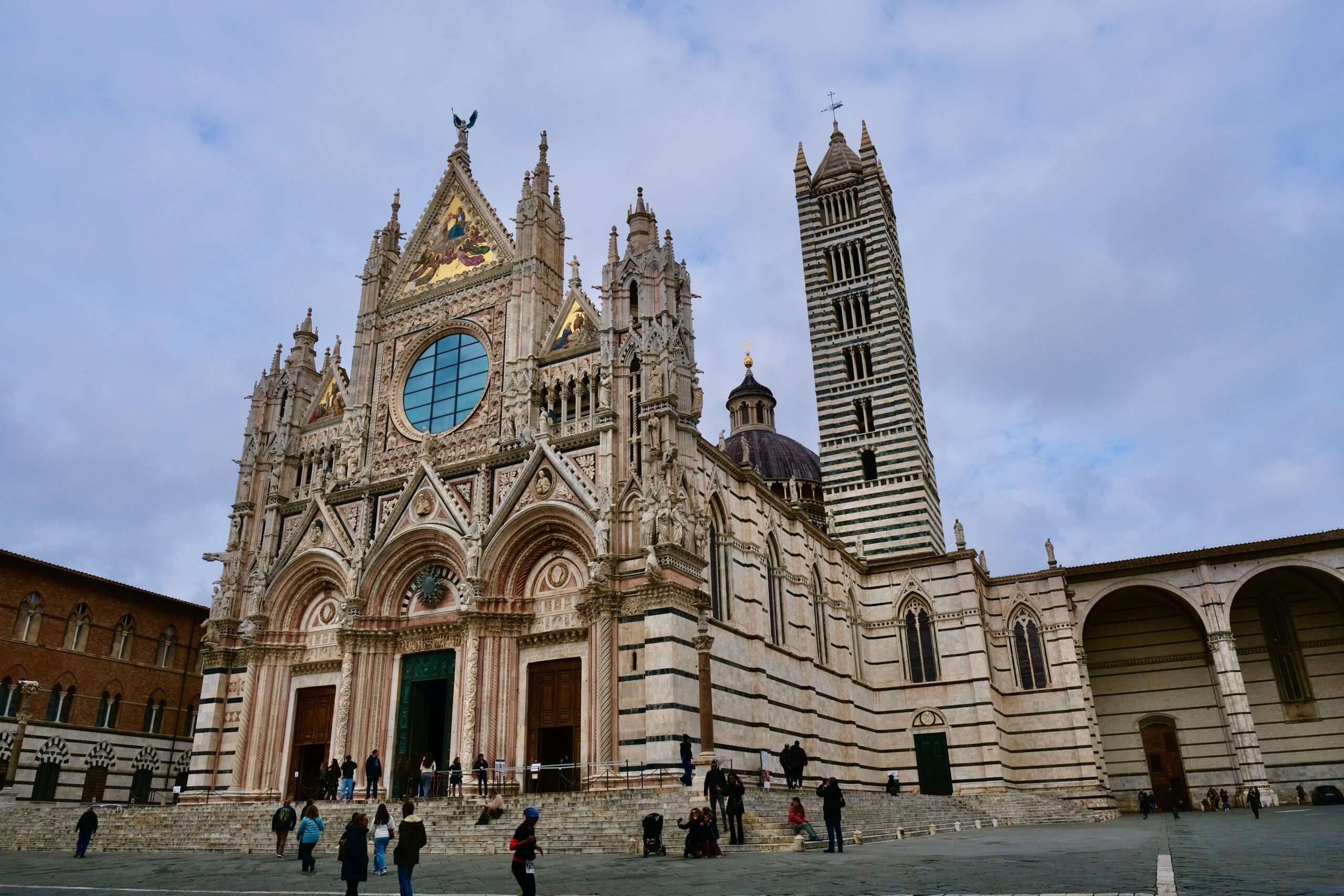
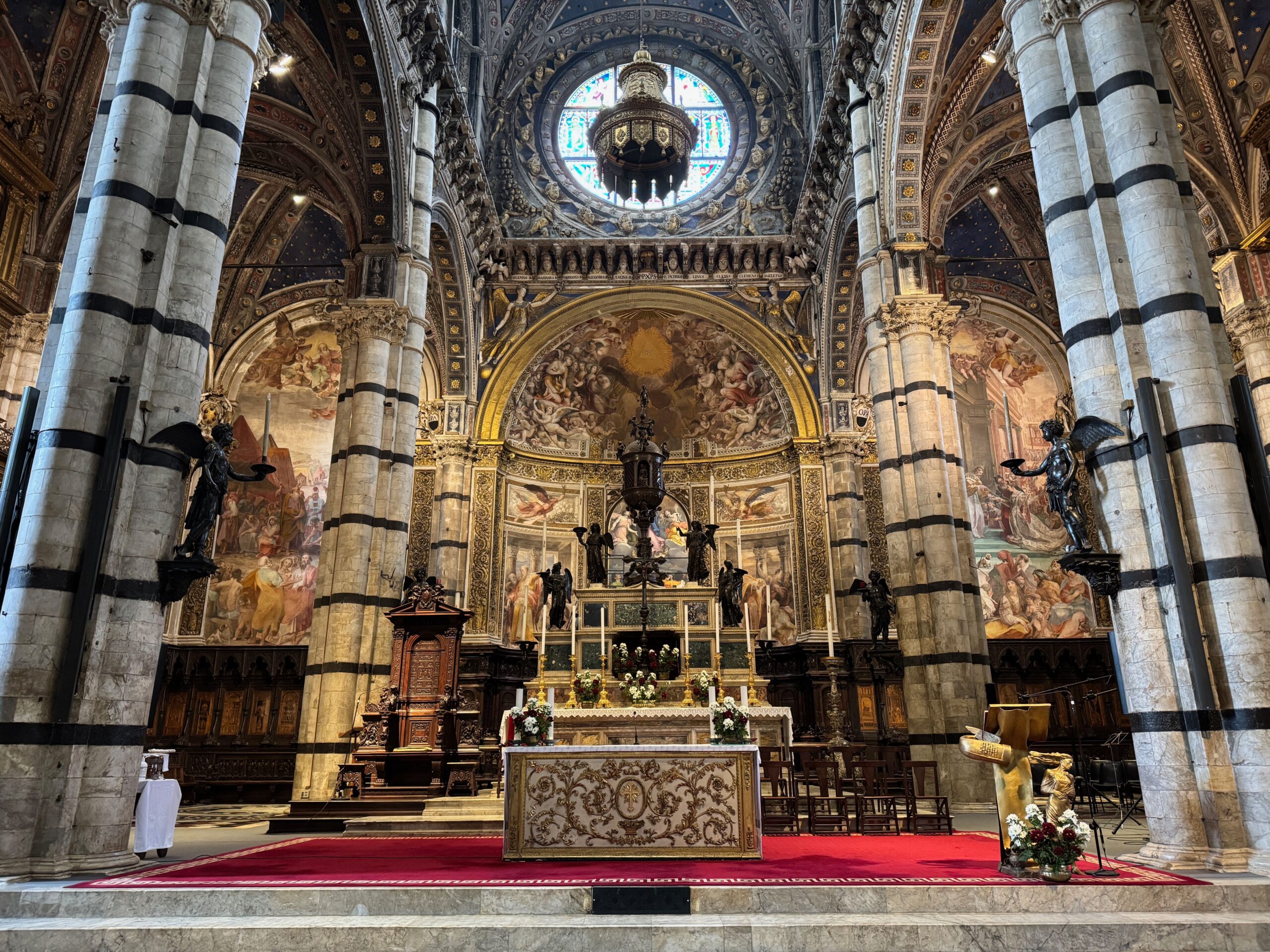
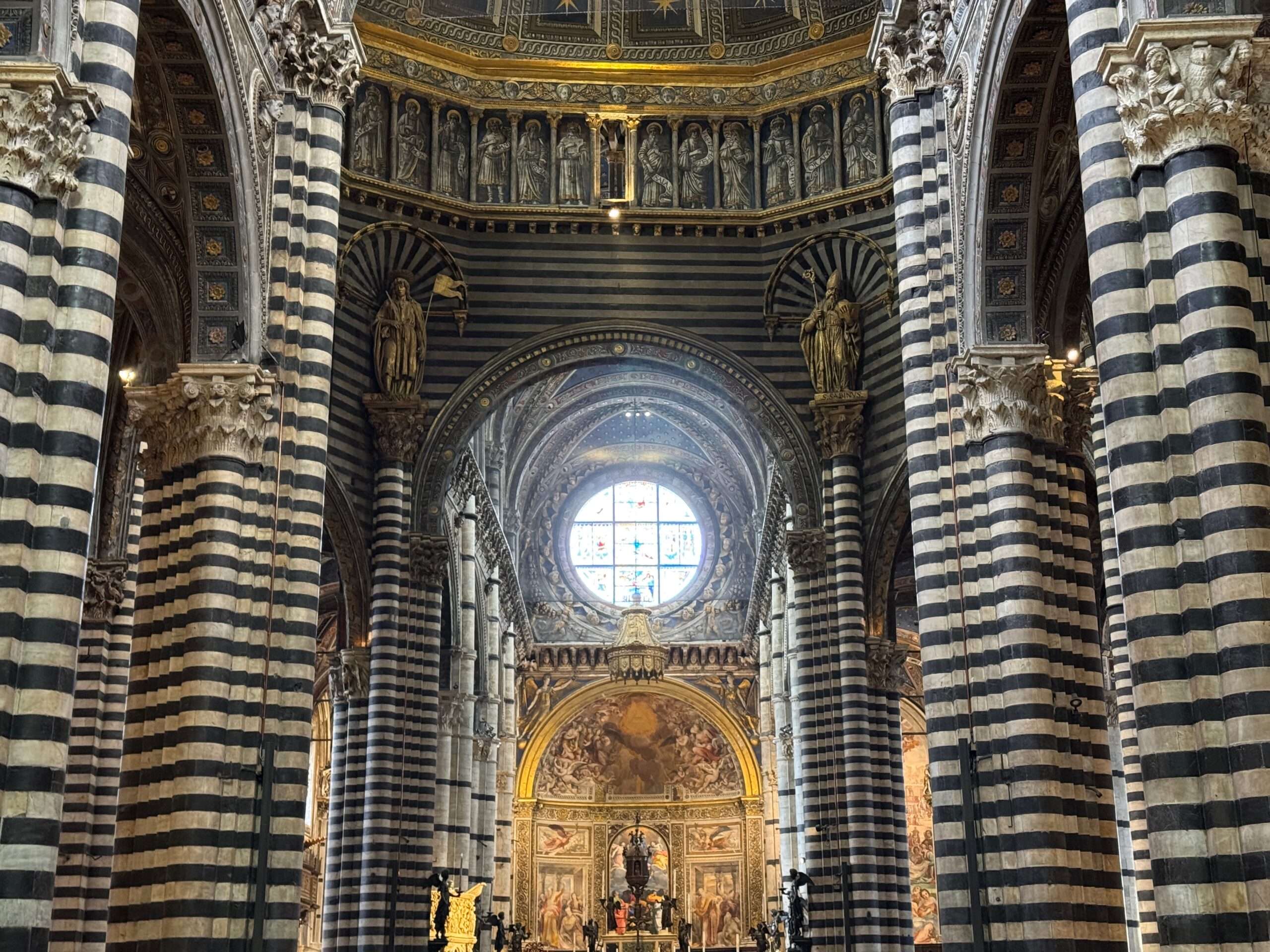
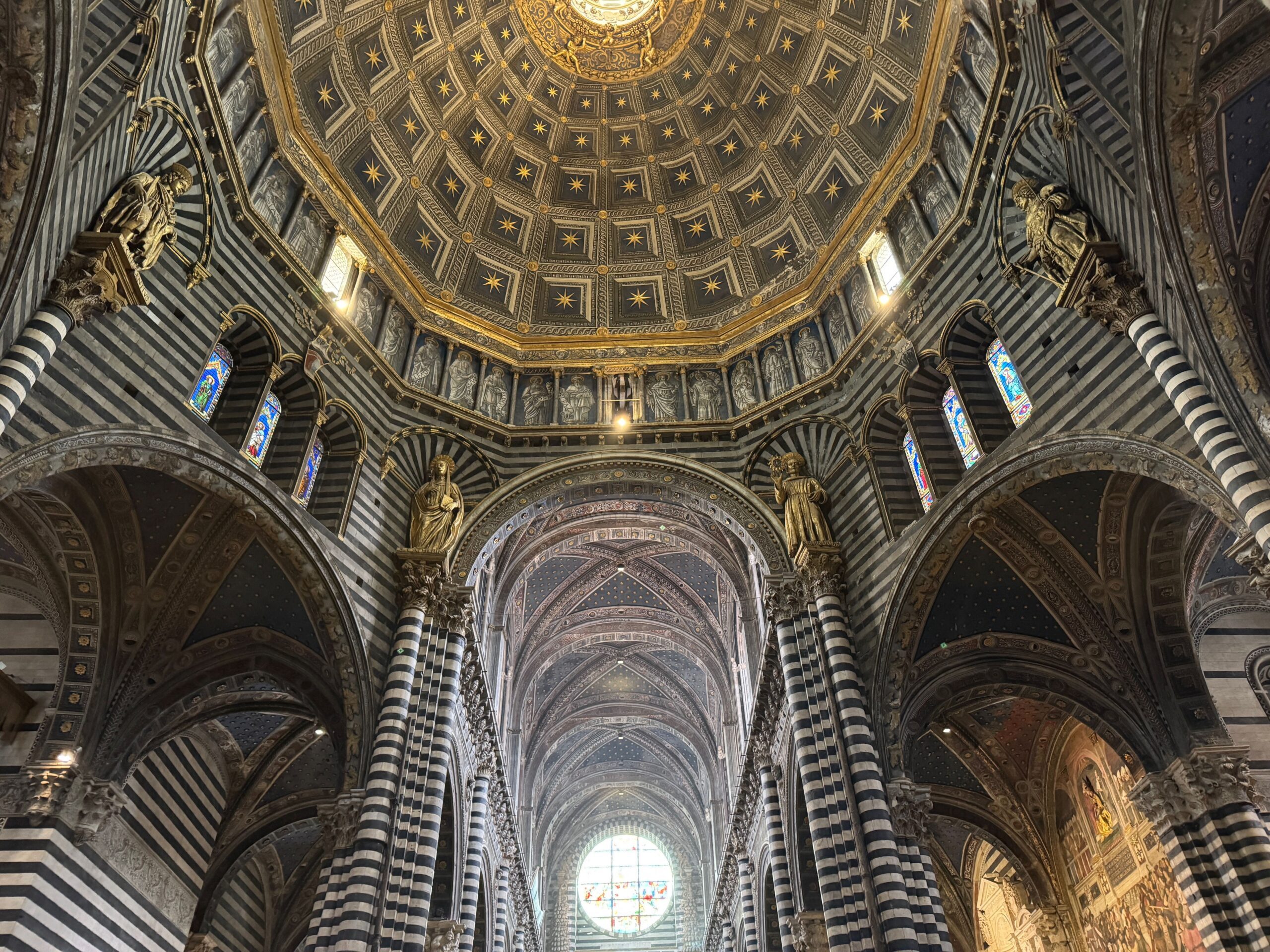
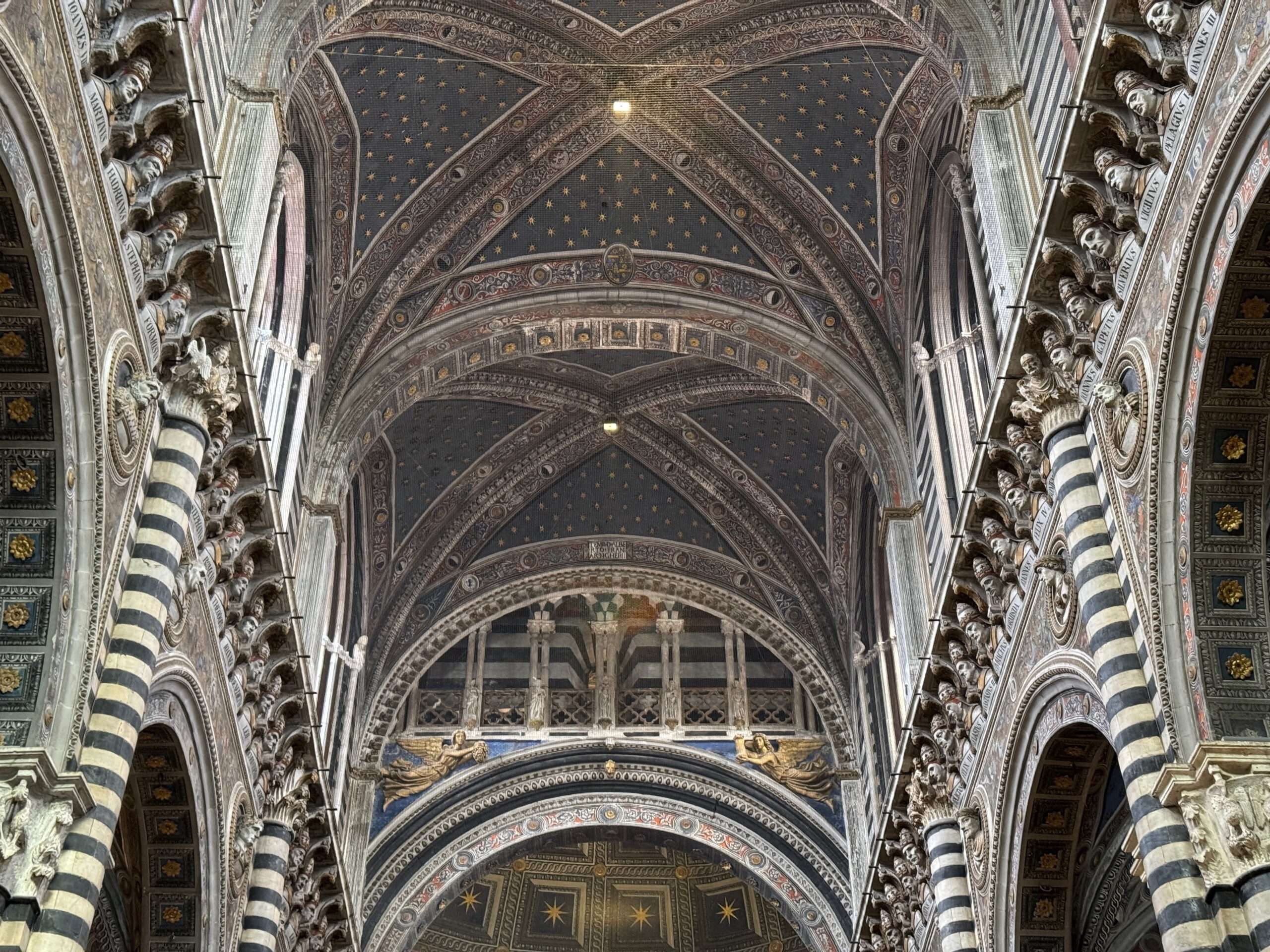
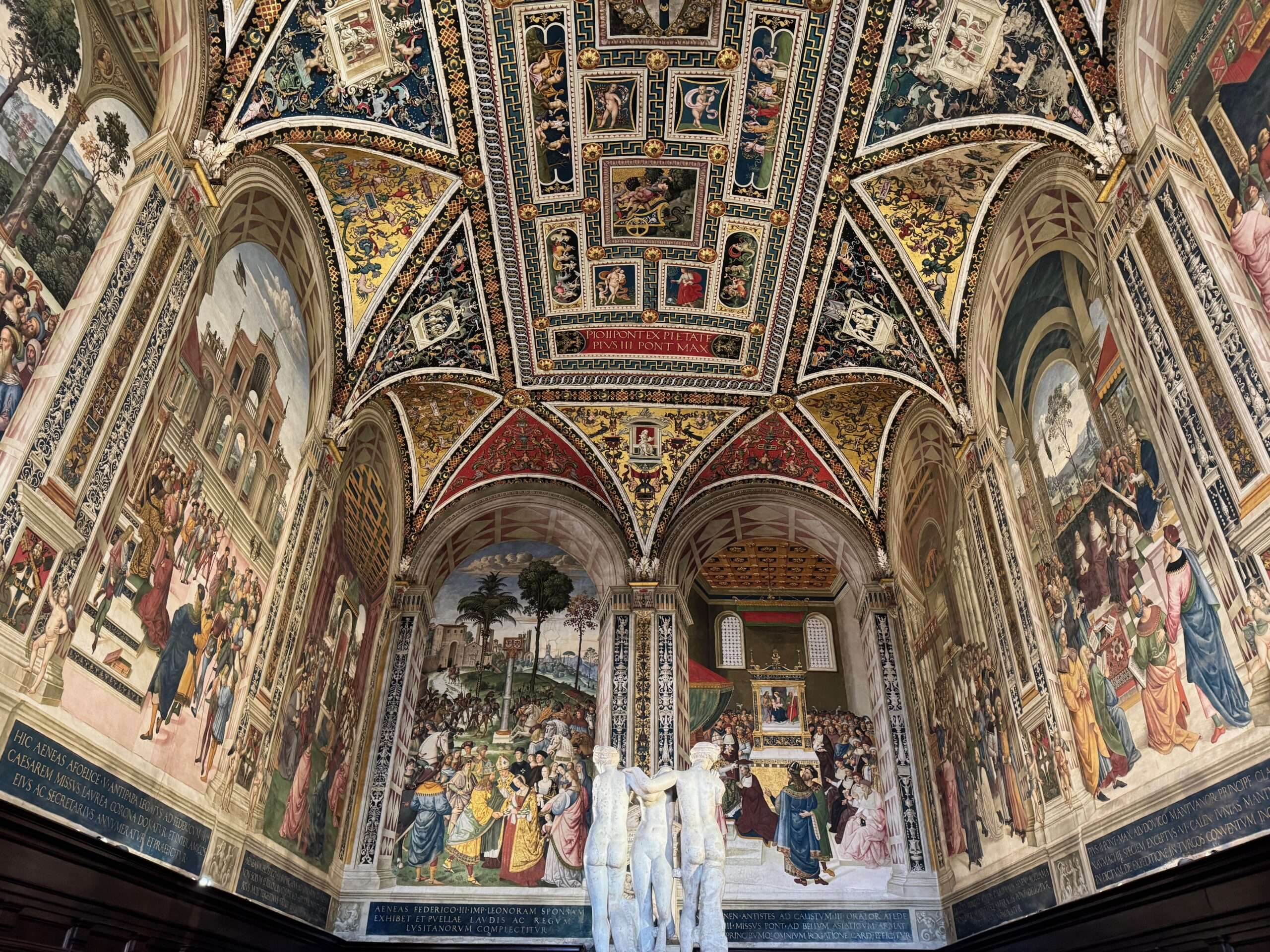
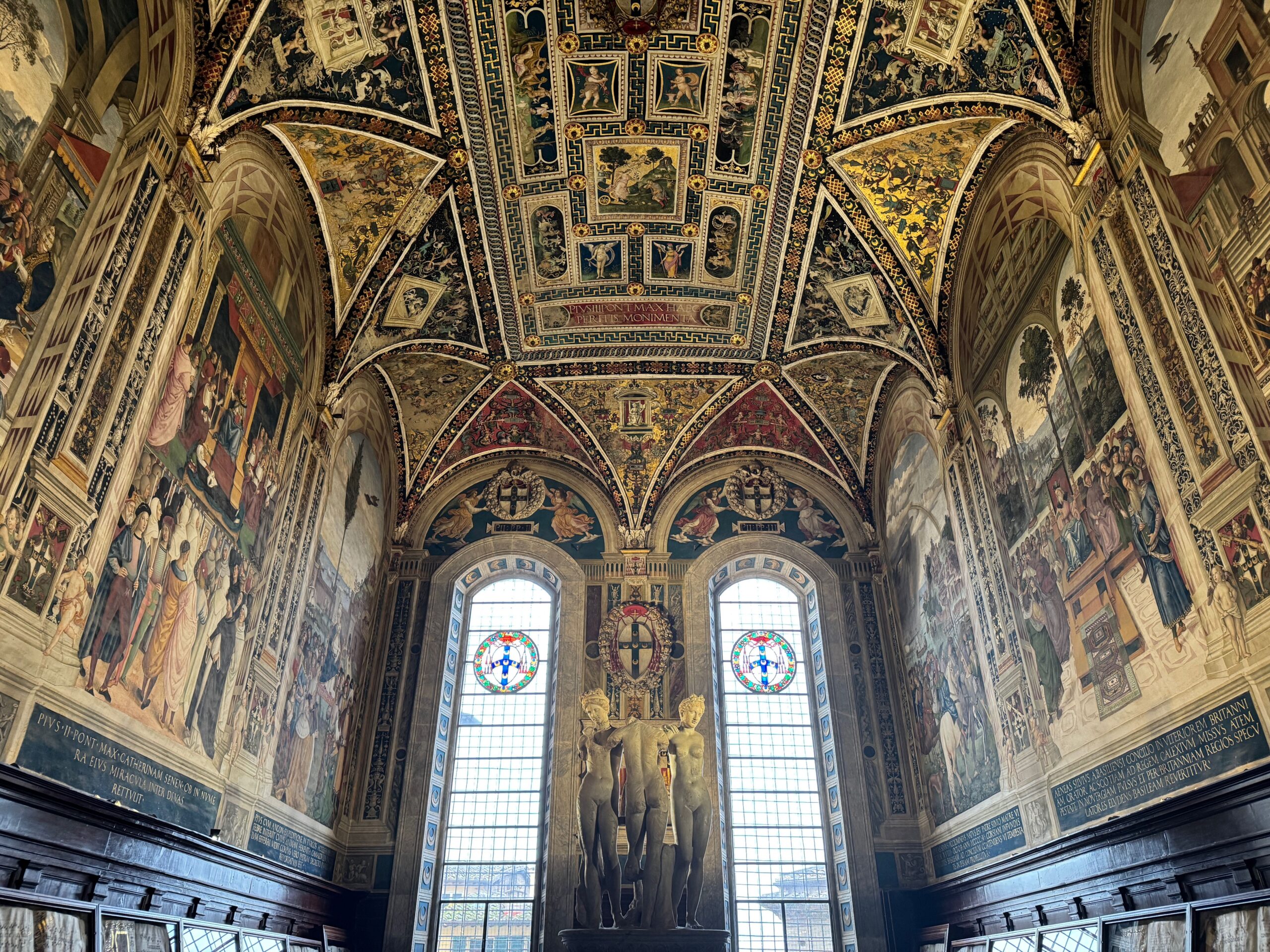
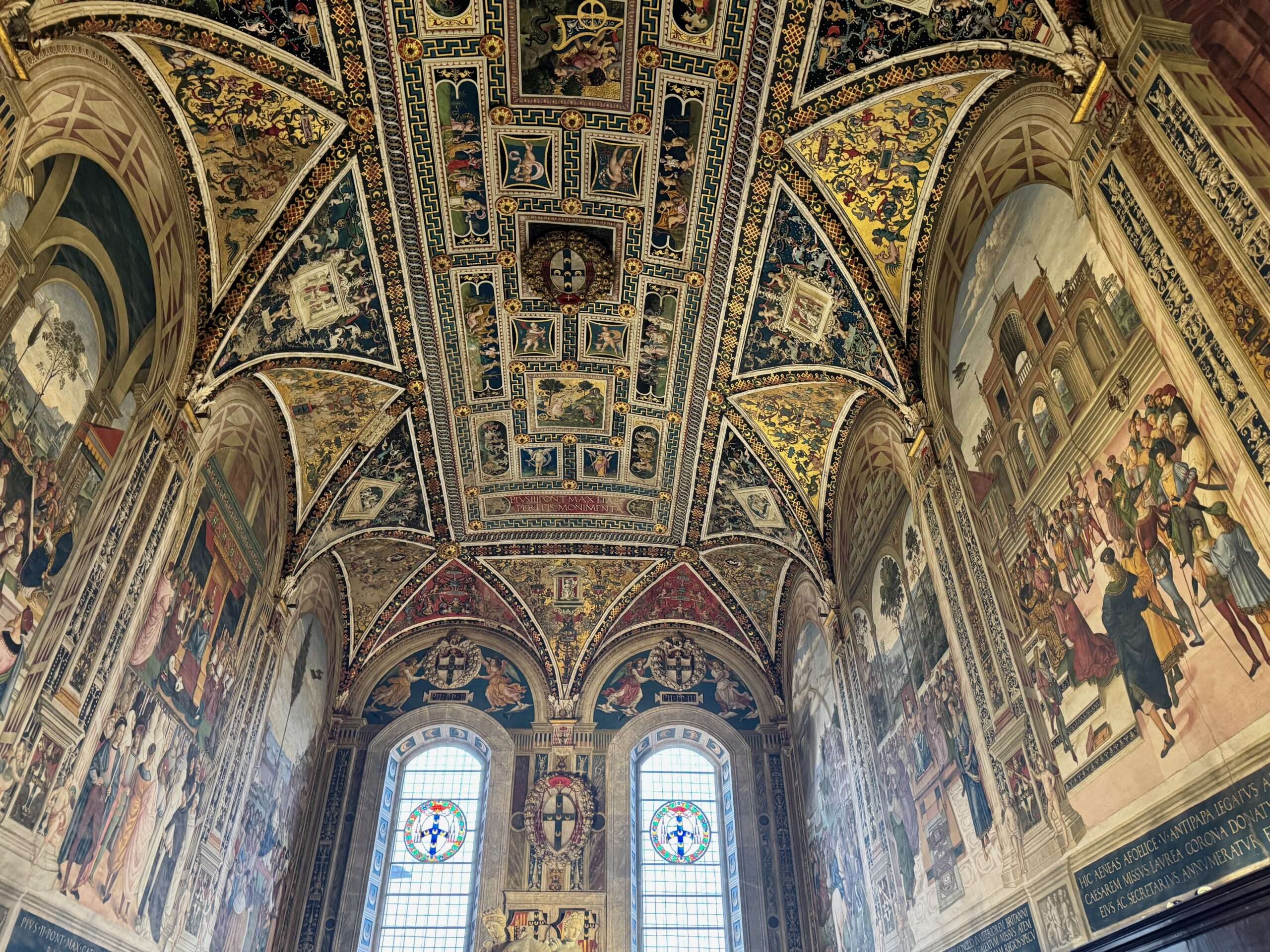
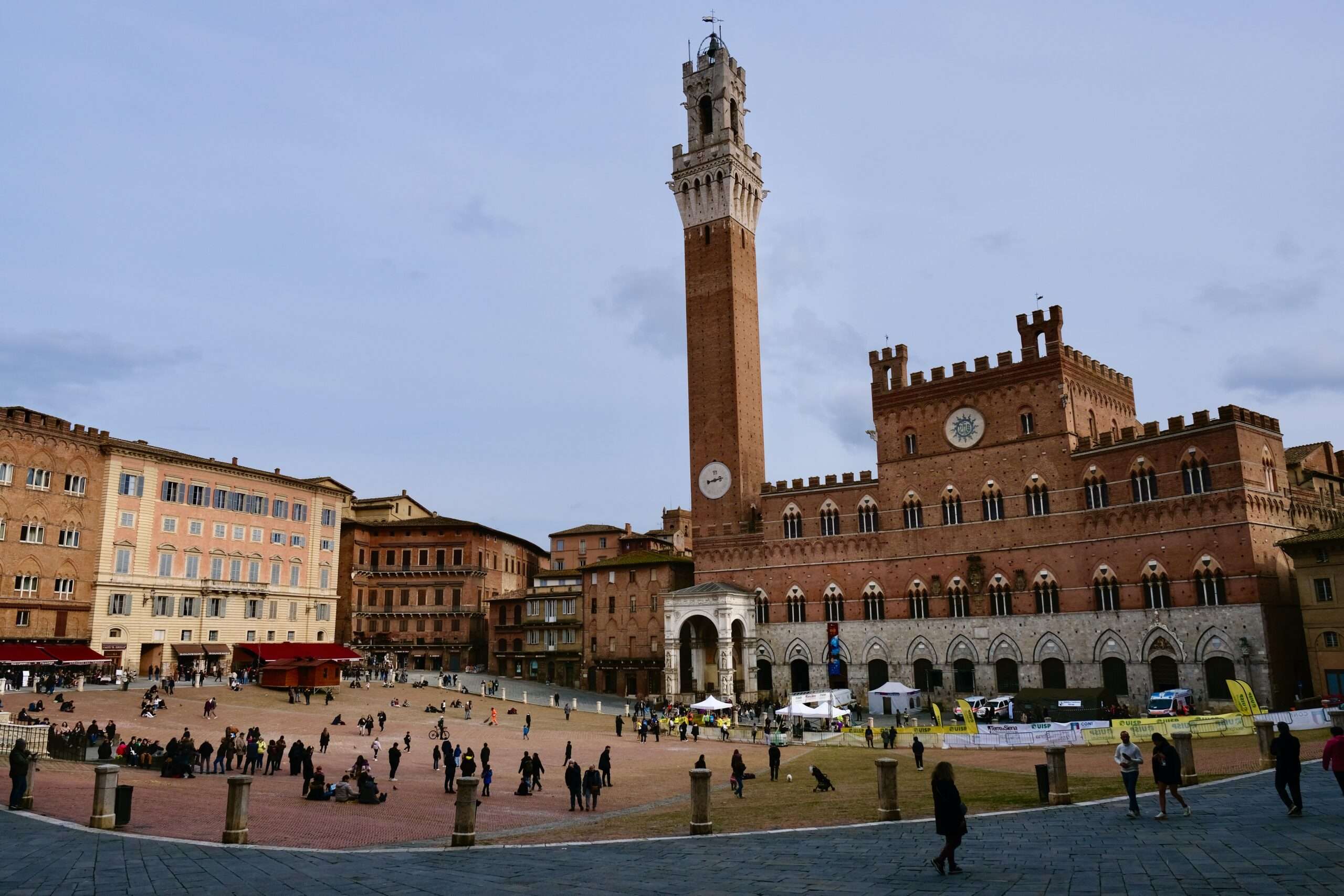
Afterward, we embarked on a guided walking tour of Siena, exploring its rich medieval heritage. One of the highlights was a visit to the stunning Siena Cathedral (Duomo di Siena), a masterpiece of Gothic architecture. The main façade with the mosaic of the Coronation of the Virgin, the inlaid marble flooring, the statues by Bernini and Michaelangelo, and the many painted panels depicting scenes from the Bible are some of the most impressive artworks in the church. It also houses the Piccolomini Library, which was commissioned in 1492 to honor Pope Pius II, features stunning Pinturicchio frescoes and houses exquisite, illuminated manuscripts. Our tour concluded at Piazza del Campo, one of Italy’s most renowned public squares, famous for its distinctive shell shape and as the site of the historic Palio horse race. The square was very busy as it was race day and several people came out to cheer the runners on. The heat, the steep terrain, and the tourists were some of the obstacles the runners encountered.
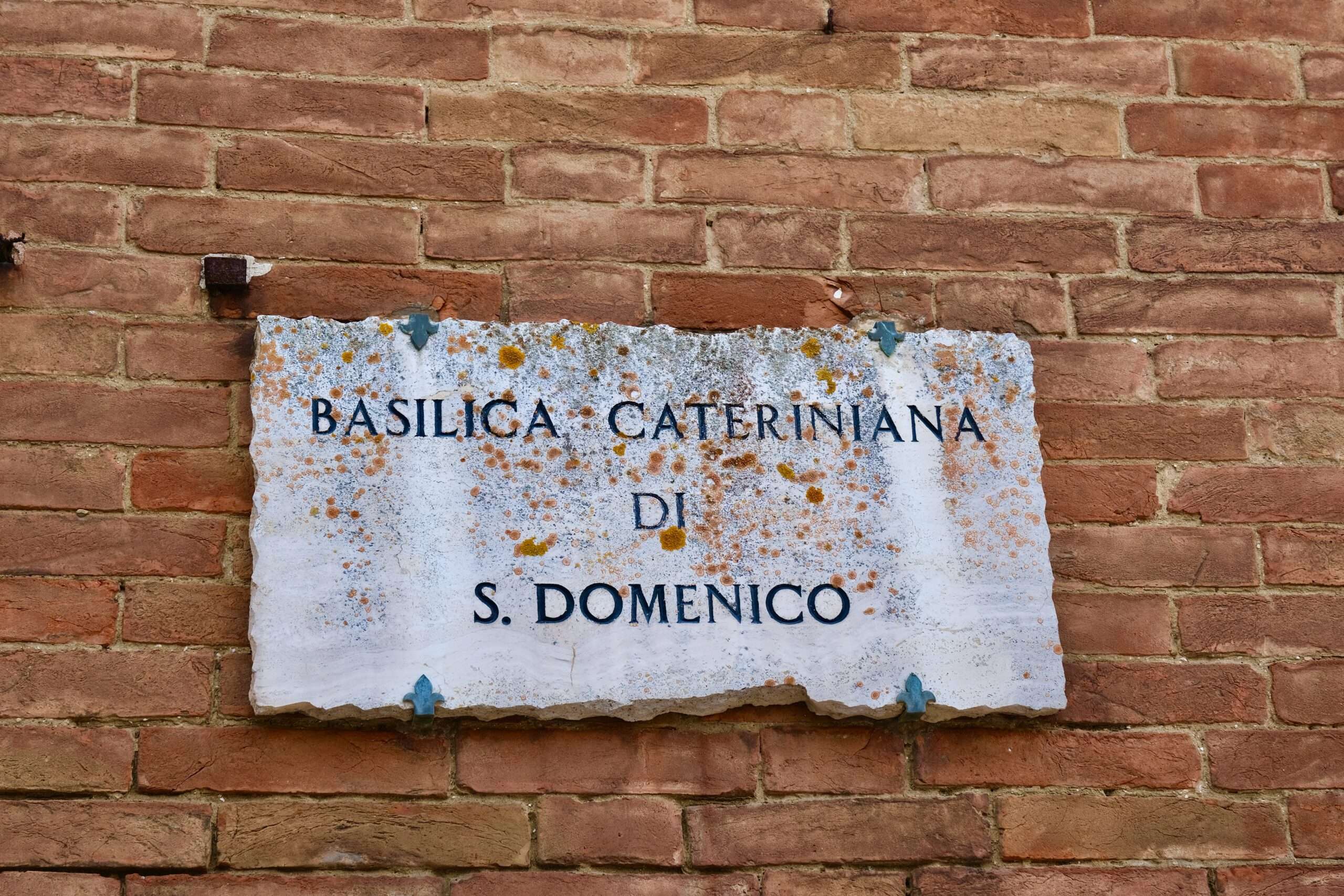
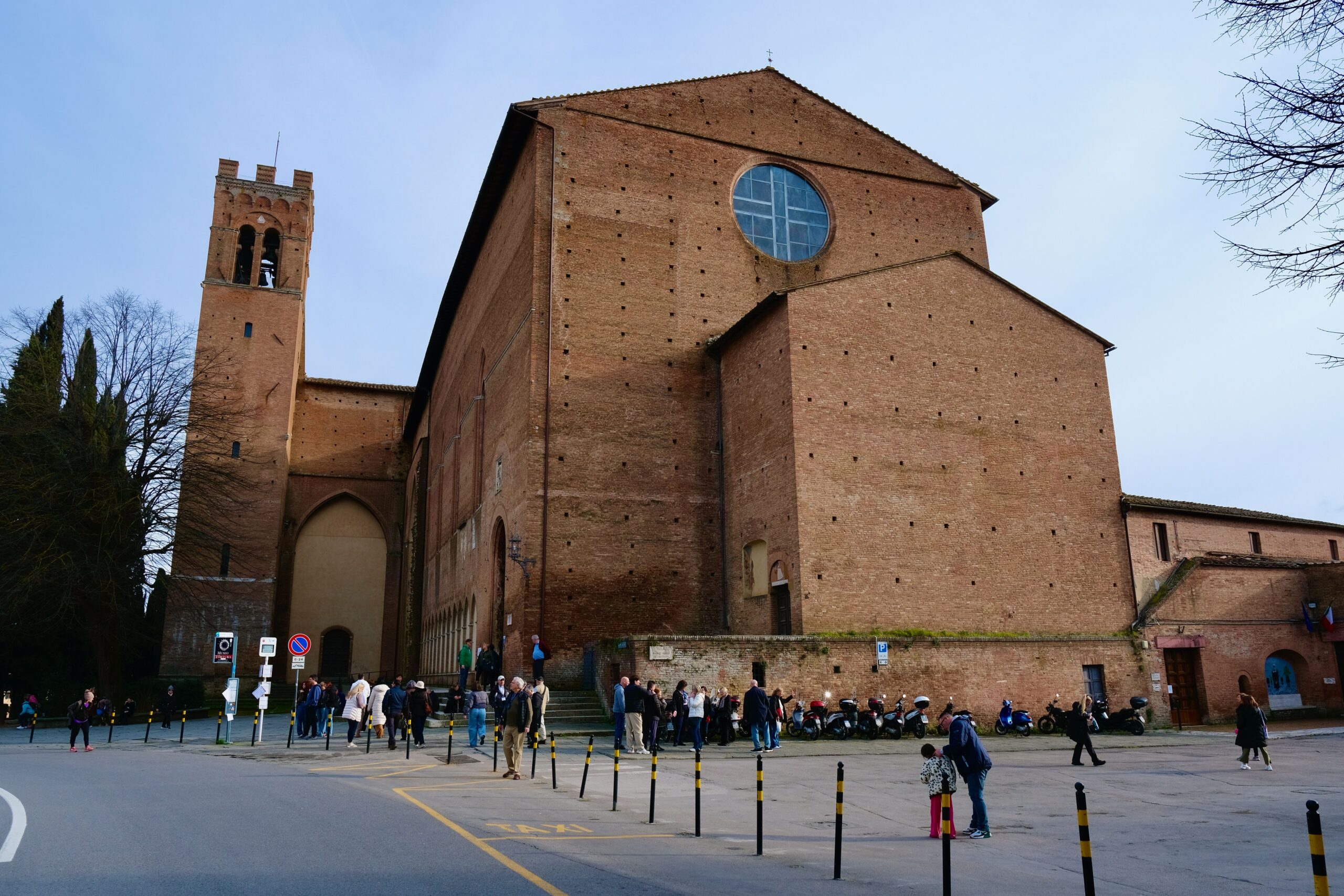
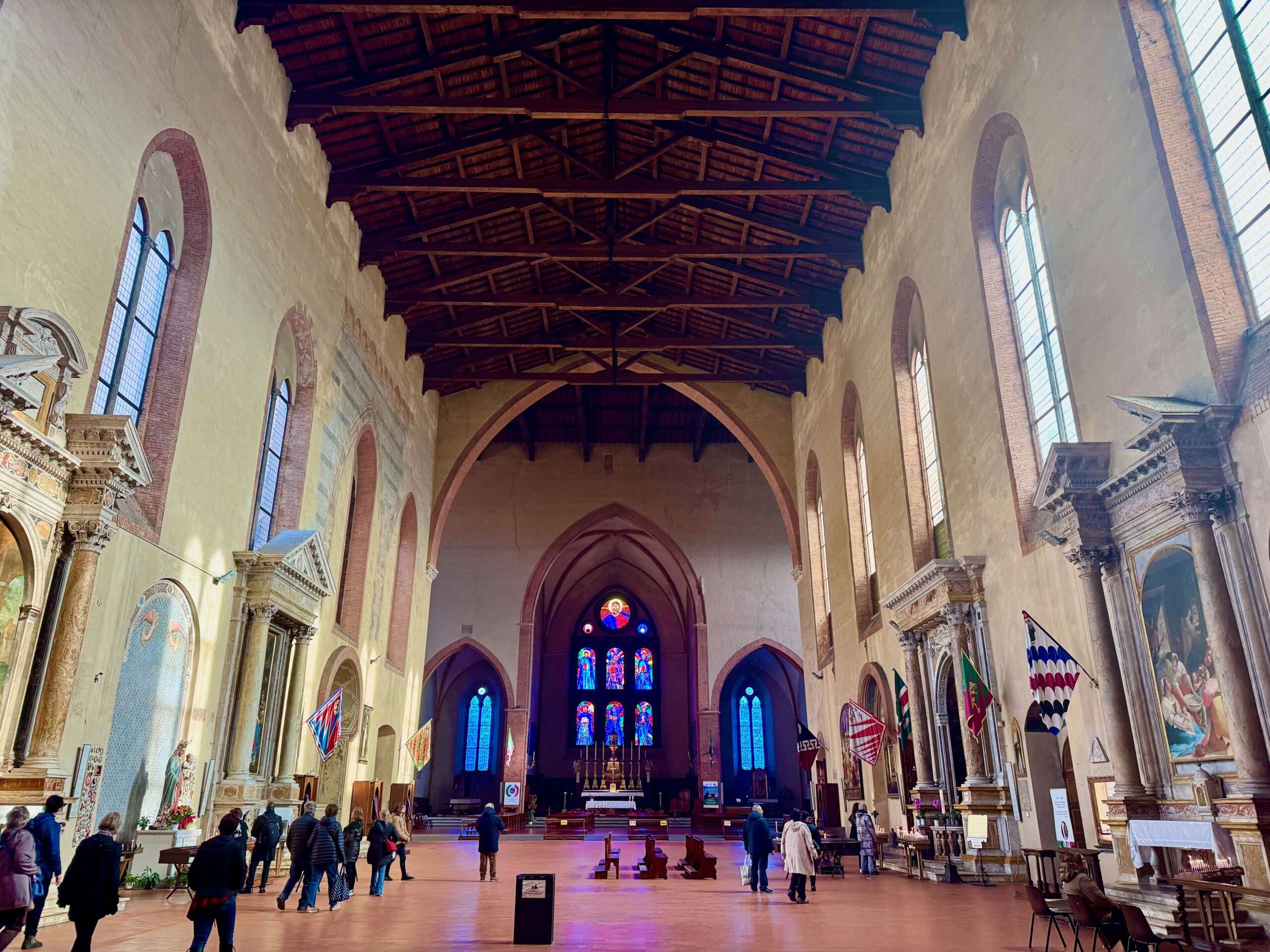
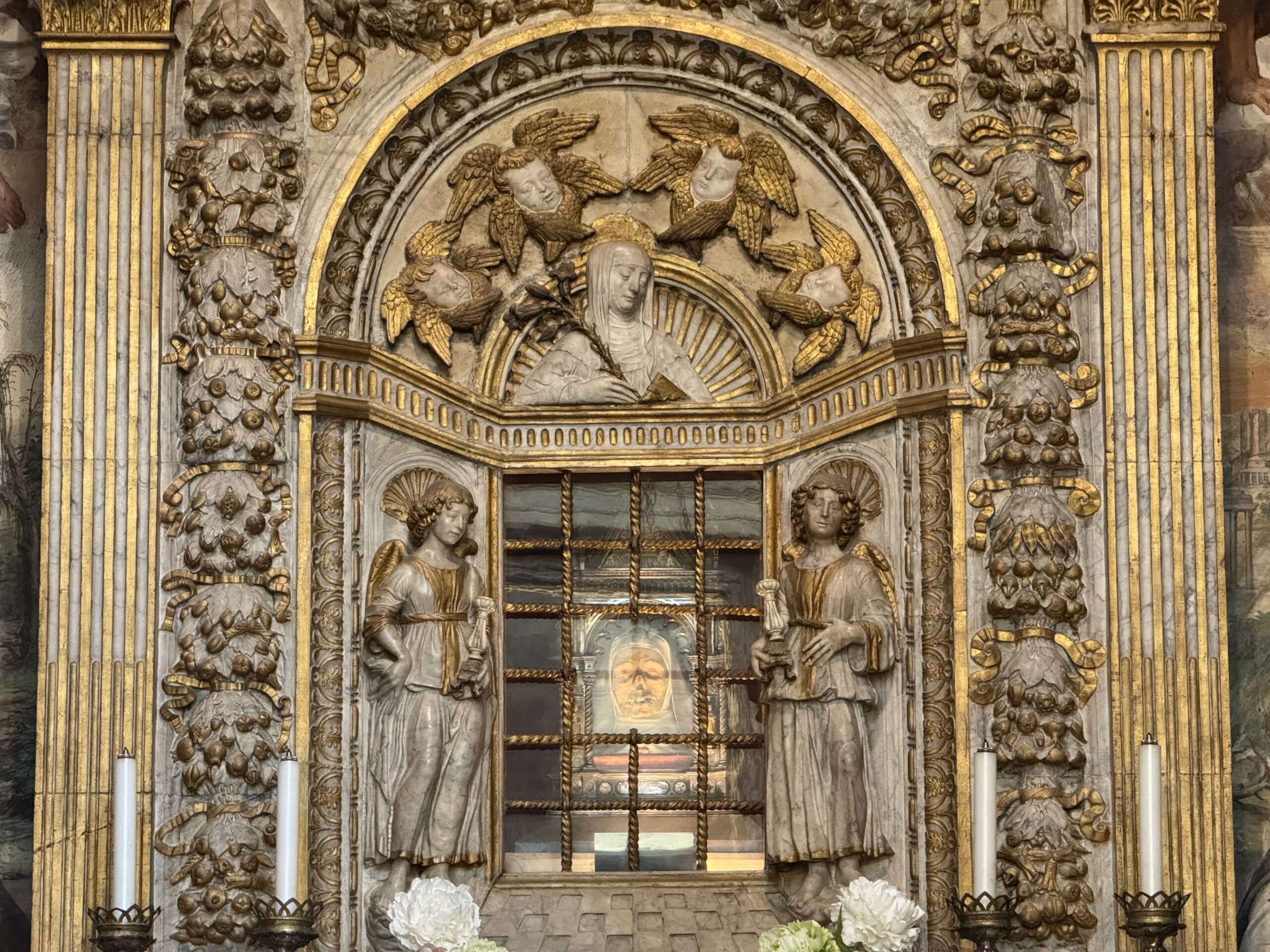
Our final stop in Siena was a visit to the Basilica of St. Catherine, also known as the Basilica of San Domenico. This sacred site is closely associated with St. Catherine of Siena, as she spent a significant part of her life within its walls. Inside the basilica, we had the profound opportunity to view the incorrupt head of St. Catherine, enshrined as a relic, along with other sacred artifacts preserved in her honor.
After our visit, we passed by a football stadium where a match was in progress, and we could hear the music and cheering. Outside the stadium, the local cops were patrolling in full force. Italy has very strict laws in place to control misbehavior. For example, you can be prevented from attending games for five years. The cops enforce this by having you report to the local police station during both half times (even when you are on vacation or sick) every time your team plays. You get a break after three years. And when you buy a ticket, your name is put on the ticket and to enter you must have your ID with you. This is done to reduce resale of tickets.
Then we departed for Assisi, the birthplace of St. Francis and St. Clare, where we were to spend the next two nights. This would be our second visit to Assisi.
A Spiritual and Historical Journey Through Assisi – February 24, 2025
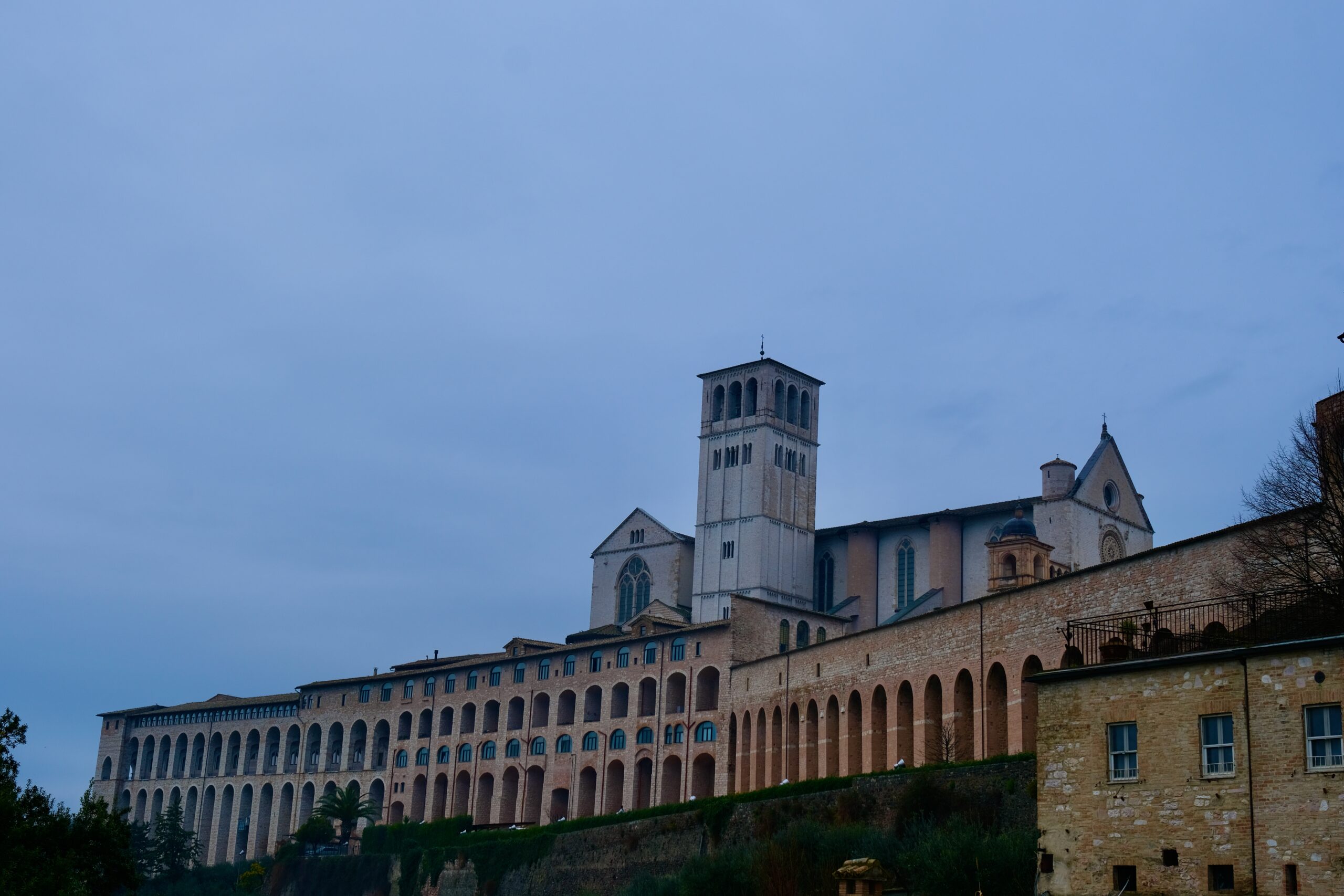
Soon after breakfast, we began our journey to the St. Francis Basilica, a magnificent two-level church consecrated in 1253. The lower level was built in the Romanesque style and below this level is the crypt where St. Francis is buried. The upper-level church which is in the early Gothic style is the newer of the two levels. Unfortunately, the day was damp and misty, with a persistent drizzle. Upon arriving at the Basilica, we attended Mass in the priory, which was celebrated by Msgr. Gervasio and Rev. Felicien.
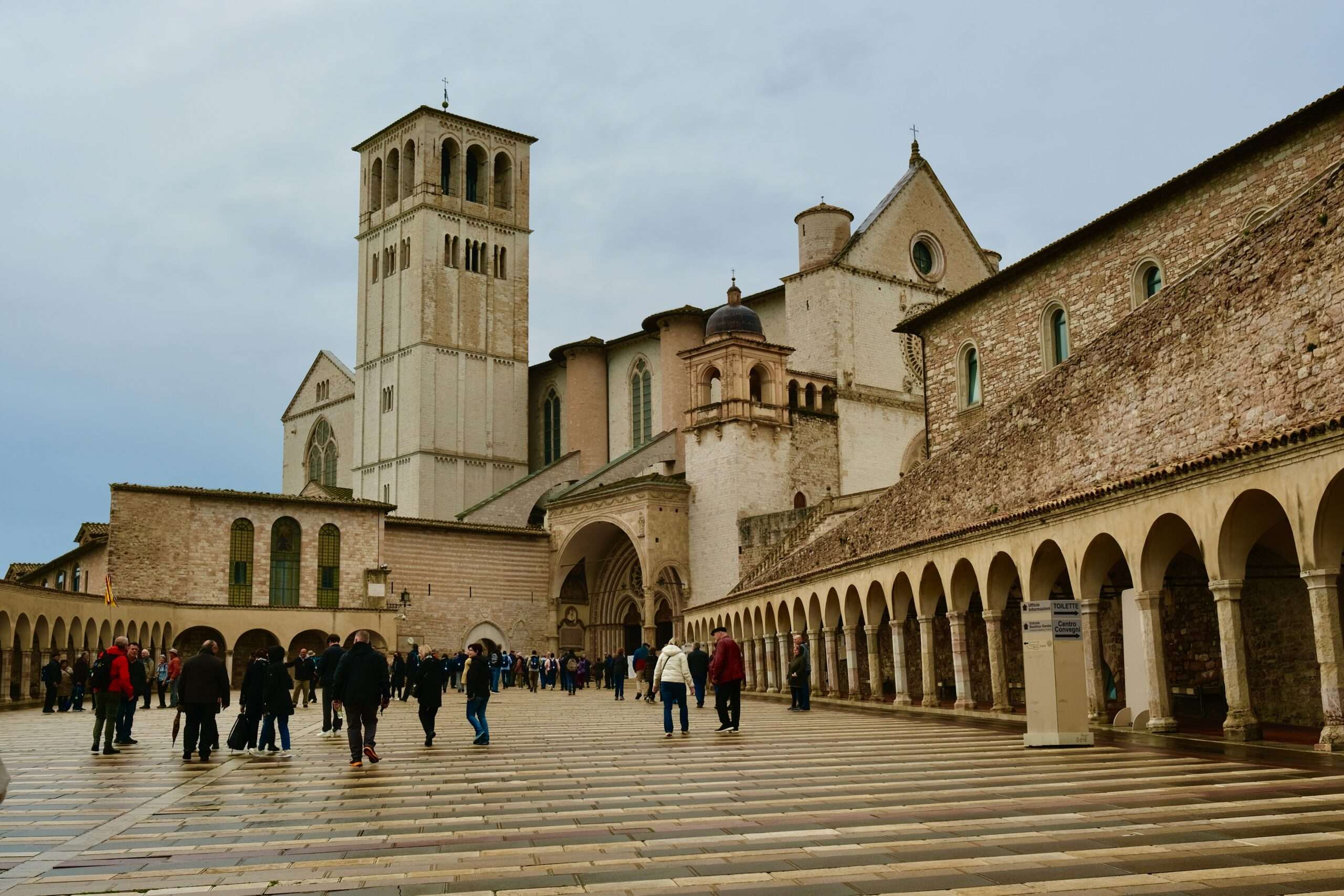
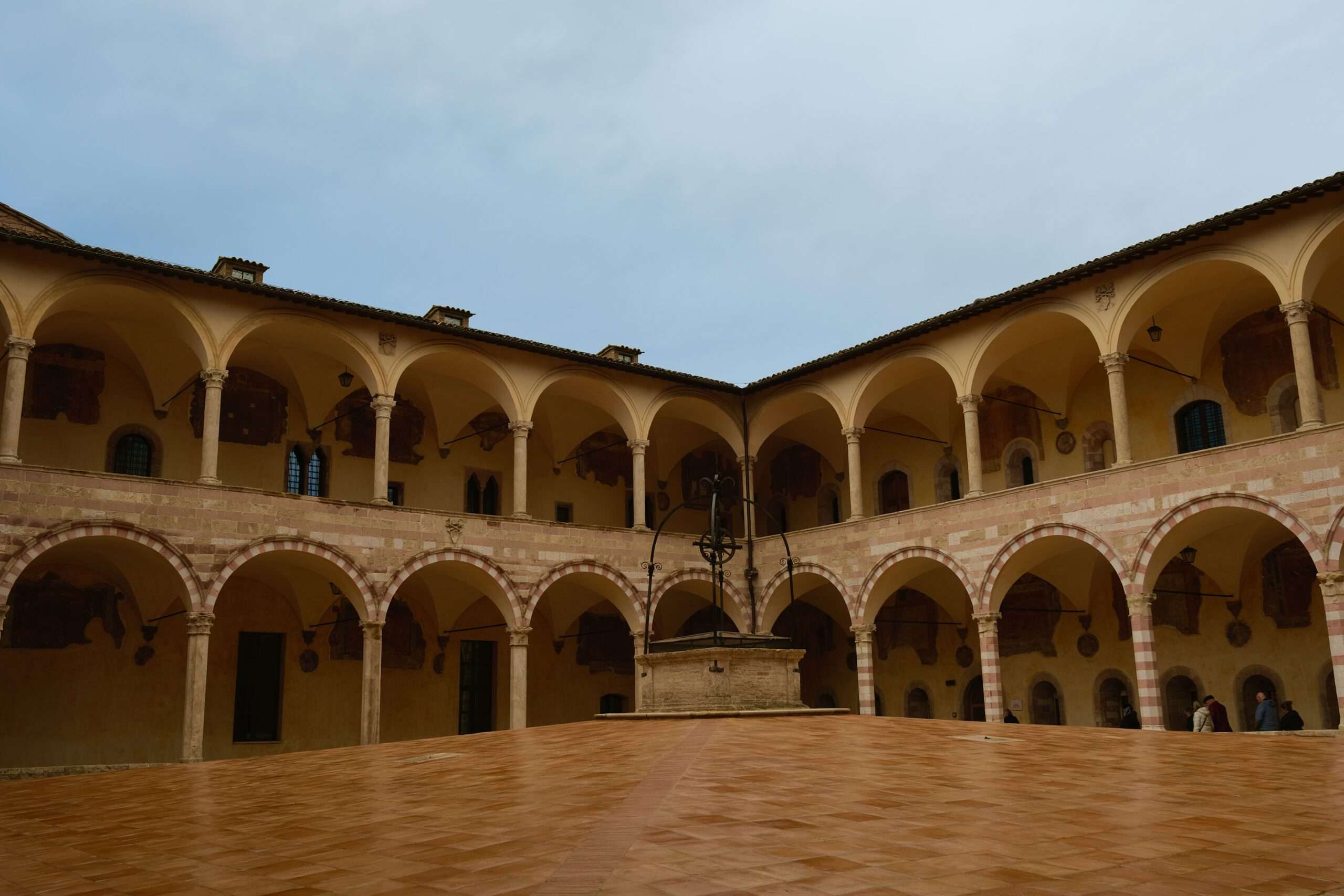
Next, we were joined by our highly knowledgeable local guide, Elisabetta, who led us on an insightful tour of the Basilica. She highlighted the series of magnificent frescoes by Giotto, Cimabue, and other renowned artists, which illustrate the life of St. Francis of Assisi. Some of these frescoes were damaged during the earthquake of 1997 that caused a vault in the upper level to collapse. Many of these frescoes have now been restored but some could not be saved. Unfortunately, photography is not allowed. Elisabetta provided historical and artistic context for each scene, enriching our appreciation of the stunning artwork. In addition to the frescoes, she pointed out a few of the saint’s personal possessions that have been carefully preserved, such as his manuscripts, tunic, and an embroidered linen, likely the work of Jacopa, one of his most faithful followers. Concluding the tour, we visited St. Francis’ simple yet solemn tomb.
From there, we continued our walking tour through the picturesque town of Assisi, making our way to the Church of Saint Mary Major and the Sanctuary of Renunciation, where the tomb of Blessed Carlo Acutis is located. We were able to view his body. Carlo, the first millennial to be declared Blessed, had a deep devotion to the Real Presence of Jesus in the Eucharist. He died in 2006 at the age of 15 from acute leukemia, and his canonization to full sainthood is anticipated in April of this year.
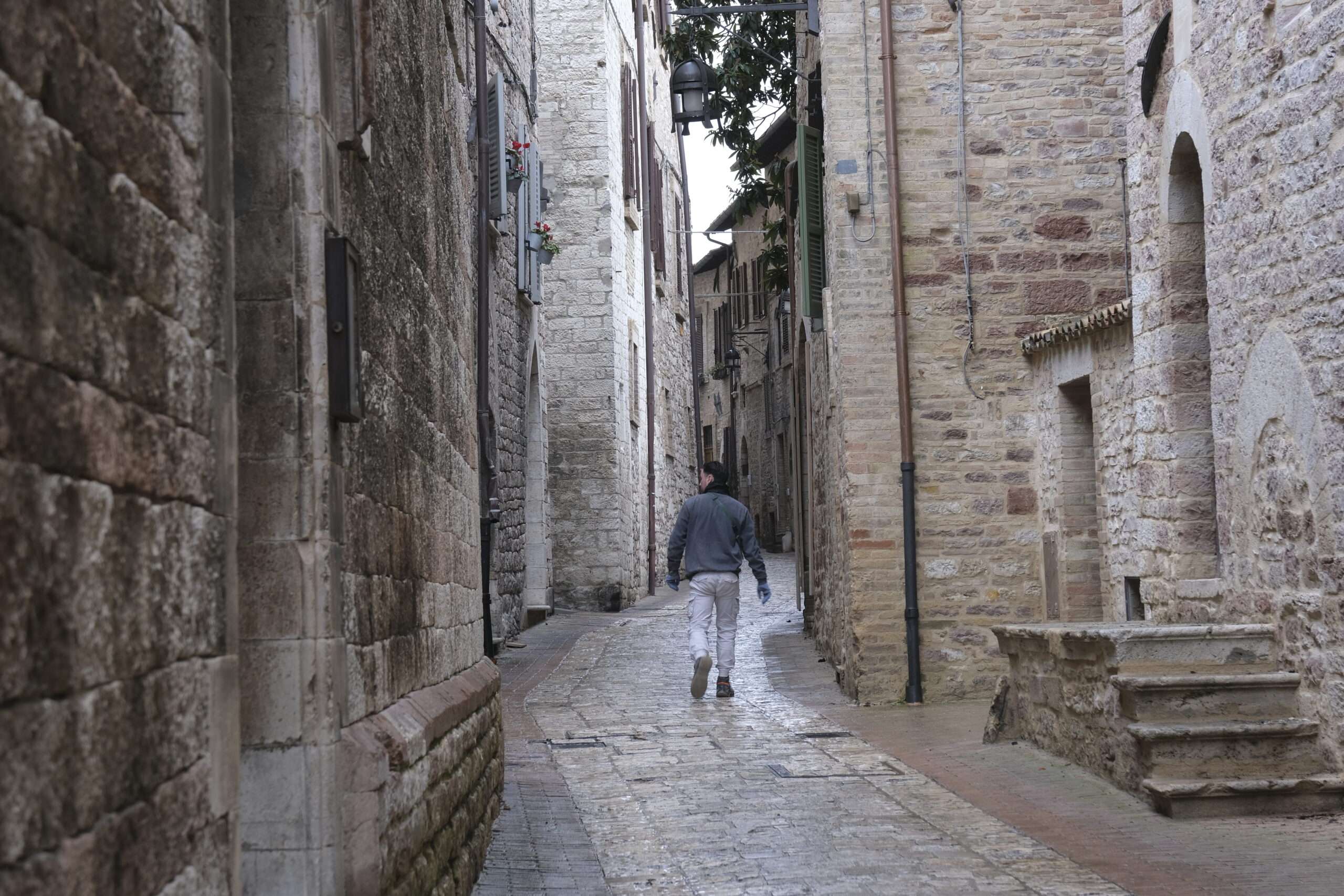
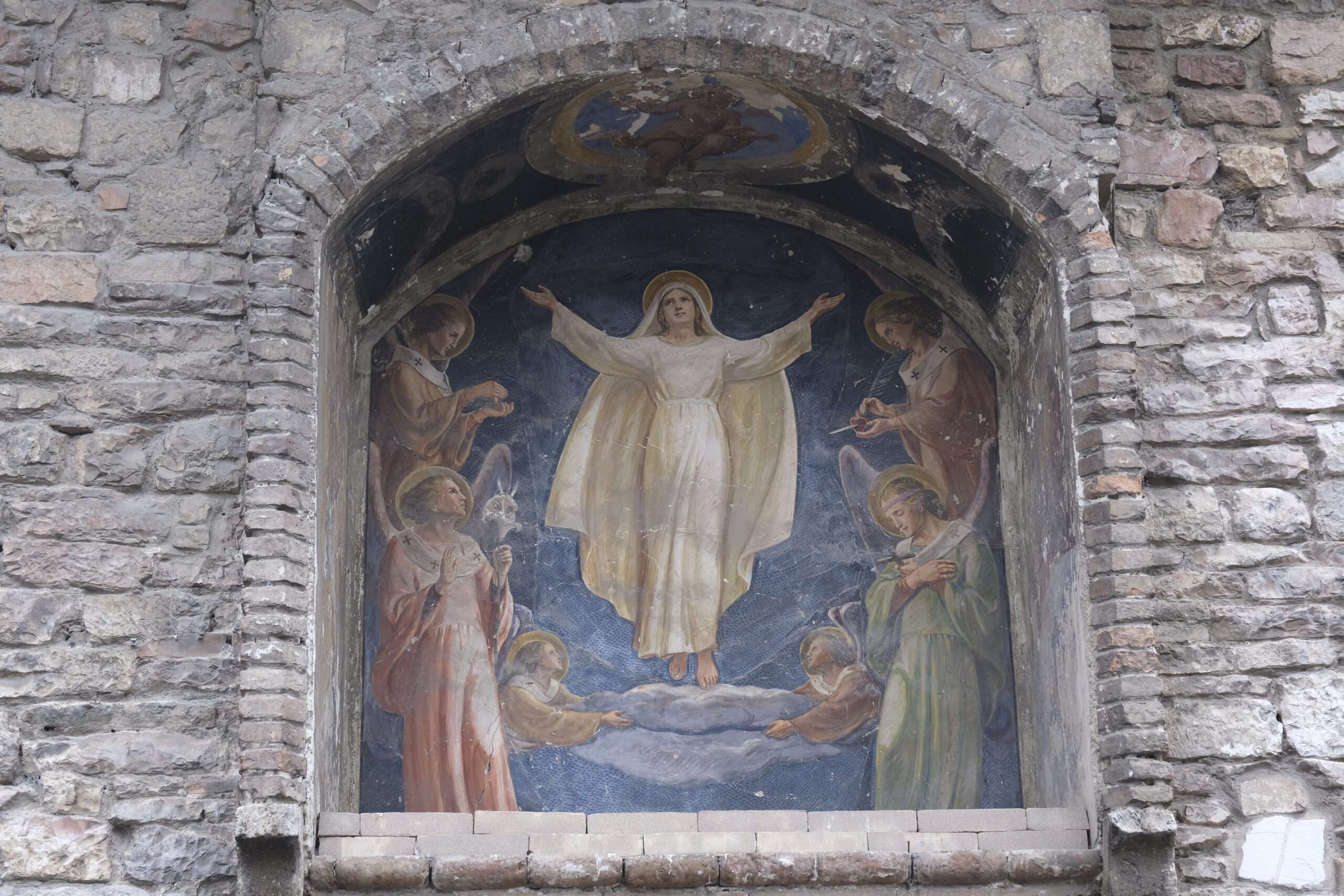
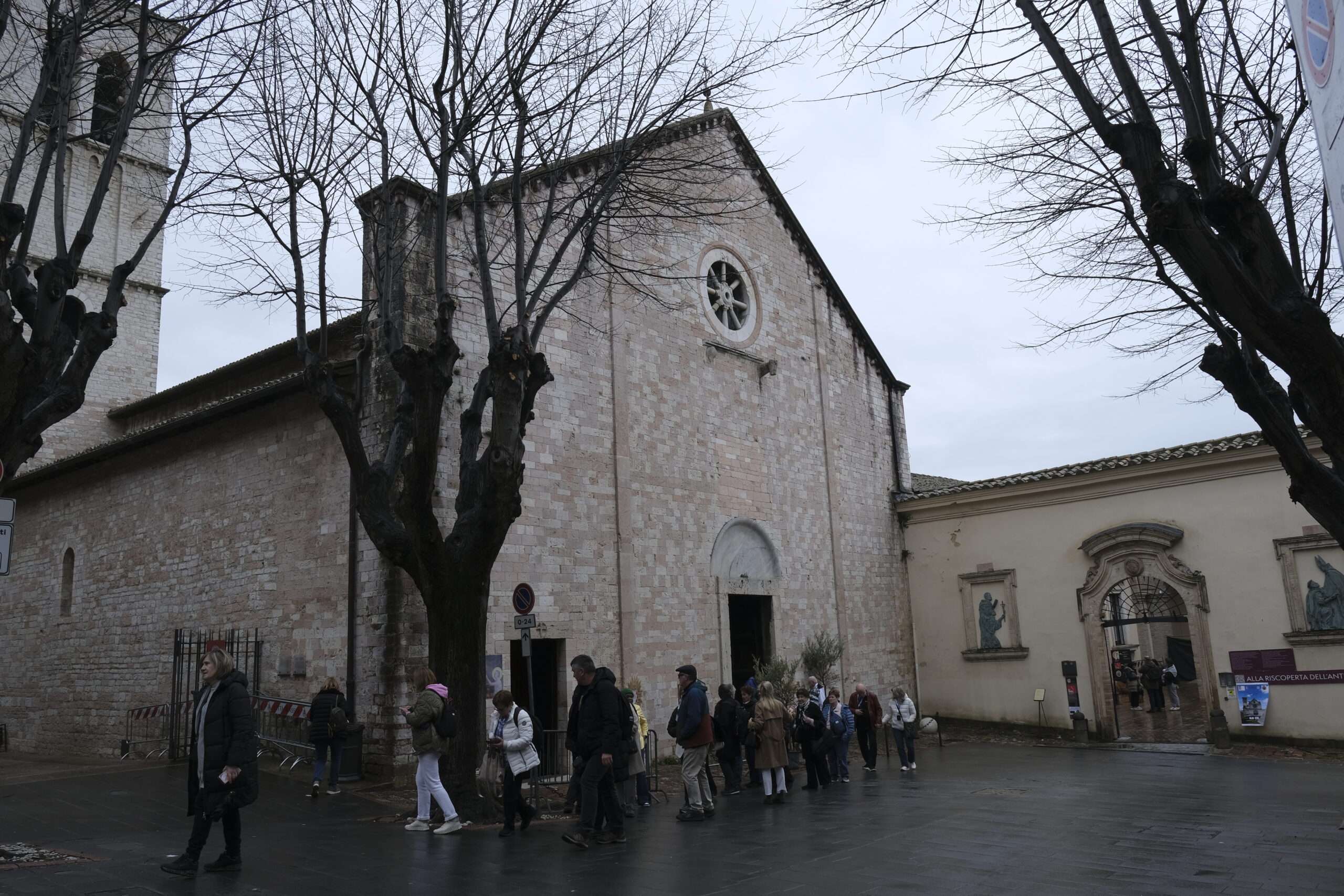
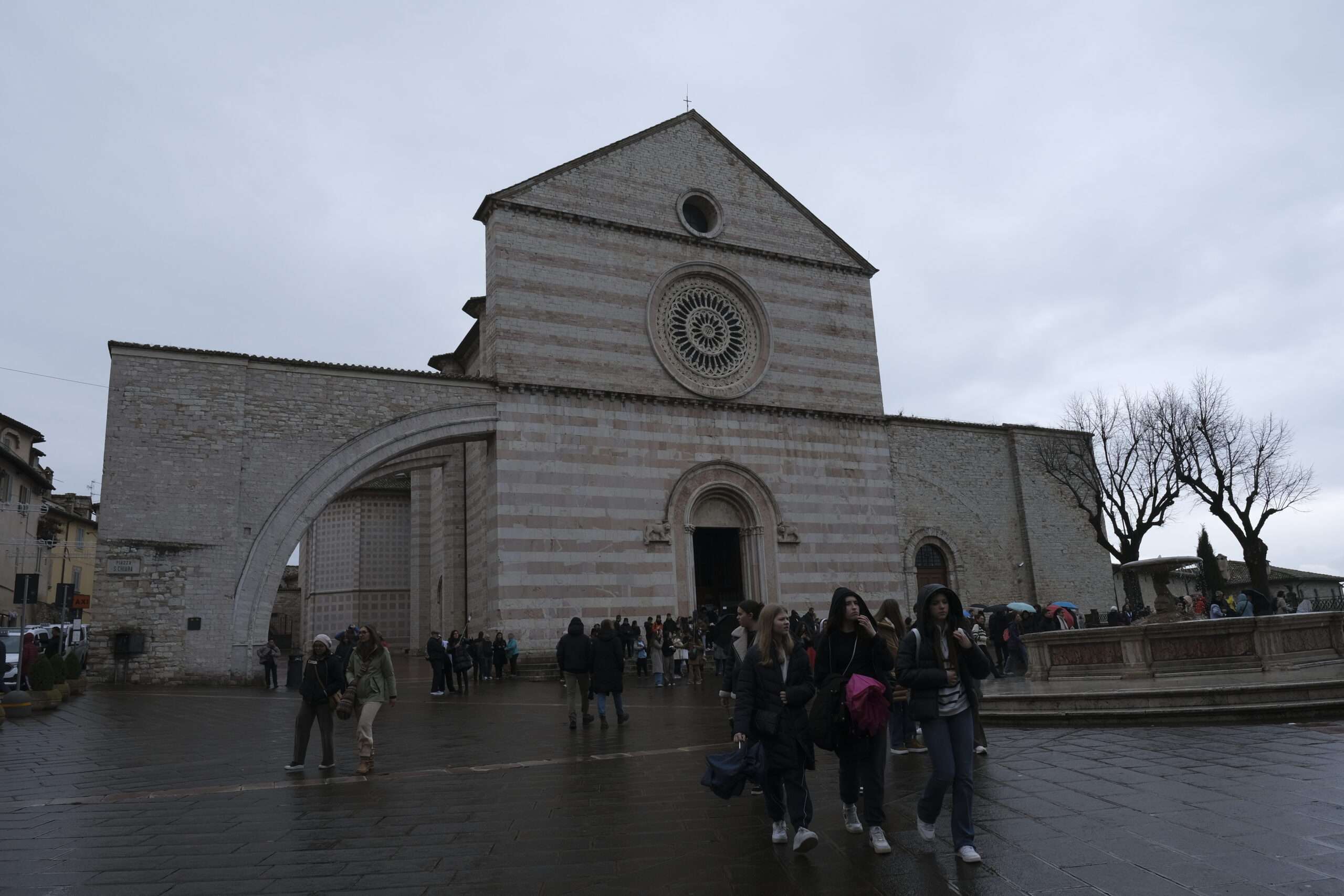
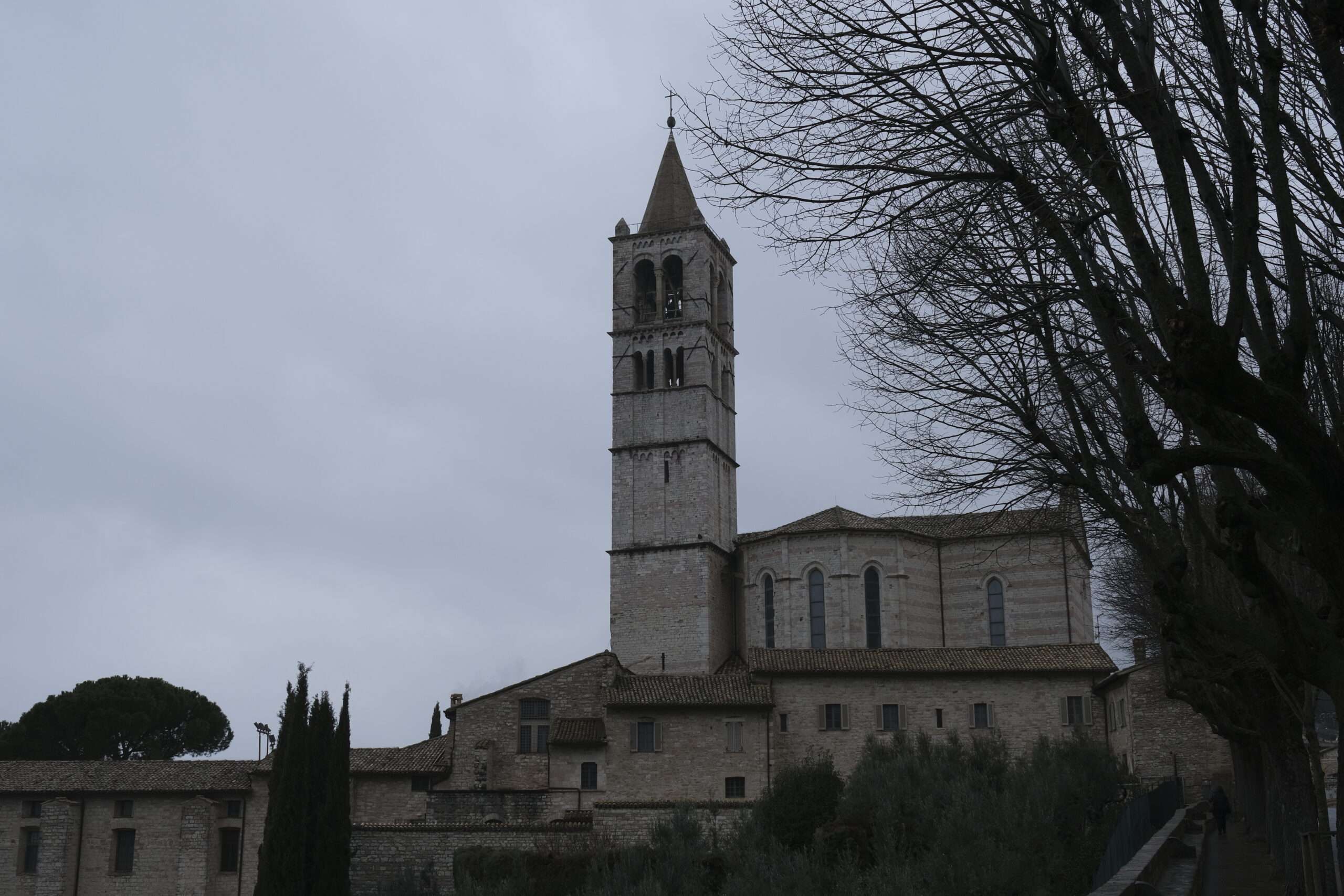
After visiting his tomb, we proceeded to the Basilica of St. Clare, which honors the foundress of the Poor Clare Sisters. St. Clare was a devoted follower of St. Francis and embraced his teachings by leading a life of profound poverty and humility. The Basilica houses the San Damiano Cross, the crucifix that, according to tradition, spoke to St. Francis of Assisi in 1205, instructing him to “rebuild my church.” We were unable to visit the crypt where her body rests as that area was being restored.
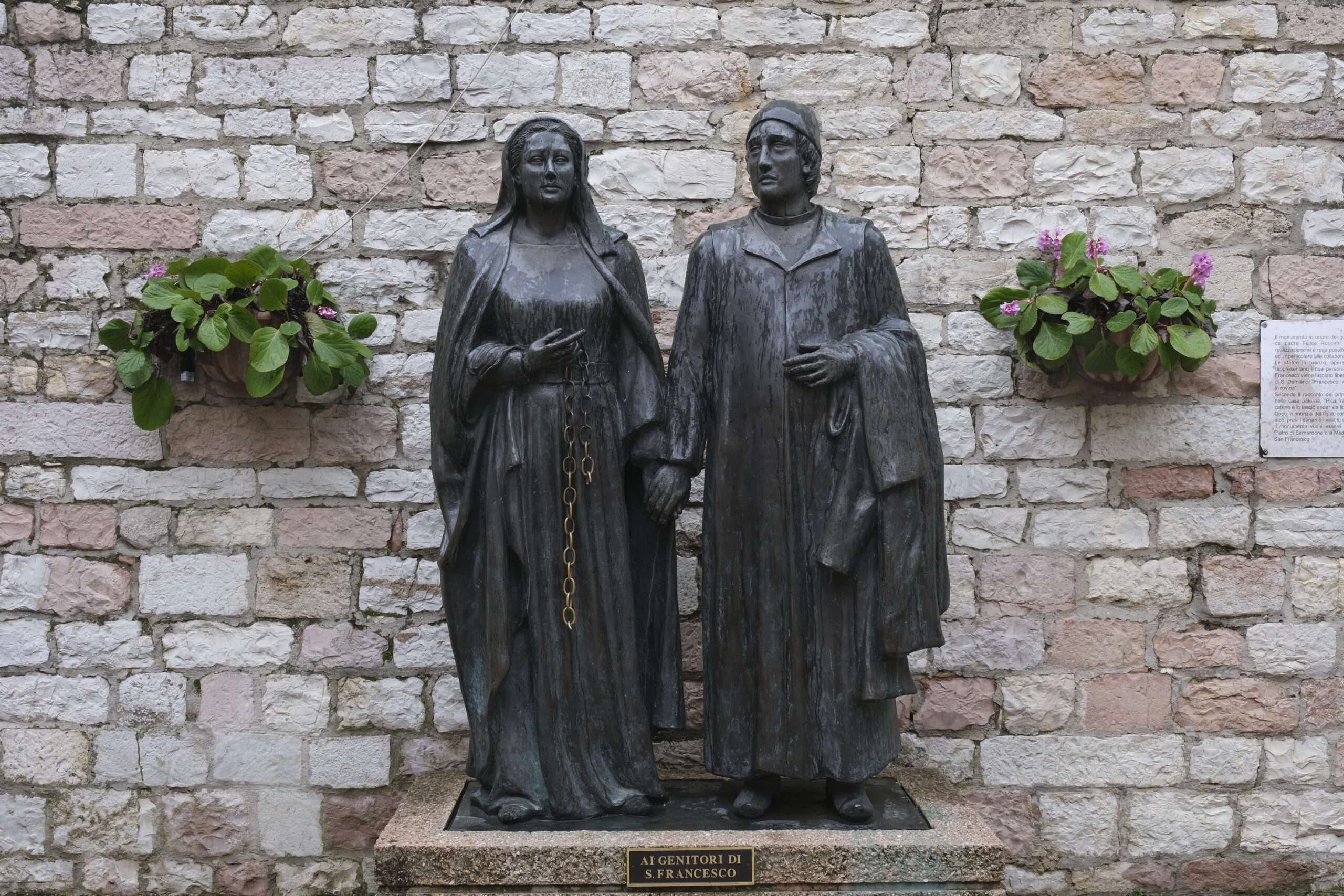
Something we learned in Assisi is that, like the Camino de Santiago, you can embark on the Way of St. Francis, a pilgrimage route that connects several locations significant to the life and teachings of St. Francis of Assisi. This journey can be undertaken on foot, by bicycle, or on horseback. The Northern Way stretches from La Verna to Assisi, covering approximately 125 miles, while the Southern Way extends from Assisi to Rome, spanning about 186 miles.
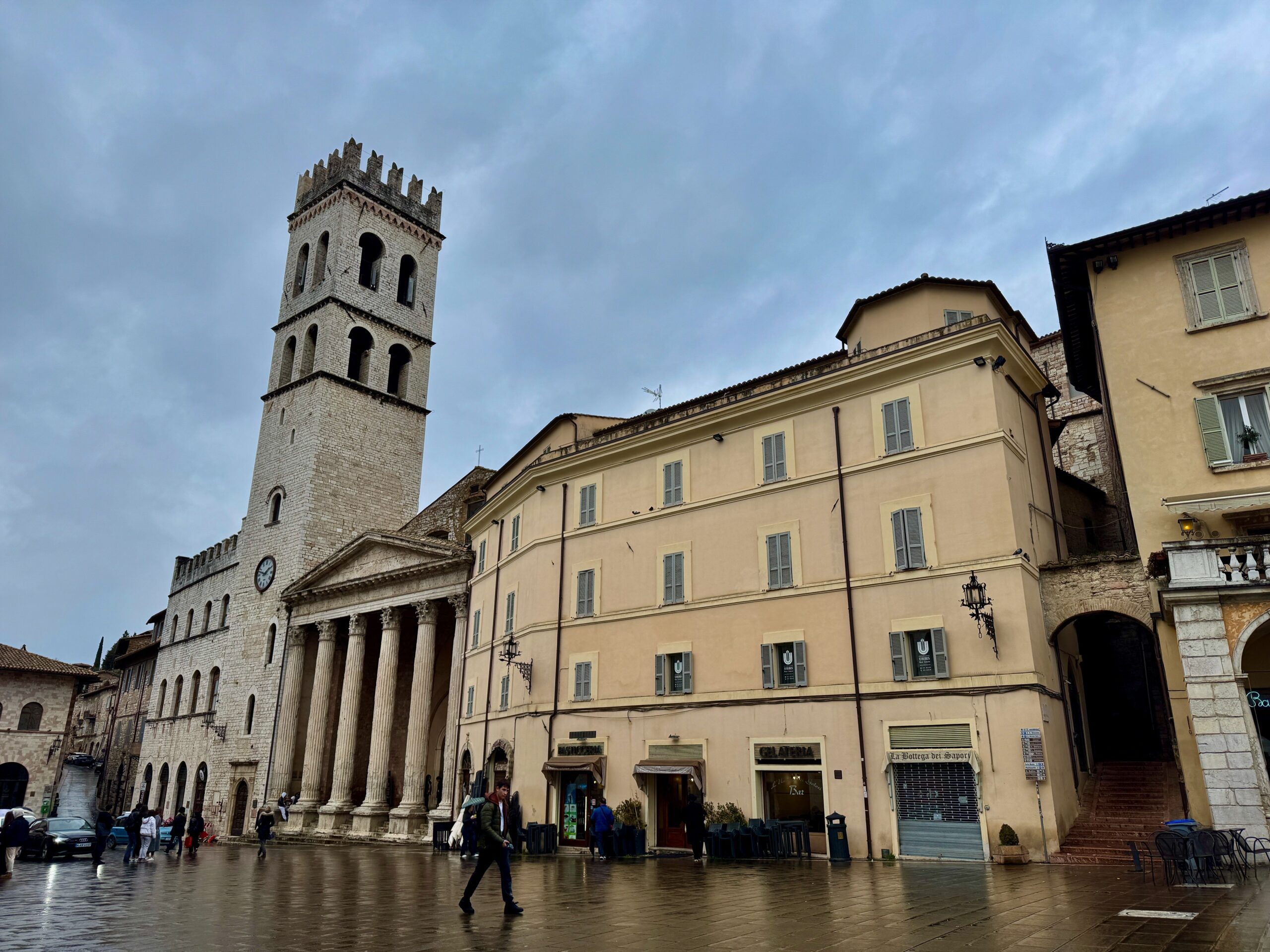
Following lunch, we visited the Temple of Minerva, an ancient Roman temple dating back to the 1st century BCE. Originally dedicated to the goddess Minerva, it later underwent a remarkable transformation when it was converted into the Church of Santa Maria Sopra Minerva in the 16th century.

From Assisi to Rome: Sacred Sites and Spiritual Milestones – February 25, 2025
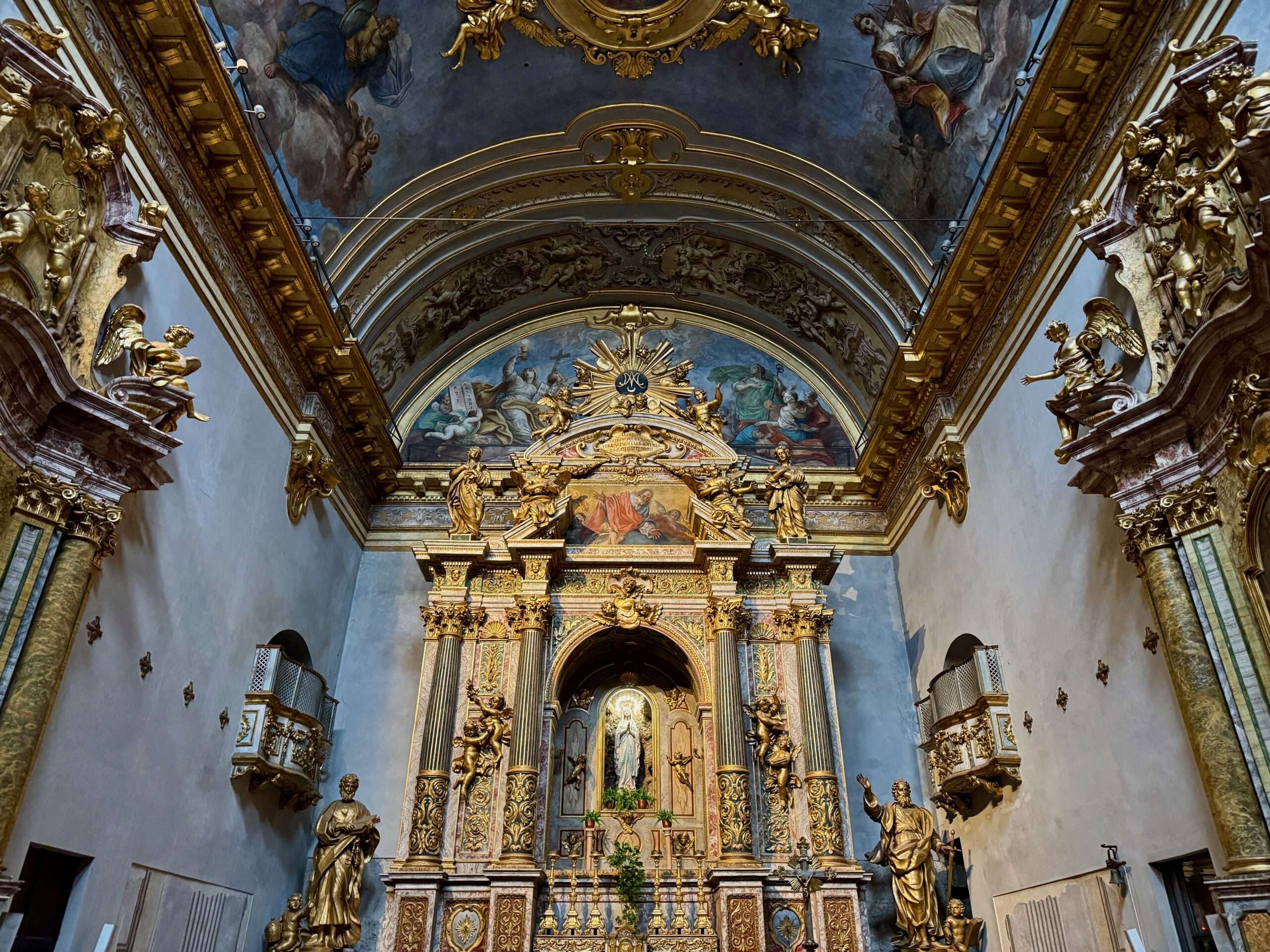
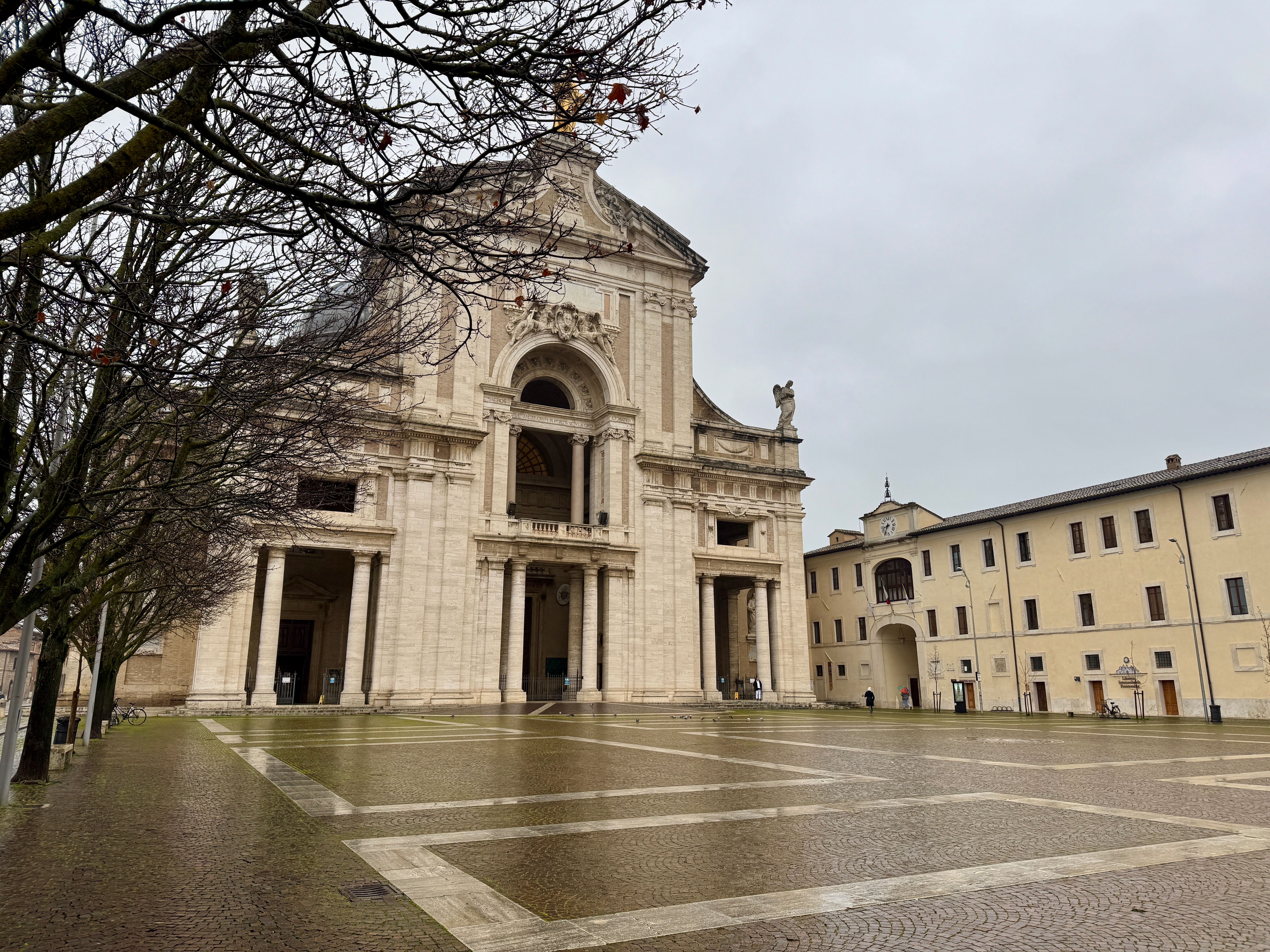
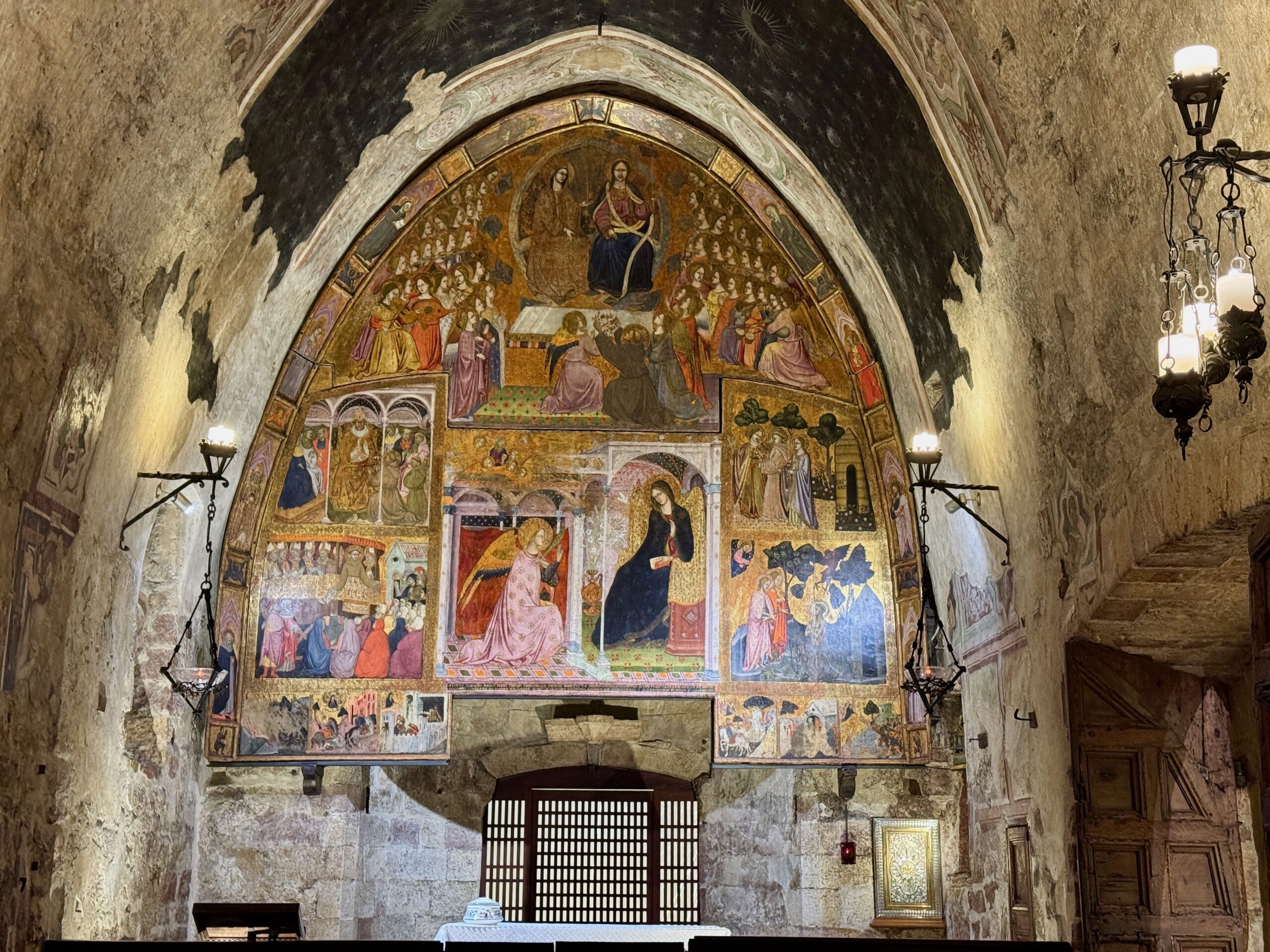
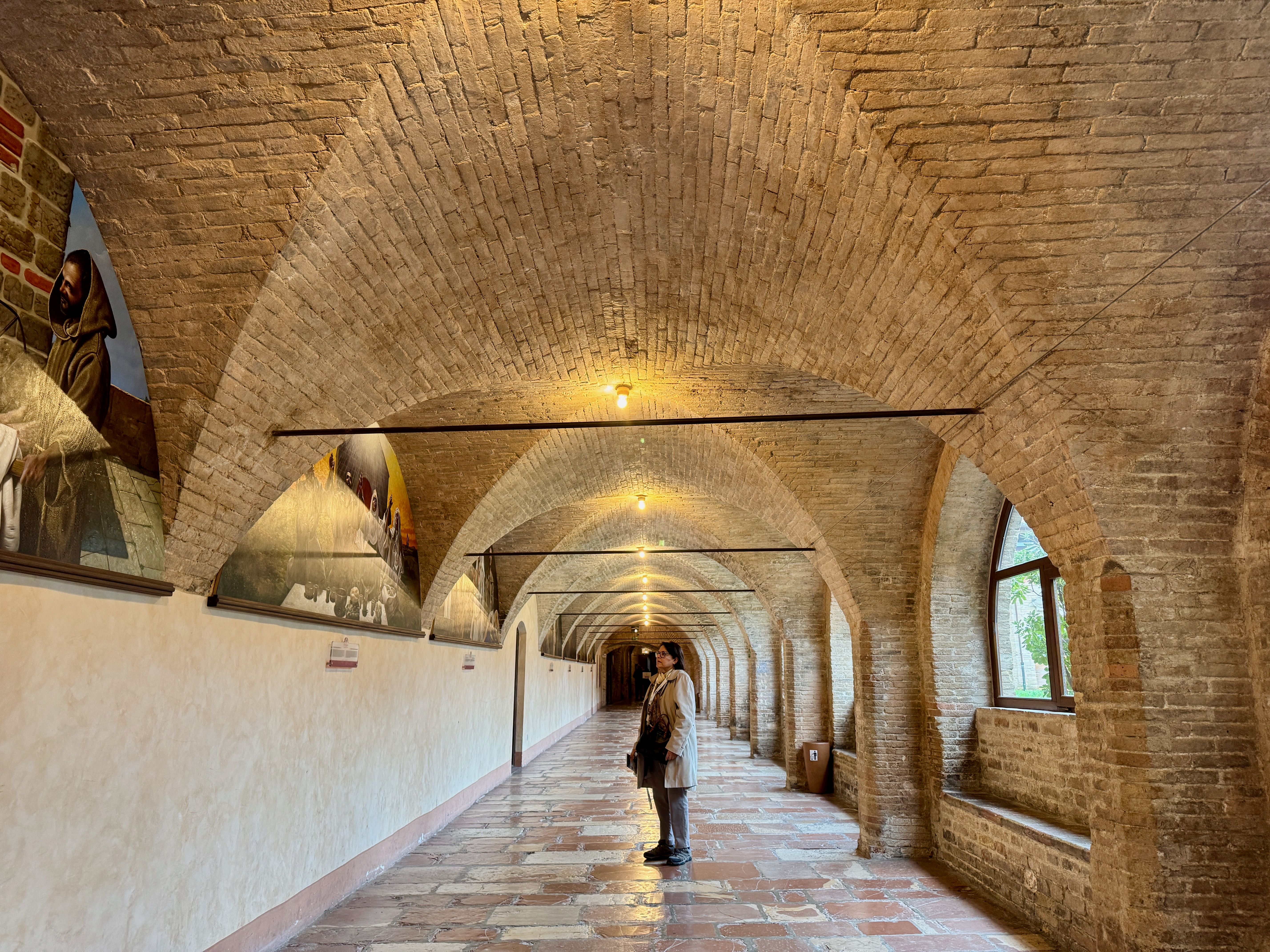
Before departing Assisi for Rome, we visited the Basilica of St. Mary of the Angels after breakfast. This Basilica consists of two significant structures, both of which we explored. The first is the Porziuncola, a small church that was given to Francis by the Dominicans and from where he went on to found the Franciscan Order. The second is the Capella del Transito, the sacred site where St. Francis passed away. We also visited the Rose Garden, where legend has it that a thorny bramble bush transformed into a thornless dog rose bush after St. Francis rolled in it to resist temptation.
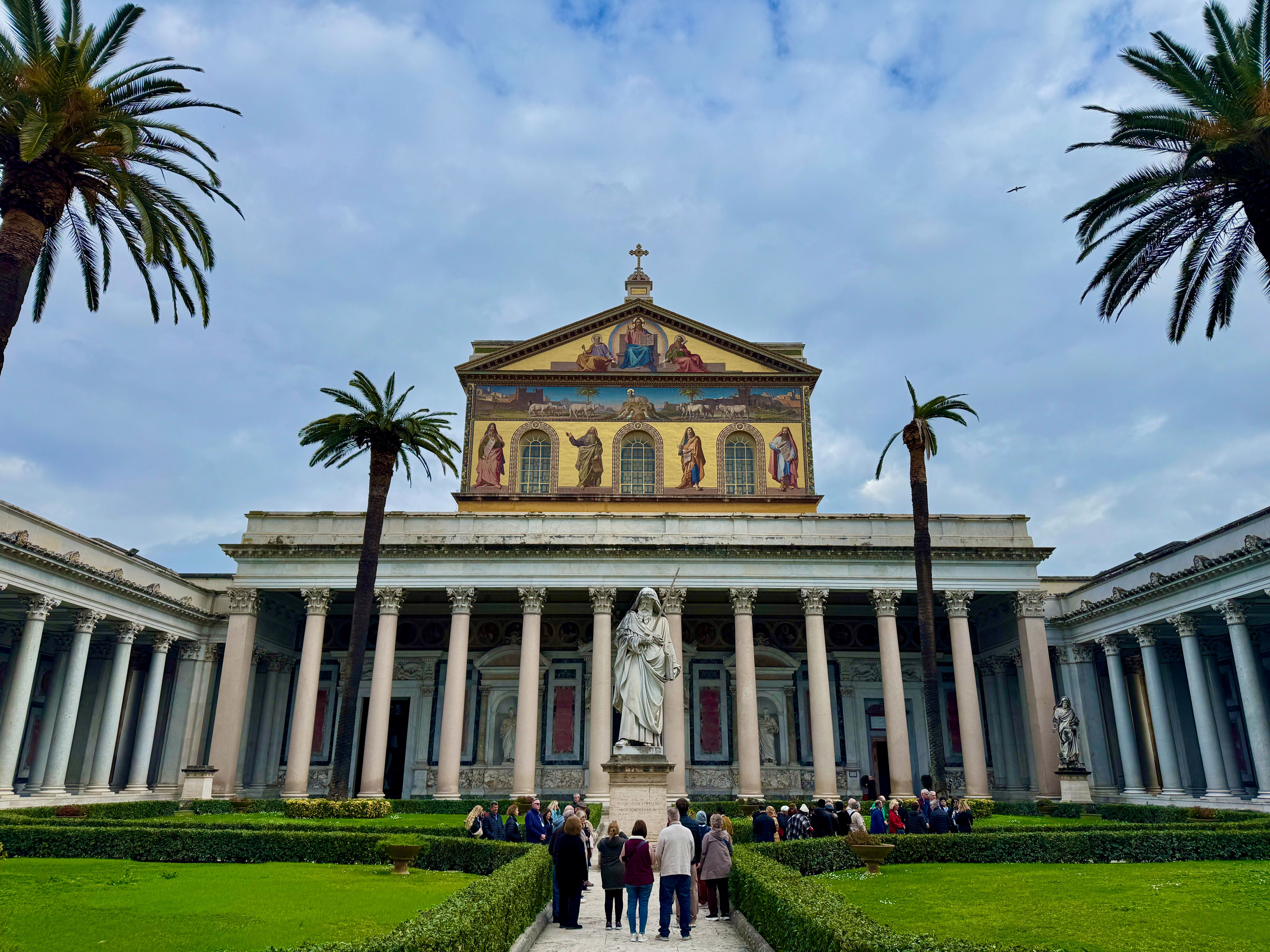
We then boarded the bus for a journey of over three hours to Rome, arriving just in time for lunch. This was our third trip to the city. After lunch, we embarked on a guided tour with Giovanna at the Basilica of St. Paul Outside the Walls, one of the four major papal basilicas in Rome. Built over the tomb of St. Paul, it is the second largest after St. Peter’s. Paul was beheaded nearby on the orders of Nero, escaping crucifixion because he claimed Roman citizenship. According to tradition, his head rolled three times, and where it struck the ground, a fountain is said to have sprung up. This took place near the site of the Abbey of the Three Fountains. The abbey itself is not open to the public, as it is inhabited by Trappist monks, but they have created a virtual reality experience available through a viewer in the abbey museum. Paul’s body was retrieved by a woman named Lucina and buried in an area she owned along the Ostiense Way.
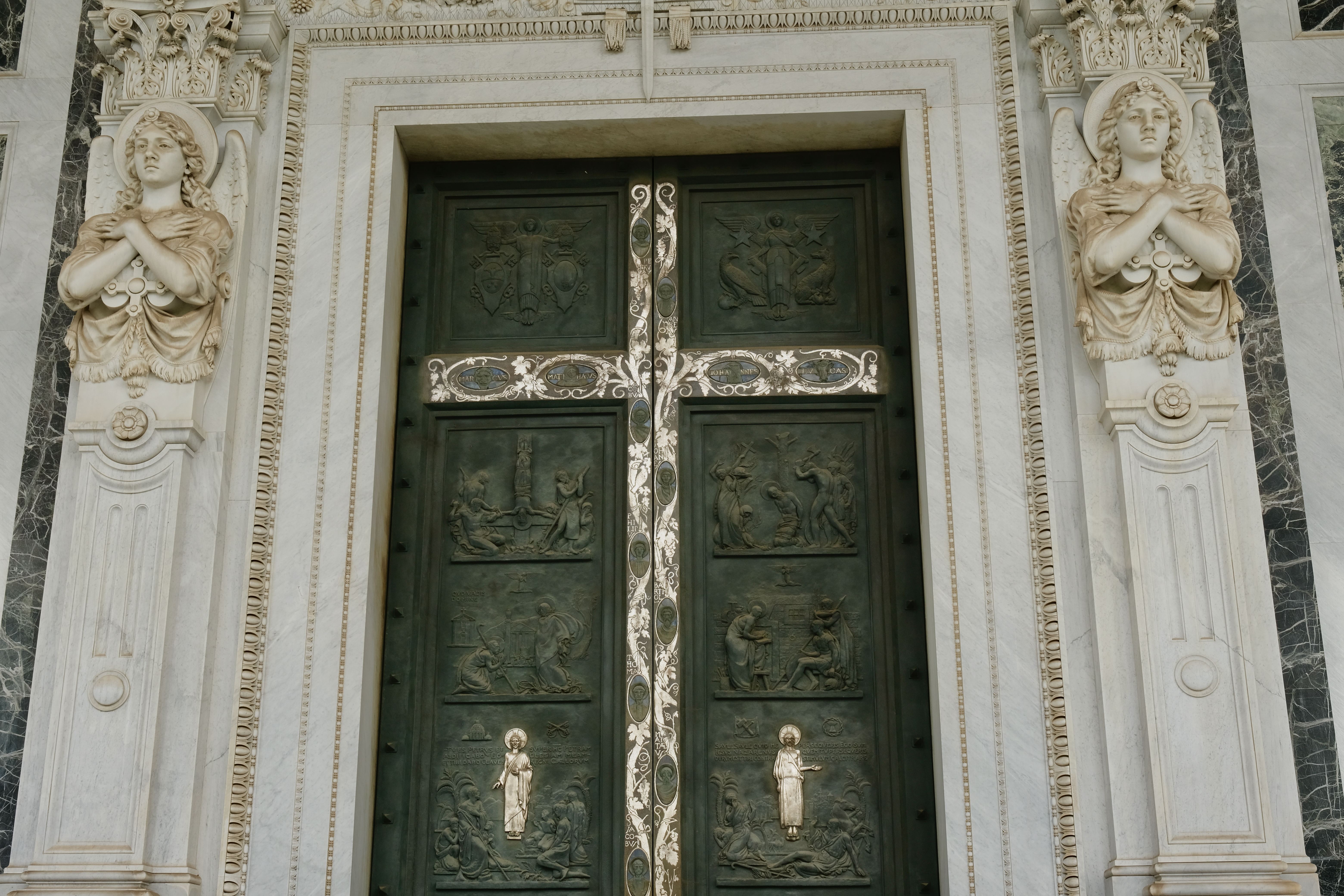
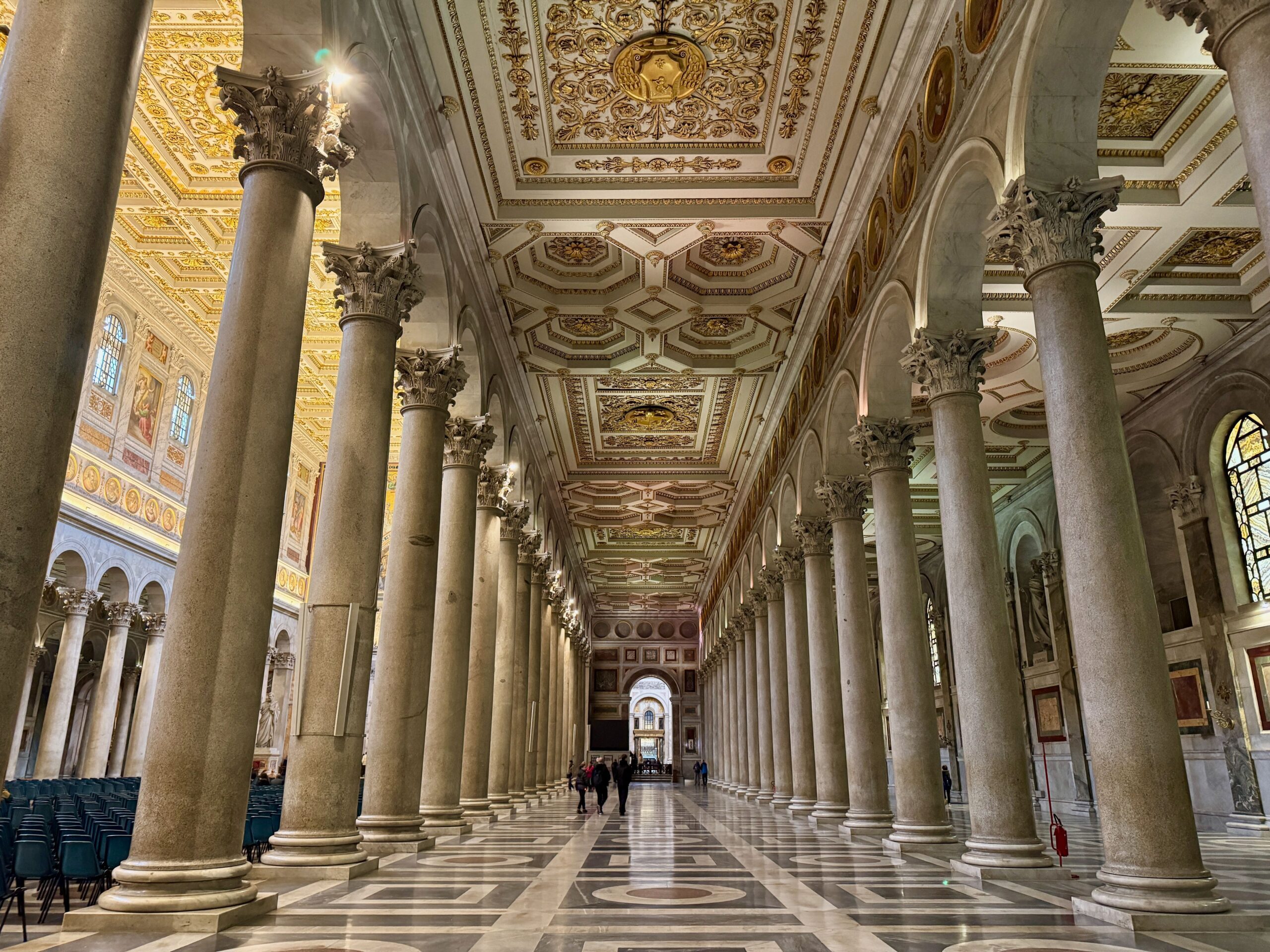
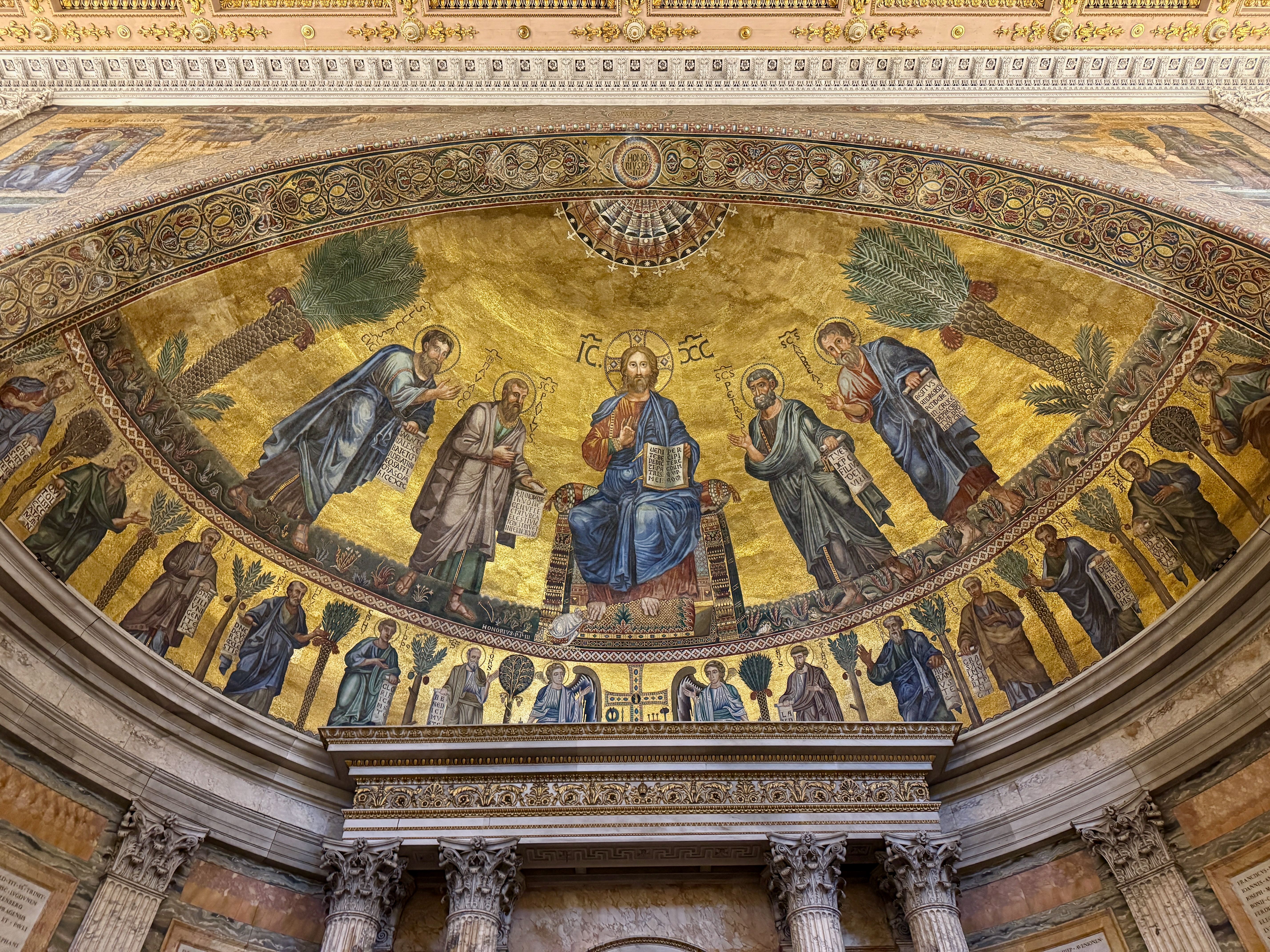
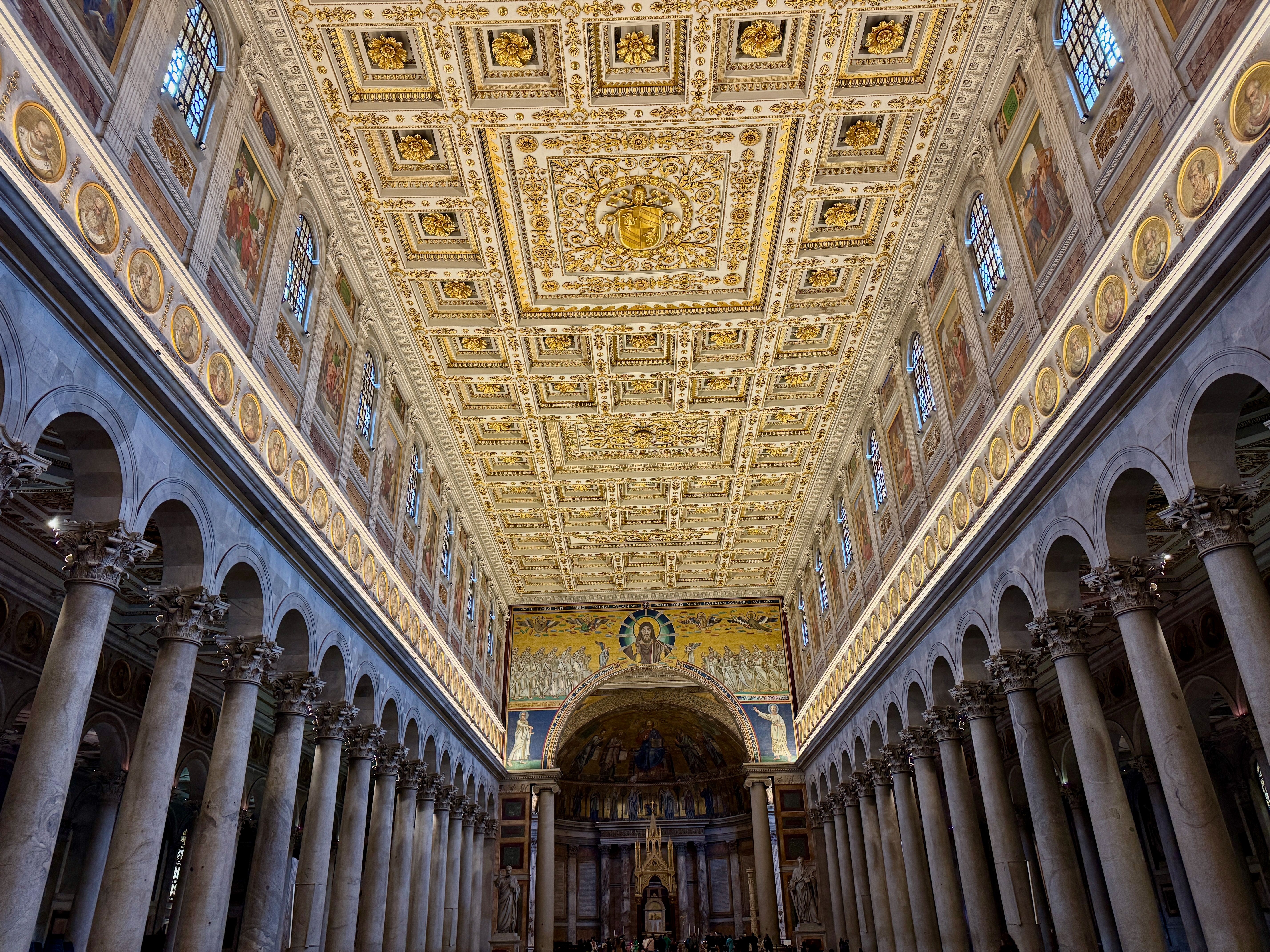
In the 4th century, Constantine had a place of worship built over St. Paul’s tomb. Over the centuries, the structure underwent many enhancements, particularly after the tradition of the Jubilees was established, as pilgrim donations funded various projects. However, a fire in the 1800s destroyed the church and its magnificent artwork. It was rebuilt in the latter half of the 19th century, with Egypt donating alabaster and Russia contributing malachite and lapis lazuli. The basilica now features a four-sided portico made up of 150 columns, three main doors—including the new bronze Holy Door on the right, installed for the Jubilee of 2000—and a striking mosaic façade. The upper section of the façade depicts Christ with Saints Peter and Paul. Below them, four rivers represent the four Gospels, while twelve lambs symbolize the twelve apostles. In the lower section, the prophets Isaiah, Jeremiah, Ezekiel, and Daniel are portrayed. At the center of the atrium stands a massive statue of St. Paul holding a sword. Inside the basilica, visitors can see the tomb of St. Paul as well as the exquisite Paschal candlestick, both of which survived the fire. The mosaic in the apse did not survive but was later recreated. It depicts Peter, Paul, Luke, and Andrew alongside Jesus, whose foot is being kissed by Pope Honorius III, who commissioned the artwork. One unusual feature of the interior is the continuous row of portraits along the top of the walls, displaying every Pope from Peter to the current Pope Francis, with ample space for future successors. The stained glass windows are uniquely made from very thin alabaster. Among the many chapels is one dedicated to St. Stephen, the first Christian martyr—who, in a striking twist of history, was martyred by St. Paul before his conversion on the road to Damascus.
‘Outside the Walls’ is an intriguing name for a church. It refers to its location outside the Vatican, though it holds extraterritorial status under a treaty with Italy.
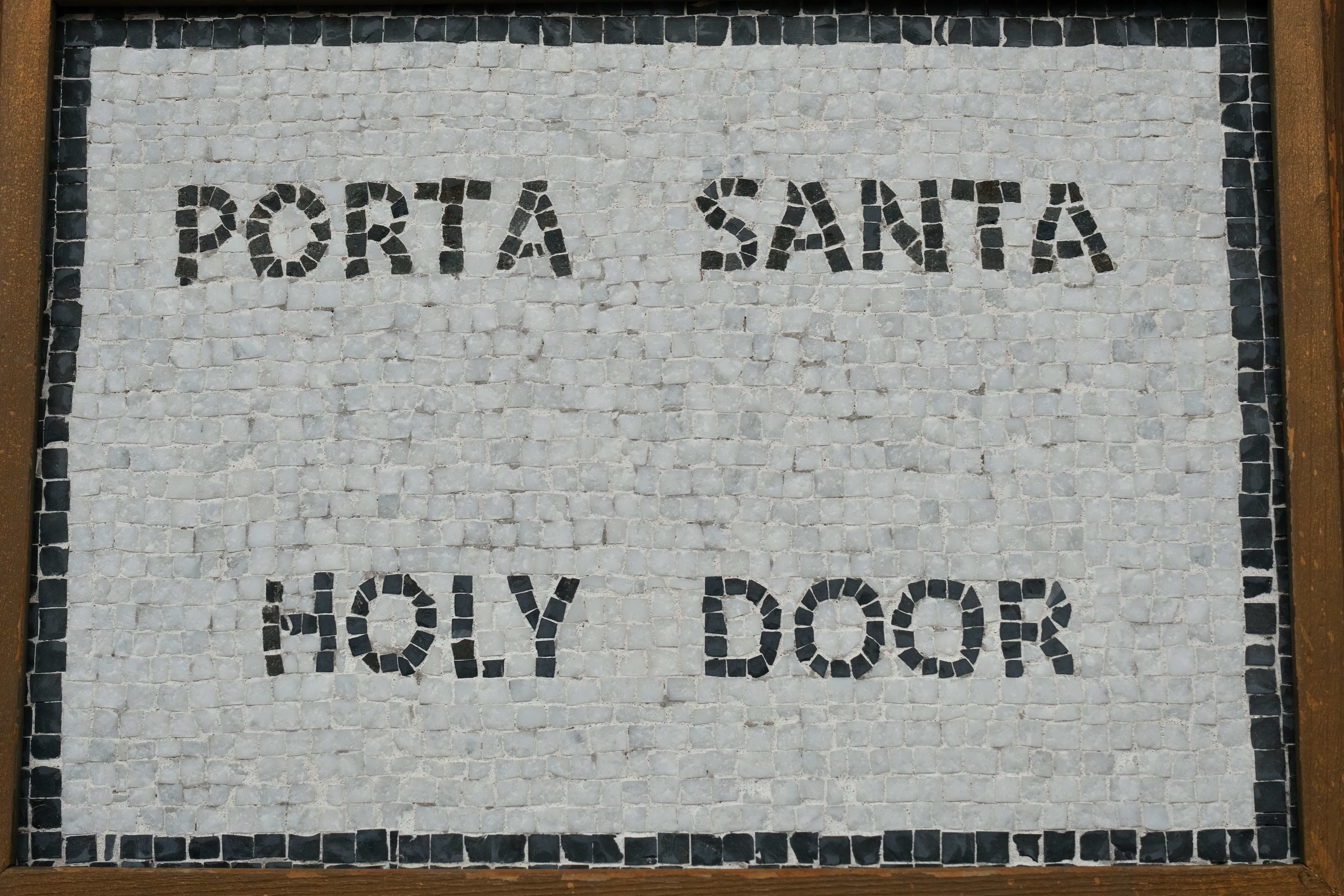
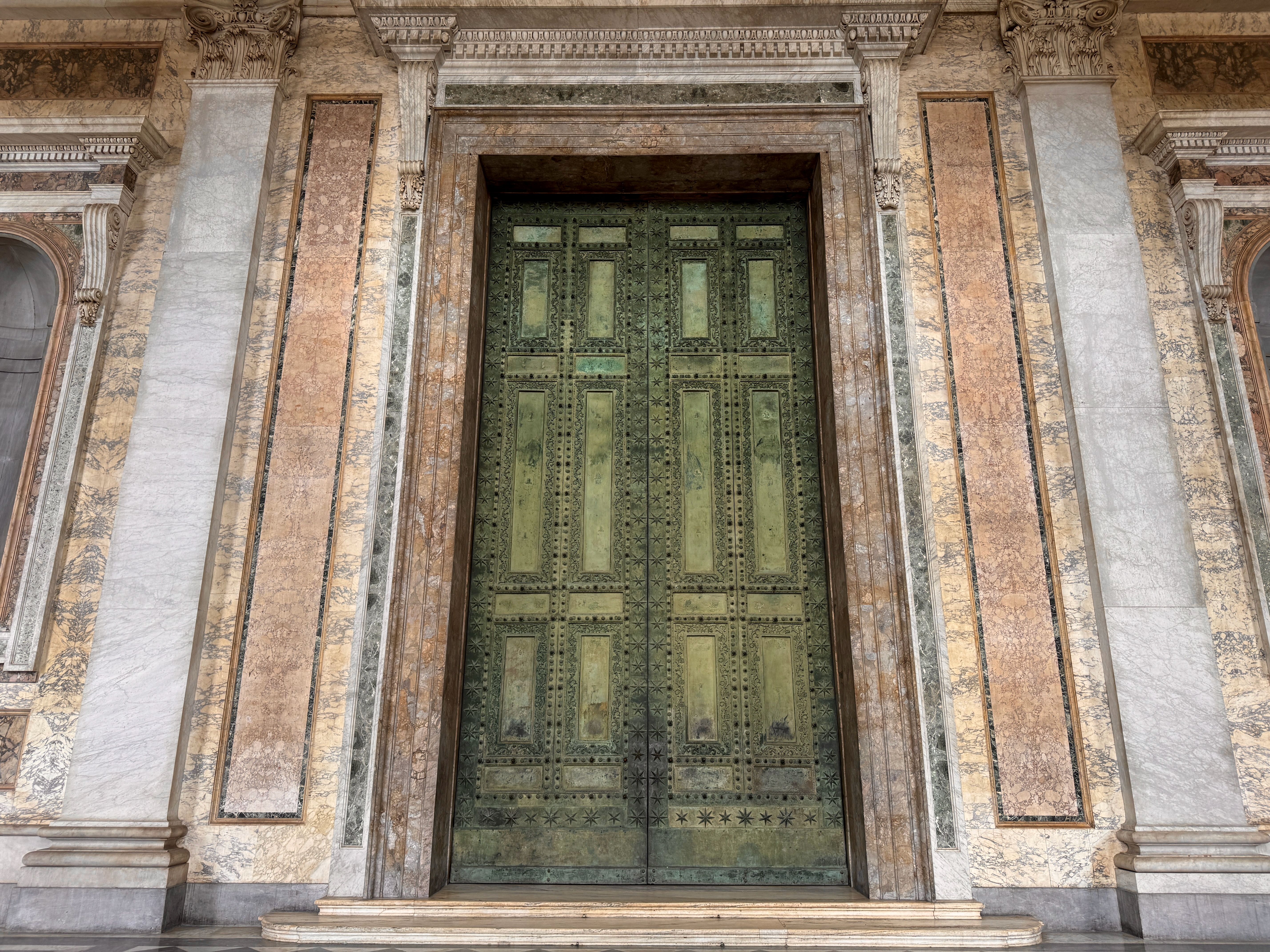
During our visit, we passed through the first of the four Holy Doors, a significant symbolic entrance for pilgrims. When pilgrims pass through a Holy Door, they can pray for two deceased individuals or for one deceased person and themselves. While passing through the door, they are to pray for the intentions of the Holy Father by reciting one Our Father, one Hail Mary, and one Glory Be, along with the Credo. They must also go to Confession and receive Communion, with the sacrament of Confession to be completed within 20 days of passing through the doors. Rome has five Holy Doors, four of which are in the following basilicas: St. Paul Outside the Walls, St. Peter’s, St. Mary Major, and St. John Lateran. The fifth Holy Door is located in Rebibbia Prison, which Pope Francis opened for the prisoners and staff on December 26, the feast of St. Stephen. Following the tour, we attended Mass in the Chapel of St. Benedict, celebrated by Msgr. Gervasio and Rev. Felicien..
A Day of Prayer, Art, and Reflection in Rome – February 26, 2025
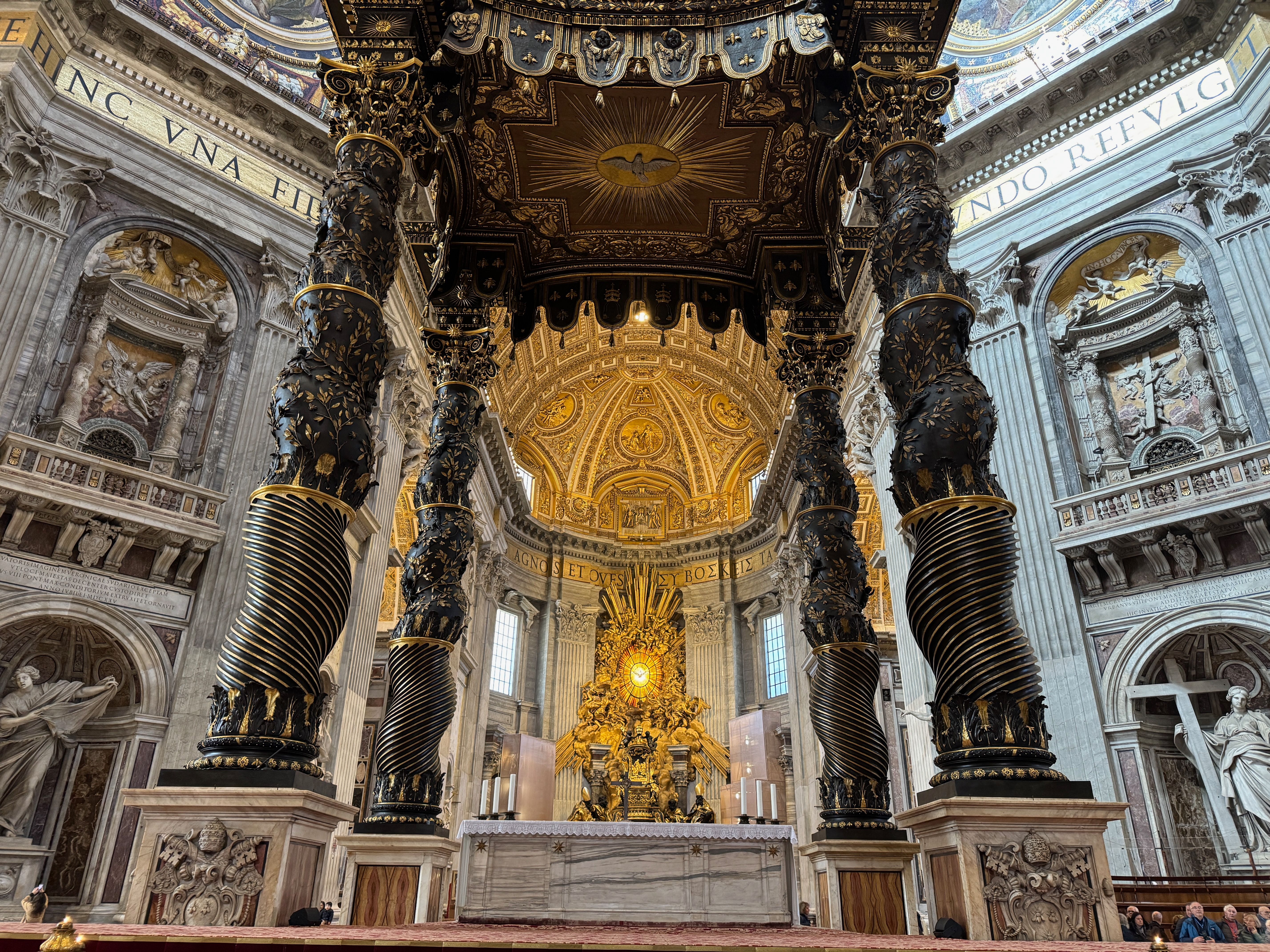
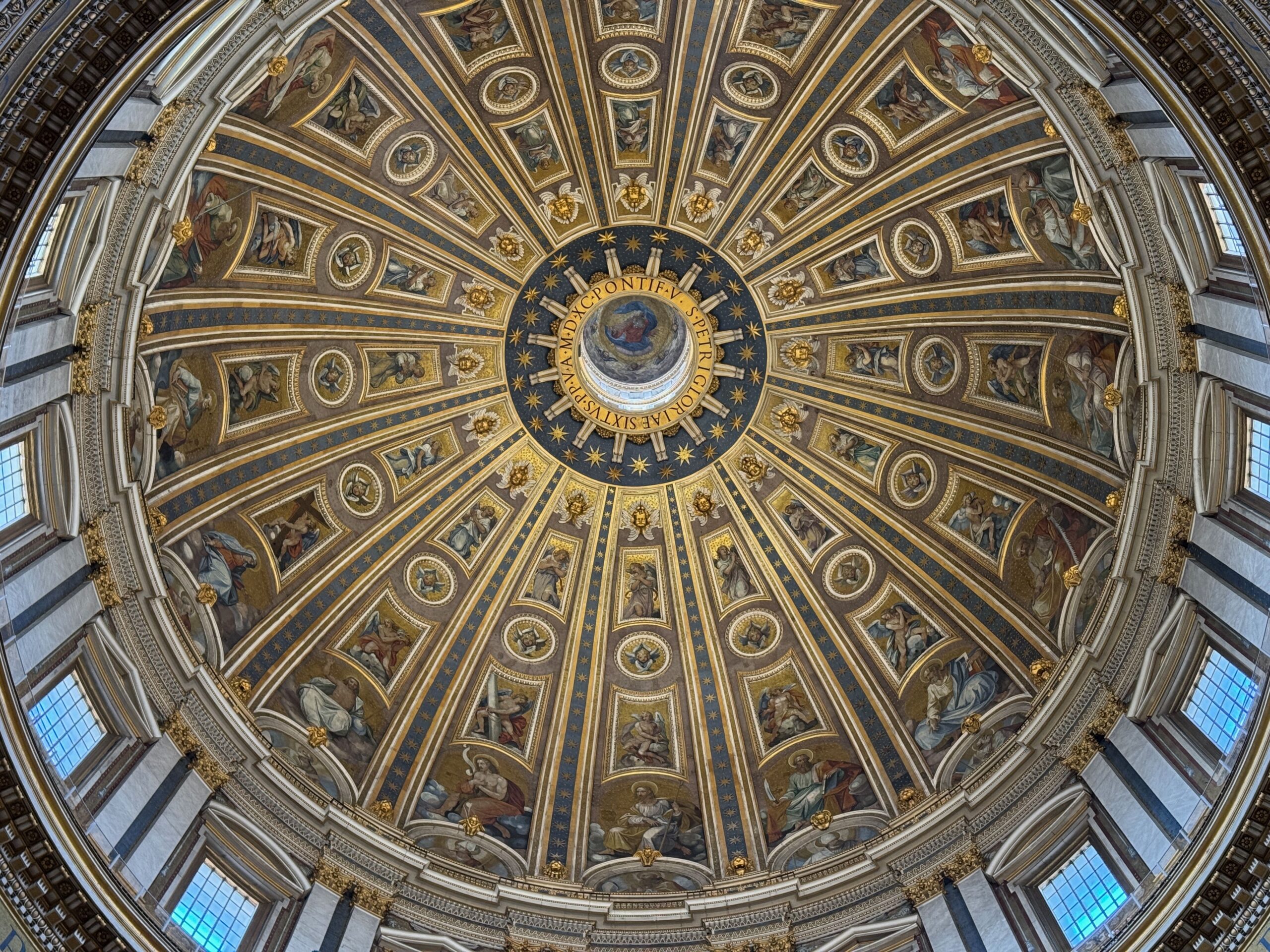
This morning, we walked to St. Peter’s Basilica. Along the way, Luca explained how, in the Middle Ages, Rome’s population was greatly reduced. Roman soldiers were often paid in plunder, and the Popes spent much of their time sheltering in the fortress of Castel Sant’Angelo, traveling between the Vatican and the fortress via a tunnel. Luca also explained the color coding for parking spaces along the streets: white lines indicate free parking, blue lines mean paid parking, yellow lines are for diplomats, and pink lines designate parking for pregnant women. When we reached the Vatican, we were given a cross, which we all took turns carrying as we processed toward St. Peter’s. The walkway we used was specially created for the Jubilee Year. After clearing security, we congregated on the steps of the Basilica before processing through the Holy Door. Once inside, we gathered as a group to pray at the tomb of St. Peter.

After this, we were scheduled to attend the weekly Papal Audience, but it was canceled due to the Pope’s hospitalization with double pneumonia.
After some free time to explore the basilica, we regrouped at the obelisk and walked to the Church of Santa Maria in Transpontina for Mass, celebrated by Msgr. Gervasio and Rev. Felicien. A couple in our group was celebrating their 50th wedding anniversary and renewed their vows. We have eight years to reach that milestone.
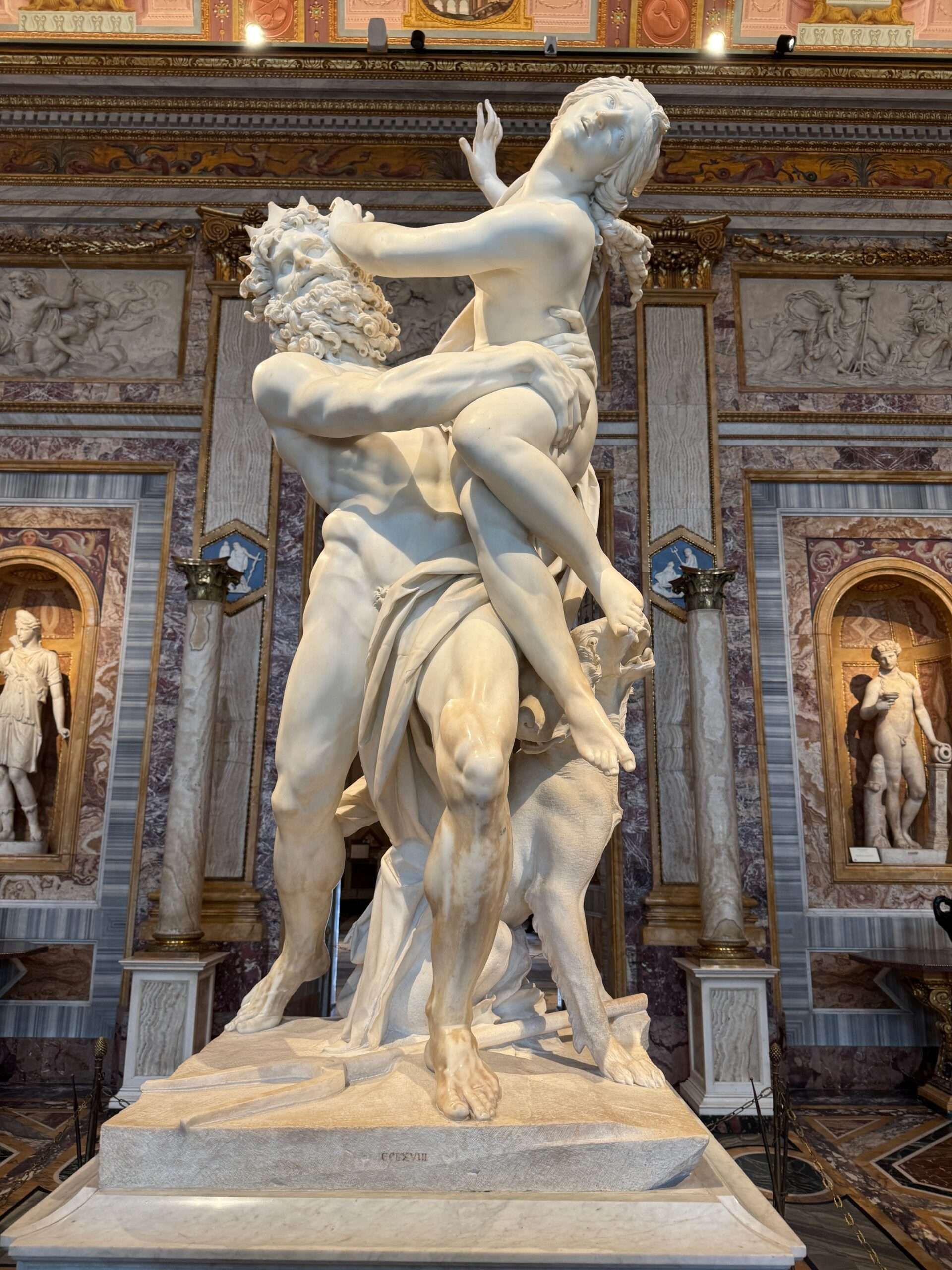
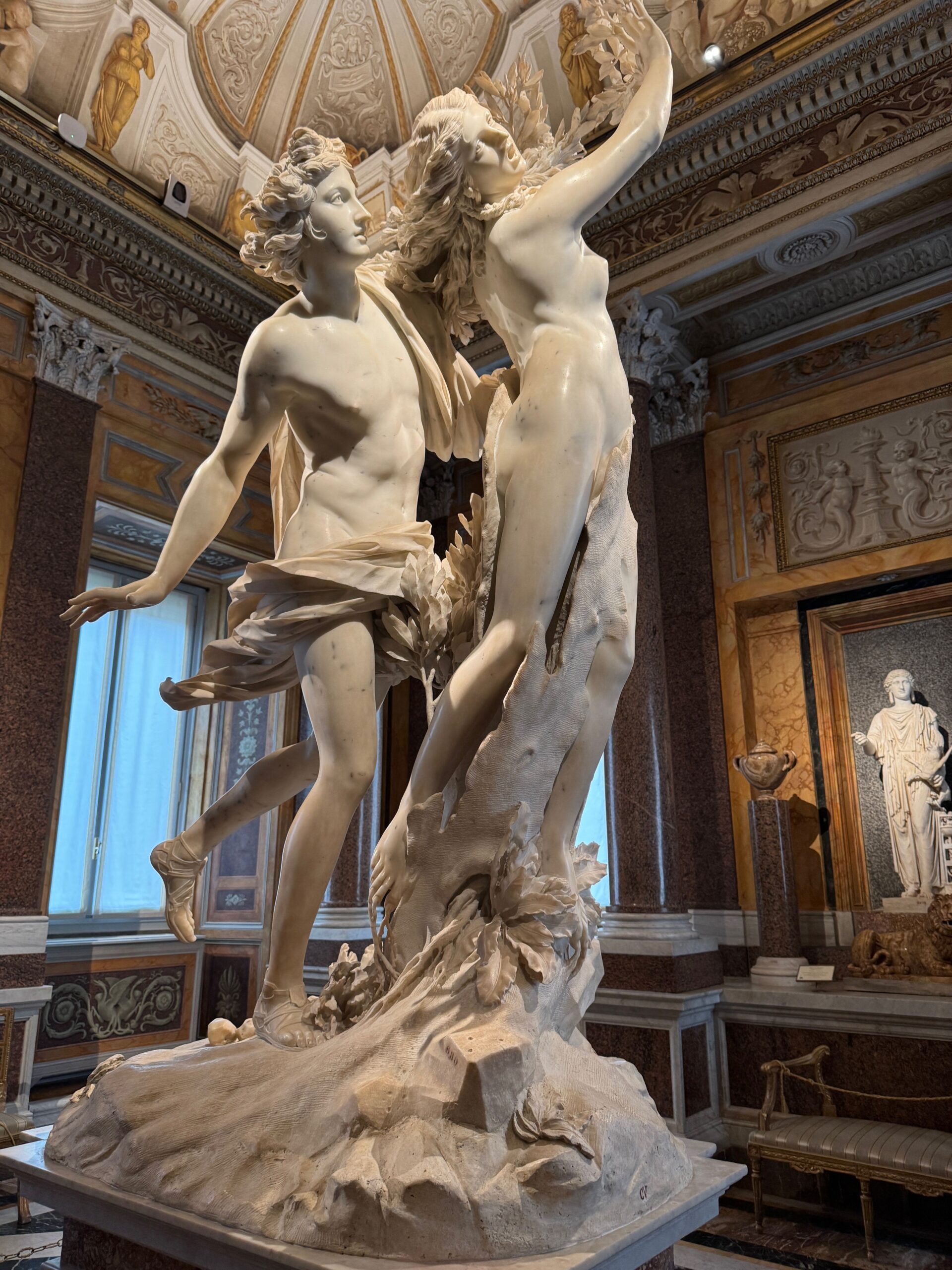
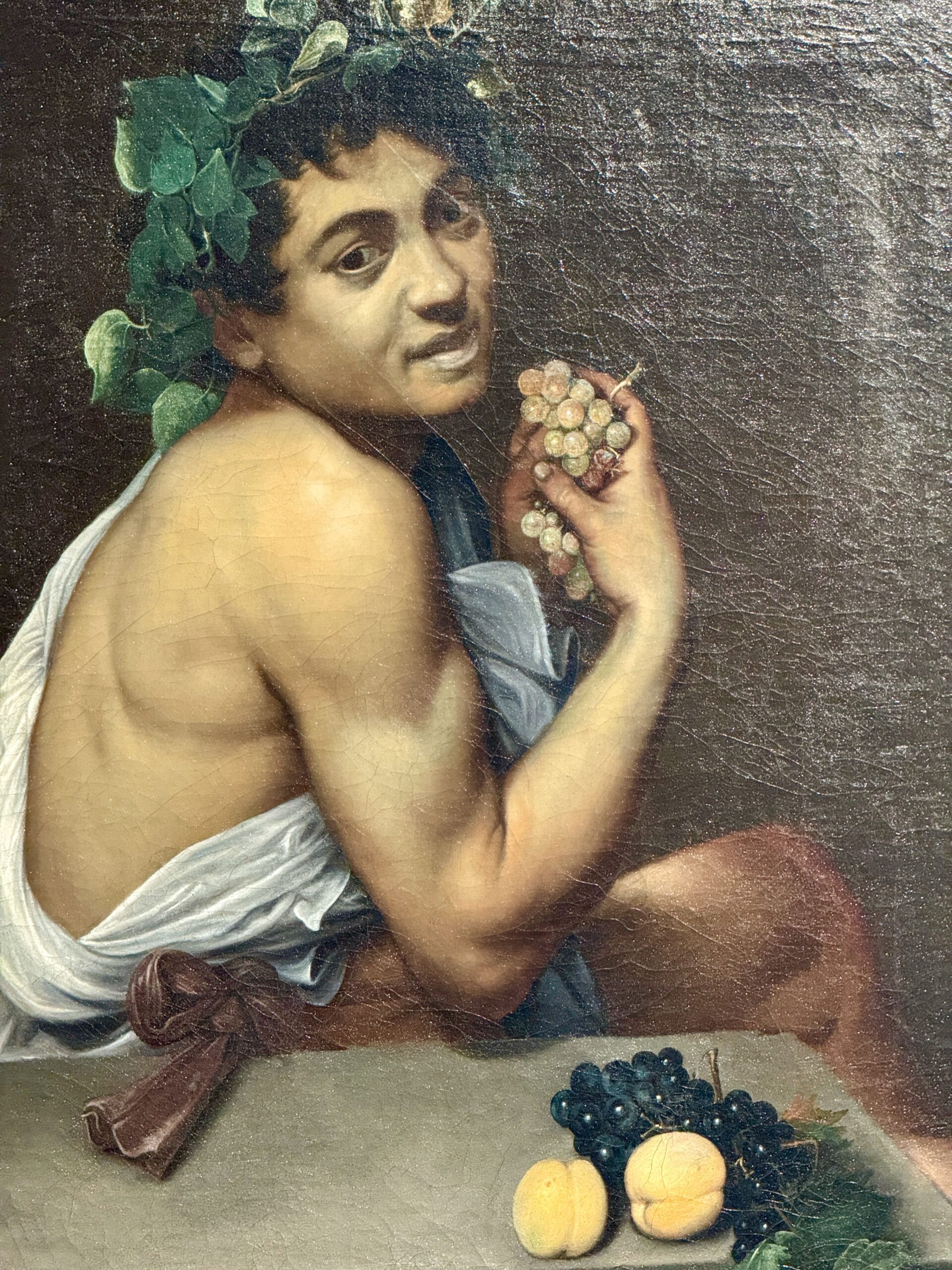
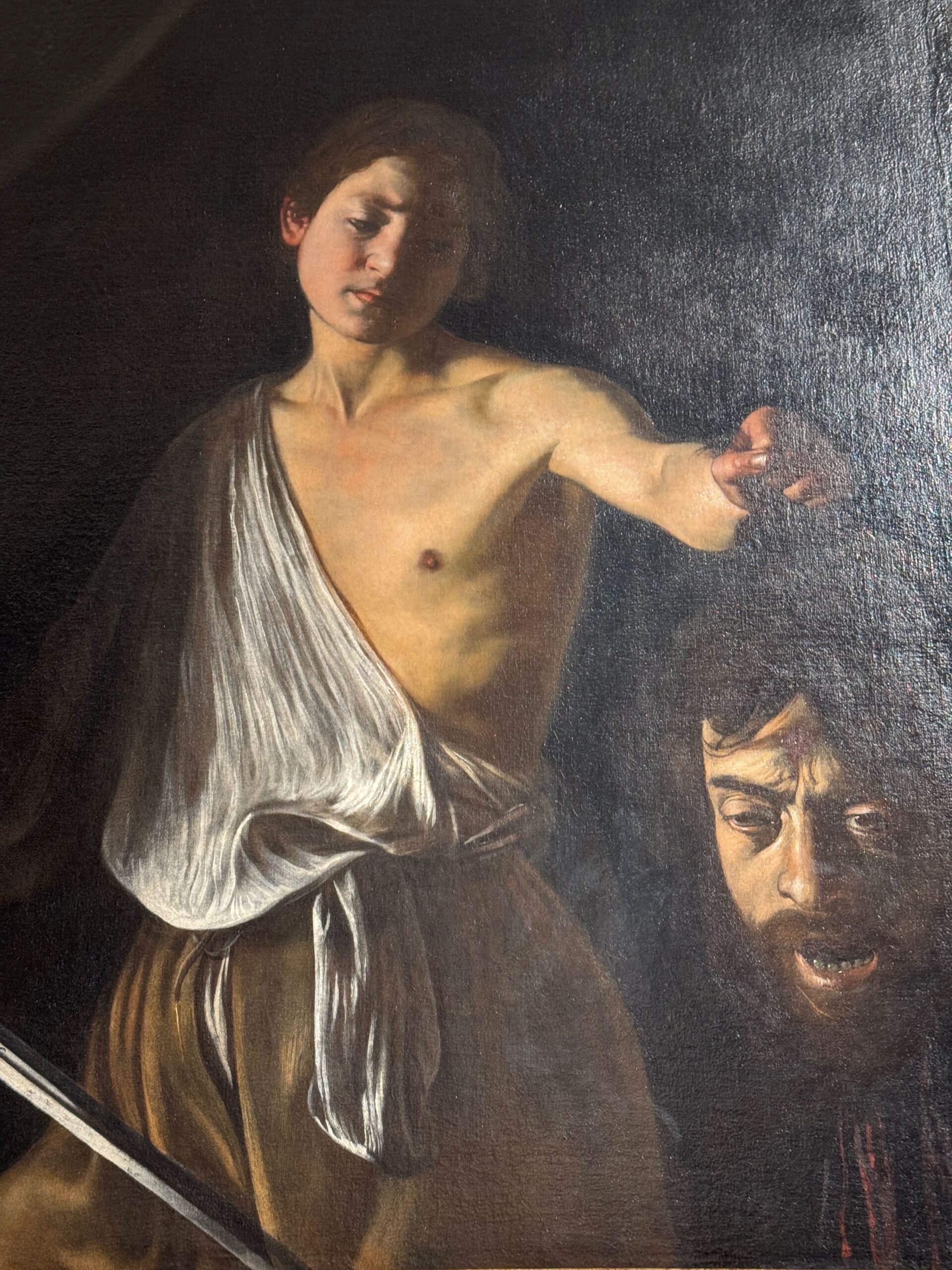
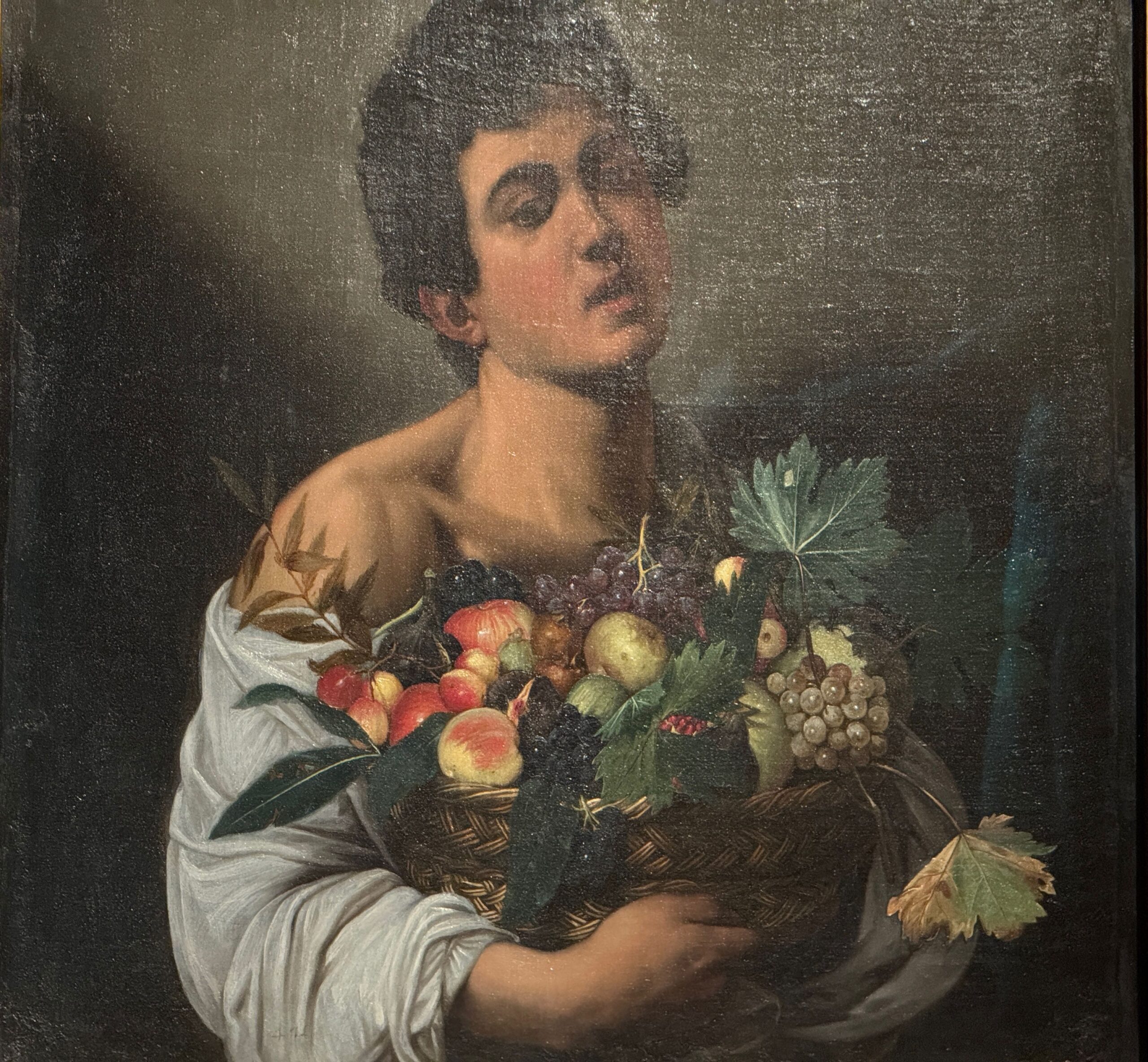
Following lunch, we decided to forgo our scheduled visit to the Vatican Museums and the Sistine Chapel, as we had explored them on two previous occasions. Instead, we opted to visit the Borghese Gallery, an art museum housed within the historic Villa Borghese in Rome. Originally built in the 17th century as a private villa for Cardinal Scipione Borghese, a passionate patron of the arts, the gallery features an extraordinary collection of masterpieces by renowned artists such as Caravaggio, Bernini, Raphael, and Titian. Among its most celebrated works are Bernini’s dynamic sculptures, including Apollo and Daphne, David, Paulina Borghese, and Rape of Proserpina; and Caravaggio’s striking paintings including David with the Head of Goliath, Boy with a Basket of Fruit, and his self-portrait. Caravaggio is one of Christabel’s favorite artists; they share a birthday. Unfortunately, we were going to miss the biggest exhibition to date of 24 of his paintings scheduled to open at the Palazzo Barberini on March 7.

A Journey Through Rome’s Historic and Spiritual Landmarks – February 27, 2025
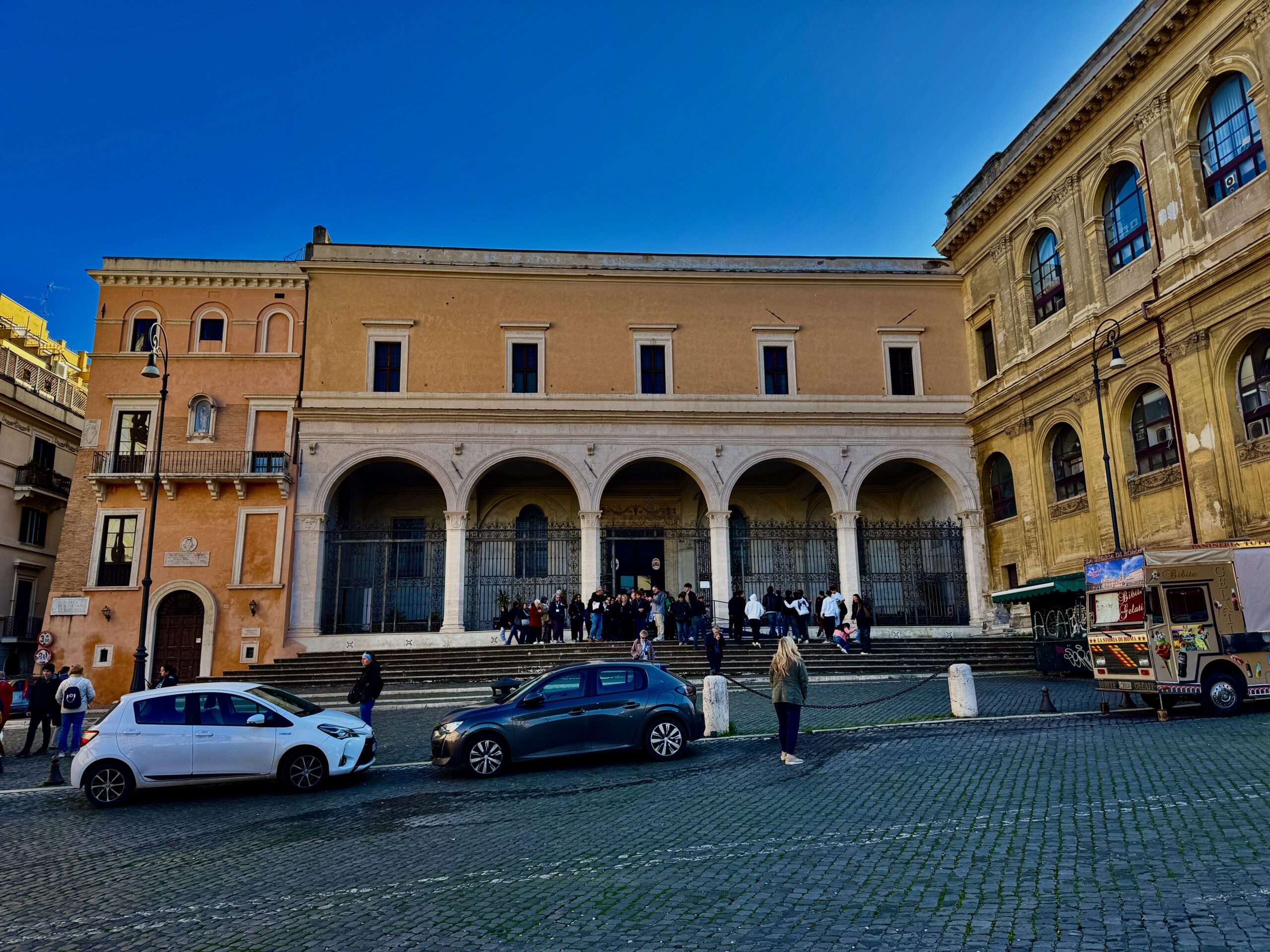
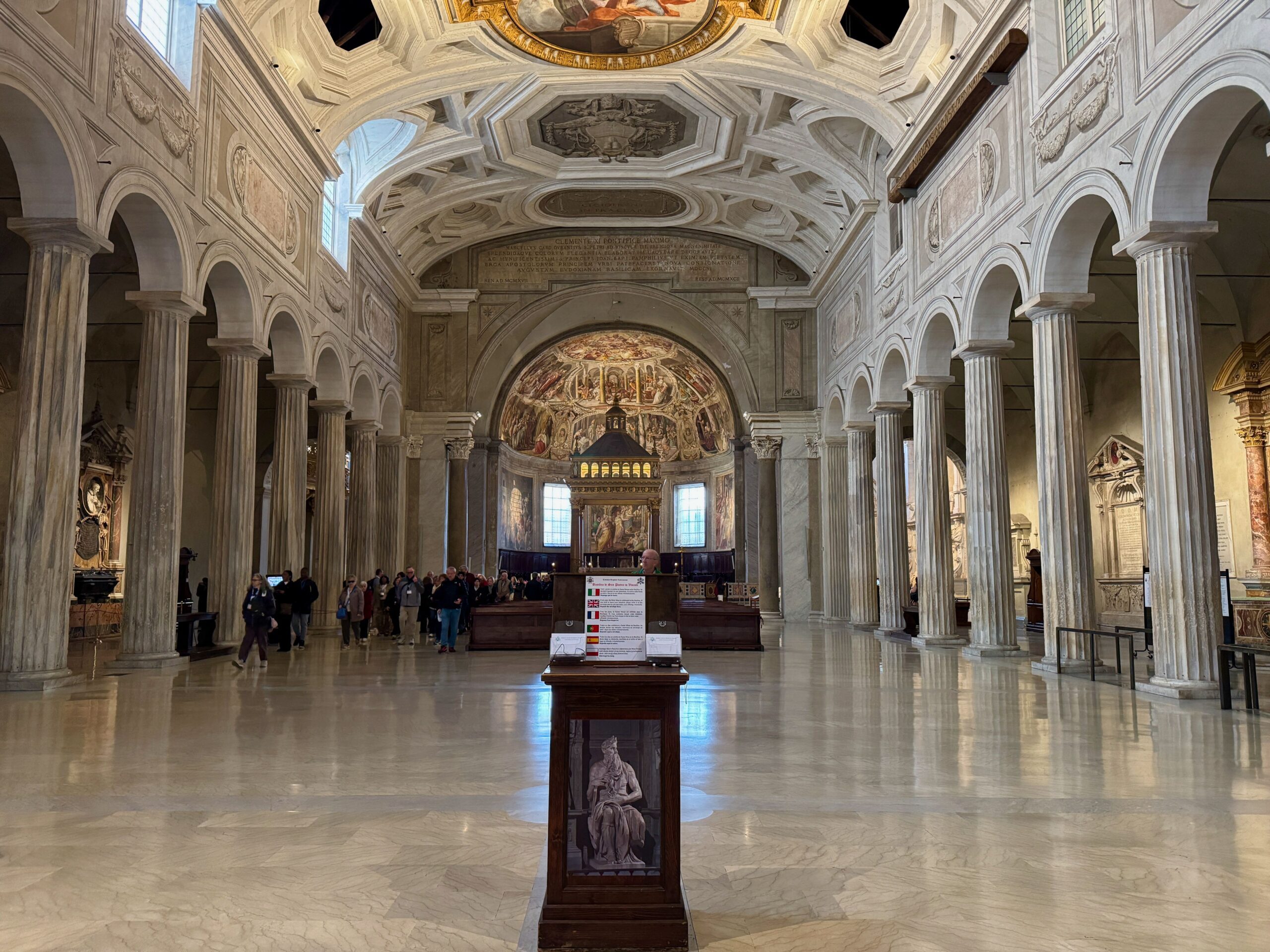
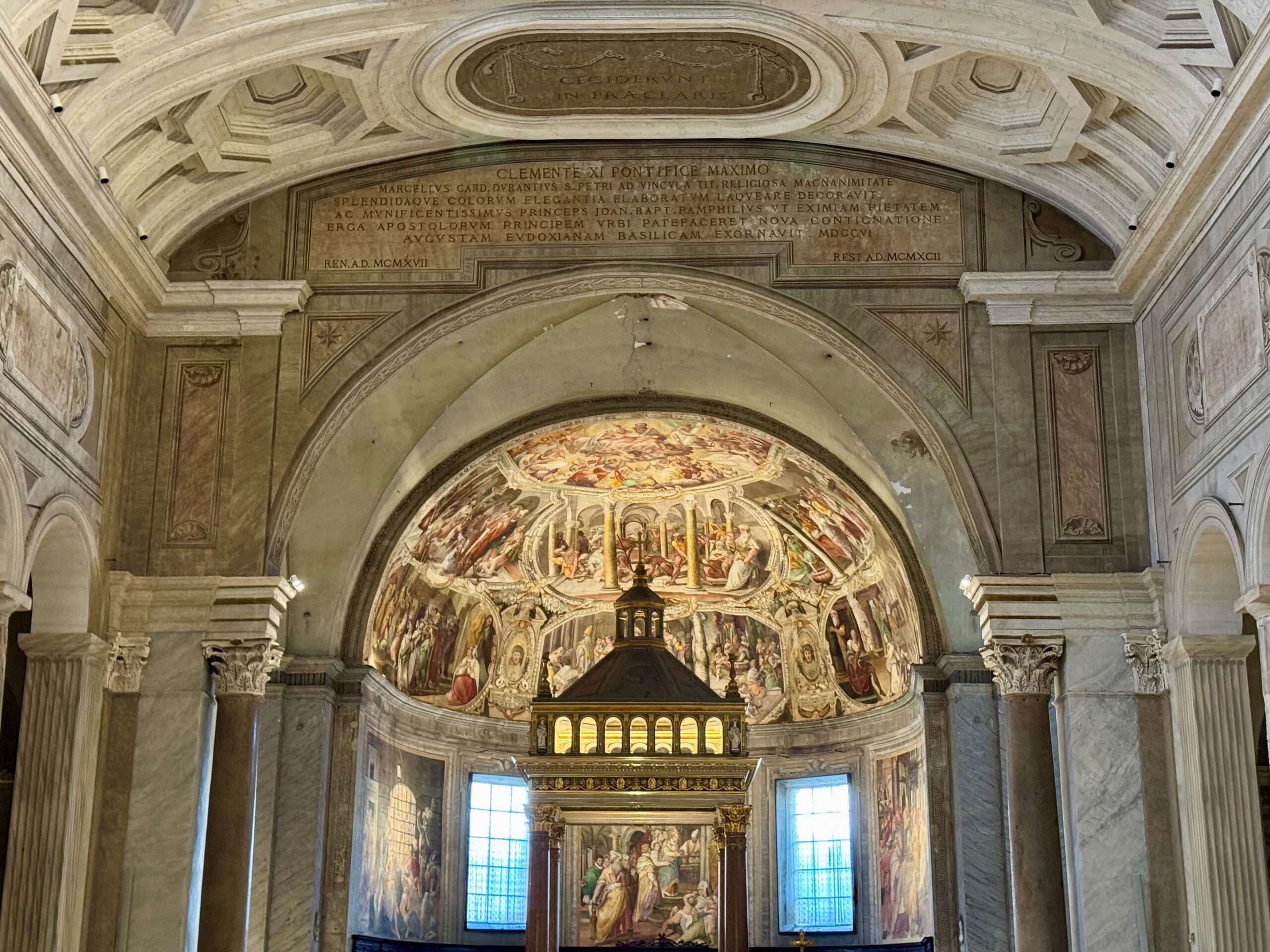
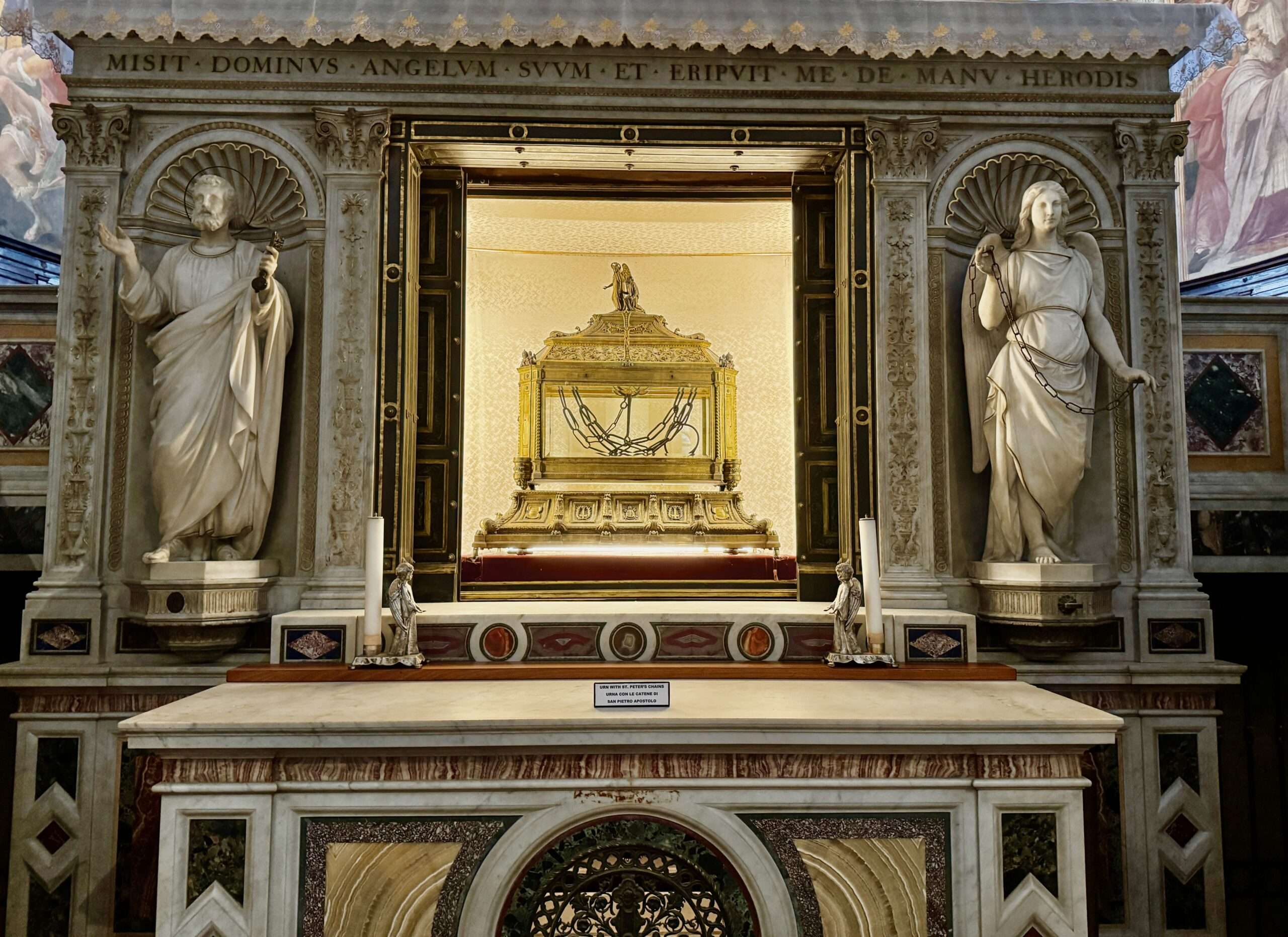
After an early breakfast, we drove to the Basilica of St. Peter in Chains (San Pietro in Vincoli) to celebrate Mass, with Msgr. Gervasio and Rev. Felicien as the main celebrants.
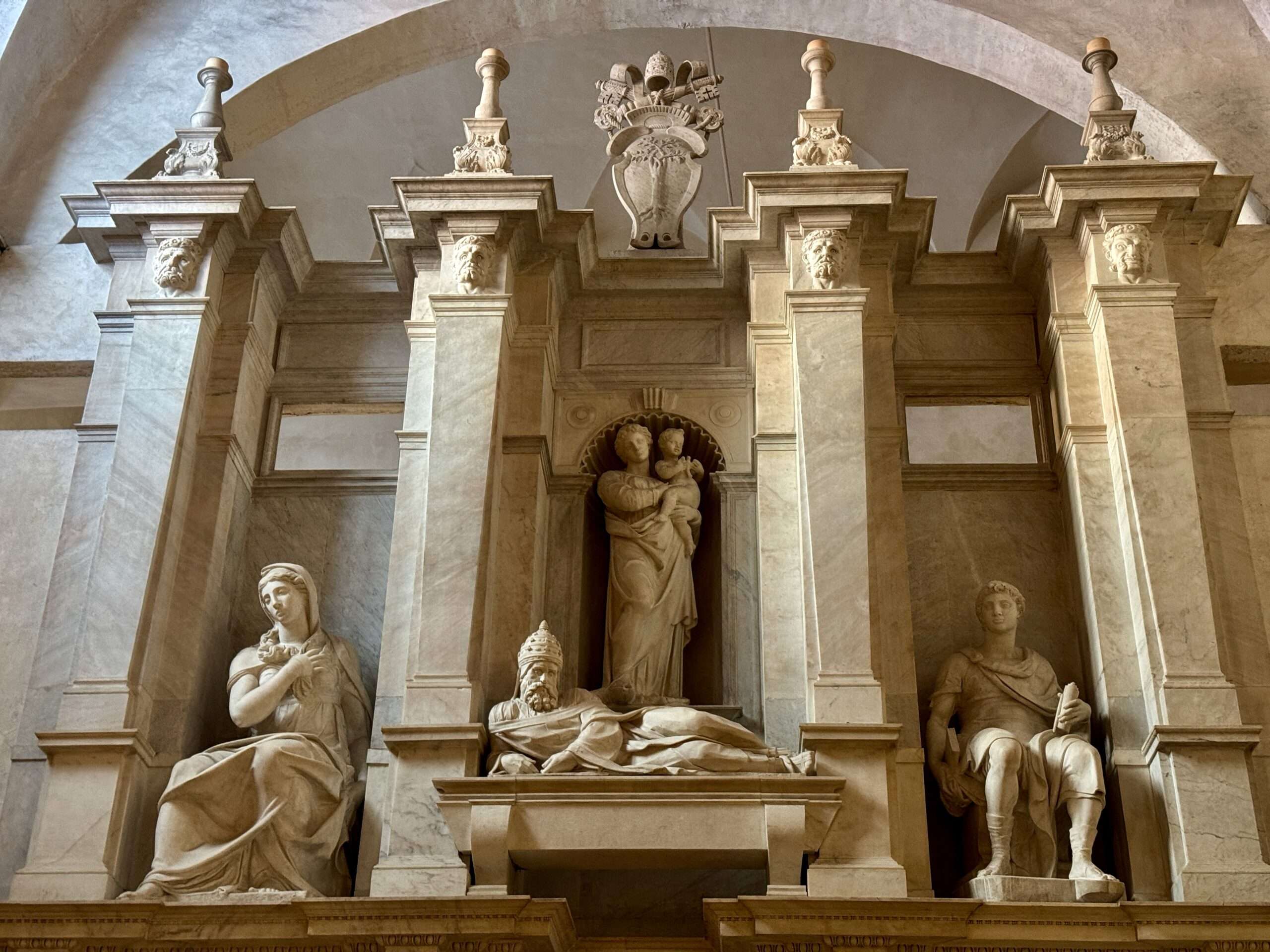
This historic church in Rome is renowned for housing the chains that, according to tradition, bound St. Peter during his imprisonment in Jerusalem and are now in a reliquary under the main altar. Built in the 5th century, the basilica is also famous for Michelangelo’s statue of Moses (with horns jutting out of his head, representing beams of light) , a masterpiece that forms part of the unfinished tomb of Pope Julius II. While the basilica’s exterior is relatively simple, the interior boasts rich decorations and artistic treasures.

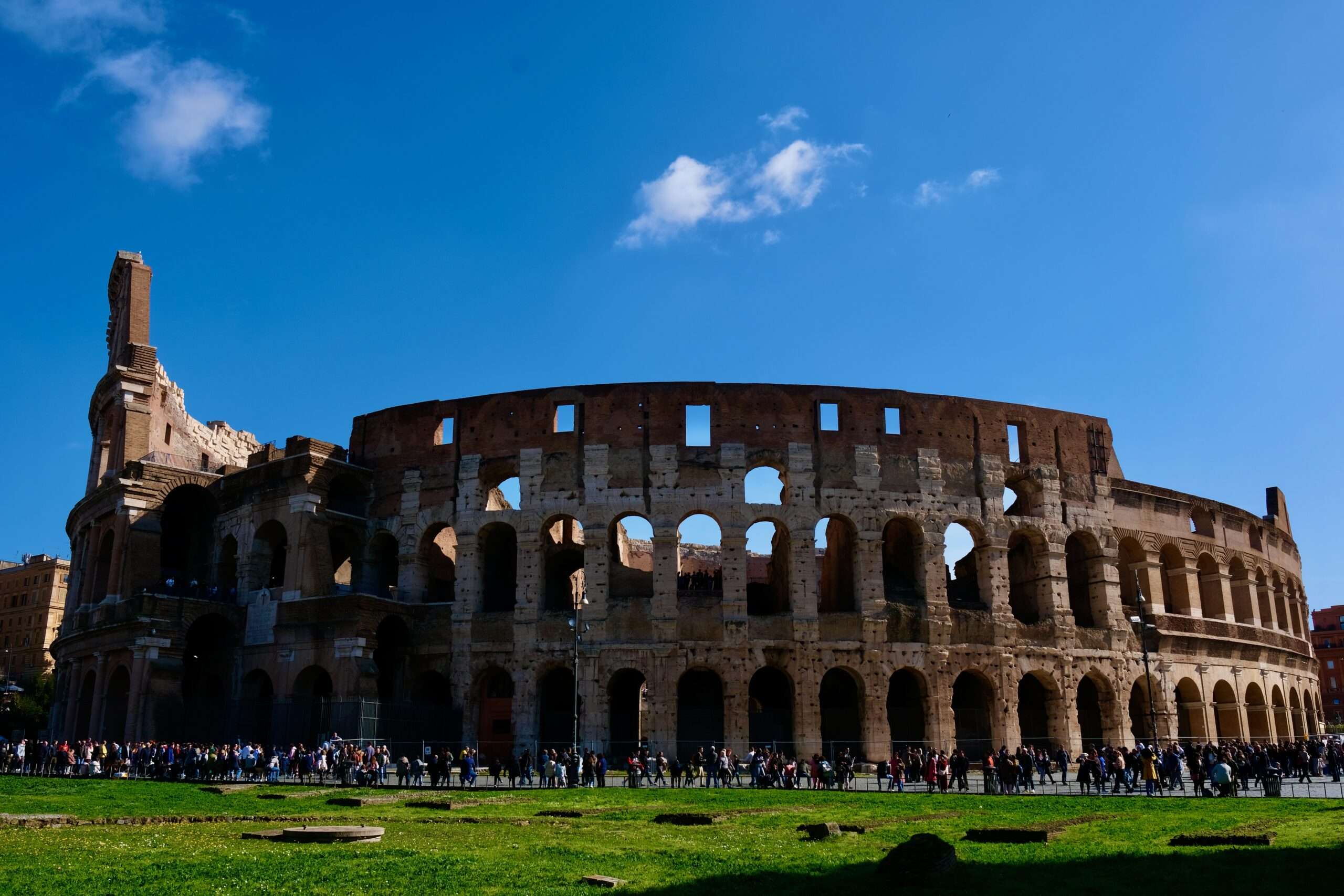
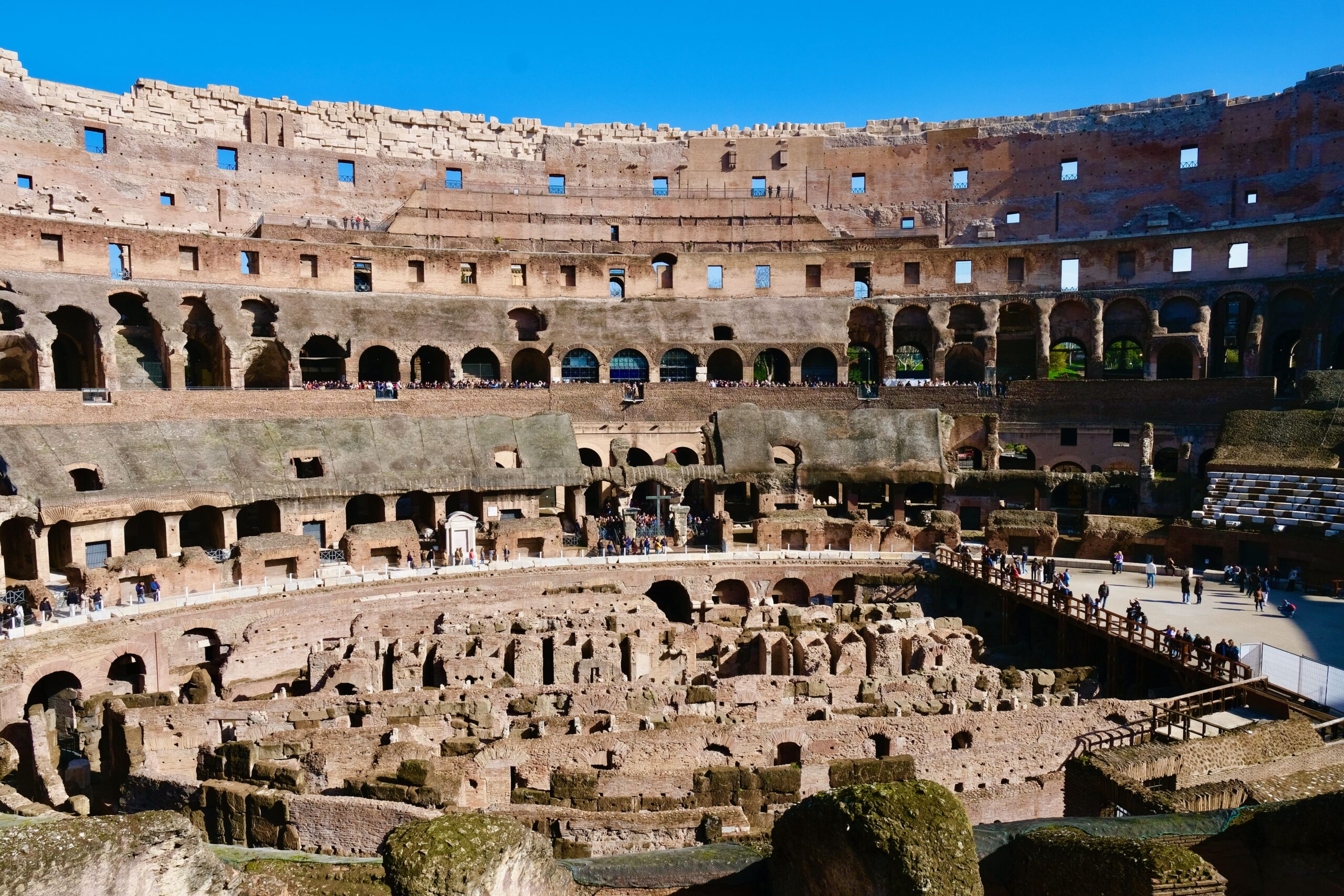
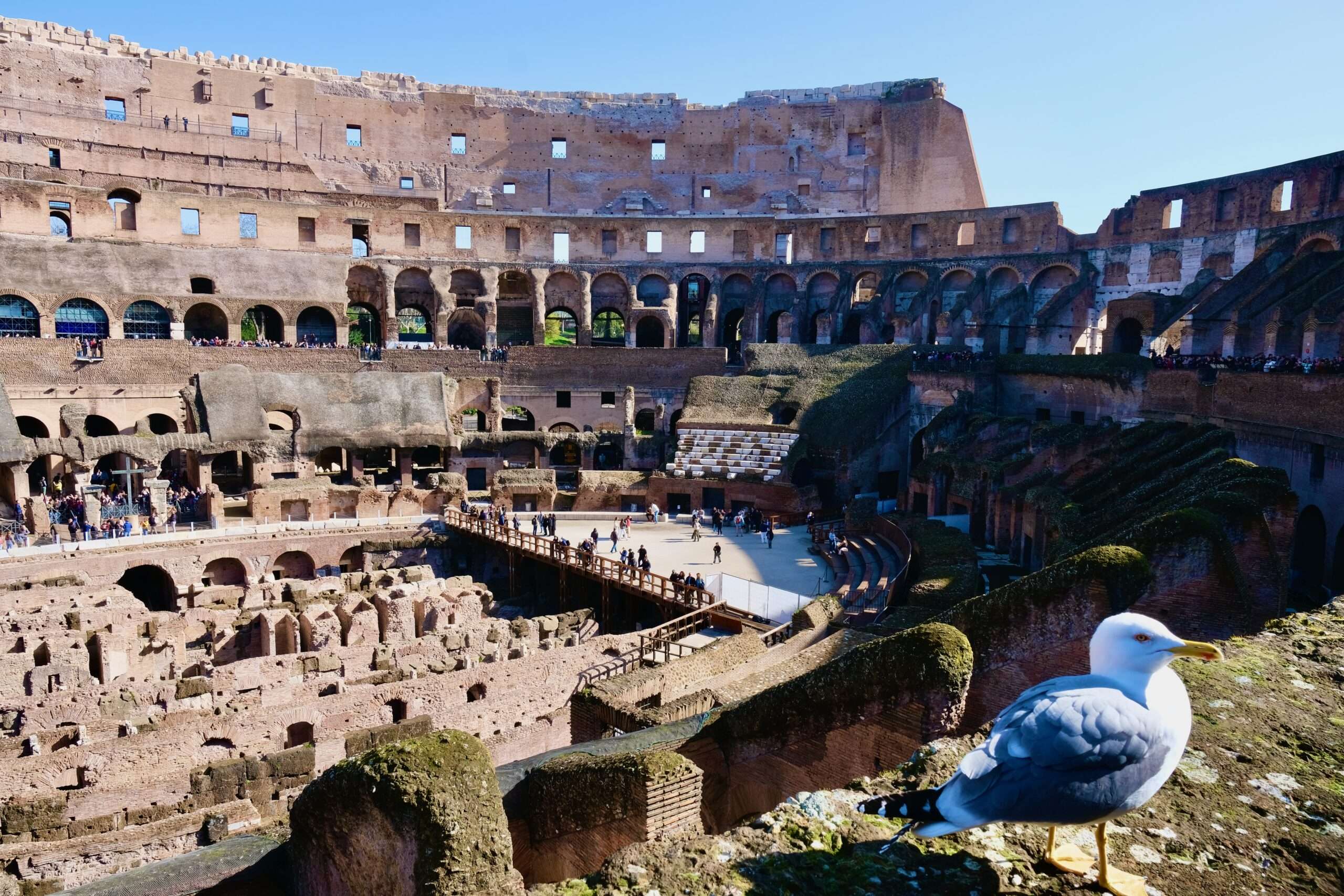
Following Mass, we began our Ancient Rome tour, with our first stop at the Colosseum, one of the seven wonders of the world. Built in the 1st century AD, this iconic amphitheater once hosted spectacular and often brutal events, including gladiator battles, wild animal hunts, and public executions, serving as entertainment for Roman citizens. Today, it is the most visited landmark in Italy.
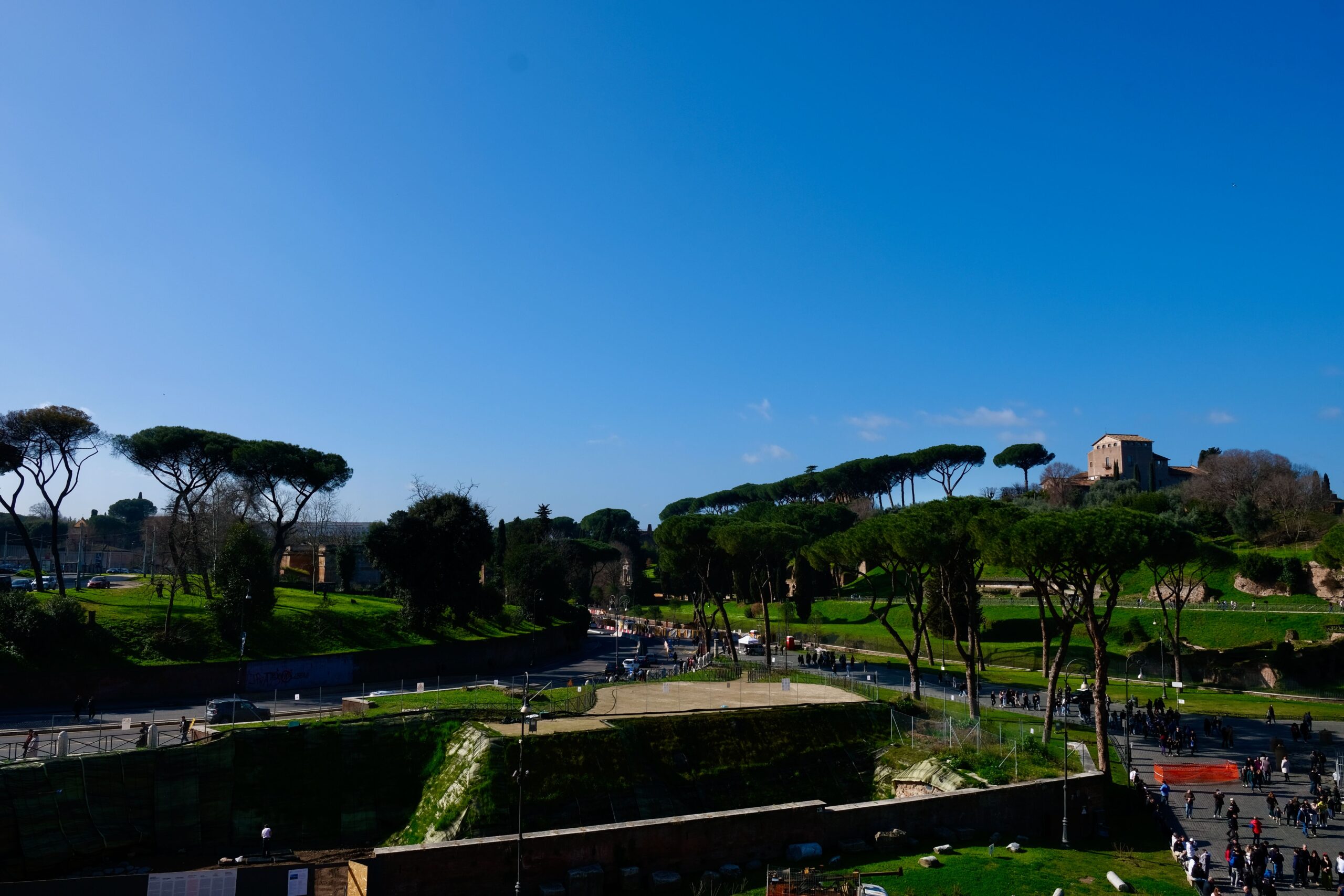
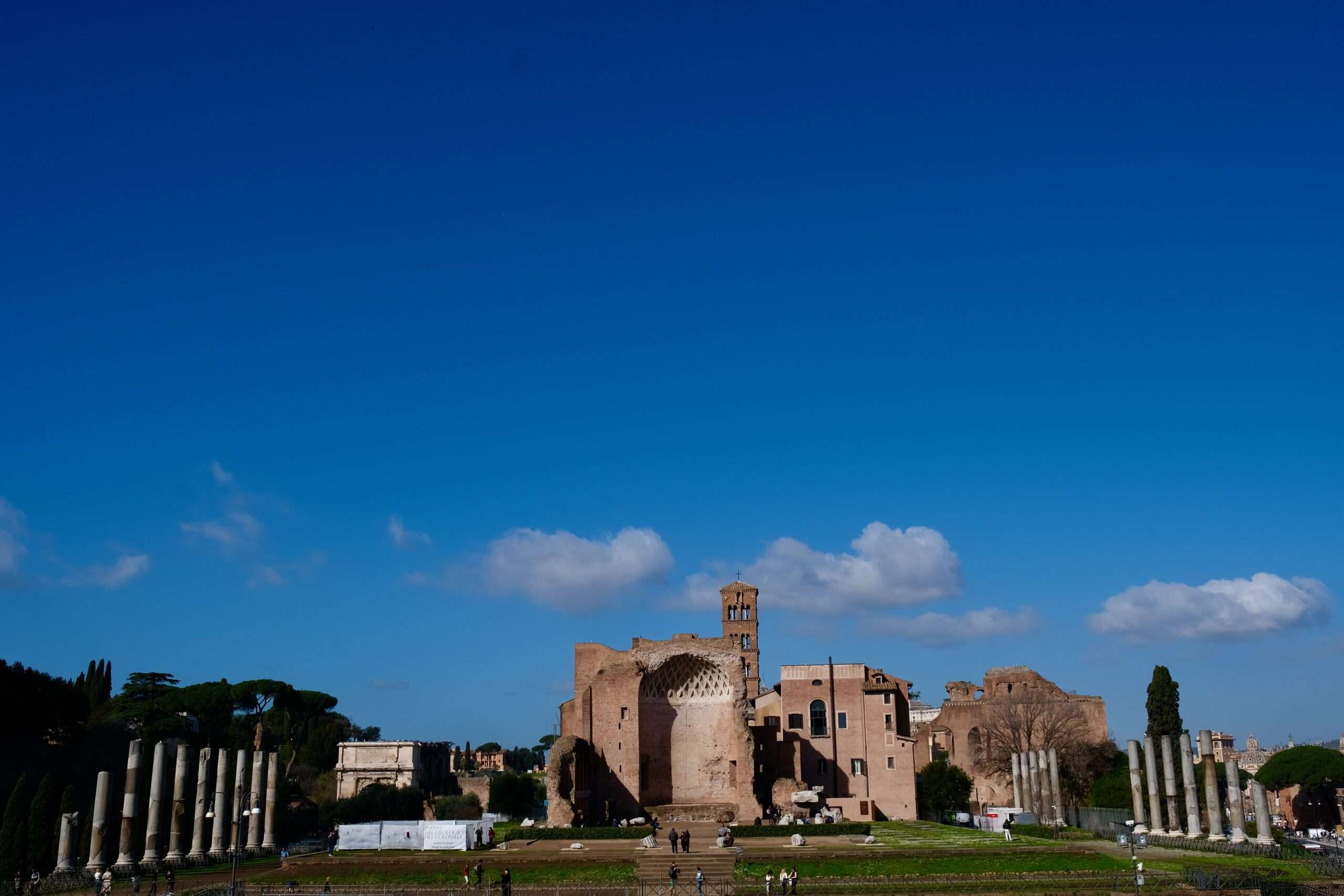
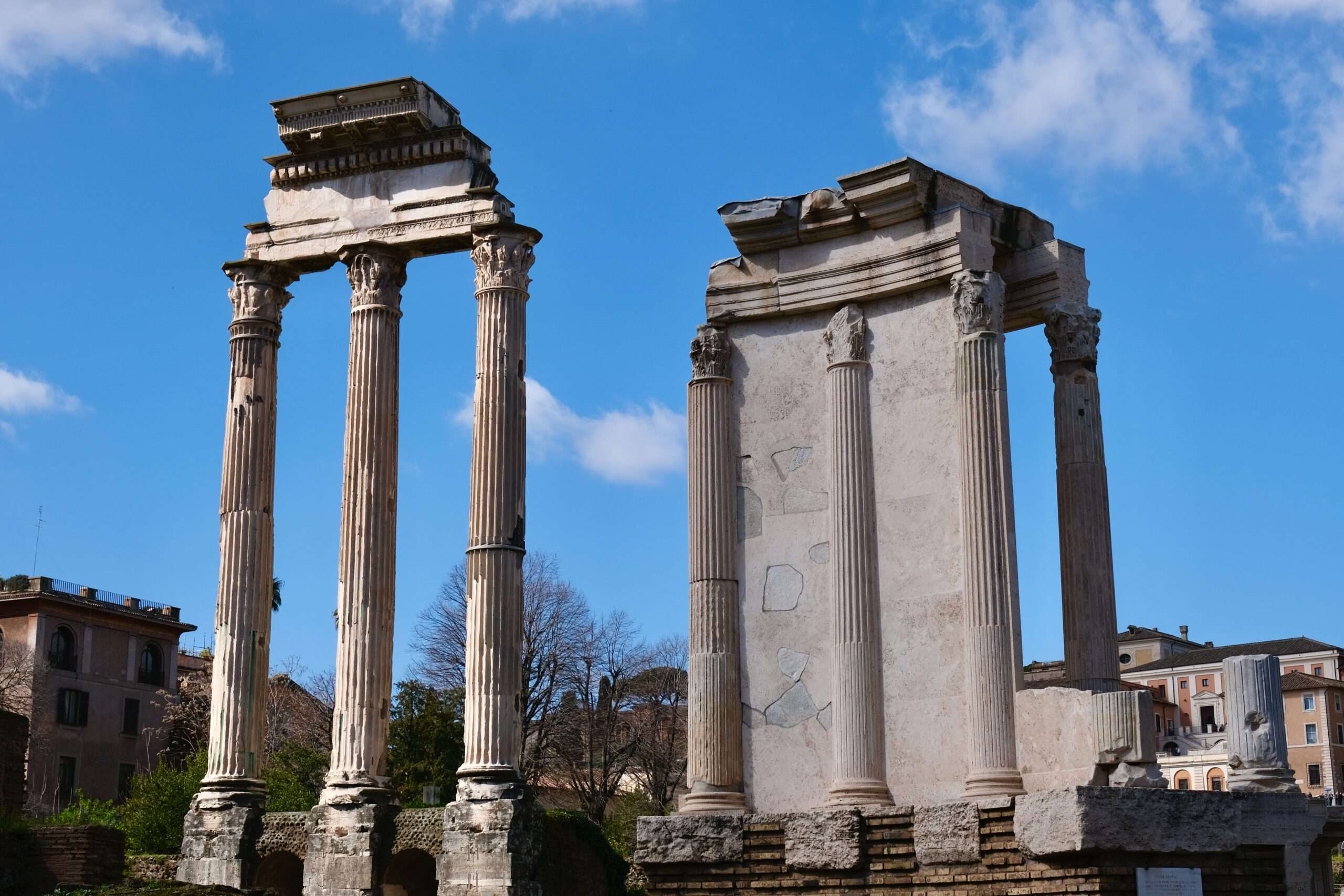
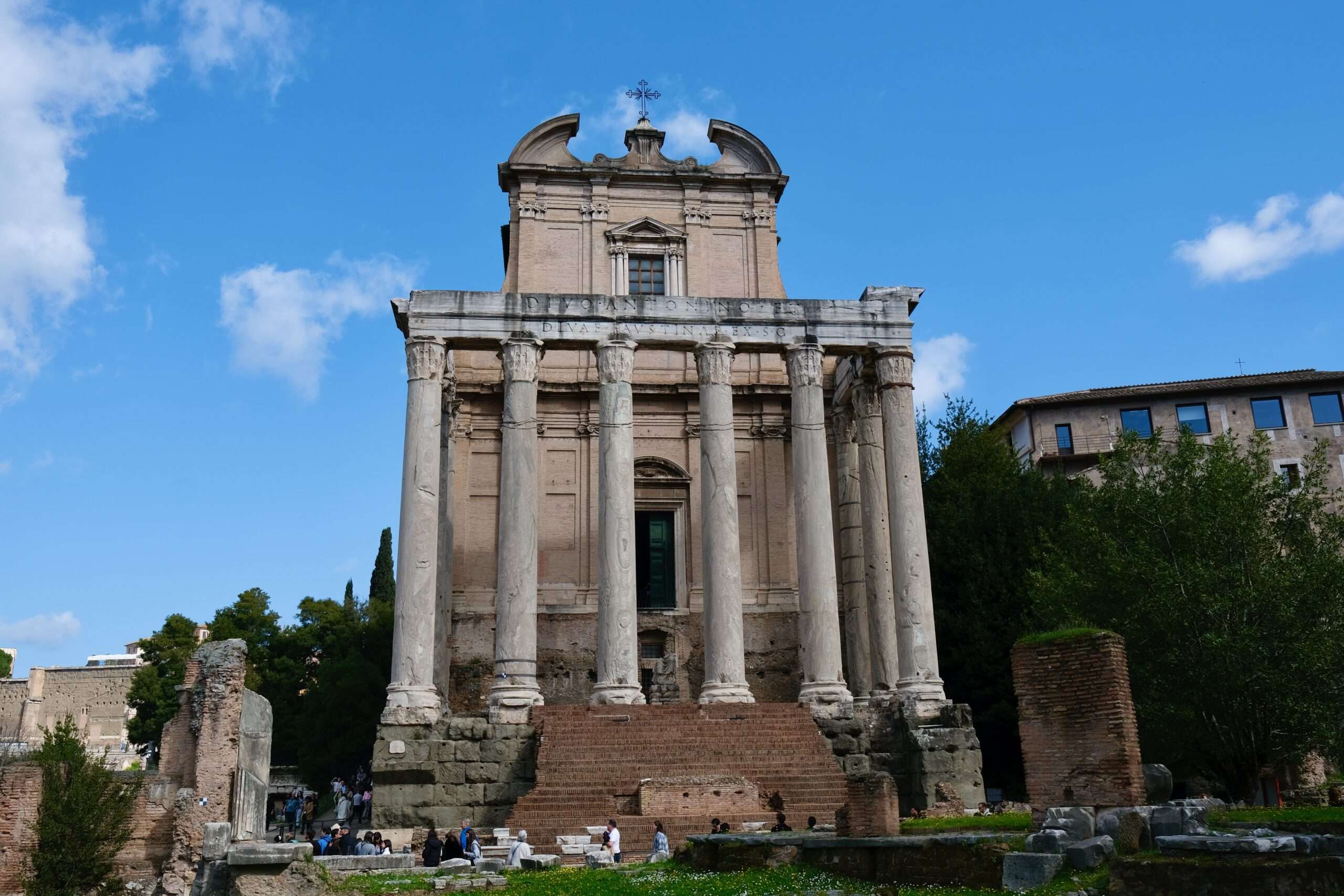
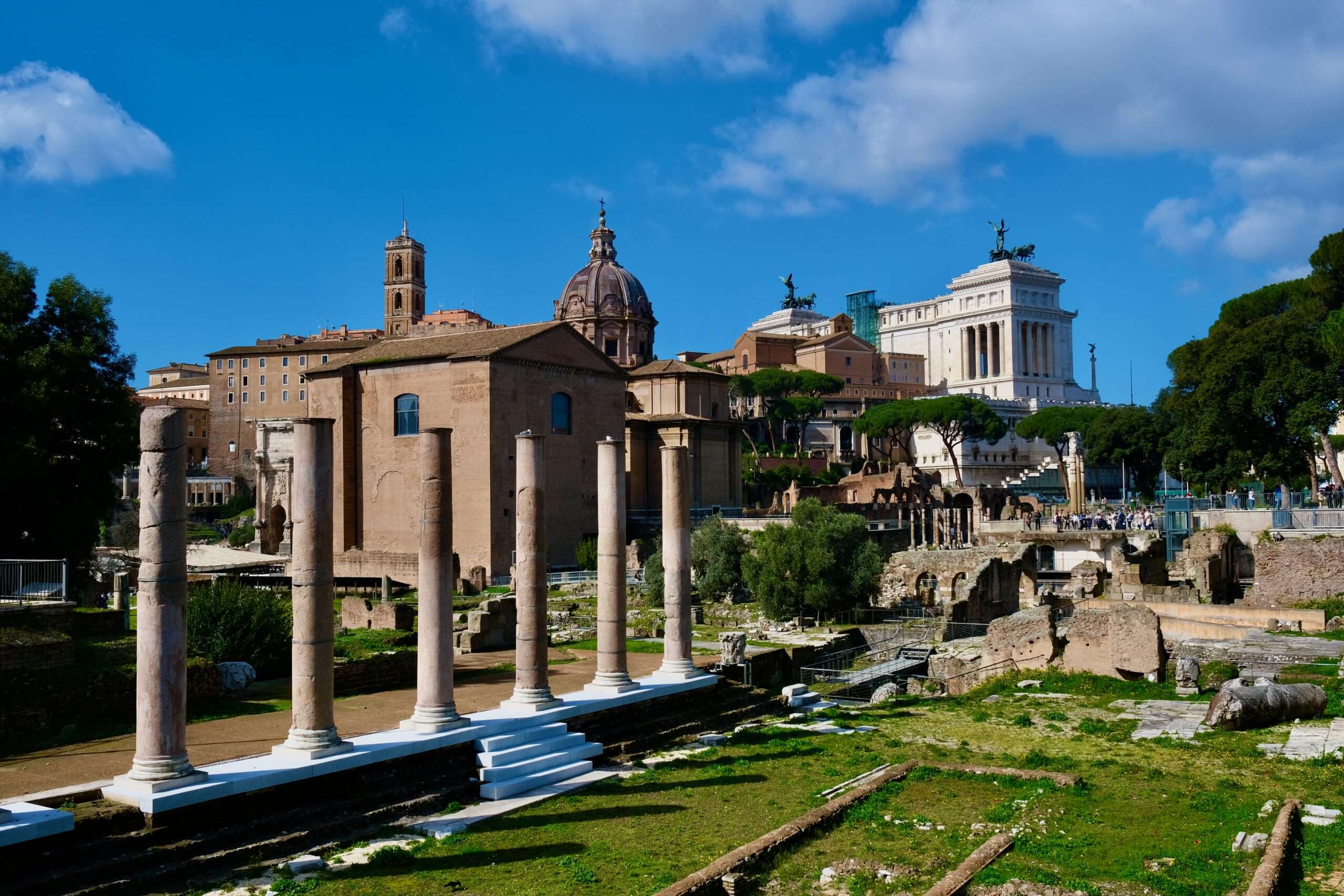
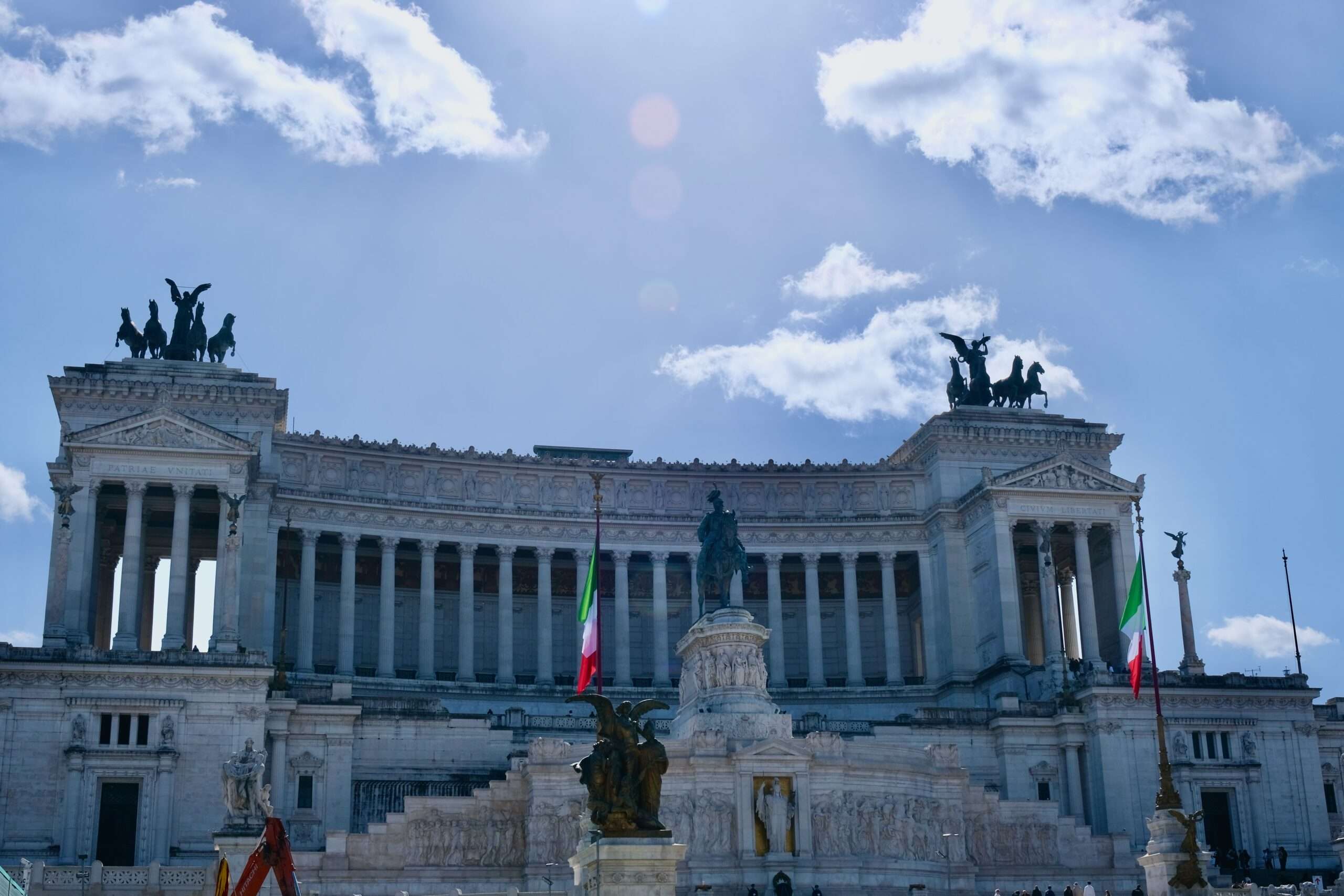
Next, we walked by Constantine’s Arch, and after ascending the Palatine Hill, we explored the Roman Forum, the heart of ancient Rome’s political, religious, and social life; the legendary birthplace of Rome; and home to the ruins of temples and imperial palaces. Our tour concluded at the Monument to Victor Emmanuel II, an imposing neoclassical structure honoring Italy’s first king and symbolizing the country’s unification.
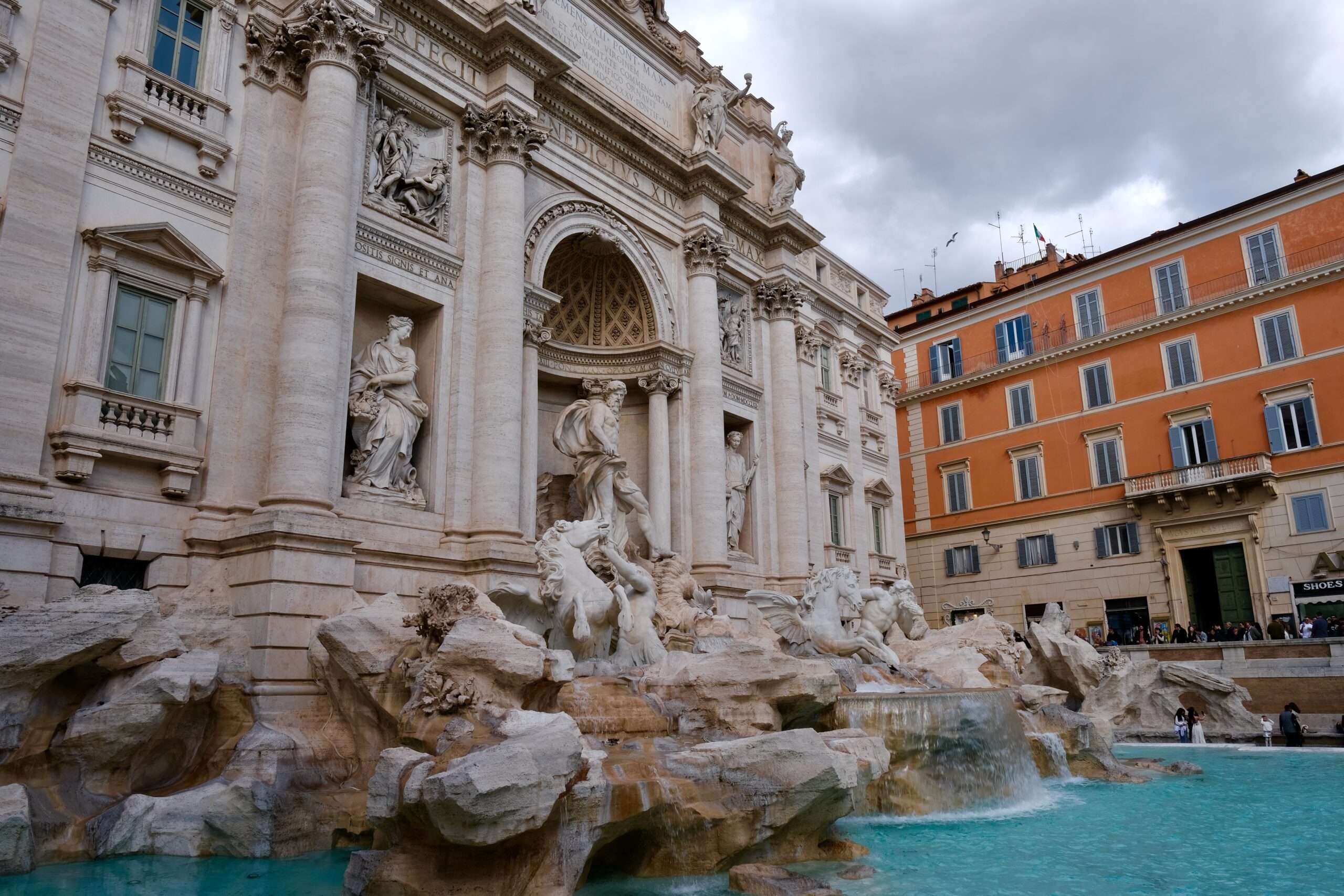
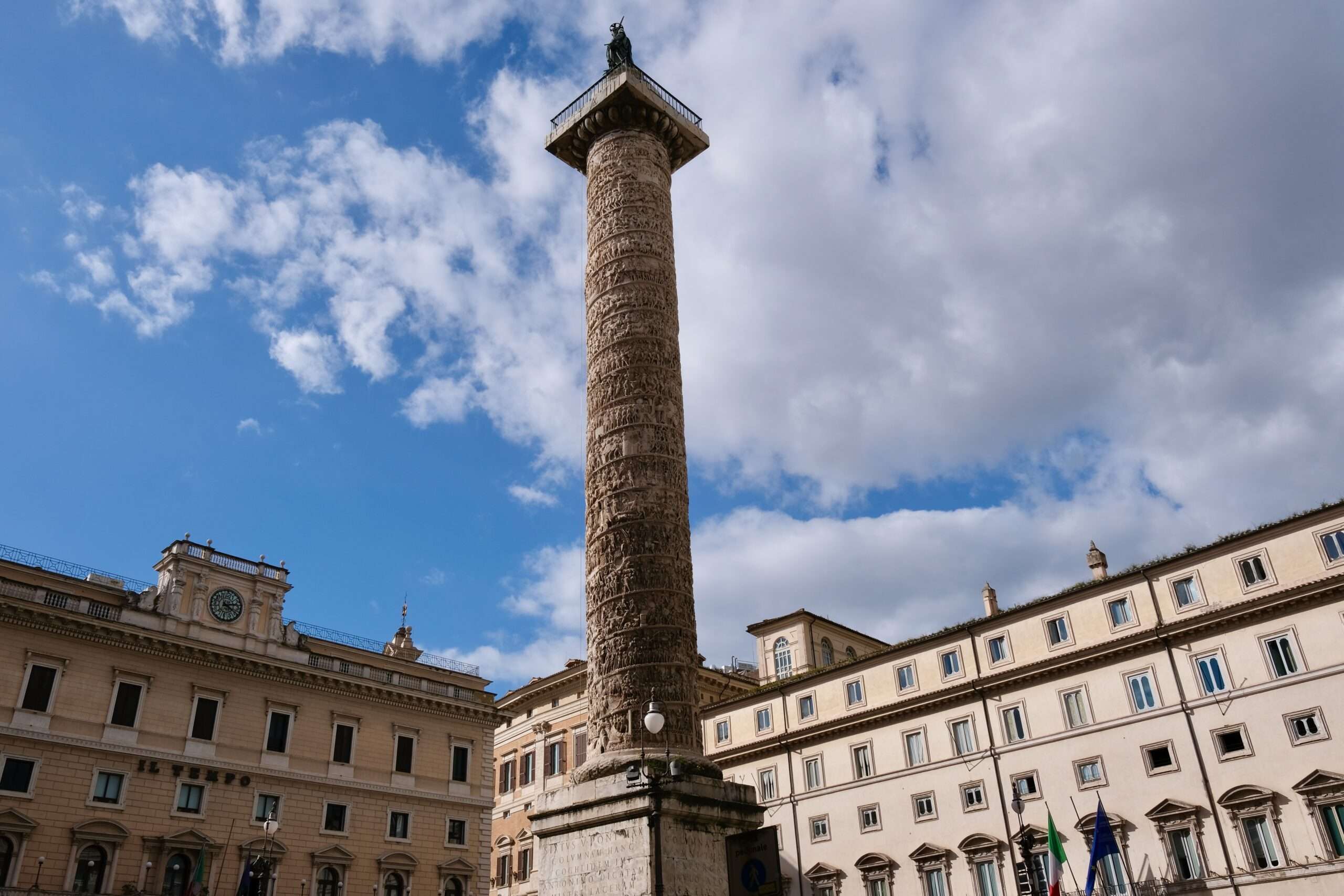
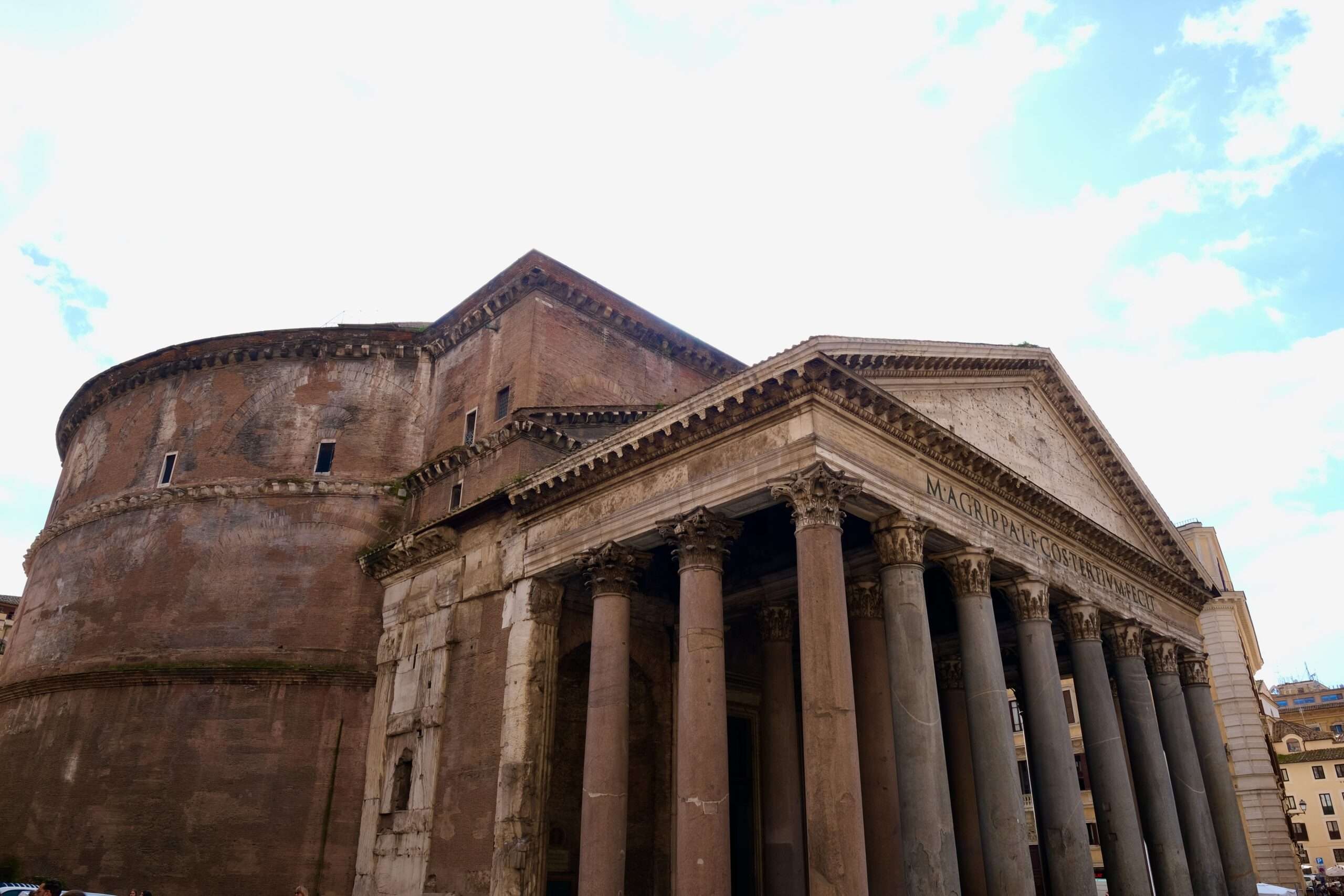
Following lunch, we embarked on a guided walking tour of Rome, beginning at the Trevi Fountain and then onto Piazza Colonna named after the towering Column of Marcus Aurelius. It is surrounded by elegant buildings, including the Palazzo Chigi, the official residence of the Italian Prime Minister. We then made our way to the Pantheon, one of the best-preserved monuments of ancient Rome, before visiting Santa Maria Sopra Minerva.
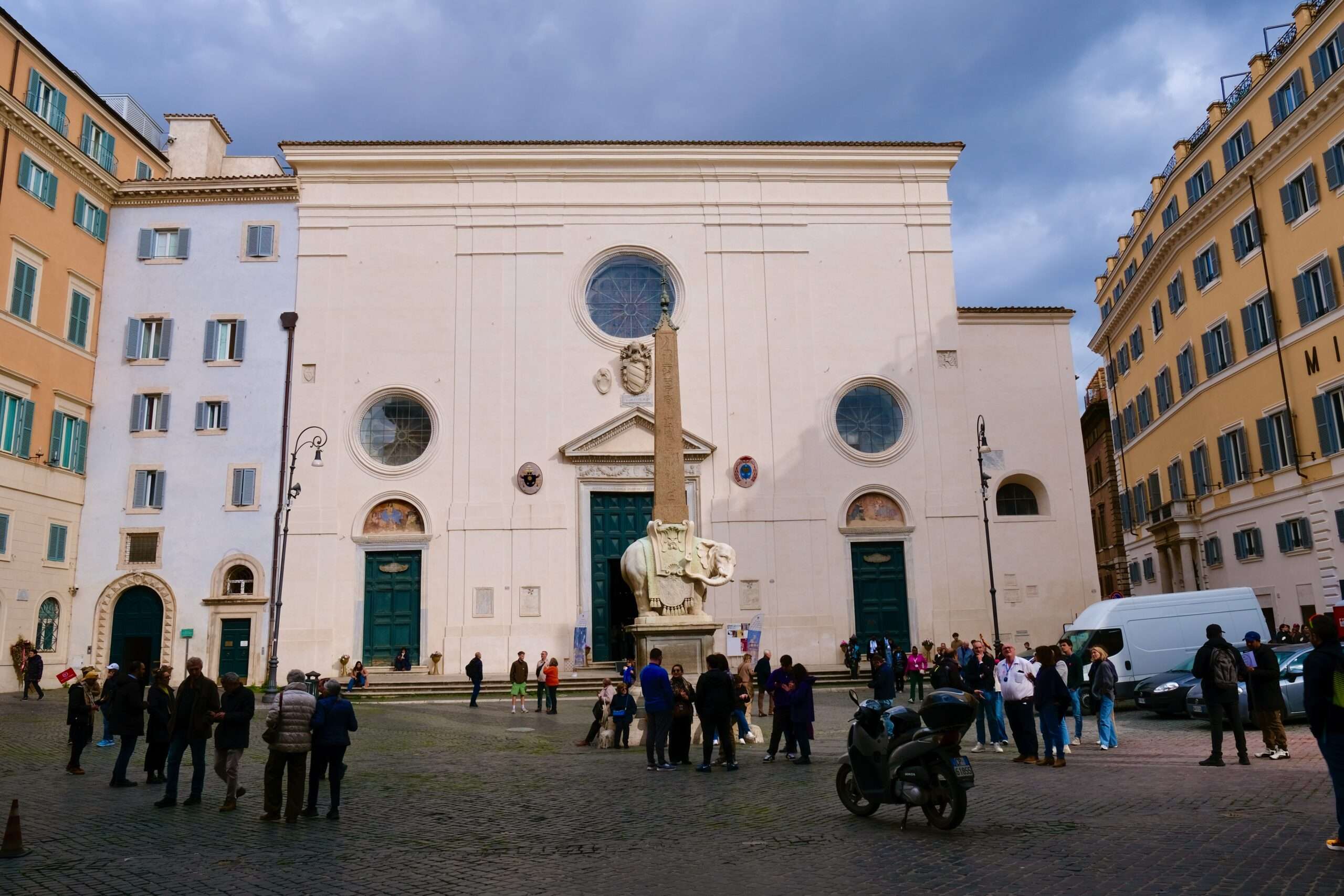
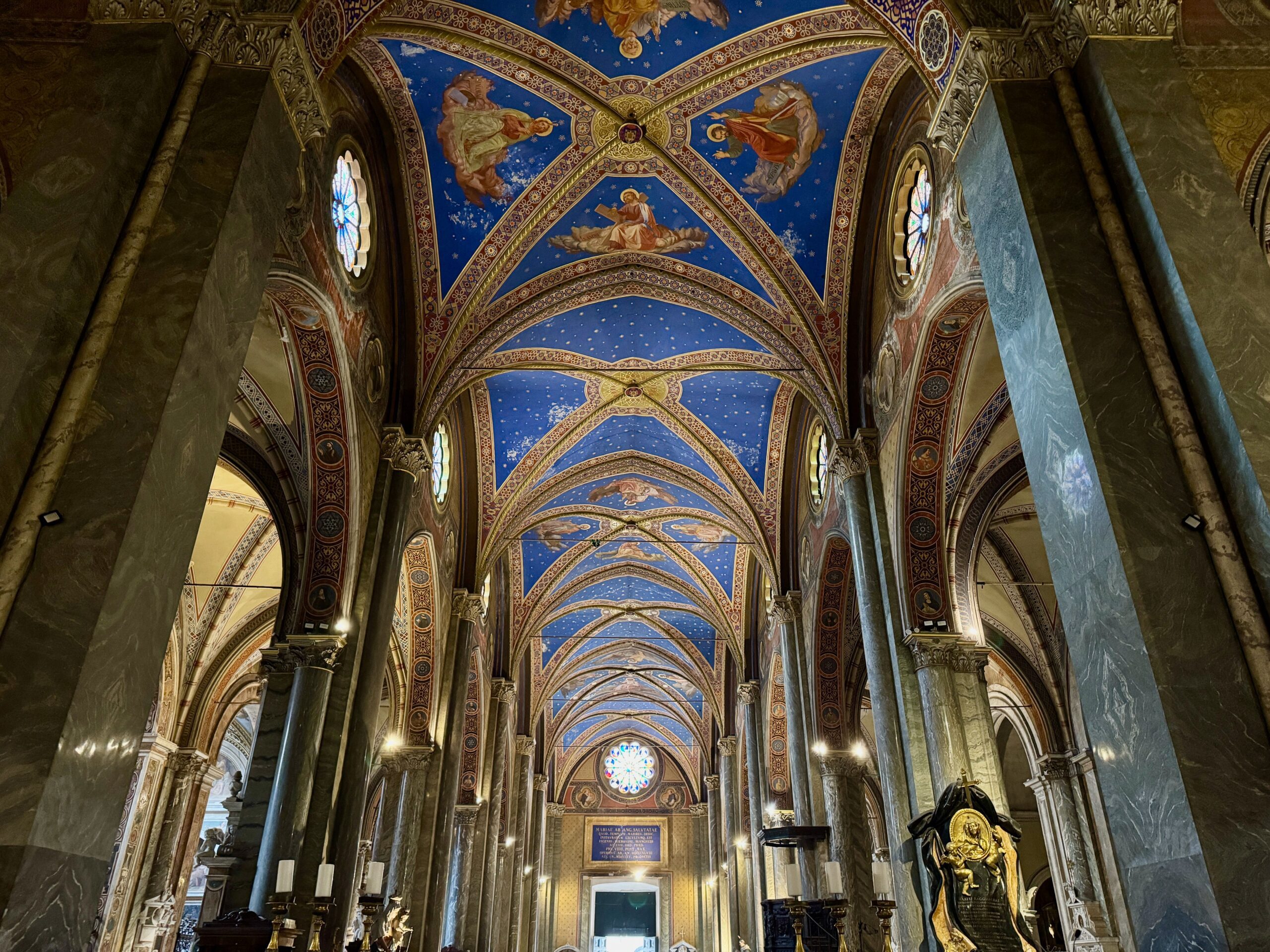
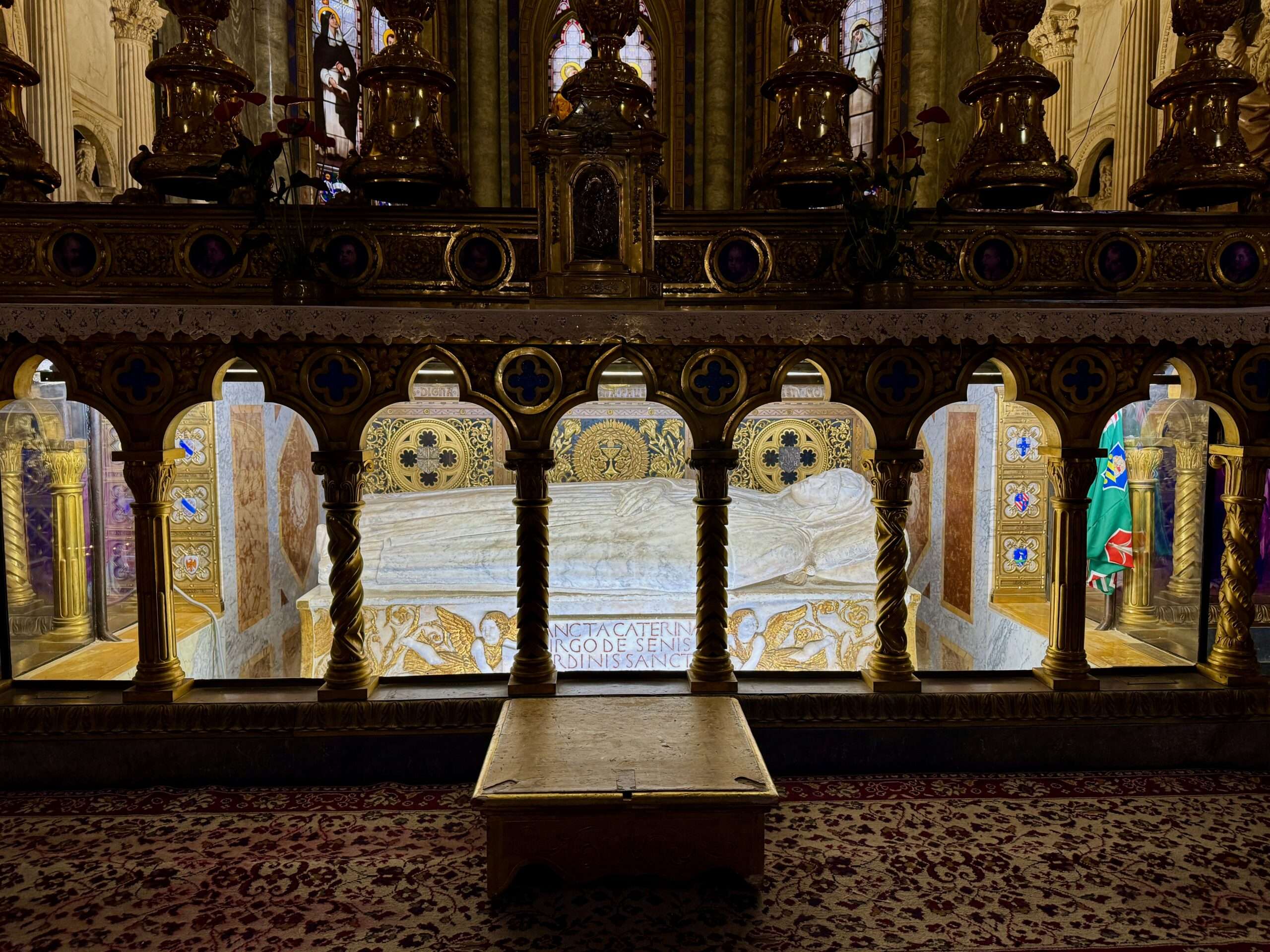
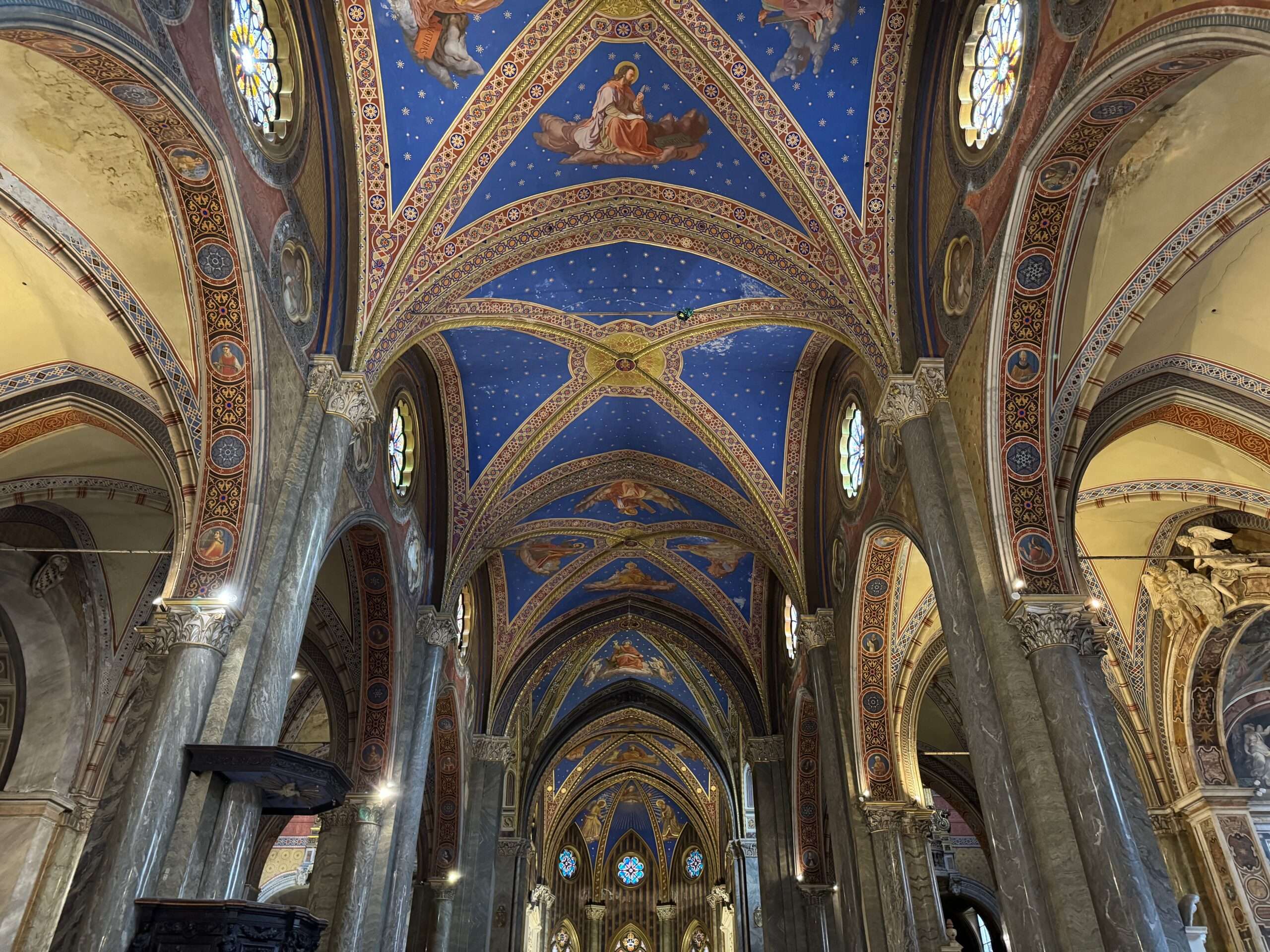
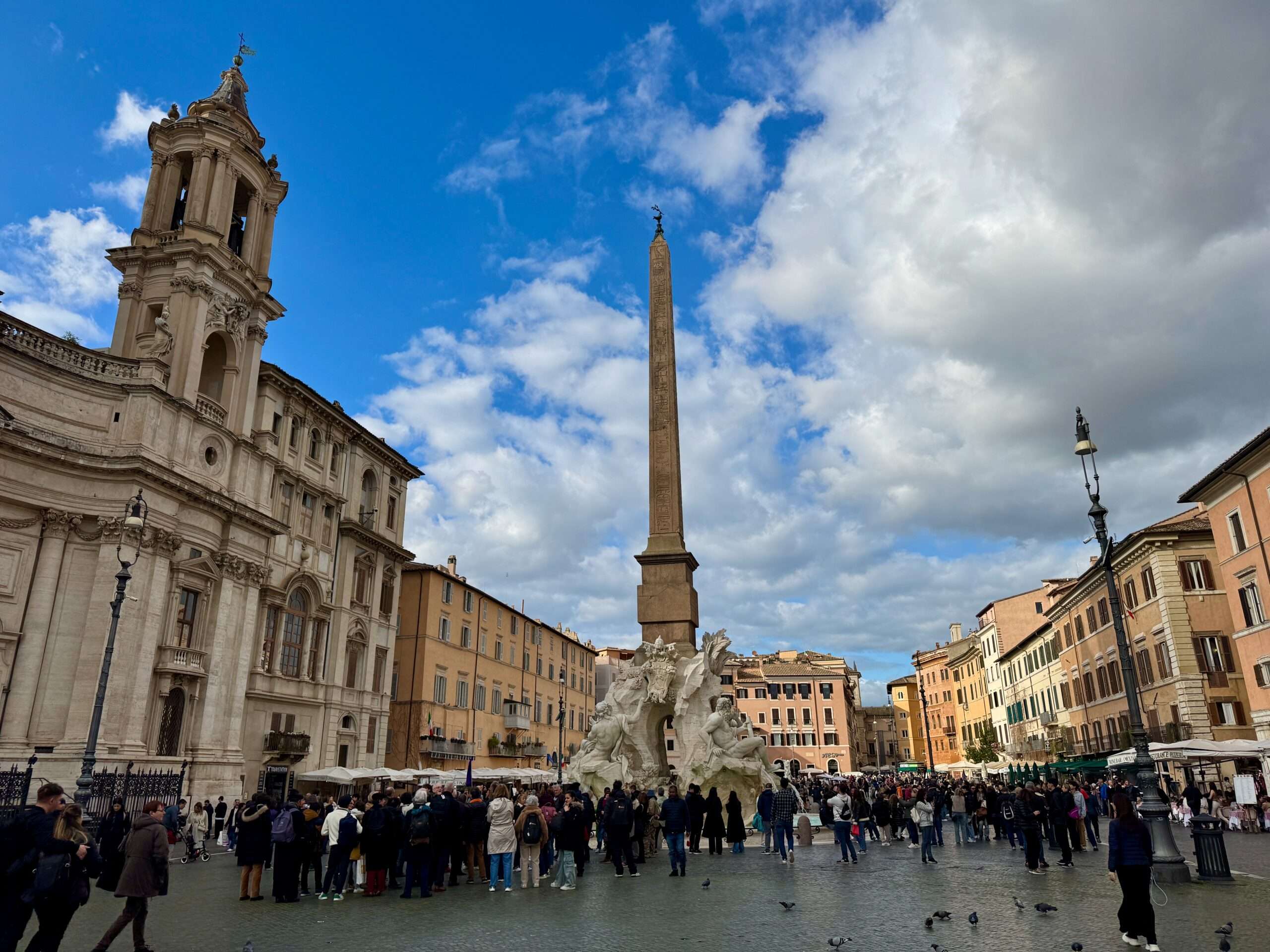
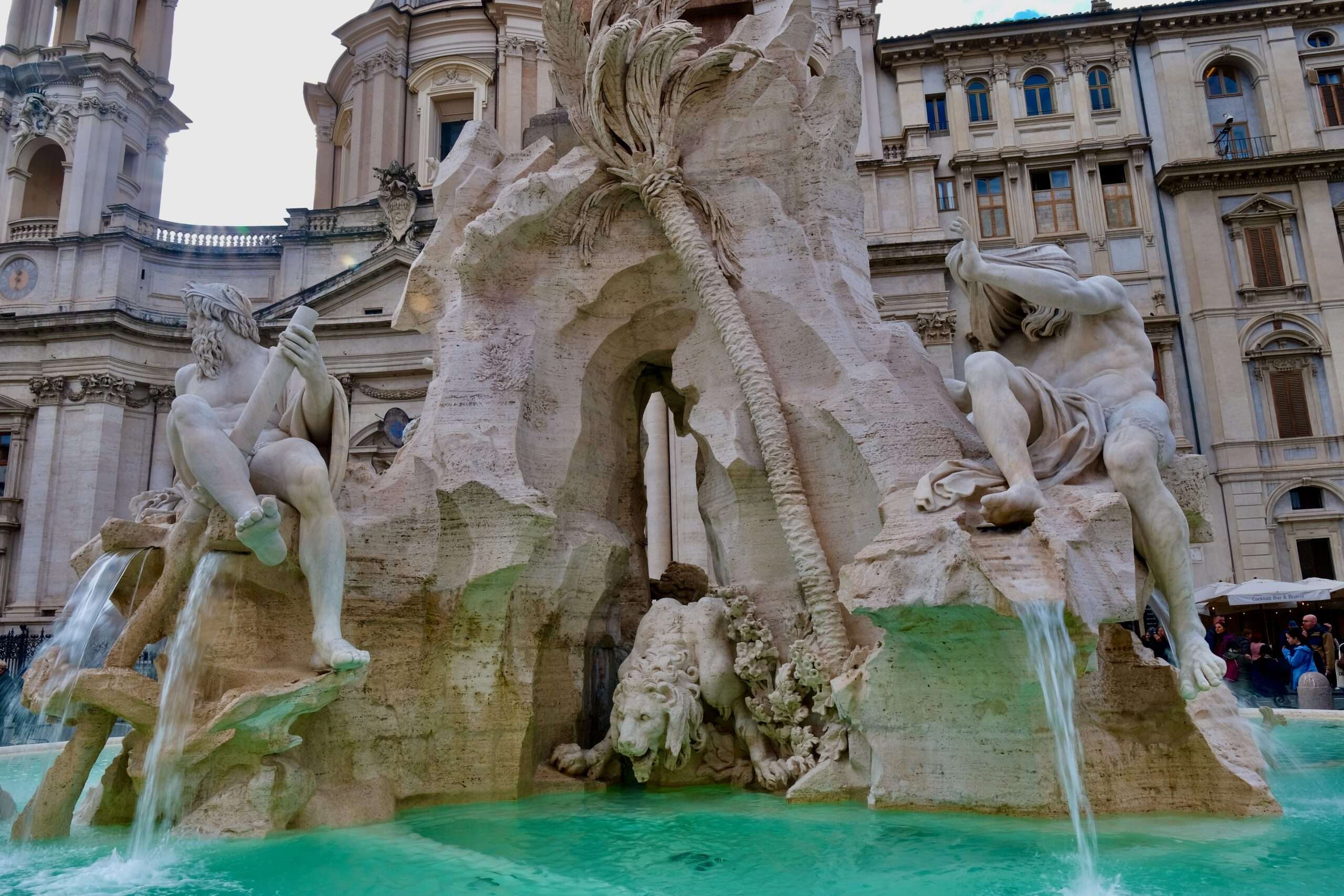
This historic basilica, located near the Pantheon, is unique for its rare Gothic interior, featuring soaring vaulted ceilings and exquisite frescoes. Built over an ancient temple dedicated to Minerva, the church is renowned for housing Michelangelo’s statue of Christ the Redeemer and the tomb of St. Catherine of Siena, one of Italy’s most revered saints. While its exterior is relatively simple, the famous Elephant and Obelisk sculpture by Bernini stands outside as a notable landmark. We concluded our walking tour at Piazza Navona, a lively square known for its stunning fountains.
A Journey Through Rome’s Sacred Basilicas – February 28, 2025
Early in the morning, we walked to St. Peter’s Basilica to attend mass in a chapel just a few feet from St. Peter’s tomb. This was a great honor as usually this chapel is reserved for high-ranking Church officials. As on previous days, Msgr. Gervasio and Rev. Felicien led the celebration. After mass, we embarked on a guided tour of the Basilica, exploring its rich history, fabulous art, and magnificent architecture.
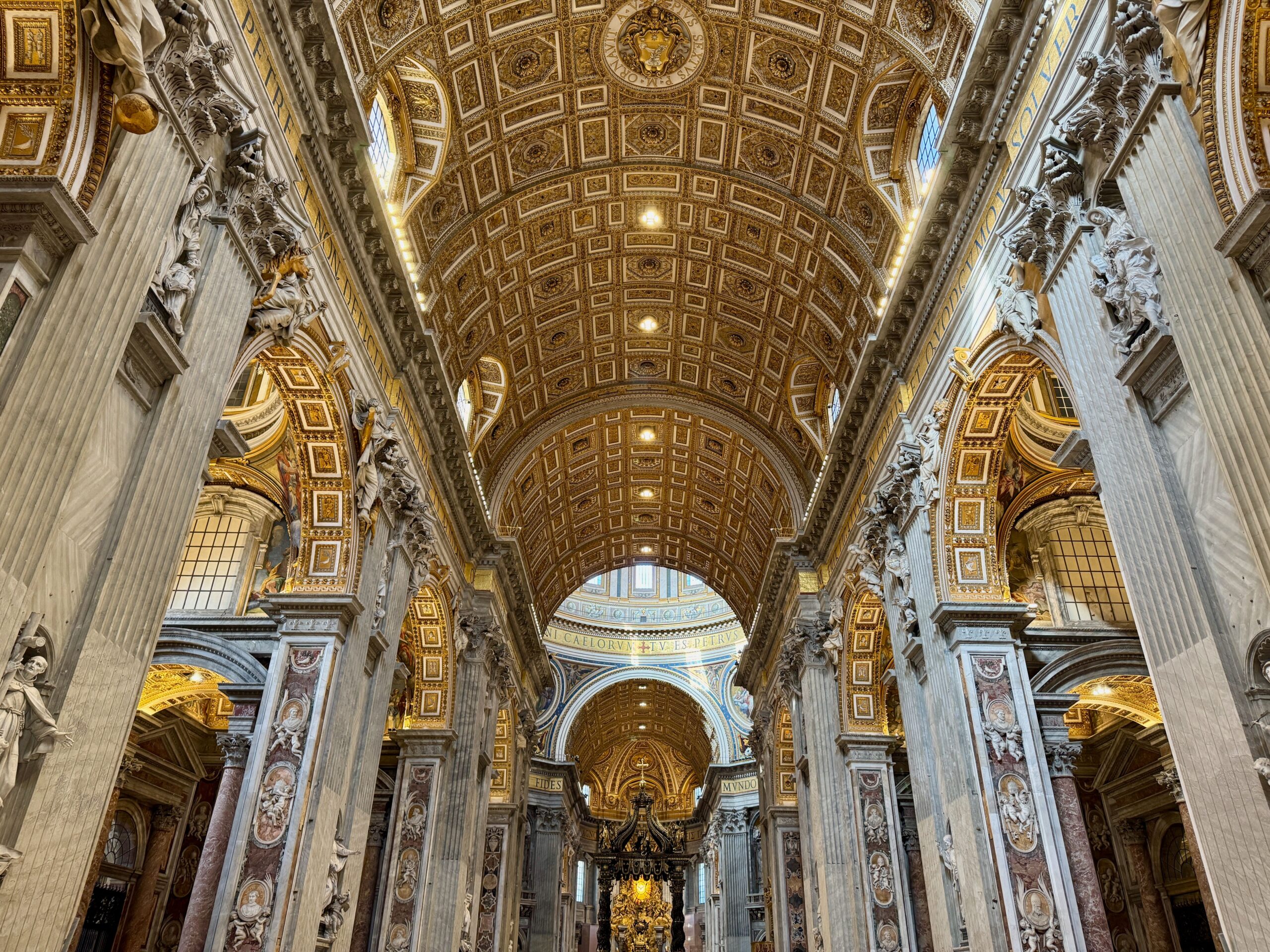
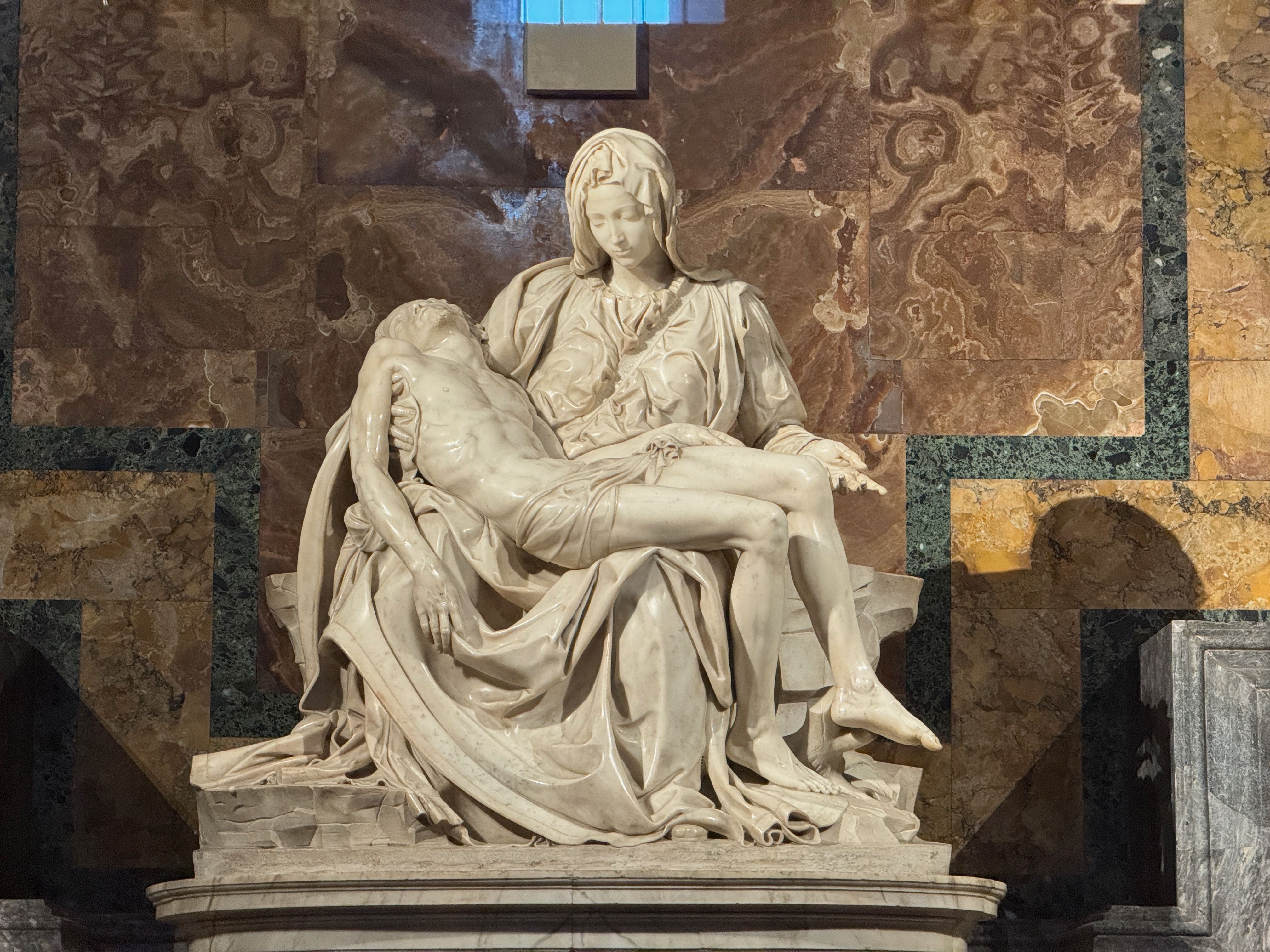
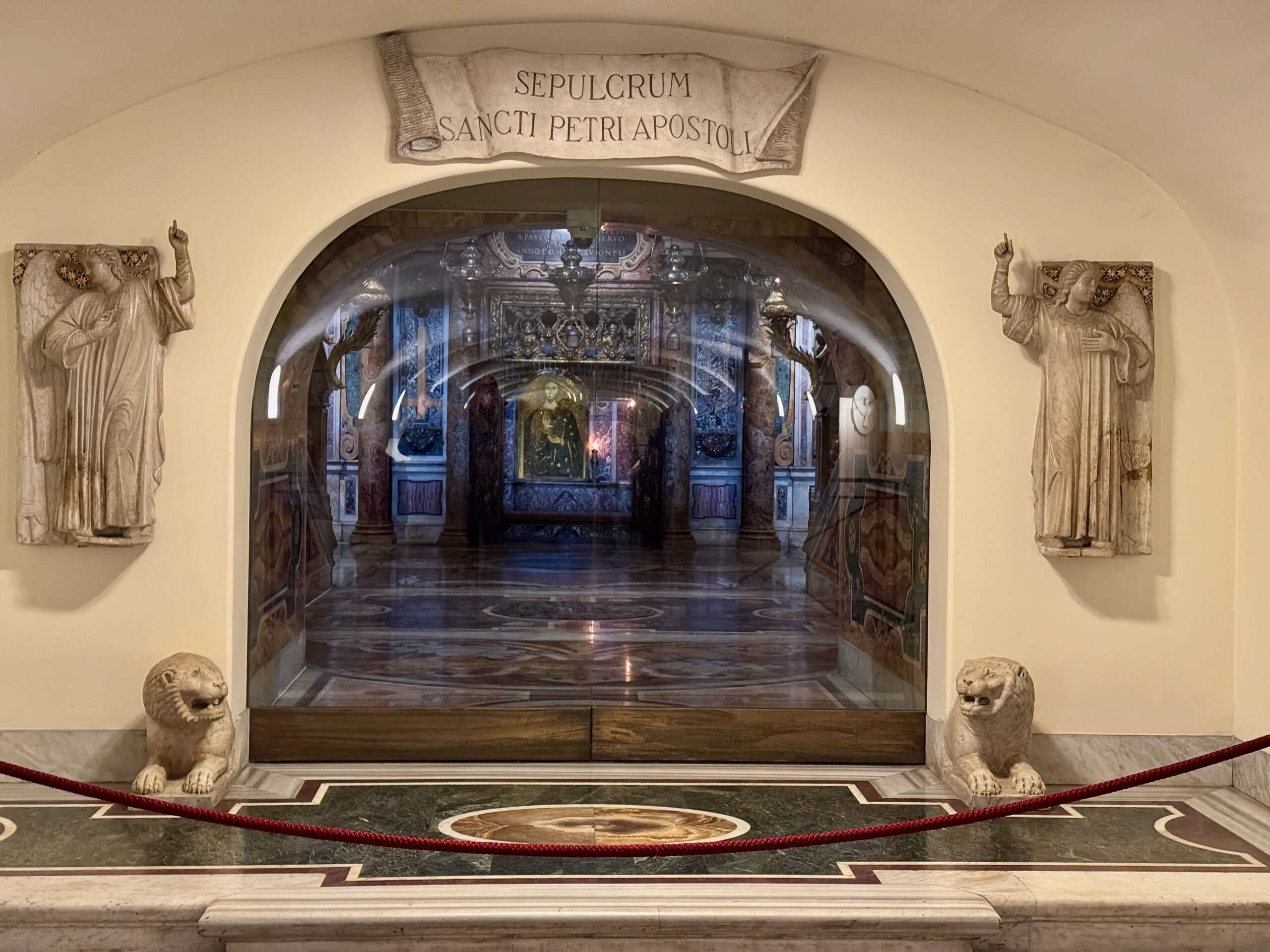
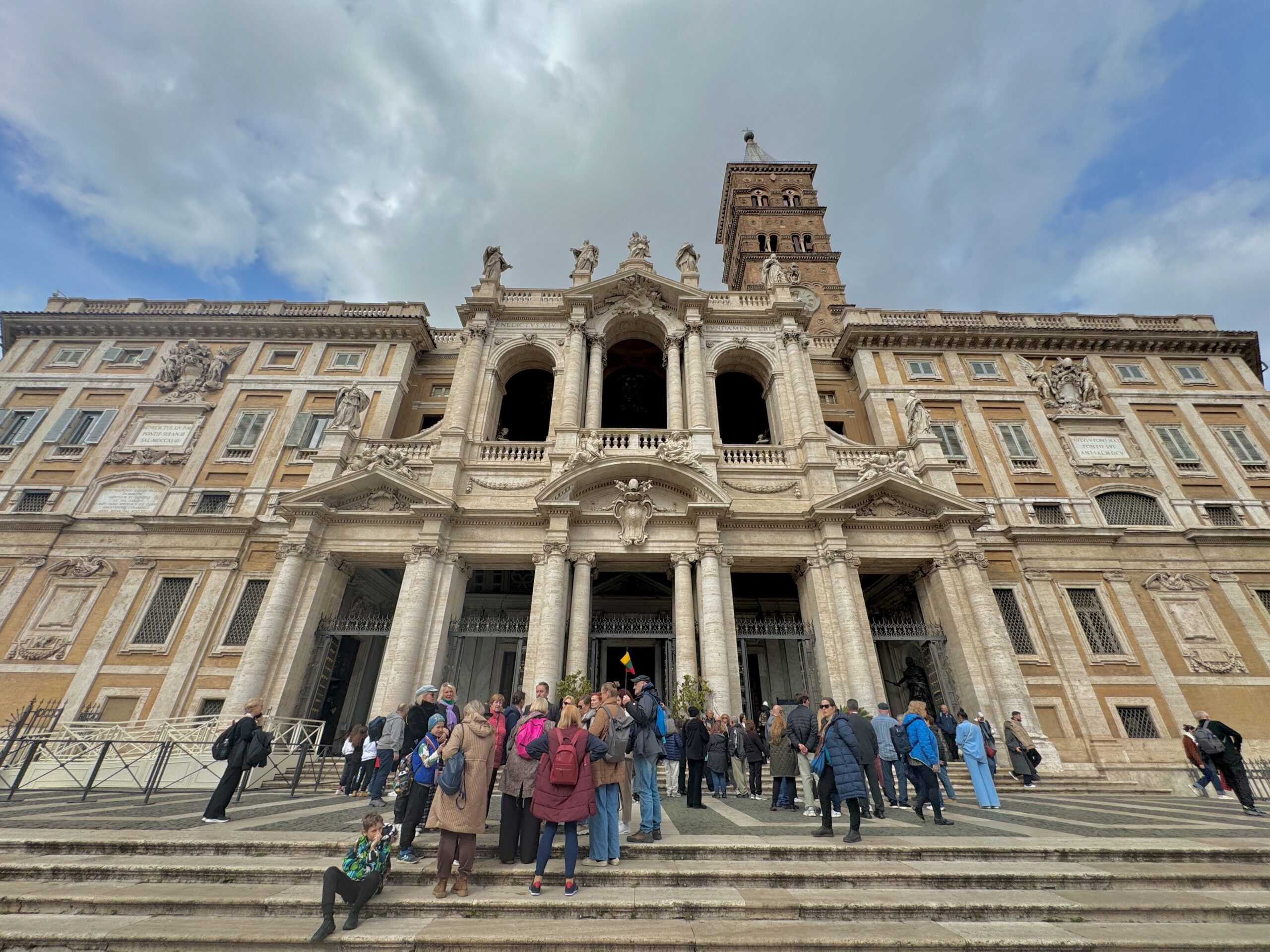
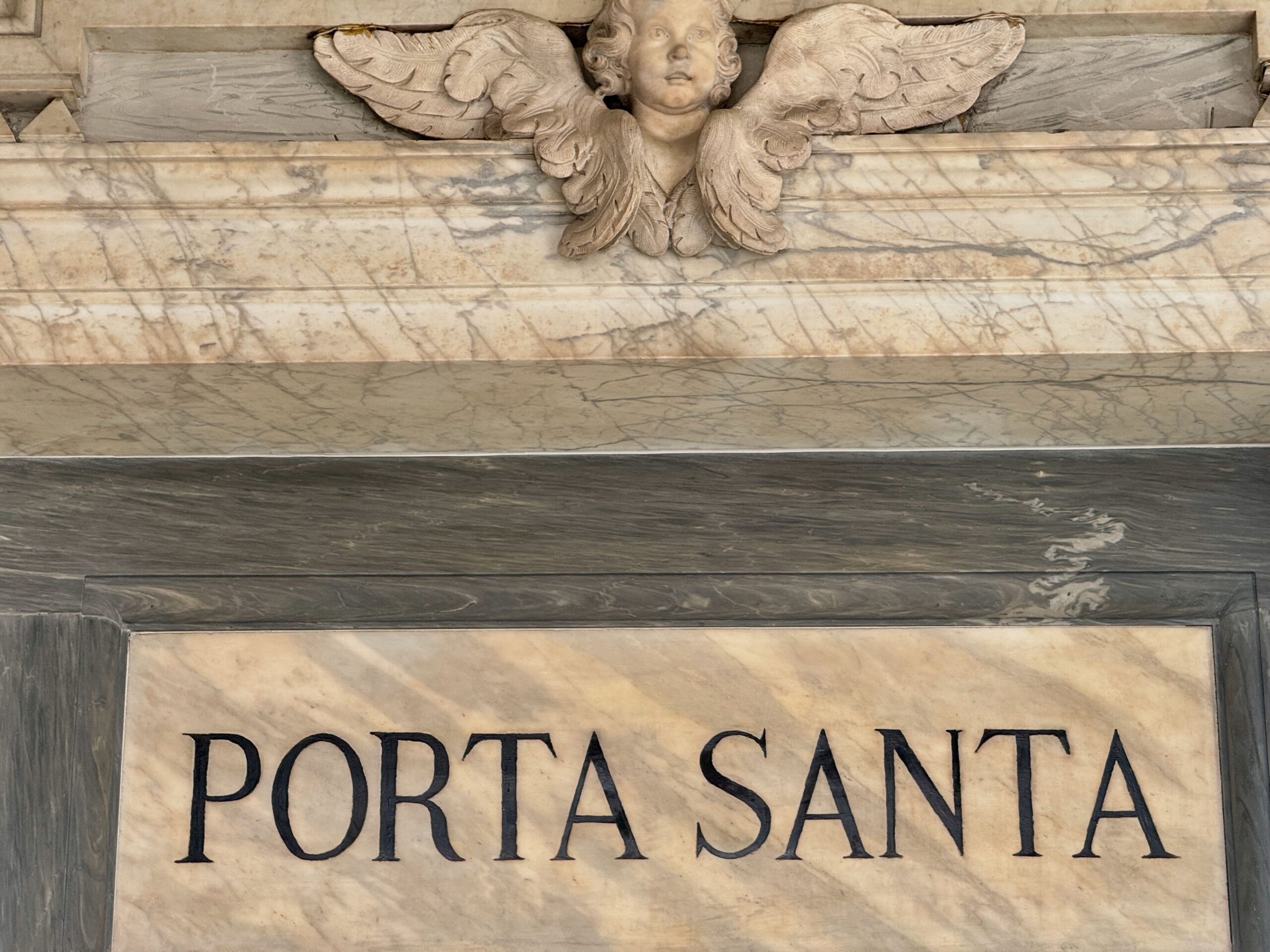
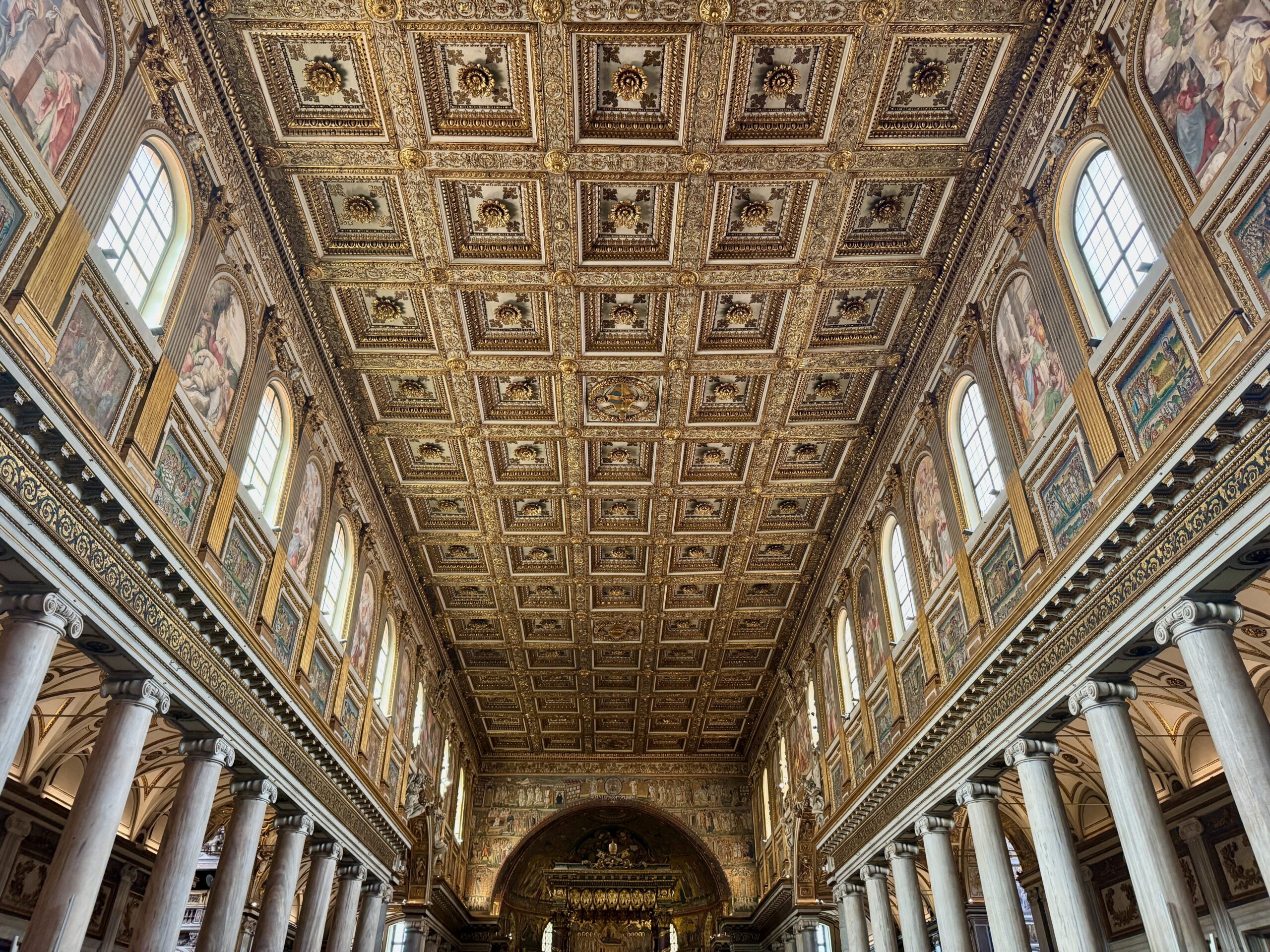
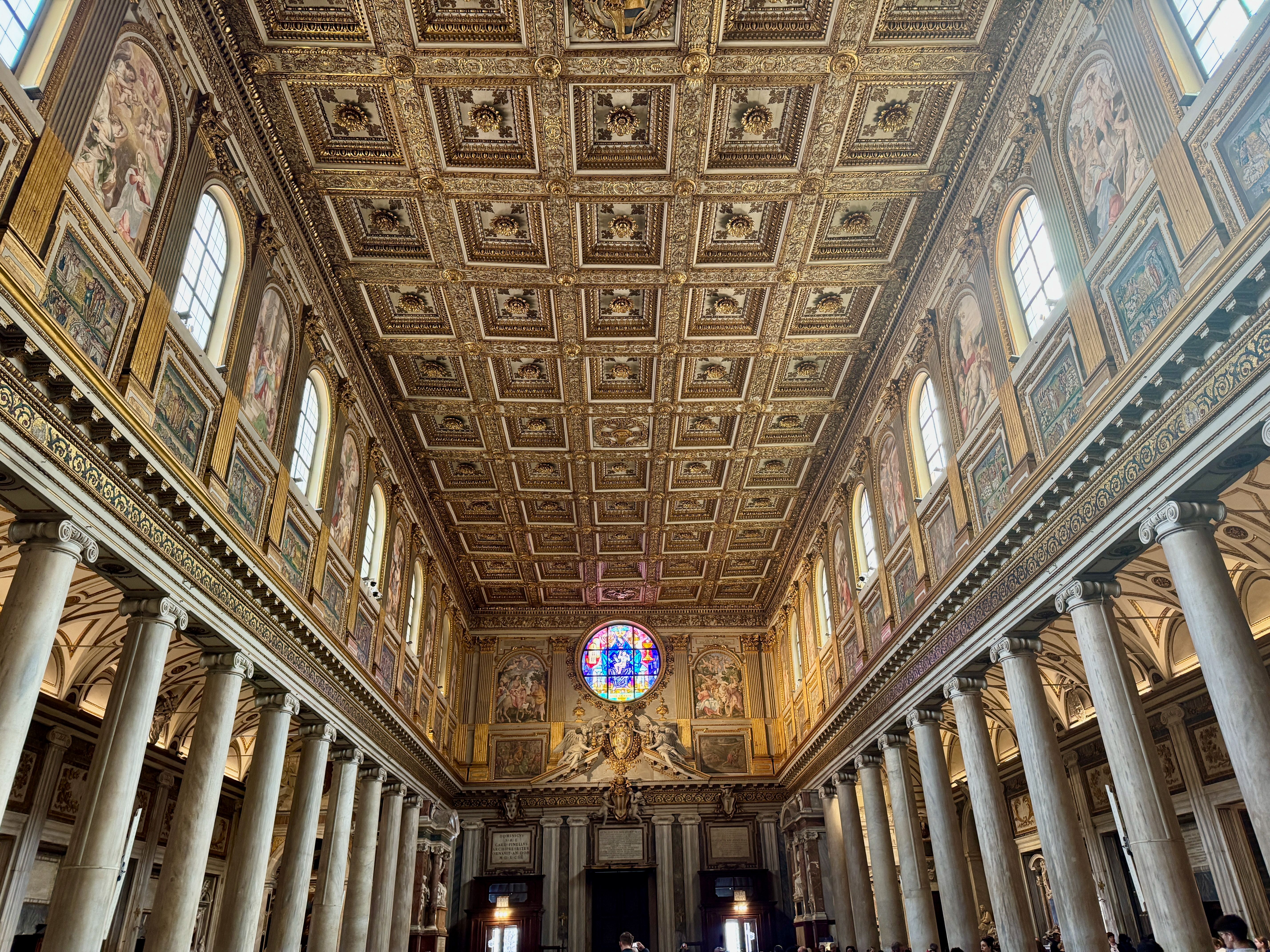
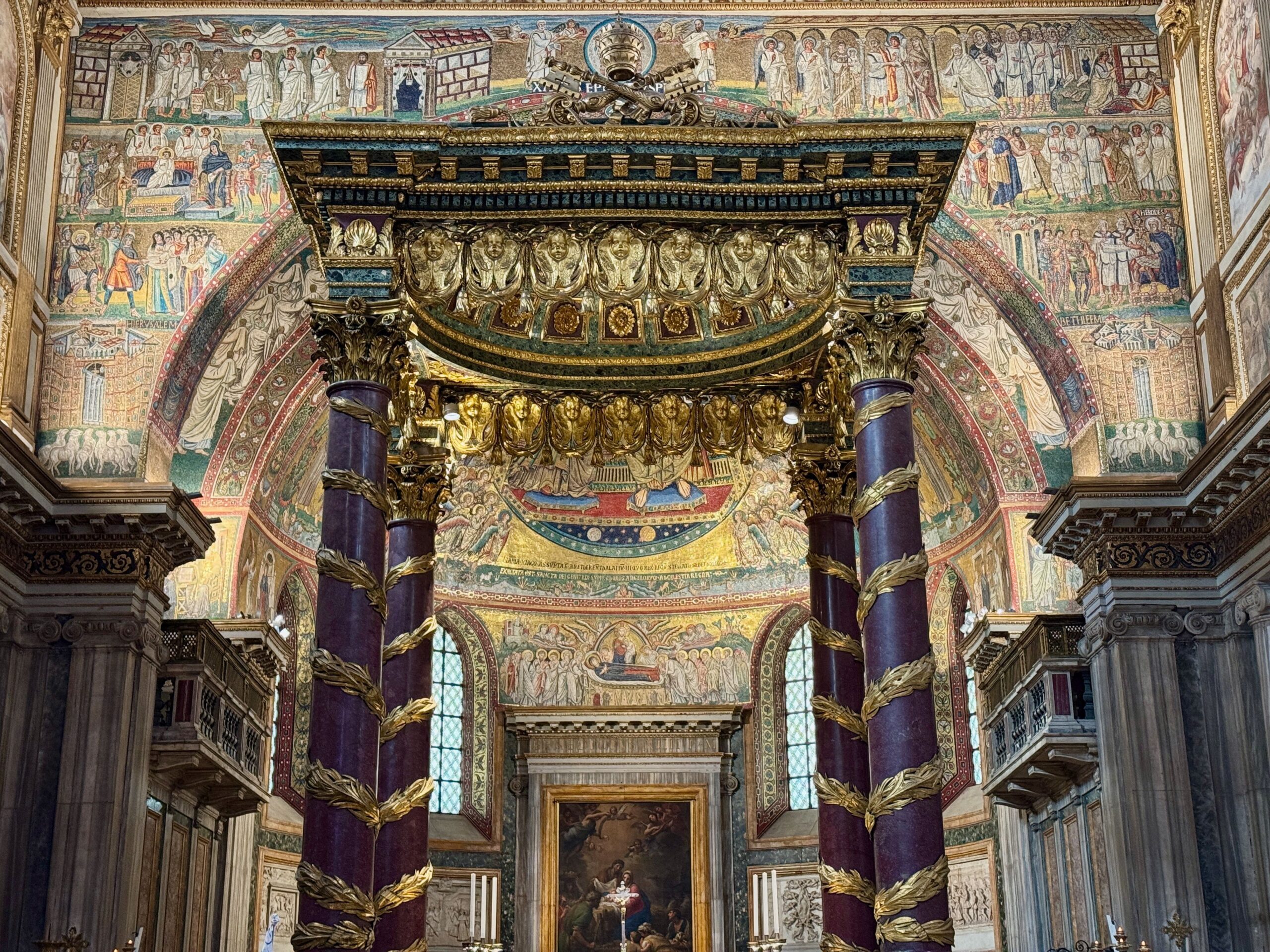
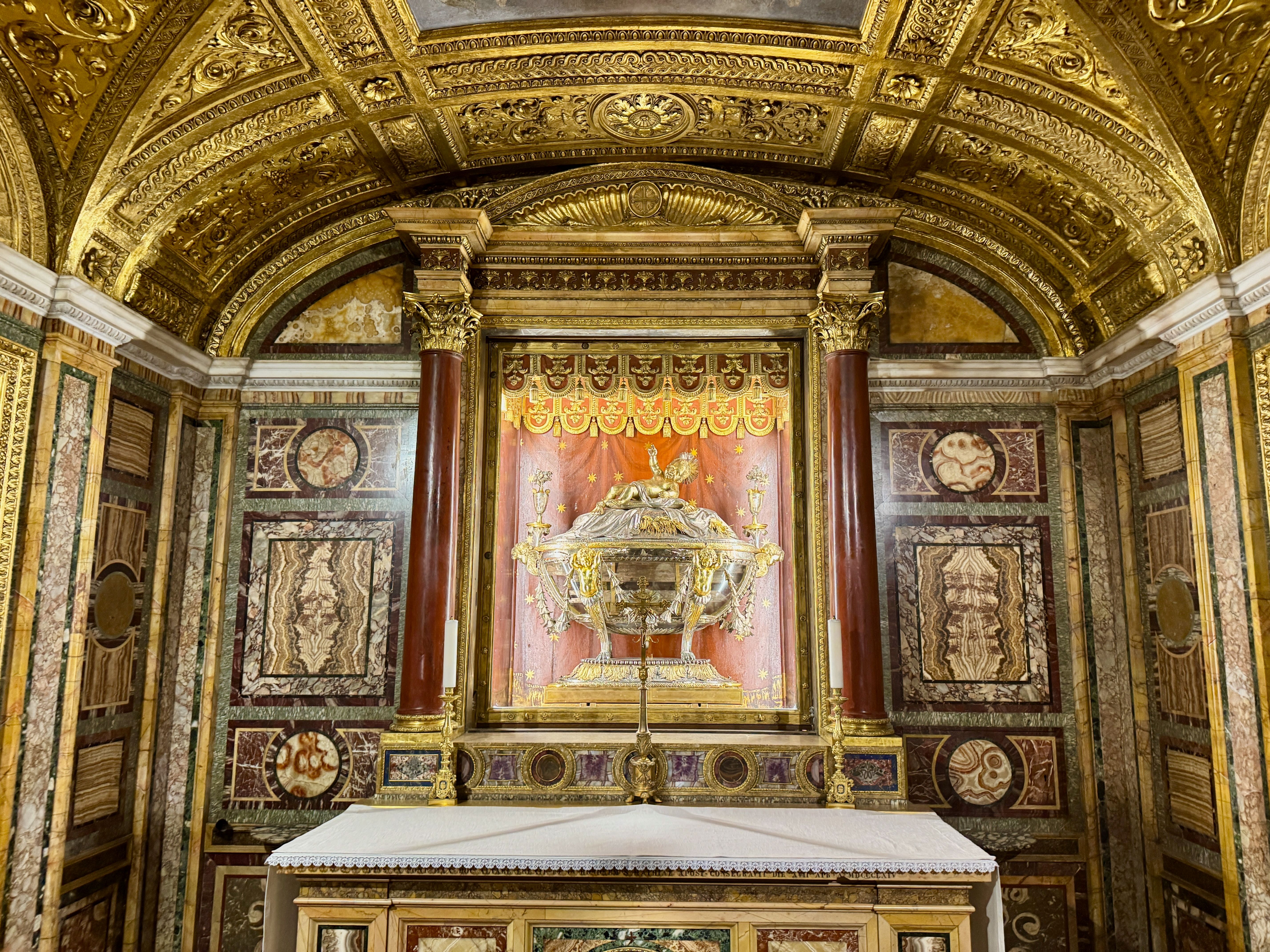
We then proceeded to the Basilica of St. Mary Major to pass through the third of the Four Holy Doors. This Basilica is particularly beloved by Pope Francis, who has expressed his desire to be buried here. It is also home to a revered relic: wooden fragments believed to be from the Manger of the Infant Jesus held in a reliquary in the Chapel of the Nativity. Ignatius Loyola celebrated his first mass in this chapel. The basilica contains the tomb of St. Jerome who translated the Bible from Greek to Latin and the tomb of the sculptor Bernini.
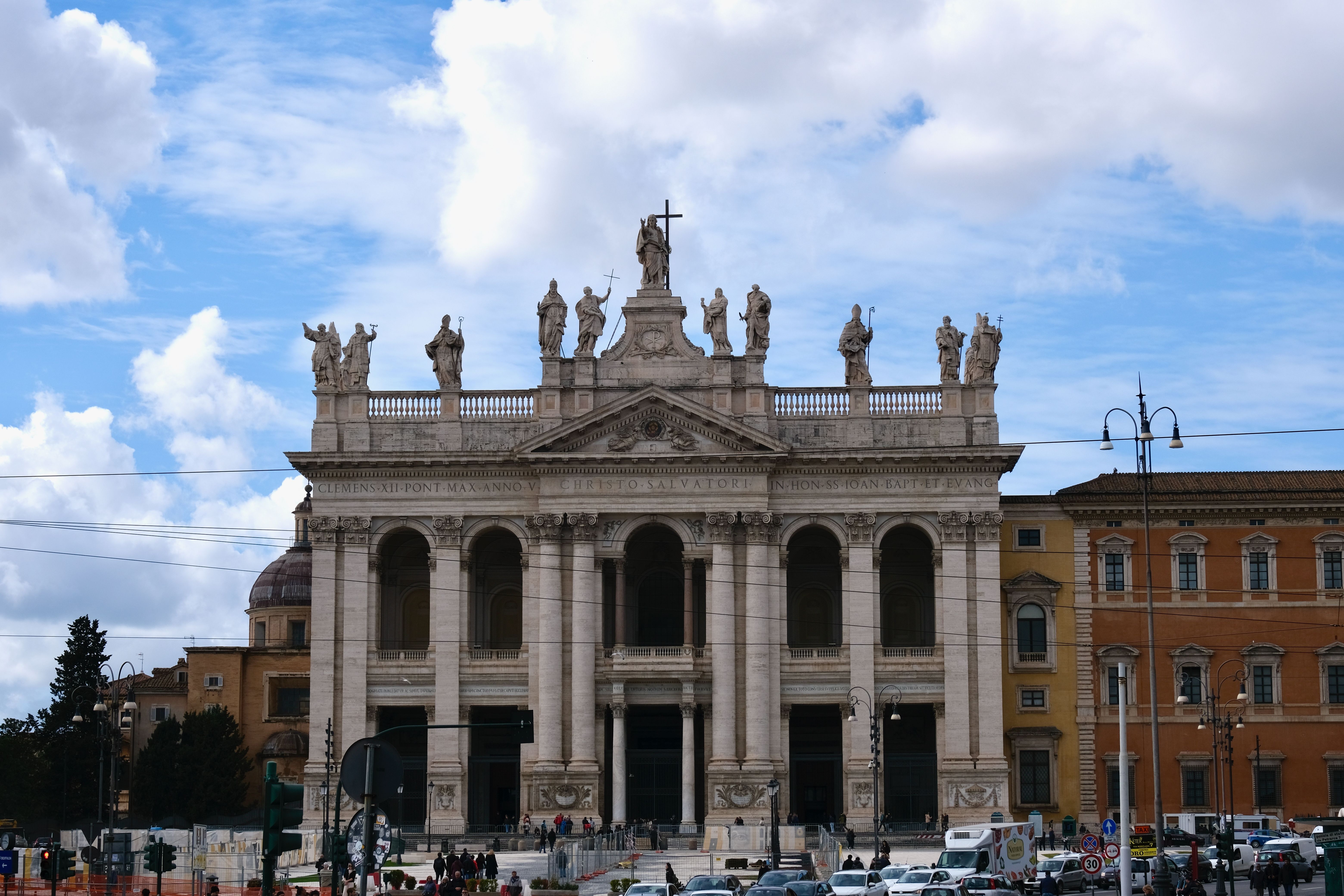
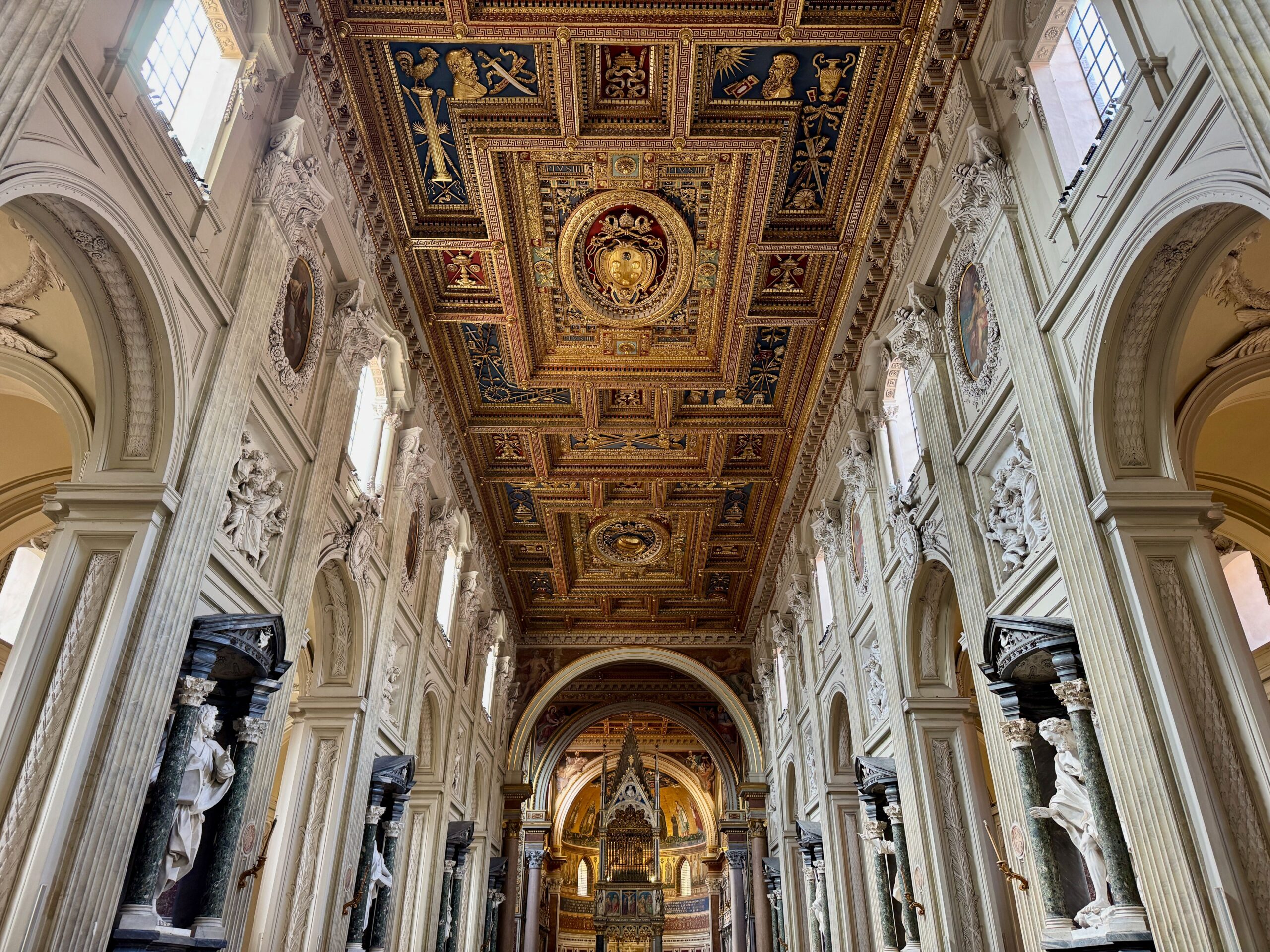
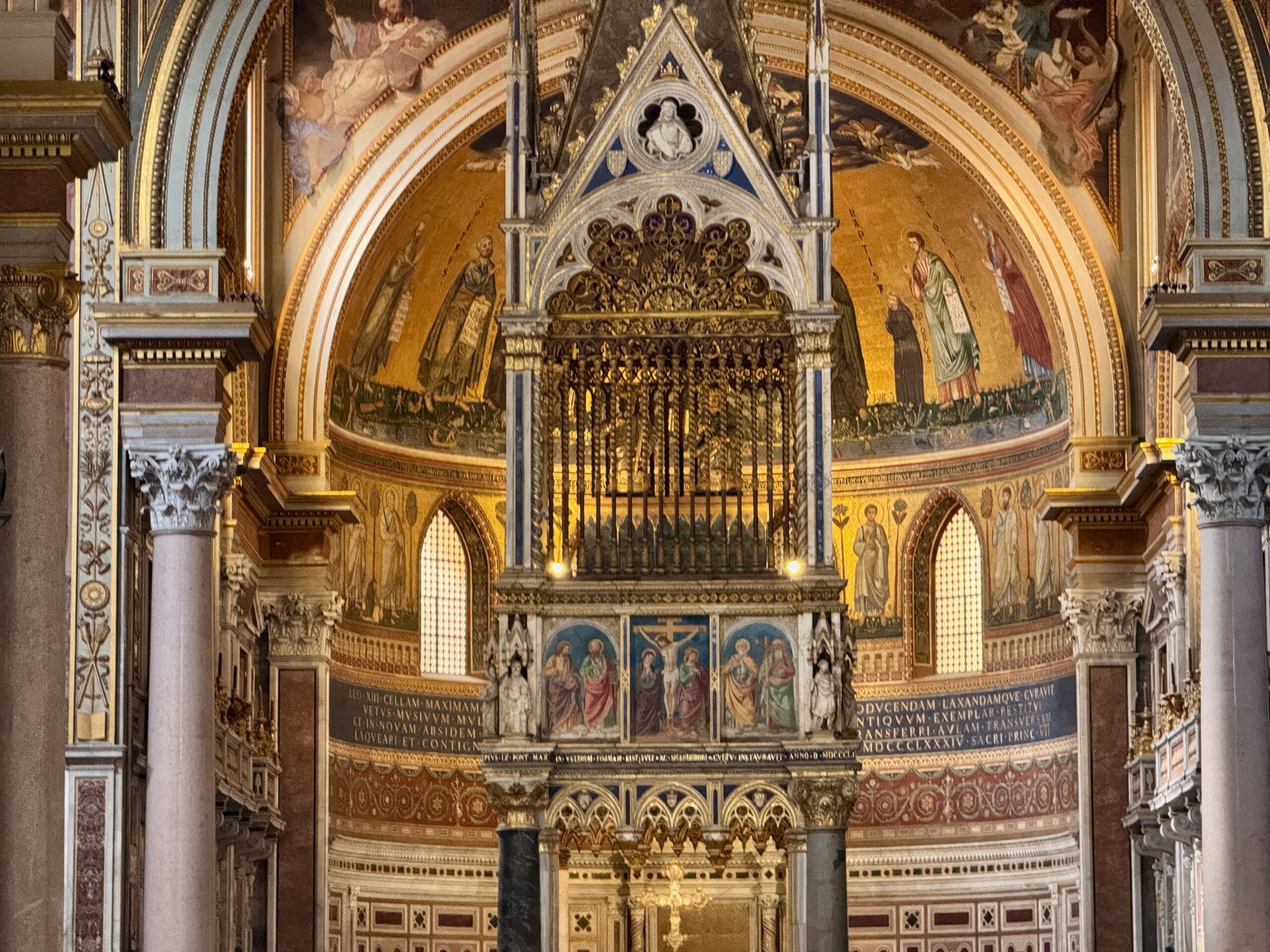
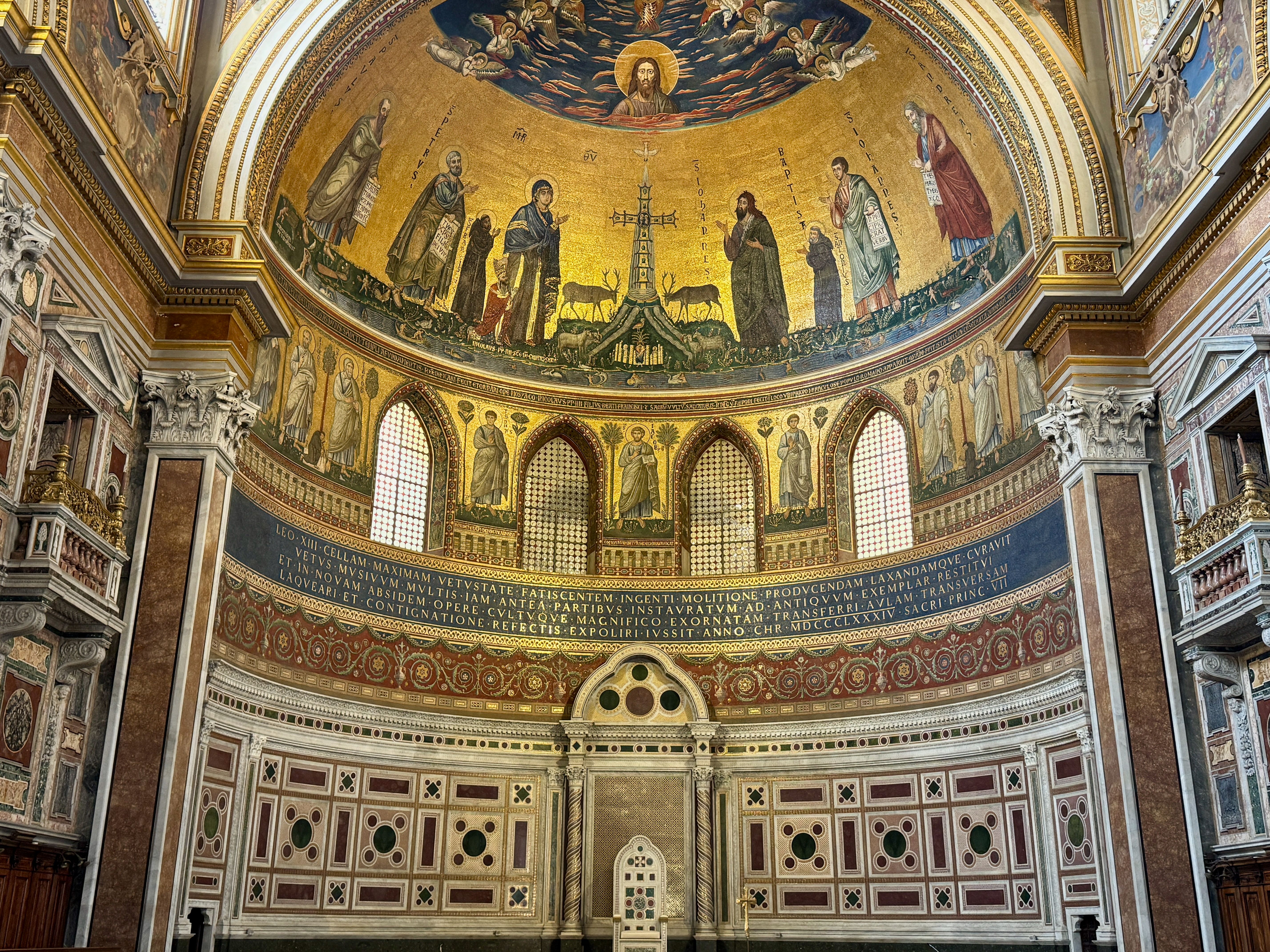
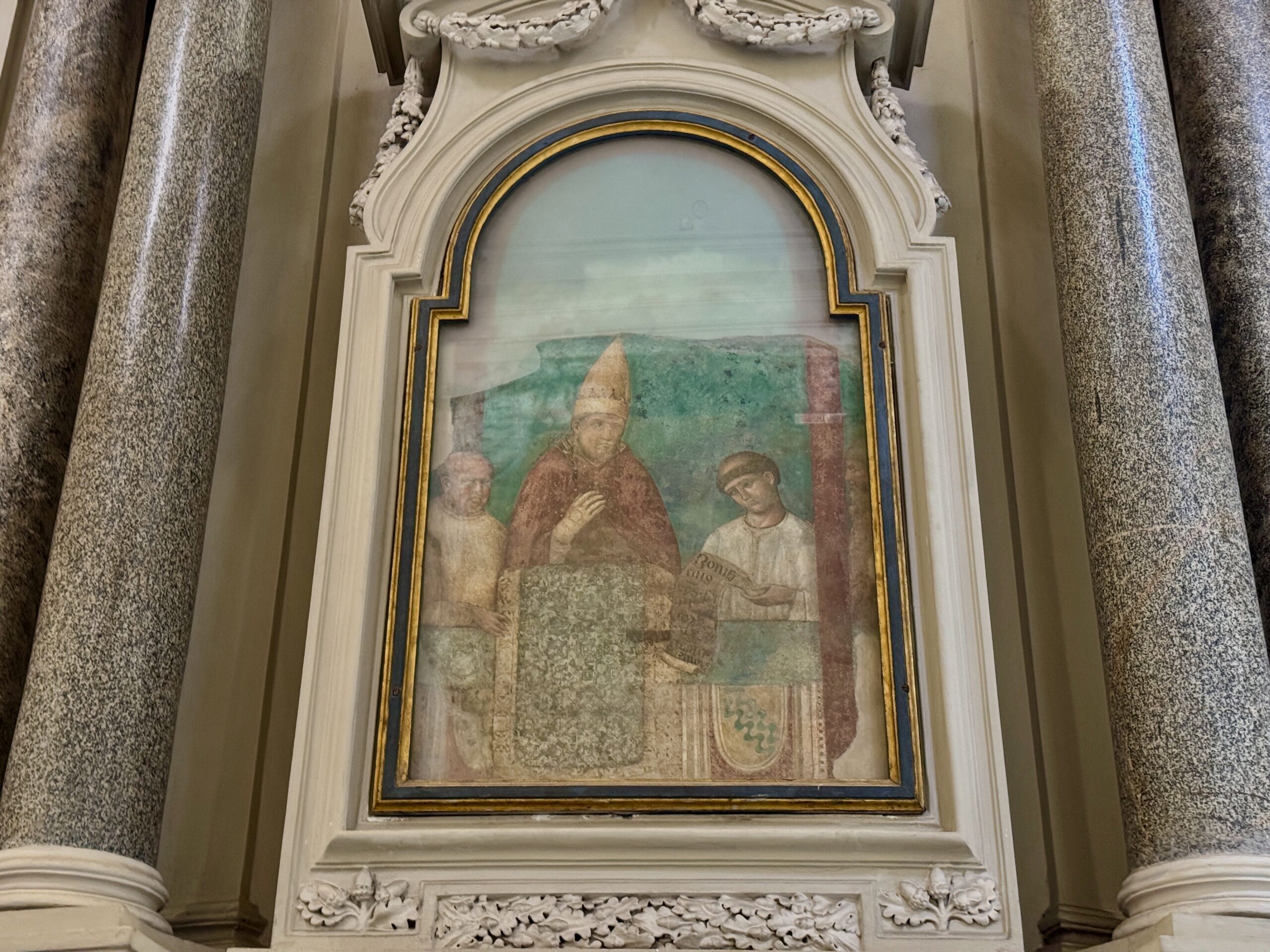
Our final stop of the day was the Basilica of St. John Lateran, the oldest and most important of the four major Basilicas in Rome and the cathedral of Rome. It is home to relics of Saints Peter and Paul, fragments of the table used for the Last Supper, and the table where St. Peter and other Popes celebrated mass and holds great significance as the seat of the Bishop of Rome. Here, we passed through the fourth and final Holy Door. This is also the Basilica where Pope Francis was installed as Bishop of Rome and where he officiates in that role. This basilica was first dedicated to Christ the Savior, then to St. John the Baptist, and later to St. John the Evangelist. Within the church are statues of all the apostles. Outside the basilica, are the Lateran Obelisk, shipped to Rome from ancient Egypt by Constantius II; the octangular Lateran Baptistry, where at one time all Romans would have been baptized; and the Scala Sancta, the stairs that Christ is said to have climbed for his trial before Pilate.
Later in the evening, we had our farewell dinner at L’Archeologia, a restaurant on the outskirts of Rome near the Catacombs of San Sebastiano.
Homeward Bound – March 1, 2025
Our flight home from Rome was smooth and hassle-free.
Our Final Thoughts
Our journey through Italy was a rich tapestry of history, art, and faith. From Milan’s stunning architecture to Florence’s masterpieces, Siena’s spiritual essence, and Assisi’s devotion to frugality, each stop deepened our appreciation of Italy’s heritage. In Rome, we visited iconic landmarks, walked through the Holy Doors of the four basilicas, and celebrated Mass in historic churches. These unforgettable memories—along with all the fabulous pasta and pizza we devoured—will stay with us long after we return home.
What a wonderful experience! We are now motivated to go back to Italy 🙂