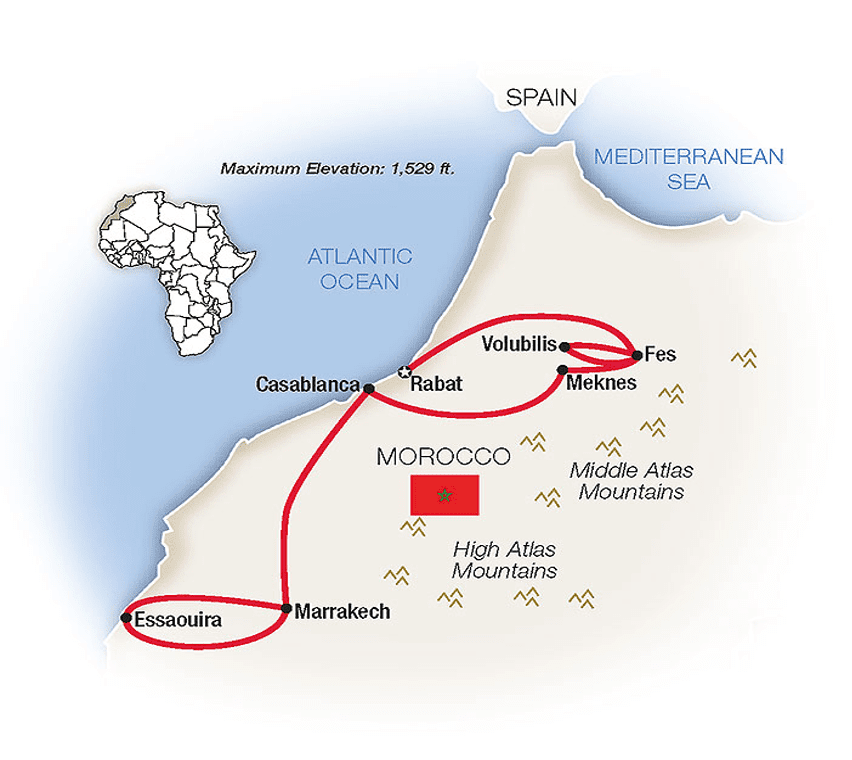
Flight from Newark to Casablanca – December 7, 2023
We flew from Newark to Montreal’s Trudeau Airport with United Airlines, and then continued to Casablanca on Air Canada. The Air Canada flight had few passengers in our section, and it was delayed by an hour due to wing de-icing.
Delays to Rabat’s Food Tour – December 8, 2023
Upon our 8 AM arrival at Casablanca’s Mohammed V Airport, we faced delays in passport control, visa processing, and baggage claim. To expedite the process, locals clapped until officials attended to the queues—a novel tactic that worked effectively. After reaching Rabat, our hotel check-in was delayed until 6 PM, but we were offered a temporary room.
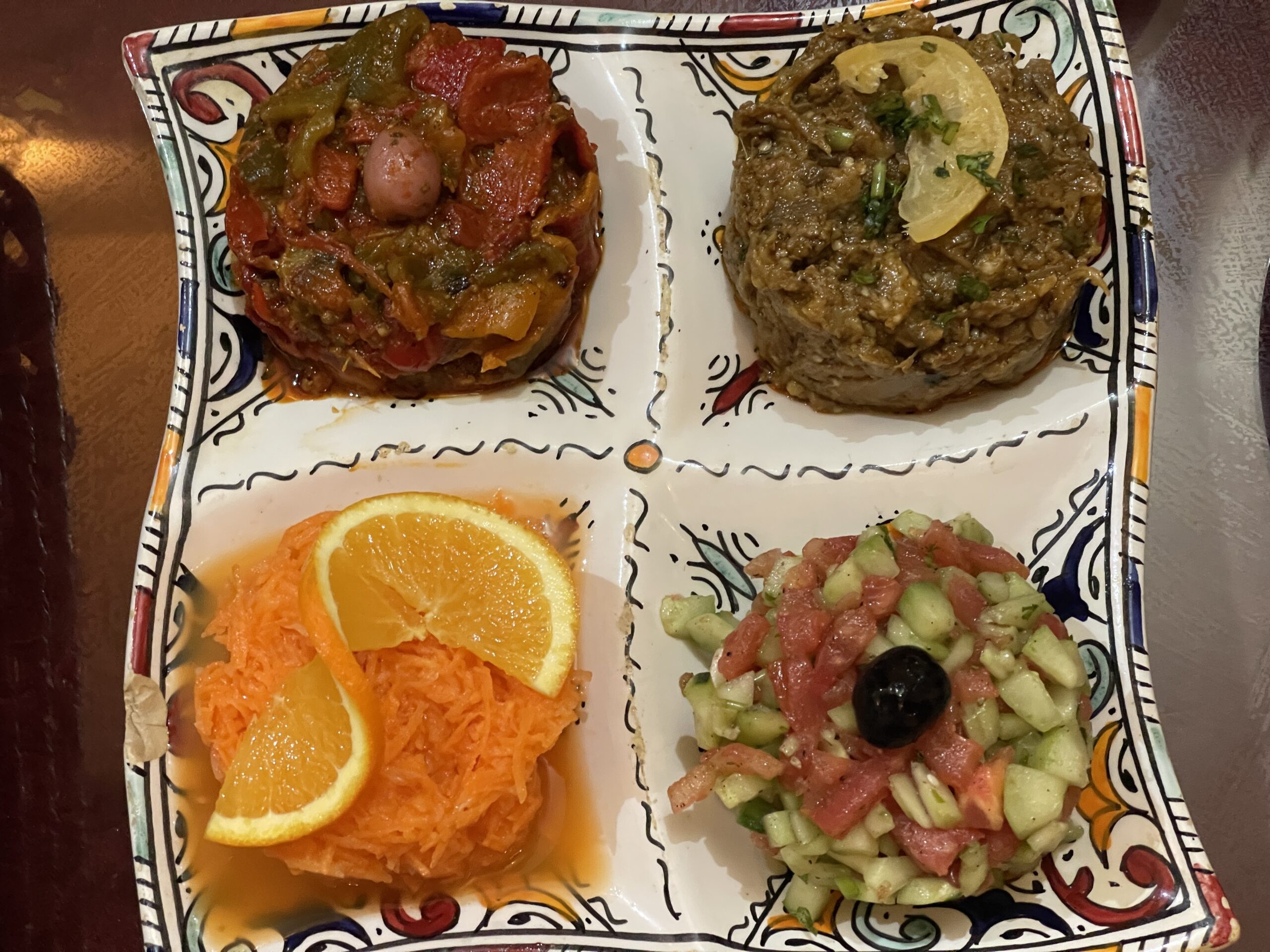
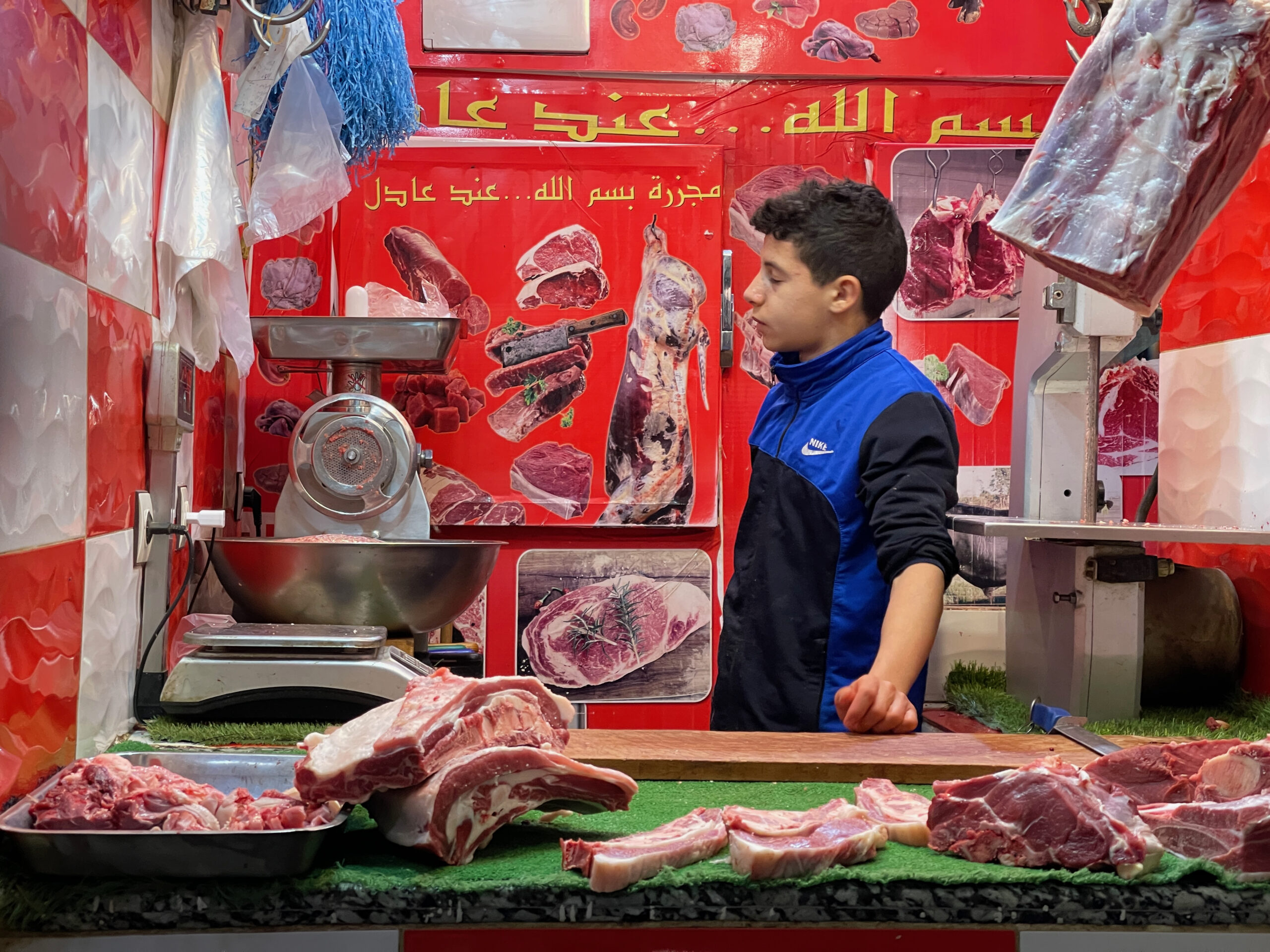
Following a brief rest, we embarked on a food tour guided by Imane. We explored the Marché Central (Central Market) in the medina, a bustling market reminiscent of traditional souks, filled with various goods and crowds. During the tour, we sampled cultural delicacies such as vermicelli with honey, Moroccan chickpea soup, and dates stuffed with nuts. We also enjoyed freshly baked almond pastries and savory potato-sardine snacks. To conclude the food exploration, we tasted Moroccan pizza resembling stuffed paratha.
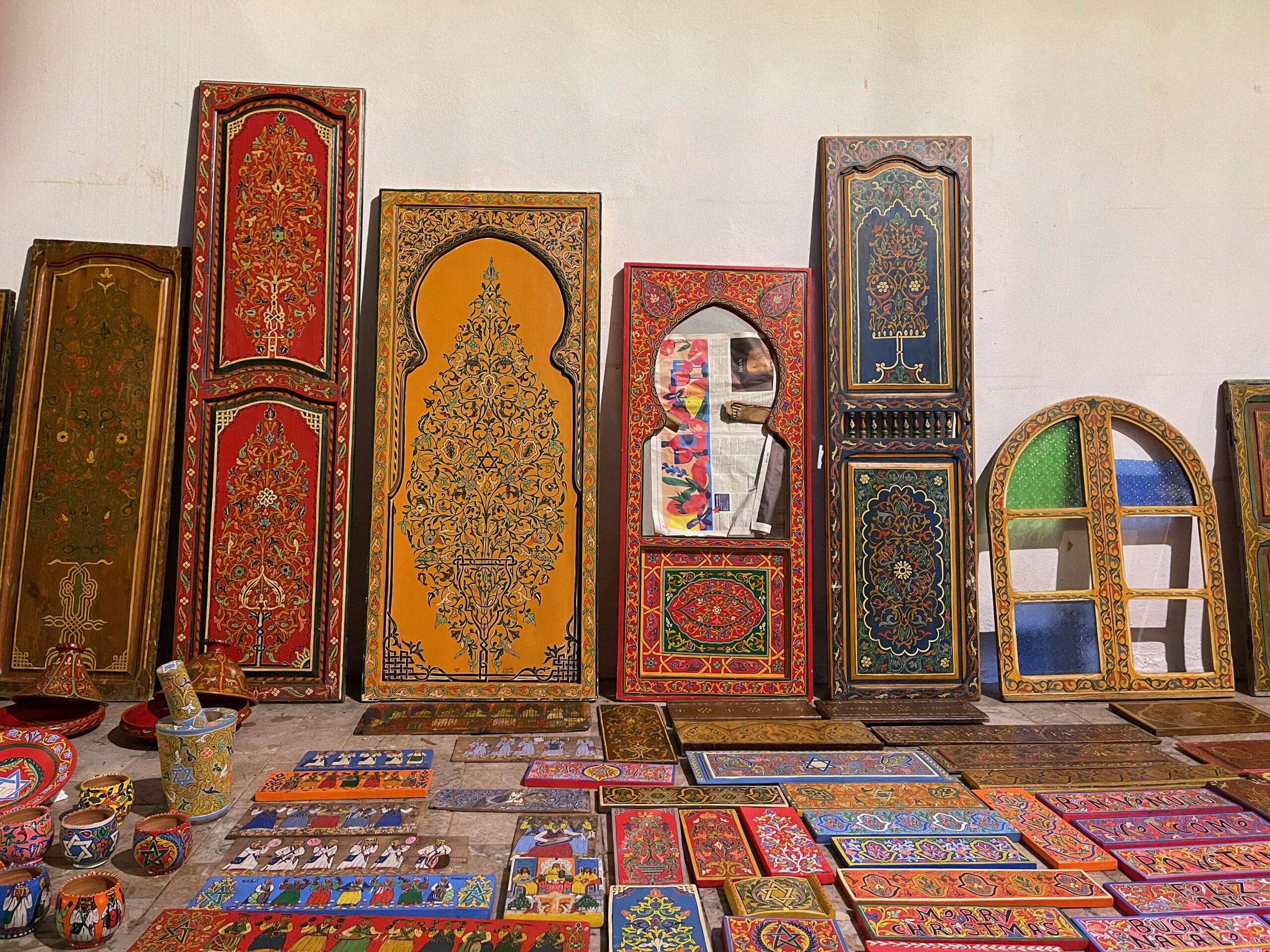
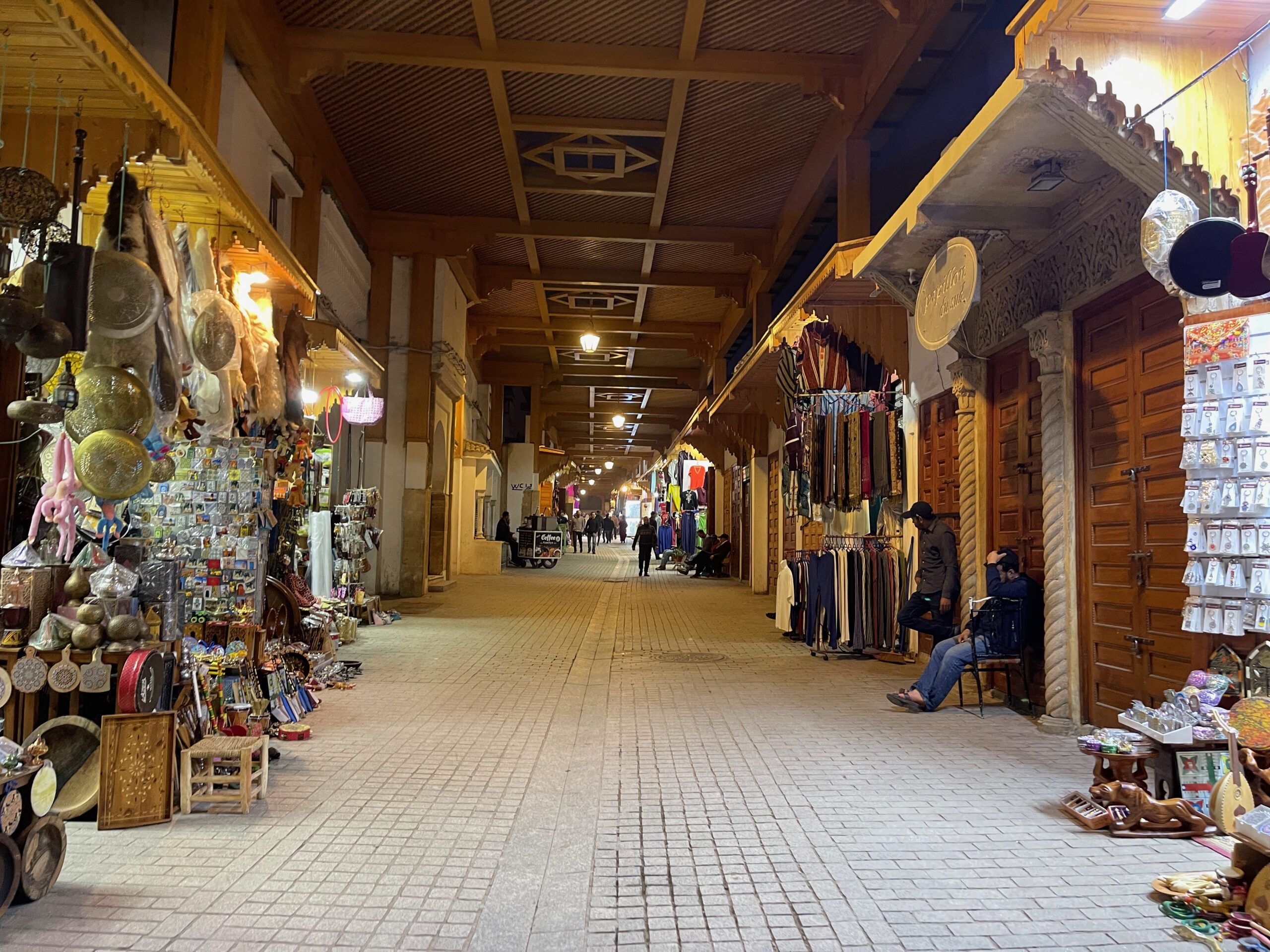
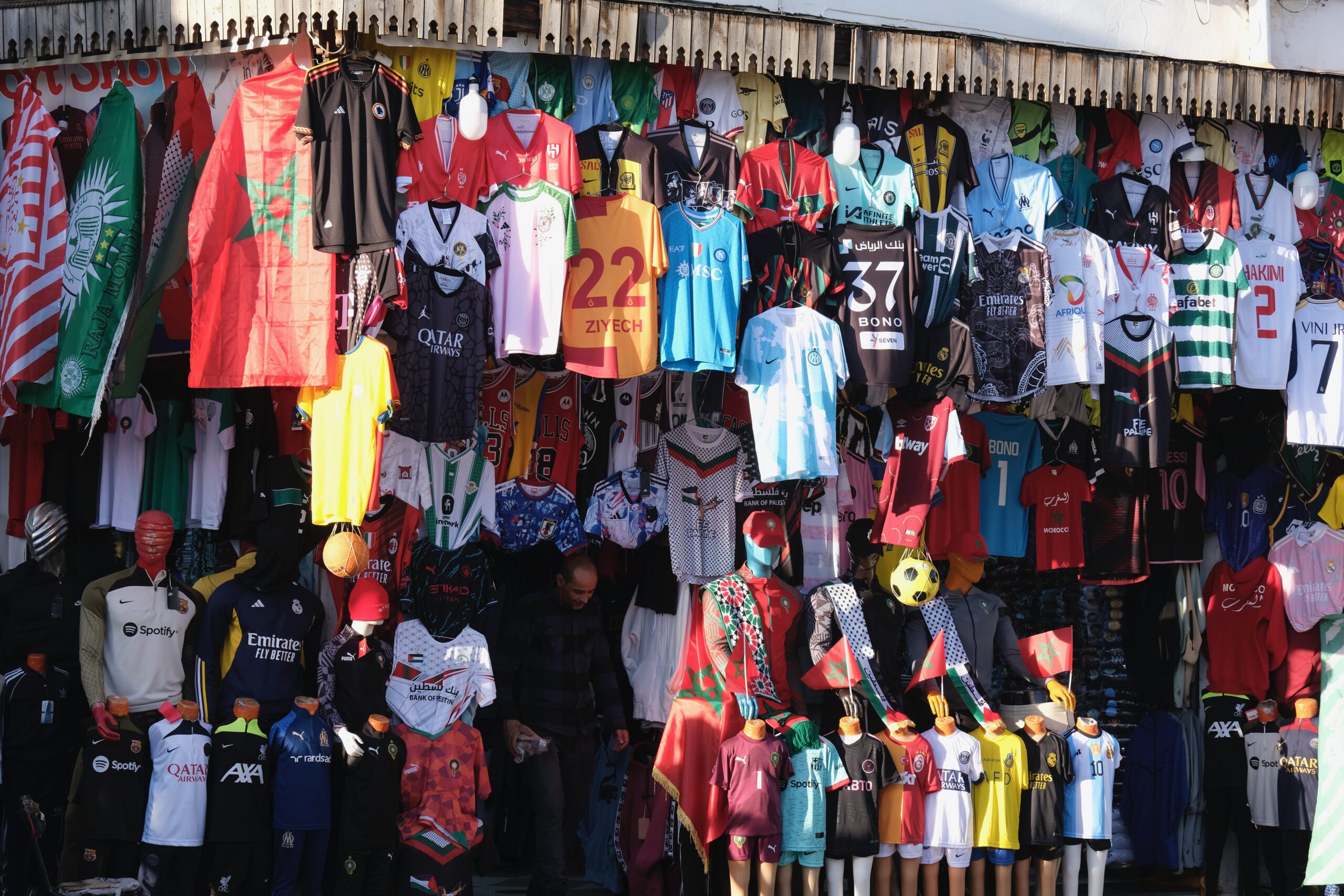
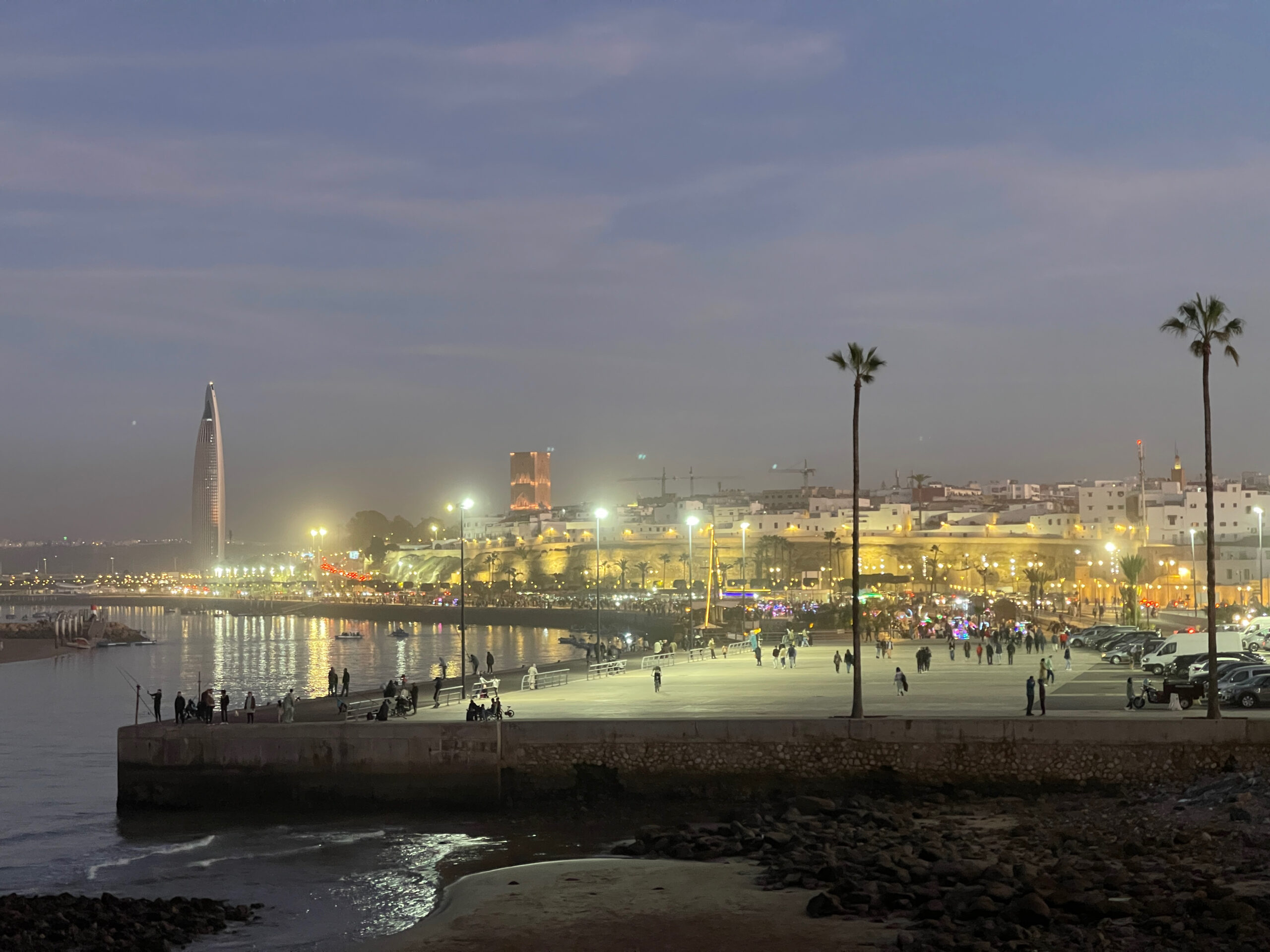
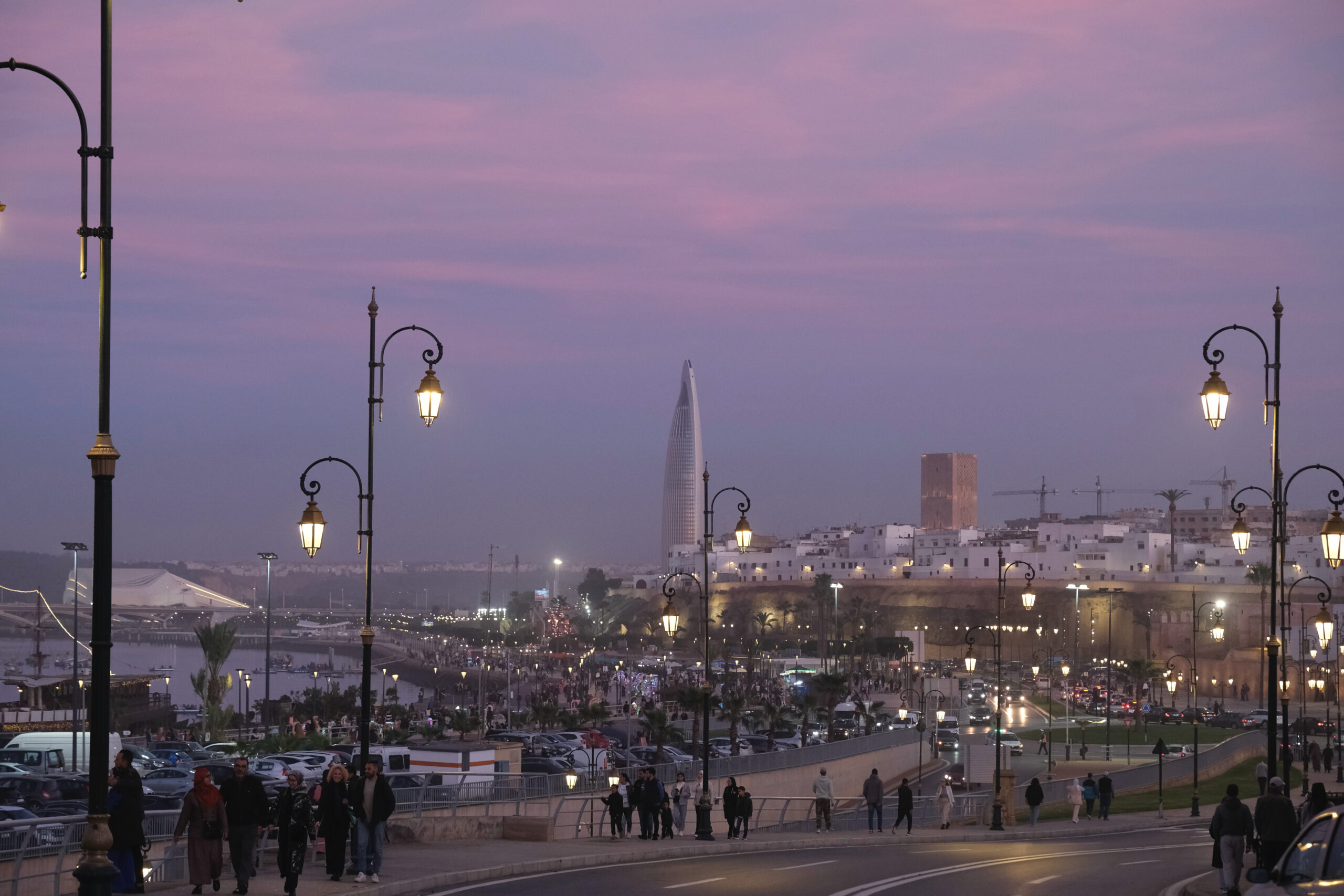
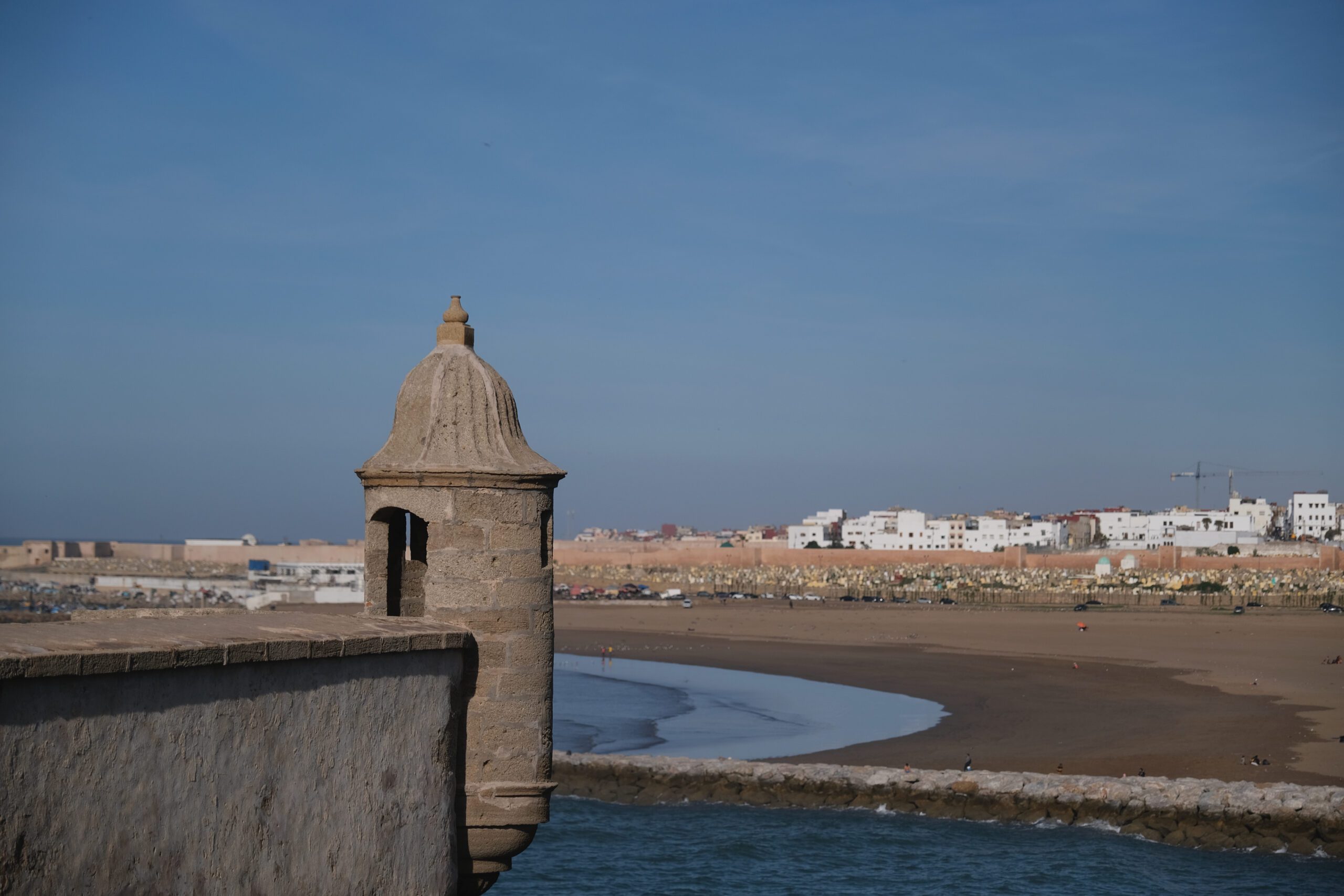
Later, we visited the Kasbah of the Oudayas and briefly stopped to view the Atlantic coastline. Returning to the market, we dined at Dar El Medina, where we indulged in diverse tagines and appetizers. Satiated, we relaxed by the Bouregreg riverbank, sipping mint tea and observing local activities. Throughout the tour, Imane shared personal stories, including her husband’s National Geography Photography award, her extravagant wedding outfits, her infant daughter Raisa, and her mother-in-law’s culinary profession at various Moroccan consulates around the world.
Exploring Rabat’s Rich History – December 9, 2023
Our morning journey in Rabat’s Kasbah began with a taxi ride filled with miscommunications, eventually leading us to the serene Kasbah des Oudayas.
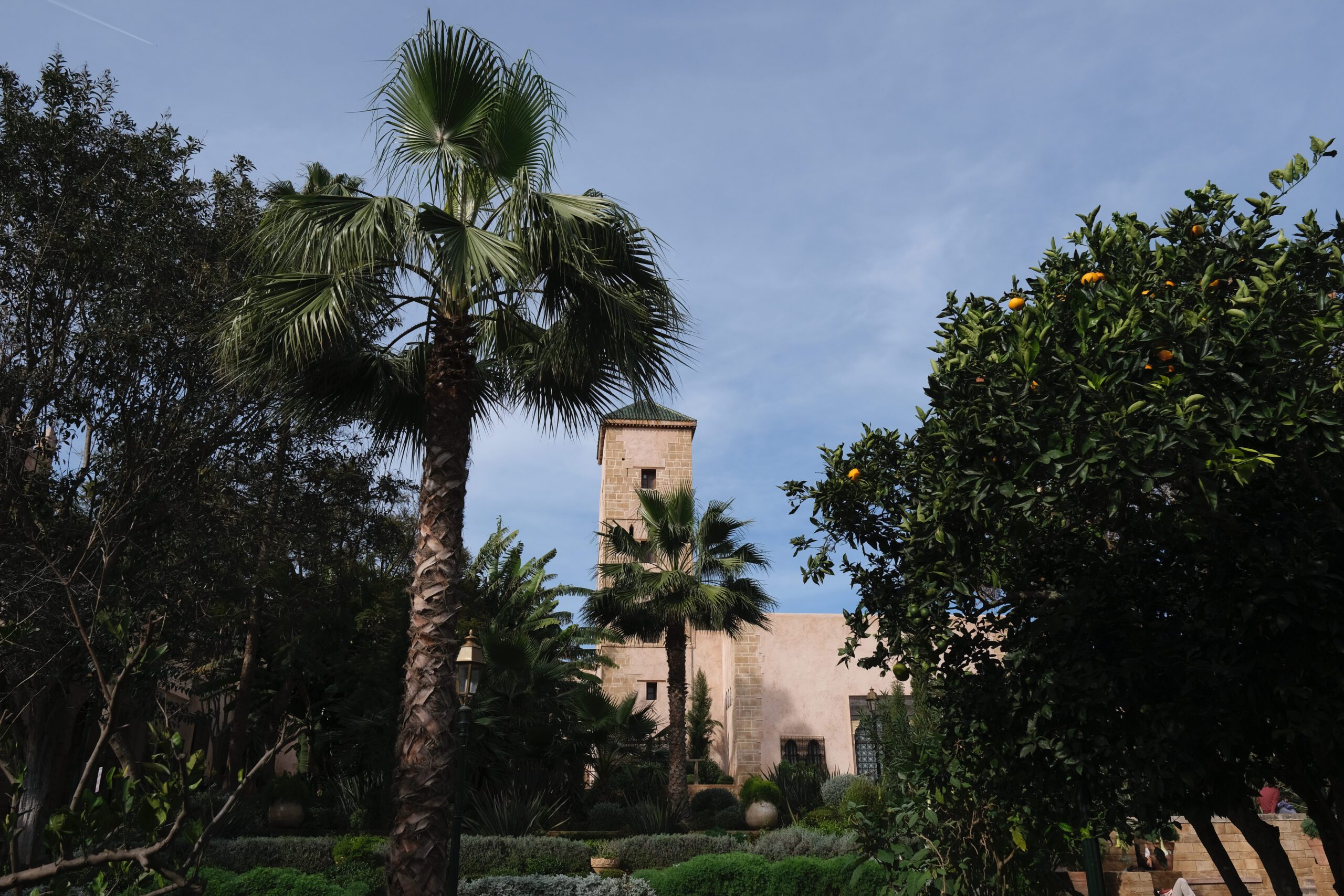
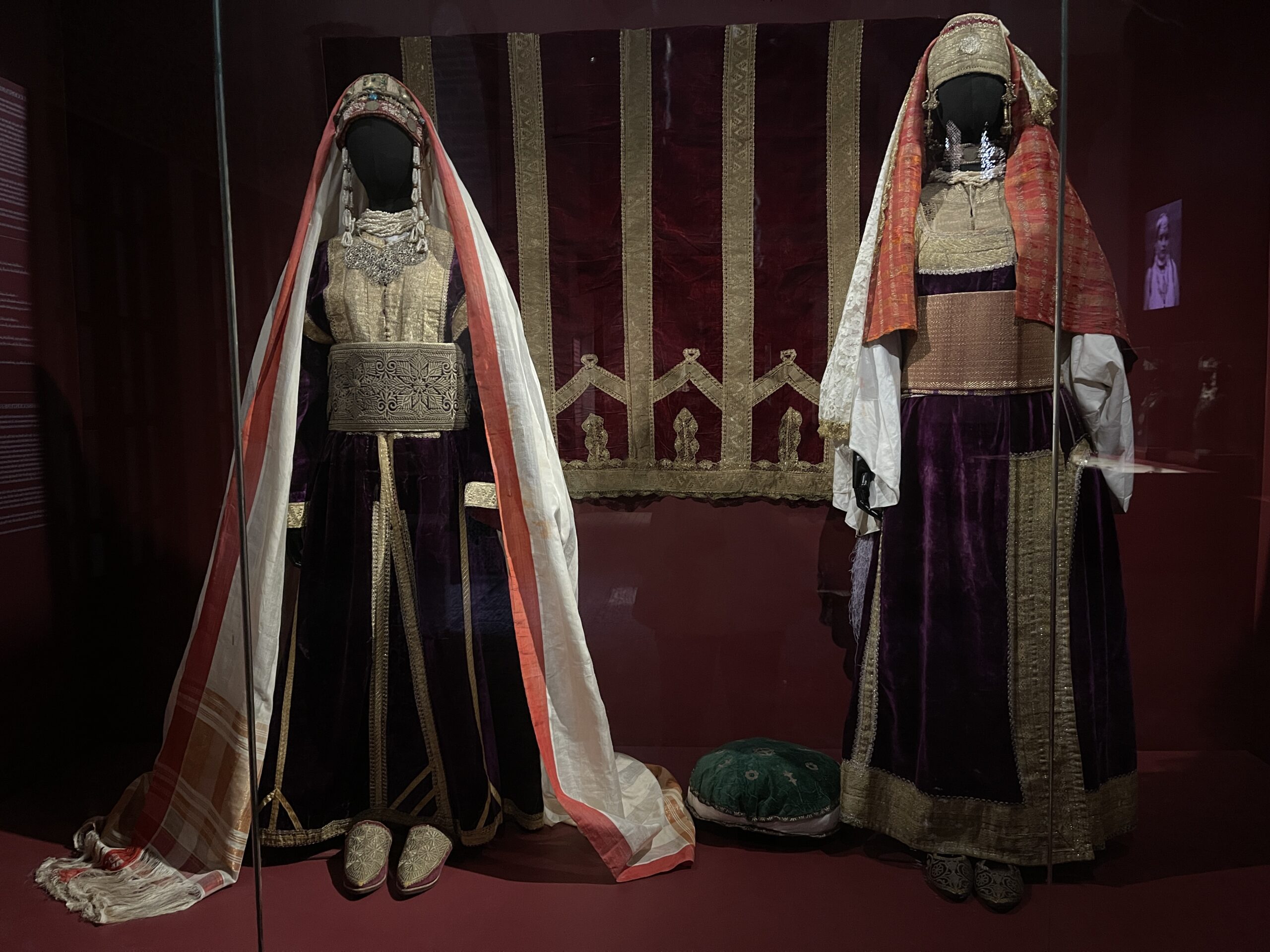
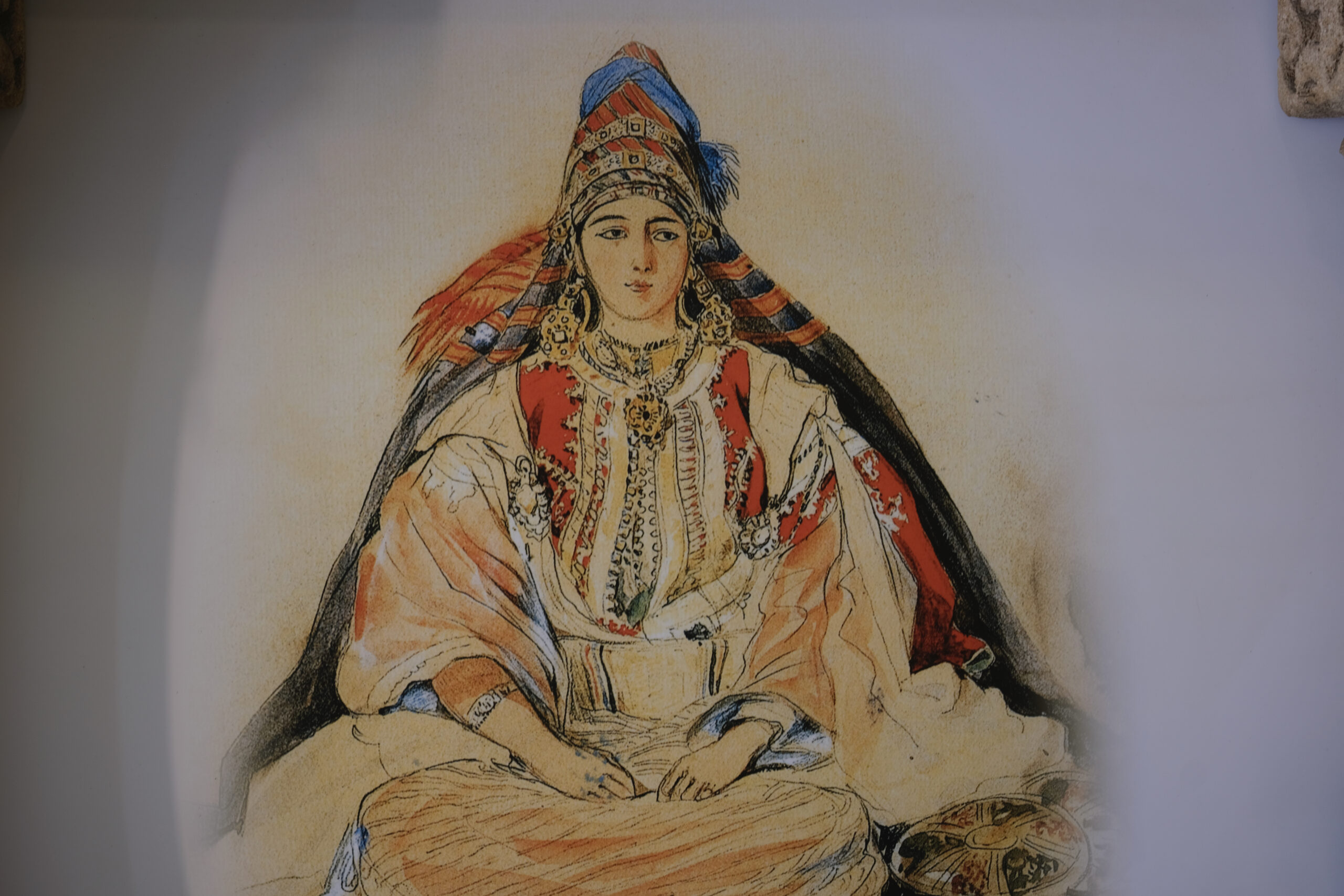
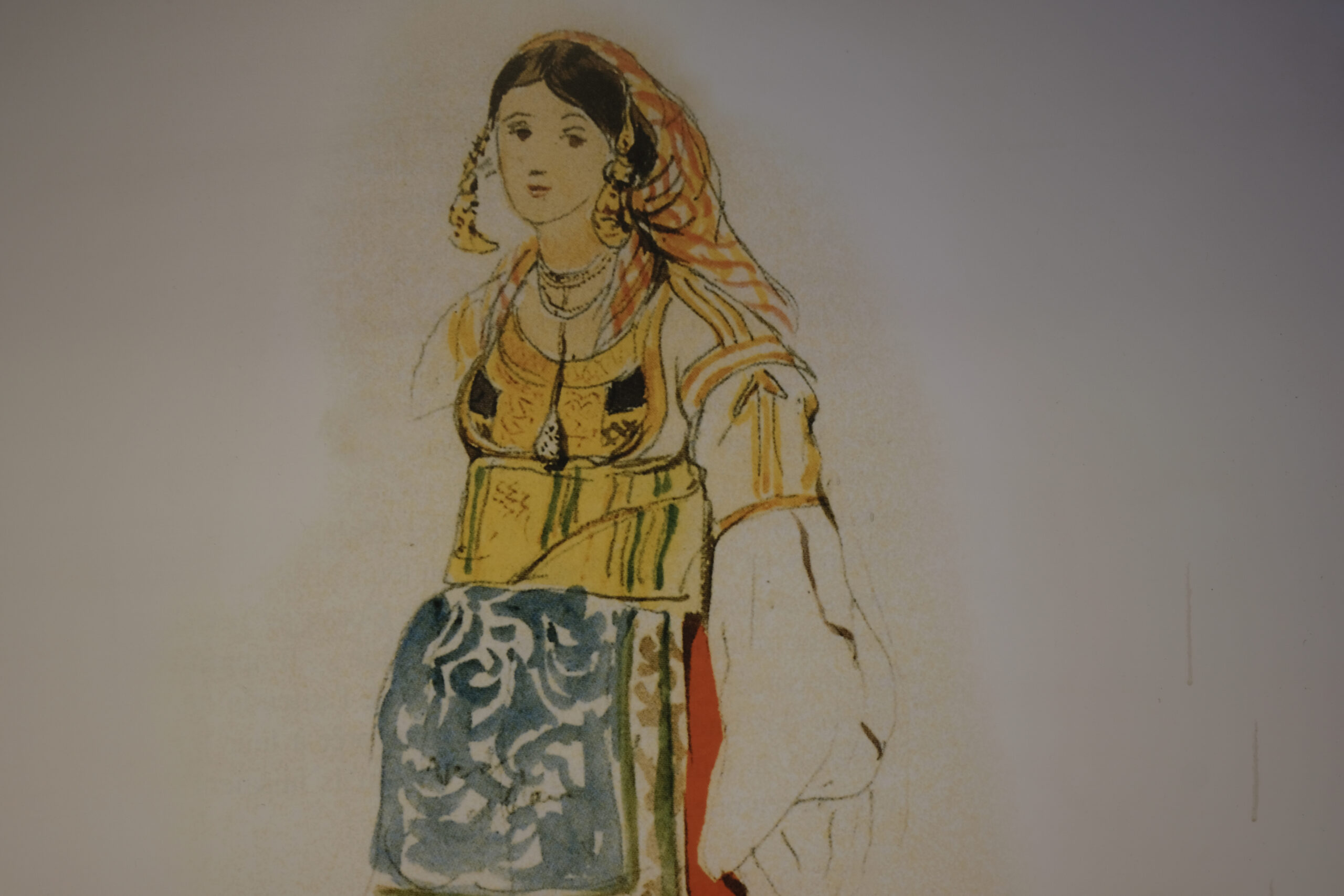
We visited the Andalusian Gardens which resemble some of the gardens we saw years ago in Andalusia. There are water features and terraces with flower and fruit plants as well as palm trees. The gardens were laid out by the French during colonial times. We then explored the Musée du Caftan et de la Parure (Caftan and Adornment Museum) which is housed in the residence built by Sultan Moulay Isma’il sometime in the late 1700s. The museum opened in 1915 and focused on Moroccan jewelry but now also displays caftans, brocades, and wedding garments of both Muslim and Jewish women as well as male attire complete with daggers and swords.

We spent the rest of the afternoon walking in the Kasbah and surrounding environs, including a cemetery. However, our wanderings weren’t without encounters, as a local guide unexpectedly joined our path, offering insights into the Kasbah’s cultural symbols by pointing out to door knockers that had either the hand of Fatima (symbolizing the residence of a woman) or the scissors (symbolizing the residence of a man). He would not stop talking until Albert shut him up with some dirhams.
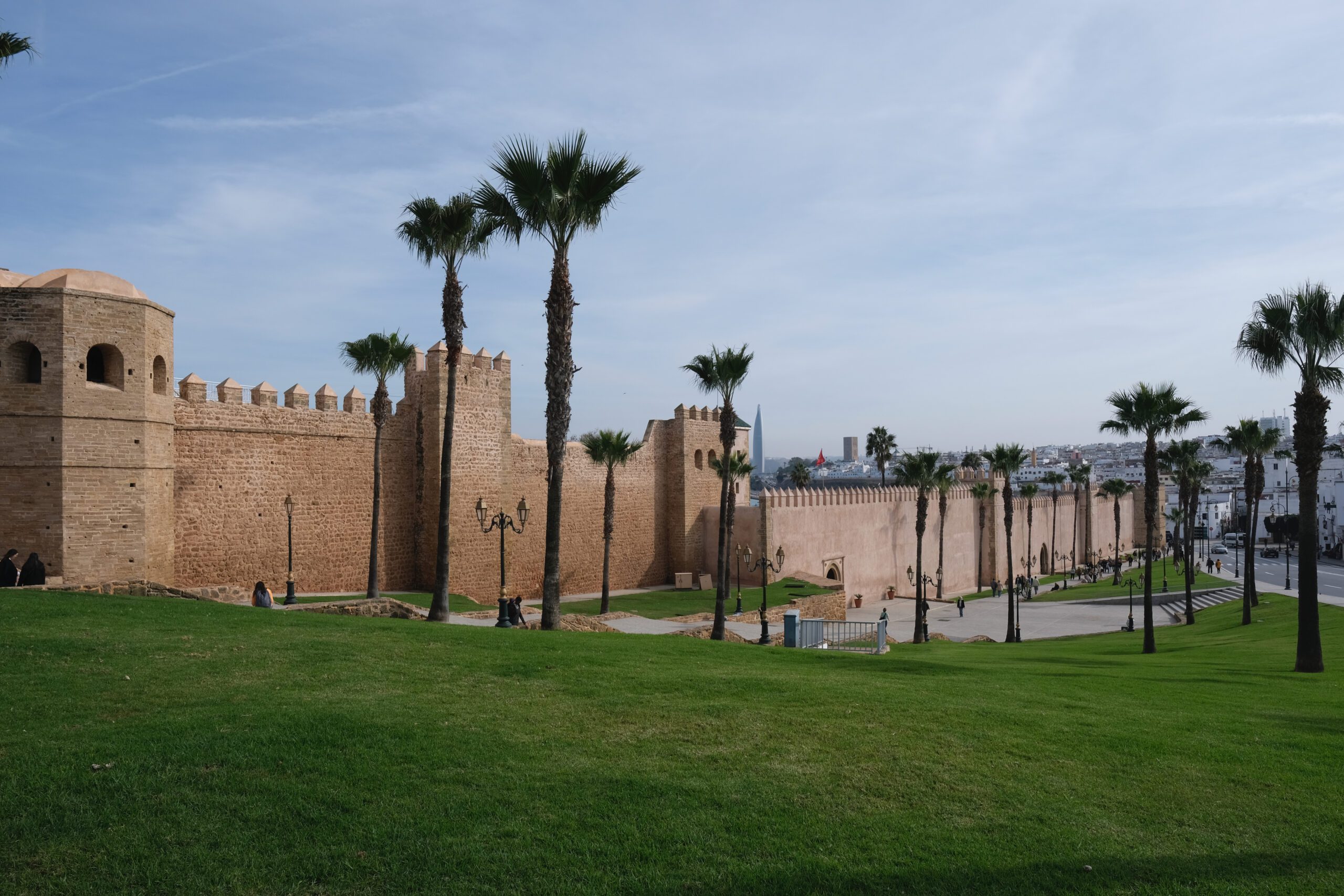
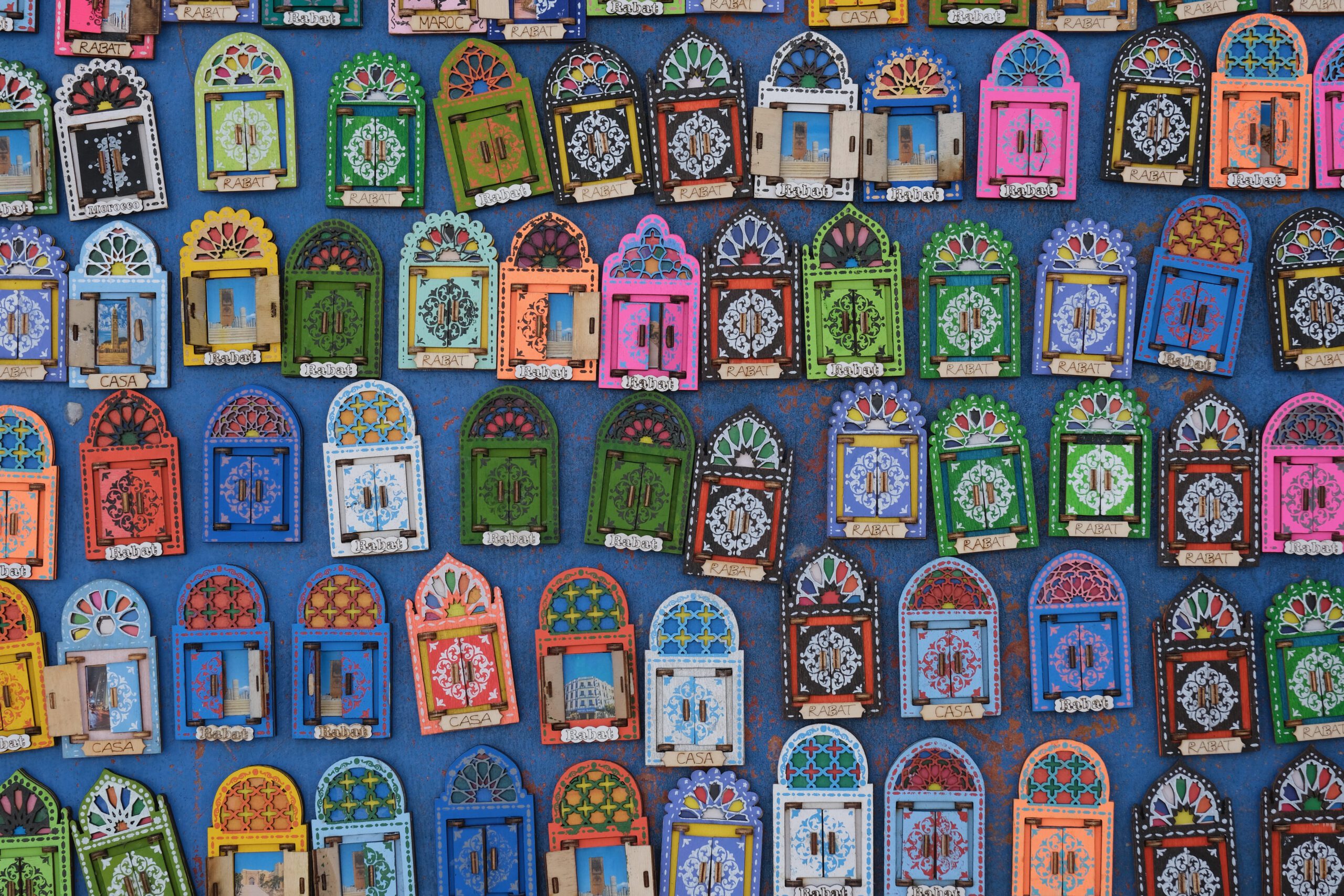
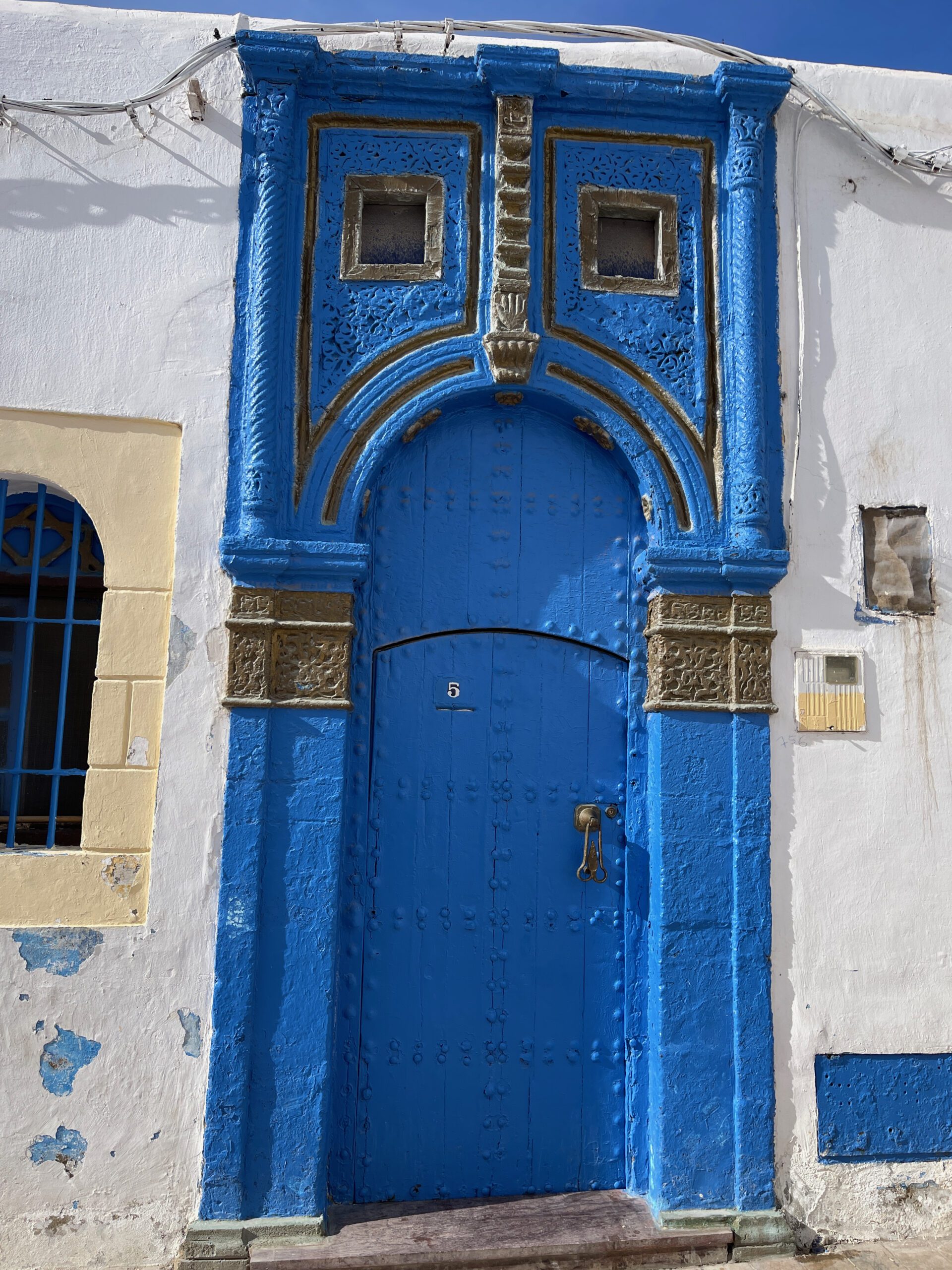
Concluding our day, we meandered through bustling souks, returning to our hotel via a short taxi ride that cost a mere 50 cents.
Mosaics, History, and New Acquaintances – December 10, 2023
After departing our hotel, we settled into the elegant Tour Hassan hotel adorned with intricate mosaics and art collections. By 11 AM, we met many of our fellow travelers and our guide, Chris Morrison. Our morning started with a historical walking tour, where Chris highlighted the streets’ early 20th-century gas lighting, now electrified yet retaining their charm. Many buildings subtly showcased a Jewish heritage through symbols like the Star of David or menorahs on door knockers. Intriguingly, all edifices displayed signage in Arabic, Berber, and French—the Berber script resembling the Greek alphabet. A discreet liquor store, inconspicuous in this Islamic state, also caught our attention.
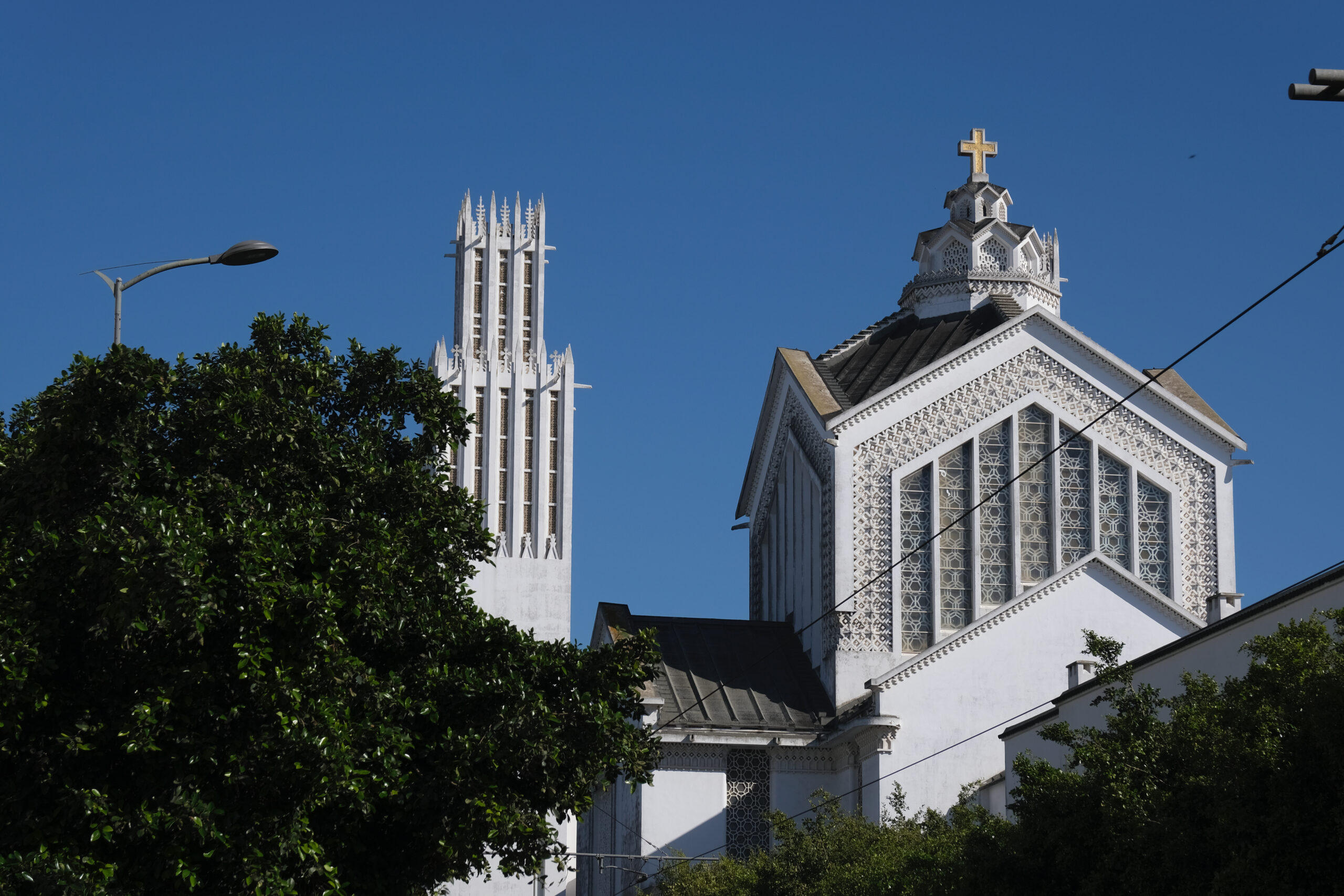
We stopped by St. Peter’s Cathedral, a Catholic church and seat of the Bishop. A service in progress prevented our entry. The church was designed by two Jewish architects whose designs made the church look like a synagogue. Two bell towers were built later and include bells that were made in a foundry in Paris. The bells are seldom used.
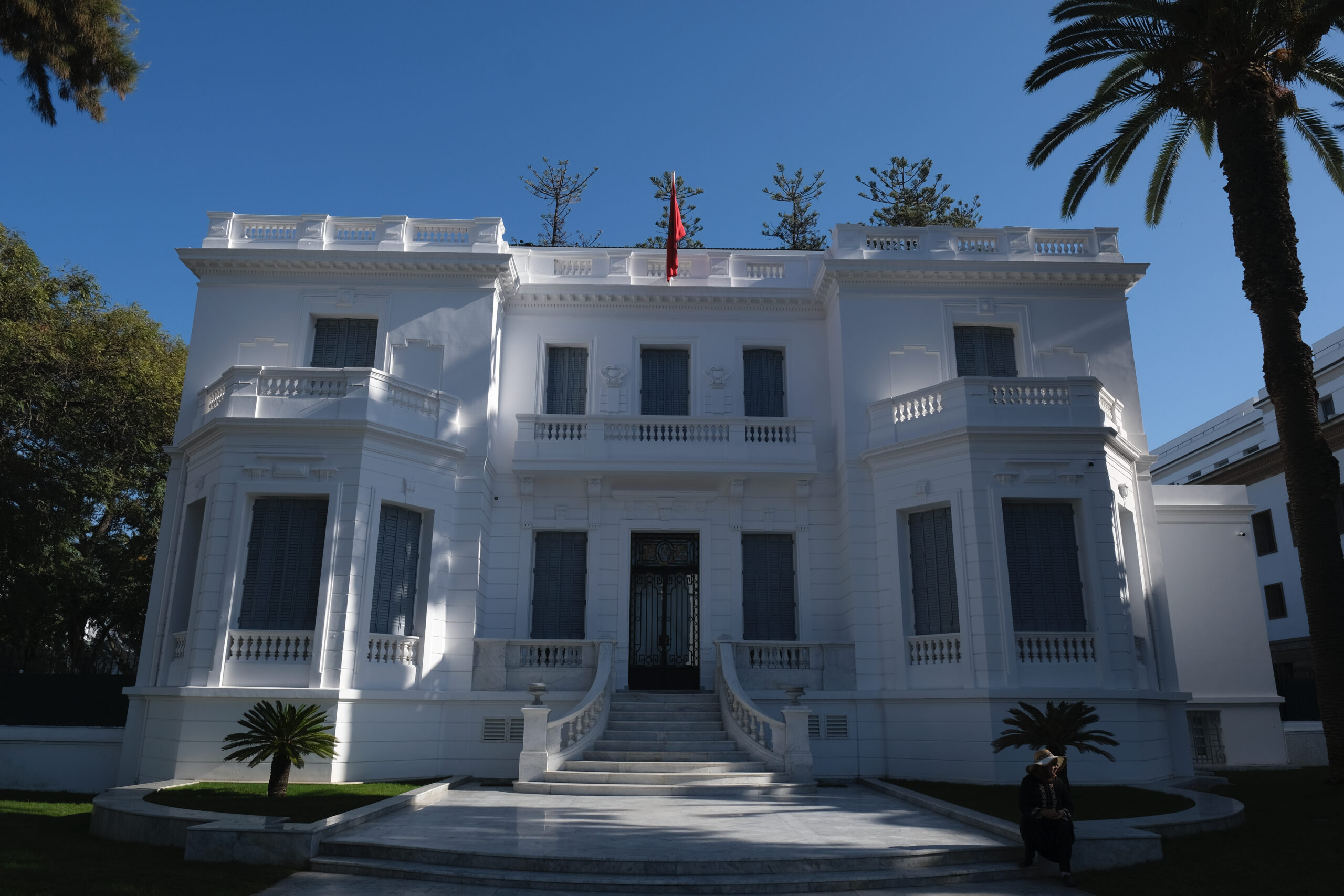
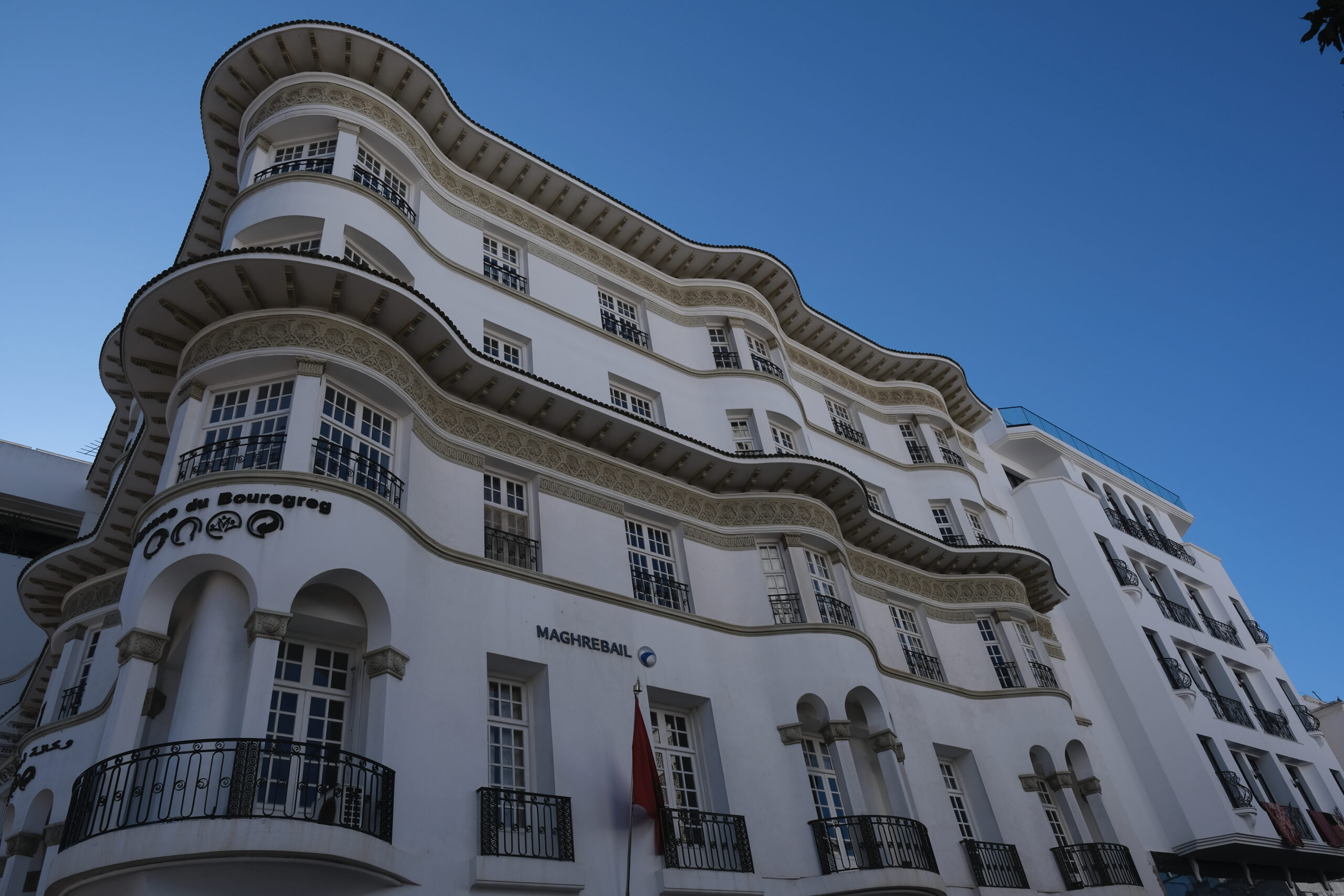

We passed by the Moroccan parliament where a sizable pro-Palestinian demonstration was in full swing. We stopped at a café to have cake and coffee or tea. Here we were introduced to nous-nous, (typically half milk and half expresso coffee), a Moroccan specialty. We socialized with some of our fellow travelers and got to know them better. One person in the group lost his luggage in transit. It’s still in Paris, although he is in Rabat.
This evening we had our welcome reception in the hotel with the full group. The dinner was quite a feast, with several starters, two tagines, and plenty of desserts.
Another Day in Rabat and on to Fes – December 11, 2023
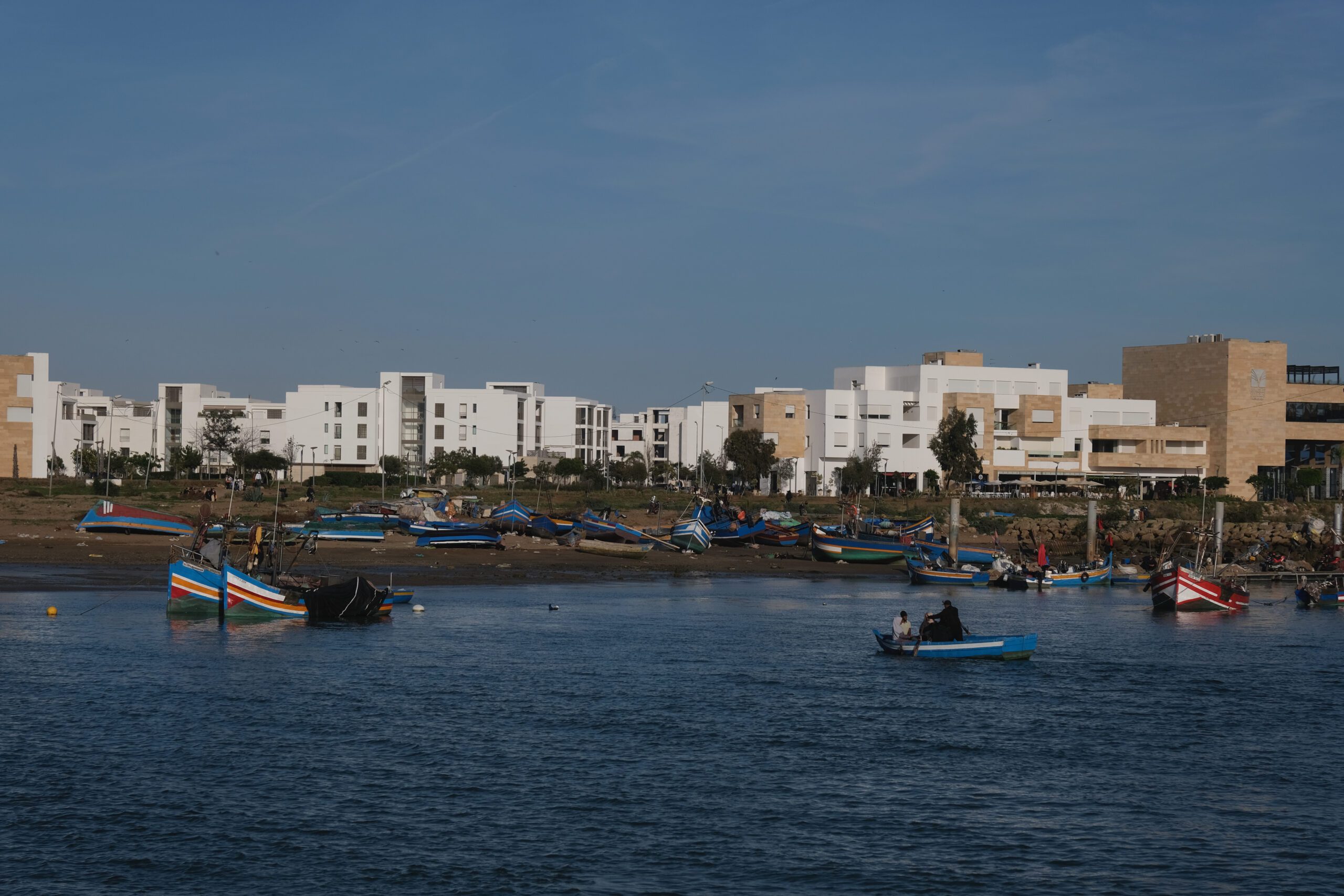
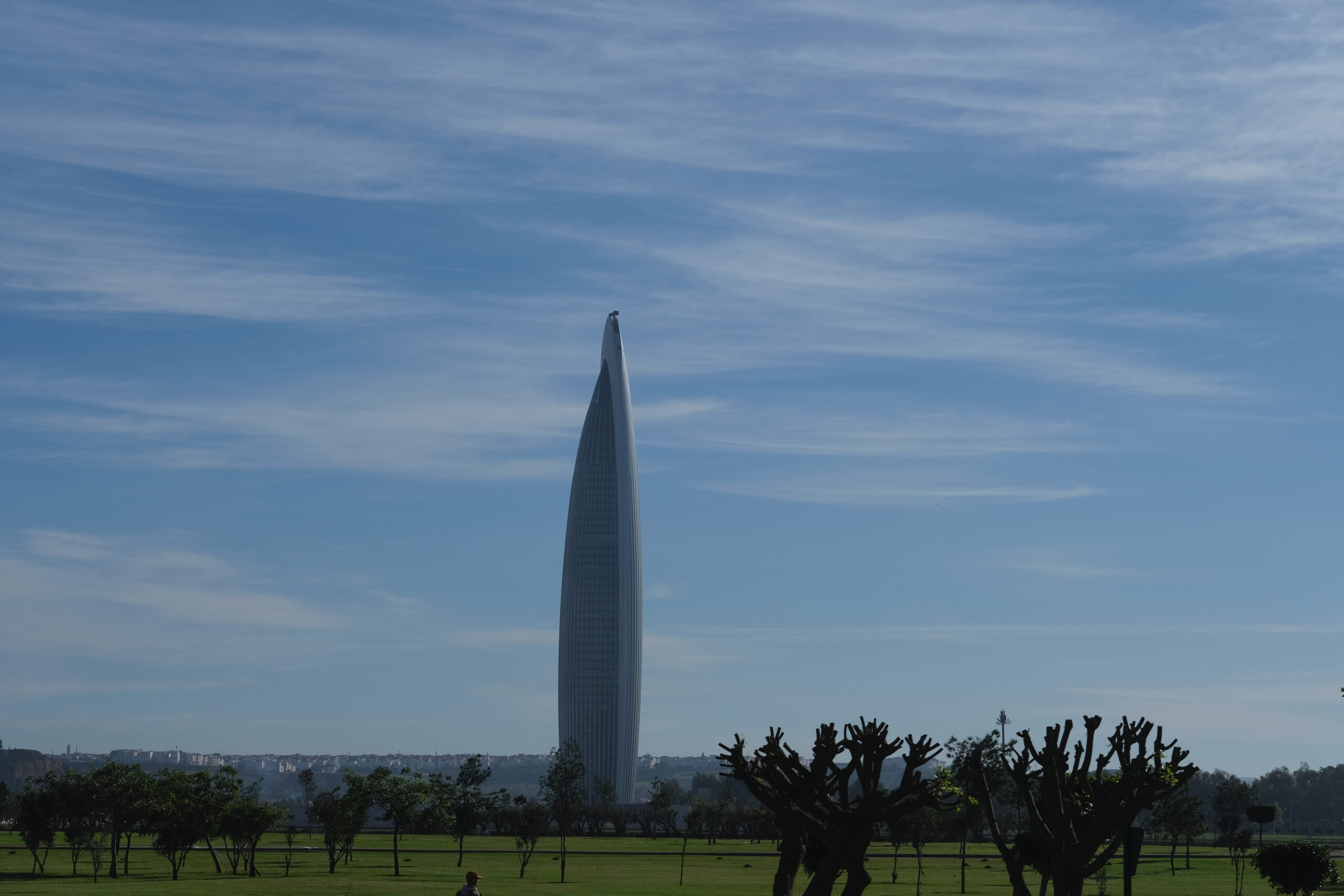
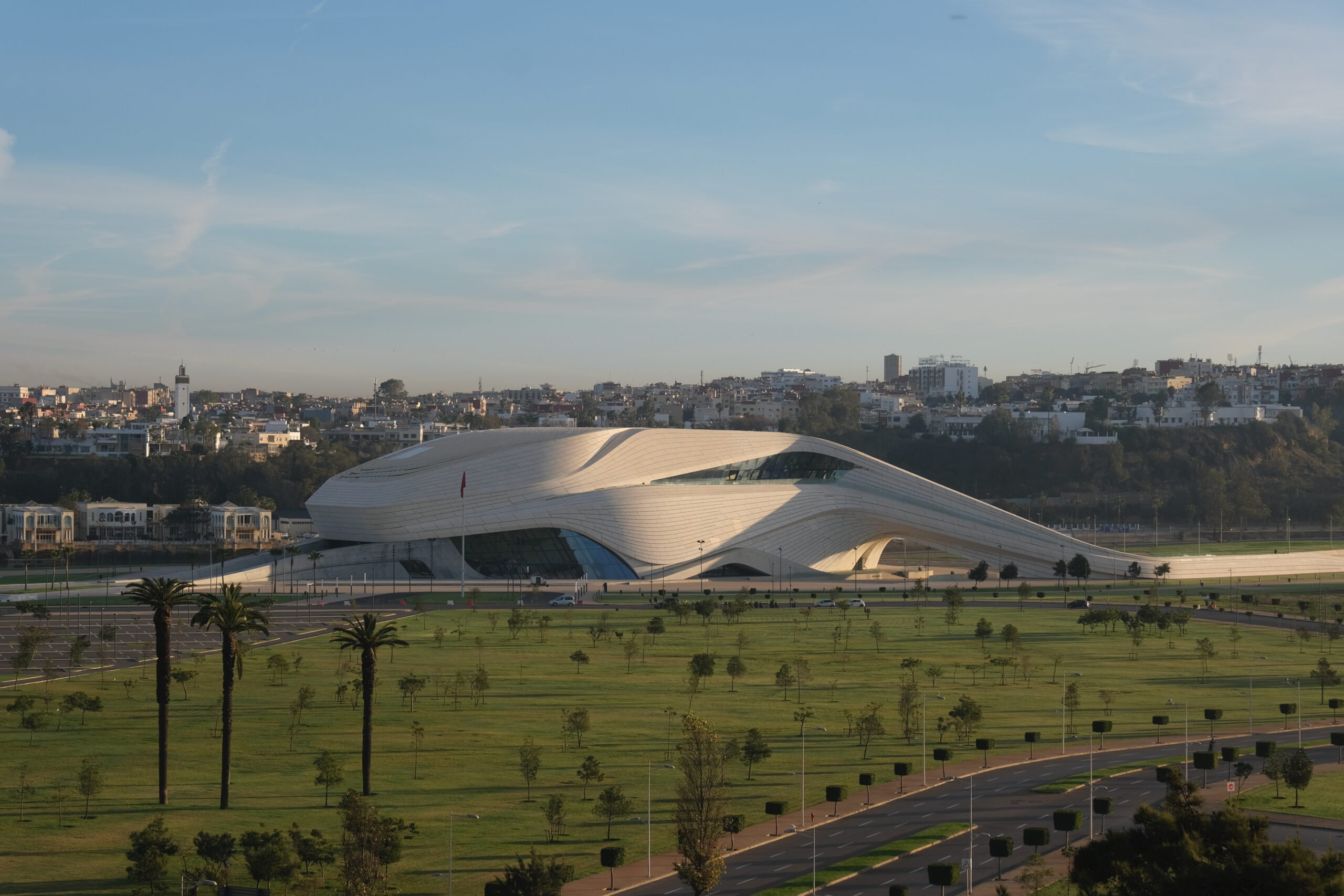
We left the luxurious Tour Hassan Hotel to explore Rabat, Morocco’s capital and the Hassan Tower, one of the country’s nine UNESCO World Heritage sites. We drove through the Royal Palace gardens, and then passed the Mohammed VI Tower (55 stories tall skyscraper housing high-end apartments and a luxury hotel) and the Grand Theatre of Rabat, also known as the Wave, which was designed by the late Zaha Hadid. It is the largest auditorium in Africa and in the Arab world. Both these buildings are on the banks of the Bouregreg river.
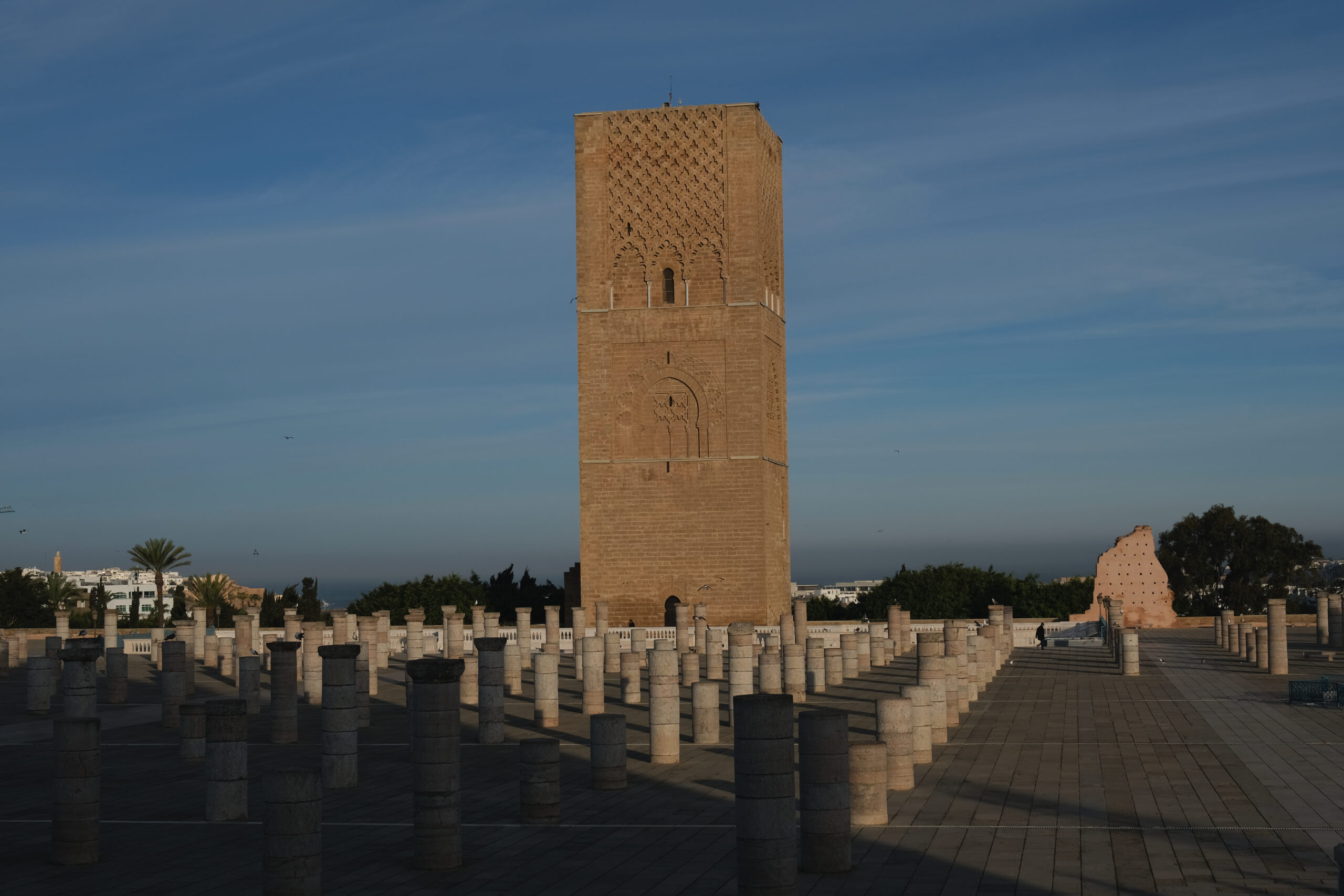
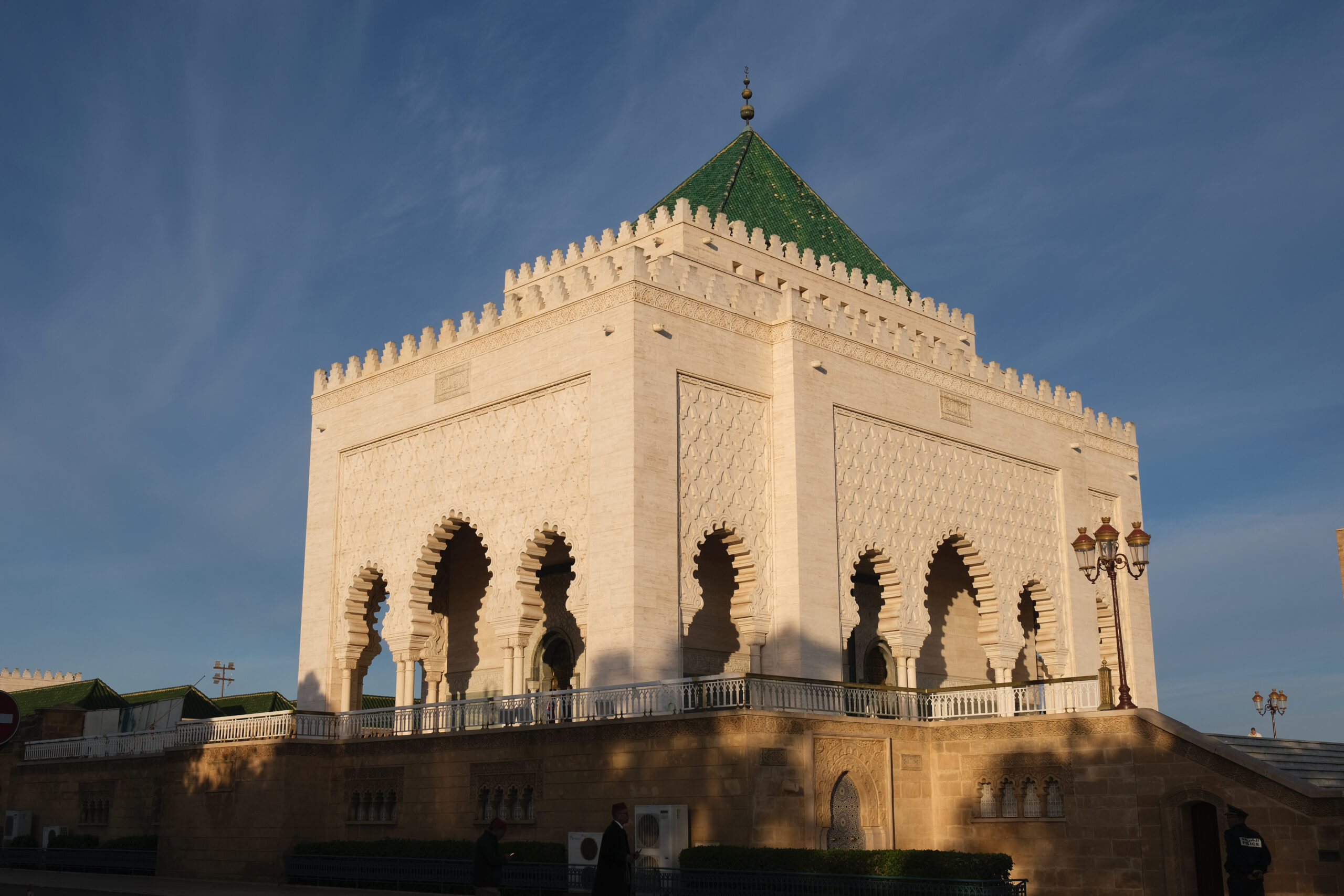
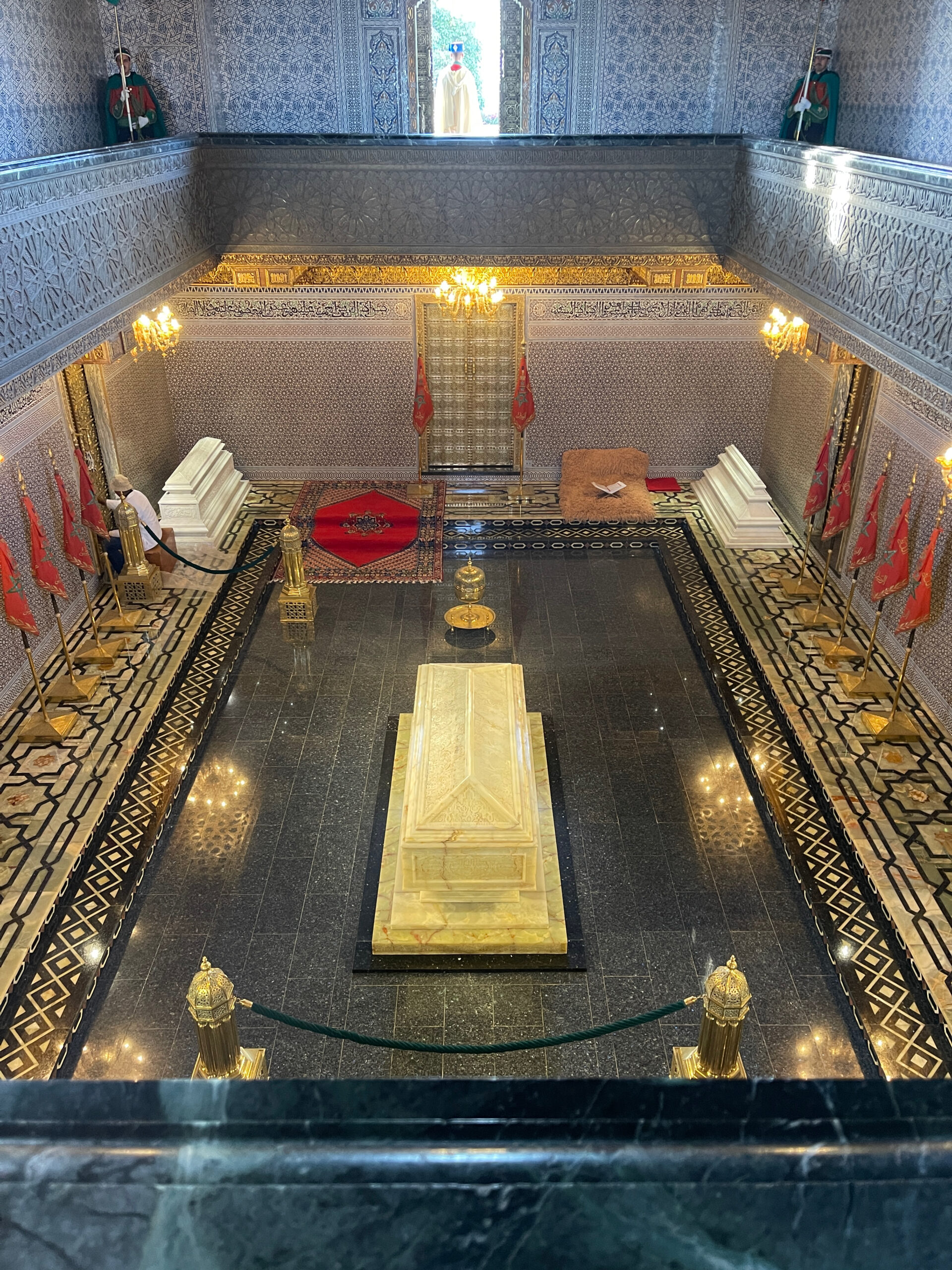
Our first stop was to the iconic Hassan Tower, a testament to Abu Yusuf Yaqub al-Mansur’s (the Almohad Caliph) vision. Though left unfinished due to the capital’s shift to Marrakech after Mansur’s death, its significance remains undiminished. We next visited the majestic mausoleum of Mohammed V, a masterpiece of Arab Andalusian architecture designed by Vietnamese architect Vo Toan. Adorned with intricate mosaics, brass doors, and a resplendent mahogany and gold dome, it houses the tombs of the revered king and his two sons.
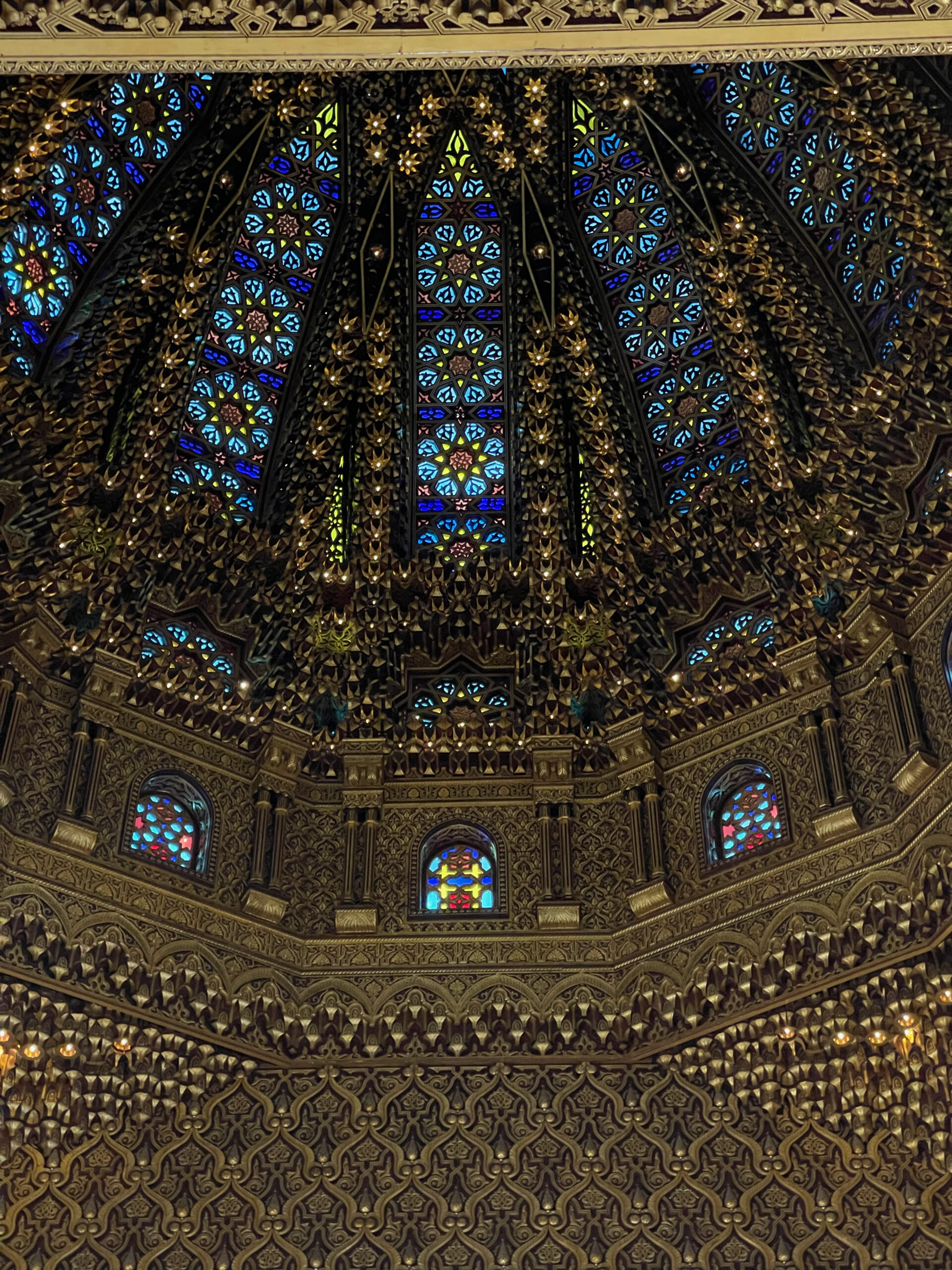
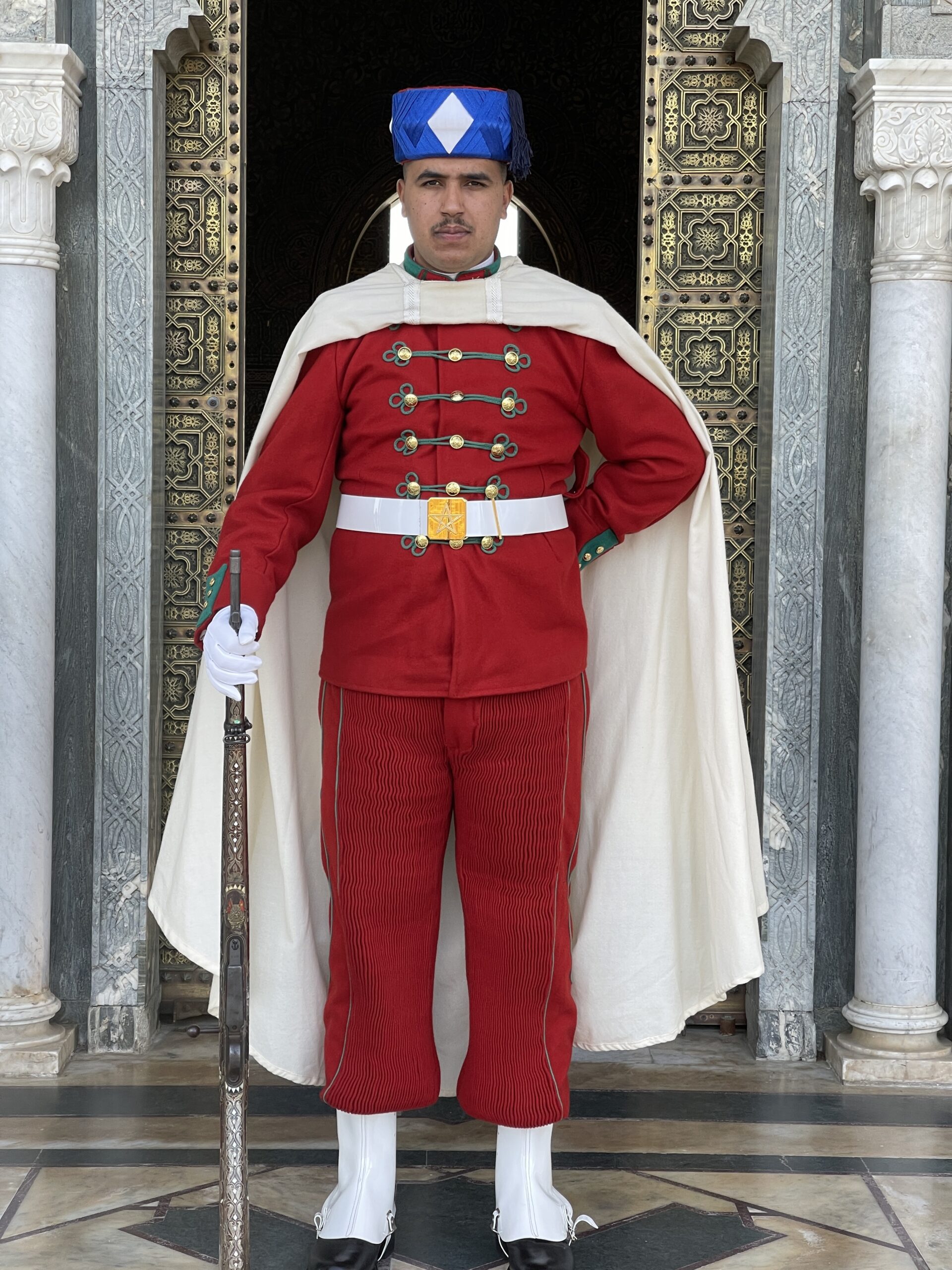
From the mausoleum we drove to the Kasbah des Oudayas. The cats were out in full force, sunning themselves and oblivious of us. We had mint tea and cookies on one of the terraces next to the Andalusian Gardens. Our impression of Rabat is that it is a very green and clean city achieved by the recycling of water and quite liberal for an Islamic country.
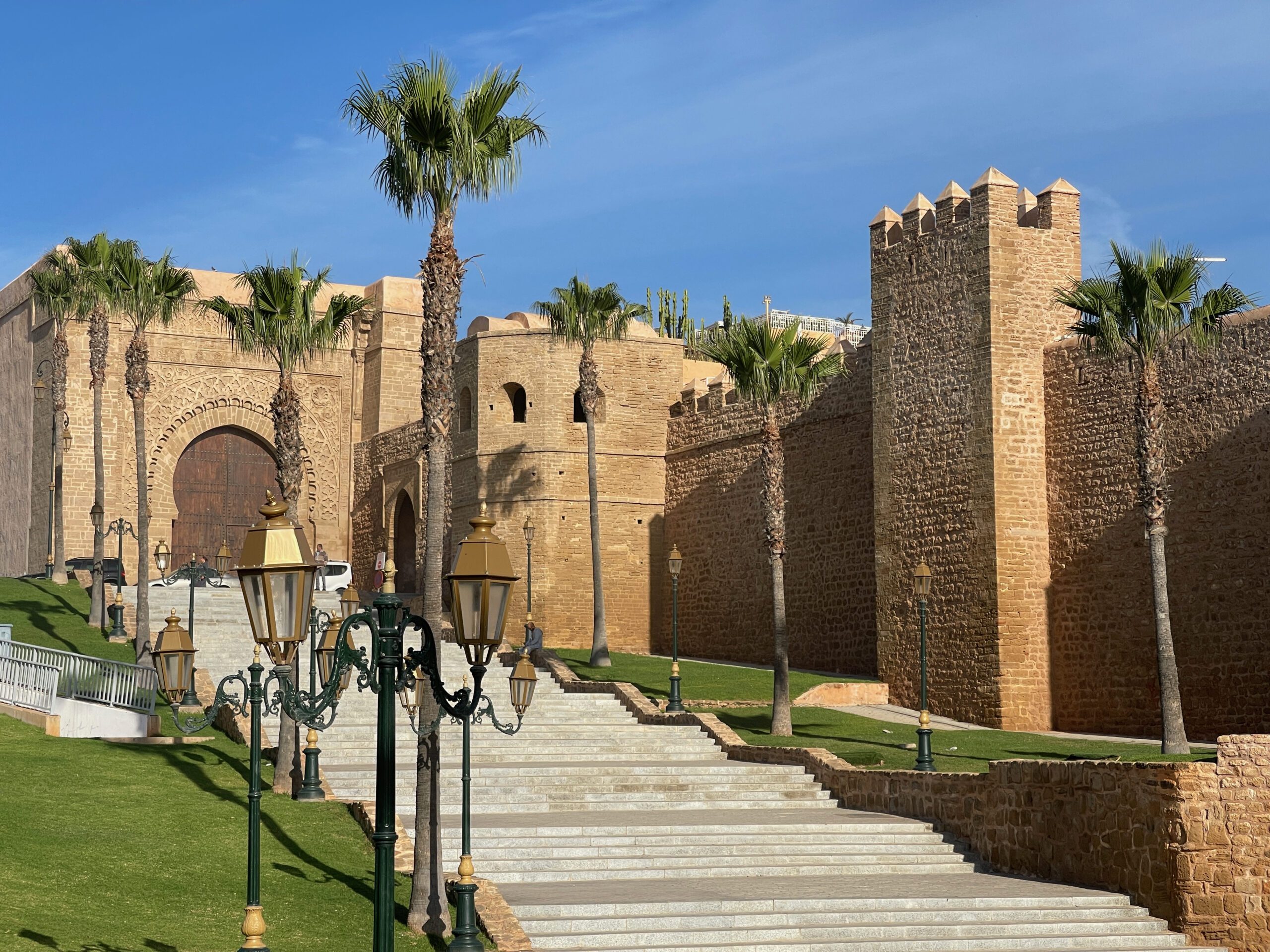
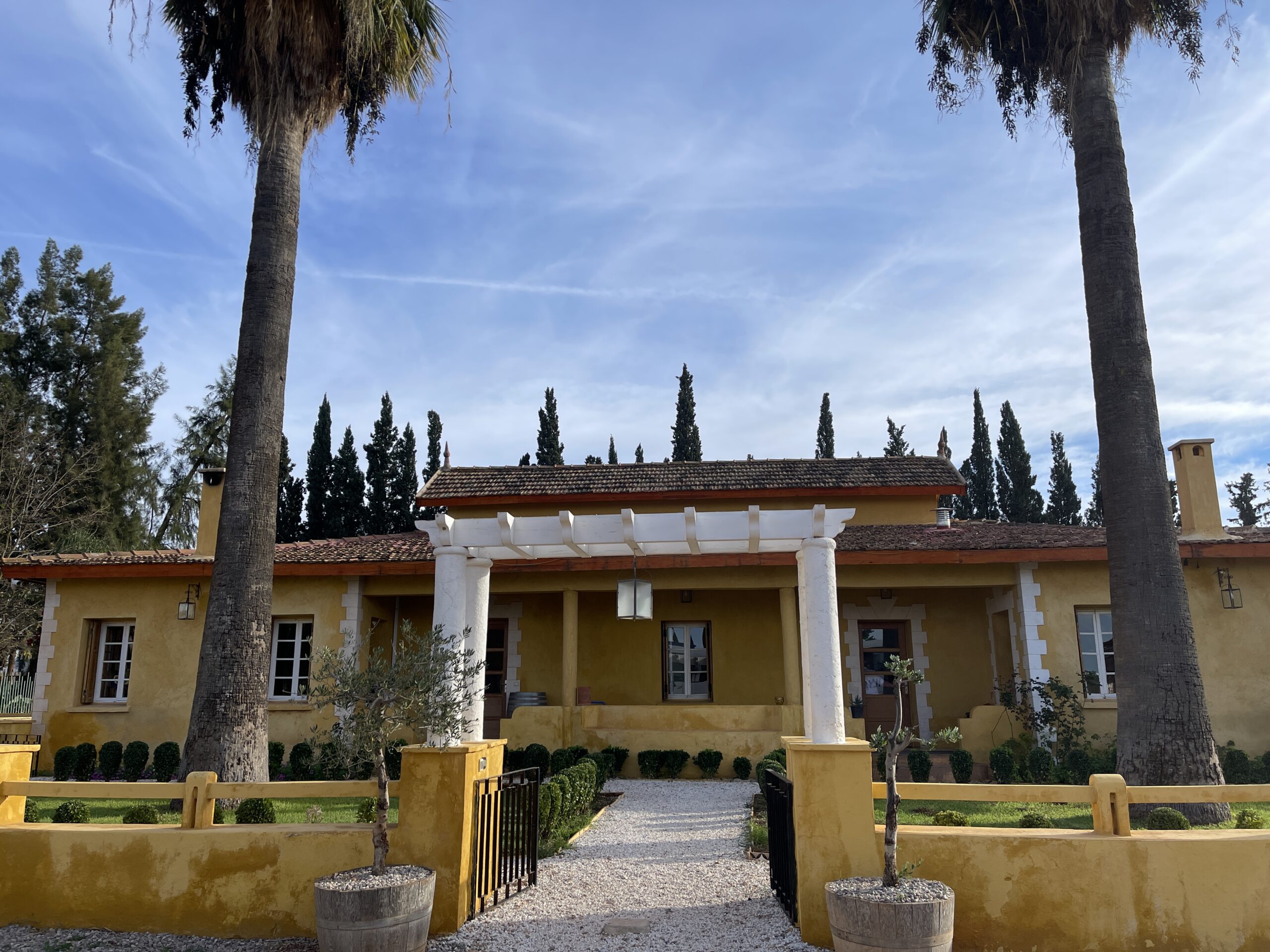
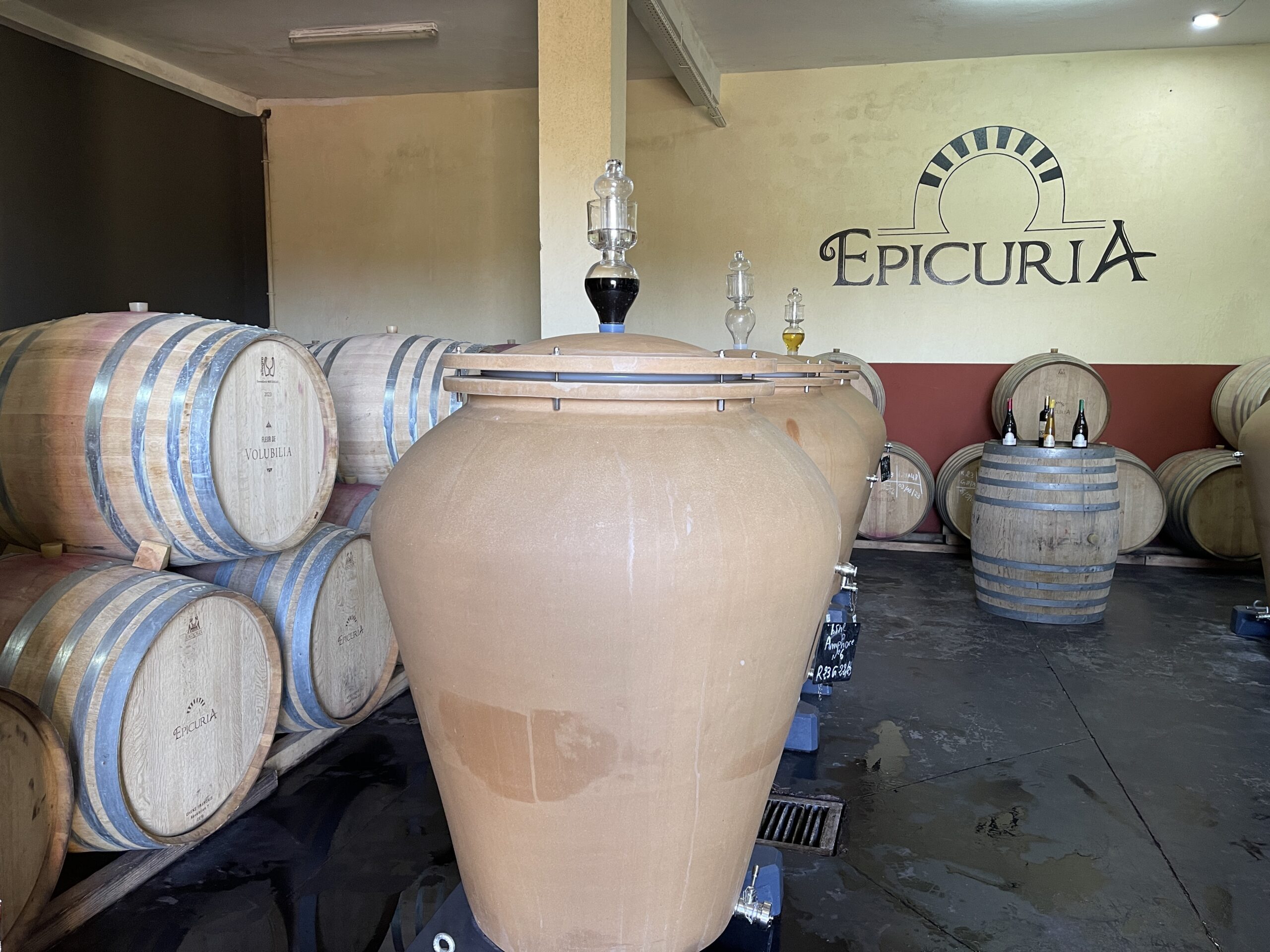
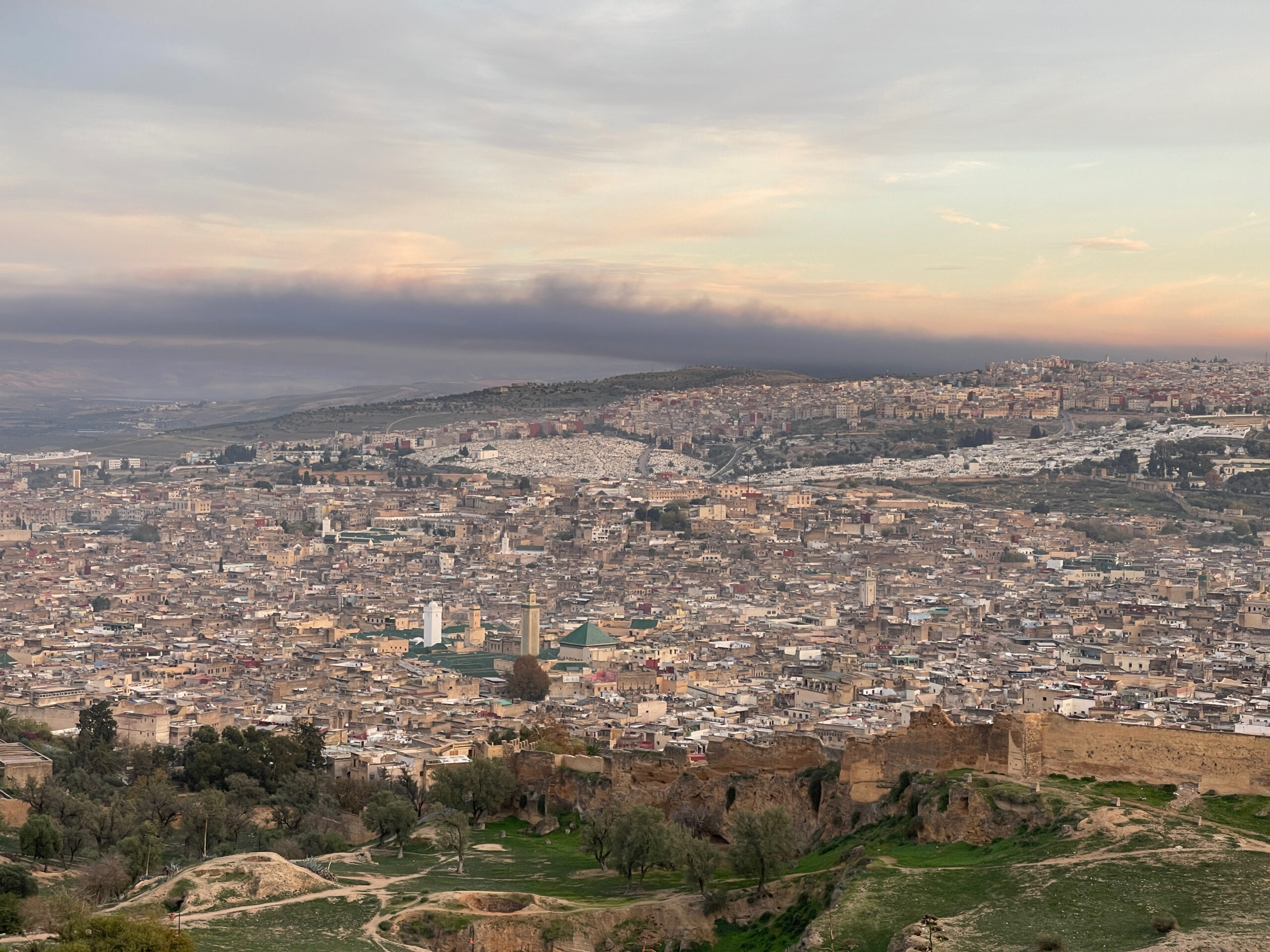
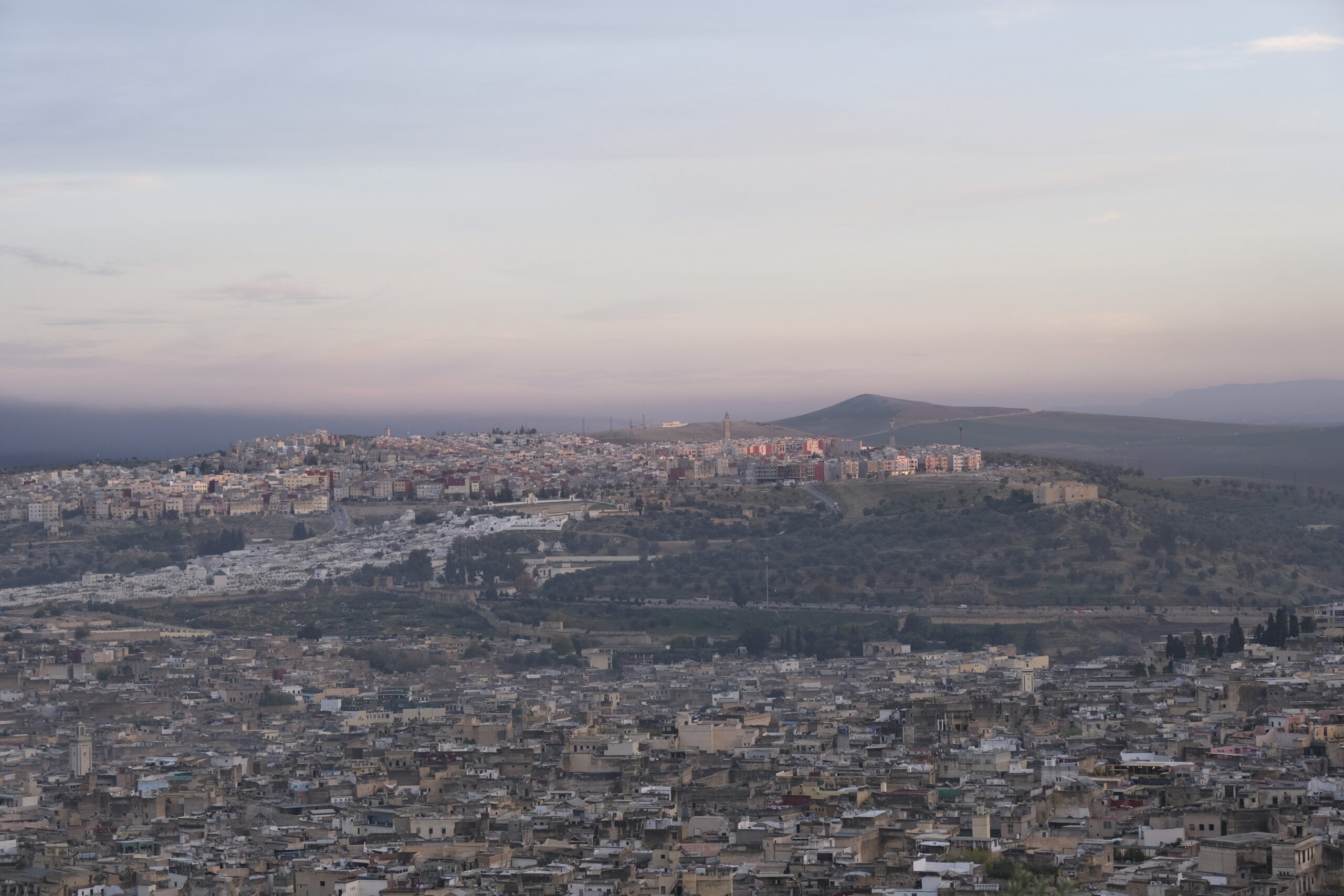
En route to Fes, we saw cork tree plantations. Morocco is the third largest producer after Portugal and Spain. Our next destination was a winery in Meknes called Domaine de la Zouina. They grow many different varietals and ferment wine in concrete tanks to keep the wine fresh. They also age the wine in clay barrels like the Phoenicians used to do. This results in an earthier wine. We tasted three types of wine and then had lunch and consumed more wine. The wine blends are Volubilia and the single varietals are called Epicuria. After lunch of chicken tagine with olives and preserved lemon, we continued on to Fes. Along the way, we stopped for a photo op overlooking Fes el-Bali, the walled medina of Fes dating back to the 8th century and the 9th century University of Al-Karaouine, considered to be the oldest continually operating university in the world.
The Souks & Bazaars of Fes – December 12, 2023
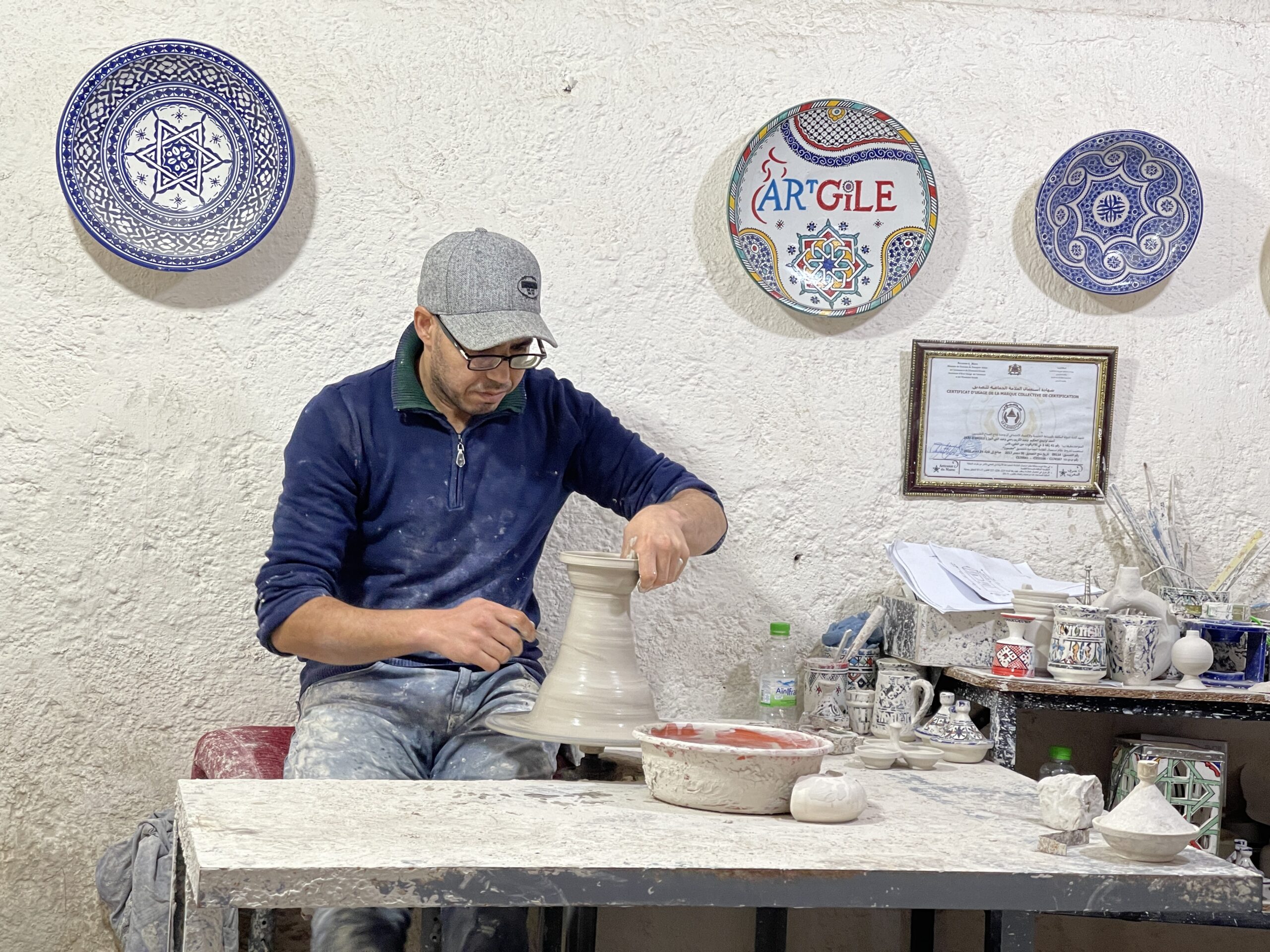
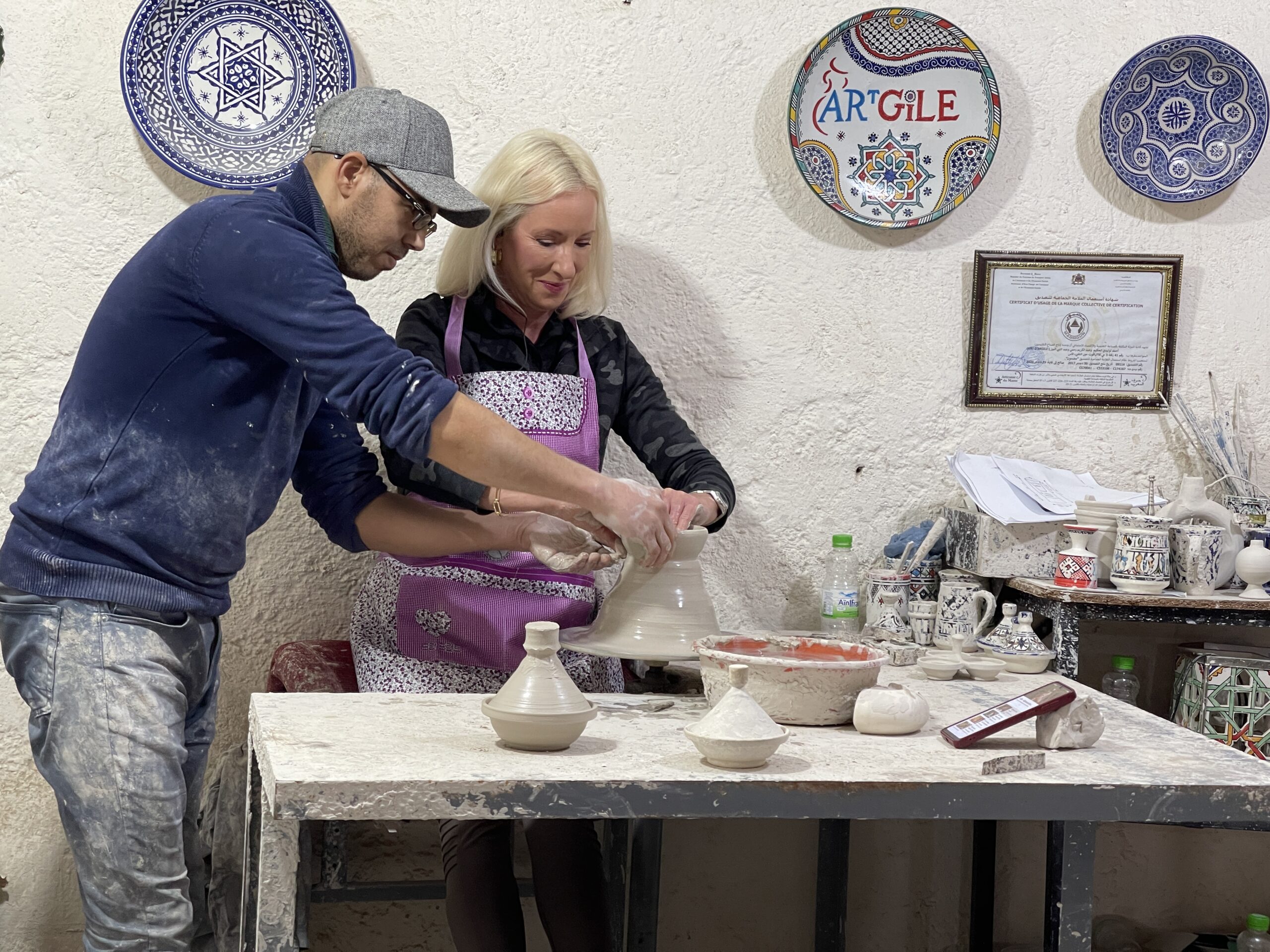
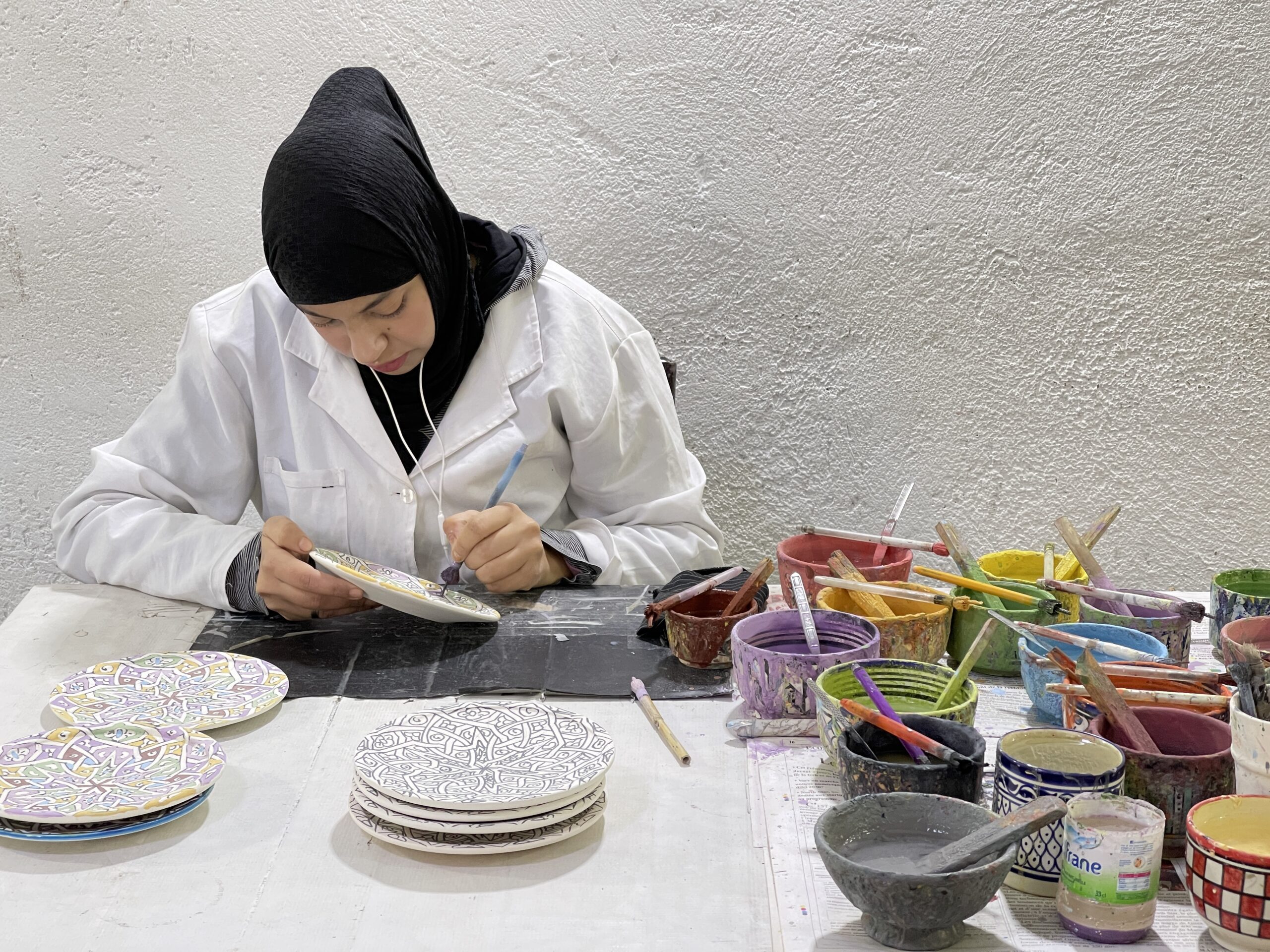
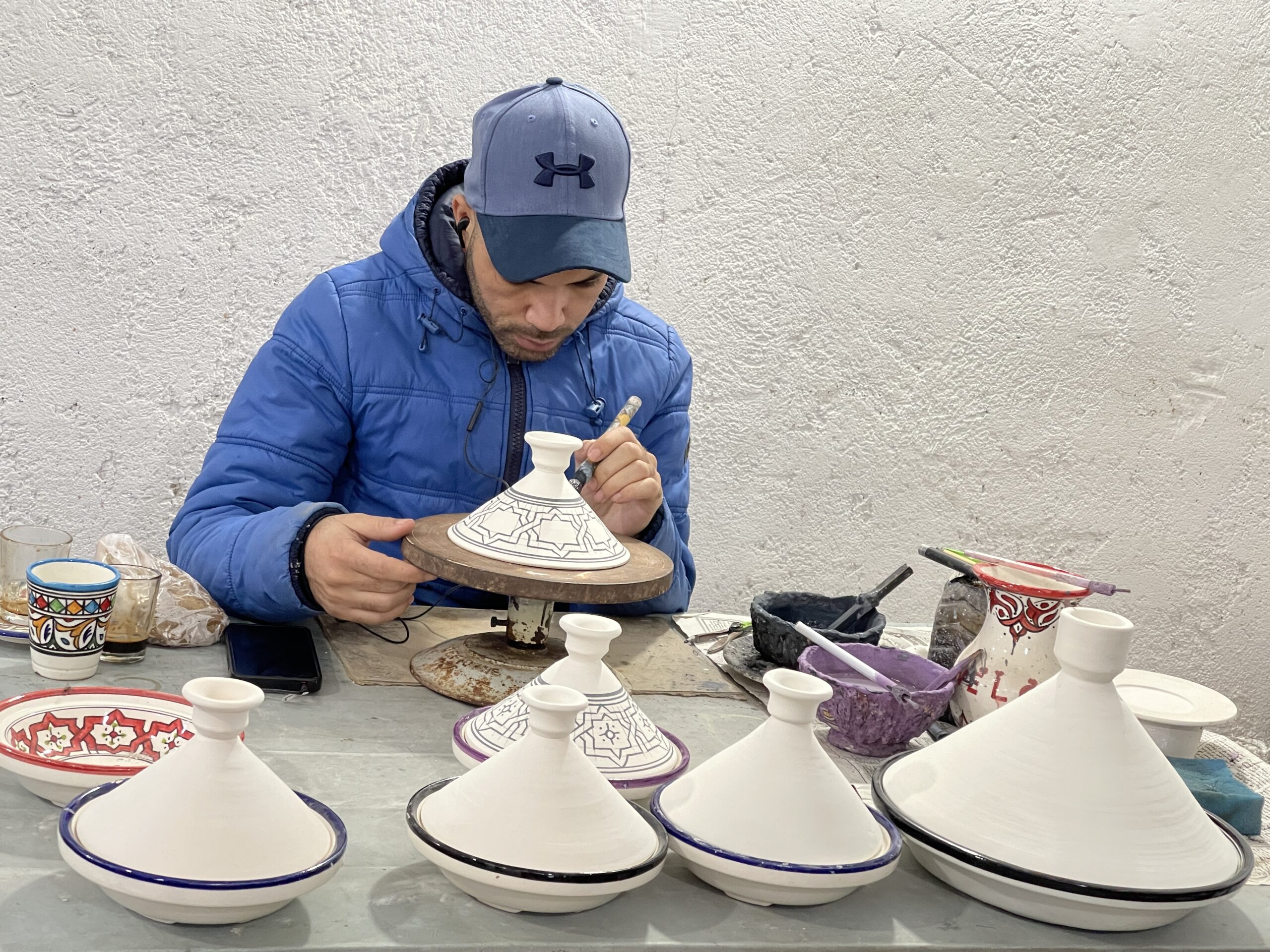
Our day began with a short drive to the medina of Fes, another UNESCO World Heritage site. Our first stop was to a ceramic workshop to see how Morocco’s famed pottery and zellige tiles are produced. Artisans use volcanic grey clay to produce white pottery on which designs influenced by Berber, Arabic, and Jewish traditions are painted. Witnessing artisans meticulously craft mosaics and tiles offered insight into the intricate patterns adorning Morocco’s landmarks.
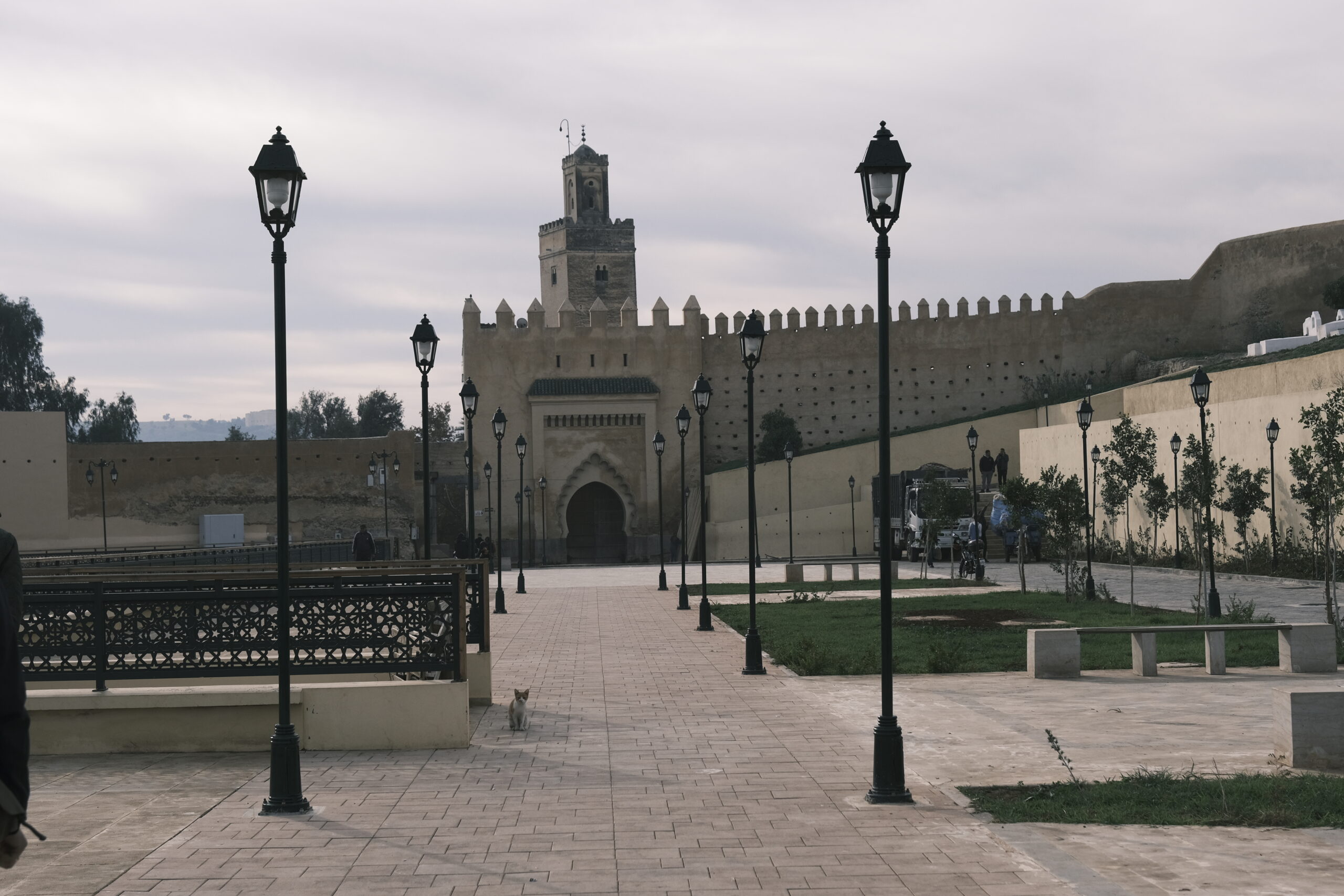
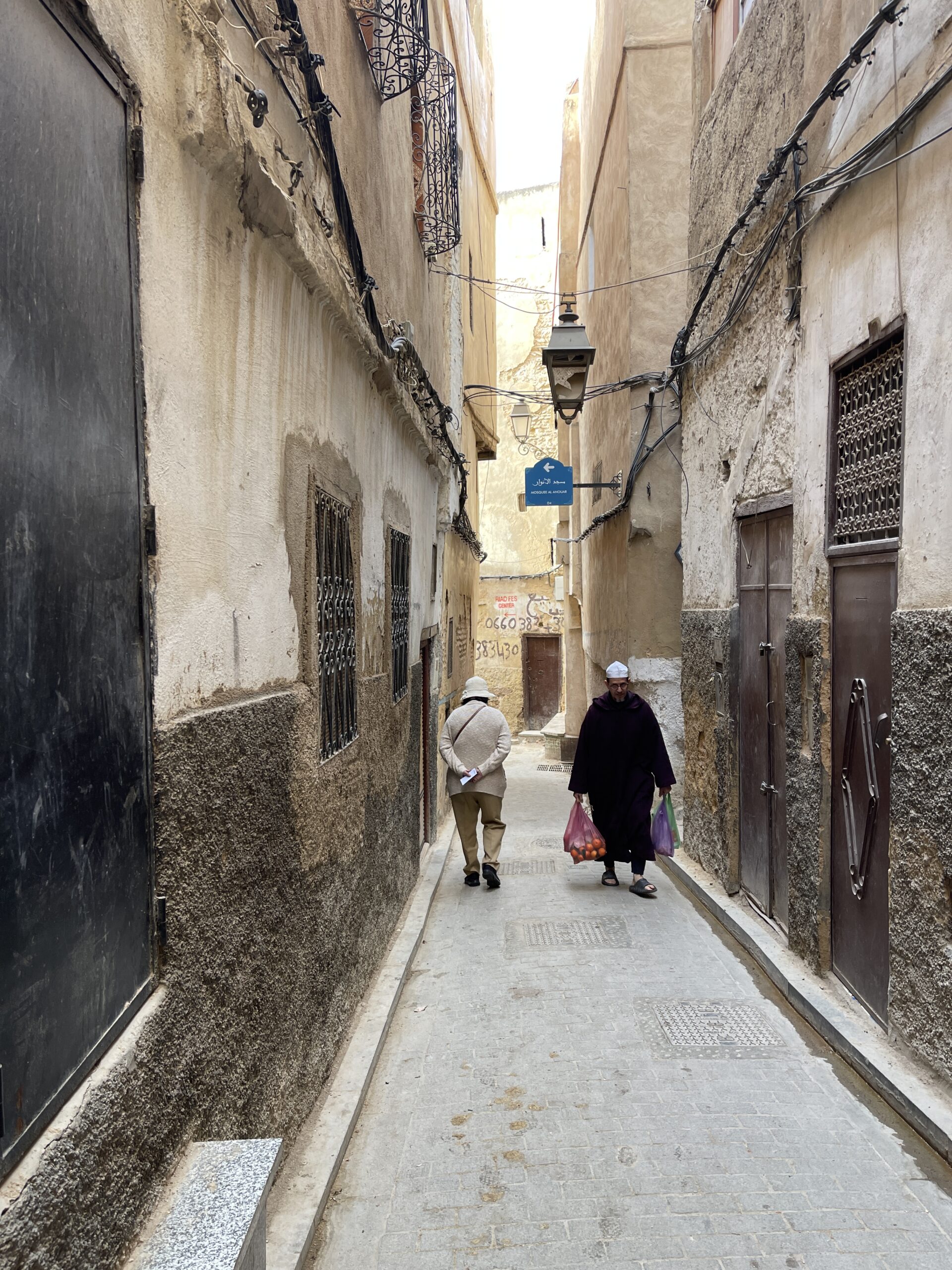
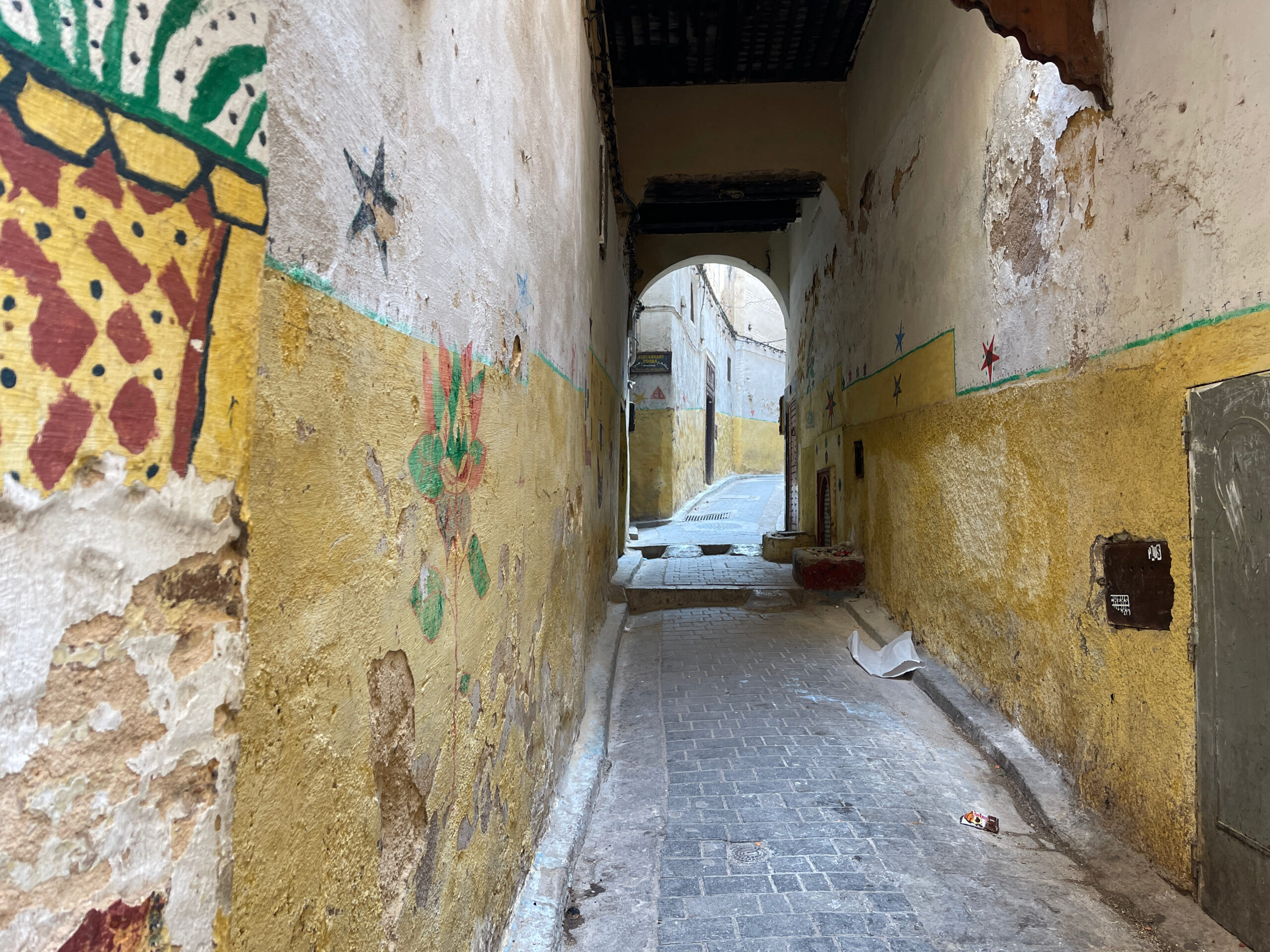
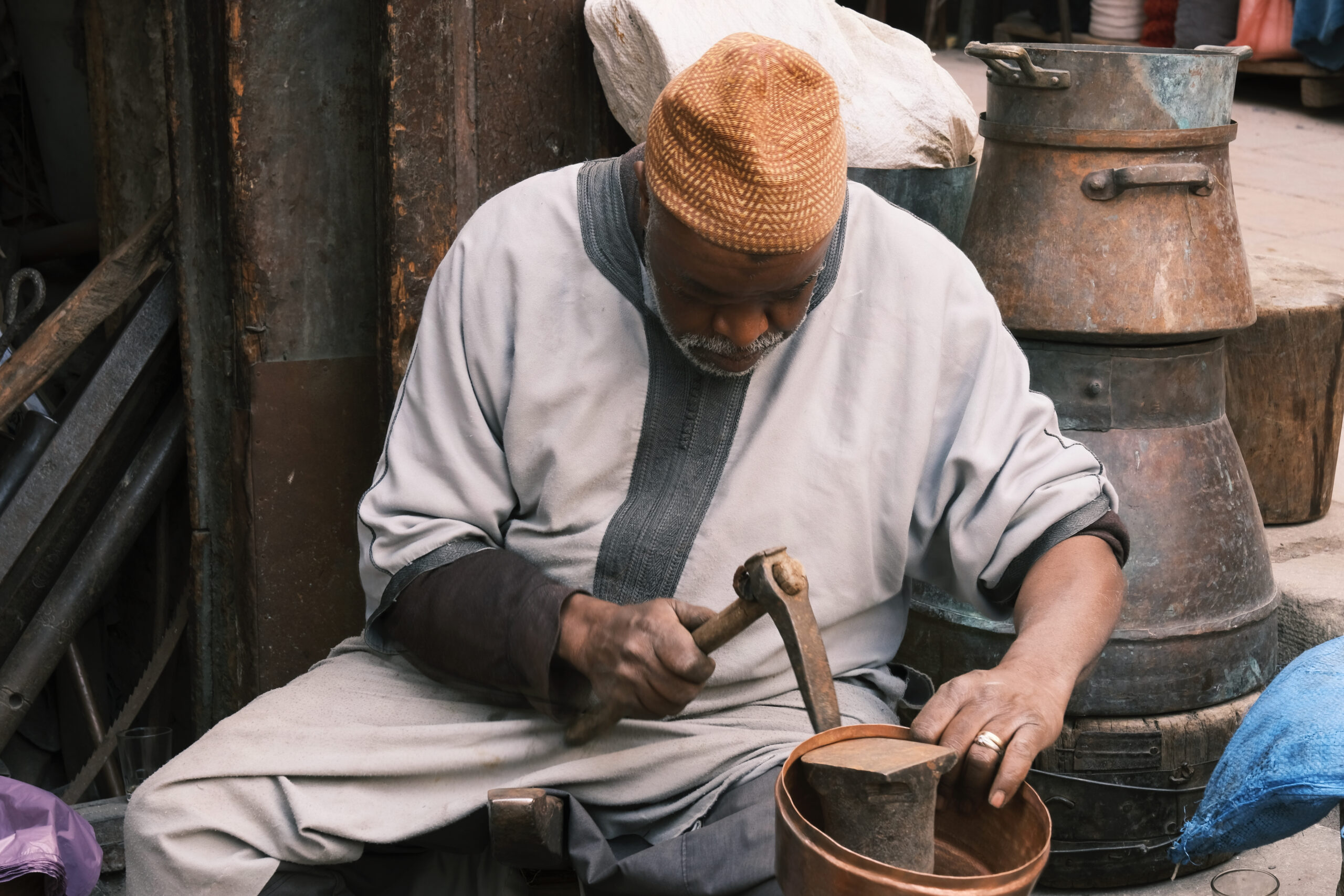
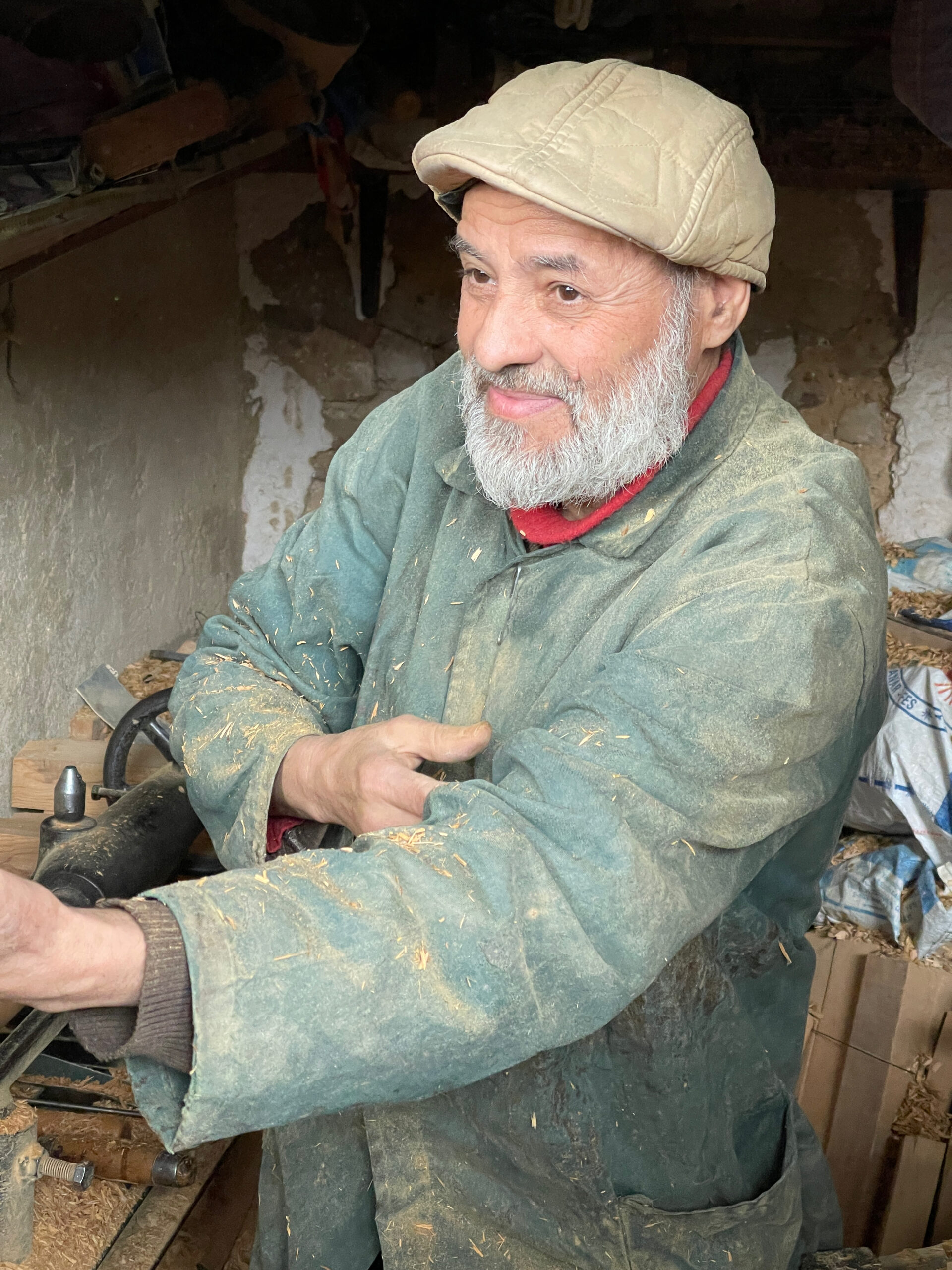
We entered the medina through the 11th century Bab Guissa Gate and began navigating a few of its 9,000 alleys. The area around the gate was once renowned for its bird market, and we observed racing pigeons for purchase and found out that this is a favored sport among local teens. We watched artisans crafting intricate cedarwood furniture with rudimentary tools. We made a brief stop to savor fava bean soup while dodging donkeys, carts, motorcyclists, and cats.
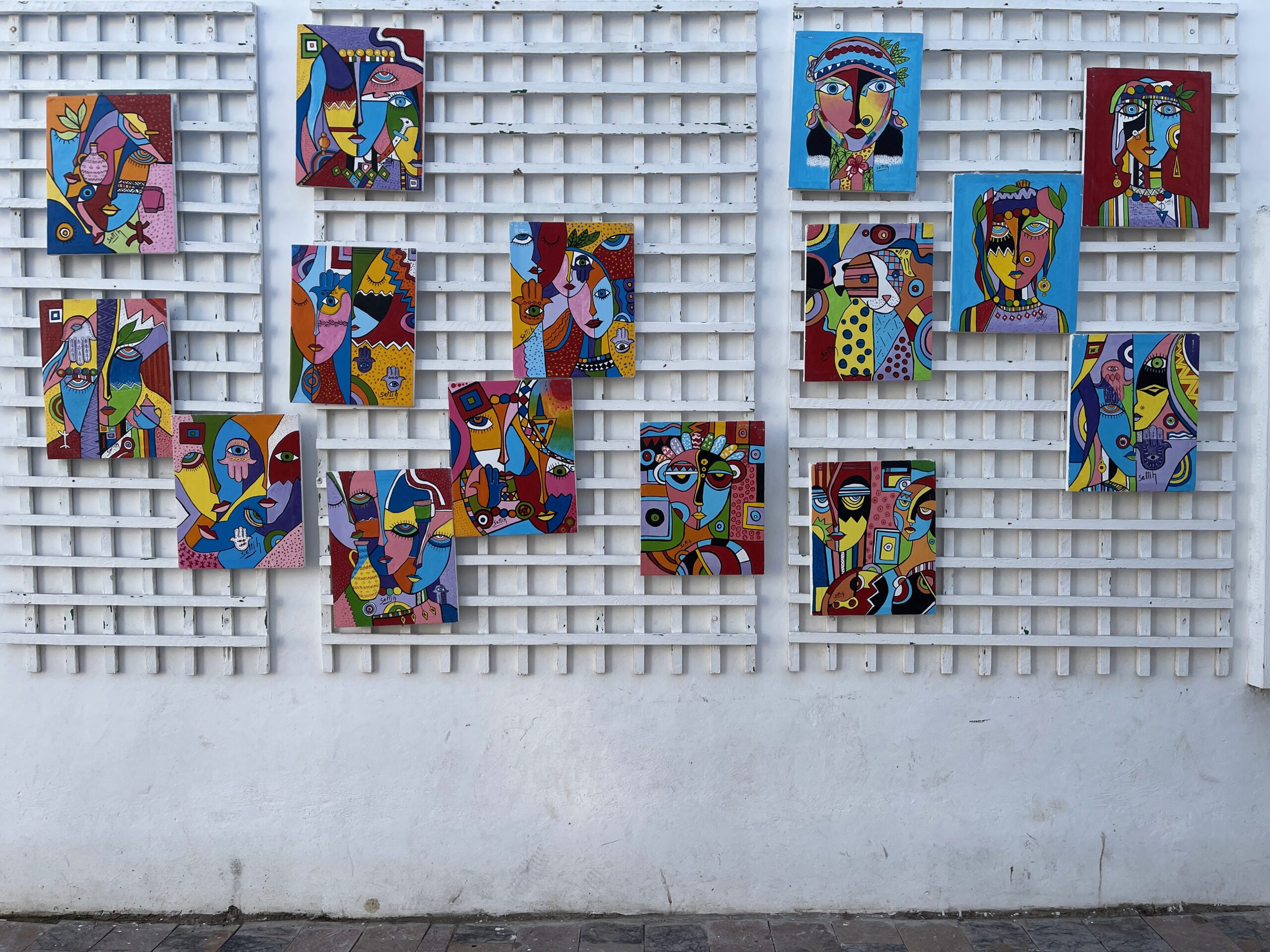
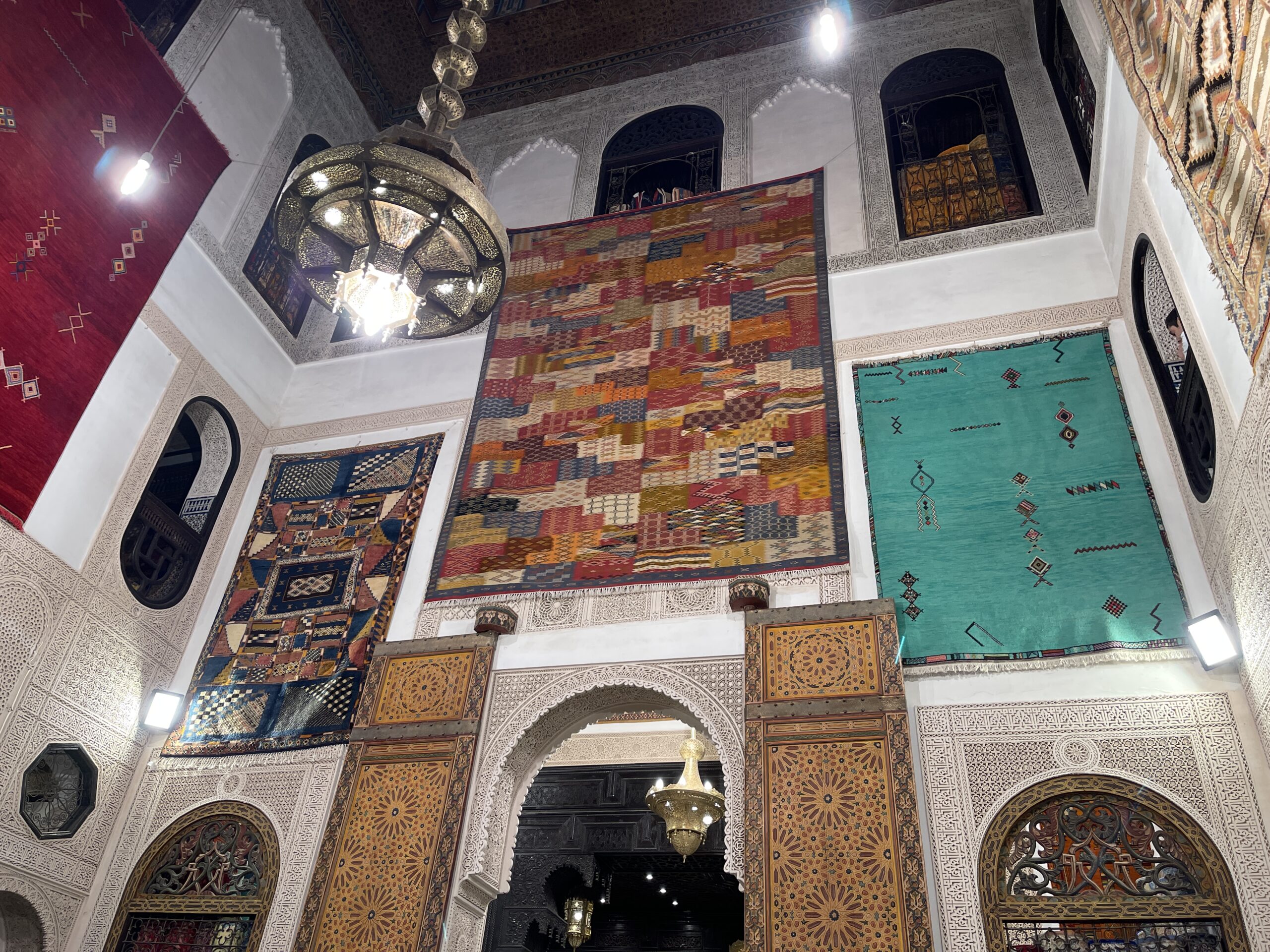
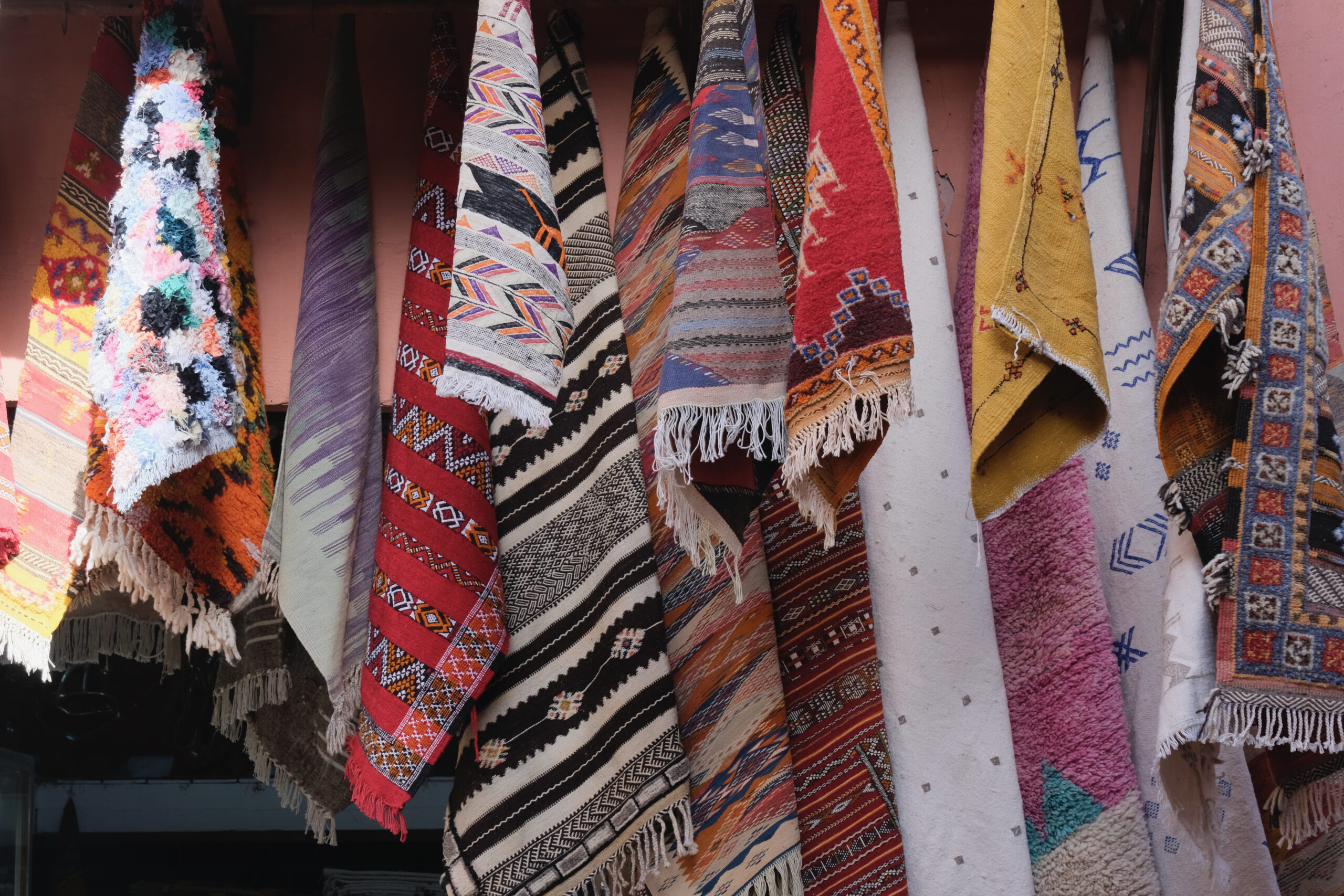
Next, we stopped at a 14th century house that was renovated through the UNESCO World Heritage project where rugs made by women of a weaving cooperative were being sold. The house was exquisite with carved cedarwood panels, white marble with mosaic borders, and plaster frieze work. The rugs were made of wool and dyed with vegetable and other natural colors. Most were in the Berber Picasso style.
We also passed by the University of Al-Karaouine and were able to sneak a peek through an open doorway into the courtyard of the mosque. Founded in 859, it was built by Fatima al-Fihri who migrated to Fez from Karaouine in Tunisia after she married. She along with her sister Miriam spent the wealth they inherited from their father in building the mosque and university. The university initially consisted of a mosque, a Koranic school, and a library. Many famous people studied here or had connections with the scholars such as Ibn Rushd (the 12th century Muslim philosopher), Pope Sylvester (the 10th century pope who imported the Arabic numerals to Europe), and Maimonides (the 12th century Jewish philosopher). Today it is part of the Moroccan university system granting degrees in a vast number of fields and accepting women students. It has one of the best libraries in the Islamic world.
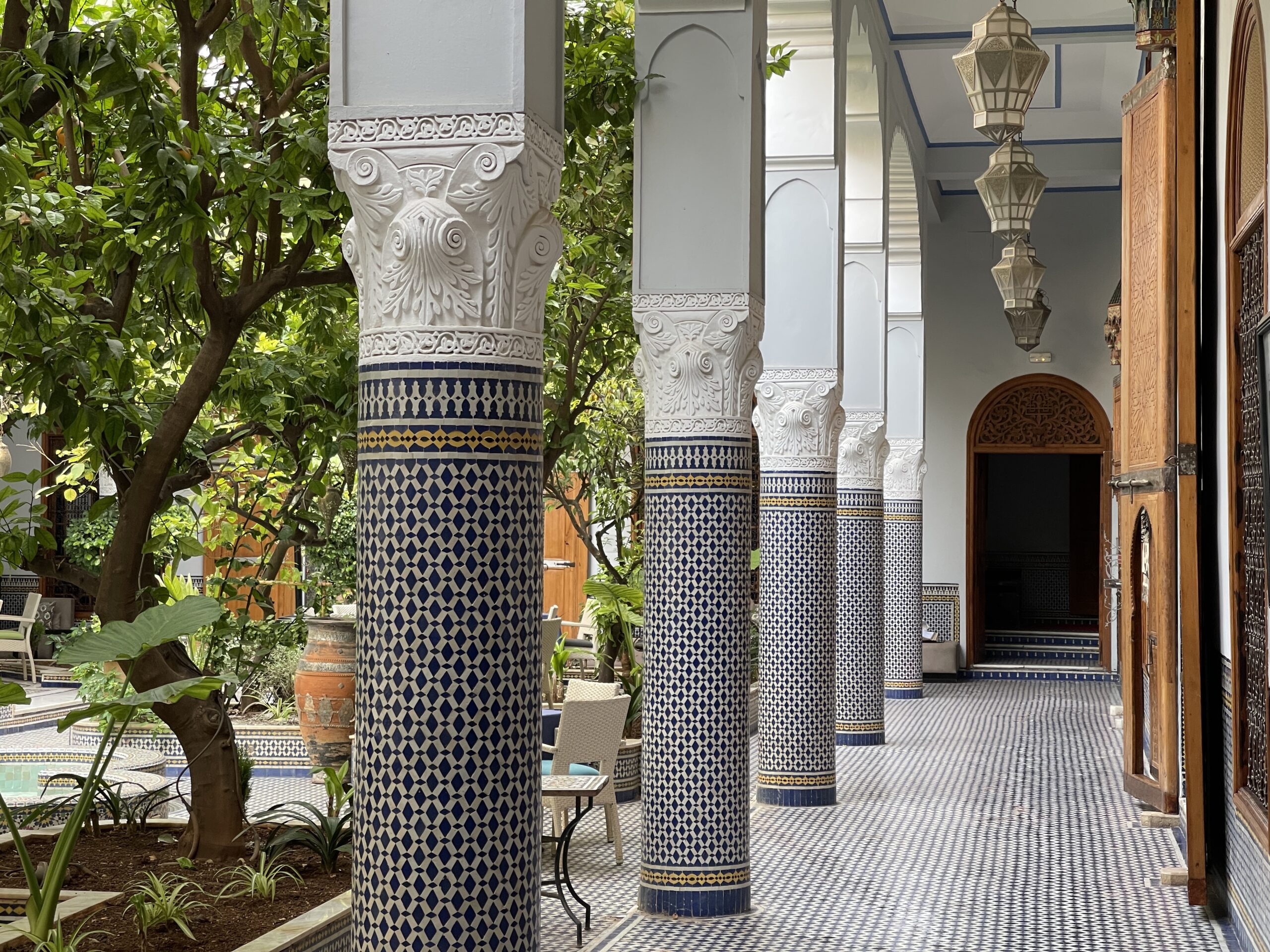
After our jaunt through the labyrinthian alleys, we stopped for lunch at Palais Amani. The Palais Amani is a riad which is a dwelling that tries to recreate heaven on earth in the form of an inner courtyard consisting of a fountain, fruit and flowering trees, and songbirds. During lunch we were addressed by Fatima, a professor from Meknes who discussed life in Morocco from a woman’s perspective.
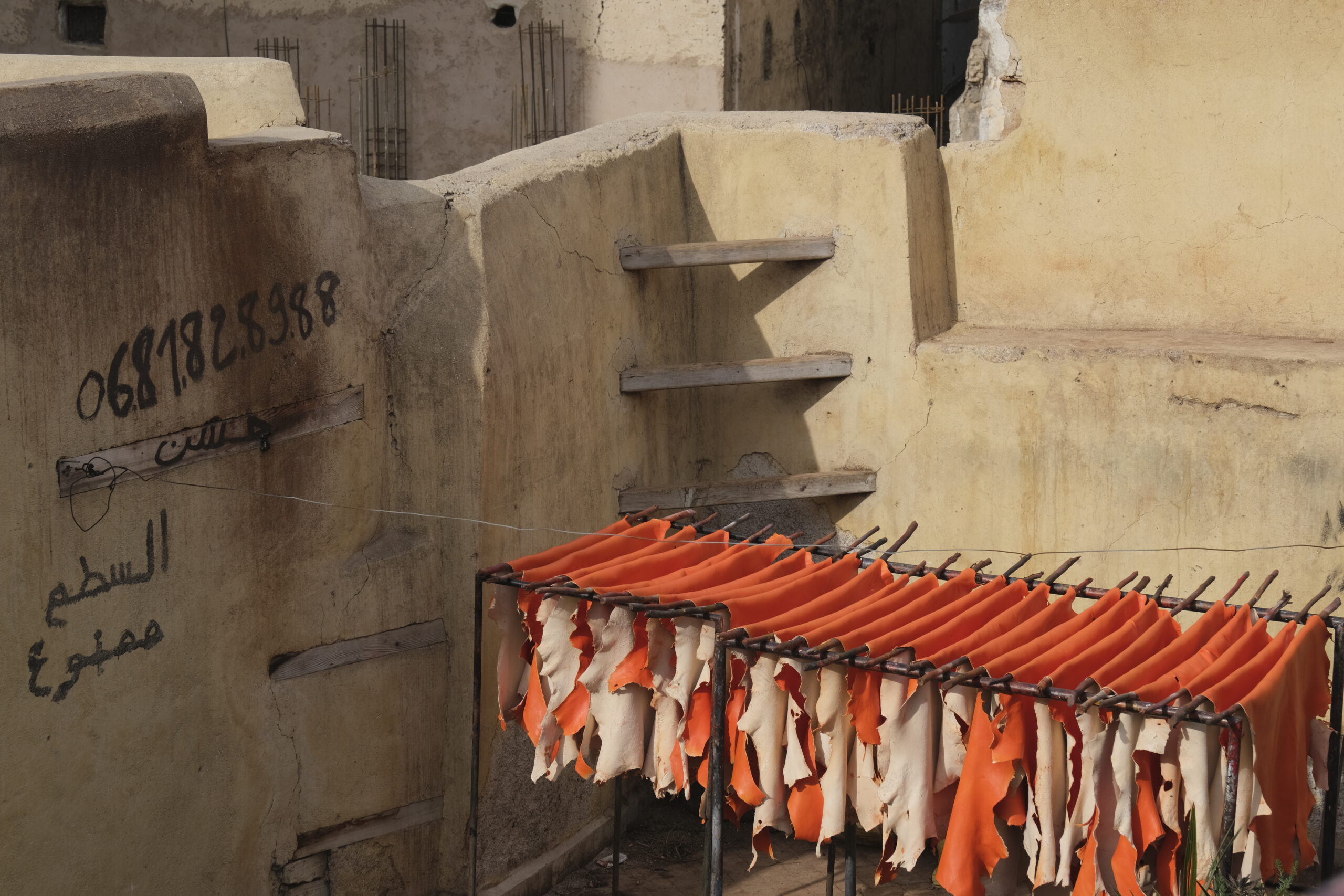
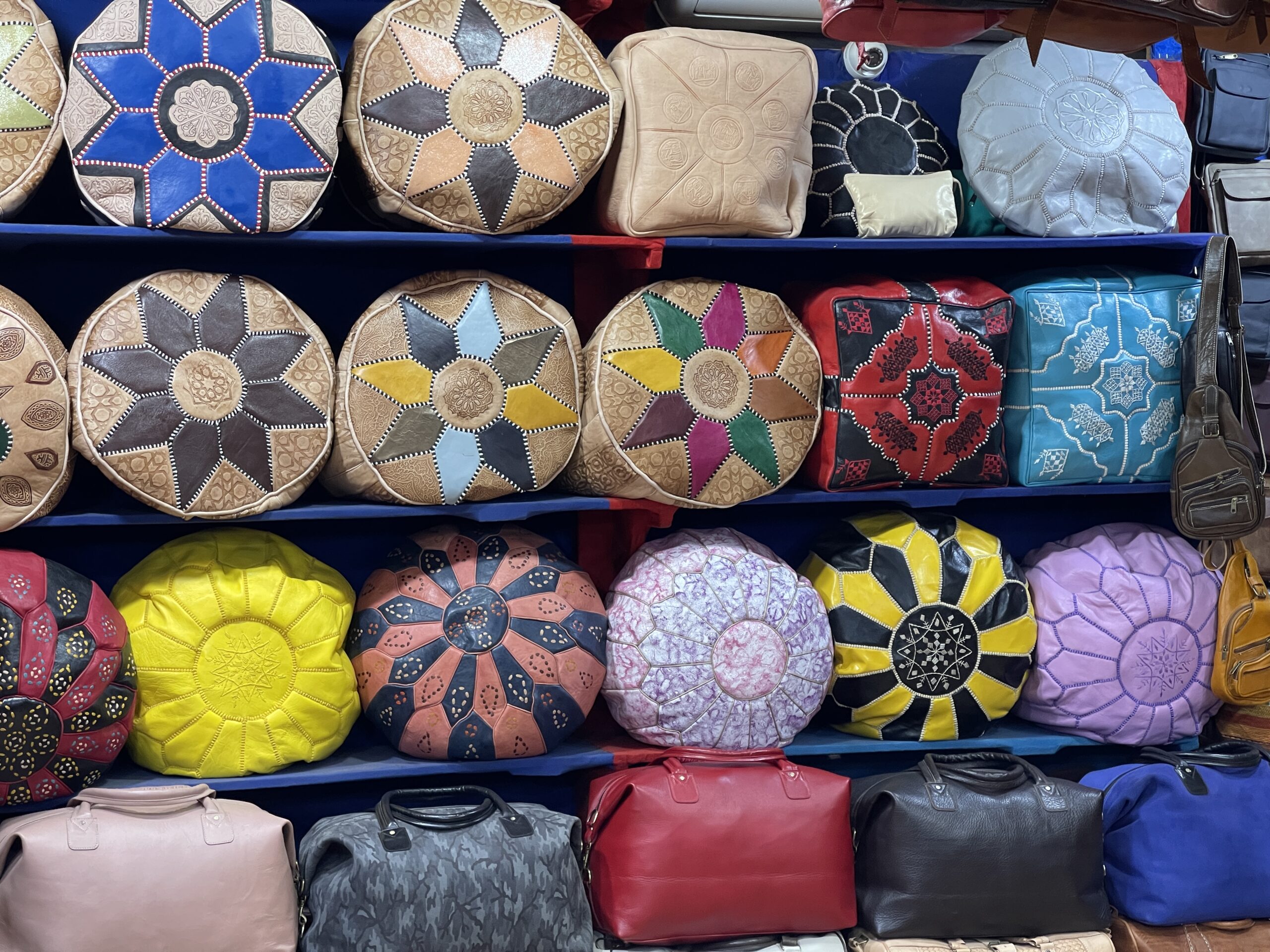
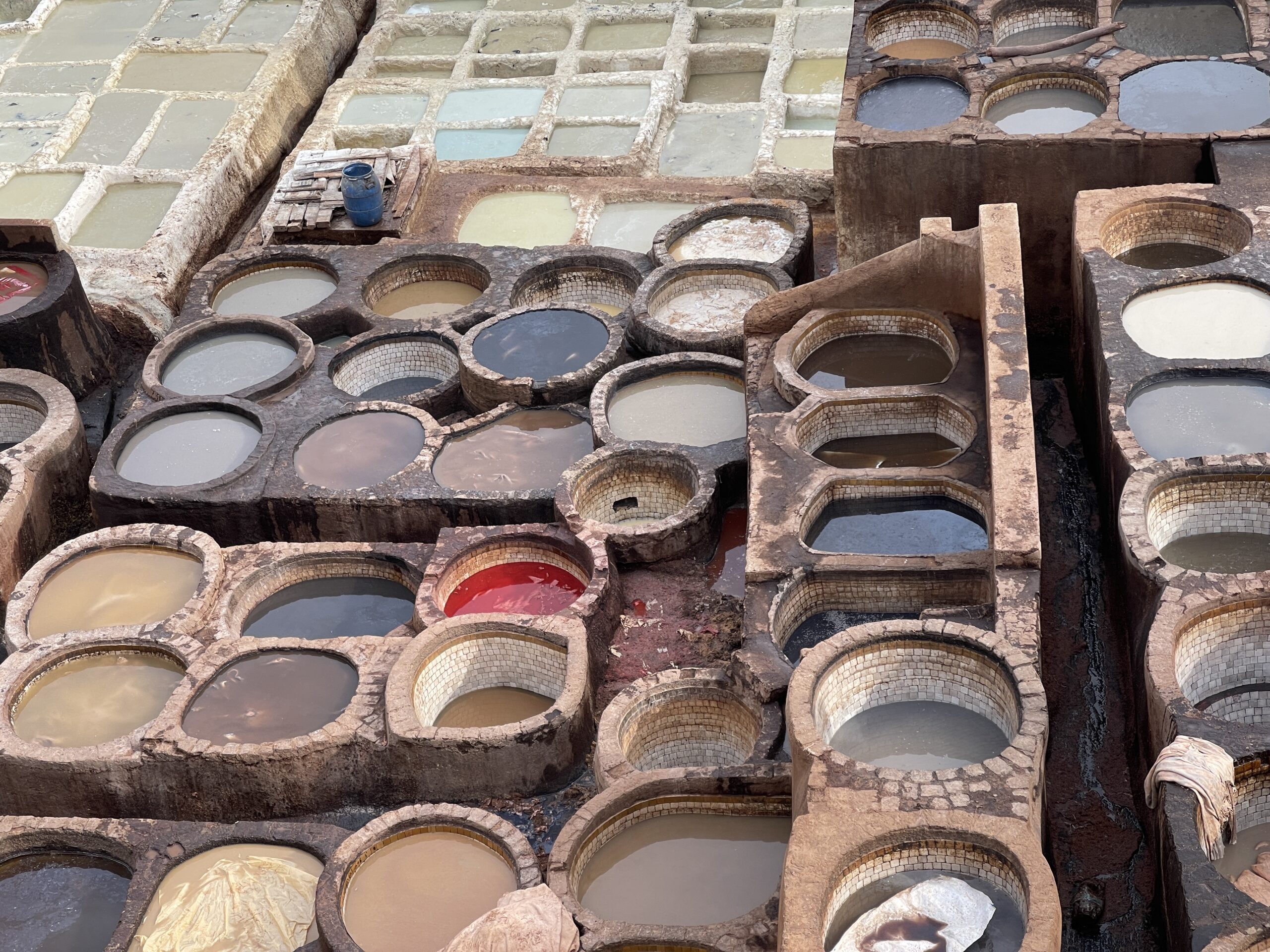
Our last stop was at the tanneries,where the laborious process of curing and dyeing animal skins was evident. Here, preparing the skins is done by hand in the same way as in medieval times to supply leather for jackets, shoes, and bags. According to National Geographic, the workers in these tanneries have the second hardest profession after coal mining. Thankfully, the day’s visit spared us the pungent tannery odors.

Dinner this evening was at the Palais Faraj in the medina. The Palais Faraj is a small luxury hotel located in the former Bensouda Palace. Dinner was a blend of French, Arabic, Berber, and Jewish cuisines and absolutely sublime. After dinner we walked through the rooms on the lower floor, and they were absolutely stunning. The books, paintings, rugs, mosaic tiles, the light fixtures. Fabulous!
Roman Ruins at Volubilis – December 13, 2023
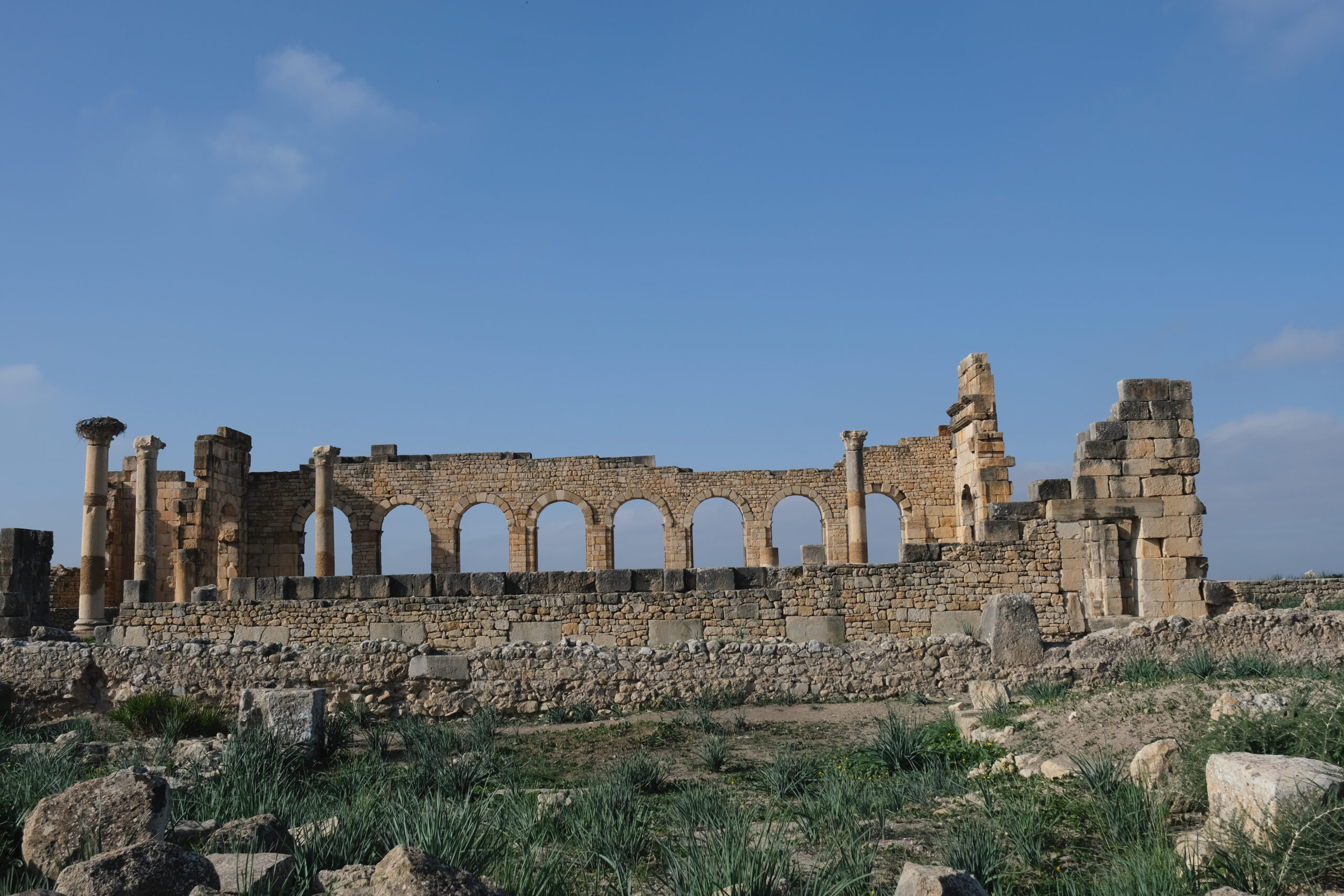
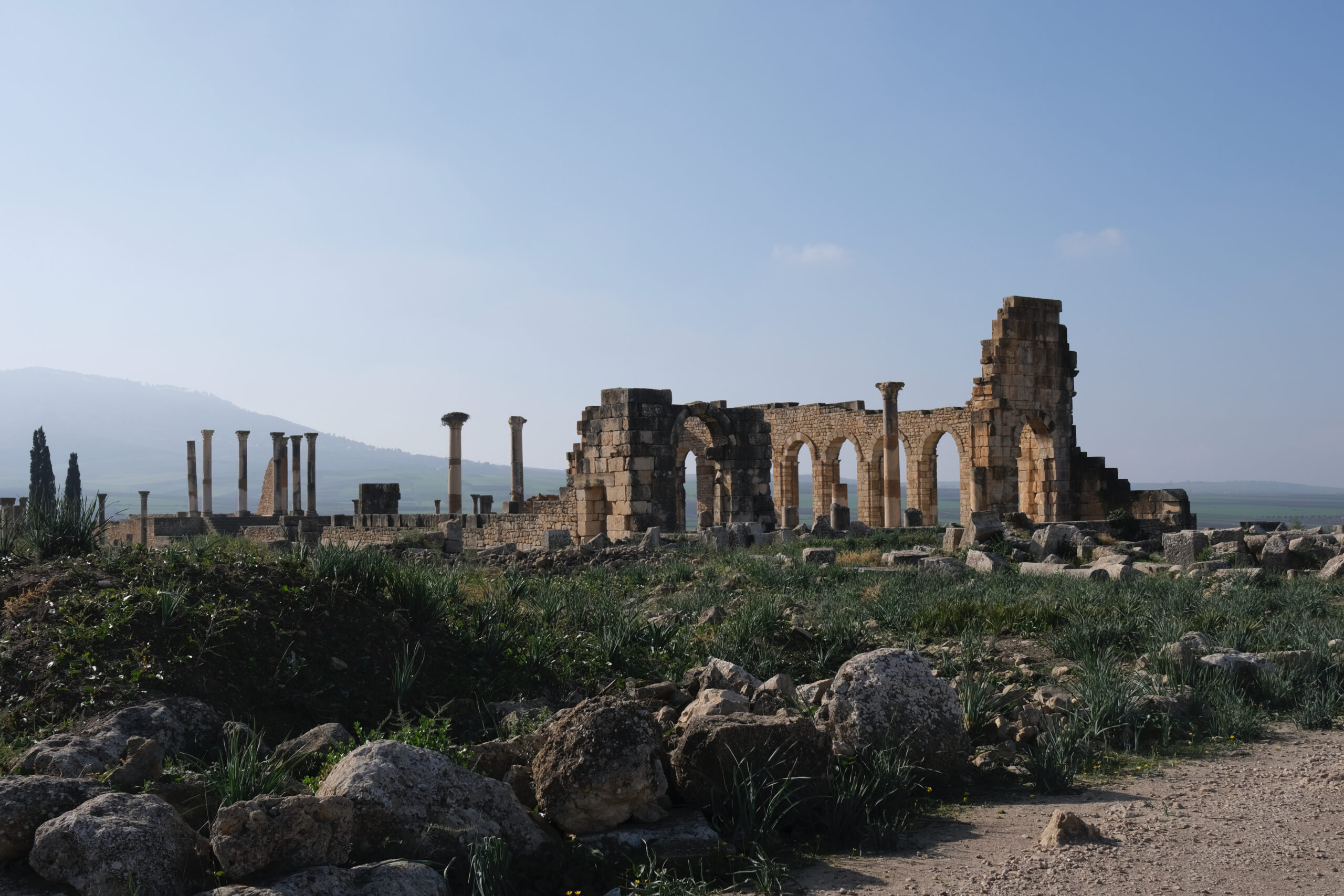
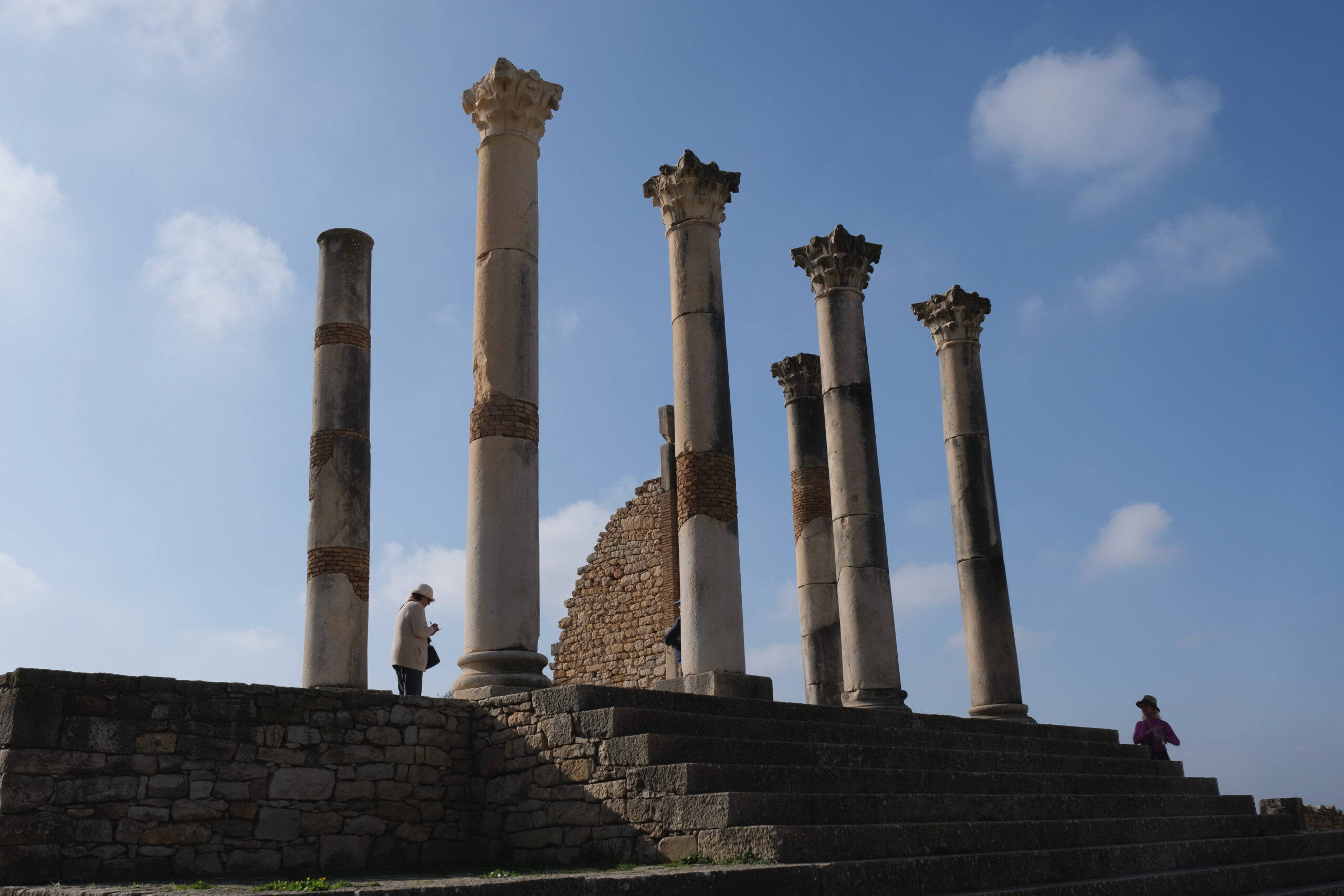
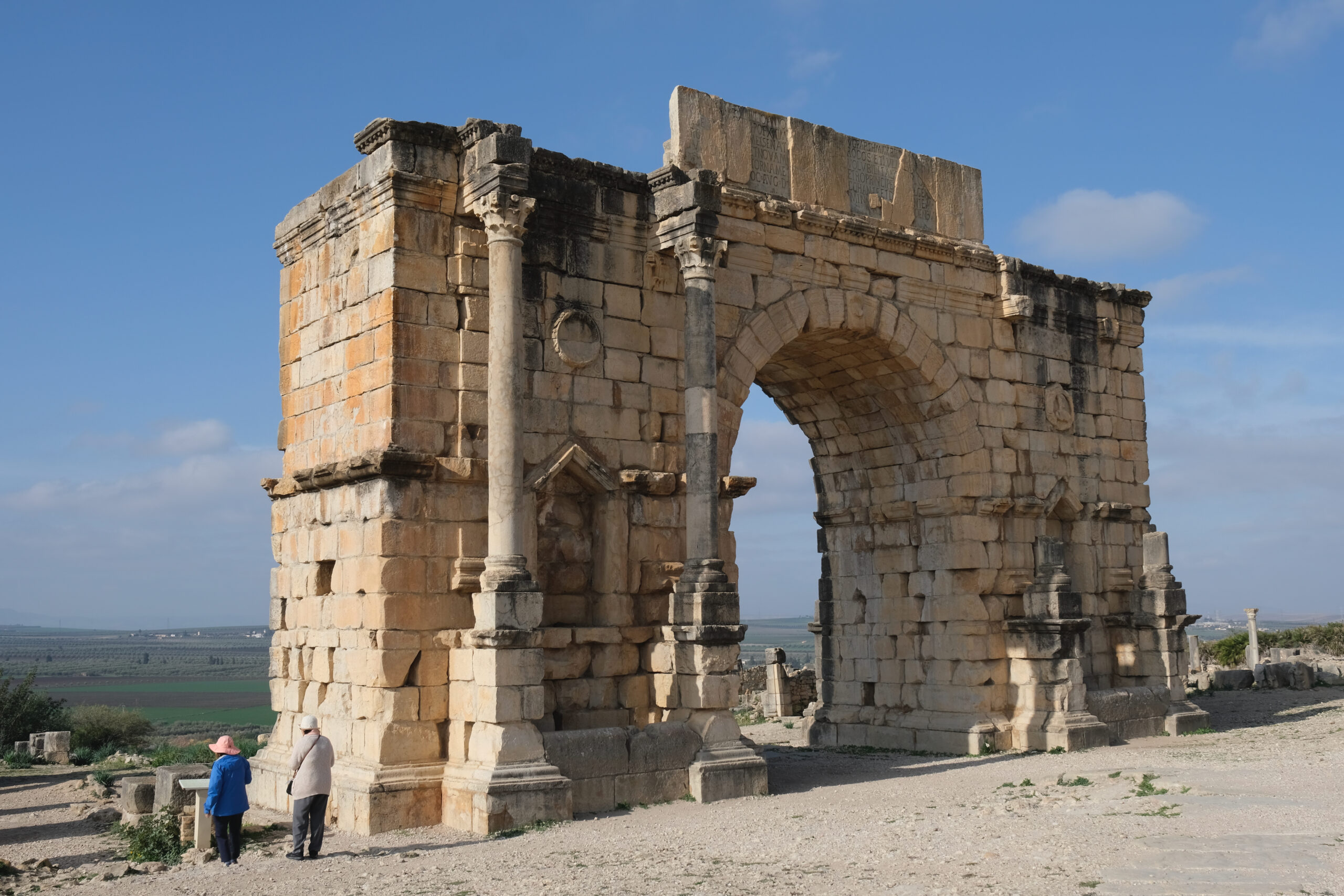
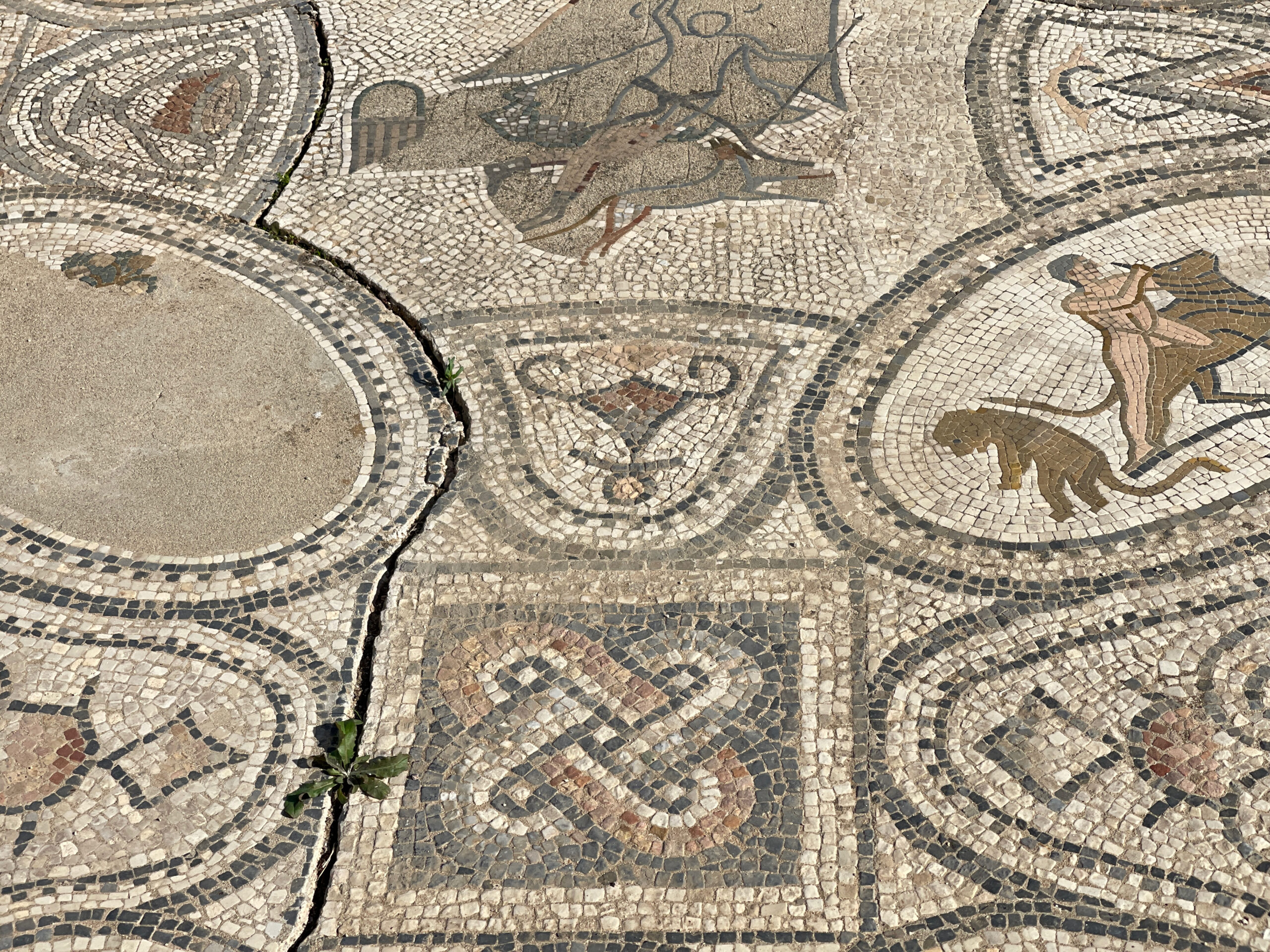
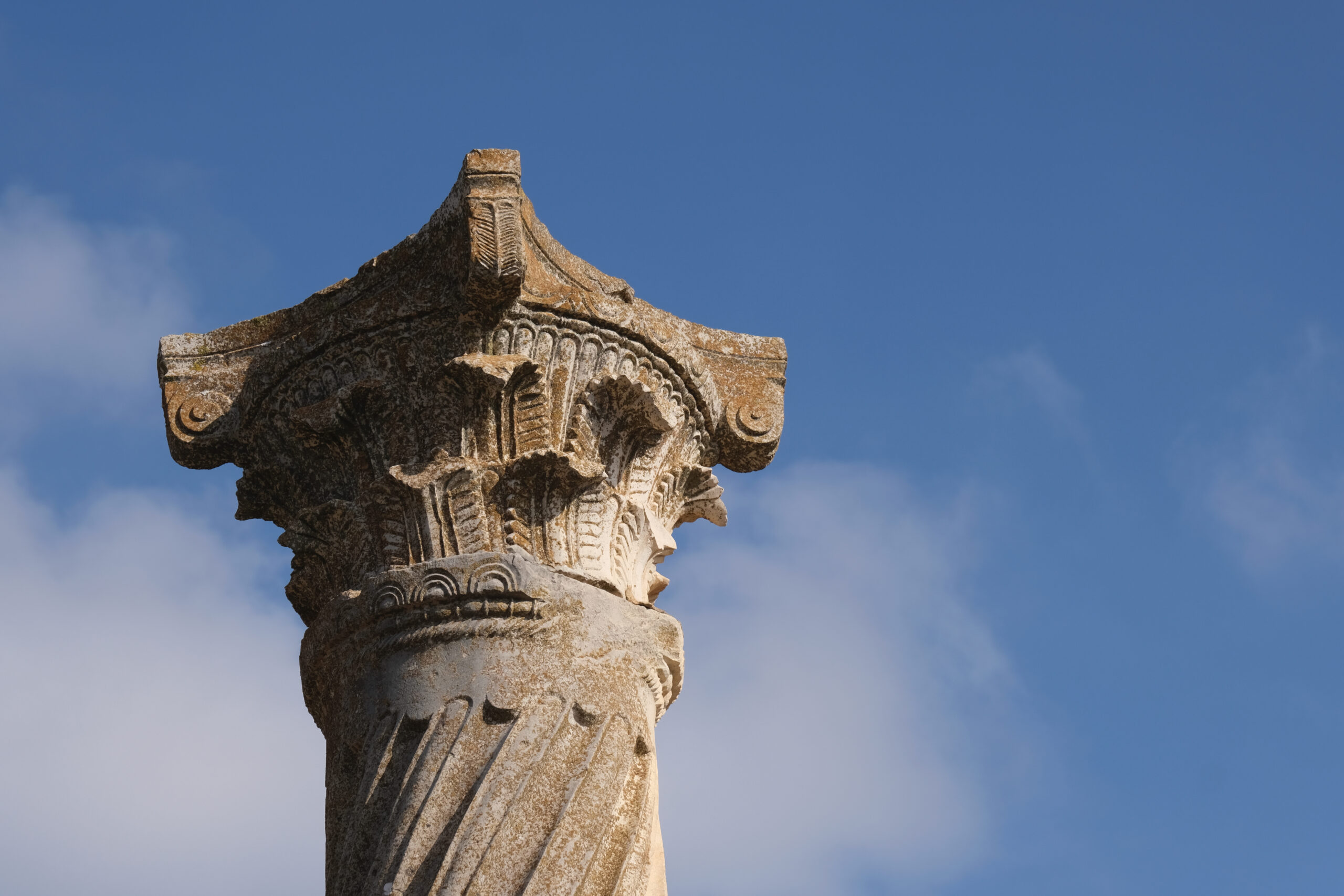
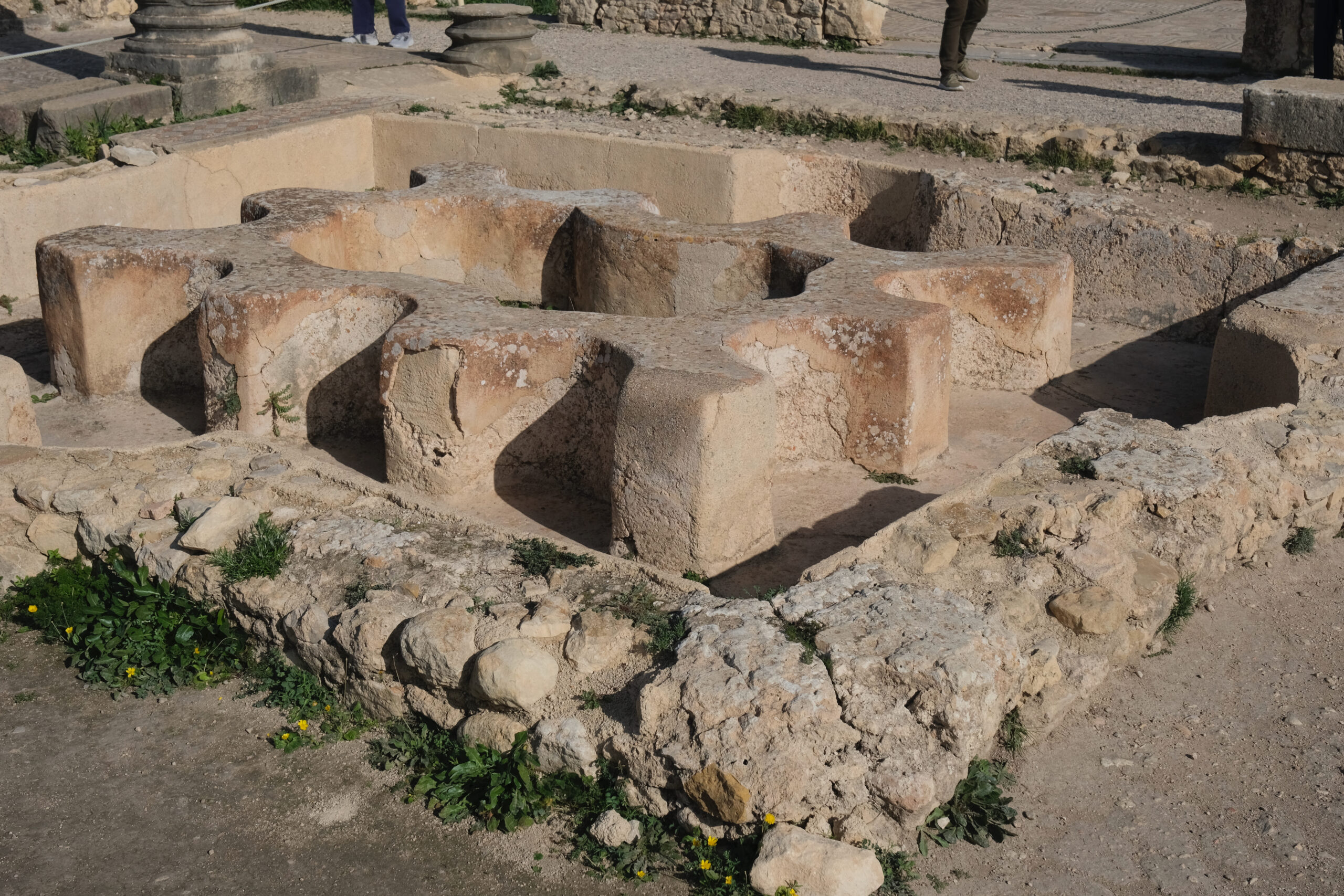
This morning finds us driving through lots of olive groves to Volubilis, a Roman city once bustling with 20,000 inhabitants. Initially part of the Mauretanian kingdom, it flourished under Roman rule, with its prosperity tied to olive cultivation. Structures from the 2nd and 3rd centuries AD, including homes with intricate mosaics, bear testament to its grandeur. However, the rise of Fes marked Volubilis’s decline.
As we walked through the ruins, marveling at landmarks like the Capitol, Basilica, and the Triumphal Arch of Caracalla, the houses – named after their distinctive mosaics – painted a vivid picture of ancient life. Walking through the ruins gave us the opportunity to see many different flowering plants and a few fig trees. Recognized as a UNESCO World Heritage site since 1997, Volubilis stands as a testament to Morocco’s rich history.
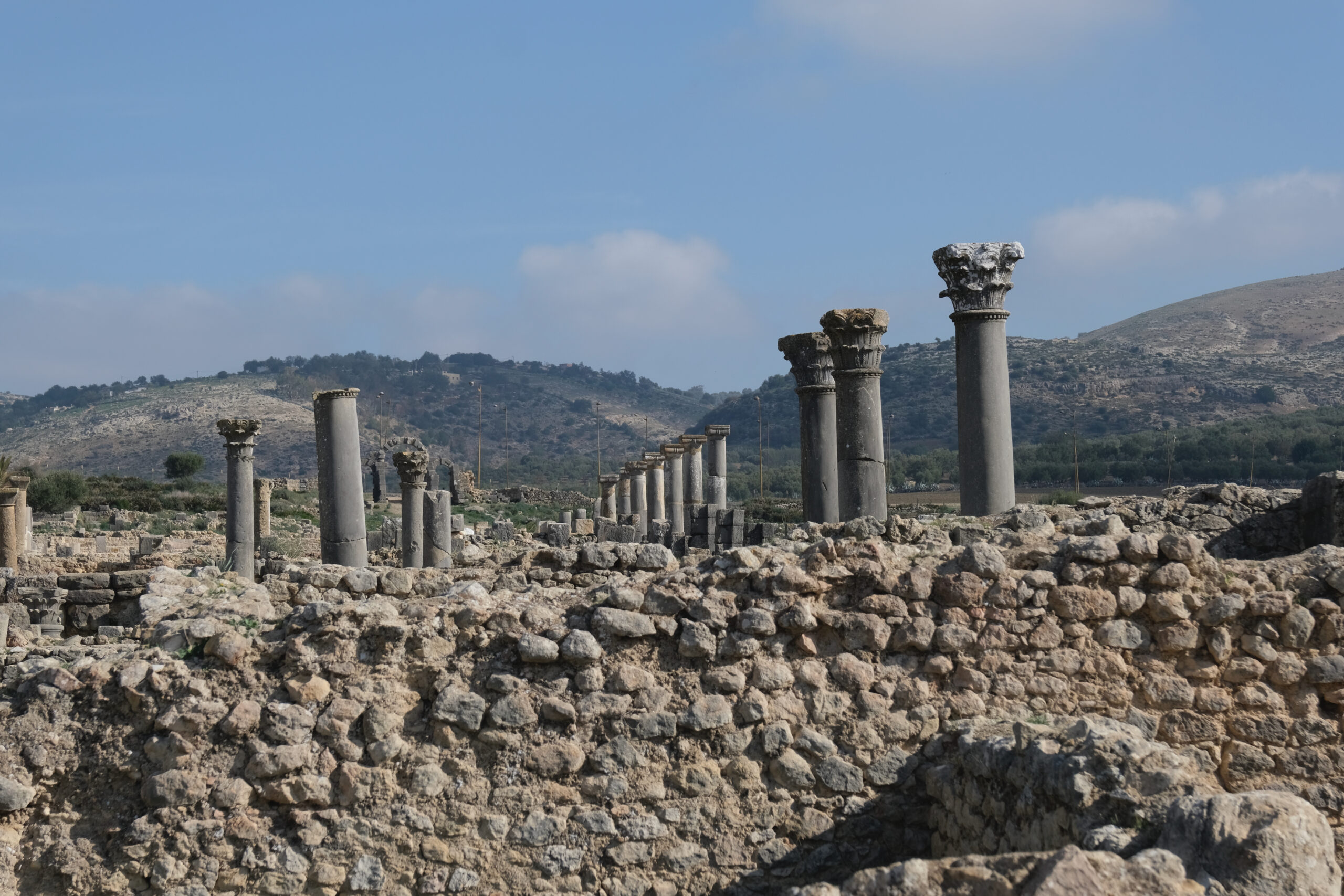
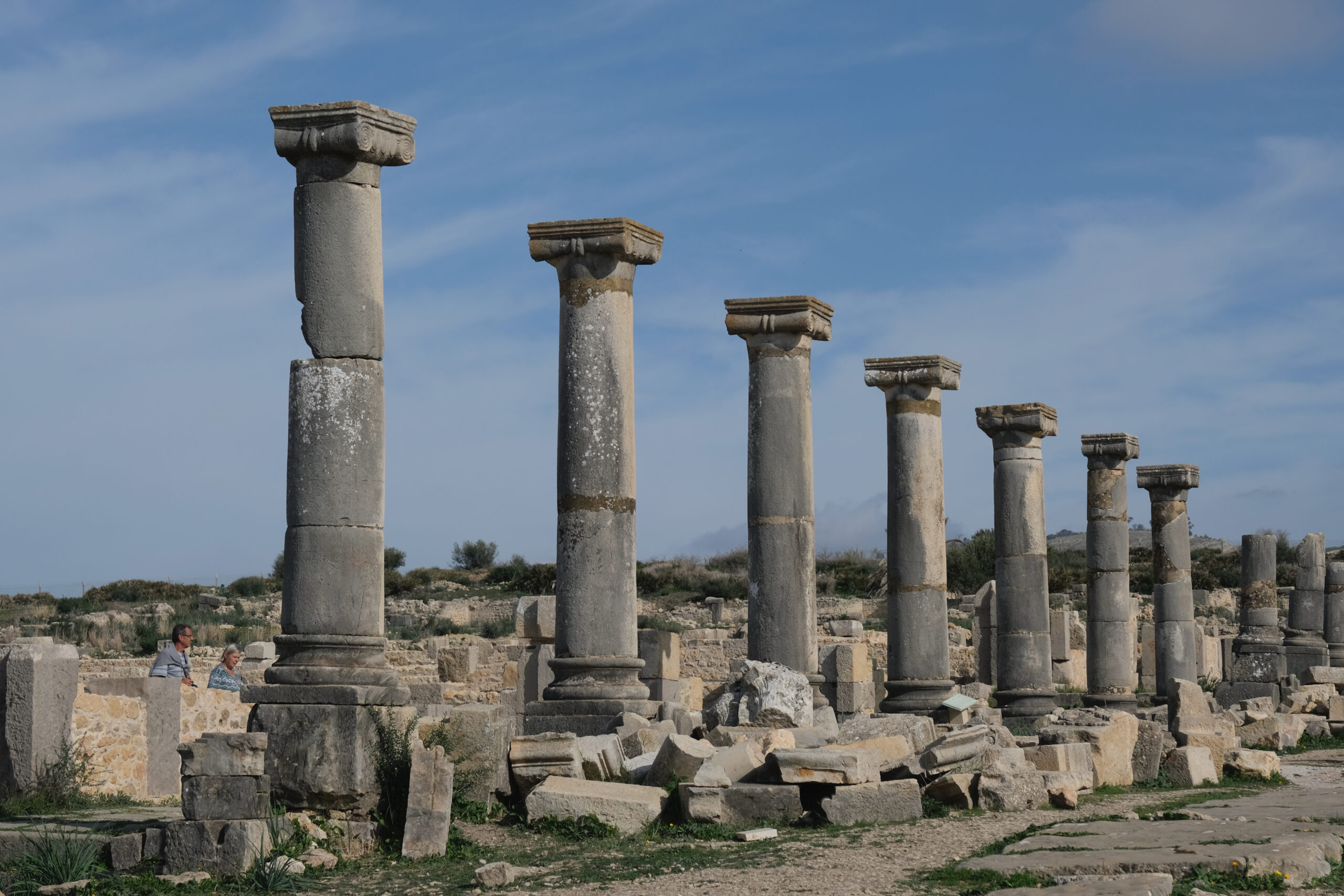
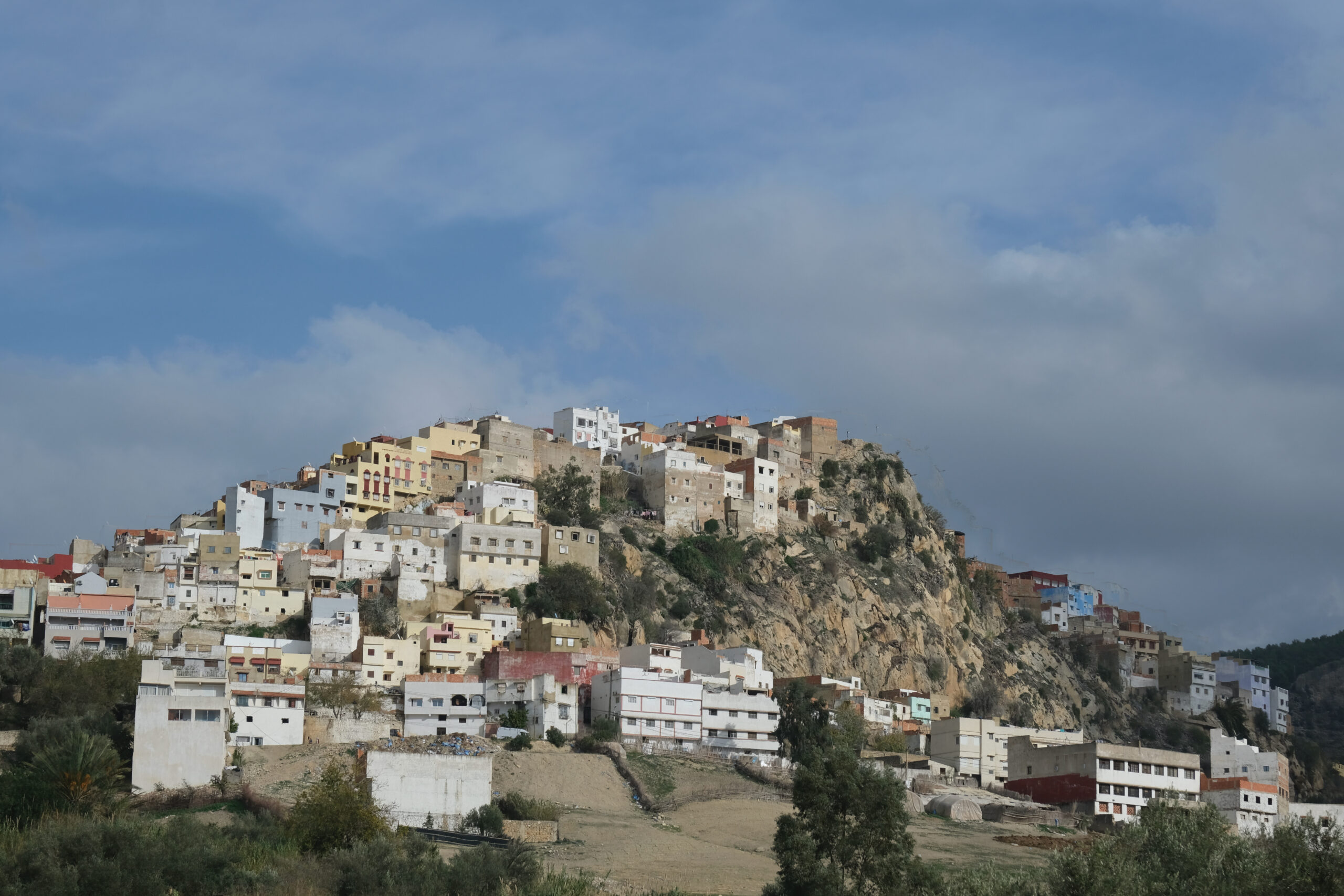
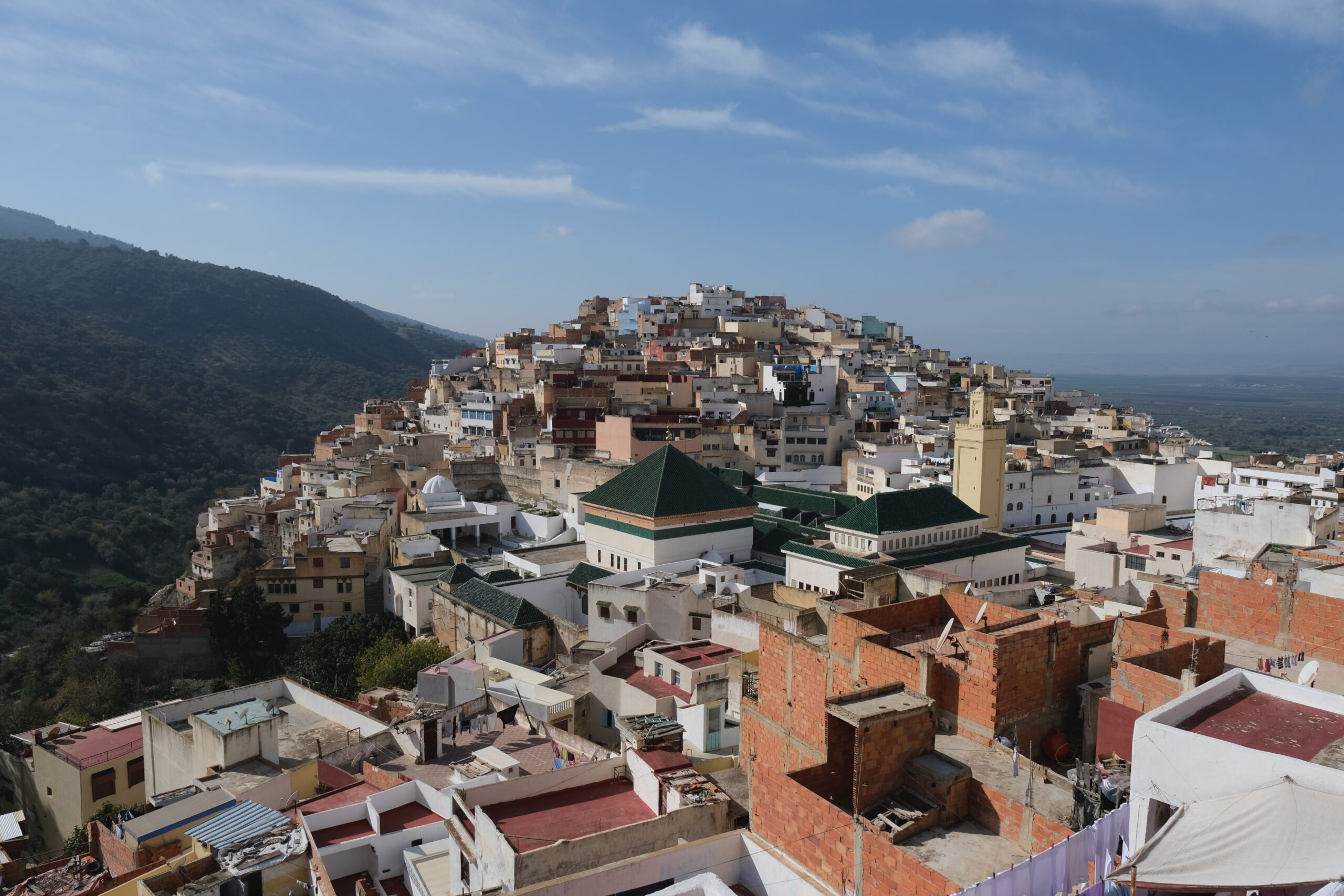
Our journey then took us to Moulay Idriss, the sacred town where Idriss I, a descendant of the Prophet Muhammad, rests. We walked through the central market and stopped by the mosque where Moulay Idriss’ mausoleum is located.
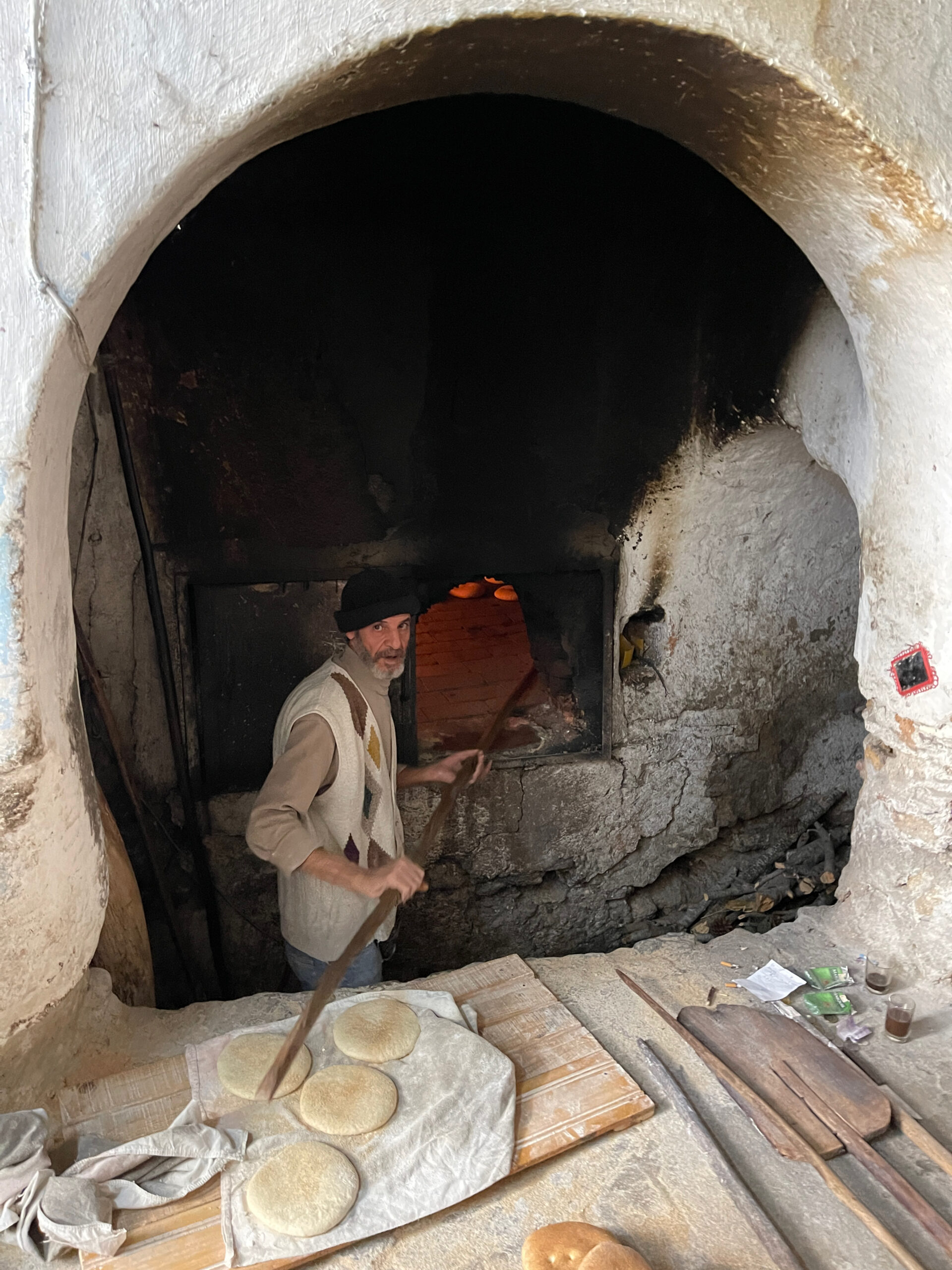
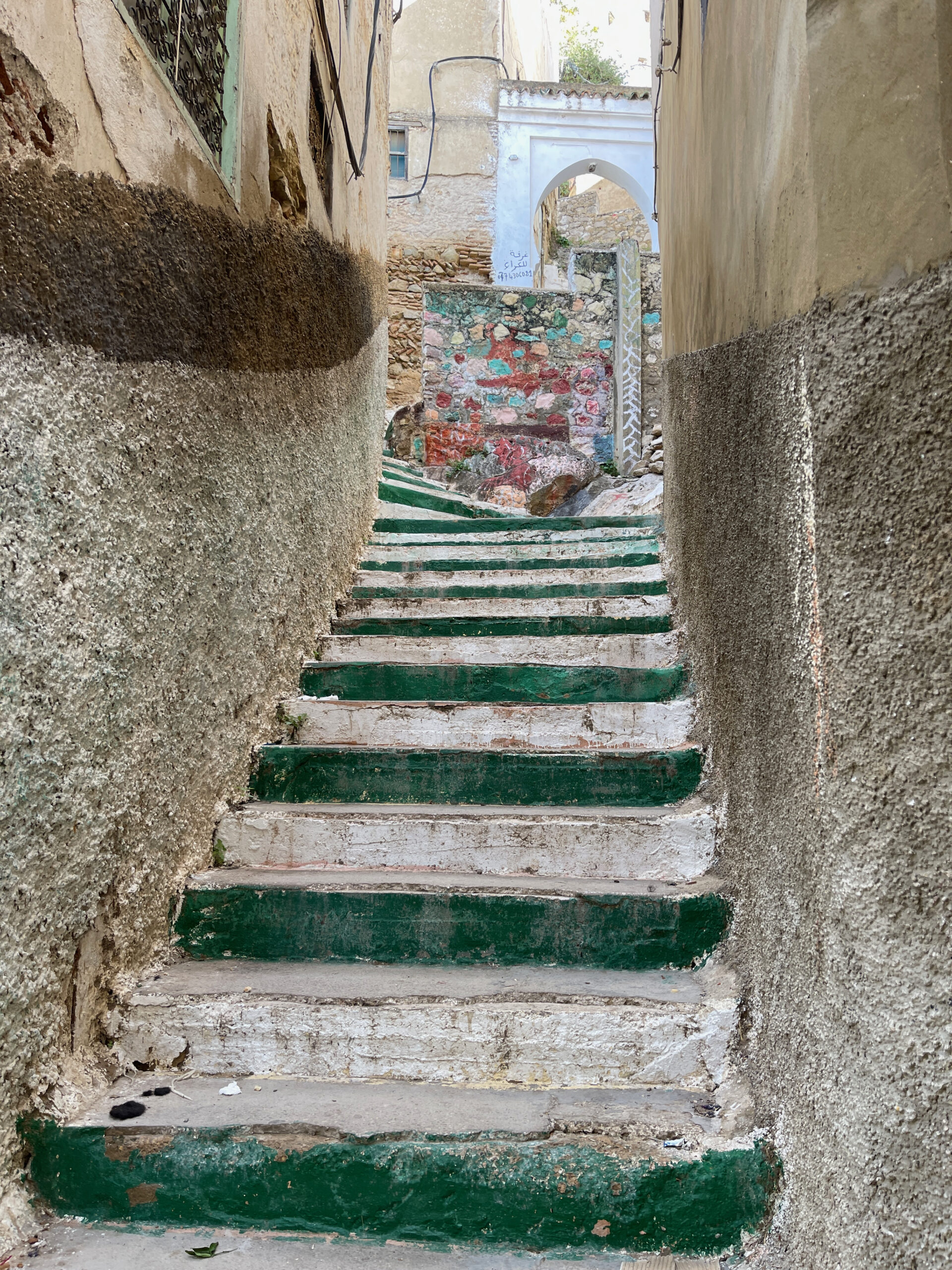
Lunch at the Scorpion House, owned by Mike Richardson, the visionary behind the Clock Café chain in Morocco, offered not only culinary delights but also breathtaking views. To get to the Scorpion House, one has to walk up about 74 steps through the medina. On the way, we stopped by a communal bake shop to see how bread is baked. The house is situated on the side of a cliff and covers several floors. It is decorated with artifacts from around the world: rugs, books, photographs. Mike obviously has eclectic tastes. The food as you would expect, was outstanding
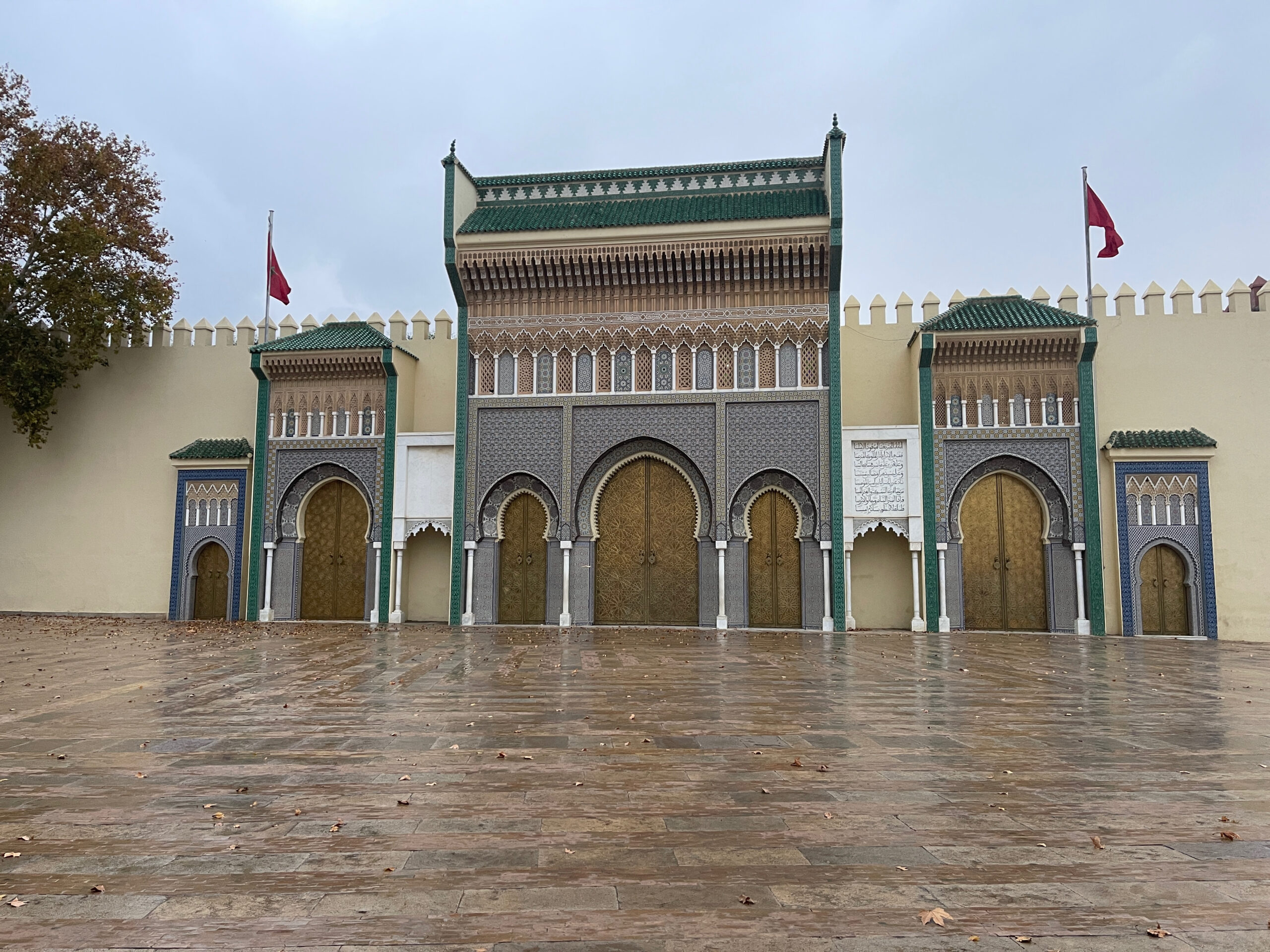
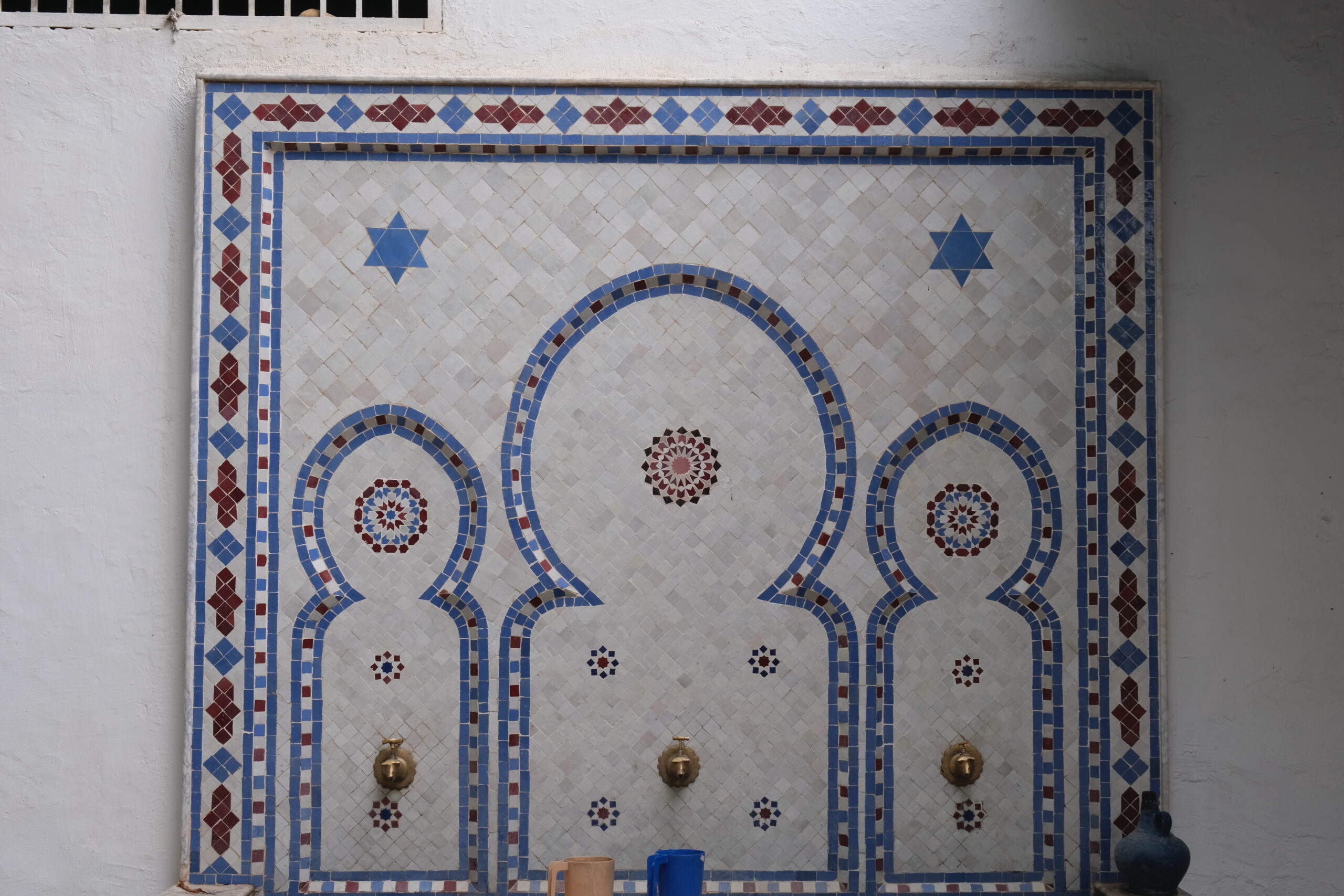
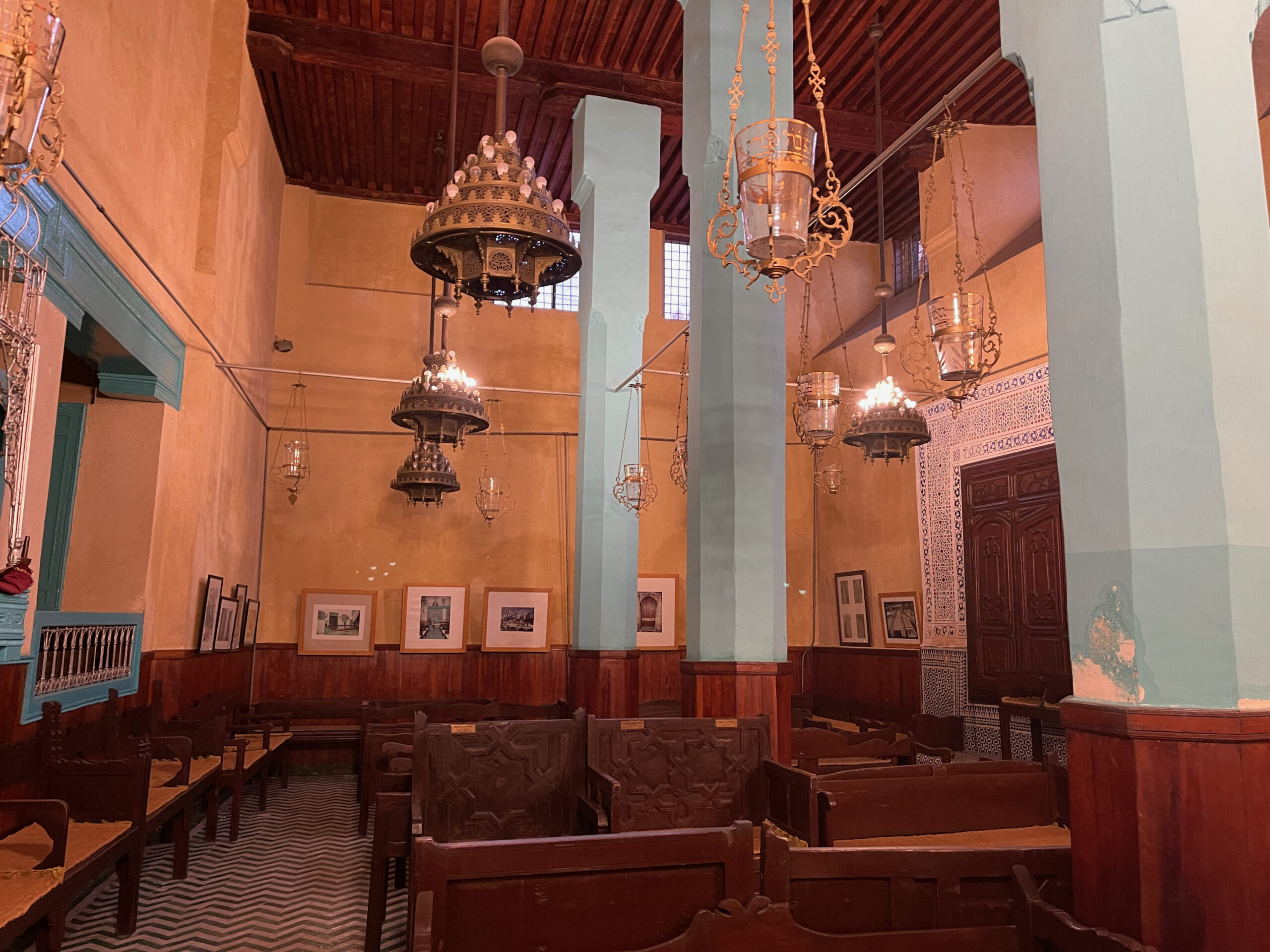
Upon our return to Fes, we visited the Mellah, the historic Jewish quarter, to learn about the Jewish heritage of Morocco. The Mellah is near the Royal Palace and dates to the 15th century. This mellah no longer has a large Jewish population. Our first stop was to the cemetery where we saw many white, cylindrical-like tombs, both large and small. The smaller tombs were those of the children, many of whom died from plague during the 18th century. Our final stop was to the restored 17th-century Ibn Danan Synagogue. It has a mix of Jewish and Moroccan decoration.


A Glimpse of Meknes – December 14, 2023
Our journey began with a visit to the American Fondouk en route to Meknes, an animal sanctuary founded in 1927 by Amy Bend Bishop, an American traveller. (A fondouk provided hotel and stable services for caravans.) Dedicated to the welfare of equine animals belonging to the poorest people in the area, the American Fondouk offers round-the-clock care to donkeys, mules, horses, and even domestic pets.
Our next stop was Meknes, another UNESCO World Heritage site, renowned for its Spanish-Moorish grandeur. Under Sultan Moulay Ismail’s reign in the 17th century, the city flourished as the heart of a burgeoning empire, earning him the title “The Warrior King.”
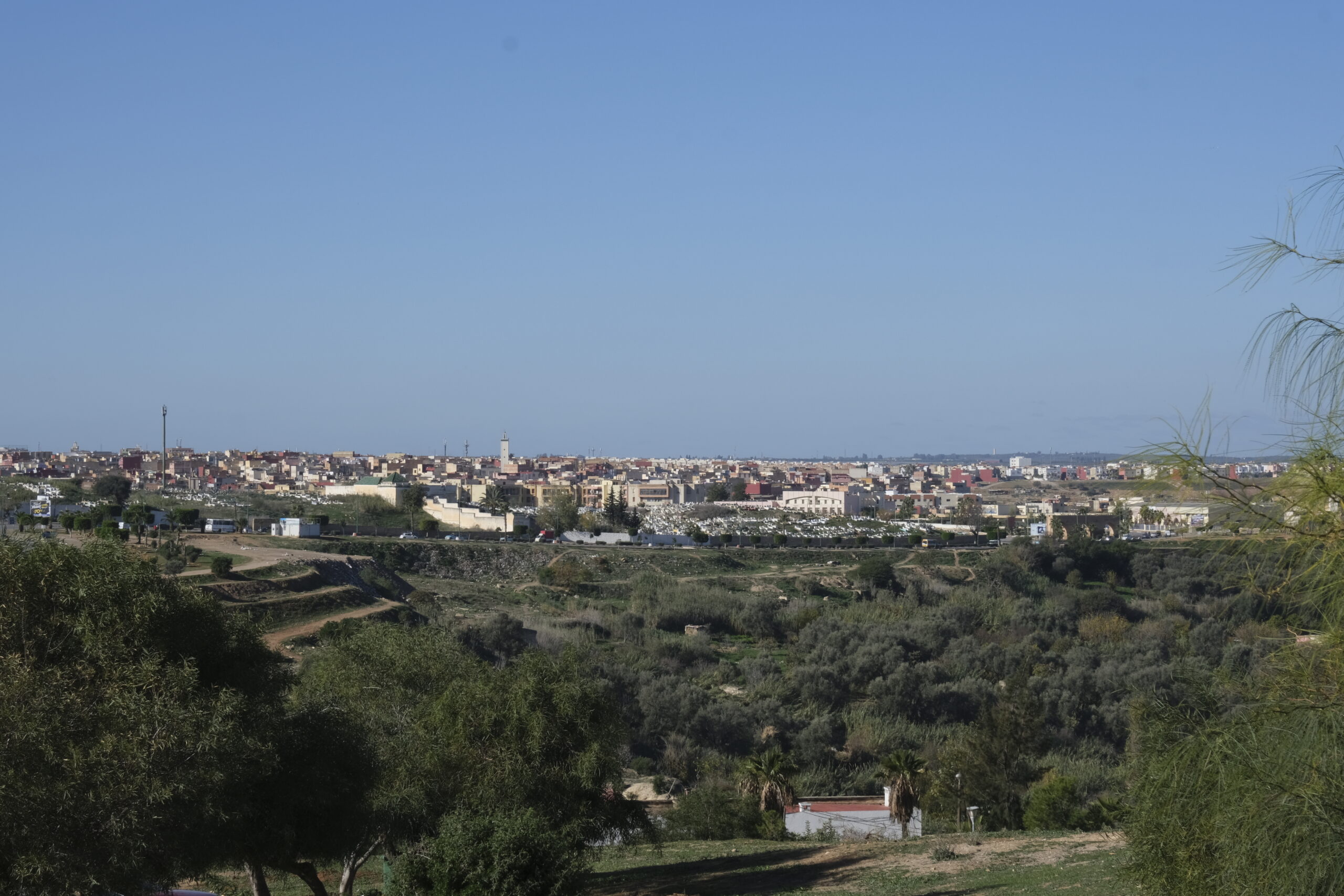
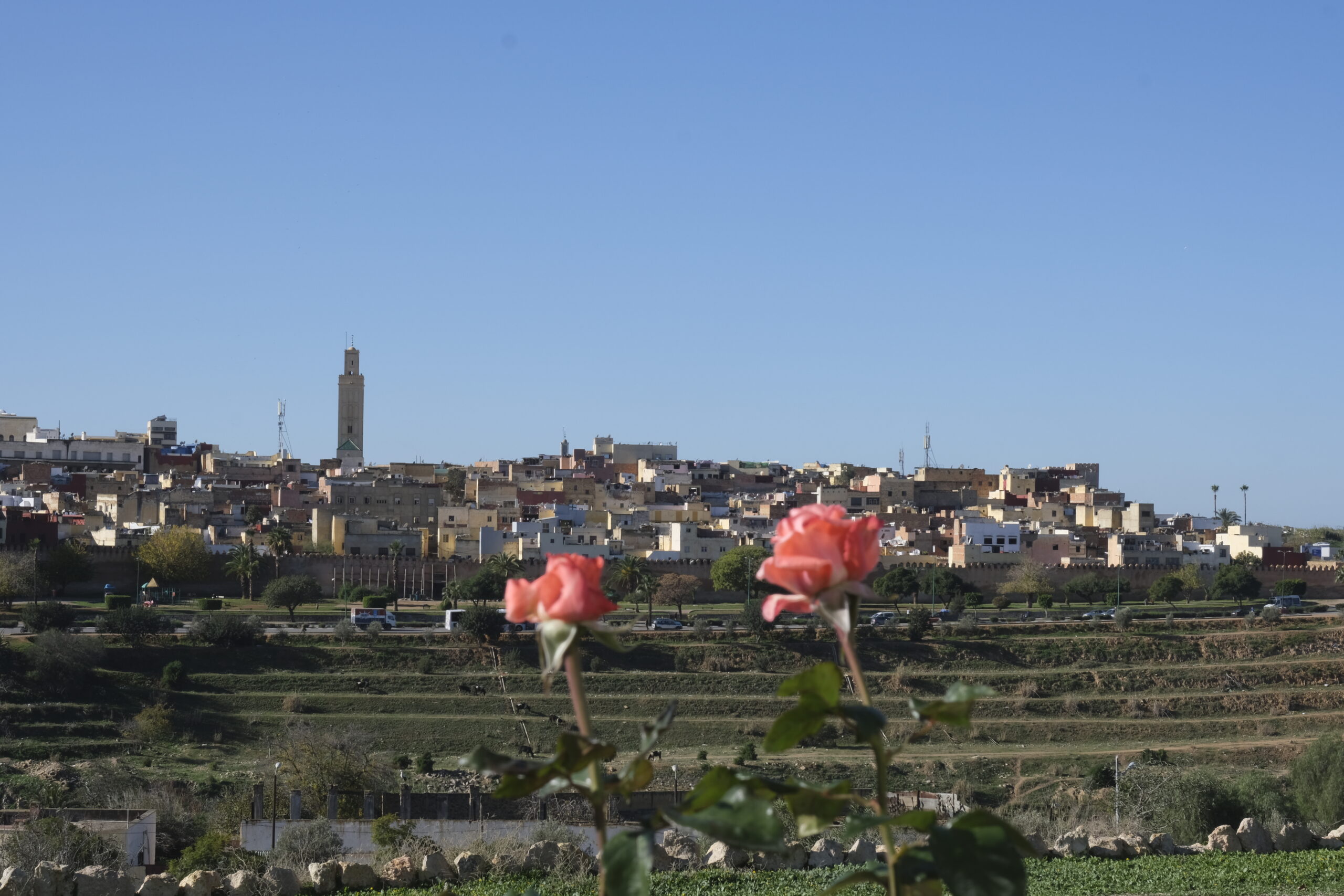
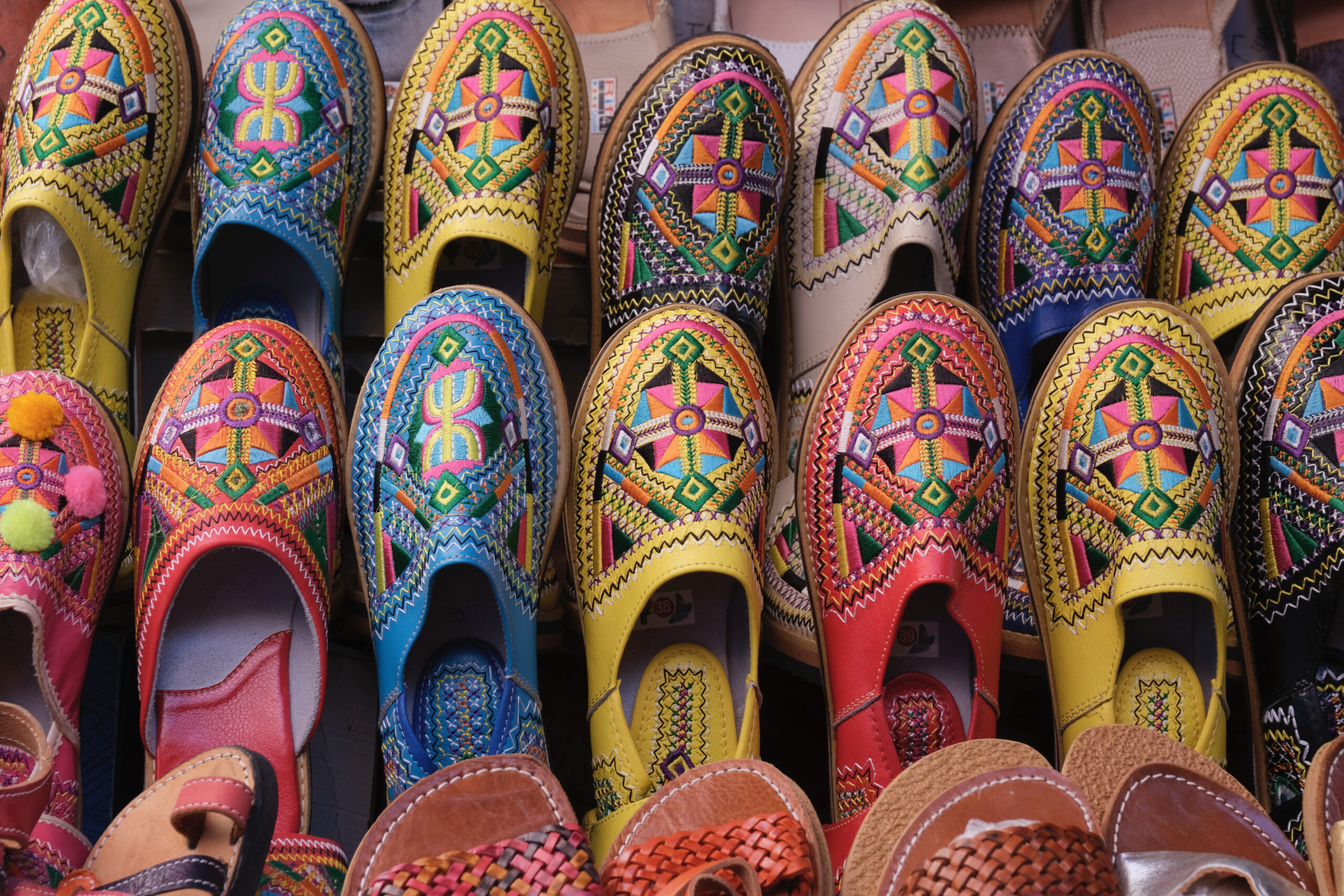
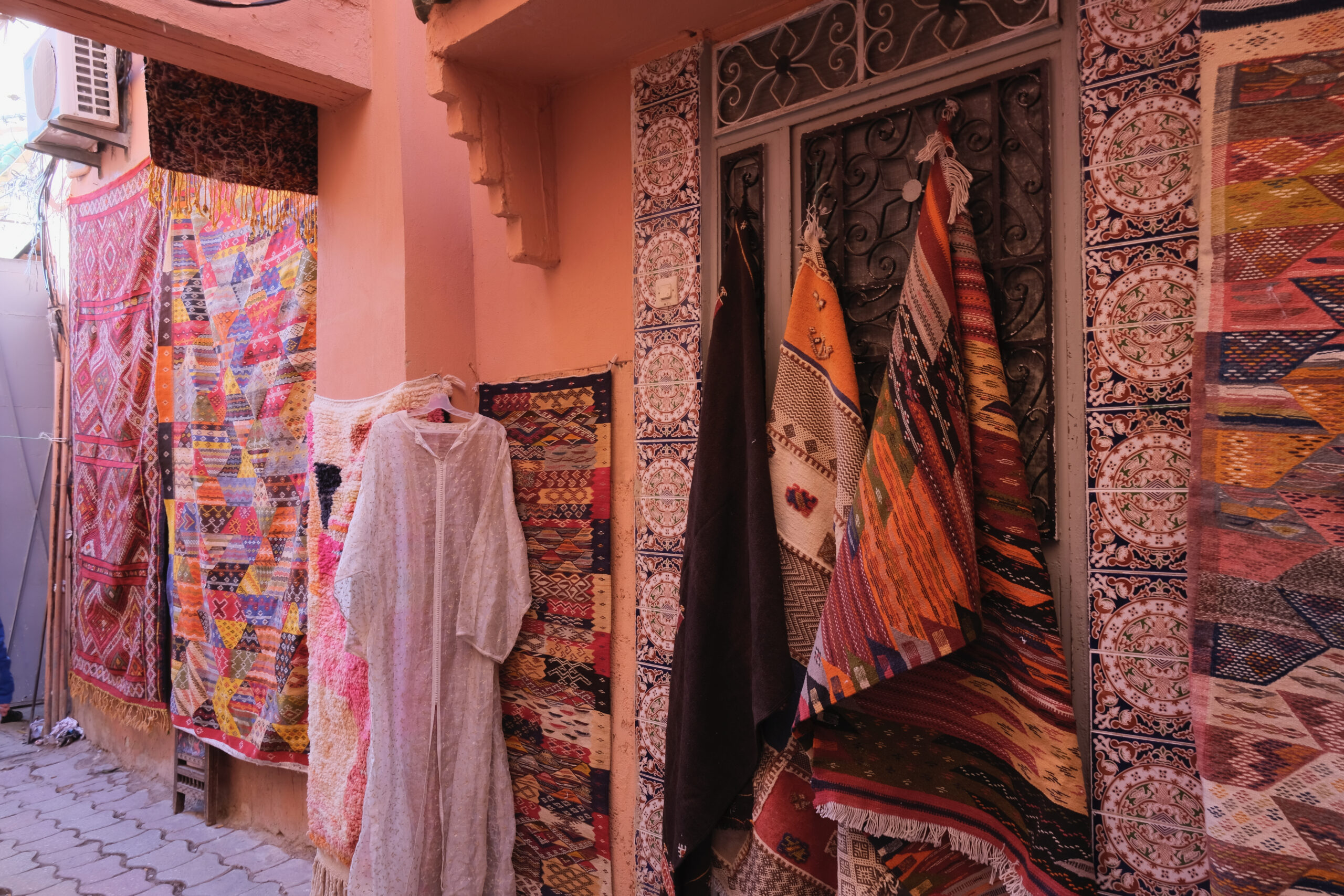
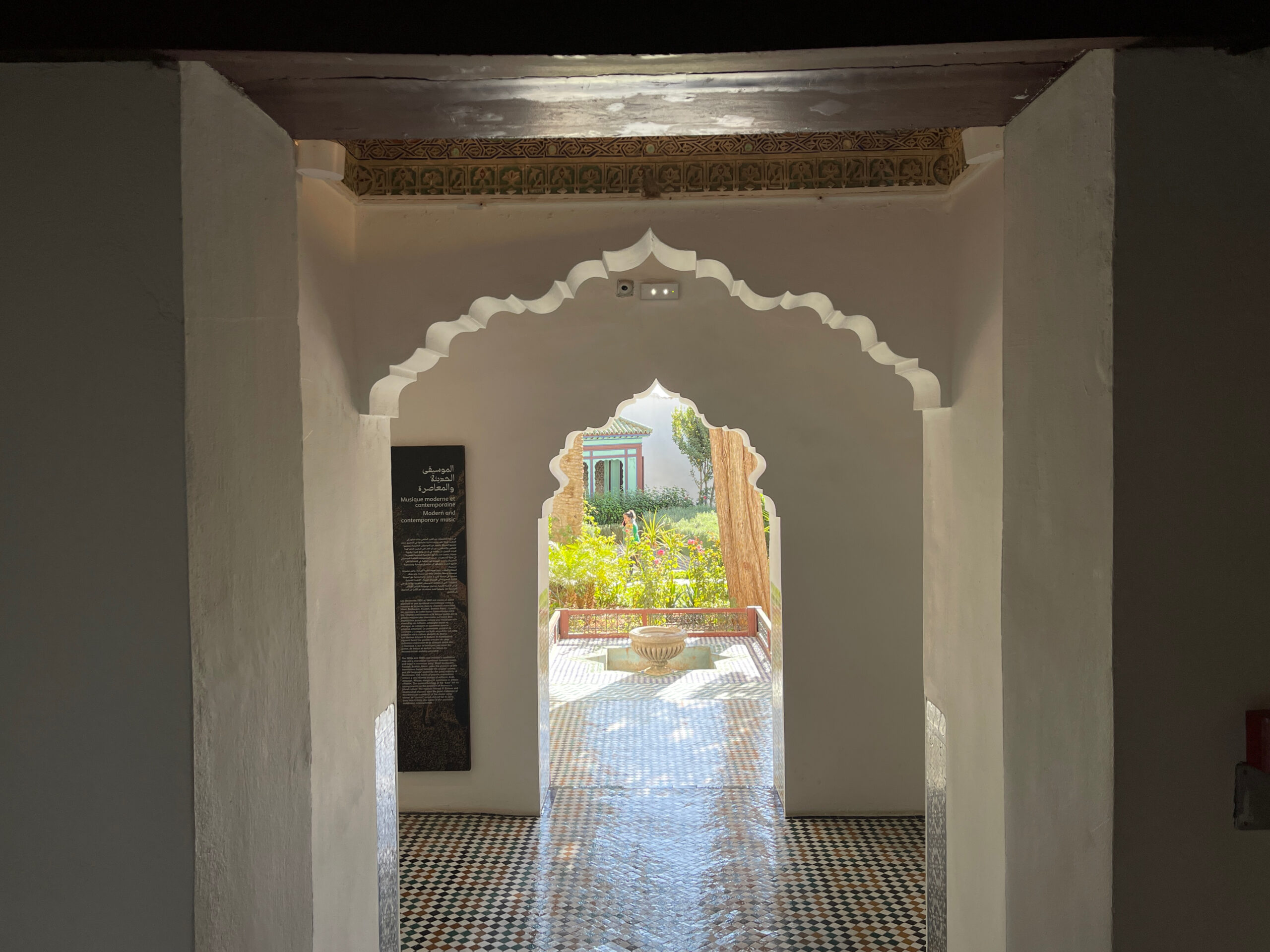
Guided by our local guide Bouchra, we navigated Meknes’s bustling markets, a maze of alleys brimming with vibrant textiles, aromatic spices, and artisanal crafts. Our cultural exploration continued at the Dar Jamai Museum, a testament to Morocco’s rich heritage housed within a splendid 19th-century palace adorned with exquisite Andalusian-style courtyards and ornate craftsmanship. Lunch was at Bouchra’s family-owned riad.


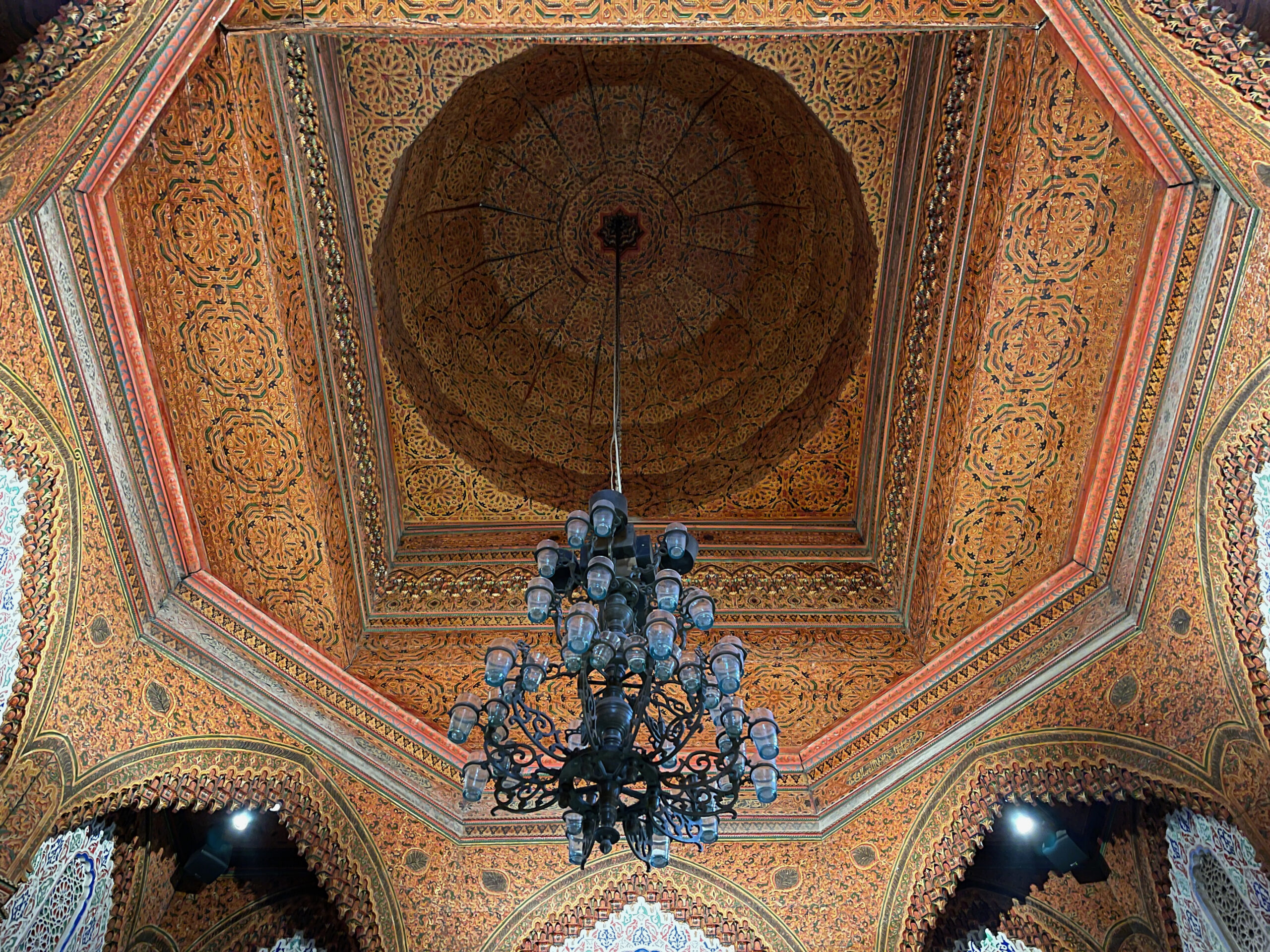
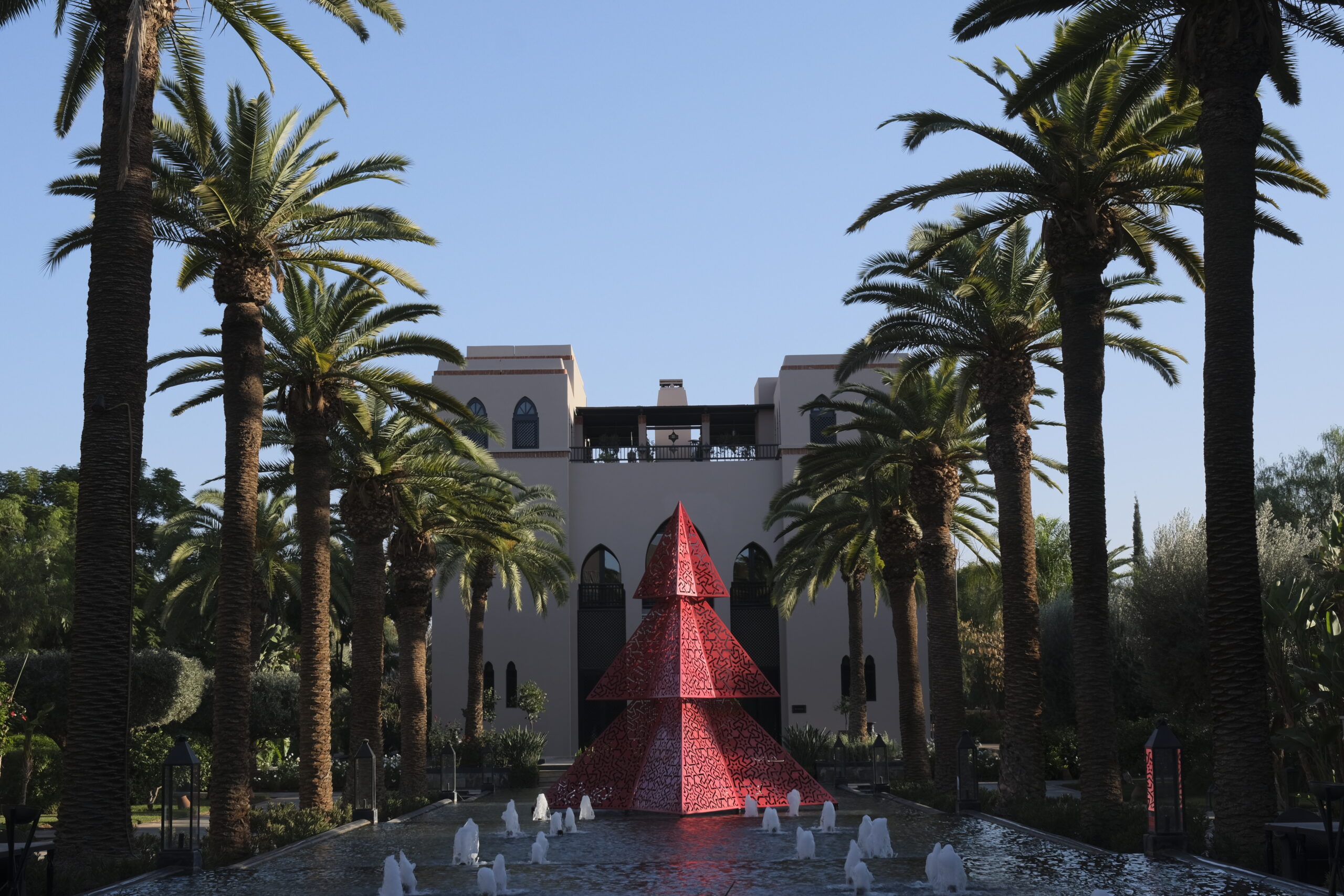
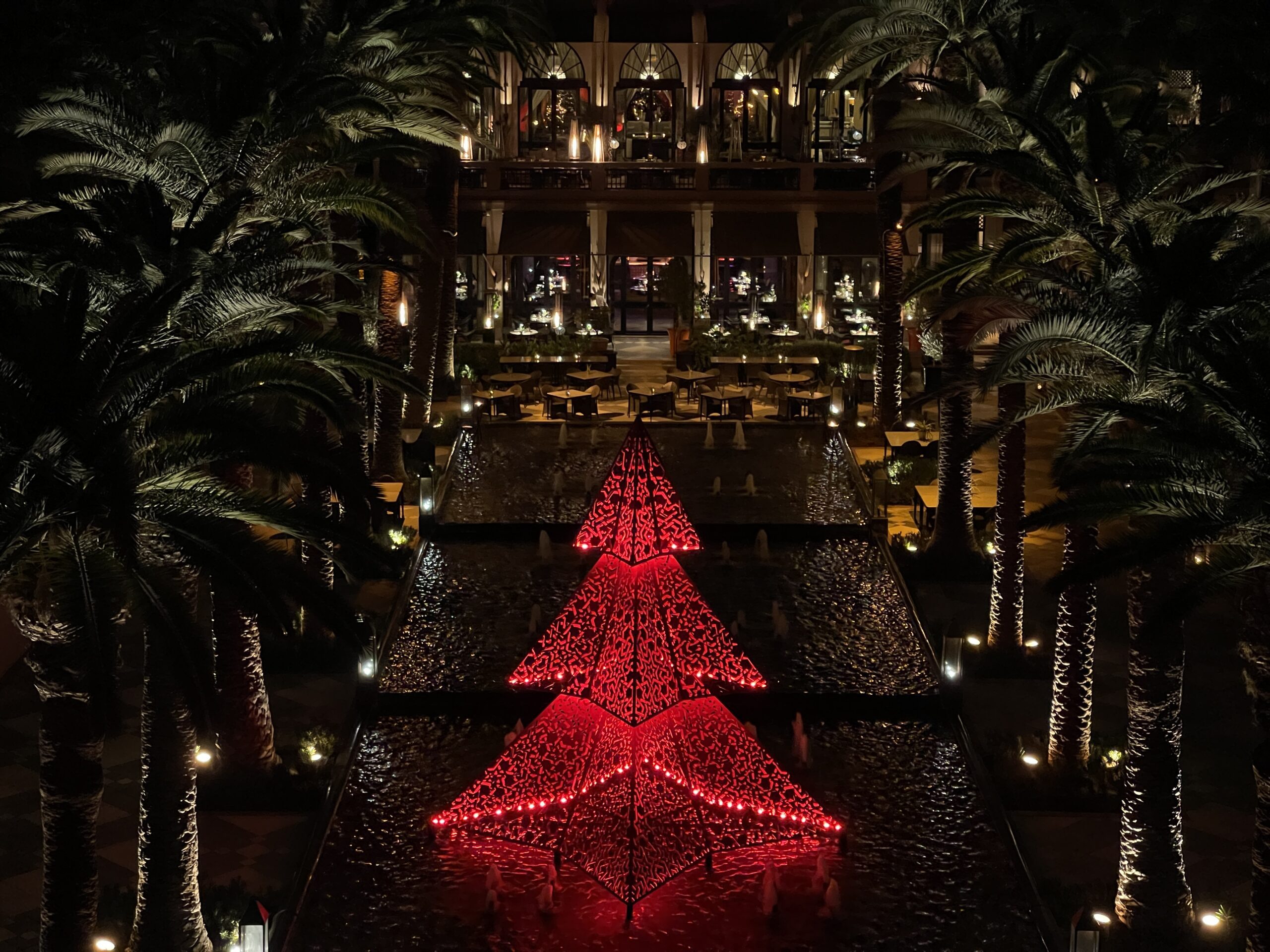
On our drive to Casablanca, we watched the movie classic Casablanca with Bogart and Bergman. What a special movie. We checked into the Four Seasons this evening where a very pleasant surprise awaited us in our room. The housekeeping staff provided us with a bouquet of flowers and an anniversary cake.
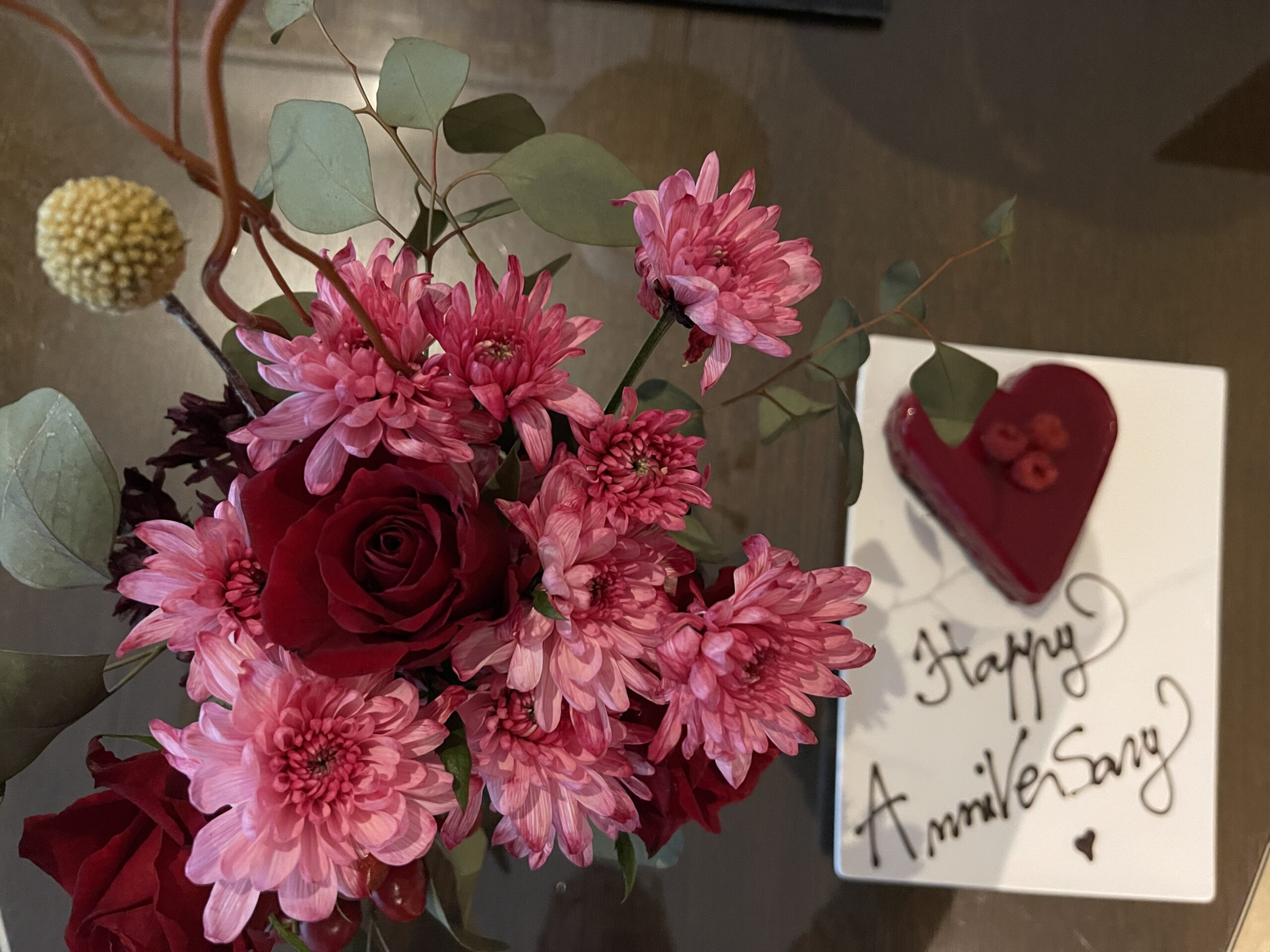
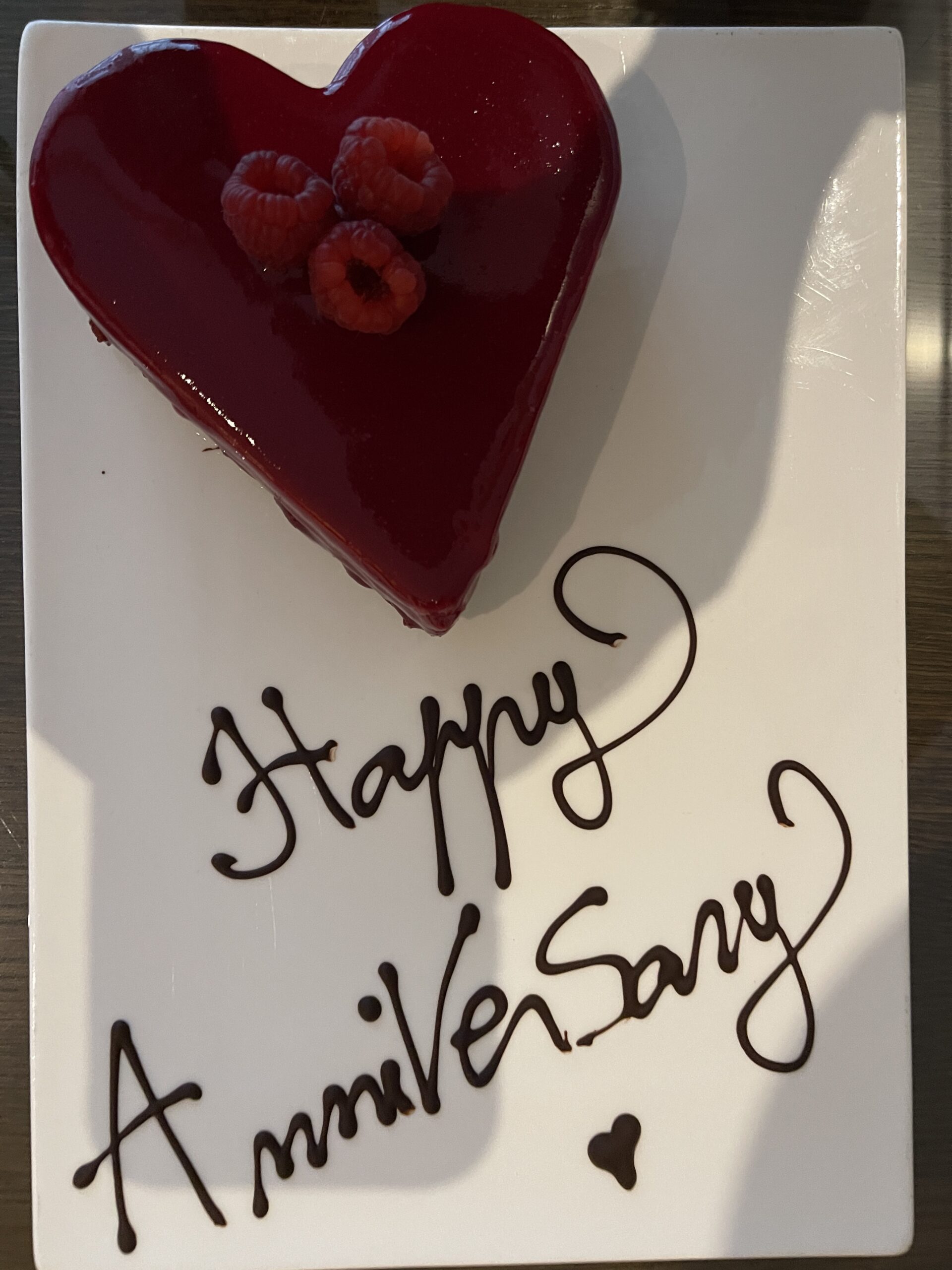
Casablanca Highlights – December 15, 2023
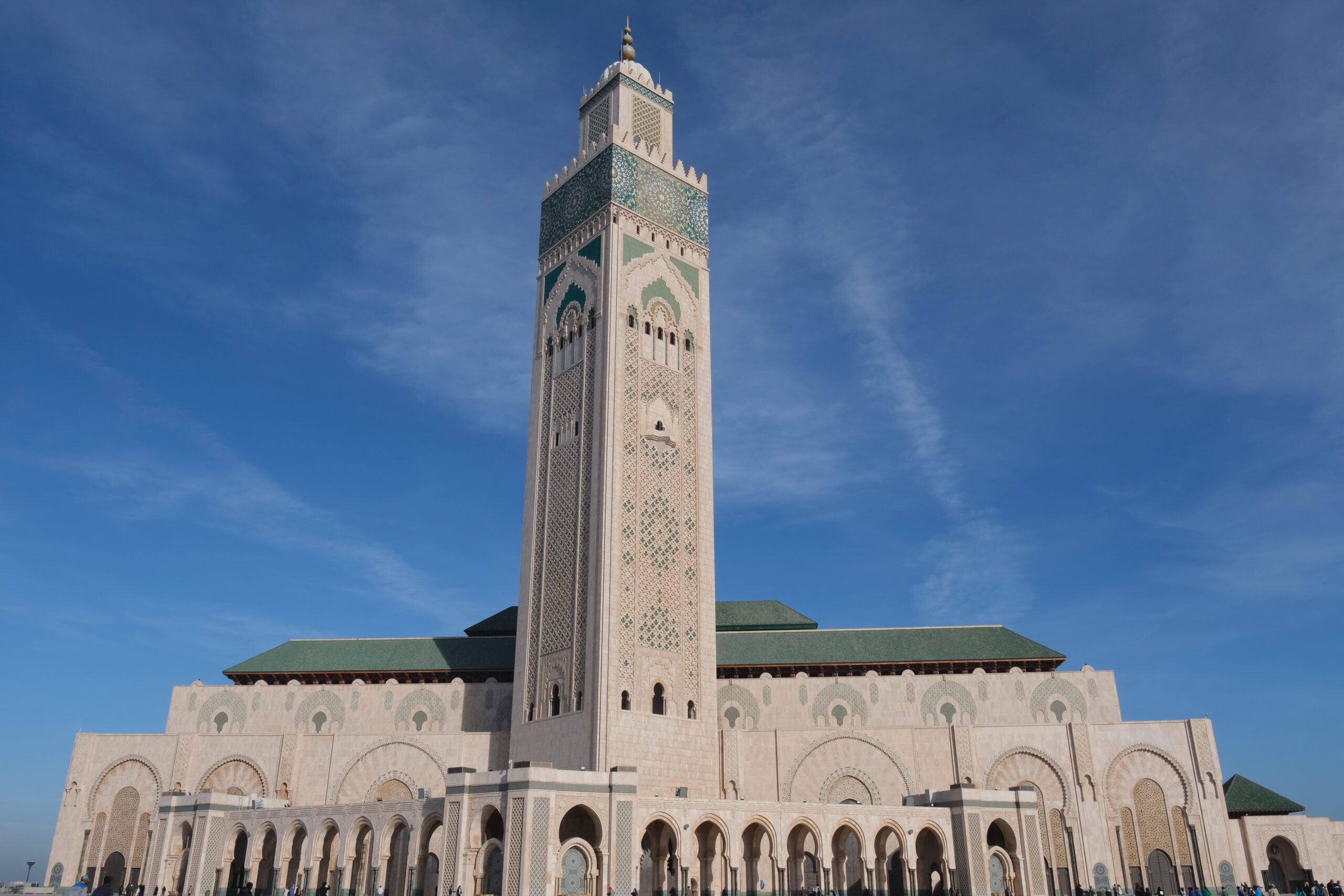
Our day in Casablanca began with a visit to the iconic Hassan II Mosque, a masterpiece of modern Islamic architecture. Built partially over the Atlantic, it stands as Africa’s largest mosque and is notably welcoming to non-believers. Conceived by King Hassan II and brought to life by French architect Michael Pinseau, this architectural marvel took seven years to complete, involving 35,000 workers. Except for the Murano glass chandeliers and some of the Italian white granite columns, all the materials were sourced in Morocco. Beyond its grand prayer halls and retractable roof, the mosque houses a vast library, museum, and madrasa, reflecting the craftsmanship of thousands of artisans. The main prayer hall can hold 25,000 worshipers and the plaza another 80,000.
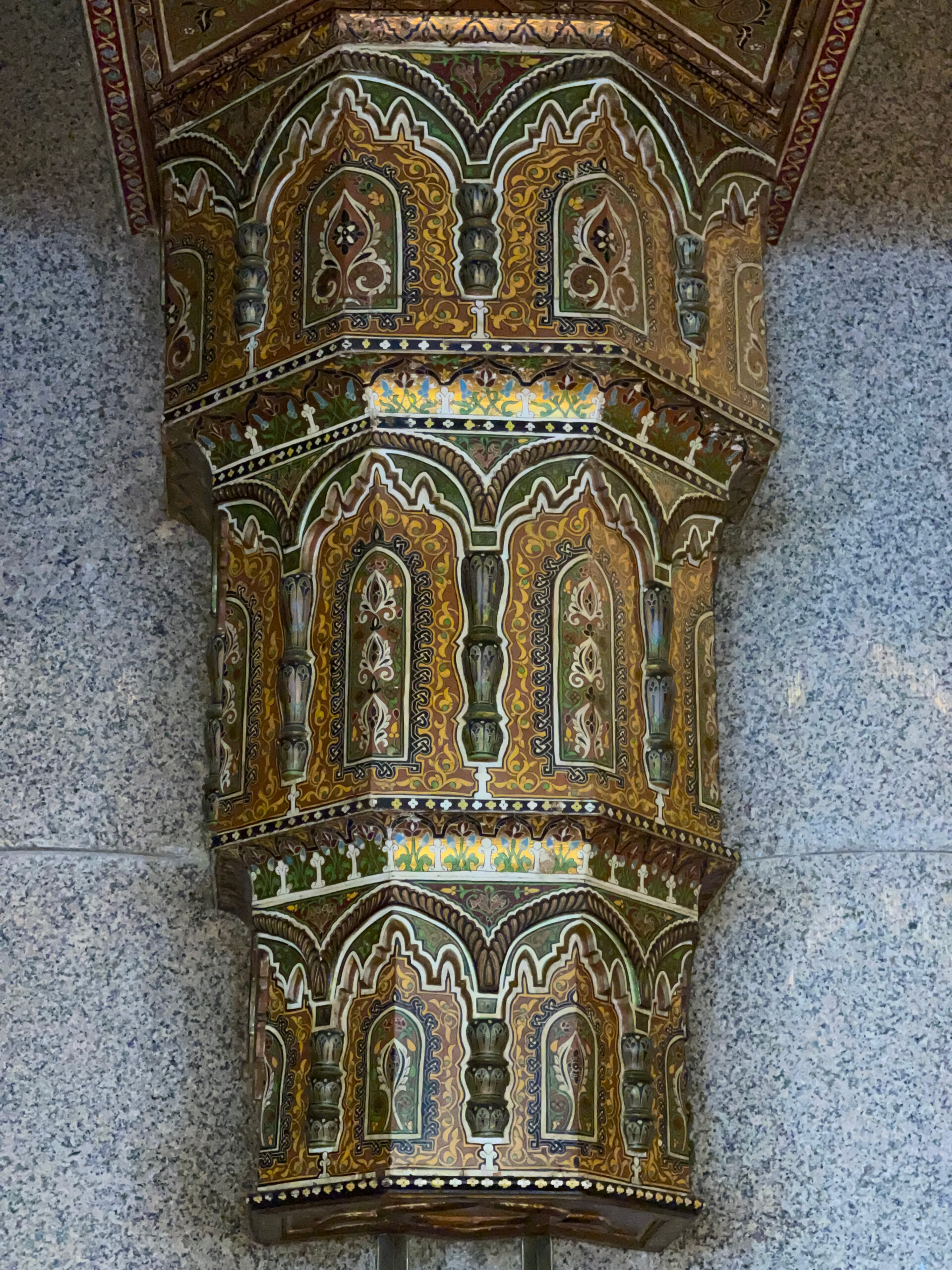
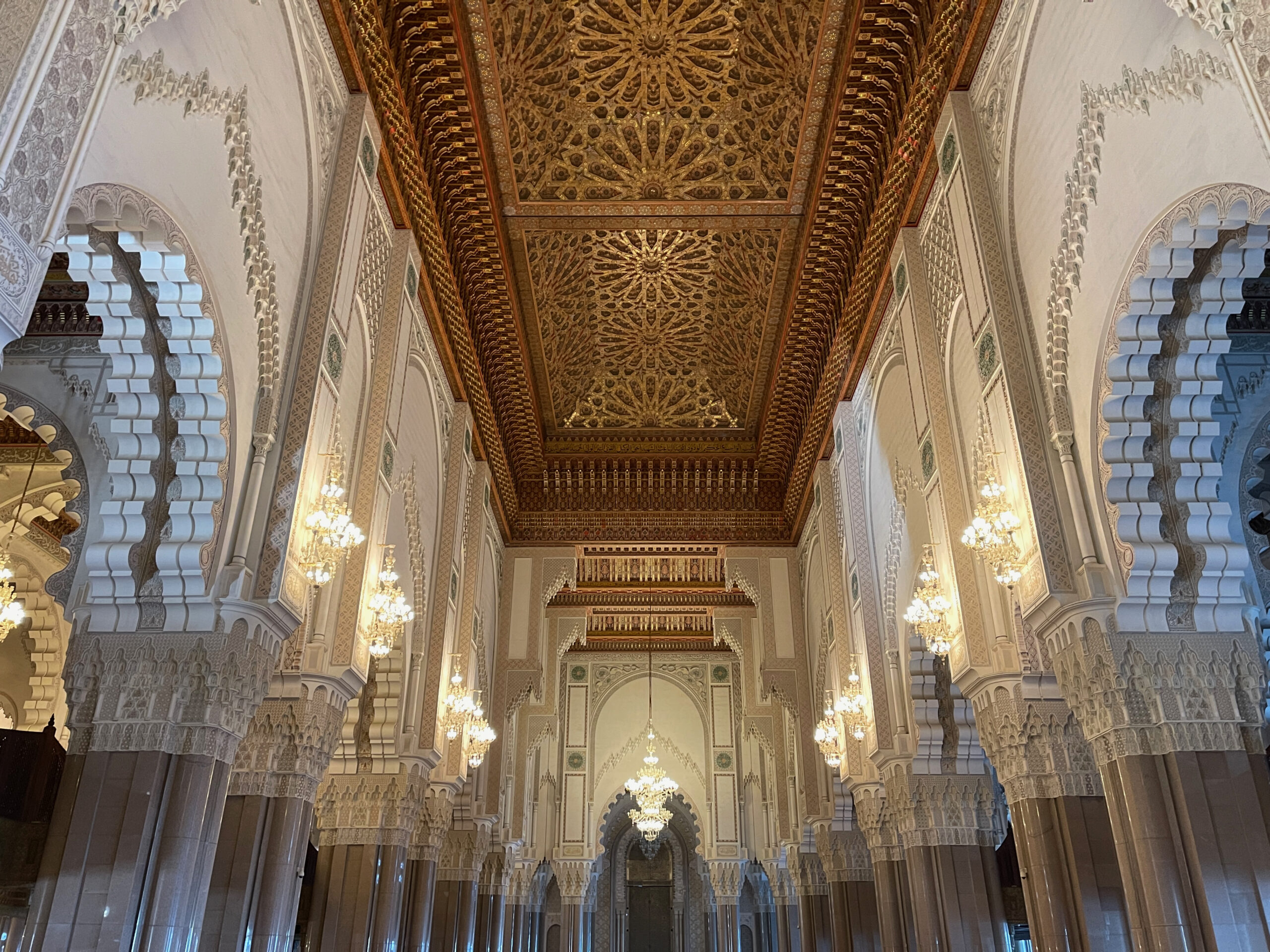
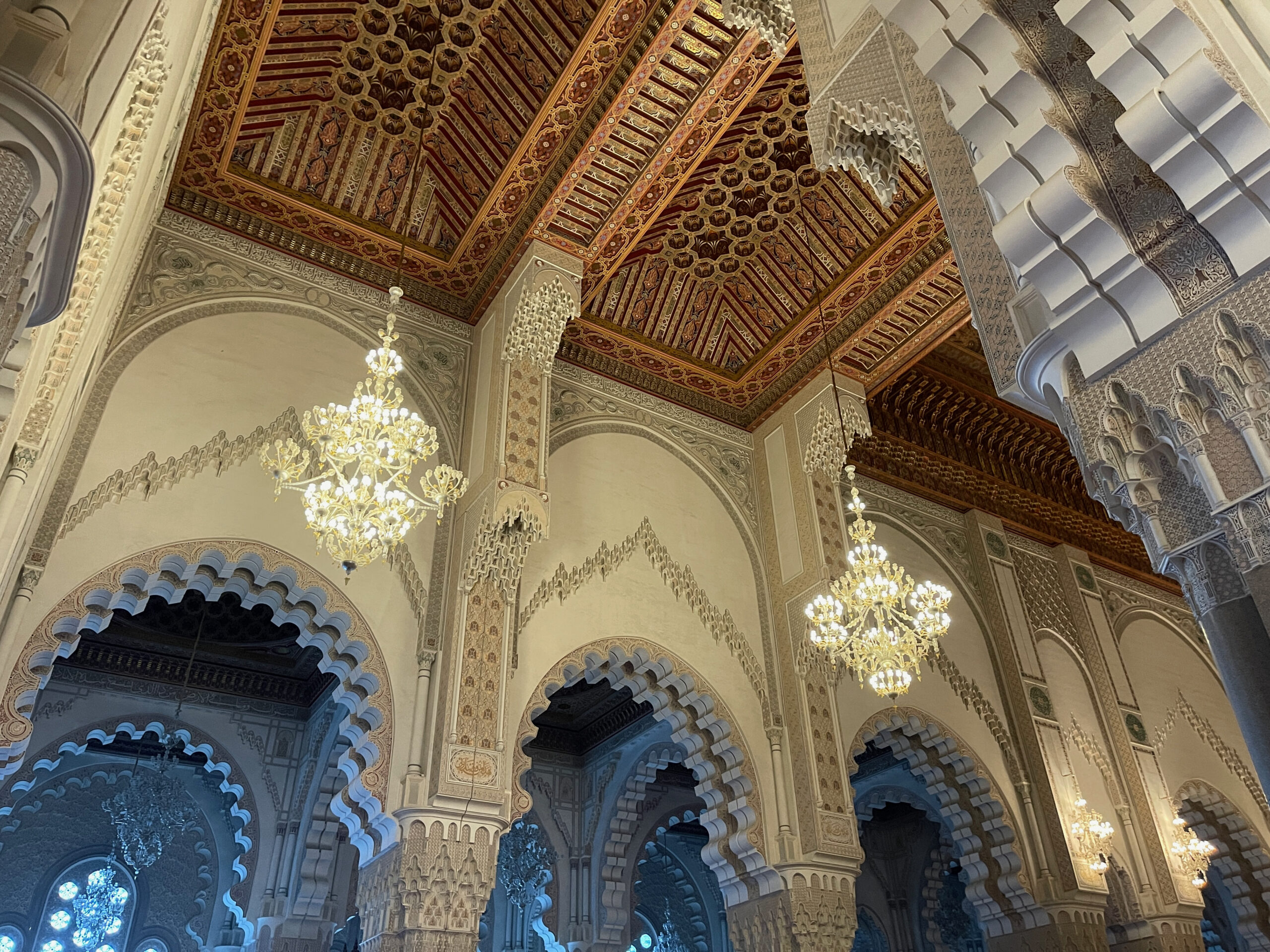
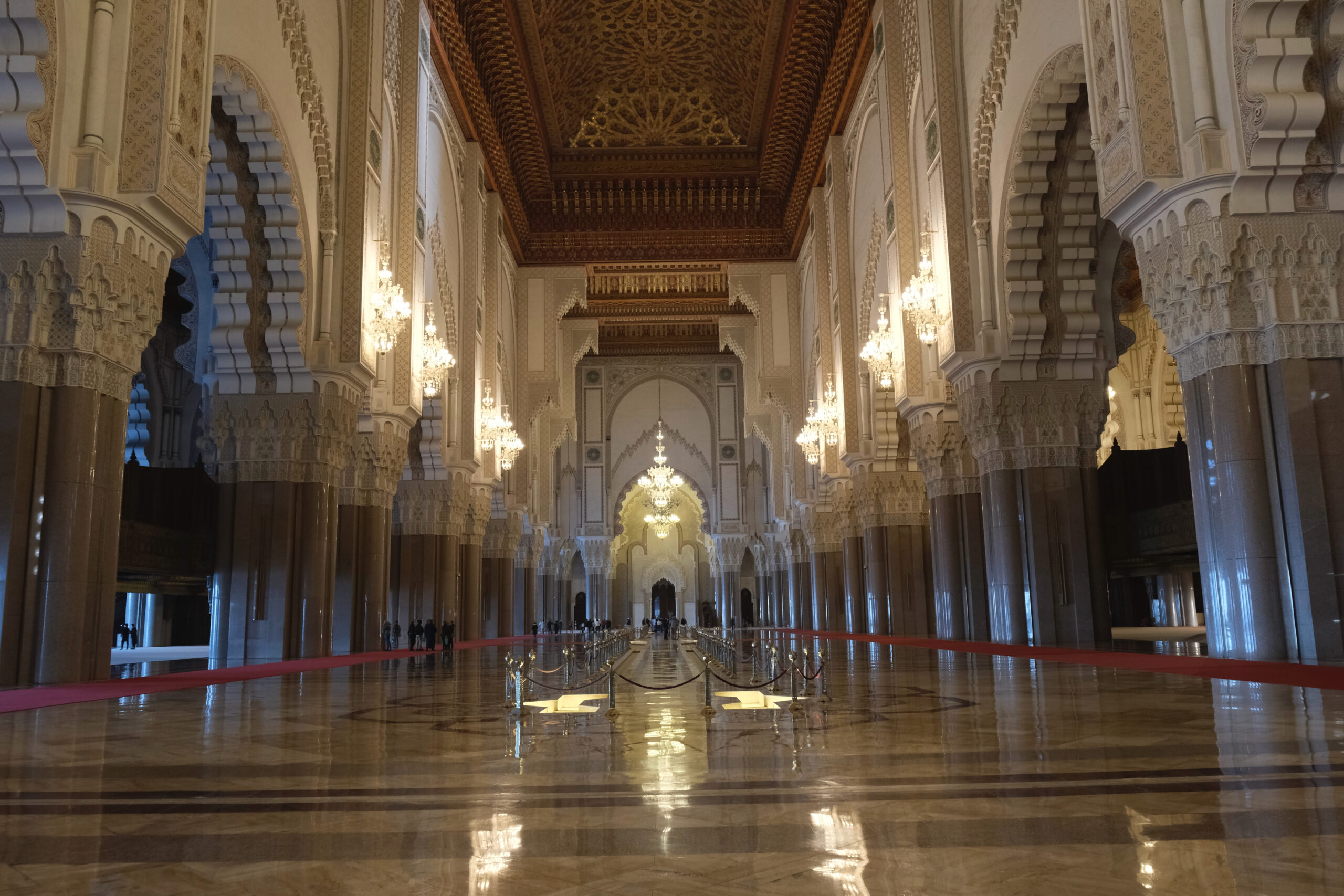
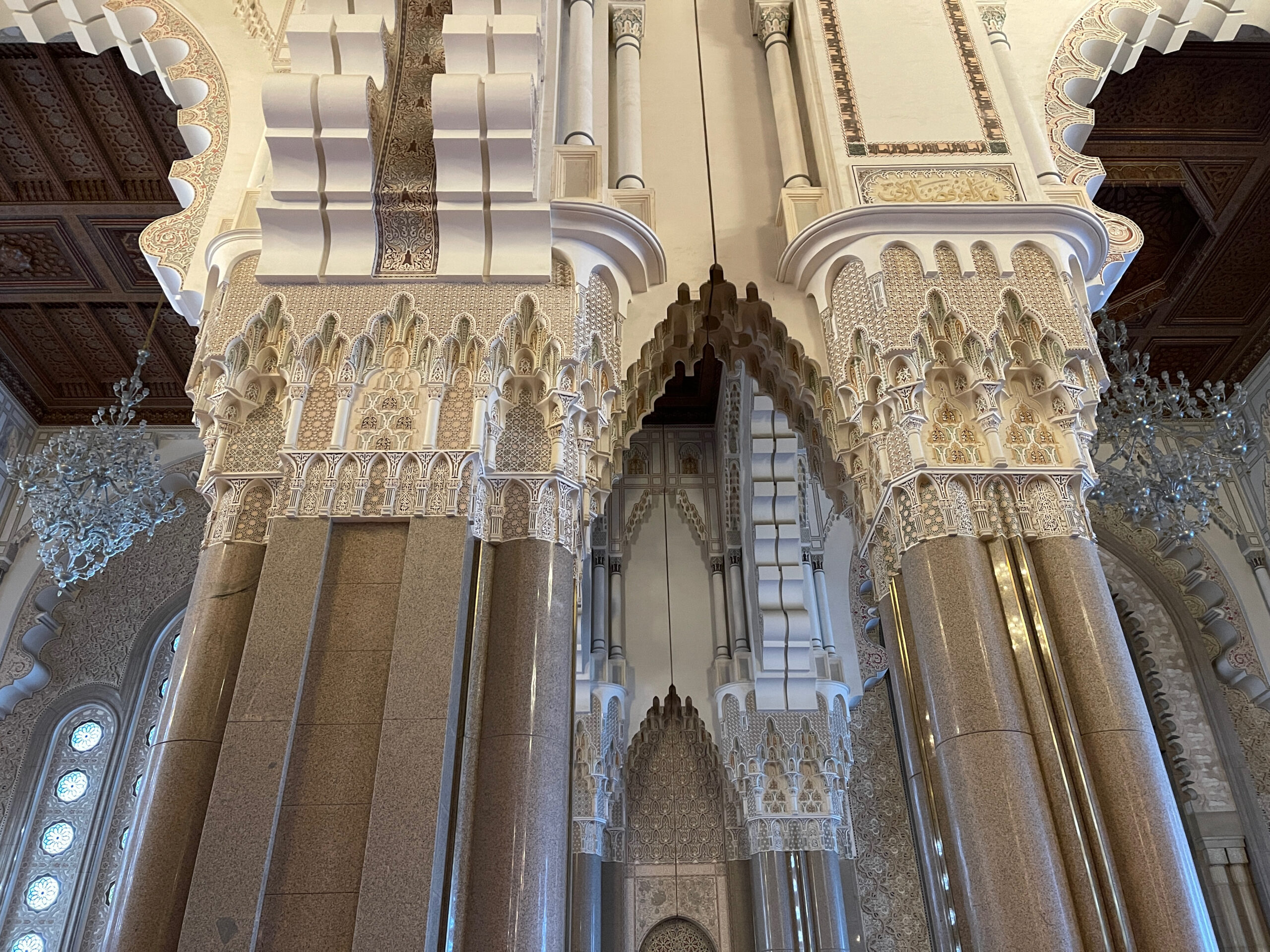
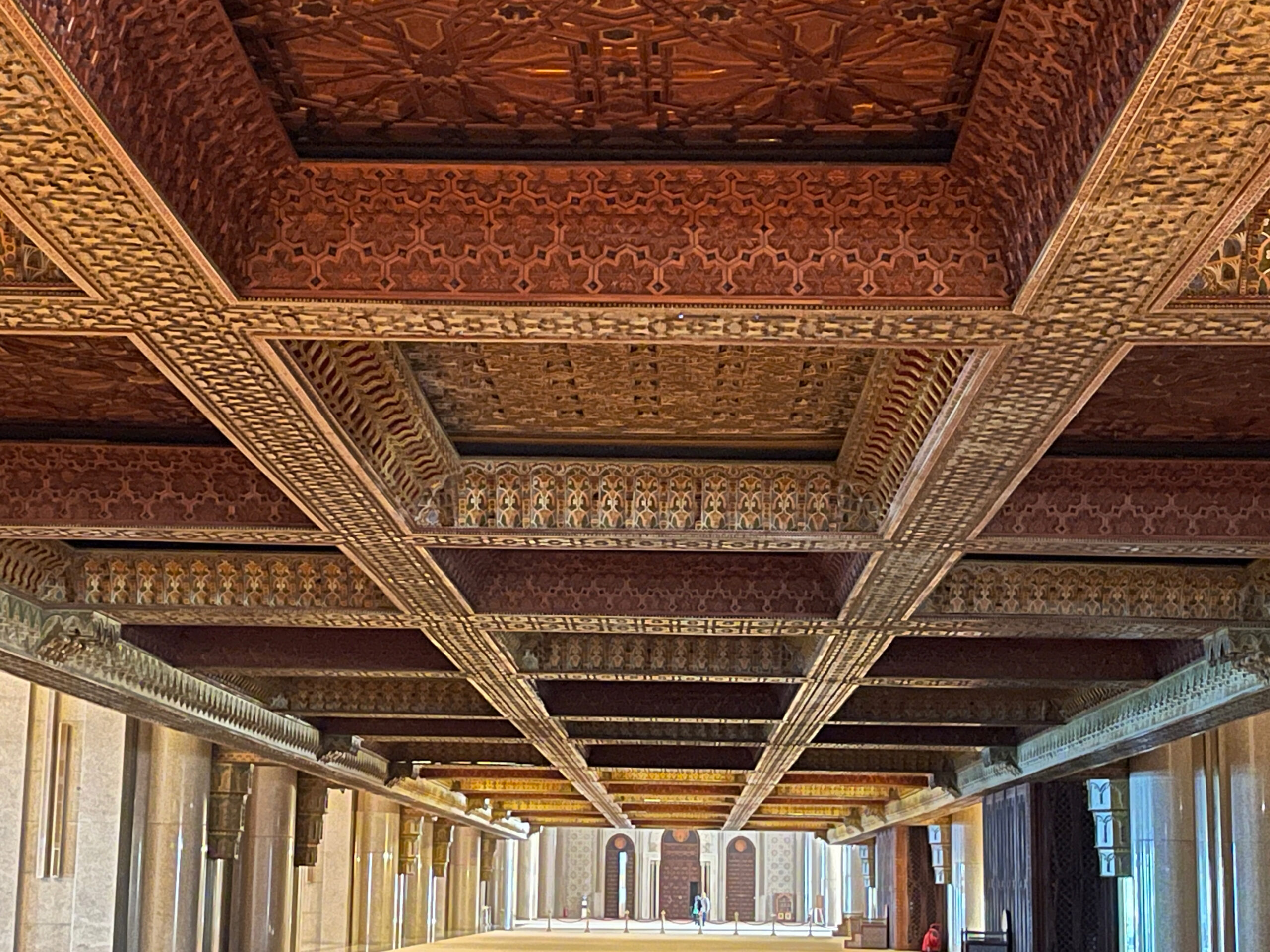
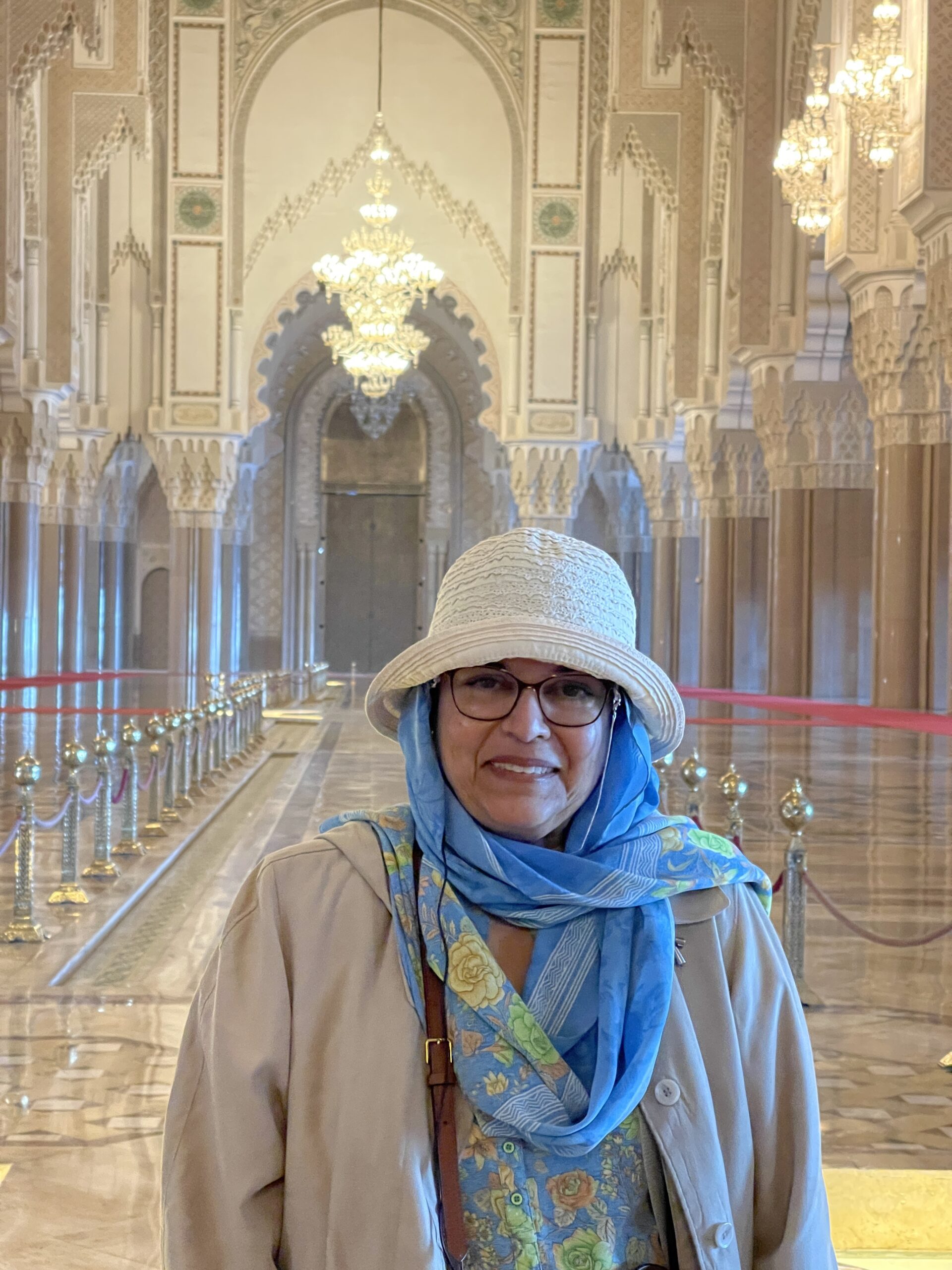
Our next stop was to the Slaoui Foundation Museum. Abderrahman Slaoui was a Moroccan businessman and art collector who died in 2002. The museum was opened in 2012 and exhibits old posters, Moroccan jewelry, crystal, and landscape paintings by Jacques Majorelle. Slaoui’s father-in-law was a famous jeweler from Fes who advised him on his gold jewelry collection.
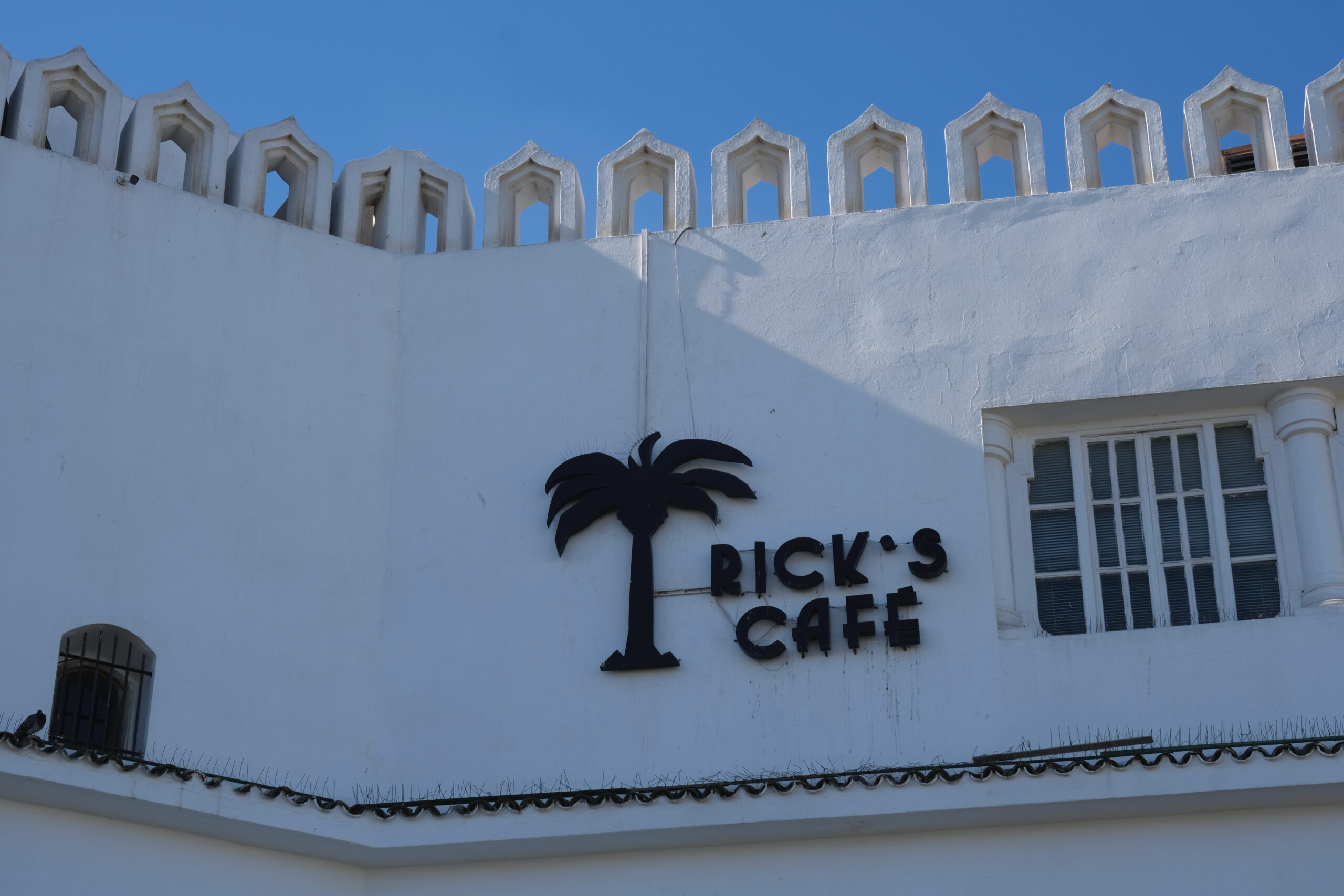
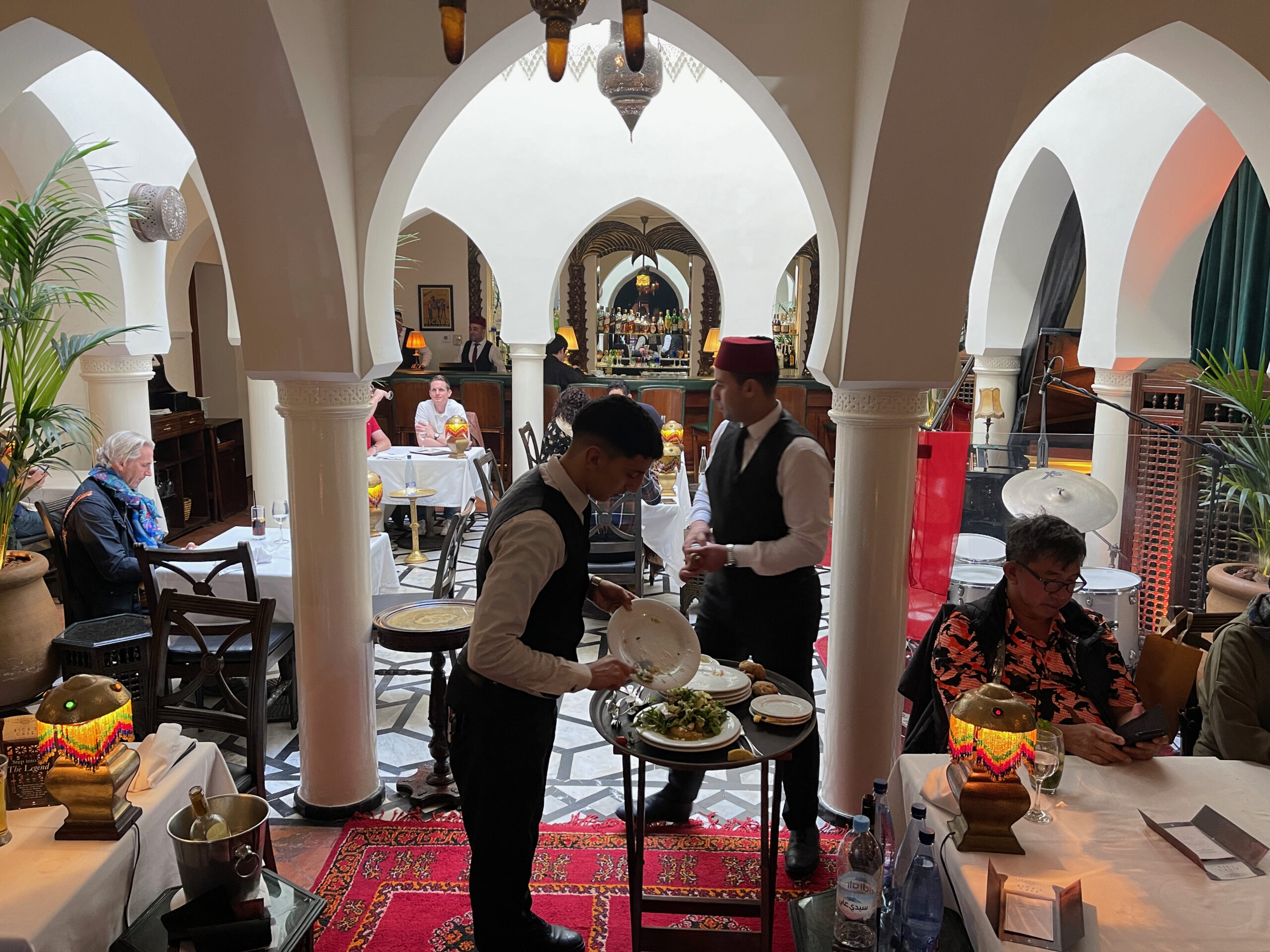
Lunch was at Rick’s Café. Housed in a 1930s mansion, the interior of the riad is a replica of Rick’s Café as seen in the movie. The brainchild of Kathy Kriger, a former American diplomat and commercial attaché in Morocco, props used in the movie were purchased for the café. The movie itself was never filmed in Morocco. Our tour director Chris hired a pianist to play on the Pleyel piano and of course he played As Time Goes By.
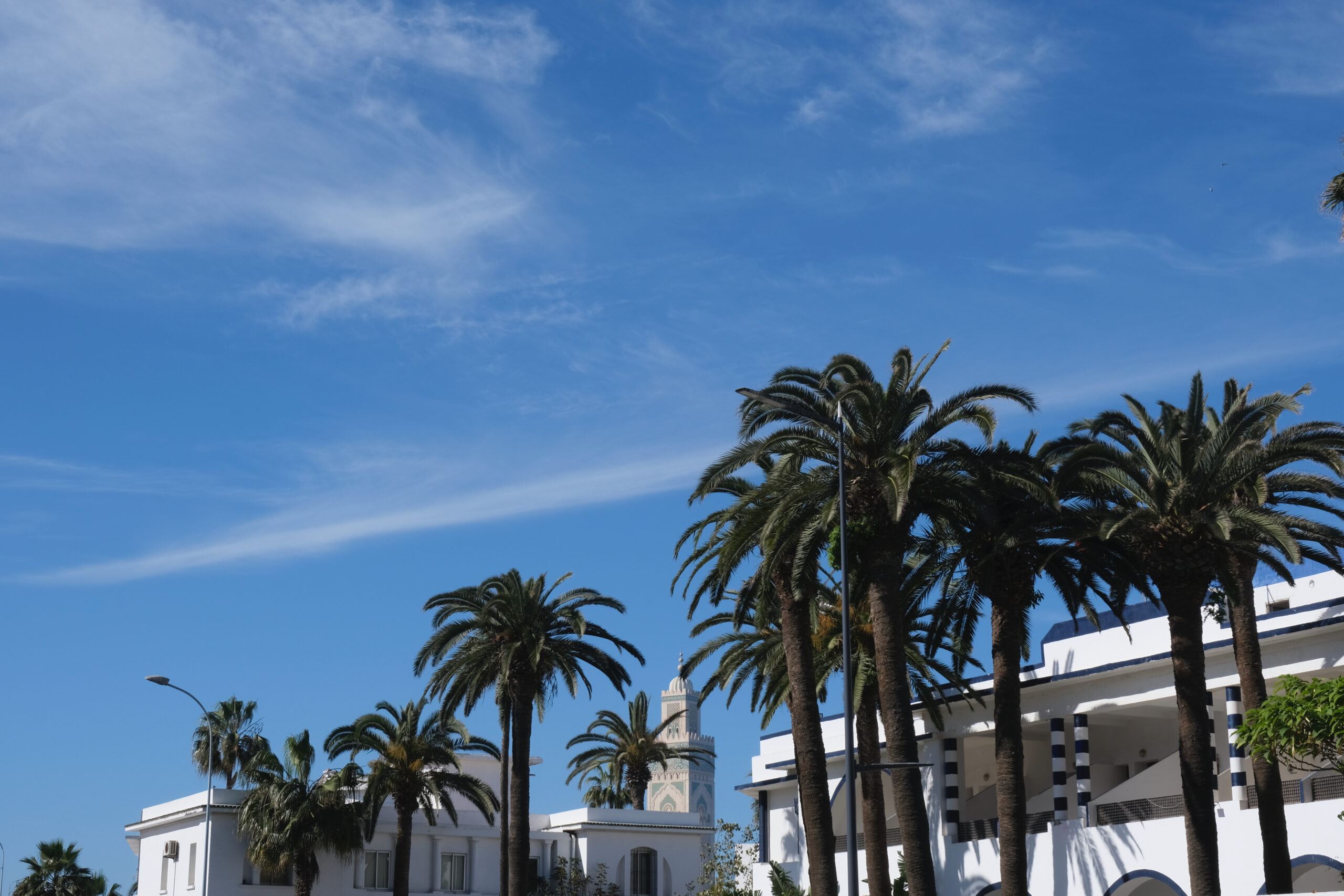
After lunch, we left for a long drive to Marrakech, another UNESCO World Heritage site. On the way, we viewed another classic movie The Man Who Knew Too Much with James Stewart and Doris Day. Parts of this movie were shot in Marrakech.
Marrakech’s Historical Sites & Gardens – December 16, 2023
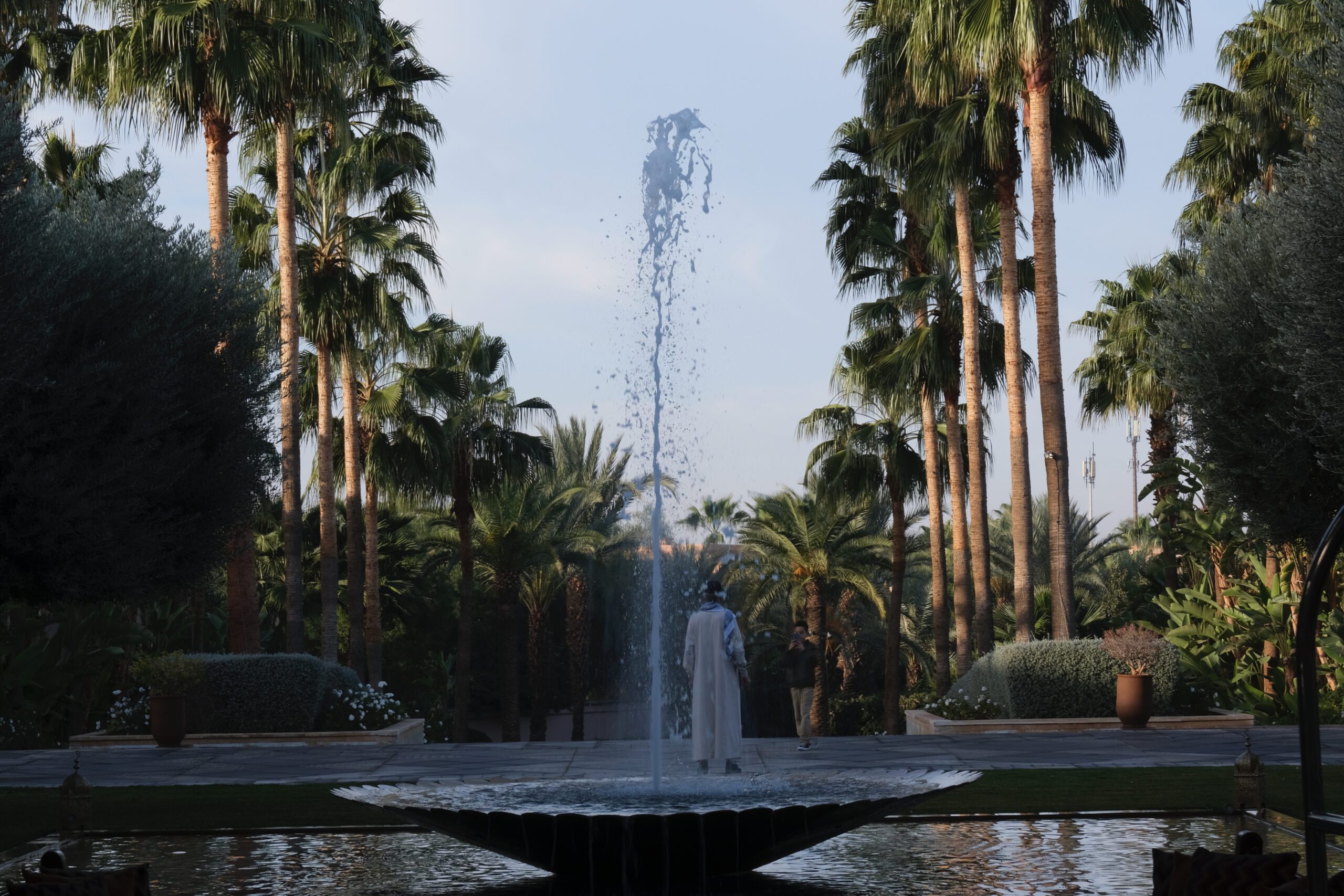
We began our day by passing the iconic La Mamounia Hotel, Winston Churchill’s favorite hotel. Our next stop was the Koutabia Mosque, a 12th-century marvel, unfortunately weakened by the recent earthquake, its minaret under repair. The minaret of this mosque influenced the minaret of the Hassan Tower in Rabat and the Grand Mosque in Seville.
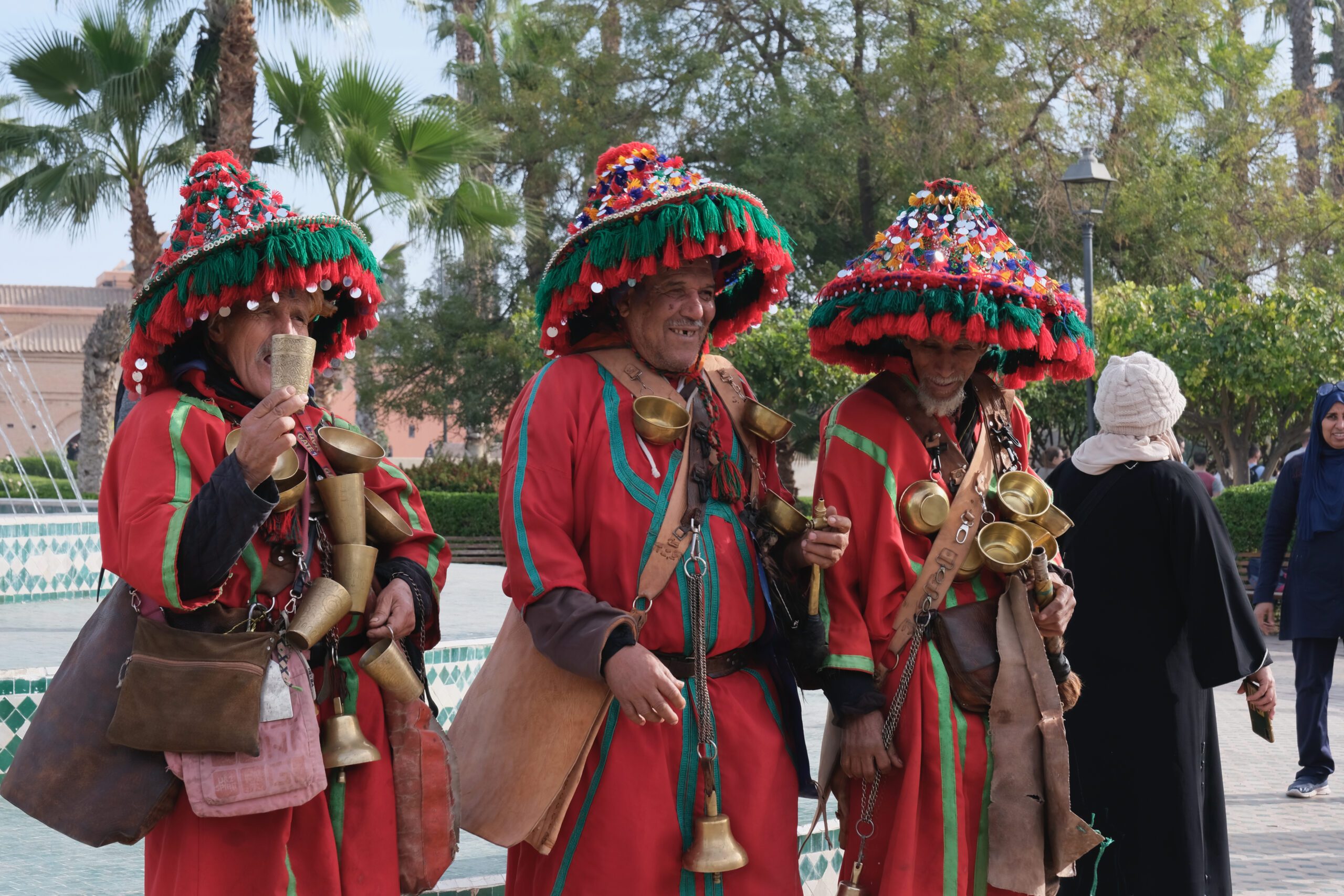
From the Koutabia, we drove to the Djemaa El Fna Square to see the waterboys, snake charmers, monkeys, and other entertainers in the square where scenes from The Man Who Knew Too Much were shot. We then walked to the opulent Bahia Palace, named after the fourth wife of the prime minister Ba Ahmed. The palace is a showplace for the skills of Moroccan artisans. The flooring with marble and zellige tiles, the ceilings with floral painted cedar wood, and the stucco decoration in geometric patterns with inscriptions are quite stunning. The palace is built mostly on one floor and consists of a small riad, a grand riad, and domestic quarters.
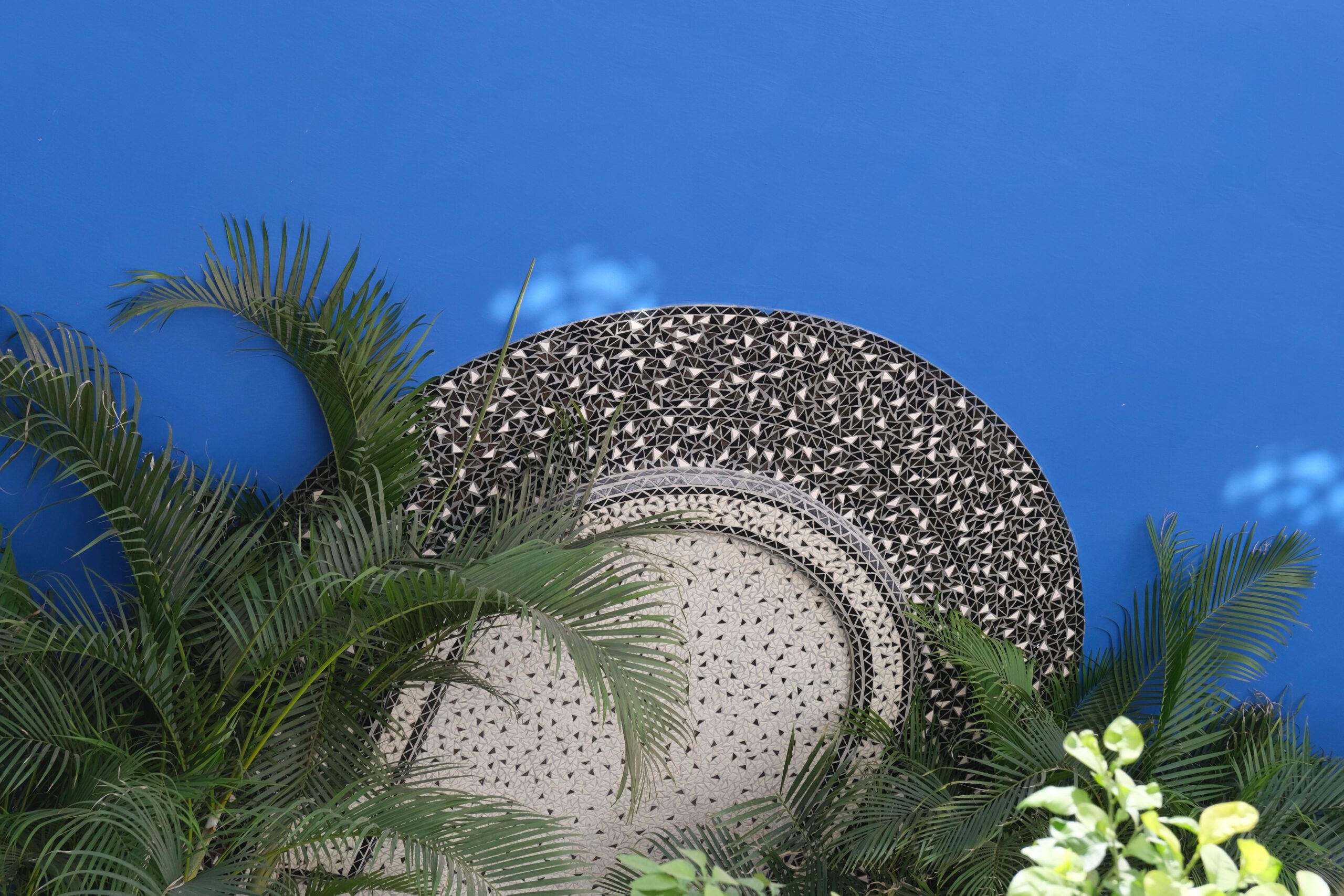
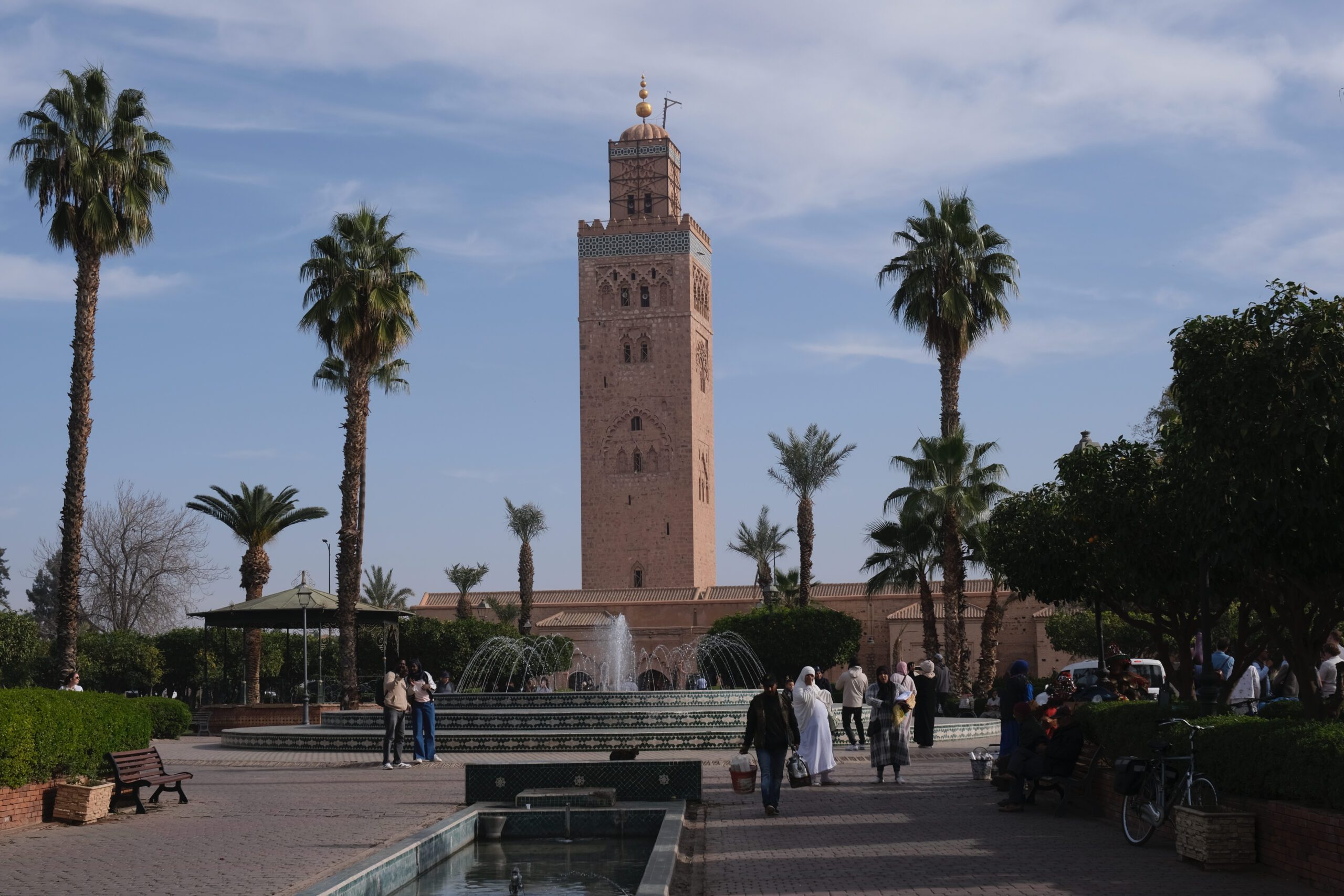
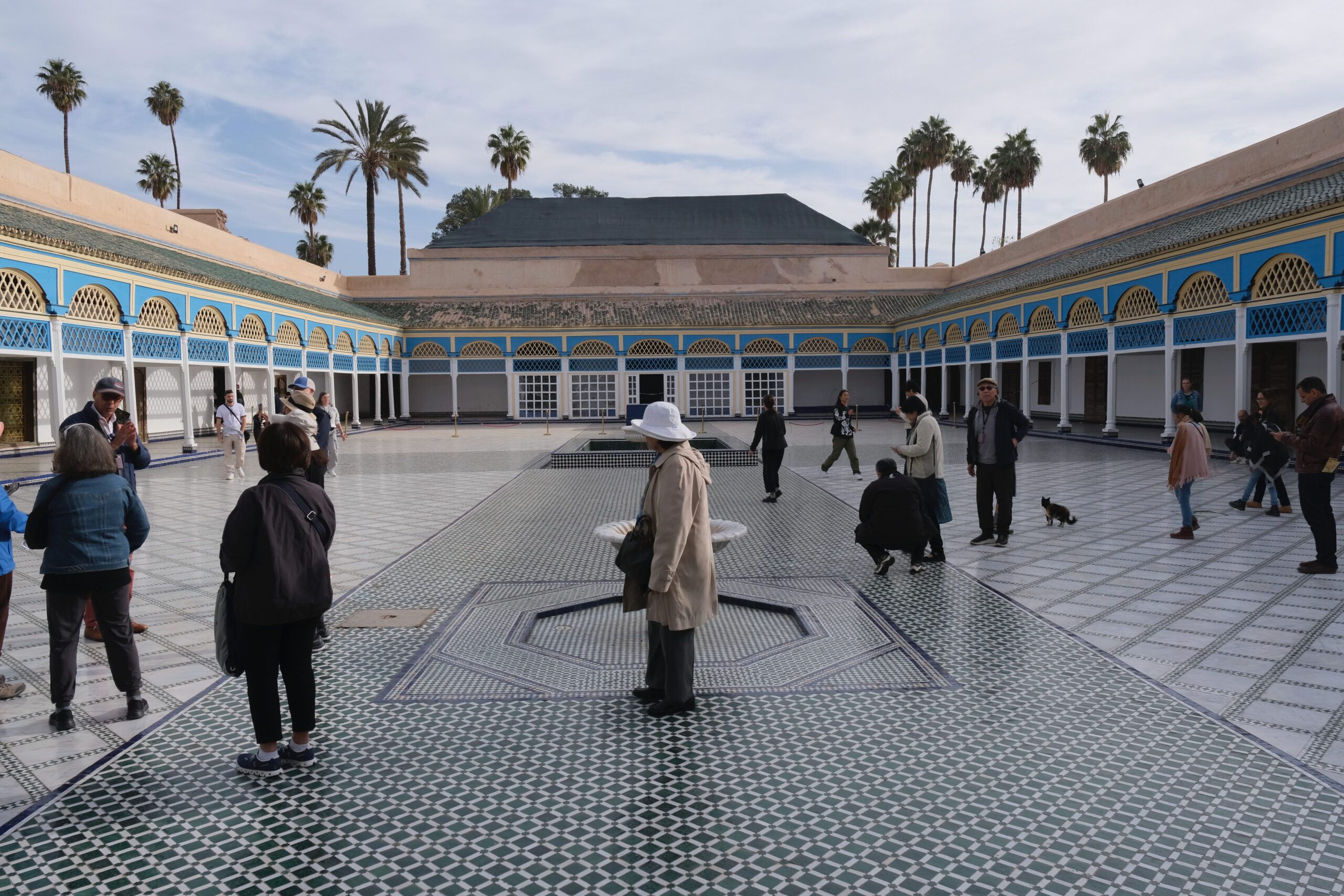
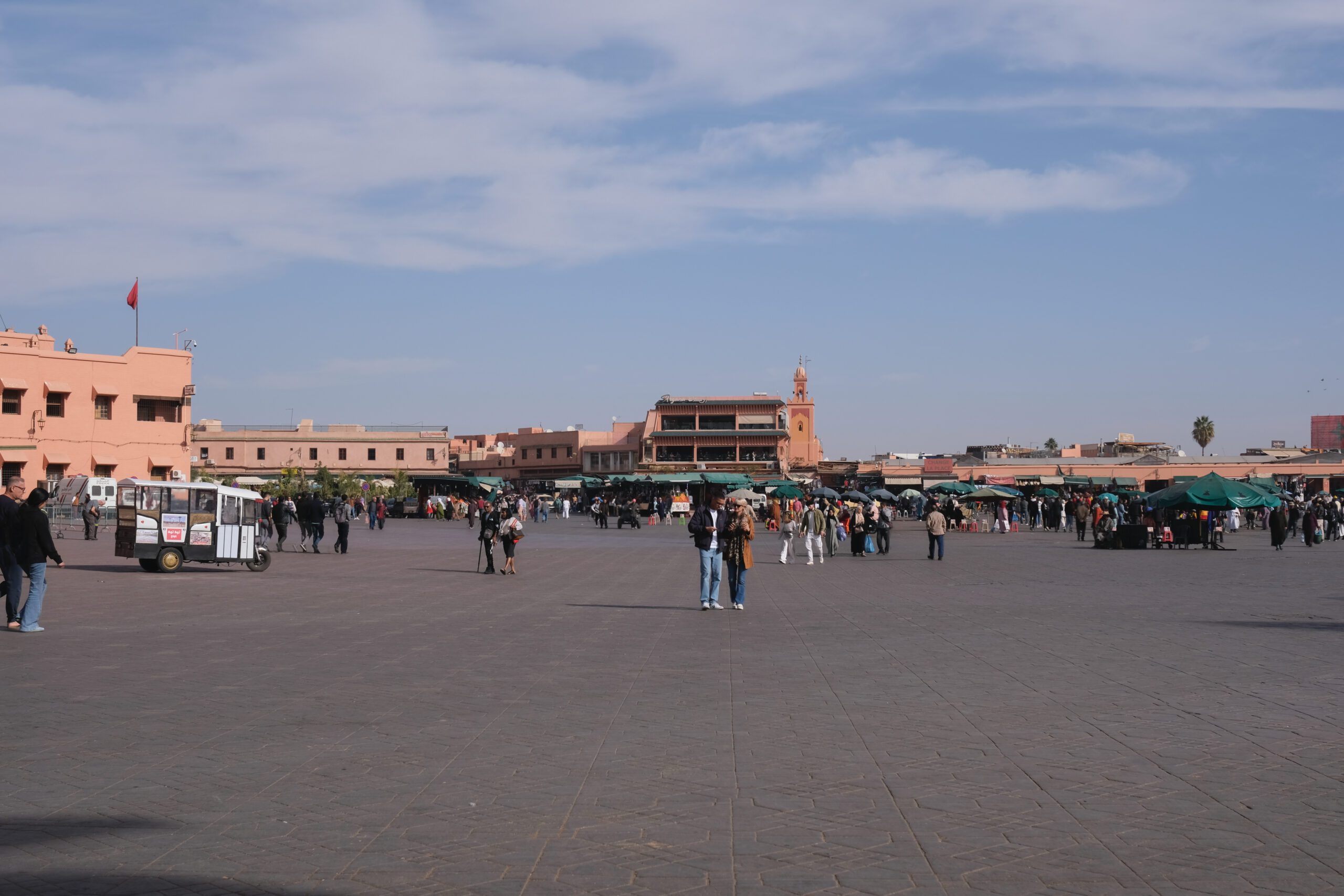
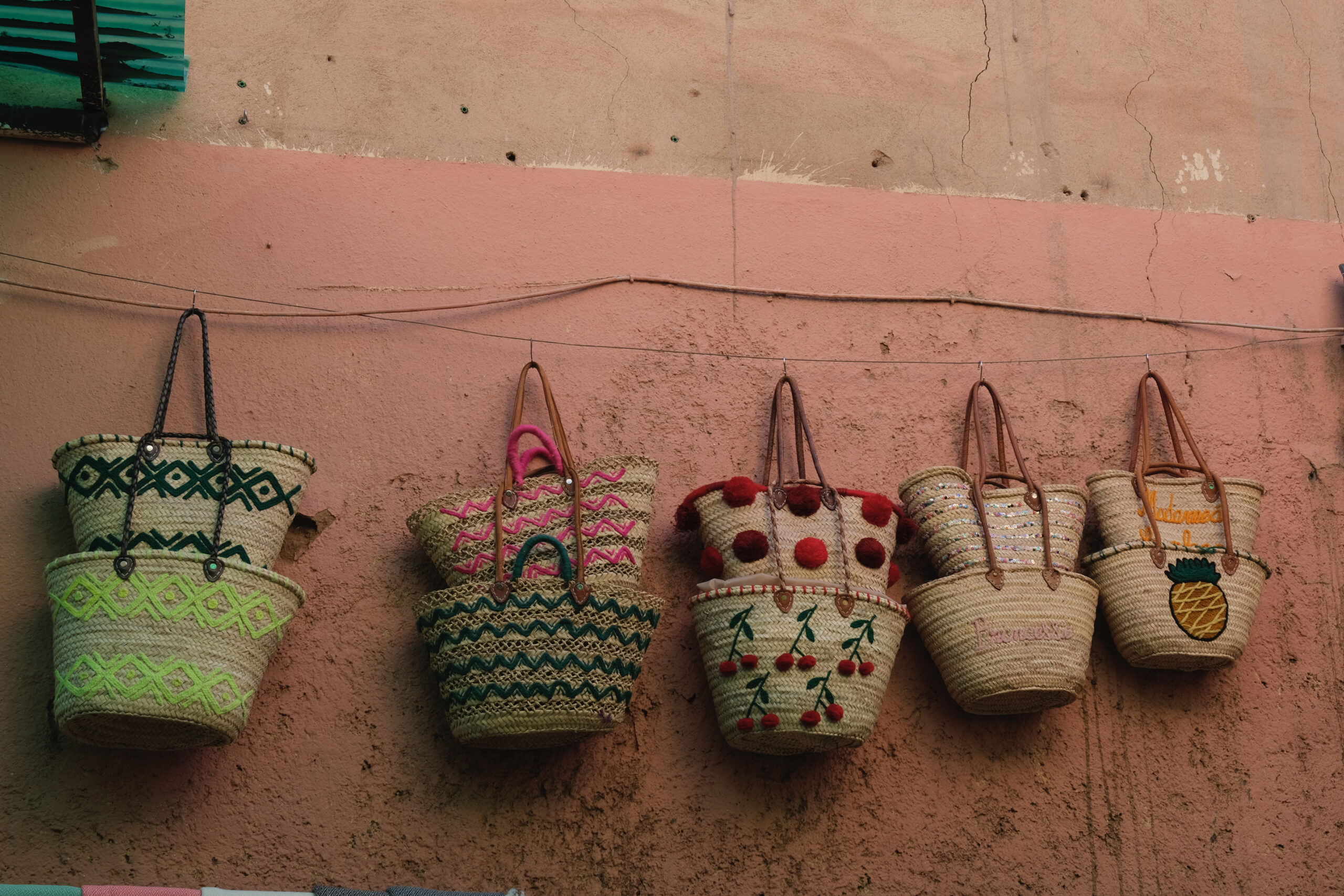
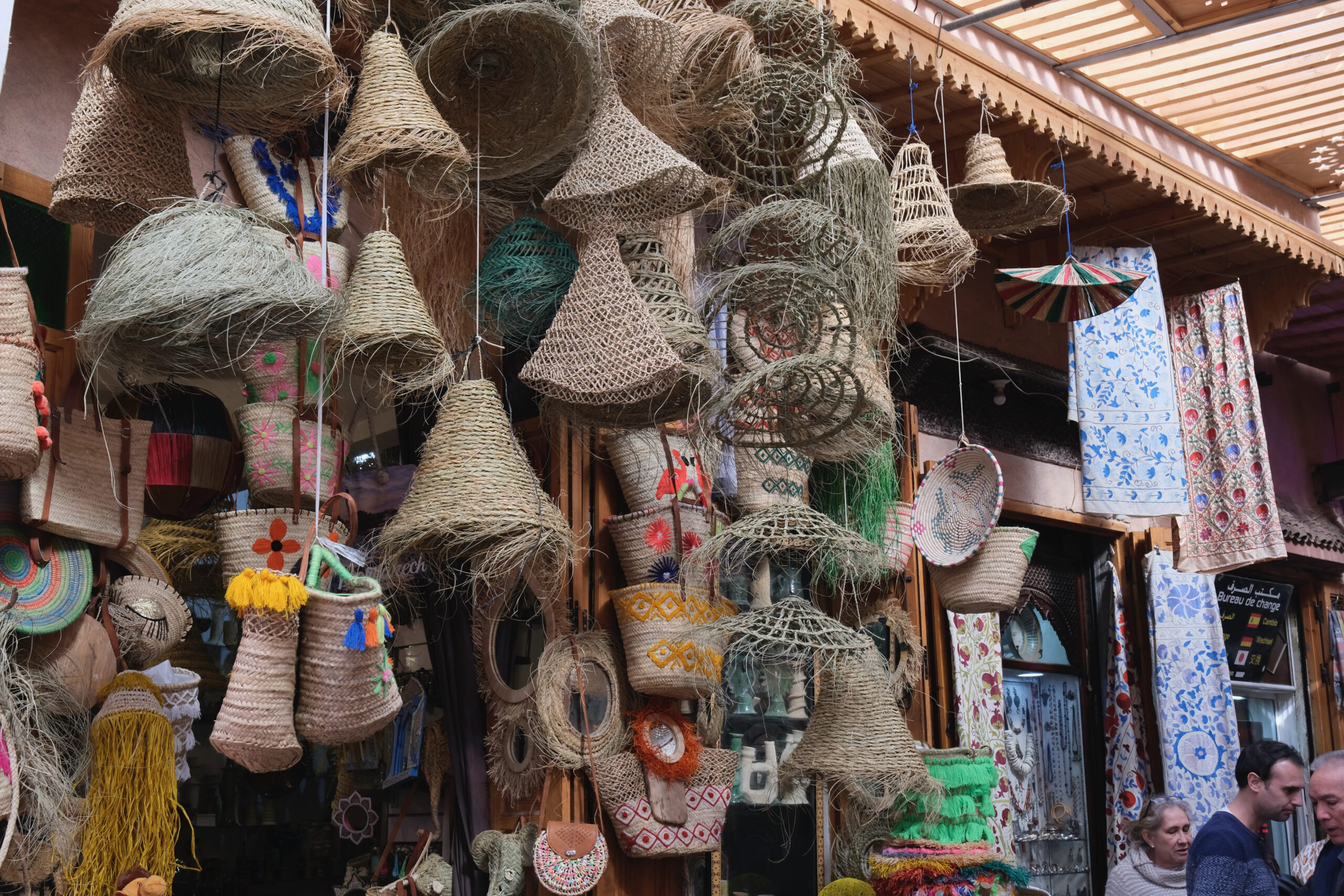
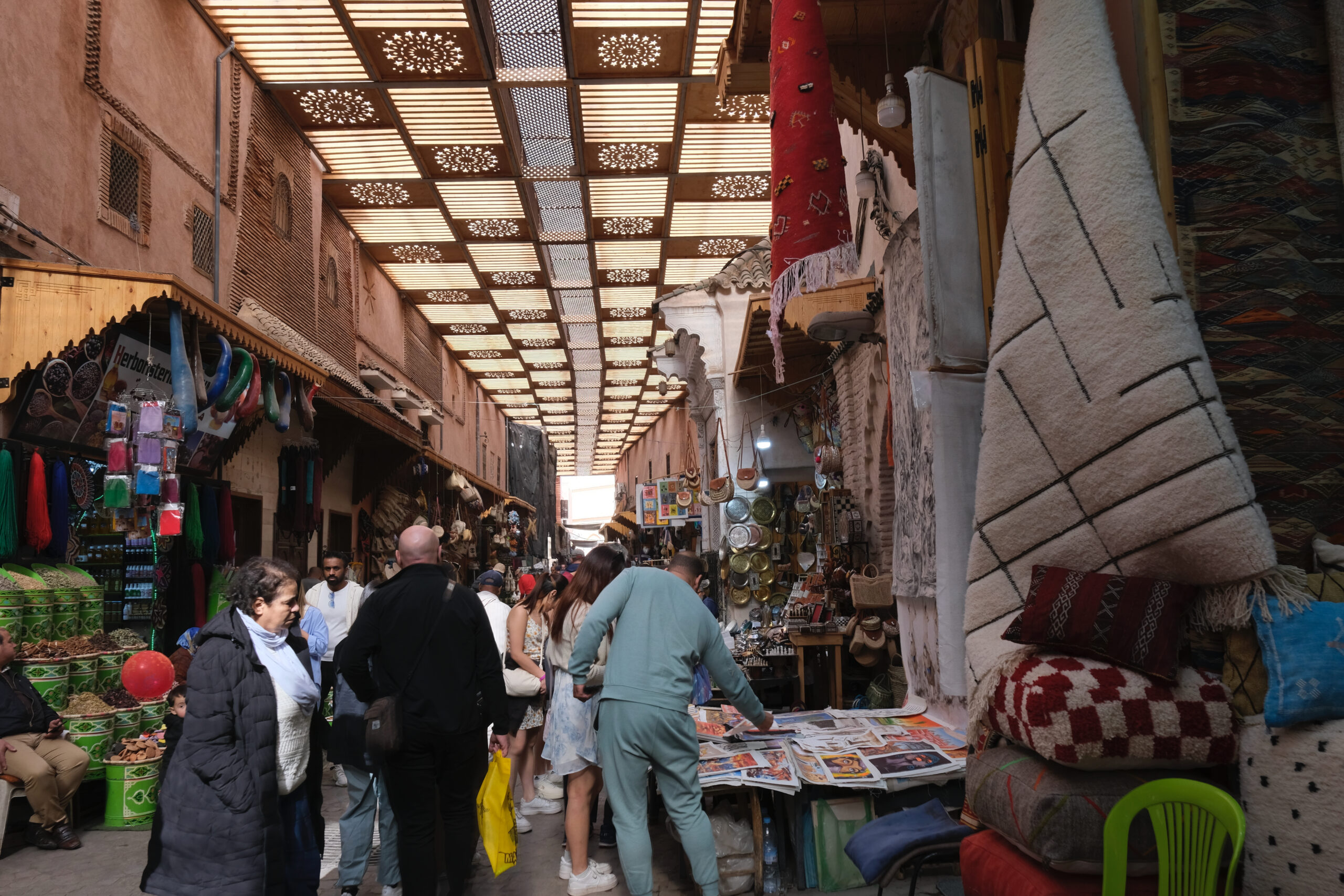
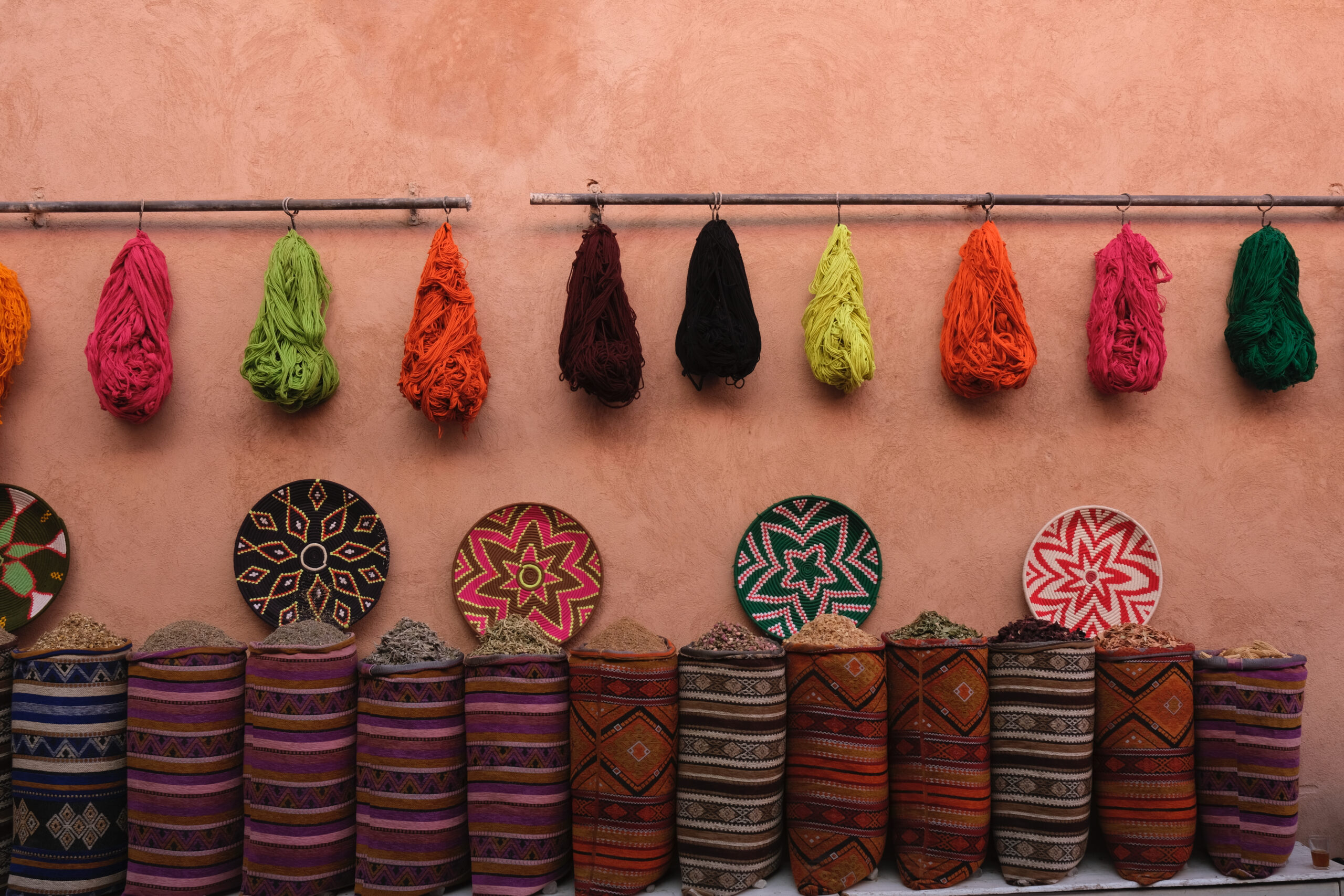
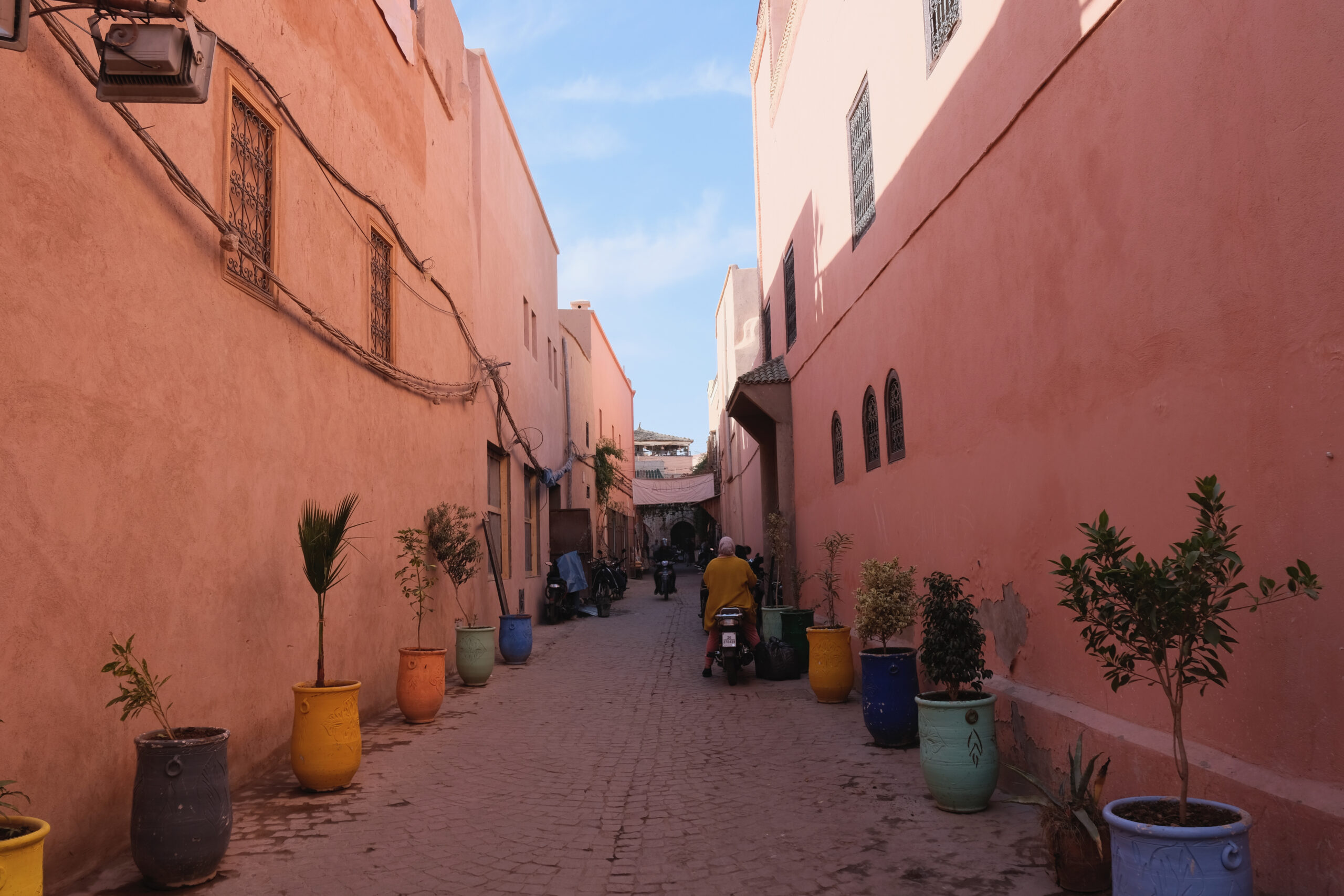
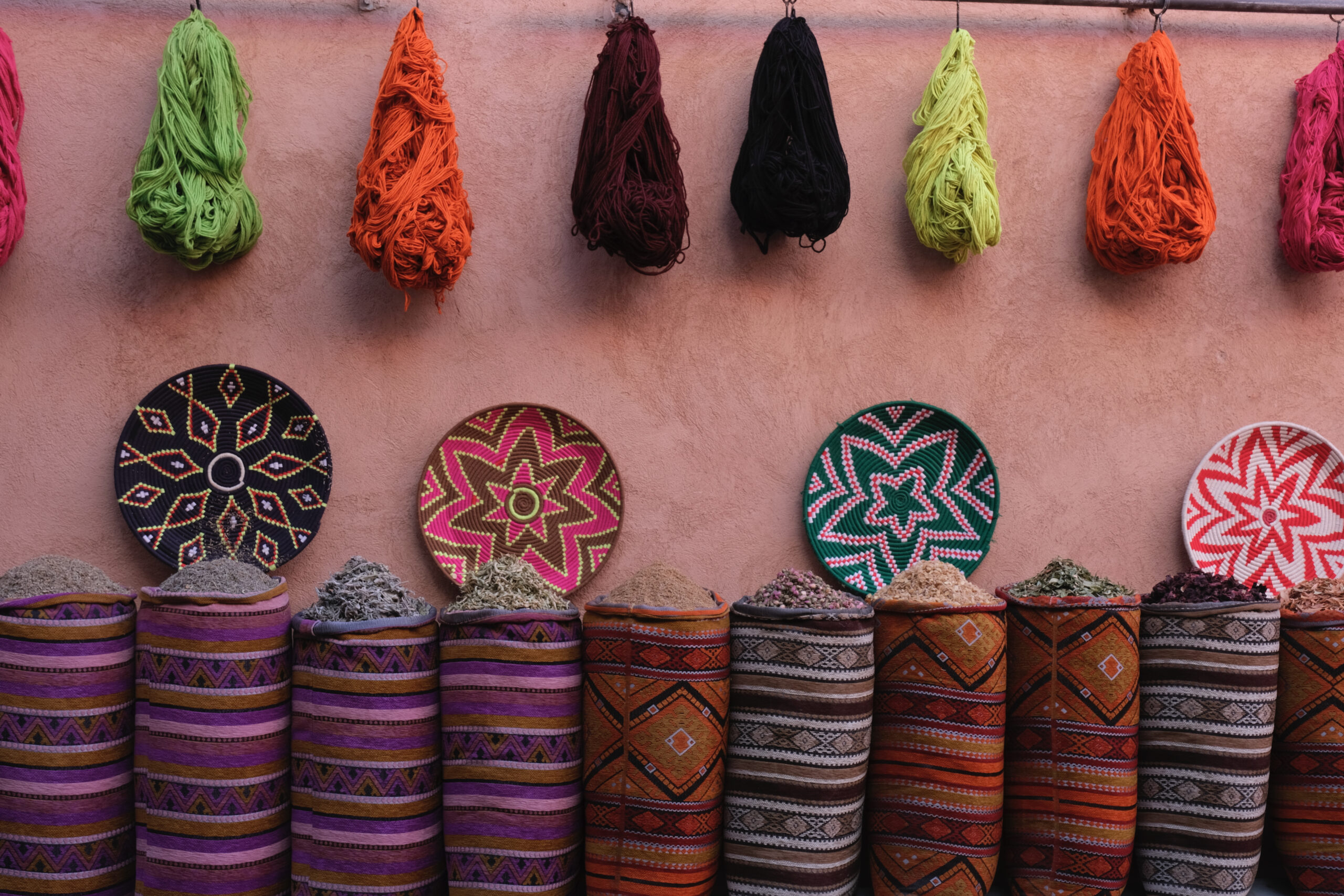
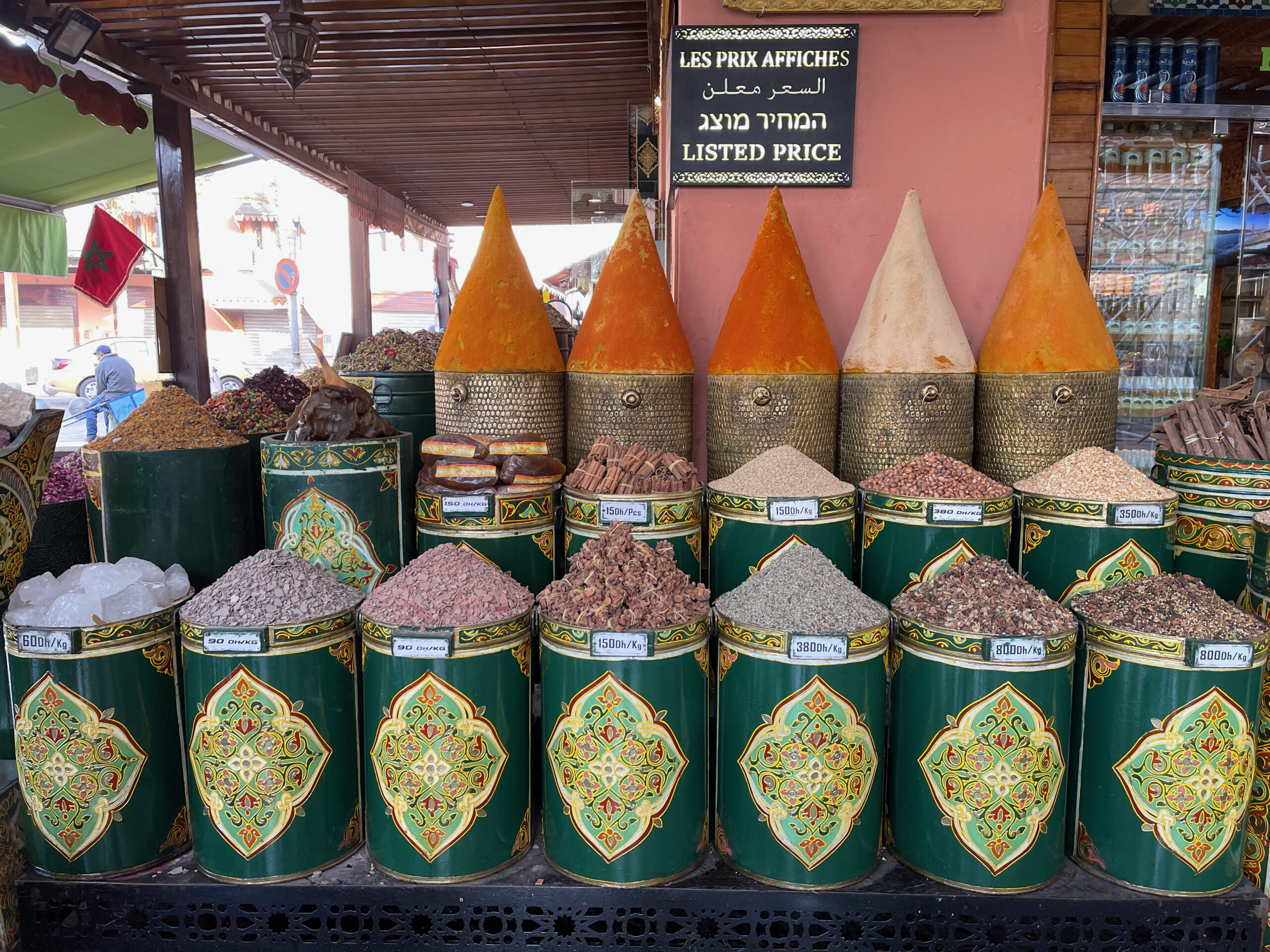
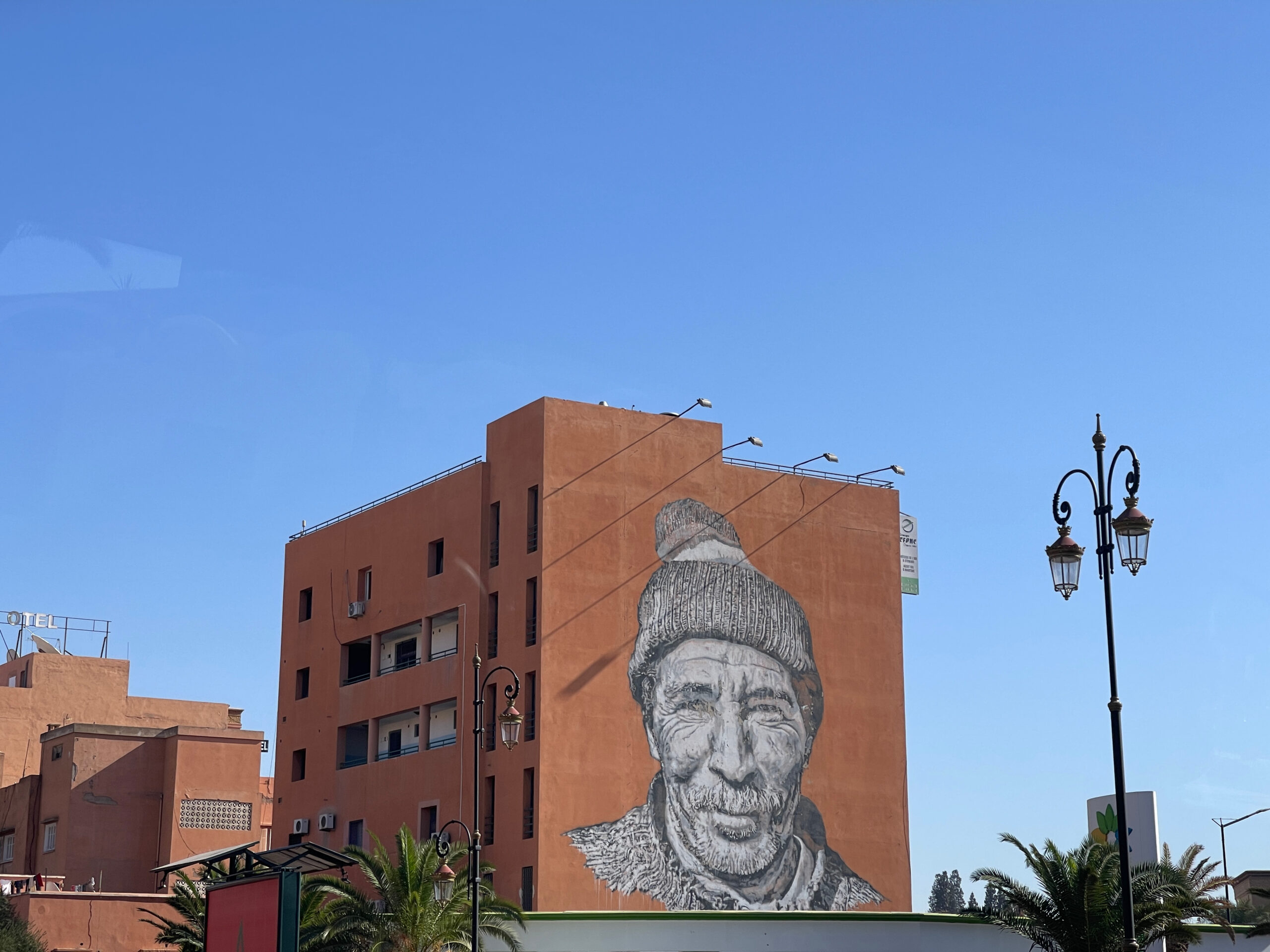
From the palace we strolled through the medina. The colors and smells and the noise make you think of Persian markets in fairy tale stories, except for the motorbikes that keep whizzing by all the time.
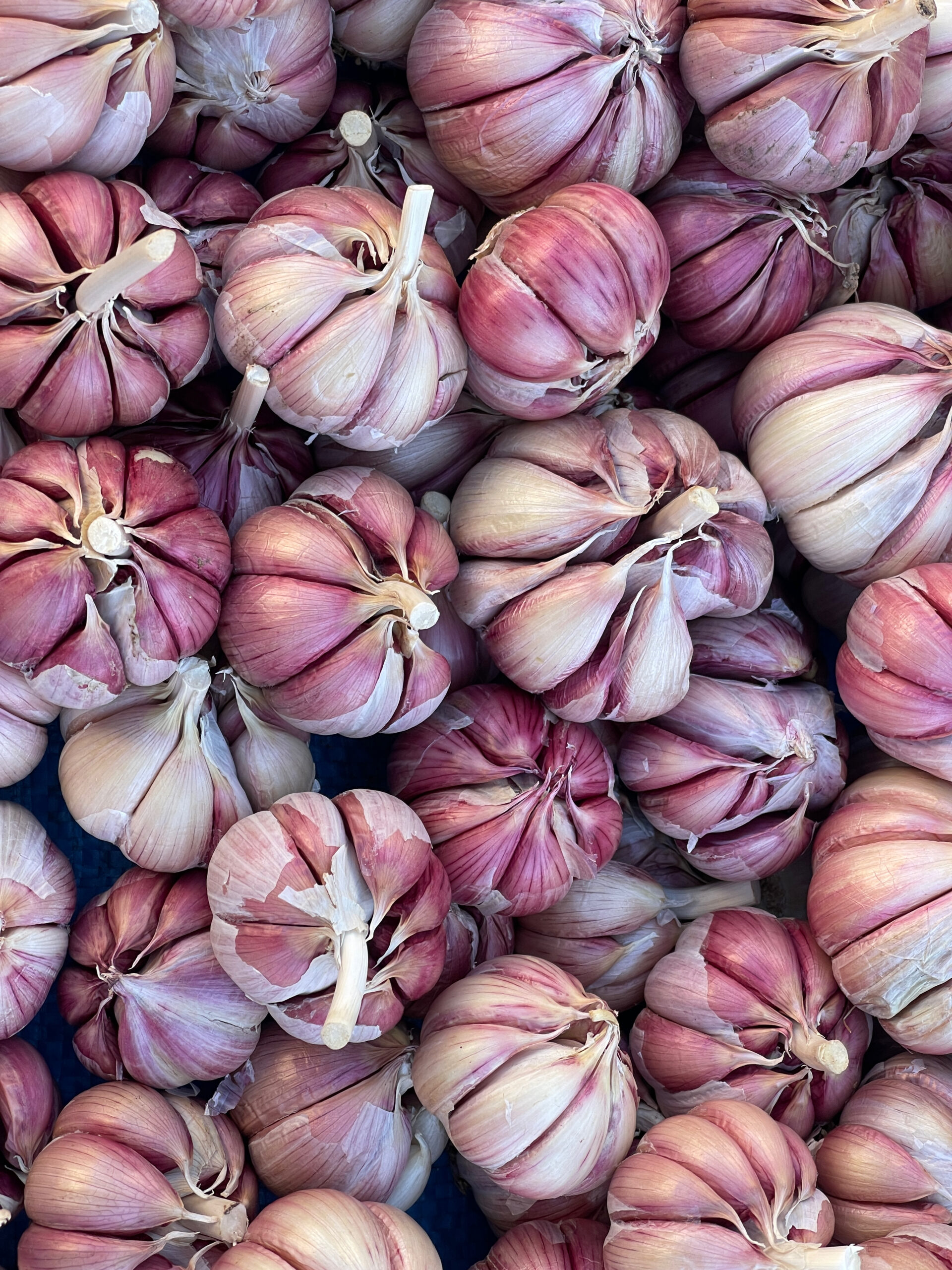
In the medina, we attended a presentation by an herbalist and we all bought spices, lotions, potions, teas, etc., investing in improving our cooking skills or our skin, hair, and waistlines. After a brief visit to a clothing boutique, we had lunch at Café Arabe, an Italian Moroccan restaurant.

Our last stop of the day was a visit to Le Jardin Secret which is a garden dating back to the 1500s. The garden is fed using water from the High Atlas Mountains that is stored in an ancient reservoir and distributed through a system of channels. It has two distinct gardens: the Exotic and the Islamic. The Exotic consists of trees from various parts of the world, while the Islamic focuses on trees found in the Sahara up to Iran.
A Day of Art, History and Desert Adventure – December 17, 2023
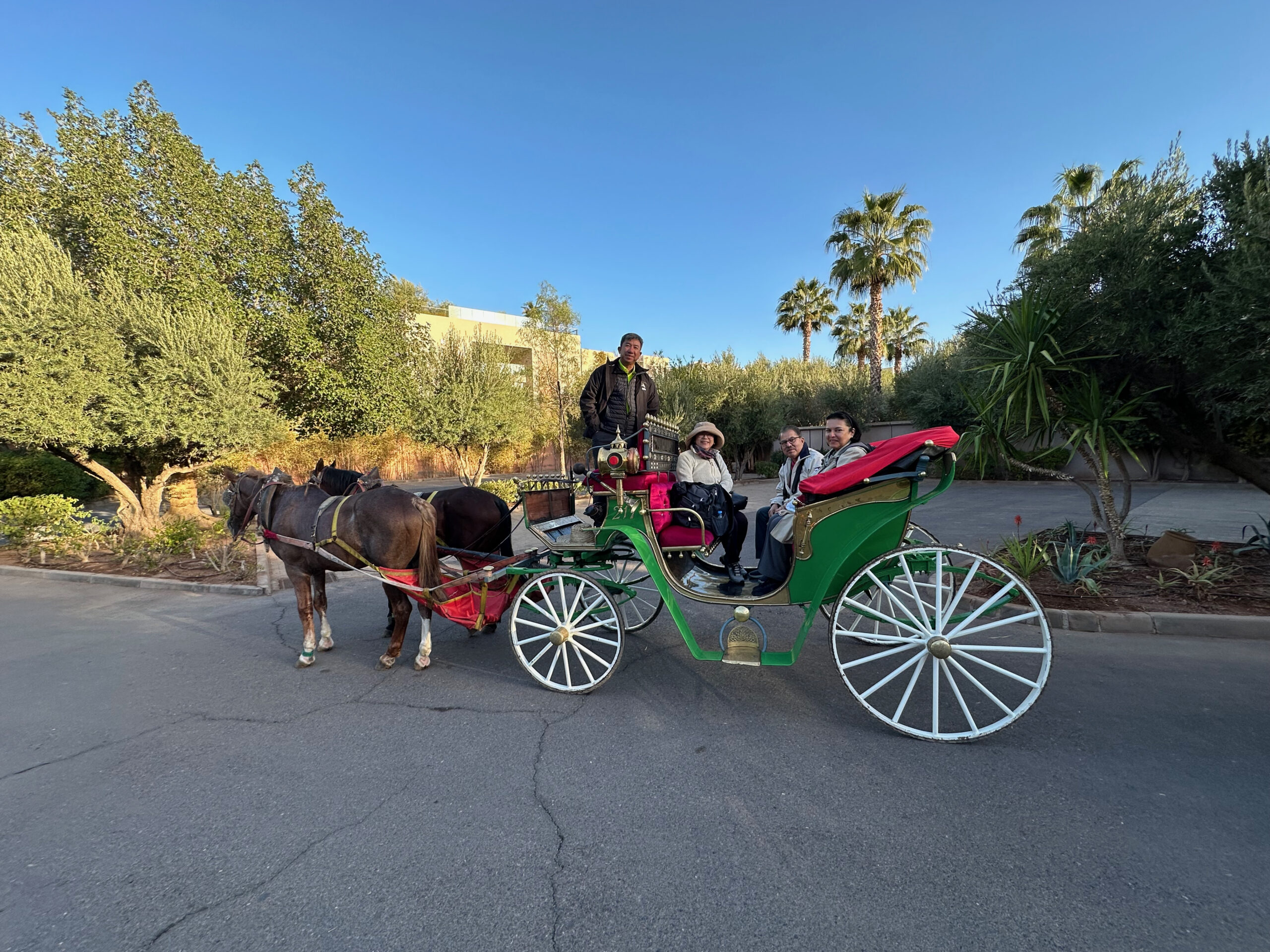
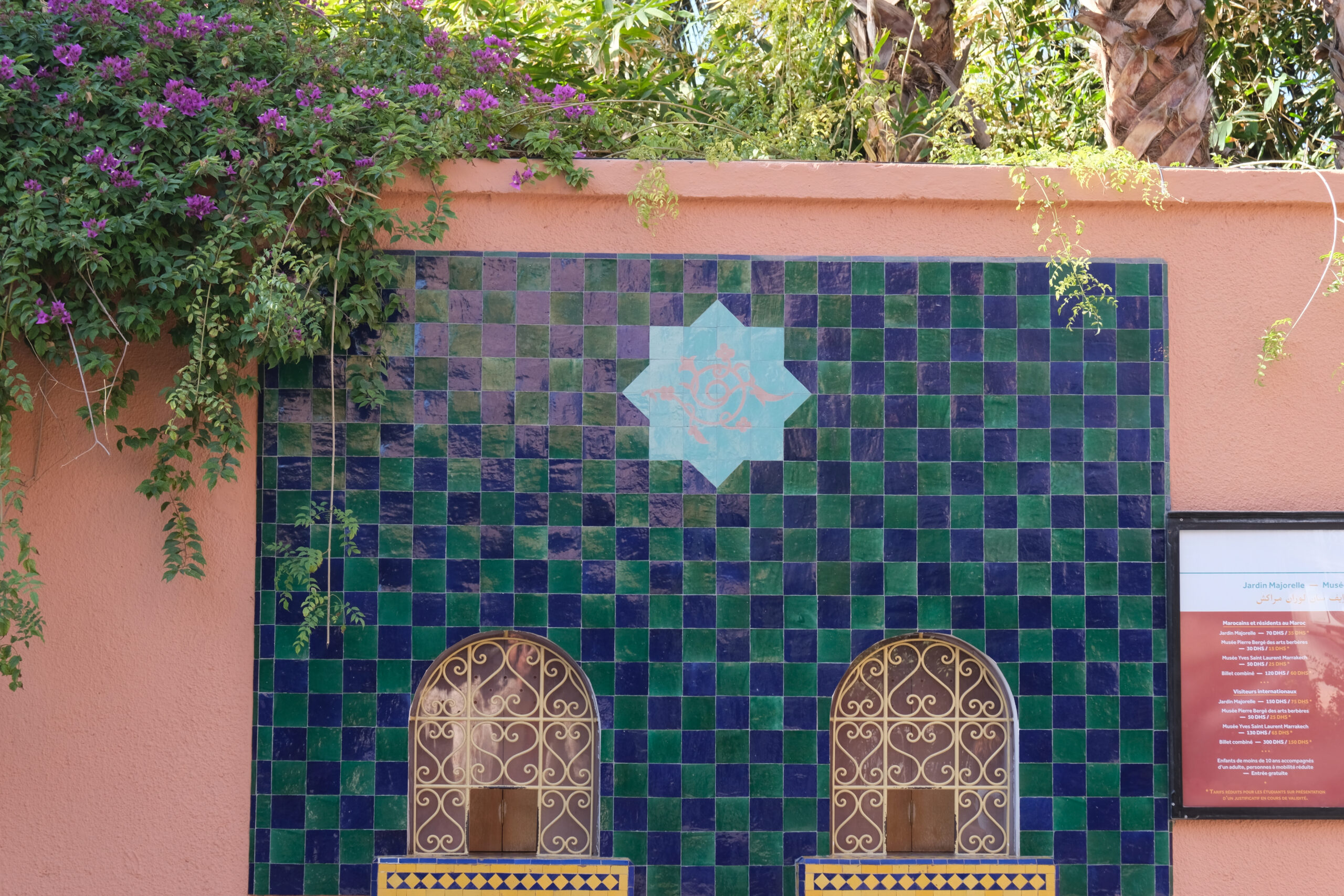
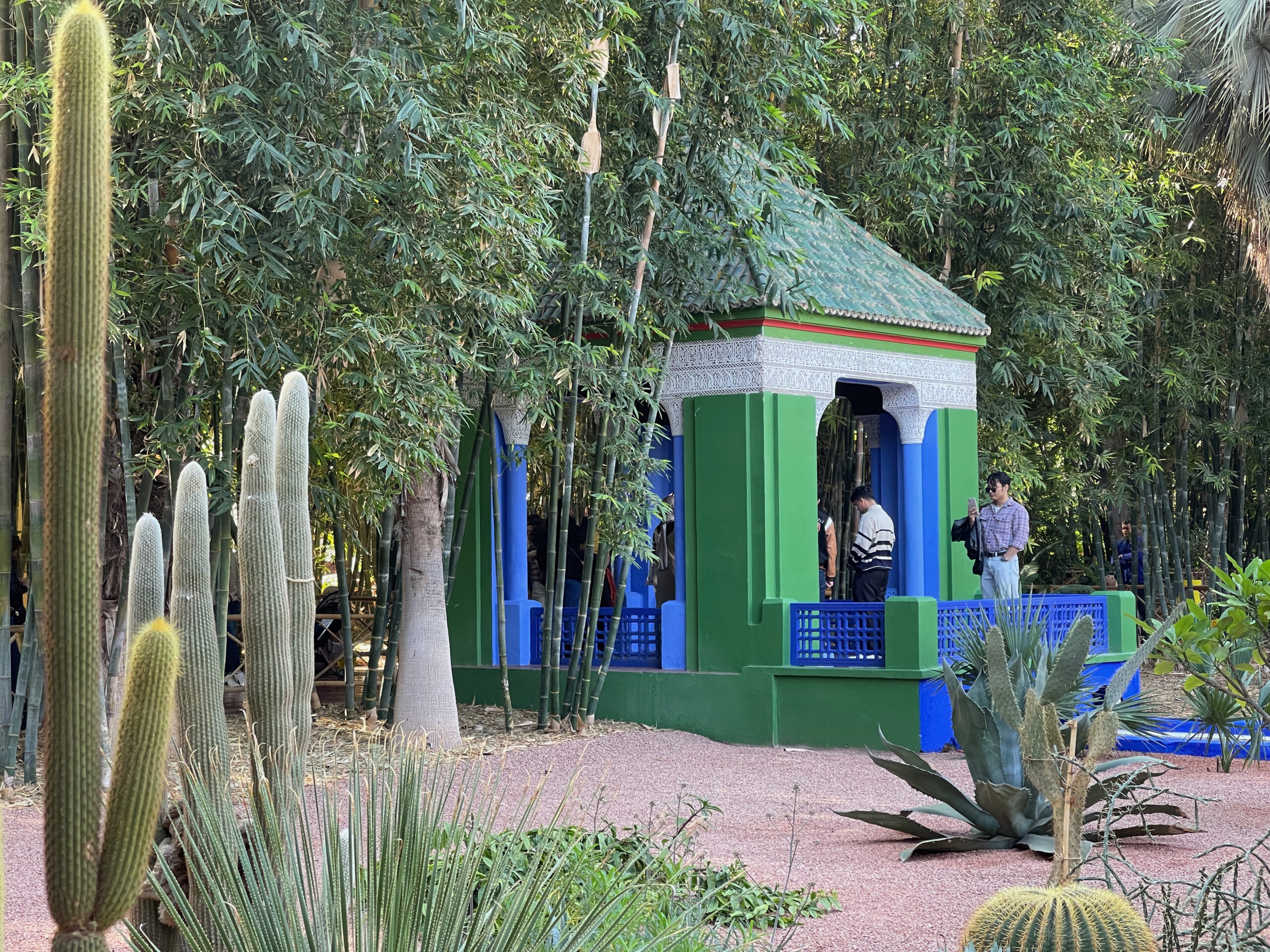
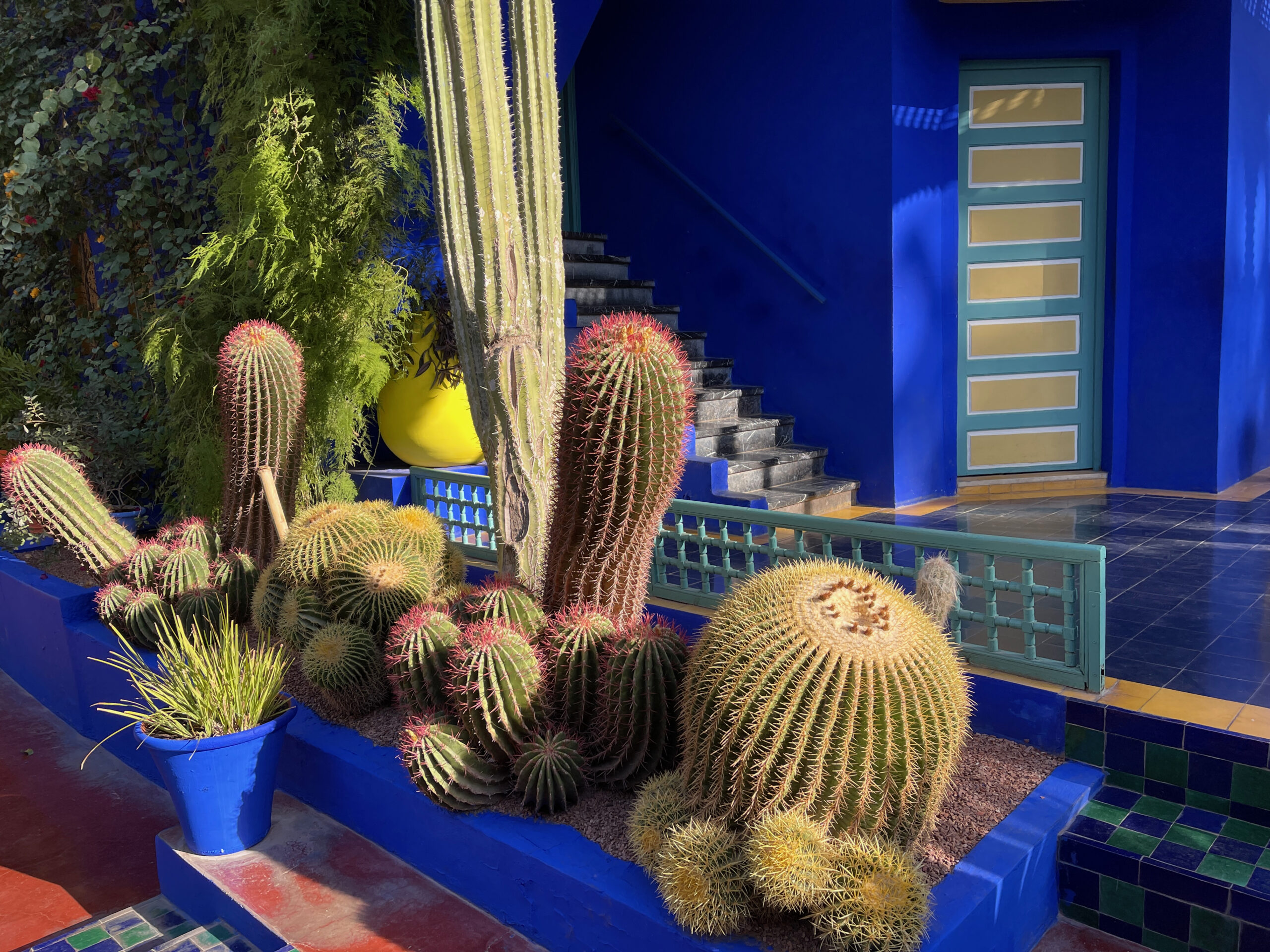
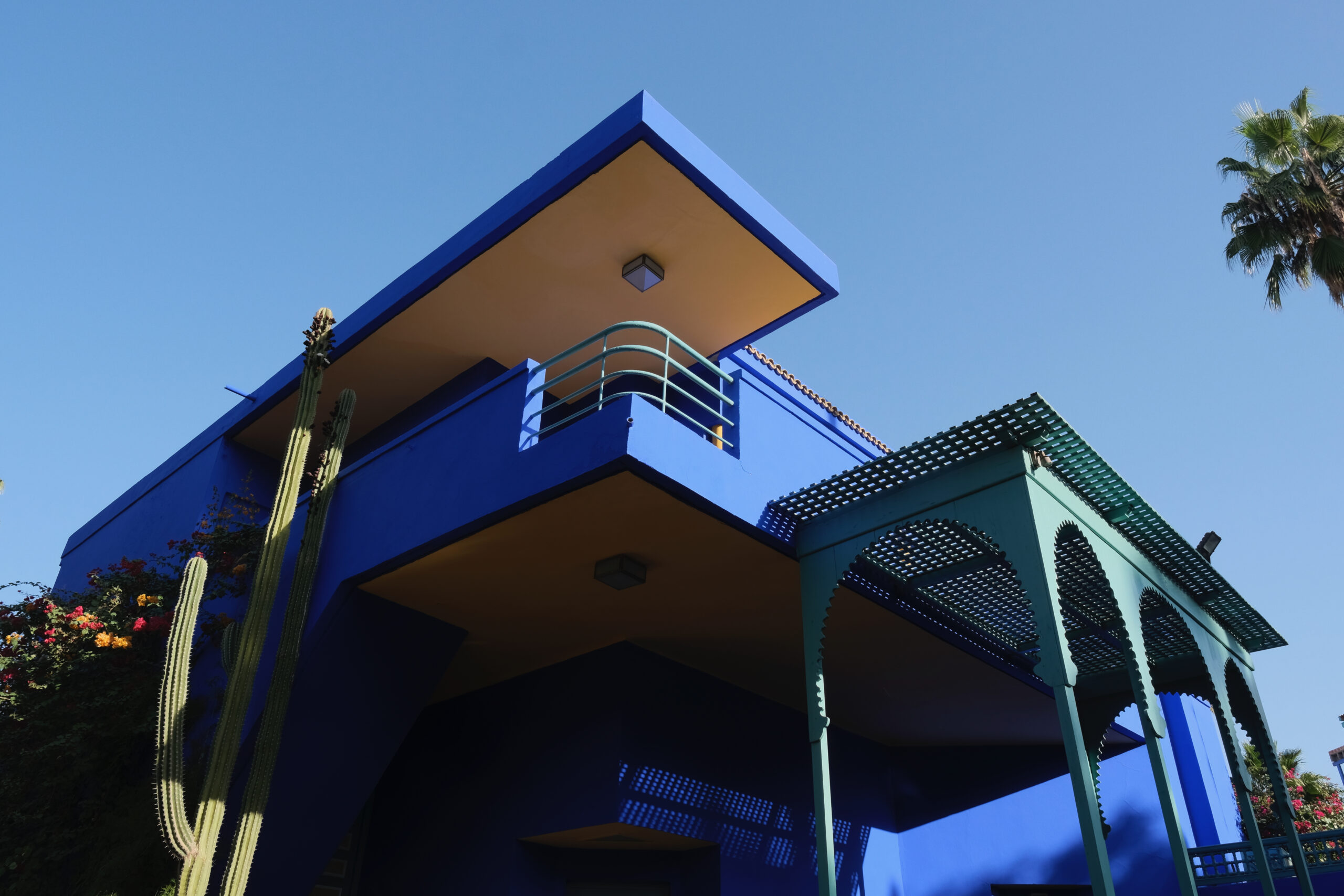
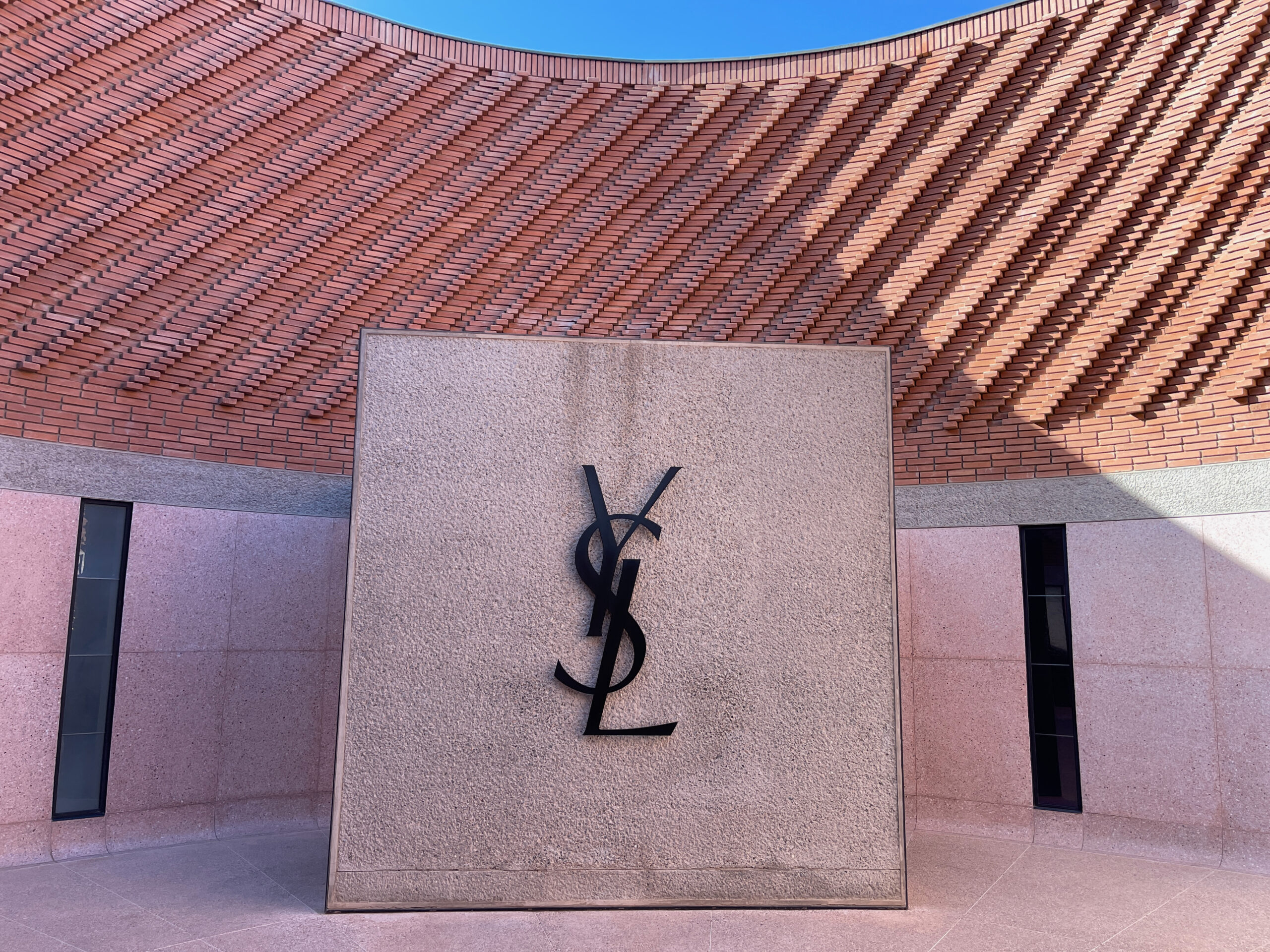
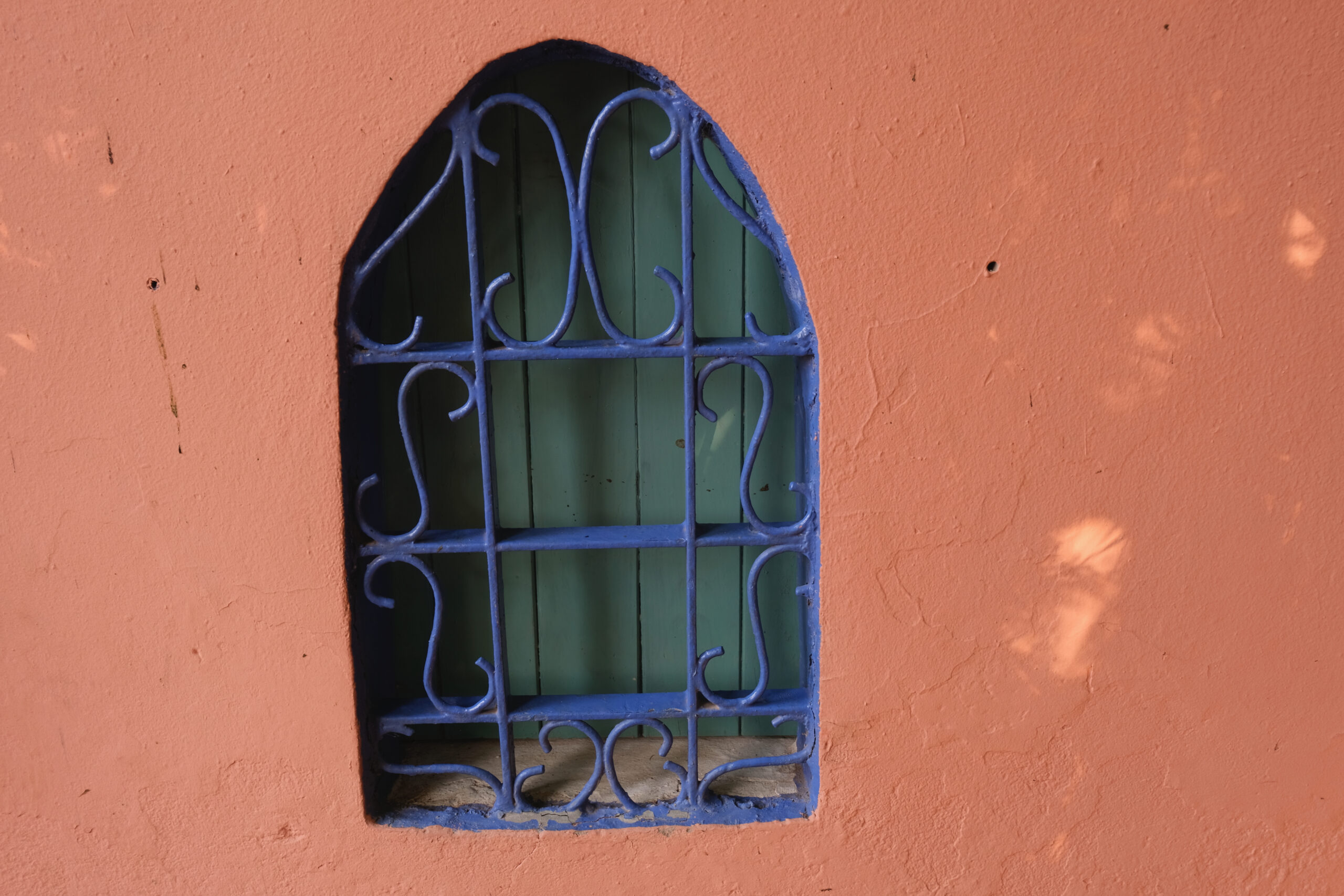
Our morning began with a horse-drawn carriage ride to the Majorelle Gardens, a creation of the French artist Jacques Majorelle, renowned for the iconic “Majorelle Blue.” Once neglected, the gardens were revived by Yves Saint-Laurent and Pierre Bergé, with Saint-Laurent’s final resting place marked by a Roman column. It was crowded in the gardens which include 300-plus species of cacti, palm trees, flowering plants, bamboo, water lilies, etc. Throughout the gardens one sees the colors of Morocco, the blues, greens, and yellows on pots and water features. We then proceeded to the adjacent Yves Saint-Laurent Museum, a modern tribute to the fashion icon. The museum houses thousands of garments, haute couture items, photographs, and books.
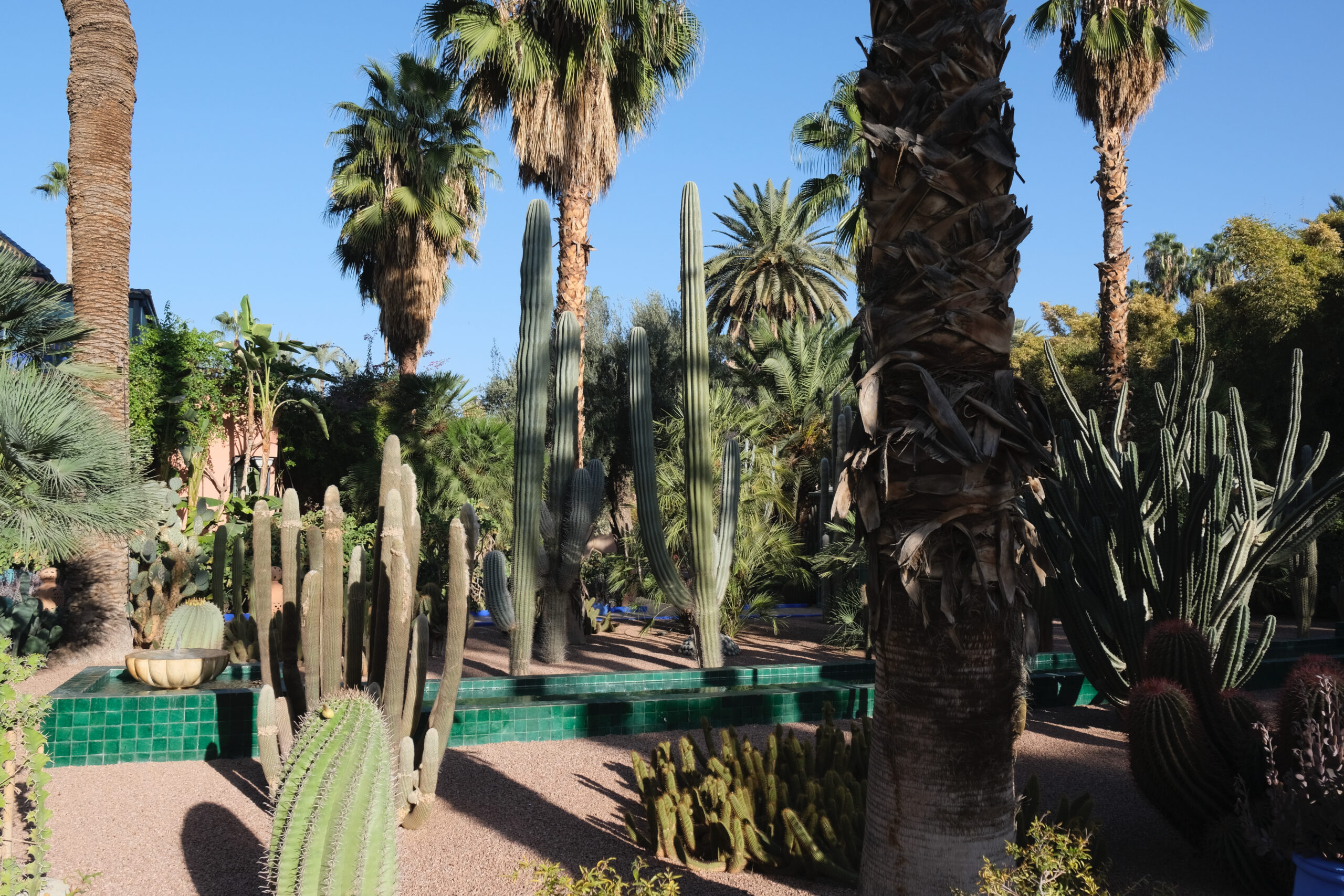
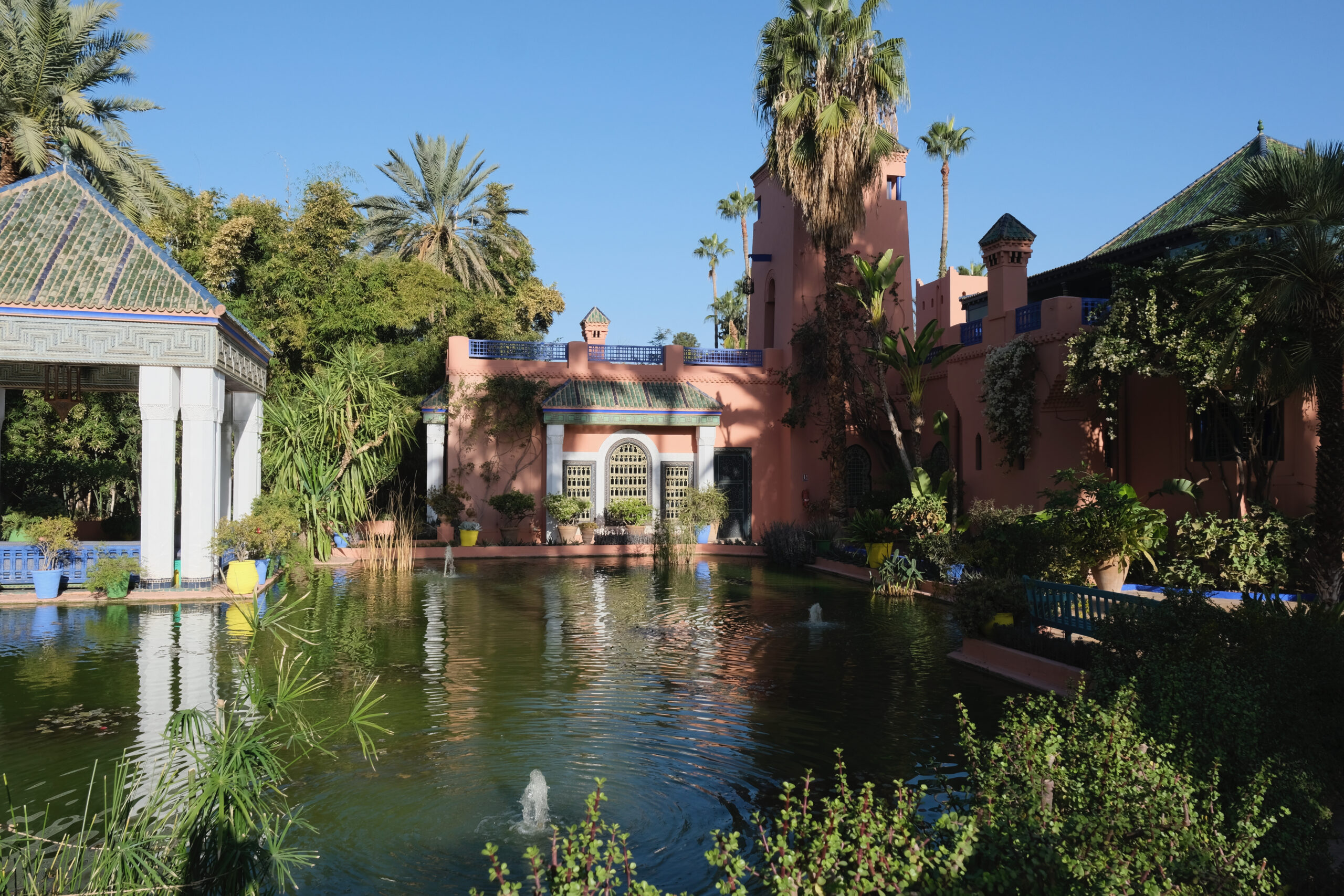
This evening we drove into the Agafay desert in black 4x4s, stopping by a Berber village to visit a family there and observe how they live. The father in this family is not Berber but his wife is. They have three children ranging in age from 8 to 21 years. They have a three-room house with a courtyard, and they earn a living by farming.
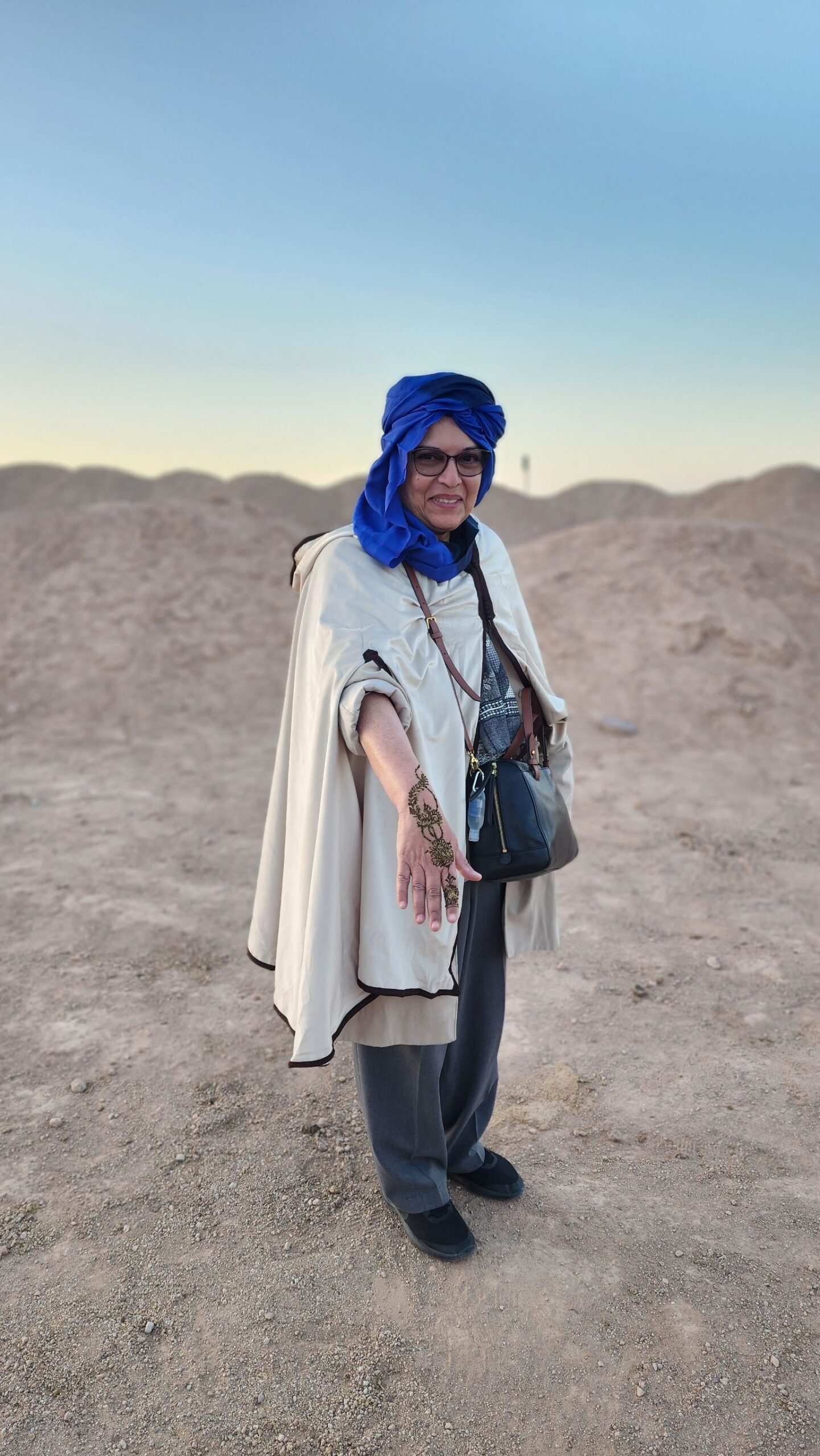
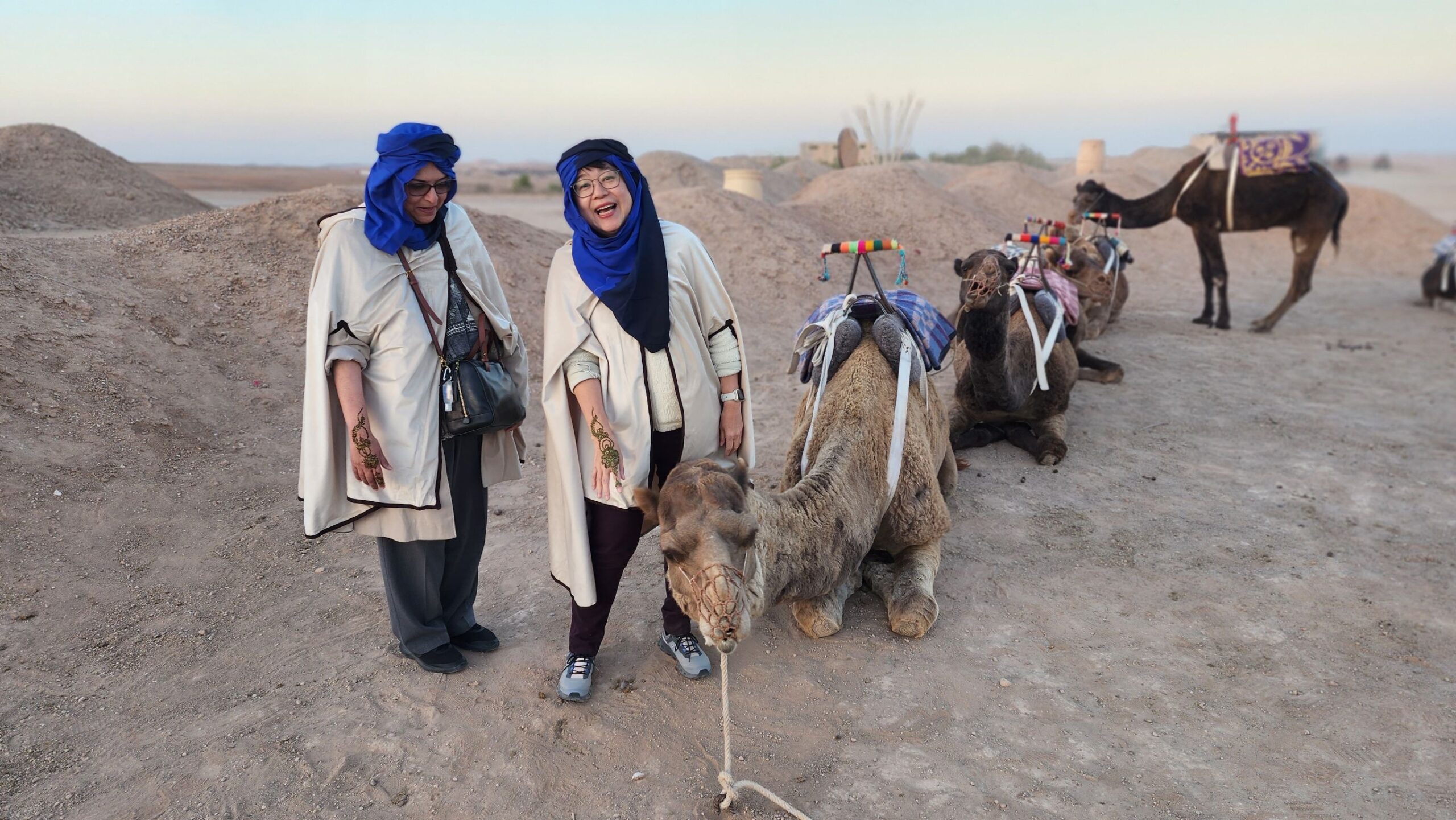
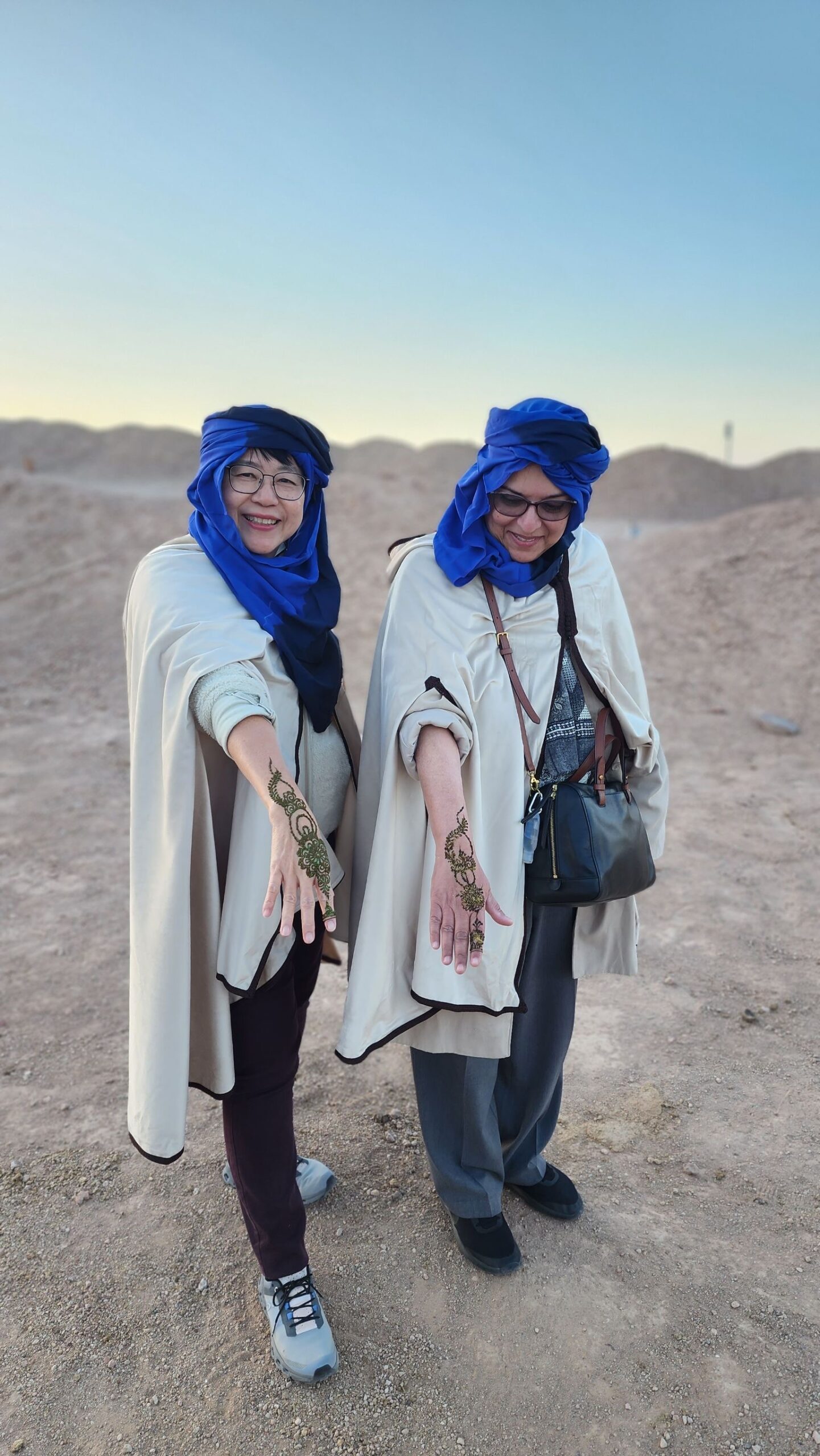
Our time in the dessert was very pleasant. Some of us rode camels. Others had their hands hennaed or smoked the hookah. Then we listened to music, had dinner, and finally saw a fire eater in action. The fire show that he put on was special.
A Day Trip to Essaouira – December 18, 2023
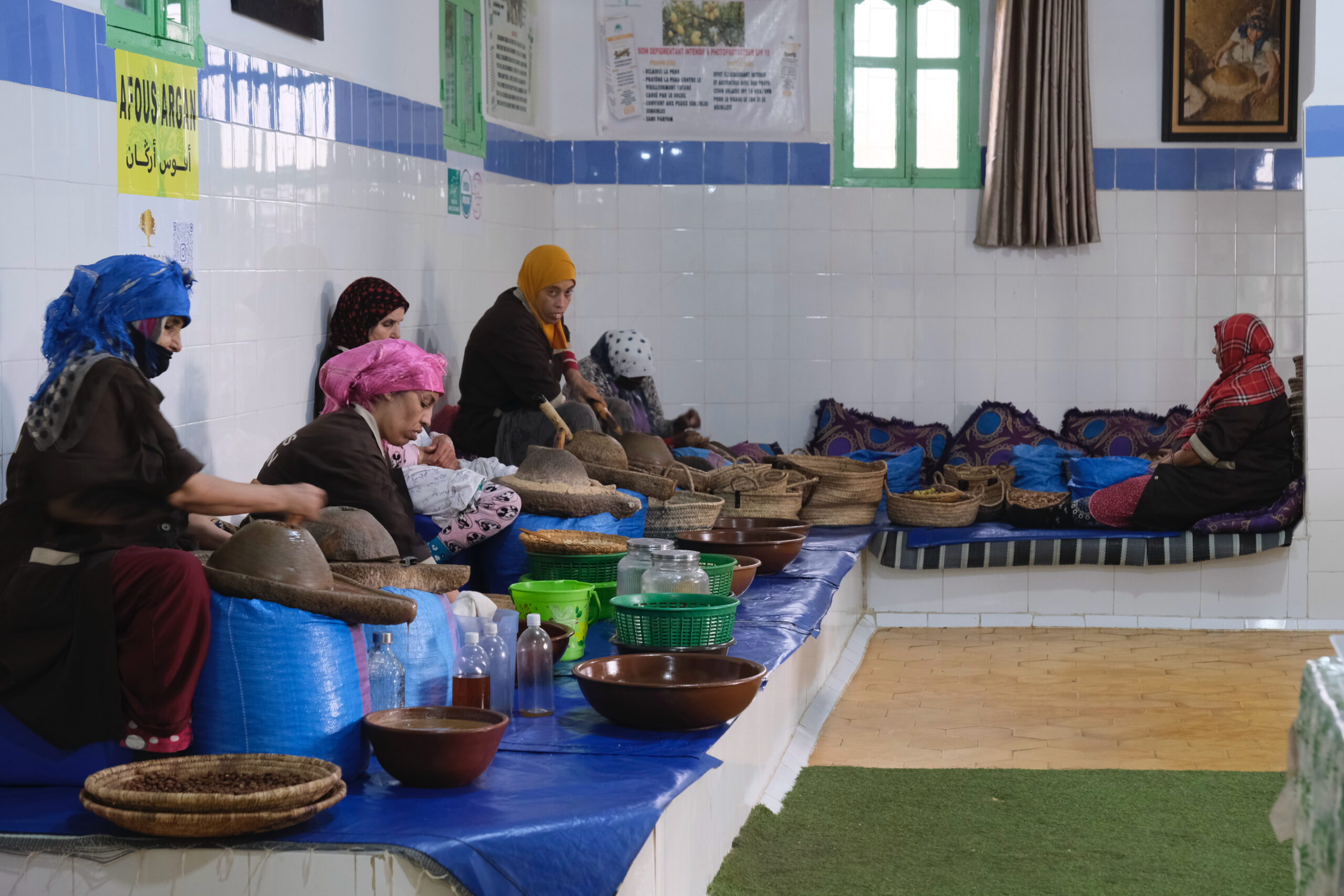
This morning we drove three hours to the port city of Essaouira, another UNESCO World Heritage site. On the way, we stopped by a women’s cooperative that makes Argan oil and related products. This is the area where Argan trees grow extensively. Extracting the oil from the Argan kernels is done by Berber women using traditional production methods.
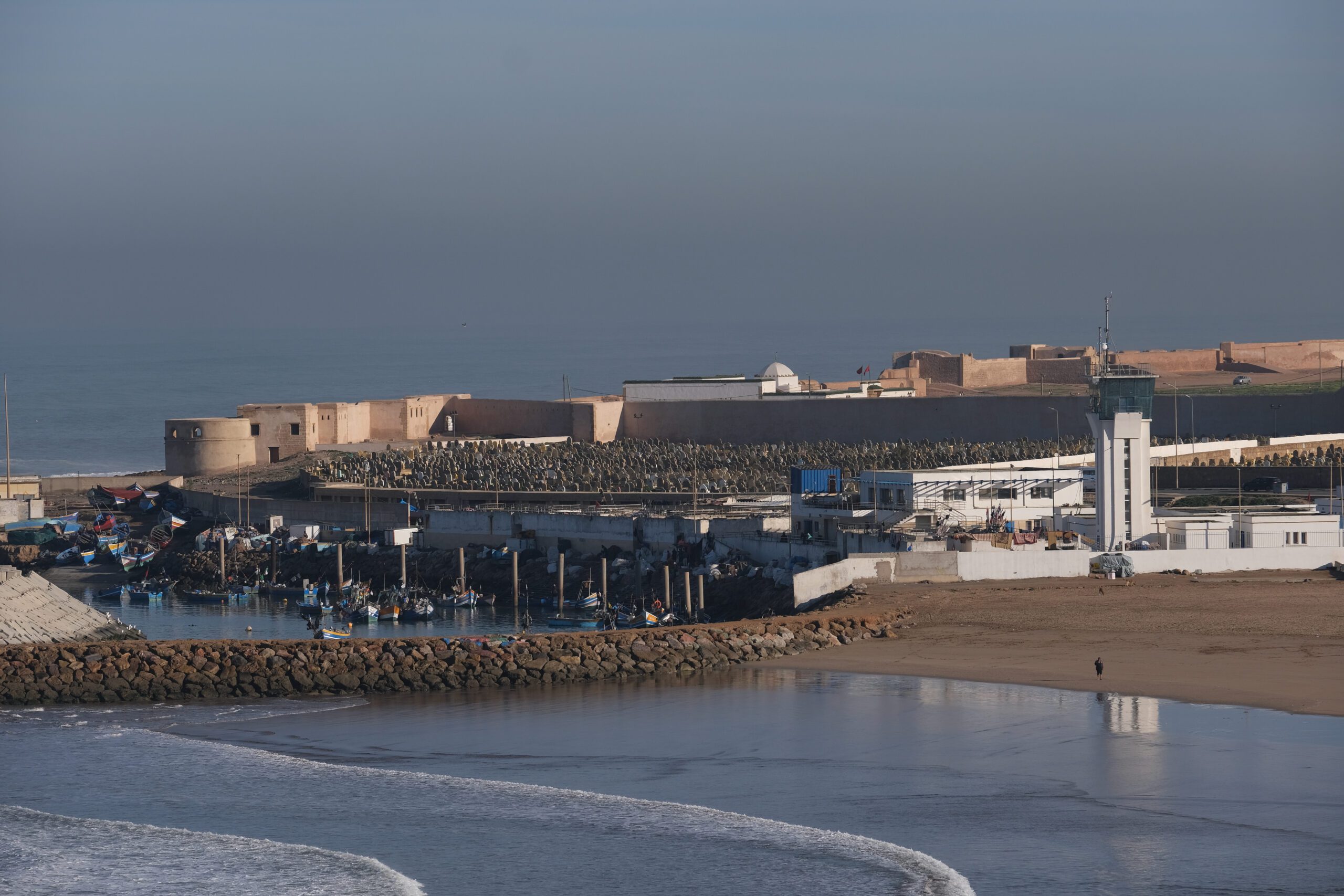
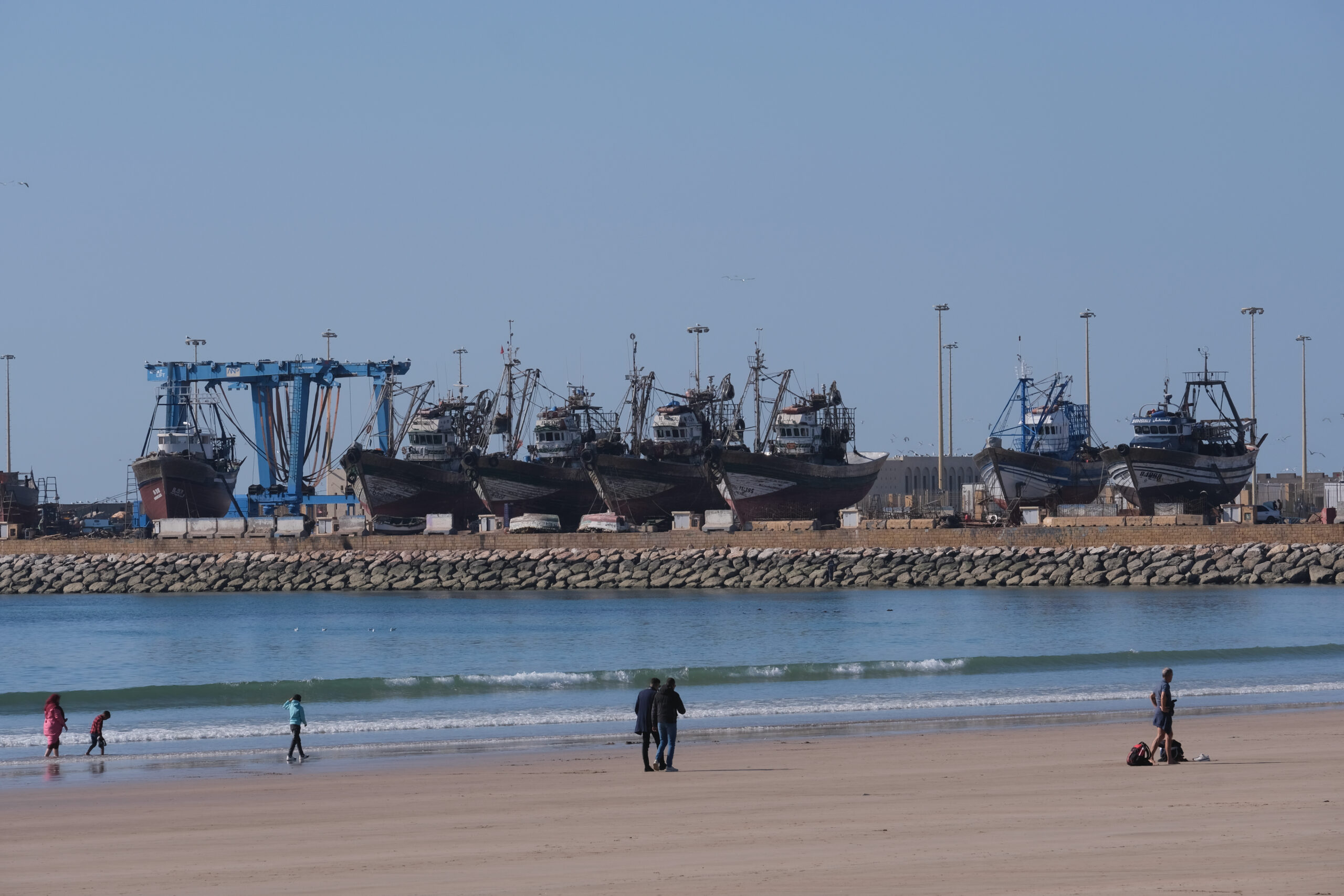
Our next stop, Essaouira, is a 2000-year-old port with a very interesting history. At one time it was a Portuguese port called Mogador. In the 1800s, it became a diplomatic and commercial hub under Sultan Mohammad III, the current ruler’s great grandfather. The bustling port, once a hub for the gold and spice trade, now serves the fishing industry. The blue-hued boats used by the fishermen are easily distinguishable as being from this region.
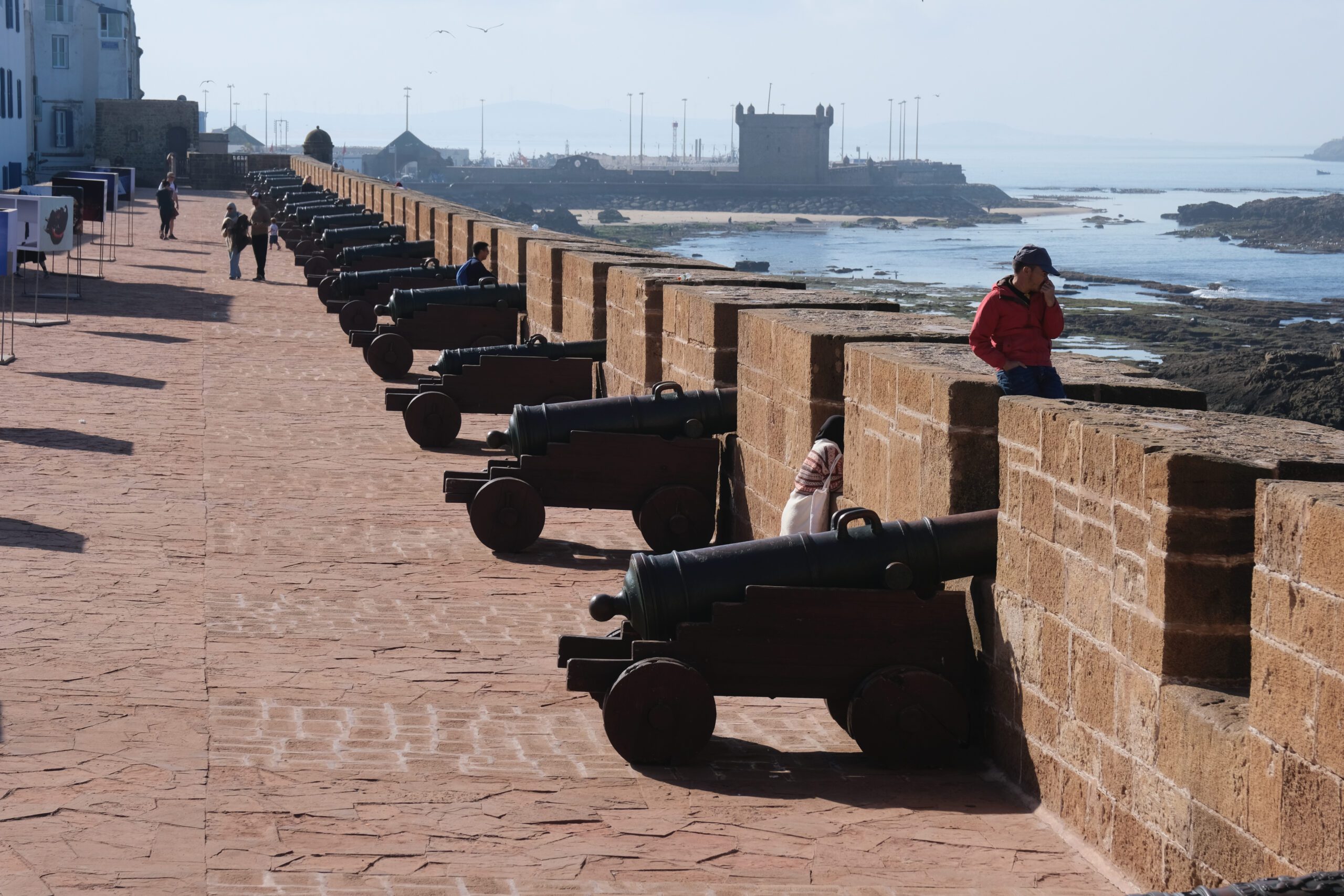
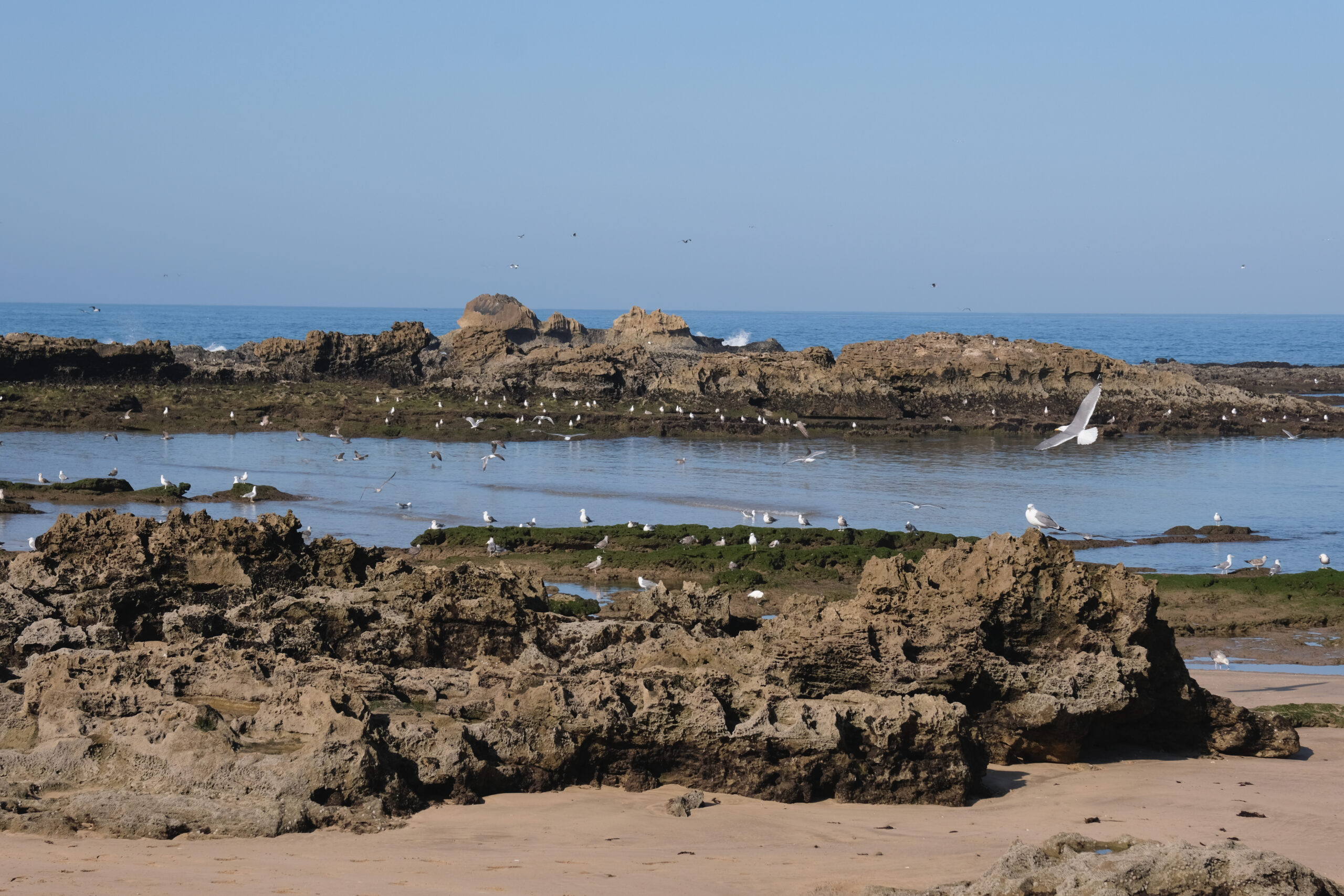
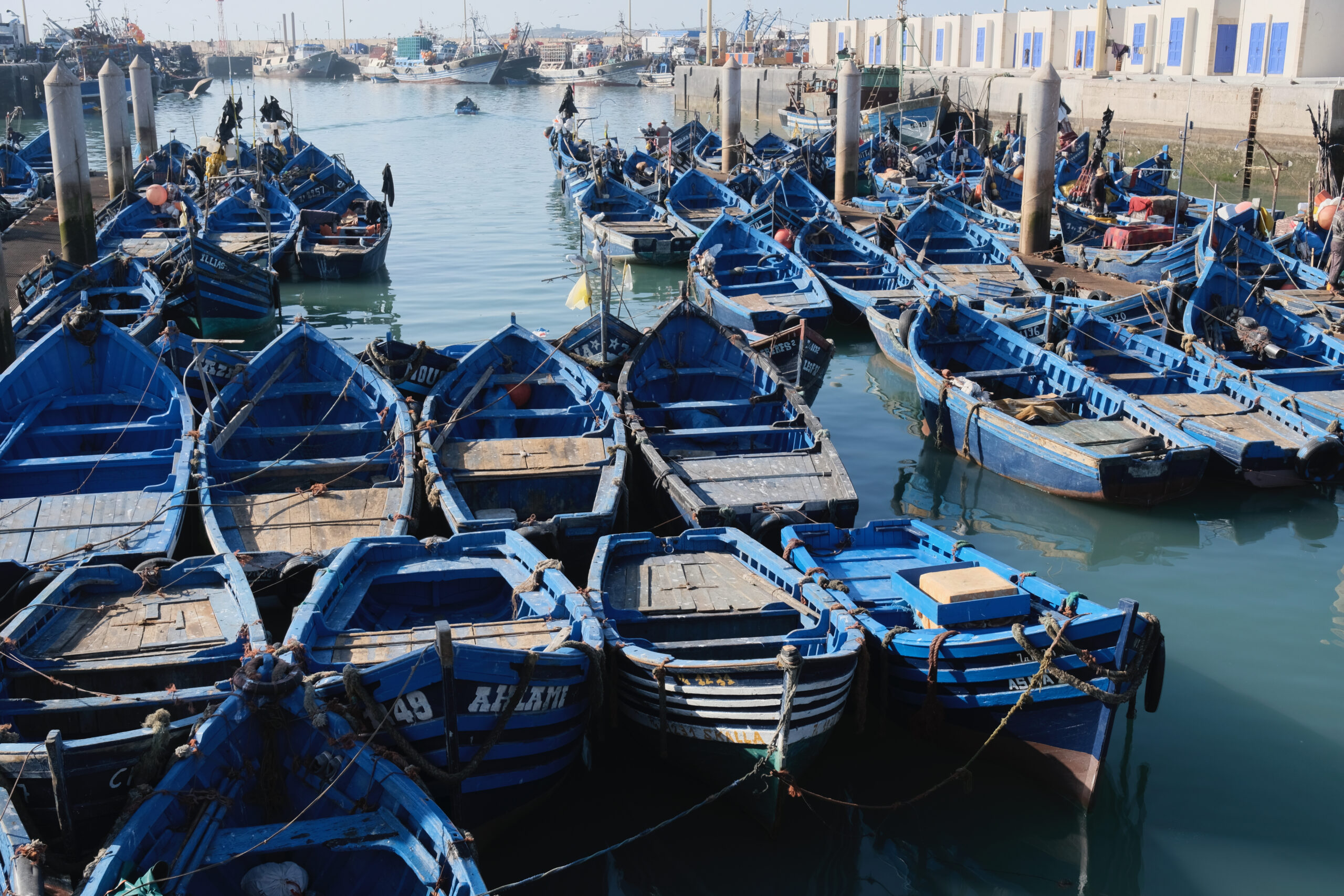
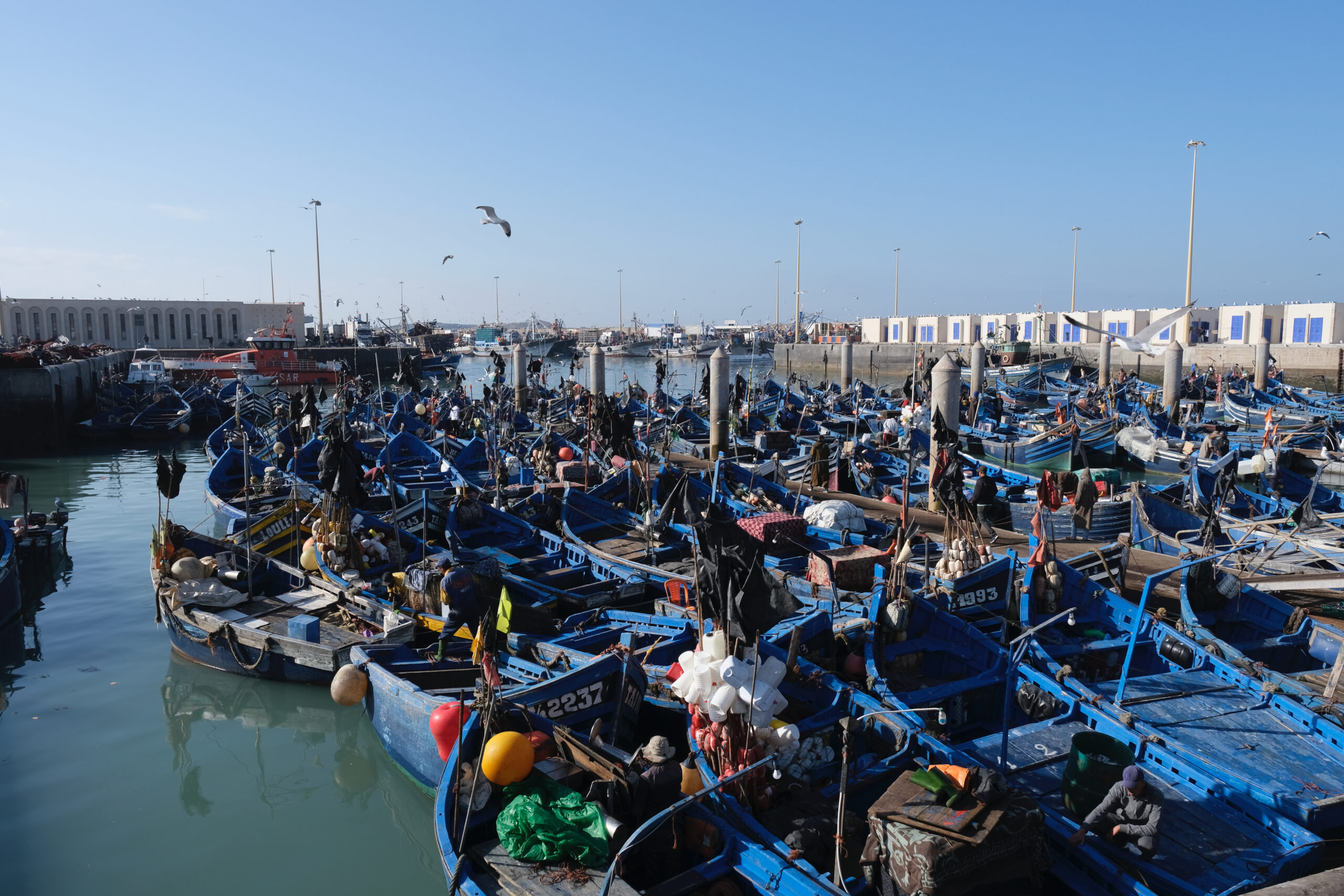
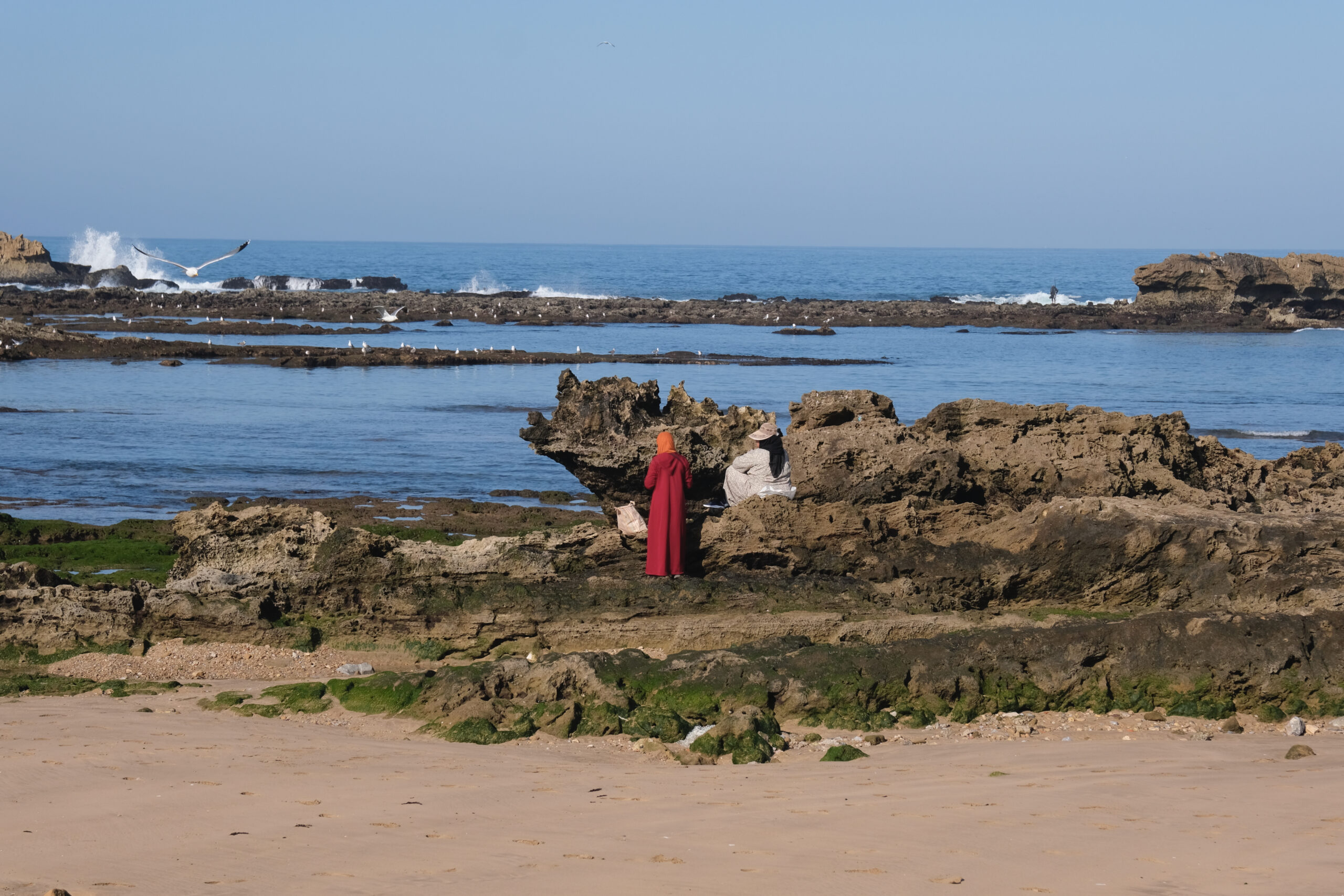
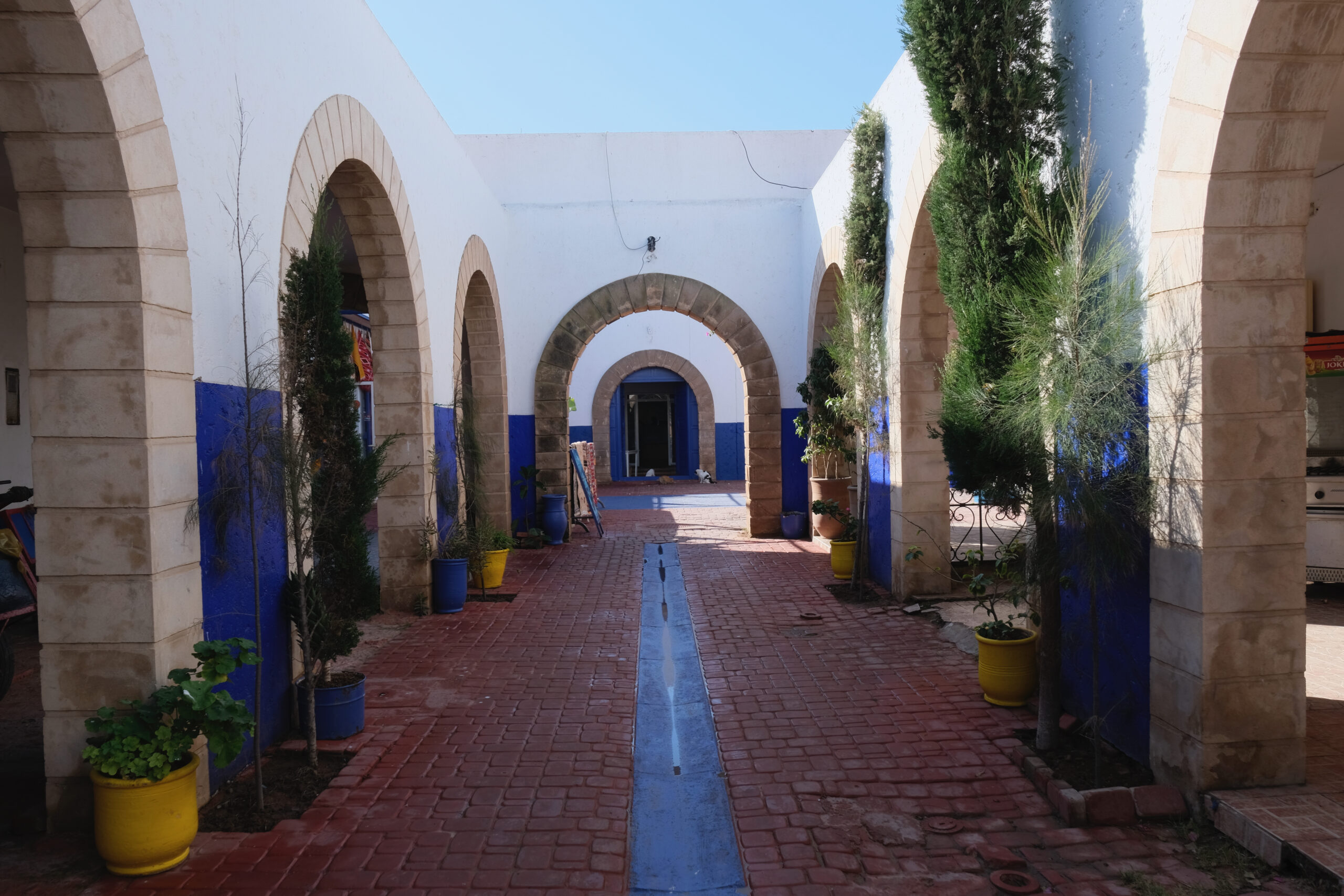
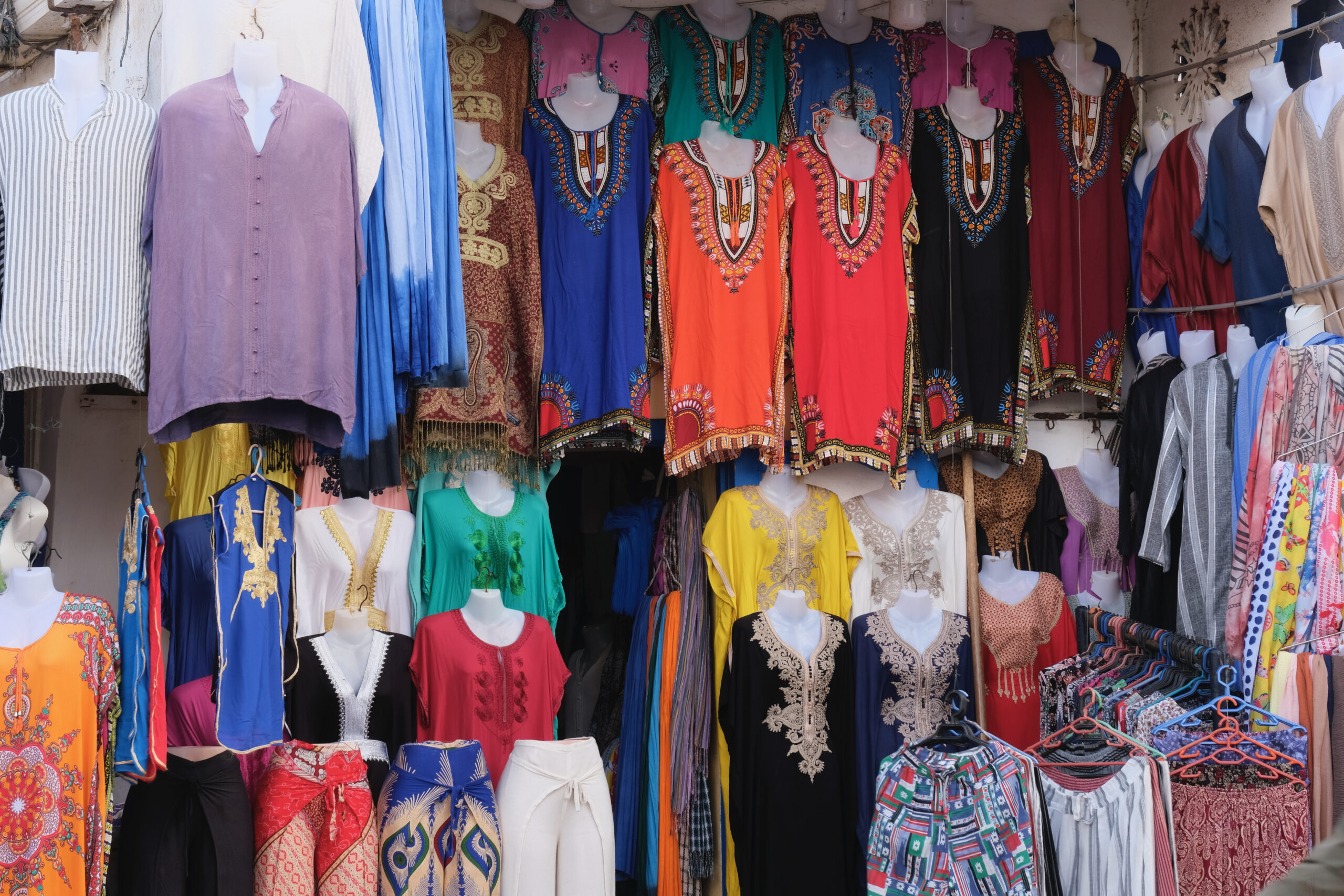
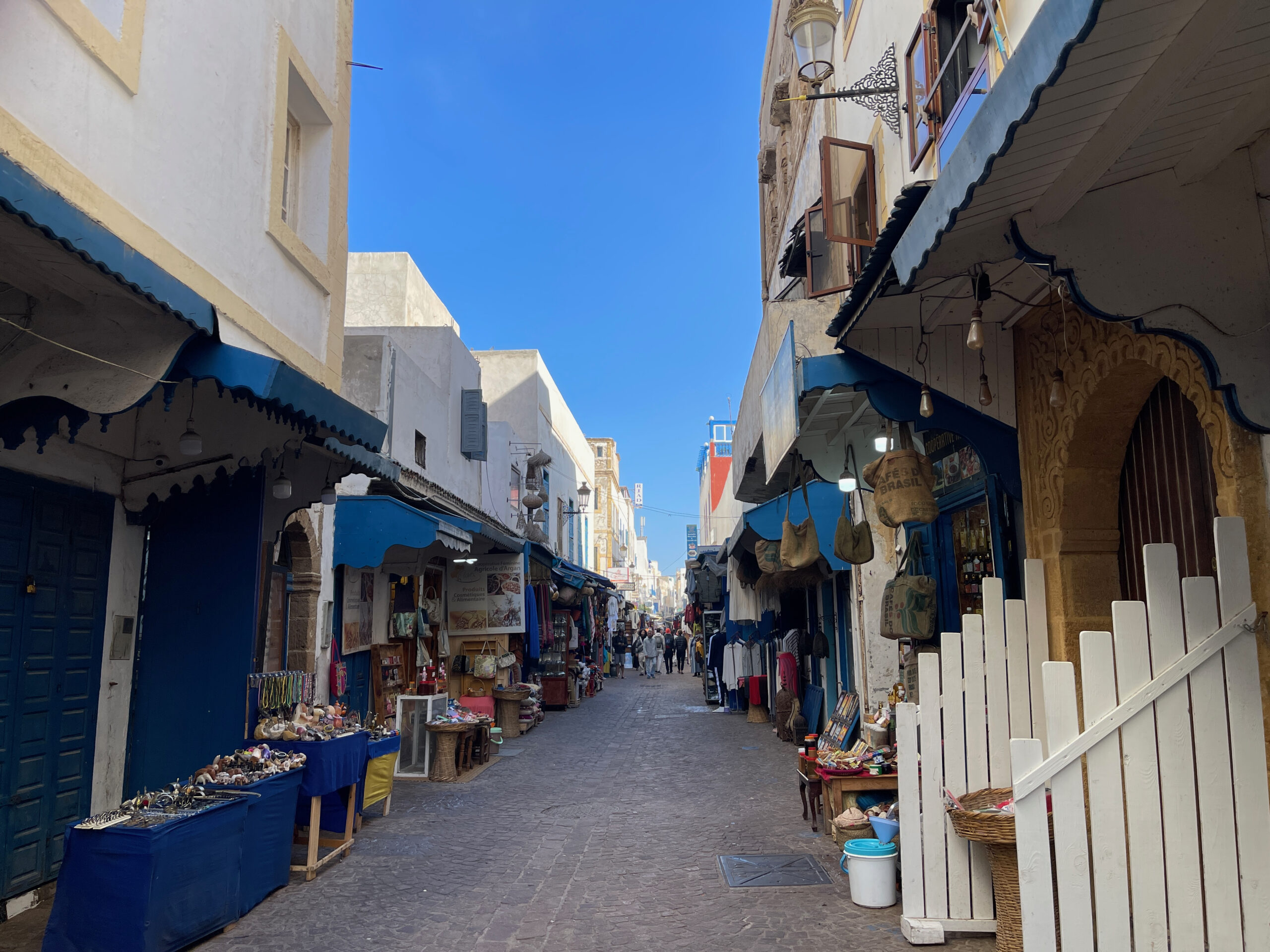
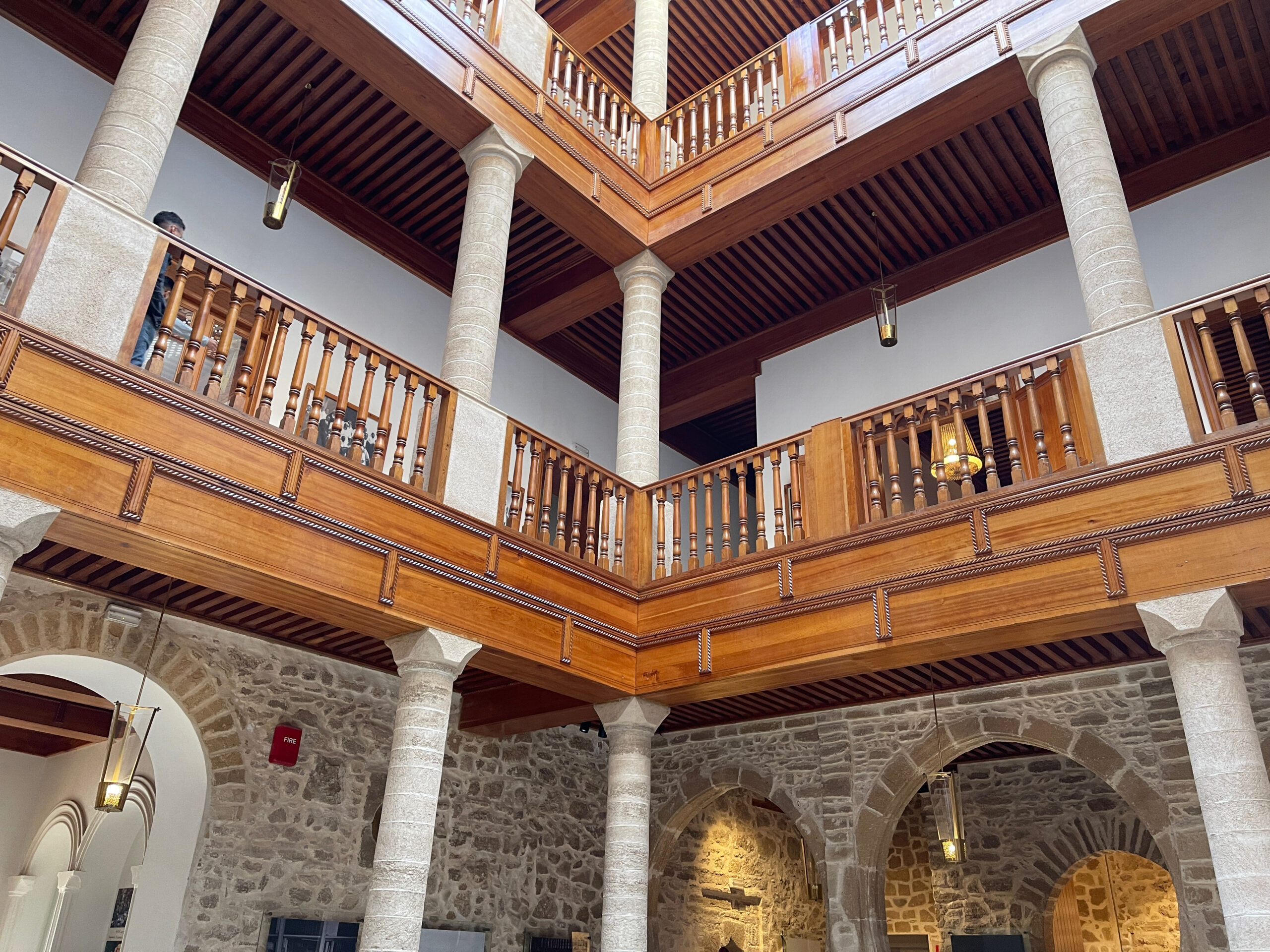
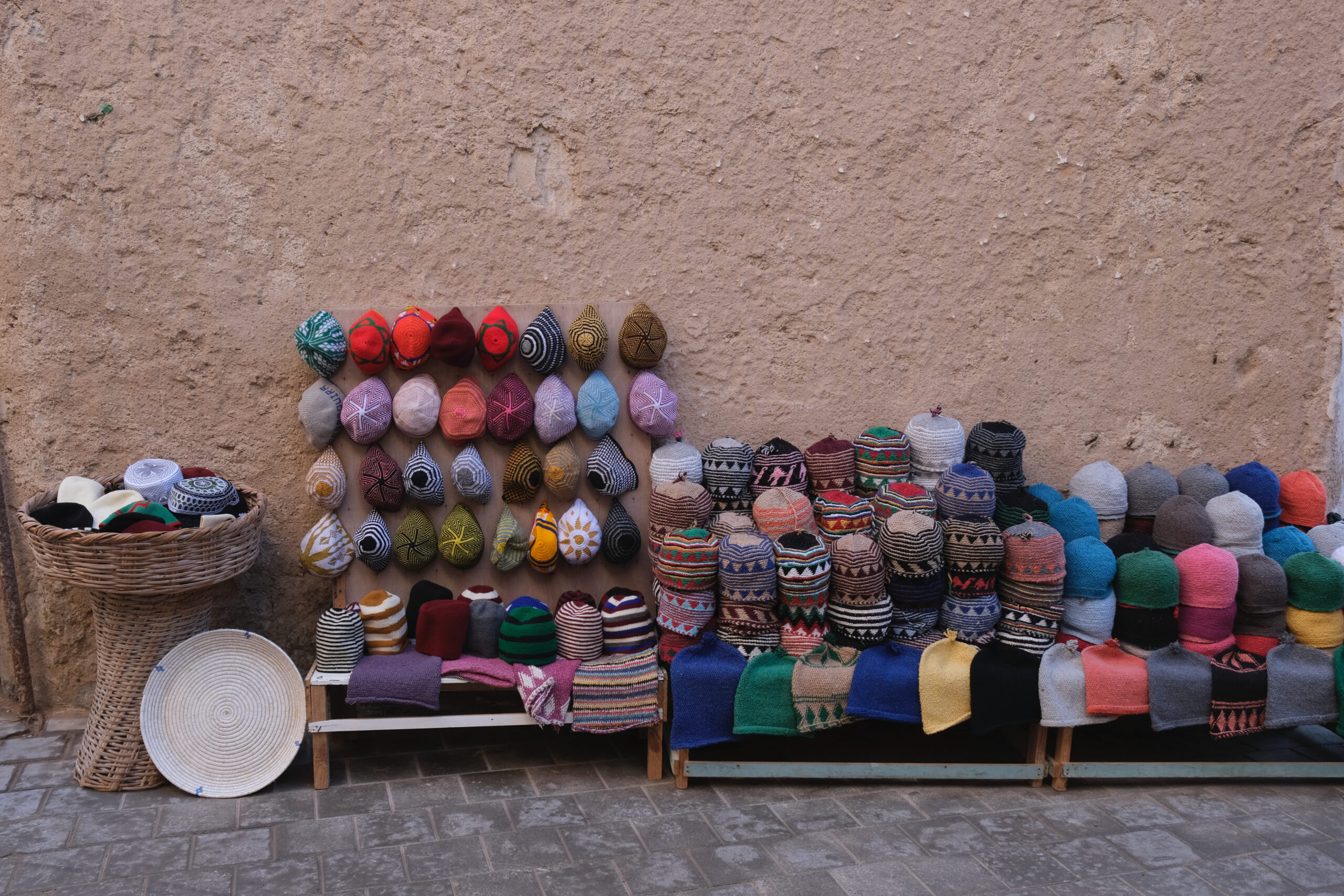
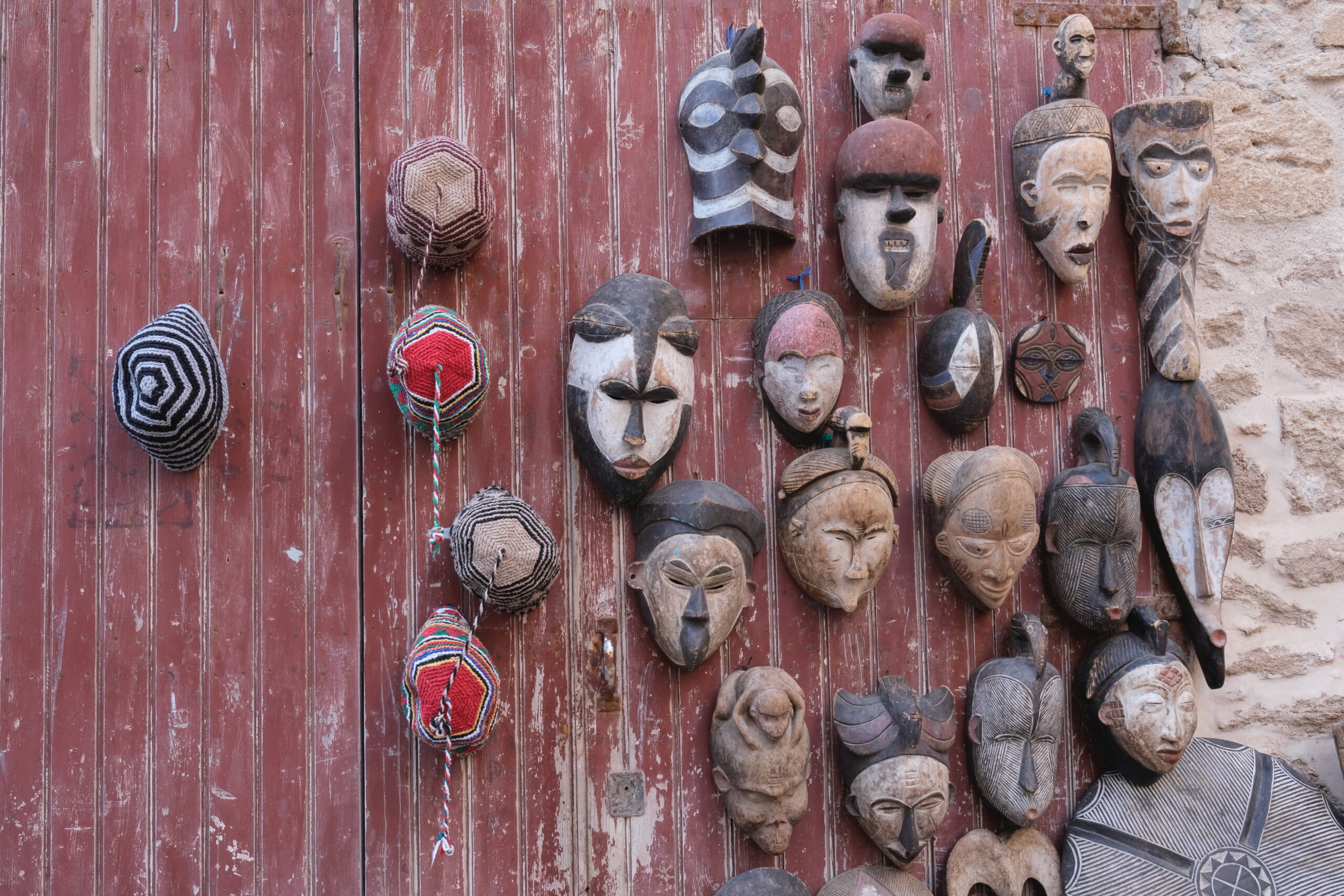
From the dock we walked to the fortress to see the 19 cannons and the ramparts. Then we walked through the medina to visit Bayt Dakira, a Jewish heritage house. It houses a small synagogue, photographs, musical recordings, religious objects, and traditional dresses. After spending some time shopping in the souk, we went to see the silversmiths and then on to lunch.

This evening we had our group farewell dinner. It was a splendid affair on the Zest Rooftop Bar of our hotel.
A Relaxing Day – December 19, 2023
Today is a relaxing day in the hotel. We met some of our fellow travelers at breakfast as they had late afternoon flights back home. Then we spent the rest of the day packing and catching up before our own flight home tomorrow.
Farewell to Morocco – December 20, 2023
Early this morning we drove to Casablanca to catch our Air Canada flight to Montreal. When the driver dropped us off, he asked us “Do you have anything for me?” We thought this was the cutest tip ask we had ever heard. We got upgraded so the flight back was very comfortable. The trip from Montreal to Newark was also quite pleasant as we cleared immigration in Montreal (the only hiccup was that our boarding passes were scanned no less than five times during our transfer) and just had to collect our bags at Newark. And then we were home, with very pleasant memories of Morocco.