
Reuniting in Mumbai: February 20, 2024
We embarked on an uneventful flight from Newark to Mumbai with Turkish Airlines. However, the fingerprinting process at Mumbai’s immigration proved challenging for Christabel, reminiscent of a previous experience in Doha, Qatar.
Returning to Mumbai after several years, we settled into the ITC Grand Central, a stunning property, before visiting Christabel’s 101-year-old aunt Pia in Bandra. We had a very pleasant visit with Pia and cousin Joyce and her husband Tony and caught up with all the family news.
A stop in Santa Cruz to retrieve documents from the Sacred Heart Church turned out to be fruitless despite discussions with parish officials, leaving us puzzled by the absence of records of Christabel’s communion and confirmation.
Christabel then joined school friends Anisha and Smitha to attend the birthday party for Sonal, another of her school chums. It was great meeting many others at Sonal’s party, including some from Paris, Rome, and the U.S., whom she hadn’t seen for 50 years. This year also marked the 50th year of her high school reunion. After a day filled with reunions and revelry, Christabel returned to the hotel and crashed.
Exploring Mumbai’s Rich Tapestry – February 21, 2024
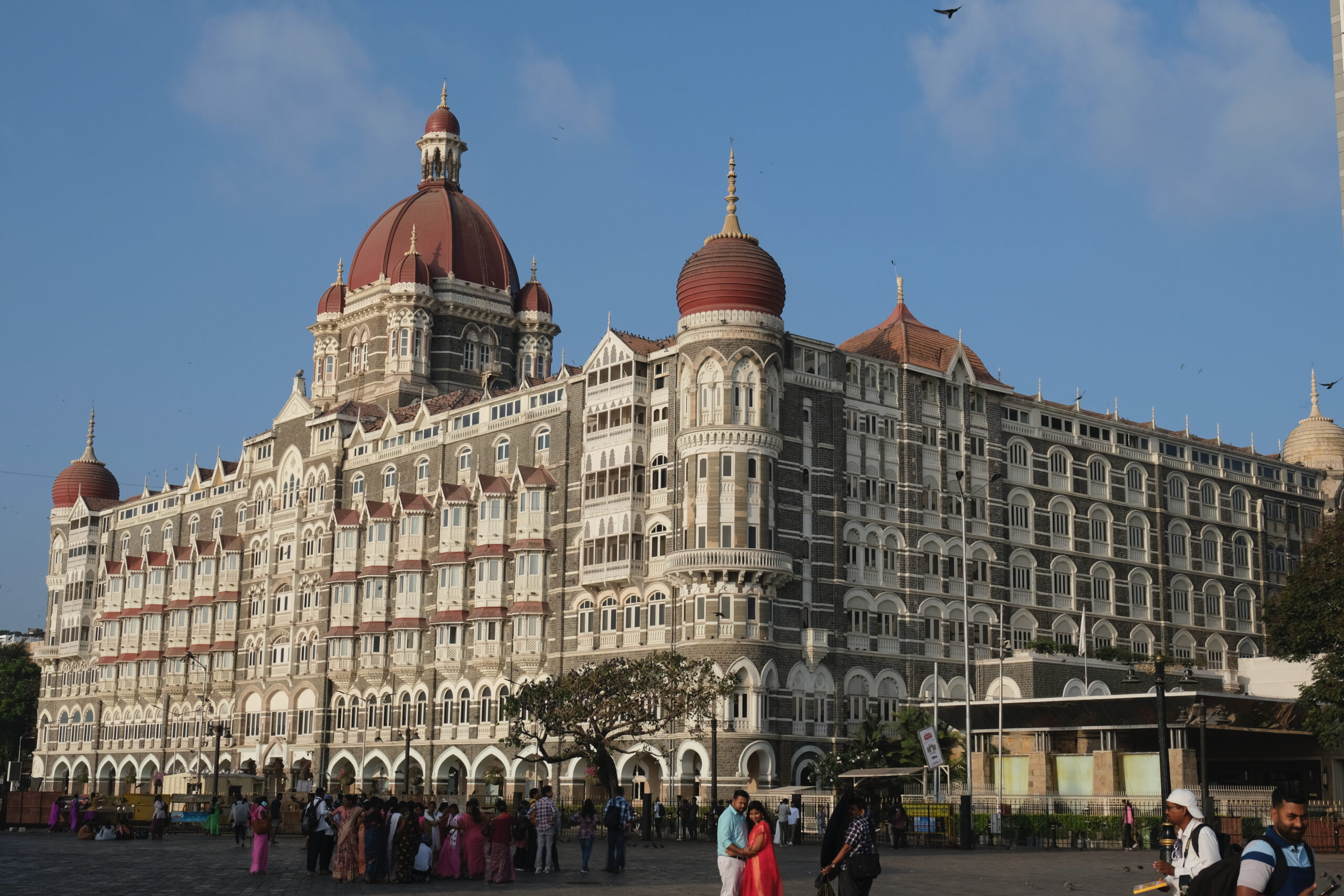
Today was a whirlwind of exploration as we embarked on a sightseeing tour with fellow travelers from the UK, Australia, and Germany. Our journey began with a visit to the historic Gateway of India, symbolizing the arrival of King George and Queen Mary in 1911. Standing on the gateway square, we were able to view the iconic Taj Mahal hotel, built by the Tata family in 1903 in response to their not being allowed into the famed John Watson hotel which was for white folk only.
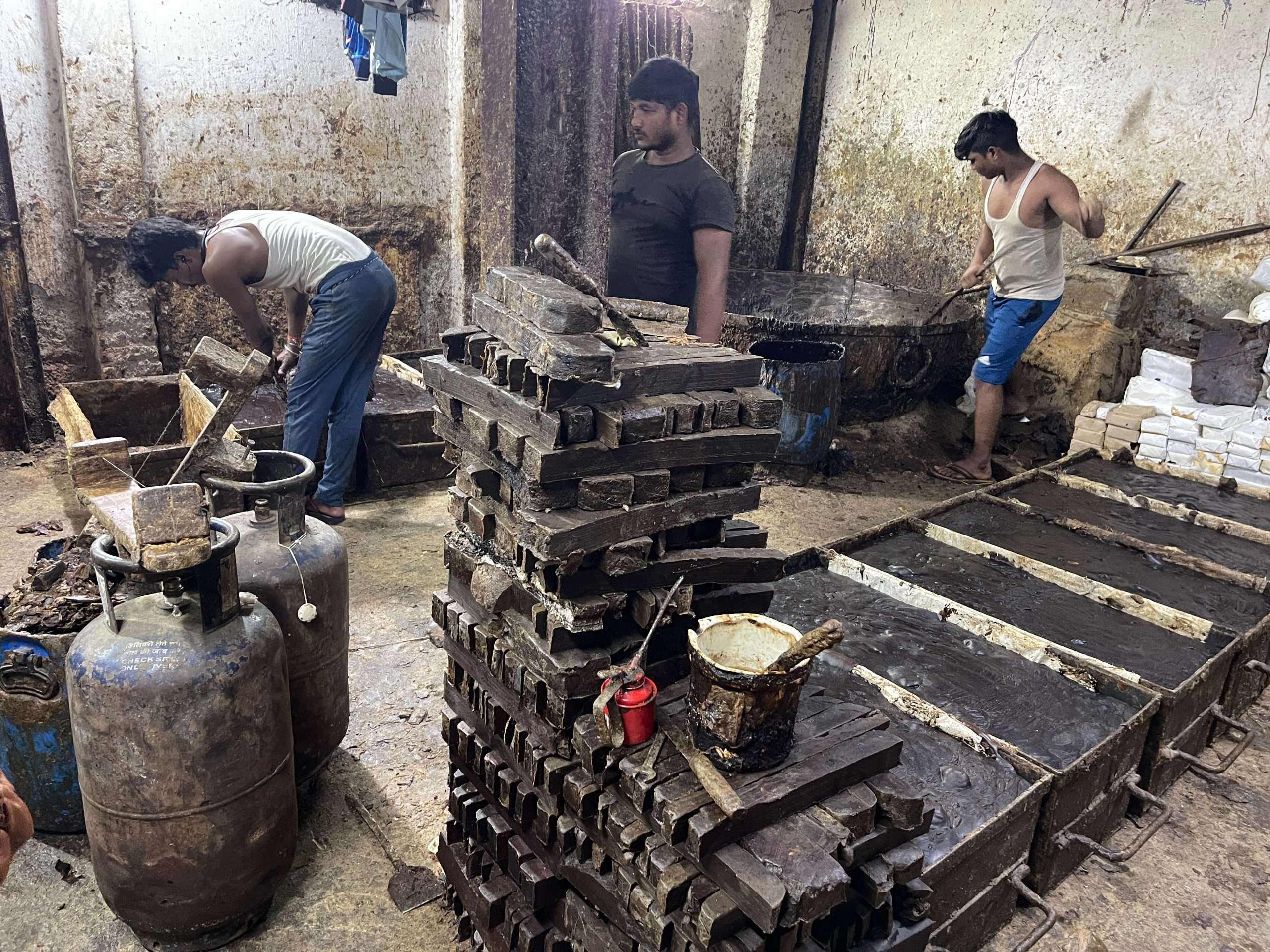
Our journey then led us to Dharavi, the world’s second-largest slum, where our guide highlighted its diverse community and thriving industries like plastic recycling, leather and textiles. He also told us that more than 2 million people live here in an area less than 3 square kilometers. Our guide, a resident of the area, shed light on the coexistence of wealth and poverty within its confines.
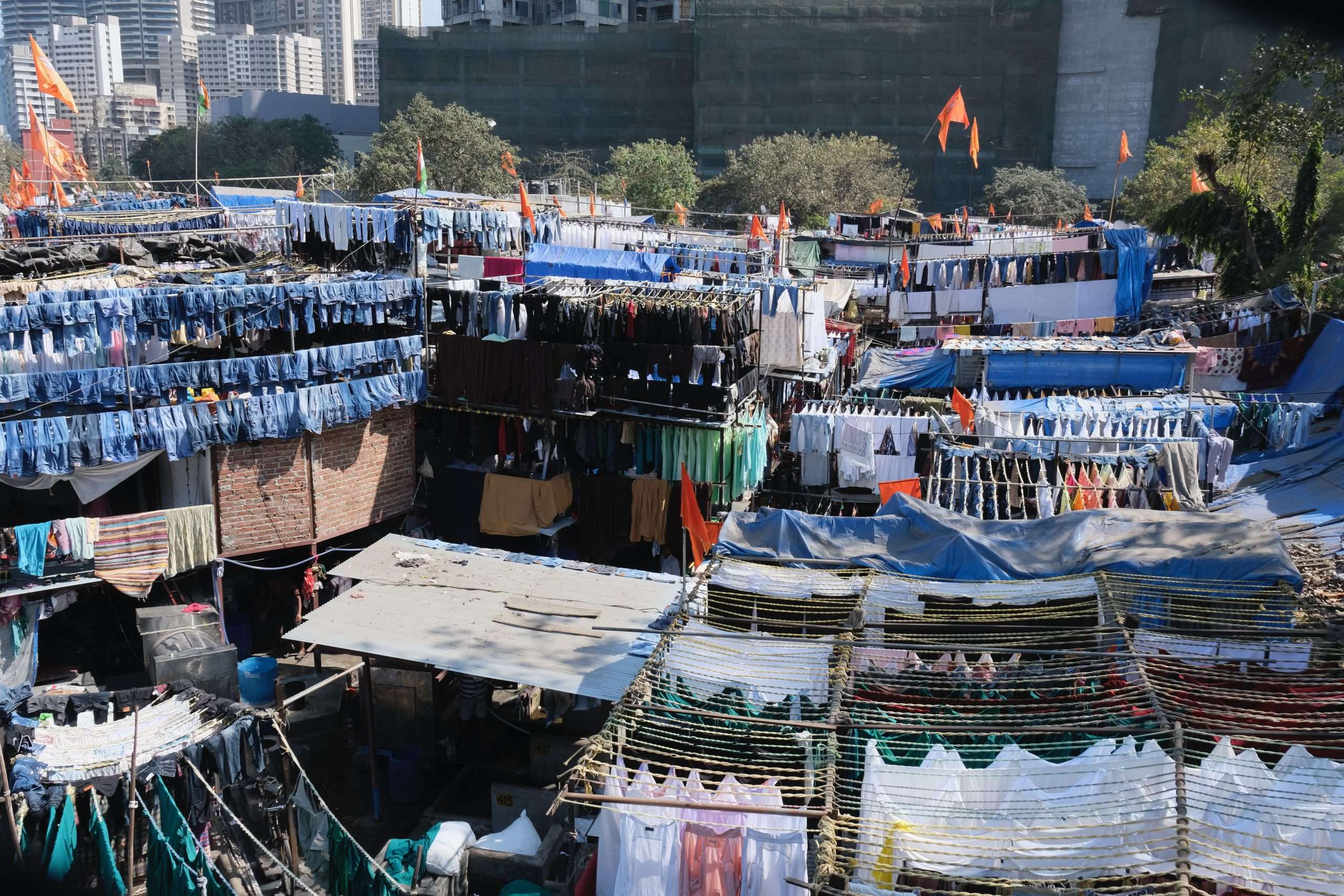
Next, we visited Dhobi Ghat, an open-air laundry that was established more than 120 years ago to clean soldiers’ uniforms during the time of the British. Here, families diligently wash clothes using a blend of mechanical technology and manual labor, catering to various clients such as hotels and hospitals. According to our guide, 100,000 pieces of clothing are washed each day.
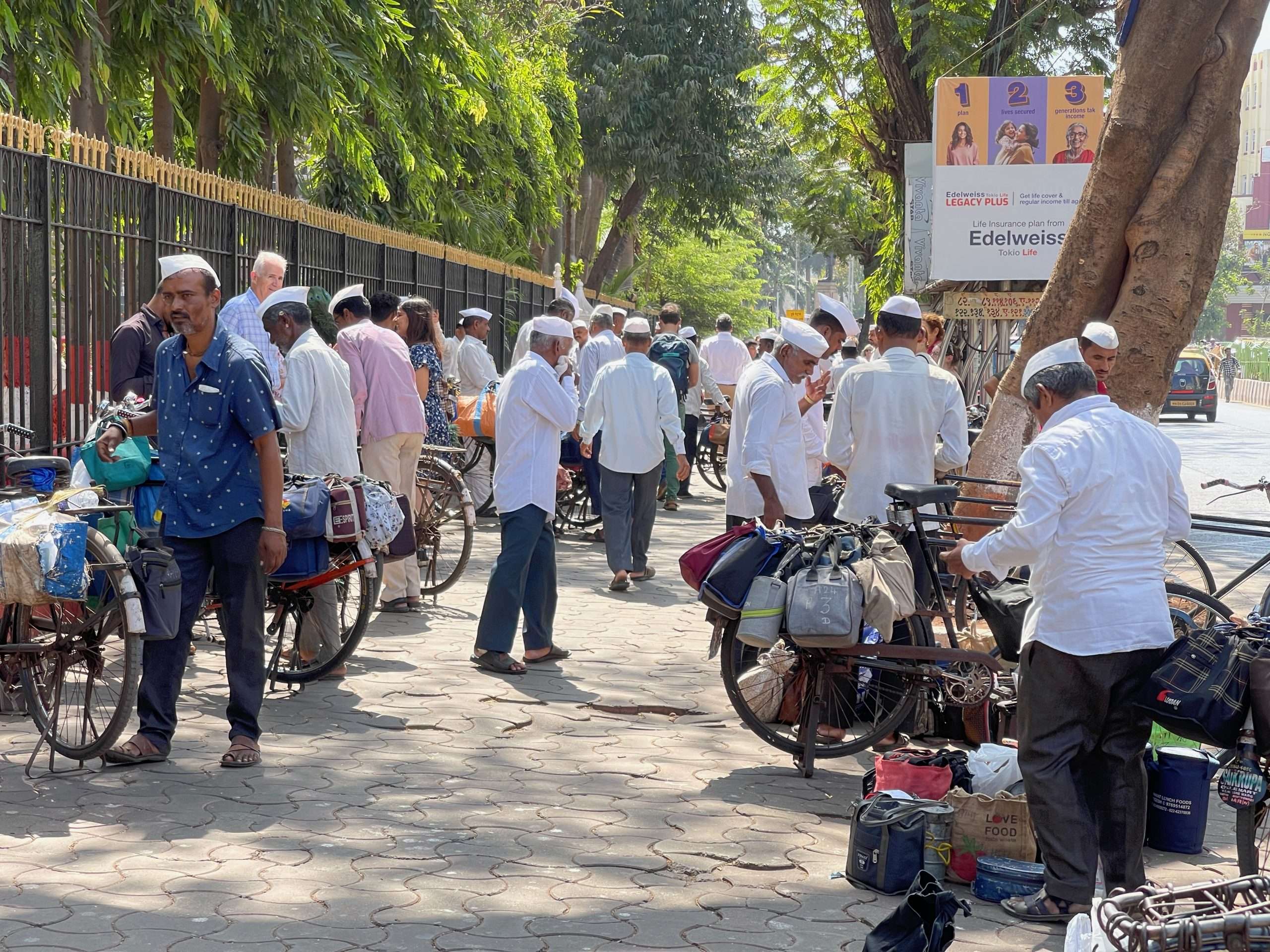
Our exploration continued with a fascinating glimpse into Mumbai’s renowned dabbawalla system, marveling at its remarkable efficiency in delivering homemade lunches to office workers. The dabbawallas pick up the dabbas (also called tiffins) around 10 AM, take them to the train station and sort out the dabbas in the luggage compartment of the trains using a simple color-coding/symbol tracking system and then stack them into crates which are then handed over to local dabbawallas for delivery. The system has a nearly flawless track record, with one in eight million going undelivered, according to an often-quoted number.
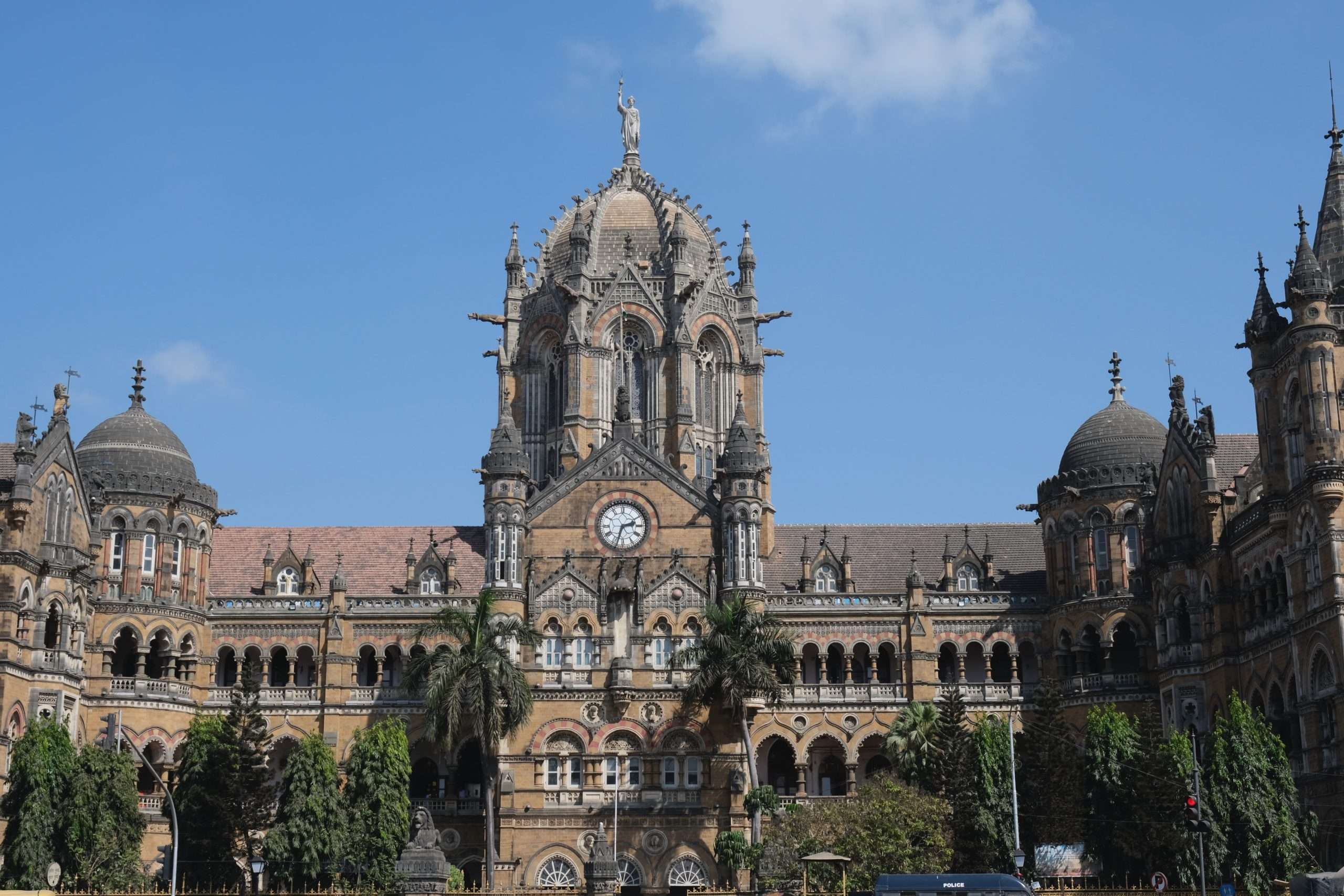
After a brief lunch, we indulged in shopping followed by a visit to the stunning Victoria Terminus, now called Chhatrapati Shivaji Maharaj Terminus, but still referred to by locals as VT. This train station is built in the high Victorian Gothic style with Indian sandstone and limestone and Italian marble ornamentation. It is a UNESCO World Heritage site.
To end the day, we enjoyed dinner with friends at Americano in Kala Ghoda (meaning black horse and so named after the black stone statue of King Edward VII), savoring exquisite nouvelle Italian cuisine. Despite transportation delays, it was a delightful conclusion to our adventurous day.
Reconnecting with Family & Friends – February 22, 2024
Today was a day spent with family and friends. We kicked off the day with a visit to FabIndia (a popular clothing store) in Kala Ghoda, although our shopping excursion was less fruitful than anticipated.
Lunch at the Catholic Gymkhana in Marine Lines with Christabel’s cousin Olga and her daughter Natasha was a delightful reunion, though tempered by the sight of construction along Marine Drive for the coastal road development.
In the afternoon, we visited Santa Cruz, the suburb where Christabel once lived, and met with her late Aunt Jane’s caregivers on Central Avenue. They showed us the new apartment on Linking Road, where the D’Lima family resided during Christabel’s teenage years. We then walked a short distance to visit Christabel’s friend Lygia and her husband Jaime. Ligia was a classmate of Christabel in Santa Cruz (Mumbai) and Jaime was a classmate of Albert in Goa. We also found out that all of us had a geography teacher in common named Linda Menezes.
Capturing Mumbai’s Essence – February 23, 2024
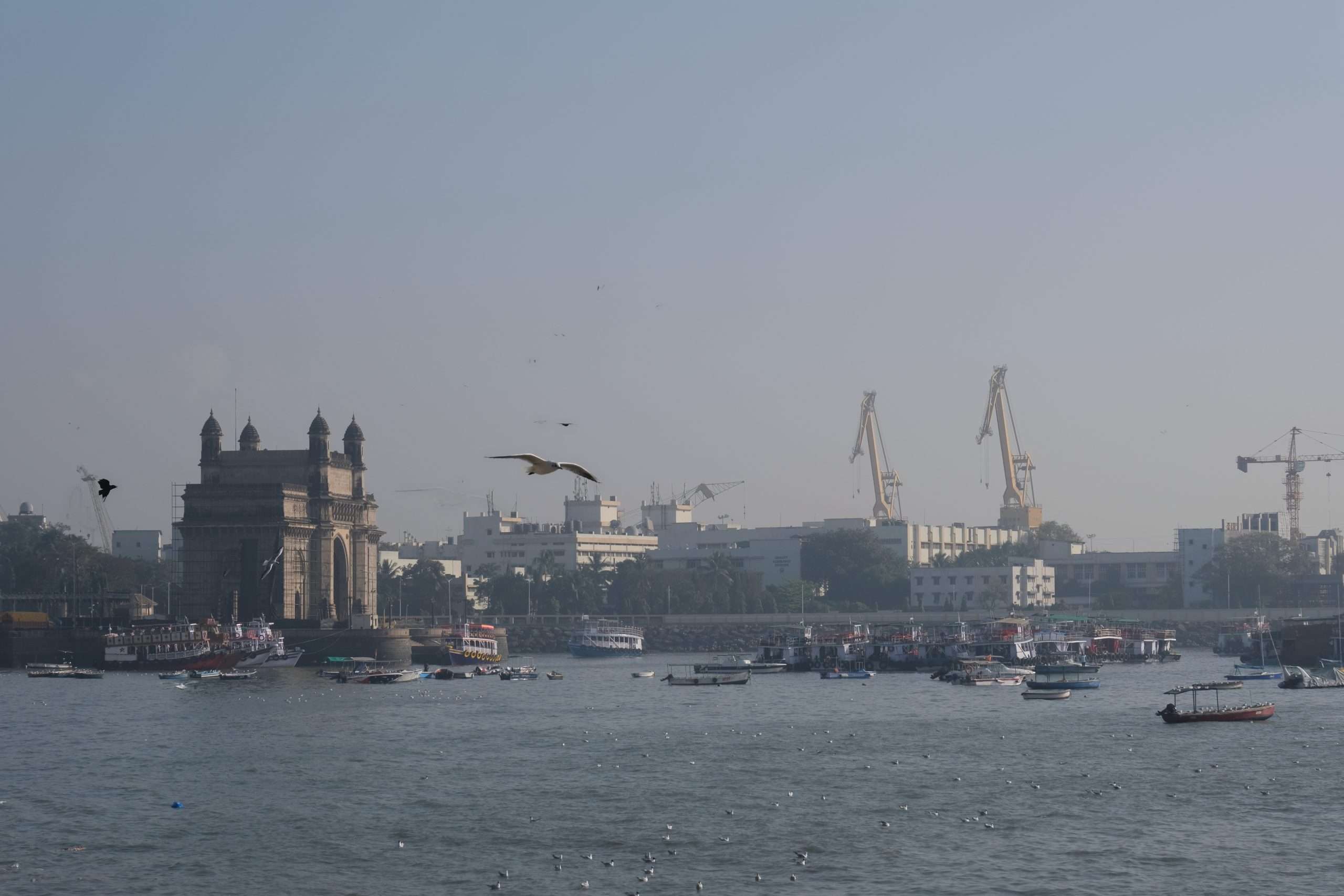
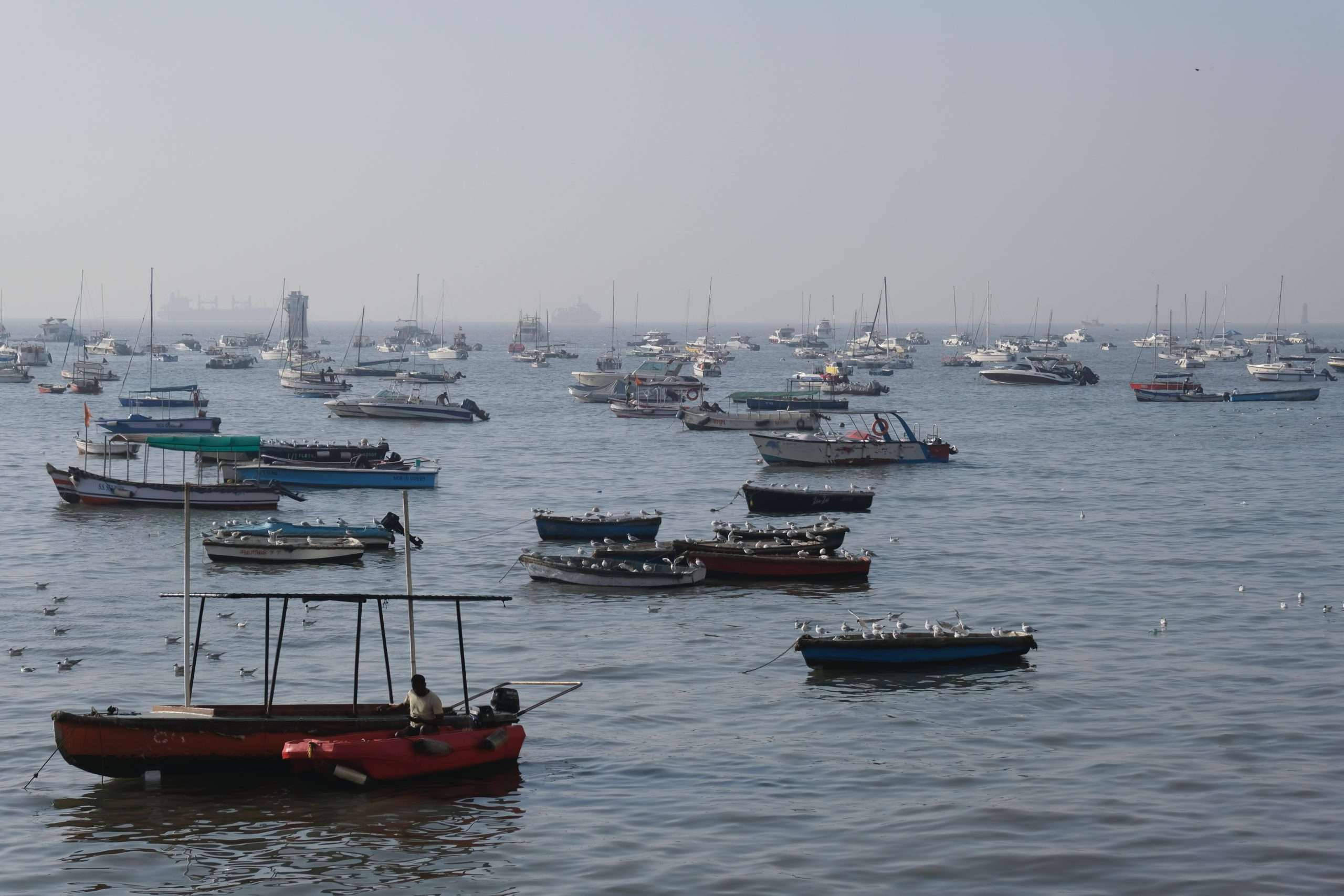
Our day began with an attempt to capture more photographs of the Gateway of India in the Kala Ghoda area, only to find limited access due to a visit by the Prime Minister of Greece. Undeterred, we wandered through the Colaba area, admiring the birds and historic buildings. Despite the shops in Kala Ghoda opening late, we did encounter the black horse for which the area is named after (minus King Edward VII).
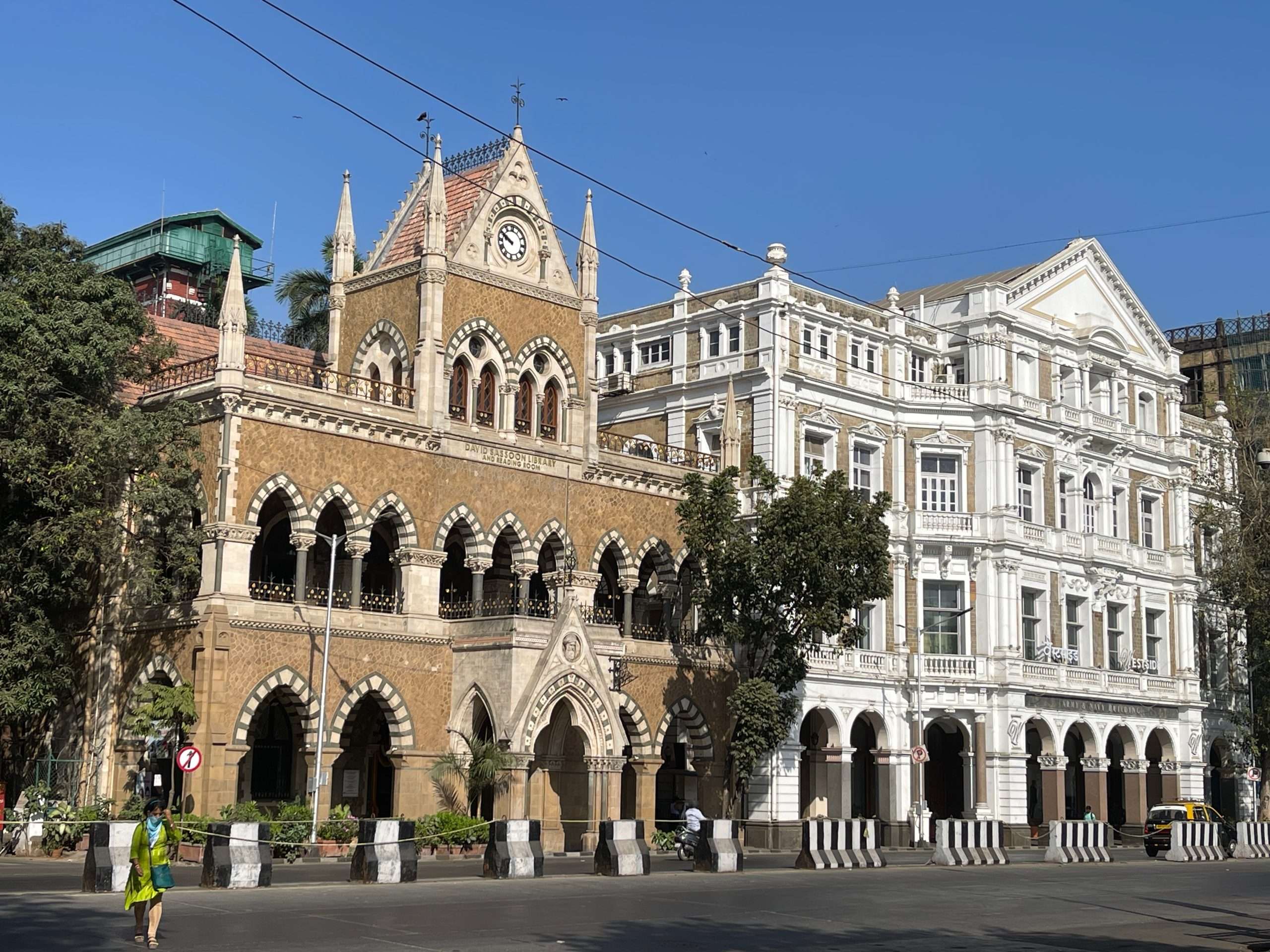
After visiting relatives at Marine Lines, we stopped by Phillips Antiques, a Mumbai landmark, admiring their revamped display that accentuates each item’s beauty without distraction. A delicious vegetarian lunch at Swati’s introduced us to the delightful panki, (fermented rice pancake in banana leaf).
Post-lunch, we indulged in shopping at Fabindia, purchasing a Nehru jacket for Albert and table linens for Christabel.
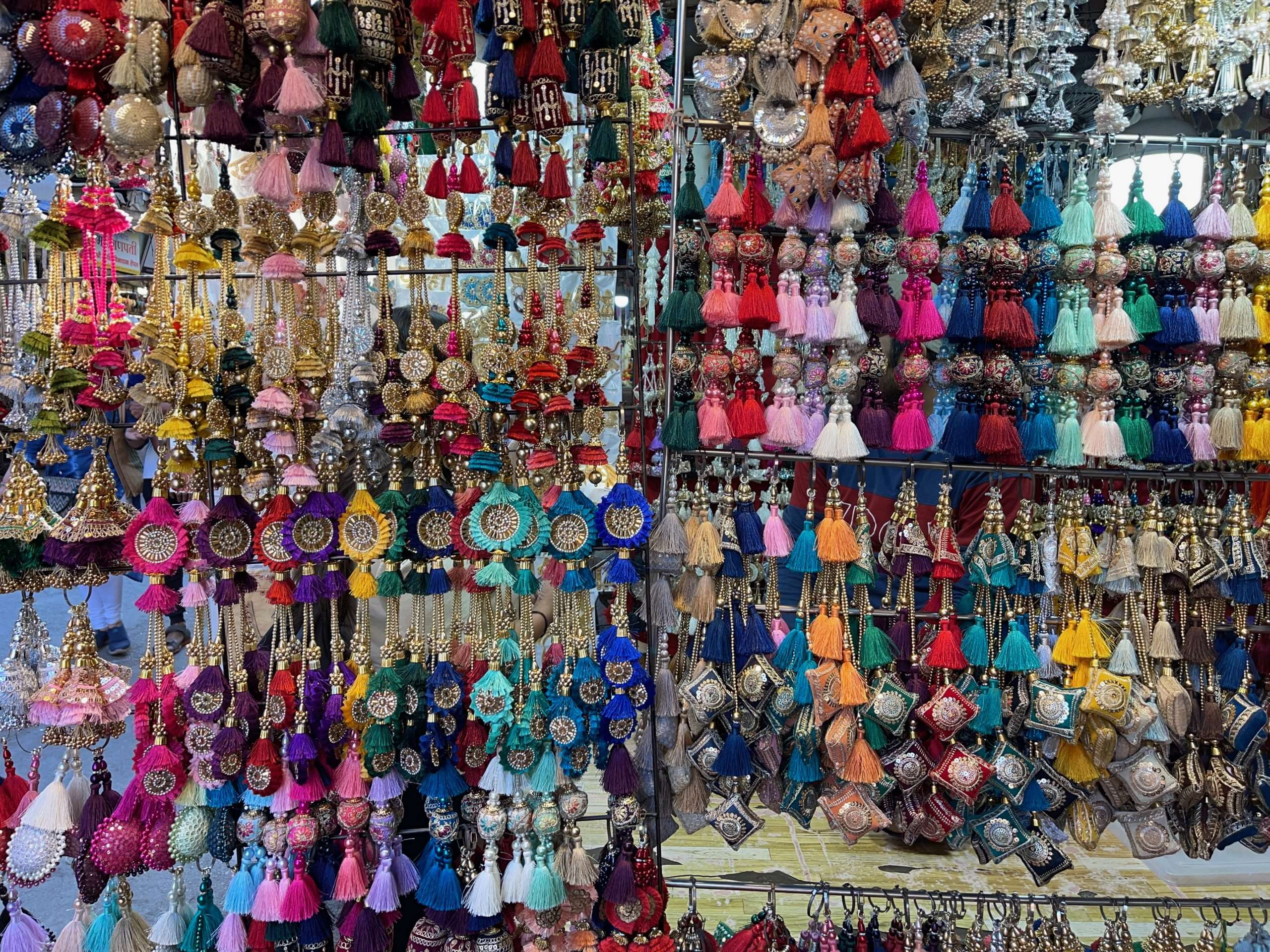
Joined by a German couple who were in Mumbai for a wedding, our afternoon started with a tour of the city’s vibrant markets. Our first stop was Crawford Market, once bustling with fruits and vegetables but now predominantly selling fruits and pets. Our next stop was the Mangaldas market offering a dazzling display of fabrics and clothing and bustling with haggling shoppers. We then walked through Zaveri Market showcasing exquisite gold and silver jewelry, reflecting Gujarati and Rajasthani influences.
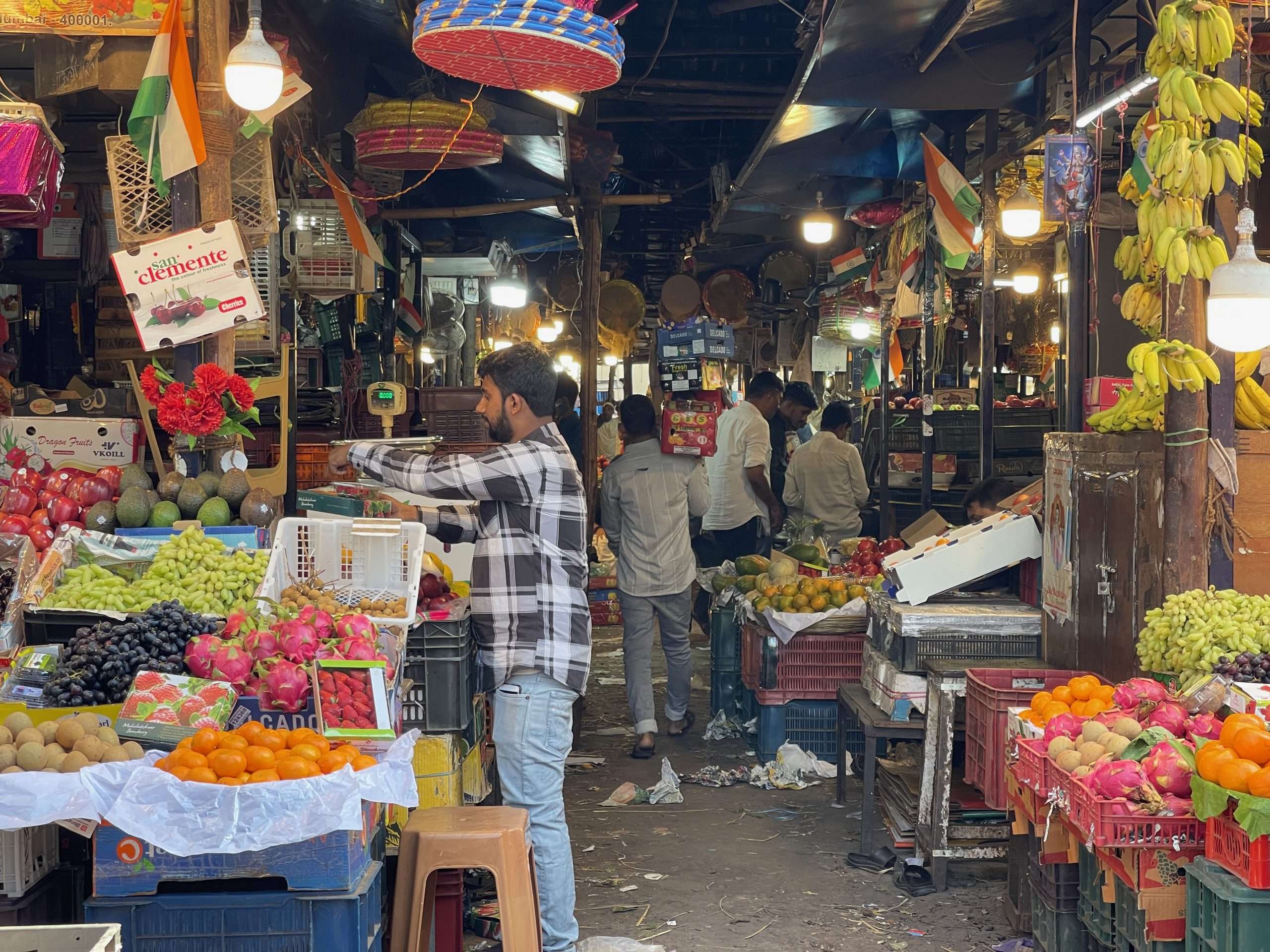
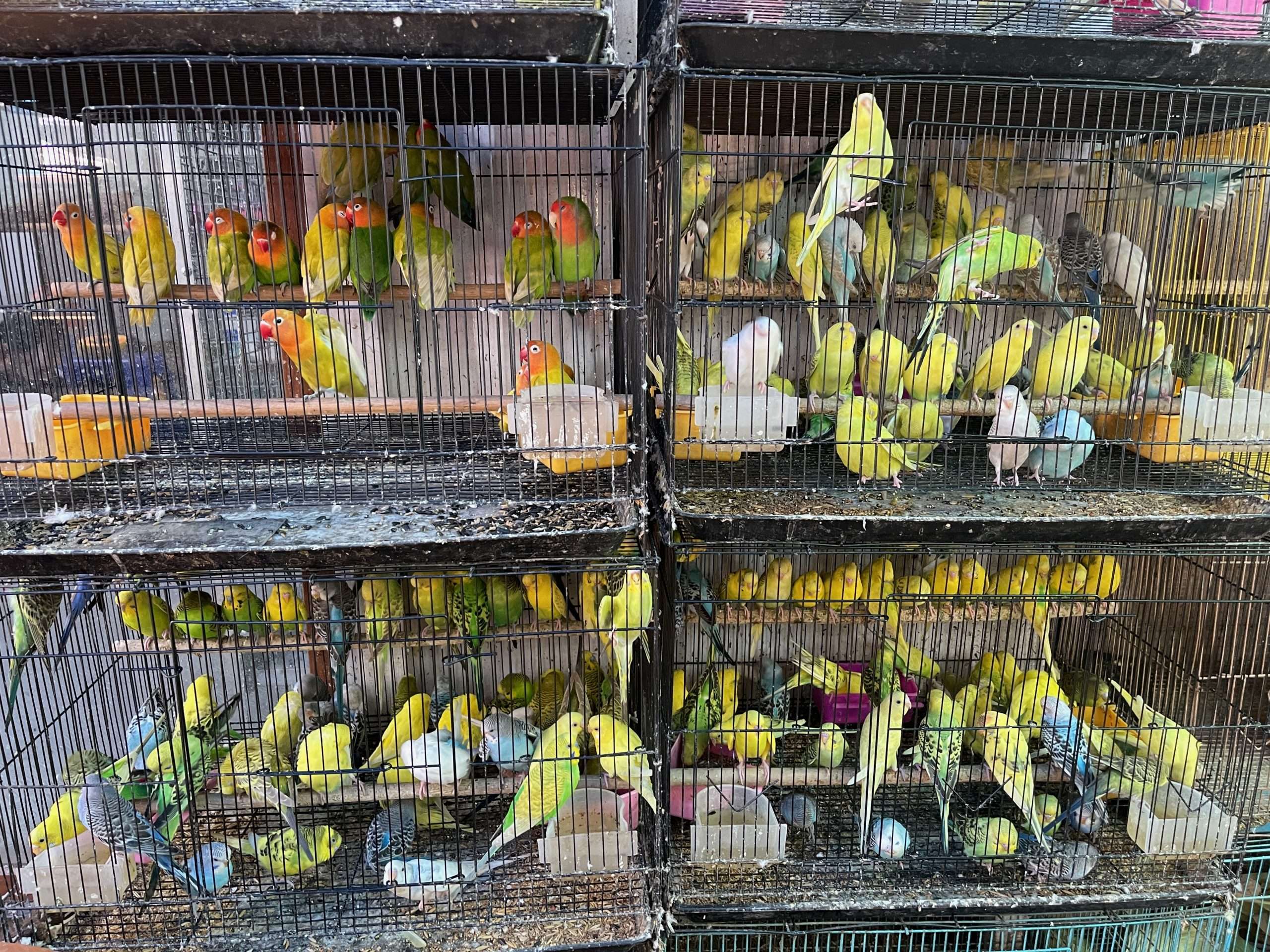
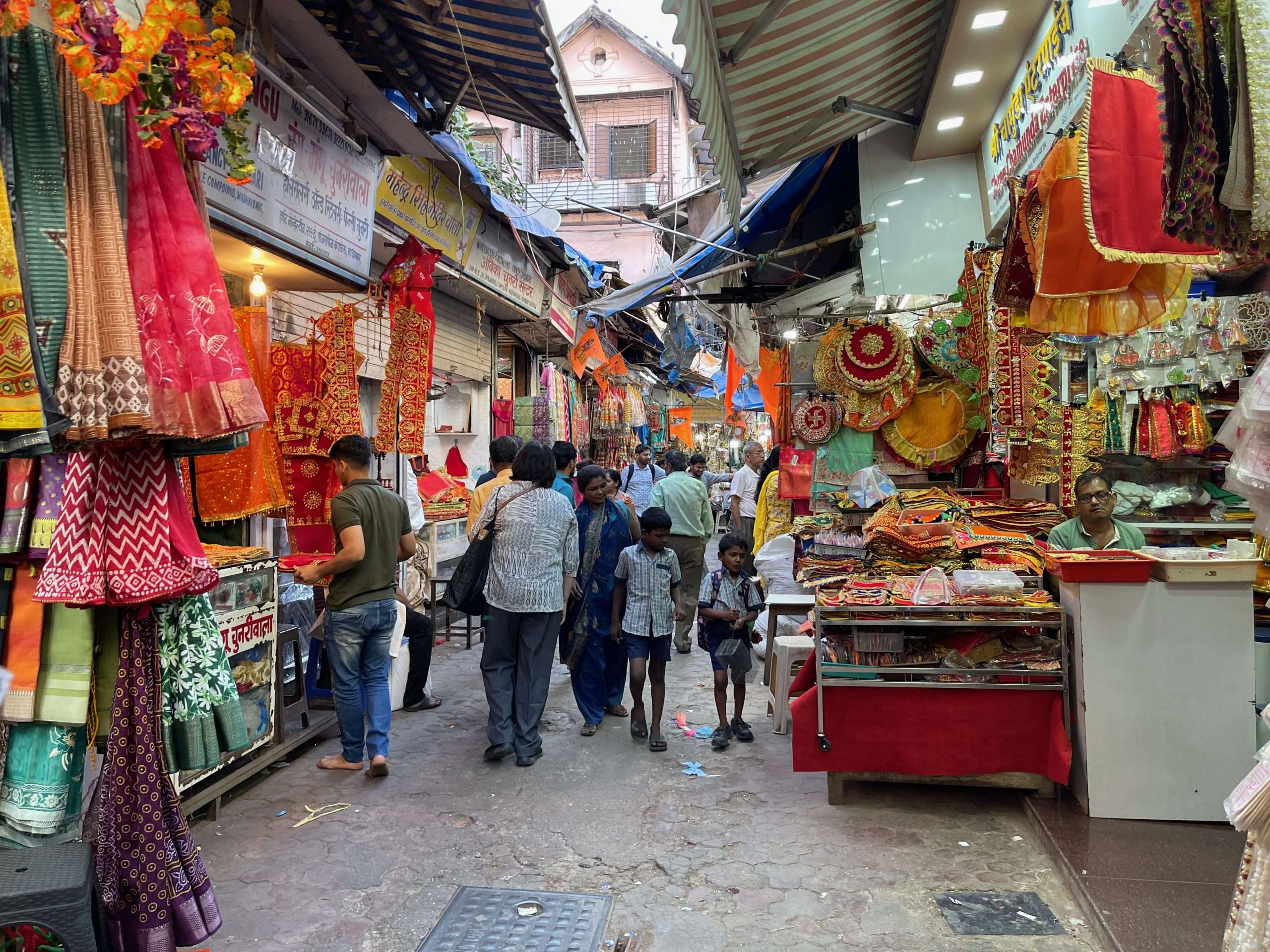
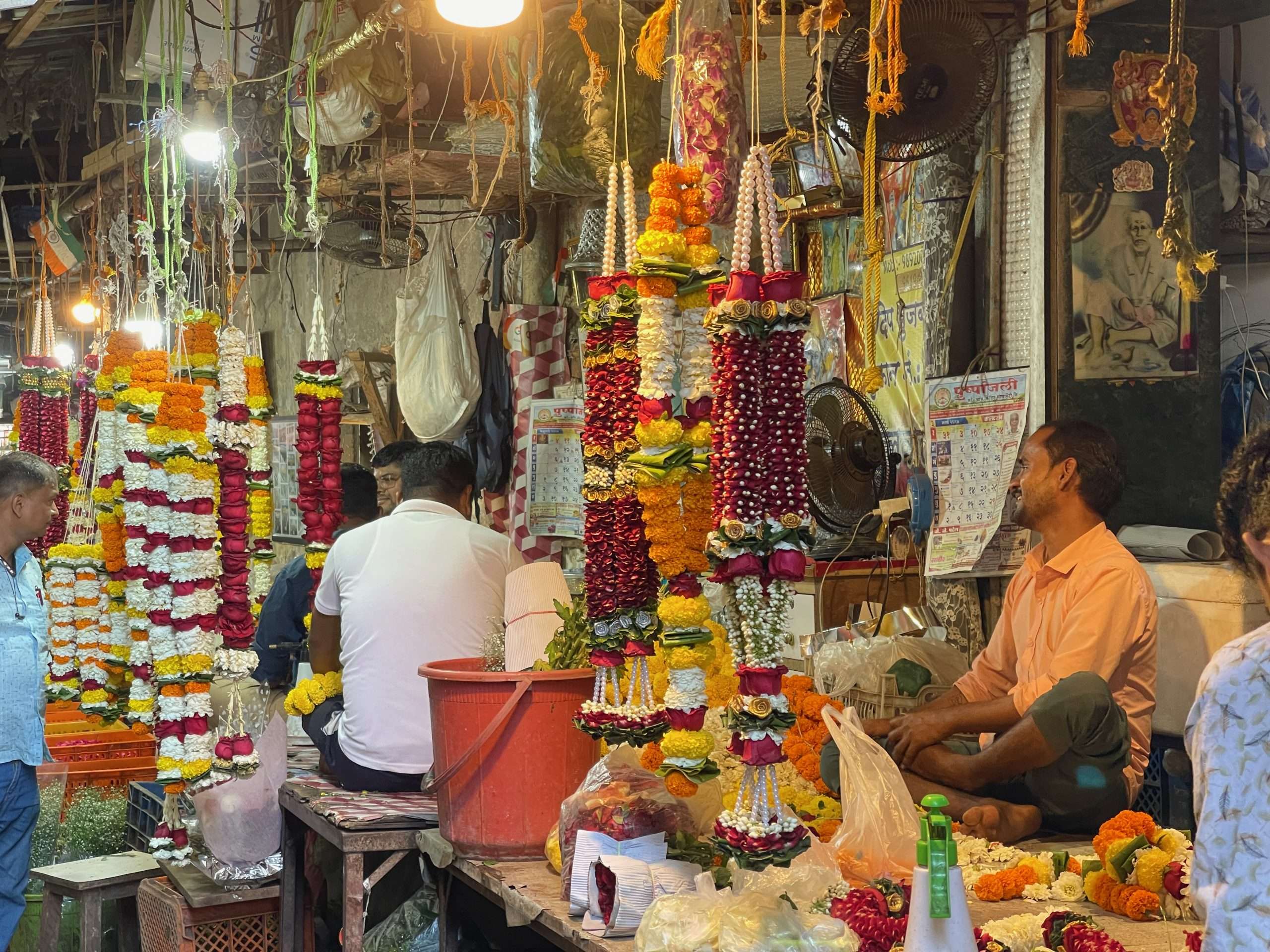
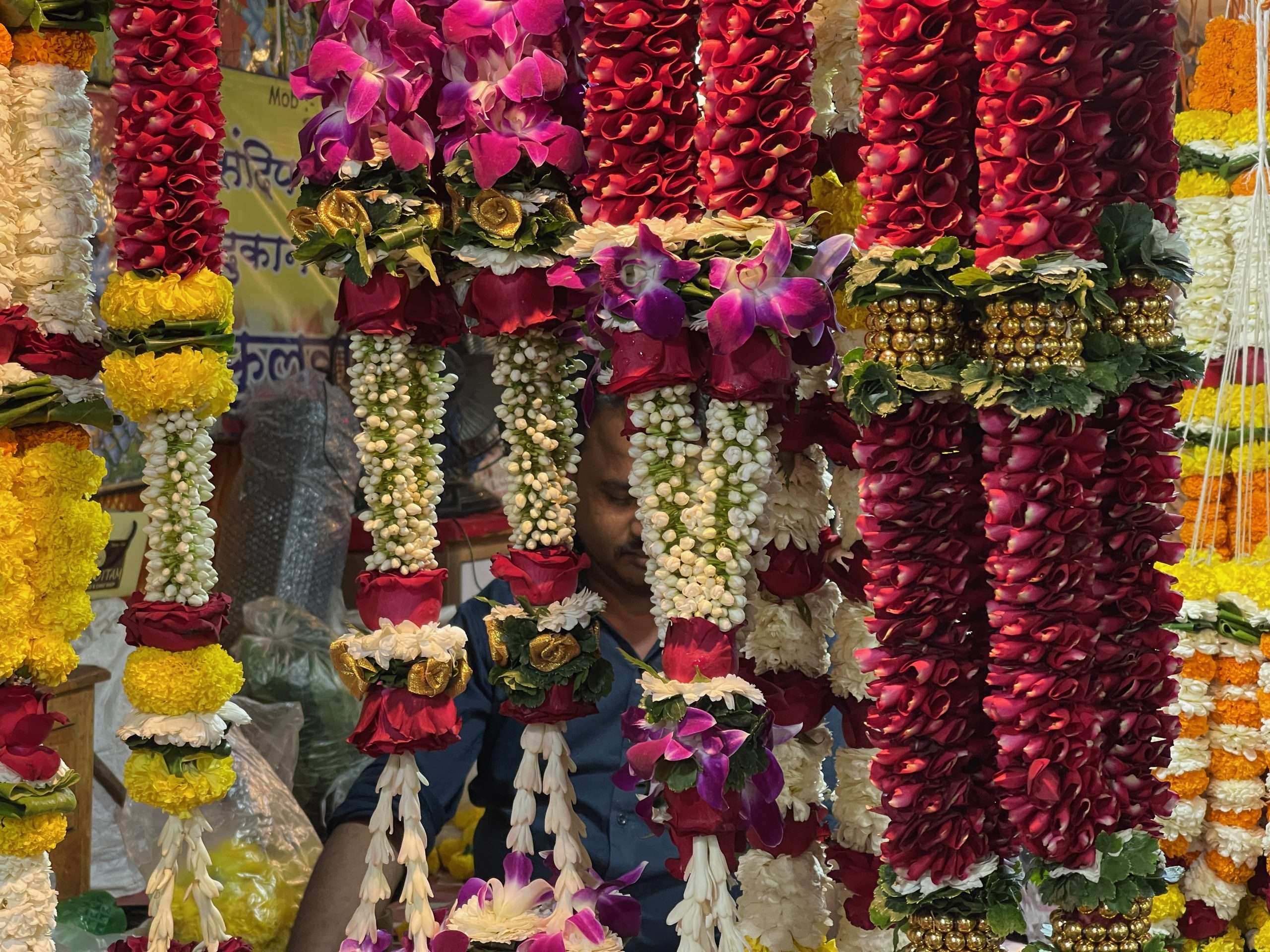
A leisurely stroll through the street food area led us to the historic Mumbadevi temple, honoring the goddess from whom Mumbai takes its name. We continued our journey with a visit to the flower market and the Bombay Panjrapole cow shelter, home to hundreds of cows since 1834. Our tour concluded with fleeting visits to a Jain temple and a Narayan temple.
Immersing in Mumbai’s Artistic Heritage – February 24, 2024
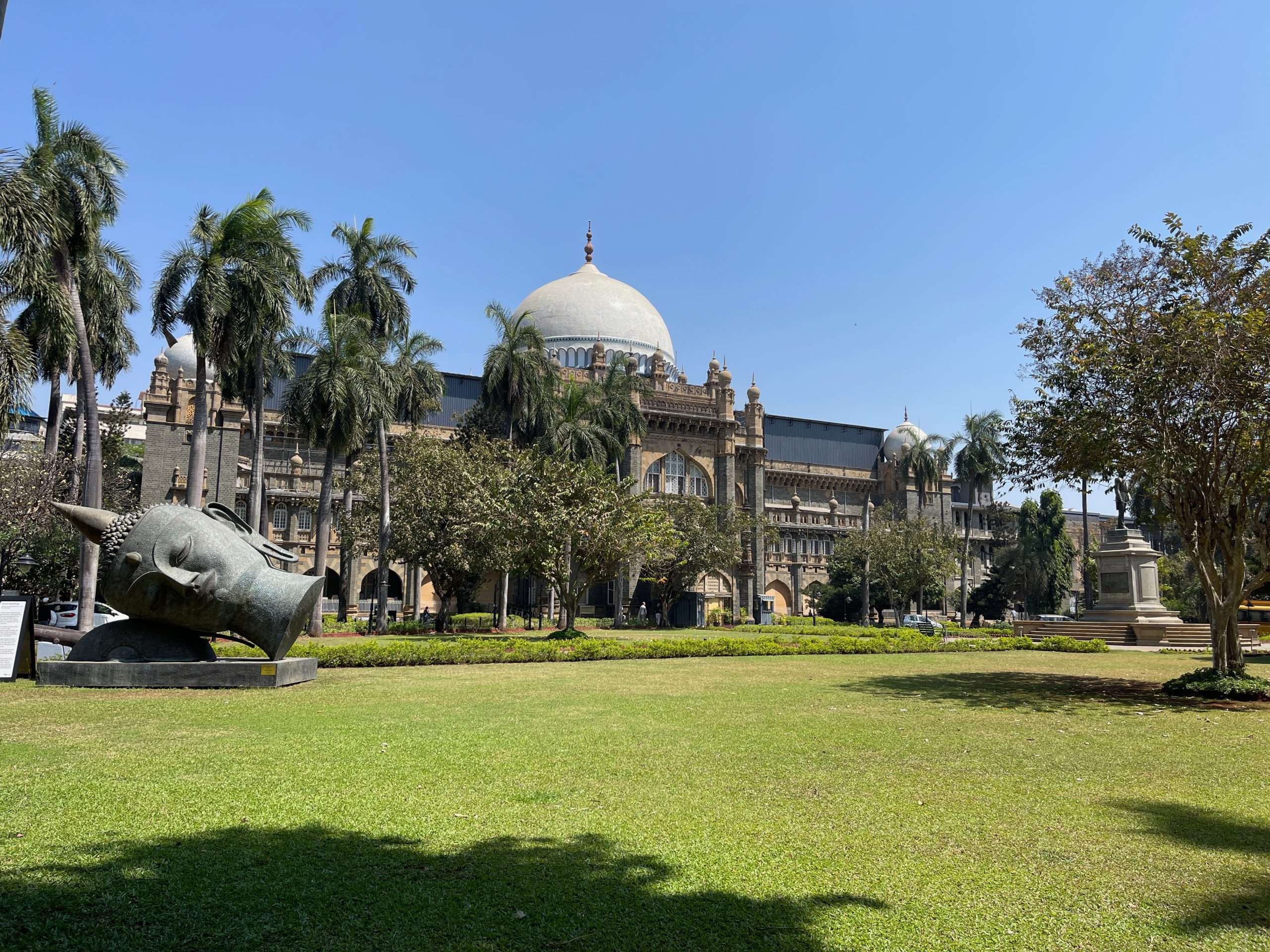
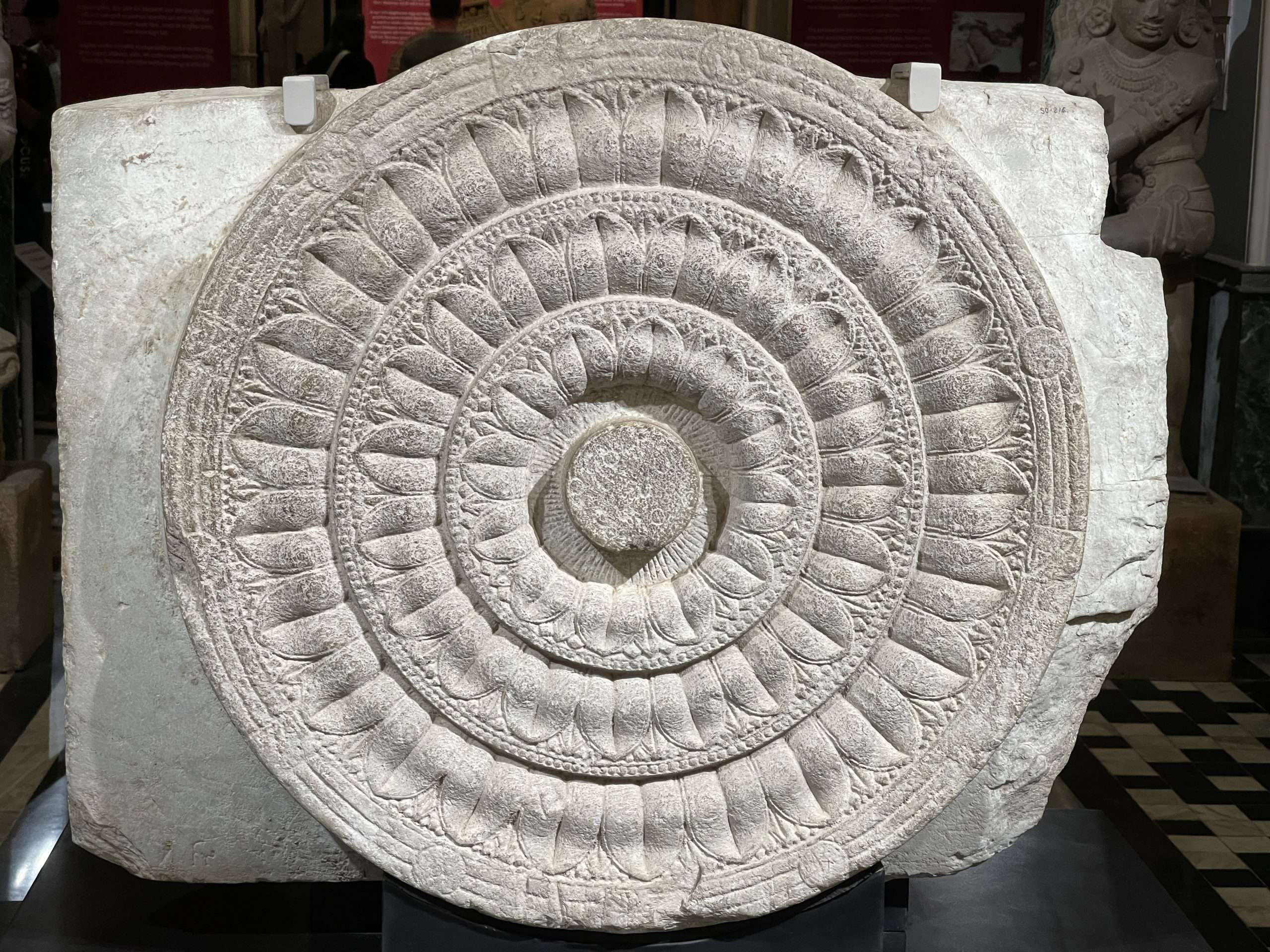
This morning, we visited the former Prince of Wales Museum, now named Chhatrapati Shivaji Maharaj Vastu Sangrahalaya. While it once housed European art and porcelain donated by the Tatas, the museum has shifted its focus to Indian art and artifacts, spanning from contemporary to ancient times. The natural history collection drew crowds, captivating both children and adults. Afterward, we strolled to the Jehangir Art Gallery to view paintings across various galleries before enjoying lunch at Khyber, a 55-year old iconic North Indian restaurant. The remainder of the day was dedicated to packing for our trip to Goa.
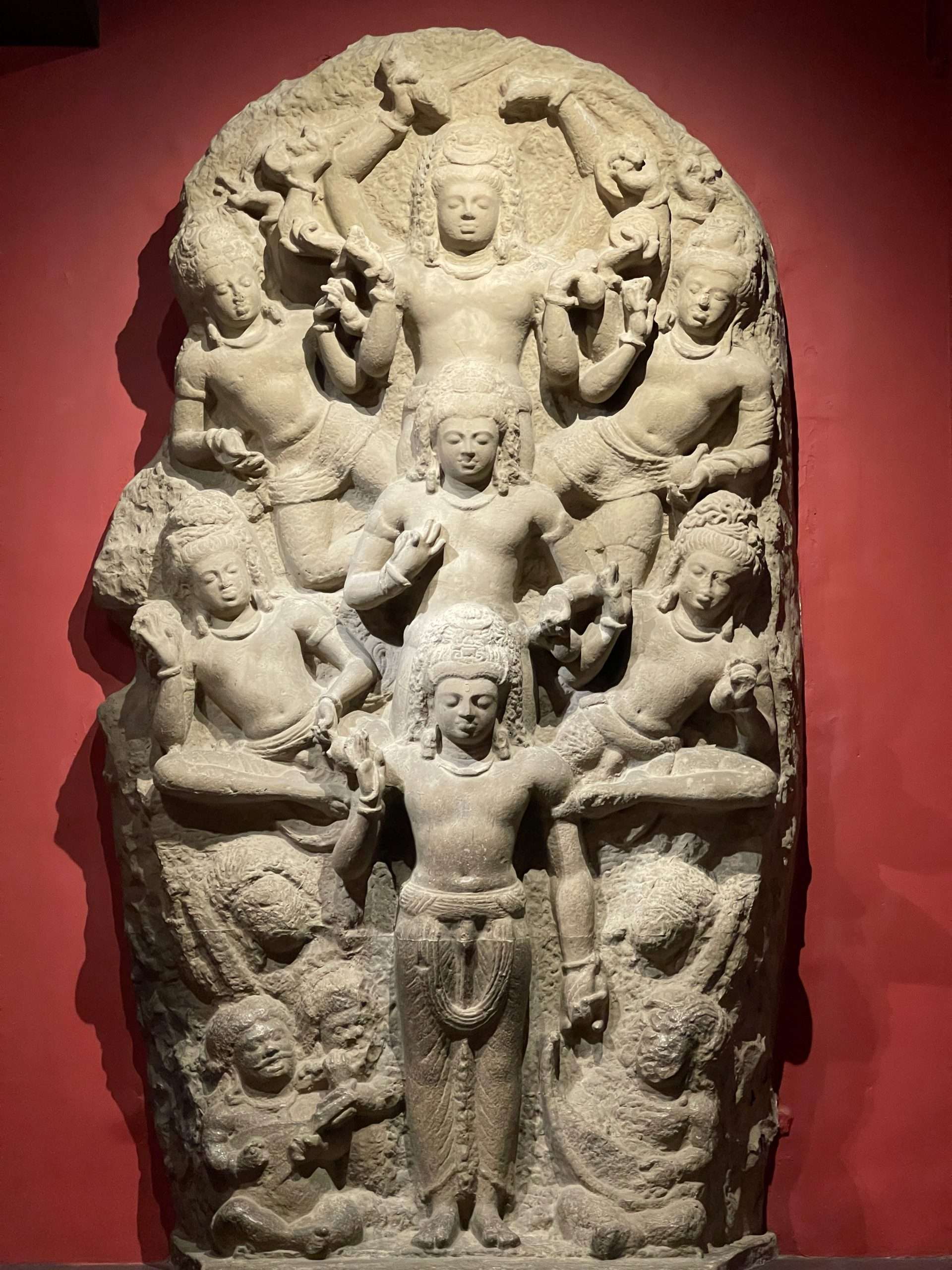
Exploring Northern Goa – February 25, 2024
We flew to Goa this morning amidst stringent security measures. Upon arrival at MOPA, Goa’s new airport, we were greeted by our neighbor Deepak, who drove us to the ancestral house in Assagão to visit Ignatius, Albert’s brother. Ignatius was flying back to Charleston later in the afternoon. We were also fortunate enough to admire the renovations he has made to the house.
Later in the evening, we went on a drive to the northern tip of Goa to visit Fort Tiracol, perched on a hill overlooking the Tiracol river. Originally a Maratha fort, it fell into Portuguese hands in 1746. General de Almeida, the conqueror, built a Church dedicated to Saint Anthony within the fort’s premises. This church still stands today, and mass is held there every Sunday. In 1961, ownership of the fort reverted to India following Goa’s liberation.
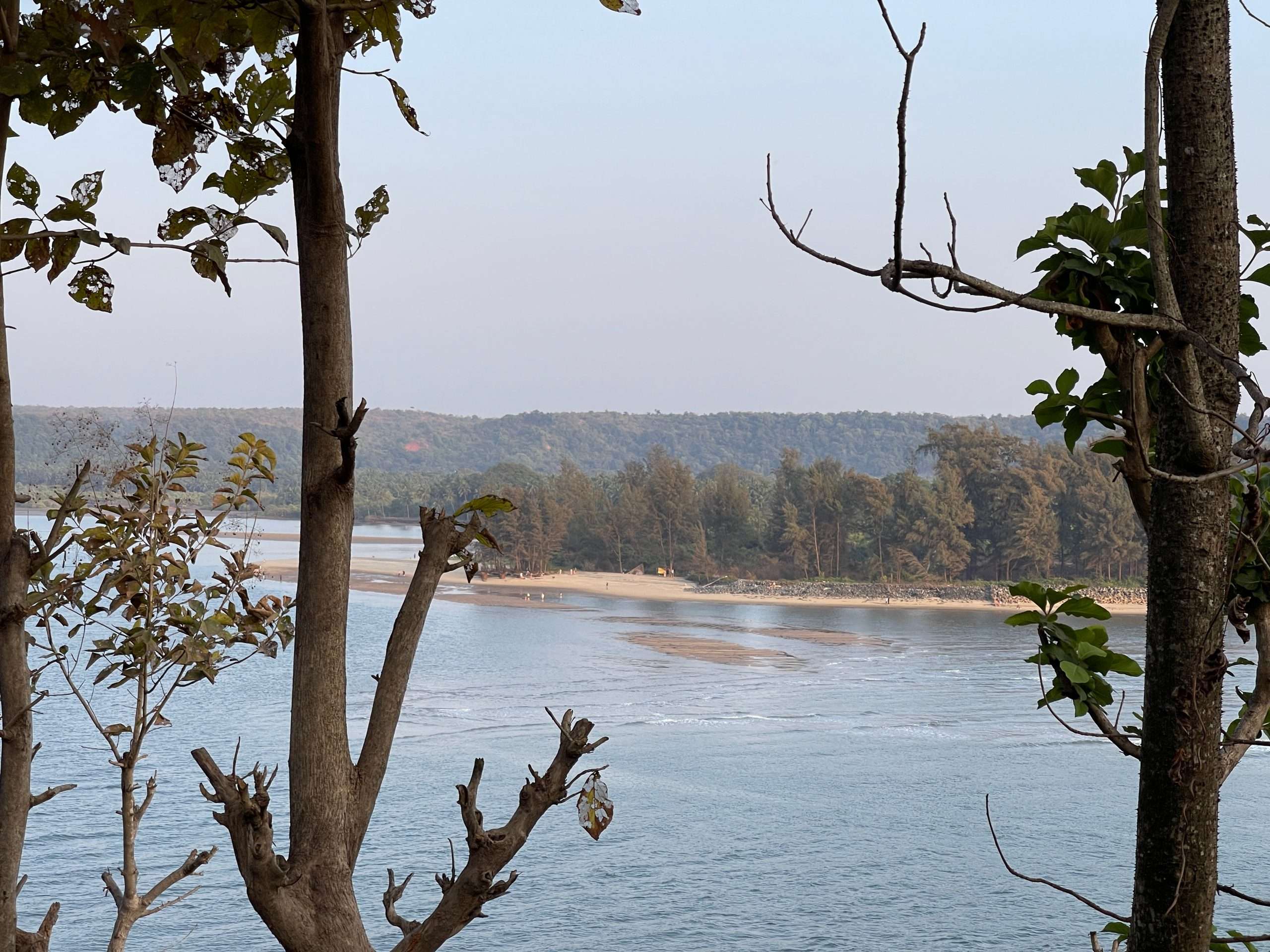
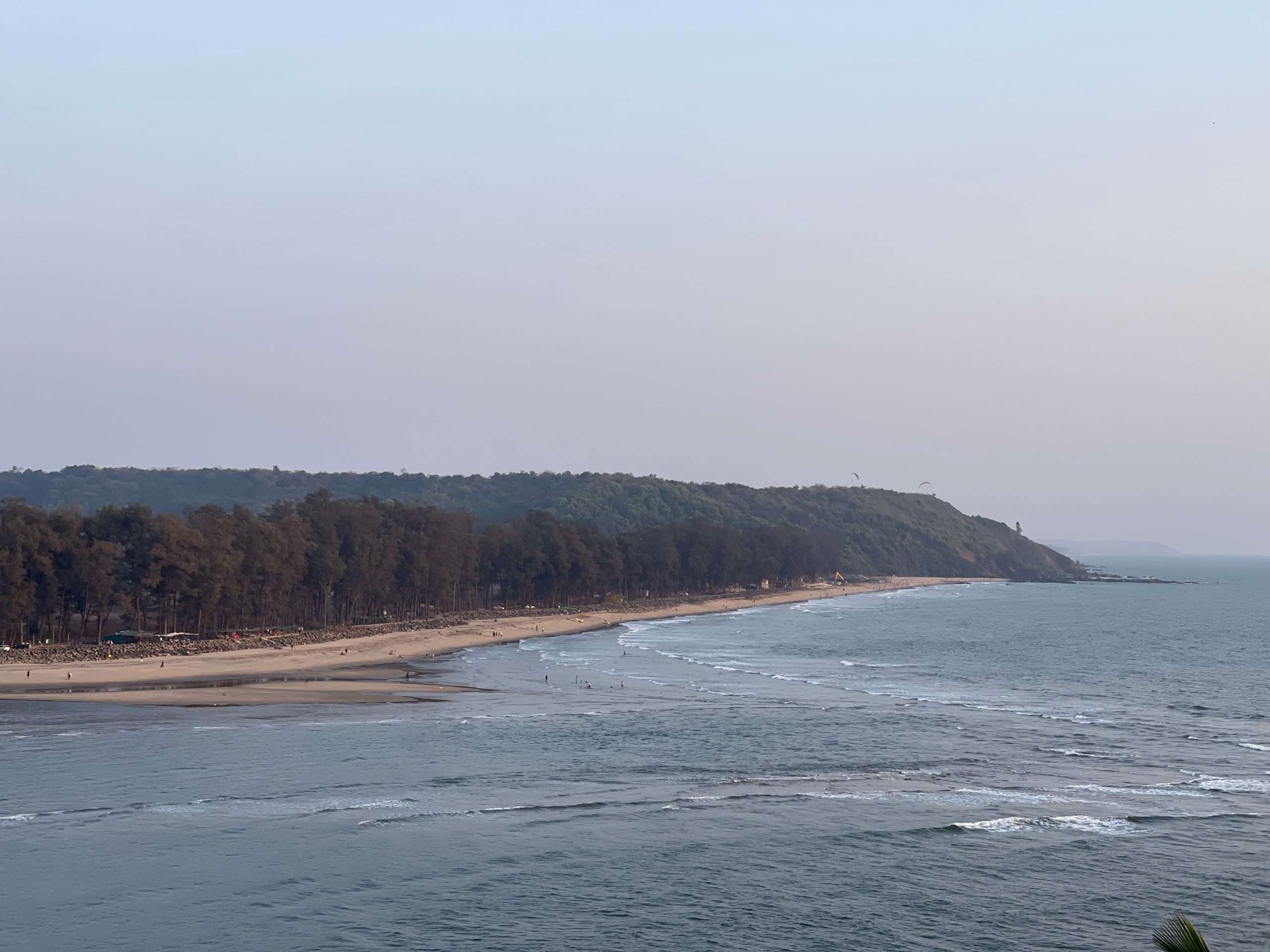
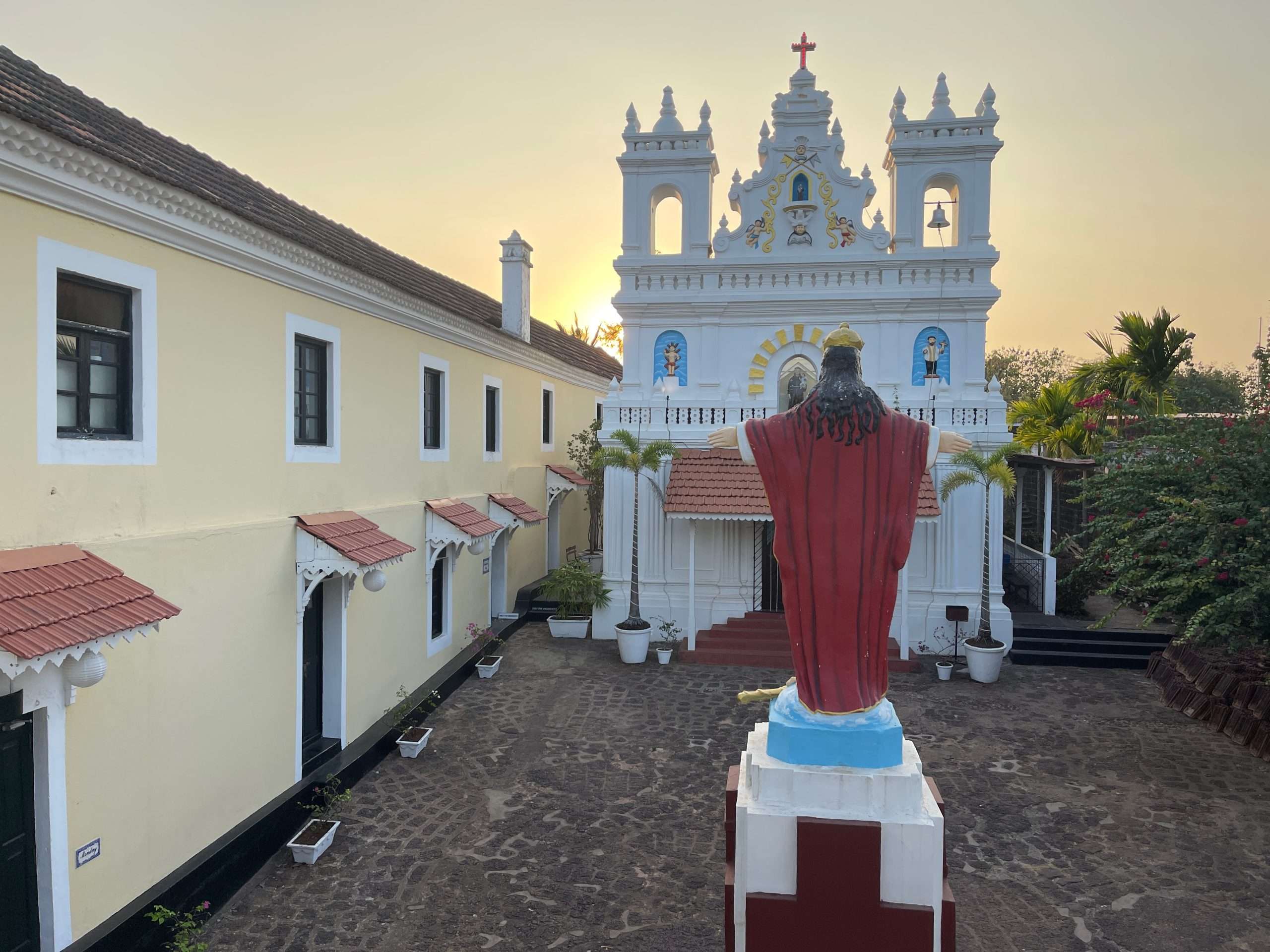
The fort, now transformed into a heritage hotel, offers mesmerizing vistas of the river and surrounding beaches. After enjoying a glass of beer at the restaurant, we made our way back to Assagão for a delightful fish dinner at Vinayak’s, a popular family restaurant renowned for its authentic Goan cuisine.
Churches, Temples, and Reunions in Goa – February 26, 2024
This morning, Deepak drove us to Old Goa, now a UNESCO World Heritage Site, to explore its renowned churches and convents. Our first stop was the Basilica of Bom Jesus, home to the remains of St. Francis Xavier encased in a magnificent 400-kg silver casket. This church, showcasing Portuguese colonial and Baroque architecture, stands as the oldest in India. The removal of its plaster in the 1950s, under the direction of Portuguese Prime Minister Antonio Salazar, revealed its unique laterite walls.
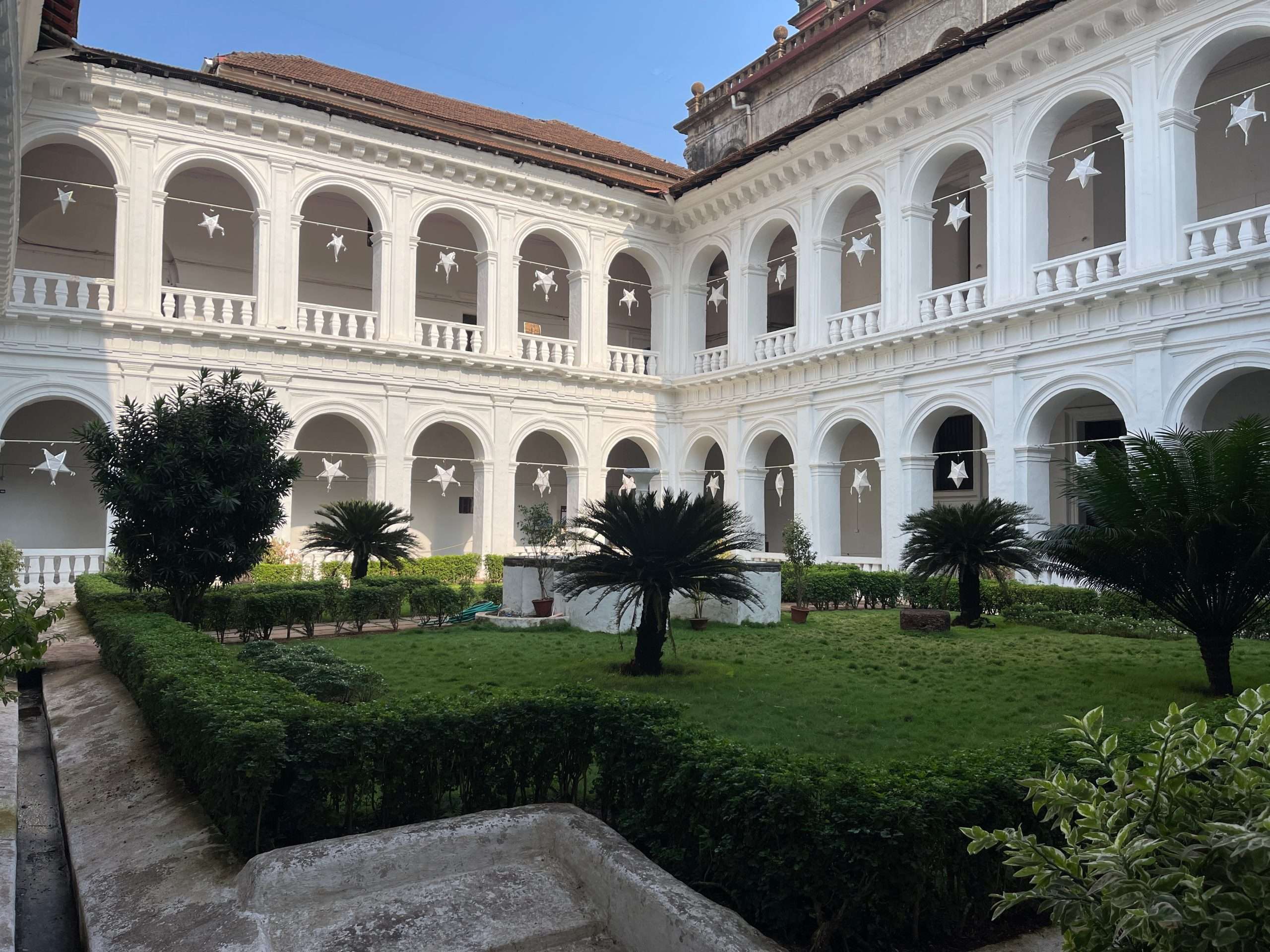
Next, we visited the Church of St. Francis of Assisi and its accompanying convent, now housing the Archaeological Museum of Goa. Among its treasures are statues of significant historical figures like Alfonso de Albuquerque and Luis Vaz de Camões, along with artifacts depicting Goa’s rich cultural heritage.
From the museum we visited the Se Cathedral. It was built to celebrate the victory of the Portuguese over the Muslim ruler, Adil Shah. This happened on the feast of St. Catherine. It is one of the largest churches in Asia. And it also has a large golden bell. Just one; the companion bell was lost when it was struck by lightning.
The other church we visited was St. Cajetan’s. The final monument we saw in Old Goa was the Viceroy’s Arch, built by Vasco da Gama’s grandson Viceroy Francisco da Gama.
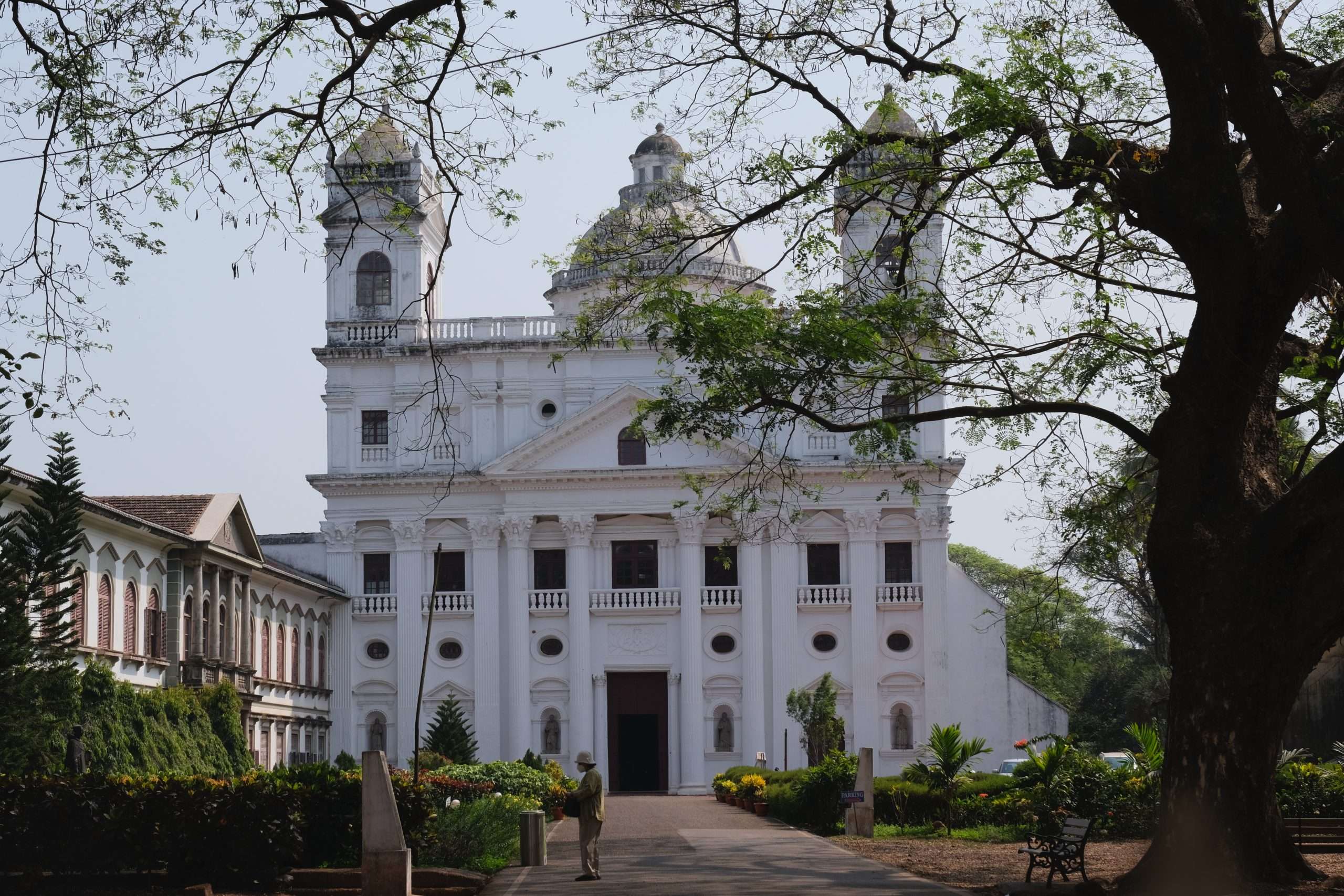
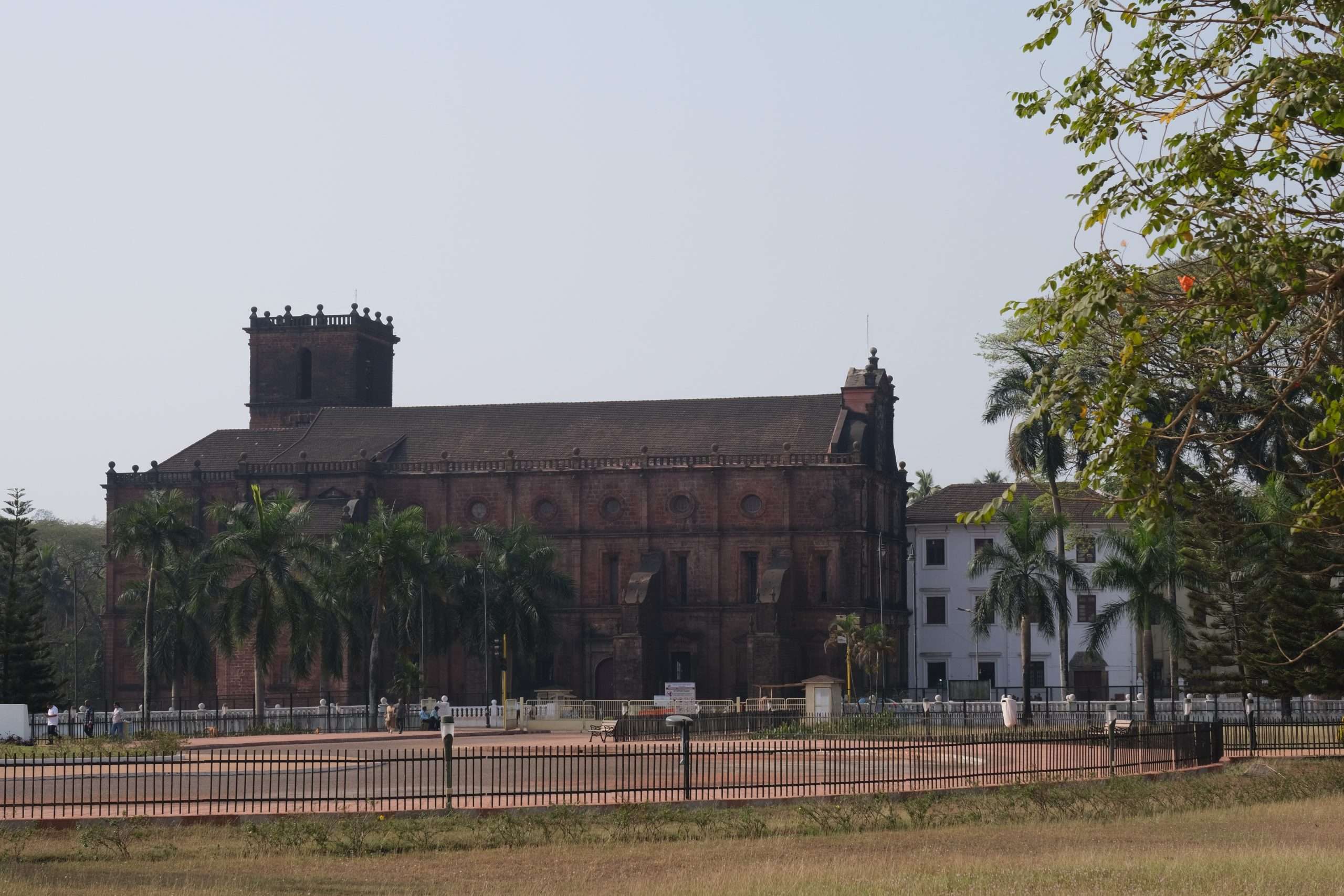
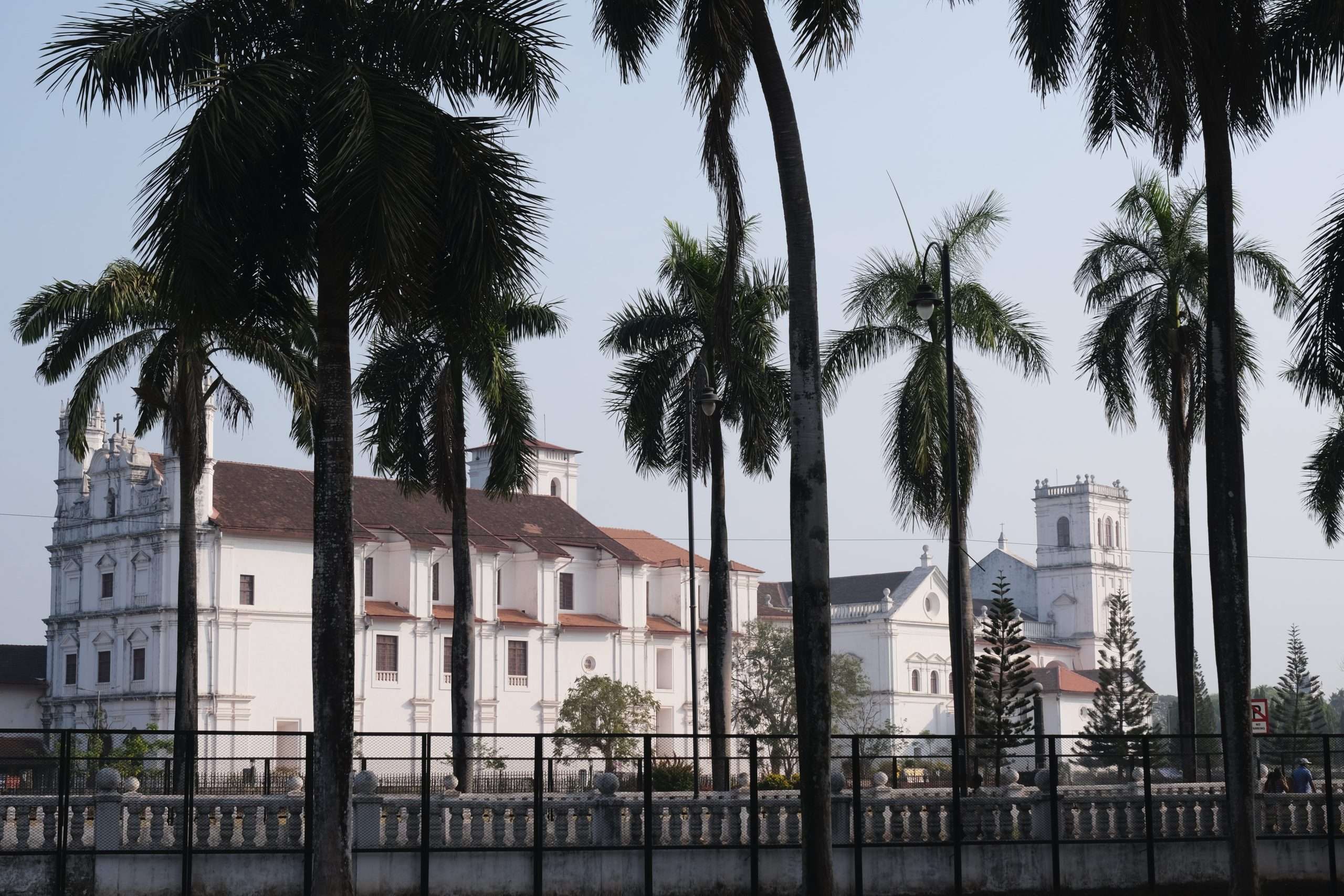
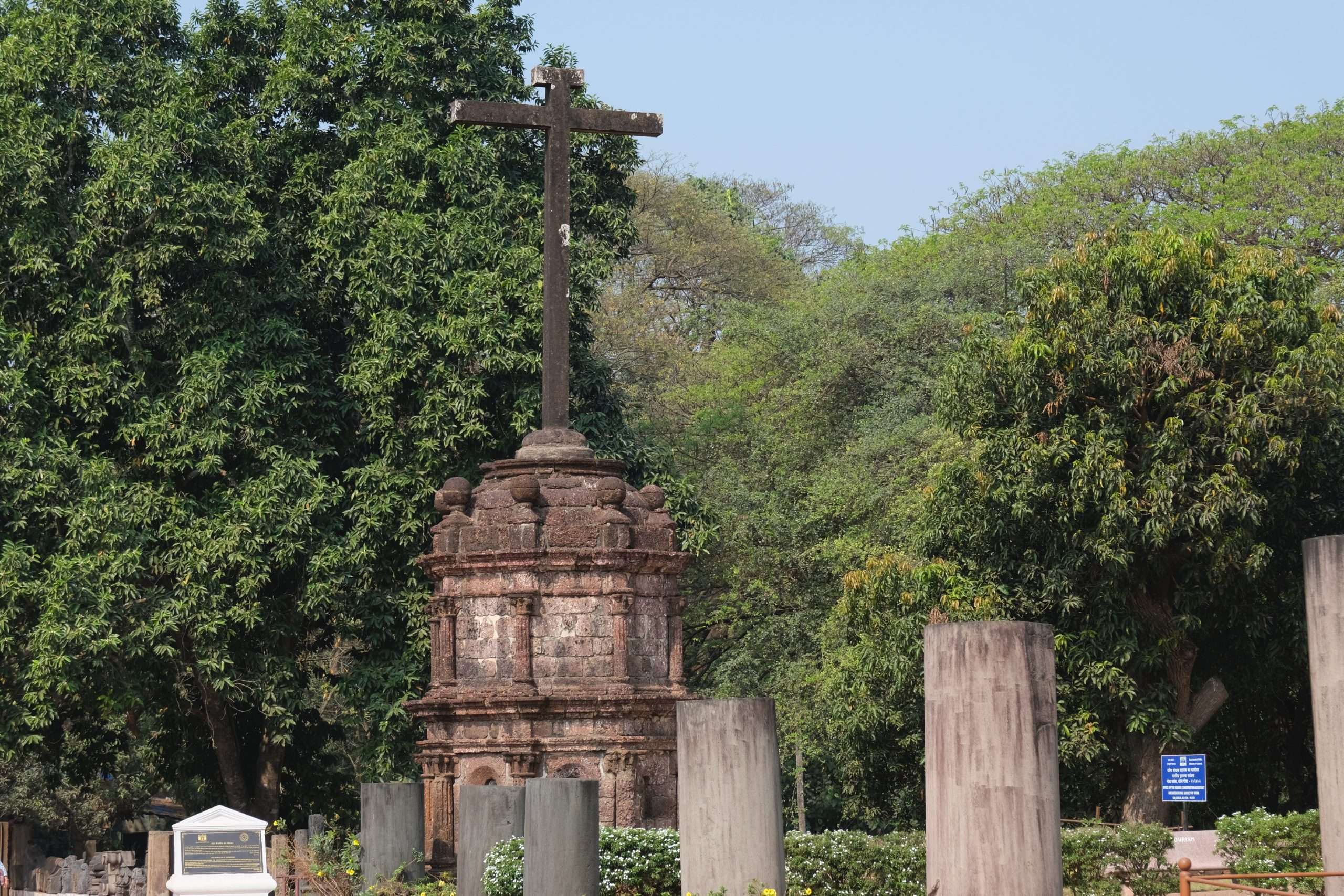
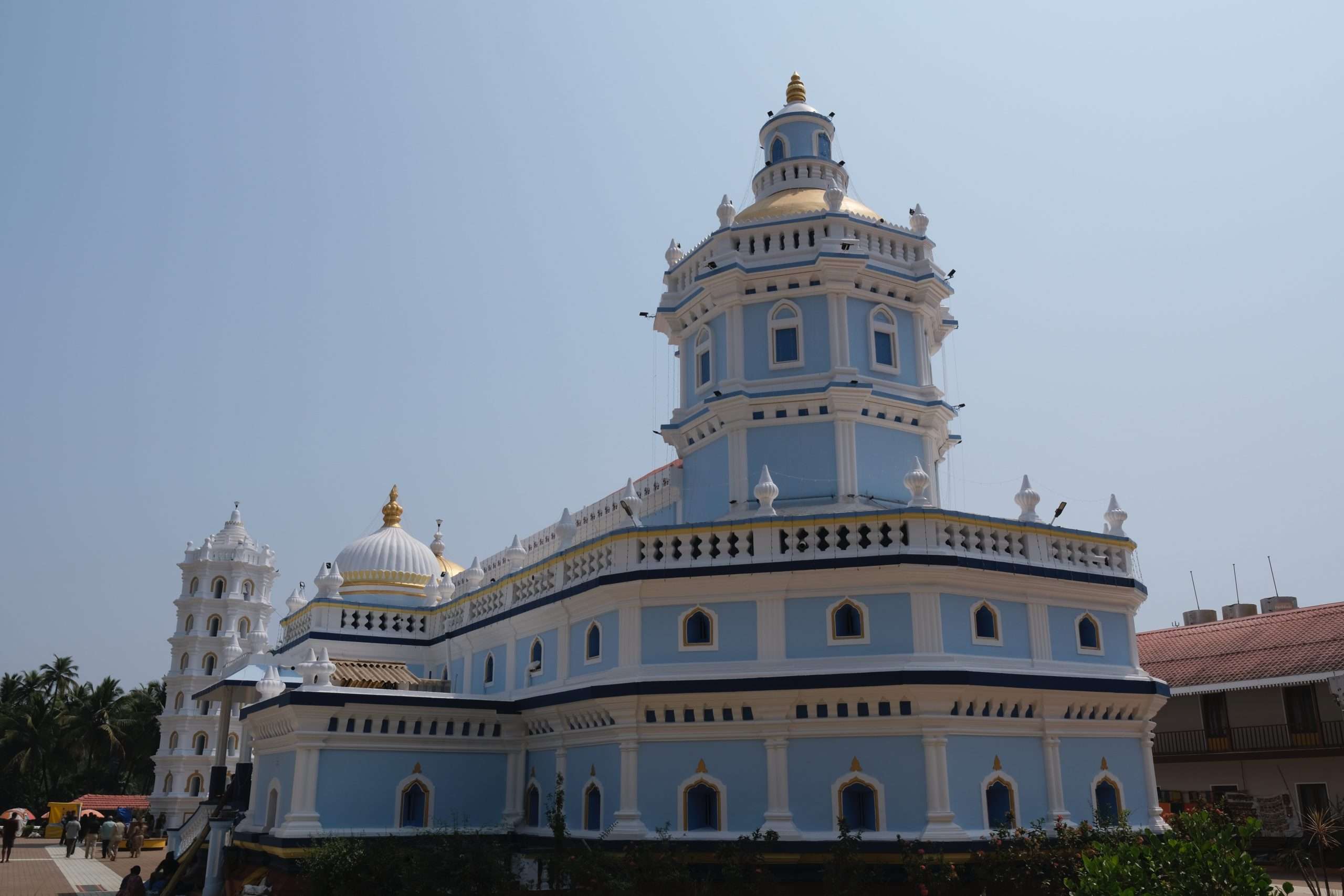
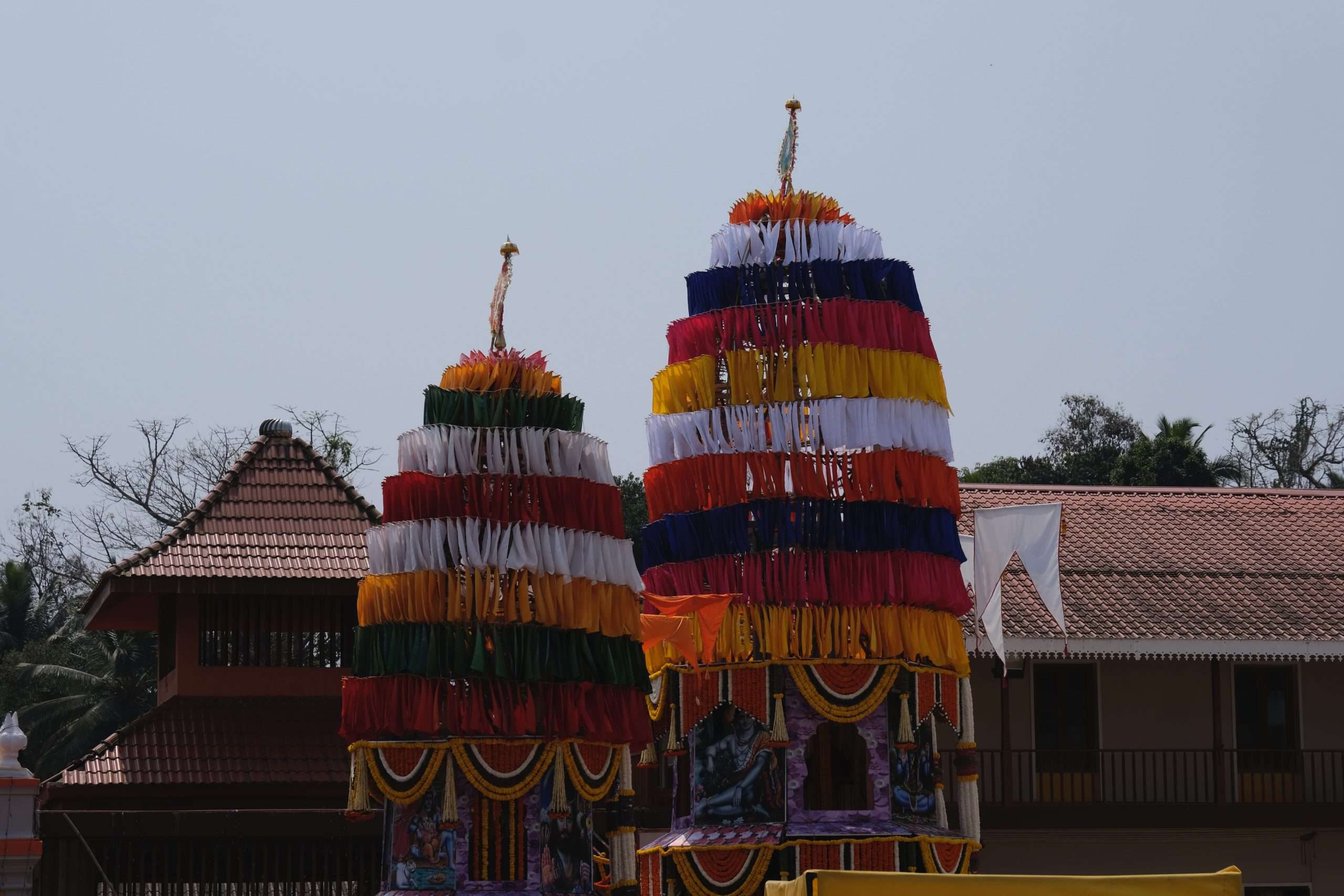
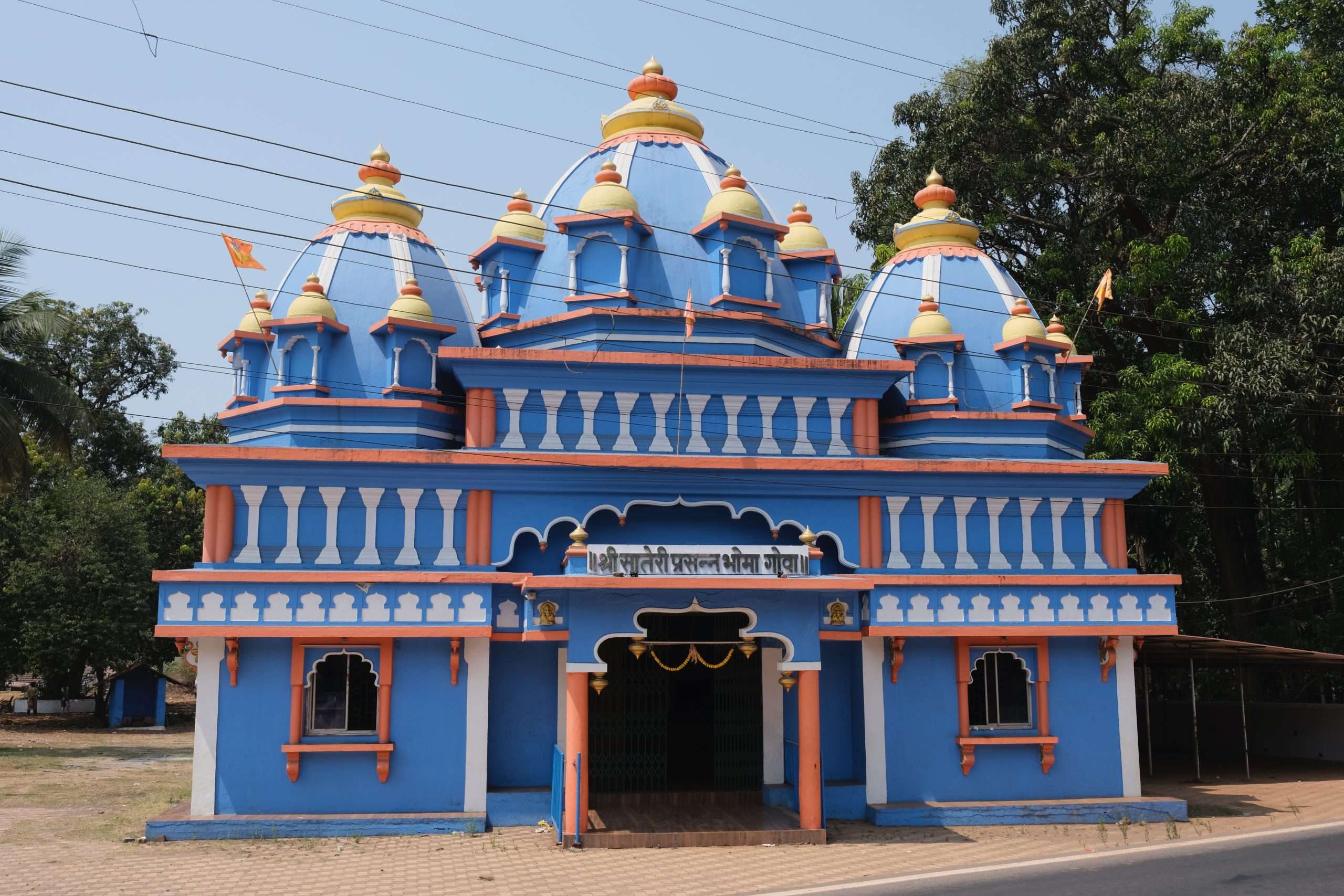
From Old Goa, we drove to Ponda to visit the vibrant Mangeshi Temple complex, bustling with devotees and visitors and adorned in vivid colors that appear to be unique to Goan temples.
To conclude our day, we enjoyed a fabulous seafood dinner at Amancio’s in Siolim, accompanied by cherished friends and family members, including Brian (Albert’s school classmate) and Livia (Albert’s cousin), making it a reunion to remember after many years.
A Leisurely Day in Goa – February 27, 2024
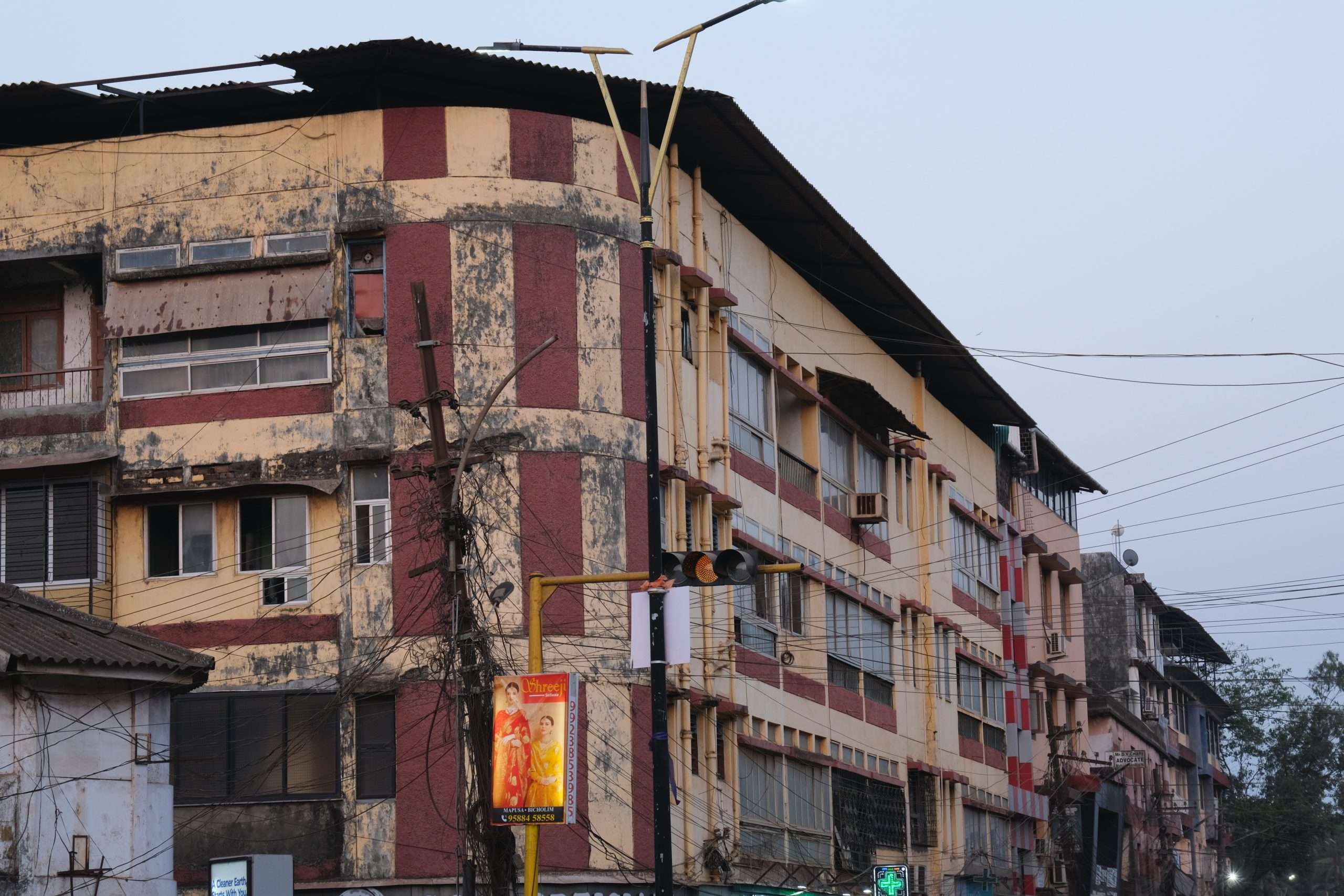
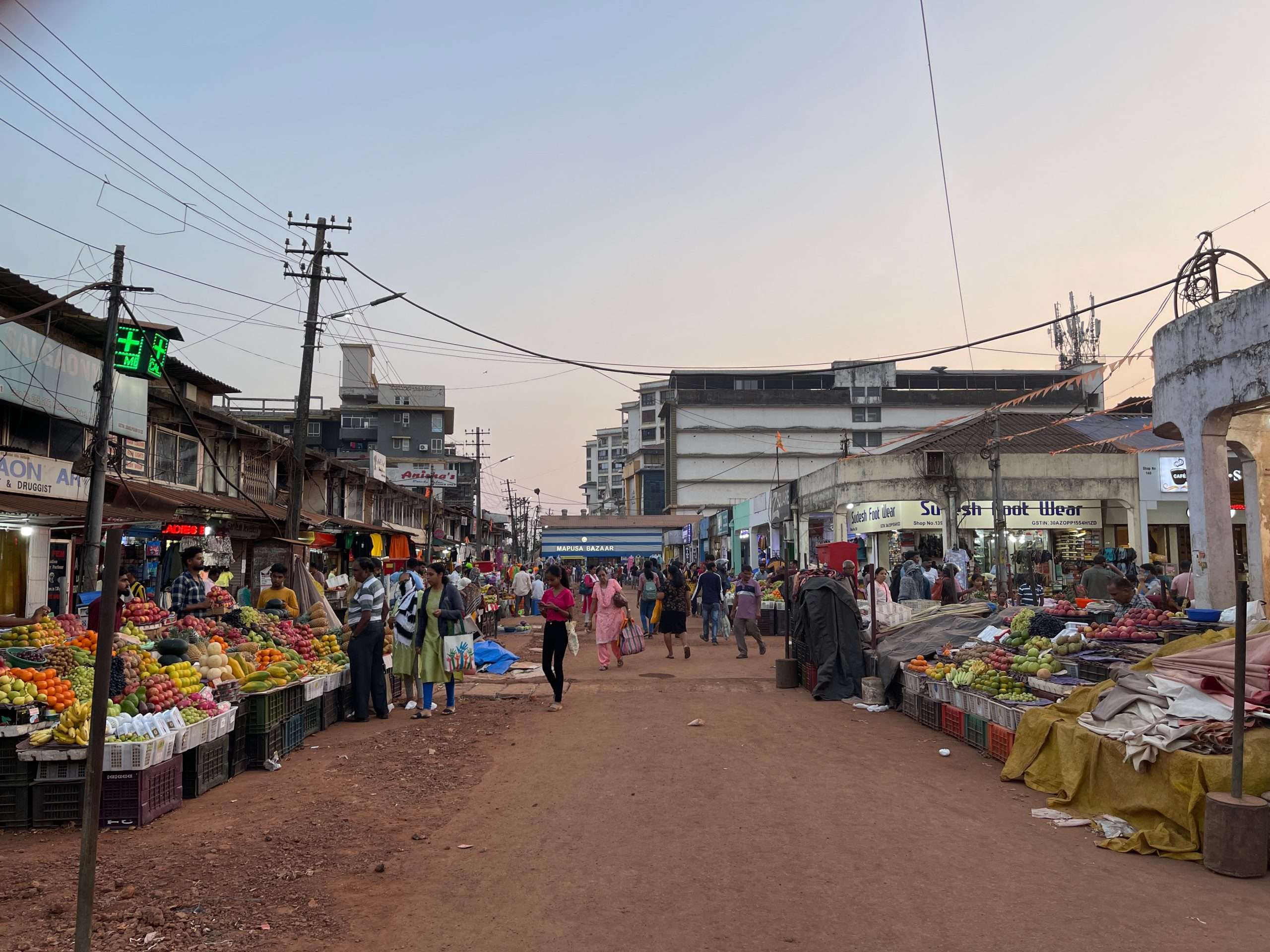
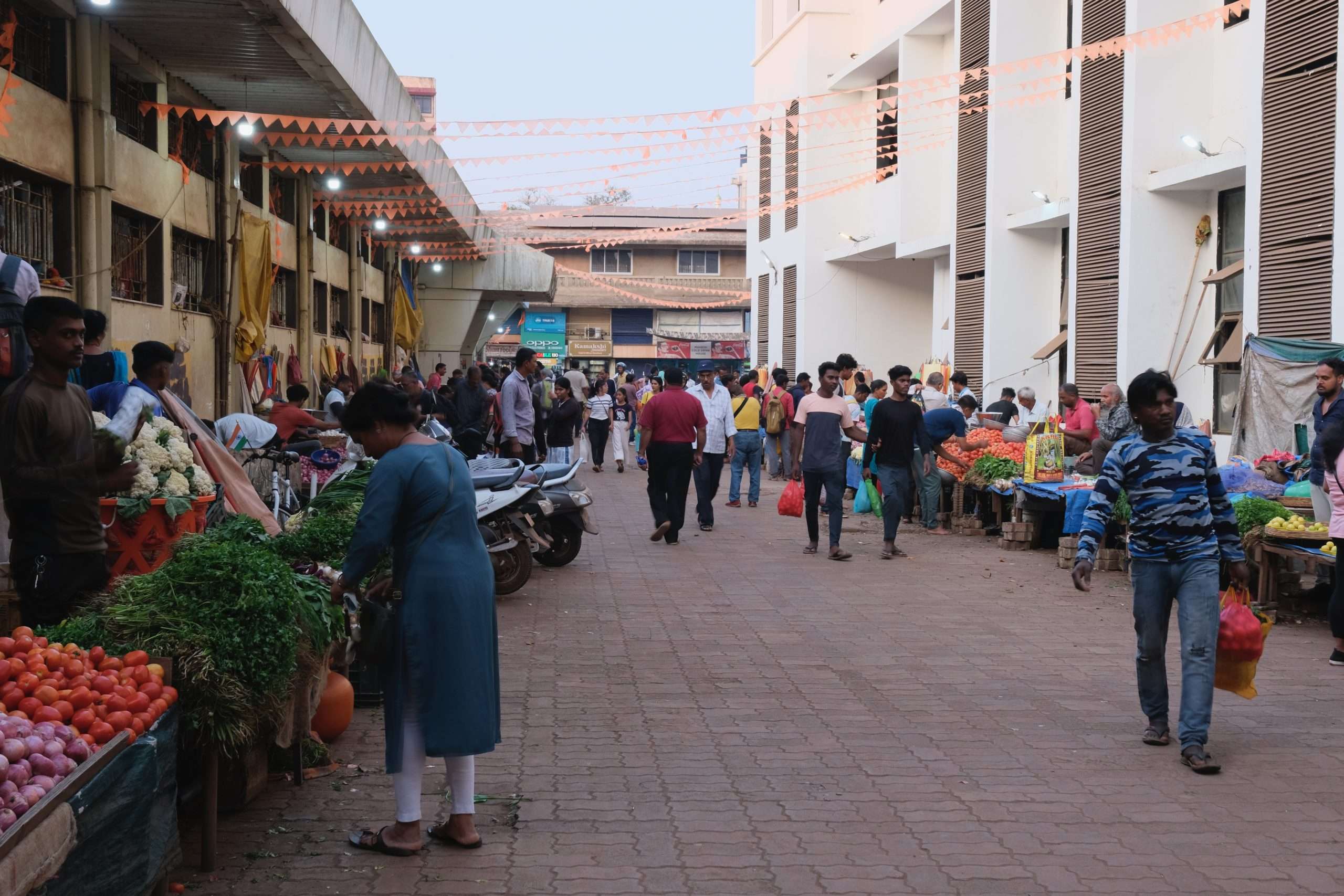
We enjoyed a relaxed morning before setting out to visit Albert’s cousin Alleluia and her family in Guirim. Later, we made our way to Aldona to spend time with Alleluia’s brother, Francis, and his family. On our way back to Anjuna, we stopped at the vibrant Mapusa Market. Our day concluded with yet another scrumptious seafood dinner at Vinayak’s.
Fontainhas: A Journey Through Goa’s Rich Heritage – February 28, 2024
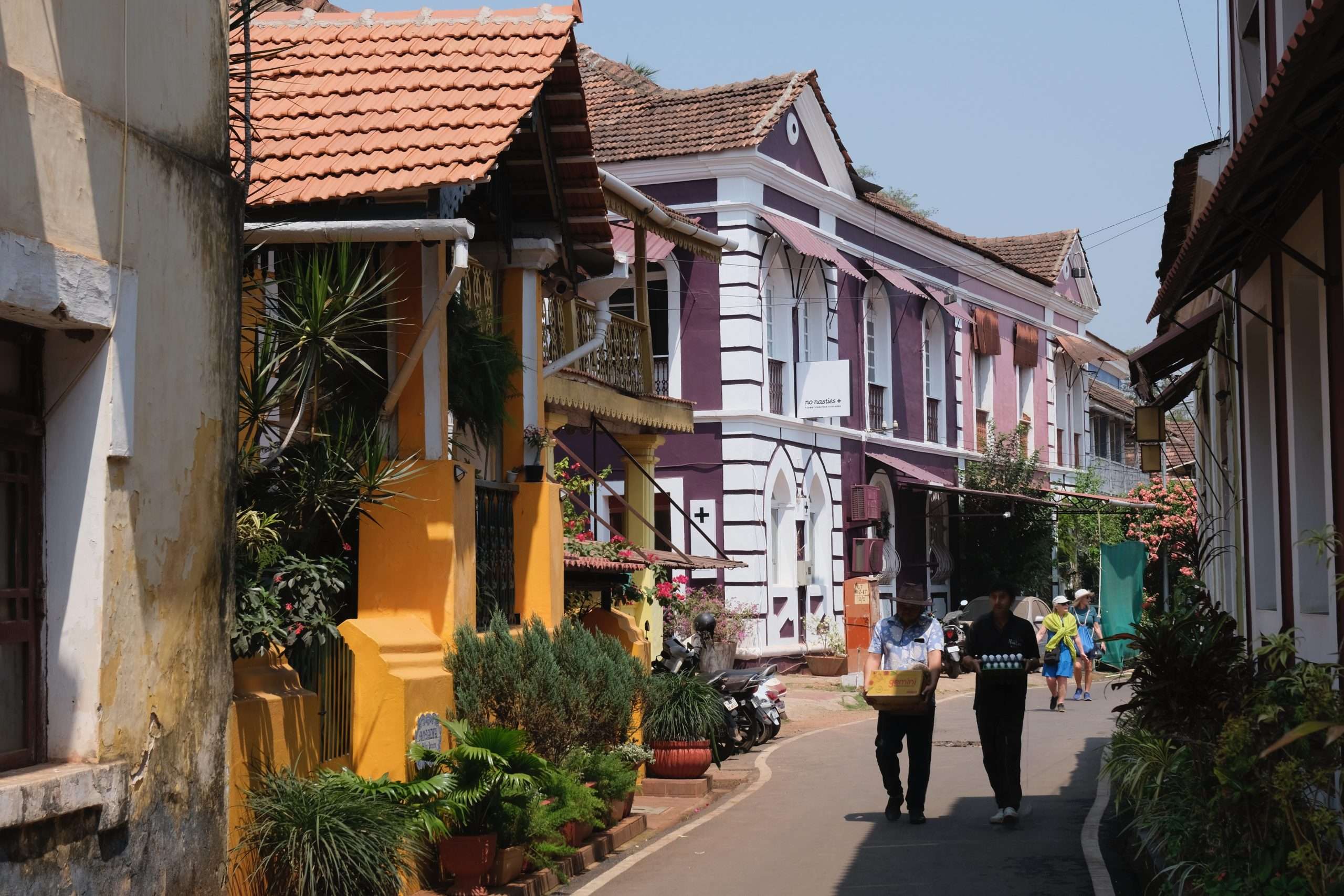
We explored Fontainhas, Asia’s oldest Latin Quarter, in Panjim this morning. The word Fontainhas means ‘little spring’, referring to the natural springs that once dotted this area. Led by our guide Hinaz, (who works for a tour company called Make It Happen) we delved into its rich history, shaped by Portuguese colonization and cultural exchanges. The Portuguese seized Goa from Adil Shah in 1510 and maintained control until 1961. Initially drawn by trade, territorial expansion, and the propagation of Christianity, they established Goa as a strategic stronghold. Vasco da Gama oversaw its early governance, but overpopulation and plague prompted the shift of the capital to Panjim (now Panaji).
Additionally, historical records indicate that the Portuguese imported slaves from Angola and Mozambique, likely to replenish the population decimated by the plague, which claimed around 20,000 lives, and the inquisition, resulting in the deaths of approximately 16,000 individuals. Notably, they introduced cashew trees from Brazil to combat soil erosion, further shaping Goa’s landscape and economy.
In the old town, houses commonly featured shared walls lining narrow streets. The Post Office, once a tobacco warehouse, briefly served as a police station. Interestingly, the postal code for this locality, 403001, doubles as the address for mailing to the Indian research station Maitri in Antarctica. This linkage stems from Dakshin Gangotri, the original research station, which had a Goan connection through its postmistress, who was a member of the scientific team.
Our guide also narrated the legend of the Rooster of Barcelos to explain the presence of roosters on many of the roofs. We also walked by the Chapel of St. Sebastian which houses one of the relics of the inquisition in Goa, Christ on the cross with his eyes open.
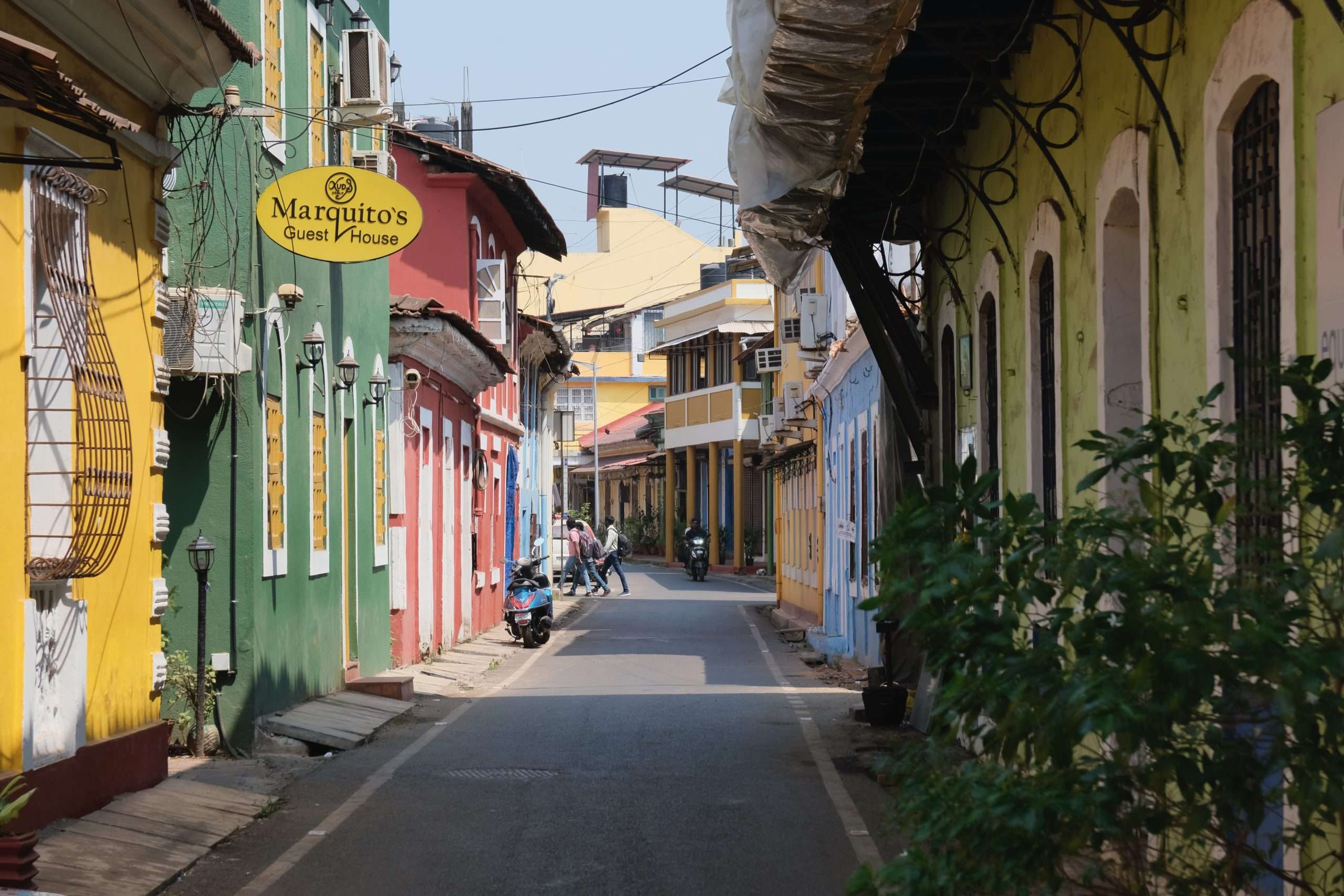
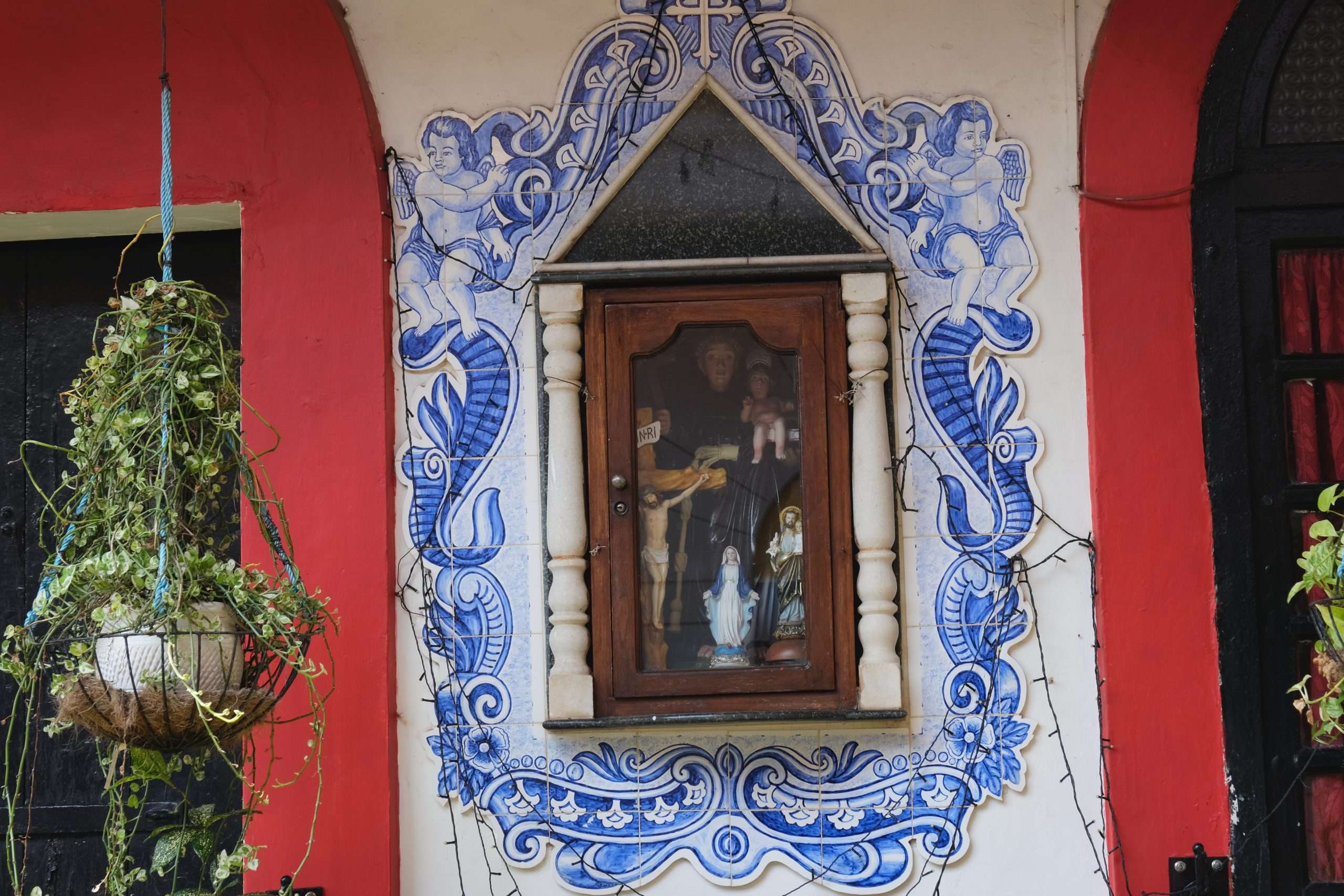
Our last stop was at Confeitaria 31de Janeiro, to sample some of the delights this pastry shop has been serving up since 1930. They sell many of the traditional Goan specialties like, bebinca, bolinhas, doce de grao, and pastéis de nata. Despite the charm of Fontainhas, the constant flow of motorized traffic detracted from its pedestrian-friendly ambiance.
Afterward, we explored the modern developments around Miramar and Dona Paula before enjoying a vegetarian lunch at Café Bhonsle in Porvorim. As the evening drew to a close, we packed our bags, preparing to bid farewell to Goa and return to Mumbai.
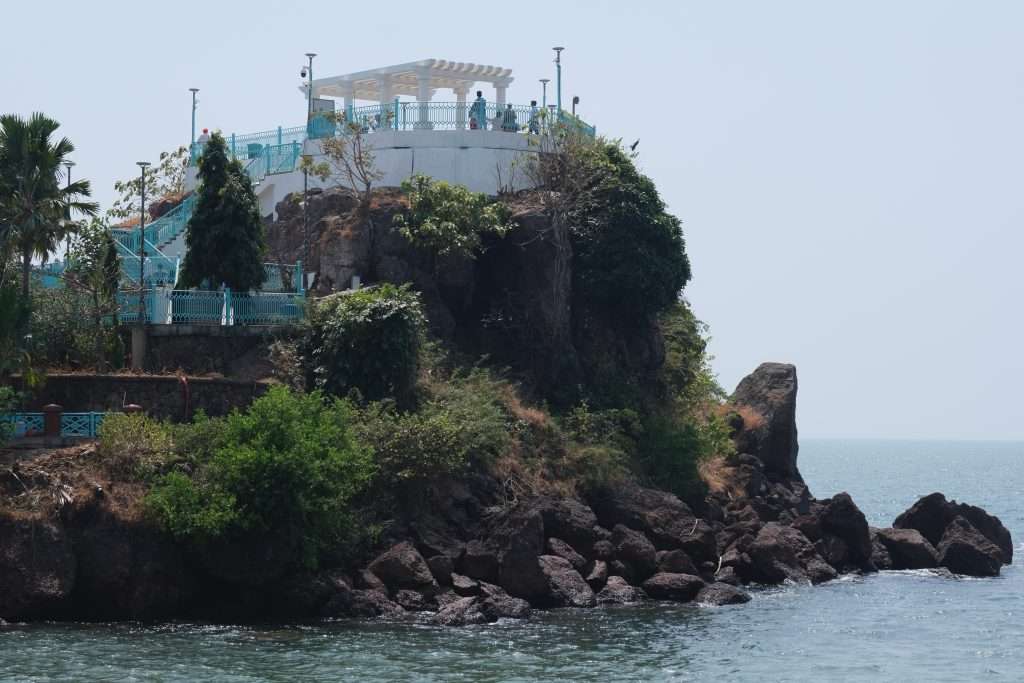
Adeus to Goa – February 29, 2024
After checking out of our hotel, we drove to Assagão to spend the day at the ancestral home. The village has evolved into a hub of culinary delights, wellness centers, and upscale residences. Our day began with a hearty breakfast at Mojigao, a quaint eatery within walking distance from the ancestral home, followed by reconnecting with some of Albert’s former neighbors. Although our attempt to visit St. Cajetan’s Church was thwarted, we visited Albert’s parents’ burial niche.
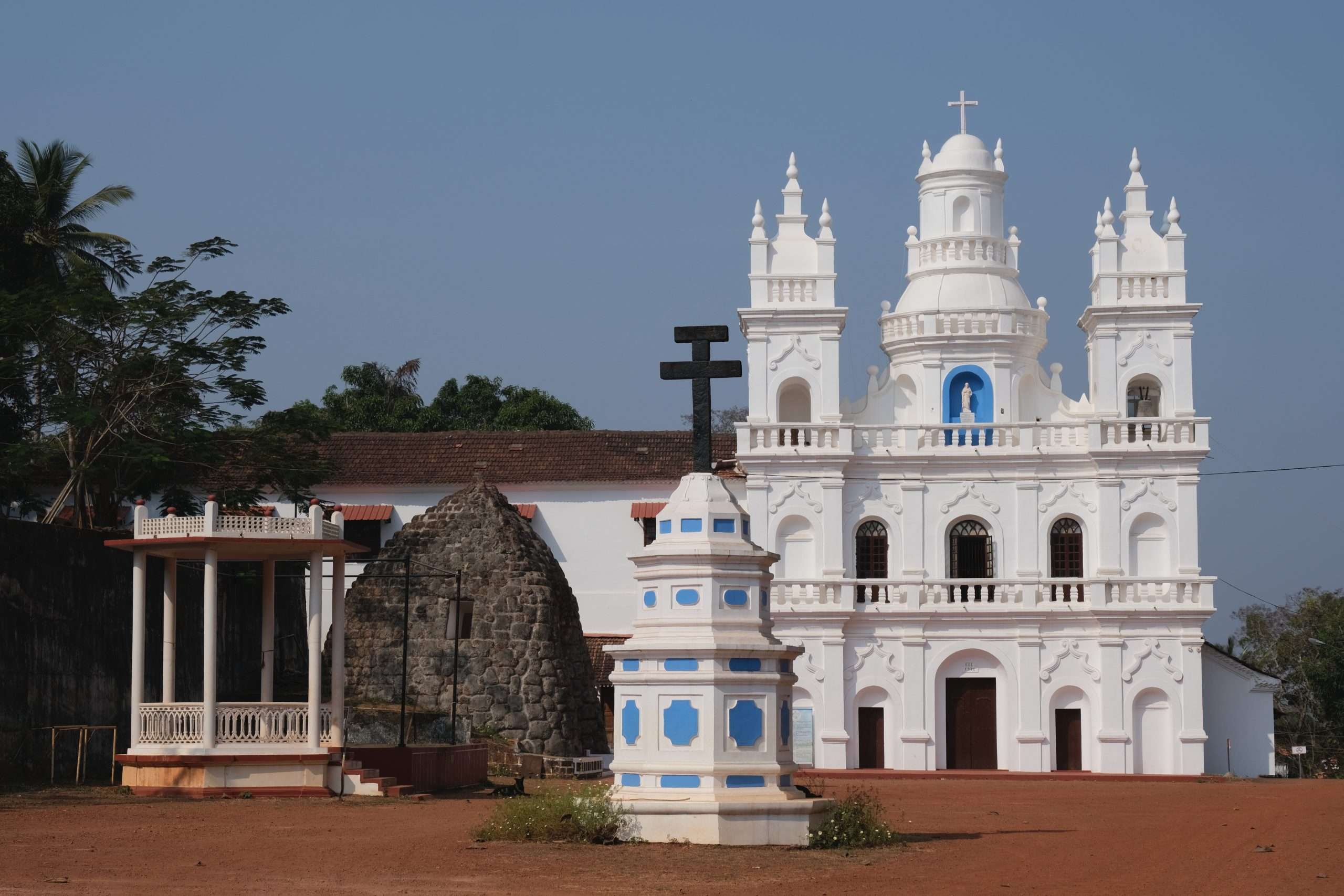
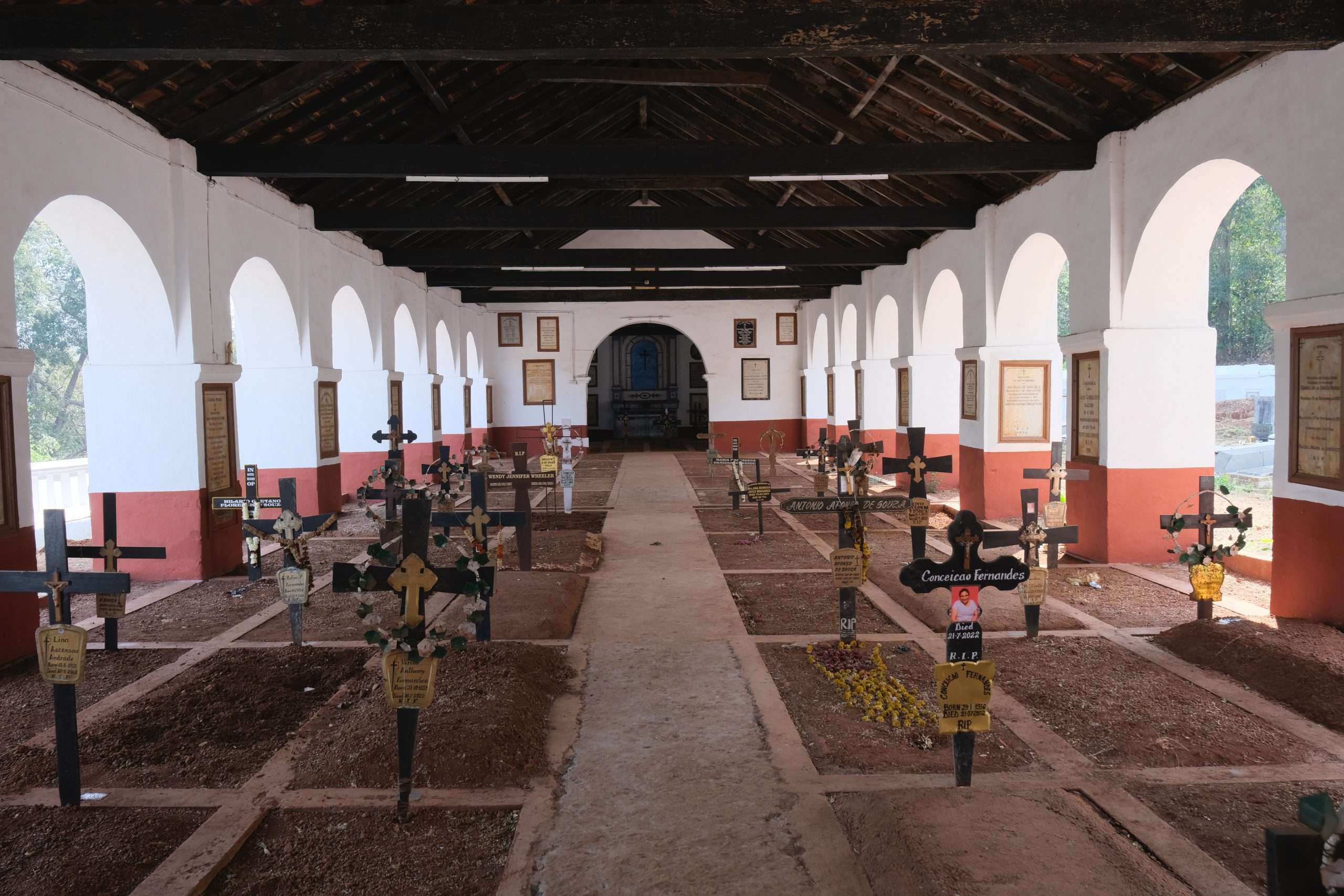
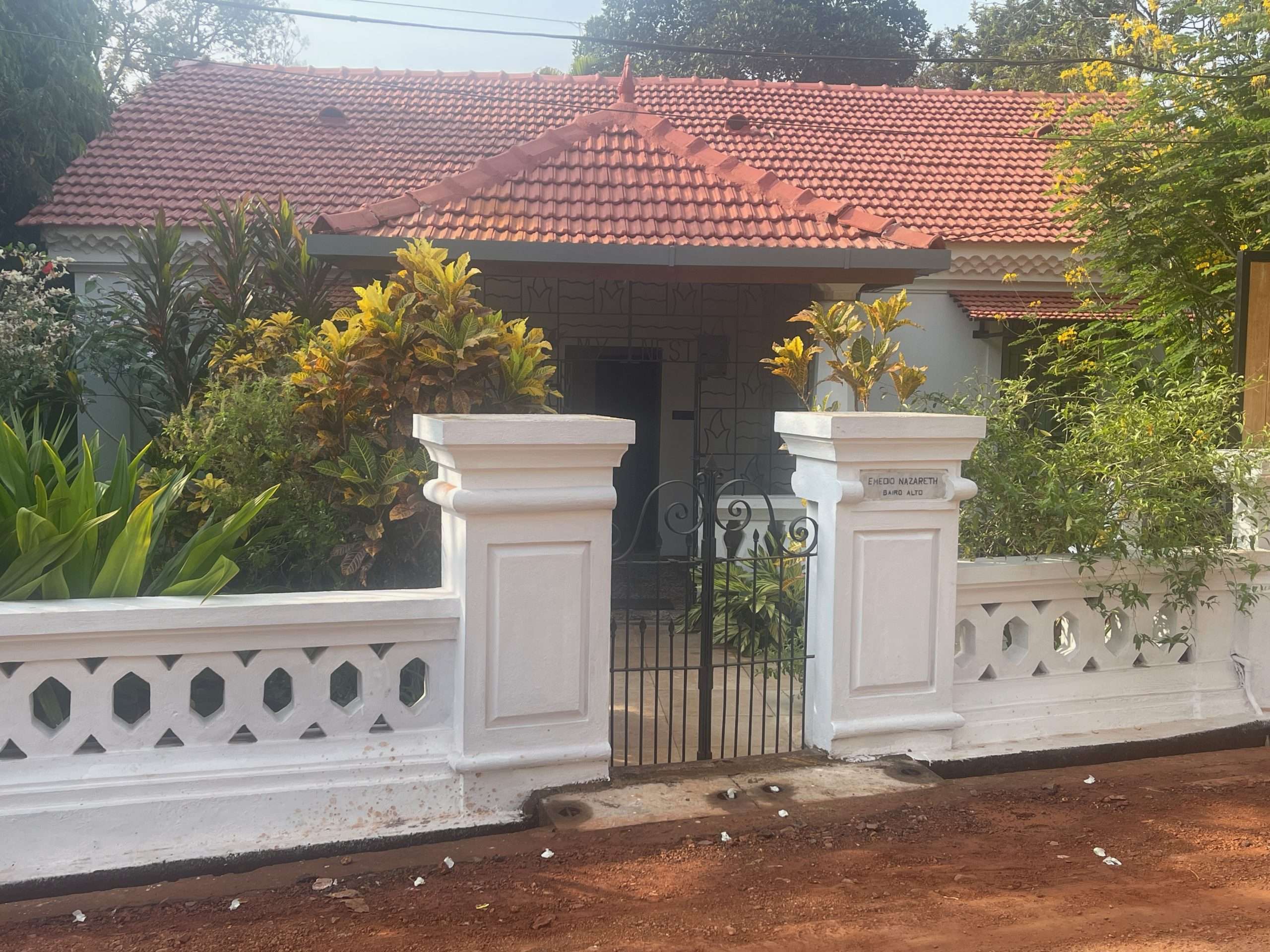
As our time in Goa drew to a close, we made our way to MOPA for our return flight to Mumbai. We settled in at the Marriott Fairfield by the Mumbai airport for the night and the following morning we flew to Delhi to start our tour of Northern India and Nepal.